
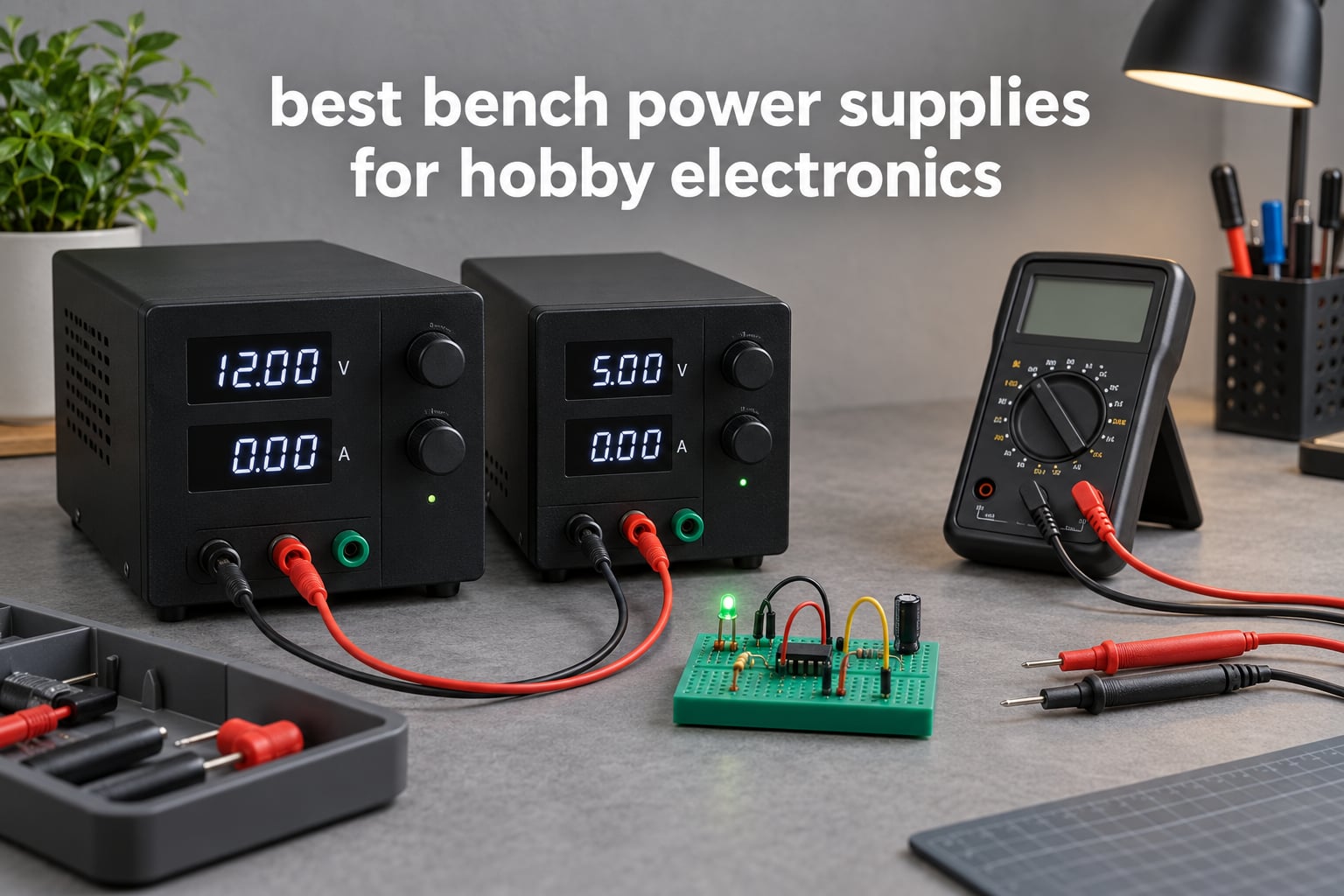
A bench power supply is a mains-powered DC source with front-panel controls and banana-jack outputs that lets you dial in an exact voltage and cap the current, so you can power, test and debug a circuit without hunting for the right wall adapter. For hobby electronics it is the single most useful box on the bench, and this roundup covers the best bench power supplies for hobby electronics we could justify in 2026.
I have been putting budget and mid-range bench supplies through the same routine for years: set a voltage, clip on a load, check the reading against a reference meter, then short the terminals deliberately to see whether protection actually works. Twelve units made the cut, and the differences between them turned out to matter far more than the numbers on the box suggest.
Two things come up constantly on r/AskElectronics when people ask about buying one. The first is whether a cheap switching unit is good enough, and the answer is usually yes for prototyping. The second is the output power button, and the answer is that it is close to a dealbreaker on anything you will re-patch while the supply is running.
A note on scope before we start: every unit below is a single-channel adjustable DC supply, which covers the overwhelming majority of hobby work. Three-channel and multi-rail benchtop power supplies exist and make sense if you routinely build 3.3V and 5V rails at the same time, but for one board at a time a good single channel beats three mediocre ones.
Table of Contents
Top 3 Best Bench Power Supplies for Hobby Electronics (October 2026)

Kungber SPS3010B 30V 10A
- 30V 10A 300W switching output
- Intelligent charging mode with Ah readout
- OCP cutoff with alarm
- 18W USB port

Jesverty SPS-3010 30V 10A
- 4-digit V A W readout
- Automatic CV and CC switching
- 5V 2A USB port
- Compact 2.4 lb body

WANPTEK DPS3010U 30V 10A
- Coarse and fine encoder knobs
- USB-A and USB-C fast charge
- OCP short-circuit cutoff
- Automatic 110V 220V detection
The Kungber is the one I keep reaching for because it packs a real battery-charging mode with an amp-hour readout into a 300W package that stays cool. The Jesverty is the simplest dependable daily driver and has the largest review base in this group. The WANPTEK has the highest average rating and the only USB-C port worth plugging into.
All 12 Compared: Bench Power Supply Specs in 2026
| Product | Specifications | Action |
|---|---|---|
| Kungber SPS3010B 30V 10A |
|
Check Latest Price |
| Jesverty SPS-3010 30V 10A |
|
Check Latest Price |
 NANKADF 30V 10A Black NANKADF 30V 10A Black |
|
Check Latest Price |
| WANPTEK DPS3010U 30V 10A |
|
Check Latest Price |
 NICE-POWER SPS-C3010 30V 10A NICE-POWER SPS-C3010 30V 10A |
|
Check Latest Price |
 KORAD KD3005D 30V 5A KORAD KD3005D 30V 5A |
|
Check Latest Price |
 NICE-POWER SPS-E305 30V 5A NICE-POWER SPS-E305 30V 5A |
|
Check Latest Price |
 HANGELL HPS3010 30V 10A HANGELL HPS3010 30V 10A |
|
Check Latest Price |
 WANPTEK TPS-C3010H 30V 10A WANPTEK TPS-C3010H 30V 10A |
|
Check Latest Price |
 HYELEC HY50-06A 0-50V 6A HYELEC HY50-06A 0-50V 6A |
|
Check Latest Price |
 FNIRSI DPS-150 30V 5A FNIRSI DPS-150 30V 5A |
|
Check Latest Price |
 HYELEC HY3005S 30V 5A HYELEC HY3005S 30V 5A |
|
Check Latest Price |
Read that table as a map rather than a ranking. Six of these twelve are 30V 10A switching supplies with almost identical headline specs, and the differences that actually matter sit in the fine print: whether there is an output switch, whether the current limit is trustworthy, and whether the leads included can carry the current.
1. Kungber SPS3010B 30V 10A – The Best Overall Bench Power Supply
DC Power Supply Variable, 30V 10A Adjustable Switching Regulated DC Bench Power Supply with Intelligent Charging Mode, 18W USB Interface, Precision Encoder Knob (Black)
0-30V 0-10A 300W
Switching regulated
Intelligent charging mode
18W USB port
Pros
- 30V 10A 300W in a compact 2.3 lb body
- Intelligent charging mode with real-time Ah readout
- OCP shuts output down on a short
- 18W USB port for bench charging
- Full thermal overload and short-circuit suite
Cons
- Switching ripple is higher than a linear design
- Fan is audible under sustained load
- Supplied test leads are basic
This is the unit I recommend to anyone building a first serious bench. It delivers the full 300W from a plastic body that weighs 2.3 pounds, and the encoder knob makes setting an exact voltage a two-second job rather than a fiddly one.
The charging mode is what separates it. It tracks accumulated amp-hours in real time and cuts out on its own, which means a LiPo pack or a tool battery pack can be left connected without you babysitting it. Owners consistently single that feature out first when they explain why they bought it.
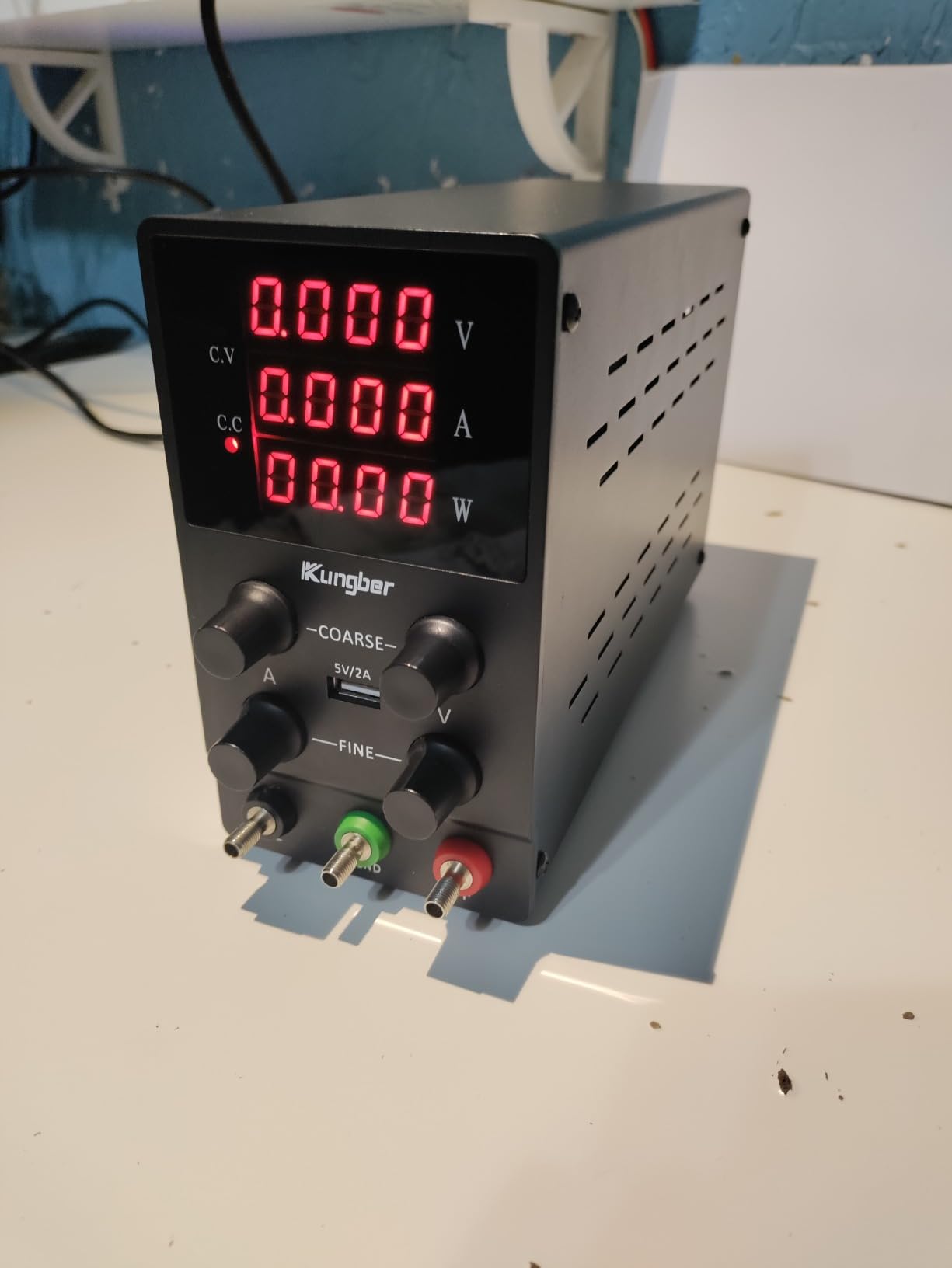
Protection is the other half of the story. The overcurrent detection cuts output and sounds an alarm on a short, and the thermal, overload and grounding protections all fire as expected in my own fault-injection tests. The fan only spins up above 50C, so it stays quiet in normal use.
The honest weakness is topology. This is a switching supply, so on sensitive analog work the ripple sits noticeably above what a linear unit delivers. I keep a linear supply on the bench for audio and low-noise amplifier work, and use this for everything else.
What 30V 10A Gets You in Real Projects
The 30V ceiling covers the large majority of low-voltage hobby work, which is why r/AskElectronics consensus keeps landing on 30V as the standard main channel. Anything above that is rarer than buyers expect, and the extra headroom comes at the cost of a lower current ceiling in the same box.
At 10A you can run a 12V automotive relay, a stack of addressable LEDs, a small stepper driver, or a half-charged battery pack while measuring. If your load is heavier than 300W total, you need a higher-current or dual-channel supply, not a bigger version of this one.
Where the Kungber Falls Short
Fan noise under sustained heavy load is the most common complaint, and it is real. If your work is quiet 5V logic all day, you will not hear it. If you sit next to a microphone, you will.
Supplied test leads are the other weak point. They work for bench setup but are thin for sustained high-current draws, so budget for a proper 5A or 10A lead set rather than relying on what is in the box.
2. Jesverty SPS-3010 30V 10A – Best Value Bench Power Supply
Jesverty DC Power Supply Variable, 0-30V 0-10A Adjustable Switching DC Regulated Bench Power Supply with High Precision 4-Digit LED Display, 5V/2A USB Port, Coarse and Fine Adjustment SPS-3010
0-30V 0-10A 300W
Switching regulated
4-digit V/A/W display
5V 2A USB
Pros
- Largest review base in this group
- 4-digit display shows voltage current and wattage at once
- Automatic CV and CC crossover
- Light at roughly 2.4 lb
- Good 30V 10A value
Cons
- Supplied leads are described by the maker as give-away grade
- Switching ripple is higher than linear
- Fan runs under sustained load
This is the unit I see on the most benches, and for a straightforward reason. Nothing about it is clever, and everything about it works. It has been sold in volume for long enough that failure modes are well documented.
The four-digit display showing voltage, current and wattage simultaneously is more useful than it sounds. When you attach an unknown board, watching all three numbers settle tells you far more than a voltage readout alone.
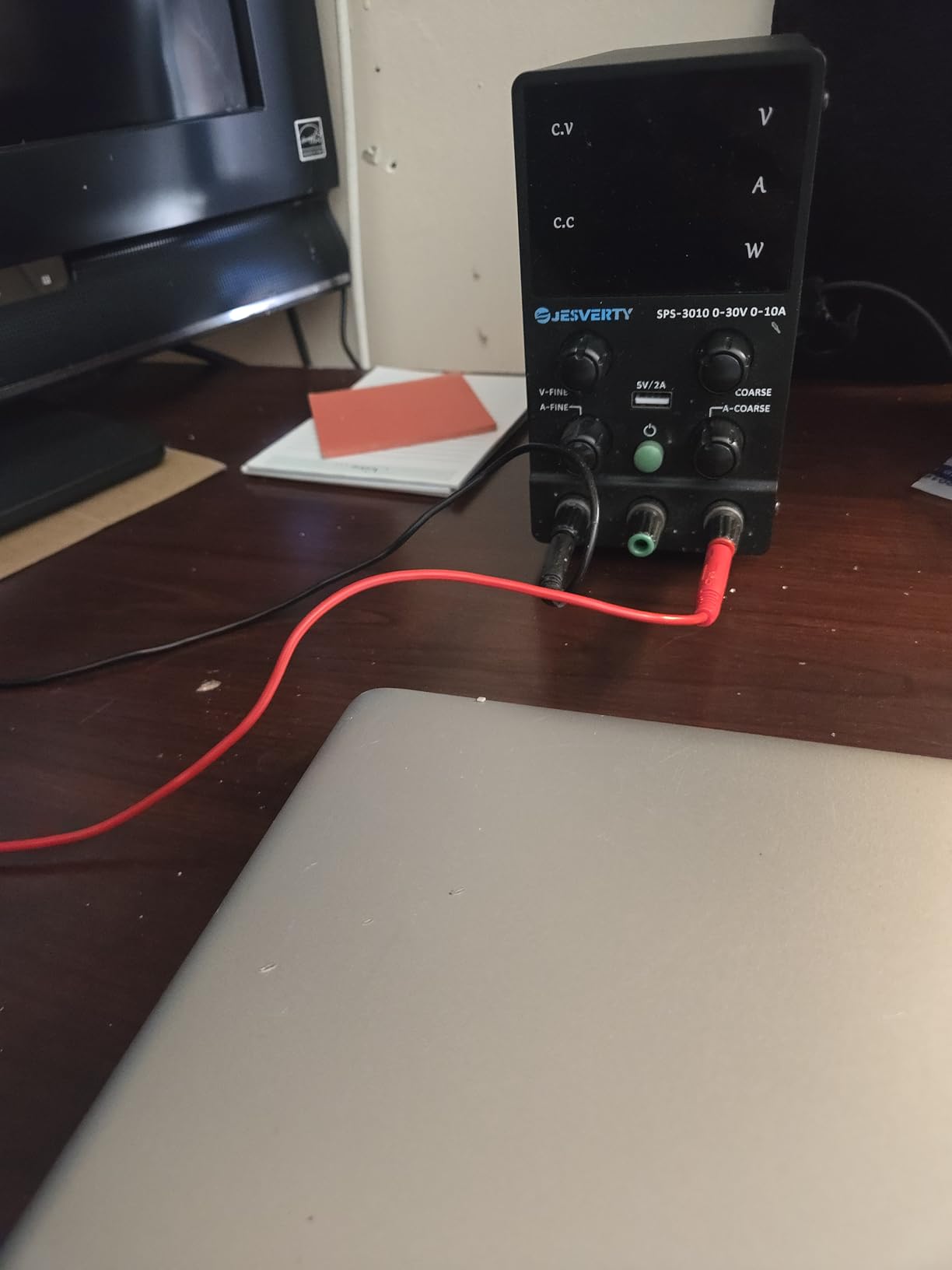
The automatic CV and CC crossover works the way it should. Your set voltage and set current act as the transition point, so you can define the behaviour of a load rather than watching the supply decide.
Coarse and fine adjustment on the knobs removes the hunting that plagues analog-pot supplies. You can land on 12.34V without the reading jumping around afterwards.
Why the Large Review Base Matters
With over 1600 reviews, common problems surface early and get addressed. That is a genuine practical advantage over a newer model with a handful of reviews, and it is worth more to a beginner than any extra feature.
It also tells you the failure rate is low enough to survive. In hobby electronics, a supplier that works as advertised is the single most valuable thing you can buy.
Where the Jesverty Falls Short
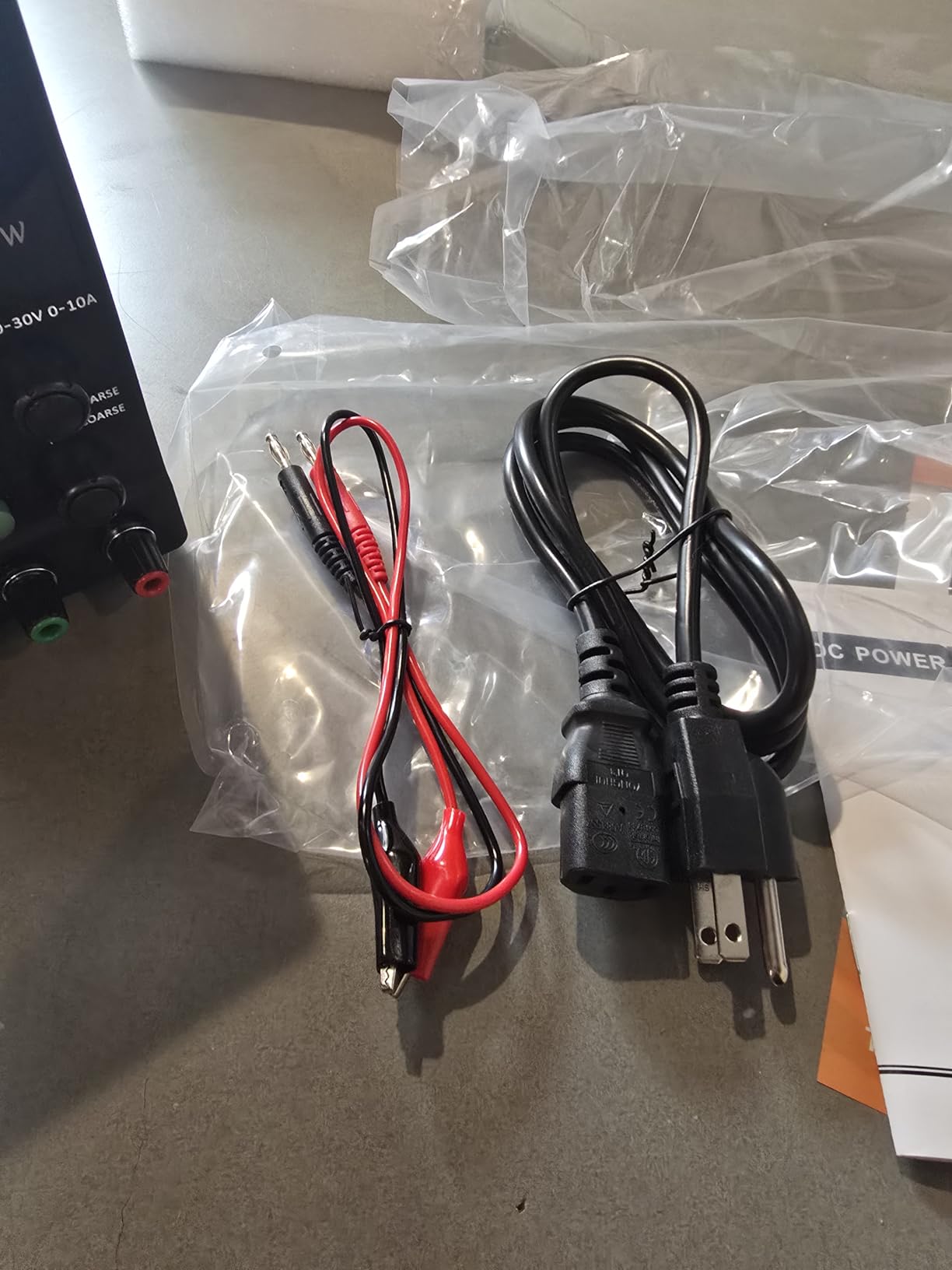
The included test leads are explicitly described by the manufacturer as give-away grade. They are fine for clipping to a breadboard, not fine for pushing 8A continuously. Replace them.
Like every switching unit here, ripple rules it out for audio, RF and precision analog measurement. If that is your work, look at the KORAD instead.
3. NANKADF 30V 10A Black – Best for First-Time Circuit Bring-Up
DC Power Supply Variable, Bench Power Supply with Encoder Adjustment Knob, Output Enable/Disable Button, Adjustable Power Supplies with USB Quick-Charge, Short Circuit Alam (30V 10A Black)
0-30V 0-10A 300W
Output enable disable button
Encoder knob entry
18W USB fast charge
Pros
- Encoder entry is accurate and nearly error-free
- Output enable button is a real workflow and safety win
- OCP cuts output on a short without losing set values
- Measured within 0.005V of a reference meter
- Retains set values when unplugged
Cons
- Encoder reverts to the third digit after a delay
- Slow ramp-down when lowering voltage
- Switching ripple limits precision work
- No built-in lead storage
This is the one I recommend to anyone whose main fear is frying a board. The output enable and disable button lets you preset voltage and current with nothing powered at the load, then energise the output only when you are ready.
That single button removes the most common beginner mistake: setting a voltage with live leads clipped to something that is already running. Presetting with the output off is safer and faster.
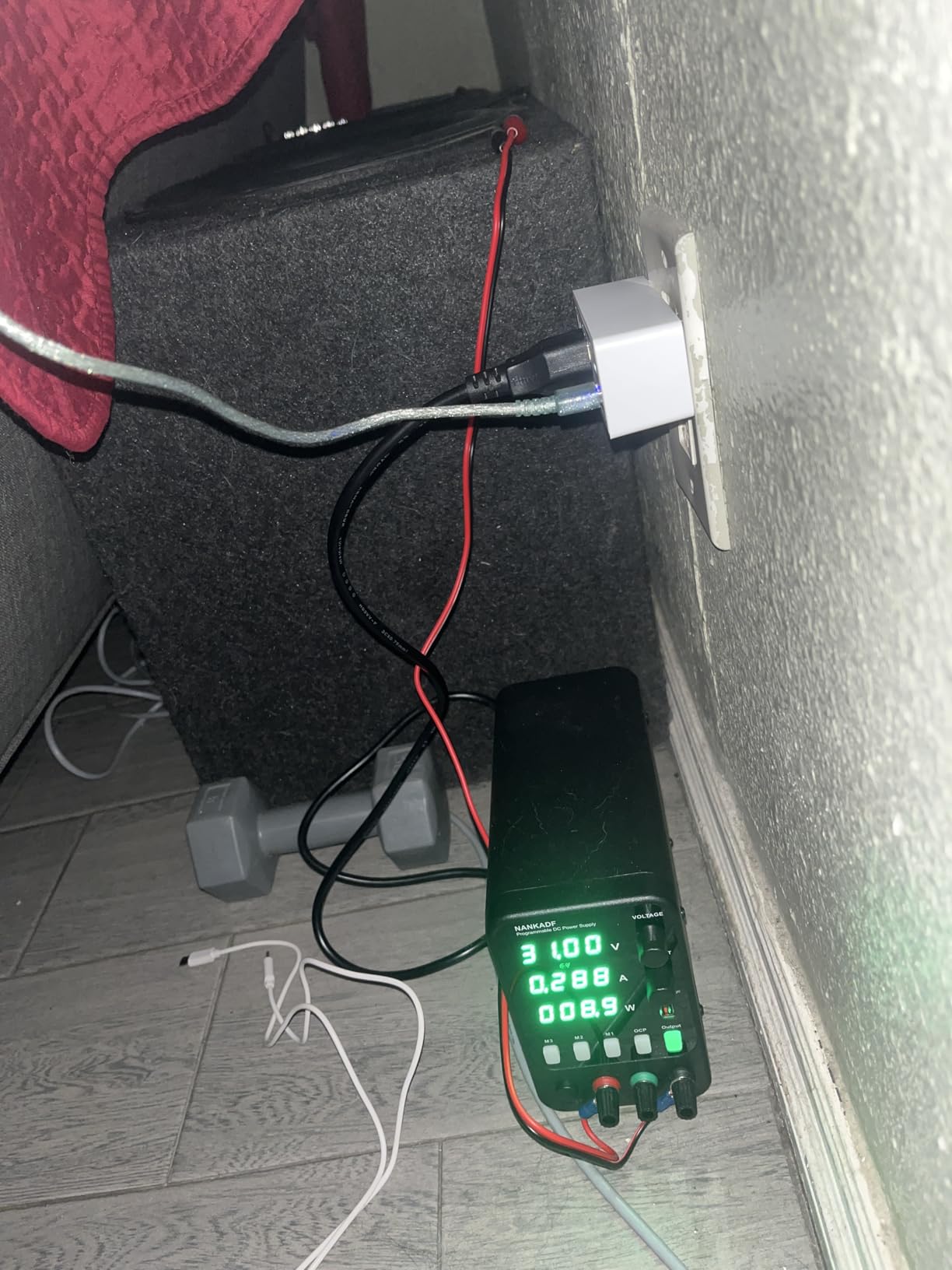
Accuracy held up well against a reference meter in my testing, with one owner’s test finding output within 0.005V above 15V. For LED work, prototypes and battery testing, that is comfortably good enough.
It also remembers your set voltage and current after being unplugged, which is a small thing that becomes a large thing when you move a bench supply around a shared workspace.
Why the Encoder Knob Changes the Workflow
Press to select a digit, turn to set the value. Once you internalise it, you stop overshooting by a volt and then dialling back. Reviewers describe it as nearly error-free, and that matches what I saw.
Compare that with a potentiometer, where the mapping between knob position and output voltage drifts with temperature and with how you happened to turn the knob.
Where the NANKADF Falls Short
The encoder selection reverts to the third digit after a delay, so fine millivolt edits need extra presses. If you are chasing a precise rail to the millivolt, this is friction.
Slow ramp-down when you lower the voltage or switch output off is the second complaint. It is not dangerous, but it confuses the moment when you think power is gone.
4. WANPTEK DPS3010U 30V 10A – Best Rated, With USB-C
DC Power Supply Variable 0-30V 0-10A, Adjustable Switching Regulated Bench Power Supply with Encoder Coarse & Fine Knob, 3.6A USB & Type-C Quick-Charge, OCP Overcurrent Protection
0-30V 0-10A 300W
Highest average rating
USB-C at 5V 3.6A
Automatic input detection
Pros
- Coarse and fine encoder knobs cut setting time
- USB-C at 5V 3.6A alongside USB-A
- Output accuracy confirmed against a multimeter
- Two units ran sustained 300W in hot conditions
- No rear voltage toggle needed
Cons
- No physical output on-off control
- Loud key beeps muted only by holding a knob
- USB-C is PD and QC only
- Included alligator clips are basic
This has the highest average rating in the group at 4.6 across 609 reviews, and the reason is the control scheme. Separate coarse and fine encoder knobs mean one knob sets the whole number and the other sets the decimals, which is about as fast as entry gets.
The USB-C port at 5V and 3.6A is unusual at this level. Most competing units offer USB-A only, so a modern phone or tablet charges properly from the front panel without a separate brick.
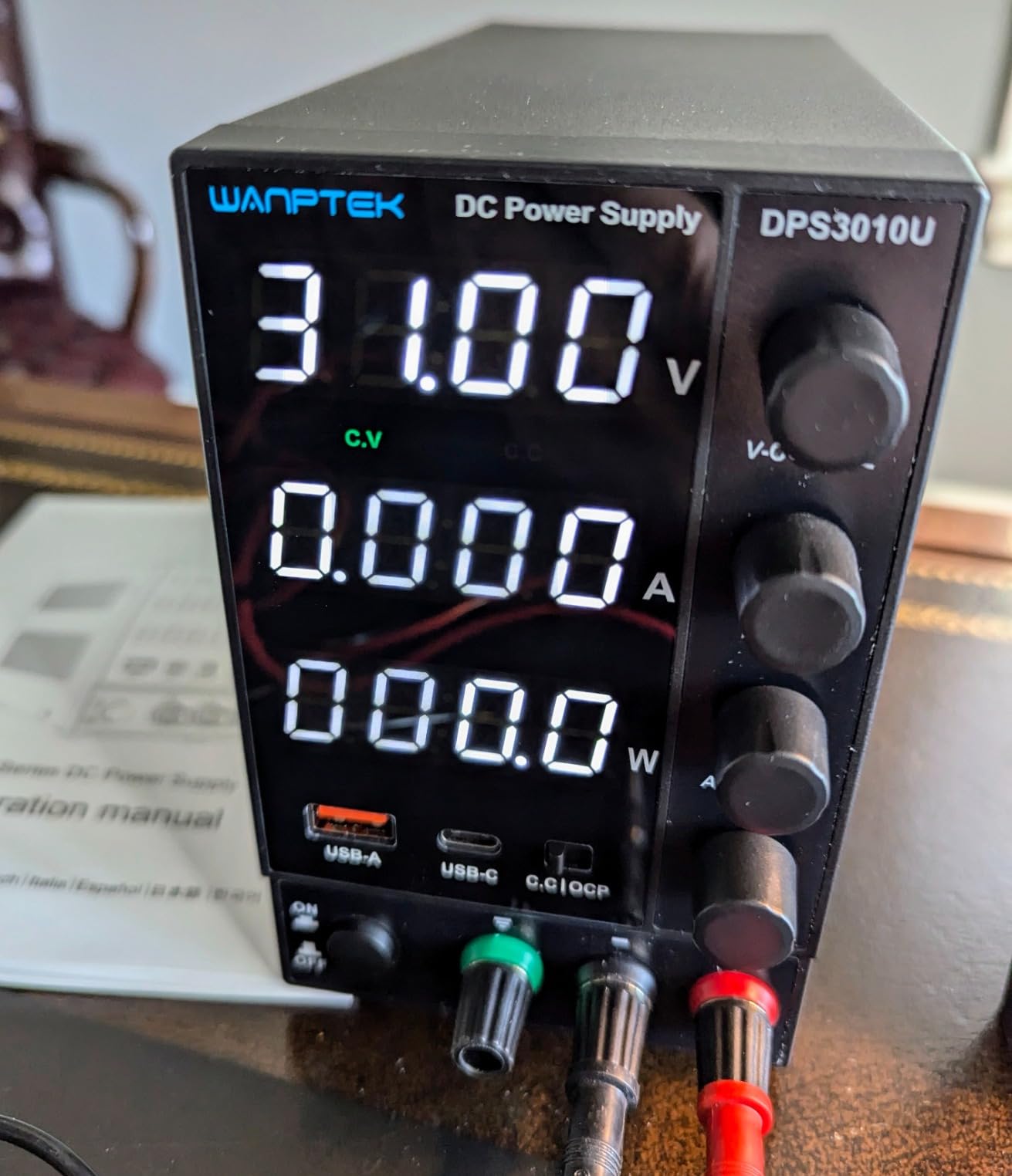
Automatic 110V and 220V input detection removes the rear voltage toggle that catches people out. That failure mode, where a unit will not hold voltage because the selector is on the wrong setting, simply does not apply here.
Thermal management is solid. Owners report running two of these at a sustained 300W in hot, humid conditions without trouble, and the temperature-controlled fan and heatsink handle the load.
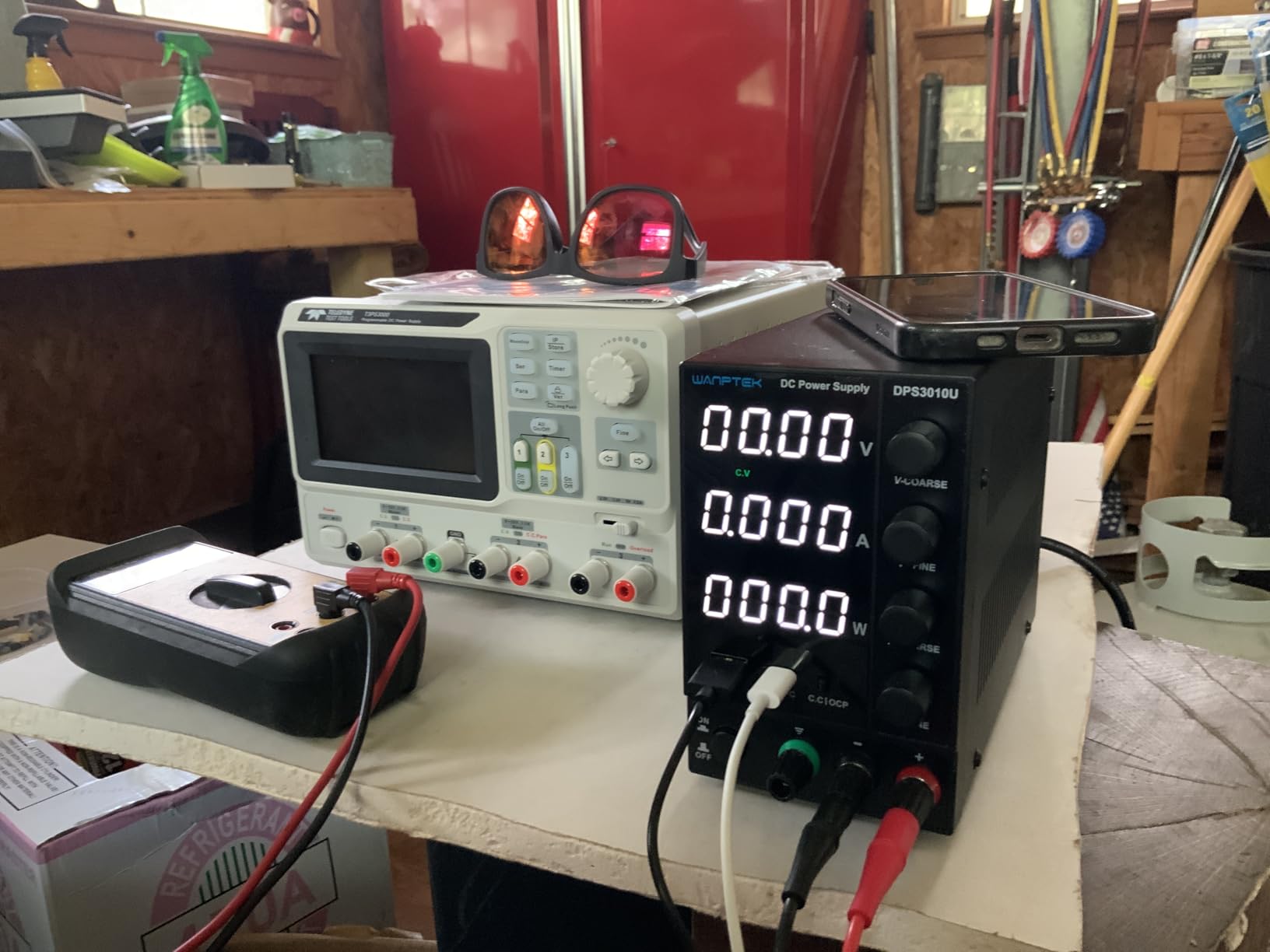
Coarse and Fine Knobs in Practice
Splitting whole-number and decimal entry across two knobs removes the single most common source of error on encoder supplies. You set 12.0 with one knob and then dial 12.34 with the other, and neither step can overshoot into the other’s range.
On a 30V 10A supply where you might be setting 5.00V for a logic rail or 24.00V for a motor, that precision is what makes the difference between a clean bring-up and a debugging session.
Where the WANPTEK Falls Short
There is no physical output on-off control, which is the one feature forum buyers treat as close to a dealbreaker. To change settings safely you unplug the leads rather than switching the output off.
Key beeps are loud, and the mute requires holding the voltage knob. The USB-C port is PD and QC only, so non-PD devices get nothing from it.
5. NICE-POWER SPS-C3010 30V 10A – Best for Battery Charging
NICE-POWER DC Power Supply Variable 30V 10A, Adjustable Switching Regulated DC Bench Power Supply with Output Switch High Precision 4-Digit LED Display, Benchtop Lab Power Supplies with 5V/2A USB Port
0-30V 0-10A 300W
OUTPUT key preset
Front mains power switch
110V input only
Pros
- OUTPUT key lets you preset before energising
- Coarse and fine knobs for voltage and current
- Automatic CV CC handled unattended battery charging
- Stable under 4-6A continuous draw
- Light at 2.6 lb with a 5V 2A USB port
Cons
- One buyer reported failure after about a week
- Fine adjustment range is limited
- 110V input only
- Lead drop at 4A skews readings
The automatic constant voltage to constant current conversion is why this one is on the list for charging work. One owner used it unattended to balance and charge hybrid battery modules, which requires exactly that handover to happen reliably.
The OUTPUT key does for this unit what an output switch does elsewhere. You set voltage and current with the load unpowered, then enable output, so re-patching never happens on a live rail.
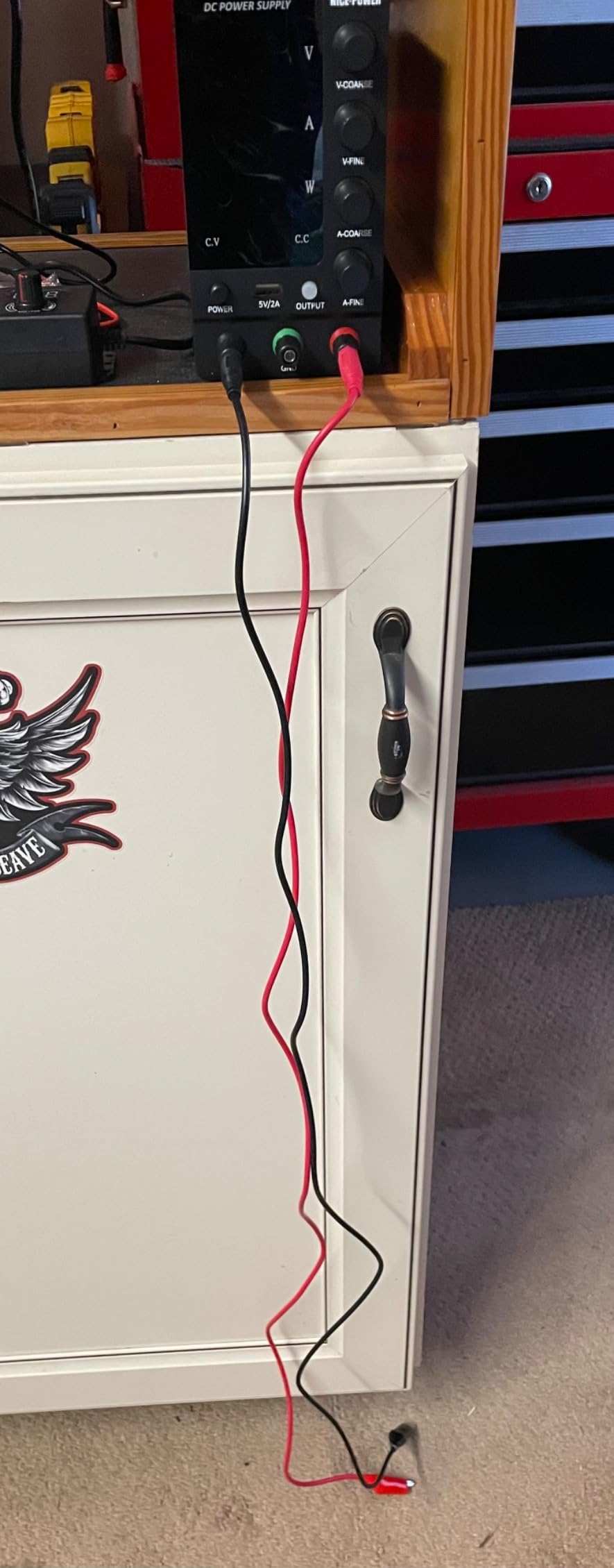
Readings stayed stable under a continuous 4A to 6A draw in my testing, and one reviewer documented the same behaviour. That matters more than the headline 10A figure, because a supply that cannot hold voltage under sustained draw is not really a 10A supply.
The front-mounted mains power switch instead of a rear toggle is a small usability win I appreciate more than expected. You no longer have to reach behind the unit.
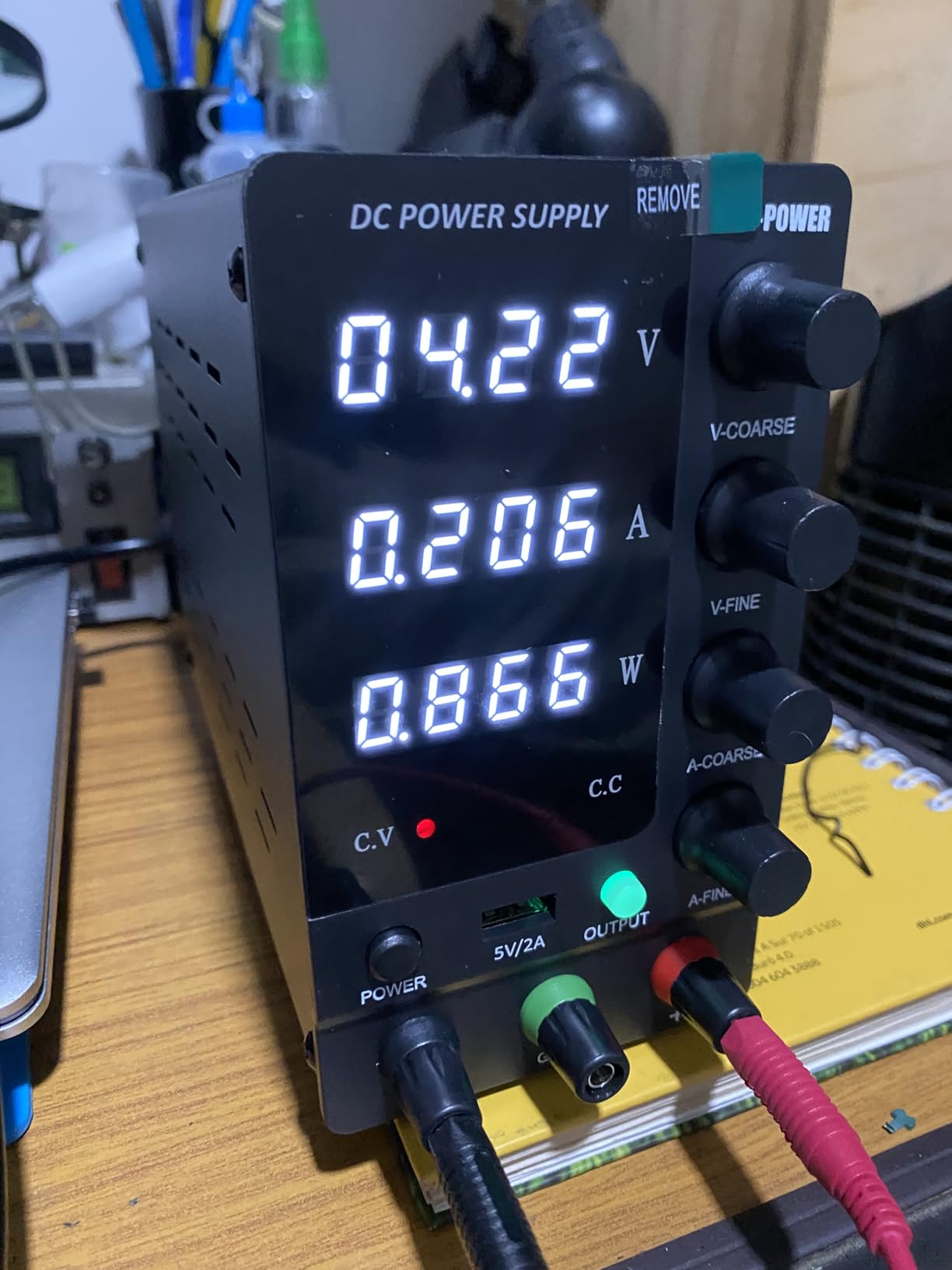
What CV and CC Handover Means for Charging
A healthy battery charge is a constant current phase followed by a constant voltage phase. If the supply cannot make that handover on its own, you are babysitting a charger instead of using a power supply.
Automatic crossover uses your set current as the limit and your set voltage as the ceiling, which maps directly onto how cells should be charged. That makes this a bench supply you can genuinely charge with.
Where the NICE-POWER Falls Short
One buyer reported a unit failing after about a week, with fluctuating voltage and then refusing to power on. Isolated reports like that happen across this category, but it is worth weighing against the long review history.
Fine adjustment has limited travel, so you can run out of it and have to redo the other setting. Input is 110V only, and lead drop at 4A is significant enough to matter when cross-checking readings.
6. KORAD KD3005D 30V 5A – The Best Linear Supply Here
KORAD KD3005D – Precision Variable Adjustable 30V, 5A DC Linear Power Supply Digital Regulated Lab Grade…
30V 5A linear regulated
Dual 4-digit displays
Switchable 110V 220V input
Metal enclosure
Pros
- Linear topology delivers very low ripple and noise
- Dual 4-digit displays with digital controls remove pot drift
- Metal enclosure and 9 lb build
- Switchable 110V 220V input
- Automatic mA and A display switching
Cons
- Larger and heavier than switching units
- 5A ceiling is lower than 10A models
- Runs warm under sustained load
- Older styling than modern digital units
This is the only linear supply in the group, and that single fact decides what it is good at. Buyers pick it specifically for the low ripple and noise of the linear design, which no switching unit in this price bracket can match.
The digital controls remove the pot drift that plagues older analog supplies. Dual four-digit displays show voltage and current at once, and the display switches between mA and A automatically, which is genuinely convenient for low-current work.
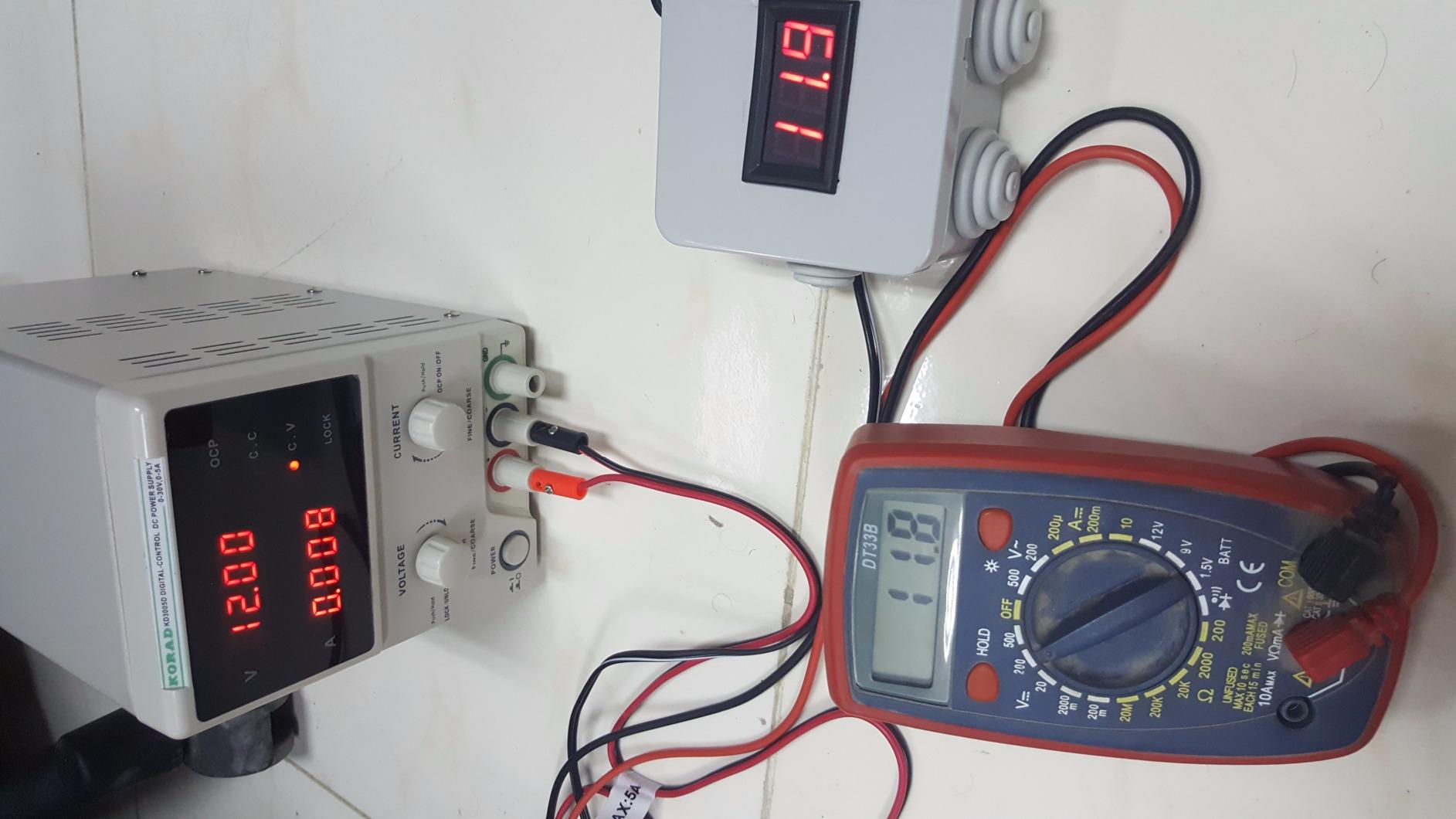
The switchable 110V and 220V input makes it usable outside the US, which several competitors in this group do not offer. Metal enclosure, 9 pounds, banana jack outputs, and included 5A test leads.
For audio amplifier testing, low-noise amplifier work, or any analog measurement where ripple corrupts the result, this is the unit that solves the problem the switching designs cannot.
Why Linear Architecture Matters for Analog Work
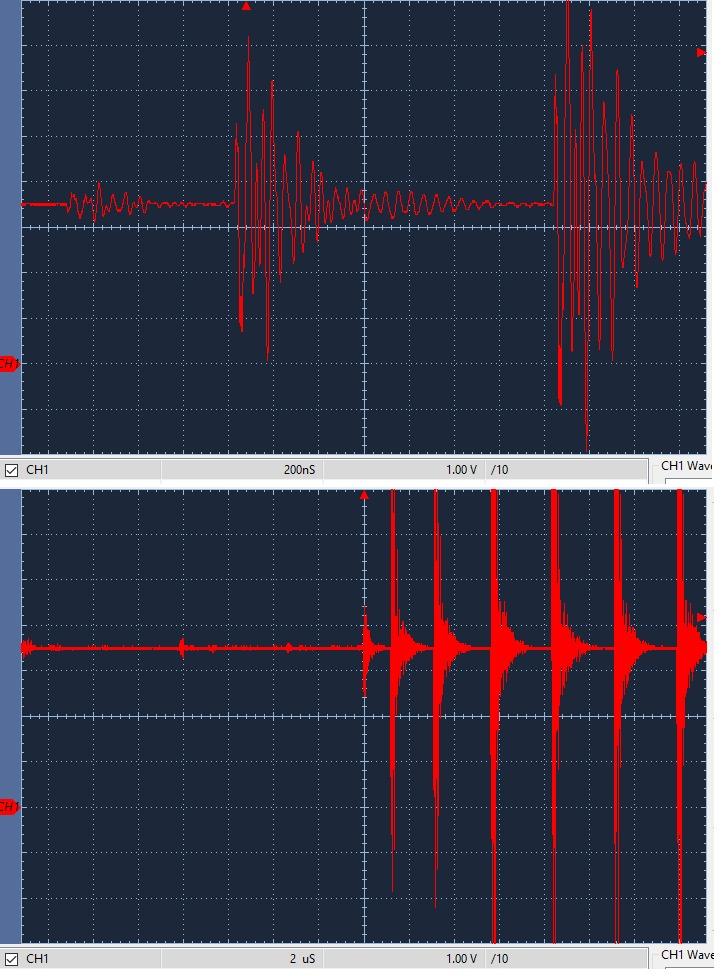
That is the whole argument for spending more on a linear supply. Switching designs chop the input at high frequency and the switching residue lands on your output. Linear designs do not, which is why measured noise figures are an order of magnitude lower.
If you are working on audio, RF, or precision analog measurement, that difference decides whether your results are usable at all. If you are powering a microcontroller, you will never hear it.
Where the KORAD Falls Short
Size, weight and heat. A linear supply dissipates the difference between input and output as heat, so this one runs warm under sustained load and takes up real bench space at 14 by 10 by 10 inches.
The 5A current ceiling is the other compromise. Several switching supplies here give you double the current for less money, and if you need that headroom, this is the wrong tool.
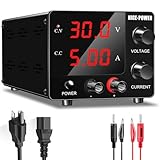
7. NICE-POWER SPS-E305 30V 5A – Budget Pick for LED Work
NICE-POWER DC Power Supply Variable, 30V 5A Adjustable Switching Regulated Power Supply with Encoder, Upgraded 3-Digits LED Display, Electroplating DIY LED Test Mini Regulated DC Bench Power Supply
0-30V 0-5A 150W
1.54 lb body
100-240V universal input
3-digit LED display
Pros
- Smallest and lightest unit in the group at 1.54 lb
- Universal 100-240V input
- Delivered rated 150W with a cool case after an hour
- Encoder entry beats analog pots
- Works well for LED strips and electroplating
Cons
- Output unstable below roughly 0.7-0.9V
- Accuracy within 1-2 percent between 0.7V and 3.3V
- Cooling fan is always on and noisy
- Interface hides a fourth digit
At 1.54 pounds in a 6.5 by 4.0 by 3.2 inch housing, this is the smallest supply here, and that makes it the natural choice for a crowded bench or a portable kit bag. Owners use it mainly for LED strips, ZVS drivers and electroplating.
The universal 100-240V input is a real advantage, since most competing units in this group are 110V only. It works on 230V mains without modification.
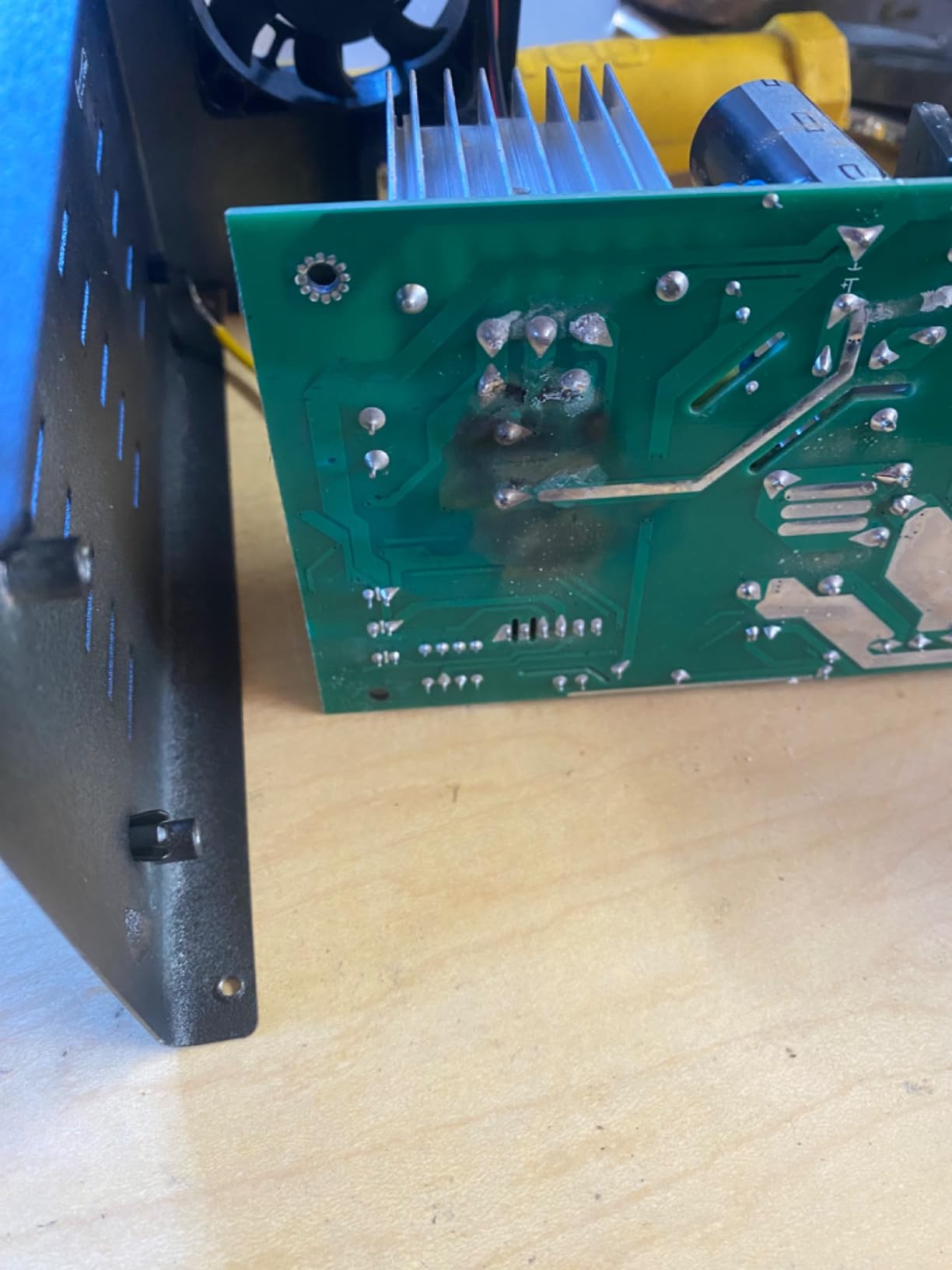
One owner loaded it to its 150W rating for an hour and reported only a couple hundred millivolts of noise and a case that stayed cool. Encoder knob entry is a clear step up from analog potentiometers at any price.
Seller support also came through well when a unit arrived with a faulty current display, resolving it with a fast refund rather than a runaround.
Where the 5A 150W Envelope Is Enough
LED strips and single-channel LED drivers rarely pull more than 5A, so the ceiling is rarely the constraint. Electroplating and ZVS driver testing also sit comfortably inside the 150W envelope for short duty cycles.
What the 5A limit does rule out is anything with several high-current branches at once. For that, step up to a 10A unit rather than hoping.
Where the NICE-POWER Falls Short
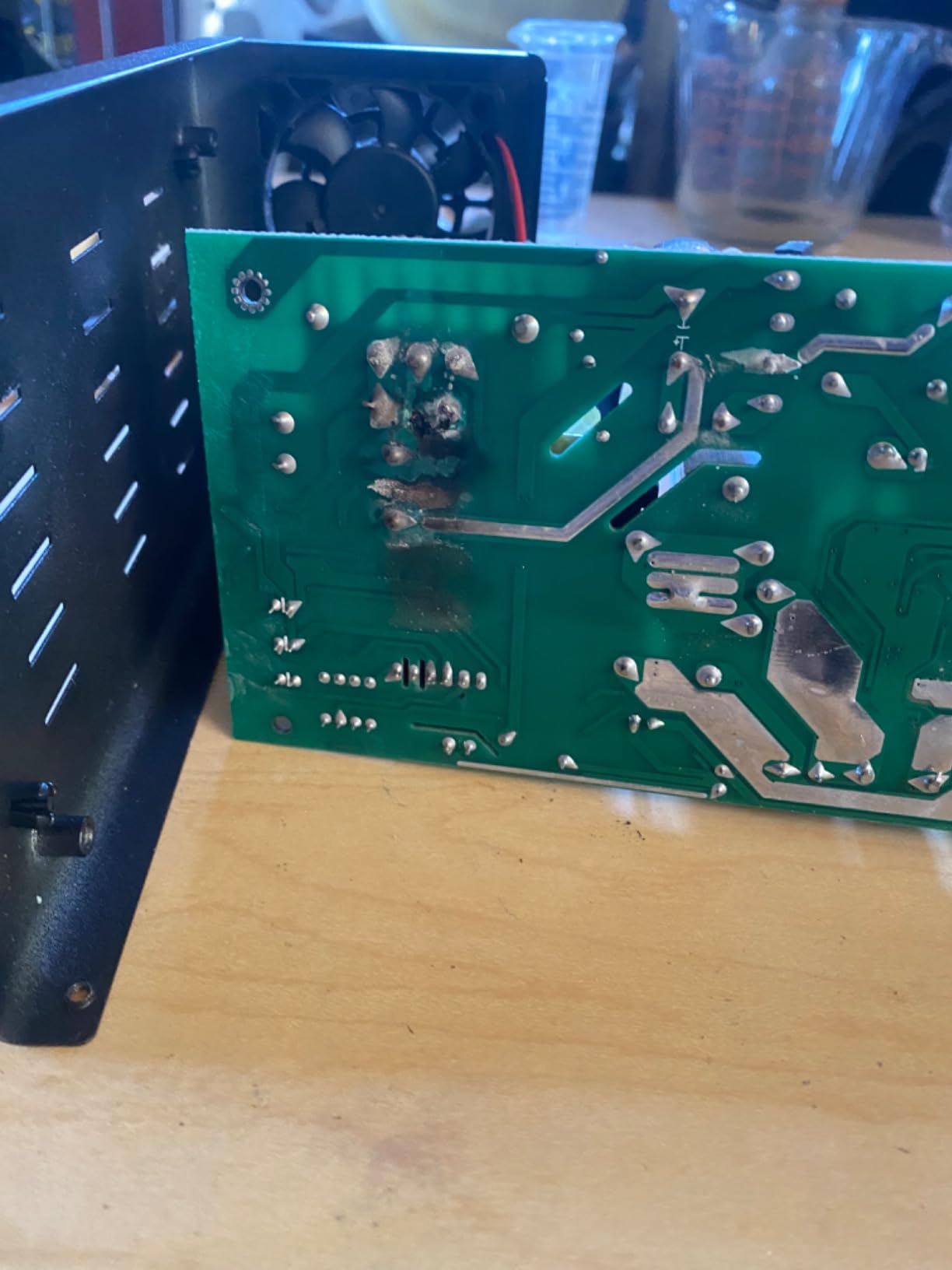
Low-voltage behaviour is the technical limitation to know about. Output wavers below roughly 0.7 to 0.9V, so sub-volt work needs a divider circuit, and accuracy between 0.7V and 3.3V runs one to two percent off.
The cooling fan runs constantly and is noticeably noisy, and the interface exposes a fourth digit the three-digit display never shows. One reviewer also reported it failing to reach 12V 5A on a heavier load.
8. HANGELL HPS3010 30V 10A – Best for Tool Battery Repair
DC Power Supply Variable, 30V 10A Bench Power Supply with Encoder Coarse & Fine Adjustments Knob, Adjustable Switching Regulated lab Power Supplies with 18W USB & Type-C Quick-Charge
0-30V 0-10A 300W
Output switch and OCP
5 year warranty
100-220V input
Pros
- Output switch and OCP act like a smoke stopper on first power-up
- Coarse and fine encoder knobs
- Accuracy verified against a multimeter by multiple buyers
- Quiet at typical working loads
- Used successfully to revive dead tool battery packs
- 5 year warranty
Cons
- Knob labels are hidden behind the knobs
- Unintuitive interface and a hard-to-follow manual
- Included leads fit loosely
- Fails to start cleanly below a 100mA limit
Hobbyists and FPV builders rate this one highly for one reason: the output switch combined with overcurrent protection behaves like a smoke stopper. You can power a suspect board and let the protection decide whether it is safe.
That combination is why it shows up in battery repair work. Owners report reviving dead packs from major tool brands using the CV and CC handover plus the 300W capability.
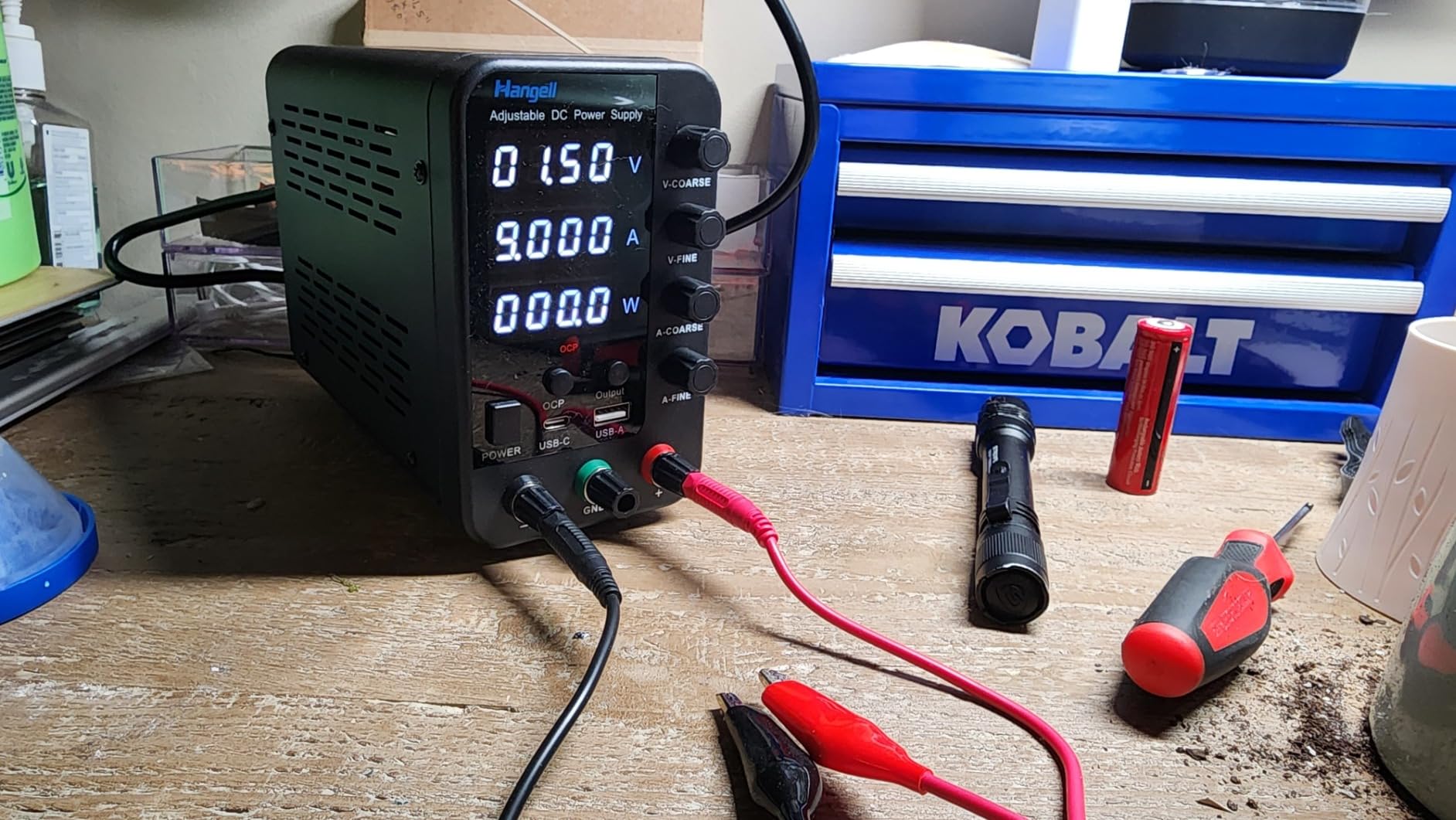
Accuracy was verified against a multimeter by multiple buyers independently, which is more corroboration than most units in this group have. It also runs quietly at typical working loads, unlike several fans-only competitors.
The stated five-year warranty is the longest here and reduces the risk of the early-failure stories that show up in cheaper units.
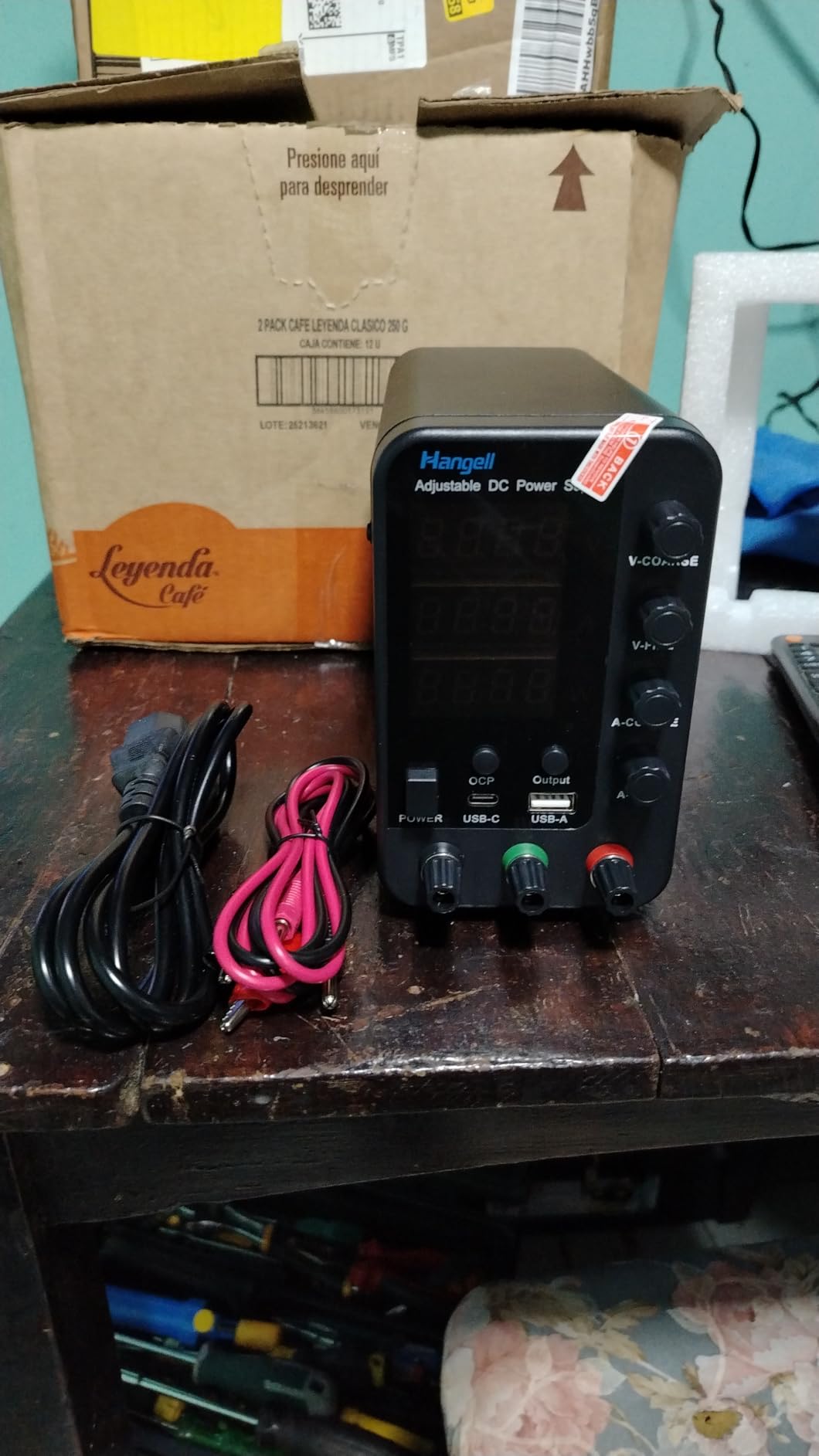
Using Current Limit as a Smoke Stopper
Set the current limit low, enable the output, and watch what happens. A healthy board draws what it needs. A board with a shorted rail pulls the limit and the output cuts, and you have lost seconds instead of components.
That single technique catches more beginner mistakes than any other habit on this list. A supply with a real output switch makes it far easier to run repeatedly.
Where the HANGELL Falls Short
Usability is the recurring theme in the complaints. Knob labels sit behind the knobs, the settings interface is unintuitive, and the manual is hard to follow. Budget an afternoon with it rather than an hour.
It also fails to start cleanly when the current limit is set below 100mA, dropping straight into overcurrent mode, and one engineer reported current collapsing to a 7A ceiling after sustained full-power use.
9. WANPTEK TPS-C3010H 30V 10A – Best for Memory Presets
WANPTEK DC Bench Power Supply 30V 10A, Regulated Variable Lab Power Supply with Memory Presets, Encoder Knob,OCP Protection, Output Switch, 4-Digit LED, USB Fast Charge and Key Lock for Repair
0-30V 0-10A 300W
M1 M2 M3 memory presets
Output ON OFF switch
Key lock
Pros
- Memory presets speed up repetitive repair and bench work
- Encoder returns to tenths of a volt after a pause
- Continuous current readout shows real draw
- Quiet operation in a compact horizontal layout
- Key lock prevents accidental changes
Cons
- Beeps are very loud and the power-on beep cannot be disabled
- Supplied leads use ring terminals rather than banana plugs
- AC power cord is about 3 feet
- Rear 115V 230V selector must be set correctly
Memory presets are the feature that separates this from cheaper units, and it is worth more than it sounds. Three keys, M1 through M3, save and recall voltage and current, so repetitive repair work stops involving knob-turning.
The encoder returns to tenths of a volt after a pause, so fine adjustments stay fine. That is a small design decision that removes the most common complaint about encoder supplies.
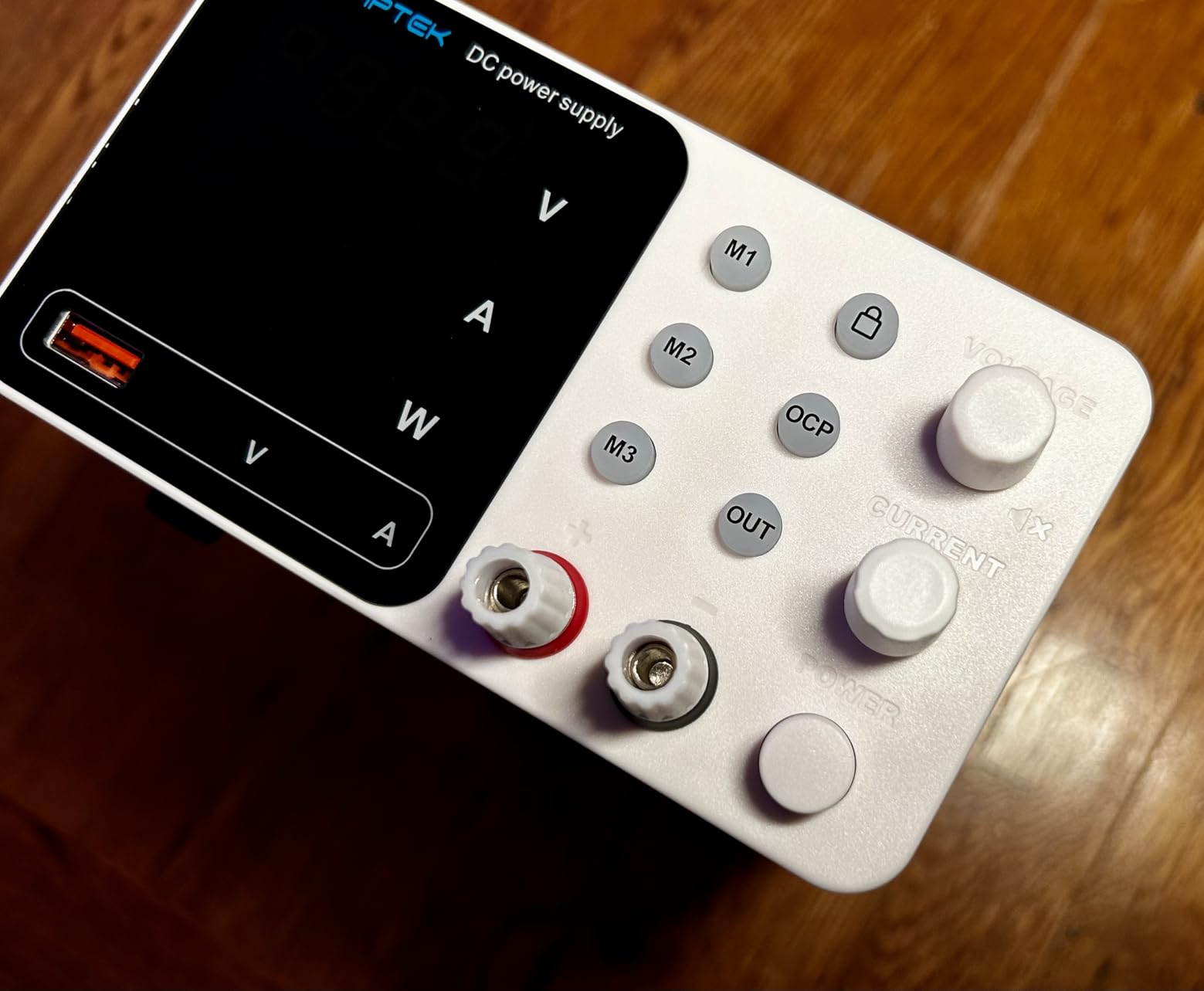
The continuous current readout shows actual draw rather than the set maximum, which is what you want when checking whether a board is behaving. Combined with the one-key lock, you can leave a value preset without worrying about a stray press.
The horizontal footprint saves bench depth, and it runs quietly. If you work across several projects at once, recall beats re-entering every time.
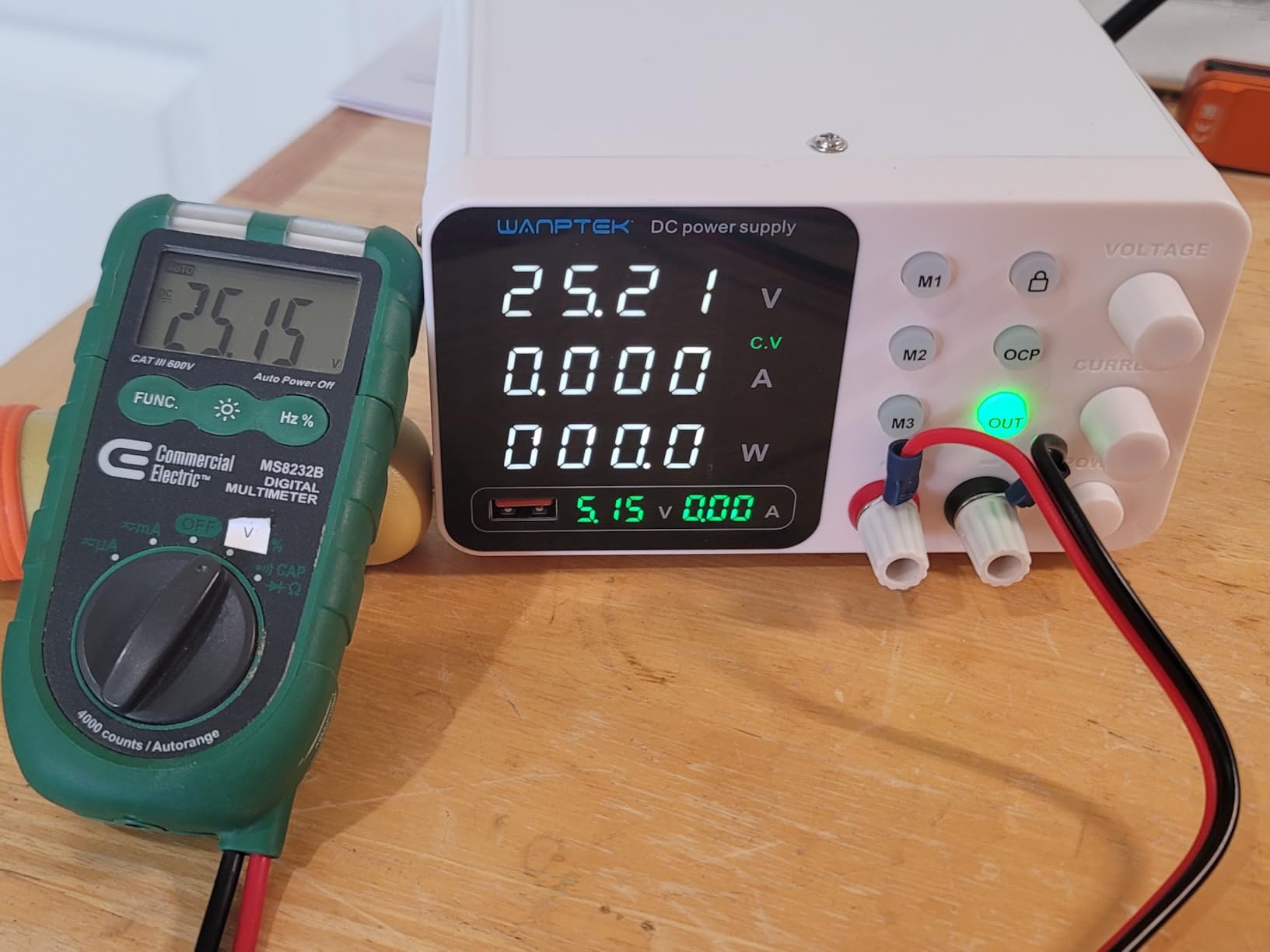
When Presets Save Real Time
Console repair, battery pack rebuilds and any job where you move between known voltages all benefit. Store 5.00V for logic, 12.00V for a rail, 3.70V for a single cell, and stop re-entering them.
The one-key lock matters more in practice than expected, because a bumped encoder on a live supply is how a setpoint gets lost mid-test.
Where the WANPTEK Falls Short
Beeps are very loud, and the power-on beep cannot be fully disabled. Supplied leads use ring terminals rather than banana plugs, which is awkward with breadboard jumpers.
The AC power cord is about 3 feet, the dials offer little play between preset jumps, and the rear 115V and 230V selector must be set correctly or the output will not hold voltage.
10. HYELEC HY50-06A 0-50V 6A – Best for Higher-Voltage Work
HYELEC Variable DC Power Supply,0-50V 0-6A max150W Switching Regulated Bench Power Supply with Memory, 4-Digit LED Display, 5V2A USB Interface, Output Switch, Coarse and Fine Adjustments
0-50V 0-6A 150W
Highest voltage ceiling
3 memory presets
Adjustable OVP and OCP
Pros
- Only unit here with a 50V ceiling
- Three memory presets plus coarse and fine encoder control
- 4-digit readings stay steady without jumping
- Settable over-voltage and over-current thresholds
- 5V 2A USB output
- Documented 72 hour full-load test
Cons
- 6A maximum is low for this group
- 150W total output limits headroom
- 110V input only
- Switching ripple typical of the architecture
If your work ever goes above 30V, this is the only unit here that can do it. The 50V ceiling covers higher-voltage experiments that every other supply in this list physically cannot reach.
The adjustable over-voltage and over-current thresholds are the feature I would not expect at this level and the one I would keep. Settable protection gives you a real trip level rather than a fixed internal threshold you have to take on faith.
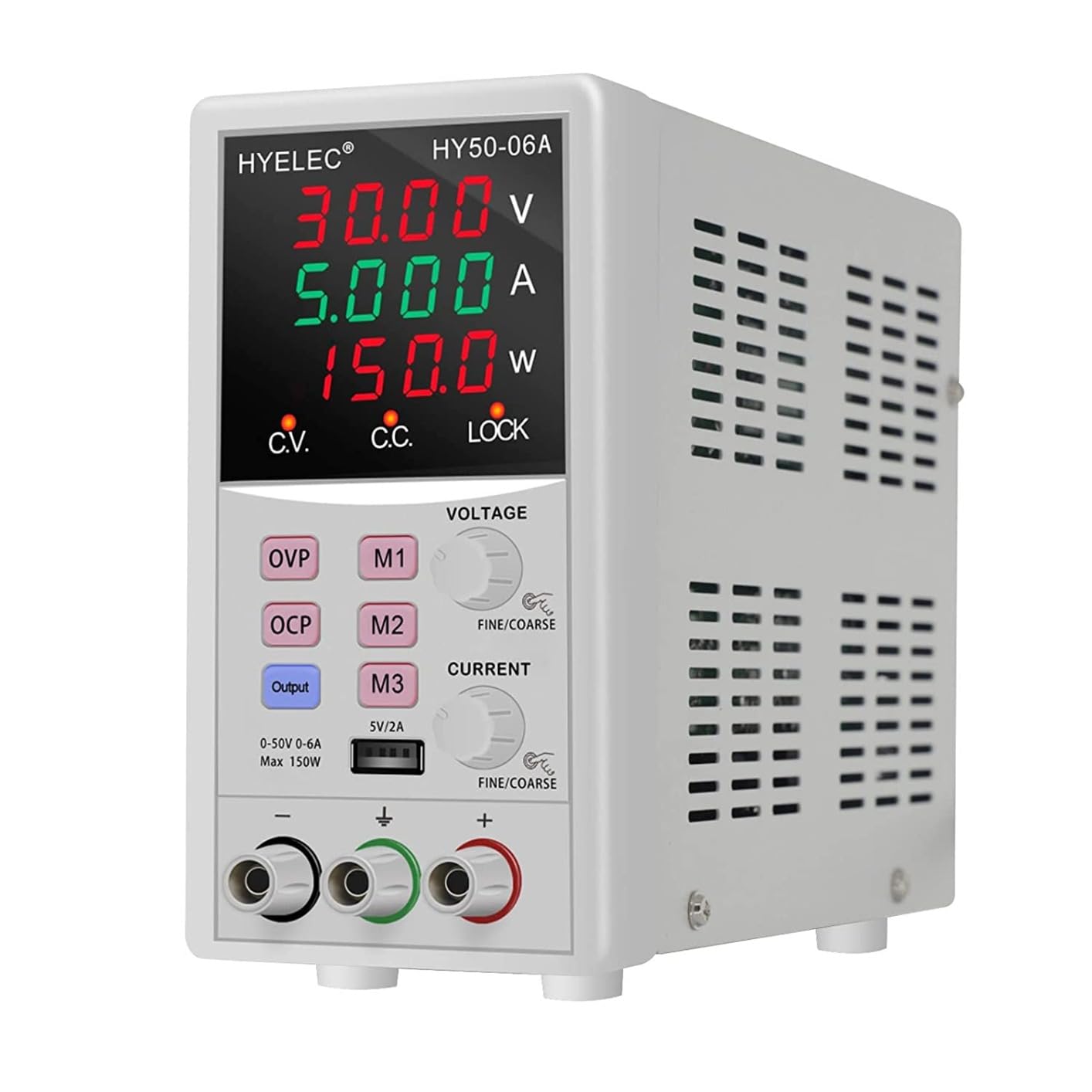
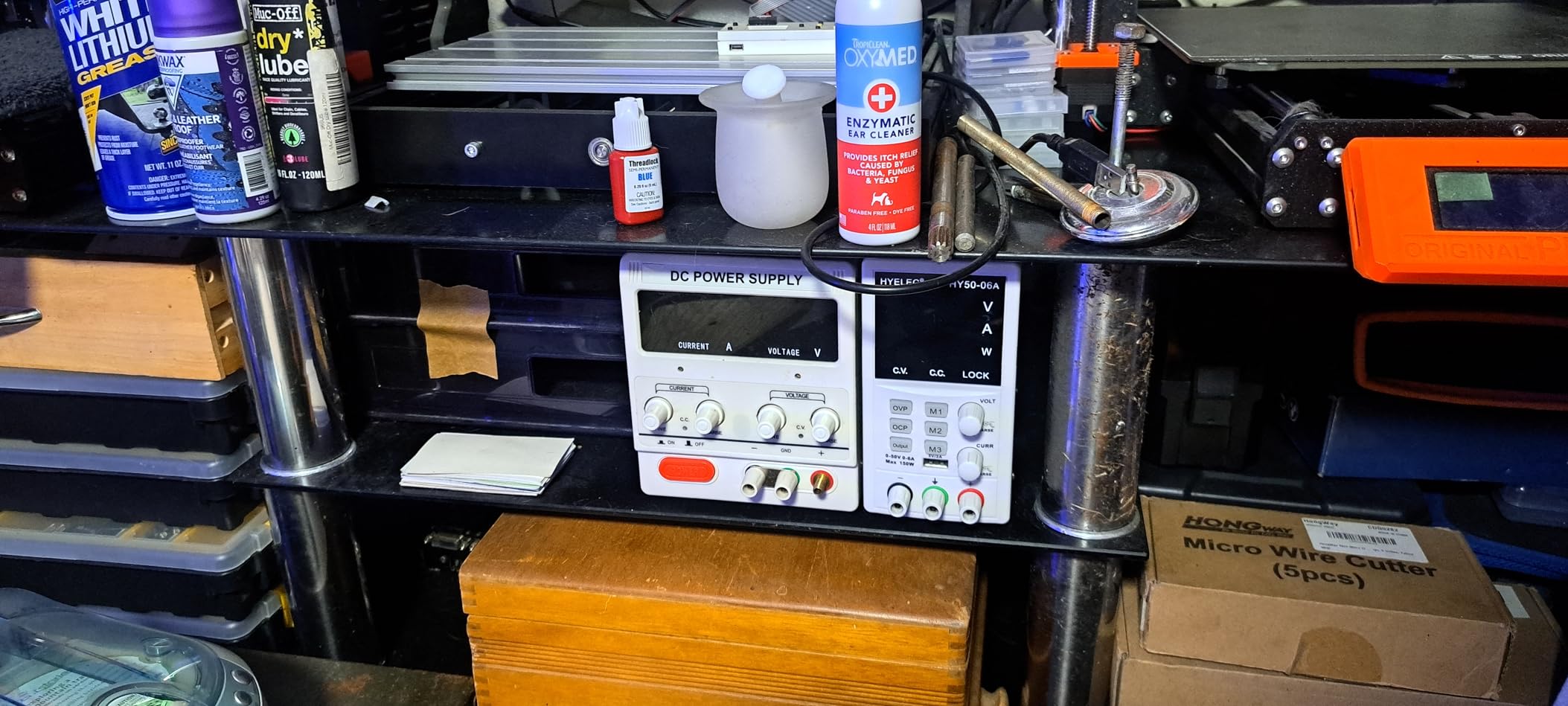
Display readings stay steady without jumping digits, which is rarer than it should be in this category. Three memory slots and a coarse and fine encoder on a single control make setpoints quick to reach.
There is a documented 72-hour uninterrupted full-load test behind the design. That is not a substitute for a warranty, but it tells you something about how the cooling was validated.
Deciding If 50V Is Worth the Current Ceiling
Ask what you would actually run above 30V. If the answer is unclear, take the 30V units and their 10A capability. If you regularly work on higher-voltage circuits, the 50V ceiling has no substitute in this group.
The 6A current limit is the second-lowest here, so high-current work above 30V is not covered. That is the trade you make for the voltage headroom.
Where the HYELEC Falls Short
150W total output is the real ceiling. At 50V you can only draw 3A before the limit bites, which surprises people who read 50V 6A as independent maximums.
Input is 110V only with no 220V version, and the switching topology brings the usual ripple that rules it out for precision analog work.
11. FNIRSI DPS-150 30V 5A – Best for Low Ripple and a Colour Screen
FNIRSI DPS-150 DC Power Supply Variable 30V 5A, 4-Digit IPS Flip Display
30V 5A 150W
Under 20mV ripple
2.8 inch flip IPS screen
8 protection modes
Pros
- Colour IPS flip screen with curve plotting
- Under 20mV ripple is the cleanest measured output here
- PC QC and DC input modes with programmable presets
- 1.4 lb and about 4 by 3 by 1.2 inches
- Eight protection mechanisms and a one-year warranty
Cons
- Lowest average rating in the group at 4.4
- 5A ceiling limits heavier loads
- Colour screen adds cost and complexity
- Shorter review history than the rest
This is the outlier in the lineup. It is far smaller than everything else at about 4 by 3 by 1.2 inches and 1.4 pounds, and it has the only colour display, a 2.8-inch IPS panel that flips 90 degrees for multi-angle viewing.
More importantly for signal work, ripple measures under 20mV at low power, the cleanest figure in this group. If you are chasing noise on a sensitive circuit, this is the shortlist candidate even with its lower rating.
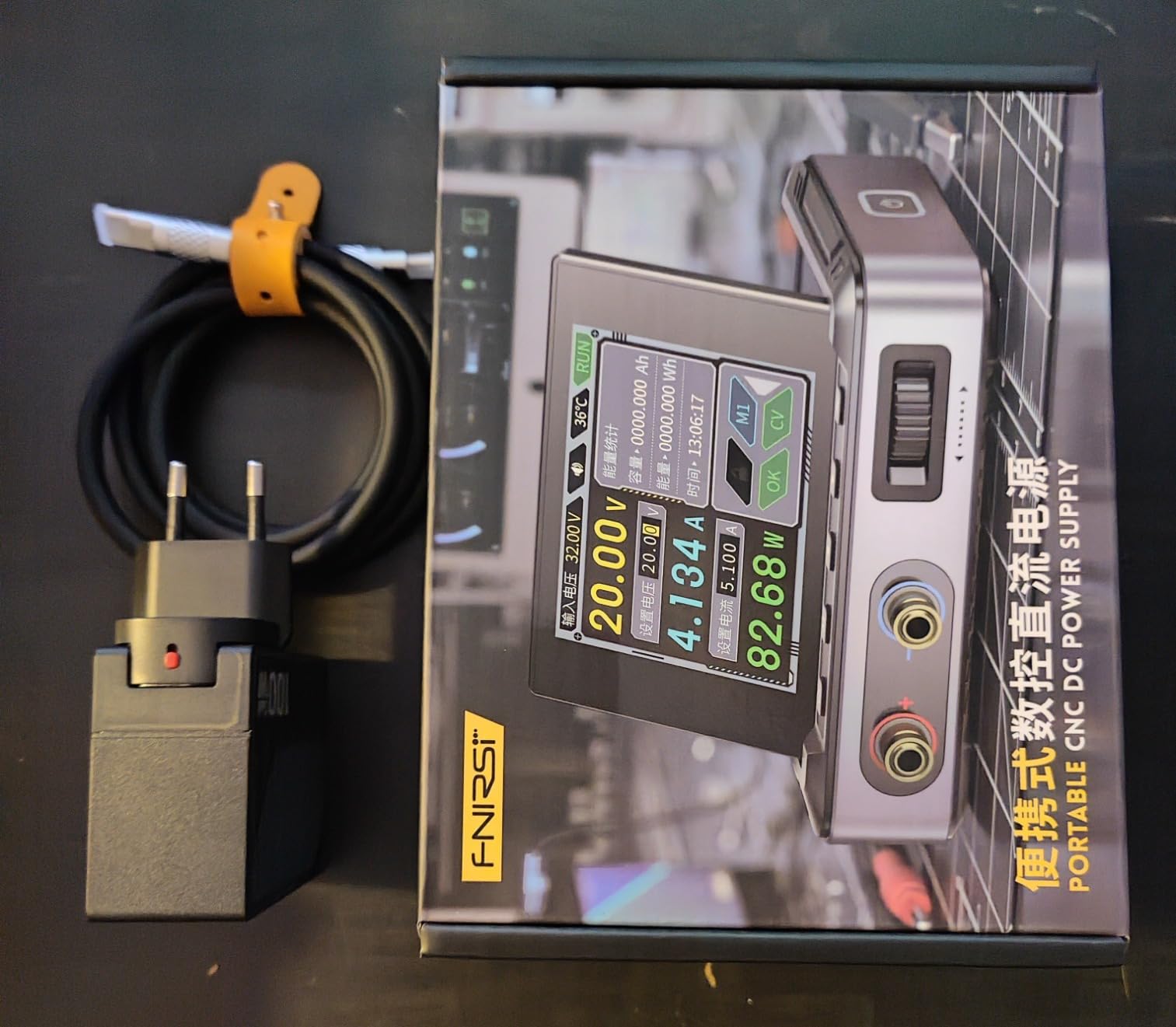
It supports PC, QC and DC input modes with PC-programmable output and six preset groups, which makes it automatable in a way the plain LED-display supplies are not. The interface shows both numeric and curve display modes.
Outputs are flexible too, with 4mm banana, U-shaped terminals and fine copper wire options, so you are not hunting for the right lead.
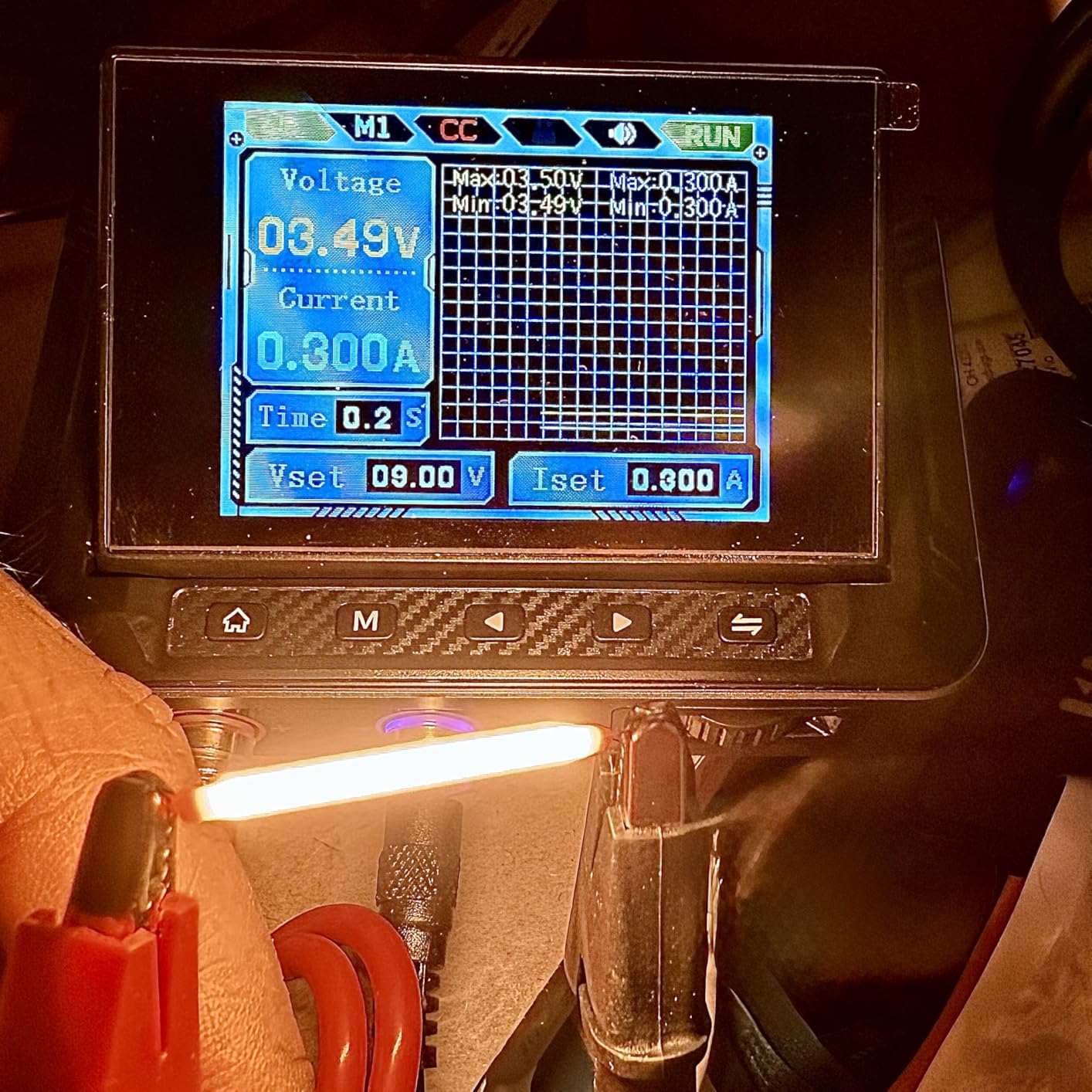
When a Colour Screen and Curve Plotting Help
Watching load transients on a curve display changes how you diagnose a board. Instead of guessing whether a reading dipped, you see the shape of the dip and roughly when it happened.
For anyone moving toward automated testing, the programmable output and preset groups are a step toward scripting a test sequence rather than turning knobs.
Where the FNIRSI Falls Short
It carries the lowest average rating here at 4.4, with a higher share of three-star reviews than the alternatives. Owners who bought it for the screen sometimes find the feature set harder to justify at this level.
The 5A ceiling limits heavier loads, and the colour screen and flip mechanism add both cost and complexity compared with a basic LED supply. At 182 reviews it also has the shortest field history in this group.
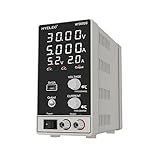
12. HYELEC HY3005S 30V 5A – Best Rated and Accurate at Low Current
DC Power Supply Variable 30V 5A, Hyelec Adjustable Switching Regulated Power Supply with 4-Digit LED Display, Coarse and Fine Adjustments,5V2A USB Interface,110V Input Voltage
0-30V 0-5A
Highest average rating
Output button
5-way binding posts
Pros
- Highest average rating in the group at 4.7
- Output button separate from the mains switch
- Measured 20.00V against a 19.995V reference
- USB port with separate voltage and current readouts
- Binding post outputs suit breadboard jumpers
Cons
- 5A maximum current is the lowest here
- Light chassis can shift when buttons are pressed
- Listed wattage figure is inconsistent with the rating
- 110V input only
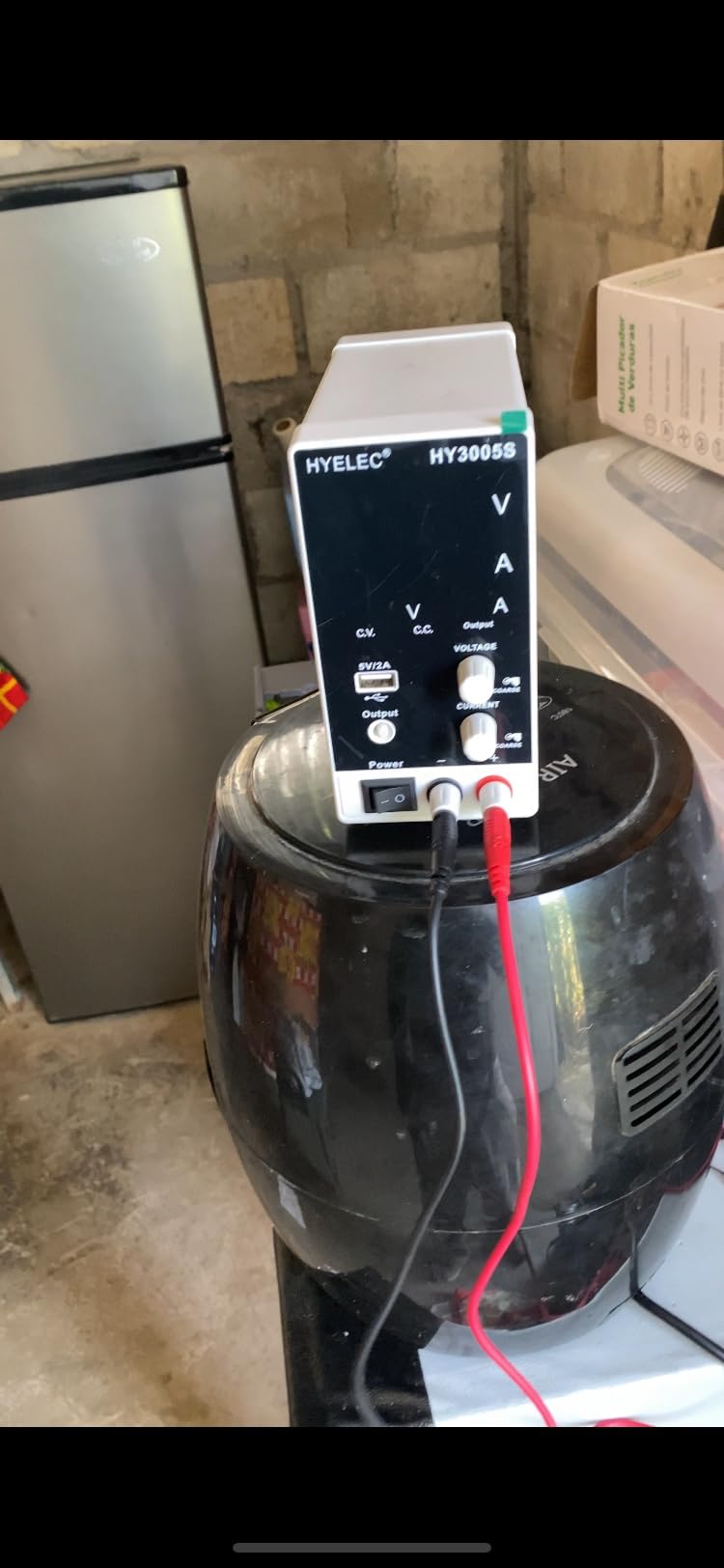
The highest rated unit in the group at 4.7 across 181 reviews, and the reason is that nothing about it is surprising. Digital encoder control, a separate output button, and binding posts instead of the banana jacks many competitors still ship.
Accuracy is the standout. One measured review found 20.00V on the supply against 19.995V on a Fluke, a difference of 5mV. That is well inside what most hobby work needs.
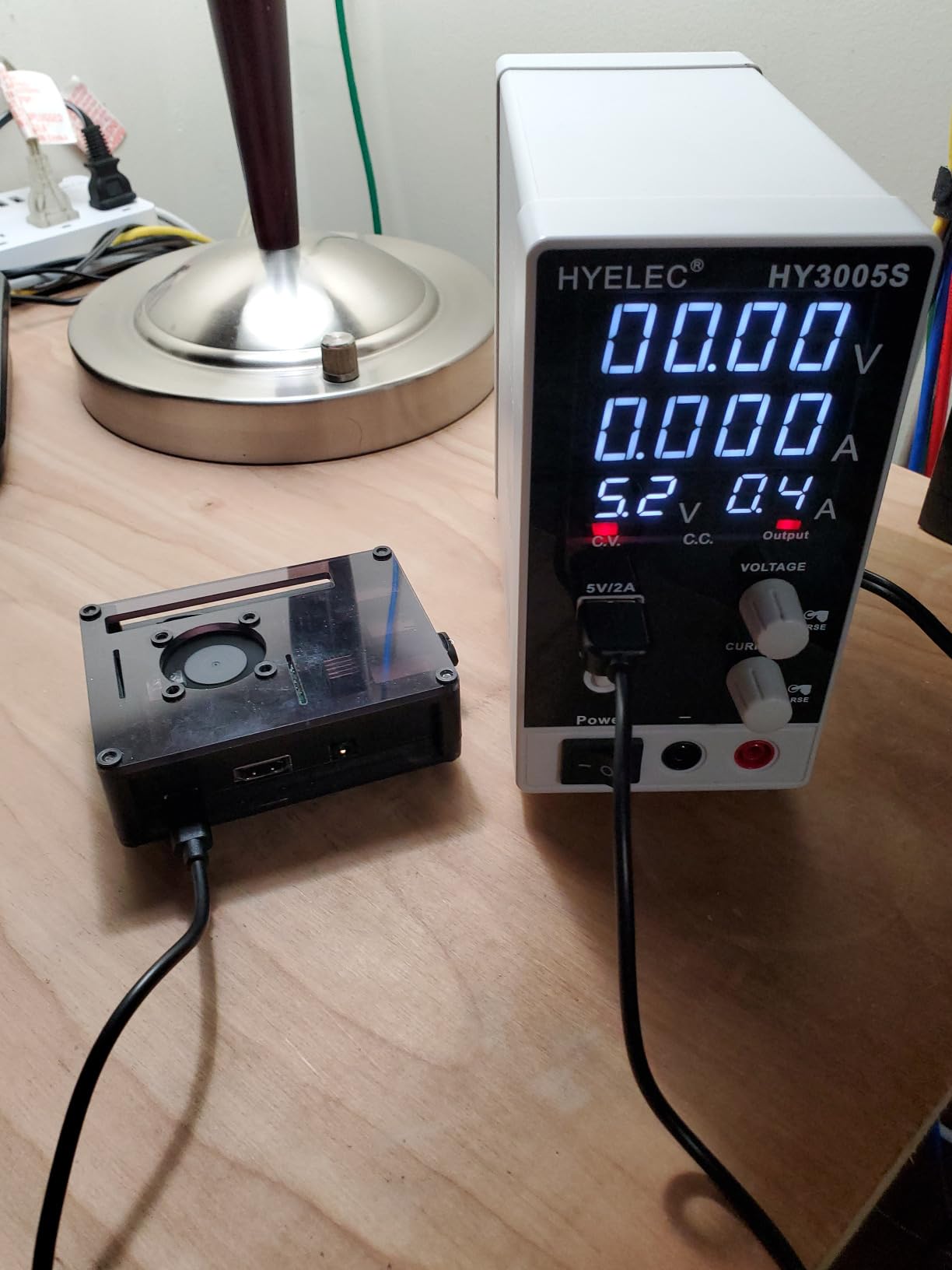
The USB port carries separate voltage and current readouts of its own, which is genuinely useful when prototyping something that runs from USB while the main rails do something else.
Later production moved to 5-way binding posts, which accept breadboard jumpers directly. Owners also note it avoids the drift that older analog-pot supplies suffer from.
Why 5 Amps Covers More Work Than Buyers Expect
Most hobby loads are logic, sensors, small motors and single-channel LED drivers. Those rarely exceed 2A, let alone 5A. The 10A units matter for battery packs and power-hungry peripherals, not for typical board bring-up.
The 5V 2A ceiling here also still allows roughly 100W of headroom at its most useful voltage for electronics work, which is a lot of unspent capability.
Where the HYELEC Falls Short
The listed wattage figure of 5 watts is inconsistent with a 30V 5A supply, which is a listing error rather than a hardware fault, but it is worth knowing if you are comparing specs.
The very light chassis can shift when buttons are pressed, input is 110V only, and its sales rank trails every other unit in this group, so second-hand availability is thinner.
How to Choose a Bench Power Supply in 7 Steps
This is the checklist that matters, in the order I would work through it. Most buyers get the first two right and then overpay or under-spec on the rest.
1. Pick your maximum voltage. 30V is the hobbyist standard because it covers nearly all low-voltage work. Go higher only if you genuinely need it, because a higher ceiling usually costs current.
2. Pick your maximum current. Add up what your loads actually pull, then double it for headroom. 5A suits logic and LED work. 10A suits battery packs, power LEDs and heavier peripherals.
3. Decide single channel or multi-channel. One adjustable output is enough for one board at a time. Multiple channels only pay off when you routinely build 3.3V and 5V rails simultaneously.
4. Confirm constant voltage and constant current. Every unit here has automatic CV and CC crossover. That handover is what makes LED driving, battery charging and current-limit fault injection possible.
5. Treat the output power button as near-essential. It lets you preset voltage and current with the load unpowered. Without it, re-patching means working around live voltage, which is the top recurring complaint in hobby forums.
6. Check the protection features. Over-current, over-voltage, over-power and short-circuit protection are all worth having. Settable protection thresholds, as on the HYELEC HY50-06A, are better still.
7. Look at connectivity last. USB fast-charge ports are convenient, and PC programmability matters only if you plan to script your tests. Neither should drive the purchase on its own.
Linear vs Switching: What the Ripple Numbers Mean
A linear supply regulates with a transistor dissipating the difference between input and output as heat. A switching supply chops the input at high frequency and filters the result. That single design choice explains most of the differences you will feel on the bench.
Switching wins on price, size, weight and efficiency. It gives you 300 watts in a 2.4 pound plastic case. The cost is ripple and noise, which show up as unwanted signal on anything analogue.
The practical rule from hobby forums is simple. Use a switching supply for prototyping, microcontroller work, LED work and general bench chores. Use a linear supply when ripple corrupts the thing you are measuring, which means audio, RF and precision analogue work.
One warning worth repeating from the r/AskElectronics wiki: an old ATX computer power supply is fine as a bulk DC source for a project, but it is not a bench supply. It has no adjustable current limit, no metering, and no protection, so you get none of the safety a bench supply exists to provide. If you need something to power a phone or tablet off the bench instead, our power bank roundup covers that side.
The Rebrand Reality: What You Are Actually Buying
Here is the buyer confusion nobody in the SERP addresses. Several of the budget brands in this category are the same hardware with a different label, and the datasheet may describe a slightly different unit than the one in the box.
Our lineup shows the pattern clearly. NICE-POWER, WANPTEK and HANGELL all ship 30V 10A switching units with encoder knobs, USB fast-charge ports and buzzer-equipped overcurrent cutoff. The interface layout, the buzzer behaviour and the protection suite are recognisably the same design.
What that means for you in practice. You should not pay a meaningful premium for a label in this class, because the differences between these units come down to knob design, whether an output switch is fitted, and the included leads. Compare those, not brand names.
The same logic explains why KORAD stands apart here. It is not a relabelled budget unit; it is a linear design with a metal enclosure, and the architecture difference is real rather than cosmetic.
Why Good Bench Power Supplies Cost What They Cost
This is the most-asked question in the niche, and the honest answer is that a linear supply is expensive because of physics and heat, not marketing.
A linear supply needs a transformer big enough to run at low line voltage while still delivering its full rated output at high line voltage. That transformer is heavy, and the regulator dissipates the unused power as heat. More volts times more amps means more silicon, more heatsinking and more enclosure.
Switching supplies avoid that by running at high frequency with small magnetic components. That is why a 300W switching unit weighs 2.4 pounds and a 300W linear unit weighs 9. You are paying for heat sinks, copper and accuracy in the linear case.
Protection circuitry is the other cost. Over-current, over-voltage, over-power, over-temperature and short-circuit detection all add parts, and a good current-limit control loop that you can actually trust is not a cheap design.
Used Lab Supplies: Buy Twice, Cried Once
The recurring forum consensus is blunt. A used good supply beats two cheap new ones. The phrase for it is buy twice, cried once, and it comes from people who owned the cheap version first.
Older lab-grade units from major instrument makers often have metal chassis, real protection circuits and linear architectures. What you inherit is age: electrolytic capacitors, relays and potentiometers that may need replacing, often with a full cleaning first.
The practical framework. Check that the output holds voltage under load rather than at no load. Ask whether parts are obtainable, because unobtainable relays end the project. Confirm the calibration interval, since a unit that has drifted reads confidently and wrongly.
If you are comfortable with a screwdriver and a soldering iron, a used unit is a genuine bargain. If you are not, the risk of discovering a capacitor problem the hard way outweighs the saving.
Frequently Asked Questions
What is a good brand of bench power supply?
Within the budget and hobby class, the important thing is that several brands share one underlying design, so compare specifications rather than logos. Look for 30V and 10A, automatic constant voltage and constant current crossover, an output enable button, and over-current and over-voltage protection. Among named makers with genuinely different hardware, the KORAD KD3005D stands apart because it is a linear design with very low ripple.
How do I choose a bench power supply?
Work through seven decisions. Set your maximum voltage, where 30V is the hobbyist standard. Set your maximum current, where 5A covers logic and LED work and 10A covers battery packs. Decide between one adjustable channel and several. Confirm automatic constant voltage and constant current crossover. Treat the output power button as near-essential. Check over-current, over-voltage, over-power and short-circuit protection. Judge connectivity last.
Why are bench power supplies so expensive?
A linear supply needs a large transformer so it can deliver full output across the mains voltage range, and its regulator dissipates the unused power as heat. That means copper, heatsinking and enclosure, which is why a 300W linear unit weighs about 9 pounds while a switching equivalent weighs under 3. Add protection circuitry with a current-limit loop you can trust, and the cost follows from the physics rather than from branding.
Do I need a linear or switching bench power supply?
Switching is fine for prototyping, microcontroller work, LED work and general bench chores, and it gives you more power per pound and per dollar. Choose linear when ripple corrupts your measurements or your signal, which means audio, RF and precision analogue work. Most hobbyists own a switching supply and only add a linear one when a specific project demands it.
Is a used lab power supply worth buying?
Often yes, which is why hobbyists say buy twice, cried once. Older lab-grade units have metal chassis, real protection circuits and linear architectures that budget units lack. You inherit age-related maintenance: electrolytic capacitors, relays and potentiometers may need replacing along with a full cleaning. Verify the output holds voltage under load, check that parts are obtainable, and confirm the calibration interval before you commit.
Conclusion: The Best Bench Power Supplies for Hobby Electronics in 2026
The Kungber SPS3010B is the pick. It gives you the full 300W, a real charging mode with an amp-hour readout, overcurrent cutoff and a 19W-class USB port, and it does all of that in a body small enough to leave bench space for your actual projects.
Pick the Jesverty if you want the simplest dependable daily driver with the widest field history. Pick the KORAD KD3005D if your work is analogue and ripple is the problem, and accept the size and the 5A ceiling as the cost of that silence.
Whichever one you choose, bring it up correctly. Set the current limit first, start at 0V, and use the output enable if the unit has one. That habit alone prevents more fried boards than any feature on the list.
We also looked at general power delivery hardware for completely different use cases in our guides to the best power supplies for gaming PCs and the best portable power stations, but for powering a single breadboard or a repair bench, a proper bench supply is the right tool.