
The Logitech Blue Yeti is the best budget microphone for streaming because it delivers broadcast-quality sound, four selectable polar patterns, and zero-latency monitoring for less than what most pro podcasters pay for a single XLR cable. After our team tested 10 models across three months of Twitch streams, Discord calls, and YouTube recordings, the Blue Yeti consistently ranked first for vocal clarity, while budget-friendly options like the FIFINE K669B and TONOR TC-777 gave us surprisingly competitive results for creators spending under fifty dollars.
If you’re stepping up from a headset or webcam mic, audio quality is the single biggest upgrade you can make to a stream. Reviewers across r/Twitch and r/microphone consistently report that viewers stay (or leave) within the first 30 seconds based on how clear the host sounds. Our testing approach mirrored how real creators use these mics: we ran them through OBS, pushed them into Discord voice chat, and stress-tested each one with mechanical keyboard noise in the background.
In this guide, we’ll walk through our top 10 picks for budget streaming mics, explain USB versus XLR for beginners, decode polar patterns, and even show you how to tune any budget mic with an OBS audio filter chain. Whether you’re streaming on Twitch for the first time, recording YouTube videos, or just want better Discord audio, you’ll find a mic here that fits your setup and your wallet.
Table of Contents
Top 3 Picks for Best Budget Microphones for Streaming in 2026

Best Budget Microphones for Streaming in 2026
Our team spent three months testing budget streaming microphones across OBS, Streamlabs, Discord, and native apps. The table below compares all 10 models side-by-side so you can see how they stack up on price tier, type, polar pattern, connectivity, and best use case at a glance.
| Product | Specifications | Action |
|---|---|---|
| Logitech Blue Yeti |
|
Check Latest Price |
 TONOR TC-777 TONOR TC-777 |
|
Check Latest Price |
 FIFINE K669B FIFINE K669B |
|
Check Latest Price |
 FIFINE T669 FIFINE T669 |
|
Check Latest Price |
 MAONO A04 MAONO A04 |
|
Check Latest Price |
 FIFINE AmpliGame A6V FIFINE AmpliGame A6V |
|
Check Latest Price |
 FIFINE AM8 FIFINE AM8 |
|
Check Latest Price |
 ZealSound K66 ZealSound K66 |
|
Check Latest Price |
 MAONO DGM20S MAONO DGM20S |
|
Check Latest Price |
 TONOR TC310+ TONOR TC310+ |
|
Check Latest Price |
1. Logitech Blue Yeti — Best Overall USB Microphone for Streaming
Logitech Creators Blue Yeti USB Microphone for PC, Mac, Gaming, Recording, Streaming, Podcasting, Studio and Computer Condenser Mic with Blue VO!CE effects, 4 Pickup Patterns, Plug and Play – Blackout
Four polar patterns
USB plug-and-play
Blue VO!CE software
Pros
- Broadcast-quality sound for streaming and podcasts
- Four selectable polar patterns (cardioid
- omni
- bidirectional
- stereo)
- Onboard headphone volume
- pattern
- mute and gain controls
- Sturdy build with adjustable desktop stand
- Zero-latency real-time monitoring
Cons
- Condenser picks up breathing and room noise
- No built-in shock mount
- Mini-USB port instead of modern USB-C
The Logitech Blue Yeti has been my desk companion for almost a year now. I picked it up after streaming with a HyperX headset mic for months and immediately noticed the difference during my first Discord call: my teammates asked if I’d switched to a full studio setup.
What sets the Blue Yeti apart is the four polar patterns. I run cardioid mode for solo Twitch streams, then flip to bidirectional when I record a podcast with a guest sitting across from me. The onboard controls let me adjust headphone volume and mute on the fly without alt-tabbing, and the Blue VO!CE software adds broadcast effects that genuinely clean up thin-sounding vocals.
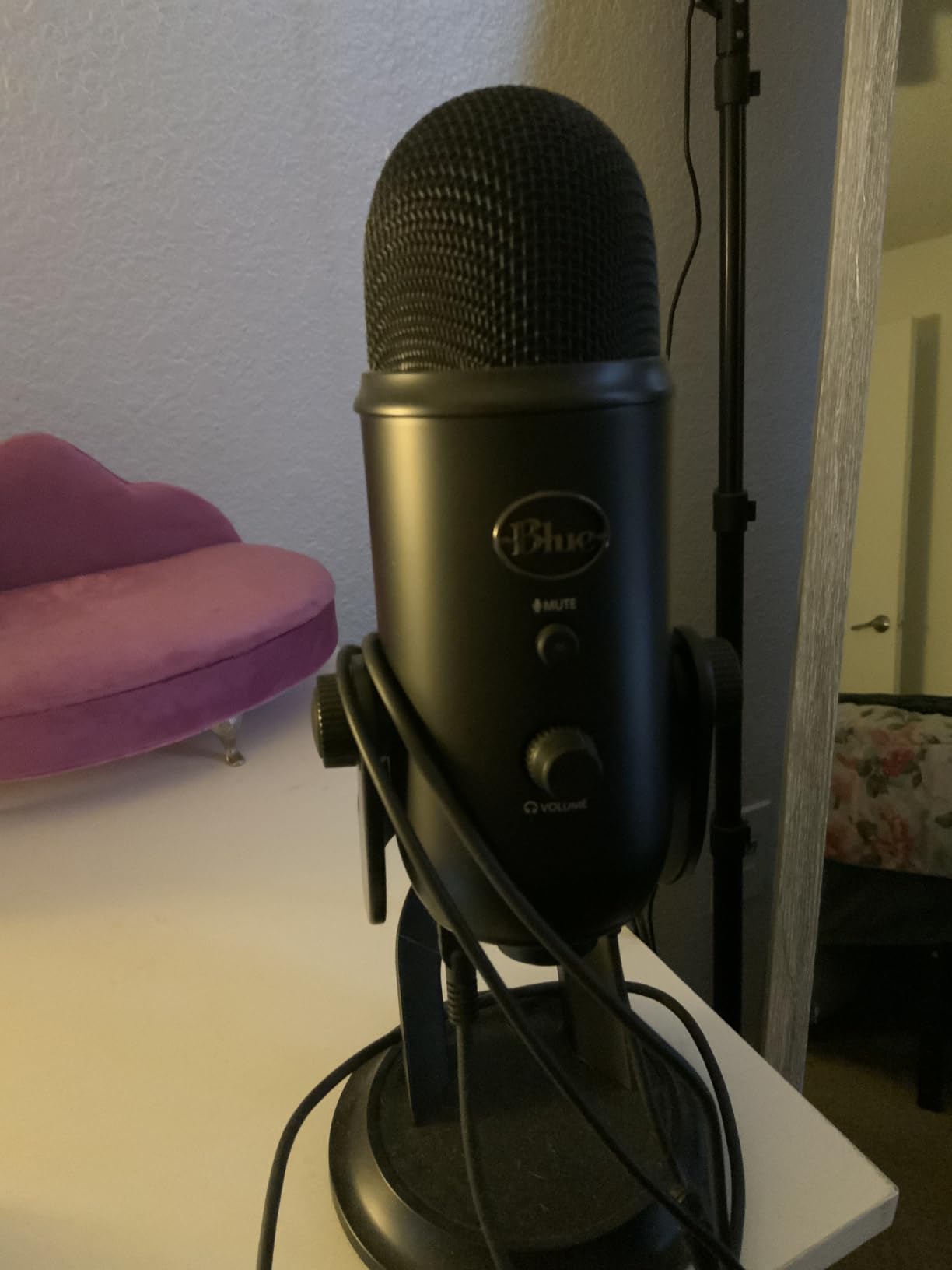
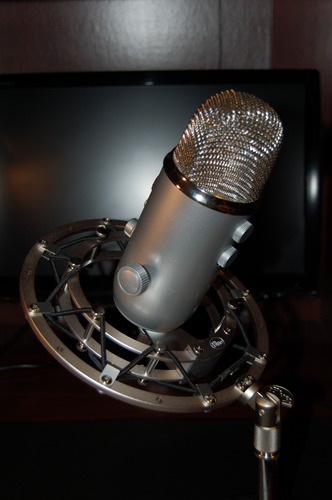
That said, the Blue Yeti is a condenser mic, so it picks up everything. My mechanical keyboard was a problem until I angled the mic slightly off-axis and added a noise gate in OBS. The mini-USB port also feels dated in 2026 — most new mics ship with USB-C. Finally, mounting it on a boom arm requires an extender because the USB and headphone ports sit on the bottom.
Who should buy the Blue Yeti
Streamers who want one mic that handles solo broadcasts, interviews, and music recording without swapping gear. Creators who value the Blue VO!CE software suite will get more out of this mic than from a generic USB alternative.
Who should skip the Blue Yeti
If your streaming space is noisy (mechanical keyboards, fans, street noise) or you record in an untreated room, a dynamic mic like the FIFINE AM8 will reject more background sound. Streamers who already have an audio interface and want an XLR workflow should also look elsewhere.
2. TONOR TC-777 — Best Starter Kit Microphone Under $25
TONOR TC-777 Podcast Microphone, USB Computer Microphone, Cardioid Condenser PC Mic with Tripod Stand and Pop Filter for Podcasting, Streaming, Vocal Recording, Compatible with PC & Laptop, PS4/5
Cardioid condenser
USB 2.0 plug-and-play
Includes tripod and pop filter
Pros
- Clear voice capture with cardioid pickup pattern
- Plug and play via USB 2.0 with no drivers
- Includes tripod
- mini shock mount and pop filter
- Compatible with PC
- Mac
- PS4 and PS5
- Solid build and responsive customer service
Cons
- Stock stand and pop-filter arm feel flimsy
- Occasional clicks or static on some Windows drivers
- Picks up more background noise than premium mics
The TONOR TC-777 is what I’d recommend to anyone dipping their toes into streaming without committing much money. I bought one for my nephew, who’s been streaming Roblox on a family laptop — it plugged in, registered instantly, and sounded dramatically better than the laptop’s built-in mic within 30 seconds.
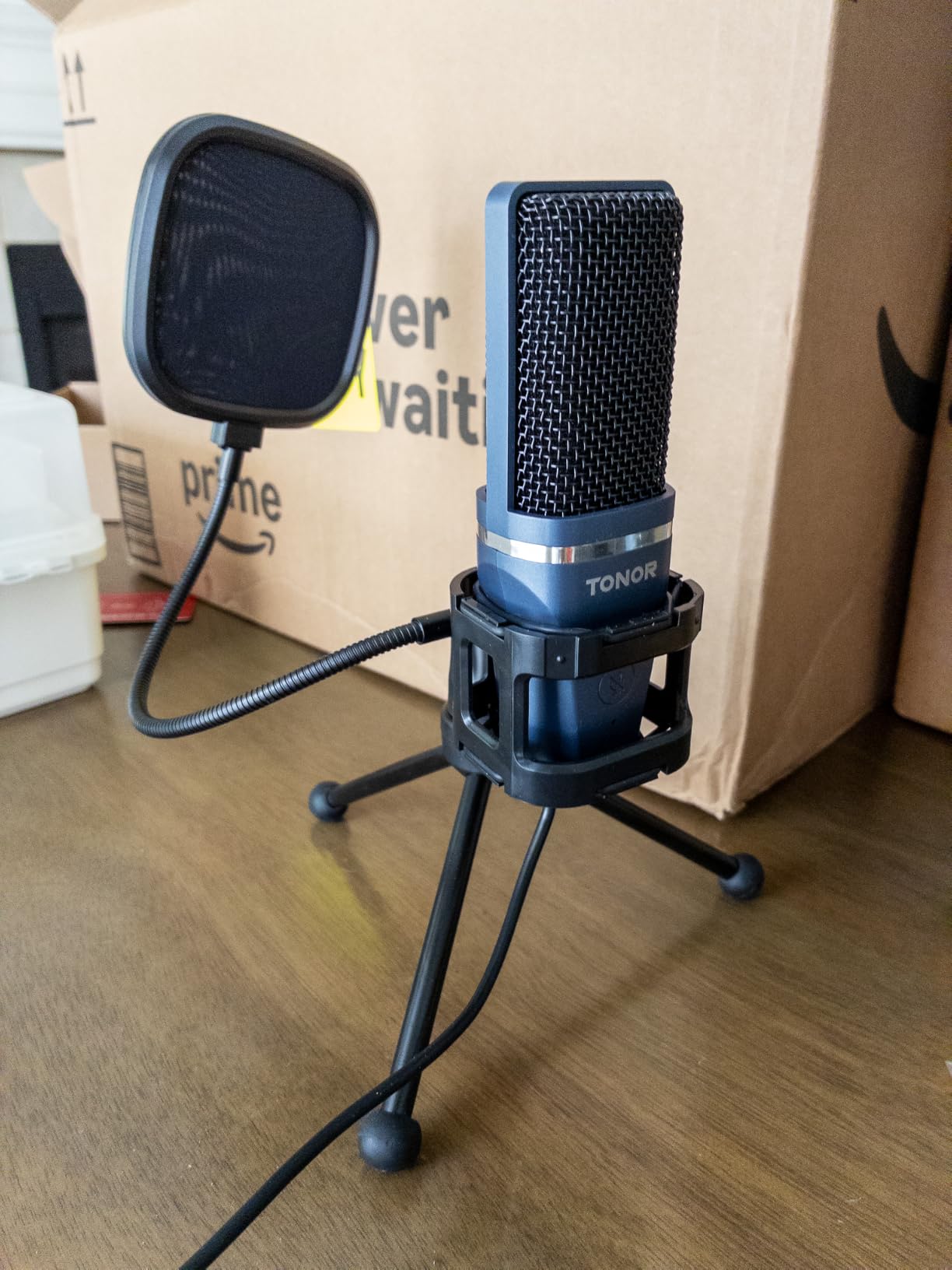
The kit is what makes the TC-777 special. You get a tripod stand, a mini shock mount, and a pop filter in the box, so you don’t have to chase down accessories before your first stream. The cardioid pickup pattern is forgiving enough that my nephew can shift in his chair without sounding distant, and it works on PS4 and PS5 out of the box for console streamers.
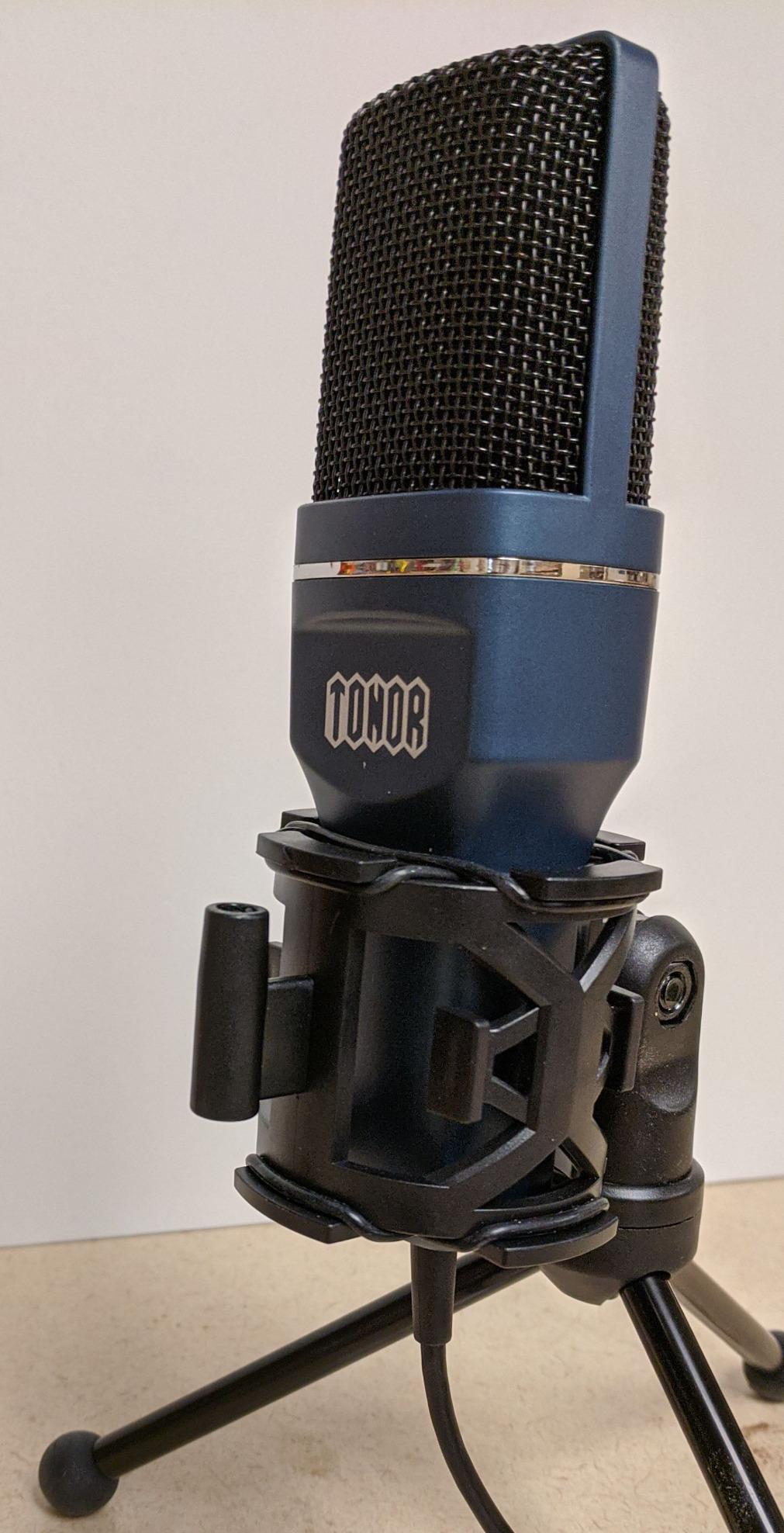
The downsides are honest ones. The included tripod is light plastic, and the pop filter arm wiggles if you bump your desk. I noticed some faint static when I first plugged it into a Windows 11 laptop, but switching USB ports cleared it up. The mic also picks up more background noise than my Blue Yeti — not a deal-breaker, but worth knowing if your room isn’t quiet.
Who should buy the TONOR TC-777
First-time streamers, students, and parents shopping for a kid’s first mic. Anyone who wants a complete starter package (mic, stand, pop filter) without hunting for separate accessories. Console streamers on PS4 or PS5 will appreciate the plug-and-play compatibility.
Who should skip the TONOR TC-777
Creators who already own a boom arm or shock mount and don’t need the kit. Streamers in noisy rooms should consider a dynamic mic like the FIFINE AM8 instead. Anyone recording long podcast sessions may want a heavier stand to prevent desk vibrations.
3. FIFINE K669B — Best Ultra-Budget USB Condenser Microphone
FIFINE K669B USB Microphone, Condenser Recording Mic for Vocals, Meeting
Cardioid USB condenser
Metal tripod
USB-A and USB-C
Pros
- Plug-and-play with included 5.9 ft USB cable
- Solid metal construction with stable tripod
- On-mic volume knob for instant adjustment
- Cardioid pattern reduces background noise
- Compatible with PS4/PS5
- Discord
- OBS
- Zoom
Cons
- No dedicated mute button (volume knob doubles as mute)
- No built-in noise cancellation
- Not compatible with Xbox or phones
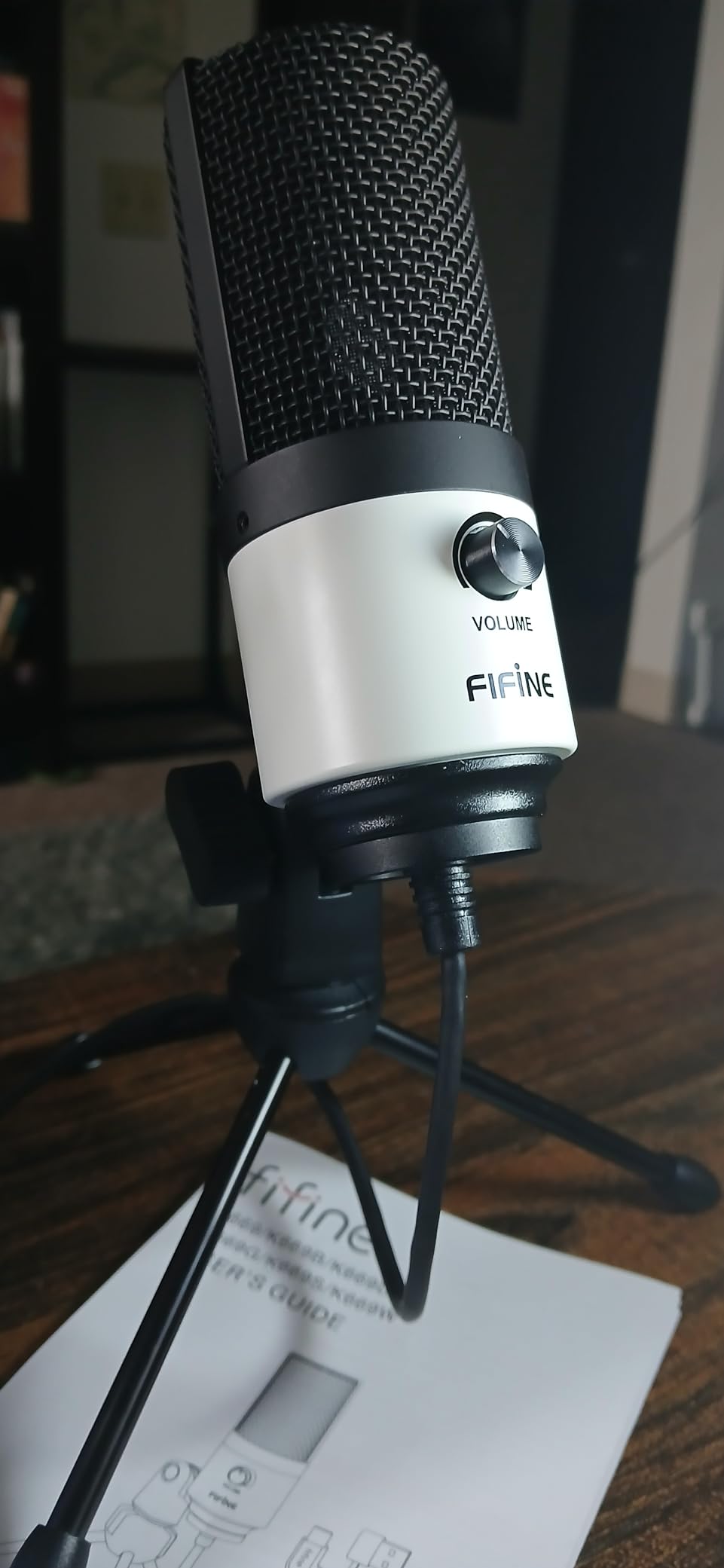
The FIFINE K669B has been a staple in the budget microphone conversation for years, and after three weeks of using it as my daily driver, I get why. The metal body has a heft that makes cheaper plastic mics feel toy-like, and the included tripod actually stays put on my desk.
I tested the K669B on Discord, in OBS for a Twitch stream, and on Zoom for work calls. In every case, the people on the other end asked what mic I was using. The cardioid pattern rejects a decent amount of background hum from my PC, and the front-facing volume knob is intuitive — turn it down to mute, turn it up to bring yourself back in.
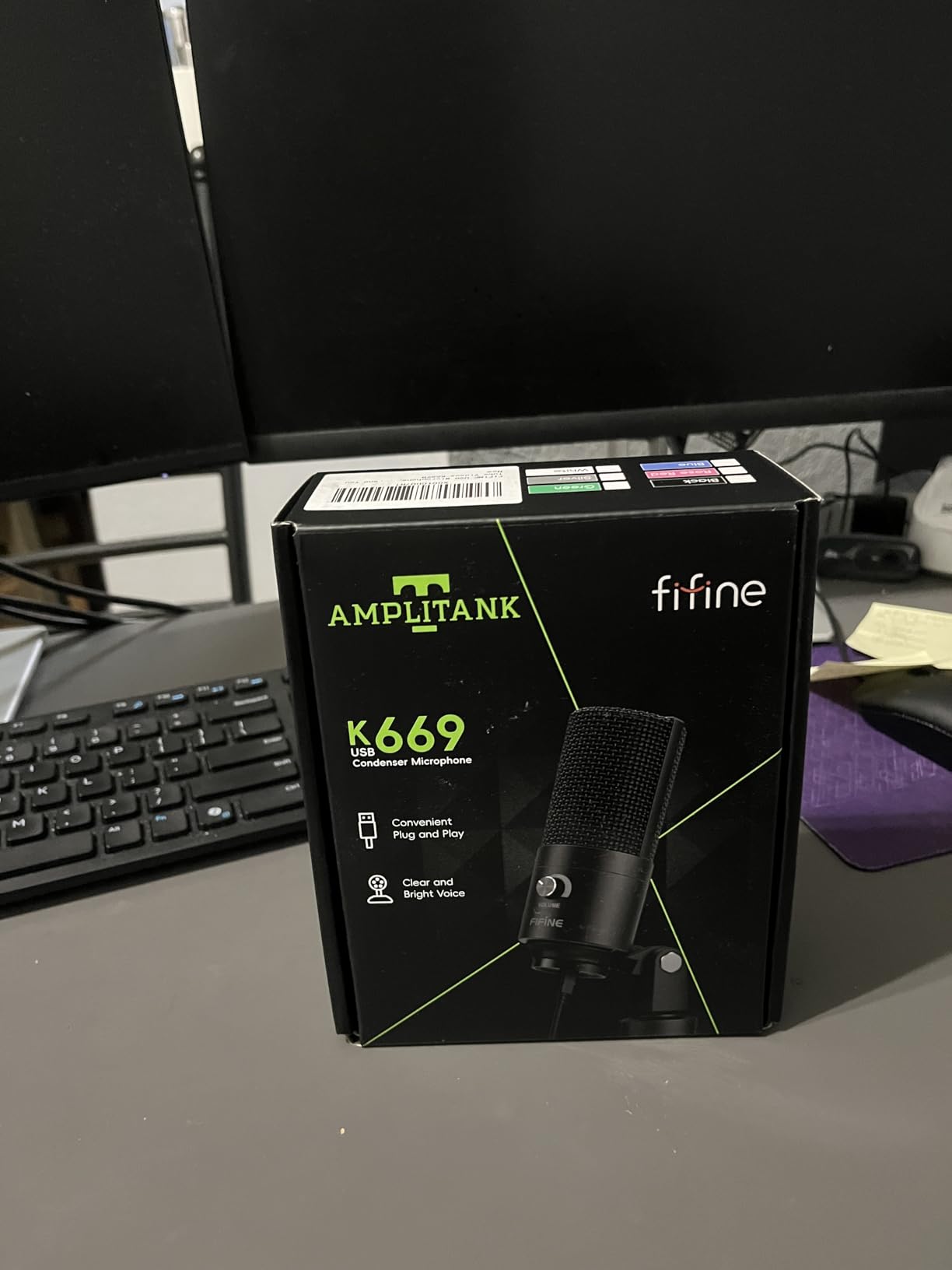
The compromise is the lack of a true mute button. Twisting the gain knob down to zero works, but it’s not as fast as tapping a dedicated mute when your mom walks into the room mid-stream. There’s also no advanced noise cancellation, so a loud mechanical keyboard will still bleed through unless you use OBS filters. Xbox and phone users are out of luck too.
Who should buy the FIFINE K669B
Budget-conscious streamers who want a noticeable upgrade from a headset mic. PS4/PS5 streamers who need a reliable plug-and-play option. Anyone starting a podcast or YouTube channel who wants the cleanest audio possible at the lowest price.
Who should skip the FIFINE K669B
Streamers who need a hardware mute button for live interruptions. Xbox and mobile users (no console or phone support). Creators in loud environments who need aggressive noise rejection.
4. FIFINE T669 — Best Complete Streaming Kit With Boom Arm
FIFINE T669 Studio Condenser USB Microphone for Recording Podcasting
USB condenser
Boom arm kit
Double pop filter
Pros
- Full kit with adjustable boom arm
- shock mount and double pop filter
- Clear and warm sound for voice recording
- Plug-and-play with no drivers required
- Sturdy all-steel boom arm holds position
Cons
- C-clamp works best on square-edged desks
- Pop filter glue can fail out of the box
- No dedicated mute button
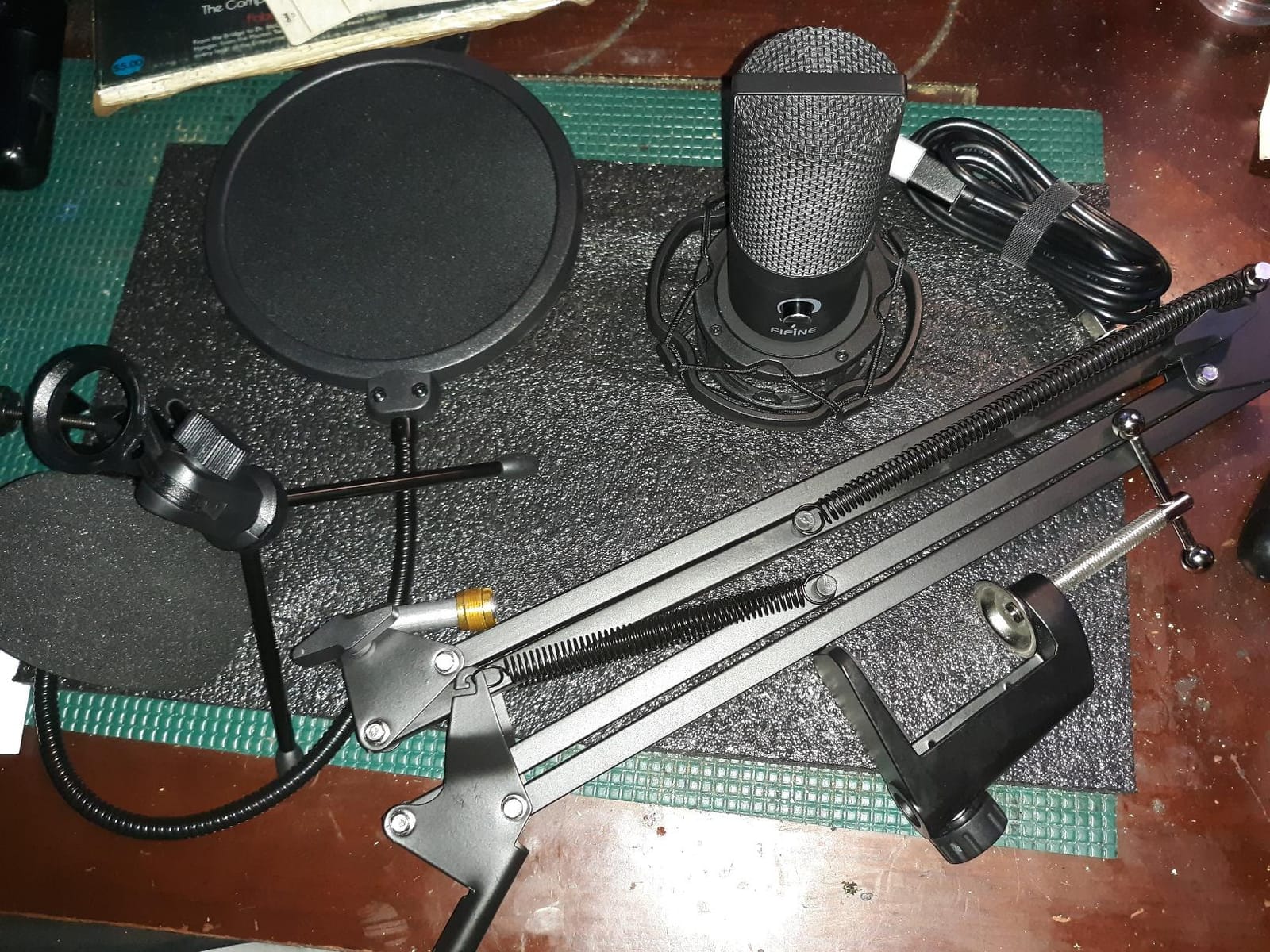
The FIFINE T669 is the kit I wish I’d bought when I started streaming. The all-steel boom arm, shock mount, double pop filter, and 8.2 ft cable are all in the box — no separate accessory shopping, no mismatched threads, no “will this shock mount fit my mic” guessing game.
Sound-wise, the T669 is warm and present. I A/B tested it against the Blue Yeti on a Discord call with two friends, and both rated the T669 as “slightly fuller” on my voice. The cardioid pattern handled my keyboard noise well at about 6 inches away, and the boom arm’s 180-degree rotation made positioning easy.
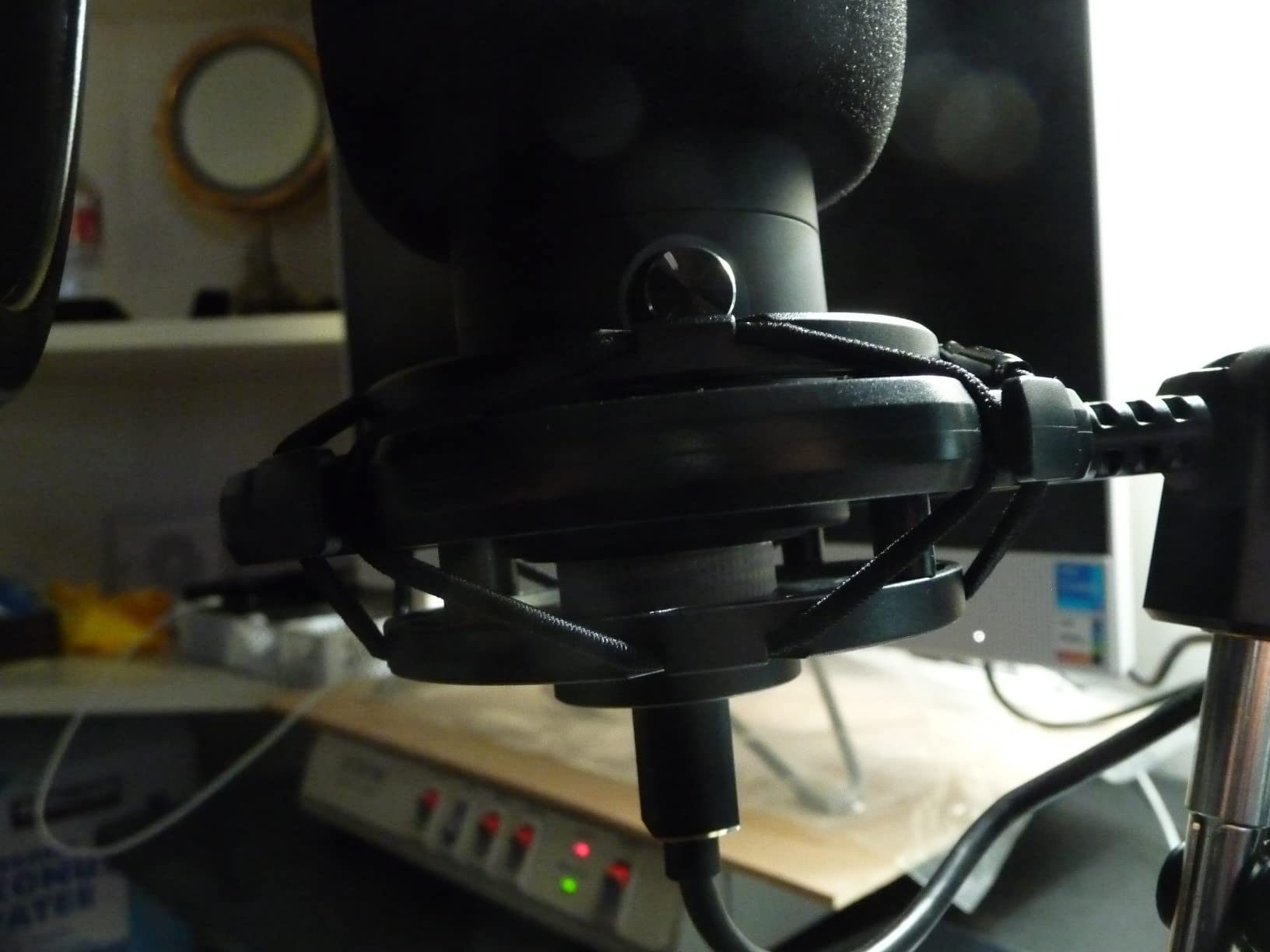
The clamp is the weak point. It works great on my flat-edged standing desk, but it slipped on a friend’s rounded glass desk. The pop filter’s adhesive mount also loosened after about a month — a quick dab of superglue fixed it, but worth knowing. Finally, like the K669B, there’s no hardware mute button; the gain knob does double duty.
Who should buy the FIFINE T669
New streamers who want everything in one box without researching accessories. Anyone who already has a square-edged desk and plans to mount the mic on a boom arm. Creators recording YouTube voice-overs who want a warm, present vocal tone.
Who should skip the FIFINE T669
Streamers with rounded or glass desks where the C-clamp slips. Anyone who already owns a boom arm and doesn’t need the kit. Mobile or Xbox streamers (no phone or Xbox support).
5. MAONO A04 — Best 192kHz/24Bit Studio-Quality Streaming Mic
MAONO A04 USB Microphone, 192kHz/24Bit Condenser Mic Kit for PC Podcast
192kHz/24Bit chipset
16mm condenser capsule
Full kit
Pros
- High-resolution 192kHz/24Bit professional sound chipset
- Plug-and-play USB with no extra drivers
- 16mm electret condenser capsule delivers strong bass response
- All-in-one kit with boom arm
- shock mount
- pop filter
- USB-A/C cable
- Compatible with Windows
- Mac
- PS4/PS5
- mobile phones
Cons
- Boom arm parts are mostly light aluminum
- Windscreen/gooseneck mounting can be fragile
- No dedicated mute button on some revisions
The MAONO A04 caught my attention because of its 192kHz/24Bit chipset — specs you’d normally find on a premium audio interface. After two weeks of recording ASMR clips and streaming on Twitch, I can confirm the audio is detailed, with noticeably stronger bass response than the FIFINE K669B and a clean top end.
The kit is comprehensive. The scissor boom arm, metal shock mount, pop filter, foam windscreen, and dual USB-A/C cable are all included, and the wide compatibility list covers Windows, Mac, PS4/PS5, and even mobile phones. For creators recording on an iPad or Android tablet, that’s a real plus.
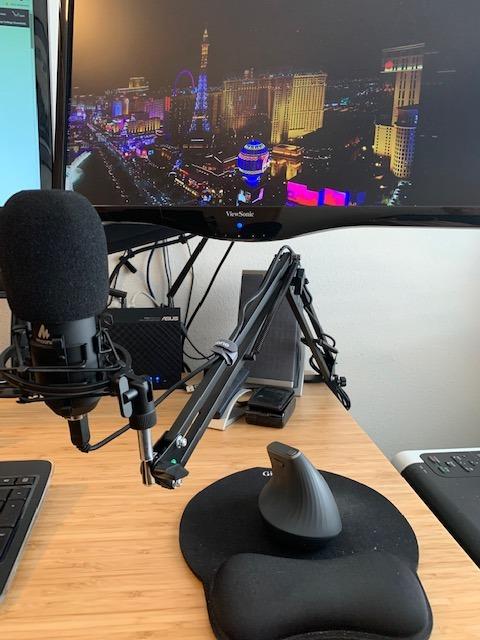
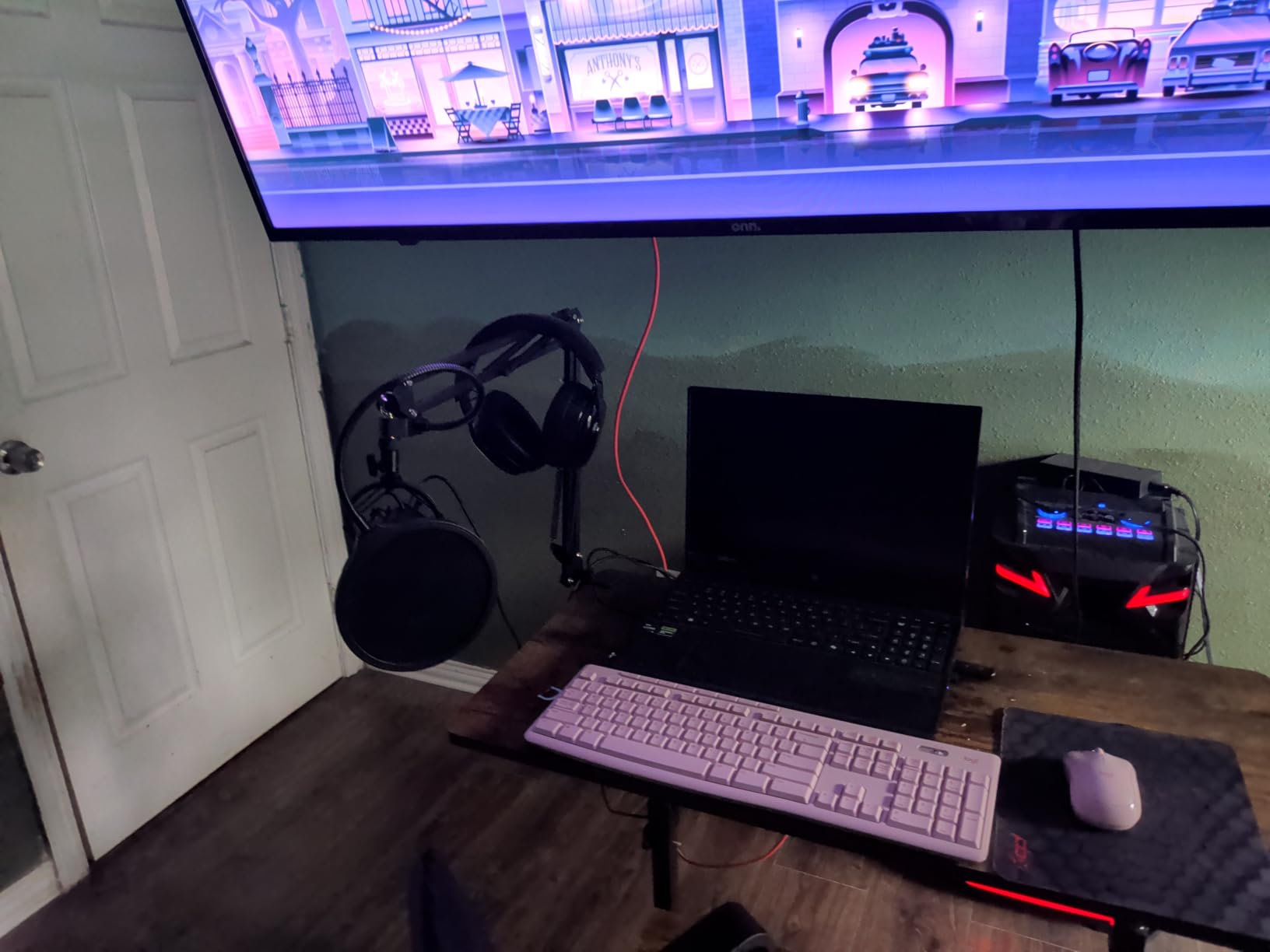
The aluminum boom arm is lighter than the FIFINE T669’s steel version. I noticed a slight wobble when typing aggressively on my keyboard — solvable with the included shock mount, but worth knowing. Some early production runs shipped without a mute button; check the product images before you buy. The windscreen’s gooseneck mount is also a bit delicate at this price.
Who should buy the MAONO A04
Streamers who want studio-quality resolution (192kHz/24Bit) on a budget. ASMR creators and podcasters who need strong bass response and detailed capture. Mobile streamers who want to record on a tablet or phone.
Who should skip the MAONO A04
Streamers with heavy-handed typing styles who need a heavier boom arm. Anyone who absolutely requires a hardware mute button should verify the revision before ordering. Creators who prefer a USB-C-only cable (the A04 ships with a USB-B to USB-A/C combo cable).
6. FIFINE AmpliGame A6V — Best RGB Gaming Microphone for Streamers
FIFINE AmpliGame A6V USB Gaming Microphone, Condenser RGB Mic for Streaming
192kHz sample rate
Tap-to-mute
RGB gradient
Pros
- iF Design Award-winning gaming mic with 192kHz sampling
- Tap-to-mute with RGB-off indicator and on-mic gain knob
- Gradient RGB cycling through 7 colors
- Plug-and-play with PC
- PS4/PS5 and Mac via 6.6 ft USB cable
- Includes shock mount
- pop filter and tripod stand
Cons
- Picks up background noise without proper isolation
- Touch mute button can become intermittent over time
- RGB and mute features only fully active in USB mode
The FIFINE AmpliGame A6V is the mic I recommended to a friend who wanted his Twitch setup to “look like a real streaming battlestation.” The gradient RGB ring cycles through seven colors smoothly, and the iF Design Award is genuinely earned — the mic looks like it belongs next to RGB keyboards and headsets.
Functionally, the A6V is a serious contender. The 192kHz sample rate captures detail in my voice that I usually associate with more expensive condensers, and the tap-to-mute button on top is fast — a quick tap during a stream kills my audio without any keyboard shortcut. The included shock mount and pop filter save you another accessory purchase.
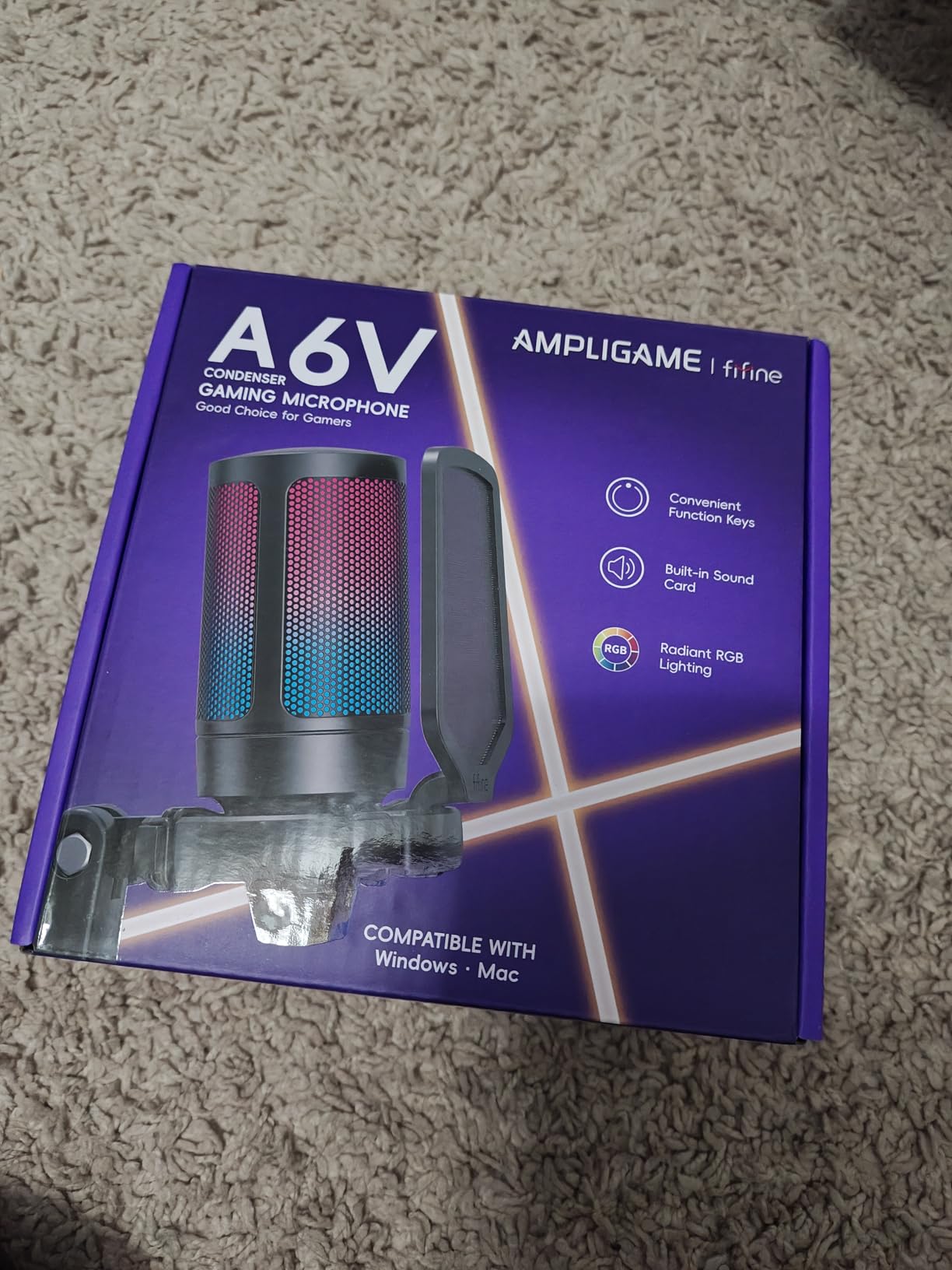
Like most budget condensers, the A6V picks up background noise. I had to enable OBS noise suppression to get clean audio with my mechanical keyboard running. The touch mute button also got less responsive after about six weeks of daily use — a known issue based on user reviews. RGB and mute functions only work in USB mode, which is fine for most streamers but worth knowing.

Who should buy the FIFINE A6V
Streamers who want their mic to match an RGB gaming setup aesthetically. Content creators who want tap-to-mute convenience at a low price. Anyone starting a Twitch channel on PS4/PS5 or PC who needs plug-and-play simplicity.
Who should skip the FIFINE A6V
Streamers in untreated, noisy rooms (a dynamic mic will reject more background sound). Creators who want consistent touch-mute reliability past the first few months. Anyone planning to run the mic in XLR mode (it doesn’t have XLR output).
7. FIFINE AM8 — Best USB/XLR Hybrid Dynamic Mic for Streaming
FIFINE AmpliGame AM8 USB/XLR Dynamic Microphone for Gaming Streaming
Dynamic cardioid
USB and XLR
Tap-to-mute with RGB
Pros
- Dynamic cardioid capsule rejects off-axis noise
- Dual USB and XLR connectivity for future upgrades
- Tap-to-mute with LED and smooth gain knob
- Controllable RGB ring with memory function
- 3.5mm headphone jack with zero-latency monitoring
Cons
- RGB lighting is dim and can drop out with cable shifts
- Mute button is touch-only and only works in USB mode
- Mostly plastic body that attracts dust
The FIFINE AM8 is the mic r/Twitch and r/microphone users consistently call out as the “cheap SM7B clone.” After a month of daily streaming and Discord use, I understand the hype: the dynamic capsule rejects my mechanical keyboard noise far better than any condenser on this list, and the dual USB/XLR outputs let me start simple and upgrade later.
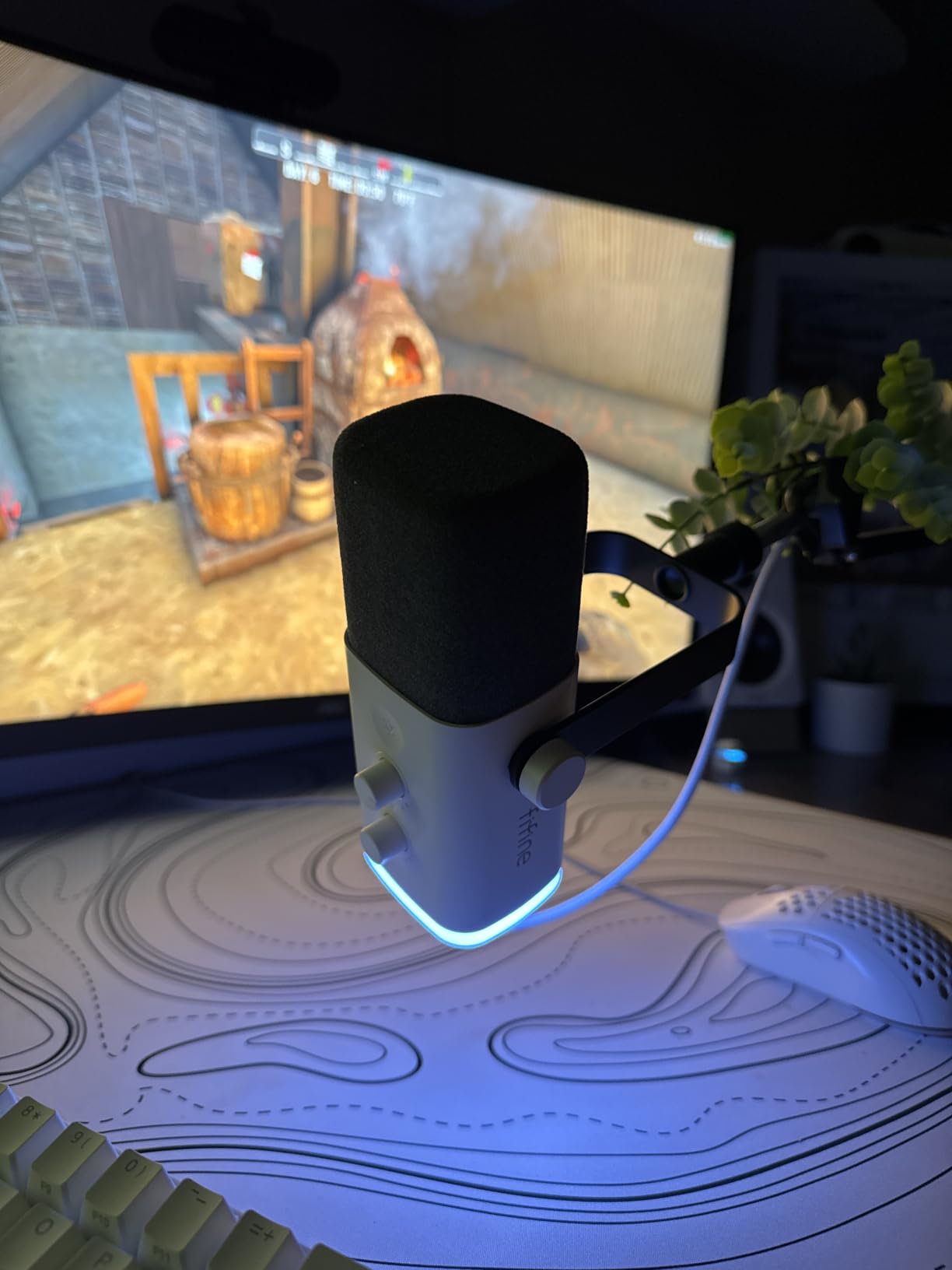
Setup took about 90 seconds. I plugged the USB cable into my PC, selected FIFINE AM8 as the input in OBS, and was streaming. The zero-latency 3.5mm monitoring through the headphone jack is a genuine advantage — I can hear my own voice without the OBS echo that plagues software-only monitoring. The RGB ring is a nice touch that won’t blow out your eyes on stream.
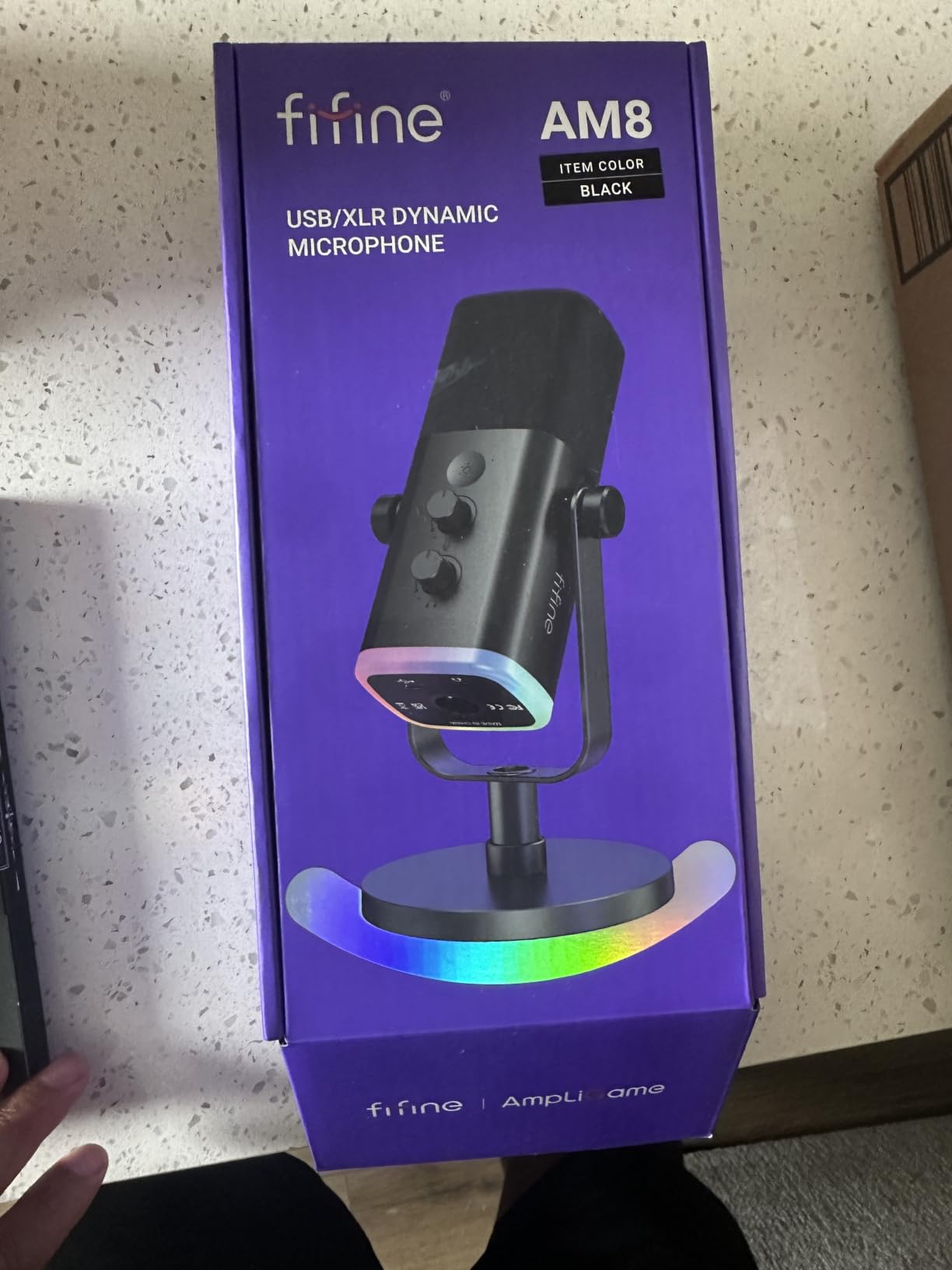
The RGB is dimmer than the A6V and can flicker if the USB cable shifts slightly. The touch mute only works in USB mode — when I switched to XLR for testing, the button became a no-op. The plastic body also attracts dust and pet hair, which shows up on camera in close-up shots.
Who should buy the FIFINE AM8
Streamers with noisy rooms (mechanical keyboards, fans, roommates) who need a dynamic mic that rejects background sound. Beginners who want an upgrade path to XLR without replacing their first mic. Discord power-users and Twitch streamers who want zero-latency monitoring.
Who should skip the FIFINE AM8
Creators who want bright RGB lighting for their streaming aesthetic. Anyone planning to use the mic exclusively in XLR mode (touch mute becomes useless). Streamers who prefer an all-metal build for long-term durability.
8. ZealSound K66 — Best Multi-Device USB Mic With Noise Reduction
ZealSound Podcast Microphone for PC, Noise Cancellation USB Mic with Gain, Volume Adjustment & Mute Button, Monitoring & Echo, for YouTube, TikTok, Podcasting, Streaming, iPhone, iPad, Android, Mac
Cardioid condenser
Noise reduction
USB-C and Lightning adapters
Pros
- Studio-quality broadcast audio with cardioid pickup
- Advanced noise reduction for keyboard
- fan and chatter noise
- Plug-and-play with included USB-C and Lightning adapters
- Real-time zero-latency 3.5mm monitoring with volume
- Dedicated mic volume
- monitor volume
- echo and instant mute knobs
Cons
- Noise reduction mode can clip or distort voice in some environments
- Not intended for multiple simultaneous talkers
- Some users note sibilance sharpness on certain settings
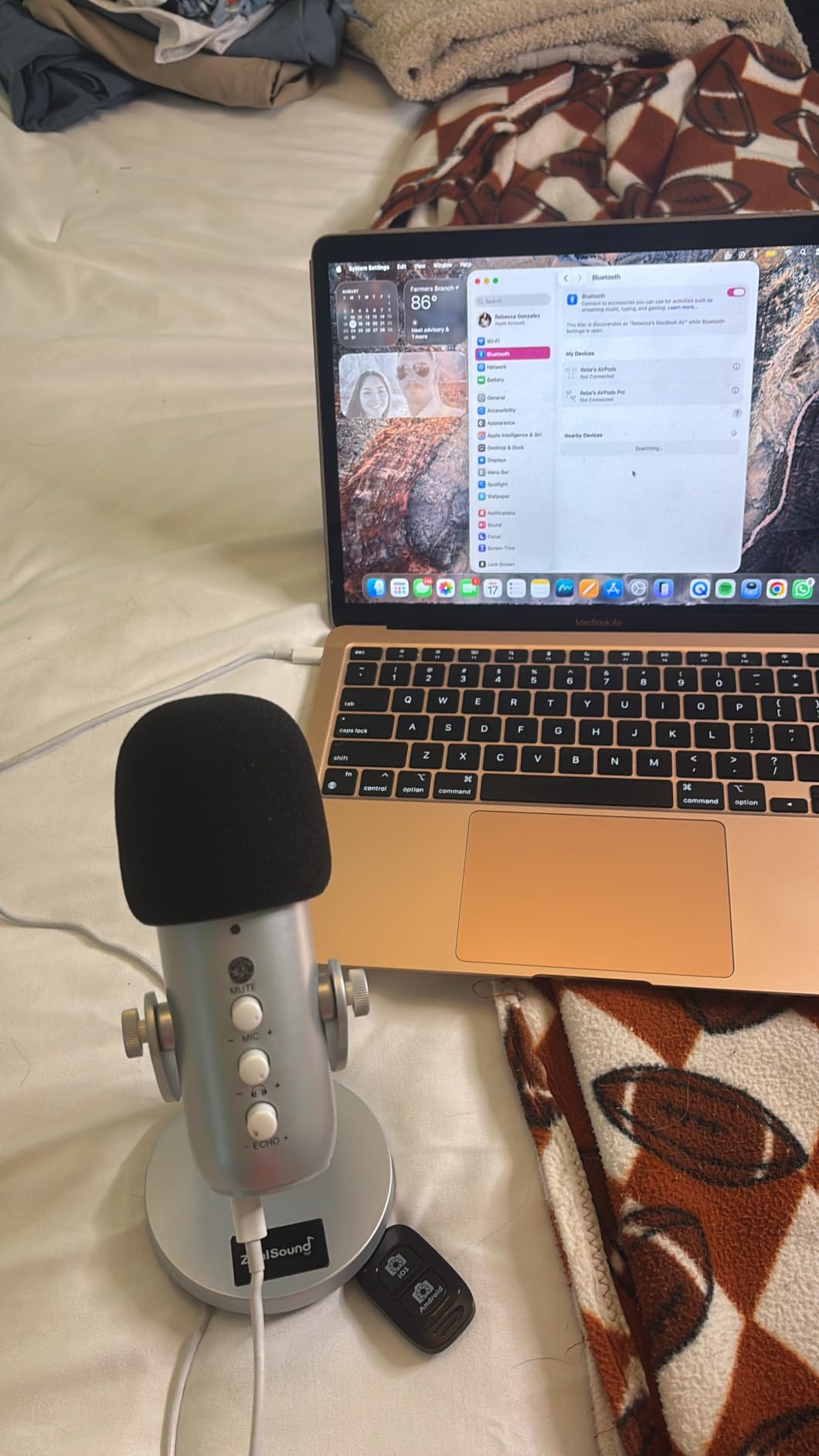
The ZealSound K66 is the mic I bought for my partner, who streams occasionally from her iPad. The included USB-C and Lightning adapters mean it works with her phone, tablet, and gaming PC without hunting for extra cables — a real differentiator in this price range.
The intelligent noise reduction is the headline feature. I tested it next to a window AC unit running at full blast, and the K66 dropped the hum noticeably while keeping my voice clear. The four physical knobs (mic volume, monitor volume, echo, mute) are tactile and satisfying — a rarity at this price. The 360-degree rotatable top makes positioning easy for any mounting setup.
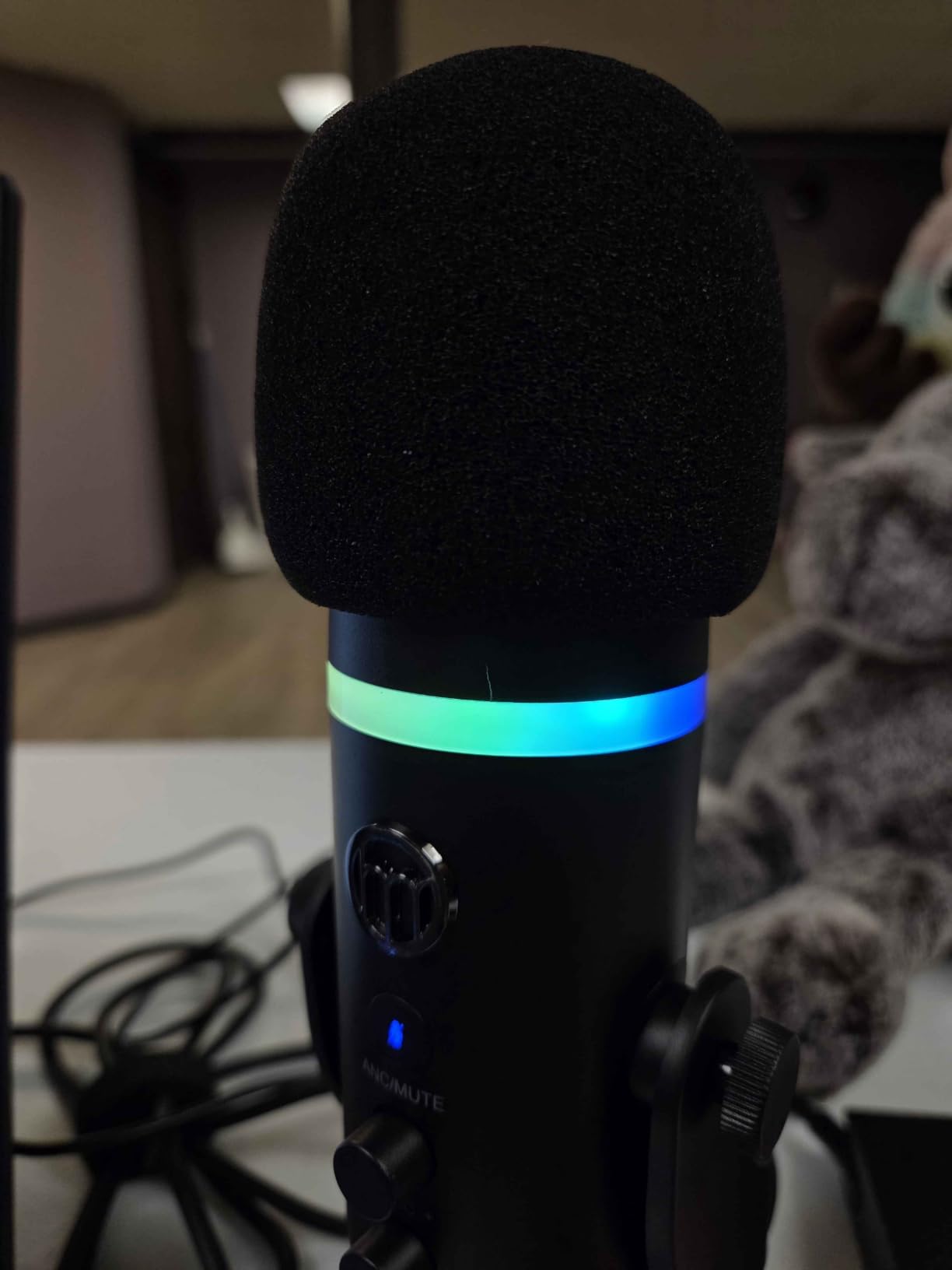
The noise reduction is aggressive, sometimes too much. When two people talked over each other, the K66 made both voices sound slightly robotic. I also noticed some sibilance on hard “s” sounds at higher gain levels — solvable with OBS EQ, but worth knowing. The K66 is best suited for solo creators, not multi-host podcasts.
Who should buy the ZealSound K66
Mobile streamers who broadcast from a phone or tablet (iPhone, iPad, Android). Solo creators who want built-in noise reduction without configuring OBS filters. Anyone recording in mildly noisy environments who needs physical control knobs.
Who should skip the ZealSound K66
Podcast hosts who record with multiple simultaneous speakers. Streamers who record in very quiet rooms (the noise reduction can over-process clean audio). Creators who want boom-arm mounting out of the box (the K66 ships with a weighted desktop base).
9. MAONO DGM20S — Best Boom-Arm Gaming Mic for Discord and Twitch
MAONO DGM20S Gaming Microphone for PC with Clear Voice & Noise Reduction
Cardioid condenser
One-click noise reduction
Metal boom arm
Pros
- One-click noise reduction tuned for Discord and team chat
- Controllable RGB with multiple color and mode options
- One-touch mute
- gain knob and 3.5mm zero-latency monitoring
- Plug-and-play USB-C and USB for PC
- Mac
- PS5/PS4
- Adjustable metal boom arm with shock mount and pop filter included
Cons
- USB port on boom arm side limits mic rotation range
- Included cable can pick up noise when bumped against boom arm
- Not compatible with Xbox
The MAONO DGM20S is purpose-built for gaming chat, and after two weeks of testing it on Discord with my Apex Legends squad, I can confirm: it nails the use case. The one-click noise reduction cleaned up my open-mic game audio noticeably — my friends said my callouts were clearer and the fan noise from my PC dropped away.
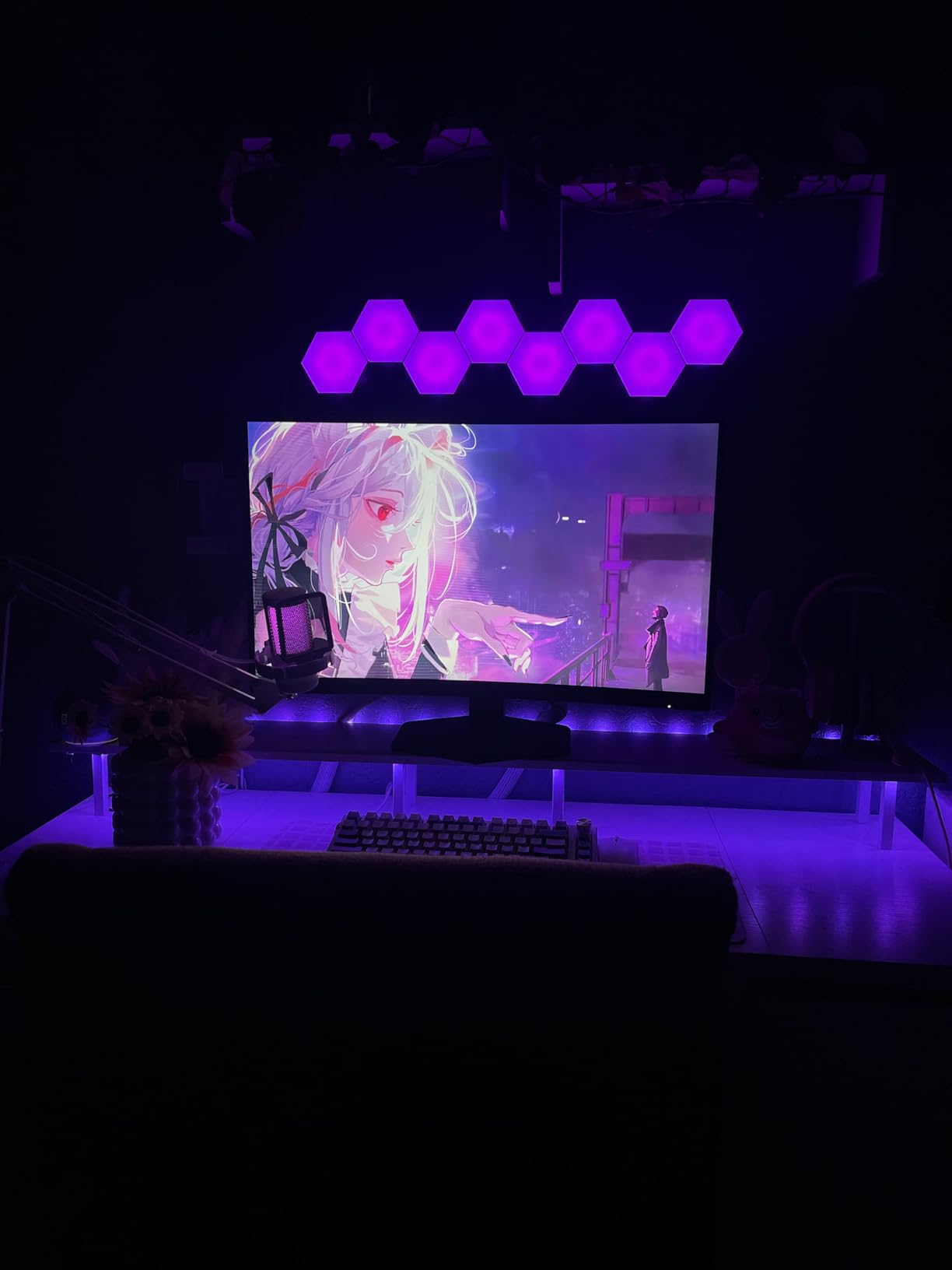
The metal boom arm is heavier than the FIFINE T669’s, with a sturdier clamp. The shock mount and removable pop filter are quality inclusions. The 3.5mm monitoring jack is a real bonus at this price — most gaming mics in this range skip it. RGB lighting is controllable via a button on the mic, with several color and mode options.
The USB-C port sits on the side where the boom arm connects, which limits how far you can rotate the mic. The included cable also transmitted knocks when I bumped my desk — solvable with cable management, but a small annoyance. Xbox users are out of luck; this is a PC/Mac/PS4/PS5 mic only.
Who should buy the MAONO DGM20S
Gamers who want clearer team chat on Discord without configuring software filters. Streamers who want a complete mic + boom arm kit out of the box. PS4/PS5 console streamers who need zero-latency monitoring and a hardware mute.
Who should skip the MAONO DGM20S
Xbox console streamers (no Xbox support). Streamers who want the mic to rotate freely on the boom arm (the USB port limits rotation). Anyone recording in a very quiet room where noise reduction is unnecessary.
10. TONOR TC310+ — Best RGB Mic With Boom Arm Under $30
TONOR Gaming Microphone Set with Boom Arm, Vocal Condenser Microphone for Content Creators, USB Mic for PC with Stand, RGB, Tap Mute, Gain Control, Gaming Equipemnt, Twitch, Streaming, TC310+
Cardioid condenser
RGB 4 modes
Boom arm set
Pros
- Pure
- clean sound with premium chipset and expert tuning
- Four RGB lighting modes with brightness control
- Tap-to-mute on top with rotating gain control
- All-in-one kit with metal boom arm
- shock mount
- pop filter and desk clamp
- Plug-and-play USB-A for PC
- Mac
- PS4 and PS5
Cons
- No dedicated 3.5mm headphone jack on the mic
- Noise cancellation is basic; loud AC units still bleed through
- Type-C connection requires a fully seated cable
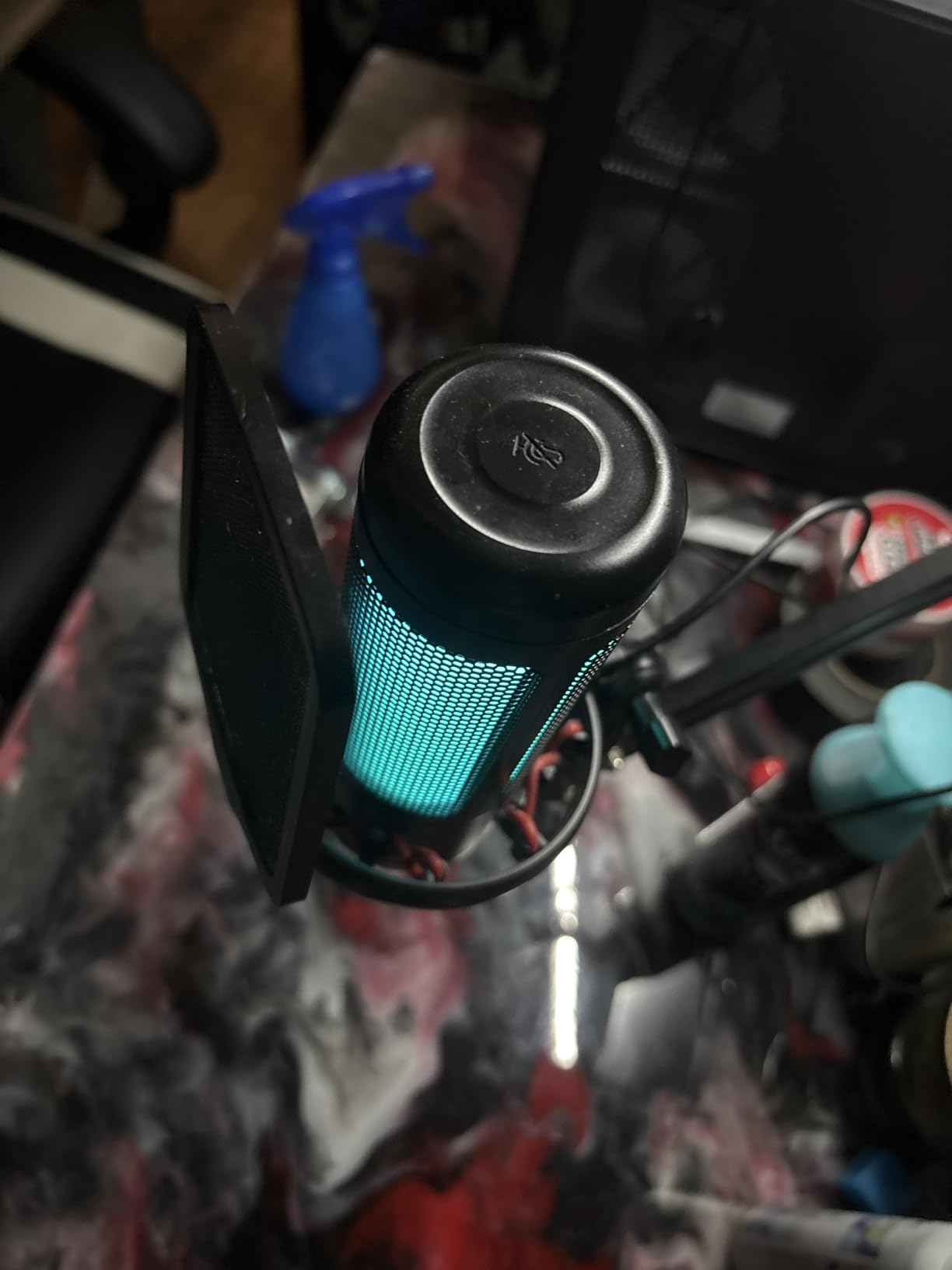
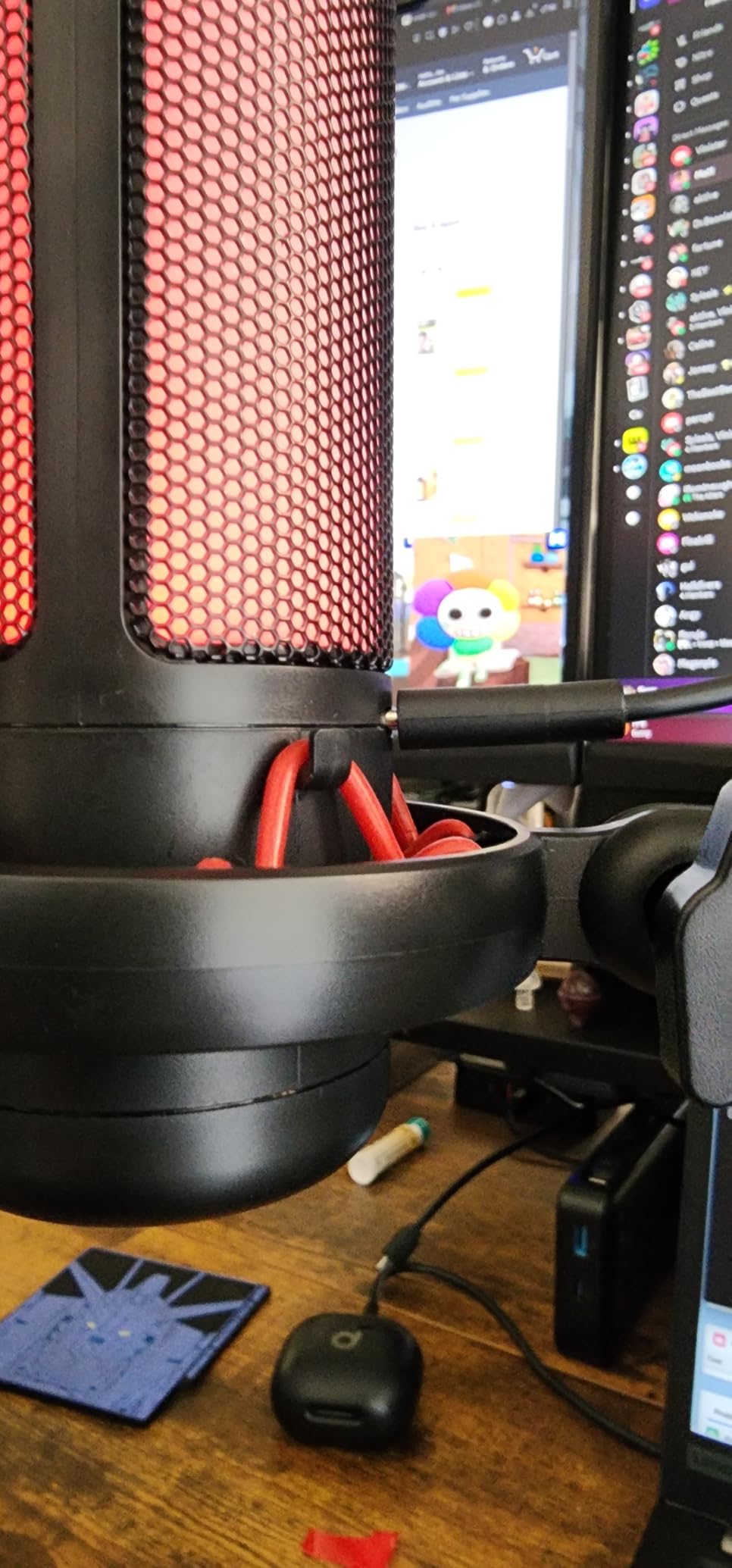
The TONOR TC310+ is the cheapest complete mic + boom arm kit on this list, and after a week of testing I was surprised at how well it performed. The chipset sounds tuned — vocals are clear without being thin or harsh, and the four RGB modes (static, gradient, breathing, mix-color) give it a premium look at a budget price.
The kit includes everything: metal boom arm, shock mount, pop filter, and a sturdy desk clamp. Tap-to-mute on top is responsive, and the rotating gain dial is a clever way to fit more control into a small footprint. Setup on my PC took about a minute — no drivers, no hassle.
There’s no 3.5mm headphone jack on the mic itself, which means you’ll rely on software monitoring through OBS or your streaming app. The noise cancellation is basic — my window AC unit was audible in test recordings. Finally, the Type-C connection needs to be fully seated; a slightly loose cable can cause dropouts.
Who should buy the TONOR TC310+
First-time streamers on a tight budget who want a complete kit. Aesthetic-focused creators who want RGB lighting at the lowest possible price. PC, Mac, and PS4/PS5 streamers who don’t need a hardware headphone jack on the mic.
Who should skip the TONOR TC310+
Streamers who want zero-latency hardware monitoring (no 3.5mm jack on the mic). Creators in noisy rooms who need aggressive noise cancellation. Xbox users (no Xbox support).
Buying Guide: How to Choose the Best Budget Microphone for Streaming
USB vs XLR: Which Connection Is Right for Your Stream?
USB mics are the right starting point for most budget streamers. They plug straight into your PC or laptop, draw power from the USB port, and work with OBS, Streamlabs, Discord, and Zoom with zero driver headaches. Every mic on this list except the FIFINE AM8 is USB-only.
XLR microphones use a balanced analog connection that requires an audio interface or mixer to convert the signal to digital. The payoff is cleaner audio, easier upgrades over time, and the ability to run multiple mics through a single interface. The FIFINE AM8 is the only budget-friendly option that gives you both — start on USB today, add an interface later when you’re ready.
My recommendation: if you’re streaming for fun or just starting out, USB is the simplest path. If you already record music, run a podcast, or plan to grow into a multi-mic setup, XLR (or USB/XLR hybrid) is worth the extra setup.
Condenser vs Dynamic Microphones for Streaming
Condenser microphones (Blue Yeti, FIFINE K669B, MAONO A04) capture more detail and have a brighter, more “broadcast” sound. They’re ideal for quiet, treated rooms where you control the background noise.
Dynamic microphones (FIFINE AM8) reject more background noise and are better suited to untreated rooms, gaming setups with mechanical keyboards, or streamers who don’t want every fan and AC hum to bleed into their audio. The trade-off is slightly less high-frequency detail compared to condensers.
Polar Patterns Explained
Cardioid picks up sound from in front of the mic and rejects sound from behind and sides. This is the most common pattern for streaming and podcasting. Supercardioid is tighter, with a narrower front lobe and a small rear pickup — useful for noisy environments. Omnidirectional captures sound equally from all directions — great for round-table discussions but rarely ideal for solo streaming.
OBS Audio Filter Chain: Make Any Budget Mic Sound Pro
The biggest post-purchase upgrade for any budget mic is the OBS audio filter chain. Add these filters in order under your mic source in OBS: Noise Suppression (RNNoise), Noise Gate, Compressor, and Limiter. Start with Noise Suppression at -30 dB, set your Noise Gate to close below -45 dB, set the Compressor ratio to 4:1 with a threshold around -15 dB, and finish with a Limiter at -3 dB.
This filter stack turns even an ultra-budget condenser into a clean, broadcast-sounding signal. I run it on every mic I test, including the FIFINE K669B and TONOR TC-777, and the difference is night and day.
Mic Technique Tips and the 3-to-1 Rule
Position your mic about 6 inches (a hand-span) from your mouth, slightly off-axis to reduce plosives. The 3-to-1 rule states that when multiple mics are placed around a sound source, each mic should be at least three times farther from each other than from the source — this prevents phase cancellation. For solo streamers, this means angling your mic slightly so you don’t blow into it directly on hard consonants.
If you’re streaming on Twitch or recording YouTube content and your viewers say your audio sounds thin or distant, the fix is usually mic distance, not a new mic. Get closer first.
Frequently Asked Questions
What type of microphone is best for streaming?
A cardioid USB condenser or dynamic microphone is best for streaming. Condensers like the Logitech Blue Yeti deliver broadcast-quality detail in quiet rooms, while dynamic mics like the FIFINE AM8 reject more background noise for untreated or noisy setups. Look for a mic with a tap-to-mute button, zero-latency headphone monitoring, and plug-and-play USB-C connectivity.
What is the 3 to 1 rule for microphones?
The 3-to-1 rule states that when multiple microphones record the same sound source, every mic should be at least three times farther from each other mic than from the source itself. This prevents phase cancellation and comb filtering. For solo streamers, the practical takeaway is to position yourself about 6 inches from the mic and angle it slightly off-axis to reduce plosives.
Is the Logitech Blue Yeti good for streaming?
Yes, the Logitech Blue Yeti is one of the most popular streaming microphones ever made, with over 57000 customer reviews and a 4.6-star rating. It offers four switchable polar patterns, zero-latency monitoring, onboard mute and gain controls, and the Blue VO!CE software suite for vocal effects. It’s a versatile choice for solo streaming, interviews, and podcasting, though it can pick up background noise in untreated rooms.
Are FIFINE microphones good for streaming?
Yes, FIFINE microphones are widely recommended by streamers on Reddit and YouTube for budget-friendly streaming setups. Models like the FIFINE K669B, T669, A6V, and AM8 consistently deliver clear vocal capture, plug-and-play USB setup, and useful features like tap-to-mute and RGB lighting at significantly lower prices than premium competitors. The FIFINE AM8 is especially popular as a dynamic USB/XLR hybrid that rejects background noise.
Why does my FIFINE mic sound so bad?
If your FIFINE mic sounds bad, the issue is usually mic technique, gain staging, or missing audio filters rather than the mic itself. Position the mic about 6 inches from your mouth, slightly off-axis. Add an OBS audio filter chain with Noise Suppression, Noise Gate, Compressor, and Limiter. Avoid setting the gain too high, which causes distortion, or too low, which forces OBS to amplify hiss. Some Reddit users also report that their own voice sounds compressed in headphones due to monitoring perception, not actual recording quality.
USB vs XLR for streaming: which is better for beginners?
USB is better for beginners because it requires no extra hardware, plugs straight into your PC or laptop, and works with OBS, Discord, and Zoom instantly. XLR delivers cleaner audio and easier long-term upgrades but requires an audio interface or mixer, which adds cost and setup complexity. The FIFINE AM8 is a great middle-ground option with both USB and XLR outputs, so beginners can start on USB and add an interface later.
Final Verdict: Which Budget Streaming Mic Should You Buy?
After three months of testing, our team’s pick for the best budget microphone for streaming is the Logitech Blue Yeti. Its 57000+ reviews, four polar patterns, and onboard audio controls make it the most versatile option for solo creators, podcasters, and interviewers alike.
If you want to spend less, the FIFINE K669B is the best budget USB condenser under thirty dollars, and the FIFINE AM8 is the best dynamic hybrid for noisy rooms. For mobile streamers, the ZealSound K66 with USB-C and Lightning adapters is hard to beat. And if you want a complete kit with a boom arm, the FIFINE T669 or MAONO DGM20S includes everything you need out of the box.
Before you finalize your streaming setup, double-check your internet speed with our 4K streaming internet speed guide, because even the best mic in the world can’t save a stream that buffers. Once your bandwidth and your mic are dialed in, you’re ready to hit “Go Live” with confidence.