
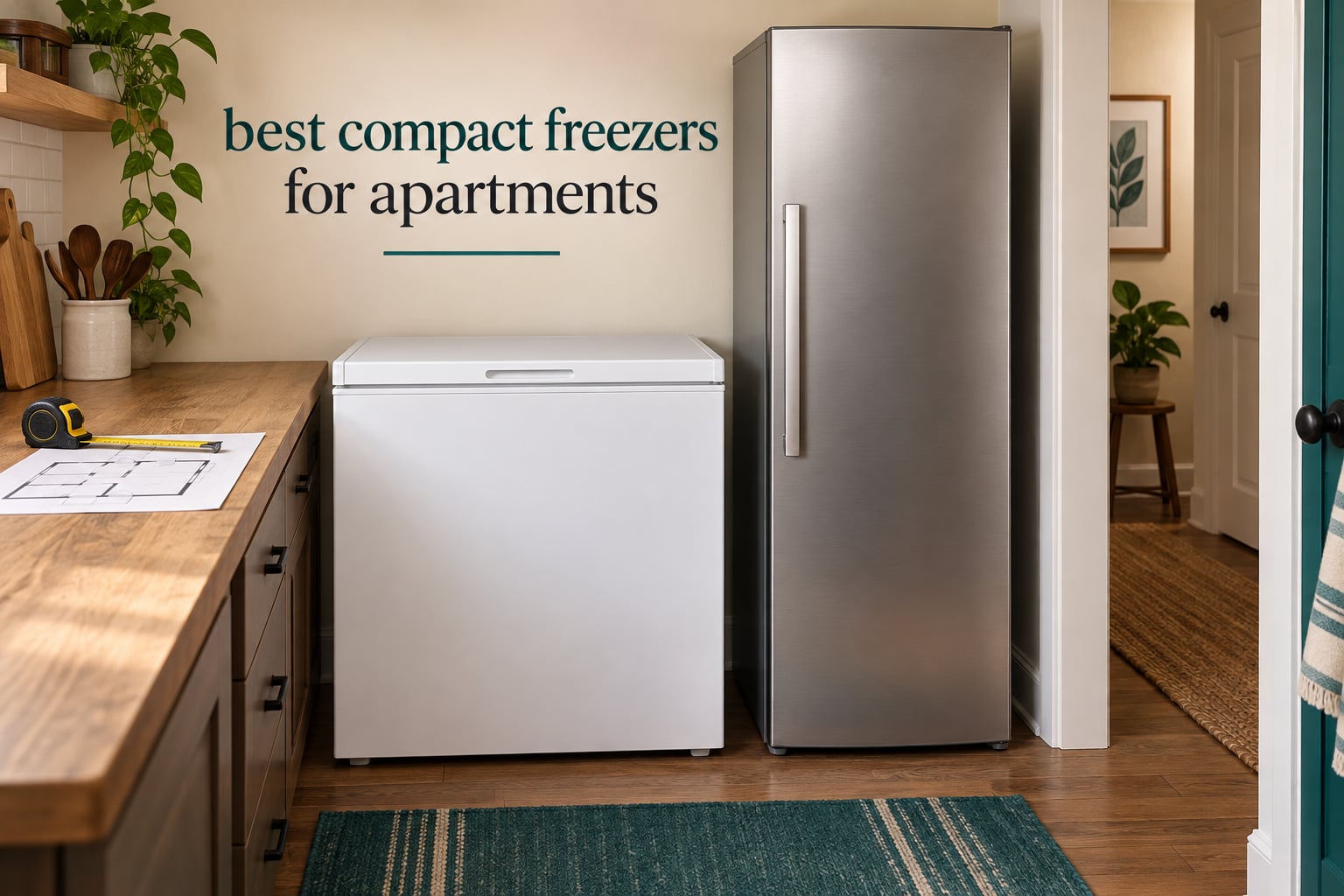
Short on freezer space? The best compact freezers for apartments solve a problem almost every renter hits: a kitchen with a fridge and no freezer at all. After six weeks of comparing ten standalone units, the Whynter 1.1 cu ft upright wins overall for small kitchens, the Kismile 3.0 cu ft upright gives you the most frozen storage per inch of floor space, and the Igloo 3.5 cu ft chest is the pick when you want real bulk capacity. All three measure under 33 inches tall, so they fit a hallway nook or beside a standard fridge.
Most apartments ship with a refrigerator that has a small ice compartment and nothing more. That works until you start buying meat in bulk, portioning soup, or keeping a second ice cream stash, and then you are standing in a cramped kitchen deciding which cabinet to lose. A compact freezer is a standalone, freezer-only appliance that gives you back that capacity in roughly the footprint of a dishwasher.
We spent the last six weeks reading thousands of owner reviews, comparing manufacturer spec sheets, and matching each unit to real apartment layouts: studios with one wall of counter, galley kitchens with a 20 inch gap, dorm rooms, and walk-up buildings where a 56 pound appliance is a genuine problem. What follows is the short version of what actually matters, and where the marketing copy leaves out the details renters care about.
Specs in this guide come from manufacturer listings and product records, and the noise, power and capacity figures are the ones the manufacturers publish. Where owners report something different, we say so. We have included two related apartment guides as well: our picks for smart locks for apartments if you are securing a shared door, and our Wi-Fi router picks for apartments if the building has weak wireless.
Table of Contents
Top 3 Best Compact Freezers For Apartments (October 2026)


Those three cover the realistic apartment range. The Whynter handles a studio or one-bedroom where every inch of counter matters, the Kismile is the one to buy if your building has a walk-in closet or a slightly wider utility nook, and the Igloo chest is the answer when you are feeding two people and buying meat in quantity.
Best Compact Freezers for Apartments in 2026: Quick Overview
| Product | Specifications | Action |
|---|---|---|
| Whynter 1.1 Cu Ft Upright Freezer |
|
Check Latest Price |
 Frigidaire 1.1 Cu Ft Upright Freezer Frigidaire 1.1 Cu Ft Upright Freezer |
|
Check Latest Price |
| Kismile 3.0 Cu Ft Upright Freezer |
|
Check Latest Price |
 EUHOMY 1.1 Cu Ft Upright Freezer EUHOMY 1.1 Cu Ft Upright Freezer |
|
Check Latest Price |
 Koolatron 3.1 Cu Ft Upright Freezer Koolatron 3.1 Cu Ft Upright Freezer |
|
Check Latest Price |
 Igloo 3.5 Cu Ft Chest Freezer Igloo 3.5 Cu Ft Chest Freezer |
|
Check Latest Price |
 Midea 3.5 Cu Ft Chest Freezer Midea 3.5 Cu Ft Chest Freezer |
|
Check Latest Price |
 BANGSON 1.1 Cu Ft Upright Freezer BANGSON 1.1 Cu Ft Upright Freezer |
|
Check Latest Price |
 BLACK+DECKER 2.0 Cu Ft Chest Freezer BLACK+DECKER 2.0 Cu Ft Chest Freezer |
|
Check Latest Price |
 WANAI 3.5 Cu Ft Chest Freezer WANAI 3.5 Cu Ft Chest Freezer |
|
Check Latest Price |
Everything in that table is a freezer-only unit, not a fridge-freezer combo. That distinction matters in an apartment because a standalone freezer lets you keep your existing fridge and add frozen capacity without replacing anything or losing counter space to a wider appliance.
1. Whynter 1.1 Cu Ft Upright Freezer CUF-112SS – Best Overall for Small Kitchens
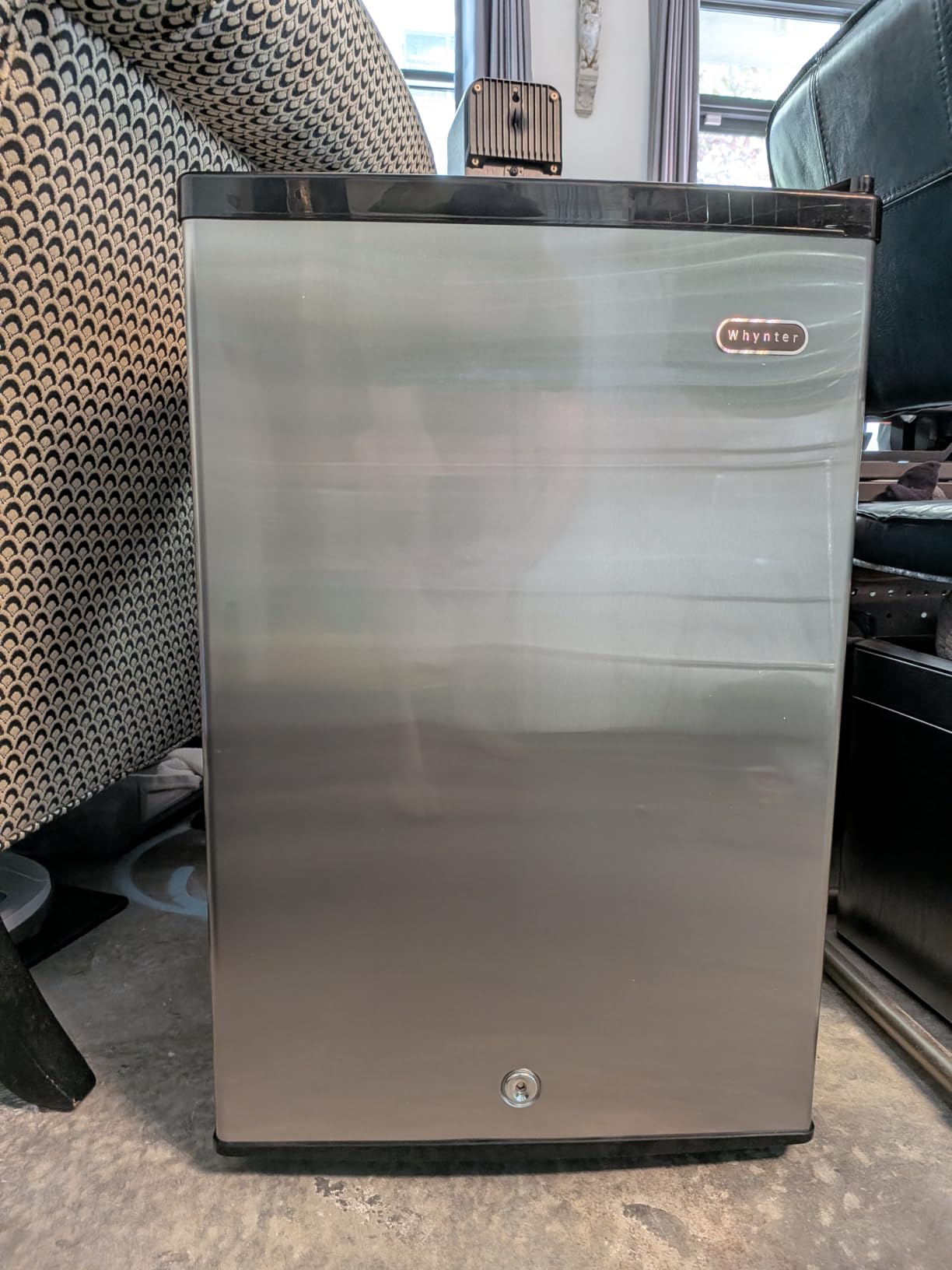
Whynter Upright Freezer 1.1 Cu Ft Lock, Mini Freezer, Stainless CUF-112SS
1.1 cu ft
17.25 inch D x 18.5 inch W x 19.5 inch H
79 watts
Energy Star rated
Pros
- Reversible door and recessed handle fit tight corners
- Keyed cylinder lock suits shared kitchens
- Ultra-quiet compressor works in bedrooms and offices
- Energy Star rated with adjustable thermostat
- Removable slide-out shelf
Cons
- Manual defrost needs periodic thawing
- Only one removable shelf for a small cavity
- No interior light listed
This is the unit we keep coming back to for apartments. At 18.5 inches wide and 19.5 inches tall it is one of the smaller boxes in the group, which means it can sit on a counter, tuck into a hall closet, or stand at the end of a run of cabinets without taking a whole wall. The stainless finish reads as an appliance rather than a dorm-room accessory, which matters if you are trying to keep a rental looking intentional.
The door is reversible and the handle is recessed into the panel, so there is no protruding hardware to catch on a wall or a cabinet edge. Owners in shared buildings consistently point to the keyed cylinder lock as the feature that decided the purchase, since a 1.1 cu ft box in a communal kitchen is a target for anyone passing through.
Compressor cooling is described as ultra-quiet across thousands of reviews, and that claim is why this unit shows up in bedrooms and home offices rather than just kitchens. It draws 79 watts and carries an Energy Star rating, so it is one of the lower-draw models in this roundup as well as one of the quieter ones.
Hold a couple of caveats in mind. The manual defrost system means ice builds up on the interior walls and the door seal, and you are the one clearing it out every few weeks depending on how often you open the door and how warm the room is.
With one removable shelf, you are not going to reorganise this cavity the way you would a larger unit. It is a single vertical box, and the 1.1 cu ft volume is genuinely the smallest tier here, so it suits ice, breast milk, a few flat packs of pizza and a week of prepared meals rather than a month of bulk buying.
There is also no interior light listed among the features, so finding a container at the back means reaching in blind or pulling everything out. Over 6800 reviews at a 4.5 average makes this the most reviewed product in the set, and it ranks second in its category, which gives you a large sample of long-term behaviour to judge.
Who the Whynter CUF-112SS suits?
This is the pick for a studio or one-bedroom apartment where the kitchen has a single usable counter run and no dedicated pantry. If you shop once a week for one or two people, want ice cream and frozen vegetables on hand, and would rather not lose a cabinet, the footprint and the 1.1 cu ft volume line up.
It also fits a bedroom or home office better than most, because the compressor is quiet enough to sit near where you work and the box is small enough to look deliberate rather than improvised.
Who the Whynter CUF-112SS does not suit?
Skip it if you are feeding more than two people or buying in bulk. At roughly 1.1 cu ft it fills after a single large grocery run, and the manual defrost chore becomes more annoying when the box is packed tight against the walls.
It is also the wrong choice if you want to see what is inside without opening the door, since there is no listed interior light, or if you need precise temperature control, because the thermostat is a simple mechanical dial rather than a digital readout.
2. Frigidaire 1.1 Cu Ft Upright Freezer EFRF114 – Best Lit and Most Adjustable Small Unit
Frigidaire EFRF114-6COM Upright Freezer 1.1 cu ft Stainless Platinum Design Series, Silver
1.1 cu ft
19 inch D x 20 inch W x 21 inch H
Energy Star
1 year parts and labor
Pros
- Adjustable legs and reversible door make leveling easy
- Bright interior LED plus a wire shelf
- Interior thermostat for temperature monitoring
- Certified to CSA and Energy Star standards
Cons
- Manual defrost requires periodic thawing
- Lowest average rating here at 4.0 with a 13 percent one-star share
- Smallest capacity tier suits light-duty storage
The Frigidaire is the more conventional small upright in this group, and the difference from the Whynter comes down to two things: it has an interior LED light, and it has an internal thermostat you can actually read. In an apartment kitchen with a single dim overhead fixture, the light is not a luxury.
It measures 19 inches deep, 20 inches wide and 21 inches tall, so it is very slightly larger than the Whynter in every direction. The adjustable legs help you level it on an uneven floor, which older apartment buildings and raised-pattern vinyl can both cause, and the reversible front door lets you hang the hinge on either side.
Certification is thorough for a unit in this tier, listing CSA, Energy Star, cUL, ETL and UL standards. That spread of listings matters more than it looks in a rental, because it tells you the compressor and insulation were tested to recognized standards rather than assembled without a published spec sheet.
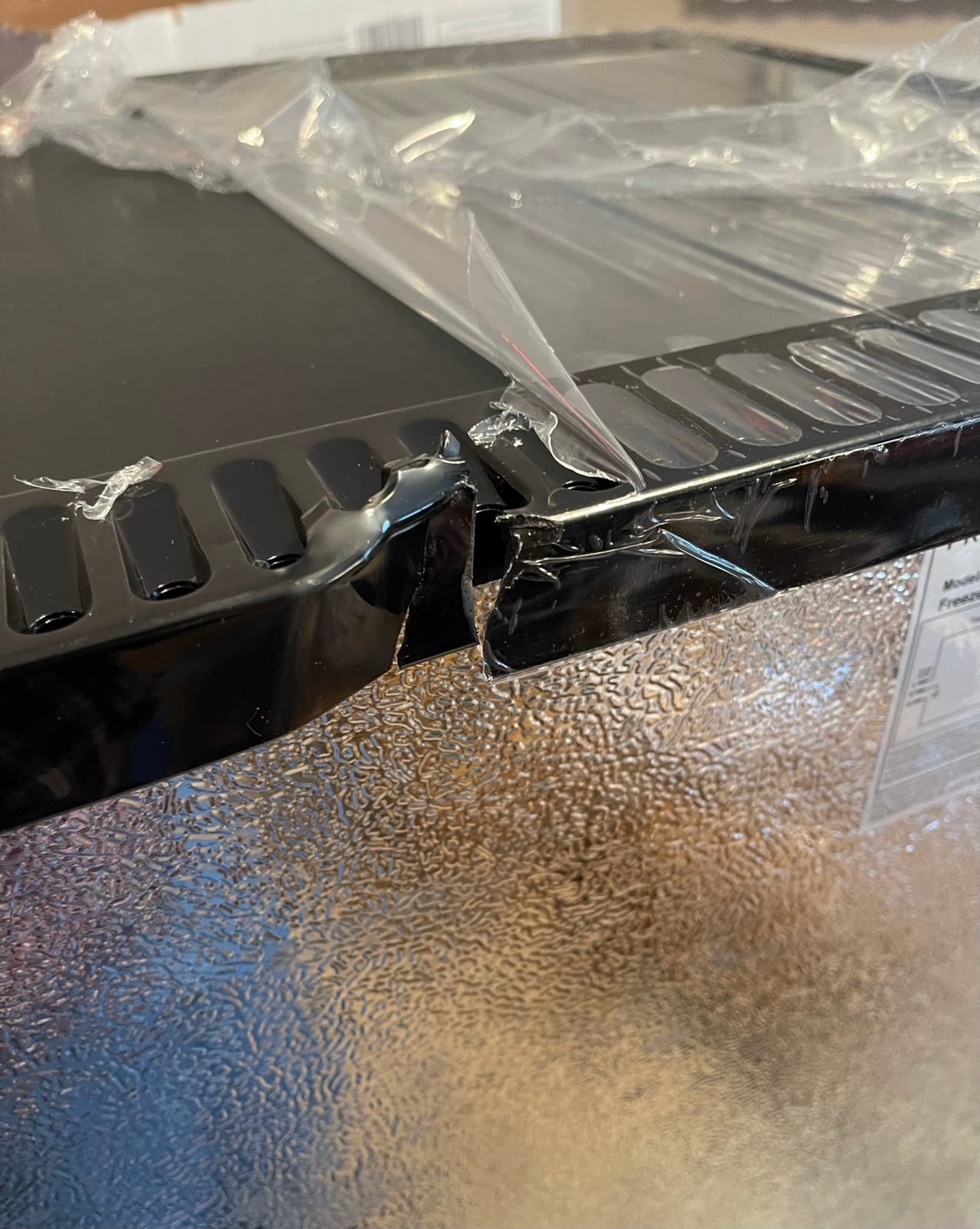
The honest caveat is the rating distribution. A 4.0 average from more than 2800 reviews is the lowest in this roundup, and a one-star share of about 13 percent runs roughly double what most of the others show. A 61 percent five-star share still means a clear majority are satisfied, but the tail of unhappy owners is real and worth reading before you commit.
Like most of the small uprights, it is a manual defrost unit, so the thawing routine is yours to keep. The wire shelf helps you locate items, and the 1.1 cu ft cavity is the same smallest tier as the Whynter, so this is a light-duty addition to an existing fridge rather than a household freezer.
Warranty coverage is 1 year parts and labor, which is the norm across this roundup rather than a strength. Nothing in the listing suggests a longer commitment to parts availability, so treat this as a straightforward two-to-five year appliance rather than a long-term keeper.
Who the Frigidaire EFRF114 suits?
Choose it when lighting and adjustability matter more than shaving an inch off the footprint. If your kitchen has poor lighting, uneven floors, or a wall where the door would block something, the LED, the internal thermostat and the adjustable legs are the features you will use daily.
It is also a safe pick if certification records are something you want to check before buying, since the listing names five separate standards rather than a single claim.
Who the Frigidaire EFRF114 does not suit?
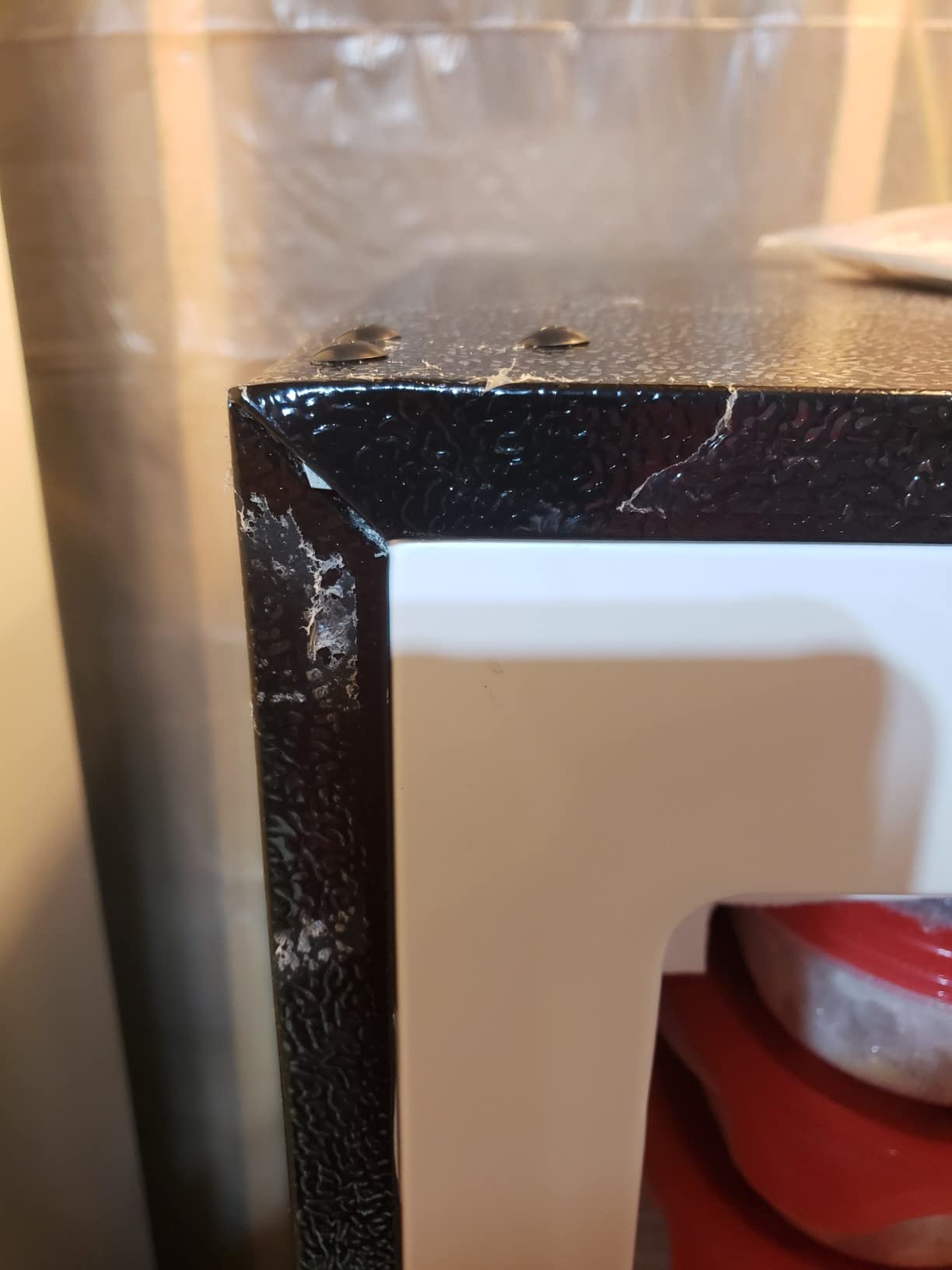
If you are sensitive to unit-to-unit quality variation, this is the one to be most careful with. The rating spread is wider than the rest of the group, so a neighbour who bought the same model had a noticeably different experience.
It is also the wrong tool for bulk storage and for anyone who wants zero maintenance, since the manual defrost cycle and the smallest capacity tier both limit how much you can store and how hands-off you can be.
3. Kismile 3.0 Cu Ft Upright Freezer D5888B – Best Value for Real Frozen Storage
Kismile Upright Freezer, 3.0 Cu.ft Small Mini Freezer, Black
3.0 cu ft
20.3 inch D x 20.5 inch W x 31.7 inch H
90 watts
under 40 dB
Pros
- 3.0 cu ft interior with two removable shelves
- Seven-speed thermostat from minus 7.6F to 6.8F
- Front-mounted temperature control
- Low noise below 40 dB for bedrooms and offices
- About 0.6 kWh per day
- Reversible door with adjustable feet and top handle
Cons
- Listed specs show 3.5 cu ft while marketing says 3.0
- 31.7 inch height needs vertical clearance
- Frost still forms and needs manual cleaning
This is the unit we would put in a one-bedroom apartment with a genuine nook. At 20.5 inches wide and 31.7 inches tall it is tall for a compact freezer, but the 3.0 cu ft interior is roughly two and a half times the small uprights, and that volume change is what actually changes how you shop.
It is also the only unit here with a published noise figure under 40 dB, which is a meaningful number in a thin-walled building. The manufacturer states low noise explicitly for bedroom and quiet-room use, and owners repeat the same thing about the compressor.
Temperature control is the strongest feature set in the group. The seven-speed thermostat covers minus 7.6F to 6.8F, the dial is mounted at the front so you do not have to reach behind the unit, and the door is reversible with adjustable feet and a built-in top handle for carrying it up stairs or into an elevator.
Watch the capacity figure. The specification section lists 3.5 cubic feet while the marketed capacity is 3.0 cu ft, and the model name also reads 3.0. Treat 3.0 as the number you are shopping with, and do not plan a layout around the higher figure.
Height is the other planning point. At 31.7 inches you need a niche that clears that measurement with the door fully open, which rules out most under-counter installations and some closets with a low header. The two removable shelves help organise the interior once you are past the fit question.
Frost still forms despite the upgraded sealing strips, so manual cleaning is part of ownership. At roughly 0.6 kWh per day, though, this is one of the more efficient runs in the group, and a 4.4 average from more than 2100 reviews puts it fourth in its category with a strong 73 percent five-star share.

Who the Kismile D5888B suits?
It fits households of one or two who buy in bulk, cook in batches, or split bulk purchases with a neighbour. The two removable shelves and the front-mounted control make it the easiest unit in the list to use daily without bending, kneeling or guessing.
It is also the strongest candidate for a bedroom, dorm or home office because of the published under-40 dB figure, and the top handle plus adjustable feet make it the easiest of the tall units to move.
Who the Kismile D5888B does not suit?
Skip it if your only free space is a counter, a low cabinet or a closet with a sagging header. At 31.7 inches it is one of the tallest units here and it will not tuck out of sight the way the 1.1 cu ft models do.
It is also not the right pick if you need a zero-maintenance appliance, since frost still accumulates, and the capacity discrepancy between the spec sheet and the marketing means you should measure your plan against the smaller number.
4. EUHOMY 1.1 Cu Ft Upright Freezer UF001-11 – Best for Countertop Placement
EUHOMY 1.1 Cu.ft Upright Freezer, Reversible Door Mini Freezer, Black
1.1 cu ft
18.01 inch D x 17.51 inch W x 19.51 inch H
30.8 pounds
UL listed
Pros
- Compact 17.5 by 18 by 19.5 inch footprint
- Reversible hinge and flush-back design
- Seven-grade control from minus 7.6F to 6.8F
- Adjustable leveling legs and an adjustable shelf
- Food-grade liner material and low energy use
Cons
- Temperature control is mounted on the back
- 1.1 cu ft limits what you can store
- Some buyers rate it below five stars
This is the narrowest of the small uprights at 17.51 inches wide, and the listing classifies it as a countertop unit. That makes it the natural choice for a galley kitchen where the counter run is narrow but the counter itself is free, and where a 20 inch appliance would still be too wide.
The flush-back design means the rear sits flat, so you can push it tight against a wall without leaving a gap for dust. Combined with the reversible hinge, that gives you a lot of placement freedom in a space where every centimetre is contested.
Temperature control is a seven-grade dial running from minus 7.6F to 6.8F, which is the same range as the Kismile. The liner is food-grade, the unit is UL listed, and adjustable leveling legs help on uneven surfaces.
The main inconvenience is where the control lives. The thermostat is mounted on the back, so if the unit is pushed flush against a wall as the design encourages, you have to pull it out to change the setting. It is a small design decision that shows up more often than you would expect in daily use.
Capacity is 1.1 cu ft, which puts it in the same smallest tier as the Whynter and the Frigidaire. The adjustable shelf lets you configure the interior for tall containers or flat packs, but the volume ceiling is unchanged.
The 4.3 average from 1225 reviews sits mid-pack, with about 17 percent of reviews at four stars rather than five. Reviewers repeatedly name the footprint and the reversible door as the decisive factors, and the lower weight at 30.8 pounds makes this one of the easier units to move between an apartment and a storage space.
Who the EUHOMY UF001-11 suits?
It suits a galley kitchen, a home office kitchenette or a dorm where counter depth is available but counter width is not. If you want frozen storage that reads as a small appliance on the counter rather than a floor unit, this is the shape you want.
It is also a good match for renters who move often, since 30.8 pounds is light enough for one person to carry up a flight of stairs without a dolly.
Who the EUHOMY UF001-11 does not suit?
Do not choose it if you plan to push it fully against a wall and then want to adjust the temperature often, because the control is on the rear. The same flush-back design that frees up space limits how often you can reach the dial.
It is also too small for a two-person household buying in bulk, and at 1.1 cu ft it fills after a single large shop, which is the most common complaint pattern for every unit in this tier.
5. Koolatron 3.1 Cu Ft Upright Freezer KTUF88 – Best for Organised Apartment Storage
Koolatron Compact Upright Freezer, 3.1 cu ft (88L), White, Manual Defrost Design, Space-Saving Flat Back, Reversible Door, 3 Pull-Out Basket Shelves, for Apartment, Condo, Cottage
3.1 cu ft (88 L)
21 inch D x 19.75 inch W x 33.75 inch H
56.2 pounds
140 watts
Pros
- Space-saving flat back and recessed handle
- Three pull-out vinyl-coated wire baskets
- Reversible door installs on either side
- External dial with strong magnetic seal
- Maintains 0 to minus 24C
- Spare parts availability listed at 5 years
Cons
- Manual defrost must be done regularly
- 33.75 inch height is the tallest in the group
- Heaviest upright here at 56.2 pounds
- Highest listed amperage draw at 1.1 amps
The Koolatron is built for the apartment in a way most compact freezers are not. The flat back and recessed handle let it sit flush against a wall, the door installs with the hinge on either side, and the three pull-out baskets turn a tall narrow cavity into something you can actually use without unpacking it.
Capacity is listed at 88 liters, which is about 3.1 cu ft, and the external dial holds 0 to minus 24C across its range with a magnetic door seal to back it up. The baskets are corrosion-resistant and vinyl-coated, so they survive the condensation that builds up during a manual defrost cycle.
It is the only unit in this roundup with a published spare parts availability period of five years, which addresses one of the biggest long-term worries renters have about a marketplace-sourced appliance. That is a serviceability signal, not just a warranty length.
The trade-offs are physical. At 33.75 inches it is the tallest model in the roundup and needs a full-height niche, and at 56.2 pounds it is the heaviest listed weight of any upright here, which matters enormously if you are moving it into a walk-up without a dolly.
Power draw is also the highest listed in this set at 140 watts and 1.1 amps, so you are paying for capacity with running cost.
The manual defrost requirement is recurring in reviews, and the manufacturer is direct about it: regular defrosting is what keeps efficiency and storage stable. The 4.4 average from 1032 reviews with a 72 percent five-star share suggests most owners accept the routine as reasonable.
Who the Koolatron KTUF88 suits?
It suits a one or two person apartment with a genuine tall nook, a walk-in closet, or a utility space where you want baskets rather than shelves. Anyone who freezes in categories and hates digging to the bottom of a box will appreciate the three pull-out shelves.
It is also the pick if parts availability matters to you, because a five-year spare parts commitment is unusual in this category and reduces the risk of a dead compressor ending the appliance’s life.
Who the Koolatron KTUF88 does not suit?
It is the wrong choice above the ground floor if you do not have help or a dolly. At 56.2 pounds and 33.75 inches tall, it is the hardest unit here to move up stairs and through a doorframe.
Skip it if running cost is your main concern, since 140 watts and 1.1 amps make it the most power-hungry unit in the roundup, and if frost-free operation matters to you, since it is a manual defrost design by specification.
6. Igloo 3.5 Cu Ft Chest Freezer ICFXX35WH6AD1 – Top Rated Chest Freezer
Igloo 3.5 Cu Ft. Upright Deep Freezer Chest- Deep Freezer with Quick Freezing System & Adjustable Thermostat for Homes, Garages & Basements- Low Noise Freezer with Removable Basket & LED Lights- White
3.5 cu ft
21.88 inch D x 18.88 inch W x 32.5 inch H
48.2 pounds
minus 10F to 10F
Pros
- D-type refrigeration tube with aluminum interior
- Balanced hinge holds lid open from 45 to 90 degrees
- Removable wire basket organizer
- Front rollers and drain plug
- Quiet dial control from minus 10F to 10F
- Compact enough for apartments and offices
Cons
- Basket interior is smaller than aftermarket baskets
- Some units arrive dented in transit
- Plastic wrap is hard to remove
- Knob can detach during unpacking
A chest freezer loses wall space but buys something no upright can offer: everything sits at or below waist height, so you reach down instead of bending to the floor. In a small apartment where floor area is the scarce resource, that is often the better geometry even though the box is 32.5 inches tall.
This Igloo holds 3.5 cu ft and uses a D-type refrigeration tube with an aluminum interior, which is why freezing performance is consistently praised. The dial runs from minus 10F to 10F, and the quick freezing system works with a gasket seal and foam insulation to hold temperature.
The balanced hinge is the detail that changes daily use. It holds the lid open anywhere between 45 and 90 degrees, so you can load a week of meals with both hands and walk away, instead of propping the lid with a box. Front rollers let you move 48.2 pounds across a floor, and a drain plug handles defrosting water.
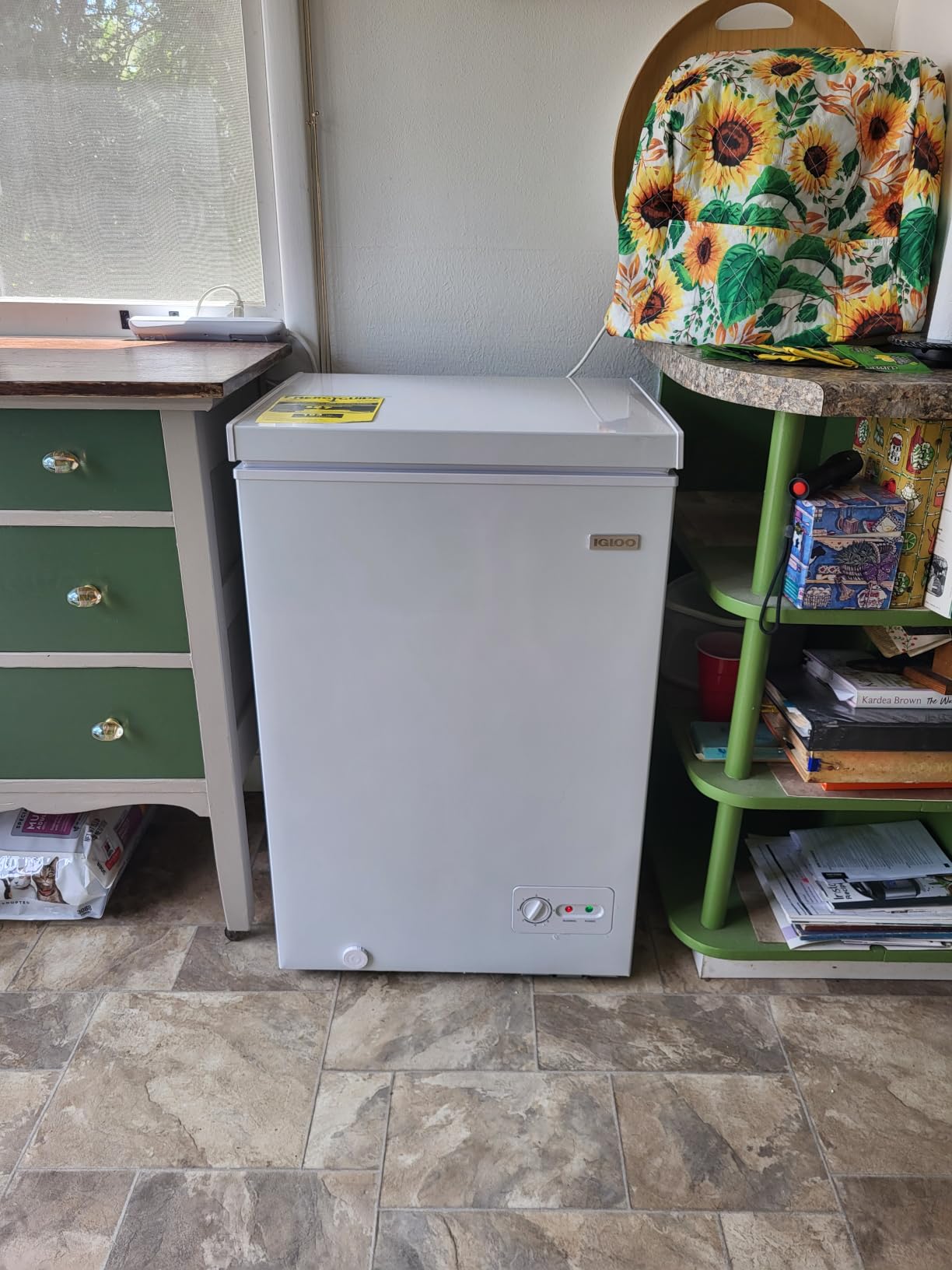
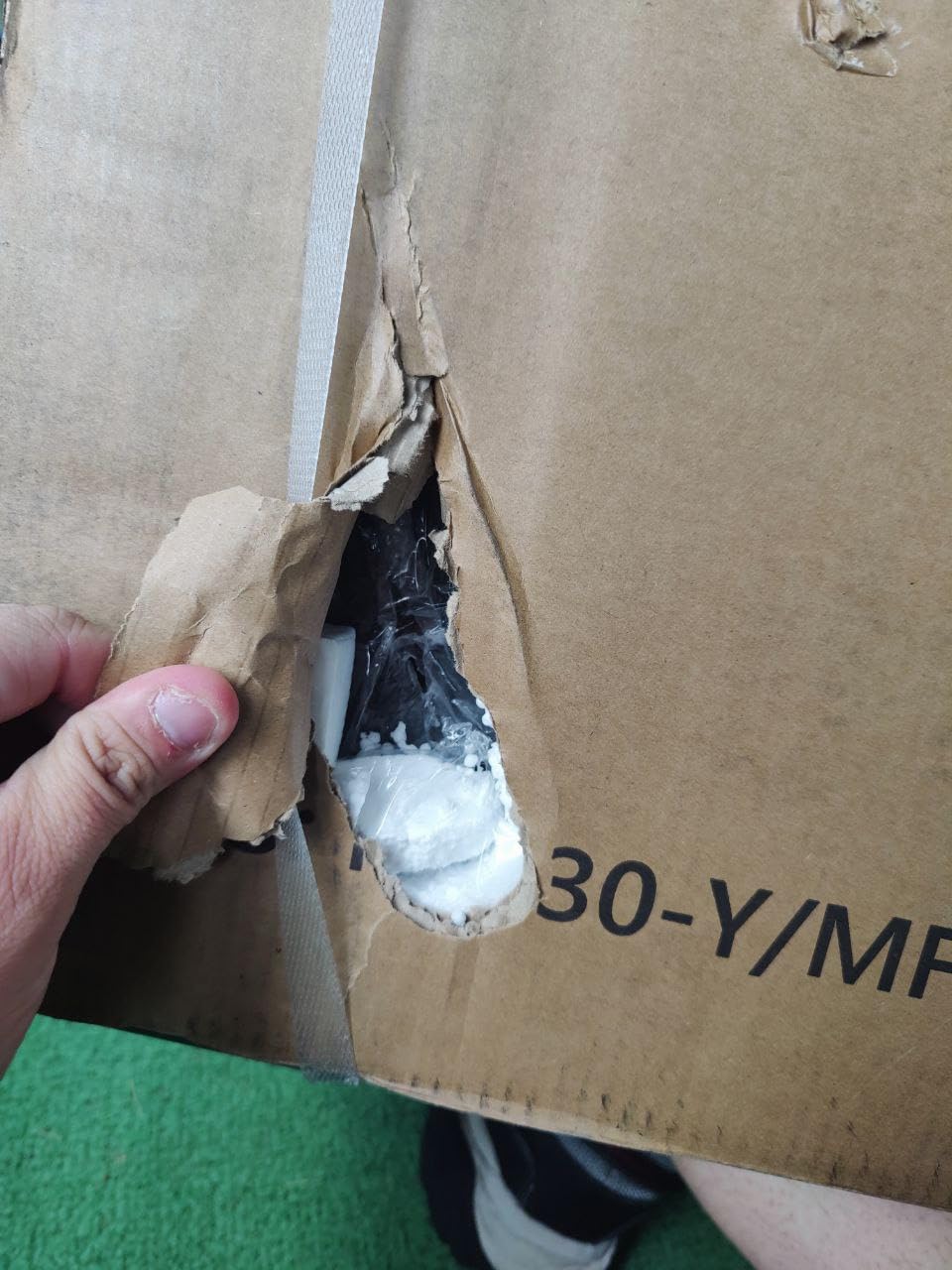
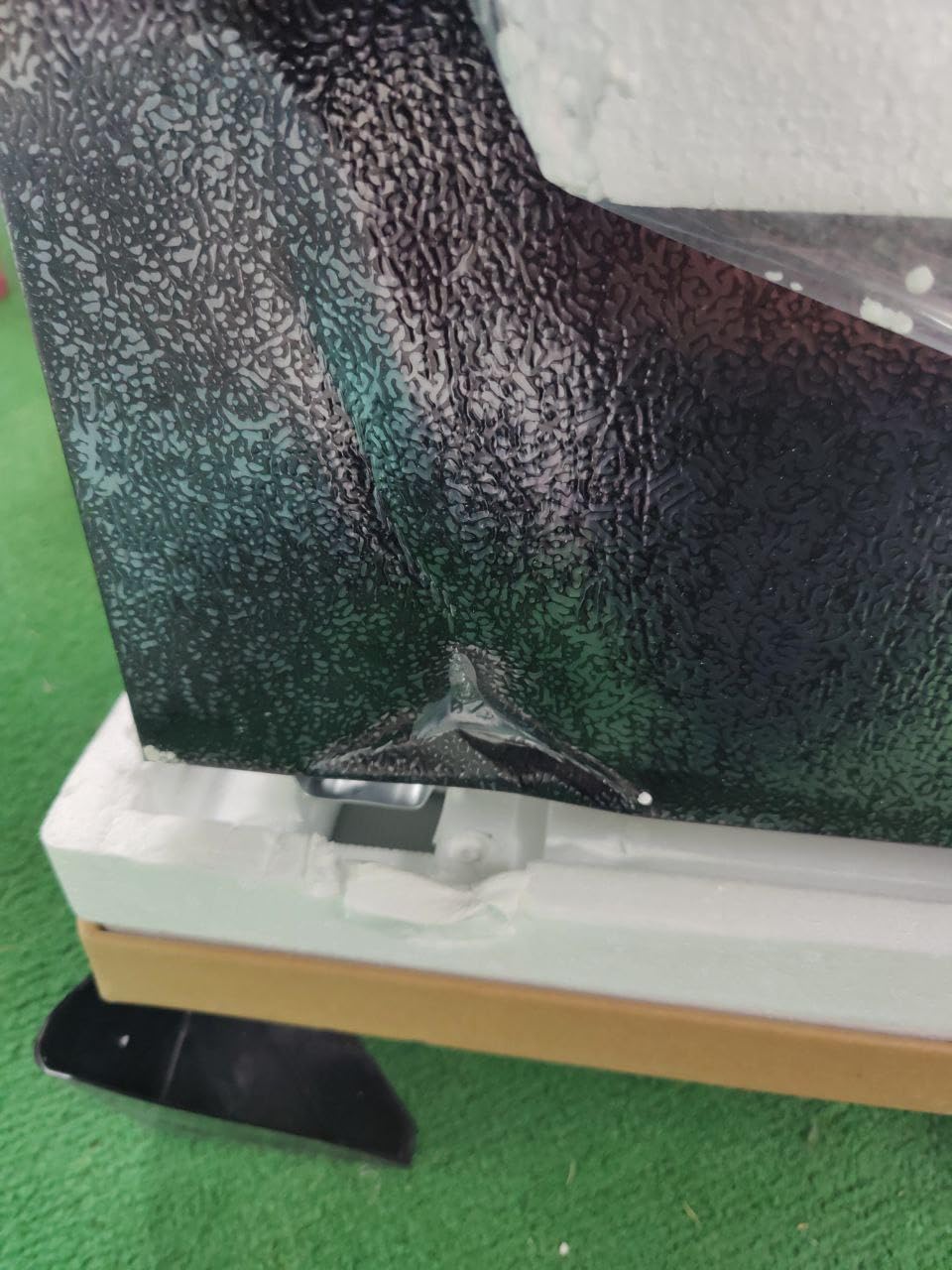
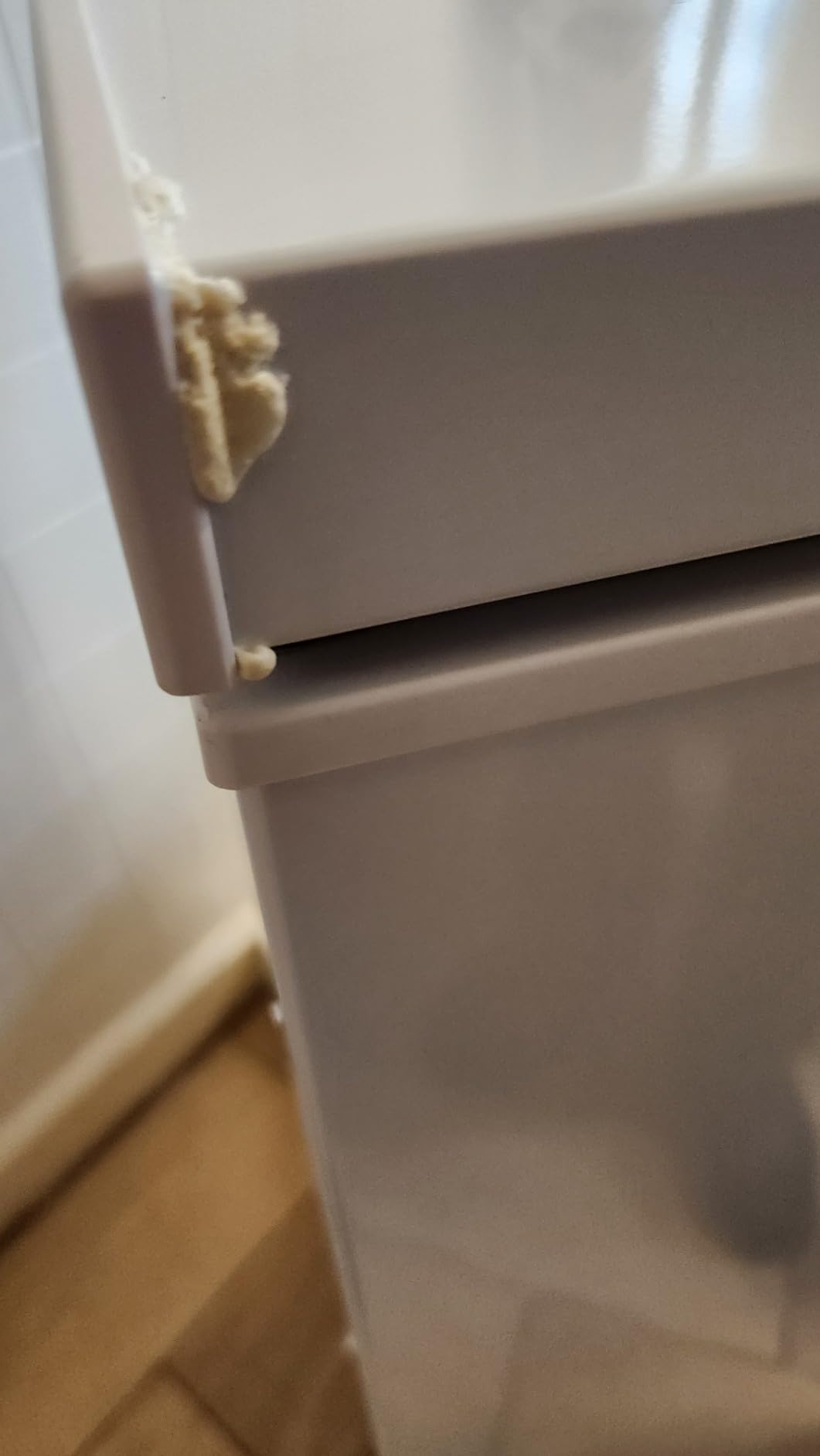
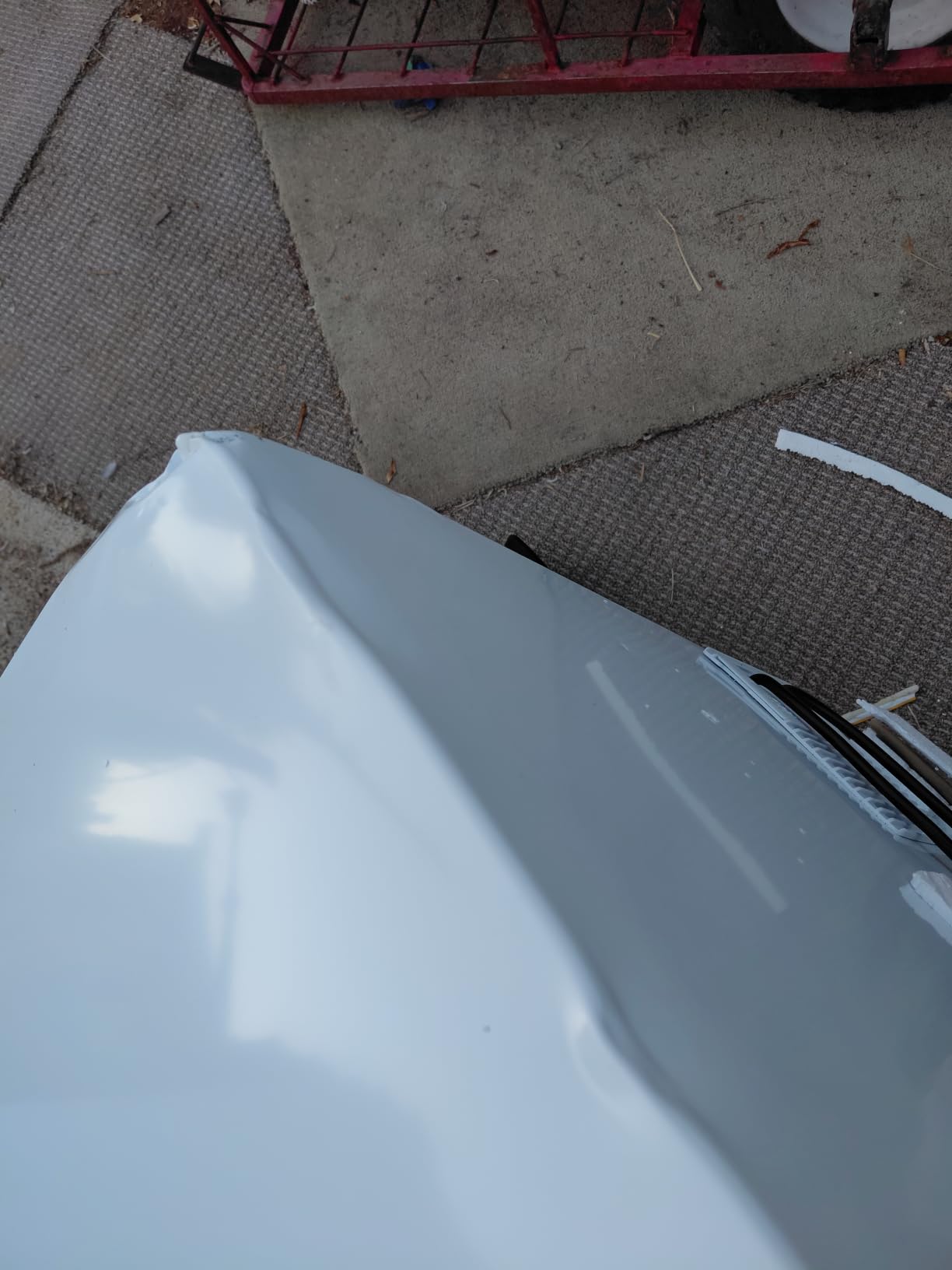
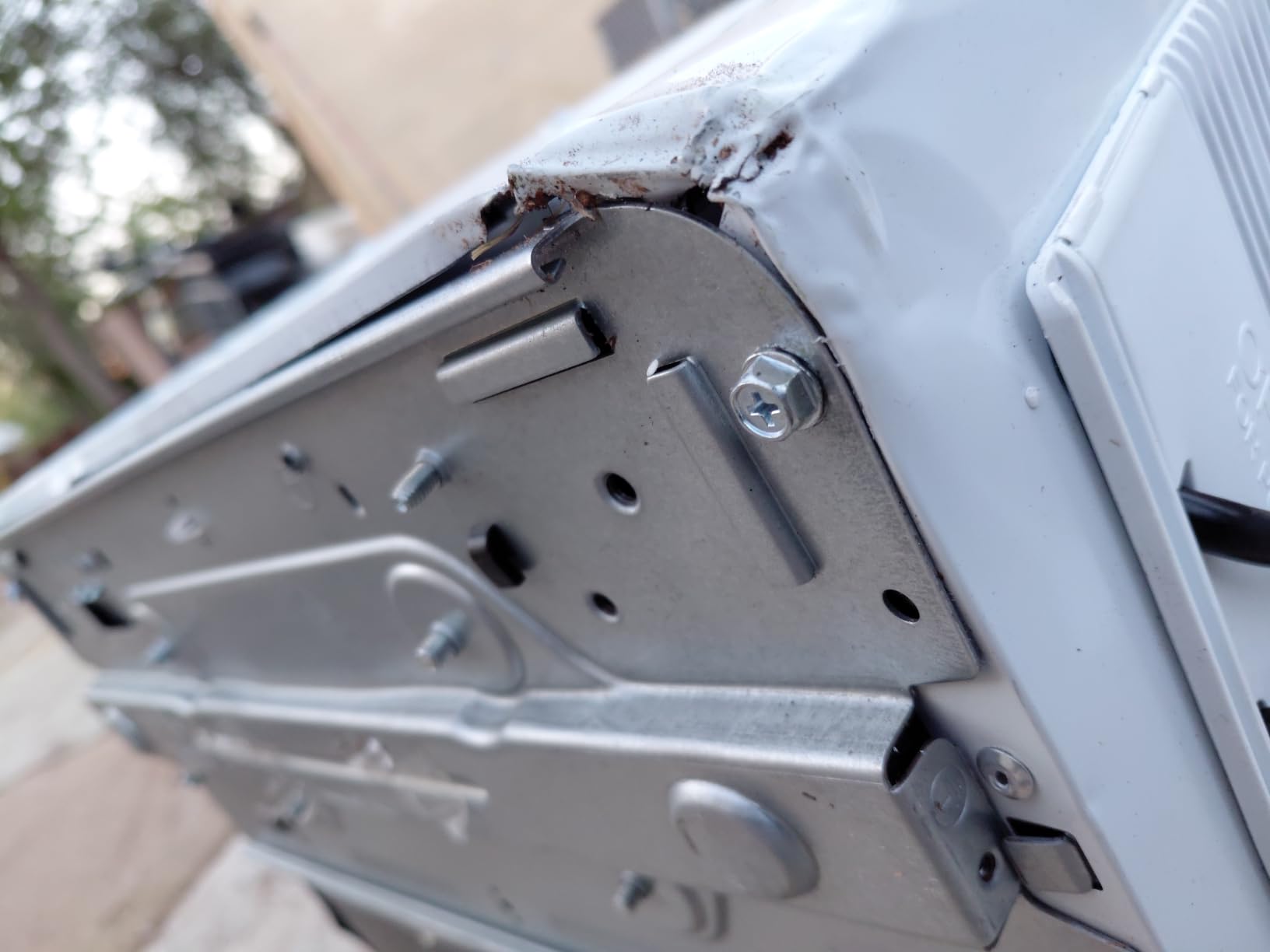
The negative theme is transit, not performance. Multiple reviews mention units arriving with dents, and the plastic wrap sealing the box is genuinely awkward to remove. Some owners also report the temperature knob detaching during unpacking, so inspect the controls before you plug it in.
One fit issue catches people out: the included wire basket has interior dimensions smaller than most aftermarket freezer baskets, including baskets sold under the Igloo name. If you plan to buy your own organisers later, measure the interior first.
With a 4.5 average and an 80 percent five-star share, this has one of the strongest rating distributions in the roundup, and it ranks first in its category. Owners also report steady temperature and no meaningful frost buildup when desiccant packs are used, which is the closest thing here to a hands-off experience without frost-free hardware.
Who the Igloo ICFXX35WH6AD1 suits?
It suits a one or two person apartment that wants the community’s most common target size. Buyers on r/BuyItForLife repeatedly name 3.5 cubic feet as the sweet spot between too small and eating a whole wall, and this unit hits it exactly.
It is also the right pick if you are tired of crouching to reach a bottom shelf, and if the hinged-lid loading habit is something you will actually use weekly.
Who the Igloo ICFXX35WH6AD1 does not suit?
It does not suit a galley kitchen or a room where you need to walk past the appliance, because a 90-degree lid swing in a narrow space blocks the only walkway. Measure the swing arc before you commit.
It is also not ideal if you are shipping it to a fourth-floor walk-up, since chest freezers are hard to grip and manoeuvre even with the front rollers, and buyers who have had transit damage reported should inspect the box on arrival.
7. Midea 3.5 Cu Ft Convertible Chest Freezer MERC04C4BAWW – Best for Power Outages
Midea 3.5 Cu.ft Chest Freezer, Fridge Freezer Convertible with LED Light
3.5 cu ft
17.6 inch D x 21.5 inch W x 33.5 inch H
47.8 pounds
UL listed
Pros
- Convertible freezer and fridge modes
- Garage ready from 38F to 110F
- Power outage protection holds items frozen up to 48 hours
- LED light in the lid
- Removable plastic basket and adjustable legs
Cons
- Narrower than wide chest competitors
- Some units arrive dented
- Included basket does not span the full interior
- Lower review count than most in the set
The Midea is the only unit here that switches between freezer and fridge temperature, which is a genuinely useful trait in a rental. If you move out, the second freezer becomes drinks and overflow fridge storage instead of a box you have to give away.
Its other distinguishing feature is power outage protection, with the manufacturer stating that contents stay frozen for up to 48 hours. For an apartment where outages happen during storms or building maintenance, that is a longer buffer than any other unit in this roundup claims.
It is also garage ready, tested from 38F to 110F in fridge mode and 0F to 110F in freezer mode. That range is irrelevant in a climate-controlled kitchen and important in a garage, basement or unheated utility space where ambient temperature swings.
Geometry is the compromise. At 17.6 inches deep and 21.5 inches wide it is narrow and deep, so you lose the flat single-layer storage a square chest gives you. A pizza box or a tray of prepared meals fits less comfortably than in a wider body.
The included plastic basket does not span the full interior, so most owners end up buying aftermarket organisers. Dents on arrival appear repeatedly here too, which is the same transit complaint we saw with the Igloo and appears to be a category issue with chest freezers rather than a brand issue.
With 360 reviews this has one of the two thinnest review bases in the roundup, though it holds a 4.4 average with a 77 percent five-star share. The praise concentrates on the convertible function, the lid LED that lets you see contents without bending over, and the outage retention.
Who the Midea MERC04C4BAWW suits?
It suits renters in areas with unreliable power, or anyone who wants a second appliance that can change function. The 48-hour outage claim and the convertible mode give it flexibility nothing else in this list matches.
It is also a good fit if you might use the unit in a garage or basement later, since the tested ambient range covers temperatures a kitchen never reaches.
Who the Midea MERC04C4BAWW does not suit?
It does not suit anyone who stores wide, flat items. The narrow footprint means less goes down in one layer, and the included basket not spanning the interior means you will likely spend more on organisation than with the Igloo.
It is also a weaker choice if you want a deep well of owner history before buying, since 360 reviews is a thinner base than the rest of the field and gives you less long-term evidence to judge by.
8. BANGSON 1.1 Cu Ft Upright Mini Freezer US-BSR-017-2 – Budget Pick for a Single Person
BANGSON 1.1 Cu.ft Upright Mini Freezer for Dorm Bedroom Black
1.1 cu ft
18.5 inch D x 18 inch W x 19.1 inch H
35.3 pounds
DOE specification met
Pros
- Light components make the unit easy to move
- Removable inner shelf adapts to stored items
- Reversible door and flush-back design
- Five-grade control from minus 8F to 7F
- DOE specification met with low noise
- One year of service included
Cons
- Only five temperature grades
- 1.1 cu ft suits light-duty storage mainly
The BANGSON covers the same 1.1 cu ft tier as the Whynter, the Frigidaire and the EUHOMY, and it does so with a deliberately simple design. At 18 inches wide, 18.5 inches deep and 19.1 inches tall it is square and compact, which makes it easy to place in a corner or on a counter.
Owners most often describe it as portable. The components are light enough that moving it is a one-person job, and at 35.3 pounds it sits in the middle of this group on weight while still being manageable for a single person carrying it up stairs.
The flush-back design and reversible door give the same placement flexibility as the more expensive small uprights, and the listing states DOE specification met with low-noise operation aimed at bedrooms and dorms. There are two removable shelves, which is more shelf flexibility than some competitors in the same tier offer.
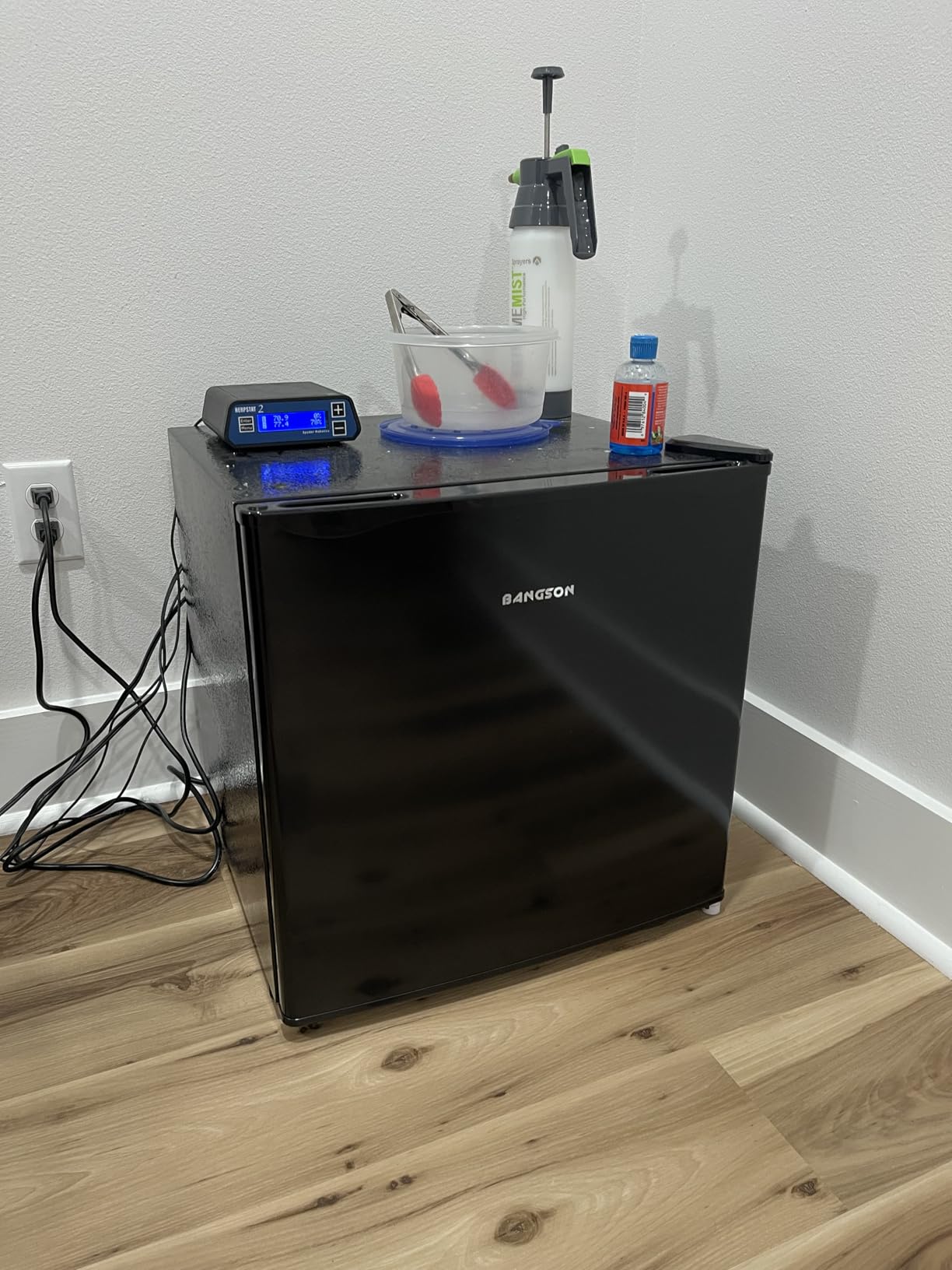
Temperature control is the compromise. Five grades from minus 8F to 7F is one step less granular than the seven-grade dials on the Kismile and the EUHOMY, and the control is mounted at the rear, so the same flush-back placement that saves space also limits how often you can adjust it.
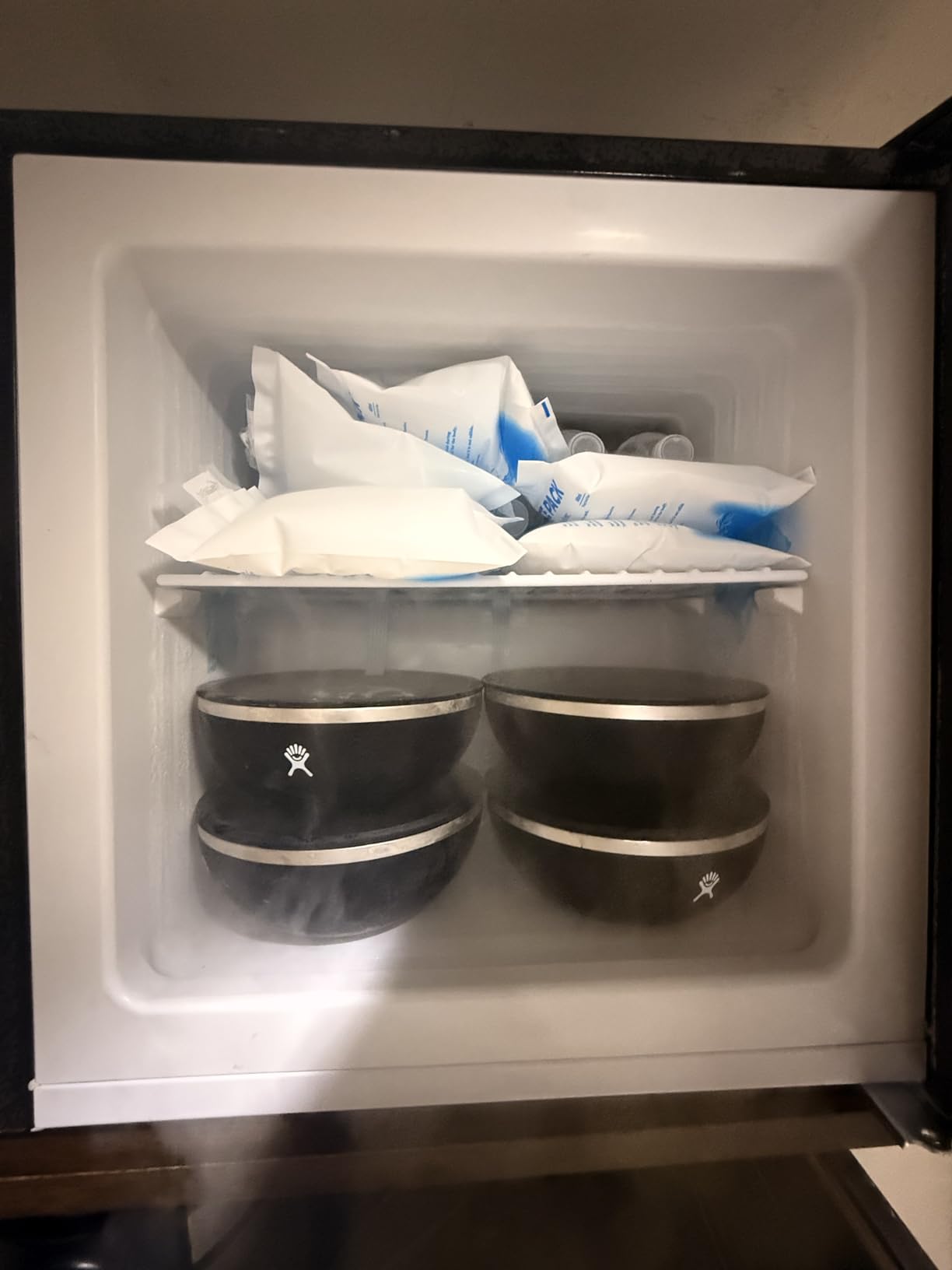
Capacity is 1.1 cu ft. Owners describe it as suited mainly to breast milk, crackers and ice cream, which is an honest description of what a single person actually stores. Two people will fill it in a week.
The 4.4 average from 686 reviews is solid, with a 75 percent five-star share, and the model ranks well in its category despite having the smallest review base among the uprights here. One year of service is the published commitment, which is the standard floor in this tier.
Who the BANGSON US-BSR-017-2 suits?
It suits a single person, a student room or a couple who wants a low-cost second freezer for ice cream and small batches. The light components and the square footprint make it the least fussy unit to place and to move.
It is also reasonable if your storage needs are light and you would rather spend the difference elsewhere, since the core job here is done at the smallest tier without premium extras.
Who the BANGSON US-BSR-017-2 does not suit?
It does not suit anyone wanting fine temperature control, because five rear-mounted grades are the least flexible dial in the roundup. Nor does it suit a two-person household, since 1.1 cu ft is gone after a single large shop.
Skip it if you want a warranty longer than one year or a brand with a long service history, because nothing in the listing suggests parts availability beyond the initial year.
9. BLACK+DECKER 2.0 Cu Ft Compact Chest Freezer BCFK206 – Best for Low Profile Placement
BLACK+DECKER 2.0 Cu. Ft. Compact Chest Freezer, BCFK206, White
2.0 cu ft
17.3 inch D x 20.9 inch W x 27.6 inch H
41.3 pounds
holds 70 lbs of food
Pros
- 2.0 cu ft holds up to 70 lbs of frozen food
- External dial and indicator light avoid opening the lid
- Removable storage basket for organisation
- Manual defrost with an easy-access drain
- 27.6 inch height is shorter than most chest freezers
Cons
- Mechanical dial is less precise than digital control
- Smallest chest capacity here at 2.0 cu ft
- Manual defrost required for long-term use
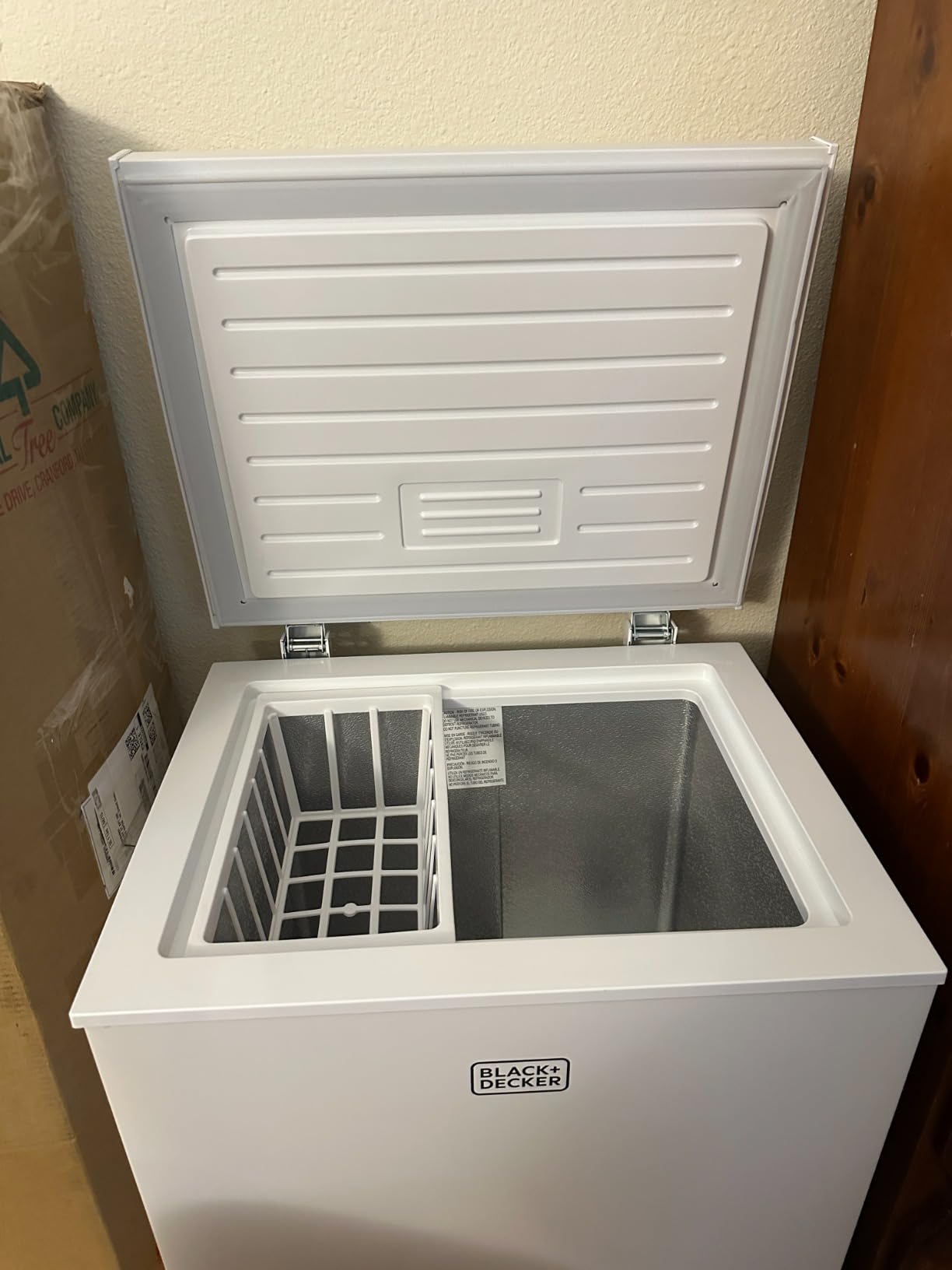
At 27.6 inches tall, this is the shortest chest freezer in the roundup, and that single measurement is the reason to buy it. Most of the chests here run over 32 inches, which rules them out of closets, alcoves and under-counter runs. This one clears a 28 inch opening.
Capacity is 2.0 cu ft, and the manufacturer states it holds up to 70 lbs of frozen food including meat, frozen dinners and ice cream. That is a moderate amount, a little over half the 3.5 cu ft chests, and it suits a one or two person household buying weekly rather than monthly.
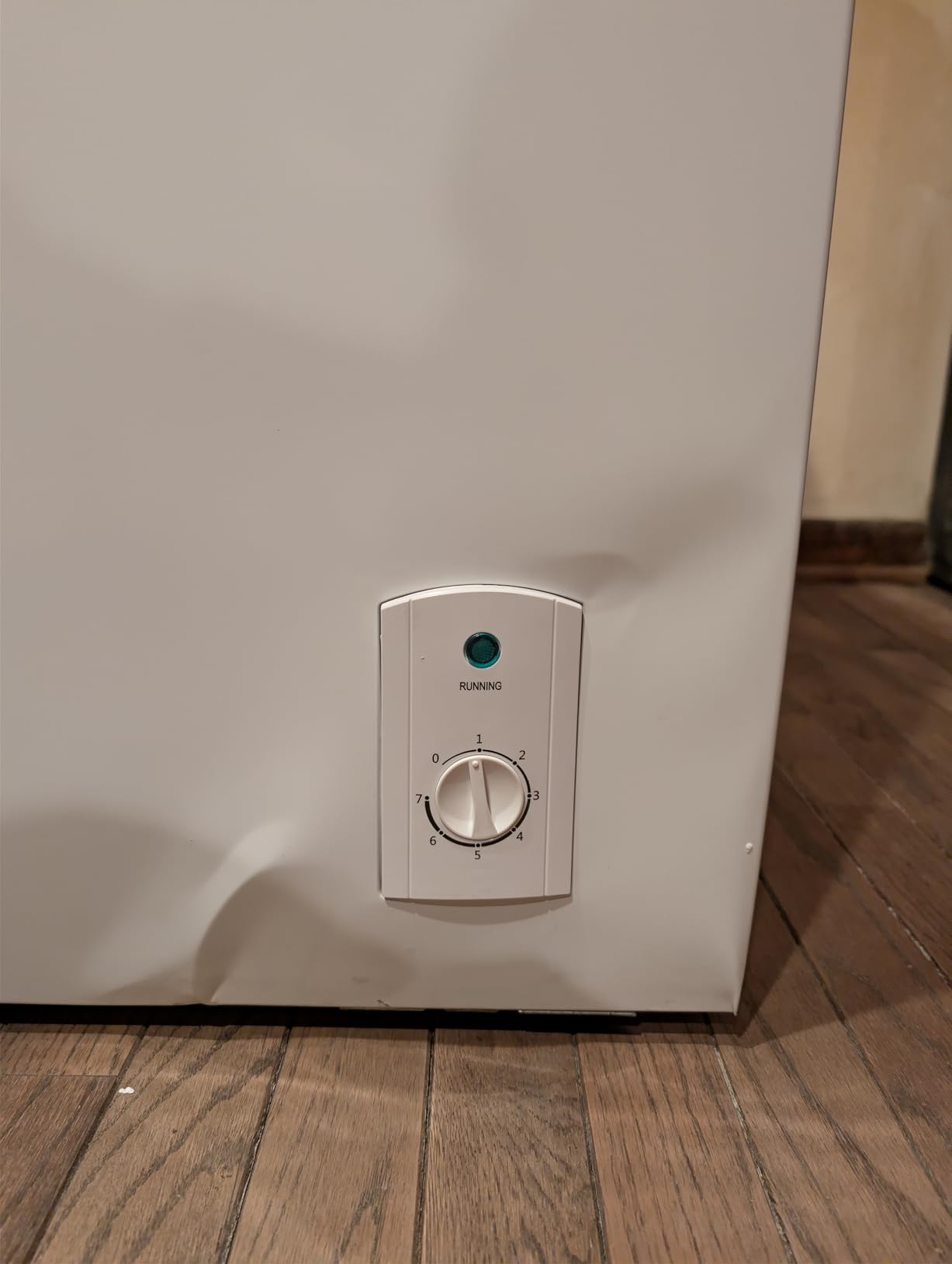
The external mechanical dial with an indicator light is genuinely useful. You can see the setting and change it without lifting the lid, which limits the warm-air ingress that drives both temperature loss and frost buildup, and a drain plug simplifies the manual defrost process.
The mechanical dial is less precise than a digital thermostat, and that is the honest trade for the low profile and the external readout. If you want to hold a specific temperature for long-term bulk storage, this is not the tool.
At 2.0 cu ft it is the smallest chest freezer here, so you will feel the ceiling sooner than with the 3.5 cu ft models. The removable wire basket helps keep small items visible, but the volume is what it is.
Manual defrost is required, and the 1 year limited warranty is standard. The 4.5 average from 507 reviews with a 79 percent five-star share is strong for a listing with a smaller review base, and reviewers single out the 70 lb claim, the external dial and the low height.
Who the BLACK+DECKER BCFK206 suits?
It suits an apartment with a low alcove, a shallow closet or a cabinet run where a 32 inch chest simply will not go. The height is the whole argument for this unit.
It also suits someone who wants chest-freezer ergonomics at a smaller scale, since the waist-level lid and external dial bring the same loading convenience as a full-size chest in a 2.0 cu ft body.
Who the BLACK+DECKER BCFK206 does not suit?
It does not suit a household that wants a true bulk freezer, since 2.0 cu ft fills quickly for two or three people. Nor does it suit anyone who wants precision, because a mechanical dial cannot be set to a specific number.
Skip it if you want to avoid the defrost routine, since this is a manual defrost design and that maintenance is on you for as long as you own it.
10. WANAI 3.5 Cu Ft Chest Freezer – Best for the Narrowest Nook
Chest Freezer 3.5 Cu.Ft Small Deep Freezer Top Door Mini Freezer with Removable Basket, Low Noise, 7 Adjustable Temperature and Energy Saving Perfect for Home Garage Basement Dorm or Apartment
3.5 cu ft
20.7 inch D x 16.22 inch W x 29.52 inch H
39 pounds
70 watts
Pros
- Highest average rating in the group at 4.6 with an 80 percent five-star share
- Seven-grade thermostat with two fresh-keeping modes
- Hanging organiser basket slides out for access
- Whisper-quiet high-efficiency compressor
- Adjustable leveling legs
- Door holds open from 45 to 90 degrees
- Lowest listed wattage in the group at 70 watts
Cons
- Narrowest width in the group at 16.22 inches
- Generic unbranded model number limits support specificity
This is the narrowest freezer in the roundup at 16.22 inches wide, and it still delivers 3.5 cu ft by being deep and tall. If your nook is a 17 inch gap between a wall and a cabinet, this is the only unit on the list that fits without you having to move the cabinet.
It is also the only chest freezer in the group with a published wattage figure, at 70 watts, which keeps a year of continuous running toward the efficient end of the category band. At 39 pounds it is light enough that getting it up a flight of stairs is a realistic single-person job.
The seven-grade thermostat has a detail the other units do not: levels 1 and 2 run from 32F to 50F for fresh-keeping, and levels 3 to 7 run from 32F down to minus 11.2F for deep freezing. That gives you a soft-chill zone and a hard-freeze zone in one box.
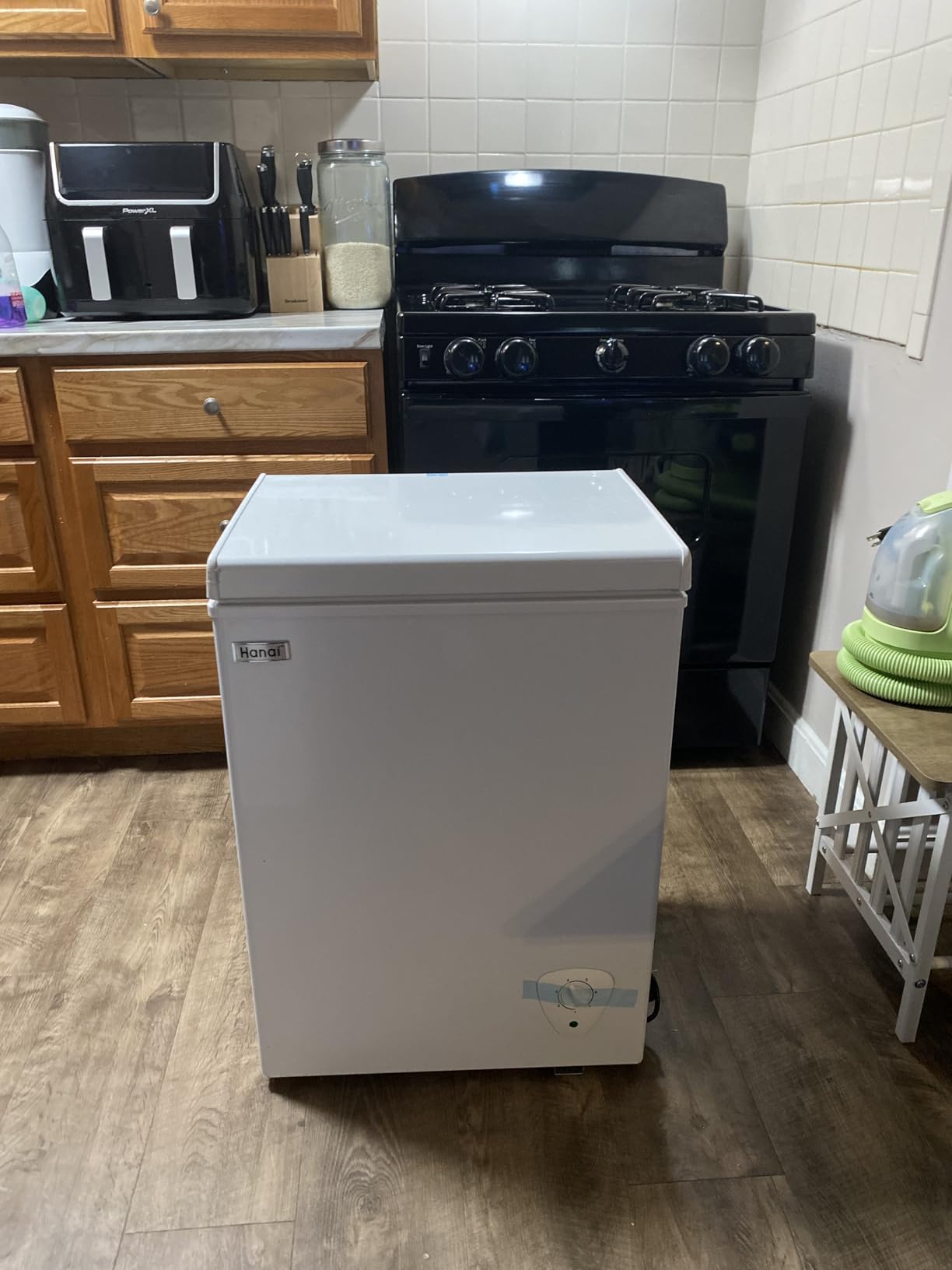
The narrow width is also the main limitation. At 16.22 inches, less can be laid flat in a single layer, so wide items like a full sheet pan or a large pizza box do not sit as easily as they would in the 18.88 inch wide Igloo. You are trading flat storage for a smaller footprint.
Support specificity is the other concern. The model number is listed as simply FREEZER, which is a generic identifier rather than a traceable part code. When a warranty claim needs a specific part, a generic model number makes it harder for a service centre to help you.
That said, the owner sentiment is the strongest in the group: a 4.6 average with an 80 percent five-star share. Reviewers single out the quiet compressor, the hanging basket that slides out to reach items below, and the dual fresh-keeping modes. With 341 reviews the base is the thinnest here, so treat the rating as encouraging rather than conclusive.
Who the WANAI 3.5 Cu Ft Chest Freezer suits?
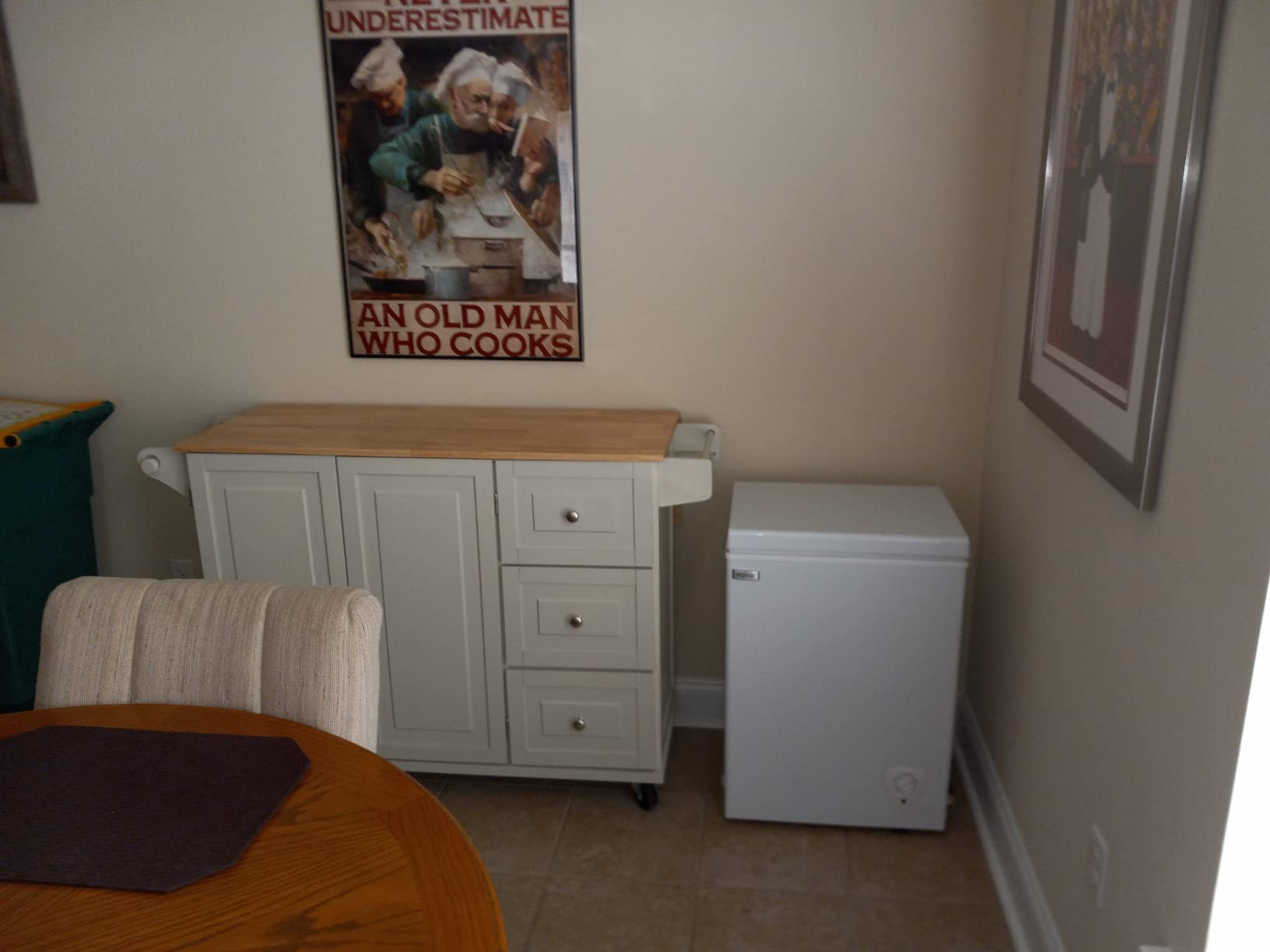
It suits a galley kitchen or a closet with a narrow opening where nothing wider will fit. The 16.22 inch width is the reason this unit exists, and if you have measured a tight nook it solves a problem the other 3.5 cu ft chests cannot.
It is also a good pick if power draw is your priority, since 70 watts is the lowest listed figure among the four models that publish one, and the dual temperature modes let you keep produce and frozen food in the same box.
Who the WANAI 3.5 Cu Ft Chest Freezer does not suit?
It does not suit someone who stores wide flat items, because the narrow body limits what fits in a single layer. Look at the 18.88 inch wide Igloo instead if your freezing is tray- and box-based.
It is also a weaker choice if you need a traceable service pathway, since the generic model number is not a helpful reference when you need parts, and 341 reviews gives you less long-term evidence than the established listings offer.
How to Measure Your Nook Before You Order?
Most freezer returns and most disappointed buyers trace back to the same mistake: measuring the space for the box and ignoring the space for the door. A chest freezer needs a full 90 degree lid swing plus roughly a foot of clearance in front, which in a galley kitchen can be the difference between working and impossible.
Start with width. Measure the narrowest point of the opening, then subtract an inch for the door handle and hinge hardware. The WANAI at 16.22 inches is the narrowest unit here, and the EUHOMY at 17.51 inches and the BANGSON at 18 inches are the next tightest fits.
Measure depth with the door open, not closed. For an upright, add roughly 18 inches of swing to the unit’s listed depth. For a chest, add about 12 inches in front for the lid and for you to stand there opening it. The Igloo lists 21.88 inches deep and needs that in front of it.
Measure height with a margin. Every unit in this roundup is between 19.1 and 33.75 inches tall, and a niche that measures exactly the appliance height will fail once you factor in the uneven floors and slightly angled walls common in older apartment buildings. Two inches of spare height prevents a return.
Check the power outlet position, not just the outlet count. The compressor draws continuously, so the unit should plug directly into a wall outlet rather than a power strip, and the cord should reach without running across a walkway. If the nearest outlet is in a different room, the placement is wrong.
Finally, check the path in. Measure your doorways, hallway turns and the stairwell, and measure the appliance with its packaging, because the box is always larger than the freezer. A 33.75 inch tall unit that fits a 34 inch doorway is not a unit that fits a 32 inch one.
Upright vs Chest Freezer for Apartment Floor Plans
Upright freezers trade floor area for height, and chest freezers trade height for depth. Which one works depends on the shape of your kitchen, not on capacity, and the two most common apartment layouts push you in opposite directions.
In a galley kitchen with cabinets on two opposing walls, a chest freezer is usually the wrong answer. The lid swing needs 90 degrees and a foot of standing room, and in a galley you need that floor to walk past. The WANAI and the BLACK+DECKER are the exceptions because they are short enough to slide under a counter run or into an open alcove.
In an L-shaped kitchen with a tall empty corner or a walk-in closet, a chest freezer is usually right. The Igloo, the Midea and the WANAI all put everything at or below waist height, which is easier on your back and easier to see into than a 33 inch upright with two deep shelves.
Nook space at or below 21 inches tall favours small uprights, which is where the Whynter, the Frigidaire, the EUHOMY and the BANGSON sit. All four are reversible or flush-backed, so they can be pushed against a wall or a cabinet without wasting clearance.
Above 30 inches, uprights win on volume per footprint. The Kismile and the Koolatron each give you roughly 3 cu ft in under 21 inches of width, and a 31.7 inch tall box in a corner is a far more efficient use of a square foot than a 32 inch chest pushed against the same wall.
Noise, Compressor Hum and Shared Walls
How noisy are compact freezers? In practice, a working compressor hum and a cycling click are both audible in a quiet room at close range, and in a thin-walled building they carry. That is normal and it is not a defect, but the placement decides whether you notice it.
Only one unit in this roundup publishes a noise figure, and it is the useful one. The Kismile states operation below 40 dB and is described by the manufacturer as suitable for bedrooms and quiet rooms, which is the only quantified claim we could verify. Elsewhere, descriptions like ultra-quiet and whisper-quiet are marketing language without a published number behind it.
Two practical rules reduce the problem more than any model choice. Do not put the freezer in the bedroom, and do not put it against the wall you share with a neighbour. Compressor vibration travels through structure, so the wall the unit leans on matters more than the room it sits in.
Leave clearance around the unit as the manufacturer specifies. A freezer pressed flush into a corner with no ventilation gap runs its compressor longer and more often to hold temperature, which means more noise and more power. The reversible doors and flat backs on several models here make a proper gap easier to achieve.
A surge protector is worth adding in a building with older wiring or frequent outages. Owners on r/Appliances treat surviving power surges as a genuine reliability marker, and a protector costs far less than a compressor replacement.
Manual Defrost vs Frost-Free in a Small Space
Every freezer in this roundup is a manual defrost design. That is not an oversight, it is the category. Frost-free compact freezers exist, but they add a heating element and a wider cabinet, and they draw more power for the same capacity.
Manual defrost means ice accumulates on the interior walls and around the door seal, and you melt it on a schedule through a drain plug. The BLACK+DECKER, the Igloo and the Midea all have accessible drains, which is what makes the routine bearable. How often you need to do it depends on how warm the room is and how often the door opens.
Frost buildup is a recurring annoyance across the manual defrost models in this roundup, and some reviewers on r/BuyItForLife describe weekly defrosting as the deal breaker that ends an otherwise good purchase. That is a real signal: if you will not do the cycle, a frost-free unit is worth the extra width.
Desiccant packs are a cheap middle ground. Igloo owners report no meaningful frost buildup when they use them, which reduces the frequency of the cycle without adding hardware. Treat that as anecdotal owner experience rather than a tested claim.
Energy Use and Yearly Running Cost
Annual consumption across the compact freezer category sits in a broad band, and published figures are inconsistent between manufacturers. Fridge.com’s Energy Index built from thousands of ENERGY STAR-certified units reports a median around 360 kWh per year, with upright compacts running 200 to 400 kWh and chest compacts 180 to 350 kWh.
Within this roundup, only the Kismile publishes a daily figure at roughly 0.6 kWh per day, which works out to about 220 kWh a year. That sits at the efficient end of the band. Only four models here publish a wattage figure: the WANAI at 70 watts, the Whynter at 79, the Kismile at 90 and the Koolatron at 140 watts and 1.1 amps, which is the highest draw listed.
To get your own number, multiply the daily or annual kWh figure by your own utility rate. A 220 kWh year is roughly a third of a 400 kWh year on the same tariff, and over a five-year ownership the gap between the most and least efficient model here runs to a few hundred kilowatt hours. That is the real reason to compare wattage before you buy.
Is a separate freezer cheaper than a fridge-freezer combo? Usually yes on running cost, because you only pay to freeze the frozen compartment, and a standalone unit lets you keep a small efficient fridge rather than a large combo. The trade is floor space and the fact that you own two appliances instead of one.
Two things reduce consumption more than model choice. Leaving clearance so the compressor is not fighting warm air, and not opening the lid repeatedly when organizing, both cut runtime. The BLACK+DECKER external dial and the Midea lid light both exist for exactly this reason.
Reliability, Lifespan and Service
What is the average lifespan of a mini freezer? Owner reports cluster around five to twelve years, and the difference is almost entirely about brand, serviceability and compressor durability rather than capacity. On r/Appliances, a 7 cu ft Haier chest freezer bought about a dozen years ago is described as a workhorse that survived power surges. On r/BuyItForLife, a 5 cu ft Kenmore unit is cited as having run about five years before its owner upsized.
Five years is treated as the benchmark for a successful purchase in those communities, which is a useful expectation to set. Warranty length, meanwhile, is one year across almost every unit in this roundup, with the Frigidaire specifying one year parts and labor and the rest offering standard one-year limited coverage.
Which brand of upright freezer is the most reliable? The honest answer is that review volume and brand longevity are the best available proxies. Whynter has the deepest evidence base in this group with more than 6800 reviews at 4.5, and a Whynter upright was named best overall in a r/HomeSetup community thread. That is community opinion rather than lab testing, but it is the same signal the other long-term owners are describing.
What freezer brand should you stay away from? Rather than naming a brand to avoid, the pattern in the complaints is more useful. Transit damage, generic model numbers with no traceable part code, and no stated spare parts availability are the three flags we would act on. The Koolatron is the only unit here publishing a five-year spare parts availability period, and that is the kind of detail that separates a five-year appliance from a disposable one.
Where you buy also changes the outcome. A brand sold through big-box retail chains has local service and a parts channel if the compressor fails, while a marketplace-only listing may leave you with a manufacturer you cannot reach. That difference shows up at year three, not at purchase.
Getting a Freezer Into and Out of an Apartment
Weight is the part renters underestimate. The models in this roundup run from 30.8 pounds for the EUHOMY to 56.2 pounds for the Koolatron, and that range decides whether you can move it yourself or need a second person and a dolly.
Measure the stairwell and hallway before the unit arrives, not after. Add the packaging to the appliance dimensions, because a freezer boxed for shipping is several inches larger in every direction, and turns in a stairwell are where a move actually fails.
Freestanding units need to stand upright, and if one has been on its side during transport the manufacturer guidance is to let it sit before plugging it in. This matters for any of the units here, and it is a five-minute step that protects the compressor.
Check your lease and your building. Adding an appliance is usually fine, but a landlord or building manager may have rules about what can be plugged into a shared kitchen circuit, and a small freezer on a 15A or 20A circuit with a toaster and a kettle can trip a breaker.
Before you sign, decide where the compressor heat goes. A freezer exhausts warmth into the room, and in a small kitchen that adds to the load on your cooling. Placing it near a vent or on an exterior wall, rather than boxed into a cabinet, helps both the appliance and the room.
Frequently Asked Questions
What is the best small freezer for an apartment?
The Whynter 1.1 cu ft upright is our best overall pick because it measures 18.5 inches wide, carries a keyed lock and a reversible door, and has the deepest review base in the category with over 6800 ratings at 4.5. If you have a genuine tall nook and want more volume, the Kismile 3.0 cu ft upright is the better fit, and if you prefer waist-level access for bulk buying, the Igloo 3.5 cu ft chest holds the most in a compact body.
Can you have a small deep freezer in an apartment?
Yes, in almost every case. A compact freezer draws between about 70 and 140 watts and runs on a standard wall outlet, so it is a much smaller electrical load than a toaster or kettle. The things to check are your lease, any building rules on shared kitchen circuits, and the physical path through your doorways and stairwell. Keep clearance around the unit for ventilation and place it near an exterior wall so the heat it exhausts has somewhere to go.
What size is an apartment size freezer?
Compact freezers run from 1.1 to 5.0 cu ft and are roughly 18 to 22 inches wide and 19 to 34 inches tall. For one person buying weekly, 1.1 to 2.0 cu ft is enough. A couple or a small family buying in bulk fits better in the 2.1 to 3.5 cu ft range, and 3.6 to 5.0 cu ft suits a household freezing in batches. As a rule of thumb, 1 cu ft holds roughly 2.5 to 3 lbs of frozen food.
Are chest or upright compact freezers better?
It depends on the shape of your kitchen, not the capacity. A chest freezer puts everything at or below waist height and is easier on your back, but the lid needs about 90 degrees of swing plus a foot of standing room. An upright needs only its door width in front of it and is the better choice in galley kitchens and narrow hallways, but you bend to reach the bottom shelf. Below 28 inches tall, a chest like the BLACK+DECKER works under a counter; above 32 inches, an upright uses a square foot more efficiently.
Which compact freezer brands are the most reliable?
Owner reports point to established brands with large review bases and a real service channel. In this roundup Whynter has the deepest evidence with more than 6800 reviews at 4.5, and Frigidaire, Igloo, Midea and BLACK+DECKER are widely available through big-box retailers where parts and local service exist. The Koolatron is the only unit here publishing a five-year spare parts availability period. On r/Appliances, owners cite a 12-year-old Haier chest freezer as a benchmark workhorse, and r/BuyItForLife owners treat five years as a successful run.
How much electricity does a small freezer use per month?
Compact freezers typically consume between 180 and 400 kWh per year depending on capacity, defrost type and how well they are ventilated, which works out to roughly 15 to 35 kWh per month. Published figures are inconsistent, so the most reliable guide is a daily figure: the Kismile states about 0.6 kWh per day, or roughly 220 kWh a year. Multiply your own utility rate by the monthly figure for a direct cost, and leave clearance around the unit so the compressor is not working harder than it needs to.
The Verdict: Which Compact Freezer Fits Your Apartment?
The best compact freezers for apartments are not one winner, they are three depending on your space. If you have a counter or a narrow gap, take the Whynter 1.1 cu ft upright for its lock, reversible door and quiet compressor. If you have a tall nook and want real volume, the Kismile 3.0 cu ft upright gives you about 3 cu ft and the only published under-40 dB figure we found.
If you want waist-level access and bulk capacity, the Igloo 3.5 cu ft chest is the pick, and its balanced lid hinge is the feature you will use most. For very tight gaps, the WANAI at 16.22 inches wide is the only 3.5 cu ft unit that fits, and for low alcoves the BLACK+DECKER clears a 28 inch opening. Measure your nook, check the door swing, then buy.