
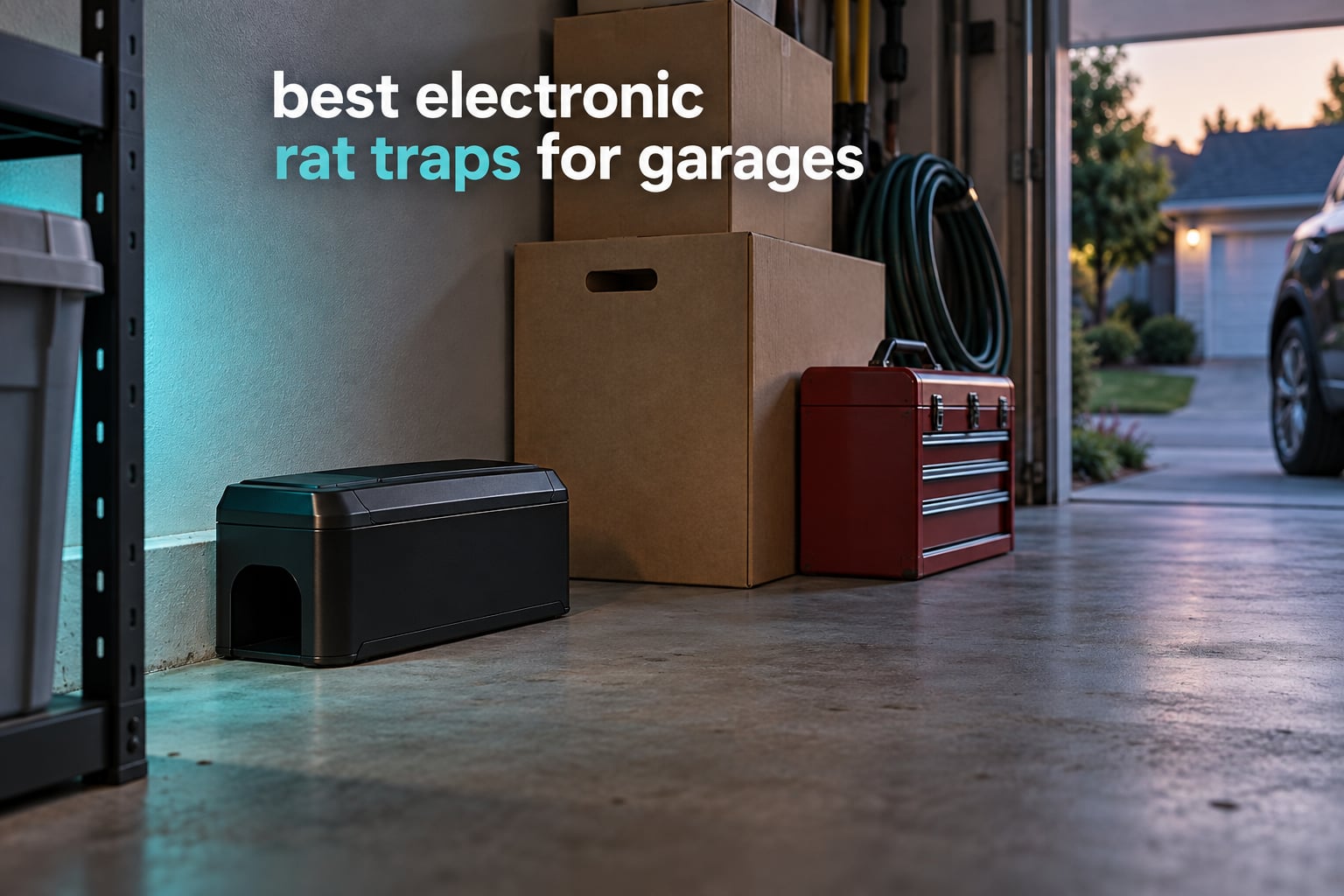
Short answer: the best electronic rat traps for garages are the OWLTRA OW-1 for a single-bay garage, the Victor Rat Zapper Classic 4-pack when you need several zones covered at once, and the PEXPEL MK08S if your garage has a wall outlet and you want a trap running continuously. The single most important garage fact is that most of these traps are indoor-rated, and an unheated garage is where battery output drops and a weak shock agitates a rat instead of killing it.
A garage is a hard room to trap in. It swings between cold and warm, it collects condensation on concrete, it is full of cardboard and pet food bags that rats treat as a buffet, and it usually has a vehicle parked in it a few feet from wherever you want to put a trap. Our team compared eight battery and plug-in electronic rat traps against that specific setting, and the differences between them matter far more in a garage than they do in a pantry.
We looked at voltage, shock cycle length, power source, catch indicators, disposal method, chamber size, indoor versus damp-location ratings, and the actual review signal behind each listing. What we could not do is drop live rats into an unheated garage for six weeks, so the performance read here comes from published specifications and from what thousands of owners report after living with the same units. We flag where a manufacturer claim and an owner report disagree, because on this category that gap is usually the whole story.
If you are also fixing up the space rather than only trapping it, our guides to chest freezers for garages and rolling workbenches for small garages cover the storage and layout side of keeping a garage usable while you deal with rodents.
Table of Contents
Top 3 Best Electronic Rat Traps for Garages (October 2026)

OWLTRA OW-1 Electric Rat Trap
- Dual infrared entry sensors
- 6000-10000V shock cycle
- 4 C batteries
- magnetic latch disposal
Victor Rat Zapper Classic 4 Pack
- Four traps in one pack
- 2-minute shock cycle
- green catch LED
- 4 AA batteries

Victor Electronic Rat Trap 2 Pack
- Auto re-arming
- green catch and red low-battery LEDs
- up to 35 rats per trap
All 8 Best Electronic Rat Traps for Garages (October 2026)
| Product | Specifications | Action |
|---|---|---|
| OWLTRA OW-1 Electric Rat Trap |
|
Check Latest Price |
| Victor Rat Zapper Classic 4 Pack |
|
Check Latest Price |
| Victor Electronic Rat Trap 2 Pack |
|
Check Latest Price |
 PEXPEL 3900V Anti-Escape Baffle Trap PEXPEL 3900V Anti-Escape Baffle Trap |
|
Check Latest Price |
 PEXPEL 2800V Two Pack PEXPEL 2800V Two Pack |
|
Check Latest Price |
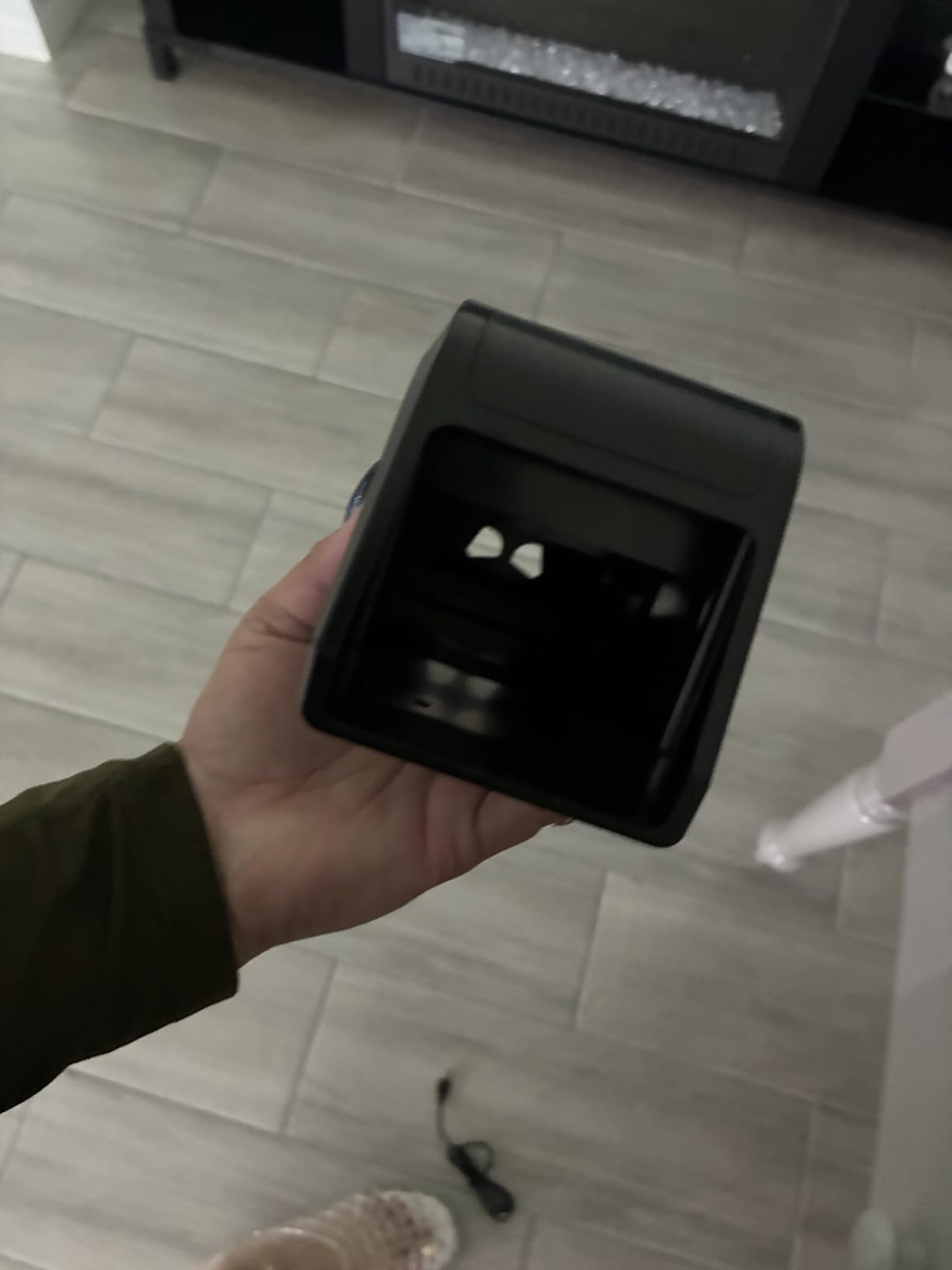
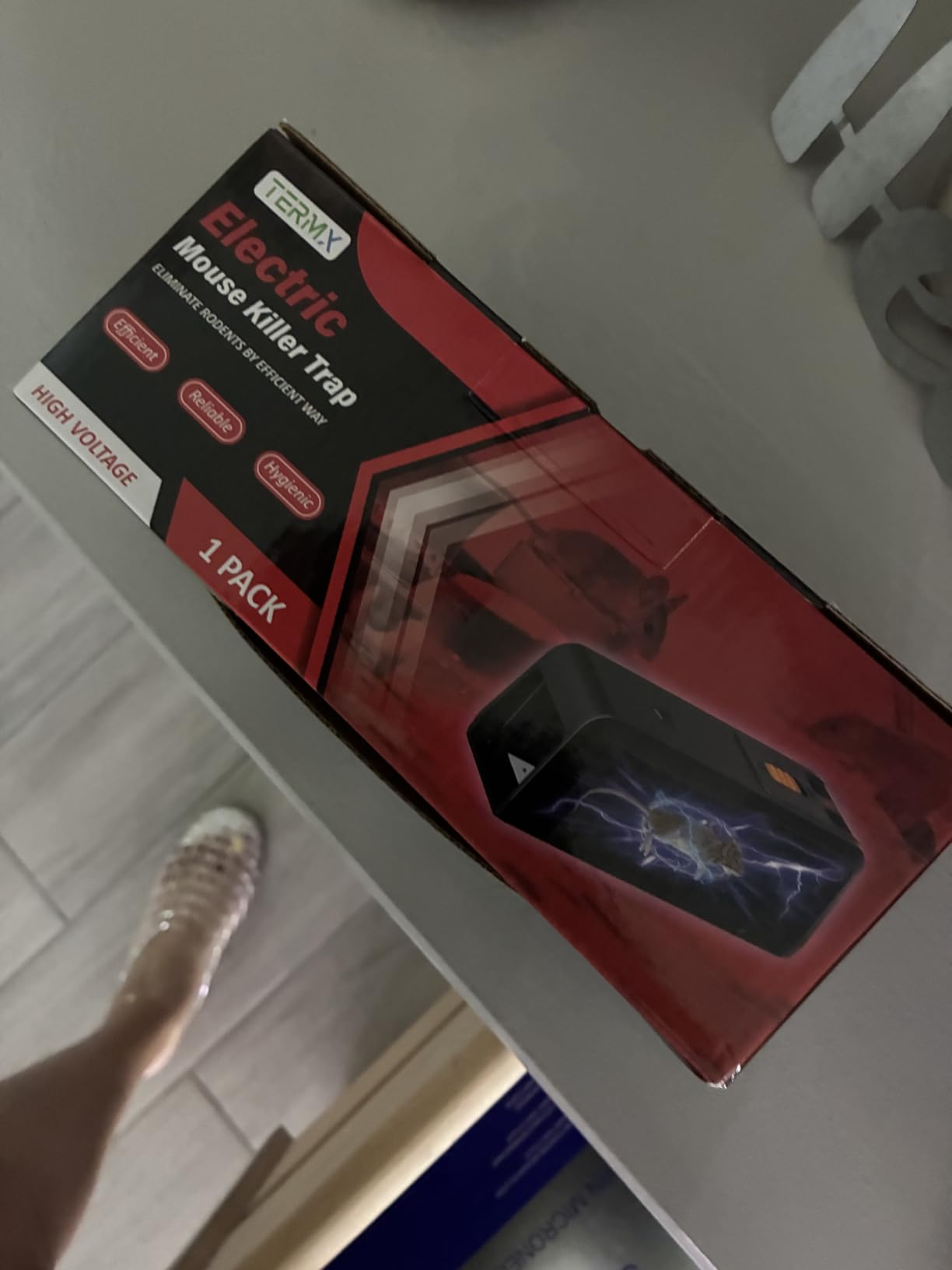
 TERMX 2 Pack Large Electric Rat Trap TERMX 2 Pack Large Electric Rat Trap |
|
Check Latest Price |
 G-Jyuncyou 2800V USB Rat Trap G-Jyuncyou 2800V USB Rat Trap |
|
Check Latest Price |
 LNYUHAD Two Pack Electric Rat Trap LNYUHAD Two Pack Electric Rat Trap |
|
Check Latest Price |
1. OWLTRA OW-1 electric rat trap: the best all-round choice for a garage
OWLTRA OW-1 Indoor Electric Rat Trap, Instant Kill Rodent Zapper with Pet Safe Trigger, Black, Large
6000-10000V shock cycle
Dual infrared entry and exit sensors
4 C batteries, no-touch disposal
Pros
- Kills rats and mice quickly
- with some owners reporting 12-14 catches in a row
- Dual infrared sensors cut false zaps around children and pets
- Magnetic latch disposal means no contact with the carcass
- Vented rear bait door opens fast for cleaning
- Thick plastic that holds up to repeated cycles
Cons
- Several owners report the unit eventually stops shocking while rats keep eating the bait
- Bait door hinge is flimsy on some units
- Only one animal per cycle
The OW-1 is the one I would put in a typical single-car garage first, for one reason above all others: the dual infrared sensors. One sensor sits at the entrance and one at the back, so the trap only energises when a rodent is fully inside. In a garage that matters more than in a kitchen, because you are placing the unit in a space where a dog, a child or your own ankle is going to bump past it.
Owners report the kill performance is genuinely fast, and several describe stringing together 12 to 14 consecutive catches. The magnetic latches also mean that when a kill happens you lift the lid and tip the unit straight into a bin, with the trap de-activating automatically as the lid clears. That is the single feature people value most in this category, and it is why so many forum users who were nervous about handling rodents end up recommending them anyway.
What holds it back is durability rather than performance. A recurring theme in the reviews is a trap that kept its normal power light while the shock output faded, so rats walked in, ate the bait and left. The 3.7 average across 3,532 reviews is the most polarised number in this lineup, with a large share of five-star reports sitting alongside a meaningful block of one-star ones. Treat the red low-battery warning as a hard stop, not a suggestion.
The 6000-10000V discharge is at the top of the group, and the four C cells are stated to handle up to 60 rats on one set. Treat that number as a ceiling rather than a promise, since long-term owners consistently report far fewer real kills per battery set than the label suggests. At 9.4 by 3 by 3.9 inches it is a mid-size tunnel that suits a full-grown Norway rat without taking up much floor space.
What the OW-1 does well in a garage
The safety gating is the reason this one works in a shared space. Because the trap waits for a rodent to be fully inside before it fires, you can put it near a workbench or a stored vehicle without the constant anxiety that comes with a bare snap trap on the floor.
Disposal is genuinely hands-off. Owners mention the bait door and top open easily for cleaning, and the magnetic latch means you are never handling the carcass. In a garage where you would rather not crouch down with a dead rat in gloved hands, that is worth a lot.
Where the OW-1 falls short
One kill per cycle is the big structural limitation. A garage with a resident family of rats will chew through that single chamber slowly, and you will need several traps rather than one. The bait door hinge is also the first part owners report breaking, so handle that rear vent gently when you re-bait.
2. Victor Rat Zapper Classic 4-pack: best coverage for multi-area garages
Rat Zapper Classic Indoor Electronic Rat Trap, 4 Pack
Four traps per pack
2-minute continuous shock cycle
4 AA batteries
5 inch cube chamber
Pros
- Four traps let you cover separate garage zones in one purchase
- Green LED catch alert removes the need to open and check the trap
- Tip-to-trash disposal means no touching the rodent
- Long 2-minute shock cycle is reported to deliver a fast humane kill
- AA power makes placement easy away from outlets
Cons
- Highest cost per trap in this lineup
- Batteries are not included
- Indoor use only
- so it is not suited to exterior garage perimeter or yard runs
This is the only bundle in the group that is explicitly documented for garages, and that single word in the spec list changes the decision for a lot of people. The manufacturer lists indoor use across attics, garages, basements and sheds, so you are not relying on a reviewer’s guess about whether a plastic tunnel tolerates a damp floor.
Four traps in one pack is the practical argument. Rats do not spread out evenly, they follow edges, and a garage has at least four distinct edge zones: the door threshold, the back wall, the side wall near stored boxes, and behind the water heater or appliances. One trap in the middle of that room catches the occasional explorer. Four traps placed along those edges catch the ones living in your walls.
The blinking green LED is what makes that plan workable. Without an indicator you would be lifting the lid on four units every morning, which is exactly the chore that makes people give up on trapping. With it, you walk over when the light is on. The 2-minute continuous shock cycle is longer than most units here and is repeatedly described in reviews as producing a fast, humane kill.
What the 4-pack does well in a garage
Zone coverage is the win. If your garage has a vehicle, a workbench wall and a storage corner, three traps in sensible edge positions beat one trap in an arbitrary spot every time. Tip the used trap into a bin over the wheelie bin and the disposal loop takes seconds.
It also tolerates awkward placement. AA cells mean no outlet is needed, so a trap can sit behind the water heater or out in the corner of a detached garage with no wiring. The catch alert removes the daily check that a bare snap trap demands.
Where the 4-pack falls short
Cost is the honest drawback. This is the highest cost per trap in the lineup, and buying a second pack to cover a second zone doubles it. Batteries are not included either, and with four traps you are replacing cells in four devices on the same schedule. The compact 5-inch cube chamber is also sized for average rats rather than very large stocky ones.
3. Victor M241BSR-2 2-pack: best for a heavy rat infestation
Victor Electronic Rat Trap, 2-Pack
Auto re-arms after each catch
Up to 35 rats per trap
7.13 x 4.31 x 9.88 inch chamber
Pros
- Automatic re-arming allows genuinely unattended operation over days
- Green catch LED plus red low-battery LED remove guesswork
- Strong per-trap kill capacity on lithium AA cells
- Tall deep chamber suits full-sized rats better than compact cube traps
- Two-pack lets owners cover a garage and a basement separately
Cons
- Batteries are not included and lithium AA cells add running cost
- Bulky vertical footprint takes more placement space than tunnel-style traps
- Indoor use only
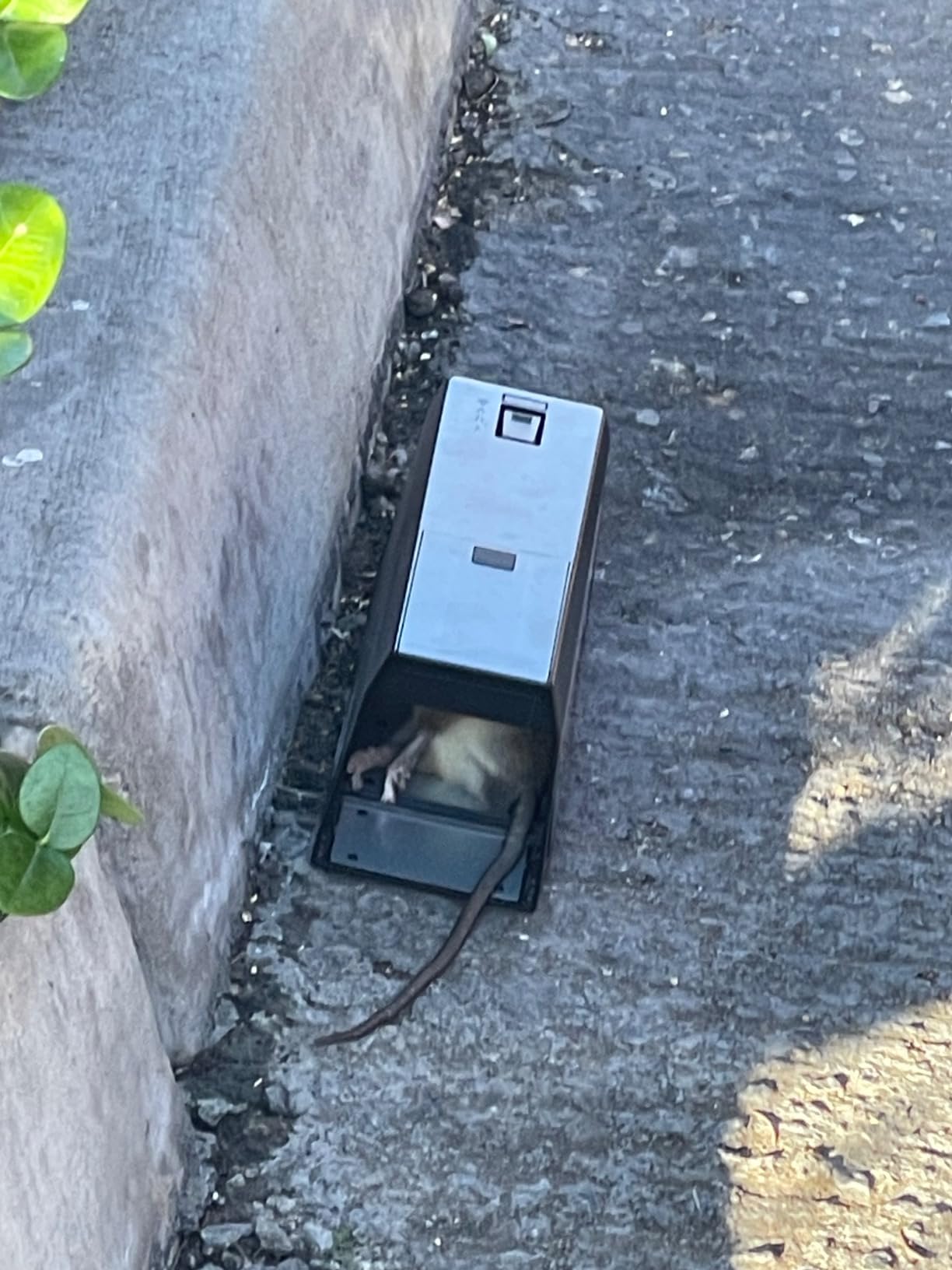
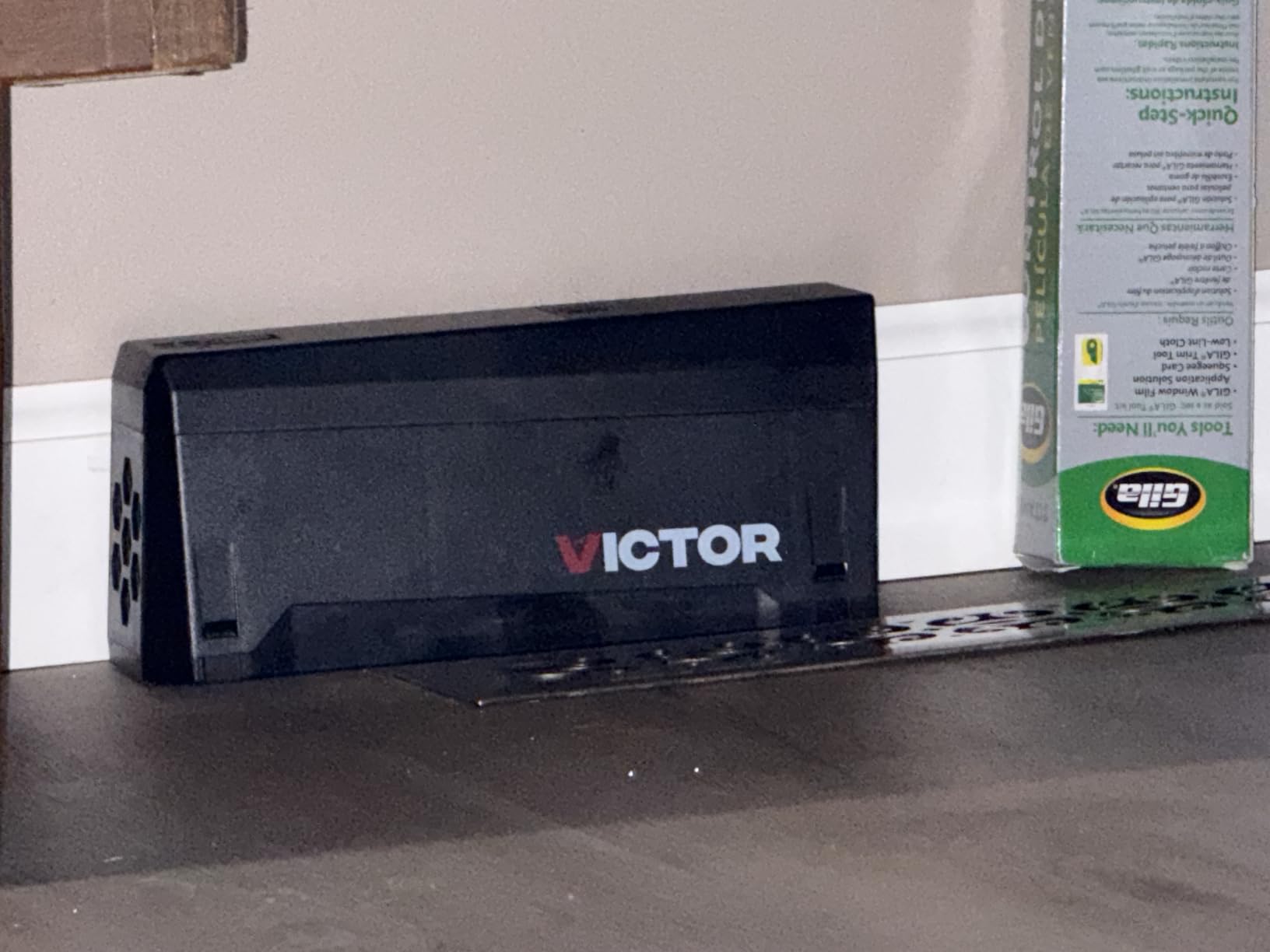
This is the one to buy if the garage is not an occasional visitor situation. The auto-re-arm function means after a catch the trap resets itself, so it can keep working through the night and through the next day without you walking over to clear it. For a garage where you are not there every day, that is the difference between a trap that helps and a trap that sits there with a light blinking.
The two separate LEDs are the detail reviewers praise most. A green light means a catch, a red light means the batteries are low, and those are completely different problems that a single-colour indicator forces you to guess at. On a platform where a weakening battery is the leading cause of a trap that fires without killing, separating those two signals matters.
At 9.88 inches tall and 7.13 inches deep, this is the tallest chamber in the group, and that height is deliberate. Adult rats are long, and a shallow tunnel forces a rodent to sit awkwardly on the plate. The deep vertical chamber gives a full-sized rat room to enter properly, which is where a lot of shallow electronic traps lose their kill.
What the M241 does well in a garage
Unattended operation is the headline. Auto re-arming plus a catch light means you can check once a day rather than several times, and the trap keeps working between checks. Lithium AA cells are also the strongest power format per unit of space if you are running two of them.
For a garage shared with a vehicle, the height is a genuine benefit. This chamber is designed around an adult rat rather than a mouse, and owners rate it well for larger animals compared with compact cube designs.
Where the M241 falls short
The footprint is large. A 9.88-inch vertical unit will not tuck behind shelving the way a slim tunnel does, so you need clear wall or floor edge space for it. Batteries are not included, and lithium AA cells are not the cheapest thing to keep replacing. It is also indoor-rated only, so it stays inside the garage envelope.
4. PEXPEL 3900V with anti-escape baffle: best for a garage with a power outlet
Electric Rat Trap Indoor for Home, 3900V Electronic Rat Trap Zapper with Anti-Escape Baffle, No-Touch Cleanup, Reusable Plug-in Rodent Trap for Home Kitchen Garage
3900V shock cycle
Drop-down anti-escape baffle
AC adapter plus 4 C battery backup
Pros
- Anti-escape baffle is the clearest mechanical containment design among the plug-in units here
- Works on AC power for continuous unattended garage monitoring
- Battery backup allows cordless placement where no outlet exists
- No-touch tilt disposal keeps cleanup sanitary
- LED reports armed
- catch and fault states at a glance
Cons
- Small review base with very few long-term reliability reports
- Batteries are not included for cordless mode
- The AC adapter means one outlet is occupied per trap
- Battery compartment must be kept dry
- limiting damp basement and shed locations
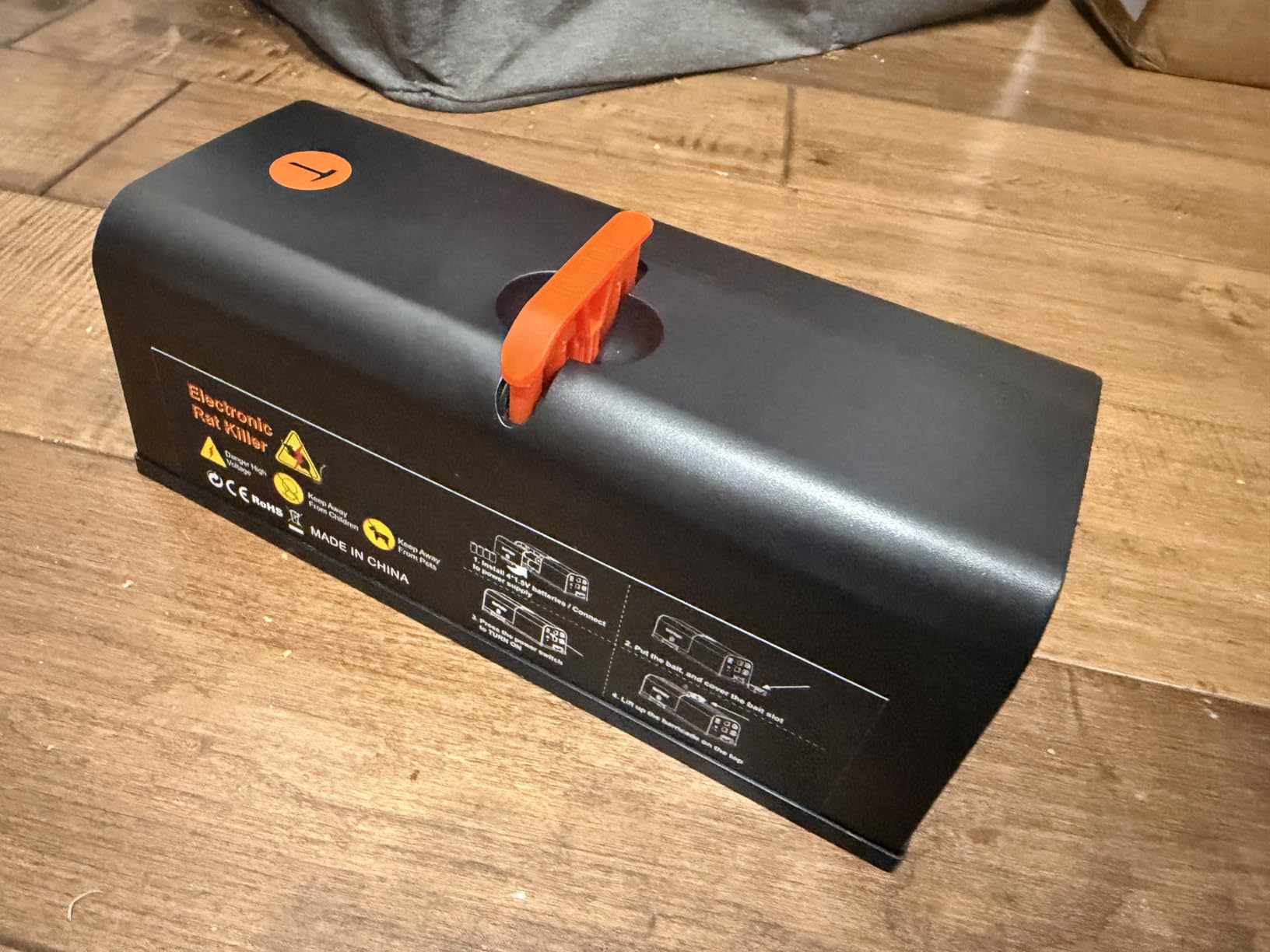
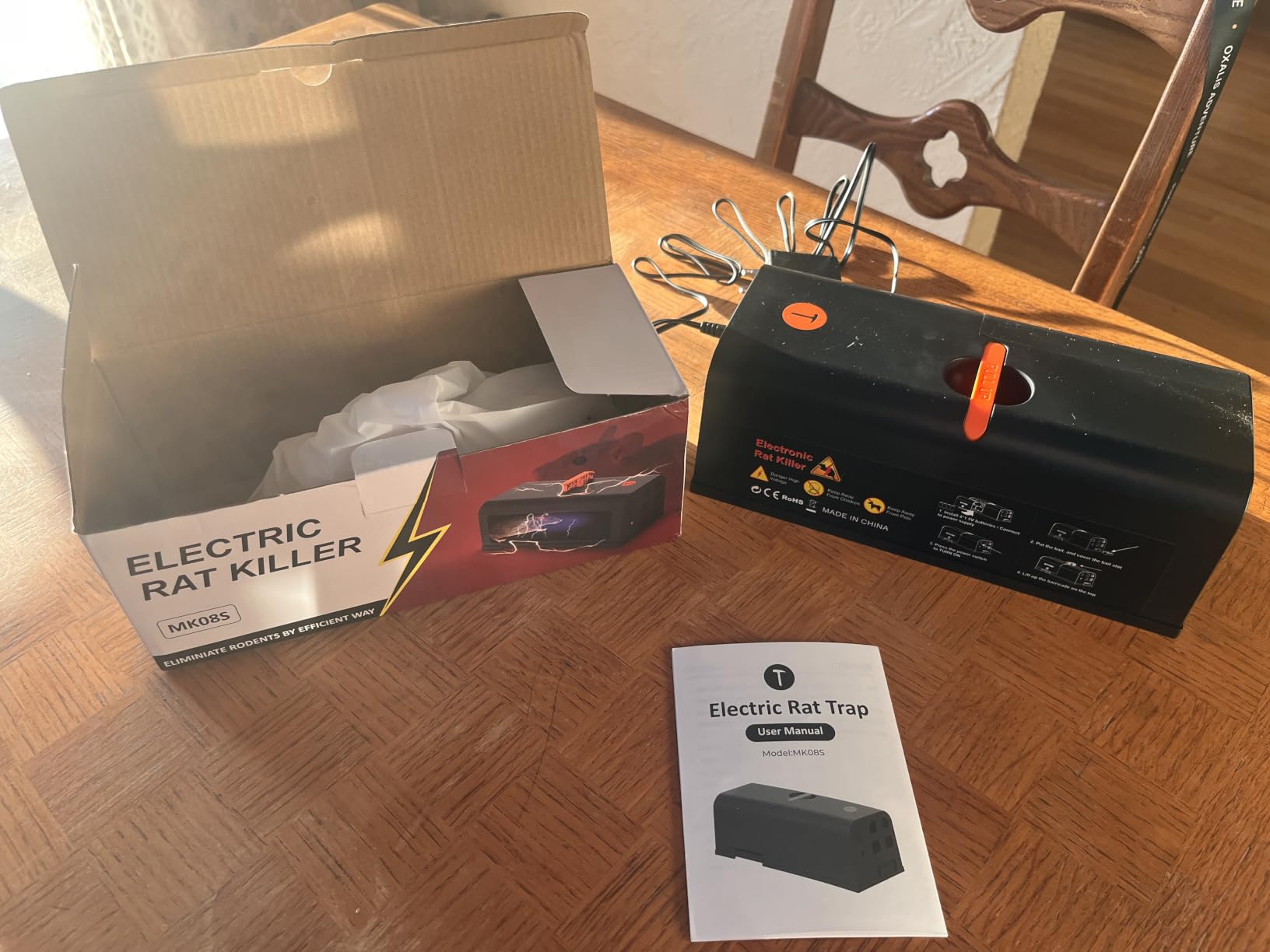
Every other trap in this roundup runs on batteries you have to remember to change. This one includes an AC adapter, which means in a garage that has a usable outlet you can run it continuously and stop thinking about it. That changes the failure mode entirely: a battery trap that quietly weakens in cold weather is a trap that shocks without killing, and a plug-in trap does not have that problem.
The anti-escape baffle is the other standout. When a rodent enters, a top panel drops to confine it before and during activation. That is a mechanical solution to the same problem the sensor-based units solve optically, and owners consistently single it out as the most reassuring containment design among the plug-in models.
Power is genuinely dual. Run it on the adapter for a fixed location near an outlet, or pull four C cells for a corner with no wiring. The LED status system reports armed, catch, and low-power or error states, so a fault is distinguishable from a normal standby light.
What the 3900V model does well in a garage
Continuous power is the reason to buy it. If you have a socket near the back wall, the cold-weather battery drop that undermines every other trap on this list simply does not apply, and the trap keeps delivering full output through the winter. The anti-escape baffle also adds a physical barrier that sensor-only designs cannot offer.
It suits large spaces with a fixed layout. A garage that never gets reorganised, with a workbench and shelving along one wall, is exactly the environment where one permanently powered trap does the work of three that need battery checks.
Where the 3900V model falls short
The evidence base is thin. With 17 reviews, all of them five-star, this listing reflects first-time enthusiasm rather than a long reliability record, and I would not treat the rating as a durability signal. Batteries are not included for cordless mode, each trap takes an outlet, and the battery compartment has to be kept dry, which limits damp corners of a garage.
5. PEXPEL 2800V 2-pack: best for the least cleaning after a catch
pexpel 2 Pack Electric Rat Trap, 2800V Electronic Rodent Zapper with LED and Buzzer Alerts, Replaceable No-Touch Electrode Plate, Battery or USB Powered Mouse Trap for Home, Kitchen and Garage
2800V rapid-action cycle
Replaceable bottom electrode plate
Battery or USB powered
Pros
- Swappable electrode plate means you never scrub the killing chamber after a catch
- Buzzer plus LED gives audible and visual notification useful in a garage out of sight
- Slim tunnel footprint fits along baseboards
- behind appliances and under cabinets
- Works on batteries or USB
- so placement is not limited to outlets
- Enclosed ABS housing keeps the live electrode out of reach around curious pets
Cons
- 2800V is a lower output than the 3900V models in this lineup
- Batteries and the power adapter are not included and the unit is not rechargeable
- Dry-surface indoor placement only
- Replacement electrode plates are an ongoing consumable cost
The replaceable bottom electrode plate is the feature that makes this the least unpleasant trap to own. After a catch you switch it off, wait 30 seconds, slide the plate out with the rodent on it, tip it into a bin and fit a clean one. You never rinse or scrub a bloodied chamber, which is the step that turns most owners off from reusing an electronic trap in the first place.
The buzzer is the other idea I like for a garage specifically. A green flash is easy to miss if the trap is behind a stack of boxes or under a workbench, but a buzzer carries. You hear the catch from the doorway and know to deal with it, instead of finding out a week later when the smell starts.
At 8.70 by 3.11 by 3.39 inches per trap this is a slim tunnel, and that is a placement advantage in a cluttered garage. It fits along a baseboard, behind an appliance or under a cabinet where a tall vertical chamber will not go.
What the 2800V 2-pack does well in a garage
Cleaning is the standout. Swapping a plate takes seconds and means the trap can go straight back into service instead of sitting for a day while you deal with it. The slim profile opens up placement spots that taller units cannot use, and the buzzer solves the out-of-sight catch notification problem.
Battery or USB power means you can place it away from an outlet. Two traps in the pack also let you work two separate edge zones rather than putting both in one room and hoping the rats cooperate.
Where the 2800V 2-pack falls short
2800V is the lower output figure here, and while the shock is still described as rapid and effective, the highest-output units have more headroom. Batteries and the adapter are both absent from the box and the unit is not rechargeable, and replacement plates are an ongoing consumable. Dry surfaces only is the real limitation for a damp garage floor.
6. TERMX 2-pack large chamber: best dual-plate containment
2 Large Electric Rat Trap Mouse Traps for Indoor Home No Touch Instant Kill
150-second continuous shock
Two solid electrode plates
Cover-slide no-see disposal
Pros
- Large-format chamber that accommodates bigger rats as well as mice
- Dual electrode plates help prevent a shocked rodent escaping before it is finished
- Detailed LED states make it easy to tell standby
- active and catch conditions apart
- Cover slide empties the trap without seeing or touching the rodent
- Runs on four AA batteries or the power adapter for flexible placement
Cons
- Reviews show a 14% one-star share
- the second highest in this lineup
- Must be kept away from water
- The red standby flash every five seconds is distracting in a living space
- Batteries are not listed as included
The twin-plate arrangement is what makes this one work on large rodents. Two solid electrode plates are positioned to hold the animal in contact and block escape while the shock runs, and the 150-second cycle is one of the longer ones here. For a Norway rat rather than a mouse, that combination is doing real work.
The LED behaviour is unusually well specified, and in a garage you will appreciate the detail. Solid red while the shock is active, green for a confirmed catch, and a red flash every five seconds on standby. You can tell at a glance which of those three states your trap is in without opening it or touching anything.
Placement guidance on this listing includes garages among the listed areas, and the cover slides off the top for no-see disposal. It runs on four AA cells or the adapter, so you can move it between a dry corner and a spot near a socket as your garage layout changes.
What the TERMX 2-pack does well in a garage
Containment on large rats is the strength. Dual plates plus a long shock cycle reduce the failure case that worries people most, which is a rodent leaving after being shocked. The chamber is large enough for a big rat and still handles mice, so it works across a mixed population.
The differentiated LED states are genuinely useful when traps are placed out of sight. And the cover-slide disposal means you lift and tip without looking at the result, which for many people is the deciding factor in a space they also use for other things.
Where the TERMX 2-pack falls short
A 14% one-star share is the second highest in this lineup, with negative reviews centring on units that failed to kill consistently. The no-water restriction is a real problem on a concrete floor with condensation, and the standby red flash every five seconds is a poor choice if the trap sits anywhere visible from indoors.
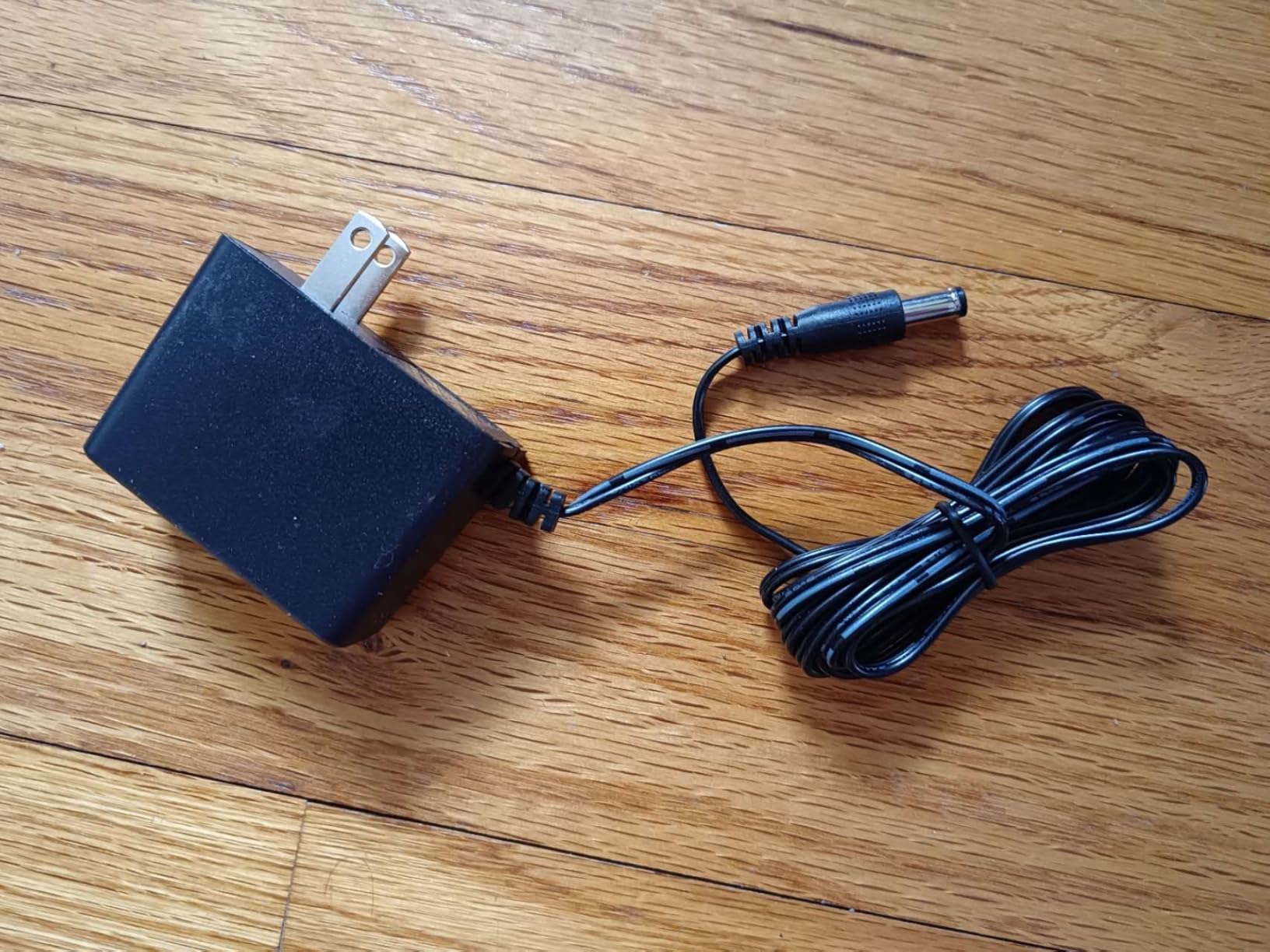
7. G-Jyuncyou 2800V USB trap: the best budget pick
Electric Rat & Mouse Trap, 2800V Reusable Indoor Rodent Trap, 1 Pack
2800V enclosed shock chamber
Removable collection plate
USB cable included
Pros
- Lowest cost per trap in this lineup while still offering a 2800V enclosed chamber
- Slide-out collection tray makes disposal and odor control straightforward
- Enclosed tunnel design reassures owners with cats and dogs
- Simple one-cable setup with no complicated instructions
- Compact enough to sit in tight corners along baseboards and behind shelving
Cons
- Only a USB cable is included
- Single-trap pack
- so covering a whole garage needs more than one
- One verified review reports the unit did not work at all
- Small review base of 26
- Listed dimensions look implausibly small for the device
If you need a cheap first line of defence in one corner of the garage, this is the sensible buy. The 2800V enclosed chamber is a legitimate design at a lower cost, and the enclosed tunnel means the shock only activates inside while the exterior stays safe to touch, which matters in a space with a dog in it.
The slide-out collection plate is the part I like. It pulls the carcass out with the plate so you can bin it without scraping a chamber clean, and it doubles as the routine cleaning step that keeps odour from building up over repeated use. Owners also like how simple the setup is: one cable, no complicated instructions.
Be clear-eyed about the evidence, though. With 26 reviews, one of them a verified report that the unit did not work at all, this is not a trap I would put my confidence in for a stubborn infestation. It is a low-cost unit for a low-level problem in a dry corner, and the 4.5 average reflects mostly early buyers.
What the budget trap does well in a garage
Cost per trap is the whole case. If you want to cover two corners cheaply rather than buy a premium unit, two of these is a defensible setup. The enclosed chamber and slide-out plate mean it is still a clean, no-touch design at the entry level.
It fits where bulkier units cannot. A small footprint along a baseboard or behind shelving is a real advantage in a packed garage, and the enclosed tunnel is reassuring if a pet shares the space.
Where the budget trap falls short
Only a USB cable is included, so you need a USB power source before it works at all. It is a single trap, meaning a whole garage needs several purchases at this level. The one verified non-working report and a 26-review base are thin, and the listed dimensions look far too small to describe the device accurately.
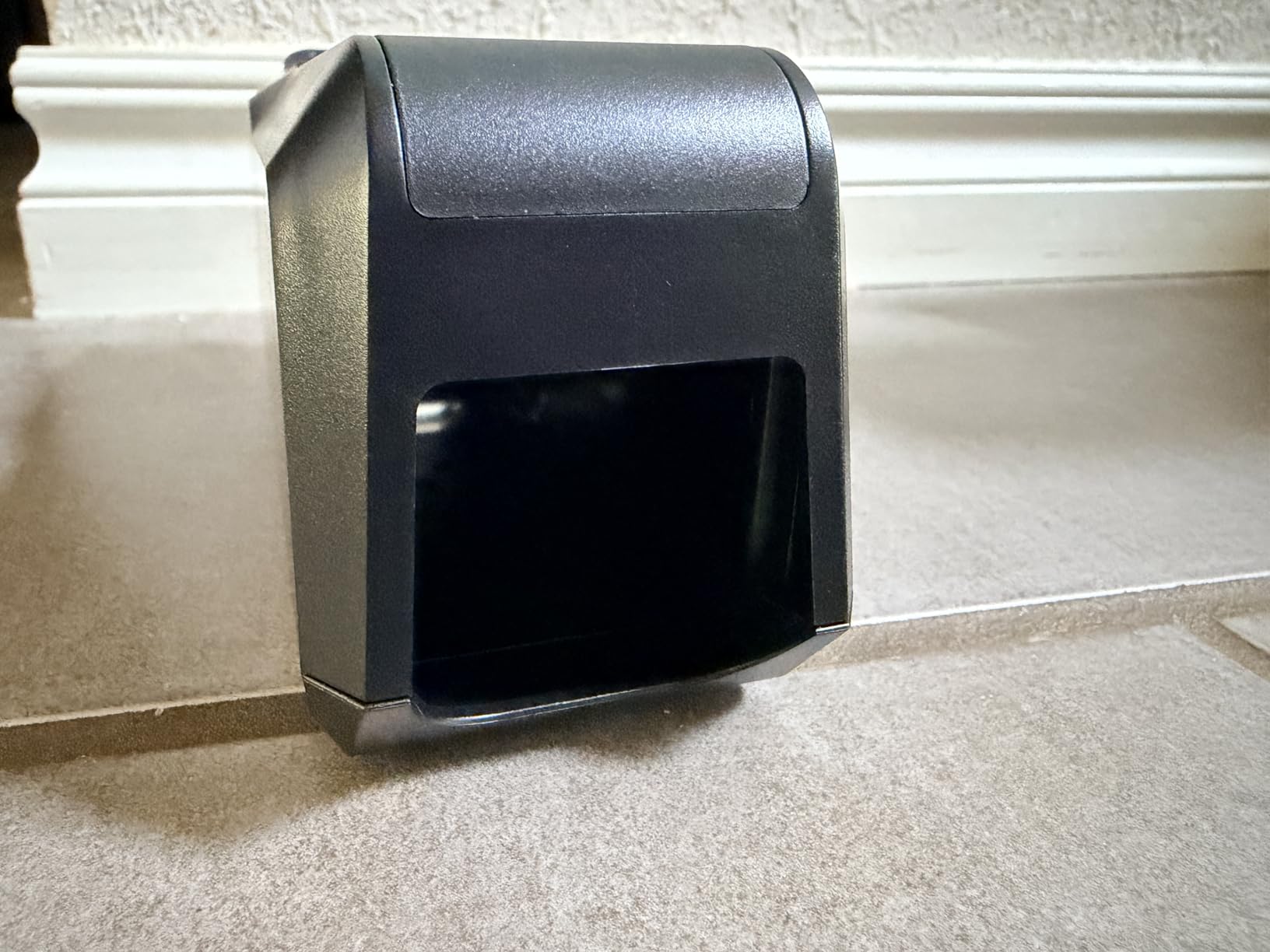
8. LNYUHAD 2-pack: best for the largest chamber and socket-free spots
2026 Electric Mouse Trap Zapper, Reusable Electronic Rat Trap Indoor for Home, No-Touch Mice Zapper with High Voltage, Humane Rodent Traps for Kitchen Garage Attic(2Pack)
High-voltage full-entry sensing
Battery or adapter mode
10 x 4.3 x 4.5 inch chamber
Pros
- Largest chamber dimensions in this lineup
- giving room for adult rats
- Detachable bait compartment lets you change bait without touching the trap interior
- Explicit three-state LED code removes any ambiguity about standby
- catch and low battery
- Dual power mode with a stated 30-kill battery capacity suits socket-free garages and attics
- Two-pack gives coverage across two separate areas
Cons
- No customer review images and a review base of only 20
- Generic branding with minimal listed specifications
- The battery runtime figure applies to mice rather than rats
- Adapters and batteries are not mentioned as included
At 10 by 4.3 by 4.5 inches this is the largest chamber in the group, and chamber size is the single most useful spec when you are dealing with adult rats rather than mice. A big rat in a small tunnel sits awkwardly on the trigger plate, and awkward contact is failed contact.
The detachable bait compartment is the feature that most directly helps a garage user. You can swap or top up bait without opening the killing chamber, so you do not have to handle a dirty interior, and you can pre-bait several of these across a garage in one pass and then arm them all together once the rats are comfortable.
The LED code is explicit about all three states: red blink every five seconds for standby, green flashing for a capture, and red and green together for low battery. That last one matters, because a low-battery warning in a cold garage is the signal that a trap has stopped delivering a lethal shock.
Dual power is well matched to garage reality. Battery mode is aimed at socket-free spots such as attics and garages, while adapter mode suits a fixed location. Just note the 30-kill battery figure is stated for mice, so do not read it as a rat kill count.
What the LNYUHAD 2-pack does well in a garage
Chamber size is the headline. It is the roomiest unit here, which suits full-grown rats and gives a large animal space to enter the trap properly. The removable bait cup makes pre-baiting and rebaiting quick across multiple units.
Power choice suits mixed garage layouts. One trap on battery under the workbench and one on the adapter by the door is a sensible split when your storage changes through the year.
Where the LNYUHAD 2-pack falls short
The specification sheet is unusually thin for the position, and generic branding means limited support if something fails. With 20 reviews and no customer images, there is very little real-world data behind it. The stated battery kill count is a mouse figure, and neither the adapter nor batteries are mentioned as included.
How to place an electronic rat trap in a garage
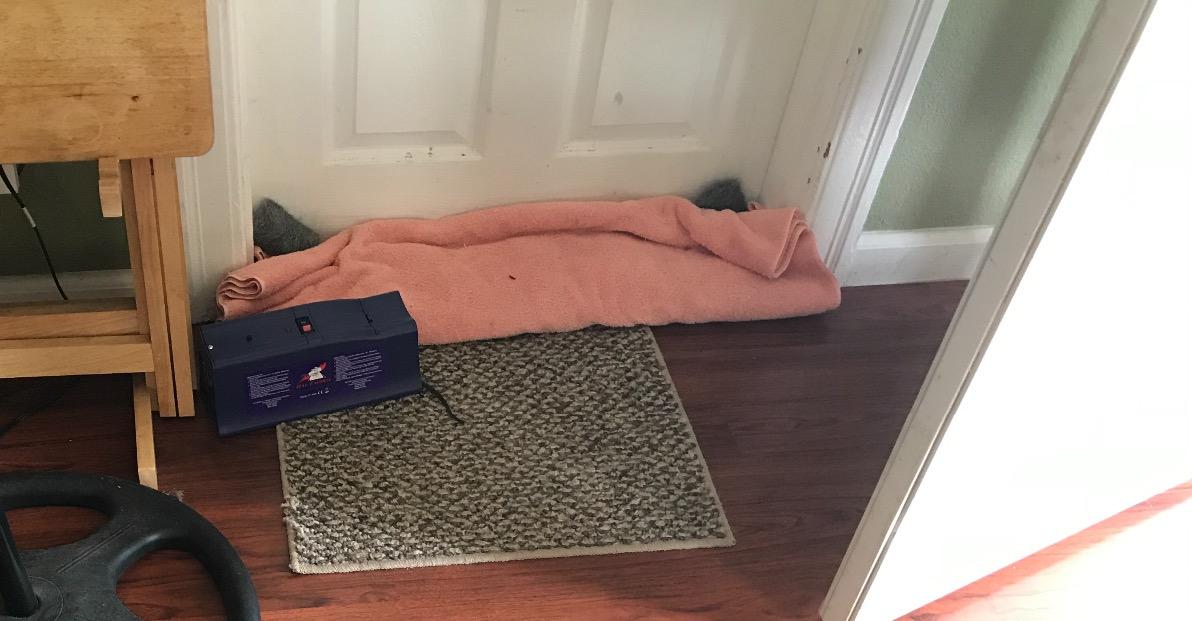
Rats do not cross open floor. They hug edges, they follow walls, and they prefer to run with something touching their flank, which is why a trap in the middle of a garage floor can sit for weeks without a single hit. Every useful placement in a garage is an edge placement.
Start by reading the room. Look for droppings along baseboards, greasy rub marks on lower wall panels and a run of scuffing along the skirting. Those three signs tell you which wall the animals are using, and that wall is where the traps go. If you are not sure, place on the wall where the door is, because that is where the entry gap usually is.
Then work through these positions in order of value:
The garage door threshold. The gap under the door is the most common entry point, and rats run this line constantly. Set the trap perpendicular to the door with its entry end at the threshold.
Along the back and side baseboards. Set traps with the entry end against the skirting, spaced a few metres apart so you cover more than one run.
Behind the water heater. This is warm, sheltered and against a wall, which makes it a favourite daytime hiding spot.
Behind and beside appliances and stored boxes. Anything pushed flush to a wall creates a protected runway that rodents treat as a highway.
Under the workbench. Low, dark and against a wall. Just keep the trap clear of the floor if condensation is an issue.
Orientation matters as much as location. Point the entry end along the wall, not out into the room, so a travelling rat meets the opening rather than the side of the box. And never place a trap where a vehicle door or a stack of stored material can knock it over or step on the bait door. Our guide to slat wall systems for garages is worth a look if your storage is currently giving rats overhead cover.
Pre-baiting: the 3-to-5 night protocol that fixes an untouched trap
The most common complaint in every forum thread about these traps is the same: it is set, it is baited, and nothing touches it for days. That is not a broken trap. It is a rat behaving normally. New objects are treated as threats for days at a time, and a trap that appears out of nowhere is the newest object in your garage.
The fix is to let the trap become scenery before it becomes a trap:
Day one: place the trap in position with the battery fitted but the trap not armed, and put a pea-sized amount of bait on the plate. Leave it alone.
Days two to four: check once a day. If the bait has been eaten or dragged away, that is the signal you want. Re-bait and leave the trap unarmed.
Once bait is being taken consistently: arm all the traps at the same time, not one at a time. Rats are suspicious of a sudden change in the object they have grown used to.
Wait four to five nights before moving anything. A kill often happens on night one or two, but activity can pause for a few days while the remaining animals recalibrate.
Do not relocate after a catch for a few days. The scent and the disturbed bait around a used trap keeps drawing the next one in.
This same protocol is repeated independently by multiple owners on r/homeowners and r/pestcontrol, and it is the single highest-return thing you can do before blaming the hardware. If bait is being consumed and nothing is dying, the problem is almost always battery output or bait placement, not the trap.
Cold garages, weak shocks and the red light
Here is the failure mode nobody in the category talks about properly. A battery-powered trap delivers a shock proportional to its output voltage, and cold cells deliver less than warm ones. Put a trap rated at 6000V on half-depleted AA cells in a garage at 2 degrees and the number you actually get may be a fraction of that.
A reduced shock agitates a rat rather than killing it. The animal enters, feels a painful but non-lethal charge, and leaves. It is hurt, it is wary, and it is now more likely to avoid the trap. That is precisely the scenario behind the repeated forum question about whether electric traps are humane, and in most of those cases the answer is that the trap was fine and the batteries were not.
Three practical rules follow. First, treat a red or red-and-green battery warning as an immediate change, not a note for later, because the interval between a weak shock and a dead shock is short. Second, lithium cells hold their output better in cold than alkaline, which is one reason the Victor M241 is specified for lithium AA. Third, if your garage drops below freezing regularly, a plug-in trap on continuous power removes the variable entirely, which is the strongest argument in this roundup for the PEXPEL MK08S.
Condensation is the quieter version of the same problem. Several units in this lineup state that the battery compartment must be kept dry or that placement is for dry surfaces only. A garage floor that sweats in spring will corrode contacts and short a trap that looked fine in the shop.
Bait: peanut butter, dry bait and the trigger plate
You will find two camps on bait. Most community advice is a pea-sized blob of peanut butter smeared on the trigger plate, and owners confirm it works. Some pest professionals recommend dry bait such as dry dog food instead, arguing that loose soft bait gets stolen without triggering the unit.
Both make sense in different situations, and the resolution is the plate. Put a small amount of peanut butter directly in the centre of the metal plate so the rat has to stand on the plate to reach it. If the bait is off the plate, back along the chamber wall, a rat can take it and step away without making contact. That is the bait-theft problem in one sentence.
For bait theft specifically, a stiffened moulded bait that has to be carried rather than licked is the better choice, and it is the recommendation that shows up repeatedly from experienced users on r/pestcontrol. Keep the amount small either way. A large smear inside an enclosed chamber also goes warm and rancid in a garage, and old bait stops working.
Why the best-selling electronic rat traps rate below 4 stars
It would be easy to pick a roundup where everything scores 4.5 or better. The problem is that those are the listings with almost no reviews, all of them five-star, from buyers who used the trap once. The highest-volume products in this category carry honest, messy averages, and here is why.
The first cause is the durability gap. On the OW-1, the recurring pattern is a trap that worked well for weeks or months and then stopped delivering a shock while the power light stayed normal. On the TERMX 2-pack, a 14% one-star share centres on units that failed to kill consistently. Neither of those is a catastrophic design flaw; both are the ordinary failure curve of a plastic, battery-powered consumer device used in a harsh environment.
The second cause is expectation mismatch. A lot of buyers take a trap out of a box, set it once, see nothing after two nights and file a one-star review. Rats take longer than that. The pre-baiting protocol exists precisely because of this, and it is not something the product page tells you.
The third cause is honest dissatisfaction with the price relative to a dozen snap traps. That is a fair complaint, and the fairest answer is that the value is not per trap. It is the carcass you never see, the spring bar you never reach for, and the fact that the trap works while you are away for three days. The portable air compressors for home garages roundup follows the same logic, where the more expensive unit pays for itself in convenience rather than in sticker comparison.
Troubleshooting an electronic rat trap that will not fire
Bait is being eaten but nothing dies. This is the battery-output problem, not a broken trap. Replace all cells with fresh ones, lithium if the manufacturer specifies them, and confirm the low-battery warning is not on. In a cold garage also move the trap to a warmer, more sheltered spot.
The trap has been set for days and is untouched. Work through the neophobia window. Leave the trap unarmed and baited for several nights, then arm it and do not move it for four to five nights. If bait is not even being touched, move the trap 30 cm and try again, or change the bait.
The green light is stuck on. The trap has a catch recorded that you have not cleared. Empty it following the disposal method for your model, refit the electrode plate if it is a replaceable-plate design, and reset. On a unit with a magnetic latch, opening the lid should deactivate it automatically.
A dead rat ended up outside the chamber. The rodent was shocked and exited before the cycle completed. Check the shock duration and output for your model, confirm the trigger plate is clean and unobstructed, and make sure the chamber is deep enough for a full-grown rat. The dual-plate and anti-escape-baffle designs here exist specifically to fix this.
The trap will not power on at all. Check the battery compartment contacts for corrosion, which is common in humid garages, and confirm the adapter output if you are running on mains. On units with a fault LED, a red-and-green or flashing state usually points to a low-battery or connection fault rather than a failed circuit.
Exclusion: sealing the gap under your garage door
Trapping without sealing entry points is the reason a garage gets re-infested in February. The most common openings are the gap under the garage door, the wall penetrations where utility lines and the water line enter, and the pet door if there is one.
For the door threshold, fit a threshold seal or weatherstrip designed for the gap at the bottom of your particular door, and check it annually because concrete moves and the door settles. For penetrations, work steel wool into the gap and cover it with sealant or mortar, and remember that a mouse-sized gap is a rat-sized opportunity. Do the same around pipe entries and any vent grille on the lowest part of the wall.
When to call a professional instead: if you see rats during daylight, if you find nests of young, if the droppings and rub marks are inside a wall void rather than on an accessible surface, or if you have tried a pre-baited multi-trap setup for two weeks with no change. At that point the animals are living where you cannot reach them. A dead rat left in a wall void is the worst outcome of a poison programme in an attached garage, because it does not remove the animal and it creates a problem you cannot reach.
How we picked and tested these traps
We evaluated all eight units on the same set of criteria: published voltage and shock cycle duration, power source and whether mains operation is possible, catch indication, disposal method, chamber dimensions against adult rat size, indoor versus damp-location restrictions, and the review signal behind each listing including its one-star share.
What we could not do is run a controlled six-week rat study in unheated garages, so performance judgements here rest on manufacturer specifications and on owner reports. Where a manufacturer claim and owner reports diverge, we have said so, particularly on kills per battery set. We also weighted review volume heavily, because a 5.0 average across 17 reviews tells you very little about a device that has to survive months of damp and cold.
Frequently Asked Questions
What is the best rat trap for a garage?
For most single-car garages the OWLTRA OW-1 is the best electronic rat trap because its dual infrared sensors only fire when a rodent is fully inside, and the magnetic latch lets you tip the carcass into a bin without touching it. For a garage with several edge zones, the Victor Rat Zapper Classic 4-pack covers more area at once. If your garage has a usable outlet, the PEXPEL MK08S runs on continuous mains power and avoids cold-weather battery drop entirely.
Can I use an electronic rat trap outdoors?
Not the models in this roundup. Every one of them is rated for indoor or sheltered use only, and several state that the battery compartment must be kept dry or that placement is for dry surfaces. Traps belong inside the garage envelope, not in an open driveway or yard. If you need to deal with runs outside, the work is exclusion, not trapping: steel wool and sealant at the door threshold and wall penetrations.
Are rats smart enough to avoid an electronic trap?
They avoid new objects, which looks like intelligence but is really caution. A trap that appears in a familiar run reads as a threat for several days. That is why pre-baiting works: set the trap unarmed and baited for several nights, let the rat eat from it, then arm everything at once and leave it in place for four to five nights. A trap left untouched for a few days is usually working as designed, not failing.
Why is my electric rat trap not working?
Check four things in order. First, batteries: a weakening cell reduces shock output, and a low shock agitates a rat instead of killing it, so the bait disappears and no catch is recorded. Second, bait position: put a small amount directly in the centre of the trigger plate so the rat must step on it. Third, timing: a new trap needs several nights of pre-baiting. Fourth, position: rats hug walls, so a trap in the middle of a garage floor will never fire.
How do I get rid of rats in my garage fast?
Read the droppings and rub marks to find the wall they use, then place armed, pre-baited traps perpendicular to that wall with the entry end at the baseboard. Cover the door threshold, the back and side baseboards, behind the water heater, and behind stored boxes. Because an electronic trap kills one animal per cycle, use several units rather than one. Seal the gap under the garage door and pack wall penetrations with steel wool and sealant at the same time.
How long do batteries last in an electric rat trap?
Manufacturer figures vary widely, from 20 rats per set on four AA cells up to 60 on four C cells, and real-world results commonly fall well short of those numbers, with long-term owners reporting considerably fewer kills per set. In an unheated garage, cold cells deliver less output, and a low-voltage shock agitates a rat rather than killing it. Treat the low-battery warning as an immediate change and prefer lithium cells or continuous mains power in a cold garage.
The bottom line for garage rat traps in 2026
For the best electronic rat traps for garages, buy the OWLTRA OW-1 for a single room and run it on the wall where the droppings are, and add the Victor Rat Zapper Classic 4-pack if your garage has more than one active edge. Pre-bait every trap unarmed for three nights, then arm them all together and do not touch them for four or five nights.
Change the batteries the moment the low-battery light appears, because a weak shock does not kill and it teaches the rats to avoid the trap. Then seal the gap under your garage door while you are at it, because the cheapest trap in the world will not help if they keep coming back through the same three inches.