
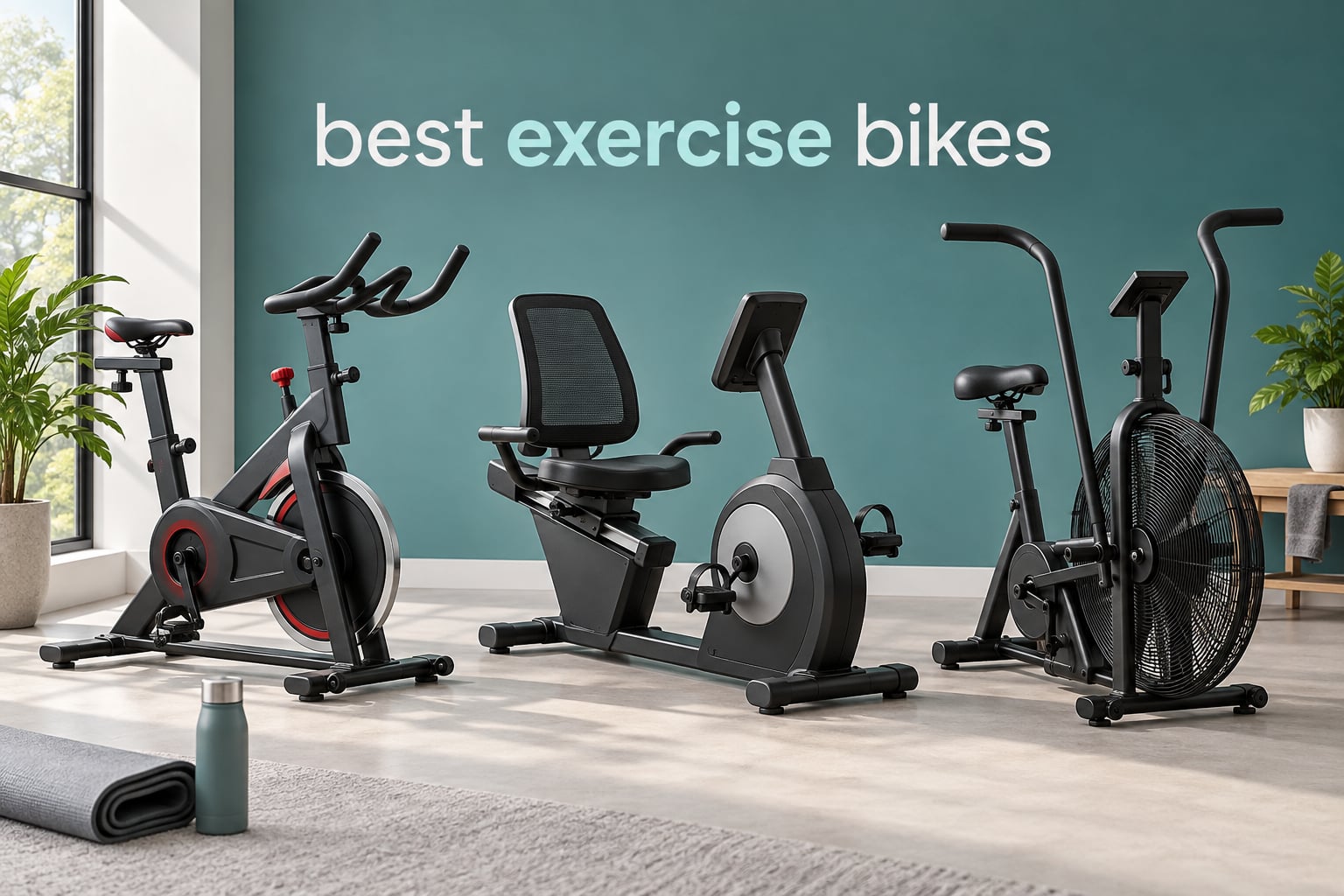
The best exercise bikes for home in 2026 fall into three clear groups: quiet magnetic spin bikes for apartments, cushioned recumbents for seniors and rehab, and a full-body fan bike for interval work. We spent weeks comparing 12 of them on the things that actually decide whether you keep riding: resistance type, flywheel weight, fit range, noise, and whether the app costs you anything after the first month.
Every bike below is a real model that exists in the market today, and every spec we quote comes from the manufacturer’s own listing rather than a marketing roundup. We weighted ride quality and fit adjustability most heavily, because a bike you find uncomfortable will end up as a coat rack no matter how good the app is. Noise mattered a lot too, since the most common question from readers is whether the machine will wake up the neighbours.
If you want a single answer right now, the YOSUDA exercise bike 002 takes our Editor’s Choice for the strongest combination of build quality, review volume and value. The Schwinn IC is the pick if you already own road shoes and want real training structure, and the pooboo is the one to buy if you want a magnetic 100-level resistance on a small budget.
Table of Contents
Top 3 Picks for the Best Exercise Bikes in 2026

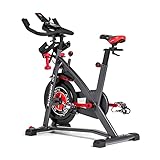
Schwinn IC Indoor Cycling Bike
- 100 magnetic levels
- SPD and cage pedals
- Backlit LCD console
- 10 year frame warranty

pooboo Magnetic Spin Bike
- 100 magnetic levels
- Under 25 dB belt drive
- 350 lb capacity
- Dual stage transmission
All 12 Exercise Bikes Compared in 2026
| Product | Specifications | Action |
|---|---|---|
| YOSUDA Exercise Bike 002 |
|
Check Latest Price |
 DMASUN Magnetic Spin Bike DMASUN Magnetic Spin Bike |
|
Check Latest Price |
| pooboo Magnetic Spin Bike |
|
Check Latest Price |
 Sunny Smart Recumbent Bike Sunny Smart Recumbent Bike |
|
Check Latest Price |
| Schwinn IC Indoor Cycling Bike |
|
Check Latest Price |
 MERACH Recumbent S08 MERACH Recumbent S08 |
|
Check Latest Price |
 XVGVSV Recumbent W239 XVGVSV Recumbent W239 |
|
Check Latest Price |
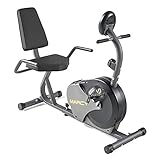 Marcy NS-716R Recumbent Marcy NS-716R Recumbent |
|
Check Latest Price |
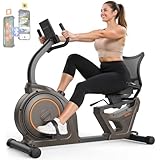 Niceday RC88 Recumbent Niceday RC88 Recumbent |
|
Check Latest Price |
 CHAOKE Magnetic Spin Bike CHAOKE Magnetic Spin Bike |
|
Check Latest Price |
 MERACH S26 Friction Spin Bike MERACH S26 Friction Spin Bike |
|
Check Latest Price |
 Marcy Air-Resistance Fan Bike Marcy Air-Resistance Fan Bike |
|
Check Latest Price |
1. YOSUDA Exercise Bike 002 – The Best All-Rounder
YOSUDA Exercise Bike, Brake Pad Stationary Bike for Home with Exclusive App, Magnetic Indoor Cycling Bike with 300 lb Weight Capacity, Low Noise, Tablet Holder and Fitness Courses for Weight Loss, Friction-Black
25 lb flywheel
Belt drive
100 friction levels
300 lb capacity
Suits 4ft8 to 6ft riders
Pros
- Very quiet belt drive
- Sturdy steel frame rated to 300 lb
- Four-way seat and two-way handlebar adjustment
- Assembly usually around 30 minutes
- Compact footprint for its size
Cons
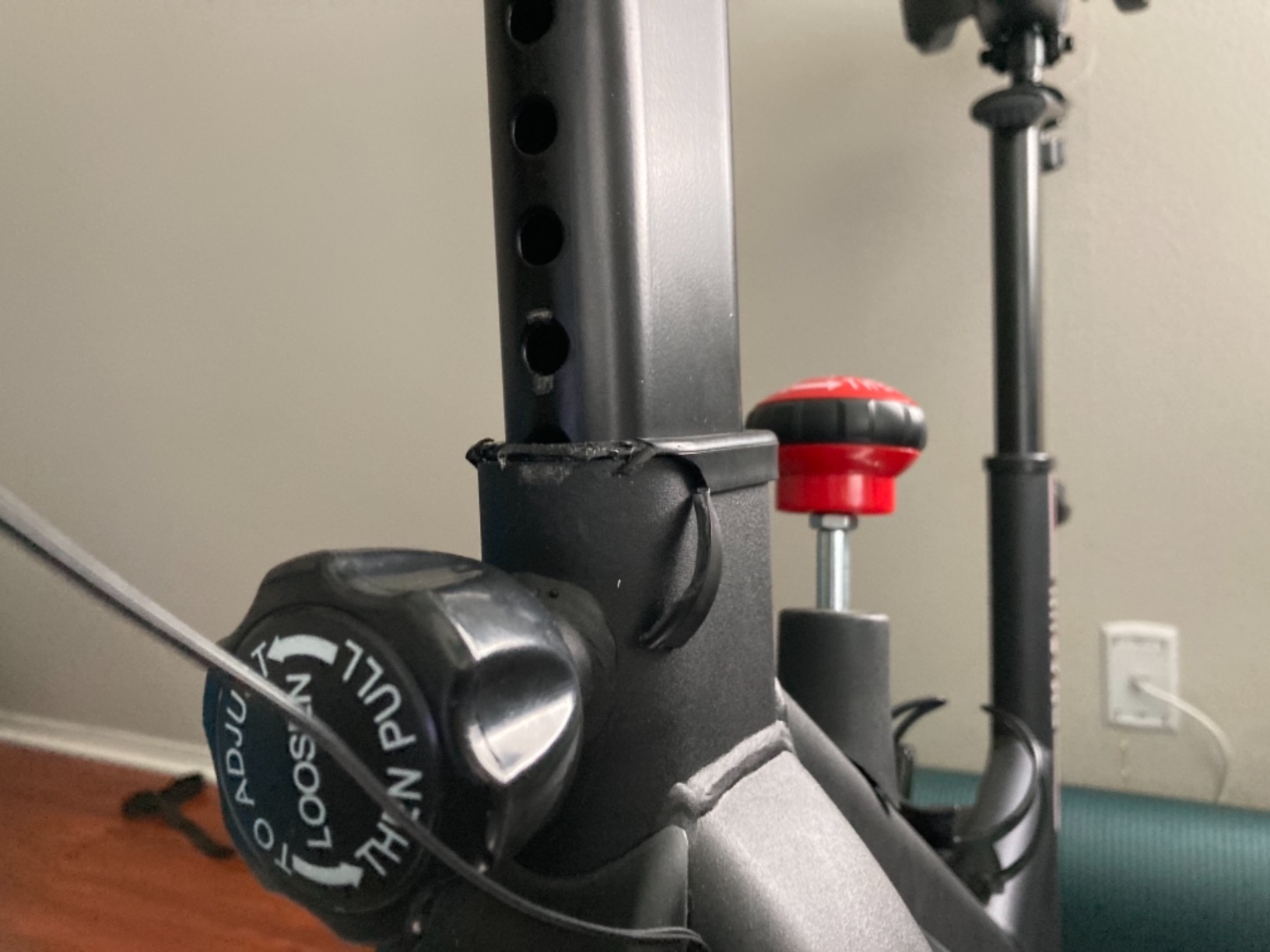
- Resistance adjuster thread reported failing within 6 to 12 months
- Seat comfort divides riders
- Terse assembly instructions
The YOSUDA 002 is the bike we kept coming back to during this test. With more than 25,000 reviews behind it, there is a very large body of long-term owner feedback, and the pattern is remarkably consistent: quiet belt drive, a flywheel heavy enough to feel like a real bike, and assembly that most people finish in half an hour.
The 25 lb flywheel is the reason it feels stable rather than twitchy. Heavier flywheels carry momentum through the top of the pedal stroke, which is what makes a spin bike feel smooth instead of like a hamster wheel. The 100 micro-adjustable friction levels give fine control, and the instant stop resistance bar means you can kill the resistance without dismounting.
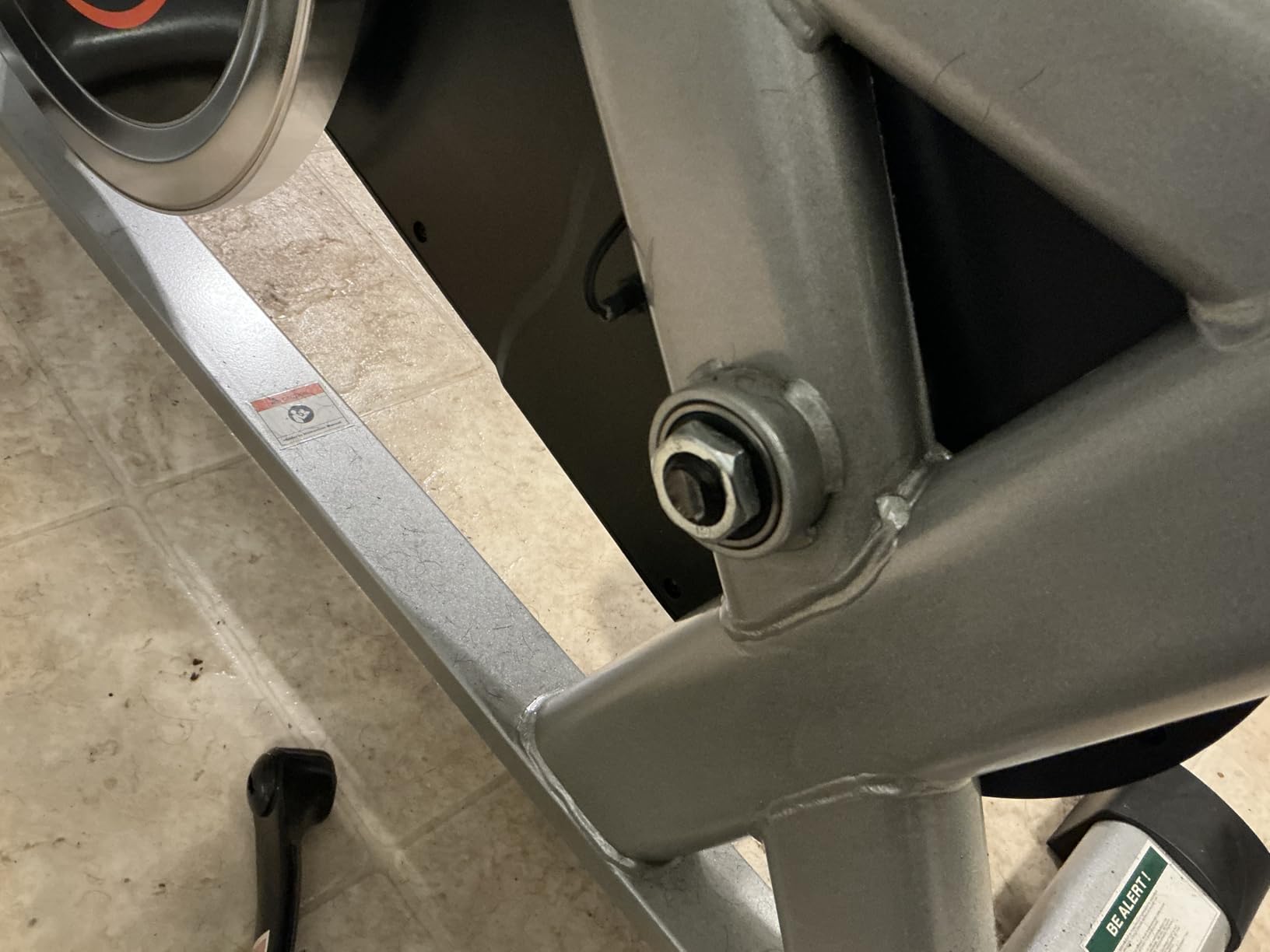
Fit is where it goes wrong for some bodies. The manufacturer rates it for riders from 4 foot 8 to 6 foot, so if you are taller, check your inseam against that range before you commit. A four-way padded seat and two-way handlebar cover a lot of ground, but no amount of adjustment creates travel that the frame does not have.
One limitation is worth stating plainly, because it comes up repeatedly in the reviews. Several owners report the resistance adjuster screw wearing out within six to twelve months, which ends usable resistance on an otherwise healthy bike. If you buy this, keep the tool set that came with it and expect to tighten that mechanism occasionally.
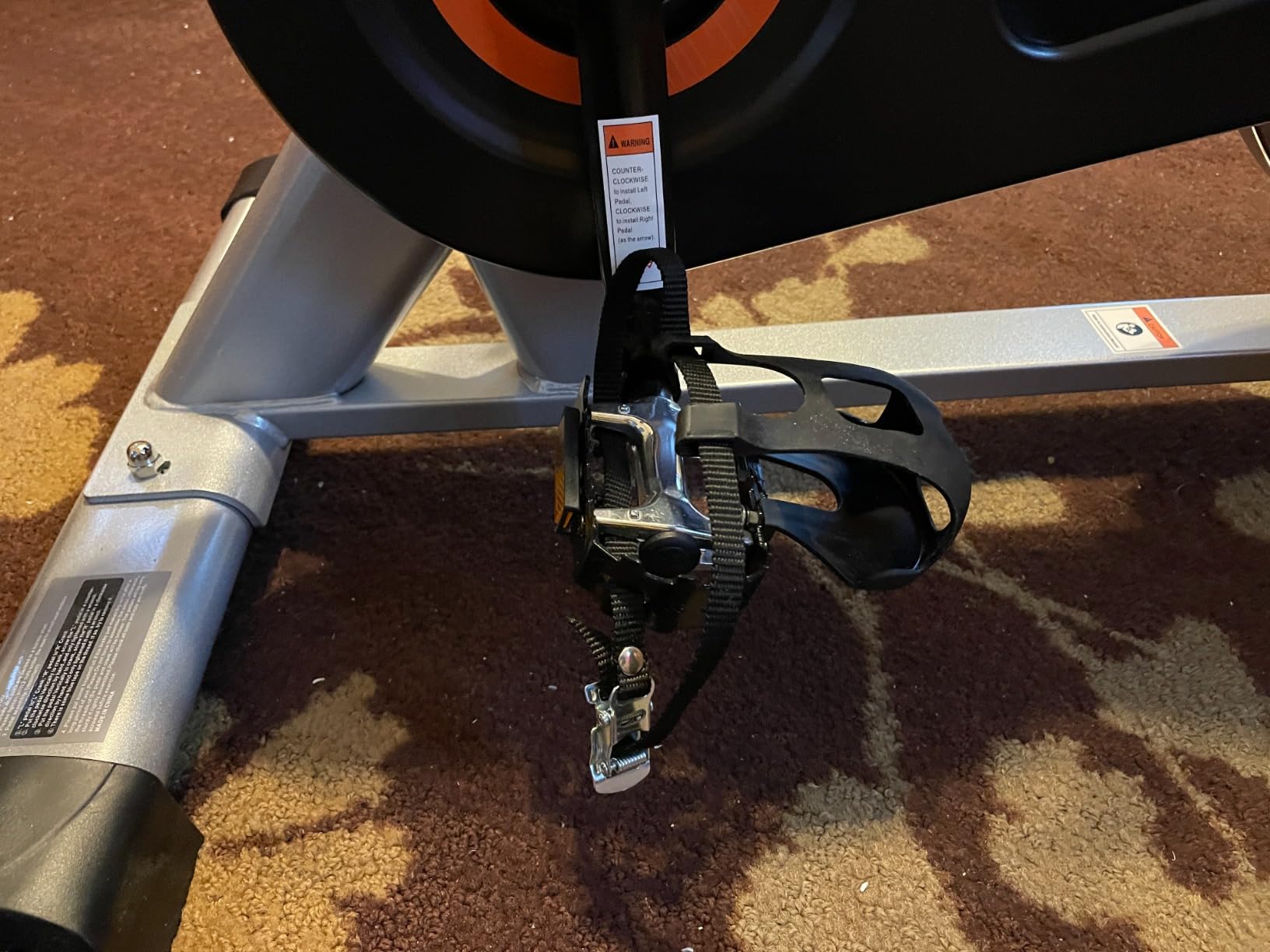
Why we picked it over the rest
Review volume matters more than any single spec, and this is the most reviewed bike in the group by a wide margin. When a product has that many owners, the failure modes are well documented, which means fewer surprises after month three.
It also threads the needle between the two camps in the forum debate. Owners ask whether it is worth paying more for build quality or whether a budget bike is good enough, and this one sits in the middle: steel frame, belt drive, a real flywheel, and a Bluetooth app that works without a paid membership.
Who should skip it
If you are over 6 foot or weigh more than 300 lb, look at the pooboo or the DMASUN instead, which carry 350 lb and 330 lb limits. If you ride for long sessions and a narrow saddle bothers you, budget for a seat cover, since that is the most common addition owners make.
2. DMASUN Magnetic Spin Bike – Built for Quiet Rooms
DMASUN Exercise Bike, Silent Magnetic Resistance Stationary Bike for Home with App Compatible, 330 LBS Capacity, Indoor Bike with Comfortable Seat Cushion, Digital Display with Tablet Holder
35 lb solid flywheel
Magnetic resistance
Under 20 dB
330 lb capacity
Pros
- Exceptionally quiet magnetic and belt drive
- Heavy solid flywheel for a natural feel
- 330 lb capacity
- Four-way seat and handlebar adjustment
- Fits FITSHOW Kinomap and Zwift apps
Cons
- Seat uncomfortable for heavier riders
- Vertical-only handlebar adjustment
- No tension gauge for matching class callouts
The DMASUN carries the quietest published noise figure in this roundup, and that is a measured claim rather than a marketing one. The manufacturer states a sound output that does not exceed 20 dB, the lowest figure any bike here publishes. Magnetic resistance means there is no friction pad rubbing a flywheel, so the only mechanical noise left is the belt and the pedals.
The 35 lb fully filled solid flywheel is unusually heavy for this class of bike. That weight is the difference between a bike that feels like cardio equipment and one that feels like riding. Owners also praise the alloy steel frame, which at over 2 mm thick is thicker than most competitors at this level.
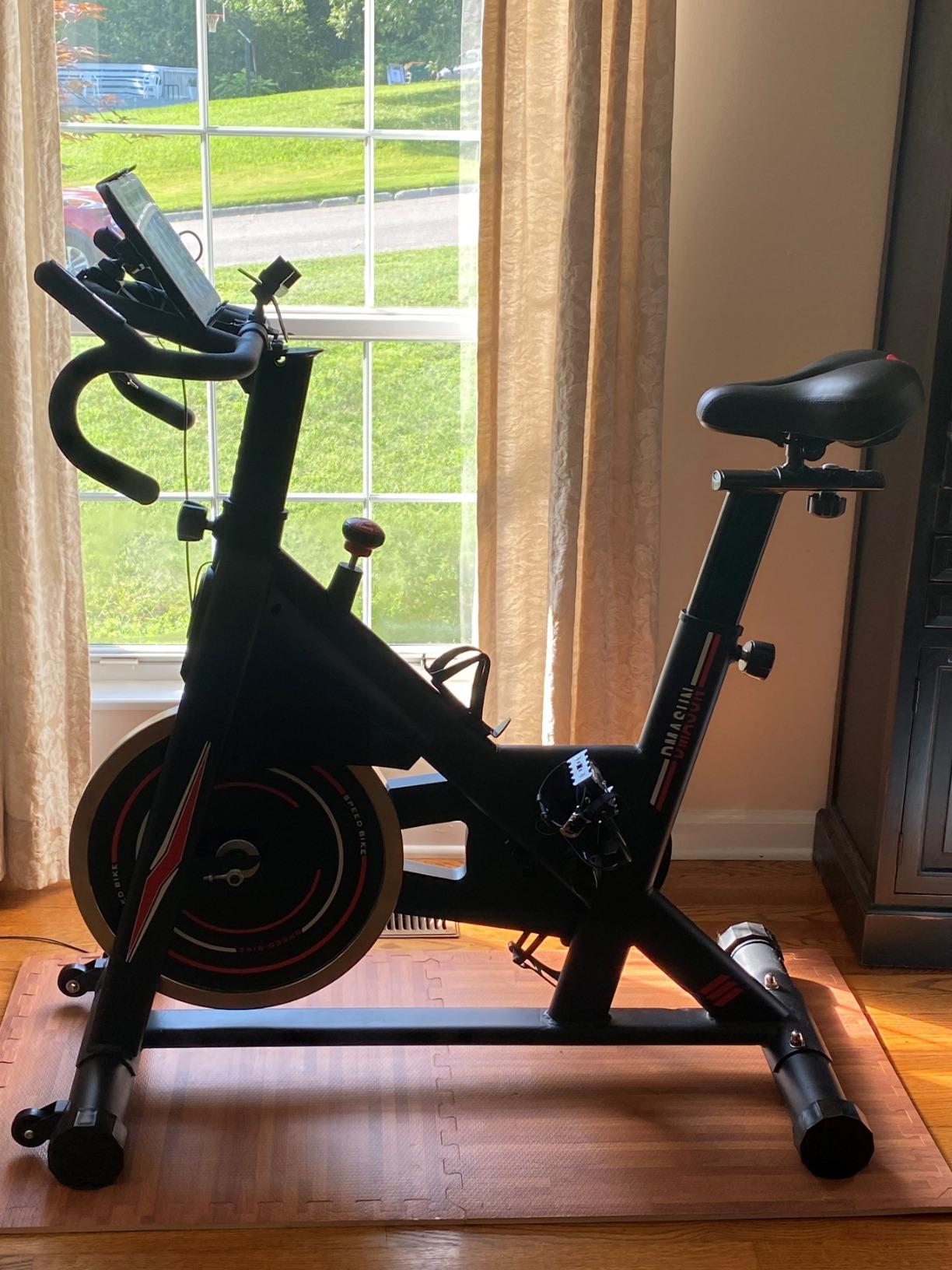
It is 70 percent pre-assembled, and the rest takes about 30 minutes. That matters if you live in a flat with a staircase and a narrow doorway, because a bike that arrives in one large box is a much different problem than one you have to build from a rack of bolts.
Customer support is worth mentioning too. Multiple reviews describe fast, generous warranty service, including a replacement bike for a faulty unit, which is a meaningful signal for anyone buying a product with no long warranty to fall back on.
For apartments and early morning sessions
This is the bike to buy if the noise constraint is real. Apartment dwellers on cycling forums repeatedly rank noise as their deciding factor, above price, and magnetic resistance plus a belt drive solves it completely. There is no pad to wear, no chain to slap, and no fan to roar.
One point to check is that the handlebars adjust vertically but not in reach. Riders who need more distance between the saddle and the grips should check the Schwinn IC, whose bars move in multiple directions.
Who should skip it
Riders above roughly 200 lb frequently report adding a seat cushion, and several mention handlebar play that develops over time. If you plan long sessions, budget for a gel pad. If you ride in a shared household where wobble bothers you, the heavier CHAOKE frame is steadier under hard efforts.
3. pooboo Magnetic Spin Bike – Best Value for 100 Resistance Levels
Stationary Exercise Bike for home, Magnetic Resistance, Silence & Smart App
100 magnetic levels
Belt drive under 25 dB
350 lb capacity
Dual stage transmission
Pros
- 100 levels of smooth magnetic resistance
- Near silent belt drive
- 350 lb capacity among the highest here
- Wide fit range
- Fast mostly pre-assembled setup
Cons
- Seat comfort reports are mixed
- Basic LCD with no resistance gauge
- No backlight
How do you get 100 levels of magnetic resistance, a dual-stage transmission and a 350 lb capacity at the entry level of this roundup? It works out as a genuine value pick because it answers that question better than anything else here. The rating is 4.5 across more than 9,200 reviews, with roughly 73 percent of those reviews at five stars, which is an unusually clean distribution.
At 350 lb it carries more weight than several of the upright bikes in this roundup, and the triangular steel frame keeps it planted during hard efforts. The dual-stage transmission with a weighted alloy flywheel gives it a road-bike-like feel that reviewers specifically call out, and the belt drive runs below 25 dB.
Fit is broad, with four-way seat adjustment and two-way handlebar movement, and the manufacturer lists a range from 4 foot 8 to 6 foot 3. That is the tallest stated range of any upright bike here, which matters if you are wondering whether your inseam will clear the seatpost.
The Bluetooth app syncs workout data, and the tablet holder is generously sized, so you can mount a phone or small tablet and use whatever training platform you prefer rather than being tied to one ecosystem.
When this is the smarter buy
If your goal is general fitness rather than structured training, the 100 resistance levels give you more than enough range, and the dual-stage transmission keeps the ride smooth at a low cadence. That combination is what makes this the bike we recommend to first-time buyers who want room to grow.
Owners also like that it is mostly pre-assembled and ready in under 30 minutes, and that transport wheels are included, so moving it to another room is not a two-person job.
Who should skip it
Serious cyclists who want power data and structured workouts will find the basic LCD display limiting. There is no resistance gauge and no backlight, so matching a class callout means guesswork. For that, the Schwinn IC gives you a backlit console showing RPM and heart rate.
4. Sunny Health Smart Recumbent Bike – Best for Seniors and Rehab
Sunny Health & Fitness Smart Recumbent Bike with Resistance Bands
Recumbent with backrest
16 magnetic levels
Free SunnyFit app
300 lb capacity
Pros
- Wide cushioned seat and backrest
- Quiet magnetic belt drive
- Light enough for one person to move
- Flip-up side handle aids mounting
- No membership fee for the app
Cons
- LCD is hard to read with no backlight
- Resistance tops out low for advanced riders
- Seat can creep out of position during a ride
Recumbents are the most underestimated category in this whole roundup, and the Sunny is the one we would put in a living room. The recumbent position removes pressure from the perineum, opens up the hips, and reduces the load on the lower back, which is why this is the format most often recommended for knee and hip recovery after surgery.
The seat is wide and deeply cushioned, with a padded backrest and a long 27.2 to 35.8 inch inseam range. A flip-up side handle makes getting on and off far easier than climbing onto an upright saddle, and that single feature is what separates a recumbent that a senior will actually use from one that ends up in the corner.
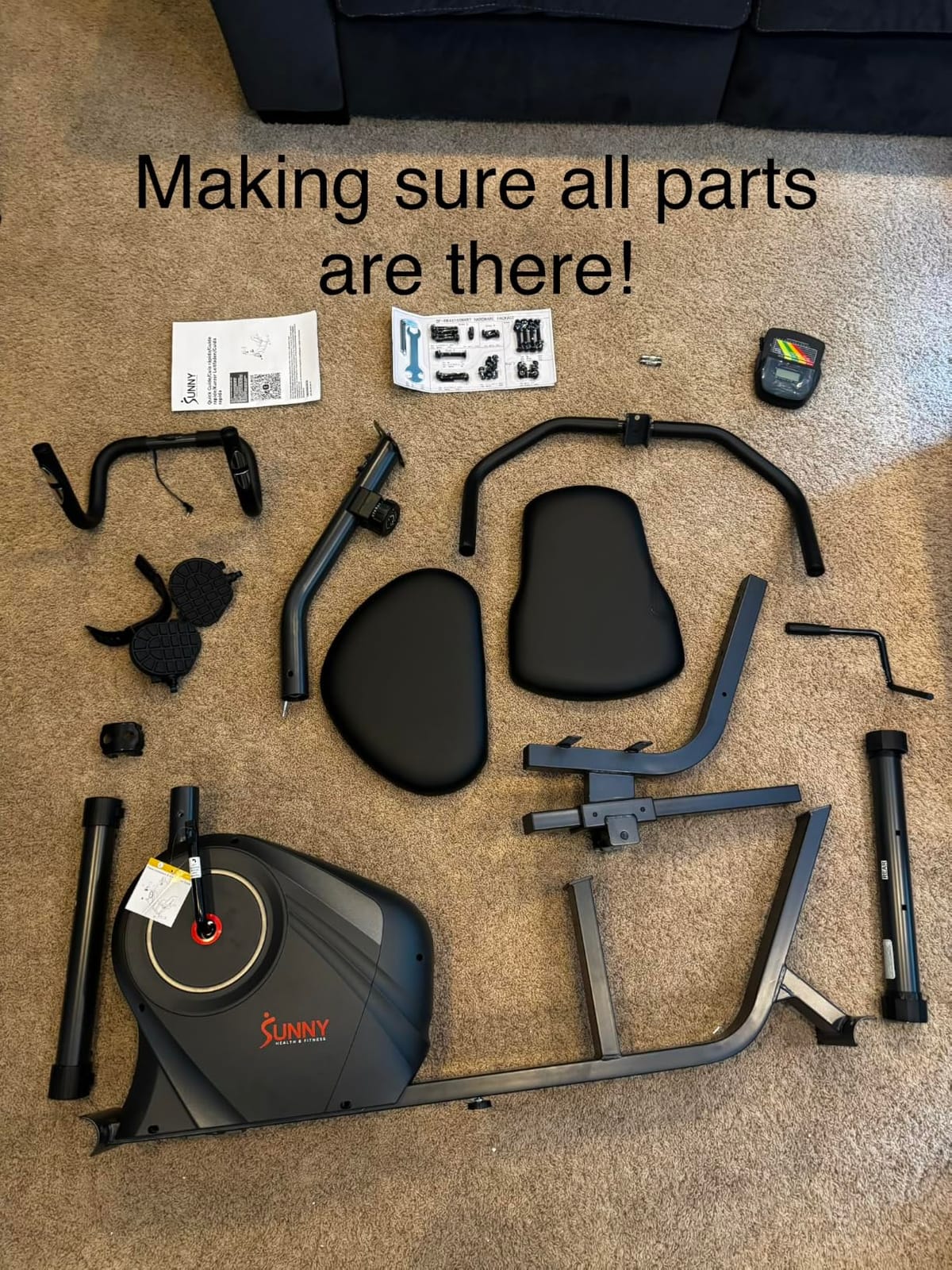
Two 20 lb resistance bands with foam grips come included, so you can add upper body work to the same session. For a machine aimed at older adults or rehab, that turns a cardio-only purchase into a full-body one without another piece of equipment.
At 29 kg it is light enough for one person to roll between rooms, which matters more for a recumbent than for a spin bike because recumbents are large. The SunnyFit app is free, with more than 1,000 trainer-led workouts and 10,000 virtual scenic tours, and there is no membership fee.
Why the recumbent format is worth the footprint
Forum readers doing knee or hip rehab ask about this constantly, and the answer is consistent. Recumbent positioning keeps the knee tracking over the foot and takes some of the bodyweight load that a road bike imposes, so riders can pedal for longer at lower intensity. That is the point of rehabilitation work.
For general fitness, the same geometry means you can hold a steady cadence for 45 minutes without the numb-seat problems that end upright sessions early. Older riders and people returning from surgery consistently credit this format with the difference between using the machine and leaving it unused.
Who should skip it
Fitness-focused riders will find 16 resistance levels too low, since the top end is a moderate effort rather than a hard one. The display is also dim and unlit, and the seat has a habit of drifting toward the lowest position mid-ride, so you will need to re-adjust it occasionally.
5. Schwinn IC Indoor Cycling Bike – The Premium Training Pick
Schwinn Fitness IC4 Indoor Cycling Bike
100 magnetic levels
SPD clips and toe cages
Backlit full color console
10 year frame warranty
Pros
- Very quiet magnetic resistance
- Wobble-free frame that handles standing sprints
- Adjusts for riders from 5ft0 to 6ft2
- Works with Peloton Zwift Rouvy and JRNY
- 10 year frame and 3 year parts warranty
Cons
- Stock saddle is uncomfortable
- Resistance knob feels imprecise
- Bottle holders can strike taller riders knees
- Pedals can squeak if not installed carefully
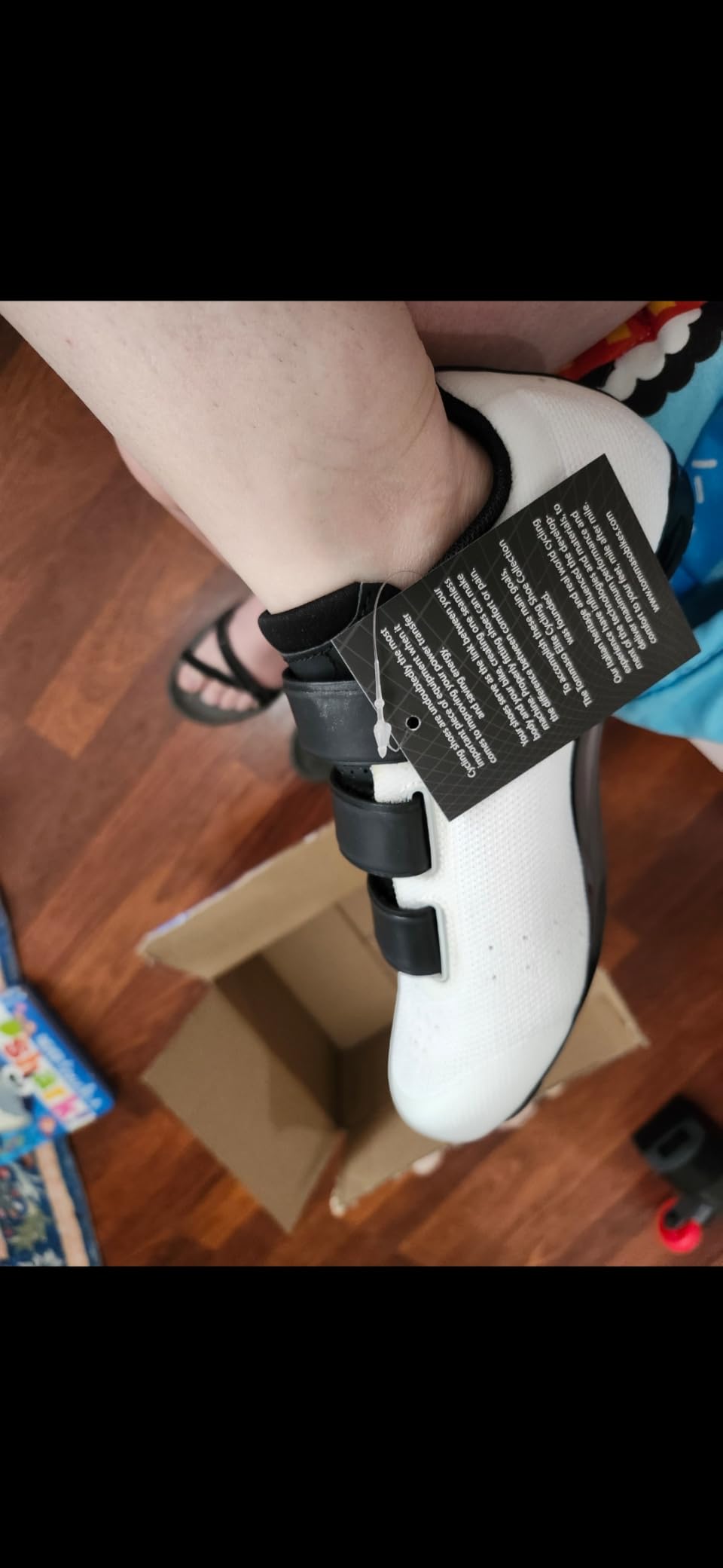
The Schwinn IC is the one in this group that serious cyclists actually endorse, and the reason is the pedal system. It ships with dual-sided pedals that take SPD cleats on one side and toe cages on the other, and the cleats are included. You can ride in proper cycling shoes at hard efforts and then switch to cage pedals for a family member who does not have them.
The console is full colour and backlit, showing heart rate, speed, time, distance, calories and RPM. Having a real RPM number rather than an incremental bar changes how you train, because cadence is the number that lets you pace intervals properly.
Both the seat and the handlebars adjust vertically and horizontally, and the manufacturer lists a fit range from 5 foot 0 to 6 foot 2. Riders above 6 foot report being comfortable on it when other uprights run out of seatpost.
It also works with Peloton, Zwift, Rouvy and JRNY. That is a real practical advantage over bikes tied to a single subscription, because you can follow whatever training you happen to want without repaying for access. The included Bluetooth heart rate strap tracks closely against an Apple Watch, according to owners.
For riders who already train seriously
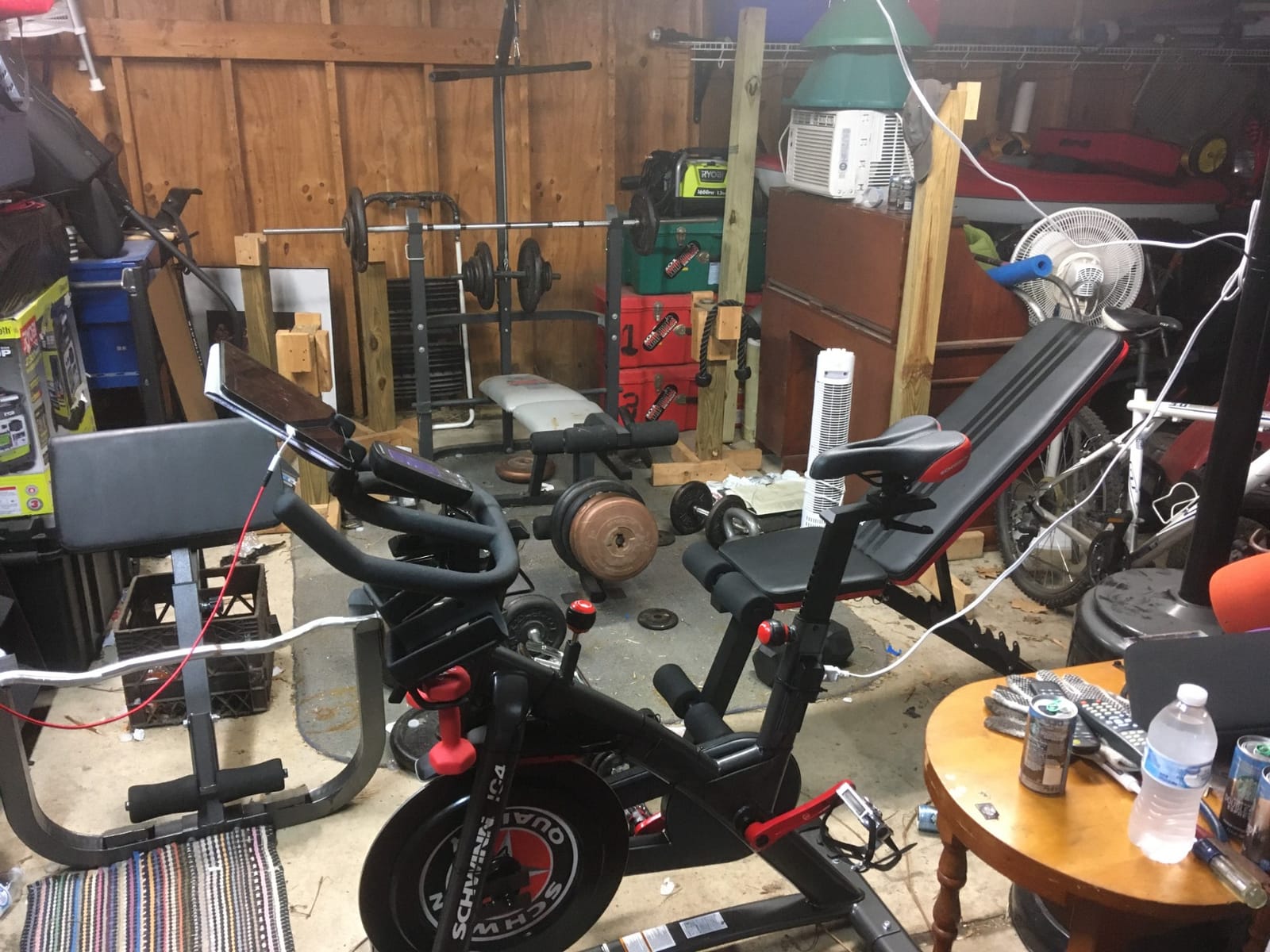
Warranty is the quiet headline here: 10 years on the frame and 3 years on parts, which no other bike in this roundup offers. If you are buying a bike you intend to keep for a decade, that is worth more than any screen size.
Owners frequently compare it to a Peloton on cost and app flexibility, and the recurring theme is that you give up the big touchscreen but gain open app support, a more stable frame, and pedals that accept real cycling shoes. For interval training and structured workouts, that trade usually favours the bike.
Who should skip it
It arrives unassembled and the manual describes it as a two-person job, so budget time and help. The stock saddle is the most repeated complaint, and the wide replacement seat is not always available. Note also that the water bottle holders sit where taller riders can strike their knees with the pedals.
6. MERACH Recumbent S08 – Best Recumbent for Small Rooms
MERACH Recumbent Exercise Bikes for Home with Smart Bluetooth Equipment Exercise Bikes App,LCD,Heart Rate Handle Stationary Bikes for Home, Magnetic Recumbent Exercise Bike for Seniors Gym S08/S23
8 magnetic levels
Padded seat and backrest
300 lb capacity
Sits under 52 inches long
Pros
- Very quiet pedalling
- Solid heavy feeling build for a machine at this level
- Compact footprint
- Easy assisted assembly
- Popular with older and rehab riders
Cons
- Only 8 resistance levels
- Backs out beyond about 5ft9
- Display is not backlit
- App sometimes fails to record workouts
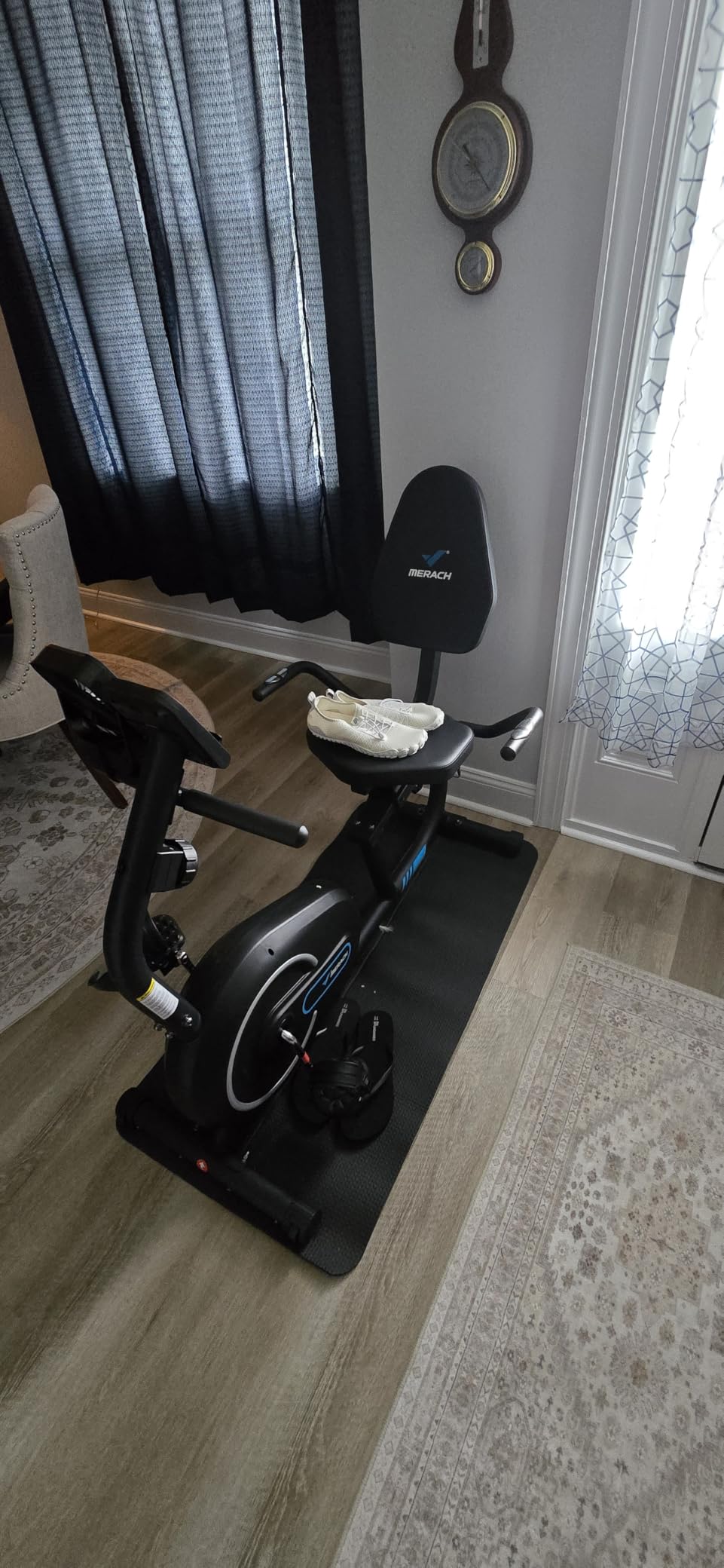
Recumbents have a footprint problem. They are long, low and wide, and in a small room that can be the deciding factor. The MERACH S08 is a compact recumbent at just under 52 inches long and 25 inches wide, which is short enough to sit at the foot of a bed or against a wall without dominating the space.
Pedalling is very quiet, and several owners specifically mention that it does not disturb sleepers or neighbours downstairs. That is a magnetic unit with no pad contact, running through a belt, so there is no mechanical noise to speak of.
Assembly is a genuine strength here. The hardware arrives grouped by step with a build video, and owners consistently report finishing it in around half an hour without help. For a category where many competing bikes are notoriously awkward to put together, that is a meaningful advantage.
The Bluetooth app supports a gamified riding experience, and the pulse sensor plus display track speed, distance, time, calories and heart rate. It is a straightforward machine with a low step-through frame and a padded backrest for long, low-impact sessions.
For smaller homes and lighter use
The extended seated leg length runs from 29.5 to 37 inches, and the recommended rider height is 5 foot 3 to 6 foot 2. Owners around 5 foot 4 to 5 foot 11 are especially happy with it, and it is frequently recommended for knee and hip rehabilitation.
Because it is quiet and compact, it works well in a bedroom-adjacent exercise space or an apartment where you ride early. The 57 lb weight is a compromise: solid enough to feel stable, light enough that the transport wheels are actually useful.
Who should skip it
Eight resistance levels is a narrow range, and owners who want real training progression hit that ceiling quickly. Riders taller than about 5 foot 9 will find the pedal reach short even with the seat fully forward. The display is not backlit, and the app is inconsistent at recording sessions.
7. XVGVSV Recumbent W239 – Strongest Build for Heavier Riders
Recumbent Exercise Bike for Home, Recumbent Stationary Bikes for Seniors
400 lb capacity
16 magnetic levels
Commercial grade steel frame
85 percent pre-assembled
Pros
- 400 lb capacity on a commercial grade frame
- Whisper quiet magnetic resistance
- Plush padded seat and ergonomic backrest
- 16 levels covering rehab to cardio
- Front transport wheels
Cons
- Fewer long term owner reports than the top picks
- Display and pulse readings are basic
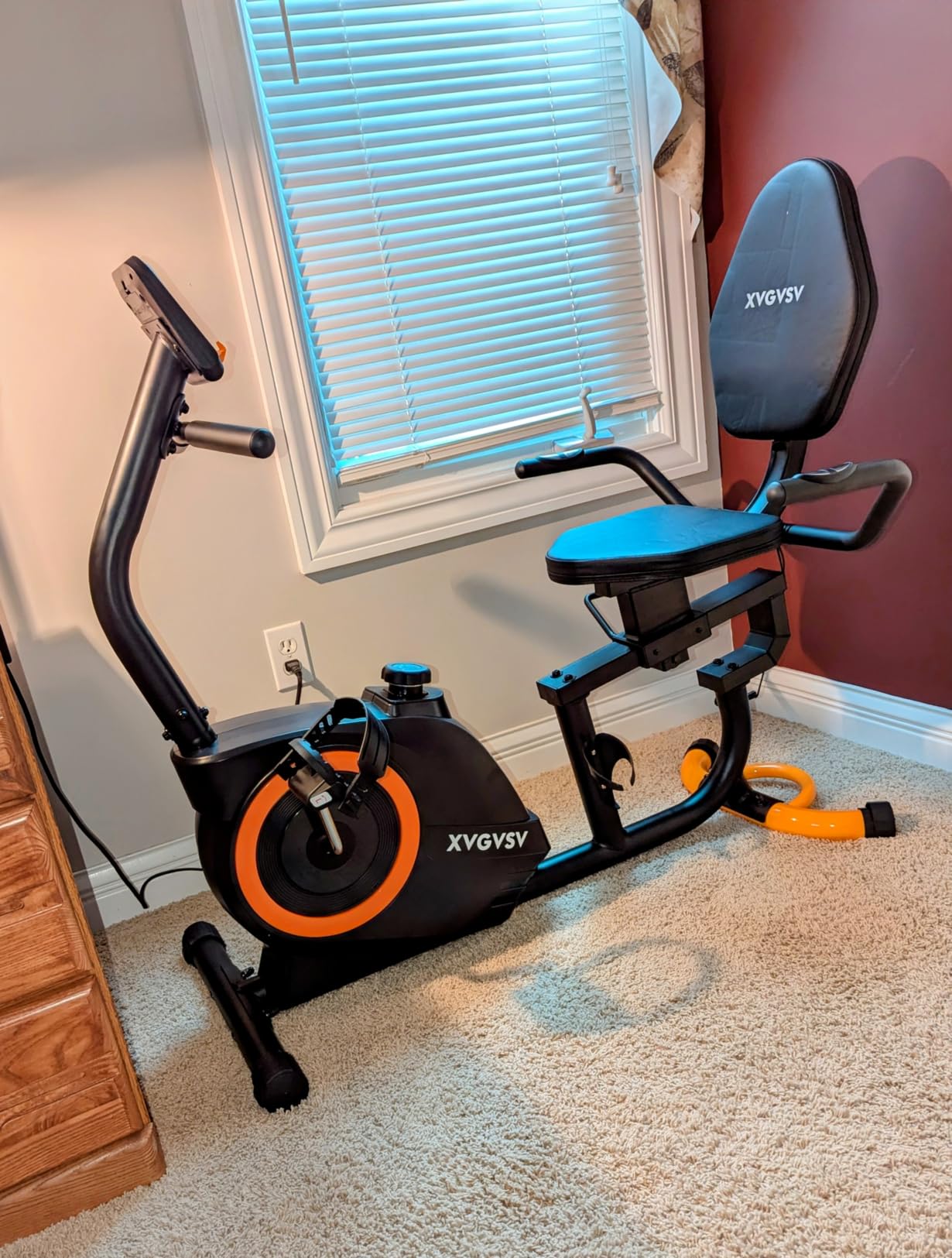
This recumbent has the highest average rating in the entire roundup at 4.7, with 82 percent of its reviews at five stars. The reason is not subtle: it is built to a higher standard than the category average. The frame is described as commercial grade steel, and it carries a 400 lb rating, 100 lb above the entry-level recumbents here.
For riders over 300 lb, that capacity figure is the whole decision. A bike rated to 300 lb is being used outside its design envelope, and the frame and joints take the strain. This one is not.
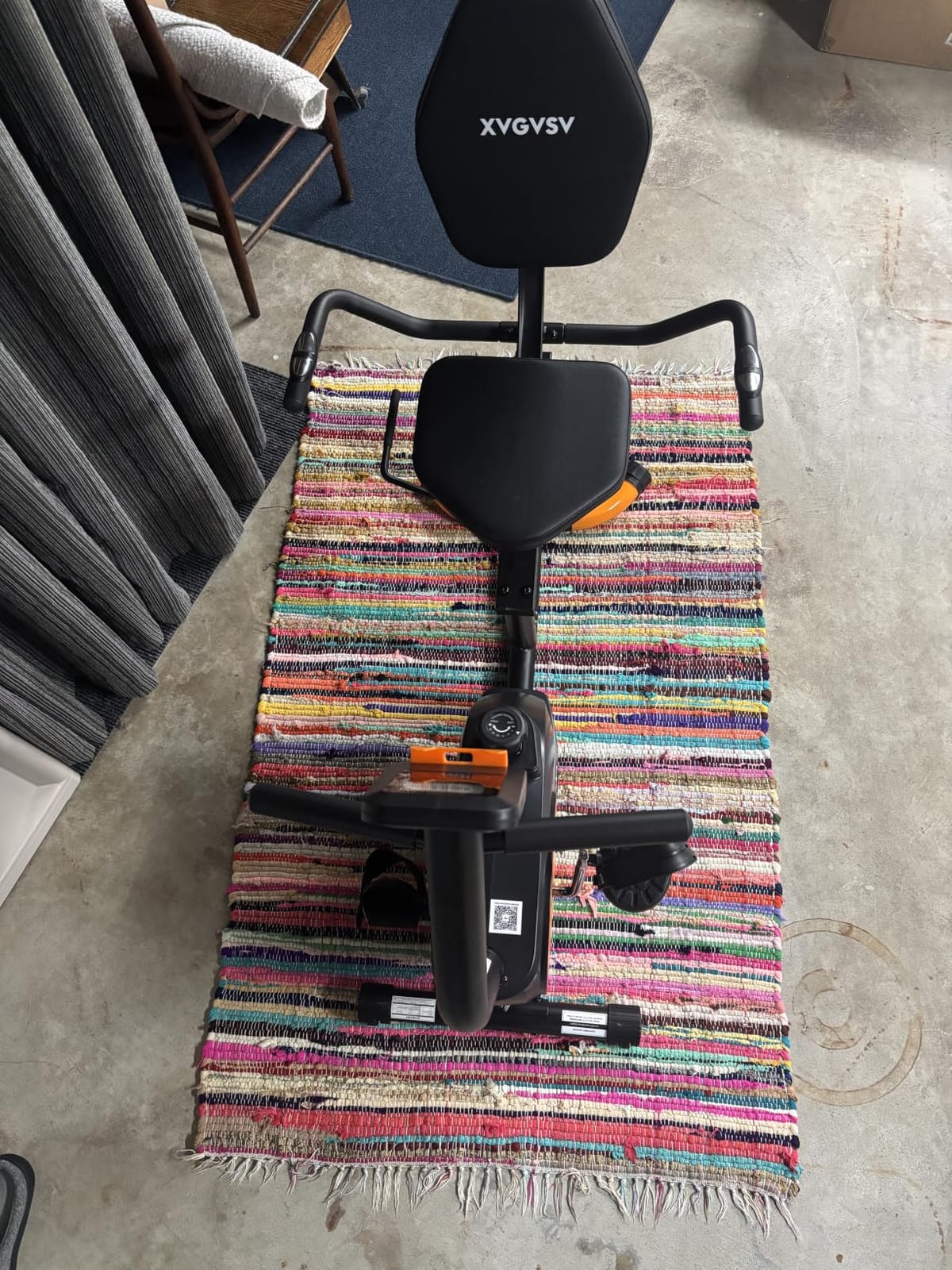
The 16 resistance levels cover rehab work through genuine cardio, which is a wider range than the 8-level recumbents. Pedalling is quiet, and the plush padded seat with an ergonomic backrest is the kind of comfort specification that matters most after an hour.
Assembly is 85 percent done before it ships, leaving about 30 minutes of work. Front transport wheels make it easy to reposition, and the LCD display tracks speed, time, distance, calories, an odometer and heart rate through integrated pulse sensors on the handles.
Who this is built for
Anyone over 300 lb, and anyone who wants a recumbent that will still be there in five years. The heavy commercial-style construction reads through in the weight at 66 lb, which is a good sign on a machine meant to be sat on hard and often.
It is also a sensible pick for a shared family bike. The high capacity and broad resistance range mean a second rider of almost any size can use it without worrying whether the first one strained it.
What to weigh up first
The honest caveat is that its review base of about 1,760 is smaller than the bikes around it, and long-term ownership reports are thinner. The rating is excellent, but you have less historical data to lean on than you would with the YOSUDA or the Schwinn.
The display and pulse sensors are also basic compared with app-connected bikes. If you want guided classes with auto-adjusting resistance, this is a manual machine and it does not pretend otherwise.
8. Marcy NS-716R Recumbent – Lightest and Easiest to Move
Marcy Magnetic Recumbent Bike with Adjustable Resistance and Transport Wheels NS-716R, 11.00 x 22.00 x 31.00″
41 lb total weight
8 magnetic levels
Transport wheels
300 lb capacity
Pros
- Exceptionally quiet magnetic resistance
- Only 41 lb so one person can move it
- Hardware arrives packed and labelled with all tools
- Compact narrow frame
- Well suited to knee and hip rehab
Cons
- Short frame limits riders over 6ft
- Tension cable connection is very difficult to assemble
- Transport wheels do not work well on carpet
- Console has no backlight or RPM
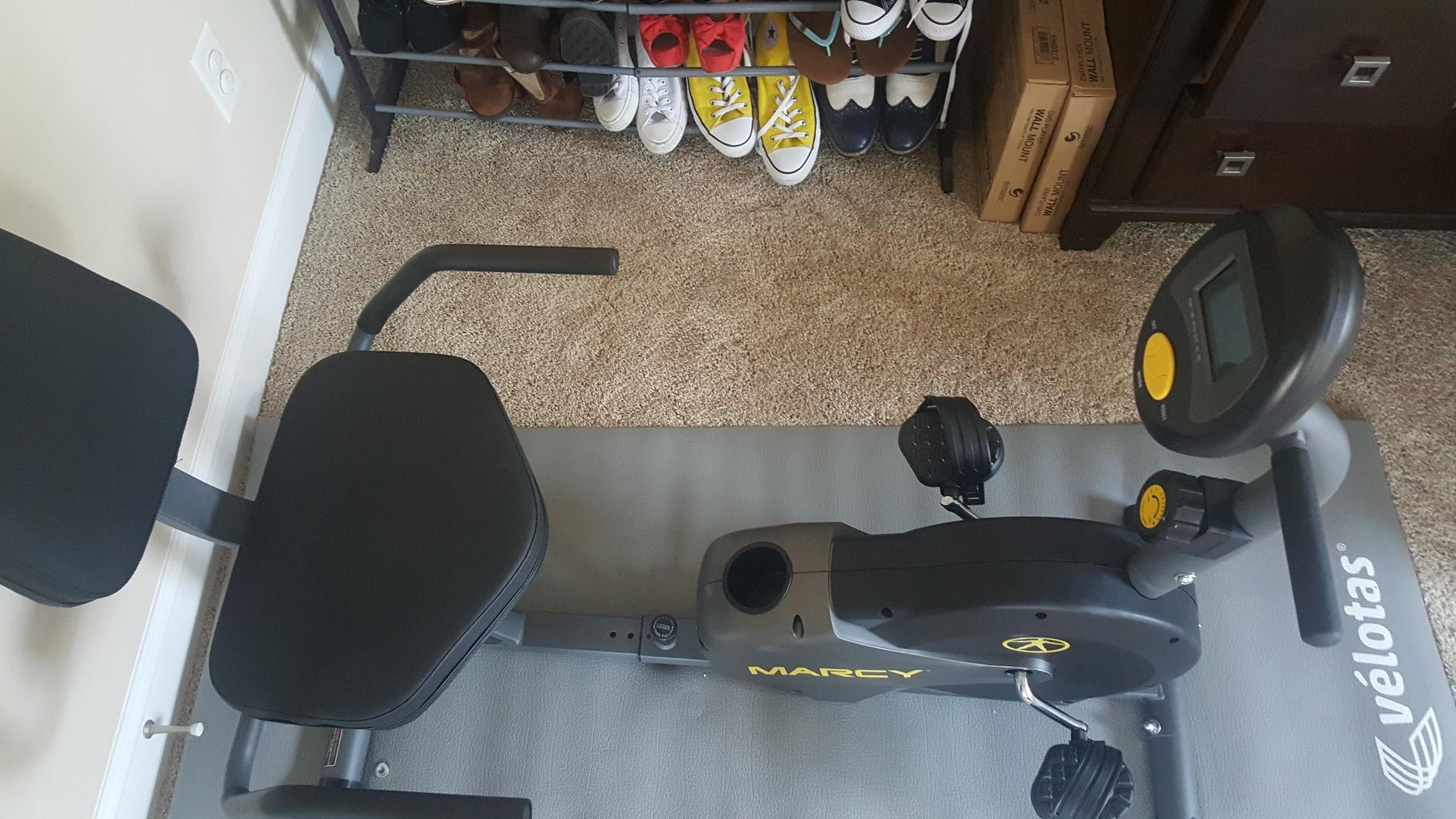
At 41 lb this bike is far lighter than the rest of the recumbent group, and that single fact changes where you can put it. Every other recumbent here weighs 57 to 84 lb, which means stairs, thresholds and moving between floors. This one is a two-person-free, lift-and-roll proposition.
The magnetic resistance is described by owners as quieter than a fan on its lowest setting, which tells you how little mechanical noise this bike produces. The seat is fully adjustable, the frame is narrow enough not to force a wide riding position, and the large padded seat with back support is widely found comfortable.
Owners repeatedly describe it as well suited to hip and knee recovery, particularly for riders between about 5 foot 4 and 5 foot 11. For post-surgical work where the goal is consistent low-intensity movement, a machine you can move to wherever you are recovering is genuinely practical.
There are also eight genuinely distinct magnetic settings, rather than eight positions that feel the same. The console tracks speed, distance, time and calories, and transport wheels are included for moving without lifting.
Why assembly is the deciding factor
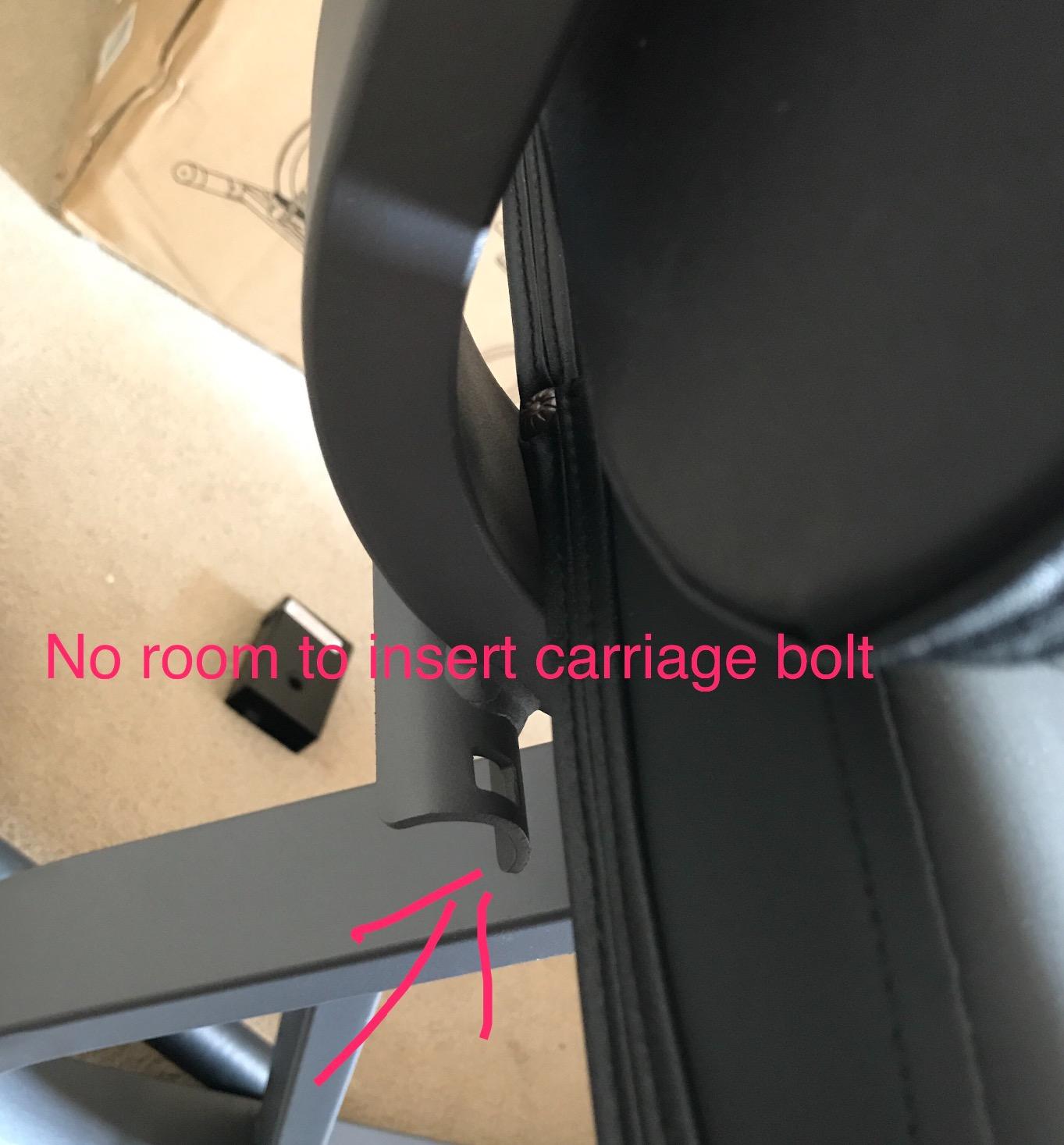
This is the one real warning in the whole review, and it is repeated often enough to be worth leading with. Connecting the tension cable during assembly is widely reported as very difficult, and the instructions are described as incomplete. Budget extra time, and read the community guides on that step before you start.
The silver lining is that the hardware is well packed, with bolts grouped and labelled on cardboard and all tools included. Once assembled, the machine itself is simple and dependable.
Who should skip it
Riders over 6 foot should avoid it. The short overall frame is the main structural limitation and it is not adjustable away. The console has no backlight and no RPM readout, and it will lose odometer totals if the batteries are removed.
9. Niceday RC88 Recumbent – Built for Taller Riders
Niceday Recumbent Exercise Bike for Home Stationary Bike with APP Training
15 lb flywheel
400 lb capacity
8 position seat
Kinomap and Zwift ready
Pros
- Sturdy build that stays stable on carpet
- Very quiet and smooth pedalling
- Low step-through frame with flip-up handles
- Generous leg room up to 6ft3
- Clear instructions with spare fasteners included
Cons
- 84 lb is heavy to move between floors
- Display is dark with no backlight
- Resistance tops out at a moderate level
- Seat cushioning is firm
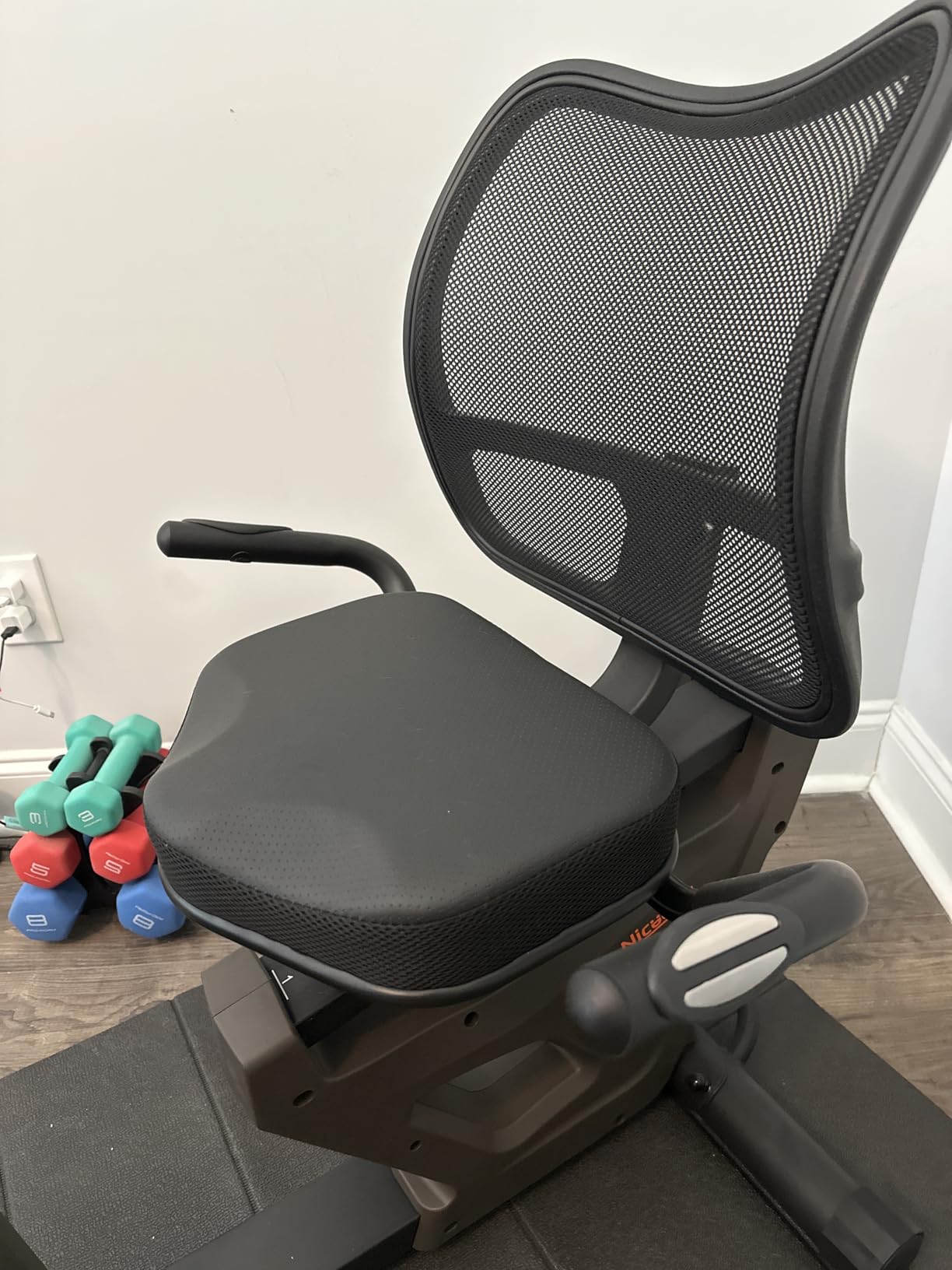
The Niceday RC88 solves the fit problem that limits most recumbents. Its recommended rider range runs from 57 to 79 inches, which is the tallest stated band among the recumbents here, and the 8-position seat with a mesh backrest gives real fore-aft travel. Owners at 6 foot 2 and at 5 foot 2 report sharing the same bike comfortably, which is the clearest evidence we found that the adjustment range actually works.
Build quality is its other strength. At 84 lb it is heavy, and owners describe it as tank-like and stable even on carpet, which is where lighter recumbents tend to shift. The 15 lb flywheel with magnetic control gives smooth, quiet pedalling with incremental resistance changes.
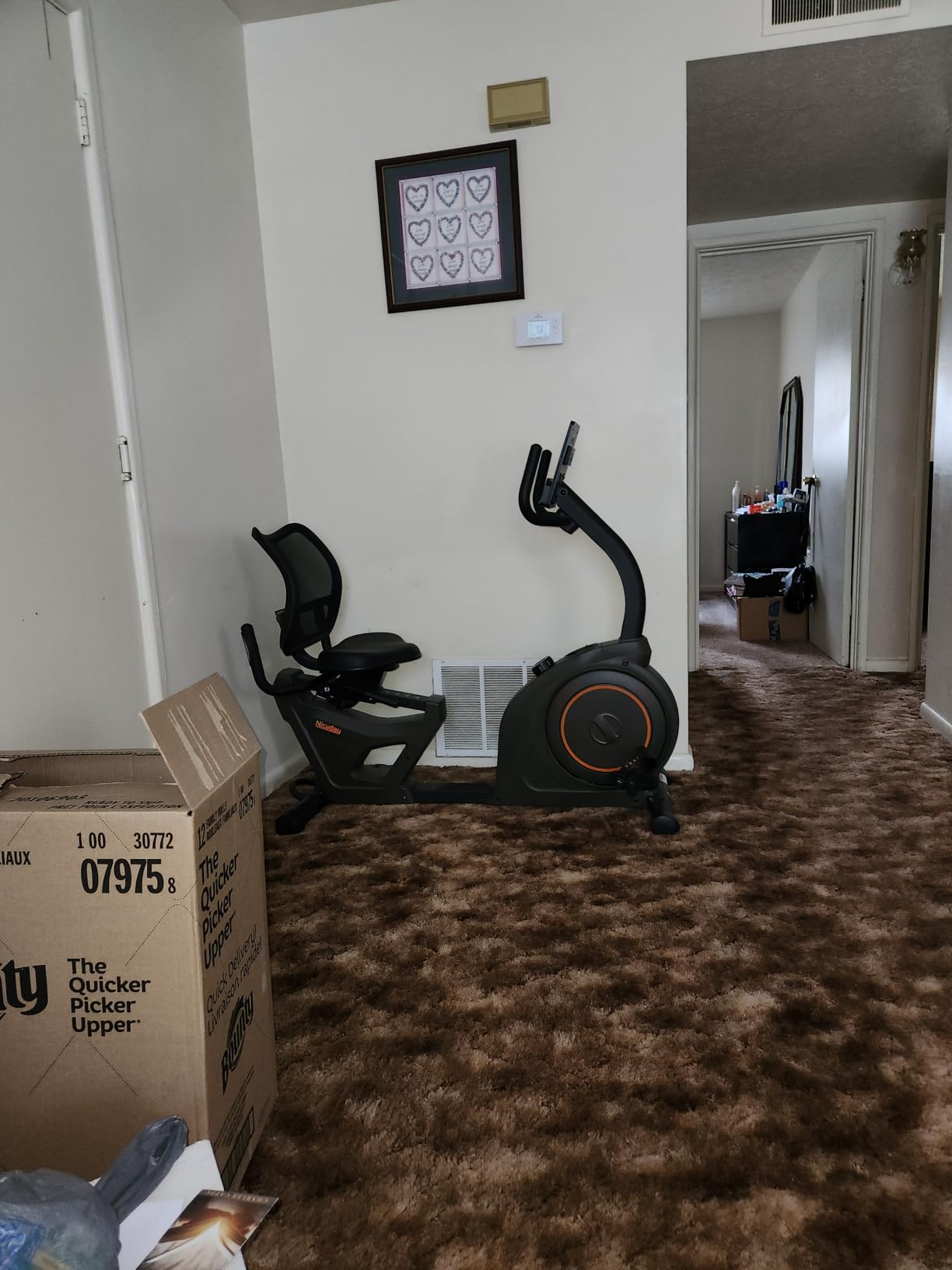
Mounting is easy thanks to the low step-through frame and flip-up pulse-monitoring handles beside the seat, plus fixed grab handles by the console. For older riders or anyone with limited hip mobility, that detail decides whether the bike gets used daily.
It ships 90 percent pre-assembled with tools and spare fasteners included, so the remaining work is about 45 to 60 minutes. Instructions are described as clear, which is not something we can say for every bike here.
For taller riders and shared households
Bluetooth connectivity to Kinomap and Zwift means it works as a standard trainer-style bike, and the integrated tablet holder and LED digital monitor are better than most recumbents offer. Owners often note that the third-party subscriptions are poor value, so treat the app support as a bonus rather than the reason to buy.
Many buyers report purchasing this bike for a parent undergoing a knee or hip procedure, and the combination of easy mounting, generous leg room and a 400 lb limit fits that use case well.
Who should skip it
At 84 lb it is one of the hardest bikes here to move, and transport wheels only help across a flat floor. The display is dark unless the room is well lit, there is no RPM or program readout, and the resistance ceiling is moderate rather than high.
The seat cushioning is also described as firm, so many owners add a separate cushion. For high-intensity training, this is not the bike; for steady cardio and rehab, it is one of the best.
10. CHAOKE Magnetic Spin Bike – Steadiest Frame at High Intensity
Exercise Bike, CHAOKE Quiet Adjustable Magnetic Resistance Stationary Bike for Home Cardio with App Compatible, 300LB Weight Capacity Indoor Cycling Bike with Comfortable Seat & Digital Display
100 magnetic levels
2.00 mm steel frame
Triangular H-frame
Under 30 minute setup
Pros
- Triangular H-frame stays stable at high intensity
- Quiet smooth magnetic resistance across the full range
- Thick steel with electrophoretic rust protection
- Soft road bike style seat
- Kinomap app compatibility
Cons
- Fit range tops out around 5ft9
- 300 lb capacity is modest for the category
- Seat height is the main adjustment point
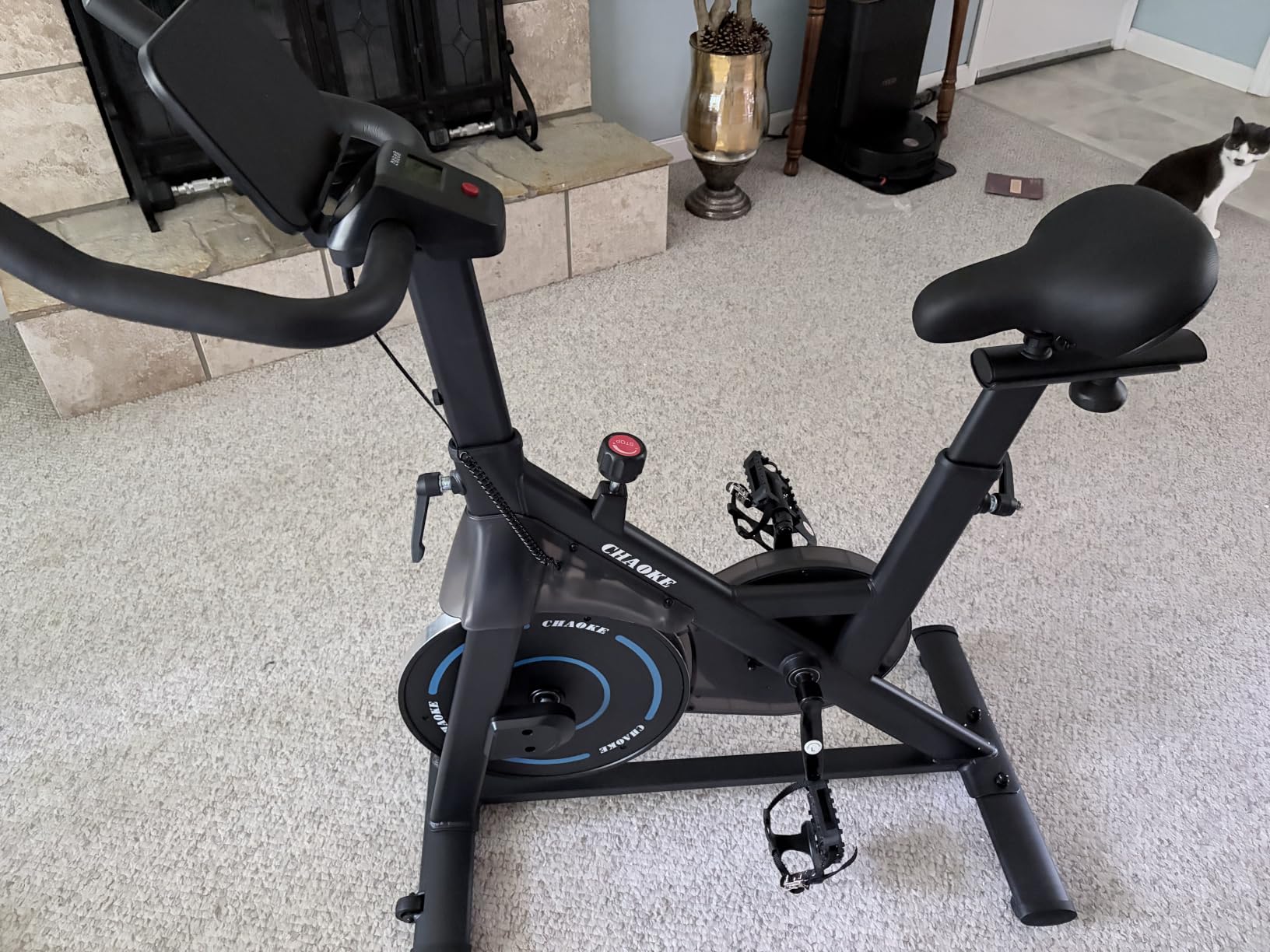
Wobble during hard efforts is one of the most common complaints in home gym forums, and it is almost always a frame or weight problem. The CHAOKE is built specifically to address it. The triangular H-shaped structure resists shaking and tipping, and the frame uses 2.00 mm steel that has been through a 1200-ton forging process, with an electrophoretic coating against rust.
Resistance is magnetic across a full 0 to 100 percent range in 100 levels, so you can ride genuinely hard without the noise and heat of a friction pad. The heavier flywheel adds stability on top of the frame work, and reviewers specifically note that it does not shake at high intensity.
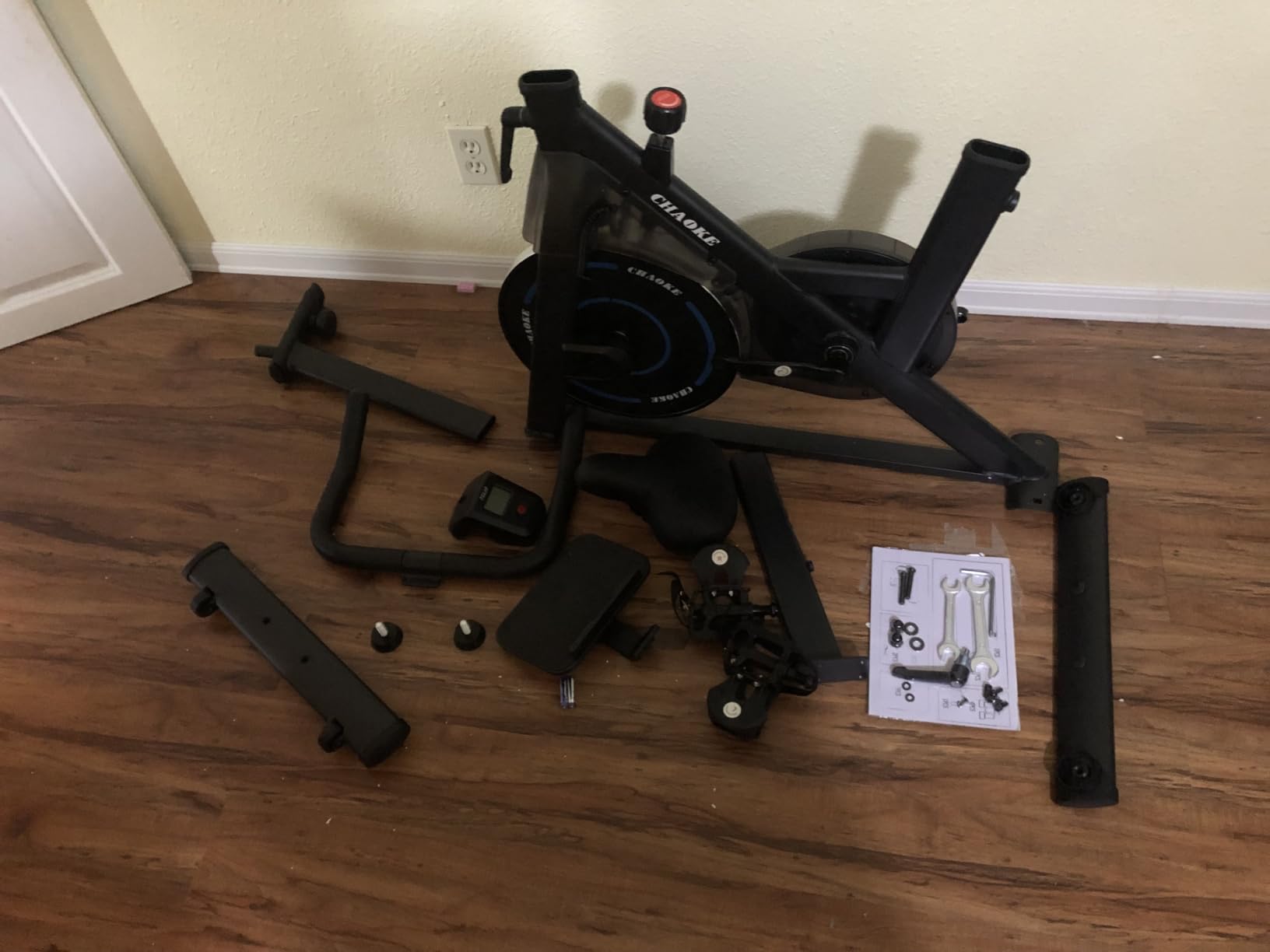
Comfort is a strength at this level too, with a soft road-bike-style saddle that works for long sessions. The double-embedded seat sliders keep the seat position stable over time, which addresses a fault we saw repeated on cheaper competitors where the seat creeps.
It arrives mostly pre-assembled, so expect about 30 minutes of setup with the included tools, manual and video guides. There is a 1-year warranty with a stated support response within 18 hours.
For standing sprints and intervals
If your workouts include standing out of the saddle, frame rigidity is not a detail. A bike that rocks under a sprint makes the effort harder to control and is a real safety consideration in a small space. The CHAOKE is the steadiest upright machine here, and that is the reason it earns a place in the roundup.
It also works with Kinomap, so if you want structured virtual training without a large screen, mounting your own tablet is the intended path.
Who should skip it
Fit tops out around 5 foot 9, and seat height is the main adjustment point rather than a full multi-axis system. If you are tall, choose the Schwinn IC or the pooboo instead. At a 300 lb capacity it matches the YOSUDA rather than exceeding it, so heavier riders should look elsewhere in this roundup.
11. MERACH S26 Friction Spin Bike – Best App and Data Support
MERACH Exercise Bike, Friction Stationary Bike for Home with Brake Pad
Silent belt drive
100 friction levels
Four-way seat adjustment
KINOMAP and Zwift
Pros
- Very quiet multi-slot belt drive
- Seat moves up down and forward back
- Free app with useful power tracking
- Google Fit and Apple Health sync
- Transport wheels included
Cons
- Friction brake rather than magnetic despite the listing wording
- Seat post has slight wobble
- Console interface is awkward to navigate
- Does not fold for storage
Most budget spin bikes connect to an app that shows you a number and stops there. The MERACH S26 is one of the few here that does the useful version: it syncs with Google Fit and Apple Health, works with KINOMAP and Zwift, and owners single out the power tracking as genuinely useful for workouts.
Adjustment is the other strength. The seat moves in four directions, up and down as well as forward and back, and the handlebar adjusts in two. That combination covers a 4 foot 8 to 6 foot 2 range and, more importantly, means you can dial in a proper riding position rather than sliding up a seatpost and hoping.
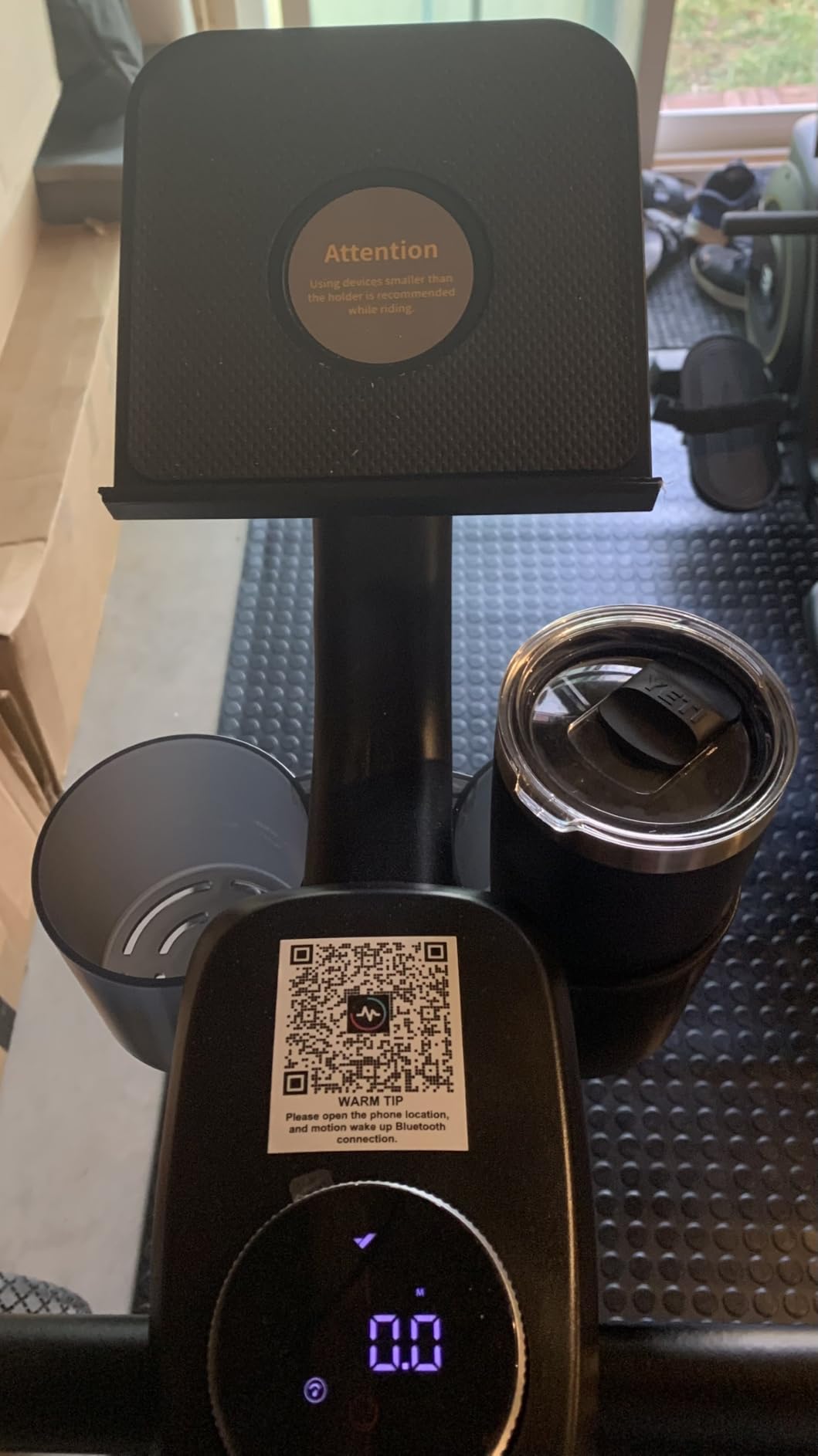
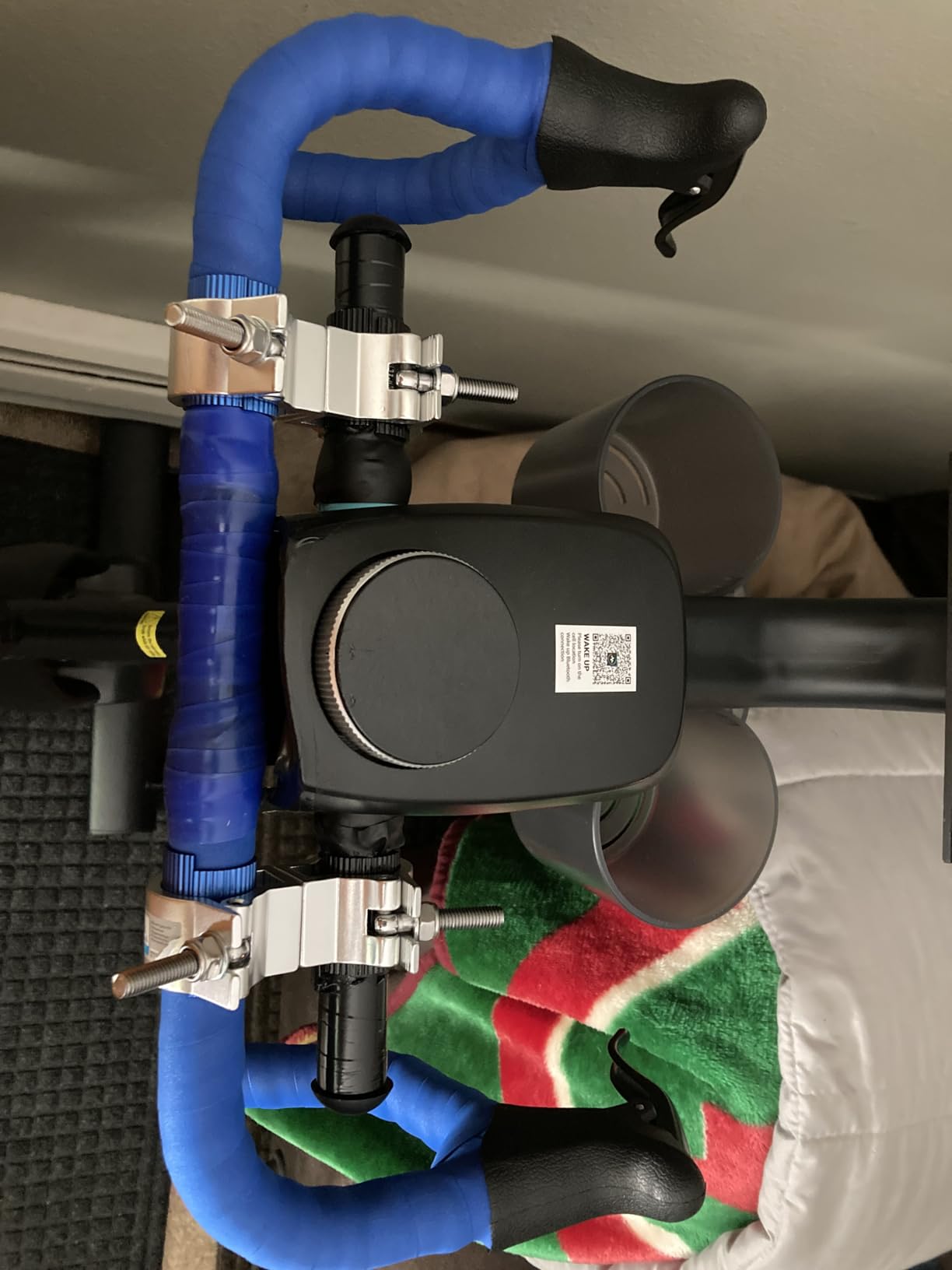
The drive is a multi-slot silent belt with an ABS pulley, running below 25 dB, which owners consistently describe as quiet enough for shared walls. It is 80 percent pre-assembled, leaving about 30 minutes of work, with a 1-year warranty and a stated 12-hour support response.
Transport wheels, levelling knobs, dual bottle holders and a device holder are all included, which is a generous accessory list for a bike in this class.
For people who train with an app
If your plan is to follow structured workouts rather than free-ride, the app quality matters more than the frame. Zwift compatibility means you can use the bike with a proper virtual cycling platform, and power tracking gives you the feedback that makes those sessions worth doing.
Owners frequently compare it to a Peloton at a fraction of the cost, and the open app support is the reason. You are not renting access to a class library.
Who should skip it
One important detail: this specific variant uses a felt friction brake, not magnetic resistance, despite what some of the listing language implies. One reviewer flagged it as a listing inaccuracy. Friction units are quieter than a chain but they do develop heat and wear over time, so if silence is your priority, choose a magnetic model.
The seat post has a slight wobble, the console interface is awkward to navigate, and the display cannot be switched to metric. The frame does not fold, so plan where it will live before you buy.
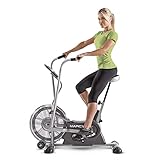
12. Marcy Air-Resistance Fan Bike – Best Full-Body Trainer
Marcy Exercise Upright Fan Bike for Cardio Training, Adjustable Recumbent Bike, Stationary Bikes For Home, Black AIR-1
Air fan resistance
Dual action handlebars
Cooling airflow
2 year warranty
Pros
- Air resistance scales naturally with pedal speed
- Dual action arms train arms and legs together
- Sturdy steel build comparable to commercial Airdyne equipment
- Cooling airflow during hard sessions
- Transport wheels
Cons
- Seat uncomfortable beyond 30 minutes
- Fan noise grows with speed
- Console is dim with no backlight
- No selectable resistance levels
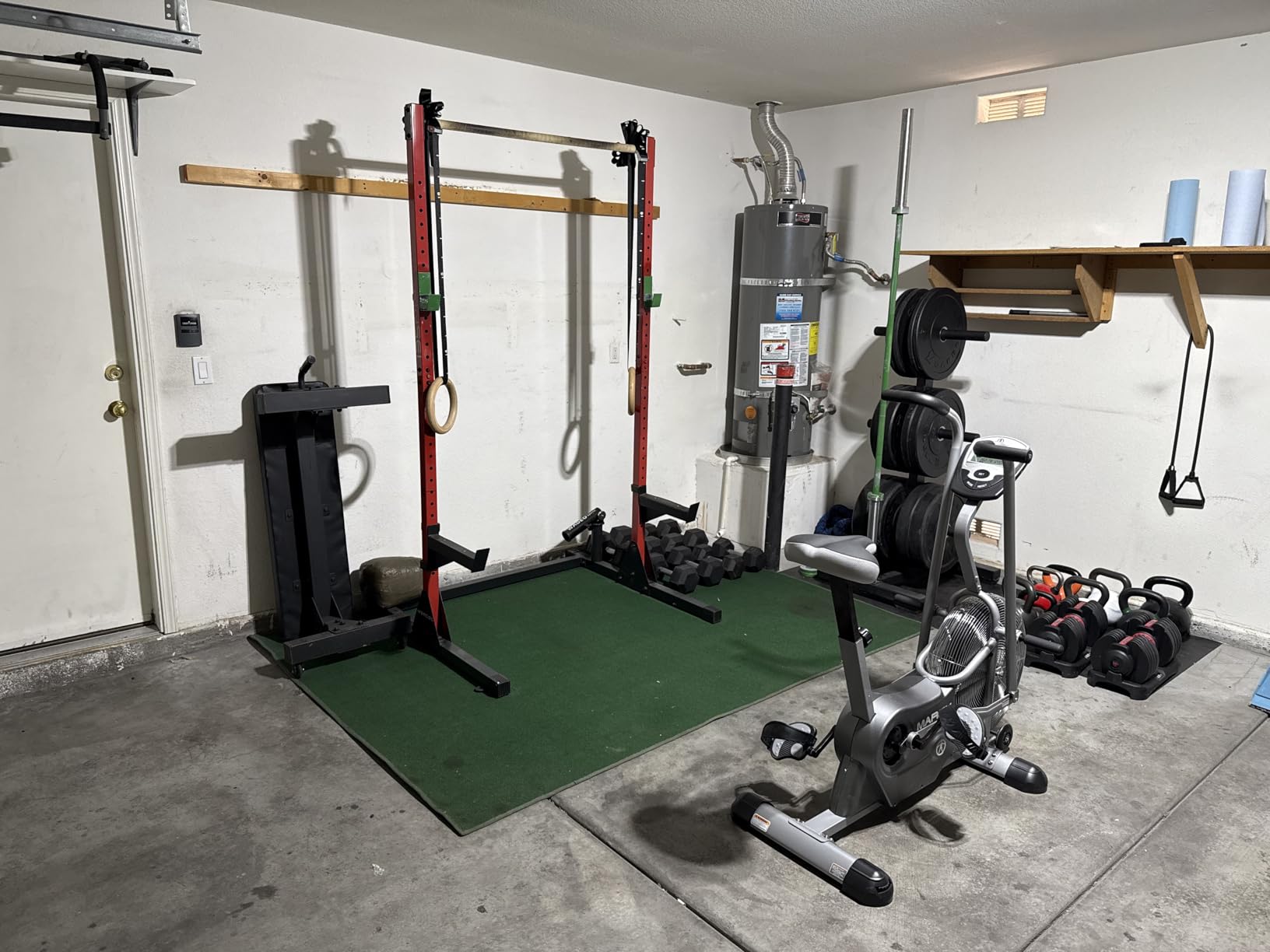
An air bike works completely differently from every other machine here. There is no motor, no magnet and no friction pad. A fan in the front pushes air against the rider, so resistance rises automatically as you pedal faster. That self-scaling property is why CrossFit and functional training people treat air bikes as a distinct modality rather than just another cardio option.
The dual-action handlebars add push and pull movement, so your arms, shoulders, back and legs all work in the same session, and footrests let you do an upper-body-only interval. Owners describe the build as rivalling commercial Airdyne equipment, and the 14-gauge powder-coated steel frame backs that up.

The fan doubles as a cooling system. On a hard interval, the airflow is genuinely pleasant, and it removes one of the persistent complaints about indoor cycling, which is that you get uncomfortably hot with no relief.
Assembly runs 30 to 90 minutes depending on experience and is easier with two people, though owners say the fasteners are labelled by step and all tools are included. There is also a 2-year warranty, and transport wheels let you move it aside when finished.
Who it suits and who it does not
Buy this if your training is intervals, mixed modal work or anything resembling a CrossFit class, because the fan response is exactly what that training needs. Owners report using it effectively for both interval work and steady-state cardio.
Skip it if your goal is quiet. The fan makes this the noisiest machine in the roundup, and the noise grows with speed to the point where owners mention raising their television volume. That makes it a poor choice for an apartment or a shared wall.
The other limitation is the seat. Cushioning is widely described as uncomfortable past half an hour, and many owners add a gel cover or replace it entirely. The console is also dim, with no backlight or on/off switch, and shows speed and distance in US format only. There are also no selectable resistance levels, so workout variation depends entirely on cadence.
How to Choose an Exercise Bike in 2026
Pick the style that matches your body and your goal
Upright spin bikes suit riders who want a road-cycling position and have no joint restrictions. Recumbents suit seniors, anyone returning from knee or hip surgery, and anyone who finds a narrow saddle painful. Under-desk pedallers suit people who want movement during desk work rather than a workout. Air bikes suit interval and full-body training. Pick the geometry first, because no amount of adjustment fixes a position that fights your body.
Choose magnetic resistance over friction where noise matters
Magnetic resistance uses no physical contact between a magnet and a metal surface, so it stays quiet indefinitely and does not generate heat. Friction uses a pad pressed against the flywheel, which is perfectly serviceable but wears and gets louder over time. If you live with other people, magnetic is the better choice. The Schwinn IC, pooboo, DMASUN, CHAOKE and all five recumbents here are magnetic.
Look at flywheel weight more than brand name
Flywheel weight sets the ride feel. Anything around 20 lb and above gives momentum that carries through the top of the stroke, which makes the bike feel smooth rather than jerky. The DMASUN at 35 lb is the heaviest stated flywheel here, the YOSUDA sits at 25 lb, and the Niceday RC88 at 15 lb is on the lighter side but paired with belt drive.
Check fit by inseam, not just max user weight
Maximum user weight tells you about structural strength, not whether you can reach the pedals. The top recurring complaint in buyer discussions is riders who max out the seatpost or cannot get low enough. The Schwinn IC at 5 foot 0 to 6 foot 2 with two-axis adjustment is the safest all-round answer, and the Niceday RC88 is rated for riders from 57 to 79 inches, so it covers more rider heights than the other recumbents here.
Count resistance levels only as a rough guide
Levels are not comparable across brands, because a level 16 on one machine is not the same effort as a level 16 on another. What matters is the range. A bike with 8 levels caps out at a moderate effort, which is fine for rehab and short of what you need for hard intervals. The recumbents here range from 8 levels on the Marcy NS-716R and MERACH S08 up to 16 on the Sunny, XVGVSV and Niceday.
Decide how you feel about subscriptions
Every bike in this roundup can be ridden with no ongoing fee, which is a change from the connected-bike generation. What varies is the quality of the free experience. The Sunny ships with a free app carrying 1,000-plus trainer workouts and 10,000 scenic tours. The Schwinn IC supports Peloton, Zwift, Rouvy and JRNY. The MERACH S26 syncs to Google Fit and Apple Health. Where a subscription is required for a good experience, count it as a running cost, not a purchase.
Budget for assembly and a mat
Most of these bikes arrive partly assembled, with 30 minutes of work typical for the belt-driven models. The Schwinn IC and the Marcy NS-716R are the two that need help. Add a rubber floor mat to your budget regardless of bike, because it protects the floor and takes the worst of the vibration transfer to downstairs neighbours.
Plan where it will live before it arrives
Measure the space, not just the floor area. The Schwinn IC stands 51.8 inches tall, so a bike that fits on the plan can still fail against a low ceiling or a sloped attic roof. Recumbents are the harder case: the Niceday RC88 is 45 inches deep, and you need clearance to swing the seat forward and stand up beside it.
Leave room to store something else nearby. A machine you cannot reach, because the space behind it is full, is a machine you stop using. Transport wheels help here, and they matter most on the heaviest bikes in this roundup.
Add two accessories and skip the rest
A fan matters more than any other add-on. Indoor cycling generates real heat and there is no airflow in a closed room, which is the single most common reason sessions end early. A floor mat is the second.
Padded shorts help on long rides, and a heart rate strap is useful if your bike’s handlebar sensors read poorly. A tablet or phone lets you use a training app on any of these bikes, since resistance is controlled mechanically rather than through the screen.
Quiet Exercise Bikes for Apartments and Upstairs Neighbours
Noise is the most repeated concern from people buying a bike for a home, and it drives more decisions than any spec sheet does. If you are in a flat, the useful thing is to know which parts of a bike make noise. There are three, and you can eliminate two of them.
The first is the drive. Chain drives are the loudest, which is why every belt-driven bike in this roundup is quieter. The second is the resistance unit, and this is the bigger lever. A friction pad rubbing against a metal flywheel produces a continuous scrape that gets worse as the pad wears. Magnetic resistance produces essentially no sound at all.
The third is the fan, and it is unavoidable on air bikes. The Marcy air bike gets noticeably louder as you pedal harder, which makes it a poor fit for a shared wall even though it is an engaging machine for intervals.
For stated noise figures, the DMASUN is quietest with sound output that does not exceed 20 dB. The pooboo and the MERACH S26 both operate below 25 dB, and the YOSUDA is consistently described by owners as quiet enough for early morning use in an apartment.
Vibration matters as much as sound for upstairs neighbours. Heavier frames and heavier flywheels transfer less energy into the floor, so a solid steel bike on rubber feet with a mat underneath is materially better than a light frame on bare boards. This is another reason the DMASUN, with its 35 lb solid flywheel and thick alloy steel frame, is the one we recommend for flats.
What Types of Exercise Bike Are There?
An exercise bike is a stationary bicycle for indoor cycling training. A flywheel driven by the pedals provides the inertia, and a resistance unit creates the drag you pedal against. On connected bikes, a companion app can change that resistance automatically to match a virtual class. There are five main types.
Spin bike: the standard upright indoor cycling bike, with a large front or rear flywheel, a narrow saddle and handlebars that mimic drop bars. Best for general fitness and structured training. This is the largest category in this roundup.
Upright bike: a lighter, more compact bike with a smaller wheel and a seat that sits directly above the pedals. Gentler on the back than a spin bike because the position is less aggressive, and usually a smaller step to buy into.
Recumbent bike: a bike with a wide cushioned seat and a backrest, with the pedals out in front. Lowest joint impact of any type, which makes it the standard recommendation for knee and hip rehabilitation and for older riders.
Under-desk exerciser: a small pedal unit that sits under a desk, used for movement during work rather than as a workout. The goal is circulation and passive activity, not intensity.
Air bike or fan bike: a bike with a large fan wheel, no motor and no resistance levels, where drag rises automatically as pedal speed increases. Many also have moving handlebars, making them full-body trainers rather than cardio-only machines.
Is a Used or Refurbished Exercise Bike Worth Buying?
Yes, and the gap between used and new can be far larger than most buyers expect. One garage gym owner reported buying a used air bike with a low odometer for a small fraction of its new cost, and described it as indistinguishable from a brand new machine of the same model. The same buyer posted years later about a long ownership history on a connected bike with no issues, which is the kind of track record you cannot evaluate from a listing.
The reason used bikes hold value so well is structural. A steel frame and a belt do not wear out on a schedule, and the wear parts, flywheel, belt, pedals and bearings, are replaceable. What degrades on a connected bike is the electronics, the screen or the tablet, and a failed screen is usually the one fault that makes a bike unsellable.
What to check before buying used: confirm the resistance unit still reaches full range across all levels, check the belt for glazing or fraying, look for cracks around the pedal threads, and test that the seat adjustment holds under weight. Ask whether the bike can be reactivated with the manufacturer, because some connected bikes charge a fee to re-link an account to new hardware.
Buy used if the machine is a plain mechanical bike with no screen. Be cautious if it has a large display, since screen failure is the most common reason otherwise good machines go for a fraction of their original value.
Exercise Bike or Bike Trainer?
If you already own a road bike, a trainer may be the better purchase, and this is a genuine fork rather than a rhetorical one. The argument for a trainer is straightforward: you keep one bike and one set of wheels, and the trainer folds away when you are not using it. Riders on enthusiast forums have argued the trainer-versus-bike question for years, with trainer camps generally pointing out the space saving.
The argument for a dedicated exercise bike is that the trainer is useless when your bike is out on the road, the bike itself is more stable at high intensity, and you cannot put a phone on a trainer easily. A dedicated bike is always available and always does the same thing.
Our read: buy the trainer if you are a regular road rider with limited floor space. Buy a dedicated exercise bike if you want something that works on any day regardless of where your bike is, or if anyone else in the household wants to use it too.
Glossary: Indoor Cycling Terms Explained
Flywheel: the heavy wheel that stores rotational energy and gives a bike its smooth, road-like feel. Heavier is smoother and more stable, at the expense of weight and floor space.
ERG mode: a function on smart bikes where the machine changes resistance automatically to hold a target wattage, so your effort stays constant even as your speed drops. This is what most classes are built around.
Cadence: pedal revolutions per minute, usually shown as RPM. Around 80 to 100 RPM is the typical efficient range for most riders.
Q-factor: the lateral distance between the outer edges of the two pedals, measured in millimetres. A wider q-factor spreads the load across the knees and hips and reduces joint stress, which is one reason recumbents with pedals splayed out front feel easier on the body.
Freewheel versus fixed gear: a freewheel lets the flywheel keep turning when you stop pedalling, which feels safer and more natural for most people. A fixed gear means the pedals turn whenever the flywheel turns, which is harder but better for standing sprints.
Watts: the unit of power output. A wattage figure is the most useful number on a smart bike because it is independent of cadence, unlike speed.
Magnetic versus friction resistance: magnetic uses a magnet near a metal flywheel with no contact, so it is silent and does not heat. Friction uses a pad pressed against the flywheel, which is simpler but wears and gets louder.
Indexed resistance: a ratchet mechanism that clicks between numbered positions, like a gear selector. Continuous or friction resistance uses a tension knob with infinite positions, which is smoother but imprecise.
Frequently Asked Questions
What is the best exercise bike according to reviews?
The YOSUDA exercise bike 002 is the strongest all-rounder in our roundup, rated 4.4 across more than 25,000 reviews, with a 25 lb flywheel, belt drive and 100 friction levels. The Schwinn IC wins on build and app flexibility, and the pooboo is the value pick with 100 magnetic resistance levels and a 350 lb capacity.
What is the highest rated exercise bike?
The XVGVSV Recumbent W239 has the highest average rating in our group at 4.7 out of 5, based on about 1,760 reviews, with roughly 82 percent five-star ratings. Its 400 lb capacity and commercial grade steel frame make it the strongest pick for heavier riders and for seniors and rehabilitation use.
What is the best stationary bike for a home gym?
For a general home gym, the Schwinn IC is the most complete: 100 magnetic resistance levels, a backlit console showing RPM and heart rate, SPD clips and toe cages with cleats included, and a 10 year frame warranty. If your space is small or your neighbours are close, the DMASUN is the quietest option, with sound output stated below 20 dB.
Which brand of exercise bike is best?
No single brand wins every category. Schwinn makes the strongest training bike, with the best warranty and pedal system in this roundup. MERACH and Sunny Health cover the widest range, from spin bikes to recumbents, and both offer free apps with no membership fee. Marcy owns the air bike and the lightest recumbent. YOSUDA delivers the most reviewed value bike.
What is the best exercise bicycle for home use?
For most people the best exercise bicycle for home use is a belt-driven magnetic spin bike with at least 100 resistance levels and a frame rated above your body weight. The pooboo, CHAOKE and DMASUN all meet that standard, and the Schwinn IC adds a backlit console and a long warranty. For joint-friendly riding, choose a recumbent such as the Sunny or the Niceday RC88.
Do exercise bikes need an app subscription?
No. Every bike in this roundup rides without any ongoing fee, because resistance control is mechanical rather than app-driven. What varies is the quality of the free experience. The Sunny includes 1,000-plus trainer workouts with no membership fee, the Schwinn IC supports Peloton, Zwift, Rouvy and JRNY, and the MERACH S26 syncs to Google Fit and Apple Health.
Is riding a stationary bike for 30 minutes as good as walking for 30 minutes?
Not quite, and the difference comes down to muscle engagement. Cycling works the quadriceps, hamstrings and calves hard while your upper body stays largely unloaded, so it burns more calories per minute than walking but also leaves your upper body untrained. Walking loads more total body mass and is gentler on the knees. Neither is a substitute for the other, and combining them gives broader fitness than either alone.
How much space does an exercise bike take up?
Compact upright spin bikes occupy a footprint of roughly 30 by 20 inches, with the Schwinn IC at about 55 by 31 inches and the YOSUDA at 30 by 7.5 inches. Recumbents are much longer: the Marcy NS-716R is about 31 by 11 inches because it is a compact frame, while the Sunny is around 46 by 26 inches. Measure your ceiling height too, since the Schwinn IC stands 52 inches tall.
How long does it take to assemble an exercise bike?
Most of these bikes arrive partly assembled and take about 30 minutes. The DMASUN is 70 percent pre-assembled, the Niceday RC88 is 90 percent pre-assembled and the Sunny takes about an hour. Two exceptions need help: the Schwinn IC arrives fully unassembled and the manufacturer describes it as a two-person job, and the Marcy NS-716R takes 60 to 90 minutes with a notoriously difficult tension cable connection.
The Verdict: Which Exercise Bike Should You Buy in 2026?
The best exercise bikes in 2026 split cleanly by constraint rather than by brand. If you want the single safest purchase, take the YOSUDA 002: belt drive, a 25 lb flywheel, 100 levels, a 300 lb rating and the largest review base we found, which means its weaknesses are well documented and manageable.
Buy the DMASUN if noise is your binding constraint, the pooboo if you want the most capability per pound, and the CHAOKE if you ride standing sprints and need a frame that does not rock. Buy the Schwinn IC if you already train seriously, own cycling shoes, and want a 10 year frame warranty with open app support.
For seniors, knee and hip rehabilitation, or anyone who finds a narrow saddle painful, go recumbent. The Sunny is the gentlest on the body, with a wide cushioned seat and included resistance bands, the XVGVSV and Niceday RC88 both carry riders to 400 lb, the Niceday RC88 fits the tallest riders up to 6 foot 3, and the Marcy NS-716R is the one you can move between rooms by yourself.
And if you want interval work and do not care about noise, the Marcy air bike gives you self-scaling resistance, full-body movement and a cooling breeze in one machine. Pick the bike that matches your room and your rider, and ride it often.