
Picking the best red light therapy devices is harder than it should be, because every listing in the category makes the same three claims: clinically proven, salon-grade, and professional-grade. Almost none of them publish the number that actually predicts results, which is how much light reaches your skin at a usable distance.
We spent weeks reading the spec sheets, the review histories and the failure reports behind all 12 devices below, and then sorted them by format, because format matters more than brand. A mask, a panel, a wand and a mat do completely different jobs, and the single most common buying mistake we saw in the review data was picking the wrong shape for the goal.
This roundup is updated for 2026 and covers every device we could justify on real specifications and real owner feedback, not on marketing copy. It also includes what these devices cannot do, because that expectation gap is where most returns come from.
If you want the wider consumer-electronics context, our picks for the [best smart home devices](https://www.webdigi.net/best-smart-home-devices/) follow the same rule: measurable specifications first, brand prestige second.
Table of Contents
Top 3 Best Red Light Therapy Device Picks (September 2026)

BestQool 105W Panel
- 660nm and 850nm dual-chip LEDs
- 95.6 mW/cm2 at 3 inches
- Stand and hanging kit included
Hooga HG1500 Panel
- 300 LEDs for full-body coverage
- 1500W with active cooling
- 3-year warranty

NEWKEY 4D LED Mask
- 450 chips across 150 LEDs
- Red 630nm and blue 465nm modes
- Remote-controlled corded design
All 12 Red Light Therapy Devices Compared
| Product | Specifications | Action |
|---|---|---|
| BestQool 105W Red Light Panel |
|
Check Latest Price |
| Hooga HG1500 Full Body Panel |
|
Check Latest Price |
 Lifepro Bioheal 120 LED Panel Lifepro Bioheal 120 LED Panel |
|
Check Latest Price |
 CurrentBody Skin Series 2 Mask CurrentBody Skin Series 2 Mask |
|
Check Latest Price |
| NEWKEY 4D LED Face Mask |
|
Check Latest Price |
 Shark CryoGlow LED Face Mask Shark CryoGlow LED Face Mask |
|
Check Latest Price |
 Ulike 360 Face Mask Ulike 360 Face Mask |
|
Check Latest Price |
 Lifepro Lumicure Torch Lifepro Lumicure Torch |
|
Check Latest Price |
 Solawave 4-in-1 Wand Solawave 4-in-1 Wand |
|
Check Latest Price |
 Comfytemp 33 x 17 Inch Mat Comfytemp 33 x 17 Inch Mat |
|
Check Latest Price |
 bonodave Wrap Pad and Belt bonodave Wrap Pad and Belt |
|
Check Latest Price |
 iRestore Professional Laser Cap iRestore Professional Laser Cap |
|
Check Latest Price |
What Is Red Light Therapy?
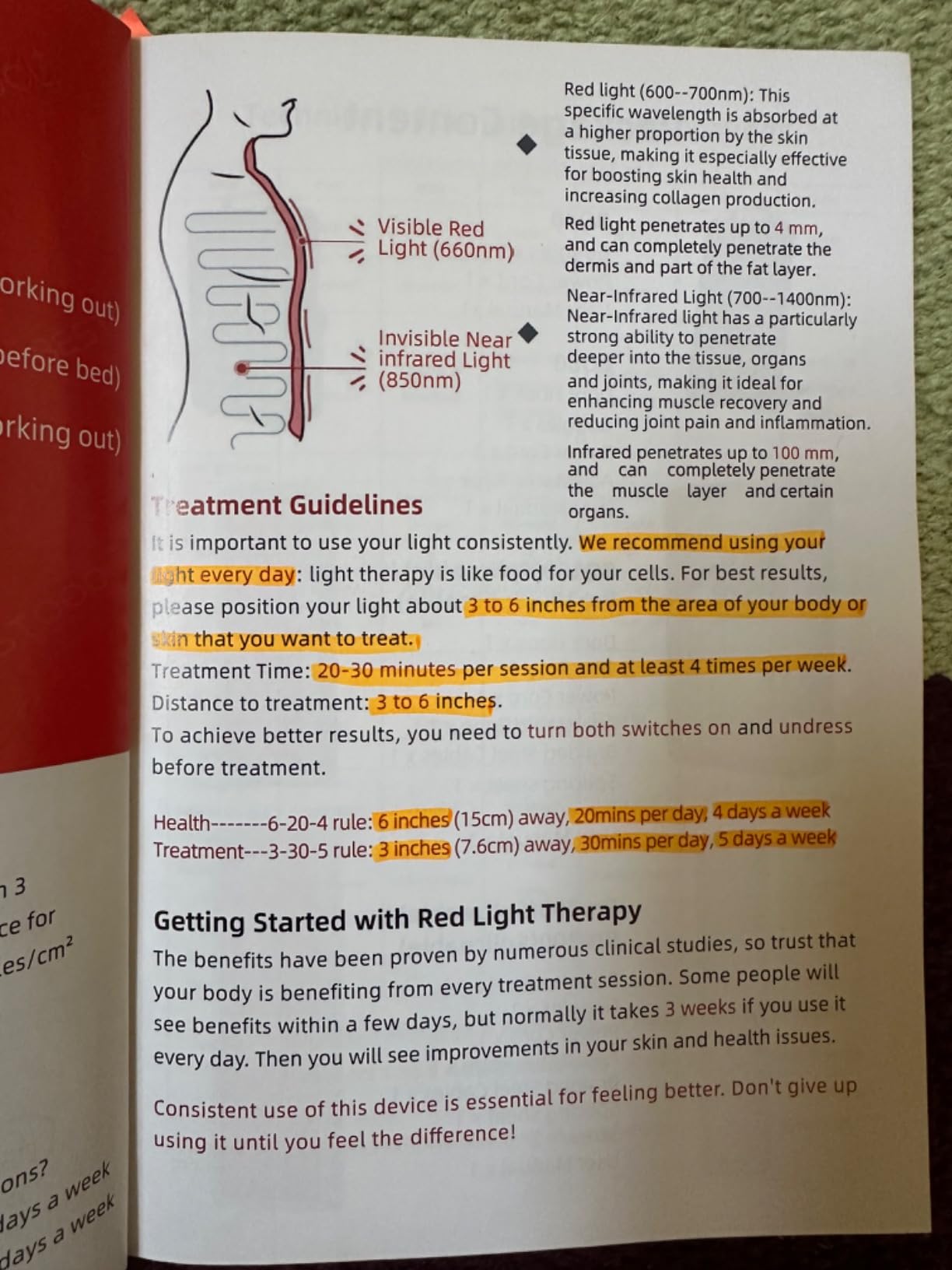
Red light therapy is photobiomodulation: the use of low-level red light at about 660nm and near-infrared light at about 850nm to stimulate cellular energy production, reduce inflammation, and support collagen synthesis in skin and deeper tissue. Red 660nm is absorbed near the surface for skin work, while 850nm reaches further into muscle, joint and connective tissue.
Now the part most listings leave out. Red light therapy cannot permanently close pores, remove every dark spot, or replace a skincare routine. It will not erase deep wrinkles. What it can reasonably do is support skin texture and breakouts, reduce the look of inflammation, and take the edge off muscle and joint soreness, and only when the dose is right and the schedule is kept.
That last clause is doing a lot of work. Owners in forum threads describe results that appear at 20 to 30 minutes several times a week, which is longer and more frequent than most product manuals suggest. Consistency, not peak intensity, is what separates the people who see changes from the people who do not.
1. BestQool 105W Red Light Panel: Best Overall for Full-Body Sessions
BestQool Red Light Therapy Panel, 660nm Red & 850nm Infrared Light, 105W
105W output
660nm red and 850nm near-infrared
95.6 mW/cm2 at 3 inches
4.8 pounds
Pros
- Dual-chip red and near-infrared in one panel
- Very light at 4.8 pounds for a panel of this output
- Stand plus wall and door hanging kit included
- Flicker-free diodes with an active cooling system
Cons
- Small treatment area means many passes for the body
- Very bright output requires eye protection
- Stand hardware can loosen with daily use
This is the panel we kept coming back to, because it does the thing that actually matters: it states an irradiance figure and the distance it was measured at. Ninety-five point six milliwatts per square centimetre at 3 inches, with 660nm red and 850nm near-infrared on dual-chip diodes.
Owner feedback is unusually consistent for a device in this category. People report relief from back, hip, knee and calf soreness inside 10 to 15 minute sessions, and several mention better sleep and faster recovery after training, which matches what the wavelength pairing is meant to do.
The three light modes cover a workout session, a relaxation block and a wind-down routine, and the U-shaped stand tilts far enough to treat a quad or a shoulder without lying on the floor. It weighs 4.8 pounds, so moving it between rooms is genuinely easy.
The honest trade-off is coverage. This is a 105W panel, not a full-body wall unit, so a whole-torso session means repositioning rather than standing back once. Long-term owners also report the stand’s wing nuts loosening with daily use, which is a small annoyance rather than a failure.
Check the brightness before you commit
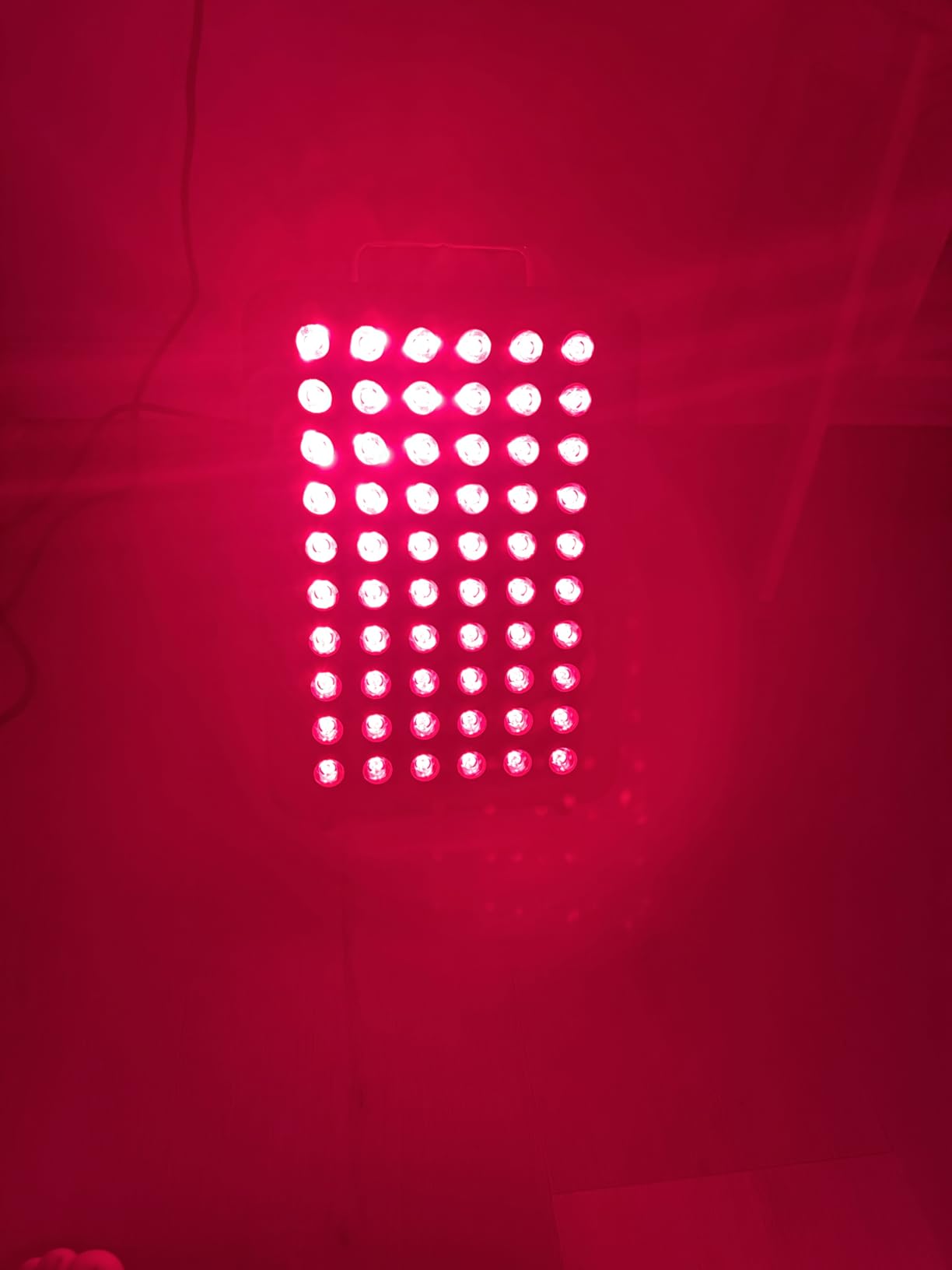
Owners repeatedly describe the output as very bright and say the included eye protection is not optional. If you plan to treat facial areas, plan to keep the goggles on rather than testing whether you can look at it briefly.
Who should look past this one
If your goal is a single sore knee or a patch of facial skin, this panel is more hardware than you need. A wand or a wrap will get you to the same session in less setup time.
2. Hooga HG1500 Full Body Panel: Best Premium Full-Body Coverage
Hooga HG1500 Full Body Red Light Therapy Panel, 300 LEDs, 660nm Red & 850nm Near-Infrared Light, Built-in Timer, Door Hanging Kit
300 LEDs
660nm red and 850nm near-infrared
1500W with 60-degree beam
3-year warranty
Pros
- Whole-torso and full-leg sessions in one pass
- Iron housing with active internal cooling
- Hanging kit and built-in timer included
- 3-year warranty with US-based support
Cons
- 32.6 pounds makes it awkward to reposition
- Large footprint needs a dedicated wall or door space
If your plan is to stand in front of a device once and treat everything from shoulders to feet, this is the format that makes sense. Three hundred LEDs at 660nm and 850nm across a 43.2 by 15.6 inch iron panel, with a 60-degree beam angle and 1500 watts of output.
The details that matter for long sessions are here. Active internal cooling fans keep output steady, the housing is iron rather than thin plastic, and a built-in timer plus an integrated hanging kit make scheduled routines something you set once rather than adjust nightly.
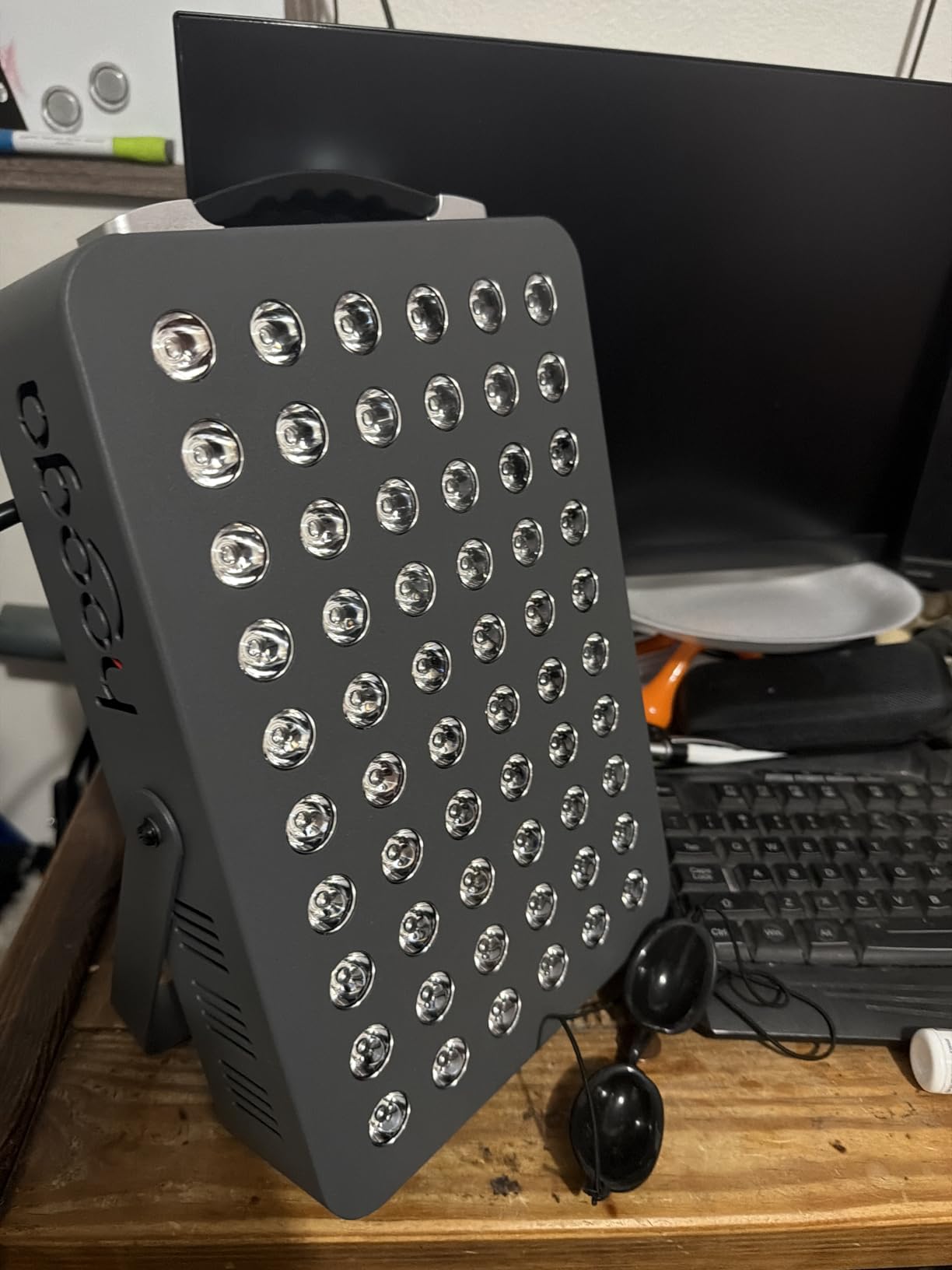
It also comes from a family with 60, 100, 200 and 300 LED versions, so if full-body is not your immediate goal you can step down in size without changing brands. The 3-year warranty is the longest we saw in this group, backed by US-based support.
What you give up is flexibility. At 32.6 pounds with a large footprint, this is a fixture for a dedicated home wellness space, not something you carry between a bedroom and a desk. Plan the mounting location before you buy, not after.
Decide the mounting spot first
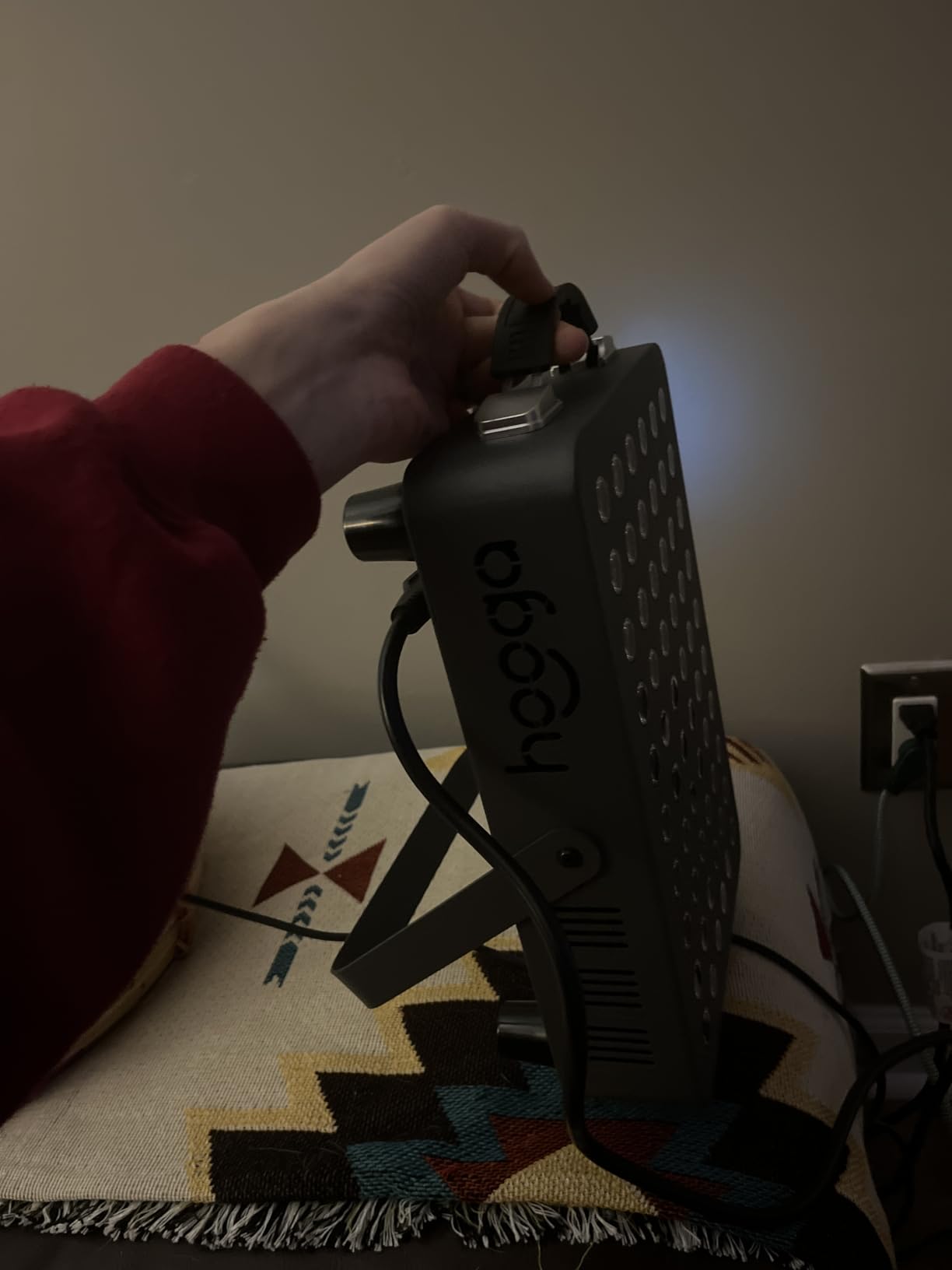
The included kit covers wall, ceiling and door mounting, but a panel this size needs a surface that stays clear. Measure the intended wall and check the door it will hang from before ordering.
Who should look past this one
Apartment renters and anyone short on wall space should skip this. A mat covers a similar amount of area, folds away, and costs a fraction of the commitment.
3. Lifepro Bioheal Panel: Best for Short, Intense Sessions
Lifepro Bioheal Red Light Therapy Panel 90 &120 Dual Chip LED
120 dual-chip LEDs
203 mW/cm2 at 3 inches
1 to 30 minute timer
9.7 pounds
Pros
- 203 mW/cm2 is the highest stated figure in this group
- Solid build with mounting hardware included
- Two pairs of eye protection supplied
- Light enough to move between rooms
Cons
- Small variant doubles the time for body sessions
- Rear power jack and inline control sit awkwardly
- Included sunglasses do not fully seal out light
- No remote control
This panel states the highest irradiance figure we found in this roundup, at 203 milliwatts per square centimetre measured at 3 inches, from 120 dual-chip LEDs running 660nm red and 850nm near-infrared. Owners say that number shows up in practice, reporting effective 10 to 15 minute sessions.
The feedback beyond the light is good. People report better sleep, more energy, reduced joint pain and visible brightness under the eyes, and the build feels closer to a piece of equipment than a novelty.
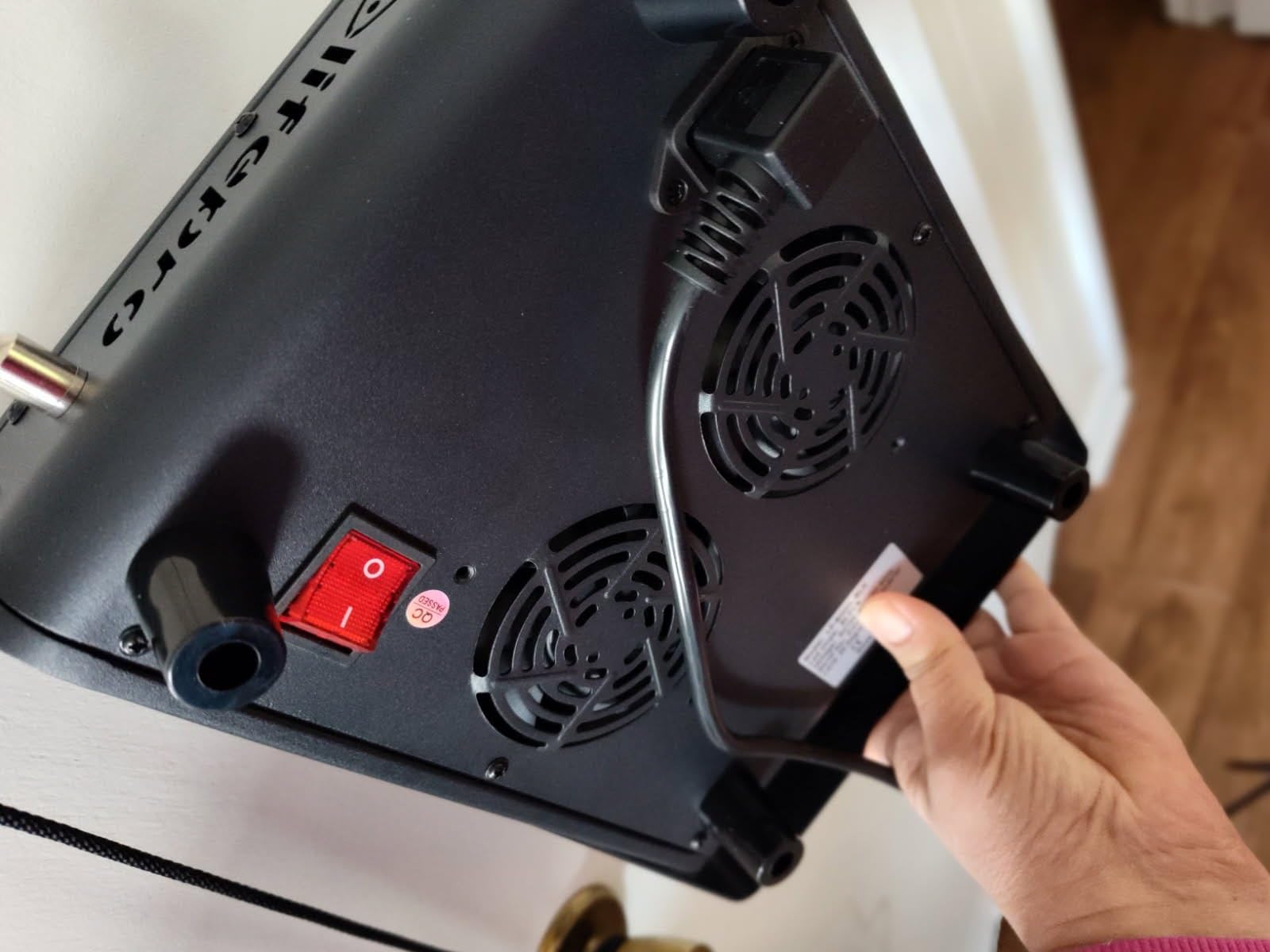
At 9.7 pounds it moves between rooms without a fight, and it can stand upright, lie flat or hang from a door using the included kit. Three light modes and a 1 to 30 minute timer cover everything from a quick spot session to a full body block.
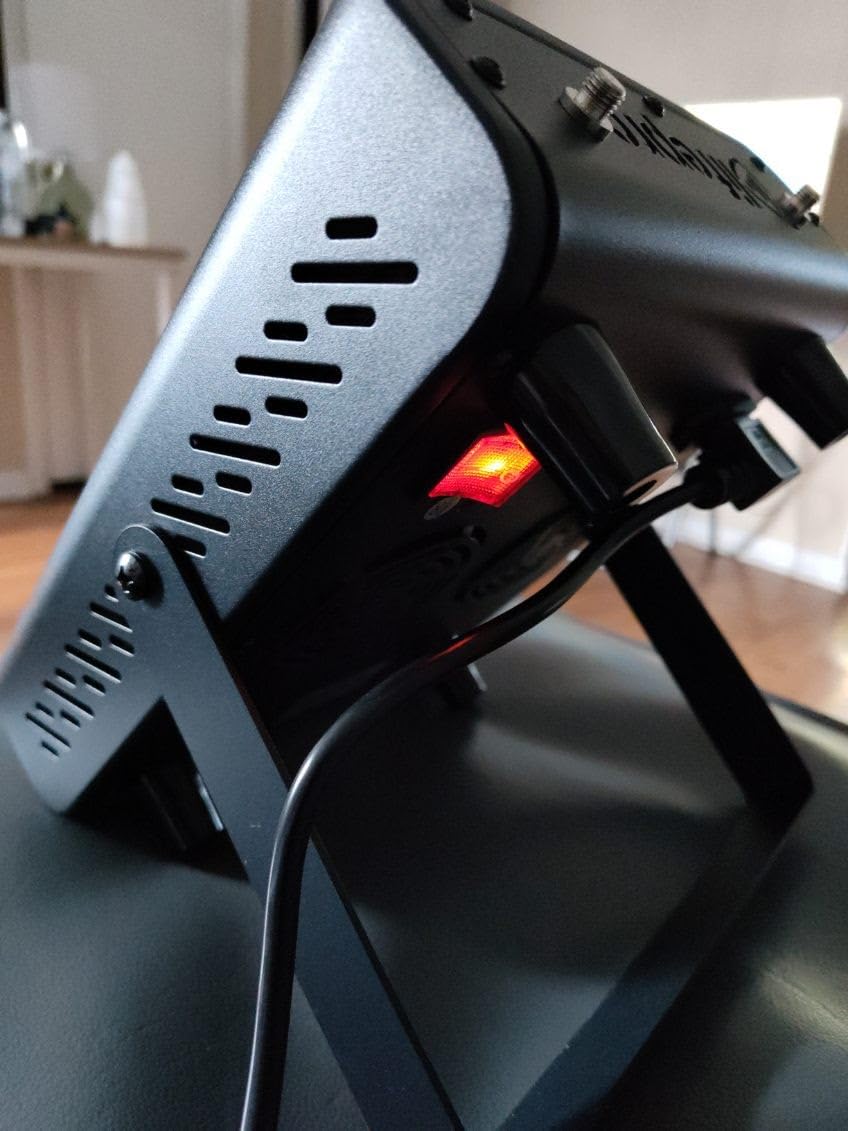
Two details to check before buying. The control box and rear-mounted power jack sit right where your hand goes, and the supplied sunglasses do not fully seal, so serious eye protection is worth buying separately for facial work.
Choose the larger size for body work
The most common regret in the reviews is buying the small variant. If you plan to treat anything below the neck, the larger panel roughly halves the number of passes, and that difference compounds over a year of use.
Who should look past this one
Skip it if you want hands-free control. There is no remote, so every session starts and stops at the panel itself, which is an annoyance when you are already lying down.
4. CurrentBody Skin Series 2 Mask: Best for Face and Neck Coverage
CurrentBody Red Light Therapy LED Face Mask: Series 2
236 LEDs
633nm 830nm and 1072nm
Cordless rechargeable
10-minute auto shut-off
Pros
- Coverage extends over the jawline and chin
- Sturdy silicone holds its shape without readjusting
- Cordless with roughly a week of nightly use per charge
- 10-minute auto shut-off fits a nightly routine
Cons
- Straps shed fibres onto face and hair
- Strap system is not intuitive and the manual is thin
- Reports of unit or battery failing within weeks
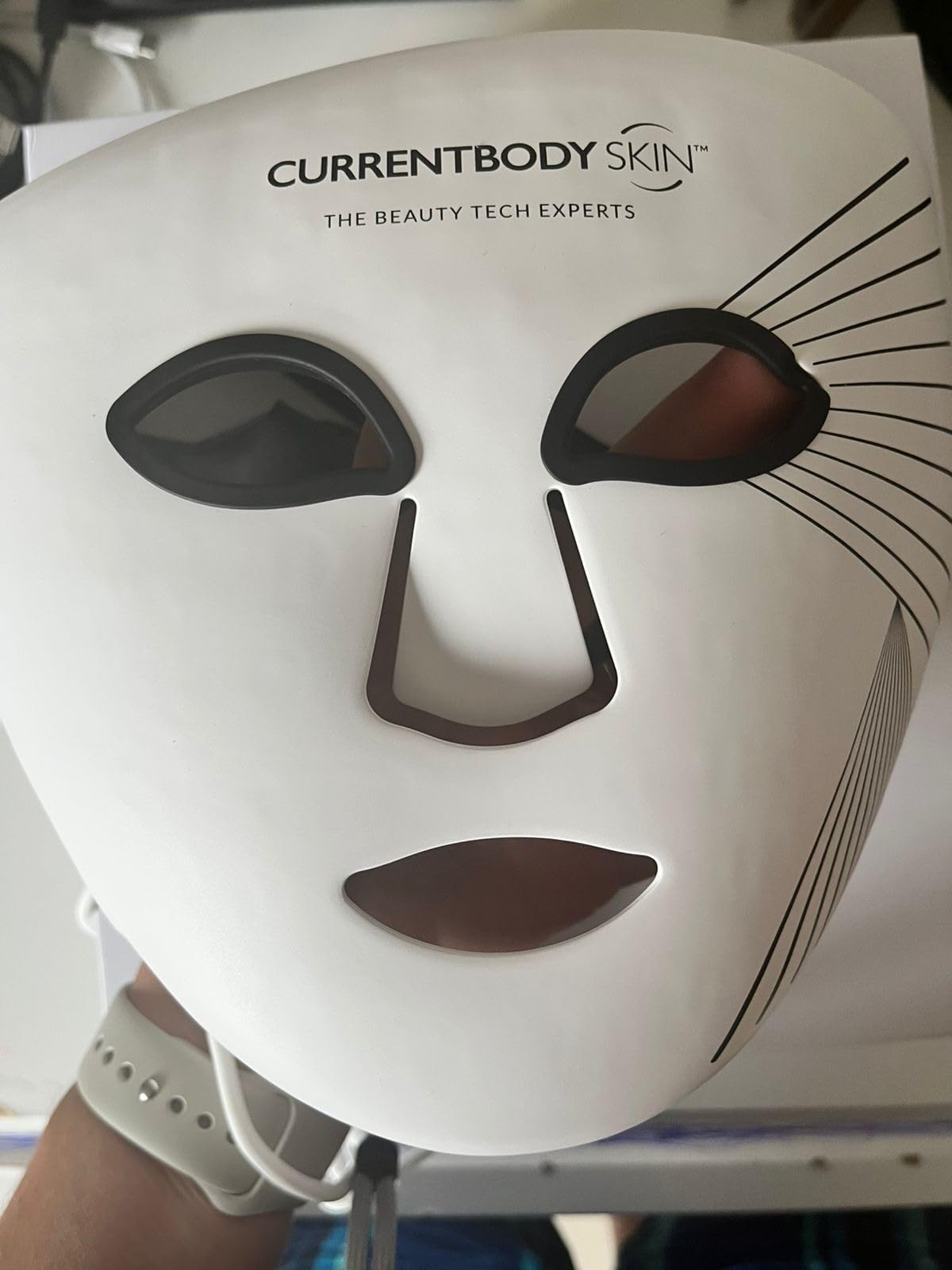
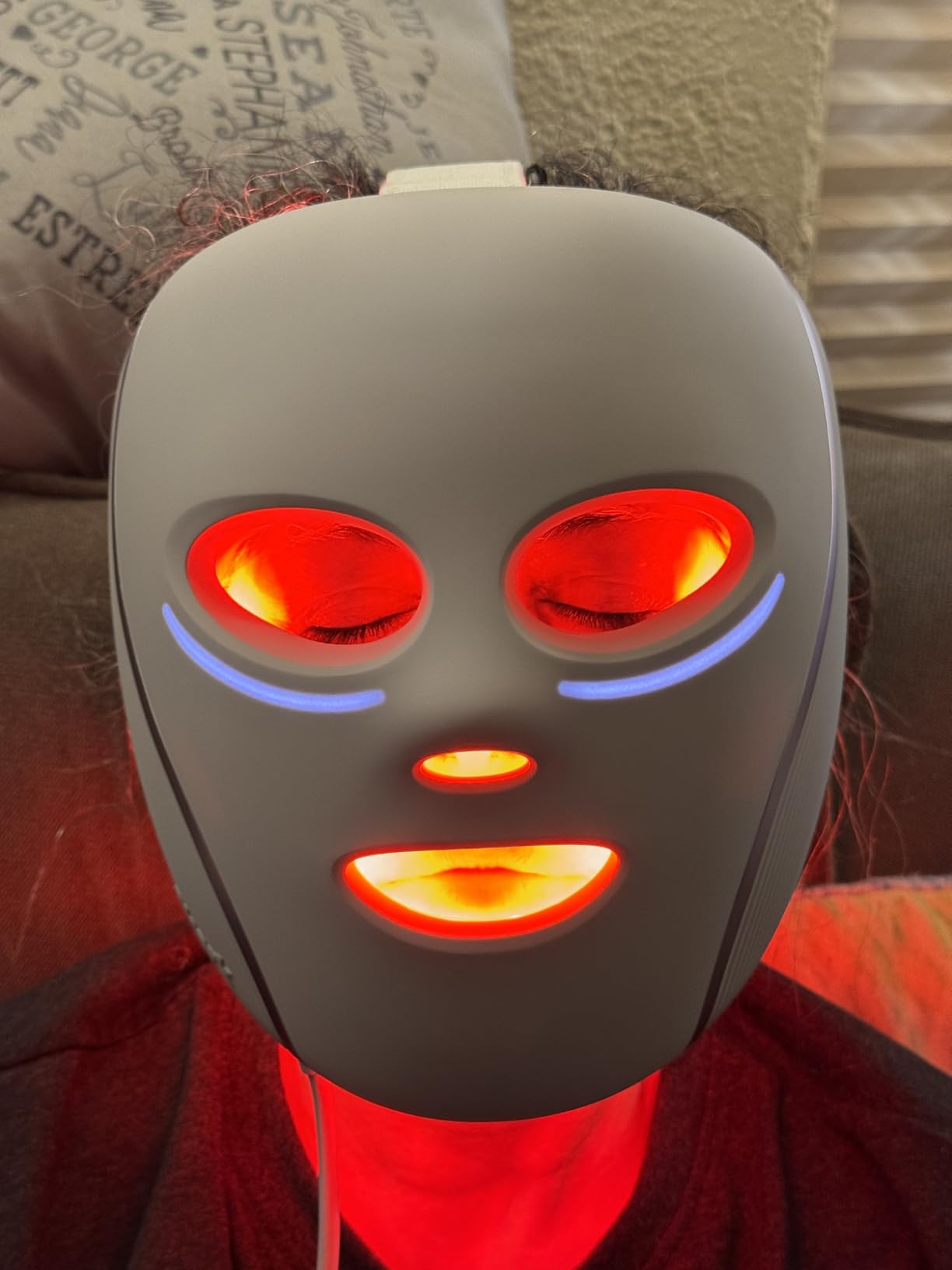
This is the mask to beat for anyone whose concerns have moved past the forehead. Its flexible liquid silicone construction extends coverage over the jawline and chin, which is exactly where reviewers with mature skin say they wanted more.
Spectra-wise it runs three wavelengths rather than two, at 633nm red, 830nm near-infrared and 1072nm deep near-infrared across 236 LED bulbs, so you can layer treatments rather than choosing between surface and depth.
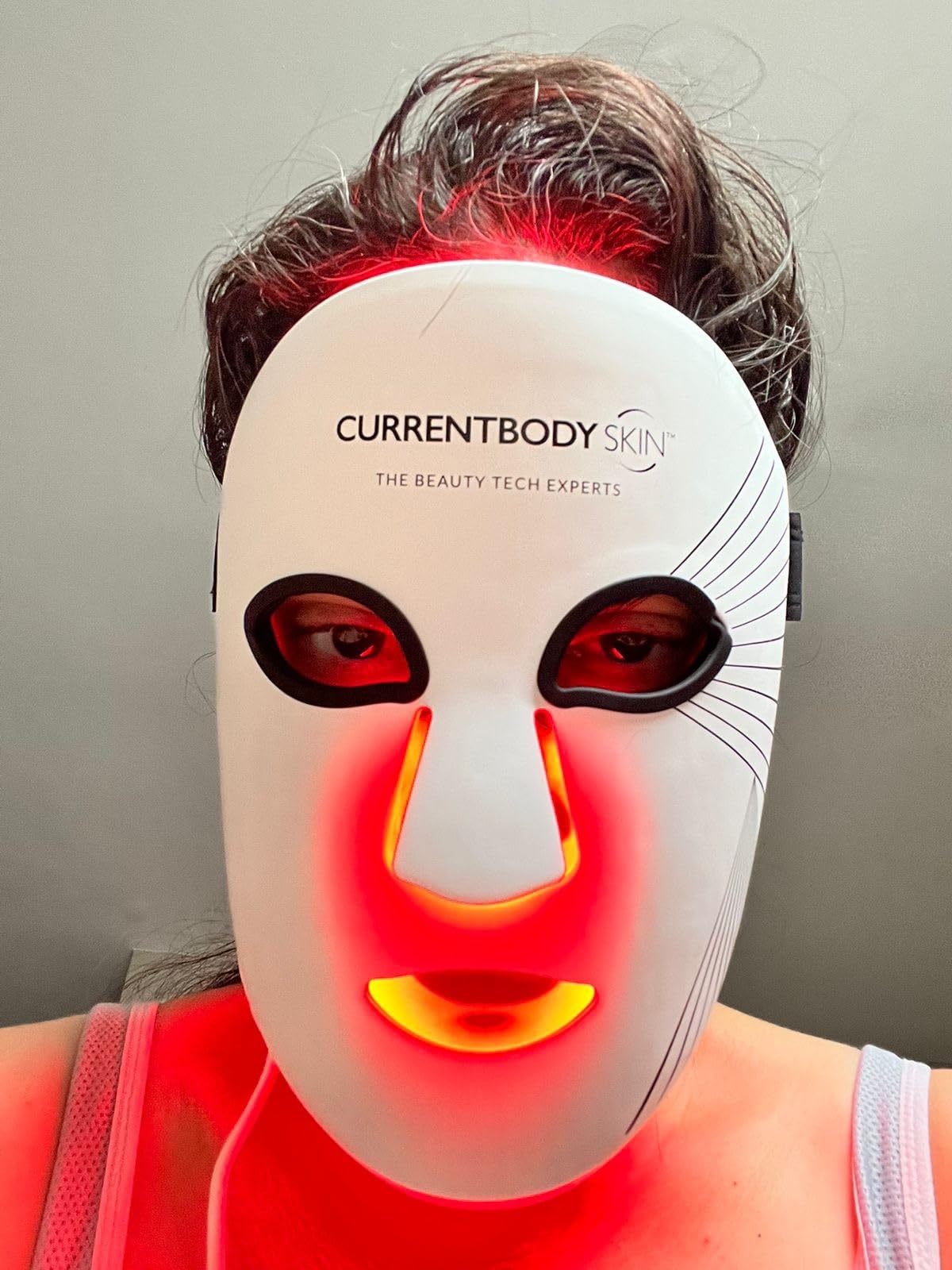
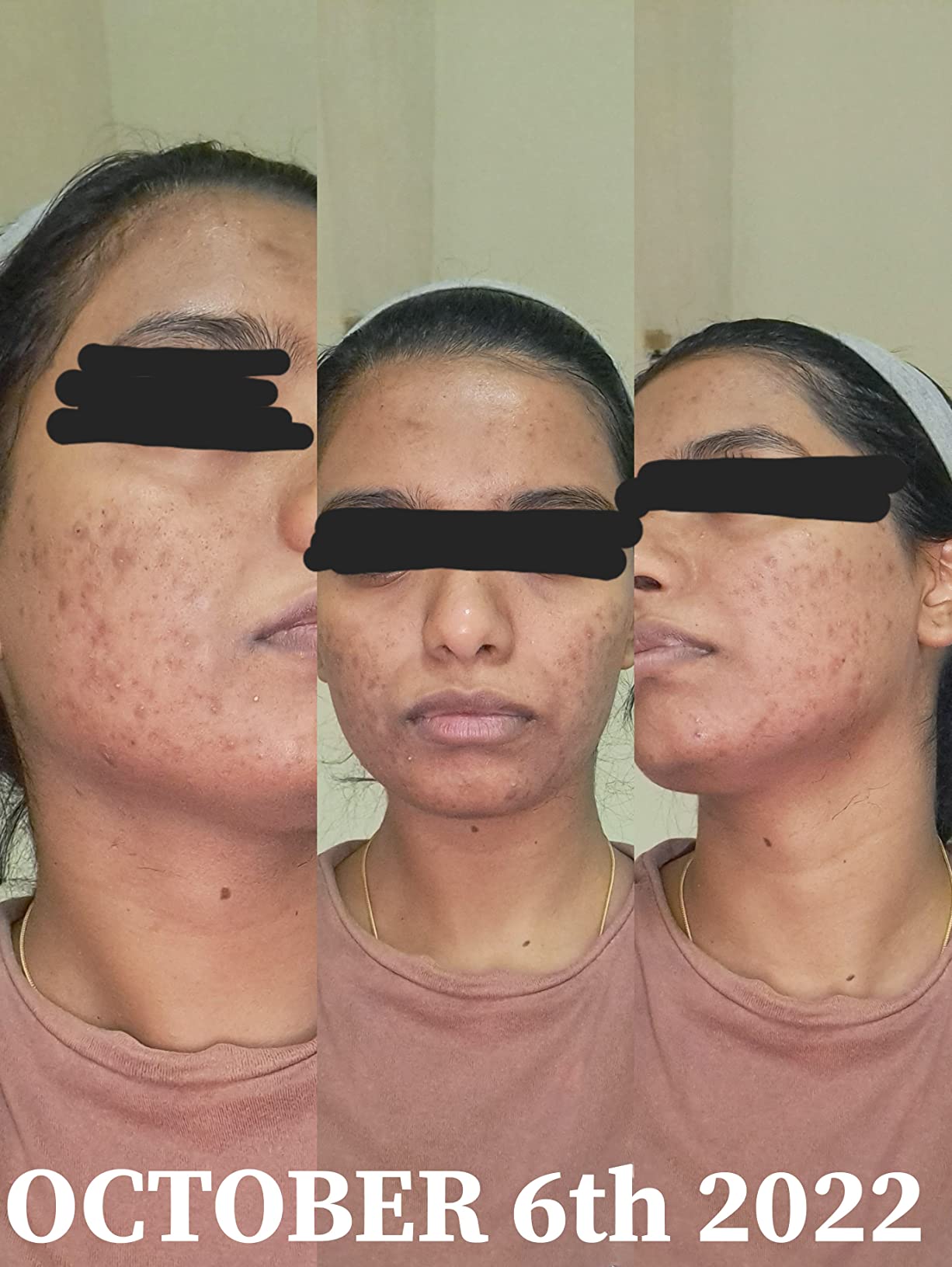
Satisfied long-term users describe visible smoothing of fine lines, crow’s feet, redness and sagging, typically after four to six weeks of daily use. A single charge covers roughly a week of nightly sessions, and the 10-minute auto shut-off removes the need to time anything.
Reliability is the thing to weigh here. This mask carries the highest one-star share in the lineup, with a meaningful number of reviews describing the unit or its battery dying within weeks to months, and the Velcro straps shed fibres onto skin and hair.
Check the replacement service before buying
Owners who reported faults say the manufacturer’s replacement service was repeatedly praised once a problem was raised. Confirm that service is available in your country before you commit, because the failure mode is real and the remedy matters.
Who should look past this one
Skip it if you are on a strict budget and want something you will not think about. The corded masks in this roundup cost less and have larger review bases, at the expense of mobility.
5. NEWKEY 4D LED Mask: Best Value for Multi-Color Skin Work
NEWKEY 4D LED Red Light Therapy Mask for Face Skin Glowing,630nm Led Light Therapy Face Mask Anti Wrinkle, Blue Light Therapy Face Mask for Acne,Home use,450 LED Chips,Birthday gift,Plug in
450 chips across 150 LEDs
630nm red and 465nm blue
Up to 75 mW/cm2
Corded with remote
Pros
- Largest review base in this roundup
- Multi-color modes cover red blue green and yellow
- Corded power means no charging interruptions
- Hard shell outlasts bendable predecessors
Cons
- Heavier than wireless masks on the face
- Eye gaskets dig in and can leave marks
- Must stay tethered to an outlet
With more than 3600 reviews on file, this is the most thoroughly used mask in the group, and the consistency of the feedback is the reason it ranks as our value pick. Buyers report brighter skin, softened fine lines and fewer breakouts inside the first month.
The 4D contoured shape holds a 5mm gap from the skin, which limits light leakage and keeps the optics close, and 450 light-emitting chips sit across 150 LEDs for both 630nm red and 465nm blue, with additional colour modes beyond those two.
A remote handles colour, intensity across five levels and a 1 to 20 minute timer, and a 10-minute auto shut-off is built in. Being corded is a genuine advantage for anyone who runs longer sessions, since there is no battery to top up mid-session.
The physical complaints are consistent. It weighs 2.6 pounds, the integrated eye gaskets press into the nose and eye area and can leave indentations, and a minority of units shipped with only some of the seven colour modes working or a failed cable.

Plan around the cord
Tethered power means use is limited to within reach of an outlet, which in practice means a desk, a dressing table or a bed with a nearby socket. It is a fine trade for consistent power, but only if that socket exists.
Who should look past this one
Skip it if you want to move around while wearing it, or if the eye gasket pressure is a problem for you. Cordless silicone masks remove both of those issues at a higher cost.
6. Shark CryoGlow LED Mask: Best for Breakouts and Morning Use
Shark CryoGlow LED Face Mask, Red Light Therapy, Under-Eye Cooling, FW312PL
Red blue and deep infrared LEDs
Under-eye cooling with 3 levels
4 to 8 minute modes
FDA-cleared
Pros
- Only mask here with active under-eye cooling
- Short 4 to 8 minute sessions suit a morning routine
- Sturdy build from a major appliance brand
- Users report better skin quality and fewer breakouts
Cons
- Battery gives only 3 to 4 cycles before a long recharge
- Does not reach the jawline on many face shapes
- Cooling pads feel very cold and have no LEDs
- Early hardware failures reported
The differentiator here is cooling. Temperature-controlled under-eye chill pads on three levels depuff on contact while the LEDs work, and several reviewers describe the first acne-free stretch they have had in years.
Sessions are short by design. Four dermatologist-developed modes run 4 to 8 minutes for better aging, skin clearing, skin sustain and under-eye revive, which makes the mask easy to fit into a morning routine rather than a nightly one.
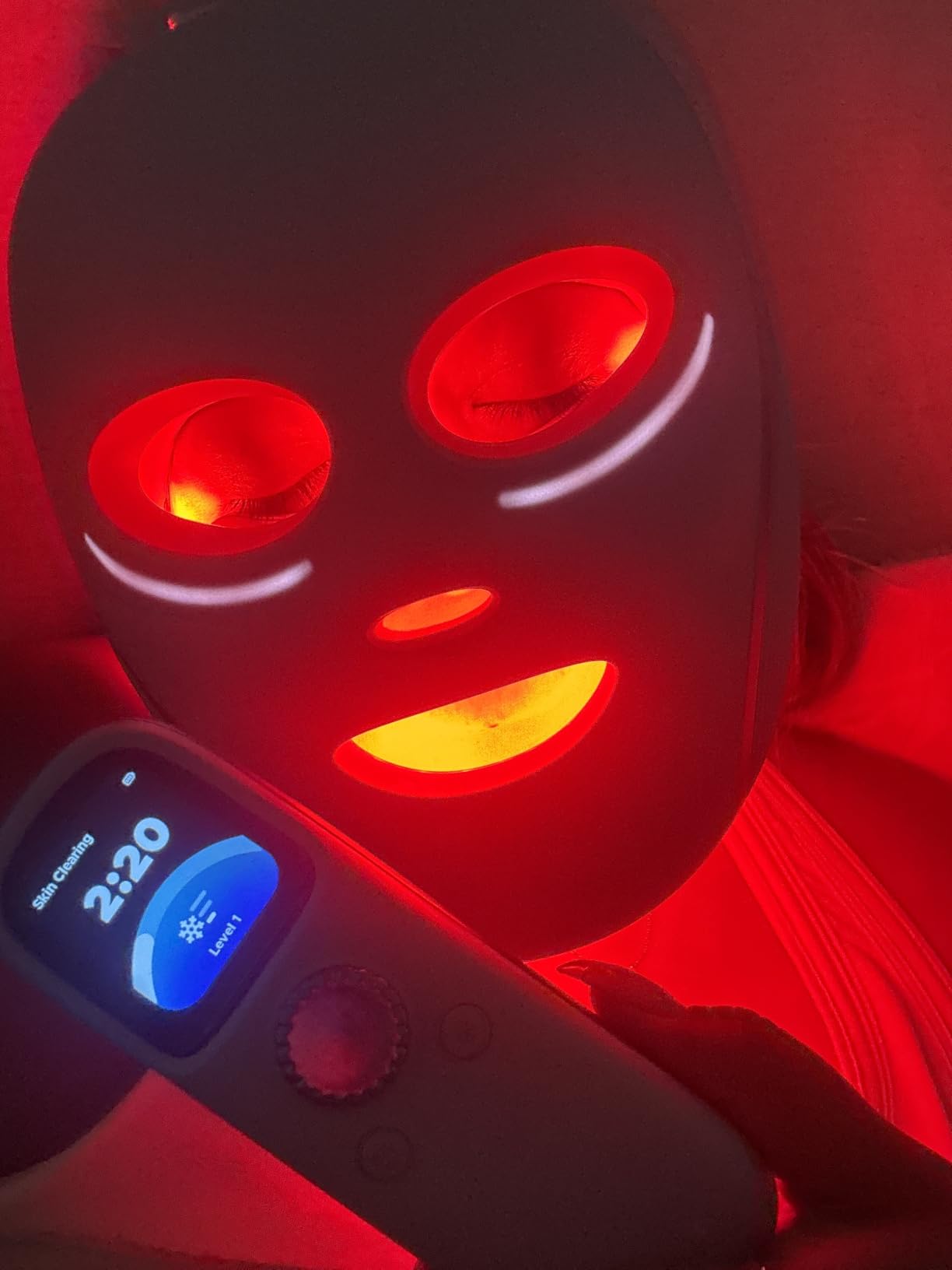
It is also the only device here with published clinical backing, having been tested on 119 participants and FDA-cleared, and the remote has an LED screen that tracks your treatments. It weighs 1.49 pounds, light enough to walk around in.
The trade-offs are battery and reach. Three to four cycles before a multi-hour recharge, a shape that stops short of the jawline on many faces, and cooling pads that are fixed in place, run very cold even on low and have no light in that area.
Work around the charge cycle
With three to four sessions per charge, daily users are charging overnight or every other day. Plan the schedule around that rhythm rather than assuming nightly use will hold.
Who should look past this one
Skip it if jawline coverage is your main concern, or if you are sensitive to cold near the eyes. The silicone masks in this roundup cover the lower face more completely.
7. Ulike 360 Face Mask: Best for Full Face Coverage
Ulike Red Light Therapy Mask for Face,360° full face coverage
272 light beads
Red yellow blue and infrared
360 degree coverage
8-minute sessions
Pros
- Coverage design targets the whole face not just the front
- Four wavelengths and four modes for different routines
- Silicone eye protection with contoured woven straps
- 8-minute sessions make daily use realistic
Cons
- Remote must be charged separately or the mask may misbehave
- Percentage improvement claims are company-reported
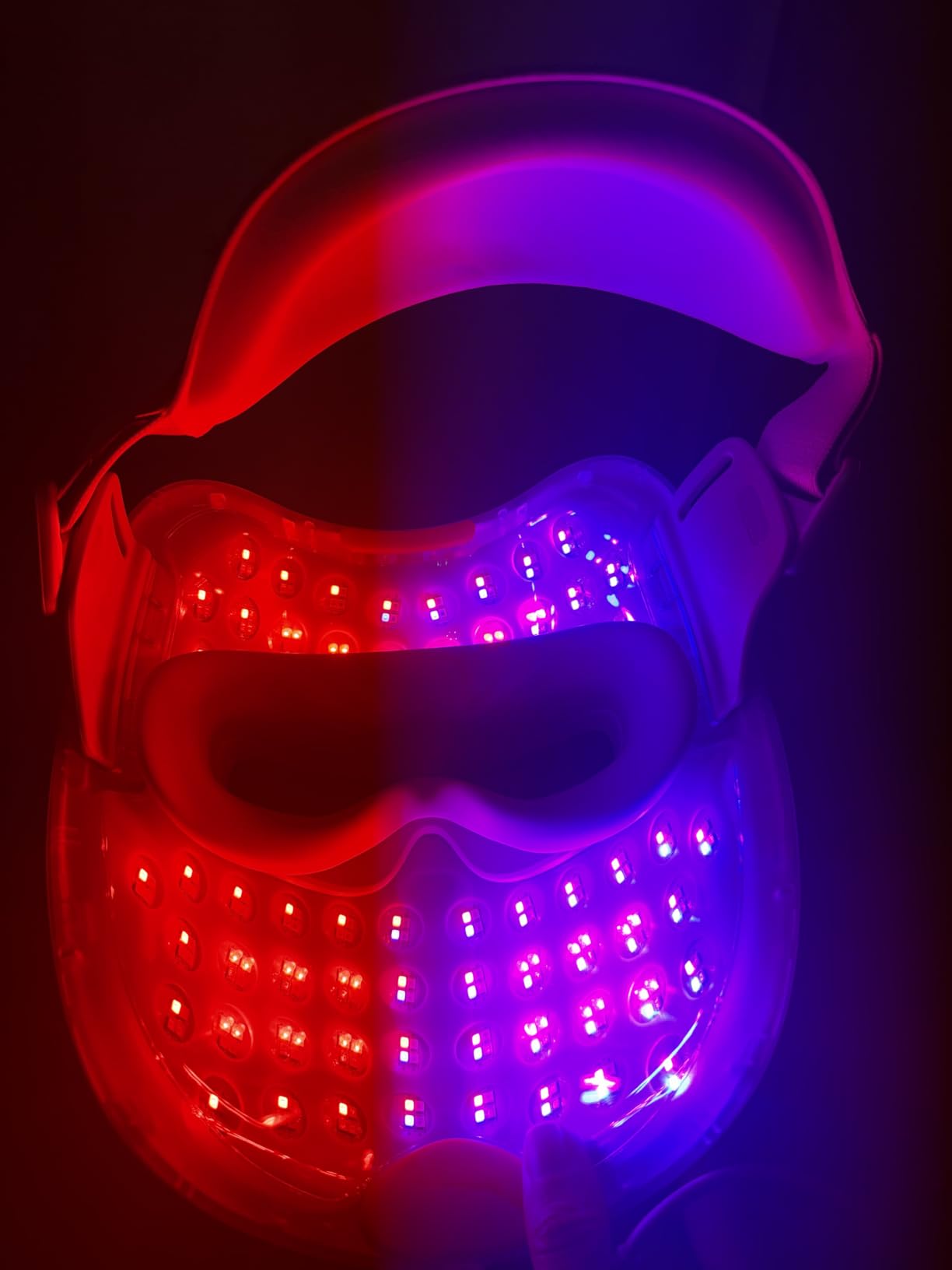
The logic of this mask is coverage. A 360 degree design with 272 light beads means the cheeks, jaw and temples all receive light rather than only the front plane, which is the failure point of many contoured masks.
Owners report brighter, more even skin and reduced redness within a few weeks of consistent 8-minute daily use. Four wavelengths, red, yellow, blue and infrared, feed four modes: Glow, Firm, Rejuvenate and Clear, so acne and firming routines share one device.
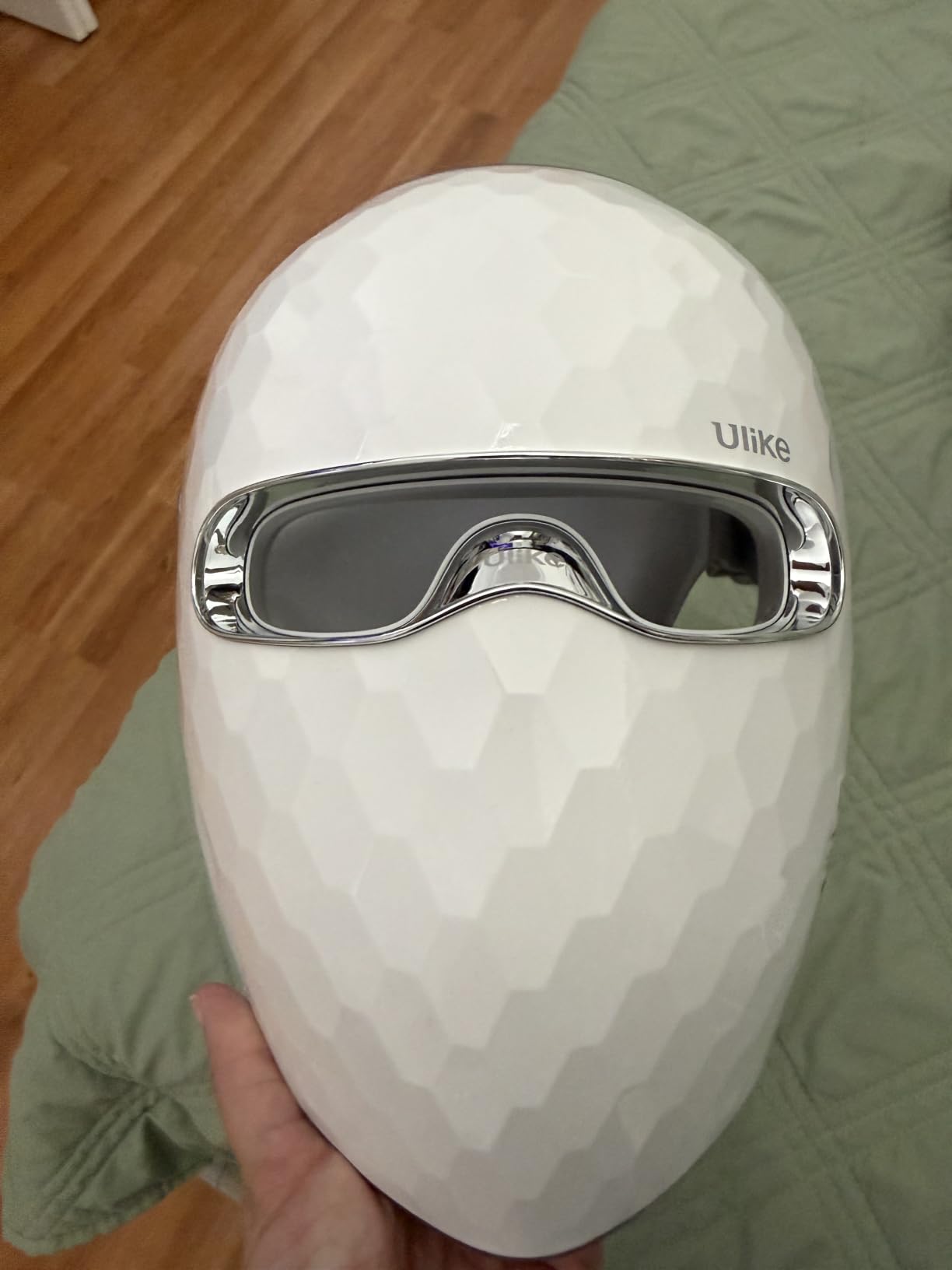
A 1cm gap between the light and the skin spreads the output and reduces the chance of overheating, and the fit is handled by a silicone eye mask and contoured woven straps rather than a single strap across the forehead.
One operational detail catches people out. The rechargeable remote control needs its own charge, and reviews report the mask not behaving correctly when the remote is flat, so treat the remote as part of the routine rather than an accessory.
Treat percentage claims carefully
The advertised irradiance advantage over direct exposure is a company figure tied to consistent use. Judge the device on its coverage and build, which are verifiable, rather than on a percentage that has no independent measurement behind it.
Who should look past this one
Skip it if you want near-infrared depth for muscle and joint work. This is a face-first device, and a panel is the right tool for anything below the chin.
8. Lifepro Lumicure Torch: Best for Travel and Spot Work
Lifepro Lumicure Red Light Therapy Torch – Red Light Therapy Wand Handheld
Three red and near-infrared wavelengths
6.35 ounces
Wrist strap
Zippered case
Pros
- Lightest and most travel-friendly device here
- Wrist strap and zippered case support sessions anywhere
- One-button operation with no setup
- Compact and rechargeable
Cons
- Small head needs many passes for larger areas
- Poor fit for full-body or back coverage
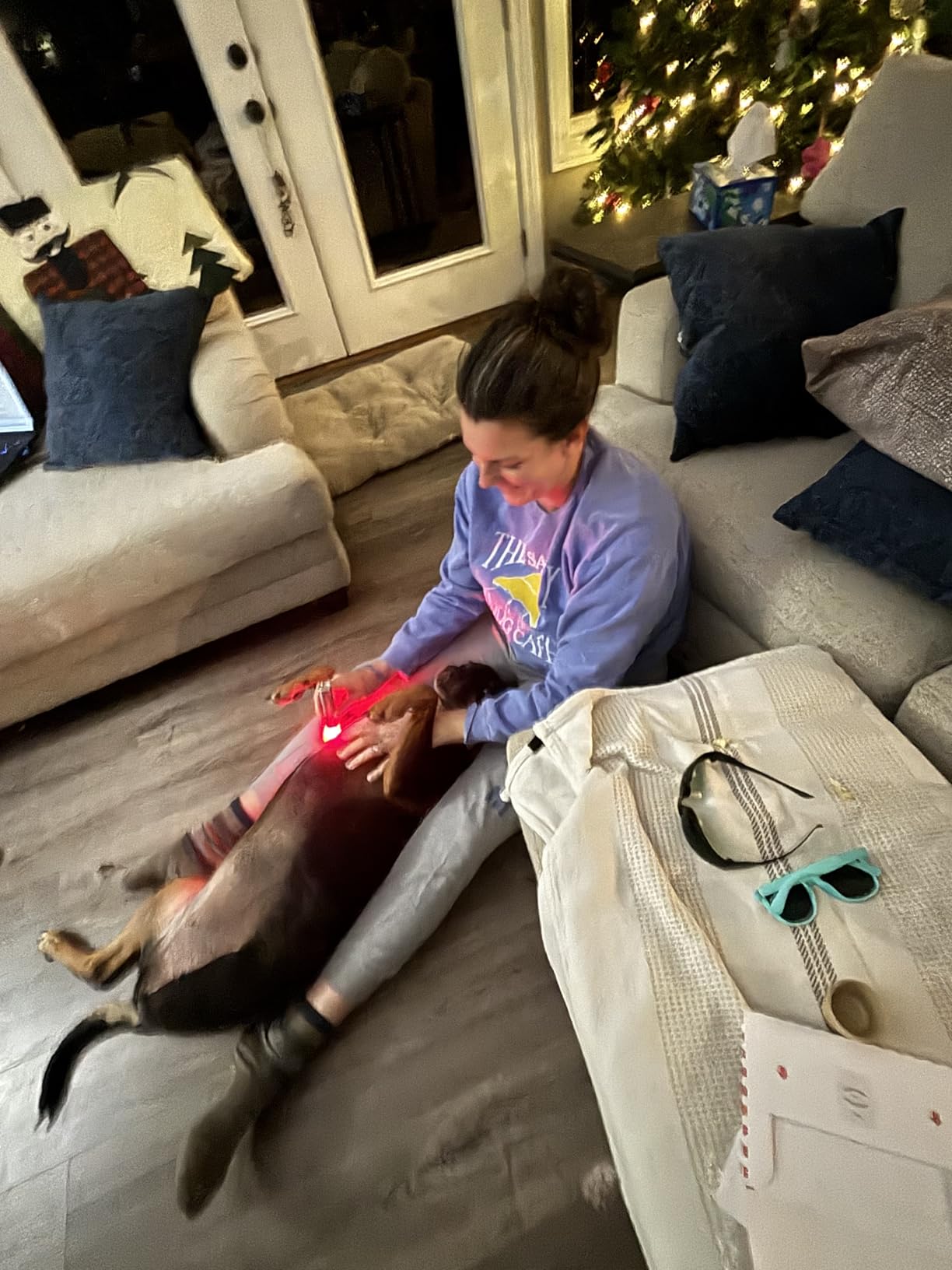
At 6.35 ounces with a wrist strap and a zippered case, this torch is the one people take on a trip. It runs three red and near-infrared wavelengths, and one button with no menu is genuinely useful when you are using it in a hotel room.
Owners treat it as a companion to a larger setup rather than a replacement. It is well suited to a knee, a shoulder, a foot or a specific muscle, and the ratings sit comfortably in the 4s across a large review base.
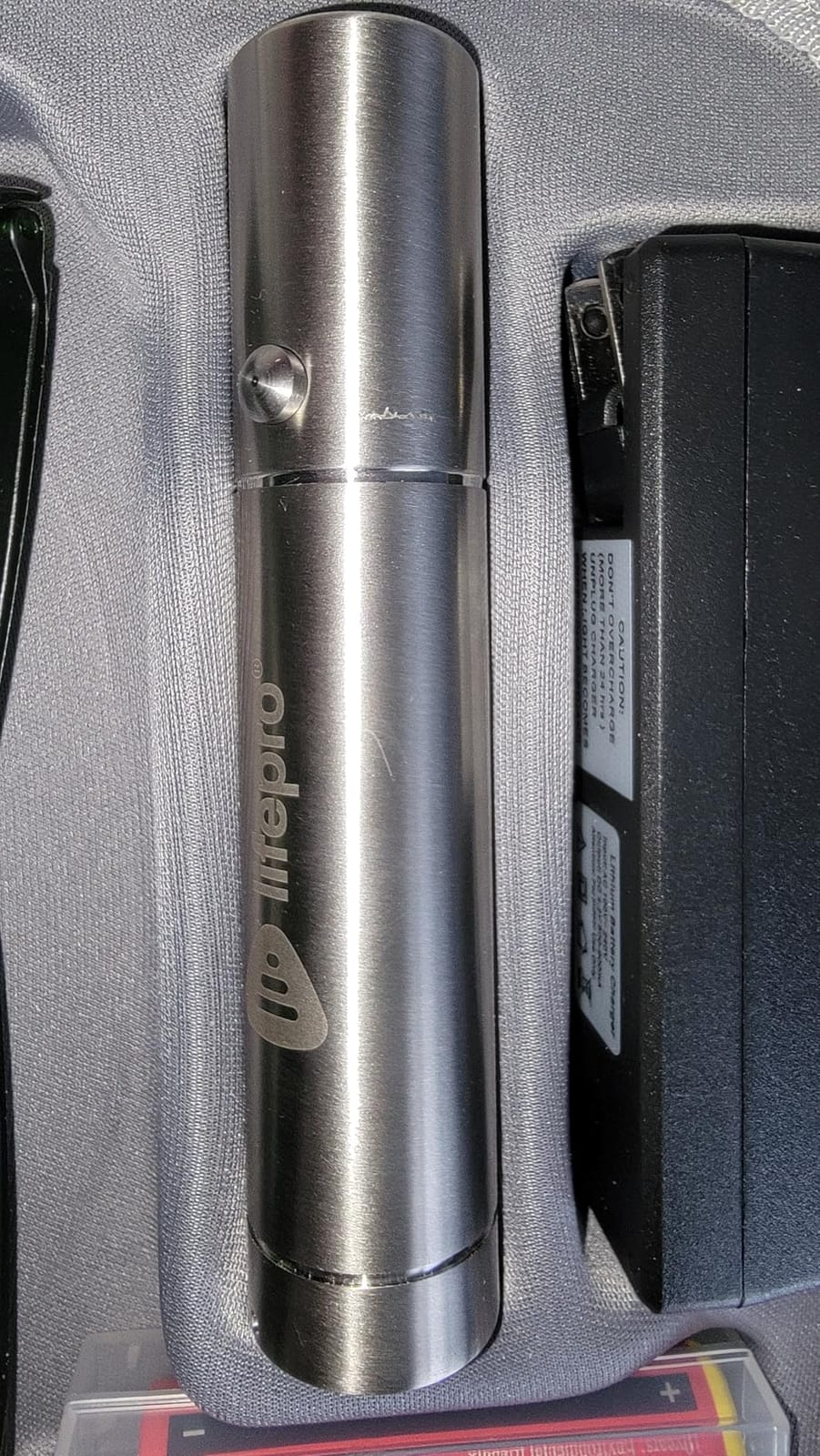
Its limits are physical and obvious. The treatment head is small, so anything larger than a joint means repeated passes and longer sessions, and it does not stand in for a panel or mat when the target is your back or both legs.
Think of it as a second device
The question is not whether it works but what you are already using. If you own a mat or panel, this fills the gap for the joint you would otherwise have to crouch under; if you own nothing, a mat covers more ground for the same effort.
Who should look past this one
Skip it if your goal is facial skin, where a mask’s fixed geometry beats manual work every time, or if you need hands-free treatment on a large area.
9. Solawave 4-in-1 Wand: Best for Targeted Facial Work
Solawave 4-in-1 Red Light Therapy Wand for Face & Neck (Rose Gold)
630nm red light
Galvanic current
Therapeutic warmth
3 minutes per area
Pros
- Red light
- microcurrent
- warmth and vibration in one pass
- Users report smoother skin and lighter dark spots in 1 to 2 weeks
- Warmth and vibration feel good on sore facial muscles
- Compact and simple to use
Cons
- Small head means more passes over face and neck
- Build-up requires frequent cleaning
- Several reports of failure after a few months
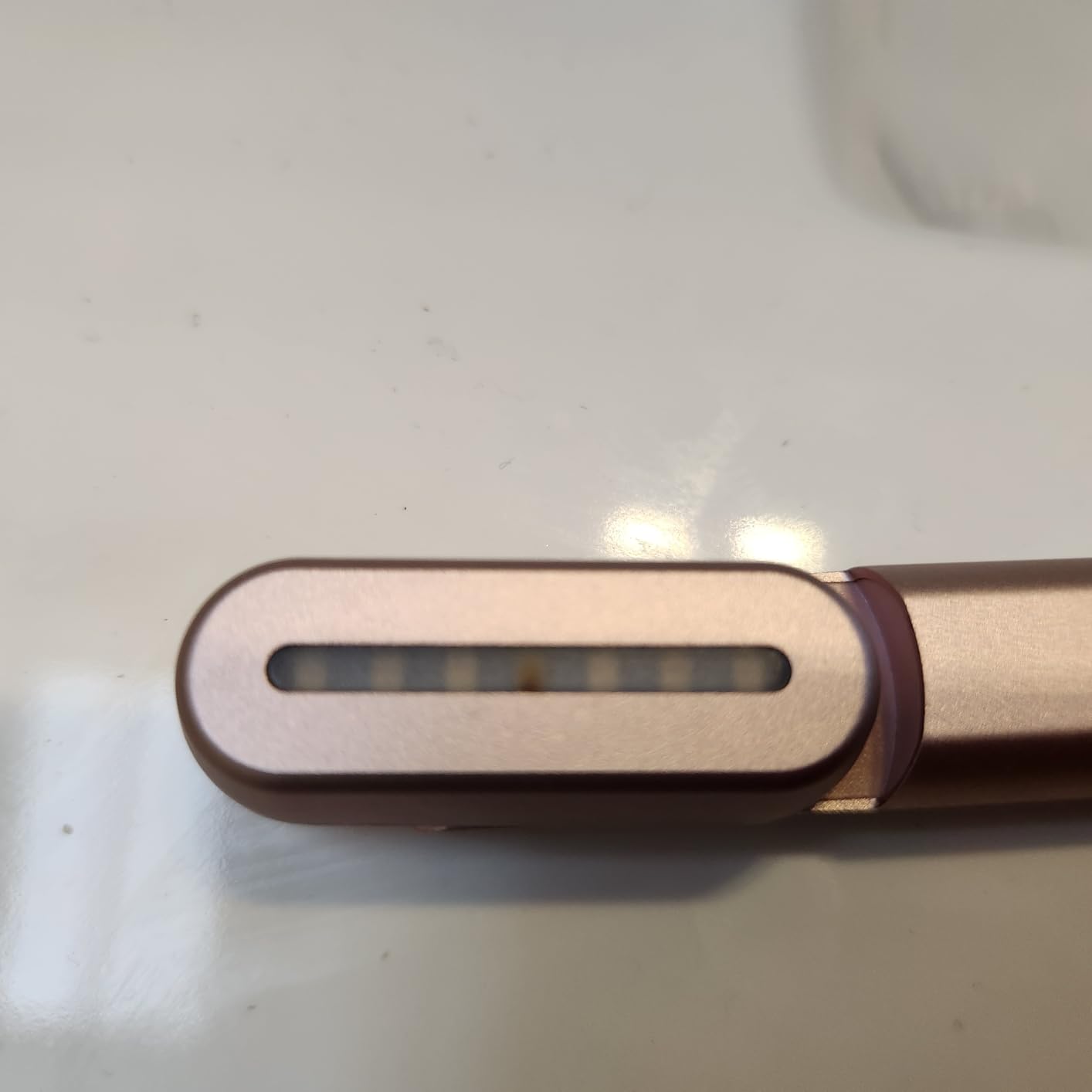
Most wands in this roundup are single-purpose. This one pairs 630nm red light with galvanic current, therapeutic warmth and facial massage vibration, so a three-minute pass per area covers light therapy and serum absorption in one step.
Owner feedback on the near term is encouraging. People report smoother skin, reduced puffiness and lighter dark spots within one to two weeks, and the warmth plus vibration component gets singled out as the pleasant part of the routine.
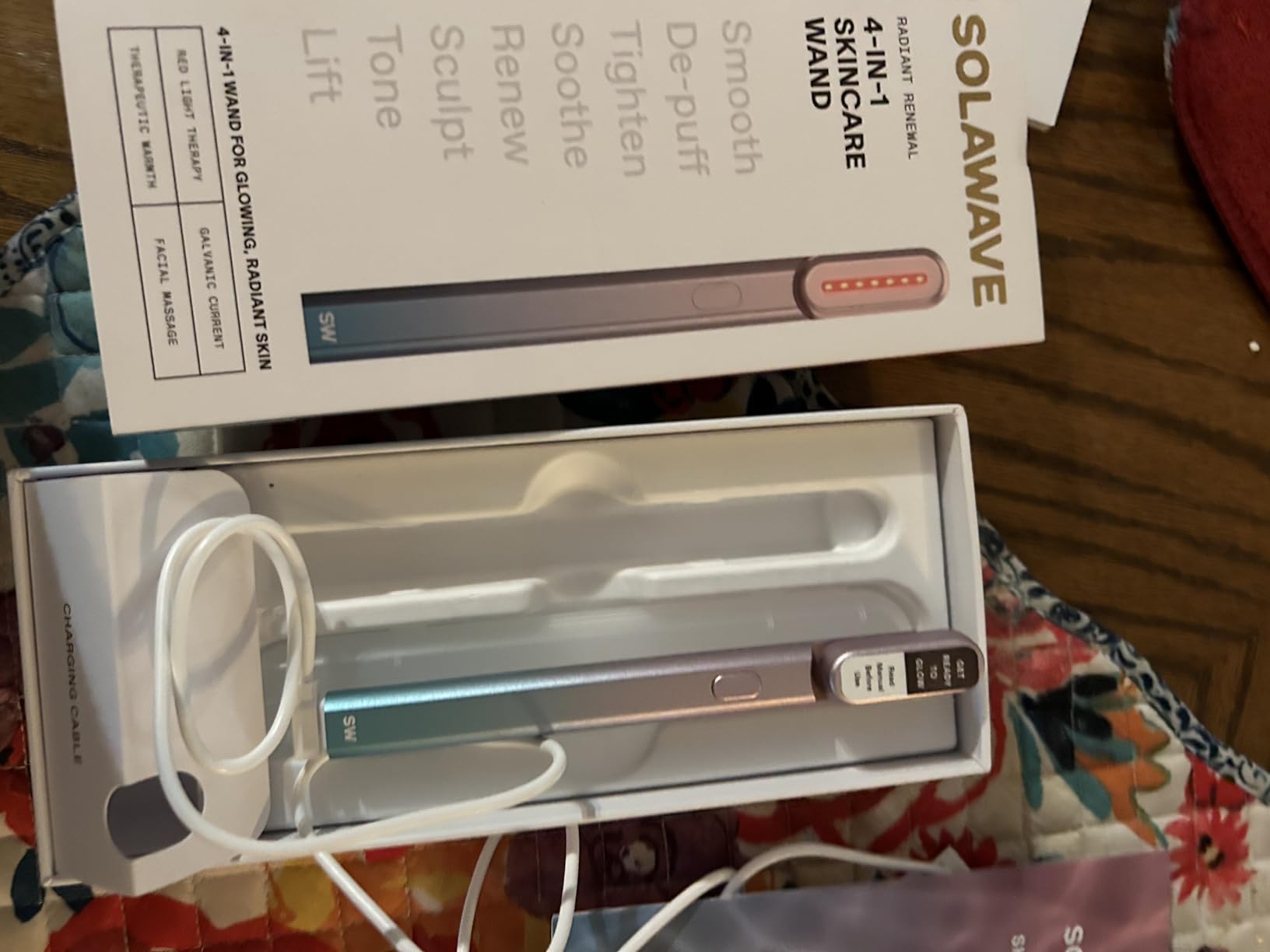
It is FDA-cleared for visibly firmer skin, and at 13.93 ounces it is light enough to hold comfortably for the full session. If you dislike the sensation of a mask, this is a good alternative rather than a compromise.
Durability is the weak point. The one-star share here is higher than most peers in the lineup, and it is dominated by units cutting out after the first recharge or after a few months. The small head also means more passes across the face and neck than a mask would require.
Factor in the multi-function tradeoff
Galvanic current and warmth make this more than a light device, which is convenient and also means product build-up on the head after every use. Budget a minute to clean it or the treatment quality drifts.
Who should look past this one
Skip it if you want near-infrared depth or full-face coverage in a fixed fit, and treat the durability reviews as a reason to confirm your return window before you commit.
10. Comfytemp Red Light Therapy Mat: Best for Back and Legs
Comfytemp Red Light Therapy Mat for Body, 33” x 17”, 660nm & 850nm
480 LEDs
33 x 17 inch mat
660nm and 850nm
4 modes and 3 intensity levels
Pros
- 480 LEDs give the broadest coverage per unit cost
- Treats back
- legs or torso while seated or lying down
- Four modes and three intensity levels
- Simple connect-and-press operation
Cons
- Corded design ties use to an outlet
- Flat form lacks stand adjustability for targeted spots
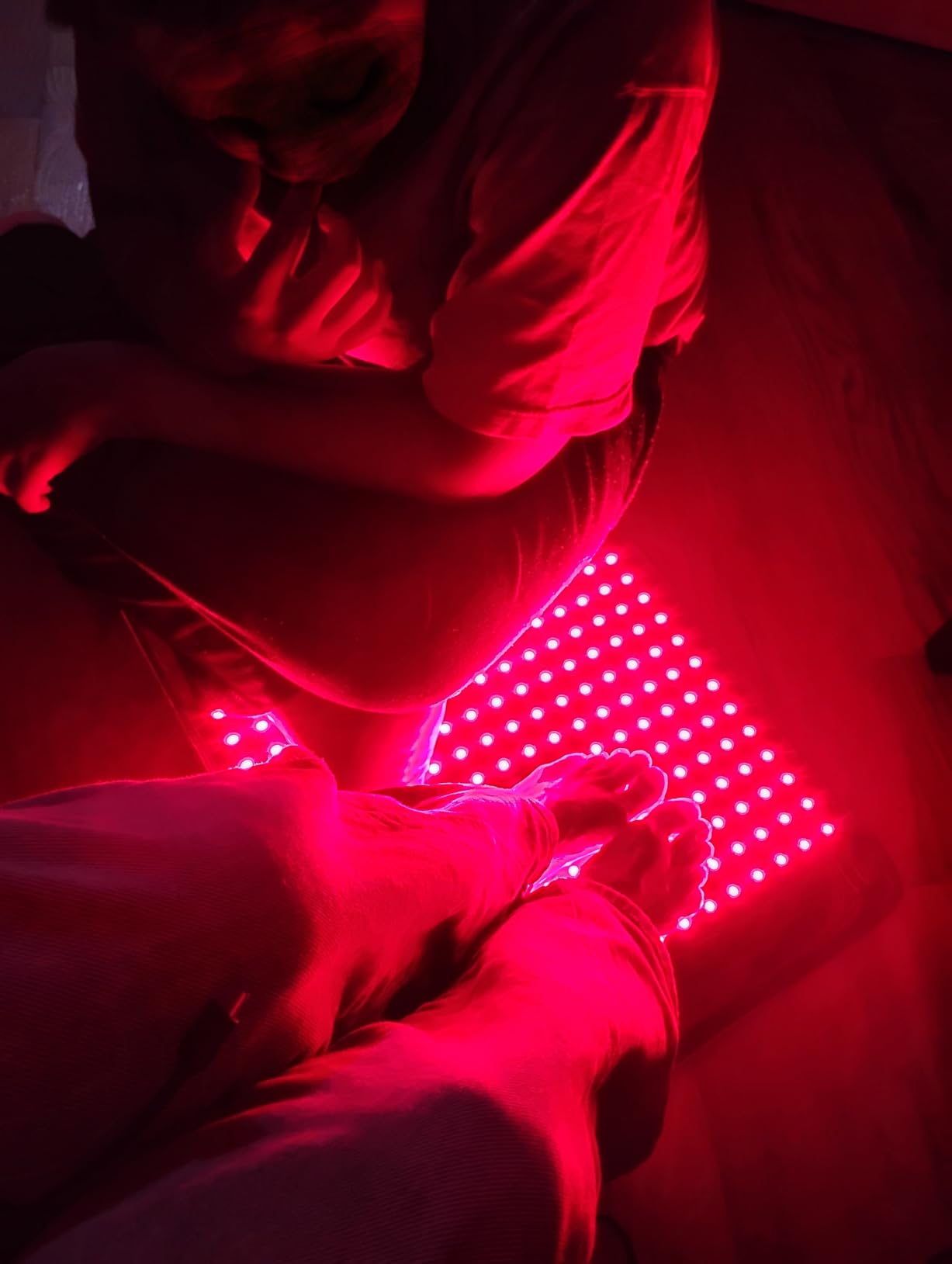
The mat answers a problem panels create. A 33 by 17 inch surface with 480 LEDs at 660nm red and 850nm near-infrared lets you lie on your back or sit with a full leg on the mat and stop repositioning every ninety seconds.
Owners highlight the coverage-per-cost maths more than any other feature. Four light modes and three adjustable intensity levels cover everything from a gentle maintenance dose to a focused session, and a single-button start means there is no setup to forget.
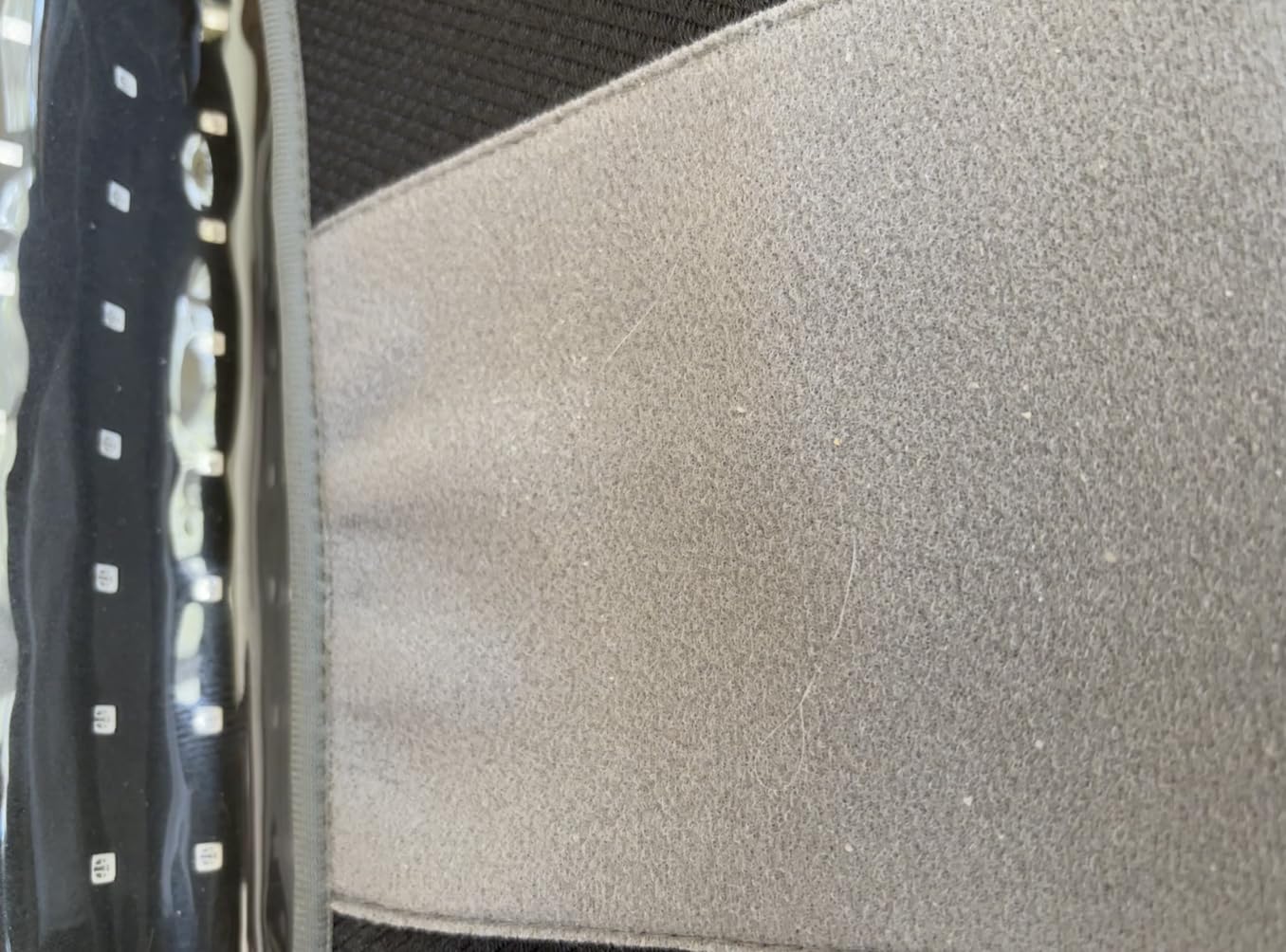
It weighs 3.06 pounds, so moving it to a different chair is realistic, and the fabric surface makes long sessions more comfortable than facing a rigid panel. Users with back and leg complaints report this is the format that gets repeated use.
The limitation is fixed placement. It must be plugged in, so use is limited to wherever the outlet is, and unlike a stand-mounted panel it cannot be angled to find a specific spot on a shoulder or hip.
Pick the room you will use it in
Because a mat needs a floor or a bed, the outlet location decides which rooms it works in. Most owners settle into one spot, and the format only works if that spot is one you will actually sit in for 20 minutes.
Who should look past this one
Skip it for facial work and for targeted joints. A mask or a torch reaches those areas with far less repositioning, and the mat’s strength, broad coverage, is not what you need there.
11. bonodave Wrap Pad and Belt: Budget Pick for One Area
bonodave Red Light Therapy Pad for Body Back Knee Shoulder Hands Feet 660nm 850nm Home Use 3 Chips in 1 Infrared Wrap Belt Gift for Women Men (Corded)
105 beads with 315 lights
660nm and 850nm
Adjustable strap
30-minute auto shut-off
Pros
- Entry-level entry point with both key wavelengths
- Strap targets back
- knee
- shoulder
- feet
- waist and hips
- Runs cool and produces no odor
- Also works for pets
Cons
- Cord and connector quality is thin
- Corded design requires sitting near an outlet
- Strap is very long and the material is stiff
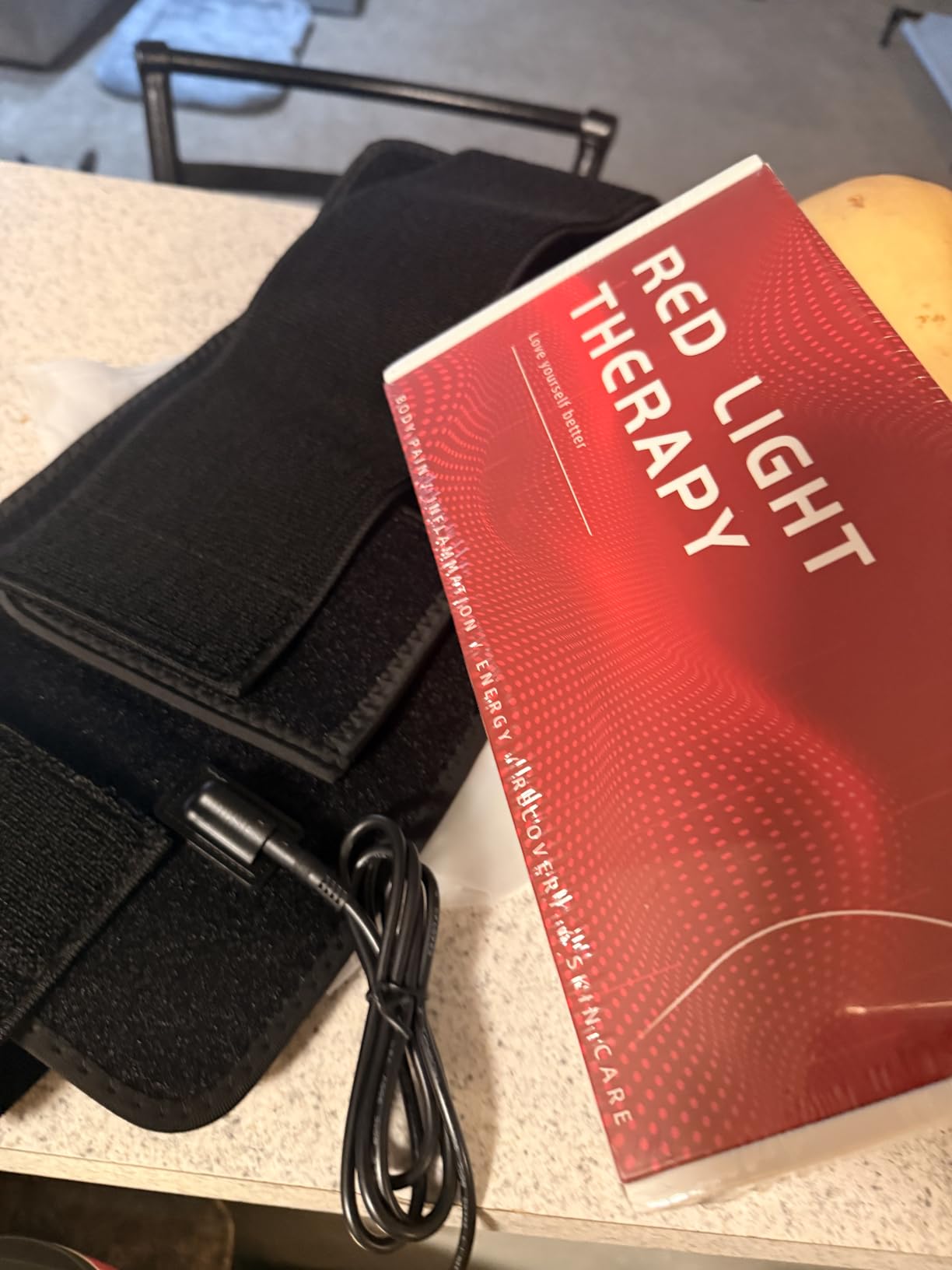
This is the cheapest way into the category and it does not skip the science. Three-in-one chips give 105 beads and 315 total lights, with one 660nm red and two 850nm near-infrared emitters per bead, so both key wavelengths are present.
The wrap format is the point. A soft pad with an adjustable elastic strap fits the back, knee, shoulder, feet, waist, hands, legs and hips, which covers nearly every localised complaint people buy a device for. A 10Hz pulse mode and a 30-minute auto shut-off handle the timing.
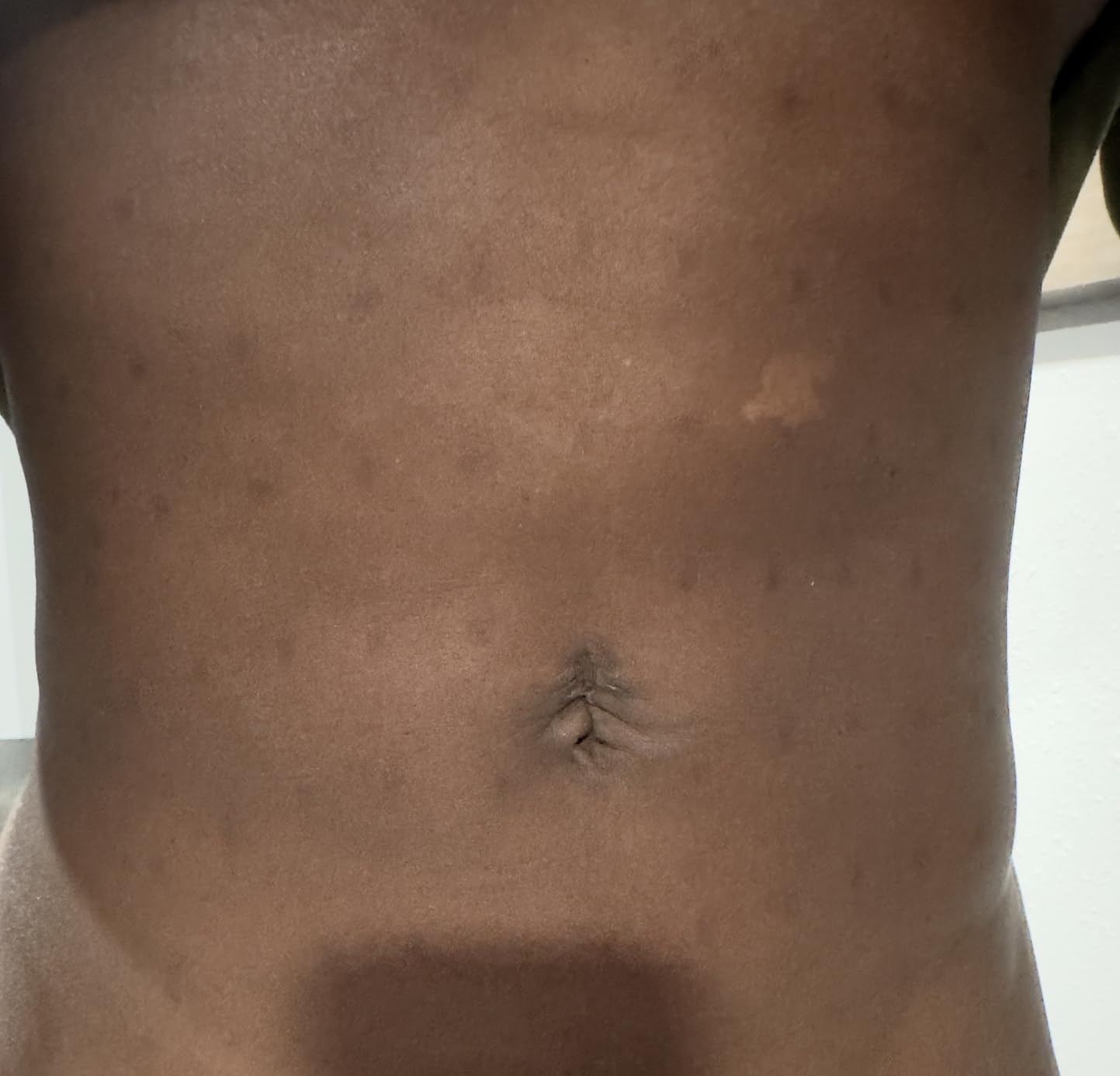
Owner feedback is genuinely split, and the split is the reason to keep your return window. Many report real relief for back, knee and shoulder soreness after 15 to 30 minutes. A meaningful group concludes the benefit is mostly warmth from a heating pad rather than the light itself.
Construction is the other concern. The cord and connector are described as thin and not durable, some buyers report cable faults, the strap is far too long and the material is stiff. It runs cool and does not smell, which is more than many budget devices manage.
Test it on one area first
Wrap it around a single knee or shoulder and use it for a fortnight before committing to a broader routine. That is enough time to tell whether you are getting light therapy or simply a warm compress, and it costs you almost nothing to find out.
Who should look past this one
Skip it if you want full-body coverage or a facial treatment. For a broad goal the mat or panel formats deliver a far better dose per session, and a stiff strap on a larger area is uncomfortable.
12. iRestore Professional Laser Cap: Best for Hair Growth
iRestore Professional Laser Red Light Therapy for Hair Growth System – FDA Cleared Hair Loss, Hair Thinning & Alopecia Treatment for Men & Women – 282 Lasers & LEDs
282 lasers and LEDs
655nm
Handled helmet design
25-minute sessions
Pros
- Fully hands-free with no manual movement needed
- Comfortable enough to read or watch television in
- Full scalp coverage including hairline and crown
- Support and warranty service consistently praised
Cons
- Early shedding in the first months alarms many users
- Results take 3 to 6 months and outcomes vary
- Runs large on smaller heads
- Cord restricts movement
This belongs in a separate category, and it is worth saying why. A laser cap is low-level laser therapy using 655nm light aimed at scalp follicles, not a red and near-infrared LED panel, so ranking it against a mat or a wand is comparing different mechanisms.
The hardware is the strongest argument for it. A helmet with 282 lasers and LEDs gives full scalp coverage including the hairline, sides and crown, and because it is hands-free you can read or watch television through a 25-minute session, two to three times a week.
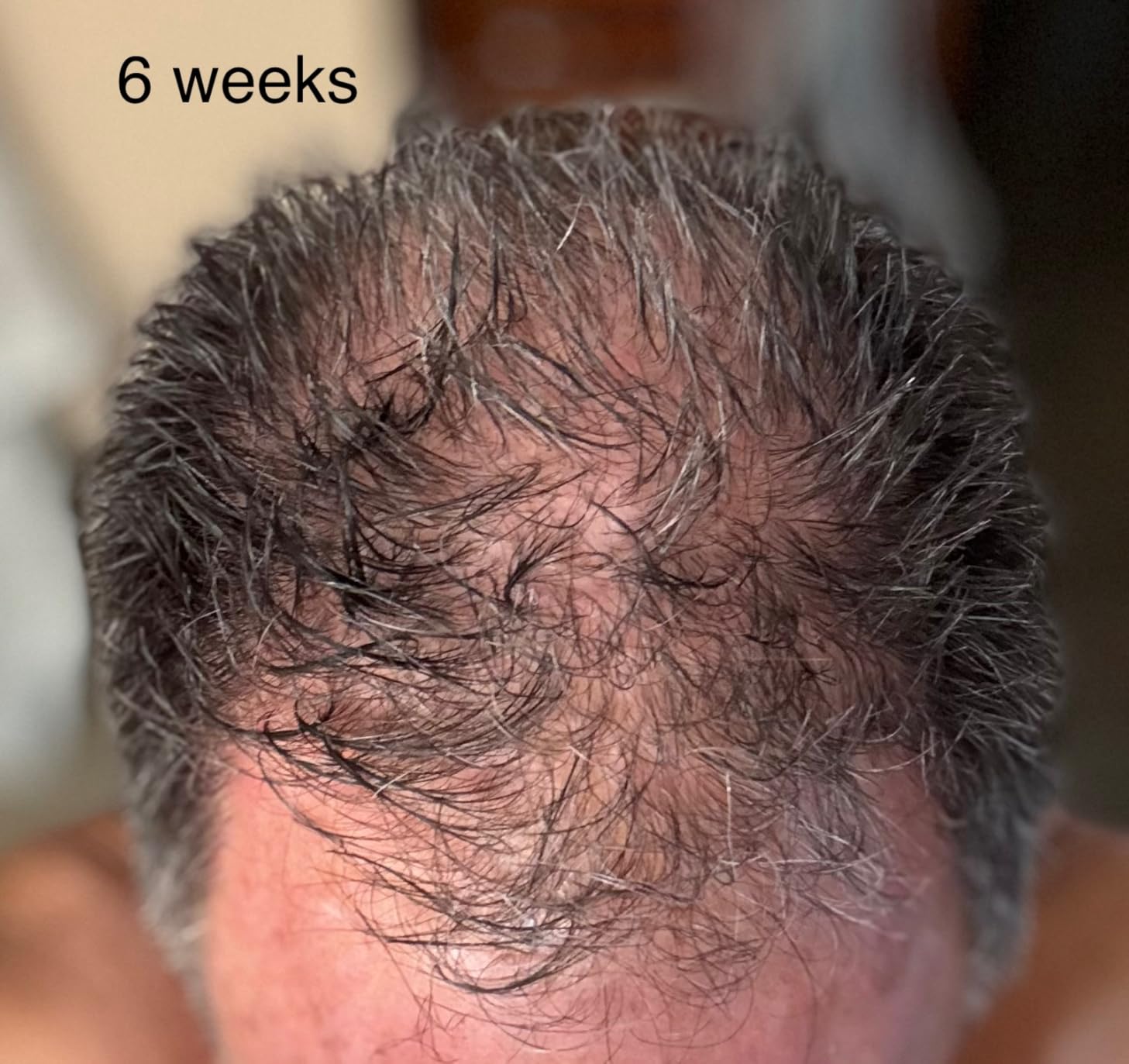
Outcomes are the most polarized we saw anywhere in this roundup. A substantial group report reduced shedding and visible new growth with before-and-after photos after three to six months. A similarly sized group used it for six to twelve months with no regrowth at all.
The most damaging and least signposted issue is early shedding. Reviews describe increased shedding in the first weeks, which is common for this device class but alarms people who were not warned. Support and warranty service draw consistent praise regardless of results.
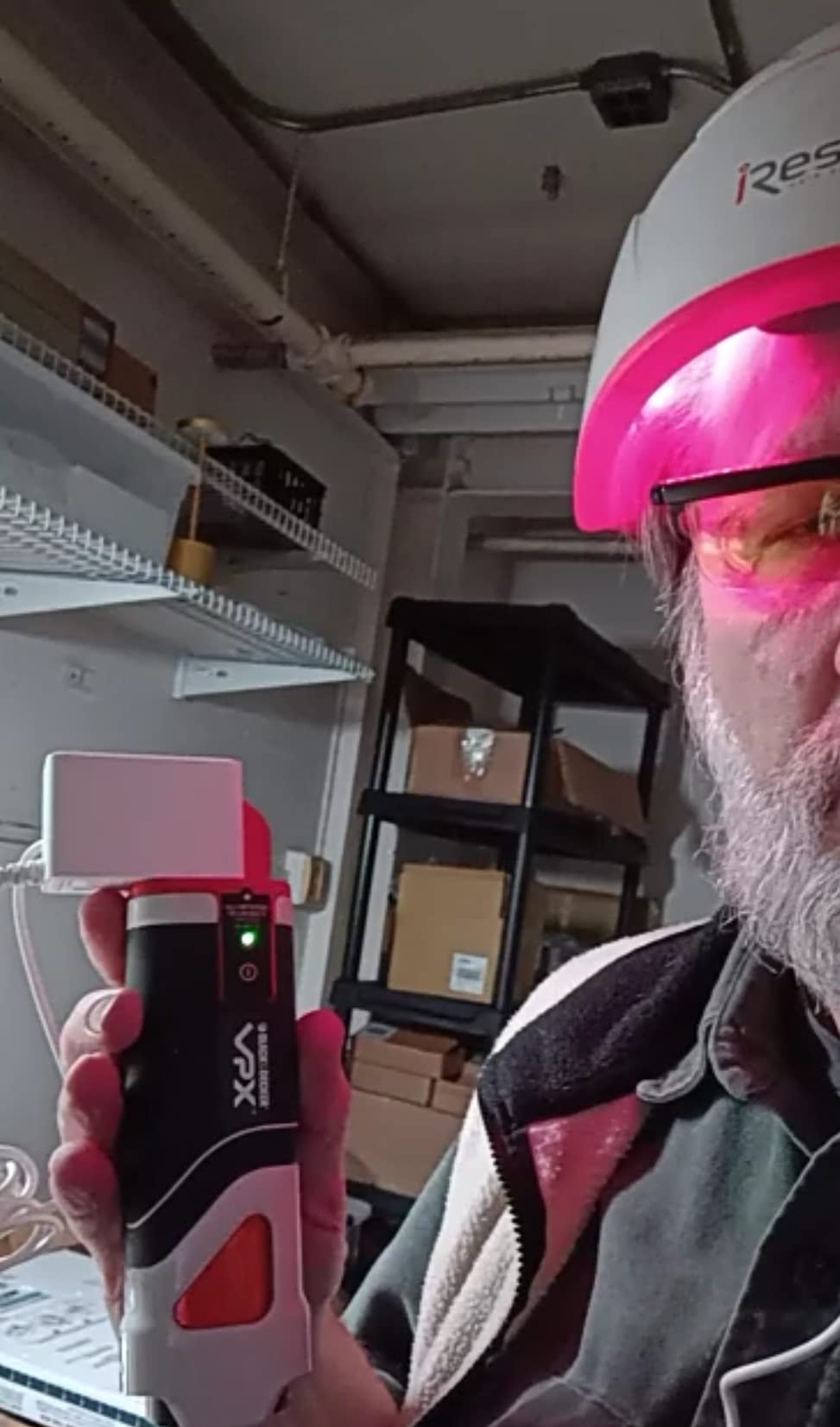
Know the timeline before you order
This is a three to six month decision with a possible shedding phase in month one. If you are not prepared for that timeline, choose a device where you will see feedback inside a month, because a device you abandon at week three tells you nothing.
Who should look past this one
Skip it unless hair is your specific goal, and check head size fit first. A helmet that runs large on a smaller head needs extra padding, and you will be wearing it for 25 minutes at a time for months.
How to Choose a Red Light Therapy Device
Start with the format, because no amount of wattage fixes the wrong shape. A mask is a facial device, a panel or mat is a body device, a wand is a spot device, a wrap is a single-area device and a laser cap is a hair device. Buying a panel to treat one knee is how people end up with a device that gathers dust.
Then run these seven checks, in this order.
Both wavelengths. 660nm red for skin, 850nm near-infrared for deeper tissue. A single-wavelength red-only device is fine for surface skin work and a poor choice for joints and muscles. Devices that add 830nm or higher bands are layering rather than replacing these two.
Irradiance with the measurement distance stated. 95.6 mW/cm2 at 3 inches is a usable claim. 95.6 mW/cm2 with no distance is a number measured at the LED surface and tells you nothing about what arrives at your skin.
Independent verification. Look for a published measurement or a clinical test, as with the Shark mask, which reports testing on 119 participants. Community consensus across forums is that manufacturers print irradiance figures freely and verify rarely.
Treatment area against your goal. Count the areas you intend to treat and divide by the panel size. A 105W panel treating a whole torso is a multi-pass session, not a single one.
Wavelength disclosure. If the listing does not state nanometer values, the device may simply glow red. That is the single most common sign of a decorative light.
Heat, flicker and electrical safety. Look for flicker-free diodes, active cooling on anything above 100W, and included eye protection. Reviews of the panels here repeatedly describe very bright output.
Warranty and return window. Hair and skin results take weeks, so a long return window is what lets you find out whether the device suits you before you write it off.
On regulatory claims, the distinction matters. FDA cleared means the manufacturer submitted a specific device to the FDA for review and it was found substantially equivalent to a predicate device, a real check on a named product. FDA registered means a company listed a device in an agency database, which is a registration step and not a review of anything. Only one of those two is evidence.
Worth noting for anyone cross-shopping, the same rule applies to the broader device market: measurable specifications separate real equipment from packaging, as we argue in our [best streaming device](https://www.webdigi.net/best-streaming-devices/) roundup.
It also shows up in how people buy adjacent hardware. Whether you are choosing the [best Roku devices](https://www.webdigi.net/best-roku-devices/) for a new television or sizing [network attached storage devices](https://www.webdigi.net/best-network-attached-storage-devices/) for backups, the deciding question is the same one we asked of every panel and mask here: does the manufacturer publish the specification you are paying for.
Mask vs Panel vs Wand vs Mat
Buy a mask for your face and a panel for your body. A wand covers a spot, a mat covers a large area while you lie still, and the format that beats the others depends entirely on which part of you you are treating and how much repositioning you will tolerate.
Mask: fixed coverage over forehead, cheeks and often the jawline, hands-free, and the shortest session at 4 to 10 minutes. It is the best convenience-to-coverage ratio for facial anti-aging and the weakest option for anything below the chin. Every mask in this roundup is face-only, and most complaints are about fit and battery rather than light.
Panel: the most flexible format, since a stand can be angled to any area and panels here run from under 5 pounds to over 30. Sessions run 10 to 20 minutes at 6 to 12 inches. It handles back, legs, torso and joints, and it is the format that scales if your goal changes over time.
Wand: the most portable and the least efficient for large areas. A small treatment head means repeated passes, so a wand is a 5 to 10 minute tool for one joint or one patch of skin, not a 20 minute full-body method. Its advantage is that it works anywhere, including a hotel room.
Mat: the best coverage per unit of effort, because you lie on it and stop repositioning. It suits back, legs and torso, and it needs a floor or a bed near an outlet. It is the format that gets repeated use for people with back and leg complaints.
The honest summary is that a mask wins on consistency because it is the easiest to wear every day, and consistency is what produces results. A panel wins on versatility. If you can only buy one, buy the one that matches the goal you will not abandon in three weeks.
How to Use Your Device Without Wasting Sessions
Five steps cover almost everything, and each one is where people quietly lose results.
Set your distance and stay there. Irradiance falls off with distance, so a number quoted at 3 inches is meaningless at 12. Stand or sit far enough that the panel covers the area, then hold that position for the whole session.
Expose bare skin. Cloth blocks a meaningful share of the light, so a treatment over a shirt or a sheet is an expensive session that does very little.
Build up from short to long. Start at 5 to 10 minutes and extend toward 20. Owners who report visible results typically describe 20 to 30 minutes, several times a week, not the shorter schedule most manuals print.
Keep a schedule you will not break. The strongest pattern in owner feedback is consistency at a moderate dose, not occasional long sessions. A forum thread on timing asked whether morning or evening matters; the honest answer is that the session you will actually repeat beats the optimal one you will not.
Clean and store it properly. The wand in this group needed frequent cleaning because of build-up, and strap-based masks need wiping down to keep the light path clear.
If results are not showing, work down a troubleshooting ladder rather than buying again. First check distance, then confirm your session length against the 20 to 30 minute pattern that owners report, then check frequency, then confirm bare skin, and last confirm the device actually states nanometer values. Most disappointing devices in this category fail one of those five checks, and the wavelength one is the most common.
Safety is straightforward. Use the supplied eye protection for facial and eye-area work, keep sessions on bare skin, and stop if you are on photosensitive medication or pregnant and have not asked a clinician. Red light therapy is not a substitute for medical care, and persistent joint or tendon pain deserves a diagnosis rather than a device.
Frequently Asked Questions
Are there any red light therapy devices that actually work?
Yes, when three conditions are met: the device emits real 660nm red and 850nm near-infrared light, it delivers adequate irradiance at your actual treatment distance rather than at the LED surface, and you use it consistently. Devices that fail any of those three are decorative. The 12 devices in this roundup all state nanometer values, which is the fastest way to filter the category.
How do I pick a good red light therapy device?
Match the format to your goal first, then check seven specs: both 660nm and 850nm wavelengths, an irradiance figure with its measurement distance stated, independent or clinical verification, treatment area against the areas you will treat, published wavelength values, heat and flicker safety with eye protection, and a warranty with a long return window. A device that fails to state nanometer values or measurement distance is the one to skip.
Is it better to get a red light therapy mask or panel?
A mask for your face, a panel for your body. Masks give fixed coverage over the face in 4 to 10 minutes with no repositioning, which is why they get used more often. Panels handle back, legs, torso and joints in 10 to 20 minutes and are far more versatile, but they demand more setup. Consistency beats intensity, so if your goal is facial skin, the mask wins.
Are red light therapy masks actually worth it?
Yes for facial concerns, no for anything below the chin. A mask gives the best convenience-to-coverage ratio for fine lines, redness and breakouts, and its fixed geometry beats a wand for even facial coverage. It cannot treat your back or legs, and the real limitation is the ceiling on session length that a comfortable fit imposes.
What is considered the best red light therapy mask on the market?
Among the four masks tested here, the CurrentBody Skin Series 2 wins for jawline and chin coverage with 236 LEDs across three wavelengths, the Shark CryoGlow wins for breakouts and short morning sessions with added under-eye cooling, and the NEWKEY 4D mask wins on value with the largest review base and multi-colour modes.
How long does it take to see results from red light therapy?
Skin and tone changes typically show between four and six weeks of daily use, and owners in this roundup report clearer changes inside the first month. Joint and muscle relief often appears within a single 10 to 15 minute session. Hair growth laser caps are the outlier at three to six months, with a possible shedding phase in the first month.
Can I use red light therapy too much or can I use it every day?
Daily use is the norm for facial masks, typically 4 to 10 minutes, and owners report 20 to 30 minute sessions several times a week on panels and mats. The practical limits are eye exposure, which needs the supplied protection, and the possibility of irritated skin if you exceed your tolerance. Sessions built into a daily routine are more effective than long occasional sessions.
Will red light therapy work through clothing?
Partially, but not enough to rely on. Fabric blocks a meaningful share of the light before it reaches your skin, so a session over clothing delivers a reduced dose. Treat bare skin whenever you can, or move the clothing out of the path rather than extending the session to compensate.
Can red light therapy be used for gluteal tendinopathy?
It may help, but the research is emerging rather than established, and it should never replace a clinical assessment of a painful tendon. Some owners using wrap and panel formats report relief for deep hip and glute soreness, which is consistent with how 850nm light behaves. See a clinician for diagnosis and a loading plan, then use a device as an adjunct.
What is the difference between FDA cleared and FDA registered?
FDA cleared means the manufacturer submitted that specific device for review and it was found substantially equivalent to a predicate device, a real check on a named product. FDA registered means the company entered the device in an agency database, which is an administrative step and not a review. Only the first is evidence, and no device in this roundup is registered instead of cleared where clearance is claimed.
Which red light therapy device do celebrities use?
We cannot confirm the device used by any specific celebrity from public, checkable sources, and we will not guess. Celebrity use is not evidence of efficacy anyway. Judge a device on stated wavelengths, stated irradiance at a stated distance, coverage, and warranty, which are the four things that predict whether it works for you.
The Verdict on the Best Red Light Therapy Devices in 2026
The BestQool 105W panel takes the top spot among the best red light therapy devices in this roundup because it is the rare device in the category that states a measurement distance, weighs under five pounds, and works across the whole body. If your goal is facial only, the CurrentBody Series 2 and Shark CryoGlow are the stronger buys, and if you want to spend almost nothing, the bonodave wrap is a fair test.
The bigger takeaway is simpler than the spec sheets. Pick the format that matches the goal you will still care about in three months, check that the device publishes both 660nm and 850nm with an irradiance figure tied to a distance, then be consistent. The device is the easy part. The schedule is what does the work.
Start with the highest-rated option in the table above, and use the return window properly.