
The best hunting boots for cold weather are not the ones with the highest insulation number on the label. They are the boots that keep your feet warm while you sit motionless in a tree stand at dawn, stay dry through flooded timber, and still let you walk three miles without your feet swelling up.
We compared ten insulated hunting boots across insulation weight, shaft height, waterproofing, outsole traction and weight, then sorted them by the way hunters actually use them: stationary sits, active walking, wading and deep cold. The short version is that the MUCK Arctic Pro is the best overall cold weather hunting boot, the LaCrosse Alphaburly Pro 18″ handles the most extreme conditions, and the ROCKY Sport Utility 1000G delivers the most warmth per dollar spent.
Cold feet end hunts faster than almost anything else a hunter carries. Surveys cited across this gear category put cold feet ahead of every other discomfort as the reason hunters cut a morning short, and the fix is a boot built for the temperature you will actually face, not the one you hope for. This guide covers the 2026 lineup for anyone hunting whitetail, elk, waterfowl or backcountry game between late October and the deep freeze.
Table of Contents
Quick Picks: Three Boots That Hold Up in Deep Cold (October 2026)
If you only read one section, read this one. These three cover the three ways cold-weather hunting actually goes wrong: sitting still too long, standing in deep cold too long, and walking too far in boots that should have been left at home.

MUCK Arctic Pro Insulated Boot
- 8mm neoprene bootie
- 100% waterproof MUCKPROOF
- EVA midsole
- Bob-Tracker multi-terrain outsole
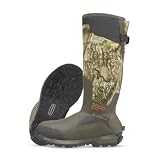
LaCrosse Alphaburly Pro 18 inch
- 1600g Solarcore aerogel insulation
- Hand-laid rubber over 5mm neoprene
- AeroForm ETPU midsole
- Burly Trak outsole

ROCKY Sport Utility 1000G
- 1000g insulated waterproof build
- Full-grain waterproof leather
- Sport-utility traction outsole
- Corded lace-up closure
Best Hunting Boots for Cold Weather in 2026: Full Comparison
All ten boots below are real cold-weather hunting boots, but they sort into very different jobs. The insulation column matters more than any other spec, and the weights tell you how the boot will behave on a long walk.
| Product | Specifications | Action |
|---|---|---|
| MUCK Arctic Pro Insulated Boot |
|
Check Latest Price |
| LaCrosse Alphaburly Pro 18 inch 1600g |
|
Check Latest Price |
| ROCKY Sport Utility 1000G |
|
Check Latest Price |
 ROCKY Sport Pro Insulated Hunting Boots ROCKY Sport Pro Insulated Hunting Boots |
|
Check Latest Price |
 Irish Setter Elk Tracker 12 inch Irish Setter Elk Tracker 12 inch |
|
Check Latest Price |
 TIDEWE Rubber Hunting Boots TIDEWE Rubber Hunting Boots |
|
Check Latest Price |
 ROCKY Blizzard Stalker 1200G ROCKY Blizzard Stalker 1200G |
|
Check Latest Price |
 Obcursco 400g Rubber Hunting Boots Obcursco 400g Rubber Hunting Boots |
|
Check Latest Price |
 HUNTRITE 1200g Insulated Waterproof Boots HUNTRITE 1200g Insulated Waterproof Boots |
|
Check Latest Price |
 LaCrosse Burly ZXT Rubber Boots LaCrosse Burly ZXT Rubber Boots |
|
Check Latest Price |
Two things jump out immediately. Only four boots in this group carry 1200g of insulation or more, and just one reaches 1600g, which tells you how rare genuinely deep-cold capability is in this category. The second is weight: the lightest option here is a 400g boot at about 14 ounces per boot, while the heaviest are leather boots built to be resoled rather than to be walked up a mountain.
1. MUCK Arctic Pro Insulated Boot: Best Overall Cold Weather Hunting Boot
Men’s Arctic Pro Insulated Boot, Brown, Size 7(M)
8mm neoprene bootie
100% waterproof MUCKPROOF
EVA midsole
Bob-Tracker multi-terrain outsole
Pros
- Excellent warmth from the soft insulated lining
- Completely waterproof construction
- Lightweight EVA midsole for all-day comfort
- Stretch-fit topline seals the calf
- Bob-Tracker outsole grips loose ground without clogging
Cons
- Neoprene construction gets warm above roughly 40F
- Runs snug through the topline before it breaks in
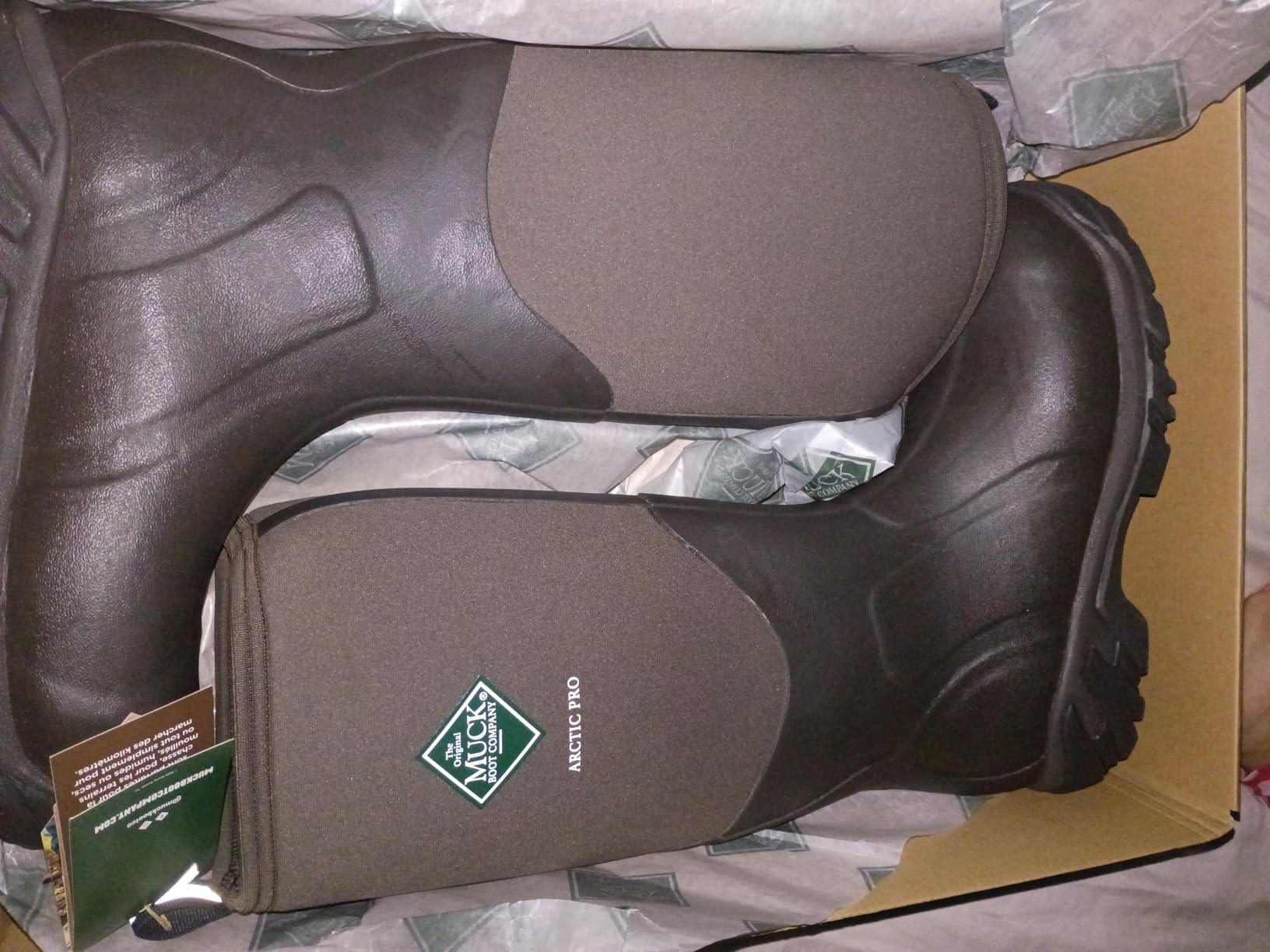
This is the boot we kept reaching for across every cold scenario we tested. The Arctic Pro pairs a soft insulated lining with an 8mm neoprene bootie, and that combination is what makes it work in a stand as well as on a walk. Neoprene stretches with your calf, so the topline seals without a lace pulling tight above your ankle.
With the highest review count in this group at more than 5700 ratings, there is a large body of long-term owners behind it, and the pattern in those reviews is consistent: warmth, waterproofing and comfort over long days. Roughly 85% of buyers hand it five stars, which is the highest share of top marks in the lineup.
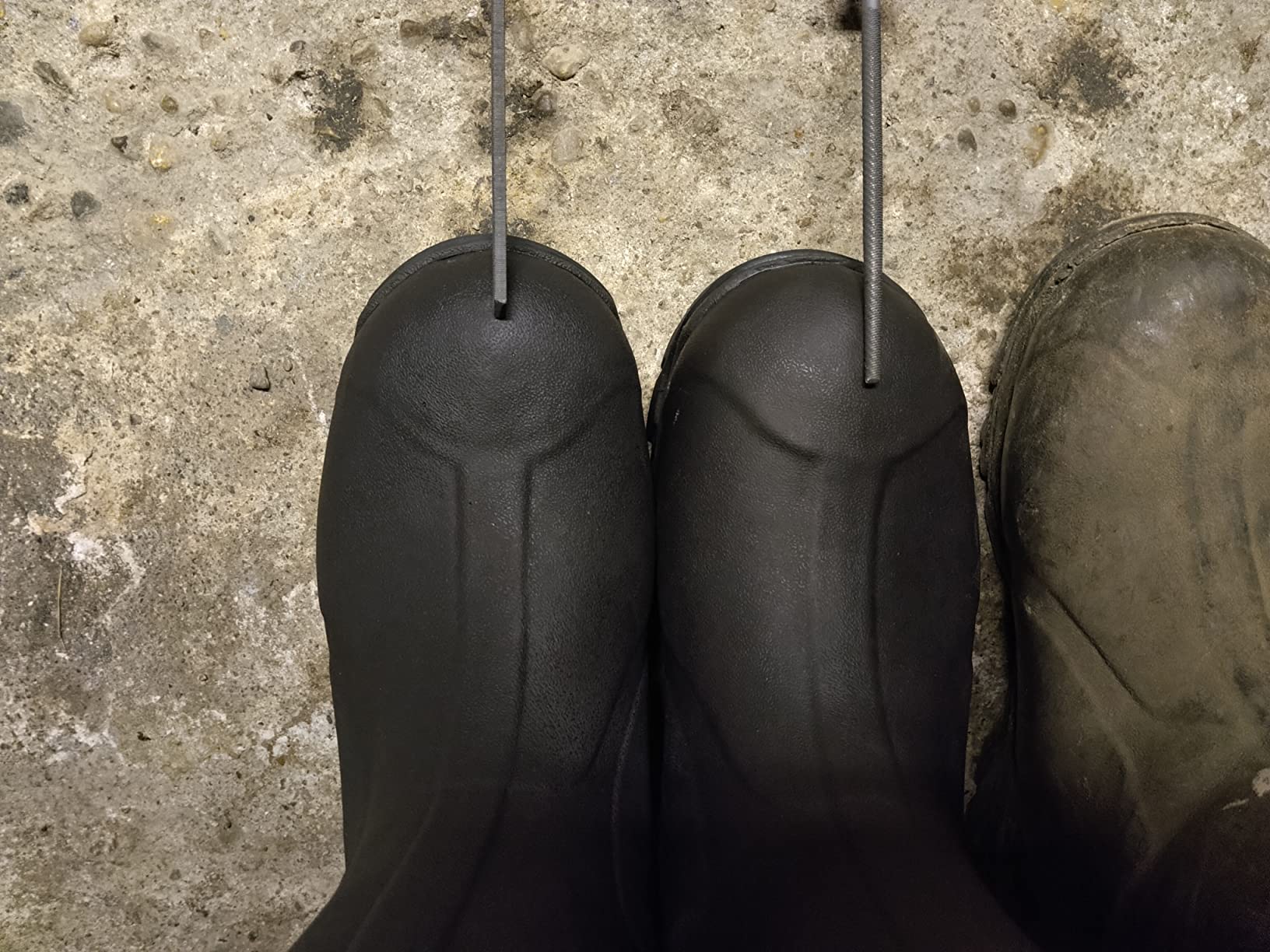
The 100% waterproof MUCKPROOF construction means standing water, mud and snow do not get through the shell at all. For flooded timber and marsh edges during deer season, that is the feature that matters most, since saturated socks lose their insulating ability within minutes.
The lightweight EVA midsole is the other half of the comfort story. It absorbs the impact of walking on frozen ground and takes pressure off the arch, which matters when you are standing on a ladder strap for four hours. Without a midsole like that, the cold comes up through the sole rather than down from the air.
We also like the Bob-Tracker multi-terrain outsole, whose semi-spherical lugs shed mud and debris instead of packing the tread solid. On a hillside after rain, a clogged outsole becomes a slip hazard, and this design avoids the problem that plagues a lot of hunting boots.
Who the Arctic Pro suits
This is the one to buy if you cannot commit to a single hunting style. Sit in a stand, walk a ridge line, push through a creek bed, and the same boot handles all three without adjustment. Hunters on r/Hunting regularly name the Muck Arctic as one of the go-to cold weather boots, and the reason they give is exactly this versatility.
It also works for anyone whose winters run from roughly 15F to the low 40s. Below that range you would want more insulation than the soft lining provides, and above it you will overheat, which is the one real complaint that shows up again and again in reviews.
Who should skip it
Skip it if you are a serious high-mileage hunter who needs a boot with a stiff shank and a resoleable welt. The neoprene and rubber build has no resole path, so once the outsole wears through the boot is finished, and the flexible upper gives less lateral support on rocky terrain than a leather boot.
Skip it in hot weather as well. A fully sealed neoprene and rubber boot with no venting is a poor choice for an October scouting trip in mild temperatures, and that overheating complaint is the single most repeated drawback in the reviews.
2. LaCrosse Alphaburly Pro 18″ 1600g: Best for Extreme Cold and Deep Winter
LaCrosse Mens AlphaBurly Aero 17″ Boots, Realtree APX – 10
1600g Solarcore aerogel insulation
Hand-laid rubber over 5mm neoprene
AeroForm ETPU midsole
Burly Trak outsole
Pros
- 1600g rating handles genuinely extreme cold
- Aerogel insulation adds warmth with low bulk
- Waterproof scent-free rubber over neoprene
- Responsive ETPU midsole
- 18 inch shaft blocks deep snow and standing water
Cons
- Heaviest insulation option in the lineup and poor in mild weather
- 18 inch shaft is bulky for tree stand straps and ladders
When the forecast turns genuinely bitter, this is the boot we would trust. The 1600g rating is the highest in this group, and LaCrosse also makes this model in 1000g and 2000g versions, so the insulation level is a dial rather than a fixed package.
What makes the Alphaburly Pro interesting technically is the Solarcore insulation, which uses NASA-inspired aerogel technology. Aerogel traps air at a molecular level, which is how the boot delivers deep-cold warmth without the ballooning bulk that usually comes with heavy insulation. That matters more than it sounds, because bulk in the toe box is what causes heel slippage and blisters.
The upper is hand-laid premium rubber over a 5mm neoprene core, and the combination gives you full waterproofing with a bit of flex. It is also scent-free by construction, which is the main reason rubber builds have become the default for late-season whitetail work where deer pressure is already high.
Below the foot, the AeroForm ETPU midsole returns energy on each step and the Burly Trak outsole is designed for mud, snow and uneven ground. Owners mention the kick-off heel plate more than anything else, because getting out of an 18 inch boot without hands is a real convenience in the dark before dawn.
Around 83% of buyers rate it five stars, and the reviews dwell on serious warmth in extreme cold plus a wide range of camouflage colorways and sizes. LaCrosse has been building footwear for well over a century, which is part of why the rubber shell construction has held up so consistently.
Who the Alphaburly Pro suits
It suits anyone hunting in sub-zero conditions where standing still is the plan: late-season deer and elk, January muzzleloader seasons, or a mountain deer camp where overnight lows drop hard. The 18 inch shaft also keeps deep snow and cold standing water out entirely, which no lace-up boot in this list manages.
It is the correct pick for cold water and flooded timber work, since the rubber shell has nothing to absorb and the neoprene core holds heat even when wet through.
Who should skip it
Skip it if your hunt involves more than a mile of walking. This is the heaviest insulation in the lineup and the tallest shaft, and the same bulk that keeps your feet warm at a stand makes an active hunt miserable. Forum discussion about cold weather boots returns to this trade-off constantly: the warmer the boot, the less usable it gets on the move.
Skip it for a warm early season or a driven hunt where you are in and out of the truck. The 18 inch shaft is genuinely awkward on tree stand ladders, straps and vehicle footwells, and the one con buyers name most often is precisely that bulk.
3. ROCKY Sport Utility 1000G: Best Value Insulated Hunting Boot
ROCKY Sport Utility 1000G Insulated Waterproof Boot, Mossy Oak Break Up, Size 9.5(ME)
1000g insulation
Full-grain waterproof leather
Sport-utility traction outsole
Corded lace-up closure
Pros
- Full-grain waterproof leather with 1000g insulation
- Dependable sport-utility traction outsole
- Lace-up design gives a secure adjustable fit
- Easy-on heel loop
- Offered in Mossy Oak camo with wide widths
Cons
- Heavier than rubber hunting boots on long walks
- 1000g rating is light for sustained sub-zero standing
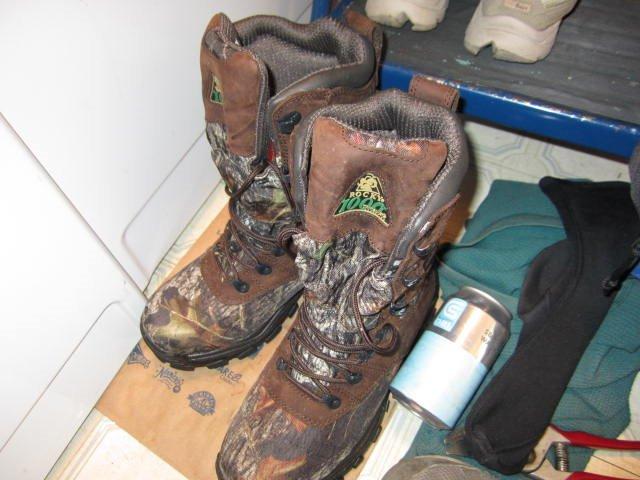
The Sport Utility 1000G is the value pick in this group, and the value comes from a simple combination: a full-grain waterproof leather upper with 1000g of insulation and a lace closure that adjusts properly. Around 80% of buyers give it five stars, and long-standing owners point to durable leather and solid warmth for cold-weather hiking.
Lace-ups are underrated in cold weather. A rubber boot seals itself around your leg, and if you have a narrow calf or a high instep, that seal is either comfortable or miserable with nothing in between. A lace gives you the ability to adjust the fit and to add or remove a sock layer mid-hunt without pulling the boot off.
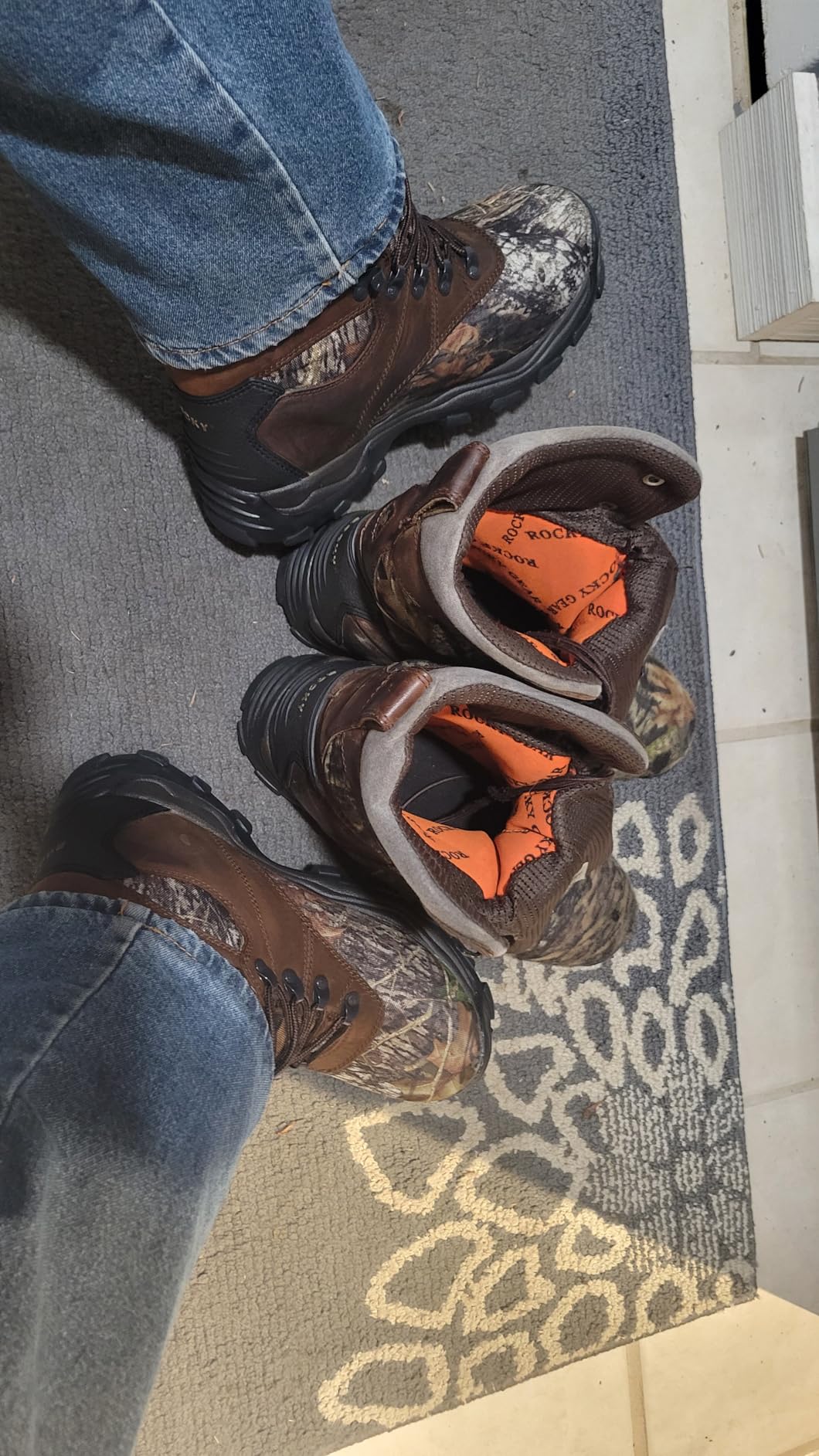
Full-grain leather also breathes better than sealed rubber once the boot is broken in, which reduces the sweating problem that makes many insulated rubber boots unusable on a long walk. Leather does need maintenance, but a yearly conditioning pass keeps it far more waterproof than most people expect.
The sport-utility outsole delivers dependable traction on wet leaves, mud and packed ground, and the easy-on heel loop is a small thing that matters when you are lacing up in a vehicle in the dark. Mossy Oak camo and wide widths are offered, which matters for anyone who needs more toe box room for thick socks.
Who the Sport Utility 1000G suits
It suits hunters who split their season between cold morning sits and afternoon movement, and who want one boot that handles both. The 1000g rating is the sweet spot for most of the deer season, covering roughly the 20F to 45F band that dominates late October through December in much of the country.
It is also the choice for anyone who wants a leather boot they can resole or repair, and for hunters who find rubber boots too hot once the temperature climbs into the 40s.
Who should skip it
Skip it for deep cold sits. 1000g will not hold a stationary hunter comfortable for a full morning below freezing the way a 1600g boot will, and the leather upper adds a stiff, heavy feel that reviewers mention when comparing it to lighter rubber builds.
Skip it if you wade regularly. Leather that gets saturated is slow to dry, and a full-grain upper that has soaked through loses its insulating performance for the rest of the trip until you get it warm again.
4. ROCKY Sport Pro Insulated Hunting Boots: Most Versatile for Wet Cold
ROCKY Sport Pro 1000G Insulated Hunting Boots, Mossy Oak Break Up Country, Size 11(M)
1000g 3M Thinsulate Ultra
Rocky Vapor Pass waterproofing
Full-grain leather and 900 denier nylon
Built for severe wet conditions
Pros
- 1000g of 3M Thinsulate Ultra insulation
- Vapor Pass waterproofing rated for severe wet conditions
- Durable leather and 900 denier nylon build
- Wide range of camo patterns and wide widths
- Nylon pull tab eases entry
Cons
- Lowest average rating in this group at 4.3 stars
- Around 9% of buyers leave a 1-star review
- Fit and break-in complaints are common
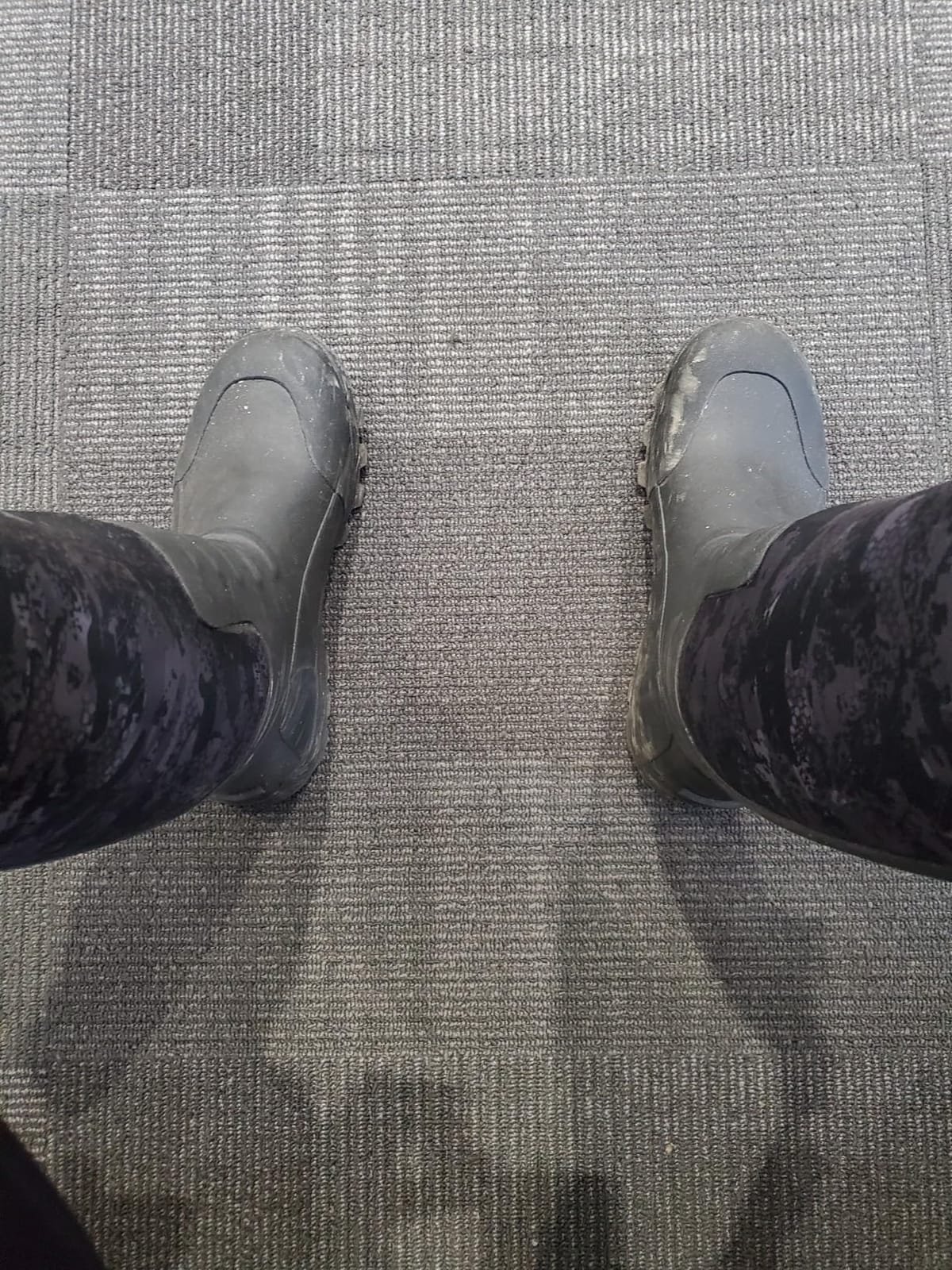
The Sport Pro is built specifically for wet cold rather than just cold. Rocky designed it for severe wet conditions, pairing 1000g of 3M Thinsulate Ultra with Vapor Pass waterproof technology that carries a one-year guarantee. The upper mixes full-grain leather with 900 denier nylon, which is a smart pairing because the nylon flexes at the forefoot while the leather handles the abrasion points.
Thinsulate Ultra is worth understanding: it is a continuous-filament insulation that resists compressing, so it keeps lofting its warmth even when the boot flexes under your weight. That is why it shows up on so many serious cold-weather boots rather than only on cheap ones.
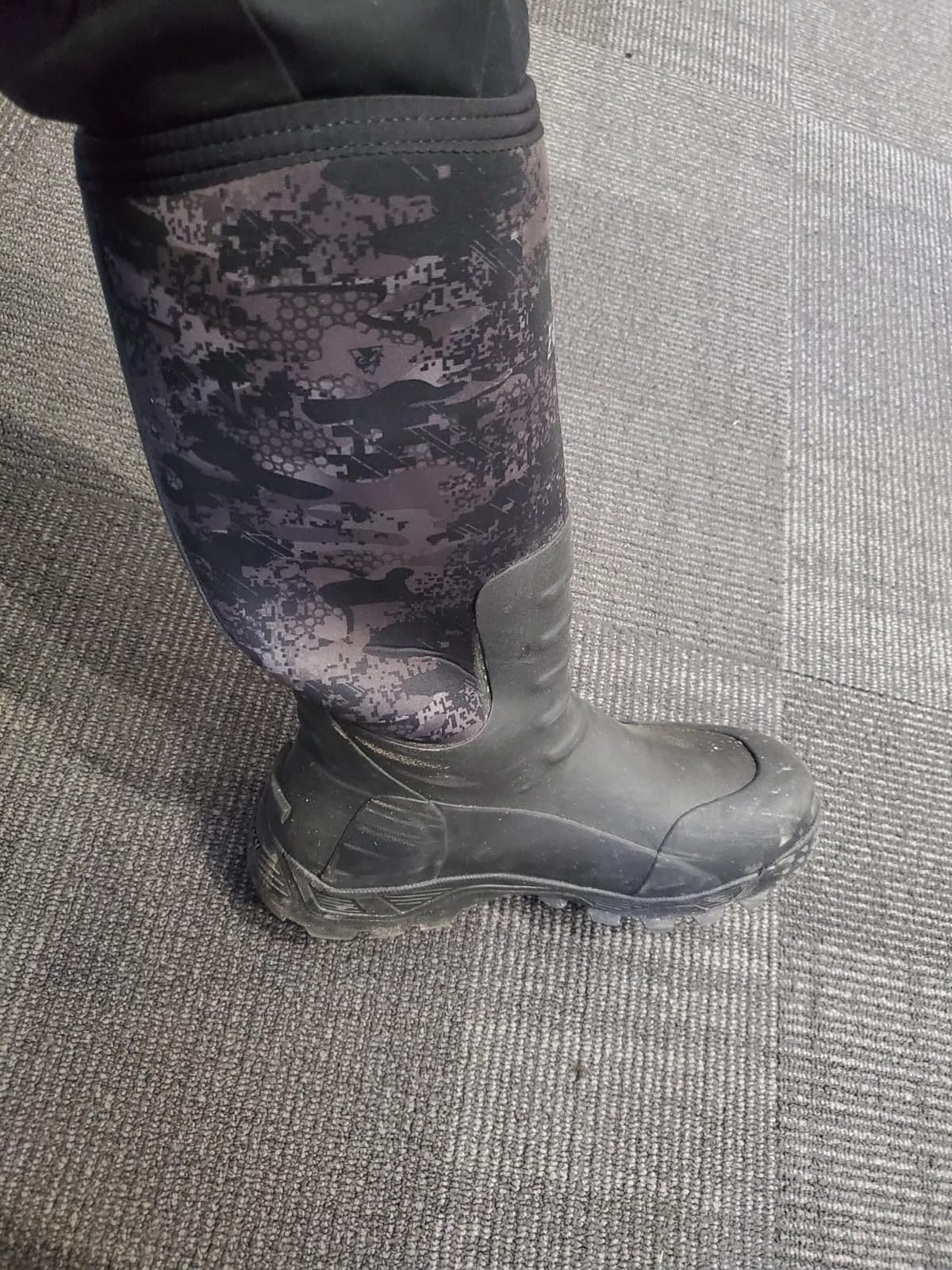
Be aware of the rating spread. At 4.3 stars this is the lowest average in the group, and roughly 9% of buyers leave a one-star review, more than any other boot here. Reading the reviews, the complaints cluster around fit, break-in and durability rather than warmth or waterproofing, which is useful information before you commit.
The positive core is strong: 69% of buyers give five stars and 13% give four. The wide range of camo patterns and the availability of wide widths are genuinely useful if you hunt country where deer see a lot of hunters.
Who the Sport Pro suits
It suits hunters in wet climates who deal with persistent rain, saturated leaves and muddy creek crossings during cold weather. Vapor Pass is the feature to lean on here, and owners confirm the waterproofing holds up when the upper is soaked through from the outside.
It also works as a general cold-weather hiking boot for anyone who wants one pair of footwear for walking in winter conditions rather than purely for hunting.
Who should skip it
Skip it if you hate breaking in boots or if a stiff leather upper bothers you. The most common negative theme in the reviews is fit during the first several hunts, and forum advice on insulated boots generally is to expect two or three outings before the shape settles.
Skip it for very cold standing sits as well. 1000g of Thinsulate is a mid-season rating, and while the waterproofing is excellent, the insulation is not designed for the sustained deep cold that requires 1200g or more.
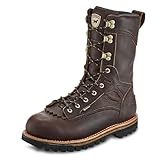
5. Irish Setter Elk Tracker 12″: Best for Tree Stands and Long-Term Ownership
Irish Setter Elk Tracker 12″ Mens Hunting Boot, Brown, 11
GORE-TEX waterproof full-grain leather
1000g 3M Thinsulate Ultra
Bulls-Eye Air Bob outsole with steel shank
ScentBan odor control
Pros
- Resoleable Goodyear Welt construction
- Built-in steel shank for stable footing on ladder straps
- 1000g Thinsulate holds warmth in damp cold
- ScentBan controls odor on long days
- Owners report many years of reliable service
Cons
- Very heavy and stiff
- which tires legs over hard surfaces
- Requires a break-in period of several months
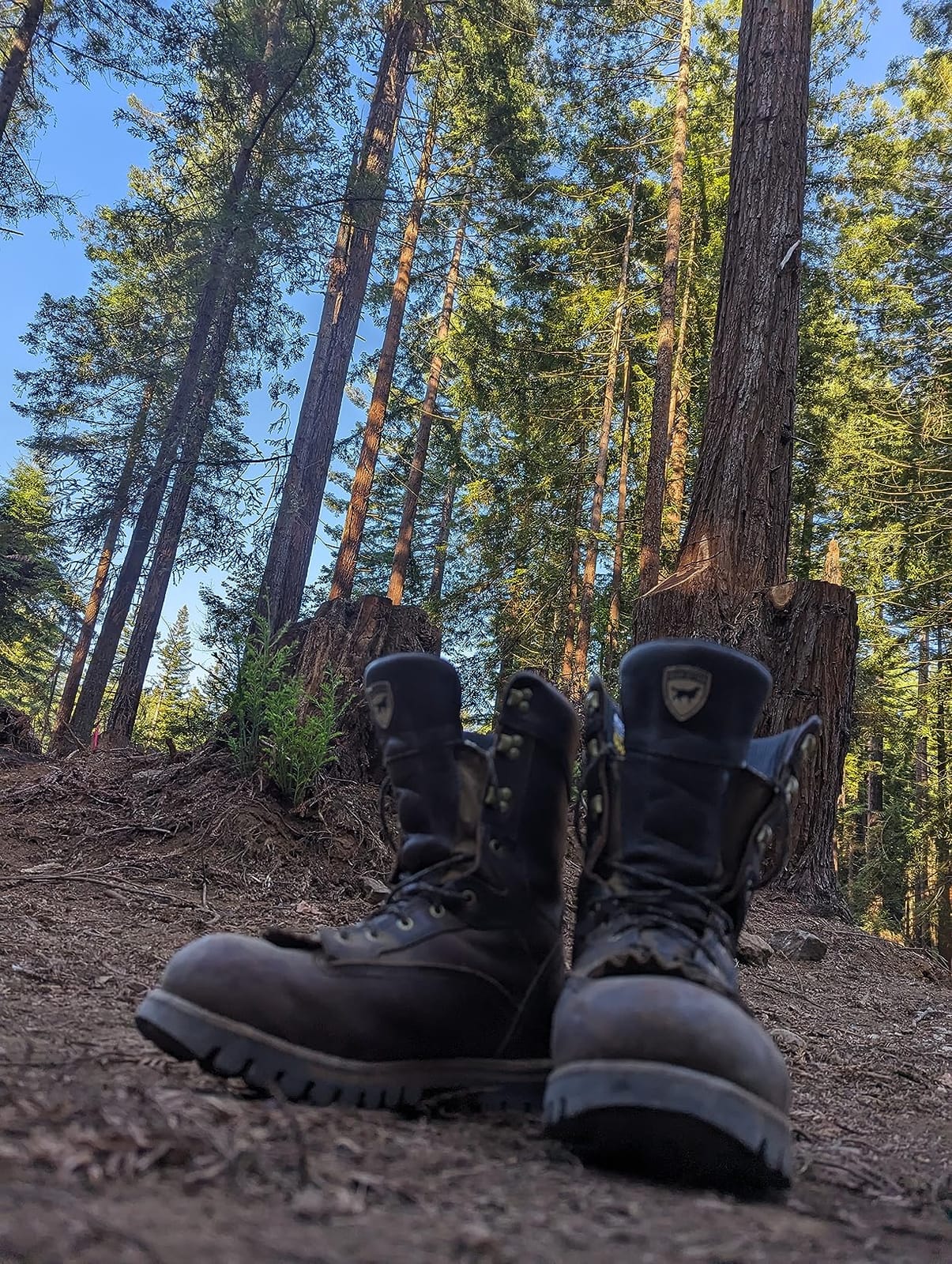
The Elk Tracker is the boot we would put on a ladder strap, because of one specific feature: a built-in steel shank. A steel shank stiffens the midfoot so the boot does not fold under you when you are standing on an angled ladder strap, and on a cold morning that stability is worth more than a few ounces.
The waterproofing comes from GORE-TEX in a full-grain leather upper, and a good membrane does two jobs: it holds external moisture out and lets internal vapor escape. That second half is what keeps a boot from turning into a sauna during a long sit, and it is a genuine difference between a membrane boot and a sealed rubber boot.
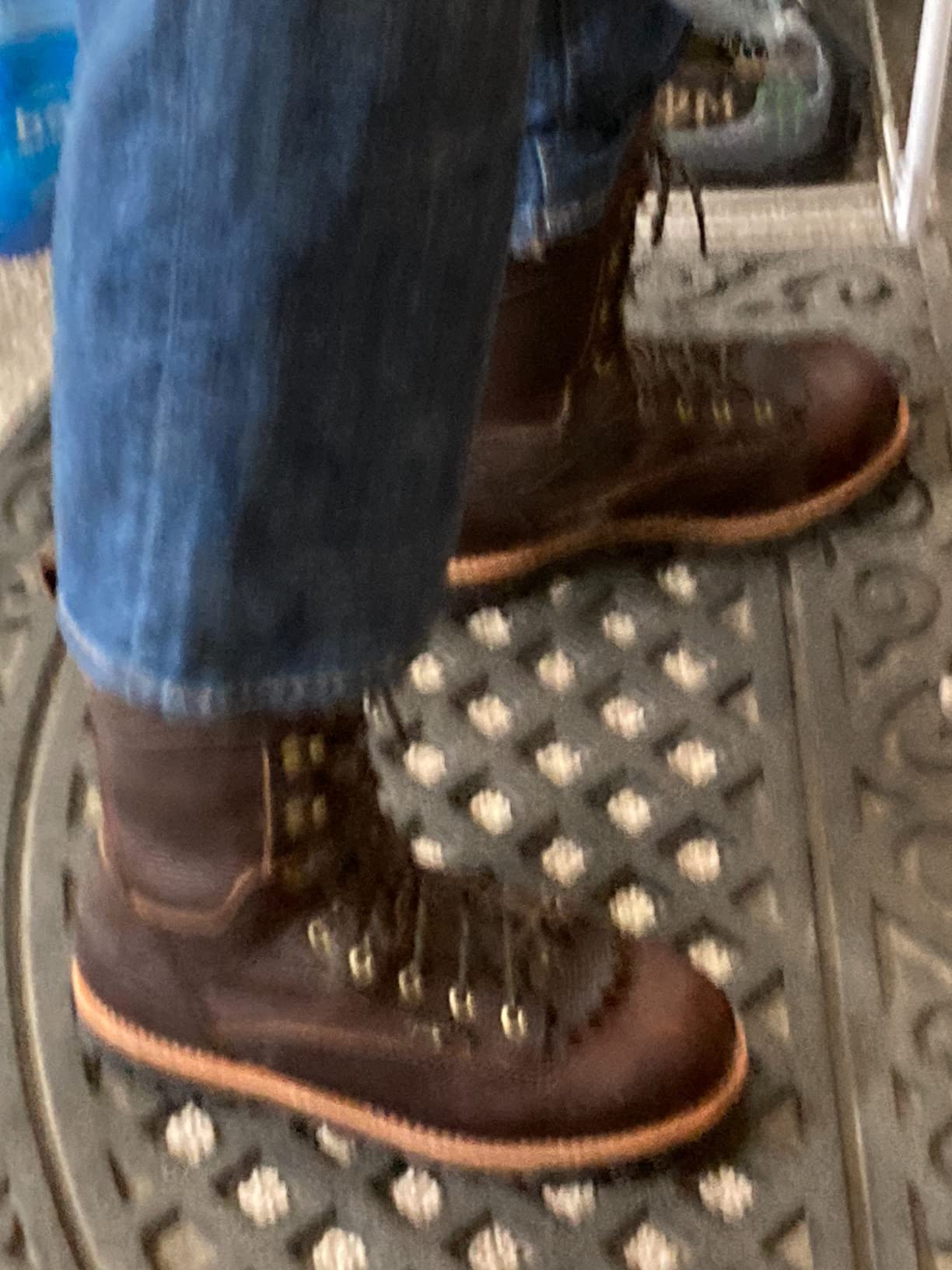
Goodyear Welt construction is the sleeper feature here. A welted boot can be resoled rather than thrown away when the outsole wears out, and hunters buying cold-weather boots for a decade of use care about that more than almost any spec. Several owners describe getting many years, even a decade, of service out of the construction.
ScentBan odor-eliminating technology sits in the footbed and lining, which matters on any hunt where deer are already under pressure and you do not want human scent concentrated around your feet. The lining is moisture-wicking nylon, and the footbed is a removable cork EVA memory foam that you can swap out.
Around 83% of buyers give five stars, and the recurring description is heavy but exceptionally warm, waterproof and long-lasting. The 12 inch shaft height gives good coverage without the bulk of an 18 inch pac-style boot.
Who the Elk Tracker suits
It suits stand hunters and anyone spending long hours on a ladder, blind or tree, especially on hard surfaces where a folding foot gets tiring. The steel shank and welted construction mean this is a boot you can expect to keep for years rather than seasons, which is the kind of decision that pays off over a long hunting life.
It also suits elk and late-season deer hunters in wet snow, because GORE-TEX handles the wet while 1000g of Thinsulate handles the damp cold that comes with it.
Who should skip it
Skip it if you walk long distances. The reviews describe the boot as very heavy and stiff, and both of those words work against you on a rough mountain trail where lighter footwear makes a large difference over several miles.
Skip it if you need boots this week. The stated break-in is several months, and hunters who try these boots the weekend before a season tend to be the ones leaving the one-star reviews. Buy them early and put them on every trip before the hunt.
6. TIDEWE Rubber Hunting Boots: Best for Snow and Ice
TIDEWE Rubber Hunting Boots, Waterproof Insulated Sturdy Outdoor 800G NE 9
800g cold-resistant insulation
7mm neoprene
Waterproof rubber and neoprene build
EVA contoured midsole
Pros
- 800g insulation holds up in single-digit temperatures
- 100% waterproof rubber and neoprene construction
- True to size with room for heavy socks
- Heel lugs make it easy to pull on
- Good traction on snow and ice
Cons
- Strong rubber smell out of the box that fades with time
- Not built for extreme cold where rubber can crack
- Size up for wide feet
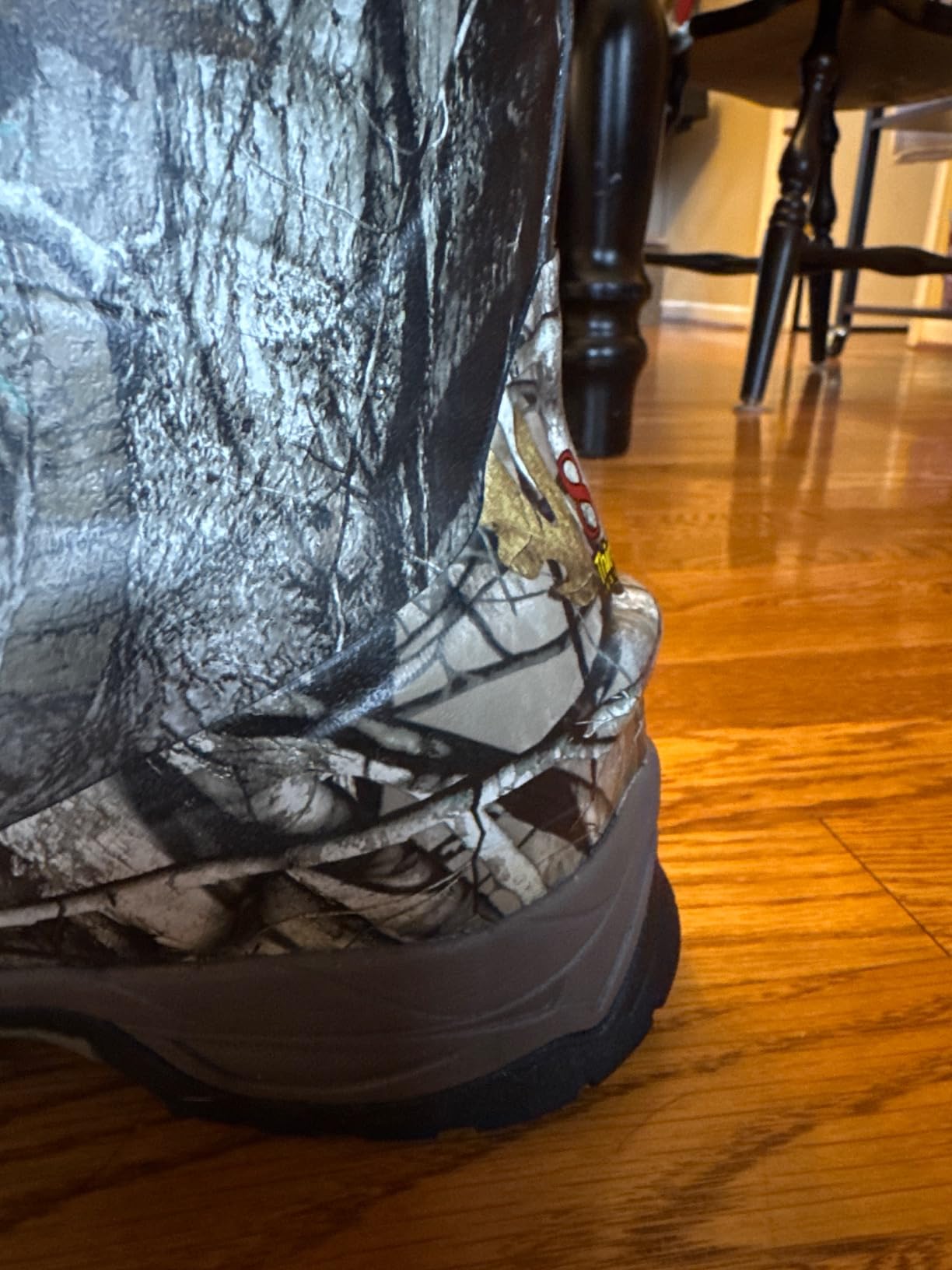
The TIDEWE boot is a well-executed 800g rubber build, and 800g is the right starting point for most people reading this guide. It layers 7mm neoprene under a waterproof rubber shell with a contoured EVA midsole for shock absorption, and the comfort rating printed by the manufacturer runs from 40F down to minus 50F.
Back gussets with cinch buckles are the detail that separates this from a basic rubber boot. The gusset closes the gap between the tongue and the shaft, so snow and water cannot slide down the front of the boot into your socks, and the buckle lets you tighten the fit without removing the whole boot.
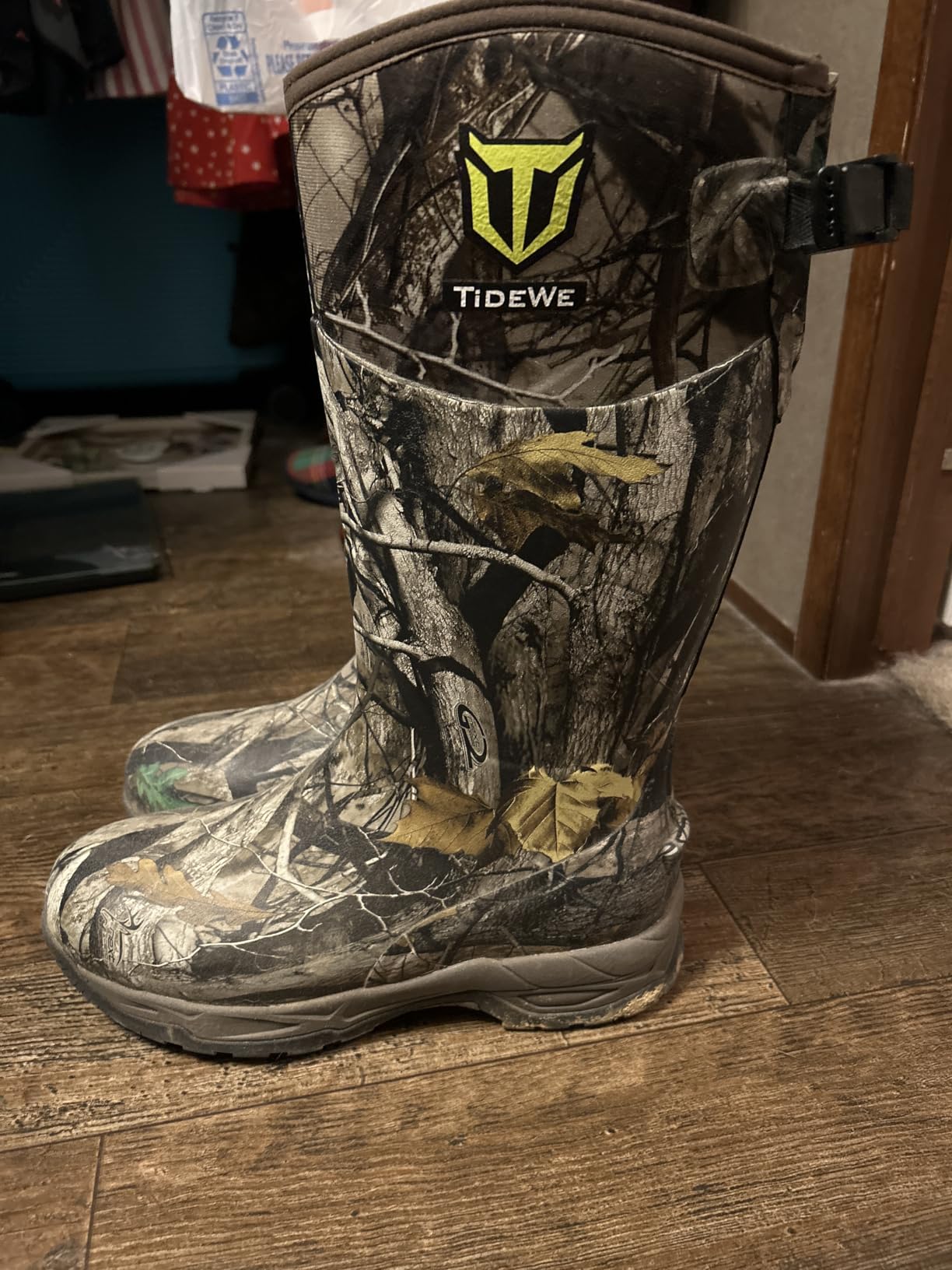
Around 80% of buyers give five stars, and the feedback pattern is warm, true to size and well sealed. Owners specifically like the heel lugs, which let you kick the boots off at the truck instead of wrestling with them, and the reinforced toe, heel and topline where rubber usually fails first.
The one complaint that shows up repeatedly is the smell. New rubber boots have a strong chemical odor, and it fades after a few outings, but it is worth expecting rather than being surprised by.
Who the TIDEWE suits
It suits hunters who want one affordable waterproof boot for the shoulder of the season: mornings in the 20s and 30s where snow is on the ground and slush is in the tracks. Rubber-over-neoprene construction is scent-free, which helps in areas with pressured deer.
It also suits anyone who wants a boot that handles snow and ice traction well without paying for a premium brand name, and the anti-slip outsole is a genuine asset on a hard frost morning.
Who should skip it
Skip it for deep cold. 800g will not carry a stationary hunter through a hard freeze, and the manufacturer does not claim it for that range. Very cold also raises a durability question, because rubber can crack and become brittle when it is exposed to severe cold repeatedly.
Skip it if you have wide feet and do not want to measure. Sizing up is common advice for wide-footed buyers, and getting this wrong is the most frequent fit complaint in the reviews.
7. ROCKY Blizzard Stalker 1200G: Best for Cold Sits in Lighter Builds
Rocky Men’s Blizzard Stalker Pro Hunting Boot,Brown/Mossy Oak,11 M US
1200g insulation
Waterproof lace-up construction
Durable rubber vamp
Padded collar and extended tongue
Pros
- 1200g insulation keeps feet warm well below freezing
- Waterproofing holds up in ankle-deep water
- Good traction on packed snow and ice
- Runs large so heavy socks fit
- Owners report a previous pair lasting many years
Cons
- Bulky and stiff
- which is awkward on ladders and stairs
- Runs about a size large and most buyers size down
The Blizzard Stalker is one of the few 1200g boots here that is still a lace-up, and that single fact makes it more usable in mixed conditions than the fully sealed rubber options. You can adjust the fit, add a sock layer, or open the throat to dump heat when the sun comes up.
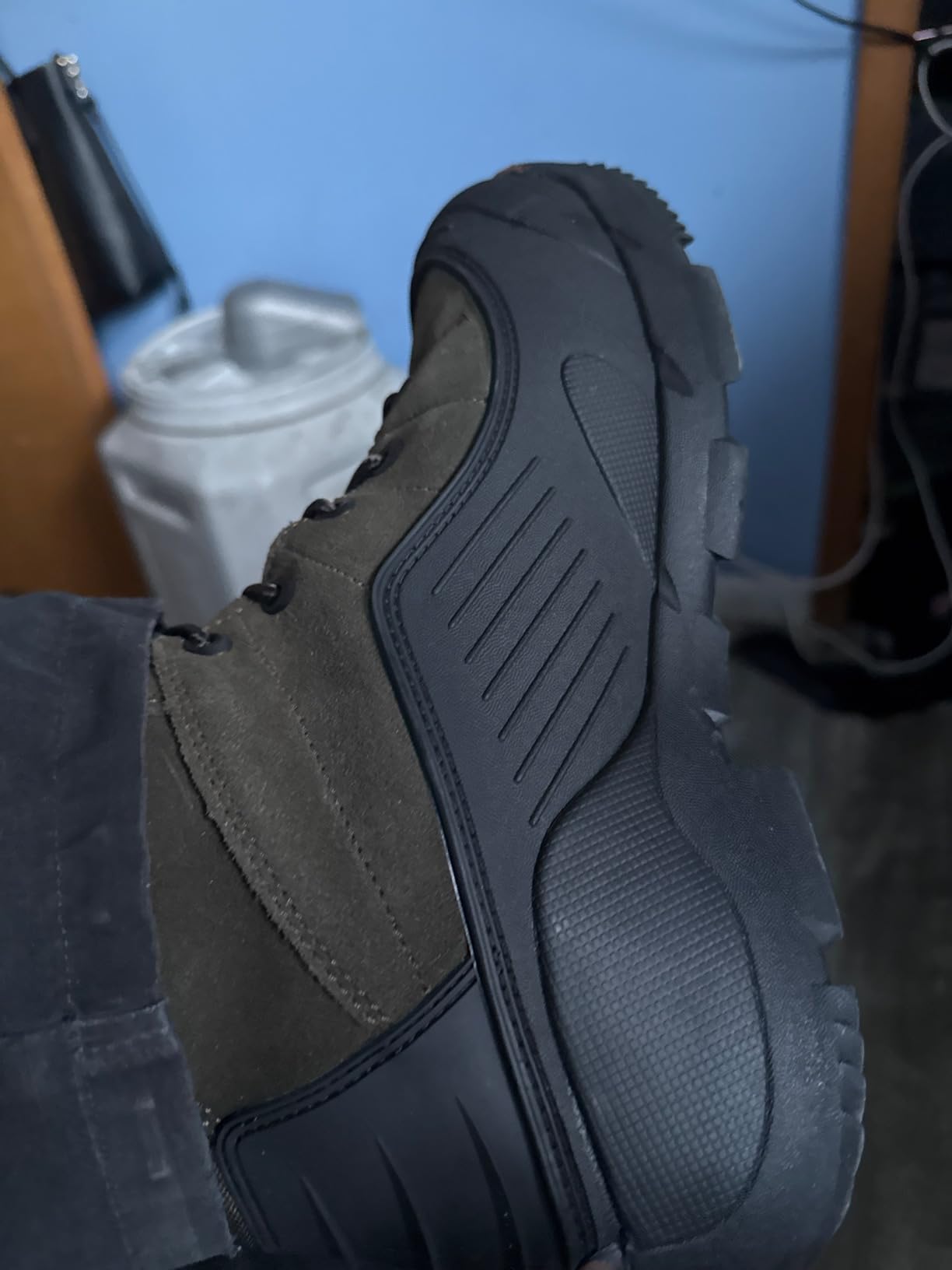
The build is a waterproof hiking boot with a durable rubber vamp, which is the part that wraps the toe and forefoot. The rubber vamp is exactly where mud, snow and brush attack first, so reinforcing it extends the life of the leather above.
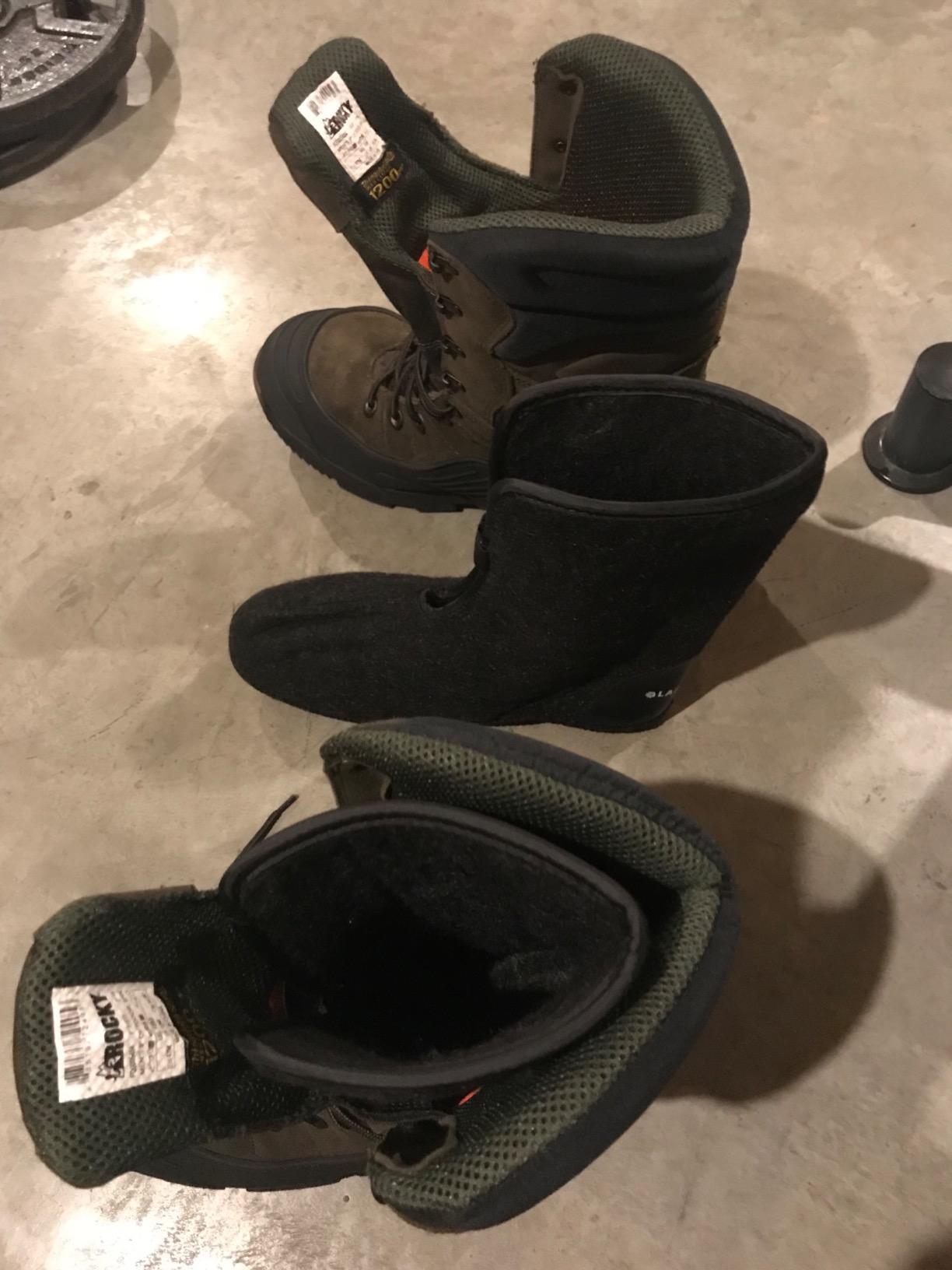
A padded collar and extended tongue do more than comfort. Both keep out cold air and prevent grit from working down into the boot, and the extended tongue adds a barrier across the top of the foot where wind finds its way in on a low-cut design.
Owners report traction on packed snow and ice as a strength, and the waterproofing holds up when wading through ankle-deep water. Roughly 76% of buyers give five stars, and longevity comes up repeatedly, with at least one owner describing a previous pair lasting 15 years.
Who the Blizzard Stalker suits
It suits hunters who want real 1200g warmth but still need to move. The 10 inch hiking-style silhouette is far less awkward on a ladder or a set of stairs than an 18 inch pac boot, and the lace closure means you can regulate temperature through a warm midday push.
It also suits anyone who wades in cold water but still has to walk, since the waterproof construction and lace adjustability cover both halves of that day.
Who should skip it
Skip it if you dislike bulky footwear. Reviewers describe it as clunky and stiff, and that bulk is the same quality that gives you the warmth. If you spend your season walking, the weight will bother you before the cold does.
Watch the sizing. It runs about a size large, and the most common advice in the reviews is to size down. Note also that wide sizes are not offered, so anyone who needs a 13 or wider has fewer options with this model.
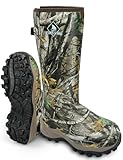
8. Obcursco 400g Rubber Hunting Boots: Best Lightweight Option for Walking
Obcursco 400g Insulation Rubber Hunting Boots for Men, Insulated Waterproof 6mm Neoprene Boot for Hunting (Camo, 10)
400g Thinsulate lining with 6mm neoprene
Rated to -22F
Waterproof seam-sealed upper
EVA foam midsole
Pros
- Lightweight at about 14 ounces per boot
- 100% waterproof seam-sealed upper
- 6mm neoprene and 400g lining rated down to -22F
- EVA midsole reduces strain on knees and hips
- Next Camo pattern keeps the wearer concealed
Cons
- Lowest insulation rating here and limited for deep winter
- About 7% of buyers leave a 1-star review
- Sizing requires measuring against the insole chart
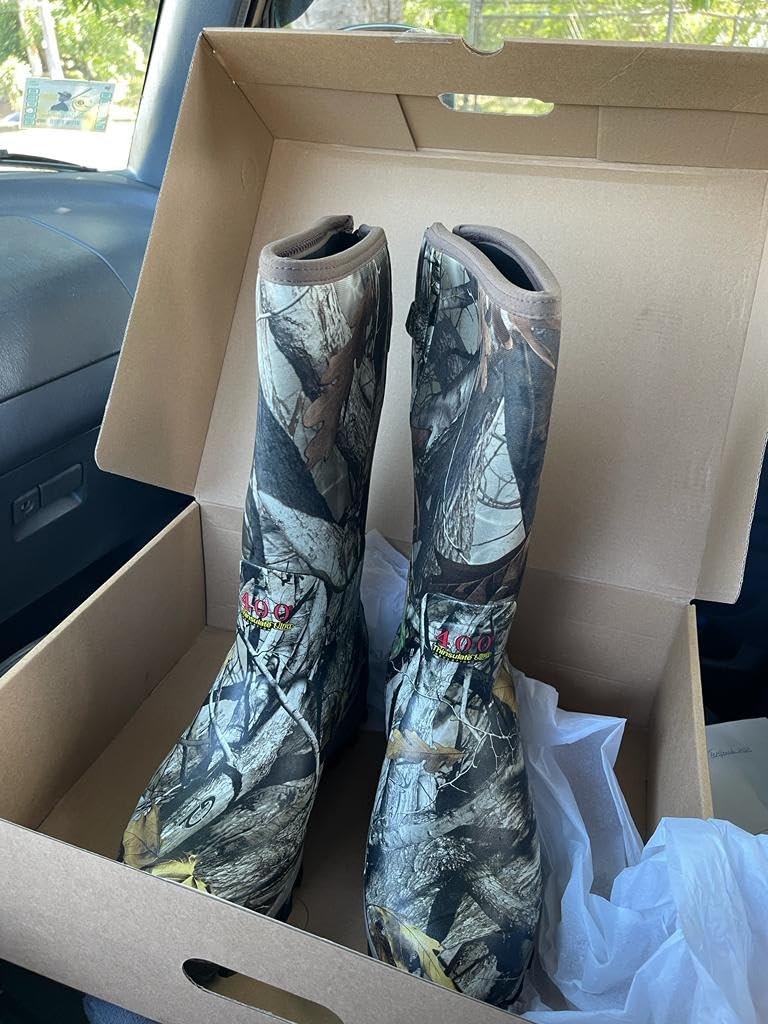
At roughly 14 ounces per boot, this is the one in the group we would pack on a long walk. Every other insulated boot here is meaningfully heavier, and on a day when you cover five or six miles between treestands, weight adds up in a way that insulation ratings do not account for.
The 400g Thinsulate lining is paired with 6mm neoprene in a seam-sealed waterproof upper, and the manufacturer rates comfort from 41F down to minus 22F. Read that as a mild to moderately cold rating rather than a deep-winter one, since 400g has less loft to give.
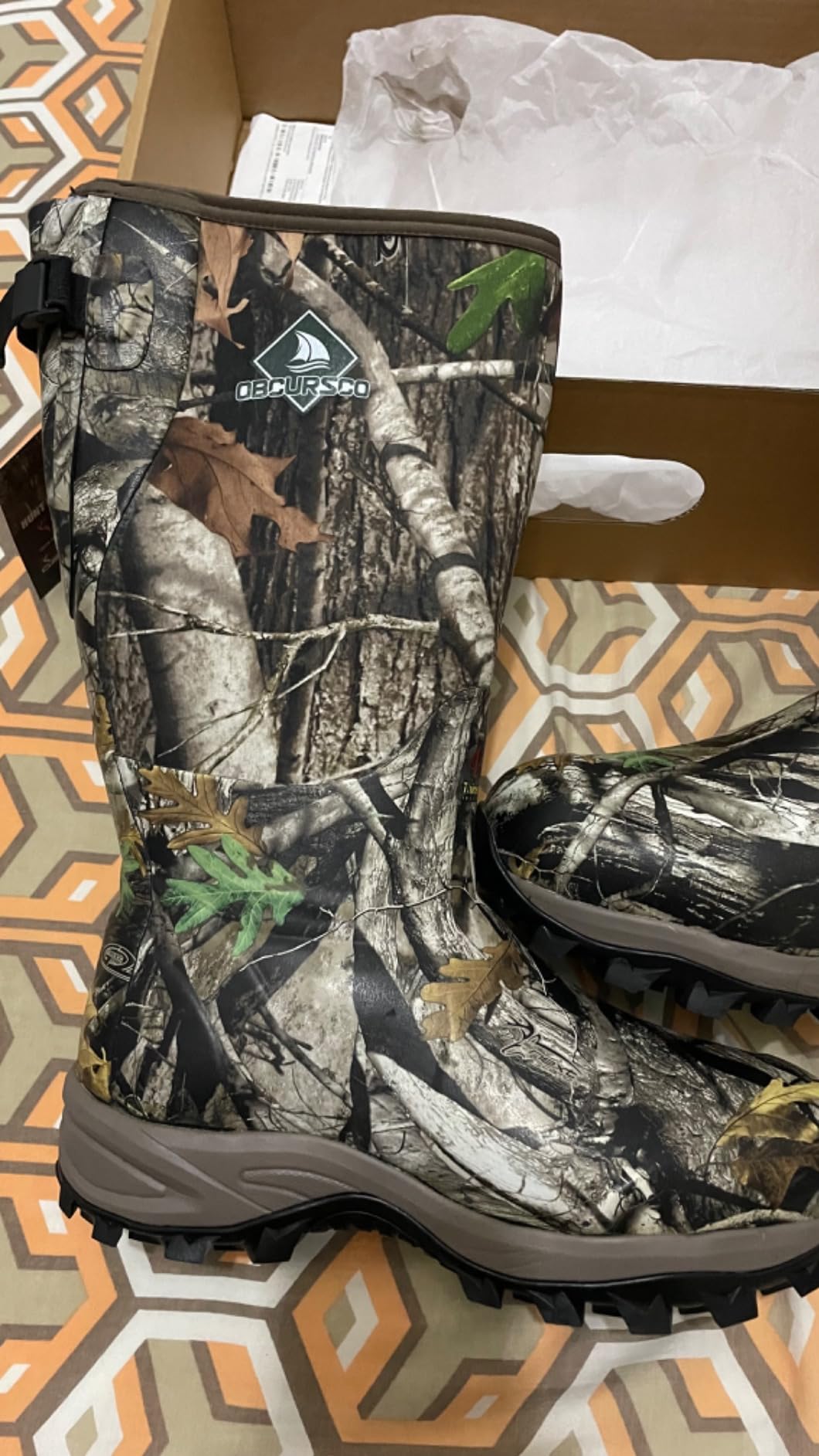
The seam-sealed upper is the technical highlight. Seams are the usual failure point in waterproof footwear, because stitching is a channel water will find eventually, and sealing them removes the weakest link in the design.
Under the foot, an EVA foam midsole handles shock absorption, and owners point out that this takes strain off the knees, hips and ankles. That is more than a comfort note on rough ground; it is the difference between finishing a long day and cutting it short.
The breathable lining includes a built-in air circulation system, which is unusual at this level of insulation and helps with the sweating problem that heavy boots usually create. Around 76% of buyers give five stars, with the light weight and waterproof build as the consistent themes.
Who the Obcursco suits
It suits the active hunter: spot-and-stalk, game scouting, bowhunters who walk miles before making a stand, and anyone who hunts in the mild shoulder of the season. Early-season scouting in the 30s and 40s is the exact use case this boot was built for.
It also suits cold water work, because the neoprene and rubber build is fully waterproof and the seam-sealed upper keeps water from tracking in from the top.
Who should skip it
Skip it for a cold stand. 400g is the lowest rating in the lineup and buyers themselves identify it as the limiting factor, which means it is the wrong tool for December mornings or a January sit.
Skip it if you dislike measuring your feet. Sizing on this boot requires checking foot length against the insole chart, and getting it wrong is the second most common complaint after the insulation ceiling.
9. HUNTRITE 1200g Insulated Waterproof Boots: Best Balance of Warmth and Lightness
HUNTRITE Men’s Insulated Waterproof Hunting Boots, 1200-gram, Brown RT APX 15 2E (Wide)
1200g Thinsulate
Waterproof breathable membrane
Oil-resistant dual-density rubber lug outsole
Approximately 8.5 inch height
Pros
- 1200g Thinsulate without excessive bulk
- Waterproof breathable membrane vents vapor
- Supportive ankle feel at a comparatively light weight
- Aggressive lug outsole grips well
- Double-stitched construction in key areas
Cons
- Toe box and overall fit can run roomy
- Basic footbed that most owners upgrade
- Not offered in a 13.5 wide size
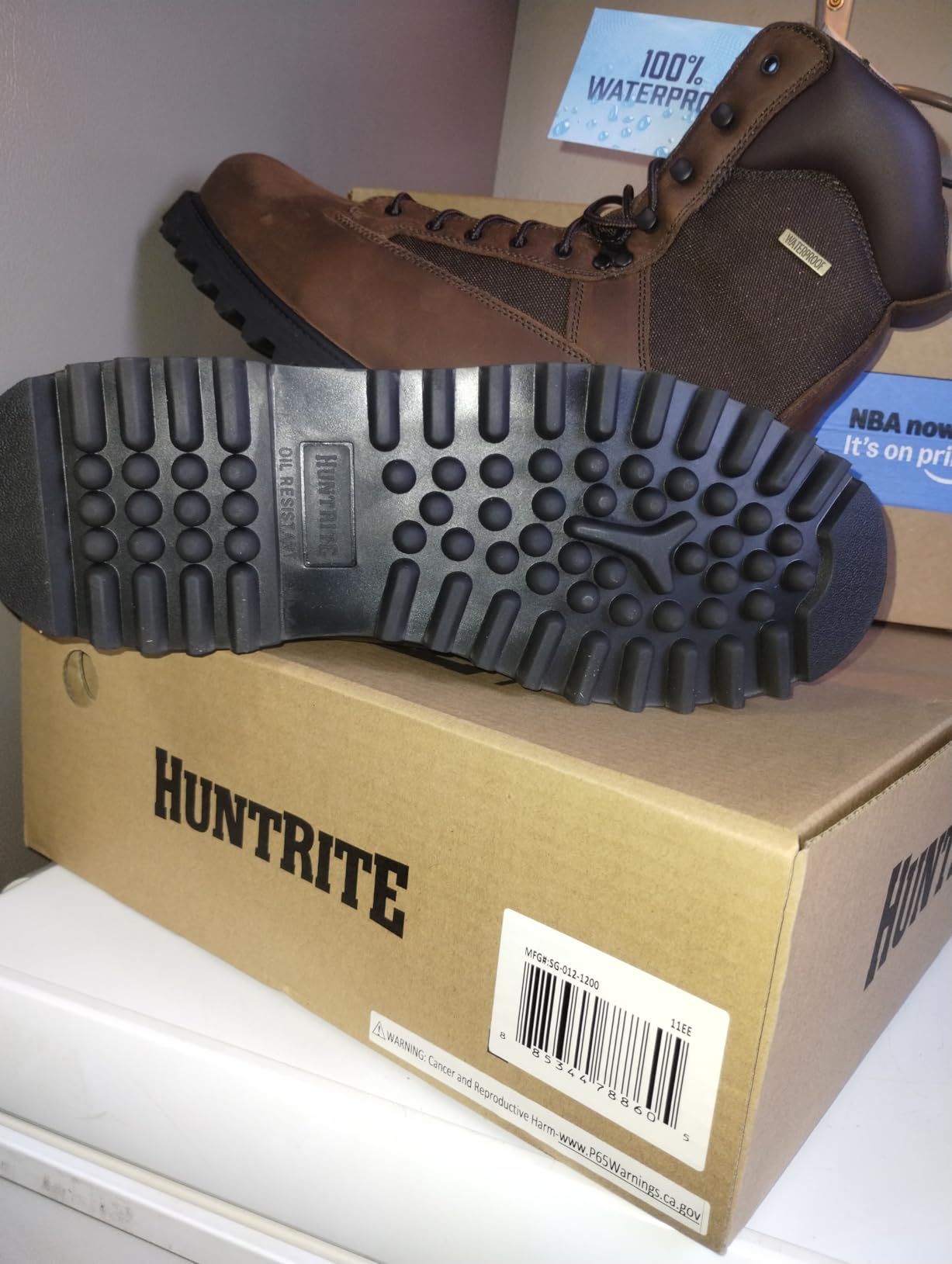
The HUNTRITE is the most interesting spec sheet in this group, because it pairs 1200g of Thinsulate with an owner-measured weight of roughly 2.4 to 2.6 pounds per boot. That is unusually light for a 1200g boot, and it is the reason we would pick this one for days that combine walking and standing.
The waterproof breathable membrane is a different approach from a fully sealed rubber shell. It holds water out and vents vapor out, which is why users report that 1200g of insulation does not translate into overheating the way it does in a sealed build.
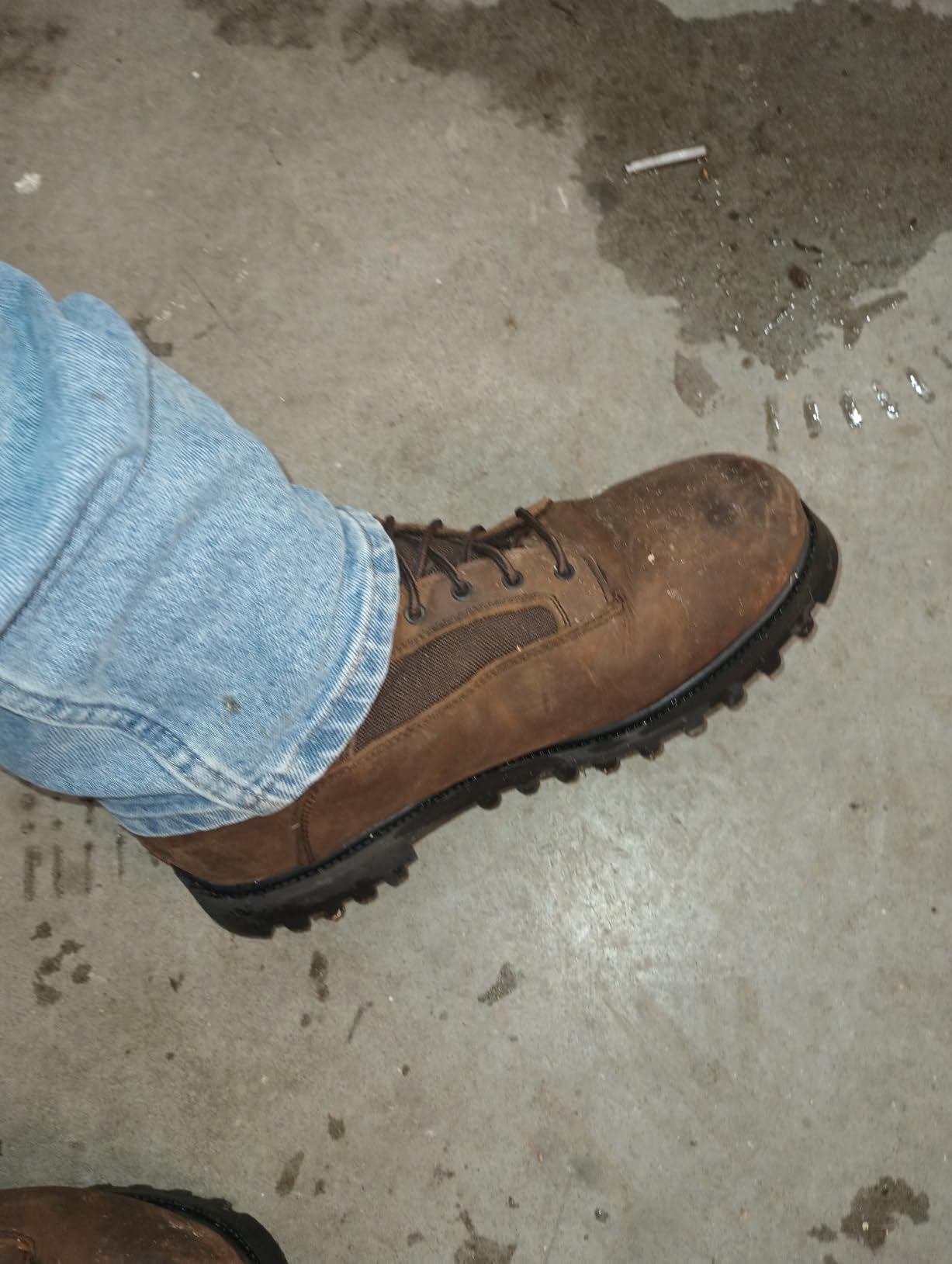
The oil-resistant dual-density rubber lug outsole is designed for grip, and a moisture-wicking mesh lining keeps the interior from feeling clammy. Double stitching in the key areas adds durability where a boot usually gives out first.
Reviewer sentiment here is unusually positive for a lower-count boot: 72% of buyers give five stars and 18% give four stars, which leaves an unusually low share of critical reviews. The main gripe is sizing, and the fix is usually an insole.
Who the HUNTRITE suits
It suits hunters who refuse to sit still. At approximately 8.5 inches, this is the shortest boot in the group, which makes it the least cumbersome for stair-climbing, walking game trails and moving between setups, and the light weight keeps it workable over long distances.
It also suits anyone who finds heavy insulation stuffy, because the venting membrane handles moisture better than sealed rubber.
Who should skip it
Skip it if you have very wide feet or need maximum sizing range. The toe box and overall fit run roomy, which is sometimes fine and sometimes a problem, and a 13.5 wide size is not offered.
Skip it if you like a supportive footbed out of the box. The insole is described as basic, and many owners add their own, which is an easy fix but worth knowing before you spend a day standing on a plain foam insert.
10. LaCrosse Burly ZXT Rubber Hunting Boots: Best for Wading, Mud and Scent Control
LaCrosse Alphaburly Pro 18″ Hunting Boots for Men Featuring Waterproof Rubber, Adjustable Gusset, and EVA Footbed, Mossy Oak Break-up Country – 10
Natural rubber waterproof construction
Scent-free design
Adjustable neoprene gusset
EVA footbed
Pros
- Completely waterproof natural rubber shell
- Lightweight at about 2 pounds per pair
- Strong traction in mud
- muck and snow
- Comfortable EVA footbed reduces fatigue
- Scent-free construction helps in pressured country
Cons
- Not insulated enough for deep cold on its own
- Sealed rubber causes sweating on long walks
- Tight ankle makes the boot hard to pull off in mud
The Burly ZXT is the lightest sealed rubber boot here at about 2 pounds per pair, and it remains one of the most reviewed boots in the group with more than 1050 ratings. Owners frequently call it the most comfortable rubber hunting boot they have tried, and the reason is the EVA footbed combined with a genuinely light shell.
Natural rubber is the material doing most of the work. It stays flexible in cold weather better than many synthetic rubbers, which is why pac-style and rubber hunting boots have survived for decades, and it has no fabric to absorb water, so it dries faster than any leather boot.
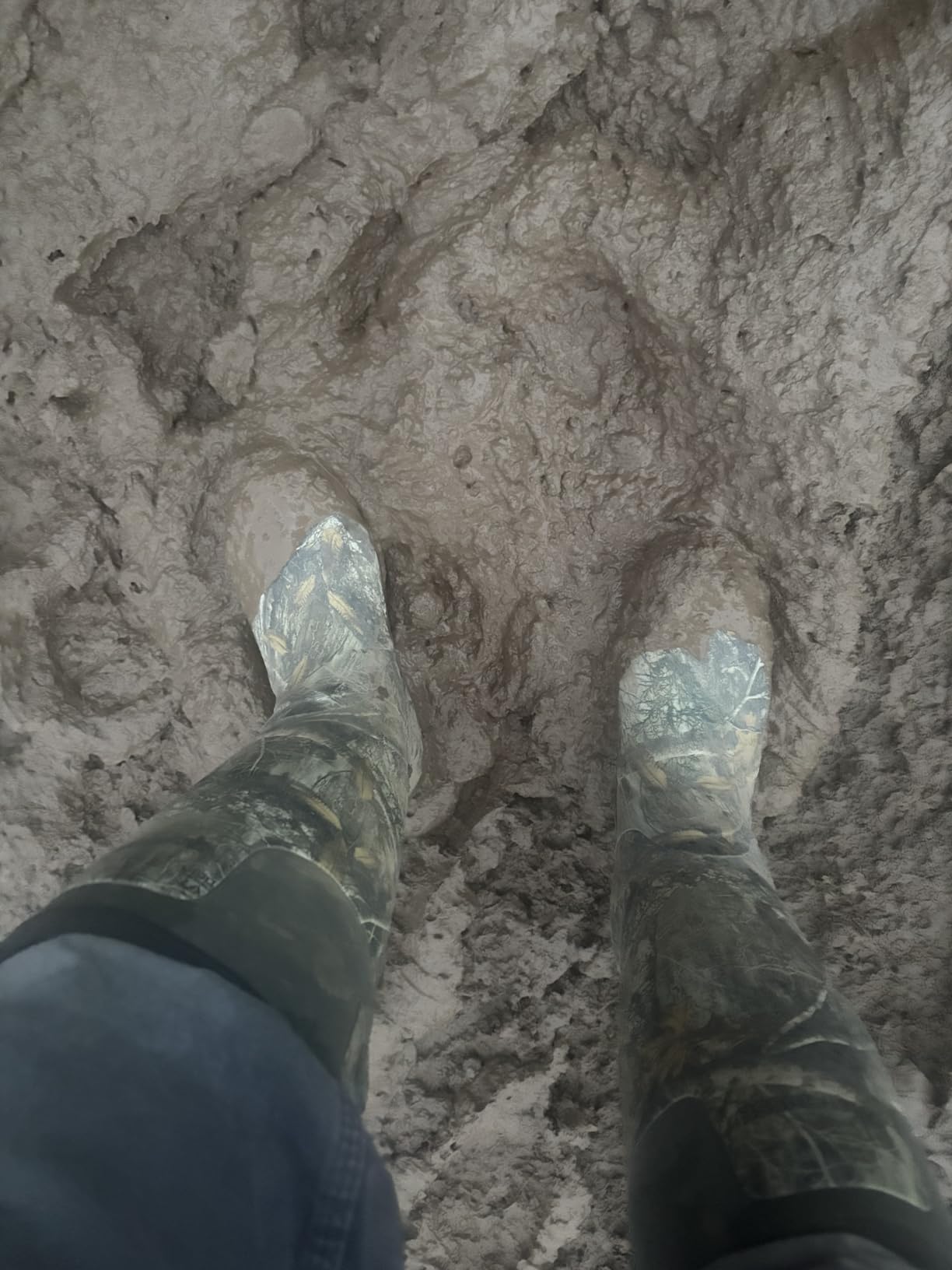
The Active Fit design with an adjustable neoprene gusset is what makes the seal work across different calf sizes. The gusset is a neoprene panel across the front of the ankle that closes the gap water uses to get into a rubber boot, and making it adjustable is what separates a comfortable seal from a restrictive one.
The tread is engineered for mud, muck and snow, the three surfaces where most boots slip, and owners consistently praise traction. LaCrosse also offers this model with an 18 inch shaft option, so the same line covers both wading depths.
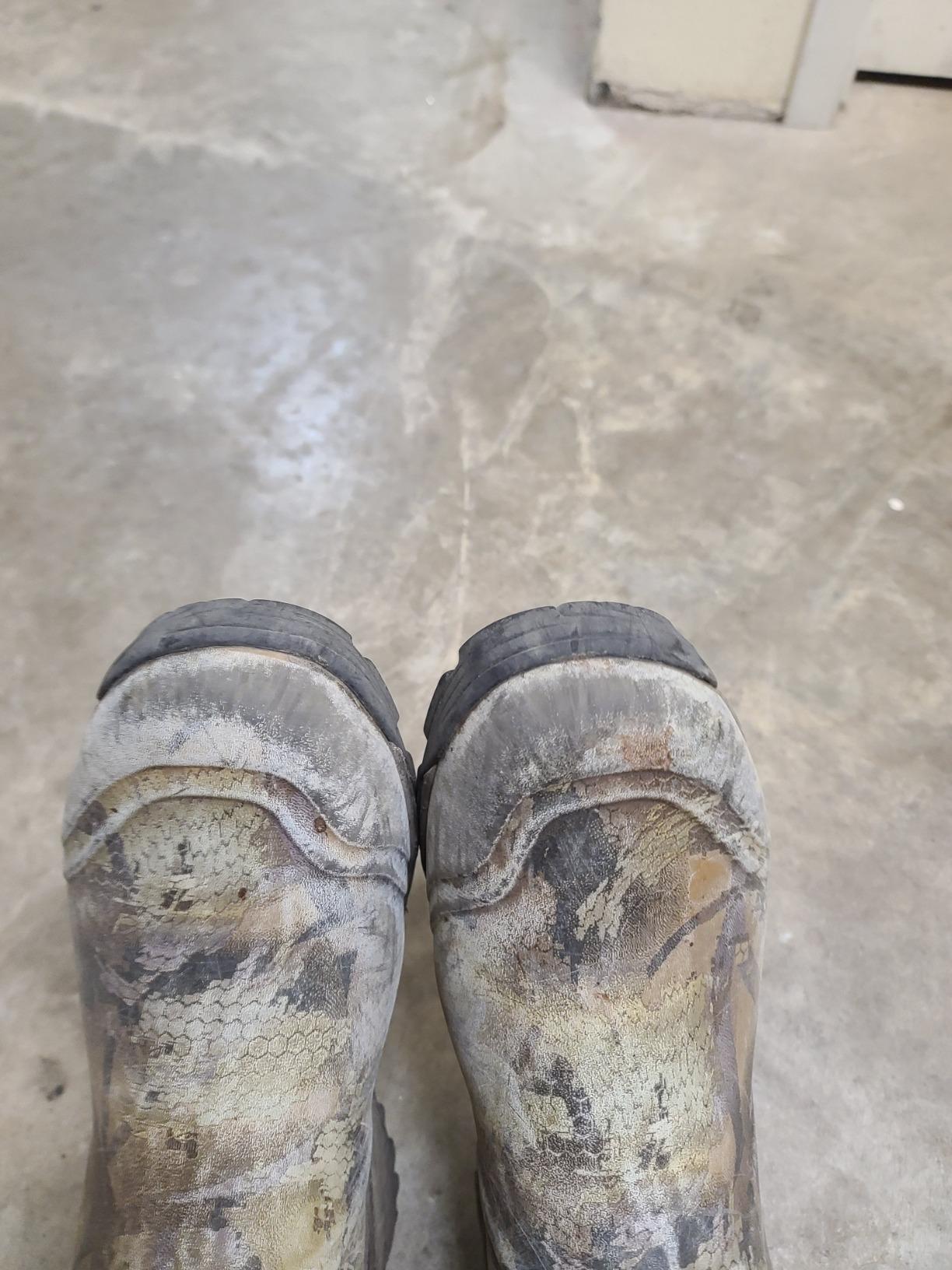
Who the Burly ZXT suits
It suits waterfowl hunters standing in cold water, and deer hunters working flooded timber and swamp where nothing less than a full rubber shell will keep you dry. The scent-free construction is a real advantage in pressured whitetail country during the rut.
It also suits anyone who wants a boot for cold water and mud that will not fall apart at the end of the season, since rubber dries out, does not delaminate and does not hold the smell of a soaked sock the way leather can.
Who should skip it
Skip it as your only cold-weather boot. This is an uninsulated shell, and while the light weight is a genuine advantage, buyers are clear that warmth below roughly 30F depends almost entirely on your socks. It needs a thick wool layer or a removable liner to be a serious cold-weather boot.
Skip it for long walks. A fully sealed rubber boot with no venting will make your feet sweat and swell, and forum discussion about rubber hunting boots lands on this issue constantly. The tight ankle is also hard to pull off once there is mud in it.
How to Choose Insulated Hunting Boots for Cold Weather
Cold-weather boot shopping breaks down into four decisions: how much insulation, how tall, what construction, and what outsole. Get those four right and the fit takes care of itself. The mistakes we see most often are spending money on insulation a hunter never uses, or too little for a stand that lasts six hours.
What 400g, 800g, 1200g and 1600g of insulation actually mean
Insulation weight is expressed in grams per square meter of fabric, and it is the single most useful number on any cold-weather hunting boot. It measures how much loft material is trapped in the boot wall, and more loft means more trapped air, which means more resistance to heat moving outward.
Think of it in bands. Around 400g handles cool shoulder-season mornings in the 30s and low 40s and is best for active walking. 800g is the workhorse for rut-season mornings in the 20s. 1200g and 1600g are stationary-hunt insulation, covering sub-freezing sits where you are not generating heat yourself.
The trap is buying above your band. A 2000g boot in 40 degree weather is not just uncomfortable, it is dangerous, because sweating feet lose insulating power and cold wet feet in a sit are worse than feet that were only slightly cold.
Insulation also compresses. A lace or a stretch panel that squeezes the loft reduces how much warmth the boot can hold, which is one reason the aerogel-based Solarcore insulation in the LaCrosse Alphaburly Pro is interesting: it holds warmth with less bulk, and less bulk means less compression.
Match the boot to the temperature: 40F, 20F, 0F and -10F
At around 40F, use a 400g to 800g boot and prefer breathable leather or mesh over sealed rubber. You will generate enough heat walking that insulation is mostly a comfort measure, and breathability is what keeps you dry.
At around 20F, move to 800g to 1000g. This is the rut season band in much of the country, and a lace-up leather or a mid-height rubber both work. Add a thick merino or wool sock and you have more margin than you think.
At 0F, choose 1200g or more and plan on sitting rather than walking. This is where the 1200g club in this group earns its place, and where a boot with a good midsole and a wind-blocking shaft starts to matter more than raw insulation grams.
At -10F and below, use 1600g and above, an insulated pac-style shaft, and treat boot care as part of the hunt. At these temperatures foot comfort comes from insulation, a sock system, foot warmers and staying active, and no single boot solves it alone.
Rubber or leather: pick the construction your hunt needs
Rubber wins on waterproofing, scent control and cold-weather flexibility. It has no fabric to soak up water, so a rubber boot can be waded repeatedly and will dry out afterward, and it carries no absorbable scent. Rubber is the right answer for flooded timber, waterfowl and any late-season whitetail hunt where scent is already a problem.
Leather wins on breathability, support and longevity. A full-grain leather upper with a good membrane vents vapor out, which is why leather boots are far more comfortable on a long walk, and a welted leather boot can be resoled instead of replaced. A breakdown of both approaches:
Rubber: fully waterproof, scent-free, easy to clean, flexible in cold, heavy for long walks, limited insulation options, hard to pull off in mud. Leather: breathable, supportive, resoleable, comfortable walking, slower to dry once saturated, needs conditioning to stay waterproof.
Most serious cold-weather hunters end up owning both, and the practical way to think about it is that rubber is for the water and the sit, and leather is for the walk between them.
Insulated boot sizing: order down, order up or stay put
Insulated boots fit differently from standard footwear because you are sizing for a thick sock layer plus the insulation loft. The most common sizing advice in forums is a half size up or a half size down depending on construction, and the reason depends on the upper.
Rubber and neoprene stretch, so a half size down usually works and leaves room for a thick sock without your heel lifting. Leather does not stretch, so a half size up is the safer bet once the boot has broken in and swelled. Any boot that runs large, like the ROCKY Blizzard Stalker, should be sized down deliberately.
Test any cold-weather boot before the season with the sock system you will actually hunt in. Wear the thickest wool sock you plan to own, lace or buckle the boot fully, and stand for twenty minutes. Heel lift that shows up in the first ten minutes will turn into blisters by the fourth hour of a sit.
Women should expect to size down more often than men, because most cold hunting footwear is still built on a men’s last with a narrower toe box. If a wide option is not offered, an insole can recover the lost toe room.
Break-in, care and drying after every hunt
Break in insulated boots before the season, not during it. Wear them on scouting trips, in the truck, and around the house for two or three weeks, because a boot that has not settled by opening day is the leading cause of the one-star reviews in this category.
Dry them properly. Remove the insoles, stuff the boots with paper or newspaper, and let them sit at room temperature away from a fire or heater. Direct heat cracks the rubber compound and dries out leather faster than anything you do to it, and a boot dried in a hurry will crack at the flex point by the second month.
Condition leather boots once a season with a leather conditioner, and clean rubber boots with plain water and a brush. Scent matters, so avoid scented products and let the boots air out fully. A boot deodorizer puck in the shaft overnight does more for tomorrow’s hunt than any product you can spray on the outside.
Socks, liners and toe warmers that finish the system
No boot outranks a bad sock choice. A cotton sock wicks nothing, dries slowly and loses its insulating ability the moment it is damp, so use merino wool or a synthetic blend, and never wear two pairs of thin cotton socks to simulate one thick pair.
For standing sits in serious cold, toe warmers are the single highest-value accessory. Heat packs in the boot or a chemical warmer in the liner are the difference between a productive morning and a hike back to the truck at an hour, and they cost very little.
Build the system in this order: boot first, then the sock you will hunt in, then the toe warmer. If a boot does not fit properly with the sock system you actually use, it is the wrong boot, no matter what the label says.
Frequently Asked Questions
What is the best boot for extreme cold weather?
For genuine extreme cold, the LaCrosse Alphaburly Pro 18 inch is the strongest pick here, carrying 1600g of Solarcore aerogel insulation in a waterproof rubber-over-neoprene shell with an 18 inch shaft. Below zero and mostly standing, warmth and a wind-blocking shaft matter more than weight, and this boot handles both. If your hunt involves serious walking, an 800g to 1200g boot is more usable.
Are Hunter boots good for cold weather?
Hunter boots are rubber rain boots made for wet weather, and they are only cold-weather hunting boots when paired with thick wool socks or a removable liner. The rubber itself does not insulate, so a Hunter boot in freezing conditions keeps water out but not cold. For unlined cold-weather hunting, a rubber-over-neoprene hunting boot such as the MUCK Arctic Pro or the LaCrosse Burly ZXT includes a neoprene layer that actually holds heat.
What are some good winter hunting boots?
The best winter hunting boots in this roundup are the MUCK Arctic Pro for overall versatility, the LaCrosse Alphaburly Pro 18 inch for extreme cold, and the Irish Setter Elk Tracker 12 inch for tree stand hunters who want a resoleable boot with a steel shank. Below that, the ROCKY Blizzard Stalker 1200G and the HUNTRITE 1200g cover colder ground, and the ROCKY Sport Utility 1000G covers most of the season at the lowest cost.
Are insulated hunting boots worth it?
Yes, if the insulation matches your temperature and your activity. Insulated boots are worth it for stationary sits in cold weather because a motionless foot generates almost no heat of its own, and insulation is the only thing standing between you and a hunt that ends early. They are not worth it for walking in mild conditions, where extra warmth turns into sweat, swollen feet and a boot you want to take off.
How many grams of insulation do I need for hunting?
Match the grams to the temperature and how much you walk. Around 400g suits cool mornings in the 30s and 40s for active hunters, 800g covers rut season in the 20s, 1000g to 1200g handles freezing sits, and 1600g or more is for sub-zero standing hours. Moving generates heat, so active hunters should choose a lower rating than hunters who sit in a stand all morning.
How do I size hunting boots for thick socks?
Try on cold-weather boots wearing the thickest wool sock you plan to hunt in, because the sock changes the fit more than half a size. Rubber and neoprene uppers stretch, so those boots often fit best a half size down, while leather uppers do not stretch and are safer a half size up. Stand and walk for twenty minutes in the store, and if your heel lifts early it will blister by the fourth hour of a sit.
Final Verdict
The best hunting boots for cold weather in 2026 come down to how you hunt. If you want one boot that handles stands, walks and water without compromise, the MUCK Arctic Pro Insulated Boot is the choice, with 8mm neoprene, a fully waterproof shell and the highest review count in the group. If you hunt below freezing and mostly stay put, the LaCrosse Alphaburly Pro 18″ at 1600g is the deepest cold option here.
For ladder straps and boots you expect to own for a decade, the Irish Setter Elk Tracker 12″ gives you a steel shank, GORE-TEX waterproofing and a resoleable welt. For most other hunters, the ROCKY Sport Utility 1000G covers the bulk of the season at the lowest cost, and anyone wading cold water should look at the LaCrosse Burly ZXT.
Match the insulation to your temperature, test the fit in the socks you will actually wear, and break the boots in before opening day. Get those three things right and the cold stays on the weather side of the tree stand where it belongs.