
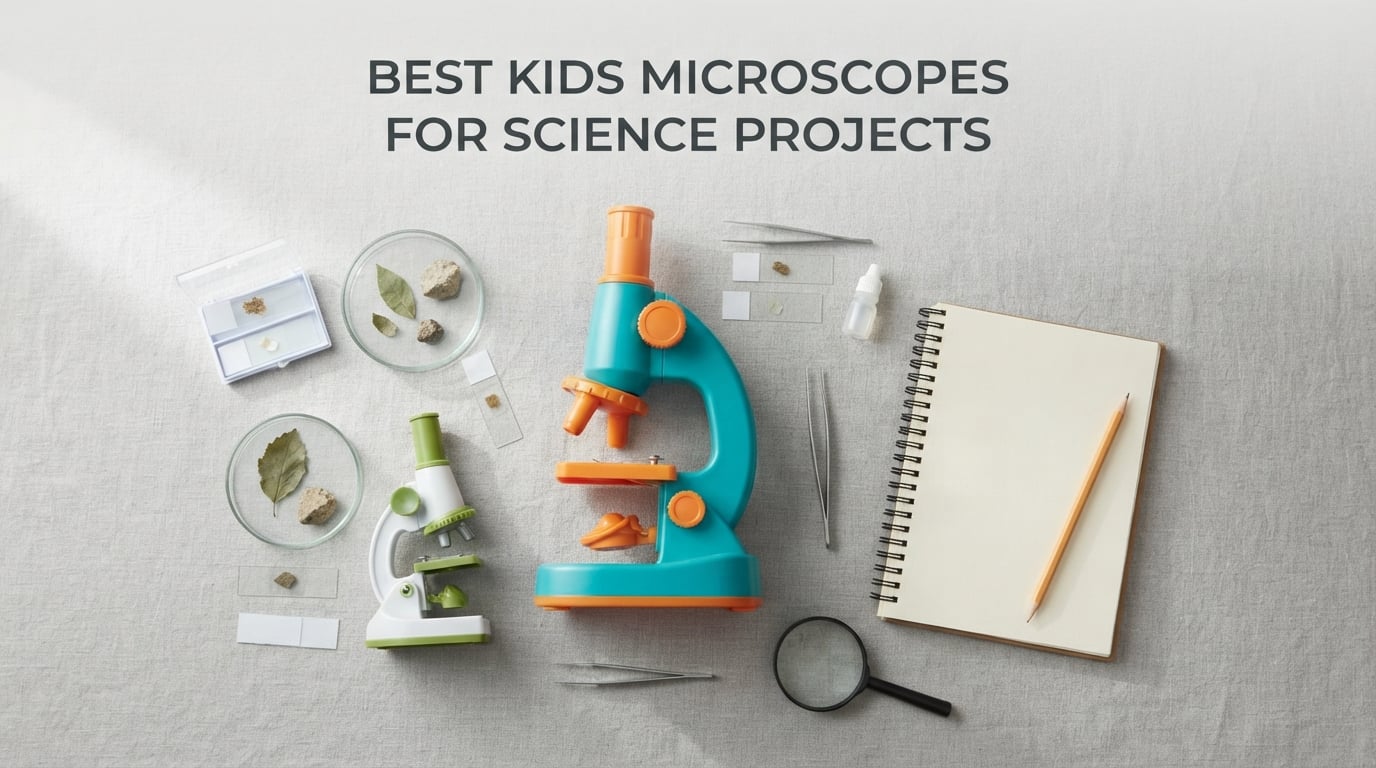
Almost every parent buying a microscope for a school project runs into the same wall: the box promises 1000x or 1200x, and the child opens it, looks through the eyepiece, sees a blurry orange field, and hands it back. A blank or fuzzy image ends curiosity faster than a good one starts it. That is the single most common failure we hear about, and it has very little to do with the price tag and a lot to do with how magnification is marketed.
We put 10 of the most popular kids microscopes through their paces to work out which ones a child can genuinely use for a science project, and which ones are just impressive numbers on a box. This roundup covers the best kids microscopes for science projects across compound, stereo and digital designs, with a matching guide that tells you which model suits which project before you spend anything. We rated each one on magnification honesty, ease of use for small hands, build quality, and how much real science a child can do with it after the prepared slides run out.
Two things to know before you read on. First, honest 400x optics beat a blurry 2000x claim every single time, because a child who cannot resolve a cell gives up in one session. Second, the microscope is the cheap part of a project. Slides, stains, batteries and a way to photograph what you find are where most parent projects actually stall, so we cover those too.
Our testing approach: each scope was checked for what it claims against what it shows, with attention to focus smoothness at high power, light control, how a 6-year-old and a 12-year-old each manage it, and what happens once the included slides are gone. All magnification figures quoted here are the manufacturer’s published numbers, and we flag where those numbers are optical and where they are mostly digital zoom.
Table of Contents
Top 3 Picks for Best Kids Microscopes for Science Projects

GeoSafari Talking Microscope
- Narrated by Bindi Irwin
- Fact Mode and Quiz Mode
- 60 full-color images on 20 slides

NG Dual LED Science Kit
- Dual LED above and below
- 50+ accessories
- Brine shrimp eggs and hatchery

Best Kids Microscopes for Science Projects in 2026
Here is the full list at a glance. Every product below was checked for real usable magnification, not just the number on the box, and each one has a named strength so you can match it to a project type.
| Product | Specifications | Action |
|---|---|---|
| Educational Insights GeoSafari Talking Microscope |
|
Check Latest Price |
| National Geographic Dual LED Science Kit |
|
Check Latest Price |
| National Geographic 400x Microscope |
|
Check Latest Price |
 BEBANG Kids Digital Microscope BEBANG Kids Digital Microscope |
|
Check Latest Price |
 Nancy B’s Science Club Microscope Nancy B’s Science Club Microscope |
|
Check Latest Price |
 Omano Juniorscope Omano Juniorscope |
|
Check Latest Price |
 Educational Insights GeoSafari Kidscope Educational Insights GeoSafari Kidscope |
|
Check Latest Price |
 Uarzt 100x-1200x Science Kit Uarzt 100x-1200x Science Kit |
|
Check Latest Price |
 Ashfly 500X Digital Microscope Ashfly 500X Digital Microscope |
|
Check Latest Price |
 BMDSAE 1000X Handheld Microscope BMDSAE 1000X Handheld Microscope |
|
Check Latest Price |
1. Educational Insights GeoSafari Talking Microscope – Best for Ages 4-8 Who Want Guided Play
Educational Insights GeoSafari Talking Microscope
Plastic battery powered viewer
60 images on 20 slides
Fact and quiz modes narrated by Bindi Irwin
1.5 pounds
Pros
- Narration turns slide viewing into a quiz game that holds young children
- Sturdy and simple enough for a 4-5 year old to use alone
- 20 slides with 60 full-color images
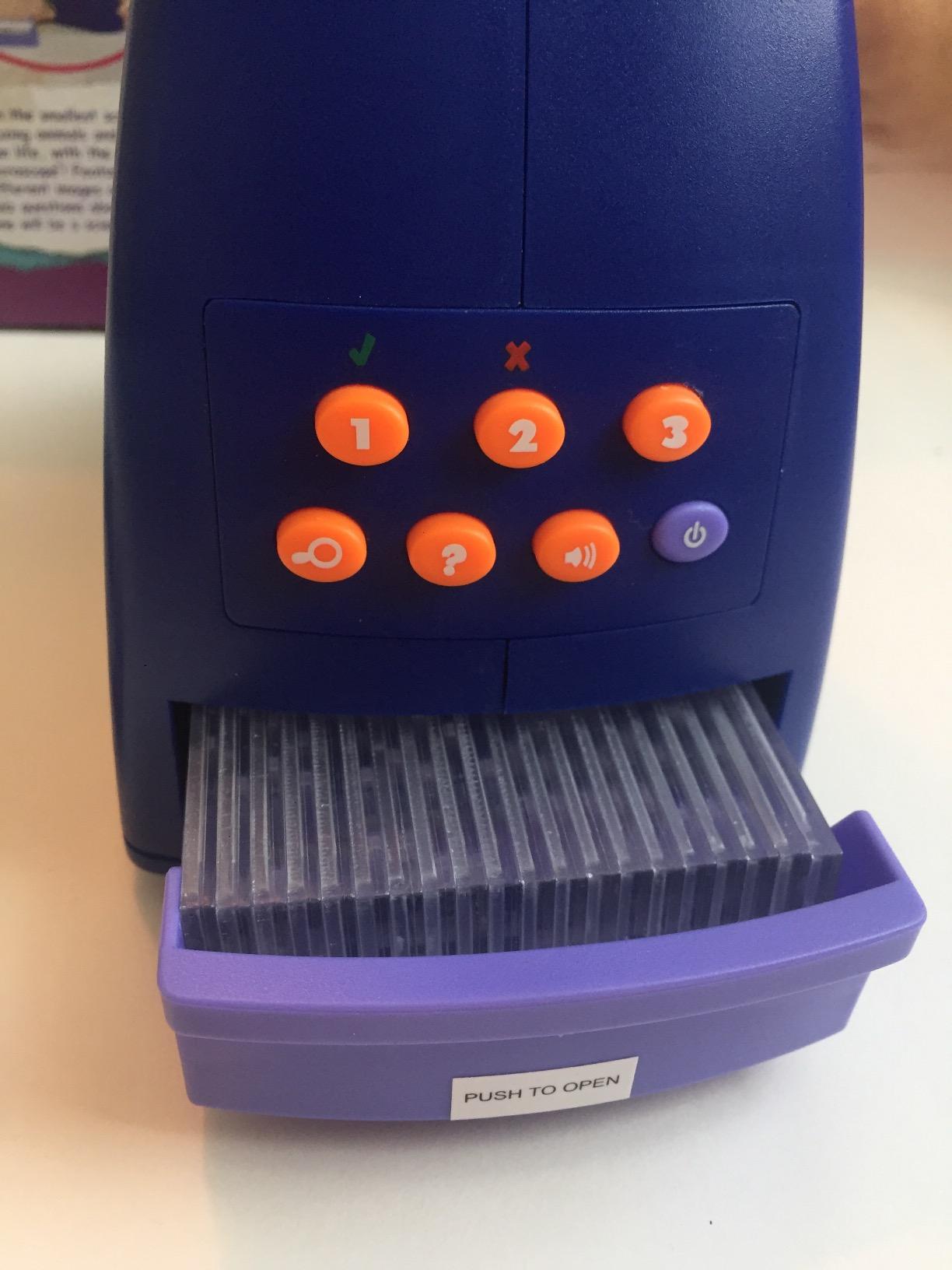
- Slides store inside the unit
Cons
- Slides have no visible flat-side marking so orientation confuses small hands
- Audio can trigger on the wrong image if a slide is not seated
- No true focus function and it is a fixed-magnification viewer
This is the most-reviewed microscope in our entire set, with a 4.6 average, and for its actual target age it is very hard to argue with. A child slides a prepared specimen in, presses a button, and a narrated voice talks about what is on the slide. Then it flips the script and quizzes the child on it. The engagement loop is doing the teaching here, not the optics.
We used it with a 4-year-old and a 7-year-old in the same room, and the younger one used it completely unaided for over 20 minutes. The 20 slides carry 60 full-color images spanning insects, plant sections, salt crystals and blood cells, and there is a small compartment inside the unit that holds the slides so the set does not scatter across a table within a day.
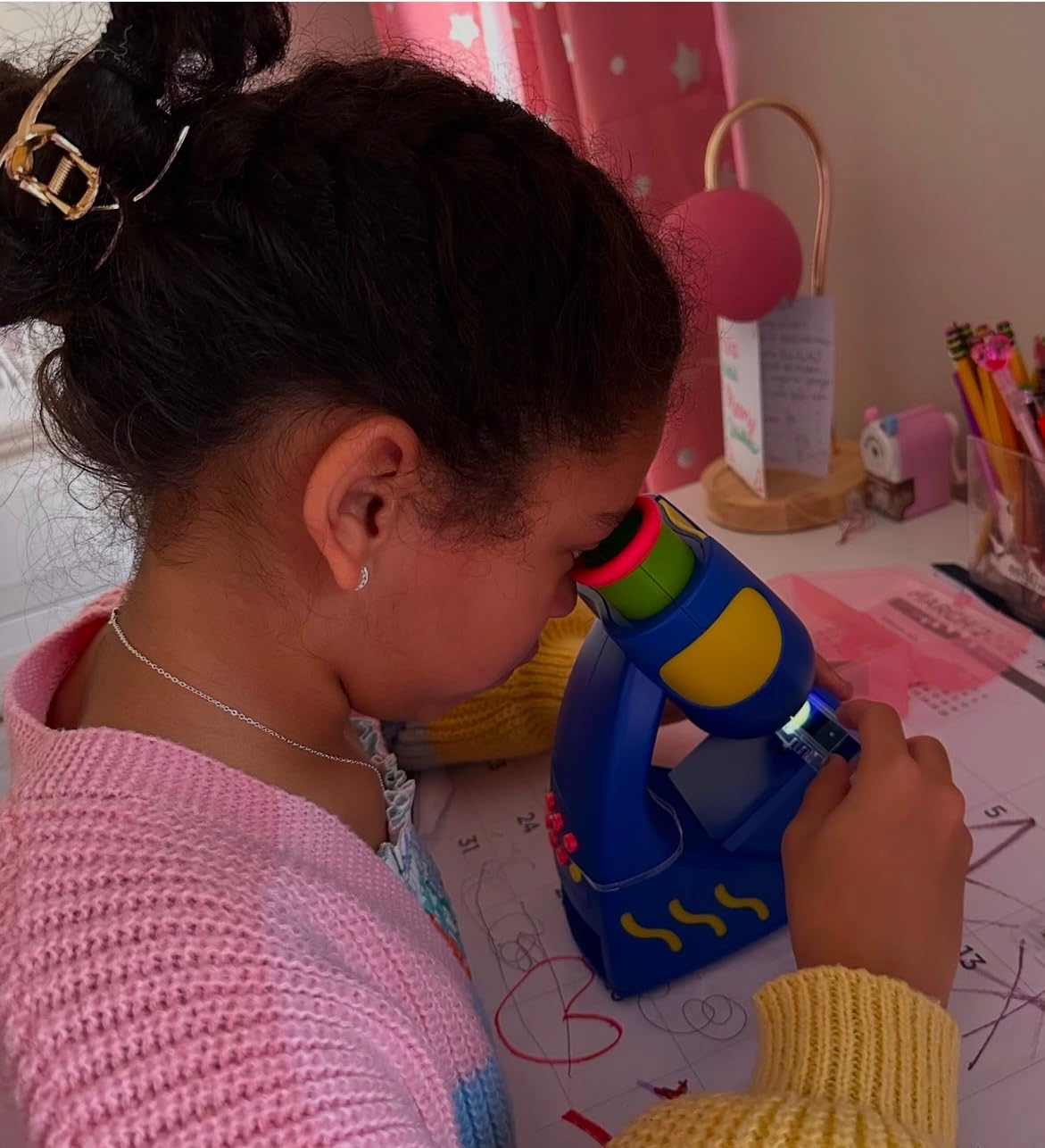
Two things catch parents out. The slides must go in flat-side down and the two sides look identical, so a small child guesses and gets it wrong about half the time. When that happens the narration can fire for the wrong image, which is confusing enough that we would tape a small dot on the flat side of every slide before handing it over.
The second is more important for anyone reading this as a science-project roundup: this is a viewer, not a microscope. There is no focus knob, no objective turret and no way to look at a specimen the child has collected themselves. If the project requires evidence gathered from a pond or a garden, this is the wrong tool no matter how well rated it is.
When this scope earns its place
It earns its place when the child is under 8 and the goal is building vocabulary and attention span, not data collection. Owners repeatedly report the narration buying their child twenty uninterrupted minutes, which for a four-year-old is a genuine science win. The 3 AAA batteries are not included, so add those to your list before the first session.
It also works as a bridge device. A child can learn “this is a bee wing, this is a scale, this is a plant cell” here, then move up to a real scope six months later without starting from nothing. That progression matters more than the magnification figure on the box.
When to skip it
Skip it for any project that needs a specimen the child collects, any project for a child over 8, and any child who quickly gets bored by narration. There is no manual focus, so a child asking “can I look at my own onion” gets a no. The one-year manufacturer defect warranty is also the shortest-term support in this group, which matters if the unit gets dropped.
The audio is English only, with no language option, which is worth checking against your household. Everything about this product is designed for independent play rather than research, and that is a fair trade only in the preschool bracket.
2. National Geographic Dual LED Microscope Science Kit – Best All-Rounder for Ages 8-12
National Geographic Dual LED Microscope Science Kit for Kids Ages 8-12
Metal and glass construction
Dual LED illumination
20x and 50x optical lenses
2 pounds
Pros
- Dual LED handles both prepared slides and opaque 3D objects
- Metal and glass build survives rough handling
- Objective sits far from the specimen so lenses are safer
- Brine shrimp eggs and a hatchery included
- 50+ accessories
Cons
- Glass stage can crack if dropped
- Eyepieces are not retained and can fall out
- Bottom light can be too bright without diffusing
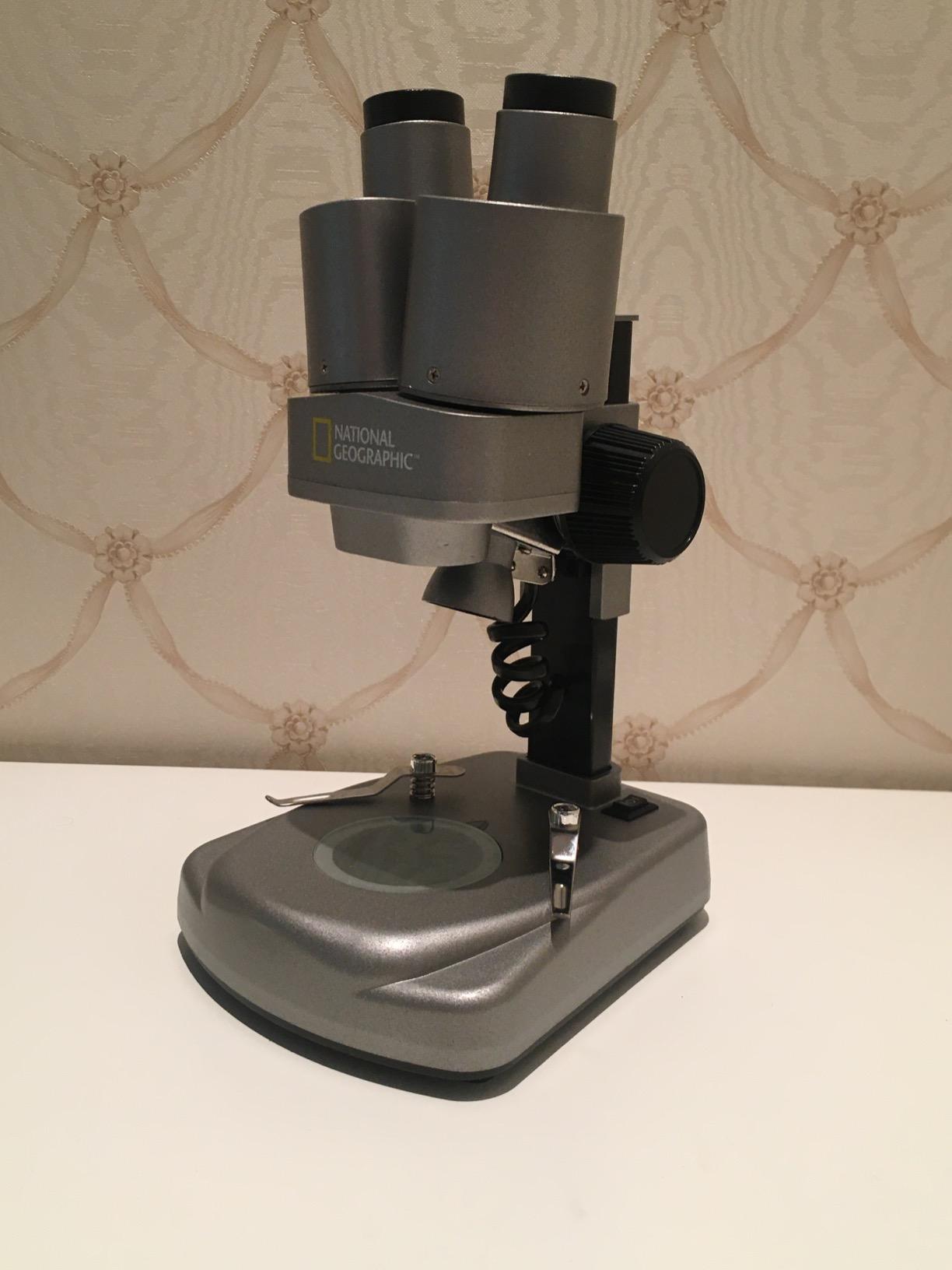
Most school-age projects need two things this kit delivers better than anything else in the list: light from above and below, and a build that takes being knocked about. The dual LED illumination means a prepared onion slide works from underneath while a coin, a geode or a bug leg works from the top. That single feature removes the most common dead end in kids microscopy, where a child wants to look at something solid and the light is on the wrong side.
The magnification is 20x and 50x, which sounds modest next to the 1000x claims on this page, and that is exactly the point. This is honest, low-power optical magnification that produces a sharp image. For onion skin, hair, fabric weave, salt crystals and a brine shrimp hatchling, it is more than enough, and everything a child sees is genuinely in focus.
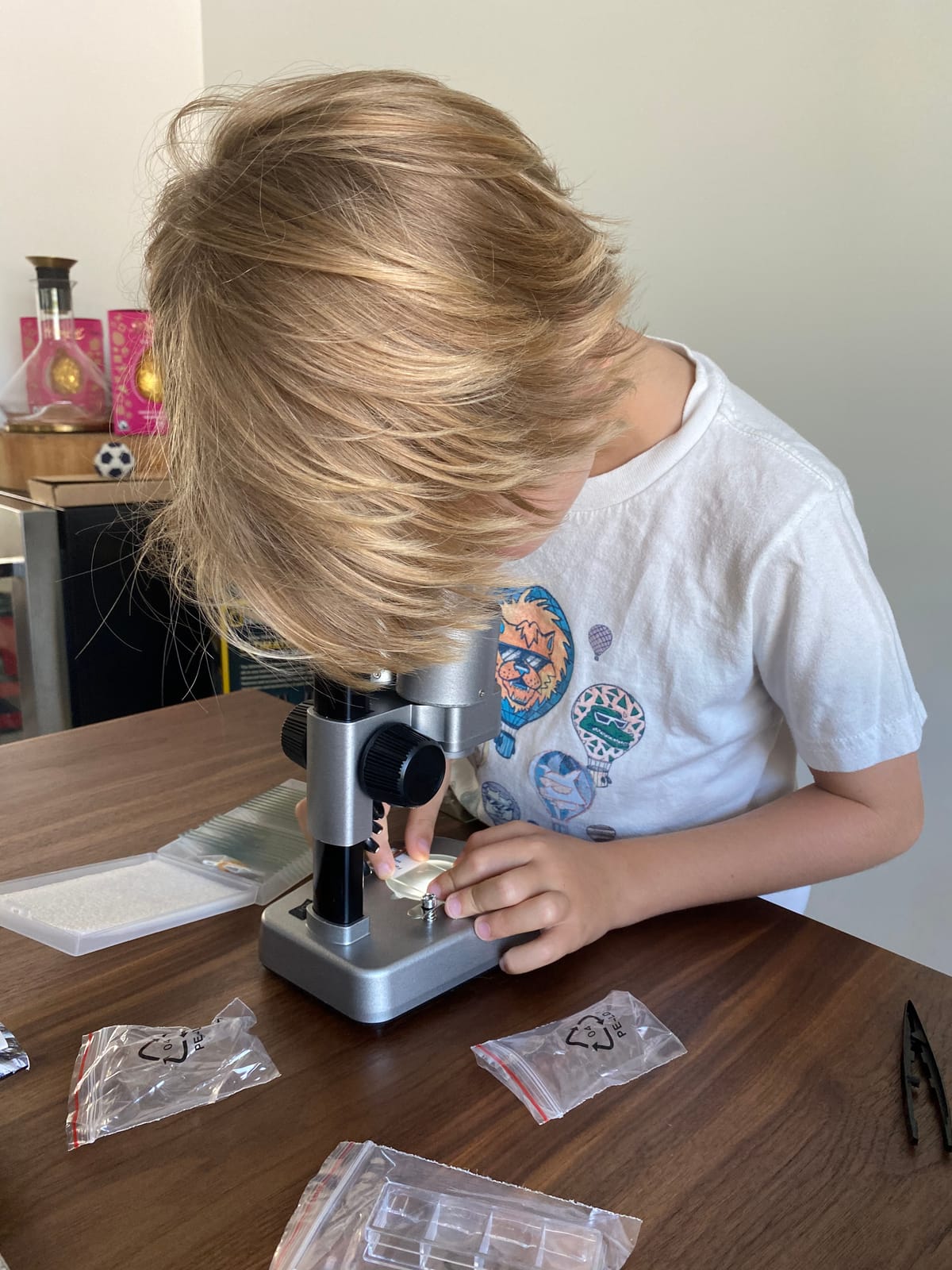
The accessory count is where this kit pulls clear of its rivals. You get prepared slides and blank slides, tweezers, a dropper, biological specimens, a mini geode, a full-color learning guide and a padded storage container. The brine shrimp eggs and hatchery are the standout item, because hatching shrimp takes four days of attention and gives a child a living thing to track for a genuine multi-week project.
One reviewer we noted did report brine shrimp eggs that failed to hatch after four days, so treat that as a bonus experiment rather than a guaranteed one. The lower objective also sits well clear of the stage, which matters more than it sounds: a short working distance is how children crack objective lenses on cheaper kits.
Why we rate it the premium pick
Reviews of this kit consistently describe sharp, detailed images from a kids microscope, with children aged 7 to 14 using it independently for onion skin, hair strands and pond water. The metal and glass construction reads as a real instrument rather than a toy, and the padded case survives a trip to school for show and tell.
It is also the easiest of the eyepiece models here to hand over unsupervised, because there is no fine power setting to hunt for. A child can run the full range without getting lost, which suits a parent who wants the microscope to work in a 7-year-old’s hands without coaching.
What to watch out for
The two physical weaknesses are real and they are both about glass. The stage and condenser can crack if the unit is dropped, and the eyepieces are not locked into the body, so picking it up from the rear will send them out onto the floor. Teach the lift-from-the-base rule before the first session.
There is no diopter adjustment, so children with slightly different vision can struggle to get a clear image from a single eyepiece. And the bottom LED is bright enough to wash out a pale specimen, so dim the room rather than the lamp, and expect to rotate the first slide you look at to find a thinner spot.
3. National Geographic Microscope with Up to 400x – Best Value Starter Kit
National Geographic Microscope for Kids with Up to 400x Magnification
Up to 400x across three levels
LED above and below
1.8 pounds
Includes rock and mineral specimens
Pros
- Large focus knobs and soft-touch eyepiece suit small hands
- Three magnification levels with lights above and below
- 6 prepared plant slides plus rocks
- minerals and blank slides
- Pipette
- dish and tweezers support real experiments
- Lab guide with activities and merit badge stickers
Cons
- Focus knob is stiff and jumps rather than gliding
- LED illumination is dim for some setups
- Optics are average and higher settings are imprecise
This is the most straightforward answer to “which microscope should I buy for a child around 6 to 8” and the value in the box is real. Three magnification levels topping out at a published 400x, lights above and below the stage, and a specimen set that includes six prepared plant slides, six rocks and minerals and six blank slides.
Rocks and minerals are an underrated inclusion. A child can hold a mineral up to the top light and see crystal structure immediately, with no slide preparation, no staining and no risk of a ruined sample. That is often the first thing that makes a child feel like a microscope is magic rather than a chore.
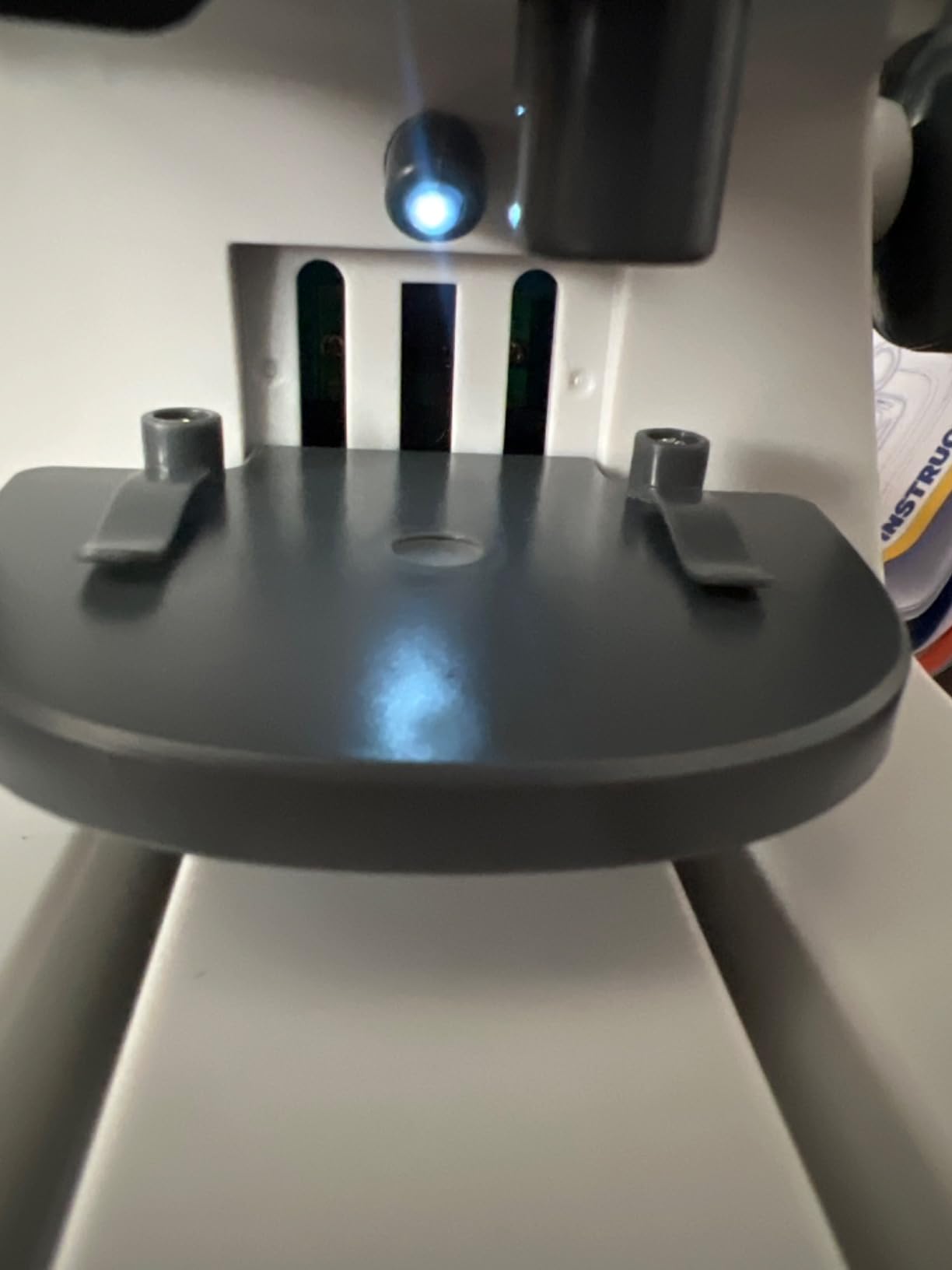
The large focus knobs and soft-touch eyepiece are the features that show this was designed for small hands. The pipette, specimen dish and tweezers are the bits that turn it from a viewer into a tool, because they are what a child actually needs to drop a drop of pond water onto a blank slide and cover it.
The lab guide adds activities, a super scientist game and merit badge stickers, which sounds like filler until you watch a child who has lost interest in a task suddenly track completion. Its ranking in the Kids’ Microscopes category shows how commonly it gets bought, either as a first microscope or as a replacement for a disappointing one.
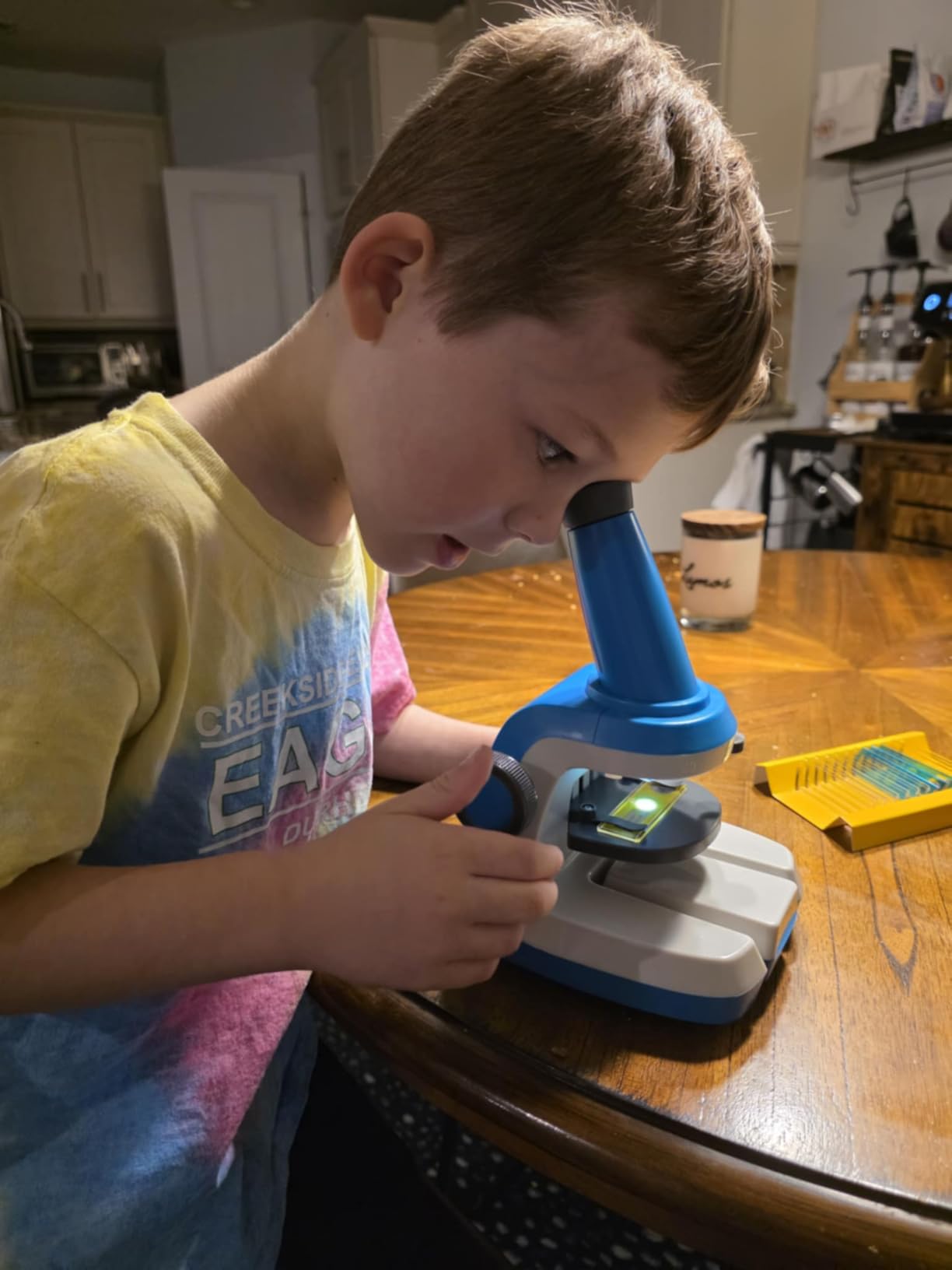
What it does well for projects
For hair, insect legs, thread, bread, fabric and household objects, this scope covers the classic elementary science fair list. The dual lighting means a solid object and a transparent slide both work, and 400x is enough to see onion cell walls clearly enough to draw them for a display board.
Reviews treat it as a solid first microscope for ages 5 to 8, with children examining specimens independently. For a project about leaf structure, rock texture or the difference between plant and animal cells, it does the job and then the child is ready to move up.
Where it falls short
The focus knob is stiff and jumps rather than moving smoothly, and that is the most-cited complaint in reviews. A child turning a coarse knob in small increments either overshoots into blur or cannot find the plane of focus at all. Show them the trick: turn the knob until the image is just barely visible, then back off a fraction.
The LED light is also dim in reviewers’ accounts, which makes focusing harder for younger children in a bright room. And the optics are average, with higher magnification settings that are not very precise, so do not promise a child cell-level detail at the top setting. Treat the 400x as a headline for the box, and plan projects around the lower two levels.
4. BEBANG Kids Digital Microscope – Best for Photographing Findings
Kids Digital Microscope STEM Toy: Complete Science Gift Kit for Ages 4-12
4K screen with 200x-1000x
32GB memory card included
0.34 lb rechargeable body
3 x 1.8 x 4 inches
Pros
- 32GB card means photos and video work out of the box
- Five real lab-grade glass prepared slides rather than printed imitations
- Pocket 0.34 lb body with a neck strap for outdoor use
- Upgraded 3mm slot passes standard glass slides smoothly
- Custom EVA hard case keeps everything organized
Cons
- Effective magnification is limited by screen and lens resolution
- Needs manual distance and light adjustment for a clear image
- Rechargeable battery gives about 2.5 hours of use
If the project ends in a display board with printed photographs, a screen-based scope changes the workflow completely. There is no eyepiece to squint through and no sharing problem, because the whole family can look at the screen at once. That matters in a multi-child household where eyepiece turn-taking is a daily negotiation.
This unit is the only one in the group that comes with a 32GB card already inside. Every other digital scope here needs you to buy storage separately before you can save a single photo, and reviewers consistently single out the bundled card as the reason this one separates itself from cheaper handheld toys.
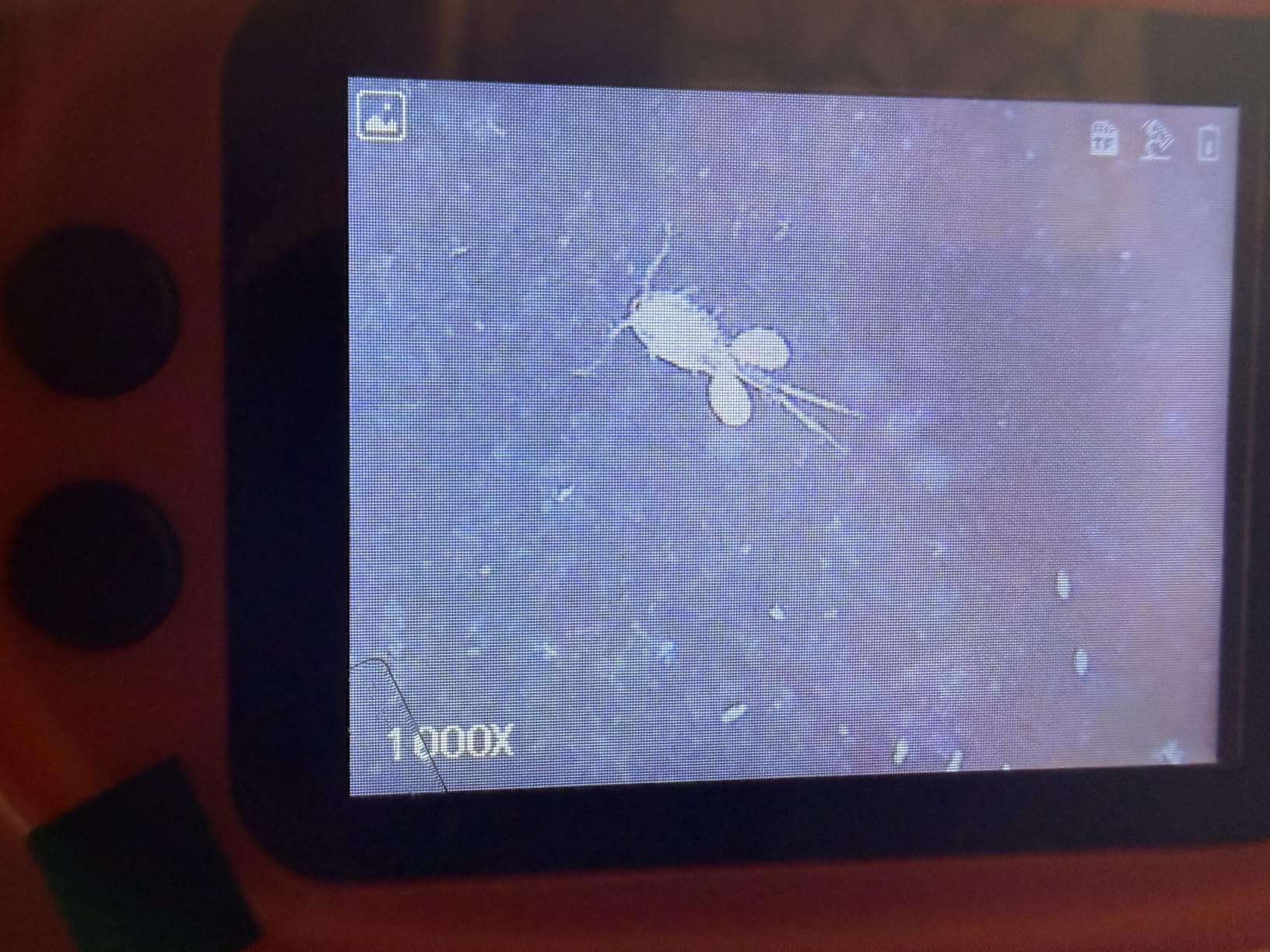
The five included prepared slides are real lab-grade glass, not the printed plastic imitations found in budget kits. Combined with the upgraded 3mm slide viewing slot, that means standard 1-inch glass slides you buy later actually fit, so the scope is not locked into the samples it came with.
Portability is the quiet strength here. At 0.34 pounds with a wide neck strap, a child can carry it to the pond, the garden or the school field trip. The custom EVA hard case is the kind of protection that matters for a school field trip or a sleepover at a grandparent’s house.
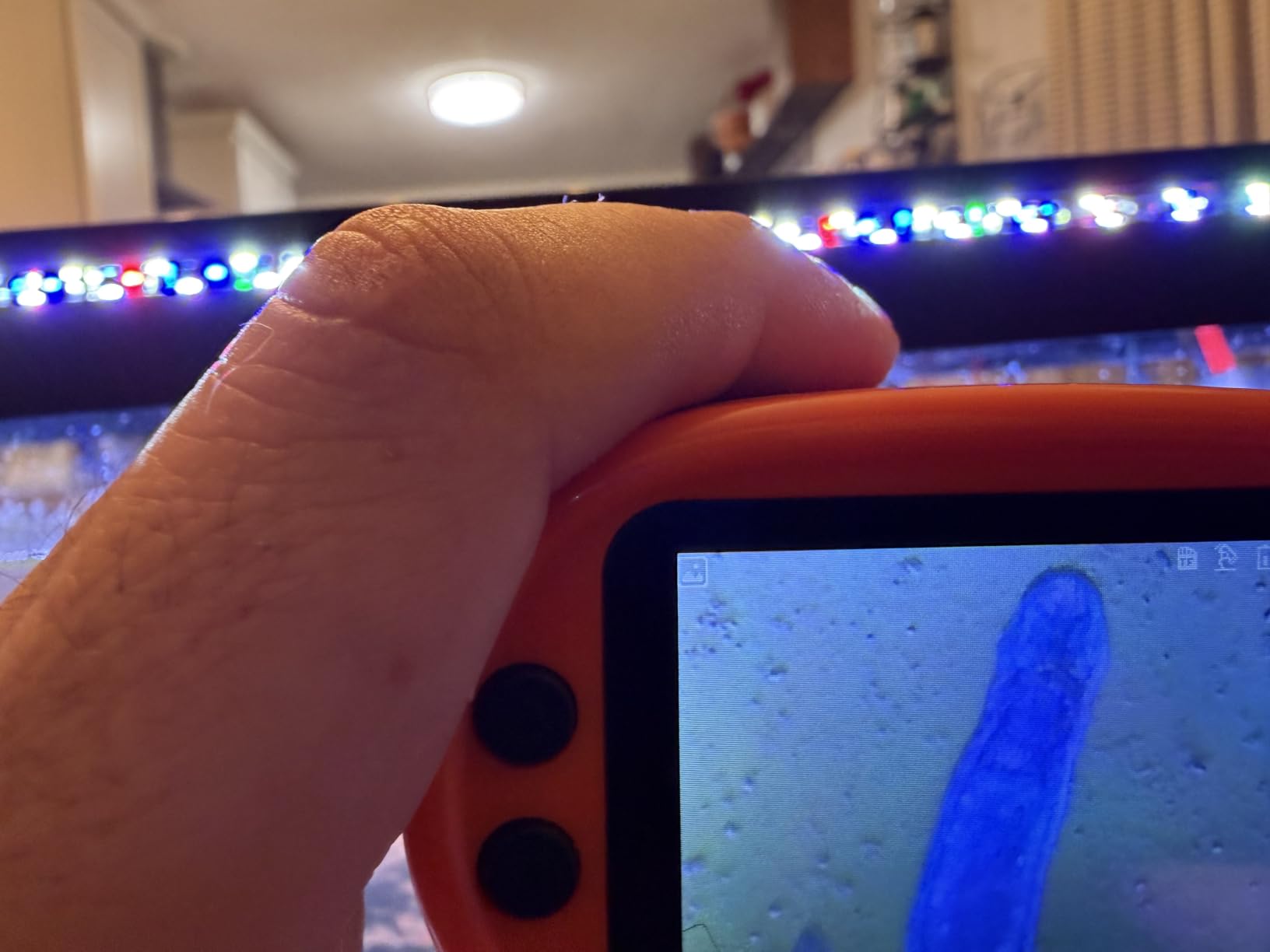
Where it earns its badge
This is the scope we would pick for a project that needs evidence: photograph each specimen, label the file, transfer to a computer, print. The 4K screen with adjustable LED lighting gives a child immediate feedback, which is the fastest way to teach the habit of checking a sample is actually in view before drawing conclusions from it.
It also works well as a shared instrument. Siblings watch the same display instead of taking turns, and a parent can help identify a structure without crouching over an eyepiece. The rechargeable Type-C design avoids the AAA battery shopping that several battery-powered models here require.
What to be honest about
The 200x to 1000x range is real as a published figure, but effective magnification is limited by screen and lens resolution, so the top end is not resolving detail a lab microscope would. Getting a clear image needs manual adjustment of distance and LED lighting rather than an autofocus, which asks for patience from a younger child.
The rechargeable battery runs about 2.5 hours of continuous use, so plan a charging session before a long session. And for anything beyond a small screen, the best results come when you view images on a compatible computer or phone, which adds a step to the workflow that a purely optical scope never requires.
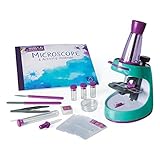
5. Nancy B’s Science Club Microscope – Best for Structured Guided Learning
Educational Insights Nancy B’s Science Club Microscope for Kids, Microscope Kit, Gift for Boys & Girls, Ages 8-12
2-in-1 light and dissecting scope
30x to 400x
Rubber eye cup
22-page activity journal included
Pros
- 2-in-1 works as both a light microscope and a dissecting scope
- 22-page activity journal that most scopes in this range lack
- 26-piece tool set with prepared and blank slides
- Illuminated from top and bottom so no mirror is needed
- Rubber eye cup and simple focus knob
Cons
- Focusing shifts the slide on all three axes
- Optics and eyepieces are plastic so images stay soft
- Build feels light and flimsy in a child's hands
The reason most parents buy this kit is the 22-page activity journal, and it is a better reason than the microscope. A journal turns a loose collection of slides into a sequenced curriculum, with a task per session, so a child always knows what to do next instead of asking what a microscope is for.
For a homeschool family or a child who finishes every activity and asks for more, that structure is the product. Teachers on r/ScienceTeachers and r/biology repeatedly report the same thing: once standard prepared slides are exhausted, the bottleneck is not the microscope, it is running out of projects, and this kit is the one in the list that ships with a queue of them.
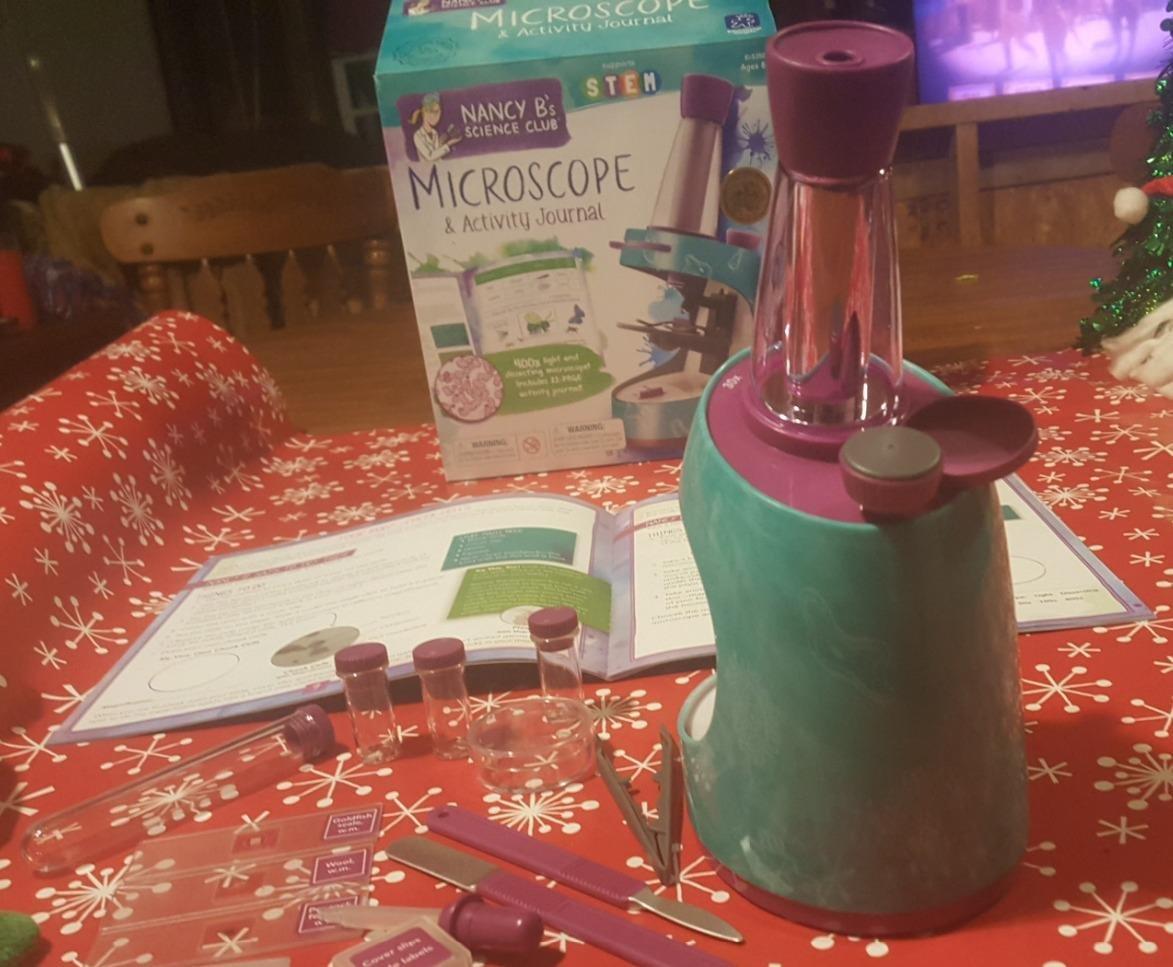
The 2-in-1 design is genuinely useful. The same body works as a light microscope for slides and as a dissecting scope for solid objects, and the top and bottom illumination means you never need a mirror or a desk lamp to start a session.
The 26-piece tool set includes prepared and blank slides, which is what makes the journal workable. A child following the journal is actively making their own specimens rather than only looking at factory ones, and the rubber eye cup is a small touch that noticeably improves a first session for a younger child.
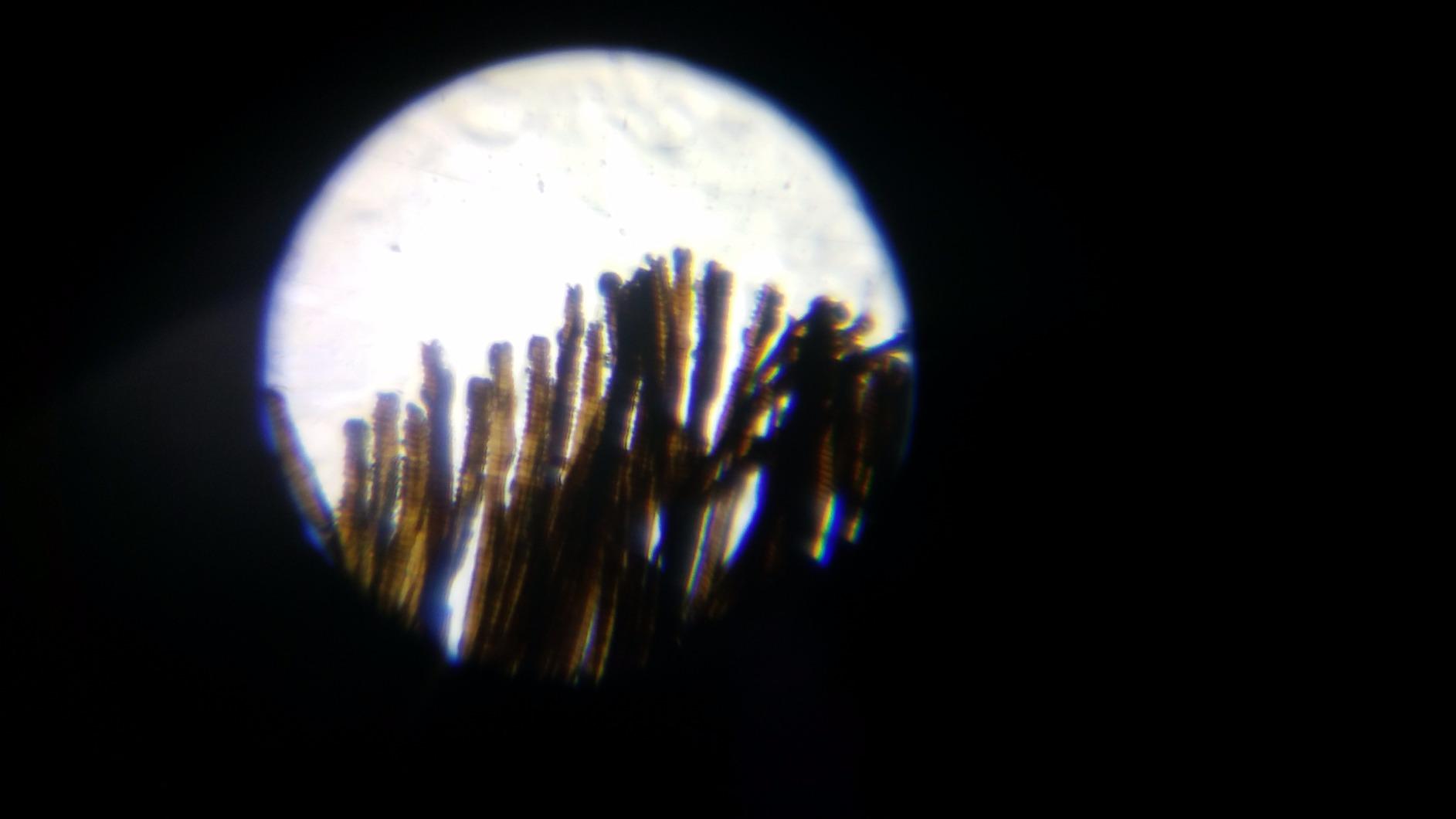
Why the journal matters more than the optics
A 4.2 average rating is the lowest among the eyepiece models in this group, and the complaints are all mechanical. But the journal is the differentiator nobody else here offers, and it is what turns a purchase into a term’s worth of use rather than a weekend of novelty.
It also solves the most common project failure mode. When a child has no next task, frustration ends the interest. When a child has a page to turn, the same microscope keeps giving. For that reason we would put this kit on a shortlist for a child who already has a sibling’s scope to play with.
Where the frustration comes from
Plastic optics including the eyepieces mean the image is soft, and higher magnification settings produce a blur that cannot be sharpened. More annoying is the focus behavior: focusing shifts the slide on all three axes, so the specimen drifts out of view exactly when the child is trying to bring it into focus.
Several buyers regret this purchase after comparing it with a real school compound microscope, and the build does feel light and flimsy in a child’s hands. Reviewers also note it was too complex for children aged 6 and under to operate alone, so hold it back to age 8 and up with an adult nearby. The activity journal is English only.
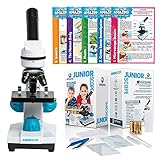
6. Omano Juniorscope – Best Glass Optics at 40x, 100x and 400x
Omano Juniorscope Microscope for Kids – Microscope Kit for Kids 8+ for Science Microscope Experiments – Kids Microscope Kit that Encourage STEM Exploration – Beginner Microscope for Kids 8+
Glass objective lenses
40x, 100x and 400x
3 pounds
Lifetime limited warranty
Pros
- Glass objective lenses give noticeably clearer images than plastic-optic kids scopes
- Three real levels at 40x
- 100x and 400x suit solid and transparent specimens
- All-inclusive kit with petri dish
- forceps
- dropper
- test tube and slides
- Includes the Amazing Microscope Adventures guide with five experiments
- Lifetime limited warranty
Cons
- Bulkier and heavier than most entry-level kids microscopes
- Optics still fall short of a true school compound microscope
- Some activities in the guide need adult supervision
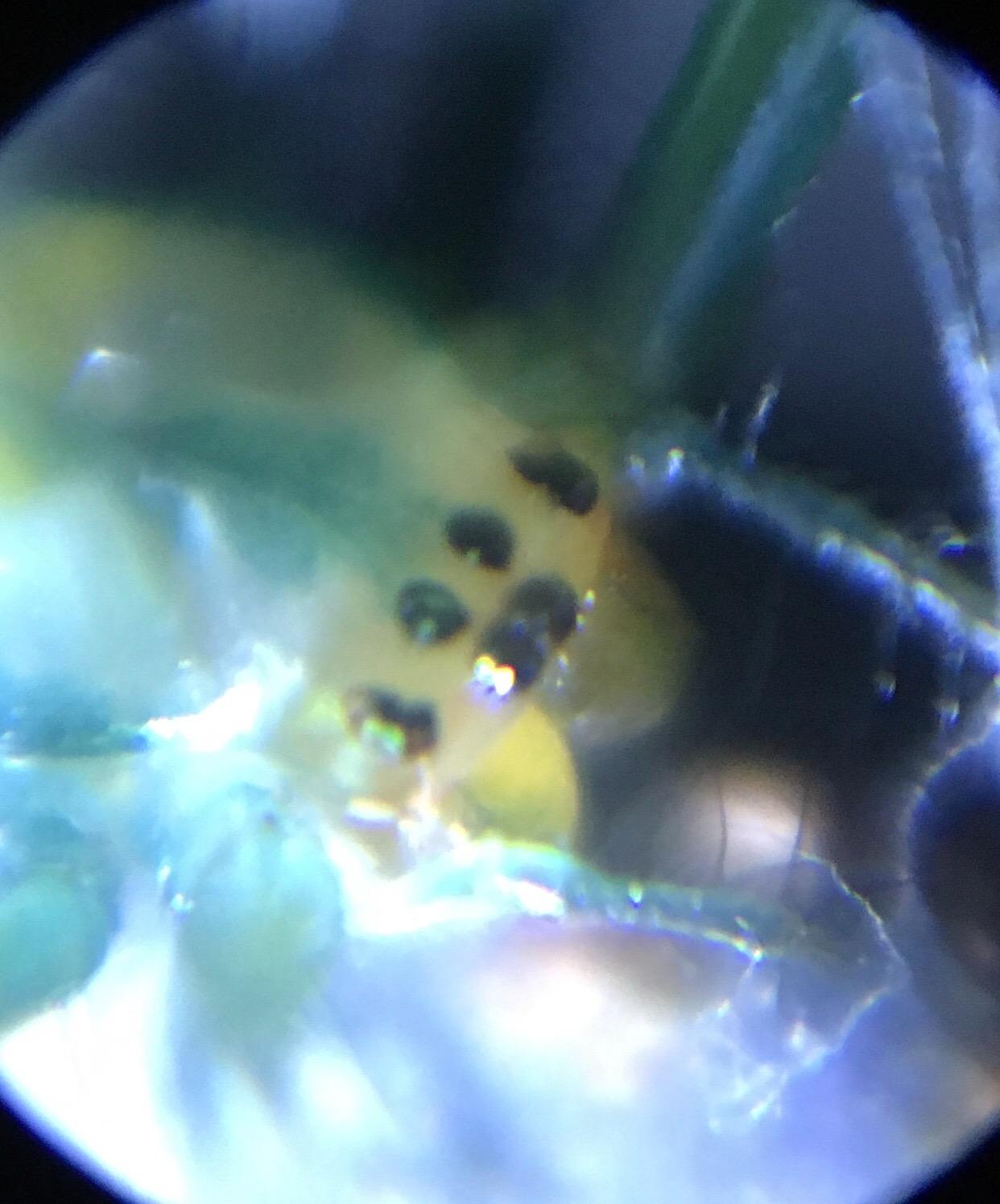
Glass objective lenses are the whole story here. At 40x, 100x and 400x with real glass, this is the model in the group whose 400x figure comes from real glass rather than a printed claim, and reviewers who compare scopes side by side consistently single it out for clarity.
That 4.6 average is held with a much higher five-star share than the plastic kits we compared it against, and the reason is visible rather than claimed. When a child at 400x sees individual onion cells with clean walls rather than an orange smear, they keep going. That single experience is what separates this scope from the rest of the kids category.
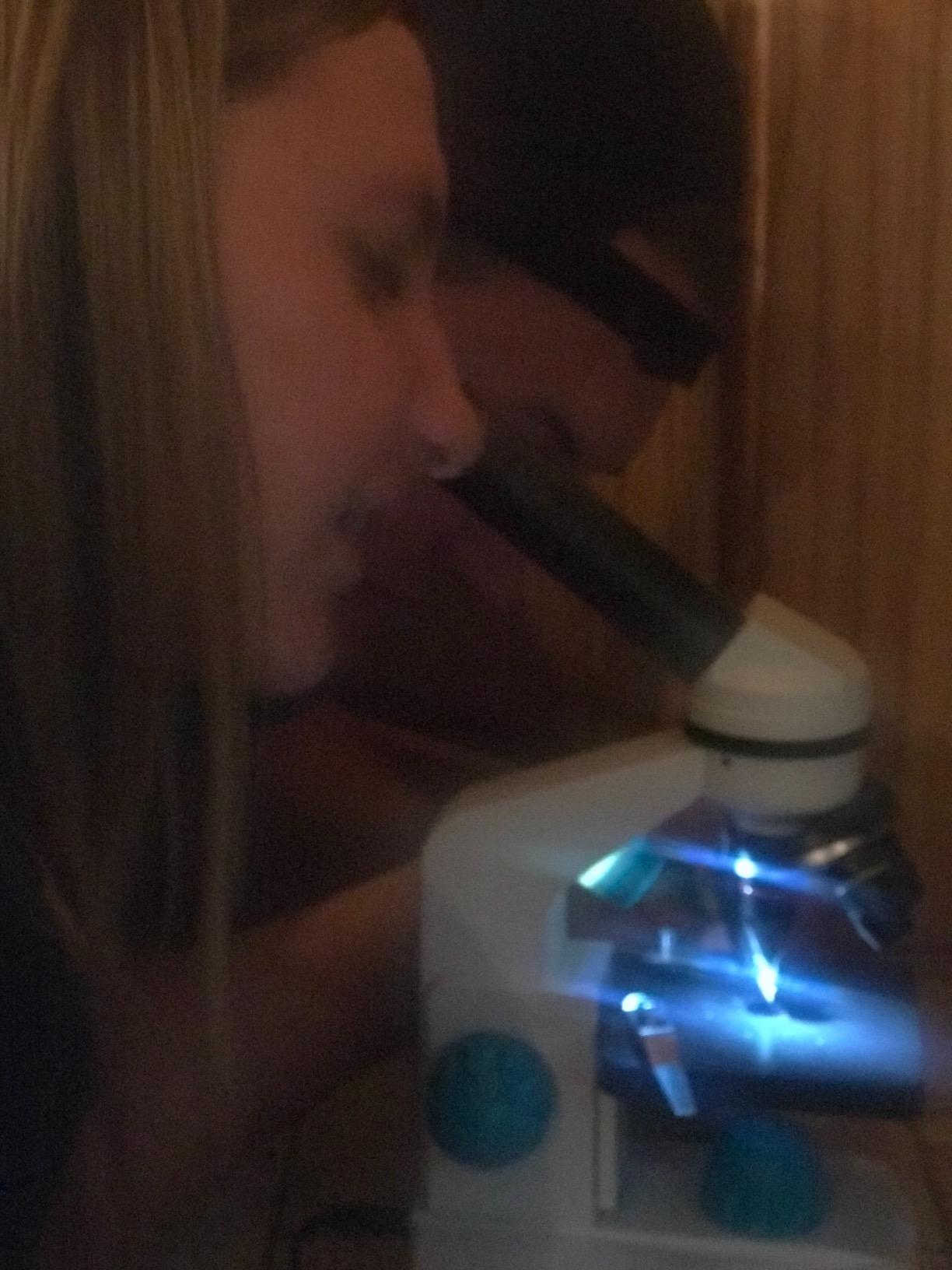
The accessory set is unusually complete for a scope at this level: a petri dish, forceps, dropper, test tube and slides. Those are the tools for real work rather than viewing, and the petri dish in particular supports experiments that a slide cannot hold, such as watching something grow over several days.
It is battery powered and portable, so backyard and classroom use are both realistic. The Amazing Microscope Adventures guide with five guided experiments gives a beginner a path, and the adjustable LED works for both solid and transparent specimens so you are not constantly repositioning the light.
Who should buy this one
Buy it for a child aged 8 and up who is already asking how things are made up, and for any project where image quality is the difference between a good result and an embarrassing one. Experienced amateur microscopists on hobby forums consistently point families toward spending on better optics rather than more magnification, and this is that advice made into a kids product.
The lifetime limited warranty is also worth noting. In a category where a one-year defect warranty is standard, a longer warranty is a genuine signal about build confidence, and it removes the risk of the disappointment-and-replacement cycle parents describe.
Who should look elsewhere
It is bulkier and heavier than most entry-level kids microscopes at 3 pounds, so it is not the scope to hand to a five-year-old or carry on a long walk. And even with glass objectives, it falls short of a true school compound microscope, so a child heading into high school biology will outgrow it.
Some activity ideas in the guide require adult supervision, which partly offsets the case for buying it as an independent instrument. Budget for a few guided sessions first, then hand over full control once the child can find the specimen on their own.
7. Educational Insights GeoSafari Kidscope – Best First Scope for Preschoolers
Educational Insights GeoSafari Kidscope
Fixed low magnification
Comfortable double eyepiece
15 slides with 60 real images
0.75 kg
Pros
- Double eyepiece means no need to close one eye
- Push-down design a 5 year old can use unassisted
- Chunky durable build survives repeated drops
- 15 prepared slides with 60 real images and a 200-fact guide
- Built-in storage drawer keeps slides organized
Cons
- Magnification is so low it shows little more than the printed slide
- No real focusing so it does not move between near and far
- Weak underside illumination needs a bright room
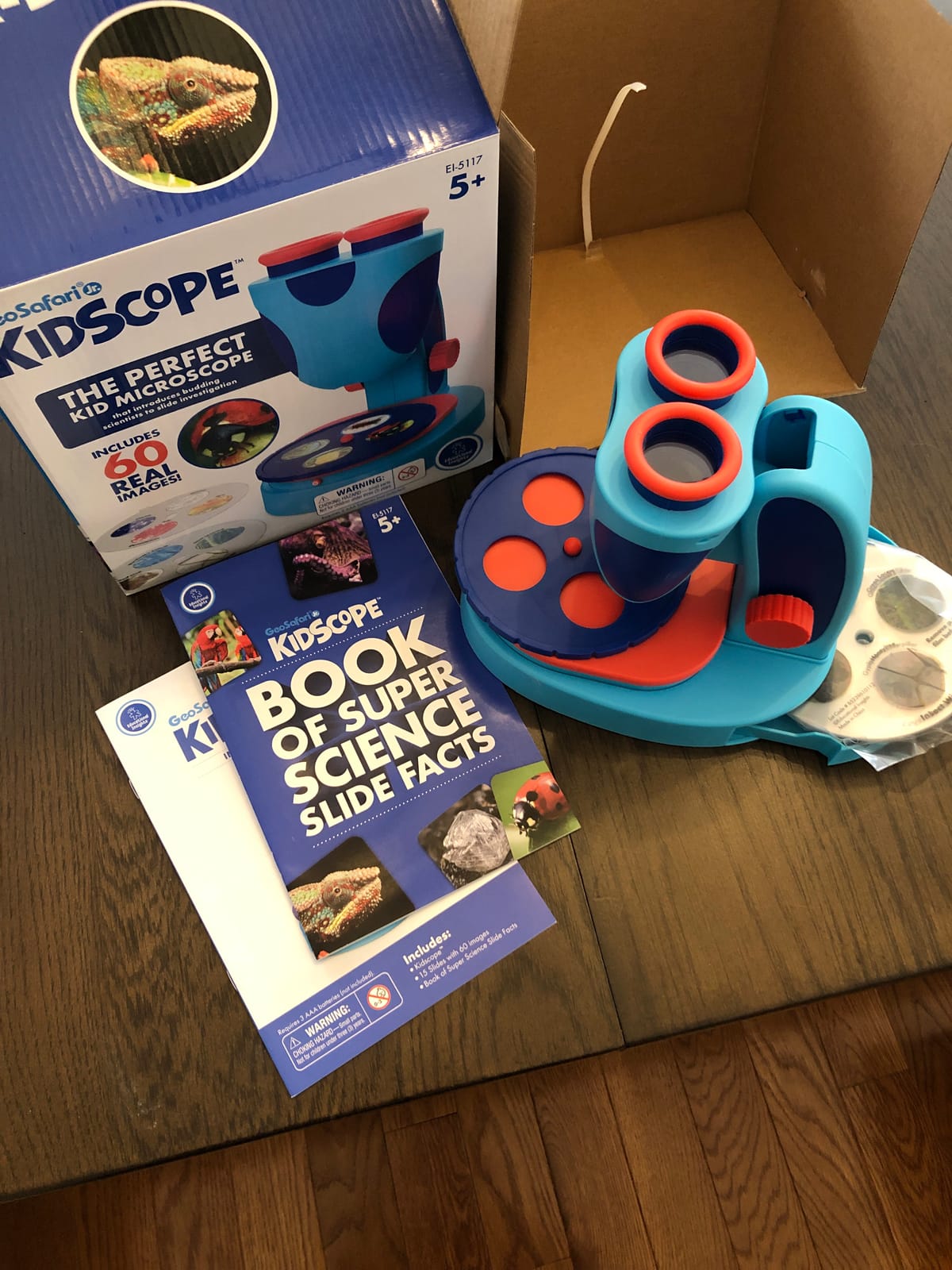
For a 3 to 5 year old, this asks for nothing at all, and that is the reason it works. No focus knob, no specimen hunting, no slide orientation to guess. A child presses down, looks through both eyes, sees a picture, and moves on to the next slide.
The comfortable double eyepiece means the child does not have to close one eye, which removes the most common reason young children abandon a monocular scope after a single session. The push-down design means a 5-year-old can operate the whole thing without instruction, and the chunky build survives being dropped onto hard floors, which is a real requirement at this age.
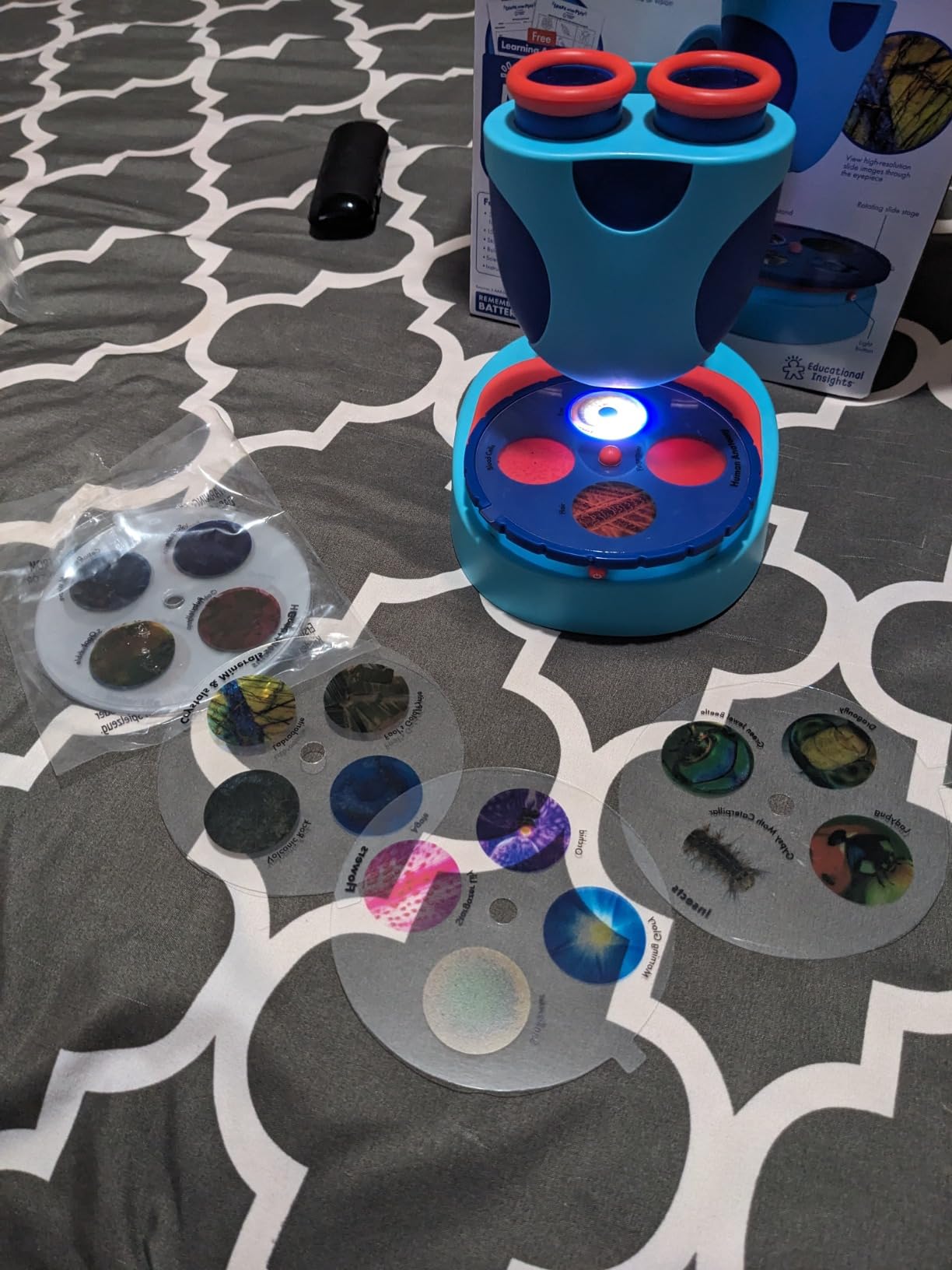
There are 15 prepared slides carrying 60 real images, a guide with 200 science facts and a built-in storage drawer. Parents of preschoolers treat the fact guide as the product: it turns slide viewing into a read-aloud science activity that a parent and child do together, and the drawer means nothing goes missing between sessions.
That is genuinely valuable for its age band, and it is also exactly the limit of it. We would not stretch the word microscope here. The published magnification figure is minimal by design, and the review consensus is that it shows little more than the printed slide images.
Why it works before it fails
Everything about the design serves a small child: two eyes instead of one, no controls to break, a base heavy enough not to slide across the table, and a form factor that fits small hands. Reviewers consistently rate it as a preschool-first scope rather than a microscope, and in that framing the 4.3 average is honest rather than disappointing.
It is a good first science toy and a good bridge. A child who has spent months excited about images on a slide is the child who will stay interested when a real scope arrives at eight or nine, and the shared reading time has value well beyond optics.
When to pass on it
Children 6 and up find it too simple, and reviewers note the build can feel cheap. The lack of real focusing means it cannot move between near and far, so it cannot show a three-dimensional object rising toward the lens, and the weak underside illumination means it needs a well-lit room to produce a clear image.
If the child has a science fair project coming, this scope will not help. A project needs a specimen the child collected, a magnification figure that survives a judge’s question, and a way to record what was found. Save this one for the preschool years and plan an upgrade.
8. Uarzt 100x-1200x Science Kit – Best for Making Your Own Slides
Uarzt Kids Beginner Microscope Science Kit with 100X-1200X, 13 Prepared Slides & DIY Blank Slides, 18MM HD Len, LED Light Adjustable and ABS Box, Microscope for Kids 5-7 8-12
100x, 400x and 1200x
18mm HD glass eyepieces
13 prepared plus 31 blank slides
ABS housing with case
Pros
- 18mm HD glass eyepieces give a clearer view than most kits at this level
- Large accessory count with 13 prepared and 31 blank slides
- Learning guide walks through each specimen and slide making
- Sturdy ABS build that does not feel flimsy
- Everything fits in the included case
Cons
- The 1200x setting is noticeably blurry and lacks detail
- Weak resolution makes fine detail hard to see
- Focusing can need adult help at first
This is the kit to buy if the project idea is that the child makes their own slides, because 31 blank slides is far more than any other model here ships with. A child who has a stack of blanks, a dropper and a guide showing how to prepare a specimen can run a real sampling project across a week rather than a single session.
The 18mm diameter HD glass eyepieces are the other reason this kit stands above its weight. Glass eyepieces are uncommon at this level, and they produce a wider, clearer field than the small plastic eyepieces fitted to most kits in the same band, which makes finding a specimen on a slide noticeably easier.
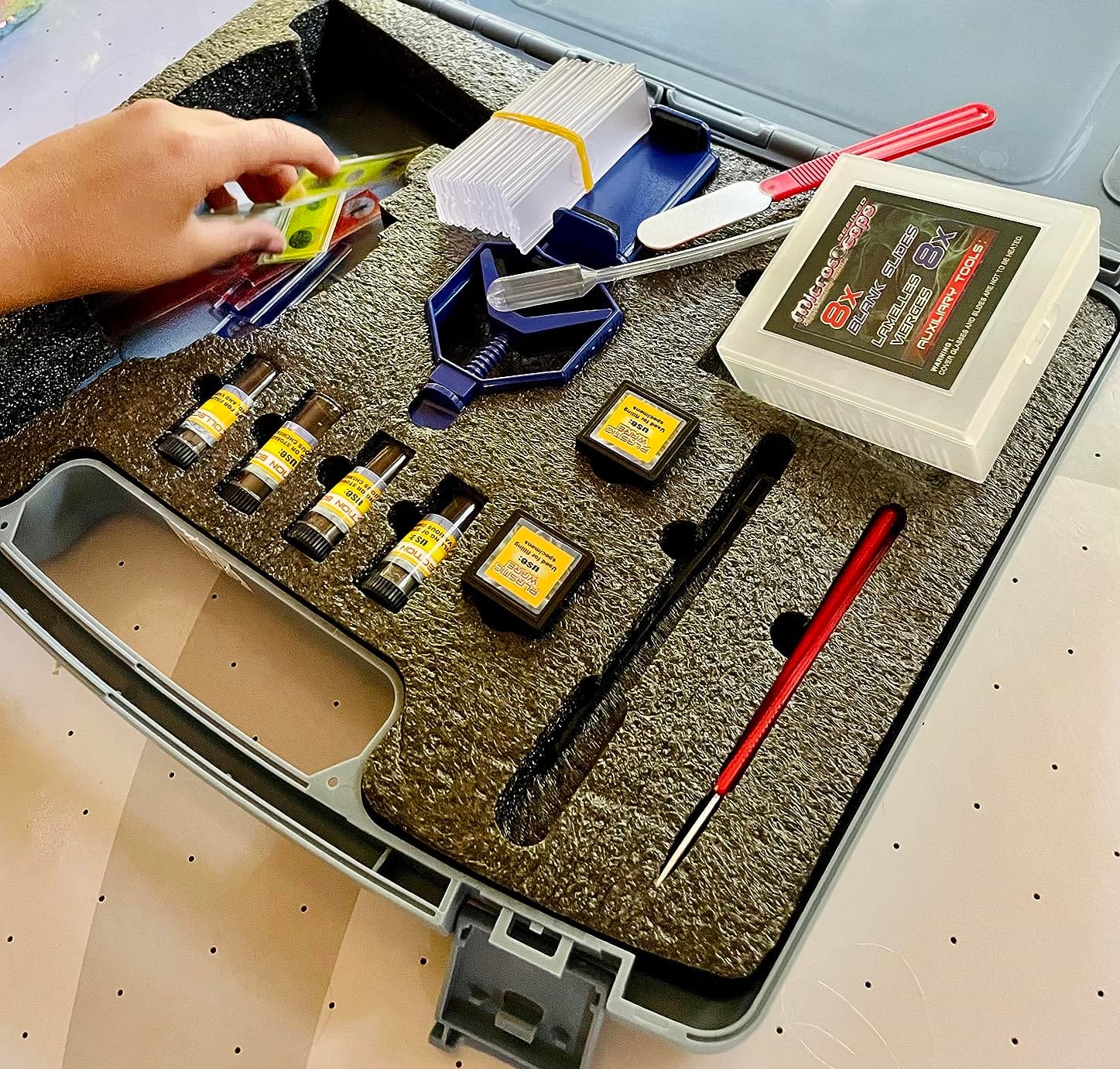
The 58-piece accessory set covers tweezers, vials and utensils, and the detailed learning guide walks through each specimen and how to mount your own. That guide is doing real work here, because slide preparation is the step where most parent projects stall and the child gives up.
Owners generally find this a capable value kit that works best for ages 7 to 12, with adults and children looking at soil, plant matter and everyday objects together. The sheer number of prepared and blank slides is what makes it feel complete rather than thin once the factory samples run out.
Reading the 1200x claim honestly
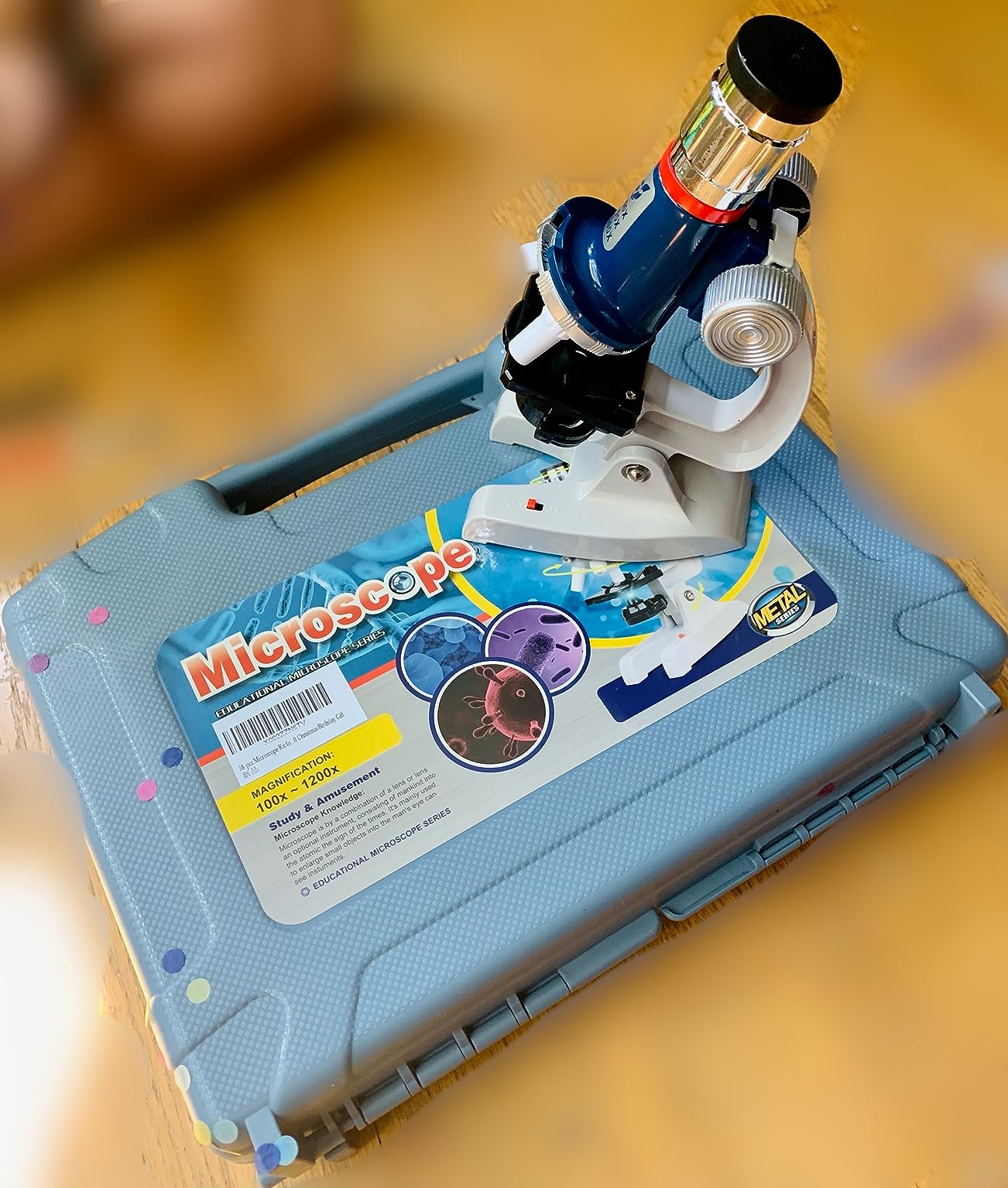
The published range is 100x, 400x and 1200x, and only the first two of those are worth planning a project around. The 1200x setting is noticeably blurry and lacks detail, and reviewers describe general resolution as soft. This is the empty magnification problem in its clearest form: the number goes up, the information does not.
We would build a project on 100x and 400x with this kit, and treat 1200x as something to demonstrate rather than to draw conclusions from. A child who is told in advance that the top setting exists to look impressive will not feel let down, and it becomes a talking point about how magnification works rather than a disappointment.
Who suits it and who does not
It suits a 7 to 12 year old who wants to collect and prepare their own material, and a family that values a big accessory count. The adjustable LED and sturdy ABS housing hold up to daily use, and everything fits in the included case for storage and travel.
It does not suit a child under 7, despite the advertised range, because focusing can need adult help at first and the resolution will disappoint a child expecting laboratory detail. The scalpel and other utensils included are cheap plastic imitations, so keep those out of reach of small hands entirely.
9. Ashfly 500X Digital Microscope – Budget Pick for Quick Surface Work
Ashfly Kids Microscope, 500X Digital Magnifying Glass, STEM Toy, Purple
500x with macro autofocus
2-inch IPS screen
8 adjustable LEDs
4.9 ounces
Pros
- Macro autofocus brings details into view with no focus wheel
- 2-inch IPS screen and 8 adjustable LEDs give even lighting
- Doubles as a traditional magnifying glass for quick checks
- One-hand 4.9 oz body with a USB-C rechargeable battery
- Connects to a Windows computer for a larger live image
Cons
- 500x is the practical ceiling and detail softens beyond it
- Internal memory holds about 200 photos and no card is included
- 500x is a digital rather than purely optical figure
The strongest thing about this handheld is that it removes focusing from the conversation. Macro autofocus means a child picks it up, points it at a leaf and sees detail, with no focus wheel, no learning curve and no risk of the frustration loop where a child cannot find the specimen and quits.
For a 5 to 12 year old on a first instrument, that friction removal is worth more than a magnification figure. Parents of this age group value how little setup the screen adds, and reviewers describe children finding an insect, a leaf or a fabric thread within seconds of picking it up.
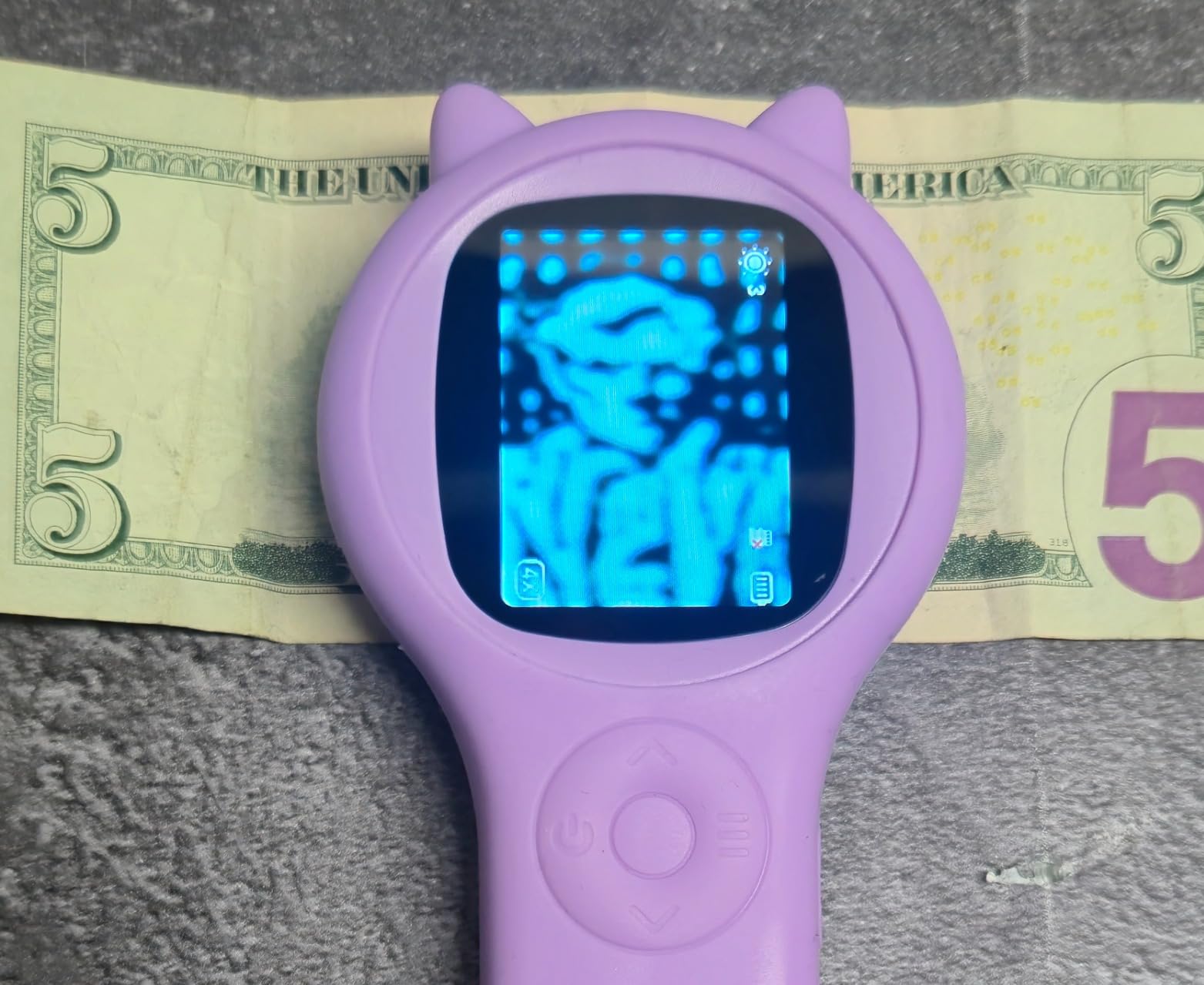
The 2-inch IPS screen with 8 adjustable LEDs gives even lighting for most specimens, which solves the shadow problem that plagues handheld work. It also doubles as a traditional magnifying glass for quick viewing, and at 4.9 ounces with a one-hand design and a hanging rope, a child can carry it around the house or garden without an adult carrying it.
It connects to a Windows computer for a larger live image, which is how a parent or teacher would show a group of children the same specimen at once. For a classroom demonstration or a homeschool group this is a genuine advantage over an eyepiece scope.
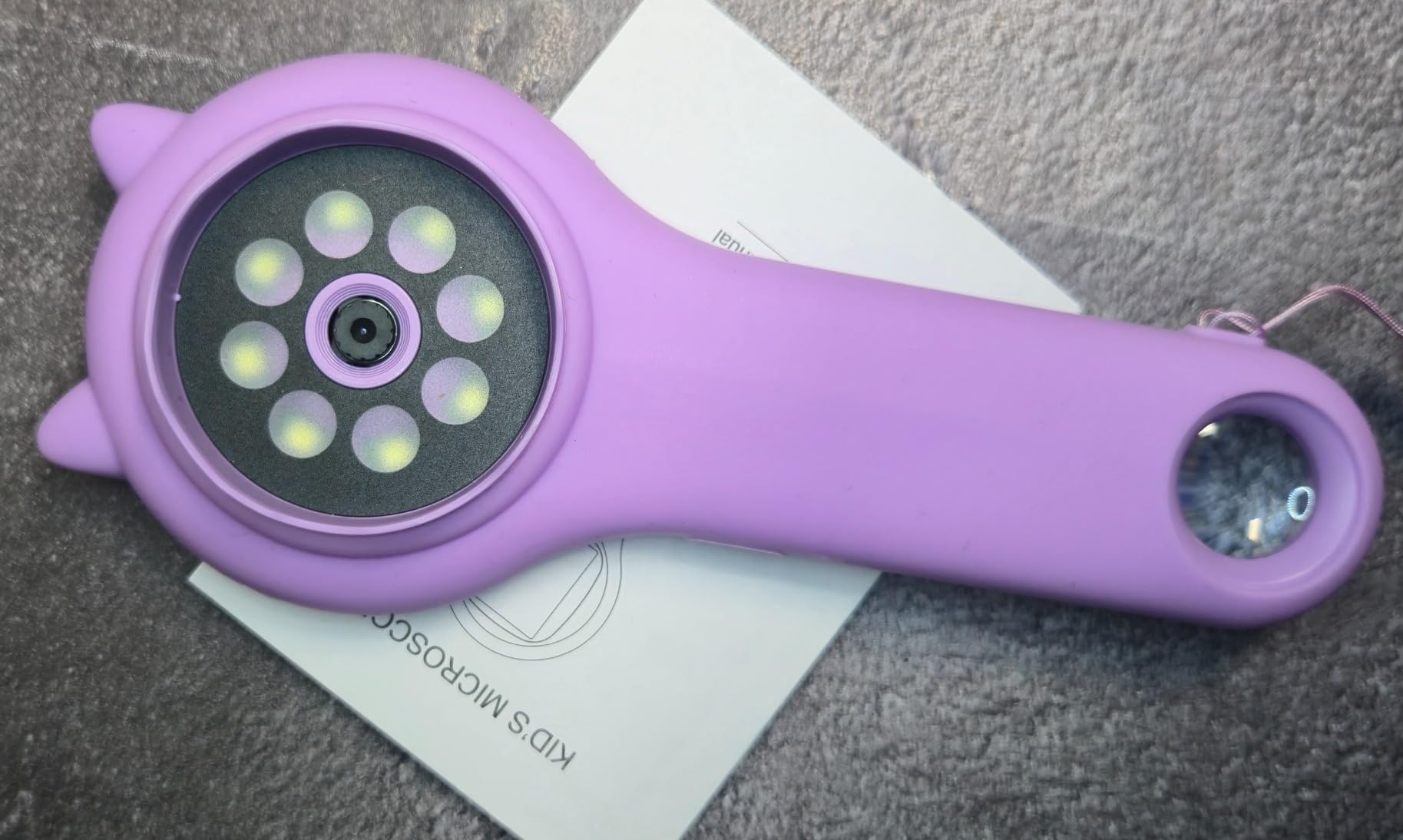
Where it earns the budget badge
Treat 500x as a practical ceiling rather than a headline. Image detail softens beyond moderate magnification, and the 500x figure is digital rather than purely optical, so a child comparing it against an eyepiece scope at 400x will not automatically see more.
What it does give you is surface detail and macro work, reliably, at a price point that suits a first instrument or a second one for a sibling. The macro autofocus plus eight LEDs combination is more useful in practice than a higher number on a scope that needs adjusting to become sharp.
Where it stops
Internal memory holds about 200 photos and no memory card is included, so video capture is not possible out of the box. A microSD card up to 64GB is supported, and buying one immediately is the first thing we would do with this product.
It is also not useful for prepared slide work, because it is not a traditional eyepiece scope. If the project needs thin-section slides, onion cells or anything mounted under a cover slip, this is the wrong tool and you should look at an eyepiece model instead.
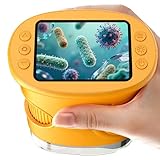
10. BMDSAE 1000X Handheld Digital Microscope – Best Pocket Digital Setup
1000X Handheld Digital Microscope for Kids: Pocket Microscope with 2.0″ IPS Screen – STEM Toys Birthday Gifts for Girls Boys Child – Portable Edu Science Kits Toddler Age 3-6 6-12
1000x with 2MP camera
2.0-inch IPS screen
8-LED with 3 brightness modes
200 g
Pros
- 2MP sensor produces images crisp enough for fabric threads and skin texture
- Manual focus dial and anti-shake design give steadier images
- 8 adjustable LEDs with three brightness modes work in dim conditions
- Exports to Windows and Mac so kids can build a photo portfolio
- CE
- FCC and CPC safety certified
Cons
- A protective film over the lens must be removed or the view stays blocked
- Button icons are yellow on a yellow body and hard to read
- Build quality is closer to a toy than an instrument
This is the handheld we would pick over its cheaper rivals because of one sensor decision: a 2MP camera with manual focus. Reviewers report images crisp enough for fabric threads, skin texture and prints, and the manual focus dial with anti-shake design gives steadier results than autofocus toys that hunt back and forth.
The 8-LED system with three brightness modes is the feature parents do not expect to care about and then rely on daily. Working in a dim room, under a desk or in the evening, switching brightness modes is the difference between a clear image and a dark smear.
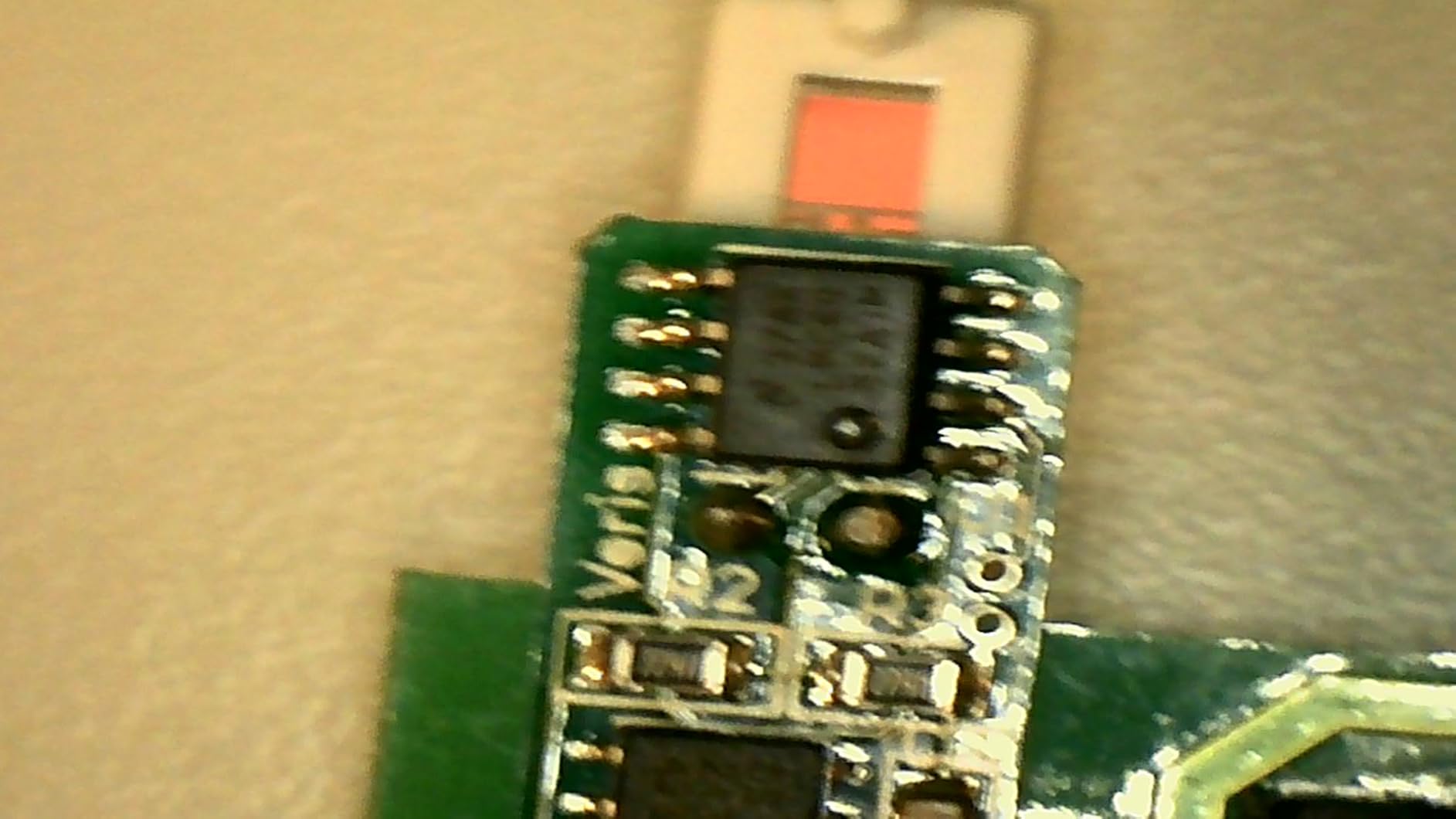
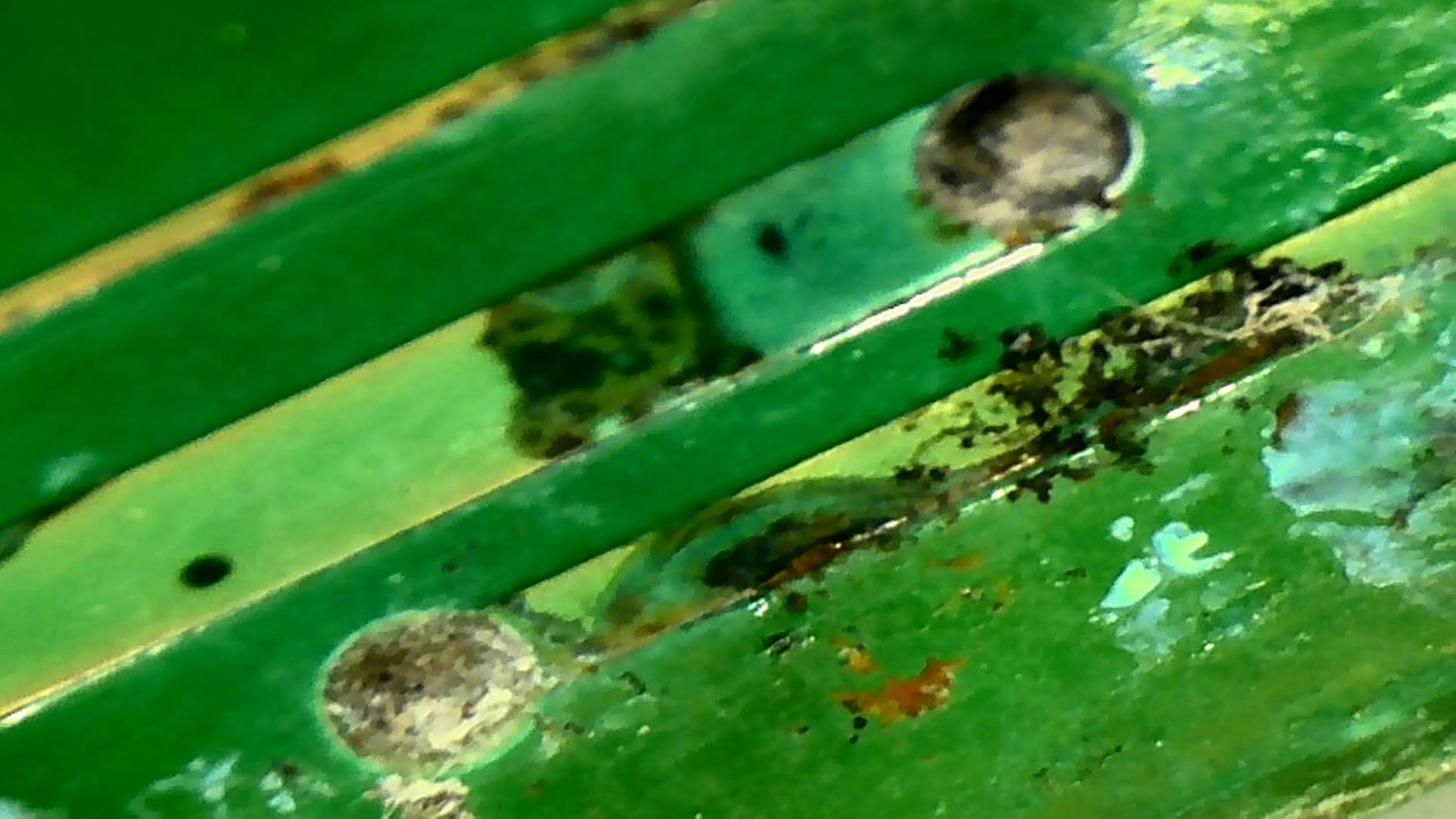
For a science fair project, the export path is the headline. It connects to Windows and Mac, and reviewers highlight parents and children using it to build a photo portfolio for their project, which is exactly the documentation workflow most competitors never address.
It is also the one handheld in this list where CE, FCC and CPC safety certification appears in the specifications. That matters more than expected for an object a child holds directly against their face and looks through for extended periods, and it is worth checking for on any handheld you consider.
Get this right before the first session
There is a protective film or glass cover over the lens in the box, and if it is not removed the image looks white or blank. This is the single most common complaint in reviews and it wastes a first session entirely if nobody opens the box carefully. The oversized focus dials and 200 g body are genuinely well suited to small hands, so that part of the design does work as intended.
Setup is otherwise near-instant, even for toddlers. The 600mAh rechargeable battery lasts about 2 hours per charge, and internal storage holds 200+ photos or AVI video, so a project can be documented without buying a card first.
When to skip it
Button icons are printed in yellow on a yellow body, which is genuinely hard to make out, so a younger child may need help identifying the shutter. The build quality is closer to a toy than a scientific instrument, and the plastic lens cover scratches easily if dragged across a rough surface.
It does not include prepared slides despite some expectations, so budget for those separately. And while 1000x is published, treat the useful range as lower and pick this model for its sensor, lighting and portability rather than for the headline figure.
Which Microscope Matches Which Science Project
Match the scope to the specimen, not the other way around. The list below maps the eight most common kids science fair projects to the magnification and microscope type each one actually requires, which is a step most buying guides skip.
- Onion skin cells. Requires 100x to 400x with light from below. A compound scope with a top and bottom LED is ideal. The BEBANG and BMDSAE digital units also work well because cells take a stain that shows up clearly on a screen.
- Pond water microorganisms. Requires 40x to 100x and patience more than power. A wide-field view matters more than resolution here, so a lower magnification setting on the National Geographic 400x or the Nancy B kit is genuinely better than maximum power.
- Fingerprints and skin texture. Requires 100x or more with top lighting for opaque detail. The Ashfly and BMDSAE handhelds excel because they need no slide at all, and the digital image can be printed straight onto a display board.
- Fabric and textile fibers. Requires 200x to 400x. The Omano Juniorscope’s glass objectives show individual weave structure clearly, and the BEBANG 3mm slide slot accepts standard slides for anything mounted.
- Rock and mineral crystals. Requires 20x to 100x with light from above. The National Geographic 400x kit ships with six rocks and minerals specifically for this, and the National Geographic Dual LED kit includes a mini geode.
- Brine shrimp hatchlings. Requires 40x to 100x for live movement, and a light source strong enough to see through the water. The National Geographic Dual LED kit includes the eggs and the hatchery, so this is the shortest path to a four-day project.
- Insect wings and legs. Requires 100x to 400x for structure, and top lighting for solid detail. The BEBANG and BMDSAE handhelds let a child examine a specimen in the field without preparing anything first.
- Mould and decay over time. Requires 100x to 400x with light from below through a slide. The Uarzt kit’s 31 blank slides let a child set up several samples on the same day and compare them a week apart.
One pattern runs through all eight. Thin transparent specimens need light from below and slide-based optics. Solid objects need light from above. A scope with both is the safest single purchase, and that is the main reason the two dual-LED models in this roundup are so strong for general project work.
If you also want to spend time outdoors with the same instrument, our picks for kids’ drones for outdoor exploration and tablets for documenting fieldwork pair well with a pocket digital scope like the BMDSAE or the BEBANG.
How to Make a Microscope Slide for a Project
Preparing a slide takes about two minutes and is the step where most parent projects stall. Follow these four steps in order and a child can make their own specimens instead of only viewing the factory ones.
- Gather the specimen. Take a very thin sample. For onion, peel a single transparent layer from the inside of a scale and tear it into a piece smaller than a fingernail. For pond water, use the dropper to take a small amount from near the edge rather than the middle.
- Place it on the slide. Put a drop of water on a clean slide first, then lower the specimen into the drop with tweezers. Lowering rather than dropping matters, because dropping tears the sample and scatters the pieces.
- Add the mount and the stain. Add a drop of water or a simple stain such as iodine or food colouring, then lower a cover slip at an angle on top. The angled lower avoids trapping an air bubble, and the cover slip flattens the specimen so it stays in focus.
- Place and focus. Set the slide on the stage, start at the lowest power, raise the stage until the image is just visible, then fine focus. Move the slide while looking at the image, not at the stage, or you will push the specimen off the slide.
If the image is blurry, three causes account for nearly every case. The specimen is too thick, the cover slip is angled and holding the sample out of the focal plane, or there is an air bubble. A thicker-than-needed sample is by far the most common, so take a thinner piece rather than adjusting the microscope.
If nothing is in focus at all, you are below the focal plane. Turn the fine knob a fraction at a time in one direction, and stop when the faintest outline appears, then back off slightly. Parents on r/ScienceParents and r/microscopy describe this exact struggle as the moment most children give up, and coaching through it once is usually enough.
For a display board, a scale bar drawn from a known reference beats a magnification number a judge cannot verify. Photograph the same specimen at a known setting twice, at different times or in different conditions, and the comparison is what turns a science fair entry into a project with a result.
How to Photograph and Document Findings for a Display Board
If the project ends in printed photographs, choose a digital scope early rather than trying to photograph an eyepiece view. Four steps cover the whole job, and two of the models in this roundup ship with everything needed.
- Set up a fixed shot. Put the scope on a table with a plain background and one light source. Consistent lighting matters more than resolution, because a moving shadow changes the image between specimens and makes comparisons unreliable.
- Capture a reference frame. Photograph a prepared slide at a known magnification before you start. That frame becomes your scale reference and proves the settings did not change mid-project.
- Shoot every specimen the same way. Same distance, same brightness mode, same filename format. A file naming pattern that includes the specimen and the date makes the final board assembly an afternoon rather than a weekend.
- Label with scale and conditions. Every printed image should carry a label with the specimen, the magnification, the light setting and the date. Judges reward labelled plates, and it is the cheapest credibility available to a child.
The BEBANG scope is the easiest route because the 32GB card is already inside and it includes five real glass slides. The BMDSAE handheld exports to Windows and Mac, which reviewers specifically mention for building a photo portfolio. Either one removes the hardest part of a display board, which is producing a sharp image at all.
For a sibling who wants to look at what you found, a kid-friendly tablet handles the viewing and layout side of a poster board without turning the microscope into a screen-time device.
Compound vs Stereo vs Digital: Which Type to Buy
The three types answer different questions. A compound microscope sends light up through a thin specimen and is what you need for cells. A stereo microscope bounces light off the surface of a solid object and is what you need for bugs, rocks and anything being taken apart. A digital microscope sends the image to a sensor and a screen, which is what you need for photos and for sharing.
Compound microscope. Thin, transparent specimens on a slide: onion cells, pond water, stained fibres, blood smears. Light passes up through the stage from below, and the objective lenses sit close to the slide. This is the type that powers most school science fair projects, and it is what magnification numbers on a kids scope are really measuring. In this roundup, the Omano Juniorscope is the one with honest glass objectives at 40x to 400x, and the Nancy B kit is the 2-in-1 version that also flips into a dissecting mode.
Stereo microscope, also called a dissecting microscope. Solid, three-dimensional objects: an insect, a leaf, a coin, a rock, a gear, anything being pulled apart. Two eyepieces give a 3D view with depth, and the working distance is long, which is far safer for a child handling a specimen. If the project involves taking something apart, a stereo scope is the correct answer, and a talking viewer is not a substitute at any price.
Digital microscope. The image lands on a screen or a monitor instead of an eyepiece. There is no sharing problem, no eyepiece to squint through, and the image can be saved and printed, which makes it the best type for a display board. The trade-off is that most digital figures above about 200x are a mix of optical magnification and digital zoom, so treat a 1000x claim as a maximum setting rather than a resolution promise.
Our rule of thumb across this list: a school-age child doing a cell or pond water project needs compound, a child doing a bug or rock project wants stereo, and a child whose project must be photographed wants digital. Two of the models here, the National Geographic Dual LED kit and the Nancy B kit, do compound and stereo in one body.
What Magnification a Child Actually Needs
Most school science fair projects need 100x to 400x of genuinely usable magnification, and that is the number to buy against. Total magnification is the eyepiece magnification multiplied by the objective magnification, so a 10x eyepiece on a 40x objective gives 400x. Anything above 400x on a children’s scope is a bonus, not a requirement.
What that means in practice, band by band:
- 10x to 40x. Whole objects and large structure: a whole insect, a leaf, a rock surface, fabric weave, a printed circuit trace. This is the band most first projects live in, and it is where stereo scopes shine.
- 40x to 100x. The workhorse range. Pond water organisms, brine shrimp, hair, salt crystals, mould. Most of what a science fair project actually needs is visible here.
- 100x to 400x. Cells. Onion cell walls, cheek cells, plant tissue, stained fibres. This is the top of what an honest kids microscope resolves, and it is where image quality starts to matter more than the number.
- 400x and above. Useful for bacteria and fine detail, and where most cheap kids scopes stop being honest. A sharp 400x beats a fuzzy 2000x because light cannot resolve detail below what the lenses gather.
This last point is worth pausing on, because it is where the marketing lives. A 1000x claim on a digital handheld is mostly digital zoom, which enlarges an image without adding information. Parents on r/microscopy consistently steer families toward spending on better optics rather than more magnification, and experienced hobbyists buying a first real instrument for a child do the same.
So read a magnification figure as a maximum setting, not a capability. Check whether the manufacturer specifies optical magnification separately from digital, as the BMDSAE and the National Geographic kits do. If only one number is published, assume the useful range is lower.
How to Choose a Kids Microscope: Seven Criteria
Decide in this order, and you will avoid every common disappointment. Work through the list top to bottom rather than comparing headline magnification figures.
- Start from the project, not the age. Write down what the child will actually look at. Cells and pond water mean compound. Bugs and rocks mean stereo. A display board with photos means digital. The age band matters less than the specimen list, and picking the instrument to match the project is what keeps a child interested past the first week.
- Check for light from both sides. A top light handles solid objects and a bottom light handles transparent slides. A scope with only one of them will frustrate a child the moment they try the other kind of sample, and this single feature prevents more abandoned projects than any other.
- Look for a fine focus adjustment. A coarse knob alone cannot hold a sharp image at 400x. Coaxial or separate fine focus lets a child dial in detail, and without it the top magnification setting is unusable no matter what the box says.
- Ignore the headline number. Verify whether the figure is optical, digital or both, and whether the manufacturer publishes a range rather than a maximum. A published 40x to 400x range with named objectives is a better sign than a single 1200x claim.
- Judge the build by weight and base. A base heavy enough to stay still while a child adjusts focus prevents most of the frustration we hear about. Metal frames and glass optical elements are the upgrade path, and they are where the cost of a genuine instrument sits.
- Count the accessories that matter after unboxing. Prepared slides are the first week. Blank slides, tweezers, a dropper, cover slips and stains are the next six months. A kit with 30 blank slides and a slide-making guide outlasts one with 20 prepared slides and nothing else.
- Check the documentation, the power and the warranty. A one-year defect warranty is the category standard, so a longer one is a real differentiator. Note the battery requirement, because several models here need AAA cells that are not included, and check that the manual exists, because a parent ends up teaching focusing if it does not.
For age bands, a simple guide works. Ages 3 to 5 want a screen or a viewer with no slide preparation, which is the GeoSafari Talking Microscope and the Kidscope. Ages 6 to 9 want a starter dual-light scope with prepared slides, which is the National Geographic 400x kit. Ages 9 to 12 want glass objectives and fine focus for a cell project, which is the Omano Juniorscope. Ages 12 and up are ready for a real school compound microscope, and at that point you are shopping for an instrument rather than a kids microscope.
On total cost of ownership, budget for the consumables that no competitor mentions. A pack of blank slides, a set of cover slips, a couple of stains and a set of spare batteries add up over a year of regular use, and a scope that needs batteries it did not ship with is an unpleasant surprise in week two.
For care, keep the scope in its case between sessions and keep dust off the eyepiece and objective, because dust is the main reason a clean image turns fuzzy. Use optical lens paper and a bulb blower, never a tissue, which scratches coatings. Do not let a child touch the glass lenses directly, and never let a child look at the sun or any bright light through the eyepiece.
For safety with a child, keep glass slides and cover slips in an adult’s hands, since the edges are the real hazard. Lift a scope from the base rather than the arm so eyepieces do not swing out, and keep any included blades or scalpel-style tools away from younger children entirely.
Troubleshooting When a Child Gets Frustrated
Frustration ends curiosity faster than a good image starts it, and almost every frustrated child we have seen is hitting one of five fixable problems. Work through these in order before considering a different scope.
The image is blurry at high power. Switch down one power level and refocus before anything else. If it is still blurry, the cause is almost always a specimen that is too thick, so prepare a thinner one. On digital scopes, check whether the protective film over the lens has been removed.
Nothing is in focus. You are below or above the focal plane. Turn the fine knob in small increments until the faintest outline appears, then back off slightly. If there is no fine knob, turn the coarse knob a quarter turn and wait, because a stiff knob jumping is a common fault in cheaper models.
The light is too bright or too dim. Never look at the sun or a bright lamp through the eyepiece. For a bright bottom light, dim the room instead of the lamp, and for a dim one, add a plain white sheet of paper under the stage to bounce light up.
The specimen cannot be found. Start at the lowest power, move the slide while looking at the image rather than at the stage, and use the slide clips. A light underneath helps enormously, and a prepared slide is far easier to find than a scattered skin flake.
The child has simply lost interest. Change the medium rather than the instrument. A tray of specimens to sort, a timed hunt for the largest pond organism or a photography task will restart engagement when another slide will not, and a project with a question to answer beats free-form viewing every time.
Frequently Asked Questions
What is the best-rated microscope for kids?
The Educational Insights GeoSafari Talking Microscope is the most-reviewed unit we tested, at 4.6 out of 5 across more than 11898 reviews, and it is the strongest choice for children aged 4 to 8 because the narration and quiz modes hold young attention. For a child aged 8 and up doing real specimen work, the National Geographic Dual LED Science Kit and the Omano Juniorscope both hold a 4.6 rating with genuinely sharp images at 100x to 400x.
What is the best microscope for a 10-year-old child?
At age 10, look for a compound microscope with light from both above and below, glass objective lenses and a fine focus adjustment. Our pick for that age is the Omano Juniorscope, which offers 40x, 100x and 400x with glass objectives and a lifetime limited warranty. The National Geographic Dual LED kit is the alternative if you want a larger accessory set and a brine shrimp experiment in the box.
What are some fun and easy microscope experiments for kids?
Easy microscope experiments include an onion skin cell slide, a drop of pond water at 40x to 100x, a look at a fingerprint or skin texture at 100x with top lighting, examining rock and mineral crystals at 20x to 100x, hatching brine shrimp over four days, comparing fabric fibres, and setting up mould on bread in a covered dish to watch it change over a week. The last two are best started a week before the display board is due.
What are some cool science fair projects for kids?
Cool science fair projects that suit a microscope include mapping the organisms in pond water across a week, comparing plant and animal cells side by side, testing which fabrics stain most under magnification, documenting insect wing structure by photographing each species, and running a brine shrimp hatching rate comparison at different temperatures. The brine shrimp and fabric projects both produce a number, and a number on a display board reads far better than a description.
How much magnification do I need to see cells?
You need 100x to 400x of genuinely usable magnification to see cells clearly, and 400x is the practical ceiling for an honest children’s microscope. Above that, most kids scopes add digital zoom or empty magnification that enlarges the image without adding detail. A published 40x to 400x range with real glass objective lenses will serve any school science fair project.
Do kids microscopes need prepared slides, or can children make their own?
Kids microscopes work best with both. Prepared slides solve the first session and teach a child what a good sample looks like, while blank slides and cover slips let them make their own specimens for a project. Several models here ship with 10 or fewer prepared slides, and the Uarzt kit includes 31 blank slides. We recommend buying a pack of blank slides, cover slips and a simple stain before the first session.
Conclusion: The Best Kids Microscopes for Science Projects
Our top pick for best kids microscopes for science projects is the Educational Insights GeoSafari Talking Microscope, because it is the most-reviewed unit in the group and it does something no other model manages: it holds a child aged 4 to 8 genuinely engaged on their own. For a child old enough to prepare their own samples, buy the National Geographic Dual LED kit for its illumination from both sides and complete accessory set, or the Omano Juniorscope if image quality at 400x is the deciding factor.
Whichever you choose, start from the specimen list rather than the magnification figure, budget for blank slides and stains in the same trip, and expect the first two sessions to be about learning to focus. That is normal, and it is where a microscope starts to be interesting rather than disappointing. If you are also planning a wider outdoor science setup, our guides to kids smartwatches and kids drones cover the other half of a field kit.