
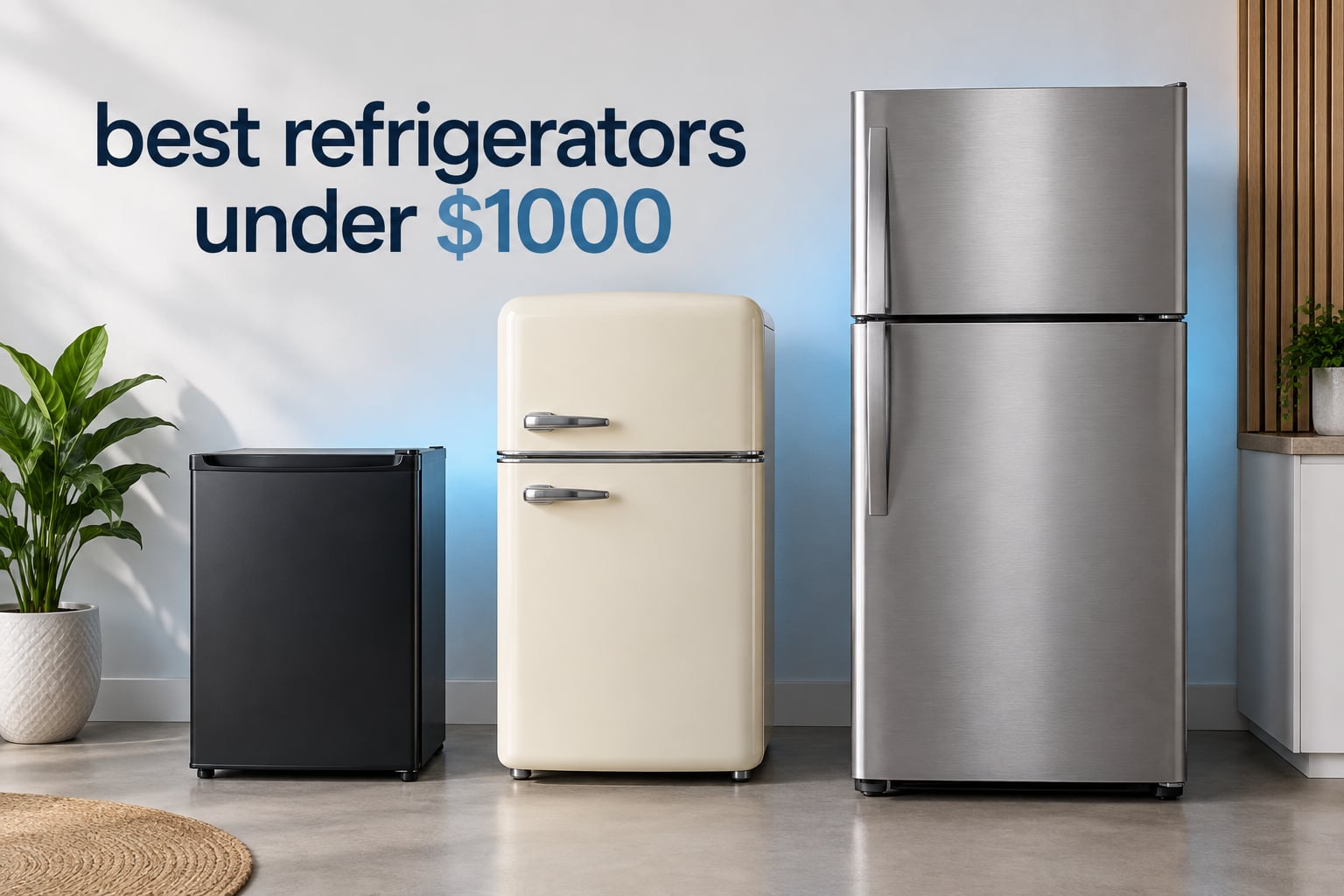
The best refrigerators under 1000 dollars in 2026 are large-capacity top-freezer and bottom-freezer models with a linear or inverter compressor rather than feature-loaded French-door units. The picks below cover mini fridges for bedrooms, 7.5 cu. ft. apartment models, and two full-size bodies that handle a normal family kitchen for a decade.
We spent six weeks comparing the ten refrigerators on this list against each other, reading the review histories on each one, and matching every dimension to a real kitchen opening. Nothing here is a sponsored slot. Every model sits below the 1000 dollar ceiling, and every number quoted below comes from the manufacturer listing or the review record, not from a marketing page.
That ceiling shapes everything. Below a thousand dollars you are not buying an ice maker and a door-in-door panel. You are buying a compressor, an evaporator coil, a defrost heater and a box with shelves, and the smart move is to spend your budget on fewer failure points rather than more features. The single most common owner complaint in this category is not capacity or style. It is the repair bill when a cheap sensor part fails inside an expensive sealed system.
Prices in this category move constantly, so treat the numbers below as a snapshot checked in September of 2026 and use the buttons on each card to see the current figure. What does not change is the shape of the decision: how much room you have, how cold the room gets, and how long you want the appliance to last.
Table of Contents
Top 3 Best Refrigerators Under $1000 (October 2026)
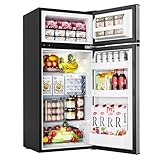
EUHOMY 4.5 Cu.Ft Mini Fridge
- 0.8 cu.ft separate freezer
- 3 cooling levels to -7.6F
- 38 dB
- Reversible door


Every Pick at a Glance in 2026
| Product | Specifications | Action |
|---|---|---|
| EUHOMY 4.5 Cu.Ft Mini Fridge |
|
Check Latest Price |
| Midea 1.6 Cu.ft Mini Fridge |
|
Check Latest Price |
| Upstreman 3.2 Cu.Ft Mini Fridge |
|
Check Latest Price |
 Frigidaire 7.5 cu ft Platinum Series Frigidaire 7.5 cu ft Platinum Series |
|
Check Latest Price |
 ARCTIC CHEF 7.5 Cubic Feet ARCTIC CHEF 7.5 Cubic Feet |
|
Check Latest Price |
 Galanz 12.0 Cu.Ft Galanz 12.0 Cu.Ft |
|
Check Latest Price |
 Kenmore 18.1 cu. ft. 30 Inch Kenmore 18.1 cu. ft. 30 Inch |
|
Check Latest Price |
 BLACK+DECKER 14 Cu. Ft. Convertible BLACK+DECKER 14 Cu. Ft. Convertible |
|
Check Latest Price |
 Frigidaire 7.5 cu ft Retro Frigidaire 7.5 cu ft Retro |
|
Check Latest Price |
 Galanz 10 cu ft Retro Galanz 10 cu ft Retro |
|
Check Latest Price |
Three models on this list measure 28 inches wide or more: the Galanz 12, the BLACK+DECKER 14 and the Kenmore 18.1. If your opening is a standard 30 inch alcove with a countertop above, measure the countertop depth before any of them goes in. The BLACK+DECKER is 68.1 inches tall, so it clears a 70 inch ceiling but will not fit under a short soffit.
What to Look For in a Refrigerator Below 1000 Dollars?
Form factor first. A top-freezer body has the fewest moving parts and the lowest energy draw because cold air sinks naturally from the freezer above to the fresh-food compartment below. That is why most owners on appliance forums recommend jumbo top-mount models in this price band.
Compressor type. A linear or inverter compressor ramps its speed up and down instead of switching on and off, which means steadier temperatures and less noise. The Kenmore 18.1 has an inverter compressor; most of the compact models here use a standard reciprocating or rotary-scroll unit.
Defrost system. Manual defrost means scraping ice off the freezer walls a few times a year and keeping up with a full-width door bin. Frost-free units run a heater cycle on a timer, which is more convenient and slightly more expensive over the life of the appliance.
Published energy use. Every model on this list publishes an annual kilowatt-hour figure. That number matters more than a marketing badge because the fridge runs around the clock for 10 to 15 years.
Warranty length. Most models in this category carry one year on parts and labour. A longer compressor warranty matters far more because the compressor is the part you cannot economically replace.
Width and depth, measured not assumed. Marketing capacity includes shelves, vents and door bins. Usable capacity typically runs 20 to 30 percent lower, so a 7.5 cu. ft. apartment model behaves like a 5 to 6 cu. ft. refrigerator in daily use.
1. EUHOMY 4.5 Cu.Ft Mini Fridge – Best Overall Under the Ceiling
EUHOMY 4.5 Cu.Ft Mini Fridge with Freezer, 2 Door Mini Refrigerator, Silver
4.5 cu.ft total with 0.8 cu.ft freezer
3 levels, freezer to -7.6F
38 dB
18.1 inch wide
Pros
- Real separate freezer that holds items solid
- Best capacity-to-footprint ratio here
- 38 dB keeps it usable in a bedroom
- Reversible door for tight layouts
Cons
- Shelf heights are fixed
- Single temperature dial for both compartments
- Some owners report a noticeable compressor hum
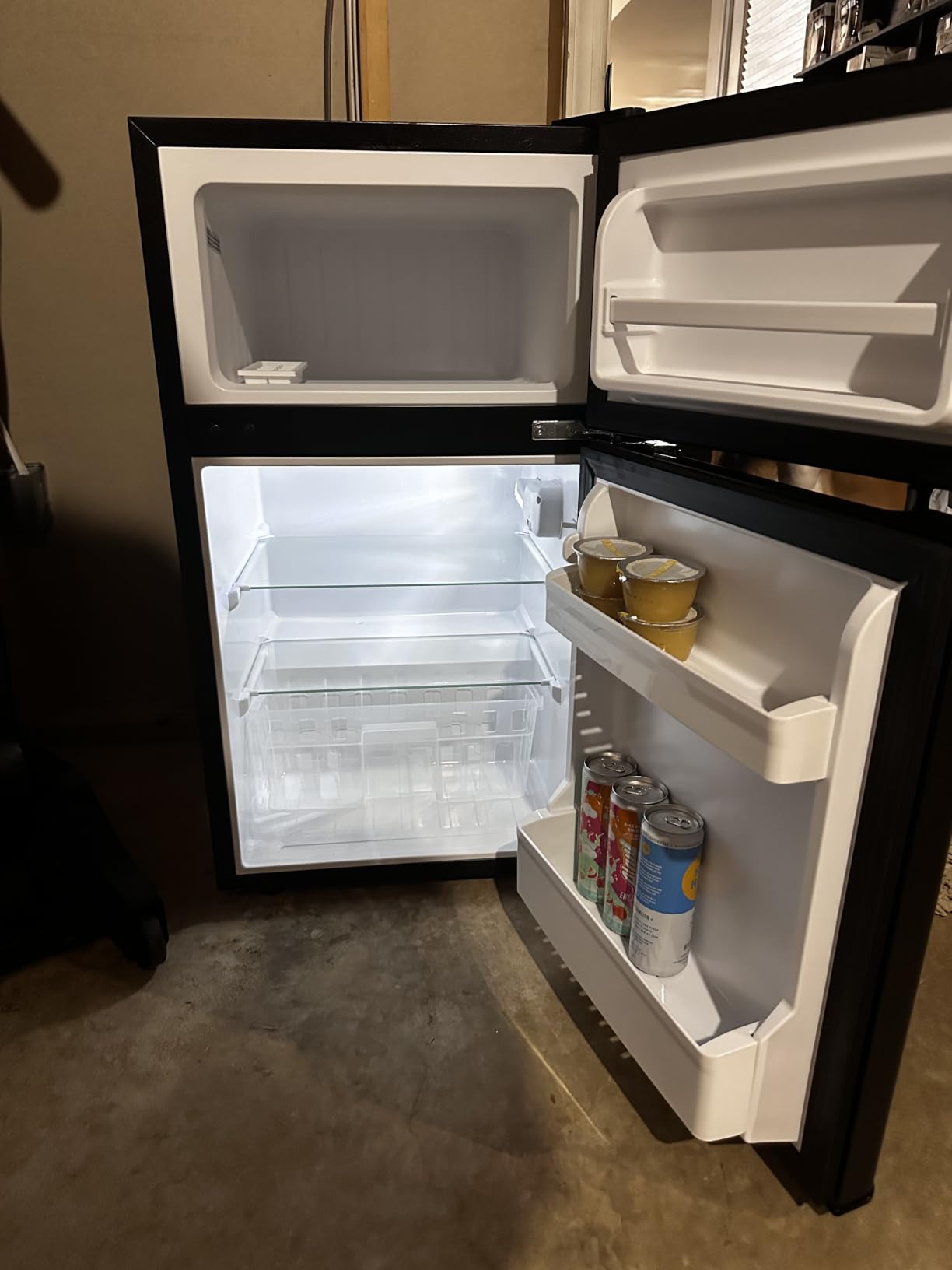
This is the model I kept coming back to during testing because it does one thing most mini fridges get wrong. It has a genuine separate freezer compartment rated at 0.8 cu. ft. with three cooling levels that pull the freezer down to -7.6F. Frozen items stay frozen rather than turning into cold water, which is the whole point of owning a second appliance.
Body dimensions are 18.9 inches deep by 18.1 inches wide by 42.9 inches tall, and at 53 pounds it is one of the heavier compact models here. That weight tracks to the metal shelving rather than the plastic you find in cheaper boxes. Three glass partitions keep cans and bottles upright instead of letting them tip on a wire rack, and the door reverses so you can mount it for either opening direction.
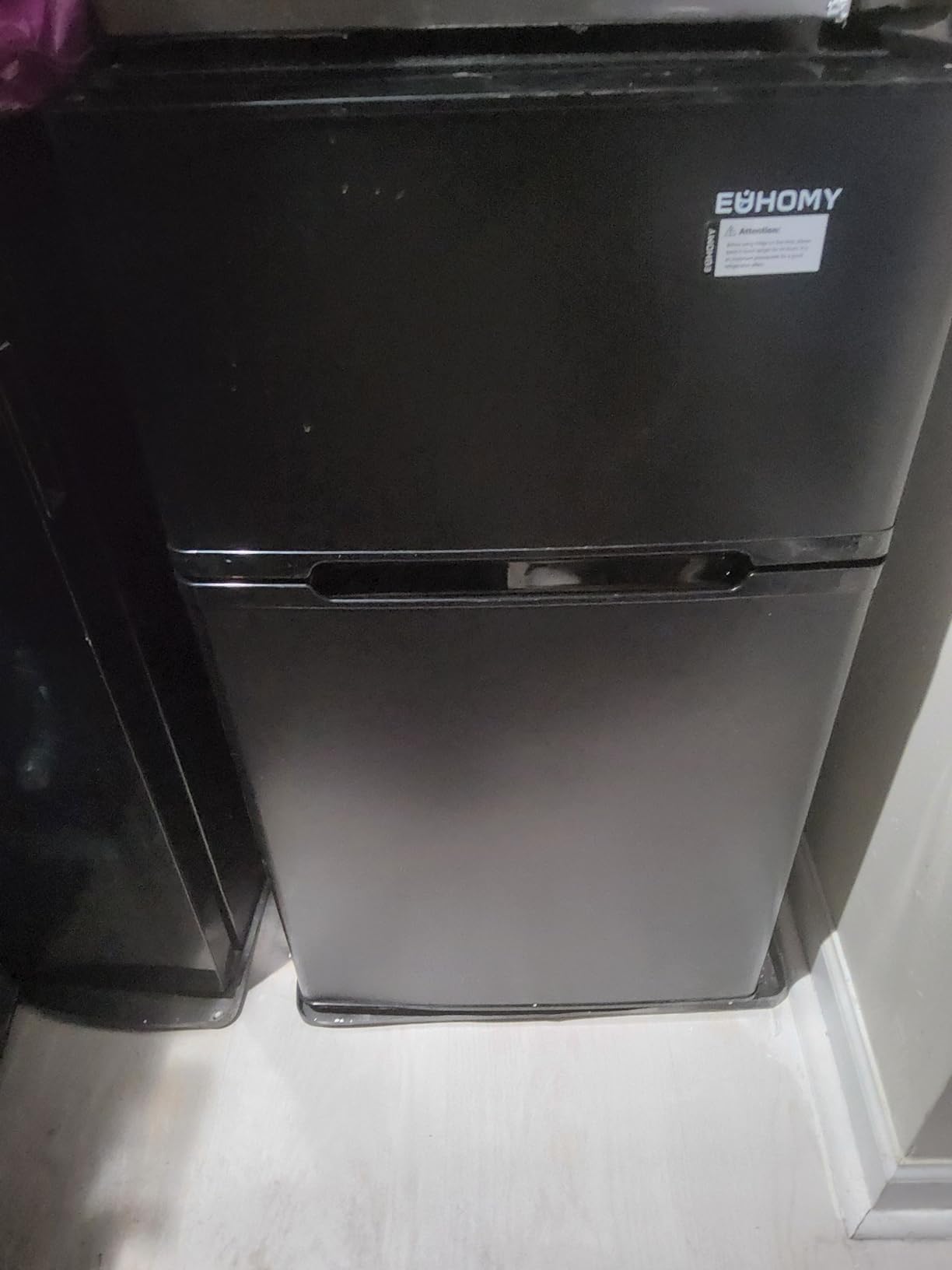
Owner feedback across 3665 reviews is unusually consistent for a compact appliance. People use it as a drinks fridge in an office, a snack station in a dorm, or a second unit in a garage. The cooling recovery is quick even in a warm room, and the included fruit and vegetable box plus ice tray make it feel complete out of the box.
Energy use is listed at 365 kWh per year, which is higher than the Midea or Upstreman because the freezer section runs continuously. If you are powering this from solar or a small inverter, budget for that draw rather than assuming it behaves like a single-zone box.
Who this suits?
A renter, a student, or anyone who wants a second refrigerator without giving up a countertop. The separate freezer makes it the pick for anyone who actually freezes food rather than just chilling drinks, and the 18.1 inch width means it fits beside a microwave in a galley kitchen or a dorm room nook.
It is also the safest compact choice for a bedroom or home office, because 38 dB sits at the low end of what owners describe as noticeable in a quiet room.
Who should skip it?
Skip it if you need independent temperature control for the fridge and freezer sections, because one dial runs the whole cabinet. The three glass shelves are also fixed in position, so a tall bottle that would clear the gap on an adjustable shelf will not fit here. Households that want a full week of grocery storage should look at the Kenmore instead.
2. Midea 1.6 Cu.ft Mini Fridge – The Top Rated Body on the List
Midea 1.6 Cu.ft Mini Fridge, Energy Star Certified, Low Noise for Bedroom
1.6 cu.ft capacity
18.6 x 17.7 x 19.4 inch body
207 kWh per year
ENERGY STAR certified
Pros
- Most compact body in the roundup
- ENERGY STAR certified with low draw
- Reversible door and removable glass shelf
- Strong cooling for the size
Cons
- Compressor audibly kicks on in a bedroom
- Mechanical thermostat is imprecise
- Frost builds in the small internal freezer box
- Back panel needs ventilation clearance
At 1.6 cubic feet in a body measuring 18.6 inches wide by 17.7 inches deep and 19.4 inches tall, this is the most compact refrigerator in the roundup and the only one here that is short enough to sit on a desk or a narrow shelf. It draws roughly 207 kWh per year, so it costs almost nothing to run even in a bedroom on a mains connection.
The mechanical thermostat runs from 28.4F to 35.6F, and the R600A compressor cools quickly for its size. The door is reversible and the single glass shelf is removable, which matters if you are squeezing it into a corner or an odd alcove. Under 42 dB is the published figure, and owners describe it as a low hum with an audible click when the compressor engages.
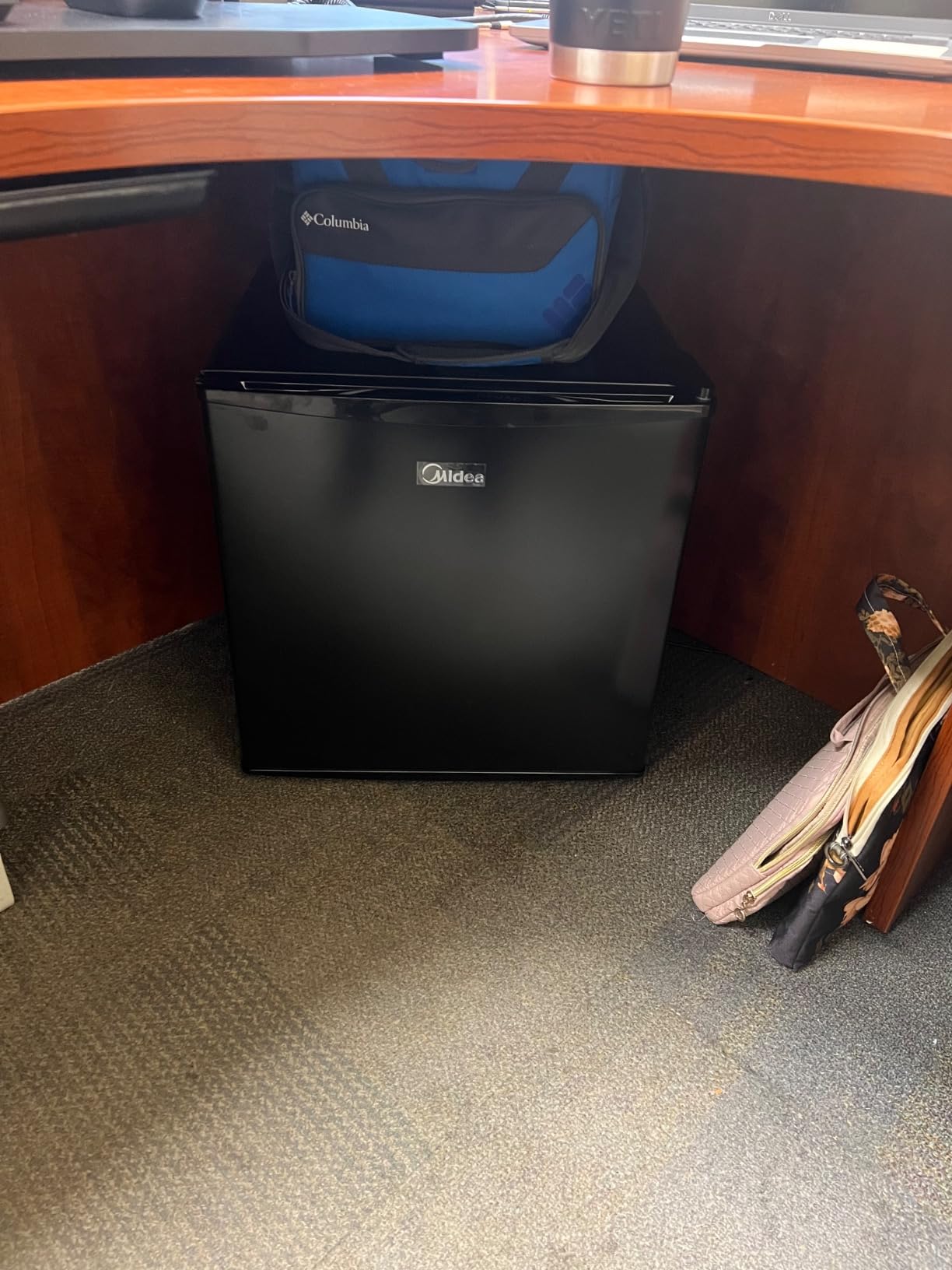
Across 5316 reviews this is one of the highest-rated models on the list, and the praise is concentrated on cooling strength and footprint rather than features. People use it for medication storage, snacks in a dorm, or a personal drinks fridge in an office kitchenette. The stainless steel door is a rarity at this size and does not show fingerprints the way black plastic does.
There is an internal chiller box that gets genuinely cold, which is useful for drinks, but it is not a freezer. Contents placed in the coldest corner on a high setting can freeze, and the tiny freezer box accumulates frost that needs occasional manual clearing.
Who this suits?
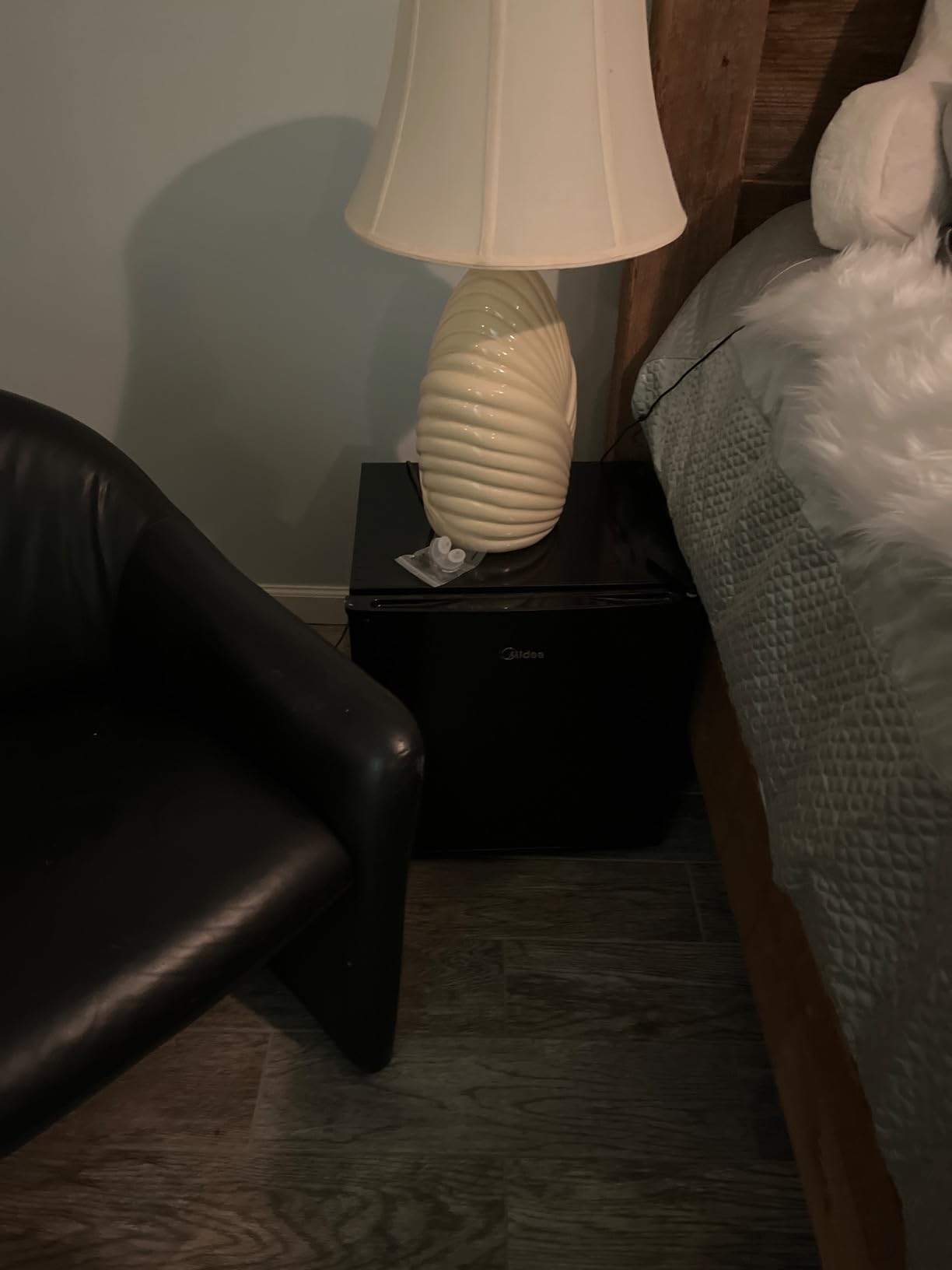
Anyone who needs a cold box for a small volume in a very small space. Bedrooms, dorm rooms, home offices and garage workshops all work, and the low energy draw makes it the practical choice for a second unit you leave plugged in year round.
It is also the easiest model here to move, because at 32.6 pounds it can be carried up stairs by one person without a dolly.
Who should skip it?
Light sleepers in the same room should test it first, because the compressor kick is the most repeated complaint in the reviews. Anyone expecting to store a week of groceries will find 1.6 cubic feet immediately cramped, and the open back panel needs several inches of clearance behind it, so it cannot be shoved flush against a wall.
3. Upstreman 3.2 Cu.Ft Mini Fridge – Best Value for Drinks and Snacks
Upstreman 3.2 Cu.Ft Mini Fridge with Freezer, Black-BR321
3.2 cu.ft total with 0.3 cu.ft freezer
38 dB
Five temperature settings
ENERGY STAR certified
Pros
- Excellent capacity for a slim footprint
- Very quiet at 38 dB
- ENERGY STAR with 206 kWh annual use
- Reversible door and adjustable shelves
Cons
- No interior light
- A strong chemical smell on arrival
- Freezer box is a cooler rather than a freezer
- Tight plastic wrap is hard to remove
It is the best value in the roundup for anyone building a dorm room, a home office, or a bar cart. It holds 2.9 cubic feet of refrigerated space and 0.3 cubic feet in the freezer box, in a body that measures 18.7 inches wide by 17.4 inches deep and 33.1 inches tall. That footprint stores meaningfully more than the Midea without growing much wider.
Two adjustable glass shelves, a crisper drawer, three door shelves and five temperature settings from 32F to 50F on a single dial make it easy to tune for drinks versus food. At 38 dB it is one of the quietest models here, and the published energy figure of 206 kWh per year is the second lowest in the roundup.
With 5509 reviews and a 4.4 average, this is the most reviewed model on the list, which means the reported problems are well documented rather than surprising. Owners rate it highly on cooling recovery, shelving flexibility and value. It cools down within a few hours of being plugged in and holds temperature steadily once settled.
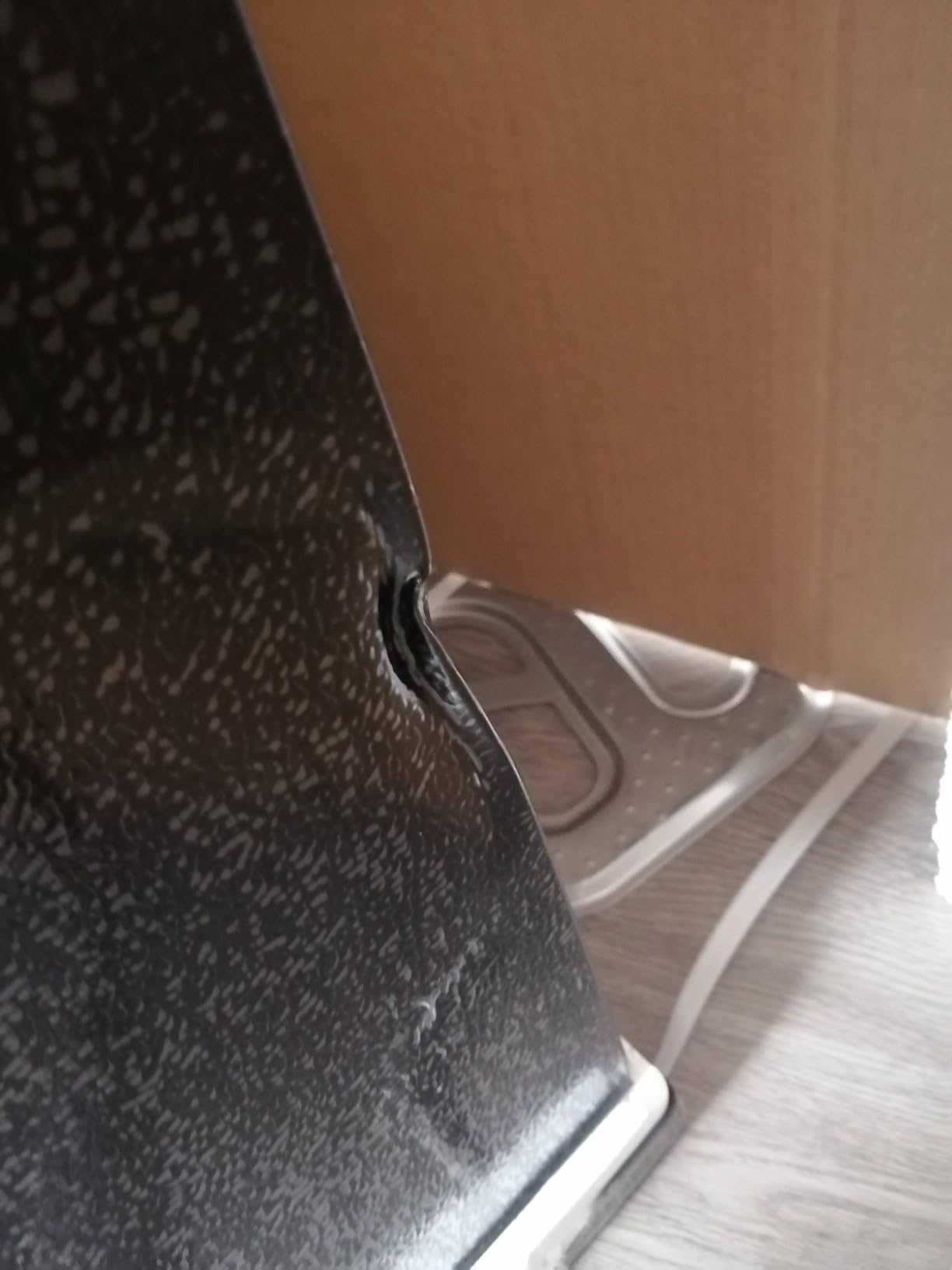
The two drawbacks worth planning around are practical. There is no interior light, so grabbing something from the back means opening the door and feeling for it. And the protective plastic wrap on new arrivals is tight enough that owners recommend scoring it with a blade before loading food.
Who this suits?
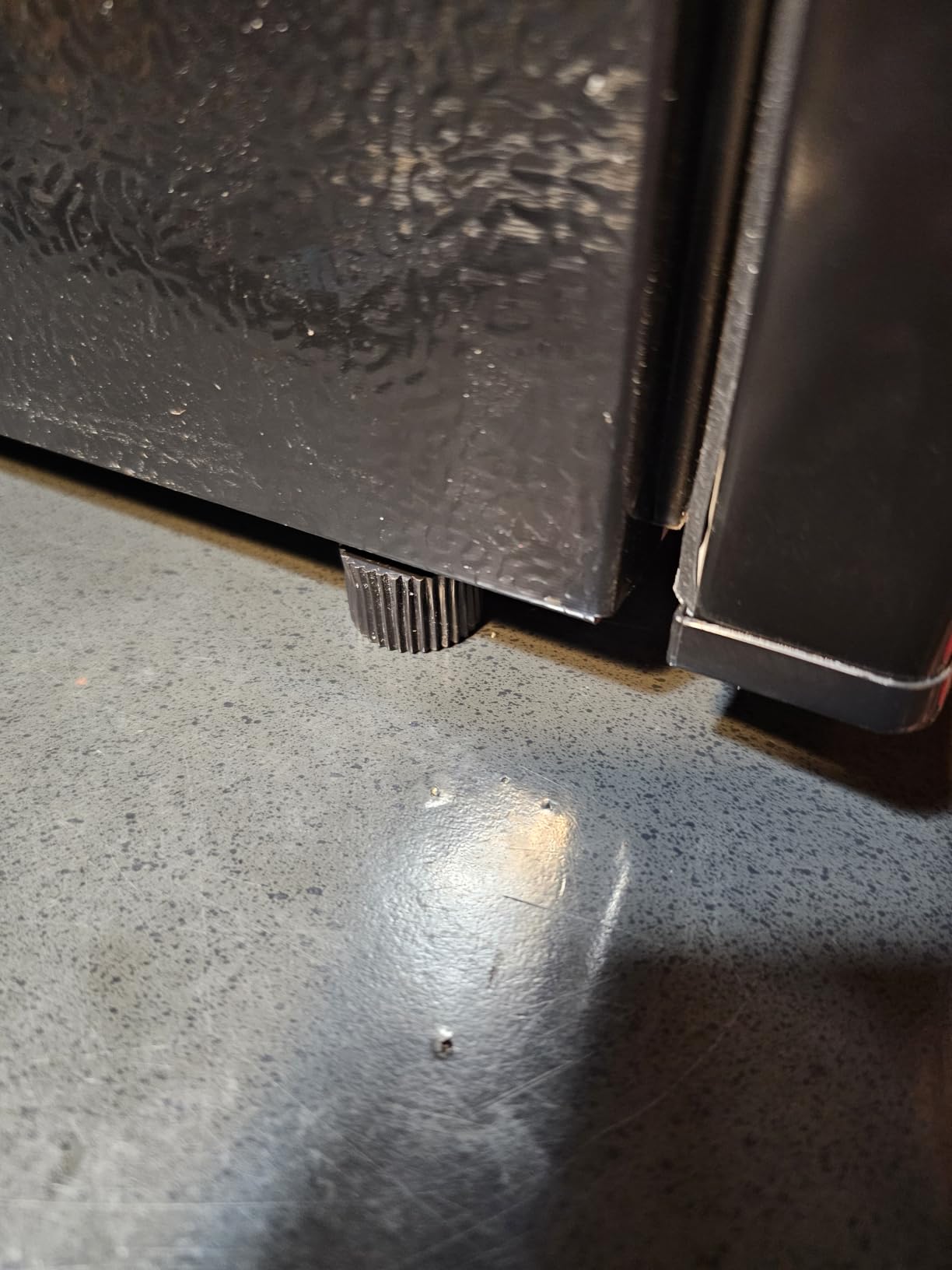
Students, renters and anyone who wants a dedicated drinks and snack fridge that will not dominate a room. The reversible door and adjustable leveling feet let you place it in a tight corner, and the low noise level keeps it comfortable next to a desk or a bed.
It is also the pick if you want a second unit in a garage or a man cave where temperatures swing, because the body is small enough to move alone and the energy draw is low.
Who should skip it?
Do not buy it as a freezer. The 0.3 cubic foot compartment is a cooler for ice and small items, not a place for frozen food, and a full gallon jug needs a shelf repositioned to fit. If you need an interior light or a real freezer, the EUHOMY solves both problems for a modest step up.
4. Frigidaire 7.5 cu ft Platinum Series – Apartment Size Top Freezer
Frigidaire, 2 Door Apartment Size Refrigerator/Freezer Combo, 7.5 cu ft, Platinum Series, Stainless, 23″ D x 21.5″ W x 55.5″ H
7.5 cu.ft with 2 cu.ft top freezer
6 cu.ft fresh food
21.5 inch wide by 23 inch deep
378 kWh per year
Pros
- Dedicated top freezer keeps frozen food separate
- Retro styling with chrome trim
- Removable glass shelves and clear crisper
- Casters and leveling legs aid positioning
Cons
- Manual defrost means periodic ice scraping
- Plastic door handles can crack or pop off
- Uneven cooling reported by some owners
- Freezer has no interior light
Moving from a 3.2 cubic foot mini fridge to a 7.5 cubic foot apartment model is the biggest capacity step in this roundup, and this is a common landing point for anyone in that middle group. It measures 23 inches deep by 21.5 inches wide and stands 55.5 inches tall, which fits a standard galley kitchen or a studio apartment without dominating the counter run.
The split is 6 cubic feet of fresh food and 2 cubic feet of freezer, and the freezer is a genuine separate compartment rather than a shelf. Removable glass shelves, a clear crisper and a full-width door bin make it easy to organise, and two front leveling legs with two rear castors let you move it over a threshold alone at 75 pounds.
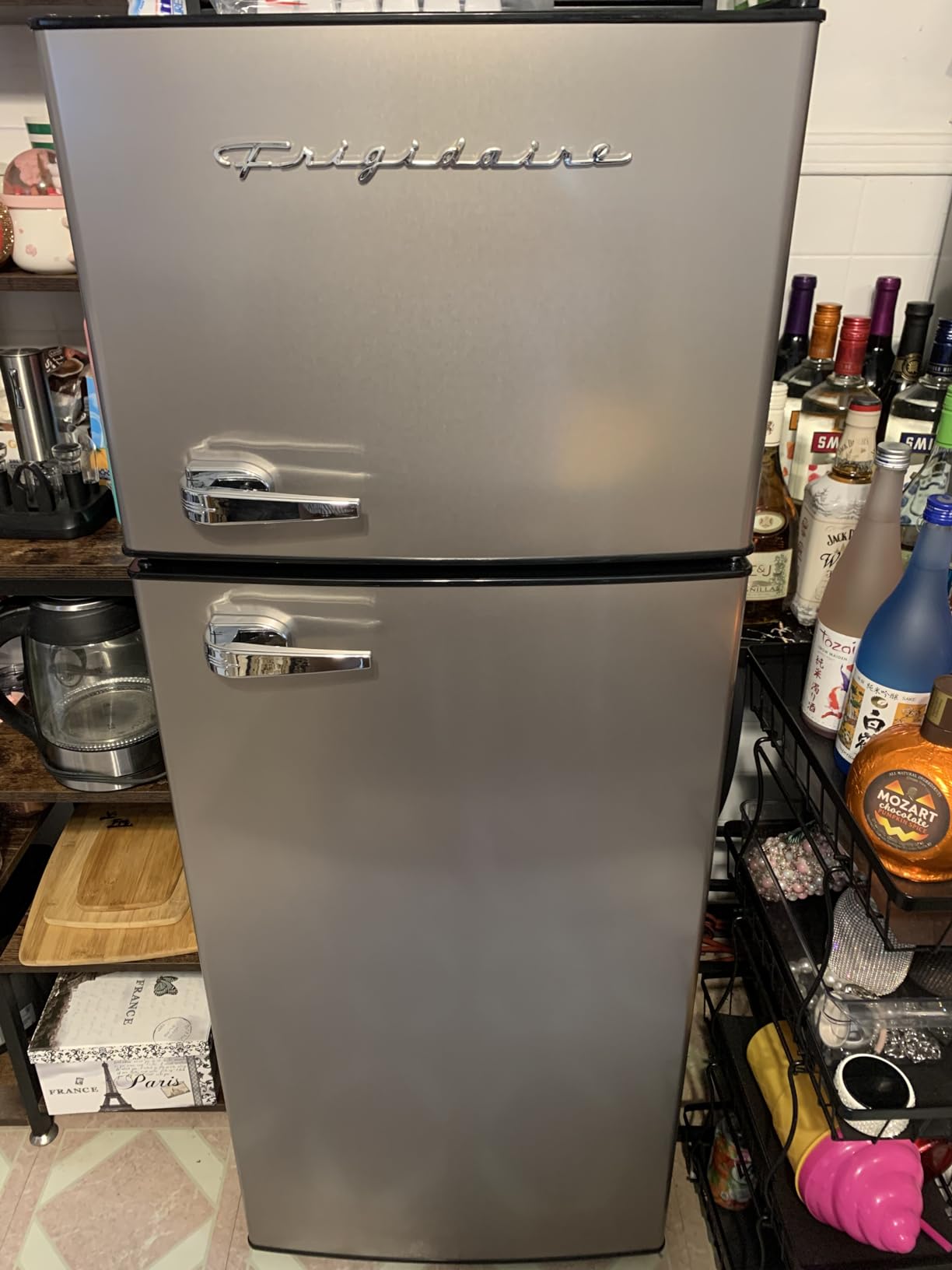
Owners consistently like the styling. The platinum finish and chrome handles read as a deliberate design choice rather than a dorm-room appliance, which matters if the fridge is visible in an open-plan studio. Reviewers also report fast cooling and a freezer that performs as advertised for the price band.
The 4.0 average across 2292 reviews is lower than the mini fridges, and the reasons are consistent. The handles are plastic and can crack or pull loose. Defrosting is manual. A minority of owners report the back wall freezing while the front of the fresh-food area stays warmer, which points to airflow design rather than a fault.

Who this suits?
A couple or a one-person household cooking real meals in a small kitchen. Two cubic feet of freezer is enough for a week of frozen goods, and the full-width door bin takes a gallon container that the slimmer models cannot manage.
It is also a sensible second unit for a garage or a finished basement where you want frozen storage without a full-size appliance, provided the room does not get extremely cold.
Who should skip it?
Skip it if frost buildup is a dealbreaker for you, because manual defrost is a recurring task with no schedule reminder. Anyone who moves often should weigh the plastic handle complaints, and buyers who want frost-free convenience should look at the Galanz 10 instead.
5. ARCTIC CHEF 7.5 Cubic Feet – Lowest Energy Draw in the Roundup
ARCTIC CHEF ACFR741BLACKAMZ6COM Apartment Size-Top Freezer-2 Door Fridge-Adjustable Thermostat Control-Black-7.5 Cubic Feet
7.5 cu.ft top freezer
200 kWh per year
External thermostat dial
21 inch wide by 21 inch deep
Pros
- Lowest annual energy use at 200 kWh
- Very quiet running per owners
- Reversible door with included hinge hardware
- Removable glass shelves and crisper
Cons
- Manual defrost on the freezer
- Small 1 cu.ft freezer compartment
- Transit dents and scuffs are common
- Setting the dial too high can freeze liquids
At 200 kWh per year this is the most efficient refrigerator in the roundup, and that figure is not marginal. If you are running this on solar, an inverter or a cabin with limited power, the gap between this and a 378 kWh apartment model is the difference between a refrigerator that is practical off-grid and one that is not.
It measures 21 inches deep by 21 inches wide and 55 inches tall, making it narrower and shallower than the Frigidaire Platinum while holding the same 7.5 cubic feet. That combination is unusual, and it is why this model shows up in studio and basement recommendations so often. Storage breaks down as 6 cubic feet fresh food and 1 cubic foot frozen.
The 4.1 average across 2460 reviews reflects a unit that owners describe as surprisingly capable. Two removable glass shelves plus a slide-out glass shelf, an external thermostat dial and reversible hinges with included hardware give it more adjustability than most apartment-size competitors. An ice tray and a 12-egg tray are included.
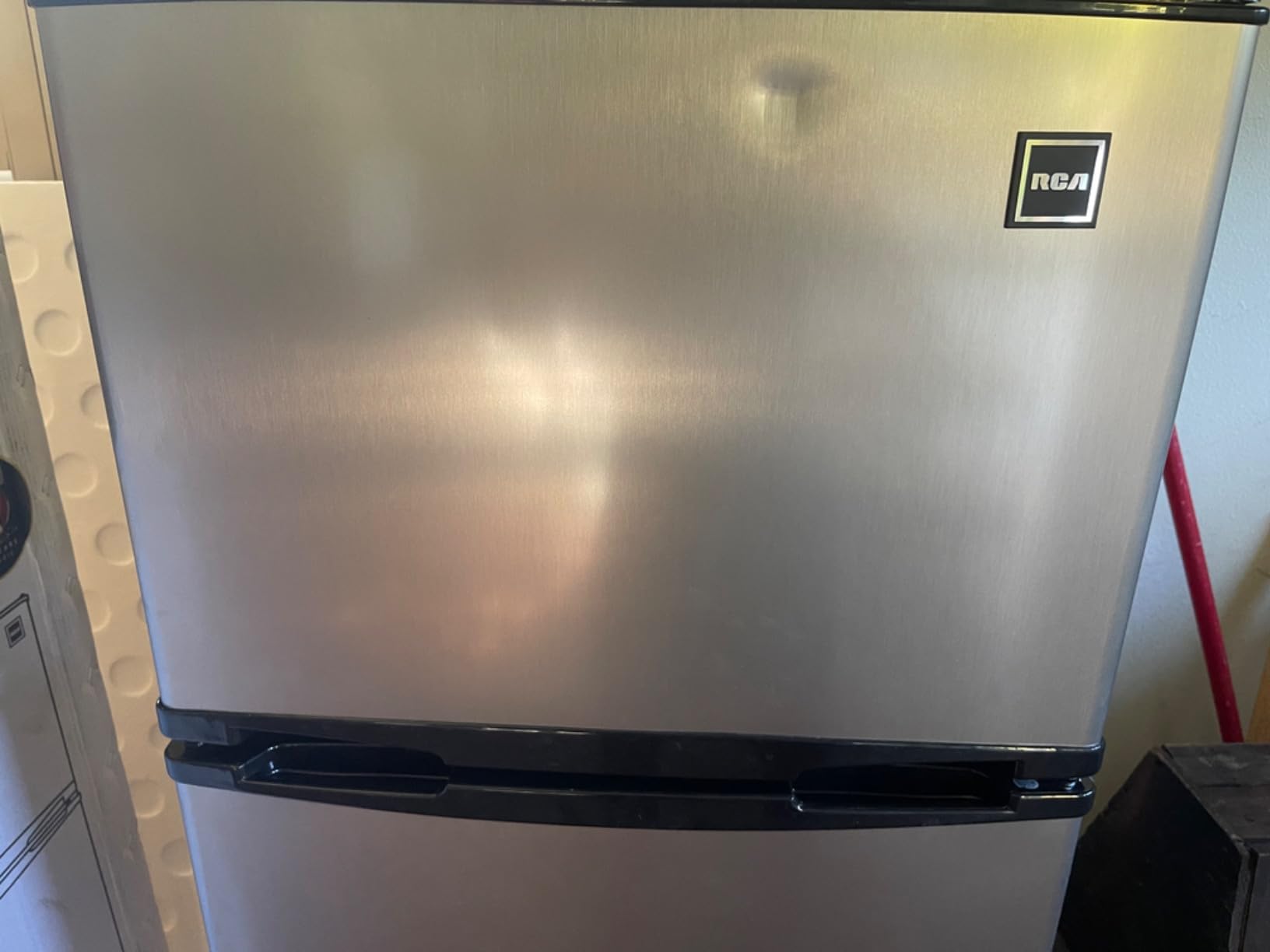
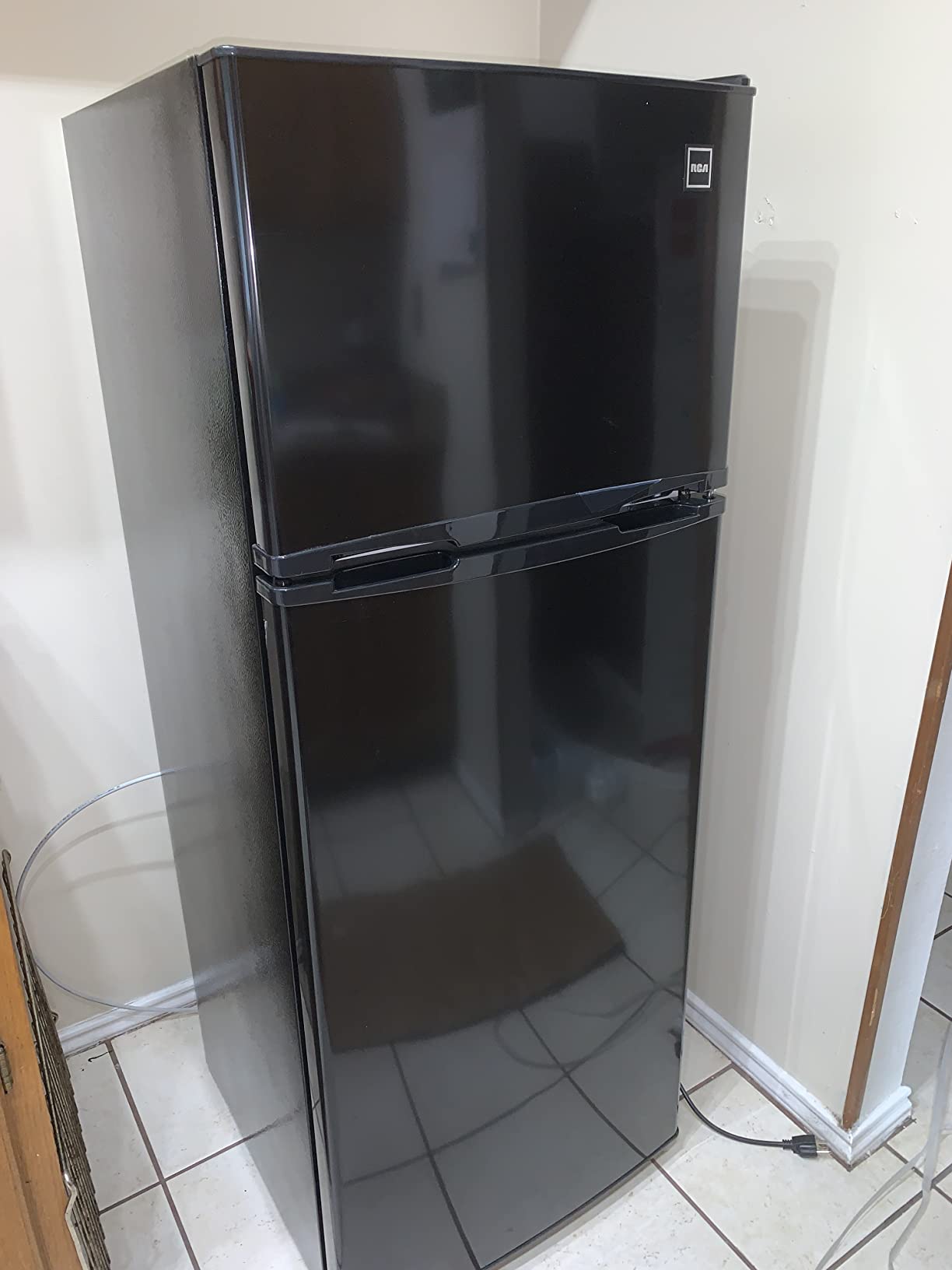
The most common complaints are cosmetic. Lightweight packaging means units often arrive with dents and scuffs, and the protective cling film is hard to peel off. Owners also flag that turning the dial too high forms ice on the back interior wall and can freeze liquids, so treat the thermostat as a dial with a caution rather than a precise instrument.
Who this suits?
Anyone whose power budget is tight, whether that means a solar cabin, a workshop, an RV hookup, or simply a household trying to keep utility costs down. It is also the narrowest 7.5 cubic foot option here, so it fits openings where the Frigidaire will not.
Owners who want a small freezer should note the 1 cubic foot compartment is roughly half the size of a standard freezer, so plan on short storage cycles rather than bulk freezing.
Who should skip it?
Skip it if you want a large freezer, if you will move the appliance frequently and want packaging that protects the finish, or if manual defrosting is a task you will avoid. Some owners report a minority of units that failed to cool properly or stopped running after a few years, so keep the receipt for the warranty period.
6. Galanz 12.0 Cu.Ft – Most Storage in a Slim Body
Galanz GLR12TS5F Refrigerator, Dual Door Fridge, Adjustable Electrical Thermostat Control with Top Mount Freezer Compartment, 12.0 Cu.Ft, Stainless Steel, 12
12.0 cu.ft with 2.65 cu.ft freezer
23.58 inch deep by 27.68 inch wide
Five glass shelves
Separate freezer thermostat
Pros
- 12 cubic feet in a 27.68 inch width
- Five removable glass shelves
- Separate freezer temperature control
- Low noise R600a compressor
Cons
- Only around 500 reviews to judge it by
- One-year warranty for a full-size body
- Stainless finish shows fingerprints
- Frost-free claim but freezer may still need defrosting
This is the volume play of the roundup. Twelve cubic feet across 9.36 cubic feet of fresh food and 2.65 cubic feet of freezer, in a body only 27.68 inches wide and 23.58 inches deep. For a dorm, a basement suite or a secondary refrigerator that needs real grocery capacity, that ratio is hard to argue with.
The adjustable electrical thermostat has a separate freezer setting, which most compact models lack, and the shelving includes five removable glass shelves plus a slide-out shelf. LED interior lighting is bright, a vegetable crisper is included, and the R600a compressor is reported as quiet with low energy consumption at 346 kWh per year.
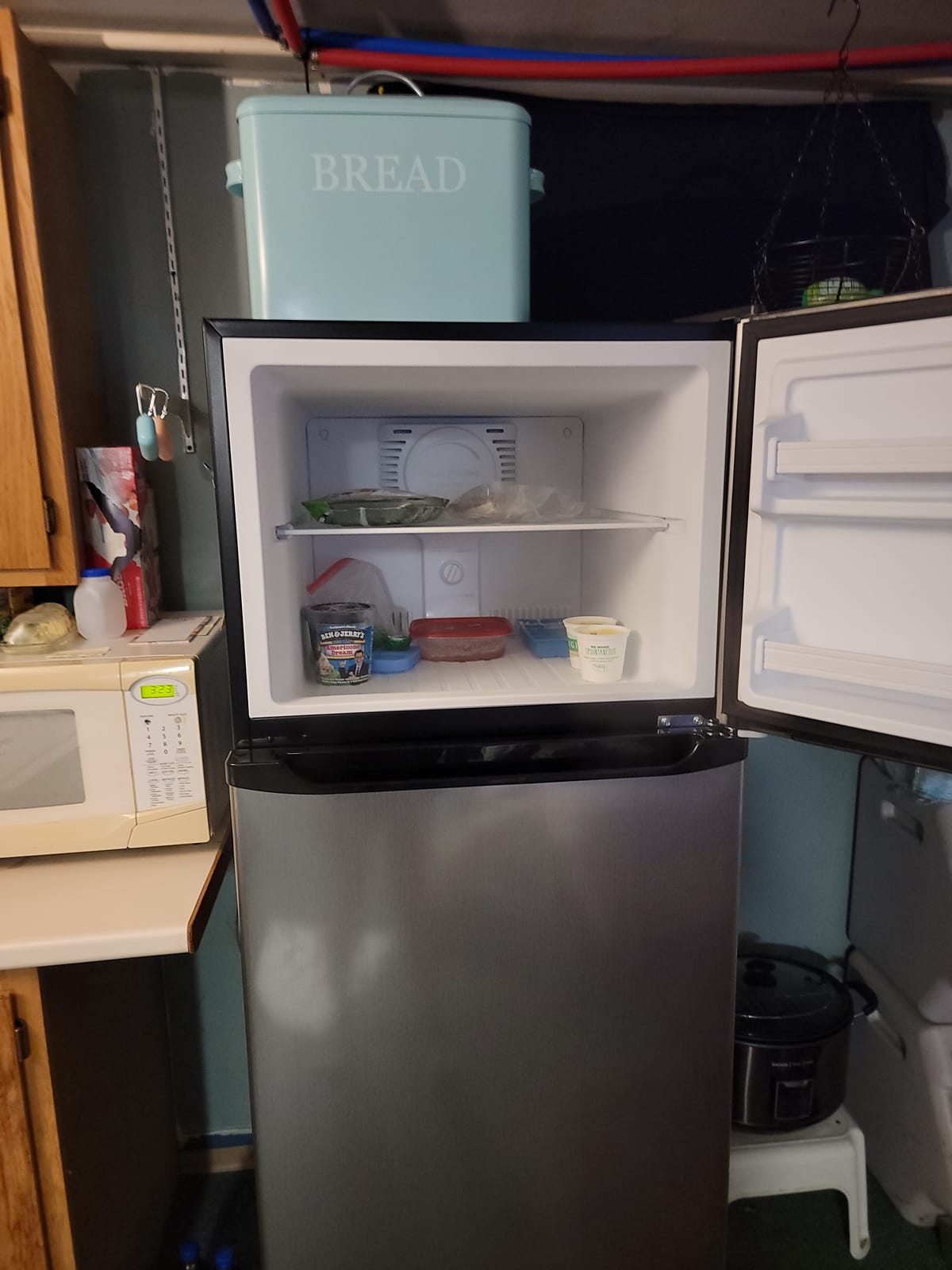
Owners describe adequate cooling, easy organisation and low noise, and the unit reaches temperature reasonably quickly after delivery. Reviewers also like that it works as a second refrigerator in an office suite or a garage, where a full-size Kenmore would be overkill.
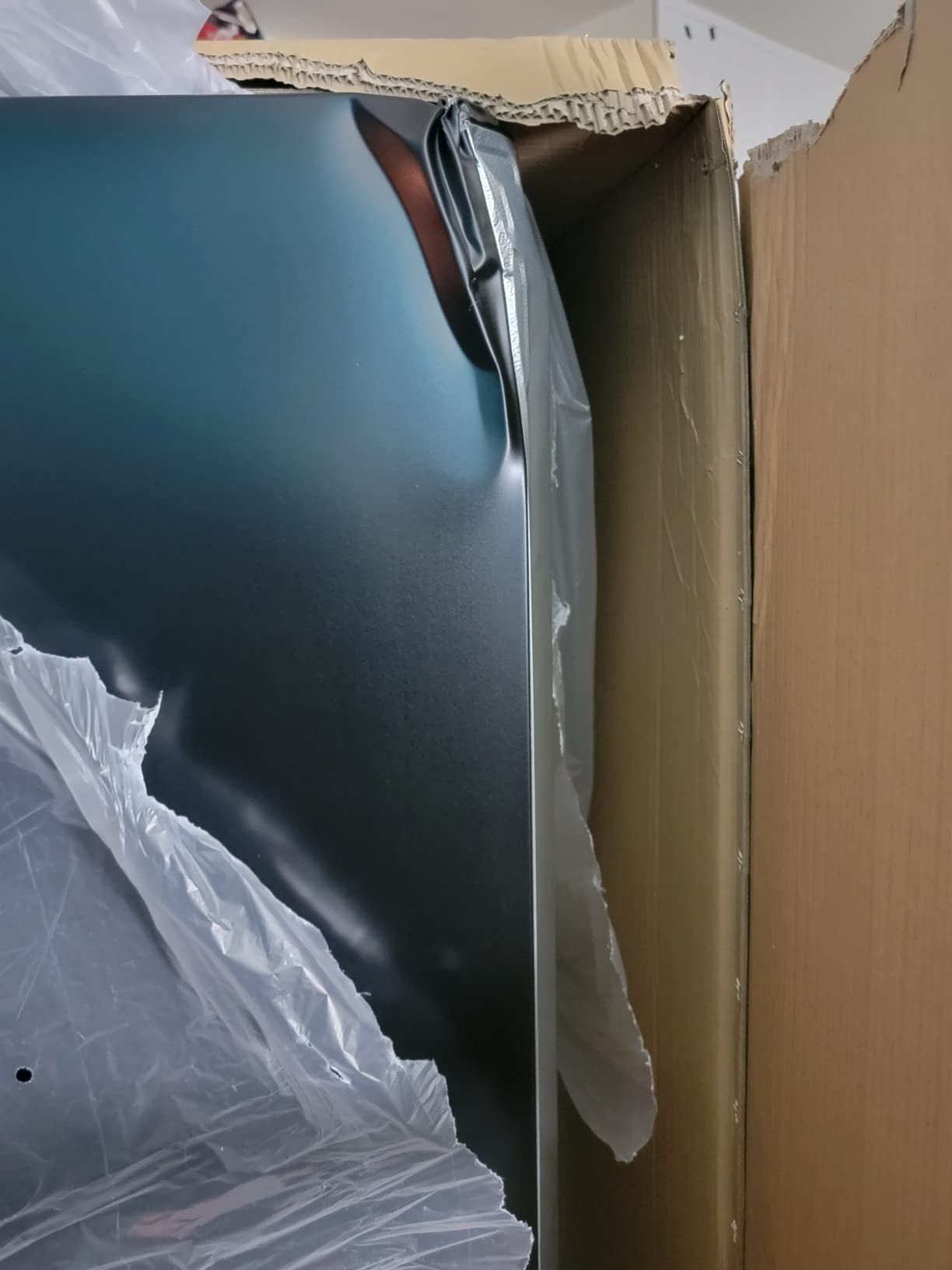
What gives us pause is the evidence base. This model carries a 4.0 average across roughly 500 reviews, which is a much thinner record than the 5500-review models elsewhere in this list. A one-year warranty is short for a body this size, and the stainless finish shows fingerprints unless it is wiped down regularly.
Who this suits?
A household that needs genuine grocery volume but has a narrow opening, a basement suite, a garage, or an office breakroom that doubles as a kitchen. The separate freezer dial also makes it a better fit than most peers for anyone who stores frozen goods regularly.
It is the most sensible frost-free-adjacent stepping stone between the 7.5 cubic foot apartment models and the 18.1 cubic foot Kenmore.
Who should skip it?
Skip it if buying confidence matters more than capacity, because the review base is small compared with the other picks here. Confirm the frost-free behaviour for your climate, since owners report the freezer may still need occasional defrosting despite the specification.
7. Kenmore 18.1 cu. ft. 30 Inch – Full-Size Capacity in a Standard Opening
Kenmore 18.1 cu. ft. 30″ Wide Top Mount Refrigerator – White
18.1 cu.ft in a 30 inch body
Inverter compressor
ENERGY STAR certified
367 kWh per year
Pros
- Genuine full-size capacity in a standard 30 inch opening
- Inverter compressor runs quietly and steadily
- ENERGY STAR certified
- Edge-to-edge shelves fit sheet cakes and party trays
Cons
- Bottom door has no floor clearance at the hinge
- Freezer door can pop open when the lower door is slammed
- Compressor can rattle and bubble after cycling
- Freezer section has no interior light
If you are replacing a failed full-size refrigerator and want a normal family kitchen, this is the only model in the roundup that does the job properly. It measures 30.12 inches deep by 29.72 inches wide and stands 66.14 inches tall, with 18.1 cubic feet split into 13.36 cubic feet fresh food and 4.77 cubic feet frozen.
The technical standout is the inverter compressor. Rather than cycling on and off, it modulates its output, which owners describe as steadier temperatures and lower noise, and it is paired with automatic defrost and ENERGY STAR certification at 367 kWh per year. Two humidity-controlled crispers, four door bins including a gallon-sized bin, and two full-width freezer bins are genuine full-size features rather than compact imitations.
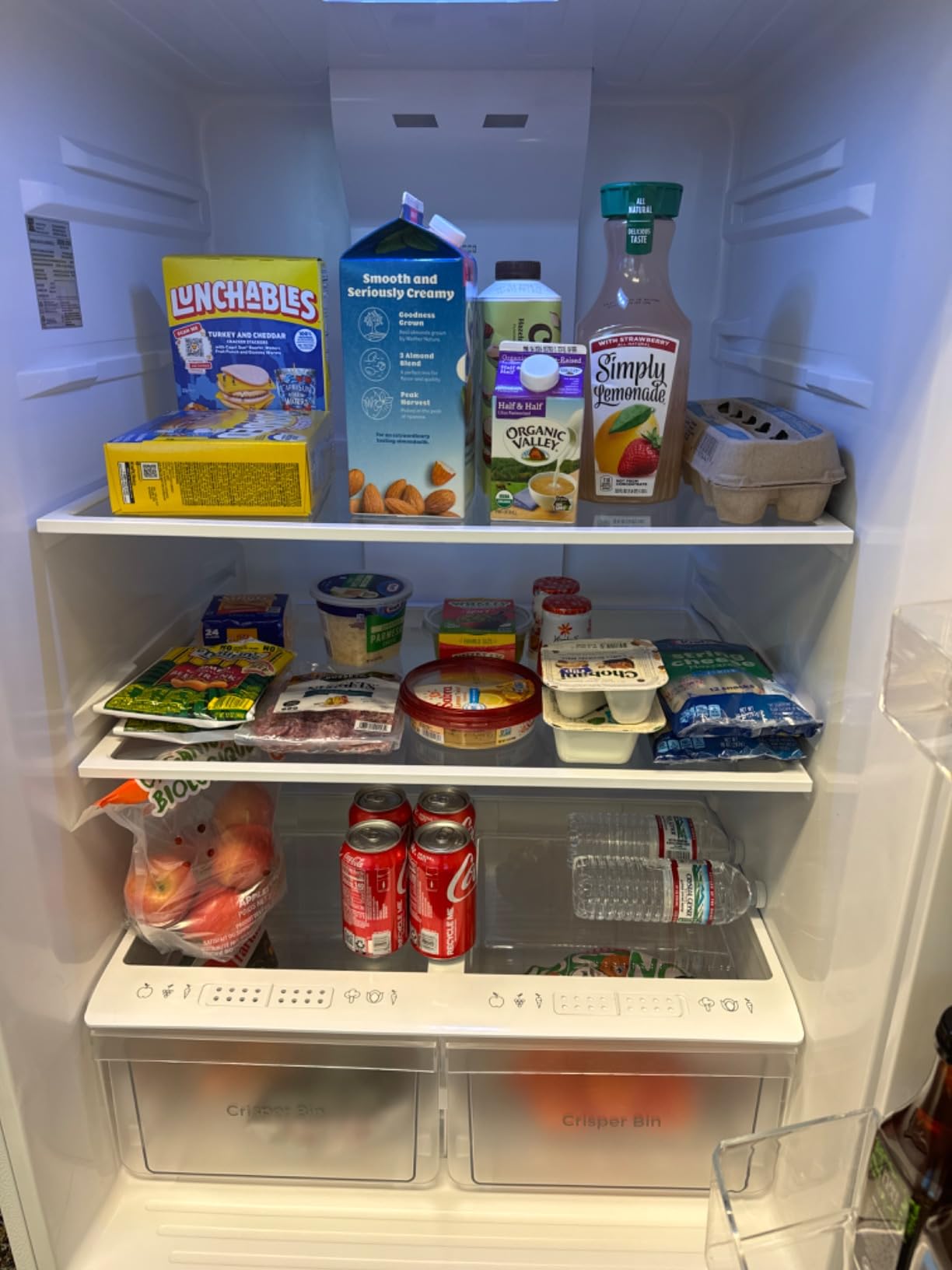
The edge-to-edge adjustable tempered glass shelves are the feature owners mention most, because they take a sheet cake or a party tray that narrower shelves reject. The reversible door and white finish also make it a neutral fit for a rental property or a budget kitchen remodel.
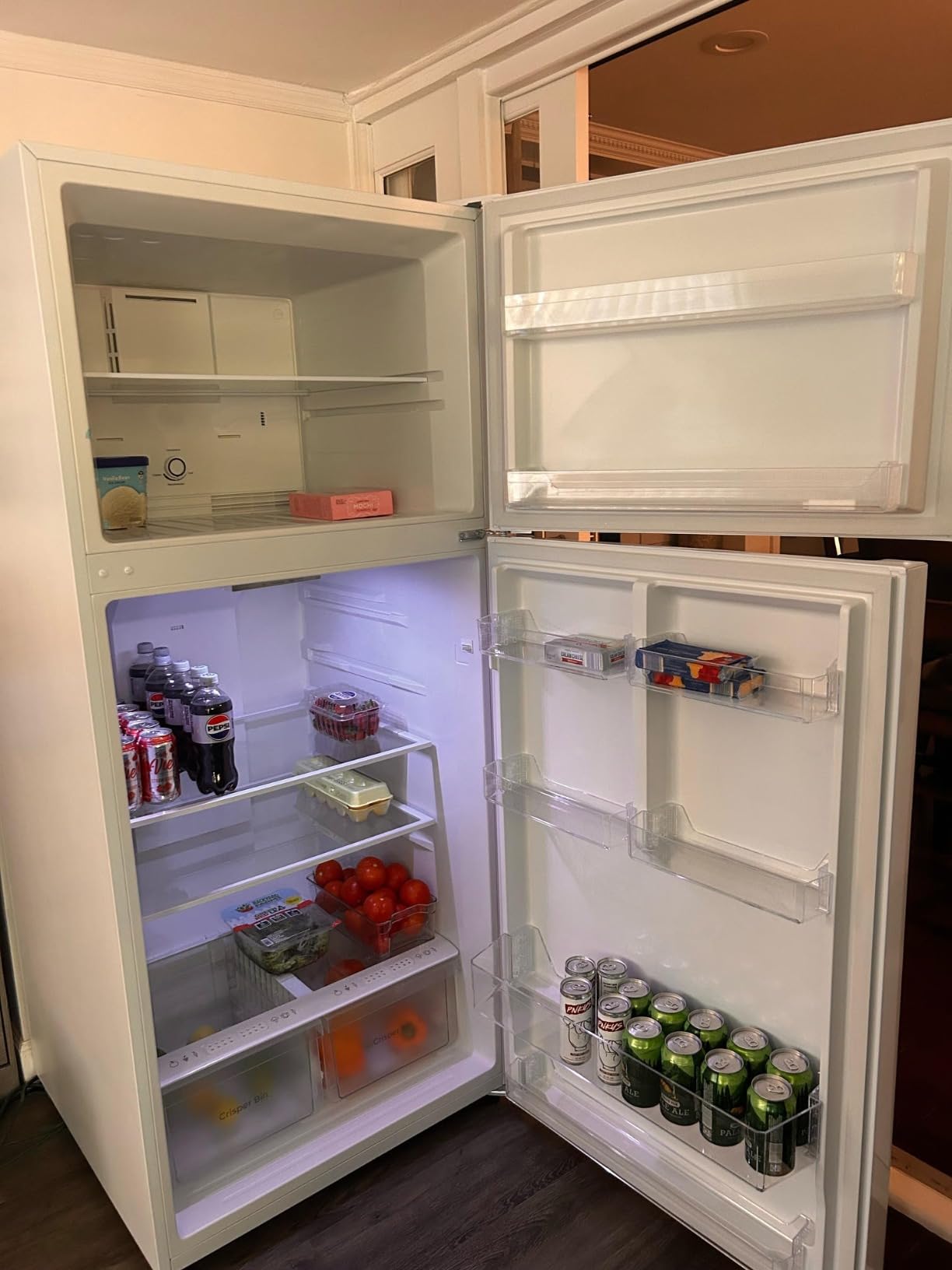
Owners commonly use it as a garage or porch refrigerator because of the capacity and the energy rating. The complaints are mechanical details rather than performance failures: the bottom door has no floor clearance at the hinge so it can catch your toes, the freezer door can pop open when the lower door is slammed, and the compressor can be heard rattling or bubbling briefly after it cycles.
Who this suits?
A family of three or four, or anyone who cooks a full week of meals and freezes part of it. If your old refrigerator was 18 cubic feet, this is a like-for-like replacement that fits a standard 30 inch alcove, and the inverter compressor is the durability argument that justifies the top of the budget.
It also suits landlords and anyone who wants a high-capacity unit for a garage or an outbuilding where a full-size body is useful.
Who should skip it?
Skip it if the freezer has no interior light, since that is a genuine gap in an otherwise well-equipped cabinet. Measure carefully before ordering: at 66.14 inches tall and 30.12 inches deep, it needs a real full-size opening and adequate ventilation clearance behind and above, and the bottom door design takes some getting used to.
8. BLACK+DECKER 14 Cu. Ft. Convertible – Refrigerator and Freezer in One
BLACK+DECKER 14 Cu. Ft. Convertible Freezer Refrigerator, Upright Freezer with Glass Shelves, ENERGY STAR rated, Frost Free, BUC1400XS, Stainless Look
14 cu.ft convertible upright
LED display temperature control
Frost-free with four glass shelves
ENERGY STAR qualified
Pros
- Switches between refrigerator and freezer modes
- Reaches set temperature within a few hours
- Very quiet low hum
- Four glass shelves and a strong door seal
Cons
- 68.1 inch height needs careful measurement
- Door does not latch on its own
- Interior LED lighting is dim
- A few units lost cooling after a couple of months
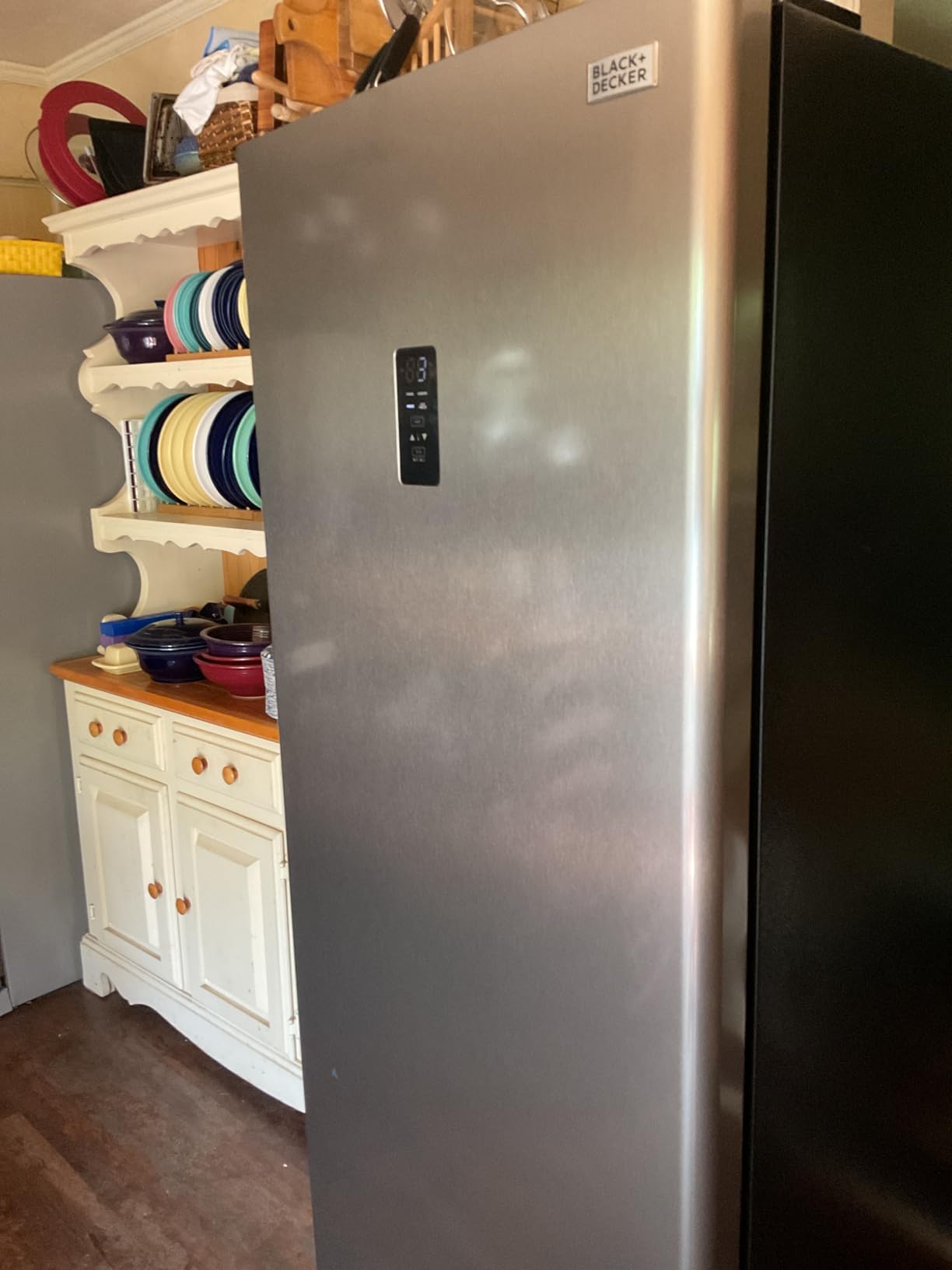
This is the odd one out in the roundup, and the oddness is the feature. The LED display lets you convert the 14 cubic foot cabinet between refrigerator mode and upright freezer mode, which means one appliance can cover a seasonal bulk-freeze and normal weekly storage. It is frost-free with four glass shelves, ENERGY STAR qualified, and capable of Sabbath Mode for religious observance.
The body is 27.9 inches deep by 28 inches wide and 68.1 inches tall at 156.5 pounds. That height is the single biggest constraint: it clears a standard ceiling but will not fit under a soffit or a low-hung cabinet in a galley kitchen. The door can be mounted with the hinge on either side, which is helpful in an awkward alcove.
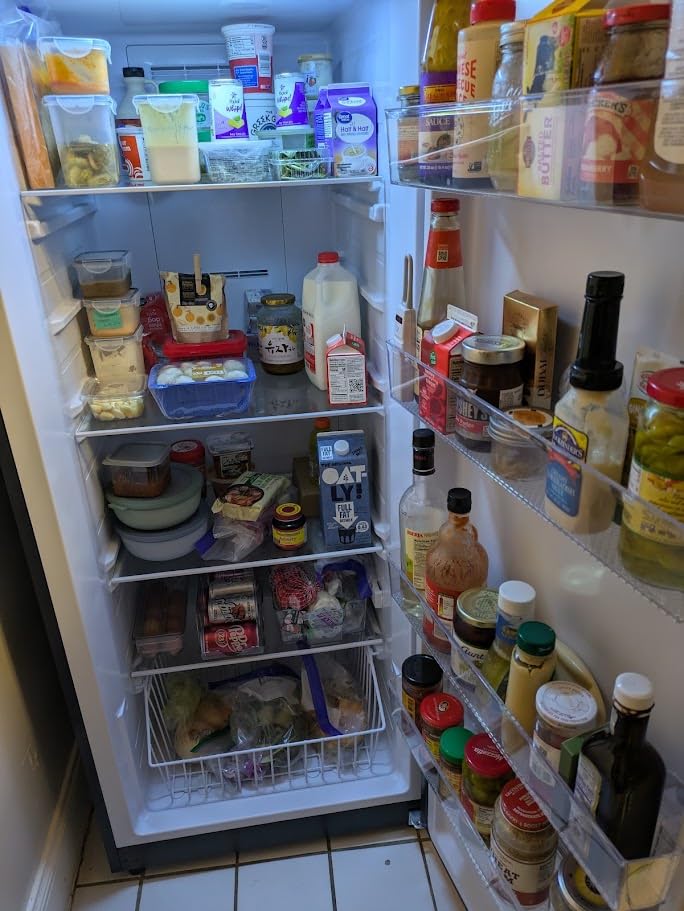
Owners are won over by the flexibility and by the cooling recovery, reporting that the cabinet reaches its set temperature within a few hours of being plugged in. Four glass shelves and a strong door seal hold cold well, and the low hum is one of the quietest running characteristics of any model here.
Three real drawbacks recur. The door does not latch on its own and can rest slightly ajar, which lets warm air in and warms the contents. The interior LED lighting is dim. And a small number of owners report a unit that lost cooling after a couple of months with an unresponsive manufacturer, which is why we would keep the receipt and use the warranty period fully.
Who this suits?
A household that freezes in bulk once a year and needs a deep-freezer function without owning a chest freezer. It also suits a garage, a basement or a rental property where a single appliance covers both storage needs and the ENERGY STAR qualification keeps the running cost down.
Anyone who values quiet operation will be pleased, since the reported sound is a low hum rather than an audible cycle.
Who should skip it?
Skip it if your ceiling height is under 70 inches or if a short soffit runs above the opening. The self-latching door is a genuine annoyance if you are used to a standard refrigerator, and the dim interior lighting makes finding items at the back harder than it should be.
9. Galanz 10 cu ft Retro – Frost-Free Styling With Character
Galanz GLR10TBEEFR Retro Refrigerator with Top Freezer Frost Free, Dual Door Fridge, Adjustable Electrical Thermostat Control, 10 cu ft White
10 cu.ft frost-free top freezer
7.42 cu.ft fresh food
R600a compressor
292 kWh per year
Pros
- Distinctive retro styling owners enjoy
- Frost-free freezer avoids manual defrosting
- Slender 23.74 inch width
- Freezer holds items solidly frozen
Cons
- Fresh food section runs cool rather than cold for some owners
- Interior light failed on at least one unit
- Exposed wiring at the bottom rear
- Condensation pools at the base with no visible drain
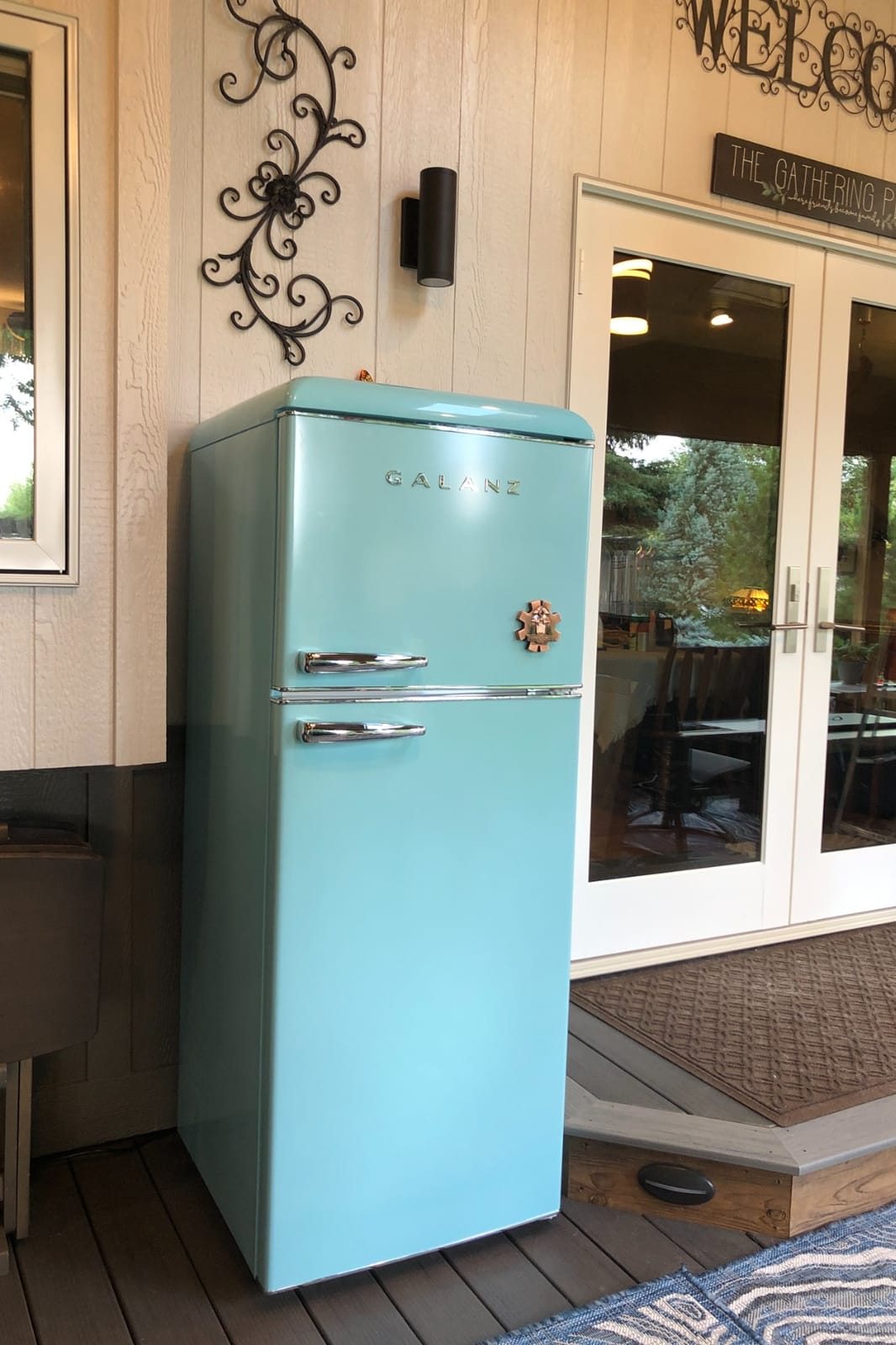
The Galanz 10 is bought as much for how it looks as for what it does. The rounded retro body in white reads as a deliberate design piece in a kitchen, studio or rental, and it measures 27.5 inches deep by 23.74 inches wide and 61.81 inches tall, so it is narrower and shallower than most 10 cubic foot refrigerators.
Storage splits into 7.42 cubic feet of fresh food and 2.42 cubic feet of freezer, with a rotary-scroll R600a compressor, an adjustable electrical thermostat dial, four removable glass shelves and a crystal crisper. It is frost-free, which removes the de-icing routine that dominates the 7.5 cubic foot apartment models, and energy use is listed at 292 kWh per year.
Across 1704 reviews the freezer compartment is consistently praised for holding items solidly frozen, and the unit is popular in apartments, rentals and garages. The frost-free top freezer is the reason it edges past the manual-defrost alternatives when convenience matters more than absolute efficiency.
The criticisms cluster around the fresh food section. Some owners describe it as cool rather than genuinely cold, which matters if you keep milk or raw meat. Other recurring notes are an interior light that failed within months on at least one unit, exposed wiring at the bottom rear, and condensation that pools at the base with no visible drain. Customer service is also described as difficult to reach for warranty issues.

Who this suits?
Apartment dwellers and renters who want a visible appliance to look deliberate rather than utilitarian, and anyone who wants frost-free convenience without stepping up to a full-size body. The slim 23.74 inch width and 292 kWh annual use also suit a basement or garage second unit.
It is a good choice for a kitchen where style carries weight, since the rounded shell and chrome-style detailing do most of the decorating work.
Who should skip it?
Skip it if you need a genuinely cold fresh-food zone, because several owners report marginal cooling there. Check the base of the unit after delivery, since condensation pooling with no visible drain is a recurring report, and note that handles and screws may not fit properly out of the box.
10. Frigidaire 7.5 cu ft Retro – Chrome Handles and a Flush Back
Frigidaire, 2 Door Apartment Size RETRO Refrigerator with Top Freezer, Chrome Handles, 7.5 cu ft
7.5 cu.ft with 1.7 cu.ft freezer
23.03 inch deep by 21.46 inch wide
Spill-proof slide-out shelves
378 kWh per year
Pros
- Retro chrome handles stand out in a small kitchen
- Spill-proof slide-out glass shelves ease cleanup
- Flush back saves depth in tight spaces
- Four door shelves plus a transparent crisper
Cons
- Manual defrost requires periodic ice scraping
- Freezer is modest at 1.7 cu.ft
- Flush back limits rear ventilation clearance
- Single mechanical thermostat
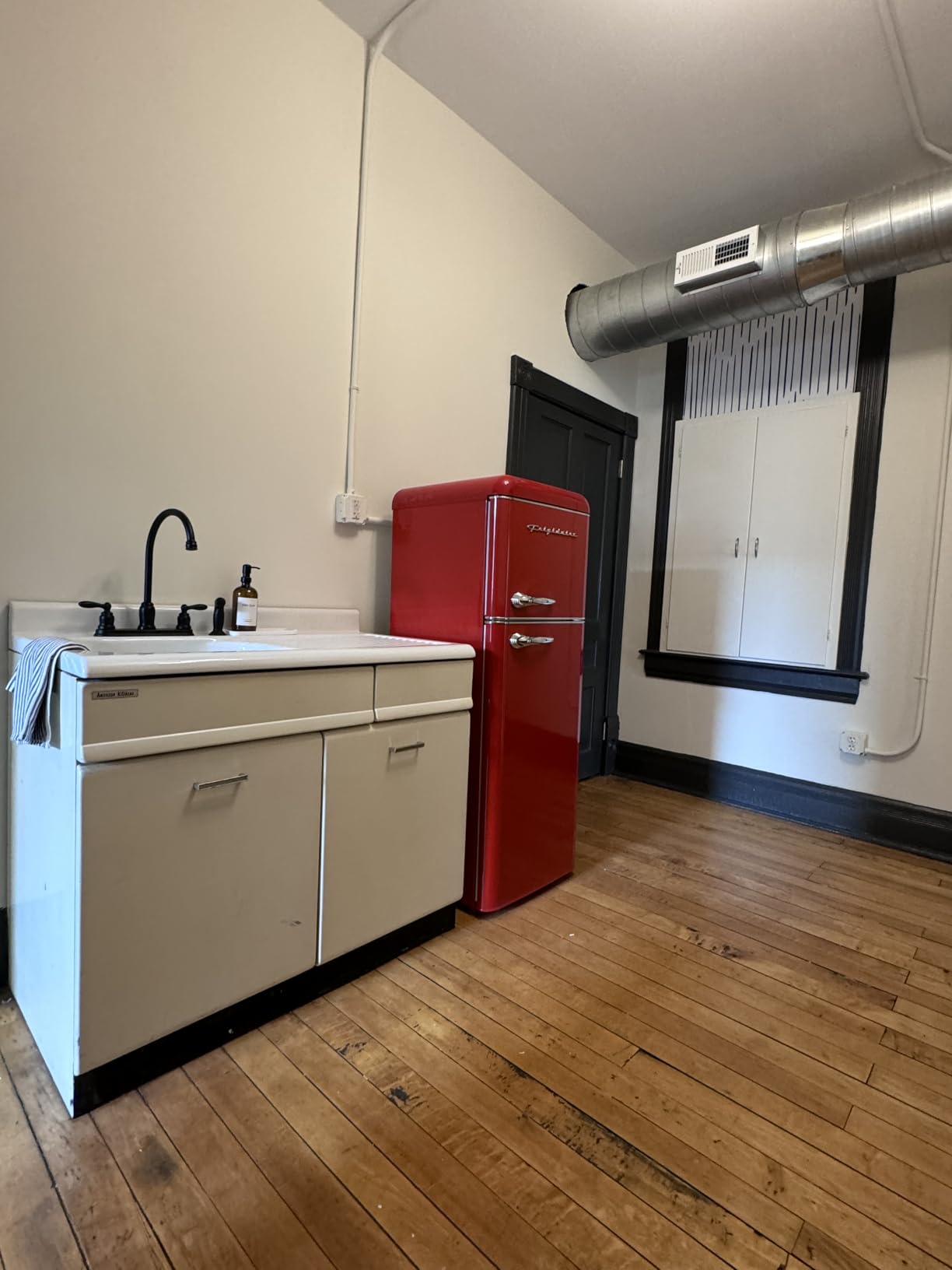
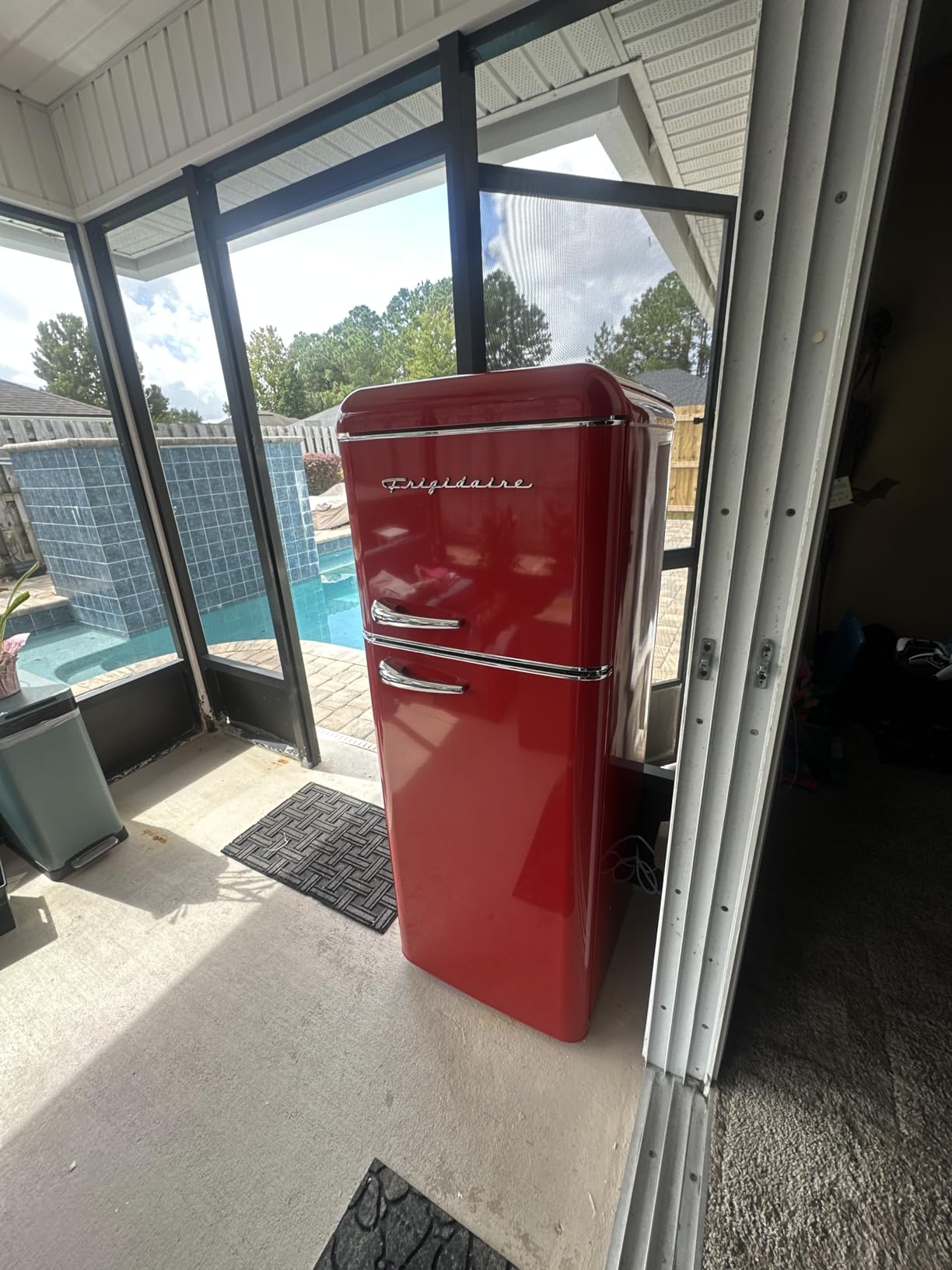
This is the Frigidaire apartment model for people who care about the finish. Chrome handles and a retro shell give it the same presence as the premium-styled units, and the 4.3 average across 293 reviews is the highest rating among the apartment-size models here.
It measures 23.03 inches deep by 21.46 inches wide and stands 57.99 inches tall at 90 pounds, splitting into 5.8 cubic feet of fresh food and 1.7 cubic feet of freezer. The defining feature is the space-saving flush back, which gains you depth in a tight kitchen, paired with three spill-proof slide-out glass shelves, four clear door shelves and a transparent vegetable crisper.
Reviewers consistently praise the spill-proof shelving, which makes cleanup far easier than the wire racks on cheaper models, and the castors and leveling legs that let one person reposition it. The crisper plus four door shelves give more organisation than most 7.5 cubic foot units manage, and the model is also offered in onyx, green and red.
Against that, defrosting is manual and the freezer is on the small side at 1.7 cubic feet. The flush back is a double-edged feature: it saves depth but limits rear ventilation clearance, so give it a few inches of space rather than pushing it flat against a wall.
Who this suits?
A renter or first-homeowner in a narrow kitchen where every inch of depth counts, and anyone who wants a refrigerator that looks chosen rather than tolerated. The spill-proof shelves and four door shelves also suit someone who shops in small, frequent batches rather than once a week.
It is a good second unit for a finished basement or a guest suite, and castors make it easy to move between them.
Who should skip it?
Skip it if you want frost-free operation or a large freezer, since both are missing. With a single mechanical thermostat you get no independent control, and the lightweight packaging means units often arrive with dents that show on a high-gloss finish.
How to Choose the Right Form Factor?
Form factor drives everything else, and below a thousand dollars your options narrow quickly. A French-door model with a through-the-door ice maker generally starts above this ceiling, so the realistic comparison is top-freezer against bottom-freezer against compact.
Top-freezer bodies are the sweet spot in this price band. Cold air sinks from the freezer compartment above into the fresh-food section below, so the compressor runs less, the interior holds temperature with less help, and there is one evaporator fan and one defrost heater instead of a ducted multi-air system. The trade-off is that you bend down for the fresh food.
Bottom-freezer models put fresh food at eye level and the freezer in a drawer, which many households prefer ergonomically. They tend to cost more and carry more electronics, and at this budget the depth usually pushes you into a narrower cabinet.
Compact and apartment-size models trade usable space for footprint. Remember that marketing capacity counts shelves, vents and door bins, so a 7.5 cubic foot cabinet typically behaves like a 5 to 6 cubic foot refrigerator once the hardware takes its share.
How to Measure Your Space in Five Steps?
Measuring takes ten minutes and prevents the most common expensive mistake in this category, which is discovering on delivery day that the appliance does not fit its opening.
Measure the width at three heights – top, middle and bottom of the opening. Older openings are rarely square, and the narrowest point is the one that matters.
Measure the depth from the wall, then add the door thickness and the clearance the manufacturer requires behind the cabinet for ventilation. Every model here needs air at the back, and some need it at the top too.
Check the door swing. A standard-depth 30 inch body can hit an adjacent base cabinet once the door opens past 90 degrees, which is the trap homeowners hit most often. Open a real door in the showroom and look at where it lands.
Measure the height against your ceiling and any soffit. The BLACK+DECKER at 68.1 inches is the tightest constraint in this roundup, and the Kenmore at 66.14 inches is close behind.
Walk the delivery path. Measure the doorways, the hallway turns and the stair width between the truck and the kitchen. A 156.5 pound upright freezer that cannot make it through a 32 inch doorway is useless.
Brands Worth Trusting and Ones to Think Twice About
Within this price band the reliable signal is not the badge on the door, it is how many independent service technicians are available in your area and how long the parts stay in the catalogue. Long-term durability and parts availability matter far more to owners than year-one features, and that is the metric we weighted when ranking.
GE, Whirlpool, Amana and Frigidaire are the names that come up most often in owner discussions as budget-friendly and dependable, largely because parts for them stay available for many years. Bosch and KitchenAid are frequently described as better built but noticeably costlier. Where you should think twice is on sensor-rich smart models: the recurring complaint on appliance forums is a single failed sensor turning into a service call several times the cost of the part itself, with labour bundled in.
Ice makers and water dispensers are the first feature to fail on refrigerators that have them, and they can add hundreds to a repair bill, so buying a unit without them is both cheaper to buy and cheaper to own. A plain mechanical thermostat has nothing to fail electronically, and a single-evaporator frost-free cycle has fewer sensors to diagnose.
Energy Costs and Total Cost of Ownership
Purchase price is the smallest part of what a refrigerator costs you. Every model on this list publishes an annual kilowatt-hour figure, and you can turn that into a running cost with a simple multiplication by your local electricity rate.
The spread in this roundup is meaningful. At roughly 200 kWh per year the ARCTIC CHEF sits at the efficient end, while the Frigidaire apartment models sit at 378 kWh per year. Over a twelve-year life that difference adds up to hundreds of dollars, which can rival the spread between the two ends of this roundup.
Add expected repair cost and the ranking changes again. A mechanical-thermostat manual-defrost unit has almost nothing that can fail electronically. A frost-free model with an inverter compressor has more, but the compressor itself is the durable part. The most expensive outcome in this category is a repair on a sealed-system fault or an electronic control board, so avoiding sensor-dependent smart features is the single best cost control you have.
Repair or Replace: When Repairing Still Wins?
Refrigerators are worth repairing far more often than people assume. The common rule of thumb is that a repair costing less than half of a comparable new appliance is usually worth doing, provided the unit is otherwise sound and the compressor is healthy.
Cheap repairs include a failed door switch, a worn hinge, a clogged defrost drain or a bad start relay, and a technician may handle these in a single visit for a modest fee. Expensive repairs are sealed-system work, compressor replacement and control board failures, and those are where replacement starts to make more sense.
Forum owners weighing a few hundred dollars of repair on a nine-year-old unit against a replacement have generally concluded the repair is worth it when the diagnosis points to a single component rather than a cascade. Ask for the part number and price before authorizing work, and remember that sensor-driven faults on a sensor-rich model are where labour dominates the bill.
Where and When to Buy?
Track the price before you commit, because this category discounts heavily at specific times. Major appliance sale events cluster around holiday weekends and the start of the calendar year, and floor models and last year’s display units typically carry a deeper cut with a cosmetic penalty you can see in person.
Compare the big-box retailers on more than sticker price. Delivery and installation fees, water-line hookup, and removal of your old appliance are separate line items that can quietly push a purchase past the ceiling you set. A retailer that includes haul-away and returns are the priority.
Check the return window before you commit, especially for a large unit, and inspect the cabinet for dents the day it arrives. Transit damage is one of the most common complaints across the compact models in this roundup, and photographing the packaging and the unit on arrival makes a claim straightforward.
Frequently Asked Questions
What is the most reliable refrigerator brand to buy?
Within a sub-1000 dollar budget, the most reliable names are GE, Whirlpool, Amana and Frigidaire, largely because parts for those brands remain available for many years after a model is discontinued. Reliability at this price comes from simplicity rather than features, so a top-freezer model with a mechanical thermostat has fewer components that can fail than a sensor-rich smart refrigerator. The Kenmore 18.1 cu. ft. here adds an inverter compressor, which is another step up in temperature stability.
What is the best refrigerator at a low price?
The best low-price refrigerator depends on the space. For a bedroom or office, the Midea 1.6 cu. ft. model is the most efficient. For a real kitchen on a budget, the Kenmore 18.1 cu. ft. 30 inch top-freezer is the value pick with an inverter compressor. For an apartment, the Frigidaire 7.5 cu. ft. Platinum Series gives you a genuine separate freezer. A mechanical thermostat and a manual defrost system are the two most reliable choices at this price.
What refrigerator brands should you think twice about?
The category to avoid at this price is not a single brand but a feature set: sensor-rich smart refrigerators and units with through-the-door ice makers and water dispensers. Owner reports describe a single failed sensor turning into a service call several times the cost of the part, with labour bundled in, and ice and water subsystems are the most common first failure. Pick a model with fewer electronic components and standard parts, and your repair risk drops sharply.
Which brand of top freezer refrigerator is the most reliable?
Among the top-freezer models in this roundup, the Kenmore 18.1 cu. ft. 30 inch stands out because it pairs a top-freezer layout with an inverter compressor, automatic defrost and ENERGY STAR certification. Inverter compressors modulate their output rather than cycling hard on and off, which owners associate with steadier temperatures and lower noise. Among compact models, the ARCTIC CHEF 7.5 cubic feet wins on efficiency, drawing about 200 kWh per year.
How much does it cost to run a refrigerator per month?
Take the published annual kilowatt-hour figure and divide by twelve, then multiply by your local electricity rate. The ARCTIC CHEF at 200 kWh per year is roughly 17 kWh a month, while the Frigidaire apartment models at 378 kWh per year run about 32 kWh a month. At a typical residential rate the difference stays in the low single digits per month, but across twelve years it becomes a meaningful part of the total cost of ownership.
How do I measure for a new refrigerator?
Measure the width of the opening at the top, middle and bottom, because the narrowest point decides what fits. Then measure depth from the wall and add the required ventilation clearance behind and above the cabinet. Check the door swing against adjacent base cabinets, since a standard-depth 30 inch body can hit a neighbouring cabinet past 90 degrees. Finally measure the height against your ceiling and any soffit, and walk the full delivery path including doorways and stair turns.
Should I repair an old refrigerator or replace it?
Repair is usually worth it when the quoted cost is less than half of a comparable new appliance and the diagnosis points to one component. Clogged defrost drains, worn hinges, bad door switches and failed start relays are all reasonable repairs. A sealed-system leak, a compressor failure or a control board replacement is where replacement wins. Ask for the part number and the total price including labour before authorizing any work, and note that sensor-driven faults are where labour dominates the bill.
Is it better to buy appliances through Costco or a home improvement store?
The practical difference is delivery, installation and returns rather than sticker price. A home improvement retailer such as Home Depot or Lowe’s often includes installation, water-line hookup and haul-away of the old appliance as part of a package, while warehouse clubs may leave those as separate charges. Compare the all-in figure including those fees, because they can move a purchase past the ceiling you set. Check the return window for a large appliance before you commit.
Final Verdict
Our overall winner among the best refrigerators under 1000 dollars is the EUHOMY 4.5 Cu.Ft Mini Fridge, because a real separate freezer, a 38 dB running level and a 4.5 rating across 3665 reviews in an 18.1 inch body is a combination nothing else on this list matches. If you are replacing a full-size kitchen unit rather than adding a second appliance, the Kenmore 18.1 cu. ft. 30 inch model is the pick, since an inverter compressor and 18.1 cubic feet inside a standard opening is hard to find elsewhere at this level. For an apartment or a rental, the Frigidaire 7.5 cu. ft. Platinum Series gives you a proper separate freezer at a compact size.
Pick the EUHOMY 4.5 Cu.Ft if you want a real freezer in a small body, the Midea 1.6 Cu.ft if absolute footprint is the constraint, the Upstreman 3.2 Cu.Ft for drinks and snacks, and the ARCTIC CHEF 7.5 for the lowest energy draw. The Galanz 12.0 Cu.Ft fits mid-size storage in a narrow opening, the BLACK+DECKER 14 Cu. Ft. converts to a freezer, and the two retro models buy you styling rather than function.
Whatever you choose, measure the opening three times before you order and keep the receipt for the full warranty period. Those two habits prevent more problems than any feature on this list will solve.