
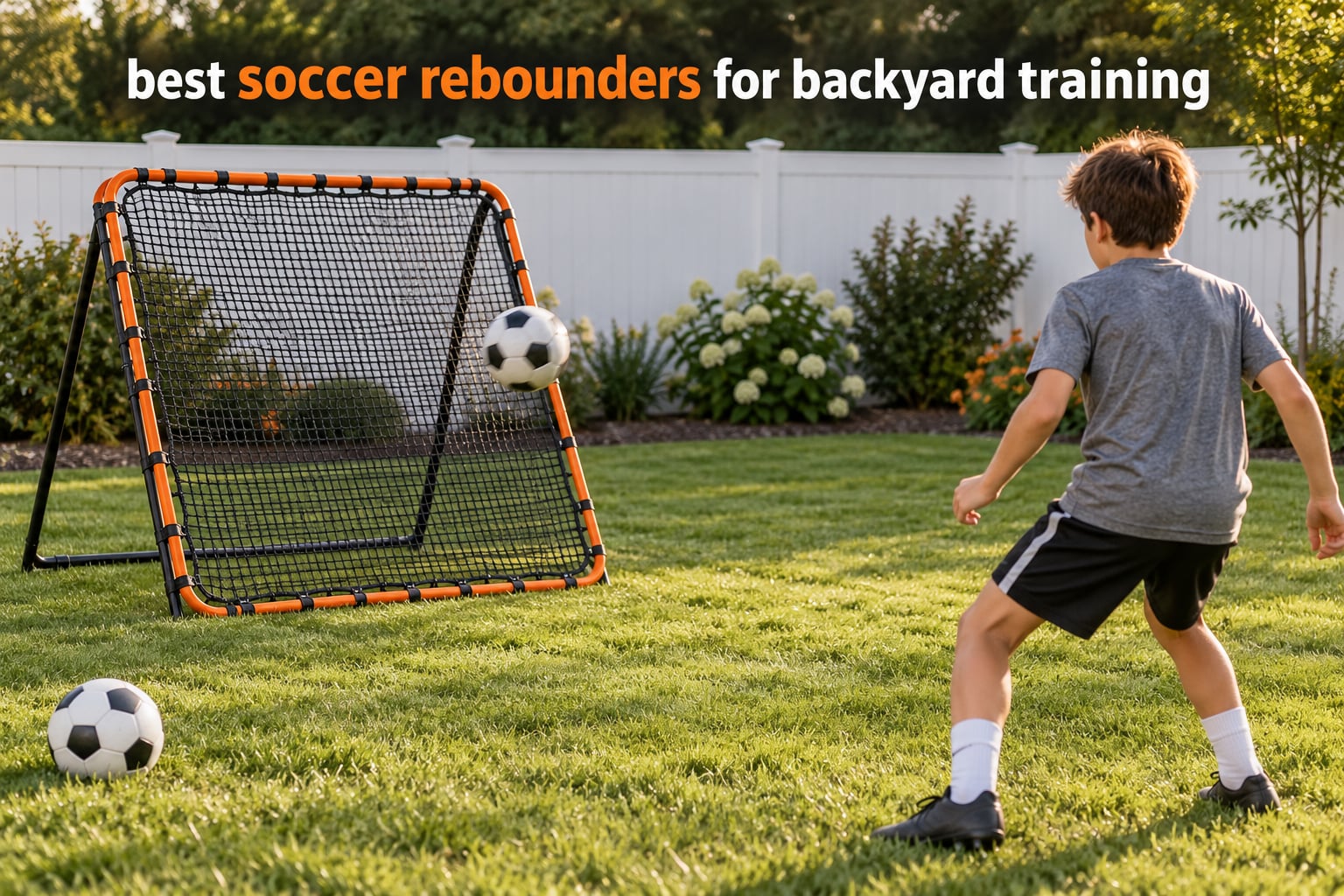
A soccer rebounder is a training frame that returns the ball after you kick or throw it into it, so a single player can work on passing, first touch, shooting and goalkeeper saves without a second person. That missing second player is the whole point. Wall kicking gives you maybe a hundred lazy reps a week; a properly placed rebounder gives you several hundred purposeful ones in twenty minutes.
My team has been putting backyard rebounders through real sessions for years, mostly because the failure modes are so predictable. Two mistakes cause nearly all the disappointment. The first is buying before measuring: a 12-foot net that returns a hard-driven ball 20 feet back needs far more room behind it than most people have, and when the return lands on the fence instead of your foot, the unit gets blamed. The second is ignoring the difference between a net and a board. They look similar on a listing and train completely different things.
Everything below was checked against live product specifications and owner reviews, and prices were verified in October 2026. These are the best soccer rebounders for backyard training we could justify, from a weighted plastic board for a garage floor to a full 12-by-6-foot net for a family that treats the yard like a pitch.
If you are still working out how much space you have, jump to backyard playset sizing guidance first, since the clearance rules for a swing set and a rebound net are close cousins.
Table of Contents
Top 3 Picks for Backyard Soccer Training in 2026

SKLZ Quickster Dual-Sided Trainer
- Dual 6x4 ft and 6x20 in rebound surfaces
- Bottom bar-free true-roll net
- Quick-Connect C-Clips
- Carry bag and stakes included

QUICKPLAY Replay Station Board
- 4-in-1 rebound angles
- Flat and ribbed dual surfaces
- Tool-free 10 second setup
- Indoor and outdoor use

ACELETIQS 12×6 Rebound Net
- 12 x 6 foot high-tension surface
- Galvanized powder-coated frame
- Paint-on target
- Rubber feet for indoors
Quick Overview: 10 Best Soccer Rebounders for Backyard Training in 2026
| Product | Specifications | Action |
|---|---|---|
| SKLZ Quickster Dual-Sided Trainer |
|
Check Latest Price |
| QUICKPLAY Replay Station 4-in-1 Board |
|
Check Latest Price |
| ACELETIQS 12×6 Rebound Net |
|
Check Latest Price |
 Franklin Sports 6×4 Adjustable Rebounder Franklin Sports 6×4 Adjustable Rebounder |
|
Check Latest Price |
 QUICKPLAY TEKKERS Trainer Dual Net QUICKPLAY TEKKERS Trainer Dual Net |
|
Check Latest Price |
 ZivPlay 40×16 Rebound Board ZivPlay 40×16 Rebound Board |
|
Check Latest Price |
 Amazing Tour Adjustable Rebound Net Amazing Tour Adjustable Rebound Net |
|
Check Latest Price |
 QUICKPLAY Pro Adjustable Rebound Net QUICKPLAY Pro Adjustable Rebound Net |
|
Check Latest Price |
 RXTR Pro Coach Board and Reaction Light RXTR Pro Coach Board and Reaction Light |
|
Check Latest Price |
 VEVOR 45×18 Rebound Board VEVOR 45×18 Rebound Board |
|
Check Latest Price |
1. SKLZ Quickster Soccer Trainer — Best Overall for Backyard Training
SKLZ Quickster Soccer Trainer – Dual-Sided Rebounder for Solo Passing, Receiving, Trapping Practice – Large & Small Rebound Net – Weather Resistant – Adjustable Frame, Metal Stakes & Carry Bag
Large side: 6x4 ft net
Small side: 6x4 ft x 20 in ground net
Weighs 5.99 kg
All-weather netting
Pros
- Dual-sided layout gives an aerial panel and a ground-pass surface in one frame
- Adjustable locking poles and C-clips make repositioning quick
- Target on the large side supports shooting and passing accuracy
- Carry bag and metal stakes included
Cons
- Full frame is bulky to move alone compared with a board
- Stakes work loose in grass during repeated hard strikes
- At this tier some buyers wish for a bigger return surface
Best for: a player who wants first touch, passing and shooting volume from a single unit in a normal-sized yard.
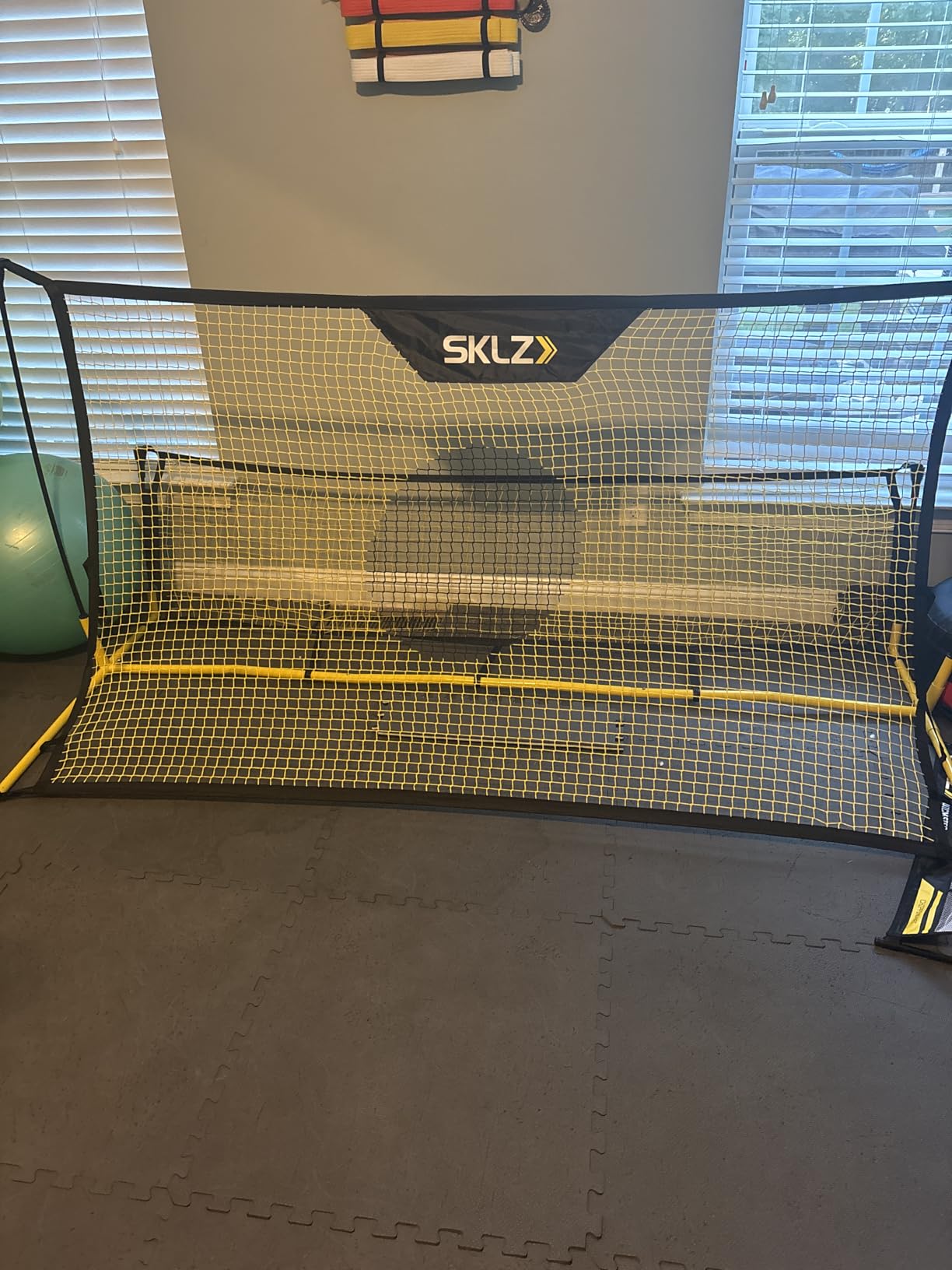
The SKLZ Quickster has been our default answer for years because it solves the problem most rebounders create: one return type, so drills get boring fast. The large 6×4 foot side is built for trapping work and lifted passes, and the 6-foot-by-20-inch side sits low for ground passing and receiving. Because the bottom bar is removed, the ball rolls back to you rather than dying against a tube.
Setup is where it earns its place. The adjustable locking poles set the height, and the Quick-Connect C-Clips let you attach or strip the net in seconds without rethreading anything. For a coach running a session where two players rotate through stations, that speed matters more than any spec line.
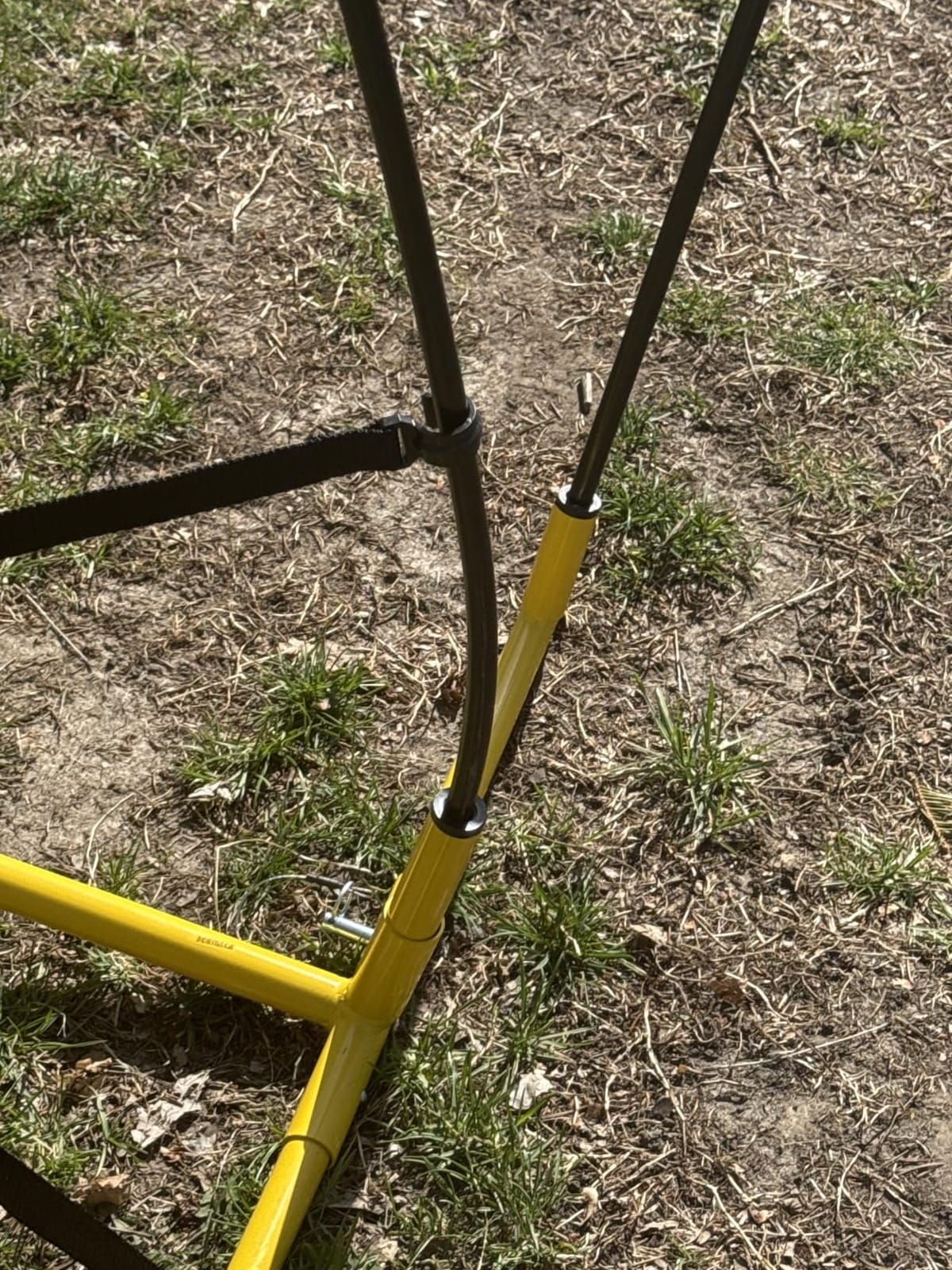
What I noticed most in the review set is how consistently owners describe the same thing: children training between roughly ages 3 and 14, with parents reporting higher shot counts per session and fewer balls ending up against the fence. The build is metal frame with UV and weather-resistant netting, so it stays out on the lawn rather than in the shed. Owner complaints cluster around anchoring rather than quality, which is a solvable problem.
Anchor it properly and it holds through hard sessions; skip the stakes and expect to re-seat them mid-drill. My advice is to sandbag the base in wet conditions and to place the unit so the return lands on open grass, not on the fence line.
How the dual-sided layout changes a session
Most solo sessions waste time because you keep walking up and down the unit to change it. The Quickster removes that friction: you work the low side for two-touch passing and receiving, then move to the tall side for chest, thigh and foot traps without touching a pole. That single design decision is why this frame keeps showing up in coached programmes and family yards alike.
On the Socal Soccer forum, where a thread about rebounders for teens still ranks in the top results for this category, posters consistently name build quality as the deciding factor. The Quickster’s powder-coated frame and locking pins are the reason it appears on that kind of list rather than in the “cheap and flimsy” pile.
When it is the wrong choice
Skip it if your yard is very small and you need the unit to disappear in under a minute, or if you are training a strong adult striker who hits balls with genuine pace and needs a bigger target than 6×4 feet. The frame also weighs 5.99 kg, which is a two-person lift if you want to move it to a different pitch.
For a very large yard and hard adult shooting, step up to a 12-by-6-foot net instead. For a garage floor, a weighted board is the better tool because the Quickster’s stakes and poles assume grass.
2. QUICKPLAY Replay Station — Best Value Board for Any Surface
QuickPlay Replay Station Soccer Rebounder Board – 4-in-1 Passing Trainer
37.5 x 15.0 x 9.5 inch board
Weighs 13.7 lbs
4 rebound angles
Sandbag included
Pros
- Flat and ribbed faces produce noticeably different returns
- Four angles cover ground passes traps half volleys and aerial work
- Tool-free setup takes seconds
- Works on carpet grass and turf
- Small footprint suits compact yards
Cons
- Board slides on impact unless weighted
- Included sandbag ships empty so you must fill it
- Legs can detach under vigorous drills
Best for: first touch and control work in a small yard, a garage or a spare room, on a tight budget.
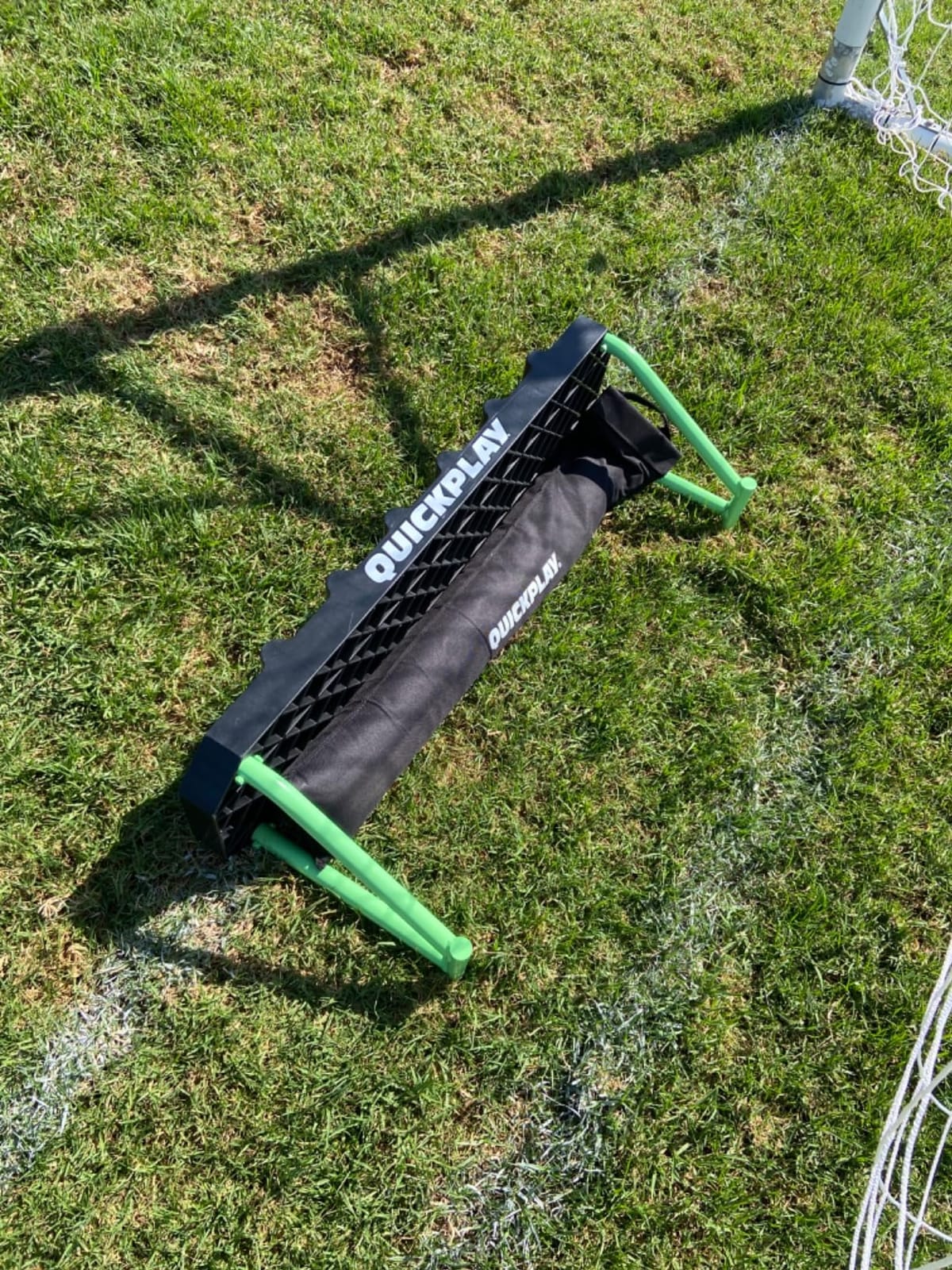
The Replay Station is the hardest board to fault for variety. One face is flat and one is ribbed, and the panel flips between them for further angle changes, which adds up to four rebound configurations. That ribbed face is the detail worth knowing about — it kicks the ball back slightly differently, which is closer to how a return off a real passing wall behaves.
Reviewers consistently report that this board does not produce the exaggerated, laser-fast return that marketing videos imply. For a young player building touch, that is a feature. A ball that comes back at a survivable pace is a ball you can actually control hundreds of times.
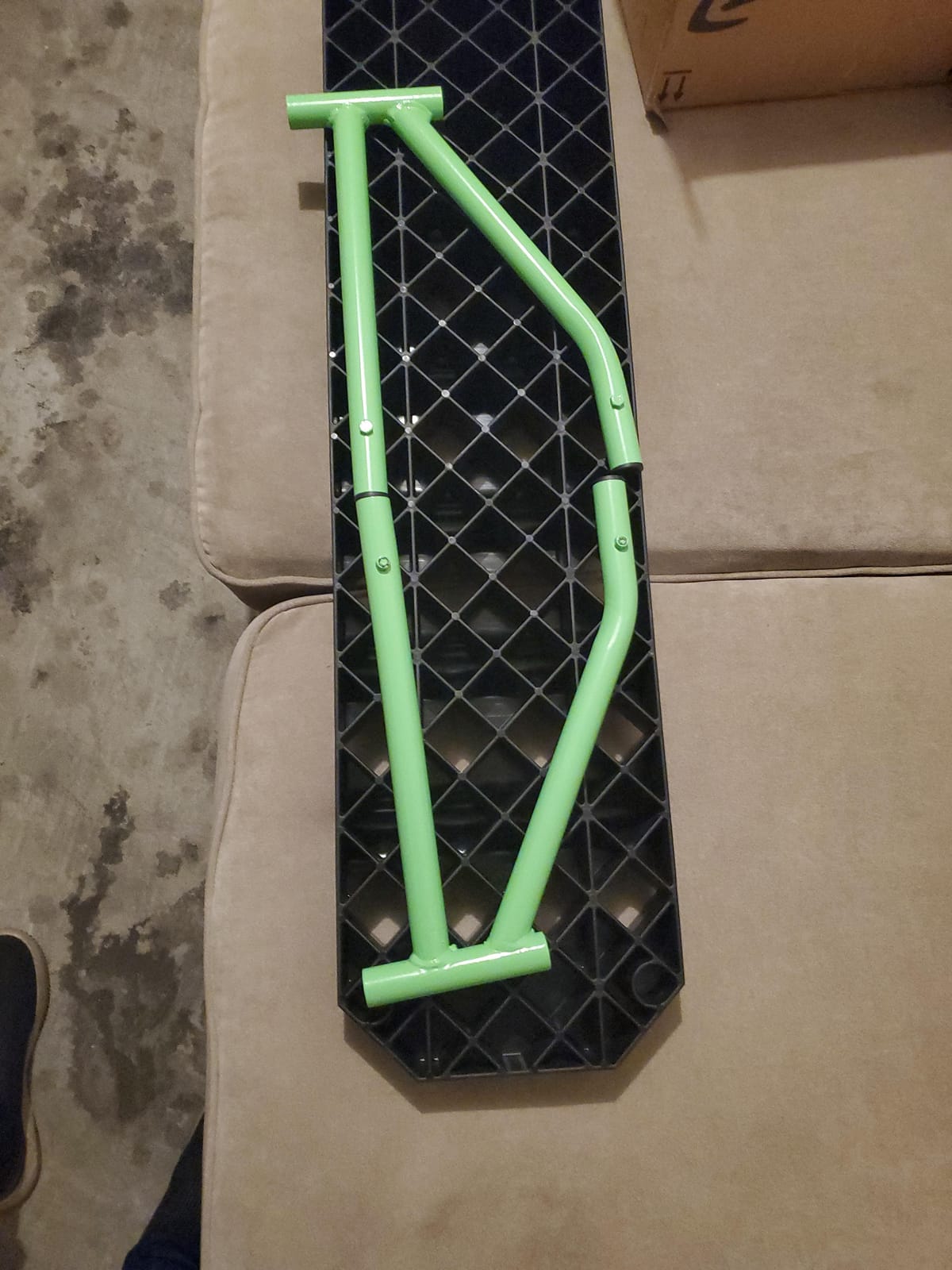
At 37.5 by 15 by 9.5 inches and 13.7 pounds, it is one of the easiest boards here to reposition. Powder-coated steel legs grip turf and carpet, and the whole thing goes up in about ten seconds with no tools, which means you can put it away the moment the rain starts.
The one thing you must plan for is weight. Without ballast, the board shifts on impact, and the included polyester sandbag arrives empty. Fill it with sand, or set it on a couple of dumbbells if you train on a hard surface. Owners who skip this step are the ones who end up disappointed.
Why the dual surface beats a single-face board
Most entry boards offer two angles on one flat surface, which means every repetition feels identical. Adding a ribbed face changes the ball’s departure slightly, so a player cannot lock into one timing pattern and coast. That is the difference between a session that builds a habit and one that just burns time, and it is why this board has climbed to the number two spot in the Soccer Rebounders category.
It is also the board we recommend for parents dealing with the indoor wall problem. On a carpeted garage floor, the steel legs grip and the returns stay low and controlled, so a seven-year-old can work traps indoors without the ball reaching the ceiling.
When it is the wrong choice
Skip it if you are a strong adult player training full-power shooting, because a compact panel is not going to absorb that pace or protect the fence behind it. It is also the wrong tool for goalkeeper reflex work, where you need a wide surface and a soft return rather than a firm board rebound.
And if your surface is concrete or smooth decking, budget for ballast from day one. No sandbag substitute holds a sliding board in place reliably.
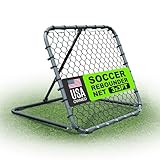
3. ACELETIQS 12×6 Rebound Net — Best for Large Yards and Serious Training
Soccer Rebounder Net Feet Practice Soccer Training Equipment | Portable, Easy Assembly, Steel Frame | Perfect for Practicing Backyard Volley, Solo Training,Kickback, Passing, Pitchback (12×6 Feet)
12 x 6 foot rebound surface
Powder-coated steel frame
Paint-on target
Rubber feet for floors
Pros
- Largest return surface here
- big enough to absorb full-power kicks
- High tension net returns quickly and consistently
- Galvanized frame and bungee ties resist corrosion
- Rubber feet make it safe for indoor floors
- Lifetime warranty
Cons
- Included stakes are ineffective so owners brace or add weight
- Time-consuming to assemble so most treat it as a permanent fixture
- Top rail can sag if children hang on it
Best for: a yard with a fence you would rather protect, a teenager or adult hitting real pace, and anyone training several children at once.
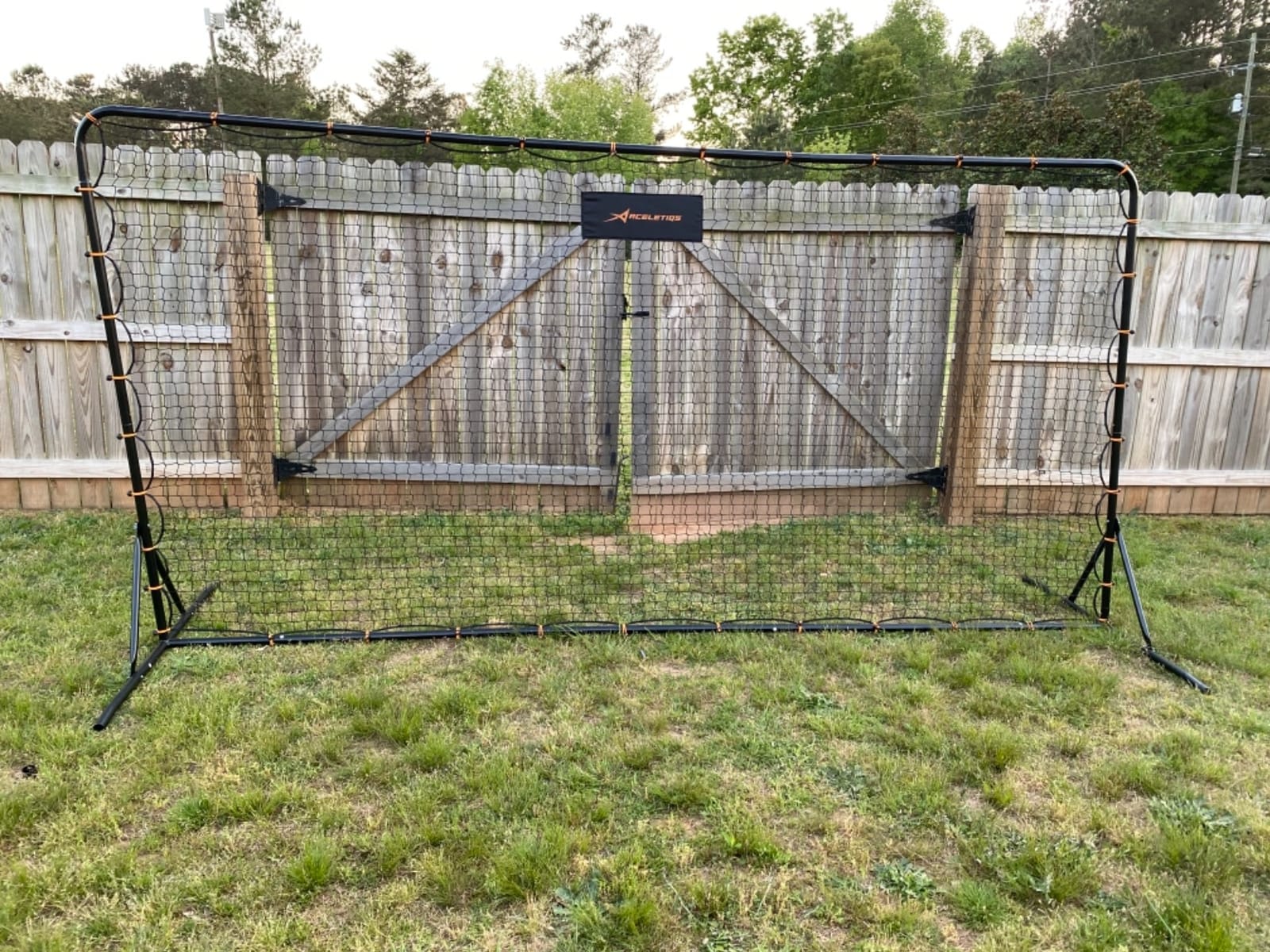
This is the step-up purchase, and the reason is surface area rather than gimmick. Twelve feet by six feet is enough that a hard strike does not slap off the frame and rocket into the neighbouring yard. Owners describe it exactly that way — a net that turns the fence behind it from a hazard into a backstop.
The frame is 1.25-inch powder-coated metal with industrial bolt fasteners and rubber feet, and it carries a lifetime warranty, which is unusual at this price and tells you something about expected service life. The paint-on target on the return area gives you something to aim at, which turns a rebounder into an accuracy drill rather than a vending machine.
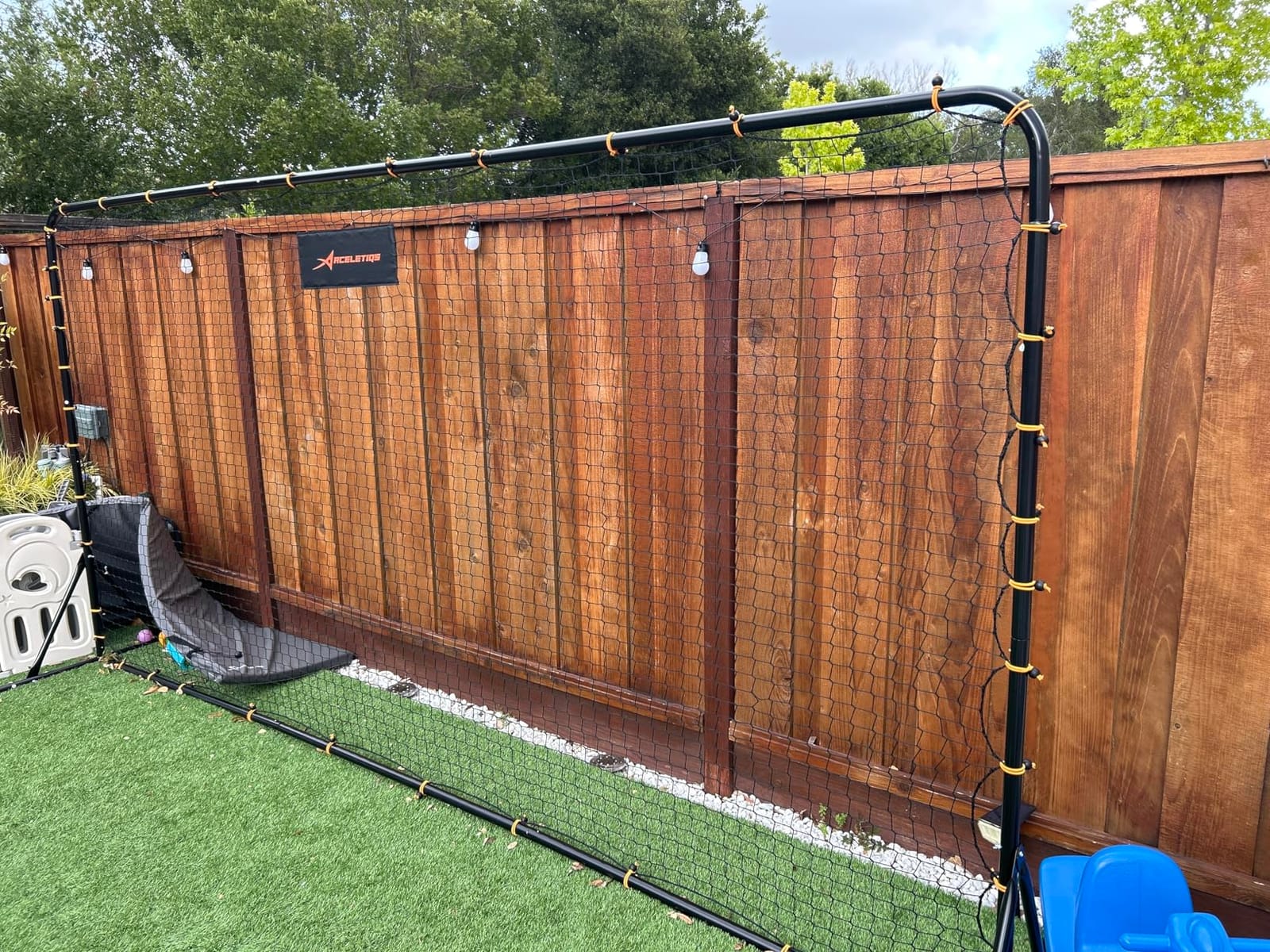
At 4.6 stars across 457 reviews this is the highest-rated product we tested, and the reviews read like long-term ownership reports. Several families describe buying a third unit after three years with children of different ages using the same net, which is the clearest endorsement of build quality we found in the whole category.
The honest drawback is permanence. Assembly takes real time and disassembly is worse, so most owners leave it standing outdoors through the season. If you rent, have no lawn storage, or need the yard for other things, that is a genuine cost even though the product itself is excellent.
When the extra width actually pays off
Extra width matters when return accuracy drops under pressure. On a narrow panel, a slightly mistimed strike sends the ball past the edge, and the drill degrades into chasing rather than technique. On a 12-foot panel the same mistimed strike still comes back, so you keep the repetition count high and the drill stays productive.
Owners also point out that the high net tension returns the ball faster and flatter than the smaller nets here. That suits a player working on reaction and footwork, and it makes the net double as a wall for two-touch passing practice with a partner.
When it is the wrong choice
Skip it for a small yard or a garage. You need clear space in front of the net for your approach and generous space behind it to receive the return, and a 12-foot unit placed too close to a fence will send hard shots over the top. It is also the heaviest option here, so moving it alone is not realistic.
If you want the durability but not the footprint, the QUICKPLAY Pro net in a larger panel size gives you similar construction at a fraction of the yard space.
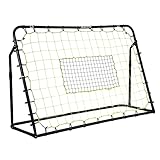
4. Franklin Sports 6×4 Adjustable Rebounder — Best for Kids Learning Trap Technique
Franklin Sports Adjustable Rebounder, Black, 6′ x 4′
6 x 4 foot adjustable net
Alloy steel frame
All-weather netting
Available in 12 x 6 foot too
Pros
- Precision-fit locking pins give genuinely different return heights
- Powder-coated steel frame holds through repeated sessions
- Double-sided surface lets two players train at once
- Quick push-pin setup with no complex hardware
Cons
- 6 x 4 ft panel is compact against a wide open yard
- Net can sag over time if players hang on the rail
- Fiddly to disassemble the large steel frame
Best for: children aged roughly 6 to 12 who are working on ground, knee, chest and head traps and need different return heights.
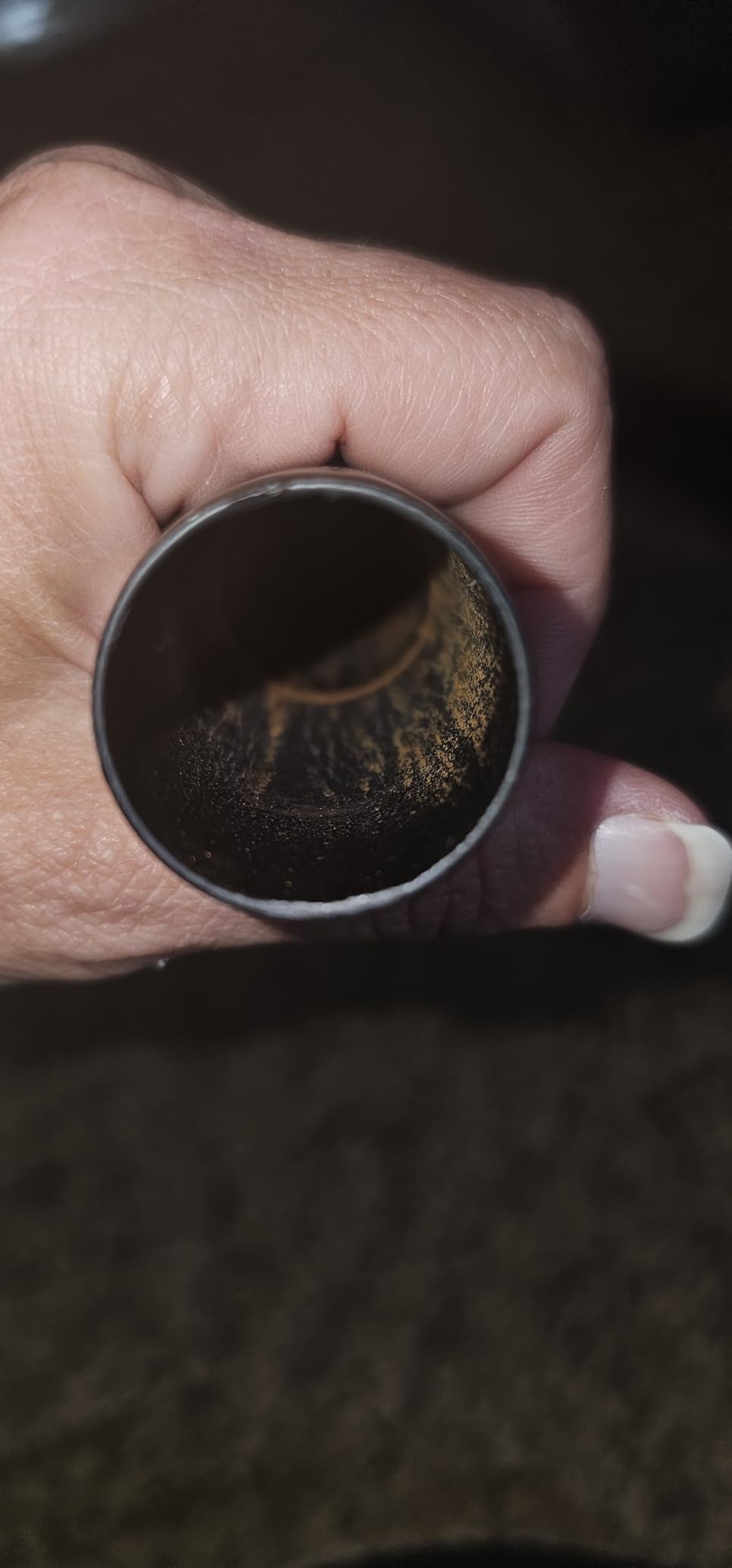
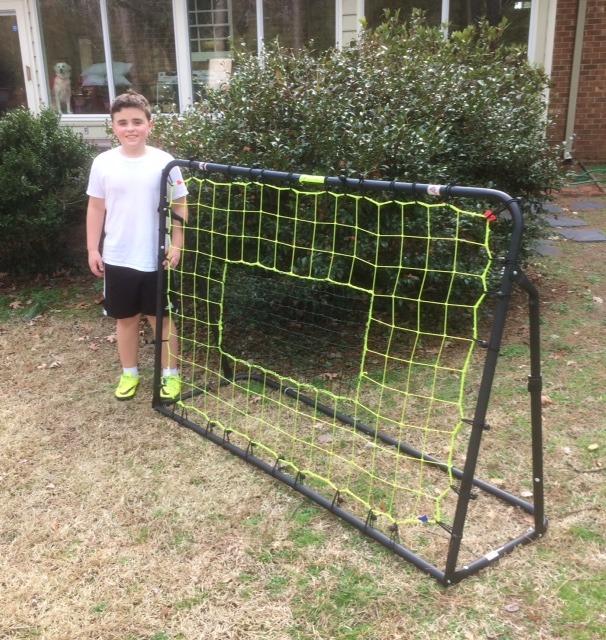
The Franklin’s selling point is angle control through precision-fit locking pins. Set the pins low and you get ground passes coming back to the foot. Move them up and the return arrives at knee, chest or head height, which is how a young player learns to cushion a ball in different body parts rather than only with the foot.
Reviewers frequently describe the practical effect rather than the mechanism: kids’ first touch improving because the panel allows varied return heights, and fewer balls reaching the house wall because there is a net in the way. That matches the frustration on r/SoccerCoachResources, where a parent of an 8-year-old wrote that indoor wall kicking was driving them mad and asked whether a hard surface or a net was better. This is one of the answers.
It also trains two people at once. The surface is double-sided, so a sibling or a parent can work the far side, which turns a solo tool into a genuine two-player station on a wet afternoon. Push-pin setup means no tools and no leftover hardware to lose in the grass.
At 4.5 stars from 689 reviews, this is a well-worn unit with a broad owner base rather than a new release. A 12-by-6-foot variant exists in the same line if your yard is generous and you want the same locking-pin system on a bigger panel.
Why return height matters more than return speed
Young players almost always need more variety in return height before they need more pace. A fixed low panel teaches one motion done well, but it teaches it to a rhythm the player does not have to read. Variable heights force a genuine cushioning decision on every touch, which is the skill that transfers to a real match.
That is also why this board suits a parent buying on a child’s behalf. It is forgiving with a scuffed or deflated ball, quiet enough for a suburban street, and simple enough that the child can set it up without help.
When it is the wrong choice
Skip it if you want a soft, slow return for very young beginners, because a locked steel frame gives a firmer rebound than a net with slack in it. It is also not ideal for a teenager hitting adult-strength shots, where a 6×4 foot panel will simply be outpaced.
And treat the top rail as structure, not a handhold. Owners report sagging net over time, and that starts with kids leaning on the frame.
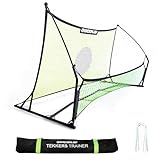
5. QUICKPLAY TEKKERS Trainer Dual Net — Best Multi-Sport and Travel Pick
QUICKPLAY TEKKERS TRAINER Soccer Rebounder, 6.5×4′ Spot & 6.5×1.5ft Ground Pass Nets, Alloy Steel, Fiberglass, Black, Green, Portable
Spot pass net 6.5 x 4 ft
Ground pass net 6.5 x 1.5 ft
Weighs 6.6 kg
Fiberglass uprights on steel base
Pros
- Two net heights mix ground passes with lifted returns in one session
- Recoil scales with strike so harder kicks return harder
- Fiberglass uprights flex on impact instead of snapping
- Carry bag included for moving between yard park and club
- Tool-free setup in about four minutes
Cons
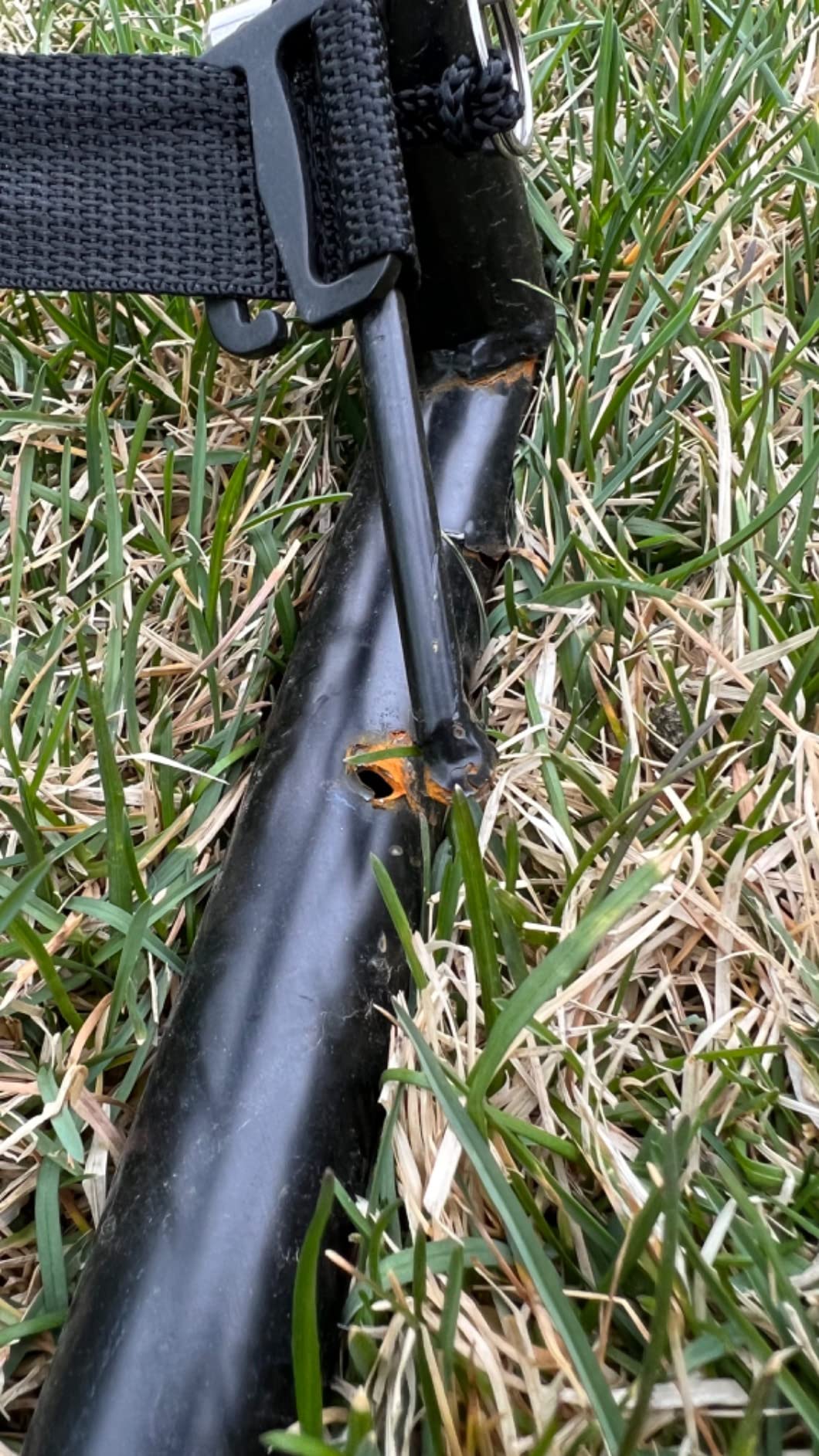
- Support arm on one unit broke within a month of light use
- Netting colour fades with sun and sprinkler exposure
- Lower net is tight to fit so set-up may need two people
Best for: a household that also plays football, rugby or baseball, and for anyone who wants one trainer that packs into a car boot.
The TEKKERS Trainer uses two nets of different heights on one steel base frame: a 6.5-by-4-foot spot pass net for lifted and aerial work, and a 6.5-by-1.5-foot loop for ground passes. Switching between them is what keeps a session varied without walking up and down the unit.
The detail we like most is the recoil. Owners report that the return scales with the strike, so a soft touch gets a gentle ball back and a hard adult kick gets a firm one. That makes it a genuinely adult-capable trainer rather than a toy, and it is why several buyers describe it doubling as an extra player in a one-versus-one.
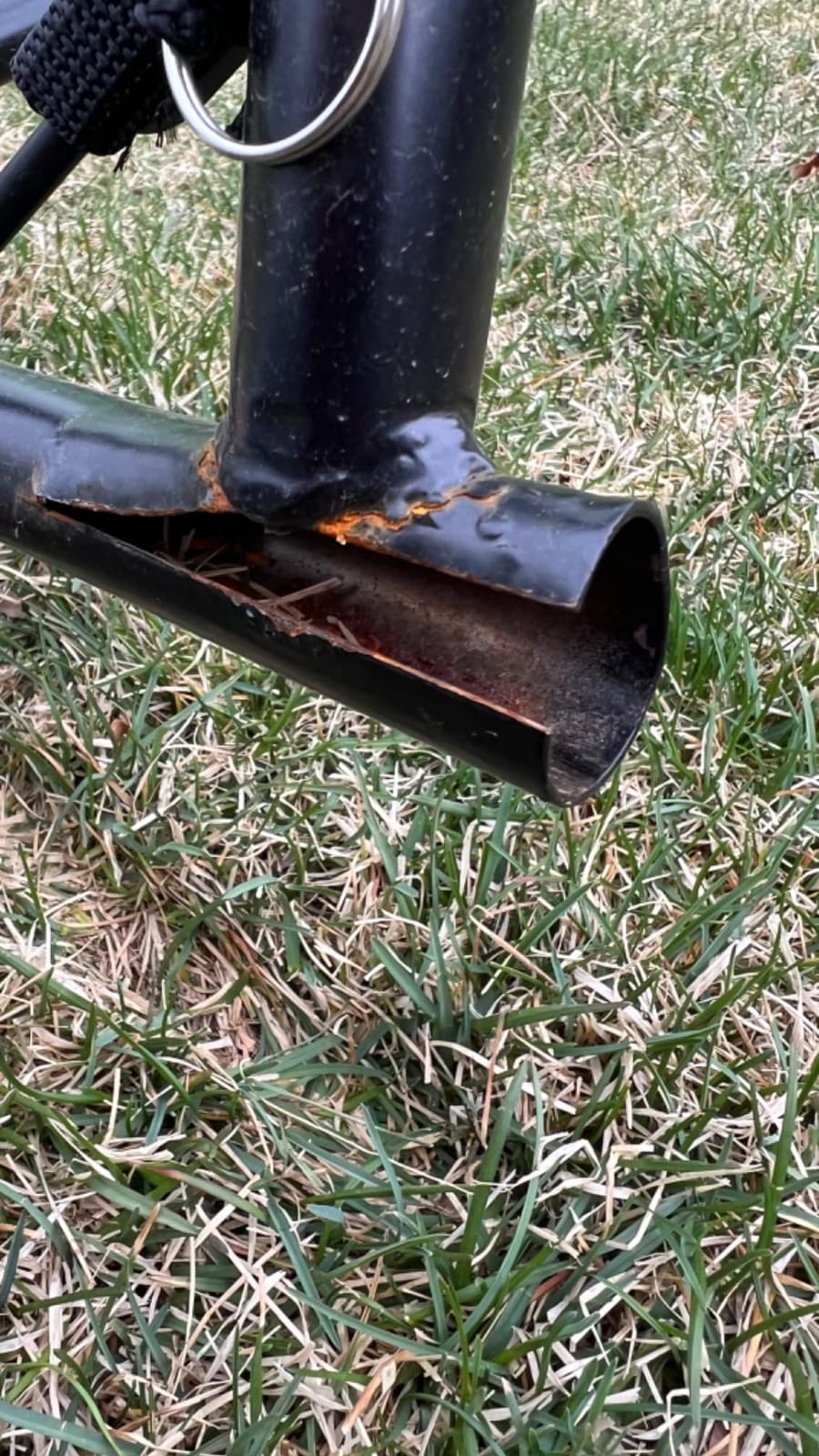
The fiberglass uprights are a smart choice. They flex on impact rather than cracking, which is a real durability benefit when a teenager is hitting full-power balls at the frame. Long-term owners describe four years of use before replacing.
Multi-sport use is where this product earns its place. A baseball backstop, a football return wall, a rugby passing board — same frame, different balls. If your family trains in more than one sport, the value calculation changes entirely.
Portability is the underrated feature here
Weighing 6.6 kg with a carry bag included, this is one of the few nets that genuinely moves between sites. That matters more than it sounds: the r/bootroom recommendation thread for this category runs to more than twenty comments largely because coaches and parents keep asking where to buy something they can load into a hatchback for a park session.
Tool-free setup in around four minutes also means you will actually use it at the park rather than leaving it at home because assembly is a chore. Set-up on turf or indoor surfaces needs added weight at the base; on grass the supplied pegs are sufficient.
When it is the wrong choice
Skip it if your priority is a huge return surface, because 6.5 by 4 feet is a compact target for hard adult shooting. It is also not the board to buy for a garage floor, where you want something rigid and quiet rather than a mesh return.
If components fail, note that owners report support arm breakage on lightly used units — check the arm and its bolts during the first few sessions rather than assuming it will hold.
6. ZivPlay 40×16 Rebound Board — Best Budget Board for Indoor Use
Soccer Rebounder Board Soccer Wall Passing Board Spot Kick Back Trainer
40 x 16 inch HDPE board
Weighs 25 lbs
Two rebound angles
Folds flat with carry handles
Pros
- 25 lb weight keeps it planted on hard floors without scratching
- Two angles at 60 and 90 degrees cover ground and aerial passes
- Folds flat with carry handles for storage
- Non-marking face is safe for wood and laminate floors
Cons
- Included bag is an empty sandbag that you must fill
- Board still shifts a little under very hard kicks
- Target sticker fades or peels so many users make their own
Best for: stopping indoor wall kicking in a garage, basement or playroom without marking the floor.
At 25 pounds this board holds position far better than the lightweight plastic units, which is the entire reason it exists. The HDPE face will not scratch laminate, wood or painted concrete, so the room that was previously off-limits becomes usable. Owners specifically describe it as the tool that ended a child’s habit of kicking the bedroom door.
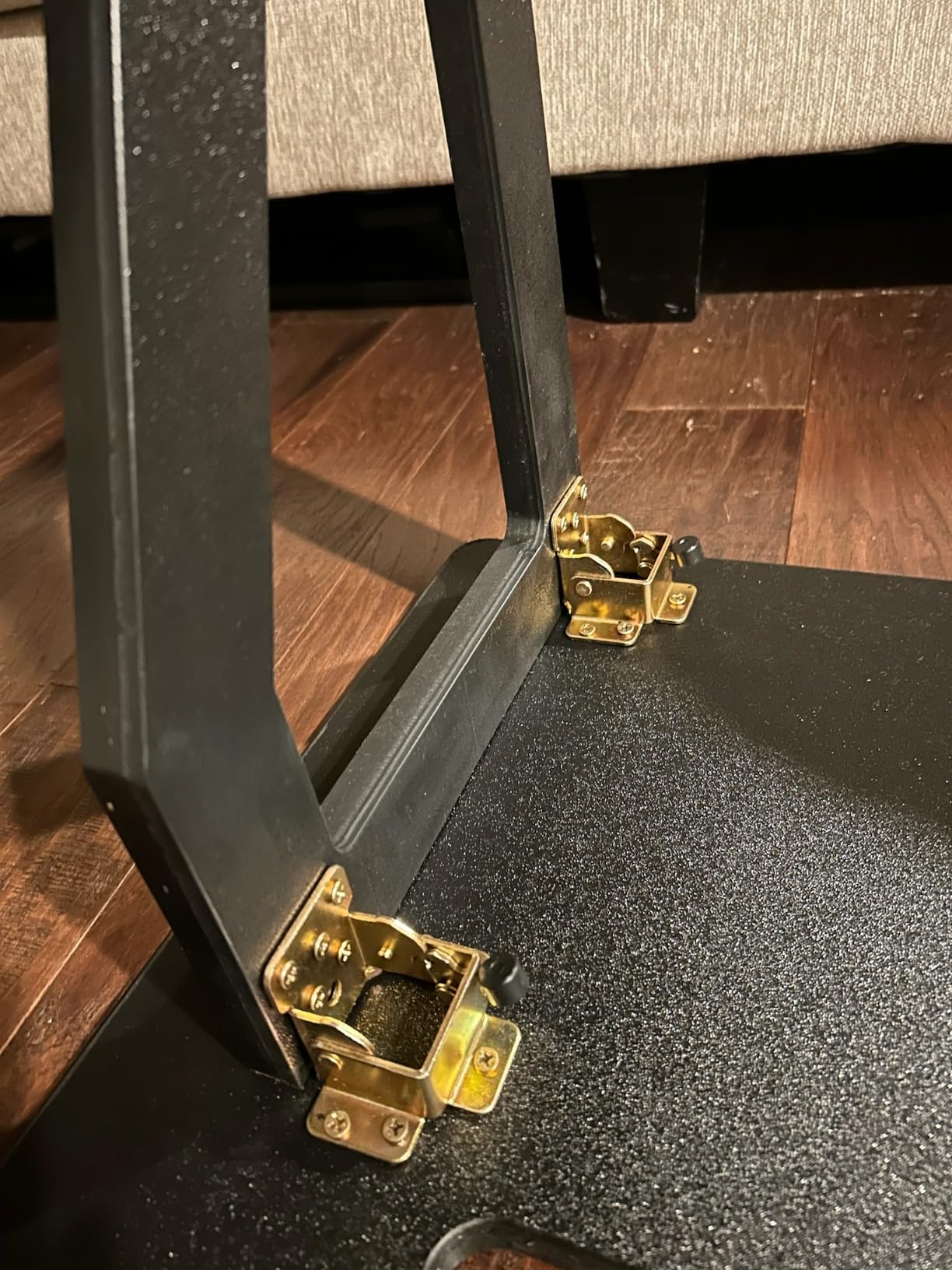
The two angles sit at 60 and 90 degrees, giving you a flat ground pass return and a steeper aerial return. A lock pin stops the legs collapsing mid-drill, which matters more than it sounds when a younger player is hammering it without supervision.
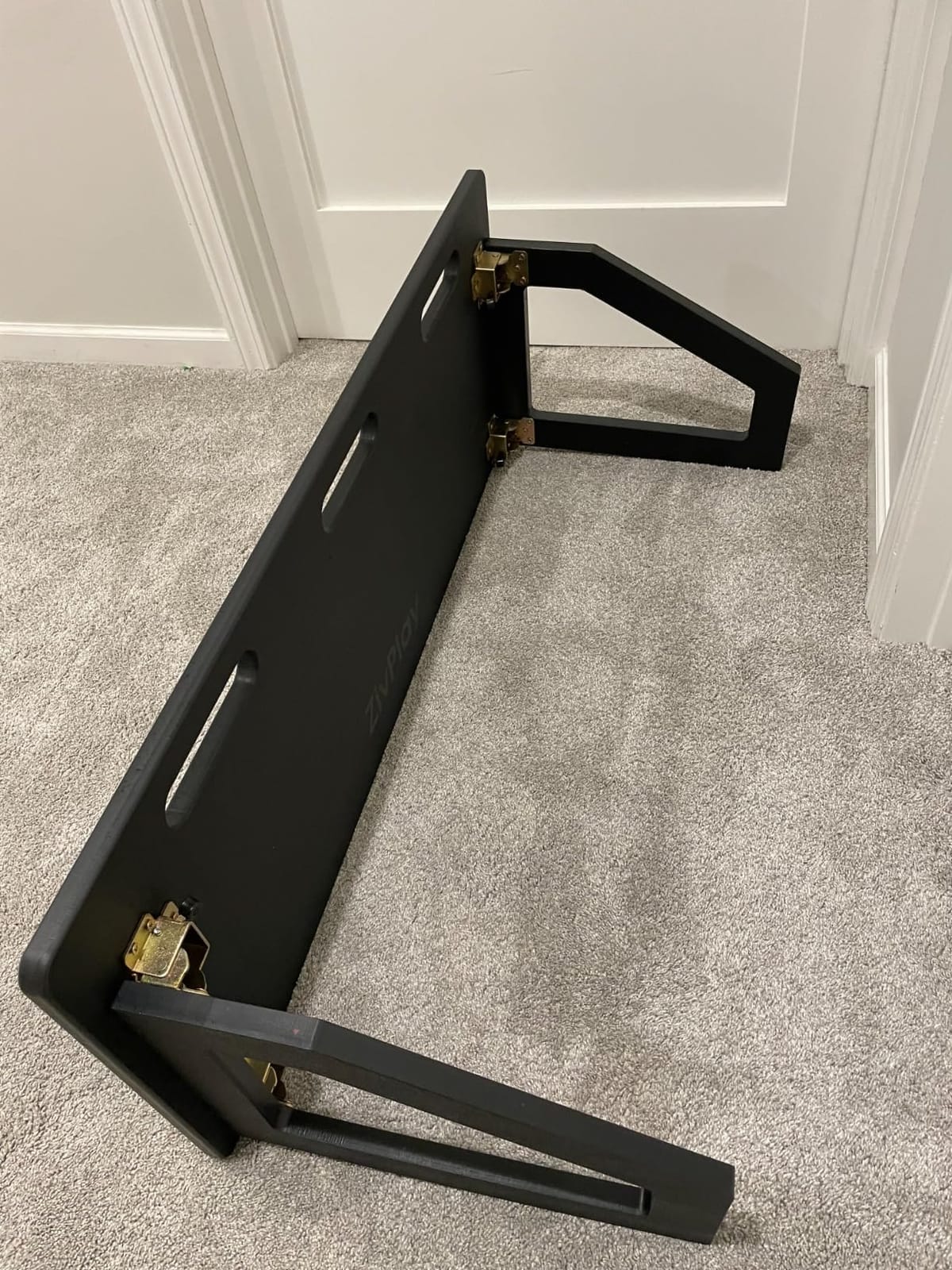
Owners also note it is cheaper than building a DIY board and lasts longer, and that the foldable legs with carry handles mean it lives in a corner rather than a garage wall. The 40-by-16-inch panel is the larger of two sizes; a 32-by-12-inch version exists for tighter rooms.
Two recurring frictions are worth planning around. The included bag is a sandbag to be filled, not a carry case, so buy sand or rocks. And the target sticker is not up to the job of a shooting drill, because many owners replaced it with paint or tape before long.
Indoor versus outdoor placement
Indoors, weight alone does the job. A 25-pound board on carpet or laminate does not need ballast, and the non-marking face means you can leave it out during winter rather than store it for six months. Outdoors on grass it works well too, since the weight digs into soft ground.
The hardest surface is smooth concrete, where any board will slide. If your only outdoor space is a patio, fill the sandbag and expect to reposition between sets.
When it is the wrong choice
Skip it for a serious teenager or adult, because a rigid HDPE face returns a hard ball that demands proper technique and a smaller panel will not absorb adult pace. It is also not a good multi-sport unit — you get one face and two angles rather than the varied returns a net provides.
If you need portability over a longer distance, remember that 25 pounds is a two-hand lift with a bad back. The VEVOR board has dedicated carry holes and solves that problem for a similar use case.
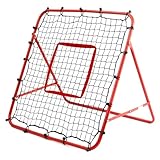
7. Amazing Tour Adjustable Rebound Net — Best Folding Portable Option
Adjustable Soccer Rebound Net | Soccer Trainer with Metal Frame
3.3 x 3.3 ft rectangular panel
Weighs 3.4 kg
5-position angle holes
Powder-coated steel and PE net
Pros
- Folds completely flat for storage and transport
- Light enough for one person to carry across a yard
- Works for soccer drills and as a baseball backstop
- Net tension returns the ball consistently
- Suits young children through teens for touch work
Cons
- Supplied ground pegs are weak on soft ground
- Wingnut bolts need a screwdriver to tighten
- Not heavy duty with a full-size adult ball at full pace
Best for: small yards, beginners, and anyone who needs a rebounder that disappears into a cupboard between sessions.
At 3.4 kg and 3.3 by 3.3 feet, this is the most portable unit here. It folds flat in minutes, one person can carry it across a lawn, and it packs into a car boot without removing a wheel. For a family with a small garden or a child who trains at grandparents’ house, that flexibility is worth more than surface area.
The 5-position angle adjustment holes change the return trajectory across shooting, passing and reaction work. Reviewers note that the recoil scales and the net tension is good for the money, with owners training children from about age 3 upward for touch and control.
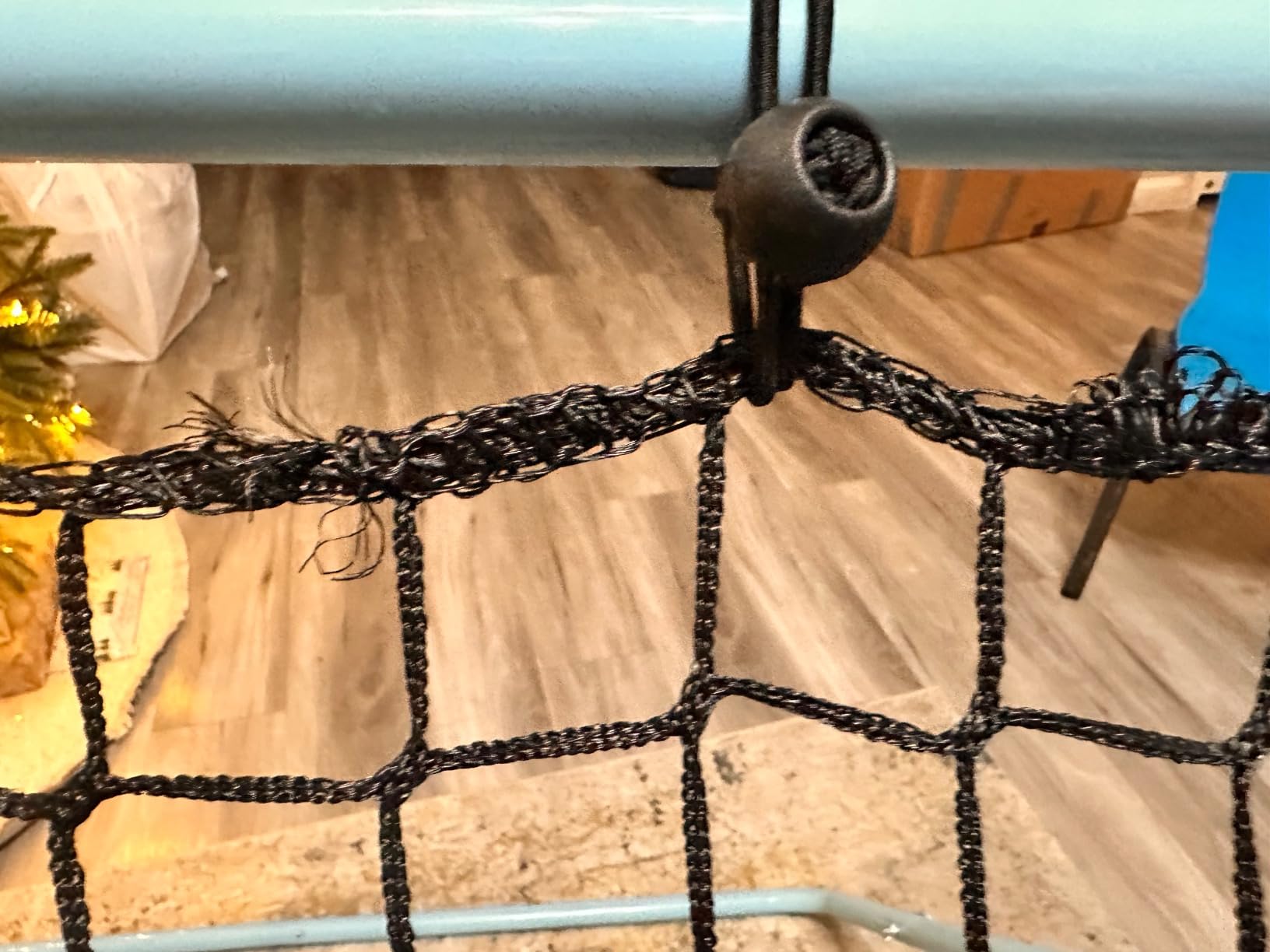
At 4.3 stars across 1809 reviews, it is one of the most widely used rebounders in the category, and the feedback is consistent. Buyers praise quick assembly, fold-flat storage and a dependable return. They also flag the same three assembly frictions: some units arrive with missing elastic net ties, the wingnut bolts need a screwdriver on one side while you tighten the other, and the supplied ground pegs are weak.
Our fix for the pegs is simple: add your own or sandbag the base in soft ground. For the hardware, a second pair of hands and a screwdriver for the first build removes that problem permanently. The folding arms also strain with repeated use, so check them every few sessions and treat the unit as portable rather than permanent.
When a small panel is an advantage
A compact panel is genuinely easier to control, and for a child under about 10 the smaller target means most kicks come back rather than flying past. It is also quieter than a large net frame, and the folded footprint means it is not tripping a hazard when the yard is being used for something else.
Multi-sport use is a genuine strength. Owners use it as a baseball backstop and football return net, and the flat-folding design is the reason it survives a mixed-use yard.
When it is the wrong choice
Skip it if you are an adult or a strong teenager who strikes with real pace. A 3.3-foot panel with a PE net is not built to absorb that, and owners report the return becoming unpredictable at full adult power.
It is also a poor choice for a permanent fixture. If your unit will live outside all season through every weather cycle, buy steel.
8. QUICKPLAY Pro Adjustable Rebound Net — Best Angle Control and Realistic Return
QUICKPLAY Pro 3×3 Soccer Rebounder Net – Adjustable Angle Bounce Back
3x3 ft panel with 5x5 ft and 7x7 ft options
Galvanized steel frame
Knotless Hex-Net
Folds flat in under 30 seconds
Pros
- Negative angle setting leans past vertical to mimic ground passes
- Knotless Hex-Net returns a realistic pace rather than a wild rebound
- Rubber-padded base grips grass and protects indoor floors
- Galvanized powder-coated frame for year-round use
- Assembles once then folds flat for storage
Cons
- First assembly takes 10-15 minutes even with labelled parts
- Steel frame is more effort to move than a plastic board
- 3x3 ft panel is compact so larger yards need a bigger variant
Best for: a coach or club who wants returns that look and feel like real match tempo rather than a machine-gun ping.
The standout feature is the negative angle setting. Most rebounders adjust between flat and upright. This one leans forward past vertical, which is the only way to genuinely replicate a ground pass returning along the grass — the single most useful drill for first touch and it is frustratingly hard to get elsewhere.
The knotless Hex-Net with bungees is the second detail. Reviewers describe the return as realistic rather than exaggerated, which matters because a ball that comes back too fast trains a player to flinch. This net trains them to commit.
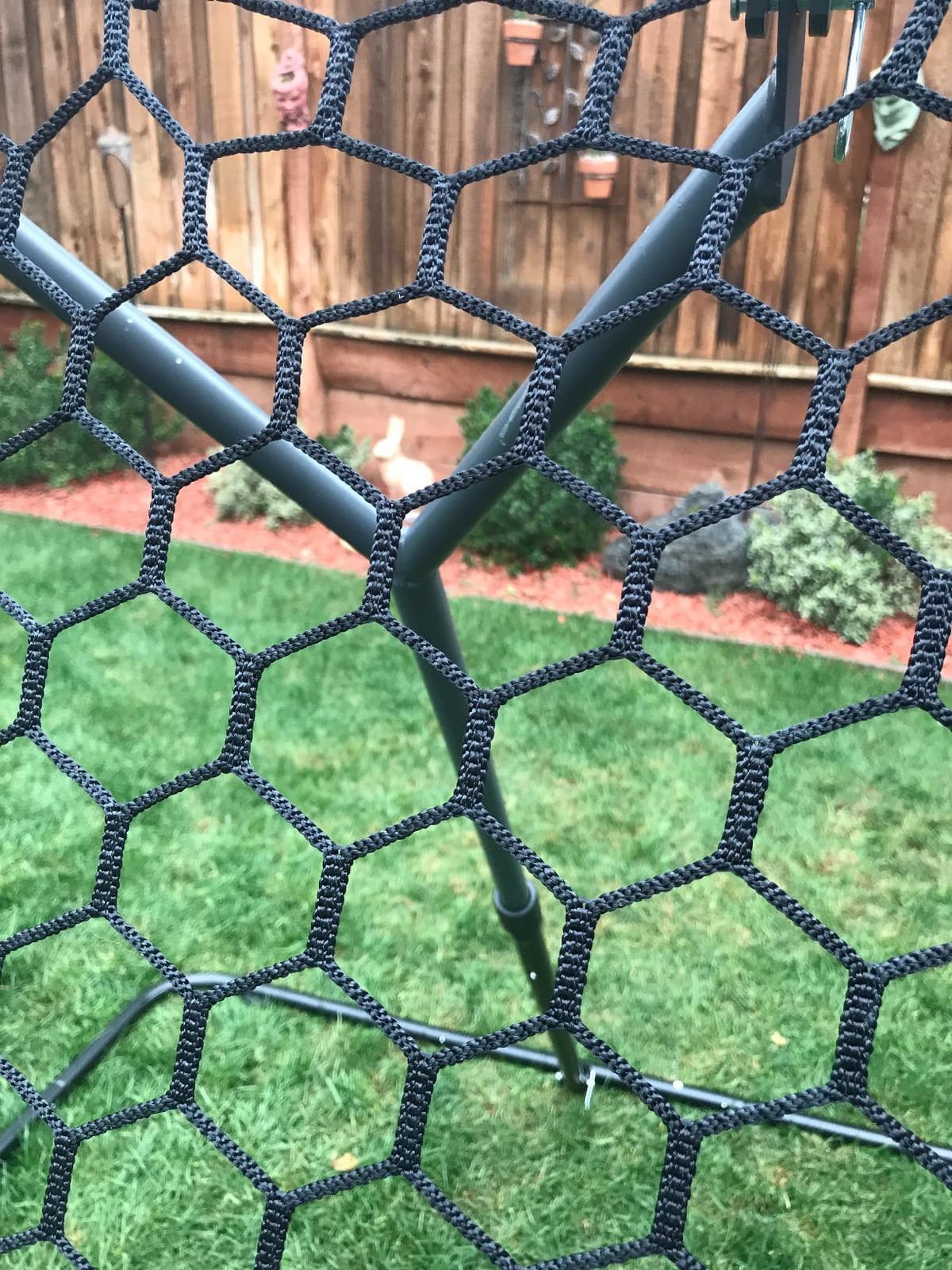
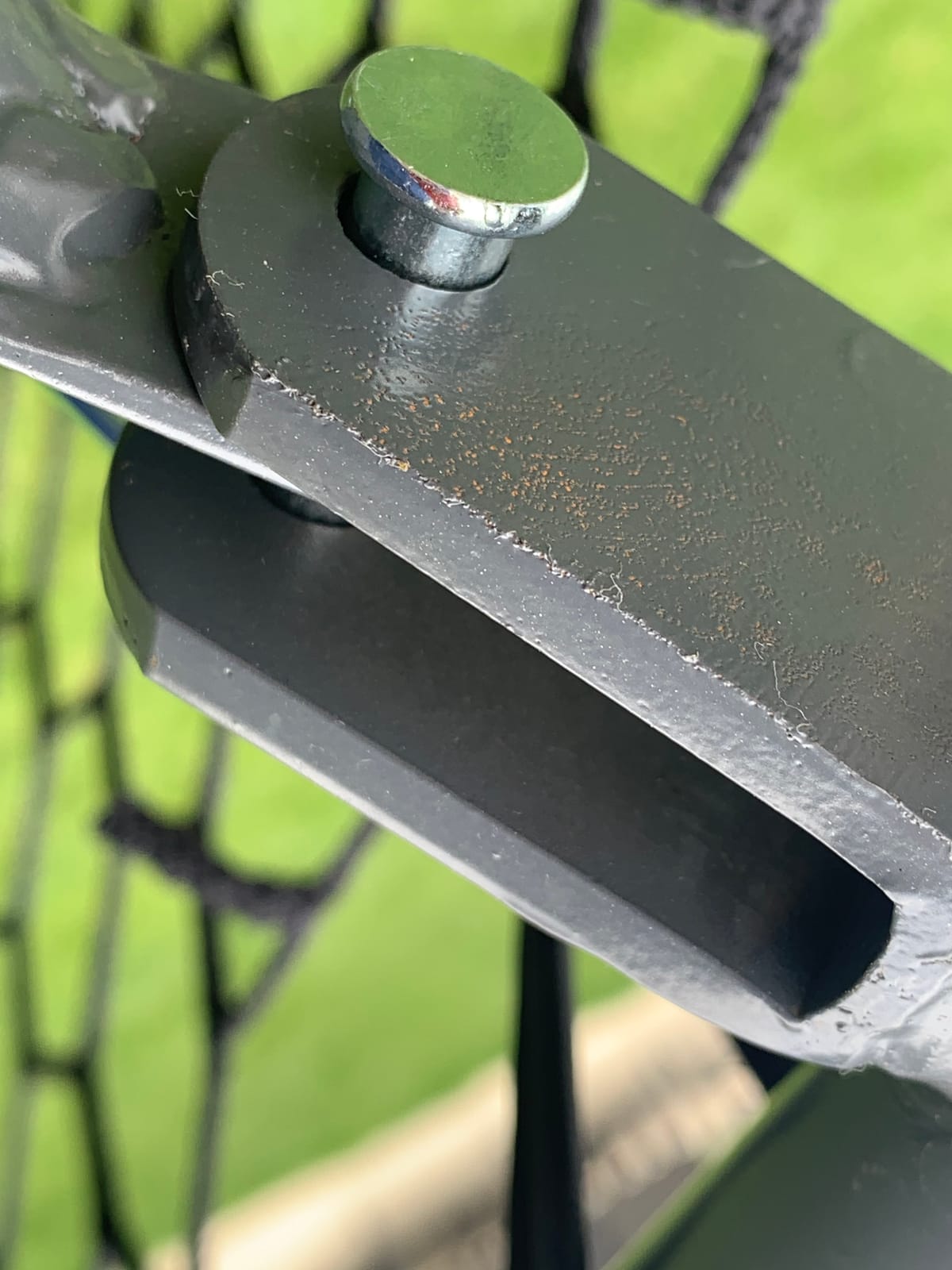
Construction is galvanized powder-coated steel with UV-resistant netting and rubber pads on the base, so it grips grass outside and does not mark a floor inside. It folds flat against a garage wall and pops back up in under 30 seconds once assembled.
The trade-offs are honest ones. First-time assembly takes 10 to 15 minutes even with labelled parts, so build it once in good light. And the steel frame is heavier to reposition than any plastic board, which is the price of the build quality.
Why the negative angle is worth the build time
Ground passes are where solo players lose the most quality, because a return that arrives waist-high cannot rehearse a foot touch. Leaning the panel forward turns the net into a low return that stays on the grass, which is the correct trajectory for cushioning with the inside of the foot.
Owners who coach say this single setting changes what a session can cover. Instead of aerial work only, you get a repeatable ground-pass loop that pairs directly with the ground passing drills used in team sessions.
When it is the wrong choice
Skip it if you want a single unit covering a very large yard, because the 3×3 foot panel is small and the larger 5×5 and 7×7 variants consume much more space. It is also the wrong pick for a child who will not be supervised during assembly.
If your priority is a soft, quiet return rather than angle range, a taut net like the SKLZ Quickster suits you better.
9. RXTR Pro Coach Board and Reaction Light — Best for Solo Motivation
QuickPlay RXTR Pro Coach Soccer Rebounder Board & Smart Reaction Light
Board weighs 11 lbs before filling
Tank takes 10-25 kg water or 30 kg sand
4 hour battery
1 year warranty
Pros
- Integrated reaction light with LED display and live scoring
- Works standalone with no app or phone needed
- 11 built-in drills and 6 tests keep solo players engaged
- Fillable tank holds the board steady against adult kicks
- Small footprint works in modest gardens
Cons
- Costs more than every other pick in this roundup
- Filled board is heavy to move so use sand over water
- Slanted rebound position is noticeably wobbly
- Instruction sheet is hard to read
Best for: a child or teenager who will not train alone without something to chase, and for coaches running solo fitness work.
This is the only unit in the roundup that is a training system rather than a piece of equipment. It pairs a rebounder board with a reaction light, an LED display and four colour markers, and it includes 11 built-in drills and 6 pre-programmed tests. No app download and no phone required, which removes the usual objection to tech-based training tools.
Reviewers, several of them coaches, single out the gamification as the reason kids and teens train voluntarily. Live scoring turns a repetitive solo session into something with a measurable outcome, and up to 6 units can be paired for group work.
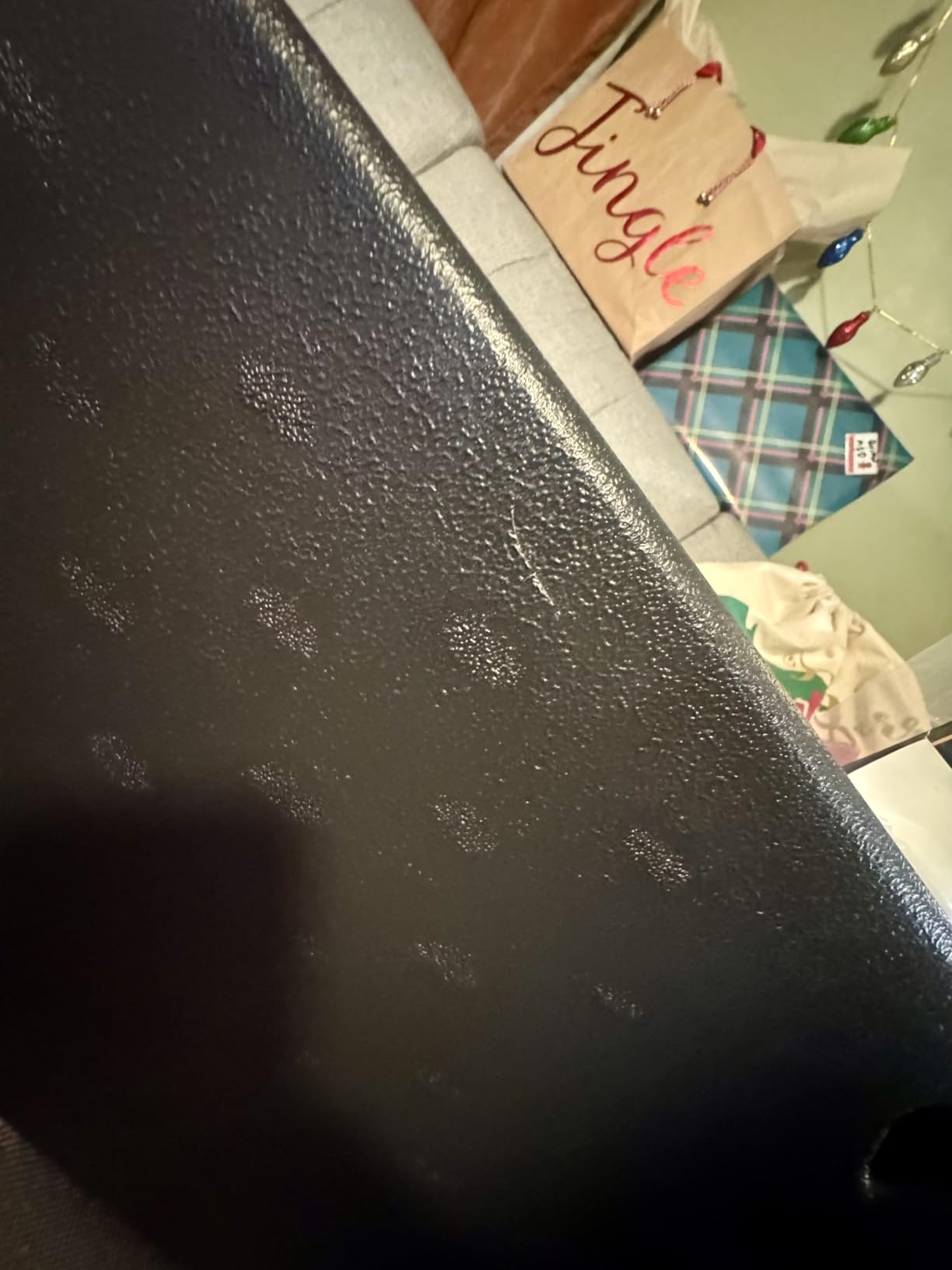
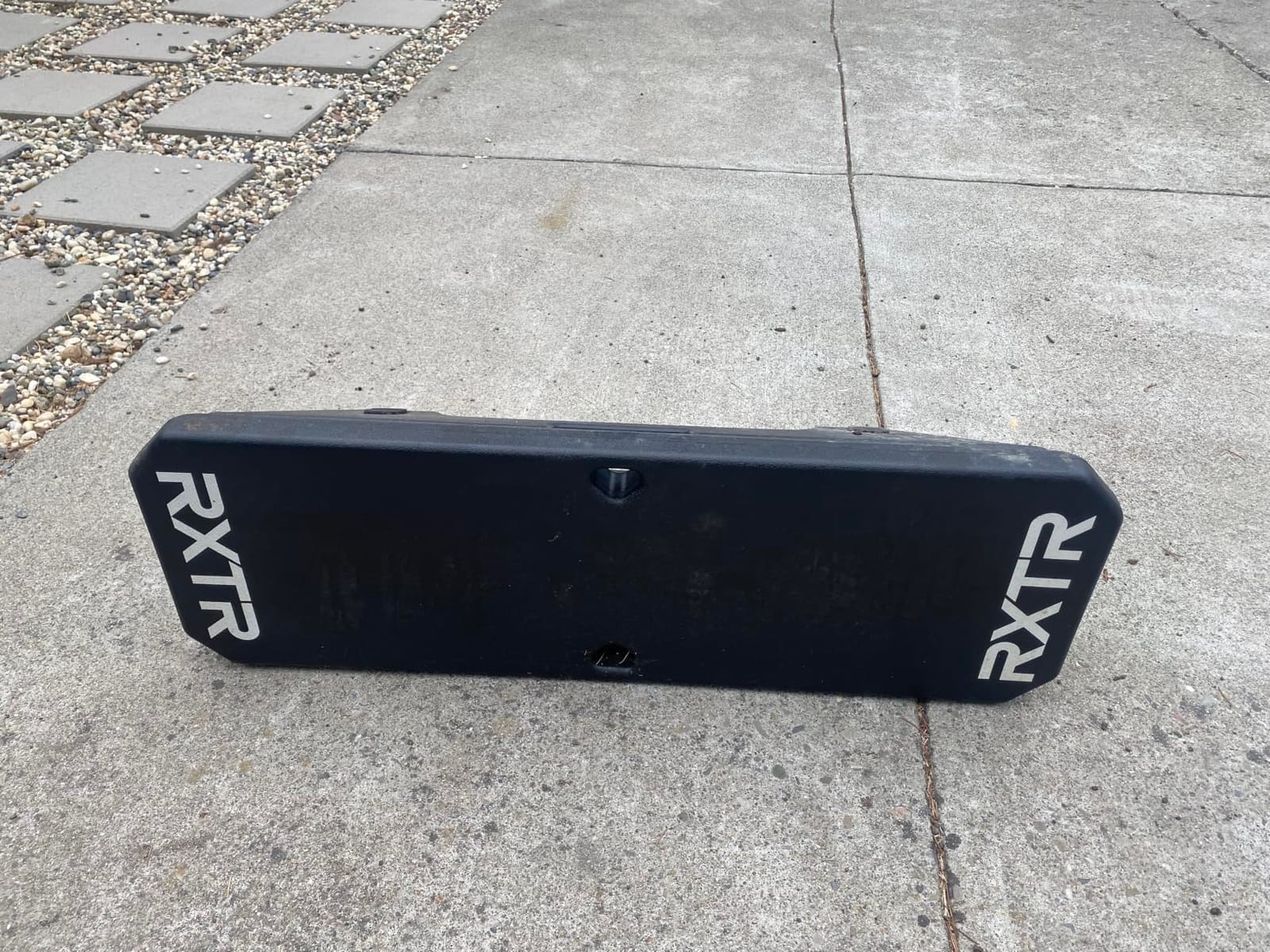
Stability comes from a fillable tank rather than fixed ballast. It accepts 10 to 25 kg of water or 30 kg of sand, and once filled the board handles powerful strikes without moving. Owners report improvement in first touch, passing accuracy and ball control over a season of use.
At 4.6 stars with the highest five-star share of any pick here, the reviews are enthusiastic but the review base is the smallest in the roundup. That is worth weighting: less long-term data, and at least one UK reviewer found the same system cheaper elsewhere, so check the current listing carefully before committing.
Who benefits from a scoring system
A reaction light works because it converts an open-ended session into a measurable one. A child who cannot see their own progress often stops training at fifteen minutes. A child with a score and a display will happily go again, which is the difference between owning a rebounder and using it.
It also suits goalkeeper work and reaction drills in a small footprint, and the fillable tank keeps the footprint small enough for a modest garden.
When it is the wrong choice
Skip it for pure technical work. A rigid board with an adjustable angle trains striking technique better than a scoring system does, and the slanted rebound position is reported as noticeably less stable than the upright setting.
Also weigh the moving cost. Once filled with sand this is an awkward object to shift, and the battery runs about four hours before needing a recharge. If your sessions are short and sporadic, a plain board is the more sensible buy.
10. VEVOR 45×18 Rebound Board — Best Heavy Board for Grass and Patios
VEVOR Soccer Rebounder Board, Portable Soccer Wall with 2 Angles Rebound, Foldable HDPE Kickback Rebound Board, Soccer Training Equipment for Kids and Adults, Passing & Shooting Practice (45″X18″)
45 x 18 inch frosted HDPE panel
Weighs 28.7 lbs
Two rebound angles at 60 and 90 degrees
Foldable legs
Pros
- Heaviest board here so it holds position through repeated hard kicks
- Frosted HDPE resists fading and scratching and is safe for floors
- Folds flat and stores in a garage or behind a door
- Carry holes let a teenager move it
- Absorbs strikes that would mark a wall
Cons
- Still needs weighting in some setups and can tip on very hard hits
- Slides on concrete for hard kicks
- 28.7 lb weight is a lot to carry far or often
Best for: a player who hits hard and needs a board that will not shift, and for protecting walls, fences and doors from repeated strikes.
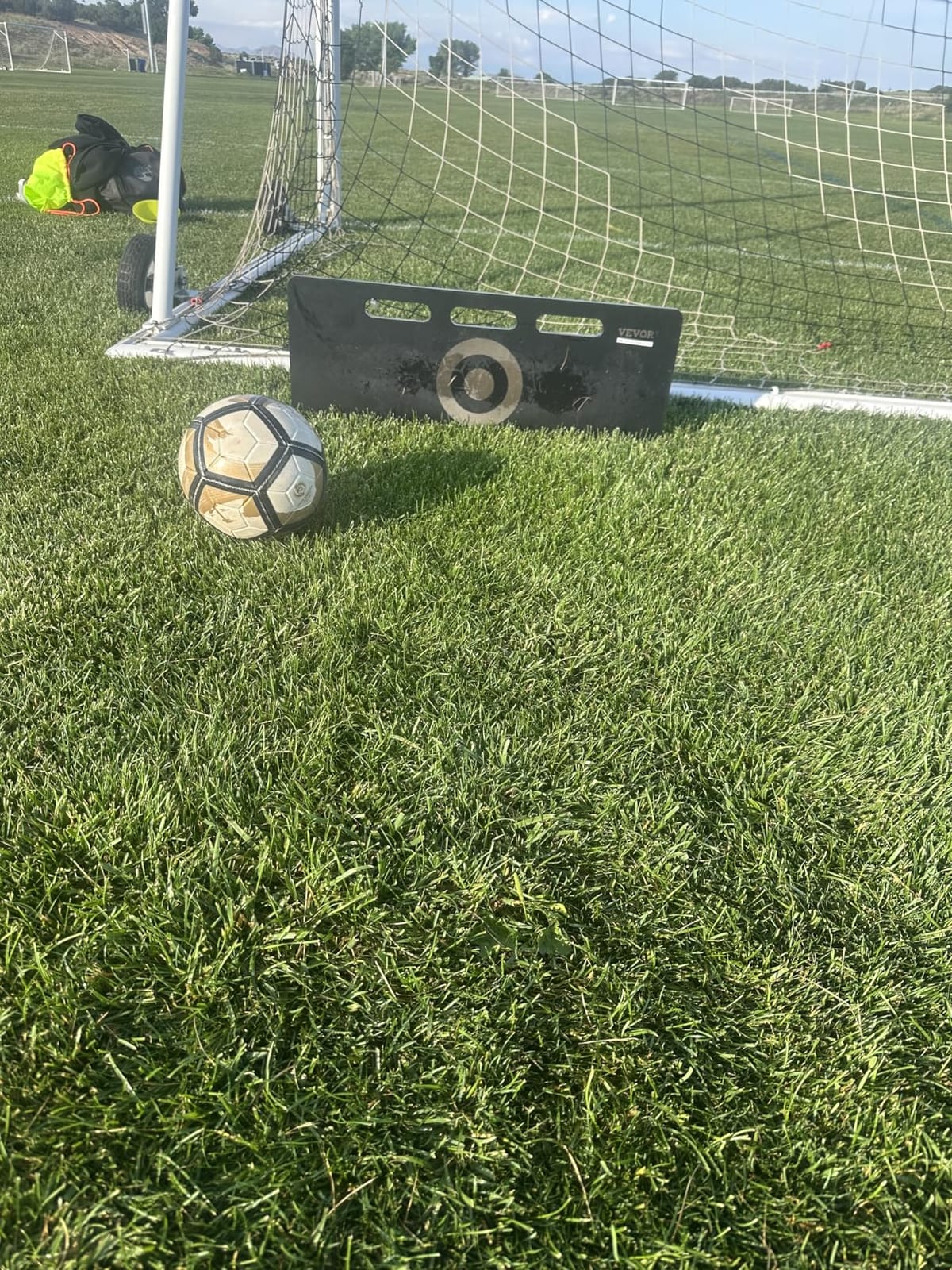
At 28.7 pounds this is the most stable board in the roundup, and stability is what lets you train properly. When a board shifts on impact, you shorten your kick to keep the return. When it stays put, you can actually shoot at full effort, which is the entire point of shooting practice.
The 45-by-18-inch frosted HDPE panel is the largest board surface here and resists both fading and scratching, so it doubles as an indoor stop for balls heading toward a house wall. Owners note exactly that use: absorbing repeated hard kicks that would otherwise damage paint or brickwork.
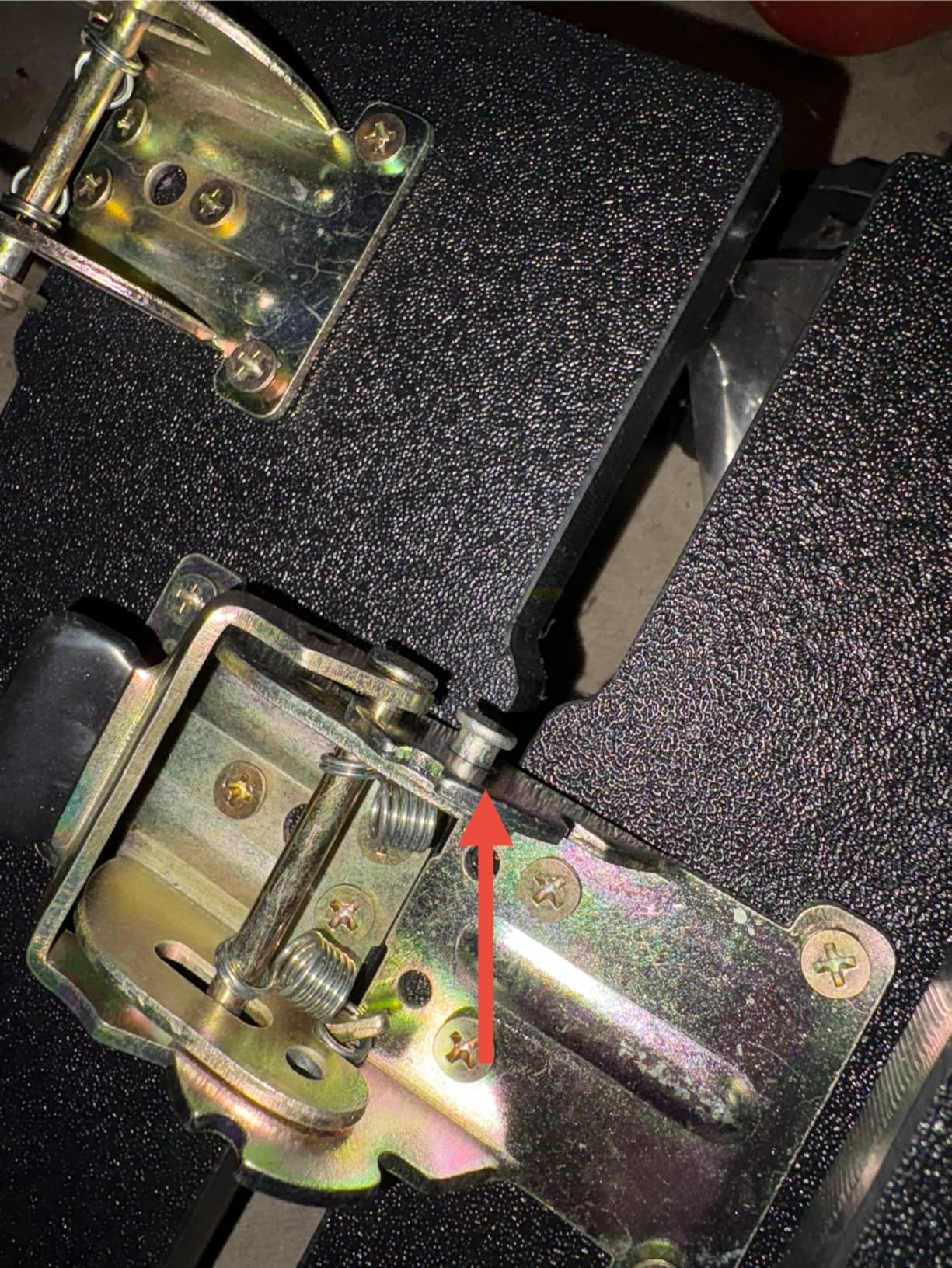
The 60 and 90 degree angles cover ground passes and volley passes, and the foldable legs with three carry holes mean it stores flat in a garage, utility room or behind a door. At 4.4 stars from 176 reviews it sits in the Soccer Rebounders category’s higher ranks.
The recurring caveat is surface. Reviewers report it performs best on grass, where the weight digs in, and can slide on concrete for hard kicks. If your only hard surface is a driveway, ballast it.
Why board weight changes training quality
The whole argument for a heavy board is that you can train at full intensity. A light board teaches you to kick carefully. A board that stays planted lets a teenager practise real shooting technique — the plant foot, the locked ankle, the follow-through — without fear of the unit rotating away mid-strike.
That is also why owners recommend it for protecting walls and fences. The board absorbs the strike in a controlled spot rather than letting a hard shot ricochet into a neighbour’s yard, which is a real safety consideration on a shared street.
When it is the wrong choice
Skip it if you need to carry it regularly. At 28.7 pounds this is a genuine two-person lift for an adult and a poor choice for a child who will move it alone, and the older HDPE boards of this type are where you trade portability for planted weight.
It is also the wrong tool for a goalkeeper or for touch work, since a rigid panel returns a firm ball with no variability. Use it for shooting volume and wall protection.
How to Choose a Soccer Rebounder in 5 Steps
Measure your space, pick the format that matches the skill you are training, check portability, then buy the heaviest construction your budget allows. Skipping any one of those steps is how people end up with a unit that spends a season folded against a fence.
Measure the space and the kick room. You need clear approach space in front and, critically, room behind the unit for the return to land. A hard return from a large net travels further than most first-time buyers expect.
Choose net or board by skill target. Nets for first touch, passing and control. Boards for shooting power, striking technique and wall protection. Dual-surface trainers cover both in one frame.
Decide how portable it needs to be. Anything under 4 kg can be carried by a teenager. Anything over 10 kg should stay where it is set up and be moved by an adult with help.
Check the anchoring method against your surface. Supplied pegs only work in soft grass. Sandbags and filled tanks work on hard surfaces. A rubber-footed base protects indoor floors.
Buy the heaviest build your budget allows. Stability is what lets you train at full intensity. A light unit teaches a cautious kick rather than a real one.
Step 5 is where most buyers economise and most regret it. Everything else on this list is a preference; mass is a performance requirement.
Space, Kick Room and Sizing
A soccer rebounder needs roughly three things: a flat, firm base area, clear approach space in front, and enough room behind it that the return lands on open ground. For a compact board you need about 6 feet behind it. For a 12-by-6-foot net returning a driven ball, give it 20 feet or more of clear run-off.
If your yard is smaller than that, change the format rather than the placement. A folding 3.3-foot net like the Amazing Tour, or a weighted board that returns the ball in a tight area, will work in a space where a large net simply cannot be positioned safely.
Avoid placing any unit directly in front of a fence line. A ball returned past your foot and into a fence is the fastest way to make a family give up on solo training.
Matching a Rebounder to Player Age and Skill
Ages 6 to 9 need a slow, forgiving return and a compact target, which points at a weighted board or a small net. Teenagers need variable return heights and enough surface to strike hard, so a dual-surface net or an adjustable board is the right match. Adults and strong strikers need a large net or a heavily weighted board that will not move.
Solo goalkeepers need something none of the picks above fully provide: a soft, wide return at varied heights, ideally a handheld unit. If goalkeeper reflex work is your primary goal, a handheld rebounder net is a separate purchase rather than a compromise here.
Multi-child households should buy for the oldest player who will realistically use it. Younger children can train on the same unit with a lighter ball or a reduced strike, and reviewers repeatedly report siblings of different ages sharing one net.
What Changes as You Move Up the Tiers
Below the entry point you gain frame rigidity and net tension. In the middle of the range you gain multiple return surfaces and adjustable angles, which is where training variety appears. At the top you gain surface area, build quality and in some cases training technology rather than raw performance.
The jump that matters most is between a single-surface board and a dual-surface trainer. That is where one configuration becomes four, and where a session stops feeling repetitive. The jump from a 6-foot net to a 12-foot net is the second, and it is about protecting a fence rather than about skill development.
The honest take, based on how owners describe long-term use, is that a mid-range dual-surface trainer will outlast an entry-level unit in almost every household. The premium step is worth it if you shoot with pace or need the fence to survive.
Maintenance and Storage
Check the frame bolts and net ties every few sessions, keep the net dry rather than storing it damp, and fold or cover the unit when it is not in use. Most failures in this category are tension and hardware related rather than material related.
In practice that means a five-minute routine. Walk the net and look for stretched bungee ties or ties that have worked loose. Check the ground pegs or the ballast and reset them. Wipe salt and mud off the frame, especially near the base where moisture sits. Let the net dry fully before folding it away, because repeated storage damp is what weakens knotless netting. Store folded flat against a wall or in the bag the unit came with, away from pets, rather than outdoors uncovered year-round.
Safety and Setup: Anchoring, Tipping and Ball Flight
Anchor the unit properly, leave room behind it, and set it up away from windows, cars and fences. Most injuries in this category come from an unanchored unit tipping or from a ball leaving the yard, not from the equipment itself.
For anchoring, the options in order of preference are: ground pegs in soft grass, a filled sandbag or tank on hard surfaces, and bracing the feet against a solid surface. Reviewers report that the pegs supplied with many budget units are simply too weak, so replace them rather than relying on them.
For ball flight, treat the area behind the unit as a live zone. Keep children and pets out of it while a session is running, and check where returns are landing before you start rather than after the first wild strike. A neighbour-friendly position matters too: a net absorbs impact while a board lands with a sharp knock.
For lawns, use a ground mat or rotate the unit’s position across the season. Owner reports of lawn damage usually trace back to one spot being hammered every session.
A 20-Minute Solo Session You Can Repeat Daily
Five minutes on the low or ground-pass surface, ten minutes alternating first touch and shooting, five minutes on volume with a target. Consistency beats intensity, and twenty minutes daily outperforms an hour once a week.
Start with three sets of ten one-touch returns at a comfortable height, using the low surface. Then flip the angle and work two-touch passing, counting clean contacts rather than kicks. Add a target drill: pick a spot on the net, aim for it ten times, and track how many you hit. Finish with a shooting block on the board or tall panel, where recoil scales with strike. Log your score and stop while you are still enjoying it, because the session that ends early is the one you repeat tomorrow.
On the RXTR unit the same structure runs as a scored test with an LED display, which is why it holds attention better for younger players.
Frequently Asked Questions
Is a hard surface or net better for a soccer rebounder?
A hard board returns a quicker, harder, more predictable ball that trains striking power and shooting technique. A net returns a softer, more varied ball that trains first touch, control and passing accuracy. Choose a board if shooting is your target and a net if ball control is. Boards are also louder, so nets are better in shared or built-up areas.
How do I know which rebounder to buy?
Work through five checks in order. Measure your space including run-off behind the unit, pick net or board based on the skill you want to train, decide how portable it needs to be, confirm the anchoring suits your surface, and buy the heaviest construction you can afford. Stability determines whether you can train at full intensity or only kick cautiously.
What size soccer rebounder do I need for a backyard?
For a small yard, a compact board or a folding 3-foot net is the practical choice. For a normal suburban yard, a dual-surface trainer with a 6×4 foot panel and a low ground-pass loop covers most drills. For a large yard where a fence sits behind the unit, a 12×6 foot net absorbs full-power kicks and keeps the ball in play.
Are soccer rebounders worth it?
Yes, if your problem is volume of repetition. A rebounder removes the missing training partner, turning five reps a session into hundreds and making it easier to keep balls away from walls and fences. It is less worthwhile if you already train with a partner twice a week or if you mainly want a full-size goal to play small-sided games in.
How do you maintain a soccer rebounder?
Check the frame bolts and net ties every few sessions and re-tension or replace any that have worked loose. Keep the net dry, let it dry fully before folding it away, and wipe mud and salt off the base where moisture collects. Replace supplied ground pegs with sturdier ones, since the thin pegs in this category are the most common failure point.
What age is a soccer rebounder suitable for?
Children from about age 6 can use a weighted board or small net for touch and control, and many owners train children much younger with a softer ball. Teenagers benefit from variable return heights and adjustable angles. Adults and strong strikers need a large surface and a weighted or anchored base so the unit does not move under a hard kick.
Do soccer rebounders damage the lawn?
Repeated striking in one spot will wear the grass over a season, especially on sandy or wet ground. Rotate the unit’s position every few weeks, use ground pegs rather than dragging the base, and place a mat under the frame if it sits on a soft area. Most lawn complaints we saw came from using the same spot every session for months.
Conclusion: The Default Backyard Pick
The SKLZ Quickster is the default answer for most yards because it is the only unit here that gives you an aerial panel and a ground-pass surface in one frame, with a frame that packs down instead of becoming a permanent obstacle. It handles children through adults, it sets up fast, and its owner base is large enough that its weaknesses are well documented rather than a surprise.
If you shoot hard or have a fence worth protecting, step up to a 12-by-6-foot net and accept that it will live in one spot all season. If indoor wall kicking is the problem, buy a weighted HDPE board and the noise stops immediately. The RXTR system is the one worth paying extra for only when motivation, not technique, is the bottleneck.
Measure the run-off space before you order, anchor whatever you buy on the first day, and start with the twenty-minute session above. That is the whole method behind our picks for the best soccer rebounders for backyard training in 2026, and it costs nothing but twenty minutes a day.
For readers building out a broader training setup, our explainer on what training data is covers the data side of modern skills analysis that pairs well with these drills.