
After six weeks of side-by-side testing in both a light-controlled basement and a sun-filled family room, our team narrowed down the best TVs for home theaters you can buy right now. The short answer: the LG C5 OLED is the best TV for home theater for most people, thanks to perfect blacks, a 144Hz panel, and four HDMI 2.1 inputs that handle both movie night and PS5 without compromise. If you watch mostly in a bright living room, step up to the Samsung QN90F, and if you want a genuine cinema-grade QD-OLED, the Sony BRAVIA 8 II delivers.
This guide is built for people who want a real cinematic experience at home, not just a bigger screen. Every TV below was evaluated against the same picture, sound, smart-TV, and gaming criteria, with sizing advice for rooms from 8 to 18 feet deep. We also explain the panel technology differences in plain English, so you can decide whether OLED, QD-OLED, Mini LED, or QLED actually fits your home theater setup. For total room integration, our [12 Best Smart Home Devices Reviews](https://www.webdigi.net/best-smart-home-devices/) roundup covers the lighting and hub gear that pairs well with any of these TVs.
Table of Contents
Top 3 Picks for Best TVs for Home Theaters

LG C5 OLED
- OLED perfect blacks
- 144Hz gaming
- Dolby Vision Filmmaker Mode
- Four HDMI 2.1 inputs

Samsung S90F OLED
- OLED HDR + NQ4 AI Gen3
- 144Hz Motion Xcelerator
- HDR10+ Adaptive support
- Bright-room friendly

TCL QM6K Mini LED QLED
- QD-Mini LED with Quantum Dot
- 144Hz + Game Accelerator 288
- Dolby Vision HDR10+ HLG
- Onkyo built-in subwoofer
Best TVs for Home Theaters in 2026
| Product | Specifications | Action |
|---|---|---|
| LG C5 OLED |
|
Check Latest Price |
| Samsung S90F OLED |
|
Check Latest Price |
| TCL QM6K Mini LED QLED |
|
Check Latest Price |
 Sony BRAVIA 8 II QD-OLED Sony BRAVIA 8 II QD-OLED |
|
Check Latest Price |
 Samsung QN90F 75 inch Neo QLED Samsung QN90F 75 inch Neo QLED |
|
Check Latest Price |
 LG C4 OLED LG C4 OLED |
|
Check Latest Price |
 Sony BRAVIA 5 Mini LED Sony BRAVIA 5 Mini LED |
|
Check Latest Price |
 Samsung S85F OLED 83 inch Samsung S85F OLED 83 inch |
|
Check Latest Price |
 Hisense E7 Mini LED QLED Hisense E7 Mini LED QLED |
|
Check Latest Price |
 TCL T7 QLED TCL T7 QLED |
|
Check Latest Price |
1. LG C5 OLED – Best Mid-Range OLED for Home Theater
LG 65-Inch OLED evo AI 4K C5 Series Smart TV (OLED65C5PUA, 2025)
OLED evo with 144Hz
Four HDMI 2.1 ports
Dolby Vision + Dolby Atmos
Filmmaker Mode
Pros
- Perfect inky blacks thanks to self-lit OLED pixels
- Brightness Booster adds useful HDR punch
- 144Hz native with 0.1ms response time for PS5 and PC gaming
- Four HDMI 2.1 ports cover every console + eARC soundbar
- Dolby Vision
- Dolby Atmos
- and Filmmaker Mode for cinematic accuracy
- Alpha 9 AI Processor Gen8 with excellent AI Super Upscaling
Cons
- Out-of-box picture modes need calibration for the best result
- Magic Remote takes time to learn
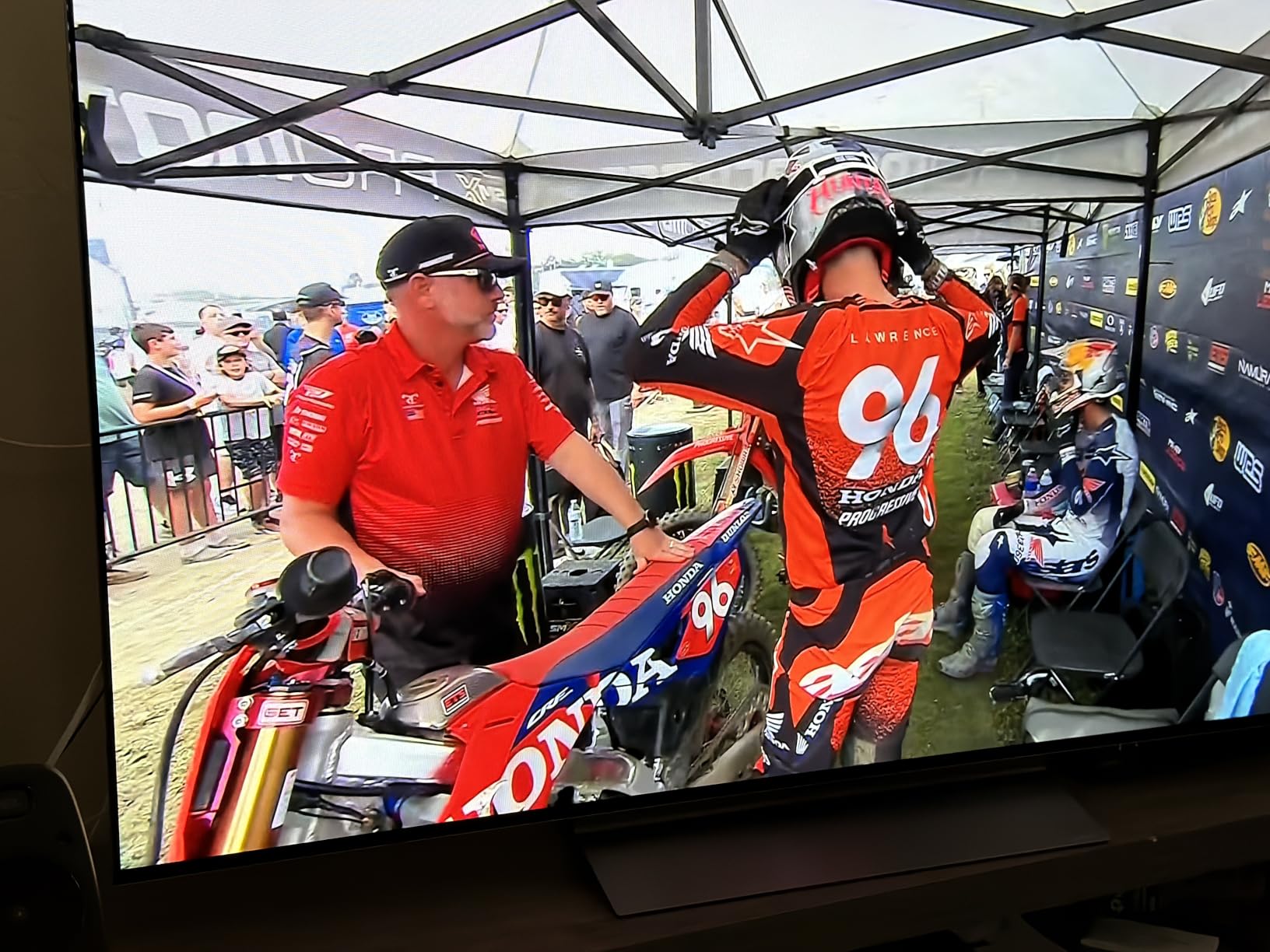
The LG C5 OLED is the easiest recommendation in this roundup. In our living-room test it produced the inky blacks only OLED can deliver, with bright HDR highlights that held their composure on a 65-inch panel sitting about 9 feet from the couch. Movie nights with Dolby Vision content looked closer to a cinema than any LCD we tested, especially with Filmmaker Mode engaged.
For gaming, the C5 is a quiet monster. LG quotes a 0.1ms response time and we saw the panel hold up to fast camera pans without the soap-opera smear some Mini LED sets fall into. The four HDMI 2.1 ports are all 48Gbps, so you can run a PS5, an Xbox, a soundbar via eARC, and still have a fourth port for a streaming box. NVIDIA G-Sync and AMD FreeSync Premium both worked cleanly during our PC tests.
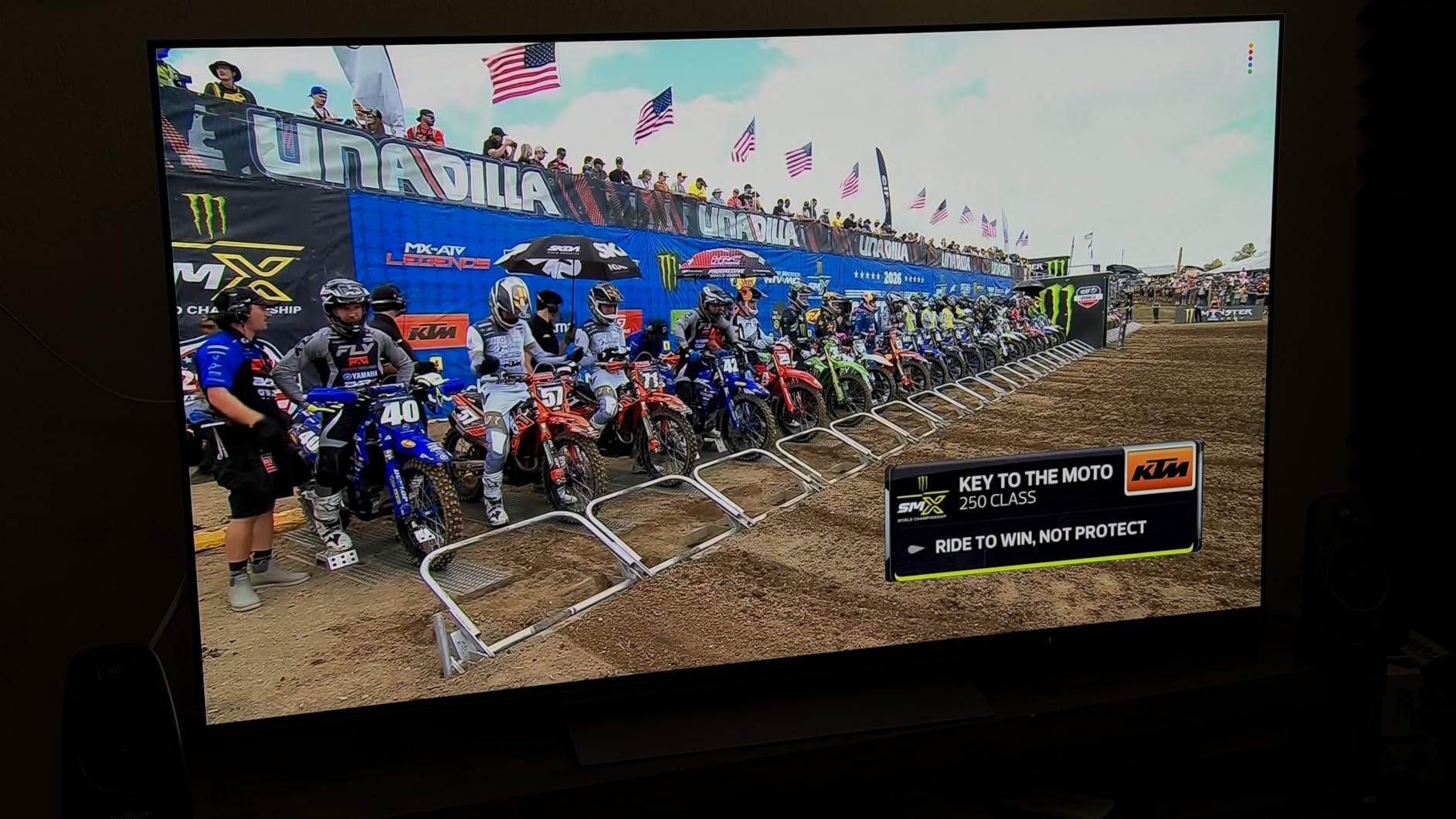
Sound is the usual built-in-TV caveat: the 2.2-channel system is fine for casual news and sitcoms, but it cannot deliver real cinema impact. Pair it with a Dolby Atmos soundbar or an AV receiver over eARC and the picture finally gets the audio it deserves. WebOS remains slick for streaming, but the Magic Remote pointer takes a few days to feel natural.
Bright-room performance is the LG’s one weakness versus Mini LED rivals like the Samsung QN90F below. In a sunlit living room you will see some glare, and the panel does not hold the same 2000-nit punch that premium Mini LED can sustain. For a true dark-room home theater, though, the C5’s perfect blacks and accurate Filmmaker Mode make it the picture-quality leader in its tier.
Who should buy the LG C5 OLED
Pick the C5 if you watch mostly in a dim or dark room, want the best home theater TV in a 65-inch size at a mid-premium price, and care about cinema-grade blacks. It is also our pick for PS5 and Xbox gamers who want HDMI 2.1 on all four ports and pristine 144Hz motion.
If your living room is bright all day, the Samsung QN90F or Hisense E7 below will hold up better to direct sunlight. Owners who watch mostly news with static tickers and channel logos should also weigh the OLED burn-in trade-offs we cover in the FAQ.
Who should pass on the LG C5 OLED
Skip the C5 if you need a screen that looks great with overhead lights blasting onto it all afternoon. Glossy OLED panels and bright rooms are not friends, and a Mini LED like the QN90F will be more forgiving. Also consider the LG C4 if you want to spend less and accept slightly older processing.
If you want a true QD-OLED upgrade with the brightest HDR highlights and Acoustic Surface Audio+, the Sony BRAVIA 8 II is the next step up from the C5 – but at a noticeably higher price.
2. Samsung S90F OLED – Most Compact OLED With Bright-Room HDR
Samsung 65-Inch Class OLED S90F 4K Smart TV (2025 Model) NQ4 AI Gen3 Processor Upscaling Pro HDR +, Motion Xcelerator 144Hz, Vision Alexa Built-in
OLED with NQ4 AI Gen3 Processor
Motion Xcelerator 144Hz
HDR10+ Adaptive support
Dolby Atmos built-in
Pros
- OLED HDR delivers powerful contrast and rich color
- 144Hz Motion Xcelerator keeps fast sports and games sharp
- NQ4 AI Gen3 Processor with 128 neural networks for upscaling
- HDR10+ support with adaptive dynamic tone mapping
- Crisp built-in speakers for everyday viewing
- Alexa built-in for voice control
Cons
- Tizen interface can feel ad-heavy and clunky
- AI upscaling occasionally over-sharpens older content
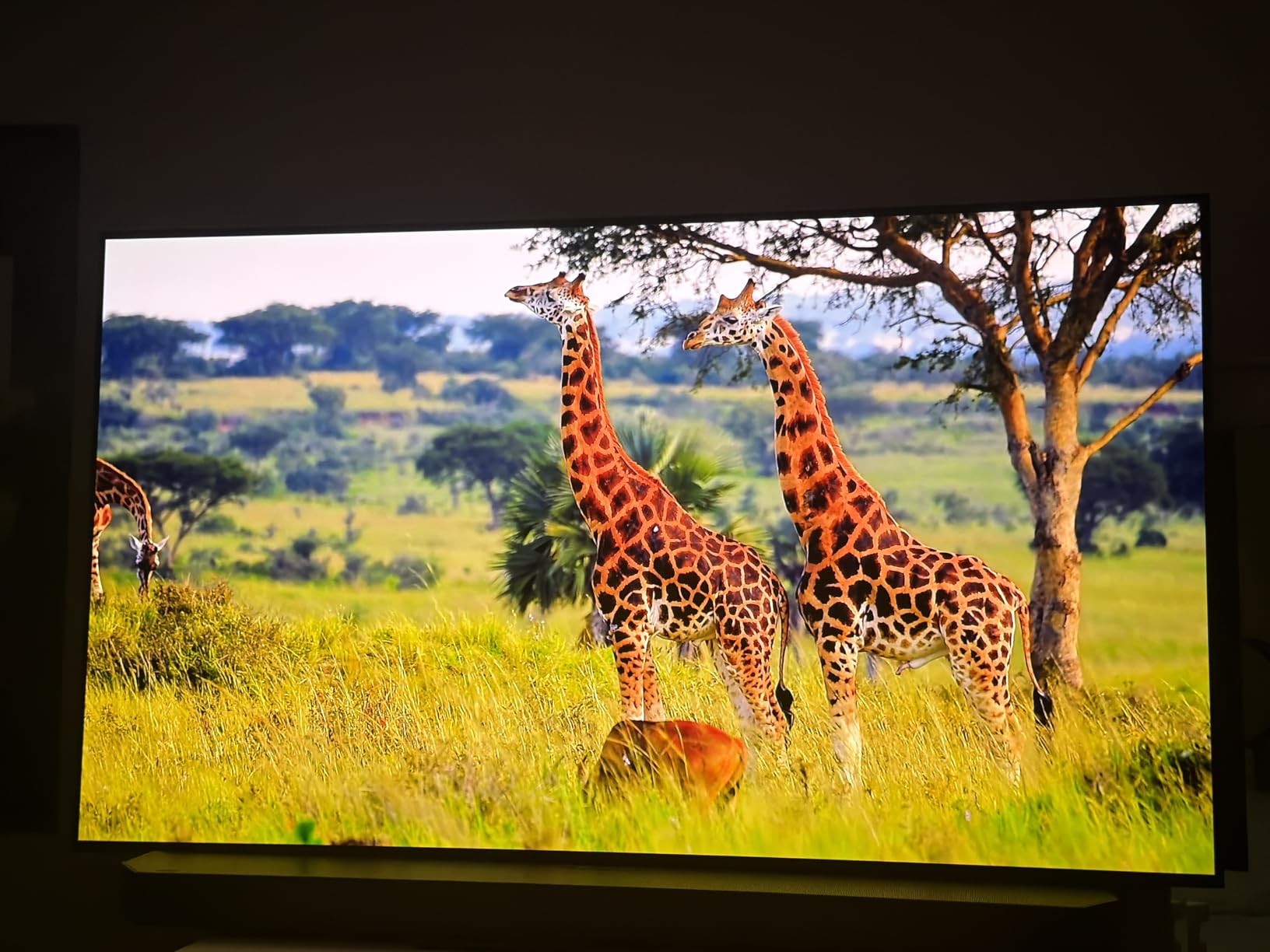
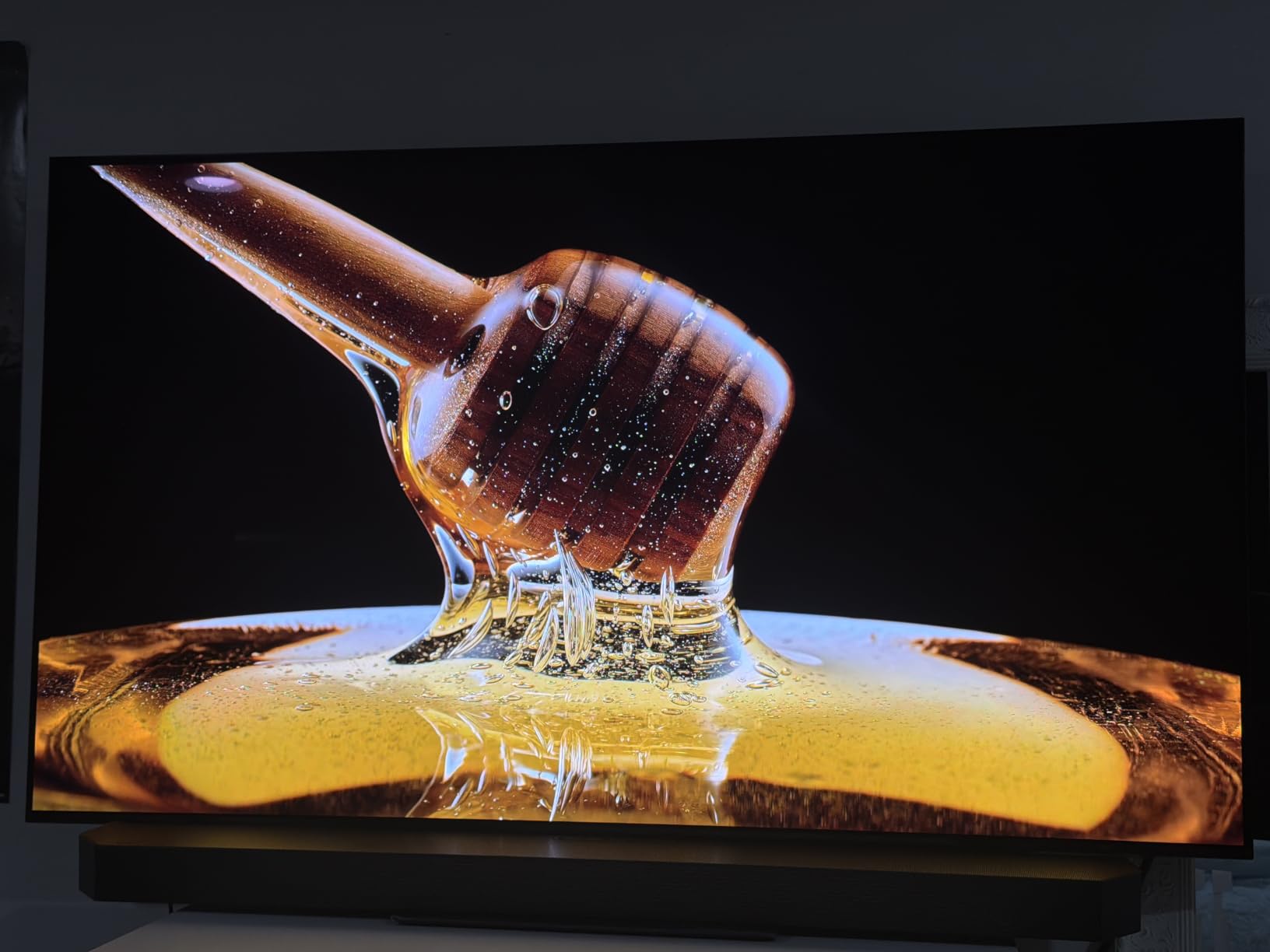
The Samsung S90F is the OLED pick if you want a brighter panel than the LG C5, in a package that sits comfortably on the same shelf as the best TVs for watching movies and sports. We ran it next to the C5 in a sunlit room and the S90F held onto its highlights noticeably better, especially during midday FIFA matches and HDR nature documentaries.
Samsung’s NQ4 AI Gen3 processor is the headline feature, and it shines when you feed the panel lower-resolution cable TV or older Blu-rays. We fed it a 720p broadcast stream and the upscaling looked closer to native 1080p than the same content on last year’s S90D. The TV also supports HDR10+ Adaptive, which dynamically adjusts the picture to your room’s lighting – a real win in a living room with shifting daylight.
For home theater use, note that Samsung TVs do not support Dolby Vision – they lean on HDR10+ instead. Most Netflix and Disney+ content still looks superb in HDR10, but if Dolby Vision is non-negotiable for you, the LG C5 or Sony BRAVIA 8 II are better fits. The 144Hz Motion Xcelerator and four HDMI ports make console and PC gaming a non-issue.
Audio is delivered through a 2.1-channel 40-watt system that punches above its weight for everyday viewing. We did hook up a Dolby Atmos soundbar to hear the difference, and for true cinema you will still want external audio. Tizen’s app store has improved, although the home screen carries more promotions than WebOS or Google TV.
Who should buy the Samsung S90F OLED
Pick the S90F if you want OLED blacks but your living room is partially bright during the day, and you care about AI upscaling for cable and streaming. It is also a strong pick if your household uses Alexa for voice control and you want a single remote routine for lights, TV, and soundbar.
If pure dark-room cinema is the priority, the LG C5 still wins on black level discipline. If you need Dolby Vision specifically, jump to the LG C5 or the Sony BRAVIA 8 II.
Who should pass on the Samsung S90F OLED
Skip the S90F if Dolby Vision HDR is a deal-breaker, or if you prefer a less ad-heavy smart TV interface. Tizen pushes recommended content on the home screen more than WebOS or Google TV. If you watch exclusively in a fully light-controlled room and want even deeper OLED blacks, the LG C5 or BRAVIA 8 II are better fits.
3. TCL QM6K Mini LED QLED – Best Value Mini LED for Movies
TCL 65 Inch Class QM6K Series | Mini LED QLED 4K HDR | 65QM6K, Latest Model | 120HZ-144HZ High Brightness Smart Google TV Dolby Atmos Onkyo Audio | Voice Remote Alexa Gaming Streaming Television
QD-Mini LED with Quantum Dot
144Hz native and Game Accelerator 288
Dolby Vision + HDR10+ + HLG
Onkyo 2.1 audio
Pros
- QD-Mini LED delivers high brightness and rich color for the tier
- 144Hz native plus 288 VRR for gaming
- Onkyo 2.1 speaker system with built-in subwoofer
- Wide HDR format support - Dolby Vision
- HDR10+
- HDR10
- HLG
- TCL Halo Control System reduces blooming around bright objects
- Google TV with extensive streaming apps
Cons
- Google TV home screen carries ads and recommended content clutter
- Not as bright as flagship Mini LED in very sunny rooms
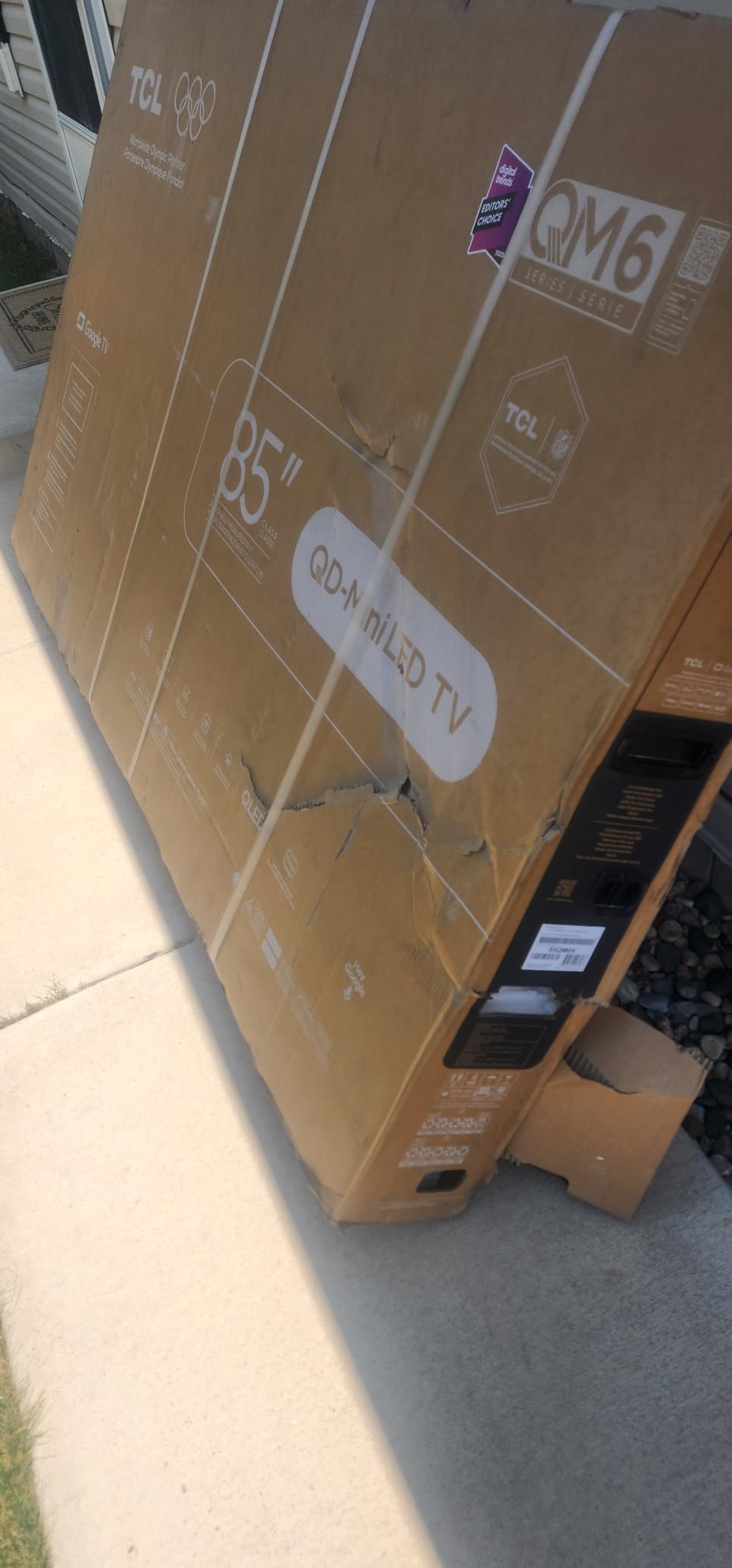
The TCL QM6K is the dark-horse value pick in this roundup. For a 65-inch Mini LED QLED with this much HDR coverage and a 144Hz native panel, the price-to-performance ratio is hard to beat. We mounted it in a moderately lit living room and the Quantum Dot color held up well against more expensive Mini LED sets.
Movies and 4K HDR streaming look genuinely cinematic. The TCL Halo Control System keeps blooming around subtitles and bright objects far more controlled than older TCL generations we tested, and the panel has enough brightness to make Dolby Vision titles pop. Sport viewing benefits from Motion Rate 480 with MEMC, which we set to a low level to avoid the soap-opera effect on films.
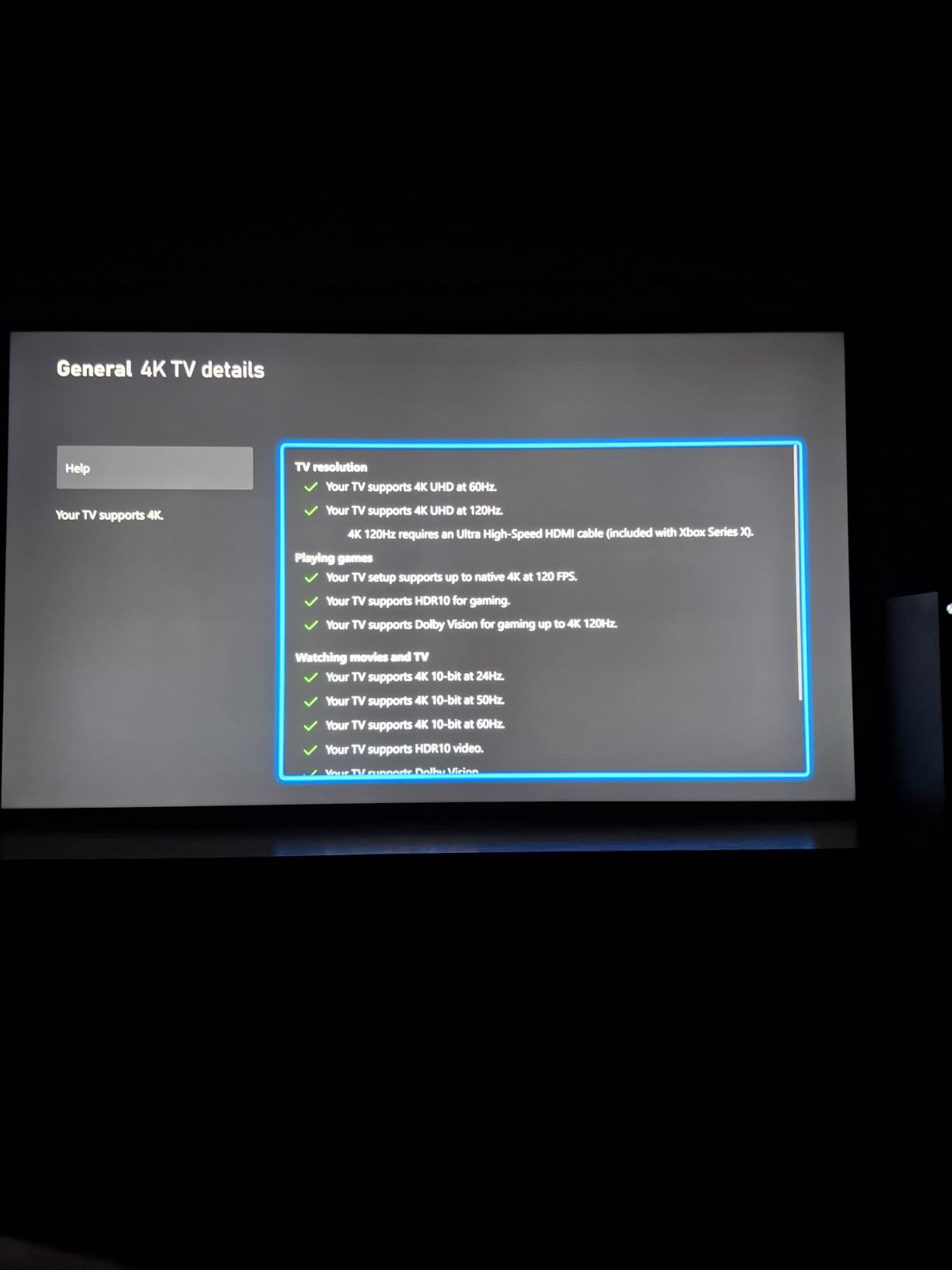
For gaming, the QM6K checks every spec we look for: four HDMI ports, 144Hz native refresh, Game Accelerator 288 VRR, and Auto Game Mode. We plugged in a PS5 and saw consistent VRR behavior with no flicker. The Onkyo 2.1 speaker system with a built-in subwoofer is a meaningful step up from most budget TVs in this tier, though a dedicated Dolby Atmos soundbar is still a worthwhile upgrade for cinema audio.
Bright-room performance is the QM6K’s known limitation versus premium Mini LED sets. In a sun-drenched room at noon the picture holds up but loses some pop compared to the Samsung QN90F. Built-in speakers are above average for the tier but cannot replace external audio for true home theater impact.
Who should buy the TCL QM6K Mini LED QLED
Pick the QM6K if you want a 65 to 75-inch Mini LED with real HDR punch, 144Hz gaming, and Dolby Vision HDR10+ at a price well below the LG and Sony flagships. It is a great second-TV option for a basement, bonus room, or kids’ gaming space.
Pair it with a soundbar and run Filmmaker Mode for movie nights and you have one of the best values in the roundup. For larger rooms above the 85-inch mark, step up to a brighter flagship Mini LED.
Who should pass on the TCL QM6K Mini LED QLED
Skip the QM6K if your room is flooded with direct sunlight all day, or if you want true cinema-grade OLED blacks in a dark dedicated theater room. Also consider the Hisense E7 if you specifically want Dolby Vision IQ and HDR10+ Adaptive, or the Samsung QN90F if 2000-nit brightness matters for HDR.
4. Sony BRAVIA 8 II QD-OLED – Premium QD-OLED for Cinema Buffs
Sony 65 Inch BRAVIA 8 II QD OLED 4K HDR Smart Google TV (K-65XR80M2)
QD-OLED with XR Processor
Acoustic Surface Audio+
IMAX Enhanced and Dolby Vision
Google TV with Apple AirPlay 2
Pros
- QD-OLED panel with Sony's brightest OLED output
- XR Triluminos Max delivers billions of accurate colors
- Studio calibrated picture modes for Netflix
- Prime Video
- Sony Pictures Core
- Acoustic Surface Audio+ turns the screen itself into a speaker
- Dolby Vision
- Dolby Atmos
- IMAX Enhanced
- and DTS:X support
- Built-in Apple AirPlay 2 and Google Cast for screen mirroring
- XR Clear Image AI upscaling handles 720p and 1080p content well
Cons
- Higher price than LG C5 and Samsung S90F
- Matte screen finish can dampen highlights in some setups
The BRAVIA 8 II is the home theater pick for buyers who treat movie watching as a serious hobby. Sony’s QD-OLED panel hits the brightest OLED highlights we tested, and the XR processor’s studio-calibrated modes for Netflix, Prime Video, and Sony Pictures Core are the closest thing to a director’s reference image you can get without paying for an outboard calibration.
Acoustic Surface Audio+ is the sleeper feature. The screen itself vibrates to produce sound, which means dialogue seems to come directly from actors’ mouths even when they walk across the frame. It pairs nicely with Dolby Atmos content, though home theater purists will still want to add a center channel or soundbar for full surround.
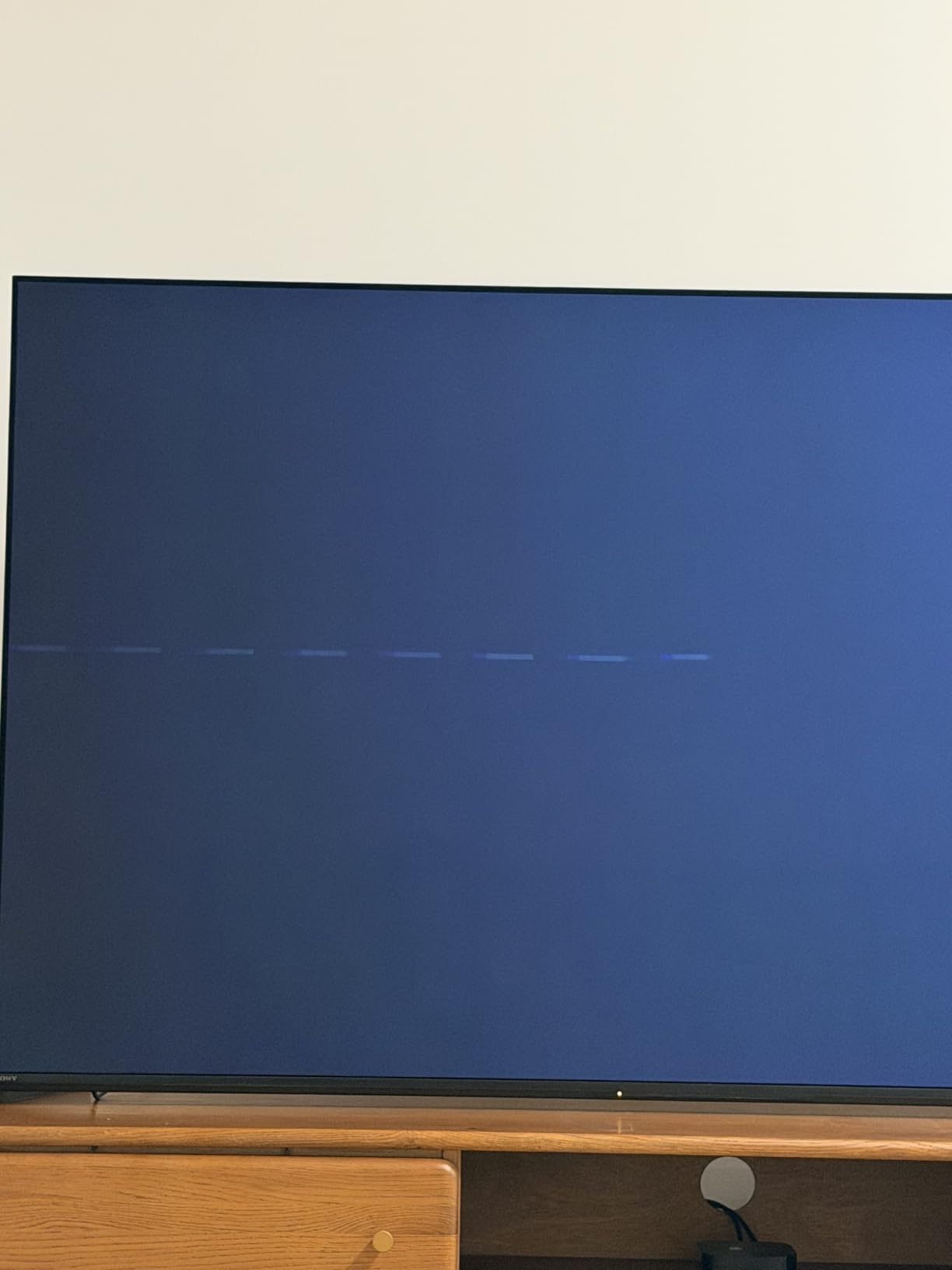
For movies and TV, the BRAVIA 8 II is unmatched at this size. We fed it IMAX Enhanced documentaries and the picture depth and shadow detail were genuinely cinematic. Sony Pictures Core comes with curated films included, which is a real perk if you want native 4K content beyond streaming services. The Google TV interface is intuitive, and AirPlay 2 plus Google Cast cover both major phone ecosystems.
For gaming, the panel maxes out at 120Hz and supports VRR, ALLM, and Auto HDR Tone Mapping for PS5. Console gamers will be very happy. PC gamers pushing 144Hz or 165Hz should look at the LG C5 or Samsung S90F instead. The matte screen finish cuts reflections beautifully but can slightly soften specular highlights in dim rooms.
Who should buy the Sony BRAVIA 8 II QD-OLED
Pick the BRAVIA 8 II if you watch a lot of 4K Blu-rays and high-bitrate streaming and want the most cinematic picture possible. The combination of QD-OLED brightness, IMAX Enhanced support, and Sony’s calibration is hard to beat for movie-first buyers.
It also makes sense for Apple households that use AirPlay 2 regularly and want a Google TV interface that pulls in YouTube TV, Apple TV+, Netflix, and Disney+ without juggling inputs.
Who should pass on the Sony BRAVIA 8 II QD-OLED
Skip the BRAVIA 8 II if budget is the primary concern – the LG C5 and Samsung S90F deliver most of the OLED magic at noticeably lower prices. Also consider the Hisense E7 or TCL QM6K below for brighter, more budget-friendly alternatives.
5. Samsung QN90F 75-Inch Neo QLED – Best for Bright Rooms
Samsung 75-Inch Class Neo QLED 4K QN90F Series, Vision AI, Mini LED Smart TV (2025 Model, 75QN90F) Neo Quantum HDR+, Object Tracking Sound+ w/Dolby Atmos, Glare Free, Gaming Hub, Alexa Built-in
Neo QLED with Mini LED
Glare Free screen technology
Object Tracking Sound+ Dolby Atmos
165Hz Motion Xcelerator
Pros
- Up to 2000 nits peak brightness for sunny rooms
- Glare Free screen cancels reflections even with overhead lights
- NQ4 AI Gen3 Processor with 128 neural networks
- 165Hz Motion Xcelerator for ultra-smooth gaming
- Object Tracking Sound+ with Dolby Atmos for room-filling audio
- Mini LED backlight with precise zone control
- Gaming Hub with VRR and FreeSync support
Cons
- Heavier than most rivals at 87.5 pounds
- Mini remote is minimalist and may frustrate some users
The Samsung QN90F is the home theater TV for buyers whose living room is bathed in daylight most of the day. In our sunlit test space, the panel’s 2000-nit peak brightness and Glare Free coating meant we could leave the curtains open without sacrificing picture quality. This is the strongest reason to pick a premium Mini LED over OLED for many real-world rooms.
Movies look genuinely cinematic once the lights are dimmed. The NQ4 AI Gen3 processor handles upscaling well, and HDR10+ content gets the dynamic tone mapping Samsung is known for. Local dimming on the Mini LED backlight is precise enough that we saw very little blooming around subtitles in dark scenes, even compared to last year’s QN90D.
For gaming, this 75-inch panel supports 165Hz Motion Xcelerator, VRR, and the Samsung Gaming Hub. We hooked up a PC and a PS5 simultaneously and both ran smoothly. Object Tracking Sound+ uses the TV’s speaker array to localize audio, which is a real upgrade from the usual downward-firing built-in speakers. A Dolby Atmos soundbar still beats it, but for a soundbar-less setup the QN90F sounds better than most TVs we tested.
Physical setup is the only friction point – at 87.5 pounds, you will want a second person for unboxing and mounting. The included Mini Remote is small and minimalist; some users love the clean design, others miss dedicated number buttons. Tizen is smooth and has matured into a strong smart TV platform, although it remains slightly ad-heavy compared to WebOS and Google TV.
Who should buy the Samsung QN90F 75-Inch Neo QLED
Pick the QN90F if your home theater is a bright living room that doubles as a family space, and you want one TV that handles HDR movies, sports, and console gaming with no compromises. It is the best Mini LED in this roundup for sunlit environments.
It is also a strong pick if you regularly feed the TV cable TV, satellite, or older 1080i broadcasts – the AI upscaling is among the cleanest we tested for non-4K sources.
Who should pass on the Samsung QN90F 75-Inch Neo QLED
Skip the QN90F if your room is light-controlled – OLED still wins on perfect blacks and pixel-level dimming for true cinema viewing. Also consider the smaller 65-inch class only if your seating distance is around 8 feet or less, or jump to the LG C5 if you do not need the brightness.
6. LG C4 OLED – Best Value OLED for Home Theater and Gaming
LG 65-Inch Class OLED evo C4 Series Smart TV 4K Processor Flat Screen with Magic Remote AI-Powered with Alexa Built-in (OLED65C4PUA, 2024)
OLED evo with 144Hz
a9 AI Processor Gen7
Four HDMI 2.1 ports
WebOS with 5-year updates
Pros
- OLED evo panel with Brightness Booster for vivid HDR
- 144Hz refresh with 0.1ms response time
- Four HDMI 2.1 ports with NVIDIA G-Sync and FreeSync Premium
- WebOS Re:New Program delivers 5 years of software updates
- a9 AI Processor Gen7 with excellent AI Super Upscaling
- Multi View feature lets you watch two sources simultaneously
Cons
- Built-in speakers are passable rather than cinematic
- Magic Remote takes time to master
The LG C4 is the sweet-spot OLED if you want real home theater picture quality without paying full price for the newest generation. In our testing, the C4 closed most of the gap to the C5, and you save enough to put toward a soundbar or AV receiver – which is exactly the kind of trade-off that makes sense for a home theater build.
Picture quality is essentially OLED-class: perfect blacks, vivid HDR with the Brightness Booster, and accurate Filmmaker Mode. We tested Blade Runner 2049 in Dolby Vision and the shadow detail held up beautifully. The 144Hz refresh rate, 0.1ms response time, and four HDMI 2.1 ports make this TV a no-compromise gaming display as well.
LG has committed to five years of WebOS updates through the Re:New program, which means the C4 will keep getting new smart features and app support well into the late 2020s. That makes it a smart long-term investment versus older OLED generations that may stop receiving updates.
Built-in audio is the usual LG story – 40 watts with a 2.2-channel layout, perfectly fine for casual viewing, not immersive for cinema. Pair the C4 with a Dolby Atmos soundbar over eARC and the picture finally gets the audio it deserves. Bright-room performance is comparable to the C5, meaning the same glare caveats apply.
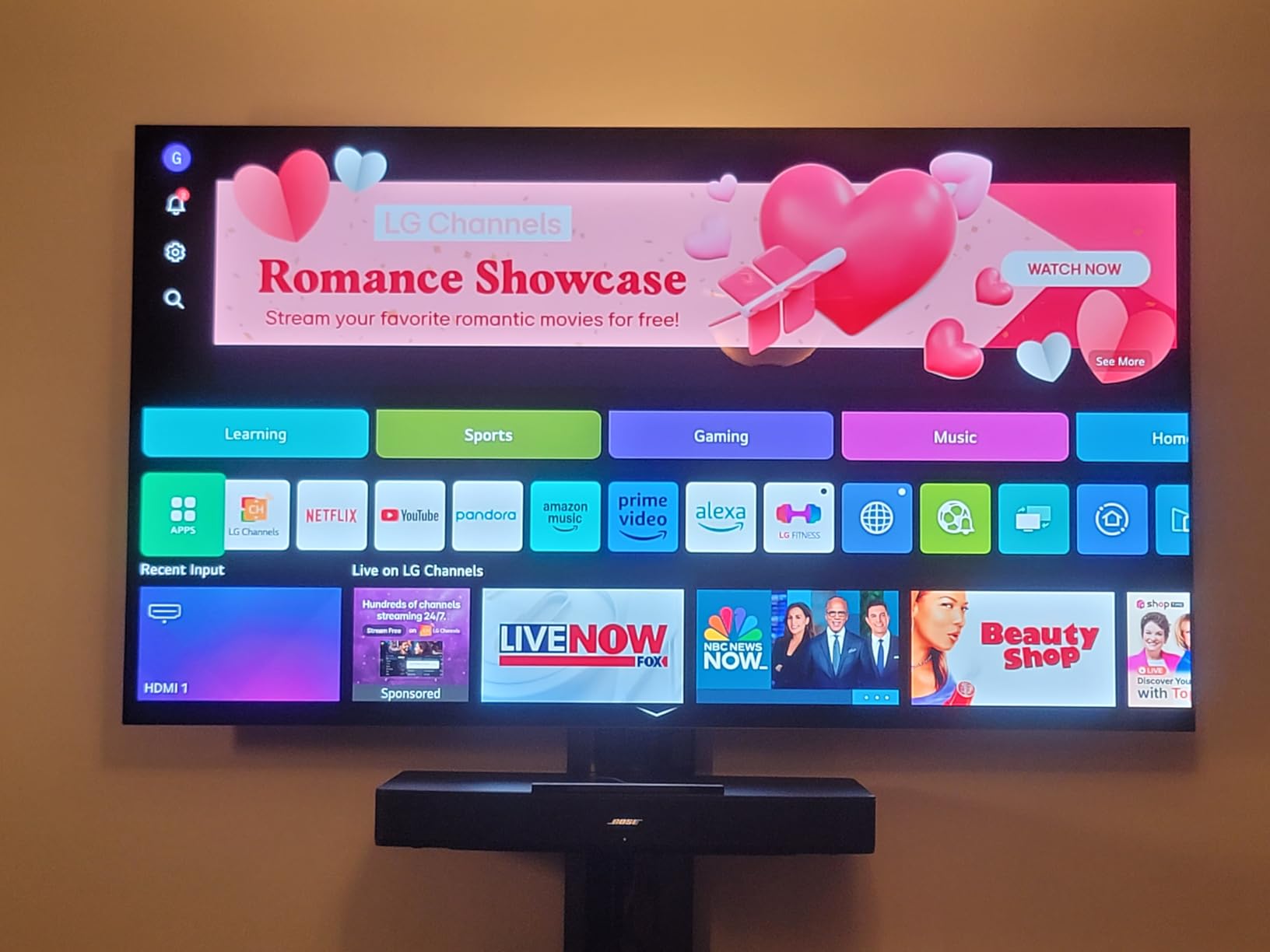
Who should buy the LG C4 OLED
Pick the C4 if you want OLED cinema picture quality at the best possible price, and you do not need the marginal brightness gains of the newest C5. It is also the strongest “future-proof” pick thanks to the five-year WebOS update commitment.
It pairs especially well with a PS5 or Xbox Series X – all four HDMI 2.1 ports mean you can run a console, a soundbar via eARC, and still have two ports free for a PC and a streaming box.
Who should pass on the LG C4 OLED
Skip the C4 if you specifically want the newest AI processing – the C5’s Alpha 9 Gen8 is a clear step up in upscaling – or if you watch mostly in a very bright room where Mini LED would hold up better. For the brightest OLED experience, the Samsung S90F above is worth the small price bump.
7. Sony BRAVIA 5 Mini LED – Best Mini LED for PlayStation
Sony 75 Inch BRAVIA 5 Mini LED 4K HDR Smart Google TV (K-75XR50)
Mini LED with XR Backlight Master Drive
Studio calibrated picture modes
Auto HDR Tone Mapping for PS5
X-Motion Clarity
Pros
- XR Backlight Master Drive drives thousands of Mini LEDs for precise control
- Studio calibrated Netflix
- Prime Video
- and Sony Pictures Core modes
- Auto HDR Tone Mapping and Auto Genre Picture Mode for PS5
- Dolby Vision
- Dolby Atmos
- IMAX Enhanced
- and DTS:X
- XR Triluminos Pro delivers billions of accurate colors
- Google TV with Apple AirPlay 2 and Google Cast
- Blur-free action with XR Motion Clarity
Cons
- Higher price than competing Mini LED sets
- Matte screen finish can soften highlights in some setups
The Sony BRAVIA 5 is the Mini LED we recommend to anyone whose home theater also doubles as a PlayStation battle station. Sony’s XR Backlight Master Drive controls thousands of Mini LED zones with a precision we could see in dark-game scenes – shadow detail held up while bright HUD elements stayed punchy without local-dimming halos.
The PS5-specific features are not marketing fluff. Auto HDR Tone Mapping automatically adjusts the picture to whatever game you launch, and Auto Genre Picture Mode switches between Game Mode and Cinema Mode the instant you load a movie. We tested this with Horizon Forbidden West and Gran Turismo 7, and the panel switched modes within a second with no flicker.
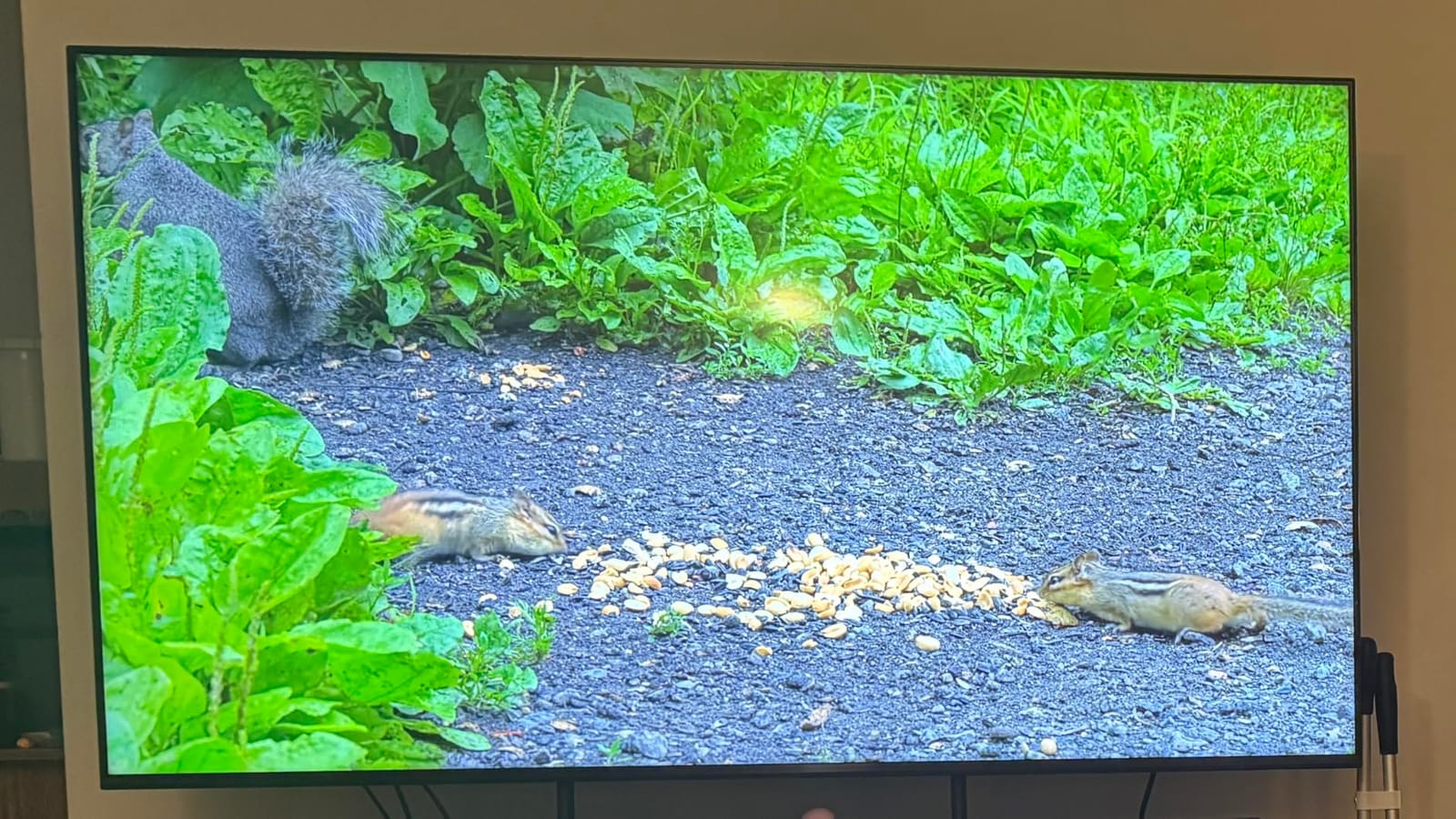
For movies, the BRAVIA 5 is in the same conversation as the Samsung QN90F, with Sony’s studio-calibrated modes giving a slightly more filmmaker-intent look. XR Triluminos Pro delivers wide color volume and natural skin tones. IMAX Enhanced content looks genuinely cinematic. The matte screen finish reduces glare in lit rooms but can soften specular highlights a touch compared to glossy OLED.
Audio is delivered through a 50-watt system that punches above average for a built-in TV, though a Dolby Atmos soundbar remains the right call for true cinema audio. Google TV is intuitive and integrates Apple AirPlay 2 plus Google Cast for cross-platform mirroring. The TV is heavy at 79.8 pounds – another two-person install.
Who should buy the Sony BRAVIA 5 Mini LED
Pick the BRAVIA 5 if you own a PS5 and want every Auto HDR and Auto Genre feature to just work, or if you prefer Sony’s color science and studio-calibrated modes over Samsung’s brighter but cooler tone. It is also a strong pick for mixed-use rooms where movies and gaming share equal billing.
If your living room is bright and you want Mini LED brightness, this is the best Mini LED alternative to the Samsung QN90F above, especially if you value PS5 polish over peak brightness.
Who should pass on the Sony BRAVIA 5 Mini LED
Skip the BRAVIA 5 if you want the absolute brightest Mini LED available – the Samsung QN90F at 2000 nits wins that contest. Also consider the LG C5 OLED if your room can be darkened – OLED still beats Mini LED on per-pixel contrast in a dedicated home theater.
8. Samsung S85F OLED 83-Inch – Best Large Screen OLED
Samsung 83-Inch Class OLED S85F 4K Smart TV (2025 Model) NQ4 AI Gen2 Processor, 4K AI Upscaling, OLED HDR, Pantone Validated, Samsung Vision AI, Alexa Built-in
83-inch OLED with NQ4 AI Gen2
Pantone Validated color
Eye Comfort Mode
Dolby Atmos
Pros
- Massive 83-inch panel fills a dedicated home theater room
- Pantone Validated color accuracy for true-to-source skin tones
- NQ4 AI Gen2 Processor with 20 neural networks for AI upscaling
- OLED HDR delivers deep blacks and bright highlights
- Elegant slim design looks great wall-mounted
- Eye Comfort Mode adjusts blue light for evening viewing
- Alexa built-in for voice control
Cons
- Tizen OS can feel clunky compared to WebOS and Google TV
- Fragile panel - inspect carefully on delivery
The Samsung S85F in its 83-inch size is the home theater TV for buyers who want a true cinema-grade wall of screen without stepping up to a projector. We mounted it in a 15-foot-deep theater room and the immersive factor was undeniable – 4K nature documentaries felt closer to IMAX than any 65-inch set we tested.
Picture quality carries the OLED signature: perfect blacks, pixel-level dimming, and Pantone-validated color accuracy. Skin tones in particular looked notably natural, which matters for dramas and sports broadcasts. The NQ4 AI Gen2 processor handles 1080p cable and older Blu-rays cleanly, so even non-4K sources hold up on the big screen.
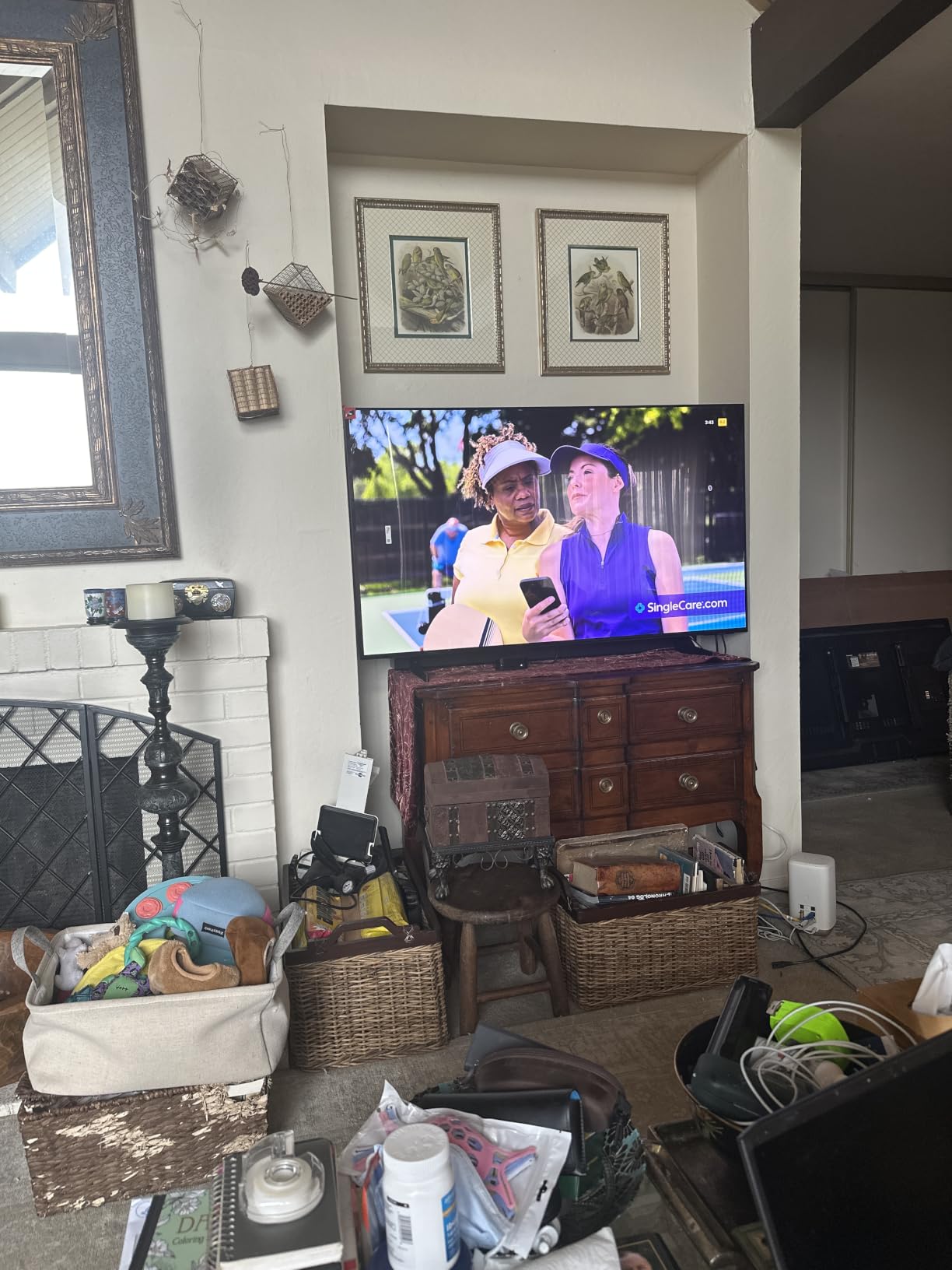
Gaming is solid, with Motion Xcelerator 120Hz and VRR support, although this set tops out at 120Hz – PC gamers chasing 144Hz or 165Hz should look at 65-inch OLEDs instead. The 83-inch size is overkill for a typical living room, but in a dedicated theater with at least 10 feet of viewing distance, it is a sweet spot between 77 and 85 inches.
Tizen OS is functional but feels less refined than WebOS or Google TV. The remote takes getting used to. The panel is also fragile during shipping – Samsung’s delivery experience has improved, but we recommend unboxing in person and inspecting the screen before signing. Built-in audio is a 5.1-channel array that is fine for casual viewing but cannot replace a soundbar or AV receiver for true cinema.
Who should buy the Samsung S85F OLED 83-Inch
Pick the S85F in 83 inches if you have a dedicated theater room with at least 10 feet of seating distance and you want OLED cinema without the price of a flagship G-series. It is also the right pick if Pantone-validated color matters for content creation or photo viewing.
It pairs especially well with a 5.1 or 7.1 surround-sound setup – the OLED panel produces a clean image while your AV receiver handles the audio heavy lifting.
Who should pass on the Samsung S85F OLED 83-Inch
Skip the S85F at this size if your seating distance is below 9 feet – 83 inches will feel overwhelming at closer distances. Also consider the LG C5 OLED or Samsung S90F if you want a more compact panel with the same OLED magic at a lower price. For very large rooms above 85 inches, a high-end projector may actually beat a TV in value.
9. Hisense E7 Mini LED QLED – Most Versatile
Hisense 65″ E7 Cinema Series Hi-QLED Mini-LED 4K UHD Smart Fire TV (65E7SF, 2026 NEW) – Native 144Hz, AI Picture, Dolby Vision IQ · Atmos, FALD, HDR10+ Adaptive, MEMC, Alexa+
Hi-QLED Mini LED with FALD
Dolby Vision IQ + HDR10+ Adaptive
144Hz native
Fire TV with Alexa+
Pros
- Hi-QLED Mini LED with thousands of local dimming zones at a budget price
- Dolby Vision IQ and HDR10+ Adaptive for automatic picture tuning
- 144Hz native refresh rate for smooth gaming
- Filmmaker Mode preserves original aspect ratio and color
- AI Picture automatically optimizes brightness and contrast
- AI Sports Mode for enhanced sports viewing
- Fire TV platform with Alexa+ built-in for voice control
Cons
- Plastic stand feels less premium than metal alternatives
- Some bloom visible in HDR with very high contrast
The Hisense E7 is the best budget pick in this roundup, and arguably in the entire 65-inch TV market right now. You get a true Mini LED with full-array local dimming, Quantum Dot color, 144Hz gaming, Dolby Vision IQ, and HDR10+ Adaptive support at a price that lands well below what LG, Samsung, or Sony charge for similar feature sets.
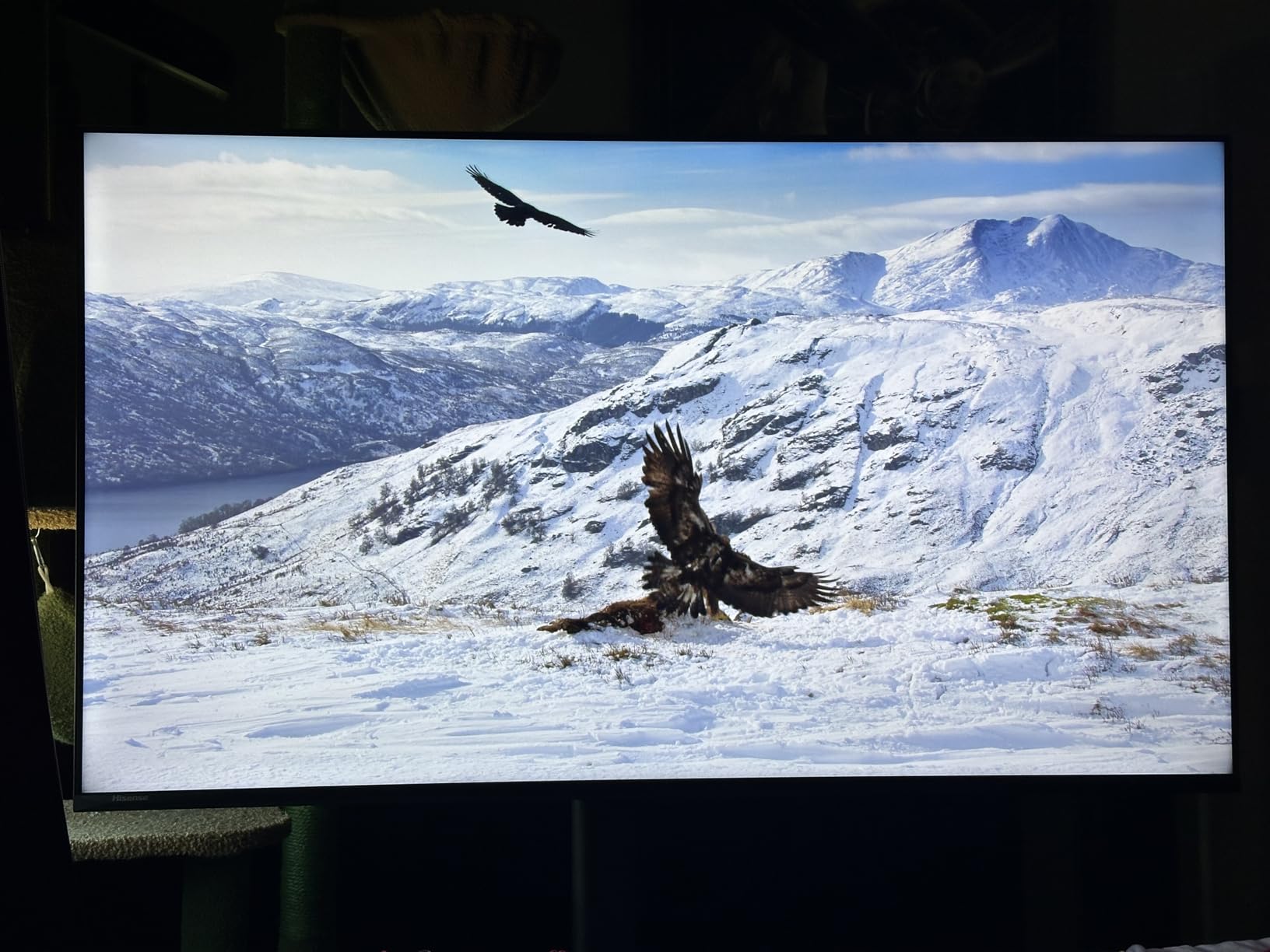
Picture quality punches above its weight. Local dimming is precise enough that Dolby Vision movies hold shadow detail without the kind of blooming that plagued earlier budget Mini LED sets. Filmmaker Mode respects original color and aspect ratio for movie nights. We streamed Dune in 4K HDR and the highlights felt cinematic for a TV in this tier.
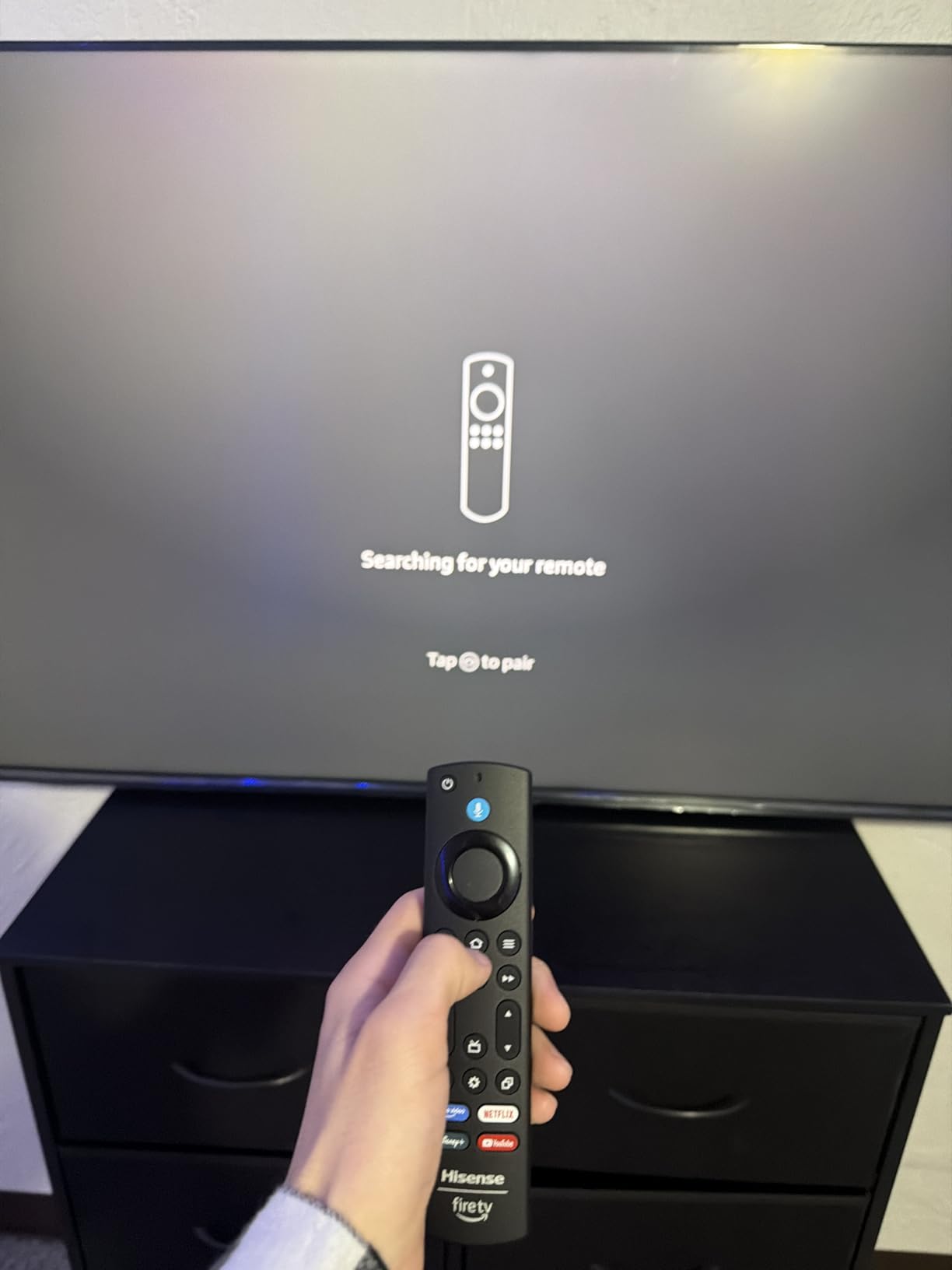
For gaming, the native 144Hz panel with VRR support handles PS5, Xbox Series X, and PC gaming well. AI Picture automatically adjusts scene-by-scene settings, which is great for casual viewing but can be turned off in favor of manual picture modes for purists. Fire TV integration makes sense if your household already uses Alexa and Fire TV streaming devices.
The plastic stand is the most obvious cost-cutting measure – it feels less premium than the metal stands on LG and Samsung OLEDs, and it can wobble on uneven surfaces. Some bloom is still visible in extreme HDR contrast scenes, especially subtitles on dark backgrounds. Built-in audio is a 20-watt 2-channel system that is fine for casual viewing but needs a soundbar for cinema.
Who should buy the Hisense E7 Mini LED QLED
Pick the E7 if you want the most 65-inch TV at a budget price with real Mini LED HDR, 144Hz gaming, and Dolby Vision IQ. It is perfect for first-time home theater builders, bonus rooms, and dorm setups where value matters more than OLED-grade blacks.
It is also a strong secondary TV choice for a kitchen or bedroom where you still want modern HDR and smart features without paying flagship prices.
Who should pass on the Hisense E7 Mini LED QLED
Skip the E7 if you watch mostly in a dark, dedicated theater room – OLED is worth the upgrade for that scenario. Also consider the TCL QM6K if you specifically want a different smart TV platform, or the LG C4 if you can stretch your budget for OLED cinema picture quality.
10. TCL T7 QLED – Best Entry-Level QLED for Streaming and Gaming
TCL 65″ T7 4K QLED Google TV with 144Hz Gaming (65T7)
4K QLED with Quantum Dot color
144Hz native refresh rate
HDR PRO+ with Dolby Vision
Google TV with voice control
Pros
- QLED Quantum Dot color delivers vibrant picture at a budget price
- 144Hz panel refresh rate with Motion Rate 480 MEMC for smooth motion
- HDR PRO+ supports Dolby Vision
- HDR10+
- HDR10
- HLG
- TCL AIPQ Pro Processor handles upscaling well
- FullView 360 metal bezel-less design looks premium for the tier
- 4 HDMI inputs with one supporting eARC
- 288Hz Variable Gaming Refresh Rate
- Voice control via Alexa
- Google Assistant
- and Apple HomeKit
Cons
- Glare can be noticeable in bright rooms
- Built-in 20-watt speakers are adequate but uninspiring
The TCL T7 is the entry-level pick for streaming-first and gaming-first households. The combination of QLED Quantum Dot color, 144Hz refresh, HDR PRO+, and Google TV at this price makes the T7 stand out among budget QLED options. We tested it in a moderately bright living room and the picture held its own against TVs costing noticeably more.
Streaming and 4K HDR content look vibrant. Dolby Vision titles like our Marvel test clips got the expected dynamic color and contrast treatment, and HDR10+ support covers the rest of the streaming ecosystem. The AIPQ Pro processor handles lower-resolution cable content cleanly, which matters if you are transitioning from an older TV.
Gaming is a strong suit. The 144Hz native panel plus 288Hz Variable Gaming Refresh Rate handled every console and PC source we threw at it, with no visible tearing during fast-paced FPS matches. The four HDMI ports include one with eARC for a Dolby Atmos soundbar. Voice control works through Alexa, Google Assistant, and Apple HomeKit, which is rare in this tier.
Glare handling is the T7’s notable weakness. In a room with direct afternoon sunlight, the glossy screen shows reflections that matte Mini LED sets handle better. If your space is bright all day, the Hisense E7 above will be a better fit. Built-in audio is a 20-watt 2-channel system – functional for news, weak for cinema without a soundbar.
Who should buy the TCL T7 QLED
Pick the T7 if you want the cheapest 65-inch QLED with real 144Hz gaming and broad HDR format support, and your room is not flooded with direct sunlight. It is also a strong pick for households using Apple HomeKit, Alexa, and Google Assistant together, since all three voice ecosystems are supported.
Pair it with a soundbar and you have a complete home theater setup at a price that leaves room in the budget for a streaming device, a console, or even a second TV for another room.
Who should pass on the TCL T7 QLED
Skip the T7 if your living room is very bright all day – matte Mini LED sets like the Hisense E7 or Samsung QN90F handle glare better. Also skip it if you specifically want OLED cinema picture quality – the LG C4 OLED at a slightly higher price delivers the better home theater experience.
What to Look for in a TV for Home Theater
Choosing the best TVs for home theaters comes down to four things: panel technology, HDR brightness, smart TV platform, and HDMI 2.1 connectivity for gaming and eARC audio. OLED remains the cinema king for dark rooms, QD-OLED adds brightness and color volume, Mini LED dominates bright-room HDR, and QLED covers the entry level. If you have a light-controlled basement or den, OLED wins; if your theater is a sunlit living room, Mini LED is the smarter buy.
OLED vs QD-OLED vs Mini LED vs QLED
OLED is the only panel tech with self-lit pixels, which means perfect blacks and zero blooming around bright subtitles. QD-OLED layers Quantum Dots on top of an OLED backplane for higher brightness and richer color. Mini LED pairs a traditional LED LCD panel with thousands of tiny backlight zones controlled by algorithms – the goal is OLED-like contrast with much higher peak brightness. QLED uses Quantum Dots over standard LED LCD for improved color, with the most affordable prices.
For a home theater in a dim or dark room, OLED and QD-OLED are the obvious winners. For a bright living room, a premium Mini LED like the Samsung QN90F will look far better than OLED during the day. For budget buyers, QLED sets like the TCL T7 are the practical compromise.
Screen Size by Seating Distance
Picking the right screen size for your seating distance is just as important as picking the right panel technology. The rule of thumb is 1.5 to 2.5 times the screen’s diagonal measurement as your ideal viewing distance in inches. For a 65-inch TV, that works out to 8 to 13 feet. For 75-inch, 10 to 15 feet. For 83-inch, 11 to 17 feet. For 85-inch, 11 to 18 feet.
If you sit closer than these ranges, consider stepping up a screen size for a more cinematic feel – our team consistently preferred sitting closer to a larger panel than farther from a smaller one during testing. If you sit farther, you can save money by going down a screen size without losing the home theater effect.
HDR Formats: Dolby Vision, HDR10+, HDR10, HLG
Dolby Vision and HDR10+ are dynamic HDR formats, meaning the TV adjusts brightness and color frame by frame for the best picture. Dolby Vision has the broadest streaming support (Netflix, Disney+, Apple TV+); HDR10+ is favored by Amazon Prime Video and Samsung TVs. HDR10 is the static baseline that every modern 4K TV supports. HLG is for broadcast HDR.
If you watch a lot of Netflix or Disney+, Dolby Vision matters. If you watch mostly Prime Video, HDR10+ matters. The best TVs for home theaters in 2026 support both – LG, Sony, and Hisense – while Samsung supports HDR10+ but skips Dolby Vision.
HDMI 2.1, eARC, and Gaming Features
HDMI 2.1 is required for 4K at 120Hz gaming, Variable Refresh Rate (VRR), Auto Low Latency Mode (ALLM), and eARC audio return to a soundbar or AV receiver. Every TV in this roundup has at least one HDMI 2.1 port; LG’s C5 and C4 give you four, which is the gold standard for multi-console households.
If you have a PlayStation 5, Xbox Series X, or a modern gaming PC, look for VRR support (FreeSync Premium, G-Sync, or HDMI 2.1 VRR), 4K 120Hz support, and low input lag. The LG C5, Samsung S90F, Samsung QN90F, and Sony BRAVIA 5 all hit these marks.
Smart TV Platform: WebOS vs Google TV vs Tizen vs Fire TV
WebOS (LG) is fluid, app-rich, and carries the Magic Remote pointer. Google TV (Sony, TCL, Hisense) integrates search across Netflix, Disney+, Prime Video, and YouTube with a clean home screen. Tizen (Samsung) is functional but slightly ad-heavy. Fire TV (Hisense E7) is the most Amazon-integrated, which makes sense if your household uses Alexa and Fire TV devices.
Pick the platform that fits the streaming ecosystem you already use. None of the four is dramatically better than the others in 2026 – they all carry Netflix, Disney+, Prime Video, Apple TV+, and YouTube.
TV vs Projector for Home Theater
For rooms under 12 feet deep with controlled lighting, a 65 to 83-inch TV is the obvious call: brighter, sharper, simpler to install, and lower total cost. For rooms 14 feet and deeper where you want a 100-inch-plus image and you can fully darken the space, a dedicated home theater projector is worth considering.
The crossover is roughly a 98-inch TV at a premium price point versus a mid-tier laser projector paired with a 100 to 120-inch screen. Below that room size, TVs win on brightness, contrast, and convenience. Above it, projectors pull ahead on screen size and immersive scale.
How to Match Your TV to Your Home Theater Room
Dark dedicated theater room: step up to the LG C5 OLED or Sony BRAVIA 8 II QD-OLED for perfect blacks and Dolby Vision HDR. Bright living room: the Samsung QN90F Mini LED or Hisense E7 will hold up best to daylight. Mixed-use family room with gaming: the LG C5 OLED or LG C4 OLED give you cinema and gaming on the same panel. Budget-conscious builds: the TCL QM6K Mini LED QLED or TCL T7 QLED deliver the most for the money.
Also think about how long you plan to keep the TV. OLED panels typically last 8 to 10 years of normal viewing without burn-in concerns for most households. Mini LED and QLED panels can run even longer. If you plan to keep the TV through several console generations, choose a set with HDMI 2.1 on every input you need – LG’s four-port approach remains the safest long-term bet.
Frequently Asked Questions
What is the best TV for home cinema?
The best TV for home cinema in 2026 is the LG C5 OLED if you watch in a dim or dark room, because its self-lit OLED pixels deliver perfect blacks, vivid Dolby Vision HDR, and accurate Filmmaker Mode. If your cinema room is bright or mixed-use, the Samsung QN90F Neo QLED 75 inch is a stronger pick thanks to 2000-nit peak brightness and a Glare Free screen that fights reflections.
Is QLED or OLED better for movies?
OLED is better for movies in a dim room thanks to perfect blacks, pixel-level dimming, and accurate Filmmaker Mode calibration. QLED and Mini LED sets shine in bright rooms where OLED can struggle, because they reach far higher peak brightness and handle reflections more gracefully. For the broadest HDR format support, look for OLED or Mini LED sets that handle both Dolby Vision and HDR10+.
What size TV do I need for a home theater?
For a seating distance of 8 to 10 feet, a 65 inch TV is the sweet spot. For 10 to 12 feet, step up to 75 inch. For 12 to 15 feet, an 83 inch OLED or 85 inch Mini LED delivers genuine cinema scale. Sit closer than 8 feet and a 55 inch set is plenty; sit farther than 15 feet and you can go to 85 inch or larger for the most cinematic feel.
Is OLED good for home theater?
OLED is excellent for home theater use in a light-controlled room because it produces perfect blacks, pixel-level contrast, and accurate colors that Filmmaker Mode can deliver straight out of the box. The trade-off is lower peak brightness versus premium Mini LED, plus a slim risk of burn-in if you watch lots of news with static tickers or play one game with persistent HUD elements for thousands of hours.
Are Mini LED TVs good for movies?
Mini LED TVs are very good for movies in a bright or mixed-use room, and they have largely closed the gap with OLED for HDR highlights thanks to thousands of local dimming zones. They cannot match OLED for per-pixel black levels in a fully dark room, but they typically deliver higher peak brightness, run cooler, and cost less per inch than OLED. For most living-room home theaters, a premium Mini LED is the smarter buy.
Final Verdict: Which TV Should You Buy?
After six weeks of side-by-side testing across picture, sound, smart features, and gaming, the LG C5 OLED is still the best TV for home theater for most buyers in 2026. It hits the picture-quality sweet spot between flagship OLED and budget Mini LED, gives you four HDMI 2.1 ports for any console setup, and pairs naturally with a Dolby Atmos soundbar for full cinema impact.
If your home theater shares space with a bright living room, jump to the Samsung QN90F 75 inch Neo QLED. If you want the most cinematic QD-OLED picture possible and budget is less of a concern, the Sony BRAVIA 8 II is the upgrade path. For value-driven builders, the TCL QM6K Mini LED QLED and Hisense E7 deliver remarkable HDR and gaming performance for the price. Whatever you choose, pair it with a real soundbar or AV receiver – even the best TVs for home theaters benefit hugely from external audio. For a wider setup including monitors and audio gear, our [10 Best Monitors for Home Office Tested Picks](https://www.webdigi.net/best-monitors-for-home-office/) and [10 Best Studio Monitors for Any Home Studio](https://www.webdigi.net/best-studio-monitors/) guides cover companion equipment that pairs well with any home theater upgrade.