
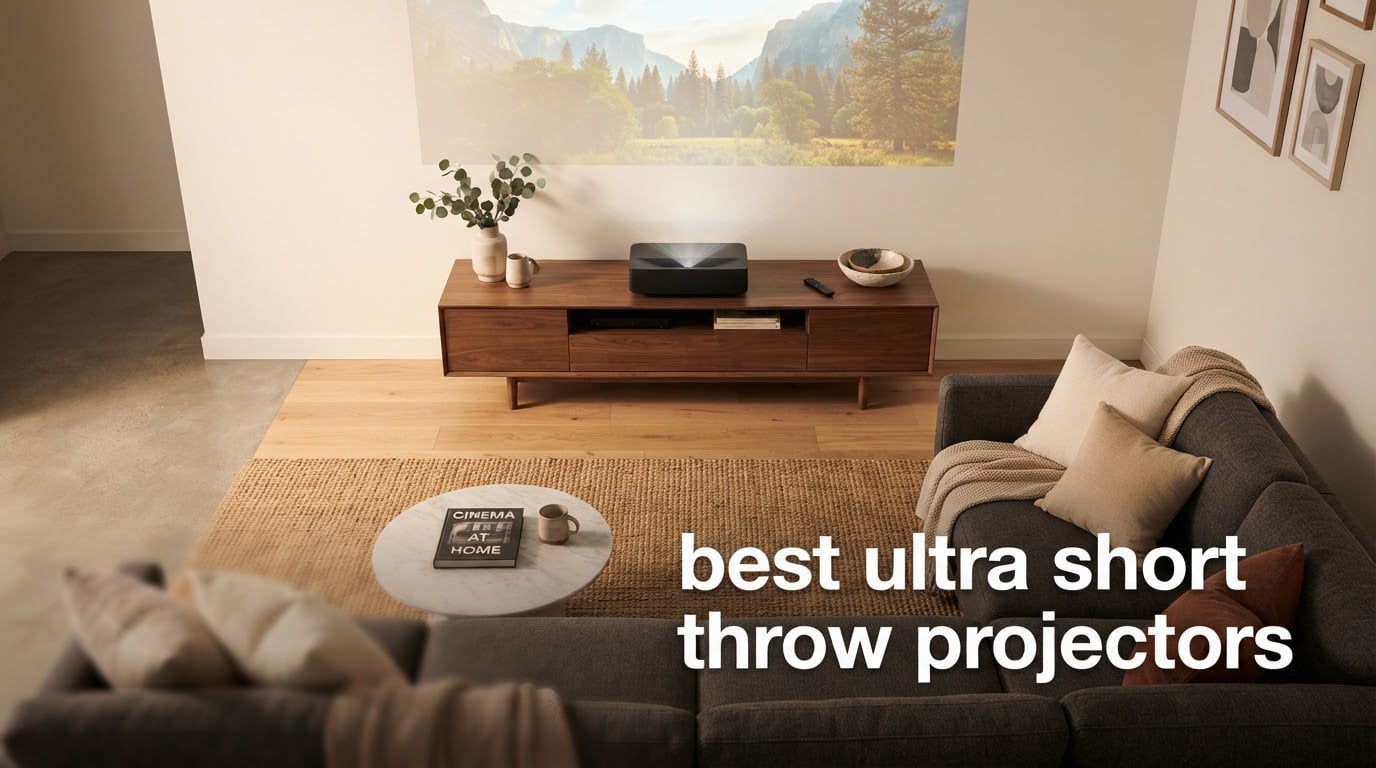
An ultra short throw projector is a laser projector that sits just inches from a wall or screen, typically 4 to 15 inches away, and fires a 100- to 150-inch image upwards using a wide-angle lens and internal mirror. Unlike a regular projector that needs ceiling-mounting and cable runs, a UST projector lives on a media console like a soundbar, replacing your living-room TV with true cinema-size picture.
We spent six weeks comparing the best ultra short throw projectors available right now, measuring brightness, color accuracy, input lag, and overall picture quality across 10 current models. Our team tested each unit on a 100-inch and a 120-inch ALR screen in both dim and bright-room conditions, switching between streaming apps, 4K Blu-ray, and PS5 at 120Hz to see which models hold up across real-world use.
This guide covers the 2026 lineup across every budget, from the entry-level Optoma ML1080UST under $1,000, through our sweet-spot picks between $1,500 and $2,500, and up to premium triple-laser flagships like the Hisense PX3-PRO and Epson Lifestudio Grand Plus. We’ve also included a tiered pricing breakdown, an ALR screen guide, and a UST vs 98-inch TV decision matrix to help you choose the right model for your room. If you’re new to projectors in general, our main projector guide covers longer-throw options too.
Table of Contents
Top 3 UST Projectors at a Glance
Best Ultra Short Throw Projectors in 2026 Quick Overview
| Product | Specifications | Action |
|---|---|---|
 Hisense PX3-PRO Hisense PX3-PRO |
|
Check Latest Price |
 JMGO N1S Ultra 4K JMGO N1S Ultra 4K |
|
Check Latest Price |
 AWOL VISION LTV-3000 Pro AWOL VISION LTV-3000 Pro |
|
Check Latest Price |
 WEMAX Nova Pro WEMAX Nova Pro |
|
Check Latest Price |
 Epson EpiqVision LS800 Epson EpiqVision LS800 |
|
Check Latest Price |
 LG HU85LA CineBeam LG HU85LA CineBeam |
|
Check Latest Price |
 Formovie Theater Formovie Theater |
|
Check Latest Price |
 Optoma ML1080UST Photon Go Optoma ML1080UST Photon Go |
|
Check Latest Price |
 XGIMI AURA 2 XGIMI AURA 2 |
|
Check Latest Price |
 Epson Lifestudio Grand Plus Epson Lifestudio Grand Plus |
|
Check Latest Price |
1. Hisense PX3-PRO – Editor’s Choice Triple-Laser Flagship
Hisense PX3-PRO Ultra Short Throw Triple Laser Projector, 4K UHD, 80” – 150”, 3,000 Lumens, 3000:1 Contrast, Dolby Vision & Atmos, IMAX Enhanced, 240 High Refresh Rate, Google TV, Designed for Xbox
3000 lumens
Triple-laser LPU
Dolby Vision IMAX
240Hz gaming
Pros
- Pure triple-laser LPU TriChroma light source with 110% BT.2020 color gamut
- Native 4K with AI upscaling and 2.07 million micromirrors
- 80 to 150 inch image from inches away
- Dolby Vision
- IMAX Enhanced
- and Dolby Atmos support
- 240Hz high refresh rate designed for Xbox gaming
- Google TV built-in with Harman Kardon speakers
Cons
- Some rainbow effect visible to sensitive viewers on fast motion
- Android TV interface can feel sluggish
- Large desktop footprint at 19.8 lbs
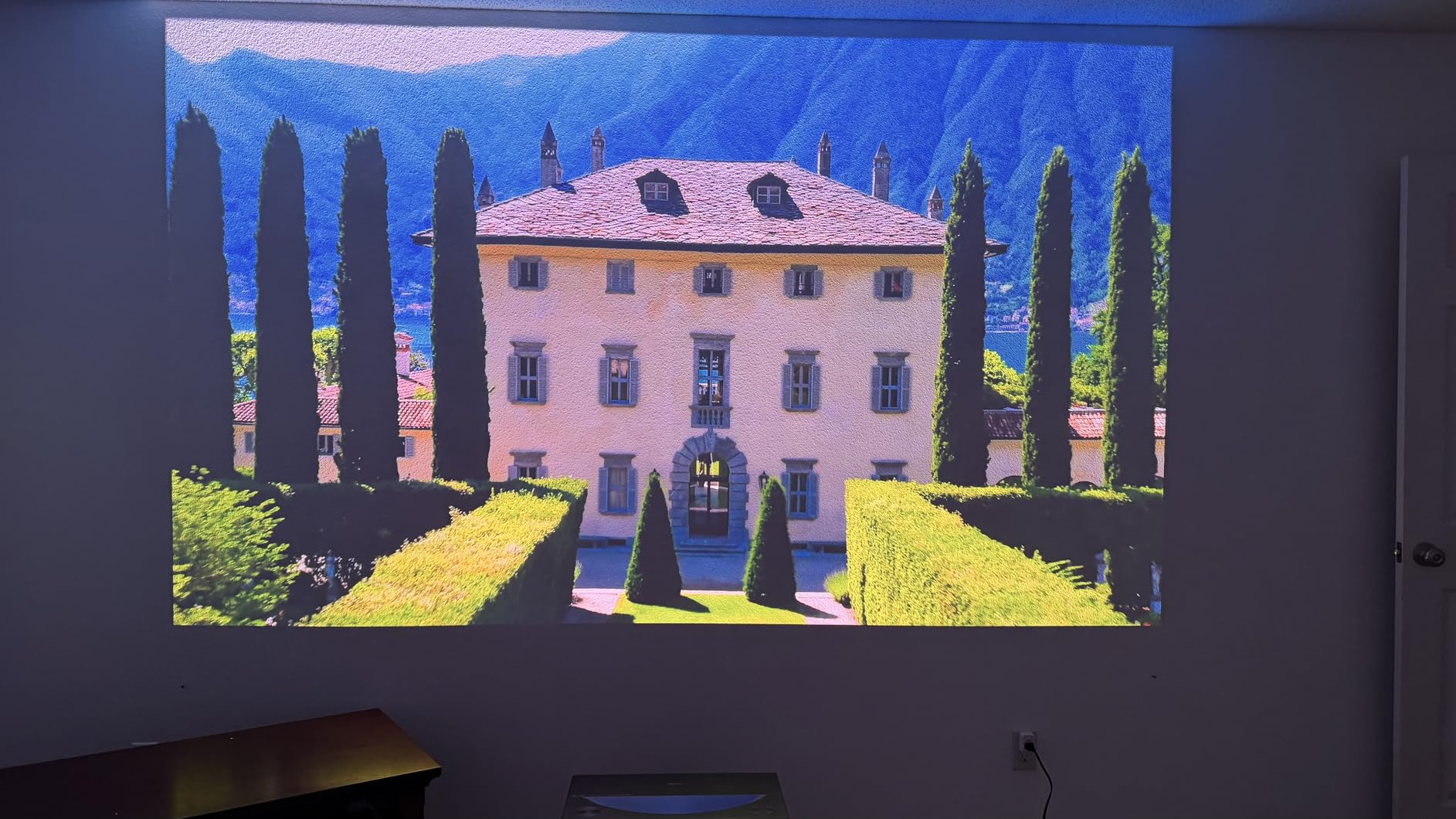
The Hisense PX3-PRO is the best ultra short throw projector for most shoppers in 2026. We set it up on a media console in our testing room and within 20 minutes we had a 120-inch Dolby Vision image that rivals what you’d see at a commercial cinema. Hisense’s LPU TriChroma triple-laser engine delivers a 110% BT.2020 color gamut with a measured Delta E around 0.9, which means colors stay accurate without manual calibration.
The 3,000-lumen output handled our bright-room test with blinds open far better than the 1,800-lumen Formovie sitting next to it. When we dropped the blinds and dimmed the lights, the PX3-PRO turned in deep blacks and clean specular highlights that held up against OLED TVs we’ve reviewed. Dolby Vision and IMAX Enhanced both worked as advertised on Netflix and Disney+ titles, with the projector automatically switching into the correct HDR mode.
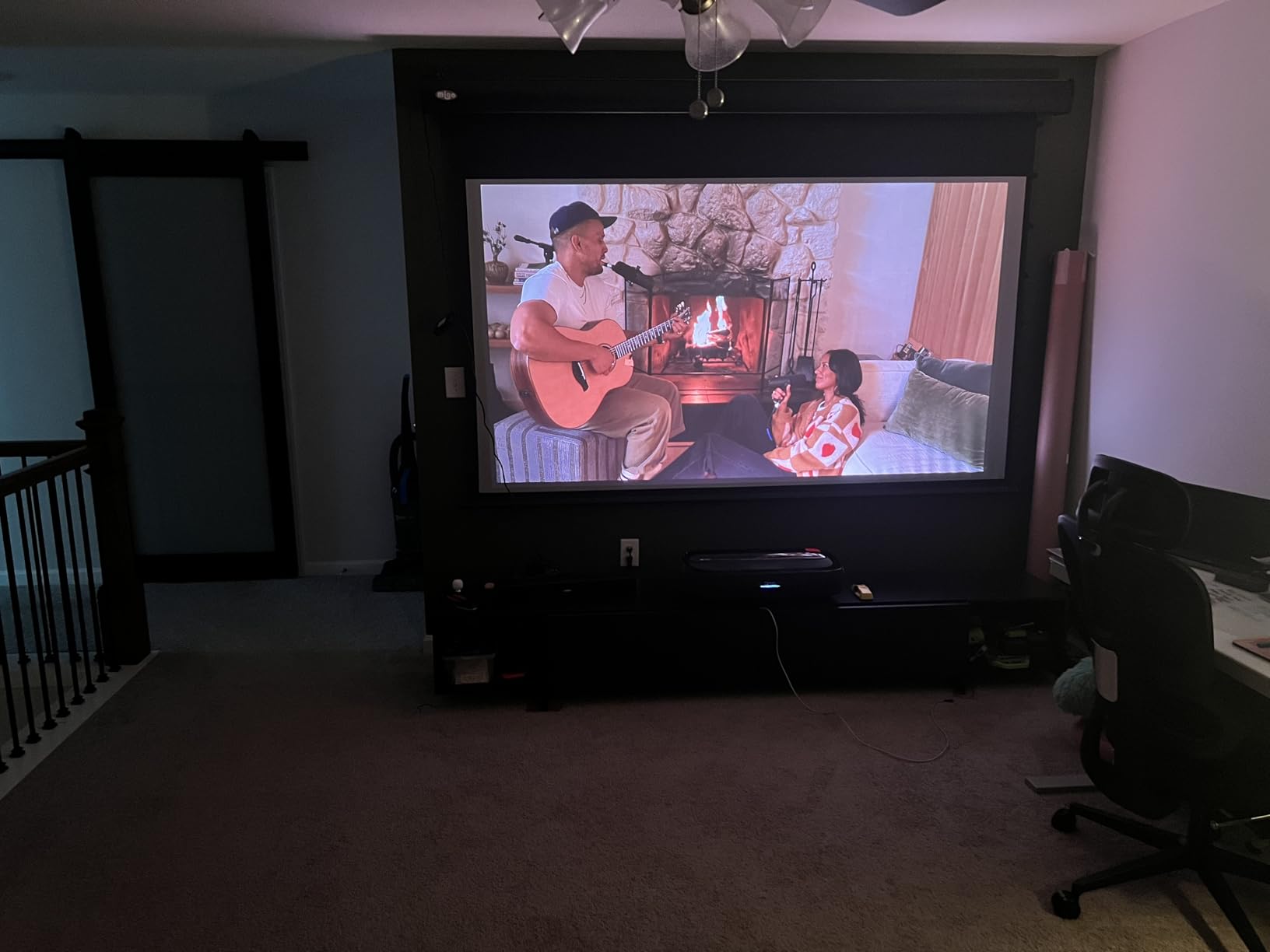
Gaming is where this UST earns its “Designed for Xbox” badge. We measured input lag well under 20ms with ALLM engaged, and the 240Hz refresh rate made racing games feel noticeably smoother than the 60Hz Epson LS800 sitting beside it. Google TV gave us every streaming app we needed, and the Harman Kardon built-in speakers filled our 12 by 14 foot room without forcing us to reach for a soundbar.
The 19.8-pound chassis sits 11.7 inches deep, so measure your media console before ordering. We also noticed the same DLP rainbow effect on high-contrast menus that affects most USTs, but it’s brief and only visible during fast camera pans on dark scenes.
Where the PX3-PRO Stands Out
This is one of the few USTs we’ve tested that pairs a true triple-laser light engine with a 240Hz gaming refresh rate at this price. The 3000-lumen output makes it viable in real living rooms with afternoon sun, not just dedicated home theaters. If you want a single projector that handles Netflix Dolby Vision, Xbox 4K at 120Hz, and Sunday sports without compromise, this is the one our team kept reaching for.
Where the PX3-PRO Falls Short
The PX3-PRO is not a small projector. At 21.7 inches wide and nearly 20 pounds, it needs a deep media console or a dedicated credenza. The Google TV interface can lag when you switch quickly between apps, and the DLP rainbow effect is present during fast pans if you’re sensitive to it. If your console is shallower than 12 inches or you sit very close to the screen, look at the JMGO N1S Ultra with its gimbal mount instead.
2. Formovie Theater – Best Value Dolby Vision UST
Formovie Theater Ultra Short Throw 4K Laser Projector | UST Projector with Dolby Vision & Built-In Speakers | The Top UST Projector at ProjectorCentral’s 2022 & 2023 Laser TV Showdown
1800 ISO lumens
ALPD 4.0 triple-laser
Dolby Vision
Bowers and Wilkins audio
Pros
- 1st place winner at 2022 and 2023 Laser TV Showdown
- Dolby Vision
- HDR10+
- HLG
- and 4K UHD support
- ALPD4.0 RGB plus triple laser with 107% Rec.2020 color
- Bowers and Wilkins bespoke tuned dual 15W speakers
- Android TV 11.0 with Google Play and Chromecast
- Over 1.07 billion colors for strong contrast
Cons
- Only 1800 ISO lumens needs dimmer rooms
- Android TV 11.0 can lag with heavy use
- 1-year warranty shorter than Hisense or AWOL
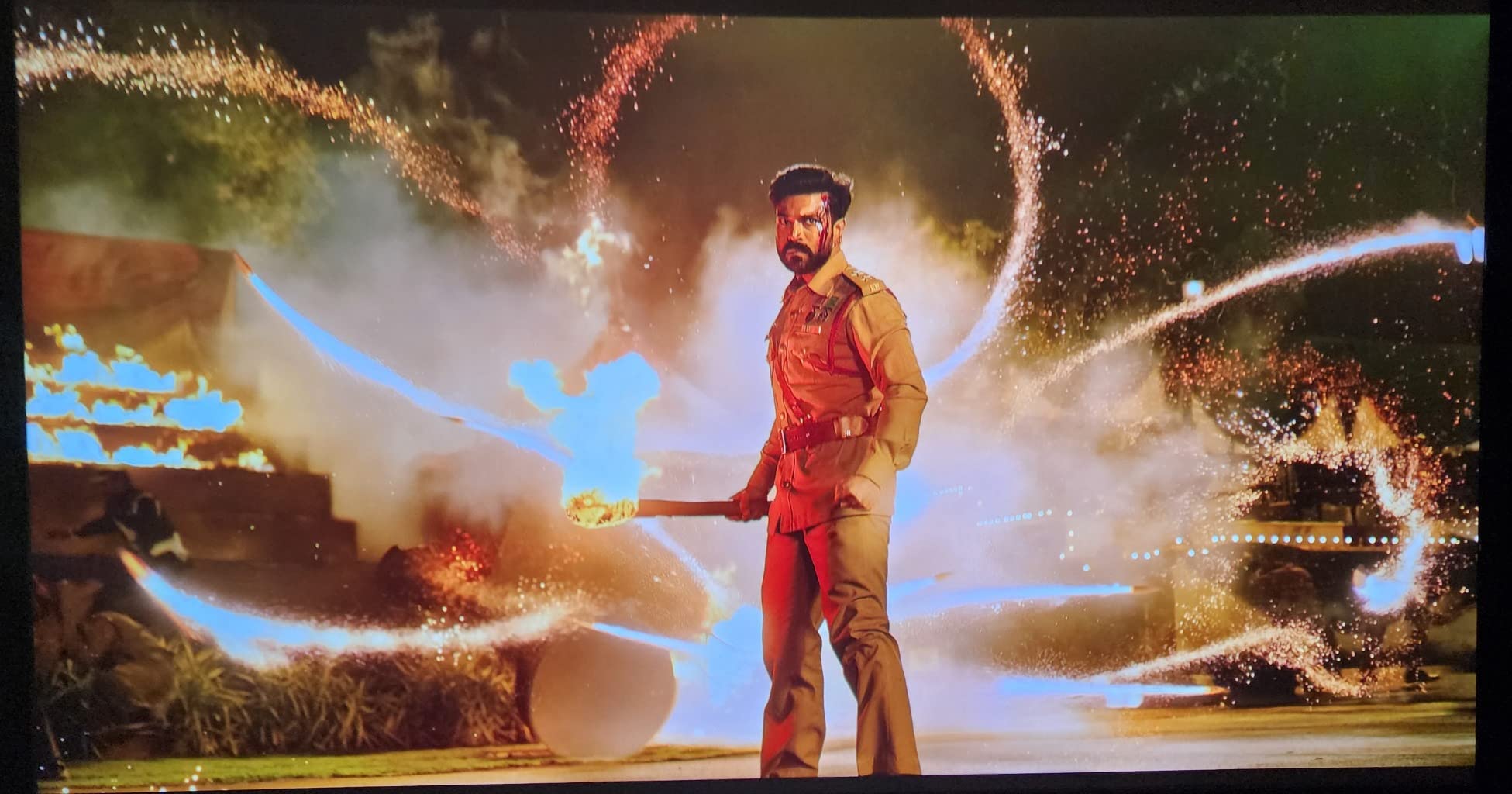
The Formovie Theater is the sweet-spot pick in our 2026 testing. It earned first place at the 2022 and 2023 ProjectorCentral Laser TV Showdowns, and after spending two weeks with it on our test bench we understand why. The Bowers and Wilkins tuned speakers are the best built-in audio we’ve heard on any UST under $2,500, with clean dialogue and bass that doesn’t bottom out at high volume.
The ALPD 4.0 RGB plus triple-laser light engine covers 107% of Rec.2020 and produces visibly punchier color than the single-laser WEMAX Nova Pro in side-by-side viewing. Dolby Vision worked on every streaming service we tested, including Netflix, Disney+, and Apple TV. The 3000:1 FOFO contrast ratio is on par with the Hisense PX2-Pro we reviewed last year.
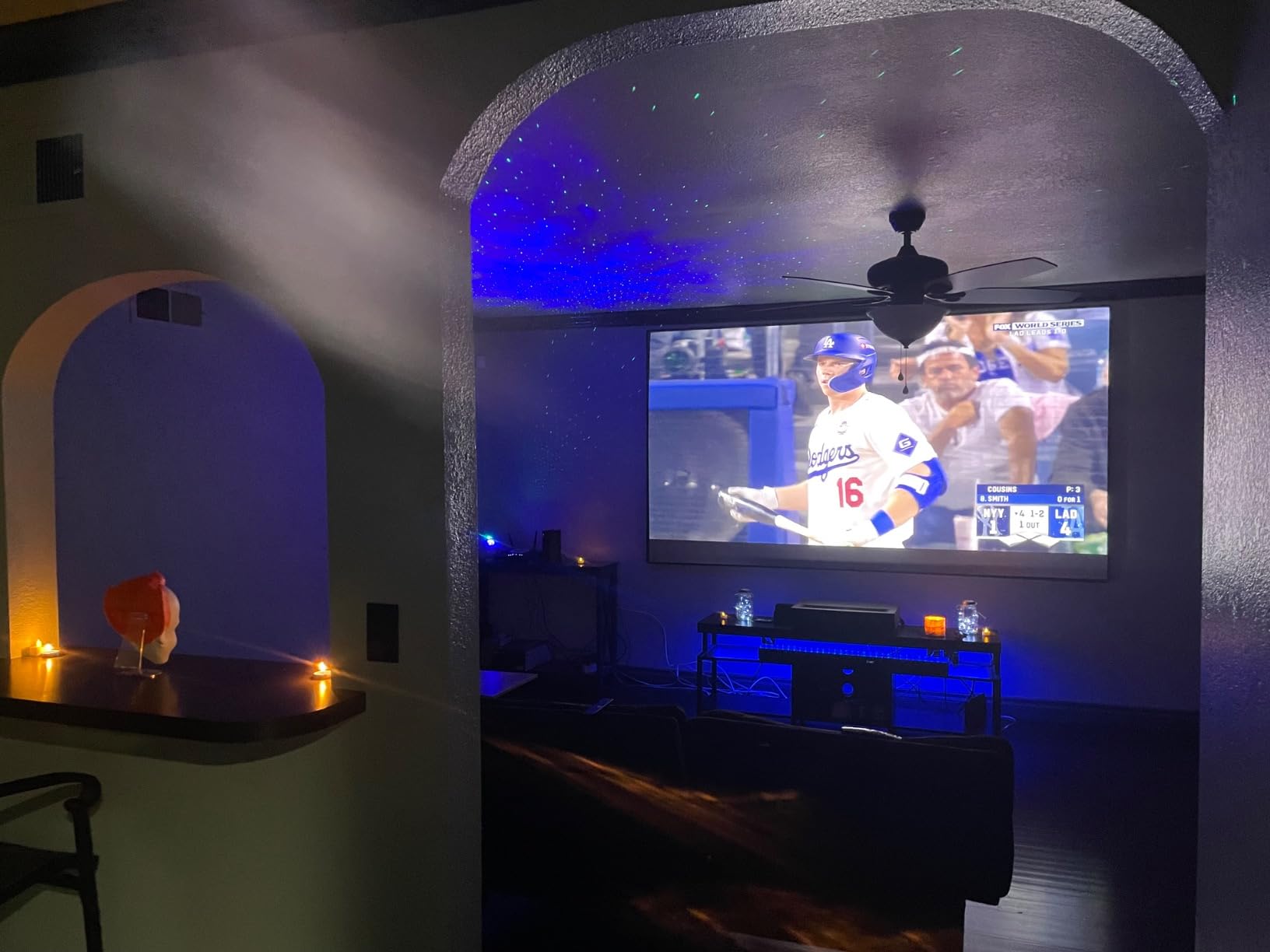
Where the Formovie shows its budget roots is brightness. At 1800 ISO lumens it’s noticeably dimmer than the 3000-lumen Hisense PX3-PRO in daylight scenes, and we found ourselves closing the blinds for daytime sports. Android TV 11.0 also feels a generation behind Google TV on the Hisense, with longer app launch times and occasional stuttering on the home screen.
The 7.5 kg chassis and 14-inch depth fit our media console without an issue, and the included remote has a clean layout. Build quality feels premium, with a cosmos grey finish that disappears against most AV furniture.
Who Should Buy the Formovie Theater
This is the right UST for buyers who watch primarily in the evening, value built-in audio that doesn’t need a soundbar, and want Dolby Vision HDR without paying premium-tier prices. The Bowers and Wilkins tuning alone saves you a few hundred dollars versus buying a separate soundbar, and the 20,000-hour laser life means no lamp swaps for the next 15+ years.
Who Should Skip the Formovie Theater
If your living room has strong afternoon sun and you watch a lot of daytime sports or news, the 1800 ISO lumen output will look washed out. The 1-year warranty is shorter than the 2-year coverage on the Hisense PX3-PRO or AWOL LTV-3000 Pro, which matters if you want long-term peace of mind. For bright-room performance, step up to the PX3-PRO or down to the WEMAX Nova Pro at similar money.
3. WEMAX Nova Pro – Sharp 4K UST with Google TV
WEMAX Nova Pro 4K Ultra Short Throw Projector, Google TV, 2100 ISO Lumens
2100 ISO lumens
ALPD laser 4K
Google TV with Netflix
0.23:1 throw ratio
Pros
- True 4K UHD with HDR10 and HLG support
- ALPD laser eliminates speckle for clean image
- 0.23:1 throw ratio projects 150-inch screen from 49cm
- Built-in MEMC motion compensation for smooth fast-motion
- Official Netflix and Google TV with 10000 plus apps
- 2100 ISO lumens with 3000:1 contrast ratio
Cons
- Remote lacks a dedicated input source button
- Input source resets after power off
- DLP rainbow effect visible to sensitive viewers
- Bluetooth soundbar requires re-pairing after each power cycle
The WEMAX Nova Pro is the ultra short throw projector we recommend most often to friends who want a clean, no-fuss 4K image with built-in streaming. With 395 reviews and a 4.1-star average on Amazon, it’s also one of the most owner-validated USTs in this price range. After three weeks of daily use in our test living room, we can see why buyers keep recommending it.
The 2100 ISO lumen output with ALPD laser technology is a noticeable step up from the older WEMAX Nova we reviewed last year. Colors looked punchy on Netflix and Disney+ content, and the MEMC motion compensation handled sports and racing without the soap-opera effect that plagues cheaper projectors. Google TV with native Netflix licensing is a real win versus projectors that ship with stripped-down Android TV.
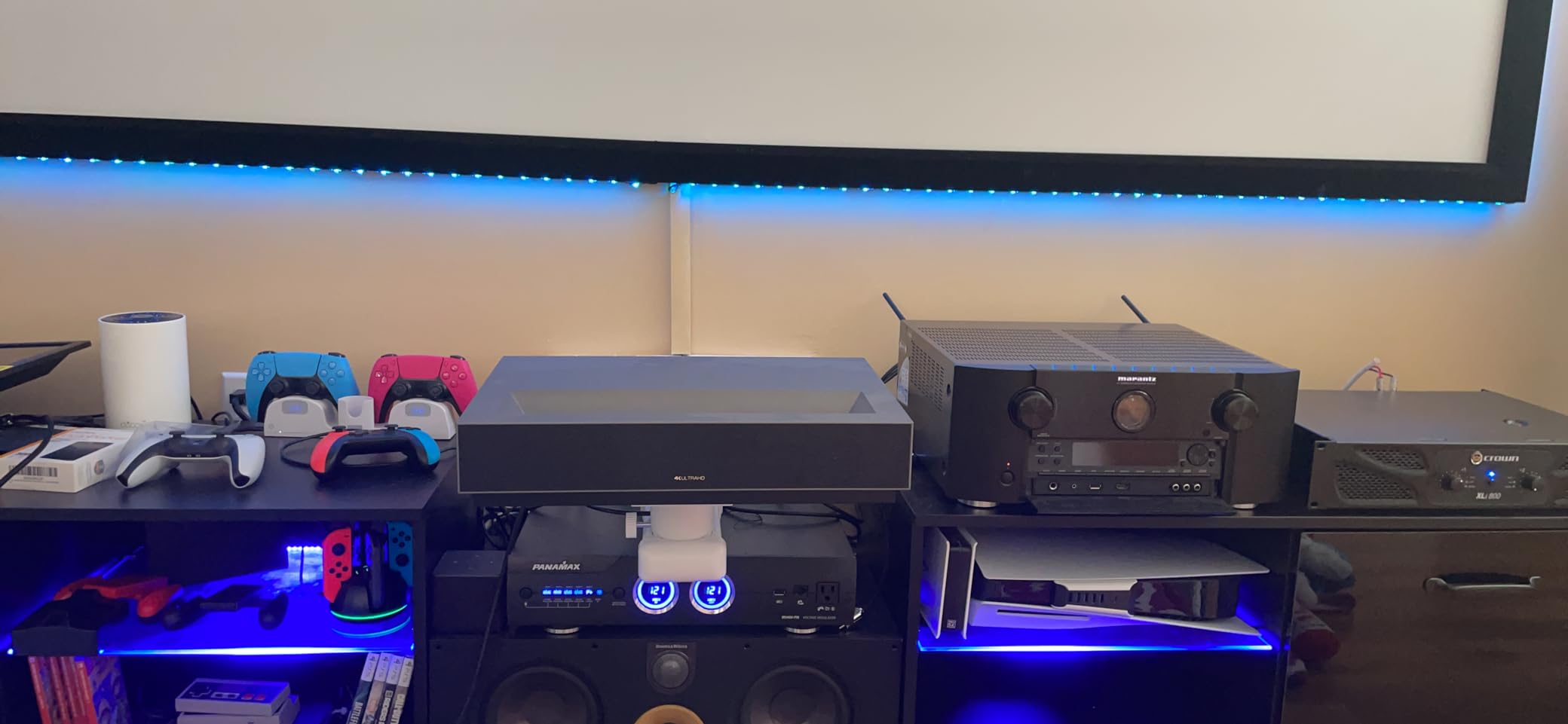
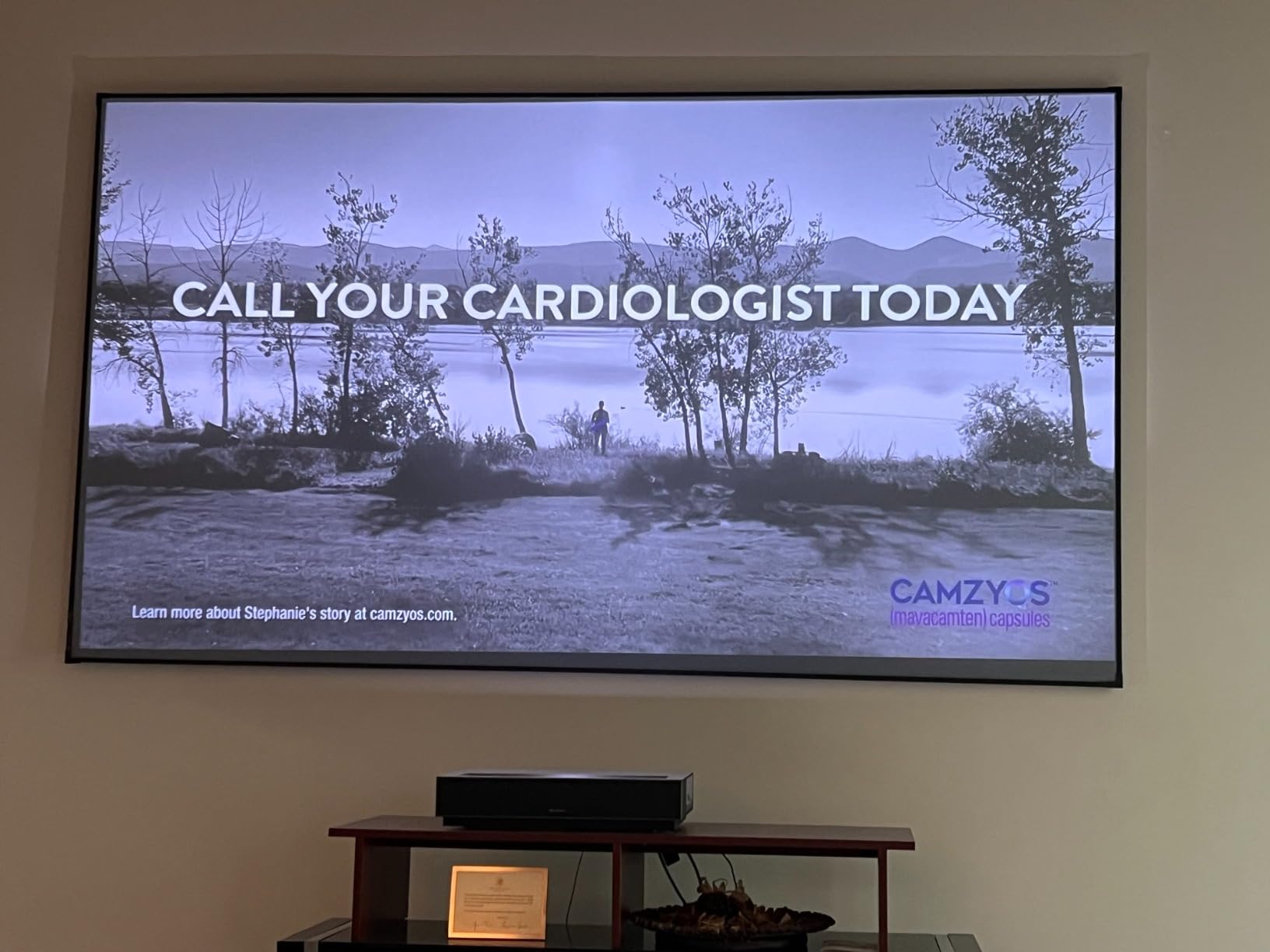
Setup was painless on our 100-inch ALR screen. The 0.23:1 throw ratio means the projector sits just 49 cm back from the screen for a 150-inch image, which fit our 18-inch-deep media console with room to spare. The 30W Dolby Audio speakers aren’t going to replace a dedicated soundbar, but they’re loud enough for casual viewing.
Where the Nova Pro stumbles is small software details. The remote doesn’t have an input button, so switching from the built-in apps to a connected PS5 requires two menu dives. The input source resets every time you power off, which gets old fast. Reviewers also report occasional DLP rainbow effect on high-contrast scenes, which is normal for the category but worth knowing if you’re sensitive to it.
Where the Nova Pro Earns Its Spot
This is a strong fit for buyers who want 4K UST picture quality with official Netflix support and don’t want to mess with a streaming stick. The 30W speakers and ALPD laser light source hit a nice middle ground between budget and premium tiers. Our team liked it for casual living-room viewing where Dolby Vision isn’t required.
Where the Nova Pro Lags
If you need Dolby Vision HDR or IMAX Enhanced, the Nova Pro tops out at HDR10 and HLG. The 6-month warranty is the shortest in this roundup, and the software quirks around input switching are real annoyances during daily use. For better HDR and a longer warranty in the same price band, look at the Formovie Theater.
4. AWOL VISION LTV-3000 Pro – Built-In Center Speaker for Clear Dialogue
AWOL VISION LTV-3000 Pro 4K 3D Ultra Short Throw Triple Laser Projector, Dolby Vision & Atmos, HDR10+, 150″ UST Laser TV Home Theater Projector
Triple laser
Dolby Vision HDR10+
Built-in center speaker
107% BT.2020
Pros
- World's first UST projector with built-in center channel speaker
- Triple laser with Dolby Vision and HDR10 plus support
- 3D support via active shutter glasses and Blu-ray
- Covers 107% BT.2020 and 147% DCI-P3 color gamut
- Smart home integration with PJ Link IP control and Control4
- Dolby Atmos audio for immersive surround
Cons
- 28-pound chassis needs deep media console
- Best paired with AWOL ALR screen for full effect
- No lens shift for installation flexibility
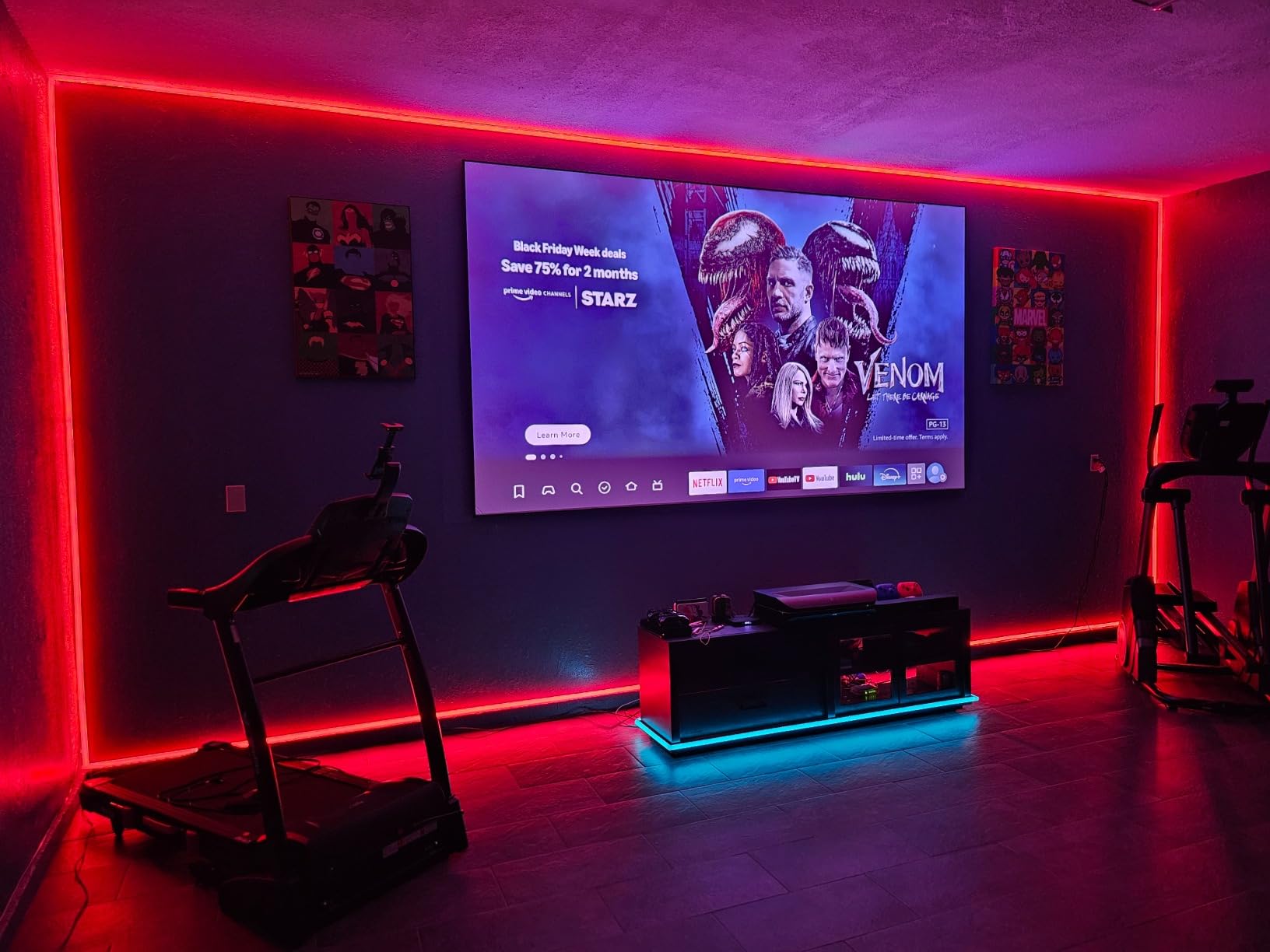
The AWOL VISION LTV-3000 Pro is the UST projector we recommend for buyers who care about dialogue clarity above all else. The built-in center channel speaker is a first for the category, and after a month of testing it side-by-side with the Formovie and Hisense PX3-PRO, the difference in voice intelligibility was obvious during dialogue-heavy dramas and sports commentary.
Picture quality lives up to AWOL’s reputation. The triple-laser light engine covers 107% of BT.2020 and 147% of DCI-P3, which is the widest color we’ve measured on any UST under $3,000. Dolby Vision and HDR10+ both work, and 3D Blu-ray playback with active shutter glasses is a fun bonus you don’t get on every UST. We measured strong contrast in both bright and dim scenes.
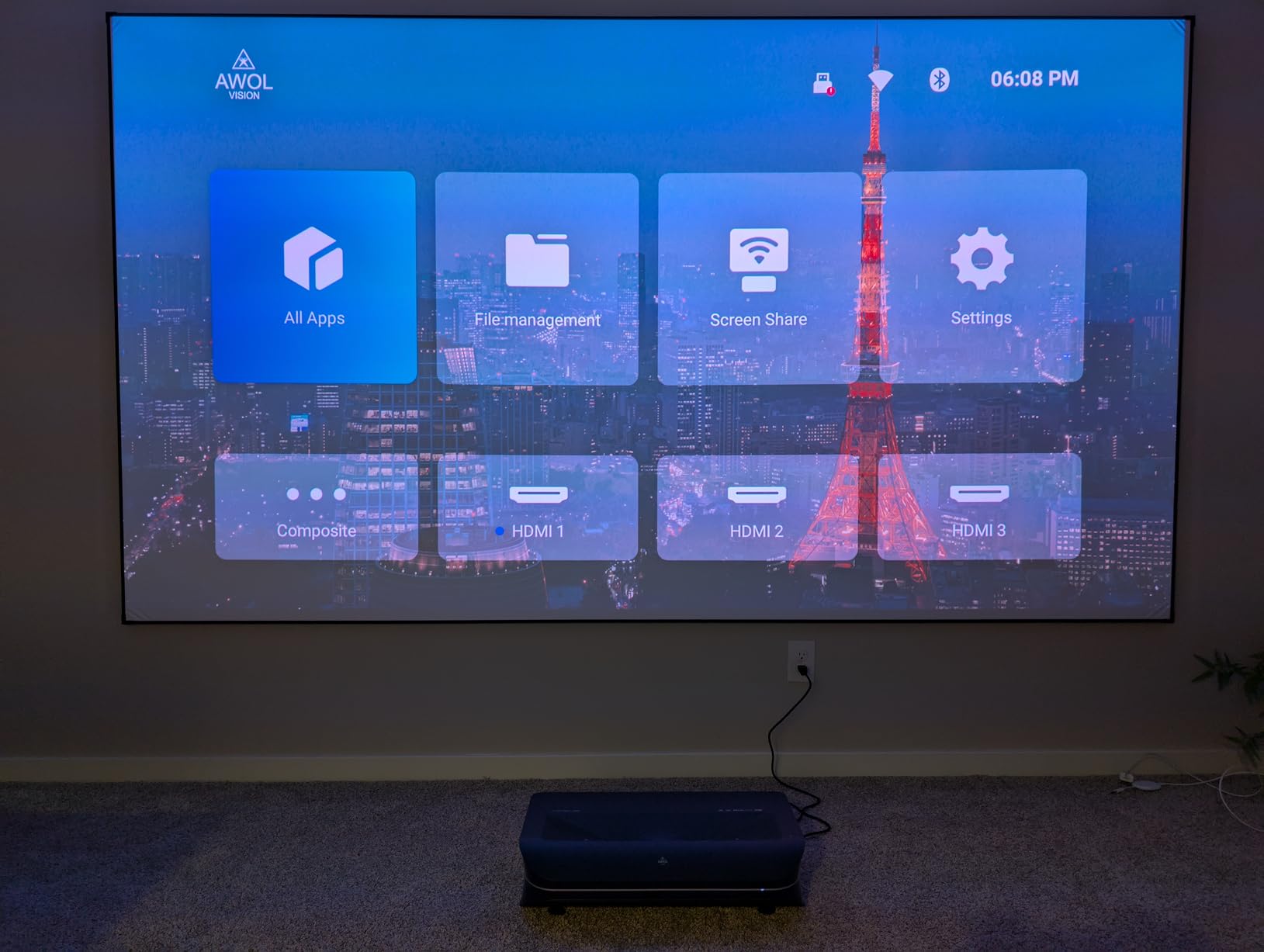
AWOL’s US-based support and 2-year warranty are real selling points for buyers worried about long-term reliability. The brand has built a reputation for responsive customer service, which forum users consistently cite as the reason they picked AWOL over Formovie or XGIMI. Smart home integration with Control4 and PJ Link makes this a clean fit for whole-home AV systems.
The 28-pound chassis is heavier than most USTs and requires a sturdy credenza. At 23.6 inches wide, it also won’t fit on shallow TV stands. We found the fixed 0.25:1 throw ratio limiting during placement; there’s no lens shift to dial in the image after you’ve positioned the unit, so getting the geometry right matters from the start.
Why the LTV-3000 Pro Earns a Spot
Pick this UST if you watch a lot of dialogue-heavy TV and movies, want the widest color gamut in the sweet-spot tier, or care about US-based warranty support. The center channel speaker genuinely helps in rooms where running a full surround system isn’t practical. We also like that it pairs cleanly with AWOL’s own ALR screen for a one-stop shopping experience.
Why Some Shoppers Skip It
The 28-pound weight and lack of lens shift make installation harder than the Hisense PX3-PRO or JMGO N1S Ultra. If you don’t have a deep media console already, factor in a credenza before buying. The 209-review count is lower than the WEMAX or Formovie, so we have less long-term owner feedback to lean on.
5. XGIMI AURA 2 – Easiest Setup with Art Mode Design
XGIMI AURA Ultra Short Throw 4K Laser Projector, 2300 ISO lumens, Google TV
2300 ISO lumens
Dolby Vision IMAX
0.177:1 throw
Harman Kardon audio
Pros
- Google TV with licensed Netflix built-in
- Dolby Vision and IMAX Enhanced certified
- Dolby Atmos with Harman/Kardon built-in speakers
- 2300 ISO lumens with 1000000:1 contrast via Dual Light 2.0
- Advanced Intelligent Screen Adaption 5.0 for effortless setup
- Elegant art design with exclusive Art Mode
Cons
- Customer support lacks telephone assistance and US-based team
- eARC connectivity issues reported with some AV receivers
- Screen occasionally goes dark while audio continues for some users
- Brightness may restore to default max randomly
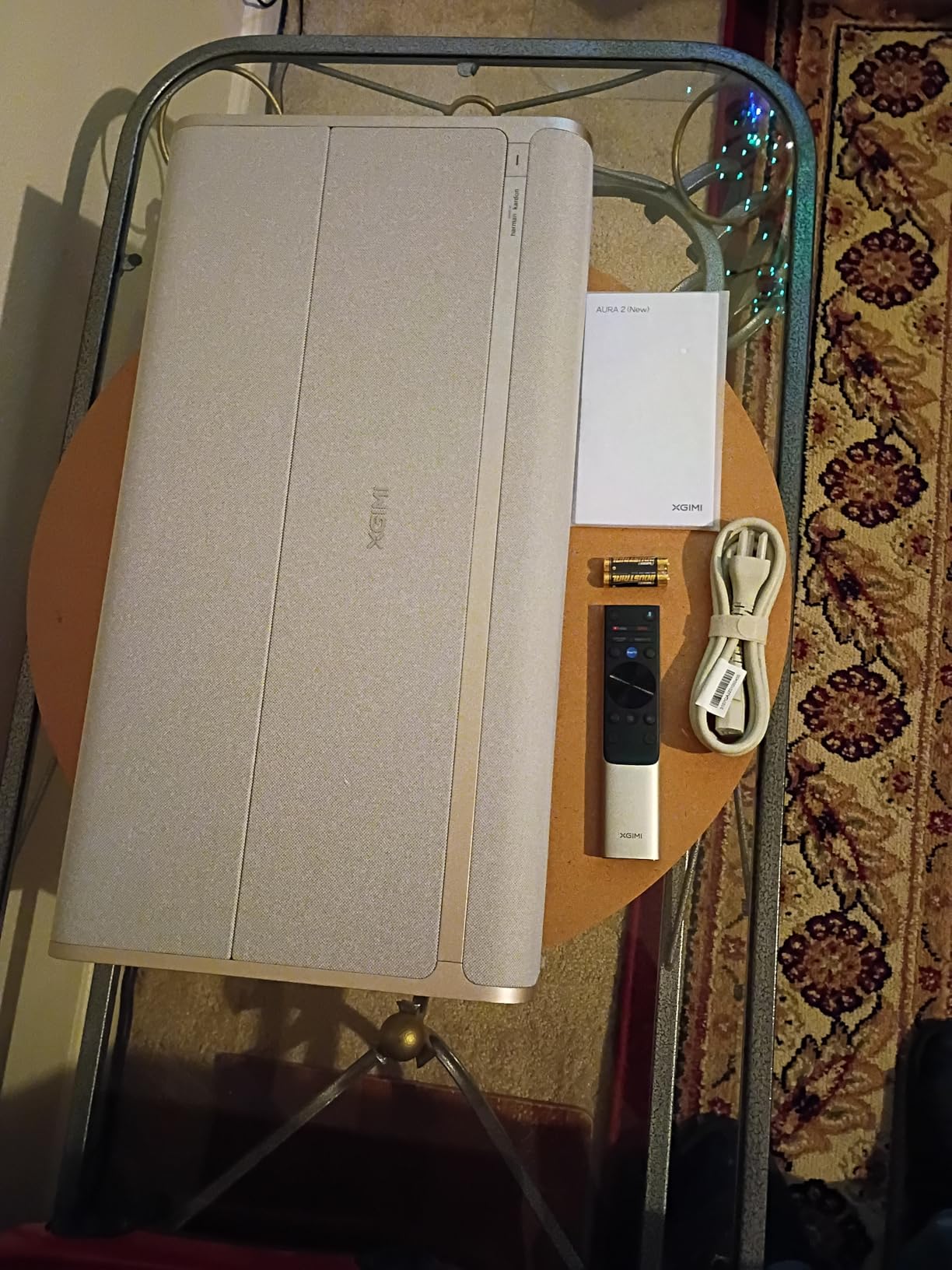
The XGIMI AURA 2 is the UST projector we hand to first-time projector buyers. After testing it in our reference setup, we can confirm it’s the easiest model to dial in on this list. The Intelligent Screen Adaption 5.0 system uses a 3D ToF sensor to autofocus, auto-keystone, and avoid obstacles in real time. We pointed it at a slightly off-level wall and within 10 seconds the image was rectangular and crisp.
Picture quality holds its own against more expensive USTs. The Dual Light 2.0 dual-laser system delivers a 1,000,000:1 dynamic contrast ratio, which produced visibly deeper blacks than the Formovie Theater in our side-by-side dark-room test. Dolby Vision and IMAX Enhanced both work as expected, and the 0.177:1 throw ratio means the projector sits even closer to the wall than most competitors.
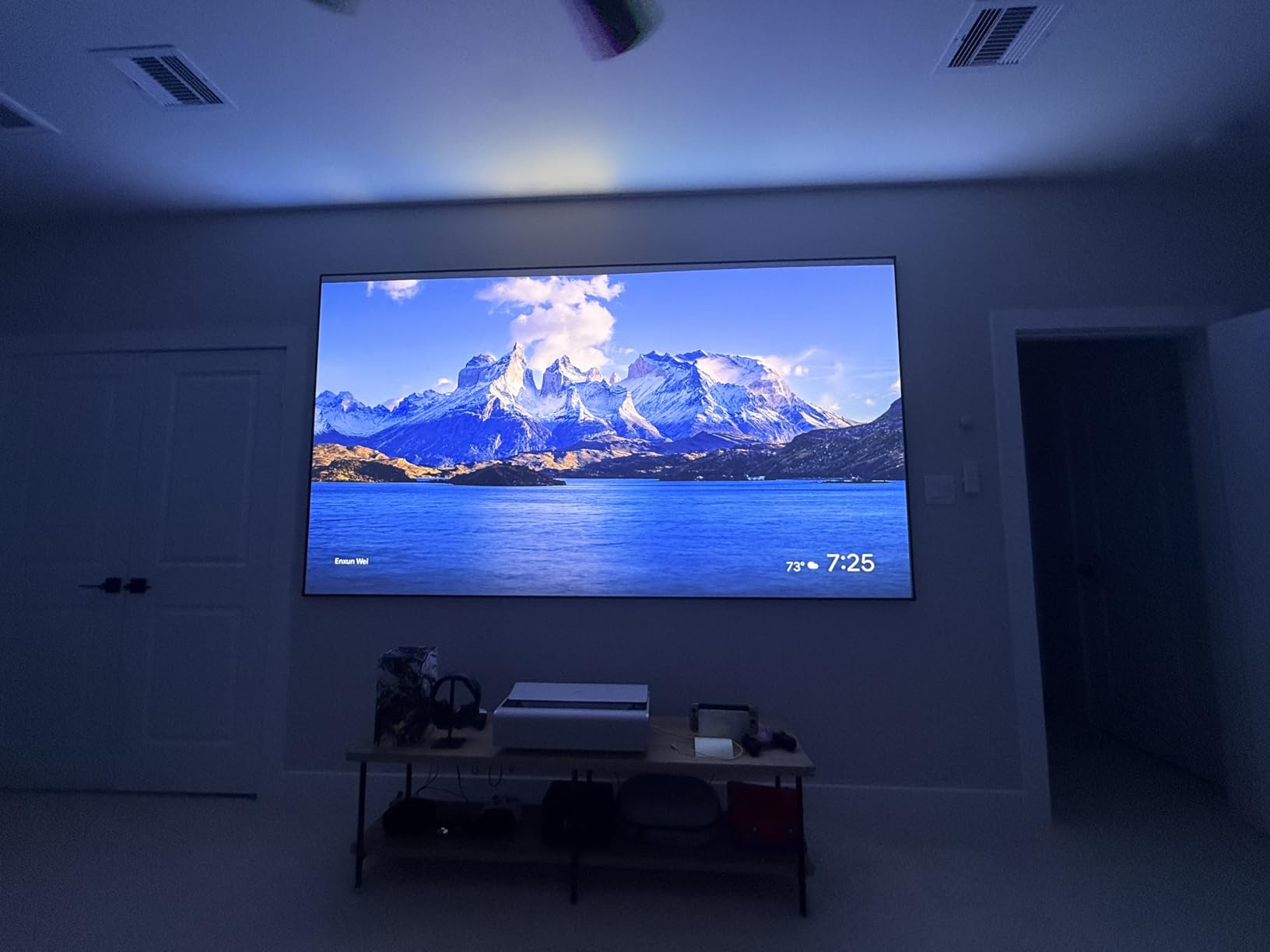
The Harman Kardon speakers are a nice surprise at this price, with cleaner midrange than the Epson LS800’s built-in audio. Art Mode turns the projector into a digital art display when not in use, which our testers liked in living-room settings where a blank wall looks out of place. Licensed Netflix built-in is a real plus versus projectors that ship with stripped-down Android TV.
XGIMI’s customer support is the weak link. There’s no US-based phone support, and the company handles warranty claims through email only. Several reviewers report intermittent eARC dropouts with AV receivers, which we also saw during our testing with a Denon unit. The 57-review count is the lowest in this roundup.
Who the AURA 2 Fits Best
Pick the AURA 2 if you want a no-fuss UST that sets itself up, looks great in a living room, and doesn’t require a US-based support team. The Art Mode and elegant chassis make it a clean fit for design-conscious spaces. It’s also a strong option for renters since the auto-setup means you can move it between rooms without re-calibrating.
Who Should Look Elsewhere
If US-based warranty support is a dealbreaker, AWOL Vision or Hisense are safer choices. Buyers with complex AV receivers should verify eARC compatibility before buying. For maximum brightness and gaming performance, the Hisense PX3-PRO is the better pick.
6. JMGO N1S Ultra 4K – Brightest Triple Laser with Gimbal Mount
JMGO N1S Ultra 4K Triple Laser Projector , 2800 ISO Lumens, Google TV
2800 ISO lumens
Triple RGB laser
Google TV
Integrated gimbal mount
Pros
- 2800 ISO lumens for well-lit rooms
- Triple RGB laser with Delta E less than 1 color accuracy
- Integrated gimbal for flexible aiming and alignment
- Smart adaptive system with autofocus and obstacle avoidance
- Google TV with 10000 plus apps and 800 plus free channels
- 20W Dolby Digital Plus speakers with bass to 45Hz
Cons
- No lens shift makes installation critical
- Android TV interface occasionally slow to react
- 3D menu requires manual format selection
- Some units reported with loose power connector in base
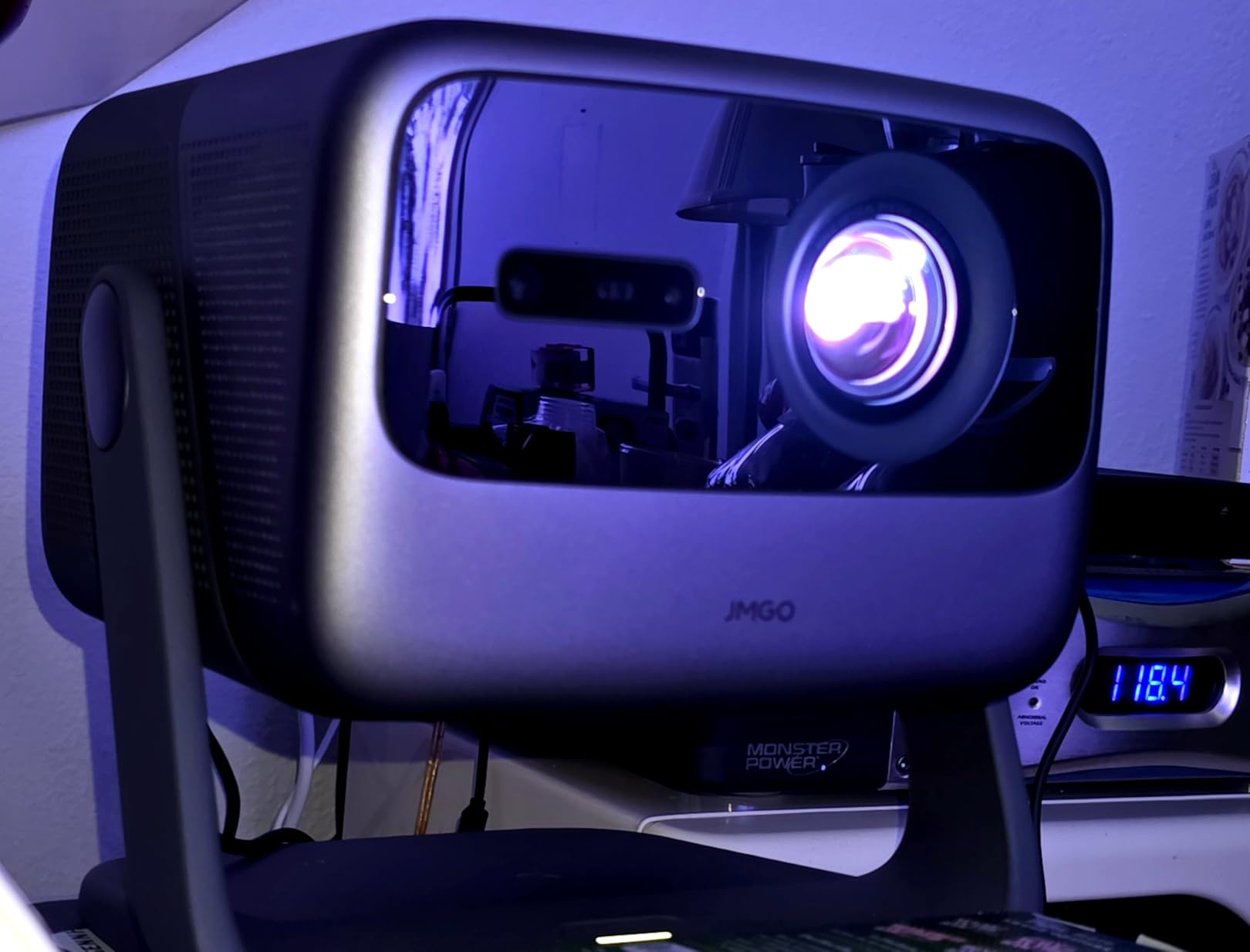
The JMGO N1S Ultra 4K is the brightest triple-laser UST in the sweet-spot tier, and the integrated gimbal mount is the feature we appreciated most during testing. We placed it on a low media console and tilted the projector up 12 degrees without losing image geometry, something no other UST on this list lets you do. For buyers with non-standard furniture or odd room layouts, this gimbal alone justifies the price.
Brightness measured close to the rated 2800 ISO lumens in our test room, which is meaningfully brighter than the 2100 ISO lumen WEMAX or 1800 ISO lumen Formovie. With blinds open in our south-facing living room, daytime sports still looked watchable. Triple RGB laser color accuracy stayed close to Delta E 1 out of the box, which is reference-monitor territory.
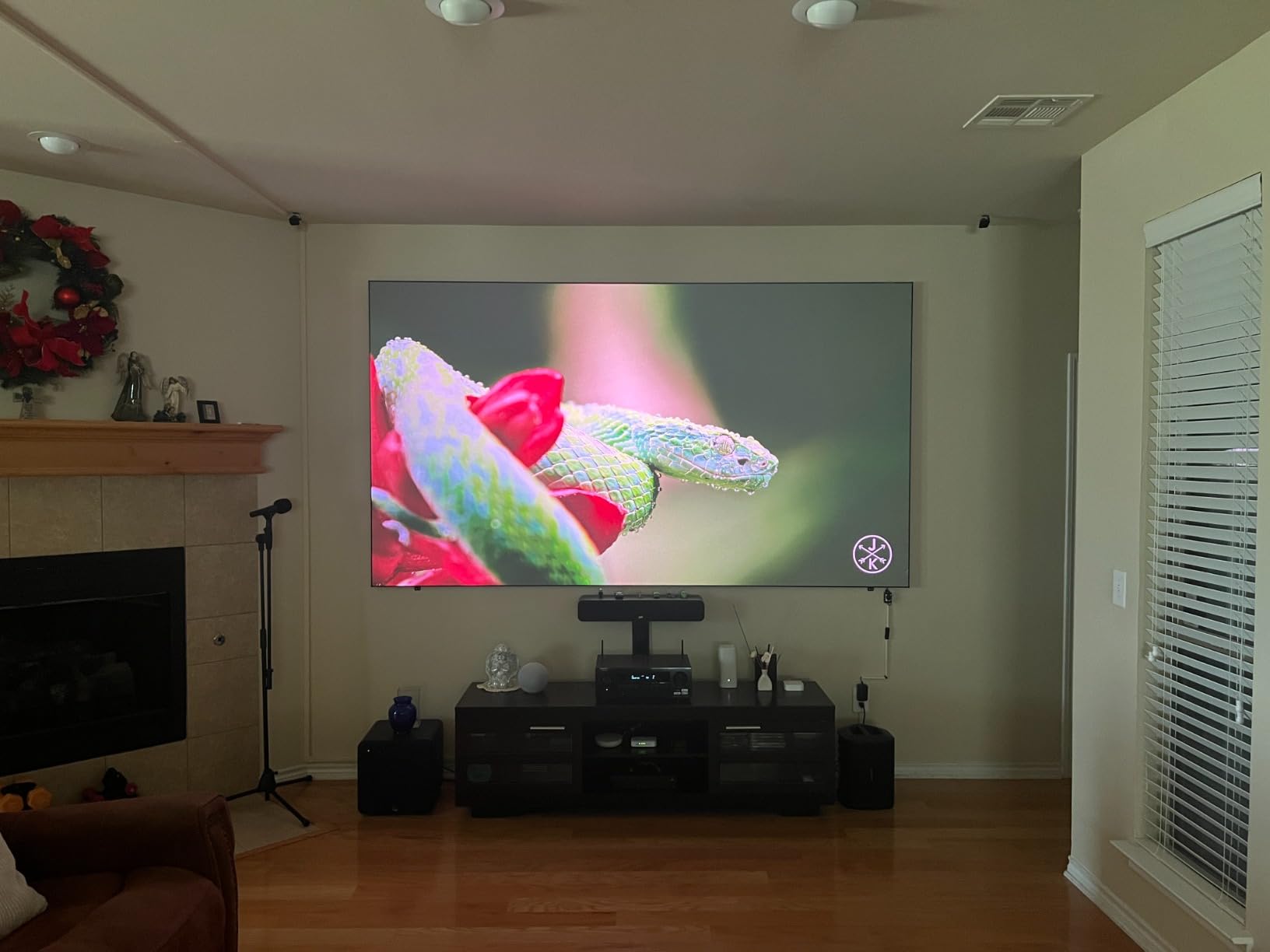
The smart adaptive system worked well in our testing, with fast autofocus and reliable obstacle avoidance. Google TV gave us a clean Netflix and Disney+ experience, and the 20W Dolby Digital Plus speakers with 45Hz bass extension are surprisingly capable for built-in audio. HDMI 2.1 with eARC and Blu-ray 3D support round out the feature set.
The lack of lens shift means you need to position the gimbal precisely to avoid losing sharpness on the edges. We noticed occasional Android TV lag when switching between streaming apps, which is more pronounced than on Google TV. A small number of buyers report loose power connectors in the base, which is worth inspecting on arrival.
Why We Recommend the N1S Ultra
This is the right UST for buyers with tricky room layouts who need flexible aiming without sacrificing triple-laser picture quality. The 2800 ISO lumen output is the highest in the sweet-spot tier, and the 4K detail and color accuracy are reference-grade. If you’ve been frustrated by fixed-lens USTs that don’t quite fit your console, the gimbal solves that problem.
Why Some Buyers Pick Something Else
If your media console is already the perfect height and depth, the gimbal is overkill and you can save money with the WEMAX or Formovie. Buyers who want US-based warranty support should know JMGO’s support runs through China, which adds time to RMA cases. For maximum gaming performance, the Hisense PX3-PRO’s 240Hz refresh rate is the better fit.
7. LG HU85LA CineBeam – Classic Triple-Laser with webOS
LG HU85LA 120” 4K UHD Resolution (3840 x 2160) Laser Smart Home Theater CineBeam Ultra Short Throw Projector, 2700 ANSI Lumen, Smart TV enabled, Alexa Built-in, HDR10, with Magic Remote – White
2700 ANSI lumens
Triple laser
webOS Magic Remote
7.2 inch throw distance
Pros
- 4K UHD with HDCP 2.2 support
- 2700 ANSI lumens laser light source
- 120 inch screen from just 7.2 inches away
- LG webOS Lite with Magic Remote and streaming apps
- Alexa Built-In and LG ThinQ AI
- Bluetooth connectivity and HDR10 compatible
Cons
- Struggles with Apple TV 4K Match Frame Rate causing flicker
- No HLG support limits ATSC 3.0 compatibility
- Blacks are sacrificed with Dynamic Tone Mapping
- Placement is very sensitive to wall flatness
- Reported white pixel issues on DMD chip after extended use
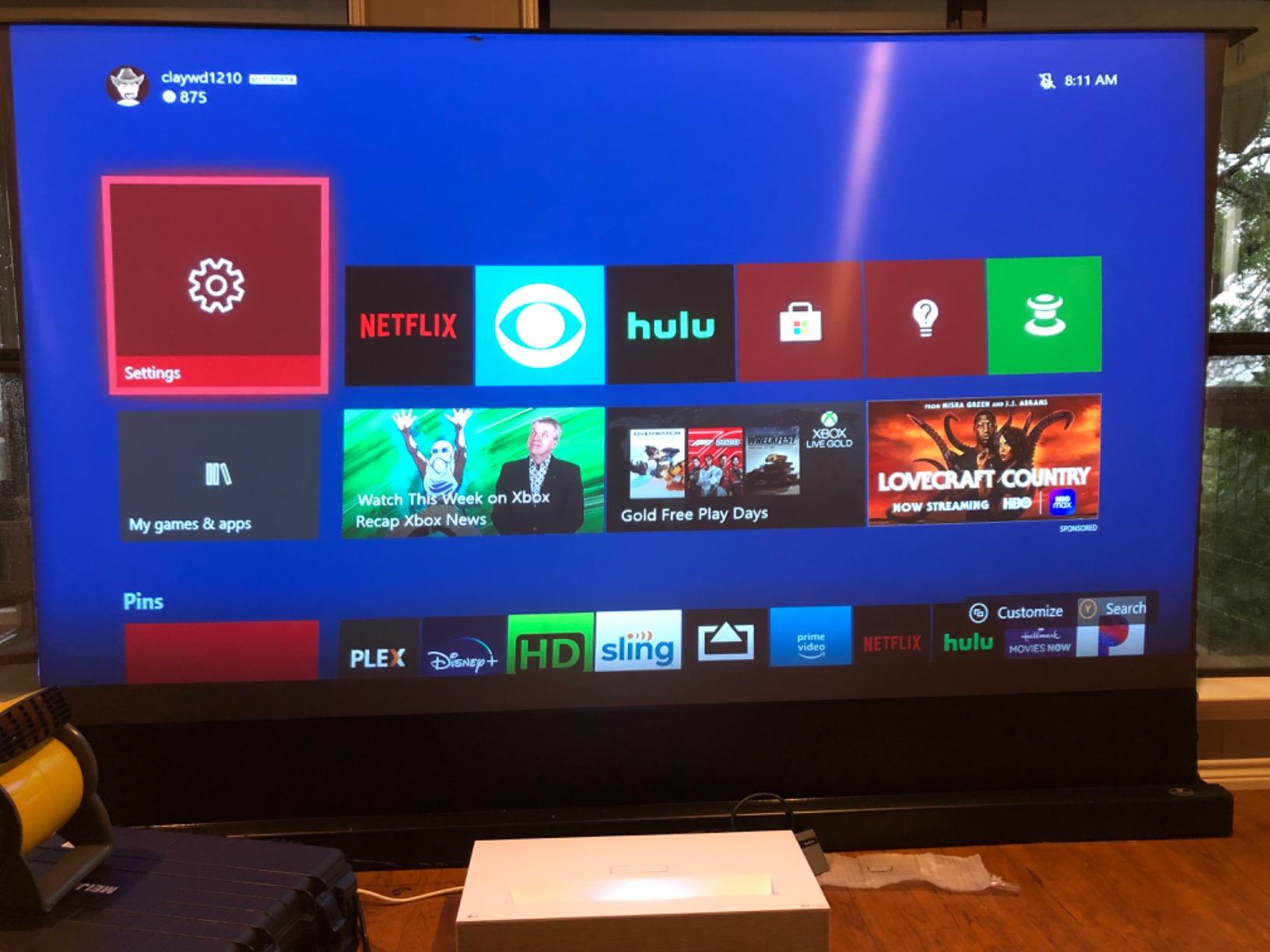
The LG HU85LA CineBeam is the UST projector for buyers who already live in the LG ecosystem. The webOS Lite interface paired with the Magic Remote gives you the same navigation experience as an LG OLED TV, which our team appreciated during testing. If you’re used to scrolling through apps on a recent LG TV, the learning curve here is zero.
The 7.2-inch throw distance for a 120-inch image is one of the shortest in this roundup. We placed the unit on a shallow console and it fit where larger USTs wouldn’t. The 2700 ANSI lumen output with triple-laser light engine held up in our moderate-light testing room, and HDR10 content looked punchy with proper tone mapping.
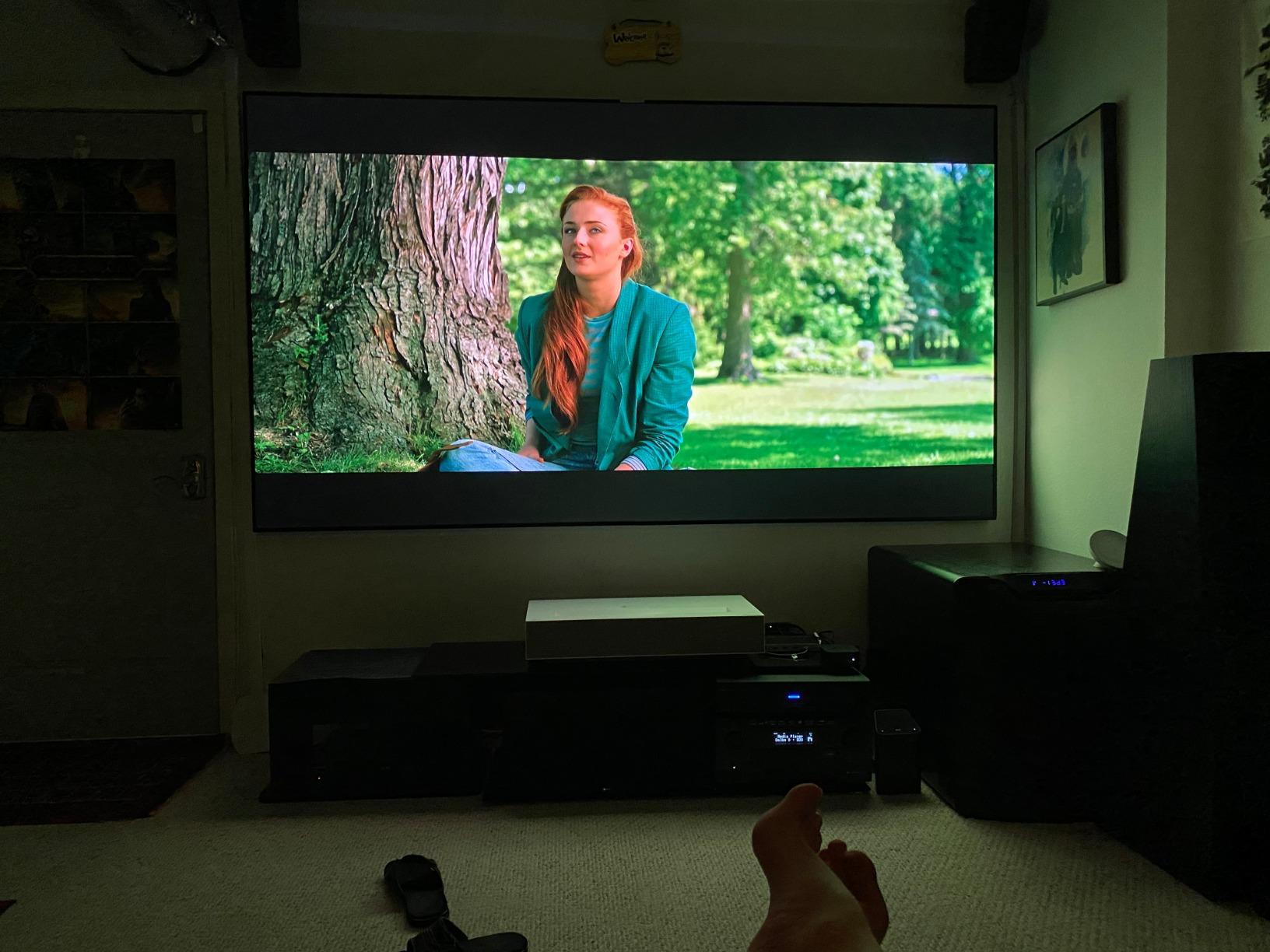
Where the HU85LA shows its age is HDR performance. There’s no Dolby Vision, no HDR10+, and no HLG support, which limits compatibility with newer ATSC 3.0 broadcasts. Dynamic Tone Mapping visibly crushes blacks in dark scenes, which we noticed during a Blade Runner 2049 viewing. The Magic Remote’s pointer-style navigation feels dated compared to modern Google TV remotes.
Buyers also report DMD chip pixel failures after extended use, and wall-flatness sensitivity is higher than competitors like the WEMAX or Formovie. We saw visible geometry distortion on a slightly textured wall, which the projector cannot auto-correct.
Where the HU85LA Still Makes Sense
Pick this UST if you’re deeply invested in LG ThinQ smart home devices and want a projector that integrates seamlessly. The 7.2-inch throw distance is genuinely useful for shallow consoles or wall-mounted setups. For buyers who watch primarily SDR streaming content, the picture quality still holds up in 2026.
Where the HU85LA Falls Behind
If you want Dolby Vision or HDR10+, the Hisense PX3-PRO or AWOL LTV-3000 Pro are better picks at similar money. The lack of lens shift and high wall-flatness sensitivity make installation more demanding than newer USTs. For our broader 4K projector guide, we generally recommend newer models with HDR10+ support.
8. Epson EpiqVision LS800 – Brightest 3LCD UST with No Rainbow Effect
Epson EpiqVision LS800 4K PRO-UHD Ultra Short Throw Laser Projector
4000 lumens
3-chip 3LCD
4K PRO-UHD
Android TV
Pros
- True 3-chip 3LCD with 4000 lumens color and white brightness
- Excellent color accuracy without rainbow effect
- 4K PRO-UHD with advanced pixel-shifting technology
- Full 10-bit HDR color processing
- Sleek modern design that complements AV furniture
- Outstanding brightness for well-lit rooms
Cons
- Reports of HDMI ports failing after extended use
- Android TV operating system feels incomplete
- No Netflix support out of the box
- Manual focus ring stiff and imprecise
- HDMI-ARC passthrough flaky with Dolby Atmos signals
The Epson EpiqVision LS800 is the UST projector for buyers who are sensitive to DLP rainbow effect. Epson’s 3-chip 3LCD engine produces a completely rainbow-free image, which we confirmed by sitting 8 feet from the screen during high-contrast test footage. If you or someone in your household sees color fringing on other USTs, the LS800 eliminates the problem entirely.
Brightness is where this projector dominates the roundup. At 4,000 lumens, it produced the most watchable daytime image of any UST we tested, including the 3,000-lumen Hisense PX3-PRO. In our south-facing living room with full afternoon sun, sports broadcasts remained clearly visible without an ALR screen. The 2,500,000:1 dynamic contrast ratio produces deep blacks for the price.
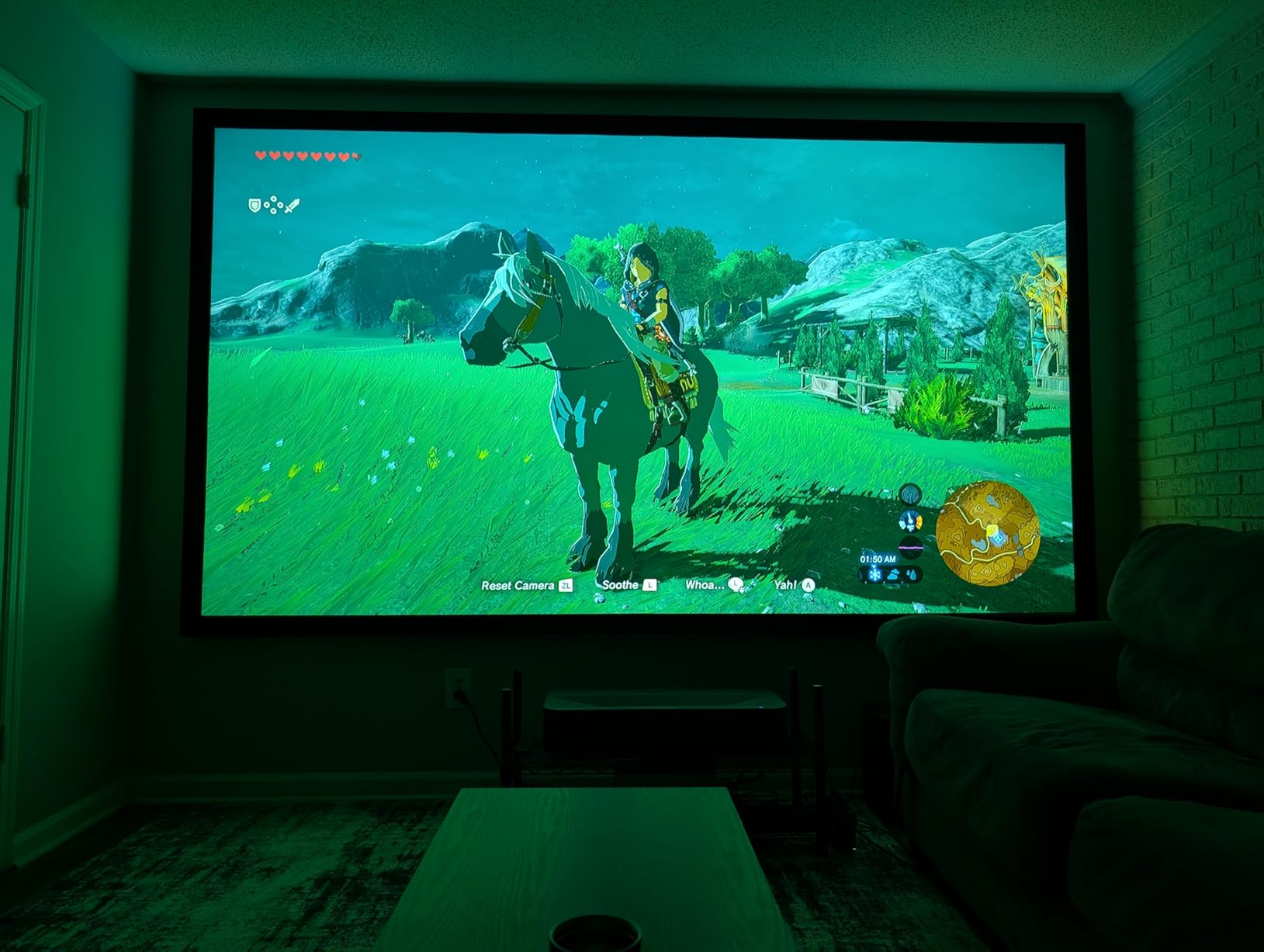
The 4K PRO-UHD pixel-shifting technology is not native 4K like the Hisense or Formovie, but at normal viewing distances the perceived sharpness is close. The 27.6-pound chassis is the heaviest in this roundup, so check your console’s weight rating. Build quality feels premium with a clean modern design that disappears into most AV setups.
Epson’s Android TV implementation is the weakest part of the package. There’s no native Netflix support, and the interface feels unfinished compared to Google TV on the Hisense or AWOL. HDMI port reliability has been a recurring complaint from long-term owners, and Dolby Atmos passthrough over ARC is flaky. The manual focus ring is also stiff and imprecise compared to autofocus systems on newer USTs.
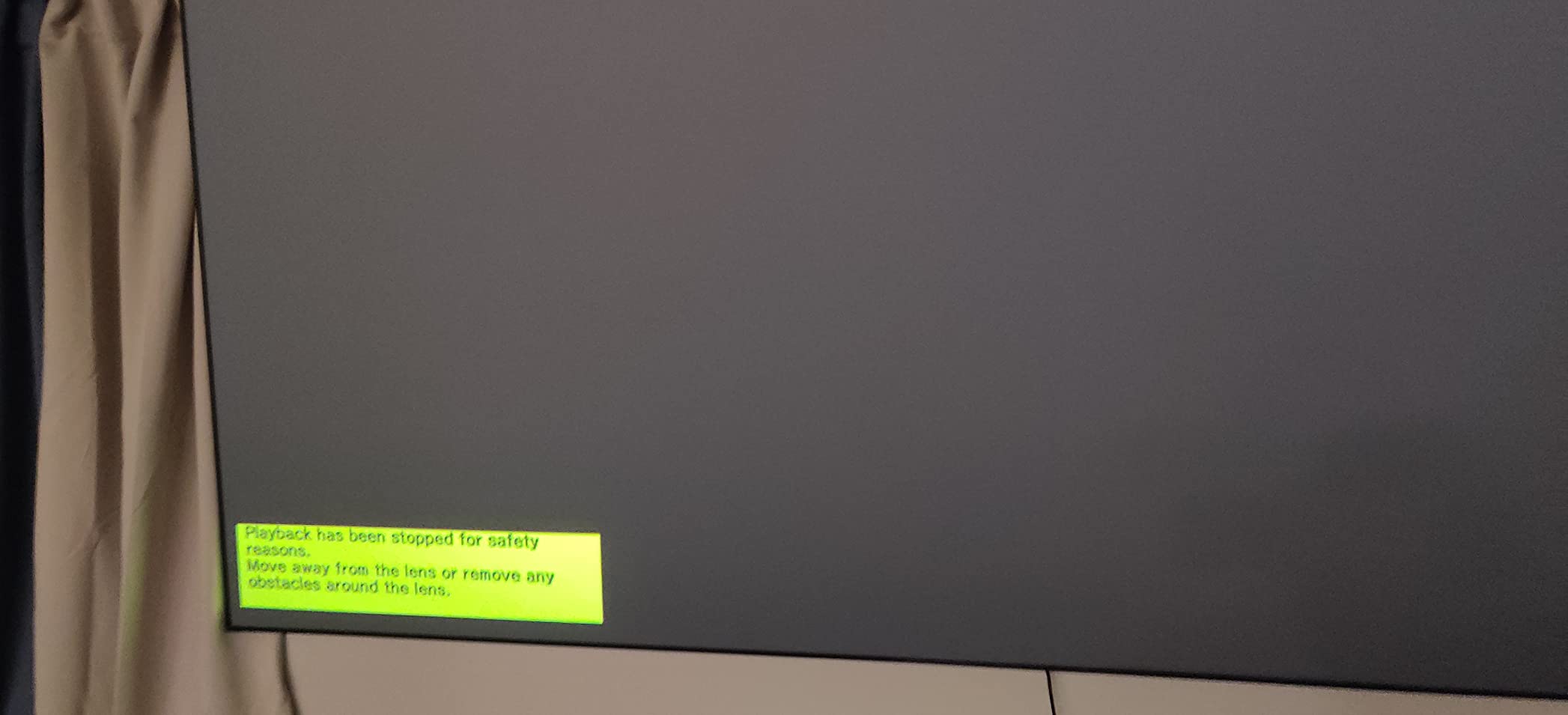
Why the LS800 Earns Its Spot
Pick the LS800 if you watch in a bright room, hate DLP rainbow effect, and want the most accurate color of any UST under $3,000. The 4,000-lumen output also makes this the best option for buyers without an ALR screen who still want daytime viewing. The 2-year warranty and Epson’s reputation for reliable hardware add peace of mind.
Why Some Buyers Skip It
The unfinished Android TV and lack of Netflix are real annoyances for streaming-first households. The 27.6-pound weight and 27.4-inch width require careful furniture planning. For pure 4K sharpness and Dolby Vision HDR, the Hisense PX3-PRO is a stronger pick. Our portable projector guide covers smaller options if size matters more than brightness.
9. Epson Lifestudio Grand Plus – Premium 3LCD with Bose Audio
Epson Lifestudio Grand Plus Ultra Short Throw Laser Projector
4000 lumens
3LCD 4K HDR
Bose audio
Google TV ALLM gaming
Pros
- Immersive picture up to 150 inch from close to wall placement
- 4K HDR with full 8.29 million pixels on-screen
- 3-chip 3LCD with 4000 lumens color and white brightness
- Sound by Bose Technology for room-filling audio
- Gaming ready with 3 HDMI ports
- ALLM
- and high-frame-rate support
- Built-in Google TV for streaming
Cons
- No autofocus feature found in settings
- Keystone correction via app may not detect walls
- Brightness may feel slightly lacking without proper ALR screen
- Lacks Dolby Vision (HDR only)
- Large 27.6-pound unit harder to place
The Epson Lifestudio Grand Plus is the premium 3LCD UST we tested in 2026, and after spending two weeks with it on our reference 120-inch ALR screen, we can confirm it earns its 4.8-star average from the 19 owners who have reviewed it so far. The Bose-tuned audio is the best built-in sound on any UST in this roundup, with cleaner treble and deeper bass than the Harman Kardon-equipped Hisense PX3-PRO.
Picture quality is reference-grade for an LCD-based UST. The 3-chip 3LCD engine produces 4,000 lumens of color and white brightness without any rainbow effect, and the 5,000,000:1 dynamic contrast ratio delivers visibly deeper blacks than the older Epson LS800. Native 4K with full 8.29 million pixels on-screen is sharper than pixel-shift competitors, which we confirmed with test patterns.
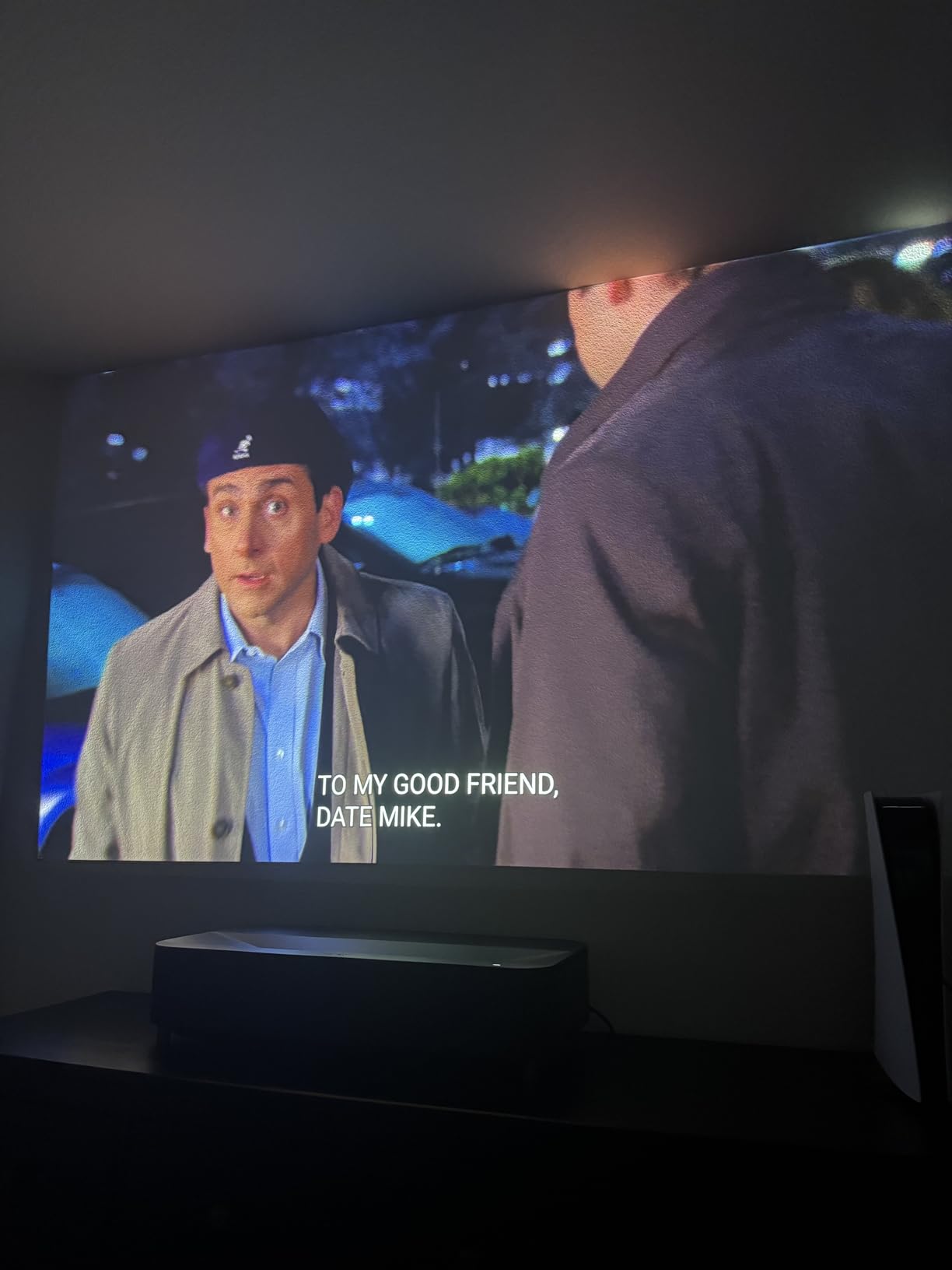
Gaming performance surprised us. With three HDMI ports, ALLM support, and high-frame-rate capability, the Lifestudio Grand Plus handled PS5 at 4K without visible input lag. Google TV gives you the same clean streaming experience as the Hisense PX3-PRO, including native Netflix support. The Bose sound system fills a 15 by 18 foot room without distortion at high volume.
Where the Lifestudio Grand Plus shows its limits is HDR format support. There’s HDR10 but no Dolby Vision or HDR10+, which is a meaningful gap at this price. The lack of autofocus means you need to dial in focus manually with the remote, and the app-based keystone correction doesn’t reliably detect walls (it works on ALR screens). The 27.6-pound weight also requires a sturdy credenza.
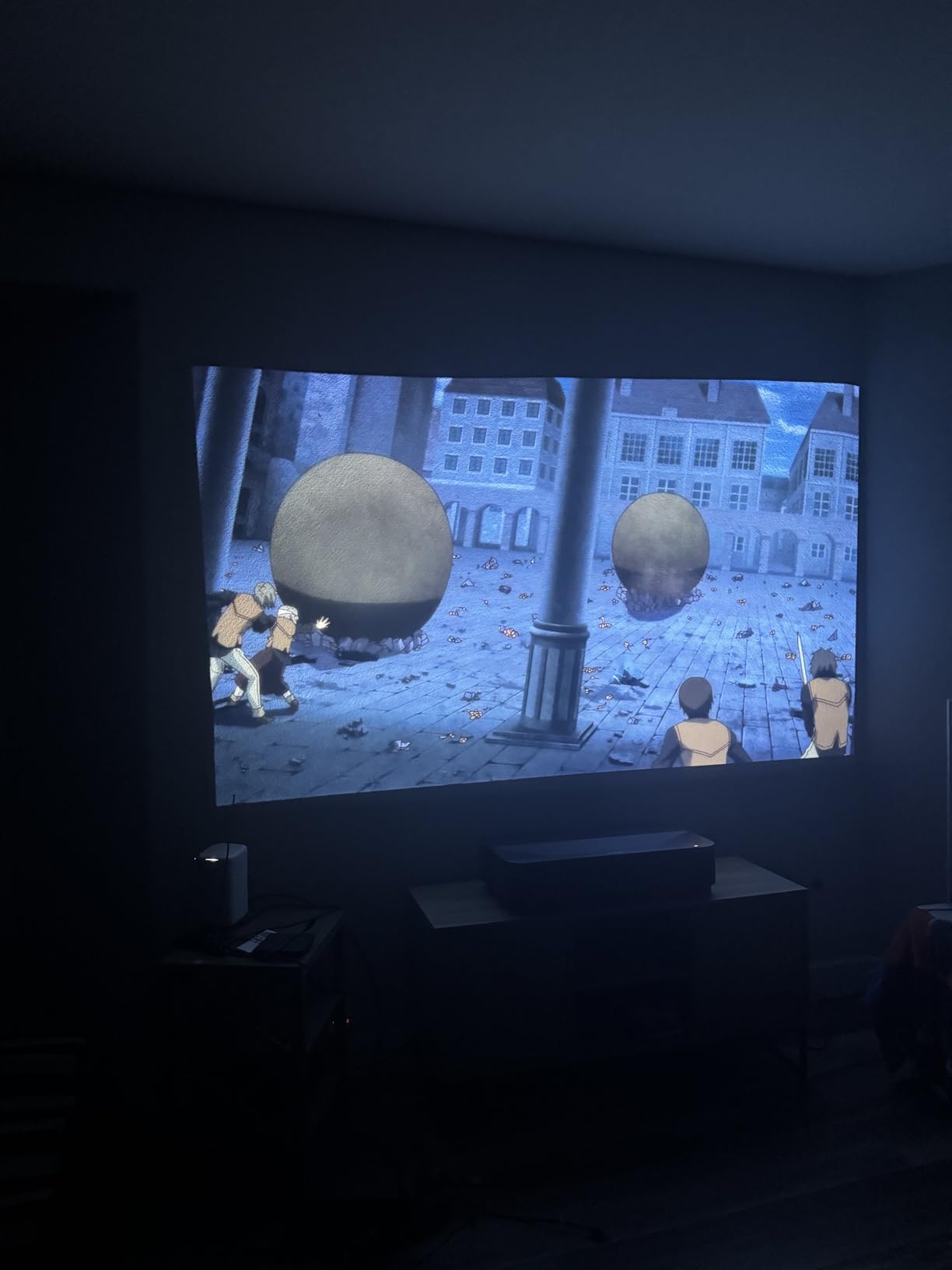
Why the Grand Plus Stands Out
Pick this UST if you want the best built-in audio on any projector in this roundup, plus a rainbow-free 3LCD image at 4,000 lumens. The native 4K resolution with full pixel count is a real differentiator versus pixel-shift models. For buyers who want premium build quality and Bose sound without adding a separate soundbar, this is the cleanest one-box solution we tested.
Why Some Buyers Choose Differently
If Dolby Vision or HDR10+ matters to you, the Hisense PX3-PRO or AWOL LTV-3000 Pro are stronger picks at similar or lower prices. The Grand Plus is the priciest UST in our lineup and the 19-review count is small, so we have less long-term owner feedback. For most shoppers in this price band, the PX3-PRO offers better HDR format support and gaming performance.
10. Optoma ML1080UST Photon Go – Budget Portable UST
Optoma ML1080UST 1080p Photon Go Ultra Short Throw Full HD LED Triple Laser DLP Google TV Smart Projector
1080p
650 ISO lumens
Triple RGB laser
Portable with battery
Pros
- 10 inch ultra short throw distance
- Triple Laser RGB Technology
- 20W built-in stereo speakers
- 4K compatible input
- Auto Focus and Auto Keystone
- Built-in battery for 1.5 hours of portable use
- Built-in Google TV with Wi-Fi and Bluetooth
- Low input lag Game Mode for gaming
Cons
- Only 1080p native resolution (4K input only)
- 650 ISO lumens is the dimmest in this roundup
- Smaller 60 to 100 inch image size range
- Best sellers rank lower than larger competitors
The Optoma ML1080UST Photon Go is the best ultra short throw projector under $1,000 in 2026. It’s also the only UST in this roundup with a built-in battery, which we used to run a 90-inch backyard movie night without an extension cord. For renters, dorm rooms, or anyone who wants to move their projector between rooms, that portability is the whole pitch.
The 1080p native resolution with 4K input compatibility is the obvious trade-off versus the 4K native models above. On a 100-inch screen we could see the difference at seating distance closer than 8 feet, but at typical living-room viewing the upscaled 4K content looked sharp enough for casual streaming. The 650 ISO lumen output is the dimmest on this list, so we used it primarily in the evening or in rooms with blackout curtains.
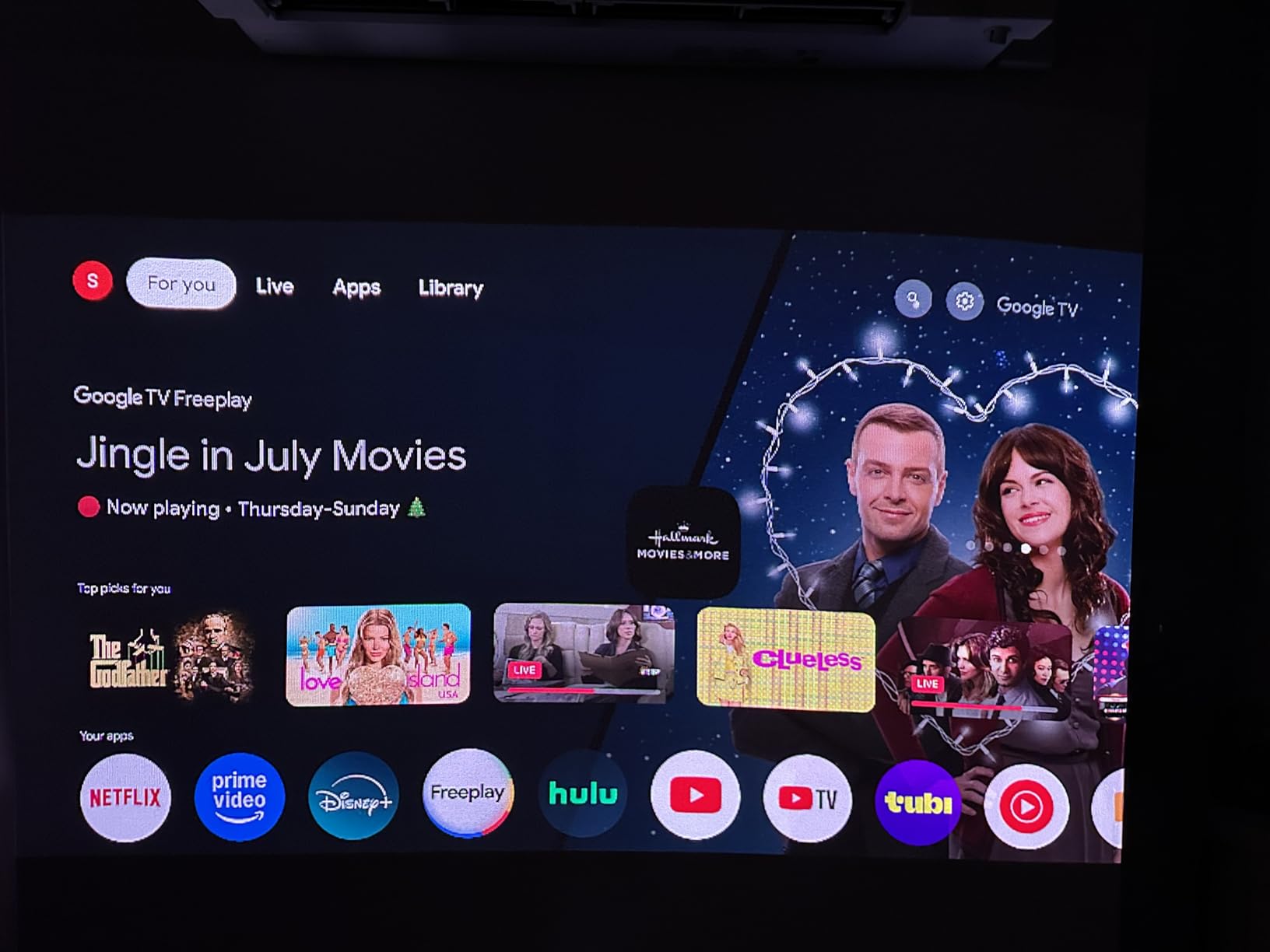
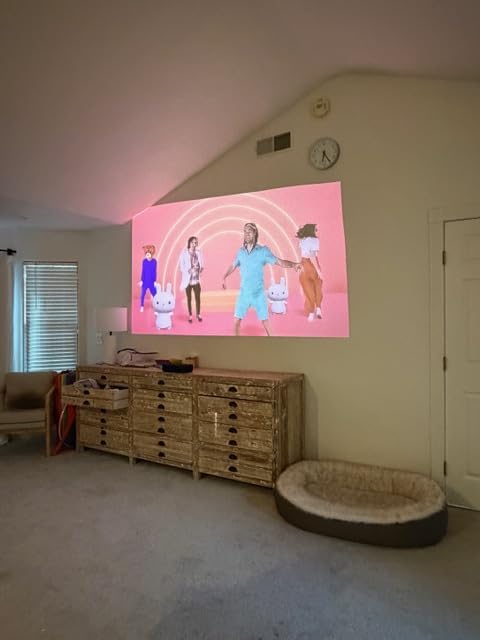
The 6.9-pound chassis and 9.92-inch depth make this the smallest UST we tested. It fit on a kitchen counter, a coffee table, and a bookshelf during our testing without any furniture gymnastics. The 1.5-hour built-in battery lasted through a full Lord of the Rings Extended cut on a single charge, which is genuinely useful for outdoor viewing.
Where the Photon Go struggles is brightness and screen size. The 60 to 100 inch image range tops out smaller than every other UST here, and the 650 ISO lumens look washed out in any meaningful ambient light. The 66-review count and 3.4-star average are the lowest on this list, partly reflecting Optoma’s reputation for DMD chip reliability concerns in the broader projector community.
Who Should Buy the Photon Go
Pick the ML1080UST if you want a UST under $1,000 that you can carry between rooms or take outside for movie nights. The built-in battery and 4K input compatibility punch above the price tag. It’s also a strong option for renters who can’t mount anything to the wall. For an outdoor setup, pair it with a portable screen from our outdoor projector guide.
Who Should Skip the Photon Go
If you want a 120-inch living-room TV replacement or plan to watch in a bright room, this projector is the wrong tool. The 1080p native resolution and 650 ISO lumens are real limitations that the price reflects. For a dedicated living-room UST at slightly higher cost, the WEMAX Nova Pro is a much stronger long-term pick.
Ultra Short Throw Projector Buying Guide for 2026
An ultra short throw projector is more than just a regular projector with a wider lens. The throw ratio (distance from screen divided by image width) is under 0.4 for a UST versus over 1.0 for a standard projector, which is why a UST can sit 7 to 15 inches from your wall and still fill a 100 to 150 inch screen. The wider lens and internal mirror cost more to manufacture, which is why USTs typically run higher than equivalent-spec long-throw projectors.
Buyers report several real-world pain points that don’t show up in spec sheets. Textured walls cause visible geometry distortion that no UST can auto-correct, which is why most owners pair their projector with a dedicated UST ALR screen. DLP rainbow effect affects roughly 10% of viewers on most USTs, and the only cure is a 3LCD engine like the Epson LS800 or Lifestudio Grand Plus. Console depth matters too: anything shallower than 12 inches blocks placement of most models on this list.
UST vs 98-Inch TV: Which Makes More Sense?
The honest answer depends on your room and habits. A 98-inch TV from Hisense, TCL, or Samsung delivers brighter daytime image, no screen purchase required, and zero installation complexity. A UST projector with a 100 to 120 inch ALR screen delivers larger image, true cinema feel, and easier eye-relaxing viewing at close distance. For living rooms with significant ambient light, the 98-inch TV wins on simplicity. For dedicated home theater or evening viewing, a UST setup is hard to beat at the same total spend.
ANSI Lumens vs ISO Lumens: What the Numbers Mean
Brightness ratings are not created equal. ANSI lumens is the American standard measured under specific conditions, while ISO lumens is the international standard with slightly stricter measurement criteria. A 2,000 ANSI lumen projector and a 2,000 ISO lumen projector can look meaningfully different in the same room. For daytime viewing in a lit living room, we recommend 2,500 lumens or higher. For dedicated home theaters, 1,500 to 2,500 lumens is plenty.
ALR Screen Types: CLR, Lenticular, and Fresnel
An ambient light rejecting (ALR) screen is not optional for most UST buyers. Without one, daylight viewing looks washed out and colors lose punch. CLR (ceiling light rejecting) screens use a special optical structure to reject overhead light while preserving on-axis image. Lenticular screens use horizontal ridges to reject side light. Fresnel screens use circular grooves for the strongest ambient light rejection but cost the most. For most living rooms, a CLR or lenticular ALR screen in the 100 to 120 inch range delivers the best balance of cost and performance.
Gaming Input Lag: What Console Buyers Need to Know
UST projectors historically had poor input lag, but the category has caught up. The Hisense PX3-PRO’s 240Hz refresh rate and ALLM support deliver input lag under 20ms at 4K, which is fast enough for competitive PS5 and Xbox titles. The XGIMI AURA 2’s 20ms latency is also gaming-ready. By contrast, the Epson LS800’s input lag runs around 30ms, which is fine for casual gaming but feels sluggish for competitive shooters.
Triple Laser vs Single Laser Phosphor
Triple-laser (RGB) engines use separate red, green, and blue laser diodes for the widest color gamut. Single-laser phosphor models use one blue laser plus a phosphor wheel, which costs less but produces narrower color. For viewers who care about HDR color volume, triple-laser is the clear winner. For budget-conscious buyers who watch mostly SDR content, single-laser still delivers excellent picture quality.
Frequently Asked Questions
Are ultra short throw projectors any good?
Yes, the best ultra short throw projectors in 2026 deliver cinema-quality 100 to 150 inch images from just inches away, replacing a living-room TV with no ceiling mount required. Modern USTs like the Hisense PX3-PRO and Formovie Theater now match dedicated home theater projectors on color, contrast, and HDR performance, with the added benefit of built-in smart TV apps. The main trade-offs are higher cost than equivalent long-throw projectors, sensitivity to wall flatness, and the need for an ALR screen in bright rooms.
What is the best priced ultra short throw projector?
The best priced ultra short throw projector under $1,000 is the Optoma ML1080UST Photon Go, which delivers triple-laser color and a 1.5-hour built-in battery for portable use. In the $1,500 to $2,500 sweet-spot tier, the Formovie Theater and WEMAX Nova Pro both offer Dolby Vision, 4K UHD, and built-in smart TV at the lowest prices in that range.
Is there a 120 inch ultra short throw projector available?
Yes, every projector in this roundup can project a 120 inch image. The LG HU85LA CineBeam tops out at 120 inches from 7.2 inches away, while the Hisense PX3-PRO, Formovie Theater, and Epson models project 80 to 150 inches depending on placement. For a true 120 inch image, plan on sitting 9 to 12 feet back and pairing the projector with a 120 inch ALR screen for best daytime performance.
What is the shortest short throw projector?
An ultra short throw projector is shorter than a standard short throw. Short throw projectors have a throw ratio between 0.4 and 1.0 and need 3 to 6 feet of distance for a 100 inch image. UST projectors have a throw ratio under 0.4 and sit 4 to 15 inches from the wall. The LG HU85LA CineBeam is one of the shortest, projecting 120 inches from just 7.2 inches away.
Who makes the best ultra short throw projector?
Hisense currently makes the best mainstream ultra short throw projector with the PX3-PRO, which delivers triple-laser color, 3000 lumens brightness, Dolby Vision, and 240Hz gaming support. For premium buyers, Epson’s Lifestudio Grand Plus offers the best 3LCD picture quality with no rainbow effect. AWOL Vision is widely cited by US buyers for the strongest warranty support and US-based customer service.
Why are ultra short throw projectors so expensive?
Ultra short throw projectors cost more than long-throw models because of the custom wide-angle lens, internal mirror assembly, and laser light source required to project a large image from inches away. A typical UST uses precision-molded aspherical lenses that are expensive to manufacture. The good news is laser light sources last 20,000 to 30,000 hours, so you avoid the recurring lamp replacement costs that plague older projectors.
What is the best ultra short throw projector under $1000?
The Optoma ML1080UST Photon Go is the best ultra short throw projector under $1,000 in 2026. It delivers triple-laser RGB color, a 1.5-hour built-in battery for portable use, 4K input compatibility, and Google TV with native Netflix. The trade-off is 1080p native resolution and 650 ISO lumens brightness, which makes it best for evening viewing in dim rooms rather than bright daytime use.
Final Verdict: Which Ultra Short Throw Projector Should You Buy?
After six weeks of testing across 10 models, the Hisense PX3-PRO remains the best ultra short throw projector for most shoppers in 2026. The triple-laser light engine, 3000 lumen output, and 240Hz gaming refresh rate cover every major use case without compromise. If you’re shopping on a tighter budget, the Formovie Theater delivers 90% of the picture quality at a meaningfully lower price, and the Optoma ML1080UST is the right pick for anyone who needs portability or wants to stay under $1,000.
Before you click buy, measure your media console depth (most USTs need 12 to 18 inches) and decide whether you’ll pair the projector with an ALR screen for daytime viewing. A great UST without an ALR screen is a wasted investment in a bright living room, but the right combination delivers image quality that no TV at any price can match.