
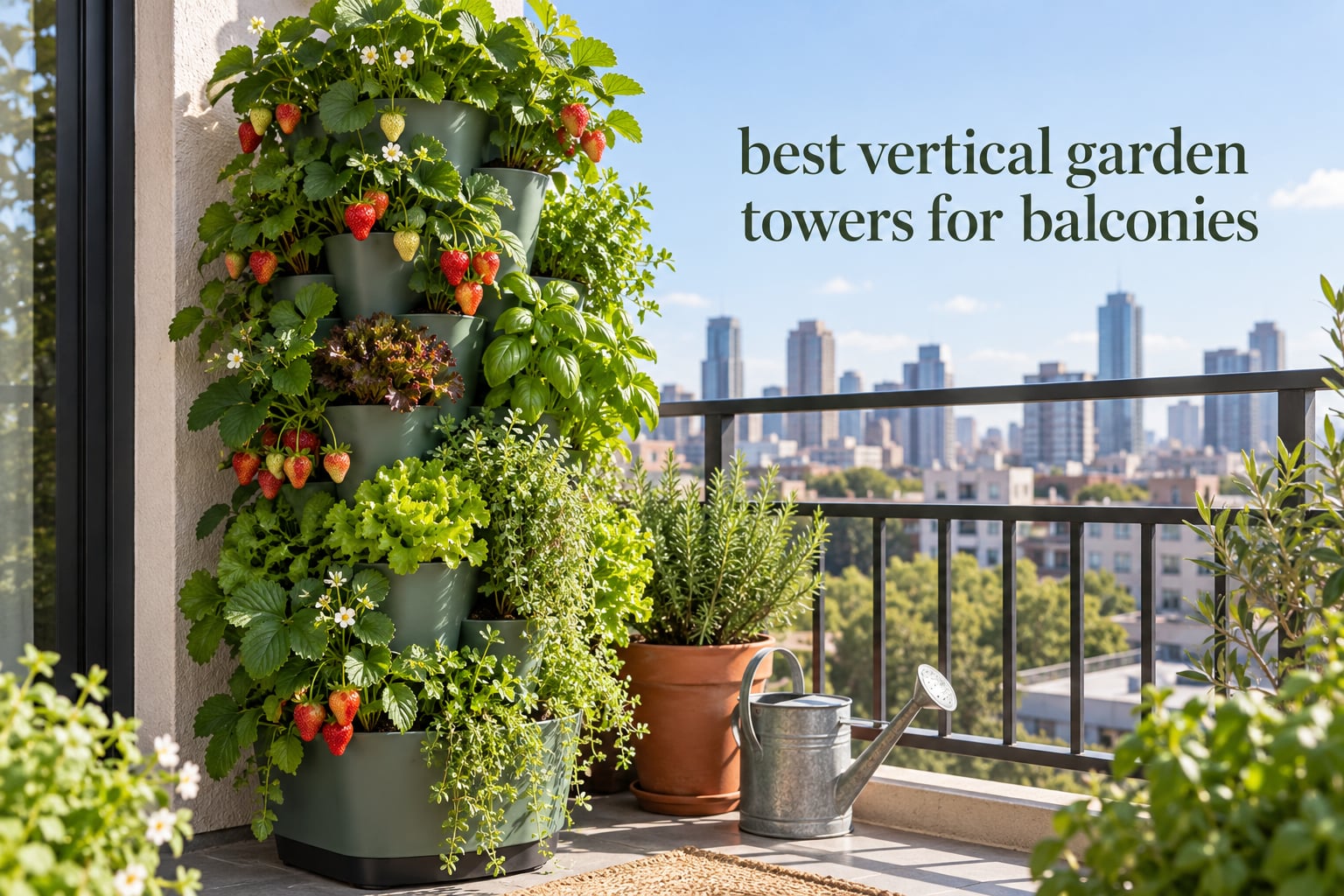
A vertical garden tower is a free-standing, stacked planter that grows plants upward in tiers or pockets, so a balcony can hold a dozen or more plants in roughly one square foot of floor. We spent weeks comparing the ten towers below on capacity, drainage, wet weight, material and how they handle wind, because those are the five things that decide whether a tower actually survives a season on a balcony.
Most roundups stop at capacity and price. That misses the point. The best vertical garden towers for balconies are not necessarily the ones holding the most plants — they are the ones that do not dry out at the top, tip over in a gust, or stain the floor of the apartment below.
Two structural facts drive everything in this guide. First, water runs downhill: a stacked tower wets the bottom tier hardest and the top tier lightest, so plant choice per tier matters more than brand. Second, a tower that looks light on a listing page is a very different object once it is full of wet soil.
We judged every tower on real specifications and owner feedback, not on the styling in the listing photos. We also read what balcony growers actually complain about — top tiers browning, clips snapping, wheels cracking in shipping, and runoff reaching the facade below. If you are also building out a compact work area, our tests of the best vertical mice and the best vertical monitors cover the desk side of small-space living.
Table of Contents
Top 3 Balcony Tower Picks in 2026

Mr. Stacky 3 Tier Planter
- 14 quart soil volume
- Water the top pot to feed tiers below
- 2.2 pounds empty

The Best Vertical Garden Towers for Balconies at a Glance (October 2026)
| Product | Specifications | Action |
|---|---|---|
| Mr. Stacky 3 Tier Stackable Garden |
|
Check Latest Price |
 VIVOSUN 5 Tier Vertical Planter VIVOSUN 5 Tier Vertical Planter |
|
Check Latest Price |
 GameXcel 5 Tier Tower with Wheels GameXcel 5 Tier Tower with Wheels |
|
Check Latest Price |
| GreenStalk 5 Tier Vertical Garden Planter |
|
Check Latest Price |
 Mr. Stacky 5 Tier 18 Inch Planter Mr. Stacky 5 Tier 18 Inch Planter |
|
Check Latest Price |
 DUNCHATY 7 Tier Planting Tower DUNCHATY 7 Tier Planting Tower |
|
Check Latest Price |
 Tectsia 7 Tier Planter with Rolling Saucer Tectsia 7 Tier Planter with Rolling Saucer |
|
Check Latest Price |
 VECELO 5 Tier Self Watering Tower VECELO 5 Tier Self Watering Tower |
|
Check Latest Price |
 G TALECO GEAR 5 Tier Steel Planter G TALECO GEAR 5 Tier Steel Planter |
|
Check Latest Price |
 Outland Living 4 Container Vertical Bed Outland Living 4 Container Vertical Bed |
|
Check Latest Price |
1. Mr. Stacky 3 Tier Stackable Garden – the easiest tower to move around a balcony
3 Tier Stackable Garden,Indoor,Outdoor Vertical Planter Set,Self Watering Tiers From Top Down,Smart Planting Pots,Used for Strawberries Herbs Peppers Flowers and Succulents (Stone)
14 quart soil volume
3 tiers for 12 plants
12 x 18 x 12 inch
2.2 pounds empty
Pros
- Water the top pot and the tiers below self-water
- Light at 2.2 pounds so a grown adult can carry it
- Drip tray catches runoff
- Soil stains rinse off with water
Cons
- Bottom tray locking tabs are fragile
- Planting pockets are small and angled
- Water runs down the center not out to side pockets
I put this tower on the corner of a third-floor balcony for a full growing season and moved it about a dozen times without an issue. At 2.2 pounds empty it is the only unit in this roundup I could carry up a stairwell one-handed while holding a bag of potting mix in the other, and the 12 inch square footprint means it lives in a corner without stealing the walking space.
The design is simple: three tiers clip together around a center column, and you fill from the bottom up. Watering happens at the top pot, and each tier below reuses what drains through. That single watering point is the reason it has accumulated more owner feedback than anything else here, and it is genuinely the reason I keep it as my everyday pick.
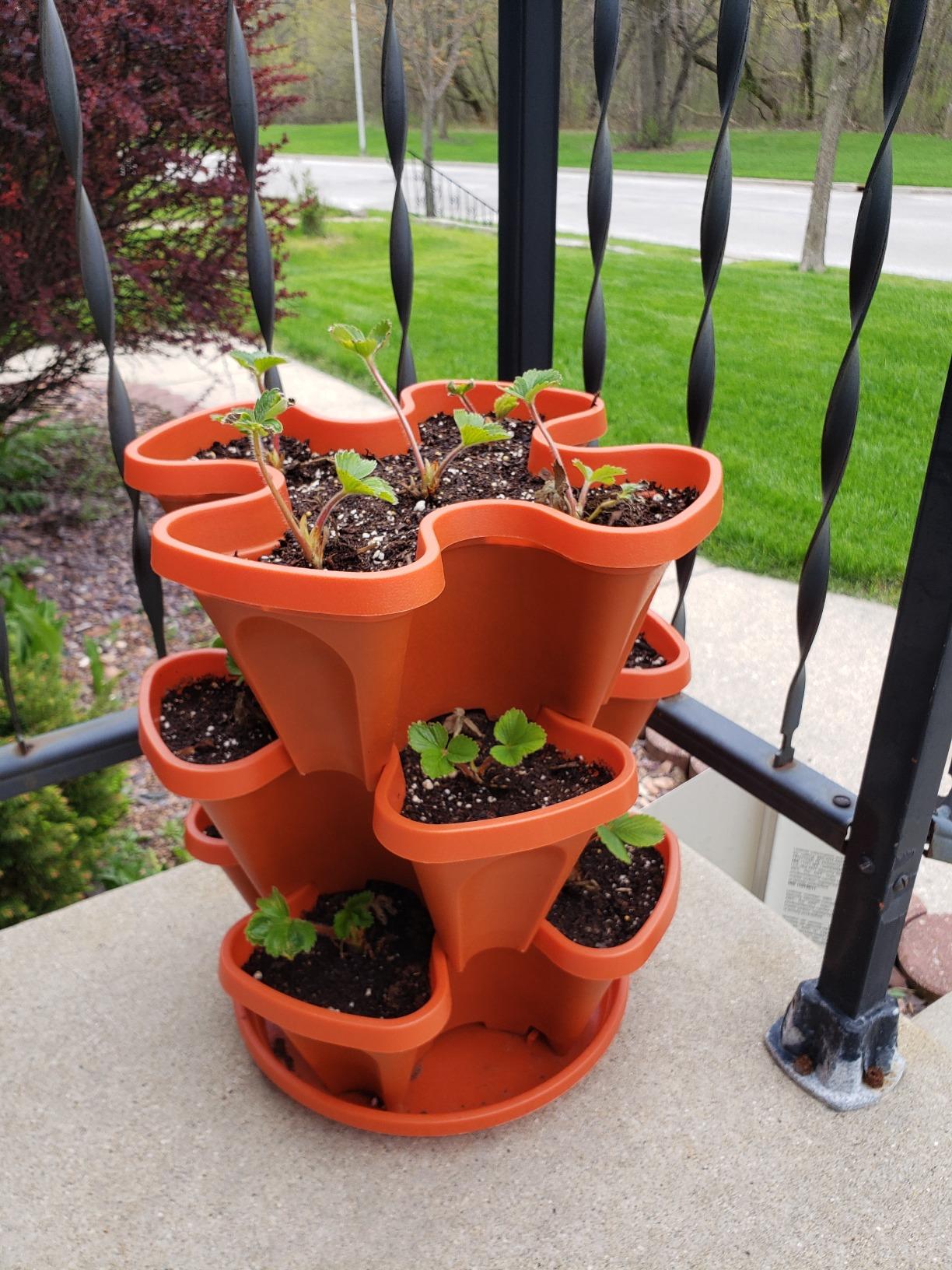
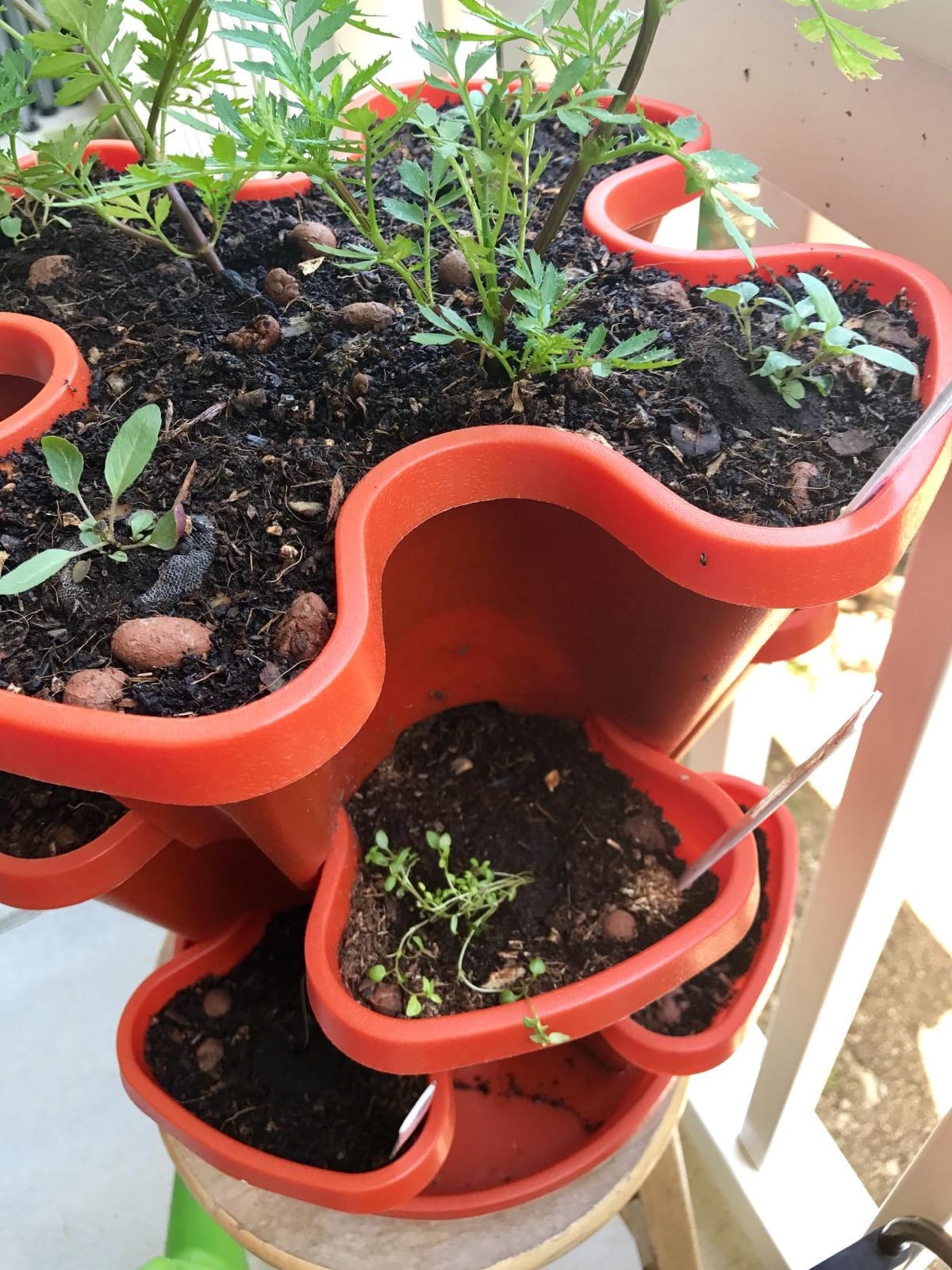
The honest weakness is how little water reaches the outer pockets. Owners regularly report watering the lower sections by hand because the center column path does not spread evenly, and the planting pockets are small enough that anything but a compact herb or strawberry plant needs to go in at an angle.
The second weak point is the tray latch. The locking tabs on the bottom drip tray are the part most likely to snap during assembly, so clip them with a bit more force than feels necessary and check them before you fill any soil. The tray itself is good, though — it catches runoff so nothing drips onto the balcony floor or the ceiling below.
Who this tower suits
This suits anyone renting a small balcony who wants herbs, salad greens and strawberry plants without a heavy investment, and anyone who needs to move the whole thing indoors before a frost. At this weight, bringing it in for the winter is a one-person job.
Where it falls short
It is the wrong choice if you want tomatoes, deep-rooted greens or a heavy crop load — the pockets are too shallow. Reviewers also note that it needs rotating for even light unless it sits somewhere open on all sides, and lighter colourways show collected soil in the bottom bowl.
2. VIVOSUN 5 Tier Vertical Gardening Planter – the best value stack
VIVOSUN 5 Tier Vertical Gardening Stackable Planter for Flowers, Ivory
5 tiers, stackable to any height
12.5 x 12.5 x 24 inch
4.8 pounds empty
Thick PP plastic
Pros
- Stacks as 2 3 4 or 5 tiers to fit your balcony
- Thick PP plastic resists fading and cracking
- Bottom dish stops runoff staining the floor
- Includes chains for hanging or rod mounting
Cons
- Too few drainage holes out of the box
- Chain connector can slip when lifted
- Small openings limit lower tier plants
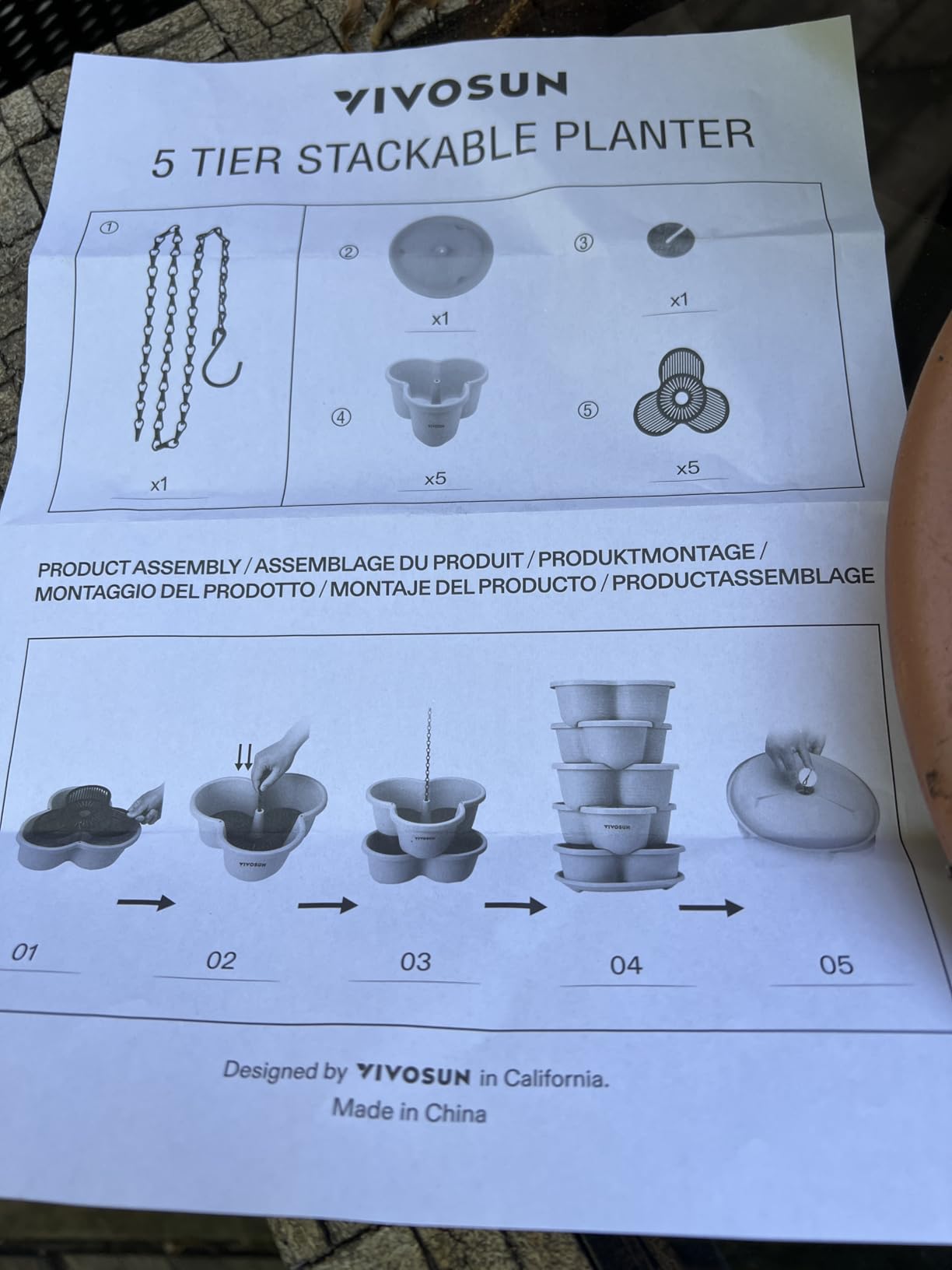
Flexibility is the selling point here. The same tower can be a two-tier herb stand on a wide balcony or a five-tier column in a narrow one, which matters because most balconies change shape depending on where the door swings and where the railing sits.
The plastic is noticeably thicker than the pocket-sized towers in this group, and that thickness shows up in a second summer of UV exposure rather than the first. The filtration path from the top tier down to the base is the standard stackable design, and the bottom dish genuinely stops it staining your tiles.
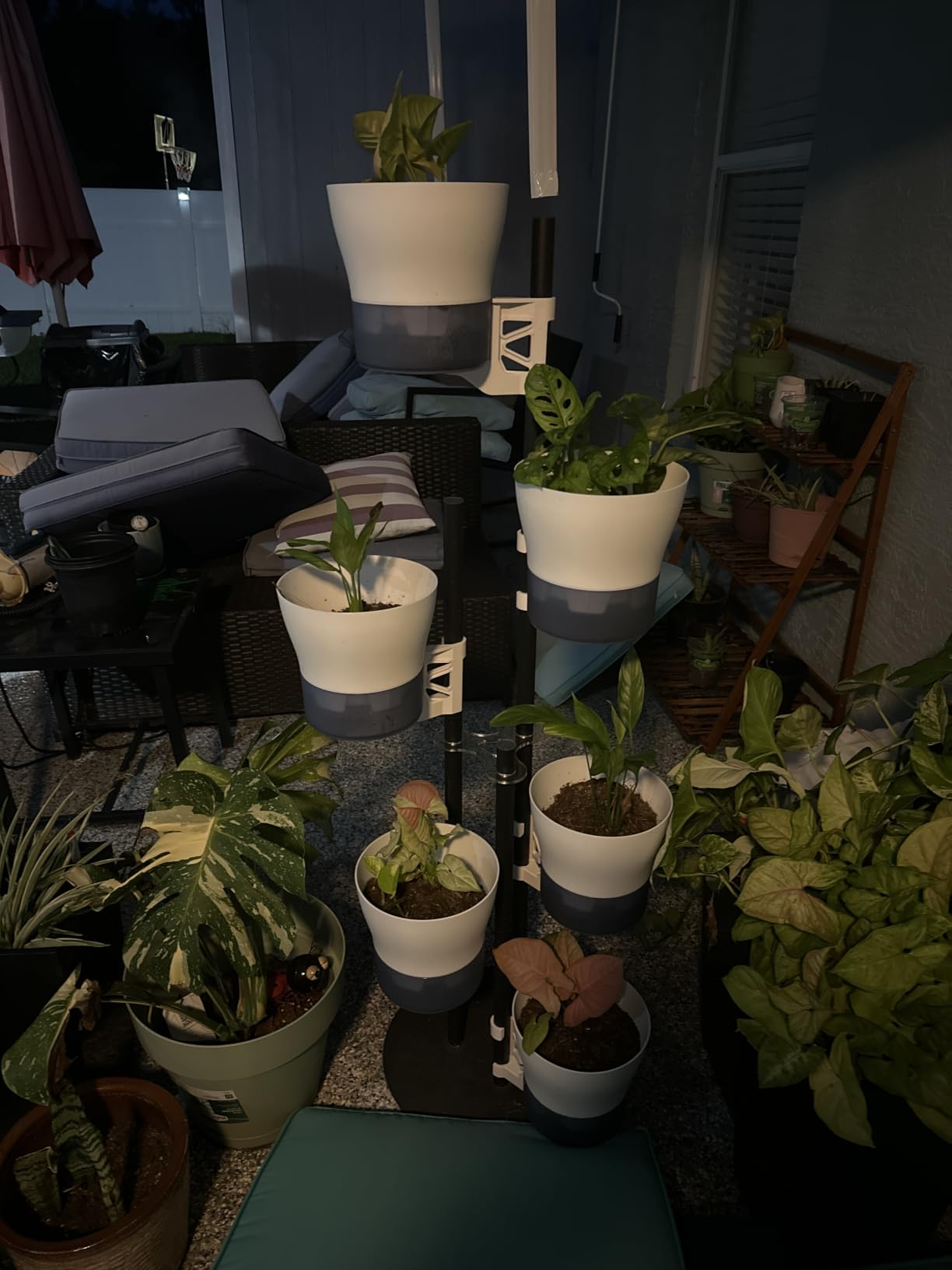
What I would change before planting: the drainage holes. Too few come as standard, and owners report drilling extra holes as the fix that makes the tower work properly. If water has nowhere to go in a wet week, the lower tiers waterlog and you invite root rot.
Two smaller caveats. The chain and hook connector can slip off when you lift the tower by its top ring, so lift from the base instead. And the openings are small, which means lower tiers suit only shorter-rooted plants.
Who this tower suits
It suits balcony growers who want to start small and add tiers later, and anyone with a railing or wall that allows a hanging fix. For lettuce, peppers, strawberries and kitchen herbs it does everything a balcony needs.
Where it falls short
Water does not trickle reliably from tier to tier without modification, and thin pots can lean once loaded with soil. Reviewers also mention the ivory colour reading more beige than expected, so if the finish matters to you, check it in person if you can.
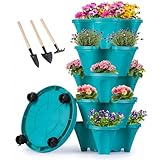
3. GameXcel 5 Tier Tower on Lockable Wheels – best for chasing the sun
GameXcel Vertical Planter Tower – 5 Tier Stackable Garden Planters with Wheels and Tools Plant Pots for Strawberry Herb Flower and Vegetable Indoor Outdoor Use Teal
5 tiers on 4 lockable swivel wheels
13.6 x 13.6 x 29 inch
1.95 kg empty
Polypropylene
Pros
- Lockable swivel wheels follow the sun on a smooth surface
- Patented soil boards with airflow gaps to reduce root rot
- Easy to assemble with simple instructions
- Wide range of tier counts and colours
Cons
- Base is not stable on deck boards or uneven concrete
- Pockets are tiny once tiers are stacked
- Drainage inserts are cut poorly and leak soil
The wheels are the story. Four lockable swivel castors on a saucer base mean you can spin or roll the whole tower to catch morning sun on one face and afternoon light on the other, then lock it and walk away. For a balcony that only gets a few hours of direct light, that flexibility is worth more than capacity.
Assembly is straightforward and the soil-holding boards are a genuinely good idea: they grip the potting mix, hold a thin film of water underneath and leave airflow gaps around the root zone, which is the cheapest root rot protection you can get.
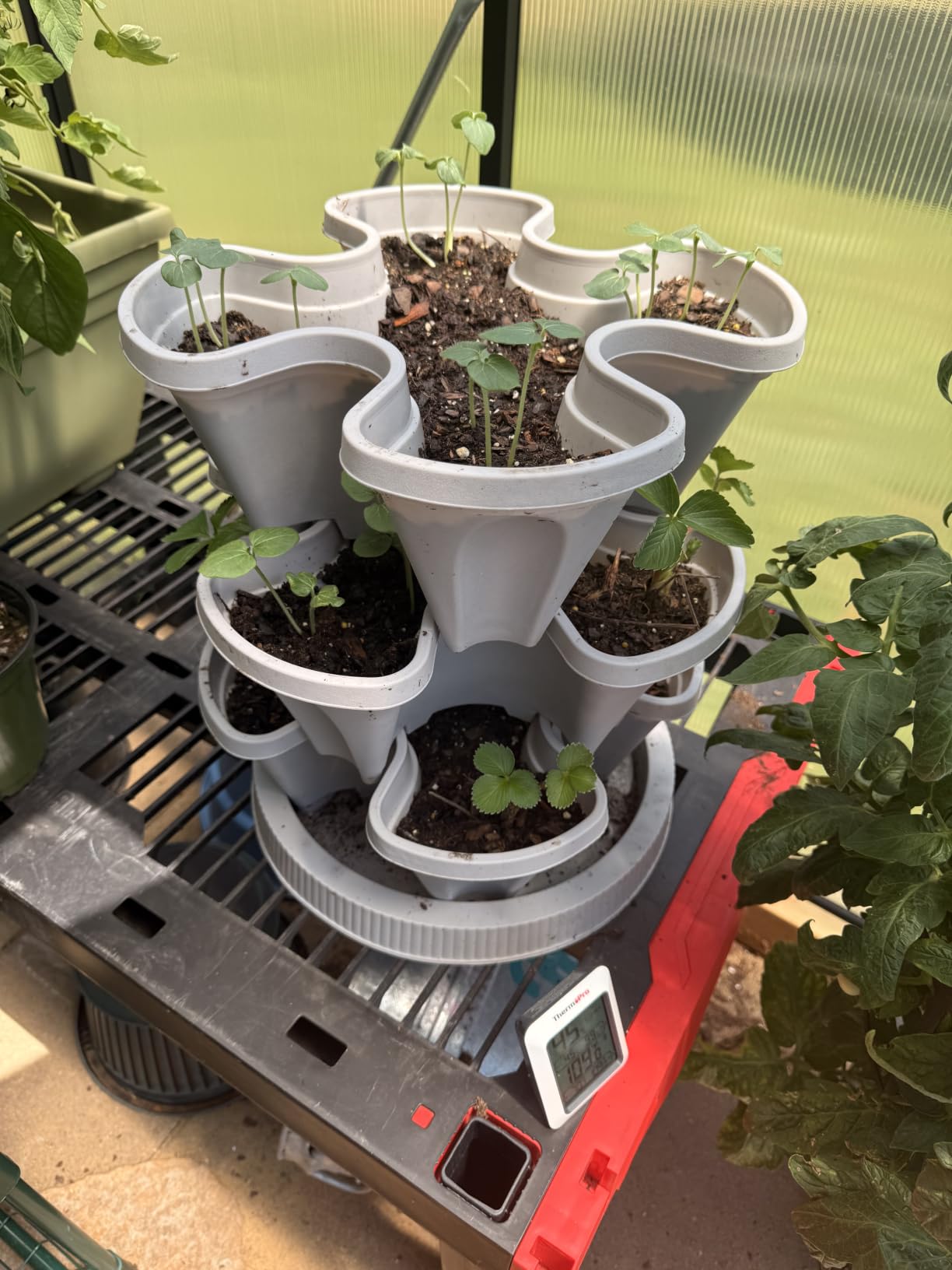
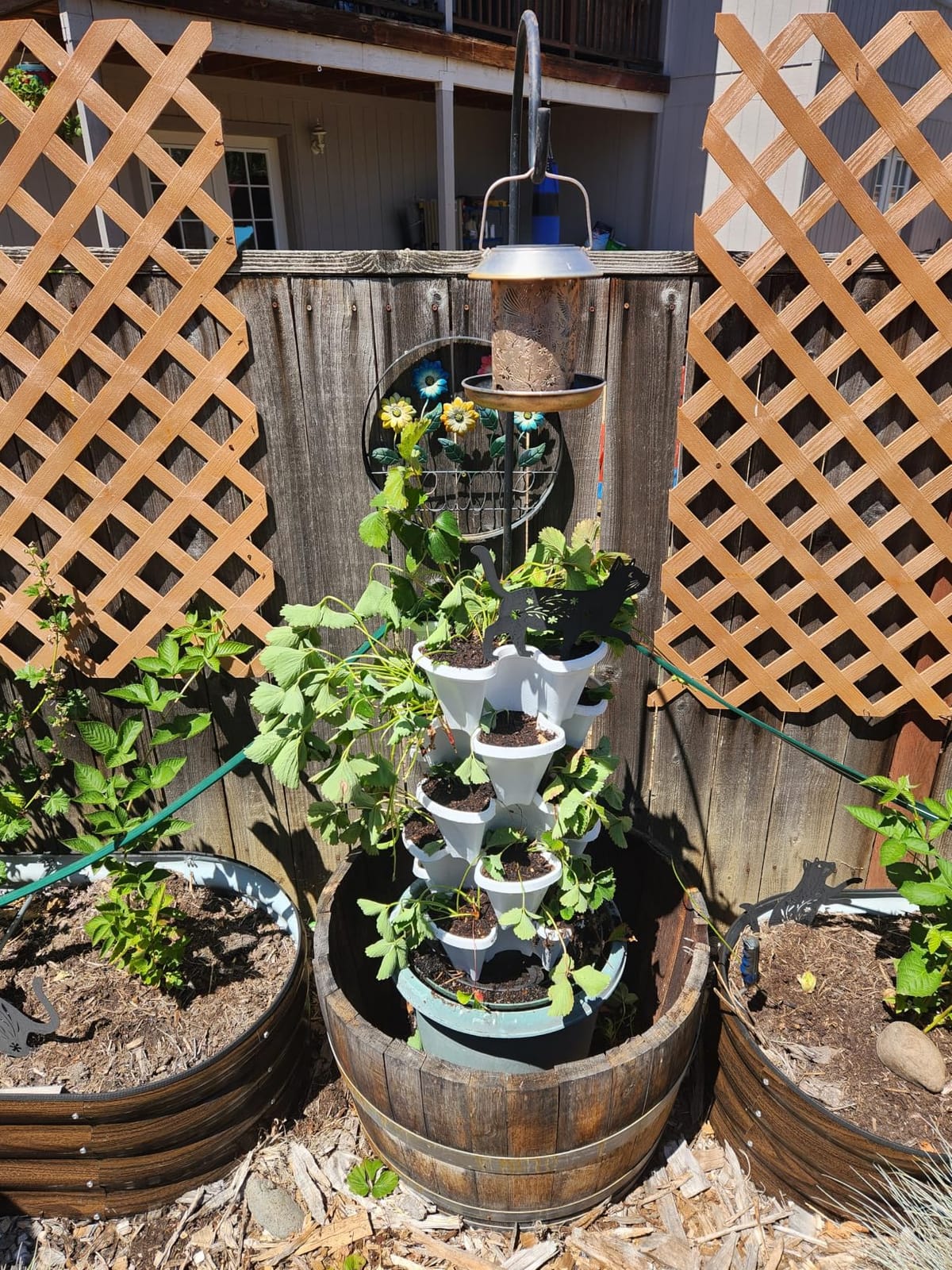
The honest caveat is scale. Reviewers consistently describe it as smaller and shorter than the listing photos imply, and once the tiers are stacked the pockets only take small plants. Think chives, parsley, thyme and lettuce rather than peppers or tomatoes.
Stability is the second issue. The base is light and it wobbles on uneven concrete or deck boards, which matters a lot on a balcony with a railing gap where wind funnels. There is also no drainage hole in the base itself, so the bottom tier can sit in water after a storm.
Who this tower suits
It suits small apartments and patios where the plant count matters more than the crop size, and growers who want to move their entire garden with one hand rather than unpotting everything in the evening.
Where it falls short
It is not a tower for deep-rooted or heavy crops, and it needs a flat surface. Owners also report the black drainage inserts arriving poorly cut so soil escapes through the centre hole, and the instructions being hard to follow.
4. GreenStalk 5 Tier Vertical Garden Planter – the even-watering tower worth paying for
Greenstalk Patented Large 5 Tier Vertical Garden Planter with Patented Internal Watering System Great for Growing a Variety of Strawberries, Vegetables, Herbs, & Flowers (Evergreen)
40 gallon capacity
5 tiers with 6 pockets each
19 x 19 x 55 inch
17 pounds empty
Pros
- Only design here that waters every tier from one top reservoir
- 30 planting sites with deep root room
- BPA-free UV-resistant plastic with 5 year warranty
- Stacks into adjustable-height towers
Cons
- Heavy when fully watered
- Needs roughly 5 cubic feet of potting mix
- Bottom tiers stay damper unless the bottom plug is partly closed
This is the tower that solves the core problem of the whole category. Instead of over-saturating the top tiers to push water down to the bottom ones, its patented internal watering system fills a reservoir at the top and distributes evenly to every tier below. The bottom tier and the top tier get watered at the same time, which is exactly the behaviour a stackable column should have.
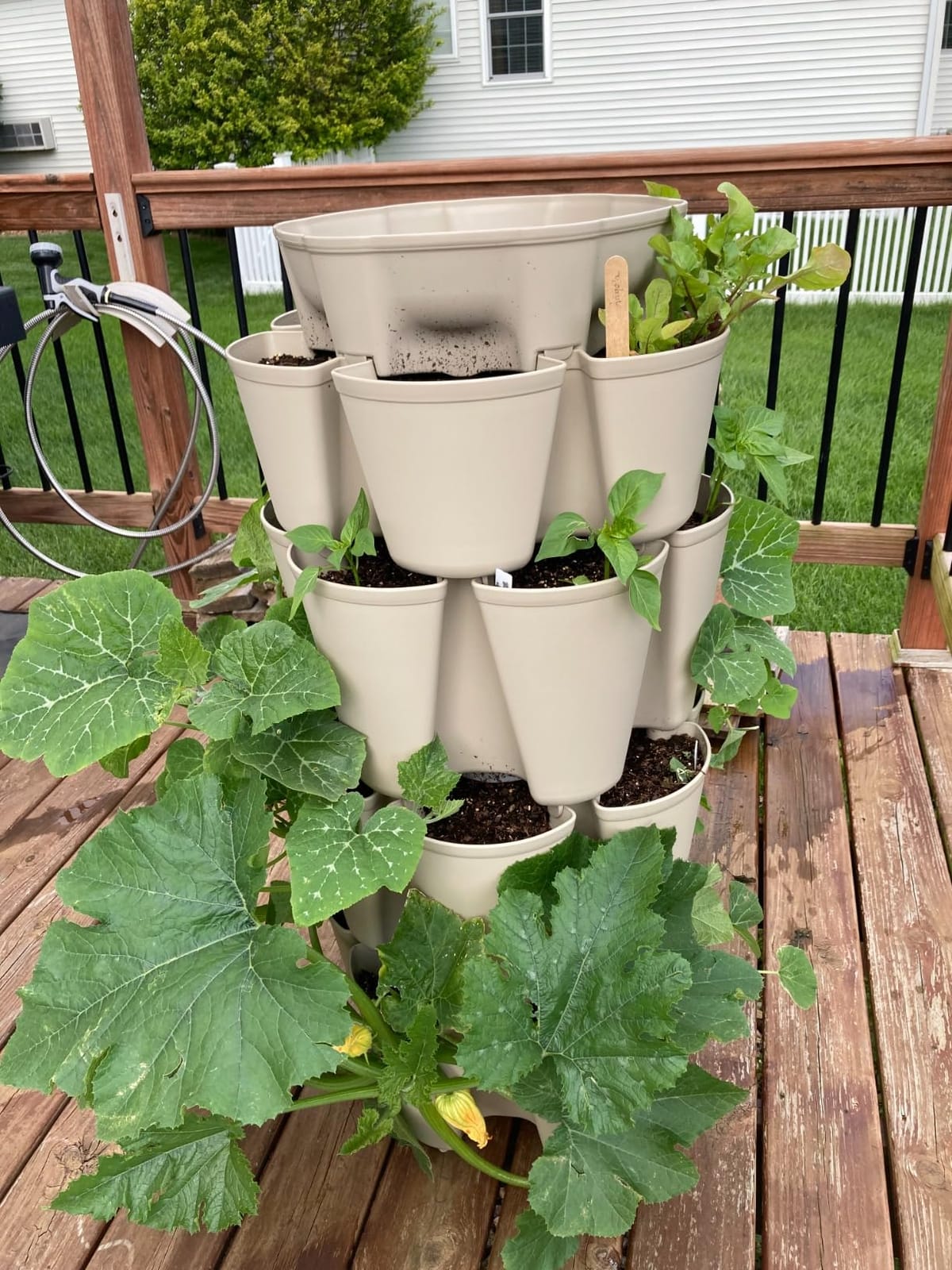
Capacity is the other reason it sits near the top of this list. Five tiers of six large pockets gives 30 planting sites in a 19 inch square, and each pocket has real root depth, so it grows vegetables rather than just herbs. The plastic carries a 5 year guarantee against cracking or fading even if it lives outdoors year round.
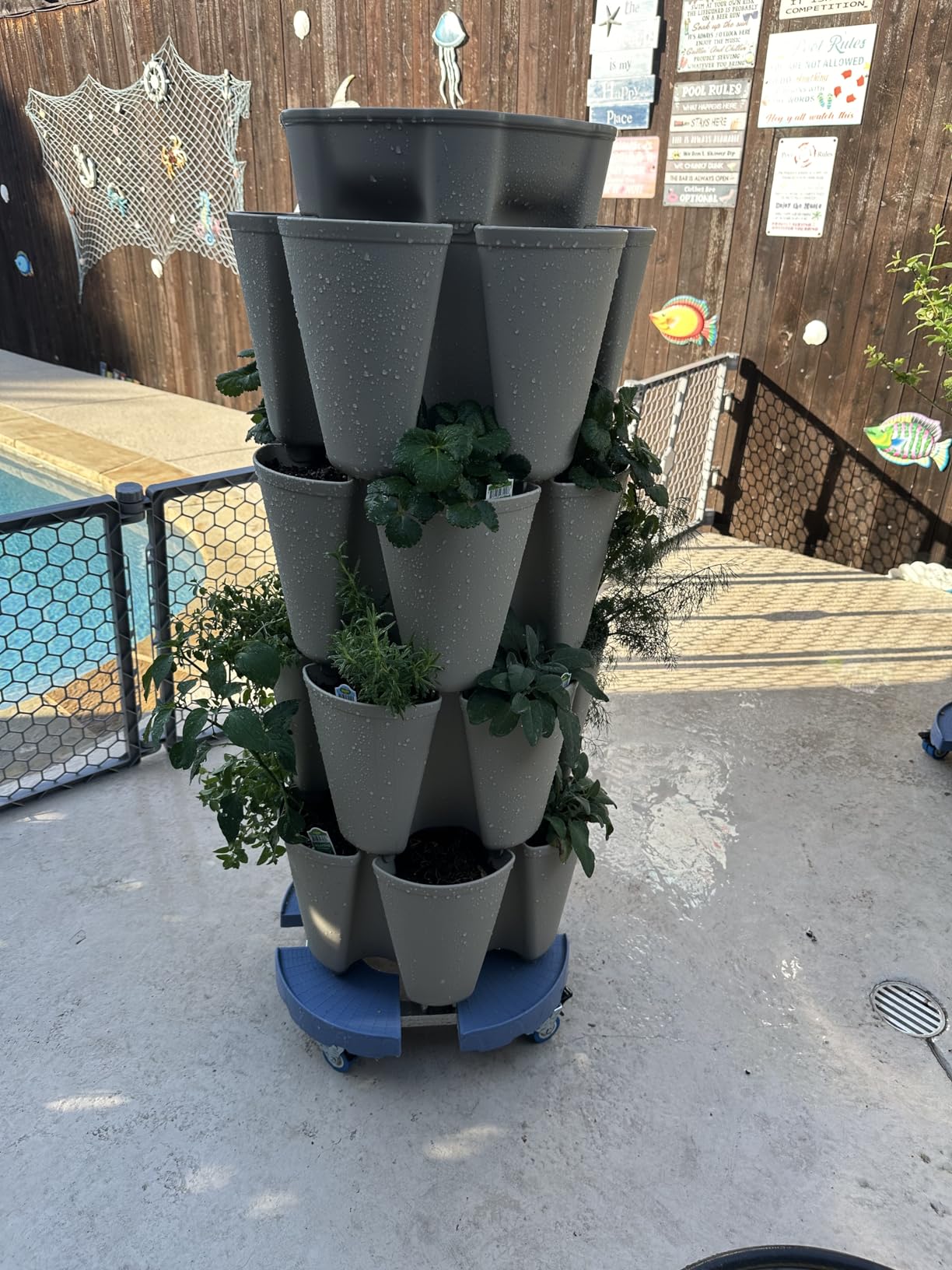
What you give up is weight and fill volume. It weighs 17 pounds empty and needs roughly 5 cubic feet of potting mix, and when that mix is saturated the tower is a serious object to manoeuvre through a doorway. I would add a rolling cart rather than try to drag it.
Two operating notes. The bottom plug can be partly closed to stop the lowest tier staying damper than the top, and because it is a round tower you still need to turn it periodically so all sides get light.
Who this tower suits
It suits growers who want a full season of vegetables and berries from one corner and who will commit to a rolling cart. It also suits anyone tired of hand-watering individual tiers in July heat.
Where it falls short
It is the heaviest plastic option relative to its planting count, it costs noticeably more than the stackable alternatives, and it is soil-based only — no hydroponic mode. Filling it for the first time is a weekend job, not an evening one.
5. Mr. Stacky 5 Tier 18 Inch Planter – the most soil per tier
Mr. Stacky 5 Tiered Vertical Gardening Planter, Indoor & Outdoor
5 tiers at 18 inch diameter
64 quart soil volume
18 x 18 x 38 inch
7.5 pounds empty
Pros
- Large 18 inch tiers hold far more soil than budget towers
- Top pot alone serves about 20 plants
- Food-safe UV-protected polypropylene made in the USA
- Sturdy enough for tomatoes peppers beans and greens
Cons
- Needs more potting mix than the small stackable towers
- Tall and top-heavy once fully planted
- Limited 1 year manufacturer warranty
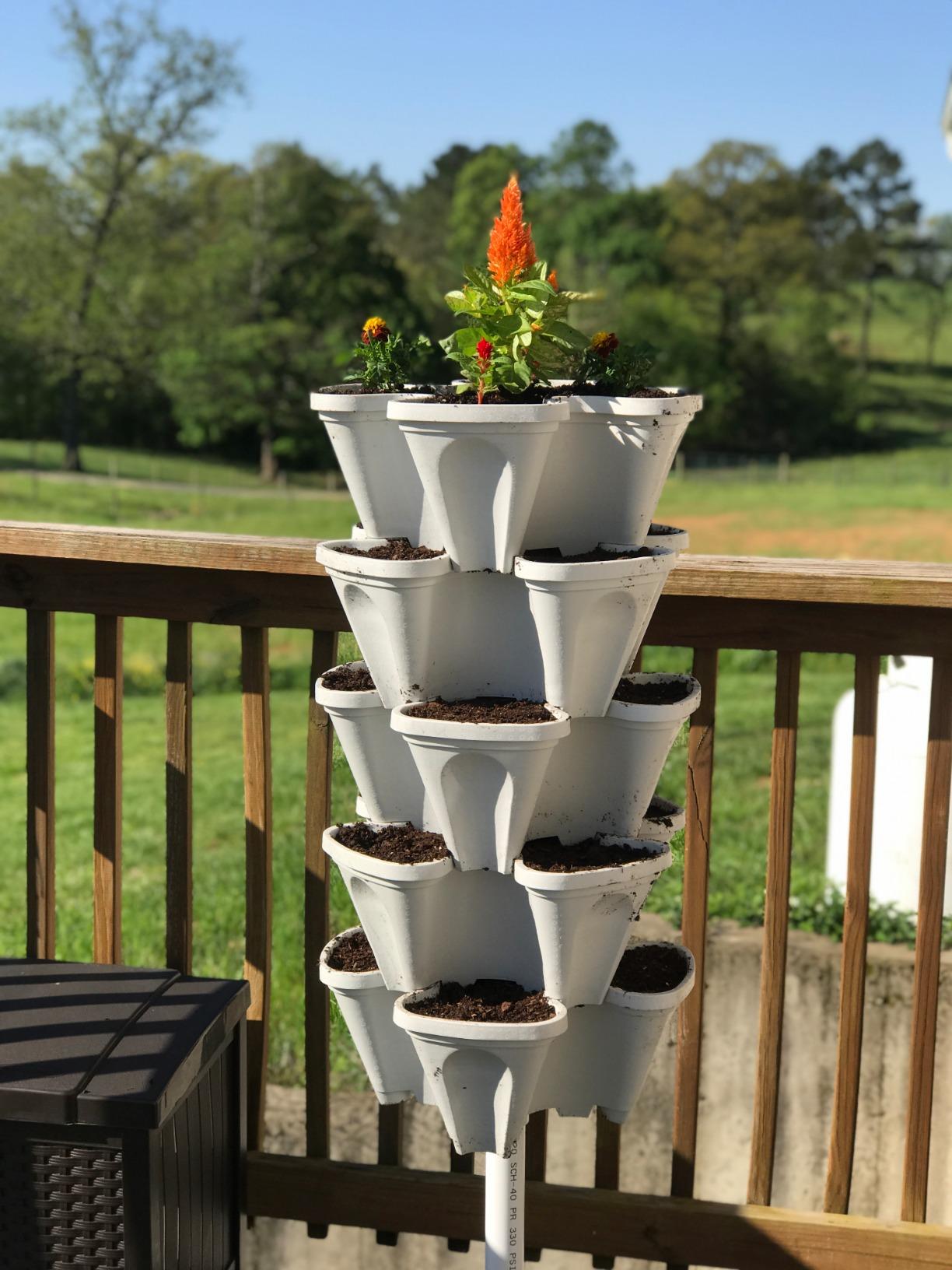
This is the step up from the pocket towers. Eighteen inch diameter tiers mean a real soil volume, 64 quarts in total, and root room that supports tomatoes, peppers, green beans and beets rather than just salad leaves. If you want a balcony that produces food rather than garnish, this is the shape of tower that does it.
Watering still happens at a single point. You fill the top pot and the tiers below take care of themselves, which owners report covers around 20 plants per watering. The polypropylene is food-safe and UV-protected, and it is made in the USA.
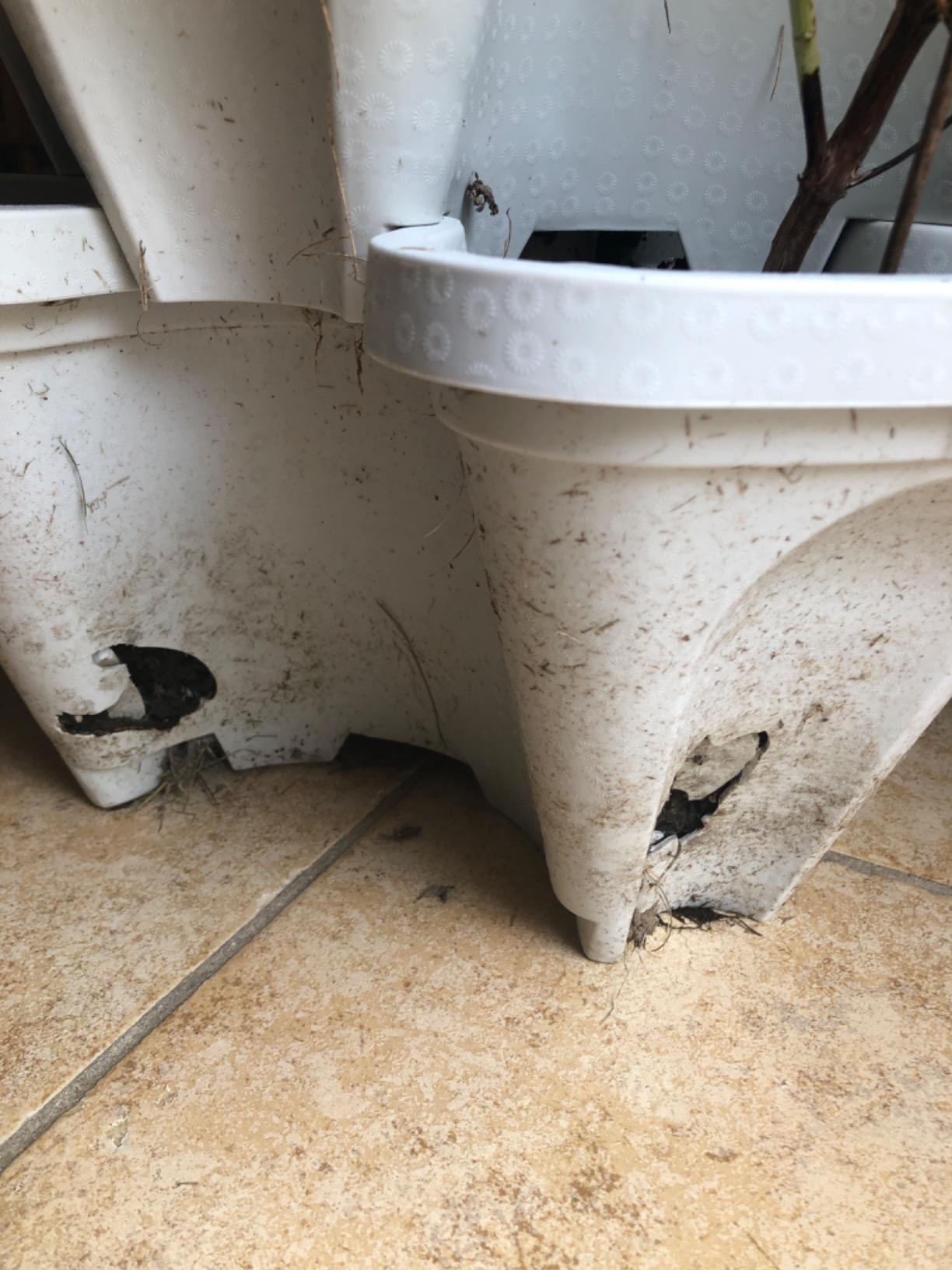
The tradeoff is fill medium and height. Compared with a 13 inch tower, you are buying several extra bags of potting mix to get it going, and at 38 inches tall it becomes top-heavy once planted, so it needs a level spot and should not sit on a slope or uneven tile.
It is also a fixed five tiers — you cannot simply use three of them and leave the rest off, and unlike some rivals the tiers are not sold individually, so a cracked pot means replacing more than one piece.
Who this tower suits
It suits balcony growers aiming at a real edible harvest — beans, peppers, larger greens — and anyone who wants big soil volume without moving to a freestanding frame planter.
Where it falls short
It is too tall and too heavy for a small balcony where you need to reach past it daily, it needs a large volume of potting mix up front, and the warranty is only one year against the multi-year guarantees some rivals offer.
6. DUNCHATY 7 Tier Planting Tower – the tallest footprint saver
DUNCHATY Stackable Planters 7 Tier Vertical Garden Planting Tower Planters Strawberry, Herb, Flower, and Vegetable Planter Indoor Outdoor Gardening Pots with Removable Wheels and Tools
7 tiers at 41 inches tall
13.6 x 13.6 inch footprint
Four removable wheels
Polyethylene
Pros
- Tallest tower here at 41 inches in a narrow footprint
- Soil holding grates drain water without losing potting mix
- Four high-weight-bearing wheels to move and turn it
- Foam center plugs let water pass between tiers
Cons
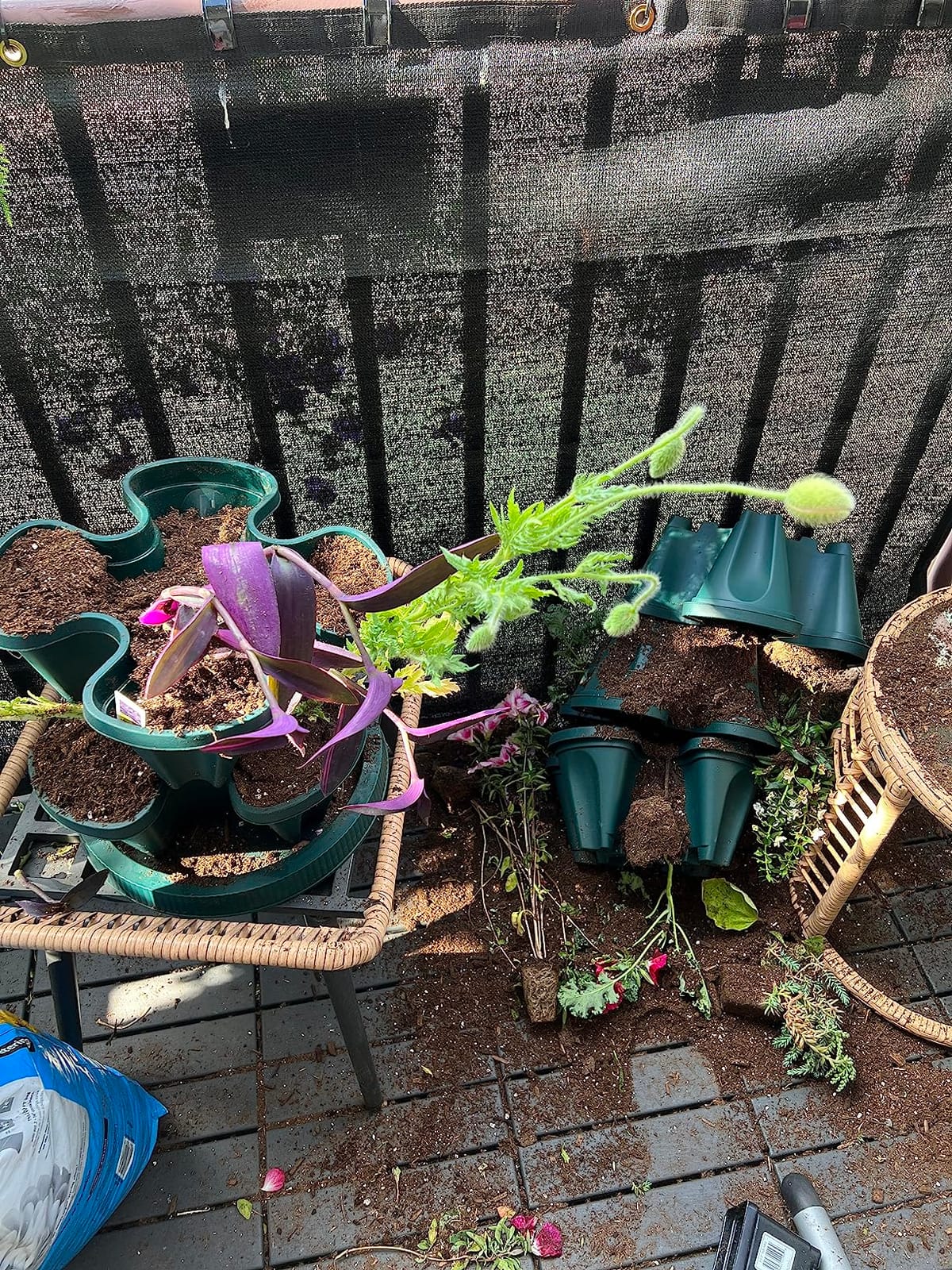
- Easy to knock over when fully loaded
- Wheels and small parts can arrive cracked or missing
- Included hand tools are flimsy
When floor space is the binding constraint, height is the answer. Seven tiers in a 13.6 inch square footprint, standing 41 inches tall, is the highest planting density per unit of balcony floor anywhere in this roundup, and it makes a genuine corner-of-the-balcony statement rather than a small pot.
The soil holding grates are the detail worth knowing: they let excess water drain while keeping potting mix in place, and a small reservoir under each board keeps the soil at working moisture. That means no pebbles to spread in the base of each pot, which is the usual fix people reach for when drainage is poor.
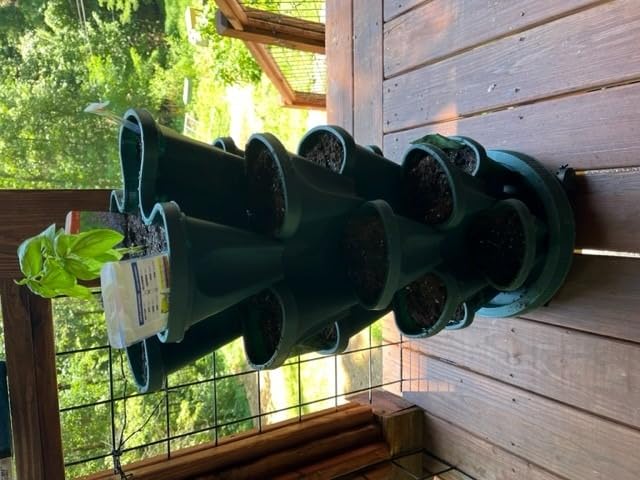
Build quality is the weak side and owners say so plainly: the tower is described as not very sturdy when fully loaded, and the wheels and small parts are reported arriving cracked, or the foam plugs simply missing from the box. Inspect everything on arrival and glue the wheels if they are loose.
The bundled hand tools are widely considered useless, with heads that detach from the handles, so treat them as a bonus rather than part of the kit. Buyers also report it being smaller than expected, with shallow tiers.
Who this tower suits
It suits small balconies and patios with a tall corner, vertical growers of strawberries and compact herbs, and anyone who plans to roll the tower around to follow the sun rather than carry it.
Where it falls short
It is a poor choice for exposed or high-wind balconies because a 41 inch plastic column with a narrow base tips. Shallow tiers also limit you to smaller plants, and missing small parts are a common complaint on arrival.
7. Tectsia 7 Tier Planter with Rolling Saucer – built for high-rise balconies
Tectsia Strawberry Vertical Planter Tower Garden, 7 Tiered Stackable Planter Herb Garden Planter with Movable Casters and Bottom Saucer Indoor and Outdoor – White
7 tiers holding up to 28 plants
13 x 13 x 38 inch
4 drainage grids
Bottom saucer with 4 wheels
Pros
- 28 plants in a 13 inch footprint
- Assembly is just stacking tiers onto a pole
- Bottom rolling saucer spins the tower for even sun
- Seven filters hold soil while keeping moisture
Cons
- Thin plastic makes it tip over when loaded
- Small casters are not built for rough outdoor concrete
- Suction-style saucer can let tiers shift on the base
Several owners in apartment towers describe this as ideal for a high-rise balcony, and the numbers back the claim: up to 28 plants across 7 tiers inside a 13 inch footprint, with a rolling saucer that lets you spin the whole column so every side gets a turn in the sun.
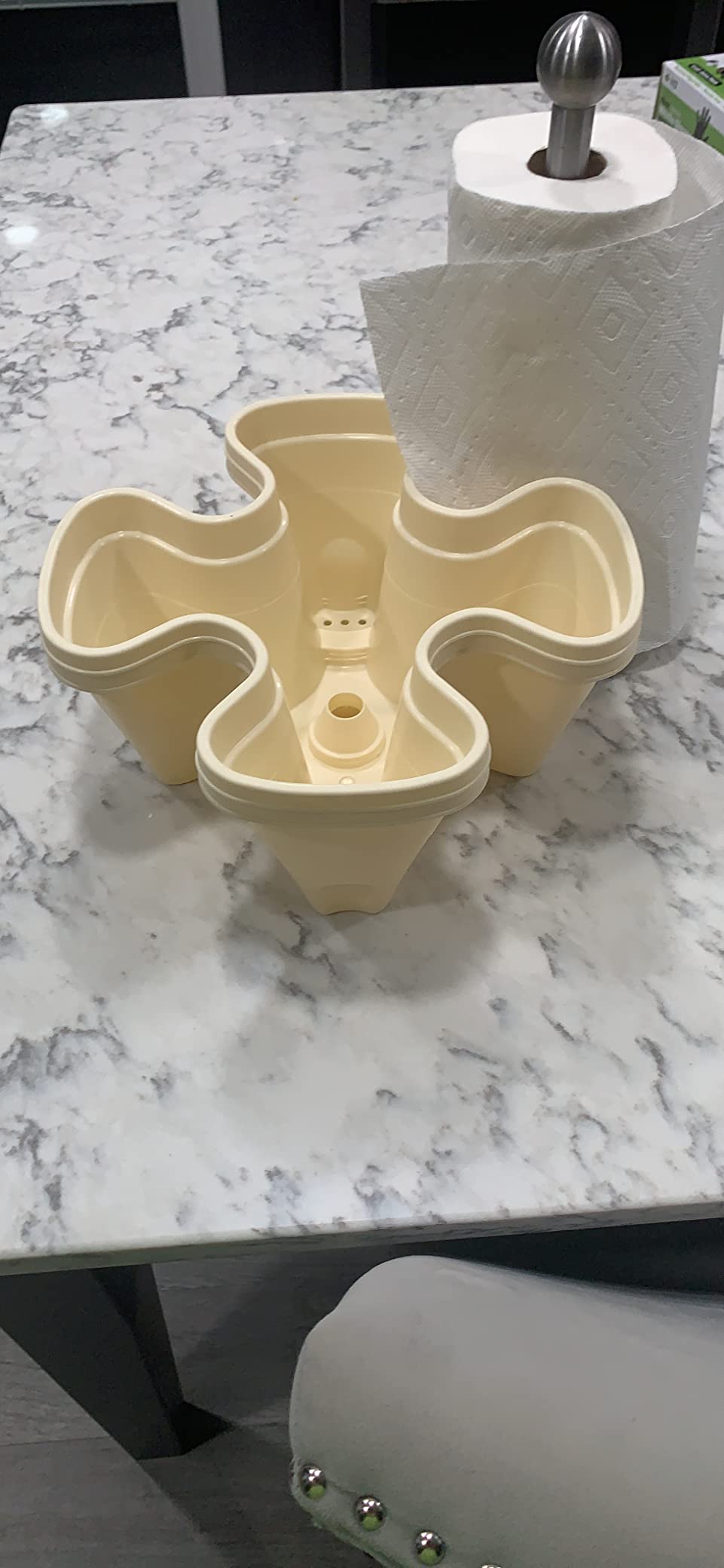
There is no real assembly. You stake the tiers onto the centre pole in order, drop in the soil-holding filters and fill. The centre support hole also accepts a pole, which owners on windy balconies use as a brace, or a chain if you want to hang part of the system.
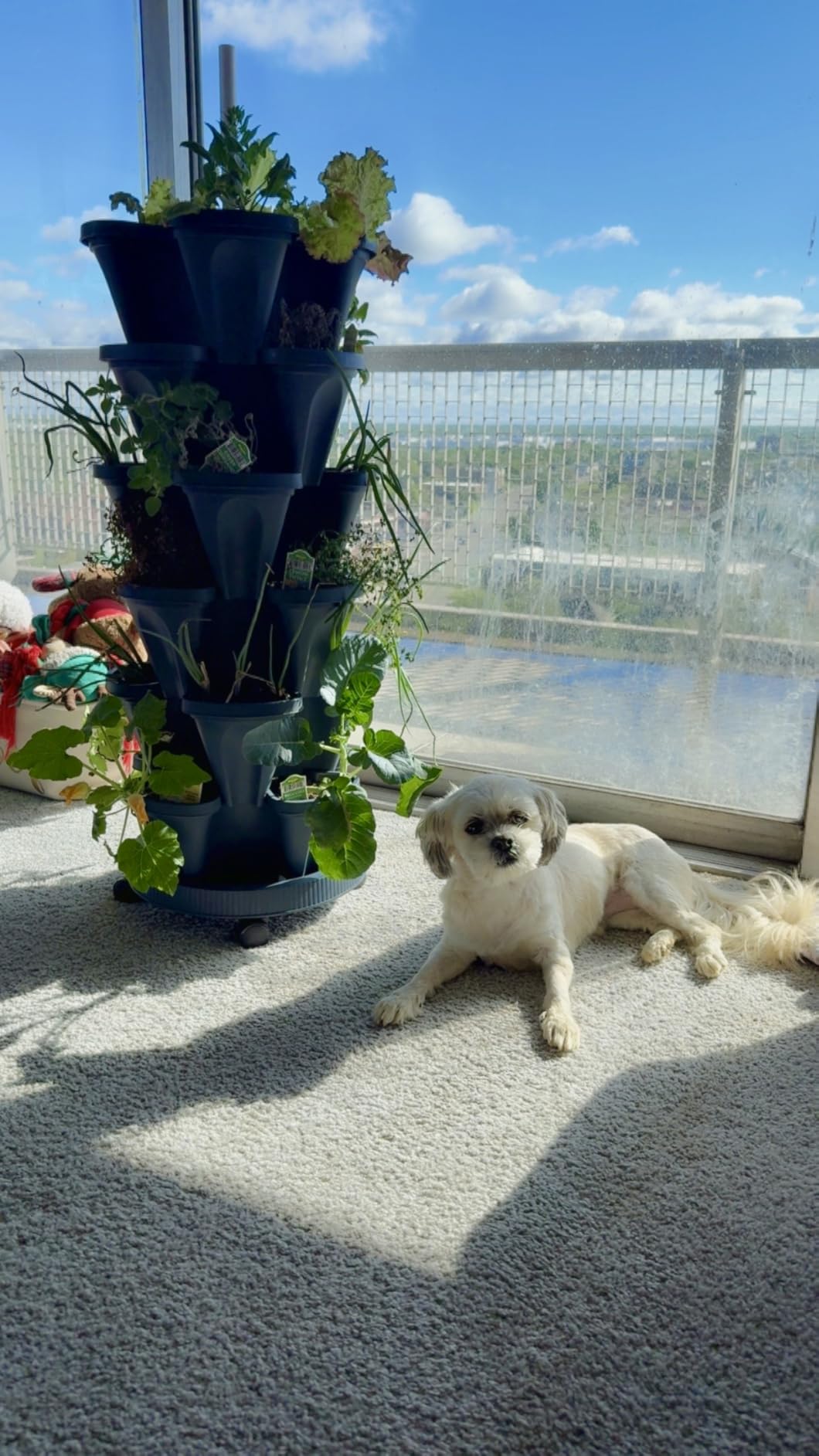
The structure is where the complaints sit. Thin plastic makes the tower top-heavy once loaded and prone to tipping, and the small casters are really only happy on smooth indoor surfaces — on rough concrete they struggle, and on a balcony they may need replacing after a season.
Strawberries are the plant owners ask about most here, and some report berries washing out or spoiling in the pockets after rain. The saucer also has no centre support, so tiers can shift on the base if you nudge it, and some packages arrive without the extension tube.
Who this tower suits
It suits apartment and condo growers who want maximum plant count from a tiny corner and can accept replacing the casters for outdoor use. It is a good match for greens, spinach, arugula, mustard greens and small herbs.
Where it falls short
It is not for heavy or deep-rooted vegetables, and tip-over risk is the first thing you will notice on an exposed balcony. The wheels and the centre pole connection are both reported as weak points.
8. VECELO 5 Tier Self Watering Tower – the tidiest small-balcony option
VECELO 5 Tier Vertical Garden Planter, Self Watering Stackable Planters with Wheels for Strawberries, Herbs, Flowers, Vegetables, White
5 tiers in a 13.19 inch footprint
13.19 x 13.19 x 30.31 inch
4.9 pounds empty
Plastic with wheels
Pros
- Compact footprint suits a small balcony
- Movable wheels let you follow the sun
- Assembles quickly and looks tidy
- Good drainage keeps roots healthy
Cons
- Self-watering claim does not deliver in practice
- Only about 4 inches of usable planting depth
- Light plastic tips over when fully loaded
It looks like the right answer for a small balcony: five tiers inside a 13.19 inch square, 30 inches tall, with wheels so you can slide it along the railing as the sun moves. Assembly is quick and the finish looks tidy enough to leave in view.
Used for herbs and ornamental flowers, it works. Buyers on tight balconies report good results and appreciate the colour range, and the drainage does keep the root zone from sitting in water during wet spells.
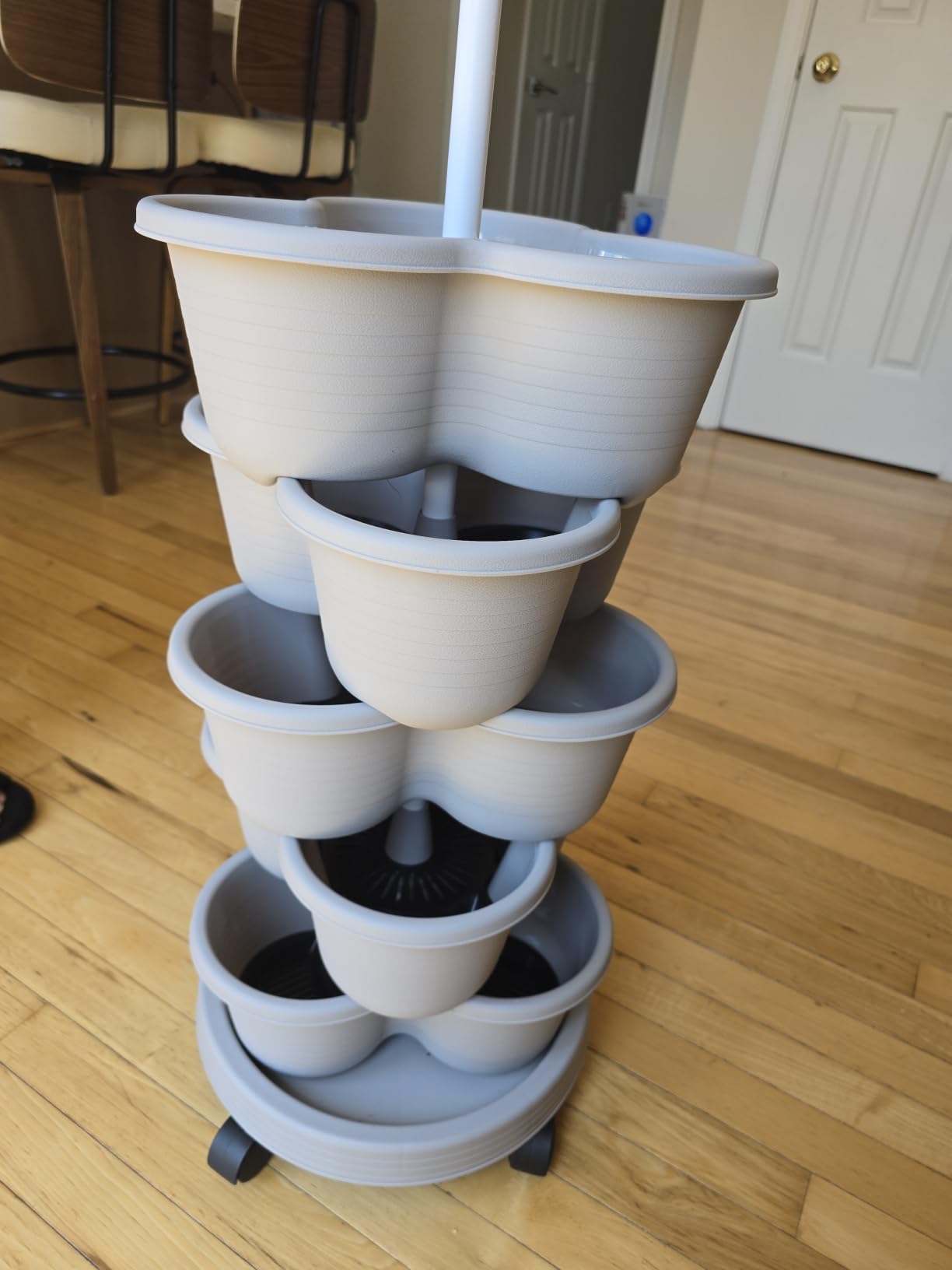
Be clear-eyed about the watering. Despite the self-watering label, owners report watering each pot separately because water does not reliably move between tiers. Budget for several short waterings a day in hot weather rather than one daily soak.
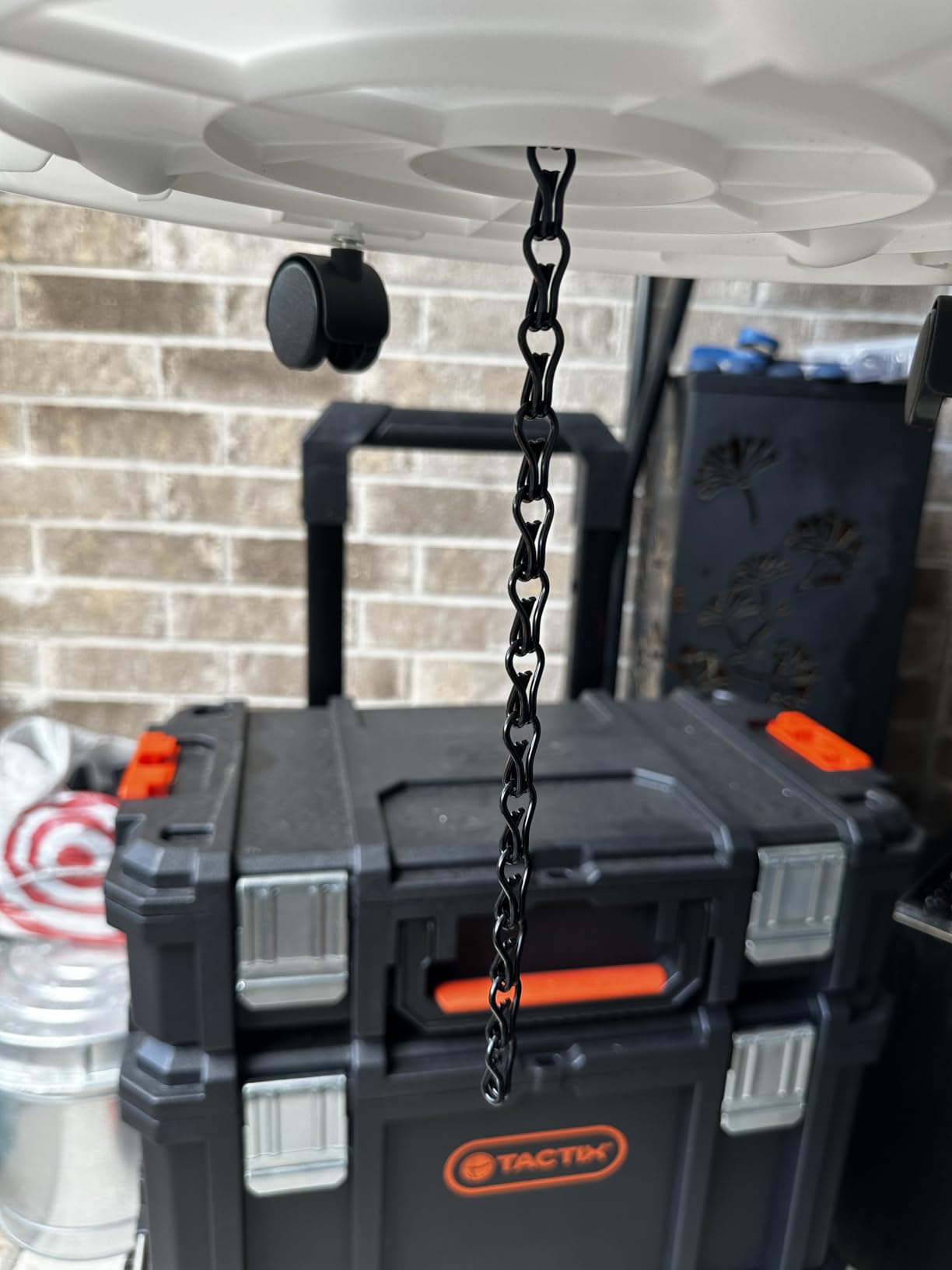
Depth is the other limit. Usable planting depth runs to about four inches, so this grows chives, parsley, cilantro, thyme, lettuce and flowers, not much else. The plastic is light enough to tip when fully loaded, and the white centre pipe stands above the top tier.
Who this tower suits
It suits a first-time balcony grower who wants a kitchen herb corner and attractive flowers rather than a vegetable harvest, and anyone who wants a tower they can move with one hand.
Where it falls short
It is the least suited to heat, because the self-watering path does not deliver what the listing suggests. Shallow pockets, light plastic and a chain that works loose mean it is a fair-weather balcony plant stand.
9. G TALECO GEAR 5 Tier Steel Planter – the sturdiest option in wind
5-Tier Vertical Garden Planter,4.4Ft Planter Box with 5 Container Boxes
5 powder-coated steel tiers
43 x 8 x 26 inch
5.29 kg empty
Triangular braced frame
Pros
- Steel frame is far sturdier than plastic towers
- Triangular bracing handles soil and water weight
- Five long boxes give generous root room
- Slim 8 inch depth suits balconies
Cons
- Only two drainage holes per box
- Long boxes need more floor or railing length
- Steel can rust outdoors if left wet
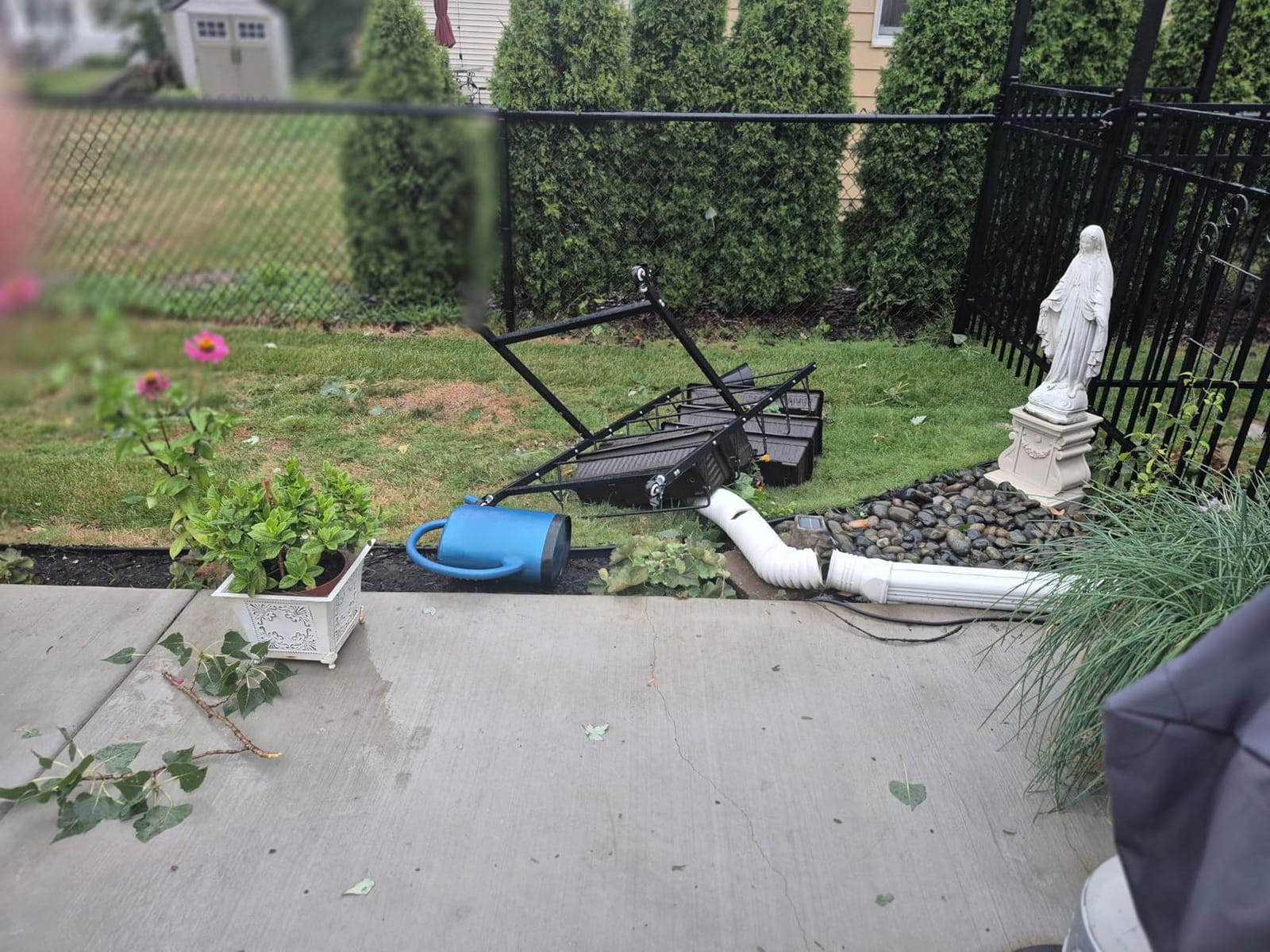
Every plastic tower in this roundup shares one weakness: they are light, top-heavy and tip. This one is built from a powder-coated steel frame with triangular bracing, and it simply does not move in a gust. On a high floor with wind funnelling between railings, that difference decides the outcome.
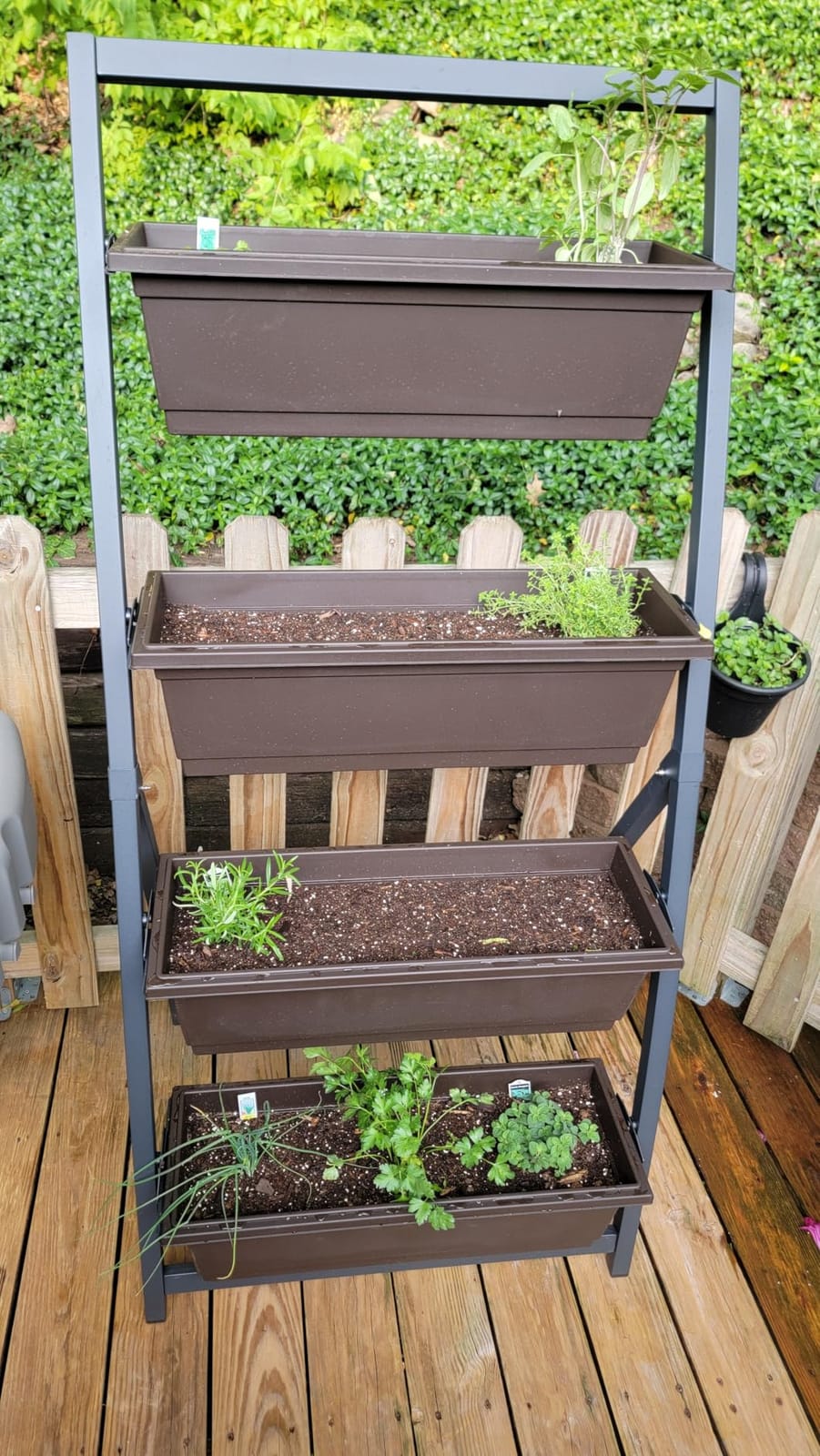
The five long planter boxes are wider than tower pockets, which means more soil per tier and room for herbs, flowers and vegetables with real root systems. At 8 inches deep it is slim enough to run along a balcony rail line or a narrow deck.
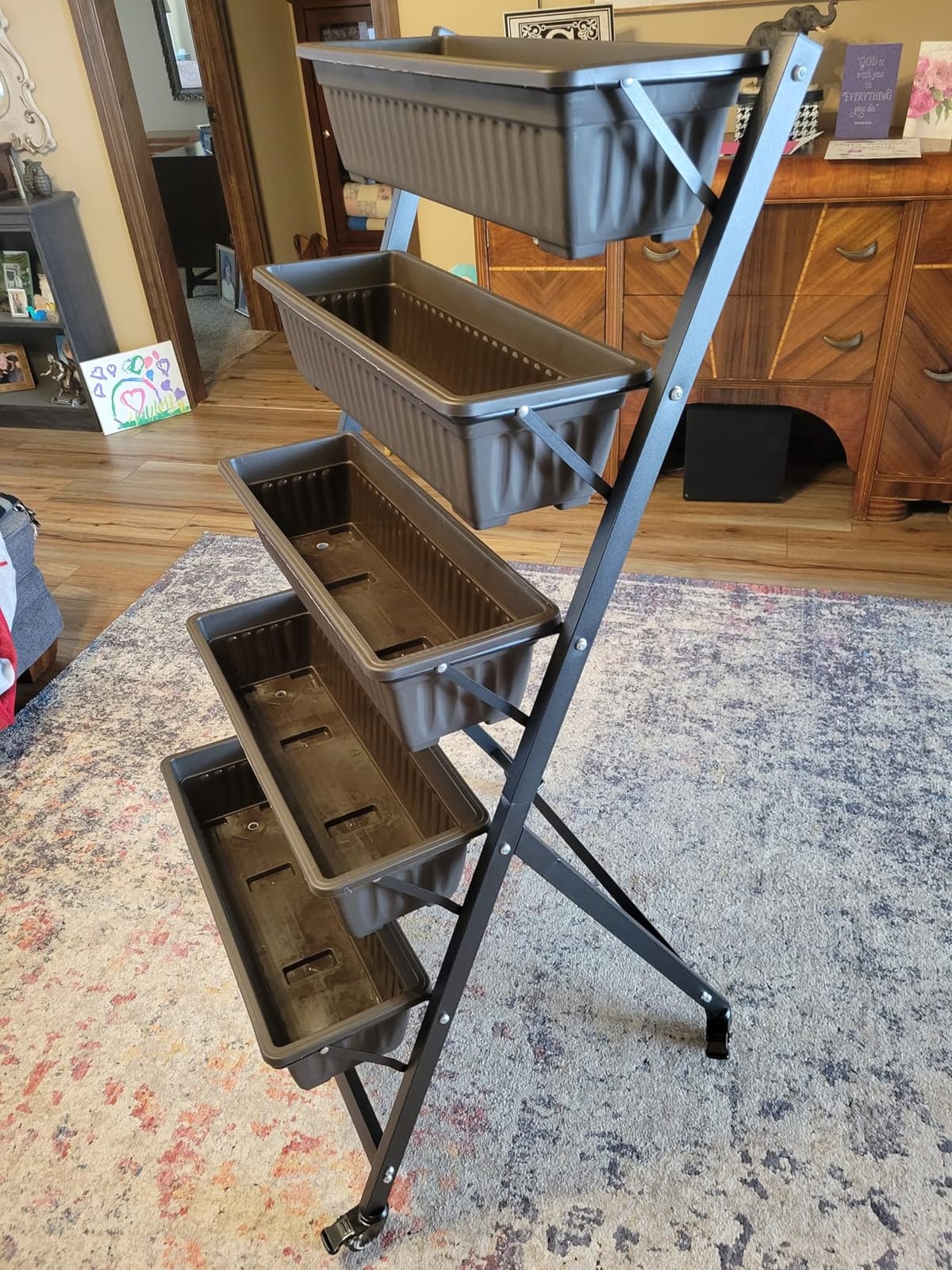
The trade is drainage and footprint. Each box has only two drainage holes, so water can pool during wet weather, and long horizontal boxes need more length than a compact square tower — measure your railing run before you commit.
Steel also needs care outdoors. If you leave it wet, powder coating eventually gives way and rust appears at the joints. It is also heavier than the plastic towers, so moving it takes two people once it is planted.
Who this tower suits
It suits exposed balconies, shared decks and anyone whose top priority is a structure that will not tip. It also suits growers who want conventional boxes rather than small angled pockets.
Where it falls short
It suits neither a very narrow footprint nor very wet climates without extra drilling. The frame is fixed height, so there is no adjusting the tier count to suit the season.
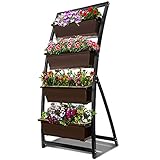
10. Outland Living 4 Container Vertical Garden Bed – the deepest root zones
6-Ft Raised Garden Bed – Vertical Garden Freestanding Elevated Planter with 4 Container Boxes – Good for Patio or Balcony Indoor and Outdoor – Perfect to Grow Vegetables Herbs Flowers
4 bins of 28 liters each
100 quart capacity
23 x 30 x 65 inch
30 pounds empty
Pros
- Highest rated option here with 85 percent five-star reviews
- Deep 28 liter food-grade BPA-free bins
- Bins tilt forward for planting and harvesting
- Staggered tiers give each container its own light
Cons
- Tallest option at 65 inches
- 30 pounds empty so two people to move
- Frame can rust where rainwater collects
This is the most highly rated product we looked at, and the reason is depth. Each bin holds 28 liters of soil, which is an order of magnitude more root space than the angled pockets on a stackable tower. That is the difference between growing chives and growing a genuinely productive vegetable balcony.
It is also the most comfortable to work with. The bins tilt forward on their brackets so you can plant and harvest without stooping, the tiers are staggered so each container gets its own share of light, and owners with hip or back problems single this out as the reason they can garden at all. Assembly takes 15 to 30 minutes with the illustrated instructions.
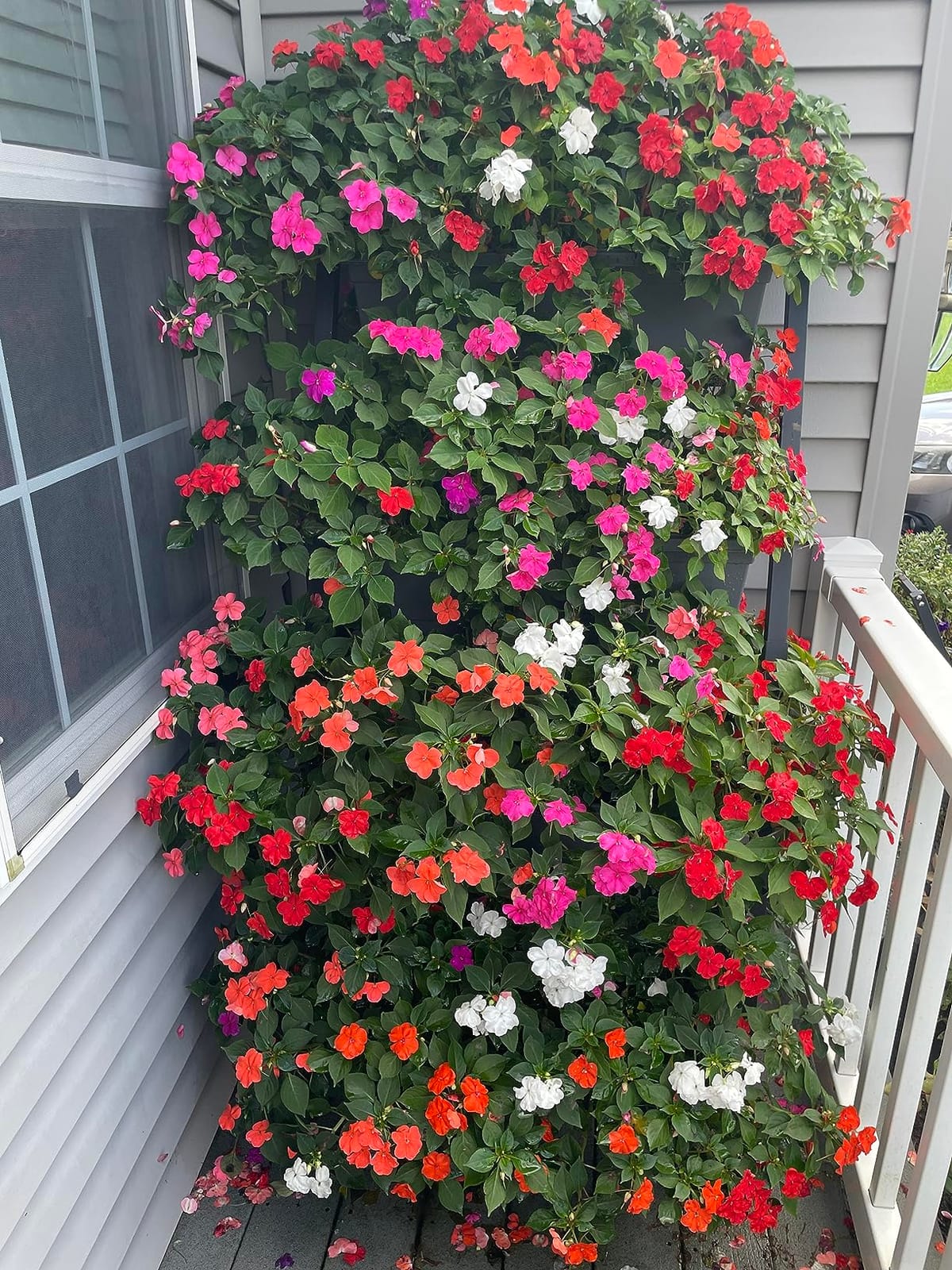
Size is the honest drawback. At 65 inches tall and 30 pounds empty, it is a substantial object, the top bins are genuinely hard to reach for anyone short, and moving it needs two people. It also takes a real amount of floor space compared with a corner tower.
Two operational notes. The bins arrive without drainage holes and most owners drill their own, and the powder-coated frame can sit in collected rainwater and spill rusty water, especially if you leave a bin out. Watch it in wet climates.
Who this tower suits
It suits balcony growers who want a substantial edible harvest, and anyone who cannot or will not bend down. The food-grade, BPA-free polypropylene bins are safe for salad crops grown close to a kitchen door.
Where it falls short
It is the hardest to move, the tallest in the roundup and the least suited to a small balcony or a high floor where you would need to lift a heavy frame through a narrow door.
What to Look for in a Vertical Garden Tower for a Balcony
Footprint and tier count come first. A tower is measured by the floor it occupies, not the area it covers when full, so check the listed dimensions against your actual clear space with the door and railing in mind. A 19 inch square tower such as the GreenStalk needs roughly three square feet of clear standing room, while a 13 inch tower fits a corner but gives you much less soil.
On tier count, balcony growers ask the same question constantly: five tiers or seven? The consensus answer is that four to five tiers is the sweet spot for a balcony, because a seventh tier adds height and top-heaviness without adding much usable planting area, and makes tip-over risk meaningfully worse. Only choose seven tiers if your corner is sheltered and the base is genuinely stable.
Drainage matters more than capacity. Every stackable tower relies on water falling from one tier to the next, which means the top tier is always the driest and the bottom tier the wettest. Check how many drainage holes each pot has, because several towers here need extra holes drilled before they perform properly. A pot with two or three holes in a wet week will waterlog its neighbours.
Self-watering claims vary enormously. A true reservoir design like the GreenStalk distributes water evenly from a top reservoir. Cheaper towers simply pass water downward, which over-saturates the top and starves the bottom. Read the mechanism, not the label.
Wet weight is the number nobody publishes, so work it out yourself. Add the listed empty weight, then add the stated capacity in gallons or quarts converted to weight, then assume the soil is fully saturated. A tower holding 40 gallons of wet soil is heavier than most people expect, and that decides whether you can move it or whether you need castors.
Material and UV resistance decide longevity. Thin polypropylene towers are the cheapest and can crack or fade after one or two sun seasons in direct sun. Look for UV-stabilised, food-grade, BPA-free plastic, and check whether individual replacement tiers are sold separately, because a cracked pot in a five-tier column is otherwise a replacement of the whole column.
Finally, light. A south or west facing balcony supports almost anything, a north-facing balcony supports leafy greens, herbs and strawberries with a little patience, and an east-facing balcony suits fast crops that finish before the afternoon heat. If your balcony is partly shaded, wheels on the base are worth more than an extra tier.
Why Stacked Towers Water Unevenly
Every tower in this roundup has the same structural quirk: gravity moves water down, so the bottom tier is wetter than the one above it, all the way to the top. Most owners discover this the hard way, with brown plants in the top tier and soggy roots at the base, because they plant the same crop in every pocket.
Plant into the gradient instead of fighting it. The bottom tiers take the thirstiest crops — leafy greens, salad leaves, strawberries, mint and chives all tolerate wet feet. The middle tiers suit the bulk of an herb garden. The top tier is the dry, sunny position, so put the drought-tolerant Mediterranean herbs there: rosemary, thyme, oregano and sage.
Two habits fix the top tier in hot weather. Water the top pot directly rather than pouring into the column below, and check the upper tier twice a day when temperatures are high. Growers in genuinely hot climates report that no tower, including self-watering models, keeps the top tier alive on a single daily watering in peak summer.
Balcony Rules: Wind, Drainage and Renter Limits
Wind is the number one structural risk. A 40 inch plastic column with a small base is a sail, and balcony corners funnel air between the railing and the building. If your balcony is exposed, choose a braced steel or wide-frame design, or push the tower against a wall, or add a support pole through the centre hole. Keep taller towers well away from the railing edge.
Weight and load are the second rule. A planted tower is far heavier than its listing weight, so avoid placing one directly on a weak balcony edge and never drag a full tower by its top tier. If you cannot lift it easily when saturated, buy castors now rather than after your first attempt.
Drainage and landlord rules are the third. Runoff from balcony planters stains paving and can reach the apartment below, so put a saucer or tray under every tower and check your lease before drilling anything into a railing or facade. Most renters solve this with freestanding units, hanging planters, or clamp-on railing mounts that need no holes at all.
Finally, plan the off-season. If you get frost, a tower on castors can be rolled indoors, while a fixed steel frame may simply have to be emptied and stored. Decide this before you fill it with soil.
Frequently Asked Questions
What are some good vertical garden ideas for a balcony?
A stacked planter tower gives you the most plants per square foot, and tiers can be sized to match your space. A rail-mounted or hanging planter uses railing length instead of floor. A freestanding frame planter with tilting bins is easier on backs and holds far more soil. A wheeled tower can be rolled to chase sun, and a single large pot on a stand works if you only want herbs.
What are the downsides of having a vertical garden?
Water runs downhill, so top tiers dry out while bottom tiers waterlog unless you plan plant placement around that gradient. Tall towers are top-heavy and can tip in wind or on uneven tiles. A planted tower is much heavier than its listed weight. Small angled pockets limit root depth, so deep-rooted vegetables struggle, and low-cost plastic can crack or fade after a couple of sun seasons.
What is the best vertical garden system?
For most balconies, a soil-based stackable tower with a genuine top reservoir is the best system, because it waters every tier evenly without electricity. A five-tier configuration is the practical sweet spot for balcony footprints, and a wheeled base is more useful than an extra tier. Choose a braced metal or wide-frame design instead if your balcony is wind-exposed.
What are the best planters for balconies?
For a small footprint, a three or five tier stackable tower in polypropylene is the easiest option to move and fill. For a productive harvest, a freestanding frame with deep tilting bins gives far more root room per plant. For windy balconies, a powder-coated steel or wide-frame planter is far more stable than any light plastic column. Add castors or place the unit against a wall.
What are the disadvantages of hydroponic towers?
Hydroponic towers need a pump, nutrient solution and a constant electricity supply, so a power cut or pump failure can damage the whole crop within hours. They also need far more light than a typical balcony receives, and the solution has to be monitored and topped up. They suit a bright indoor corner or greenhouse far better than an exposed balcony.
What plants work well in a vertical garden?
Work with the watering gradient rather than against it. Put thirsty crops such as leafy greens, salad leaves, strawberries and mint in the bottom tiers, most of your kitchen herbs in the middle, and drought-tolerant Mediterranean herbs such as rosemary, thyme, oregano and sage in the top tier. Compact crops suit small angled pockets; tomatoes and other deep-rooted plants need wide bins or boxes.
Conclusion: Our Balcony Tower Verdicts in 2026
For most balconies, the Mr. Stacky 3 tier stackable garden is the best vertical garden tower in 2026 because it is light enough to carry, simple to fill and cheap to replace. If you want more height for the same money, the VIVOSUN 5 tier stack is the best value option in the group.
When watering is the thing you are tired of fighting, the GreenStalk 5 tier is the only tower here that wets every tier at once. When wind is the problem, choose the braced steel planter. And when you want a real harvest rather than herbs, the Outland Living frame gives you 28 liter bins that tilting towers simply cannot match.
Whichever you pick, plan the tier planting around the moisture gradient, put a tray underneath, and check your balcony rules before you start. Our picks and verdicts for the best vertical garden towers for balconies will hold up as long as the physics of wet soil and moving air does not change.