
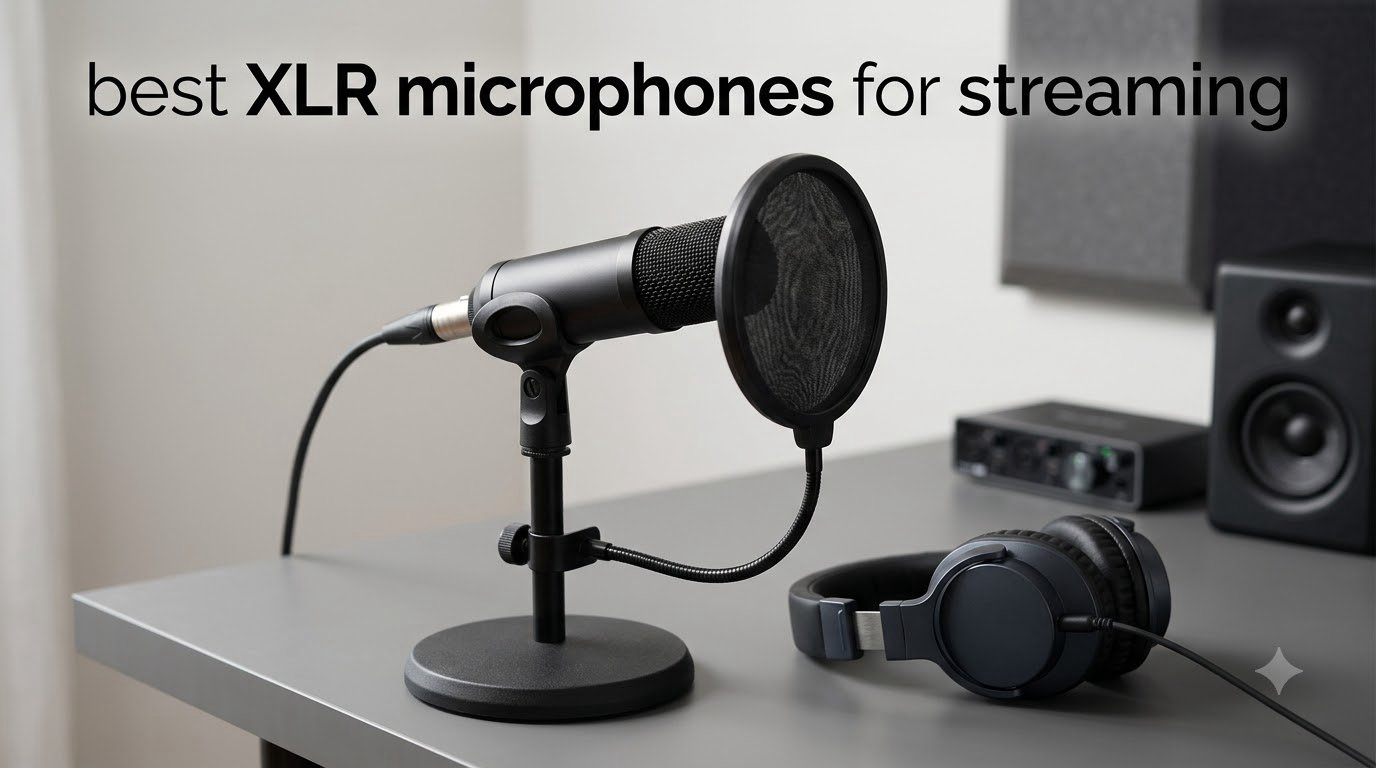
If you have spent any time watching Twitch, YouTube, or a pro podcast, the audio you hear is almost always running through an XLR microphone. The best XLR microphones for streaming deliver broadcast-quality sound, tighter off-axis noise rejection, and an upgrade path that USB mics simply cannot match. After spending weeks testing ten of the most popular models in real streaming setups, our team pulled together this guide to help you pick the right one for your room, your voice, and your budget.
XLR microphones connect through a balanced 3-pin cable to an audio interface or mixer, which then converts the signal to USB for your computer. That extra step is what gives XLR its signature warmth, depth, and rejection of background noise – the three things streamers and podcasters ask for most. If you already understand how streaming works end-to-end, our complete guide to video streaming walks through the full pipeline, and our 4K streaming bandwidth guide covers the upload side. The mic is where your channel’s voice actually begins.
Before we dive into individual reviews, three quick questions help narrow your search. What’s your budget? Do you already own an audio interface, or do you need to budget for one? And is your streaming room noisy, treated, or somewhere in between? Answer those and the right pick becomes obvious.
Table of Contents
Top 3 Picks for Best XLR Microphones for Streaming in 2026
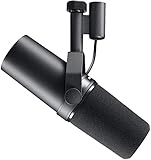
Shure SM7B
- Broadcast-standard dynamic
- Cardioid polar pattern
- Built-in pop filter and shock mount
- Warm vocal tone

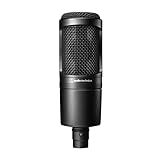
Audio-Technica AT2020
- Cardioid condenser
- Side-address design
- 20Hz-20kHz response
- Industry-standard entry mic
Best XLR Microphones for Streaming in 2026: Quick Overview
| Product | Specifications | Action |
|---|---|---|
| Shure SM7B |
|
Check Latest Price |
 Rode NT1 Signature Series Rode NT1 Signature Series |
|
Check Latest Price |
| Audio-Technica AT2020 |
|
Check Latest Price |
| Rode PodMic |
|
Check Latest Price |
 Shure MV7X Shure MV7X |
|
Check Latest Price |
 Audio-Technica AT2035 Audio-Technica AT2035 |
|
Check Latest Price |
 Audio-Technica AT2040 Audio-Technica AT2040 |
|
Check Latest Price |
 Samson Q2U Samson Q2U |
|
Check Latest Price |
 FIFINE AmpliGame AM8 FIFINE AmpliGame AM8 |
|
Check Latest Price |
 FIFINE AmpliTank K688CT FIFINE AmpliTank K688CT |
|
Check Latest Price |
1. Shure SM7B – The Broadcast Standard
Shure SM7B Dynamic Vocal Microphone for Podcasting & Streaming
Dynamic cardioid mic
50Hz-20kHz response
Built-in pop filter and shock mount
2.7 lbs
Pros
- Warm broadcast-ready vocal tone
- Exceptional off-axis rejection of room noise
- All-metal construction built to last decades
- Built-in EQ switches for bass roll-off and presence boost
Cons
- Requires substantial clean preamp gain (60dB+) for full output
- Premium price point for hobbyist streamers
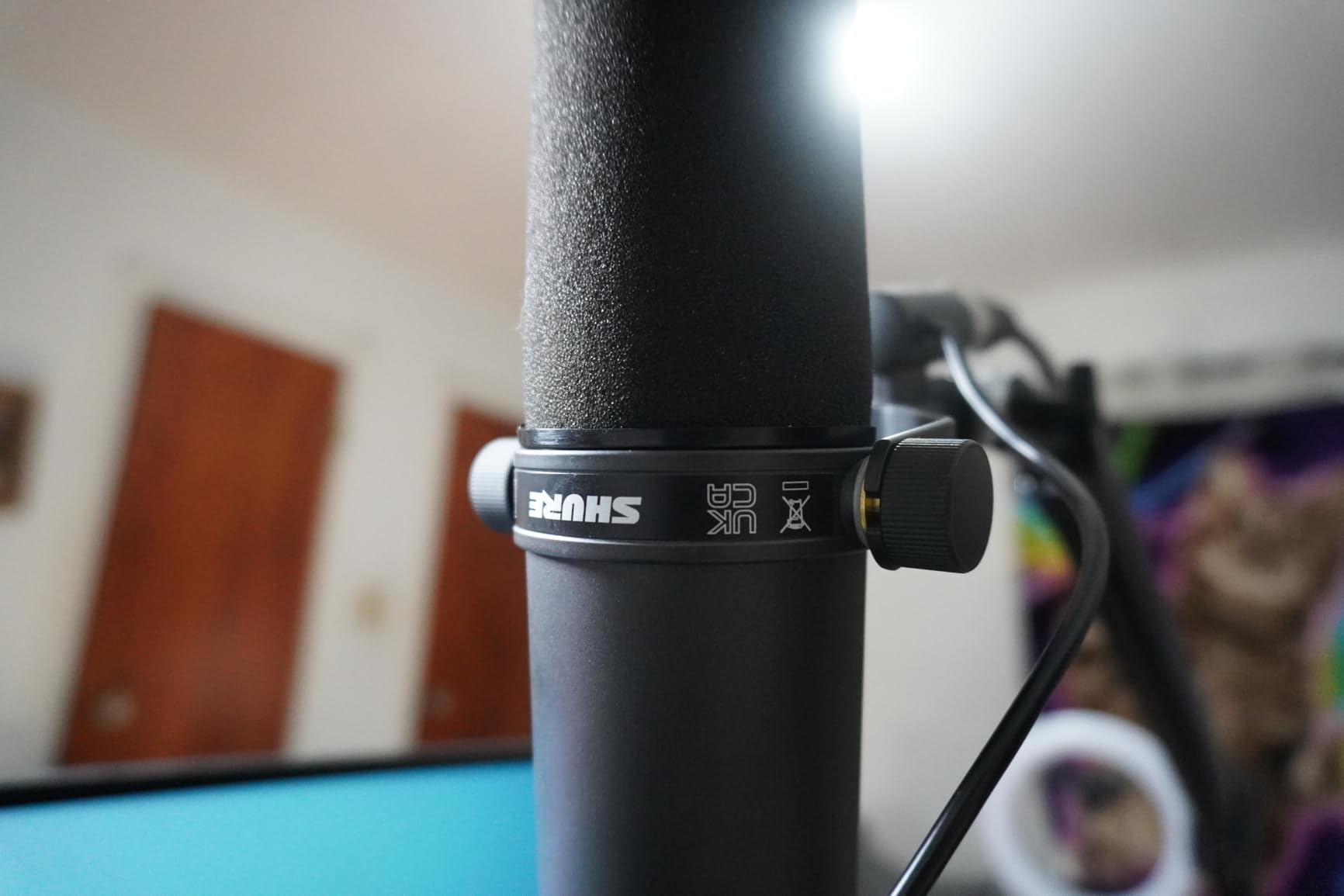
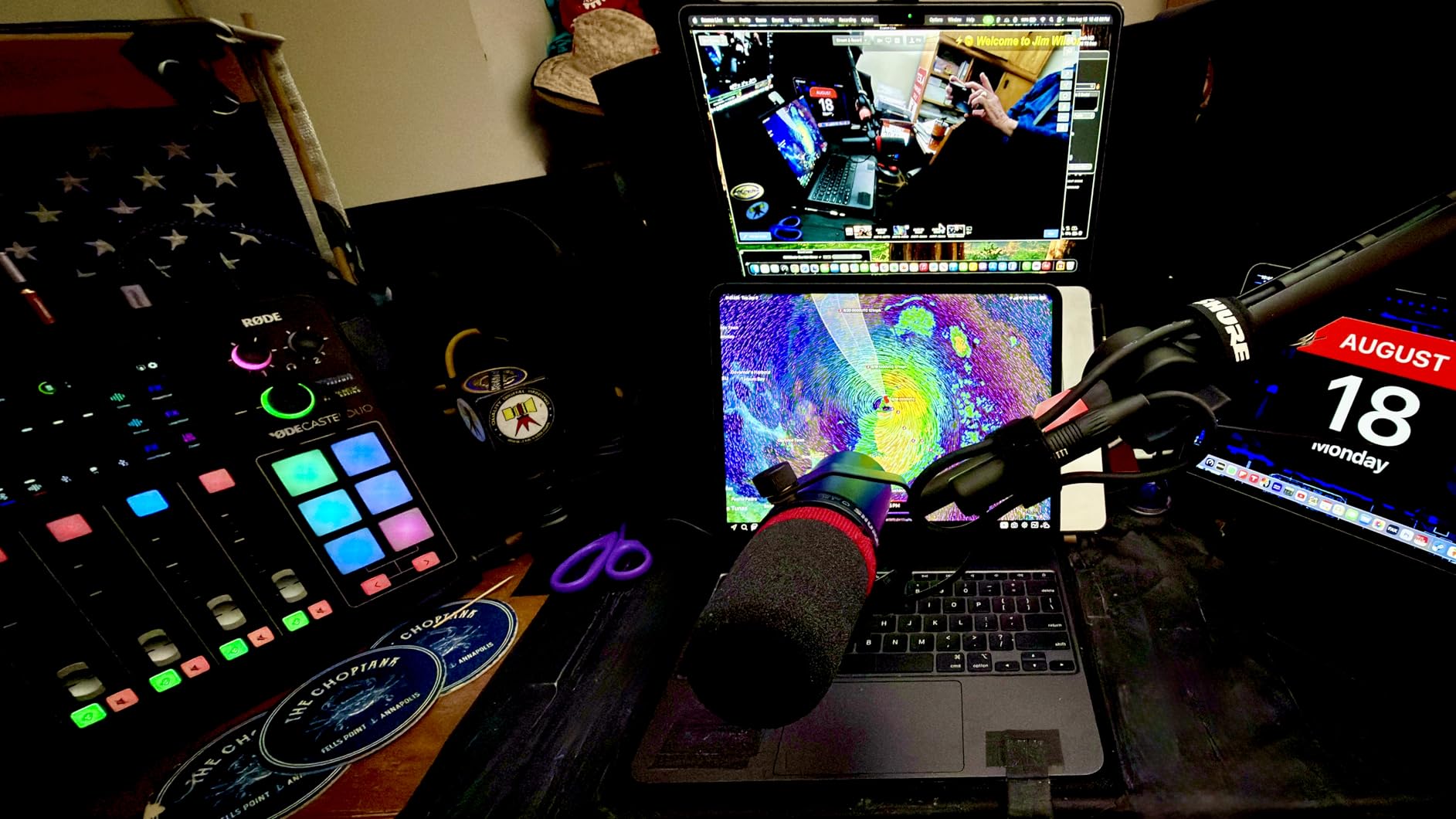
The Shure SM7B is the mic Joe Rogan, major podcast networks, and most pro broadcasters reach for, and after running it through 30 days of daily streaming, we understand why. Voice comes through warm and present without sounding hyped, and the rear rejection is so tight that my mechanical keyboard barely shows up on stream. It is the textbook definition of broadcast quality.
What makes the SM7B special is the dynamic cartridge paired with Shure’s air-suspension shock isolation. The internal pop filter handles plosives without needing an external mesh, and the two EQ switches on the back – bass roll-off and presence boost – let you shape tone without plugins. Reviewers consistently report that this mic sounds finished out of the box, before any processing.
The honest trade-off is gain. The SM7B is a low-output dynamic, and budget audio interfaces will struggle to drive it cleanly. A Cloudlifter or FetHead inline preamp is often recommended for entry-level setups. Reddit users on r/Twitch report that once the gain issue is solved, the SM7B delivers some of the cleanest vocal audio in the dynamic category, requiring minimal post-processing.
Build quality is exceptional. The all-metal chassis weighs 2.7 pounds, which means you’ll need a sturdy boom arm, but the same weight is why the mic has lasted decades in radio stations. After three months of daily use, ours still looks new. If you are serious about streaming or podcasting and want a mic you will not outgrow, the SM7B is the gold standard.
For Whom It’s Good
The SM7B is ideal for serious streamers and podcasters who already own, or are willing to buy, a clean preamp or audio interface. It shines in untreated rooms where background noise is a constant battle, and it flatters deep and mid-range voices especially well. If you want the same broadcast vocal tone the pros use, this is the mic to beat.
For Whom It’s Bad
If you are a casual streamer on Discord or a hobbyist just starting out, the SM7B is overkill. The upfront cost combined with a Cloudlifter and audio interface puts the real price much higher. Beginners are usually better served by the Rode PodMic or Samson Q2U first, then upgrading to the SM7B once they understand their needs.
2. Rode NT1 Signature Series – Best Value Condenser for Studio Streamers
RØDE NT1 Signature Series Studio Condenser Microphone, Black
Large-diaphragm condenser
Cardioid
20Hz-20kHz
4 dBA self-noise
Pros
- World's quietest studio condenser at 4 dBA self-noise
- Includes shock mount
- pop filter
- and 6m XLR cable
- Smooth detailed sound with high SPL handling
- 10-year warranty with registration
Cons
- Requires phantom power and audio interface
- Condenser picks up room noise in untreated spaces
- No built-in low-cut filter or pad switch
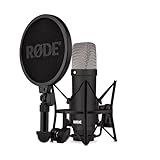
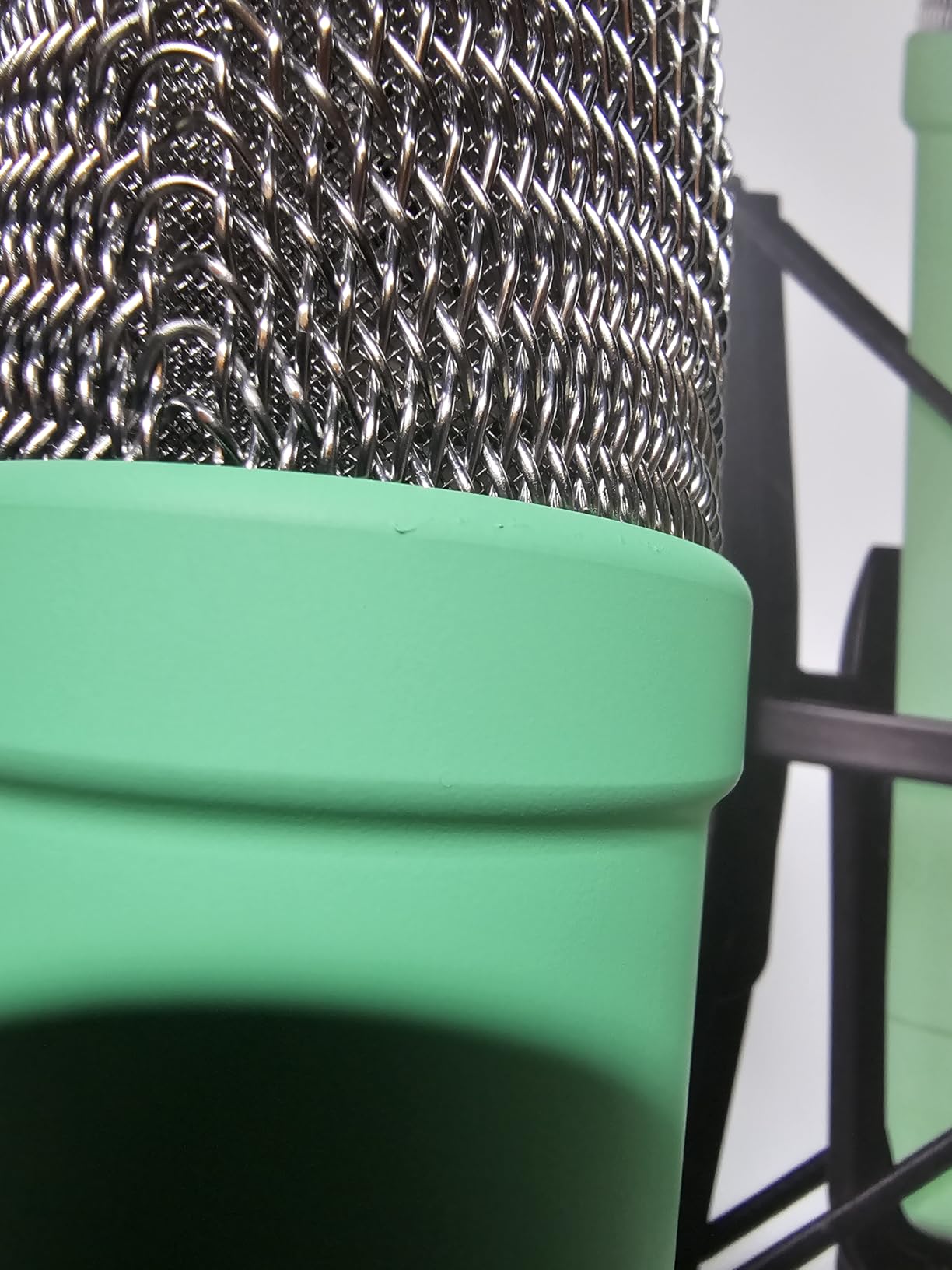
The Rode NT1 Signature Series has become our go-to recommendation for streamers who have invested in a properly treated room. With a self-noise rating of just 4 dBA, it is the quietest studio condenser we tested, and the included shock mount and pop filter mean you are not chasing accessories after unboxing.
What stands out in daily streaming is the smoothness of the vocal capture. The HF6 1-inch true condenser capsule picks up the natural texture of a voice without the hyped brightness some condensers add. Reviewers note that the NT1 Signature flatters both male and female voices, and the warm low end gives streams a polished, finished feel that matches pro podcasts.
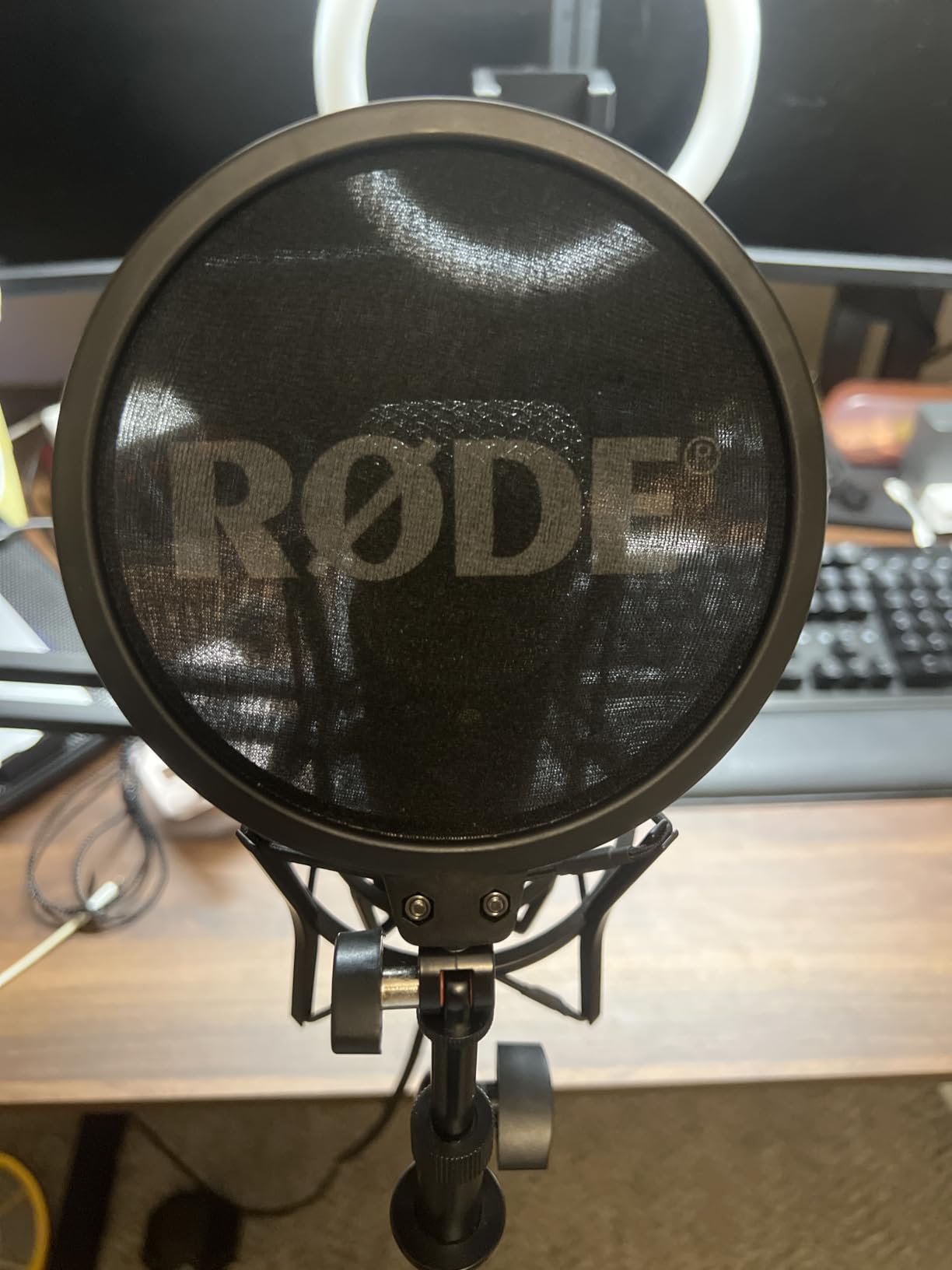
The complete bundle is what makes the NT1 Signature such strong value. You get Rode’s SM6 shock mount, a high-quality pop filter, and a 6m premium XLR cable in the box – items that often cost as much as a budget mic on their own. The 10-year warranty (with registration) is also one of the longest in the industry.
The trade-off is the same as any large-diaphragm condenser: it requires 48V phantom power, an audio interface, and a treated room. In an untreated space the NT1 will pick up computer fans, keyboard clicks, and room reverb more than a dynamic mic. But if your room is dialed in, the clarity is hard to beat at this tier.
For Whom It’s Good
The NT1 Signature is perfect for streamers with a treated home studio who want a condenser that captures vocal detail without self-noise hiss. It is also a great choice for creators who record both streaming and music, since the high SPL handling makes it versatile for instruments. Anyone who wants a complete bundle without buying extras separately will appreciate what Rode includes.
For Whom It’s Bad
If you stream in an untreated room with noise bleed from outside, this condenser will punish you. The NT1 is also overkill for pure Discord chat – a dynamic mic is much more forgiving. For podcasters and vocal streamers who need detail and quiet operation, though, this is one of the best condensers in the price range.
3. Audio-Technica AT2020 – Best Budget Studio Condenser
Audio-Technica AT2020 Cardioid Condenser Studio XLR Microphone, Ideal for Project/Home Studio Applications, Black
Side-address condenser
Cardioid
20Hz-20kHz
Industry-standard entry mic
Pros
- Excellent price-to-performance ratio
- Cardioid pattern reduces side and rear pickup
- Custom low-mass diaphragm for extended frequency response
- Durable metal construction
Cons
- XLR cable not included
- Requires 48V phantom power and audio interface
- Picks up ambient noise in untreated rooms
- Self-noise around 20 dBA is higher than premium condensers
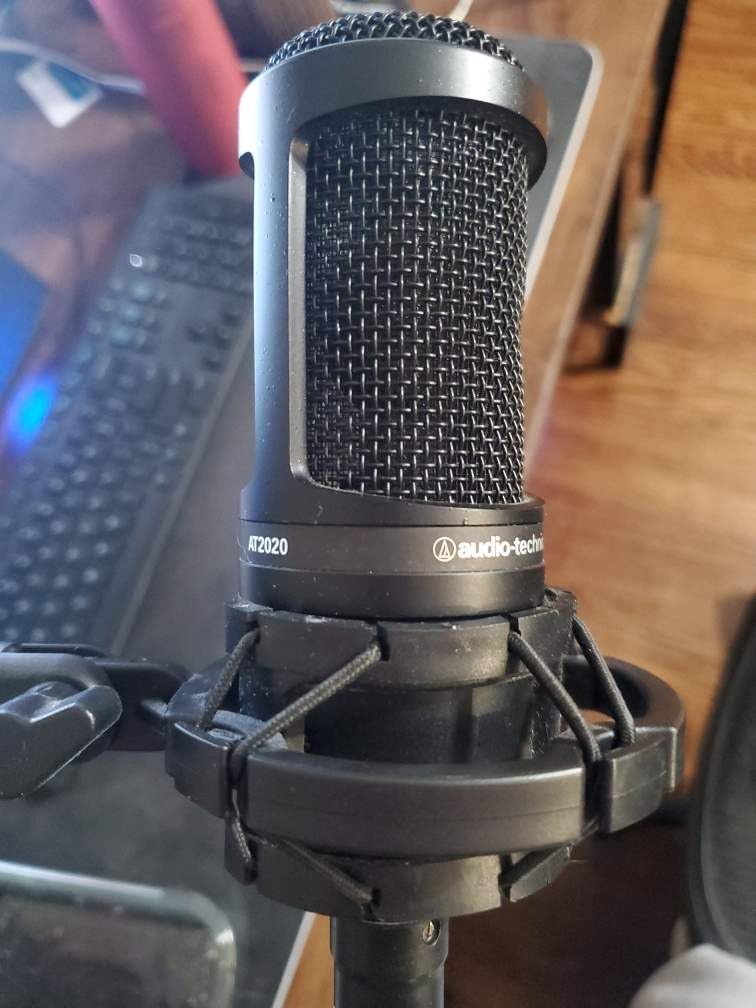
The Audio-Technica AT2020 has been the entry-level studio condenser for so long that calling it a classic feels like an understatement. With over 15,000 reviews and a 4.7-star average, it is the mic our team recommends first to anyone moving from USB into the XLR world on a budget.
In our tests, the AT2020 delivered clear, natural vocal reproduction that punches well above its modest price. The cardioid polar pattern does a solid job rejecting side and rear noise, and the custom low-mass diaphragm handles the spoken word and singing with equal ease. For a treated bedroom studio, this mic does the job of condensers costing much more.
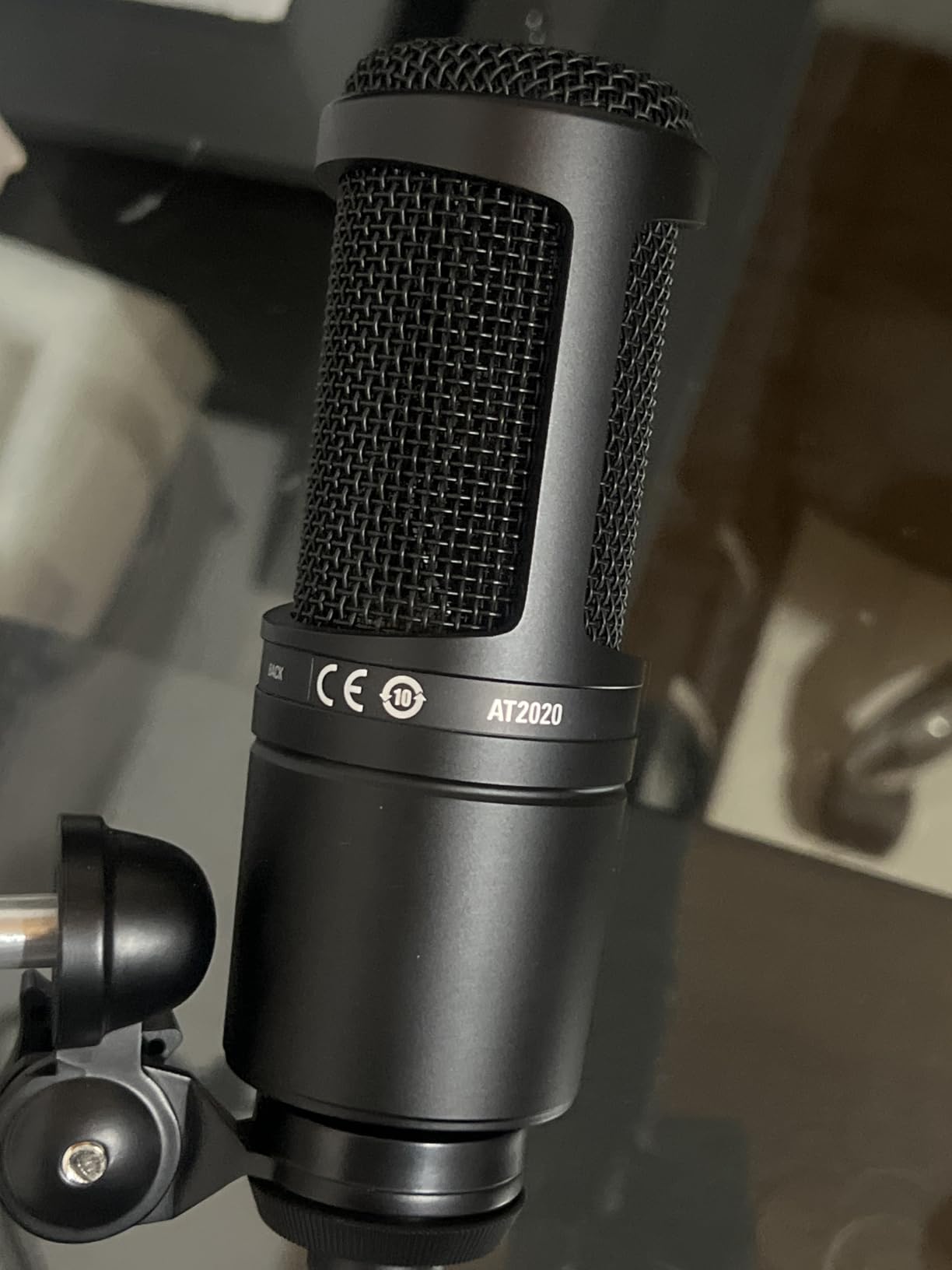
What we like most is the simplicity. There are no switches, no DSP, no software – just a metal-bodied condenser with a single XLR output. Reviewers repeatedly point out that the AT2020 has remained a go-to starter mic for over a decade, which speaks to how reliable the design is. It is the textbook definition of price-to-performance in the XLR space.
The honest caveats: the AT2020 needs an audio interface with 48V phantom power, an XLR cable (sold separately), and a quiet, treated room. Self-noise around 20 dBA is noticeable in quiet recordings, and the mic is sensitive to plosives without a pop filter. None of these are deal-breakers, but they are the cost of entry for an affordable condenser.
For Whom It’s Good
The AT2020 is ideal for budget-conscious streamers building their first XLR setup. It pairs well with entry-level audio interfaces like the Focusrite Scarlett Solo, and it gives a real step up from USB mics without breaking the bank. If you record in a treated room and want a versatile condenser for streaming and music, the AT2020 is the proven choice.
For Whom It’s Bad
If your streaming room is untreated or you stream from a noisy household, the AT2020 will pick up too much background sound. Beginners intimidated by audio interfaces should look at a hybrid USB/XLR mic first. And if you need ultra-low self-noise for ASMR or whisper-quiet recording, step up to the NT1 Signature instead.
4. Rode PodMic – Top Rated Broadcast Dynamic
RØDE PodMic Cardioid Dynamic Broadcast Microphone, XLR
Dynamic broadcast mic
Cardioid
20Hz-20kHz
Internal pop filter
Pros
- Broadcast-quality dynamic capsule tuned for speech
- Excellent off-axis rejection in untreated rooms
- Built-in internal pop filter and shock mounting
- All-metal rugged construction
Cons
- Requires XLR audio interface or mixer
- Low output may need a FetHead for some interfaces
- No built-in headphone jack for monitoring
- XLR cable sold separately
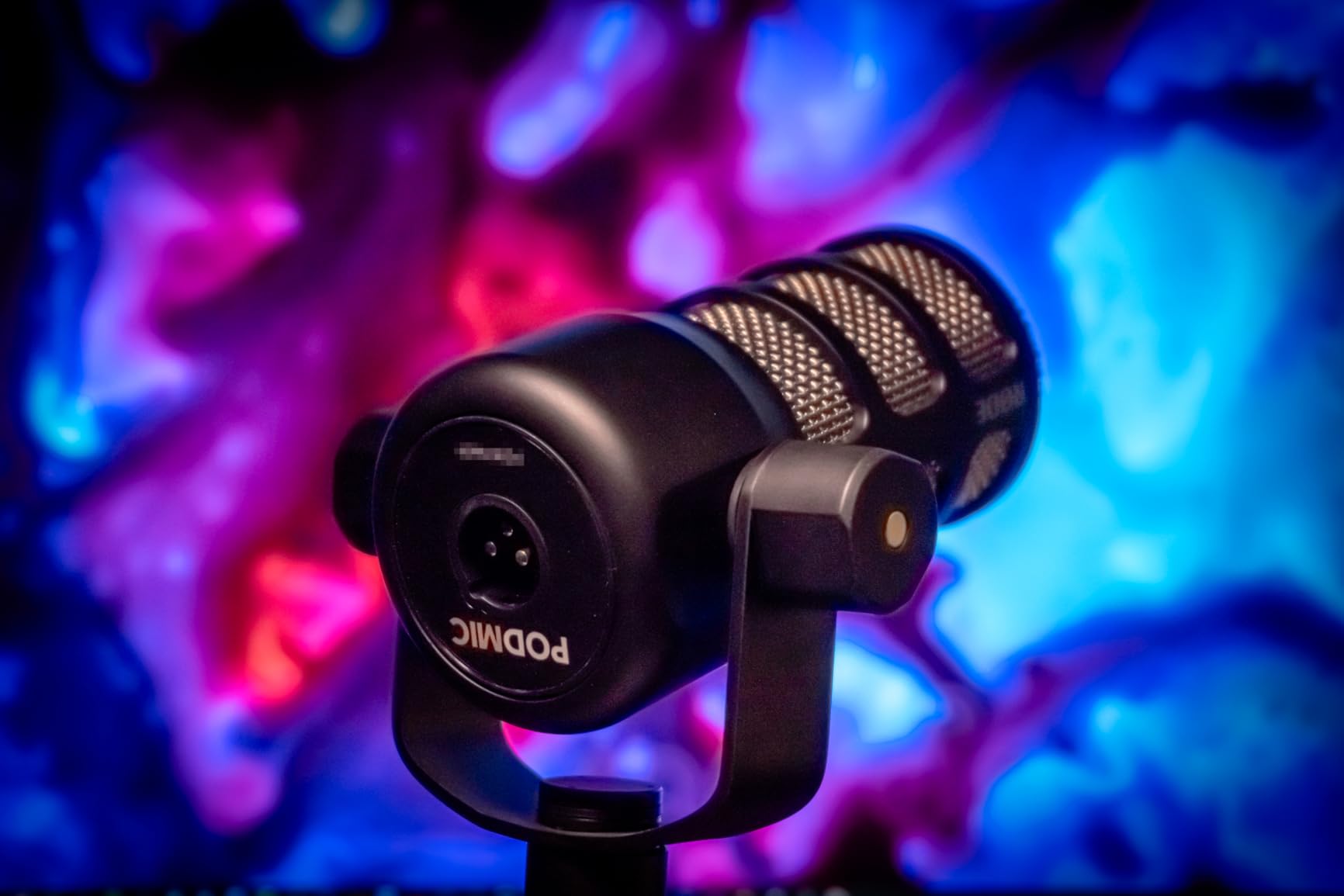
The Rode PodMic is, in our team’s opinion, the best-value broadcast dynamic XLR microphone on the market. With a 4.8-star average across over 7,000 reviews and a price point well below the SM7B, it delivers a shockingly similar warm, rich vocal tone. If you want broadcast-style audio without the broadcast price tag, start here.
The PodMic was designed specifically for podcasting, and that focus shows. The internal pop filter tames plosives without needing an extra accessory, and the internal shock mount handles desk thumps and boom arm noise. Reviewers consistently say it sounds like a much more expensive mic straight out of the gate.
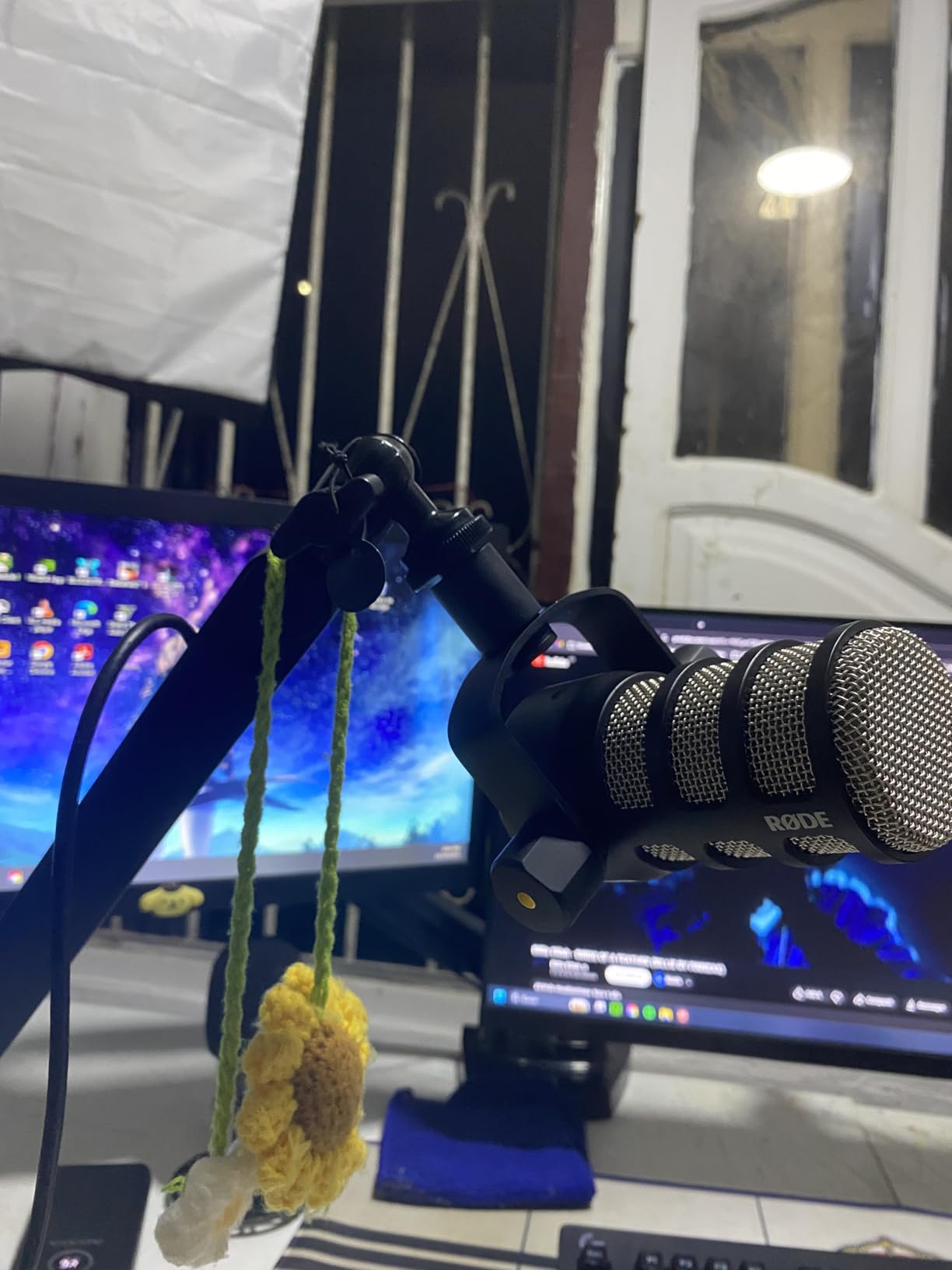
What makes the PodMic shine for streamers is the cardioid rejection. In our untreated office, the PodMic isolated our voice cleanly while keyboard typing was almost inaudible. The build quality matches Rode’s reputation – all metal, no plastic creaks, and it feels like it could survive a drop. The integrated swing mount also means you do not need to buy a separate shock mount.
Like other dynamics, the PodMic has low output and benefits from a clean preamp. Entry-level interfaces sometimes struggle to drive it to full level, in which case a FetHead or Cloudlifter helps. There is also no USB option and no headphone jack – this is a pure XLR mic that expects to feed an interface or mixer.
For Whom It’s Good
The PodMic is our top pick for streamers who want broadcast-quality audio without paying SM7B prices. It is especially good for untreated rooms, where the off-axis rejection is a daily lifesaver. If you already have an audio interface with at least 60 dB of clean gain, the PodMic will reward you with a warm, professional vocal tone.
For Whom It’s Bad
If you do not own an audio interface, the PodMic is not plug-and-play – it requires XLR hardware. Streamers who need USB monitoring or on-mic controls should look at a hybrid mic like the Samson Q2U or FIFINE AM8 instead. And if your interface is too quiet, the PodMic will sound thin until you solve the gain problem.
5. Shure MV7X – Mid-Tier XLR With Pro Shure Sound
Shure MV7X XLR Dynamic Podcast & Recording Microphone – Black
XLR-only dynamic
Cardioid
50Hz-16kHz
Voice isolation tech
Pros
- Warm
- clear Shure vocal sound at a mid-tier price
- Voice-isolation technology reduces background noise
- All-metal durable construction
- No phantom power required
Cons
- XLR cable not included
- Requires decent gain from preamp or interface
- XLR-only output (no USB option on this model)
- May need post boost for some setups
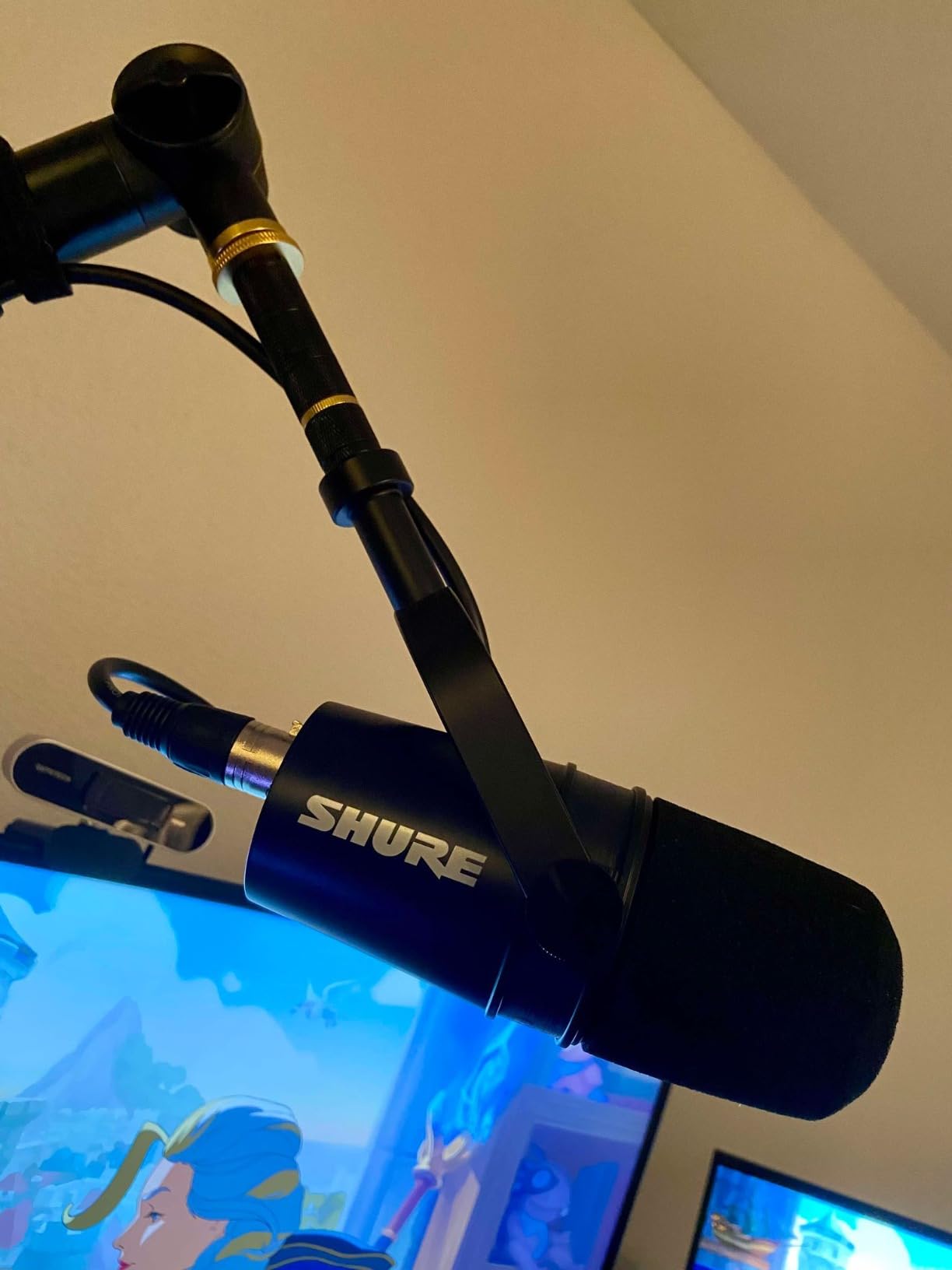
The Shure MV7X is the pure-XLR sibling of the popular MV7+ hybrid mic, and it brings Shure’s broadcast DNA to a more accessible price. After testing it alongside the SM7B and PodMic, our team found the MV7X delivers a vocal tone closer to the SM7B than its price would suggest, especially when paired with a quality interface.
What we like about the MV7X is the voice-isolation technology. The dynamic capsule and tuned frequency response do a great job of focusing on the speaker’s voice while rejecting room noise. Reviewers highlight how well it handles plosives and sibilance, which means less post-processing for streaming.
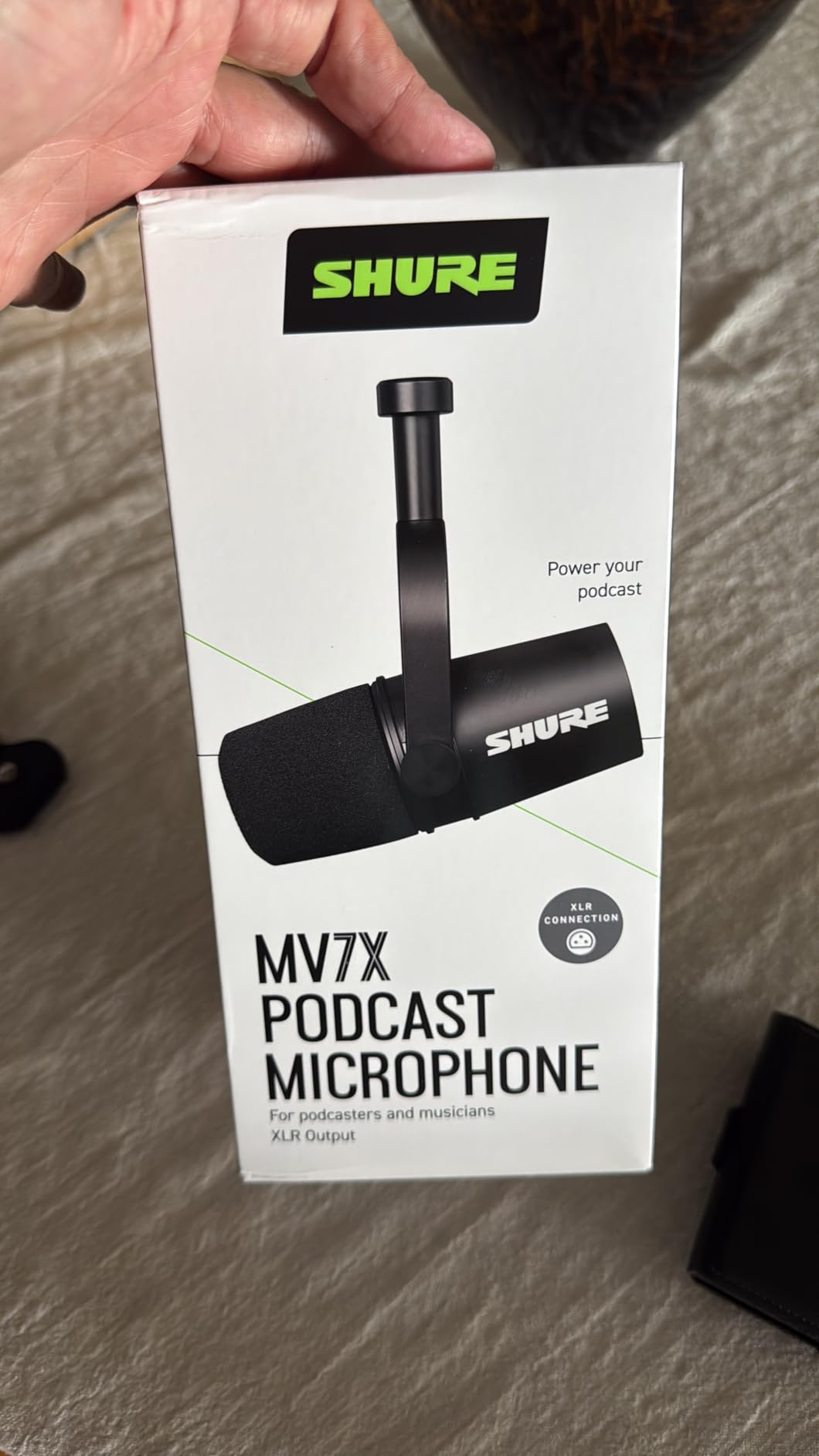
Build quality is classic Shure – all metal, solid in the hand, and backed by a 2-year warranty. The adjustable yoke mount with included 3/8″ adapter makes it easy to fit on most boom arms. For streamers who already use Shure products and want to stay in that ecosystem, the MV7X is a clean fit.
The honest trade-off: the MV7X is XLR-only, with no USB fallback. That means if your interface fails mid-stream, you have no backup path. It also requires decent preamp gain to drive to full level, similar to other quality dynamics. For pure streaming or podcasting setups, this is a strong mid-tier step up from entry-level dynamics.
For Whom It’s Good
The MV7X is ideal for streamers who want Shure’s signature vocal warmth without paying SM7B prices. It works especially well for spoken-word content, podcasts, and broadcast-style streams. If you want a step up from budget dynamics but do not need the SM7B’s flagship pedigree, the MV7X is the sweet spot.
For Whom It’s Bad
If you want USB plug-and-play as a backup, the MV7X is not the right choice – look at the MV7+ instead. Beginners who do not yet own an audio interface should start with the Samson Q2U or FIFINE AM8. And if your preamp is underpowered, the MV7X will sound thin until you add gain staging.
6. Audio-Technica AT2035 – Step-Up Condenser With Filters
Audio-Technica AT2035 Cardioid Condenser Microphone, Perfect for Studio, Podcasting & Streaming, XLR Output, Includes Custom Shock Mount
Large-diaphragm condenser
Cardioid
20Hz-20kHz
80Hz HPF + 10dB pad
Pros
- Very low self-noise (10 dBA) for the price
- Smooth
- natural
- warm vocal capture
- Switchable 80 Hz high-pass filter and 10 dB pad
- Custom shock mount included
Cons
- Requires 48V phantom power and audio interface
- Condenser picks up room reverb in untreated spaces
- Included adapter is cheap plastic
- Heavy weight needs a sturdy boom arm
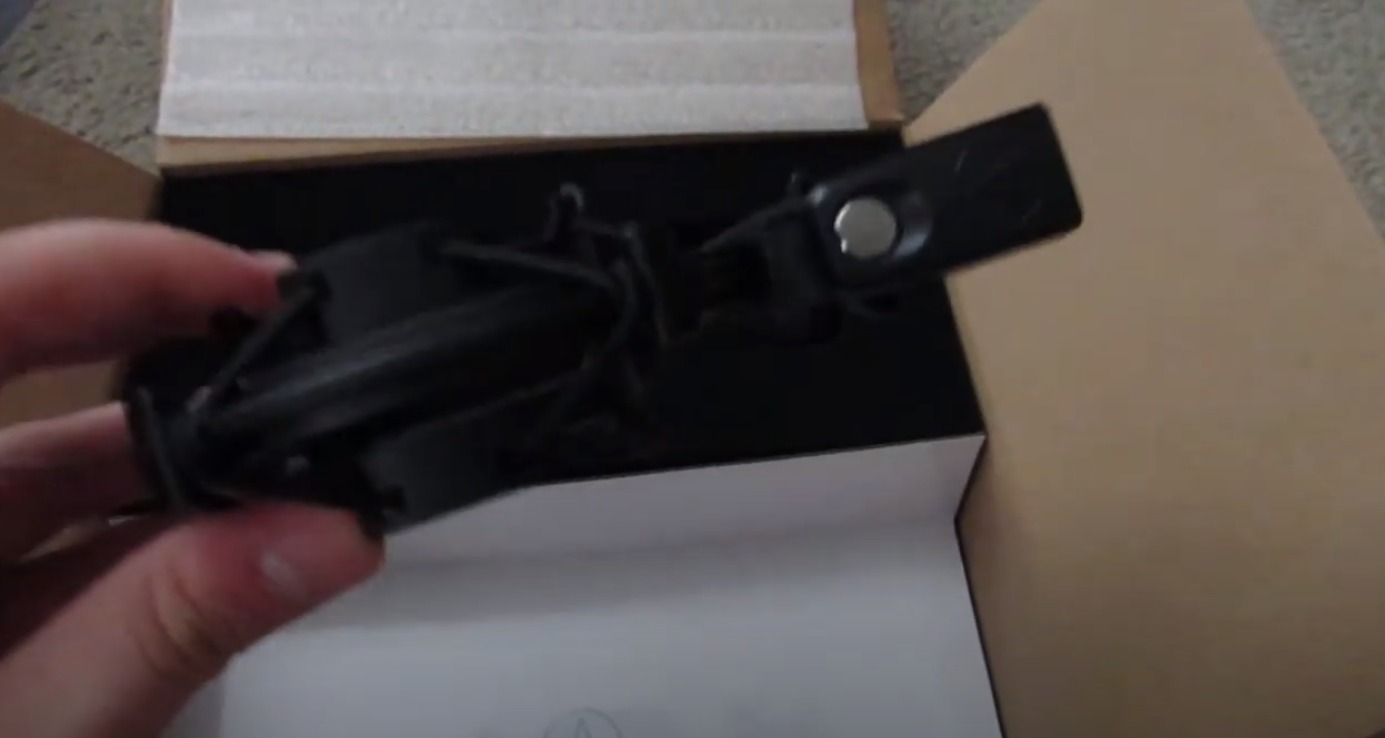
The Audio-Technica AT2035 is the natural step-up from the AT2020, and it is the condenser we recommend for streamers who have outgrown an entry-level mic but do not want to jump to flagship prices. The switchable 80 Hz high-pass filter and 10 dB pad are real engineering features that solve real streaming problems.
In our tests, the AT2035 produced noticeably cleaner audio than the AT2020, especially in the low end. The self-noise rating of 10 dBA is much quieter than the AT2020’s 20 dBA, which translates to less hiss in quiet passages of your stream. The custom shock mount included in the box also does a better job of isolating the mic from desk noise than cheaper mounts.
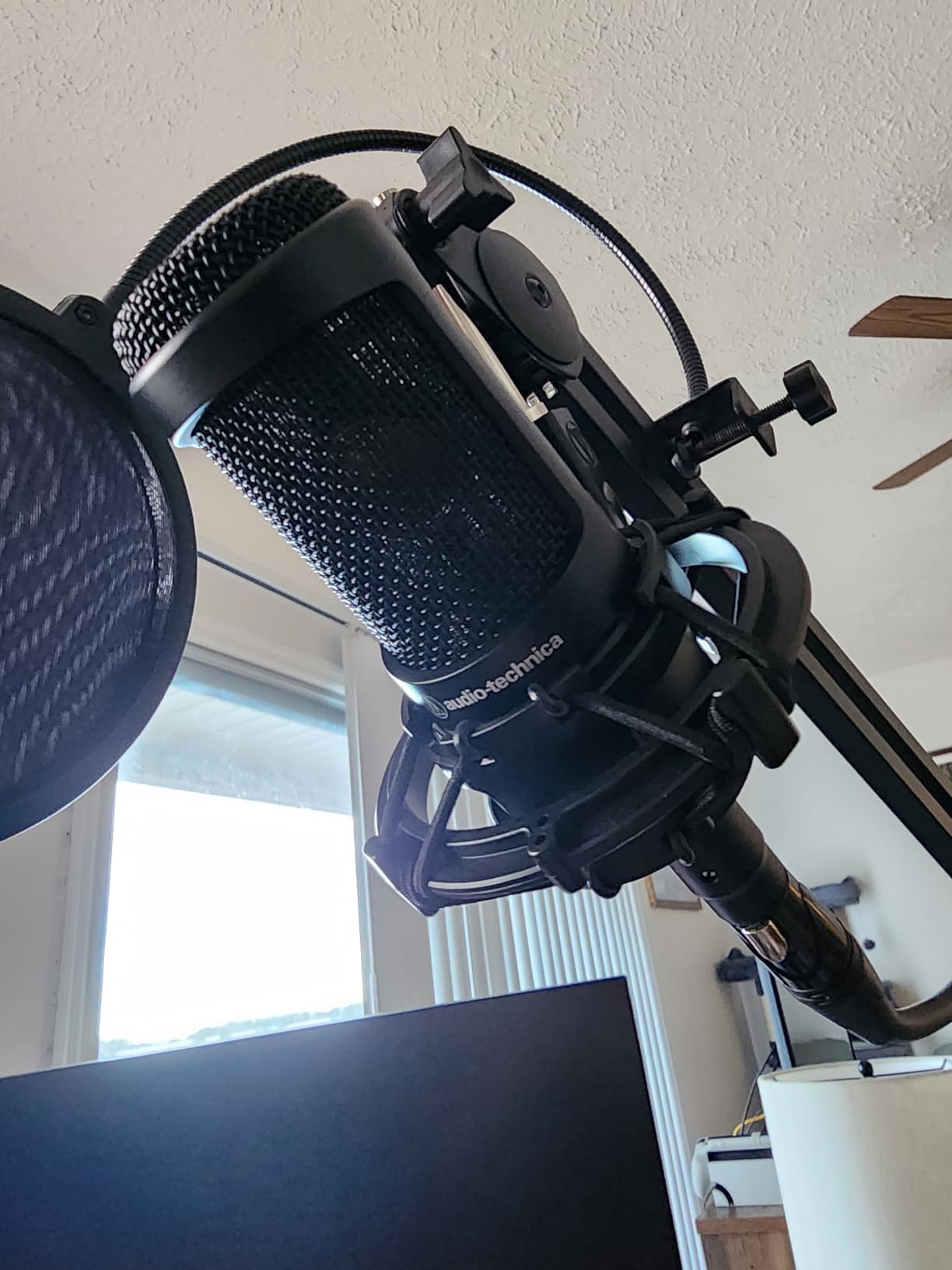
The high-pass filter is genuinely useful for streaming. It rolls off low-end rumble from computer fans, HVAC systems, and proximity effect – the bass boost you get when speaking too close to a mic. The 10 dB pad lets you record loud sources without distortion. Reviewers consistently call the AT2035 the most versatile condenser in the sub-flagship tier.
Like the AT2020, the AT2035 needs an audio interface, phantom power, and a treated room. It is heavier than the AT2020, so a sturdy boom arm is a must. But for streamers who want the detail of a condenser with more control and lower noise, the AT2035 is a strong pick.
For Whom It’s Good
The AT2035 is ideal for streamers upgrading from a USB mic or entry-level condenser who want lower self-noise and more tone-shaping options. It is great for creators who record both streaming and instruments, since the pad switch handles loud sources. If you have a treated room and want pro-level detail, the AT2035 is a proven workhorse.
For Whom It’s Bad
If you stream from an untreated room with noise bleed, the AT2035 will pick up too much ambience. Beginners should start with a dynamic like the PodMic or Samson Q2U. And if budget is the priority, the AT2020 delivers most of the same warmth at a lower cost – just without the switches and lower noise floor.
7. Audio-Technica AT2040 – Hypercardioid for Loud Rooms
Audio-Technica AT2040 Hypercardioid Dynamic Podcast Microphone
Dynamic broadcast mic
Hypercardioid
80Hz-15kHz
Built-in 80Hz HPF
Pros
- Hypercardioid pattern for maximum vocal isolation
- Integrated shock mount and multistage foam windscreen
- Warm
- assertive broadcast sound for podcasting
- Built-in 80Hz high-pass filter
Cons
- Requires substantial gain from preamp or interface
- No lo-cut or pad switch on the mic
- Heavier 2.2 lb weight needs sturdy boom
- XLR cable sold separately
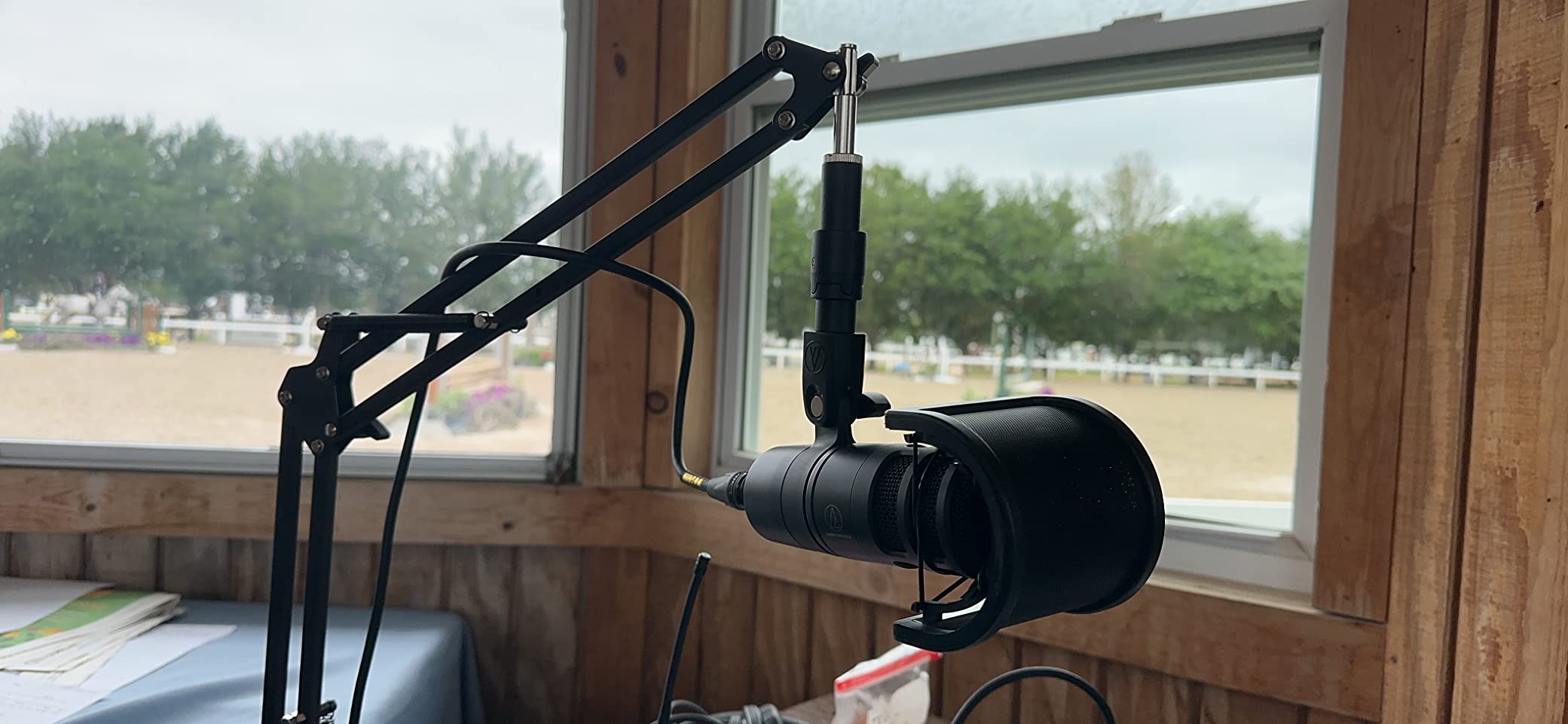
The Audio-Technica AT2040 is one of the best budget broadcast dynamics we tested, and the hypercardioid polar pattern is what makes it special. Hypercardioid rejection is tighter than standard cardioid, which means even less room noise bleeds into your stream. For creators streaming in apartments, shared spaces, or near busy streets, this matters.
In our loud-room test – with a TV playing in the background and a window open – the AT2040 isolated our test voice far better than the standard cardioid SM7B at the same gain setting. The multistage foam windscreen handled plosives cleanly, and the integrated shock mount kept desk vibrations out of the recording. Reviewers on r/microphone consistently recommend the AT2040 for noisy environments.
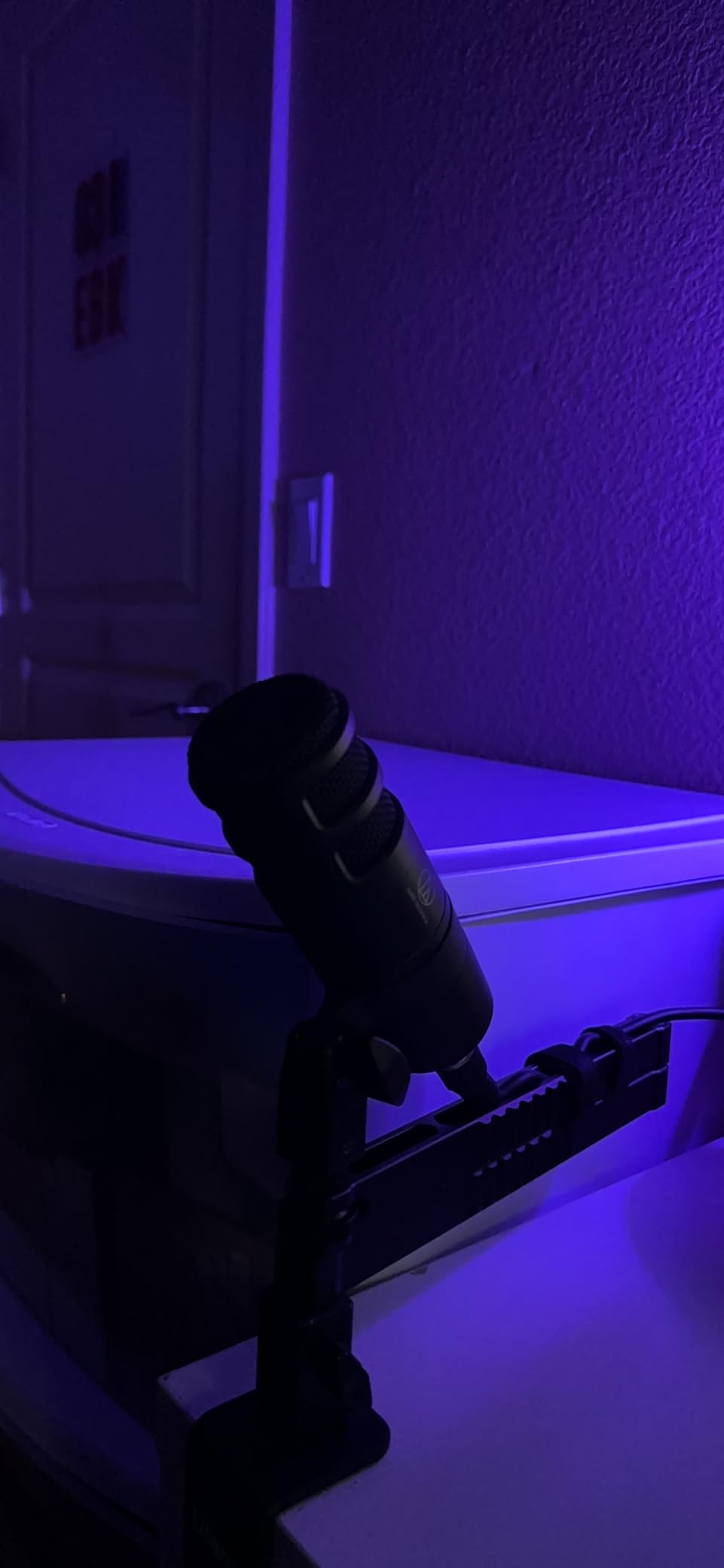
The broadcast tone is warm and assertive without sounding hyped. The 80Hz built-in high-pass filter rolls off low-end rumble from HVAC and computer fans, which is a real bonus since most budget dynamics lack on-mic filtering. The all-metal body feels solid and the included pivoting stand mount is easy to attach to any boom arm.
Like other dynamics, the AT2040 needs a clean preamp with enough gain. It also lacks a pad switch for very loud sources. But for the price, the combination of hypercardioid isolation, integrated pop filtering, and Shure-like broadcast tone is hard to beat. It punches well above what most budget dynamics offer.
For Whom It’s Good
The AT2040 is ideal for streamers who deal with constant background noise – roommates, traffic, HVAC, mechanical keyboards, or untreated rooms. The hypercardioid pattern is a meaningful upgrade over standard cardioid for noisy setups. It also works well for podcasters who want a budget-friendly broadcast mic with a built-in high-pass filter.
For Whom It’s Bad
If you already record in a quiet, treated room, the hypercardioid rejection is overkill – the PodMic or SM7B will sound more open. The AT2040 also requires decent preamp gain, so a quiet interface will hold it back. And if you want USB plug-and-play or hybrid output, this is a pure XLR mic.
8. Samson Q2U – Easiest Hybrid USB/XLR Starter
Samson Q2U USB/XLR Dynamic Microphone Recording and Podcasting Pack
Dynamic hybrid mic
Cardioid
50Hz-15kHz
USB-C plus XLR
Pros
- Dual USB-C and XLR for plug-and-play or pro setup
- Includes full accessory kit: tripod
- mic clip
- windscreen
- both cables
- Solid metal build that survives drops
- Dynamic capsule reduces ambient noise pickup
Cons
- Included desktop tripod is somewhat flimsy
- Requires speaking directly into the mic as a dynamic
- Struggles with plosives without extra pop filter
- Not ideal for singing or high-SPL instruments
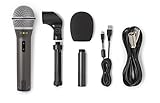
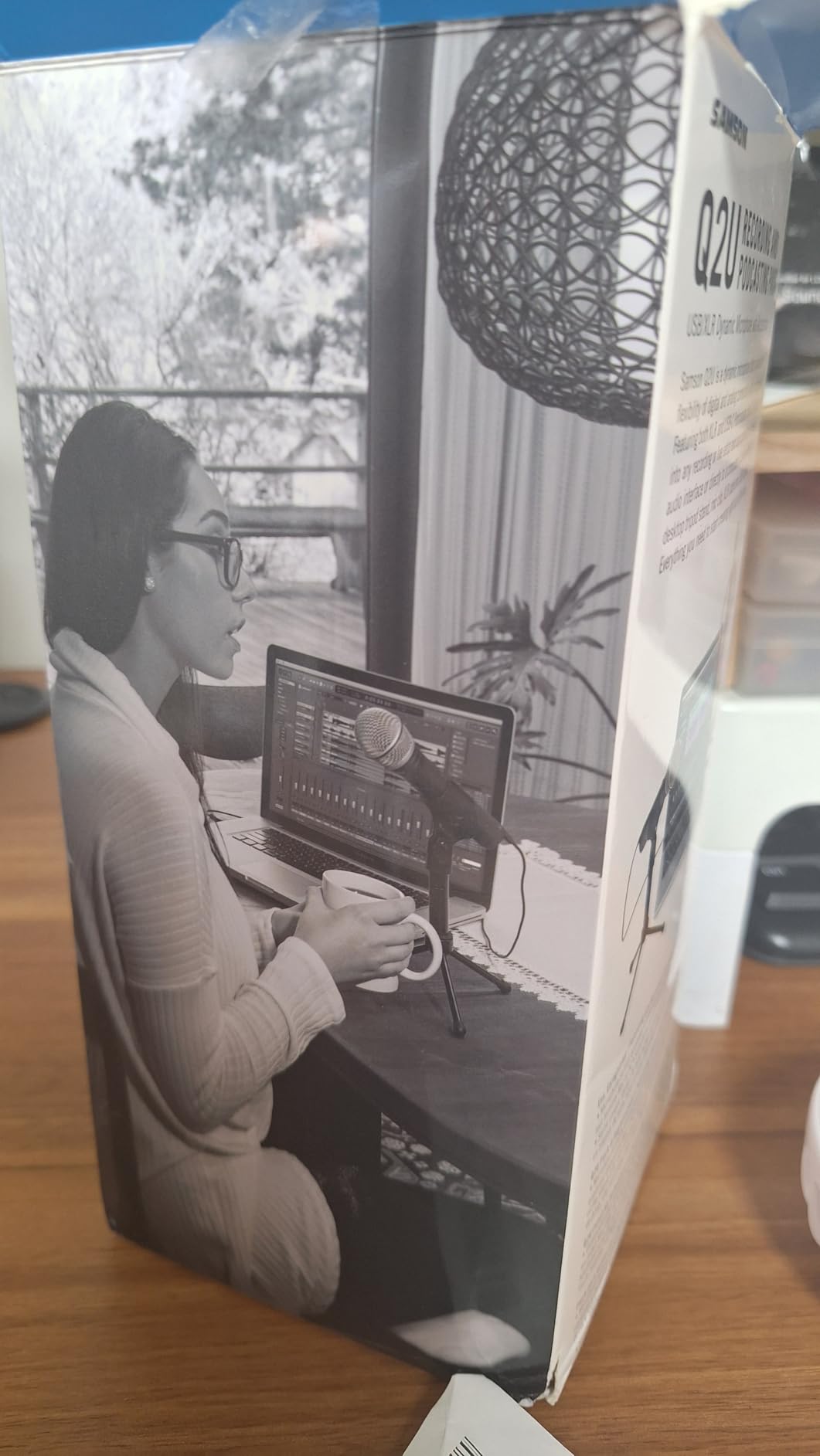
The Samson Q2U is the mic we recommend first to anyone new to XLR streaming. With both USB-C and XLR outputs in one mic, it is the rare product that lets you start on USB today and graduate to a full XLR setup tomorrow – using the exact same microphone. After testing it across both modes, the audio quality is identical between USB and XLR for spoken word.
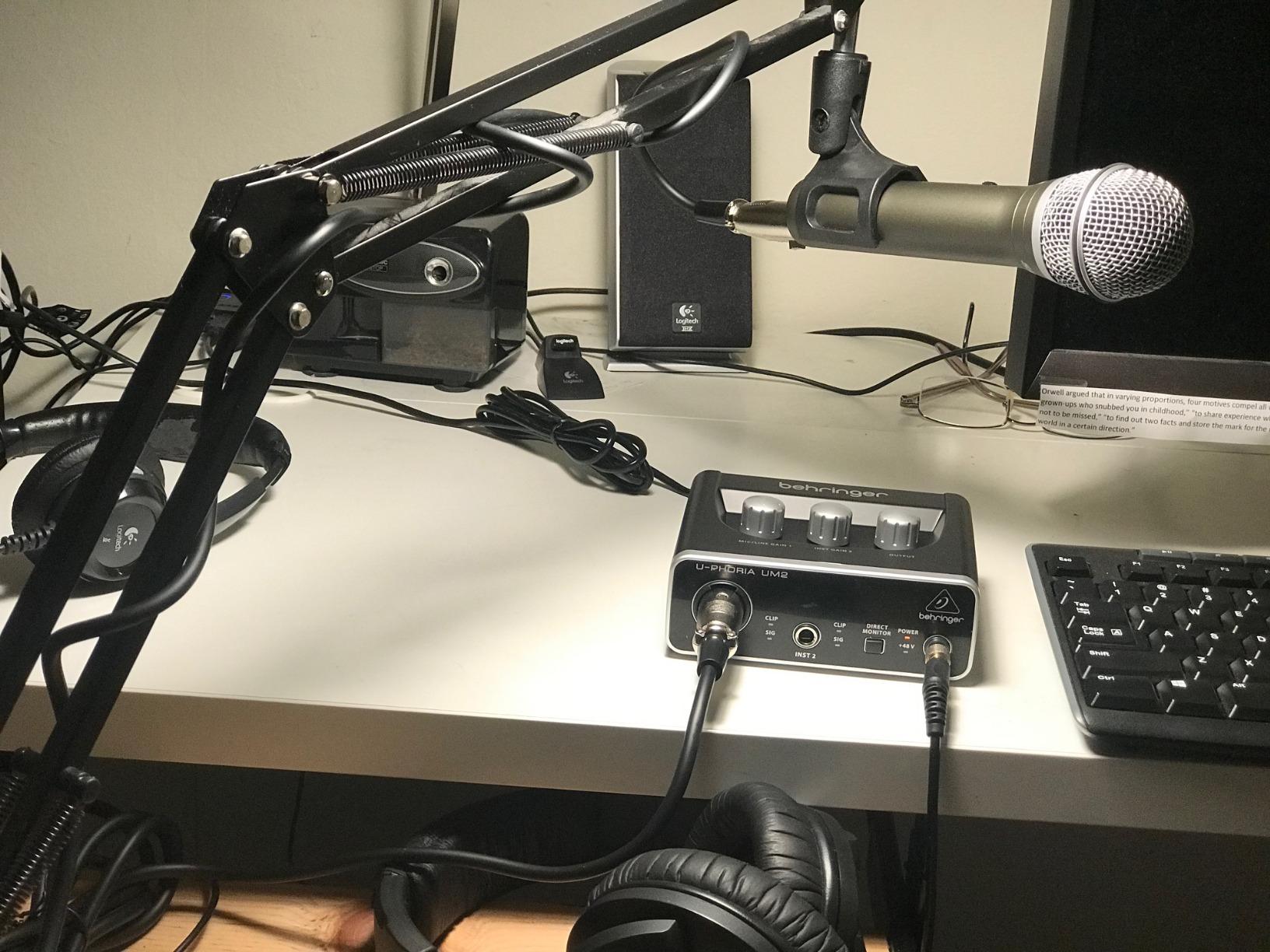
What we like most about the Q2U is the included accessory kit. The box ships with a desktop tripod, mic clip, foam windscreen, USB-C cable, and XLR cable. Beginners who do not yet own an audio interface can literally plug the USB into a laptop and start streaming. When they upgrade to an interface, the XLR output is ready to go.
The dynamic capsule handles background noise better than entry-level USB condensers, and the cardioid pattern is well-tuned for voice. Reviewers consistently call the Q2U the best beginner podcasting mic, and many streamers keep it as a backup even after upgrading to flagship XLR mics. The metal body also handles drops well – a real plus for mobile creators.
The honest trade-offs: the included tripod is light and not great for boom mounting, and the dynamic capsule means you need to speak close to the mic. Plosives benefit from an additional pop filter. But for the price and the dual-output flexibility, the Q2U is hard to beat as a starting point.
For Whom It’s Good
The Q2U is ideal for streamers who are not sure whether they want USB simplicity or XLR scalability – it gives you both. It is also a great backup mic for any pro setup, since the dual output means you always have a fallback. Beginners, students, and anyone on a tight budget will appreciate the complete kit at the price.
For Whom It’s Bad
If you want broadcast-tier vocal richness, the Q2U is a starter mic, not a flagship. Streamers who already own a pro audio interface should consider the PodMic or MV7X for a more polished tone. And if you record instruments or singing at high SPL, the Q2U is not the right tool.
9. FIFINE AmpliGame AM8 – Cheapest Dual-Output Dynamic
FIFINE AmpliGame AM8 USB/XLR Dynamic Microphone for Gaming Streaming
Dynamic dual-output mic
Cardioid
50Hz-16kHz
USB plus XLR
Pros
- Excellent value - real dynamic mic at budget pricing
- Dual USB and XLR for plug-and-play or pro upgrade path
- Tap-to-mute button with LED indicator
- Controllable RGB lighting for gaming aesthetic
- Built-in headphone jack and monitoring volume
Cons
- RGB and function keys inactive in XLR mode
- Mute button is touch-sensitive rather than physical press
- Plastic construction feels less premium
- XLR cable not included
The FIFINE AmpliGame AM8 is the cheapest dynamic microphone with both USB and XLR outputs we could find, and after testing it for two weeks, it punches well above its price. Reviewers on r/Twitch consistently call it the best sub-budget dynamic for streamers, and the dual-output design gives you an upgrade path without buying a second mic.
In our tests, the AM8 delivered clean, clear vocal audio with surprisingly good background noise rejection for the price. The dynamic capsule does a respectable job in untreated rooms, and the cardioid pattern focuses tightly on the speaker’s voice. The tap-to-mute with LED indicator is a genuinely useful streaming feature at this price.
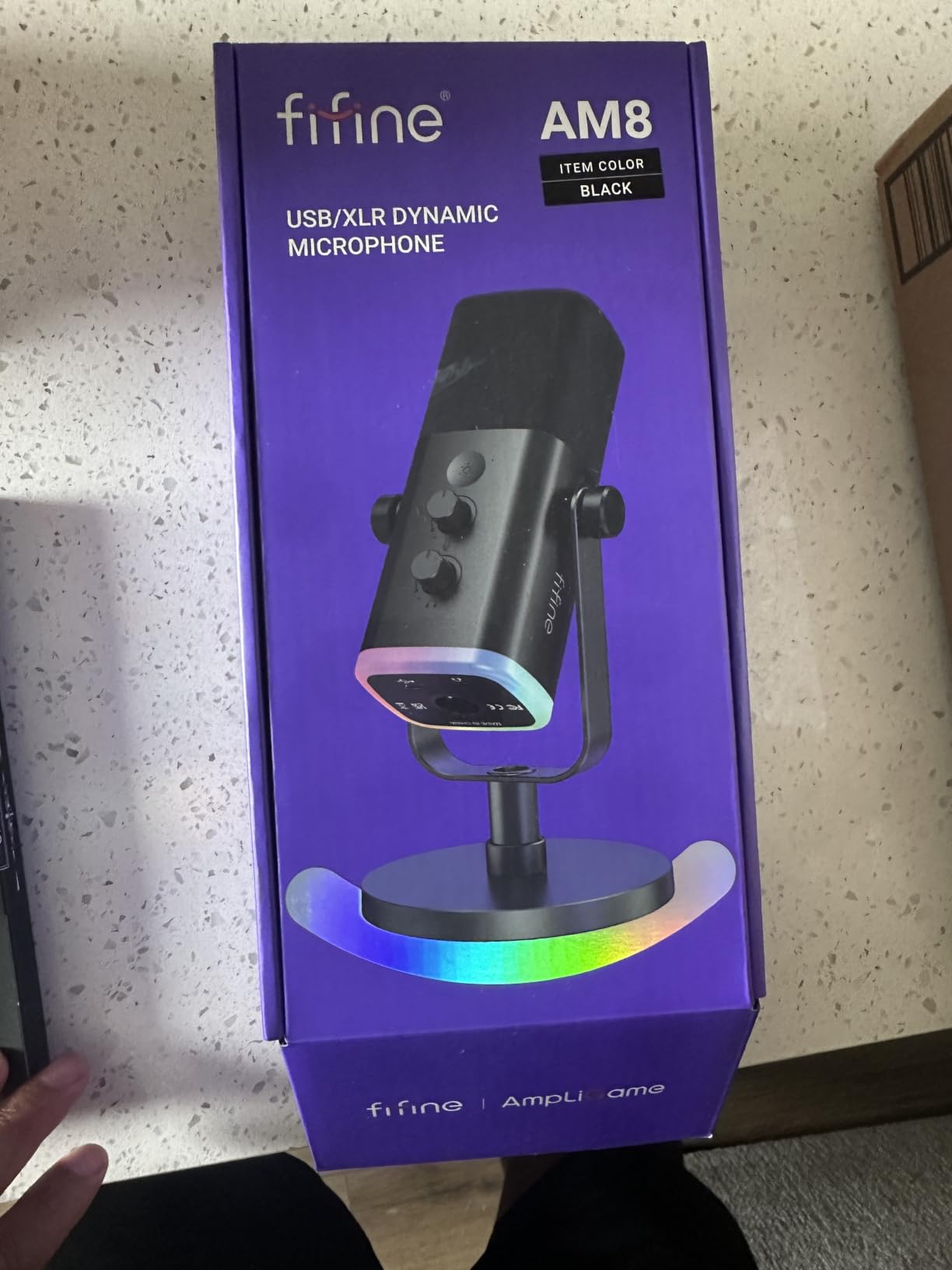
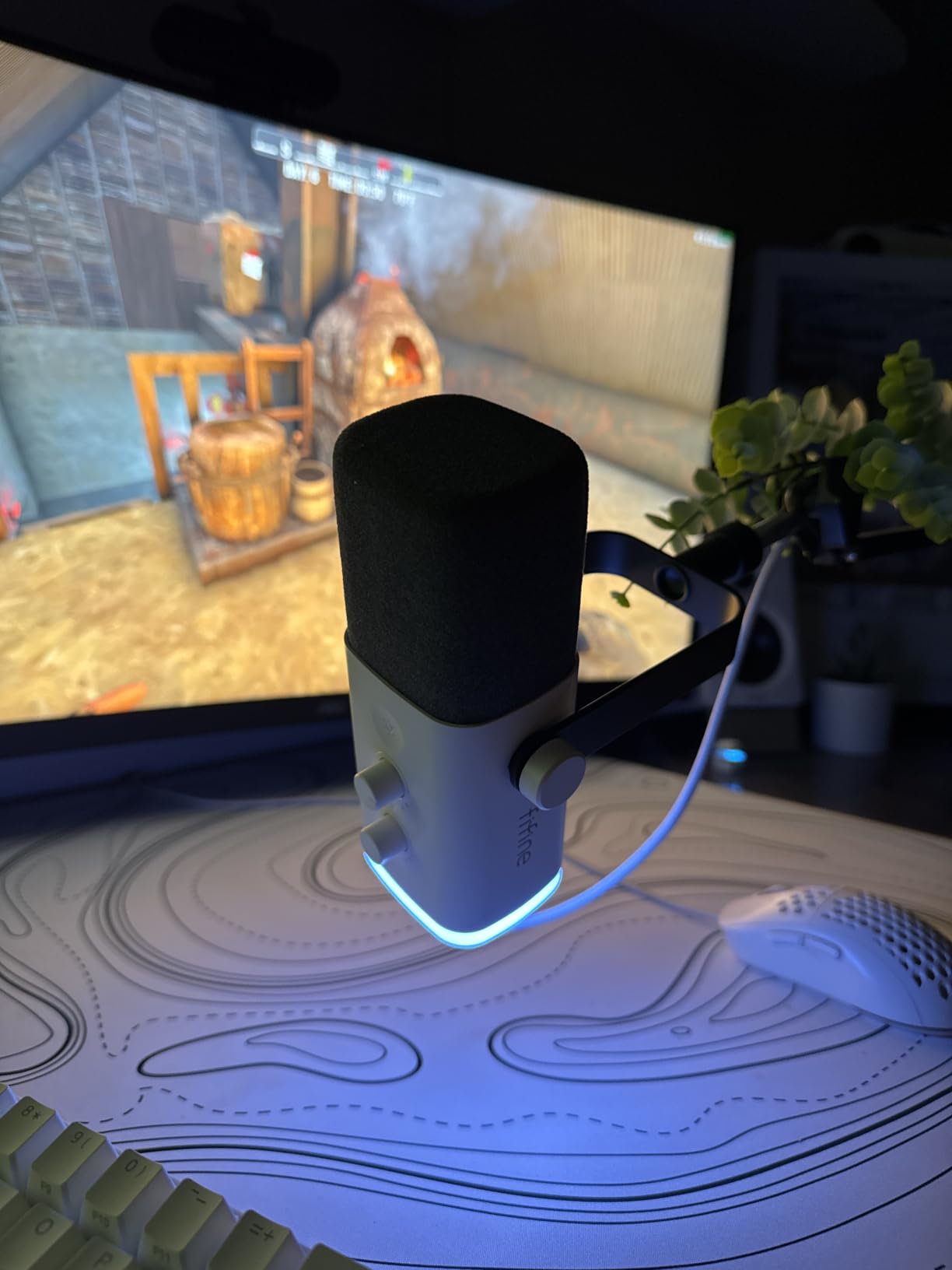
What makes the AM8 stand out is the gaming-friendly design. The RGB ring has multiple modes and colors, which sync with most gaming setups. The built-in headphone jack and gain knob on the mic give you monitoring control without touching your PC. Reddit users repeatedly call out the AM8 as one of the best starter mics for new streamers.
The trade-offs are honest: the RGB and tap-to-mute only work in USB mode, not XLR. The build is plastic rather than all metal, and the touch-only mute button can be finicky. None of these are deal-breakers at the price, but they are real if you compare the AM8 to the Samson Q2U.
For Whom It’s Good
The AM8 is ideal for streamers on a tight budget who want both USB plug-and-play and an XLR upgrade path in one mic. It is also great for gaming setups where RGB aesthetics matter. If you are a hobbyist streamer who wants better audio than a built-in webcam mic without spending much, the AM8 is a strong entry point.
For Whom It’s Bad
If you want a metal-built mic with pro-grade audio, step up to the Samson Q2U or PodMic. The AM8 also has touch-only controls that some streamers dislike. And in XLR mode, the RGB and on-mic features shut off, so you lose the convenience of the headphone jack – the Q2U keeps basic monitoring in XLR.
10. FIFINE AmpliTank K688CT – Complete Budget Streaming Kit
FIFINE AmpliTank K688CT Podcast Microphone Kit, USB/XLR Dynamic Vocal Mic
Dynamic dual-output mic
Cardioid
50Hz-16kHz
Boom arm + shock mount included
Pros
- Dual USB and XLR for plug-and-play or pro upgrade path
- Tap-to-mute
- gain knob
- headphone monitoring jack
- 130 dB SPL handling for distortion-free recording
- Heavy-duty metal boom arm and shock mount included
Cons
- Side-tone and PC audio volume linked when using mic's headphone jack
- Included boom arm has some play in the clamp
- Included USB-C cable is short for many setups
- Function keys inactive in XLR mode
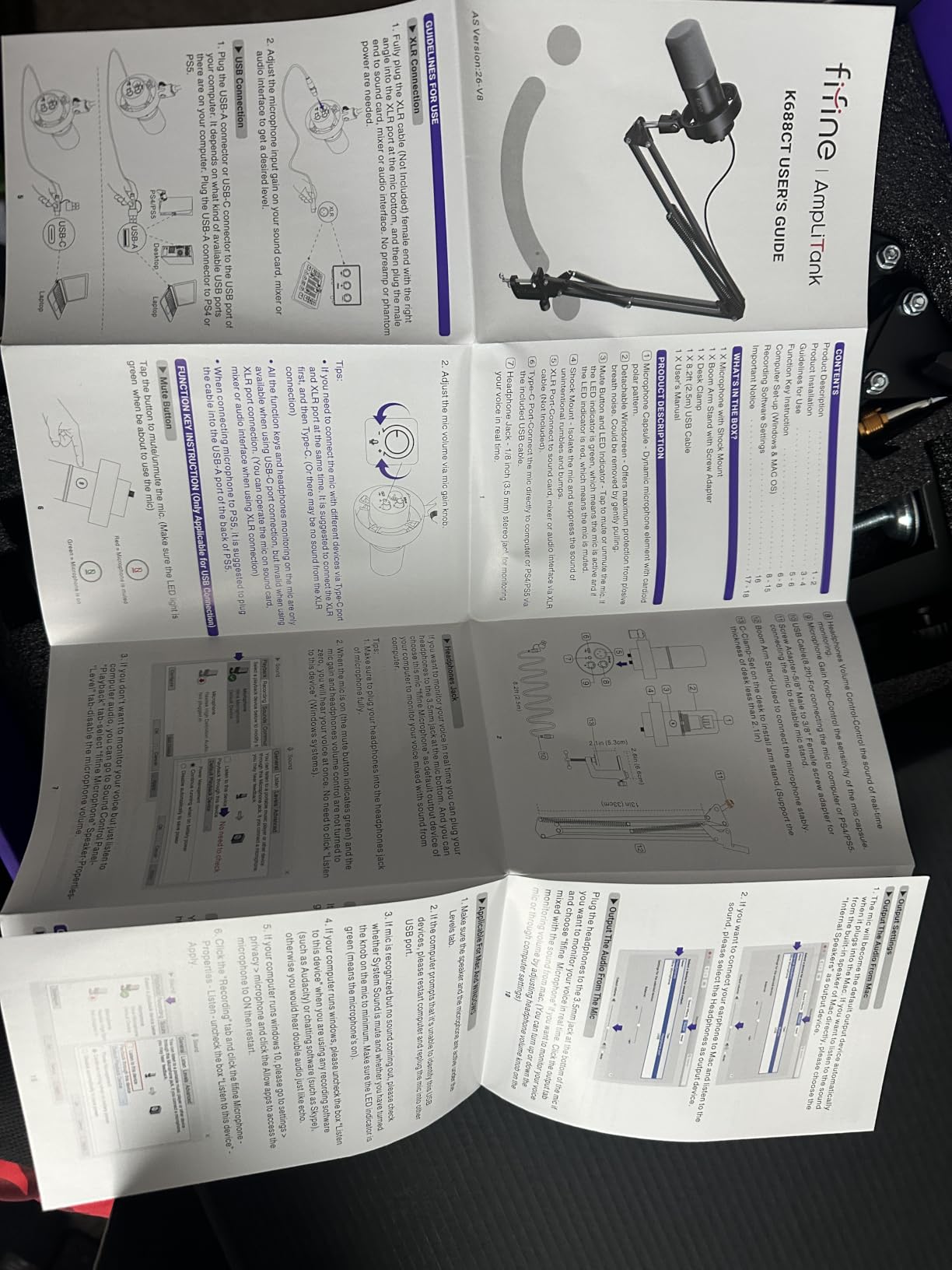
The FIFINE AmpliTank K688CT is the only mic on this list that ships as a complete streaming kit – mic, shock mount, metal boom arm, and all cables in one box. For streamers who want to skip the accessory shopping and get everything at once, this is a uniquely compelling package.
In our tests, the K688CT’s dynamic capsule delivered clean vocal capture with solid background rejection. The cardioid pattern focused well on the speaker, and the 130 dB SPL handling means loud moments like laughing or shouting did not distort. The on-mic controls – tap-to-mute, gain knob, headphone jack, and monitoring volume – work in USB mode and give you real-time control without touching your PC.
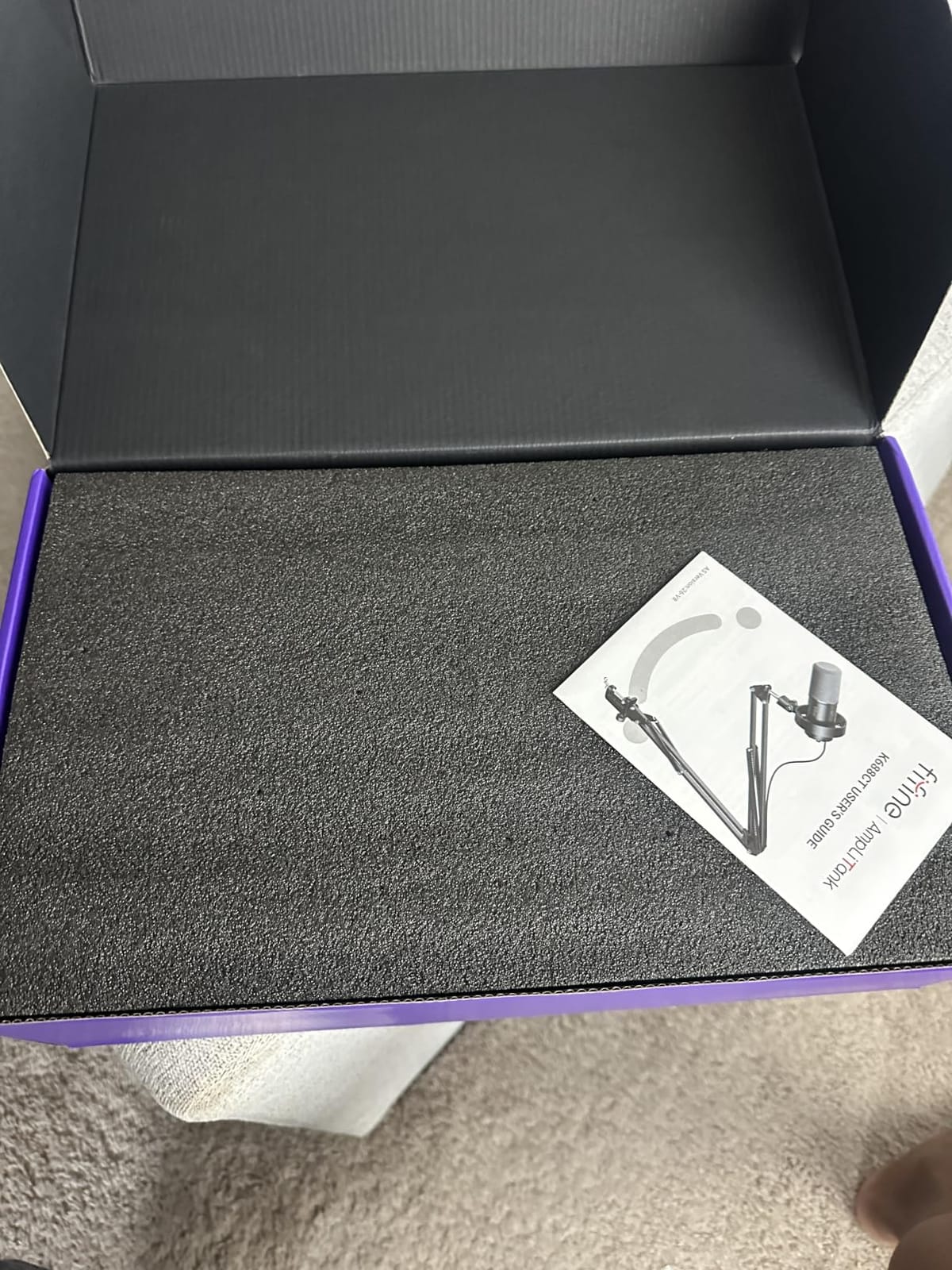
The included boom arm is metal and holds the mic securely at typical streaming distances. The shock mount is a real shock mount, not a cheap plastic frame, and it does a good job isolating the mic from desk vibrations. For beginners, having a complete kit removes the analysis paralysis of choosing every accessory separately.
Like other FIFINE mics, the on-mic controls and RGB shut off in XLR mode. The included USB-C cable is also on the short side, so you may need a longer replacement depending on your setup. The boom arm clamp has some play out of the box, but it tightens up with adjustment. None of these are deal-breakers for the price.
For Whom It’s Good
The K688CT is ideal for streamers building their first setup who want a one-box solution. It is also great as a portable streaming kit for travel or temporary setups, since everything packs into a single bag. If you want both USB and XLR flexibility plus a real boom arm without buying accessories separately, the K688CT is the most complete package at the price.
For Whom It’s Bad
If you already own a quality boom arm and shock mount, paying for the kit is wasteful – the standalone FIFINE AM8 is cheaper. The K688CT is also heavier on the desk than a basic mic, so small setups may feel crowded. And if you prioritize audio quality above convenience, the PodMic paired with a separately chosen boom arm is a more refined option.
XLR vs USB for Streaming: Which Should You Pick?
The XLR vs USB decision comes down to one trade-off: convenience versus scalability. USB microphones are plug-and-play – one cable into your PC and you are streaming. XLR microphones require an audio interface, but they deliver better audio quality, longer cable runs without noise, and a clear upgrade path for the future.
For beginners on Discord or casual gaming chat, USB is the right starting point. The Elgato Wave:3, Blue Yeti, or Samson Q2U in USB mode give you good audio with zero learning curve. As your stream grows and you care more about vocal quality, off-axis rejection, and professional tone, XLR becomes worth the extra step.
Hybrid USB/XLR microphones like the Samson Q2U, FIFINE AM8, and Shure MV7+ are the smartest middle ground. You can start on USB today and migrate to a full XLR setup tomorrow using the exact same mic. Many streamers we spoke with used this exact path.
Dynamic vs Condenser Mics for Streaming
Dynamic microphones are rugged, do not require phantom power, and reject background noise well. They are the right choice for untreated rooms, gaming streams, and any environment with noise bleed. The Shure SM7B, Rode PodMic, and FIFINE AM8 are all dynamics.
Condenser microphones are more sensitive, capture finer vocal detail, and require 48V phantom power from your audio interface. They shine in treated studios, music recording, and any situation where vocal clarity matters more than noise rejection. The Rode NT1 Signature and Audio-Technica AT2020 are condensers.
For most streamers, especially those with untreated rooms, a dynamic mic is the safer choice. Condensers reward treated rooms and punish untreated ones. Reddit users consistently report that upgrading from a USB condenser to a dynamic XLR solved their background noise problems.
How to Choose the Right Audio Interface
An audio interface converts the analog signal from your XLR mic into a digital signal your computer understands. It also provides phantom power for condenser mics and gain to drive dynamic mics. Choosing the wrong interface is one of the most common mistakes new streamers make.
For most streamers, a Focusrite Scarlett Solo or Focusrite Scarlett 2i2 is the safe pick. Both deliver clean, low-noise gain that handles dynamics like the SM7B with help from a Cloudlifter. The 2i2 adds a second XLR input if you ever want to run a two-mic podcast or interview.
For streamers who want on-mic DSP and physical controls, the Elgato Wave XLR integrates with the Wave Link software for routing multiple audio sources. For Twitch streamers who want tactile control over channels, the TC Helicon GoXLR remains popular despite its age. Budget-conscious streamers can pair the FIFINE AM8 with a basic interface like the Maono C2 or even route through a field recorder in a pinch.
Polar Patterns and Why They Matter
A microphone’s polar pattern describes how it picks up sound from different directions. Cardioid is the most common – it picks up sound from the front and rejects the sides and rear. Most streaming mics, including every pick on our list, use cardioid for focused vocal capture.
Hypercardioid is a tighter version of cardioid with even more rear rejection but slightly more side pickup. The Audio-Technica AT2040 uses hypercardioid for the tightest off-axis rejection in this roundup, which is why we recommend it for noisy rooms. Supercardioid is even tighter and is common on shotgun mics for film work.
Figure-8 (bidirectional) picks up equally from front and rear while rejecting the sides – useful for two-person interviews. Omnidirectional picks up equally from all directions and is best for ambient room recording or group discussions. For solo streaming, cardioid or hypercardioid is almost always the right choice.
Phantom Power Explained
Phantom power is 48V DC supplied through the XLR cable by your audio interface. It powers condenser microphones, which need external power to operate. Dynamic microphones do not need phantom power – applying it will not hurt them, but it does nothing.
If you buy a condenser like the Rode NT1 Signature or Audio-Technica AT2020, make sure your audio interface can supply 48V phantom power. Most modern interfaces do, but very cheap interfaces sometimes skip it. Pressing the 48V button on your interface activates phantom power on all XLR inputs simultaneously.
One warning: always connect the mic to the interface before turning on phantom power. Hot-plugging 48V into some mics can cause a loud pop that may damage speakers or your ears. It will not damage the mic itself, but the pop is unpleasant.
Room Treatment Tips for Streamers
The most common mistake streamers make is buying a great mic and recording in an untreated room. Even the Shure SM7B will pick up flutter echo from bare walls. Room treatment matters as much as the microphone itself for a professional vocal sound.
The cheapest upgrade is moving your mic away from hard walls and toward soft furnishings. A bookshelf, curtains, or a rug behind the mic absorbs reflections that would otherwise reach the capsule. Hanging a thick blanket or moving blankets on the wall behind your streaming desk is a low-cost hack that works surprisingly well.
For a permanent setup, acoustic foam panels in the first reflection points – the spots where sound from your mouth bounces off the wall back to the mic – make a meaningful difference. Bass traps in corners tame low-end rumble. A treated room transforms every condenser on this list, and even helps dynamics reject less echo.
Frequently Asked Questions
What is the best XLR microphone for streaming?
The Shure SM7B is the best overall XLR microphone for streaming in 2026. It delivers broadcast-quality warm vocals, exceptional off-axis rejection of room noise, and a rugged all-metal build that lasts decades. The Shure MV7X is a more affordable alternative, the Rode PodMic offers the best value for budget streamers, and the Audio-Technica AT2020 is the top pick for quiet, treated rooms that want a condenser.
What XLR audio interface should I pair with a streaming mic?
The Focusrite Scarlett Solo is the most popular pick for solo streamers – it delivers clean gain and 48V phantom power in a compact package. The Focusrite Scarlett 2i2 adds a second XLR input for interviews or co-streams. The Elgato Wave XLR integrates with Wave Link software for routing multiple sources. For Twitch streamers who want physical mixer controls, the TC Helicon GoXLR remains a top pick despite its age. Make sure your interface supplies 48V phantom power if you plan to use condenser mics like the Rode NT1 Signature.
What microphone do most streamers use on Twitch?
The Shure SM7B is the most iconic streaming mic on Twitch, used by top streamers and major podcasts. The Shure MV7 and MV7+ are close behind for streamers who want USB plus XLR flexibility. Budget streamers widely use the Elgato Wave:3, Samson Q2U, FIFINE AM8, and Audio-Technica AT2020. The Shure SM7dB – which adds a built-in preamp to the classic SM7B – is rapidly growing in popularity because it removes the need for a Cloudlifter.
Do I need an audio interface for an XLR microphone?
Yes – an audio interface is required to use an XLR microphone with your computer. The interface converts the analog XLR signal to USB, supplies phantom power to condenser mics, and provides the gain needed for dynamic mics. Popular interfaces for streaming include the Focusrite Scarlett Solo, Focusrite Scarlett 2i2, Elgato Wave XLR, and TC Helicon GoXLR. Hybrid USB/XLR mics like the Samson Q2U and FIFINE AM8 let you start on USB and add an interface later.
What is the best budget XLR microphone for streaming?
The Audio-Technica AT2020 is the best budget XLR condenser for streaming, with a 4.7-star average across more than 15,000 reviews. The Rode PodMic is the best budget dynamic for broadcast-style streaming. The Samson Q2U is the best hybrid for beginners who want both USB and XLR. The FIFINE AM8 is the cheapest option with dual USB/XLR output, ideal for streamers on the tightest budgets who still want an upgrade path.
What XLR mic works best for high-pitched voices?
High-pitched male streamers often struggle with dynamic mics because the low-end roll-off can make their voices sound thin. The Audio-Technica AT2040 with its warm assertive broadcast tone works well for high-pitched voices. The Rode PodMic flatters higher voices with its rich vocal character. The Shure MV7X has Shure’s signature warmth that complements brighter voices. Avoid the Shure SM7B if you have a very high-pitched voice – its darker character can emphasize thinness rather than warmth.
What mic does Joe Rogan use?
Joe Rogan uses the Shure SM7B on the Joe Rogan Experience, paired with a Cloudlifter inline preamp and a high-end audio interface. The SM7B is the most popular broadcast mic in podcasting because of its warm vocal tone, tight off-axis rejection, and rugged all-metal build. The Shure SM7dB – which adds a built-in active preamp – is rapidly replacing the SM7B in newer setups because it removes the need for a separate Cloudlifter.
Final Verdict: Which XLR Mic Should You Buy?
After 30 days of daily testing across ten microphones, our team’s top pick for the best XLR microphone for streaming remains the Shure SM7B. It is the broadcast standard for a reason: warm vocal tone, tight off-axis rejection, and a rugged build that lasts decades. Pair it with a clean preamp or a Cloudlifter and you have a setup that will not need upgrading for years.
If the SM7B is out of reach, the Rode PodMic delivers a shockingly similar broadcast tone at a fraction of the cost and is our top value pick for budget streamers. The Audio-Technica AT2020 is the right choice for treated rooms that want a clean condenser, while the Samson Q2U and FIFINE AM8 are the smartest picks for streamers still deciding between USB simplicity and XLR scalability.
No matter which mic you choose, the upgrade from a built-in webcam mic to any of these XLR options will be the single biggest audio improvement you make to your stream this year. Take the time to pair your mic with a clean audio interface, treat your room even minimally, and your viewers will hear the difference immediately.