
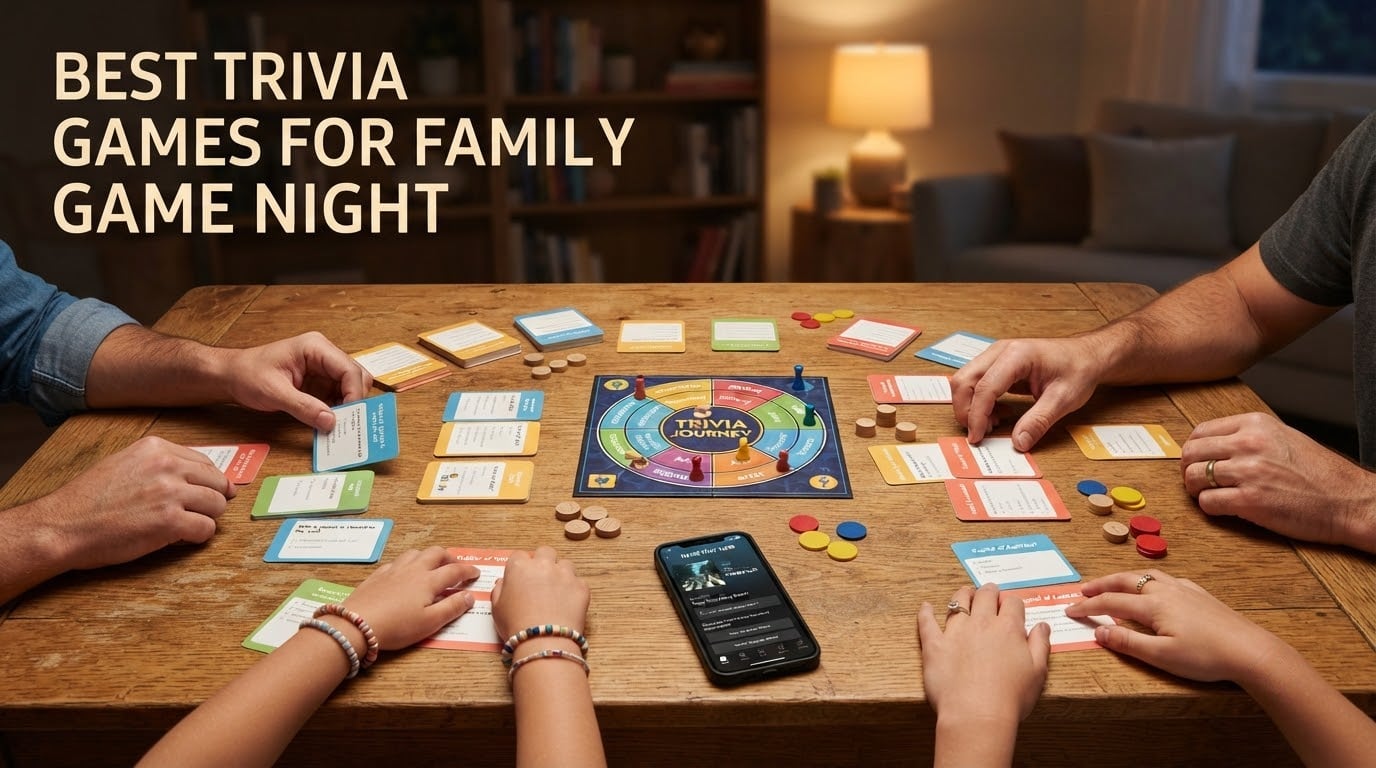
The best trivia games for family game night are the ones where a seven-year-old and a grandparent are both still in the game at the last round. That single requirement rules out most general trivia decks, because trivia games default to rewarding whoever has read the most Wikipedia pages. The winners in this roundup work because the scoring, the question format or the team structure keeps the score close even when the knowledge is not.
We pulled ten family-friendly trivia games together and looked at player counts, age guidance, question volume, setup time and how each one handles a genuinely mixed-age table. The ranges are wide on purpose. Some titles work for a family of four on a rainy Sunday, some scale to a holiday gathering of a dozen, and one is built specifically around a century of popular music. If your family prefers screen-based play, our picks for the best iPhone game controllers cover the hardware side of hosting a game night that runs through a phone.
Everything below is ranked by how well the game holds up in a real mixed-age group, not by question count alone. Every listing has a button that shows the current figure at your chosen retailer, so you can compare the ten side by side before you commit.
Table of Contents
Top 3 Best Trivia Games For Family Game Night (October 2026)
These three are the safest buys for a typical household, and between them they cover a small family, a wide age spread and a large group.
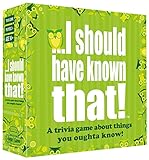
I Should Have Known That!
- Points are deducted for wrong answers
- 110 cards with 400+ questions
- Compact 5.7 inch box
- Ages 14 and up
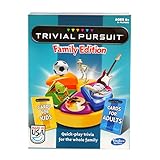
Trivial Pursuit Family Edition
- Separate blue and yellow card decks
- 1200 questions for kids and adults
- Quick-play wedge rules
- Plays for 2 or more
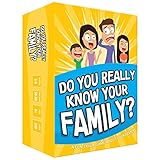
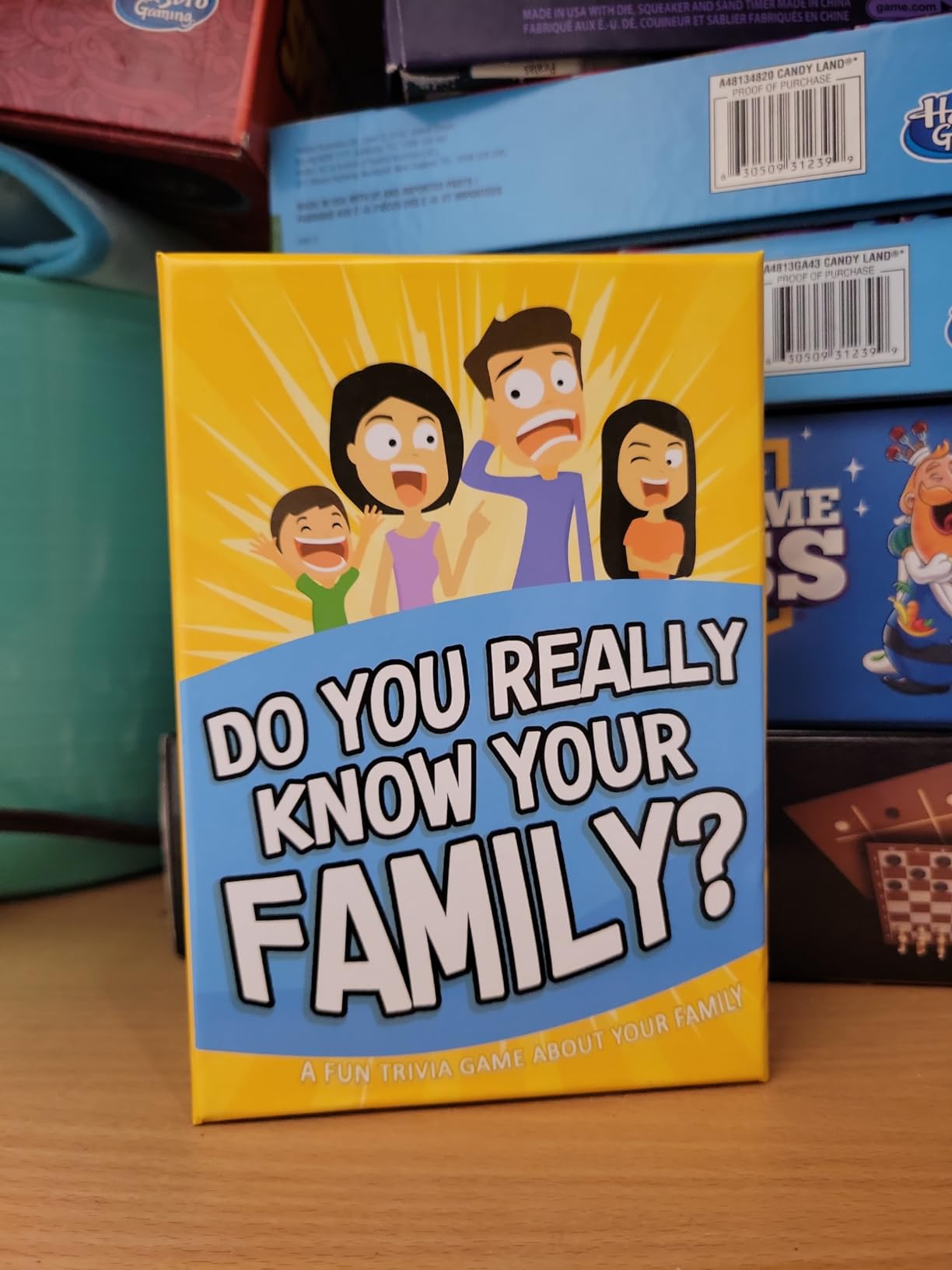
Do You Really Know Your Family?
- Question cards about each other
- 3 to 8 players
- Tin format travels well
- Ages 8 and up
All 10 Trivia Games at a Glance in 2026
Every title in the roundup, with the details that decide whether it fits your table. Ages and player counts are the manufacturer guidance.
| Product | Specifications | Action |
|---|---|---|
| I Should Have Known That! |
|
Check Latest Price |
| Do You Really Know Your Family? |
|
Check Latest Price |
 Smart Ass Smart Ass |
|
Check Latest Price |
| Trivial Pursuit Family Edition |
|
Check Latest Price |
 What Do You Meme? All of Us What Do You Meme? All of Us |
|
Check Latest Price |
 Jumbo Hitster Jumbo Hitster |
|
Check Latest Price |
 Mount Cleverest Mount Cleverest |
|
Check Latest Price |
 History Channel Trivia Game History Channel Trivia Game |
|
Check Latest Price |
 GENSMAK GENSMAK |
|
Check Latest Price |
 Higher or Lower Trivia Cards Higher or Lower Trivia Cards |
|
Check Latest Price |
1. I Should Have Known That! – Best Overall for Family Game Night
I should have known that! – A Trivia Game About Things You Oughta Know, Green
Ages 14 and up
More than 2 players
110 cards, 400+ questions
Paper, 8.8 ounces
Pros
- Reverse scoring keeps confident players honest
- Compact box fits a small table
- 400+ questions means little repetition
- Setup takes under a minute
Cons
- Rules are confusing until explained
- Listed for ages 14+
- Penalty scoring frustrates strong trivia players
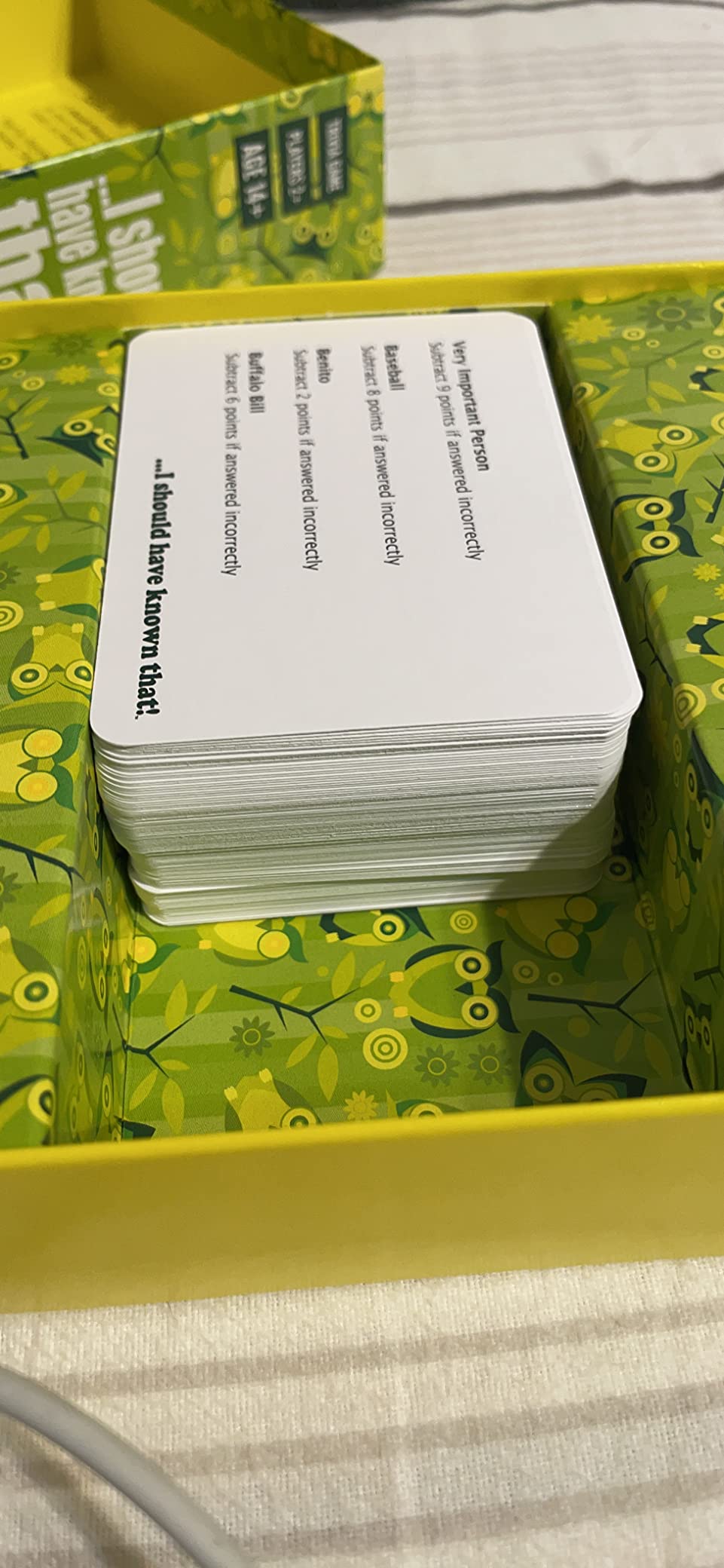
The entire hook of this game is that you lose points for getting questions right. Cards hold more than 400 statements about things you ought to know, and the table is scored on who avoided the traps. It is the single most reliable way we have found to keep a family game night competitive when one person knows far more than the rest.
Our family has played it more than any other trivia box in the cupboard, largely because it is over in the time it takes to decide what to do afterwards. The box is 5.7 inches square and weighs under nine ounces, so it does not eat a shelf or demand a second chair. Two to more than two players are supported, and in practice it works with three or four.
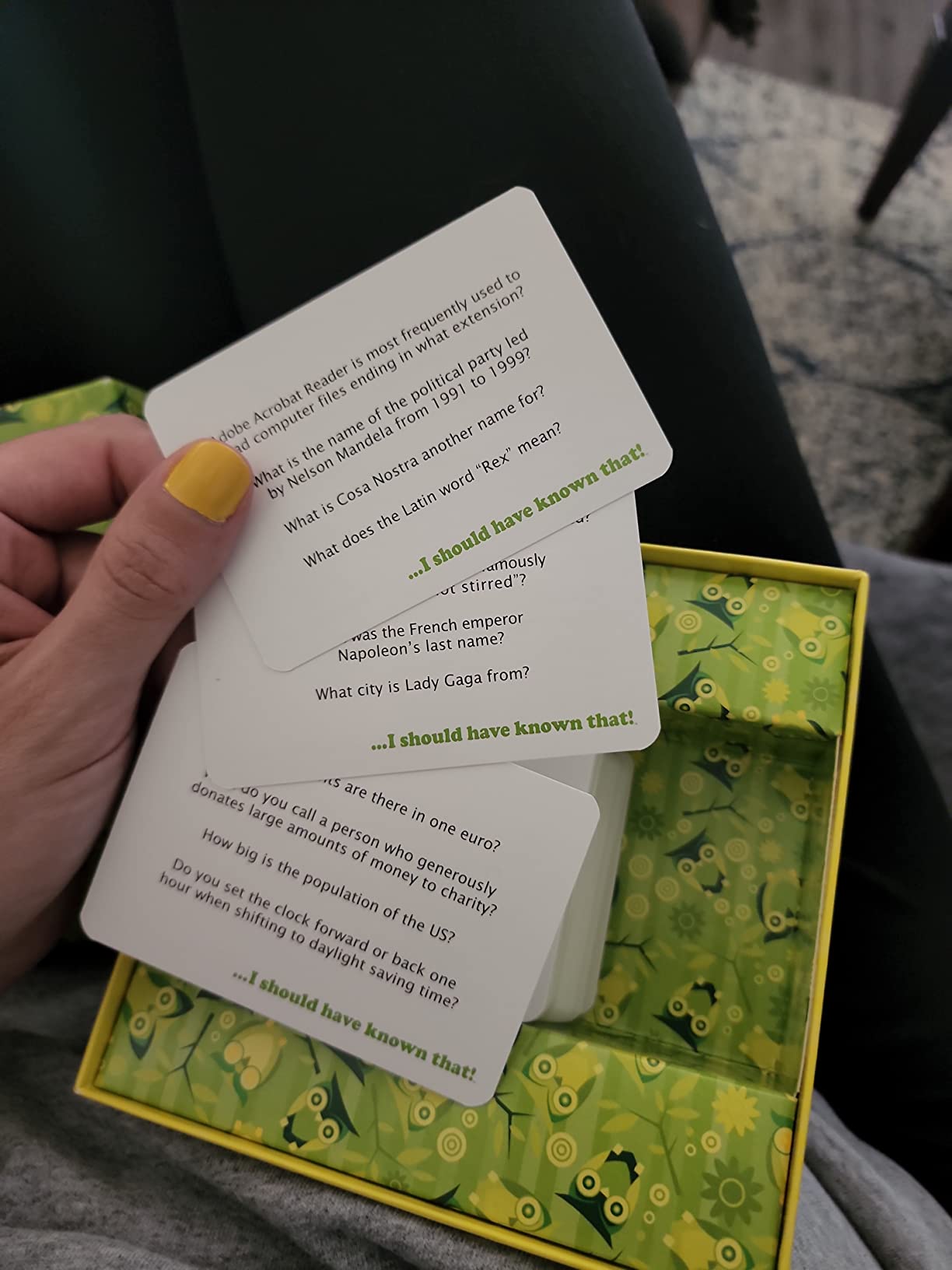
What surprised us most is how well it holds a wide age spread. Because the score goes down when you answer correctly, the adults stop coasting and the kids stop feeling excluded. The 5.7 by 5.7 by 1.8 inch footprint also means it is one of the easiest of these games to pack for a trip or a family gathering away from home.
The card stock is ordinary paper, and after heavy use the corners start to soften. That is the trade-off for a game this small and this light. We have never had a card tear, but we also would not hand it to a toddler who chews things.
Who this suits?
This is the pick if your group is 14 and up, or if you have younger players who are happy to be coached through the first round. The first-timer confusion is real, so it is worth reading the rules aloud before you deal. Once the scoring lands, it is usually the first game your family asks for again.
It also works unusually well for a group where one or two people are quizzy types. The penalty system means those players have to slow down, which is exactly the pressure most trivia games fail to apply.
Who this does not suit?
The manufacturer lists 14 and up, and that guidance is worth taking seriously for a family with primary-aged children. A young player watching their score fall every time they answer correctly tends to disengage fast. If you have children under about ten, look at the true-or-false or higher-or-lower formats instead.
Players who take trivia seriously may find the scoring inverted and a little maddening. If someone at the table wants to test their knowledge rather than outsmart the room, this is not the game for them. That trade is exactly why we rate it so highly for families and rate it lower for a serious quiz night.
2. Do You Really Know Your Family? – Best Conversation Starter
Do You Really Know Your Family? Fun Family Game for Kids, Teens and Adults
Ages 8 and up
3-8 players
Tin and cardstock
Card deck, 2 x 4.7 x 6.7 inches
Pros
- Gets every generation talking
- Fast rounds fit one evening
- Tin and card deck travel well
- Works for families and teens
Cons
- More about asking each other than trivia
- Challenge cards often get skipped
- Replay value drops once prompts run out
This one inverts the entire genre. Instead of testing your knowledge of the world, the cards ask you questions about the people sitting at your table, and the answer is probably written on a card that someone has filled in months ago. It is a party game that happens to be sold as trivia, and that is exactly why it works with a wide age range.
Rounds are quick. Three to eight players are supported, and a session fits comfortably into a single evening rather than sprawling across a whole weekend. The manufacturer lists ages 8 and up, and in our experience a seven-year-old can join in once they understand that the card is a guess about someone they know.
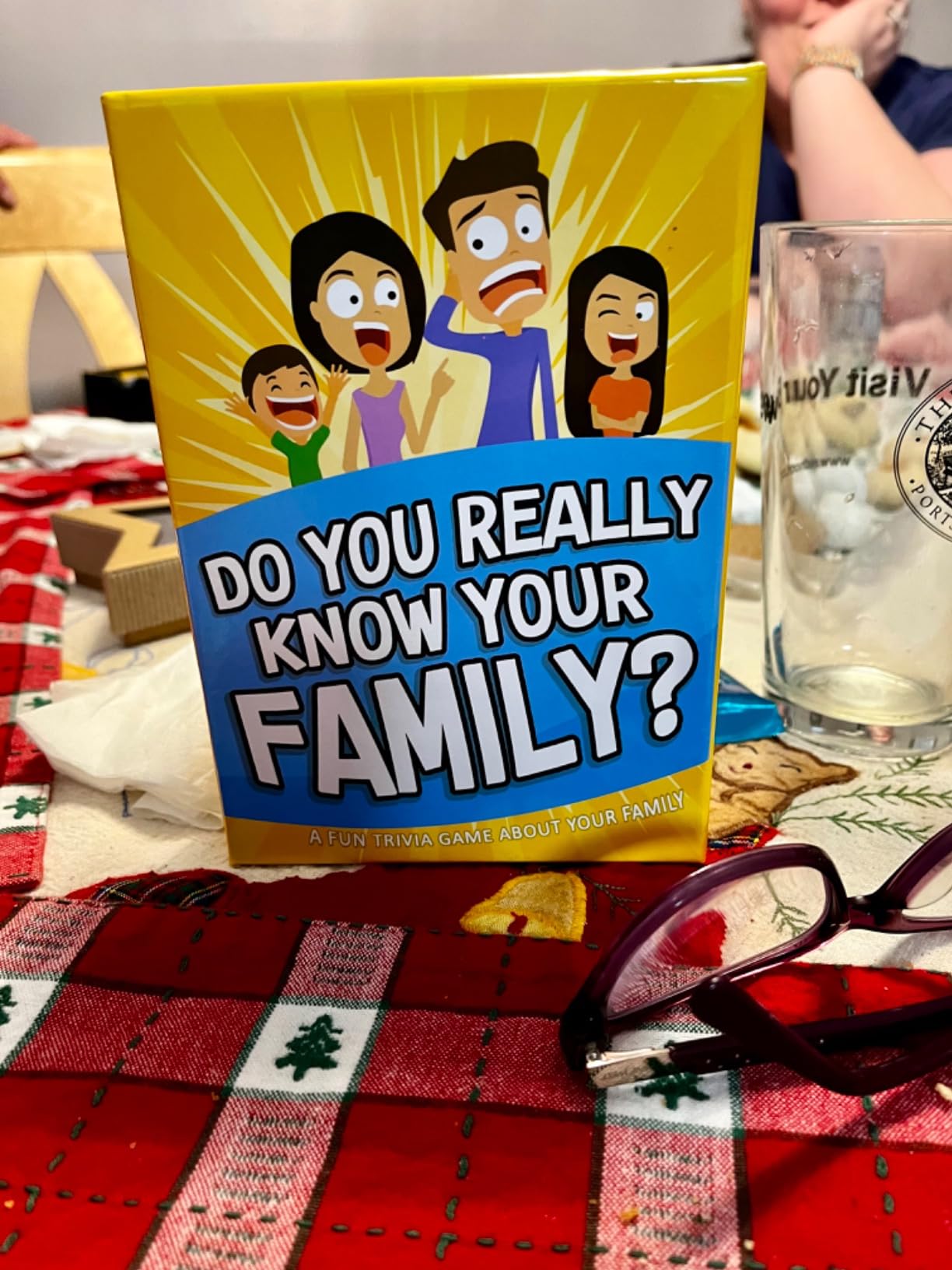
The components are simple: a tin and a cardstock deck at 2 by 4.7 by 6.7 inches. It is one of the more compact options here and slips into a handbag or a coat pocket for a restaurant trip. The cardstock survives being handled by small hands far better than a thin paper deck would.
Reviews on this game consistently describe it as a conversation starter that cuts down screen time. Families also mention gifting a copy after the first play, which tells you something about how it lands in a group where the adults and kids do not usually talk about the same things.
Who this suits?
This suits families who find conventional trivia too competitive or too dry. It is a good pick for a grandparent birthday, a holiday gathering, or any evening where the point is talking rather than winning. Three to eight players is a wide enough range to cover most households plus a guest or two.
It is also the game with the least to explain. There is no real rulebook to slow you down, so it works well as the first game of the night while everyone settles in.
Who this does not suit?
If you want actual trivia, this is the wrong box. There is little outside knowledge in it, and a family that came to be quizzed will finish a round quickly. Reviewers also point out that the challenge cards can feel forced, so expect the group to skip those and play the question cards only.
Replay value is the bigger limitation. Once your family works through the prompts, the novelty thins out, and this is not a title you will find yourself reaching for two years later the way we do with the deduction-style game above. Treat it as a party icebreaker rather than a permanent fixture.
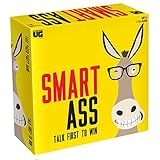
3. Smart Ass – Best for Teens and Big Noisy Groups
Smart Ass Fast-Paced Trivia Board Game for Families, Ages 12+
Ages 12 and up
2 to 6 players
411 question cards
Board, 2 dice, 6 playing pieces
Pros
- Fast
- loud and energising
- Excellent in teams
- Rules take seconds to learn
- 411 cards plus a category die
Cons
- Question difficulty skews hard
- Needs four or more players to shine
- Shouting mechanic is not for quiet groups
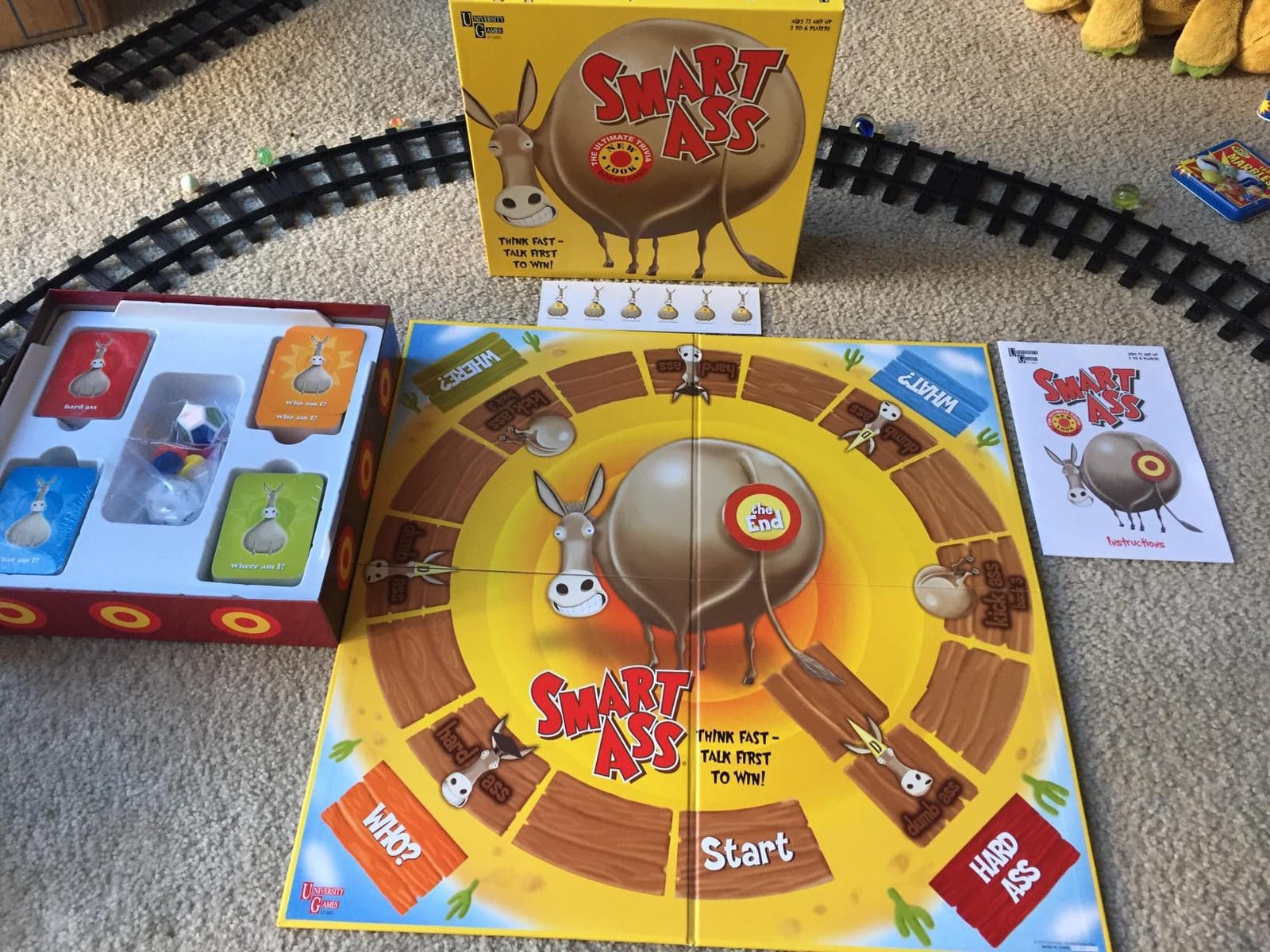
Smart Ass replaces the buzzers with volume. Any player can shout the answer, even out of turn, and the first to be right moves their piece. For a house full of teenagers or a group of adults who like a party atmosphere, that mechanic is the whole appeal, and it is genuinely difficult to replicate with a quieter game.
Everything needed is in the box: a game board, six playing pieces and stands, 411 question cards, a jumbo category die, a movement die and instructions. The board is 10.63 inches square and the whole thing weighs 2.4 pounds, so it is a real shelf game rather than something that lives in a drawer.
Two to six players are supported and a one-year warranty against manufacturer defects is listed. In practice, reviewers consistently say the game wants four or more. With two players the shouting has nobody to compete with and the energy drops noticeably, which is worth knowing before you commit your family game night to it.
The category die is the quiet hero. It lets you steer a round toward topics the table actually knows, which is how a group of mixed abilities keeps the night interesting once the general questions start to bite.
Who this suits?
Teenagers, university students and any group that treats game night as a social event rather than a quiet competition. Teams work well, which makes it a good option for an eight-person gathering split into two groups. Ages 12 and up is the manufacturer guidance.
It also earns its place as a second game on a family night. Once the table has warmed up with something calmer, this is a good way to finish loud and competitive without anyone feeling like the quizzer.
Who this does not suit?
Question difficulty is the recurring complaint. Reviewers describe the clues as closer to traditional Trivial Pursuit difficulty than family-friendly trivia, so younger or casual players can sit out entire rounds. That is a real problem in a family with a wide age gap.
It is also the wrong choice for a quiet household or for anyone sensitive to loud group play, since the mechanic is built entirely around shouting over each other. Card-only trivia is the better route for smaller groups or calmer homes.
4. Trivial Pursuit Family Edition – Best for Classic Category Play
Hasbro Gaming Trivial Pursuit Game: Family Edition Board Game, Family Trivia Games for Adults and Kids, 2+ Players, Ages 8+ (Amazon Exclusive)
Ages 8 and up
4 players, 2+ in teams
200 cards, 1200 questions
Plastic, 1.5 pounds
Pros
- Separate decks level the playing field
- 4.7 stars across 7000+ reviews
- Quick-play wedge rules shorten games
- Plays individually or in teams
Cons
- Longer setup than card-only trivia
- Still wedge-collecting at its core
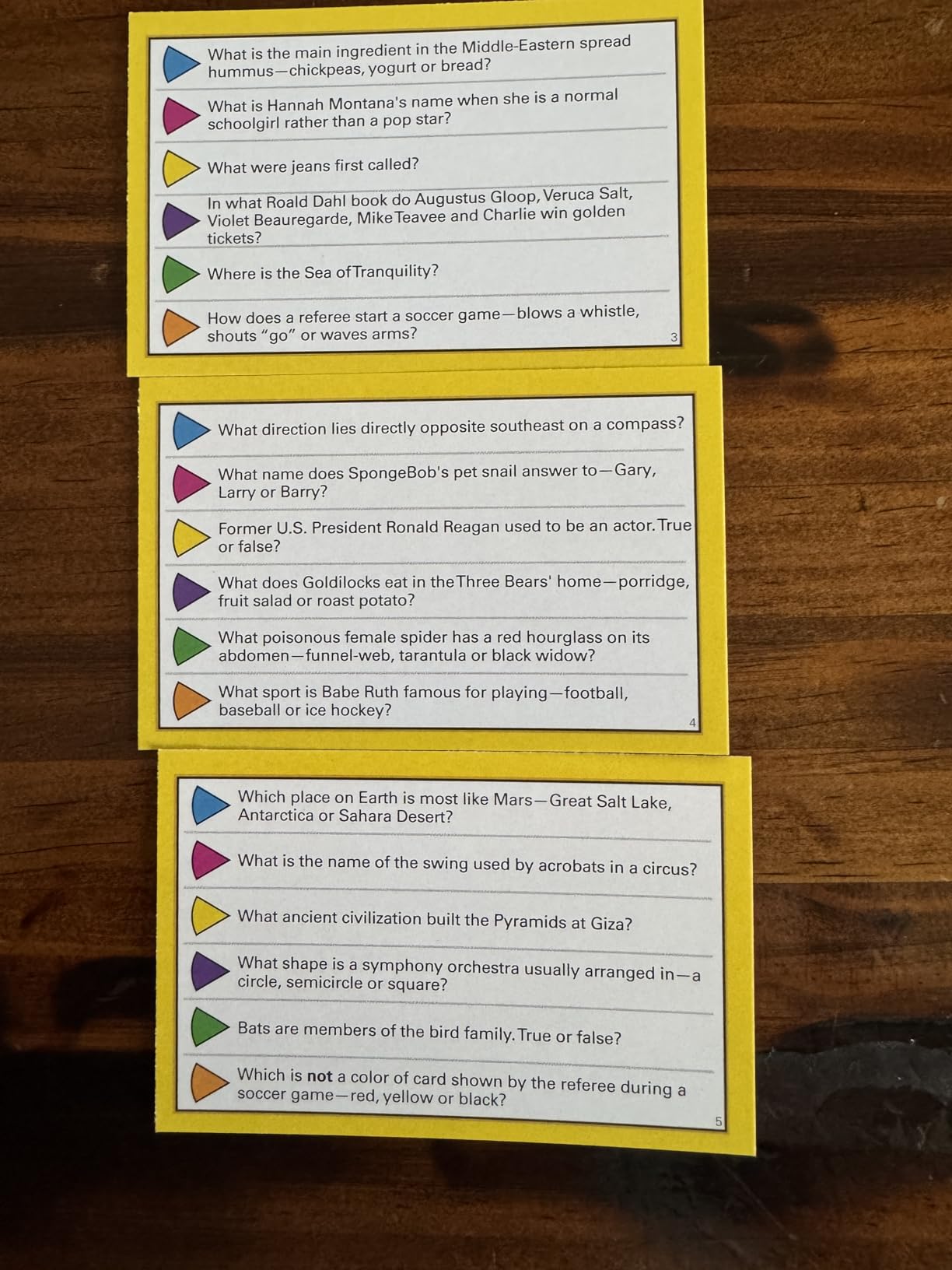
The reason this edition exists is the two-deck system. One hundred blue cards are aimed at adults and one hundred yellow cards at kids, which means a twelve-year-old and a sixty-year-old are reading questions of comparable difficulty. That single design decision is what earns it 4.7 stars across more than seven thousand reviews, and no other board game in this roundup matches it.
It is still a wedge-collecting game, but the rules are simplified. You can take a wedge on any coloured space rather than matching a specific one, so a round finishes faster than the original. Six different wedges plus a final question decide the winner, and the box includes a gameboard, two cardholders, six scoring tokens, 36 scoring wedges, a die and instructions.
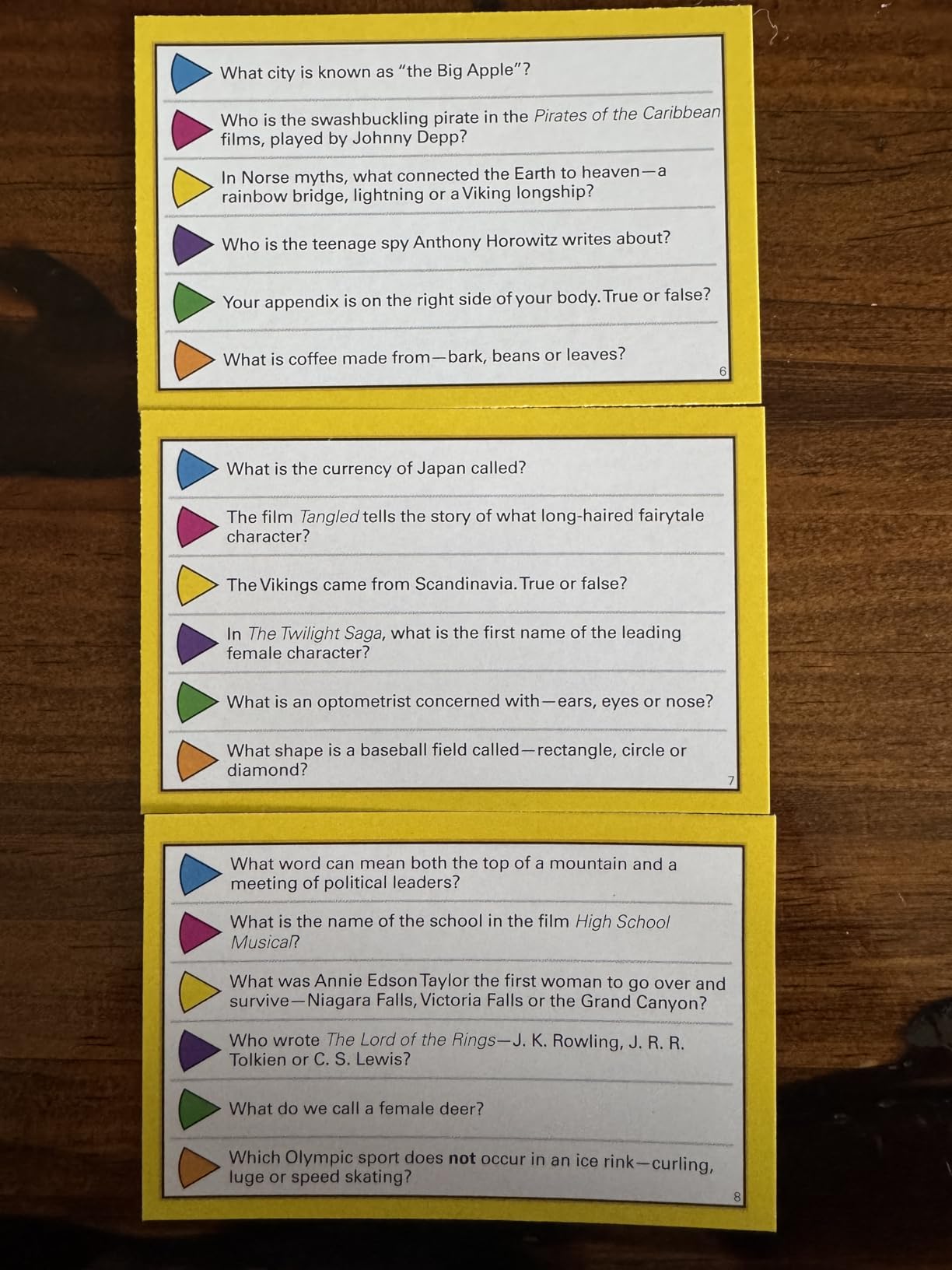
The two cardholders are more useful than they sound. They keep the adult and kid decks in front of the right player without a pile of cards in the middle, and they make it obvious to children which deck is theirs. Plastic components and a 1.5-pound weight give it a durable feel that outlives most cardboard games.
Manufacturer guidance lists four players, but the game plays for two or more, individually or in teams. Many households find that four is the sweet spot, and larger tables can split into two teams to keep the pace moving.
Who this suits?
This is the safest pick for a classic family holiday gathering, particularly when two or more generations are at the table and nobody wants to feel exposed by an easy question. Ages 8 and up is the guidance, and the dual decks do most of the work to make that true.
It is also the choice if you grew up on Trivial Pursuit and want the category wheel without the marathon setup. Families who like sitting around a board for an hour will find the pace here much improved over the classic version.
Who this does not suit?
Setup and play time are longer than any card-based game in this roundup. If you need something that starts in under a minute and finishes before the film you put on afterwards, this is not it. The board and wedge mechanics add ceremony that some groups would rather skip.
It also needs a real table. The gameboard is 10.51 by 7.87 inches with a plastic frame, and there is nowhere useful to put it on a bed or a small kitchen table. Families playing on the sofa during a holiday should look at a deck instead.
5. What Do You Meme? All of Us – Best for Four-Generation Play
WHAT DO YOU MEME? All of Us – The Family Trivia Game for All Generations – Family Card Games for Kids and Adults
Ages 12 and up
4+ players
480 cards plus 8 wild cards
60-second timer, scoreboard
Pros
- Splits questions by generation
- Plenty of card variety
- 4.5 stars from 3017 reviews
- 60-second timer keeps rounds brisk
Cons
- Content is heavily U.S. focused
- Scoring feels unbalanced
- Timer is tight for older players
The concept is straightforward and it delivers. Cards are sorted by generation, so a Boomer card, a Millennial card and a Gen Z card come up in turn, and each age group gets to be the expert for a change. That structure is the most direct attempt at a true multi-generational trivia night of the ten games tested here.
Players of all ages team up to compete, and the manufacturer encourages four or more players at twelve and up. The box holds 480 trivia cards, eight wild cards, one 60-second timer, one scoreboard and two tokens. The timer does more work than its size suggests, because it stops a good player from dominating a question while everyone else deliberates.
Dimensions are 10.75 by 7.75 by 2.2 inches at just over 12 ounces, so it stores flat and travels without a case. Paper components are ordinary card weight, which is fine for indoor use but we would keep it away from a very small child who is still chewing on things.
Reviews repeatedly single out the generational split as the thing that finally got grandparents, parents and teens playing together in the same round. Several families also mention rewriting the scoring rules themselves, which is a fair warning that the printed system does not always reward a complete run.
Who this suits?
This is the game to buy when your family spans three or four generations and you want everyone to have a moment of expertise. The generational split handles the awkwardness of a nine-year-old being handed a question about a band they have never heard of better than any adapt-it-yourself approach.
Four or more players is the design point, so it suits larger households and holiday gatherings. It is a compact, light box that slots into a cupboard without taking a shelf, which is useful when you already have several games on the same night.
Who this does not suit?
Question content leans heavily toward United States music, film and pop culture. Families outside the US, or anyone with a taste that sits outside mainstream radio, will find whole categories that they simply cannot contribute to.
The scoring is the other weak point. Many groups change the rules after a few rounds because the printed system does not reward a complete run of correct answers, and a few younger players struggle to answer even their own generation’s questions in 60 seconds. If your family wants a game that works straight out of the box with no rule negotiation, choose one of the simpler formats instead.
6. Jumbo Hitster – Best for Families Who Bond Over Music
Jumbo Hitster – The Music Fun Party Quiz Card Game, 2-10 Players – 300 Plus Iconic Music Hits – Great for Adult and Family Game Night
Ages 16 and up
2-10 players
300+ music cards
QR codes and free app, 0.64 kg
Pros
- Highest rating of the ten
- 4.8 stars from 1907 reviews
- 300+ cards means rare repeats
- Starts playing within minutes
- Cooperative
- competitive and solo modes
Cons
- App plays only short clips without a subscription
- Some cards carry explicit language
- Mainstream radio focus
- no musicals or Disney
Hitster is a music quiz where you scan a QR code, a song plays, and the table guesses the artist, the year or the next lyric. It scores 4.8 stars across 1,907 reviews, the highest rating of the ten games, and the reason is simple: it is a title where a fourteen-year-old and a sixty-year-old can both get it right on the same question in the same round.
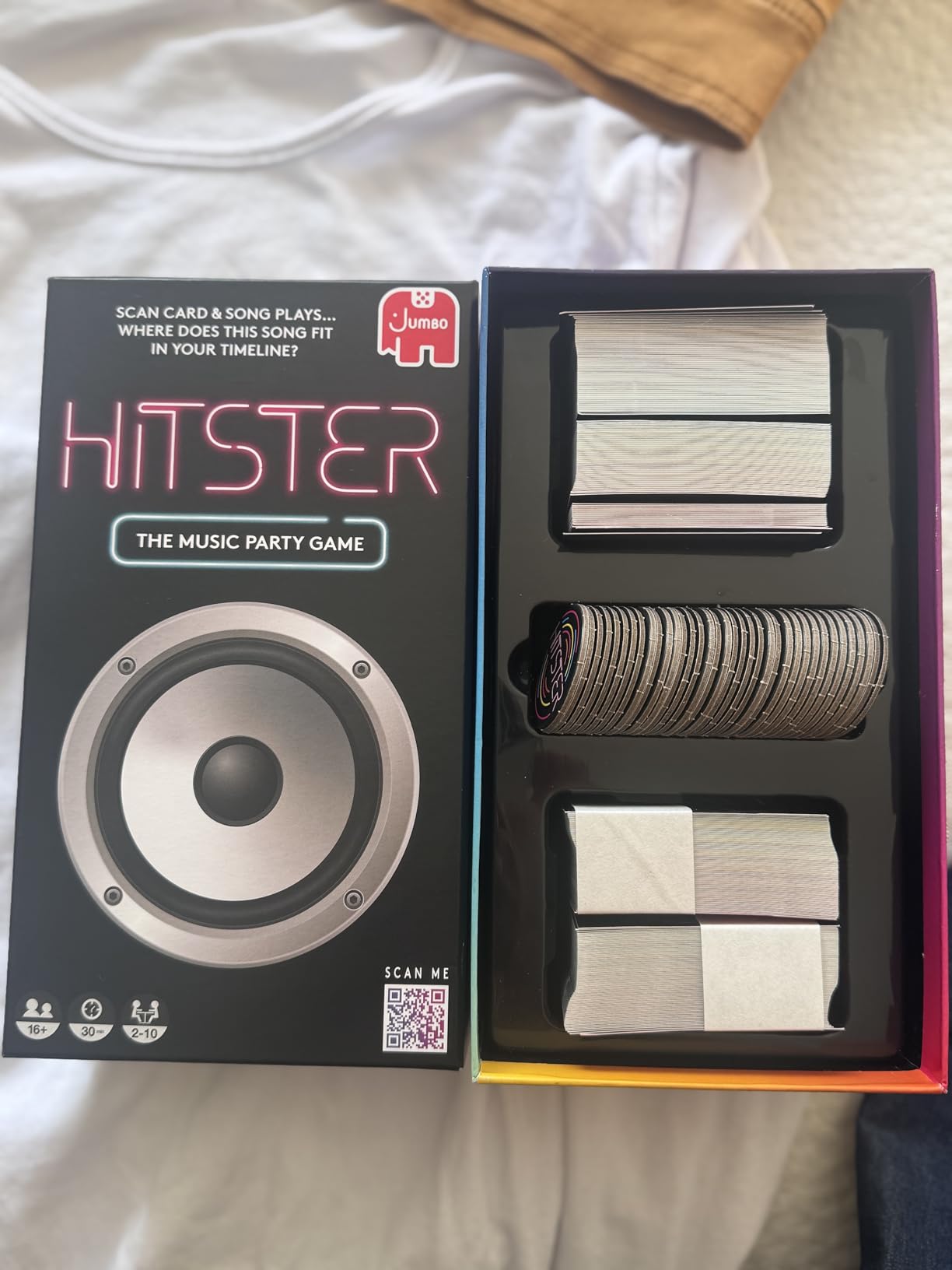
Setup is quick. Pick a card, scan it, play. The free Hitster app handles the audio, and the box contains over 300 music cards, 37 chips and instructions. Two to ten players are supported, with competitive, cooperative and solo challenges, which makes it as useful for a quiet evening for two as for a full gathering.
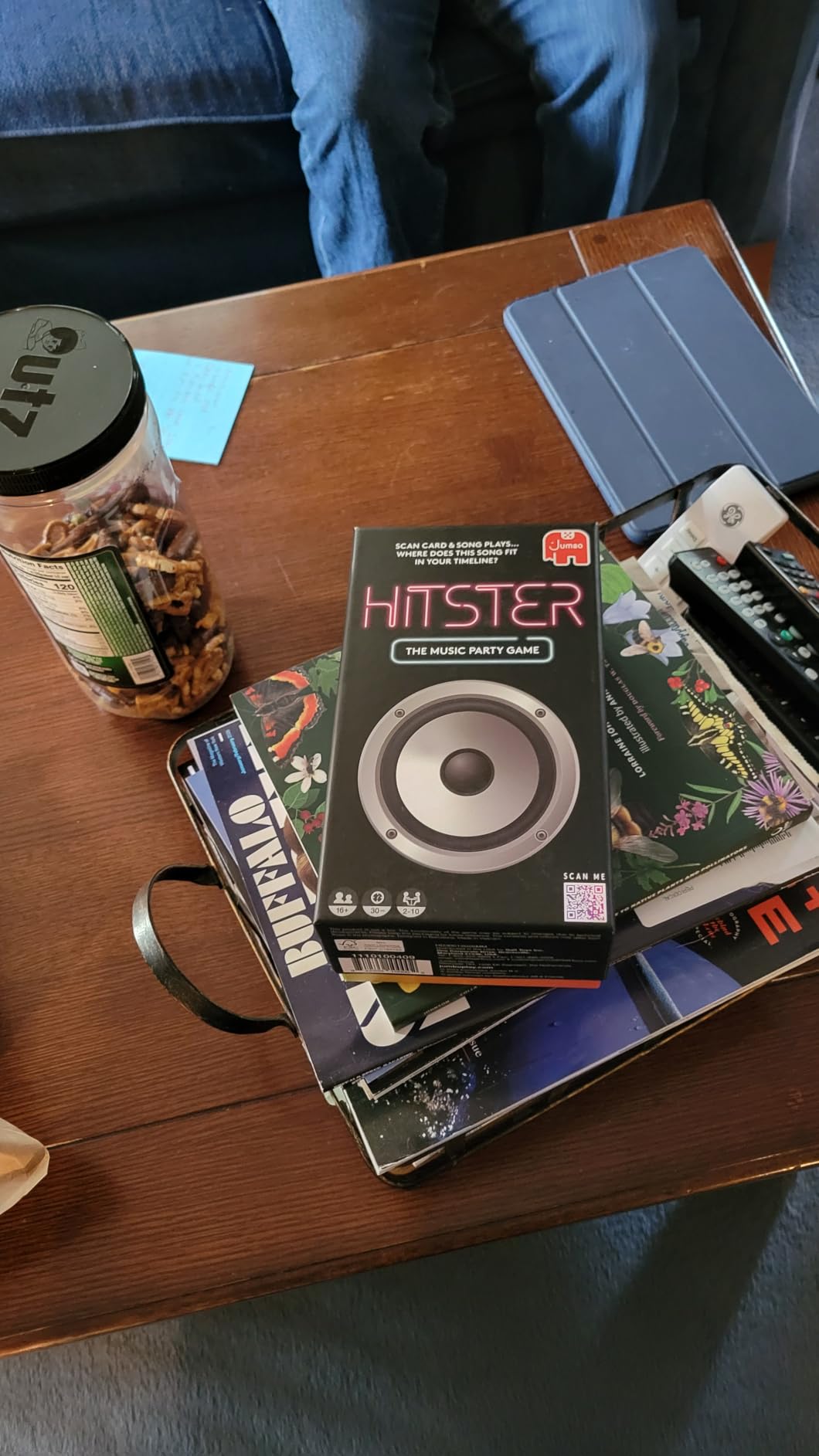
Two to ten players is a wide range for a party game. Multiple modes matter more than the player count here, because a cooperative round with a family of five is a completely different evening from a head-to-head contest with two people and a dog.
Card volume is the real strength. Over 300 songs spanning roughly a century of popular music means most families can play several evenings before a repeat. The box measures 8.5 by 4.5 by 3 inches and weighs 0.64 kilograms, so it stores easily and is still substantial enough to feel like a gift.
Who this suits?
Families with a broad, mostly mainstream music background and a habit of arguing about song lyrics. Manufacturer guidance is 16 and up, but in practice a cooperative round works well with older children, and it is one of the few games here where a teenager is not the only person who knows the answer.
It is also the strongest choice for a mixed group that finds conventional trivia dry. A wrong guess costs nothing socially, because everyone is guessing the same lyric, and the recognition moment when a chorus comes back does a lot of work to keep a quiet relative involved.
Who this does not suit?
It needs a phone and a speaker, and a music streaming subscription makes a real difference to how the experience feels. Without one, the app plays only about ten seconds of each track, which reviewers consistently flag as the main practical limitation.
Two further caveats. A handful of cards carry explicit language, so most families cull the deck before a mixed gathering, and the song selection skews toward mainstream radio with no musical theatre or Disney titles. Families who want a screen-free evening should skip this one entirely.
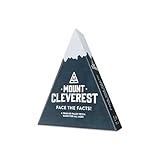
7. Mount Cleverest – Best for Families With Young Children
Mount Cleverest® Original Edition | True or False Trivia Game | Fun Adults & Kids Family Card Game | Stocking Stuffer | Travel Games | Party Games for Birthday | Gift for Boys and Girls
Ages 6 and up
2-12 players
300 true or false cards
30 betting discs, 8 ounces
Pros
- 50/50 format lets young kids win
- Scales to large gatherings
- Travel friendly
- Some cards include explanations
Cons
- Card count runs low over time
- Bet-and-disc system adds luck to the mix
Every card is a statement, and players bet a disc on whether it is true or false. Because the answer is a coin flip on knowledge, a six-year-old has a genuine shot at beating a sixty-year-old, which is the entire point. It is the design here that best welcomes very young players, with manufacturer guidance from six years up. The other title that suits very young children, the higher-or-lower card set, is aimed at ages five to eight.
Two to twelve players are supported on the box, and reviewers talk about running it for much bigger gatherings, up to around thirty people. The components are 300 large triangular cards and thirty discs, and the box itself is a mountain shape that makes it an easy present. It weighs just eight ounces and measures 5.75 by 1.75 by 6.5 inches, so it packs flat in a suitcase.
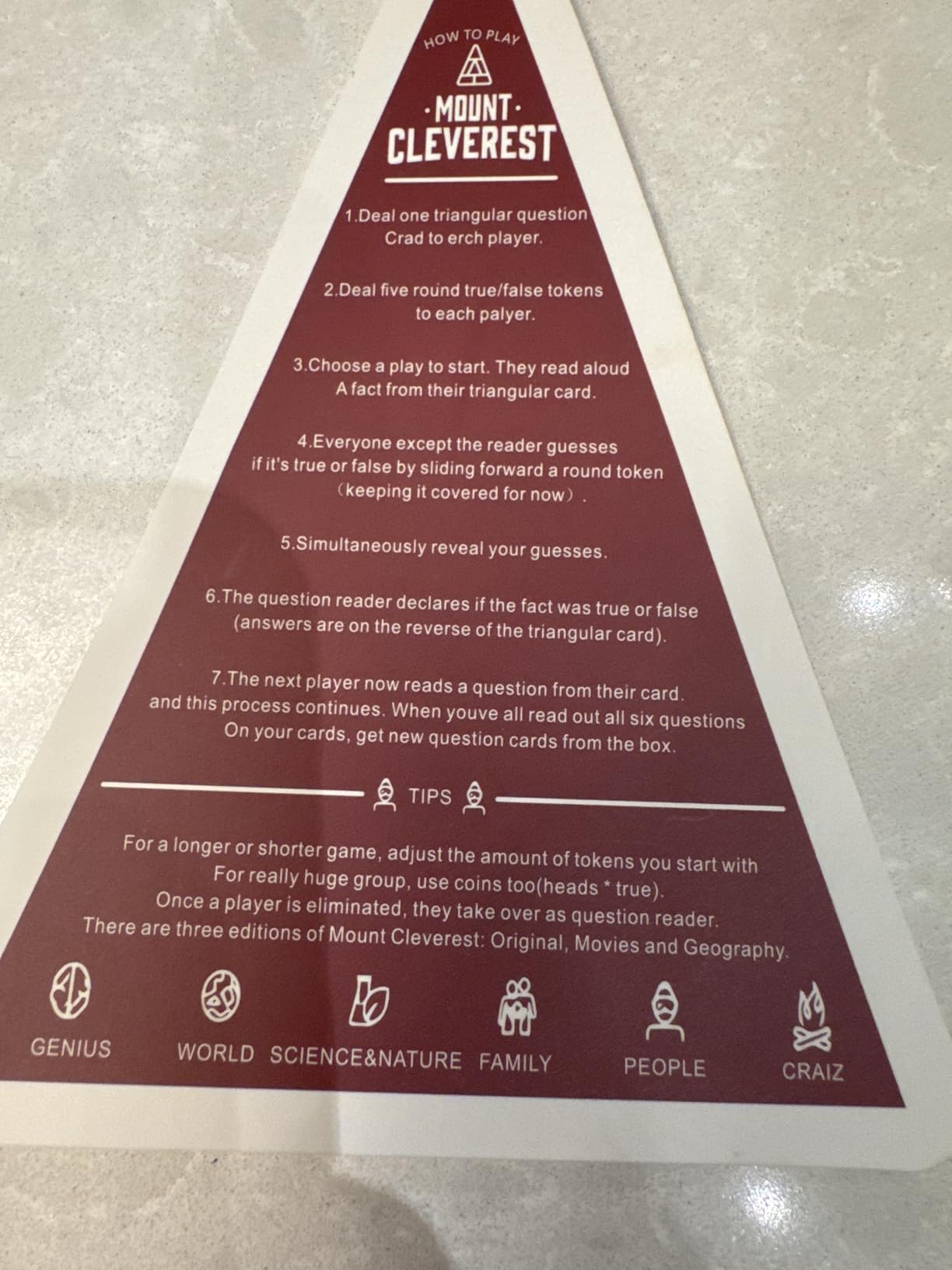
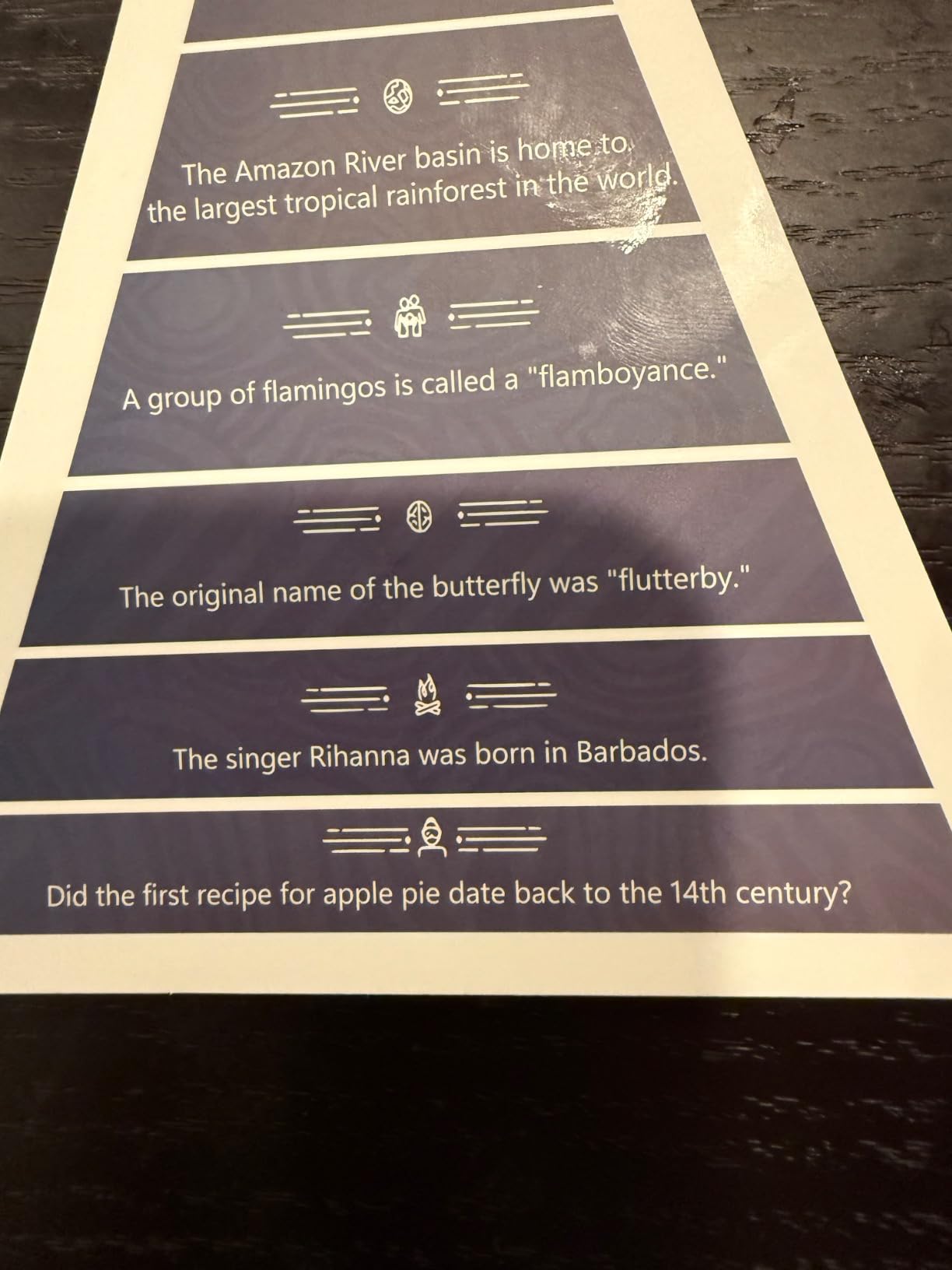
Several cards include a short explanation alongside the statement, which is educational value that does not feel like homework and works well with curious children who ask why.
Reviewers describe the format as genuinely inclusive, particularly for mixed-age and senior gatherings where knowledge-based trivia would leave people embarrassed. The inclusive design is the reason it earns a place on this list even though the question bank is modest.
Who this suits?
Families with children in the six-to-ten range, holiday gatherings with three generations present, and any group that includes a grandparent who would rather not be tested on pop culture. Twelve players fit on one round, and the format stretches to far larger numbers by splitting the table into sides.
It is also easy to travel with. Nothing to assemble, no board to find a flat surface for, and it works in a car or a hotel room. The true-or-false format needs no reading and no screen, which makes it a low-friction choice for a family night away from home.
Who this does not suit?
Three hundred cards is not a large bank. Families who play weekly will work through them faster than they expect, and the most common complaint is exactly that, running out of cards sooner than planned. Consider it an evening game rather than a fixture.
There is also an element of luck in the betting system, since a player can commit a disc before the reveal. If your family dislikes games where the result is partly chance, the deduction-style games on this list are a better fit.
8. History Channel Trivia Game – Best for Learning Families
HISTORY Channel Trivia Game – 2000+ General Knowledge Questions | Official HISTORY Channel Trivia Card Game & Party Game for Adults, Families & Board Game Night – Great Gift for Dad & History Buffs
Ages 14 and up
2+ players
2000+ questions, five categories
About 30 minute rounds
Pros
- Huge question bank limits repeats
- Modern rules avoid slow board play
- Easy
- medium and hard tiers
- Substitution rules rescue a weak category
Cons
- Content skews heavily to U.S. history
- Too hard for young children
- Older 14+ age guidance
This one is built for families who like learning more than they like shouting. Over 2,000 general knowledge questions sit across five categories: Arts and Culture, Sports and Recreation, Science and Technology, Geography and Landmarks, and People and Events. It is made in partnership with The HISTORY Channel, and the question bank is the point.
What we like is the modern quick-play design. There is no meeple to move around a slow board, and a round takes roughly 30 to 45 minutes by the manufacturer’s estimate. Questions run at easy, medium and hard levels, which is how a fourteen-year-old and a forty-four-year-old can stay in the same round without either of them coasting.

Substitution rules are an underrated feature here. If a player draws a category they are weak on, they can swap it rather than be eliminated, which keeps the round from turning into a formality. Two or more players are supported, and the box includes cards, a board and rules.
Components are solid: cardstock cards in a 10 by 10 by 2 inch box weighing 0.73 kilograms. Reviewers who play it regularly note that the sheer volume means they can go for a long time without hitting the same question twice, which is rare in this category.
Who this suits?
Teens and adults, holiday tables where conversation matters as much as the score, and any family that wants a game night to leave people knowing something. The easy, medium and hard tiers mean you can run a family round where a younger player is genuinely competitive rather than carried.
It is a good second game as well. The 30 to 45 minute round length pairs well after a fast party opener, and the quieter pace suits the end of an evening better than the beginning.
Who this does not suit?
The question bank is heavily weighted toward United States history, which leaves international families, or anyone who studied a different national curriculum, at a real disadvantage. It is not a small quibble when the whole point of the game is what you know.
Guidance starts at 14 years, so a family with younger children will find the hard tier frustrating and the easy tier thin. It is also a boxier format than a standard card deck, at 10 by 10 by 2 inches, so a second copy is a storage decision as well as a spending one.
9. GENSMAK – Best for Large Gatherings and Gifts
GENSMAK! Trivia Party Game for Adults & Families Multi-Generational Trivia Card Game for Game Night Funny Trivia with Hints 2-8+ Players Ages 10+
Ages 10 and up
2-8+ players
750 questions
Comedic hints on every card
Pros
- 750 questions plus bonus and SMAK cards
- Comedic hints keep non-experts playing
- Very easy to learn
- Scales from couples to large groups
Cons
- Difficulty swings from easy to obscure
- Some groups write their own rules
- Smaller review base of 407
GENSMAK is built on a simple idea: every question comes with a joke. You read a question, read a comedic hint, and the hint is usually good enough that someone at the table can guess without knowing the answer at all. That is a very effective way to keep a non-expert in a trivia game, and it is why the game keeps working when the group is mixed.
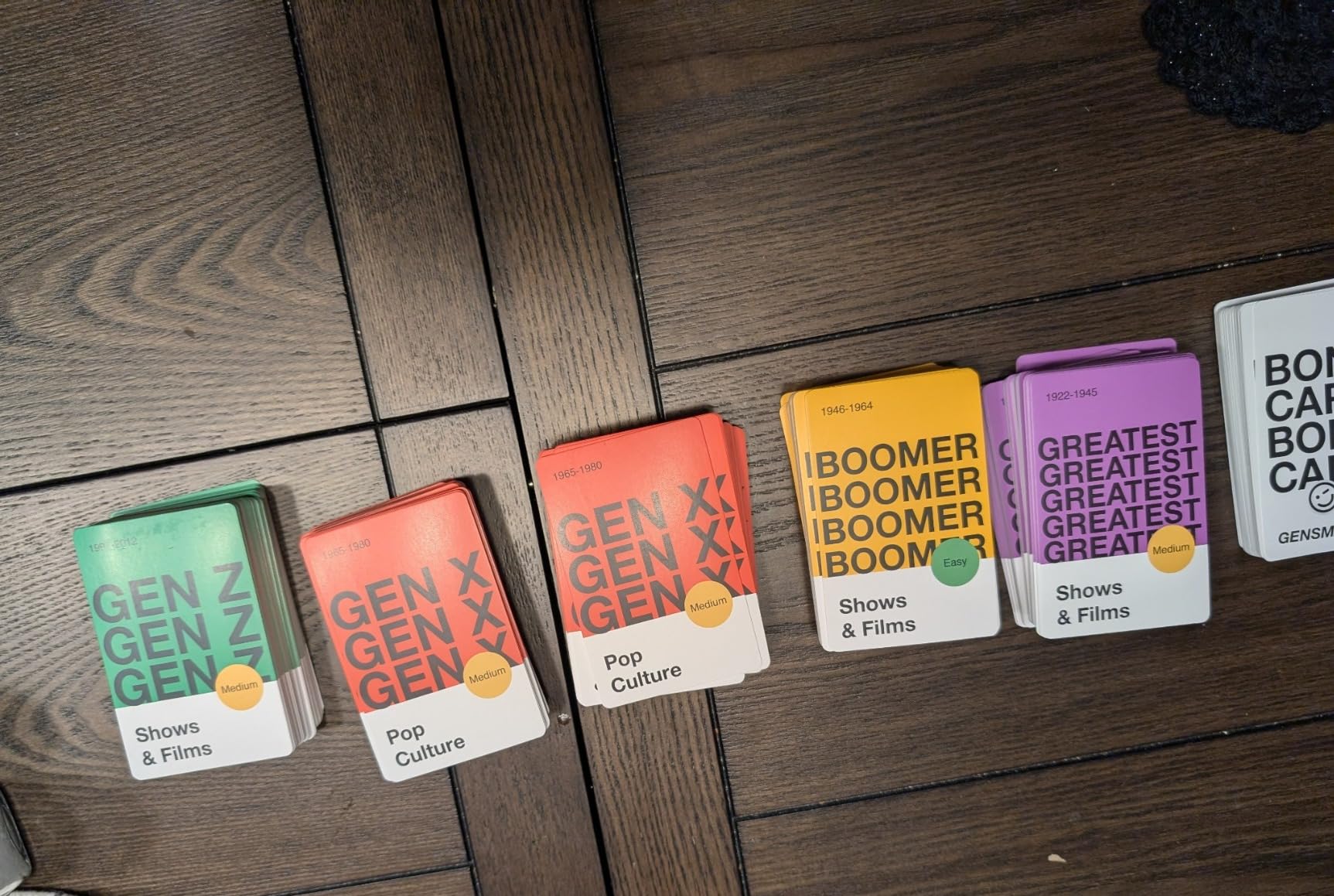
There are 750 questions, plus bonus point cards and SMAK cards that let you challenge another player, team up or double down. Questions span pop culture, people, events, music, shows and films across generations, and scoring twenty points wins the game. Rules are simple enough that a group can start playing within minutes.
Manufacturer guidance is ten and up, and the game scales from two players to eight or more, or to teams. That flexibility is unusual: the same box works for a couple on a rainy afternoon and for a party where the table is split down the middle.
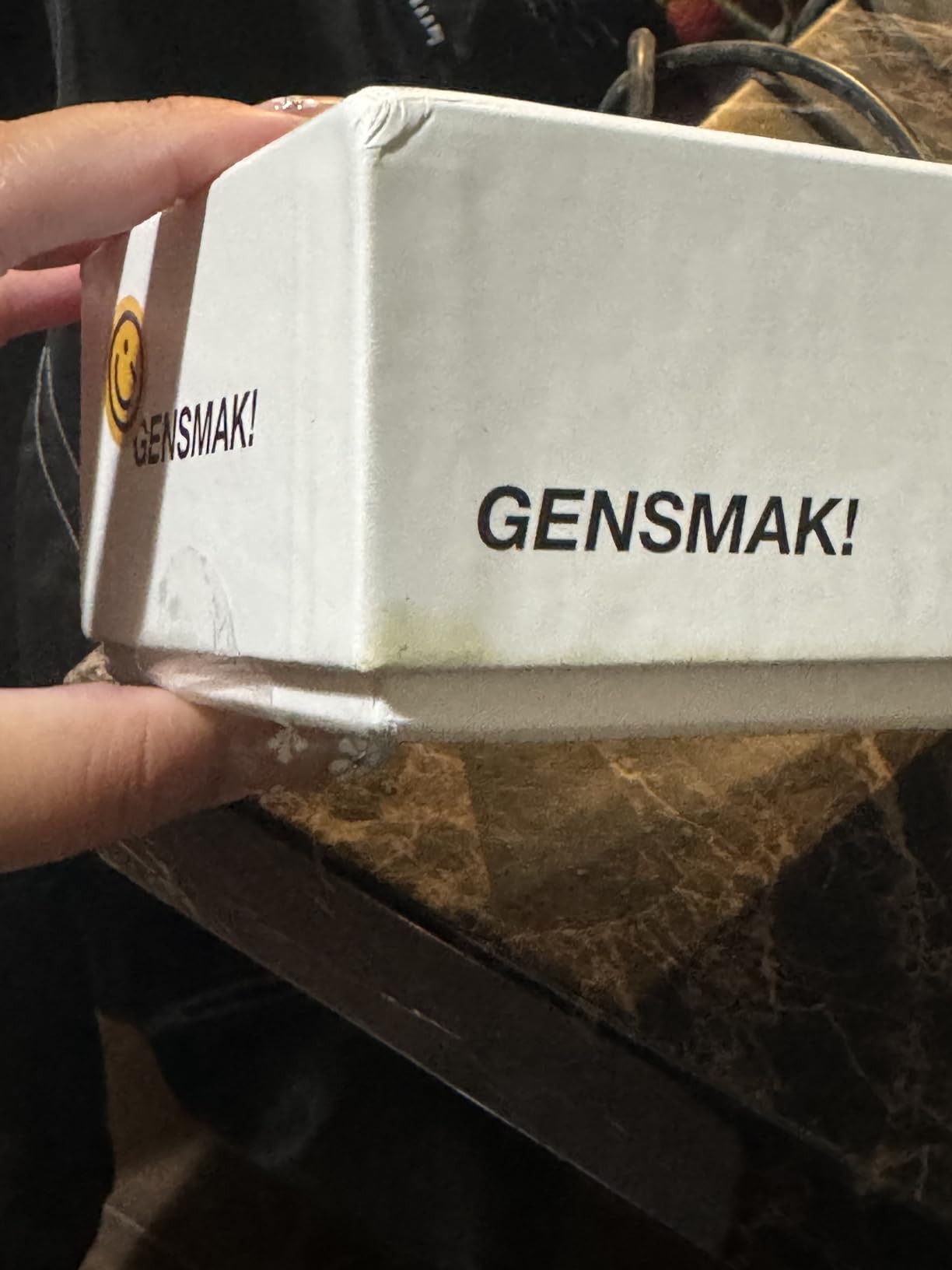
Several reviewers mention buying copies as gifts after the first playthrough, which is a decent signal that it lands well as a present. It arrives in a compact 7.56 by 3.88 by 2.41 inch cardstock box, so it stores on its side without taking much room.
Who this suits?
This suits a family that wants a low-friction start and a lot of volume. Nothing about the setup takes longer than opening a box, and the hints mean that a nervous or young player still contributes to every round. It is a strong choice for a party or a gathering with guests who do not know one another.
It is also a good gift pick. The question count and the low learning curve mean it survives being handed to someone outside your household, which matters if you are buying for a family that is not your own.
Who this does not suit?
Question difficulty is inconsistent, swinging from very easy to genuinely obscure, and the inconsistency is the most common complaint. On a hard streak the family mood drops, because the hints stop carrying anyone. Groups that like their trivia to feel fair will notice.
The rules are also so simple that some groups rewrite them, which is flattering but can cause arguments if your family does not enjoy negotiating house rules mid-game. With 407 reviews it has a thinner feedback base than most of the set, so expect to spend a session learning how your group likes to play it.
10. Higher or Lower Trivia Cards – Best for Travel and Small Hands
Trivia Board Games for Kids and Adults – Higher or Lower Trivia Cards
Ages 5-8 guidance, works with adults
2+ players
500+ questions
Four decks, 4.13 x 2.75 inches
Pros
- No factual knowledge required
- 500+ questions for replay
- Exceptionally portable
- Used in classrooms and senior groups
Cons
- Comparison reasoning is tough for young kids
- Structure can feel repetitive
- Thin review base at 224 reviews
The mechanic is one question: is the next thing higher or lower? That might be the population of a city, the release year of a film or the weight of an animal. Because the comparison is relative, nobody needs to know the actual number, and a child and a grandparent can argue about it on equal footing.
Two or more players, over 500 questions, and four decks in the set. Cards measure 4.13 by 2.75 inches, which is small enough for a coat pocket and genuinely travel friendly. There is nothing to assemble, no timer to argue about and no screen, so it works in a car, a queue or a hotel room.
Who this suits?
Families with a wide age gap and no interest in quizzing each other on facts. It is one of the few games here where a five-year-old can genuinely win, because the skill is reasoning rather than recall. Reviewers also use it in classrooms and with senior groups, which tells you how little knowledge it actually demands.
It is the flattest option here and slips into a coat pocket, so it is the one to pack if you are building a family game night around a trip rather than a night at home. The four decks also mean it survives being split across a large table without constant reshuffling.
Who this does not suit?
Ironically, younger players can struggle with it, because holding an exact number in your head and comparing it to another is harder than being asked a simple factual question. The manufacturer guidance of five to eight years reflects who the format was designed for, and we would set that floor at about seven in practice.
The other limitation is repetition. Once a group gets the rhythm of the higher-or-lower structure, some reviewers find the same format wears thin, and there is no scoring drama to break it up. If your family enjoys a bit of theatre in its games, choose a format with a real winner rather than a running total.
How to Choose the Right Trivia Game for Your Family?
Match the age range before you count questions
Start with the youngest player, not the question count. A 2,000-question deck aimed at fourteen-year-olds and adults will bore a seven-year-old within a round, and a deck built for five-year-olds will feel patronising to a teenager in front of friends. The age figure on the box is the fastest filter, and it matters more than the headline number of questions.
Where a game offers different decks or difficulty tiers, take that as a strong signal. The dual-deck approach in the classic family edition and the easy, medium and hard tiers in the history title both exist because a single difficulty does not work across generations. Games with no tiering usually rely on a mechanic instead, which is also fine.
Decide between knowledge trivia and social trivia
There are two broad families of game here and they suit different evenings. Knowledge trivia rewards what you know, which suits a group of adults or a family that enjoys learning. Social trivia rewards how you play, which suits mixed ages, large gatherings and anyone who would rather laugh than be tested.
For social options, look for formats that level the score regardless of knowledge. Deduction-style scoring, a 50/50 true-or-false answer, or a higher-or-lower comparison all remove the knowledge gap. For a family with a wide age spread, one of those will usually beat a bigger, more traditional question bank.
Check setup time, player range and how the score is kept
Long setup is the most common complaint about family trivia, and it is usually what kills a game night. Card-based games open and play. The board options in this roundup need a clear surface and take longer, which is a real trade for the atmosphere they create. If your family is impatient, a deck wins.
Player range matters just as much. Two-player support is not the same as twelve-player support, and some games genuinely need a crowd to work. Note the minimum as well as the maximum, because a game that is dull with three players is a wasted evening if you only ever have three at the table.
Accessibility points worth checking before you buy
Reading load is the first thing to look at. Games built on statements or true-or-false answers demand less reading than multiple-choice question cards, which matters with a younger child or an older relative with limited vision. Card size is a decent proxy: the wide triangular cards in the true-or-false game are the easiest to read across a table.
Timers are the second point. A sixty-second timer adds pressure and keeps rounds brisk, but reviewers note it can be tight for older players who need a moment to recall an answer. Games with no timer are calmer and more accessible, at the cost of a longer round. Motor skills matter less here than in most board games, since these are card formats rather than pieces to place.
How to host a mixed-age family trivia night?
Pick one game that runs long enough to matter and one that runs short. A 30 to 45 minute knowledge game followed by a fast social game is a reliable shape, and it means the younger players are still engaged when the adults get tired of thinking.
Split into teams by generation rather than by skill. Pair a parent with a grandparent and a teenager with a younger child, and the knowledge gap stops mattering as much because people are playing for each other. Several families we spoke with built their own team rules on the generational games, which is easier than bending a fixed scoring system.
Read the rules aloud before the first deal, every time. The most common surprise in this roundup is a scoring system nobody expected, and a one-minute explanation prevents a bad first impression. Then keep something else ready, because a single evening of a ten-game roundup is rarely enough to finish them all.
Frequently Asked Questions
What is a good trivia game for a family night?
A good family trivia game is one where questions are accessible to every age at the table and the scoring keeps the game close. Formats that subtract points for wrong answers, offer true-or-false answers, or split question decks by age work best with mixed groups. Pick a card game over a board game if setup time matters, and check the age guidance on the box before anything else.
What are the top 10 games for a family game night?
Our ten picks are: I Should Have Known That for reverse scoring and huge replay value, Do You Really Know Your Family for conversation starters, Smart Ass for loud teen groups, the Trivial Pursuit Family Edition for separate kid and adult decks, What Do You Meme All of Us for four generations playing together, Jumbo Hitster for music fans, Mount Cleverest for families with young children, the History Channel Trivia Game for learning, GENSMAK for large gatherings, and the Higher or Lower cards for travel.
What are some good games to play at a trivia night?
For a young kids group, choose a 50/50 format such as true-or-false or higher-or-lower where everyone can win. For teens, a fast shout-the-answer party game keeps the energy up. For a multi-generational table, look for games that split questions by generation or deduct points for wrong answers. For adults, a question-heavy deck with easy, medium and hard tiers rewards real knowledge. For travel, pick a compact card format with no setup.
What are some fun trivia questions for the entire family?
Family-friendly trivia works best when answers are personal rather than academic. Ask which family member is most likely to arrive late, what each person would take on a stranded island, or who in the room cooks the best Sunday dinner. Statement-based questions with a true or false answer also travel well, since even a six-year-old has a fifty-fifty chance and the discussion afterwards is the real entertainment.
How do you choose a trivia game that works for all ages?
Ignore question count and check three things: the age guidance, whether separate difficulty decks are included, and whether the scoring favours knowledge or deduction. Games with a mechanic that rewards guessing or strategy keep mixed ages competitive. Games with a single difficulty setting need every player to be roughly the same age to stay fun. If your family regularly includes children under ten, a true-or-false or higher-or-lower format is the safest route.
Which Trivia Game Should Your Family Play First?
For most households the best trivia games for family game night in 2026 come down to one of three picks. If your group is 14 and up, start with I Should Have Known That, because the reverse scoring does more to keep a mixed table even than any question bank we tested. If you have children from about eight and want the night to be about talking rather than facts, Do You Really Know Your Family is the warmer option. If you have a holiday table with grandparents and teenagers in it, the classic family edition with separate kid and adult decks is the most reliable bet.
Whichever you choose, read the rules out loud before the first deal and keep one short game in reserve. Families that rotate two or three of these games across a season tend to get more out of the shelf than families who insist on finishing one box first.