
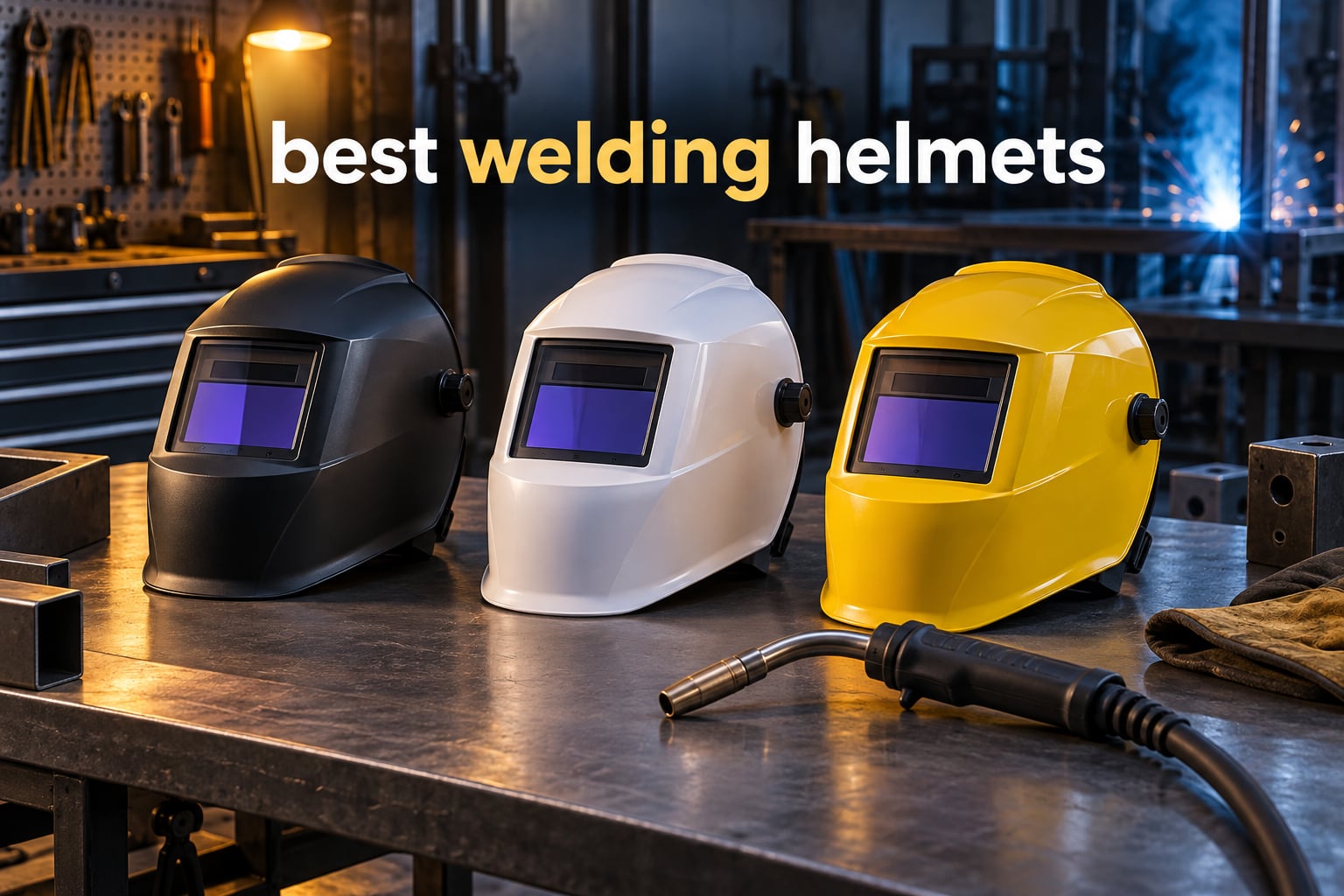
Short answer: the Lincoln Electric Viking 3350 is the best welding helmet overall in 2026. It pairs a 12.5 square inch 4C auto-darkening lens with 1/1/1/1 optical clarity, four arc sensors, and a five-year warranty. If your budget is tighter, the YESWELDER LYG-L600A delivers a true-color 1/1/1/1 lens for a fraction of the cost, and the Miller Classic Series ClearLight is the pick if you want Miller optics without the premium price tag.
Welding helmets are the one piece of safety equipment you wear every second your arc is lit. Get the optics wrong and you are squinting at a green-tinted blur, misreading the weld pool, and finishing a shift with the headache that welders blame on the fumes but usually trace back to a poor lens. Get the sensors wrong and the helmet simply fails to darken on a low-amp TIG strike, which is the failure mode that shows up in forum threads over and over.
We compared 12 of the strongest auto-darkening welding helmets currently on the market, checking viewing area, arc sensor count, optical class, shade range, weight, power source, and warranty against the manufacturer and owner data available for each one. This guide covers the budget tier for beginners, the mid-range pros pick, and the premium end of the market, plus the buying-guide details that decide whether a helmet fits the way you actually weld.
Last updated for 2026. Prices on this page change constantly, so use the check buttons rather than any number you remember from an older article.
Table of Contents
Top 3 Best Welding Helmets (October 2026)

Lincoln Electric Viking 3350
- 12.5 sq in 4C lens
- 1/1/1/1 optical clarity
- 4 arc sensors
- 5-year warranty

YESWELDER LYG-L600A
- 1/1/1/1 true color lens
- 2 arc sensors
- solar plus CR2450 battery
- 16 oz shell

Miller Classic ClearLight
- ClearLight HD optics
- 3.0 light state
- weld 8-13 cut 5-8 grind 3
- 3-year warranty
Those three cover the range most buyers actually need. The Viking 3350 is the safest single recommendation for someone who welds several processes and wants to stop thinking about their helmet. The LYG-L600A is the value leader, sitting at the top of Amazon’s welding helmet category with a review count no competitor in this guide comes close to. The Miller Classic is the middle path, with a three-year warranty and Miller optics in a more conventional package.
Quick Overview: Every Helmet in This Guide Compared
| Product | Specifications | Action |
|---|---|---|
| Lincoln Electric Viking 3350 |
|
Check Latest Price |
| YESWELDER LYG-L600A |
|
Check Latest Price |
 YESWELDER LYG-Q800D YESWELDER LYG-Q800D |
|
Check Latest Price |
 YESWELDER LYG-M800H YESWELDER LYG-M800H |
|
Check Latest Price |
 ARCCAPTAIN Auto Darkening Helmet ARCCAPTAIN Auto Darkening Helmet |
|
Check Latest Price |
 TOOLIOM Solar Powered Helmet TOOLIOM Solar Powered Helmet |
|
Check Latest Price |
 Hobart 770890 Hobart 770890 |
|
Check Latest Price |
 MIGVAN True Color Helmet MIGVAN True Color Helmet |
|
Check Latest Price |
 Jackson Safety Insight Jackson Safety Insight |
|
Check Latest Price |
| Miller Classic Series ClearLight |
|
Check Latest Price |
 ESAB Savage A40 ESAB Savage A40 |
|
Check Latest Price |
 Lincoln Electric K4134-1 Lone Star Lincoln Electric K4134-1 Lone Star |
|
Check Latest Price |
A few patterns jump out of that table before you read a single review. Sensor count splits the field cleanly: eight of the twelve are listed with four arc sensors, two run on a two-sensor array, and two do not publish a count. Viewing area is the next divider, ranging from the Miller Classic 6 square inch window up to large-format lenses in the 12 square inch class. Power source is nearly settled, since almost everything here runs on solar assist plus a replaceable CR2450 or CR2 cell, with the Hobart and ESAB using serviceable CR2 cells.
1. Lincoln Electric Viking 3350 – Best Overall 4C Auto-Darkening Helmet
Lincoln Electric K3034-4 VIKING 3350 Auto Darkening Welding Helmet with 4C Lens Technology, Matte Black, extra large
12.5 sq in 4C lens
1/1/1/1 optical clarity
4 arc sensors
5-year warranty
1.4 lb
Pros
- Exceptionally clear 1/1/1/1 4C lens that makes the pool easy to read
- Large 12.5 sq in viewing area for situational awareness
- Reliable at low amperage on TIG without arc flicker
- Lightweight at 1.4 lb with multi-point adjustable X6 headgear
- Standard non-proprietary cover lenses and a 5-year warranty
Cons
- Highest price in this group
- A few owners report it can be slow to react on the first strike
- X6 headgear looks complex until you adjust it
The Viking 3350 is the helmet we keep coming back to, and for one specific reason: you can read the weld pool. The 4C lens at 1/1/1/1 optical clarity is the difference between watching a weld and controlling a weld. At a 4.8 rating across more than 3,100 owner reviews, that clarity is the single most repeated thing buyers mention, and regulars on r/Welding consistently single out the Lincoln Viking as one of the clearest lenses in the trade.
Viewing area is the other half of the story. At 12.5 square inches, this is the largest published lens area in the guide, and the difference is obvious the moment you set up on a joint with a lot of surrounding metal to keep in view. Fit-up work, tacking, and reading heat tint all get easier because you are not craning your neck to find the edges of your work.
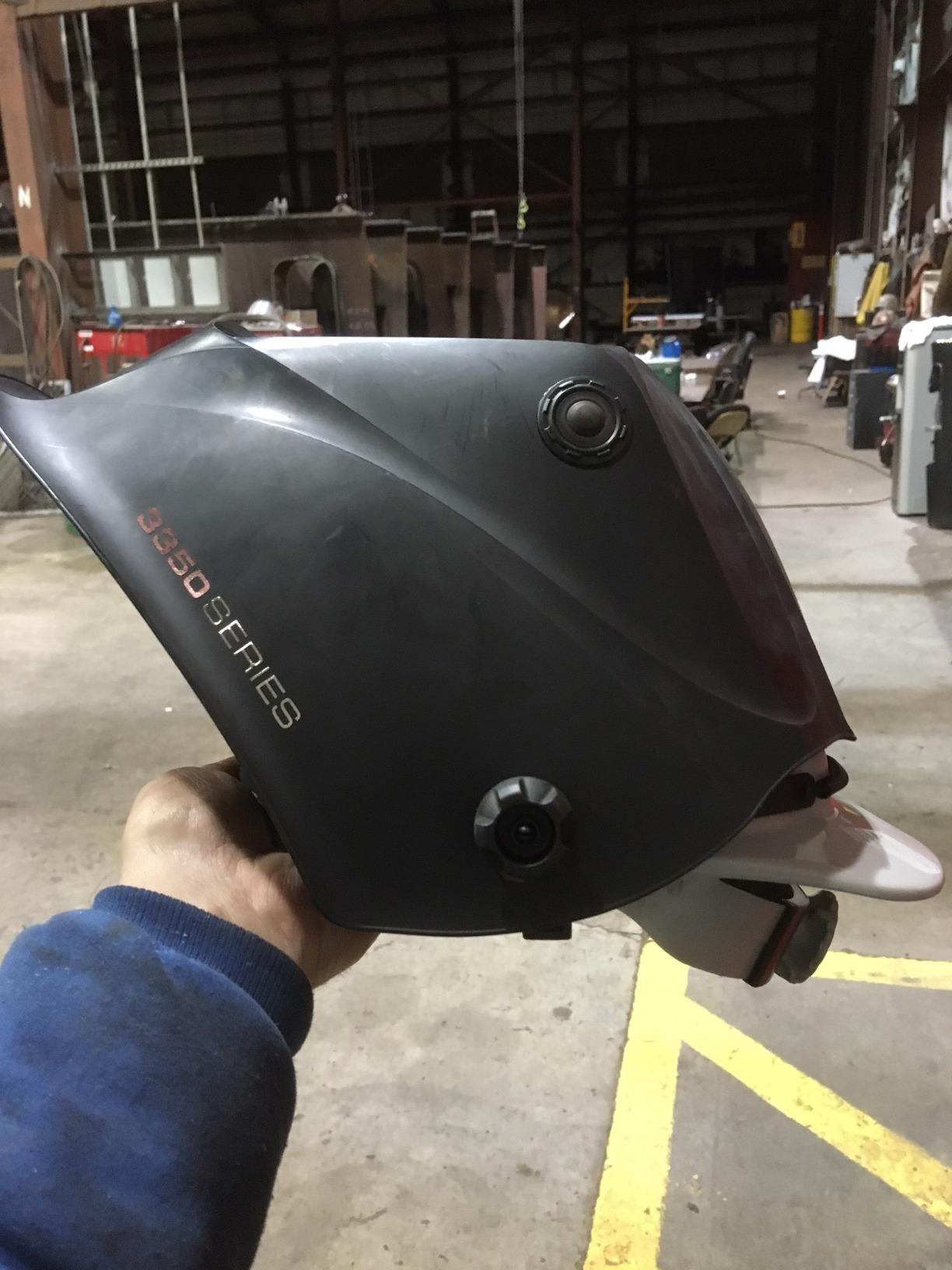
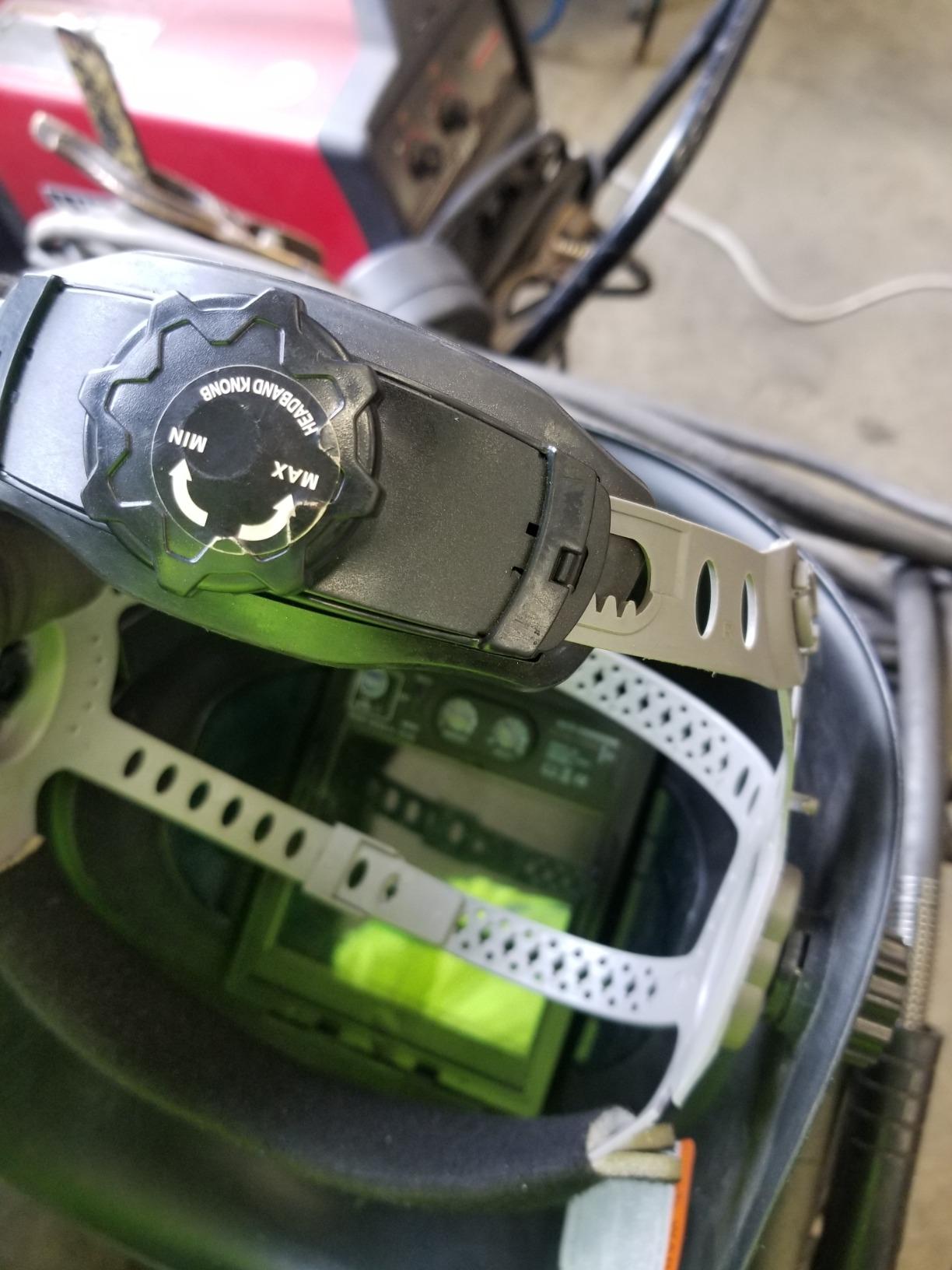
At 1.4 pounds, it also stays comfortable through a full shift, which matters more than it sounds. The X6 headgear spreads the load across a ratchet knob that adjusts for hat sizes 6 1/2 through 8, and the hood latches securely in the raised position. Forums mention headgear digging into the skull as a common complaint on cheaper hoods, and this is where that complaint stops.
Four arc sensors handle the detection side, and owners working TIG report steady behavior at low amperage without the arc flicker that plagues two-sensor budget models. Out-of-position and overhead work is where sensor count earns its keep, and this is a four-sensor hood reacting before the arc is fully established. The one recurring complaint is cost, which we will not pretend is not the tradeoff here.
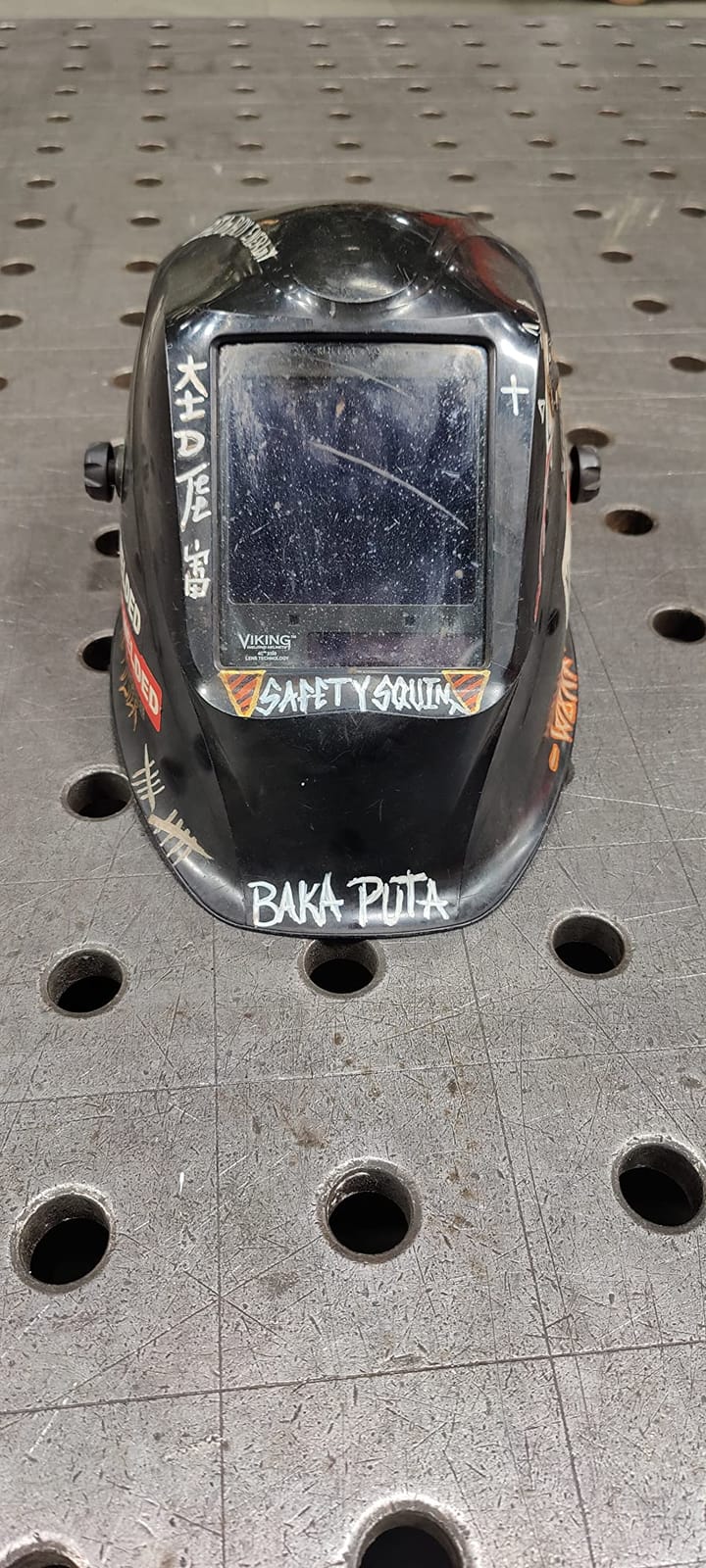
What you notice in the first week?
The light state is bright enough to keep the hood down between passes, which means you stop flipping it up and down dozens of times an hour. That single ergonomic detail does more for fatigue than any weight figure on a spec sheet. If you spend a day tacking a trailer or a frame, you will feel the difference in your neck by the afternoon.
The lens also holds a consistent shade rather than pulsing as the arc winks out at the end of a pass. That consistency is what makes it possible to run a bead without stopping to re-check your position every couple of inches.
Where it falls short?
The 5-year warranty is the longest in this group, and the cover lenses are standard, non-proprietary sizes, which means replacements are easy to source years from now. Those two facts matter for total ownership cost in a way that never shows up in a features list.
A small number of owners report the first strike being sluggish even at maximum sensitivity, and the X6 headgear takes a few adjustments before it feels natural. Neither issue is serious. The real tradeoff is simply the price, which puts this helmet at the top of every tier in this guide.
2. YESWELDER LYG-L600A – Best Budget Pick With True Color Optics
YESWELDER Auto Darkening Welding Helmet 1/1/1/1 True Color, LYG-L600A
1/1/1/1 true color lens
3.64 x 1.67 in view
2 arc sensors
1/30000s switching
16 oz
Pros
- True color 1/1/1/1 view with a 3.64 x 1.67 inch viewing area
- Fast 1/30000s auto-darkening with an external shade knob
- Comfortable pivot headgear with a secure balanced fit
- Includes spare lenses an extra battery and a storage bag
- Handles MIG stick and TIG work at a budget price
Cons
- Small viewing area compared with panoramic styles
- Light-duty headgear and shell compared with professional hoods
- Some units arrive with the button battery installed and already drained
- Takes adjustment before the lens behaves as expected
With nearly 14,000 owner reviews at a 4.6 rating, this is the most proven budget auto-darkening helmet in this guide, and the sample size matters. When you see the same lens and headgear comments across thousands of welders, you are not reading a handful of first impressions. Owners call it the best value in auto-darkening helmets, and we agree with the consensus.
For that money you get 1/1/1/1 optical clarity with true color technology, which puts this lens in the same clarity class as helmets costing several times more. The 3.64 x 1.67 inch viewing area is small by modern standards, but the color rendering means you are reading the puddle accurately inside that window rather than guessing at a green smear.
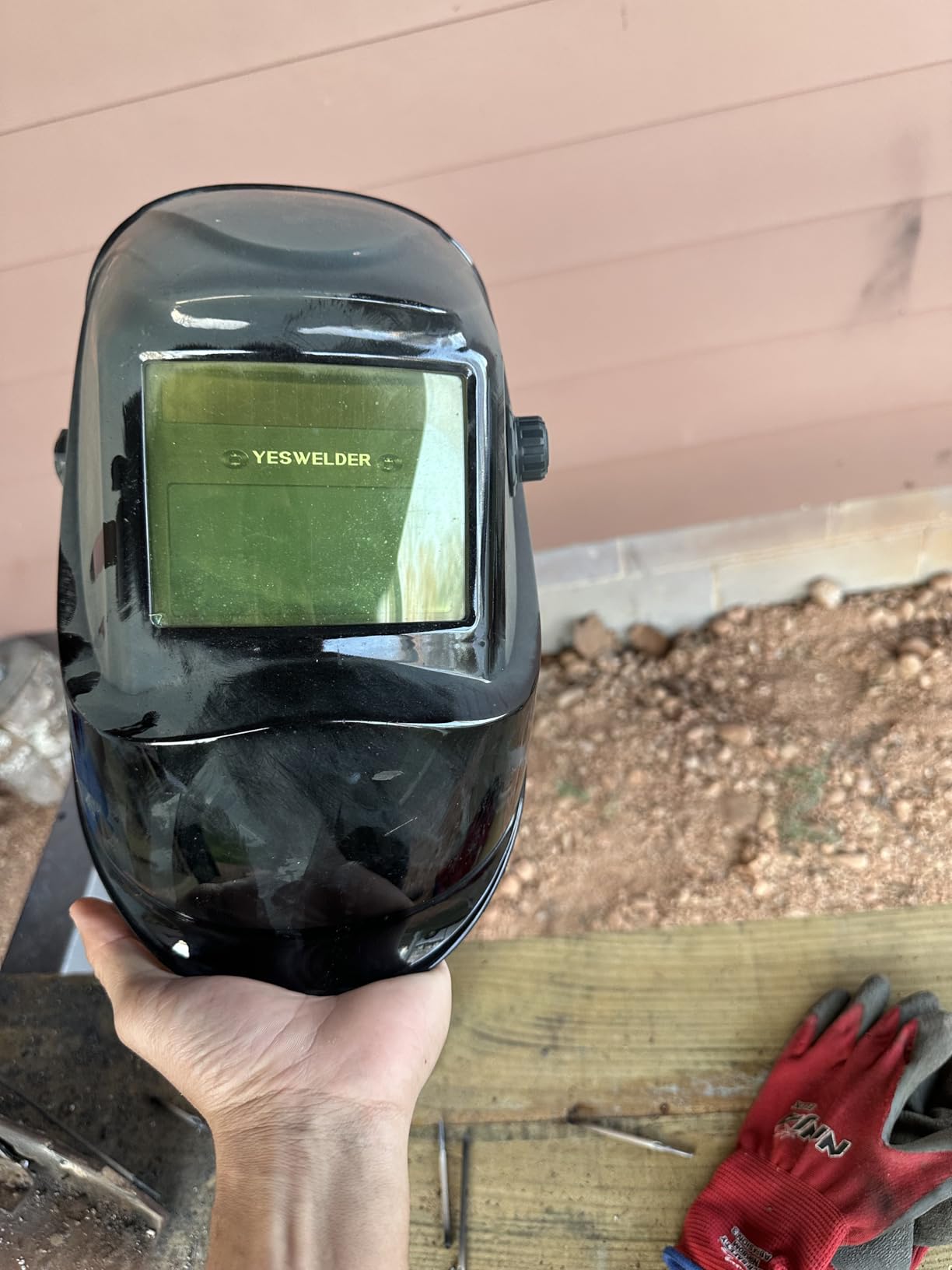
Switching is rated at 1/30000 of a second across two arc sensors, with adjustable sensitivity and delay. The external shade knob means you can move between weld and grind modes with gloves on, which is a small thing that you will miss immediately once a helmet without it leaves your bench. Shade 3/7-13 covers TIG, MIG, MMA, and grind, plus magnifier compatibility for close work.
Power comes from a solar panel paired with a replaceable CR2450 battery, and the package includes a spare CR2450, two outer replacement lenses, an inner replacement lens, and a storage bag. That box contents list is generous at this price point and removes the most common first-week complaint about cheap helmets.
Where two arc sensors cost you?
Two sensors is the honest limitation here, and it shows up on low-amp TIG and out-of-position strikes rather than on flat MIG work. Forum discussions about sensor count make the point clearly: two-sensor models are noticeably less reliable when the arc is faint or when you are welding overhead or behind a joint. If you are strictly flat and horizontal on MIG and stick, this is not a problem.
At 16 ounces, this is one of the lightest shells in the guide, and that weight is a genuine advantage for a beginner who has never worn a welding helmet and is still finding a comfortable headgear position.
What to watch after the first month?
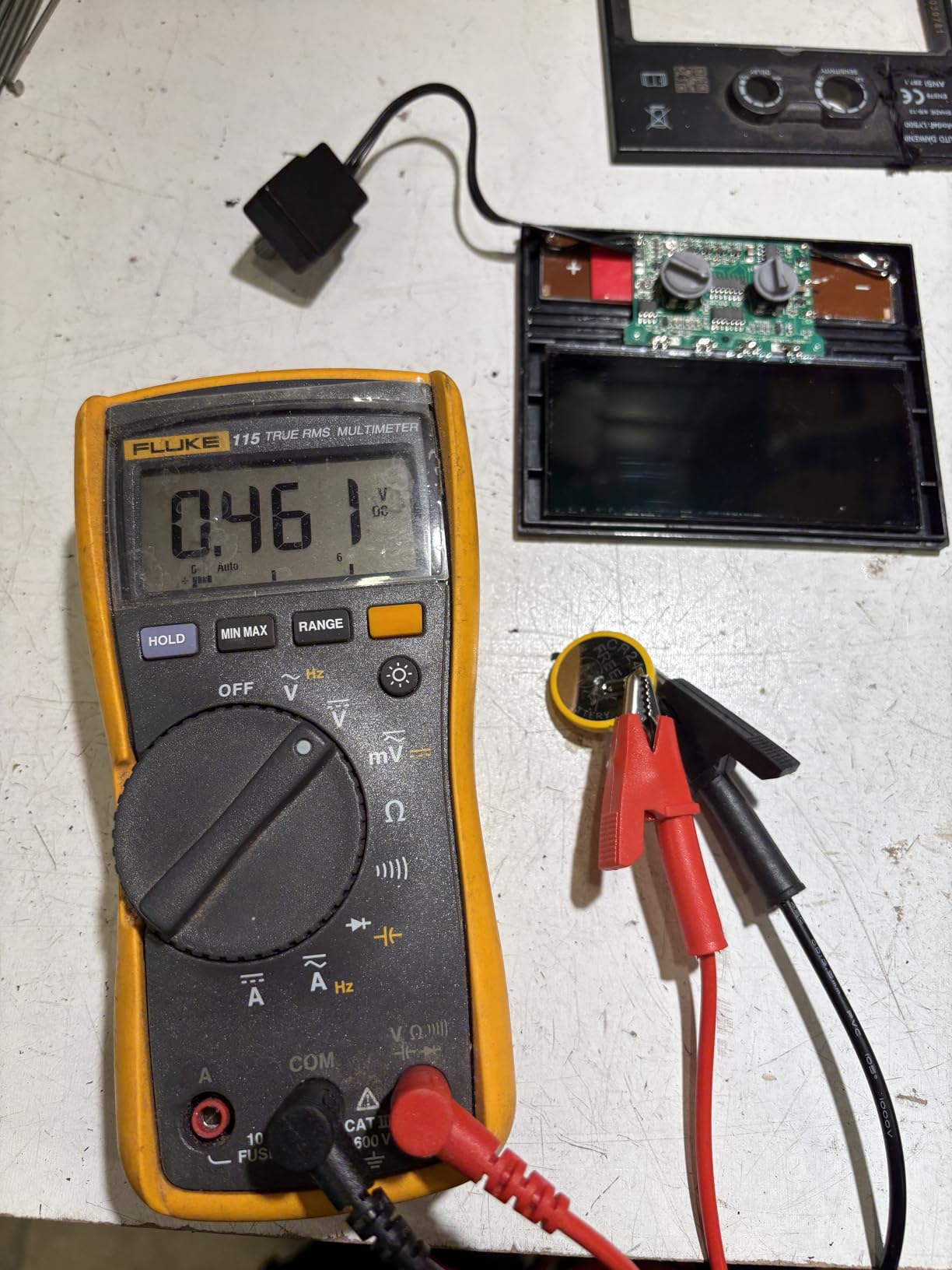
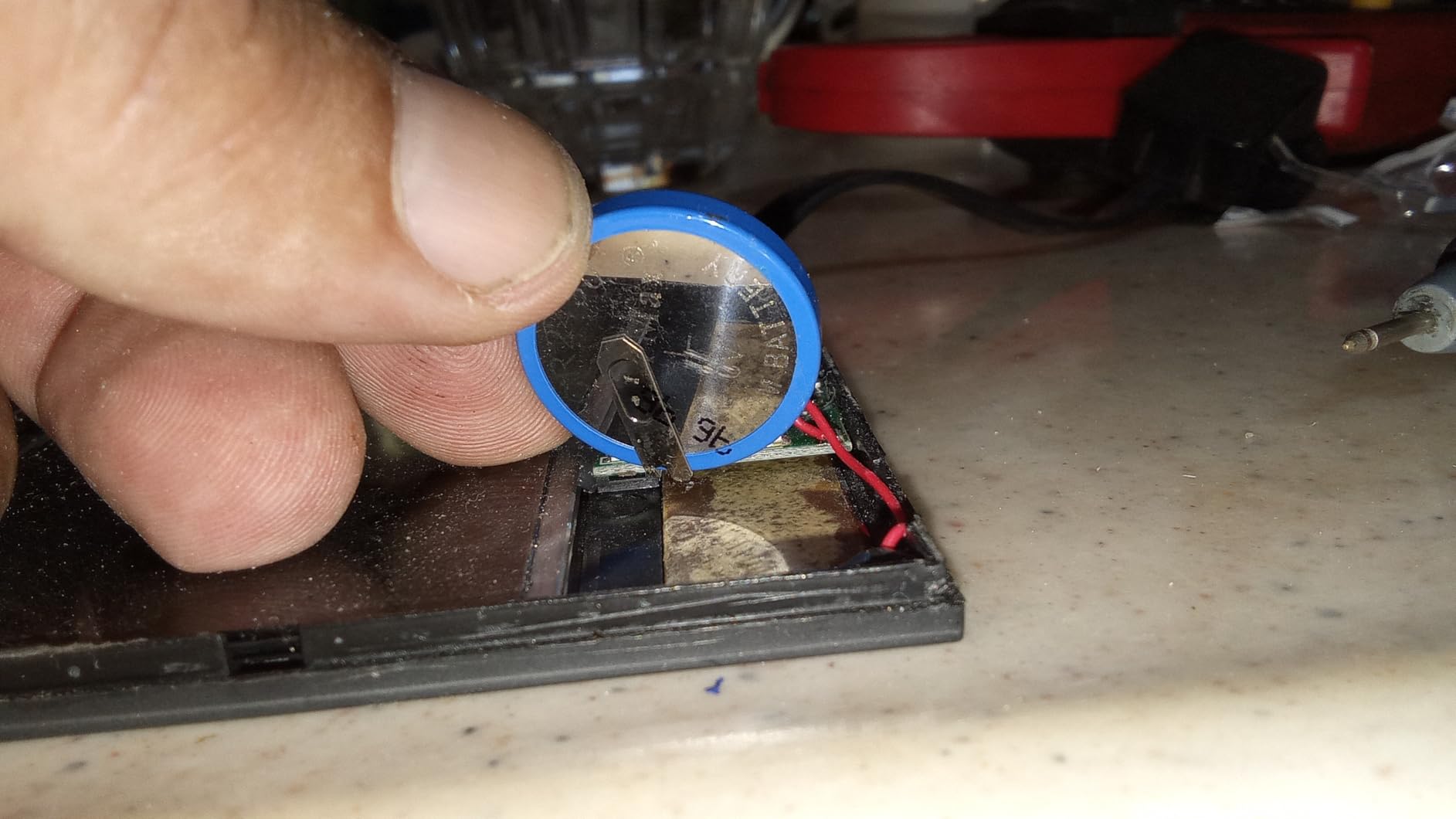
Sometimes a helmet arrives with the coin cell installed and already drained, which produces a hood that will not darken on day one. The fix is a fresh CR2450, and the spare in the box covers it, but it is worth knowing before you blame the electronics.
The light-duty shell and headgear are the other reality check. This holds up to heavy shop use for a hobbyist, but if you weld eight hours a day, five days a week, the premium helmets earn their price through headgear and shell durability. The shell and straps also feel less robust up close than the numbers suggest.
3. YESWELDER LYG-Q800D – Best 180 Degree Panoramic View
YESWELDER Auto Darkening Welding Helmet with LED, 180° View, LYG-Q800D
180 degree panoramic view
3.94 x 3.23 in with side window
4 arc sensors
1/30000s
2.2 lb
Pros
- Panoramic 180-degree large view with a fixed-shade side window
- True color 1/1/1/1 lens across a wide shade range
- Four arc sensors and 1/30000s switching for multi-process work
- Reinforced shell and pivot headgear for all-day wear
- Solar power plus a replaceable CR2450 lithium battery
Cons
- Heavier than most competing hoods at about 2.2 lb
- Shell and headgear feel light-duty for daily professional use
- Side window is a fixed DIN 5 shade rather than auto-darkening
This helmet solves a specific problem: seeing around your own workpiece. The 3.94 x 3.23 inch main lens is paired with a side window that brings the total field of view to roughly 180 degrees, which is the widest in this guide. On pipe work, structural steel, and anything where you need to watch both ends of a joint, that side window is worth more than another two sensors would be.
Optics are 1/1/1/1 with true color technology, and the shade range of 3/5-9/9-13 covers TIG, MIG, MMA, cutting, and grinding in one hood. A blue light blocking outer lens is included for eye comfort across long sessions, and four arc sensors switch in 1/30000 of a second with adjustable sensitivity and delay.

Power is solar panel plus a replaceable CR2450 lithium battery, and the box includes a replacement battery, a storage bag, and three replacement lenses. That is a complete ownership package, and the spare battery specifically addresses the dead-battery-after-storage problem that haunts solar-assisted helmets in general.
Owners value the wide field of view, the fixed side window, and the true-color lens that supports TIG, MIG, cut, and grind in a single hood. That combination of process coverage and visibility is unusual at this tier and is the reason this model pulls a 4.4 rating across nearly 2,900 reviews.
The side window trade-off
The side view is a fixed DIN 5 shade, which means it does not darken when you strike an arc. That is fine for spatial awareness during setup, but if you are welding where a bright arc sits near the edge of your vision, a fixed lighter window is not what you want. Think of it as situational awareness, not a second welding lens.
At about 2.2 pounds, this is one of the heavier hoods in the guide, and on a long day the difference shows up in neck fatigue. The reinforced PP shell and pivot headgear do hold up, but the weight is real and it is the main reason we did not put this model higher.
Who should skip it?
If you are a professional welding eight hours a day, the shell and headgear do not feel as rugged as premium professional hoods, and that is the consistent note in owner feedback. Ratings sit slightly below the top models here, and the weight plus the light-duty feel account for most of that gap.
If you weld mostly flat plate where nothing blocks your peripheral view, you are paying for a side window you will not use. For pipe, structural, and out-of-position work, though, nobody else in this guide gives you this much field of view at this price.
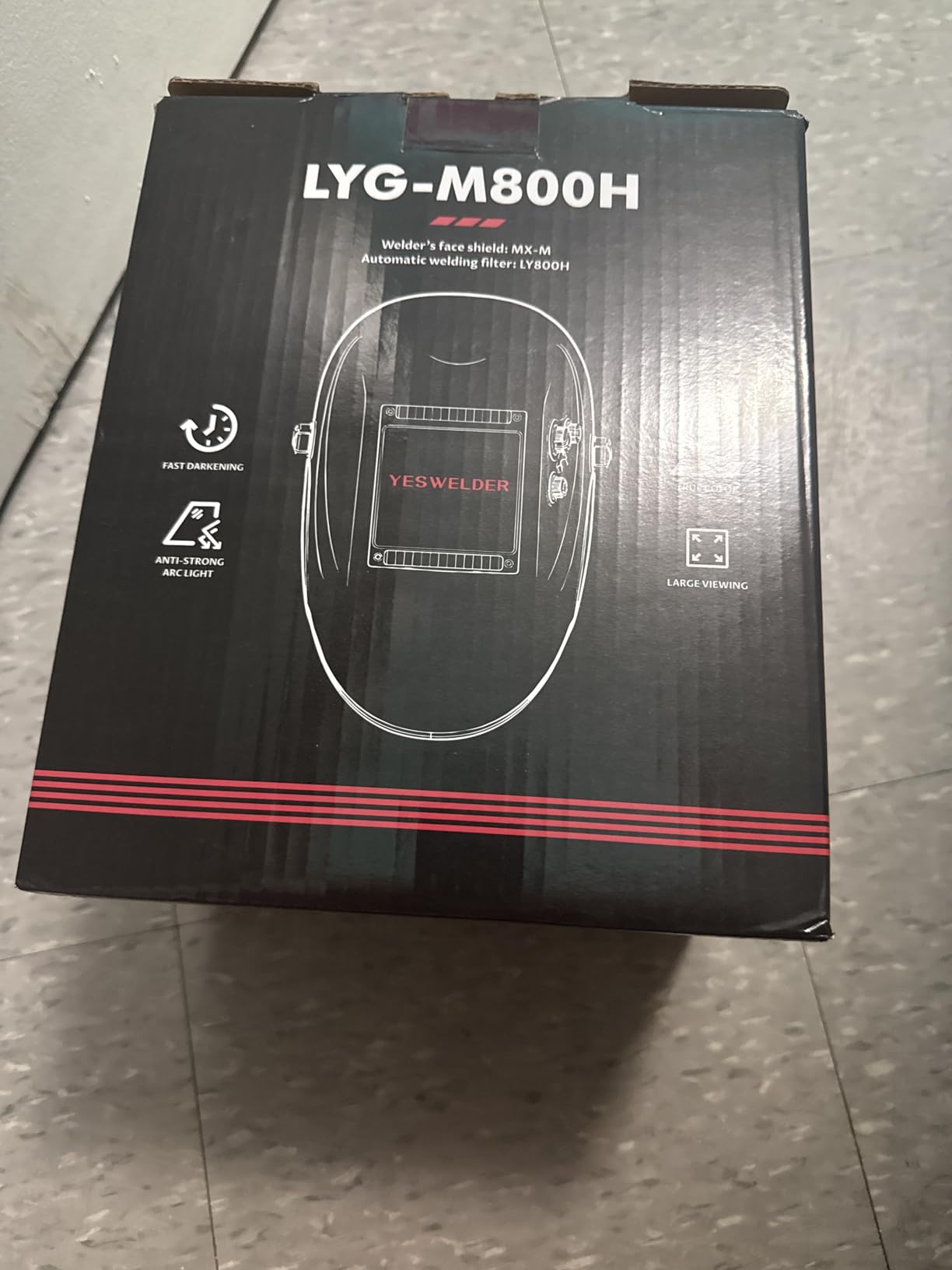
4. YESWELDER LYG-M800H – Best for Beginners Who Want a Big View
YESWELDER Auto Darkening Welding Helmet, Large View, LYG-M800H
3.93 x 3.66 in view
1/1/1/1 true color
4 arc sensors
1/30000s switching
cheater lens ready
Pros
- Very large 3.93 x 3.66 inch view makes bead joint and surroundings visible
- True color 1/1/1/1 optics owners describe as a night and day jump
- Four arc sensors and 1/30000s response work on MIG TIG and flux core
- All external controls so grind and weld modes switch with gloves on
- Cheater lens compatible with CR2450 lithium battery power
Cons
- Plastic shroud and side tightening knobs feel flimsy
- Headgear can slip forward when tension is not set precisely
- Battery and lens removal require working in a tight plastic compartment
- Does not darken against bright sunlight which confuses new owners
This is the helmet we would hand a first-time welder who is nervous about eye protection. A 3.93 x 3.66 inch viewing area at 1/1/1/1 true color clarity is genuinely large, and beginners describe the jump from an old green-tint lens to true color as a night-and-day change. That matters enormously in your first month, because a blurry lens makes you second-guess every bead.
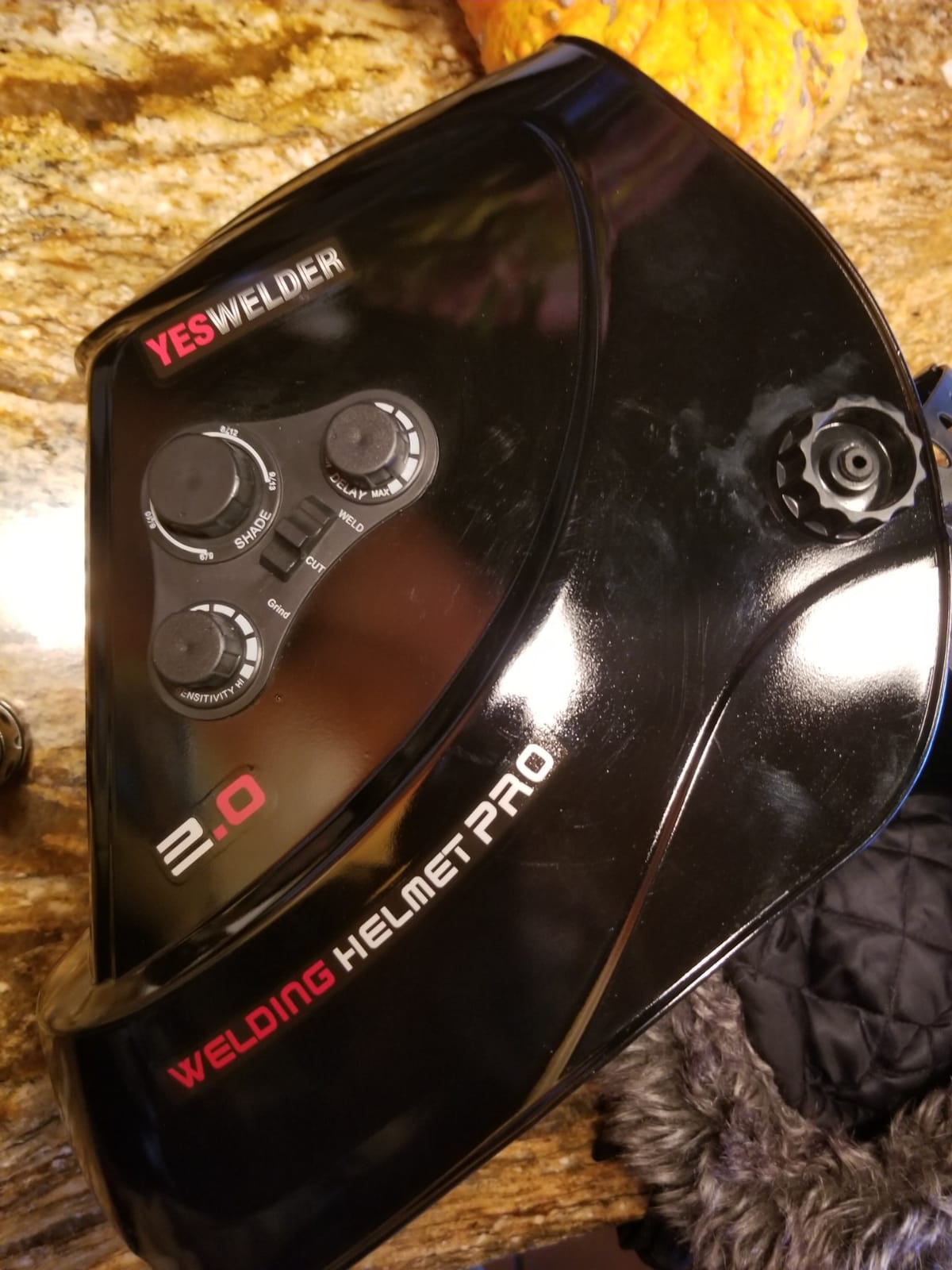
Four arc sensors with 1/30000 second switching cover TIG, MIG, stick, cutting, and grinding across DIN 3/5-9 and 9-13 shade settings. All the controls are external, so you can change shade and mode without lifting the helmet or removing a glove. Several owners report visible improvements in bead quality after switching to this lens, which is the kind of result that keeps a beginner motivated.
Cheater lens compatibility matters more than most spec sheets admit. When you are tacking thin material or working on a small component, a magnifier in the front slot makes the difference between confident work and squinting. The CR2450 lithium battery is user-replaceable, and the box includes a replacement battery, a storage bag, two outer lenses, and an inner lens.
With more than 8,000 owner reviews, this is the second most proven helmet in the guide. The rating sits at 4.4, and the feedback pattern is consistent: people love the view, the color, and the outside controls, and they are less happy with the quality of the plastic parts.
A weight figure worth checking
The listing weight and the product copy disagree here, and we would rather flag it than repeat a number. The listing shows 2.2 pounds, while the product copy states approximately 1.32 lb (600 g) with adjustable headgear and a reinforced hinge. Either way it is in the middle of the weight range for this guide, so plan on a proper headgear adjustment before your first session.
Cheater lens support also means you can grow into this helmet. A magnifying lens in the front slot is invaluable for thin-gauge TIG and for anyone doing close work on small components, which most beginners underestimate.
Build quality and the sunlight issue
The plastic shroud and side tightening knobs feel flimsy and owners worry they will strip over time. The headgear can also slip forward when tension is not set exactly right, which you will notice most when welding overhead. Battery and lens removal takes some fussing with a tight plastic compartment, so it is worth learning before you need it.
The most common beginner confusion is that the helmet will not darken when tested against sunlight. Sensitivity needs to be lowered in bright conditions, and the manual explains it, but nearly every new owner mentions it at least once. Set sensitivity before you leave the shop rather than during your first outdoor job.
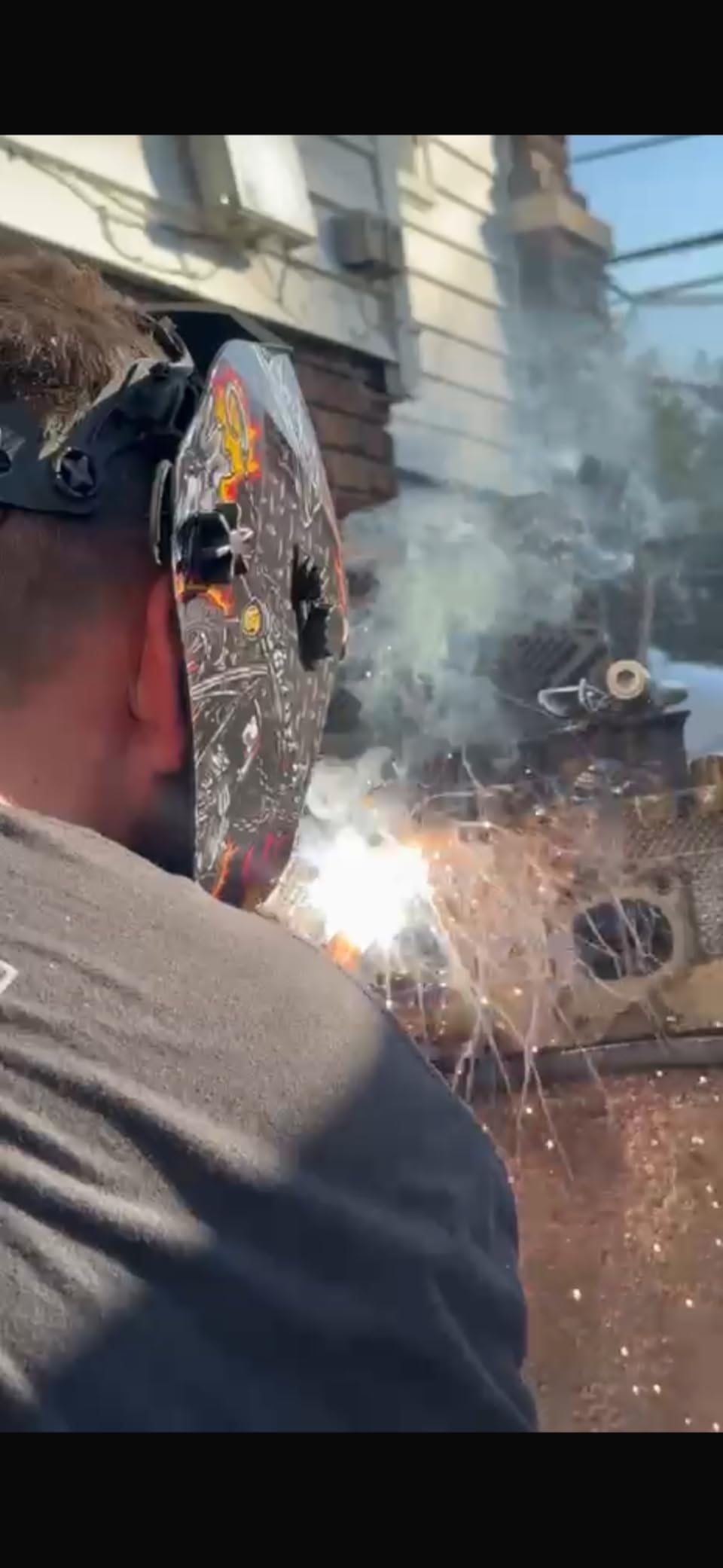
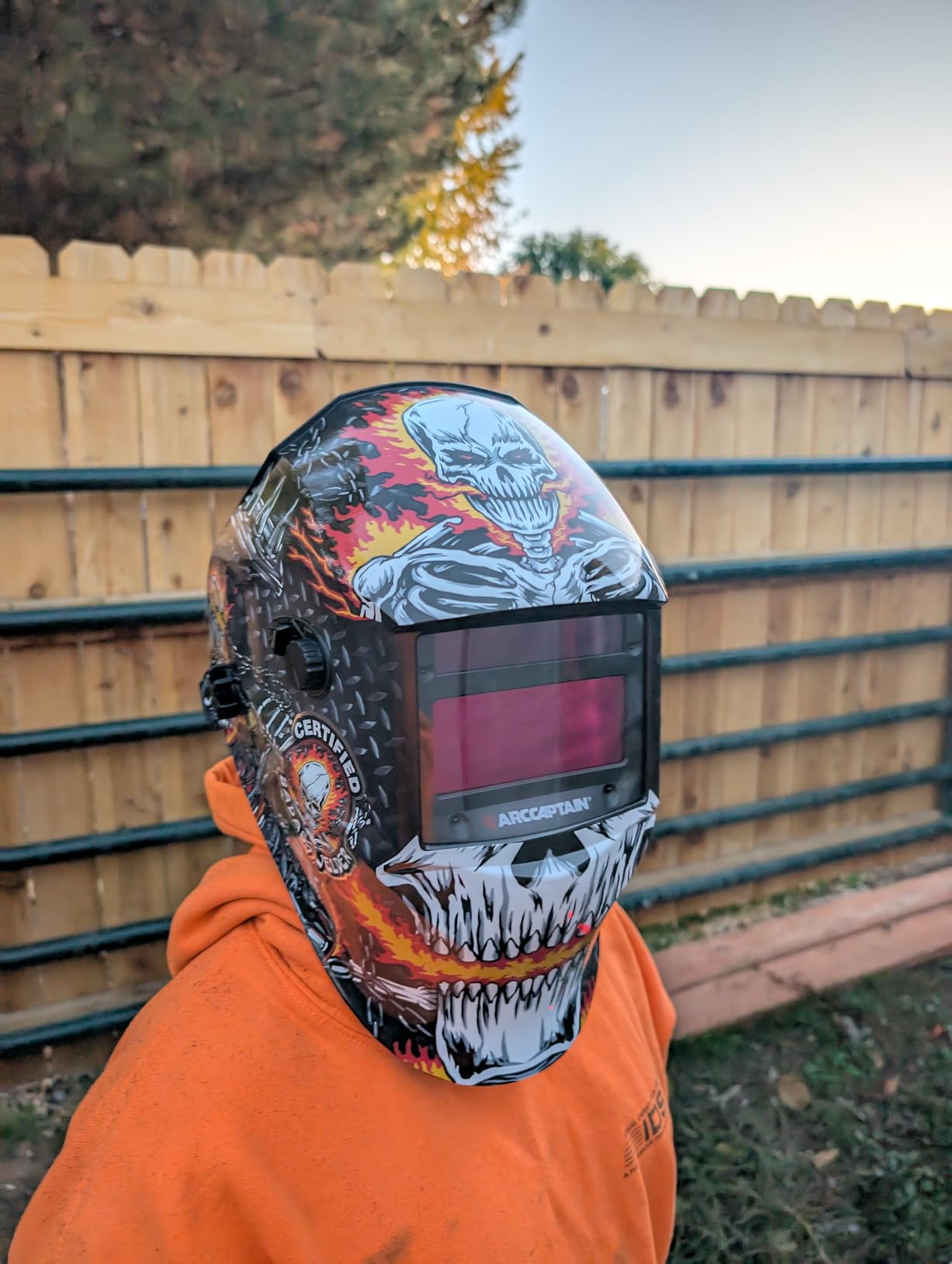
5. ARCCAPTAIN Auto Darkening Helmet – Best 4-Sensor Starter
ARCCAPTAIN Welding Helmet Auto Darkening, 1/25000s Response, Shade 4/9-13
4 arc sensors
1/25000s switching
3.86 x 1.69 in view
DIN EN 379 listed
180-day warranty
Pros
- Clear true color 1/1/1/1 lens reviewers praise for puddle visibility
- Fast 1/25000s response across four arc sensors
- Lightweight build with a padded adjustable headband
- Includes three replacement lenses
- Works with MIG stick and TIG
Cons
- Slow response on a minority of hoods
- so initial arc light is briefly visible
- A minority report electronics cutting out after months of use
- Build quality reads as inexpensive up close
Four arc sensors at a budget price is unusual, and that single spec is the reason this helmet is worth a look. Most budget hoods save money by dropping to two sensors, which is exactly where reliability falls apart on low-amp TIG and out-of-position work. Here you get 1/25000 second switching with four sensors plus adjustable shade and sensitivity controls, and the dark state covers shade 4/9-13.
The lens is 1/1/1/1 true color at 3.86 x 1.69 inches, which is a slightly larger window than most of the entry-level competition. A 12-in-1 smart filter provides automatic DIN 16 UV and IR protection, and the 3.86 x 1.69 inch viewing size sits comfortably between the compact budget units and the panoramic models.
Certification is where this model separates itself. It is listed against ANSI/ISEA Z87.1-2010, CSA Z94.3, DIN EN 175, and DIN EN 379, which is a broader standards list than most competitors at this tier publish. If you are buying on a job site or welding to a code that specifies EN 379, that matters.
Power comes from solar cells plus a replaceable CR2450 lithium battery, and the manufacturer claims a 200 percent longer service life from that combination. Three replacement lenses are included along with a user manual. The warranty is 180 days, which is the shortest in this guide and the one spec we would want to see longer.
Reading the weight listing carefully
The listed item weight here is 0.282 ounces, which is not plausible for a welding helmet, while the product copy states about 1 lb with a PA material shell rated to a tensile strength of up to 120 MPa. Use the roughly one-pound figure. It is a light helmet with a padded adjustable headband, and comfort is one of the better parts of this package.
Solar plus a user-replaceable CR2450 is the right power design for anyone who stores a helmet between jobs. Replaceable cells are the only way to avoid the dead-helmet-after-storage failure described in the buying guide below.
Where owners report problems?
The most common complaint is slow response on some units, which lets the initial arc light through briefly. For most MIG and stick work that is a minor issue. On low-amp TIG, where the arc is faint to begin with, it is the difference between a good helmet and a distracting one, and you should set sensitivity carefully before starting.
A minority of owners report the electronics cutting out after several months of use, and the shell reads as inexpensive up close. With a 180-day warranty, the smart move is to test this model thoroughly in your first two months. Budget helmets can be a great first tool, but they are not a lifetime purchase.
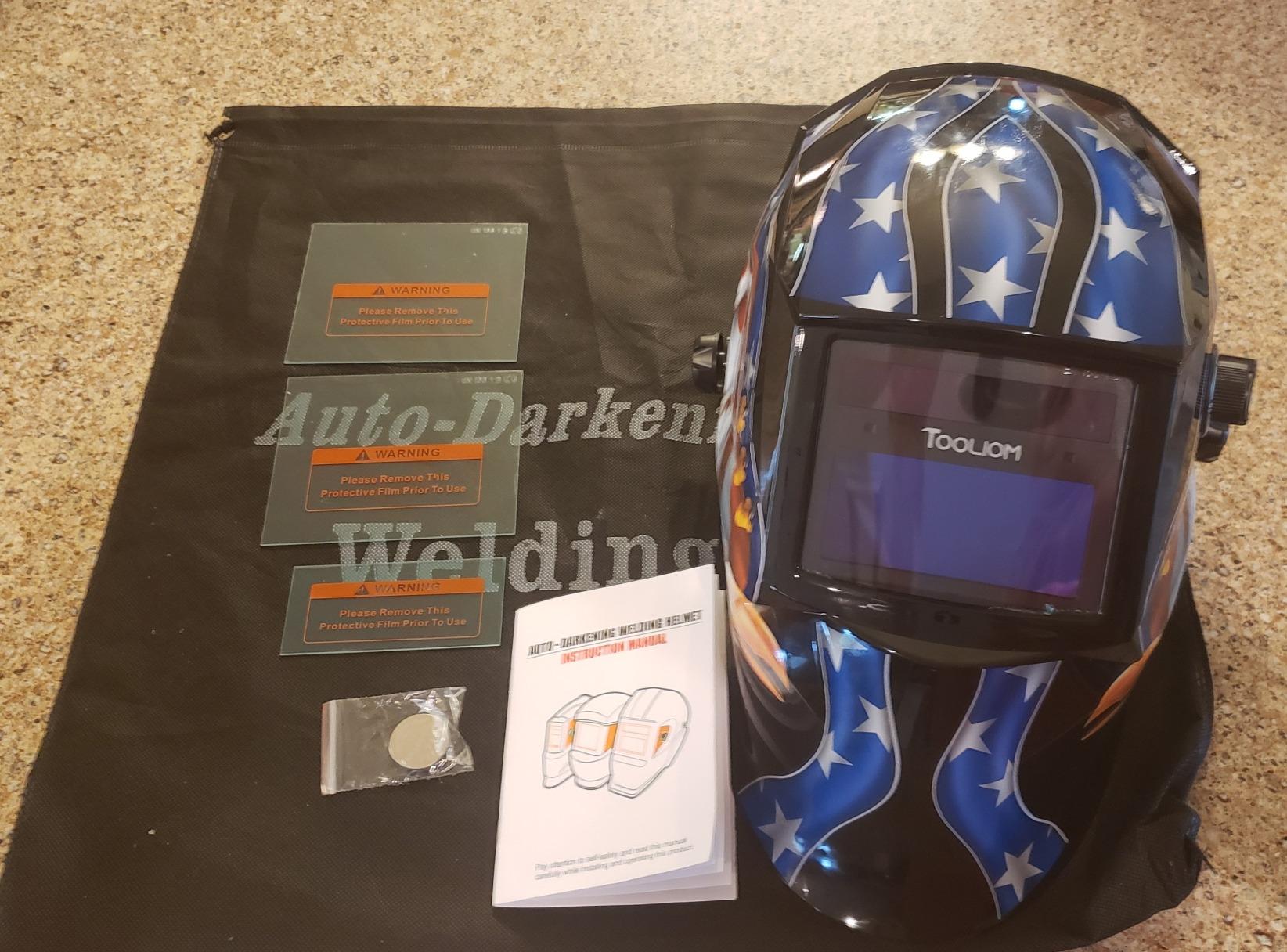
6. TOOLIOM Solar Powered Helmet – Best Lightweight Hood
TOOLIOM Auto Darkening Solar Powered Welding Helmet for TIG MIG ARC with Light
1.14 lb shell
1/1/1/1 true color
3.64 x 1.67 in view
1/25000s detection
solar plus replaceable cell
Pros
- Crisp 1/1/1/1 true color view instead of the old green tint
- Very light at about 1.14 lb for long sessions
- External grind-mode switch usable with welding gloves
- Adjustable headgear holds secure even welding upside down
- Solar power plus a replaceable battery and three replacement lenses
Cons
- Standard 4.25 inch cheater lenses do not fit the holder without modification
- Rear headband padding is minimal and can bother bare heads
- Small viewing screen
- Screen dirties quickly from welding smoke at close distance
At about 1.14 pounds, this is one of the lightest hoods in the guide, and weight is a decision factor that most spec-driven guides skip. The listed figure is 0.87 kg and the product copy states 1.14 lb with adjustable PE headgear and a breathable sweatband. On a six or eight hour session, that difference is the difference between finishing comfortable and finishing with your neck aching.
Optics are 1/1/1/1 true color across a 3.64 x 1.67 inch viewing area, with a blue light blocking outer lens for long shifts. Detection runs at 1/25000 second with a low-battery indicator, and shade range is DIN 3.5/9-13 covering TIG, MIG, MMA, and plasma cutting. An external knob switches to grind mode with gloves on.
Solar power comes with a user-replaceable battery compartment, which is the single most practical feature on this helmet. Owners of solar-assisted helmets consistently report units that die after sitting in storage, and the reason is that the panel sustains charge while welding but does not meaningfully recharge a cell sitting on a shelf. A replaceable compartment means a two-minute fix rather than a new helmet.
Buyers call this a solid, light, comfortable hood for home and shop projects, and the headgear holding secure even when welding upside down comes up repeatedly. That headgear stability is a real quality marker, since headgear that will not hold position when raised is listed as a deal breaker by welders.
The cheater lens problem is worth knowing
Standard 4.25 inch cheater lenses do not fit the holder without modification. If you plan to do close work or thin-gauge welding, check this before you buy, because a magnifier that fits loosely is worse than no magnifier at all. This is the most specific and most useful complaint in the owner feedback.
The viewing screen is on the small side at 3.64 x 1.67 inches, and the rear headband padding is minimal, which can bother bare heads on a long day. Gloves or a balaclava solve the padding issue for most people.
Maintenance and standards
The screen dirties quickly from welding smoke at close working distance, so expect to clean the inner lens more often than with a larger-view model. A microfiber cloth and a plastic-safe cleaner handle it in seconds, and doing it weekly keeps the lens clear enough to read the pool.
The helmet carries an ANSI Z89.1 specification. Note that this is a different standard from the ANSI Z87.1 cited on several other models in this guide, so if you work to a specific code requirement, confirm the certification your site or client demands before committing.
7. Hobart 770890 – Best Widescreen PureColor Hood
Hobart 770890 Auto-Darkening Welding Helmet, Large, Black
9.3 inch PureColor view
4 arc sensors
analog shade sensitivity delay
CR2 battery
2-year warranty
Pros
- Large 9.3 inch widescreen view with accurate PureColor rendering
- Four independent arc sensors give dependable detection
- Simple analog knobs for shade sensitivity and delay
- Lightweight 1.25 lb shell comfortable through long jobs
- Two-year warranty from an established welding brand
Cons
- Two-year warranty is shorter than the five years offered by the Lincoln Viking
- Analog controls lack the fine digital modes some newer helmets offer
The Hobart 770890 is the mid-tier professional pick, and the reason is the 9.3 inch widescreen viewing area with PureColor lens technology. That is the second-largest window size quoted in this guide behind the Viking 3350, and PureColor rendering is what makes it useful rather than merely large. Owners rate the color accuracy highly, and several note it holds up to daily shop use.
Four independent arc sensors handle detection, and auto-on power control triggers at arc strike so there is no button to remember before welding. Shade, sensitivity, and delay are analog knobs, which sounds old-fashioned until you use them. In a dusty shop with gloves on, a knob you can find by feel beats a menu you have to navigate blind.
At 1.25 pounds, this sits at the light end of the professional-grade shells here, and that combination of weight and widescreen view is what keeps it comfortable through long jobs. Weld to grind mode switching means you can clean up a weld without changing helmets, and continuous UV and IR protection is built in rather than dependent on filter condition.
Power is a CR2 battery, which is a slightly different cell from the CR2450 used by most of the budget models in this guide. That is worth knowing before you shop for replacements. A protective lens kit is included, and the model carries a limited two-year manufacturer warranty.
Analog controls in a digital market
The analog knob controls are the defining feature and the most common reason people either love or avoid this helmet. There are no programmable memory slots, no auto-shade intelligence, and no touchscreen. If you want to set a shade once and forget it, you will dial the knob each time you change process.
If you weld in changing light, from a dark shop to a sunlit yard, the four sensors plus adjustable sensitivity cover that range. The trade is giving up the finer digital modes some newer helmets offer in exchange for controls that never freeze up mid-session.
Warranty and longevity thinking
The two-year warranty is the main gap against the Viking 3350 at five years. On a helmet used daily in a shop, warranty length is a reasonable proxy for how long the manufacturer expects the electronics and headgear to last, and it feeds directly into total ownership cost.
Warranty is also why the CR2 battery matters. When a cell is a standard serviceable part rather than a sealed rechargeable pack, a battery failure is a few dollars and a minute of your time. Long-time owners rate this model as dependable, and the smaller view on competing premium hoods is what keeps it competitive.
8. MIGVAN True Color Helmet – Best Wide Shade Range on a Budget
MIGVAN Welding Helmet Auto Darkening True Color Large Viewing, Welding Hood Solar/Replaceable Battery Powered, Wide Shade 4/5-13 with 4 Arc Sensor, Optical Clarity Welding Mask for TIG MIG ARC Grind
4 arc sensors
1/10000s activation
DIN 4 light state to 5-9 and 9-13 dark
solar plus CR2450
ANSI and CE
Pros
- True color golden lens gives a lifelike view of the weld pool
- Large viewing screen driven by four arc sensors
- Dual solar and replaceable CR2450 battery power
- Comfortable pivoting headgear with breathable padding
- Replaceable inner and outer lenses included
Cons
- Slower 1/10000 second switching than the leading helmets in this group
- Generic brand with no listed warranty
The shade range is the headline here, and it is unusual at this price. This helmet runs from a DIN 4 light state through DIN 5-9 and DIN 9-13 dark states, which gives you a genuinely light lens for fit-up and a very dark lens for thick sections without changing helmets. A true color golden lens with high optical class clarity sits in front of it, and reviewers describe the pool view as lifelike.
Four arc sensors drive the auto-darkening, and the claimed activation is 1/10000 of a second. That is the slowest switching figure in this guide, and it is the spec to weigh before you buy. On MIG and stick at normal amperage it is not noticeable. On low-amp TIG, the faint-arc case is exactly where switching speed matters most.
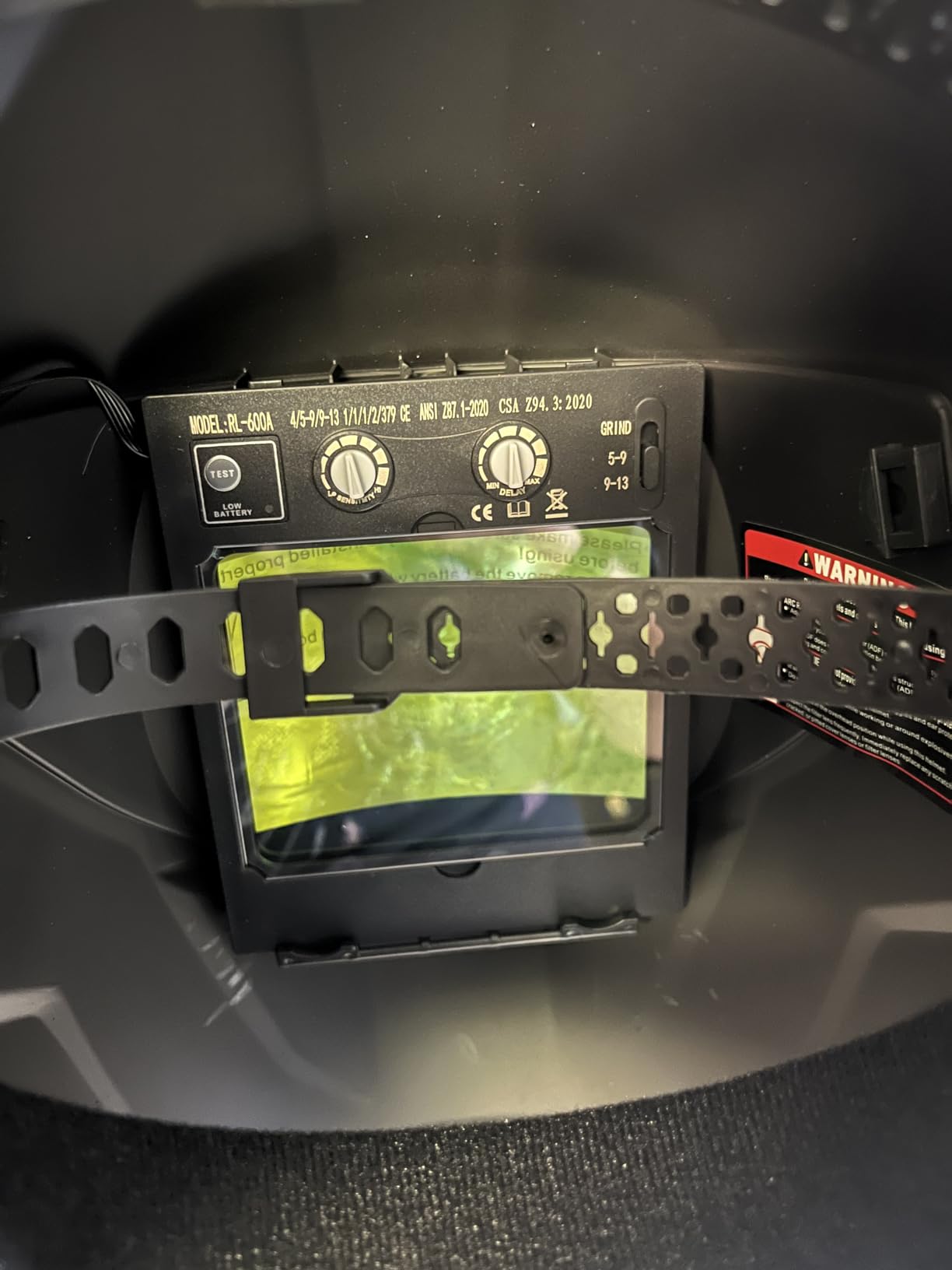
Power is dual solar and replaceable CR2450, and both inner and outer lenses are replaceable with spares included along with a storage bag. An advanced outer yellow filter lens handles UV and IR protection, and the helmet is listed as ANSI and CE compliant. Pivoting headgear with breathable padding rounds out a sensible package.
Reviewers generally find this an adequate true-color hood with a large screen and dual power options at a reasonable price. The reservations are consistent: slower switching relative to faster-sensor competitors, and no stated warranty, which is a real gap when you are buying a tool you expect to keep.
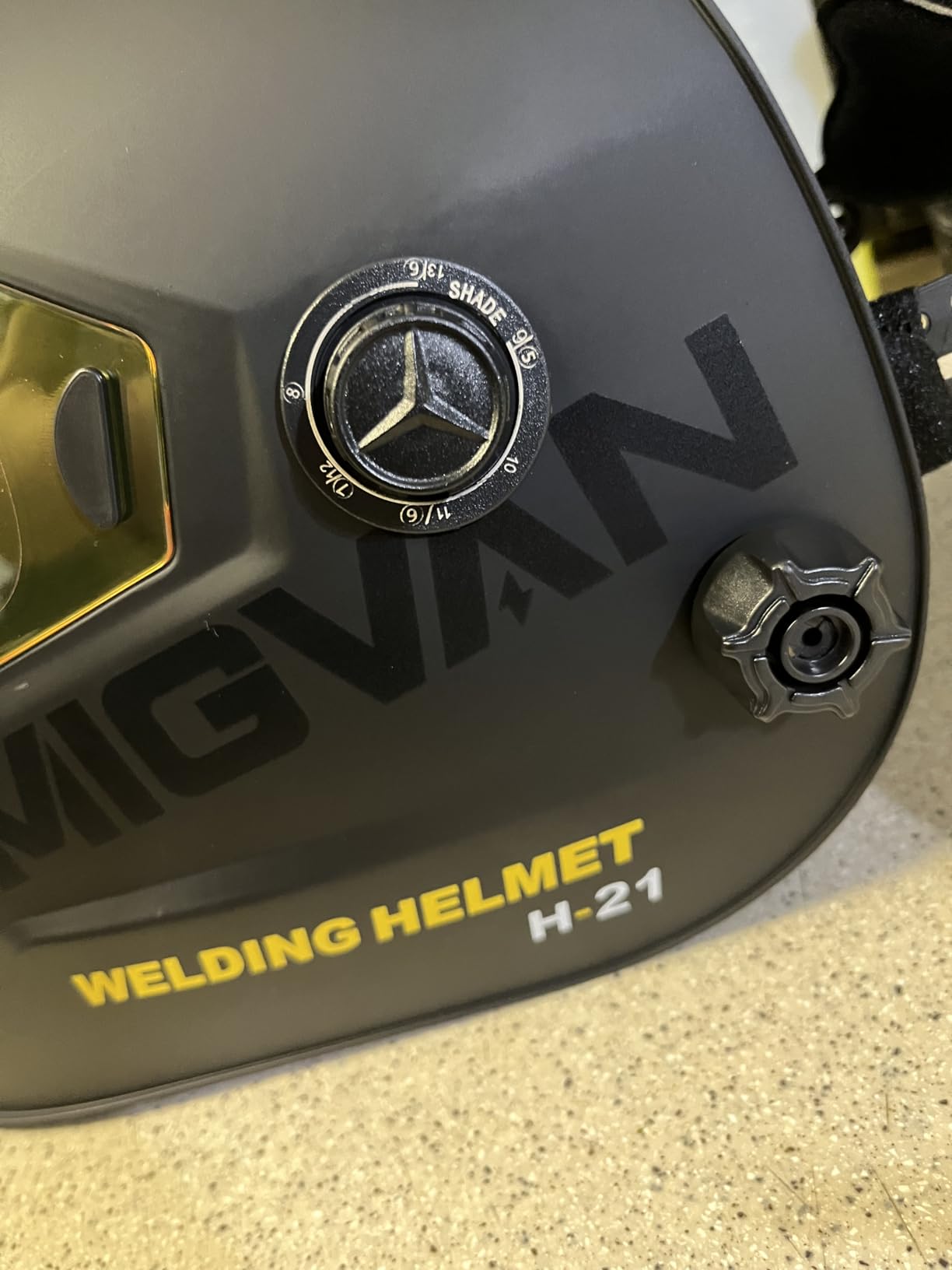
Why the wide shade range is useful?
Most budget helmets concentrate on welding shades and add grind as an afterthought. A DIN 4 light state is the detail that changes daily work, because a light enough lens lets you keep the hood down for measurement, marking, and fitting instead of flipping it up for every non-welding task in a job.
Being able to go to DIN 9-13 on the same lens matters when you move from thin automotive sheet to structural plate in one afternoon. The trade is switching speed, and this is a helmet that rewards an owner who sets a sensible sensitivity rather than one who chases the fastest possible reaction.
The warranty question
There is no listed warranty on this model, and that is the deciding factor for anyone welding daily. Without a stated term, a failed cartridge is a full replacement, and replacement lenses for a less common brand can be harder to source than standard flat lenses.
Replaceable inner and outer lenses are a genuine positive that several premium panoramic helmets lack, so ongoing parts cost stays low. We would treat this as a learner or occasional-use hood, or as a second helmet for a shop, rather than the one you trust for production work.
9. Jackson Safety Insight – Best for TIG and Torch Mode
Jackson Safety Insight Auto Darkening Welding Helmet, ADF Hood – ANSI Z87.1
6 oz HLX shell
3.94 x 2.36 in view
1/1/1/1 true color
weld torch grind modes
4 sensors
Pros
- Extremely light shell that reduces neck fatigue in tight spaces
- Clear true-color lens with a wide adjustment range
- Four sensors for reliable switching including on inverter machines
- Ratcheting headgear holds position and is easy to adjust
- Cover lens seals tightly to keep spatter and smoke off the filter
Cons
- Light state could be brighter for shop fit-up work
- Shell is not as rugged as heavier professional hoods
- Sensitivity can be dialed too high leaving the lens dark under shop lighting
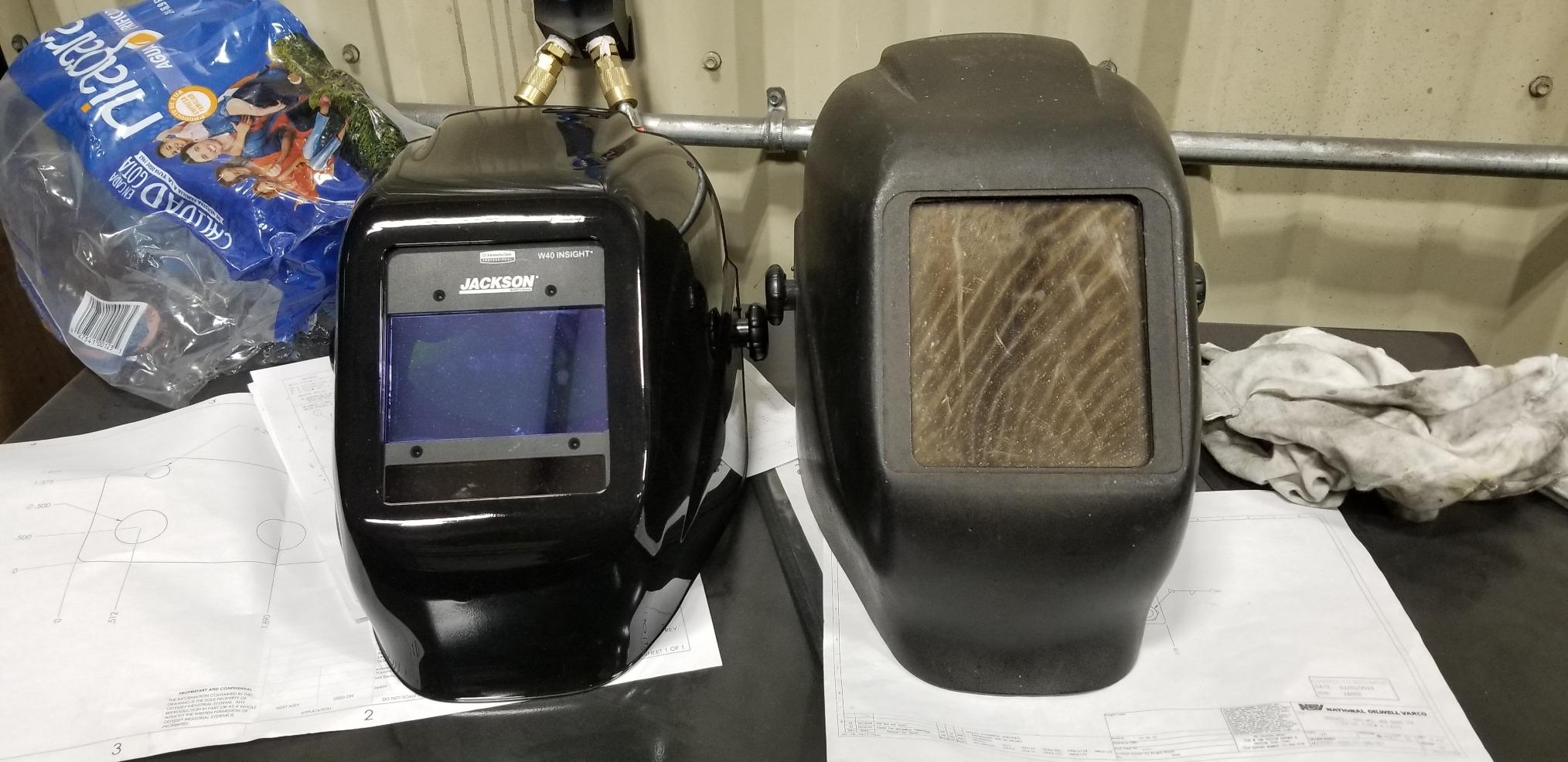
The Insight is built around torch mode, and that single feature is why it stands out. Most auto-darkening helmets offer weld and grind; this one adds a dedicated torch setting for cutting and cleanup, with digital controls and variable shades from 9 to 13 on true color 1/1/1/1 optics. If your work involves cutting as well as welding, that saves you from carrying two helmets.
Four arc sensors handle detection reliably, including on inverter machines, which are notoriously harder to sense than older transformer welders. If you own a modern inverter TIG or MIG unit, this is a meaningful advantage over the two-sensor budget models. The lens view is 3.94 x 2.36 inches, which is a wide, low format that suits TIG work where you follow a torch line closely.
The 370 Speed Dial ratcheting headgear with a Qwik-Fit rear swivel band is a well-regarded piece of engineering. Headgear that holds position when raised is on the forum deal-breaker list, and long-term owners specifically praise the stability of this mechanism. It is a small detail that shows up every time you flip up to check a joint.
Long-term owners report the Insight has held up for three to five-plus years, which is a strong durability signal for a helmet in this tier. The cover lens seals tightly enough to keep spatter and smoke off the filter, and the helmet meets ANSI Z87.1 and CSA Z94.3 standards.
What 6 ounces actually means?
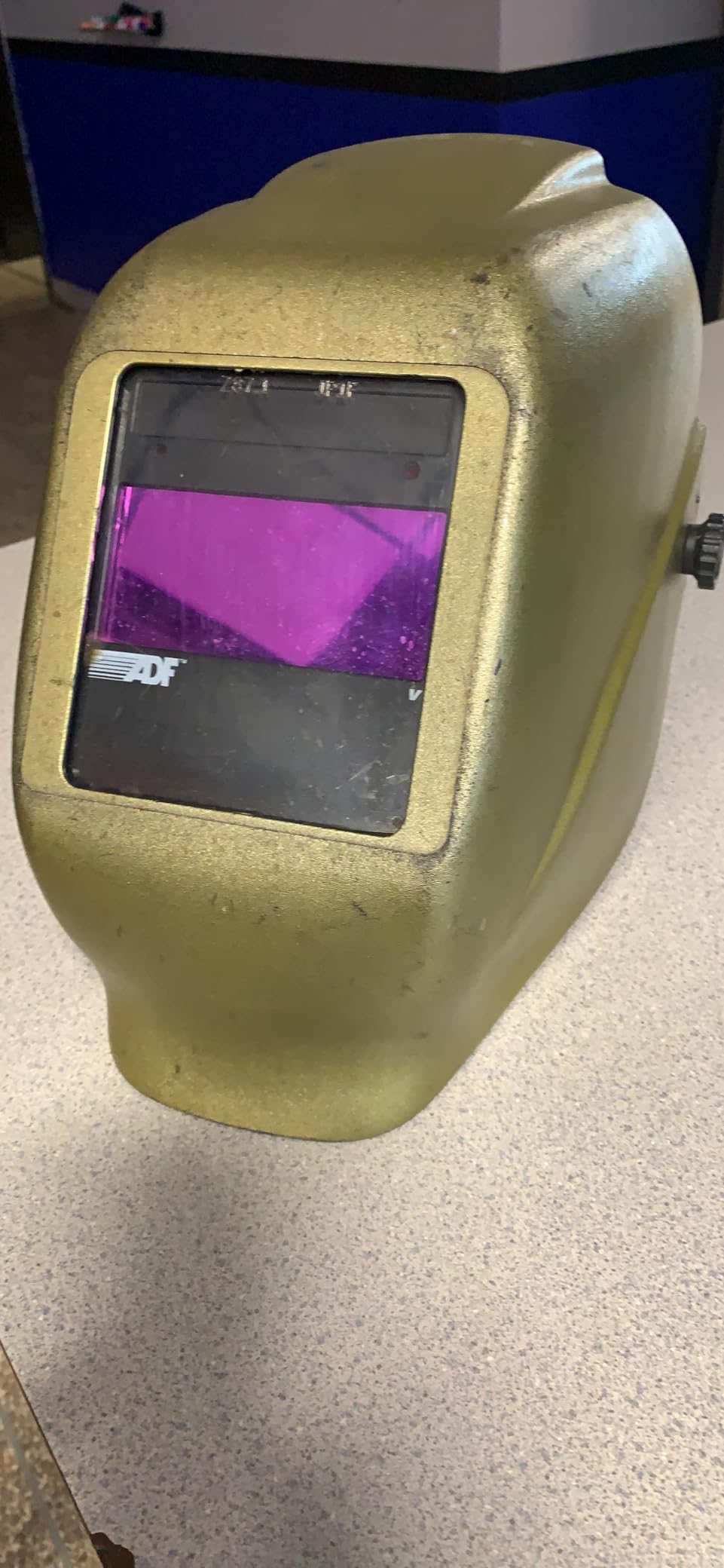
Owners consistently describe this as a very light shell, and the ergonomic HLX shell is built around that weight. On overhead work, in a crawl space, or during a long vertical weld, neck tension is the limiting factor and a light shell removes it.
The view is 3.94 x 2.36 inches, which is wide rather than tall, so more of what you see is across the workpiece than below it. For flat and horizontal work that is ideal. For work where you need to see downward along a vertical joint, the taller panoramic formats make more sense.
Where it falls short?
The light state could be brighter for shop work, so expect to flip up more than you would with a shade 3.0 light state helmet such as the Miller Classic. Fit-up and measurement in a well-lit shop are the tasks where you notice this most.
Sensitivity can be dialed too high, leaving the lens dark under reflective shop lighting, which is a common forum complaint across this whole category. The shell is also not as rugged as heavier professional hoods, so it is a strong choice for the weight but not the choice for a fabrication shop that drops helmets off workbenches.
10. Miller Classic Series ClearLight – Best Value
Miller Classic Series Welding Helmet, ClearLight™, Shade 8-13, Black
ClearLight lens
6 sq in view
weld 8-13 cut 5-8 grind 3
2 sensors at 1/23000s
3-year warranty
Pros
- ClearLight optics give a bright high-definition view of the puddle
- Shade 3.0 light state lets you keep the helmet down between welds
- Digital shade delay and sensitivity controls with ratchet headgear
- Works down to 5 amps or below for TIG and low-amp work
- Three-year warranty from a major welding equipment brand
Cons
- Six square inch viewing area is smaller than large-format helmets
- Only two arc sensors fewer than most competitors
- Heavier at roughly 989 g than several budget alternatives
Miller has been a default safe answer in welding forums for years, and the Classic Series is where that brand meets a sensible budget. At a 4.7 rating it sits near the top of this guide, and the ClearLight lens technology delivers a bright, high-definition view of the puddle that owners consistently rank above older green-tint designs.
The feature that gets the most praise is the 3.0 light state. Because the lens is bright enough to see your workpiece in the light state, you can leave the helmet down between welds instead of flipping it up. On a long TIG job where you stop and start constantly, that removes a repetitive motion you would otherwise do hundreds of times a day.
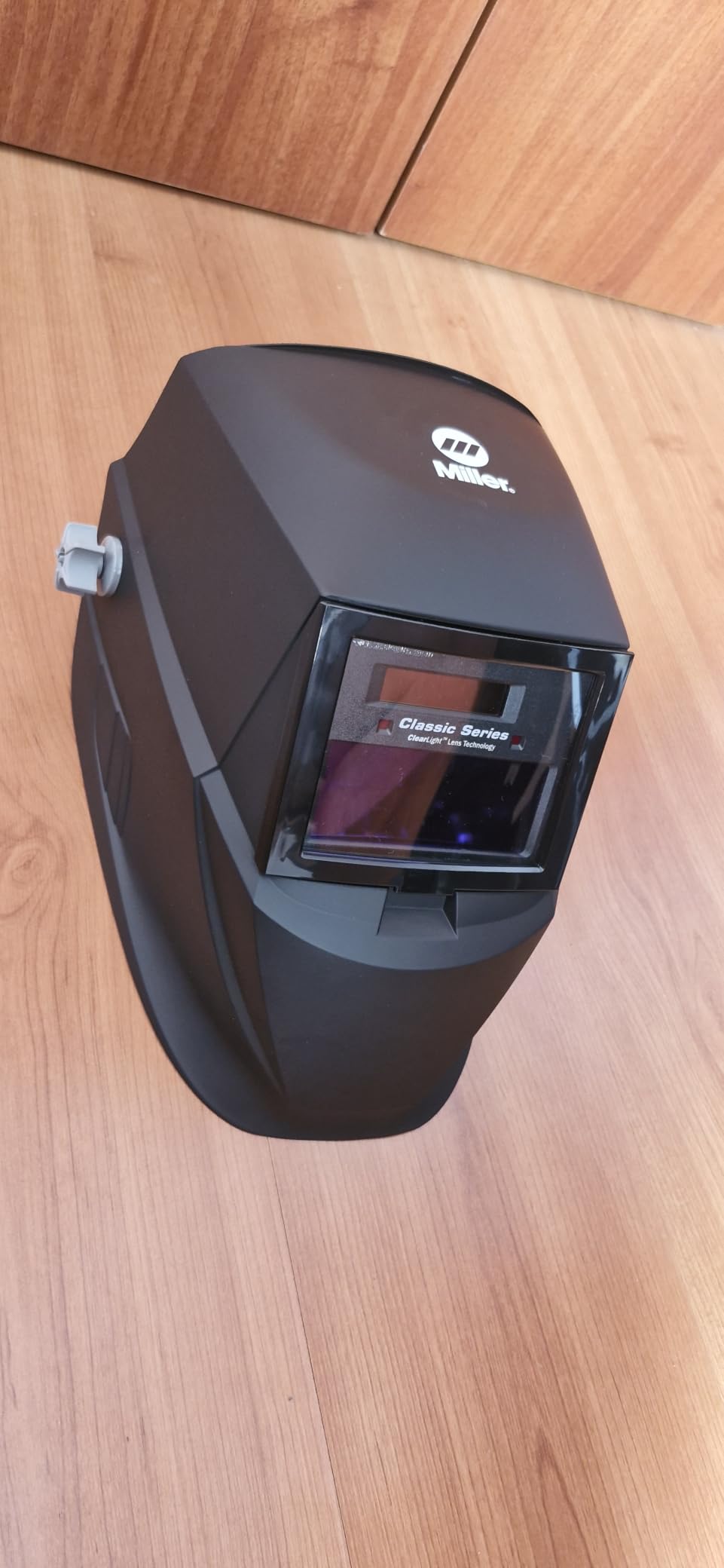
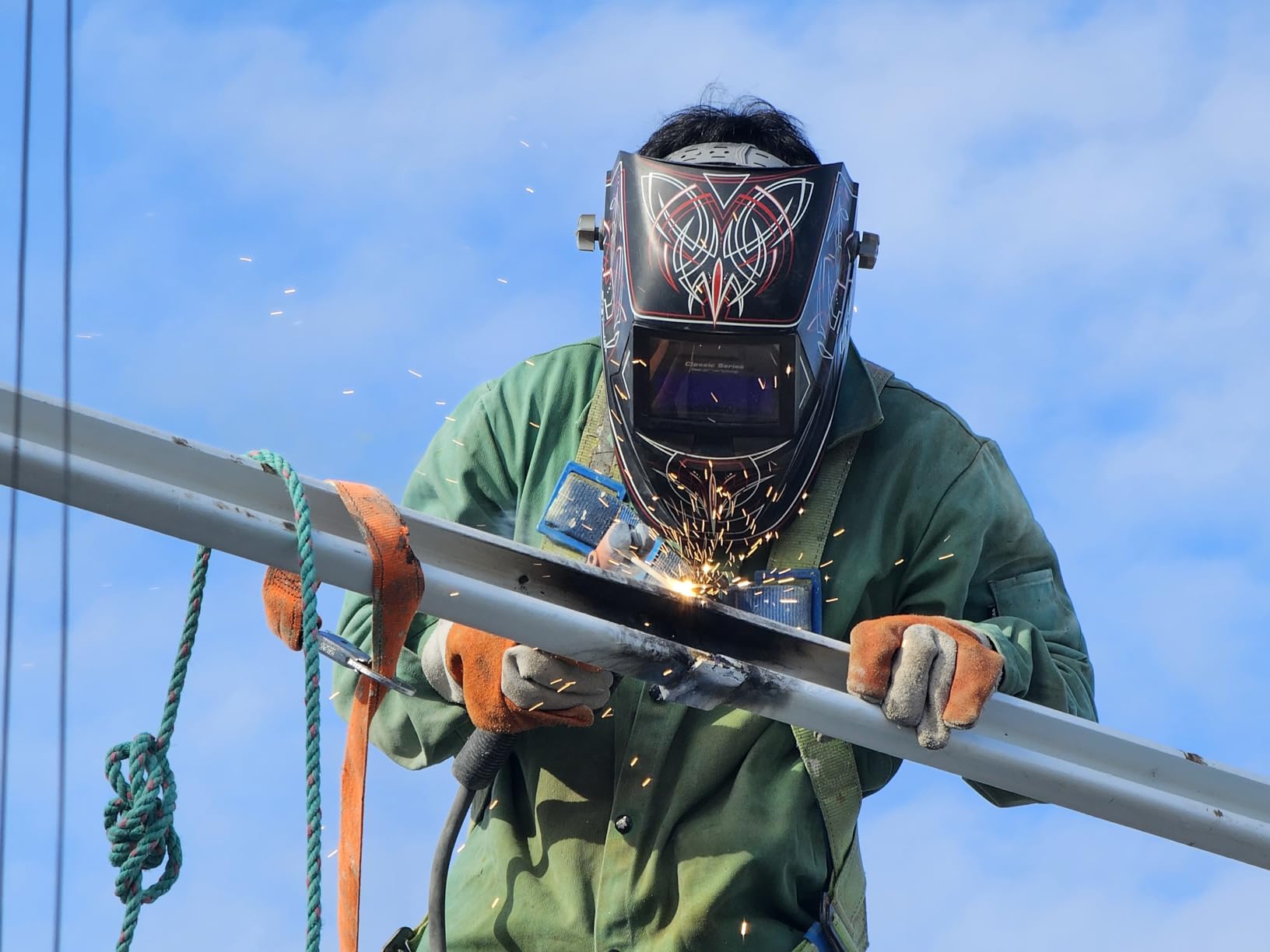
Shade coverage is well thought out for a value model: weld shades 8-13, cut shades 5-8, and a grind shade of 3. That is a complete working range across welding, cutting, and grinding in one helmet. Digital controls handle shade, delay, and sensitivity, and ratchet headgear provides the fit adjustment, with auto-on power control triggering at arc strike.
Owners also note it works down to 5 amps or below, which matters for TIG and low-amp work where a faint arc is harder to detect. The helmet carries ANSI Z87.1+, CSA, and CE standards with a three-year warranty, and spare part availability is listed at three years.
Two sensors is the compromise
Two arc sensors with 1/23000 second switching is the one real compromise, and it is fewer than most competitors here. If you weld flat and horizontal only, the difference is largely academic. If you routinely work out of position, overhead, or on thin material at low amperage, four sensors are worth paying for.
The 6 square inch viewing area is the smallest published window in the guide, which you notice more than the number suggests when you are used to a 12.5 square inch lens. At roughly 989 g, it is also heavier than several budget alternatives on this list.
Miller or Lincoln: the honest comparison
If you are choosing between the two big names, the Viking 3350 gives you a larger viewing area, four sensors, and a five-year warranty. The Miller Classic gives you ClearLight optics, a much brighter 3.0 light state, and a three-year warranty at a lower price. Both are safe choices, which is exactly what the long-running forum consensus says about these two brands.
For TIG and low-amp work, the Miller light state and low-amperage capability are genuinely better suited. For visibility, headroom, and warranty, the Lincoln is ahead. Budget and light state are the deciding factors here rather than safety, because both clear the standards.
11. ESAB Savage A40 – Best for Low Amp TIG
ESAB 0700000480 Black Savage A40 Welding Helmet
4 arc sensors
adjustable sensitivity for low amp TIG
delay control
exterior grind button
CR2 battery
Pros
- Very clear lens multiple owners compare favorably to much pricier hoods
- Four arc sensors with sensitivity tuned for low amp TIG
- Exterior grind mode button usable with welding gloves
- Lightweight enough to be easy on the head all day
- Popular with beginners upgrading from cheap budget hoods
Cons
- Lens viewing area is smaller than the Lincoln Viking it is often compared to
- Exterior shade knob sits high on the left and can be bumped in tight quarters
- One owner reported double vision when using a cheater lens
The Savage A40 is the helmet to look at if TIG on thin material is your main event. The sensitivity control is specifically tuned for low amp TIG in the low rim range, and combined with four arc sensors it gives you dependable faint-arc detection in a helmet that is not priced like a specialist TIG unit. That is not a spec-sheet nicety; it is the difference between seeing your puddle and flinching.
Owners describe the lens as very clear, with several comparing it favorably to much pricier hoods and reporting four-plus years of reliable use on a single battery. Several of those owners upgraded from a cheap budget hood, and the jump in lens quality is what they describe as the reason the upgrade was worth making.
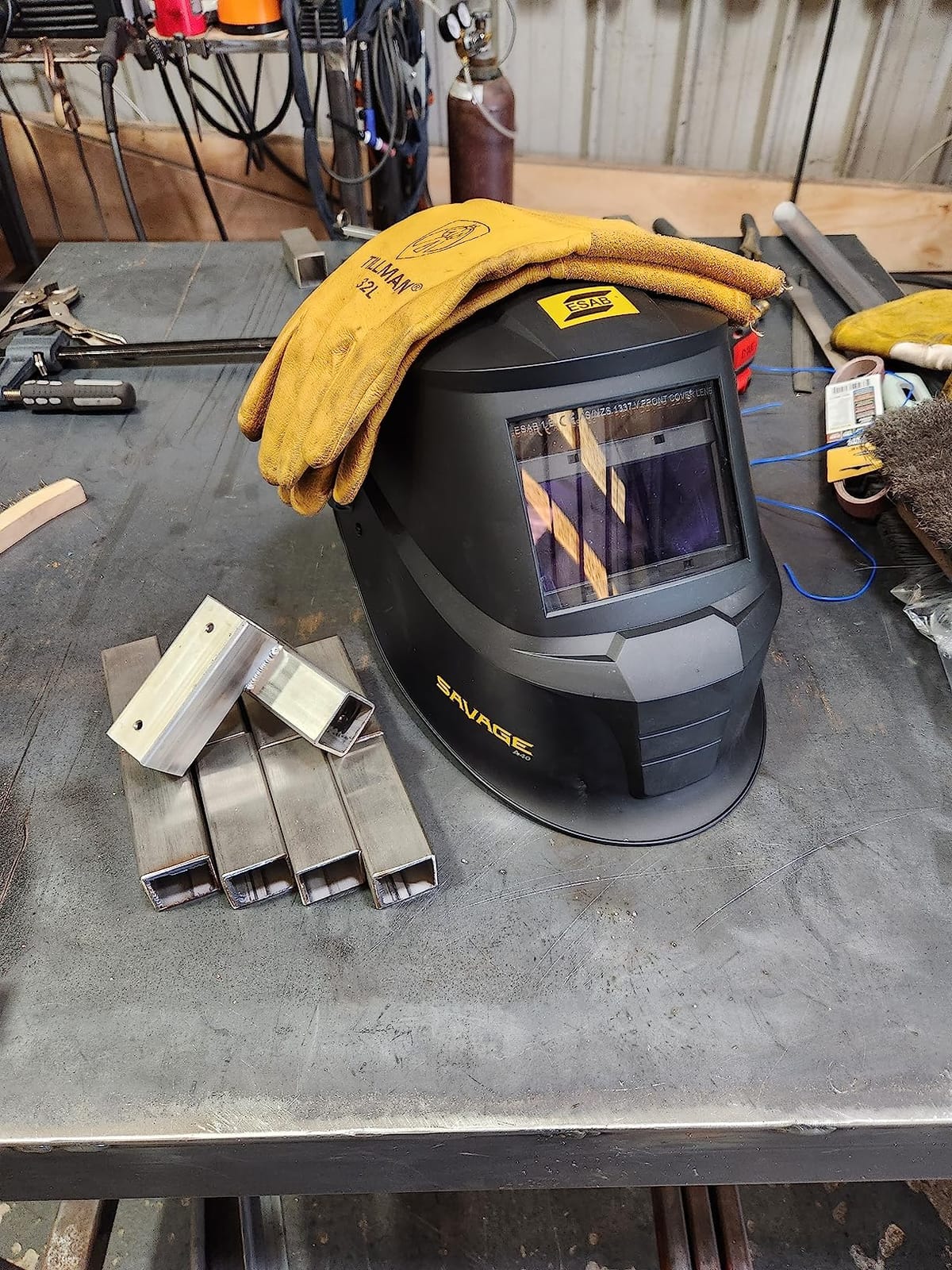
Delay control sets how long the lens stays dark after the arc stops, which is genuinely useful for TIG where you are making short passes with pauses. An exterior grind mode button is operable with welding gloves, and CR2 lithium battery power is a serviceable standard cell rather than a sealed pack.
For a beginner worried about eye protection, this sits in an awkward middle in a good way. It is a real professional-brand helmet with a genuine four-sensor array, without the premium tier price. Long-time forum members treat ESAB as a name they trust, alongside Lincoln and Miller.
Button placement is the thing to know
The exterior shade knob sits high on one side, and it can be bumped when you are welding in confined spaces or brushing past the helmet on a bench. If you work inside a frame or a hull, expect to check your shade setting after contact. It is a small annoyance that shows up in owner feedback more than any other issue.
The lens viewing area is smaller than the Lincoln Viking 3350 it is frequently compared against, so if you are choosing on visibility the Viking wins. If you are choosing on low-amp TIG reliability at a mid-tier price, the A40 is the better tool.
Weight and cheater lens notes
The listed weight is 2.2 pounds, while owner reports put it closer to about one pound. Either reading makes it manageable for a full day, and owners describe it as easy on the head all day. If you are sensitive to that figure, check the physical unit before buying.
One owner reported double vision when using a cheater lens, which is an isolated report rather than a pattern, but it is worth mentioning because magnified optics sit closer to your eyes. Test a cheater lens early rather than on the day you need it.
12. Lincoln Electric K4134-1 Lone Star – Best With Spare Lenses
Lincoln Electric-K4134-1 Welding Helmet, Brown, Ratchet, Plastic
Auto-darkening with quick reaction
Ratchet headgear
exterior shade knob
easy battery access
spare lenses included
Pros
- Auto-darkening works reliably with a quick reaction time
- Comfortable enough to wear for hours without fatigue
- Adjustable for tightness and angle with easy battery changes
- Includes two spare outside lenses and two spare inside lenses
- Distinctive Lone Star graphics owners frequently praise
Cons
- Exterior shade knob turns easily and can be bumped to the wrong setting
- Plastic shell flexes and feels thin
- Viewing area smaller than expected
- Ratcheting movement is not smooth on some units
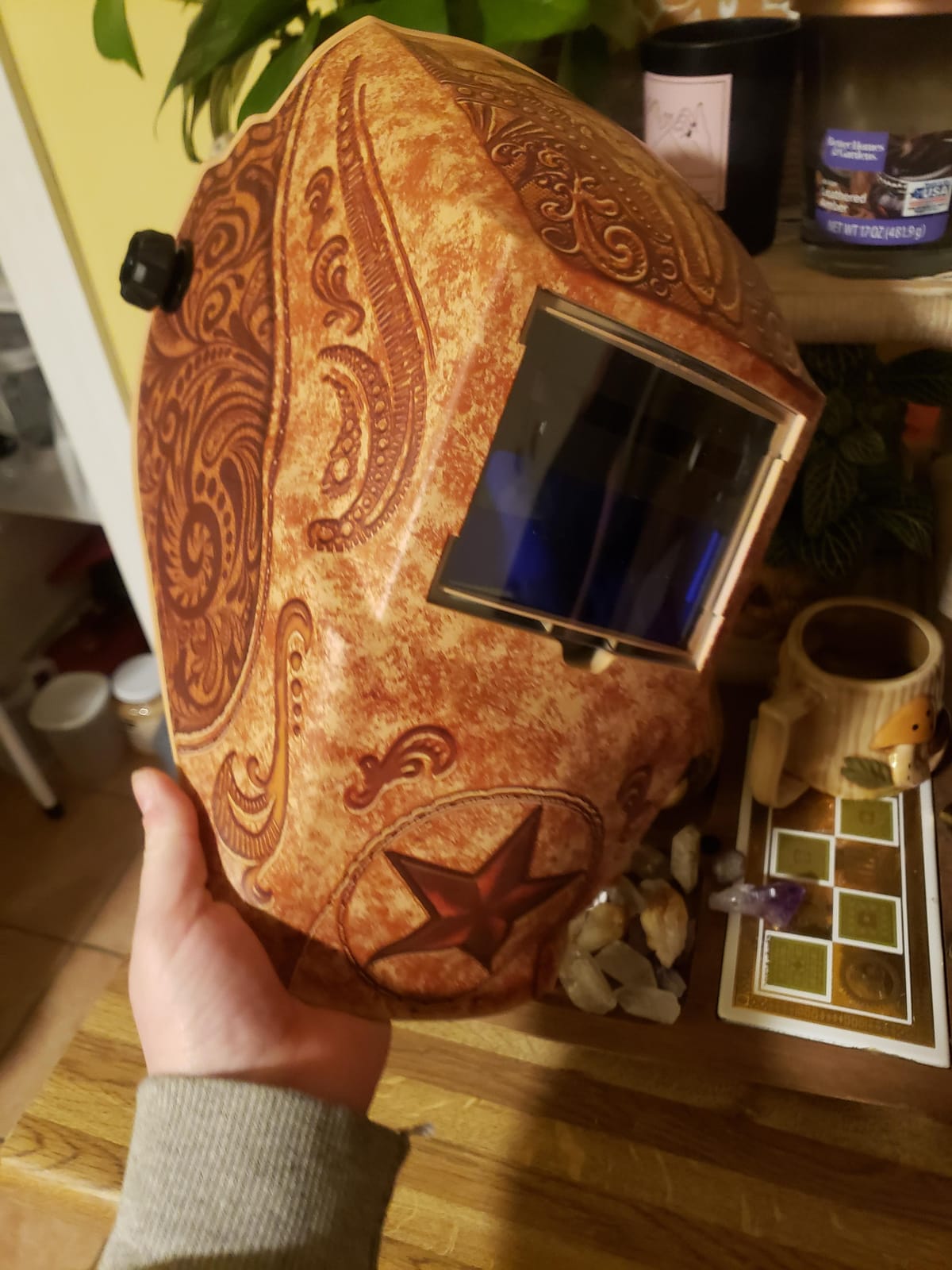
The Lone Star is the practical pick for someone who wants a Lincoln helmet without the premium price. Auto-darkening works reliably with a quick reaction time, and daily users report it working without fail for years. At a 4.7 rating across nearly 600 owner reviews, the satisfaction rate is high for a model at this level.
What makes it stand out in this guide is the box contents. It includes two spare outside lenses and two spare inside lenses, plus an instruction guide. Several models ship with spare lenses, a spare battery, and a storage bag, and that complete package means you are not ordering cover lenses within a year of buying the helmet.
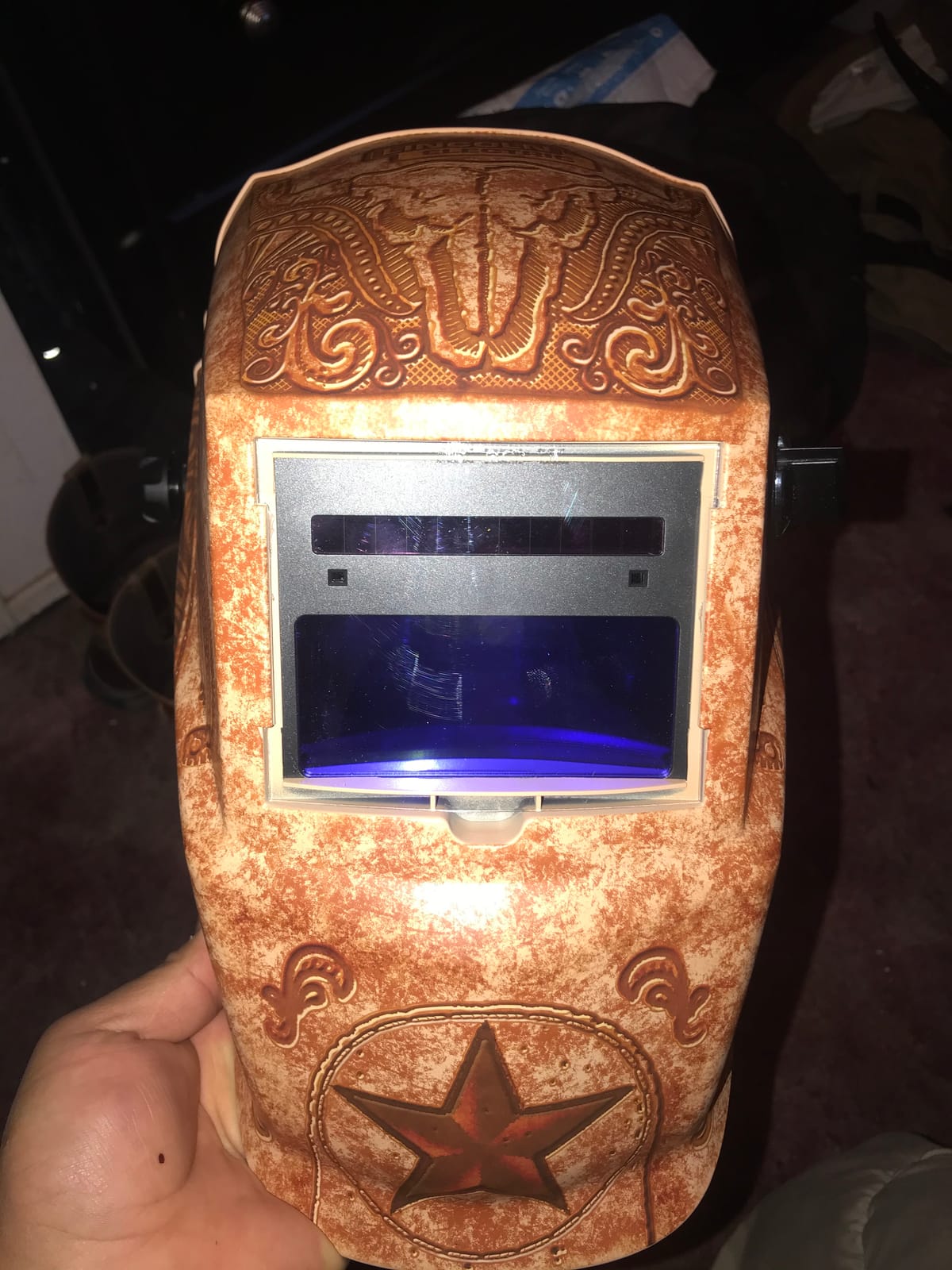
Headgear uses a ratchet closure with tightness and helmet angle adjustment, and the comfort is good enough that users report wearing it for hours without fatigue. Batteries are easy to change, which is the maintenance task that matters most over a helmet’s life and the one that decides whether you keep the helmet or abandon it.
An exterior shade control knob handles switching between grind and weld modes, and the distinctive Lone Star graphic style gets regular mention from owners. That is a small thing, but on a tool you wear every working day for years, aesthetics are not nothing.
Cover lens costs over time
Cover lenses are consumables, and their cost is a real part of ownership. The generous spare set here offsets that for the first year or two. After that, the standard flat lens format is the cheapest type to keep buying, which is a genuine advantage over premium curved and panoramic helmets whose replacement lenses cost more and are harder to source.
Because the inside lenses are also standard flat, you can buy in quantity without hunting for a model-specific part. That matters for anyone who grinds regularly, since grinding destroys cover lenses faster than welding does.
Build quality is the honest limitation
The plastic shell flexes and feels thin, and at a 2.4 pounds this is one of the heavier models in the guide despite the comfortable fit reports. The ratcheting movement of the helmet is not smooth on some units, which is a quality-control inconsistency rather than a design flaw.
The exterior shade knob turns easily and can be bumped to the wrong setting when the helmet is grabbed or knocked over, which is the most common complaint and echoes the ESAB issue. Check your shade after setting the helmet down. The viewing area is also smaller than expected, so try one on if size matters to you.
How to Choose a Welding Helmet: Seven Decision Points?
Specs only matter in relation to the work you do. Before you compare anything, set up your bench properly, because a helmet solves an ergonomic problem rather than a machine problem. If you are still building out a workspace, our guide to steel workbenches for welding covers the bench and fixturing side of the same setup problem.
1. Auto-darkening versus passive for a first purchase
A passive helmet is a fixed dark filter. You flip it down to weld and up to see anything else, and it costs a fraction of an auto-darkening helmet. It cannot be beaten for simplicity, and it will never fail to darken because a sensor missed the arc. If you weld a few times a year, a passive hood is a defensible first purchase.
For anything more frequent, an auto-darkening welding helmet is the right answer. The mechanism is simple: photo sensors detect the arc, a small processor picks a shade, and a liquid crystal filter switches from a clear light state to a dark welding shade in a fraction of a second. For a first purchase that will get daily use, the convenience and the ability to see your pool are worth the step up in cost.
2. Arc sensor count, and why four beats two
Arc sensors are the photo sensors that detect the arc and trigger darkening. Two sensors is common at the budget end; four is the standard on mid-range and professional models. The difference shows up on faint arcs: low-amp TIG, out-of-position welding, and overhead work where the sensor has less arc light to see.
Sensitivity control matters as much as count. Two well-tuned sensors can beat four badly tuned ones, and a helmet that sits too eager will stay dark under shop lighting. Turn sensitivity down for outdoor work and up for indoor work, and expect to adjust it when you change process.
3. Optical clarity and what 1/1/1/1 means
The EN 379 rating is four numbers, and the plain-English version matters. The first digit is optical class, where 1 means the lens stays clear with no haze at any angle. The second is diffusion of light, or how evenly brightness is spread across the lens. The third is variation in luminous transmittance, meaning how much the brightness changes as you move your head. The fourth is angle dependence, or how much color and clarity shift when you view from an angle.
1/1/1/1 is the best available rating and the one to insist on. The quick analogy: a lower second or third digit is like looking through frosted or rippled glass, and it is what makes a cheap lens feel foggy even when the shade number is technically correct. A true color or ClearLight style lens adds accurate color on top, so you can read heat tint and stainless surfaces properly.
4. Viewing area and the shape of the window
Viewing area ranges from 6 square inches on the Miller Classic to 12.5 square inches on the Viking 3350. Larger is better for situational awareness, and the shape matters as much as the area. Wide, short windows suit flat and horizontal work, while tall windows help when you need to see along a vertical joint or under a workpiece.
Panoramic models with side windows extend the field of view to around 180 degrees, which is a genuine advantage on pipe and structural work. Just remember that a fixed side window does not darken with the arc, so treat it as spatial awareness rather than a second welding lens.
5. Shade range matched to your process
Shade is a DIN number where a higher number means darker. The practical mapping is straightforward: shade 8 to 13 covers MIG, stick, and flux-cored work, shade 5 to 8 handles cutting, and shade 3 to 5 is for grinding. TIG spans a wide range, usually shade 6 to 13, and lower-amp TIG wants the darker end of that.
Between shade 10 and shade 11, shade 11 is darker and safer for your eyes but harder to see the puddle. Choose shade 10 for thin material where you need detail, and step up to 11 for thicker sections. What you want is a lens that covers at least shade 8 through 13 in welding, with a separate grind setting and ideally a cut setting.
6. Power source and the dead-battery trap
Here is the myth that no competitor on the search page explains clearly. A solar panel on a welding helmet sustains charge from the arc while you are welding, but it does not meaningfully recharge a battery that has been sitting in storage. A coin cell left on a shelf for months is usually dead by the time you pull the helmet out. That is the single most common real-world failure owners report.
The practical fix is a user-replaceable cell. CR2450 cells are cheap and widely available, and a helmet with a replaceable compartment gives you a two-minute fix instead of a new cartridge. Sealed rechargeable packs avoid the storage problem but create a worse one: when the pack fails, you are buying a whole new cartridge. Eight of the twelve models here run on solar plus a replaceable CR2450, while the Hobart and ESAB use serviceable CR2 cells.
Whichever design you choose, store the helmet with a fresh cell and test it before a job rather than during one.
7. Safety standards, and reading them per model
Do not accept a blanket claim that helmets are safe. Read the certification on the specific model. ANSI Z87.1 and CSA Z94.3 are the North American standards you will see most, and EN 379 plus EN 175 are the European equivalents, with EN 379 being the one that carries the optical class rating. ARCCAPTAIN lists ANSI/ISEA Z87.1-2010, CSA Z94.3, DIN EN 175, and DIN EN 379 together, which is broader than most competitors publish.
One model in this guide carries an ANSI Z89.1 specification rather than Z87.1, which is a different standard. If you work to a code requirement or on a job site with a specified certification, confirm what your site demands before you buy. It takes a phone call to the manufacturer and removes all doubt.
Cover lens care and replacement routine
Cover lenses are the consumable part of the system and the only thing standing between your filter and spatter. Check the outer lens at the start of every session, and replace it as soon as it becomes spattered or scratched rather than when you can no longer see through it. A scratched outer lens is what produces the blur owners blame on the helmet itself.
Clean the inside lens with a soft cloth and a plastic-safe cleaner, never with a solvent that will craze the plastic. Wipe arc sensors gently with a dry cloth, and leave the solar panel clean so it keeps sustaining charge. A ten-minute monthly routine keeps a good helmet good for years.
Frequently Asked Questions
What is the best welding helmet for value for money?
For most people the YESWELDER LYG-L600A is the strongest value pick: a 1/1/1/1 true color lens, a 3.64 x 1.67 inch viewing area, and solar plus a replaceable CR2450 battery for a fraction of what premium hoods cost. If you want a known brand name and a longer warranty, the Miller Classic Series ClearLight adds ClearLight optics, a bright 3.0 light state, and a three-year warranty. If your welding includes a lot of TIG on thin material, the ESAB Savage A40 is worth the step up for its four sensors and low-amp TIG sensitivity.
Which welding helmet is better, the Miller or the Lincoln?
Both are safe, proven choices and the difference is feature set rather than protection. The Lincoln Viking 3350 leads with a 12.5 square inch 4C lens at 1/1/1/1 clarity, four arc sensors, and a five-year warranty. The Miller Classic Series ClearLight has a smaller 6 square inch view and only two arc sensors, but adds ClearLight optics and a 3.0 light state that lets you keep the helmet down between welds, at a lower price. Choose Lincoln for visibility, sensor headroom, and warranty. Choose Miller for TIG work and a brighter light state.
Is shade 10 or 11 better for welding?
Shade 11 is darker and filters more light, so it is easier on your eyes. Shade 10 lets you see more detail in the weld pool, which helps on thin material and stainless work where you are reading heat tint color. Most MIG and stick work on mild steel sits in the shade 10 to 12 range, while TIG runs from about shade 6 to 13. The best solution is a helmet that covers at least shade 8 through 13 with a separate grind setting, so you can change shade without changing helmets.
Does the solar panel on a welding helmet charge the battery?
Only while you are welding. The solar panel on an auto-darkening welding helmet sustains charge from the arc during use, but it does not meaningfully recharge a battery sitting in storage. This is why so many stored helmets come out of a cabinet dead. The fix is a user-replaceable battery compartment: a fresh CR2450 or CR2 cell takes a minute to fit and costs very little. Sealed rechargeable packs avoid the storage problem but mean buying a whole new cartridge when the pack finally fails.
How long do batteries last in a welding helmet?
A replaceable CR2450 or CR2 lithium cell typically carries a welder through many months of regular shop use before it needs changing, and owners of the ESAB Savage A40 report four-plus years of reliable use on a single battery. Solar assist extends that further by topping the cell up during each weld. The variable is storage: a cell that sits unused for months can be flat when you next reach for the helmet. Replacing the cell at the start of every welding season is cheaper than discovering a dead helmet on a job.
How do I fix a welding helmet that will not darken?
Start with power, because it is the most common cause. Install a fresh CR2450 or CR2 cell and confirm the polarity matches the compartment. Next, clean the two arc sensors on the front of the lens with a dry cloth, since dust and spatter film block detection. Turn sensitivity up to maximum, then lower it a notch and retry. If the lens still will not respond, test it away from bright sunlight, since strong ambient light can stop a visible-light sensor from triggering. Persistent failure usually means the cartridge electronics are gone, not that the helmet needs more coaxing.
Can I trust an auto darkening welding helmet?
Yes, provided you check the certification on the specific model rather than trusting a general claim. Look for ANSI Z87.1 and CSA Z94.3 in North America, or EN 379 and EN 175 in Europe, where EN 379 also carries the optical class rating. The budget models in this guide vary widely here: several are certified to a full four-part standard set, while one carries the older ANSI Z89.1 specification instead. Sensor count and switchable low-amp TIG sensitivity matter more to your daily safety than brand name, because they determine whether the lens darkens before the arc reaches your eyes.
Which welding helmet is better, Arccaptain or Yeswelder?
They are close on price and both rate 4.6 with several thousand owner reviews. ARCCAPTAIN wins on the hardware: four arc sensors at 1/25000 second switching, a slightly larger 3.86 x 1.69 inch true color view, and a certification list covering ANSI/ISEA Z87.1-2010, CSA Z94.3, DIN EN 175, and DIN EN 379. YESWELDER wins on volume and included parts: the LYG-L600A carries more than 13,000 reviews and includes spare lenses, a spare battery, and a storage bag. Choose ARCCAPTAIN for sensor count and standards, YESWELDER for proven long-term ownership.
Final Verdict: Which Welding Helmet Should You Buy?
After working through twelve helmets, the Lincoln Electric Viking 3350 remains the best welding helmet for most people in 2026. It carries the largest published lens area in the guide and the longest warranty, and the standard replacement lenses keep the running cost of ownership low over five years despite the higher entry cost. If you weld several processes and want to stop thinking about your helmet, this is the one.
Below that, the ESAB Savage A40 is the pick for TIG on thin material, where four sensors and low-amp sensitivity tuning earn their keep. The Hobart 770890 is the mid-tier professional widescreen option with dependable four-sensor detection and controls you can find with gloves on. The Jackson Safety Insight is a very light shell with a dedicated torch mode, which suits welders who cut as well as weld.
For a first helmet or a second hood for the shop, the YESWELDER LYG-L600A is the value pick with 1/1/1/1 true color optics and more owner reviews than anything else in this guide. The ARCCAPTAIN is the better budget hardware if you want four sensors and a full EN 379 certification. Buy the YESWELDER LYG-M800H if you want a big view at a low price, the LYG-Q800D if you need 180 degrees of field of view on pipe work, and the Miller Classic Series ClearLight if a bright 3.0 light state and a three-year warranty from a major brand matter most to you.
Whatever you choose, check the certification for your specific model, keep a spare battery in the drawer, and replace a scratched cover lens the day you notice it rather than the day it ruins your view. Those three habits do more for your welding than any spec on this page.