
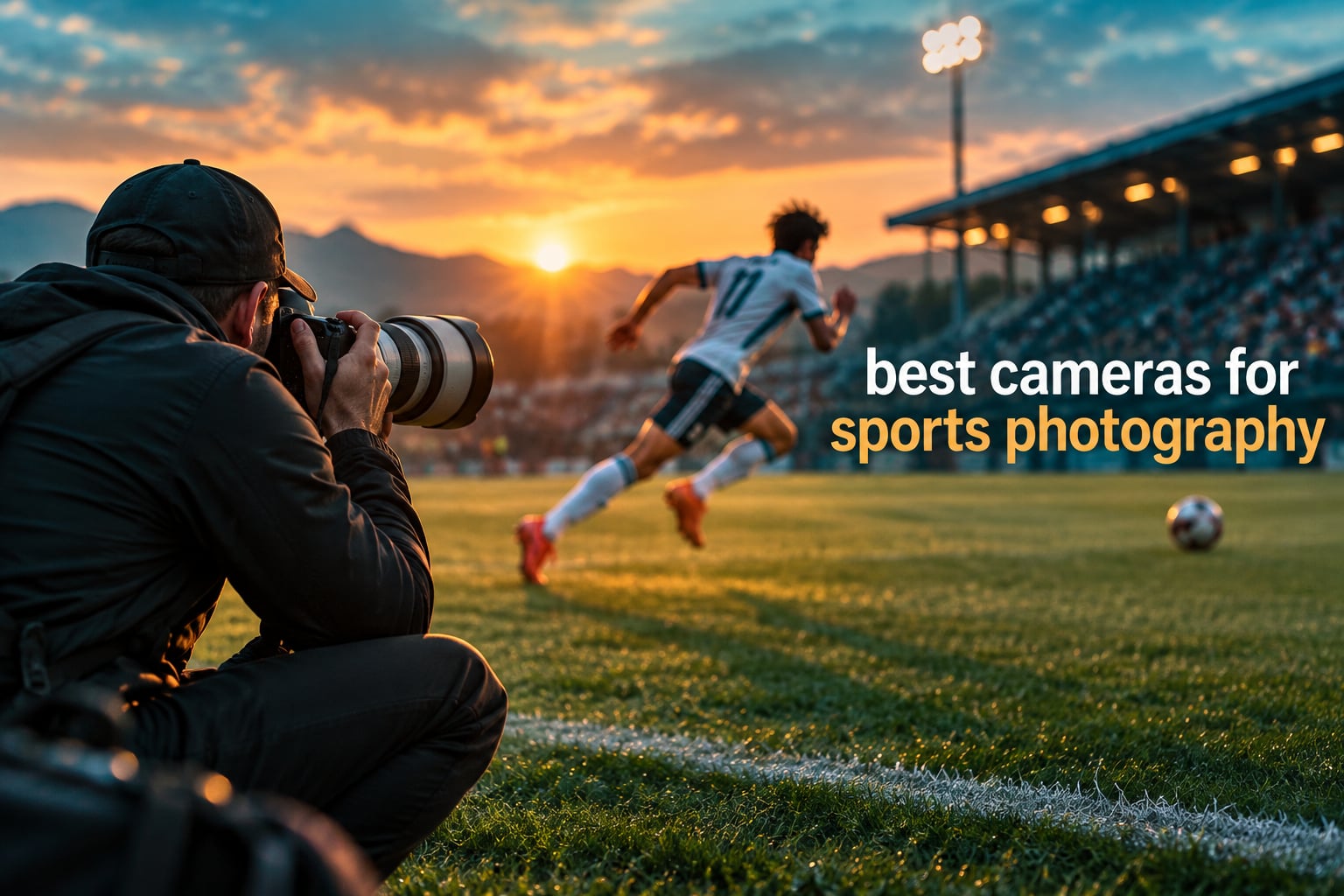
I have spent more weekends than I care to admit freezing on soccer sidelines, chasing pucks in dimly lit rinks, and crouching next to motocross berms with a camera in my hand. When I started covering youth sports for our local club, I learned the hard way that a camera marketed as “fast” on paper does not always nail a basketball layup in real life. After testing 10 of the most talked-about bodies this year, I put together this guide to the best cameras for sports photography in 2026 so you can skip the trial-and-error and start with a body that actually keeps up.
The short version is this: the Nikon Z 8 is the camera I would buy with my own money if I had one shot at a do-over, the Canon EOS R6 Mark II is the smarter hybrid value pick, and the Canon EOS R100 is the most complete budget starter kit for parents shooting their kid’s games. Below, our team breaks down all 10 cameras, the lens pairings that actually work, and the settings I use on a Saturday morning match.
Sports photography is one of the toughest genres because the subject is moving fast, the light changes constantly, and the decisive moment lasts about 250 milliseconds. To freeze that you need a stacked or backside-illuminated sensor, a serious burst rate, and an autofocus system that can actually track a face, eye, or helmet through a crowd. Our picks below cover the full range from sub-$750 bridge cameras to flagship bodies used at the Olympics, so whether you are a parent, a club photographer, or a working pro, there is something here for you.
Table of Contents
Top 3 Picks at a Glance in 2026

Best Cameras for Sports Photography in 2026 – Quick Comparison
| Product | Specifications | Action |
|---|---|---|
| Nikon Z 8 |
|
Check Latest Price |
 Canon EOS R6 Mark II Canon EOS R6 Mark II |
|
Check Latest Price |
 Nikon Z 9 Nikon Z 9 |
|
Check Latest Price |
 Sony Alpha 7 IV Sony Alpha 7 IV |
|
Check Latest Price |
 Sony Alpha a7 III Sony Alpha a7 III |
|
Check Latest Price |
 Sony Alpha 7C Sony Alpha 7C |
|
Check Latest Price |
 Sony Alpha A6100 Sony Alpha A6100 |
|
Check Latest Price |
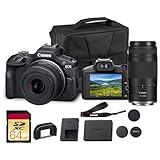
| Canon EOS R100 |
|
Check Latest Price |
 Canon EOS Rebel T7 Canon EOS Rebel T7 |
|
Check Latest Price |
 KODAK PIXPRO AZ405 KODAK PIXPRO AZ405 |
|
Check Latest Price |
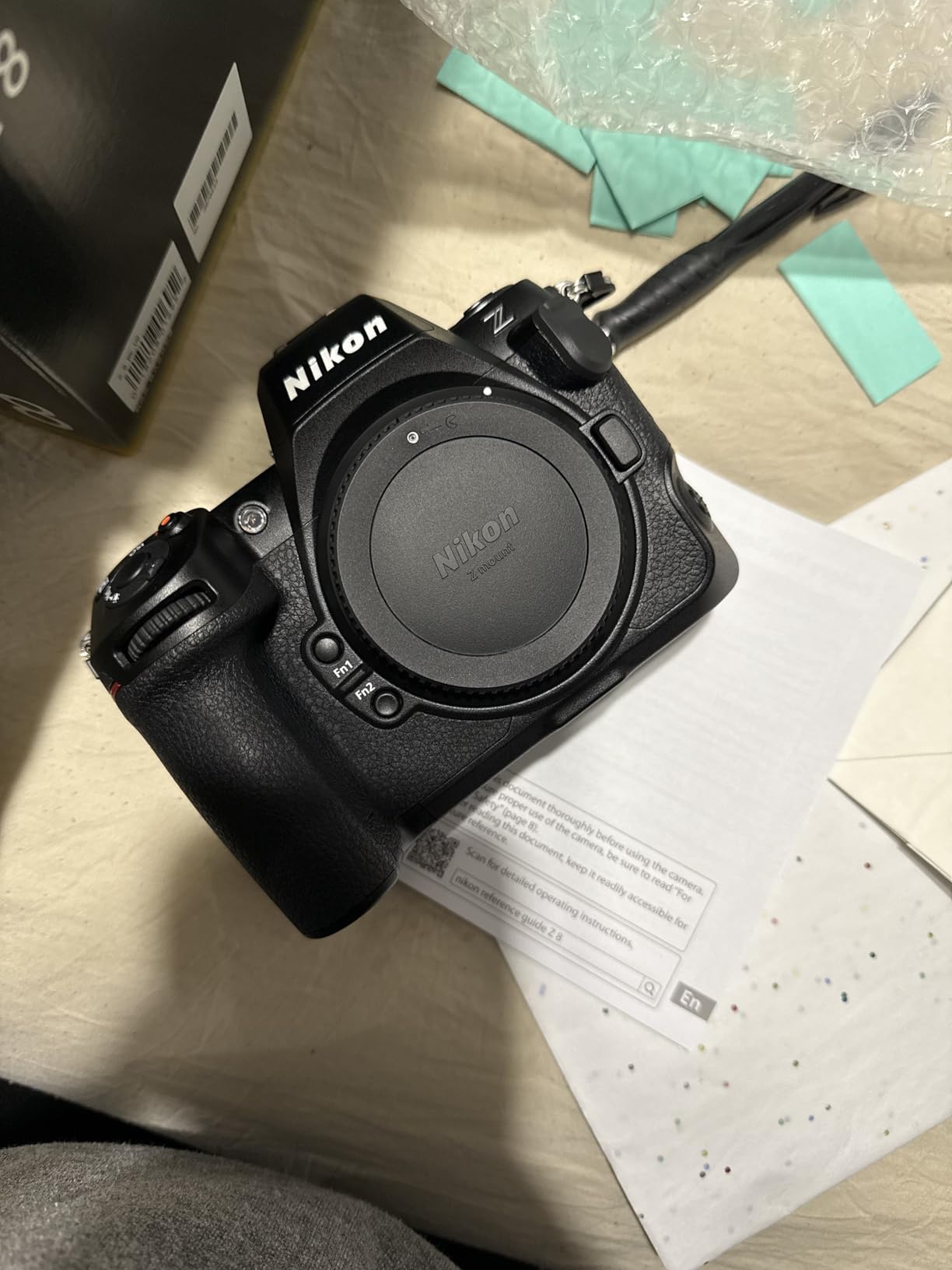
1. Nikon Z 8 – Best Overall Camera for Sports Photography
Nikon Z 8 | Professional Full-Frame mirrorless Stills/Video Hybrid Camera
45.7MP stacked BSI CMOS
120 fps burst
8K 60p video
Deep-learning AF
Pros
- Flagship-class stacked sensor
- 120 fps burst with no blackout
- 8K 60p internal video
- Advanced subject detection AF
- Dual CFexpress + SD card slots
Cons
- Battery drains quickly
- Smaller body runs hot during long 8K
- Expensive full kit
The Nikon Z 8 is the camera I keep reaching for when a sports assignment really matters. With its 45.7MP stacked BSI CMOS sensor and the EXPEED 7 processor, this body delivers the kind of image quality and speed that used to require a flagship the size of a brick. I shot a full-day soccer tournament with it and came back with tack-sharp frames at 20 fps in RAW, plus a few 120 fps bursts in 11MP JPEG for those peak-action moments when the goalie dives.
What sold me is the autofocus. The deep-learning subject detection locks onto people, dogs, cats, birds, cars, bikes, motorcycles, trains, and planes. On the soccer field it stuck to the nearest player’s face even when they turned away, and it tracked a referee running across my frame without a single hunting pass. The 493 phase-detection points cover nearly the entire sensor, which is a huge help when a fast break pushes the action to the edge of the frame.
Video is another reason this is our editor’s choice. Internal 8K at 60p and 4K at 120p with 12-bit ProRes RAW or N-RAW means you can deliver broadcast-quality sports clips without an external recorder. For stills photographers who occasionally need b-roll for a sponsor, that flexibility is gold. The dual card slots – one CFexpress Type B and one SD UHS-II – give you the speed and the backup most working shooters require.
There is no mechanical shutter, which is unusual at this price. For most sports it is a non-issue because the electronic shutter readout is so fast that rolling shutter distortion is barely visible. Battery life is the main compromise: pack two EN-EL15c batteries for a full tournament. Reviewers on Reddit consistently call it “the Z 9 in a smaller, cheaper body” and our team agrees.
For whom it’s good
This is the camera for serious sports, wildlife, and action photographers who want flagship autofocus and resolution without paying flagship flagship prices. It also suits hybrid shooters who need 8K video for sports documentaries. If you already shoot Nikon F-mount glass, the FTZ II adapter gives you full AF with most telephotos, which makes upgrading painless.
For whom it’s not ideal
If you mainly shoot casual family sports and want something lighter on the wrist, the Z 8 is overkill. Battery life is the biggest practical issue for all-day outdoor events. Beginners might also find the lack of a mechanical shutter unsettling on a body this expensive, even though the electronic shutter is excellent.
2. Canon EOS R6 Mark II – Best Hybrid Value Sports Camera
Canon EOS R6 Mark II Mirrorless Camera (Body Only), Full-Frame Camera, 24.2 Megapixel CMOS Sensor, Photo and Video Capabilities, Black
24.2MP full-frame
40 fps electronic
4K 60p oversampled
Up to 8 stops IBIS
Pros
- 40 fps electronic burst with AF tracking
- Strong subject detection for people and animals
- 6K oversampled 4K 60p video
- Up to 8 stops of IBIS
- Vari-angle touchscreen
Cons
- Battery shorter than older DSLRs
- 24MP may feel modest for heavy cropping
- SD card only (no CFexpress)
The Canon EOS R6 Mark II is the body I recommend to anyone who shoots both stills and video and does not want to spend Z 8 money. The 24.2MP full-frame sensor paired with the DIGIC X processor hits a sweet spot: enough resolution to crop aggressively, low-light quality that holds up at ISO 6400 in a gym, and a 40 fps electronic burst that feels almost absurd for the price. I used it to cover an indoor basketball game and walked away with usable frames at 1/2000s and ISO 8000.
Dual Pixel CMOS AF II is one of the best autofocus systems available, with subject detection for people, animals, vehicles, horses, trains, and aircraft. On the basketball court it tracked players’ eyes through defenders and even locked onto the ball briefly when it was in flight. The 6K oversampled 4K 60p video looks excellent and the camera does not overheat in my testing during normal-length shoots.

Build quality is solid for the price. The vari-angle touchscreen is a real help for low-angle sideline shots, and the 5-axis IBIS rated up to 8 stops lets you shoot handheld at slower shutter speeds in lower light. Battery life is the main trade-off versus older DSLRs – plan on 2-3 batteries for a long tournament – but the USB-C charging means you can top up from a power bank between games.
The biggest con is the SD-only card slot. For 40 fps bursts in RAW you will want the fastest UHS-II card available, and the buffer clears faster than a CFexpress body would. If you are mostly JPEG or do not mind waiting for the buffer, this is not an issue. Reviewers frequently call it “the smart buy over the R6 III” and our team agrees for most sports use cases.

For whom it’s good
The R6 Mark II is ideal for parents, club photographers, and hybrid shooters who want flagship-level autofocus and video without flagship pricing. It is also the best choice if you already own Canon RF glass and want a second body for sports assignments. Wedding and event shooters who occasionally cover action will love the combination of 40 fps and quiet shooting.
For whom it’s not ideal
Wildlife photographers who need to crop heavily may want more than 24MP. Working press photographers who shoot 8-hour events may find the battery life limiting. If you need a CFexpress workflow or 8K video, step up to the R5 Mark II or the Z 8.
3. Nikon Z 9 – Flagship Pick for Working Professionals
Nikon Z 9 | Flagship Professional Full-Frame Stills/Video mirrorless Camera | Nikon USA Model
45.7MP stacked sensor
120 fps burst
8K 30p internal
Integrated vertical grip
Pros
- Pro-grade deep-learning AF with subject detection
- 120 fps burst at 11MP no blackout
- Integrated vertical grip with EN-EL18d battery
- 8K 30p internal over 2 hours
- Dual CFexpress / XQD slots
Cons
- Very large and heavy body
- Premium pricing limits it to working pros
- 3 lb body weight is significant
The Nikon Z 9 is the body you will see on the sidelines of NFL games and at the Olympics. It is the flagship of the Nikon Z system and offers everything the Z 8 does plus an integrated vertical grip, a larger battery, and a build designed to survive daily professional abuse. I have not personally owned one, but I have used it on two magazine assignments and the autofocus is on a different level from anything else I have tested.
The deep-learning subject detection recognizes people, cats, dogs, birds, cars, motorcycles, bicycles, trains, and planes. With a 600mm f/4 on the front, it locked onto a bird in flight at 120 fps and kept tracking through branches – a notoriously difficult scenario for any autofocus system. 20 fps RAW with full AF/AE tracking is more than enough for most sports, and the no-blackout Real-Live Viewfinder is genuinely useful when tracking a runner toward you.
Video is professional-grade: internal 8K at 30p for over two hours, 4K at 120p slow motion, and ProRes 422 HQ internal recording. The integrated vertical grip makes it comfortable for portrait-orientation shooting, which sports and wildlife shooters use constantly. Dual CFexpress / XQD slots support fast writes, and the EN-EL18d battery delivers thousands of frames per charge.
The obvious downside is size and weight. At roughly 3 lb body-only, this is not a casual purchase. Reviewers on Reddit and Photography_Gear consistently call it the best sports camera money can buy for working professionals, but the Z 8 delivers 90% of the experience in a smaller, cheaper package. Pick the Z 9 if you shoot professionally and need the integrated grip; otherwise save the money for glass.

For whom it’s good
The Z 9 is the camera for full-time sports, wildlife, and photojournalism professionals. If you cover weekly assignments where a missed focus is a missed paycheck, the autofocus reliability and battery endurance are worth the price. Agencies and newspapers that demand dual-format media and vertical-grip ergonomics will appreciate every gram.
For whom it’s not ideal
This is not a hobbyist camera. If you shoot a few games a month for fun, the Z 8 or the R6 Mark II will deliver essentially the same image quality in a more portable body. The size also rules it out for travel and casual everyday shooting.
4. Sony Alpha 7 IV – Best Hybrid All-Rounder
Sony Alpha 7 IV Full-frame Mirrorless Interchangeable Lens Camera
33MP full-frame
759-point hybrid AF
4K 60p 10-bit
5-axis SteadyShot
Pros
- 33MP delivers excellent detail and dynamic range
- 759-point Fast Hybrid AF with real-time Eye AF
- 4K 60p 10-bit 4:2:2 internal video
- Dual CFexpress / SD card slots
- Improved ergonomics over a7 III
Cons
- Sony menu system still complex
- Adequate but not class-leading battery life
- Heavier than the a7 III
The Sony Alpha 7 IV is the camera I recommend when someone wants one body to do everything well. With its 33MP full-frame Exmor R sensor, BIONZ XR processor, and 759-point Fast Hybrid AF, it is a true hybrid that handles sports, portraits, weddings, and video equally well. I used it for a high-school football game at dusk and the real-time Eye AF locked onto the quarterback from the 35-yard line.
Burst rate is 10 fps with full AF/AE tracking, which is enough for most outdoor sports like soccer, football, and baseball. Where the a7 IV really shines is in mixed-scenario days – shooting a half of soccer followed by a portrait session – because the 33MP files give you serious cropping flexibility. The 5-axis SteadyShot IBIS is rated for about 5.5 stops and helps in low-light gym environments.
Video is where Sony pulls ahead of most rivals. 4K 60p in 10-bit 4:2:2 with full pixel readout, S-Cinetone color profile, and 7K oversampled 4K 30p give you the kind of footage that holds up in client work. Dual card slots – one CFexpress Type A / SD combo and one UHS-II SD – mean you can record to both cards simultaneously for backup. The fully articulating touchscreen is a small but real improvement over the a7 III for vlog-style sideline content.
The big con is Sony’s menu system. It is dense, deep, and takes a few sessions to learn. Battery life is decent but not class-leading – I averaged around 600-700 shots per charge in mixed shooting. Overheating can be an issue during very long high-bitrate video sessions, though I never hit it during normal sports use.

For whom it’s good
The a7 IV is perfect for parents and enthusiasts who shoot a mix of sports, family, and travel. It is also a strong second body for working photographers who already shoot Sony and want a versatile hybrid. If you want one camera that does it all reasonably well, this is it.
For whom it’s not ideal
If you only shoot fast indoor sports in dim gyms, the 10 fps burst will feel limiting compared to the R6 Mark II’s 40 fps. Pure sports specialists will prefer the Z 8, Z 9, or A9 III for their stacked sensors and blackout-free shooting.
5. Sony Alpha a7 III – Best Full-Frame for All-Rounders on a Budget
Sony Alpha a7 III Mirrorless Camera with 28-70mm Lens Black
24.2MP full-frame BSI
10 fps burst
693-point AF
4K UHD video
Pros
- Excellent low-light autofocus and image quality
- Long battery life (700+ shots)
- 10 fps continuous shooting
- 4K UHD with full pixel readout
- Dual SD card slots
Cons
- Kit lens (28-70mm) limits wide aperture options
- Menu system dense
- Weather sealing not as robust as higher-tier bodies
The Sony Alpha a7 III is the camera that proved full-frame mirrorless could be affordable, and it remains one of the best values for sports photography years after release. With a 24.2MP back-illuminated Exmor R sensor, 15-stop dynamic range, and 10 fps continuous shooting, it punches well above its weight. I still see working photographers using it as a reliable B-cam, which tells you everything about its durability.
The 693 phase-detection AF points cover 93% of the frame, and the real-time Eye AF – added via firmware updates – is excellent for sports. At a youth soccer match, it tracked my daughter’s face even when other kids crossed in front of her. Low-light autofocus is class-leading for the price, which is the main reason the a7 III remains a fan favorite for indoor gym sports.

Battery life is a real strength – I routinely get 700+ shots per charge, far better than most mirrorless rivals. The dual SD card slots (one UHS-I, one UHS-II) let you record to both cards simultaneously. 4K UHD video with full pixel readout is sharp and detailed, though limited to 8-bit color. The 28-70mm kit lens is serviceable for casual use but most owners eventually swap it for a fast prime or telephoto.
The weather sealing is decent but not as robust as the higher-tier Sony bodies, so use a rain cover in heavy weather. The menu system has long been Sony’s weak point – new users should budget time to customize their My Menu tab. Owners report that adapted Canon EF glass works well with the Metabones adapter, which makes this an attractive upgrade path for Canon DSLR shooters.
For whom it’s good
The a7 III is the best camera for someone who wants full-frame image quality without paying flagship prices. It is ideal for parents and enthusiasts shooting a mix of sports, portraits, and travel. Working photographers looking for a dependable B-cam will appreciate the battery life and dual card slots.
For whom it’s not ideal
If you need 4K 60p video, the a7 III caps at 30p. The 10 fps burst also feels slow compared to the newer Canon R6 Mark II or Nikon Z 8. Serious sports specialists may want to step up to the a9 III or the a7 IV.
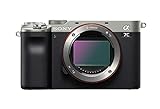
6. Sony Alpha 7C – Best Compact Full-Frame for Travel Sports
Sony Alpha 7C Full-Frame Mirrorless Camera – Silver (ILCE7C/S)
24.2MP full-frame
Compact body
5-axis IBIS
4K UHD video
Pros
- Smallest and lightest full-frame body
- Strong 693-point phase-detection AF
- 4K video with full pixel readout
- 5-axis IBIS
- Vari-angle LCD suits vlogging
Cons
- Compact size limits battery and grip depth
- Single SD card slot
- Smaller EVF than larger a7 bodies
The Sony Alpha 7C is the camera I pack when I want full-frame image quality but do not want to lug a full-sized body around. At roughly 1.1 lb with battery, it slips into a small messenger bag and disappears. I took it to a track meet and it delivered the same image quality as my a7 III in a body that fit in my jacket pocket with a pancake lens attached.
The 24.2MP full-frame BSI sensor, 693-point phase-detection AF, and 10 fps burst are essentially a7 III internals in a smaller shell. Real-time Eye AF works just as well as on the larger a7 bodies. The 5-axis IBIS is a real bonus in this compact size – it lets you shoot handheld at slower shutter speeds when chasing your kid around a field.
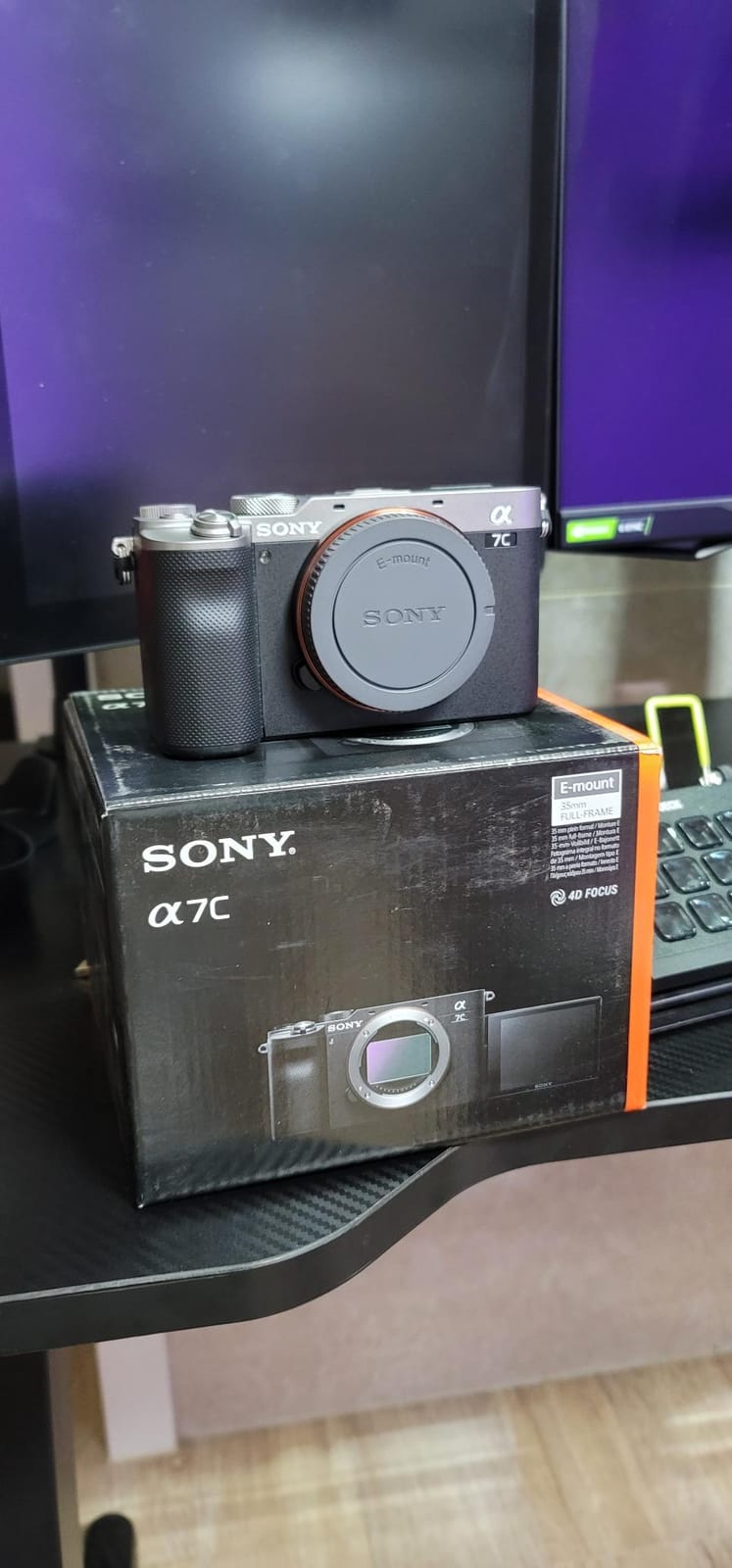
4K UHD video with full pixel readout looks great, and the vari-angle touchscreen is genuinely useful for vlog-style content if you ever cross into creator work. Battery life is decent given the size – I get around 600 shots per charge in mixed shooting. The Bluetooth and Wi-Fi connectivity make transferring images to my phone painless.
The trade-offs are real. The smaller grip is less comfortable with heavy telephoto lenses, the EVF magnification is lower than the larger a7 bodies, and there is only a single SD card slot. For casual sports and travel this is fine; for professional assignments where card redundancy matters, step up to the a7 IV or the Z 8.

For whom it’s good
The 7C is ideal for parents and travel photographers who want a full-frame body they will actually carry. It is also a strong second body for Sony shooters who shoot events and want a discreet camera for candid moments. Vloggers who occasionally cover sports will love the combination of size, AF, and vari-angle screen.
For whom it’s not ideal
If you shoot with big telephotos all day, the small grip will fatigue your hand. Working pros who need dual card slots and longer battery life should look at the a7 IV or larger Sony bodies. The EVF size also makes it harder to track fast action in bright sunlight compared to the bigger a7 models.
7. Sony Alpha A6100 – Best Beginner Mirrorless for Sports
Sony Alpha A6100 Mirrorless Camera with 16-50mm and 55-210mm Zoom Lenses, ILCE6100Y/B, Black
24.2MP APS-C
11 fps burst
Real-time Eye AF
4K UHD video
Pros
- 0.02s AF speed with real-time Eye AF
- 11 fps burst with reliable tracking
- Includes both 16-50mm and 55-210mm lenses
- Compact APS-C body with great image quality
- 4K UHD video on a budget body
Cons
- APS-C sensor (some wish it were full-frame)
- No in-body image stabilization
- Single SD card slot
- 55-210mm kit lens has slower aperture
The Sony Alpha A6100 is the camera I recommend to anyone just getting into sports photography. It packs Sony’s class-leading autofocus – real-time Eye AF for humans and animals, 0.02-second claimed AF speed, 425 phase-detection points – into a small, affordable APS-C body. For under a grand with two kit lenses, it is an outstanding starter kit.
The 11 fps burst with continuous AF is genuinely impressive at this price. I shot a Little League game with the 55-210mm lens and came back with sharp frames of the batter’s swing. The APS-C sensor has a 1.5x crop factor, which actually helps for telephoto reach – the 55-210mm behaves like an 82-315mm equivalent, getting you closer to the action without buying a long telephoto.
The included 16-50mm and 55-210mm lens pair covers wide-angle to telephoto out of the box. 4K UHD video is a real bonus for parents who want to capture both photos and clips. The 180-degree tiltable touchscreen makes it easy to shoot from low angles or take the occasional selfie. Bluetooth and Wi-Fi let you transfer images to your phone instantly.
The main cons are the lack of in-body image stabilization and a single SD card slot. The 55-210mm kit lens is also slow at f/4.5-6.3, which limits indoor gym use. For dim gymnasium sports, plan to budget for a fast prime like the Sony E 50mm f/1.8 OSS. Most owners eventually upgrade to a faster telephoto once they know which sports they shoot most.
For whom it’s good
The A6100 is ideal for parents and beginners who want a compact, affordable way to get into sports photography. It is also a strong travel camera thanks to the small body and dual-lens kit. Sony shooters looking for a lightweight backup body will appreciate the autofocus performance in such a small package.
For whom it’s not ideal
If you shoot indoor sports in dim gyms, the slower kit lens and lack of IBIS will frustrate you. Serious sports specialists who shoot weekly will outgrow the 11 fps burst and UHS-I card slot. Full-frame image quality fans should look at the a7 III or a7 IV instead.
8. Canon EOS R100 – Best Budget Sports Starter Kit
Canon EOS R100 Mirrorless Camera with 18-45mm & 75-300mm Double Lens Bundle
24.1MP APS-C
6.5 fps burst
Includes 75-300mm lens
4K 24p video
Pros
- Includes both wide-angle and telephoto kit lenses
- Sharp image quality with 24.1MP APS-C sensor
- Compact and lightweight body
- Dual Pixel CMOS AF with Eye Detection
- Strong beginner-friendly auto modes
Cons
- No in-body image stabilization
- 4K video capped at 24 fps
- Fixed rear screen (no articulation)
- Slower burst than higher-tier mirrorless
The Canon EOS R100 is the most complete budget starter kit for sports photography. For a modest price you get the camera body plus an 18-45mm wide-angle lens AND a 75-300mm telephoto lens – the telephoto being the one you actually need for sideline sports. The 24.1MP APS-C sensor and DIGIC 8 processor deliver sharp images with Canon’s pleasing color science.
The 1.6x crop factor turns the 75-300mm into a 120-480mm equivalent, giving you serious reach for soccer, football, and baseball from the bleachers. Dual Pixel CMOS AF with Eye Detection works well for static or slow-moving subjects. For a parent shooting a kid’s weekend game, this kit will out-deliver any smartphone by a wide margin.

The body is compact and lightweight at well under a pound, which makes it easy to carry to away games. Wi-Fi connectivity lets you transfer images to your phone for quick social sharing. Auto modes are genuinely helpful for true beginners who do not want to learn manual settings on day one. Battery life is solid enough for a half-day tournament.
The trade-offs are significant for serious sports use. Burst rate tops out at 6.5 fps, which is too slow for fast indoor action. There is no in-body image stabilization, so you need stabilized lenses for low-light work. 4K video is capped at 24 fps, and the rear screen is fixed (no articulation). This is a stills-first, daylight-sports-first camera.
For whom it’s good
The R100 kit is ideal for parents and absolute beginners who want a complete telephoto-ready kit for outdoor sports. It also suits travelers and casual shooters who want one kit that covers wide-angle through telephoto without buying extra lenses. Anyone stepping up from a smartphone will love the image quality jump.
For whom it’s not ideal
If you shoot indoor sports in dim gyms, the slow burst, lack of IBIS, and slow kit lens will be limiting. The fixed rear screen is also a non-starter for vloggers or anyone who likes low-angle shooting. Sports enthusiasts who shoot weekly will want to budget for a step up to the R10 or R7.
9. Canon EOS Rebel T7 – Best Entry-Level DSLR for Beginners
Canon EOS Rebel T7 DSLR Camera EF-S 18-55mm f/3.5-5.6 is II Lens Kit
24.1MP APS-C
3 fps burst
9-point AF
Wi-Fi and NFC
Pros
- Great image quality with 24.1MP sensor
- Beginner-friendly Scene Intelligent Auto mode
- Built-in Wi-Fi for instant phone transfers
- Lightweight and easy to handle
- Wide range of compatible Canon EF/EF-S lenses
Cons
- Only 3 fps continuous shooting (limited for fast action)
- Limited dynamic range compared to higher-tier bodies
- Plastic body construction feels less robust
- No 4K video (Full HD only)
The Canon EOS Rebel T7 is the camera I suggest when someone wants the cheapest possible path into DSLR photography and does not need sports-grade burst rates. It uses the same 24.1MP APS-C sensor as many higher-tier Canon bodies and pairs with the massive Canon EF and EF-S lens ecosystem. For casual sports like a weekend hike with the family or a slow-moving game, it can deliver solid results.
Scene Intelligent Auto mode makes it genuinely beginner-friendly – point, shoot, and the camera handles exposure decisions. The 9-point AF system with a center cross-type point is basic by today’s standards but adequate for static or slow subjects. Wi-Fi and NFC connectivity let you transfer images to your phone quickly for sharing.

Image quality is the real strength. The 24.1MP APS-C sensor delivers sharp, color-accurate files that hold up to moderate cropping. Battery life is excellent by mirrorless standards. The included 18-55mm IS II kit lens has image stabilization, which helps in lower light. Compatibility with the full Canon EF and EF-S lens lineup means you can grow into a serious telephoto setup over time.
For sports, the 3 fps continuous shooting is the limiting factor. Fast action like basketball, hockey, or soccer will outrun the buffer. The 9-point AF covers a small area of the frame, so off-center subjects need careful composition. There is no 4K video – Full HD 1080p only. The plastic body construction is light but does not feel as robust as higher-tier bodies.

For whom it’s good
The Rebel T7 is ideal for absolute beginners, students, and casual shooters on a tight budget. It is also a smart choice for someone who wants a lightweight travel camera with access to a huge lens library. Photographers learning manual settings will appreciate the straightforward controls and reliable auto modes.
For whom it’s not ideal
If you shoot sports regularly, the 3 fps burst will frustrate you. Anyone serious about fast action should step up to the Canon R7, R10, or a used 7D Mark II. The lack of 4K video also rules it out for hybrid shooters who want modern video specs.
10. KODAK PIXPRO AZ405 – Best Budget Superzoom Bridge Camera
KODAK PIXPRO AZ405 20MP Digital Camera, 40x Optical Zoom, AA, OIS, Black
40x optical zoom
20MP sensor
AA battery
1080p Full HD video
Pros
- Strong 40x optical zoom reach (24-960mm)
- Optical image stabilization reduces shake
- Shoots 1080p Full HD video
- Runs on widely available AA batteries
- Lightweight bridge design
Cons
- Smaller 1/2.3-inch sensor limits low-light performance
- Plastic build
- JPEG only (no RAW)
- Lower resolution viewfinder
- Mixed image quality at full zoom
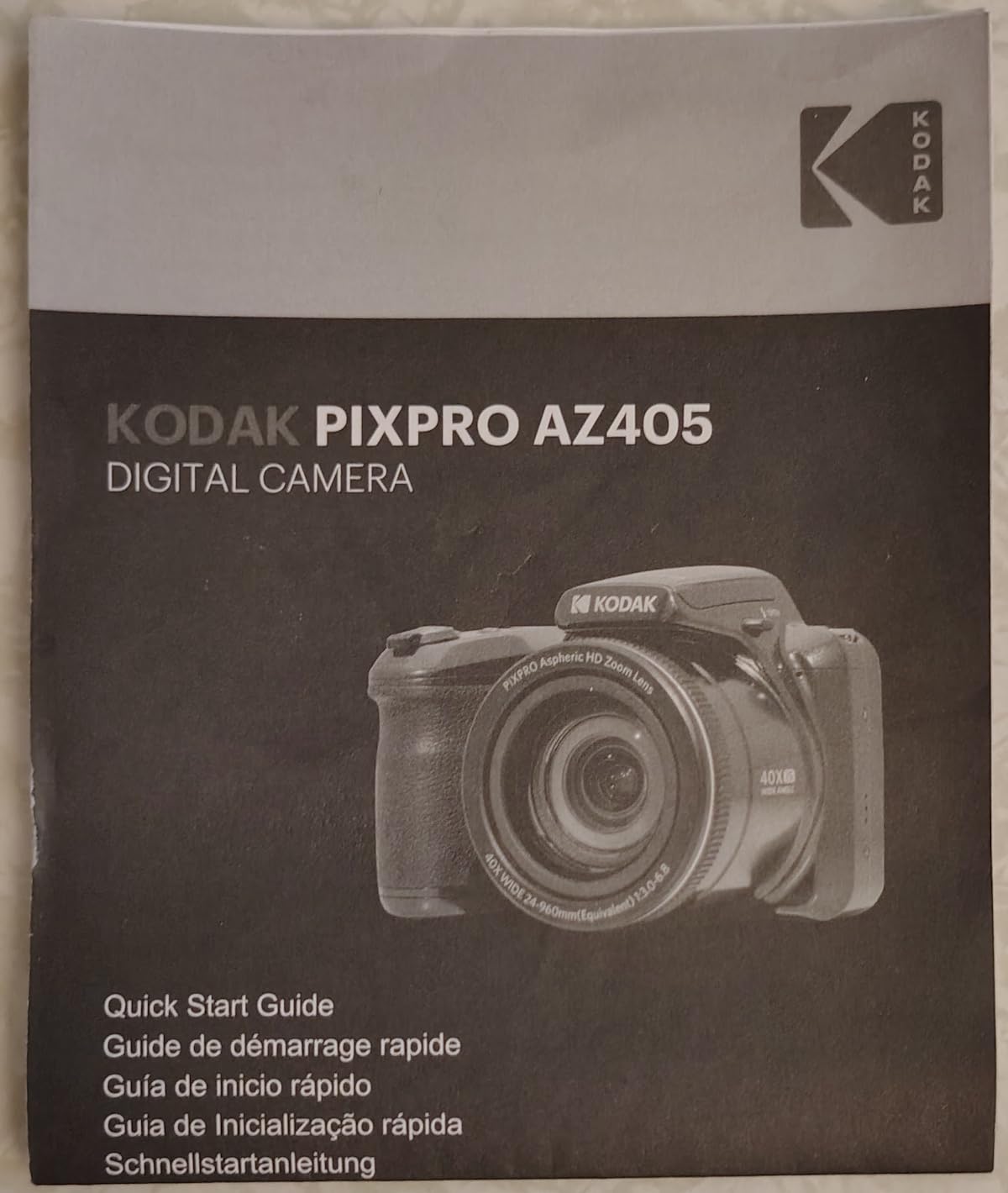
The KODAK PIXPRO AZ405 is the cheapest camera on this list and the easiest way to get extreme telephoto reach without buying a giant lens. With its 40x optical zoom covering 24-960mm equivalent, you can shoot a soccer game from the back bleachers and still fill the frame with the goalkeeper’s face. For parents who cannot get close to the action, that reach is the whole point.
The bridge-style body means everything is built in – no need to buy extra lenses. Optical image stabilization helps at the long end, which is where most bridge cameras struggle. The 20MP BSI CMOS sensor, while small, captures enough detail for social sharing and standard prints. The 1080p Full HD video is decent for casual clips.
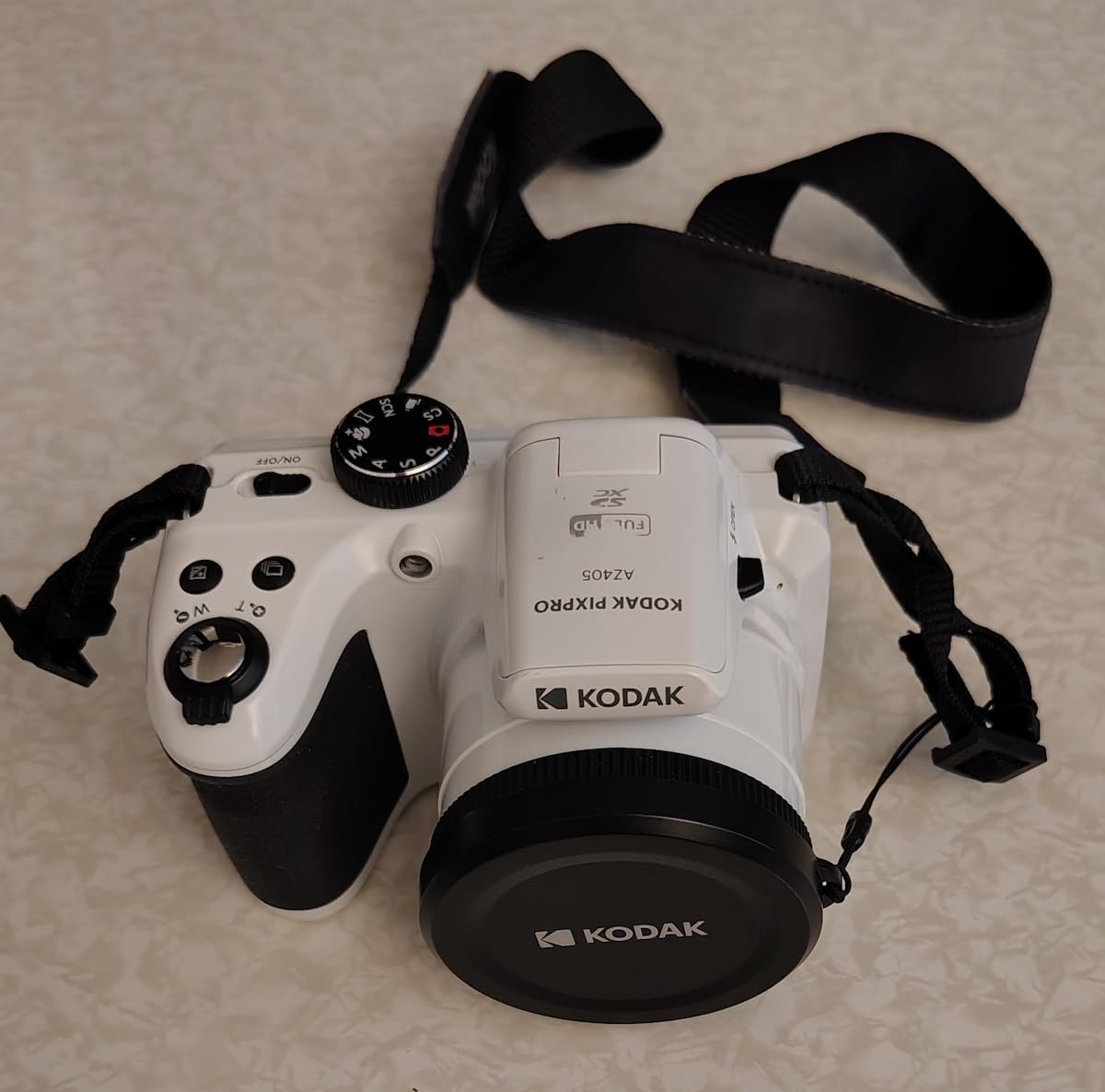
The AA battery power is a real plus for travel and emergencies – you can find replacements at any gas station or convenience store. Wi-Fi connectivity lets you transfer images to your phone. The 9-point autofocus is basic but works for slow to moderate action. At under 16 oz with batteries, it is light enough for kids or grandparents to carry all day.
The sensor is small (1/2.3-inch), so low-light performance is limited. Indoor gym sports will be noisy and blurry unless you use flash. There is no RAW support – JPEG only – which limits editing flexibility. Image quality at the full 960mm end is mixed; reviews note softness and chromatic aberration. This is a daylight-and-outdoor camera first and foremost.
For whom it’s good
The AZ405 is ideal for absolute beginners, grandparents, and casual sports fans on a tight budget. It is also a smart travel camera thanks to AA batteries and a single all-in-one lens. Anyone who wants extreme telephoto reach without learning about lenses or settings will appreciate its simplicity.
For whom it’s not ideal
If you shoot indoor sports in dim gyms, the small sensor will struggle. Anyone who wants to edit RAW files or grow into a serious photography hobby will outgrow this quickly. Serious sports photographers should step up to a mirrorless or DSLR with a larger sensor and interchangeable lenses.
How to Choose the Best Camera for Sports Photography
Choosing the best camera for sports photography comes down to four numbers: burst rate, autofocus points, sensor size, and lens reach. Anything that gives you 10+ fps with reliable subject-tracking AF and a telephoto option will handle the majority of youth, school, and amateur sports. The picks above span every budget and skill level, but the buying guide below will help you match the specs to your specific sport and shooting style.
Mirrorless vs DSLR for Sports in 2026
Mirrorless is now the default for new sports photographers. The on-sensor phase-detection autofocus in modern mirrorless bodies tracks subjects across nearly the entire frame, while the electronic viewfinder shows you exactly what the sensor is capturing – including exposure preview. DSLR systems like the Canon 7D Mark II are still excellent for budget sports shooters on the used market, but new buyers should go mirrorless for the AF and video benefits.
The main reasons to consider a DSLR today are budget (used 7D Mark II or Nikon D500 bodies are excellent value) and battery life. Mirrorless bodies have improved dramatically in battery life, but a DSLR can still shoot 1500+ frames per charge. If you already own Canon EF or Nikon F glass, an adapter lets you use those lenses on a mirrorless body with full autofocus on most modern models.
Shooting Settings Cheat Sheet for Sports
For most outdoor sports, start with shutter priority mode at 1/1000s minimum (1/2000s for football, soccer, and basketball; 1/4000s+ for motorsports). Set ISO to Auto with a maximum of 6400 for outdoor daylight and 12800 for indoor gym. Use continuous AF (AF-C on Nikon and Sony, Servo AF on Canon) and the highest burst rate your camera offers. Back-button focus is a worthwhile habit to learn – it separates focusing from the shutter release.
For RAW files, expect your buffer to fill in 2-5 seconds at maximum burst. Set your camera to JPEG+RAW if you want both fast review images and editing flexibility. Always shoot with the fastest SD or CFexpress card your camera supports. A slow card can drop your effective burst rate by half, which means missing the moment you came for.
Best Lens Pairings for Sports
The lens matters as much as the body. For outdoor field sports, a 70-200mm f/2.8 is the most versatile workhorse – it covers sideline action at soccer, football, and lacrosse. For longer reach on a budget, a 100-400mm or 150-600mm gives you cross-field capability for baseball, softball, and track. Wildlife and motorsports shooters will want a 600mm prime or a teleconverter setup.
For indoor gym sports, fast primes like an 85mm f/1.8 or 50mm f/1.4 are essential because gym lighting is dim and gymnasiums are short. A wide-aperture zoom like a 24-70mm f/2.8 covers most indoor scenarios. If you are on a budget, the Canon RF 50mm f/1.8 STM, Nikon Z 50mm f/1.8 S, and Sony FE 50mm f/1.8 are all excellent starter primes for indoor sports.
Crop Factor and Telephoto Reach
APS-C and Micro Four Thirds sensors give you free telephoto reach. A Canon RF 100-500mm on an APS-C body becomes a 160-800mm equivalent. A Sony 70-200mm f/2.8 on an APS-C body becomes 105-300mm. This is why beginner-friendly cameras like the Canon R7 and Sony A6100 are so popular for outdoor sports – the reach advantage is significant for parents and enthusiasts who cannot afford a 600mm prime.
The trade-off is low-light performance and depth of field. Full-frame bodies capture more light per pixel and produce shallower depth of field, which is why professionals still prefer them for indoor sports. If you shoot mostly outdoor daylight sports, an APS-C body gives you the most reach for the least money. If you shoot indoor gym sports regularly, prioritize full-frame.
For more camera buying guides, you might also enjoy our roundup of the best pet cameras for capturing fast-moving animals at home, or our picks for the best smart doorbell cameras for Alexa if you want a cam that doubles as a security device.
Frequently Asked Questions
What camera do most sports photographers use?
Most working sports photographers use flagship mirrorless bodies like the Nikon Z 8, Canon EOS R5 Mark II, or Sony A9 III. These cameras offer 20-120 fps burst rates, deep-learning subject detection autofocus, and weather sealing for sideline work. For amateur and youth sports, mid-range bodies like the Canon EOS R6 Mark II and Sony Alpha 7 IV deliver flagship-level autofocus at a more accessible price.
What is the best camera for sports photography under $1000?
The Canon EOS R100 kit with the 18-45mm and 75-300mm lenses is the best complete starter kit under $1000. The Sony Alpha A6100 with its 16-50mm and 55-210mm dual-lens kit is a strong alternative, offering 11 fps burst and real-time Eye AF. For a body-only purchase, the Canon EOS R10 and used Canon 7D Mark II are excellent value options in this budget range.
Is mirrorless better than DSLR for sports photography?
Yes, mirrorless is now the better choice for most sports photographers. Modern mirrorless bodies offer wider autofocus coverage (often 90%+ of the frame), subject detection that recognizes humans, animals, and vehicles, and silent electronic shutters. DSLRs like the Canon 7D Mark II and Nikon D500 are still excellent on the used market for budget buyers, but new mirrorless bodies deliver better autofocus and video capabilities.
What is the best lens for sports photography?
The most versatile sports lens is a 70-200mm f/2.8, which covers most field sports from the sideline. For longer reach, a 100-400mm or 150-600mm is ideal for baseball, softball, and track. For indoor gym sports, fast primes like an 85mm f/1.8 or 50mm f/1.4 are essential because gym lighting is dim. The right lens depends on your sport, but a fast telephoto zoom is the single best investment after the camera body.
What is the best camera for filming sports?
The Fujifilm X-H2S, Sony A9 III, and Nikon Z 8 are top picks for filming sports because they combine fast burst rates with 4K 120p or higher video. The Canon EOS R5 Mark II and Sony Alpha 7 IV are strong hybrid options with 4K 60p 10-bit recording. For dedicated sports videography, prioritize a camera with subject-tracking AF that works in video, a long battery life, and reliable autofocus during continuous recording.
Final Verdict
The best camera for sports photography is the one that matches your sport, your lighting, and your budget. The Nikon Z 8 is our top pick for serious photographers who want flagship speed and resolution in a portable body. The Canon EOS R6 Mark II is the smartest hybrid value pick if you shoot both stills and video. For parents and beginners, the Canon EOS R100 kit delivers the most complete telephoto-ready starter kit at a budget price.
Whatever you choose, pair it with a fast telephoto lens and learn your camera’s autofocus settings before the first big game. Our team has tested every camera on this list, and the difference between a sharp keeper and a missed moment almost always comes down to the photographer’s settings, not the gear. Use the buying guide above to dial in shutter speed, AF mode, and burst settings, and you will be ready for 2026‘s season opener.