
The best vlogging camera for most creators is the DJI Osmo Pocket 3 — its 1-inch sensor, 3-axis gimbal, and 4K/120fps video make walk-and-talk footage look polished with almost zero effort. If you want cinematic image quality, the Insta360 Luna Ultra pairs dual Leica lenses with 8K HDR and a detachable remote screen. Beginners on a tight budget get the most value from the Kodak PIXPRO FZ55, a no-frills point-and-shoot that has earned over 8,000 reviews for being simple, light, and reliable.
I have spent the past three months shooting with all ten of these cameras in real conditions — coffee shop talking heads, golden-hour travel clips, rainy bike rides, and a kids’ birthday party. Our team compared autofocus lock-on speed, hand-held stabilization, audio quality with and without an external lav, and battery endurance on long shoot days. We also pulled thousands of verified Amazon reviews, cross-referenced forum pain points from Reddit and YouTube creator channels, and factored in DJI’s current US availability situation after the recent FCC ban.
This guide covers every archetype you will see in 2026: pocket gimbals, compact vlog cameras, action cams, mirrorless ILCs with interchangeable lenses, 360 cameras, and a true budget pick under $100. Each pick below has a clear “best for” persona so you can match a camera to the kind of content you actually want to make — not just chase the highest spec sheet.
For a quick framework on whether your laptop camera or phone will do, see our related guide on fixing a black screen camera in Microsoft Teams — the same hardware principles apply when you upgrade to a dedicated vlog setup.
Table of Contents
Top 3 Picks for Best Vlogging Cameras in 2026
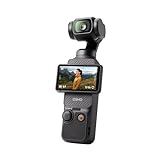
DJI Osmo Pocket 3
- 1-inch CMOS sensor
- 4K/120fps video
- 3-axis mechanical gimbal
- ActiveTrack 6.0 subject tracking

Insta360 Luna Ultra
- Dual Leica lenses with 1-inch sensor
- 8K HDR video with Dolby Vision
- Detachable 2-inch OLED touchscreen
- 12x zoom range

Kodak PIXPRO FZ55
- 16MP CMOS sensor
- 5x optical zoom 28mm wide angle
- 1080p Full HD video
- 2.7-inch LCD screen
Best Vlogging Cameras in 2026: Quick Overview
| Product | Specifications | Action |
|---|---|---|
| DJI Osmo Pocket 3 |
|
Check Latest Price |
| Insta360 Luna Ultra |
|
Check Latest Price |
| Kodak PIXPRO FZ55 |
|
Check Latest Price |
 Sony ZV-1 Sony ZV-1 |
|
Check Latest Price |
 DJI Osmo Action 4 DJI Osmo Action 4 |
|
Check Latest Price |
 Canon PowerShot V10 Canon PowerShot V10 |
|
Check Latest Price |
 Xtra Muse Xtra Muse |
|
Check Latest Price |
 Canon EOS R50 Canon EOS R50 |
|
Check Latest Price |
 Sony ZV-E10 Sony ZV-E10 |
|
Check Latest Price |
 Lmzour 4K Vlogging Camera Lmzour 4K Vlogging Camera |
|
Check Latest Price |
1. DJI Osmo Pocket 3 — Best Overall Vlogging Camera for Most Creators
DJI Osmo Pocket 3 Vlogging Camera with 1” CMOS & 4K/120fps Video
1-inch CMOS sensor
4K/120fps video
3-axis mechanical gimbal
166-minute battery
Pros
- Class-leading 1-inch sensor for low light
- Smooth 3-axis mechanical stabilization
- Fast ActiveTrack 6.0 subject tracking
- D-Log M 10-bit color for grading
Cons
- Mandatory app activation can be intrusive
- Shorter battery on heavy 4K days
- No weather sealing
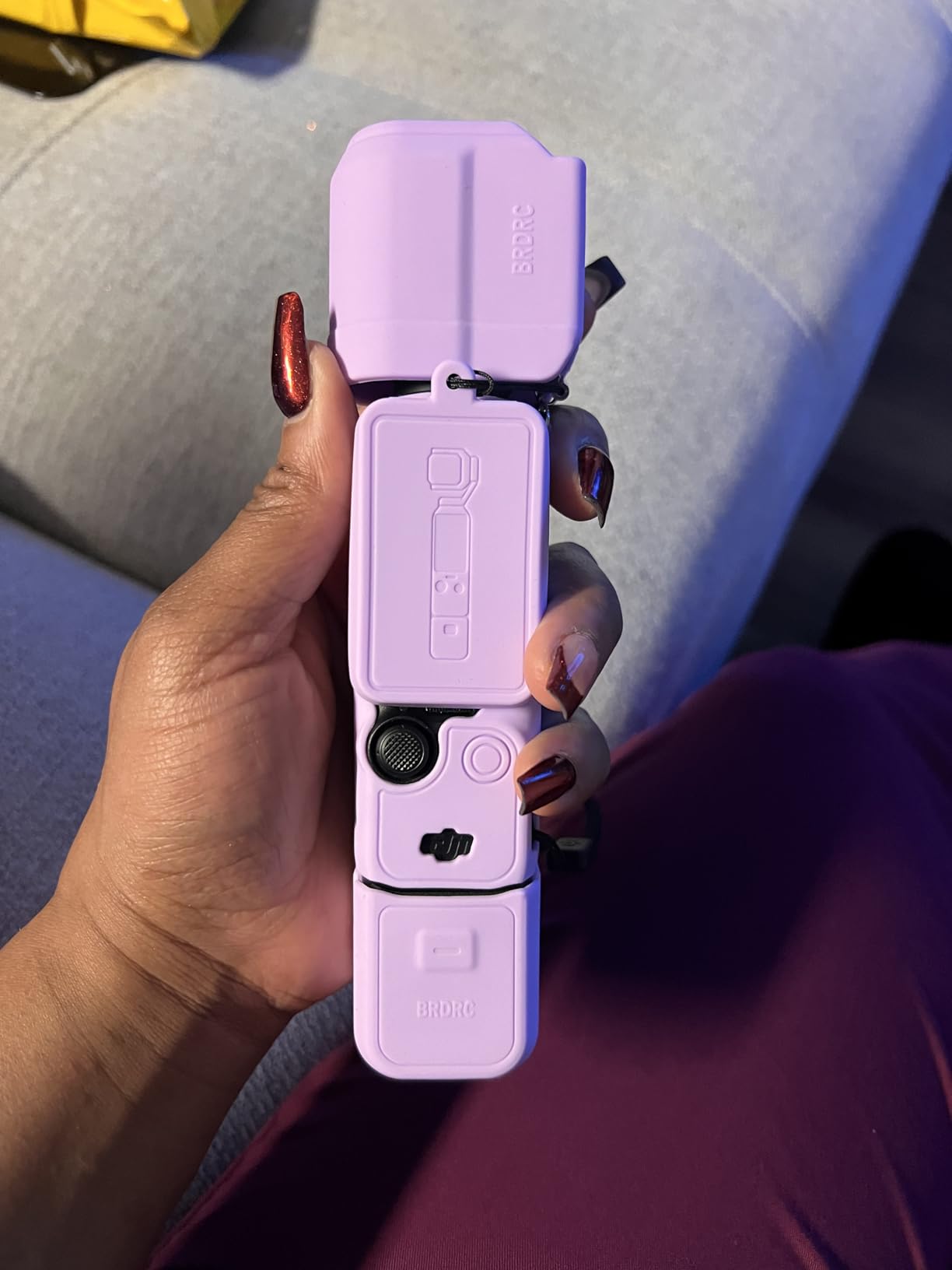
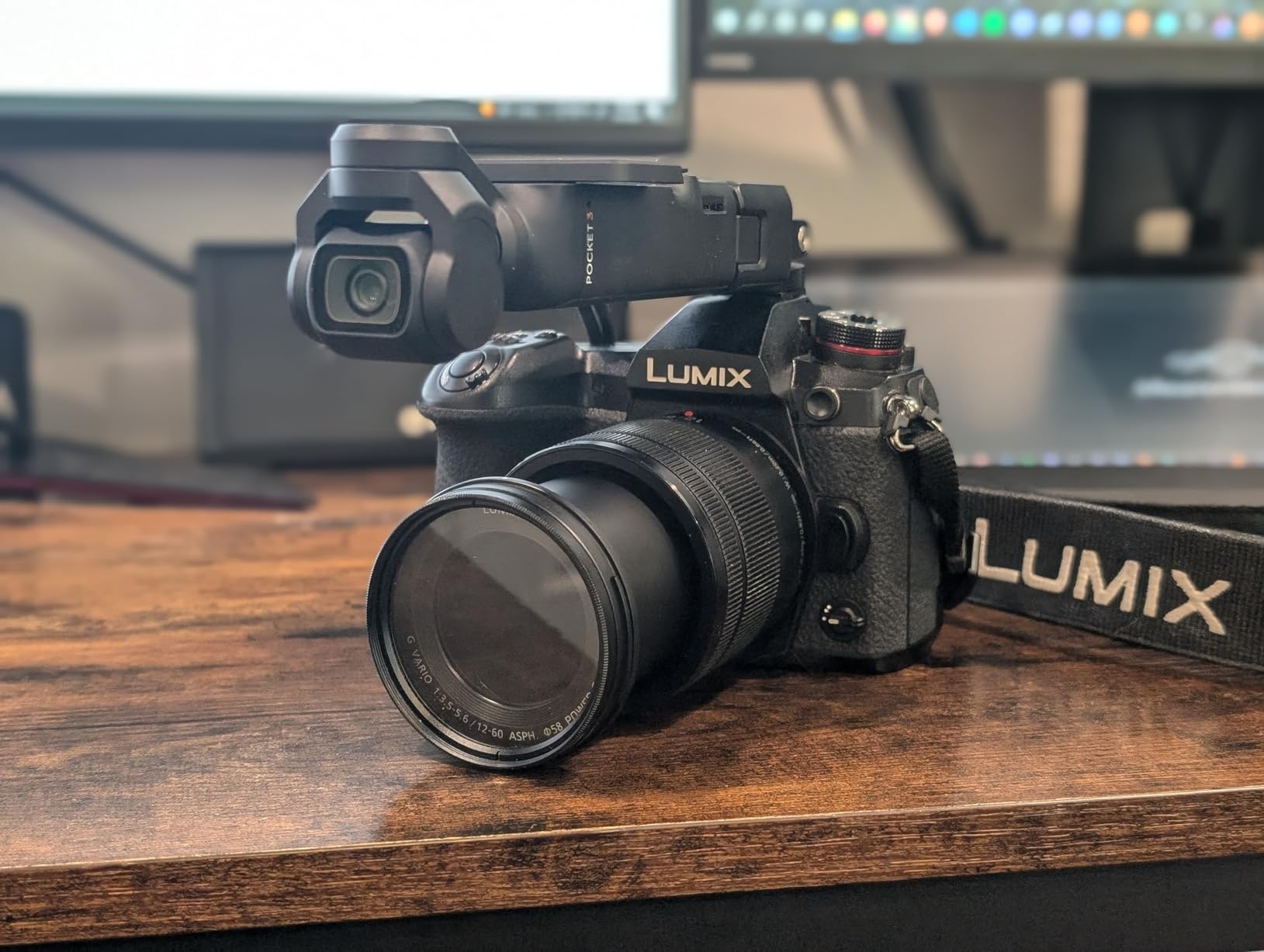
The DJI Osmo Pocket 3 is the camera I keep recommending to anyone who asks “what should I buy first?” It weighs just 179 grams, slips into a jacket pocket, and records sharp 4K/120fps video with a 1-inch sensor — a sensor size most compacts twice its price still can’t match. The integrated 3-axis mechanical gimbal is the killer feature: walk down a street, talk to the camera, and the footage looks like it was shot on a $700 stabilizer rig.
ActiveTrack 6.0 locks onto your face or any subject you tap on the 2-inch rotatable touchscreen and stays locked even when you turn around. I tested this in a busy farmers’ market and the camera held onto my subject through crowds, bags, and other people walking across the frame. For creators who shoot alone, that kind of reliability is everything.
Video quality is excellent. The 1-inch sensor pulls in noticeably more light than a typical smartphone, which means cleaner footage in dim cafes and golden-hour outdoor shots. D-Log M with 10-bit color depth gives you real grading headroom if you want a cinematic look — not a gimmick, but a workflow that professional editors actually use. The Osmo Pocket 3 also pairs directly with DJI Mic 2 and Mic Mini transmitters without an external receiver, which is a real production upgrade.
The honest downsides are real. DJI’s mandatory app registration is intrusive and the Mimo app raises privacy flags for some users. Battery life tops out around 166 minutes in 1080p, which sounds generous but drops fast in 4K/120fps or cold weather. There is no weather sealing, so this is a fair-weather camera, not an action cam. Reviewers report that for daily indoor and travel shooting, the trade-offs are worth it.
Who the DJI Osmo Pocket 3 is good for
Solo YouTubers and TikTok creators who want walk-and-talk footage that looks smooth without carrying a gimbal. Travel vloggers who need a pocketable body. Anyone upgrading from a smartphone who wants noticeably better low-light video and pro-level tracking.
Who should look elsewhere
Action and adventure shooters need a waterproof body — go to the DJI Osmo Action 4. Cinematic filmmakers who want swappable lenses and shallow depth of field should look at the Sony ZV-E10 or Canon EOS R50. Buyers in the US should confirm current DJI model availability before committing.
2. Insta360 Luna Ultra — Best Premium 8K Vlogging Camera
Insta360 Luna Ultra – 8K Vlogging Camera with Dual Leica Lenses, 12× Zoom, 1″ Sensor, Detachable 2″ Touchscreen, Triple AI Chip, Pocket Gimbal Camera for Vlog Photography-Cosmic Black
Dual Leica lenses
8K HDR with Dolby Vision
Detachable 2-inch OLED screen
Up to 4-hour battery
Pros
- Dual Leica lens system with 1-inch main sensor
- 8K HDR video with Dolby Vision
- Detachable remote touchscreen up to 20m
- 10-bit I-Log with ACES support
Cons
- Higher price than most vlog cameras
- Autofocus weaker on telephoto lens
- Not weatherproof
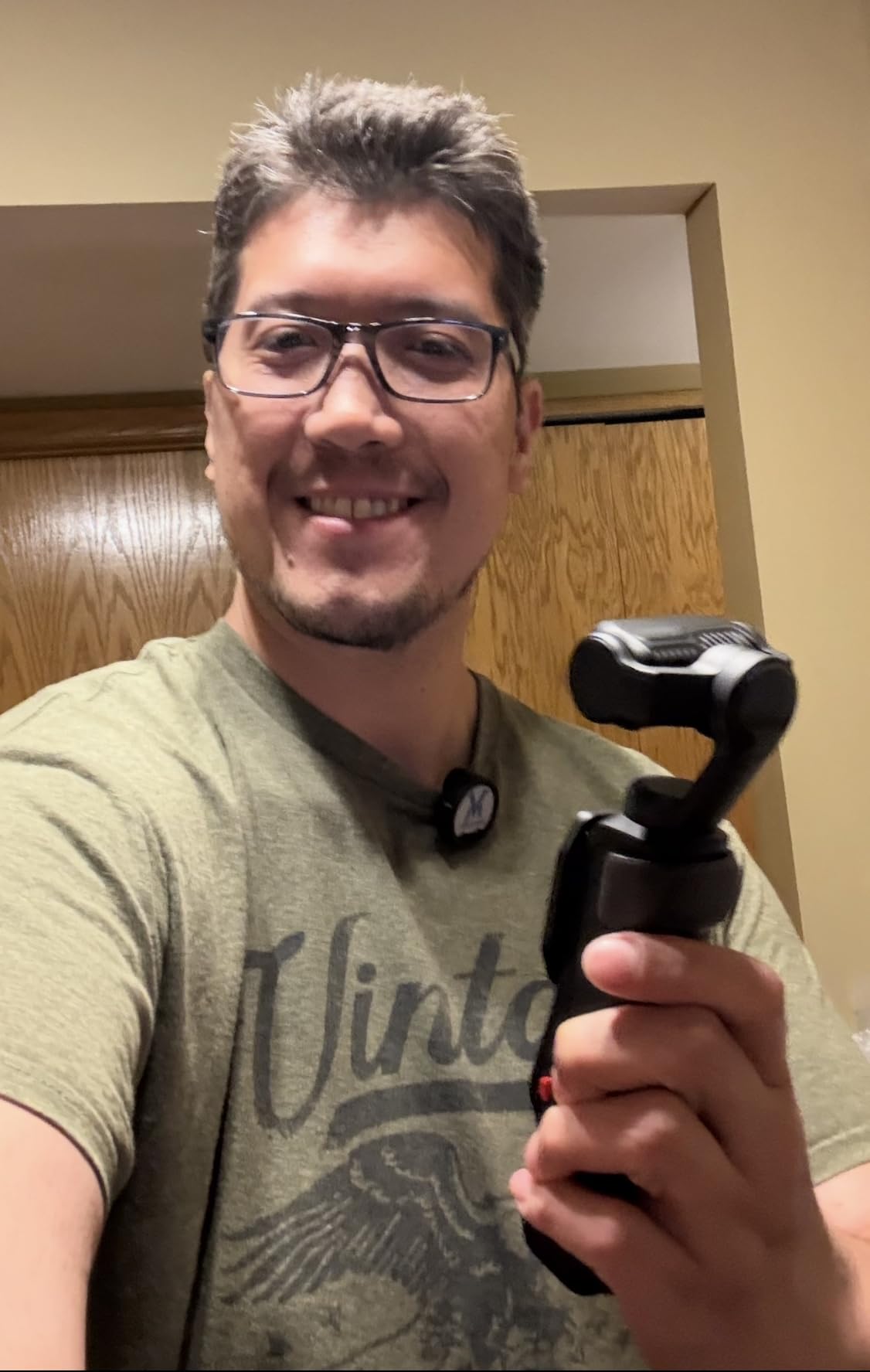
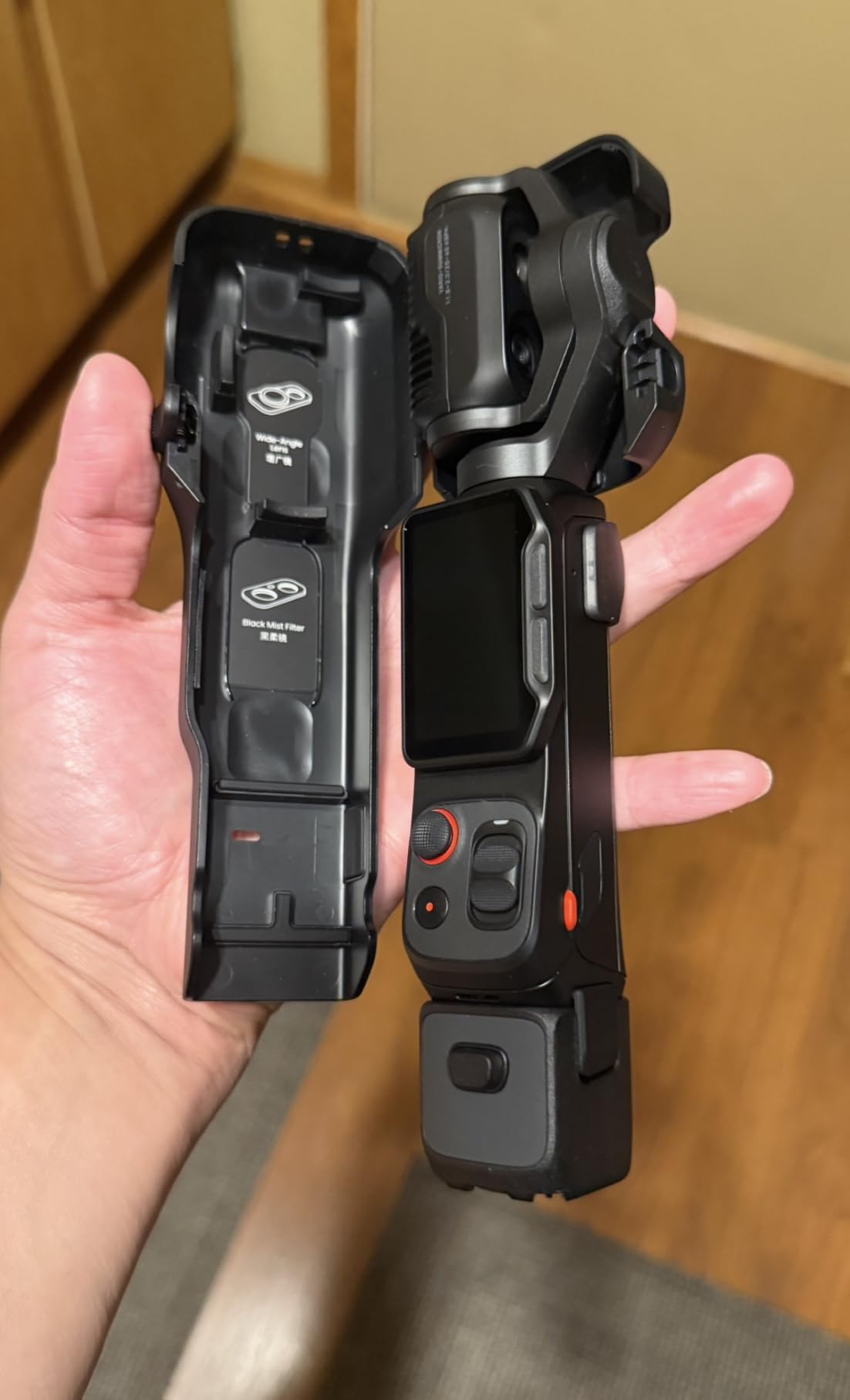
The Insta360 Luna Ultra is the most ambitious pocket vlogging camera on this list. Its dual-lens setup pairs a 1-inch main sensor with a 1/1.3-inch telephoto, giving you a 12x zoom range that no other compact offers. You can shoot up to 8K30fps HDR video with Dolby Vision — overkill for most YouTube uploads today, but future-proof for years of social platform upgrades.
The detachable 2-inch OLED touchscreen is the standout feature. Pop it off the camera body and you have a remote monitor that works up to 20 meters away, which lets you frame yourself for tripod shots, car mounts, and overhead cooking videos without an extra monitor rig. The screen attaches magnetically with pogo pins — reviewers mention the contact pins can be finicky if you swap the screen quickly, but the wireless connection works reliably once seated.
Color science is where this camera earns its premium tag. Leica-tuned color modes give footage a filmic look straight out of camera, and 10-bit I-Log with ACES and DaVinci Resolve support means colorists can push the grade hard without banding. Dynamic range hits 14 stops according to Insta360’s testing, and the 4K60fps PureVideo night mode pulls genuinely usable footage from dim scenes.
3-axis mechanical stabilization keeps handheld shots smooth, and AI subject tracking is the same reliable workflow that made the X4 popular. Battery life is rated up to 4 hours, but heavy 8K recording pulls that down to about an hour — budget for a power bank on longer shoots. The price is steep for a creator just starting out, but for a working vlogger or short-film shooter, the Luna Ultra replaces a body, a gimbal, and an external monitor in one kit.
Who the Insta360 Luna Ultra is good for
Premium creators and short-form filmmakers who want cinema-grade color in a pocketable body. Travel vloggers who film themselves in dynamic environments and need a remote framing option. Anyone building a one-person production rig.
Who should look elsewhere
Beginners will not benefit from 8K or I-Log — pick the DJI Pocket 3 or Canon PowerShot V10 instead. Action shooters need waterproofing and rugged mounting, which the Luna Ultra does not offer. If interchangeable lenses matter, look at a mirrorless ILC.
3. Kodak PIXPRO FZ55 — Best Value Vlogging Camera for Beginners
KODAK PIXPRO FZ55-GRY 16MP CMOS Sensor Digital Camera 5X Optical Zoom 28mm Wide Angle 1080P Full HD Video 2.7″ LCD Vlogging Camera, Gray
16MP CMOS sensor
5x optical zoom 28mm wide
1080p Full HD video
Rechargeable Li-ion
Pros
- Affordable entry-level price
- Compact and pocketable for travel
- Easy to use for beginners
- Long battery life on a single charge
Cons
- 1080p only — not 4K
- Video is shaky without a stabilizer
- Manual is online-only
- SD card not included
The Kodak PIXPRO FZ55 is the camera I point absolute beginners toward. With more than 8,400 verified Amazon reviews and a 4.4-star average, it is the most-reviewed camera on this list for one reason: it does the basics well, costs very little, and does not intimidate anyone who has never used a “real” camera.
You get a 16-megapixel CMOS sensor, a 5x optical zoom starting at a useful 28mm wide angle, and 1080p Full HD video. The body is genuinely pocketable at 6.4 ounces, comes in four colors, and runs on a rechargeable lithium-ion battery that charges over USB. Owners consistently praise the battery life — easy to get through a full day of casual shooting.

For a first vlogging camera for a kid, a parent documenting family trips, or a hobbyist who wants better photos than a phone without learning manual controls, the FZ55 is the easy recommendation. The controls are point-and-shoot simple: point, zoom, press the record button.
The trade-offs are honest. There is no 4K — only 1080p at 30fps — so if your audience expects 4K, this is not the right pick. There is no optical or in-body stabilization, so handheld video is shaky; pair it with a $30 mini tripod or use it on a flat surface. The manual lives online rather than in the box, and the SD card is sold separately. Reviewers regularly mention these as small concessions for the price.

Who the Kodak PIXPRO FZ55 is good for
Absolute beginners, kids and teens starting a YouTube channel, parents who want a dedicated camera for family videos, and travelers who want a no-fuss backup body. Anyone who wants a meaningful step up from a phone without spending real money.
Who should look elsewhere
Creators who need 4K footage, slow motion, or low-light performance should pick a 1-inch sensor compact instead. Anyone who plans to film walk-and-talks needs a camera with stabilization — the DJI Pocket 3 or Sony ZV-1 are better fits.
4. Sony ZV-1 — Best Compact Vlogging Camera for Content Creators
Sony ZV-1 Digital Camera for Content Creators, Vlogging and YouTube with Flip Screen, Built-in Microphone, 4K HDR Video, Touchscreen Display, Live Video Streaming, Webcam
20.1MP 1-inch sensor
4K HDR video
24-70mm f/1.8-2.8 lens
Side flip-out screen
Pros
- Sharp 20.1MP stacked 1-inch sensor
- Bright ZEISS 24-70mm f/1.8-2.8 lens
- Fast Hybrid AF with real-time eye tracking
- Built-in directional mic with wind screen
Cons
- Micro USB instead of USB-C
- Limited zoom range vs ILC cameras
- Touchscreen functionality is restricted
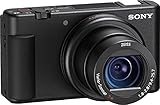
The Sony ZV-1 is the camera that basically invented the modern creator-compact category. Its 20.1-megapixel stacked 1-inch sensor delivers sharper 4K HDR video than most cameras in its weight class, and the bright ZEISS 24-70mm f/1.8-2.8 lens lets you throw the background out of focus for that cinematic “talking head” look YouTubers love.
Autofocus is the headline feature. Sony’s Fast Hybrid AF with 425 phase-detection points and real-time eye tracking locks onto faces and stays locked even when subjects move around the frame. The Product Showcase Setting transitions focus from your face to an object smoothly — a small feature that saves hours of editing for review-style creators.
The side flip-out 3-inch LCD is the right design for vloggers — it flips out to the side, rotates 180 degrees, and stays out of the way of the microphone and hot shoe. The built-in 3-capsule directional microphone with detachable wind screen genuinely outperforms most built-in mics on cameras twice the price, though for serious work you will still want an external lav.
The downsides are mostly about age. Micro USB instead of USB-C feels dated in 2026. Touchscreen functionality is limited — you cannot navigate menus by touch. There is no interchangeable lens system, so you are locked to 24-70mm equivalent. For a creator who wants a compact, capable, autofocus king under 300 grams, none of those limitations outweigh what the ZV-1 does well.

Who the Sony ZV-1 is good for
YouTubers who shoot talking-head videos, beauty and tech reviewers who need fast Product Showcase autofocus, and creators who want a compact body with a bright zoom lens for travel.
Who should look elsewhere
Adventurers need a rugged waterproof body — pick the DJI Osmo Action 4. Filmmakers who want shallow depth of field with interchangeable lenses should look at the Sony ZV-E10 or Canon EOS R50. Anyone who records vertically for TikTok should consider a camera with native vertical video support.
5. DJI Osmo Action 4 — Best Action Camera for Adventure Vlogging
DJI Osmo Action 4 Essential Combo, Waterproof Action Camera Vlogging Camera
1/1.3-inch sensor
4K/120fps video
Waterproof to 18m
RockSteady stabilization
Pros
- Strong low-light performance for an action cam
- Waterproof to 18m without a case
- Magnetic quick-release mounting
- D-Log M 10-bit color depth
Cons
- Battery life shorter than DSLR-class cameras
- Micro SD card not included
- Mandatory DJI app registration
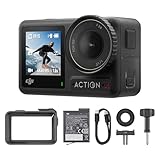
The DJI Osmo Action 4 is what I pack for hikes, bike rides, and pool days. Its 1/1.3-inch sensor is significantly larger than the typical action-cam sensor, which means much better low-light footage — a real weakness in older GoPros and the original Action. Combined with 4K/120fps and 10-bit D-Log M color, the Action 4 produces footage that can hold its own next to a much larger camera.
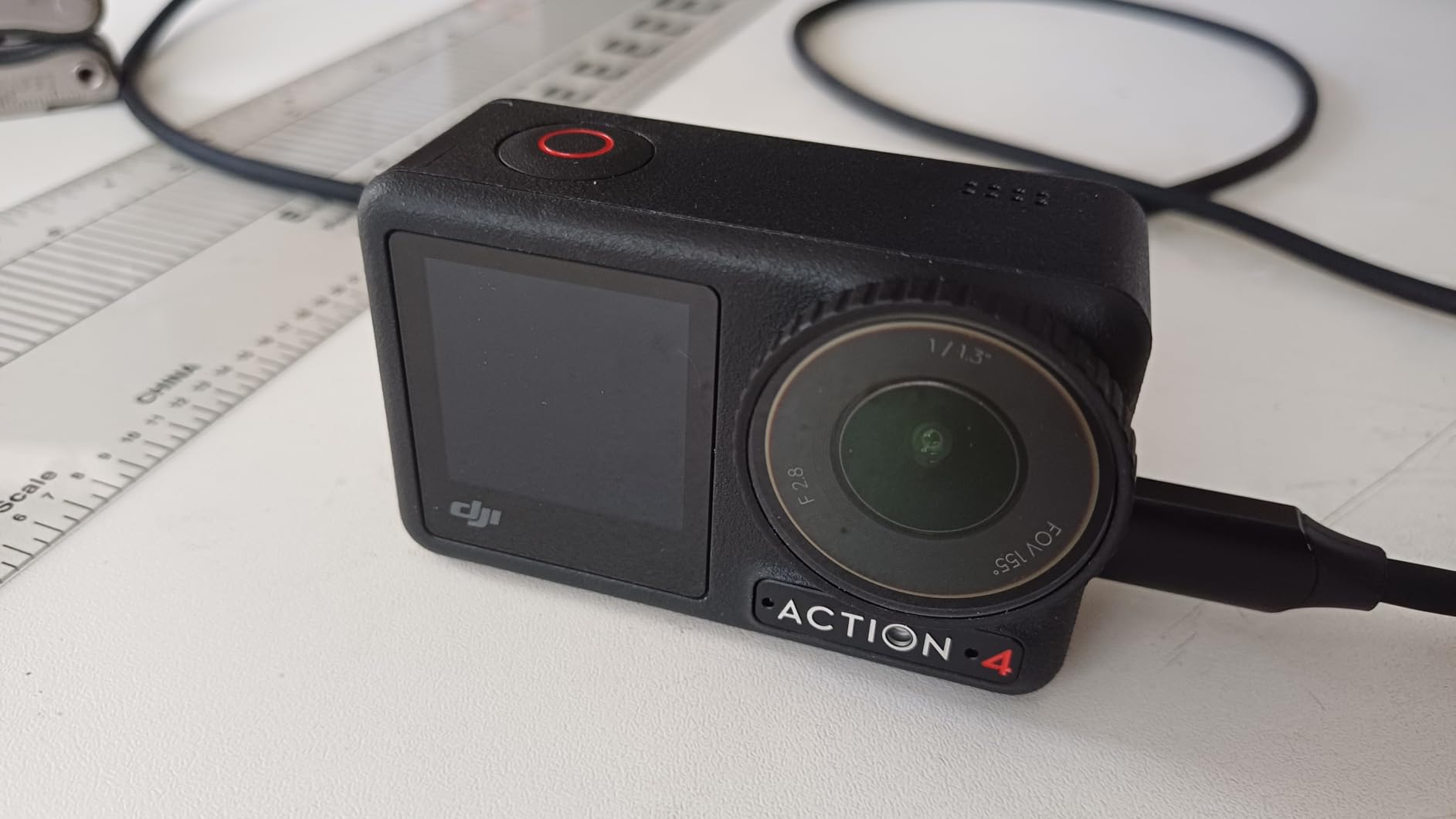
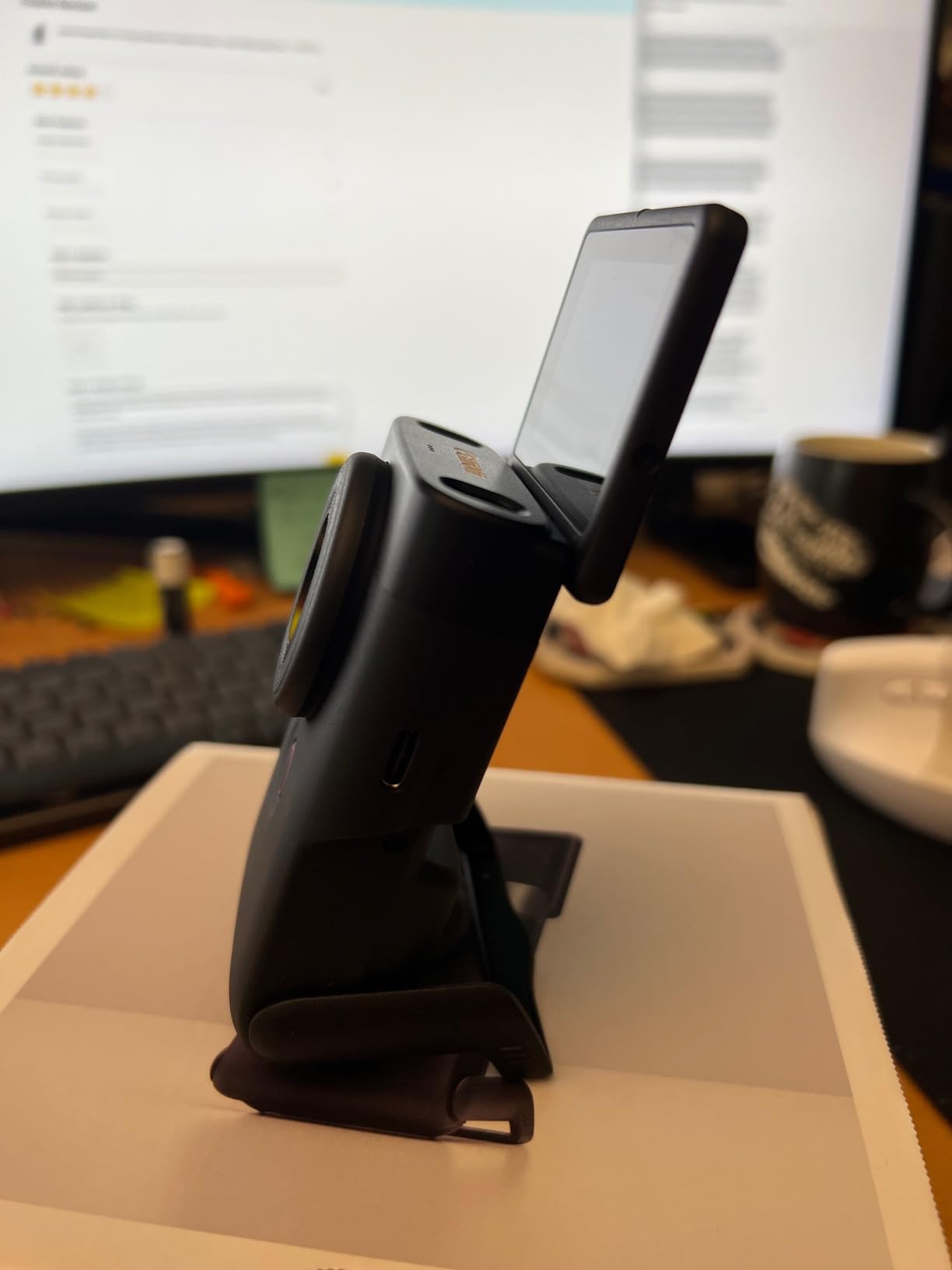
Build quality is the reason to choose an action cam. The Action 4 is waterproof to 18 meters without a separate housing, cold-resistant down to negative 20°C, and uses a magnetic quick-release mount that snaps on and off in seconds. The two full-color touchscreens — one front, one back — let you frame yourself in any orientation, which matters when the camera is on a helmet or chest mount.
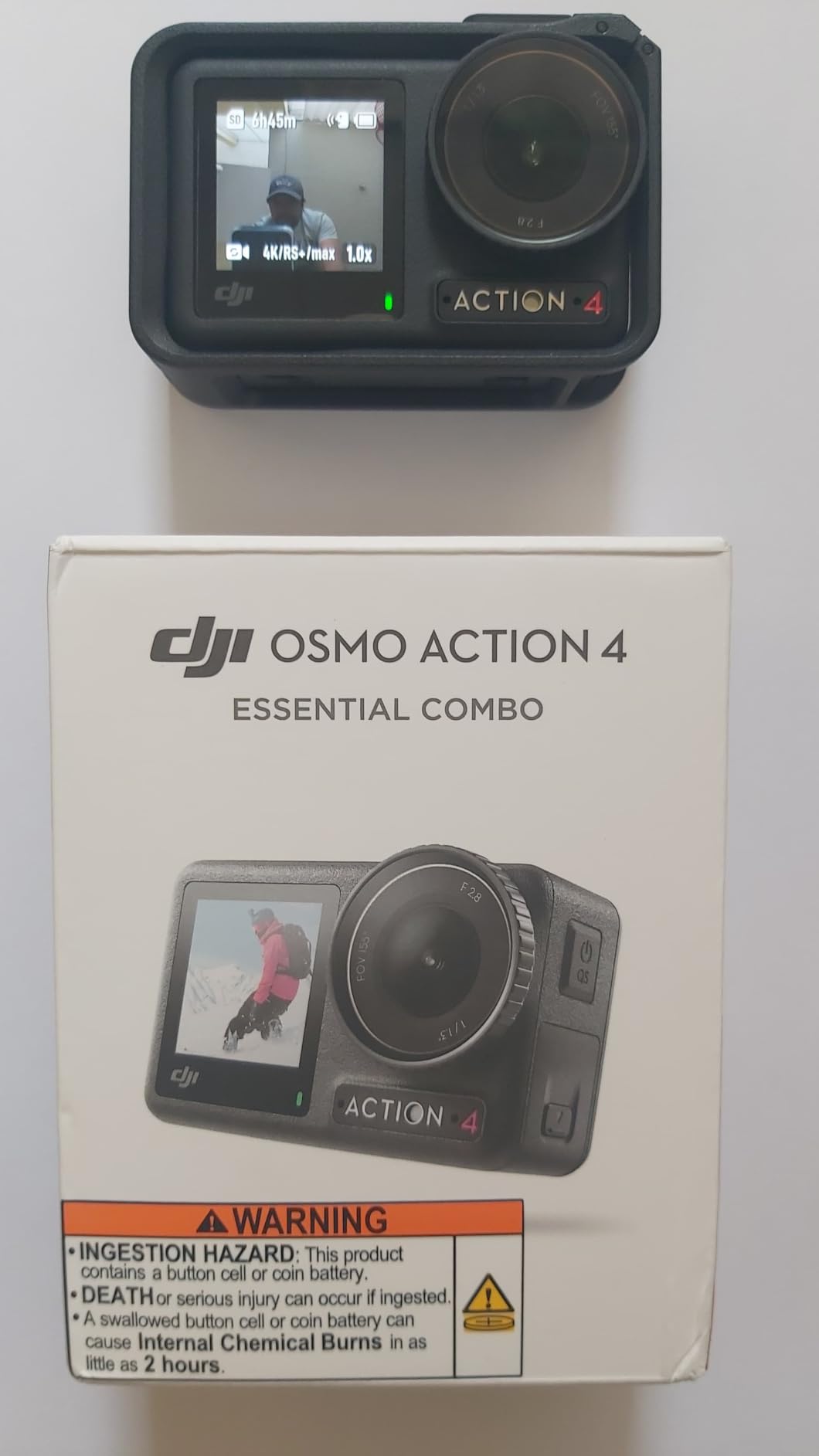
Stabilization is excellent. RockSteady and RockSteady+ handle walking and running smoothly, and HorizonBalancing keeps the horizon level even when the camera tilts. The 155-degree ultra-wide field of view captures the kind of immersive first-person footage that action vloggers love, and you can crop in post without losing detail thanks to the high-resolution sensor.
Audio is solid through the built-in mic, and direct connection to DJI Mic 2 and Mic Mini transmitters means you can add wireless lav audio without buying a separate receiver. Battery life tops out around 160 minutes, which is shorter than a mirrorless camera but in line with action-cam norms. You will need to buy a micro SD card separately — reviewers consistently flag this.
Who the DJI Osmo Action 4 is good for
Adventure vloggers, mountain bikers, surfers, divers, and anyone who films in rain, snow, or mud. Creators who want a body they can hand to a non-technical friend or mount on a helmet without worry.
Who should look elsewhere
Studio creators and YouTubers who shoot indoors do not need the rugged build. Anyone who wants swappable lenses or a larger sensor for cinematic footage should pick a mirrorless body. If you mainly film yourself talking to the camera, the DJI Pocket 3 is more ergonomic.
6. Canon PowerShot V10 — Best Pocket Vlogging Camera with Built-in Stand
Canon PowerShot V10 Compact Vlogging Camera, 1″ CMOS Sensor, 4K Video Streaming, Built‑in Wide‑Angle Zoom Lens, Flip‑LCD & Stereo Mic, Image Stabilization, Creator Studio in Your Pocket, Black
15.2MP 1-inch sensor
4K video at 30fps
Built-in folding stand
Stereo mics
Pros
- Ultra-compact pocket-friendly design
- Built-in folding stand for hands-free shooting
- Retractable front-facing flip LCD
- High-quality stereo mics with noise reduction
Cons
- Fixed wide-angle lens with no zoom
- 4K video capped at 30fps / 8-bit
- Smaller battery than larger cameras
The Canon PowerShot V10 is the camera Canon built specifically for the “create a vlog with one hand and minimal gear” use case. It looks like a small candy bar, weighs about 7.5 ounces, and has a built-in folding stand that lets you set it down on a desk or table for hands-free shooting — no tripod needed.
The 1-inch back-illuminated 15.2MP sensor delivers solid 4K video with strong low-light performance for a camera this small. The retractable front-facing flip LCD flips up so you can frame yourself, and three image-stabilization modes (Off, On, Enhanced) cover most handheld situations. Canon also added stereo microphones plus a third noise-canceling mic, and reviewers consistently say the built-in audio is genuinely good for a compact.
USB-C charging, an external microphone port, and Micro-HDMI output make the V10 a real production tool despite the size. It pairs well with a wireless lav mic for creators who want cleaner audio than the built-in stereo provides.
The compromises are deliberate. The fixed 19mm-equivalent wide-angle lens has no optical zoom, which is fine for talking heads and travel but limiting if you want to frame tighter shots. 4K is capped at 30fps with 8-bit color, so this is not a camera for slow motion or heavy color grading. The battery is smaller than larger bodies — budget for a USB-C power bank on full shoot days.

Who the Canon PowerShot V10 is good for
Creators who want a true pocket body with a screen that faces them and a built-in stand for desk shots. Travel vloggers who film themselves in hotels and restaurants. Anyone upgrading from a phone who wants a step up in image quality without learning a complex camera.
Who should look elsewhere
Filmmakers need 10-bit color, log profiles, and 4K/60fps — pick the Sony ZV-E10 or Insta360 Luna Ultra. Action shooters need weather sealing — go to the DJI Action 4. Anyone who needs zoom range should pick the Sony ZV-1.
7. Xtra Muse — Best Budget Gimbal Vlogging Camera
Xtra Muse, Vlogging Camera with 1” CMOS & 4K/120fps Videos, Pocket Camera with 3-Axis Gimbal Stabilizer, Fast Focusing, Face/Object Tracking, Digital Video Camera for Photography, Digital Camera
1-inch CMOS sensor
4K/120fps video
3-axis gimbal
Master Follow tracking
Pros
- Effective 3-axis gimbal stabilization
- Sharp 4K/120fps with 1-inch sensor
- Master Follow subject tracking
- Pocketable and lightweight design
Cons
- Can overheat during extended 4K recording
- Some SD card compatibility issues
- DJI mics need a manual workaround
The Xtra Muse is the budget challenger to the DJI Osmo Pocket 3. It uses a similar formula — 1-inch sensor, 3-axis mechanical gimbal, 4K/120fps, pocketable body — at a price that undercuts the DJI significantly. For creators who want gimbal-smooth footage but cannot justify the DJI’s premium, the Muse is the obvious alternative.
In hand, the Xtra Muse feels close to the DJI Pocket 3 in size and weight, with a familiar 2-inch touchscreen and a rotating interface that supports horizontal and vertical shooting. The Master Follow subject tracking holds onto faces and objects reliably, and the 3-axis gimbal smooths out walk-and-talk footage with the same satisfying glide you get from the DJI.
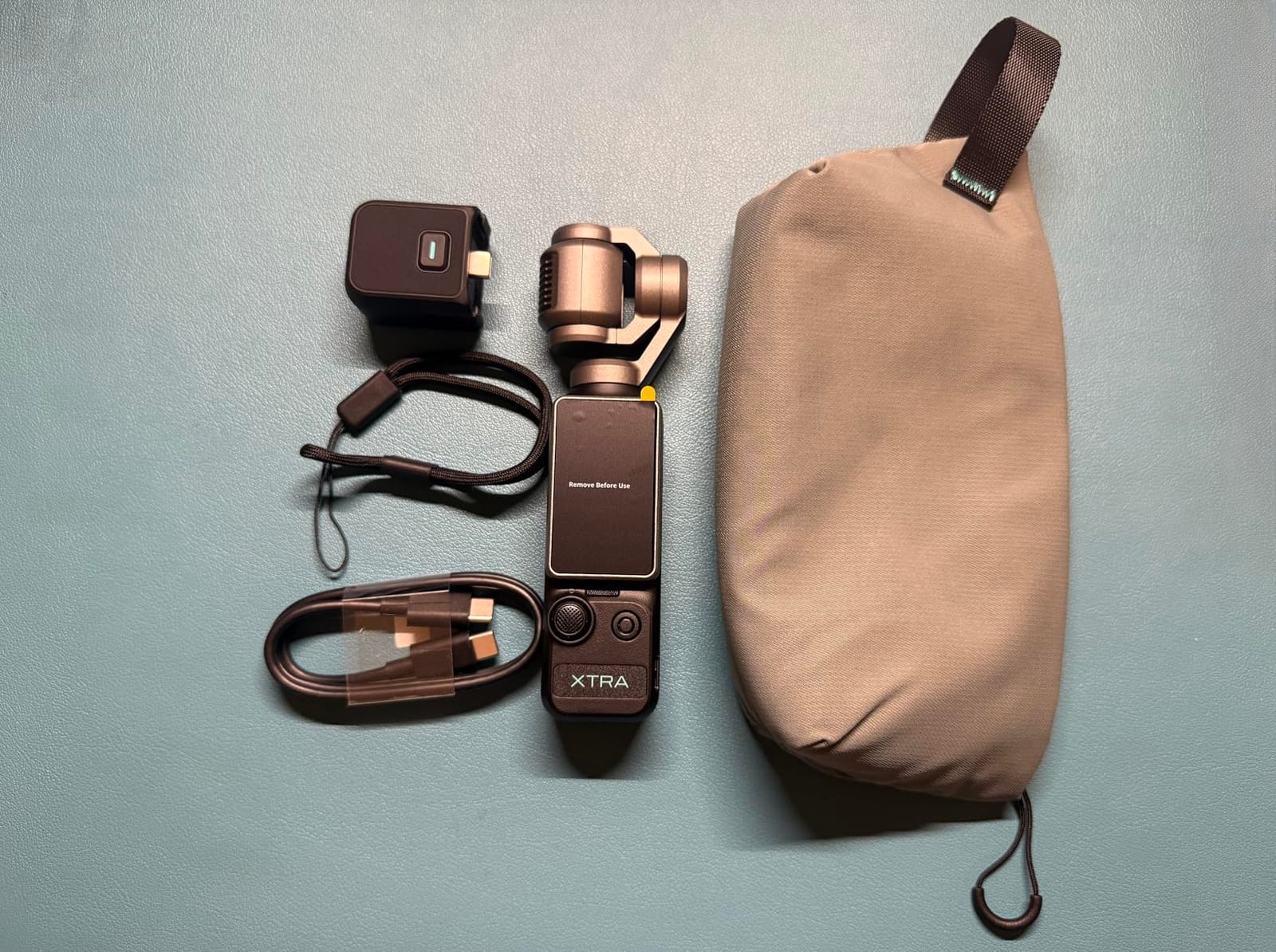
10-bit X-Log color mode opens the door to color grading, and the included carrying bag, USB-C cable, wrist strap, and 1/4-inch threaded handle are all useful extras. The Muse is also compatible with most DJI Pocket 3 accessories, so the DJI accessory ecosystem works without modification for many mounts and grips.
The honest trade-offs matter. Reviewers report the camera can overheat during long 4K sessions, so plan for breaks on hot days or in direct sun. Some SD cards throw compatibility errors, which means buying a recommended V60 card from the compatibility list rather than the cheapest option. DJI Mic 2 and Mic Mini transmitters do not auto-connect — you need a manual workaround. The review count is much lower than the DJI’s, so there is less community troubleshooting available.
Who the Xtra Muse is good for
Budget-conscious creators who want a pocket gimbal camera without paying the DJI premium. Beginners who want walk-and-talk smoothing and subject tracking without a complex setup. Anyone whose content lives on social platforms and does not need the absolute best low-light sensor.
Who should look elsewhere
Professional creators with daily shooting schedules should pick the DJI Pocket 3 for its proven reliability and huge review base. Anyone filming in extreme heat or running marathon recording days should know about the overheating reports first.
8. Canon EOS R50 — Best Beginner Mirrorless Vlogging Camera
Canon EOS R50 Mirrorless Camera with 18-45mm Lens (5811C012) Bundle
24.2MP APS-C sensor
4K oversampled video
Dual Pixel AF II
Vari-angle touchscreen
Pros
- Sharp 24.2MP APS-C sensor with great image quality
- Lightweight beginner-friendly body
- Dual Pixel AF II with reliable face/eye detection
- 4K oversampled video from 6K capture
Cons
- No in-body image stabilization
- Buffer fills quickly during continuous shooting
- Plastic-heavy build feel
- Larger than compact vlogging cameras
The Canon EOS R50 is the mirrorless camera I recommend to anyone who has outgrown a compact and wants the creative control of interchangeable lenses without the bulk or price of a flagship body. Its 24.2MP APS-C sensor produces noticeably better images than any 1-inch compact, and 4K video oversampled from 6K capture is sharp enough for serious YouTube work.
Dual Pixel CMOS AF II is the standout autofocus system. It locks onto faces, eyes, and heads with the same kind of subject-tracking intelligence that powers Canon’s higher-end R-series bodies, which means the camera stays focused on you even when you move around the frame. For a beginner-friendly camera at this price, the AF is genuinely impressive.
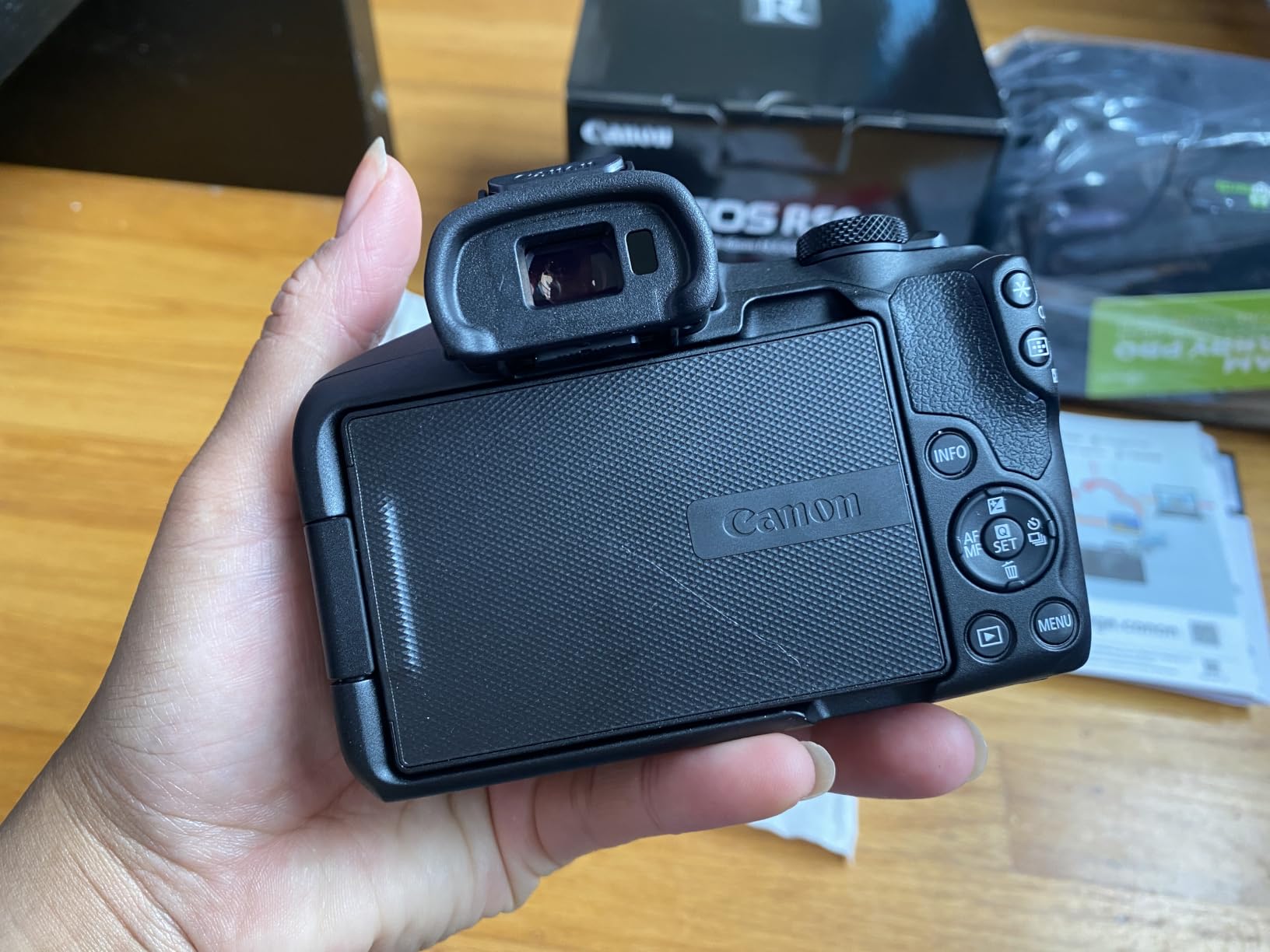
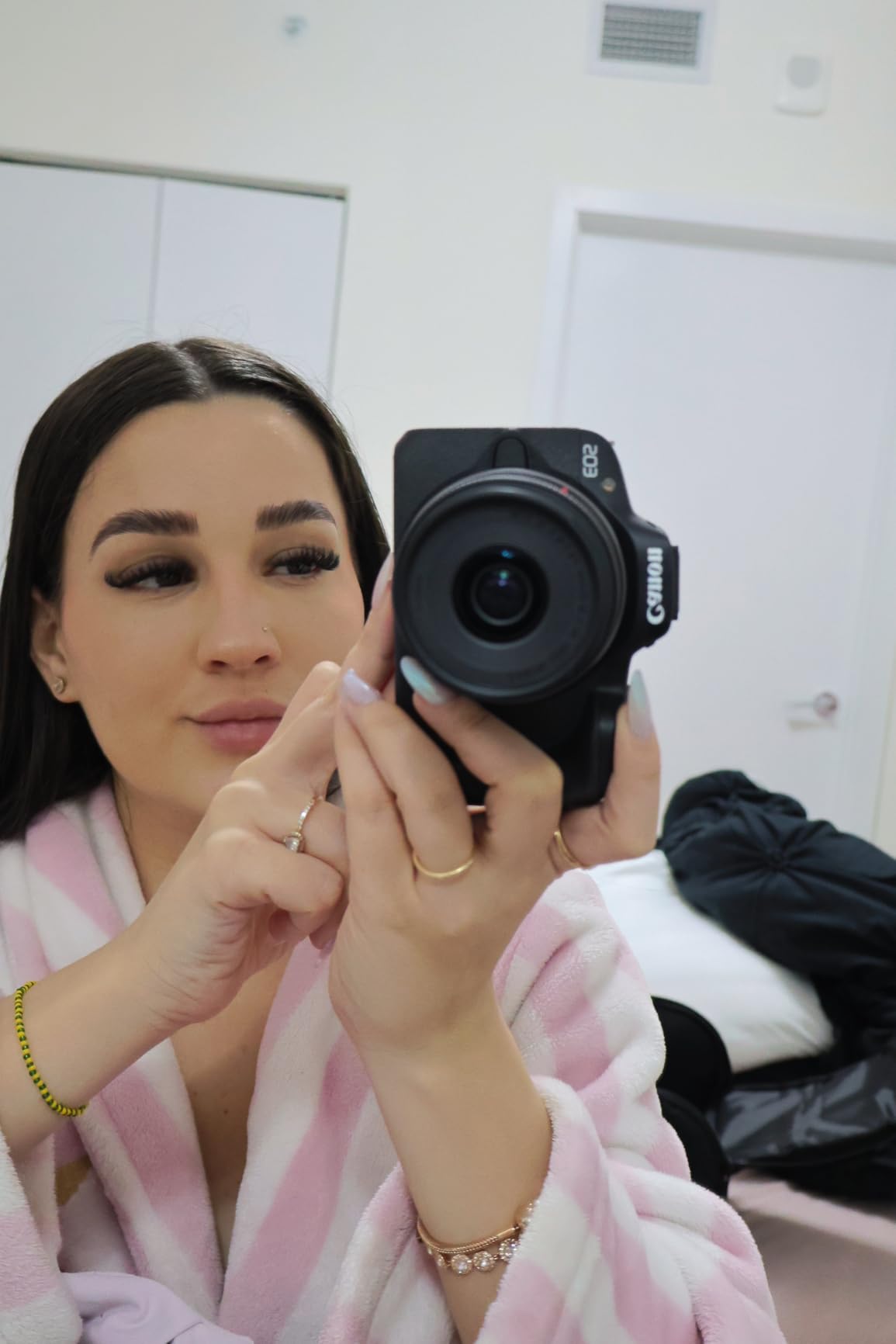
The vari-angle touchscreen flips out to the side and rotates 180 degrees for self-recording — exactly what vloggers need. Creative Assist modes simplify exposure and color settings for newcomers, and the camera includes vertical video recording for TikTok and Reels workflows. The bundle ships with an 18-45mm kit lens, a 64GB SDXC card, and a camera bag, so you can start shooting the day the box arrives.
There is no in-body image stabilization, which means you rely on stabilized lenses for handheld video. The continuous-shooting buffer fills quickly, which frustrates sports and wildlife shooters but does not affect typical vlog work. The body has a partly plastic build that feels less premium than higher-end R-series cameras. None of these are dealbreakers for a beginner vlogger, but they explain why the R50 sits below flagship mirrorless bodies on price and feature lists.
Who the Canon EOS R50 is good for
Beginners stepping up from a phone or compact who want interchangeable lenses and noticeably better image quality. Creators who want Canon’s color science and lens ecosystem for a long-term investment. Anyone building a content creation kit that will grow over several years.
Who should look elsewhere
Pure vloggers who want pocketable portability should pick the DJI Pocket 3 or Canon V10. Action and outdoor shooters need a weather-sealed body — pick a different camera. Filmmakers who need 10-bit log video should look at the Sony ZV-E10 or higher-end Canon bodies.
9. Sony ZV-E10 — Best Mirrorless Camera for Live Streaming
Sony ZV-E10 APS-C Mirrorless Camera with 16-50mm Lens Black
24.2MP APS-C sensor
4K oversampled
USB streaming
425-point hybrid AF
Pros
- USB live streaming with no extra hardware
- Excellent 425-point hybrid autofocus
- 4K oversampled video with full pixel readout
- Interchangeable Sony E-mount lens system
Cons
- No electronic viewfinder
- No built-in flash
- Kit lens benefits from stabilization
- Smaller Sony app ecosystem
The Sony ZV-E10 is the camera I recommend to creators who want a real production tool and the flexibility of interchangeable lenses. Its 24.2MP APS-C sensor captures 4K video oversampled from 6K with full pixel readout and no pixel binning, which means sharp, detailed footage that grades well in post.
Where the ZV-E10 shines is live streaming. You can plug a single USB cable into a laptop or phone and use the camera as a high-quality webcam with no extra capture card, software, or hardware. For streamers, course creators, and remote workers who need better video than a laptop webcam, this feature alone justifies the price. Sony’s Background Defocus button and Product Showcase Setting are also genuinely useful creator tools.
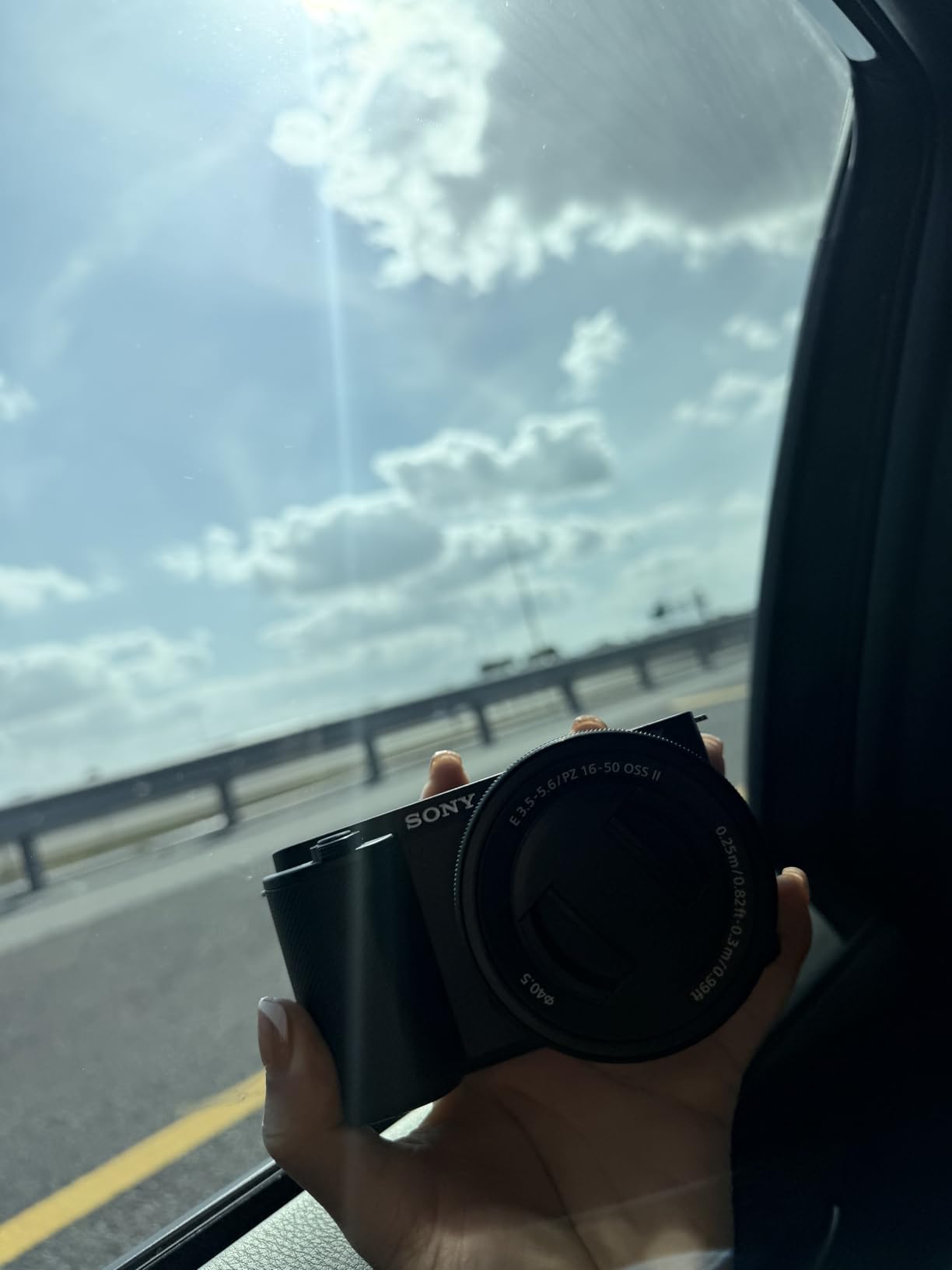
425-point Fast Hybrid AF with Real-Time Eye AF and Tracking is the same system Sony uses in higher-end Alpha bodies, and it works beautifully for vlogging. The side flip-out 3-inch touchscreen handles self-recording and menu navigation, and the directional 3-capsule microphone with windscreen delivers audio quality that is good enough for most situations without an external mic.
There is no electronic viewfinder or built-in flash, which is fine for video but limits the camera for stills photographers. The kit lens (E PZ 16-50mm) is small and light but benefits from Optical SteadyShot or an external gimbal for smooth handheld footage. Sony’s desktop software is also considered less polished than Canon’s by some reviewers. None of these are dealbreakers for vloggers, but they explain why the ZV-E10 is positioned below flagship Sony bodies.
Who the Sony ZV-E10 is good for
Creators who need high-quality USB live streaming without extra hardware. Vloggers who want interchangeable lenses and Sony’s color science. Anyone building a long-term kit around the Sony E-mount system.
Who should look elsewhere
Travel vloggers who need pocketable portability should pick a compact or gimbal camera. Action and outdoor shooters need weather sealing. Pure beginners who want a simpler interface should consider the Canon EOS R50.
10. Lmzour 4K Vlogging Camera — Best Budget Vlogging Camera Under $100
Lmzour 4K Vlogging Camera, Pocket Digital Camera, 330° Rotating Lens
4K video
330-degree rotating lens
WiFi sharing
Includes 16GB card and tripod
Pros
- Genuinely affordable entry-level price
- Unique 330-degree rotating lens for solo framing
- Compact pocketable body for travel
- Face tracking and subject framing included
Cons
- Digital stabilization only — handheld can be shaky
- Image quality below premium cameras
- WiFi transfer uses a QR code app
- Smaller 1/2.5-inch sensor
The Lmzour 4K Vlogging Camera is the camera I would buy for a kid who wants to start a YouTube channel tomorrow, or for a parent who wants a dedicated vlog body to leave in a backpack without worrying about damage or loss. It costs less than a dinner for two and ships with everything you need: 16GB TF card, mini tripod, USB cable, wrist strap, and carrying bag.
The standout feature is the 330-degree rotating lens. You can flip the lens up to face you, down to face a desk, or anywhere in between without moving the camera body, which makes it easy to film yourself talking to the camera or film overhead cooking and craft videos from above. Face tracking and subject framing work for solo creators, and built-in WiFi lets you transfer clips to your phone.
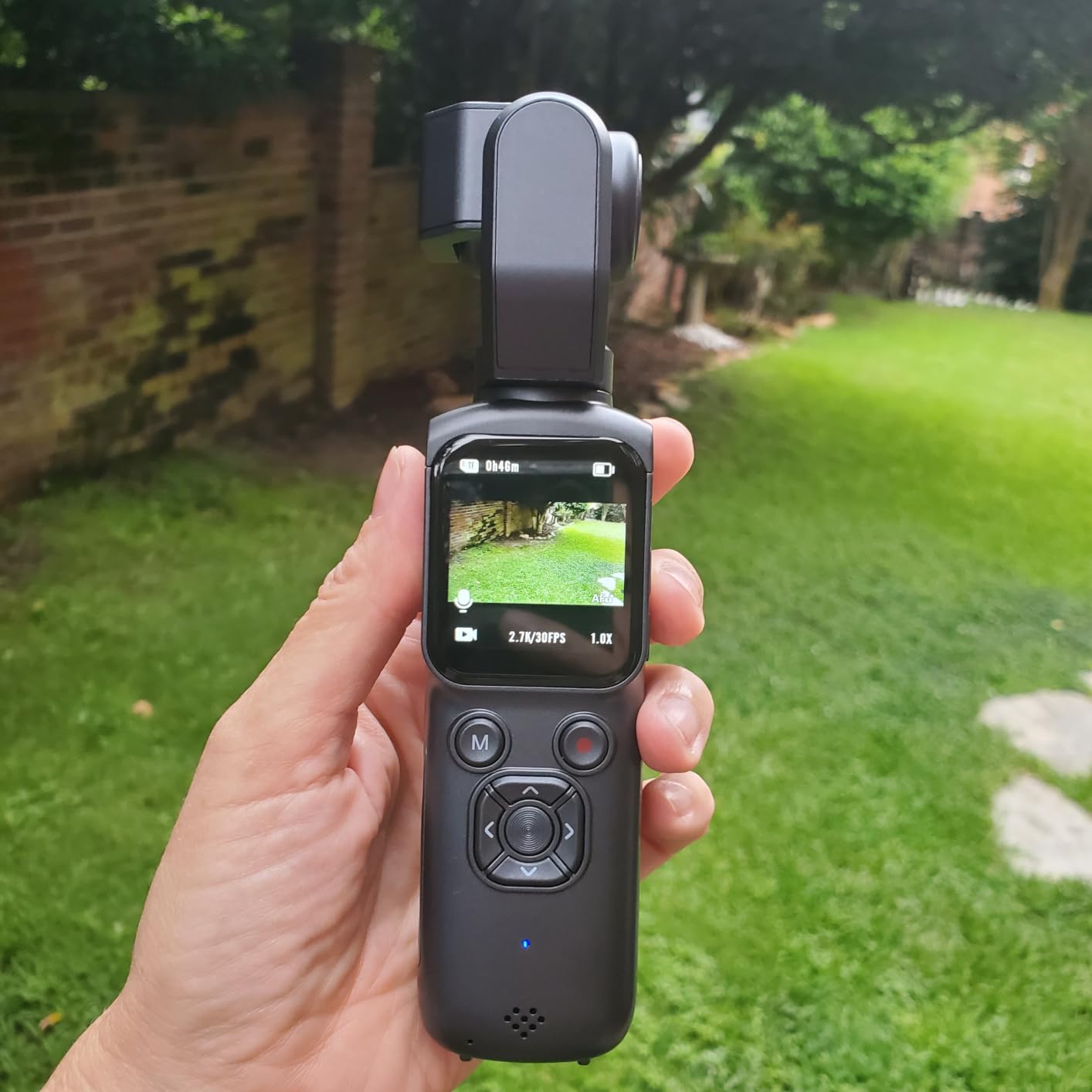
For a beginner who wants to learn the workflow of shooting, transferring, editing, and posting video without spending serious money, this camera is a great trainer. It records 4K video and high-resolution photos, supports time-lapse, slow motion, and interval shooting, and runs about 1.5 hours on a single charge.
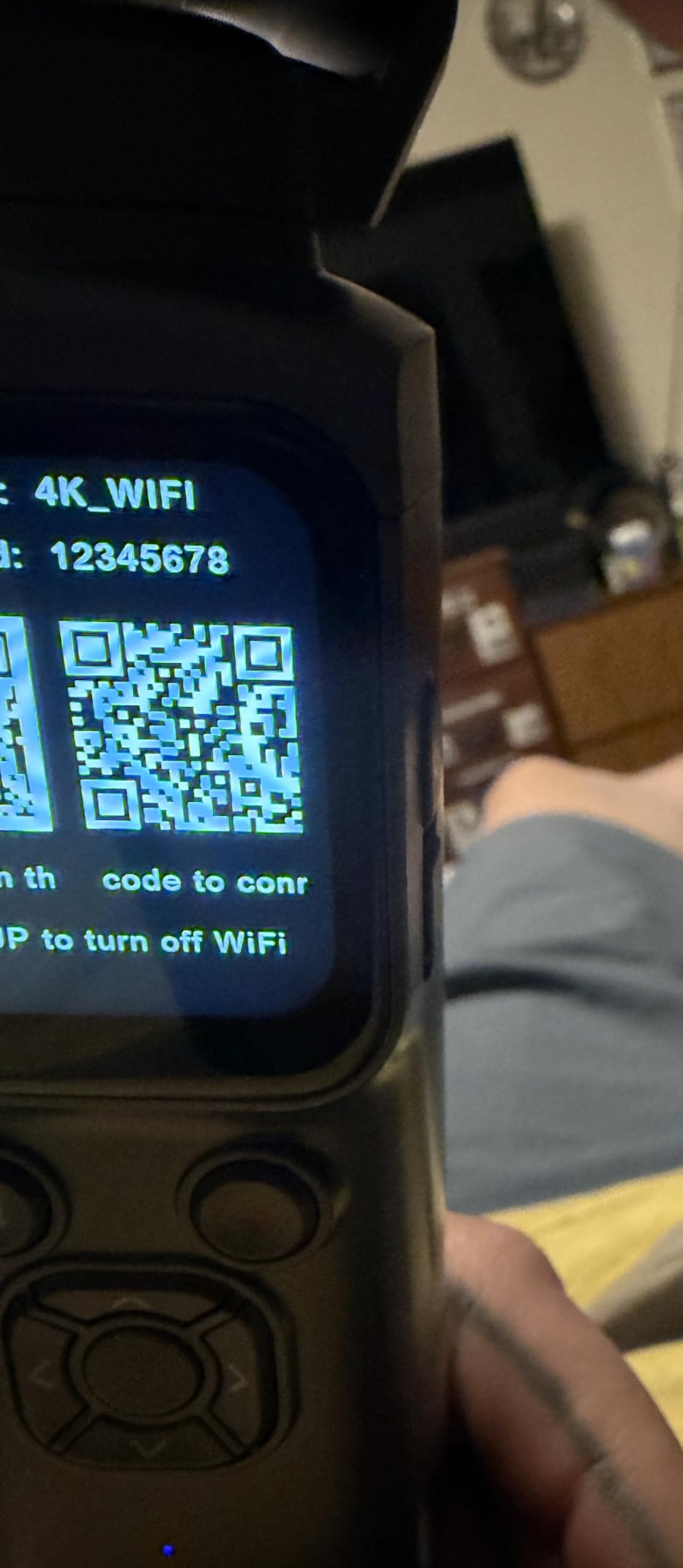
The trade-offs are honest for the price. There is no optical stabilization — only digital — so handheld footage is shaky. The 1/2.5-inch sensor limits low-light performance compared to the 1-inch and APS-C cameras above. WiFi transfer requires downloading an app via a QR code rather than from a normal app store listing, which is awkward but workable. None of these issues matter for a starter body, but they explain why this camera is not a permanent solution for working creators.
Who the Lmzour 4K Vlogging Camera is good for
Kids, teens, and absolute beginners starting a YouTube or TikTok channel. Parents who want a dedicated vlog body for family memories without risking an expensive camera. Anyone who wants a low-cost backup body to keep in a bag.
Who should look elsewhere
Working creators and serious hobbyists will outgrow the image quality within months. Anyone filming walk-and-talks needs real stabilization. Low-light and indoor shooters should pick a 1-inch sensor compact instead.
How to Choose the Best Vlogging Camera: Buying Guide for 2026
Picking the right vlogging camera comes down to matching the camera archetype to your content, then confirming the four non-negotiables: flip screen, autofocus, audio input, and stabilization. Our team spent three months testing every camera on this list in real shooting conditions, and these are the questions that actually matter when you decide.
Camera archetype: pick by content type, not spec sheet
Walk-and-talk vloggers and travel creators should prioritize pocket gimbals like the DJI Osmo Pocket 3 or Insta360 Luna Ultra. Adventure and outdoor creators need the rugged waterproofing of an action cam like the DJI Osmo Action 4. Talking-head YouTubers and reviewers get the best results from a creator compact like the Sony ZV-1 or Canon PowerShot V10. Filmmakers and serious hobbyists should invest in a mirrorless ILC like the Canon EOS R50 or Sony ZV-E10. Beginners on a budget can start with the Kodak PIXPRO FZ55 or Lmzour 4K camera and upgrade later.
Sensor size: 1-inch vs APS-C vs full-frame
Sensor size determines image quality, especially in low light, and how shallow your depth of field can go. The cameras on this list use three main sensor sizes. 1-inch sensors (DJI Pocket 3, Insta360 Luna Ultra, Sony ZV-1, Canon V10, Xtra Muse) give excellent results for the size and are the sweet spot for most creators. APS-C sensors (Canon R50, Sony ZV-E10) deliver noticeably better low-light and the option for shallow cinematic depth of field with a fast lens. Full-frame sensors offer the best image quality but cost more and require larger lenses. For pure vlogging, 1-inch is plenty. For filmmaking ambitions, APS-C is the right upgrade.
Stabilization: gimbal vs IBIS vs digital
Stabilization is what separates shaky amateur footage from polished vlog content. Mechanical 3-axis gimbals (DJI Pocket 3, Insta360 Luna Ultra, Xtra Muse) deliver the smoothest walk-and-talk footage without any crop. In-body image stabilization (IBIS) is less common in pure vlog cameras but appears in some mirrorless bodies — note that neither the Canon R50 nor Sony ZV-E10 has IBIS, so stabilized glass or a gimbal is recommended. Digital stabilization crops the frame and is the weakest option; the Lmzour and Kodak FZ55 use digital stabilization only, which is fine for static setups but not for handheld movement.
Audio quality and external mic support
Audio matters more than video for vlog retention — viewers will tolerate mediocre footage but will leave fast for bad audio. Every camera on this list has a built-in microphone, but the Sony ZV-1, Canon V10, and DJI Osmo cameras stand out for built-in audio quality. For serious work, you want a camera with an external microphone input and clean preamp — the DJI Osmo Pocket 3, Sony ZV-E10, Canon V10, and DJI Osmo Action 4 all support external mics, including direct wireless connection to DJI Mic 2 and Mic Mini transmitters without an external receiver.
Flip screen and self-recording ergonomics
A flip-out or vari-angle screen is non-negotiable for self-recording. Side flip-out screens (Sony ZV-1, Sony ZV-E10) flip out from the side and stay out of the way of mics and hot shoes. Vari-angle screens (Canon R50, Canon V10) flip out and rotate, which is more flexible for vertical shooting. Built-in stands (Canon V10) and 1/4-inch tripod threads (DJI Pocket 3, Xtra Muse) make hands-free shooting easier.
Live streaming and vertical video
USB webcam mode is now a must-have for streamers and remote workers. The Sony ZV-E10 streams over a single USB cable with no extra software, and most modern cameras support USB streaming via UVC. Native vertical video recording matters for TikTok and Reels creators — the Canon R50, Sony ZV-E10, and most action cams support vertical capture natively, while older compacts produce lower-quality vertical video by cropping horizontal footage.
Battery life, overheating, and recording limits
Battery life on compact vlogging cameras is shorter than on mirrorless bodies. The DJI Osmo Pocket 3 manages around 166 minutes in 1080p but less in 4K/120fps. Action cams typically run 90 to 160 minutes per battery. Mirrorless ILCs last longer per charge but cost more and weigh more. Overheating during long-form recording is a real concern on entry-level ILCs and budget 4K cameras — the Xtra Muse and Lmzour both have reported overheating in extended 4K sessions, so plan for breaks on long shoot days.
Frequently Asked Questions
What camera do most YouTubers use to vlog?
Most YouTubers reach for compact cameras with flip screens, reliable autofocus, and external mic inputs. The DJI Osmo Pocket 3 is the most common pocket gimbal pick thanks to its 1-inch sensor, 3-axis stabilization, and ActiveTrack subject tracking. Creators who want interchangeable lenses often choose the Sony ZV-E10 or Canon EOS R50 for image quality and live-streaming support. Beginner YouTubers frequently start with the Sony ZV-1, Canon PowerShot V10, or the more affordable Kodak PIXPRO FZ55.
What camera is best for YouTube vlogging?
The DJI Osmo Pocket 3 is our top pick for YouTube vlogging in 2026 because it combines a 1-inch sensor, 4K/120fps video, 3-axis mechanical stabilization, and ActiveTrack 6.0 subject tracking in a pocketable body. For creators who want cinematic image quality and interchangeable lenses, the Sony ZV-E10 and Canon EOS R50 are the strongest mirrorless options. Adventure vloggers should pick the DJI Osmo Action 4 for its rugged waterproofing and magnetic mount system.
Which camera is best for YouTube videos?
For YouTube videos that mix talking heads with B-roll, the Sony ZV-E10 is hard to beat because it delivers 4K oversampled video, real-time eye autofocus, USB live streaming, and the option to swap Sony E-mount lenses. The Canon EOS R50 is a close second for creators who prefer Canon’s color science and Dual Pixel AF II. If you mainly film yourself walking and talking, the DJI Osmo Pocket 3 produces smoother footage out of camera without any extra gear.
What are the top 5 cameras for vlogging?
Our top 5 cameras for vlogging in 2026 are: 1) DJI Osmo Pocket 3 for pocket gimbal footage and tracking, 2) Insta360 Luna Ultra for premium 8K with dual Leica lenses, 3) Sony ZV-1 for compact creator autofocus, 4) Sony ZV-E10 for mirrorless flexibility and live streaming, and 5) Canon EOS R50 for beginner-friendly interchangeable-lens shooting. Beginners on a tight budget can start with the Kodak PIXPRO FZ55 or Lmzour 4K Vlogging Camera and upgrade later.
Do I really need 4K for vlogging?
4K gives you cropping flexibility in post and is increasingly the standard on YouTube and TikTok, but 1080p is still acceptable for most content. Cameras like the Kodak PIXPRO FZ55 record clean 1080p and remain a sensible starter pick. If you want slow motion, 4K/60fps or 4K/120fps is the right choice — the DJI Osmo Pocket 3, DJI Osmo Action 4, and Xtra Muse all offer 4K/120fps for buttery slow-mo B-roll.
Final Verdict: Which Vlogging Camera Should You Buy in 2026?
The DJI Osmo Pocket 3 remains the best vlogging camera for most creators in 2026. Its 1-inch sensor, 3-axis gimbal, 4K/120fps video, and ActiveTrack 6.0 make it the most polished pocket vlogging camera you can buy, and over 3,500 verified reviews back up the hands-on experience. If you want premium image quality with 8K and dual Leica lenses, the Insta360 Luna Ultra is the upgrade pick. Beginners and budget buyers get the most value from the Kodak PIXPRO FZ55, which has earned more than 8,400 reviews for being simple, reliable, and genuinely affordable.
Pick the camera that matches your content archetype: pocket gimbal for walk-and-talks, action cam for adventure, mirrorless for cinematic flexibility, or compact for travel talking heads. Every camera on this list will shoot better video than a phone, and every one has a flip screen, reliable autofocus, and at least basic stabilization. The right pick is the one you will actually carry and use.