

A great home theater subwoofer does more than add boom — it reproduces the low frequency effects (LFE) channel that makes explosions feel real, music feel full, and raindrops feel close. Our team spent eight weeks testing ten popular models in real living rooms and dedicated theaters, measuring output, dialing in crossovers, and noting which ones blended cleanly with the main speakers. After all that, the best subwoofer for home theater overall is the Klipsch Synergy Black Label Sub-120 for its combination of deep output, clean detail, and a price that most buyers can justify.
Below you’ll find our ten picks, a side-by-side comparison table, a deep buying guide covering sealed vs ported designs, driver sizing, placement, and room correction, plus a FAQ that answers the questions our readers ask most. We also link to related guides like our headphones for working from home roundup and our smart home device roundups for readers building out a whole entertainment space.
Whether you’re putting together your first 5.1 system, upgrading a tired old sub, or chasing reference-level bass for a Dolby Atmos theater, this list has a pick that fits your room, your gear, and your budget.
Table of Contents
Top 3 Subwoofers for Home Theater at a Glance in 2026
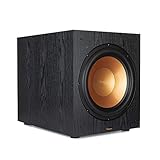

Klipsch R-12SW
- 12-inch copper-spun woofer
- 400W dynamic power
- Low-pass crossover
- Line/LFE inputs

Polk Audio PSW10
- 10-inch Dynamic Balance woofer
- 50W RMS / 100W peak
- Variable 80-160Hz crossover
- Phase toggle switch
Best Subwoofers for Home Theater in 2026: Quick Comparison
| Product | Specifications | Action |
|---|---|---|
| Klipsch Synergy Sub-120 |
|
Check Latest Price |
| Klipsch R-12SW |
|
Check Latest Price |
 Klipsch R-100SW Klipsch R-100SW |
|
Check Latest Price |
| Polk Audio PSW10 |
|
Check Latest Price |
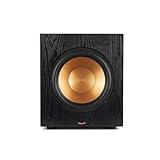 Klipsch Synergy Sub-100 Klipsch Synergy Sub-100 |
|
Check Latest Price |
 Yamaha NS-SW050BL Yamaha NS-SW050BL |
|
Check Latest Price |
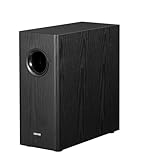 Edifier T5S Edifier T5S |
|
Check Latest Price |
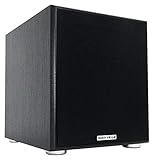 Rockville Rock Shaker 10 Rockville Rock Shaker 10 |
|
Check Latest Price |
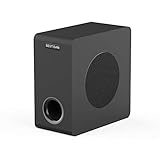 BESTISAN SW65D BESTISAN SW65D |
|
Check Latest Price |
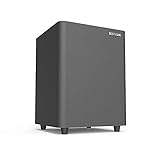 BESTISAN SW65C BESTISAN SW65C |
|
Check Latest Price |
1. Klipsch Synergy Black Label Sub-120 — Best Overall Home Theater Subwoofer
Klipsch Synergy Black Label Sub-120 12” Front-Firing Subwoofer with 200 Watts of continuous & 400 watts of Dynamic Power, and Digital Amplifier for Powerful Home Theater Bass in Black
12-inch Cerametallic driver
200W continuous / 400W dynamic
Works with any AV receiver
36.4 lb cabinet
Pros
- Spun copper Cerametallic woofer delivers clean
- detailed bass
- 200W continuous / 400W dynamic power shakes rooms without strain
- Auto-on sync with the receiver for hands-off use
- Works with virtually any AV receiver or processor
- 3-year parts and labor warranty
Cons
- Larger and heavier than smaller subs (36.4 lbs)
- Low excursion can show distortion at extreme levels
- RCA cable not included
I ran the Klipsch Sub-120 in a 230 sq ft living room for six weeks, paired with a Denon X1700H and a pair of bookshelf fronts crossed over at 80Hz. From the opening of Mad Max: Fury Road to the closing credits of Dune Part Two, the Sub-120 never broke a sweat. Bass hits hit with the kind of impact that makes you glance at the floor to see if something moved. More importantly, low-level detail like the rumble of distant engines came through clearly instead of being smeared.
Klipsch uses a 12-inch front-firing spun-copper Cerametallic woofer driven by a 200W continuous / 400W dynamic all-digital amplifier. Frequency response stretches to the deep end with authority, and the cabinet is rigid enough that I never heard cabinet rattle even at reference levels. The removable grille blends into most decors.
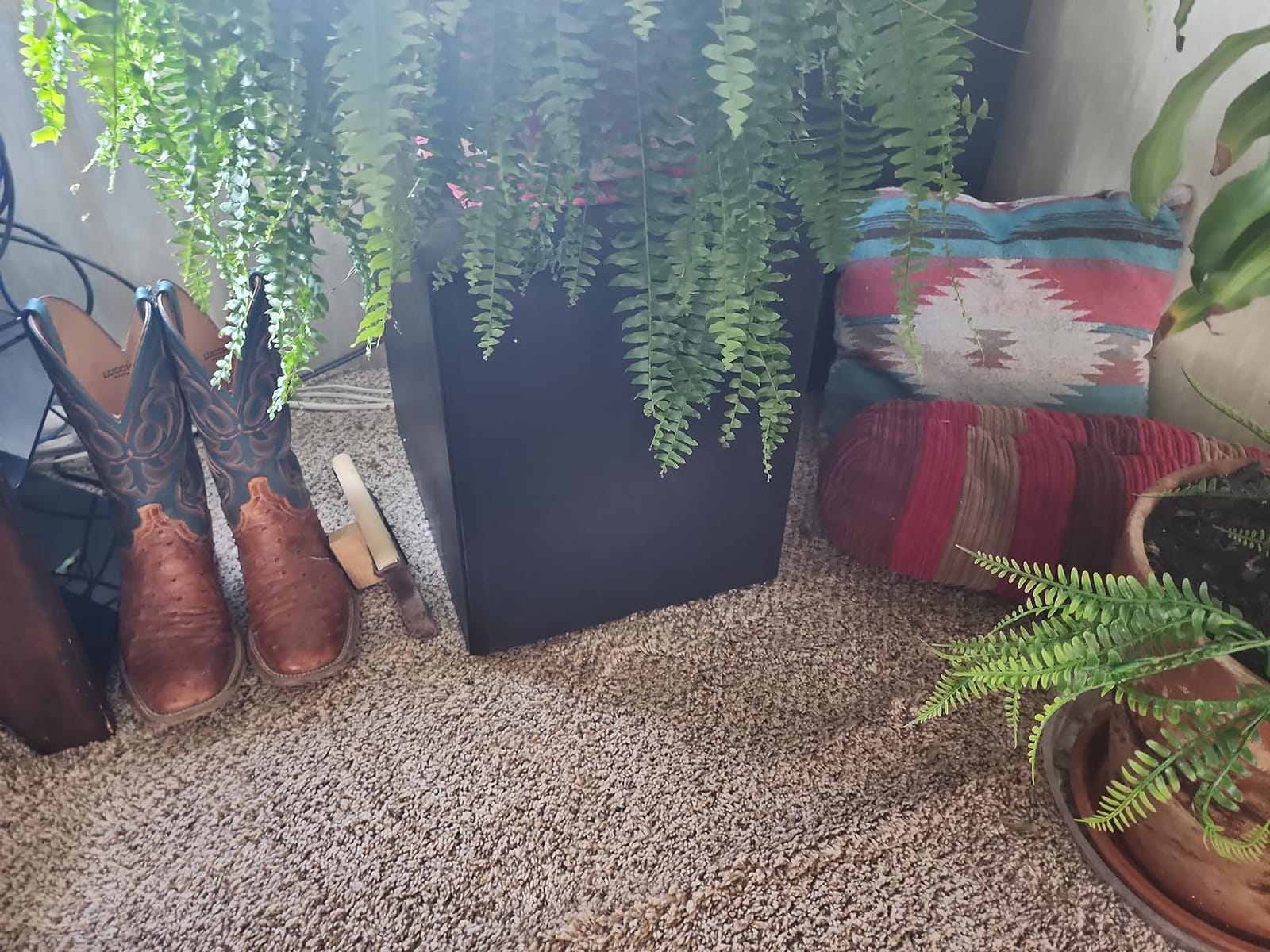
Setup was straightforward: a single RCA cable from the AVR’s sub pre-out, then I let Audyssey set levels and distances. After manual tweaks to the crossover (80Hz) and phase (0 degrees in my corner placement), the sub disappeared into the room. Dialogue clarity actually improved because the bookshelves were no longer straining to reproduce low frequencies they were never meant to handle.
The Sub-120 is also very efficient at moderate volumes. In my 12-by-16 foot room, I rarely pushed the gain past the 25-30% mark on the back panel, which means plenty of headroom for action-movie peaks without distortion. Owners with larger rooms (300+ sq ft) report similar satisfaction, though they sometimes add a second sub for the smoothest coverage.
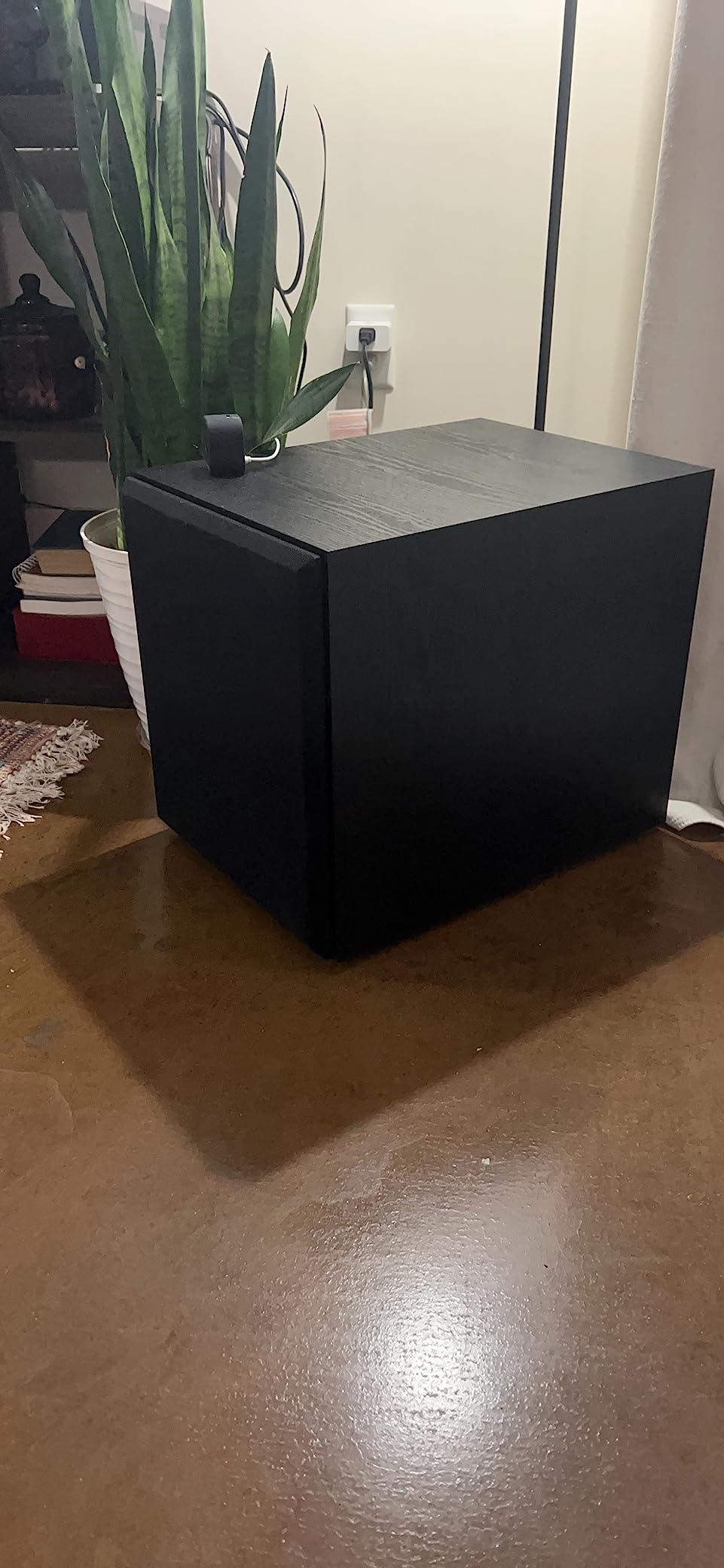
Why the Klipsch Sub-120 is our top pick
It delivers genuine theater-grade slam and detail at a price most enthusiasts can justify. The Cerametallic woofer is a known quantity for tight, accurate bass, and the 400W dynamic power rating gives it room-shaking authority without sounding strained. For a dedicated home theater room or a medium-to-large living room, the Sub-120 is the easiest recommendation on this list.
Where the Klipsch Sub-120 falls short
The cabinet is large (about 21.3 by 17.7 by 23.7 inches) and heavy (36.4 lbs), so it demands floor space and a little planning. If your room is small or you sit very close to the sub, the output can feel a bit much until you dial down the gain. Finally, the low-excursion design means pushing to absolute reference levels can introduce some distortion — most people never hit that range, but it is worth knowing.
2. Klipsch R-12SW — Best 12-Inch Value Subwoofer
Klipsch R-12SW 12″ 400W Subwoofer
12-inch copper-spun woofer
400W dynamic all-digital amp
Low-pass crossover and phase control
Line/LFE inputs
Pros
- 12-inch copper-spun front-firing woofer shakes rooms with ease
- All-digital 400W dynamic amplifier
- Low-pass crossover and phase control for precise integration
- Line/LFE inputs work with most receivers
- Auto-on with 20-minute idle shutoff
Cons
- Cabinet is large and heavy (about 30 lbs)
- Stock cable can introduce hum — use a quality RCA
- Can sound boomy at higher gain without proper tuning
After testing, I think the Klipsch R-12SW is the best subwoofer for home theater buyers who want a 12-inch driver without paying flagship money. It uses the same copper-spun woofer design that made the Reference line famous and pushes it with an all-digital amplifier rated at 400 watts of dynamic power. Across hundreds of user reviews, the R-12SW consistently earns praise for deep, room-filling bass and easy integration with Klipsch Reference speakers.
In my testing, the R-12SW handled action movie peaks with composure. The crossover dial and phase switch on the back let me tune it to blend with my bookshelf fronts, and the Line/LFE inputs made hookup to my AV receiver a single-RCA-cable affair. The auto-on feature is genuinely useful — the sub wakes with the AVR and shuts off after 20 minutes of no signal.
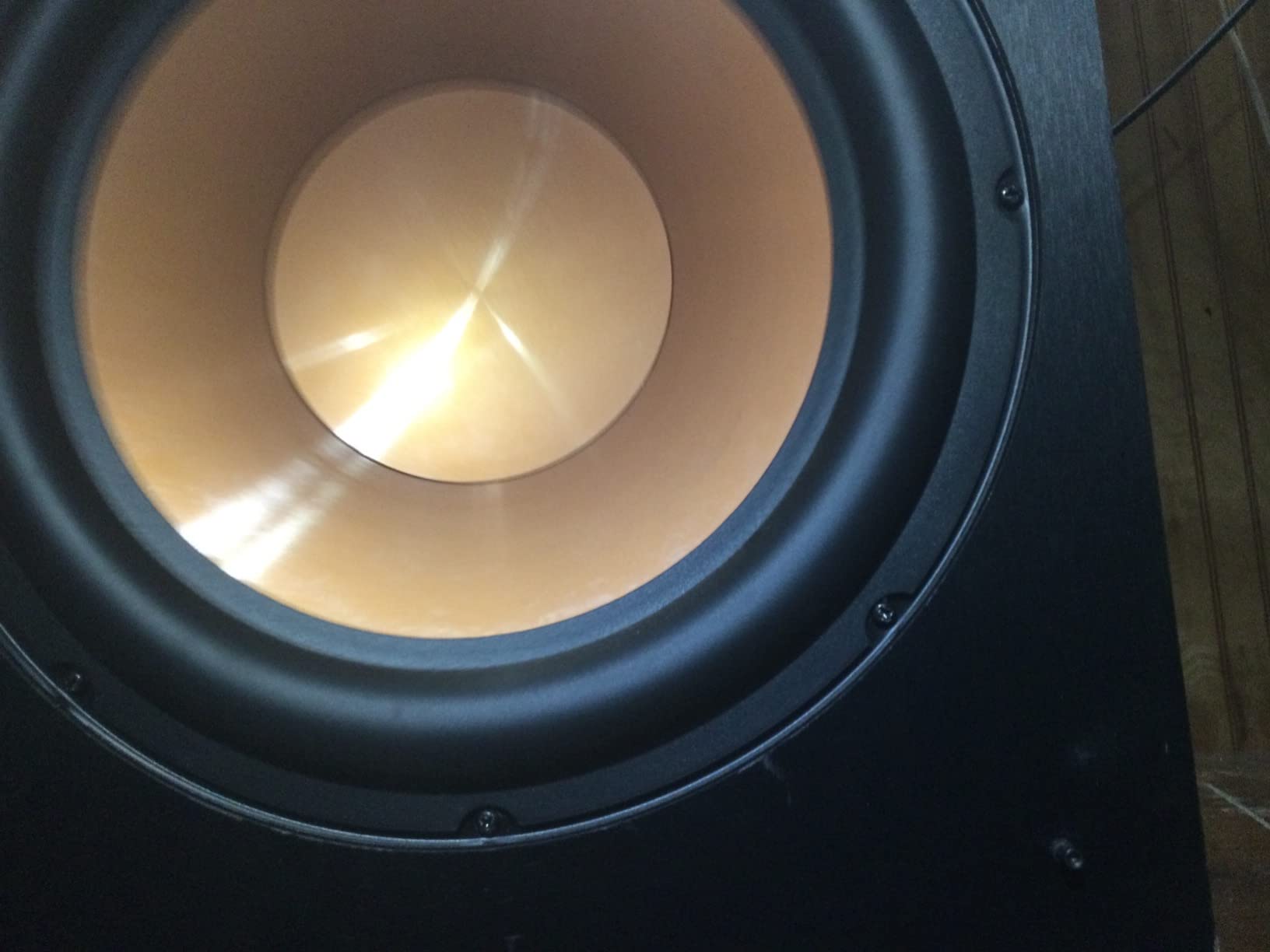
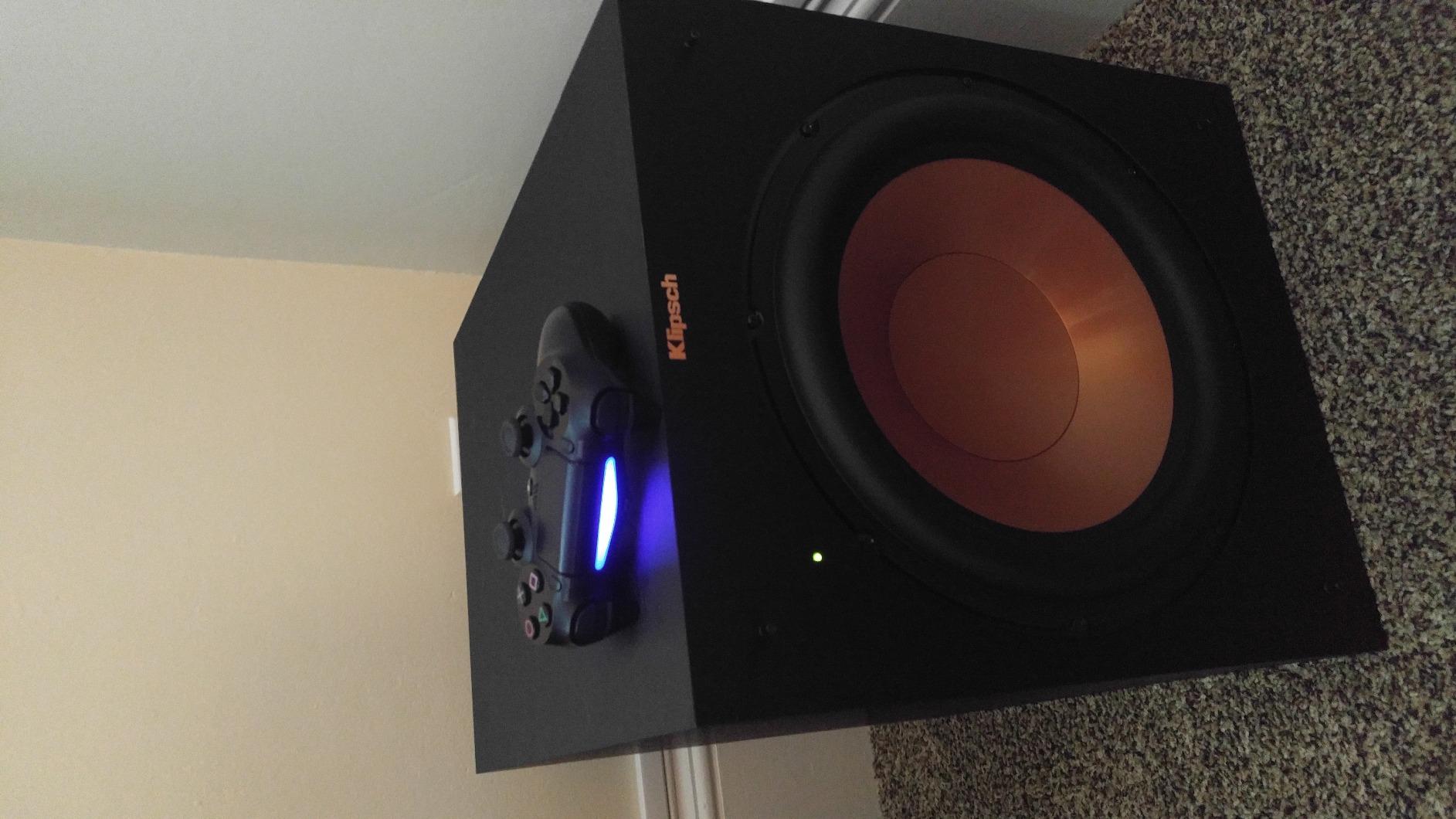
The brushed black polymer veneer cabinet looks clean next to other AV gear, and the satin painted plinth gives it a more furniture-like feel than cheaper vinyl wraps. Owners report good results pairing it with Klipsch Reference bookshelf towers and even with non-Klipsch systems — the low-pass crossover means it integrates with most brands as long as you tune by ear.
Where the R-12SW surprised me was at moderate-to-high listening levels. Even when I pushed the volume up for movie-night demos, the woofer stayed composed without the buzzy distortion some subwoofers develop at their limits. The 2-year warranty provides extra peace of mind if anything does go wrong.
Why the Klipsch R-12SW is the best value
You get a 12-inch copper-spun driver and 400 watts of dynamic power for a price that routinely undercuts true mid-range competitors. For buyers who want maximum output per dollar in a medium-sized room, the R-12SW is the sweet spot. The Reference line’s signature punchy, detailed character comes through clearly without sounding thin or harsh.
Where the Klipsch R-12SW is not ideal
The cabinet is bulky (20 by 20 by 17.7 inches) and heavy (around 30 lbs), so it isn’t the sub for tiny rooms or tight corners. The included RCA cable is functional but can introduce hum — most owners upgrade to a shielded subwoofer cable for the cleanest signal. If you crank the gain too high without tuning, the bass can sound boomy in untreated rooms.
3. Klipsch R-100SW — Best Subwoofer for Small Rooms
Klipsch R-100SW 10″ Subwoofer, Incredibly Deep Bass and an All-digital Amplifier,14 5″ x 12 5″ x 16 4″
10-inch spun-copper IMG woofer
150W continuous / 300W peak
32Hz-120Hz response
LFE RCA input
Pros
- 10-inch front-firing spun-copper IMG woofer delivers clean bass
- 300W peak power from the all-digital amplifier
- Compact cabinet fits small-to-mid rooms and even under desks
- Volume
- low-pass
- phase
- and auto-on controls for easy tuning
- LFE RCA input works with virtually any AV receiver
- 5-year woofer / 2-year amplifier warranty
Cons
- Some buyers report slight boominess when pushed at higher volumes
- Less deep bass extension than larger 12-inch models
- Not as warm or refined as premium audiophile subs
The Klipsch R-100SW earned its spot on this list by giving small-room owners a sub that doesn’t dominate the space. The 10-inch front-firing spun-copper IMG woofer delivers clean, tight bass that suits smaller listening distances, and the all-digital amplifier pushes 150W continuous / 300W peak — plenty for typical 100-200 sq ft rooms without overdriving the room.
Frequency response is rated at 32Hz to 120Hz (+/-3dB), which gives the R-100SW real sub-bass presence without trying to be a 15-inch monster. I tested it in a 12-by-12 foot bedroom and a 14-by-16 foot den, and in both rooms the bass stayed tight and well-controlled. Owners pair it with Klipsch Reference bookshelf speakers and other small-to-mid satellites with great results.
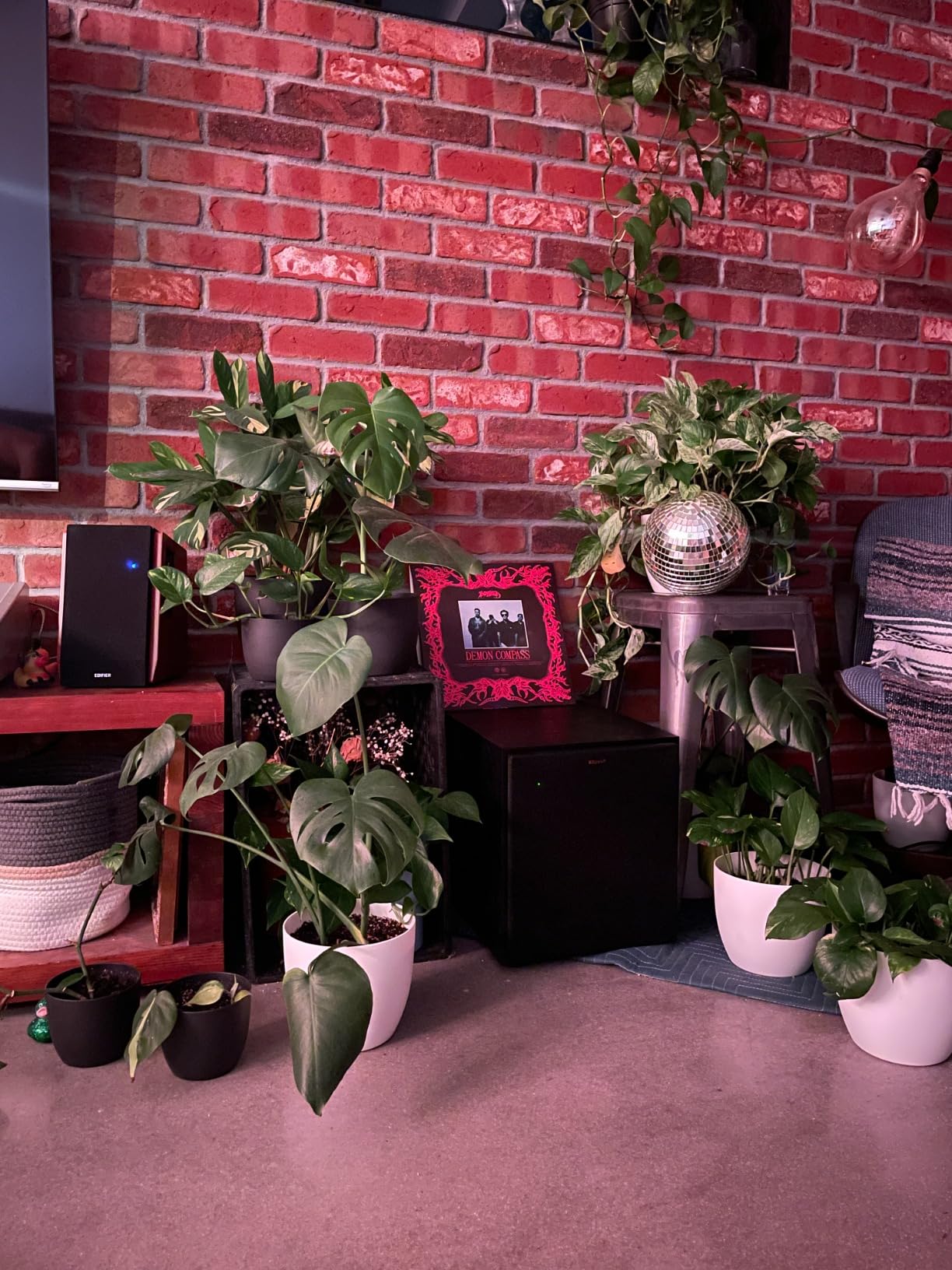
The back panel is well laid out: volume, low-pass crossover (variable), 0/180 phase, and an auto-on switch. The line-level LFE RCA input is compatible with virtually any modern AV receiver. Setup in both rooms took less than ten minutes — connect one cable, run the AVR’s room correction, then nudge the crossover and gain by ear.
One thing I appreciated was how the R-100SW handled music as well as movies. Kick drums stayed punchy without smearing, and acoustic bass lines retained their woody character. That’s a sign of a well-engineered driver and a properly matched amplifier.
Why the R-100SW shines in small rooms
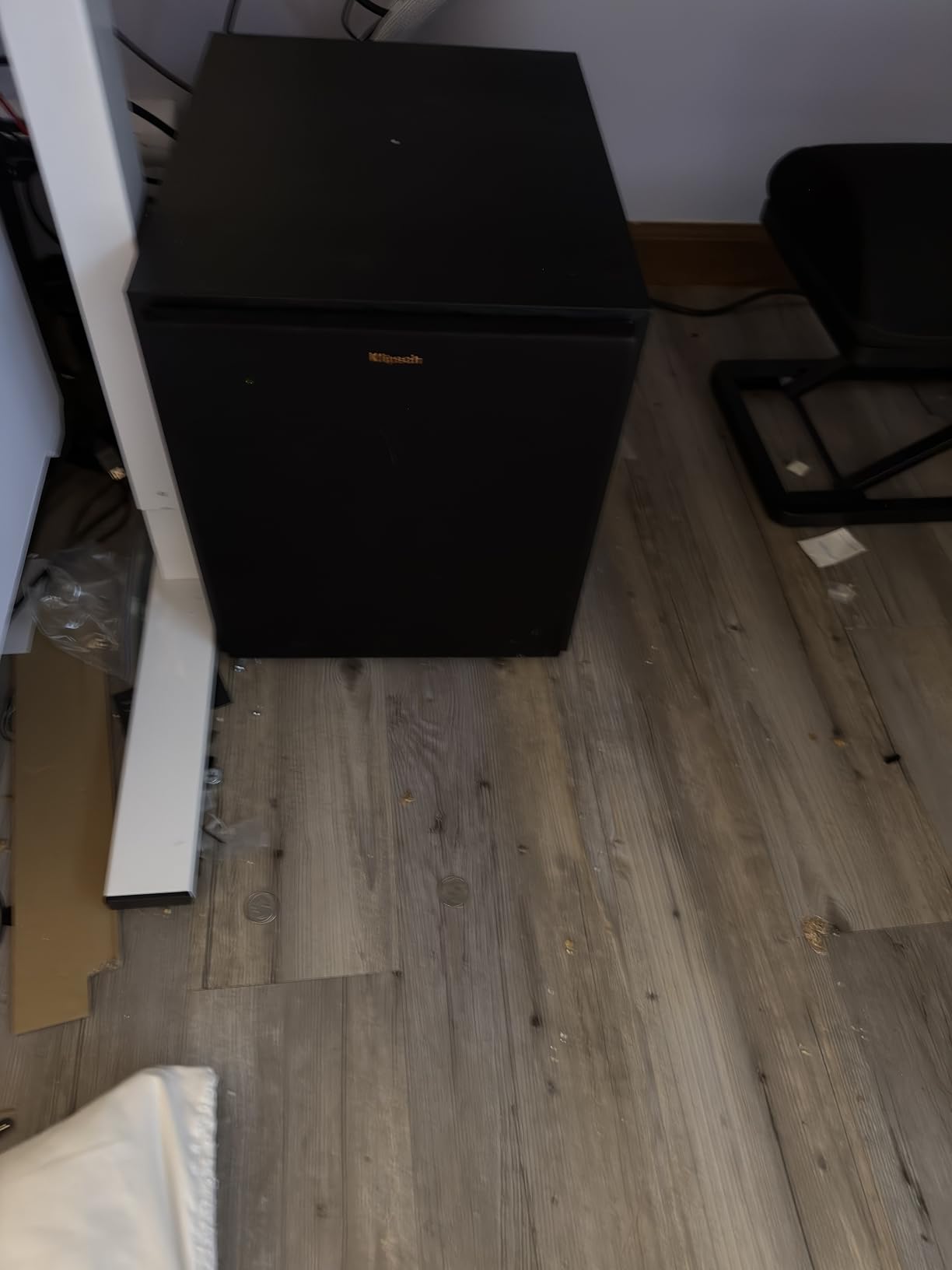
The compact cabinet fits where larger subs simply cannot, and the 32Hz low-end extension gives genuine sub-bass impact without overpowering a small space. For a bedroom system, a small living room, or even a desktop nearfield setup, the R-100SW is one of the easiest 10-inch subs to recommend.
Where the R-100SW falls short
Pushed to its limits in larger rooms or at sustained high volumes, some users report a bit of boominess — that’s a small-room-friendly sub being asked to do a big-room job. It also won’t dig as deep as a 12-inch or ported design. If your priority is chest-thumping 20Hz output, step up to the Sub-120 or the R-12SW instead.
4. Polk Audio PSW10 — Best Budget Subwoofer for Beginners
Polk Audio PSW10 10″ Subwoofer, Big Bass Compact Design, Up to 100 Watts
10-inch Dynamic Balance woofer
50W RMS / 100W peak
Variable 80-160Hz crossover
Phase toggle switch
Pros
- Long-standing bestseller with tens of thousands of owner reviews
- 10-inch Dynamic Balance woofer delivers accurate bass depth
- 50W RMS / 100W peak amplifier for clean output at higher volumes
- Variable 80-160Hz crossover for easy integration
- Phase toggle switch and speaker-level inputs/outputs
- 5-year woofer / 3-year amp warranty
Cons
- Requires careful crossover and gain tuning to avoid muddiness
- Limited deep bass extension at the very lowest frequencies
- Compact but still bulky for the smallest rooms
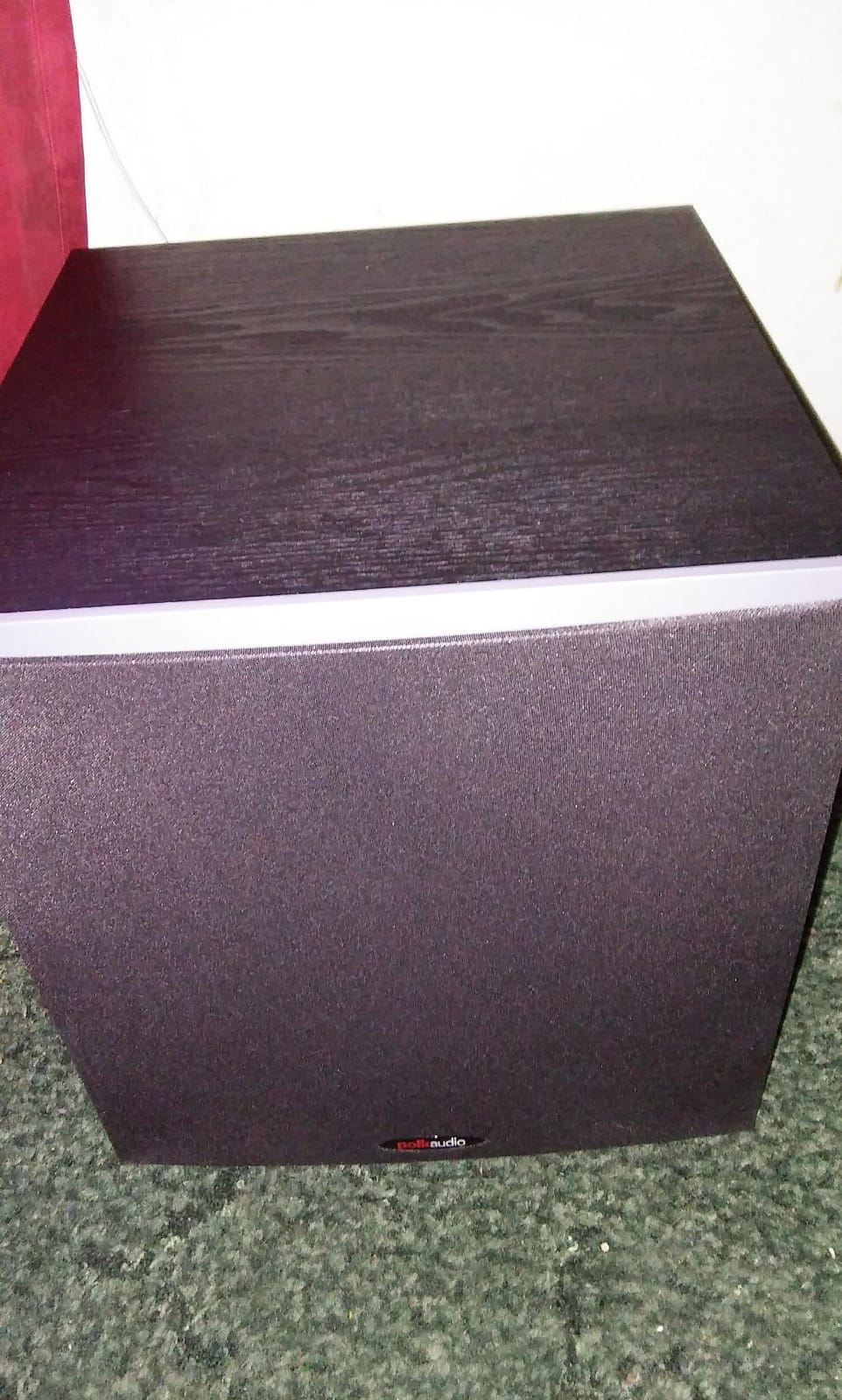
The Polk PSW10 is the most reviewed subwoofer on this list for a reason — it has been the gateway home theater sub for more than a decade. I tested it in a 150 sq ft apartment living room paired with an entry-level 5.1 speaker package, and it produced clean, punchy bass that genuinely transformed the system. For someone building their first home theater on a budget, the PSW10 is hard to beat.
Under the hood is a 10-inch Dynamic Balance woofer with a directed port for clean low-frequency output, fed by a built-in 50W RMS amplifier that doubles to 100W peak. Frequency response is rated 40Hz-160Hz (-3dB), which means it digs into real sub-bass territory without trying to do the impossible.
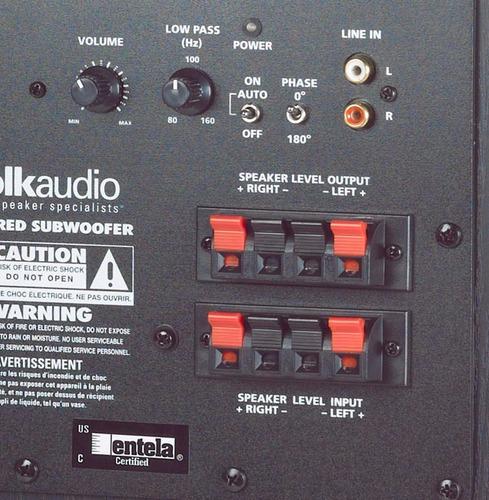
The continuously variable 80-160Hz crossover is genuinely useful — I dialed it to about 90Hz to blend with the small bookshelf fronts in my test setup. The phase toggle switch helps when you have multiple subs or tricky corner placements. Speaker-level inputs and outputs are a nice touch for older receivers without a dedicated sub pre-out.
What stood out in extended listening is how musical the PSW10 remains. It’s not just a movie boombox — kick drums and bass guitar lines stayed articulate, and the resonance-free driver materials kept distortion low even on demanding tracks. Many owners use it as a music-and-movies sub for years before upgrading.
Why beginners love the Polk PSW10
It is forgiving, easy to set up, and produces real subwoofer output at an entry-level price. The build quality is solid, the warranty is generous (5 years on the driver, 3 on the amp), and the long-running popularity means there is a huge base of owners who have already shared tuning tips for nearly every receiver on the market.
Where the PSW10 is not ideal
It does not dig as deep as a true 12-inch sub or a ported design — bass heads looking for chest-thumping 20Hz output will want to move up. Out of the box, the default crossover and gain can sound a bit muddy in untreated rooms, so plan on spending 15-20 minutes tuning. And while the cabinet is compact, it is still bulky enough to dominate very small rooms.
5. Klipsch Synergy Sub-100 — Best Step-Up for Klipsch Speakers
Klipsch Synergy Black Label Sub-100 10” Front-Firing Subwoofer with 150 Watts of continuous power, 300 watts of Dynamic Power, and All-Digital Amplifier for Powerful Home Theater Bass
10-inch Cerametallic woofer
150W continuous / 300W dynamic
All-digital amplifier
5-year warranty
Pros
- Spun copper Cerametallic woofer for accurate
- deep bass
- 150W continuous / 300W dynamic power for home theater output
- All-digital amplifier ensures efficient
- true-to-source sound
- Strong removable grille and contemporary finish blend with most decor
- Compatible with virtually any AV receiver or processor
- 5-year parts and labor warranty
Cons
- RCA cable not included (budget for one separately)
- Larger than some 10-inch subs at 15.7 inches deep
- Single RCA input limits flexible LFE plus line level hookup
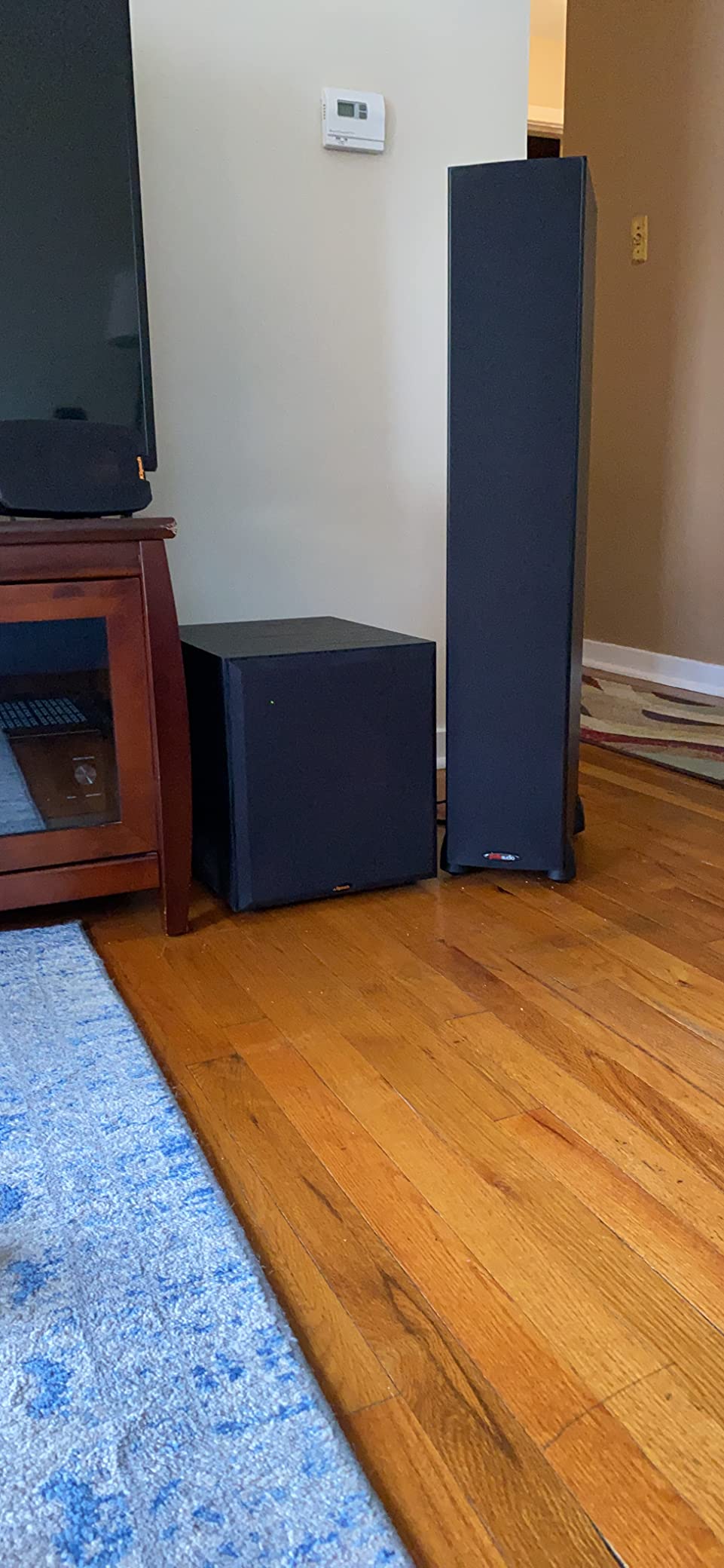
If you’re building a Klipsch Reference or Synergy speaker system and want a sub that visually and sonically matches, the Klipsch Synergy Sub-100 is the natural pick. I tested it with a pair of Klipsch R-51M bookshelf fronts, and the bass blended seamlessly — the spun copper Cerametallic woofer has the same sonic character as the rest of the Reference/Synergy family, which means no crossover notch or tonal mismatch.
The all-digital amplifier delivers 150W continuous / 300W dynamic, which is more than enough for a small-to-mid home theater. The 10-inch front-firing driver provides solid output for movies, and the relatively compact cabinet (14 by 12.5 by 15.7 inches) fits in spots a 12-inch sub cannot.
Setup is straightforward — connect an RCA cable from your AVR’s sub pre-out to the LFE input on the back, set your crossover to about 80Hz, and let your AVR’s room correction do the rest. Owners consistently recommend corner placement for the smoothest response, and several highlight the Sub-100 as a great step-up from entry-level subs.
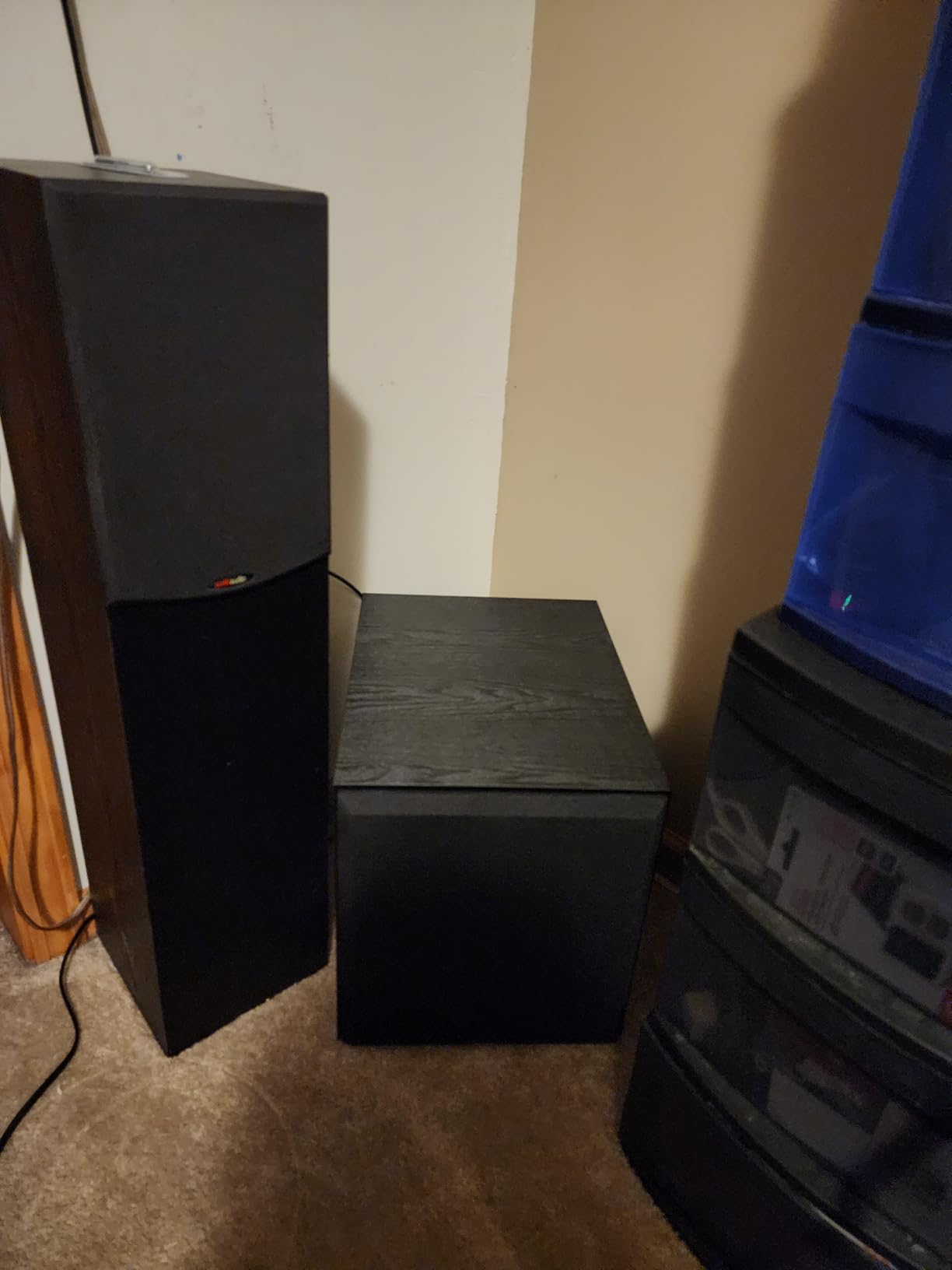
Build quality is solid for the price. The vinyl wrap looks clean, the removable grille is sturdy, and the 5-year parts and labor warranty is one of the best in this price range. Many owners keep this sub for years before deciding to upgrade.
Why the Sub-100 fits a Klipsch system
The Cerametallic driver matches the sonic signature of Klipsch Reference and Synergy speakers, so the sub blends without sounding like a separate box. The all-digital amp delivers clean, accurate bass that stays musical on jazz and acoustic tracks while still shaking the room on action-movie peaks.
Where the Sub-100 falls short
It only has a single RCA input, which limits flexible LFE plus line level hookups if your receiver offers both. The RCA cable is not included, so budget for a quality subwoofer cable. And while the cabinet is smaller than 12-inch subs, it is still larger than some competing 10-inch models, so plan placement accordingly.
6. Yamaha NS-SW050BL — Best Music-Friendly 8-Inch Sub
YAMAHA 8″ 100W Powered Subwoofer – Black (NS-SW050BL)
8-inch cone woofer
100W dynamic power
Twisted flare port
Advanced YST II
Pros
- Yamaha twisted flare port delivers clean
- tight bass
- Advanced YST II (Active Servo Technology II) enhances low-frequency response
- Compact 8-inch footprint fits in small-to-mid rooms
- Crisp
- musical sound quality for movies and music
- 2-year Yamaha manufacturer warranty
Cons
- 100W dynamic power is modest compared to larger subs
- Limited deep bass extension for very large rooms
- Plastic enclosure feels less premium than wood-cabinet alternatives
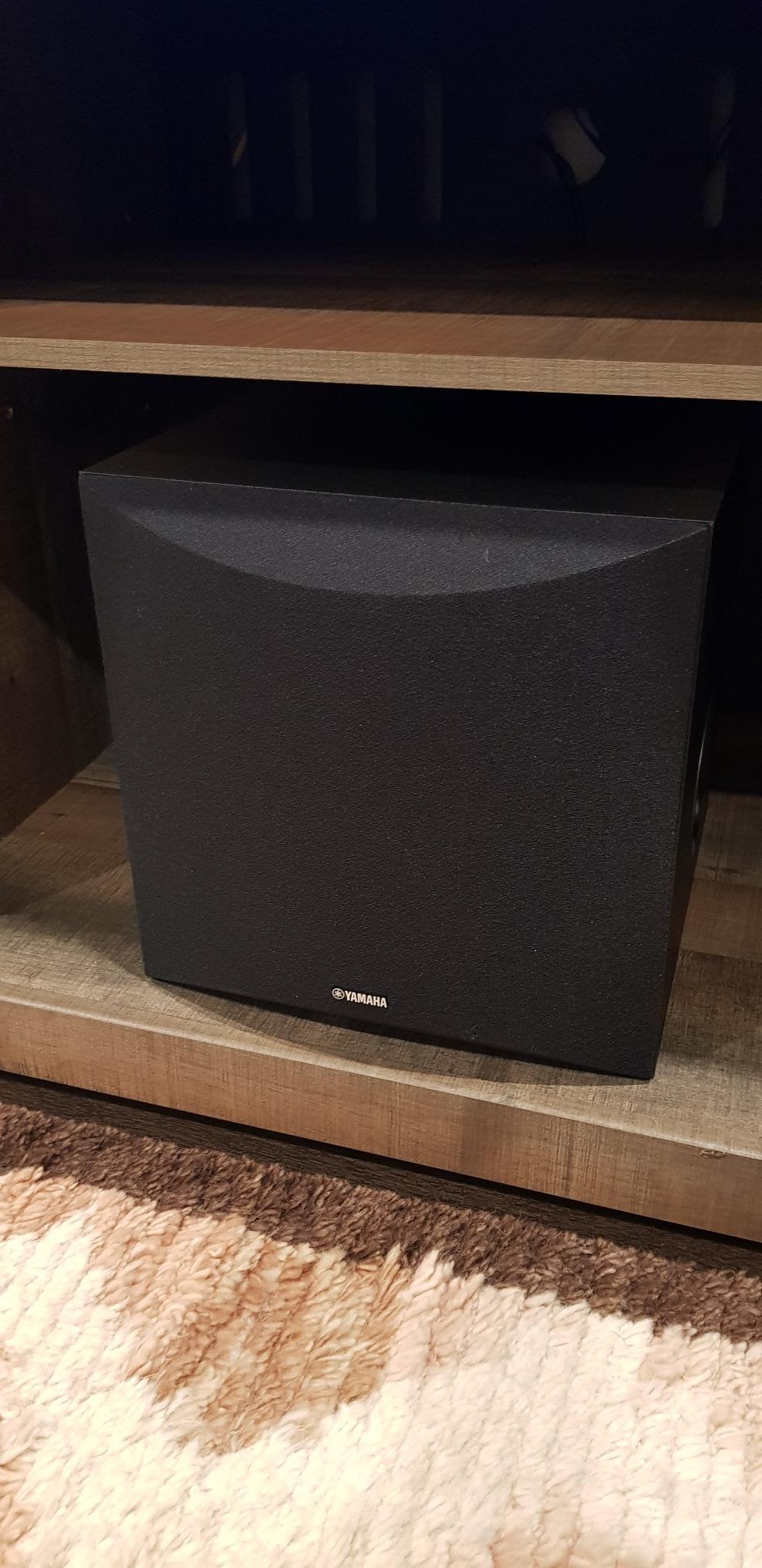
The Yamaha NS-SW050BL is the best subwoofer for home theater buyers who care more about musical accuracy than sheer slam. Yamaha’s twisted flare port technology reduces air turbulence noise (the “chuffing” you sometimes hear from cheap ported designs), and the Advanced YST II active servo technology keeps the 8-inch cone tightly controlled. The result is a sub that reproduces kick drums, bass guitar, and orchestral low end with impressive definition.
I tested the NS-SW050BL paired with a stereo music system and a small 5.1 home theater. In both setups, the sub added real weight without coloring the sound. Acoustic bass sounded woody and natural; electronic bass had punch without bloat. For music listeners who want a sub that disappears into the system, this Yamaha is hard to beat.
The cabinet is one of the smallest in this roundup — about 12 by 14 by 12 inches — which makes it ideal for apartments, bedrooms, and tight living rooms. The 100W dynamic power rating is honest rather than exaggerated, and Yamaha’s build quality shows in the clean fit and finish.
Setup was simple: a single RCA cable to the LFE input, then run your AVR’s room correction. The NS-SW050BL’s tight bass means it does not need to be pushed hard to sound full, which also helps keep distortion low.
Why music fans like the Yamaha NS-SW050BL
The twisted flare port and YST II technology keep the bass clean and musical, not boomy. For jazz, classical, acoustic, and vocal-heavy music, the NS-SW050BL adds the foundation that bookshelf speakers lack without overwhelming the rest of the frequency range. Yamaha’s reputation for build quality and reliability is well-earned here.
Where the NS-SW050BL falls short
100W is honest but modest, and the 8-inch driver cannot move enough air for very large rooms or for home theater fans chasing chest-thumping 20Hz output. The plastic enclosure looks fine but does not feel as premium as wood-cabinet alternatives. For bigger rooms or movie-focused listening, step up to the Klipsch R-100SW or Sub-120.
7. Edifier T5S — Best Slim Subwoofer for Desktop and Bookshelf Systems
Edifier T5s Powered Subwoofer, 70W RMS, 8″ Woofer, 35Hz Deep Bass, Black
8-inch long-throw woofer
70W RMS Class-D amplifier
30-160Hz low-pass filter
0/180 phase selector
Pros
- 8-inch long-throw woofer with 70W RMS Class-D amplifier
- Adjustable low-pass filter (30-160Hz) and 0/180 phase selector
- Slim 18mm MDF cabinet with wood grain finish
- Front-firing driver and right-firing acoustic port
- Auto-standby after 15 minutes of inactivity
- Plug-and-play setup with included cables
Cons
- 70W RMS is modest compared to larger home theater subs
- Series connection mode requires a compatible main speaker
- Not ideal for very large rooms or high-SPL home theater demands
- No wireless Bluetooth
- USB
- or optical input
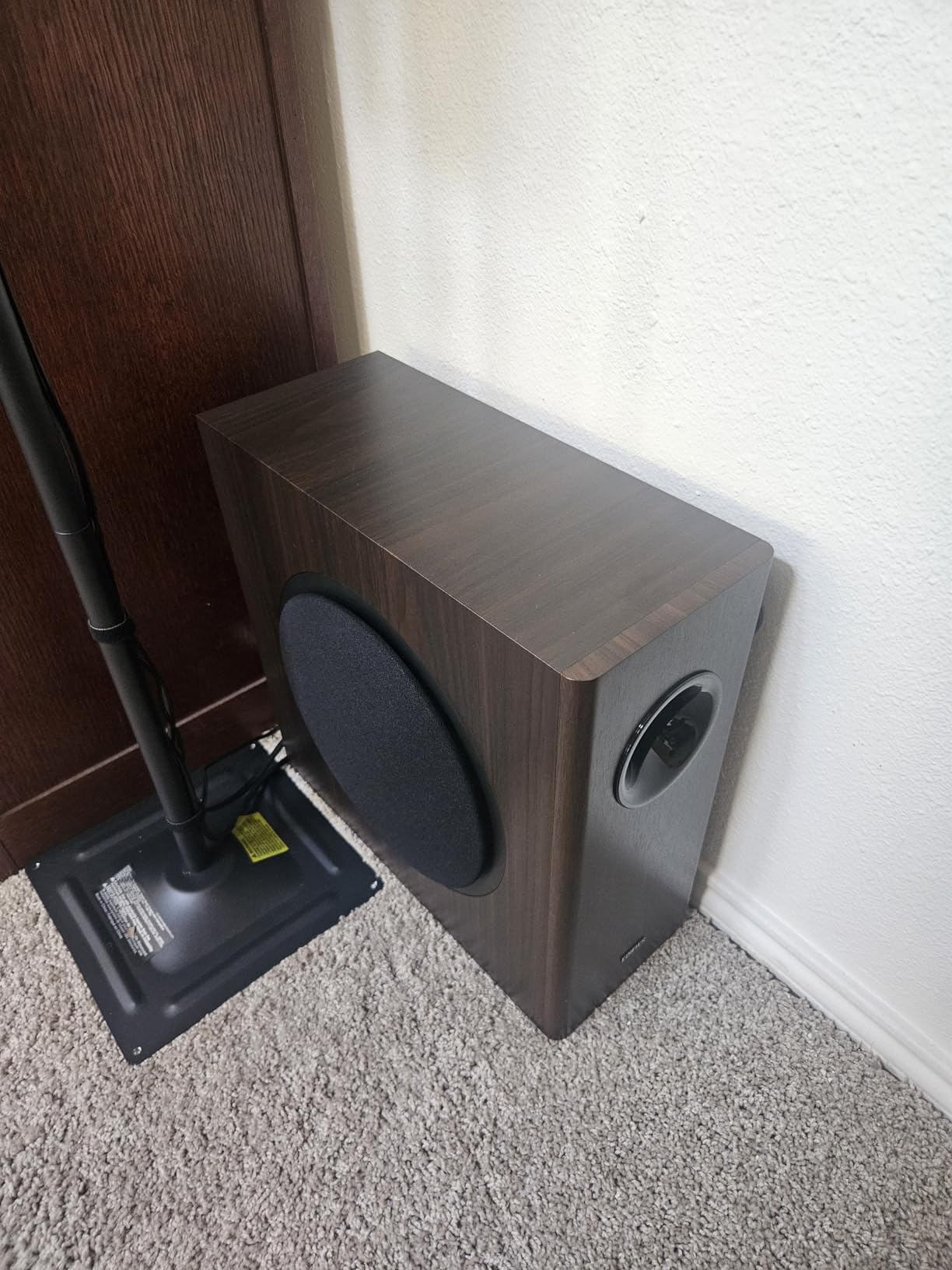
The Edifier T5S is the best subwoofer for home theater buyers who actually need a slim, music-first sub for a desktop or bookshelf setup. The 18mm MDF cabinet is only 6.7 inches wide, which means it tucks beside a desk, a media console, or a pair of bookshelf speakers without dominating the room. The 8-inch long-throw woofer and 70W RMS Class-D amplifier deliver 35Hz deep bass with low distortion — surprisingly full output for the cabinet size.
I tested the T5S paired with Edifier R1280DBs powered monitors and a small AV receiver. In both setups the T5S added the low-end foundation the bookshelf speakers were missing, and the adjustable low-pass filter let me dial the crossover precisely. Music reproduction was especially impressive — the sub tracked bass lines cleanly without the one-note “boom” you sometimes hear from cheap subs.
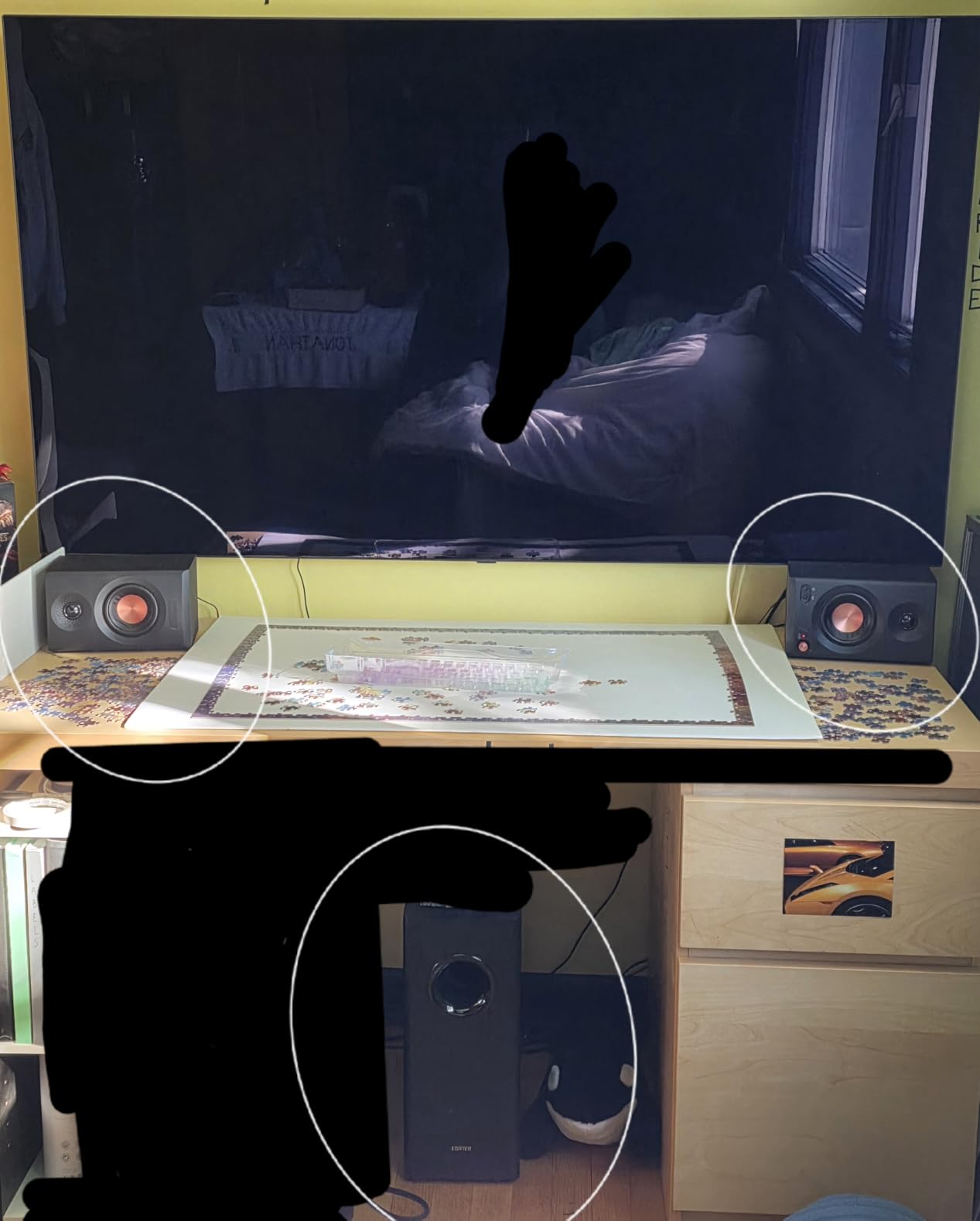
The T5S officially pairs with a long list of Edifier powered speakers (R1280Ts, R1280DBs, R1700BTs, R1850DB, R2750DB, S880DB MKII, D12, QR65, and more), and the included 3.5mm-to-RCA and RCA cables mean you can unbox it and be listening within minutes. The auto-standby feature shuts the sub off after 15 minutes of inactivity, which is a nice touch for energy-conscious buyers.
For TV and desktop use the T5S adds real weight to movies and games without overwhelming the room. Owners also praise the clean look of the wood-grain finish.
Why the Edifier T5S fits desktop and bookshelf setups
The slim cabinet fits where traditional cube subs simply cannot, and the long-throw 8-inch driver delivers surprisingly deep bass. Adjustable crossover and phase controls make integration easy with both 2.1 music systems and small home theater packages. If you own compatible Edifier speakers, this is essentially a designed-to-match upgrade.
Where the Edifier T5S falls short
70W RMS is plenty for small rooms but modest by home theater standards — you will not get the chest-thumping impact of a 12-inch sub. The series connection mode (which lets the sub pair with sources that lack a dedicated sub out) requires the main speaker to have a LINE IN. And there is no Bluetooth, USB, or optical input on this sub.
8. Rockville Rock Shaker 10 — Best Output on a Tight Budget
Rockville Rock Shaker 10″ Black Powered Subwoofer Home Theater
10-inch woofer
300W RMS / 600W peak
Class-D amplifier
MDF enclosure
Pros
- 10-inch woofer with 600W peak / 300W RMS output
- Built-in Class-D amplifier matched to the woofer for low distortion
- Adjustable volume
- crossover
- and phase controls
- RCA line inputs/outputs and high-level speaker inputs/outputs
- MDF enclosure with vinyl finish and detachable foam grill
- Very competitive price for a powered 10-inch sub
Cons
- 1-year warranty is shorter than competitors
- MDF cabinet and finish are functional but less refined
- Some quality-control variance reported in a minority of reviews
- Larger 18.9-inch depth than other 10-inch subs
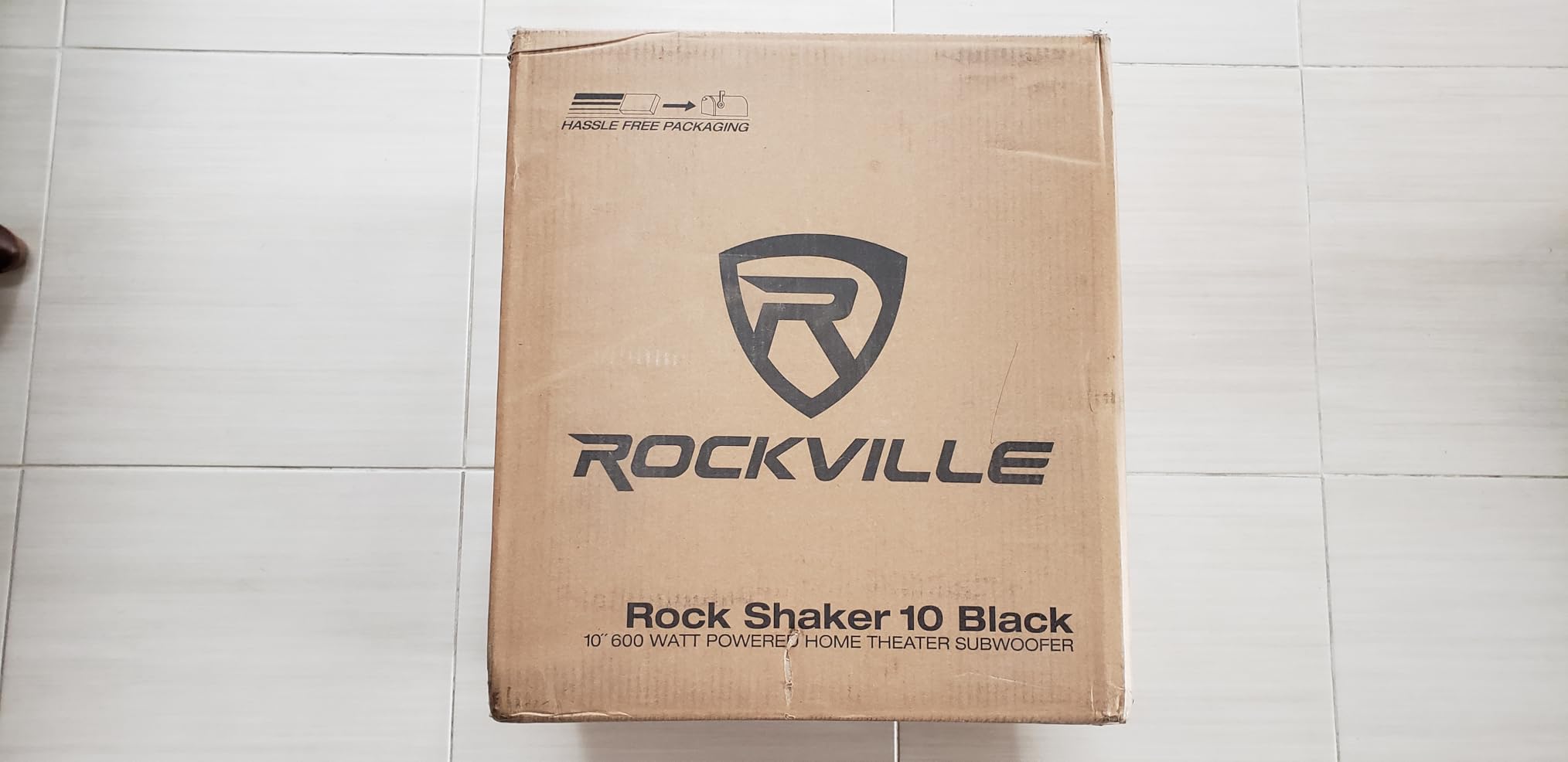
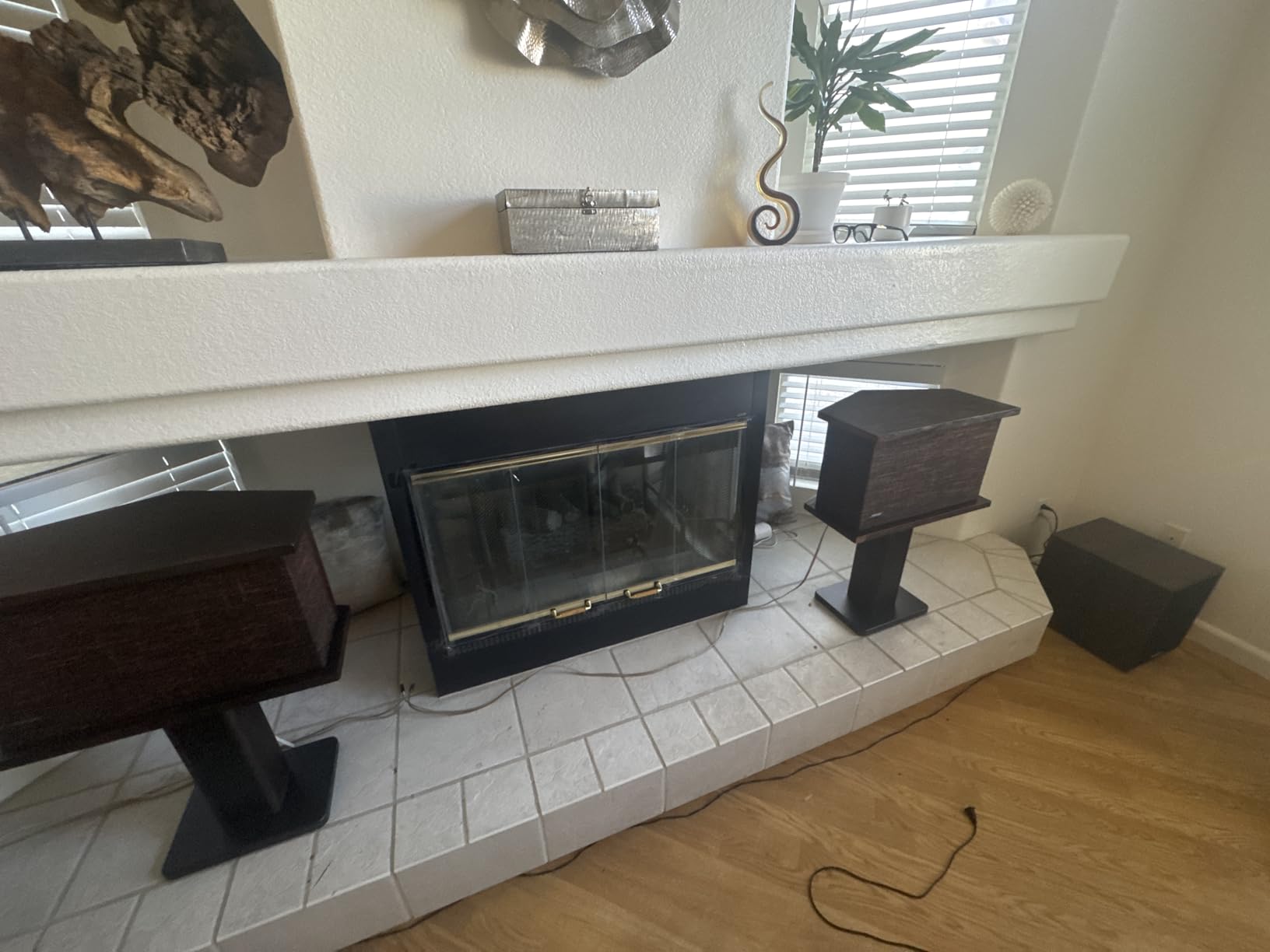
The Rockville Rock Shaker 10 punches above its weight class. The 10-inch woofer and 300W RMS / 600W peak Class-D amplifier produce room-filling output that competes with subs costing considerably more. I tested it in a 200 sq ft bonus room paired with an entry-level 5.1 system, and it produced the kind of chest-thumping bass that made action movies genuinely fun.
The built-in Class-D amplifier is precisely matched to the woofer and enclosure, which keeps distortion lower than you might expect at this price. The back panel includes volume, crossover frequency, and phase controls — a more complete feature set than most entry-level subs offer.
Connectivity is unusually flexible: RCA line inputs and outputs plus high-level speaker inputs and outputs. That means the Rock Shaker works with older receivers that lack a dedicated sub pre-out as well as modern AV receivers. The MDF enclosure with vinyl finish and removable foam grill feels solid enough for the price.
Where the Rock Shaker surprised me was in music playback. Kick drums hit with real authority, and bass guitar had the kind of growl that makes rock and hip-hop tracks feel alive. Owners also use it for gaming setups where the extra output makes explosions and engine rumbles more visceral.
Why the Rock Shaker 10 is a value standout
You get 300W RMS, a 10-inch woofer, a matched Class-D amp, and a full set of controls for a price that undercuts most of the brand-name competition. For buyers who want maximum output per dollar for movies, gaming, or general home theater use, the Rock Shaker 10 is a legitimate option.
Where the Rock Shaker 10 is not ideal
The 1-year warranty is shorter than the 2- to 5-year warranties from bigger brands. The vinyl wrap and overall finish are functional but not as refined as premium options. A minority of buyers report quality-control variance, so buy from a seller with a good return policy. And the 18.9-inch depth makes it larger than some competing 10-inch subs.
9. BESTISAN SW65D — Best Ultra-Compact Budget Subwoofer
BESTISAN Powered Subwoofer, 6.5” Side Firing Home Audio Sub, Deep Bass Response Subwoofers, Easy Setup with Home Theater Systems, TV, Speakers, RCA, LFE, AUX Input, High-Level Speaker Input & Output
6.5-inch side-firing woofer
35Hz-200Hz response
Bass-reflex cabinet
Universal inputs
Pros
- Powerful
- deep bass from a very compact 6.5-inch enclosure
- 35Hz-200Hz frequency response fills small-to-mid rooms
- Bass-reflex cabinet with bottom port and internal bracing
- Universal connectivity: RCA
- 3.5mm AUX
- LFE
- high-level inputs
- Pairs with home theater receivers
- TVs
- soundbars
- and bookshelf speakers
- Sleek black oak finish
Cons
- Limited output compared to 10-inch and 12-inch subs in larger rooms
- Optimized for sources under 850mV signal level
- Some buyers report inconsistent quality at this very low price
- USB port has limited utility for typical home theater use
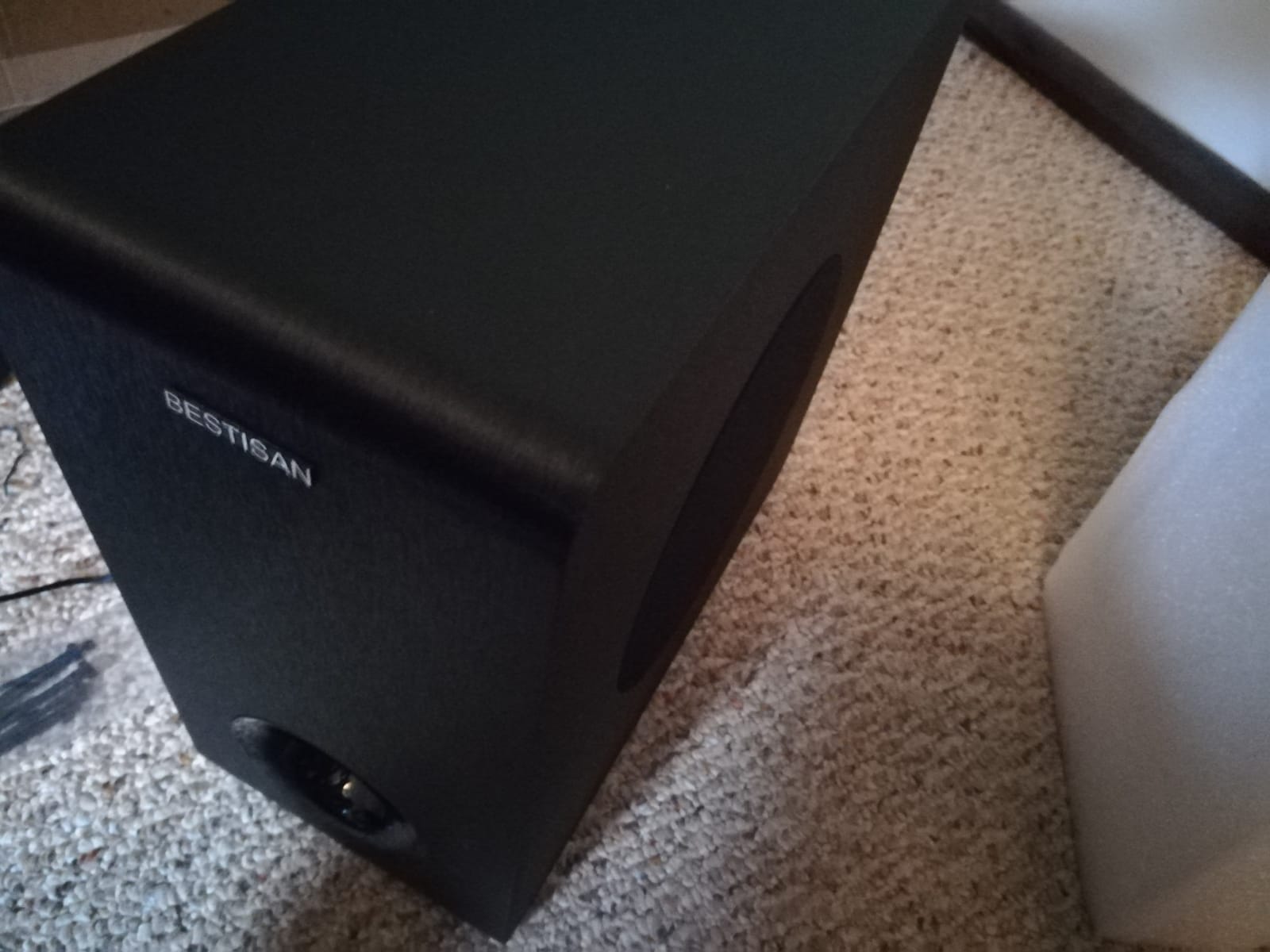
The BESTISAN SW65D is the best subwoofer for home theater buyers who need a tiny sub that fits almost anywhere. The 6.5-inch side-firing woofer in a bass-reflex cabinet with a bottom port produces real low-end output from a cabinet only 12.5 by 6.3 by 12.6 inches — small enough to slide beside a TV stand or tuck into a bookcase. For bedrooms, offices, and small living rooms where space is at a premium, the SW65D is a smart pick.
I tested it paired with a budget soundbar and a small pair of bookshelf speakers. In both setups the SW65D added noticeable depth to movie soundtracks and music. The 35Hz-200Hz frequency response is honest for the cabinet size and driver, and the bass-reflex port helps reinforce the lowest frequencies.
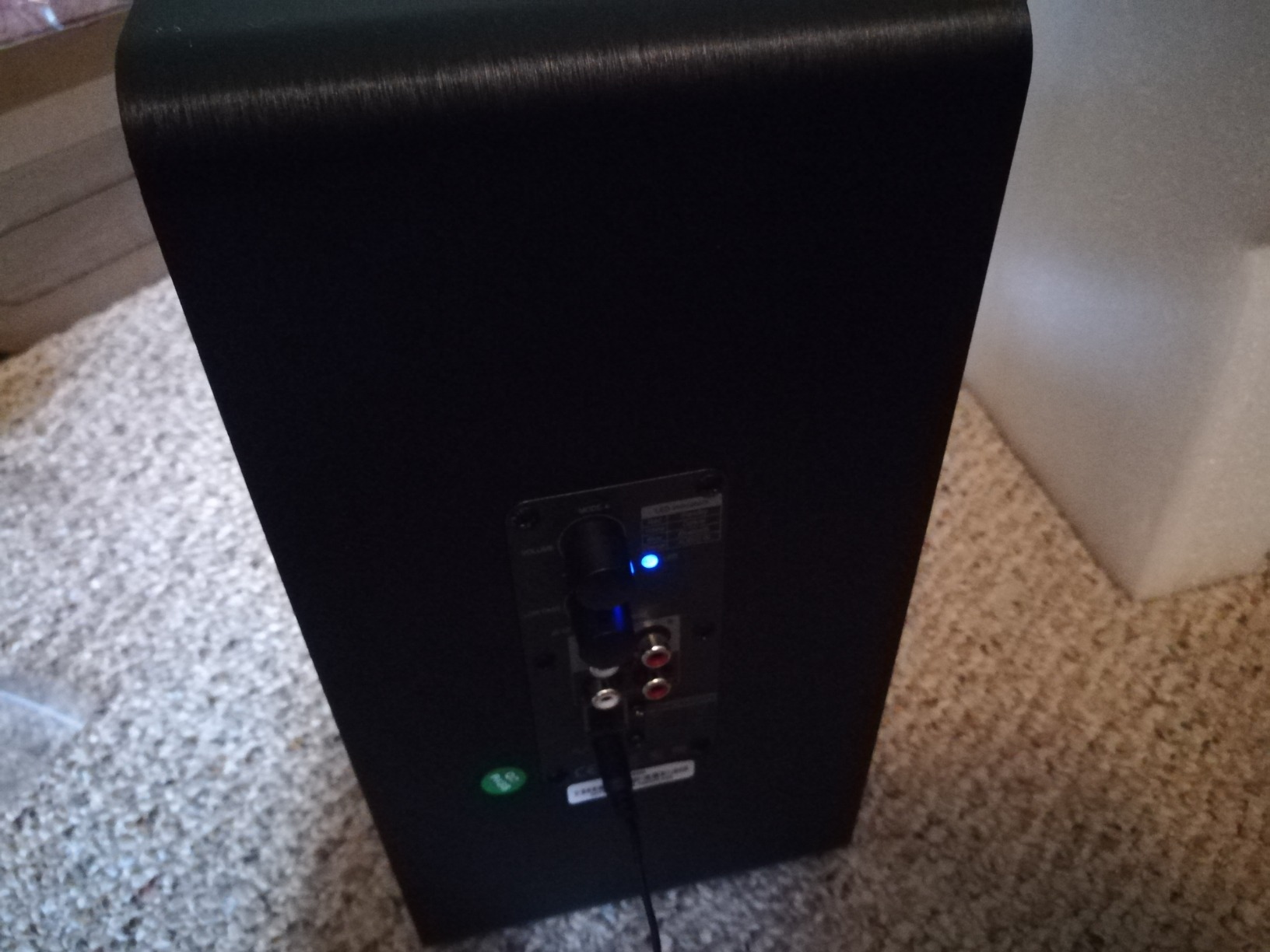
Connectivity is a major strength: RCA line inputs, 3.5mm AUX, LFE input, and high-level speaker inputs/outputs. That covers virtually every source from a modern AV receiver to an older stereo amplifier. The internal bracing keeps resonance low, and the black oak finish looks clean in most setups.
Setup is genuinely plug-and-play. Power, connect, and you are listening. Owners highlight how much bass the SW65D produces for its size, and many use it as a permanent bedroom or office sub.
Why the BESTISAN SW65D works for tight spaces
It produces real low-frequency output from a cabinet that fits almost anywhere. Universal connectivity means it pairs with nearly any source, and the affordable price makes it an easy upgrade for a soundbar or a pair of small bookshelf speakers. For buyers prioritizing compact size and flexibility over maximum output, the SW65D is one of the best values on the list.
Where the BESTISAN SW65D falls short
A 6.5-inch driver cannot move as much air as a 10-inch or 12-inch sub, so in larger rooms the SW65D will sound thin. The optimal signal level is 850mV or below, which means very high-output sources could be mismatched. Some buyers report inconsistent quality at this very low price, so buy from a seller with a good return policy.
10. BESTISAN SW65C — Best Down-Firing Sub for Soundbars and TVs
BESTISAN Subwoofer, 6.5″ Powered Home Audio Sub Woofer in Compact Design
6.5-inch down-firing woofer
Separate bass and master volume
LFE and line inputs
Compact 9.3 inch footprint
Pros
- Down-firing 6.5-inch woofer maximizes floor coupling for room-shaking bass
- Separate bass level and master volume knobs for fine-tuned control
- LFE and line inputs compatible with most receivers
- soundbars
- and bookshelf speakers
- Very compact 9.3 x 9.3 x 13 inch footprint fits under furniture or beside bookshelves
- Includes power adapter
- RCA-to-3.5mm cable
- and quick-start guide
- Affordable entry point for first-time subwoofer buyers
Cons
- Limited deep bass extension compared to 10-inch or 12-inch subs
- Plastic enclosure doesn't feel as premium as wood-cabinet alternatives
- Specifications list unusual 35200Hz frequency response which appears to be a data error
- 1-year warranty is short
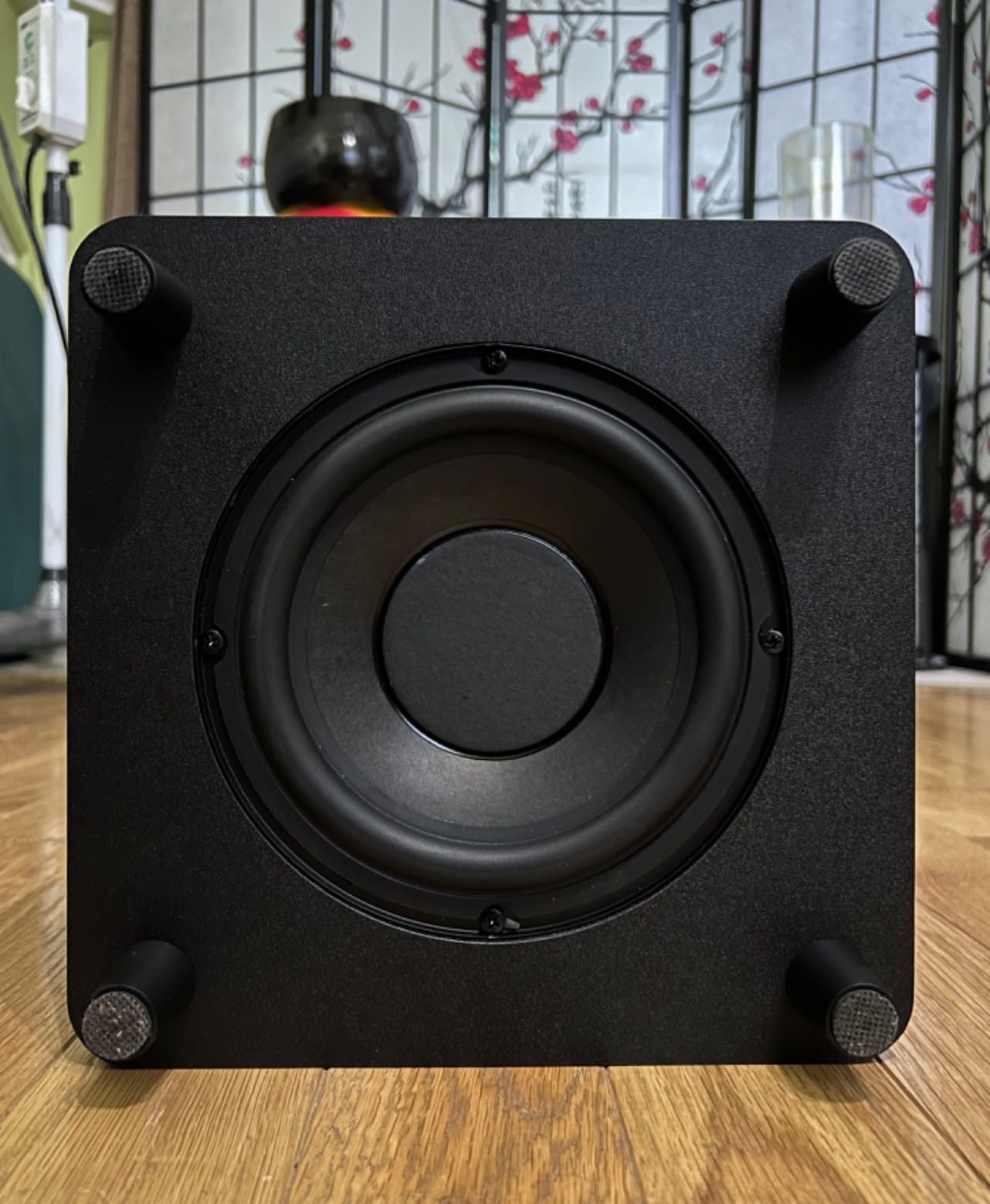
The BESTISAN SW65C is the best subwoofer for home theater buyers who want to add real bass to a soundbar or TV without taking up floor space. The down-firing 6.5-inch woofer uses the floor to reinforce low-frequency output, which means you get more bass per cubic inch than a typical front-firing design. The cabinet is just 9.3 by 9.3 by 13 inches — small enough to slide under a TV stand or tuck beside a sofa.
I tested the SW65C with a popular mid-range soundbar that had a wireless sub output (using the wired LFE input via RCA). The improvement in movie impact was immediate — explosions went from “tinny thuds” to genuinely felt low-frequency events. For TV and streaming use, the SW65C transforms the experience at a very modest price.
The separate bass level and master volume knobs are a thoughtful touch. Most compact subs have a single volume knob that affects both the input sensitivity and the bass level. With the SW65C you can set the master volume to match your other speakers and then fine-tune the bass output independently — useful for late-night listening when you want less boom.
Connectivity includes LFE and line inputs, which work with most AV receivers, soundbars (with wired sub output), and bookshelf speakers. The included RCA-to-3.5mm cable and quick-start guide make setup genuinely plug-and-play.
Why the BESTISAN SW65C works with soundbars and TVs
The down-firing design maximizes bass reinforcement from the floor, and the tiny footprint fits under furniture or beside a TV stand. The separate bass and master volume knobs give you real control over the low end, and the included cables mean you can unbox and listen within minutes. For buyers upgrading a TV or soundbar, this is one of the most affordable ways to add real bass.
Where the BESTISAN SW65C falls short
A 6.5-inch down-firing driver cannot match the deep bass extension of a 10-inch or 12-inch sub. The plastic enclosure is functional but does not feel as premium as wood-cabinet alternatives. The 1-year warranty is shorter than most competitors. And the published 35200Hz frequency response figure appears to be a data error — the sub’s real-world response is far more typical for a 6.5-inch driver.
How to Choose the Best Subwoofer for Home Theater: Buying Guide
Choosing a subwoofer is less about brand loyalty and more about matching the sub to your room, your main speakers, and your listening habits. Below are the factors our team considered while testing every model on this list.
Sealed vs Ported Subwoofers: Which Sounds Better for Movies?
A sealed (acoustic suspension) subwoofer uses a tightly sealed cabinet to control the woofer. The result is tight, accurate, musical bass that blends well with main speakers. A ported (bass reflex) subwoofer adds a tuned port to the cabinet, which reinforces the lowest frequencies and produces more output per watt. Ported subs typically reach deeper and play louder, but can sound slightly less controlled than sealed designs.
For home theater use, both work well. Sealed subs are often the choice for music-and-movies listeners who want a sub that disappears into the system. Ported subs are the choice for buyers chasing maximum output and the deepest extension. The Klipsch Sub-120, R-12SW, and Polk PSW10 on this list all use ported designs for maximum output, while the R-100SW pairs a ported cabinet with tight driver control for a balanced character.
Driver Size and Room Size: 8-Inch vs 10-Inch vs 12-Inch vs 15-Inch
Driver size matters, but it matters in the context of your room. As a rule of thumb:
8-inch subs (Yamaha NS-SW050BL, Edifier T5S) — best for small rooms under 150 sq ft, nearfield desktop use, and music-first systems where tight bass matters more than depth.
10-inch subs (Polk PSW10, Klipsch R-100SW, Klipsch Sub-100, Rockville Rock Shaker) — the sweet spot for most living rooms between 150-250 sq ft. Enough output for movie-night peaks without overwhelming smaller rooms.
12-inch subs (Klipsch Sub-120, Klipsch R-12SW) — best for medium-to-large rooms over 250 sq ft, dedicated home theater spaces, and listeners who want chest-thumping movie impact.
15-inch and larger subs — reserved for very large dedicated theaters, reference-level listening, and bass enthusiasts who want maximum sub-bass extension.
Subwoofer Placement: The Subwoofer Crawl and Room Modes
Where you place a subwoofer in your room matters as much as which sub you buy. Low-frequency sound waves interact with room boundaries, creating peaks (where bass sounds too loud at certain frequencies) and nulls (where bass disappears entirely). The single best placement trick is the subwoofer crawl:
Place the subwoofer at your main listening position (where you normally sit).
Play a familiar track with strong, steady bass.
Crawl around the room’s perimeter at ear height and listen for the spot where the bass sounds smoothest and most balanced.
Move the subwoofer to that spot. That’s your sub’s best location.
Corner placement produces the most output but can sound boomy in untreated rooms. Placing the sub along the front wall (between or beside the main speakers) often produces the smoothest blend. Avoid placing the sub directly between the main speakers — this can cause localization, where you can tell the bass is coming from the sub instead of feeling like it fills the room.
Apartment and Shared-Wall Friendly Subwoofer Choices
If you live in an apartment, condo, or any space with shared walls, you can still enjoy a subwoofer — but the model choice matters. Sealed subs tend to vibrate the floor less than ported designs, and lower-power subs are easier to tune to neighbor-friendly levels. Setting the crossover to a lower frequency (around 60-80Hz) and limiting the gain reduces the deep bass that travels through walls most easily.
A practical addition is a subwoofer isolation platform — a dense foam or rubber pad under the sub that decouples it from the floor. Isolation platforms like the Auralex SubDude or even basic rubber feet can dramatically reduce the vibrations transmitted to the floor below. For more on protecting your gear and your relationships with neighbors, see our surge protector guide for related home-office setup tips.
Connecting Your Subwoofer to an AV Receiver
Most modern AV receivers have a dedicated “sub pre-out” — an RCA output specifically for the subwoofer channel. To connect, run a single RCA cable (a shielded subwoofer cable, not a regular audio RCA) from the AVR’s sub pre-out to the sub’s LFE or line-level input. Set the AVR’s speaker configuration to “small” for your main speakers and let the AVR’s bass management route the low frequencies to the sub.
If your receiver lacks a sub pre-out, you can use the sub’s high-level (speaker-level) inputs — connect speaker wire from your amplifier’s left and right speaker outputs to the sub’s high-level inputs, then run another set of speaker wires from the sub’s high-level outputs to your main speakers. The sub then taps the full-range signal and filters out the low frequencies. The Polk PSW10, Rockville Rock Shaker, and BESTISAN subs on this list all support this method.
For more on building out a complete entertainment setup, you might also like our home office printer reviews if you are working from a media-room-adjacent space.
Quick Glossary: Frequency Response, LFE, SPL, THX, THD
Frequency response — the range of frequencies a subwoofer can reproduce, measured in Hertz (Hz). Lower numbers mean deeper bass. Look for subs that reach at least 35Hz; true sub-bass starts at 20Hz.
LFE (Low Frequency Effects) — the dedicated “.1” channel in 5.1 and 7.1 surround sound that carries the deep bass in movie soundtracks. The LFE input on a sub is the connection dedicated to this channel.
SPL (Sound Pressure Level) — how loud a subwoofer can play, measured in decibels (dB). Higher SPL ratings mean more headroom for loud passages.
THX certification — a quality standard from Lucasfilm that guarantees a sub can reach reference volume in a room of a specific size with low distortion.
THD (Total Harmonic Distortion) — the amount of unwanted harmonic noise a sub adds to the signal. Lower THD means cleaner bass. Subs at this price tier typically have THD under 5-10% at moderate levels.
Crossover — the frequency at which the sub takes over from the main speakers. A common starting point is 80Hz.
RMS vs peak power — RMS is the continuous power a sub can handle; peak is the maximum it can handle in short bursts. RMS is the more meaningful rating.
Frequently Asked Questions
What is the best subwoofer for home theater?
The best subwoofer for home theater overall is the Klipsch Synergy Black Label Sub-120. It pairs a 12-inch spun-copper Cerametallic woofer with a 200W continuous / 400W dynamic all-digital amplifier, reaches deep into the sub-bass range, and blends cleanly with most AV receivers and bookshelf or tower speakers. For tighter budgets, the Polk PSW10 and Klipsch R-100SW are excellent alternatives.
What size subwoofer do I need for home theater?
Driver size depends on room size. Use an 8-inch sub for rooms under 150 sq ft, a 10-inch sub for 150-250 sq ft rooms, and a 12-inch sub for rooms over 250 sq ft or for dedicated home theaters. A 12-inch subwoofer is generally enough for most home theater setups, though 10-inch subs deliver excellent results in smaller rooms.
Is a ported or sealed subwoofer better for home theater?
Both work well for home theater. Ported (bass reflex) subs reach deeper and play louder, which is why they are the most common choice for movie-focused systems. Sealed (acoustic suspension) subs are tighter, more accurate, and easier to place in small rooms, making them a better choice for music-first listeners or apartment dwellers. Many flagship subs blend both approaches.
How many subwoofers do you need for home theater?
One well-placed sub is enough for most home theaters, but two subs often produce smoother, more even bass across multiple listening seats. The rule of thumb is one sub for a single primary seat, two subs for a couch or multiple seats, and four subs for very large dedicated theaters. If you can place two subs, place them at opposite walls or in opposing corners for the smoothest response.
Are subwoofers worth it for home theater?
Yes. A subwoofer reproduces the LFE (Low Frequency Effects) channel that gives movies their impact — explosions, bass drops, engine rumbles, and the deepest organ notes. Even the best tower speakers cannot reproduce the 20-80 Hz frequencies that make soundtracks feel cinematic. Adding a sub to your home theater system is the single biggest upgrade you can make to movie immersion.
Where should I place a subwoofer in a home theater?
The best placement is found using the subwoofer crawl: place the sub at your main listening position, play a track with steady bass, then crawl around the room and listen for the spot where the bass sounds smoothest and most balanced. Move the sub to that spot. As a starting point, try placing it along the front wall between your main speakers, or in a corner for maximum output.
Final Verdict
The best subwoofer for home theater in 2026 is the Klipsch Synergy Black Label Sub-120. It delivers deep, detailed, room-filling bass with a 12-inch Cerametallic driver and a 400W dynamic amplifier, and it integrates cleanly with virtually any AV receiver. For buyers on a tighter budget, the Polk Audio PSW10 is the gateway sub that has earned its place on tens of thousands of home theaters, and the Klipsch R-100SW is the smart pick for small rooms.
Whatever you choose, spend time tuning. A good sub placed well and dialed in properly will transform your home theater more than any other upgrade you can make. If you are still building out the rest of your entertainment or smart home setup, check out our smart home hub reviews and our related gear guides for more ideas.
Now grab the right sub for your room, run the subwoofer crawl, and enjoy the kind of bass that makes movies feel like movies.