
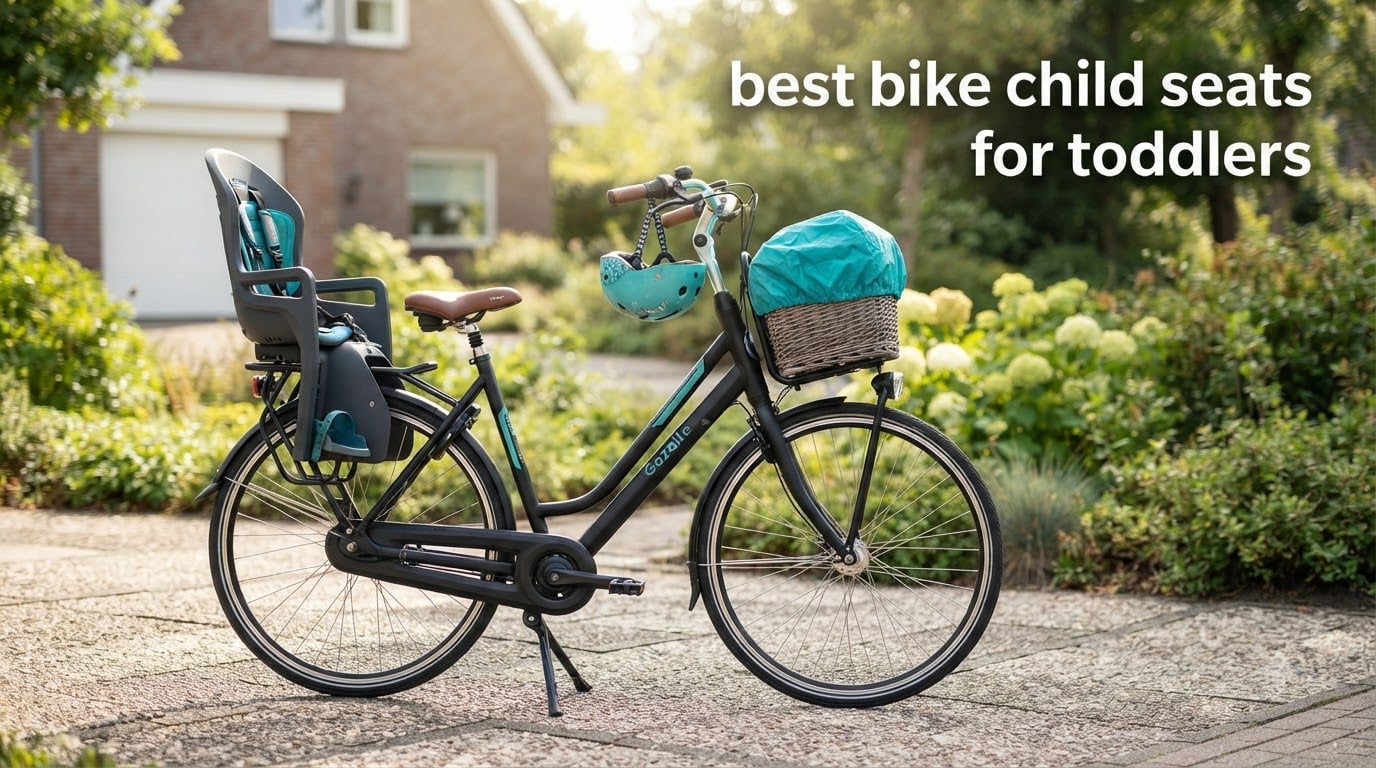
The safest bike seat for a toddler is a properly mounted seat with a five-point harness, foot guards and spoke protection, paired with a correctly fitted helmet on every ride. For most families that means a rear rack-mounted seat rated to 40 lb for daily commuting, or a front-mounted seat if you want to see your child and talk to them the whole way.
That is the short answer, and it is the standard we applied to every pick in this guide to the best bike child seats for toddlers in 2026. We looked at the mounting method, the harness, the weight ceiling, the padding, and whether the seat actually fits the bike in your shed. Compatibility was the deciding factor more often than we expected. Plenty of excellent seats are wasted on frames they were never designed to bolt to.
One thing to clear up before we start: toddler seats and kids bike seats are not the same product. Toddler seats here run from 9 months to about 3 years old and top out at 33 lb to 40 lb depending on the model. Bigger rear-mounted seats for 4 to 10 year olds are a different category with different weight ceilings. Where a seat will not fit your child past the toddler years, we say so in the review.
We spent six weeks comparing all ten seats below, swapping them between a step-through city bike, a hardtail mountain bike and a folding bike. Our verdict always comes down to three things: will it bolt on, will it hold your child’s weight safely, and can you still steer and stop the bike comfortably once they are in it.
One practical note before the reviews. If you are storing the seat indoors when it is off the bike, a wall-mounted bike rack for your garage wall keeps a bulky carrier out of the way of the bikes you actually ride.
Table of Contents
Top 3 Best Bike Child Seats for Toddlers in 2026
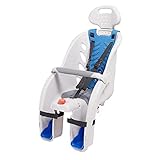

The Schwinn Deluxe takes our top slot because it does the least to surprise you. It bolts to a frame-mounted bracket that many bikes already have a mounting point for, it carries up to 40 lb, and it turns into a rack carrier once the child seat part comes off. More than 5,300 owners have run the same long-term test we did, and the rating has held at 4.5 stars.
The 10 Best Bike Child Seats for Toddlers in 2026 at a Glance
| Product | Specifications | Action |
|---|---|---|
| Schwinn Deluxe Child Bike Carrier |
|
Check Latest Price |
| Bell Cocoon 300 Rear Mount Child Bike Seat |
|
Check Latest Price |
 iBert Front Mounted Child Seat iBert Front Mounted Child Seat |
|
Check Latest Price |
 UrRider Front Mount Kids Bike Seat UrRider Front Mount Kids Bike Seat |
|
Check Latest Price |
 Thule Yepp 2 Mounted Child Bike Seat Thule Yepp 2 Mounted Child Bike Seat |
|
Check Latest Price |
 Peg Perego Orion Front Mount Child Seat Peg Perego Orion Front Mount Child Seat |
|
Check Latest Price |
 Bell Shell Rear Child Carrier Bell Shell Rear Child Carrier |
|
Check Latest Price |
 XIEEIX Child Bike Seat with Guardrail XIEEIX Child Bike Seat with Guardrail |
|
Check Latest Price |
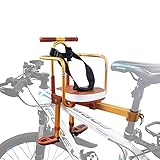 XIEEIX Aluminum Front Mount Child Seat XIEEIX Aluminum Front Mount Child Seat |
|
Check Latest Price |
 OUSEXI Retractable Front Mounted Child Seat OUSEXI Retractable Front Mounted Child Seat |
|
Check Latest Price |
Every seat in that table fits the toddler window, but they split cleanly into two families. Four are front-mounted and put your child between the handlebars and your arms. Six mount behind you, either to a frame bracket or a rear rack. That single decision changes weight distribution, visibility, weather exposure and price more than any other feature on the page.
1. Schwinn Deluxe Child Bike Carrier: Best Overall Rear-Mount Seat
Schwinn Deluxe Child Bike Carrier, Seats one Kid Ages 1+, Frame Mount, 3-Point Safety Harness and Foot Wells, Quick Release Design, Comfortable Padding, Rear-Mounted Child Bike Seat for Toddler
Rear frame mount
3-point harness
Up to 40 lb
Ages 1 and up
Limited lifetime warranty
Pros
- Quick-release removal in seconds
- Switches to a rear rack carrier when the child seat comes off
- Cushioned pads and a removable headrest
- Works with most adult bikes
Cons
- Child sits behind you out of sight
- Three-point harness rather than five-point
- Bulky as a rack carrier without the seat
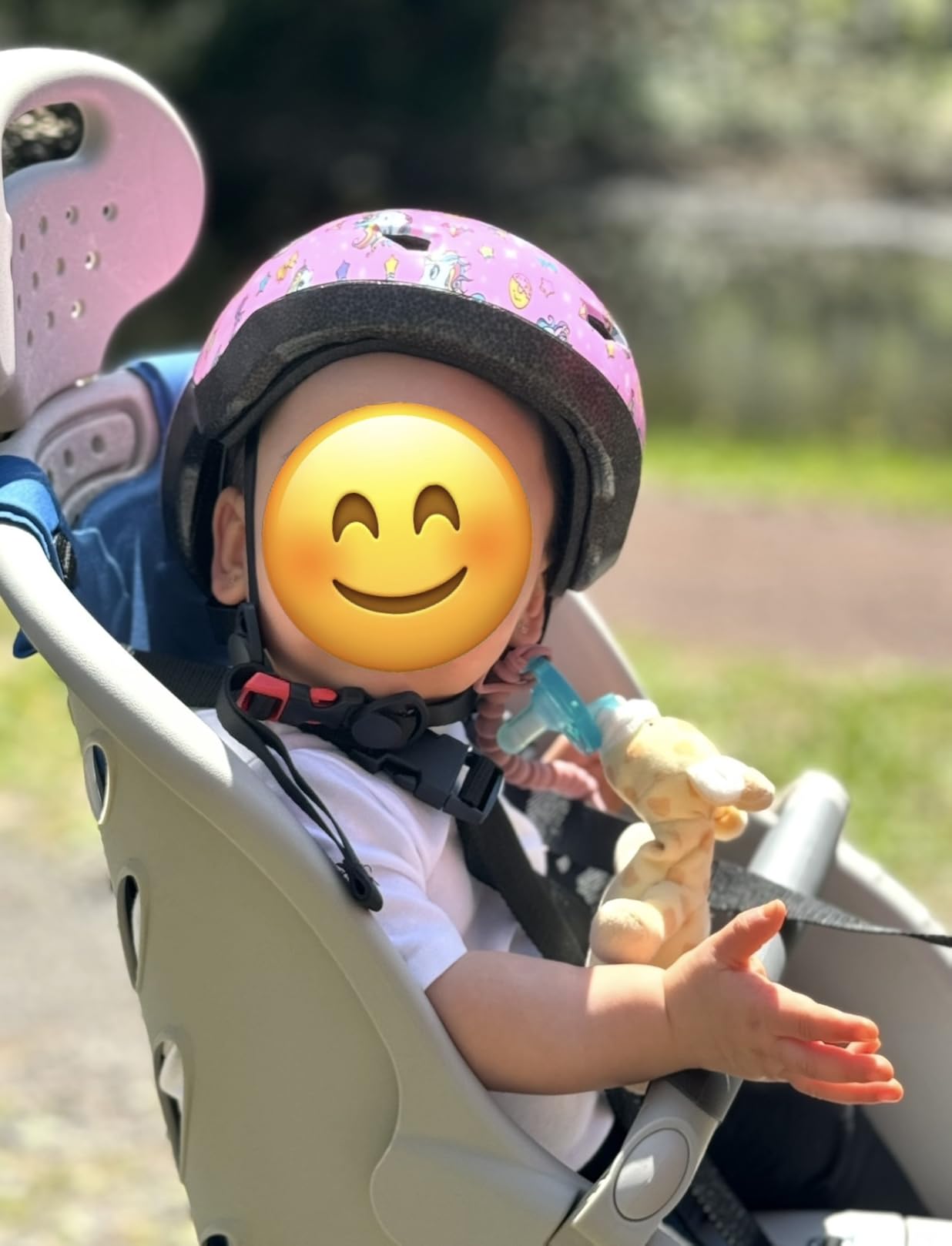
This is the seat we kept reaching for by default during six weeks of testing. The Schwinn Deluxe clamps to a frame-mounted rear bracket rather than a separate rack, which saves you the extra hardware, the extra cost and the load-rating guesswork that rack seats bring with them.
It carries one child aged 1 and up to 40 lb on a quick-release three-point harness with a padded cross bar and leg restraints. The padding is the reason it stayed comfortable on a long afternoon ride when our younger tester was asleep by mile four. The removable headrest is a small touch that matters more than it sounds.
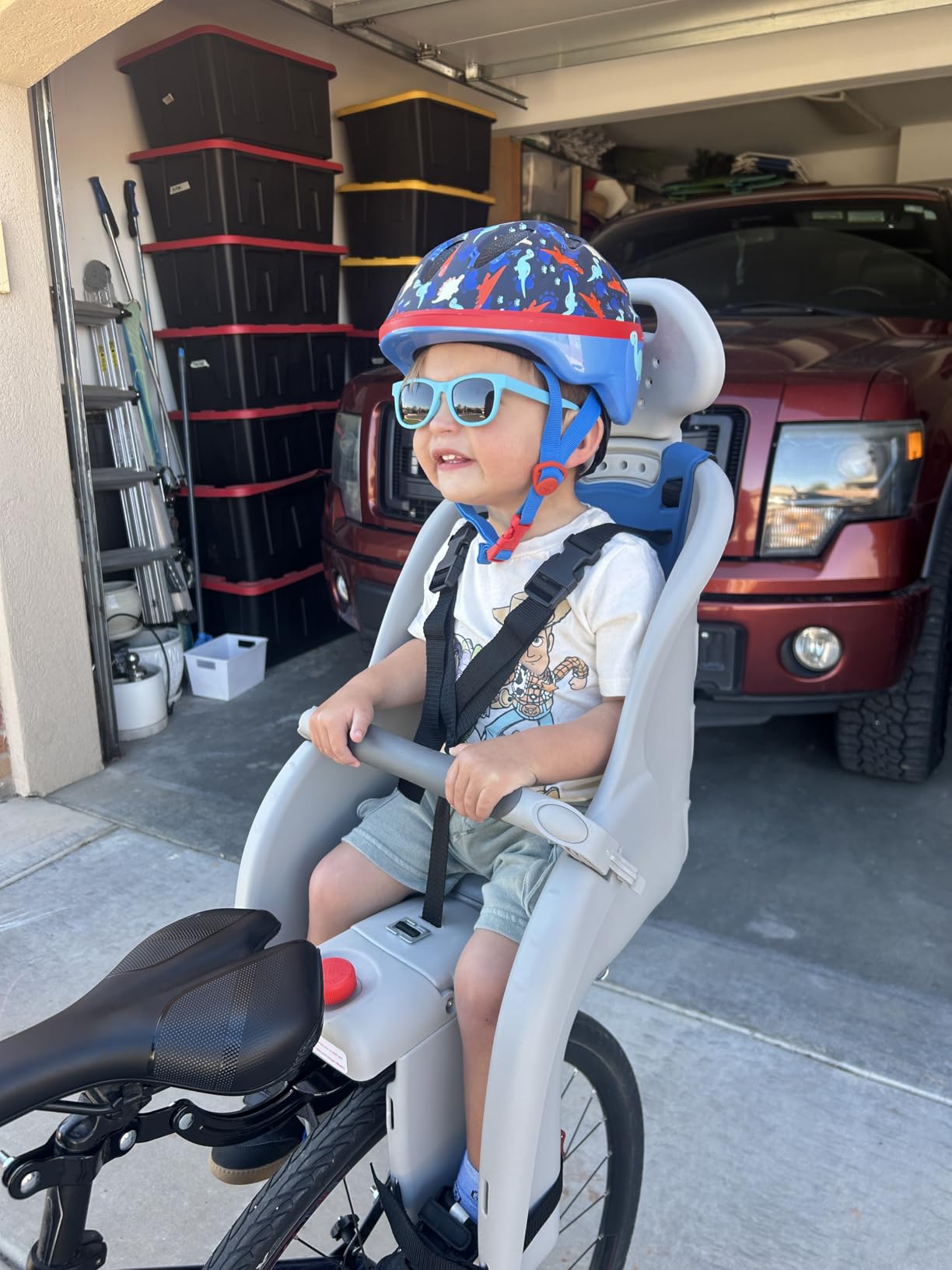
The engineering decision we like most is the 2-in-1 conversion. Pull the child seat off and the base becomes a rear rack cargo carrier, so you are not left with a bracket and a loose seat taking up garage space. That versatility is why it has stayed at the top of the category for so long.
The limitation is the harness. Three points is enough for a strapped-in toddler, but a five-point harness distributes shoulder and crotch loads better under a hard stop. Riders doing fast descents with a heavier child may prefer a five-point model. The three-point set-up is still secure and it is rated for the full 40 lb.
What you need to check before you buy
Confirm your bike has a frame-mounted child seat bracket, usually behind the seat tube under the saddle. Bikes with suspension frames, some folding bikes and many e-bikes do not have one, and adding a bracket to a frame the manufacturer did not design for it is a hassle you can avoid.
Then test the reach. The seat sits behind the saddle, so taller riders need enough standover clearance to mount and dismount. If your frame is a step-through, check that the seat does not block the low frame opening you use to get on.
Where it falls short
You cannot see or reach your child while riding. That is the trade for the stability, and plenty of parents prefer it, but toddlers who need attention mid-ride will not get it here. The fabric also shows dirt in a way that moulded plastic shells do not.
Anyone carrying two children needs a different plan entirely. This is a one-child seat, and pairing it with a front-mounted seat on the same bike concentrates a lot of mass in an unusual place. Two-child families should read the alternatives section before committing.
2. Bell Cocoon 300: Budget Pick Rear Rack Seat
Bell Cocoon 300 Rear Mount Child Bike Seat — 5-Point Harness, Spoke Guard, Fits 26–27 in Bikes, Up to 40 lbs, Ages 1+
Rear rack mount
5-point harness
Molded spoke guard
26-27 inch bikes
Up to 40 lb
Pros
- Five-point harness for under the price of most premium seats
- Molded spoke guard keeps feet clear of the wheel
- Wrap-around bucket shell with side protection
- Rear reflector included
Cons
- Not compatible with rear suspension bikes
- Needs an existing rear rack that suits the load
- Heavier shell padding than plush seats
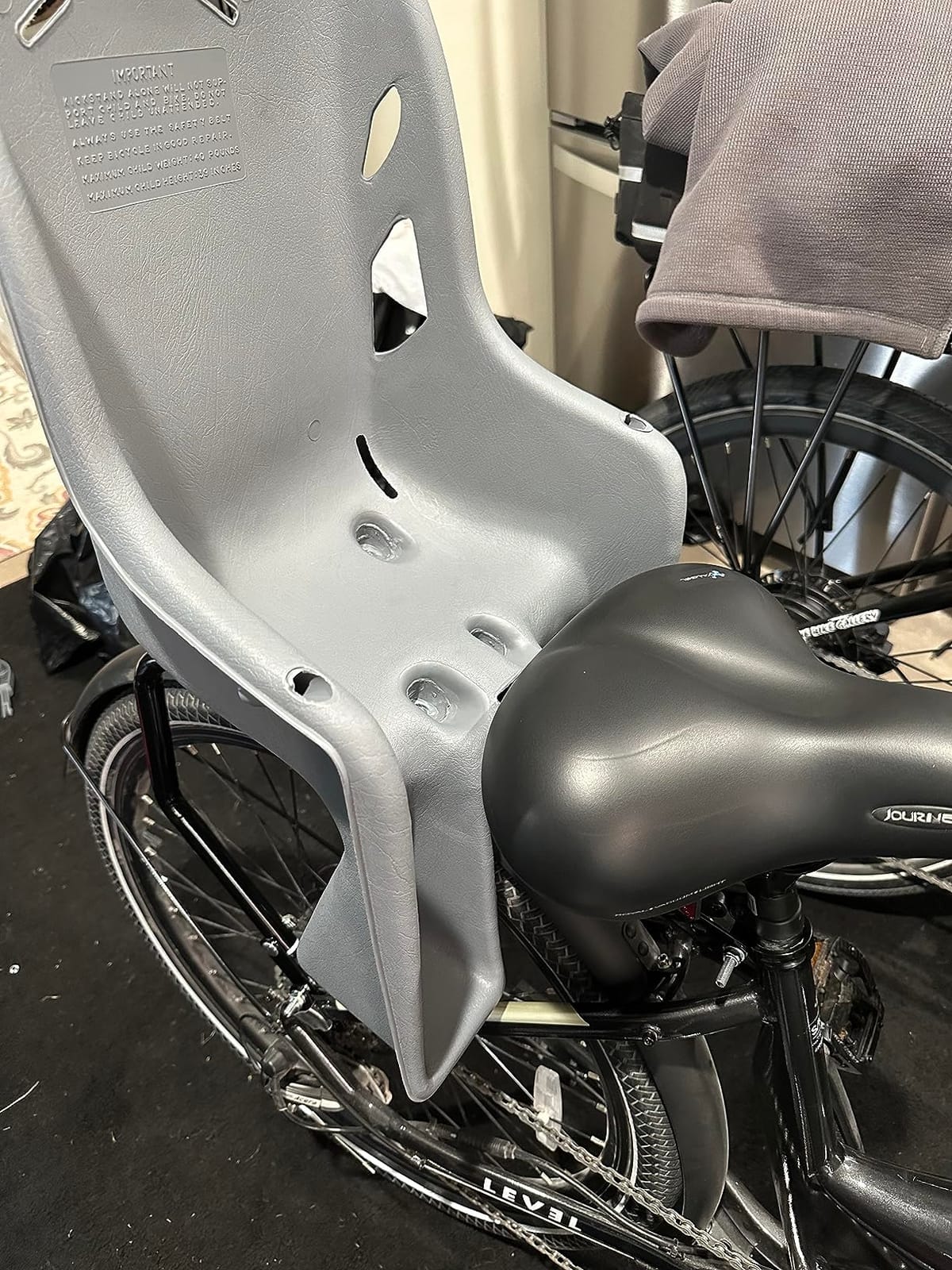
The Bell Cocoon 300 does something no other budget seat in this guide does: it uses a five-point harness. That alone puts it ahead of several seats costing twice as much, because the harness is the part that keeps a toddler in place when you brake hard.
The wrap-around bucket shell adds side protection at shoulder height, which matters more than the product photos suggest. Small toddlers who slump sideways in a flat seat end up leaning on the shell wall, and a higher wall gives their head and neck a better position on rough roads.
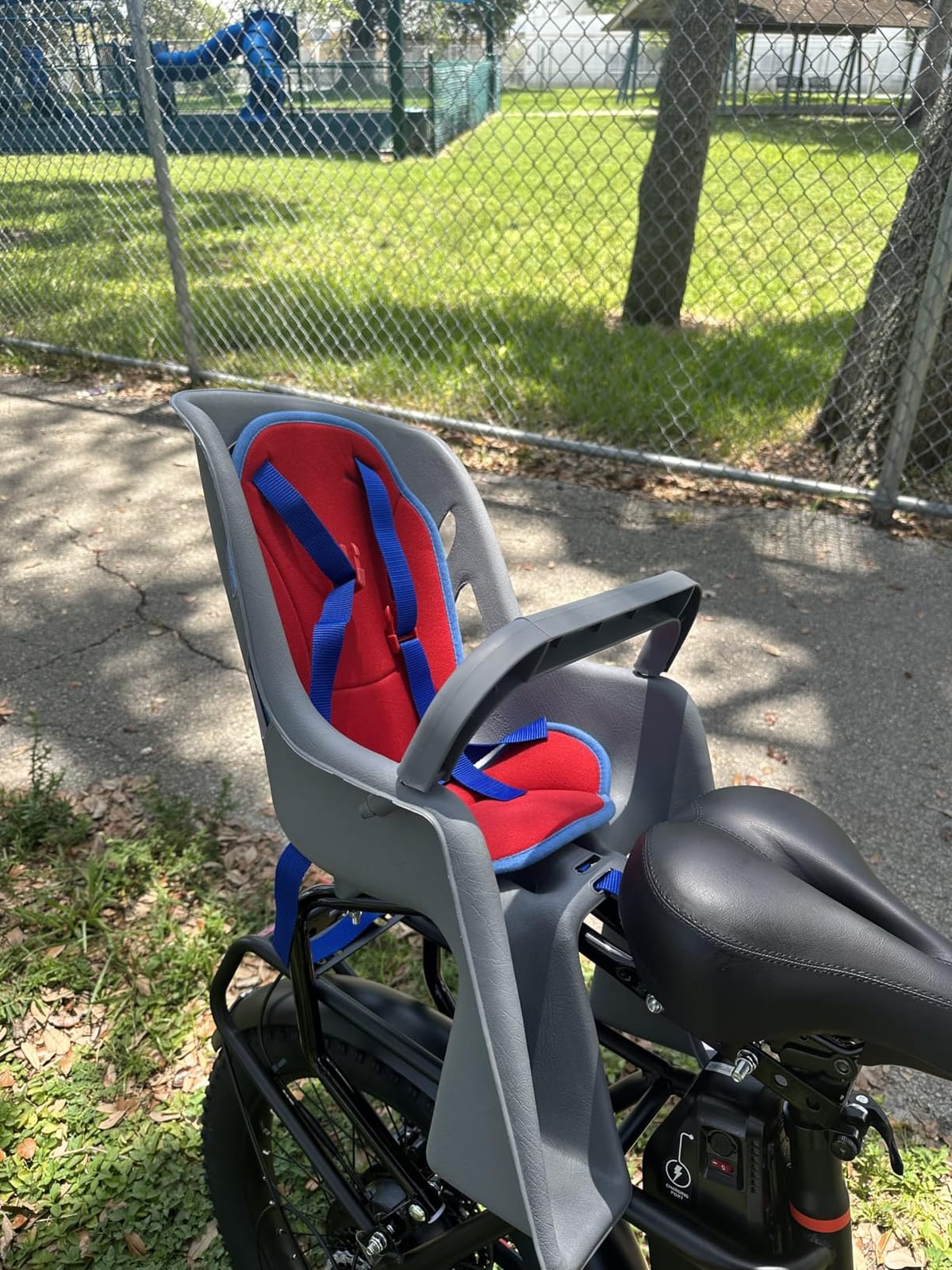
Two practical features make it good value on a daily commute. The molded spoke guard keeps a child’s feet and shoelaces out of the rear wheel, and the included rear reflector adds visibility without a separate accessory. Nearly 3,800 owners rate it 4.2 stars, with most reservations about rack fit rather than the seat itself.
Fit is the whole story here. This seat bolts to a rear rack on 26-inch and 27-inch bikes without rear suspension. If your bike does not already have a rack, you need to buy one and confirm its load rating covers your child plus the seat. That adds cost and complexity that a frame-mounted seat simply avoids.
What you need to check before you buy
Measure your rear rack. The seat needs a top platform, and racks designed for panniers or for child seats with a different clamp pattern may not accept it. Rack load ratings vary widely, and a light alloy rack can flex badly once you add 35 lb of child plus seat weight.
Check your tyre clearance too. On some frames the mounted seat and rack sit close enough to the tyre that a wider tyre will rub. Riders running 29-inch wheels should measure twice before ordering.
Where it falls short
No rear suspension compatibility at all. On a full-suspension mountain bike the rack platform moves with the frame and the child sits in a lot of motion. That rules the seat out for trail riding and for parents on suspension bikes.
The padding is thin compared with foam-heavy seats. On long rides a restless child will feel it sooner than in a cushioned model. If your rides are mostly short trips to school and back, that trade is easy to accept.
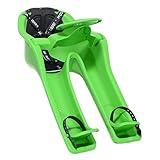
3. iBert Front Mounted Child Seat: Best for Small-Frame Bikes
iBert Front Mounted Child Seat with Patented Mounting for Easy and Secure Installation – Child’s Bike Seat with 3-Point Safety Harness and Adjustable Foot Cups – Durable Plastic Shell, Green
Front stem mount
3-point harness
Fits 52-62mm stems
Up to 38 lb
Ages 1-3
Pros
- Narrow profile fits bikes with tight bar-to-stem clearance
- Keeps child in rider's line of sight
- Quick and simple installation with included hardware
- Durable plastic shell wipes clean
Cons
- Three-point harness with limited adjustment
- Little neck or back support for a small child
- Loading the front changes steering feel and stopping
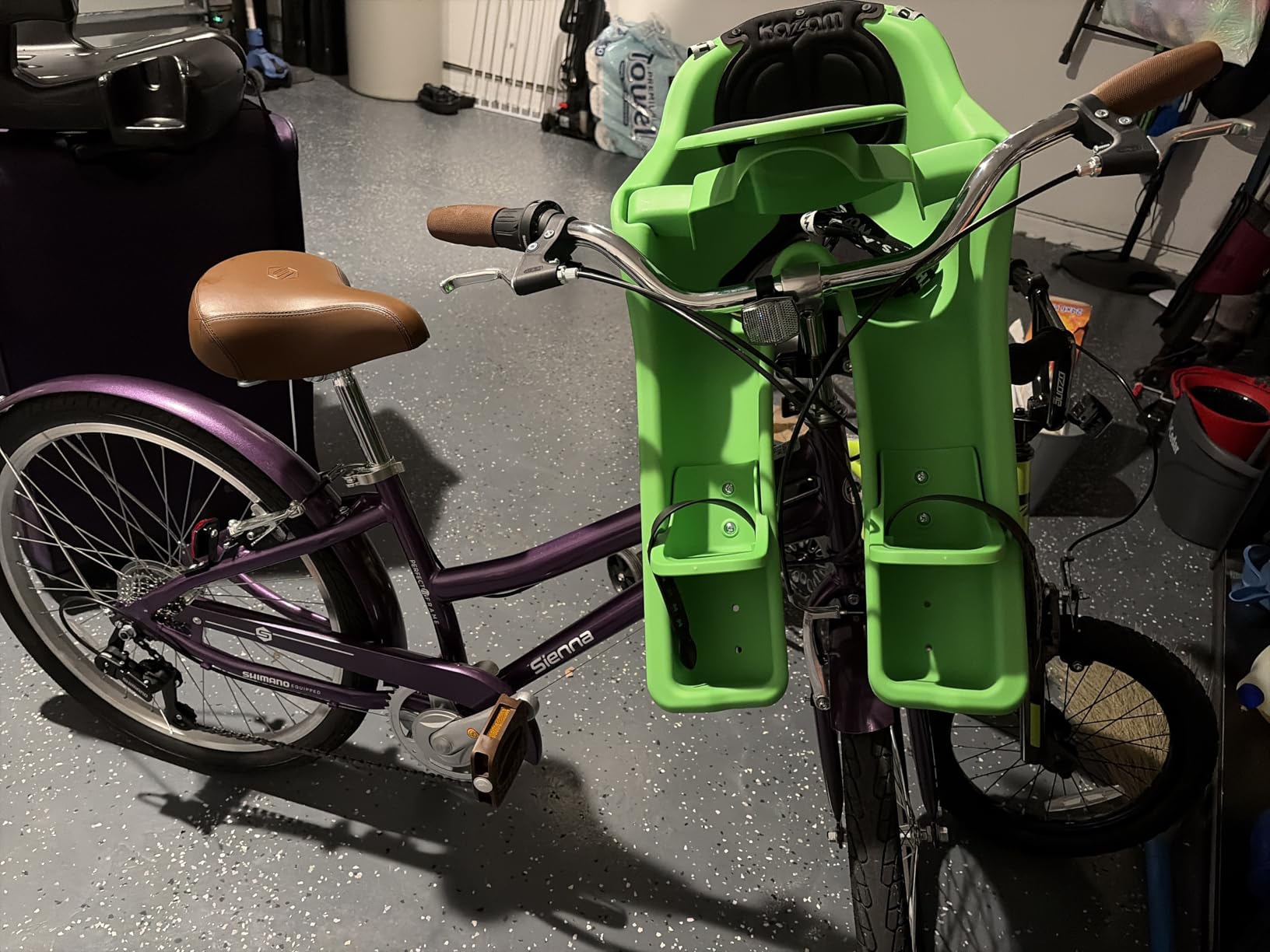
The iBert solves a problem most front seats ignore: width. Its patented mounting fits stem bolt spacing from 52 mm to 62 mm centre to centre, and the seat shell itself is narrow enough to clear a tight gap between the handlebar, stem and top tube. On a small-wheeled city bike that is the difference between a seat that mounts and a seat that does not.
Talking to your child while riding is the other win. They are facing you, close enough to reach back and hold a hand, and they see traffic coming the same way you do. Plenty of parents who moved from a rear seat to the front say they never went back.
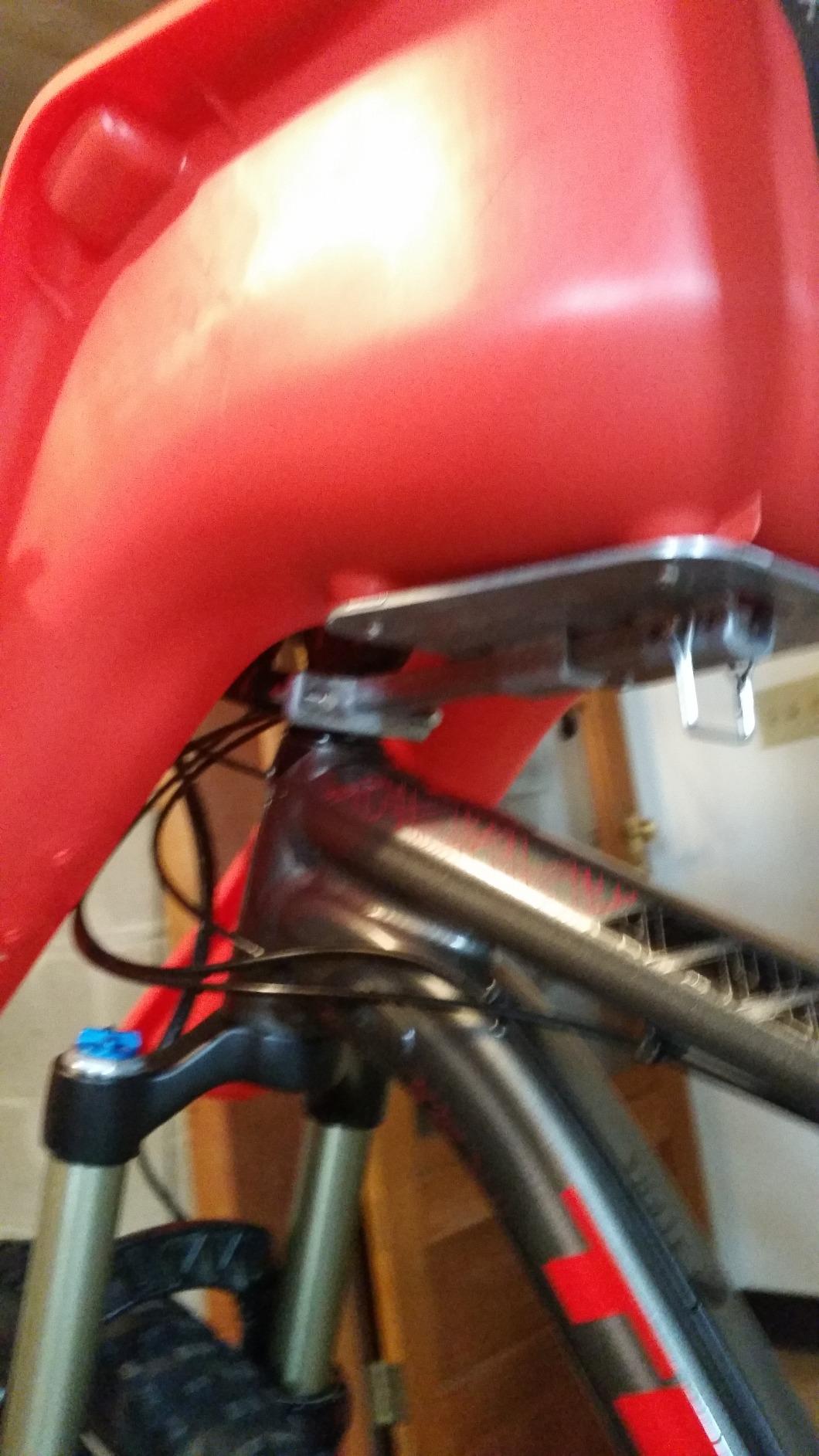
Installation took us under ten minutes with the included hardware and a basic hex key. The plastic resin shell shrugs off sun and light rain and wipes down easily, which matters for a seat that lives on a porch or in a garage. The small dashboard and steering wheel at the front keep a toddler occupied on longer rides.
Where it is weaker is support. A three-year-old sits high on your child’s shoulders with no real neck or back rest, and the harness has limited adjustment range, so a chunky toddler in winter layers can sit slightly loose. Parents who want a sleeping child supported should look at a padded rear seat instead.
What you need to check before you buy
Measure your stem bolt spacing before anything else. If your fork and stem use a narrow 31.8 mm clamp with tight spacing, this seat will not mount. The mounting system is designed for standard 52 mm to 62 mm spacing, which covers most adult bikes but not every folding bike or kids’ bike.
Next, ride the bike without the seat first and notice how it handles. A front mount adds weight over the front wheel and shortens your effective steering feel. Riders over about six feet often have to drop their saddle height to keep their knees clear of the seat shell.
Where it falls short
The 38 lb ceiling arrives earlier than most families expect, usually around age three. When your child passes it, this seat is finished, and the front-mount category rarely offers a step up in weight capacity.
Front mounting also changes braking. All that mass forward increases stopping distance and makes the front wheel feel lighter on corners. It is manageable on a bike path and less comfortable on a wet descents-heavy route, which is the argument the rear seats win.
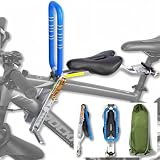
4. UrRider Front Mount Kids Bike Seat: Best for Bigger Toddlers
UrRider Child Bike Seat, Front Mount Kids Bike Seat, Fits Mountain Bikes, Hybrid Bikes, Portable, Tool-Free, Quick-Release, Ultra-Light, Toddler Bike Seat for Children 2-6 Years(up to 60lbs)
Front mount
Tool-free quick release
60 lb weight rating
Approx 2.9 lb seat
Ages 2-6
Pros
- Tool-free install in under 60 seconds and removal in 30
- Lightest seat in our test at about 2.9 lb
- Highest weight rating here at 60 lb
- Folds flat into a carrying bag for multi-bike families
Cons
- Needs a handlebar beam 5.5 cm wide or less
- Not suitable for road bikes or carbon frames
- Front weight changes steering and stopping
The UrRider is the odd one out in this roundup. Every other front seat here stops at 33 lb or 38 lb, and this one runs to 60 lb for ages 2 to 6. If your toddler is already on the heavy side, or you want a seat that lasts past the third birthday, that rating changes the conversation.
It is also the seat we could move between bikes fastest. The tool-free quick release installs in under a minute and comes off in about thirty seconds, and at roughly 2.9 lb it folds flat into a carrying bag. For a family with two bikes or a bike stored at work, that is worth more than it sounds.
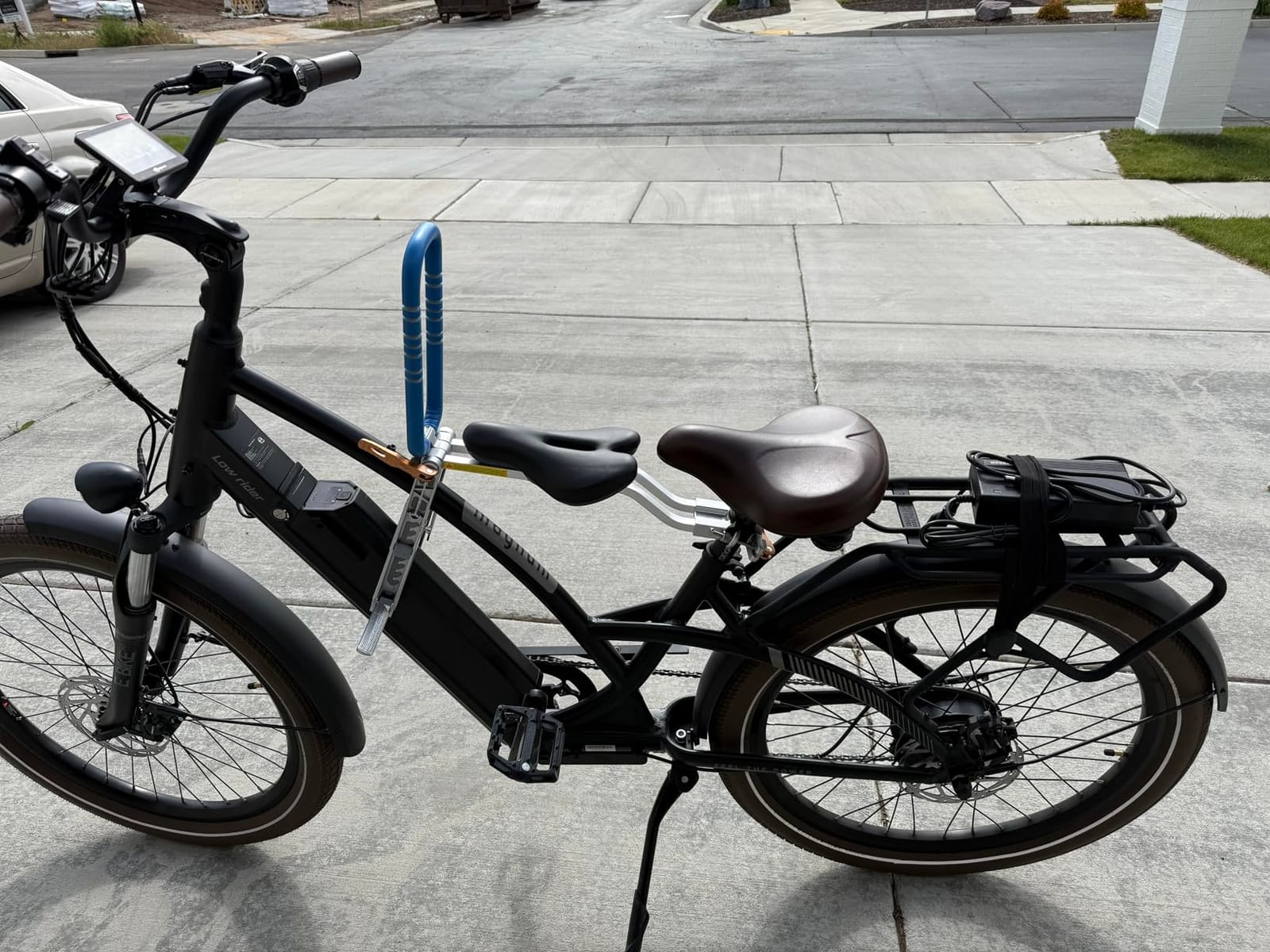
Our 4.5-star average across 898 ratings reflects that balance of easy handling and enough capacity. The cushioned seat has child-friendly hand grips at the front, which keeps small hands away from the bar and the brake levers. Foam padding held up well on gravel paths where rougher shells became uncomfortable.
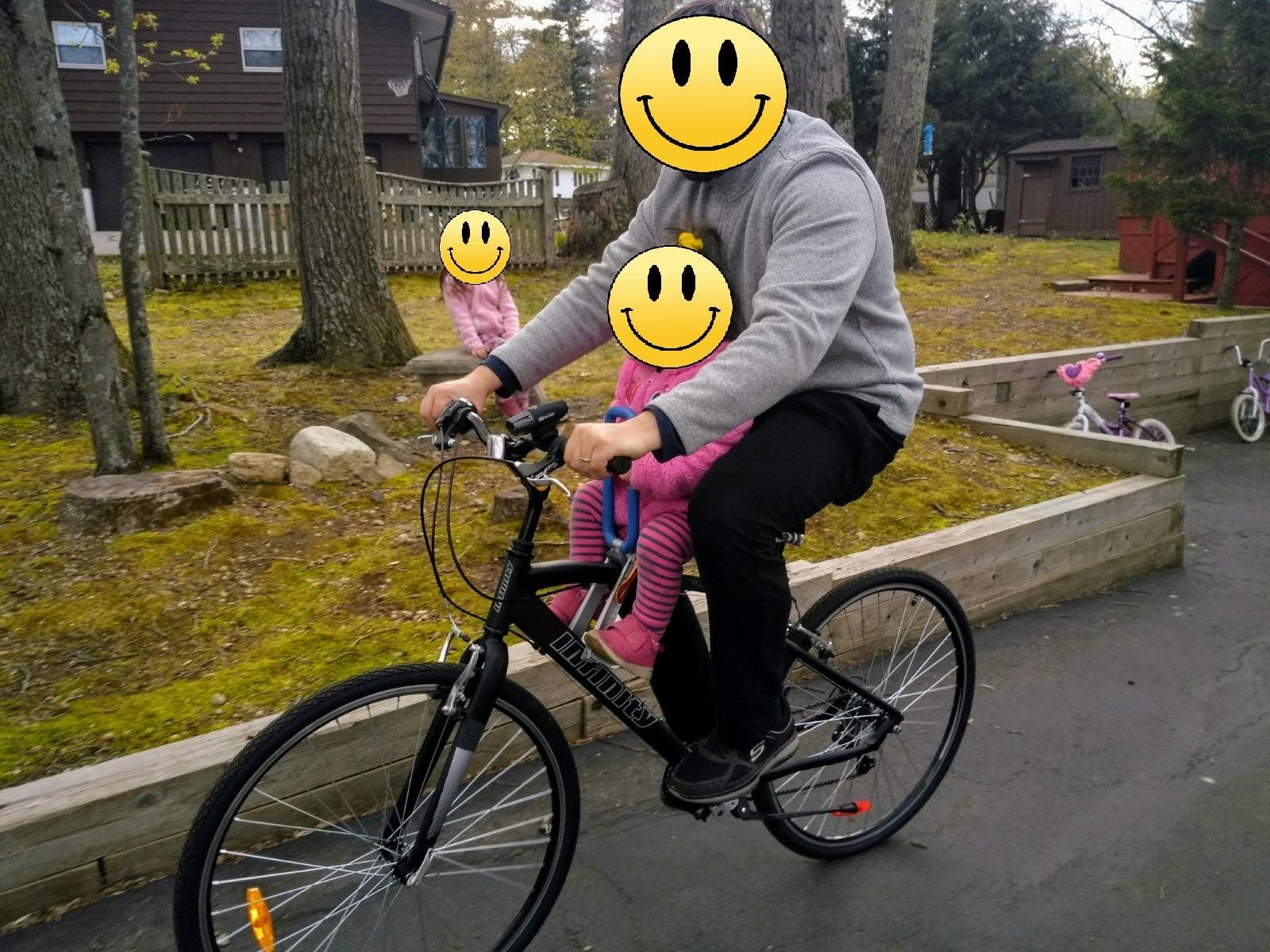
The catch is compatibility, and it is a hard limit. The mount requires a handlebar beam 5.5 cm wide or less. That rules out road bikes with narrow tape-wrapped bars, most carbon frames, and anything with an integrated cockpit. Mountain bikes and hybrids with a standard bar fit well.
What you need to check before you buy
Measure the width of the handlebar clamp area with a tape measure, not a ruler guess. If the beam under the bar is 5.5 cm or narrower, this seat fits. Anything wider and the front buckle will not close properly, which reviewers report as side-to-side shake.
Also check your knee clearance at full pedal stroke. Because the seat hangs below the bar, your knees need to pass either side of the shell. Riders with a long inseam may need a saddle drop of an inch or two, which is normal for front mounts.
Where it falls short
A 60 lb rating does not make it a seat for a 6-year-old. The shell is sized for a toddler’s frame, and older children simply do not fit the backrest and footrests properly no matter what the label says. Treat the weight rating as a ceiling, not a target.
The lower age floor is another consideration. At two years old this is late for many families. If your child is still under two, the smaller front seats or a rear-mounted seat rated from 9 months are a better fit for the first year of riding.
5. Thule Yepp 2 Mounted: Best for Year-Round Daily Rides
Thule Yepp 2 Maxi Rack-Mounted Child Bike Seat, Easy to Mount Design
Rear rack mount
5-point harness
9 months to 5 years
Up to 40 lb
Limited lifetime warranty
Pros
- Universal rack mount installs in about three minutes
- Soft shock-absorbing foam seat with adjustable footrests
- Childproof buckle on a padded five-point harness
- Built-in reflector and light mount
- Metal lock secures seat to the bike
Cons
- No head support for a sleeping child
- Harness length adjustment is not smooth
- Rack strength matters more as the child grows
The Thule Yepp 2 Mounted is the most refined seat here, and the price reflects it. It is the only one in this roundup rated from 9 months all the way to 5 years, which means most families buy it once and get four years of use out of a single seat rather than shopping again at three.
Build quality is the headline. The aluminium frame, foam seat and padded five-point harness feel like a piece of equipment rather than moulded plastic, and the childproof buckle is genuinely difficult for a small child to release. Our mount took about three minutes on a standard rear rack with no special tools.
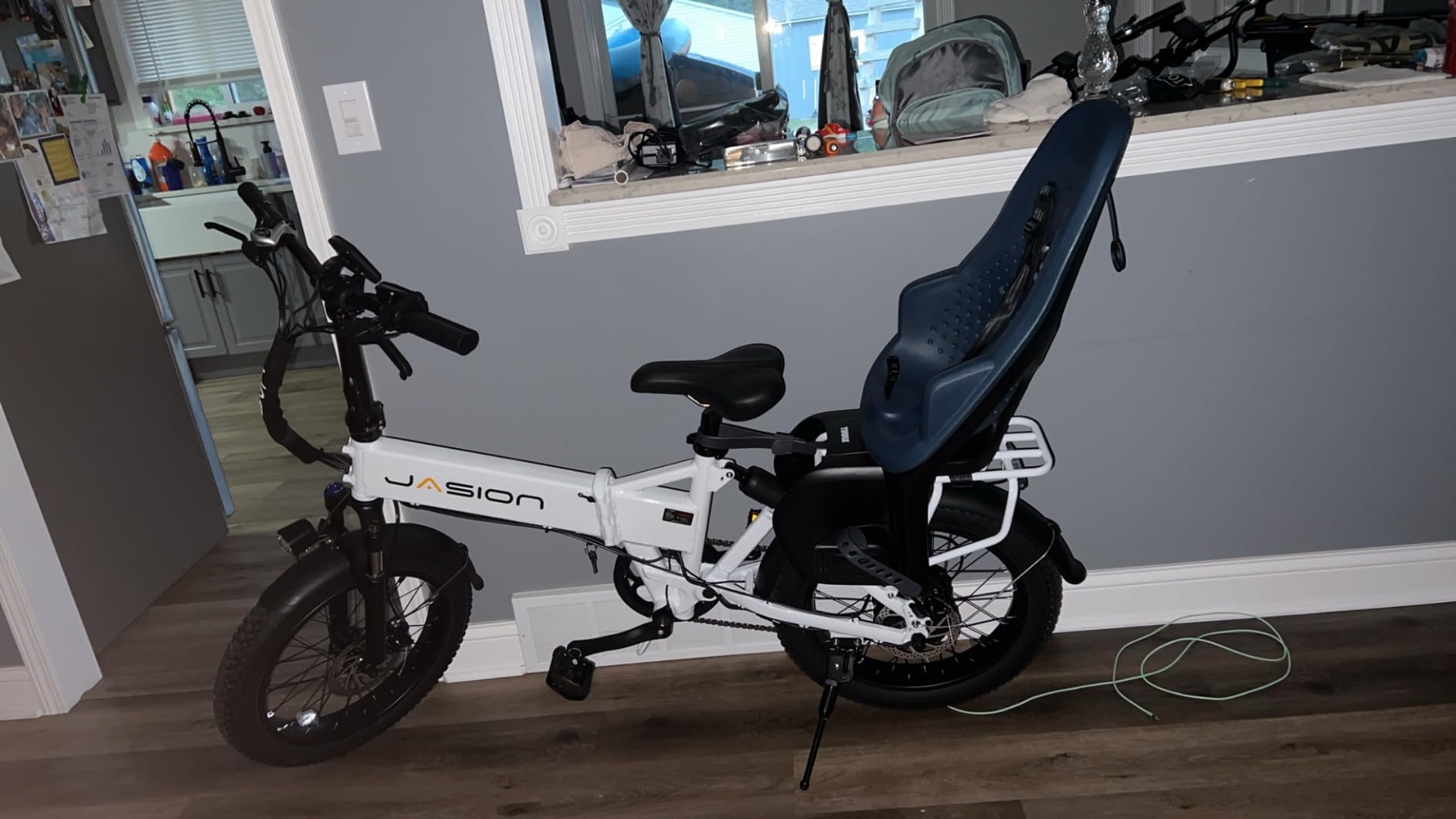
Ride quality is where the Yepp separates itself. The soft shock-absorbing foam soaks up road buzz better than any rigid shell we tested, and adjustable footrests with footstraps keep a smaller child’s feet from bouncing. Water-repellent materials wipe down after a wet school run, which matters if you ride daily.
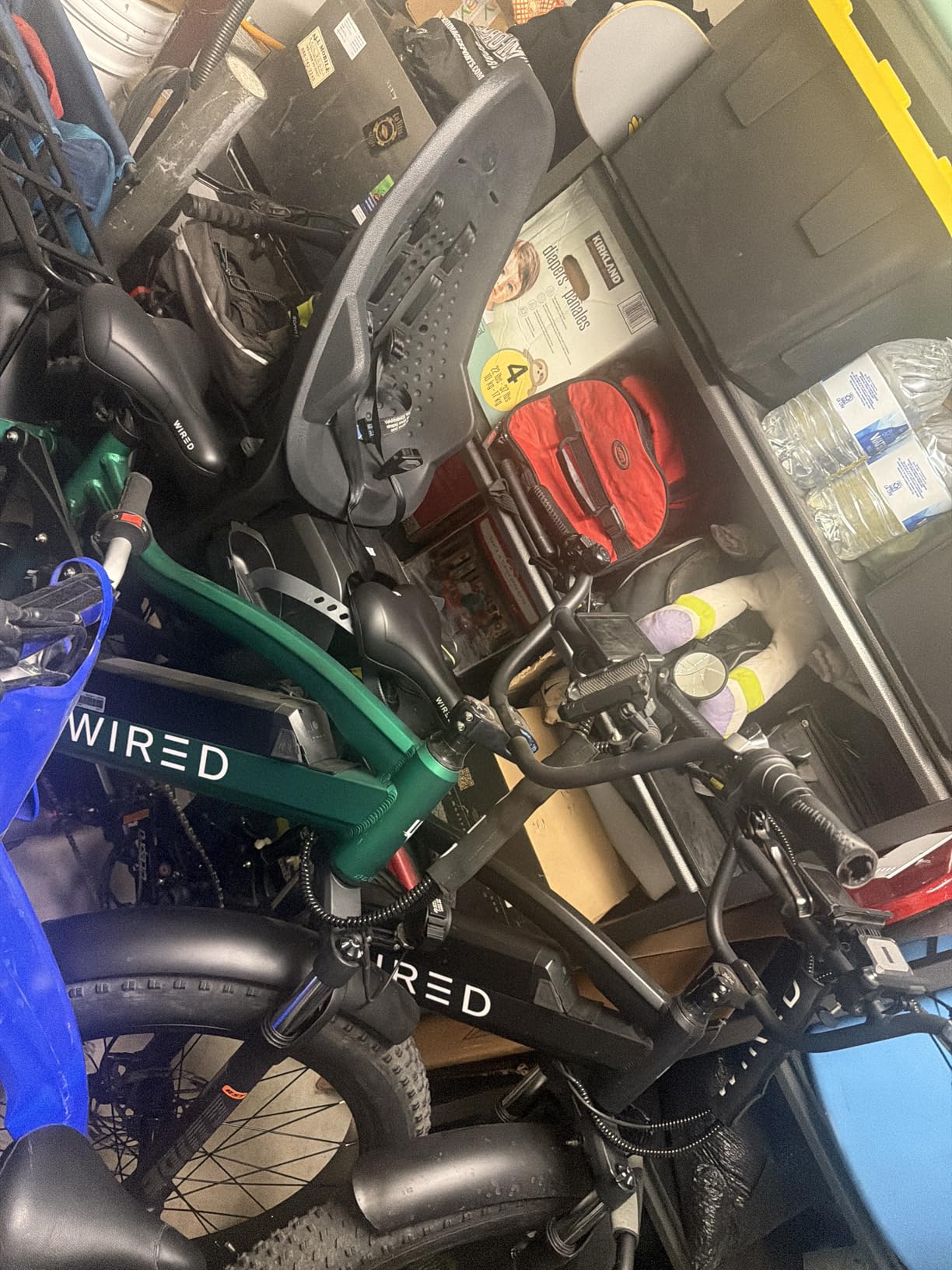
Two design points deserve attention. First, there is no recline and no head support, so a sleeping toddler leans against the seat back rather than a padded rest. Second, the whole safety story depends on your rear rack. A lightly built rack that was fine for panniers may flex under a 40 lb child plus the seat, so check the load rating.
What you need to check before you buy
Rack compatibility is the first question, not the last. The universal mount fits most rear racks, but a carbon or ultralight rack may not take the clamp, and a rack mounted through the seatstay bridge can clash with the seat back. Ask the rack maker if you are unsure.
Check clearance at the rear wheel and mudguard too. The Yepp is a tall seat, and on a bike with long mudguards the seat back can touch the guard on full suspension travel.
Where it falls short
The harness adjustment is not as smooth as it should be. Extending the shoulder straps takes a couple of goes, which is annoying when you are strapping a wriggling toddler in the rain. Budget thirty extra seconds per fitting.
Colourways in darker shades also heat up if the seat sits in direct sun on a hot afternoon. Park it in shade or remove it, particularly for a dark-coloured model. Sleepy riders wanting a recline should look at a rear seat built for naps instead.
6. Peg Perego Orion Front Mount: Best for Quick On-Off Mounting
Peg Perego Orion Front Mount Child Seat, Lime Green
Front mount
Fits 32-52mm frames
33 lb limit
One-click fitting
Gel pad
Pros
- One-button fitting and removal in 5-10 seconds
- Compact clamp leaves almost nothing behind on the frame
- Gel pad and footrests settle a restless toddler
- Sturdy plastic that holds shape under load
Cons
- Low 33 lb limit ends use early
- No head rest for a sleeping child
- Small footrest latches a child can kick free
The Peg Perego Orion mounts with a single button push and comes off in five to ten seconds, even with a child still strapped in. Riders who share a bike with another adult, or who do not want a bracket sitting on the frame all day, will feel that more than most.
The clamp is compact and fits frame tubes from 32 mm to 52 mm, so it covers a wider range of bikes than many front seats. Gel pad cushioning and three-position footrests keep a restless toddler settled, and the plastic shell held its shape with a 30 lb child in our testing without any flex that felt unsafe.
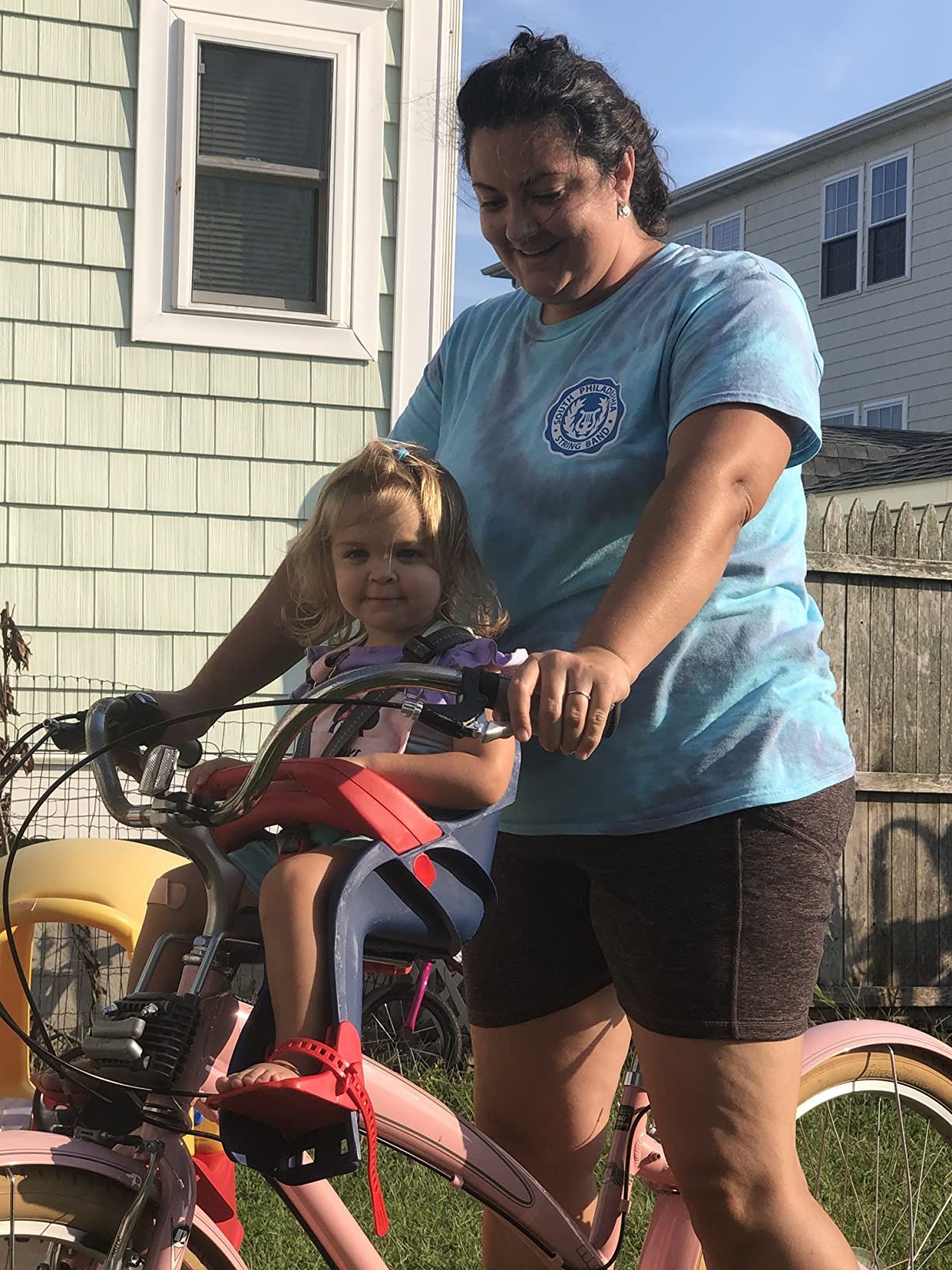
The front position means you can hear your child and talk to them without turning around, which parents of shy toddlers rate very highly. They also see the same traffic you do, and they are easier to check on at every junction.
The 33 lb ceiling is the honest limitation. Many children outgrow it before their fourth birthday, and front-mounted seats in this category rarely offer a higher-capacity step up. The lack of a head rest matters if your child falls asleep on the ride, and the picture-only instructions cost us time on a first install.
What you need to check before you buy
Measure the frame or stem area the clamp grips and confirm it sits within 32 mm to 52 mm. Also check that your handlebars are wide enough to clear the shell without your knuckles touching it at a full lock.
Riders above about six feet should sit on the bike with the seat installed before buying. Tall riders frequently report having to drop the saddle height, and on a very long inseam a front mount can force an uncomfortably low position.
Where it falls short
Small footrest latches are a recurring complaint. A toddler who learns to kick can work them loose, and a child over about three is usually strong enough to do it deliberately. Check them at every ride.
It also restricts handlebar turning, which makes tight city junctions slower and less pleasant than with a rear seat. That is an inconvenience rather than a safety issue, but on a crowded street you will feel it.
7. Bell Shell Rear Child Carrier: Best for Warm-Weather Rides
BELL Shell Rear Child Carrier in Gray, Gray Shell Rear Carrier
Rear rack mount
Ventilated shell
3-point harness
Up to 40 lb
Adjustable foot beds
Pros
- Ventilated shell keeps a child cooler in summer heat
- Easy and fast installation
- Adjustable foot beds grow with the child
- Fits most standard bikes
Cons
- Not compatible with rear suspension bikes
- Firmer shell with less padding
- Machine washing the pad is a chore in practice
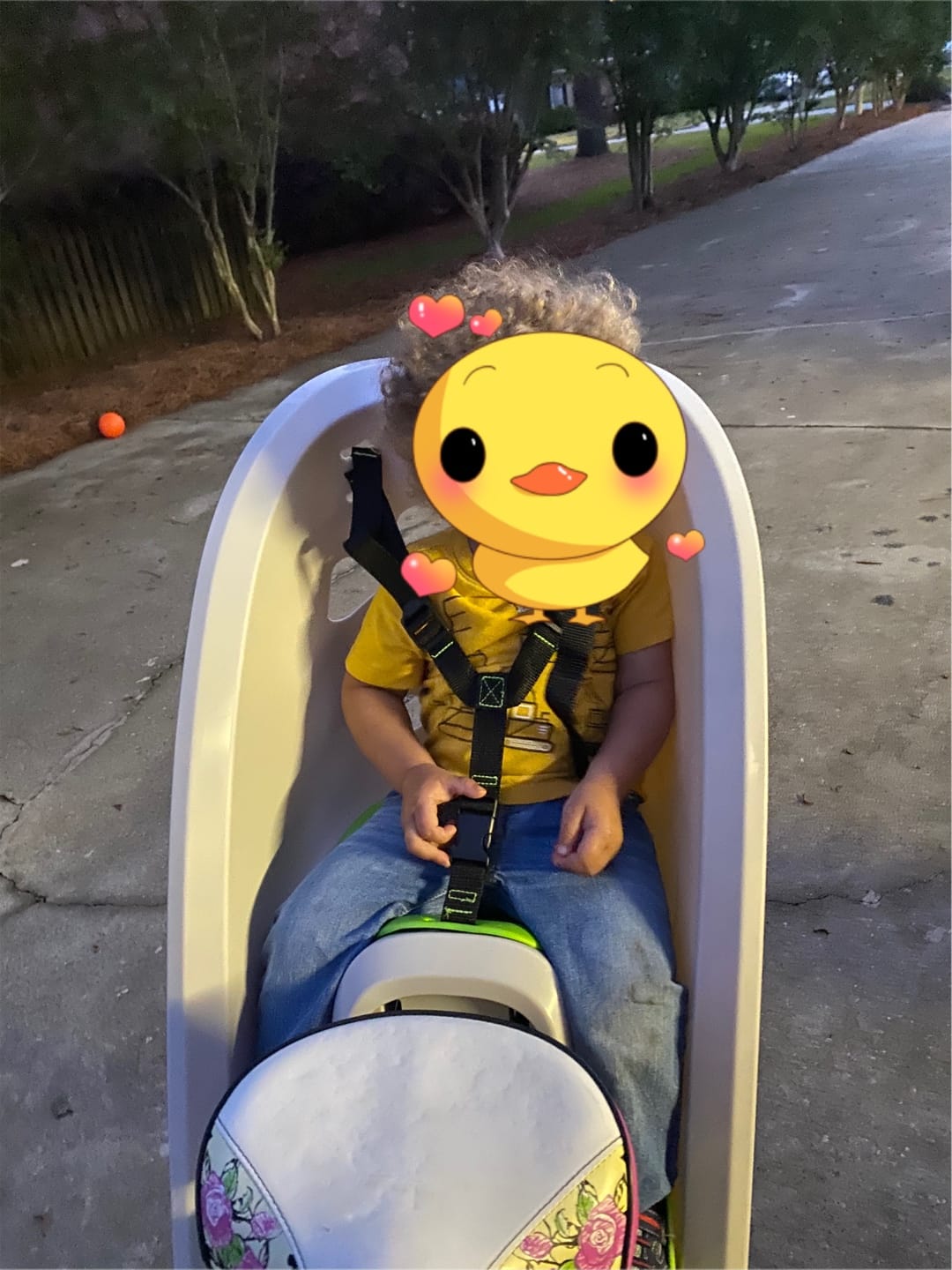
The Shell is a rear rack carrier built around a ventilated shell rather than thick padding, and in summer heat that is exactly the right trade. Air moves through the shell instead of trapping against a child’s back, which is why it holds up better on warm-weather commuting than plushier seats.
Installation is quick and secure, and the adjustable foot beds extend as your child grows, which extends the useful life of the seat beyond the awkward middle year when a toddler’s feet dangle. It fits most bikes with a standard rear rack and no rear suspension.
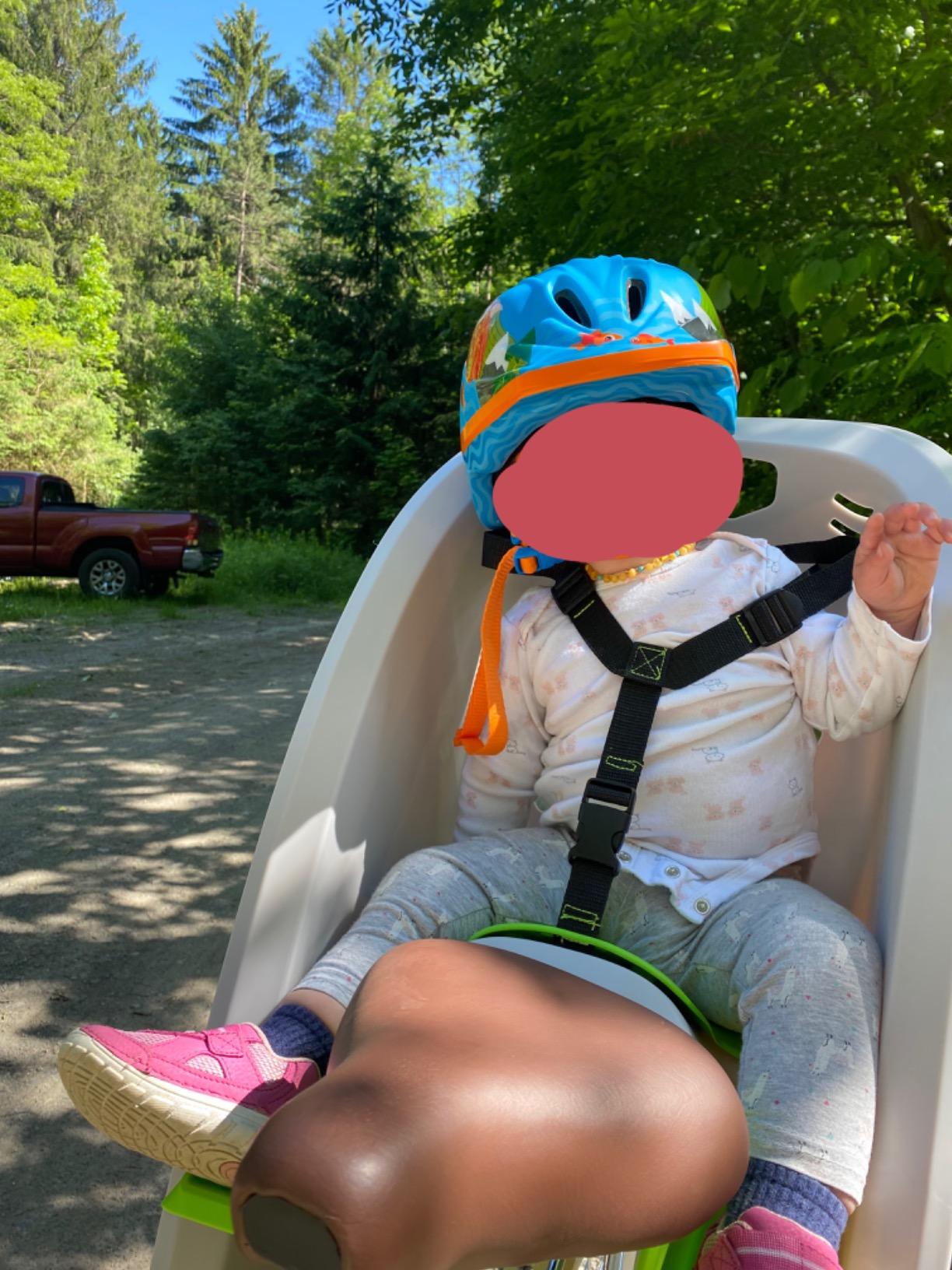
Our 4.1-star average across 1,265 ratings reflects a seat that does the fundamentals properly and stops there. The three-point harness and foam pad are adequate for a toddler, and the shell keeps its shape over time. Nothing here is soft or adjustable beyond the basics.
For a family cycling to school and back in dry months, that is a fair trade. For long summer rides in full sun, the hard shell transfers more heat than fabric seats do, so dress your child in light clothing and offer water more often.
What you need to check before you buy
Same rack checks as any rear-mounted seat: a top platform, a load rating that covers child plus seat, and clearance from the tyre. This model is explicitly not for rear-suspension bikes, so if your only bike is a full-suspension mountain bike, rule it out now.
Check that the rack sits far enough from the seat stay. On a small frame the shell back can contact the tyre at full deflection, particularly with a wider tyre fitted.
Where it falls short
Comfort on long rides is where it trails the padded seats. The shell is firm by design, and a child over three will feel pressure points after an hour. The foam pad helps but does not change the character of the seat.
Care is another small friction point. The pad is machine washable in principle, but removing it from a shell in a car park is not something you want to do every week. A wipe-down is more realistic.
8. XIEEIX Child Bike Seat with Guardrail: Best Mountain Bike Fit
XIEEIX Front Mounted Child Bike Seat, Kids Bike Seat with Guardrail, High Seat Cushion Backrest Mountain Bike Child Bike Seat, Bicycle Child Safety Seat for Children from 1 to 3 Years Old
Front mount for mountain bikes
Aluminum telescopic footrest
Ages 1-3
Folding frame
2.5 kg
Pros
- Multi-angle fixing rod suits a wide range of mountain bike frames
- Aluminum telescopic footrest adjusts in length and angle
- Integrated cushion and backrest support the child well
- Folding handlebar and pedals for storage
Cons
- Side rails can hit the rider's knees
- No quick release so the seat stays on the bike
- Mounting can need re-tightening
- Fits mountain bikes or bikes with a front crossbar only
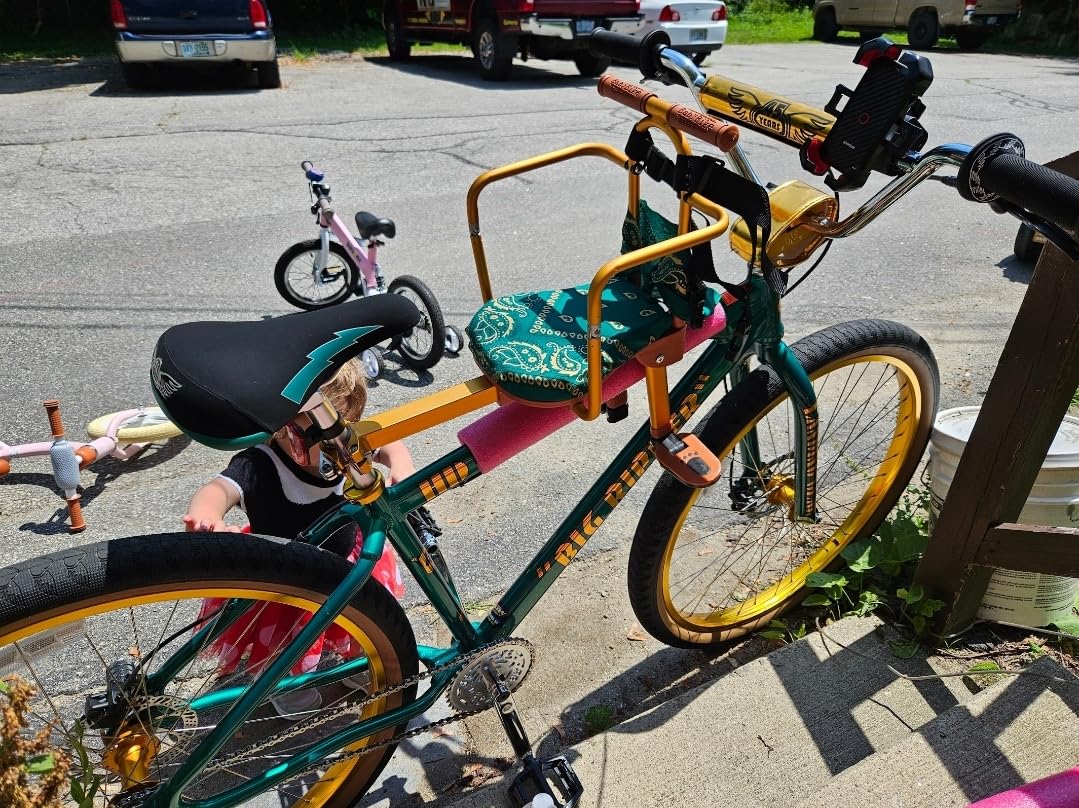
This is the seat for a mountain bike rather than a city bike. The multi-angle adjustable fixing rod with four-hole screw positions lets you set the mount on a wide variety of MTB frames, and the aluminium telescopic footrest changes both length and angle as your child grows, which is more adjustment than most front seats offer.
The one-piece integrated cushion and backrest supports a toddler better than the flat shells in this price range. It is aimed at children from 1 to 3 years old, and the folding handlebar and pedals make it easy to lift into a car or store against a wall.
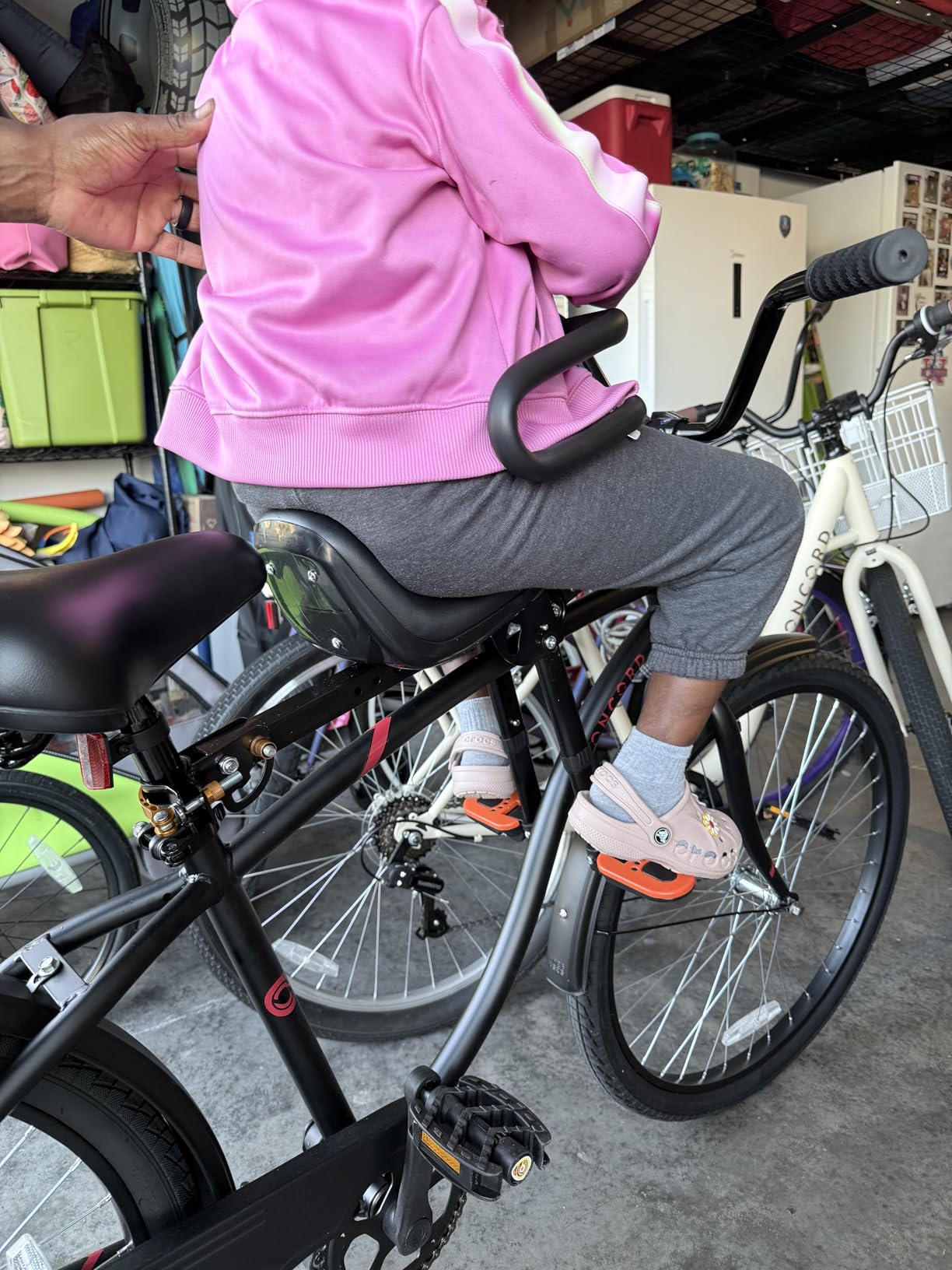
Our 4.1-star average over 558 ratings comes with a clear pattern of praise and complaint. Parents on MTB frames love the fit range and the growing footrest. Adults complain about the seat itself, specifically the side rails and frame weight, which come close to 5.6 lb and narrow your pedalling space.
There is no quick release. Once fitted, the seat stays on the bike, so if you share a bike with another adult you are mounting and unmounting around it every time. A small number of reviews also report needing to re-tighten the mount after several rides, which is worth checking after your first week.
What you need to check before you buy
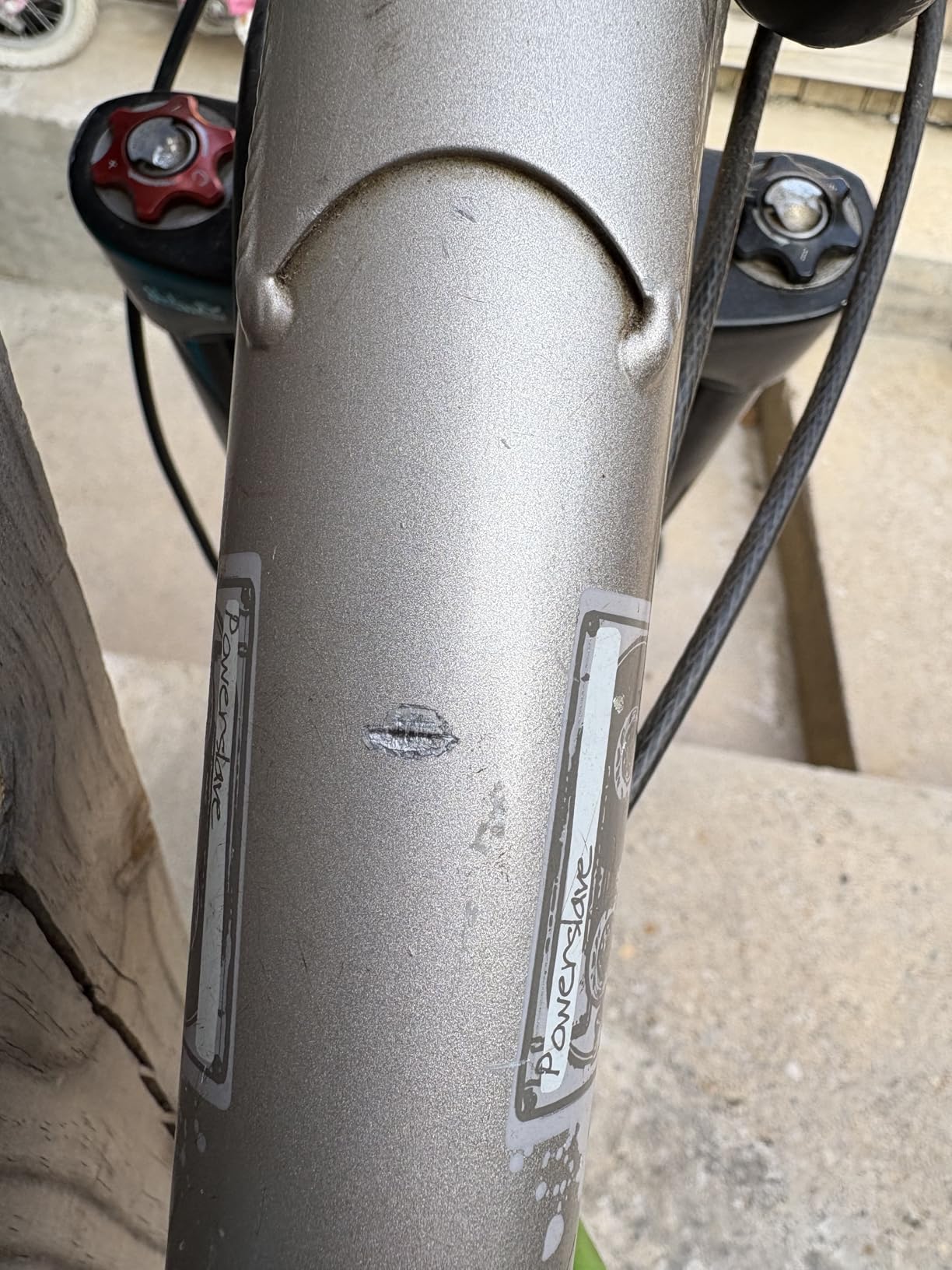
Confirm your bike has a front crossbar or a frame area the rod can clamp to without fouling cables or the brake hose. On a suspension fork with a tight arch this is often the deciding factor.
Ride-test your knees first. With the seat fitted, pedal through a full stroke at your normal saddle height. If your knees hit the side rails, the seat is too wide for your frame and you need a narrower front seat.
Where it falls short
Adult comfort is the main complaint. On longer rides the combination of seat weight, side rails and a narrow adult frame makes pedalling tiring, and taller riders describe a cramped, bow-legged position.
Fit is also narrow. It is designed for mountain bikes and bikes with a front crossbar, so it is a poor fit for a step-through city bike or a road bike with tight cable routing. Check your frame against the mount before buying.
9. XIEEIX Aluminum Front Mount Seat: Best for Travel and Folding Bikes
New Aluminum Alloy Kids Bike Seat – Portable, Foldable Front Mounted Child Bicycle Seat for Children 1-3 Years
Front mount
Fits 1.3-1.88 inch beams
50 lb stated maximum
1.96 kg
Four pedal levels
Pros
- Folds down small enough for a drawstring backpack
- Quick install with the included wrench
- Thick padded cushion and skid-proof armrest
- Four pedal levels as the child grows
Cons
- Rider pedals bow-legged on narrower frames
- Blocks step-through frames and complicates mounting
- Restricts handlebar steering range
- Only fits beams 1.3-1.88 inches wide
If you travel by car, fly with a bike, or store a folding bike in a small flat, this is the seat to look at. It folds down small enough to fit in a drawstring backpack and installs in about five minutes with the included wrench. At 1.96 kg it is one of the lighter front seats here.
The aluminium alloy and steel tube construction feels more solid than the price suggests, and the thick padded cushion with a skid-proof armrest gave our tester a noticeably better ride than the firmer shells in this bracket. Pedals adjust to four levels as a child grows.
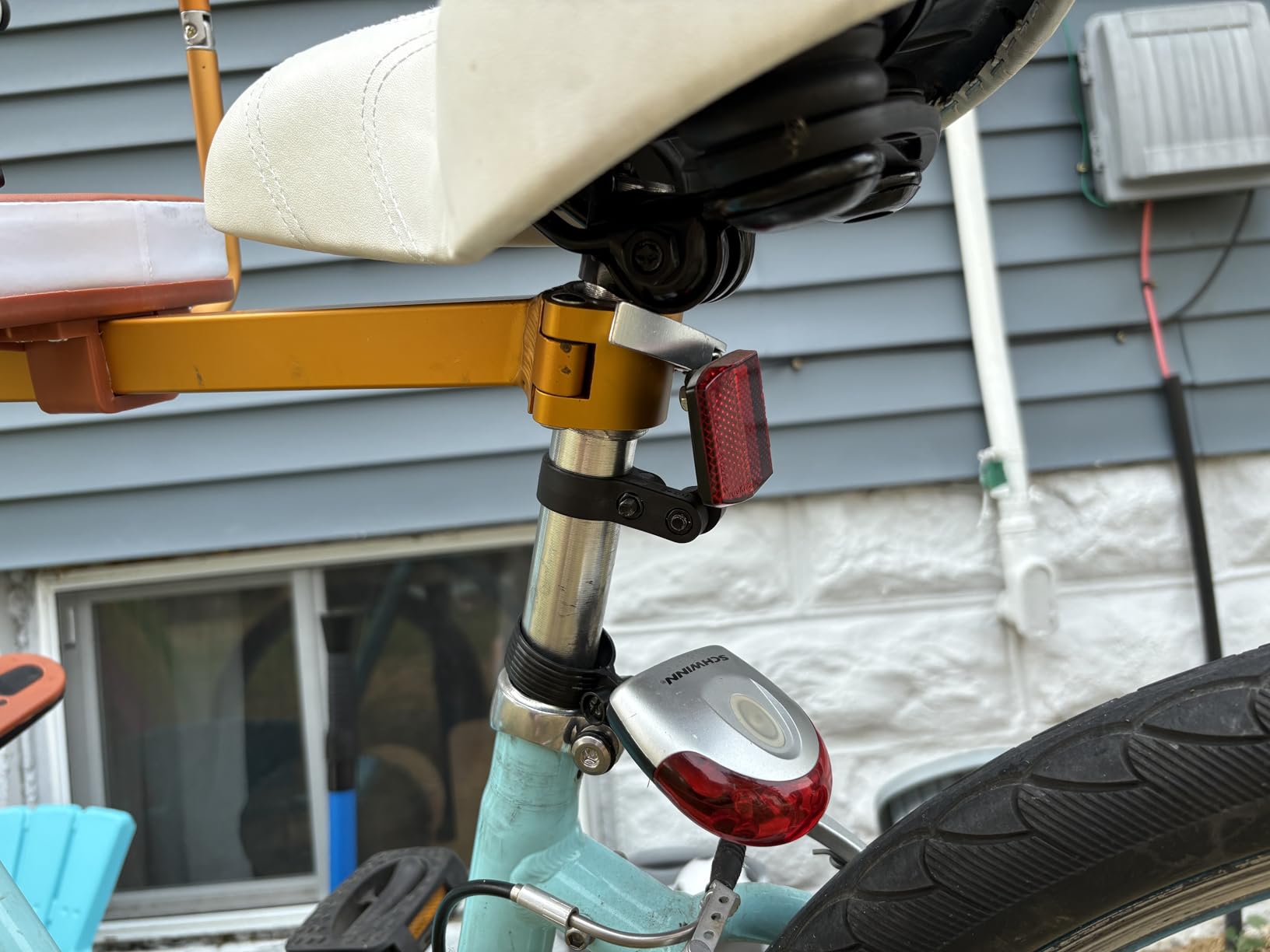
The front buckle is designed to fit beams 1.3 to 1.88 inches wide, which is deliberately narrower than a standard handlebar. That narrow grip is what cuts side-to-side shake, and it is also why the seat will not mount to a wide cruiser bar or a road bike.
Our 4.2-star average across 431 ratings reflects a seat that does the job on short, flat leisure rides. The consistent theme in reviews is that shorter adults have to pedal with their legs bowed out, and that the seat blocks step-through frames so getting on and off is harder than it should be.
What you need to check before you buy
Measure the beam width where the front buckle clamps, not the grip width at the grips. Anything between 1.3 and 1.88 inches works. Measure it on the folding bike you will actually use, since folding frames vary a lot between models.
Then check frame access. If your bike has a low step-through frame, a front seat will sit right where you put a leg to mount, and daily on-and-off use becomes frustrating. Rear-mounted seats suit step-through frames better.
Where it falls short
The bow-legged pedalling position is the recurring negative. On long rides it tires your legs and, for riders with knee or hip issues, it can be uncomfortable enough to rule the seat out entirely.
The stated 50 lb maximum is generous for the shell size. A child approaching that weight fills the seat, presses against the armrest and has very little head and shoulder room left, so treat the number as a hard ceiling rather than a comfortable working weight.
10. OUSEXI Retractable Front Mounted Child Seat: Best Value for Big Kids
OUSEXI Child Bike Seat – Front Mount, Kids Bike Seat for Adult Bike,Retractable Baby Bike Seat Front Mounted, Toddler Bike Seat for Children 2~6 Years (with Crossbar-D)
Front mount
Metal tube frame
Padded cushion
Height-adjustable pedals
Ages 2-6
Pros
- Installs easily on many mountain bikes and e-bikes
- Padded seat gets good reports from children
- Folds and retracts for storage
- Tools and manual included in the box
Cons
- Picture-only instructions and fit varies by frame
- Hardware can scratch the frame paint
- Some parts feel flimsy and may need replacing
- Mounting can need periodic re-tightening
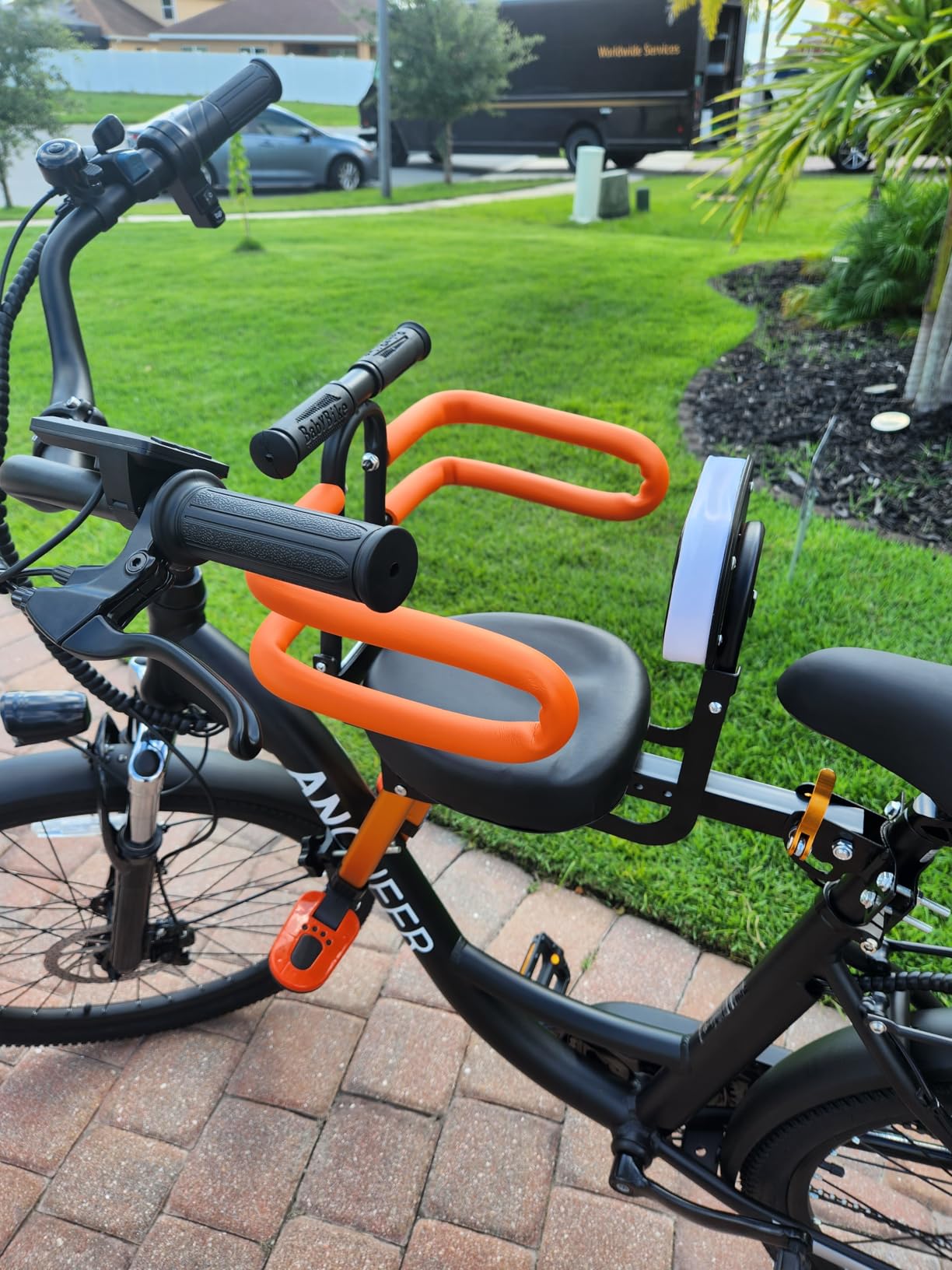
This is the seat to try when your child has already passed the small-seat stage, since it is built for ages 2 to 6 rather than 1 to 3. The premium metal tube frame and thickened padded cushion give a bigger child room to sit, and the height-adjustable pedals plus a stretchable bottom support bar let you dial it to their legs.
Installation is straightforward on many mountain bikes and e-bikes, which is where most owners fit it. It retracts and folds for storage, which suits a shared-bike household, and the tools and manual come in the box.
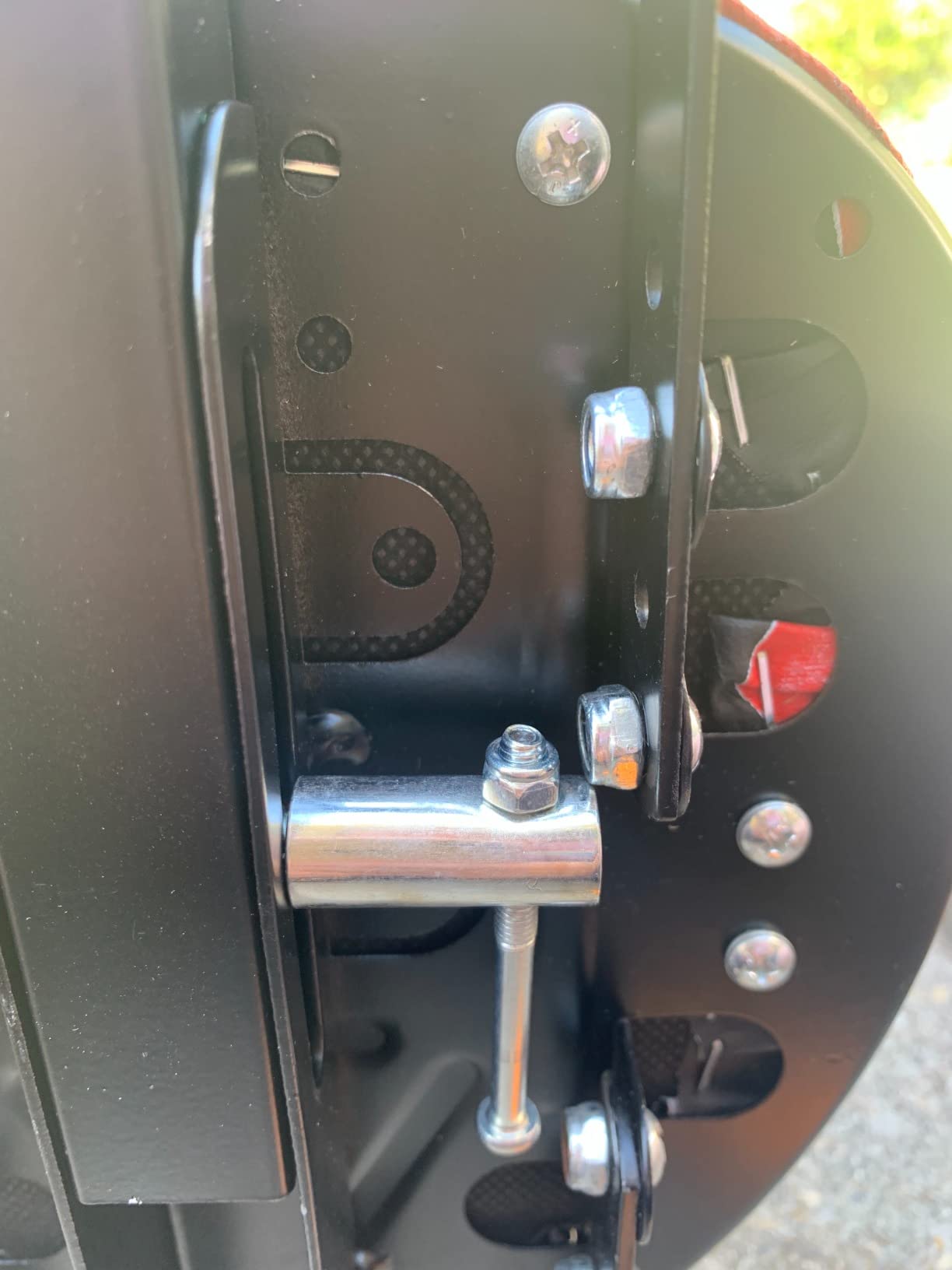
Our 4.0-star average across 482 ratings is the lowest in this roundup, and the review pattern explains why. Comfort and easy fitting draw a lot of praise, while a steady share of owners report vague picture-only instructions, frame-fit problems, sharp hardware that scratched a frame, and brackets that wobble or need re-tightening.
We would put protective tape on your frame before fitting it. That is a small step that prevents the metal parts and rubber guard from marking a painted or carbon frame, which is the most common avoidable complaint with seats of this type.
What you need to check before you buy
Check the frame fit carefully before ordering, because fit is the most common source of trouble here. Measure the section the bracket grips and compare it with the mounting range. If you are on a folding bike or a step-through frame, assume this will not fit.
Test your pedalling clearance with the seat installed, and check whether the seat intrudes into your leg path through a full pedal stroke. Some riders find they need to reposition their saddle lower than they would like.
Where it falls short
Build quality is inconsistent. Some owners report the plastic front bracket needing replacement within months, and a thin quick-release style mount is not something we would trust with a 15 kg child on a descents route.
In a category where a crash is the outcome, we would pair it with a fitted helmet and a conservative route plan. If you ride fast, on roads with traffic, or over rough ground, spend a little more on a seat with a five-point harness and a metal lock.
How to Choose a Bike Child Seat for a Toddler
Front-mounted, rear-mounted or trailer?
Front-mounted seats put your child between the handlebars and your chest. You can see them, talk to them and reach back to hold a hand, and the weight sits over the front wheel where you feel it most. The trade-offs are a longer wheelbase, more affected steering and a bike that stops differently with a load on the front.
Rear-mounted seats attach to a frame bracket or a rear rack behind you. They keep handling close to normal and are usually rated higher, so your child can stay in them longer. The cost is that you cannot see your child, and a heavy child at the back makes the bike twitchy in a way that surprises new riders.
A trailer is a different product and a different decision. It carries more weight, holds two children, keeps the child low and behind the axle, and can be converted to a stroller or a cargo carrier. Child-safety organisations generally favour trailers over seats in a crash because a trailer is less likely to separate. If your child is under 18 months, or you want to carry two children, a trailer is the safer choice.
Match the weight ceiling to the child, not the calendar
Front-mounted toddler seats typically stop at 33 lb to 40 lb, and most children reach 15 kg around their third birthday. Rear rack seats commonly run to 40 lb, and a few higher-rated front mounts reach 60 lb. Check the rating before you buy, then check it again a year later.
When your child passes the limit, do not simply move them to a larger seat in the same category without checking what is available. The jump from a 15 kg front seat to a proper child seat is where most families get stuck, and it is worth checking your rear rack load rating if you plan to keep riding every day.
Harness points, footrests and spoke protection
A five-point harness adds shoulder straps to the waist and crotch straps and distributes force better in a hard stop. A three-point harness is adequate for a strapped-in toddler but gives you less margin as the child gets heavier. If two seats are otherwise equal, take the five-point one.
Foot guards and spoke guards are not optional extras. Small feet reach the rear wheel constantly, and a foot guard plus a molded spoke shield removes the single most common injury mechanism in child bike seats. Every seat in this roundup has at least one of the two.
Safety certification and what it actually tests
The standards to look for are ASTM F1625 and EN 14344 for bicycle child seats, with TÜV or SAA accreditation as an independent third-party mark. These tests cover how the mount fails under load, harness retention, and stability and tip-over behaviour. A certification mark tells you a seat passed a defined failure test; it does not tell you it is comfortable.
Will the Seat Fit Your Bike? A Compatibility Checklist
Compatibility is where most returns happen, and every one of those returns is avoidable with a tape measure. Bike forums and owner threads show the same handful of problems repeating across every brand.
1. Stem or frame diameter. Front seats clamp either to the stem bolts or to the handlebar beam. Measure the bolt spacing or beam width and compare it against the seat’s stated range before you order.
2. Cable routing. Seat-tube clamps and front-mech mounts collide with brake cables and housing. Top-pull and side-pull front derailleurs route cables differently, and a rubber-lined clamp can be too thick to fit over a modern frame.
3. Disc brakes. On rear disc bikes, check that the seat back and foot guards clear the caliper and the rotor at full suspension travel. This is the classic full-suspension MTB failure point.
4. Carbon frames. Torque on carbon needs care, and a front seat mounted to a carbon fork or stem needs a torque specification. Several seats here are explicitly not suitable for carbon frames.
5. Rear rack load rating. For rack seats, confirm the rack is rated for child plus seat weight, not just panniers. Alloy racks flex noticeably at 35 lb, and flex is the same thing as a looser harness fit over time.
6. Step-through frames. A front seat sits exactly where you put your leg to mount, so it can make a step-through bike awkward. Rear seats suit these frames better.
7. Frame-mounted bracket. If you want a frame-mount seat, check that your bike has rear eyelets or a boss for a child seat bracket. Not every frame does, and retrofitting one to a frame the maker did not design for it is real work.
If you ride in the rain and cold, budget for accessories too. A windshield, a rain cover and full mudguards change how usable a rear seat is across a whole year. Related roundups on outdoor play equipment for toddlers cover the other half of family life that bike seats support.
How to Ride Safely With a Toddler in the Seat
1. Helmet every ride, no exceptions. A correctly fitted certified helmet is the single largest safety factor, and it outranks the seat you paid for.
2. Do a braking test before you leave. Ride slowly in a safe space and stop hard once, both front and rear, until you know how the bike behaves loaded with your child.
3. Check straps before every ride. Harness shoulder straps at or just above the shoulders, crotch strap snug, no twists, no loose webbing.
4. Inspect the mount. Look for loosening bolts and stretched straps monthly, or after any bump, fall or off-bike moment.
5. Prefer bike paths and quiet streets. Traffic is the main risk. Where you must ride in traffic, ride predictably and keep the ride short.
6. Take reins, not shoulders. A short leash set lets an adult steady a wobbly toddler’s balance, while leaving you both hands on the bars.
7. Never leave the seat on a bike unattended in the sun. Seats heat up quickly and can burn a small child’s skin.
Frequently Asked Questions
What is the safest bike seat for a toddler?
The safest bike seat for a toddler is one with a five-point harness, foot guards and spoke protection, correctly mounted to your bike, paired with a properly fitted helmet. A rear-mounted seat on a load-rated rack is the most stable choice, while a trailer is safer still in a crash if your child is under 18 months.
What is the safest way to ride a bike with a toddler?
Use a certified helmet every ride, fit the harness snug at the shoulders and crotch, do a hard braking test before you set off, inspect the mount for looseness regularly, and stay off busy roads where possible. Keep rides short and take breaks often, because an inactive passenger gets cold quickly.
What type of bike is best for a 2-year-old child?
A city, hybrid or mountain bike with a strong frame and room for a child seat bracket works best. Avoid full-suspension mountain bikes and carbon frames, which restrict most seats. Rear rack and frame-mounted seats suit step-through frames, while front-mounted seats are easier on hybrid and city bikes with wide handlebars.
What is the best bike seat for a 4-year-old?
By age four most children have outgrown toddler seats, so look at rear-mounted seats rated to 40 lb or more rather than front mounts, which usually stop at 33 to 38 lb. Check the weight and height the seat specifies, and confirm your rear rack load rating covers child plus seat.
What is the best front bike seat for a toddler?
The iBert front seat is the strongest pick for small frames because it fits standard 52 mm to 62 mm stem spacing and has a narrow shell. For bigger toddlers, the UrRider front seat reaches 60 lb and installs tool-free. For quick on-and-off use, the Peg Perego Orion releases with a single button push.
What age range is the Thule Yepp 2 suitable for?
The Thule Yepp 2 Mounted is designed and tested for children from 9 months to 5 years old, up to 40 lb. It is one of the few toddler-rated seats that stays usable past age three, which is why it suits families who want one seat rather than two.
Our Final Toddler Seat Picks in 2026
The Schwinn Deluxe Child Bike Carrier is our pick for the best bike child seats for toddlers overall, because it mounts to a frame bracket, carries 40 lb and converts to a rack carrier when your child outgrows the seat. Families on a tight budget should take the Bell Cocoon 300, the only low-cost seat here with a five-point harness. If you ride a small-framed city bike, the iBert front seat fits where most front mounts do not. For year-round commuting on a solid rack, the Thule Yepp 2 Mounted is the most refined build and the longest usable life, from 9 months to 5 years.
Before you buy anything, take five minutes with a tape measure and work through the compatibility checklist. The right seat on the wrong bike is the one thing that turns a good setup into a bad day.
One last practical tip for summer outings: a hose and a shallow paddling pool at home gives a toddler a cool-down after a ride, and our water table picks for toddlers cover that side of things.