
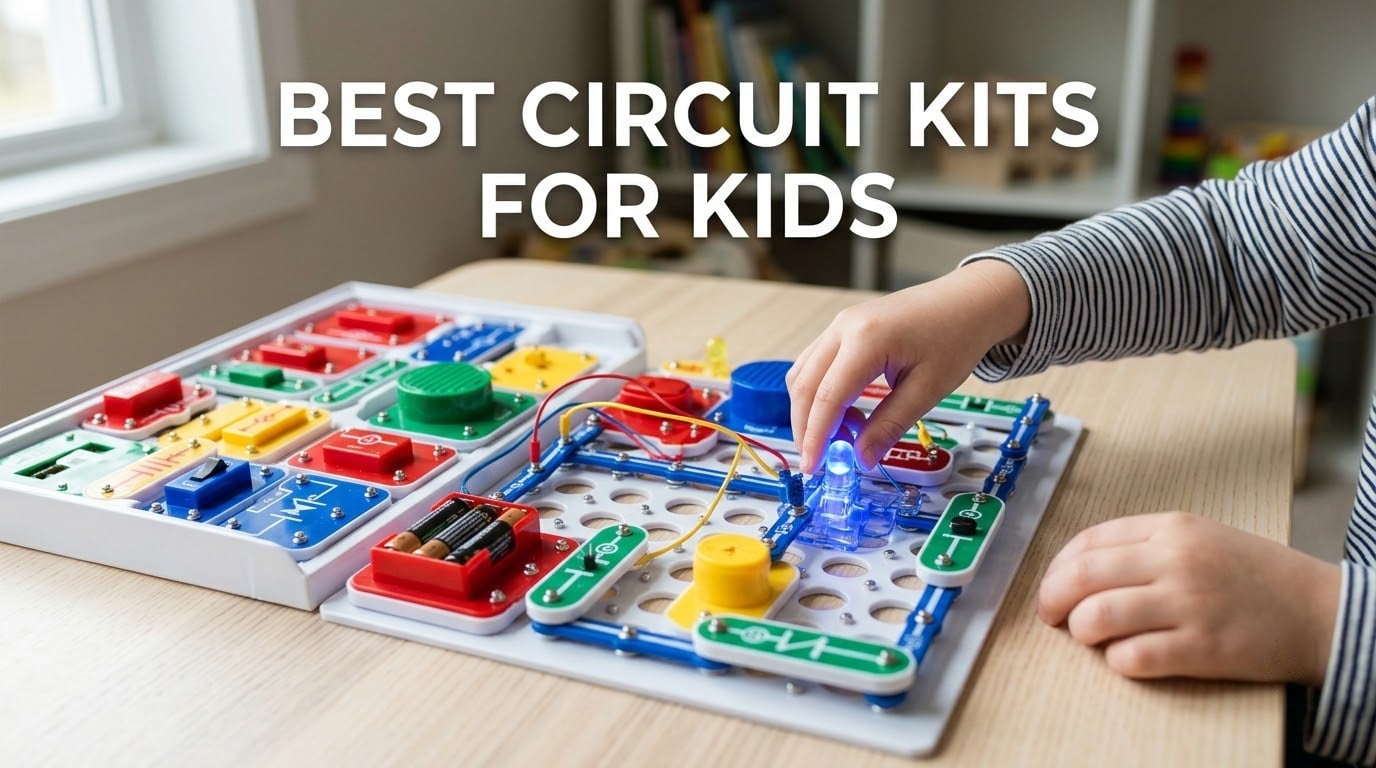
If you have ever stood in an electronics aisle holding two kits with nearly identical names and completely different contents, you are not alone. Choosing the best circuit kits for kids is less about the age printed on the box and much more about what your child has already built. We spent weeks comparing ten of the highest-rated kits on age fit, real project depth, durability and how long a kit survives past its first month.
The category splits into four distinct families: snap-together grids where parts press into a plastic board, build-it-yourself kits with loose components, breadboard and Arduino kits that add a microcontroller, and soldering kits. A seven-year-old who has never touched a wire and a twelve-year-old already writing code need kits from completely different families, even though the box art looks similar.
We ordered all ten, checked the ratings and review counts, and read what owners actually said after the excitement wore off. Ratings alone do not tell you whether a kit survives daily use, whether the advertised project count translates into projects a child can finish alone, or whether the parts from one box fit into another. Our picks below name a drawback for every kit, because a list with no honest criticism reads like an advertisement.
Table of Contents
Top 3 Circuit Kit Picks for 2026

Snap Circuits Classic SC-300
- 300+ projects
- Tool-free snap grid
- 32 electrical parts
- Two project manuals
Arduino Starter Kit K000007
- 12 DIY projects
- Microcontroller programming
- Preloaded example code
- Wooden mounting base

Snap Circuits Beginner SCB-20
- 21 projects
- Extra childproofed parts
- Ages 5-9
- Color-changing fan
Best Circuit Kits for Kids in 2026 Quick Overview
Every kit below appears once in this table and then gets its own section further down, with the honest drawbacks and who each one suits.
| Product | Specifications | Action |
|---|---|---|
| Snap Circuits Classic SC-300 |
|
Check Latest Price |
 Playz Advanced Circuit Board Playz Advanced Circuit Board |
|
Check Latest Price |
 Snap Circuits Arcade SCA-200 Snap Circuits Arcade SCA-200 |
|
Check Latest Price |
| Snap Circuits Beginner SCB-20 |
|
Check Latest Price |
 Science Kidz Electronics Kit Science Kidz Electronics Kit |
|
Check Latest Price |
| Arduino Starter Kit K000007 |
|
Check Latest Price |
 National Geographic 120 Circuit Kit National Geographic 120 Circuit Kit |
|
Check Latest Price |
 SMILESSKIDDO 420+ Project Kit SMILESSKIDDO 420+ Project Kit |
|
Check Latest Price |
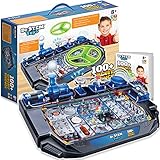 Dr. STEM Toys Circuit Science Kit Dr. STEM Toys Circuit Science Kit |
|
Check Latest Price |
 Bluetooth Speaker and FM Radio Kit Bluetooth Speaker and FM Radio Kit |
|
Check Latest Price |
1. Snap Circuits Classic SC-300 – Best Overall Circuit Kit for Most Families
SNAP CIRCUITS Classic SC-300 STEM Electronics Kit, 300+ Projects, Ages 8+
300+ projects
32 electrical parts
Snap grid base
15.5 x 12 x 2.5 inches
2.5 pounds
Pros
- Over 300 circuits from one box
- No soldering or tools required
- Manuals progress from easy to challenging
- Free replacement parts from the manufacturer
Cons
- Some parts do not always hold firmly under heavy daily use
- Manuals explain assembly more than the reason circuits work
- Bulky box that is awkward to transport
This is the kit we keep coming back to, and the reason is unglamorous: it holds the highest rating in our group at 4.8 out of 5 across more than 29000 reviews, and that volume of feedback is what separates a proven kit from a lucky launch. Owners describe passing the same box between several children over years rather than moving it to a closet after one session.
The build system is a plastic grid with 32 electrical parts that press on, so a seven-year-old can be running a working circuit inside a few minutes of opening the box. Two project manuals cover more than 300 circuits including AM radios, burglar alarms and doorbells, and the second manual is the real value because most children burn through the first one in a week.
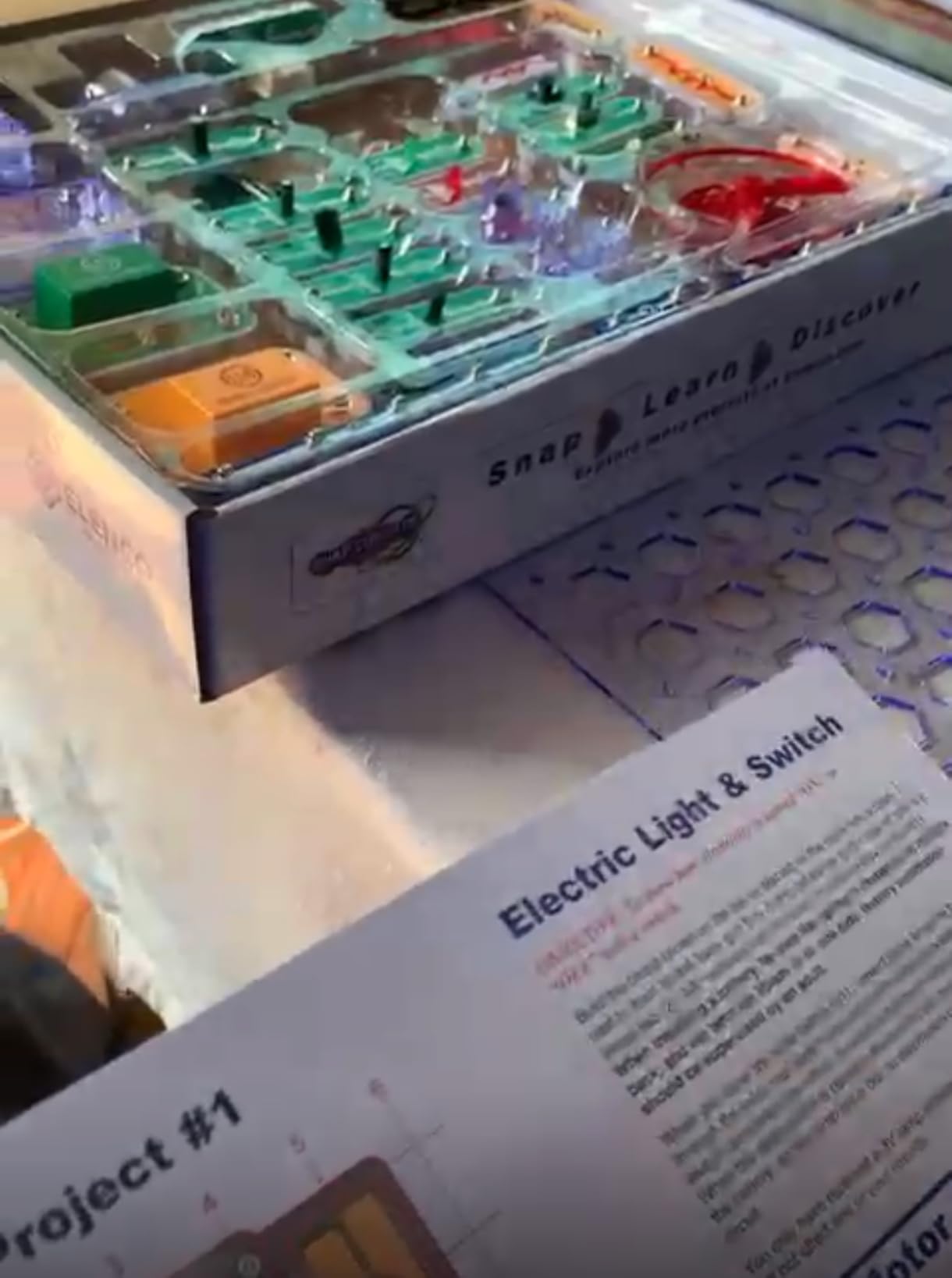
What the child actually learns is cause and effect with current. A circuit that does not light prompts a hunt for the loose connection, which is the first real debugging exercise most children ever meet. It is less about memorizing electronics and more about persistence, and that transfers well to every later tier.
The rating distribution in the data backs this up, with 86% of ratings at five stars and 10% at four. The complaints that do appear cluster in two places: components that feel fragile under rough daily handling, and manuals that walk a child through placement without explaining why a parallel layout behaves differently from a series one. The box itself is 15.5 by 12 by 2.5 inches and weighs 2.5 pounds, so this is a floor activity rather than a travel kit.
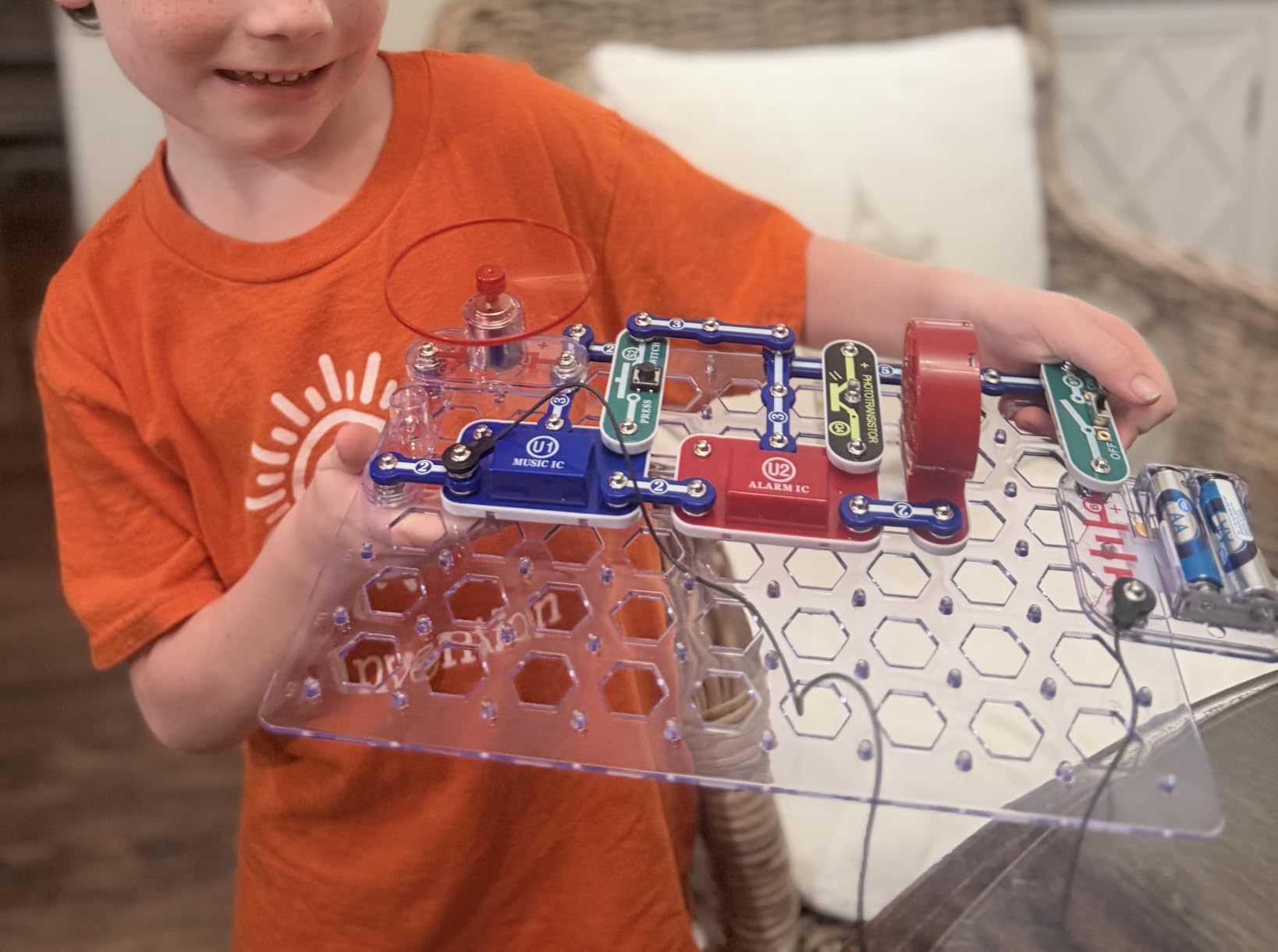
Who the Snap Circuits Classic suits
It suits children aged 8 and up, and it works best for a family that wants one kit to carry a child through several years rather than a single term. Because the parts snap into a shared grid format, an expansion set later adds to the same base rather than replacing it, which is the rare property in this category. Parents running a homeschool science block report using it as the spine of a term rather than a one-off activity.
What to watch for with the SC-300
Budget for adult help on the first session. The early diagrams assume a child can track numbered parts across a page, and a parent reading the manual alongside a beginner prevents the frustration that ends a kit’s life in week two. Also note that the manufacturer recommends ages 8 and up, so a five-year-old needs the smaller Beginner set instead.
2. Playz Advanced Circuit Board – Best for Avoiding Loose Parts
Playz Advanced Circuit Board for Kids, Science Kits for Kids Age 8-12
328+ experiments
21.7 x 15.6 x 4.2 inches
4 pounds
Wire-based builds
Pros
- Over 328 experiments on one reusable board
- Covers light sound magnetic and touch controls
- Includes AM and FM radio
- 64-page manual ordered simple to challenging
Cons
- Younger children need adult help to set the board up
- Wire-based build style is less forgiving than snap grids
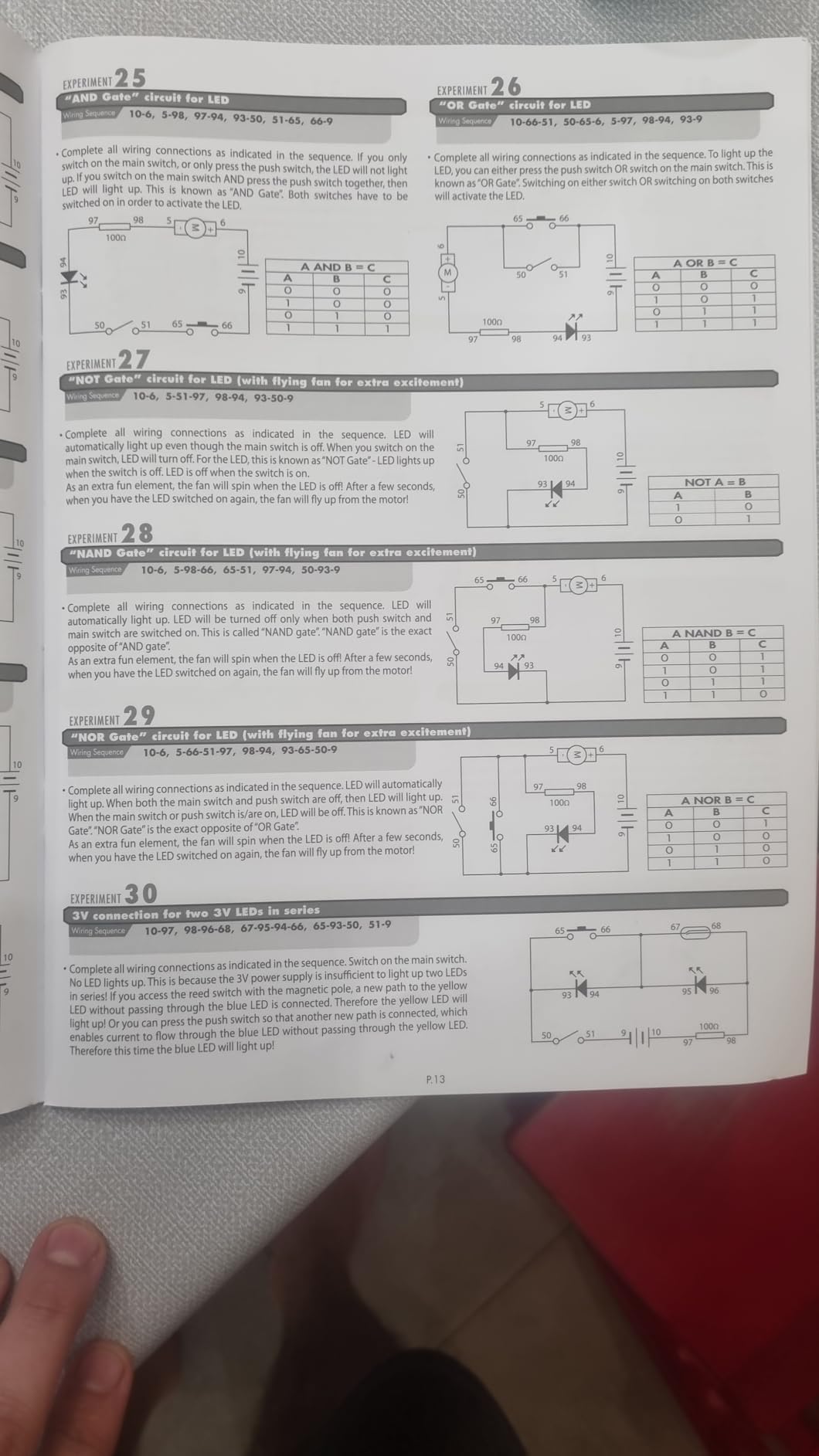
Most circuit problems for parents are lost parts. This board removes the category entirely because every experiment happens on a single reusable panel rather than across a box of loose components, which makes it the tidiest kit here and a sensible pick for a household with two children sharing one set.
The breadth is genuinely unusual. It covers light controls, sound controls, magnetic controls and touch controls on the same board, and it builds an AM and FM radio alongside a flying fan, animal sounds and a doorbell. A 64-page illustrated manual orders the projects from simple to challenging, so the same box works for an eight-year-old in week one and a twelve-year-old in month three.
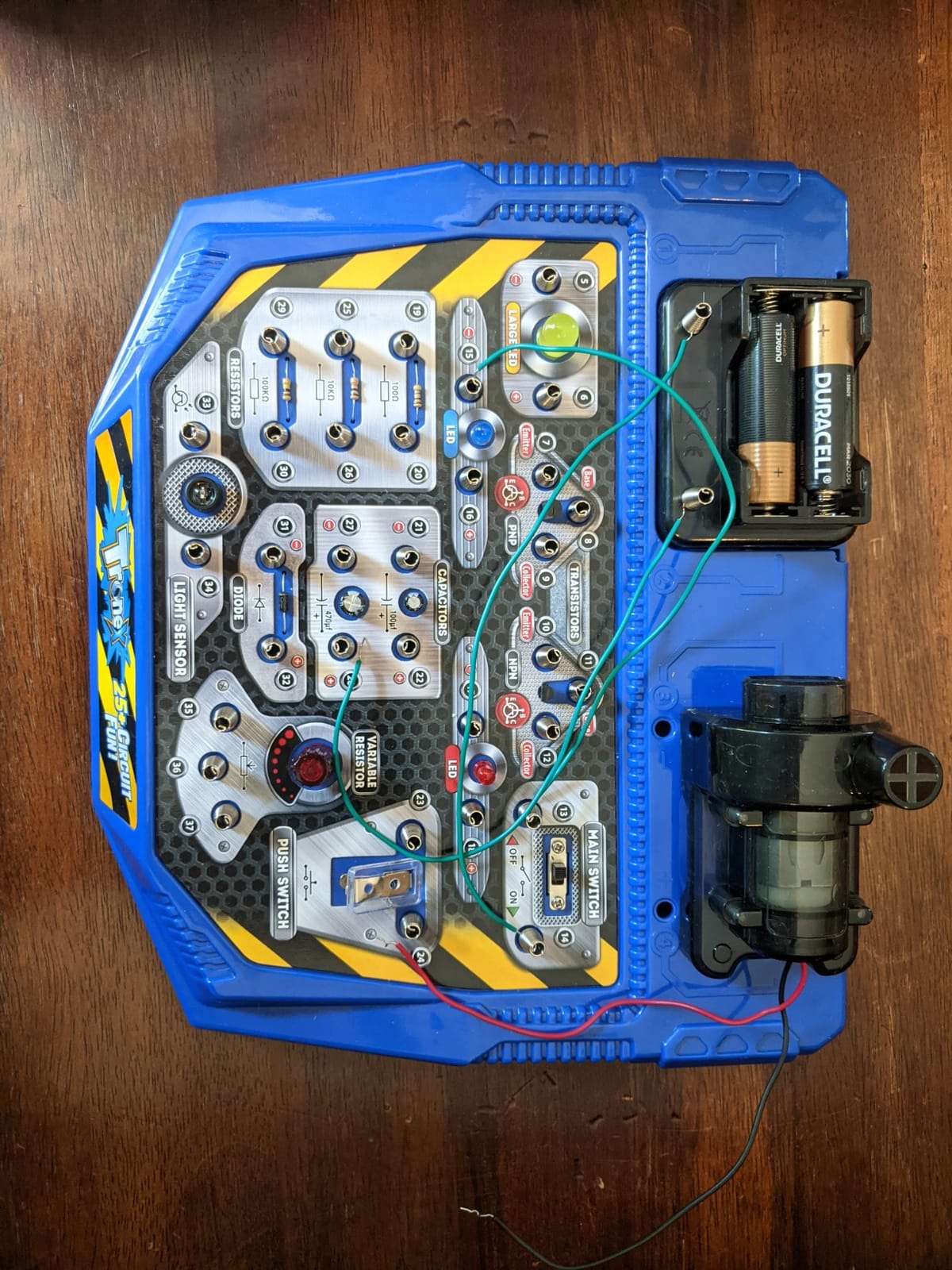
What the child learns is interconnection. Because a single board holds several subsystems, a child starts noticing that a sound circuit and a light circuit obey the same rules, which is a more advanced idea than lighting one LED.
The 4.6 rating is solid satisfaction rather than standout delight, and the reason shows up in the feedback. Owners like the self-contained format and the manual structure, but the most common caveat is that younger kids need an adult to set circuits up for them. The board is 21.7 by 15.6 by 4.2 inches and weighs 4 pounds, so it claims real desk space.
Who the Playz Circuit Board suits
It suits families who lose things, classrooms where a single shared board beats thirty identical kits, and any child who prefers building one big working object to assembling many small ones. It also works as a ready-made lab model for a homeschool room, since the experiments read like lab stations rather than toys.
What to watch for with the Playz board
Plan your sessions around an adult for younger children. The wire-based build style is less forgiving than a snap grid, and a connection in the wrong hole simply produces nothing rather than clicking obviously into place. If your child is under 8 and you want them working solo, look at a snap-together kit instead.
3. Snap Circuits Arcade SCA-200 – Best for Kids Who Like Games
SNAP CIRCUITS Arcade SCA-200 STEM Electronics Kit for Kids Ages 8+
200+ projects
36 pieces
Snap grid base
15.5 x 2.5 x 11.9 inches
Pros
- 200+ unique projects plus 20+ arcade-style games
- Tool-free snap-together design
- Color-coded and numbered parts
- Lifetime warranty against manufacturing defects
Cons
- Smaller project library than the larger Snap Circuits boxes
- Some younger builders need guidance on the first diagrams
The theme is the whole argument for this kit. A 36-piece set builds more than 200 unique projects and 20 or more arcade-style games, and for a child who already gravitates toward anything with a score and a start button, the same circuit knowledge arrives wearing a much more convincing costume.
Mechanically it works exactly like the other snap kits, with numbered and color-coded pieces pressing onto an included plastic grid and no tools required. The warranty is worth noting, because this listing carries a lifetime warranty against manufacturing defects rather than the one-year cover listed on the classic set.
Who the Arcade kit suits
It suits an eight-year-old or older who has already asked for a robot or a game and would find a doorbell circuit dull. It is also a good second Snap Circuits box for a household that already owns the classic set, because the arcade games and the classic circuits share the same snap format and the same base grid.
What to watch for with the Arcade kit
It runs out of road sooner than the bigger boxes. With 36 pieces and a project count that is smaller than the classic set, most children finish the library in a few weeks rather than a few months, and owners regularly ask for more. Younger builders also need an adult for the opening diagrams even though the parts themselves are easy to press on.
4. Snap Circuits Beginner SCB-20 – Best Budget Entry Point for Ages 5 to 9
SNAP CIRCUITS Beginner SCB-20 STEM Electronics Toy for Kids Ages 5-9
21 projects
Ages 5-9
Childproofed parts
11.7 x 2 x 7.4 inches
Pros
- Safely introduces real circuitry to children as young as 5
- Extra childproofing built into the components
- Includes a lighted color-changing fan
- 21 projects that build troubleshooting and planning skills
Cons
- Only 21 projects so it is a stepping stone
- Older children outgrow the simpler builds quickly
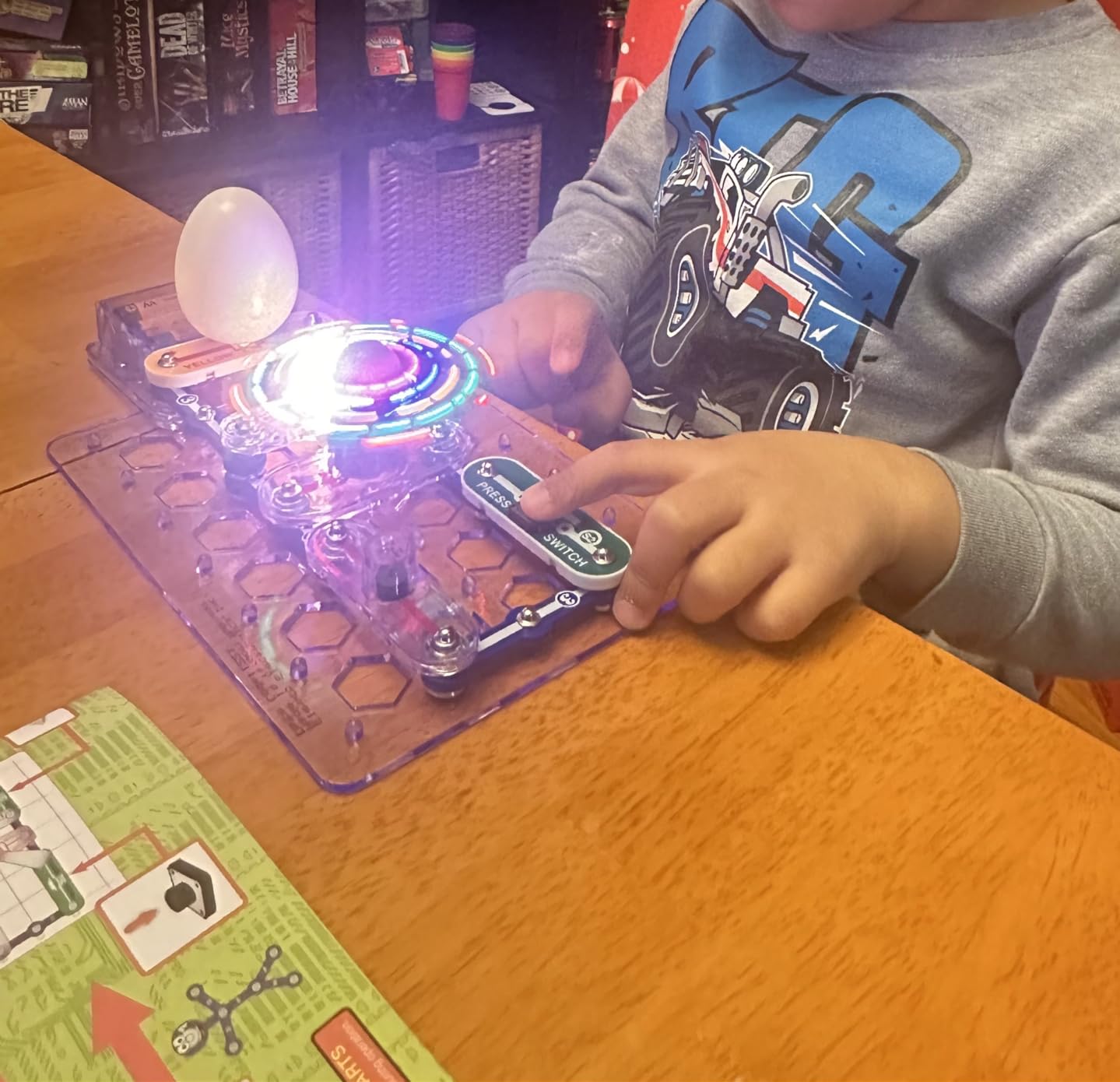
This is the cheapest way to find out whether a child actually likes electronics, and at 21 projects it works as a genuine test rather than a long-term system. The manual is genuinely designed for the age band, using large colorful diagrams and simple language, and a parent reports in our review data that it works best as a stepping stone toward a larger set once the child graduates.
Safety is the differentiator here. The components carry extra childproofing features rather than merely simplified instructions, which matters for the youngest builders in the group, and the box is only 11.7 by 2 by 7.4 inches so it fits in a drawer or travels in a school bag.
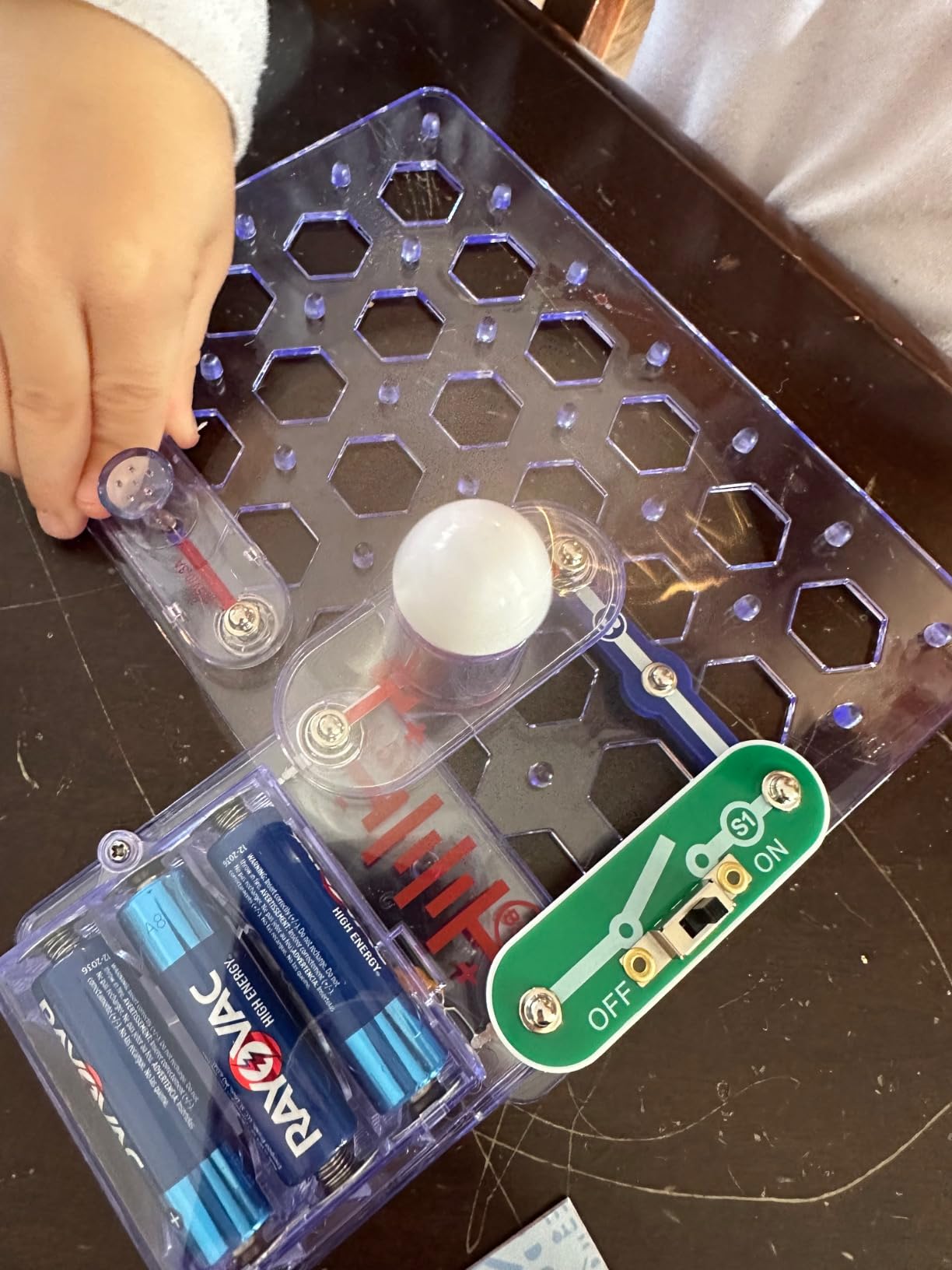
What the child learns is the closed circuit itself, plus the first taste of troubleshooting. Twenty-one projects is enough to show that a circuit either flows or does not, which is the single idea everything later builds on.
The 4.7 rating across more than 3500 reviews reflects consistent satisfaction in a narrow age band. Parents consistently report that it occupies the 5 to 9 range properly, and the recurring theme in the feedback is graduation, with children moving on to larger Snap Circuits sets once the simpler builds stop being interesting.
Who the Beginner kit suits
It suits a child between 5 and 9 who has never built a circuit, and it suits gift-givers who want a low-risk introduction rather than a serious investment. It is also a useful first box for a family that plans to move up to a larger kit once the interest is proven.
What to watch for with the SCB-20
Do not expect it to last. Twenty-one projects is short by design, and a competent eight-year-old will exhaust it in a couple of weeks. Treat it as a diagnostic purchase rather than a kit to grow with, and check whether the manufacturer lists a one-year defect warranty on this model, which is narrower than the lifetime cover on the Arcade listing.
5. Science Kidz Electronics Kit – Best for the Widest Range of Simple Experiments
Science Kidz Electronics Kit – 188 Science Experiments Set for Kids
188 experiments
Tool-free snap parts
24.3 x 13.5 x 5.4 inches
0.9 kilograms
Pros
- 188 circuit projects and experiments in one set
- Snap-together parts need no tools
- Full-color manual with progressive difficulty
- Components meet US and EU toy safety standards
Cons
- Project count is spread thinner than comparable kits
- Components and instructions are less refined than the established Snap Circuits line
When a kit advertises 188 experiments, the honest question is how many of them a child can finish without help. This one holds up better than most because the parts are tool-free and safe, and the manual starts simple before raising the challenge, which is the structure that keeps a child engaged past the first dozen builds.
It sits at the awkward middle of the market, priced well below the premium boxes and offering a long enough list of experiments to feel substantial. Buyers generally treat it as a solid budget electronics set for children roughly 5 to 10, and it covers the age band that most roundups skip.
Who the Science Kidz set suits
It suits a family that wants broad coverage of simple circuits without a large outlay, and it suits parents who want the safety documentation in writing, since the components are listed as compliant with both US and EU toy safety standards. The listed manufacturer age range is broad at 0 to 12 years, though the manual language points to the younger end.
What to watch for with the Science Kidz set
Count quality rather than quantity. Reviewers note that the 188 projects are spread thinner than in comparable kits, and that some components and instructions feel less refined than what the long-established Snap Circuits line produces. It is a good value kit, not a premium one, and the box is long and narrow at 24.3 by 13.5 by 5.4 inches.
6. Arduino Starter Kit K000007 – Best for a Child Ready to Learn Coding
Official Arduino Starter Kit [K000007] – 12 DIY Projects with Electronic Components & English Projects Book – Original Kit from Italy
12 DIY projects
Microcontroller board
Projects book included
6.3 x 9.06 x 1.77 inches
Pros
- Official Arduino components with genuine quality
- Projects book combines circuit design with coding
- All sketch code is preloaded so beginners can skip typing
- Organized packaging with labeled compartments and a wooden base
Cons
- Projects book print is small and hard to read
- Jumper wires are thin and can break
- A 9V battery is needed for some projects but not included
This is the only kit in the group that teaches a child to program hardware, and that is the entire reason to choose it. The board is a real microcontroller that the child drives with code, so the project does not just light up, it changes behavior when the code changes. Experienced makers and parents in our review data treat it as the reference beginner Arduino kit.
The projects book is the strongest part of the package. It combines circuit design instruction with hands-on coding rather than treating them as separate subjects, and every example sketch is already loaded in the Arduino IDE so a beginner can open it and press run instead of typing a wall of code that ends in an error.
![Official Arduino Starter Kit [K000007] - 12 DIY Projects with Electronic Components & English Projects Book - Original Kit from Italy customer photo 1](https://www.webdigi.net/wp-content/uploads/2026/09/B009UKZV0A_customer_1.jpg)
What the child learns is the bridge between a physical circuit and a logical instruction, which is the single most transferable skill in this entire category. It is also the kit most likely to produce something a child still has on a desk a year later, because the finished projects are programmable rather than fixed.
Critically, the complaints here are physical rather than educational. Reviewers mention small print in the book, jumper wires that break after repeated unplugging, and resistor color bands that are hard to distinguish without a multimeter. Capacitor polarity must be respected, so younger users need supervision around the board.
![Official Arduino Starter Kit [K000007] - 12 DIY Projects with Electronic Components & English Projects Book - Original Kit from Italy customer photo 2](https://www.webdigi.net/wp-content/uploads/2026/09/B009UKZV0A_customer_2.jpg)
Who the Arduino Starter Kit suits
It suits a motivated tween or teen who is already coding, or one who likes taking devices apart. It is a poor fit for a child who is still being read to, and it also fails if the adults in the room cannot help when a project refuses to work, which is the most common reason this kit stalls.
What to watch for with the Arduino kit
Buy a multimeter and a pack of spare jumper wires before you start, and expect to add a 9V battery for the projects the guide assumes but the box does not include. The listed age range of 0 to 12 is a manufacturer convenience rather than a real guidance number, so judge by the child’s coding interest instead.
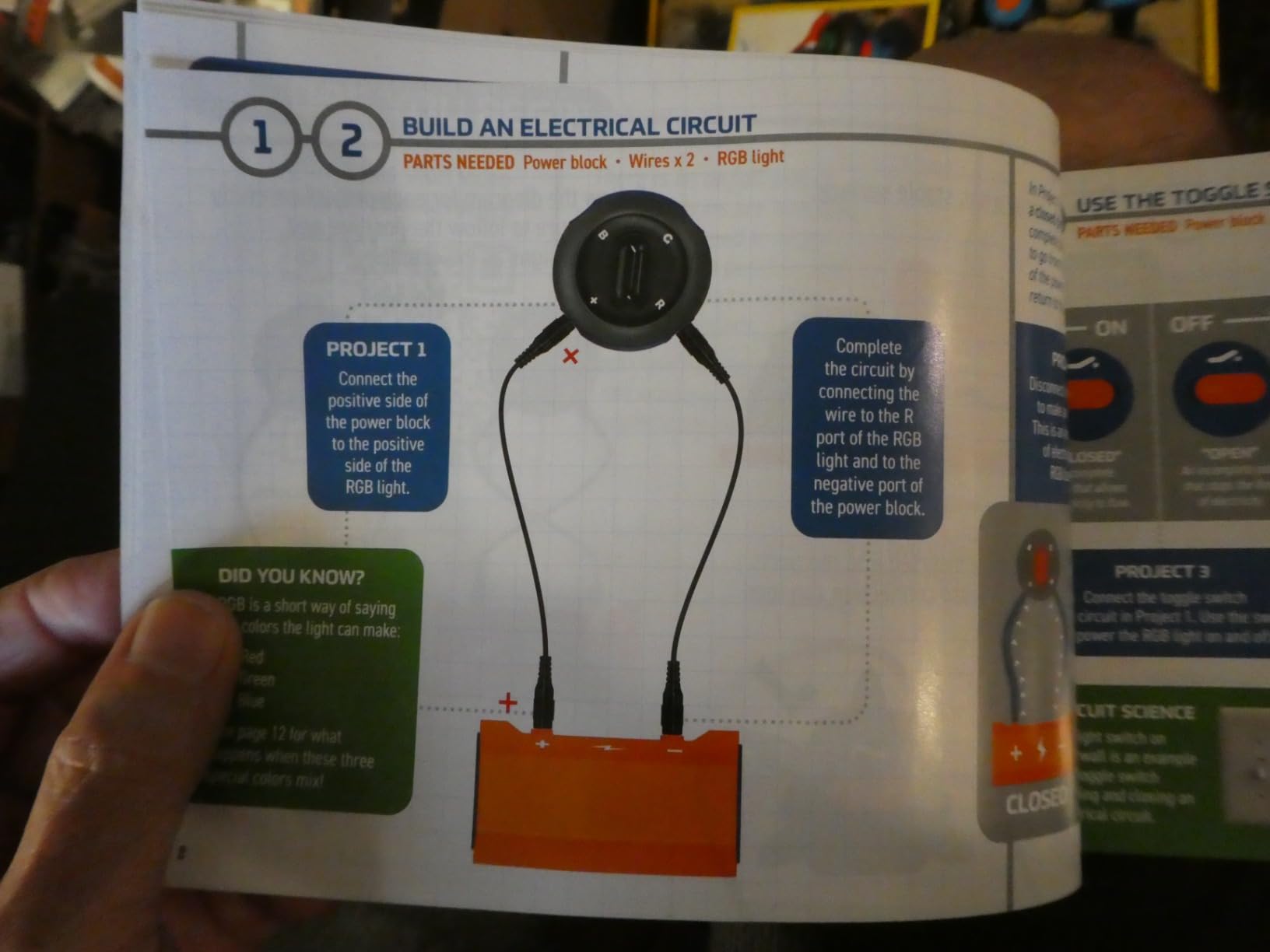
7. National Geographic 120 Circuit Kit – Best for Video Instructions
National Geographic Circuit Kit for Kids with 120 Electrical Projects
120+ projects
QR video instructions
Snapping wires
12 x 3 x 14.75 inches
Pros
- 120+ projects and activities
- QR code links to video instructions alongside the printed guide
- Wires snap securely to components with no tools
- Builds include a light show
- copter and voice amplifier
Cons
- Wire-based connections need more dexterity than a snap grid
- Some projects require adult help for younger builders
The instruction method is what sets this kit apart. A QR code in the guide links to video instructions, and owners regularly credit that with resolving the moment when a printed diagram is ambiguous and a child is about to give up.
The build list is varied rather than repetitive, covering keyboard music mode, light shows, a flying copter and a voice amplifier, so the finished objects differ enough to stay interesting. Components connect with included wires that snap onto each part, so there are no tools involved, and the box is 12 by 3 by 14.75 inches at 2.7 pounds.
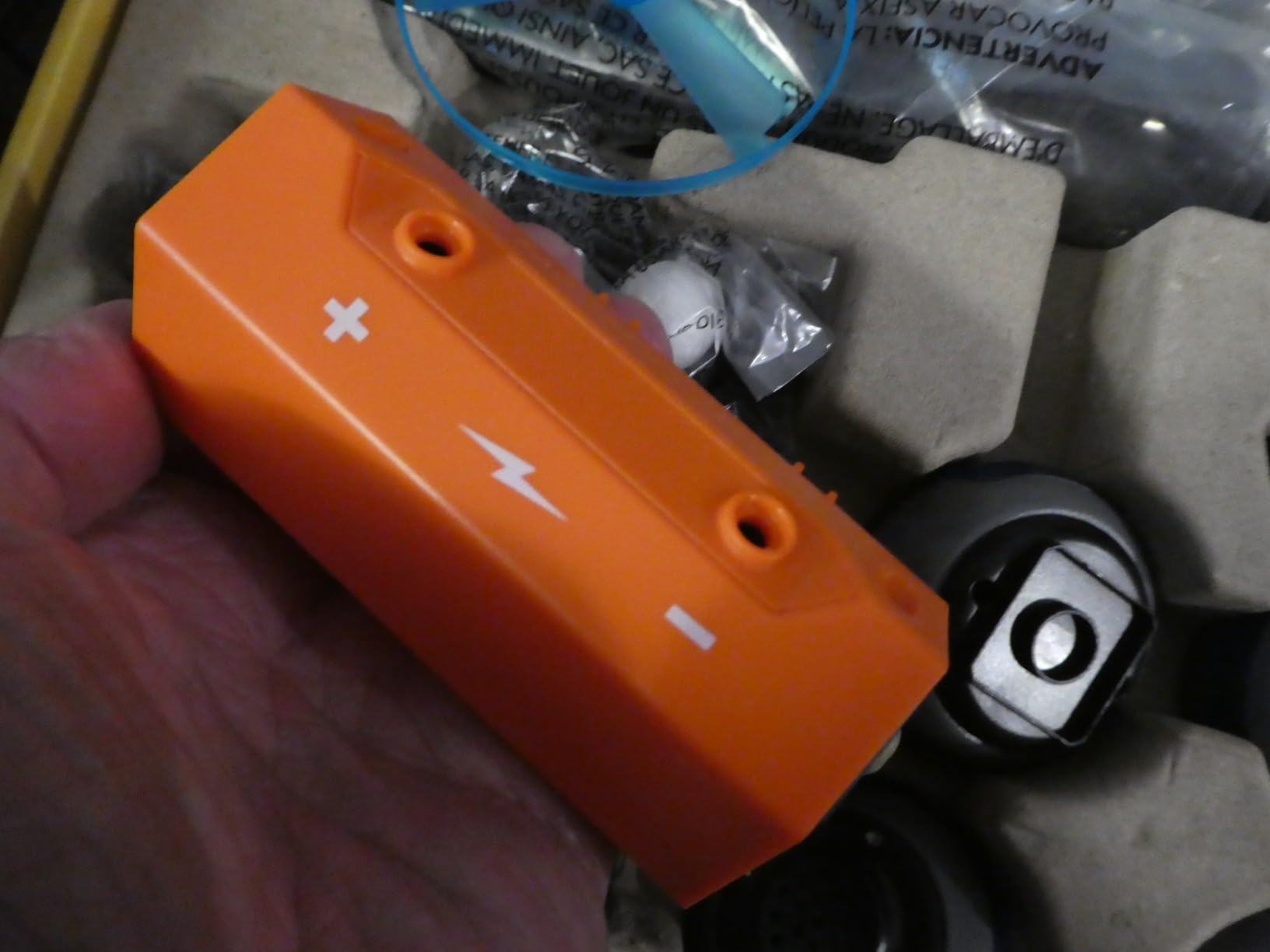
What the child learns is the same core material as a snap kit, with an added habit of using a video when text fails. That is a useful skill in itself, and it works well for a child who reads diagrams slowly or who would rather watch than be read to.
The 4.7 rating comes with 87% of ratings at five stars, which is the strongest five-star share in the group, though the review base of 609 is smaller than the established kits. The main limitation is the connection style, since a wire-based build needs more dexterity and adult participation than a press-fit grid.
Who the National Geographic kit suits
It suits children 8 and up who are visual learners, and it suits any parent who is not an electrician and wants a fallback when the printed guide runs out. The video route also makes it a reasonable choice for a child working through projects with a grandparent or sibling rather than an expert.
What to watch for with the 120 Circuit Kit
Expect to be within reach. Wire-based connections are less forgiving than snap grids, and reviewers specifically flag that some projects need adult help for younger builders. If your child is under 8, the snapping components help but do not remove the dexterity requirement.
8. SMILESSKIDDO 420+ Project Kit – Best Raw Project Count on Paper
SMILESSKIDDO Science Kits Electronics STEM Kit 420+ Projects 35 Parts
35 circuit modules
37-page manual plus 4 cards
14.5 x 11 x 3.1 inches
1.13 kilograms
Pros
- Advertises 420+ project combinations from 35 modules
- Teaches series and parallel connections through building
- No soldering needed
- Includes a 37-page manual plus 4 indicator cards
Cons
- AA batteries are required but not included
- 3-star reviews are comparatively high at 11%
- Some modules do not hold securely in the plate
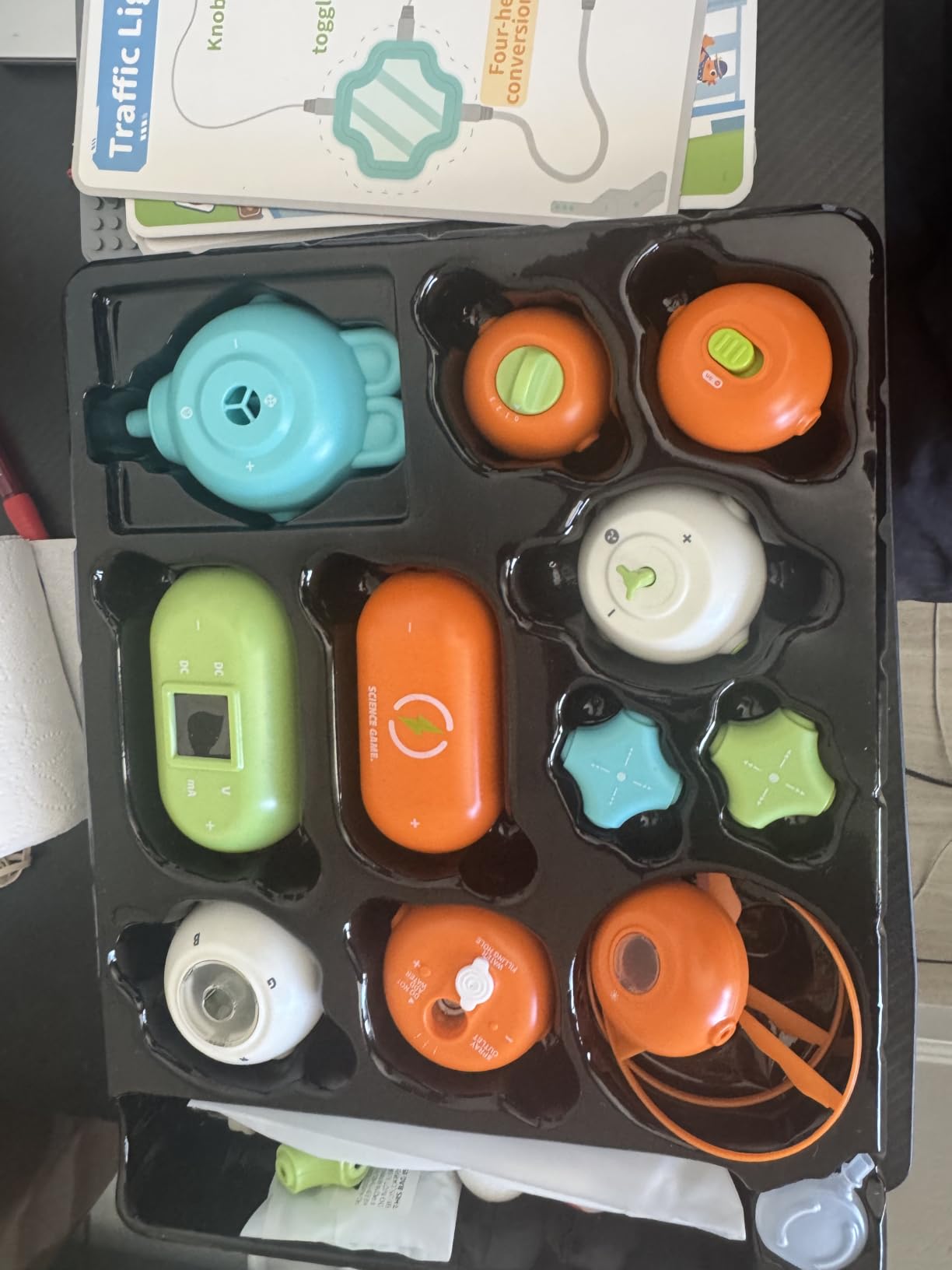
No other kit here advertises a bigger number. Thirty-five circuit modules combine into more than 420 project configurations, and the modules simply insert or tuck into a plastic plate, so there is no soldering and no tools. The series and parallel teaching is built into the module set rather than bolted onto the manual as an aside.
A 37-page colorful manual and four indicator cards are included, and the manual covers building circuits in 118 distinct ways. The package is compact at 14.5 by 11 by 3.1 inches and 1.13 kilograms, which makes it the easiest kit here to actually put away.

What the child learns is the distinction between series and parallel, which is the concept that separates a child who has done circuits from one who has only followed a diagram. Because modules are interchangeable, the same parts recombine into different topologies.
The 4.5 average is the second lowest here and the reason is visible in the numbers: 3-star reviews run at 11%, well above the other kits in this group, and reviewers note that some builds do not work as advertised or that modules will not hold securely during complex projects. AA batteries are also required and not included.
Who the SMILESSKIDDO kit suits
It suits a child aged roughly 6 to 10 who wants volume and variety, and it works as a classroom prop where one demonstrator board serves a whole group. The listed manufacturer age starts at 3 years, though the wiring decisions make the younger end a supervised activity.
What to watch for with the 420+ kit
Treat the project count as combinations rather than distinct builds. Owners report that some modules do not perform as advertised, so set expectations that a fraction of the combinations will not light up, and buy a pack of AA batteries before the first session, since the kit does not include them.
9. Dr. STEM Toys Circuit Science Kit – Best for Motorized Action
Dr. STEM Toys Circuit Science Kit, Includes Over 100 Electrical Experiments with Lights, Sounds, and Action – for Boys and Girls Ages 8+
100+ experiments
17.5 inch board
Ages 8-16
2.5 pounds
Pros
- Over 100 hands-on action-oriented experiments
- Includes a floating ball
- flying saucer and working radio
- Circuit creator design approachable for ages 8 and up
- Works as a home or classroom lab
Cons
- Smallest review base here with only 203 reviews
- One-star share of 7% is the highest in the group
- Uses metal and paper parts so it is less childproof
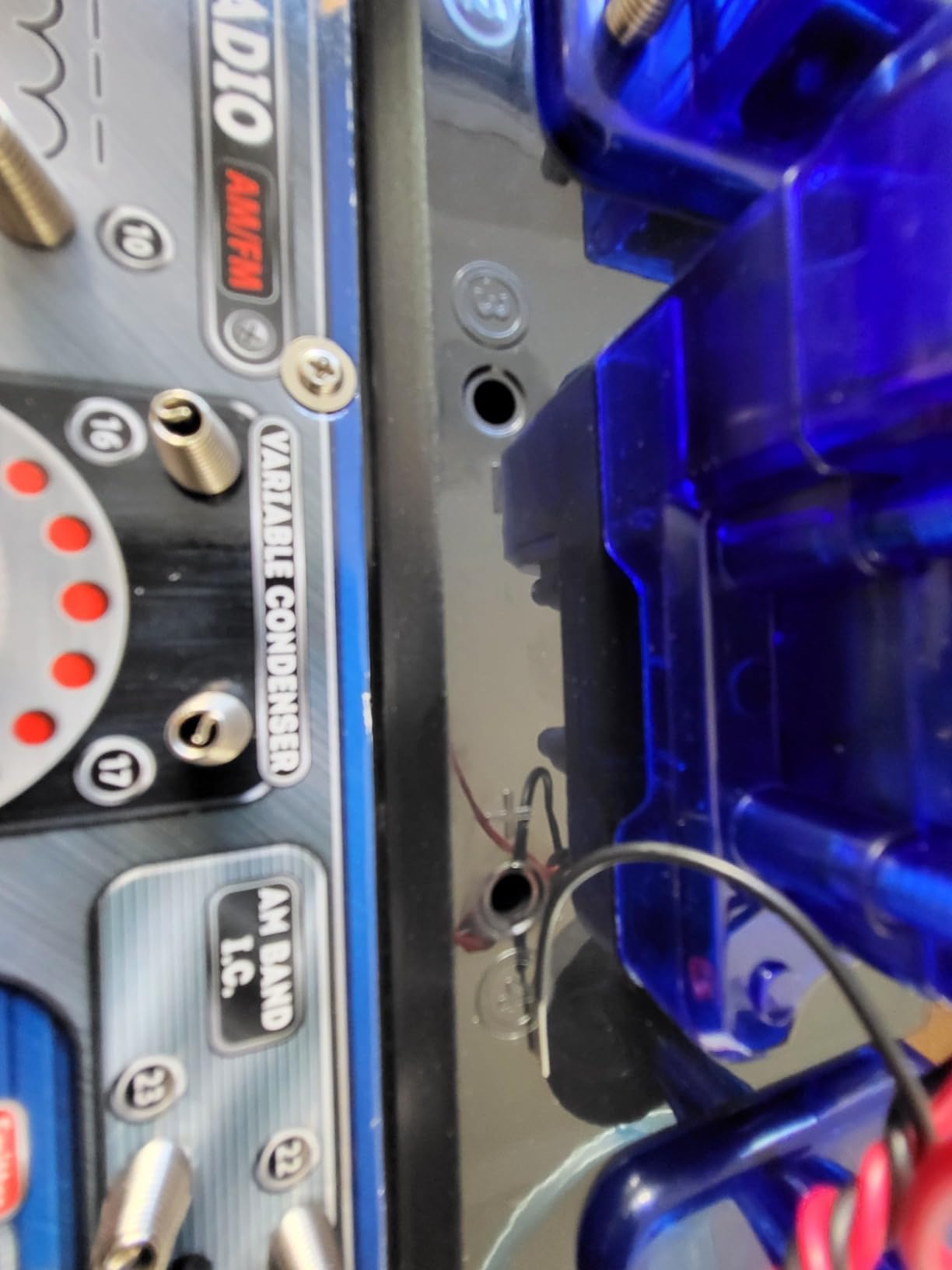
Most kits in this roundup end in a light or a sound. This one leans into motion, with a floating ball, a flying saucer and motorized action alongside a working radio, and owners specifically call those moving builds the memorable part of the set.
The circuit creator design is described as clear and approachable for children 8 and older, and the listing puts the range at 8 to 16 years, which makes it one of the wider bands here. The board is 17.5 inches across, 3.5 by 17.5 by 13.5 inches overall, and weighs 2.5 pounds.

What the child learns is cause and effect with energy, since a floating object or a spinning motor makes cause visible in a way a static LED circuit never does. It is a good bridge for a child who is ready to move from lighting things up to moving them.
This is the lowest-rated kit we included at 4.4, and the review base of 203 is by far the smallest here, so the evidence is thinner than the rest. Buyers point to some quality inconsistency, with a 7% one-star share the highest in the group, and the material list includes metal and paper, which makes it less childproof than a fully plastic kit.
Who the Dr. STEM kit suits
It suits an older child, closer to the 12 to 16 end of its stated range, who has already finished the light-and-sound circuit stage. It also works as a home or classroom science lab where moving demonstrations hold attention better than static ones.
What to watch for with the Dr. STEM kit
Check the small parts before handing it to a younger sibling. Metal and paper components are less forgiving than plastic, and the manufacturer warranty listed here is only 30 days from the date of purchase, which is the thinnest cover in this group.
10. choopheme Bluetooth Speaker and FM Radio Kit – Best for a Project That Stays on the Desk
Stem Projects Toys for Boys age 8-12 12-14 Science Kit Building Own Bluetooth Speaker & FM Radio DIY Electronics Kit Science Experiments Kid 9-12 Boy Toys Birthday Gift 8 9 10 11 13 Year Old Teen Girl
Bluetooth speaker plus FM radio
88-108MHz auto scan
Wooden boards
1 x 1 x 1 inch listing size
Pros
- Two complete functional projects in one set
- Auto-scanning FM tuner across the 88-108MHz band
- Only a small Phillips screwdriver needed
- Wooden boards can be painted and personalized
Cons
- Wiring is the tricky step and some builders need extra connectors
- Printed instructions are imperfect
- Some buyers report an incomplete kit
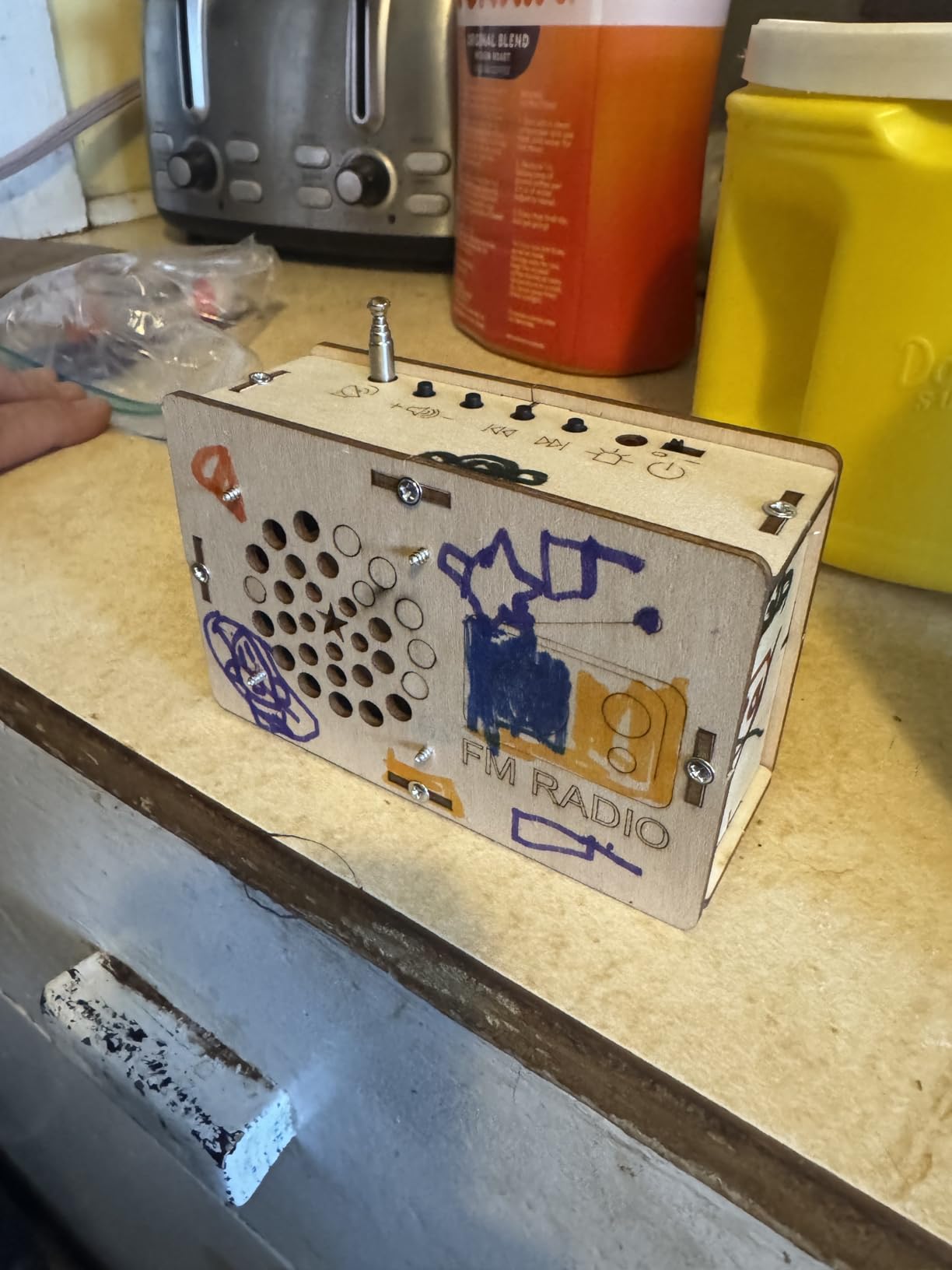
This is the only kit here where the child ends up with two objects that keep working after the box is gone. A functioning Bluetooth speaker and a working FM radio with auto-searching reception across the 88-108MHz band are things a child uses daily, which is the opposite of a box of experiments that returns to storage.
Assembly needs a single small Phillips screwdriver and no soldering for most builders, and the wooden boards can be painted so the finished speaker and radio look like the child’s own work. Materials are listed as non-toxic with no raw edges.
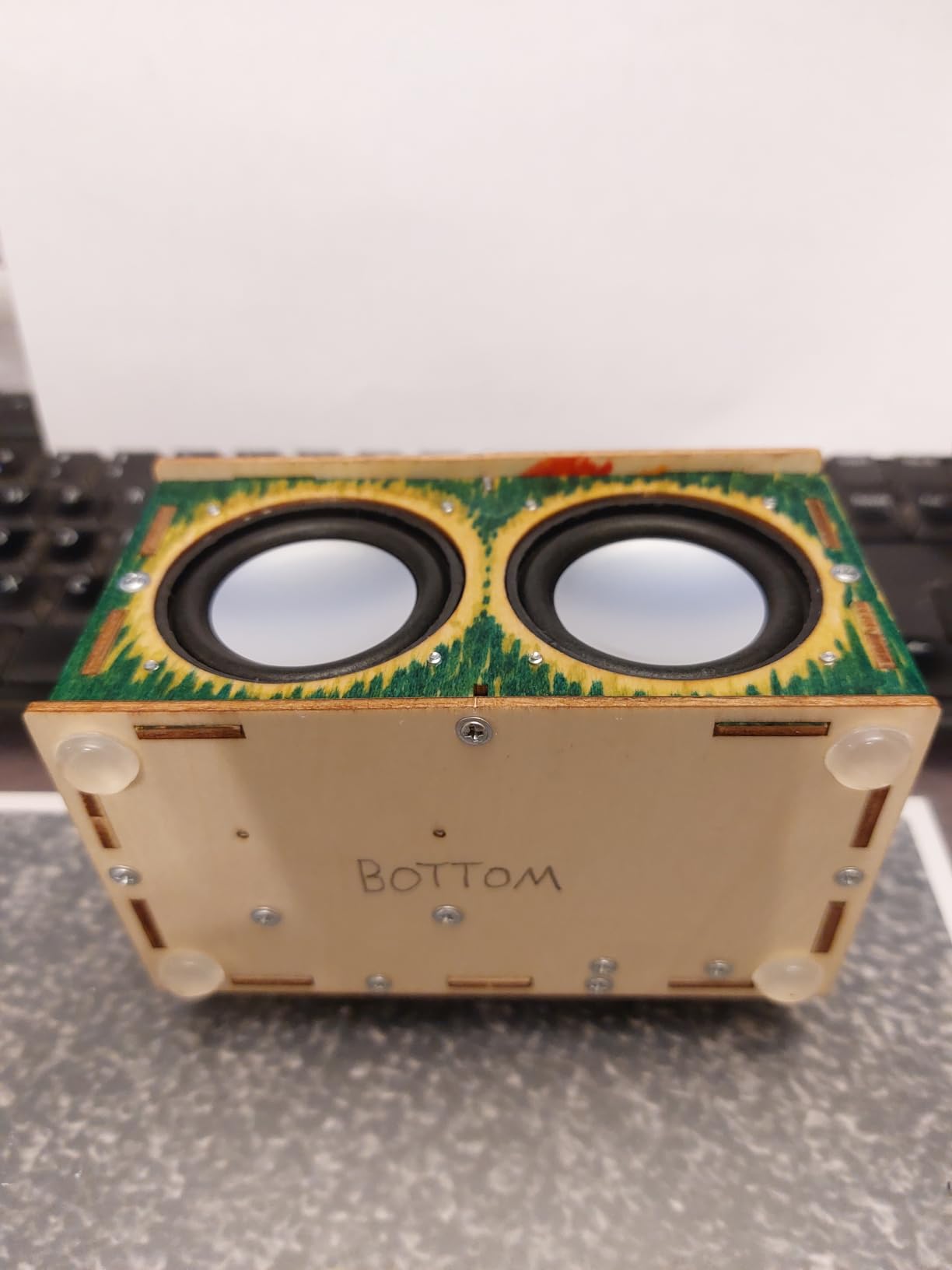
What the child learns is enclosure construction. Working with wood and hardware teaches tolerances and assembly order in a way plastic grids never do, and the radio teaches frequency rather than current, which broadens the physics considerably.
The 4.4 rating reflects enthusiastic older recipients balanced against consistent complaints about the wiring step and the printed instructions, which reviewers say benefit from added explanation. There are also a few reports of incomplete kits where one of the two projects would not power on, so check the contents against the manual before starting.
Who the speaker and radio kit suits
It suits preteens and teens, and parents who judge a kit by what is still working six months later rather than by project count. It also suits a child who wants a real device with a purpose, since a radio that picks up actual stations is a different kind of motivation from circuit twenty-seven.
What to watch for with the wooden build kit
Set aside time for the wiring and have small spade connectors or a soldering iron within reach, because that is the step where builders report getting stuck. The listed size field on this product reads as 1 by 1 by 1 inches, which does not describe the finished builds, so measure the desk space yourself.
How to Choose a Circuit Kit for Your Child
Match the kit to what the child has built before, not to the age on the box. Published age guidance in this category is treated as a rough starting point by parents, and the more reliable signal is whether the child has followed a multi-step diagram without help.
Separate usable projects from advertised ones
A kit that advertises 420 projects is usually counting every recombination of its modules, while a kit that advertises 300 circuits is counting distinct builds. Both numbers are honest by their own definition and neither tells you how long the kit lasts. The honest test is the manual: a kit ordered from simple to challenging keeps a child building for months, while a flat list of variations runs thin by week three.
Check whether parts work across kits
This is a real cost-of-ownership question that most product pages ignore. Snap Circuits parts share a common grid format within the brand, which is why an expansion set adds to a base kit rather than replacing it, and that is the strongest argument for buying one large box over several small themed ones. Wire-based kits from different brands usually do not mix at all, since the connectors are proprietary.
Safety and supervision
None of the ten kits here require soldering, and all run on low-voltage alkaline batteries, which removes the two biggest safety concerns in this category. What remains is small parts. Kits for children under 6 should have childproofed components rather than merely simplified instructions, and any kit with wire-based connections needs an adult nearby regardless of the stated age.
The screen time question
Parents often buy a circuit kit to replace screen time, and that works cleanly for every snap-together and build-it-yourself option. It stops working at the Arduino tier, where the child codes on a screen to control a device they built. We think the tradeoff is worth it at that stage, because the screen is driving something physical the child made, but it is worth naming honestly rather than discovering later.
For schools and homeschool families
Classroom buying rewards format over volume. A single reusable board like the Playz model serves a group better than one kit per child, and Snap Circuits parts are simple enough for a parent to sort into labeled compartments at the start of a term. For homeschool, the kits with a manual that ramps in difficulty work best as a term-long spine rather than a single afternoon.
Once you have the basics sorted, our guides to the best drones for kids and the best gaming consoles for kids cover the other big gift categories, and our picks for the best tablets for kids matter more once coding enters the picture.
Frequently Asked Questions
What is the best electronics kit for kids?
The Snap Circuits Classic SC-300 is the strongest all-round choice, holding a 4.8 rating across more than 29000 reviews and building over 300 circuits with no tools or soldering. For a child aged 5 to 9, the smaller Snap Circuits Beginner kit is the safer entry point, and for a tween already coding, the Arduino Starter Kit teaches hardware control.
What age can kids start learning electronics?
Most children can start around age 5 with a snap-together kit built for the band, such as the Snap Circuits Beginner with childproofed components. Around 7 to 8, wire-based build-it-yourself kits work once an adult is nearby. Breadboard and Arduino kits suit children 10 and up who can follow instructions independently.
Are electronics kits safe for kids?
The kits in this roundup are safer than most electronics toys because none require soldering and all run on low-voltage alkaline batteries. The remaining concerns are small parts and wire connections. Kits with childproofed components suit younger children, and any wire-based kit needs an adult present when the child is under 8.
What is better for kids, Snap Circuits or Arduino?
Snap Circuits is better for a first introduction because nothing can be wired wrong and projects work immediately. Arduino is better once the child is coding, because the microcontroller is programmed to control the circuit rather than following a fixed diagram. The usual path is a snap kit first, then a build-it-yourself kit, then Arduino.
Should I buy the biggest circuit kit now or start smaller?
Buy the tier that matches what your child has built today rather than what they might attempt next year. A kit that is too advanced tends to be opened once and shelved, and the lost parts inside are rarely replaced. Starting with the entry kit and adding a themed expansion later costs more but keeps the child building in between.
Do parts from one circuit kit work in another?
Within the Snap Circuits line, yes, because the parts share a common snap grid and expansion sets add to the same base kit. Across different brands, usually no, because wire-based kits use proprietary connectors that will not mate. Check whether the brand you are buying sells expansion sets for the exact model before committing to a small kit.
Where to Start
Buy the Snap Circuits Classic SC-300 for a child aged 8 and up, because its 300+ project library and shared snap grid format mean it can grow with them rather than ending in a drawer. Start with the Snap Circuits Beginner instead if the child is between 5 and 9, and step up to the Arduino Starter Kit when coding becomes the interest rather than circuits.
That is the whole decision rule for the best circuit kits for kids in 2026: pick the family that matches what your child has already built, then buy the largest kit in that family so the parts keep working together. Everything else on the box is marketing.