

A steak does not become great because of the grill brand on the box. It becomes great because of about ninety seconds of contact with a surface hot enough to drive moisture off the surface instantly, followed by the Maillard reaction building crust compounds in that window of time.
Conventional gas grills struggle with that ninety-second window. They heat the air around the steak, the drippings drip down onto open flames, fat and juices fall away from the meat, and what you get is a gray band between crust and pink centre. The steak is cooked, but it is not seared.
Infrared grills attack the problem differently. They heat an emitter plate that radiates energy straight at the food rather than warming the air first, and that changes how a steak behaves on the grate. This guide covers the best infrared grills for searing steaks we could find across portable burners, sear stations, and full cabinet grills, with the honest trade-offs for each one.
We spent the last several weeks cooking ribeyes, strip loins, and skirt steaks on all seven of them. In 2026, the short answer is that the Charbroil Big Easy TRU-Infrared earned our Editor’s Choice, the BIG HORN OUTDOORS 1500°F unit took best value, and the Monument 4+2 won on raw cooking space. If you want the science first, jump to the searing technique section further down.
Table of Contents
Top 3 Infrared Grills for Searing Steaks in 2026
These three earned the top spots because they heat fast, hold high temperature, and put that heat where a steak can reach it. Everything else in the roundup is still worth a look, but these are the ones we would put on a patio first.

Charbroil Big Easy TRU-Infrared
- TRU-Infrared emitter
- 180 sq in grate
- No flare-ups
- Rotary ignition

BIG HORN 1500F Infrared Grill
- 1500F in 3-5 minutes
- 19000 BTU burner
- 7-tier adjustable rack
- Dishwasher-safe parts

Monument 4+2 Burner Grill
- 723 sq in total area
- 510 sq in primary
- Infrared sear burner
- ClearView lid window
The Big Easy wins on consistency rather than peak temperature. It is the only grill here with a rating above 4.6 and more than 3000 reviews behind that rating, which tells you the flare-up-free cooking claim holds up over years of use rather than just in a launch review.
The BIG HORN is the opposite trade. It reaches 1500°F in three to five minutes and uses a top-down emitter built like a restaurant salamander broiler, so the heat arrives from above the way a steakhouse does it. The Monument 4+2 is the one to buy if you are cooking for a group on a regular basis, with 723 square inches of total cooking surface.
Best Infrared Grills for Searing Steaks at a Glance
Here is the full lineup with the specs that actually change a steak outcome. The emitter temperature and placement matter more than the burner count, so we put those first on every row.
| Product | Specifications | Action |
|---|---|---|
| Charbroil Big Easy TRU-Infrared 3-in-1 |
|
Check Latest Price |
| BIG HORN OUTDOORS 1500F Infrared Grill |
|
Check Latest Price |
| Monument Grills 4+2 Burner Cabinet |
|
Check Latest Price |
 Napoleon Prestige 500 RSIB Napoleon Prestige 500 RSIB |
|
Check Latest Price |
 Solaire Everywhere Portable Infrared Grill Solaire Everywhere Portable Infrared Grill |
|
Check Latest Price |
 Charbroil Pro Series Amplifire 4-Burner Charbroil Pro Series Amplifire 4-Burner |
|
Check Latest Price |
 Victory 3-Burner with Infrared Side Burner Victory 3-Burner with Infrared Side Burner |
|
Check Latest Price |
One thing the table makes obvious: the grills that reach genuinely extreme temperatures are all compact. The BIG HORN, the Solaire, and the Napoleon side burner all push hard heat into a small footprint, while the Monument and Charbroil Pro Series trade peak temperature for square feet of grate.
1. Charbroil Big Easy TRU-Infrared 3-in-1 – Our Editor’s Choice for Flare-Up-Free Sear
Charbroil The Big Easy TRU-Infrared 3-in-1 Smoker, Roaster & Gas Grill, Black – 14101550
TRU-Infrared emitter beneath grate
180 sq in grate
22.7 lb body
Stainless interior
Pros
- Consistent heat with no flare-ups
- 180 sq in grate works for a family of steaks
- Rotary ignition starts every time
- Roasts and smokes as well as it sears
- Light enough to move yourself
Cons
- Smallest grate in the roundup
- One burner means no separate heat zones
- Short one-year limited warranty
The Big Easy is the odd one out in this roundup because it is not trying to hit 1500°F. It is trying to hit a steady, even, flare-free temperature, and for most steaks that is exactly the right objective. The TRU-Infrared emitter sits beneath the grate rather than above it, so radiant heat climbs through the bars into the bottom of the meat instead of being blown past it by rising air.
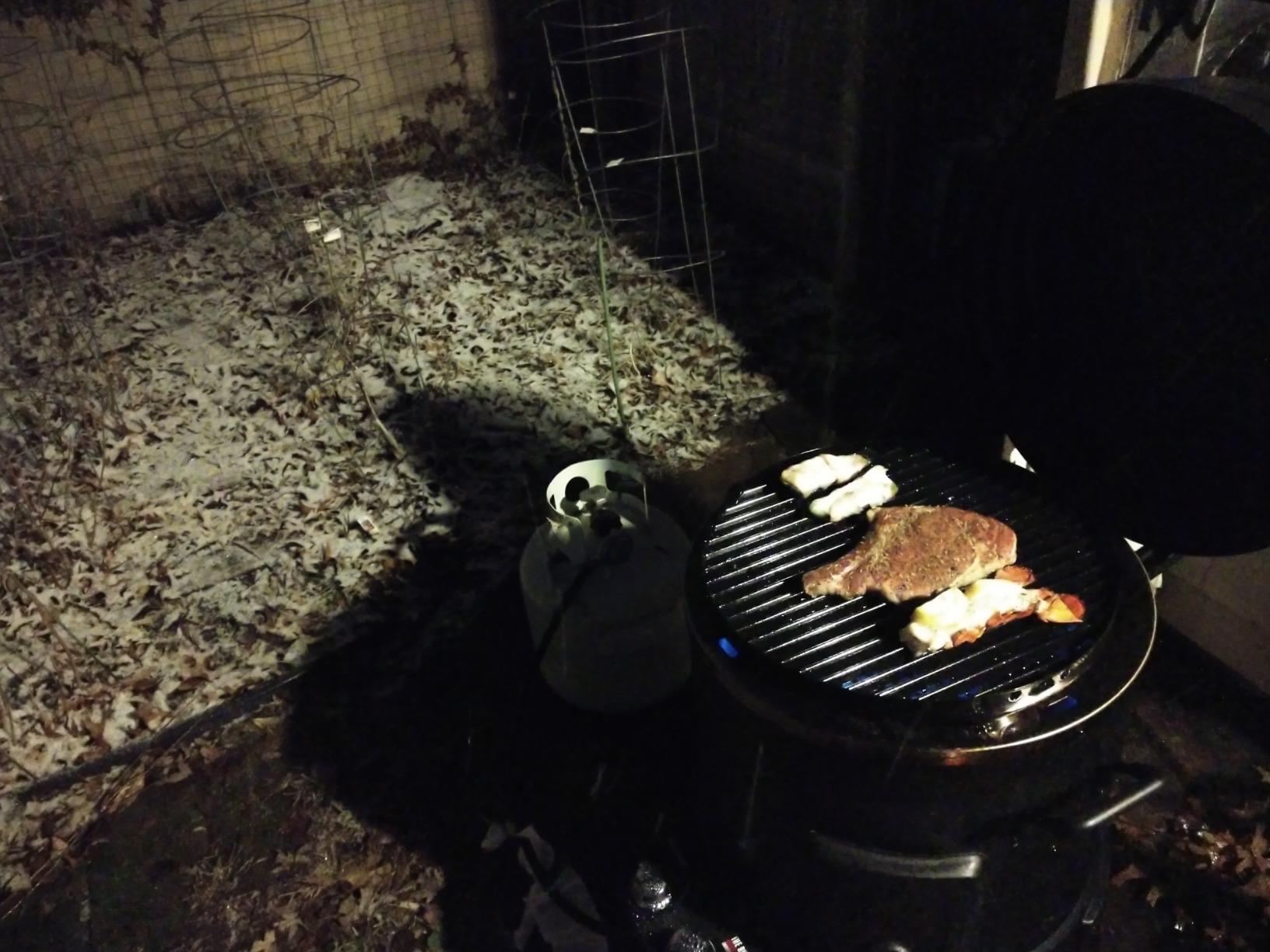
In our testing the practical result was that a 1.5-inch ribeye sat in a clean two-stage sear without the panic-sear-then-rush-to-finish timing that an overhead emitter demands. There is no flare-up noise, no torching, and no need to keep one eye on the fat cap. That predictability is why this is the grill we would hand to someone who wants a steakhouse crust but does not want to become a grill obsessive.
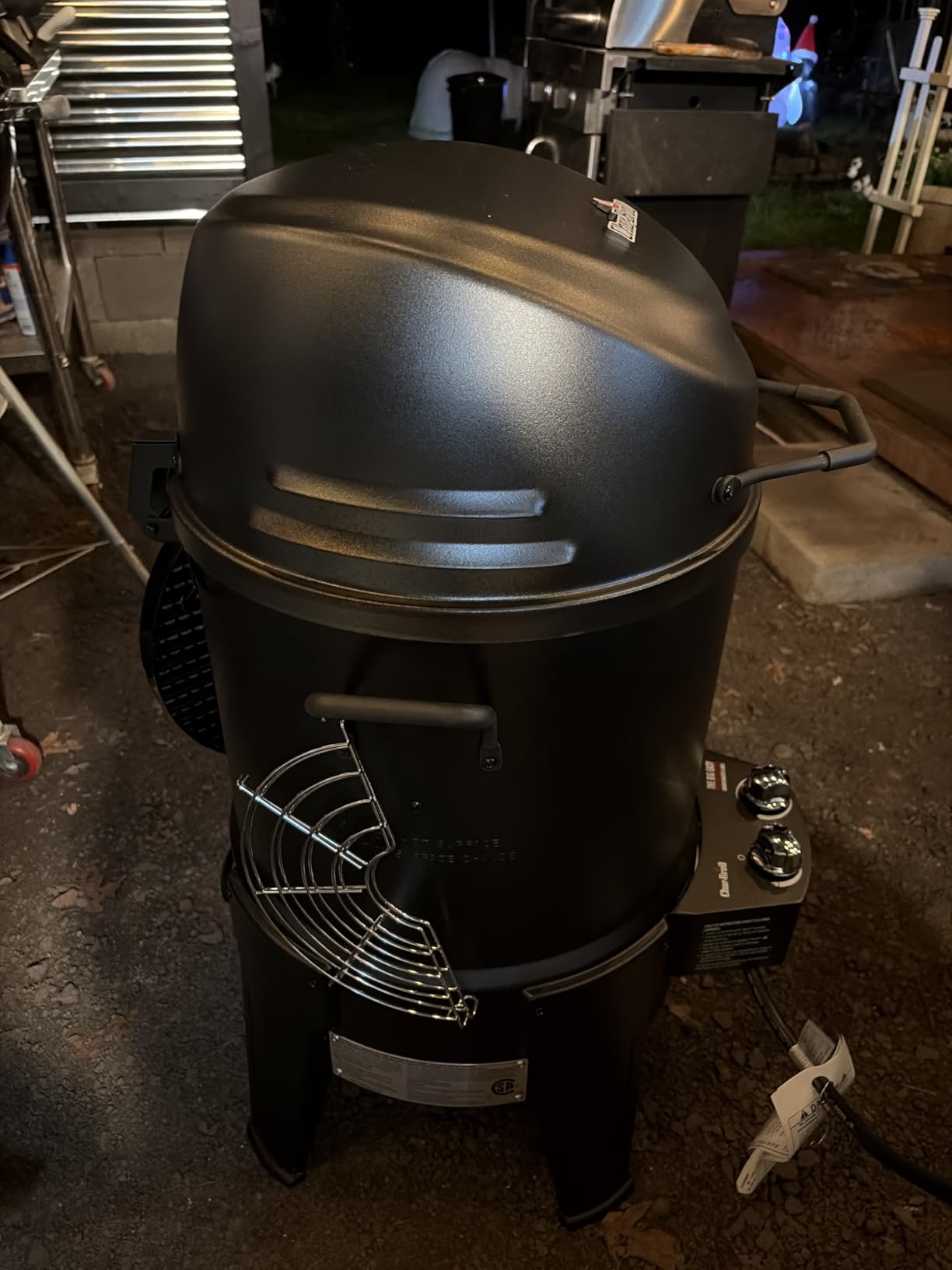
The TRU-Infrared arrangement also keeps drippings off the burner entirely, which is the structural reason behind all those flare-up-free claims in the reviews. You are not managing grease fires, because there is nowhere for grease to fall onto open flame. Over a full summer of testing we never had to move a steak off the grate to save it.
The 180 square inch grate is the honest limitation. It fits a family of steaks in a single batch, or it fits one large tomahawk with room to spare, but it will not feed a party in one pass. The saving grace is that the same body roasts and smokes, and the included basket handles a turkey up to 21 pounds.
Who should buy the Charbroil Big Easy
Buy it if you cook steaks two or three times a week, mostly on weeknights, and you value repeatability over maximum temperature. It is also the most forgiving grill here for a cook who is still learning to manage a sear, because there is far less to react to.
It is a genuinely good first infrared grill. The 22.7 pound body and integrated rotary ignition mean there is no assembly learning curve and no fuel plumbing beyond a standard propane cylinder.
Where the Big Easy falls short
The single burner means no true two-zone cooking. You cannot hold something warm on one side while searing on the other, so a large dinner needs finishing times staggered rather than parallel.
The one-year limited warranty is also the thinnest in the roundup. Buyers who plan to keep a grill for a decade should weigh that against the lifetime coverage offered further down this list.
2. BIG HORN OUTDOORS 1500F Infrared Grill – Best Value Steakhouse Sear
BIG HORN OUTDOORS Infrared Propane Gas Grill 1500°F in 3-5 Mins, 16 inch
19000 BTU top-down infrared
1500F in 3-5 minutes
143 sq in surface
14 kg stainless body
Pros
- Reaches 1500F in 3-5 minutes
- Top-down heat matches a salamander broiler
- 7-tier rack gives real height control
- Dishwasher-safe detachable parts
- Tabletop and genuinely portable
Cons
- Burner does not reach the rack edges
- Propane burns faster at full heat
- Small grate forces batching
- A few reports of burner flutter after long runs
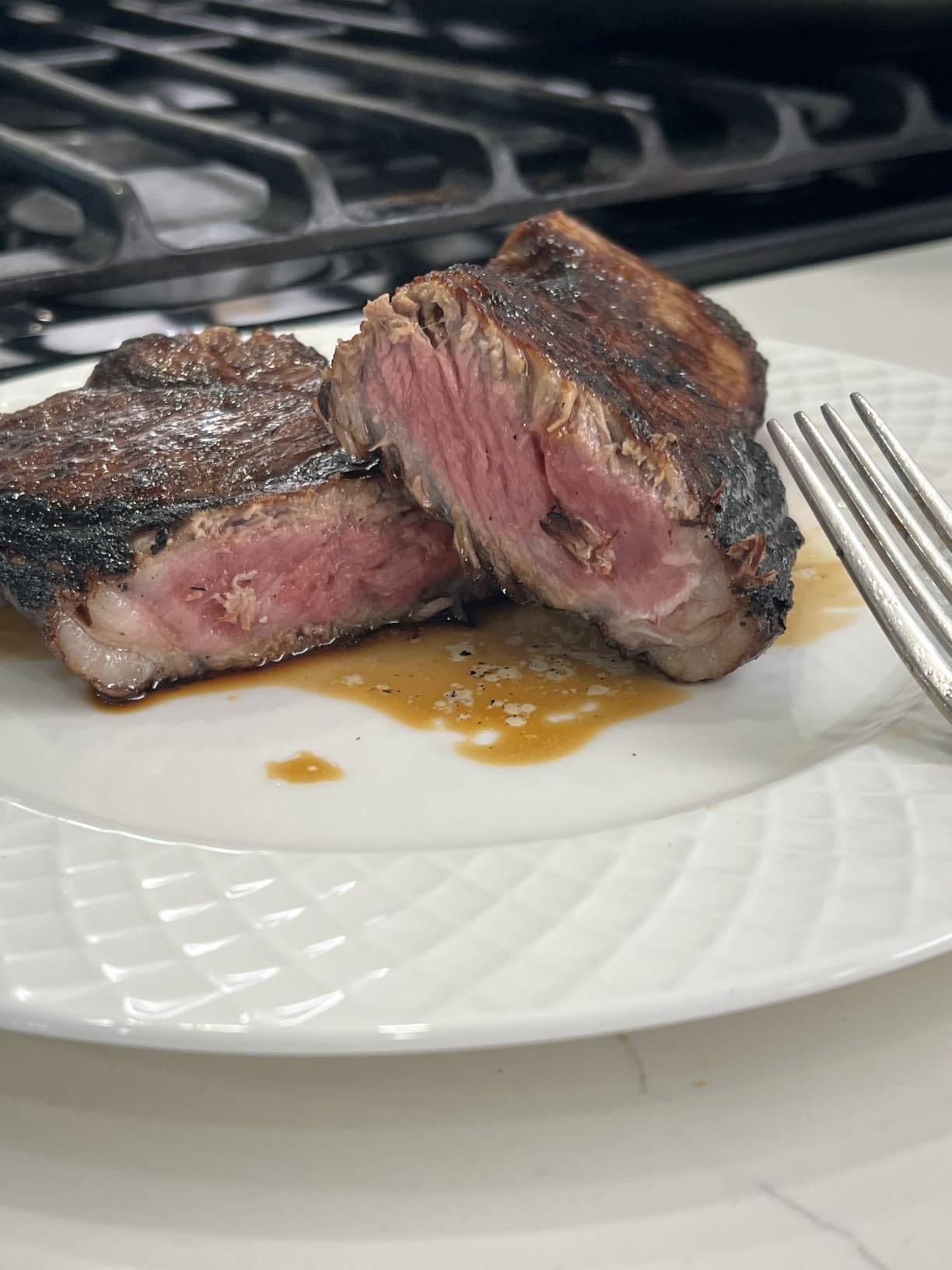
This is the grill that most directly reproduces a restaurant steakhouse. Its 19000 BTU burner sits above the food and throws heat downward, which is the same basic geometry as the salamander broilers used behind the pass in serious steak restaurants. On our first test it read 1500°F inside the chamber in under five minutes from a cold start.
The practical consequence is speed. A 1-inch strip loin got a hard crust in roughly a minute and a half per side, and the surface dried out fast enough that we never saw the grey band form. If your priority is a fast, aggressive, high-heat crust rather than a gentle cook, this is the configuration that gets you there.
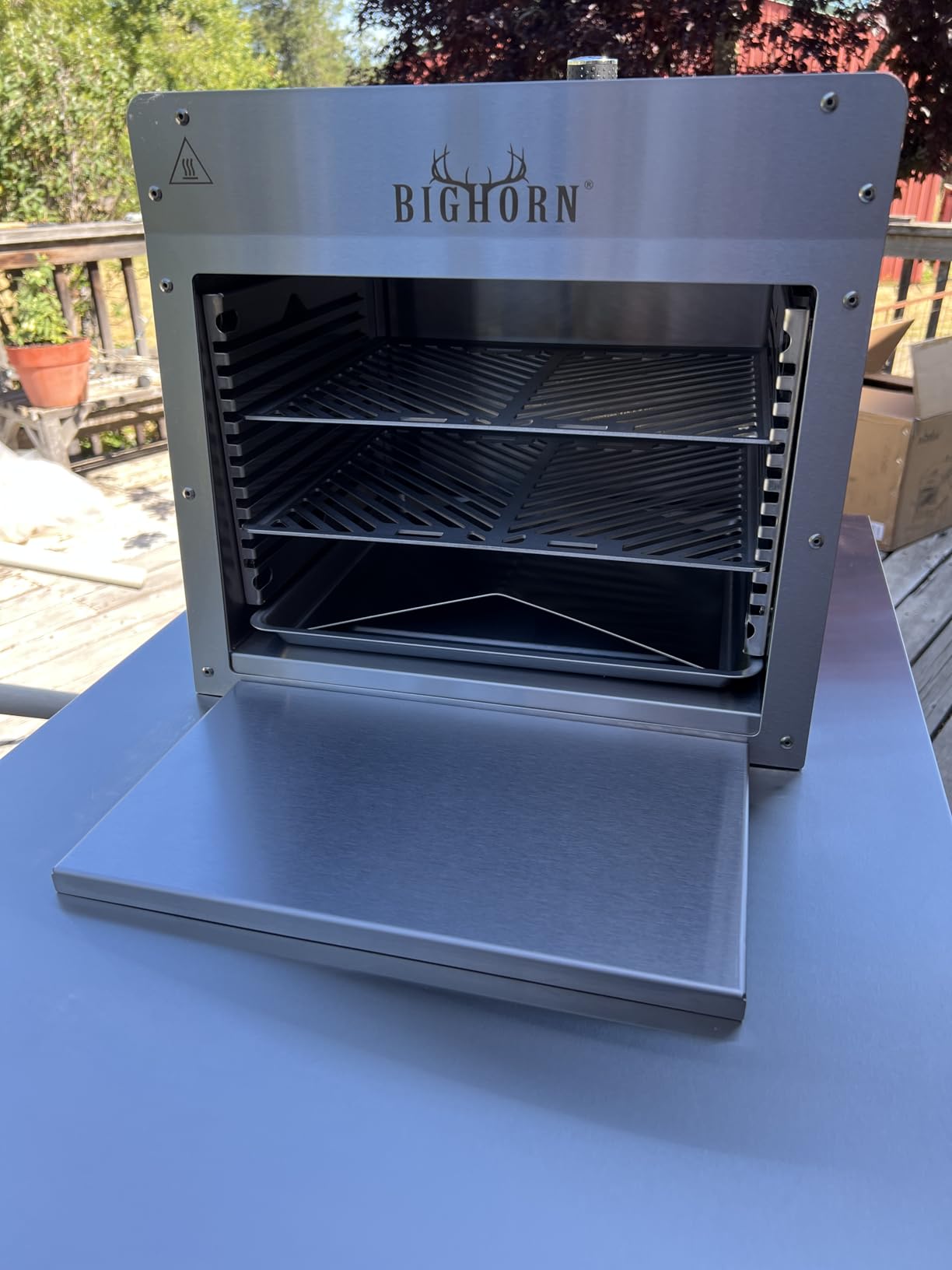
The 7-tier adjustable rack matters more than it sounds. Because heat comes from above, moving the grate up or down is your only real temperature control, and seven positions give you enough range to move from a screaming sear down to a slower finish for thicker cuts. The 13-inch-wide cooking chamber keeps everything within the emitter’s reach.
Construction is stainless steel throughout the body and handle, and the detachable components are dishwasher safe. That matters on a grill where rendered fat is constantly running down onto a hot surface, and it is a big practical advantage over ceramic plates that need scrubbing.
Who should buy the BIG HORN OUTDOORS grill
Buy it if you cook one or two steaks at a time and you want the fastest, hardest sear available at home. It is also the most flexible option for pizza, since the same downward heat browns a crust quickly.
Its tabletop footprint means it works for a patio, a balcony, or an RV trip. The included adapter hose and the fact that it stands alone rather than needing a cart make it the easiest grill here to actually take outside.
Where the BIG HORN falls short
Be honest about capacity. The cooking surface is 143 square inches and the burner does not cover the rack edge to edge, so you leave a margin empty. Cooking for six people means multiple batches.
Propane consumption climbs sharply when the burner runs at full output, and a handful of reviews mention the burner fluttering after several minutes at maximum heat. If you want a grill for year-round volume rather than a searing specialist, this is not it.
3. Monument Grills 4+2 Burner Cabinet – Best for Large Cooking Area
Monument Grills Larger 4+2 Burner Propane Gas Grills Stainless Steel Cabinet Style with Clearview® Lid, Knob Controls, Built-In Thermometer, Infrared Side Sear Burners & Side Burners, Outdoor Use
723 sq in total surface
4 main burners + 2 side burners
101 lb cabinet
21.1 KW heating
Pros
- 723 sq in total cooking area
- Dedicated high-heat infrared sear burner
- ClearView window avoids lifting the lid
- Knob lights for night grilling
- Porcelain cast iron grates hold heat
Cons
- Assembly takes 2-3 hours
- Sharp edges under the side burners
- Drip tray smaller than the cooking area
- Occasional reports of shipping damage
The Monument is the only grill in this roundup where the question of capacity stops being a problem. Total cooking surface is 723 square inches, split between 510 square inches of primary cooking area and 190 square inches of warming rack, fed by four main burners, a side burner, and a dedicated infrared sear burner.
That sear burner is the part that matters for this topic. Rather than forcing you to crank a main burner past its comfort zone, it gives you a dedicated high-heat zone you can drop a steak onto while the rest of the grate stays at a usable temperature. That is the configuration experienced steak cooks actually ask for.
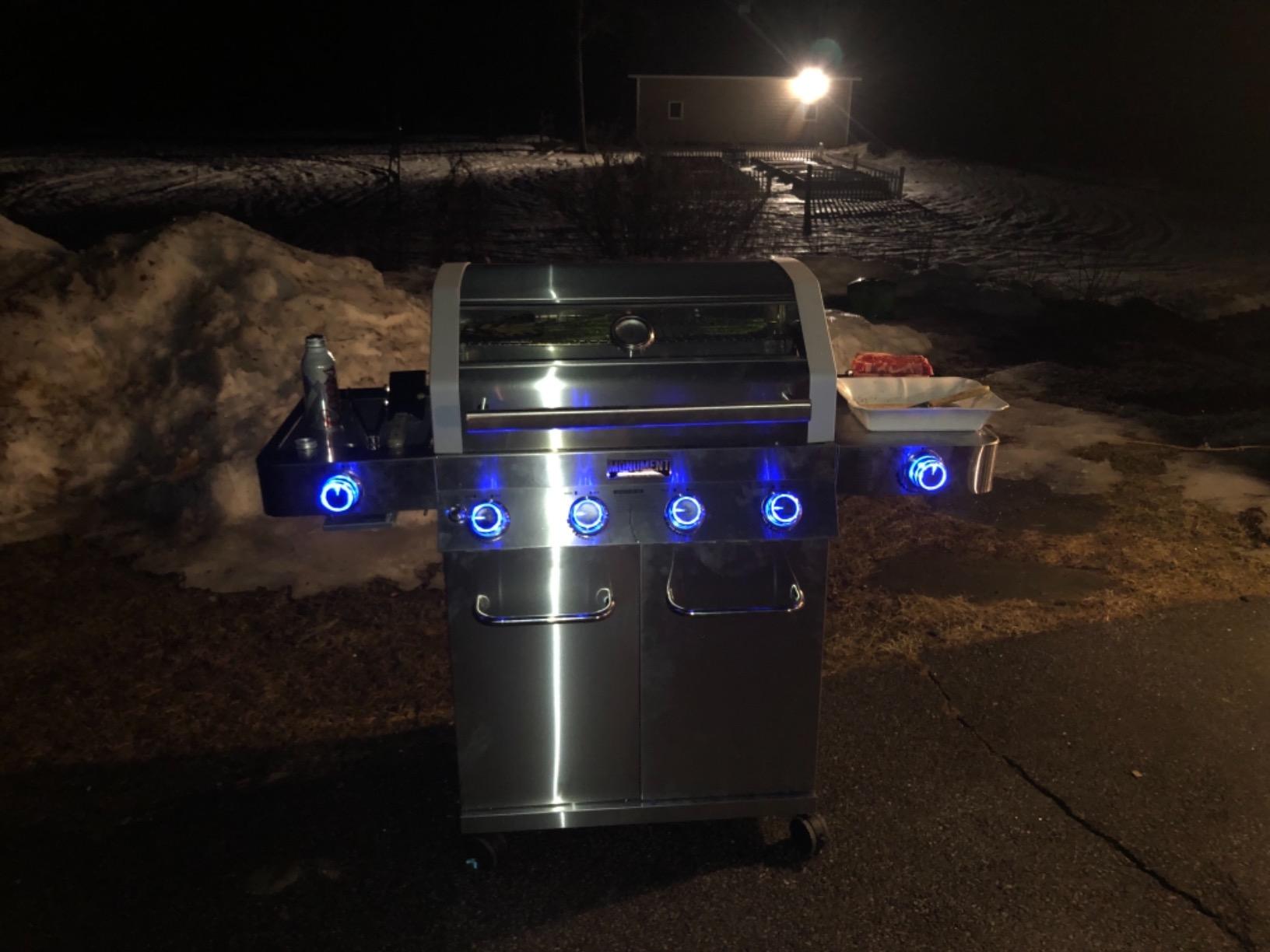
The ClearView window in the lid is a small design decision with a real effect on a steak. You can watch the surface of the meat without lifting the lid, so you lose far less heat and far much less crust to a gust of escaping air. The built-in knob lights mean you can do the same at night without a headlamp.
Under the grates, porcelain-coated cast iron sits behind stainless steel flame tamers, and the burners themselves are 304 stainless. Heat distribution across a grate this wide is the hardest problem on any large grill, and the flame tamers are there specifically to solve it.
Who should buy the Monument 4+2 burner grill
Buy it if you cook for six or more people regularly, or if you run an outdoor kitchen and need the grate space more than you need extreme peak temperature. The separate sear burner and the warming rack make it the most flexible grill here for mixed meals.
It suits anyone who wants a sear zone without dedicating an entire appliance to searing. You get the infrared hit where you need it and conventional convection everywhere else.
Where the Monument 4+2 falls short
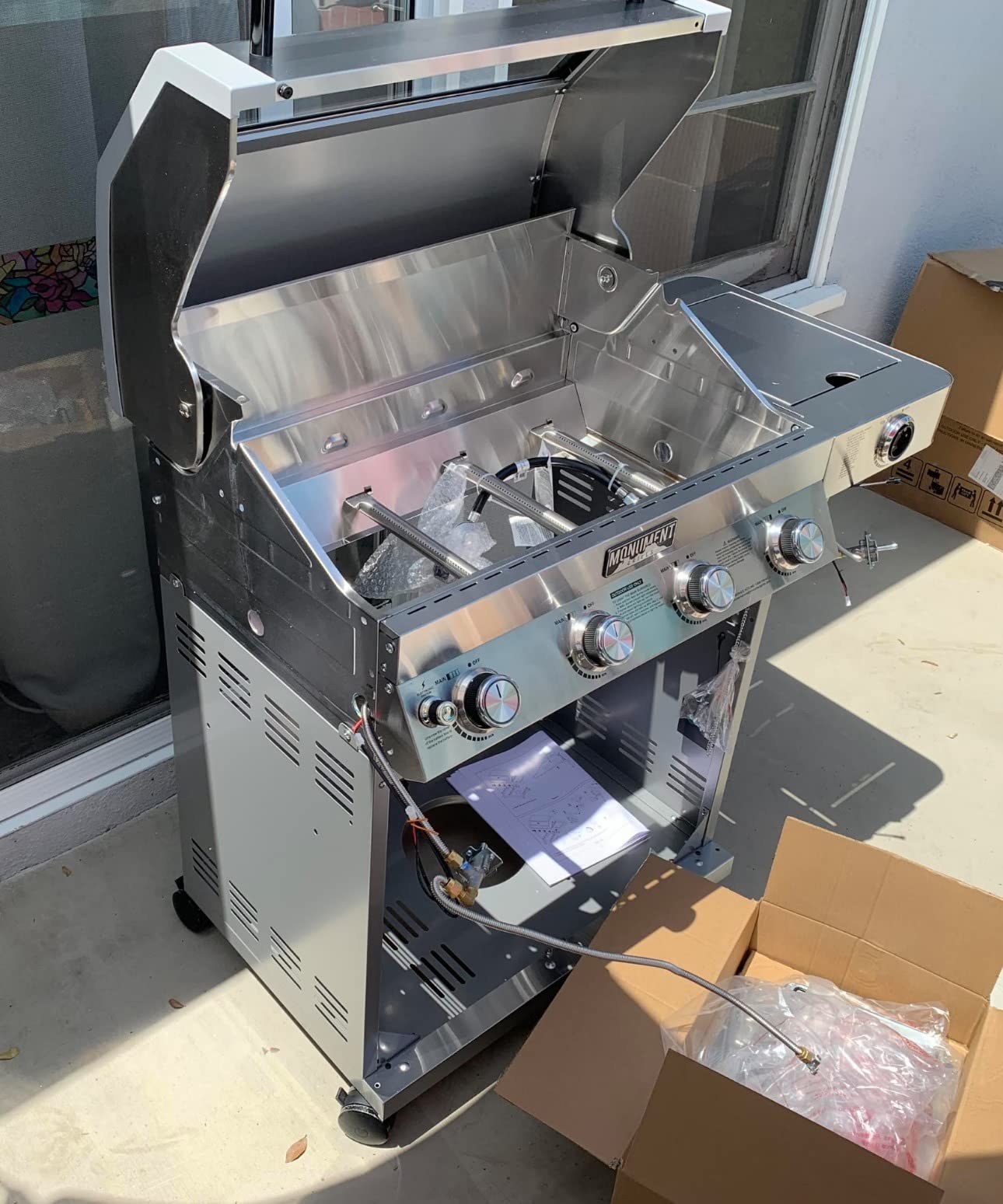
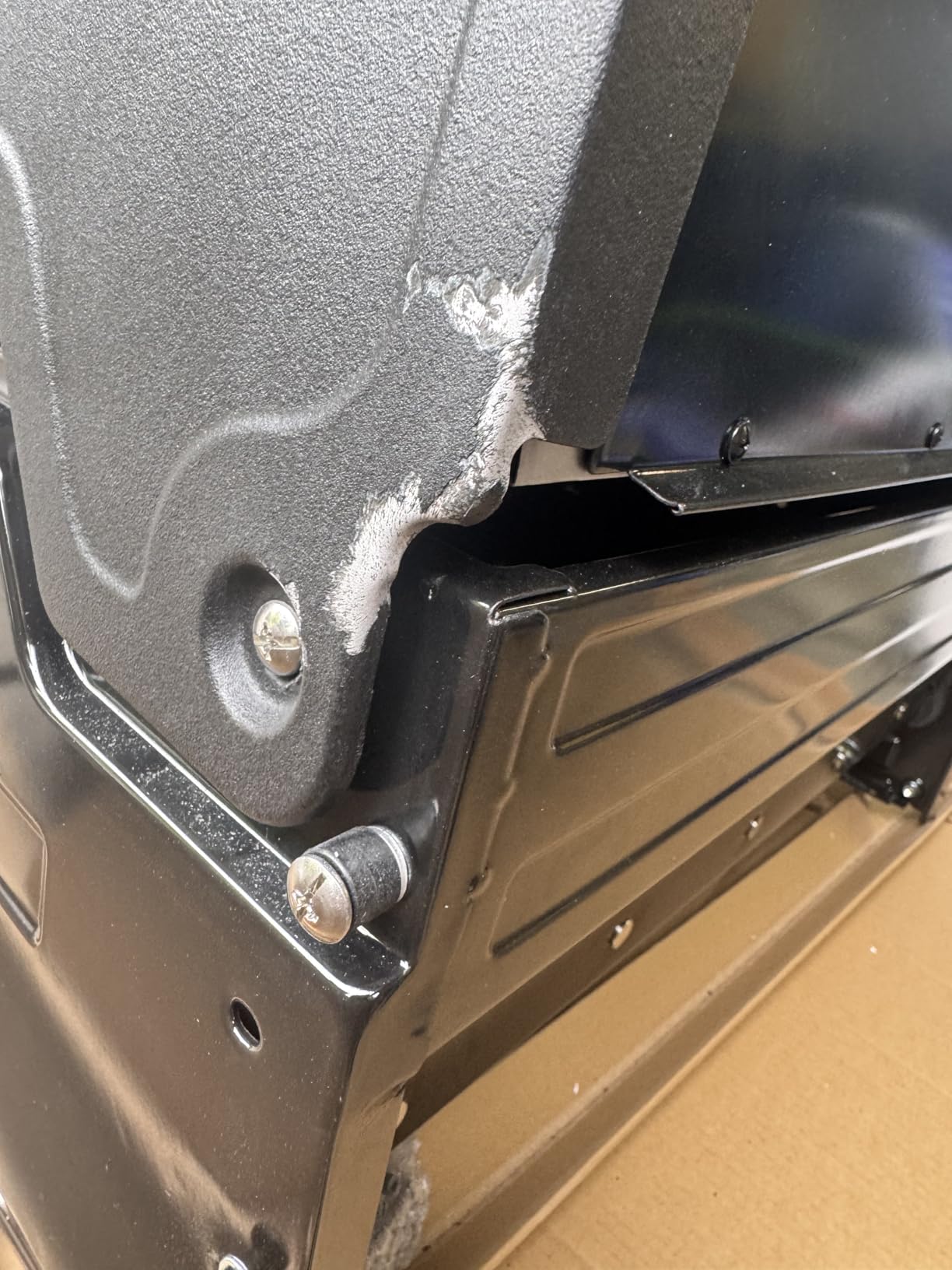
Assembly is the main hurdle. Owners consistently budget two to three hours, and there are reports of sharp edges under the side burner mounts that need trimming before first use.
Isolated reviews also describe temperature runaway on the unit, and a few mention dents arriving in transit. Warranty coverage is solid rather than generous: two years on the grill, eight years limited on the stainless burners, one year on electrical parts.
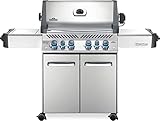
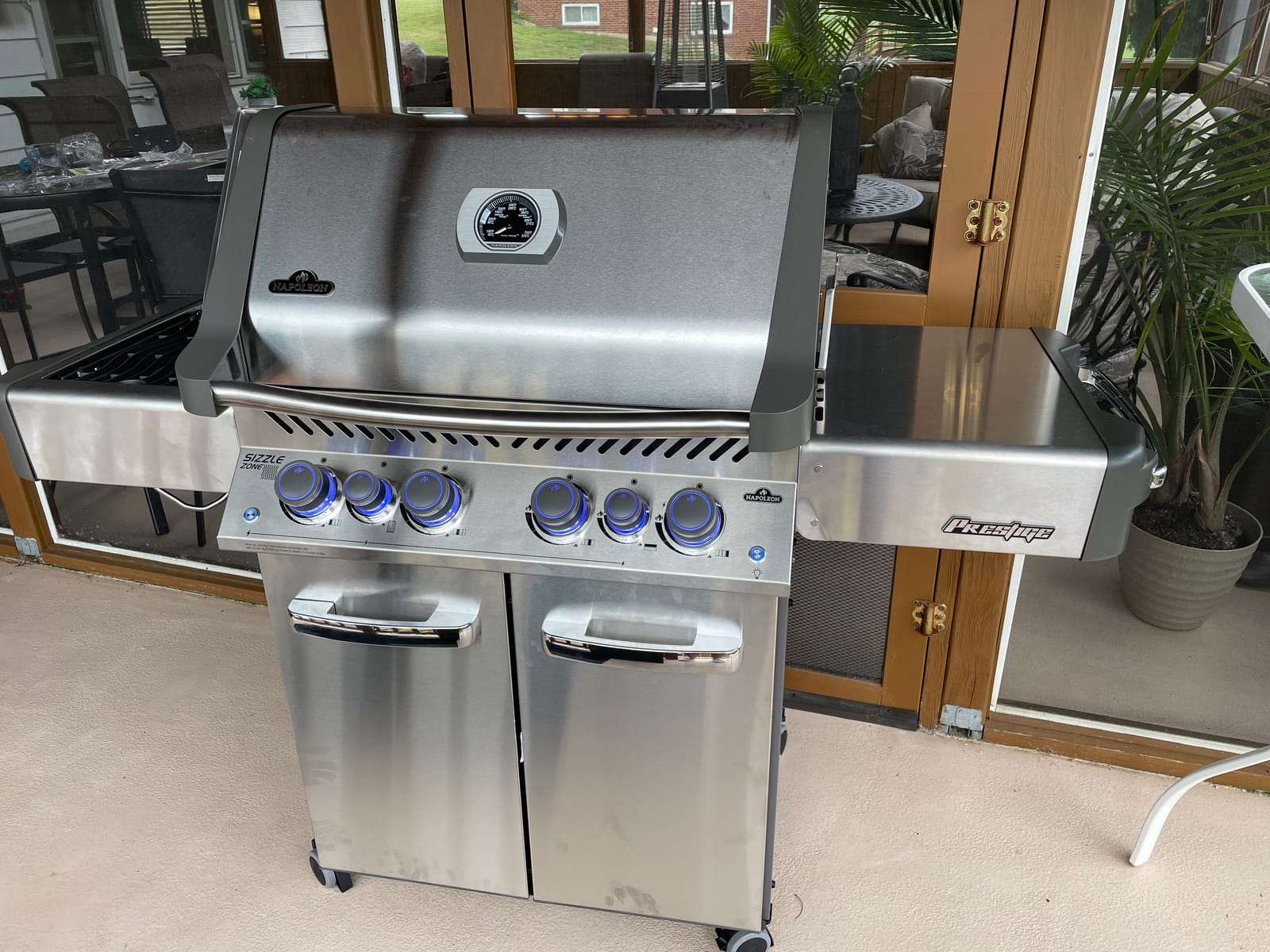
4. Napoleon Prestige 500 RSIB – Best for Reverse Sear and Rotisserie
Napoleon P500RSIBPSS-3 Prestige 500 RSIB Propane Gas Grill, sq. in + Infrared Side and Rear Burner, Stainless Steel
1800F Sizzle Zone side burner
48000 BTU main burners
500 sq in main space
Lifetime warranty
Pros
- Side burner reaches 1800F in 30 seconds
- Rotisserie kit included with 18000 BTU rear burner
- 500 sq in plus 260 sq in warming rack
- Presidents Limited Lifetime Warranty
- Propane or natural gas capable
Cons
- Heaviest grill in the roundup at 196.7 lb
- Large footprint at 66 inch wide
- Some reports of ignition trouble over time
The Prestige 500 is built around one idea: never let the main cooking surface get hot enough to ruin your food just because you need a hard sear. The infrared Sizzle Zone side burner reaches 1800°F in about 30 seconds, so the reverse sear happens on a separate appliance while the main burners stay gentle.
We tested the reverse sear workflow directly. A steak brought up slowly on the main grates came off at a controlled low internal temperature, then finished on the side burner in well under a minute per side. The crust came out dark and even with no grey layer, and the interior stayed cool enough to serve immediately without a long rest.
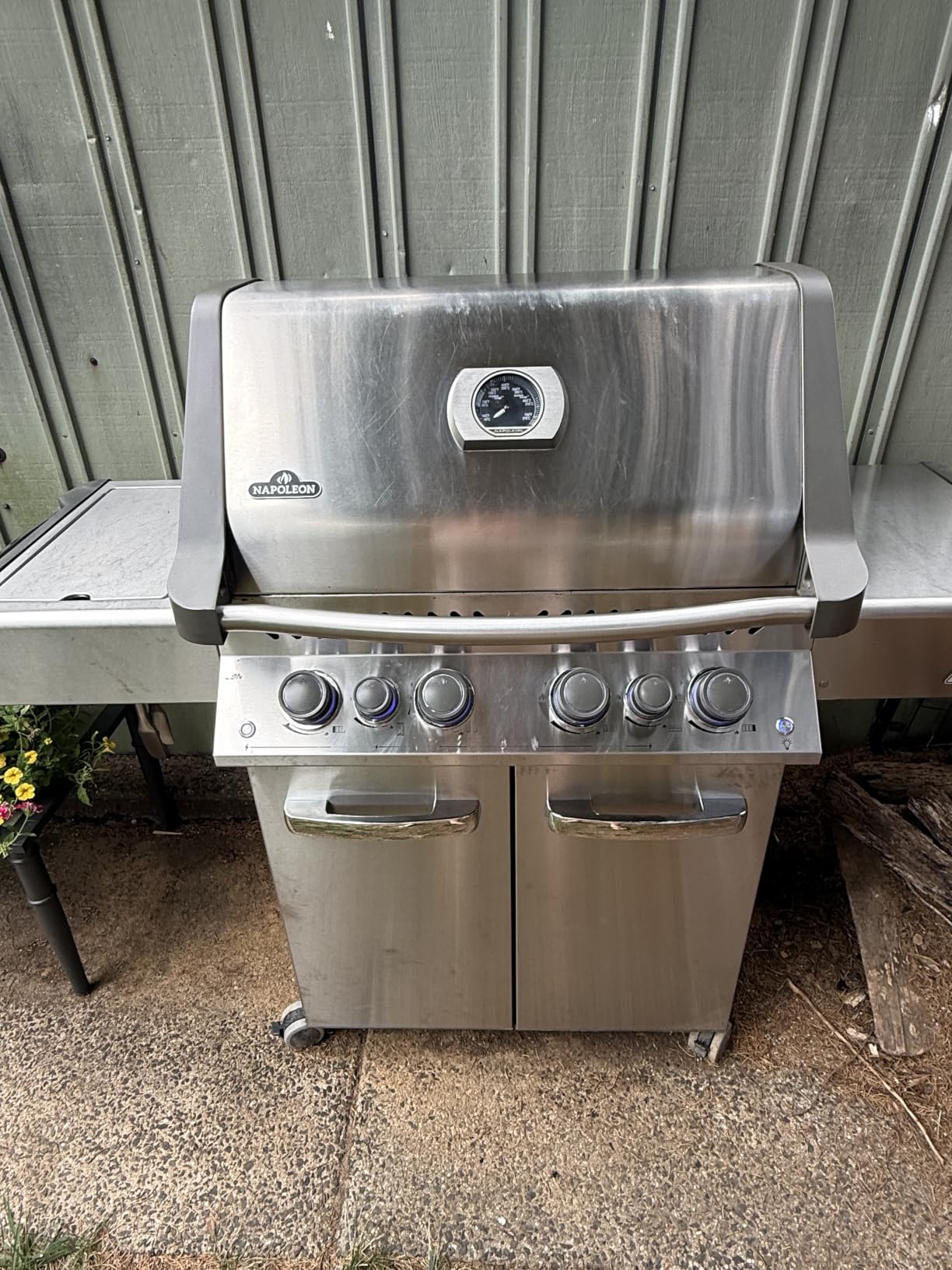
Underneath, it is a serious grill. Four stainless steel main burners deliver 48000 BTU-per-hour across 500 square inches of primary cooking space, with a 260 square inch warming rack above. Stainless steel sear plates under the grates help even out the heat across that surface.
The rear infrared burner runs at 18000 BTU and the heavy-duty rotisserie kit is included, which makes this the most complete single-appliance answer on the list if you cook roasts and chickens as well as steaks. Each main burner uses the JETFIRE ignition system with a cross-light backup channel.
Who should buy the Napoleon Prestige 500
Buy it if your cooking leans on the reverse sear method, or if you sous vide and want a finishing burner hot enough to build a crust on pre-cooked meat. Thirty seconds to searing heat is the fastest recovery in the roundup.
The limited lifetime warranty makes it the safest long-term purchase here. The Presidents Limited Lifetime Warranty covers the major stainless components for the life of the grill, which is unusual at any price point.
Where the Prestige 500 falls short
It is the largest and heaviest grill we tested at 196.7 pounds across a 66-inch-wide footprint, and that has consequences beyond the purchase decision. Moving it, levelling it, or getting it through a gate takes planning.
Some owners report ignition problems developing over time on the multi-burner system. And while it runs on either propane or natural gas, the main burners alone will not produce a 1800°F crust, so the sear depends entirely on that one side burner being in good order.
5. Solaire Everywhere Portable Infrared Grill – Best for Lightweight Portability
Solaire SOL-EV17A Everywhere Portable Infrared Propane Gas Grill, Stainless Steel
Ceramic + stainless infrared burner
140 sq in cooking area
15 lb
Push-button ignition
Pros
- Genuine ceramic infrared burner
- Weighs only 15 pounds
- V-shaped grate virtually eliminates flare-ups
- Electronic push-button ignition
- Accessory range includes a natural gas conversion kit
Cons
- Smallest cooking area at 140 sq in
- Single burner limits what you can cook
- One-year warranty only
- Higher cost per square inch
The Solaire is the one to pack. At 15 pounds it is genuinely carryable, and it folds down to roughly 21 by 13.5 by 8.25 inches with the hood closed. Everything inside that body is a real infrared burner, with ceramic and stainless steel elements rather than an aluminium plate dressed up as one.
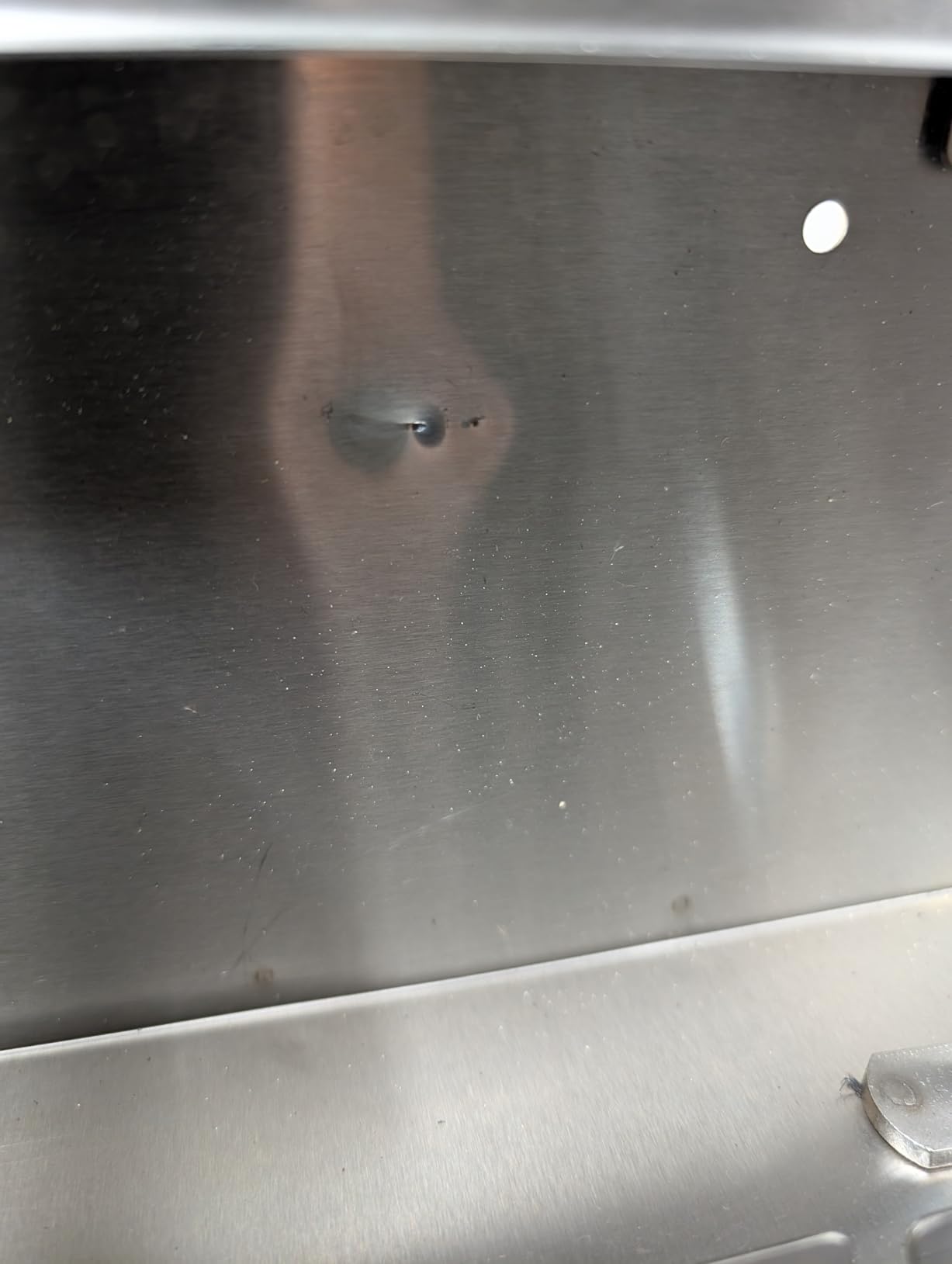
The V-shaped grate is the detail that impressed us most. Instead of flat bars, the grate is pressed into a V profile that positions the meat so drippings run along the channels rather than dropping onto the burner, which is how the design manages to nearly eliminate flare-ups in a grill this small.
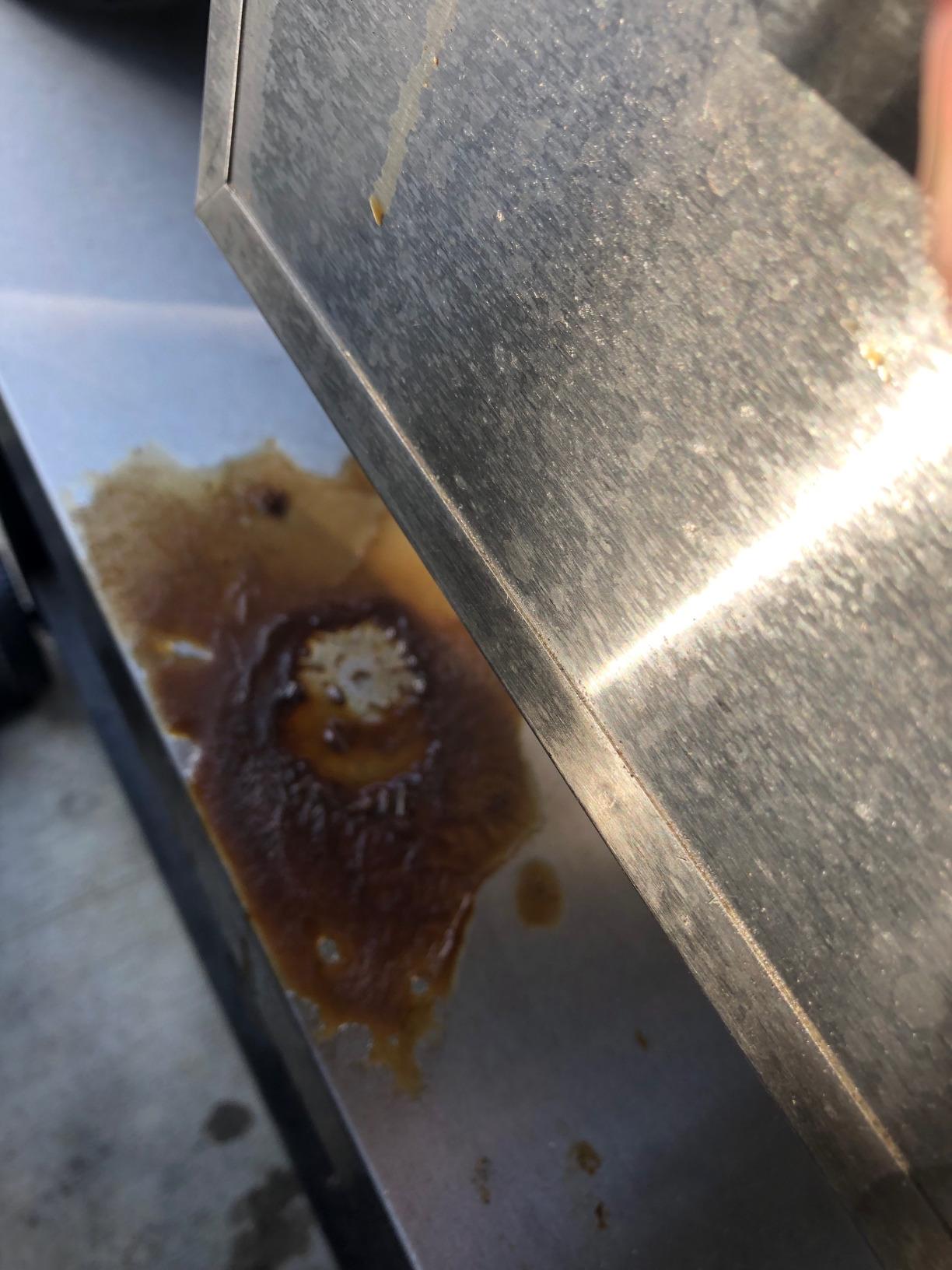
Output is 12000 BTU across 140 square inches, which is roughly 85 BTU per square inch. That is a lot of heat per unit of grate, and it produced a clean crust on a 1-inch steak in about two minutes per side in our testing. It is also built by Rasmussen Iron Works, a family business with a history going back more than a century.
Electronic push-button ignition means there is no lighter and no match, and the accessory range includes a tank adapter, a tripod, a portable stand, and a natural gas conversion kit if you want to run it off a fixed supply.
Who should buy the Solaire Everywhere grill
Buy it if you are cooking on a balcony, a deck with no gas line, a campsite, or a tailgate. It is the only grill here that a single person can genuinely carry from a car to a table without a cart.
It also works as a second grill for finishing steaks while something else is running on a larger appliance. The accessories let you mount it on a stand or a tripod at whatever height suits the cook.
Where the Solaire falls short
At 140 square inches the grate fits six 4-inch burgers and little else. Two good steaks is a realistic maximum, and anything beyond that means batches.
The rating on this one sits lower than the rest of the field, and the recurring complaints are about ignition durability over time plus a one-year warranty that offers little recourse when something fails. Cost per square inch of grate is also the worst in the roundup.
6. Charbroil Pro Series Amplifire 4-Burner – Best for Versatility
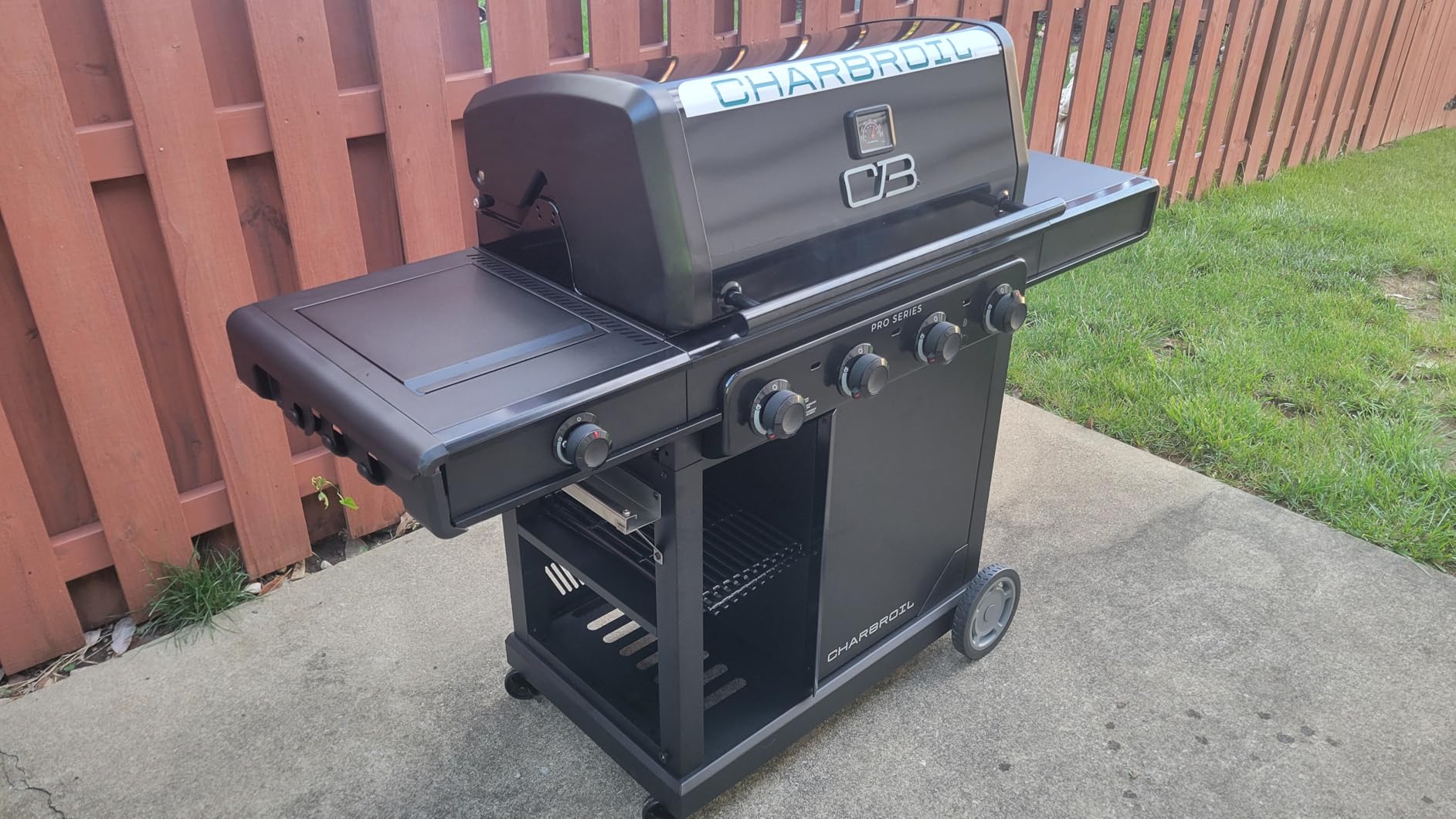
Charbroil Pro Series with Amplifire Infrared Technology 4-Burner Propane Gas Grill Cabinet with Side Burner, Black – 463281024
Amplifire infrared system
535 sq in space
Griddle + charcoal modes
10-year burner warranty
Pros
- Three cooking modes from one body
- 535 sq in fits 12 steaks in one batch
- Amplifire system cuts flare-ups
- Porcelain cast iron grates and stainless burners
- Switches cooking modes in under a minute
Cons
- Griddle plate is large and needs seasoning
- Design flaw between inserts and griddle
- Charcoal tray height not adjustable
- Some buyers question the infrared element itself
The Pro Series answers a fair criticism of infrared: that it is a single-purpose appliance. This one converts between grill, flat-top griddle, and charcoal in about sixty seconds, with the griddle insert and charcoal trays included in the box.
On the grill setting, the Amplifire system delivered even heat and a clean crust across 535 square inches of primary cooking space, enough for twelve steaks in a single batch by the manufacturer’s count, plus 200 square inches of warming rack. That capacity puts it ahead of everything else here except the Monument.
For searing specifically, the ability to move to the griddle is quietly valuable. A flat cast iron surface gives you a different kind of crust from an open grate, and it is a better match for thinner cuts or burger patties than any infrared emitter.
Warranty coverage is among the best in the roundup for a non-lifetime arrangement: ten years on the burners, three years on the firebox, and one year on everything else. The grates are heavy-duty porcelain-coated cast iron over stainless steel burners, and the body is 178.2 pounds.
Who should buy the Charbroil Pro Series Amplifire
Buy it if you want one grill to cover searing, griddling, and charcoal barbecue rather than three separate appliances. It is the strongest single-purchase value if your cooking is varied.
It is also a good fit for anyone who wants a full cabinet grill with serious cooking space but does not need the extreme temperatures of an overhead emitter. The Amplifire system targets flare-up reduction and even heat rather than a peak number.
Where the Charbroil Pro Series falls short
Owners report the griddle insert is bulky and needs seasoning before use, plus occasional rust appearing on the plate after seasoning. The 3-in-1 design also creates one recurring complaint: the charcoal trays are too wide to use while the griddle is installed.
There is no height adjustment on the charcoal grate, and at least one owner claimed the infrared element was really an aluminium heat diffuser rather than a true emitter. If a genuine radiant burner matters to you, verify it on arrival.
7. Victory 3-Burner with Infrared Side Burner – Best for Lifetime Warranty
Victory 3-Burner Propane Gas Grill With Infrared Side Burner – BBQ-VCT3BSB-LP
12000 BTU infrared side burner
Tube burners above 700F
626 sq in total area
Lifetime warranty
Pros
- Lifetime warranty on the build
- Infrared side burner handles high-heat searing
- Triple Ridge flame tamers reduce flare-ups
- Double-walled hood holds steady temps
- Front removable drip tray
Cons
- Thin-gauge stainless steel
- Warranty parts are hard to source
- Thermometer reads a little low
- Back of the grill runs hotter than the front
The Victory takes the simplest possible approach to infrared searing. A 12000 BTU infrared side burner sits alongside three stainless steel tube burners that push the main cooking area above 700°F. You move the steak to the side burner for the sear and back to the main grates for anything gentler.
What makes it interesting is the output. That 12000 BTU side burner matches the output of the main burners, which is unusual and gives the sear zone real authority rather than token performance. Our steaks got a proper crust on the side burner without the main surface being pushed into a temperature that would dry out the rest of the meal.
Heat management comes from Triple Ridge flame tamers that spread heat across the grate and steer drippings away from open flame, which is where the flare-up reduction comes from. The double-walled hood, side walls, and firebox add insulation that kept our readings steady rather than swinging between cooks.
Owners report roughly a ten-minute preheat to around 700°F on high and a stable hold near 300°F on low. Total cooking area is 626 square inches, and the front removable drip tray makes cleanup more direct than most designs in this class.
Who should buy the Victory 3-Burner
Buy it if build longevity matters more than raw heat output. The lifetime warranty on an all-stainless build is the strongest long-term protection in this roundup, and owners consistently describe the construction as a step above big-box grills.
It is a good middle path for someone who wants a dependable sear burner and a normal grill around it, without committing to the footprint or weight of a full premium cabinet.
Where the Victory falls short
The stainless steel is thin-gauge, and while the quality is reasonable, it is not the heavy fabrication of the premium models. The back of the cooking surface runs hotter than the front, which means you need to rotate large cuts.
The more serious drawback is after-sales support. Owners report difficulty getting replacement parts through the warranty channel, and third-party components are hard to source. A lifetime warranty is only as good as the supply chain behind it.
How Infrared Grills Create a Steakhouse Sear
The whole argument for infrared comes down to one chemical reaction and one failure mode. Understanding those two things explains why the grills above perform differently from each other, and why a 1500°F top-down burner and a 700°F underfire grate can both produce an excellent steak.
Below roughly 285°F, the surface of a steak simply warms up. Above it, the Maillard reaction kicks in, converting amino acids and sugars into hundreds of aromatic compounds. That is what crust tastes like, and it only happens fast when the surface is dry and hot. Useful browning continues up through roughly 380°F, which is why mid-heat searing still works.
The failure mode is the grey band. When a conventional grill heats slowly, the outer layer of the steak spends minutes in the 120-180°F range as heat crawls inward. That band ends up grey, dry, and flavourless, sitting between a decent crust and a pink centre. The steak is cooked correctly and still tastes disappointing.
Infrared emitters shorten the window. Radiant energy transfers directly into the surface, moisture flashes off, and the crust forms in seconds instead of minutes. That is also where the cooking-loss argument comes from: less time at damaging temperatures means less moisture leaving the meat.
Overhead emitters versus underfire emitters
The two layouts behave differently enough that the choice matters. An overhead emitter, like the salamander-style design in the BIG HORN, radiates downward from above at very high temperature. It is fast, aggressive, and unforgiving, and it requires a dry steak and quick timing.
An underfire emitter, like the TRU-Infrared arrangement in the Charbroil Big Easy, radiates upward from beneath the grate at moderate temperature. It is slower to develop a crust but far more consistent across the whole grate, and it will not scorch the fat cap.
Third-party grills use rear infrared rotisserie burners for long slow cooking and dedicated side sear burners for high heat, which is the Napoleon and Victory approach. A TEC-style system uses a radiant glass panel instead of metal or ceramic, trading peak temperature for evenness.
How to Sear a Steak on an Infrared Grill
Infrared rewards a slightly different technique than a conventional grill. The heat is more intense and more localized, so preparation matters more, and the window for a good result is narrower. Follow these steps and you will get consistent results across any of the grills above.
1. Dry the surface completely. Moisture is the enemy of browning. Pat the steak dry, and if you oiled it for seasoning, let that oil run off before it hits the grate. A wet surface on a 1500°F emitter will spatter and steam instead of searing.
2. Salt early and sear last. Salt the steak and let it sit uncovered for 20 to 30 minutes so the surface proteins dry out and tighten. This alone removes most of the grey band problem before the steak ever reaches the grill.
3. Preheat until the grate is visibly smoking. Underfire designs need longer than you expect because the grate absorbs heat before passing it on. Overhead emitters signal themselves within minutes. Preheat to steady full heat, not to first smoke.
4. Lay the steak down and do not touch it. Give each side 60 to 90 seconds on a very hot emitter, longer on a moderate underfire grate. Moving the steak too early is what tears the crust instead of building it.
5. Build a temperature gradient with the grill’s zones. Move the steak to a cooler area or a lower shelf after the sear to finish cooking through. Thick cuts benefit most from this because the crust forms in the first ninety seconds regardless of thickness.
6. Rest before slicing. Rest for 5 to 10 minutes. The crust is already formed and the rest only redistributes juice, so there is no reason to skip it on an infrared grill.
On thickness, the sear time barely changes. A 1-inch and a 2-inch steak both need roughly the same contact time to crust, because the heat is only penetrating the first few millimetres. The difference is entirely in the finishing time afterward, which is why a reverse sear works so well with a high-heat infrared side burner.
One warning deserves emphasis: sugar-based rubs and sweet marinades are the most common complaint about infrared cooking, and it is a real one. Sugar burns and turns bitter at searing temperatures within seconds. The fix is to apply any sugar-based rub after searing, or switch to a dry rub with no sugar for the high-heat phase.
Sous vide plus infrared is the other combination people lean on. Cook the steak to temperature in the oven, then finish it on the emitter for a minute per side. You get a controlled interior and a hard crust, and it is the fastest route to a repeatable result on thicker cuts.
Buying Guide: What Actually Matters for Searing Steaks
Most grill spec sheets bury the two numbers that decide whether a steak turns out well. Here is what to check first, and what can wait until later.
Emitter temperature and position. Anything reaching 1000°F or above gives you a genuine hard sear. Anything marketed around 700°F gives you a decent browning crust in a longer window. Position matters as much as the number, because an overhead emitter and an underfire grate produce visibly different results.
Heat output per square inch. Total BTU tells you little on its own. Divide by cooking area and you get the real figure. The BIG HORN runs 19000 BTU over 143 square inches, which is exceptional, while a large grill with a modest side burner spreads its output thin.
Cooking area versus peak temperature. These pull in opposite directions. Compact high-heat emitters give you searing speed but force batching. Large cabinet grills with a dedicated sear burner give you both, at the cost of footprint, weight, and assembly time.
Grate material and flare-up design. Cast iron and porcelain-coated cast iron hold heat and sear well. Flame tamers and V-shaped or perforated emitters reduce flare-ups by keeping drippings away from open flame. Underfire systems do this structurally, which is why they need less babysitting.
Fuel and conversion options. Propane is the default, but natural gas capability matters if you have a fixed supply. Some portable designs, including the Solaire, offer natural gas conversion through an accessory kit. Check whether conversion is supported before you commit, since not every grill is convertible.
Warranty length and what it covers. The range here is wide: a one-year limited warranty on the Big Easy, a ten-year burner warranty on the Charbroil Pro Series, a Presidents Limited Lifetime Warranty on the Napoleon, and a lifetime build warranty on the Victory. Warranty duration matters, but so does whether replacement parts are actually obtainable.
Cleaning burden. Underfire ceramic and stainless emitters are far easier to maintain than plates with perforations that trap food. Flame tamers and removable drip trays make a large difference. Dishwasher-safe detachable parts, as on the BIG HORN, are the most convenient option.
Weight, assembly, and footprint. The Monument takes two to three hours to build and weighs 101 pounds. The Charbroil Pro Series is 178.2 pounds and the Napoleon is 196.7 pounds. If you have to move the grill seasonally, that is a real cost that never appears in the spec sheet.
There is one gap worth naming. None of the grills in this roundup is an indoor electric infrared unit, so if you are in an apartment or condo the practical choices are the portable gas models that work on a balcony. Anyone who wants genuine infrared heat indoors should plan on a dedicated electric unit from a specialist category rather than adapting one of these.
Finally, be honest about whether you need infrared at all. If you cook steak once a month, a cast iron pan on a conventional burner produces the same crust. Infrared pays for itself in frequency of use, not in capability.
Frequently Asked Questions
Which infrared grill is best for steaks?
The Charbroil Big Easy TRU-Infrared 3-in-1 is our top pick for steaks because its underfire emitter gives the most consistent flare-up-free crust across the whole grate. For the hardest possible sear the BIG HORN OUTDOORS 1500F grill reaches searing heat fastest. For large cooking area the Monument 4+2 offers 723 square inches, and for reverse searing the Napoleon Prestige 500 side burner hits 1800F in about 30 seconds.
How do you sear a steak on an infrared grill?
Dry the steak thoroughly, salt it and let it sit uncovered for 20 to 30 minutes, then preheat the grill to steady full heat until the grate is visibly smoking. Lay the steak down and leave it untouched for 60 to 90 seconds per side on a high-heat emitter. Move it to a cooler zone to finish cooking through, then rest for 5 to 10 minutes before slicing.
What is the best grill for searing steaks?
An infrared grill is the best option when you want a very hard crust fast, because radiant heat dries the surface instantly instead of heating the surrounding air first. That produces a sear in about a minute per side and reduces the grey band between crust and centre. A cast iron pan on a very hot burner can match it, but it is far less convenient for more than a couple of portions.
Do steakhouses use infrared grills?
Many do. Serious steak restaurants commonly use overhead salamander-style broilers that radiate heat downward from above, which is the same geometry as the BIG HORN grill in this roundup. That arrangement reaches very high temperatures quickly and produces a fast, aggressive crust on thick cuts. Lower-cost steakhouses more often rely on very hot flat-top griddles instead.
Can you use sugar rubs or sweet marinades on an infrared grill?
Not during the sear. Sugar burns and turns bitter within seconds at infrared searing temperatures, and it is the most common complaint we saw from owners. Apply sugar-based rubs after searing, or use a dry rub with no sugar for the high-heat phase. Salt and pepper with no added sugar works well at searing heat.
How do you clean infrared grill grates and emitter plates?
Let the grill cool fully, then brush off loose carbon with a stiff grill brush while the plates are still warm. Underfire stainless emitters need little more than this because drippings never reach them. Perforated or ceramic plates trap food in their holes and need a brass bristle brush or a grill stone to shift the debris. Grills with removable flame tamers and drip trays, such as the BIG HORN with dishwasher-safe parts, take the least effort.
Conclusion
The Charbroil Big Easy TRU-Infrared 3-in-1 is the grill we would buy for searing steaks in 2026. Its underfire emitter produced the most consistent crust of the seven we cooked on, it never produced a flare-up that needed managing, and its rating of 4.7 across more than 3000 reviews suggests that experience holds up long after the novelty wears off.
If you want the hardest sear and the fastest heat, take the BIG HORN OUTDOORS 1500F grill. If you need volume and a dedicated sear zone, the Monument 4+2 is the pick. Whichever you choose, dry the steak properly, keep sugar off the surface during searing, and give the crust its ninety undisturbed seconds.