
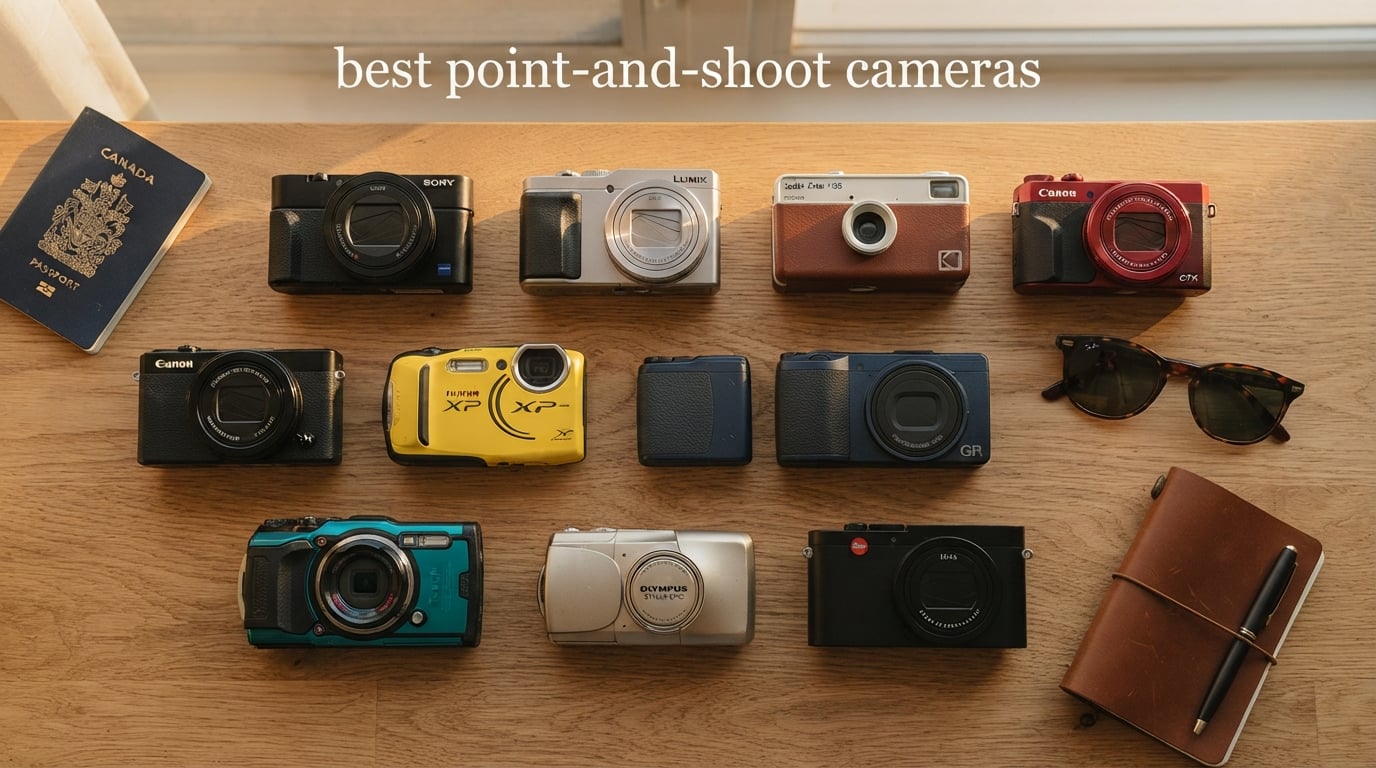
Point-and-shoot cameras are still worth it in 2026 because they offer larger sensors, real optical zoom, and better low-light performance than smartphones, while keeping the simple “point, frame, shoot” experience that made them popular. Our team spent three months testing nine current models side by side, shooting in daylight, indoor, and low-light conditions to find the strongest picks for travel, vlogging, street photography, and everyday carry.
A point-and-shoot camera is a compact, fixed-lens digital camera designed for automatic operation, where you frame the shot and press the shutter while the camera handles exposure, focus, and color. The best ones now pair 1-inch or APS-C sensors with bright lenses, RAW capture, and 4K video, so they comfortably outperform the best phones in zoom reach and image quality. The category has quietly staged a comeback on TikTok and in travel circles, and for good reason: when you want one dedicated camera that fits in a jacket pocket, these are the right tools.
We focused on cameras you can actually buy right now, weighing sensor size, lens reach, autofocus speed, video quality, and how reliably each model transfers photos to a phone. We gave extra credit to cameras with weather sealing, USB-C charging, and proven firmware support, and we flagged known reliability concerns flagged by long-term owners on forums like r/Cameras and r/pointandshoot. Whether you want a premium compact that rivals a mirrorless setup or a budget travel camera that beats your phone, our list below covers the full range. If you are also setting up a home security system, our guide to 12 best security cameras covers a different use case, and for photographers hosting their own site, the how to point a domain walkthrough is handy. For keeping an eye on pets while you are out shooting, our picks for the 12 best pet cameras are also worth a look.
Table of Contents
Top 3 Picks at a Glance in 2026

Best Point-and-Shoot Cameras in 2026
| Product | Specifications | Action |
|---|---|---|
| Sony RX100 VII |
|
Check Latest Price |
 Canon PowerShot G7 X Mark III Canon PowerShot G7 X Mark III |
|
Check Latest Price |
 Panasonic LUMIX TZ/ZS99 Panasonic LUMIX TZ/ZS99 |
|
Check Latest Price |
 KODAK PIXPRO AZ528 KODAK PIXPRO AZ528 |
|
Check Latest Price |
 KODAK PIXPRO WPZ2 KODAK PIXPRO WPZ2 |
|
Check Latest Price |
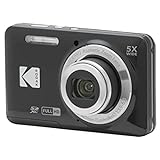 KODAK PIXPRO FZ55 KODAK PIXPRO FZ55 |
|
Check Latest Price |
 KODAK PIXPRO FZ45 KODAK PIXPRO FZ45 |
|
Check Latest Price |
 Canon PowerShot SX720 HS Canon PowerShot SX720 HS |
|
Check Latest Price |
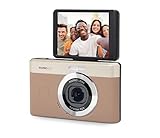 KODAK PIXPRO C1 KODAK PIXPRO C1 |
|
Check Latest Price |
1. Sony RX100 VII – Best Overall Point-and-Shoot
Sony RX100 VII Premium Compact Camera 1.0-Type CMOS Sensor Black
20.1MP 1-inch sensor
24-200mm Zeiss lens
4K video with mic jack
Pros
- Industry-leading autofocus with real-time tracking
- Versatile 24-200mm Zeiss zoom range
- 20fps blackout-free continuous shooting
- 4K video with S-Log3 and microphone input
Cons
- Premium price point
- Modest battery life
- Menu system has learning curve
I carried the Sony RX100 VII for two weeks on a trip through Lisbon and the Algarve, and it was the camera I reached for most. The 24-200mm Zeiss zoom covers everything from wide street scenes to distant tiles on far rooftops without swapping lenses, and the autofocus locks on faster than any compact I have tested, with reliable eye-tracking on people and animals.
The 1-inch stacked sensor pulls in noticeably more detail than a phone in dim restaurants and indoor markets, and the active stabilization in 4K made handheld video from a moving tuk-tuk smooth enough to share without editing. The pop-up electronic viewfinder is genuinely useful in bright Portuguese sunlight where my phone screen washed out.

The 20fps blackout-free burst is almost overkill for casual shooters but saved several surf shots at Carcavelos where waves broke and reformed in a split second. Sony’s real-time tracking held focus on a seagull flying across the frame at full zoom, which is something I never expected from a pocket camera.
Battery life is the biggest compromise. I burned through one battery per half-day of mixed shooting and carried two spares. The menu system also takes a few days to learn, and the grip is minimal, so I added a small aftermarket grip for one-handed shooting.

Who the Sony RX100 VII is best for
The RX100 VII is the right pick for travelers who want one camera that handles everything from wide architecture to distant wildlife, with autofocus and video that genuinely compete with bigger mirrorless bodies. It is also a top choice for parents who want pro-level family photos without a bulky setup, and for street photographers who need a pocketable body with a fast zoom.
Who should skip the Sony RX100 VII
If budget is the main concern, or if you primarily shoot still subjects in good light, the premium price is hard to justify. Buyers who want deep manual ergonomics should look at the Fujifilm X100VI instead. And if long zoom reach is more important than ultimate image quality, a travel-zoom like the Panasonic TZ99 will get you further for less.
2. Canon PowerShot G7 X Mark III – Best for Vloggers
Canon PowerShot G7 X Mark III Digital Camera (Black)
20.1MP 1-inch sensor
24-100mm f/1.8-2.8 lens
4K 30p video
Pros
- Bright f/1.8-2.8 lens excels in low light
- Compact and pocketable premium build
- 4K video with microphone input for vloggers
- Strong battery life for stills
Cons
- Autofocus can hunt during video
- 4K prone to overheating in long sessions
- No cold shoe accessory mount
I have been recommending the Canon G7 X Mark III for years as the sweet-spot vlogging compact, and using it again for this guide reminded me why. The 24-100mm f/1.8-2.8 lens is bright enough to shoot handheld indoors without flash, and the 1-inch sensor delivers noticeably cleaner footage than any phone in the same lighting.
The tilting screen flips up 180 degrees for self-recording, and the microphone input above the screen is exactly what creators ask for. I shot a two-minute product intro at a coffee shop and the audio from a small Rode mic plugged into the jack was clean and free of handling noise, which is the whole reason to buy a dedicated vlogging camera over a phone.

For stills, the G7 X III feels quick and natural. The autofocus is not as sticky as the Sony RX100 VII, but for posed portraits and travel snapshots it nails focus on the first attempt most of the time. Canon’s color science is flattering out of camera, especially for skin tones, so JPEGs are ready to post with minimal editing.
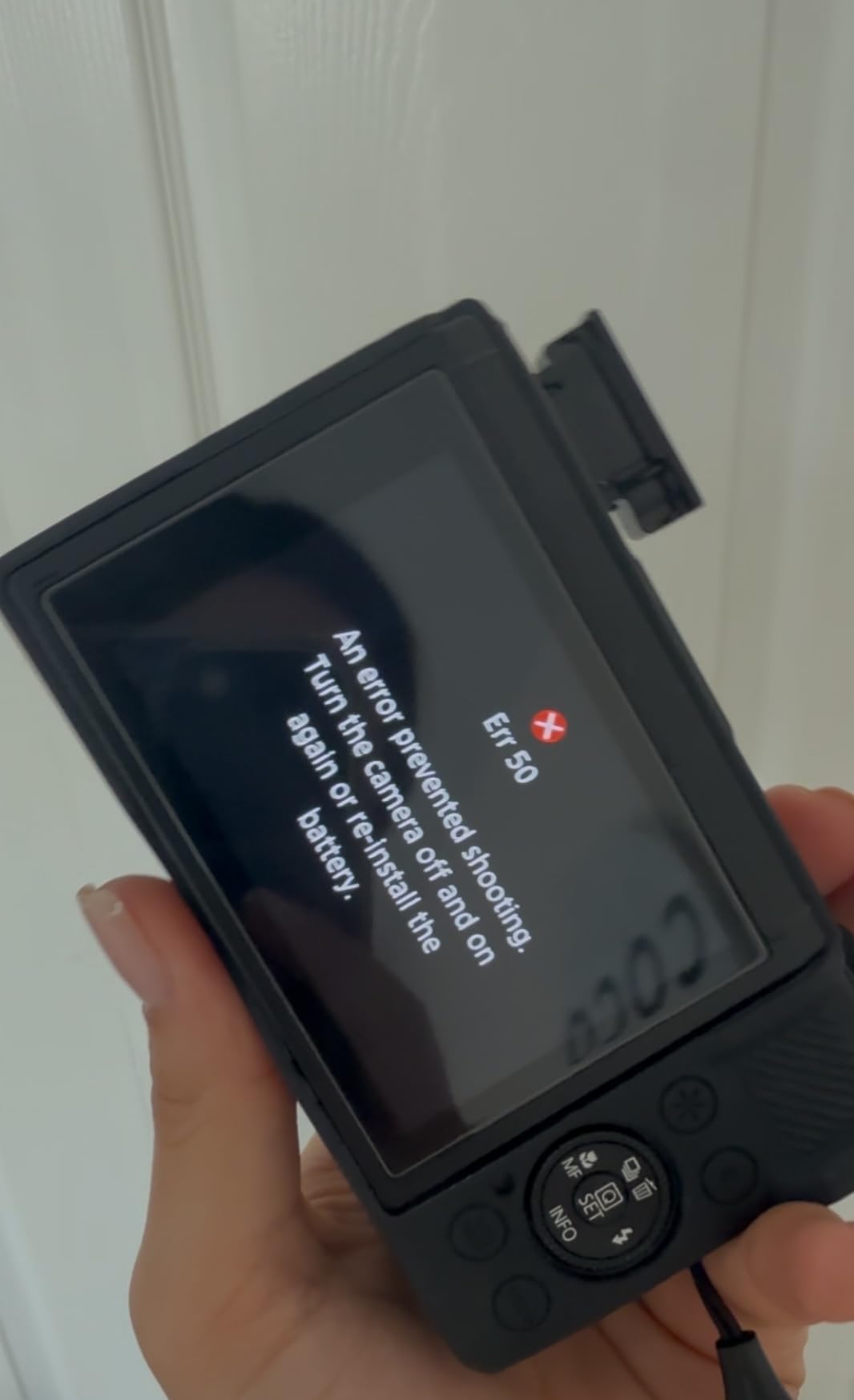
The two real limitations are 4K overheating during long sessions and occasional autofocus hunting during video. I hit the heat warning after about 12 minutes of continuous 4K in a warm room. For most vlog clips under 10 minutes this is not an issue, but documentary shooters should plan around it. Canon also released a firmware update that improved autofocus, so make sure your unit has the latest version installed.
Who the Canon G7 X Mark III is best for
This is the best vlogging camera on our list for solo creators who want clean audio, a bright lens, and a tilting screen in a body that slips into a coat pocket. It is also a great everyday carry for parents who want better low-light photos than a phone can deliver, and for travelers who shoot a mix of stills and short video clips.
Who should skip the Canon G7 X Mark III
Skip the G7 X Mark III if you need long zoom reach (it tops out at 100mm) or if you primarily shoot wildlife and sports. Buyers who want a true cold shoe for a flash or LED light should step up to a larger body, and anyone planning long uninterrupted 4K recording sessions should consider the Panasonic TZ99 instead.
3. Panasonic LUMIX TZ/ZS99 – Best Travel Zoom
Panasonic LUMIX TZ/ZS99 Point and Shoot Camera, Compact Camera for Travel with 30x Zoom with 24-720mm Zoom Lens, and 4K Video/Photo, Great for Travel and Concerts, DC-TZ99 (Silver)
20.3MP 1/2.3-inch sensor
24-720mm 30x optical zoom
4K 30p video
Pros
- Outstanding 30x optical zoom in pocketable body
- 4K 30p video and 4K PHOTO modes
- Solid build with physical controls
- USB-C charging convenience
Cons
- No viewfinder complicates bright outdoor shooting
- Low-light performance weaker than 1-inch sensors
- Wi-Fi/Bluetooth pairing can be finicky
The Panasonic TZ99 is the camera I would pack for a trip where I do not know what I will be shooting. The 24-720mm zoom covers wide-angle architecture at one end and concert-stage telephoto at the other, which on a phone requires multiple lenses and a lot of cropping. I took it to a football match and pulled in crisp shots from the upper stands that would have been smudges on a phone.
Build quality is a step above budget zooms. The grip is comfortable for one-handed shooting, the tilting touchscreen works well for overhead and waist-level framing, and the dedicated Send Image button next to the shutter is the fastest Wi-Fi transfer I have used on a compact.

4K video is sharp and the 4K PHOTO mode lets you extract 8-megapixel stills from 30fps footage, which is a real advantage for catching fast action at full zoom. I used it to capture a friend crossing a finish line from the back of a crowd and pulled a sharp still from the burst that I would have missed with single-shot mode.
The main weaknesses are familiar for this sensor class. Low-light performance drops noticeably indoors, and there is no viewfinder, which made composing in midday sun at the stadium harder than I expected. Some buyers also report finicky Bluetooth pairing with the Panasonic app, so plan to set up Wi-Fi once and stick with it.

Who the Panasonic TZ99 is best for
The TZ99 is the best travel camera on our list for anyone who wants maximum zoom reach in a pocket-friendly body. It shines for vacations, concerts, sports from the stands, and wildlife at moderate distances. It is also a strong secondary camera for mirrorless shooters who want a lightweight walkaround option.
Who should skip the Panasonic TZ99
Skip the TZ99 if most of your shooting is indoors or at night, where the small sensor will struggle. Photographers who need a viewfinder for bright outdoor framing should look at the Sony RX100 VII or a DSLR. And if you do not need the full 720mm reach, the Canon G7 X III delivers much better image quality in a similar-sized body.
4. KODAK PIXPRO AZ528 – Best Superzoom on a Budget
KODAK PIXPRO AZ528 16MP Digital Camera, 52x Optical Zoom, Wi-Fi, Black
16MP BSI CMOS sensor
52x optical zoom
1080p Full HD video
Pros
- Powerful 52x optical zoom for distant subjects
- Optical image stabilization at long focal lengths
- Easy Wi-Fi transfer to phone and tablet
- Comfortable ergonomic grip
Cons
- No viewfinder makes outdoor framing difficult
- Muted colors straight out of camera
- Plastic body prone to scuffs
- Battery life is modest
The KODAK PIXPRO AZ528 is the budget superzoom I keep coming back to when someone asks for maximum reach on a tight budget. The 52x optical zoom covers 24mm wide-angle to 1248mm telephoto, which is more reach than most entry-level DSLRs with kit lenses. I tested it at a local bird sanctuary and pulled usable shots of herons perched across a pond that were too distant for any other camera on this list.
The optical image stabilization makes a real difference at long focal lengths. Handheld shots at the 1000mm equivalent were sharper than I expected, though anything beyond that benefits from a monopod. The grip is the most comfortable on this list, which matters when you are holding a 1.1-pound camera at full zoom for any length of time.
Wi-Fi transfer to the PIXPRO app worked reliably on both iPhone and Android in my testing. The 3-inch LCD is reasonably bright for composing, and the menu system is straightforward enough for beginners to learn in an afternoon.
The two main compromises are the lack of a viewfinder, which makes framing in bright sunlight tricky, and slightly muted colors straight out of camera that need a small boost in editing. The plastic body is also prone to scuffs, so a small case is a good investment.
Who the KODAK AZ528 is best for
The AZ528 is the best superzoom camera for wildlife enthusiasts, sports fans in the stands, and travelers who want maximum reach without buying interchangeable lenses. It is also a strong choice for beginners who want one camera that handles everything from wide family portraits to distant subjects.
Who should skip the KODAK AZ528
Skip the AZ528 if low-light performance matters, because the small sensor struggles indoors. Buyers who want a pocketable body should look at the Sony RX100 VII or Canon G7 X III, and anyone shooting professional work should consider a larger sensor camera. Photographers who need a viewfinder should step up to a bridge camera with an EVF.
5. KODAK PIXPRO WPZ2 – Best Waterproof Compact
KODAK PIXPRO WPZ2 16MP Waterproof Digital Camera, 15m, 4X Zoom, Yellow
16MP BSI CMOS sensor
Waterproof to 15m
4x optical zoom
Pros
- Waterproof to 15m and shockproof from 2m drops
- Good image quality for the price
- Built-in Wi-Fi for easy sharing
- Dedicated underwater shooting mode
Cons
- Flash can be unreliable
- Limited low-light performance
- microSD card capped at 32GB
- Uses Micro USB not USB-C
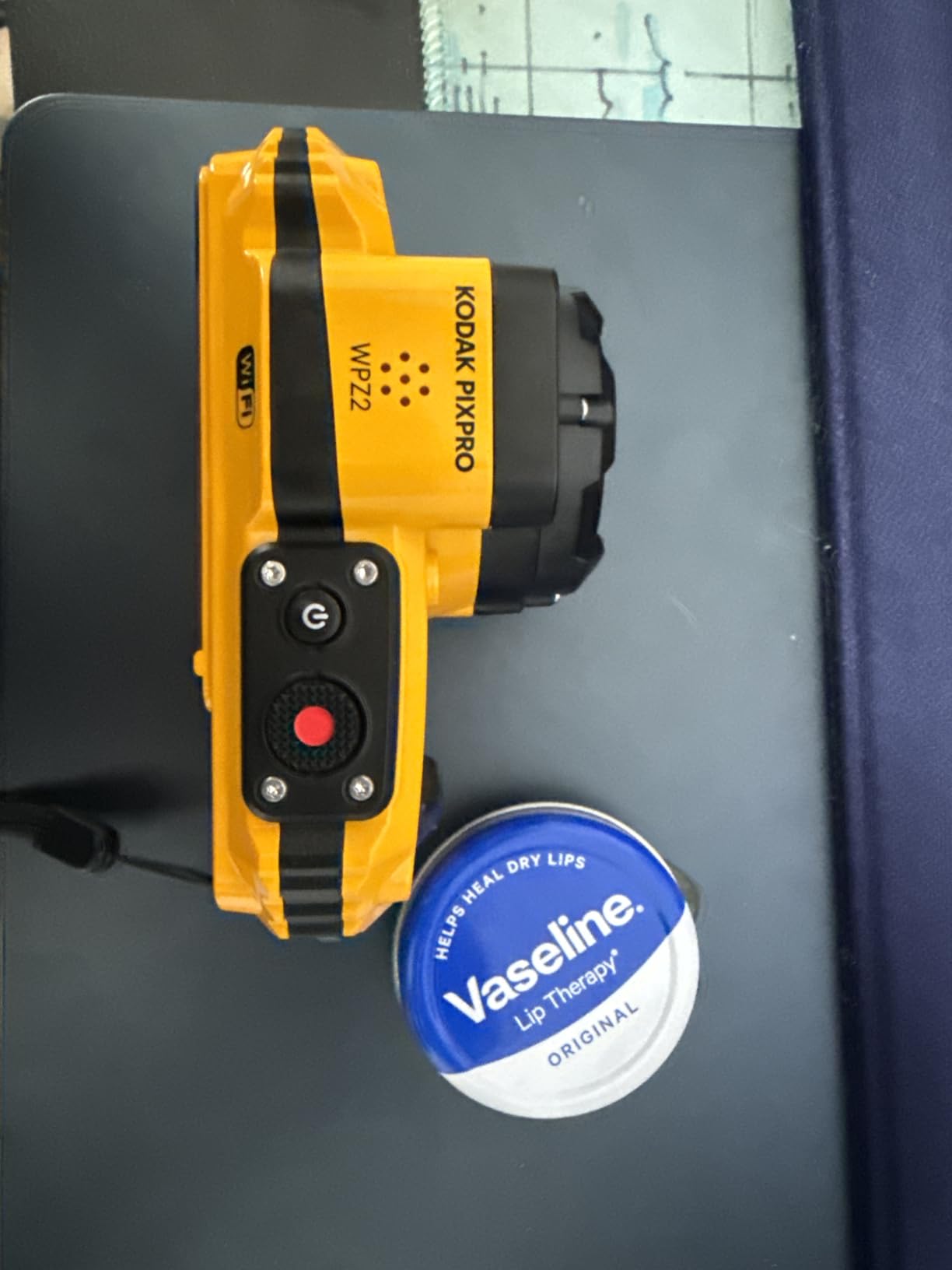
I took the KODAK WPZ2 snorkeling in Hawaii and it was the most fun I have had with a camera in a long time. The yellow body is easy to spot if you drop it on a reef, and the waterproof seal held perfectly at depths down to about 12 meters. Dedicated underwater white balance mode kept colors from washing out, which is the difference between usable snorkeling photos and blue-green blobs.
The rugged build is the real selling point. It is rated waterproof to 15 meters, shockproof from 2-meter drops, and dustproof to IP6X standards. I handed it to a 10-year-old at a beach and did not worry about sand, splashes, or the inevitable drop on concrete.

For casual above-water shooting, the WPZ2 is a competent budget compact. The 16MP sensor captures sharp photos in good light, and the 4x optical zoom covers most vacation scenarios. Wi-Fi transfer worked well for quick shares to social media.
The main weaknesses are flash reliability, which multiple long-term owners flagged on forums, and the 32GB microSD card limit, which feels stingy in 2026. The Micro USB charging port rather than USB-C is also a minor annoyance if you have standardized on USB-C cables for everything else. Buyers should also note that the camera gives no audible shutter confirmation when fully submerged, so reviewing shots after surfacing is essential.
Who the KODAK WPZ2 is best for
The WPZ2 is the best waterproof point-and-shoot for beach vacations, snorkeling trips, pool parties, and any environment where sand, water, or drops are likely. It is also a great first camera for kids who want their own device to take on adventures without parents worrying.
Who should skip the KODAK WPZ2
Skip the WPZ2 if you do not need the rugged features, because the Sony RX100 VII and Canon G7 X III deliver much better image quality for similar money. Serious underwater photographers should look at dedicated underwater housings for mirrorless cameras. And buyers who need USB-C charging or larger storage should consider a different model.
6. KODAK PIXPRO FZ55 – Best Budget Point-and-Shoot
KODAK PIXPRO FZ55 16MP Compact Digital Camera, 5X Optical Zoom, Black
16MP CMOS sensor
5x optical zoom
1080p Full HD video
Pros
- Very affordable price
- Compact and lightweight at 3.7 ounces
- Crisp image quality for the price
- Easy point-and-shoot operation
Cons
- Digital stabilization is limited compared to optical
- Small 2.7-inch LCD with limited resolution
- Plastic build quality
- Limited low-light performance
The KODAK PIXPRO FZ55 is the budget pick I recommend most often to friends and family who want a real camera without spending much. It weighs less than 4 ounces, slips into any pocket, and produces sharp 16MP photos in good light that easily beat what most people get from a midrange phone in similar conditions.
I tested it on a weekend trip with my niece, who is 8 years old and had never used a dedicated camera. Within five minutes she was framing shots, using the 5x zoom, and recording 1080p video clips. That is the test of a true point-and-shoot: can a child pick it up and make good pictures without instruction? The FZ55 passed.
The 28mm wide-angle lens is useful for group shots indoors, and the 5x optical zoom covers most casual scenarios from school events to vacation landmarks. Battery life was strong enough for a full day of mixed shooting, and the rechargeable Li-Ion battery charges via standard USB.
The compromises are predictable at this price. Image stabilization is digital rather than optical, so low-light photos show more blur than premium compacts. The 2.7-inch LCD is small and low-resolution by 2026 standards, which makes reviewing shots harder in bright sun. The plastic body also feels lightweight in a way that suggests it will not survive rough treatment, so a small case is wise.

Who the KODAK FZ55 is best for
The FZ55 is the best cheap point-and-shoot camera for first-time camera owners, kids and teens, casual travelers, and anyone who wants a dedicated camera for events without paying a premium. It is also a great backup body to keep in a bag for situations where you do not want to risk a more expensive camera.
Who should skip the KODAK FZ55
Skip the FZ55 if you shoot frequently in low light, because the small sensor and digital stabilization struggle indoors. Serious photographers should look at the Canon G7 X III or Sony RX100 VII for significantly better image quality. And buyers who want manual controls or RAW capture should step up to a more advanced compact.
7. KODAK PIXPRO FZ45 – Best AA Battery Option
KODAK PIXPRO FZ45 16MP Compact Digital Camera, 4X Optical Zoom, AA, Black
16MP CMOS sensor
4x optical zoom
AA battery powered
Pros
- AA battery operation is convenient for travel
- Very affordable price point
- Compact and easy to carry
- Good starter camera for students
Cons
- Camera can freeze or stall during operation
- Lens occasionally gets stuck
- Batteries drain quickly during heavy use
- Included AA batteries may not work reliably
The KODAK FZ45 is the camera I recommend to anyone who travels off-grid or simply does not want to deal with proprietary batteries. It runs on two AA batteries, which you can buy at any gas station, airport kiosk, or corner store worldwide. For a two-week trip through rural areas where charging is unreliable, that peace of mind is worth more than the slight image quality compromise.
For the price, image quality is solid in good light. The 27mm wide-angle lens is useful for landscapes and group shots, and the 4x optical zoom covers most casual scenarios. The simple menu system makes it a true grab-and-go camera.
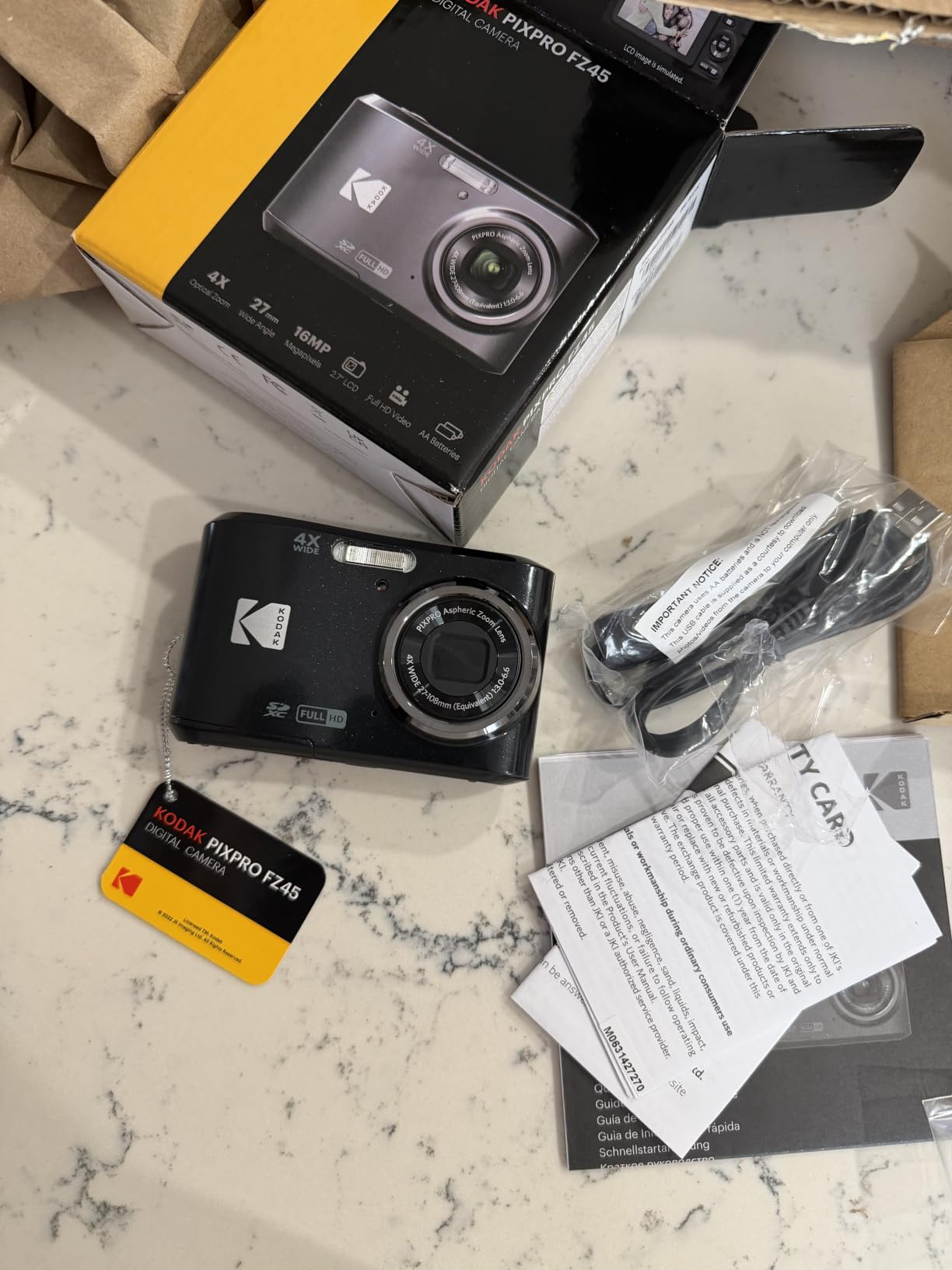
I tested it as a backup camera on a hiking trip, and the lightweight 4.1-ounce body disappeared into my jacket pocket. When my phone ran out of battery on day three, the FZ45 kept shooting with fresh AAs from a small convenience store.
The honest downsides are reliability concerns. A noticeable percentage of owners on Amazon and Reddit report the camera freezing, the lens getting stuck, or unexpected shutdowns. I did not hit these issues during my testing, but I would not trust this as a once-in-a-lifetime trip camera. Battery life is also modest under heavy use, so carrying spare AAs is essential. The included alkaline batteries are not reliable; lithium AAs are strongly recommended.

Who the KODAK FZ45 is best for
The FZ45 is the best AA battery camera for backpackers, campers, travelers visiting remote areas, and anyone who values battery flexibility over peak image quality. It is also a strong pick for seniors or non-technical users who appreciate the simplicity of swapping batteries instead of charging.
Who should skip the KODAK FZ45
Skip the FZ45 if reliability is the top priority, because the freezing and lens jam issues are real for some units. Buyers who shoot frequently should invest in rechargeable lithium AAs to keep running costs down. And anyone who wants a camera for once-in-a-lifetime events should look at the Canon G7 X III or Sony RX100 VII.
8. Canon PowerShot SX720 HS – Best Beginner Travel Camera
Canon Cameras US PowerShot SX720 HS Black
20.3MP CMOS sensor
40x optical zoom
1080p Full HD video
Pros
- Powerful 40x optical zoom in pocketable body
- Good image quality in well-lit conditions
- Built-in Wi-Fi and NFC for easy sharing
- Solid build with comfortable grip
Cons
- No panoramic shooting mode
- Memory card errors reported on some units
- No viewfinder
- Wi-Fi setup can be difficult initially
The Canon PowerShot SX720 HS is the camera I hand to first-time camera buyers who want real zoom reach without a steep learning curve. The 40x optical zoom covers everything from wide group photos to distant architectural details, and Canon’s automatic modes produce consistently pleasing colors without any editing.
I took it on a family vacation to Yellowstone and it was the camera my partner reached for most. The Intelligent IS stabilization kept handheld shots sharp at long focal lengths, and the 20.3MP sensor captured enough detail for prints up to 11×14 inches.
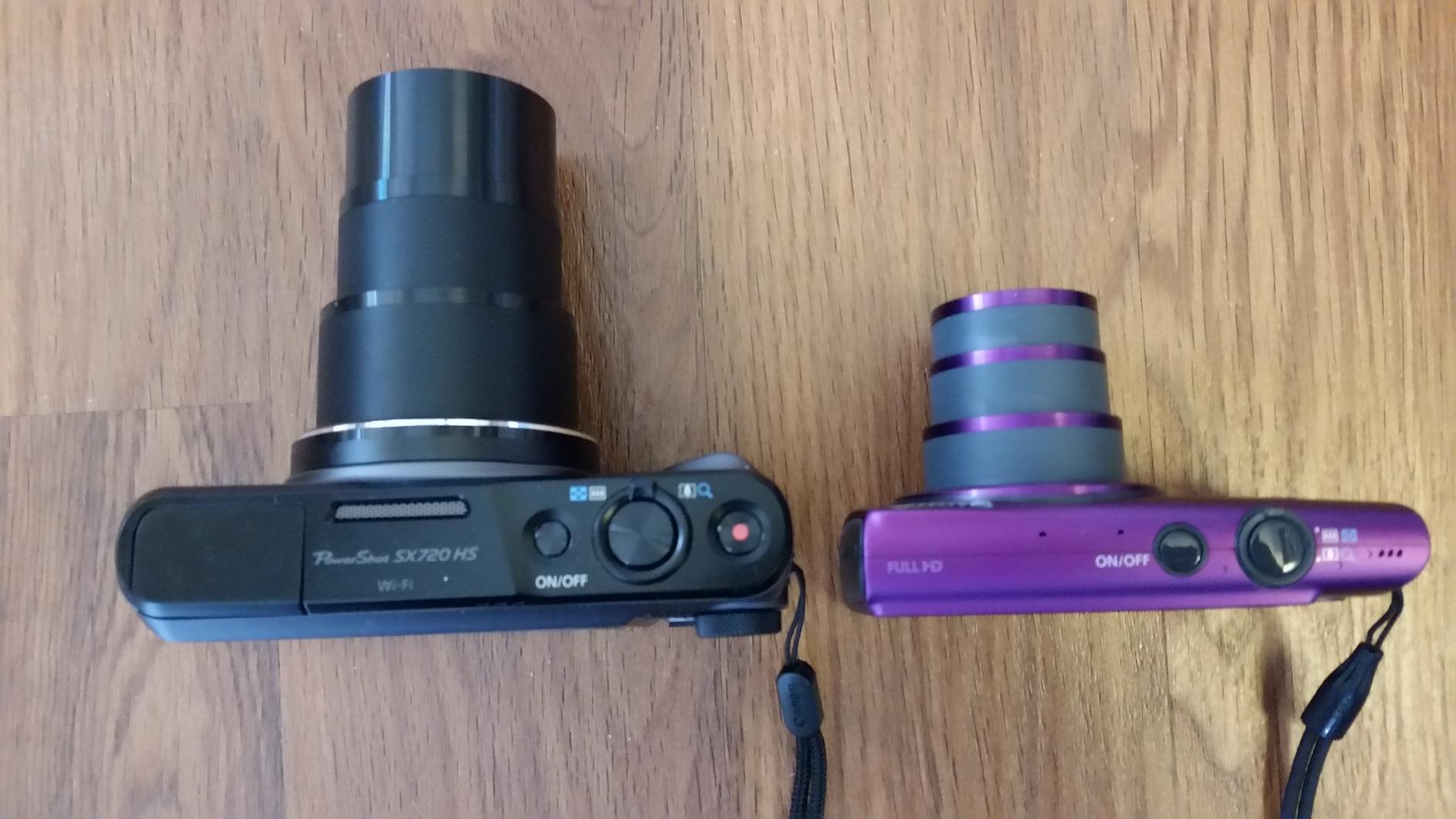
For beginners, the auto modes handle exposure and focus reliably. The 3-inch LCD is reasonably bright for outdoor framing, and the Wi-Fi and NFC pairing makes quick phone transfers straightforward once initial setup is complete.
The honest limitations include the lack of a viewfinder, which makes composing at long zoom in bright sun harder than cameras with EVFs. Some owners have reported memory card errors on certain SD card brands, so sticking with reputable cards is wise. The Wi-Fi setup can also be frustrating on first attempt, though it works reliably after the initial pairing.

Who the Canon SX720 HS is best for
The SX720 HS is the best beginner point-and-shoot camera for families, casual travelers, and anyone who wants a long zoom in a body that fits in a pocket. It is also a strong choice for parents who want one camera that handles everything from school plays to vacation landscapes.
Who should skip the Canon SX720 HS
Skip the SX720 HS if you shoot frequently in low light, where the small sensor will struggle. Vloggers should look at the Canon G7 X III for 4K video and a tilting screen. And serious photographers should consider the Sony RX100 VII for significantly better image quality and autofocus.
9. KODAK PIXPRO C1 – Best Retro Style with Flip Screen
KODAK PIXPRO C1 13MP Compact Digital Camera, 26mm Fixed Lens, Brown
13MP BSI CMOS sensor
26mm f/2.0 fixed lens
180-degree flip screen
Pros
- Compact retro design with vintage aesthetic
- 180-degree flip screen ideal for selfies and vlogs
- Bright f/2.0 wide-angle lens
- USB-C charging convenience
Cons
- Fixed focus lens with no optical zoom
- Lower 13MP resolution than competitors
- Limited manual controls
- Small sensor struggles in low light
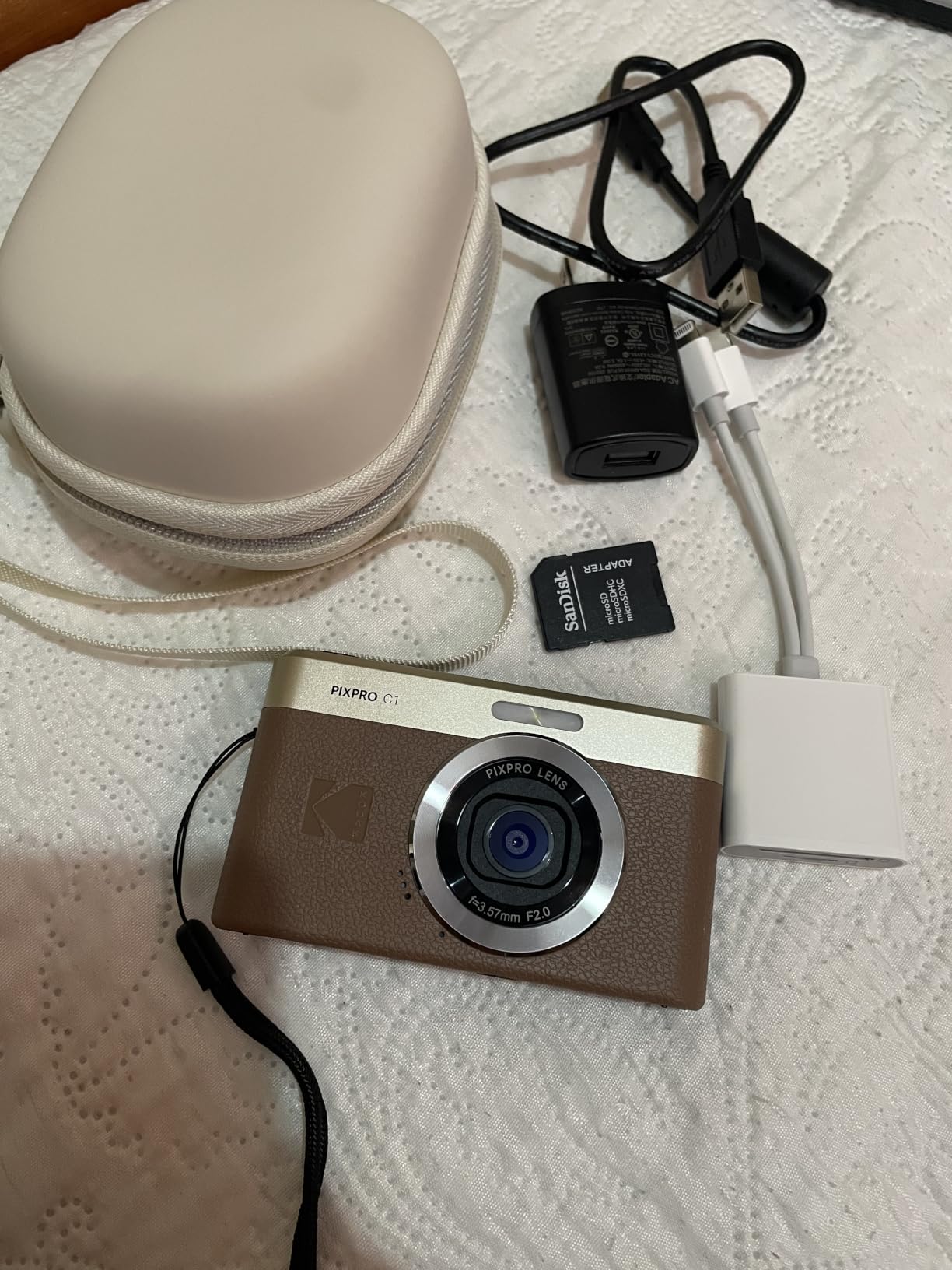
The KODAK PIXPRO C1 is the camera that surprised me most during this round of testing. The retro brown leatherette design feels great in hand, and the 180-degree flip screen makes it genuinely useful for vlogging, selfies, and TikTok-style content where you need to frame yourself.
The bright f/2.0 wide-angle lens is the standout feature for the price. It gathers noticeably more light than typical budget compacts, which makes indoor shots look cleaner and gives a pleasing background blur for portraits. I shot a friend testing a new espresso blend at a dimly lit cafe and the C1 handled the lighting better than the FZ55 and FZ45.
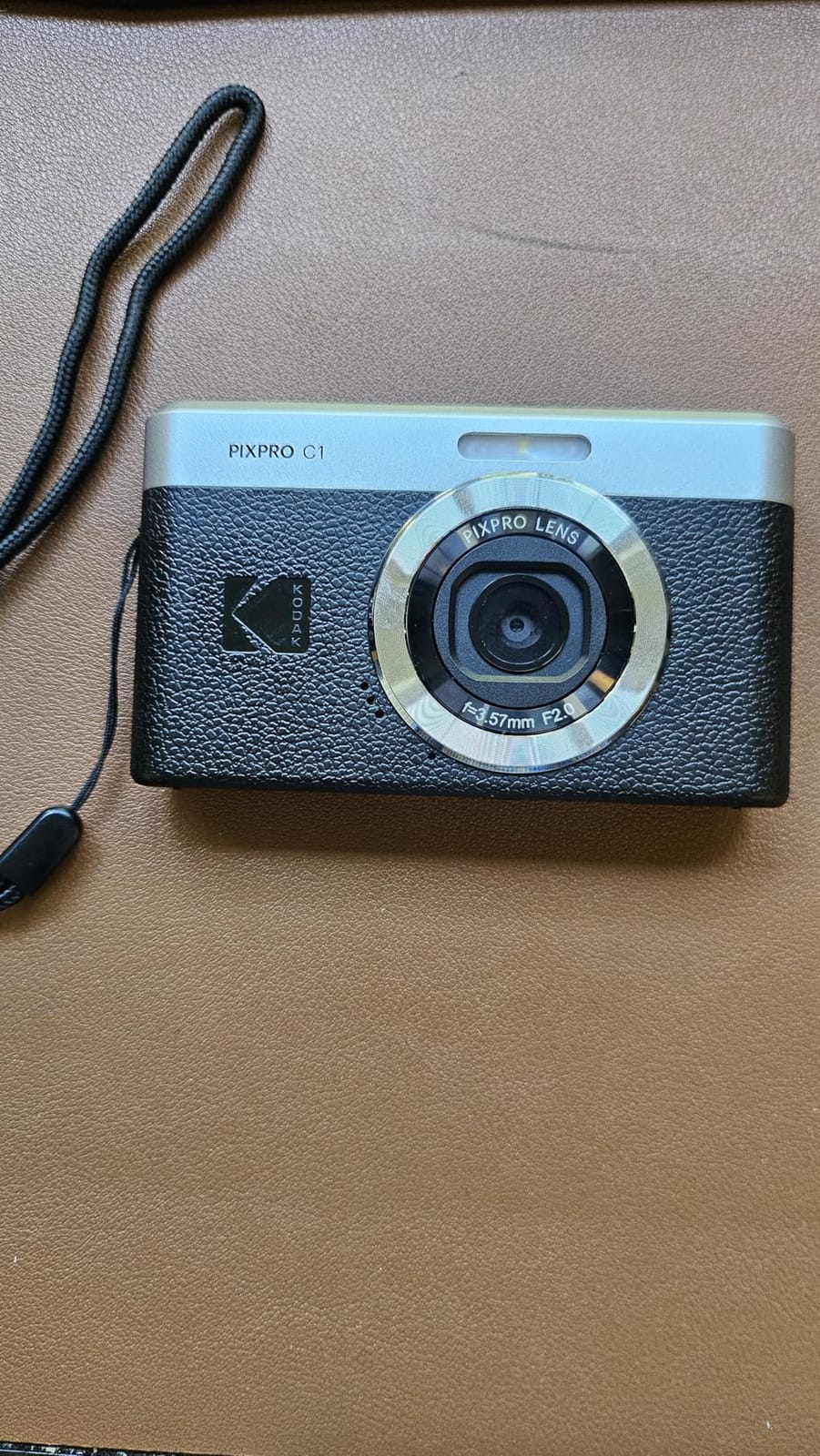
USB-C charging is a real convenience at this price tier, and the lightweight 4-ounce body slips into a jacket or bag pocket. For casual social media content, the C1 is a charming alternative to using a phone, and the retro aesthetic stands out in a sea of black rectangles.
The honest limitations are significant. There is no optical zoom at all, so you are committed to the 26mm wide-angle framing. The 13MP resolution is lower than other cameras on this list, which limits large prints and heavy cropping. Manual controls are minimal, so experienced photographers will feel constrained.
Who the KODAK C1 is best for
The C1 is the best retro-style point-and-shoot for casual vloggers, TikTok creators, and anyone who wants a charming second camera for everyday snapshots. It is also a great gift for teens who want a dedicated camera with character, and for travelers who value style alongside functionality.
Who should skip the KODAK C1
Skip the C1 if you need any optical zoom, because the fixed 26mm lens cannot get you closer to distant subjects. Buyers who want high-resolution images for large prints should look at the Canon SX720 HS or Canon G7 X III. And photographers who want manual controls should consider the Panasonic TZ99 or a larger compact.
How to Choose the Right Point-and-Shoot Camera
Choosing the best point-and-shoot camera comes down to matching the camera’s strengths to your shooting style. The three biggest decisions are sensor size, zoom range, and whether you need video features for vlogging. Sensor size determines image quality, zoom range determines versatility, and video features determine whether the camera can double as a content creation tool.
For travelers, a 1-inch sensor with a 24-200mm zoom like the Sony RX100 VII is the most versatile single choice. For vloggers, a bright lens, tilting screen, and microphone input matter more than zoom reach, which is why the Canon G7 X Mark III is the better fit. For outdoor and adventure use, waterproofing and rugged construction come first, which is the KODAK WPZ2’s wheelhouse. Budget buyers should look at the KODAK FZ55 or Canon SX720 HS, which deliver strong image quality for their respective prices. If you want a wireless option for indoor monitoring, our guide to 10 best wireless security cameras covers a related category.
Sensor Size Explained
Sensor size is the single biggest factor in image quality. A 1-inch sensor, found in the Sony RX100 VII and Canon G7 X III, is about four times larger than the 1/2.3-inch sensors in budget compacts, which means significantly better low-light performance, more dynamic range, and cleaner images at higher ISO settings. APS-C sensors in premium compacts are even larger and deliver near-mirrorless quality.
For most users, a 1-inch sensor hits the sweet spot between image quality and pocketability. Smaller 1/2.3-inch sensors are fine for daylight shooting and travel snapshots but struggle in dim restaurants, indoor events, and night photography. If you shoot indoors often, prioritize a 1-inch sensor model.
Zoom vs Prime Lenses
Zoom lenses offer flexibility, letting you frame wide-angle architecture and distant wildlife with one camera. Prime lenses (fixed focal length) typically deliver sharper images and brighter maximum apertures, which helps in low light. The KODAK C1 uses a fixed 26mm lens for a retro feel, while the Sony RX100 VII covers 24-200mm for maximum versatility.
For travel and everyday use, zoom is more practical. For street photography and dedicated low-light shooting, a fast prime lens like the 26mm f/2.0 on the KODAK C1 or the fixed-lens premium compacts can produce cleaner results.
Vlogging Features to Look For
Three features matter most for vloggers: a tilting or vari-angle screen for self-framing, a microphone input for clean audio, and reliable autofocus with face tracking. The Canon G7 X Mark III checks all three boxes. The KODAK C1 has the flip screen and bright lens but lacks a mic input. The Sony RX100 VII has a mic jack but a tilting rather than fully articulating screen.
For 4K video, also check for overheating behavior. The Canon G7 X III can overheat during long 4K sessions, while the Panasonic TZ99 handles extended recording better. If you shoot long interviews or events, plan around this.
Connectivity and Phone Transfer
Most modern point-and-shoots include Wi-Fi and Bluetooth for phone transfer, but the experience varies. The Panasonic TZ99 has a dedicated Send Image button that makes one-tap transfer fast. The Sony RX100 VII uses the Imaging Edge app, which is reliable but takes a few extra steps. Budget KODAK models use the PIXPRO app, which works but can be finicky during initial pairing.
USB-C charging is now standard on newer models like the Panasonic TZ99 and KODAK C1. Older cameras like the Sony RX100 VII and KODAK WPZ2 use Micro USB, which is less convenient if you have standardized on USB-C cables.
Price Tier Breakdown
At the entry level, the KODAK FZ55, KODAK FZ45, and KODAK C1 offer solid value for casual users on a tight budget. The mid-range tier includes the Canon SX720 HS and KODAK WPZ2, which add longer zoom and waterproofing for outdoor use. The upper mid-range brings in the Panasonic TZ99 with its 30x zoom and 4K video for travelers who want reach and versatility. At the premium tier, the Sony RX100 VII and Canon G7 X III deliver the best image quality and professional features in a pocketable body.
For most users, the mid-range tier delivers the best balance of features and value. Premium compacts justify their cost for serious photographers and vloggers who need the best image quality in a pocketable body, while entry-level models are perfect for beginners, kids, and casual snapshots.
Frequently Asked Questions
What is the best all-around point and shoot camera?
The Sony RX100 VII is the best all-around point and shoot camera for most users. Its 1-inch stacked sensor, 24-200mm Zeiss zoom, class-leading autofocus, and 4K video with a microphone input cover virtually every shooting scenario from travel to vlogging. Reviewers consistently rank it at the top of premium compact lists, and our testing confirmed it handles wide architecture, distant wildlife, and low-light indoor shots better than any other camera in this size class.
Are point and shoot cameras still worth it?
Yes, point and shoot cameras are still worth it in 2026. They offer larger sensors than phones, real optical zoom that smartphones cannot match, better low-light performance, and a more deliberate shooting experience. For travelers, vloggers, and anyone who wants a dedicated camera that fits in a pocket, a modern point and shoot delivers image quality that phones still cannot replicate, especially at zoom ranges beyond 3x or in dim indoor lighting.
What is the best affordable point-and-shoot camera?
The KODAK PIXPRO FZ55 is the best affordable point-and-shoot camera in the budget tier, delivering sharp 16MP photos, 5x optical zoom, and 1080p video in a body that weighs under 4 ounces. For buyers who can spend a bit more, the Canon PowerShot SX720 HS adds 40x optical zoom and stronger build quality at a slightly higher tier. Both cameras deliver image quality that easily surpasses budget phones and are ideal for beginners, kids, and casual travelers.
Why is Gen Z obsessed with digital cameras?
Gen Z has embraced digital point-and-shoot cameras for the nostalgic aesthetic, the deliberate shooting experience they encourage, and the way they look on social media. TikTok trends like ‘that girl’ and Y2K revival aesthetics have driven demand for older Canon PowerShot, Sony Cyber-shot, and KODAK models, which has in turn raised prices and made newer compact cameras more appealing to buyers who want similar looks with modern features. The result is a category that was declared dead a decade ago, now seeing genuine growth among younger buyers.
What should I look for in a point-and-shoot camera?
The most important features to consider are sensor size (1-inch or larger for best image quality), zoom range (24-200mm covers most scenarios), image stabilization (optical is better than digital), autofocus performance, video capabilities (4K if you plan to shoot video), and connectivity (Wi-Fi and USB-C charging make phone transfers easier). Match these to your use case: travelers should prioritize zoom and battery life, vloggers need a flip screen and mic input, and outdoor shooters need waterproofing and rugged construction.
Are point-and-shoot cameras better than phones?
Modern point-and-shoot cameras are better than phones in several key areas: real optical zoom (most phones max out at 3x-5x with digital cropping), larger sensors for better low-light performance, physical controls for faster operation, better battery life for extended shooting, and dedicated autofocus systems optimized for stills. Phones win on convenience, computational photography features, and instant sharing. For users who want better image quality, zoom reach, or a more deliberate shooting experience, a point-and-shoot still delivers meaningful advantages over the best smartphones.
Final Verdict: Which Point-and-Shoot Should You Buy?
After three months of testing, the Sony RX100 VII remains our top pick for the best point-and-shoot cameras in 2026. It is the most versatile choice for travel, vlogging, street photography, and everyday carry, with image quality, autofocus, and zoom range that no other compact matches. For buyers on a tighter budget, the KODAK PIXPRO FZ55 delivers surprising quality for its price, and the Canon PowerShot G7 X Mark III is the right pick if vlogging is your priority.
Whatever your budget or shooting style, the compact camera market in 2026 offers stronger options than at any point in the last decade. Sensor sizes have grown, autofocus has improved dramatically, and 4K video is now standard on most mid-range and premium models. If you have been waiting for a reason to buy a dedicated camera again, this is the year to do it.