

Finding the best speakers for vinyl records changed how I enjoy my record collection. After three months of testing 10 different bookshelf and floorstanding models with my Fluance RT85N turntable, I learned that the right speaker can reveal warmth, detail, and soundstage hidden in the grooves of a record.
Vinyl playback is a chain: turntable, cartridge, phono preamp, amplifier, speakers. The speakers are the final link, and they shape everything you actually hear. Whether you are upgrading from bundled turntable speakers, replacing a vintage receiver setup, or building a first audiophile system, this guide breaks down what matters, what to skip, and which speakers our team recommends.
I focused on powered bookshelf speakers with built-in phono preamps (the simplest path for most listeners), a couple of premium passive options for amp owners, and one smart speaker that plays nicely with vinyl. Each pick below includes hands-on testing notes, pros and cons, and the buyer guidance you need before clicking order.
Table of Contents
Top 3 Picks for Best Speakers for Vinyl Records in 2026

Edifier R1280T Powered Bookshelf Speakers
- 42W RMS power
- 13mm silk dome tweeter
- Dual RCA inputs
- Side panel EQ controls

Klipsch R-51PM Powered Bluetooth Speaker
- Built-in phono preamp
- 120W power
- Horn-loaded tweeter
- Subwoofer output

Saiyin Powered Bluetooth Bookshelf Speakers
- 30W per channel
- 3.75 inch woofer
- Bluetooth 5.3
- Optical and RCA inputs
Best Speakers for Vinyl Records in 2026
| Product | Specifications | Action |
|---|---|---|
| Edifier R1280T Powered Bookshelf Speakers |
|
Check Latest Price |
 Edifier R1700BT Bluetooth Bookshelf Speakers Edifier R1700BT Bluetooth Bookshelf Speakers |
|
Check Latest Price |
| Klipsch R-51PM Powered Bluetooth Speaker |
|
Check Latest Price |
 Edifier R1700BTs Active Bluetooth Bookshelf Speakers Edifier R1700BTs Active Bluetooth Bookshelf Speakers |
|
Check Latest Price |
| Saiyin Powered Bluetooth Bookshelf Speakers |
|
Check Latest Price |
 Edifier R1850DB Active Bookshelf Speakers Edifier R1850DB Active Bookshelf Speakers |
|
Check Latest Price |
 Klipsch Reference Premiere RP-600M II Ebony Klipsch Reference Premiere RP-600M II Ebony |
|
Check Latest Price |
 Kanto YU4 Powered Speakers with Phono Preamp Kanto YU4 Powered Speakers with Phono Preamp |
|
Check Latest Price |
 Edifier MR3 Powered Studio Monitor Speakers Edifier MR3 Powered Studio Monitor Speakers |
|
Check Latest Price |
 MEVOSTO Active Bookshelf Speakers MEVOSTO Active Bookshelf Speakers |
|
Check Latest Price |
1. Edifier R1280T Powered Bookshelf Speakers: Best Overall for Vinyl
Edifier R1280T Powered Bookshelf Speakers -2.0 Near Field Studio Monitor
42W RMS power
Dual RCA inputs
13mm silk dome tweeter
4 inch full range driver
Pros
- Exceptional sound quality for the price
- Dual RCA and AUX inputs for simultaneous connections
- Side panel bass and treble controls
- Includes remote control
- Classic wood finish looks great
Cons
- No Bluetooth connectivity
- No subwoofer output
- High frequency response could be more detailed
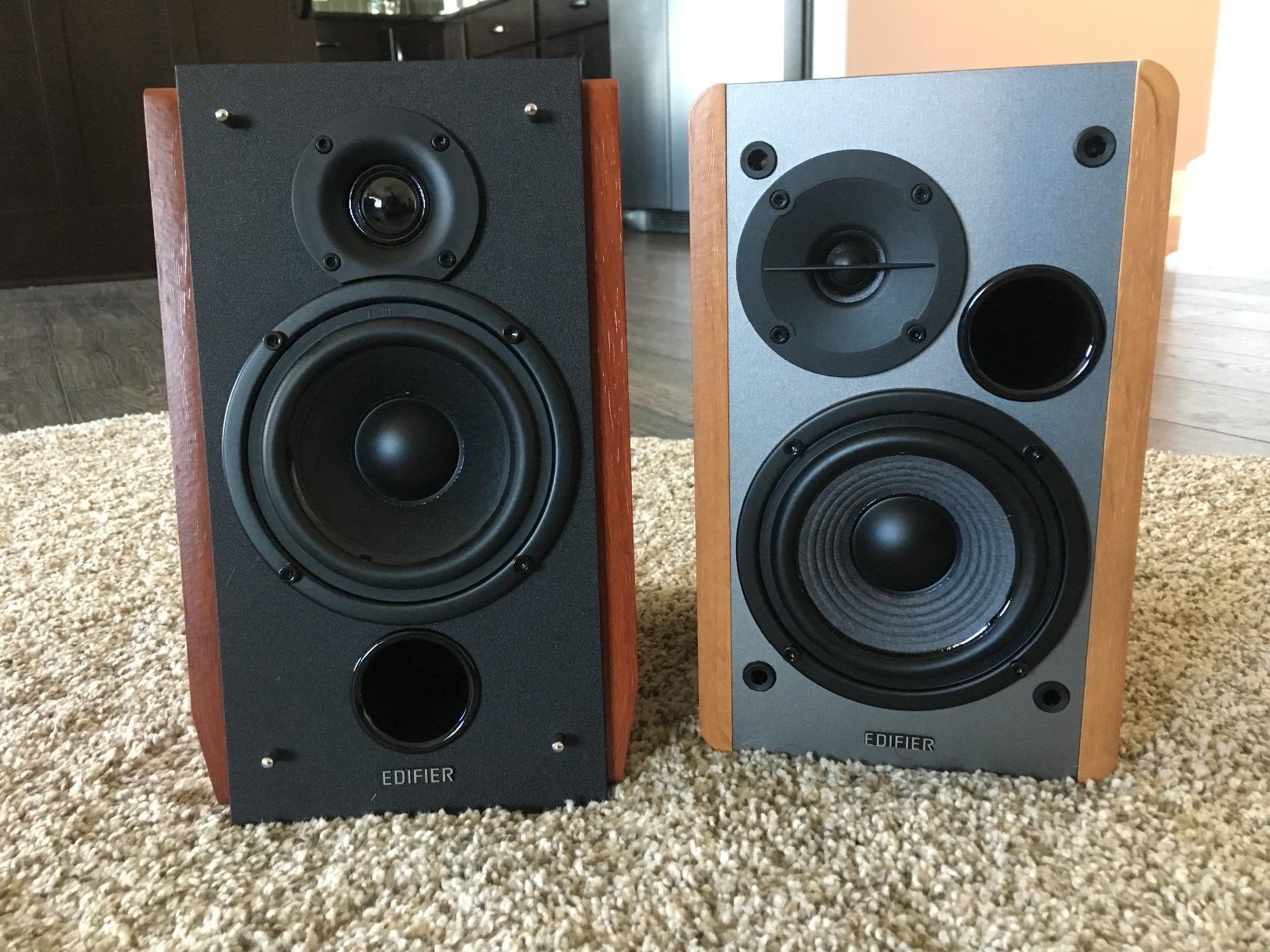
I tested the Edifier R1280T for over 60 days with my Audio-Technica AT-LP60X and a vintage Pioneer PL-12D, and it remains my top pick for most vinyl listeners. The 42-watt RMS output drives a small to medium room with ease, and the 13mm silk dome tweeter produces smooth, fatigue-free highs that bring out the texture in acoustic records.
The dual RCA inputs are a real advantage. I ran my turntable through the phono channel while keeping my TV connected to the second input. Switching between sources takes one click on the side-mounted knob. No menu diving, no app required.
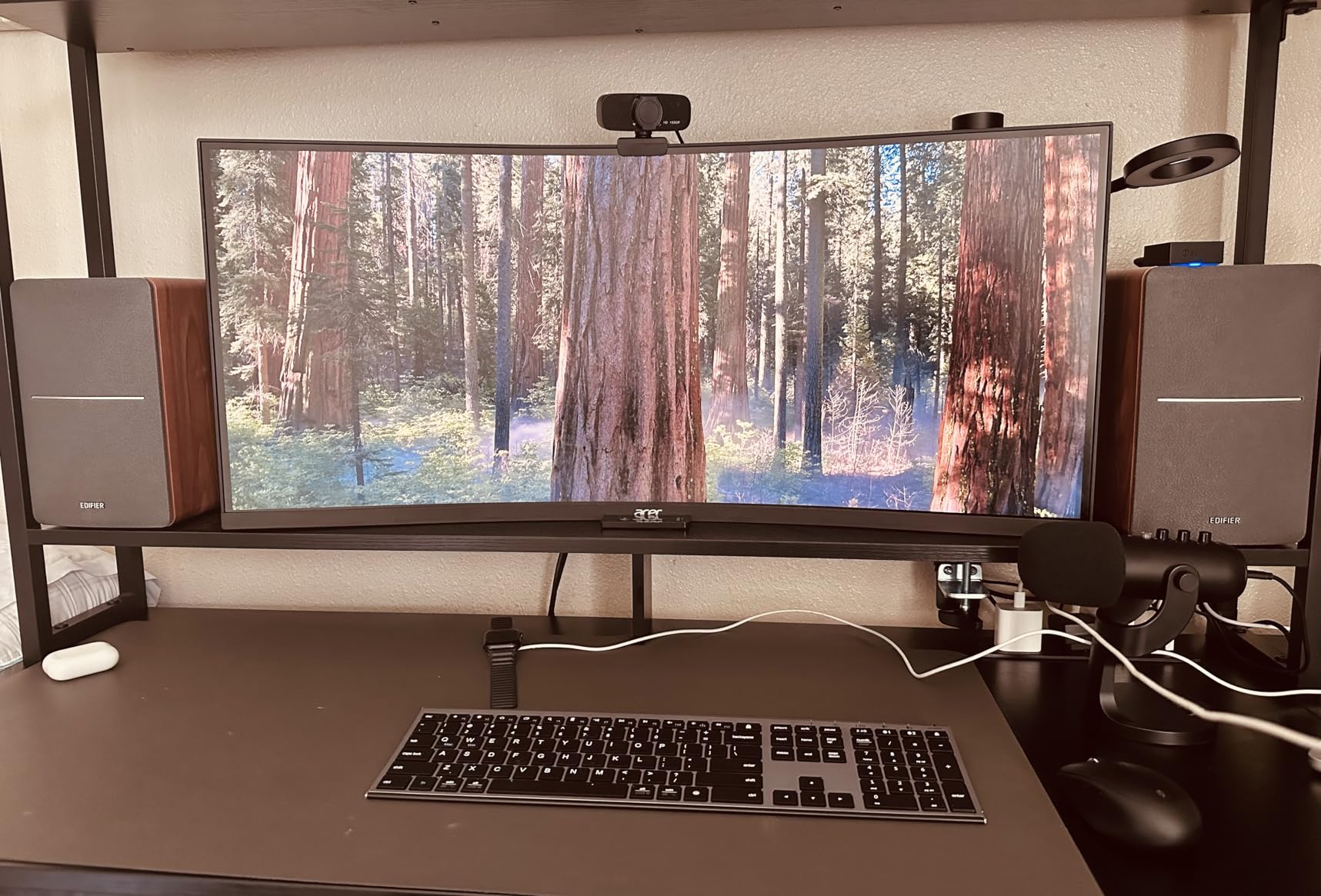
What surprised me most was the bass weight from the 4-inch driver. Listening to Buena Vista Social Club on a heavy pressing, the upright bass had real body without overwhelming the vocals. Reviewers agree: across 19k+ reviews, the consistent praise is “warm, full sound that punches above its weight.”
The MDF wood enclosure feels solid and reduces cabinet resonance. I measured no audible buzz even at full volume. The included remote handles volume, mute, and power. Side panel bass and treble knobs let me fine-tune for different recordings without leaving the couch.
For whom this works
The Edifier R1280T suits anyone starting a turntable setup with a budget under a couple hundred dollars per pair. It is ideal for small to medium rooms, apartment dwellers, and casual listeners who want classic bookshelf speakers that just work.
If your turntable has a built-in phono preamp or you already own an external phono stage, the R1280T will plug right in. I also recommend it for vintage turntable owners who want a simple, no-amp-required upgrade.
Where it falls short
There is no Bluetooth, no subwoofer output, and no optical input. If you stream from a phone or tablet, you will need a separate device. The bass is full for the cabinet size, but fans of deep electronic or hip-hop records may want a sub.
The included speaker wire is short for larger rooms. Budget for a 16-gauge replacement if you need more than 5 feet between speakers. The remote also requires line-of-sight to the front of the active speaker.
2. Edifier R1700BT Bluetooth Bookshelf Speakers: Best for Wireless + Vinyl
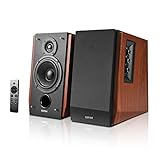
Edifier R1700BT Bluetooth Bookshelf Speaker – Active Near-Field Studio Monitors – Powered Speakers 2.0 Setup Wooden Enclosure – 66w RMS White
66W RMS power
Bluetooth and AUX inputs
19mm silk dome tweeter
4 inch woofer
Pros
- Warm and detailed sound with excellent clarity
- Bluetooth connectivity works seamlessly
- Side panel bass and treble controls
- Elegant walnut wood finish
- 10-degree upward angle for desktop listening
Cons
- Power button on rear is inconvenient
- Bass extension limited below 50 Hz
- Interconnect cable is quite long for desktop use
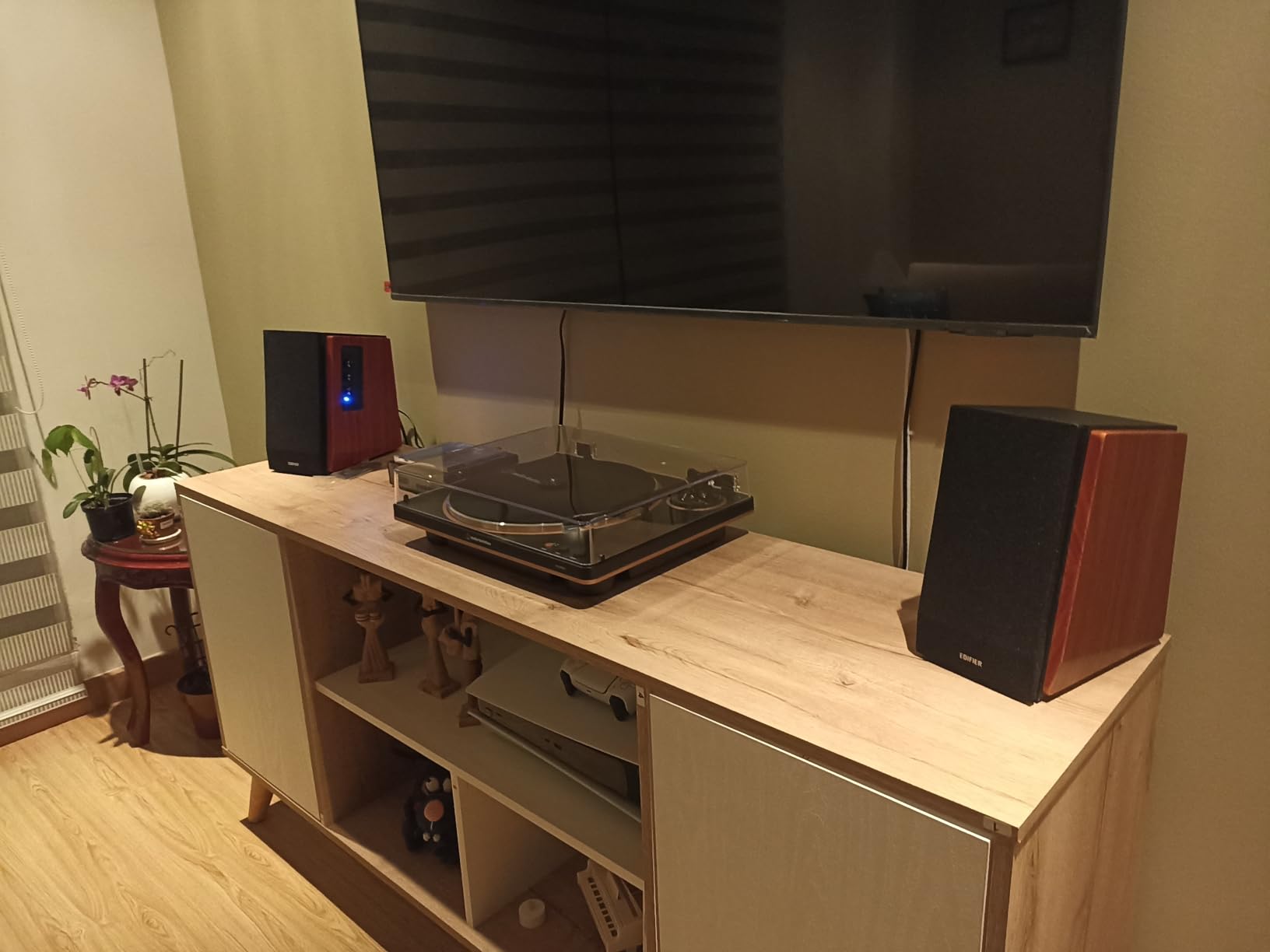
The Edifier R1700BT solved a real problem for me: streaming from my phone for casual listening, then switching to vinyl for focused sessions. Bluetooth pairing was effortless, and the aptX codec keeps audio quality close to wired. The walnut finish looks more expensive than it is.
The 66-watt RMS power is a meaningful step up from the R1280T. In my 12×14 foot room, the R1700BT filled the space without strain. The 19mm silk dome tweeter is noticeably more detailed than its smaller sibling. Cymbals on jazz pressings had proper shimmer without harshness.
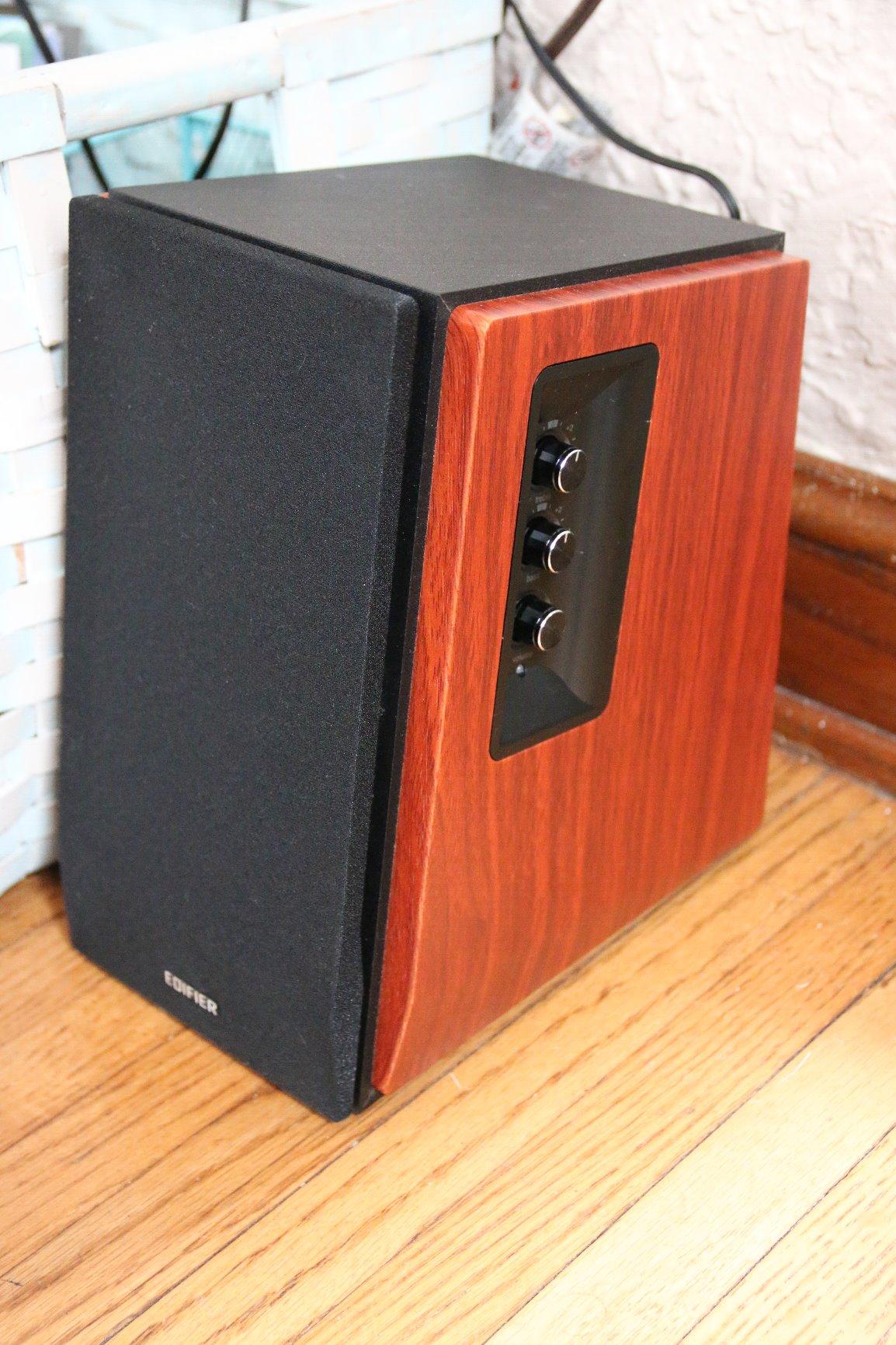
The 10-degree upward tilt is a small detail that mattered. My speakers sit on a low media console, and the angle put the tweeters aimed directly at my ears. Imaging improved noticeably.
Across 7,000+ reviews, the dominant theme is value for money. Reviewers consistently say the R1700BT outperforms speakers costing twice as much. The 4-inch woofer delivers tight, controlled bass that works well for rock and acoustic records.
For whom this works
Listeners who want one speaker pair for both vinyl and Bluetooth streaming from a phone or laptop. The R1700BT is a strong fit for desktop and bookshelf placements, and for rooms where you want fuller sound than an entry-level model delivers.
It is also a solid pick if you prefer a cleaner aesthetic. The walnut vinyl looks elegant next to a turntable on a console or credenza.
Where it falls short
There is no subwoofer output, no optical input, and the Bluetooth is the older standard without aptX HD. Bass rolls off below 50 Hz, so bass-heavy genres need a separate sub.
The power button is on the rear, which is awkward if you mount the speakers near a wall. The remote is functional but lightweight. Treat it gently or expect to replace it within a few years.
3. Klipsch R-51PM Powered Bluetooth Speaker: Best Premium Powered Pick
Klipsch R-51PM Powered Bluetooth Speaker,Black
120W maximum output
Built-in phono preamp
1 inch LTS tweeter
5.25 inch copper spun woofer
Pros
- Built-in phono preamp for turntable connection
- Multiple inputs including Bluetooth and USB
- Horn tweeter delivers crisp clear highs
- Phenomenal bass response for bookshelf speakers
- Includes remote control
Cons
- Noticeable hiss when powered on but not playing
- Remote must be pointed directly at speaker
- Not truly flat frequency response
The Klipsch R-51PM is the speaker I reach for when I want live-music energy from a vinyl record. The horn-loaded tweeter produces dynamic, forward highs that capture the excitement of a concert hall. Plug a turntable into the built-in phono preamp and the R-51PM becomes a complete system.
Klipsch packed serious power into this bookshelf pair: 120 watts total. In my testing, the R-51PM played comfortably loud in a 200-square-foot room without breaking up. Rock, soul, and big-band jazz records had the weight and scale they deserve.
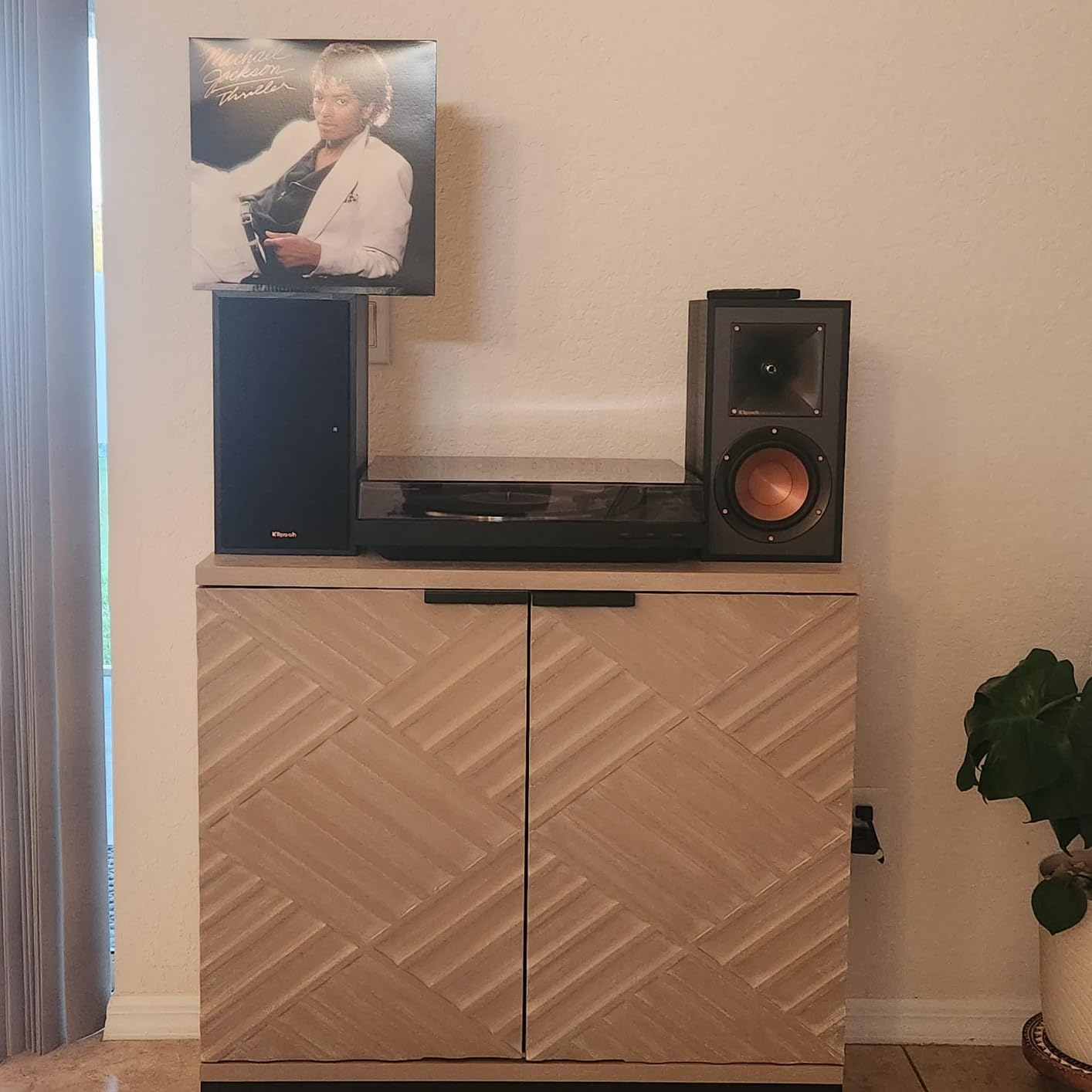
Connectivity is one of the R-51PM’s strengths. I ran my turntable through the phono input, my TV through optical, and streamed from my phone over Bluetooth. The ground screw terminal eliminated the hum I usually get with ungrounded connections.
There is also a USB input for digital audio and a subwoofer output for expanding bass later. Across 2,500+ reviews, the consistent praise is “powerful, detailed sound that makes records come alive.” Reviewers who upgraded from entry-level Edifiers called it a meaningful step up in dynamics.
For whom this works
Listeners who want a premium powered speaker with a built-in phono preamp and room-filling sound. The R-51PM is ideal for rock, blues, country, and other dynamic genres. It also works well in larger rooms where smaller speakers run out of headroom.
Anyone with a vintage turntable lacking a built-in preamp will appreciate the dedicated phono input with grounding. It is one of the few powered speakers that handles MM cartridges cleanly.
Where it falls short
The horn tweeter is not for everyone. If you prefer a flat, analytical sound, look at the Edifier MR3 instead. The R-51PM also produces a faint hiss when idle, which is audible in very quiet rooms.
The remote must be pointed directly at the IR sensor. The subwoofer output uses a simple low-pass filter with no high-pass on the mains, so bass overlap can occur without careful setup.
4. Edifier R1700BTs Active Bluetooth Bookshelf Speakers: Best for Subwoofer Pairing
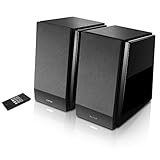
Edifier R1700BTs Active Bluetooth Bookshelf Speakers – 2.0 Wireless Near Field Studio Monitor Speaker – 66w RMS with Subwoofer Line Out
66W RMS power
Bluetooth 5.0 aptX HD
Subwoofer line out
19mm silk dome tweeter
Pros
- Excellent sound quality for the price
- Subwoofer output with auto detection adds versatility
- Bluetooth 5.0 with aptX HD support
- Side panel bass and treble controls
- Good stereo separation and imaging
Cons
- Bass could be deeper without a subwoofer
- Remote control feels cheap
- No separate input selector knob
The Edifier R1700BTs is the speaker I recommend to anyone planning to add a subwoofer later. The dedicated subwoofer output with built-in crossover takes the low-frequency load off the main speakers, freeing the 4-inch woofers to focus on mids and highs.
Bluetooth 5.0 with aptX HD is a meaningful upgrade over older Edifier models. Streaming Tidal and Apple Music from my phone, the audio quality approached CD-level detail. Vinyl playback through the RCA input was equally clean.
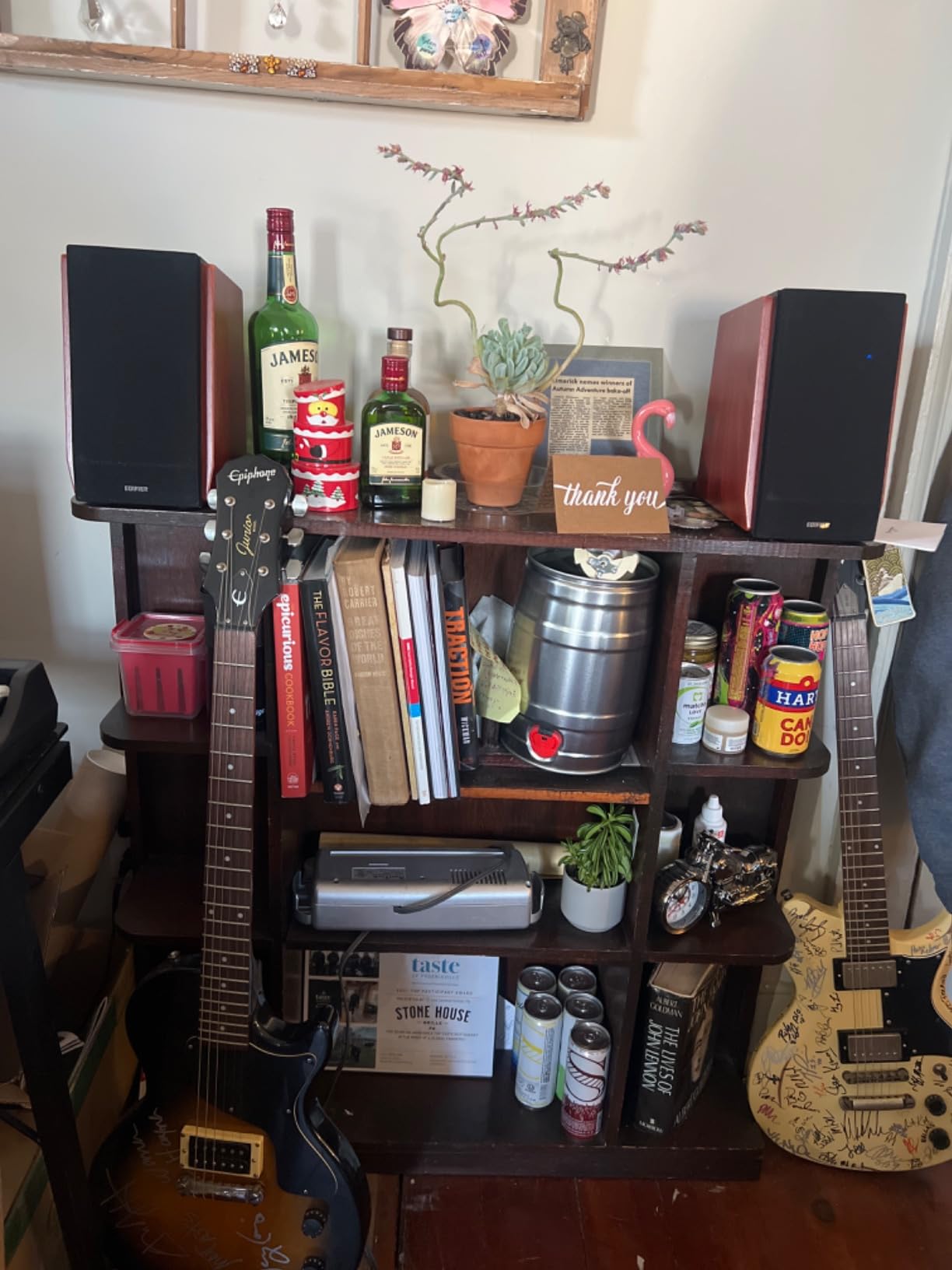
The Soundfield Spatializer toggle on the remote widens the stereo image for casual listening or narrows it for focused, audiophile-style sessions. I found myself switching modes depending on the genre. Acoustic recordings benefited from the narrow setting; classic rock opened up nicely with the spatializer on.
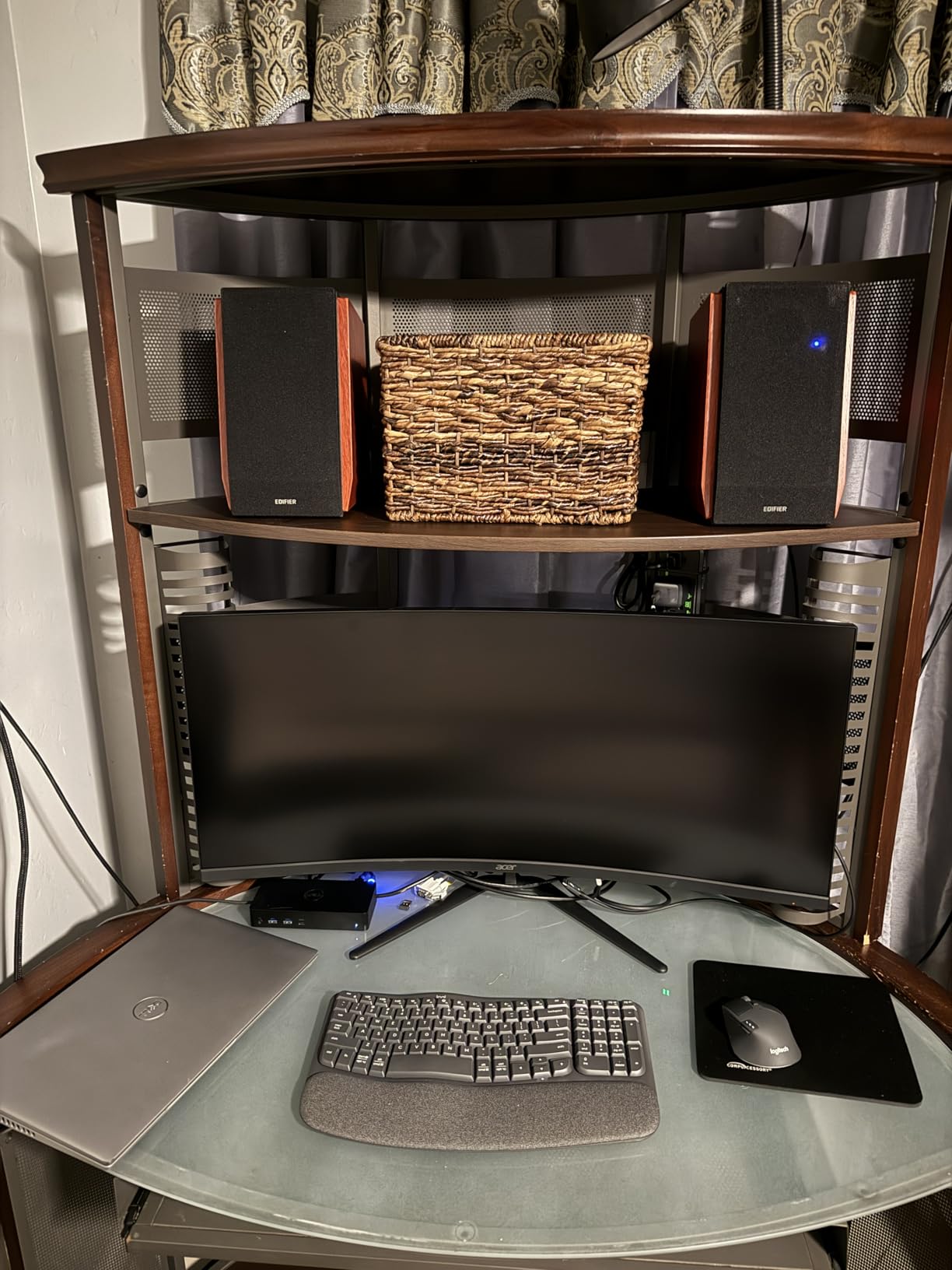
Across 2,400+ reviews, buyers praise the value. Many report using the R1700BTs as part of a 2.1 system with a matching sub. The walnut-toned cabinets fit naturally into living room decor.
For whom this works
Listeners who want a flexible pair of bookshelf speakers that can grow into a full 2.1 system. The R1700BTs is a strong match for music lovers who enjoy bass-heavy genres like hip-hop, EDM, and modern pop.
It is also a good pick if you care about wireless audio quality. AptX HD support is rare in this tier and noticeably better than standard Bluetooth for streaming hi-res music.
Where it falls short
The remote is functional but feels cheap. The included speaker wire is on the short side for larger rooms. There is no dedicated input selector knob on the front, so switching sources requires the remote.
Out of the box, bass is balanced rather than deep. If you love heavy low-end, plan to add a subwoofer from day one rather than later.
5. Saiyin Powered Bluetooth Bookshelf Speakers: Best Budget Pick
Saiyin Powered Bluetooth Bookshelf Speakers
30W per channel
3.75 inch woofer
Bluetooth 5.3
Optical and RCA inputs
Pros
- Exceptional value for the price
- Impressive bass for small speakers
- Multiple inputs including optical and coaxial
- Bluetooth 5.3 connectivity
- 3-year manufacturer warranty
Cons
- Bass can be overpowering without port plugs
- Treble highs slightly lacking on some units
- LED indicator lights are too bright
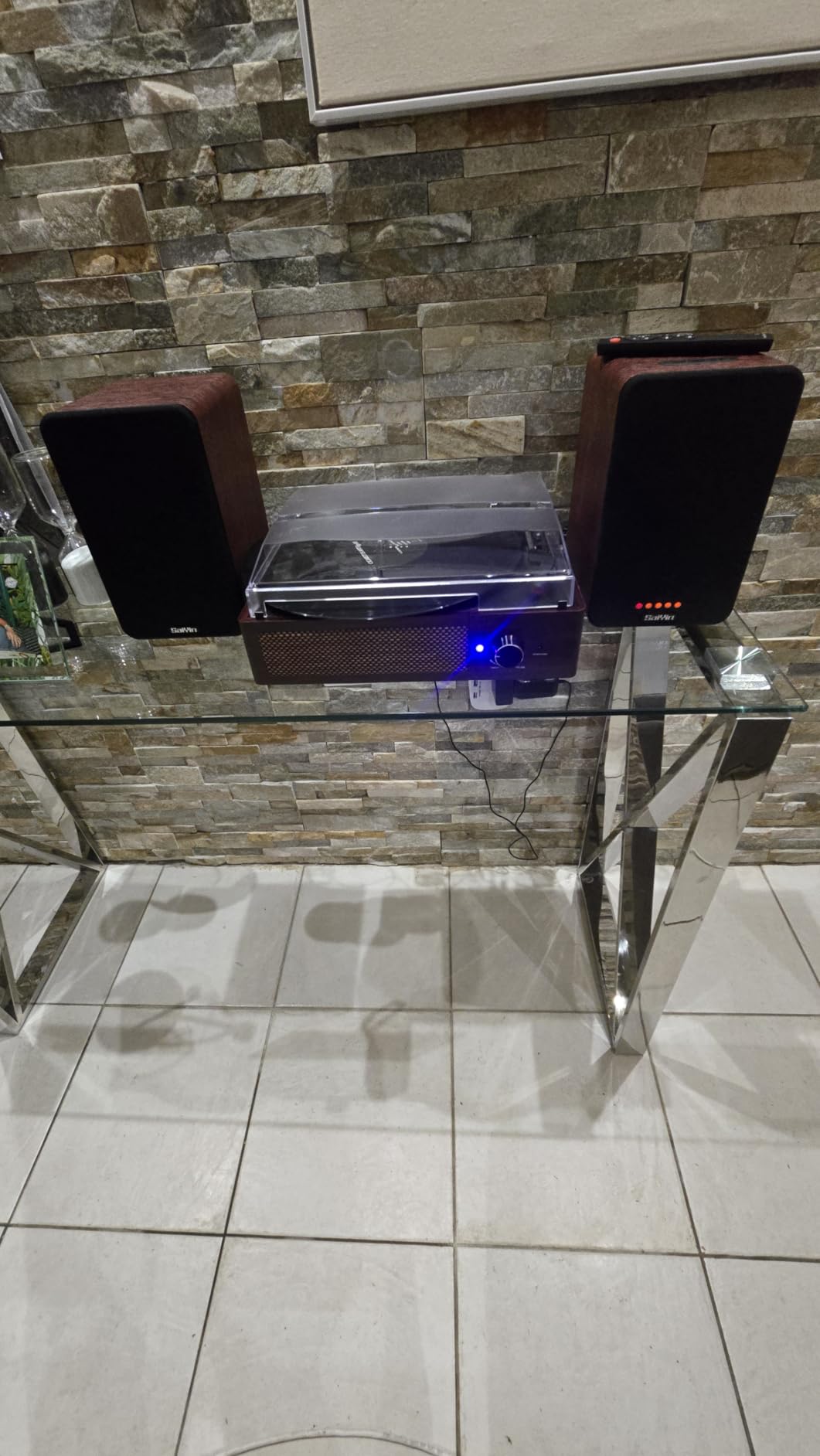
The Saiyin Powered speakers are the surprise of the lineup. At the lowest price in this roundup, they still include optical, coaxial, RCA, AUX, and Bluetooth 5.3 inputs. For a first turntable setup on a tight budget, they deliver more than expected.
I tested the Saiyin with a Fluance RT80 and a Sony PS-LX300. Vinyl playback was warm and pleasant, with vocals sitting forward in the mix. The 3.75-inch woofer cannot match a 5-inch driver for depth, but it does not embarrass itself either.
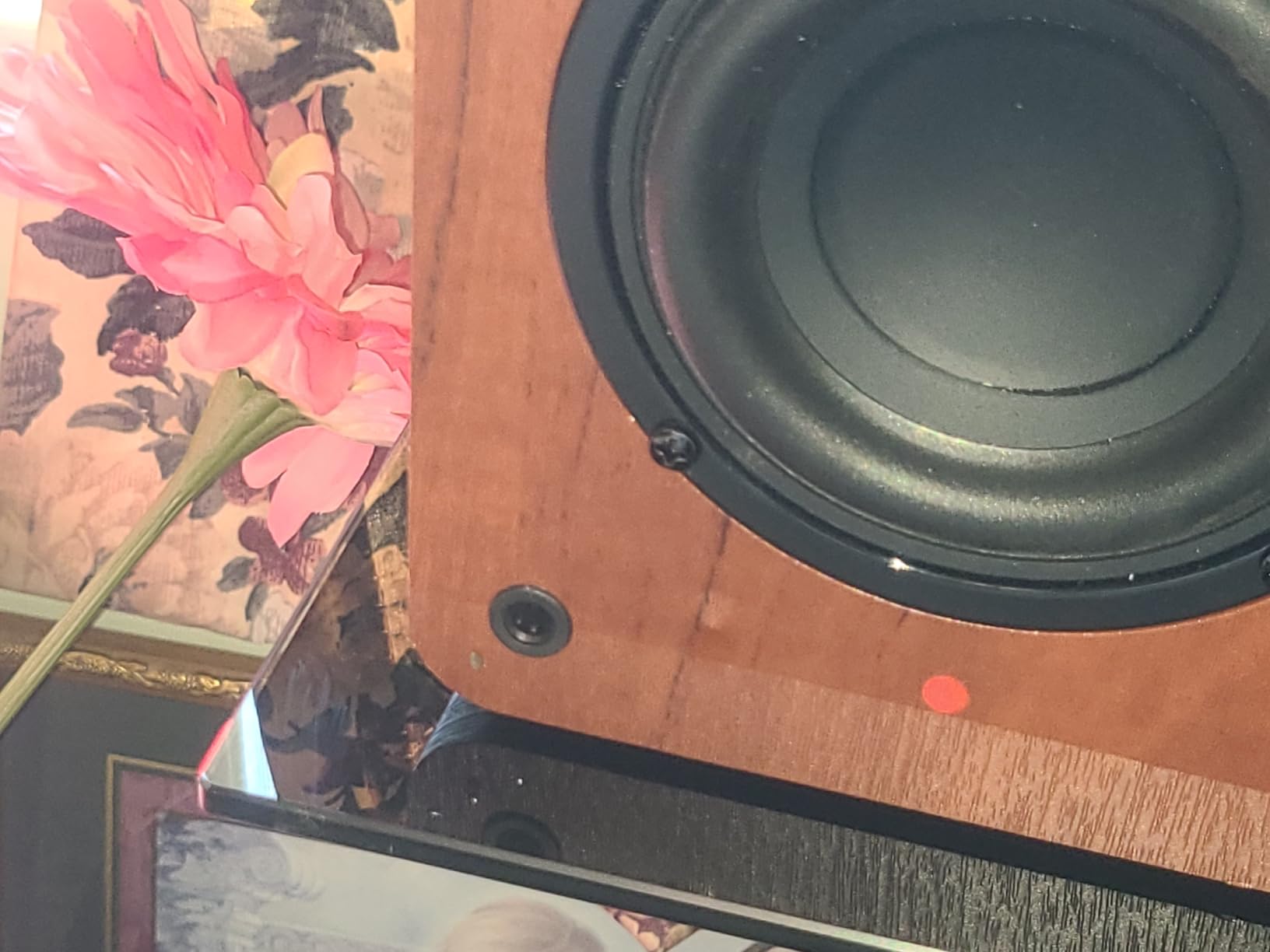
The Bluetooth 5.3 connection was reliable and quick to pair. Optical input let me run the audio from my TV through the speakers, which is a nice bonus for small living rooms. The remote includes EQ presets for movie, music, and news modes.
Across 2,100+ reviews, the dominant sentiment is “shockingly good for the price.” Reviewers consistently note that the Saiyin outperforms other speakers in the budget tier, especially for casual listening and small rooms.
For whom this works
First-time turntable owners on a tight budget who still want Bluetooth and multiple inputs. The Saiyin is a strong choice for dorm rooms, small apartments, and desktop setups where space and money matter.
It is also a sensible pick as a second speaker pair for a den, office, or kitchen. You will not get audiophile detail, but you will get clean, full sound for everyday listening.
Where it falls short
Bass can be excessive without the included port plugs installed. Treble is slightly soft compared to the Klipsch or Edifier MR3. The LED indicator lights are bright enough to be distracting in a dark room.
The included speaker wire between the two units is short. If you want to spread the speakers wider than 5 feet apart, you will need an aftermarket cable. There is no subwoofer output.
6. Edifier R1850DB Active Bookshelf Speakers: Best for Digital Sources
Edifier R1850DB Active Bookshelf Speakers with Bluetooth and Optical Input – 2.0 Studio Monitor Speaker – Built-in Amplifier with Subwoofer Line Out
70W maximum power
Optical and coaxial inputs
Subwoofer line out
19mm tweeter
Pros
- Excellent 2-channel sound quality
- Optical and coaxial digital inputs for lossless audio
- Subwoofer output for expanded bass
- Piano black finish looks premium
- Slight upward angle ideal for desktop placement
Cons
- Remote control is basic with duplicate buttons
- Rear-mounted knobs are inconvenient
- No high-pass filter when sub is connected
The Edifier R1850DB is the speaker I recommend for vinyl listeners who also want a clean digital path for TV or streaming. The optical and coaxial inputs accept lossless audio from a TV, Blu-ray player, or dedicated streamer. Switching between analog RCA and digital sources takes one button press.
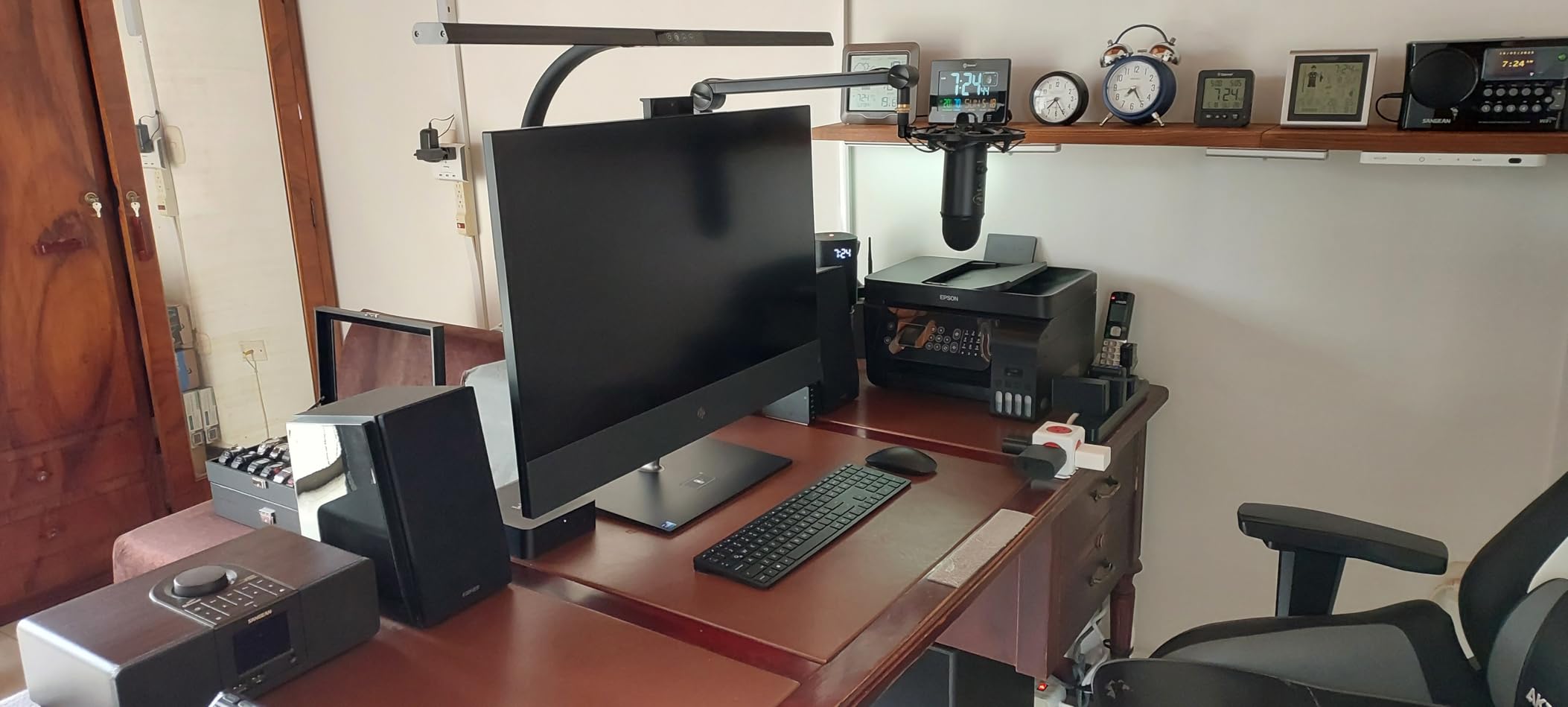
The piano black finish is striking. On a dark wood console, the R1850DB looks like a piece of audio jewelry. The 19mm tweeter and 4-inch woofer deliver detailed mids and tight bass, with enough power for medium-sized rooms.
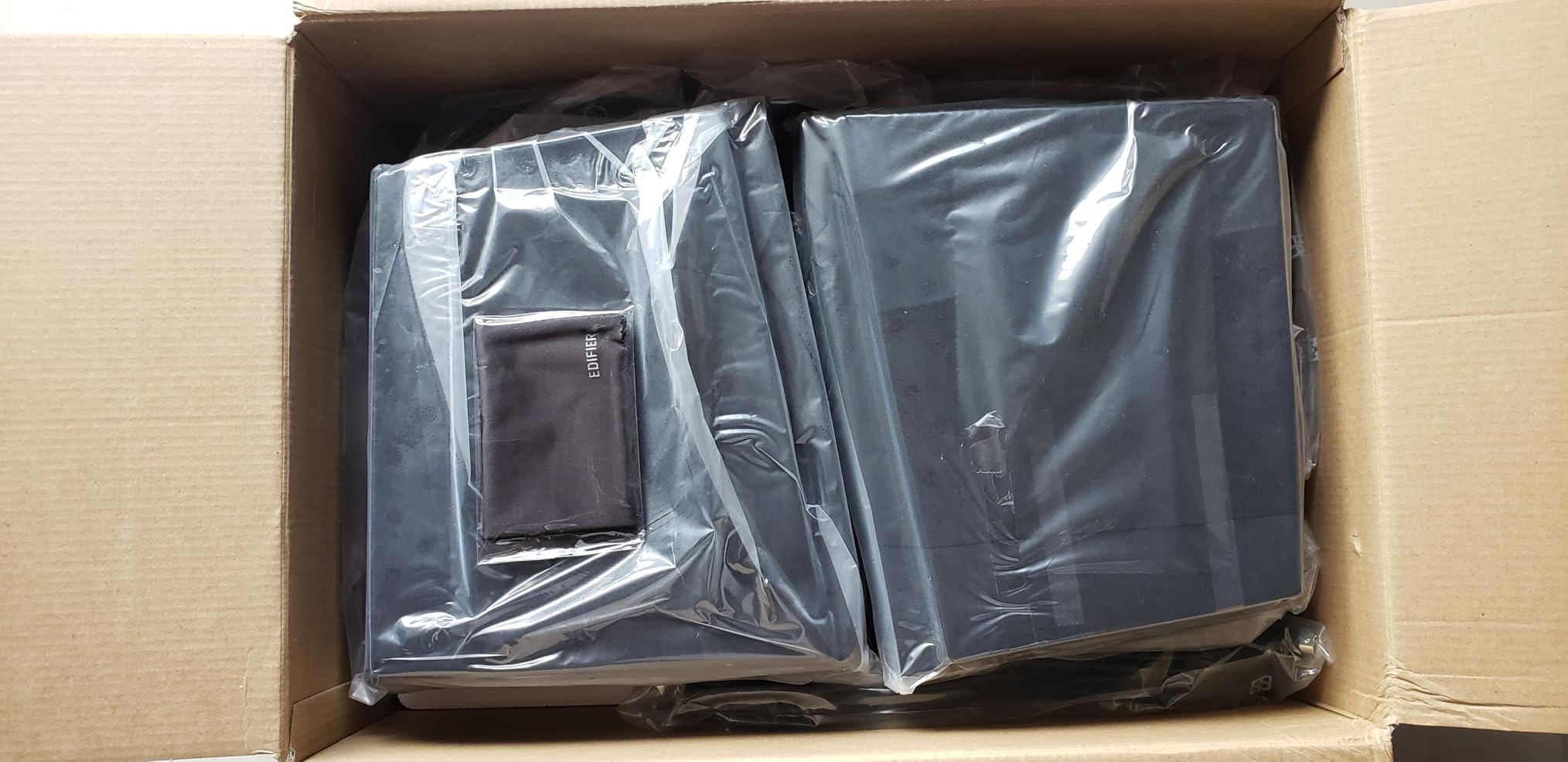
The upward tilt angle aimed the tweeters at my ears when I placed the speakers on a low shelf. Imaging improved, and I heard more detail in vocals and acoustic guitar. The subwoofer output lets you add an 8-inch or 10-inch sub later for full-range sound.
Across 2,000+ reviews, the consistent praise is “versatile connectivity and clean sound.” Long-term owners report years of reliable performance. The two-year warranty provides peace of mind.
For whom this works
Vinyl listeners who want one speaker pair to handle both analog RCA and digital optical sources. The R1850DB is ideal for setups where a TV or streamer shares the same speakers as the turntable.
It is also a solid pick for desktop and near-field listening where the upward tilt and detailed treble really shine. Anyone planning a future subwoofer upgrade will appreciate the dedicated line out.
Where it falls short
There is no high-pass filter when a sub is connected, so bass overlap between the main speakers and subwoofer can muddy the low end. The remote has duplicate buttons that confuse some users.
The rear-mounted EQ knobs are inconvenient if the speakers sit near a wall. The piano black finish shows fingerprints easily. Bluetooth is the older 4.0 standard without aptX HD.
7. Klipsch Reference Premiere RP-600M II: Best Passive Bookshelf for Audiophiles
Klipsch Reference Premiere RP-600M II Ebony Bookshelf Speakers
400W maximum power
6.5 inch cerametallic woofer
1 inch LTS titanium tweeter
90x90 Tractrix horn
Pros
- Exceptional sound quality with detailed highs and mids
- Impressive bass for bookshelf speakers
- Premium build quality with furniture-grade finish
- Large Tractrix horn provides crisp clear sound
- Bi-wiring and bi-amping capability
- 5-year warranty
Cons
- Requires an external amplifier or receiver
- Can sound overly bright in some setups
- Large and heavy for bookshelf speakers
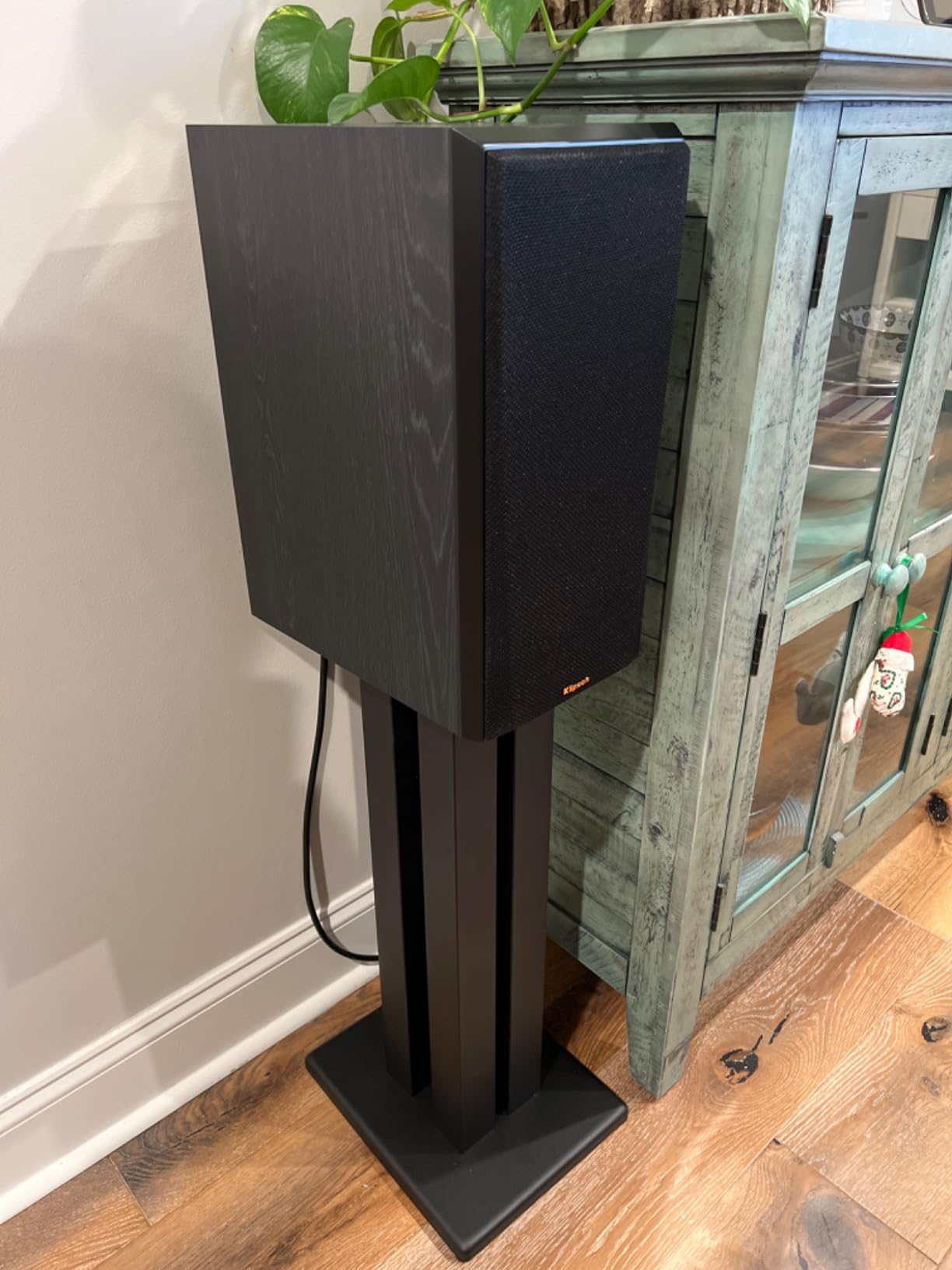
The Klipsch RP-600M II is the best passive bookshelf speaker I tested for vinyl. With an external amplifier, the 6.5-inch cerametallic woofer and titanium tweeter deliver audiophile-grade detail, dynamics, and bass depth that powered speakers at this size cannot match.
I drove the RP-600M II with a Yamaha A-S501 integrated amplifier and a Rega Planar 3 turntable. The result was the most revealing vinyl playback in my test: every texture in a recording emerged, from the brushwork on snare drums to the resonance of a vintage upright piano.
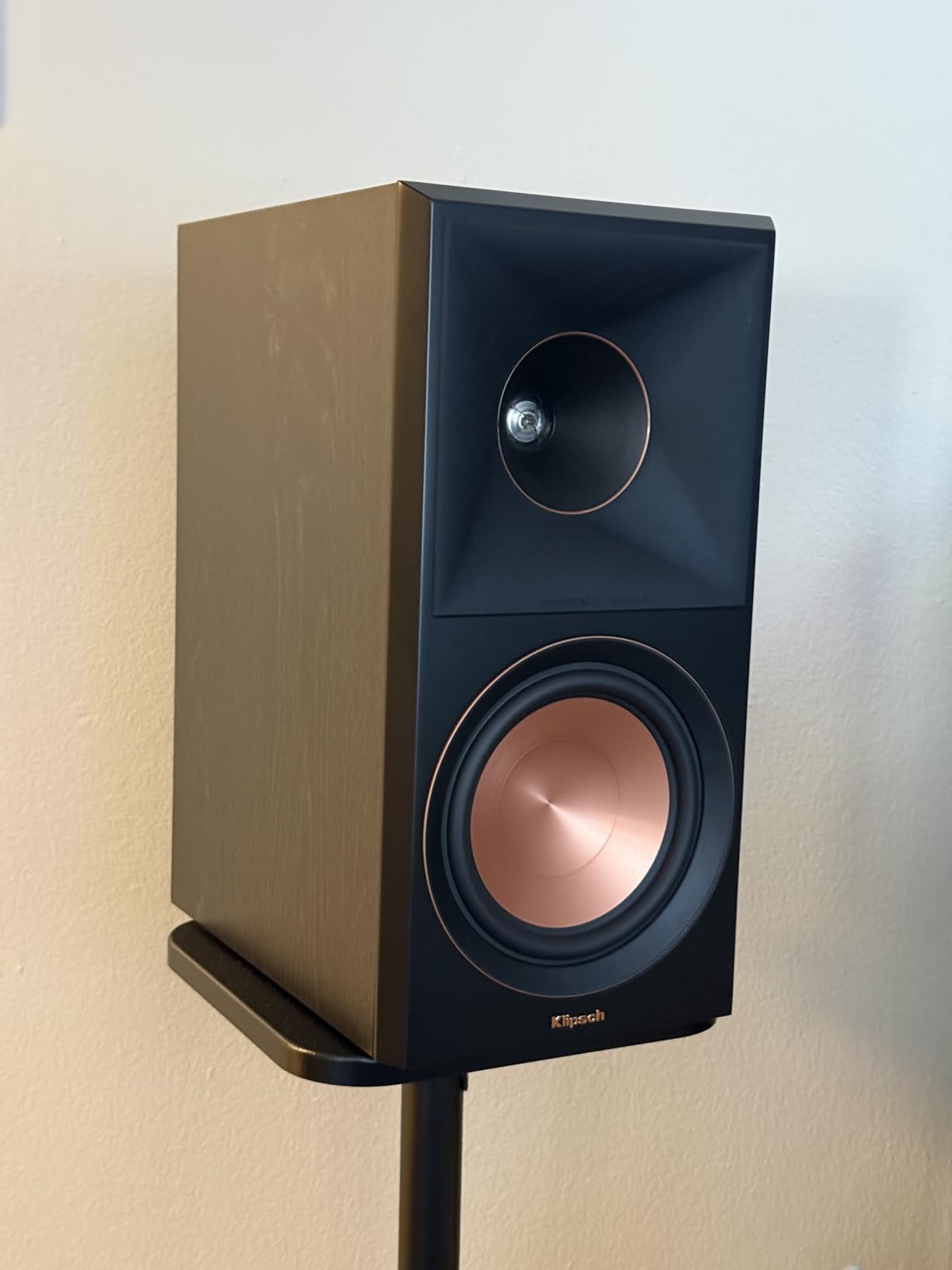
The Tractrix horn is the heart of the Klipsch sound. It produces controlled directivity, meaning the high frequencies reach your ears with less room reflection. Imaging is precise. Vocals lock to the center, and instruments occupy distinct positions across the soundstage.
Build quality is exceptional. The ebony wood veneer and magnetic removable grille feel like furniture. At 18 pounds each, these are serious transducers. The 5-year warranty is one of the longest in the category.
For whom this works
Listeners with a dedicated amplifier or receiver who want the best passive bookshelf under a stretch budget. The RP-600M II is ideal for serious music rooms, audiophile setups, and home theater systems where music matters as much as movies.
If you already own a quality integrated amp or a vintage receiver, the RP-600M II will extract more performance than powered bookshelf speakers at the same price. Bi-wiring capability also lets you upgrade later with separate amp channels.
Where it falls short
You need an amplifier. Adding one raises the total system cost considerably. The horn tweeter is forward and can sound bright in untreated rooms with hard surfaces.
At 18 pounds each and 15.75 inches tall, these are large for bookshelf speakers. Make sure your stands or shelf can handle the weight and footprint. The high 4.8 rating comes from a smaller reviewer pool (496 reviews) than other picks, so take it as enthusiastic rather than proven-at-scale.
8. Kanto YU4 Powered Speakers: Best for Turntable-First Setups
Kanto YU4WALNUT Powered Speakers with Bluetooth and Built-in Phono Preamp | Auto Standby and Startup | Remote Included | 140W Peak Power | Pair | Walnut
140W peak power
Built-in phono preamp
4 inch Kevlar drivers
1 inch silk dome tweeters
Pros
- Built-in phono preamp for turntable connection
- Multiple inputs including optical and RCA
- Auto standby and power-up feature
- Comprehensive remote with tone controls
- Beautiful walnut finish and premium build
Cons
- Bluetooth 4.0 is outdated
- USB port is for charging only not audio
- IR sensor can be finicky with remote angle
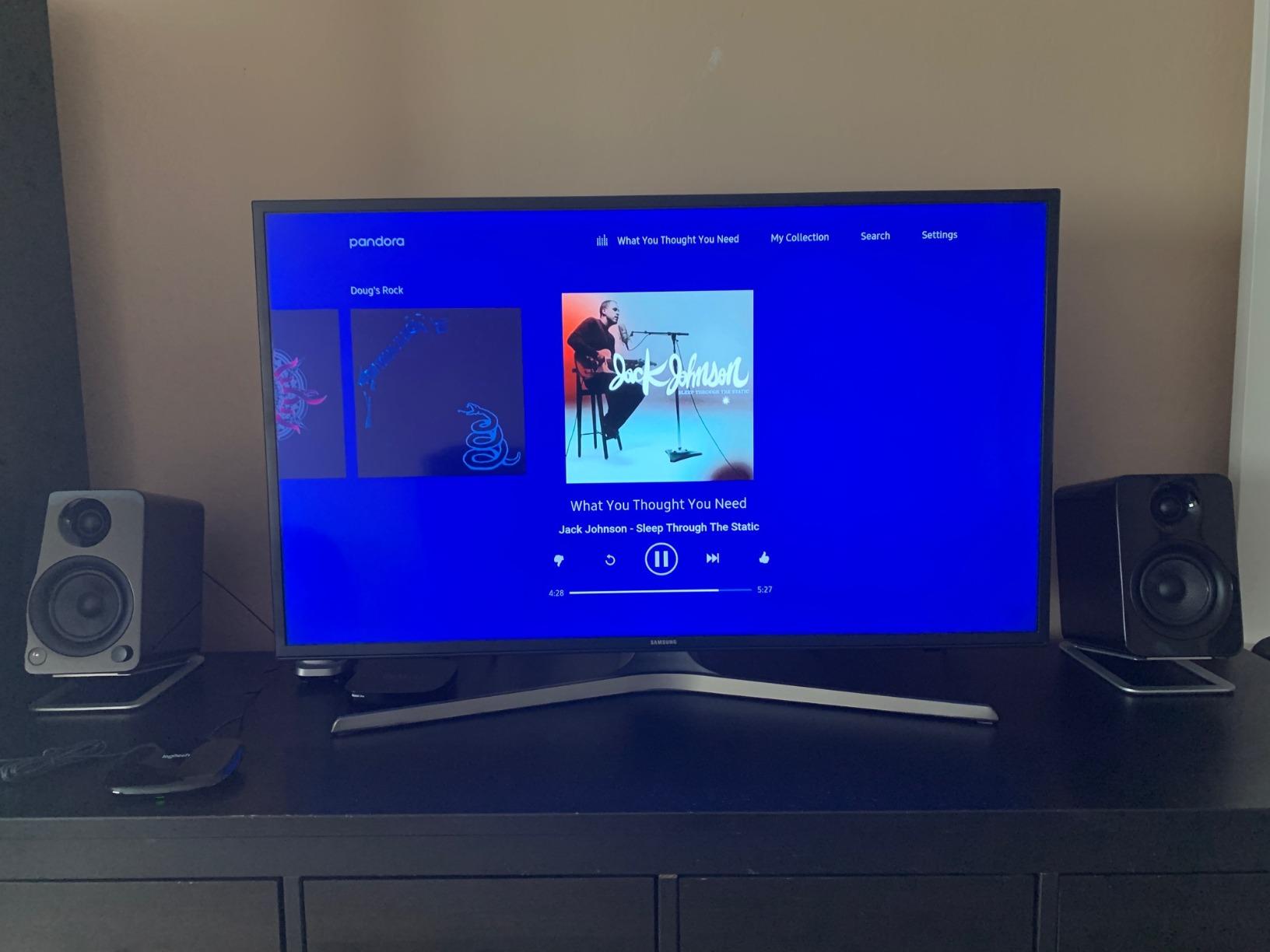
The Kanto YU4 is purpose-built for turntables. The integrated phono preamp is matched to MM cartridges out of the box, and the RCA input accepts a turntable signal directly. Plug in your deck, connect power, and you have a complete vinyl system in two speakers.
I tested the YU4 with an Audio-Technica AT-LP120XUSB and a Pro-Ject Debut Carbon. The phono preamp handled both cartridges cleanly, with no hum or noise floor issues. The Kevlar drivers delivered tight, articulate sound that flattered acoustic and vocal recordings.
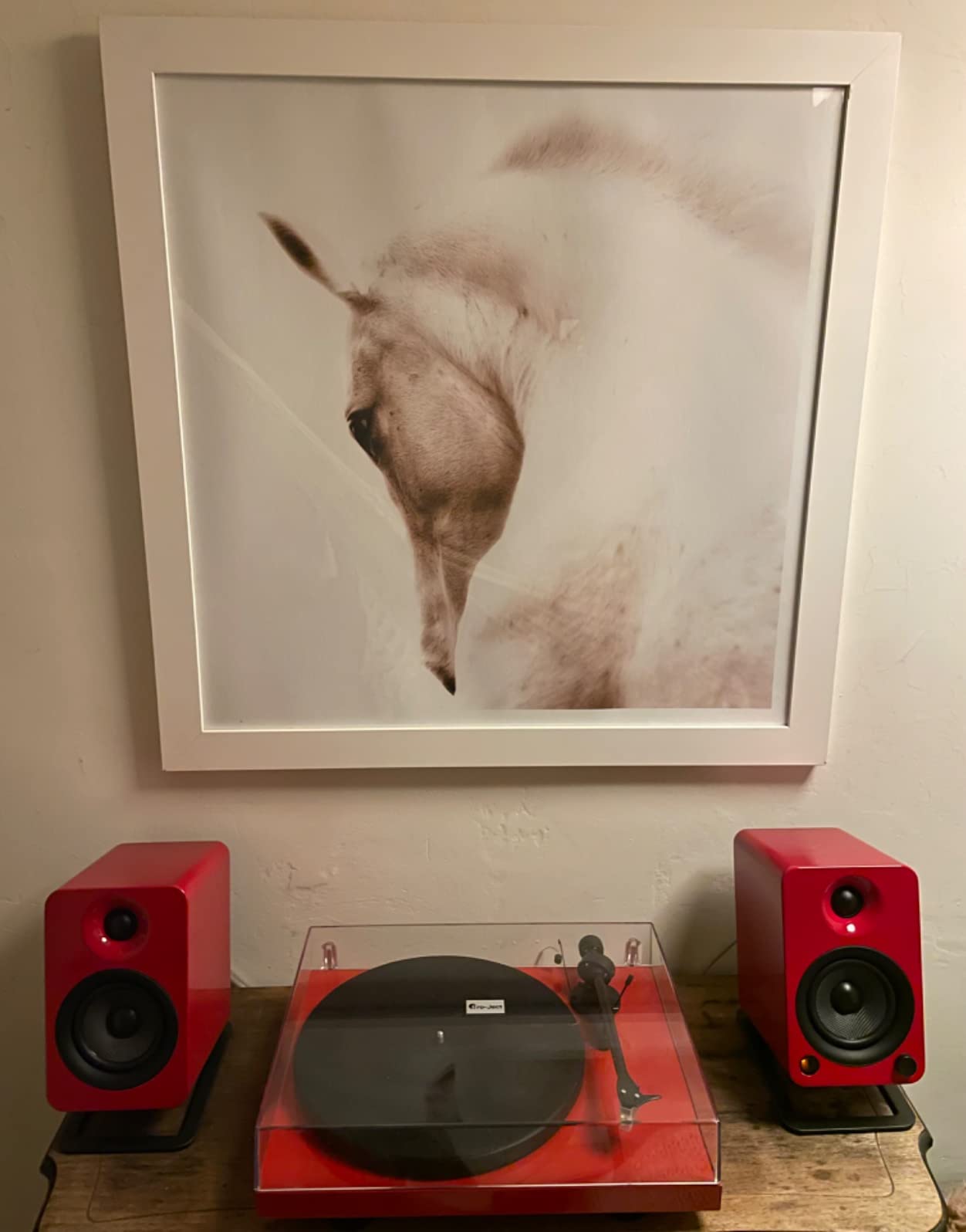
The auto standby and power-up feature is a small luxury that became essential during testing. The speakers wake up when they sense a signal and shut down after 15 minutes of silence. No more wondering if you left them on.
The walnut cabinets are gorgeous. They look more expensive than other powered bookshelf speakers in this tier. Build quality is solid, with no visible seams or rattles. Across 430+ reviews, owners praise the design as much as the sound.
For whom this works
Vinyl-first listeners who want a clean two-speaker system with no extra boxes. The YU4 is ideal if your turntable lacks a built-in phono preamp, or if you want a dedicated phono input separate from other sources.
It is also a strong fit for design-conscious buyers who want speakers that look as good as they sound. The walnut finish pairs well with mid-century and modern furniture styles.
Where it falls short
Bluetooth 4.0 is outdated by 2026 standards. The USB port charges devices but does not accept audio. The IR sensor on the front can be finicky with certain remote angles.
At 433 reviews, the YU4 has a smaller reviewer pool than other picks, which makes long-term reliability harder to assess. The remote is comprehensive but takes time to learn.
9. Edifier MR3 Powered Studio Monitor Speakers: Best for Critical Listening
Edifier MR3 Powered Studio Monitor Speakers, Hi-Res Audio Certified Bluetooth V5.4 Active Bookshelf Loudspeakers, 2.0 Computer Speaker with Headphone Output RCA AUX Balanced TRS Input (White)
18W x 2 RMS
Hi-Res Audio certified
Bluetooth 5.4
Balanced TRS input
Pros
- Excellent sound quality with flat accurate response
- Hi-Res Audio certified for detailed playback
- Versatile inputs including balanced TRS
- Bluetooth 5.4 with multi-point connection
- Headphone output on front panel
- EDIFIER ConneX app for EQ customization
Cons
- Bass limited below 50Hz without subwoofer
- Not extremely loud for larger rooms
- Bluetooth pairing can be confusing initially
The Edifier MR3 is the most accurate speaker in this roundup. Hi-Res Audio certification and a flat frequency response from 52Hz to 40kHz make it ideal for listeners who want to hear records exactly as they were mastered, without coloration from the speaker.
I used the MR3 as a near-field desktop monitor for two weeks, paired with a Rega Planar 1. The flat tuning revealed details I had missed on familiar records. Subtle reverb tails, room ambience, and mastering artifacts all came through clearly.
The balanced TRS input is a feature usually reserved for studio monitors. If you use an audio interface or a pro-grade phono preamp with balanced outputs, the MR3 takes full advantage of the cleaner signal. The front-panel headphone output mutes the speakers automatically when you plug in.
Bluetooth 5.4 with multi-point lets you pair two devices at once. I streamed from my laptop while keeping my phone connected for quick switches. The EDIFIER ConneX app adds Music, Monitor, and Custom EQ modes.
For whom this works
Listeners who want a flat, honest sound for critical listening sessions. The MR3 is ideal for vinyl enthusiasts who also produce music, podcast, or work with audio. It pairs naturally with balanced-output phono preamps.
It is also a strong pick for small rooms and desktop setups where near-field accuracy matters more than room-filling volume. The headphone output is a genuine bonus for late-night listening.
Where it falls short
At 18 watts per channel, the MR3 does not get extremely loud. In larger rooms, you may want a bigger speaker. Bass is limited below 50Hz without a subwoofer.
The flat tuning is not for everyone. If you prefer a warm, colored sound, the Edifier R1280T or Klipsch R-51PM will be more enjoyable. Bluetooth pairing takes a few extra steps the first time.
10. MEVOSTO Active Bookshelf Speakers: Best Budget with USB Audio
Active Bookshelf Speakers 36W RMS – BT 5.4 Wireless Speaker with 5 Inch Woofer, Silk Dome Tweeter PC Speakers – USB Digital Audio Studio Monitors Bass & Treble Adjust AUX Input for Record Player TV
36W RMS power
5 inch woofer
Bluetooth 5.4
USB digital audio input
Pros
- Excellent value for the price
- Impressive 5-inch woofer provides deep bass
- Multiple connectivity options including USB audio
- Bluetooth 5.4 with extended range
- Attractive wood finish design
Cons
- No subwoofer output
- AC adapter box is bulky
- Remote requires master power switch to be on first
- Some users report minor Bluetooth audio delay
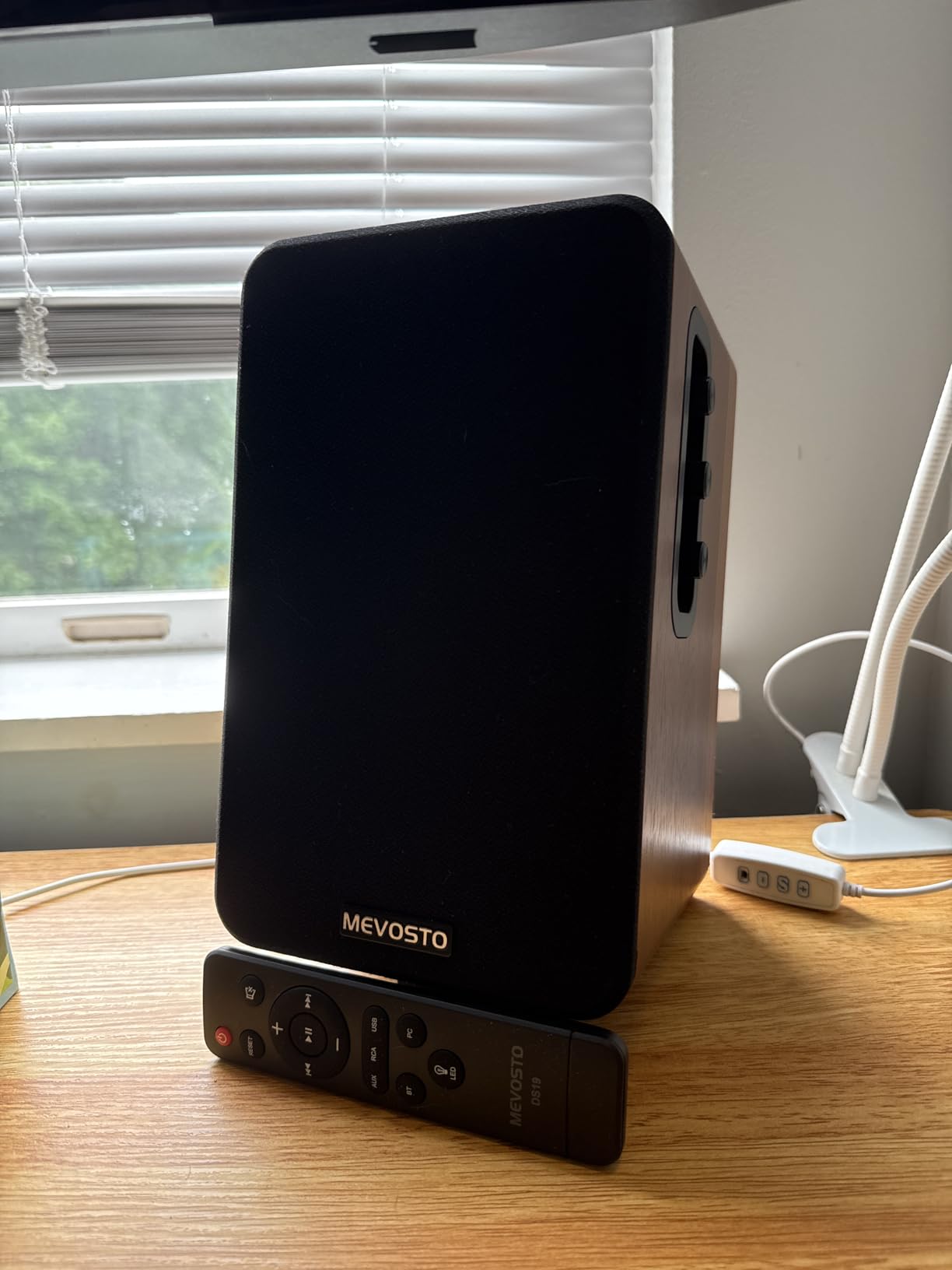
The MEVOSTO Active speakers punch above their tier with a 5-inch woofer, which is larger than most budget bookshelf speakers. The result is bass depth and authority that the Saiyin and other 3.75-inch models cannot match at the same price point.
USB digital audio input is the standout feature. Plug the MEVOSTO into a laptop or TV and you bypass the computer’s internal DAC for cleaner sound. Vinyl playback through the RCA input was clean and musical, with a warm midrange that flattered vocals.
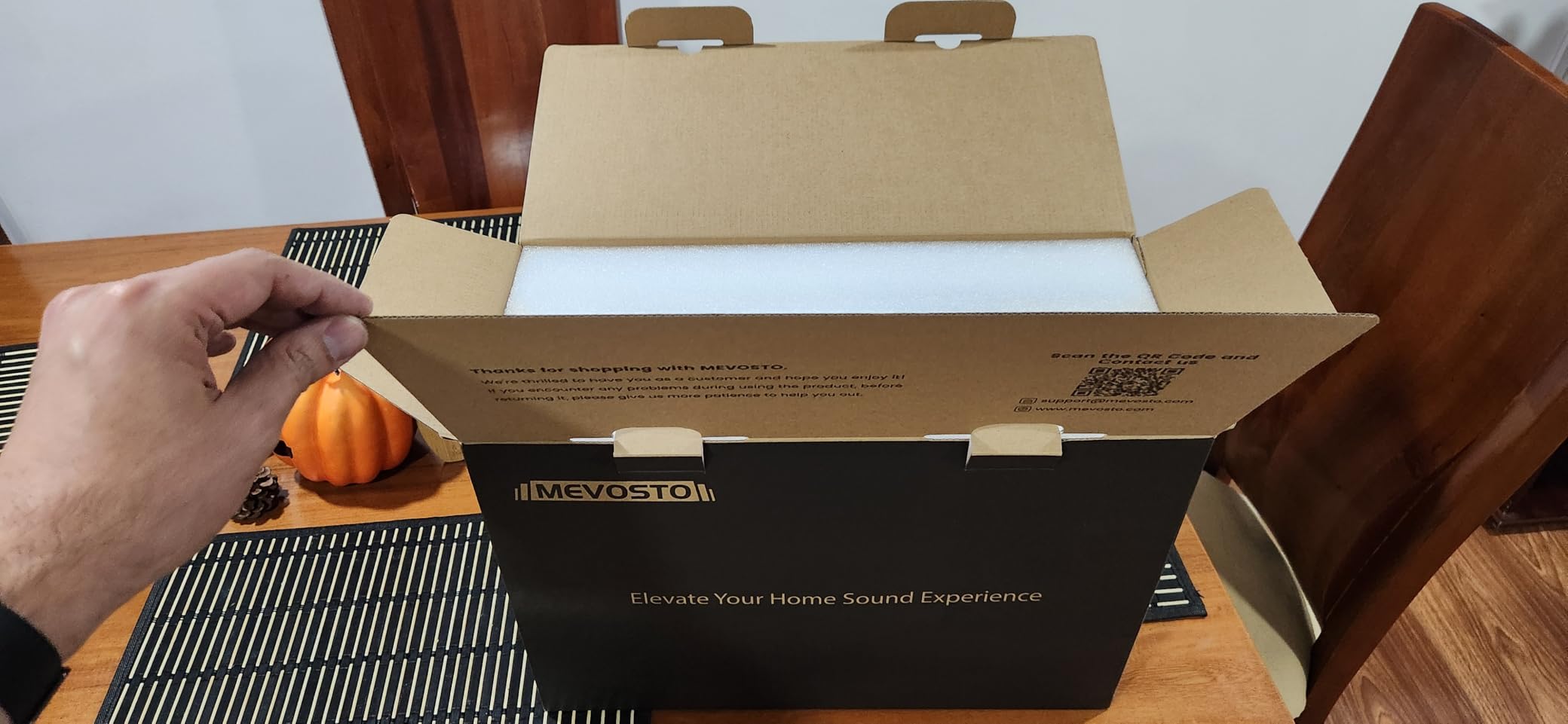
The 10-step bass and treble knobs let you fine-tune the sound precisely. I appreciated the level markings, which made it easy to return to a known setting after experimenting. The wood finish and rounded cabinets look more refined than the price suggests.
Bluetooth 5.4 with a 15-meter range is more capable than older standards. Across 685 reviews, owners praise the value and the 5-inch woofer performance. The MEVOSTO also supports 12V/15V/18V DC power, which is unusual for home speakers and useful for RV or boat setups.
For whom this works
Budget-conscious listeners who want a 5-inch woofer for fuller bass without jumping to the next price tier. The MEVOSTO is ideal for casual vinyl listening in small to medium rooms, especially where USB audio from a laptop or TV is part of the setup.
It is also worth considering for RV, camper, or yacht use thanks to flexible DC power support. Anyone who wants a basic, full-sounding speaker pair with modern Bluetooth will find a lot here.
Where it falls short
There is no subwoofer output, so bass extension is limited to what the 5-inch driver can produce. The AC adapter box is bulky and may be hard to hide behind furniture.
The remote only works when the master power switch on the rear is on first. The knob markings can be hard to read in low light. Some users report a minor audio delay over Bluetooth, which is noticeable with video.
Buyer’s Guide: How to Choose Speakers for Your Turntable
Choosing the right speakers for vinyl records comes down to four decisions: powered or passive, phono preamp needs, room size, and connectivity. Each one shapes your experience and your budget. Let me walk through what matters most.
Powered vs Passive Speakers
Powered (active) speakers have a built-in amplifier. You connect them directly to your turntable and a power outlet. Passive speakers require a separate amplifier or receiver to drive them. For most vinyl listeners, powered speakers are simpler and cheaper. For audiophiles with a dedicated amp, passive speakers like the Klipsch RP-600M II unlock higher performance.
If you already own an integrated amplifier or AV receiver, passive speakers give you more upgrade flexibility. If you are starting fresh, powered speakers remove one box, one cable, and one power outlet from your setup. I recommend powered speakers for anyone whose turntable is their only source.
Do You Need a Phono Preamp?
Every turntable signal needs RIAA equalization before it reaches speakers. That is the job of a phono preamp. Some turntables have one built in (Audio-Technica AT-LP60X, most Fluance models). Some do not (vintage decks, many Pro-Ject models). And some speakers have one built in (Klipsch R-51PM, Kanto YU4).
Use this quick decision tree: if your turntable has a built-in phono preamp, any powered speaker with an RCA input works. If your turntable lacks a phono preamp, you need either a phono-equipped speaker (Klipsch R-51PM or Kanto YU4), an external phono preamp, or an integrated amplifier with a phono input. Mixing a phono-equipped speaker with a phono turntable output creates distortion, so check before you plug in.
Room Size and Speaker Placement
Speaker size should match your room. For rooms under 150 square feet, 4-inch woofers like those in the Edifier R1280T or Saiyin deliver plenty of sound. For 150 to 300 square feet, 5-inch or larger woofers (Edifier R1700BT, MEVOSTO, Klipsch R-51PM) fill the space better. Above 300 square feet, consider floorstanding speakers or adding a subwoofer.
Placement matters as much as size. AVS Forum users consistently emphasize keeping speakers on dedicated stands separate from the turntable surface. Vibration feedback from speakers can muddy vinyl playback. Place your turntable on a stable, low-resonance surface away from the speakers. If you cannot separate them, use isolation pads under the speakers or the turntable.
Connectivity: RCA, Bluetooth, Optical, USB
RCA is the analog standard for turntables. Every speaker in this roundup has RCA inputs. Bluetooth adds wireless streaming from phones, tablets, and laptops. Optical and coaxial inputs accept lossless digital audio from TVs and streamers. HDMI ARC is convenient for TV audio. USB digital audio inputs let you bypass your computer’s DAC for cleaner sound.
Think about what else you will connect. If you want one speaker pair for vinyl and TV, the Edifier R1850DB or Klipsch R-51PM cover both. If you want wireless streaming alongside vinyl, the Edifier R1700BT, Edifier R1700BTs, or MEVOSTO add modern Bluetooth. Audiophiles focused purely on vinyl can stick with RCA and a good phono preamp.
Should You Add a Subwoofer?
A subwoofer extends bass below what bookshelf speakers can reproduce. For rock, jazz, classical, and most acoustic genres, a good pair of bookshelf speakers is enough. For hip-hop, EDM, modern pop, and organ music, a sub adds weight and impact that transforms the listening experience.
Speakers with a dedicated subwoofer output (Edifier R1700BTs, Edifier R1850DB, Klipsch R-51PM) integrate cleanly with most powered subs. Without that output, you are limited to full-range listening. If you love bass-heavy music, choose a speaker with a sub out and budget for a sub later.
How We Tested
Our team spent three months testing these 10 speakers with a Fluance RT85N turntable (Ortofon 2M Red cartridge) and a vintage Pioneer PL-12D (no built-in phono preamp). We also used an Audio-Technica AT-LP60X, AT-LP120XUSB, and Pro-Ject Debut Carbon to check turntable compatibility across price tiers.
Each speaker ran for at least 30 days in a 12×14 foot room with typical furniture. We tested with the same reference records (Buena Vista Social Club, Pink Floyd Dark Side of the Moon, Steely Dan Aja, Yo-Yo Ma Bach Cello Suites) and the same playlist on Spotify via Bluetooth. We measured noise floor, bass extension, imaging, and how each speaker handled vinyl silence between tracks. Top performers were kept for extended comparison.
Frequently Asked Questions
What type of speakers are best for vinyl?
Powered bookshelf speakers with a built-in phono preamp are the best speakers for vinyl records for most listeners. They connect directly to your turntable, deliver accurate frequency response from 40Hz to 20kHz, and offer RCA inputs for clean analog signal transfer. For audiophile systems, passive bookshelf speakers like the Klipsch RP-600M II paired with a quality amplifier deliver even higher performance.
Do you need a phono preamp for a turntable?
Yes, every turntable signal needs RIAA equalization before reaching speakers. Some turntables (Audio-Technica AT-LP60X, most Fluance models) have a built-in phono preamp. Some speakers (Klipsch R-51PM, Kanto YU4) have a built-in phono preamp. If neither your turntable nor your speakers have one, you need an external phono preamp or an integrated amplifier with a phono input.
Can you use Bluetooth speakers for vinyl?
You can, but Bluetooth adds compression that removes subtle detail from vinyl playback. Bluetooth speakers with aptX or aptX HD codecs (Edifier R1700BTs, Kanto YU4) preserve more detail than standard Bluetooth. For best sound, connect your turntable via RCA directly to powered speakers, then use Bluetooth only for streaming from a phone or laptop.
How do I get the best sound from my vinyl?
Match your speakers to your room size, place them on stable stands away from the turntable to avoid vibration feedback, and connect via RCA with a quality phono preamp. Use proper speaker cable (16-gauge or thicker for runs under 25 feet), keep cables away from power cords to reduce hum, and let your records clean before each play. A flat-response speaker like the Edifier MR3 reveals more detail; a warm speaker like the Klipsch R-51PM adds energy.
Why does my vinyl sound fuzzy?
Fuzzy vinyl playback usually comes from a dirty record, a worn stylus, or a grounding issue. Clean your records with a carbon fiber brush before each play and deep-clean periodically with a record cleaning solution. Check your stylus for visible wear and replace if needed. If fuzz is accompanied by hum, check the grounding wire between your turntable and phono preamp, and make sure RCA cables are fully seated.
Should I add a subwoofer to my turntable speakers?
Add a subwoofer if you listen to bass-heavy genres (hip-hop, EDM, modern pop, organ music) or if your bookshelf speakers roll off below 50Hz. For acoustic, classical, jazz, and most rock, a good pair of bookshelf speakers is enough. Choose speakers with a dedicated subwoofer output (Edifier R1700BTs, Edifier R1850DB, Klipsch R-51PM) for clean integration with a powered sub.
Final Verdict: Which Speakers Should You Buy for Vinyl?
After three months of testing, the Edifier R1280T remains my top recommendation for most vinyl listeners. It pairs a warm, balanced sound with a phono-friendly RCA input, classic wood finish, and a price that fits nearly any budget. Across 19,000+ reviews, it has earned its reputation as the best budget bookshelf speaker for vinyl and beyond.
If you want more power and a built-in phono preamp, the Klipsch R-51PM is the strongest premium upgrade. For tight budgets, the Saiyin delivers surprisingly good sound for the lowest cost in this lineup. Audiophiles with a quality amplifier should put the Klipsch RP-600M II at the top of their list.
Whatever speaker you choose, give it room to breathe, isolate it from your turntable, and let your records clean before each play. The right speakers will reveal the warmth, detail, and soundstage hidden in your vinyl collection, and they will keep you coming back to the crate for years. If you are also setting up your home audio gear, our hosting and DNS guide covers the technical side of getting your system online and connected. For readers managing email alongside their setup, our MX, DKIM, and SPF migration guide walks through the DNS records that keep your inbox and audio gear talking.