
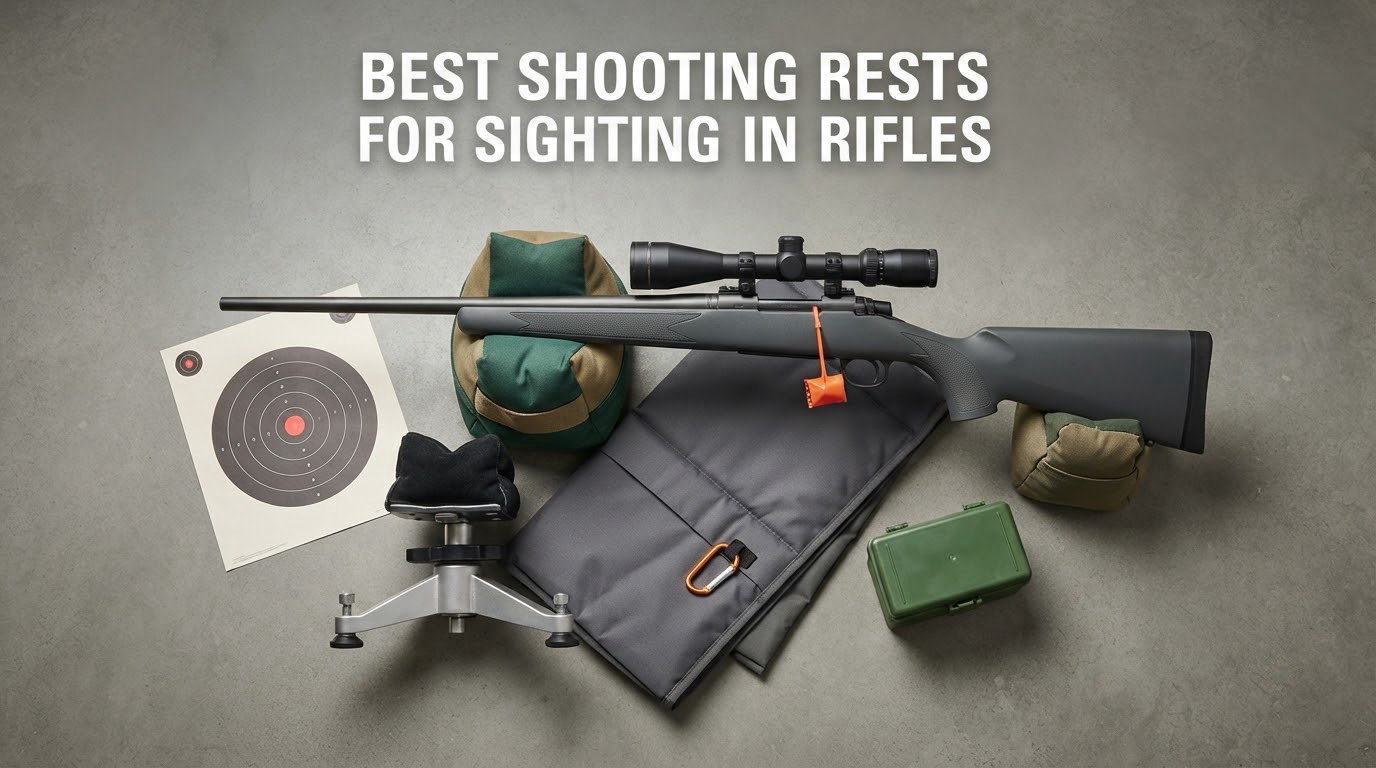
A shooting rest for sighting in rifles is any support that holds a rifle perfectly still while you adjust an optic, so that group size reflects the rifle and the ammunition instead of your pulse. The best ones clamp or cradle the forend, support the rear end with a bag or a padded cradle, and let you move the muzzle up and down in small, repeatable increments.
That matters more than most shooters expect. On a shooting rest your breathing, trigger control and muscle fatigue drop out of the equation, which means a three-shot group is a real measurement of your rifle’s capability. Shooters on gun forums describe the same symptom over and over: a rifle that will not hold a zero, groups that go vertical instead of tight, and a scope that gets blamed for what is actually a support problem. A front rest with no rear support is the classic culprit, because the rifle rocks on a single point and the muzzle wanders up and down with every shot.
We spent 2026 season working through the resting options that show up in this category, comparing lead sleds, bag combos, portable bench rests and shooting tables on the only criteria that matter for a zeroing session: how still the rifle sits, how finely you can move it, whether rear support is included, and whether you can still carry the thing to the field. The seven rests below are the ones we would hand to a shooter who has to put a scope on a rifle and make it stay.
It is worth reading our guide to diagnosing a broken system on a reliable site as a parallel exercise, because a support that flexes is a support that lies. Press down hard on any table before you trust it. A bench or shooting table that oil-cans under your hand will do the same thing under recoil, and you will spend an afternoon chasing a group that was never the ammunition’s fault.
Table of Contents
Top 3 Best Shooting Rests for Sighting In Rifles (October 2026)

Caldwell Deadshot Front and Rear Combo
- Pre-filled corn cob media
- Water resistant 600 denier polyester
- Quick-connect for transport
- 10.5 pound total weight

Caldwell Lead Sled Adjustable
- Up to 95 percent recoil reduction
- Fingertip elevation front and rear
- Integrated weight tray
- Alloy steel tripod

Caldwell Lead Sled Solo
- Single-knob pivoting elevation
- 25 pound capacity tray
- Non-marring rubberized support
- Offset frame fits most rifles
All Seven Shooting Rests Compared in 2026
Every rest below supports the rear end of the rifle properly. That is the filter we used, and it is the filter you should use, because a single-point front support cannot hold a repeatable zero no matter how good the adjustment knobs are.
| Product | Specifications | Action |
|---|---|---|
| Caldwell Deadshot Front and Rear Combo |
|
Check Latest Price |
| Caldwell Lead Sled Adjustable |
|
Check Latest Price |
| Caldwell Lead Sled Solo |
|
Check Latest Price |
 Vanguard Porta Aim Gun Rest Vanguard Porta Aim Gun Rest |
|
Check Latest Price |
 MTM PST-11 Predator Shooting Table MTM PST-11 Predator Shooting Table |
|
Check Latest Price |
 MTM HLST High-Low Shooting Table MTM HLST High-Low Shooting Table |
|
Check Latest Price |
 Hyskore 30088 Gas Dampened DLX Hyskore 30088 Gas Dampened DLX |
|
Check Latest Price |
1. Caldwell Deadshot Combo: Best Overall for Sighting In
Caldwell DeadShot Bag Combo Filled, Front and Rear Shooting Rest
Front and rear bags
Pre-filled corn cob media
10.5 pounds total
600 denier polyester
Limited lifetime warranty
Pros
- Arrives filled and ready to use
- No assembly and no filling step
- Works on almost any flat surface
- Quick-connect system joins the bags for carrying
- Highest review count and rating in this group
Cons
- Soft bags need a rigid surface underneath
- Offers no elevation adjustment of its own
- Cheek weld consistency depends on how the rear bag is positioned
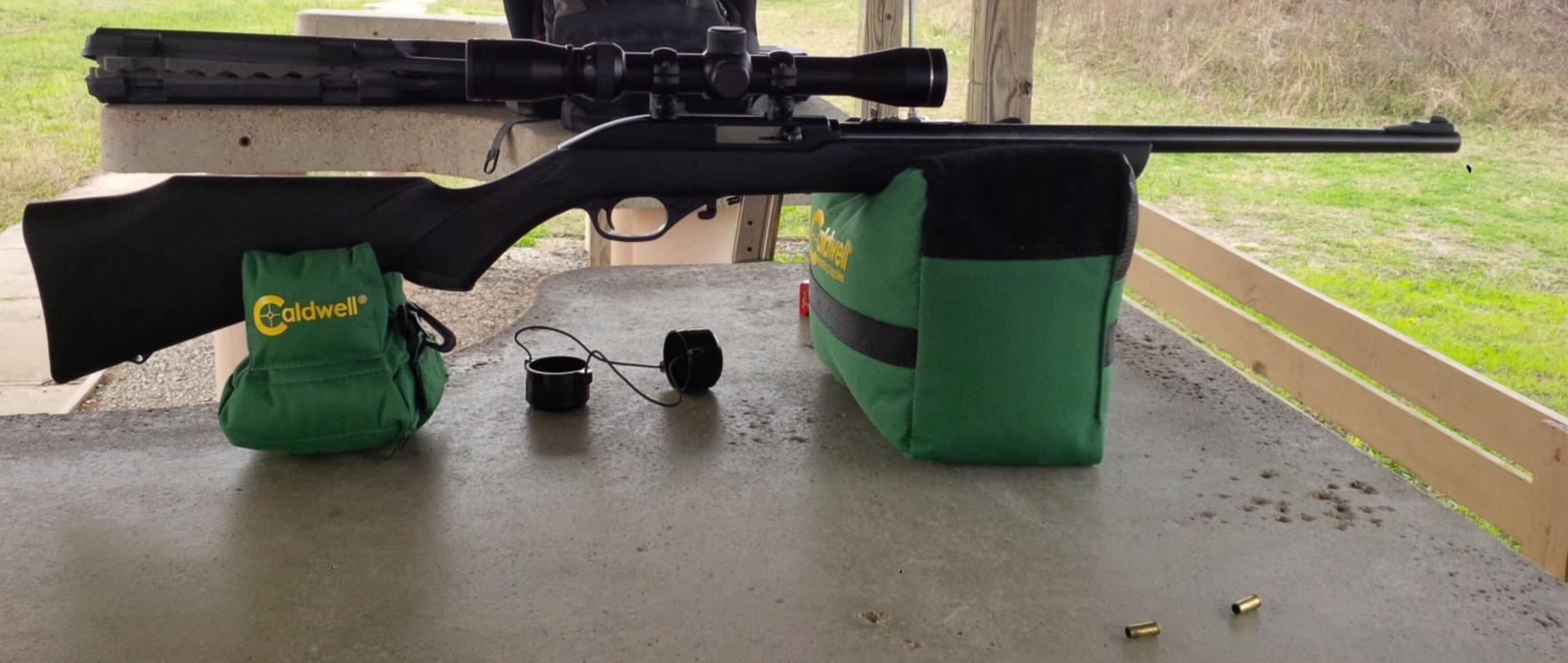
The Deadshot combo is the first thing I hand a shooter who has never zeroed a rifle on a rest. It is two bags, a front and a rear, and the front one weighs 7 pounds 10 ounces while the whole set totals 10.5 pounds. You set the front bag on a table, rest the forend in the depression, set the rear bag down and let the rifle settle into it, and you are zeroing.
What sells it for me is that there is no filling step. Both bags ship loaded with corn cob media, so the thing works the minute it comes out of the packaging. The 600 denier polyester shell is water resistant, which matters if your zeroing bench is a picnic table at the edge of a field.
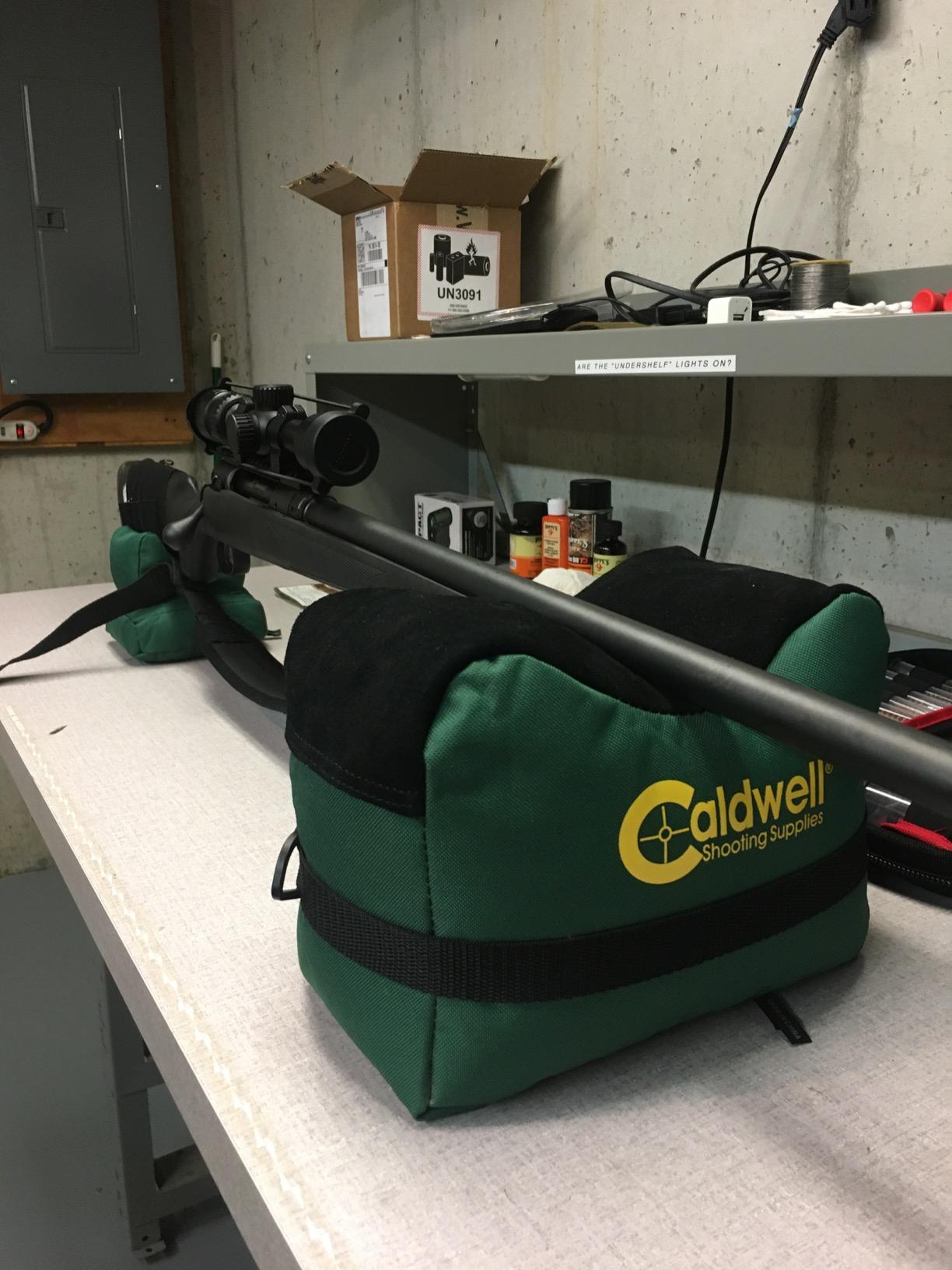
The corn cob fill is firmer than loose polymer pellets and it molds around the shape of the forend instead of letting the rifle slide. That molding behavior is what gives you a repeatable cheek weld, and a repeatable weld is what stops the shooter from becoming the variable. Adjust the bag, not the scope, if your face keeps sliding off the comb.
One thing people miss is that the quick-connect system exists. The two bags snap together for transport, so you are not carrying a front bag in one hand and a rear bag in the other across a parking lot. Ten and a half pounds is still a carry, but it is one carry.
Why the bag combo is our top pick for a first zero
Bags do one thing extremely well: they absorb the energy of a shot and put the rifle back in the same place. There is no spring to compress, no knob to back off, nothing to reset between shots. For a first zero, with a rifle you are still learning, that simplicity is worth more than any adjustment feature.
The limitation is honest and worth stating. The bags carry no elevation or windage adjustment of their own, so all movement comes from the turret clicks or a rear riser under the bag. If your optic has a tall ring mount and a high scope, you will be raising the rear bag to bring the bore line down to a comfortable cheek weld.
When bags are the wrong answer
They are the wrong answer when the shooting surface is soft or flexing. A bag on a folding table or a truck tailgate takes the set of the surface underneath it, and the groups will show it. Shooters on the gun forums make the same point: test the table, then test it again with the rifle loaded.
They are also the wrong answer for a magnum. Ten and a half pounds of bag is a lot of mass, but it is still a soft support, and a hard-recoiling round will move the rifle more between shots than a steel or aluminum rest with a weight tray. If your target is .300 Win Mag or bigger, read the lead sled sections next.
2. Caldwell Lead Sled Adjustable: Best for Heavy Recoil
Caldwell Lead Sled Adjustable Shooting Rest
Alloy steel tripod
15 pounds
Up to 95 percent recoil reduction
Weight tray holds two 25 pound barbell plates
Limited lifetime warranty
Pros
- Fingertip elevation control at both front and rear
- Weight tray absorbs recoil energy from added mass
- Non-marring skeletonized front rest protects the finish
- Covers .30 caliber and magnum class recoil
Cons
- Weight tray needs user-supplied ballast to perform
- Heaviest rest in this group at 15 pounds
- Bulkier to carry than any bag setup
This is the one I reach for when the rifle in front of me is heavy, the caliber is pushing back, and the zero has to survive a whole afternoon of groups. The frame is alloy steel on a tripod, the whole thing weighs 15 pounds, and the manufacturer rates its shock-eliminating design at up to 95 percent recoil reduction.
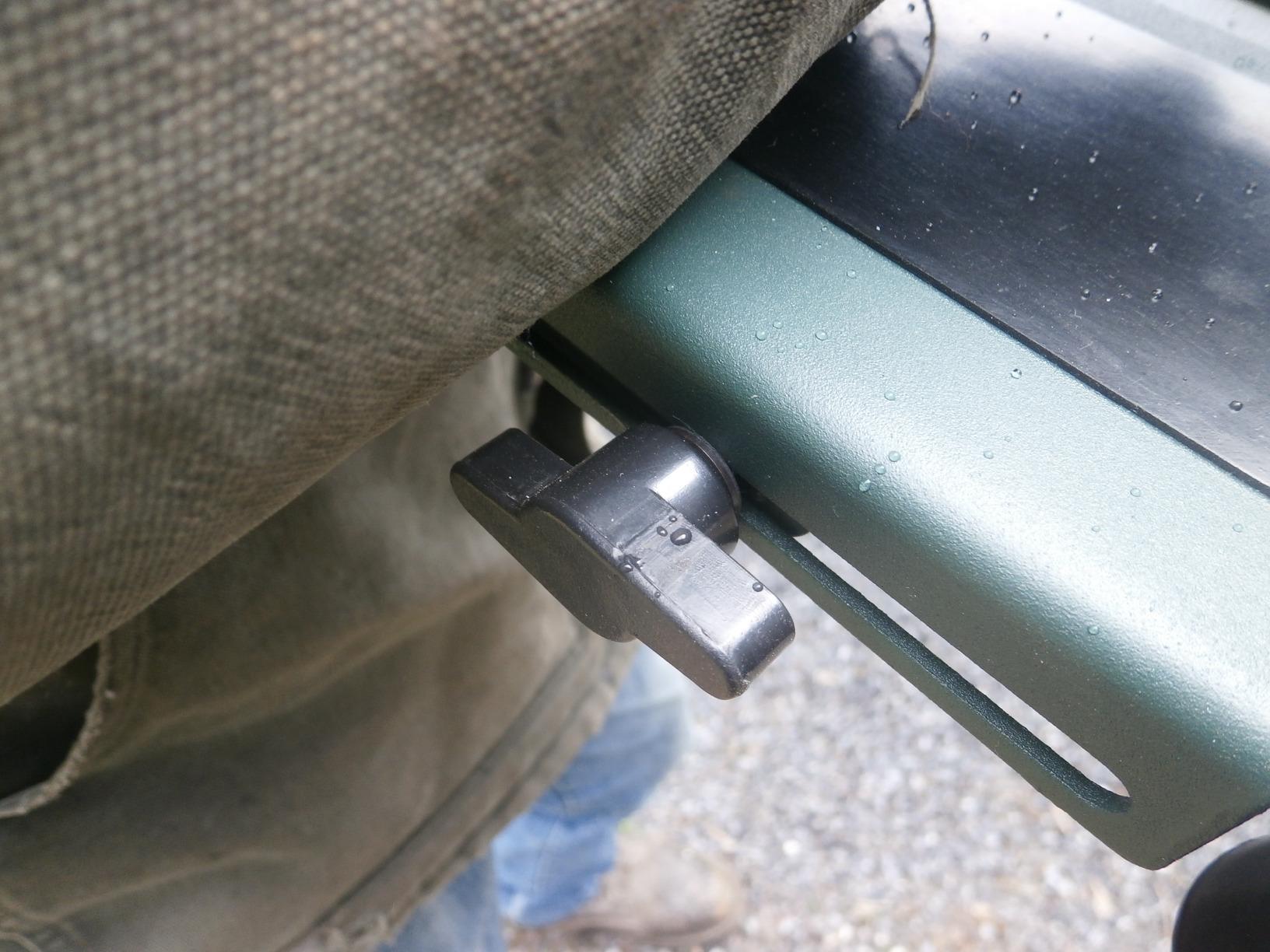
The part that changes the zeroing experience is the adjustment. There are fingertip micro-precision elevation controls at both the front rest and the rear cradle, so you can bring the muzzle up or down without leaving the rifle. When the group is four inches high and you need two minutes of change, you make the change in seconds and fire the confirmation group immediately.
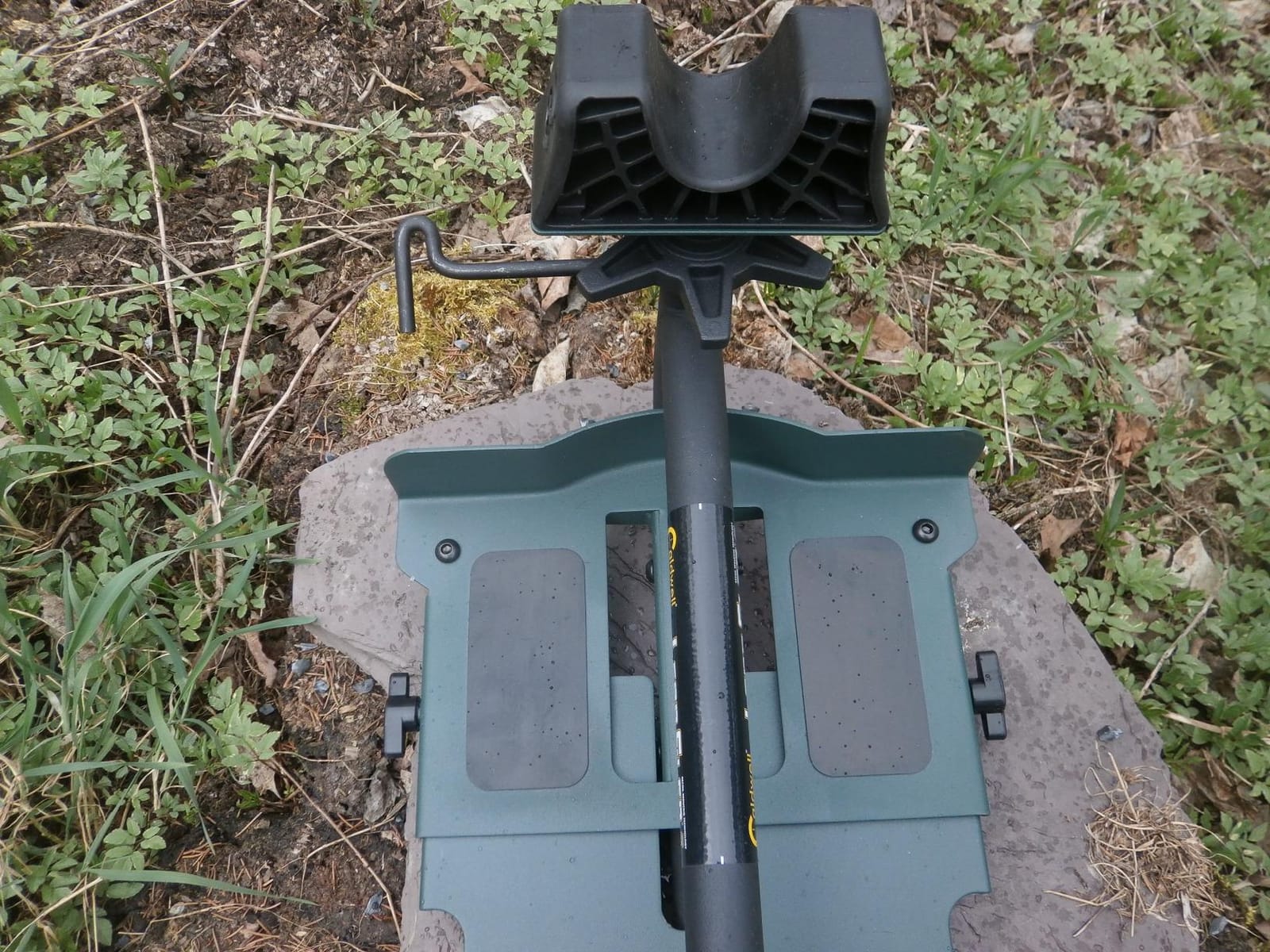
The skeletonized front rest and the rear cradle are non-marring, which is the detail people notice after the first session. A rest that leaves a rubbed patch on a composite or synthetic finish is a rest you stop wanting to use. Put a cloth under the cradle if your finish is soft, but most owners report no marking at all.
Under the platform there is an integrated weight tray. It accepts two 25 pound barbell plates, sandbags, or up to 100 pounds of lead shot, and it is adjustable so it clears a detachable magazine or a lever action. Here is the honest part: the tray ships empty. Owners who zero the biggest magnums consistently report that the sled only reaches its full damping potential once you add ballast.
How it handles recoil in practice
Mass is the whole argument. Fifteen pounds of steel does not move when a rifle fires into its cradle, and a tray loaded with 50 pounds of lead does not move at all. After each shot the rifle returns to the same point, which is precisely what a zeroing session requires. Recoil that changes the muzzle angle between shots means every group is measured from a different starting line.
There is a real trade here. Outdoor Life has argued that lead sleds are a poor choice for sighting in a rifle you will hunt with, because a sled lengthens the length of pull compared with a shouldered shot and that changes where the bullet lands relative to where you aim. We agree with the caution and still pick this sled, because the question you are asking at the bench is a different one.
Who should pass on a 15 pound sled
Anyone whose shooting happens on foot, in a vehicle without a rack, or in a spot where 15 pounds and a tripod frame are a burden rather than a tool. Shooters on the hunting forums are consistent about the weight ceiling, and anything past the high single digits stops being something people carry to a field position.
It is also overkill for a .22 rimfire or a light varmint rifle, and for a beginner who is still learning to hold a cheek weld. A sled removes shooter movement, which is the point, but it also means the fundamentals do not develop. Use it to establish the zero, then confirm from a field position.
3. Caldwell Lead Sled Solo: Best Value Lead Sled
Caldwell Lead Sled Solo, Offset Frame Shooting Rest
Alloy steel tripod
1 kg
25 pound tray capacity
Single-knob pivoting elevation
Offset frame with forend strap
Pros
- Single-knob elevation is fast and easy to learn
- Built-in tray for a 25 pound bag of lead shot
- Offset frame fits virtually any rifle or shotgun
- Rubber-tipped feet allow fine height tuning
Cons
- Rear cradle is not adjustable for thin or narrow stocks
- Supplied forend strap can be too short for tall profiles
- Tray ballast is sold separately
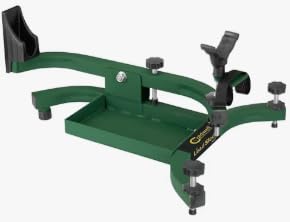
The Solo is the smaller sibling of the sled above, and for a lot of zeroing work it is the smarter buy. It is a single-rifle alloy steel platform with an offset frame, a padded rear cradle and a built-in tray that takes a 25 pound bag of lead shot. Owners routinely report zeroing a scope in a few rounds on it.
Adjustment is a single knob with a pivoting motion, and the legs have rubber-tipped feet that you can unscrew to raise or lower them individually. That sounds like a small feature. It is actually how you fine-tune the muzzle angle on a bench that is not perfectly flat, which is most benches, including a folding table at a commercial range.
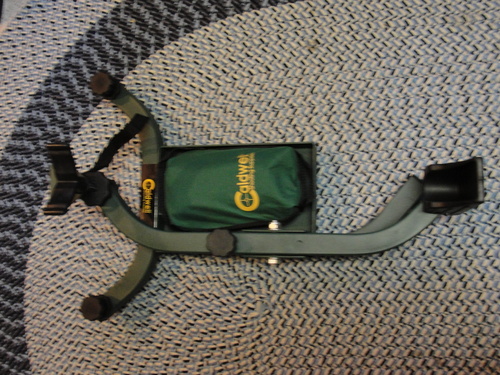
The offset frame is the design choice that makes this rest work across a gun closet. Combined with the integrated forend strap, it holds a rifle or a shotgun of almost any shape, and the non-marring rubberized front support plus a rubber-boot covered steel brace keep the finish clean. The recoil mitigation is rated at up to 95 percent, the same family of design as the larger sled.
Two complaints come up repeatedly, and both have the same workaround. The rear cradle is not adjustable for stocks of different thickness, so a narrow or thin rear end can have a little side-to-side play until you wedge a piece of rubber padding into it. And the forend strap is short enough that very tall profiles, some air rifles among them, are not fully captured.
Where the Solo beats the bigger sled
It is lighter, simpler and cheaper, and for cartridges in the .270 to .30-06 range the difference in zeroing accuracy between the two is far smaller than the difference in how much you will enjoy carrying one. Most shooters zero on the Solo and keep the heavier sled for a big magnum session.
If you load it with a 25 pound bag of lead shot, the recoil behavior improves a lot and the platform stops wandering under a hard-recoiling round. The tray is designed for exactly that weight. Owners who added their own sandbags to the Solo report the same result: the group gets tighter and the rifle returns to the same spot shot after shot.
Limitations to plan around before you buy
The fixed height is the one that surprises people. It is not high enough for a 30-round magazine, so a magazine-fed rifle needs a lower magazine or an external support to hang under the front. Measure your setup before you commit, especially if your primary gun is an AR-style rifle with a full magazine.
The other limitation is the missing ballast. The tray is a feature and a blank space at the same time out of the box. Budget for a bag of lead shot, and the sled starts behaving like the machine it is designed to be.
4. Vanguard Porta Aim: Best Lightweight Pack-In Rest
Vanguard Porta Aim Gun Rest. Compact and Portable Bench Rest. Quick Height Adjustment. Anti-Vibration Bag Rotates 360 Degrees , Black
1.7 pounds aluminum frame
8.8 to 12.6 inch height range
Anti-vibration bag swivels 360 degrees
Single-handed height ring
2 year warranty
Pros
- Lightest rest here at 1.7 pounds
- Fits in a small vehicle without thinking about it
- Anti-vibration bag swivels for a natural shoulder position
- Height changes with one hand while the other holds the rifle
Cons
- Narrow height range limits some stocks and positions
- Less rigid than a steel rest under heavy recoil
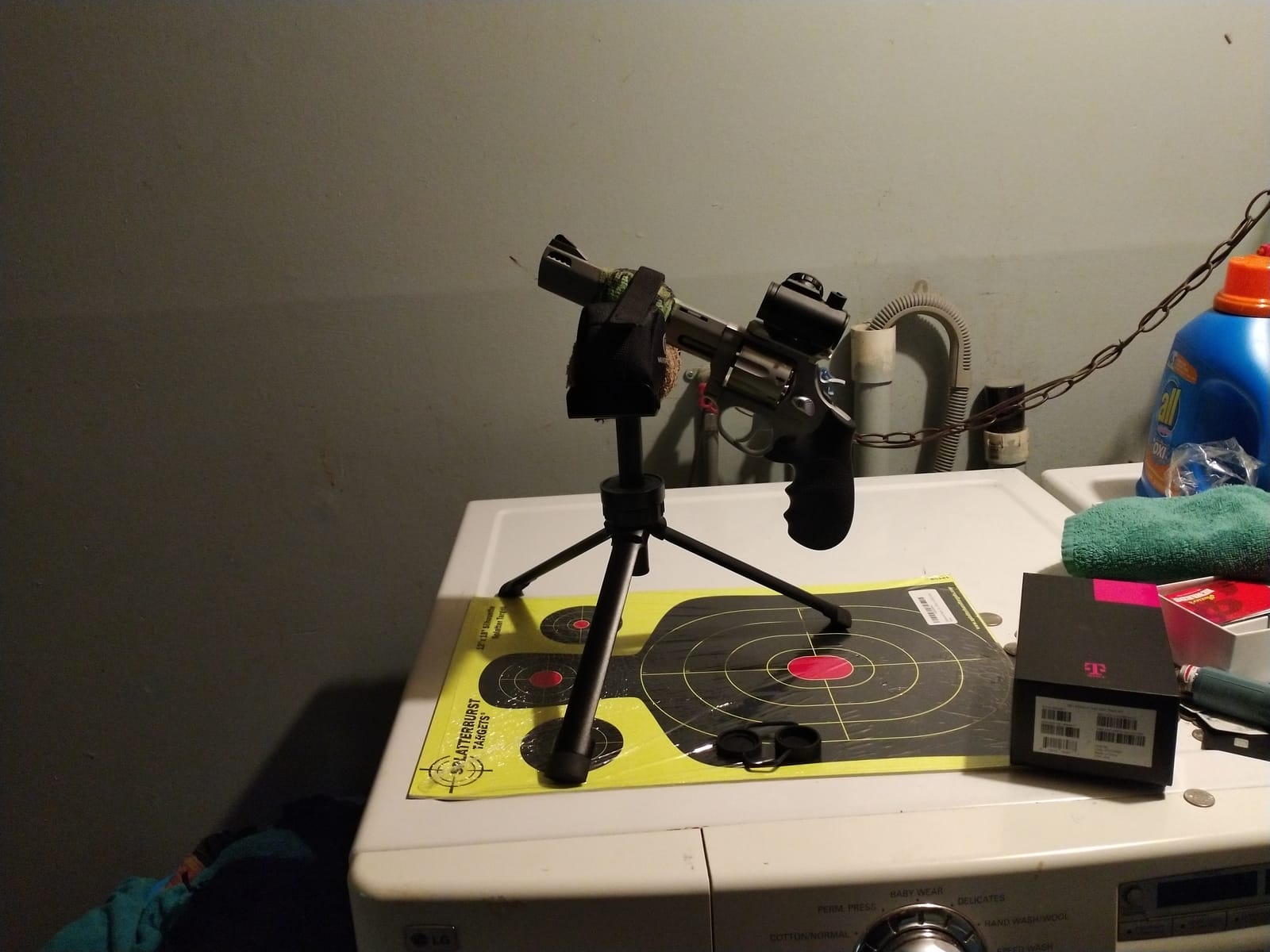
The Porta Aim answers a question most roundups ignore: what do you carry when you want to confirm a zero away from a bench? It weighs 1.7 pounds, it is aluminum, and it collapses to something you can put in a day pack without rearranging your kit.
The patented single-handed height adjustment ring is the reason this thing feels quick. You turn the ring with one hand and the center column moves between 8.8 and 12.6 inches, which covers a lot of standard rifle positions in that span. You can dial the height while your support hand stays on the rifle, so you are not breaking your cheek weld every time you change elevation.
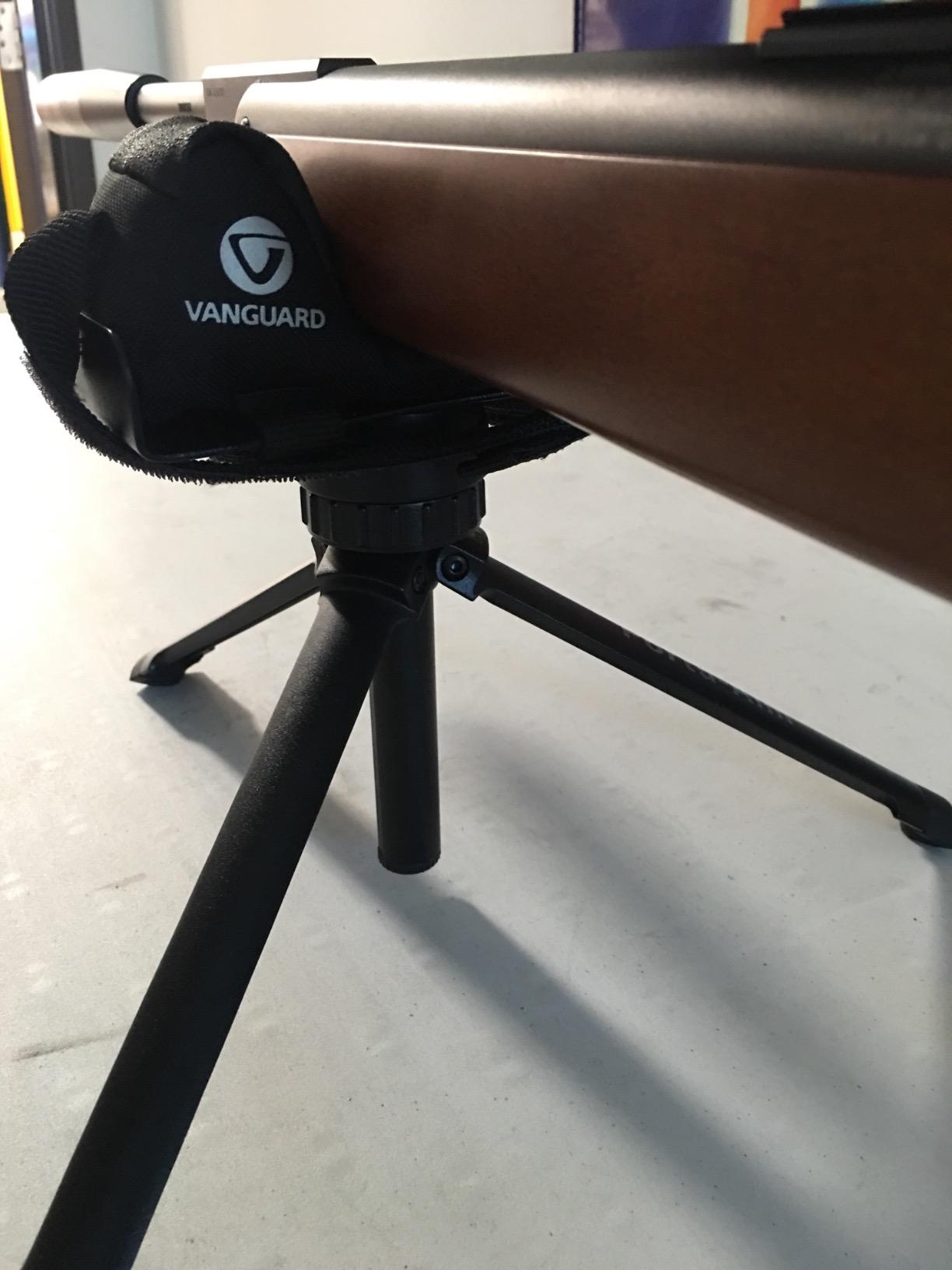
The anti-vibration bag swivels 360 degrees, and that detail matters more than it sounds. Most compact rests force you into one shoulder position and make the other side of your neck pay for it. A swiveling bag lets you rotate into a comfortable, repeatable weld instead of fighting the frame.
Owners consistently praise the setup speed. You set it on a tailgate, a truck bed rail, a picnic table or flat ground, drop the bag, and the rifle is supported. The 2 year warranty is shorter than the limited lifetime coverage on the Caldwell entries, which is worth noting if you plan to keep it for a decade.
When 1.7 pounds is the right amount of rest
Field confirmation is the ideal job. You have a zero from the bench, you drive to a field position, and you want to check it without dragging fifteen pounds of steel out of the vehicle. At 1.7 pounds you can walk a hundred yards to a treeline with the rest in one hand, which is the difference between actually confirming a zero and skipping the step.
It is also a strong choice for small calibers, air guns, and crossbow or shotgun work where the recoil energy is modest and mass buys you very little. The light frame is easy to set up precisely because there is so little of it, and the swiveling bag does more for repeatability than the weight does.
Where the light frame gives out
The 8.8 to 12.6 inch range is narrow. Tall stocks, adjustable chassis in the up position, and certain prone positions will not fit inside it without improvising, and that is the practical limit of this design. Check your rifle’s height with the optic mounted before you rely on it.
More important for this article, the aluminum frame is noticeably less rigid than a steel or heavy molded rest under a hard-recoiling round. For sighting in a .300-class rifle, choose a lead sled instead. For a rimfire, a varmint .223, or confirming a hunting zero on game cartridges, the Porta Aim is the right tool.
5. MTM PST-11 Predator Table: Best Fixed-Height Range Base
MTM PST-11 Predator Shooting Table, Portable Benchrest, Durable Molded Design, Shooting Platform, Target Shooting & Range Accessory, Green
Molded polypropylene frame
8 pounds
35 by 28 by 30 inches
28 by 35 inch shooting surface
5 year warranty
Pros
- Rigid molded one-piece construction with living hinges
- Comfortable wedge top suits either shoulder
- Weighs 8 pounds and folds flat for transport
- Five year warranty with ten years on living-hinged parts
Cons
- Fixed 30 inch height cannot be raised or lowered
- Needs a separate front rest or bag to support a rifle
The PST-11 is not a rest by itself. It is the surface that makes a rest work, and if you do not own a proper bench, this is the cheapest way to get a rigid one. The frame is molded polypropylene with living hinges, built as a single piece, and it does not flex under a rifle the way a folding table does.
Weighing 8 pounds, it folds slim enough to fit in a small sedan or behind a pickup seat, which is a bigger deal than it sounds. Rigid, portable, and weatherproof are usually a trade-off, and the molded construction is where this table wins all three. The 5 year warranty with 10 years on the living-hinged parts is the strongest coverage in this group.
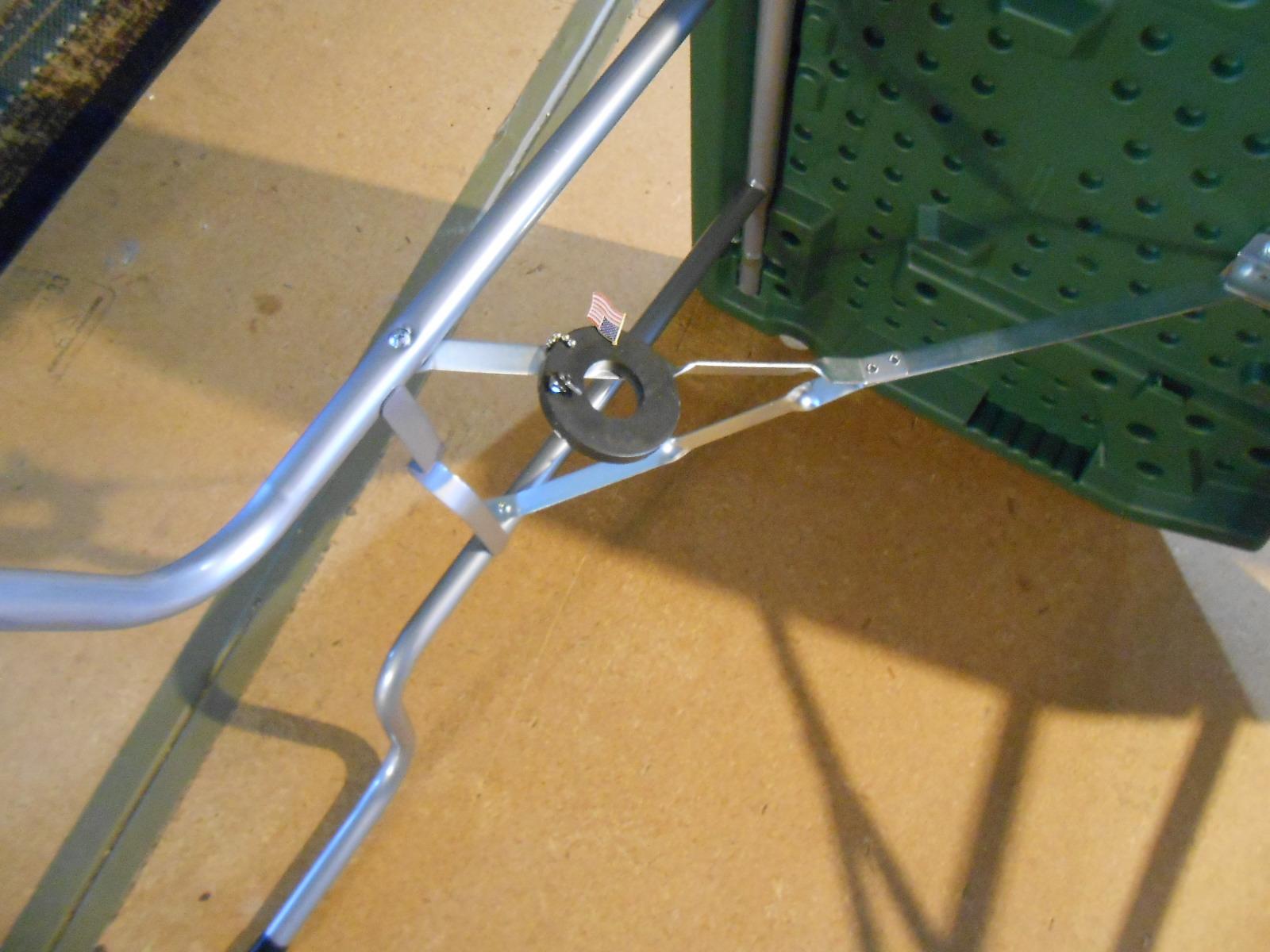
The wedge-shaped top is angled rather than flat, and it works for shooters sitting on either side of it. You get a comfortable position without stacking a folded jacket under your elbow to make the rifle sit level, and level matters, because a rifle held at an angle is a rifle whose cheek weld is inconsistent.
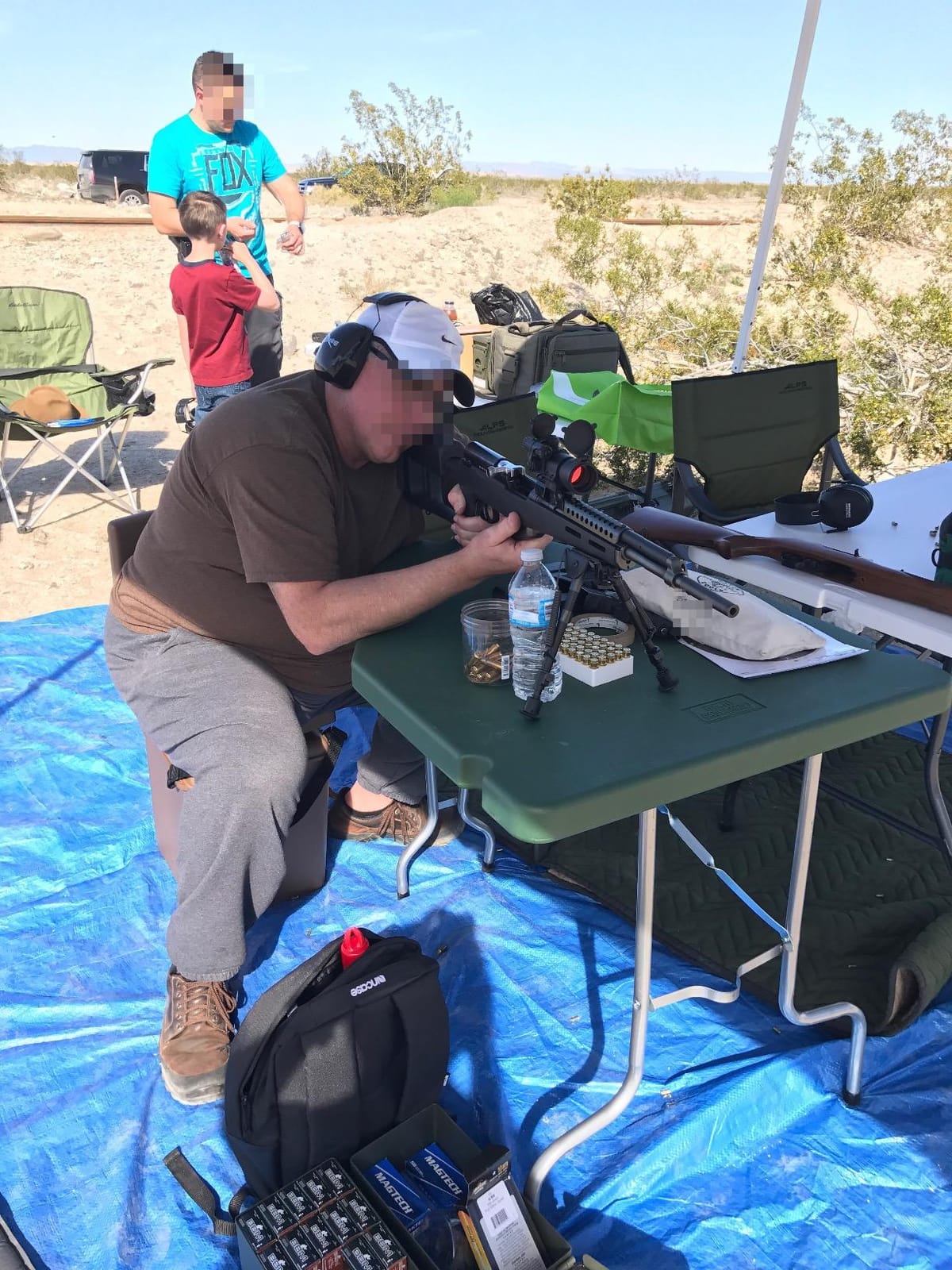
The shooting surface is 28 by 35 inches, and the full footprint is 35 inches long by 28 inches wide by 30 inches tall. That is enough real estate for a Deadshot bag combo, a lead sled with its weight tray, and your optics case without anything hanging over the edge.
Why a rigid table changes your group
Surface flex is the quiet variable in a zeroing session. Press down on the front edge of a lightweight table and watch the muzzle rise. Fire a shot, and recoil pushes the rifle down into that same flex before the barrel recovers. The result is a group that is a fraction larger than the rifle is capable of, and it moves differently on every shot.
A molded table like this one does not do that. Reviewers use it as the base for bags and rests for exactly that reason, and it is the piece that turns a stack of soft gear into a repeatable setup. If you zero at a commercial range, bring something like this rather than using the shooting bench, whose condition you do not control.
What you need to add before you can zero on it
A front rest or bag, and that is not a small point. The table is a surface, not a support. Pair it with the Deadshot combo for a complete bench solution, or set a lead sled on top if your caliber is heavy and you have already got the rest.
The fixed 30 inch height is the limitation to plan around. It works well for seated positions, which is how most sighting-in is done, but it will not match a shooter who needs the surface higher, and it will not convert to prone. If your range partners shoot at different heights, look at the adjustable table below instead.
6. MTM HLST High-Low Table: Best Adjustable-Height Shooting Table
MTM HLST High-Low Shooting Table, USA Made, Dark Earth
Aluminum tripod with molded top
17.5 pounds
Height adjusts 18 to 55 inches
17 by 33 inch top
Dark earth finish
Pros
- Wide 18 to 55 inch range suits shooters of different heights
- Aluminum tripod holds position on uneven ground
- Large top fits bags rests and an optics case
- Built for long-range and varmint work
Cons
- Heaviest item in this group at 17.5 pounds
- Bulkier to load and unload than a folding molded table
- Smaller reviewer base than the Caldwell entries
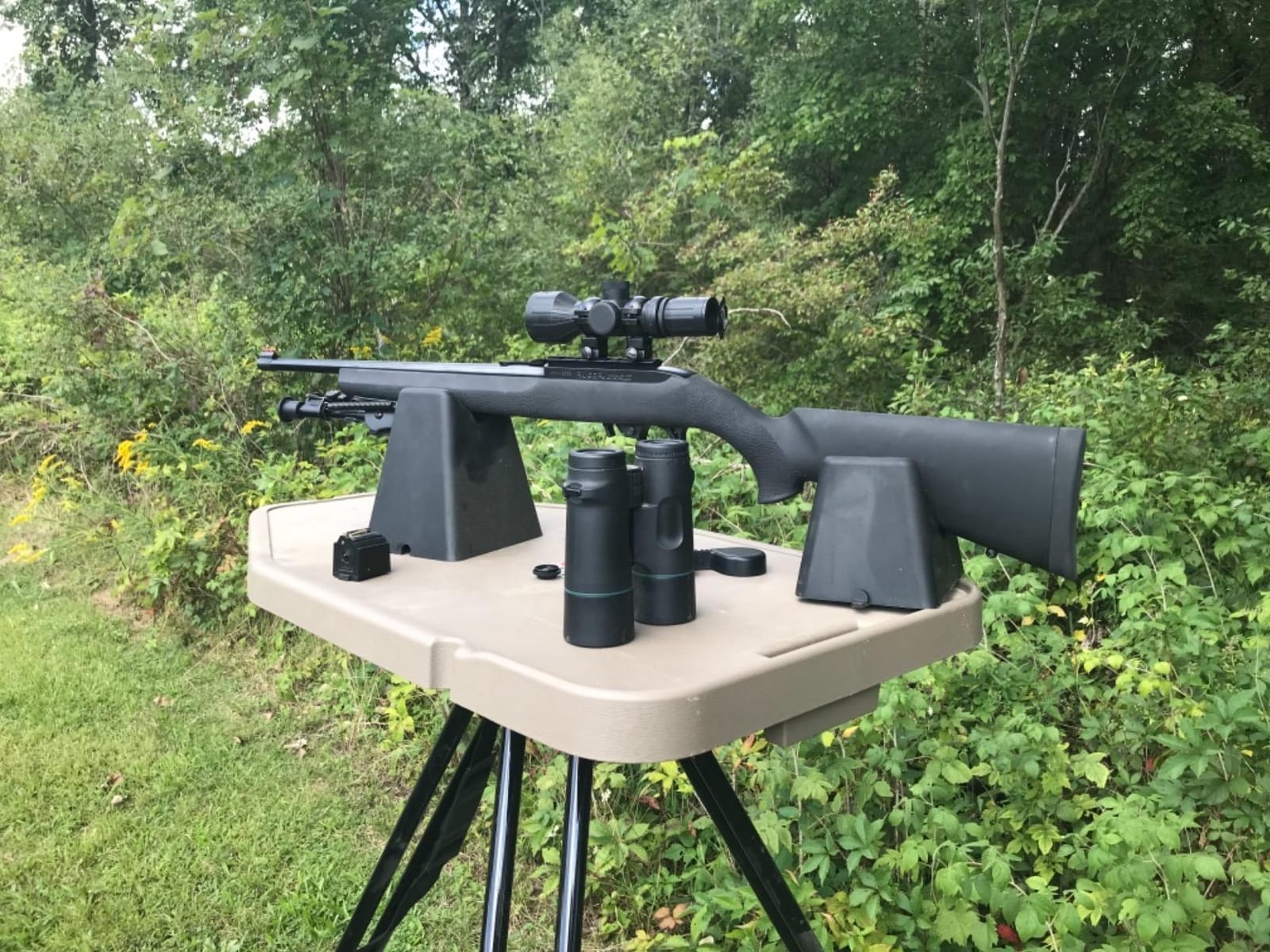
The HLST solves the problem the fixed-height molded table cannot: two people of different sizes, or one person who changes position between sitting and standing. The tripod adjusts from 18 to 55 inches off the ground, and the top is a 17 by 33 inch molded plastic surface on an aluminum frame.
Uneven ground is the design target. A molded table with straight legs wants a flat spot; this one has a wide aluminum tripod and a top that was shaped for a ranch or a hillside. If your zeroing spot is a slope, a gravel road shoulder, or the edge of a field, that is the feature that decides it.
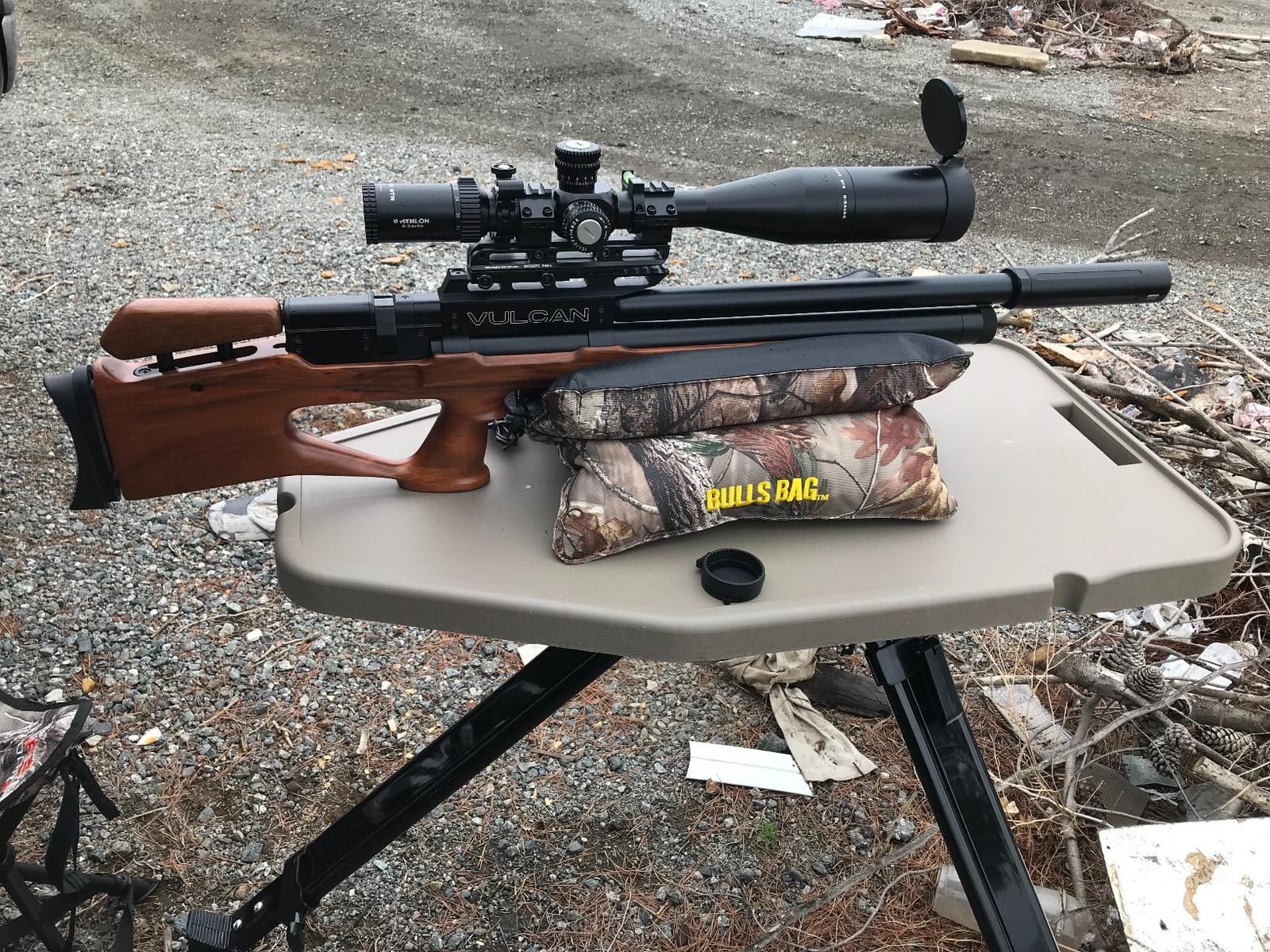
At 17.5 pounds it is the heaviest product on this list, and that is a fair warning. It is a two-handed carry and a plan-your-loading carry. In exchange you get a surface that can go from seated to standing to bench height without a second piece of equipment.
The rating sits at 4.5 across 305 reviews, a smaller pool than the Caldwell entries but steady approval. The feedback centers on the adjustable tripod and the durable molded top, which is what a shooting table is supposed to be judged on. The one-star share is slightly larger than the other products here, and it tracks back to weight and bulk rather than function.
When adjustable height earns its weight
Two shooters zeroing together is the clearest case. One works seated at 18 inches off the ground, the next stands at 55, and neither has to move the rifle to a different table or a different position. Repeatable support means the same setup for both of you, which makes comparisons of groups meaningful.
The second case is long-range and varmint work where you are dialing a magnified optic and you want the target line at eye level without stacking anything. Raising the surface changes how you sight through the glass, and it changes it in a way you cannot replicate later in a blind. A stable position at zero is a stable position at distance.
The weight problem and who it is for
Seventeen and a half pounds is a deliberate trade for a range base, not a pack-in rest. If you shoot from a truck, it is a tailgate item. If you shoot from a vehicle with limited room or you have to carry it more than a few hundred yards, the Vanguard Porta Aim is the better answer.
Like the fixed-height table, this one needs a front rest or bag before it can zero anything. It is a surface, and pairing it with the Deadshot combo gives you a full sighting-in station that two people of different heights can share.
7. Hyskore 30088 DLX: Best for Magnum Precision Work
Hyskore #30088 Gas Dampened DLX Precision Shooting Rest
Welded steel tube frame
Covers .270 Win to .375 H&H
Remote trigger release included
Straps foam pads and v-notch
24 by 16 by 12 inches
Pros
- Remote trigger release avoids touching the rest before a shot
- Handles the full range from .270 Win to .375 H&H
- Adjustable straps and pads fit many firearm types
- Comes as a complete kit with v-notch and bench grip arm
Cons
- Welded steel frame and straps take longer to set up than bags or tripods
- Bulkier than a portable rest and less suited to carrying
- Smaller reviewer base than the Caldwell entries
The DLX is the most specialized rest in this group, and it is built around a single idea: nothing should touch the rifle except the rifle. The remote trigger release lets you fire without reaching for the rest, so there is no hand movement and no settling of the frame between your trigger pull and the shot.
It is rated from .270 Win up through .375 H&H, which covers the magnum class that makes sighting in miserable. The frame is welded steel tube, and the kit includes adjustable straps, foam pads, a v-notch and a bench grip arm, so you are not assembling a support system from separate pieces.
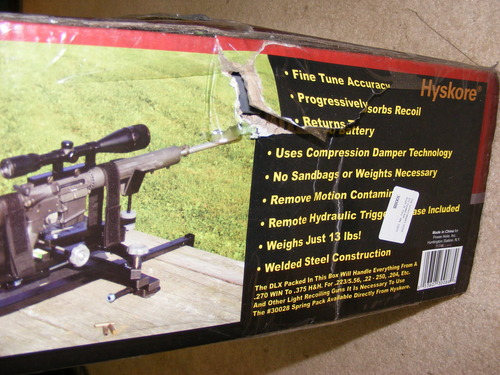
The remote release is the feature that separates this from every other rest here. On a bag or a sled you can hear the frame and the fabric respond to each shot. On the DLX, the shooter is not connected to the rest at the moment of firing, which removes a small source of variation that is hard to see and easy to feel over a long session.
Reviewers single out the adjustable straps and foam pads as the reason it handles so many firearm types. A v-notch, foam and straps let you tailor the contact points to a heavy rifle with a thick chassis or a lighter one, and the non-marring pads keep the finish intact while doing it.
When the remote trigger release earns its place
It matters most when the caliber is large and the session is long. A heavy round moves a support more than most shooters expect, and if your hand is resting on the rest or the frame, that movement feeds back into the next shot. The DLX removes the feedback path entirely.
It is also the right tool for a shooter who is chasing a small group and needs every variable nailed down. When you are working at the limit of a rifle’s precision, precision work equipment is not a luxury. The measured group is the only honest score, and this rest is built to make that score mean something.
Where the specialty build gets in the way
Set-up time. Straps, pads, a v-notch and a bench grip arm are more to arrange than a bag or a tripod, and that matters when you want a fast confirmation shot in the field. This is a bench rest for a garage or a truck-bed session, not a rest you deploy in ninety seconds.
It is also the least reviewed product here, with 261 reviews and a 4.4 average, the lowest rating in the group. That is not a warning, it is a smaller sample. But it is a reason to read recent owner comments before you commit to a specialized design when a more conventional sled or bag combo would serve most zeroing work.
How to Choose a Shooting Rest for Zeroing a Rifle
Work through these six criteria in order and the right rest usually picks itself. The order matters, because the first two decide the category and the rest only refine it.
1. Start with rear support. Confirm that the rest holds the rear end of the rifle, whether that is a filled bag, a padded cradle or a strap. If the only thing touching the rifle is the forend, walk away. Shooters in the gun forums are unanimous on this point, and the symptom of getting it wrong is a vertical group that looks like a scope problem.
2. Match the rest to the recoil. A rimfire or a light varmint caliber will not tell you much about mass. A .300 Win Mag, a .338 Lapua or a .375 will. Heavier cartridges need steel, a weight tray, or a heavily filled bag, and light aluminum frames lose to them in repeatability even when the first shot looks fine.
3. Check the adjustment resolution. What you need is the ability to move the muzzle in small, repeatable steps. Fingertip elevation controls at the front and rear, or a single knob with a pivoting motion, let you get close to the target without overshooting and firing another group to see where you landed.
4. Test the surface, not just the rest. Press down on the table with both hands before you load a rifle. If it flexes, moves on its legs, or creaks, it is going to do the same under recoil. This is the single cheapest diagnostic in shooting, and it eliminates the most common cause of a group that will not shrink.
5. Set the bags properly. Fill firm enough to hold a shape and soft enough that the rifle does not launch on recoil. Bags that are packed too hard hop the rifle and produce flyers the shooter misreads as bad ammunition. If your bag is rock solid under your hand before the shot, it is too full.
6. Decide how you will carry it. Anything under about nine pounds goes in a vehicle without a plan. Above that, ask whether you will use it in a truck bed, on a bench at home, or somewhere you have to walk in. Hunters who confirm a zero in a field position want the Porta Aim weight, not the sled weight.
Two more things deserve a mention. A non-marring support matters more than most buyers think, because a rest that scuffs your finish is a rest you stop using. And a retention strap or yoke is worth having on a sling-ready rest, so a heavy rifle cannot roll out of position while you are dialing windage.
How to Sight In a Rifle on a Rest, Step by Step
This is the protocol we use, and it is the part that turns a rest into a zero rather than a comfortable afternoon. The aim is a repeatable number you can trust from a field position later.
Step 1: Pick your zero distance based on the optic. A red dot or a 1x setup goes to 50 yards, because that is the point of a red dot and a 50 yard zero lands near 200 for most rifles. A magnified scope usually goes to 100 yards. Some precision shooters set a 200 yard zero, and that buys less elevation drop inside the scope’s range, but it costs more adjustment up front.
Step 2: Bore-confirm before you fire. Several shooters on the forums recommend a laser bore sight or a solid rest on the muzzle to bring the barrel line close to the target first. This saves rounds. You are not trying to zero with the bore sight, you are trying to skip the first three or four groups.
Step 3: Support the rear end first. Set the rear bag, lay the rifle in, then set the front support. If you reverse the order, the rifle will sit at a different angle than the one you are used to, and your cheek weld will change when the bags settle.
Step 4: Settle the rifle and do not touch it. Every bag and every rest has a position it wants to return to. Make the adjustment, let the rifle settle, get your cheek on the comb, and then stop moving. The smallest breath and the smallest lean are still movement.
Step 5: Fire three-shot groups. Three shots tell you the truth about a rest-based zero at a fraction of the ammunition. After every group, write down the adjustment you made. If you are changing the same direction twice, the rest is fine and your procedure is not.
Step 6: Do not chase the bullet. A first-round flyer is the most common reason a good zero gets ruined. If the group is consistent and one round landed off, leave the scope alone and shoot again. Once you have a repeatable group, change the scope by that group’s center.
Step 7: Note cold bore or hot bore. The first shot off a cold barrel lands differently from the fifth. Decide which one you will hunt with and zero that way. If your first group is a flyer, do not assume the rest moved, check whether the barrel was cold.
Step 8: Confirm from a field position. Set up in the position you will actually shoot from, supported the way you will support yourself, and confirm the zero. A bench zero on a 15 pound sled is a bench zero. Forum advice is consistent that a rest-based number does not automatically transfer, and the last step is the one that proves it.
Budget and DIY Sighting-In Setups
Plenty of zeroing does not need a dedicated rest purchase. Shooters on the budget end of the forums report shooting successfully to 300 yards with a pair of foam bags and an inexpensive adjustable tripod, so if you are starting out, here are the tiers.
Under 30 dollars. Two foam or unfilled polymer bags on a solid table. Sock the rear bag with sand so it holds a shape, and lay the front bag flat. This works, and the limits are honest: no adjustment, and the result depends entirely on the table being rigid.
Thirty to 75 dollars. A pair of pre-filled bags with a quick-connect system, which is the Deadshot approach. You get rear support, consistent fill and a bag that molds to the forend, and it is the single best value in this whole category for a first zero.
Seventy-five to 150 dollars. A lead sled with a weight tray, plus a bag of lead shot for the tray. This is the point where the rest stops being a bench accessory and starts absorbing recoil properly. Add the ballast the day you get it, not the week after.
One hundred fifty and up. A rigid shooting table, a precision vise-style rest with a remote trigger release, or a premium carbon tripod. Buy this tier for a specific reason, usually a heavy caliber or long-range glass, not because a bigger number sounds better.
One DIY rule matters more than any of the tiers: never use a front rest without rear support, and never use a surface that flexes. A folded hoodie under the rear end of a rifle and a cinder block under the forend is a legitimate rig on uneven ground. A card table with a bag on it is not.
Frequently Asked Questions
What is the best shooting rest for zeroing a rifle?
The Caldwell Deadshot front and rear bag combo is the best all-around choice for zeroing a rifle, because it supports both ends of the gun, arrives filled, and needs no adjustment hardware to work. A lead sled is the better answer when you are zeroing a magnum or any heavy rifle, because added mass returns the rifle to the same position after every shot. Choose based on caliber first and portability second.
Do I need a rear bag to sight in a rifle?
Yes. A front rest with no rear support is a teeter-totter, and the rifle rocks between shots. The muzzle angle changes with every round, groups go vertical instead of tight, and shooters usually blame the scope for what is a support problem. Any rest you use for zeroing must hold the rear end of the rifle with a filled bag, a padded cradle, or straps.
What is the best distance to sight in a rifle?
Zero a red dot or 1x optic at 50 yards, and zero a magnified scope at 100 yards. Some precision shooters use a 200 yard zero because it puts less of the trajectory inside the scope’s usable range, but it requires more adjustment up front. Whichever distance you choose, confirm the zero later from a field position using the support you will actually hunt with.
What is the best shooting rest for an AR-15?
For an AR-15, a lead sled or a bag combo on a rigid surface is the best choice, and you must check clearance for a 30-round magazine before you buy. The Caldwell Deadshot combo works well for a red dot at 50 yards because the rear bag height is easy to adjust for a tall scope mount. A lead sled sits the rifle too low for a full magazine unless you use a shorter magazine or an external support.
Do you chase the bullet when sighting in a rifle?
No. Shoot three-shot groups, and only change the optic when you have a repeatable group. A first-round flyer is common, especially from a cold barrel, and adjusting for it usually ruins a good zero. Write down the adjustment after every group, and if you are moving the scope in the same direction twice, the problem is your procedure rather than the rest.
Are shooting bags good for zeroing a rifle?
Shooting bags are excellent for zeroing, and they are the best value option for a first session. Filled bags absorb recoil energy, mold to the forend, and return the rifle to the same position shot after shot. The two requirements are a firm but not hard fill, and a rigid surface underneath. On a folding table or a truck tailgate that flexes, bags will not save your groups.
Final Thoughts
After working through all seven, the Caldwell Deadshot front and rear combo is the shooting rest for sighting in rifles that we would buy first, because it does the one job that matters, holding both ends of the rifle still, with no assembly and no filling step.
Move up to the Caldwell Lead Sled Adjustable when the caliber is heavy enough that recoil moves the rifle between shots, and add ballast to the weight tray the day it arrives. Carry the Vanguard Porta Aim for field confirmations, and use one of the MTM tables if you have nowhere rigid to shoot. Whatever you choose, support the rear end, press down on the surface, and confirm the zero from a hunting position before you rely on it. That last habit is what turns a number on a target into a rifle that hits where you aim in 2026.