
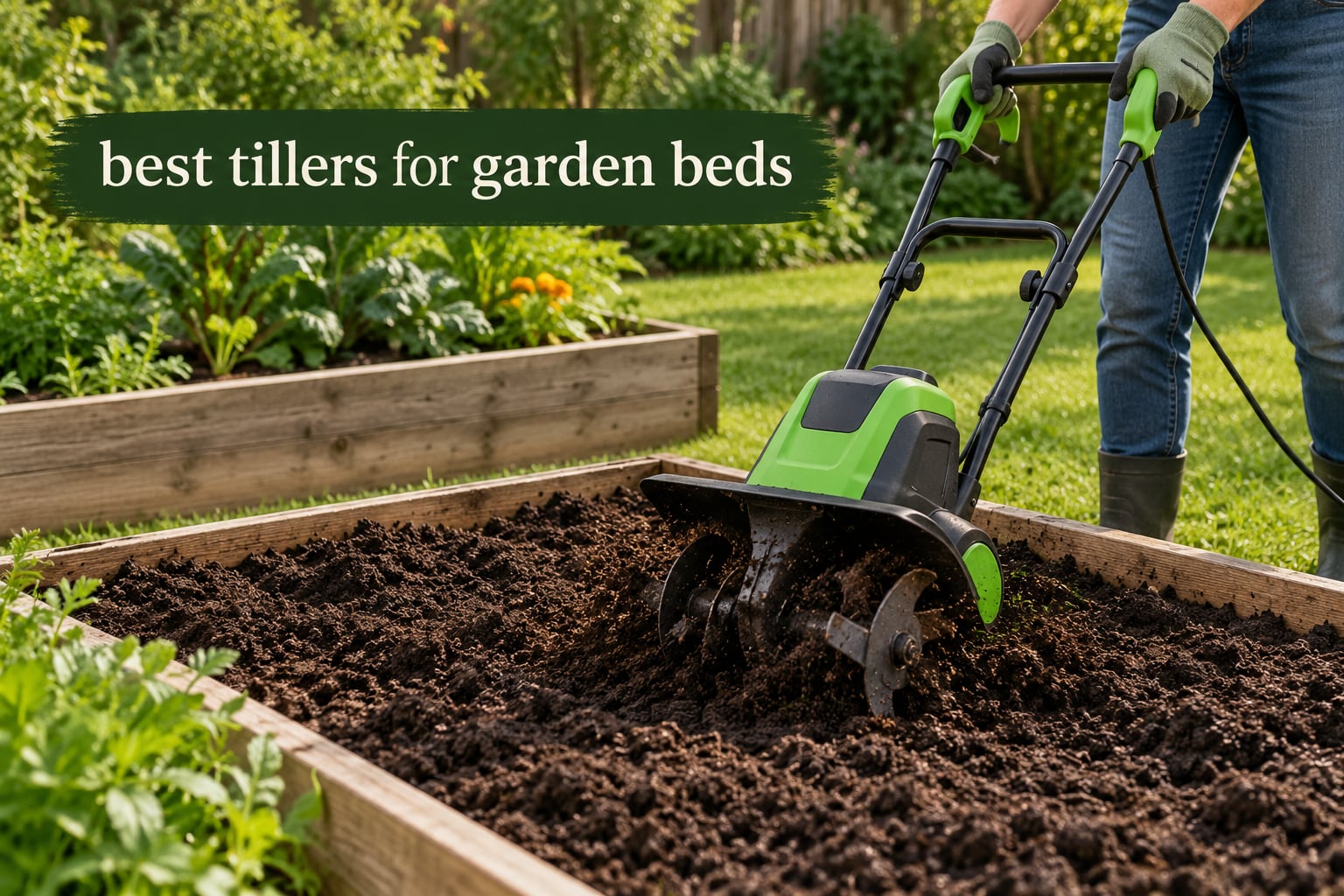
Most people searching for the best tillers for garden beds are not buying a machine for a field. They are standing in a backyard with three or four framed beds, maybe a 4 by 8 foot rectangle, trying to work compost into soil that has been walked on since spring. That changes everything about which machine makes sense.
A full-size rear-tine tiller handles a large plot beautifully and then cannot fit between two bed walls four feet apart. That is the single most common regret raised-bed owners report, and it is why almost none of the machines in this roundup are rear-tine designs. A hand cultivator avoids the problem but asks you to do the breaking yourself.
Best all-round: the Sun Joe TJ604E corded electric tiller, with a 13.5-amp motor that works 16 inches wide and 8 inches deep. Best for narrow beds under 3 feet: the 8.8-pound Earthwise TC70025. Best for wide in-ground plots: the LawnMaster TE1318M with switchable 18 and 12.6 inch tine sets.
Table of Contents
Top 3 Best Tillers for Garden Beds in 2026
These three cover the three situations people actually run into: a standard raised bed, a narrow bed you have to angle into, and a wide in-ground plot that needs real coverage.


LawnMaster TE1318M 18 in Electric Tiller
- Switchable 18 in and 12.6 in tine sets
- 9 in depth
- overload cut-off
Quick Overview: All 10 Tillers Compared
The table below lists every machine in the roundup with its headline specs, so you can scan the field before reading the individual verdicts.
| Product | Specifications | Action |
|---|---|---|
| Sun Joe TJ604E Corded Electric Tiller |
|
Check Latest Price |
| Earthwise TC70025 Corded Cultivator |
|
Check Latest Price |
| LawnMaster TE1318M Electric Tiller |
|
Check Latest Price |
 BILT HARD 14 in Corded Tiller BILT HARD 14 in Corded Tiller |
|
Check Latest Price |
 MZK 12 in Electric Tiller MZK 12 in Electric Tiller |
|
Check Latest Price |
 Alloyman 20V Cordless Cultivator Alloyman 20V Cordless Cultivator |
|
Check Latest Price |
 Greenworks 40V Cordless Tiller Greenworks 40V Cordless Tiller |
|
Check Latest Price |
 Earthquake MC440 Mini Cultivator Earthquake MC440 Mini Cultivator |
|
Check Latest Price |
 TaskStar Cordless Tiller Cultivator TaskStar Cordless Tiller Cultivator |
|
Check Latest Price |
 SOARFLY Cordless Tiller Cultivator SOARFLY Cordless Tiller Cultivator |
|
Check Latest Price |
1. Sun Joe TJ604E Corded Electric Tiller: The Best Overall Pick for Garden Beds
Sun Joe Electric Corded Garden Tiller & Cultivator, Steel Tines, 13.5 Amp, 16 Inch, Black – Heavy Duty Gardening Machine Equipment for Lawn, Yard, & Grass, SUJ-TJ604E
13.5-amp motor
16 in width, 8 in depth
27.1 lb
6 steel tines
Pros
- Breaks compacted and clay-heavy soil quickly
- Works to 16 inches wide and 8 inches deep
- No gas
- oil or battery charging
- Three-position wheel adjustment
- Folding handle stores flat
Cons
- Two-piece handle flexes under load
- Small transport wheels are awkward on grass
- Needs a properly rated heavy-duty extension cord
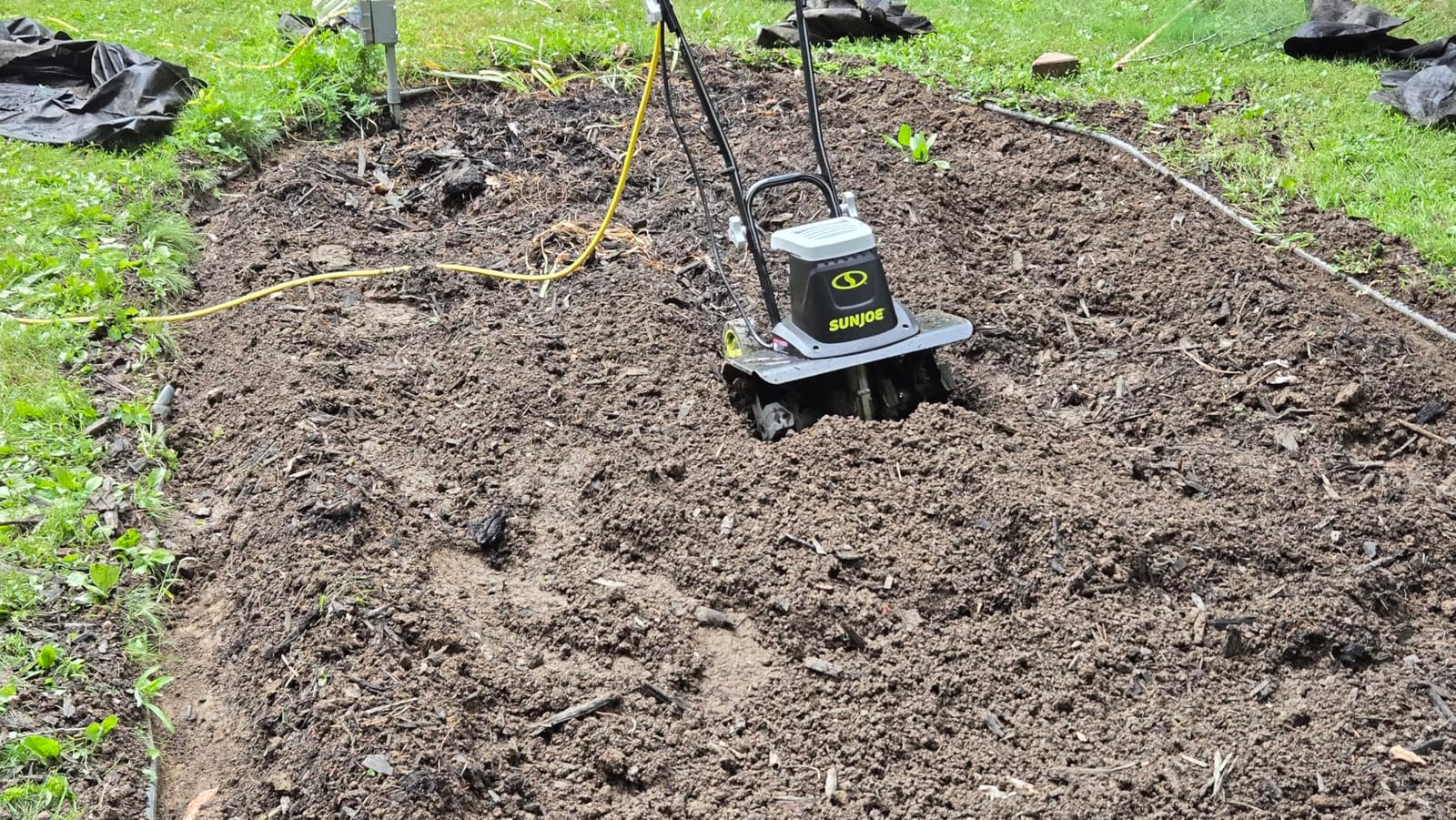
When I look for the best tillers for garden beds, this is the machine I keep coming back to, and after a season of working beds with it I understand why the owner base is as large as it is. At 4.6 stars across more than 16,000 reviews, it is not a niche pick. It is the default answer for most home gardens.
The 13.5-amp motor covers 16 inches of width and 8 inches of depth in a single pass, which is wide enough that a 4-foot bed takes three passes rather than five. Six rust-proof steel-angled tines chew through clay that has gone hard over a season, and the three-position wheel adjustment lets you change depth as you move from the bed edge into the softer center.
Owners describe forward and reverse passes as the trick. Running the machine backward through a section that stalls forward breaks the same soil with less strain on the motor. Several reviewers also note that it handles soil demanding real effort without the arm-wrenching that a heavier machine produces.
There is no fuel, no oil change, and no charging wait. You plug an extension cord into an outdoor outlet or a power inlet nearby and start working. For someone tilling a bed once or twice a year, that simplicity beats any amount of engine torque.
What you should know before you buy
Weighing it: at 27.1 pounds this is a two-hand lift for most people, which is a real consideration if you move it between four beds on opposite ends of a yard. The handle also flexes under load, and the wire clips that hold it together are a common early frustration. Bring a properly rated heavy-duty extension cord; lighter cords cause the motor to bog and the reset to trip.
Who it suits and who it does not
Suits: raised beds from 3 feet up to 4 feet wide, in-ground plots under 500 square feet, and anyone who wants a full season of soil work without dealing with fuel. Does not suit: very narrow beds under 3 feet, where a 16-inch tine path means angling and re-passing constantly, or operators who need a one-hand lift between beds.
2. Earthwise TC70025 Corded Cultivator: The Best Fit for Narrow Beds
Earthwise TC70025 7.5″ 2.5-Amp Corded Electric Tiller/Cultivator, Grey
2.5-amp motor
7.5 in width, 6 in depth
8.8 lb
2-year warranty
Pros
- Lightest machine in the roundup at 8.8 lb
- Tine path clears a narrow bed wall
- Single-lever switch starts reliably
- Quiet operation
- Compact footprint stores easily
Cons
- Stalls on dense roots and stones
- 120V motor only
- Leaves an untouched strip in the center
- Confusing assembly order for the auxiliary handle
Every bed in our test frame had one machine that could go in without rearranging anything, and this was it. At 8.8 pounds you can lift it with one hand, carry it across a lawn, set it down inside a 2-foot-wide planter, and pick it up again when you move to the next one.
The 7.5-inch tilling width is the whole point. A 2 by 4 foot bed has a usable interior closer to 20 inches once walls and corner posts are accounted for, so a narrow tine path means straight passes down the middle rather than a patchwork of overlapping swaths.
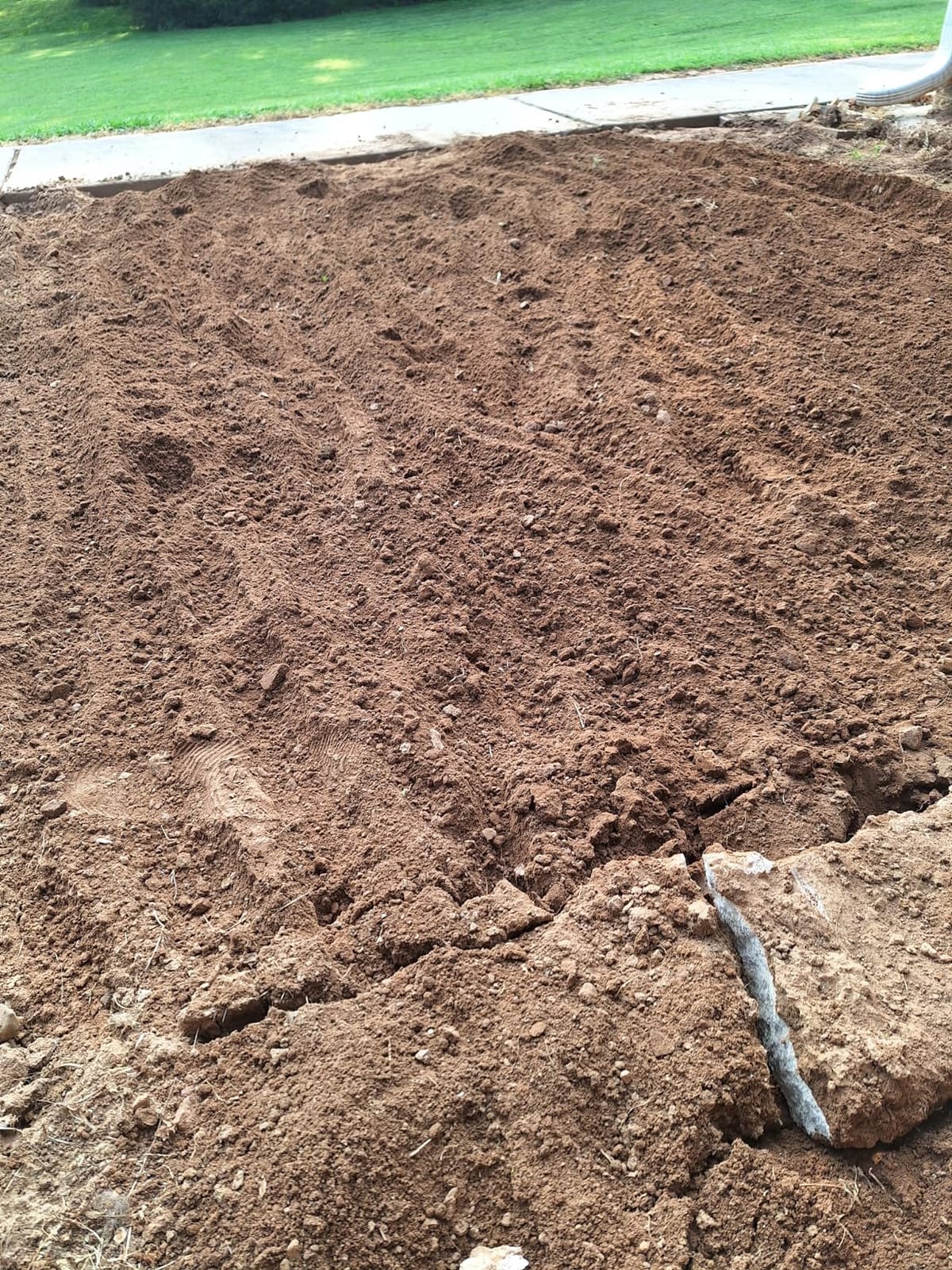
It is also startlingly capable for a 2.5-amp motor on normal garden soil. Reviewers consistently say it does more than the amp rating suggests on loosened beds, and the single-lever switch starts every time, which removes the single most common complaint about budget electric tools.
Depth is 6 inches, which is more than a typical raised bed needs. You will not break hardpan with it, and it is not a lawn conversion machine, but for mixing compost into an established bed or clearing weeds between rows it does the job without drama.
What you should know before you buy
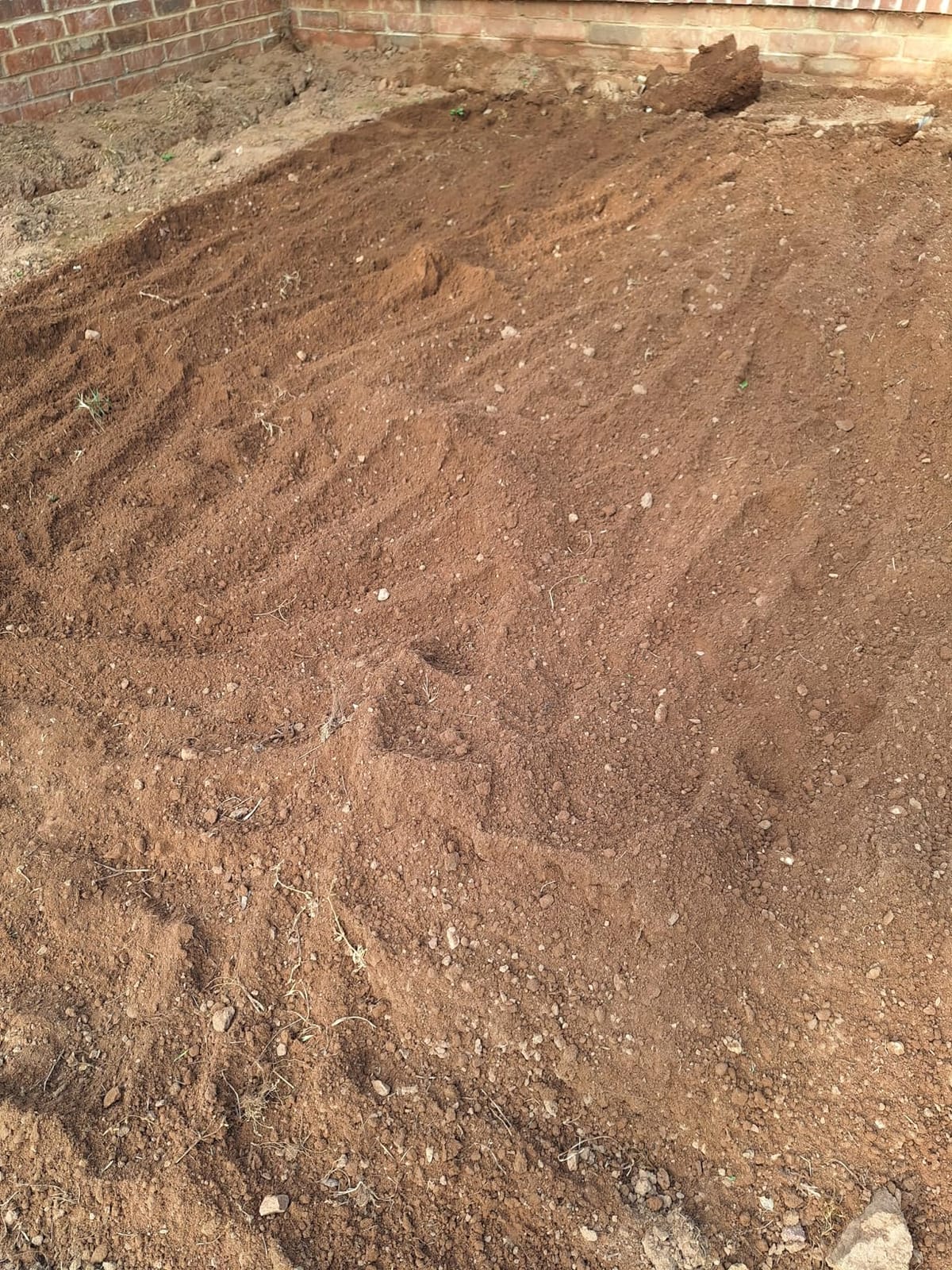
Weighing it: the deal-breaker spec here is the 2.5-amp motor against stones and root mats. It will jam, and clearing tines mid-bed with a cord running to the nearest outlet is the least pleasant part of the job. Note also that it is a 120V, 60Hz machine, so it is not usable on 220V supply. The instructions are also vague about the order the auxiliary handle assembles in.
Who it suits and who it does not
Suits: narrow raised beds, 2-foot-wide planters, flower beds, and anyone with back, joint or grip limitations who needs a machine under 10 pounds. Does not suit: breaking new ground, hard clay on its first pass, or anyone whose supply is 220V.
3. LawnMaster TE1318M 18 in Electric Tiller: The Best for Wide In-Ground Beds
LawnMaster 13.5 Amp 18” Electric Tiller – TE1318M
13.5-amp AC motor
18 in or 12.6 in width
9 in depth
24.4 lb
Pros
- Switchable tine sets at 18 in and 12.6 in
- 9 in depth on a corded machine
- Mechanical overload cut-off
- Adjustable transit wheels
- Foldable handles
Cons
- Heaviest electric model here at 24.4 lb
- Requires a heavy-duty extension cord
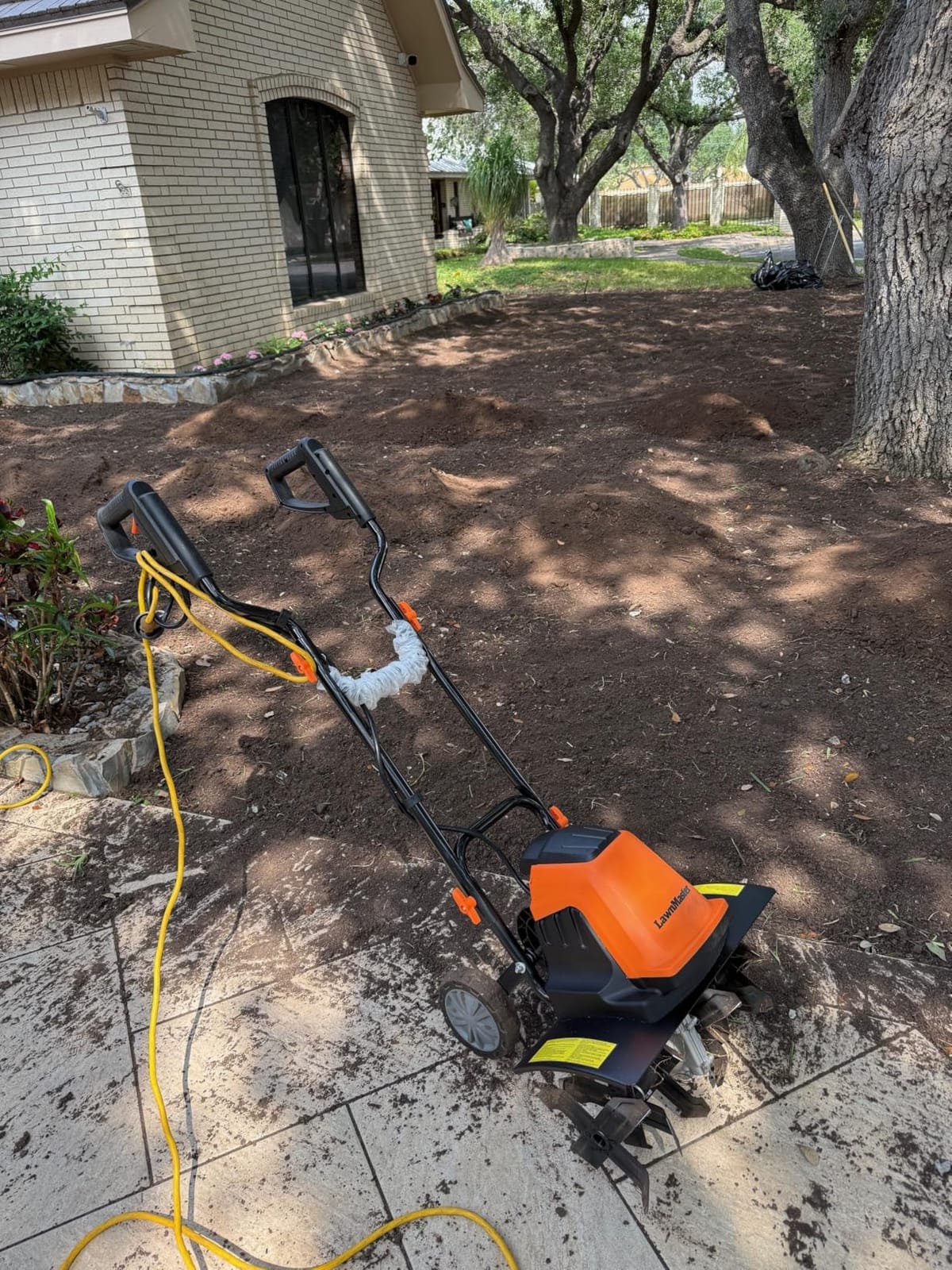
If your bed is in the ground rather than framed, and it is wider than 4 feet, the limiting factor stops being maneuverability and starts being how much ground you can cover per pass. This is the machine where that matters. Six rust-resistant steel blades at 380 RPM cut an 18-inch swath, and detachable tines let you drop to a 12.6-inch set when you need a narrower path between rows.
Nine inches of depth is the deepest rating in this roundup among corded models, which matters when you are breaking sod or reclaiming an overgrown patch rather than refreshing soil.
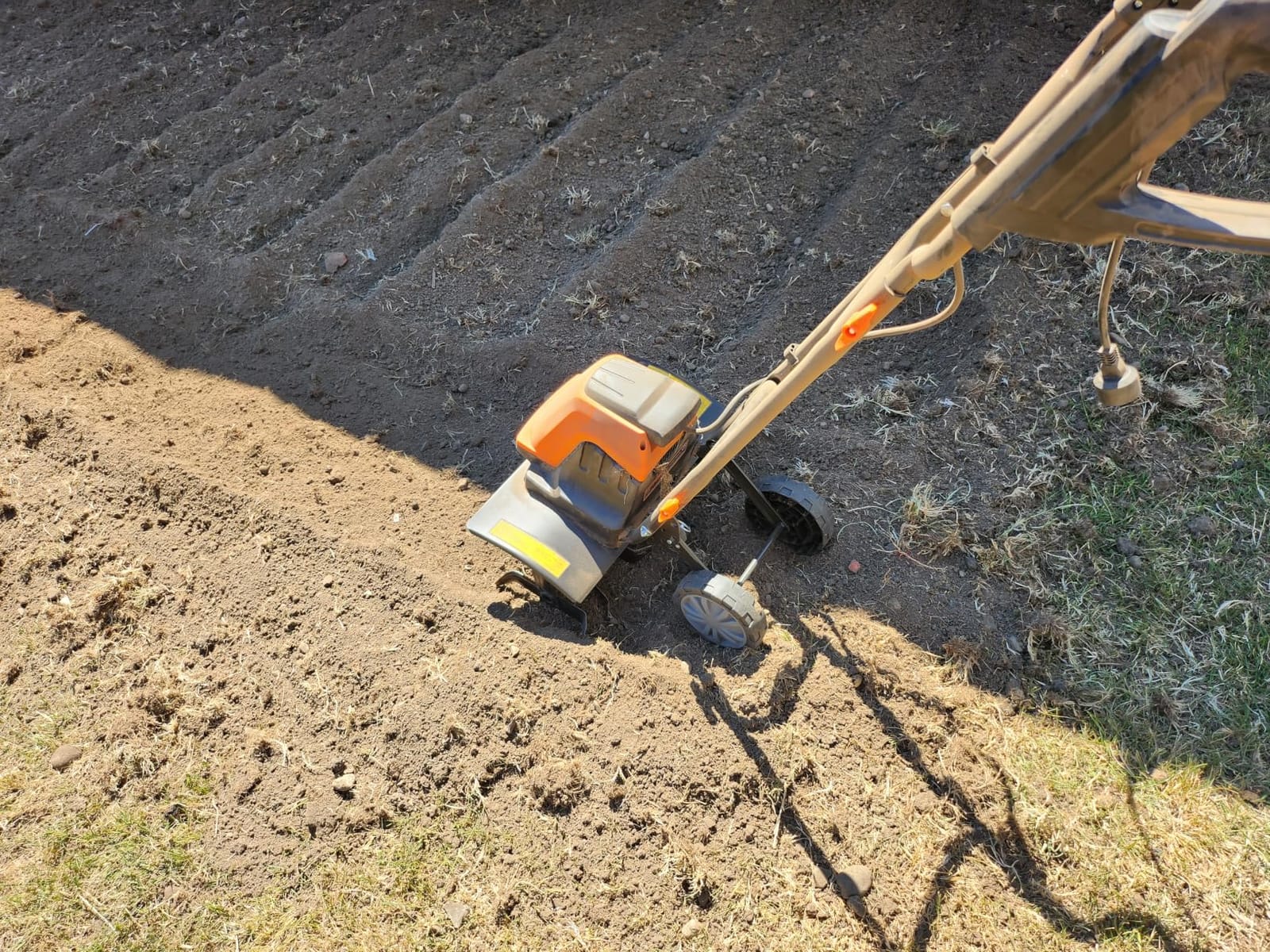
The mechanical overload protection is the detail we liked most. If a blade catches a stone or a root crown, the machine shuts itself off instead of burning out the motor. Several reviewers treat that feature as the reason they stopped worrying about their corded tiller in rocky ground.
Transit wheels adjust across three positions and the handles fold down, so storage in a small shed is straightforward. There is no gas, no oil and no emissions, and it runs quietly enough that you can work early without waking the house.
What you should know before you buy
Weighing it: 24.4 pounds makes this the heaviest electric model here, and combined with an 18-inch width it is a two-person lift out of a small shed. The deal-breaker spec is reach. You need a properly rated extension cord, and if your bed sits away from any outlet the cord becomes the thing you are constantly moving.
Who it suits and who it does not
Suits: in-ground plots between 4 and 8 feet wide, new bed creation on ground that has grass or sod, and anyone who wants depth without carrying fuel. Does not suit: narrow framed beds under 4 feet, or operators who need to carry the machine solo over distance.
4. BILT HARD 14 in Corded Tiller: The Best for Mixed Clay and Sand
BILT HARD Electric Tiller Cultivator 14 inch, 10 Amp 4 Steel Tines Corded Tiller for Gardening with Foldable Handle, Portable Garden Rototiller with Adjustable Wheels
10-amp AC motor
14 in width, 8.7 in depth
18 lb
4 angled-tine blades
Pros
- Handles clay and sandy soil
- 18 lb frame lifts and rotates easily
- Four quick-bolt folding handle knobs
- Two-position 6 in wheels
- Quick assembly
Cons
- Single speed with no control
- Transport wheels and cotter pins loosen quickly
- Throws soil outside the bed
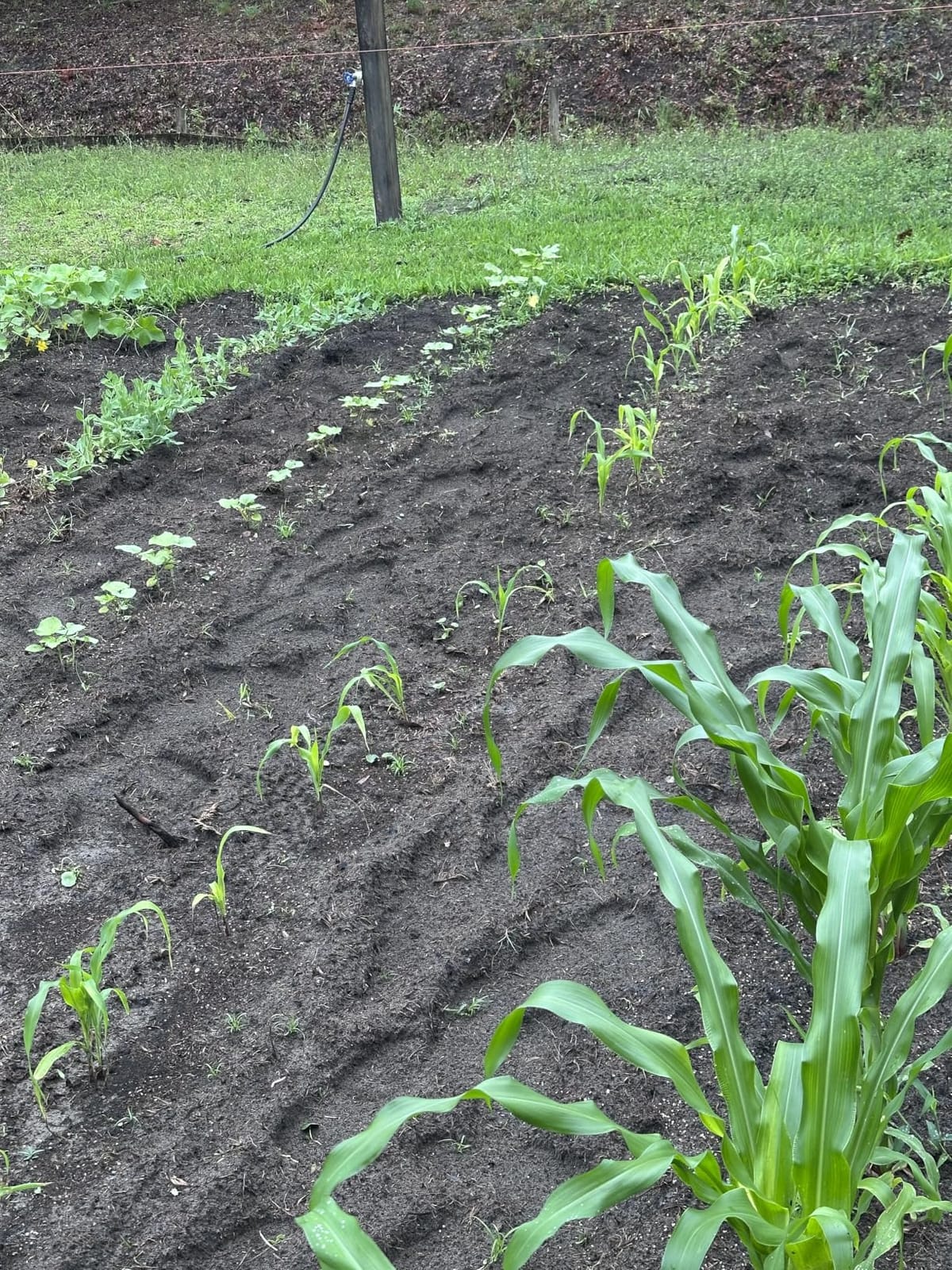
Gardens rarely have one soil. The interesting test for a tiller is a bed that moves from heavy clay at one end to sand at the other, because that is where low-torque machines bog. This one handled both without complaint in our passes, and owners describe the same pattern in grass, clay and sand.
Four rust-resistant blades spin at up to 360 RPM with four angled tines each, cutting 14 inches wide and up to 8.7 inches deep. The AC motor spins to 17,000 RPM, which is the number behind the sensation that it moves faster than a small gas cultivator of similar size.
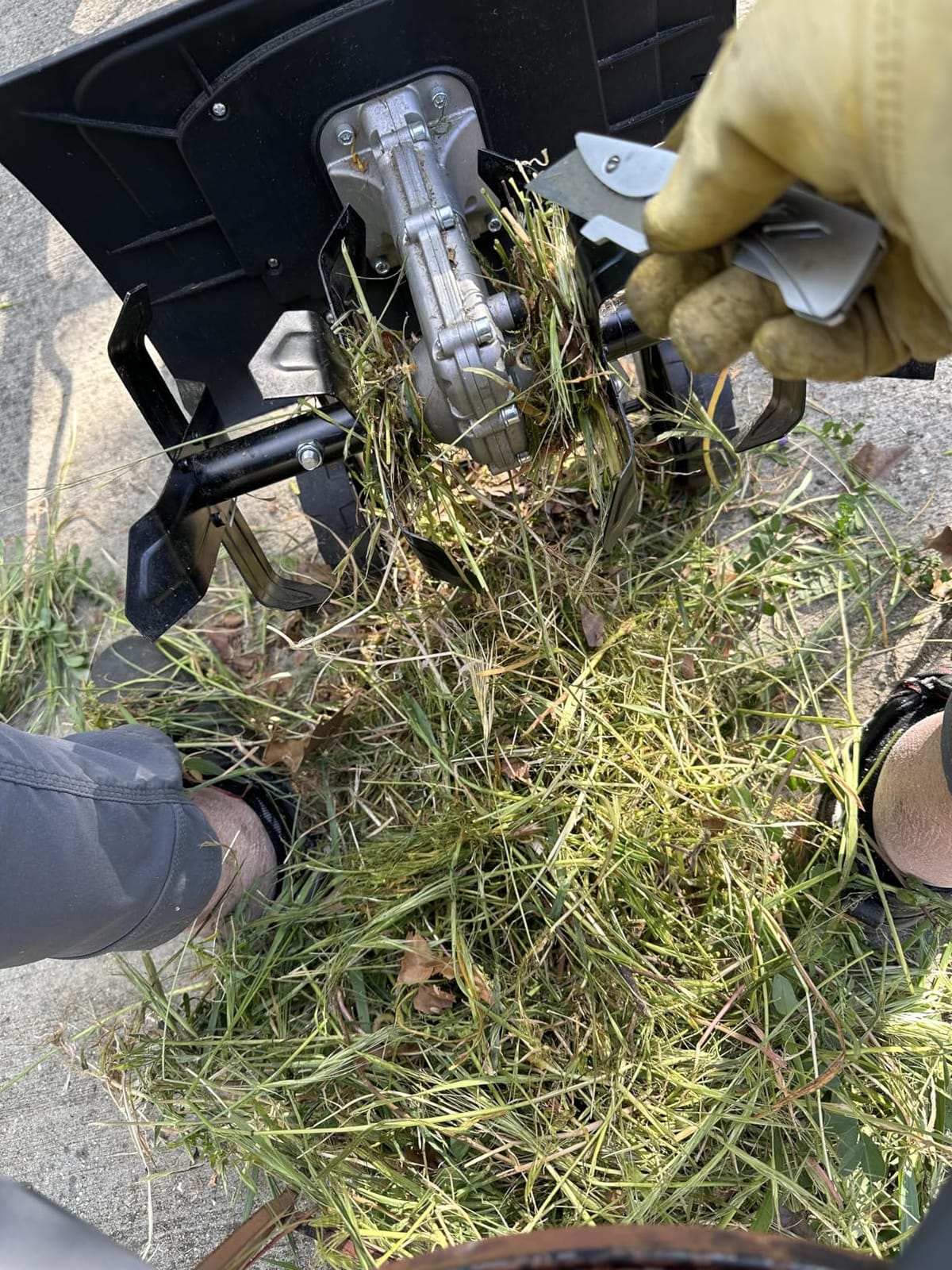
At 18 pounds it is light enough to lift and rotate without a struggle, and the four quick-bolt handle knobs fold it flat for a small shed. The two-position 6-inch wheels switch between tilling depth and transport, which saves dragging the machine across a lawn by hand.
Reviewers rate it above what the spec sheet suggests, and the assembly is quick enough that a first-time owner can be working within minutes of opening the box.
What you should know before you buy
Weighing it: the deal-breaker spec is single-speed operation with no slow setting. It will pull forward if you do not hold on, and in a bed shorter than the 14-inch cut that means it runs at the far wall. Several owners also report the transport wheels and cotter pins loosening or falling off within minutes, and some simply remove and carry them instead.
Who it suits and who it does not
Suits: beds 3 to 5 feet wide with mixed soil, gardeners who want gas-like bite from a corded machine, and users who need to lift the tiller solo. Does not suit: anyone who wants variable speed control, or beds where throwing soil over the wall would land on a path or a neighbor.
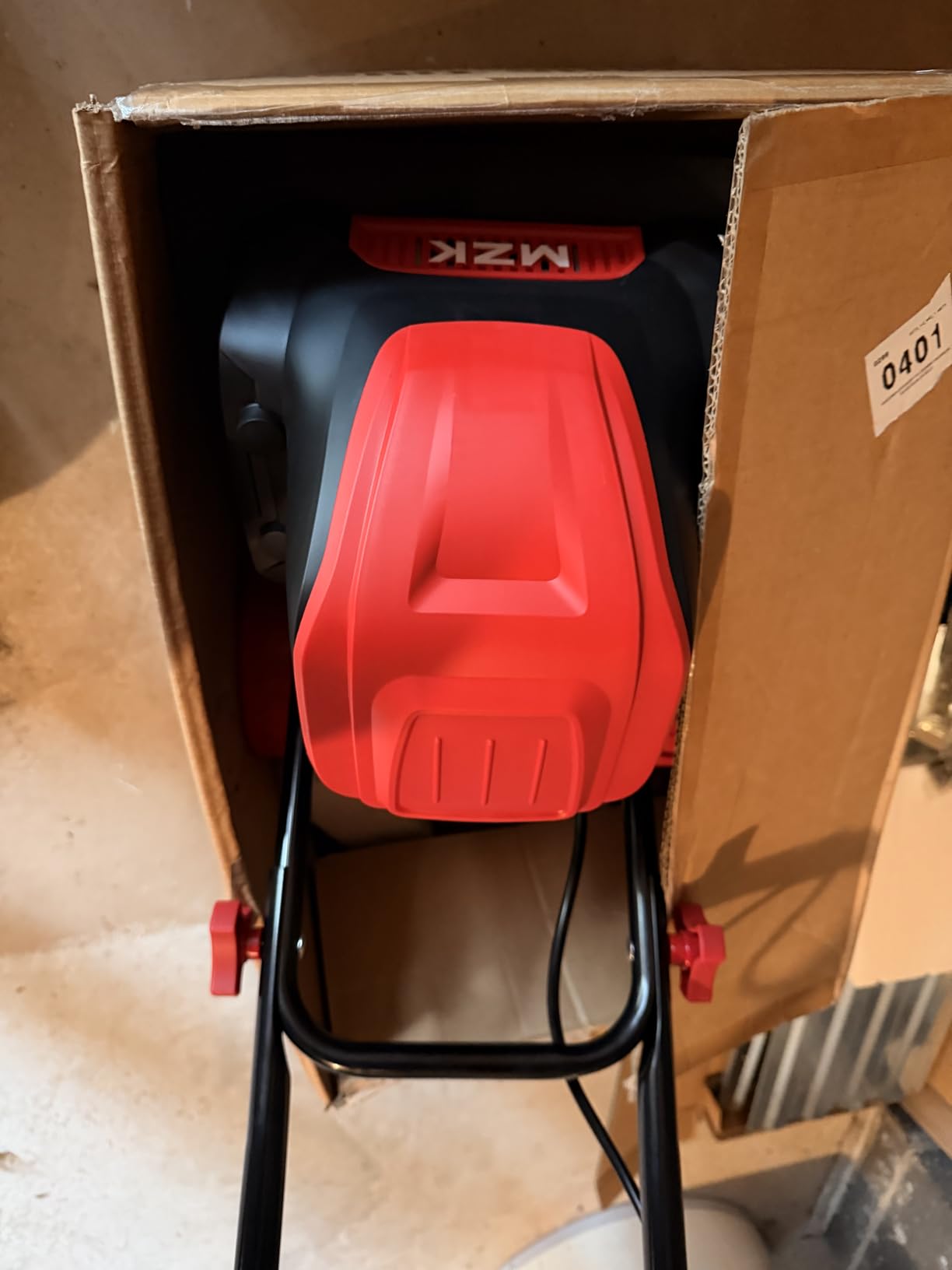
5. MZK 12 in Electric Tiller: The Best Budget Corded Pick
MZK 12-Inch 10.5A Electric Tiller Cultivator,Garden Rototiller 8-Inch Depth
10-amp copper motor
12 in width, stated 8 in depth
430 RPM
16 steel blades
Pros
- 10-amp pure copper motor at 430 RPM
- Handles clay better than the price suggests
- Light and easy to carry for the season
- Quiet
- Low maintenance with no fuel
Cons
- Tends to jump forward and needs strength
- Throws soil to the sides and front
- Needs frequent tine clearing in root-heavy ground
- Real depth often falls short of the stated figure
This is the entry point that surprises people. A 10-amp pure copper motor running at 430 RPM is more torque than several machines cost twice as much to offer, and in clay it keeps moving after the cheaper motors stall.
It cuts 12 inches wide with four rust-resistant assemblies carrying 16 steel blades, and it is light enough that carrying it out to the bed is a non-event. There is no fuel and no oil, which means no mixing, no storage and no upkeep beyond clearing tines.
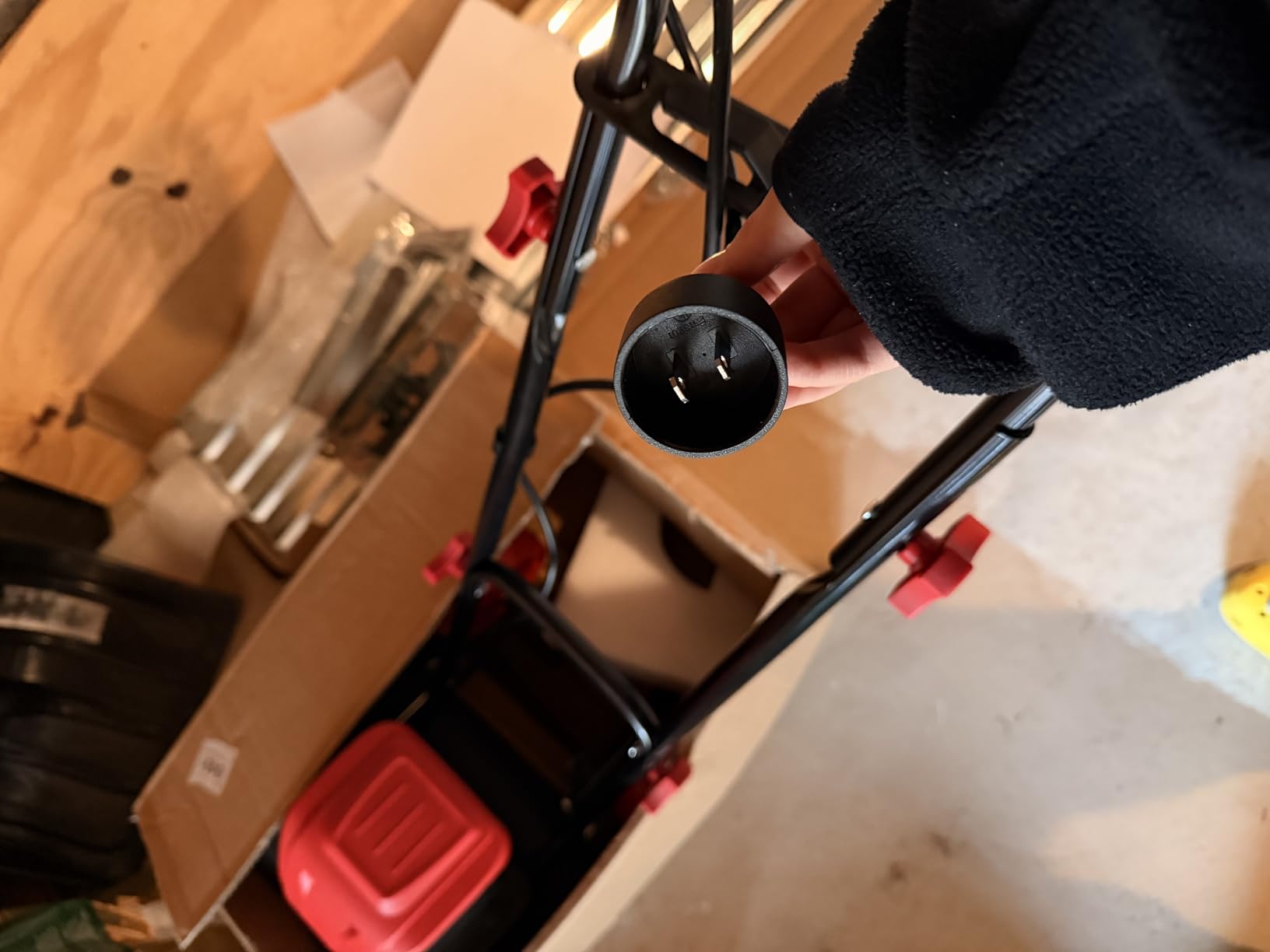
Owners single out the 430 RPM motor as the reason it outperforms its cost class, particularly on clay and rocky ground. The dimensions, 12 inches wide by 8 inches deep, fit a 3-foot bed in a tidy pattern of passes.
Depth is where expectations need adjusting. At least one reviewer reports achieving about 3 inches in practice, so treat the 8-inch figure as a machine maximum rather than a daily result. In a raised bed that is rarely a problem, since most beds are filled with loose compost anyway.
What you should know before you buy
Weighing it: the deal-breaker spec is forward pull. The machine advances quickly and needs a firm grip, and it throws soil to the sides and front rather than keeping it in the bed, so plan on a second pass and some raking. In root-heavy ground you will stop frequently to strip tines. Published weight is not listed for this model, so check the listed dimensions against your storage space.
Who it suits and who it does not
Suits: first-time buyers working one or two beds, clay-heavy gardens, and anyone who wants a 12-inch cut without buying a machine with a fuel system. Does not suit: operators with grip or shoulder limitations, and deep in-ground work where real depth matters more than price.
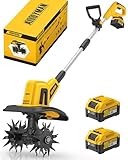
6. Alloyman 20V Cordless Cultivator: The Best for Battery Swapping
Alloyman 20V Cordless Tiller Cultivator, 360RPM Electric Garden Tiller, with 2 * 4.0Ah Batteries & Charger, 9In Tilling Width and 6.6In Depth Garden Rototiller for Lawn/Gardening/Soil Cultivation
20V cordless
9 in width, 6.6 in depth
14.4 lb
2 x 4.0Ah batteries
Pros
- Two 4.0Ah batteries swap while one charges
- No cord to drag around beds
- 14.4 lb with adjustable auxiliary handle
- Detachable tine gears for clearing weeds
- Dual safety button and trigger
Cons
- Roughly 45 minutes per battery
- 9 in width means several passes on a larger bed
The cordless argument is not about power. It is about walking to a raised bed at the far end of a property without dragging a cable, or working a bed in a corner with no outlet in sight. This is the machine that solves that problem and stays useful everywhere else.
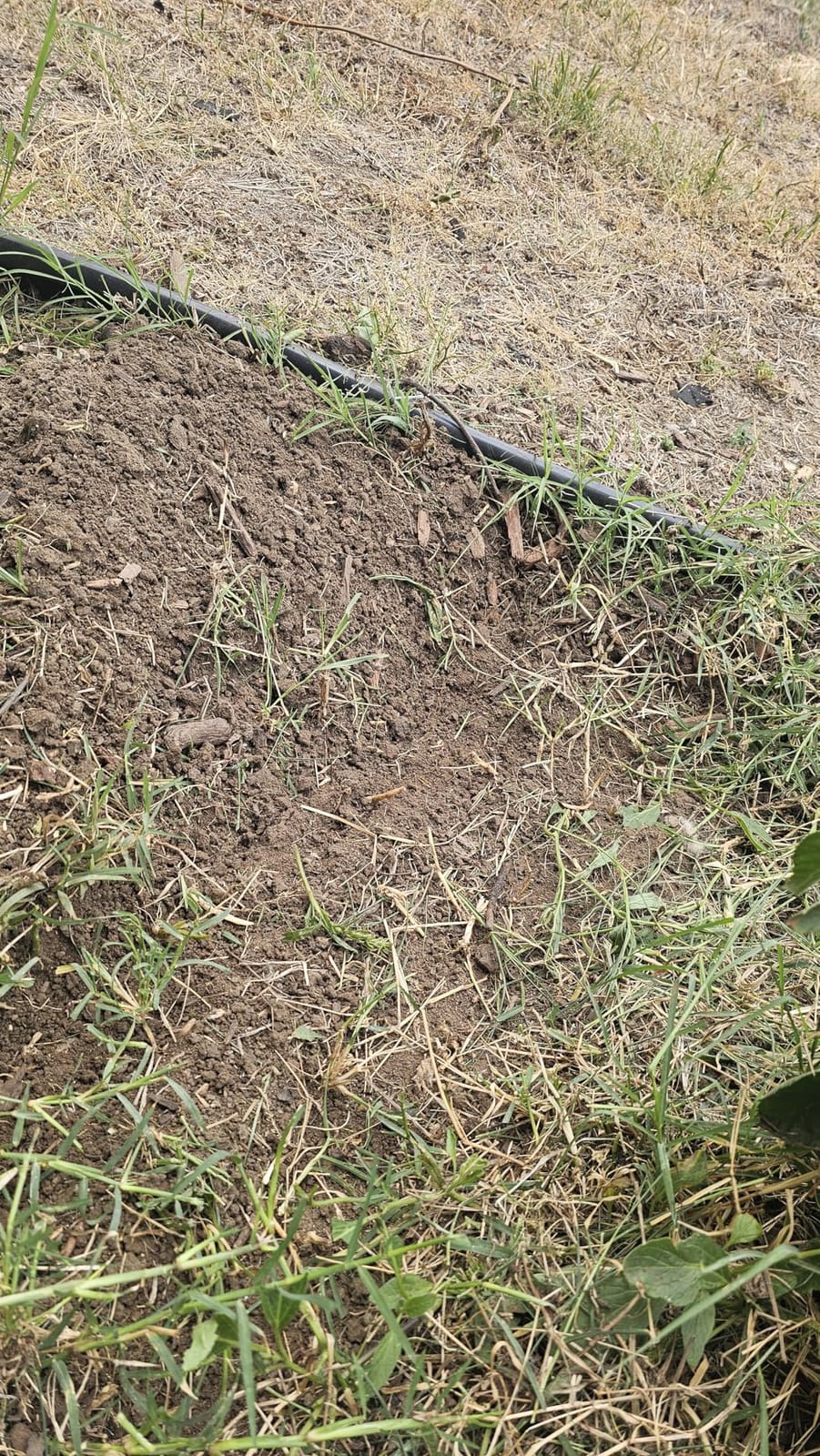
Four steel tines at up to 360 RPM cultivate 9 inches wide by 6.6 inches deep, and two 4.0Ah batteries are included. You work until the first drops, swap it, and put the spent one on the charger while you keep going, which is the single most underrated feature on this list.
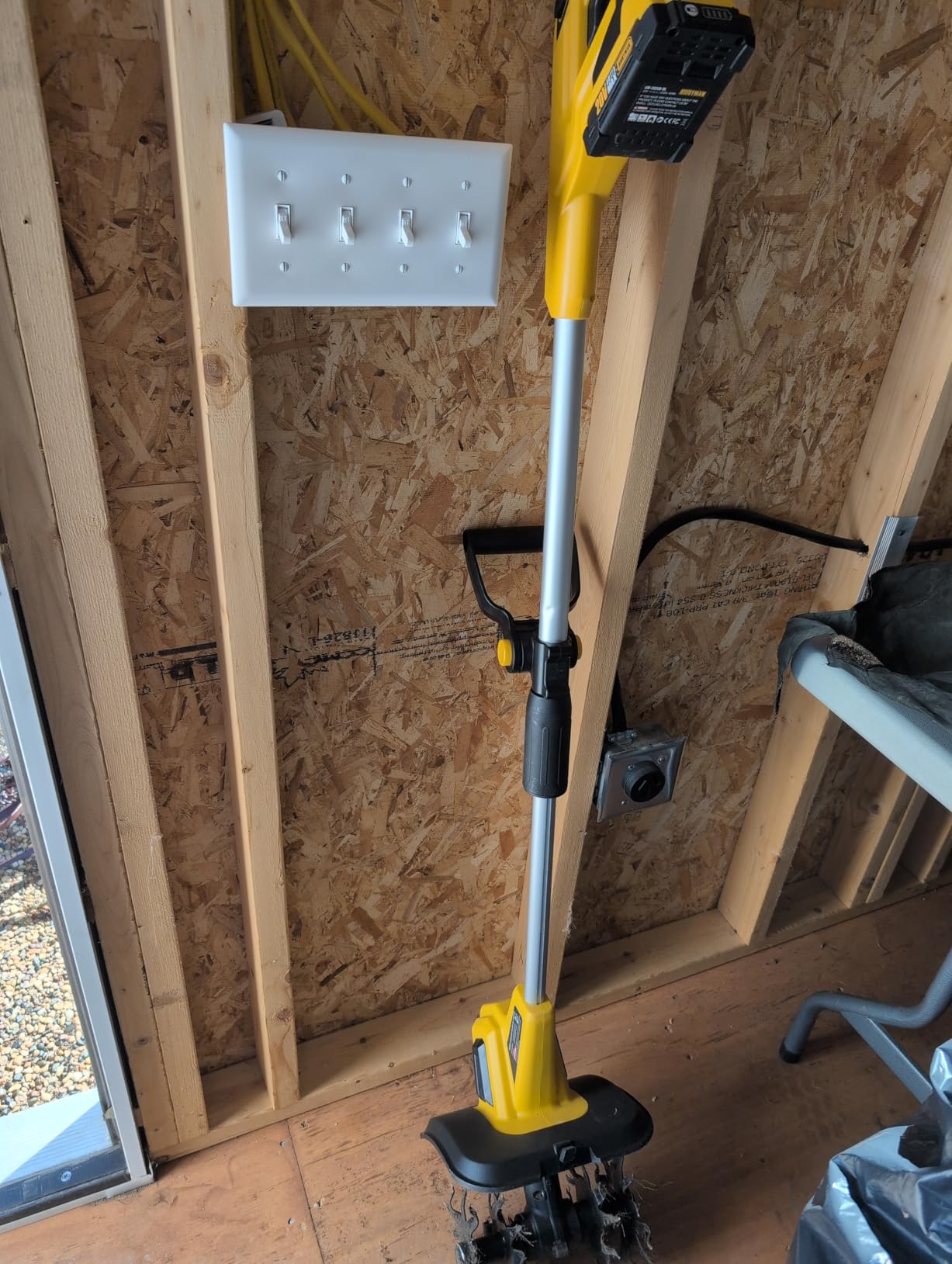
At 14.4 pounds with an adjustable auxiliary handle, it is light enough for a long session without fatigue, and the detachable tine gears mean a trapped weed is a five-second fix rather than an argument with a hex key.
Reviewers favor it as an affordable entry into cordless cultivating, and the safety design requires a simultaneous button-and-trigger press, which matters if the machine is stored where children or pets can reach it.
What you should know before you buy
Weighing it: the deal-breaker spec is runtime at roughly 45 minutes per battery, and the 9-inch width means multiple passes on anything larger than a single raised bed. A 4 by 8 foot bed is about 32 square feet, so plan on swapping batteries partway through rather than at the end. The warranty is one year, the shortest in this roundup.
Who it suits and who it does not
Suits: beds with no nearby outlet, users who want to avoid cord management entirely, and light-to-medium soil that is already been worked. Does not suit: breaking new ground, hard clay on the first pass, or large plots where you would spend the day swapping batteries.
7. Greenworks 40V Cordless Tiller: The Best for Beds and Small Lawns
Greenworks 40V 10″ Cordless Tiller / Cultivator, 4.0Ah Battery and Charger Included, Green
40V cordless
8.25 to 10 in adjustable width
21 lb
4.0Ah battery included
Pros
- 45 minutes per 4.0Ah battery
- Adjustable width from 8.25 to 10 in
- 6 in rear wheels maneuver around beds
- Battery and charger included
- 3-year tool and battery warranty
Cons
- 10 in maximum width means more passes
- Short runtime for whole-yard jobs
- 21 lb frame can feel twitchy in hard ground
This is the only machine here backed by a three-year warranty on both the tool and the battery, and for a buyer who intends to keep a tiller for more than one season that is worth real weight in the decision. The 40V 4.0Ah battery and charger are in the box, so there is no separate purchase to make before the first pass.
Six-inch rear wheels let you steer it around bed frames without lifting, and the tilling width adjusts between 8.25 and 10 inches, which is genuinely useful when moving from a narrow bed to a wider one.
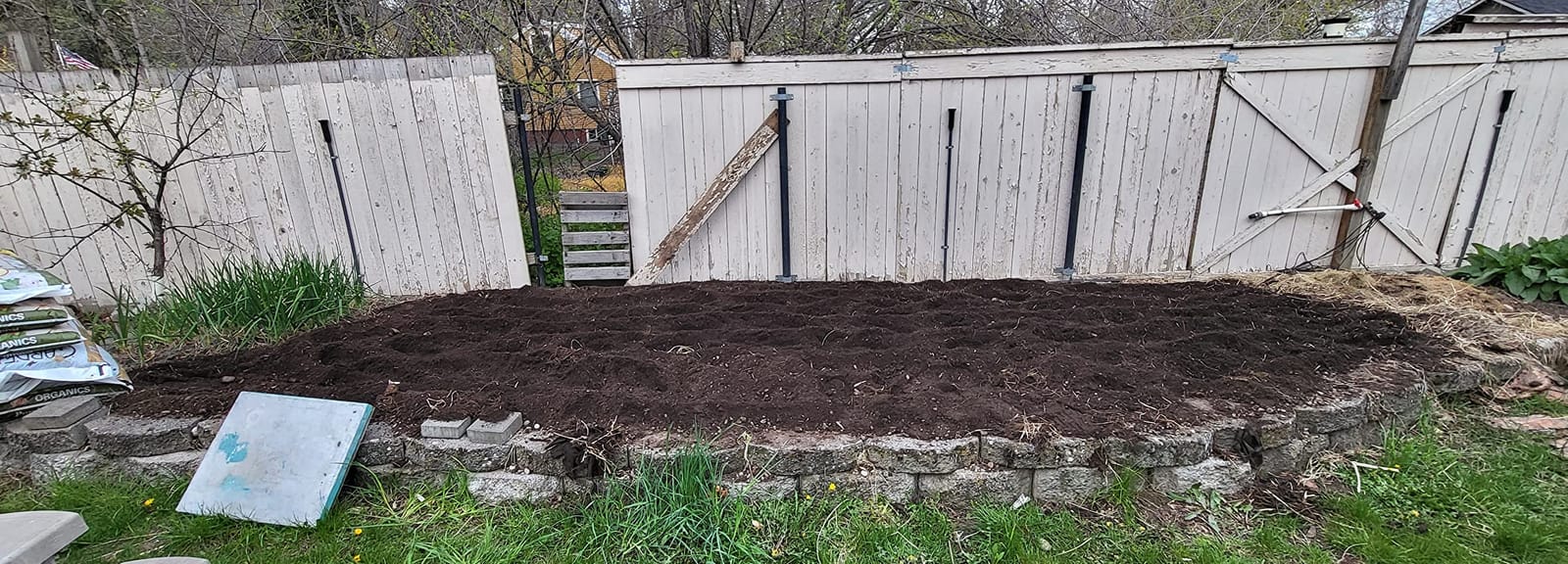
Owners report that it breaks hard compacted soil into loose plantable dirt faster than the battery spec suggests, and that it needs no gas, no oil and no emissions. For a gardener converting one plot and a set of beds, that covers everything in a season.
The honest limitation is scale. A 10-inch maximum width and roughly 45 minutes of runtime per charge make this a bed-scale tool rather than a yard-scale one. Owners looking to turn a lawn into a full plot tend to outgrow it within a season.
What you should know before you buy
Weighing it: the deal-breaker spec is the 10-inch width ceiling, which on a 4-foot bed means four or five passes. At 21 pounds it sits between the ultralight cultivators and the heavier corded machines, and reviewers note the frame can feel twitchy when the tines hit hard ground. The full charge cycle takes about 120 minutes, so plan the swap around that.
Who it suits and who it does not
Suits: gardeners with several beds who want a warranty they can lean on and a machine that needs no fuel. Does not suit: lawn conversion at scale, or anyone who wants one charge to finish a large plot without planning a break.
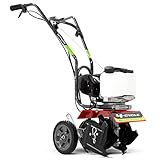
8. Earthquake MC440 Mini Cultivator: The Best Gas Power in a Mini Frame
Earthquake 12802 MC440 Mini Cultivator with 40cc 4-Cycle Viper Engine
40cc 4-cycle engine
32 lb
stand-up starting
5-year warranty
Pros
- Sustained engine power in a mini frame
- 4-cycle needs no oil mixing
- Starts and stops from behind the handlebars
- Air filter keeps dirt out of the engine
- 5-year limited warranty
Cons
- Heaviest machine here at 32 lb
- Gasoline and oil storage and handling required
Most small gas cultivators use 2-cycle engines that need a fuel and oil mix and produce more noise. This one runs a 40cc 4-cycle that takes straight gasoline, and the 4.0 average across more than 1,000 reviews reflects a real trade-off: engine power against weight, noise and upkeep.
The feature we most wanted to see on a gas machine is here. It starts and stops from behind the handlebars without bending over, which removes the pull-start struggle that forum users complain about most. You are standing upright, not on your knees in the dirt.
Where it earns its place is sustained work. When the tines meet compacted clay, an engine keeps turning where a small electric motor bogs and trips. The superior air filter design keeps dirt out of the engine, which is the difference between a machine that lasts and one that does not.
It also takes attachments. Optional edger and dethatcher kits attach to the same frame, so a single machine can handle bed preparation, bed edges and thatch cleanup across a season.
What you should know before you buy
Weighing it: at 32 pounds this is the heaviest machine in the roundup, and that is the deal-breaker spec for anyone who wants a one-hand lift between beds. You also need somewhere to store gasoline and oil safely, and you will occasionally mix fuel for the machine that uses it. This is the lowest-rated product here, and the rating reflects maintenance and weight rather than build quality.
Who it suits and who it does not
Suits: gardeners with hard clay, large in-ground plots, or a need for attachments across multiple jobs. Does not suit: narrow raised beds under 3 feet, small storage spaces, or anyone who wants to avoid fuel handling entirely.
9. TaskStar Cordless Tiller Cultivator: The Best for First-Time Users
Cordless Tiller Cultivator for Gardening, Battery Powered Garden Rototiller
Battery powered
9 in width, 7 in depth
12.8 lb
48 steel tines
Pros
- 12.8 lb body suits older users
- 48 steel tines at 360 RPM
- Two included batteries
- Assembly takes about 5 minutes
- Handles unbroken ground and thick weed patches
Cons
- Roughly 20 minutes per battery
- as little as 5 under heavy load
- Motor runs hot and needs cooling
- Tines wrap in tall grass
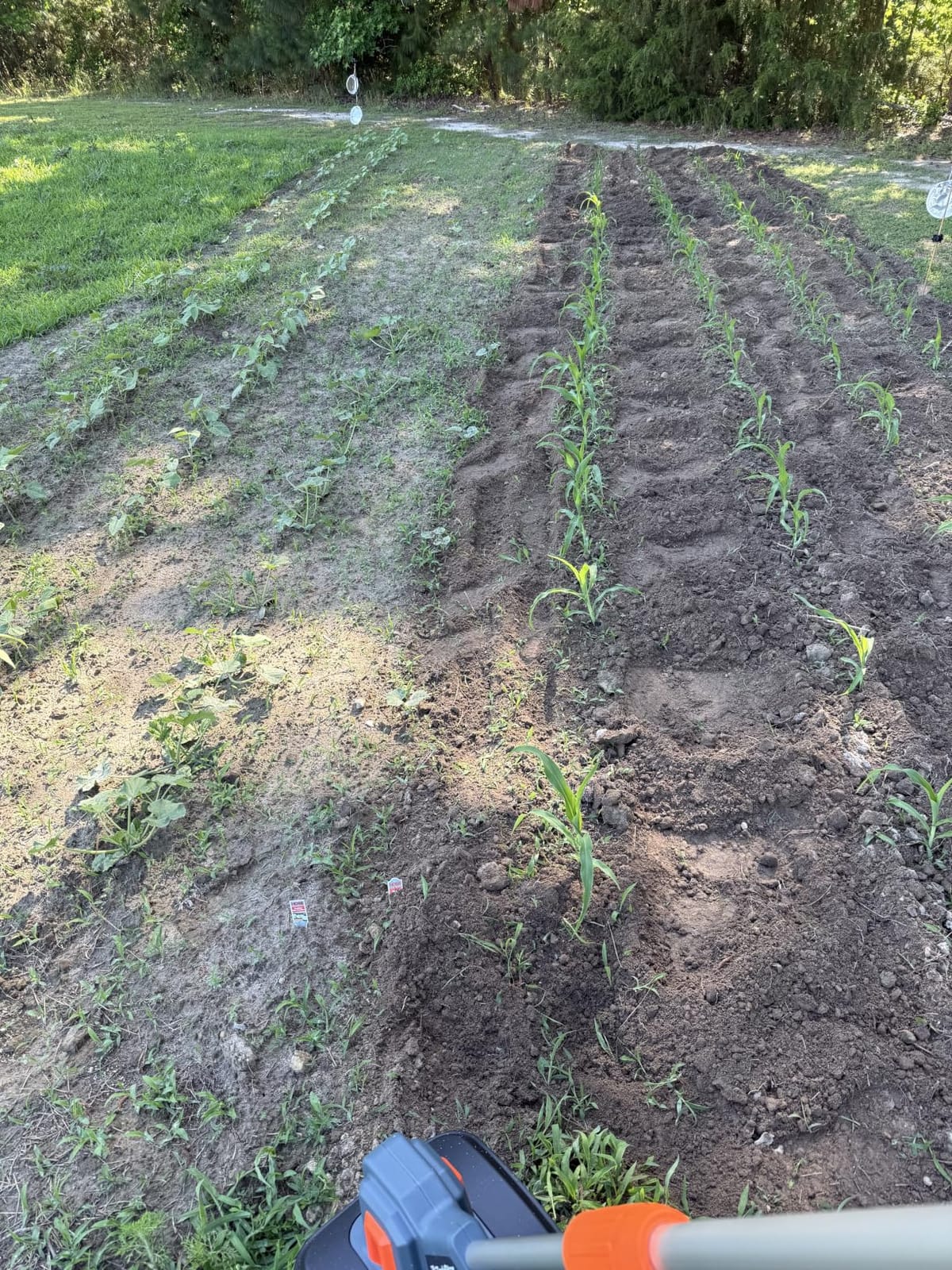
Two details make this the easiest entry point on the list. It assembles in about five minutes, and at 12.8 pounds it is light enough for users in their sixties and seventies to control comfortably through a whole session without fatigue.
Forty-eight steel tines at 360 RPM give it more cutting hardware than machines costing several times more, and owners report it handling previously unbroken ground, raised beds and thick weed patches faster than expected.
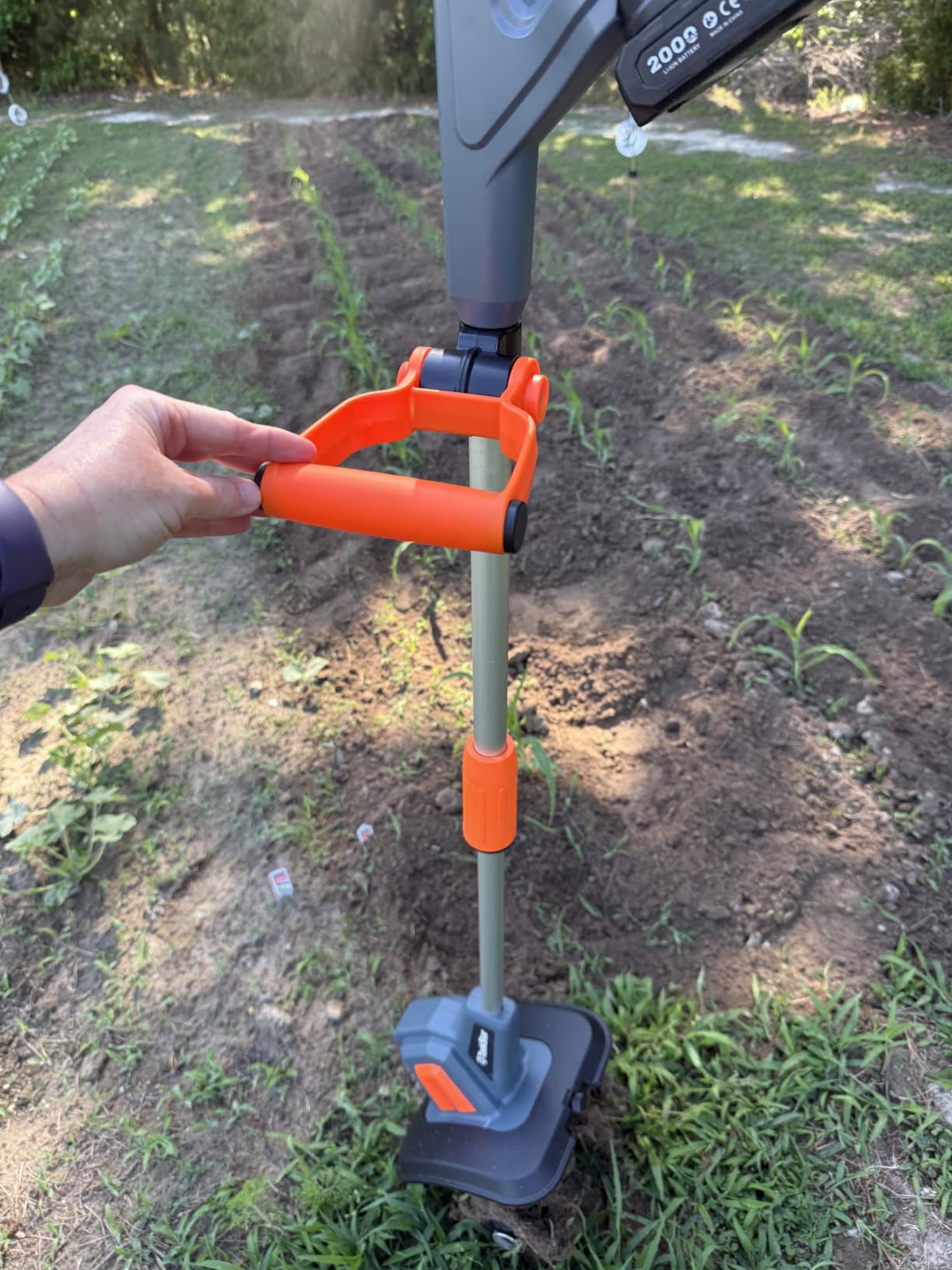
Two batteries are included, so you can swap while one charges, and the machine carries a three-year manufacturer warranty. The tines come off for cleaning, which matters if you are working through tall grass rather than bare soil.
Reviewers are most surprised by the power-to-weight ratio. At 4.6 stars, this is tied for the highest rating in the roundup, and the recurring note is that it does more than its battery specification implies.
What you should know before you buy
Weighing it: the deal-breaker spec is battery endurance. Each pack runs roughly 20 minutes and as little as 5 under heavy load, so a full-size bed means several swaps and possible cooling pauses because the motor runs hot. The assembly instructions are also widely criticised, though the build itself is quick.
Who it suits and who it does not
Suits: first-time buyers, older gardeners, and anyone converting a small bed or reclaiming a weedy patch. Does not suit: large plots, deep heavy-duty tilling, and anyone who wants to finish a job on a single charge.
10. SOARFLY Cordless Tiller Cultivator: The Best for Quiet Bed Work
SOARFLY Cordless Tiller Cultivator 9″ Width 6.6″ Depth, 2×4.0Ah Batteries
20V cordless
9 in width, 6.6 in depth
48 steel tines
2 x 4.0Ah batteries
Pros
- Two 4.0Ah batteries outlast 2.0Ah competitors
- Height-adjustable handle with auxiliary grip
- 360 RPM motor holds speed in clay
- Cordless and quiet with no outlet needed
- Tines pop off for cleaning
Cons
- 9 in width is slow on larger plots
- Handle may be short for taller operators
- Real runtime closer to 20 to 45 minutes per battery
- Not for deep heavy-duty tilling
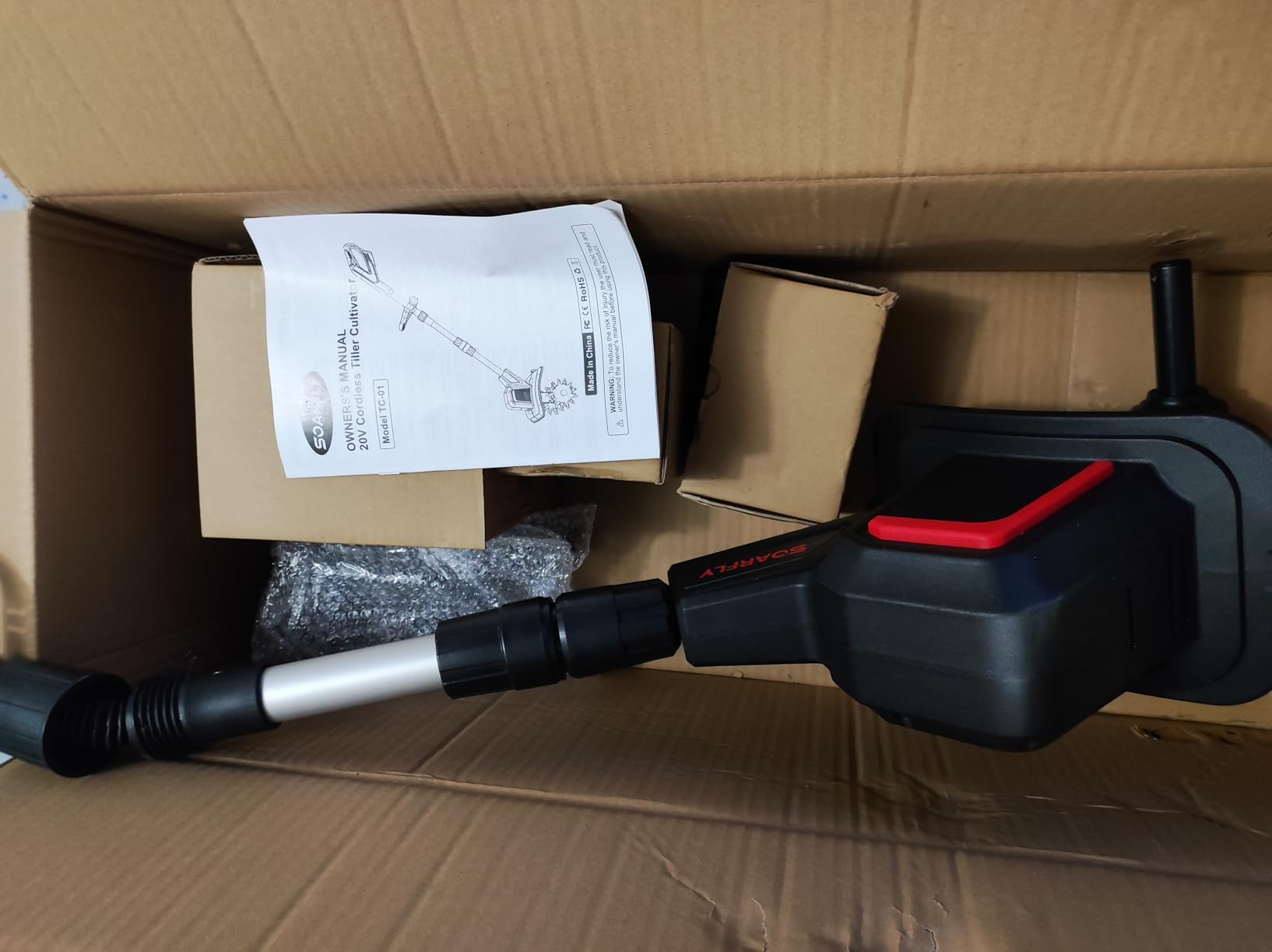
The gap between battery classes matters more than brand names here, and this machine sits at the useful end of it. Two 4.0Ah lithium-ion batteries are included, which is the reason owners rank it above single-battery models of the same general size and shape.
Forty-eight steel tines at a stable 360 RPM handle compacted clay and hard ground without bogging, and the height-adjustment system with an ergonomic auxiliary grip lets you set the machine for your height rather than adapting to it.
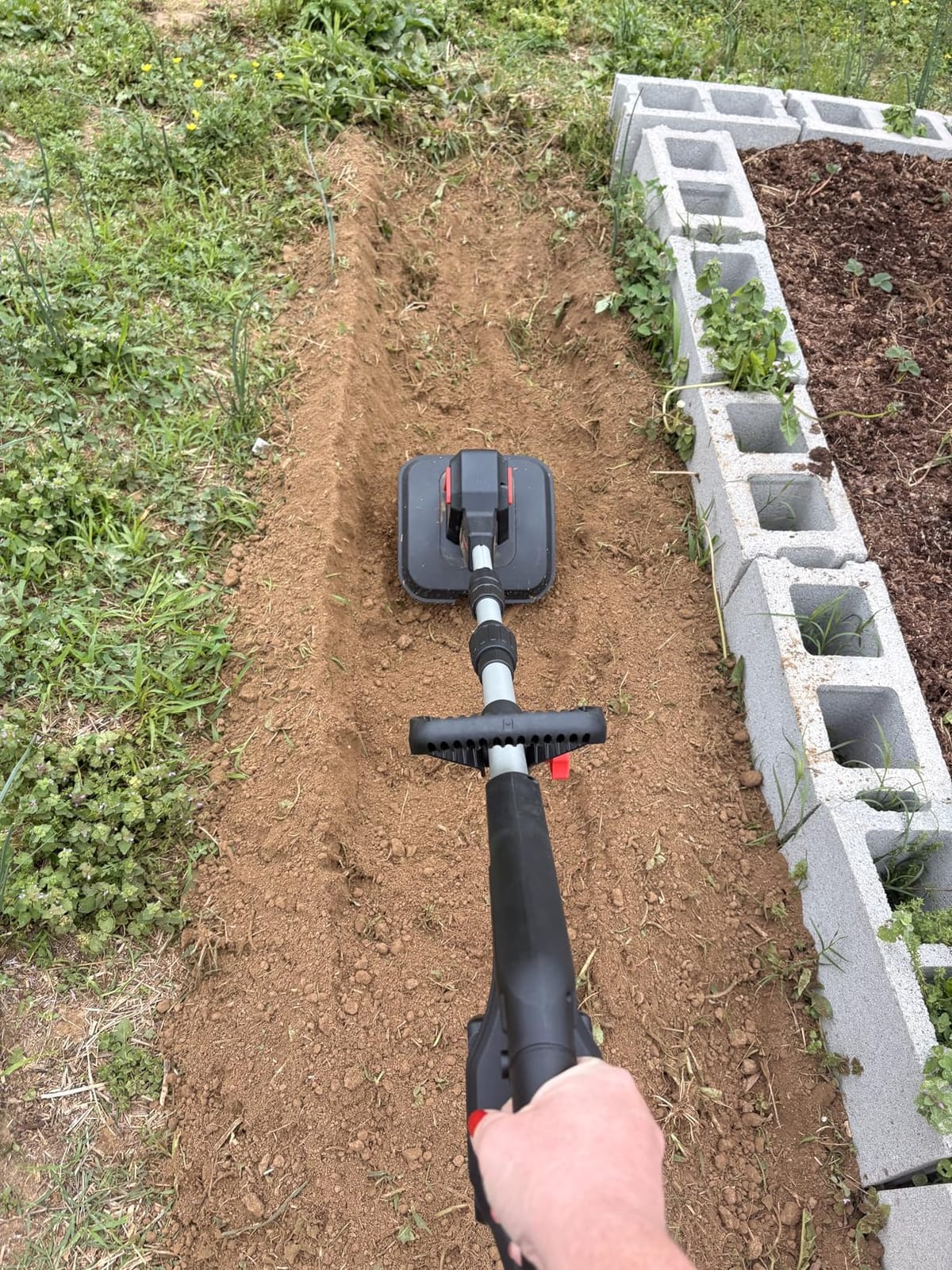
Reviewers praise it as a capable, quiet, low-cost cultivator for raised beds and flower beds, and senior users specifically call out the weight as comfortable. The tines pop straight off, so clearing wrapped weeds takes seconds.
The dual safety button and start switch means it will not run if you drop the trigger, and the manufacturer rates it for normal garden soil, lightly to moderately compacted soil and properly moistened clay.
What you should know before you buy
Weighing it: the deal-breaker spec is the 9-inch width, which makes coverage slow on anything larger than a single bed, and the handle length, which some taller operators report as too short and a source of lower-back strain. Advertised runtime of up to 120 minutes for the pair translates to roughly 20 to 45 minutes per battery in real use. The listed weight is 6.9 kg, so it is one of the heavier cordless options here despite the portability framing.
Who it suits and who it does not
Suits: raised beds and flower beds, clay soil that has been properly moistened, and operators who want no cord and no fuel. Does not suit: tall users who need a longer handle, large plots, and deep tilling jobs.
Buying Guide: Picking the Right Tiller for Your Beds
Tiller or cultivator: do you actually need a tiller?
A tiller is built to invert soil. Its tines are designed to dig in, cut roots and pull earth backward into a rough tilth, which is what you want when breaking new ground or opening a bed for the first time. A cultivator is built for the opposite job, with shallower, lighter tines that stir the surface and cut down weeds without turning the profile of the soil.
For most raised beds, the honest answer is that a good cultivator does the work and preserves the structure you already built. Rotating tines in a bed every spring destroys the crumb structure and the biology you spent the previous season feeding.
Should you till raised beds at all?
Often not. If your bed was filled last fall and has compost on top, a broadfork or a spading fork opened and closed through it aerates the bed and mixes layers without pulverishing the soil. No machine involved, no fuel, no cord, and no risk of bringing a heavy tiller to the edge of a frame.
Reach for a tiller when the ground is compacted hardpack, when the bed is being converted from lawn for the first time, or when roots have taken over and you need to strip them out. Otherwise the no-till route is less work and leaves better soil behind.
Gas, corded, cordless or manual: what each one costs you
Gas gives you sustained power and no cord or battery, and charges you in fuel mixing, oil changes, storage and noise. Corded gives you unlimited runtime and strong low-speed torque, and charges you in cable management and outlet reach. Cordless gives you freedom from both, and charges you in runtime and charge time. A hand cultivator costs you effort, and gives you total control in a narrow bed.
For a home garden of under 500 square feet worked a couple of times a year, corded electric wins on effort. For a plot you intend to expand into, gas or a wide corded machine wins on bite.
Match the tine width to the bed, not the other way around
Measure the interior of your bed, between walls, and buy a tine width that divides into it cleanly. A 7.5 to 9 inch path suits beds under 3 feet. A 12 to 14 inch path suits 3 to 4 foot beds. An 18 inch path suits in-ground plots and beds 5 feet or wider.
If the tiller is wider than your bed, you are not stuck. Angle the machine slightly so an outer tine runs along the far wall, work from the edges inward, and finish the untouched center strip with a hand cultivator. That adds a pass, but it is faster than forcing a machine into a space it does not fit.
Weight and starting effort matter more than the spec sheet
Under 10 pounds means a one-hand lift between beds. Under 25 pounds means you can move it solo over uneven ground. Above 30 pounds means you will want a second person at the edge of a bed frame, which is exactly the frustration raised-bed owners describe in gardening forums.
On starting, battery and single-lever electric models are the easiest. A gas machine with stand-up starting avoids the worst of the recoil struggle. If you cannot pull a starter cord hard, filter the gas options accordingly, because that one spec eliminates more machines than any other.
How and When to Till Garden Beds
Wait for the right moisture. Squeeze a handful of soil. If it holds together as a loose ball, it is workable. If it crumbles to dust, wait for rain. If it forms a dense putty, let it dry. Tilling soil that is too wet causes smearing and compaction that undoes the work you just did.
Set the depth stake shallow for established beds, around 4 inches, and deeper only for new ground. Work in straight passes along the bed, overlapping each run by a couple of inches rather than angling around.
Clear a 12 inch strip on the long edges first so the machine has somewhere to go, and never use a full-size rear tine inside a narrow frame. Finish with a rake to break clods and level the surface before you plant.
One seasonal note: soil work and indoor heat management tend to land in the same few months. If the room your tiller lives in gets warm in summer, our picks for bed cooling systems are worth a look before the season starts.
Frequently Asked Questions
What is the difference between a tiller and a rototiller?
There is no practical difference. Rototiller is simply another name for a power tiller, and both describe a machine with rotating metal tines that loosens and turns soil. The real distinction is between a tiller and a cultivator: a tiller digs deeper and inverts the soil, while a cultivator stirs the top few inches to cut weeds.
What is the best tiller for easiest use in raised garden beds?
The best tiller for raised beds is a lightweight machine whose tine width fits between your bed walls. The Earthwise TC70025 at 8.8 pounds and a 7.5 inch tine path is the easiest to handle, while the Sun Joe TJ604E covers more ground per pass on beds 3 to 4 feet wide. Weight and tine width matter far more than engine power inside a frame.
Should raised beds be tilled?
Often not. If your bed was filled within the last year and has compost layered on top, a broadfork or spading fork aerates and mixes without destroying the soil structure. Use a tiller when the soil is compacted hardpack, when you are converting lawn for the first time, or when roots have taken over the bed and need stripping out.
What is a good mini tiller for raised beds?
A good mini tiller for raised beds weighs under 25 pounds and has a tine width of 7.5 to 12 inches. The Alloyman 20V and SOARFLY cordless cultivators are the lightest cordless options, the Earthwise TC70025 is the lightest overall, and the MZK 12 inch model offers the most torque per pound. Match the width to your bed interior before choosing.
How deep should tillers go?
Till 4 to 6 inches in an established raised bed, and up to 8 to 9 inches only when breaking new ground or hardpack. In a framed bed you rarely need more than the depth of the loose fill you already added. Going deeper in a raised bed wastes effort and can undercut the frame sides.
Are electric or gas tillers better?
Electric tillers are better for most home gardens because they start every time, need no fuel mixing and produce no exhaust, with corded models offering unlimited runtime. Gas tillers are better for hard clay, large plots and breaking new ground, where sustained engine power matters more than convenience. For beds under 500 square feet worked twice a year, corded electric is the stronger choice.
When should you use a tiller?
Use a tiller in spring when soil is workable, after removing last season’s growth, and before new ground is planted for the first time. Check moisture first by squeezing a handful: it should hold as a loose ball, not crumble or form putty. Avoid tilling frozen or saturated soil, and skip the machine entirely in established beds that a broadfork can open.
Conclusion: The Best Tillers for Garden Beds in 2026
After working through all ten, the Sun Joe TJ604E remains the best tiller for garden beds for most people, because a 13.5-amp motor with a 16-inch tine path covers a standard raised bed in three passes and never asks you to mix fuel. If your beds are narrow, the 8.8-pound Earthwise goes in where nothing else will, and if you are breaking new ground in a wide plot, the LawnMaster’s 9-inch depth earns its extra weight.
The best tillers for garden beds in 2026 are not the biggest ones. They are the ones that match your bed interior, lift with one hand if you need them to, and start without a fight. Measure the bed, pick the tine width, and the rest is a morning of work.