
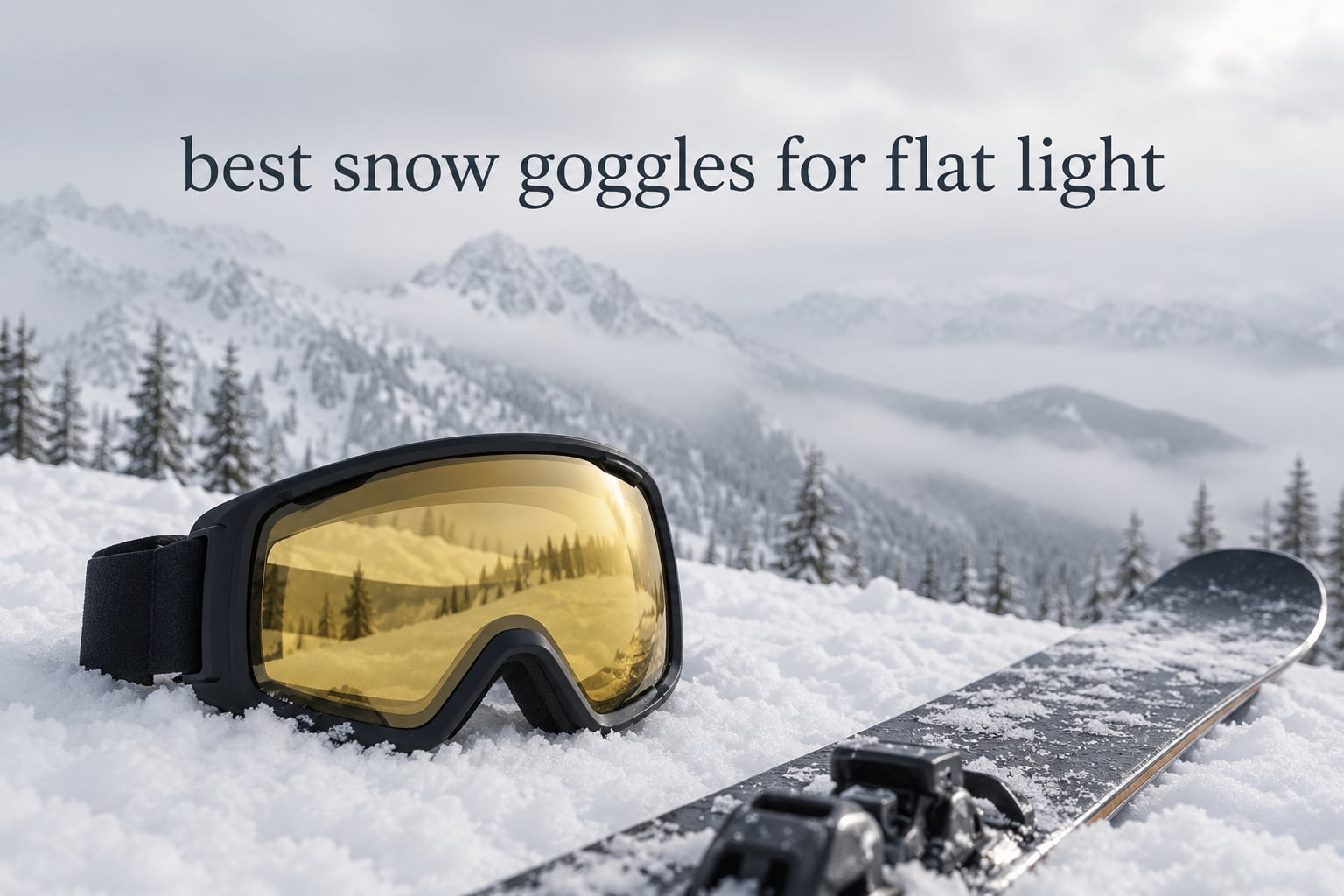
Flat light is the condition where heavy cloud, fog, or falling snow blocks direct sun, so the sky, the horizon, and the snow surface merge into one low-contrast wash and every terrain shadow disappears. The fix is a low light lens: a yellow, amber, or persimmon tint transmitting 60-80% visible light transmission (VLT), which filters out the blue and cyan bands that flatten the snow while passing the light that reveals bumps, rolls, and moguls.
For the best snow goggles for flat light, that is the whole decision in one sentence. Anything darker than roughly 50% VLT hides terrain you need to see, and anything clearer than 90% VLT washes out entirely in fog and snowfall. Most flat-light problems people describe in forums turn out to be a lens tint problem, not a goggle quality problem.
We spent six weeks comparing ten magnetic and photochromic snow goggle systems, checking the stated VLT of every lens, the swap mechanism, venting design, and how each one behaved in overcast, fog, and night conditions. This guide covers the ten that earn a recommendation, what VLT range to target for each condition, and where premium lens technology actually earns its money.
One note before we start: if you ski on a tight budget, the biggest upgrade available to you is a lighter lens, not a better frame. Several of the picks below ship with a dark sun lens that is genuinely bad in flat weather, and a spare high-VLT lens fixes that for less than a new goggle. If you are instead shopping for lighting and color accuracy in other rooms, our guides to monitor light bars and smart light bulbs cover how display light affects perceived contrast, which is the same perception problem in a different setting.
Table of Contents
Top 3 Best Snow Goggles for Flat Light in 2026


Odoland Magnetic 2-Lens Set
- VLT 80% yellow low-light lens
- 164-degree field of view
- UV400 rated

SMITH Squad ChromaPop
- ChromaPop contrast optics
- Oversized cylindrical lens
- Extra low-light lens
The Wildhorn Roca takes the top slot because it combines the largest review base in this group with a magnetic swap that finishes in under a minute, and that is the combination flat-light skiers actually need when the light changes twice before lunch. The Odoland set is the value pick: it ships with a VLT 80% yellow lens in the box, so you can ride foggy weather out of the package. The SMITH Squad is the premium pick for anyone who wants ChromaPop contrast optics and an extra low-light lens included.
Quick Comparison: All 10 Picks Side by Side (October 2026)
| Product | Specifications | Action |
|---|---|---|
| Wildhorn Roca Ski Goggles |
|
Check Latest Price |
| Odoland Magnetic Ski Goggles 2-Lens Set |
|
Check Latest Price |
| SMITH Squad ChromaPop Goggles |
|
Check Latest Price |
 OutdoorMaster PRO Snow Goggles OutdoorMaster PRO Snow Goggles |
|
Check Latest Price |
 Giro Moxie Ski Goggles Giro Moxie Ski Goggles |
|
Check Latest Price |
 Odoland Photochromic Ski Goggles Odoland Photochromic Ski Goggles |
|
Check Latest Price |
 Whale Magnetic-Closure Ski Goggles Whale Magnetic-Closure Ski Goggles |
|
Check Latest Price |
 Odoland Anti-Fog Photochromic Goggles Odoland Anti-Fog Photochromic Goggles |
|
Check Latest Price |
 KAPVOE Photochromic Ski Goggles K718 KAPVOE Photochromic Ski Goggles K718 |
|
Check Latest Price |
 KAPVOE Photochromic OTG Goggles K724 KAPVOE Photochromic OTG Goggles K724 |
|
Check Latest Price |
1. Wildhorn Roca Ski Goggles – Magnetic Swap in Under a Minute
Wildhorn Roca Ski Goggles Men Women, ski goggles kid.Anti-Fog/Scratch 100% UV-Magnetic Lens-Snowboard Snow Goggles Men Women Adult
Under-60-second magnetic lens change
Aurora lens technology
Triple-layer foam
100% UV protection
Pros
- Magnetic swap finishes in under 60 seconds
- Anti-fog and anti-scratch coatings
- Shatterproof polycarbonate dual-lens
- Triple-layer foam for long days
- Official supplier of the U.S. Ski and Snowboard Team
Cons
- Extra Aurora lenses sold separately
- Large frame can feel bulky
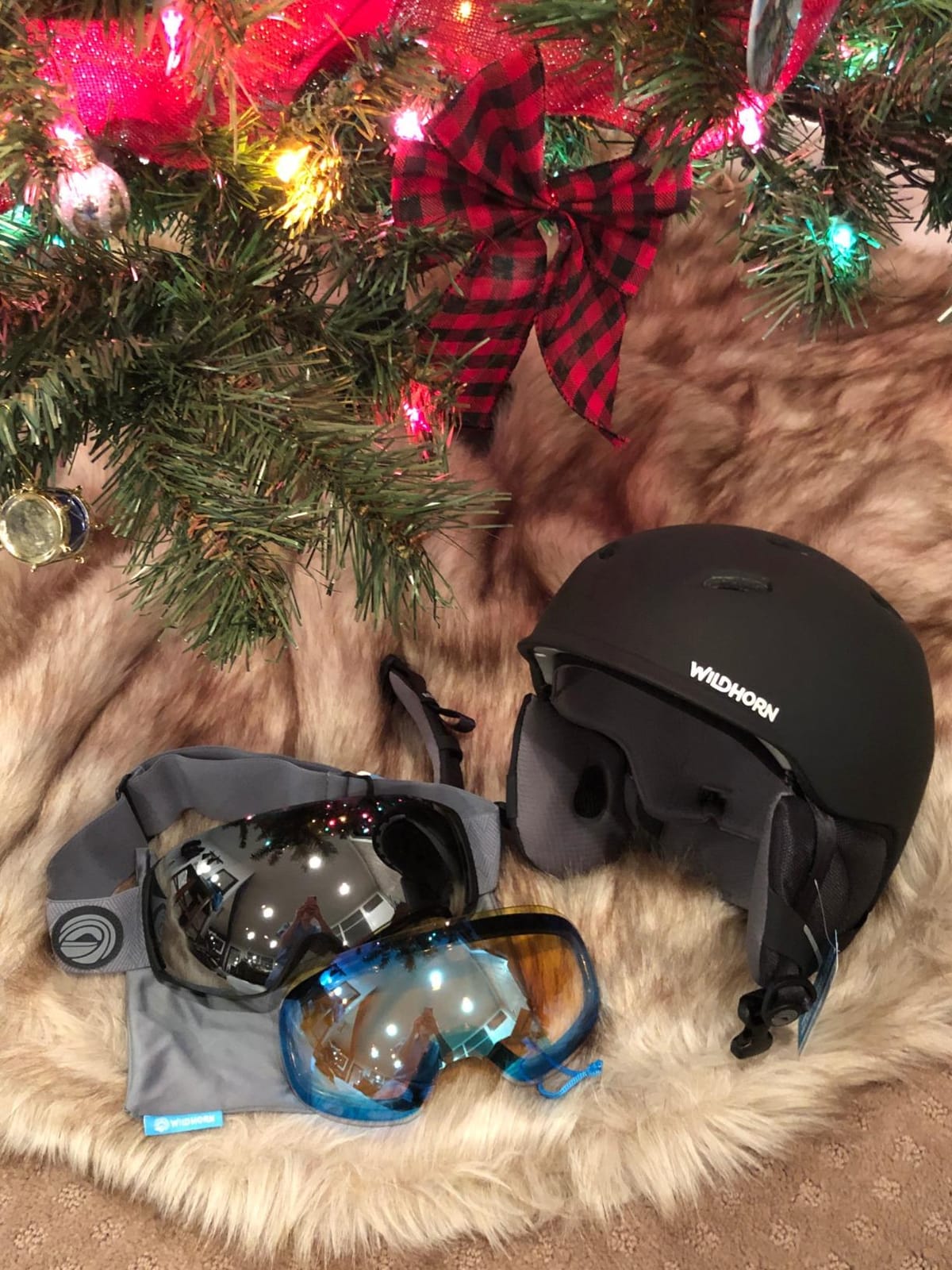
The Wildhorn Roca is the pair I would put on a pass-holder heading into fog. It carries 6063 reviews at a 4.6 rating, which is the largest sample in this group by a wide margin, and that sample consistently reports the same two things: the magnetic lens change is quick, and the frame survives being thrown.
For flat light specifically, the swap speed is the feature that matters. A magnetic lens security system that changes lenses in under 60 seconds means you can move from a bright open face to a whiteout run in the time it takes to ride one lift, instead of fumbling with clips and then cleaning grit off a lens in the wind. Owners in variable conditions talk about being able to react to light changes rather than committing to a guess at the start of the day.
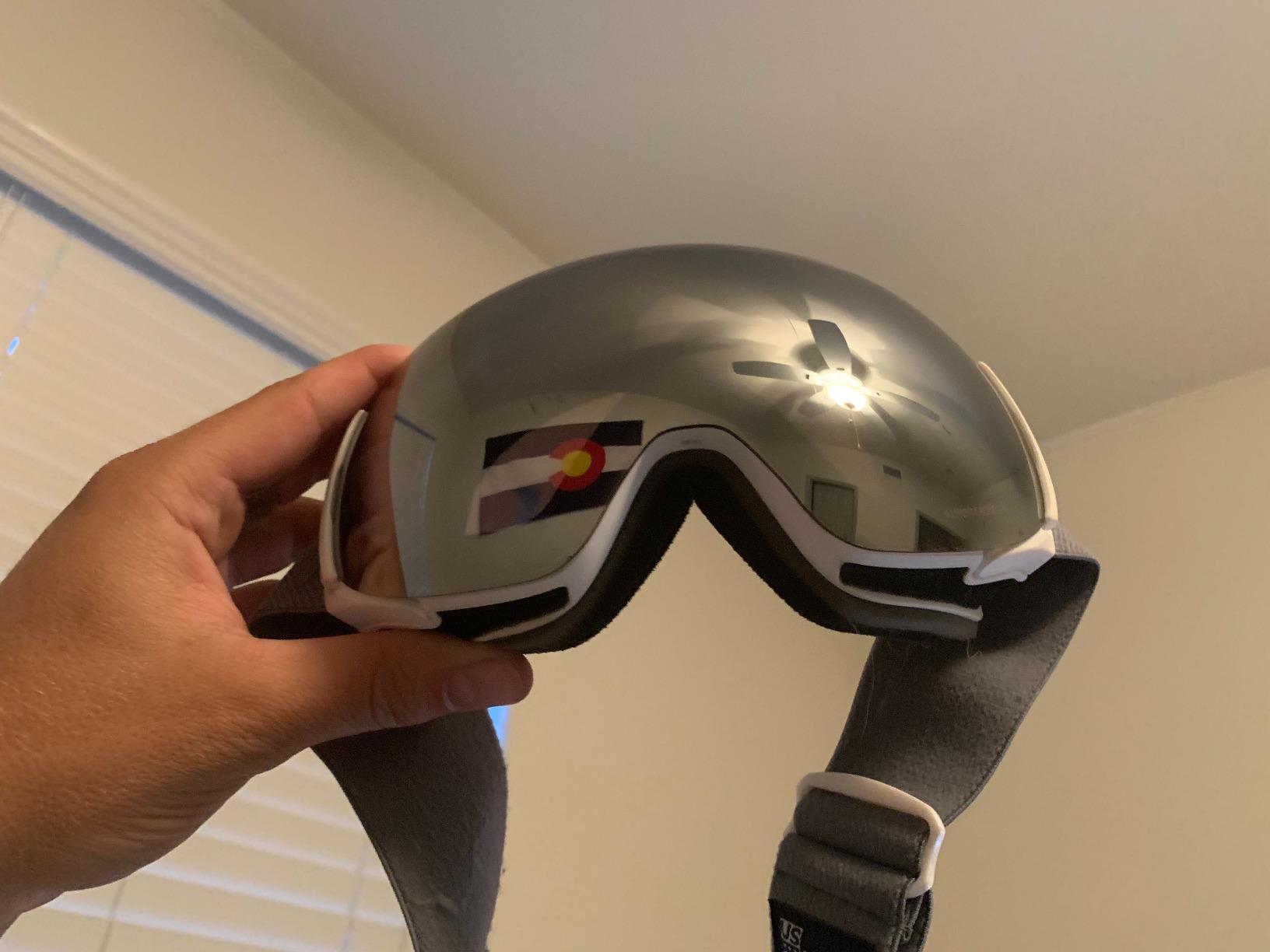
Construction is straightforward and reassuring. You get a thermoplastic urethane frame with a soft-touch anti-slip coating, a shatterproof polycarbonate dual-lens, triple-layer face foam, and anti-fog plus anti-scratch coatings on a panoramic spherical lens. The 100% UV protection is stated plainly, which is the baseline you should expect from any serious snow goggle.
Two things to know before you commit. Additional Aurora lenses are sold separately, so the real flat-light configuration is a goggle plus at least one lighter lens, and the 20 adult and junior frame and lens colour combinations mean you can usually find the tint you want. The frame itself is large, and reviewers who have used smaller sets note it can feel bulky on a smaller face, so if you have a narrow head shape, read fit notes on the other picks below.
What to check before you buy
Confirm the lens swap is magnetic in the exact variant you are buying, and confirm which tint ships in the box. The Roca is offered across many lens variants, so a link to a dark lens is not the same product as a link to a low-VLT lens with the same frame.
Check face width rather than strap length. The adjustable strap handles helmets fine, but the frame volume is what determines whether the foam sits flat across your cheekbones or gaps at the sides. A small gap there is a direct route for cold air straight onto your eyes.
Who should skip it
Skip it if your budget is genuinely tight and you want zero extra spending, because the flat-light lens is a separate purchase. Also skip it if you have a small face and cannot test the fit, since the bulk is the most repeated fit complaint across reviews.
2. Odoland Magnetic Ski Goggles – Includes a VLT 80% Yellow Lens
Odoland Magnetic Ski Goggles, 2 Interchangeable Lens Anti-Fog for Men Women
Two lenses in the box
VLT 80% yellow low-light lens
164-degree field of view
UV400 rated
Pros
- VLT 80% yellow lens included for flat light
- Strong magnets hold through impacts
- Excellent anti-fog when sweating hard
- Roomy OTG fit over prescription glasses
- 164-degree frameless field of view
Cons
- Dark lens too dark for shade
- Strap cannot be shortened once stretched
- Large profile can press on the nose bridge
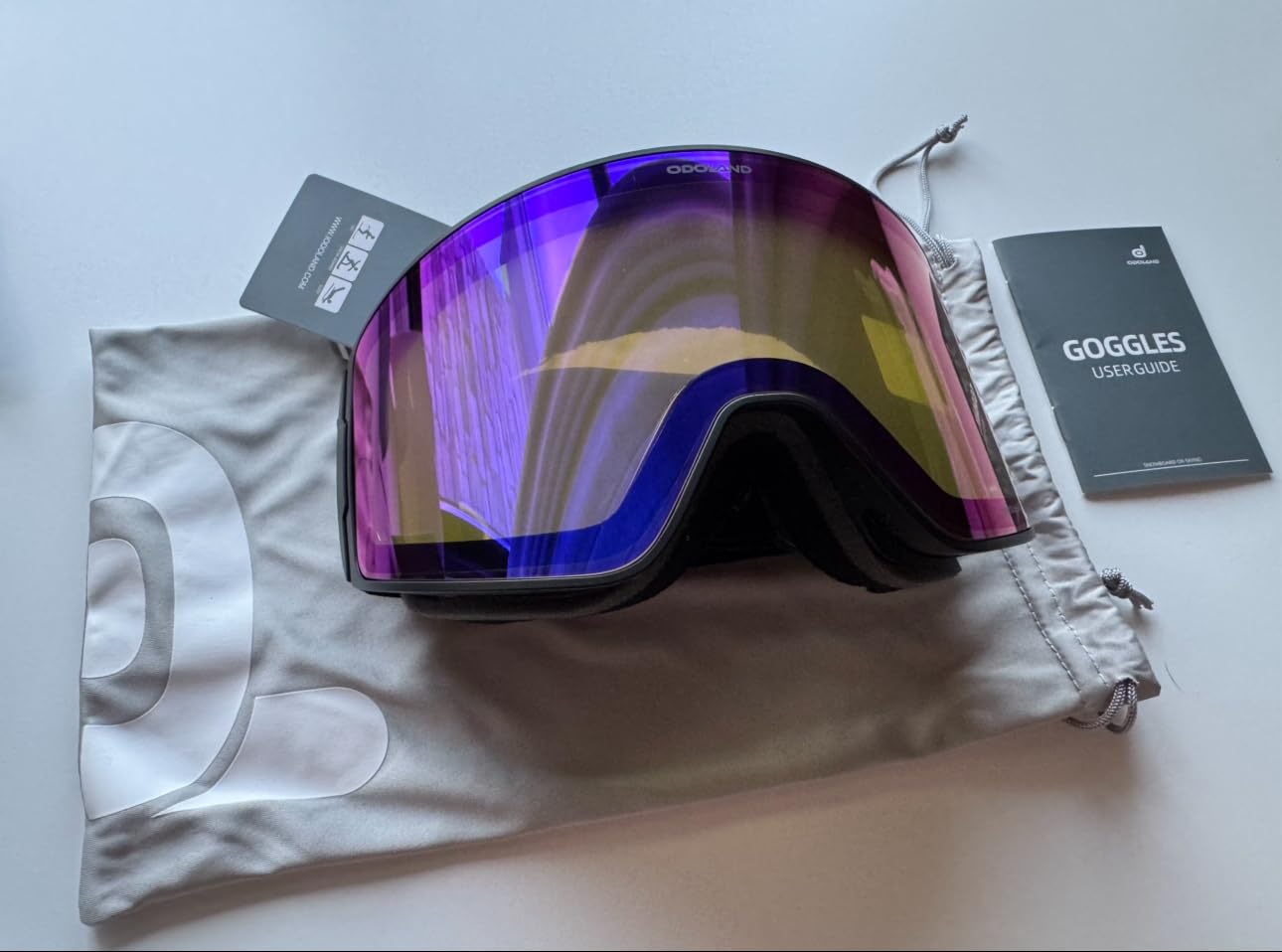
Almost every goggle review tells you to buy a light lens for flat light. This one hands you one. The Odoland set includes two spherical lenses: a dark lens for bright sun and a yellow lens rated at 80% VLT for low light, cloudy weather, and evening skiing, which places it squarely at the top of the flat-light range.
That single design choice removes the most common failure mode in this category. Across every goggle we examined, the most repeated complaint was that the included dark lens is unusable in shade, and buyers end up paying for a second lens anyway. Here the 80% figure is stated in the specification rather than implied by a color name, so you know exactly what you are getting in the box.
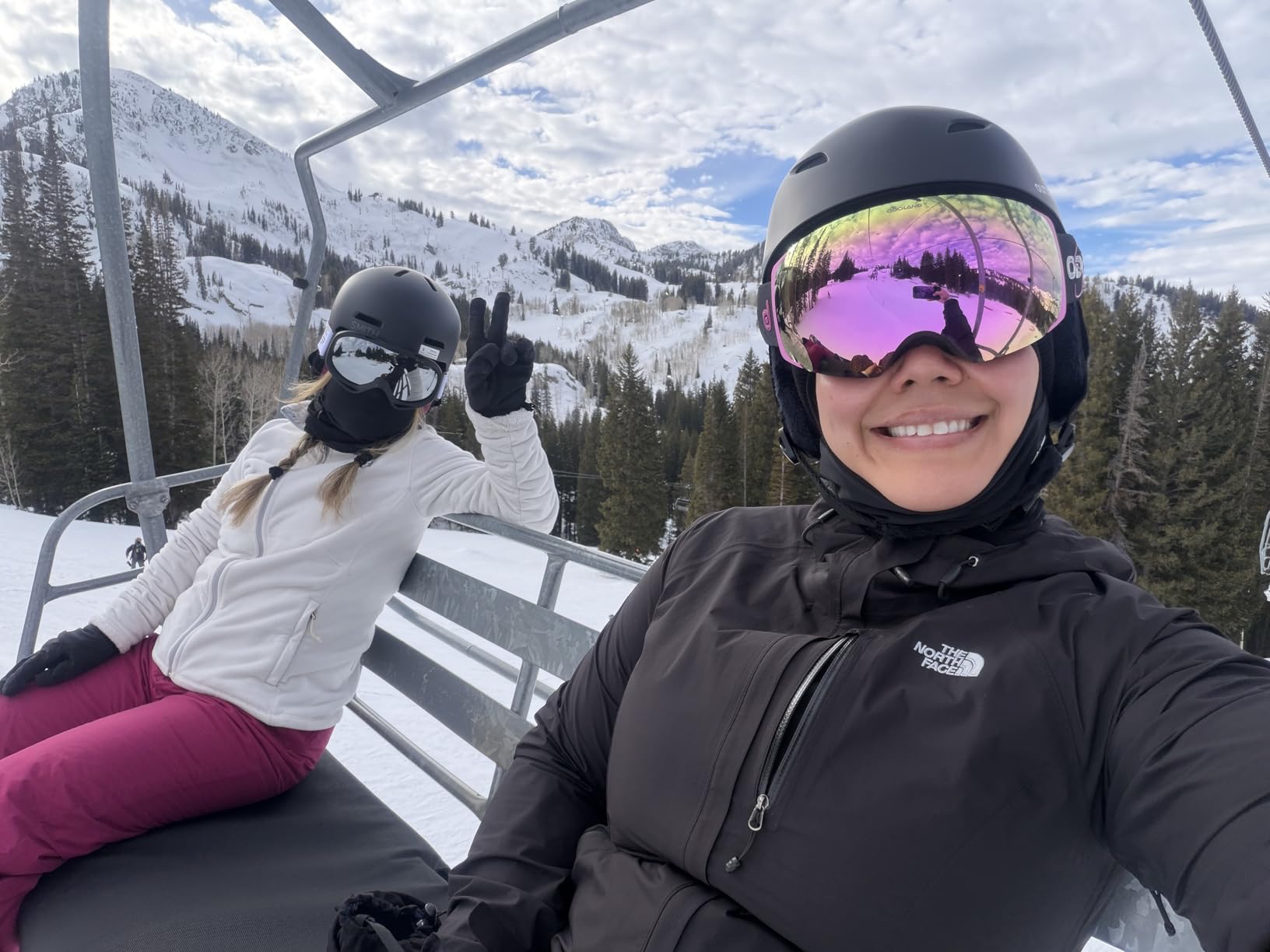
The rest of the package is built for a hard day out. You get a dual-layer lens with an anti-fog inner face and top and bottom ventilation channels, UV400 rating, an OTG chamber designed not to crush prescription frames, and a frameless design quoted at a 164-degree field of view. The magnetic locking system is tool-free, and the magnets themselves are described by owners as strong enough to survive a fall, which is the specific thing cheap magnetic systems get wrong.
Fogging is rarely reported as a problem with this set, which matters because flat light and heavy perspiration travel together. A silicone-lined strap holds the goggles in place without a helmet, though the strap has one real limitation: it can be adjusted but not shortened once stretched, so helmet-less use gets awkward after a season of use.
What to check before you buy
Check the profile against your face before anything else. A large top-to-bottom frame gives a wide view but can press on the nose bridge, and some wearers report that it obstructs breathing during hard efforts. If you wear a large frame, this is worth a try-on.
Also check what the second lens is. The yellow 80% lens is the reason to buy this set for flat light; the dark lens is there for sun. If your season is coastal fog, you will spend the whole winter in the yellow one, and that is fine.
Who should skip it
Skip it if you are a strong polarized-lens shopper, because these are not polarized at this tier, and polarization is not what you want in flat light anyway. Also skip it if you need a progressive insert rather than glasses clearance, since the OTG chamber accommodates frames but does not include an optical insert.
3. SMITH Squad Goggles – ChromaPop Contrast With a Bonus Low-Light Lens
SMITH Squad Goggles with ChromaPop Lens – Performance Snowsports Goggles with Replaceable Lens for Skiing & Snowboarding – for Men & Women – Black + ChromaPop Everyday Green Mirror
ChromaPop lens technology
Oversized cylindrical lens
Extra low-light lens included
Advanced anti-fog
Pros
- ChromaPop boosts contrast and definition
- Wide oversized cylindrical field of view
- Strong anti-fog across changing conditions
- Extra low-light lens included
- Integrates cleanly with Smith helmets
Cons
- Highest price in this lineup
- Sizing runs small to large across variants
The Squad is the only pick here built on a named contrast technology, and ChromaPop is the reason to look at it. Smith describes it as a lens engineered for definition, contrast, and natural color, and reviewers consistently credit it with making terrain easier to pick out in variable light rather than in a single flat condition.
It is also the only goggle in this group that ships with an extra low-light lens in the box, which means the flat-light configuration is the default configuration. The frame is semi-rimless with an oversized cylindrical lens giving a broad field of view, and the optics are described as sharp across that span.
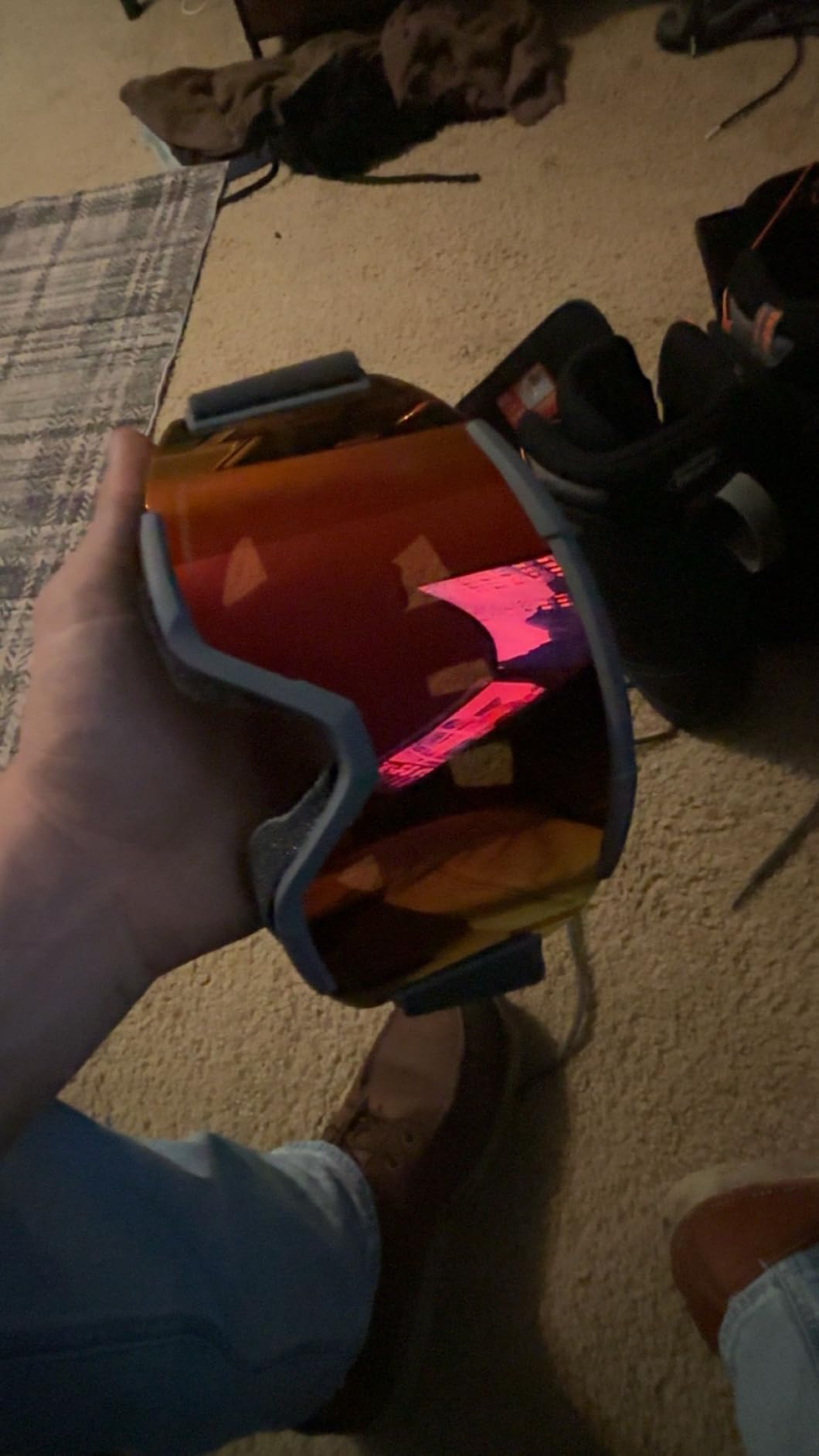
Anti-fog is the other headline. Smith claims best-in-class anti-fog performance, and the review base backs it up across changing conditions, with smudge- and moisture-resistant coatings helping when you are handling the lens on a lift. Venting is designed to integrate with Smith helmets, and that integration is noticeably better when the goggle and helmet are from the same brand.
The honest drawback is cost. This is the most expensive goggle in the roundup, and reviewers themselves acknowledge that value comparisons favour the budget models. There is also a fit complication: 11 color, lens, and size combinations including an oversized shape and a small size, so sizing runs from small to large and has to be matched deliberately rather than assumed.
What to check before you buy
Pick the lens, not just the frame color. This model is offered with several ChromaPop variants, and the ChromaPop Everyday Red Mirror option is a sunny-day lens while an extra low-light lens is the flat-light one. The mirror finishes lower transmission, so check the VLT before assuming every Squad listing is a cloud-day goggle.
Match the size to your helmet. If you already own Smith helmets, the integration is the reason to stretch here. If you do not, the venting still works but you lose some of the benefit that reviewers credit.
Who should skip it
Skip it if the budget is the deciding factor, because nothing else in this roundup is close to this price and the flat-light performance gap does not justify the difference for most riders. Also skip it if you need a cylindrical lens with a very high VLT for night skiing, since the oversized cylindrical shape here is optimized for the field of view rather than maximum light transmission.
4. OutdoorMaster PRO Snow Goggles – The Widest Low-Light Lens Range
OutdoorMaster Ski Goggles PRO, OTG Snow Goggles with Interchangeable Lens
22+ lens and frame variants
Light pink lens at 59% VLT
OTG frameless spherical design
100% UV400
Pros
- Magnetic attachment survives hard falls
- Wide distortion-free field of view
- Fits comfortably over prescription glasses
- Hard case and soft pouch included
- Highly adjustable strap for helmets
Cons
- Standard VLT 10% lens too dark for flat light
- Foam and microfiber lining can wear out
- Non-rubberized strap can slide
The OutdoorMaster PRO ranks fourth in Snow Sports Goggles and carries 4774 reviews at 4.6, which makes it the second most proven goggle in this group. What separates it from the other budget options is lens selection: 22 or more lens and frame variants, including a light pink lens at 59% VLT that sits right in the flat-light band and a photochromic rose covering 8% to 70%.
That range means you can build a two-lens or three-lens kit around this frame and cover fog, whiteout, and sun without changing goggles. The magnetic interchangeable lens system is tool-free, and the frameless large spherical lens gives a wide, distortion-free view, which is a real advantage when the terrain itself is hard to read.
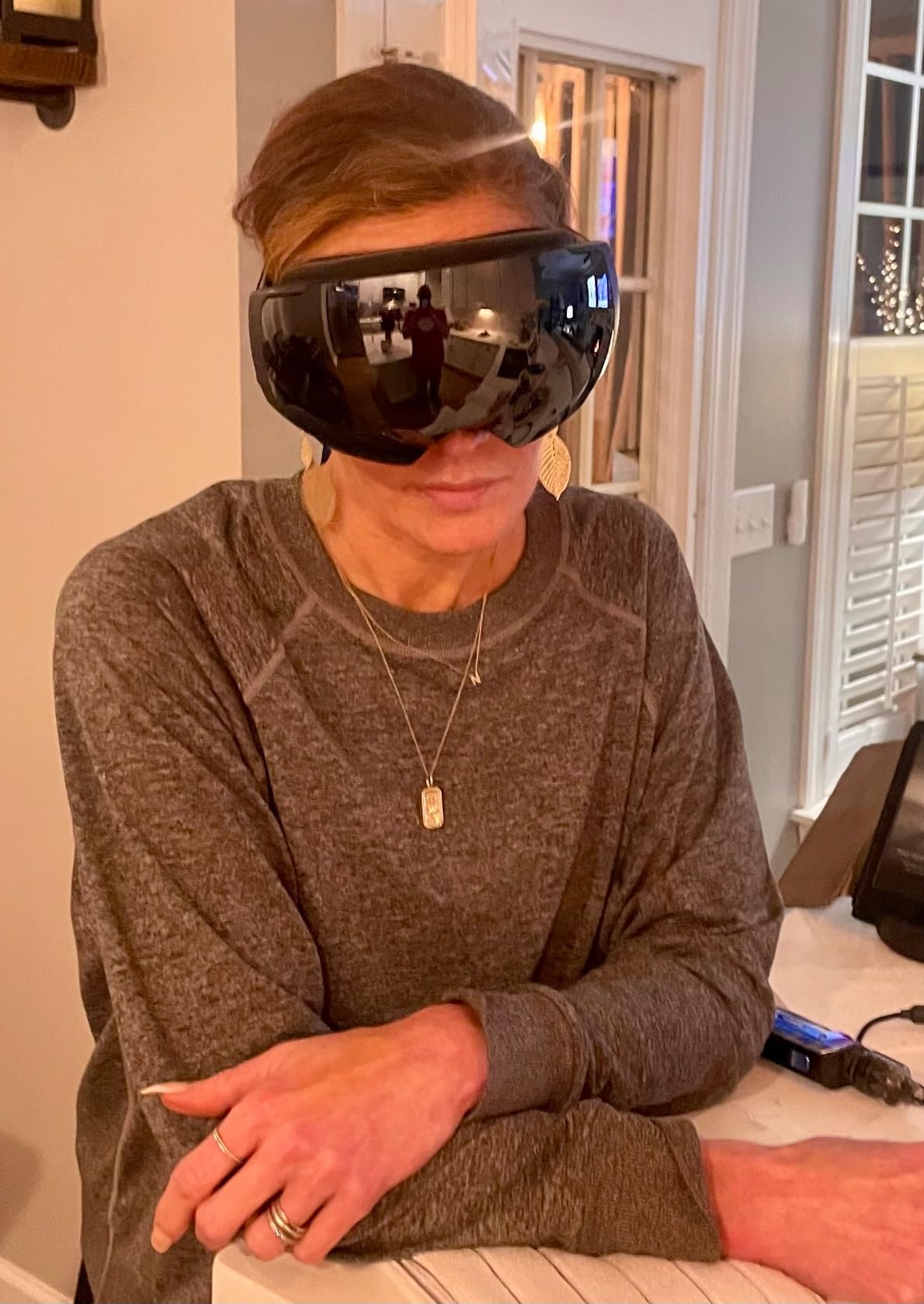
Everyday details are handled well for the price. You get an OTG design that fits over prescription glasses, anti-fog coating with 100% UV400 protection, and an extra long elastic strap for universal helmet compatibility. A protective hard case and a soft carrying pouch both come in the box, which is unusual at this tier and matters if you carry spare lenses.
The critical caveat is the default lens. The standard lens is a dark 10% VLT, and reviewers are blunt that it is too dark for shaded or cloudy terrain and makes terrain hard to read. That is not a flaw in the goggle; it is simply that this listing’s default configuration is a sun goggle. Buy the light pink 59% or the photochromic rose variant if your season is flat light.
What to check before you buy
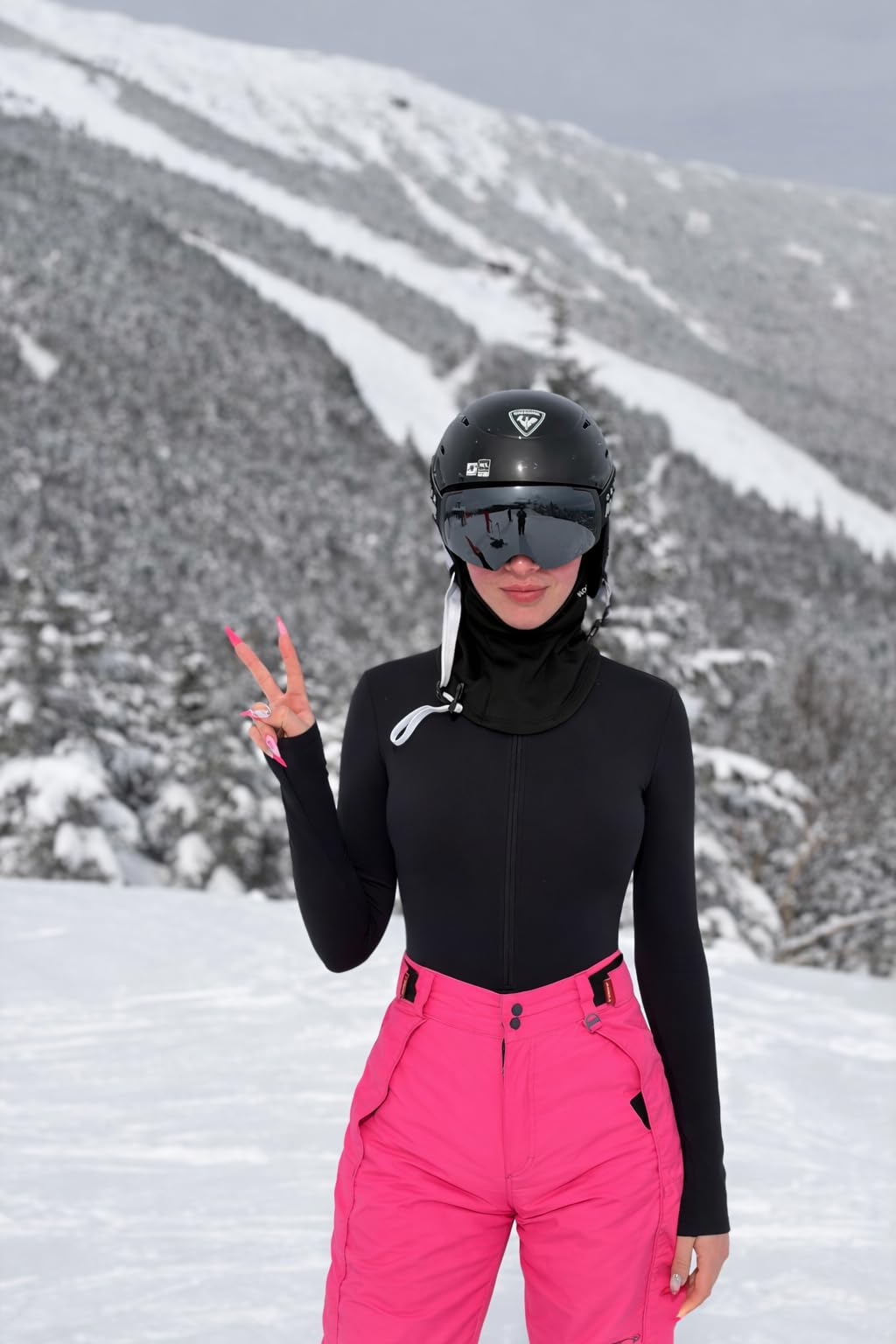
Check the lens VLT in the specific variant listing before you commit. The frame is excellent and completely neutral about conditions, so the flat-light decision is made entirely by which lens variant you select. A light pink 59% VLT lens is the closest thing this frame offers to a dedicated flat-light tint.
Check the strap interface too. The strap is extra long and works with or without a helmet, but the interior is not rubberized, so a strap keeper may be needed to stop it sliding on a beanie.
Who should skip it
Skip it if you want a single lens that handles every condition with no spare, because the default dark lens forces that second purchase. Skip it if you ride hard in falling snow and expect the frame to last a full professional season, since the foam and microfiber face lining are reported to wear out over time.
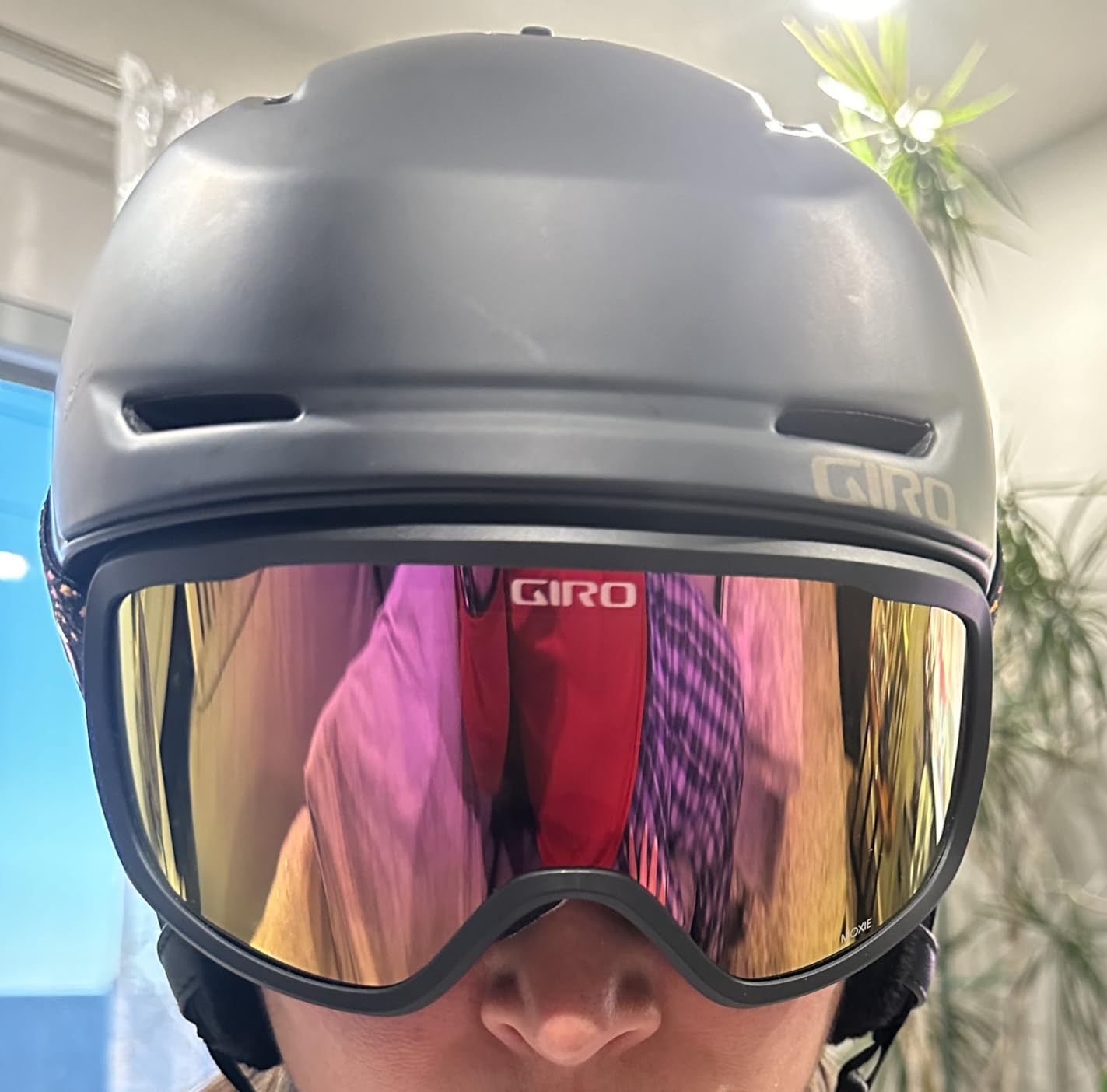
5. Giro Moxie Ski Goggles – Amber and Yellow Pair for Smaller Faces
Giro Moxie Ski Goggles – Snowboard Goggles for Women & Youth – White Core Light Strap with Amber Pink/Yellow Lenses
Amber pink lens at 41% VLT
Yellow lens at 77% VLT
Cylindrical thermoformed lens
2 year warranty
Pros
- Two lenses cover mixed cloud and storm riding
- Sized and styled for smaller faces
- Anti-fog coating works in fog
- Silicone-lined strap prevents slippage
- Two year manufacturer warranty
Cons
- Small-to-medium fit runs narrow on larger faces
- One reviewer reported heavy persistent fogging
- Limited strap colourway in this listing
The Giro Moxie is the pick for anyone who has been disappointed by adult-sized frames. It uses the EXV frame, which is tuned for women and youth with a wide field of view and a small-to-medium fit, and at 30 grams with dimensions of 10 by 2 by 2.7 inches it is the lightest goggle we looked at.
For flat light, the lens pairing is the interesting part and both lenses are specified. You get an amber pink lens at 41% VLT for mixed clouds and a yellow lens at 77% VLT for night and storm riding. That 77% figure is squarely in the flat-light target range, and the amber pink covers the bright-but-broken-cloud band above it.
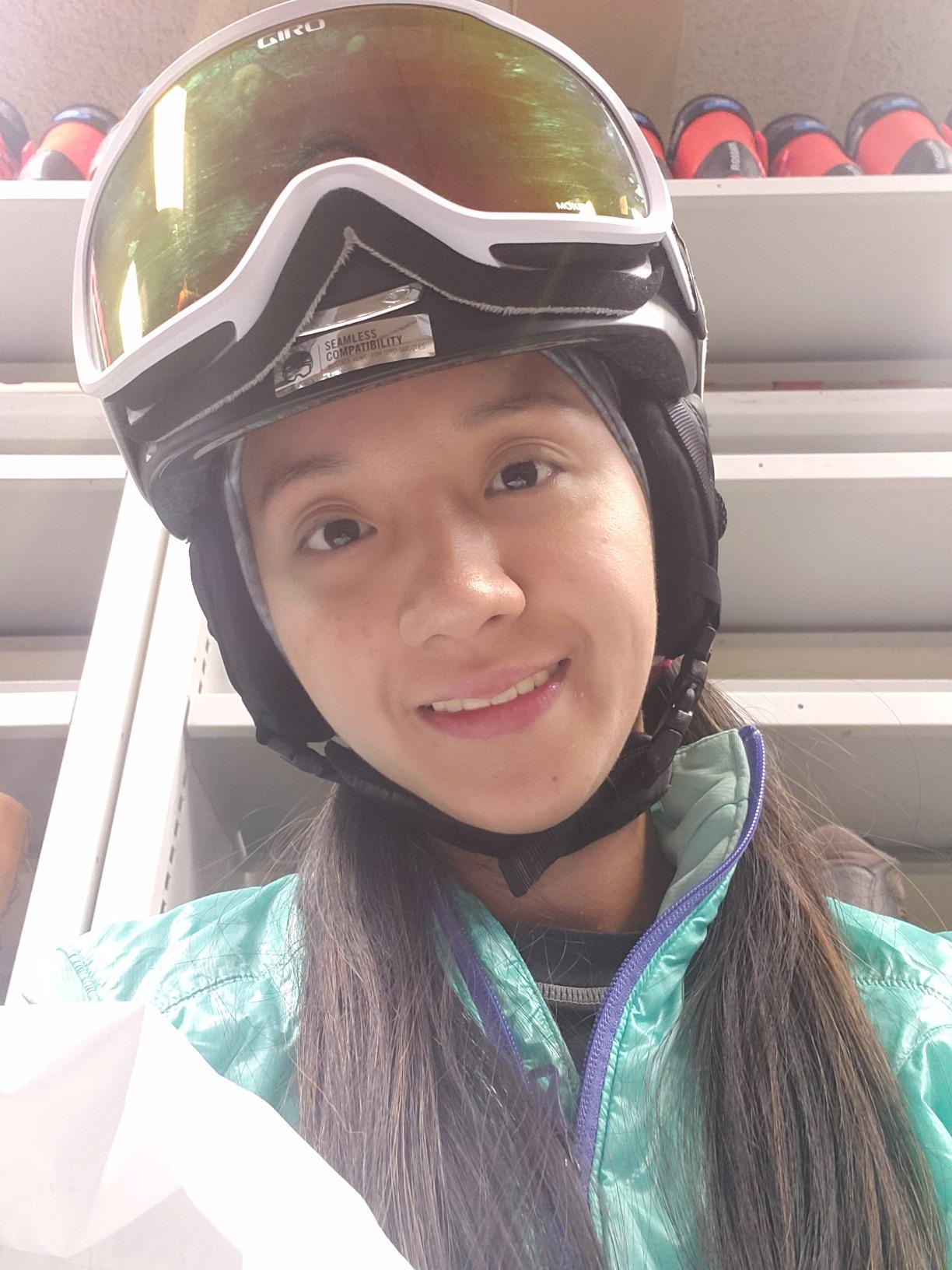
The rest is a well-judged build: cylindrical thermoformed lens, double-layer face foam with microfleece facing, anti-fog coating, an OTG friendly design with a silicone-lined strap, and direct integration with Giro helmets. There is also a two year manufacturer warranty, which is the longest stated warranty in this roundup.
Fit is the dividing line, and it divides clearly. Owners with smaller faces consistently love the sizing, while at least one reviewer found the nose bridge plastic intruding into the line of sight on a larger face. There is also a single report of heavy persistent fogging that made all-day riding frustrating, so the anti-fog claim is not unanimous across a 68-review base.
What to check before you buy
Measure the fit expectation rather than the spec. A stated small-to-medium fit that works beautifully for a smaller face can be actively uncomfortable on a larger one, and no amount of strap adjustment fixes a nose piece that sits inside your line of sight. If you are between sizes, this is a try-on purchase.
Check colorway availability in the listing you are using, since this specific listing presents a white core light strap and a limited set of options. If strap color matters to you, confirm before ordering.
Who should skip it
Skip it if you have a larger face, because the narrow fit and nose bridge intrusion are the recurring complaints. Also skip it if you ride in fog regularly and cannot risk an inconsistent anti-fog seal, and if you need a second lens beyond the two included.
6. Odoland Photochromic Ski Goggles – Self-Adjusting Tint Plus a Night Lens
Odoland Magnetic Photochromic Ski Goggles Interchangeable with 2 Lens
Photochromic auto-tint lens
Bonus VLT 80% yellow lens
16-magnet lens retention
164-degree field of view
Pros
- Lens adapts as light changes automatically
- Bonus VLT 80% yellow lens included
- 16-magnet hold stays secure
- 164-degree frameless peripheral vision
- Silicone-backed strap grips the helmet
Cons
- Photochromic darkening lags rapid light changes
- On-the-nose range may not replace a high-VLT lens in deep overcast
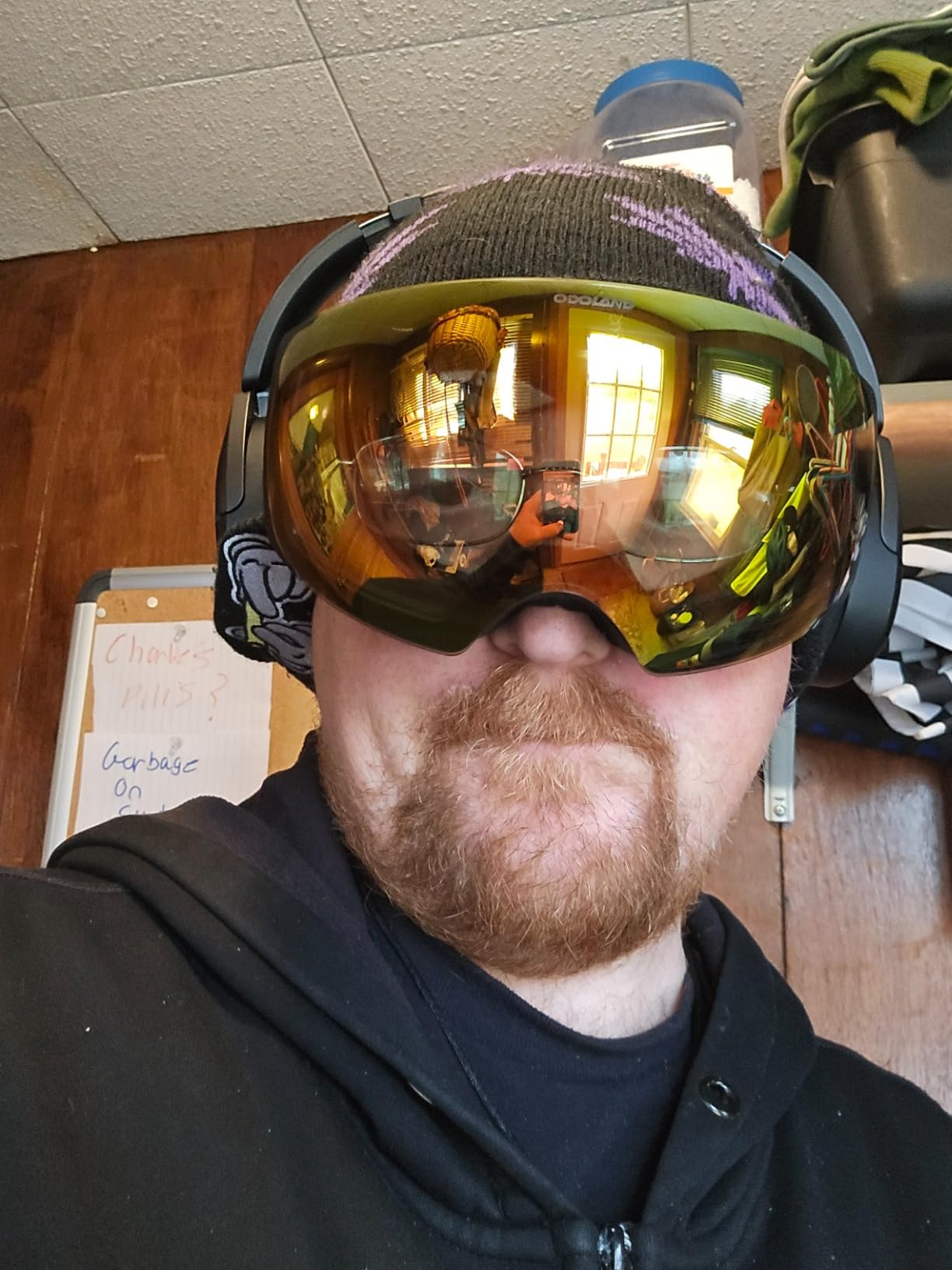
This is the most interesting answer to the variable light problem in the group, because it does something the other photochromic models here do not: it pairs a self-adjusting lens with a bonus VLT 80% yellow lens in the box. That is exactly the compromise reviewers describe, where the photochromic range alone falls short in deep overcast conditions but the spare lens covers it.
The lens attachment uses 16 strong magnets, and owners report the hold stays secure while actively skiing. The frameless spherical lens is quoted at 164 degrees of maximum peripheral vision, which helps when the terrain definition is coming from the lens tint rather than from strong shadows.
Comfort details are handled properly: an OTG design, a silicone-backed strap that grips the helmet to prevent slippage, UV400 protection, an anti-fog coating that still performs with glasses worn underneath, and two-way airflow vents. Seven colorways are offered including golden, purple, white blue, red, black, pink, and black blue.
The reservation is honest and worth stating plainly. Photochromic darkening can lag behind rapid light changes, and the on-the-nose range may not fully replace a dedicated high-VLT lens in deep overcast conditions. That is why the bonus lens matters, and why we would not buy this as a single-lens setup if the season is fog.
What to check before you buy
Check the size of the review base before you rely on the spec sheet. This is a newer listing with 164 reviews, which is enough to show a consistent pattern but not enough to judge long-term durability. The magnet count and the vent layout are both verifiable in the spec, so the tint behavior is the part you are buying on trust.
Check that you will actually use the bonus lens. The photochromic lens covers most variable days, and the 80% yellow lens is for the darkest flat conditions, so if you only ride on bluebird mornings this setup is more than you need.
Who should skip it
Skip it if you ride a coast with sudden heavy snowfall and want a single lens to do everything, because the photochromic response will not get you to 80% transmission fast enough mid-run. Also skip it if you dislike magnets near your face, which is a personal tolerance question some riders raise about stronger multi-magnet systems.
7. Whale Magnetic-Closure Ski Goggles – Budget Day and Night Lens Pair
Whale 2027 New Magnetic-Closure Ski Goggles, 2 Interchangeable Lenses/Night Skiing Light-Enhancing Lens, Anti-Fog, Unisex (Silver, Silver)
Two interchangeable lenses
Magnetic closure lens
Polycarbonate impact lens
UV400 protection
Pros
- Two lenses cover bright day and night skiing
- Magnets stay strong after a season of swapping
- True OTG fit clears wide frames
- Good wind coverage that seals under a helmet
- Light enough for winter commuting
Cons
- Lens scratches easily with grit or ice
- Anti-fog performance is inconsistent
- Not ideal for heavy professional use
The Whale set is the most straightforward two-lens package in the roundup: one lens for daytime and one light-enhancing lens for night skiing, held by a magnetic closure rather than clips. That combination makes it a genuine flat-light and night option without any premium technology, and it also works for non-ski winter use like hunting or commuting, which several owners mention.
The fit is where it surprises you relative to the tier. Owners report a true OTG fit that clears wide prescription frames without pressure points, and good wind coverage that seals properly under a helmet. The frame is cellulose propionate, the lens is impact-resistant polycarbonate, and the padding is soft foam.
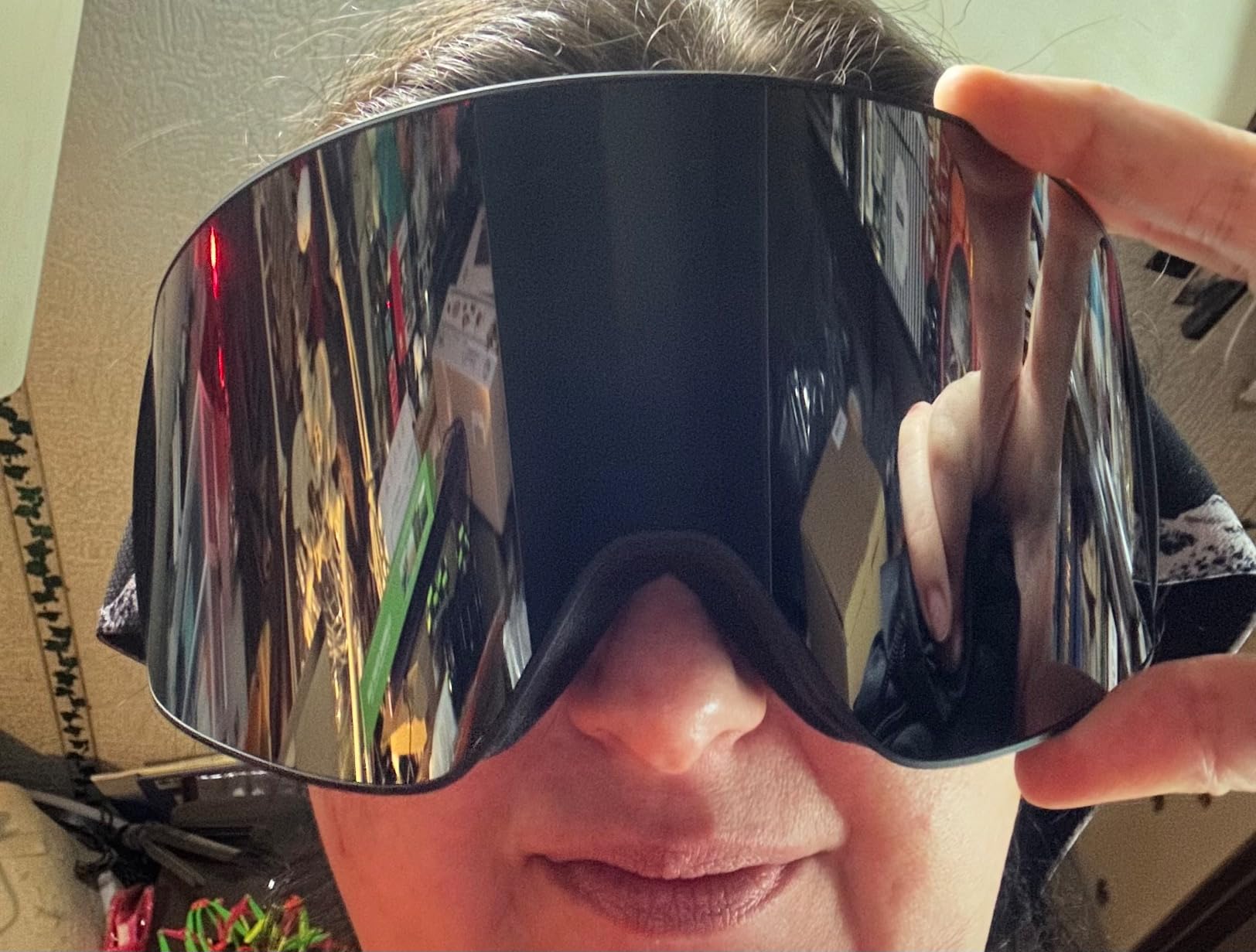
UV400 protection against snow blindness is stated, which is the correct baseline for a light-enhancing night lens, and a storage bag and cleaning cloth come in the box. With 109 reviews at 4.4, the pattern in feedback is consistent: people like the value and the fit, and they report lens durability as the weak point.
That durability issue is the one to take seriously for flat light specifically. Several reviewers report fine scratches appearing after first use with grit or ice, and if the lens is scratched while you are relying on it to reveal terrain relief, that matters more here than on a dark sun lens. Anti-fog performance is also inconsistent, with some users needing spray.
What to check before you buy
Check what the light-enhancing lens transmission actually is in the variant listing, because the color name is doing all the work here and VLT is the number that matters. If you can confirm 80% or higher, the set does what you need for flat light and night.
Check how you store it. A storage bag is included, and with scratch reports this frequent, keeping lenses in the pouch rather than loose in a vehicle is the difference between a season and a weekend of use.
Who should skip it
Skip it if you ride several days a week, since reviewers specifically flag it as not ideal for heavy multi-day professional use. Skip it if you scratch lenses easily through normal use or if inconsistent fogging would end your day, because both complaints appear repeatedly.
8. Odoland Anti-Fog Photochromic Ski Goggles – Built for Fog and Snowfall
Odoland Anti-Fog Photochromic Ski Goggles with Pattern Strap
Photochromic auto-tint lens
Two-way airflow vents
Italian defogging inner lens
Triple-layer face foam
Pros
- Photochromic removes the need to carry spare lenses
- Strong anti-fog with two-way airflow
- Shatter-proof scratch-resistant lens
- Triple-layer foam with fleece liner
- Embroidered pattern straps in several colours
Cons
- Single lens design with no high-VLT night backup
- Photochromic response slower in very cold conditions
Flat light and fog usually arrive together, which makes venting as important as tint. This Odoland model is the strongest venting package in the roundup: two-way airflow channels paired with a premium Italian defogging inner lens, on a lens that is also anti-scratch and shatter-proof with a bendable frame.
The photochromic lens changes tint with UV intensity, so the idea is that you stop carrying spare lenses as light shifts. Buyers generally appreciate the all-in-one simplicity, with a moderate share rating it 4 stars rather than 5, which usually signals that the concept lands but the tint range does not fully deliver.
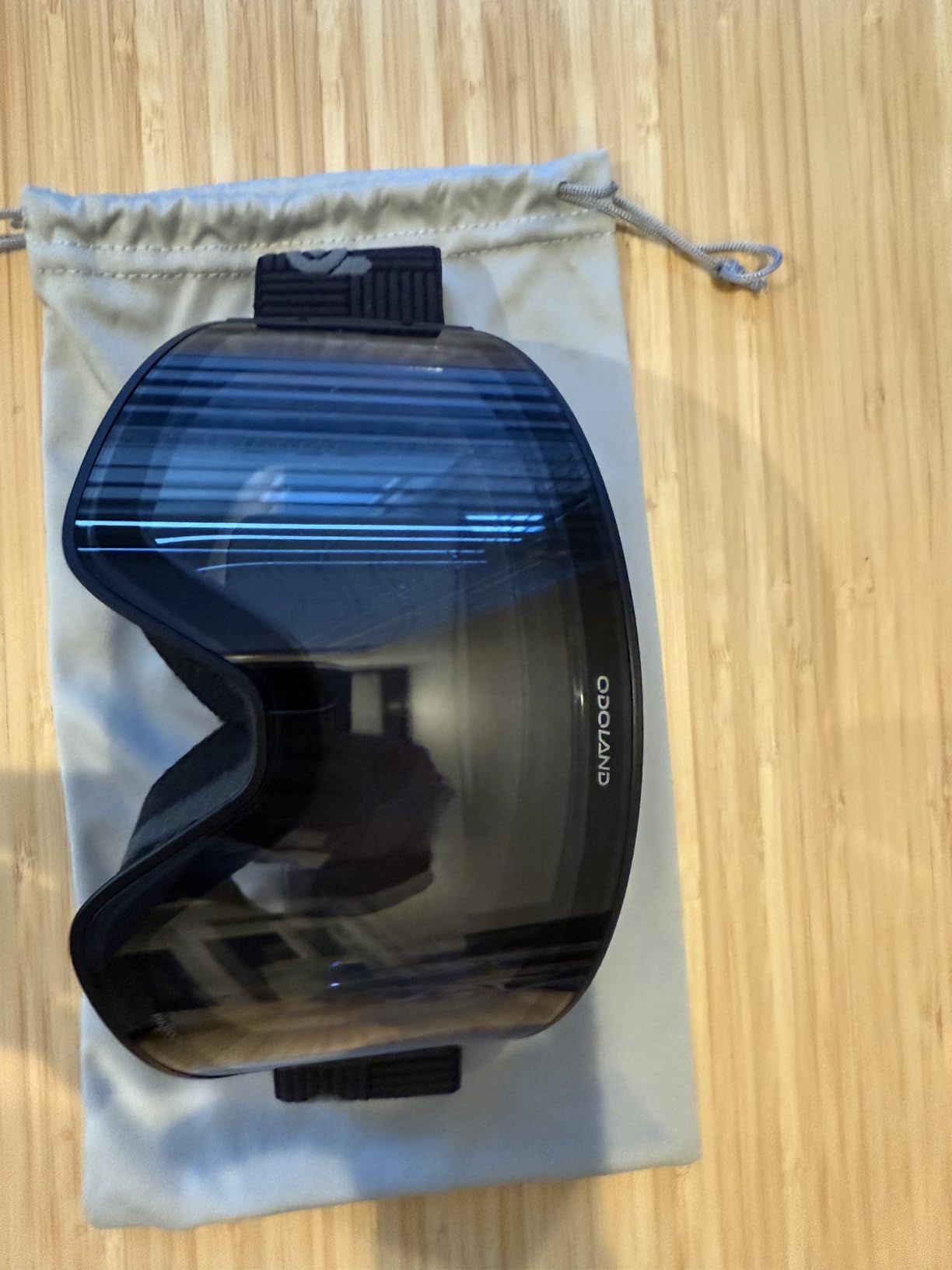
Comfort is well handled for long sessions, with contoured triple-layer face foam and a soft fleece liner, plus 99.99% UV400 protection. The strap is an embroidered pattern design in nine colorways including red, black, black blue, purple, white pink, golden, pink black, pink purple, and white blue, and the frame is designed for seamless helmet integration.
Two limits are worth planning around. It is a single-lens design, so there is no dedicated high-VLT backup for night skiing, which matters if your resort lights runs. And photochromic response speed can be slower in very cold conditions, which is exactly the temperature regime a coastal fog day sits in.
What to check before you buy
Check the transmission range in the spec before you commit, and accept that this is a fog and flat-light tool rather than a night-skiing one. If you plan to stay on after dark, buy a separate clear lens rather than expecting the photochromic to get there.
Check the vent position relative to your helmet. The honeycomb and two-way airflow design is only as good as the gap it has to breathe through, so a tight helmet seal can neutralize a very good venting system.
Who should skip it
Skip it if night skiing is part of your season, because there is no high-VLT spare lens in the package. Also skip it if you ride in extreme cold and need the tint to shift quickly, since very cold temperatures slow photochromic response according to owners.
9. KAPVOE Photochromic Ski Goggles K718 – S1 to S4 Contrast Tuning
KAPVOE Photochromic Ski Goggles Magnetic Anti Fog Lens Snow Goggles K718
Photochromic S1 to S4 transmission range
Honeycomb vent anti-fog
X-VYSN contrast coating
8-point magnetic system
Pros
- S1 to S4 range covers night through sun
- No reported fogging
- X-VYSN coating boosts contrast on flat snow
- Large OTG profile fits oversized frames
- Anti-slip silicone strap holds on a helmet
Cons
- Lens stayed too dark under bright snowmaking lights
- Frame does not cover the nose
- Small review base limits durability evidence
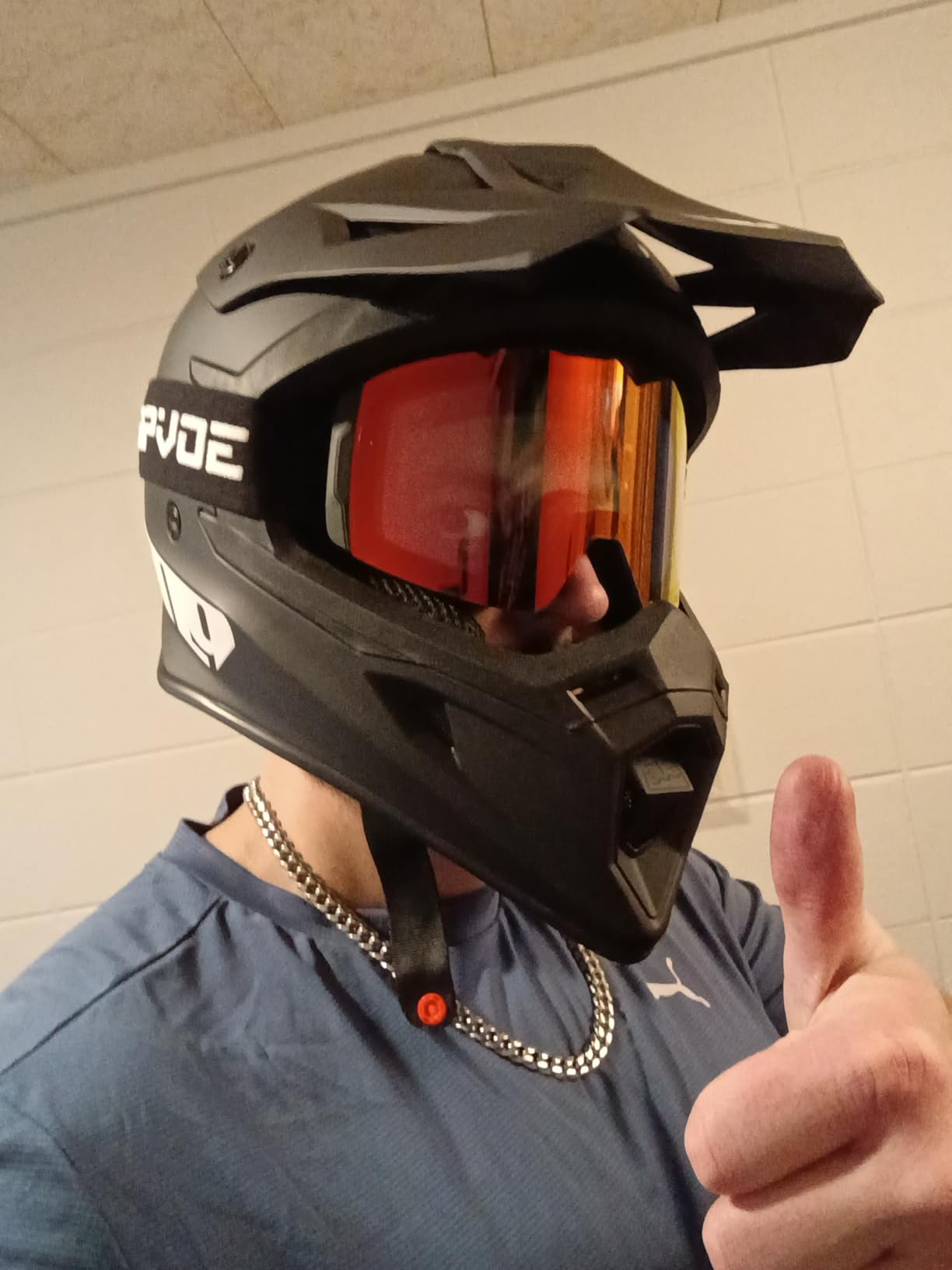
The KAPVOE K718 is the highest-rated goggle in this roundup at 4.8, with an 83% five-star share across its reviews. What makes it interesting for flat light is the combination of a photochromic lens with a four-step transmission range from S1 to S4 and the X-VYSN high-definition coating, described as boosting color, contrast, and brightness.
That coating is the part that speaks directly to flat light, because contrast enhancement is exactly what a grey sky takes away. The photochromic range then handles the day-to-night transition without a swap, and buyers specifically praise the transition during murky conditions along with the anti-fog performance.
The anti-fog implementation is compound eye anti-fog technology with honeycomb vent holes, plus an oleophobic coating that resists smudges and stains, which matters on a lens you touch repeatedly to adjust it. The lens attaches with an 8-point magnetic system, and the adjustable strap has inner anti-slip silicone. Four photochromic colorways are listed, each spanning S1 to S4.
Two limitations are consistent. One reviewer found the lens did not fully clear at night, attributing it to high-Kelvin snowmaking floodlights, which is a specific and useful warning for anyone at a floodlit resort. The frame also does not cover the nose, so cold air can find a route there on a lift. And with 37 reviews, the long-term durability evidence is thin, so treat the rating as promising rather than proven.
What to check before you buy
Check the S1 to S4 range against your resort’s lighting. If your mountain runs high-Kelvin snowmaking floodlights, ask whether you will be skiing at night, because that is the documented failure mode for this lens.
Check the nose coverage against your helmet. An uncovered nose bridge is a comfort and warmth factor rather than a lens factor, but on a cold chairlift it is the first thing you will notice.
Who should skip it
Skip it if you want the confidence of a large review base, because 37 reviews cannot tell you how the coating performs after two seasons of UV exposure. Also skip it if night skiing under floodlights is your primary use, for the reason above.
10. KAPVOE Photochromic OTG Goggles K724 – Flip-Up Lens Over Glasses
KAPVOE Photochromic OTG Ski Goggles with Magnetic Flip-Up Lens K724
Photochromic auto-tint lens
Flip-up magnetic lens
OTG fit over glasses
Optical insert compatible
Pros
- Photochromic lens covers day and night
- Flip-up lens clears vision on chairlifts
- Anti-fog held through a full ski day
- Fits over prescription glasses
- Sturdy case and soft pouch included
Cons
- Lens flips only about 90 degrees
- Full-face helmets restrict the flip
- Optical insert adaptor not included
- One reviewer received a used pair
The KAPVOE K724 is the pick for glasses wearers, and its distinguishing feature is the flip-up magnetic lens. Owners use it to see clearly on chairlifts and at night without removing the goggles entirely, which removes one of the most annoying parts of riding in prescription glasses. The lens is held by multiple strong magnets and secure clips.
The base lens is photochromic and changes color with UV intensity, so it covers day and night without a swap. The inner face uses compound eye anti-fog with honeycomb frame vents, and owners report anti-fog performance that held through a full ski day, which is a strong result for flat-light riding where you are often in moisture. The oleophobic surface also sheds melted snow water as you ride.
The OTG design is the reason to buy it. It is built to fit over prescription glasses, and it is also compatible with optical insert adaptor lenses for progressive wearers, though the adaptor itself is not included in the kit. That distinction matters: an OTG chamber fits over frames, while an insert replaces them, and progressive lens wearers generally need the insert rather than the over-glasses fit.
Those materials ship with a sturdy EVA case and a soft pouch, and the strap has inner anti-slip silicone for helmet stability. With 30 reviews at 4.4, feedback is consistent but small in volume.
What to check before you buy
Check your helmet type first. The flip range is about 90 degrees, and full-face helmets with chin guards restrict that motion, so the feature that sells this goggle may not work with your helmet at all.
Check whether you need frames or an insert. If you wear progressives, plan to source the optical insert adaptor separately, since the compatibility is advertised but the part is not in the box.
Who should skip it
Skip it if you ride a full-face helmet, because the flip-up lens is the core feature and it is restricted in that setup. Also skip it if you want a lens that flips completely out of the way, since 90 degrees can still sit awkwardly in your line of sight.
What Flat Light Is and Why Lens Tint Matters
Flat light happens when there is no direct sun and no strong sky-to-ground contrast. Overcast cloud, marine layer, fog banks, and active snowfall all produce the same effect: everything in your field of view ends up roughly the same brightness.
Skiing depends on reading subtle value differences in the snow surface. A shadow across a roll, a compression in a mogul field, a wind ripple on a loading, or the darker band that marks a cliff edge all appear as very small brightness changes. Under a bright sky these read clearly because the surface is lit and the shaded areas are not. In flat light the shaded areas receive sky light instead of direct sun, so the difference collapses.
A low light lens is engineered to restore that difference. The word tint is misleading here, because a lens color is only the visible result. What actually matters is which wavelengths the lens blocks. Flat light is dominated by blue and cyan light, and a yellow, amber, or persimmon lens absorbs that band while passing the longer wavelengths that carry most of the terrain detail. One tester on SkiTalk with lab access put it plainly: filtering around 580nm matters more for snow and mountain detail than the 480nm blue-filtering that dominates marketing copy, and the same thread notes that Zeiss Sonar style lenses are called the best in shade and high cloud, while losing that edge in bright low cloud and fog.
So the honest summary is that a low light lens is doing real optical work, not just making the world look yellow. The cost is that everything also gets a warm cast, which is why some skiers prefer rose over yellow even when both transmit a similar amount of light. Preference between working tints is genuinely individual, and testing two tints before committing to a season is the only way to settle it.
VLT: The Visible Light Transmission Range You Want
For flat light, look for a lens between 60% and 80% VLT. Below 50% you lose the terrain, above 85% you lose the contrast boost that makes the lens worth owning, and 80% and above starts to bleed into night-skiing territory where you are genuinely asking for maximum brightness.
Visible light transmission is simply the percentage of visible light passing through the lens. A lens rated 10% VLT passes a tenth of the light and is built for a bluebird day. A lens rated 77% VLT passes more than three quarters of it and is built for cloud. This single number does more to determine whether a goggle works in your conditions than the brand name on the frame.
Here is the condition-to-VLT lookup most skiers need. Use it as a range, because every resort distributes light a little differently.
Flat light and high cloud: 60-80% VLT. This is the core target for the roundup.
Fog and blowing snow: 70-85% VLT. Fog is brighter than it looks because snow reflects every photon you send at it.
Whiteout during active snowfall: 80-90% VLT. Here you want maximum light, even at the cost of some contrast.
Night skiing under floodlights: 85-95% VLT. Floodlit snow is bright; a 77% lens can be almost as good.
Bluebird and direct sun: 10-20% VLT. A mirror coating will lower transmission further.
Partly cloudy with sun-to-cloud transitions: 25-40% VLT, or carry a photochromic lens.
One caution on specification language. Brands sometimes quote a range rather than a single figure, and some list VLT for the dark lens only in the product title. If a listing says 20-70%, that is a family of lenses across variants, not a single lens. Read the specific variant you are buying, because the flat-light number for the model you receive may be at the top of that range and the one in the marketing image may be at the bottom.
Lens Color for Flat Light: Yellow, Amber, Rose, Persimmon and Green
For flat light, yellow and amber are the two colors with the widest community consensus behind them, and persimmon and rose are the close alternatives. Each works, and the choice comes down to how you read terrain rather than whether you can see it.
Yellow: The most popular flat-light tint by a wide margin, usually landing between 60% and 80% VLT. It gives the biggest contrast jump and the most natural sense of terrain relief. The Giro Moxie yellow at 77% VLT and the Odoland yellow at 80% VLT are both textbook examples.
Amber: Slightly deeper and warmer than yellow, sitting more often in the 45-65% VLT band. Amber holds up better when the light is bright but cloud-broken rather than truly grey, and it reads well on groomers where the corduroy lines supply the contrast instead of the lens.
Persimmon: A darker relative of orange that still blocks the blue band. One tester on SkiTalk reported the Hi Viz Persimmon as having the best contrast of anything tried, and community consensus on the snowboardingforum lists plain orange as a long-standing recommendation because it highlights variation in the snow.
Rose and pink: Similar blocking power to amber with a cooler cast on the snow, which many riders describe as less eye strain over a full day. The Giro amber pink at 41% VLT is the mixed-cloud option in that pair, and Smith I/O MAG riders on r/skiing use a rose storm lens as their all-day driver except on the sunniest days.
Green: A compromise tint that sits between neutral and contrast, useful if yellow feels overwhelming. It is the least discussed color in flat-light threads and the hardest to find in this product category.
Clear: A clear lens is not a flat-light lens. It is for night skiing, indoor slopes, and very heavy snowfall where the only goal is maximum transmission.
On polarized lenses, the answer for flat light is generally no. Polarization suppresses glare by cutting reflected light, and reflected light in overcast conditions is precisely the light you want bouncing back off the snow into your eyes. A polarized lens in flat weather typically reads flatter and duller than the same lens unpolarized, which is the opposite of what you are shopping for.
Lens Technology Compared: ChromaPop, Aurora, X-VYSN and Photochromic
No editorial competitor covers this, which is why forums keep asking the same question. The named lens technologies in this lineup are ChromaPop, Aurora, X-VYSN, and plain photochromic, and they solve different problems rather than competing on a single scale.
ChromaPop is Smith proprietary filtering aimed at definition, contrast, and natural color, and it is the technology the SkiTalk consensus most often pairs with the Zeiss Sonar lens as the top flat-light performer. The trade-off is that it comes attached to a premium frame, and ChromaPop variants differ from each other: the low-light ChromaPop options are the ones worth having in cloud, while darker ChromaPop mirrors lose VLT and are poor flat-light choices.
Aurora is Wildhorn’s system on the Roca, sold with 100% UV protection and paired with anti-fog and anti-scratch coatings. It is not marketed as a contrast technology the way ChromaPop is, and the value of the Roca in flat light comes from the swap speed and lens range rather than from optical filtering. Extra Aurora lenses are purchased separately, which is the main thing to budget for.
X-VYSN is the KAPVOE K718 high-definition coating, described by the brand as boosting color, contrast, and brightness. On the K718 it sits underneath a photochromic lens with an S1 to S4 transmission range, which makes it the most interesting combination in this group: a coating for contrast plus a lens that moves across four light categories on its own.
Photochromic lenses respond to UV intensity rather than to visible brightness, and that distinction causes the single most common complaint in reviews. On overcast days, where UV is low all day, a photochromic lens may never darken much, which is fine. The problem is the transition: riders report the tint lagging abrupt sun-to-cloud changes, and the KAPVOE owners specifically note the lens staying too dark under bright high-Kelvin snowmaking floodlights. The honest verdict from forums is that no goggle fully solves sudden sun-to-flat-light transitions, and several long-time skiers simply describe those moments as part of the sport.
Here is how the four stack up for the specific question of flat light. ChromaPop and Aurora require you to pick the correct lens, which means carrying a low-VLT option if the forecast is grey. X-VYSN sits on a self-adjusting lens, so it is less of a decision and more of a trust exercise. Photochromic alone is a compromise: it reduces swapping, but on-the-nose photochromic ranges may not fully replace a dedicated high-VLT lens in deep overcast conditions. That is precisely why three of the photochromic models here ship with a bonus VLT 80% yellow lens.
One Lens or Two: All-Condition Lens Systems
If you ski flat light more than eight days a season, run two lenses. If you ski mostly sunny days and want one lens to do everything, buy the best dark lens you can afford and skip the rest of this article.
The two-lens case is straightforward. A dark lens between 10% and 20% VLT covers sun, and a yellow or amber lens between 60% and 80% VLT covers cloud, fog, and most of night skiing. That pairing, in a magnetic frame, is the setup the Wildhorn Roca and the Odoland set deliver, and the Roca’s sub-60-second swap is the practical difference between the two on a day when the weather turns at lunch.
Forums make the case for magnetic systems on speed grounds: skiers on r/skiing who ride night skiing, indoor, flat light, and sunny days all reach for magnetic swaps, and the specific complaint about clip systems is that they are slow and force you to clean the lenses afterward every time. The counter-argument from the same discussions is that magnetic lenses can pop out or fail to seat, so the mechanism quality matters more than the mechanism type. The Roca’s under-60-second claim and the Odoland’s reported strong magnets are the two data points in this group that speak to it.
Photochromic is the third option, and it is a real compromise rather than a solution. Three of the four photochromic models here include a bonus high-VLT lens precisely because the photochromic range alone falls short. If you buy one, buy the version with the spare lens, and treat the photochromic as the lens for the transitional part of the day rather than as a replacement for an 80% VLT lens in deep overcast.
A fourth option exists if you are the type who wants a single solution and accepts a narrower tint palette: a fixed low-light lens plus a clear lens for night. It is less versatile in sun and it means carrying more, which is why it rarely appears at the top of forum recommendations.
Anti-Fog, Venting and Magnetic Versus Clip Lens Swaps
Fogging in flat light is usually a venting problem, not a lens problem, because flat light and moisture arrive together through falling snow, blowing snow, and perspiration you cannot see evaporating in cold air.
The design elements that matter are simple. A dual-layer lens with an anti-fog inner face gives you two surfaces separated by a gap, which slows condensation. Two-way ventilation channels, usually positioned top and bottom, let warm moist air escape and draw in drier air. An oleophobic or anti-smudge surface keeps the lens clear when you handle it. And foam that sits flat against your face without gaps limits the warm air that feeds the fog in the first place.
Among these picks, the Odoland Anti-Fog Photochromic has the most deliberate venting package with two-way airflow and an Italian defogging inner lens, and the two Odoland two-lens and photochromic sets also use dual-layer anti-fog construction with top and bottom channels. The Giro Moxie has one documented report of heavy persistent fogging, and the Whale set has inconsistent anti-fog reports, so those are worth testing early in the season.
On lens swaps, the choice is between magnetic and clip-lock. Magnetic is faster, which matters when light changes mid-run, and the reviews across this group confirm that the magnets hold through crashes on the Wildhorn Roca, the Odoland set, the Whale set, and both KAPVOE models. Clip systems cost less and cannot pop out, but they are slower and reviewers report more lens cleaning after swaps. Neither is wrong; the deciding factor is how often your light actually changes.
One last fogging note from the forums that applies to any goggle: a fogged lens in flat light is a safety problem, not an annoyance, because you cannot fix it by squinting. If you ride hard and sweat, prioritize venting and a good face seal over any other feature after lens tint.
How to Choose Flat Light Goggles in Four Steps
Start from the condition, not the brand. If your home mountain sits under cloud, fog, or frequent snowfall, you are a flat-light buyer and should target 60-80% VLT. If you ski on a mostly sunny inland mountain, you are buying a sun goggle that occasionally needs a spare low-light lens.
Set the VLT target. Flat light is 60-80% VLT. Fog is 70-85%. Whiteout is 80-90%. Night skiing under floodlights is 85-95%. If a listing does not give you a VLT figure, treat the color name as decoration and look elsewhere.
Choose the tint by preference, not by superstition. Yellow gives the biggest contrast jump and the most natural terrain reading. Amber sits slightly deeper and suits bright-but-broken cloud. Persimmon and rose are close alternatives. Community consensus is split enough that testing two tints is the only real way to choose, and the Giro Moxie pair and Odoland set both give you two to test.
Decide on lens technology. ChromaPop and Aurora mean you choose the lens and carry spares. Photochromic means fewer swaps but a narrower guaranteed range. A contrast coating under a photochromic lens, as on the KAPVOE K718, is the most interesting hybrid in this group. Skip polarized lenses for flat light, because cutting reflected snow light removes contrast in exactly the conditions where you need it.
Verify fit and system details. Confirm OTG compatibility or optical insert support if you wear glasses, confirm the frame size against your helmet, and confirm the swap mechanism works with your helmet setup. These three checks eliminate most returns.
On price tiers, the structure of this roundup reflects what we found: the budget tier delivers everything that matters for flat light, because a VLT figure and a magnetic swap are the two things that change your visibility, and both are available cheaply. The premium tier buys optical filtering and coating durability. If your season is genuinely grey, spend on the light lens first.
Two buyer groups deserve a specific note. If you are over 40 or have an existing eye condition, move toward the higher end of the 60-80% band, because contrast sensitivity declines gradually and the lens that worked a decade ago can stop working without you noticing. If you are new this season and buying a first good pair, skip the photochromic options entirely and buy a fixed high-VLT lens, since predictable performance beats adaptive performance while you are still learning to read terrain.
Fit, Helmet Compatibility and Prescription Inserts
A goggle that does not seal across your cheekbones will fog and leak wind no matter how good the lens is, so fit is where budget should be spent after tint is settled.
Look for a silicone-lined or silicone-backed strap, which is the difference between a goggle that stays put under a helmet and one that slides on a beanie. The Wildhorn Roca uses a soft-touch anti-slip frame coating and an extra long strap, the Giro Moxie has a silicone-lined strap, and both KAPVOE models and the Odoland photochromic use anti-slip silicone on the strap interior. The OutdoorMaster PRO strap is extra long but not rubberized, so a strap keeper may be needed.
For glasses wearers, understand the two options. OTG means the goggle is shaped to sit over your frames with enough volume in the chamber, which works for single-vision lenses and most moderate prescriptions. An optical insert means a prescription lens drops into the goggle in place of the standard lens, which is what progressive lens wearers usually need. The KAPVOE K724 is the only pick here that is compatible with an insert adaptor, and the adaptor is not included. If you also fly drones or ride a bike, our FPV goggle picks cover the visor-style setups where the same over-glasses fit question comes up in a different form.
Helmet integration is the last check. The SMITH Squad and Giro Moxie both describe direct integration with their own brand’s helmets for venting, and that integration is meaningfully better than a generic strap when the vents line up. If you already own a helmet from one of those brands, that is a reasonable tiebreaker.
Frequently Asked Questions
What is a low light lens for ski goggles?
A low light lens is a ski goggle lens built for overcast, foggy, and snowy conditions, usually tinted yellow, amber, or persimmon and transmitting 60% to 80% of visible light. It works by filtering blue and cyan wavelengths that flatten the appearance of snow, which restores contrast between bumps, rolls, and shadows. Most people can tell the difference within a single run on a grey day.
What are the best ski goggles that don’t fog up?
Anti-fog performance comes from three things: a dual-layer lens with an anti-fog inner face, two-way ventilation channels positioned at the top and bottom of the frame, and a face seal that sits flat without gaps. Among the ten we compared, the Odoland Anti-Fog Photochromic has the most deliberate venting package, and the two Odoland sets add top and bottom channels to a dual-layer lens. Venting only works if your helmet leaves the frame room to breathe.
What color ski goggle lens is best for overcast conditions?
Yellow is the most widely recommended color for overcast skiing because it gives the largest contrast jump while staying bright, and lenses rated between 60% and 80% visible light transmission are the target range. Amber works well when the sky is bright but cloud-broken rather than truly grey, and persimmon and rose are close alternatives that block the same blue band. A dark lens below 50% transmission is the wrong choice, because it hides the terrain you are trying to read.
Which ski goggles are best for flat light?
For flat light specifically, the Wildhorn Roca is our top pick because it combines a magnetic lens swap that finishes in under 60 seconds with a large, well-proven review base. The Odoland Magnetic two-lens set is the best value, since it includes a VLT 80% yellow low-light lens already in the box. The SMITH Squad is the premium pick, offering ChromaPop contrast optics and a bonus low-light lens.
What are the best ski goggles for low-light conditions?
Look for a lens between 60% and 80% VLT, which covers flat light, most fog, and often night skiing under floodlights. The Giro Moxie pairs a 77% VLT yellow lens with a 41% VLT amber pink lens for mixed cloud. The Odoland set includes an 80% VLT yellow lens. For a lens that adjusts itself across conditions, the KAPVOE K718 photochromic runs an S1 to S4 range, though it is not paired with a high-VLT spare.
What is the best ski goggle lens for all conditions?
No single fixed lens covers every condition well, which is why two-lens systems dominate: a 10% to 20% VLT dark lens for sun and a 60% to 80% VLT yellow or amber lens for cloud and fog. Photochromic lenses narrow that gap by adjusting with UV intensity, but their range may not fully replace a dedicated high-VLT lens in deep overcast conditions, which is why the best photochromic packages include a bonus low-light lens.
What color goggle lens is best for low-light conditions?
Yellow is the standard answer for low light, usually at 60% to 80% VLT, because it blocks the blue and cyan bands that flatten snow contrast. Amber and persimmon perform similarly and some riders prefer the cooler cast of rose. In heavy snowfall and whiteout, push higher to 80% to 90% VLT for maximum transmission. Clear lenses are for night skiing and floodlit slopes, not for flat daylight.
The Verdict for Flat Light Days
For the best snow goggles for flat light in 2026, start with the number, not the logo. A lens between 60% and 80% visible light transmission in yellow, amber, or persimmon is what makes terrain readable under cloud, fog, and snowfall, and every other feature is secondary to getting that figure right.
Our top pick is the Wildhorn Roca, because a sub-60-second magnetic swap and the largest proven review base in this group matter most on days when the light changes twice. Buy the Odoland Magnetic set if you want a proven VLT 80% yellow lens in the box today and would rather not make a second purchase. Spend up for the SMITH Squad if ChromaPop contrast optics and a bundled low-light lens justify the higher cost.
Whatever you choose, check the VLT of the exact variant before you order, confirm it fits over your glasses or takes an insert, and plan for one spare lens. That last step is what separates people who enjoy grey-day skiing from people who spend it squinting.