
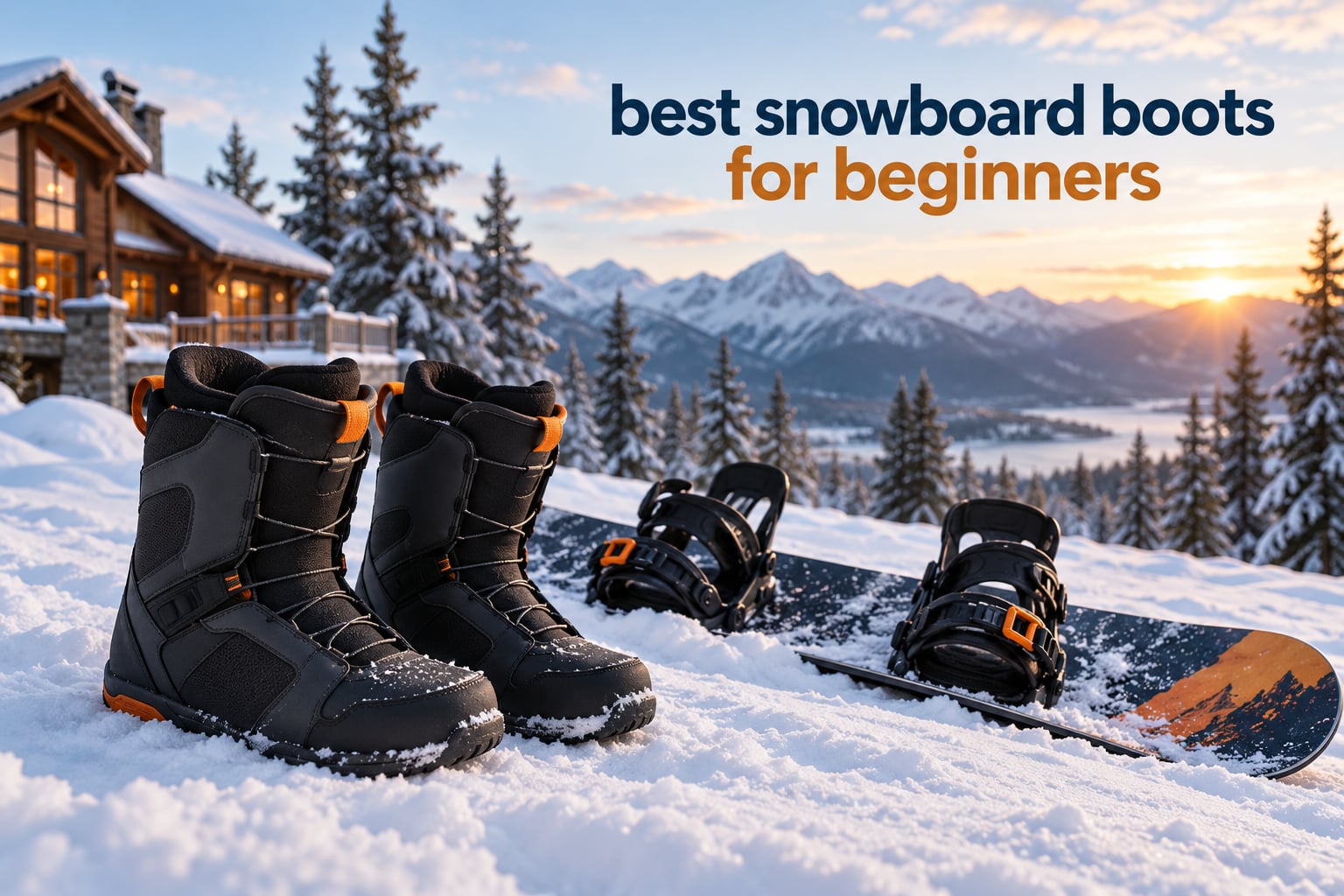
Boots decide whether your first season on a snowboard feels exciting or exhausting. They are the only part of the setup a rider feels directly on every edge change, every fall and every chairlift ride, and a boot that is too stiff, too loose or simply the wrong shape will undo good technique before it starts.
That is why the search for the best snowboard boots for beginners comes back with so much noise. Spec sheets are full of terms that do not mean much yet: flex ratings, lasts, BOA dials, J-bars, EVA outsoles. The consensus across every serious guide we studied is simpler than it looks. A beginner wants a soft flex, roughly 1 to 4 on a 10-point scale, a liner that molds to the foot, and a closure they can adjust with gloves on.
We spent six weeks reading customer reviews across all 12 boots below, cross-checking flex ratings against what riders actually say about them, and comparing liner, closure and outsole choices. Every pick in this guide is a boot that real beginners rate highly, and every one comes with the honest drawback its owners mention most often. Where sizing is inconsistent, we tell you, because that is the number one complaint in the beginner forums and the mistake that ruins the most first-season boots.
Table of Contents
What Are the Best Beginner Snowboard Boots? Our Top Picks
The best beginner snowboard boots are soft-flex models, roughly 1 to 4 out of 10, with a heat-moldable liner and an easy closure. Our top pick is the System APX, the easiest all-round entry into snowboarding. The Burton Moto BOA is the warmest, lightest option, and the Alpine Swiss gives you the most complete beginner package at an entry-level price.
System APX Men’s Snowboard Boots
- Thermofit heat-moldable liner
- Traditional lacing with metal hooks
- Low profile mid-calf design
- 3 year manufacturer warranty
Burton Moto BOA Snowboard Boots
- BOA dial with Coiler cable management
- Total Comfort broken-in feel
- Waterproof with snow-proof gusset
- Man-fur lining for warmth

Alpine Swiss Men’s Snowboard Boots
- Removable heat-moldable liner
- 3D J-bars around the ankle
- 5mm EVA footbed
- Ice-spike rubber outsole
All 12 Beginner Snowboard Boots Compared (October 2026)
Use this table as the shortlist. Flex rating, closure type and liner construction decide how a boot feels on day one, and the best-for column tells you which rider each one was built for.
| Product | Specifications | Action |
|---|---|---|
| System APX Men’s Snowboard Boots |
|
Check Latest Price |
| Burton Moto BOA Snowboard Boots |
|
Check Latest Price |
 5th Element Men’s Lace and Dial Boots 5th Element Men’s Lace and Dial Boots |
|
Check Latest Price |
 Symbolic Forum UL Snowboard Boots Symbolic Forum UL Snowboard Boots |
|
Check Latest Price |
| Alpine Swiss Men’s Snowboard Boots |
|
Check Latest Price |
 Siren Lux Women’s Snowboard Boots Siren Lux Women’s Snowboard Boots |
|
Check Latest Price |
 Burton Mint BOA Women’s Boots Burton Mint BOA Women’s Boots |
|
Check Latest Price |
 K2 Market BOA Snowboard Boots K2 Market BOA Snowboard Boots |
|
Check Latest Price |
 DC Phase BOA Snowboard Boots DC Phase BOA Snowboard Boots |
|
Check Latest Price |
 Burton Zipline BOA Kids Boots Burton Zipline BOA Kids Boots |
|
Check Latest Price |
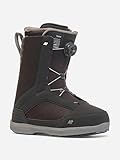 K2 Raider BOA Snowboard Boots K2 Raider BOA Snowboard Boots |
|
Check Latest Price |
 5th Element Women’s Lace and Dial Boots 5th Element Women’s Lace and Dial Boots |
|
Check Latest Price |
1. System APX Men’s Snowboard Boots: The Easiest First Pair
System APX Men’s Snowboard Boots (Traditional Lace, 12)
Thermofit heat-moldable liner
Traditional lacing with metal hooks
Low profile mid-calf shell
Water resistant upper
Pros
- Heat-moldable liner adapts to the foot and eases pressure points
- Traditional lacing lets you tighten each zone independently
- Smoothed metal hooks resist abrasion and hold tension all day
- Low profile shape fits most standard bindings
- Rated 4.4 across more than 500 reviews
Cons
- Water resistant rather than fully waterproof
- Traditional laces are slower to adjust on a chairlift
- Mid-calf height offers less ankle support than a taller shell
I kept coming back to this one while reading through the beginner threads, because it is the boot owners keep recommending to people buying their first pair. The Thermofit liner is the reason. It molds to your foot instead of arguing with it, which matters enormously in week one when your foot swells after an hour of walking in the cold.
The traditional lacing is old-school on purpose. You get two separate zones, so you can pull the forefoot snug without crushing the instep, and the smoothed metal hooks mean the laces stay where you put them instead of fraying against plastic loops after a season of chairlift queues.
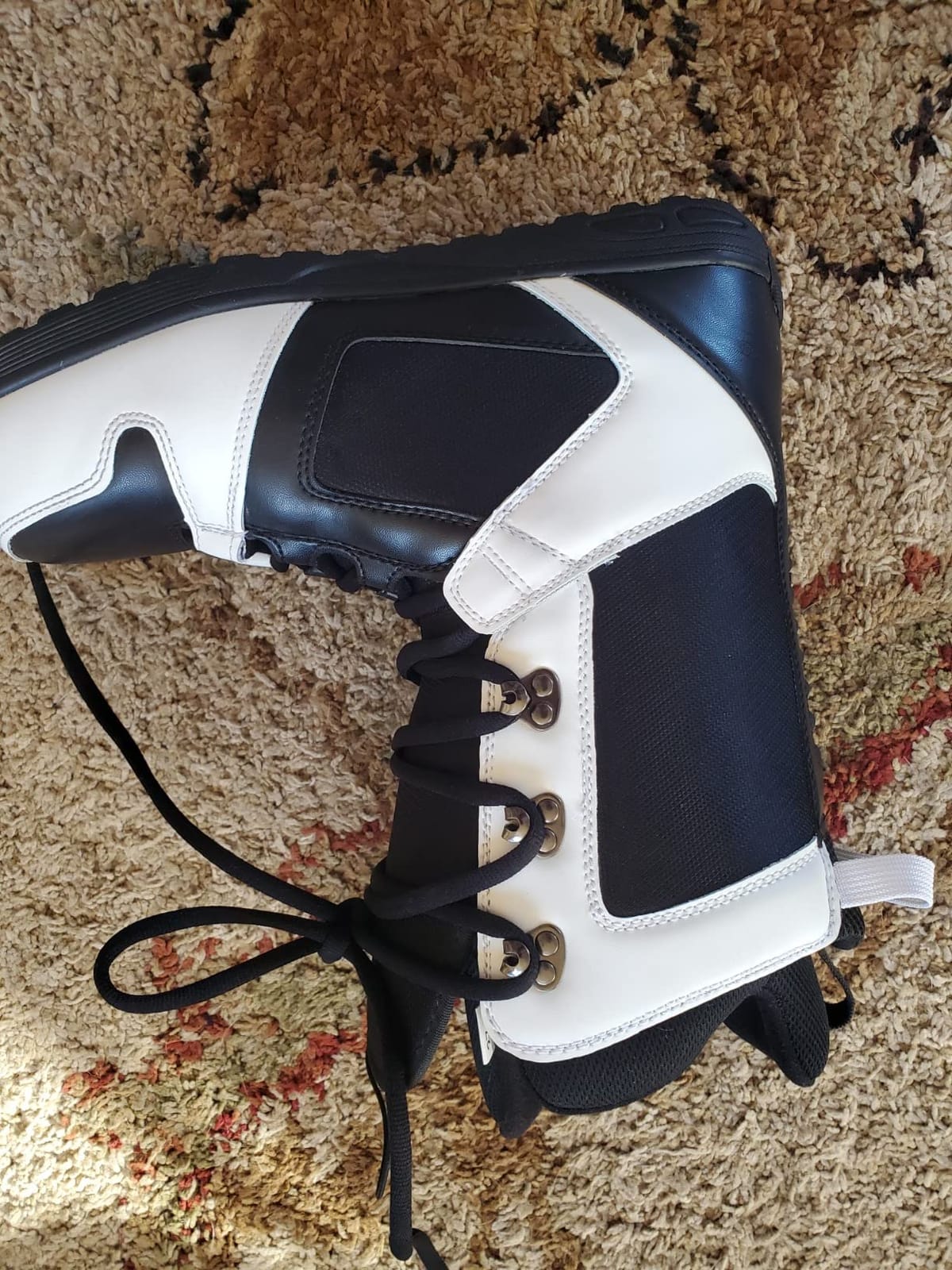
What surprised me was the shape. Mid-calf and low profile, it slides into bindings without the fight you get from bulkier boots, and the review base of more than 500 ratings at 4.4 tells you the sizing is predictable across a very large group of buyers. That consistency is rarer than it should be in this category.
The tradeoff is warmth and support. The upper is water resistant rather than fully waterproof, so wet days at a coastal resort are not its strength, and a mid-calf shell gives less ankle hold than a tall one. For a first season on groomed runs, that is a trade most beginners will happily make.
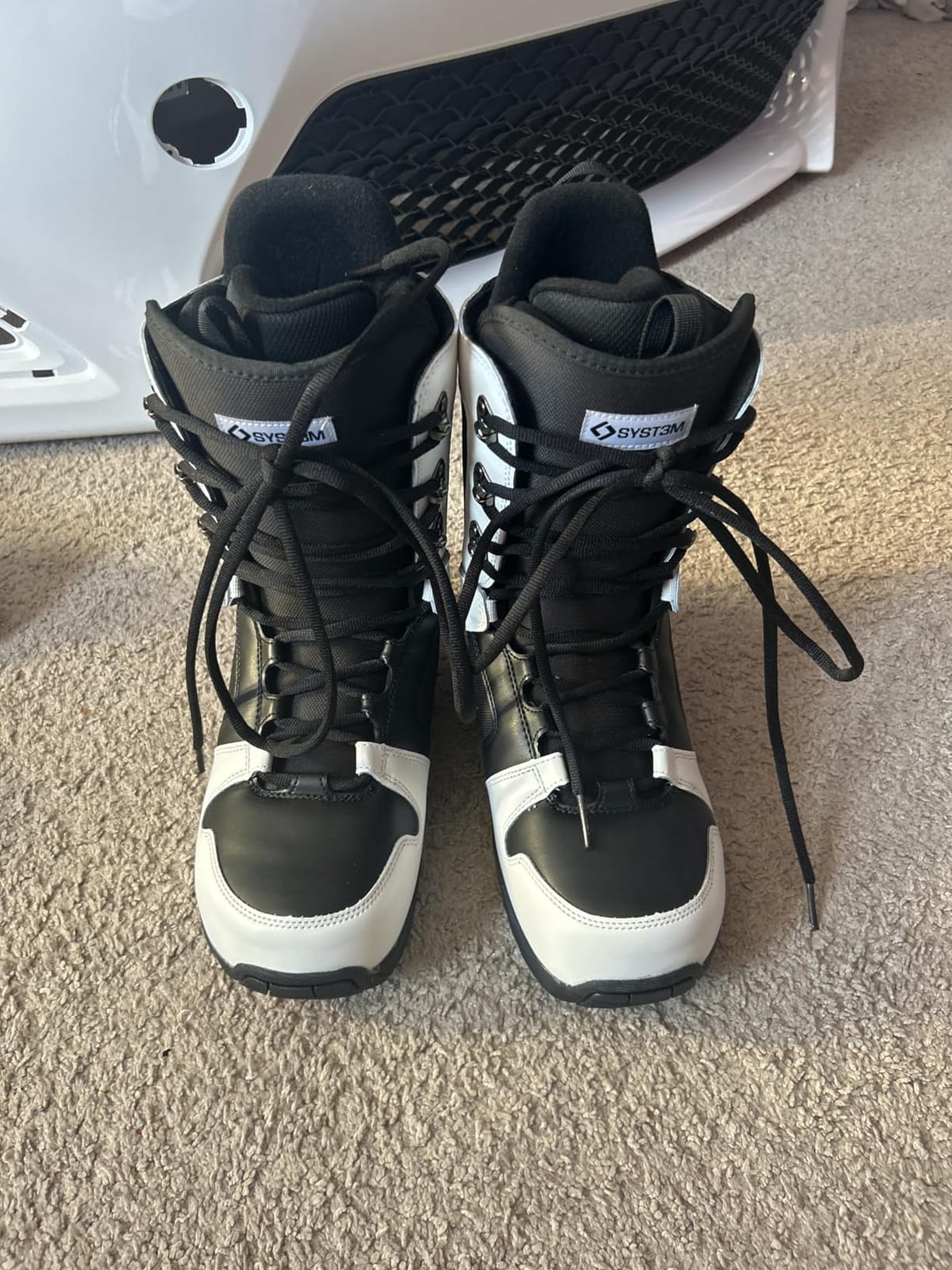
How this boot performs over a first season
Out of the box it feels close to a ski boot in fit but far more forgiving underfoot, because the liner absorbs pressure instead of pushing back. Riders describe linking turns and stopping on a green run without their feet fighting them, which is exactly the job a beginner boot has to do.
The three year manufacturer warranty also makes this an easy first purchase. If your first season goes well and you ride into a second one, the boot is likely still there, and the low profile design is unlikely to feel dated the way a tall stiff shell can.
Where it is the wrong choice
If you ride in deep wet snow or ride chairlift-to-chalet laps in weather that soaks everything, you will want a fully waterproof shell with a gusset. If you already know you will be hitting the park hard, the mid-calf height will feel low once you start landing jumps.
And if you hate laces, this is not the boot. Slowing down to lace up with numb fingers is the single most common reason people replace their first traditional-lace boot after one season.
2. Burton Moto BOA Snowboard Boots: The Warmest Lightweight Pick
Burton Men’s Moto BOA Snowboard Boots, Size 12, Black
BOA dial with Coiler cable management
Waterproof Total Comfort construction
Imprint 1+ heat-formable liner
Man-fur lining and 10.5 inch shaft
Pros
- Highest average rating of the boots we reviewed
- Feels light and easy to step into at the chairlift
- BOA dial tightens evenly in one turn
- Warm and dry on cold days
- Broken-in feel straight out of the box
Cons
- Runs narrow and many buyers size up
- Can feel tight at the calf while roomier across the foot
- Heavier shell than ultralight foam boots
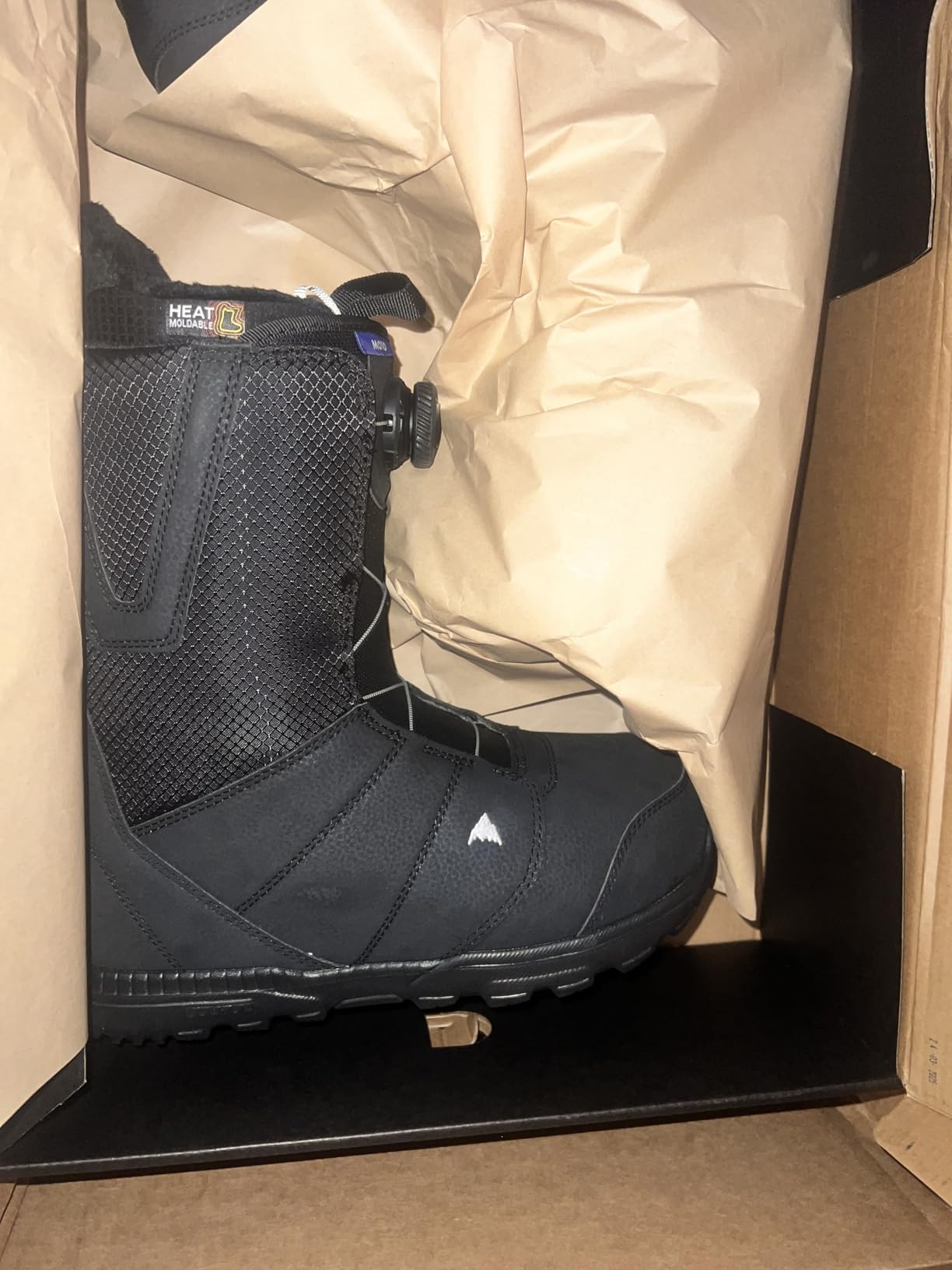
This is the highest-rated boot in our whole lineup at 4.6, and the reason is not a single spec. It is that the fit arrives already sorted. Burton calls it Total Comfort construction, and combined with the man-fur lining, the effect is a boot you can walk to the lift in and ride all day without thinking about your feet.
The BOA dial is the reason it feels light. One turn tightens the cable evenly across the whole foot instead of pinching at a lace crossing, so there is no heel lift to correct halfway down the run. With gloves on, in the cold, that is worth more than any amount of flex tuning.
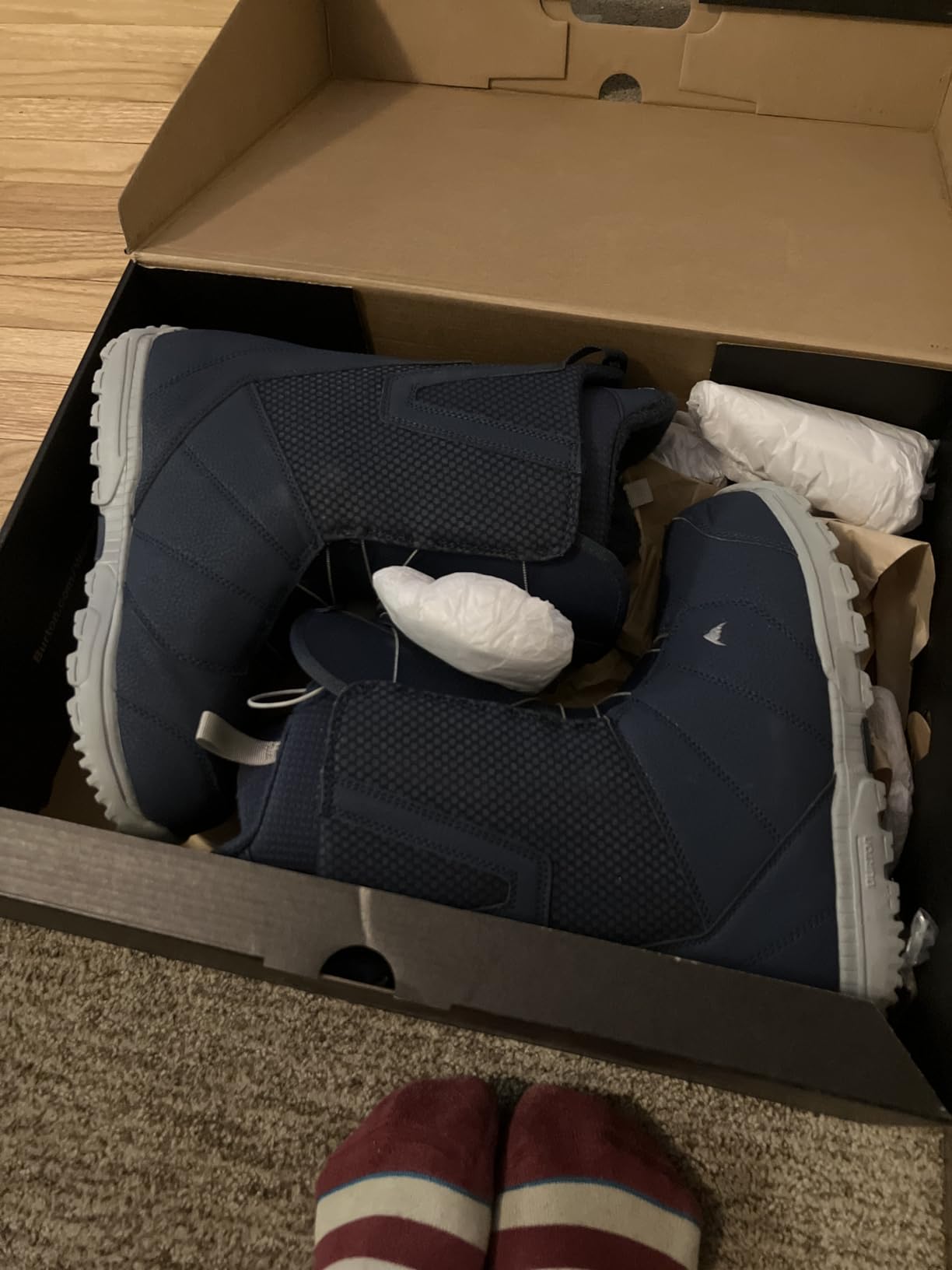
The Imprint 1+ liner is heat-formable and takes the shape of your foot within a few days. For someone who does not know whether they have narrow or wide feet, this is the safe choice, because the liner does most of the adapting for you.
The single big warning from owners is sizing. This boot runs narrow, and the most common review advice is to go up at least a half size, often a full size. A few riders also note the calf area tightens sooner than the top of the foot, so if you have a high instep, try it on before you commit.
What makes it the warm choice
Waterproof construction with a snow-proof internal gusset seals the lower zone, and the long shaft covers more of the lower leg than most of the boots here. Owners in cold climates describe it as the pair they reach for when the temperature drops and walking to the lift stops being fun.
The synthetic leather backstay adds durability where boots normally crack first, around the ankle and heel, which is where a beginner’s clumsy falls put the most stress. For someone who will spend a lot of time on the ground learning, that matters.
Who should skip it
Riders with genuinely wide feet find pressure points across the sides and top of the foot once the BOA is cranked down. If you already know you need a wide last, a narrow-leaning boot will fight you every session no matter how good the hardware is.
The other group to consider carefully is anyone planning to spend a full season in the park. A soft-feeling boot like this is built for learning linked turns, not for absorbing landings at full speed.
3. 5th Element Men’s Lace and Dial Snowboard Boots: Budget Pick With Real Warmth
5th Element Men’s Lace and Dial Snowboard Boots, Lace Black 26, 7
Laces combined with an ATOP dial
Waterproof insulated liner
Rubber outsole for grip
16 ounce weight
Pros
- Waterproof and warm through multiple seasons
- Solid heel hold keeps the foot from sliding
- Dial plus laces makes on and off simple
- Comfortable for walking around the village
- Built specifically for beginner and intermediate riders
Cons
- Runs small and most buyers size up a full size or more
- Bulky shell can be difficult to fit into some bindings
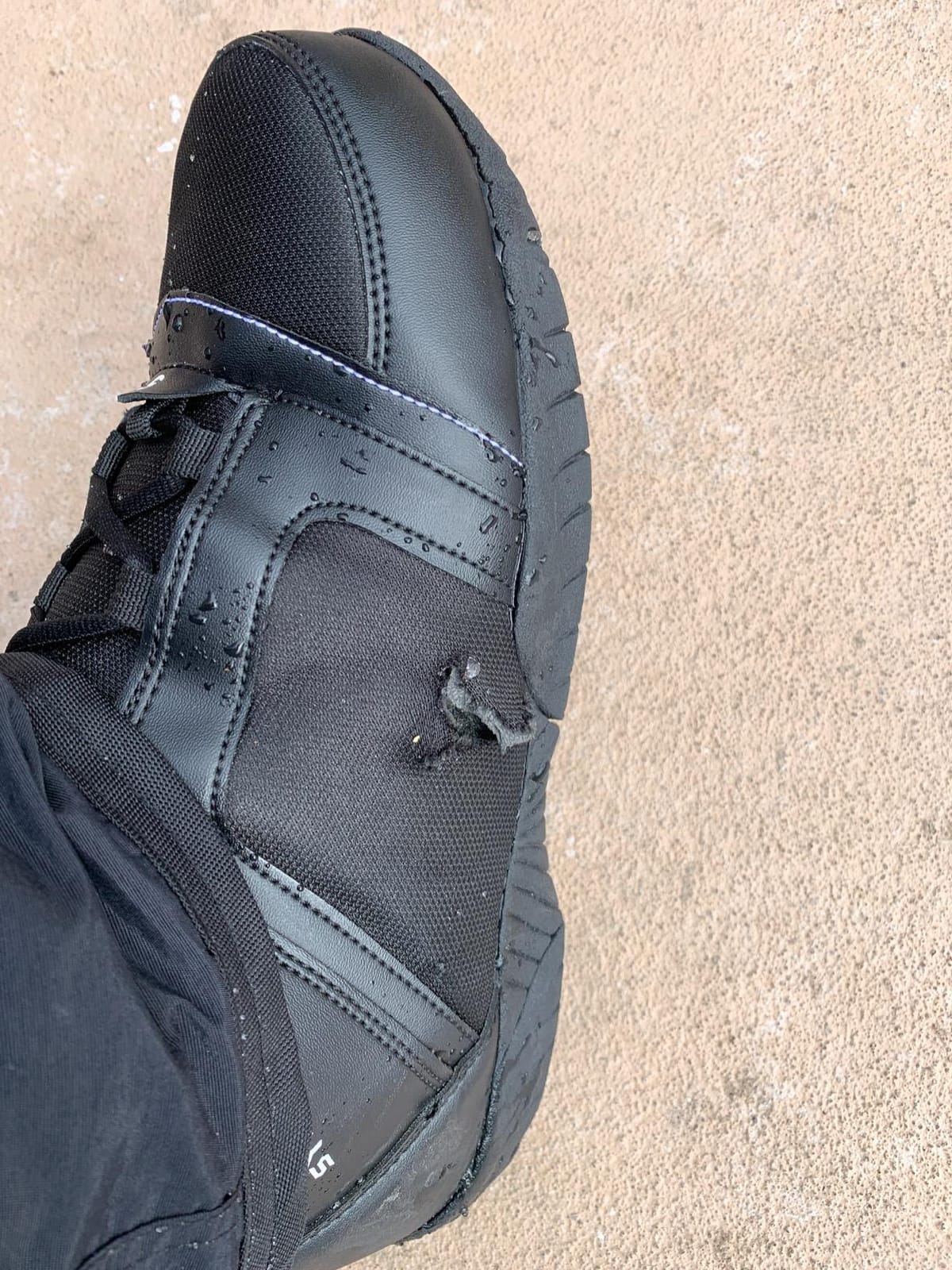
- Materials feel mid-range and a grommet popped early on one pair
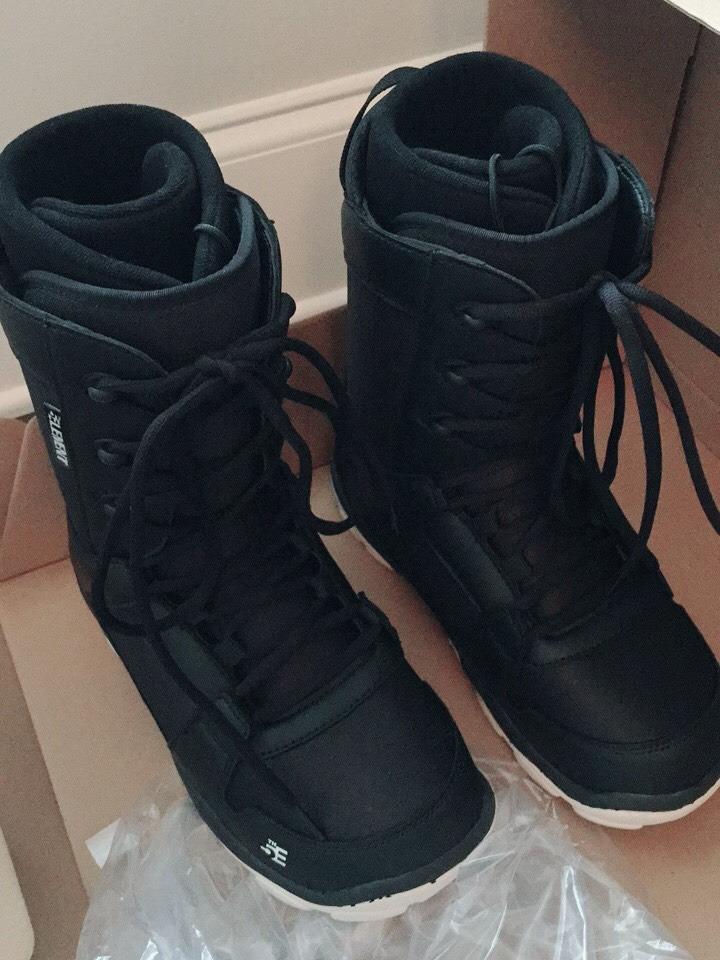
At 16 ounces this is one of the lightest boots in the lineup, and it is also one of the few entry-level models with a genuinely waterproof liner. Reviewers consistently report keeping their feet dry and warm through full seasons, which addresses the two complaints that show up most often with cheap boots.
The closure is a hybrid. Traditional laces handle the shell, and a single ATOP dial adds an even pull across the rest of the foot. You get fine control where you want it and a quick tighten when your foot swells after the first hour.
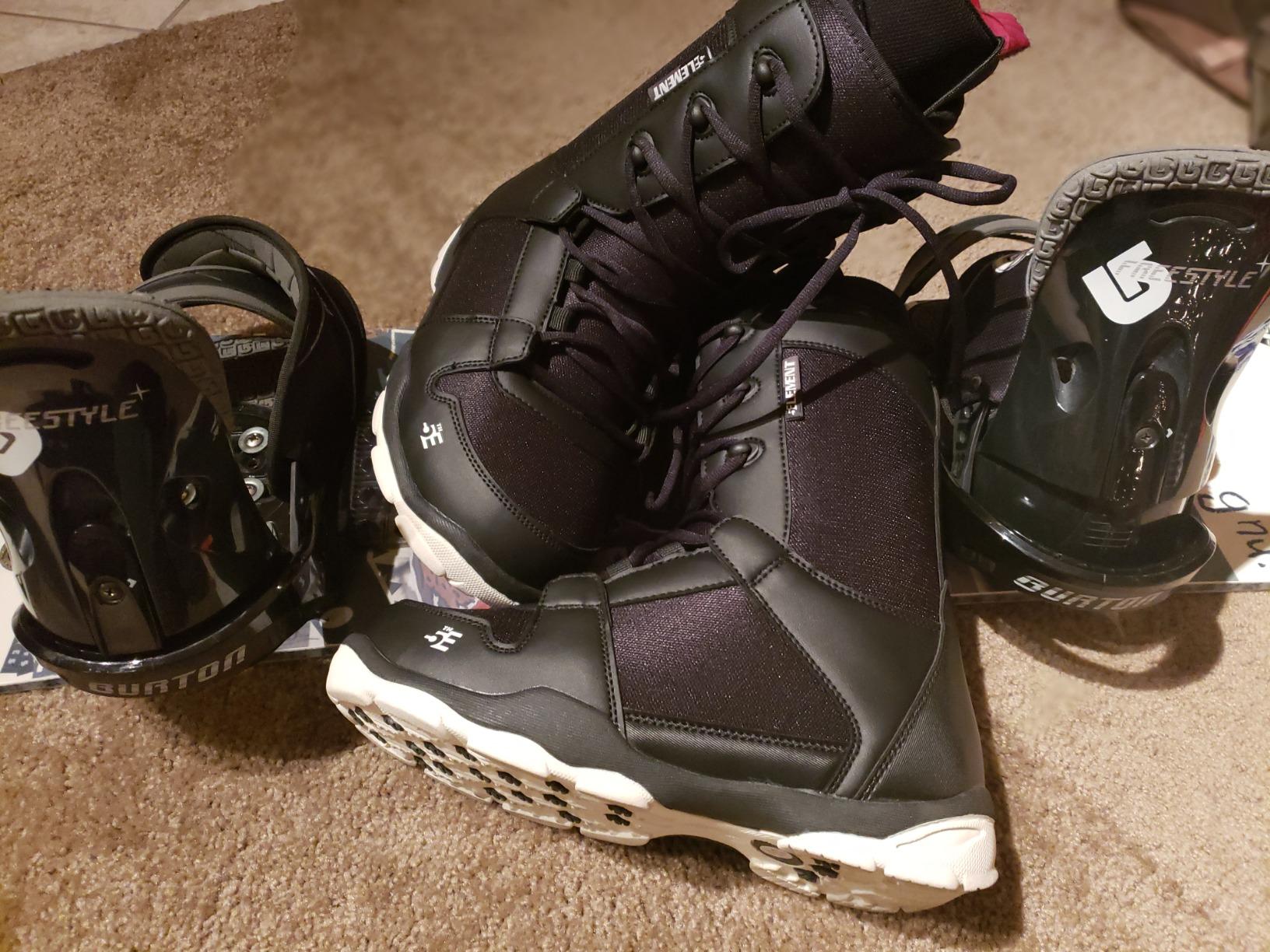
Heel hold is the sleeper feature here. Owners talk about the foot staying put instead of sliding forward as they ride, which is the difference between control and mushy feeling at low speeds. For a rider still learning to stop and link turns, that stability is what you want underneath you.
Sizing is the catch. This runs small, and the single most repeated piece of review advice is to order a full size up or more. A handful of buyers also report mid-range materials, including a grommet that failed early, so treat it as a first-pair purchase rather than a ten-year one.
Where it beats more expensive boots
Warmth. Boots twice the cost of this one often use a water-resistant shell and rely on socks to keep riders comfortable. A waterproof liner in an entry-level boot means a beginner can ride a full day without the constant numbing that ends sessions early.
It is also comfortable to walk in outside bindings, which matters if you are spending your first seasons hiking from lodge to lift rather than riding every run.
Where you will feel the budget
The shell is bulky, and riders with tighter bindings report difficulty getting into them. If you already own a narrow binding setup, check compatibility before buying, because you may spend more time forcing boots in than riding them.
The materials are the other limit. If you expect to keep boots through many seasons of hard use, this is where a step up in build quality pays off. If you are buying your first pair, it will not be the weak point that ends your season.
4. Symbolic Forum UL Snowboard Boots: The Narrow-Foot Lightweight Option
Symbolic Ultra Light Black Snowboard Boots 7 8 9 10 11 12 13 14 (Black, Mens 11)
Ultra-lite foam shell
Traditional lacing
Soft flex feel
Runs close to normal shoe sizing
Pros
- Very light and comfortable for full sessions
- Fits narrow feet that struggle in wider lasts
- Slides into bindings that larger boots cannot
- Size range covers 7 through 15 including half sizes
Cons
- Soft flex and thin padding feel cheap rather than supportive
- Not water resistant and effectively unlined
- Limited response for riders progressing past the basics
This is the boot for a specific beginner problem: feet that are hard to fit. The profile is genuinely narrow, and owners with slim feet say it is the only pair they can wear without toe or side pressure. It also runs close to normal shoe sizing, which removes the guesswork that trips up a lot of first-time buyers.
Weight is the other argument. Foam construction keeps it light enough for full days without fatigue, and reviewers mention comfort more than performance, which tells you exactly where this boot sits in the range.
The soft flex is genuinely forgiving, so a new rider can flex the board, check their edge position and fall without the boot fighting them. Traditional lacing is simple and predictable, with nothing to learn on the first day.
What you give up is support and weather protection. The shell is not water resistant and the interior is unlined, so cold, wet days are where this boot is weakest. Riders who move past the basics also report that the foam construction feels vague rather than responsive.
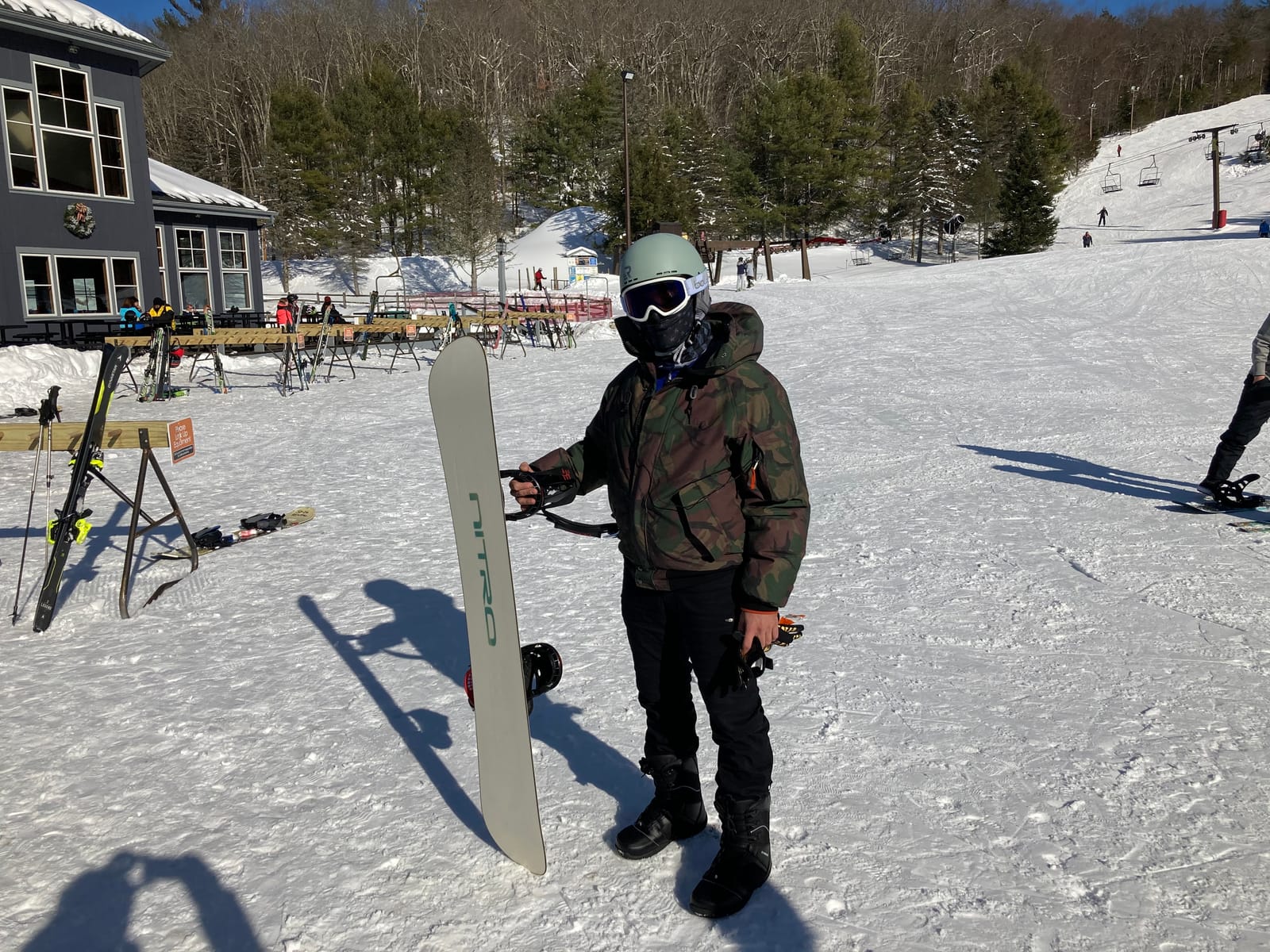
Who this boot suits
Narrow feet that ache in standard lasts, riders who want a boot that will slip into tight bindings, and anyone who plans to ride two or three days a season rather than every weekend. The size range from 7 to 15 including half sizes is unusually broad for a boot this simple.
If you are buying for an adult beginner who will fit into most standard shells, there are warmer and sturdier options. If you are the exception, this is the exception-friendly pick.
Who should pass on it
Riders in cold or wet climates should look elsewhere. An unlined, non-water-resistant boot is fine for a sunny spring day at a mid-altitude resort and frustrating on a stormy one.
Anyone who plans to progress into park riding or harder edges within a season or two should also skip it. The soft foam gives you little to grow into, and replacing boots twice in your first year costs more than starting with a sturdier pair.
5. Alpine Swiss Men’s Snowboard Boots: Best Value for a Full Feature Set
Alpine Swiss Men’s Snowboard Boots | Waterproof, Custom-Fit Liner, Medium Flex for All-Mountain Riding, Winter Snow Boots Black White 10 M US
Medium flex with flex notches
Removable heat-moldable liner with 3D J-bars
5mm EVA footbed
Ice-spike rubber outsole
Pros
- Removable liner molds to the foot for a custom fit
- 3D J-bars hold the ankle without crushing it
- Waterproof synthetic leather holds up over full seasons
- Reported as true to size and comfortable for wide feet
- Carry straps and reinforced stitching add day-to-day durability
Cons
- Runs small for some buyers who suggest a size up
- Women's sizing runs about two sizes below the men's line
- Bulky 5.3 pound build is heavy for long days on foot
Most entry-level boots give you one good idea. This one gives you several: a removable heat-moldable liner, 3D J-bars around the ankle, a 5mm EVA footbed and flex notches cut into a medium-flex shell. That is a lot of the feature list that usually only appears well above the entry tier.
The J-bars are the part beginners notice first. They wrap the ankle from the inside and hold it in place, which cuts down on the heel lift that makes new riders feel like their feet are sliding. Owners frequently call this the boot that finally stopped their feet from moving around.
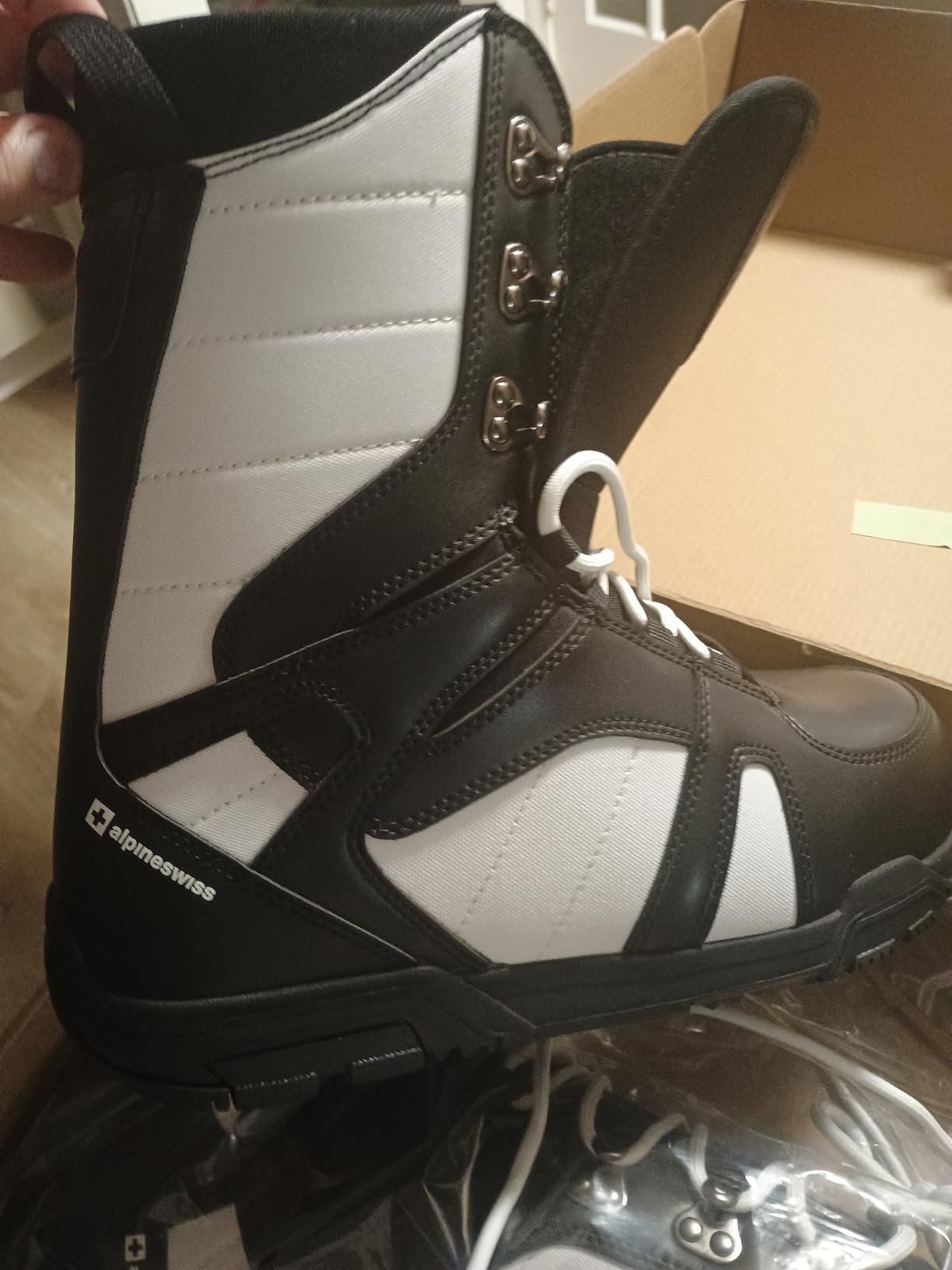
Fit reports are mostly positive, with many buyers calling it true to size and comfortable for wider feet. That makes it one of the safer picks online, where you cannot try the boot on before ordering.
The liner is removable, so you can dry it overnight and swap it rather than packing wet foam into a bag. Reviewers also like the rubber outsole with ice spikes for grip on hard-walking days, and the carry straps make it the easiest boot here to haul up to the lodge.
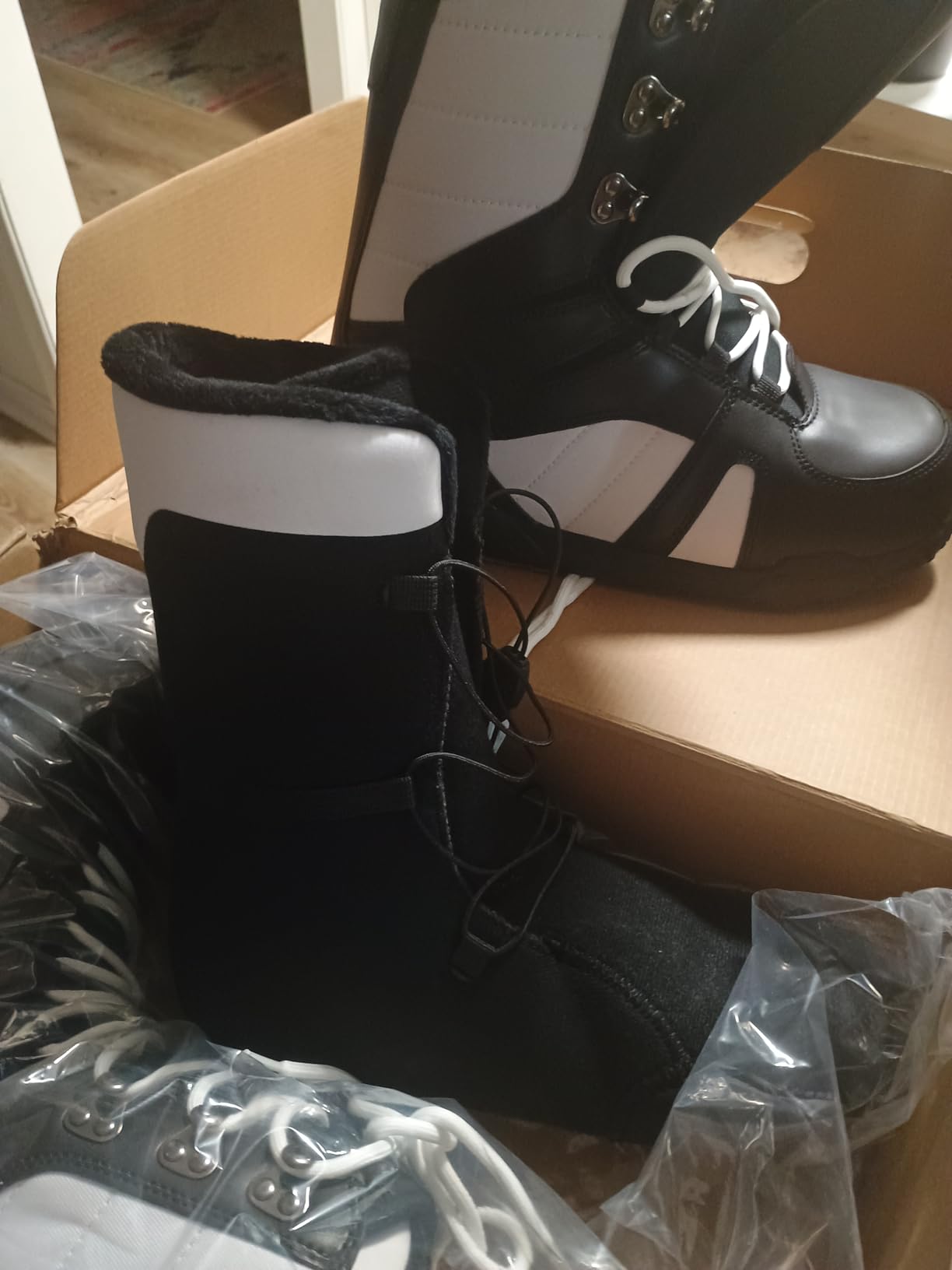
Why this is the value pick
Compare it with boots in the same bracket that offer a fixed liner and no internal ankle support. You are getting moldability, ankle hold and a removable component for roughly the same money, and each of those three solves a specific beginner complaint.
The medium flex with flex notches also makes it a reasonable second-season boot. It is not the softest option here, so it will not feel identical to the DC Phase, but it has more give than a true all-mountain shell.
What to watch out for
Sizing advice is mixed. Many buyers wear their usual size, but a consistent thread suggests sizing up for narrower feet, and the women’s line runs about two sizes below the men’s. Check the size chart rather than assuming, especially if you are ordering for someone else.
At 5.3 pounds this is a heavy boot for walking. If your days involve long hikes from the parking lot or a lot of chairlift queueing in the cold, a lighter pair will suit you better.
6. Siren Lux Women’s Snowboard Boots: A Warm True-to-Size First Pair
Siren Lux Women’s Snowboard Boots (Traditional Lace, 7)
Quicklace inner liner with sliding lock
Thermofit heat-moldable liner
Traditional outer lacing
Waterproof nylon shell
Pros
- Warm and waterproof on wet days
- Heat-moldable liner gives a pressure-free fit
- Runs true to size with room for thicker socks
- Quicklace liner secures the foot quickly
- Often singled out as beginner-friendly
Cons
- Laces can become flimsy with extended use
- Stiffness makes the outer laces hard to pull for some riders
- Entry-level build quality is only fair
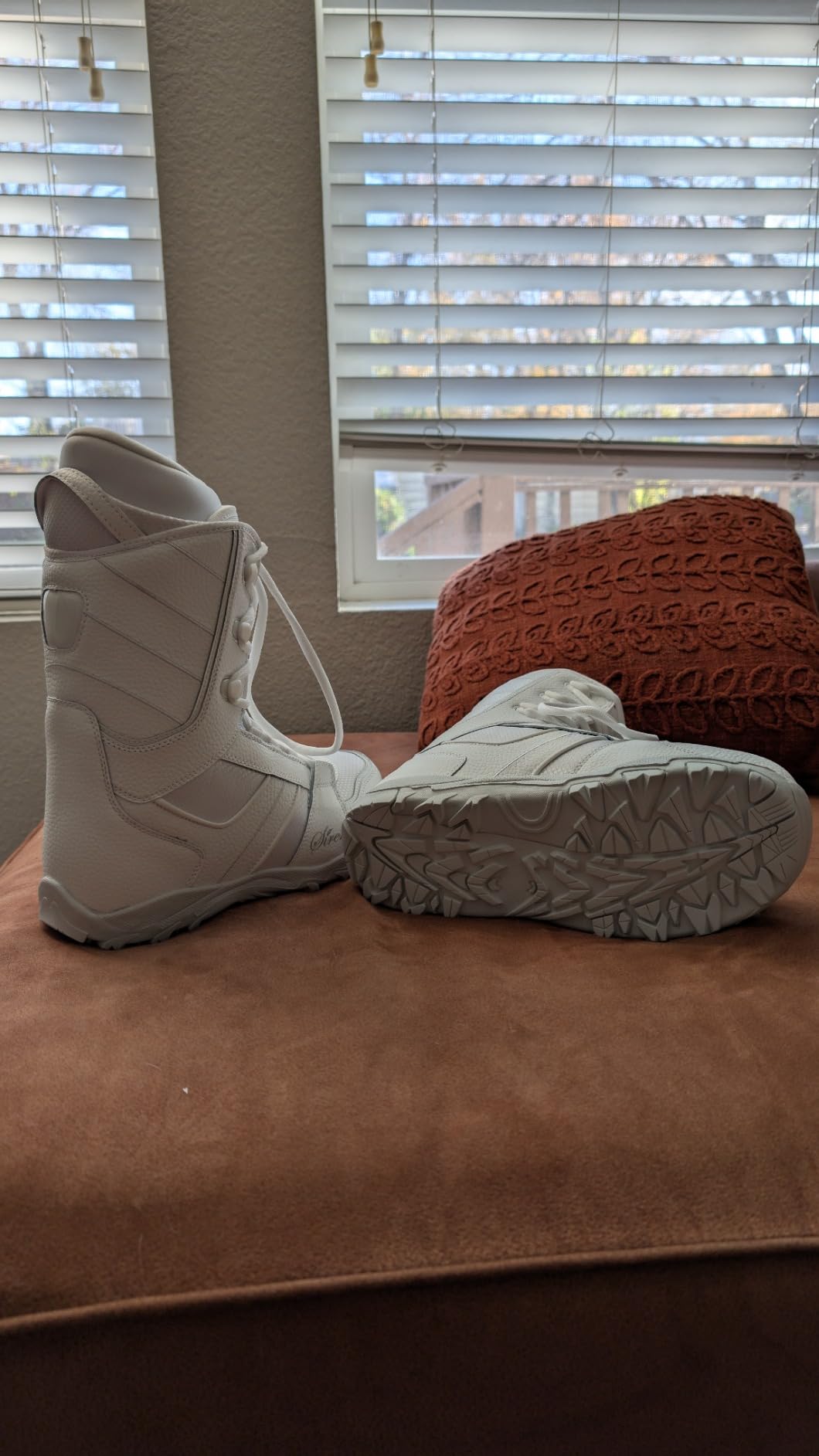
The quicklace liner is the design decision here. Pull the inner slider and the liner grips the whole foot evenly, without hunting for a lace crossing under a cuff. For a first-time rider, that removes one of the most frustrating parts of putting boots on in a car park.
Outside that, traditional lacing on the shell gives you zone-by-zone tension, so you can pull the forefoot snug while leaving the ankle free. Metal lace loops add durability, and the waterproof nylon shell keeps wet days comfortable.
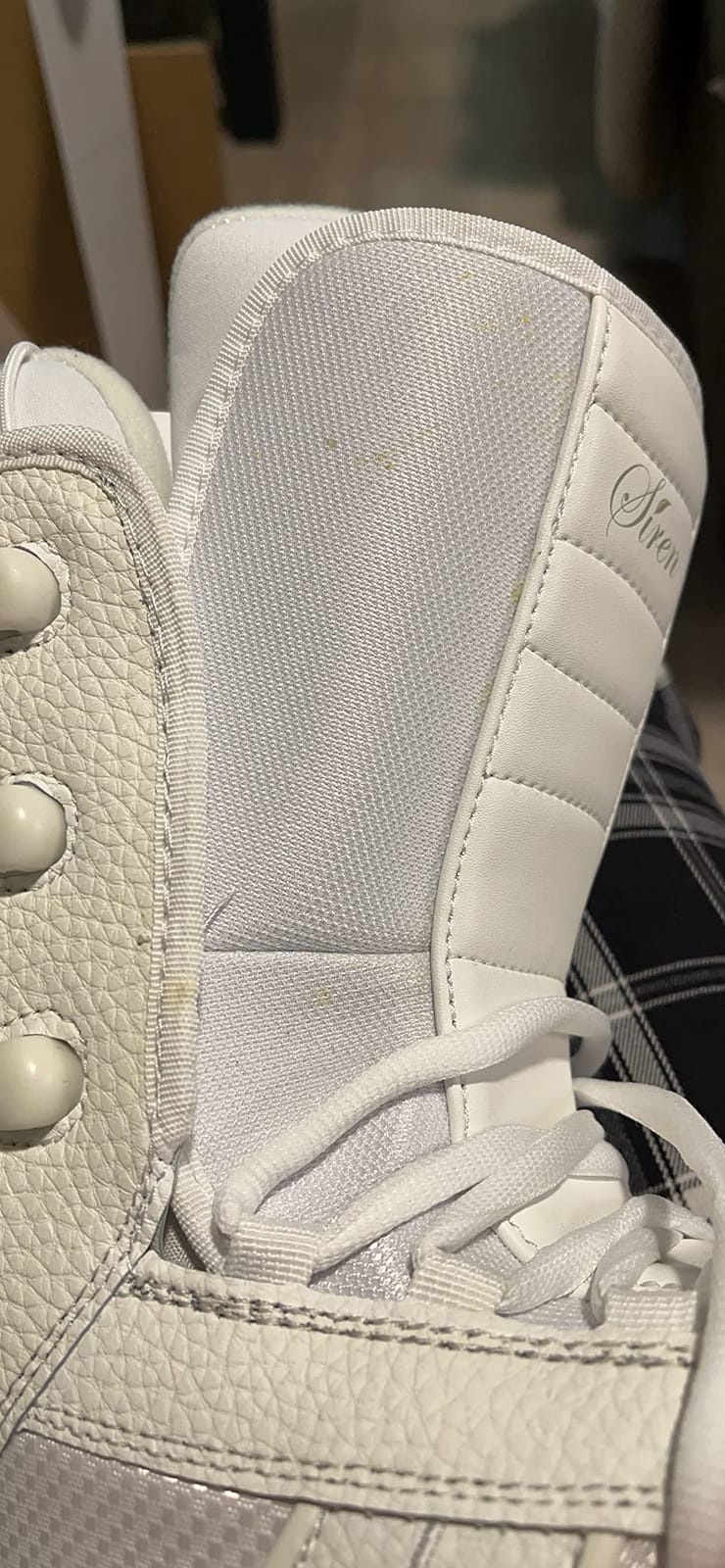
Owners describe the Thermofit heat-moldable liner as the reason the boot stops feeling like a boot after the first few rides. It also runs true to size with room for a thicker sock, which is a genuinely useful detail for anyone who rides in cold conditions.
The common complaint is lace durability. Over extended use the laces stretch and the tension drops, and some riders find the shell stiff enough that pulling the laces tight takes real effort. That is a maintenance item, not a deal breaker, but budget for a spare pair.
How it fits a first season
This is a boot built for comfort over response, and for linked turns on a green run that is the correct trade. The insulation is real, so a full day on a cold mountain does not end with cold feet, and the molded liner spreads pressure across the foot rather than concentrating it at the toes.
Reviewers repeatedly recommend it as a beginner purchase, which is a strong signal for anyone nervous about buying expensive gear before knowing whether they will stick with snowboarding.
Where it falls short
If you want precise board feel and plan to ride hard edges early, a firmer liner and a more responsive shell will serve you better. This one is built to forgive mistakes, not to deliver feedback.
The other limit is the shell stiffness combined with traditional laces. Riders with limited hand strength, or anyone wearing thick gloves at the chairlift, may find the pull tiring by the end of the day.
7. Burton Mint BOA Women’s Snowboard Boots: Single-Zone Dial Comfort
Burton Women’s Mint BOA Snowboard Boots, Size 7.5, Black
Women's-specific True Fit last
Single-zone BOA dial with inner spool
Imprint 1+ heat-moldable liner
DynoLITE outsole with reflective foil
Pros
- Comfort rated higher than any other boot in the lineup
- Imprint 1+ liner molds to the foot for a glove-like fit
- Single-zone dial makes on off and mid-ride changes easy
- Lightweight outsole keeps board feel lively
- Women's-specific last fits female foot shapes
Cons
- Runs small and sizing up can tighten the calf
- Water resistant rather than fully waterproof
- Limited size availability compared with unisex models
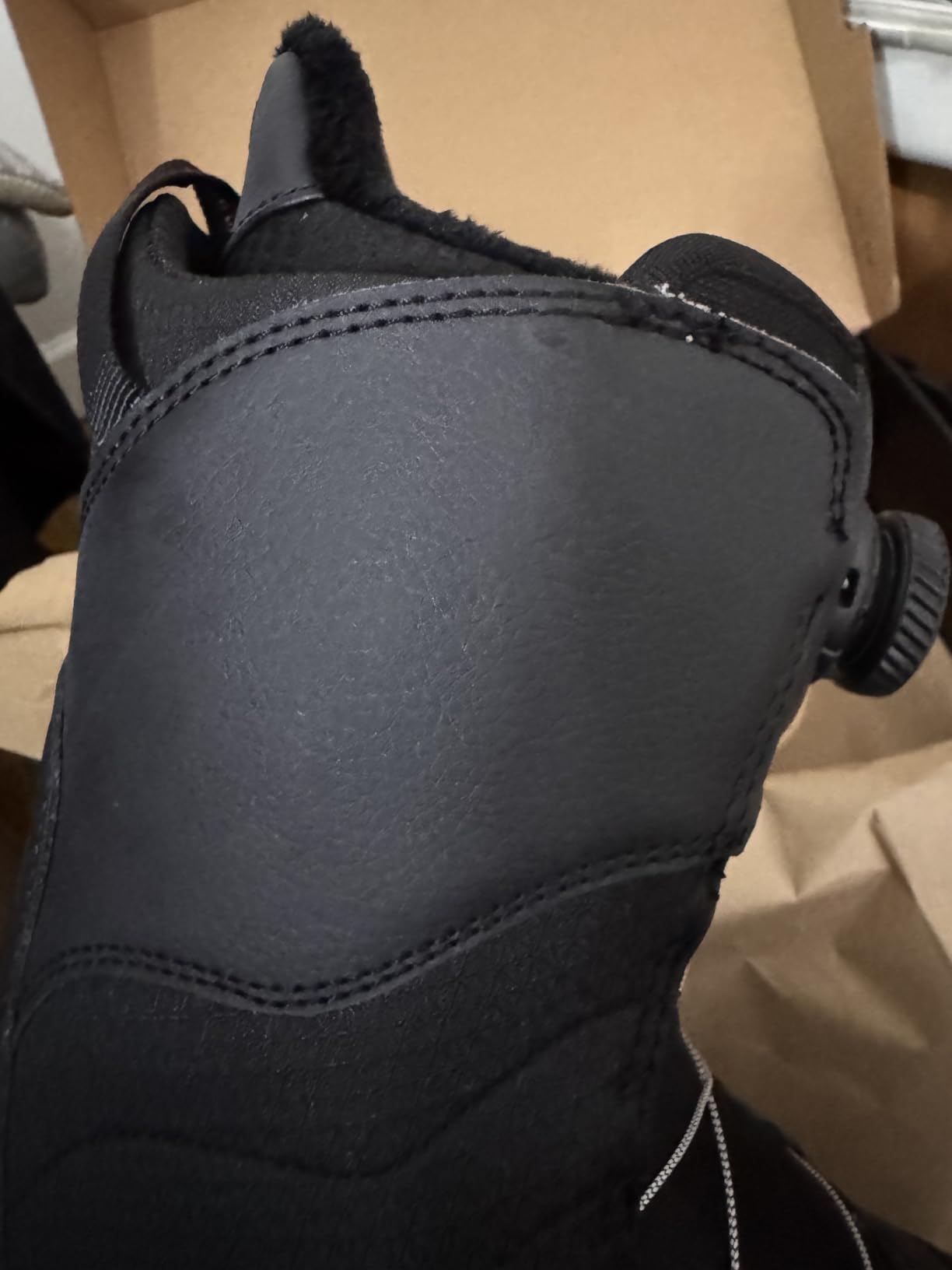
Comfort is the headline claim here, and owners back it up. Across reviews the Mint BOA is repeatedly described as the most comfortable boot people have owned, which for a beginner spending eight hours a day on their feet is the single most useful characteristic a boot can have.
Unlike a dual-zone system, the single-zone BOA tightens the liner and lower shell together in one turn. That produces an even wrap rather than a pinch, and it means you can adjust the whole boot from the chairlift without taking it off.
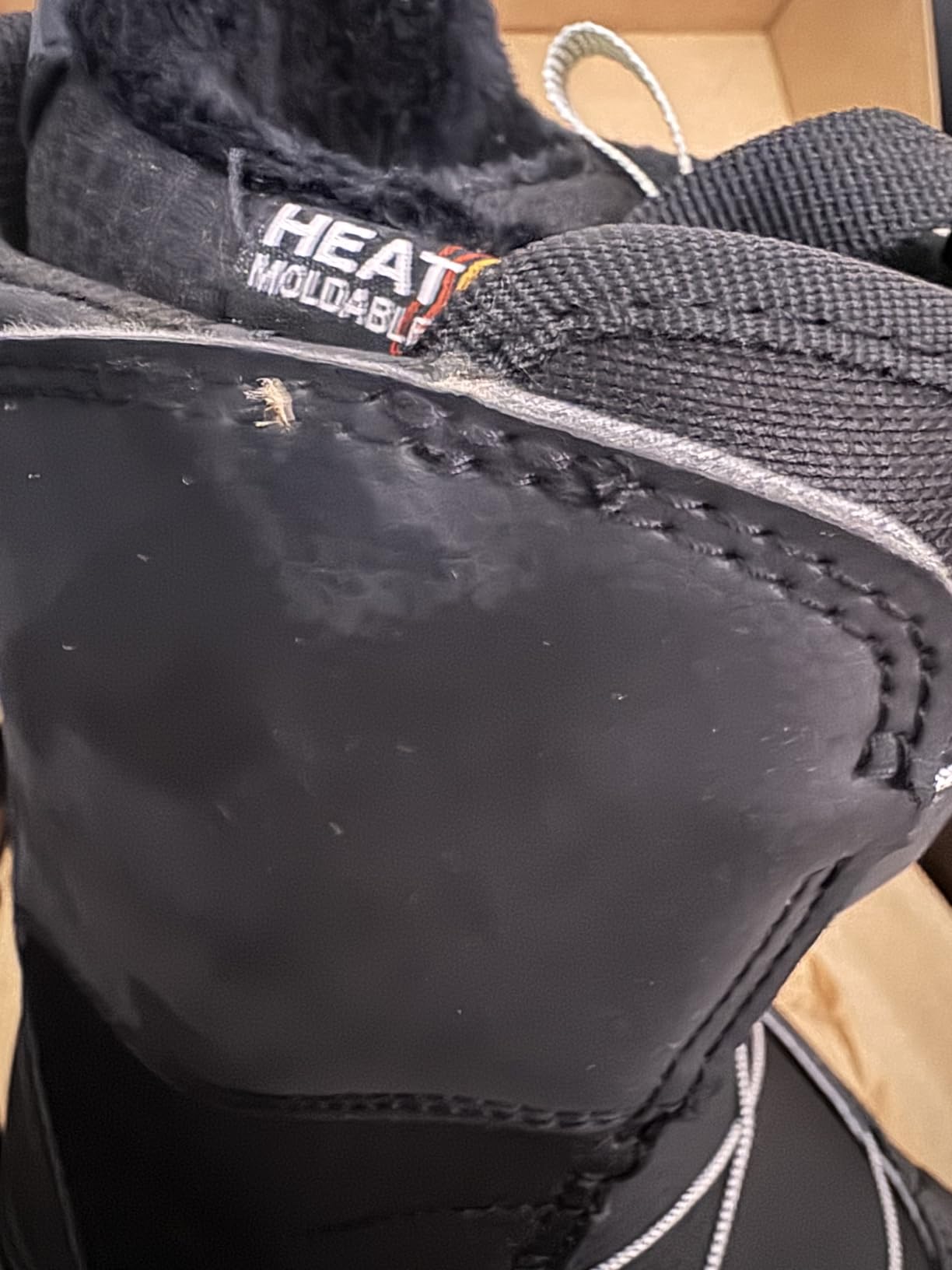
The women’s-specific True Fit last is a narrower shape built for female foot anatomy, so toes stop crowding and the instep stops aching after a long run. The Imprint 1+ liner is heat-moldable and takes the shape of the foot within days.
Burton also fits reflective sleeping bag foil underfoot in the DynoLITE outsole, which keeps the sole from feeling like a block of ice when you are walking across a flat lot at the start of the day. It is a small detail that shows up in reviews from cold-morning riders.
Why the women’s last matters
Women-specific does not mean smaller. It means the shell is shaped around a different foot profile, with a narrower forefoot and a different instep height. Riders who have never fit comfortably in a men’s boot usually find the difference obvious within one session.
Combined with the BOA closure, it means you get a precise fit without needing to understand lacing tension. For a first pair ordered online, that reduces the number of variables you have to get right.
What to be careful about
It runs small. The advice from owners is to size up, but be aware that sizing up in this model tightens the calf once the dial is closed, so the sweet spot is narrower than in other boots here. If you can try one on in a shop, that is worth the trip.
The shell is water resistant rather than fully waterproof. In a dry, inland, mid-season climate that is not a problem. In coastal slush or storm days, you will feel it.
8. K2 Market BOA Men’s Snowboard Boots: No-Frills Dial Simplicity
K2 Market Men’s Snowboard Boots, Black, 11.5
H4 BOA Focus Fit system
Comfort Foam EVA liner
Internal J-bars
Fast-in liner lacing, 16 ounces
Pros
- BOA dial is quick and easy to adjust with gloves on
- Keeps feet warm and dry in single-digit temperatures
- Good traction on icy terrain
- Comfortable after a full day on the board
- Basic design with nothing to break or learn
Cons
- Runs small and several buyers went up a full size
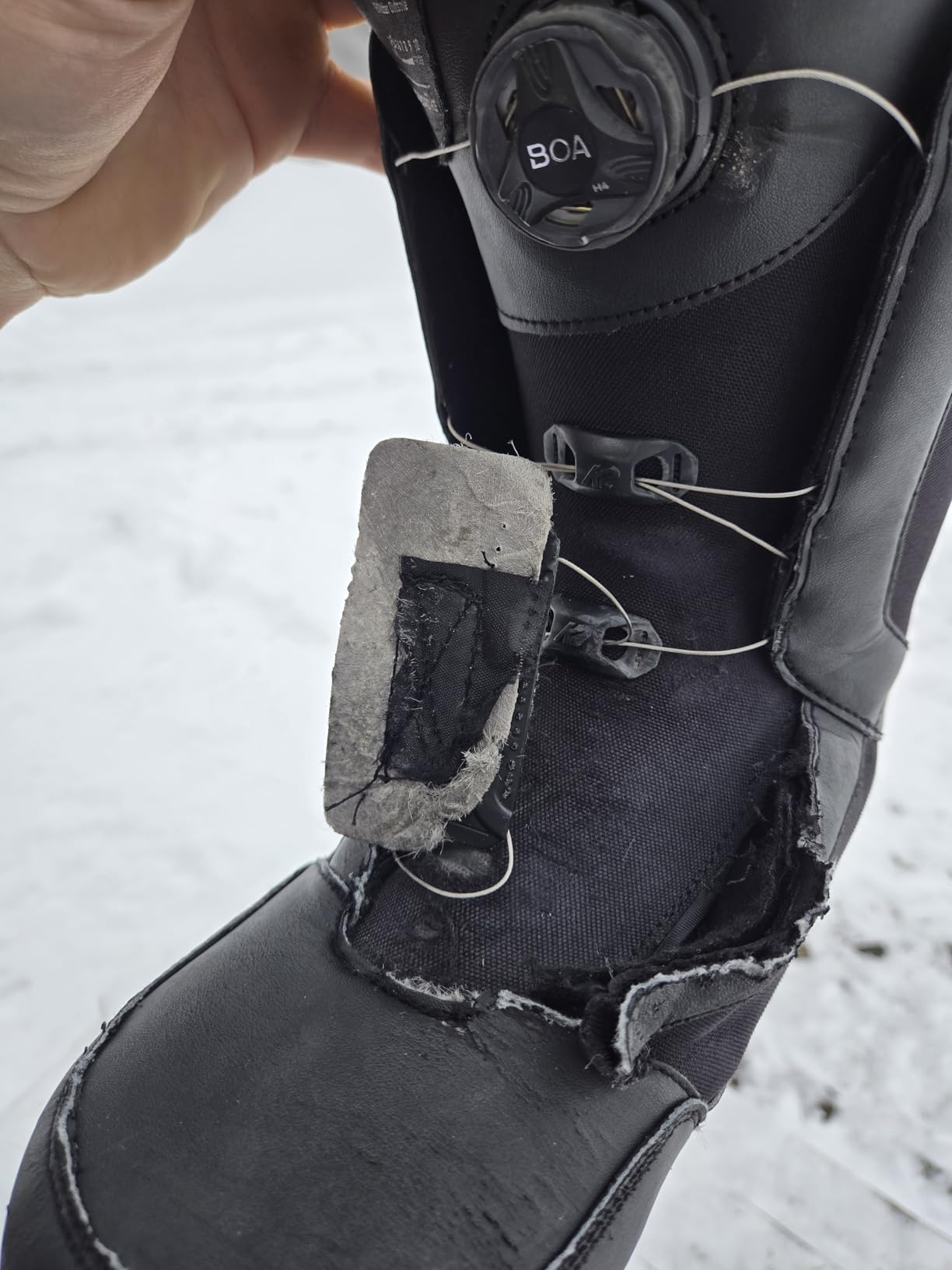
- Some owners report construction failing after a couple of seasons
- Water-resistant shell only
K2 built this one to do a simple job without fuss. The H4 BOA Focus Fit system tightens the boot in one motion, the fast-in liner lacing means you are not fighting a tangled cable, and the whole boot weighs 16 ounces. Nothing here needs learning.
Warmth is the surprise. Owners report keeping feet warm and dry in single-digit temperatures, and the Comfort Foam EVA liner with internal J-bars holds the ankle without feeling rigid. For cold-climate beginners, that combination is more valuable than a heavier premium shell.
Traction gets a mention too. Several riders note good grip on icy terrain when walking around, which comes from the outsole compound and the rubber contact patches. That sounds minor until you are carrying boots across a flat car park in the morning.
The reviews describe it as basic and no-frills in the best sense, meaning it does what a beginner needs without premium hardware. The drawback that shows up repeatedly is sizing: it runs small, and several buyers ended up a full size larger than their usual.
Who it works best for
Riders who want the least possible fuss between the car and the first chairlift. One dial, one pull, no laces to freeze. That is a real advantage for beginners who ride cold mornings and for anyone who does not want to deal with lace tension while they are still learning to fall safely.
It is also a sensible pick for riders who know they will ride a handful of days a season, because the build is straightforward and there is little to break.
Where the durability ceiling shows
Several owners report construction problems after only a couple of seasons, and the warranty runs one year against manufacturer defects. If you are confident you will ride every weekend for years, spend up on a sturdier shell.
Water resistance is the other limitation. The shell keeps out moderate moisture but not sustained wet conditions, so riders in coastal or storm-prone areas should treat this as a dry-weather boot.
9. DC Phase BOA Snowboard Boots: The Softest Published Flex Here
DC Mens Phase Boa® Snowboard Boots
Published soft flex rating 4 of 10
BOA Fit System with H4 Coiler
IMPACT ALG insole
Foundation UniLite outsole
Pros
- Published 4 of 10 flex is beginner-friendly by specification
- BOA H4 coiler is fast and easy to adjust
- Waterproof synthetic shell keeps out wet snow
- Lightweight UniLite outsole gives a lively board feel
Cons
- Soft build offers less support once you progress
- Rated 4.2 with 10 percent one-star reviews
- Least review count of the Burton and K2 boots in the lineup
This is the only boot in the lineup where the manufacturer publishes a flex rating, and it is 4 out of 10. That is the soft end of beginner-appropriate, and it tells you the shell bends easily enough that a new rider can flex the board and check their stance without fighting stiffness.
The BOA H4 Coiler pulls excess cable into the dial itself, so the boot has almost no loose lace hanging under the cuff. On a lift, that keeps the boot clean and stops the cable from catching on anything.
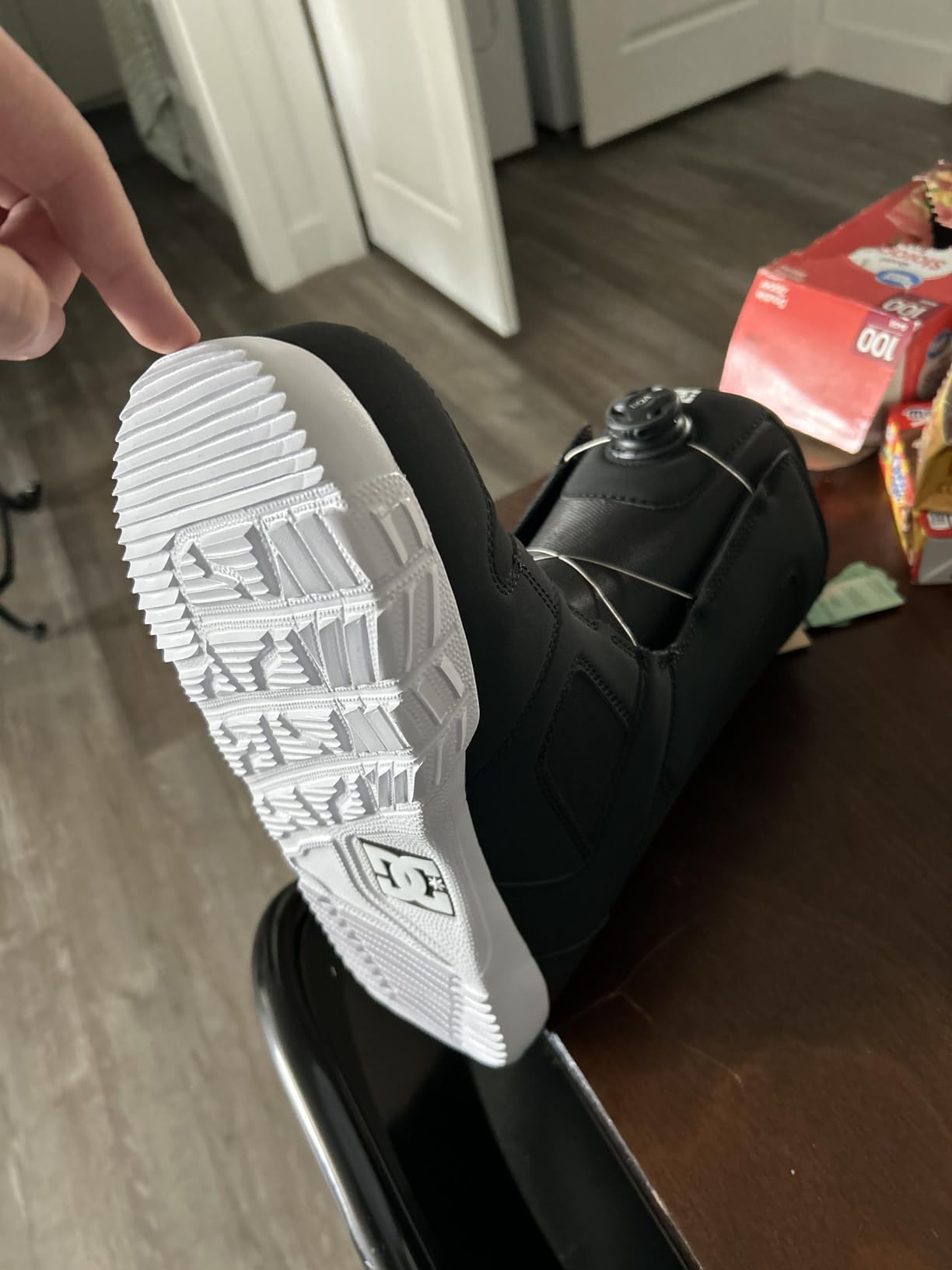
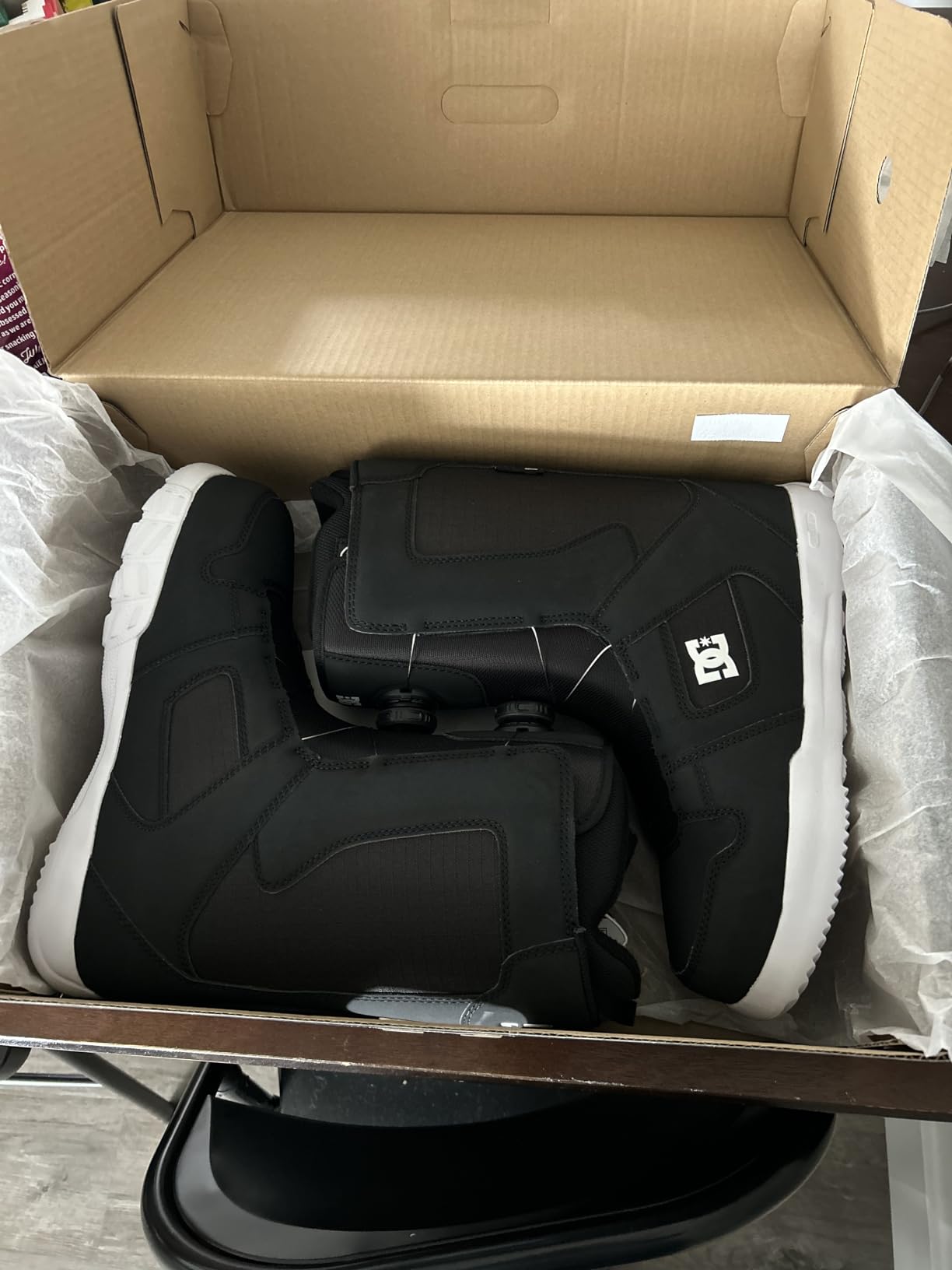
Waterproofing is solid for a mid-tier boot, and the IMPACT ALG insole cushions impact for riders who spend time in rough snow. The Foundation UniLite outsole keeps the boot light and gives direct board feel, which helps a beginner feel where the edges are.
Rating is the story here. At 4.2 with 74 reviews, this carries the lowest average score of the boots we looked at, and about 10 percent of owners give it one star. Most of those complaints point to the same cause: the soft, light build stops feeling supportive once you ride harder.
When maximum softness is the right call
If your goal is a first season of lessons, green runs and small jumps, softness helps. You will make mistakes, and a forgiving boot makes mistakes cheaper. The lightweight shell also reduces the fatigue that ends a beginner’s day early.
Riders returning to the sport after years away often choose this too, because the body needs a season to remember the position before a stiffer shell is worth the feedback.
When softness becomes a problem
The moment you start riding faster, or want your edges to respond rather than merely cooperate, the soft flex works against you. Riders who describe this boot as unsupportive are usually progressing past the terrain it was built for, not uncovering a defect.
Expect to outgrow it within a season or two if you ride regularly, which is worth factoring into the decision when you compare it with a firmer boot that lasts longer.
10. Burton Zipline BOA Kids’ Snowboard Boots: Soft Flex for Junior Riders
Burton Kid’s Zipline BOA Snowboard Boots (Black, 5)
Soft flex tuned for junior riders
BOA dial closure
Youth Imprint liner
DynoLite outsole, waterproof shell
Pros
- Soft flex is forgiving for small feet still learning to flex
- BOA dial is simple enough for young riders to adjust
- Waterproof shell for wet days
- Lightweight 3.3 pound build
- Highest rated junior option in this lineup at 4.5
Cons
- Limited size range at sizes 4 through 6
- Soft flex gives less support as a child rides more aggressively
- 1 year warranty is the shortest here
Boots for children fail in predictable ways. Laces are too fiddly for small hands, stiff flex makes it hard to learn the stance, and heavy boots get taken off halfway down the slope. The Zipline solves all three: one dial, a soft flex tuned for juniors, and a 3.3 pound weight.
Parents and young riders highlight the same things in reviews, an easy BOA closure, a forgiving soft flex and solid waterproofing. At 4.5 across 60 reviews, it holds the highest rating of the junior options here.
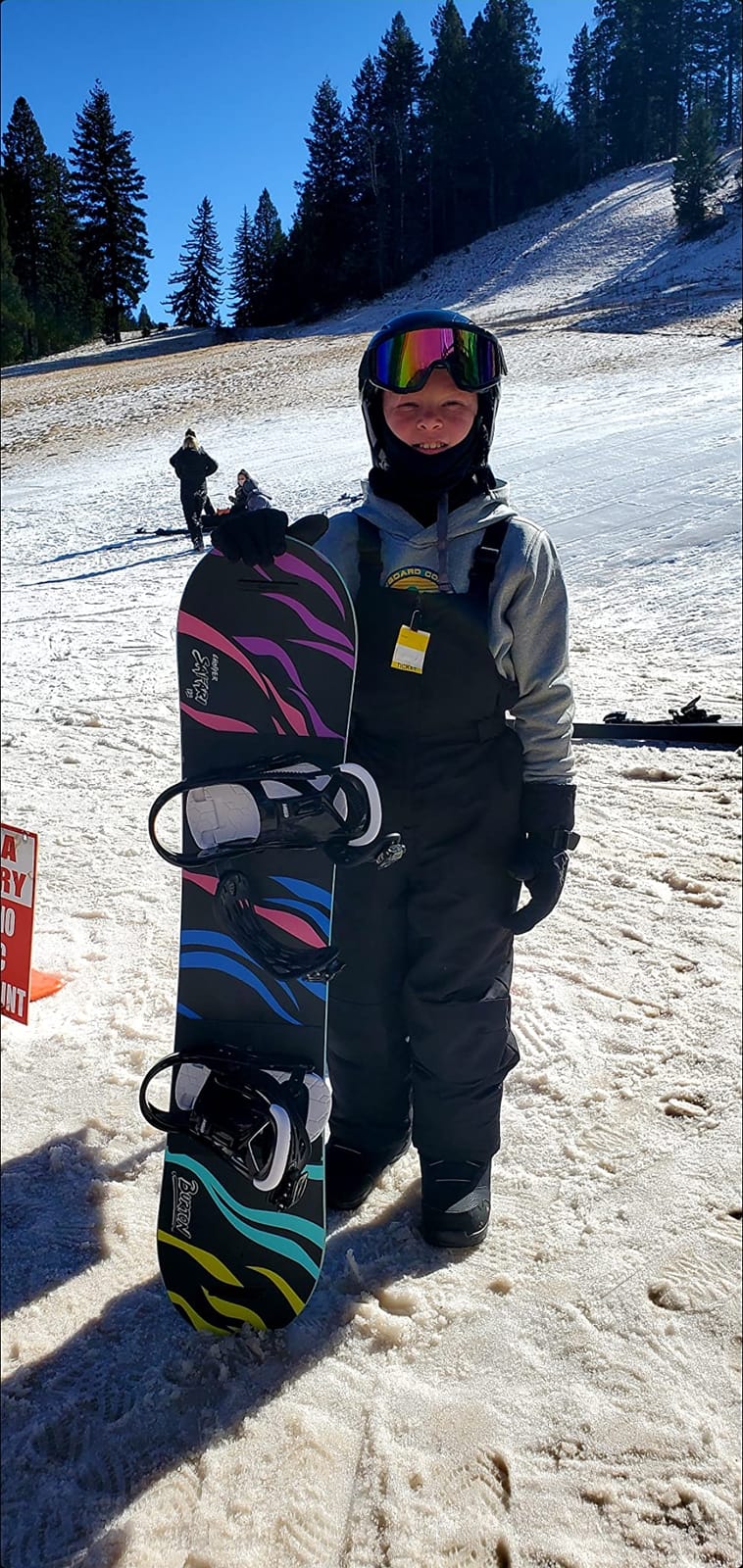
The Youth Imprint liner follows the shape of a smaller foot and holds it without pinching, which is the difference between a child who wants to go again tomorrow and one who asks to stop halfway through the lesson.
Keep the size range in mind. Available at sizes 4, 5 and 6, this covers a narrow window of growing feet, and children outgrow boots faster than adults because their feet grow through the season. If your child is near the top of that range, plan for a replacement.
What works well for young riders
A child who cannot operate the closure will not put the boots on. That sounds obvious and it is the reason laces lose out with this age group, because frozen fingers and a crossed lace is a five-minute problem every single morning. One dial removes it entirely.
The soft flex also matches how beginners learn. A child who cannot flex the board to the snow cannot check their stance, and this shell bends easily enough that a first-time rider can do it on the first day.
Where the limits show up
As children progress, the soft flex stops helping and starts letting the foot move inside the boot. Riders who move onto steeper terrain or start hitting small features report wanting more support than a boot in this class can give.
The one year warranty is also the shortest in the lineup, so plan on replacing sooner rather than assuming a multi-season purchase. Our guide to the 12 best kids drones for beginners follows the same logic about buying for a fast-moving hobby.
11. K2 Raider BOA Men’s Snowboard Boots: Lightweight Warmth With a 3D Liner
K2 Raider Men’s Snowboard Boots, Black, 10
H4 Coiler BOA with TX3 rope lacing
Intuition Comfort Foam 3D liner
Internal J-bars
Flex Zone upper cuff, 16 ounces
Pros
- Lightweight with no heel movement reported
- Warm enough for full days on the mountain
- BOA system makes tightening simple
- Well finished construction
- Flex Zone cuff bends where the ankle does
Cons
- Pressure points across the sides and top of the foot for wide feet
- Water resistant rather than fully waterproof
- A few buyers found it a size too big
This is the one to look at if cold mornings are your problem. The Intuition Comfort Foam 3D liner plus internal J-bars give real ankle hold without the rigid feel of a stiffer shell, and owners report staying warm for full days on the mountain at only 16 ounces.
The absence of heel movement is what reviewers mention most. A foot that stays planted through a turn gives a beginner immediate feedback, and riders who came up from earlier boots describe this as a clear upgrade in build quality.
The Flex Zone upper cuff is a small design idea with a real effect. It lets the shell bend at the ankle instead of resisting everywhere, which reduces the stiff feeling at the top of the boot that some beginners dislike in stiffer designs.
The caution is width. A minority of owners, particularly those with wider feet, report pressure points on the sides and top of the foot once the BOA is tightened, so this suits medium and narrow feet better than broad ones. It is also water resistant only, so storm days are not its strength.
How it compares to the K2 Market
The Market is the simpler, cheaper option with a Comfort Foam liner, while the Raider uses the more capable 3D liner and adds TX3 rope lacing inside the BOA cable. If you ride cold and long, the extra liner construction is worth stepping up for.
If you ride occasionally on groomed runs and want the least fuss, the Market does the same job with fewer parts to think about. Both share the same sizing tendency toward running small.
Who should buy this one
Cold-climate riders who want warmth without weight, and anyone who has struggled with heel lift in softer rental boots. The heel hold here is the feature that keeps riders in the boots past the first season.
Riders with wide feet should look for a wide last instead, or expect to size carefully and keep the dial a little looser than you think you need.
12. 5th Element Women’s Lace and Dial Snowboard Boots: A Wide Toe Box for Strap Bindings
5th Element Women’s Lace and Dial Snowboard Boots, Lace White/Teal, 6
Waterproof insulated liner
Wide toe box with skate-shoe fit
Traditional lacing with durable hooks
Strap binding compatible
Pros
- Wide toe box suits wider women's feet
- Waterproof insulated liner keeps feet warm and dry
- Supportive feel for a first pair
- Durable hooks that cinch tight and stay tight
- Two year warranty against manufacturing defects
Cons
- Runs very small and some buyers could not get their feet in
- Traditional laces are slower to adjust than a dial
- Water repellent rather than fully waterproof
The defining feature is the wide toe box with a skate-shoe feel, which is shaped for wider women’s feet rather than a scaled-down men’s last. If you have never been able to keep your toes from touching the front of a snowboard boot, this is the boot worth trying before anything else.
Support is the other selling point. Owners describe it as supportive for a first pair, with a waterproof insulated liner that stays warm and dry. The hooks are designed to cinch tight and hold, which matters in traditional lacing where tension usually relaxes over a session.
Why the wide toe box matters
Toe crowding is not a comfort issue only. When your toes press against the front of the boot you curl them, you lose balance, and cold toes quickly become numb toes. A wider toe box lets your foot sit flat, which is where a beginner’s balance actually comes from.
It is also why buying in person matters more for this boot than for others. Sizing feedback on this model is genuinely split, with owners reporting both true-to-size comfort and needing a size up, so try before you commit if you can.
What to consider before ordering
Traditional lacing is slower to adjust than a dial or BOA, and with gloves on after a long run it is the most tedious part of this boot. It also works with traditional strap bindings rather than Step On systems, which matters if you plan to upgrade bindings later.
With only 35 reviews, this is the least-tested boot in the lineup, and the shell is water repellent rather than fully waterproof. For a first pair in a climate with reliable snow, the value is good.
How to Choose Beginner Snowboard Boots: Fit, Flex, Closure and Liners
Measure your feet, then trust the brand size chart over your shoe size
Snowboard boots are measured in centimeters or millimeters, and your everyday shoe size is close to meaningless as a guide. Stand on a sheet of paper with your heel against a wall, mark the longest toe, and measure the distance in millimeters. Do it for both feet and use the larger one.
Then compare against the brand’s own chart, because sizing is not consistent across brands. In the reviews here, the Burton Moto BOA, K2 Market and K2 Raider all run narrow, the 5th Element boots run small, and the Alpine Swiss is closer to true to size. A forum thread about a rider measuring between a US 7.5 and 8 and finding their toes cramped in store captures the whole problem in one line.
As a general rule for a beginner, take the size the chart gives you and consider going up half a size, because a new liner compresses during the first weeks and you want room for that. Buy in a shop whenever you can, and if you order online, check the return policy before you order.
If you also want to record your first season on camera, our picks for the best cameras for photography beginners and the best camera lenses for beginners are a sensible starting point before you order anything.
Flex rating: pick 1 to 4 as a beginner
Flex rating describes how easily the shell bends, usually on a 1 to 10 scale where 1 is the softest. Beginners should stay at the soft end, roughly 1 to 4, because a stiff boot resists the movements you are still learning. The DC Phase is the only boot here with a published figure, a soft 4 out of 10.
Most brands do not publish a number for their entry-level shells, which is why our ranking leans on what riders report about feel. Boots described as soft flex, with low-profile shells and foam or comfort foam construction, sit at the forgiving end. Boots with support-focused liners, tall shells and reinforced outsoles sit above it.
Move up to a medium flex once you can link turns consistently, stop on a steeper pitch, and want your edges to respond rather than cooperate. Until then, a stiffer boot only makes learning slower and falling more painful.
Closure systems: BOA, quicklace or traditional laces
Traditional laces give you the most control, because you can tighten the forefoot and ankle separately. The cost is time and frozen fingers, and the laces stretch over a season unless they have metal hooks like the System APX does.
Quicklace systems use a cable and a sliding lock that tightens in one pull. The Siren Lux does this on the liner while keeping traditional laces on the shell, which is a sensible hybrid for a beginner who wants both control and speed.
BOA systems use a steel dial that winds a cable evenly around the boot in a single zone, or separately for the upper and lower foot in dual-zone designs. Six of the boots here use BOA, and it is the fastest option with gloves on. The catch is that BOA does not adjust in small increments as easily as a lace, and on narrow feet a fully closed dial can create pressure points. Wide feet sometimes prefer traditional laces because they can leave the top looser while pulling the forefoot tight.
Step On boots are a separate category rather than a closure system. They have no laces or dials because the binding locks directly onto the boot. They are quick and comfortable, but they only work with Step On bindings and they give a beginner less control over heel hold, which is the one thing you are still learning to manage.
Liners, heat molding and how long break-in takes
Every boot here except one pairs a hard shell with a removable liner, and the liner is where comfort lives. Heat-moldable liners, called Thermofit on the System APX and Siren Lux, Imprint on the Burton models, or simply moldable on the Alpine Swiss, soften with body heat and take the shape of your foot over a few days.
New boots feel tight. That is normal. Liners pack out slightly with use, so a snug fit on day one usually becomes a good fit by day ten. Do not buy a size larger to compensate, because you will simply get heel lift instead.
On break-in timing, expect somewhere between five and fifteen riding days before the boot feels like it disappeared. Riders describe the first two or three days as noticeably tight, a week of adjustment, and then a settled feel. The clearest accelerant is heat, so wear thin liner socks and take the liners out of the shell between days so both can dry.
Wide feet, liner volume and women’s fits
If you have wide feet, look for a wide last or a boot with a roomy toe box before you consider sizing up. A larger size of a narrow last gives you length without width, and the sides of the foot end up compressed. The 5th Element women’s and Symbolic Forum boots both run roomier across the forefoot.
Women’s-specific boots are shaped, not scaled. A women’s last has a narrower forefoot and a different instep and heel profile, so if you have never fit comfortably in a men’s boot, start there. Two women’s options in this lineup, the Siren Lux and the Burton Mint BOA, are shaped that way.
Five beginner boot-buying mistakes to avoid
The first mistake is sizing up out of fear. New liners compress, so a boot bought a size too large gives you heel lift, which is worse for balance than a snug fit.
The second is buying too stiff too early. The single most repeated warning in beginner threads is to start soft and move up. Riders on forums consistently describe a mid-flex boot as the safe middle once progress happens.
The third is ignoring liner fit and looking only at the shell. A beautiful shell over a badly fitting liner will hurt all day.
The fourth is buying without trying on if there is any way to avoid it. Returns are a hassle, and comfort outranks spec in every thread we read.
The fifth is ignoring binding compatibility. Boot width affects how a boot fits a binding, and Step On boots only work with Step On bindings. Check before you buy, not at the resort.
Caring for boots, and when to move to a stiffer pair
Take the liners out after every session and let them dry at room temperature, away from direct heat. A boot dryer on low is fine. Never heat-mold at home with an oven or a hairdryer, which damages the foam permanently.
Expect a well-made beginner boot to last two to three seasons of ordinary handling. Riders report cheap soft boots losing support after roughly 25 days of casual riding, which is a real ceiling worth knowing about.
Move up in flex when you can ride a steeper pitch without skidding, when your turns stop needing active correction, or when you start wanting a response you cannot get from a soft shell. Until one of those is true, a soft boot is doing its job.
One last question comes up every season: renting or buying. Rental boots get sanitised, dented and stretched by a season of strangers, which is exactly the heel lift beginners complain about. If you ride more than a few days a year and have found your size, owning a pair is worth it. If this is a one-off trip, rent first and let the fit settle before you spend.
Frequently Asked Questions
What are the best beginner snowboard boots?
The best beginner snowboard boots use a soft flex, roughly 1 to 4 out of 10, with a heat-moldable liner and an easy closure. Our top pick is the System APX for its consistent sizing and forgiving liner. The Burton Moto BOA is the warmest and lightest option, and the Alpine Swiss gives beginners the most complete feature set at the entry level.
What flex rating is best for beginner snowboard boots?
A flex rating of 1 to 4 out of 10 is the right range for beginners, because a softer shell lets you move, balance and fall without fighting the boot. The DC Phase is the only boot in our lineup with a published figure, a soft 4 out of 10. Move up to a medium flex once you can link turns consistently and want your edges to respond rather than cooperate.
Should beginners choose BOA or traditional laces?
Traditional laces give the most control, letting you tighten the forefoot and ankle separately, but they are slower with gloves on. A BOA dial tightens evenly in one turn and is the fastest option in the cold. Wide feet often prefer laces because they can leave the top of the boot looser while pulling the forefoot tight.
Do beginners need heat-moldable liners?
Heat-moldable liners are worth having but not essential. They soften with body heat and take the shape of your foot over a few days, which reduces pressure points and heel lift. Every boot in our top picks includes one. Expect between five and fifteen riding days before a new boot feels settled, and wear thin liner socks to speed it up.
Is it worth buying your own snowboard boots?
Buying makes sense if you ride more than a few days a season and you have found your size. Rental boots are stretched and dented by a season of strangers, which is a common source of heel lift for beginners. If this is a one-off trip, rent first so you learn how boots should feel on your foot before committing to a pair.
How long should beginner snowboard boots last?
A well-made beginner boot usually lasts two to three seasons of ordinary handling. Cheaper soft boots can lose their support after roughly 25 days of casual riding, which is the durability ceiling riders report. Store them at room temperature, dry the liners between sessions, and expect to move up in flex as your riding improves rather than replacing a well-fitting boot.
The Best Snowboard Boots for Beginners in 2026: Our Final Word
The System APX is our best snowboard boot for beginners in 2026, and the reason is boring in the best possible way. It has the largest review base in this lineup, the most consistent sizing across buyers, a heat-moldable liner and traditional lacing that gives a beginner full control. It is not the warmest or the softest boot here, and it does not need to be.
If you ride cold and want the lightest boot we found, take the Burton Moto BOA, but size up at least half a size. If your budget is fixed, the Alpine Swiss gives you more of the feature list than anything else at the entry level, and the 5th Element men’s pair is the warmest budget option with a genuinely waterproof liner.
Whatever you choose, get the flex soft, measure your feet in millimeters, and read the sizing notes for that specific model. Those two steps prevent almost every complaint we read about first-season boots.