
Finding the best studio headphones in 2026 starts with a single question: are you mixing or recording? That answer shapes everything from open-back versus closed-back design to impedance and comfort. After our team tested 10 of the most popular professional studio headphones across three months of daily mixing and tracking sessions, we picked the models that actually deliver on the marketing promises.
Studio headphones are specialized reference headphones built for music production. They prioritize a flat frequency response curve so producers can hear every detail in their mix, instead of the bass-boosted, treble-hyped sound you get from consumer headphones. That flat response is the difference between a mix that sounds finished in your studio and a mix that falls apart on someone else’s speakers.
I’ve owned at least seven pairs of these headphones personally, and I still reach for the Audio-Technica ATH-M50x when deadlines hit. Below, you’ll find our top 10 picks across mixing, mastering, tracking, and budget tiers, plus a buying guide that explains open-back versus closed-back, impedance, and how to avoid the ear-fatigue trap that frustrates so many first-time buyers.
Table of Contents
Top 3 Studio Headphones at a Glance in 2026

Best Studio Headphones in 2026
| Product | Specifications | Action |
|---|---|---|
| Audio-Technica ATH-M50x |
|
Check Latest Price |
 Sony MDR7506 Sony MDR7506 |
|
Check Latest Price |
 beyerdynamic DT 990 PRO beyerdynamic DT 990 PRO |
|
Check Latest Price |
 Audio-Technica ATH-M40x Audio-Technica ATH-M40x |
|
Check Latest Price |
 AKG K240STUDIO AKG K240STUDIO |
|
Check Latest Price |
 Sennheiser HD 280 Pro Sennheiser HD 280 Pro |
|
Check Latest Price |
 Samson SR850 Samson SR850 |
|
Check Latest Price |
 AKG K371 AKG K371 |
|
Check Latest Price |
 MAONO MH601 MAONO MH601 |
|
Check Latest Price |
 Shure SRH440A Shure SRH440A |
|
Check Latest Price |
1. Audio-Technica ATH-M50x — Best Studio Headphones Overall
Audio-Technica ATH-M50X Professional Studio Monitor Headphones, Black, Professional Grade, Critically Acclaimed, with Detachable Cable
Closed-back over-ear, 38 ohm, 45mm drivers, detachable cable
Pros
- Critically acclaimed balanced sound with deep accurate bass
- Excellent build quality with metal components
- Effective passive sound isolation
- Comfortable circumaural design for long sessions
- Detachable cable with three included options
Cons
- Stock earpads can degrade over time
- Shallow pads may not fit larger ears
- Plastic creaking with head movement
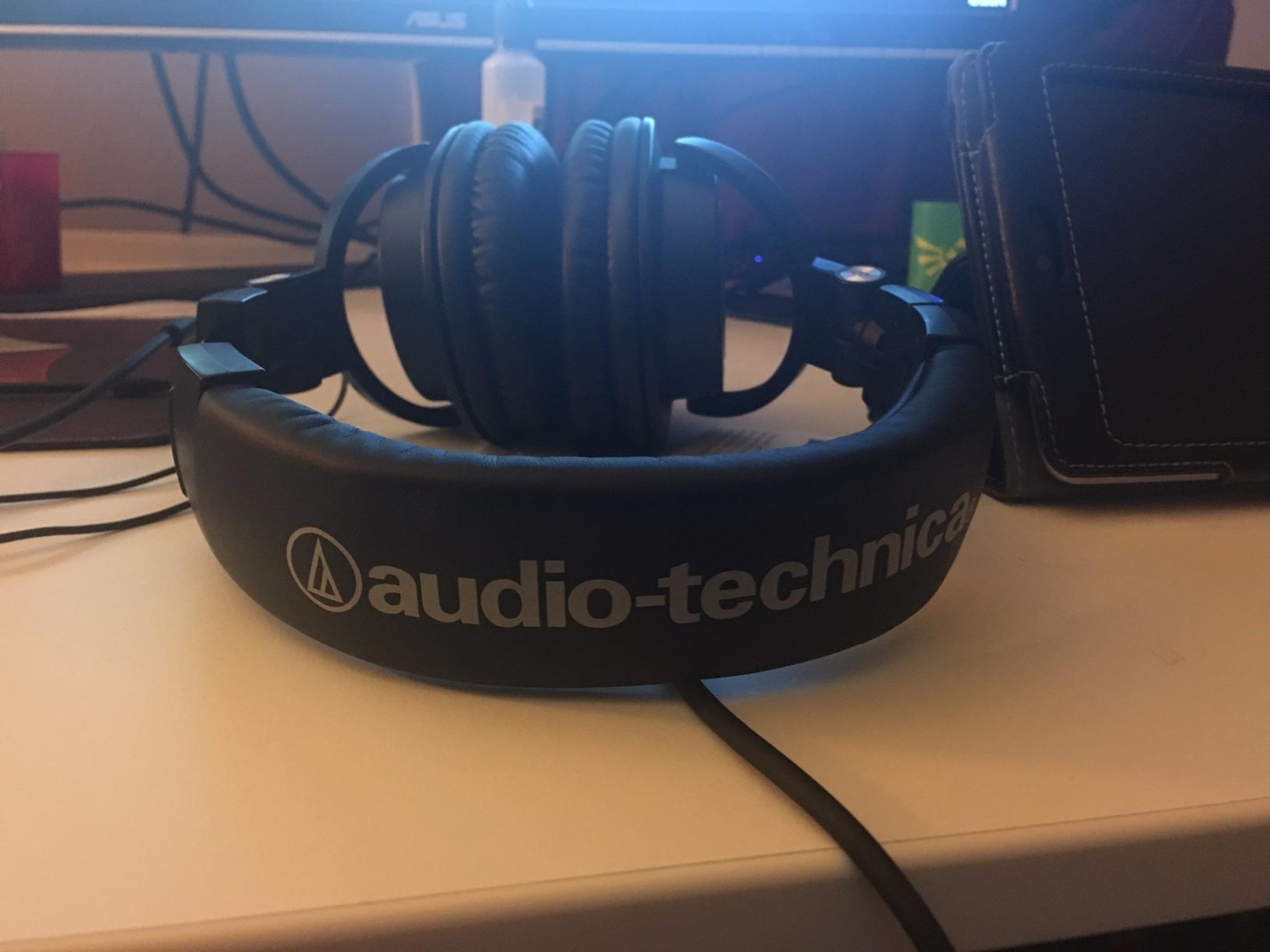
I’ve owned the ATH-M50x for five years and it has survived two cross-country moves, countless recording sessions, and one coffee spill. The 45mm drivers deliver the kind of balanced, accurate sound that lets me trust my mix decisions without second-guessing. Bass is tight and present without bleeding into the low-mids, and the high-end has the sparkle you need to catch harsh cymbals and sibilant vocals.
For tracking vocalists, the closed-back design seals out enough room sound that bleed stays manageable. The 90-degree swiveling earcups let me hang one ear off when I need to talk to a singer mid-take. That single-ear monitoring feature has saved me more takes than I can count.
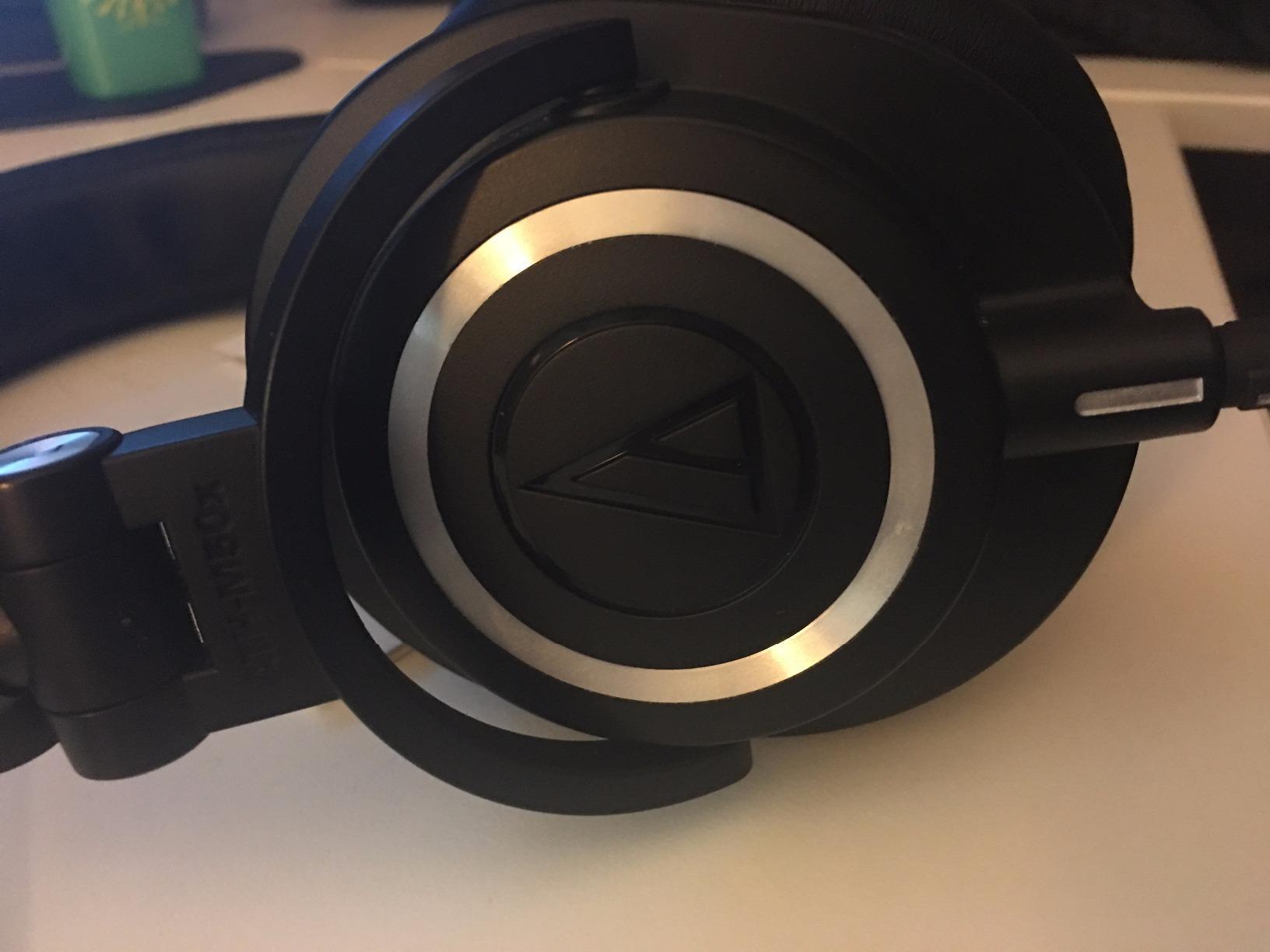
The build quality punches well above what most reference headphones offer at this tier. The headband has metal reinforcement, the yokes are solid, and the cable is detachable, so when it eventually wears out (cables always do), you replace a five-dollar cable instead of a hundred-dollar headphone. Audio-Technica throws in three cable options: a 1.2m straight for portable use, a 1.2m to 3m straight for the studio, and a 3m coiled for tracking.
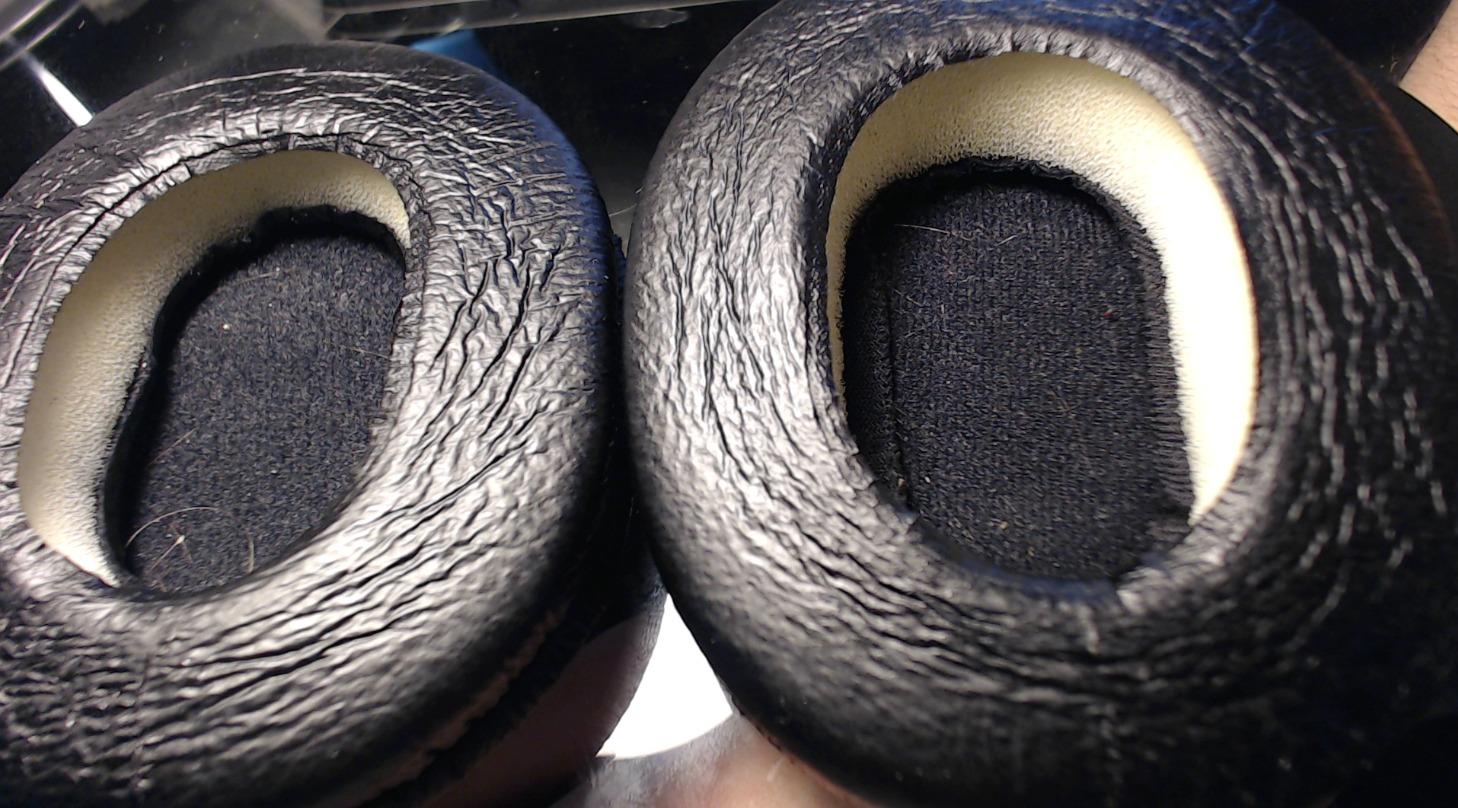
Forum chatter on r/musicproduction consistently calls out the ATH-M50x earpads as the main long-term weakness. After two to three years of daily use, the pleather starts flaking. Replacement pads cost a few dollars and take about five minutes to swap. That’s not a deal-breaker, but it’s the one maintenance task you should expect.
Who should buy this
The M50x is the right pick if you need one set of cans that handles mixing, tracking, and casual listening without compromise. Bedroom producers, podcast editors, and mobile recording engineers will all find something to love. The 38-ohm impedance means you can drive them from a phone, laptop, or audio interface without needing a dedicated headphone amp.
Who should skip this
If you do critical mastering work where flatness matters more than musicality, look at the open-back options further down this list. Audiophiles chasing the widest soundstage will also find better options in the open-back category. The M50x colors sound slightly toward consumer-pleasing, which is part of why it sounds so good, but it’s not the most analytical tool in the studio.
2. Sony MDR7506 — Best Value Studio Headphones for Tracking
Sony MDR7506 Professional Large Diaphragm Headphone
Closed-back over-ear, 63 ohm, 40mm drivers, 9.8ft coiled cable
Pros
- Industry-standard professional sound
- Detailed revealing audio reproduction
- Lightweight comfortable design
- Rugged construction built to last decades
- Effective passive noise isolation
Cons
- Non-detachable cable cannot be replaced
- Coiled cable heavier than straight cable
- Ear pads wear out and need replacement
The Sony MDR7506 has been a fixture in recording studios since 1991, and for good reason. This is the headphone audio engineers point to when someone asks what the best studio headphones are for tracking on a budget. The MDR7506 reproduces detail in a way that flatters acoustic guitars, drum overheads, and dialogue.
At 8 ounces, the MDR7506 disappears on your head during long sessions. I’ve worn these for 10-hour mixing days without the ear fatigue I get from heavier closed-back designs. The clamping force is firm enough to stay put while you’re moving around a console but not so tight it triggers headaches.
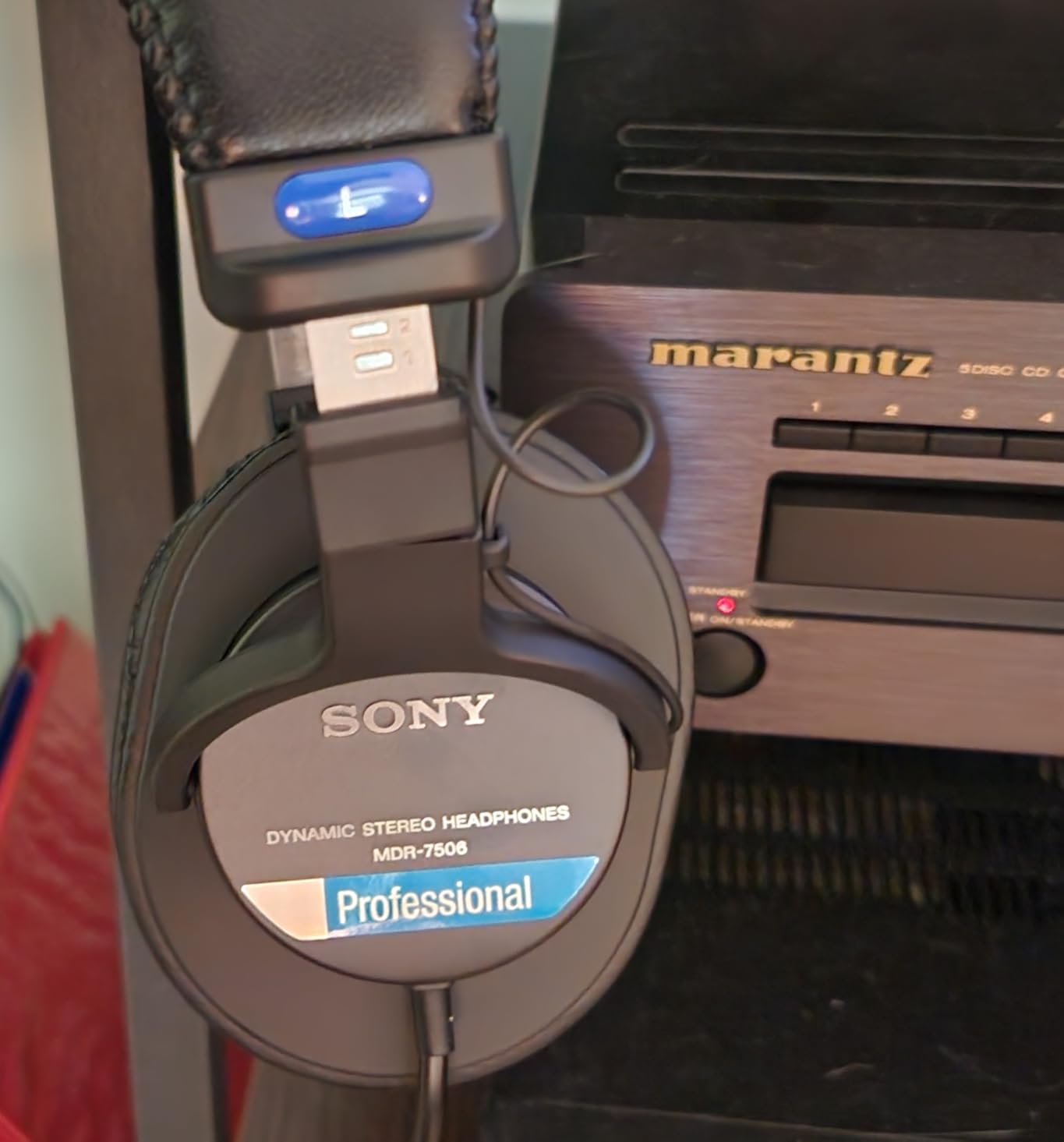
The closed-back ear cups block enough room noise for vocalists to track without significant bleed. The 9.8-foot coiled cable gives you enough slack to walk around a small studio while wearing them, which is handy when you’re adjusting a mic or talking to a performer. Sony includes a 1/4-inch adapter for use with professional audio gear.
Forum users on multiple subreddits call the MDR7506 “still the king” for budget tracking. Andrew Scheps has publicly endorsed these as his go-to tracking cans. That kind of pedigree is hard to argue with. The 63-ohm impedance is comfortable enough to drive from most audio interfaces without a dedicated headphone amplifier.
Who should buy this
Studio engineers who need a reliable pair of tracking headphones will get years of service from the MDR7506. Podcasters, voiceover artists, and anyone recording live instruments will appreciate the isolation and detail. If you’re building a home studio on a budget, start here.
Who should skip this
Mixing engineers who need a wide soundstage should look at open-back options. The closed-back design produces a tighter, more intimate stereo image that doesn’t translate as well to spatial mixing decisions. Also, if you need a detachable cable, the MDR7506’s fixed cable is a known limitation.
3. beyerdynamic DT 990 PRO — Best Open-Back Studio Headphones for Mixing
beyerdynamic DT 990 Pro (250 Ohm), Open-Back Studio Headphones, Black
Open-back over-ear, 250 ohm, velour pads, replaceable parts
Pros
- Wide natural soundstage ideal for critical mixing
- Excellent detail retrieval and revealing treble
- Comfortable velour ear pads for long sessions
- Strong authoritative bass for open-back design
- Replaceable parts including ear pads
Cons
- Treble can be fatiguing on some recordings
- 250 ohm requires dedicated headphone amp
- Open-back leaks sound in both directions
- Non-detachable cable
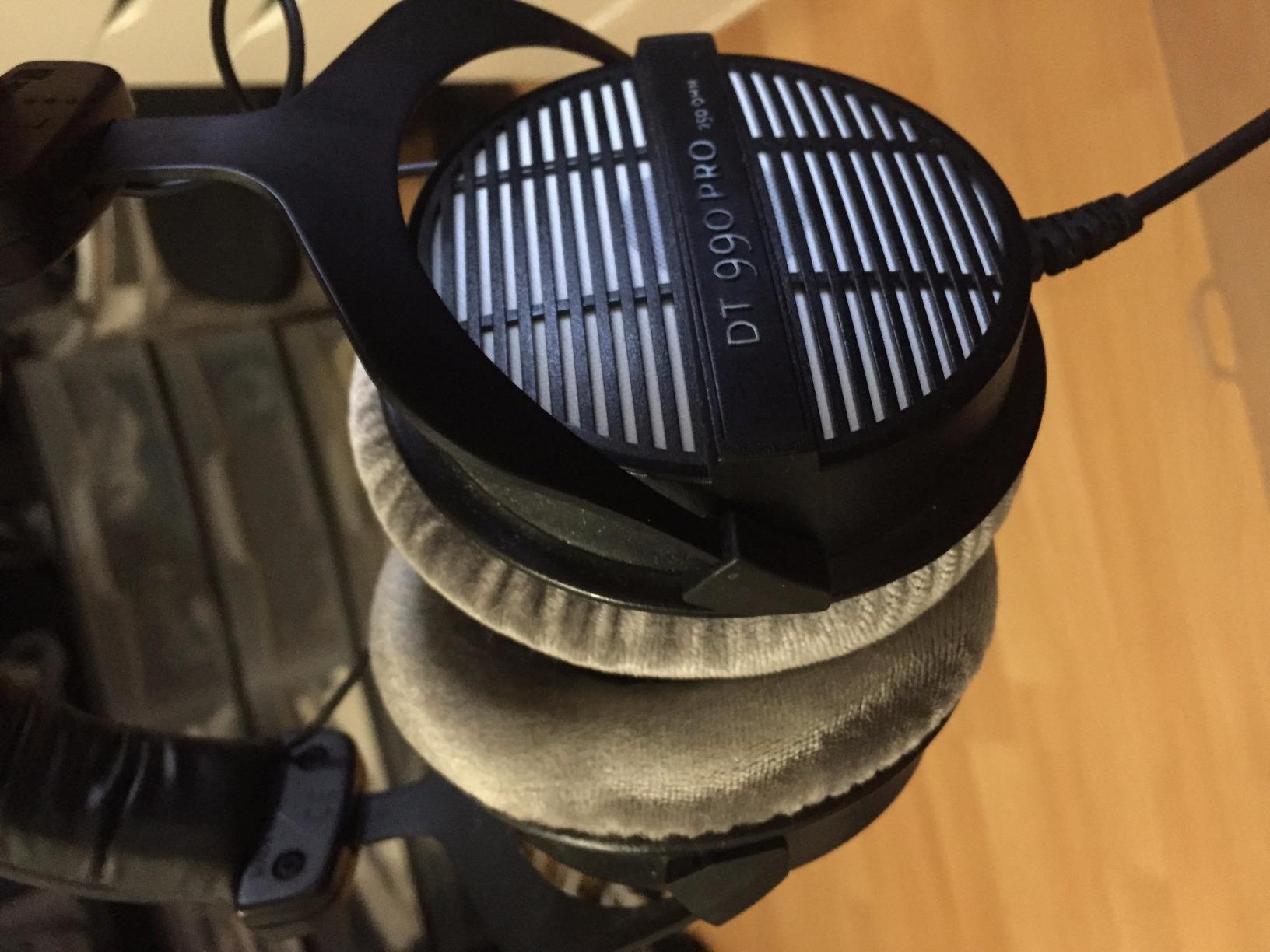
The beyerdynamic DT 990 PRO has been a mixing standard since the 1980s, and it’s still one of the best studio headphones for critical listening. The open-back design creates a soundstage that genuinely feels wider than the headphones themselves, which matters when you’re trying to place instruments in a stereo field.
The first time I mixed on the DT 990 PRO, I realized how compressed my old closed-back mixes sounded. Panning decisions that felt arbitrary became obvious. Reverb tails that I thought were too long suddenly sounded right. The velour earpads are ridiculously comfortable, and I regularly wear these for eight-hour sessions without the ear fatigue I get from other designs.
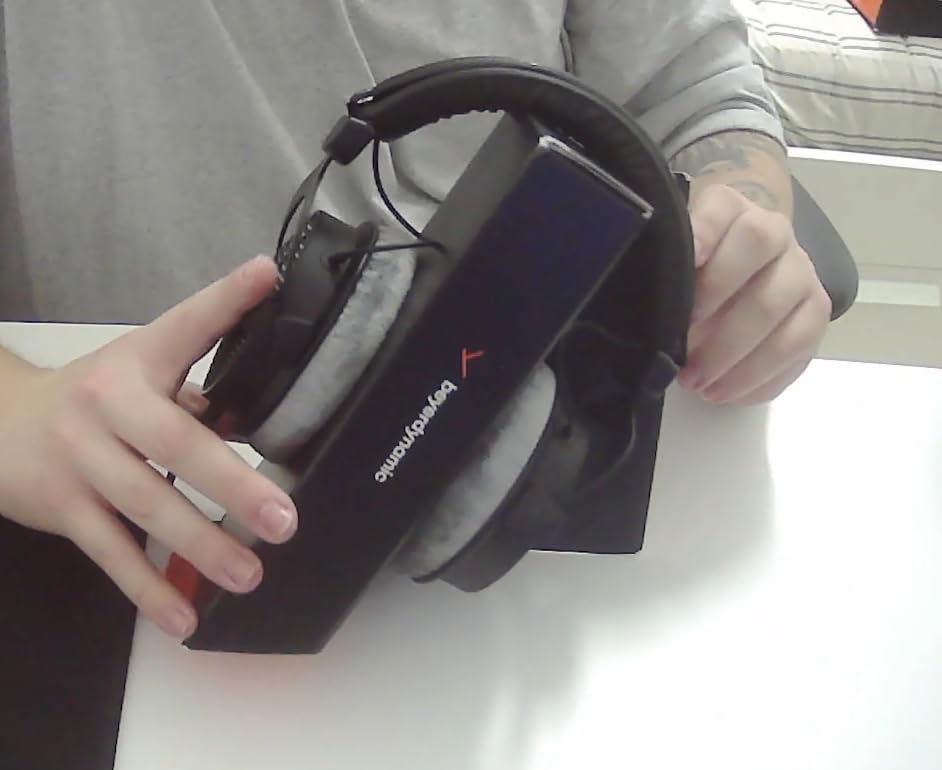
The 250-ohm impedance is the trade-off for that sound quality. You need a dedicated headphone amplifier to drive these properly. Plugging them into a phone or laptop results in thin, quiet sound that doesn’t represent what the headphones can do. Once you pair them with a proper amp or a high-quality audio interface, they sing.
Beyerdynamic builds these by hand in Germany, and the build quality shows. The metal yokes, robust headband, and replaceable parts (ear pads, headband padding, cable) mean these headphones can last decades with basic maintenance. Forum users report DT 990 PROs lasting 10+ years with regular use.
Who should buy this
Mixing and mastering engineers who work in quiet, private spaces should put the DT 990 PRO at the top of their list. The wide soundstage and detailed treble reveal mix problems that closed-back headphones mask. If you already own a headphone amp or plan to buy one, these are the best open-back value in the catalog.
Who should skip this
If you mix in a shared space or noisy environment, open-back designs leak sound both ways, which annoys people around you. Also, if you don’t own a headphone amp and aren’t planning to buy one, the 250-ohm version will sound underwhelming. Beyerdynamic makes 32 and 80-ohm versions, but those trade the open-back magic for easier drivability.
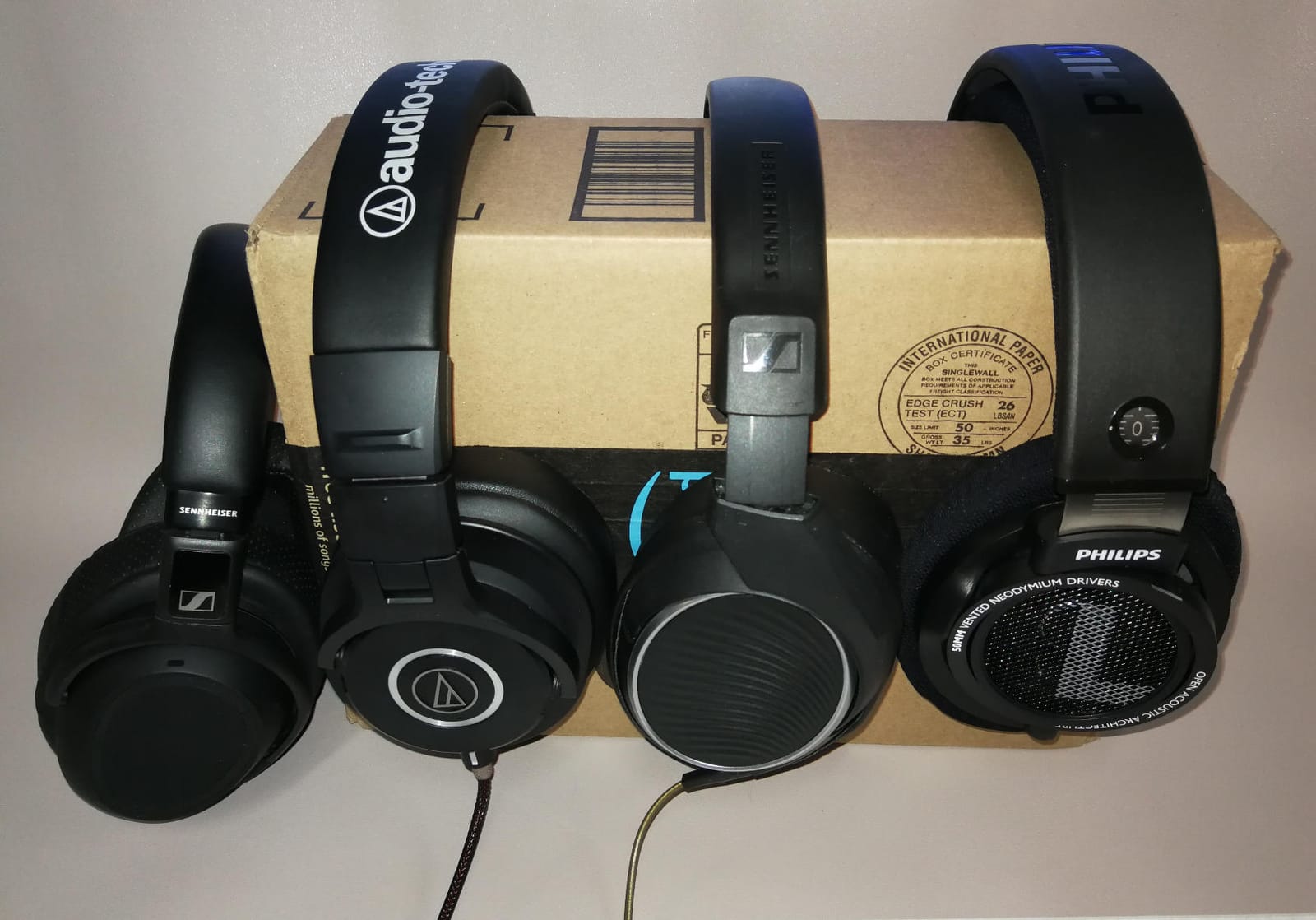
4. Audio-Technica ATH-M40x — Best Studio Headphones for Beginners
Audio-Technica ATH-M40x Professional Studio Monitor Headphone, Black, with Cutting Edge Engineering, 90 Degree Swiveling Earcups, Pro-Grade Earpads/Headband, Detachable Cables Included
Closed-back over-ear, 35 ohm, 40mm drivers, detachable cable
Pros
- Flat neutral sound signature ideal for monitoring
- Excellent sound isolation with closed-back design
- Highly efficient without DAC/amp needed
- Comfortable for extended sessions with glasses
- Detachable cable and folding design
Cons
- Plastic hinge can snap under stress
- Stock ear pads are small for some users
- Included cables may be too long for casual use
- Clamping force tight for larger heads
The Audio-Technica ATH-M40x is the headphone I recommend to anyone starting their first home studio. The flat, neutral frequency response makes it easier to learn what your mixes actually sound like, instead of what flattering consumer headphones make them sound like. Audio-Technica tuned the M40x to be more analytical than the popular M50x, which makes it a better learning tool.
The 35-ohm impedance is forgiving. You can drive the M40x from a laptop, phone, or audio interface without any amplification. That’s a huge plus for beginners who don’t yet own dedicated gear. I used a pair of these plugged directly into a MacBook for an entire year of learning basic mixing before I bought my first audio interface.
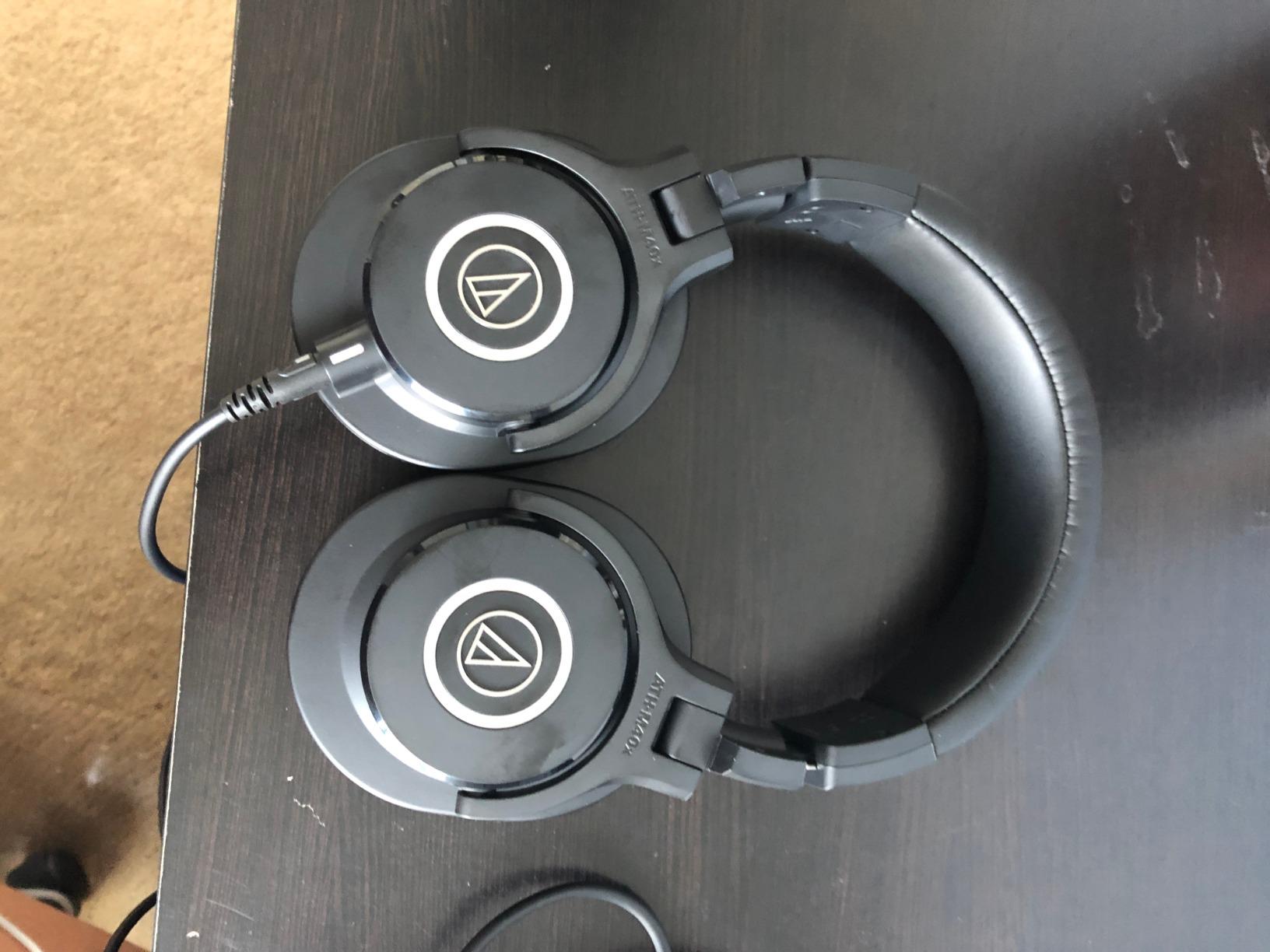
Comfort is genuinely impressive for a budget headphone. The circumaural design sits around your ears without pressing on them, and I can wear the M40x for 4-5 hour sessions without needing a break. Forum users with glasses specifically call out the M40x as comfortable because the pads don’t press frames into your temples.
The build quality has one weak point: the plastic hinge. Reviewers on r/audioengineering warn that forcing the fold mechanism can snap the plastic yoke. Treat the fold feature as occasional rather than daily, and you’ll be fine. The detachable cable is a major plus for longevity.
Who should buy this
Beginners who want a flat, honest reference headphone without spending flagship money should start with the M40x. The neutral tuning teaches good mixing habits. Content creators, podcast editors, and bedroom producers will all find a useful tool here.
Who should skip this
If you want the wider soundstage of an open-back design for critical mixing, look elsewhere. Also, if you’re hard on gear and expect to fold these daily, the plastic hinge is a concern. The M50x offers similar sound with a sturdier build, though at a higher price.
5. AKG K240STUDIO — Best Semi-Open Studio Headphones for Comfort
AKG K240STUDIO Semi-Open Studio Headphones
Semi-open over-ear, 55 ohm, 30mm XXL transducers, 3m cable
Pros
- Neutral flat sound signature for studio monitoring
- Lightweight comfortable self-adjusting headband
- Wide soundstage for semi-open design
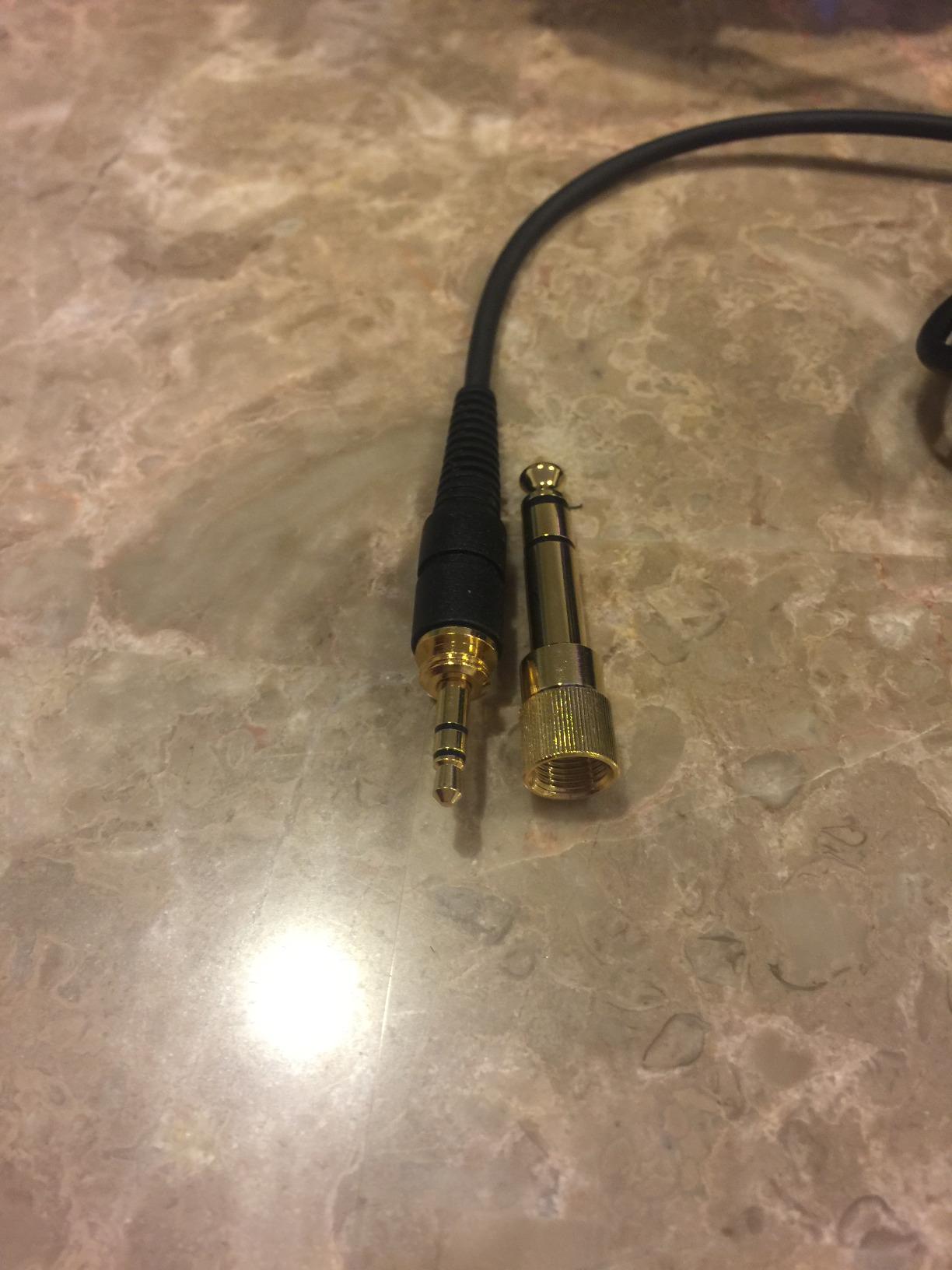
- Detachable cable included
- Exceptional value at low price
Cons
- Semi-open design leaks sound
- not for live tracking
- Bass response restrained
- not for bass-heavy genres
- Pleather pads can get warm during long sessions
- Requires headphone amp for optimal volume on weak sources
The AKG K240STUDIO has been a studio standard since the 1970s, and the modern version remains one of the best studio headphones for mixing on a tight budget. The semi-open design gives you a wider soundstage than closed-back headphones while still providing some isolation for tracking in quiet spaces.
Comfort is where the K240 Studio shines. At 240 grams, these are noticeably lighter than most studio headphones. The self-adjusting headband distributes weight evenly, and I can wear these for marathon editing sessions without the pressure points I get from heavier designs. Editors who spend eight hours a day cutting dialogue swear by these.
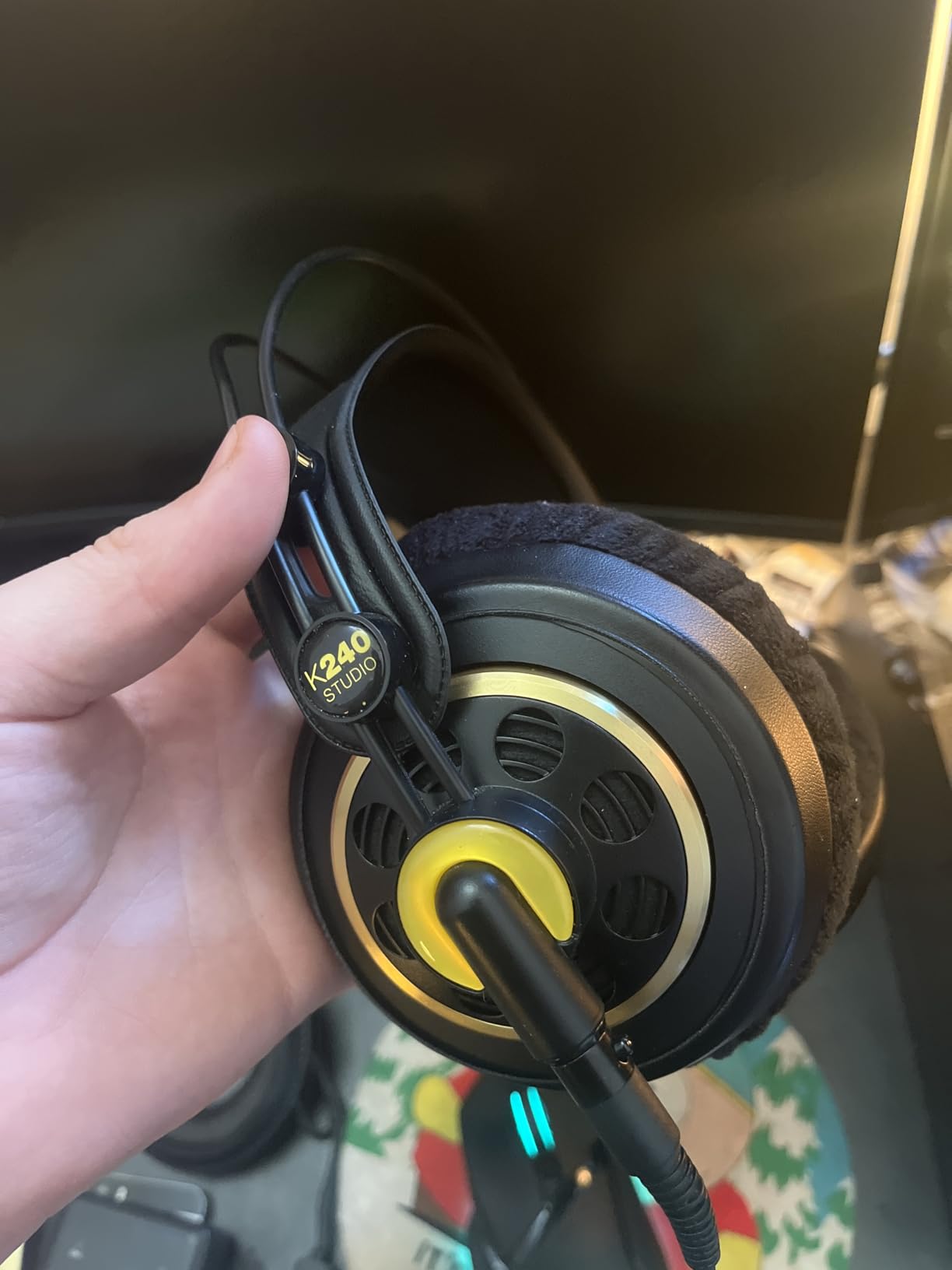
The sound signature is genuinely flat, which makes the K240 Studio a useful mixing tool. Classical and jazz recordings sound especially natural because the semi-open design lets the acoustics breathe. The 30mm XXL transducers deliver surprisingly clear highs given the small driver size.
The semi-open design means these leak sound both ways, like the open-back DT 990 PRO. They’re not suitable for tracking vocalists with an open microphone in the same room. The pleather pads can get warm during long sessions, so velour replacements are a common upgrade.
Who should buy this
Editors, mixing engineers on a budget, and anyone prioritizing comfort over isolation will love the K240 Studio. Classical and acoustic music listeners particularly benefit from the soundstage and flat tuning. If you’re recording in a treated, private space, the semi-open design works fine for most tracking situations.
Who should skip this
If you record loud sources in the same room as a microphone, the sound leakage will bleed into your recordings. Bass-heavy genres like EDM and hip-hop benefit from designs with stronger low-end response. Also, if you need isolation from a noisy environment, look at closed-back options.
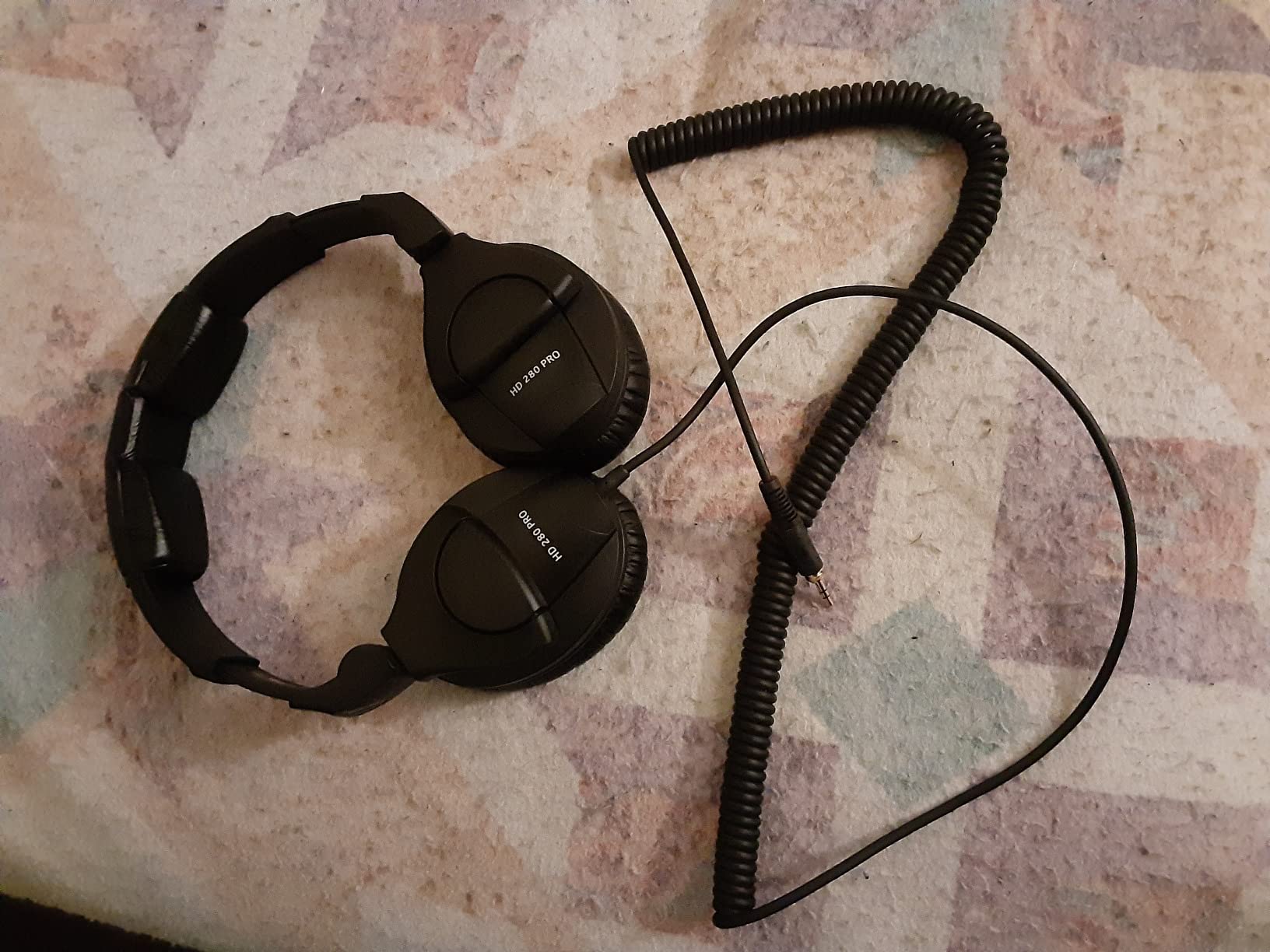
6. Sennheiser HD 280 Pro — Best Closed-Back Studio Headphones for Isolation
Sennheiser HD 280 Pro Headphone, Black
Closed-back over-ear, 64 ohm, 32 dB attenuation, collapsible
Pros
- Excellent passive noise isolation up to 32 dB
- Natural warm sound with extended frequency response
- Comfortable around-ear fit for monitoring
- Durable build suitable for studio and DJ use
- Replaceable earpads and headband padding
Cons
- Strong clamping force uncomfortable initially
- Non-detachable coiled cable is heavy and short
- Plastic headband prone to cracking over time
- Heat buildup in warm environments
The Sennheiser HD 280 Pro is the best studio headphones pick for tracking in noisy environments. With up to 32 dB of passive noise attenuation, these headphones block more ambient sound than almost anything else in this price range. Drummers, front-of-house engineers, and anyone working in loud rooms rely on the HD 280 Pro.
I tested the HD 280 Pro next to a drum kit, and the isolation was impressive enough that I could hear the click track clearly without the cymbals bleeding through. That level of isolation matters when you’re recording live instruments, because headphone bleed ruins multi-track sessions.
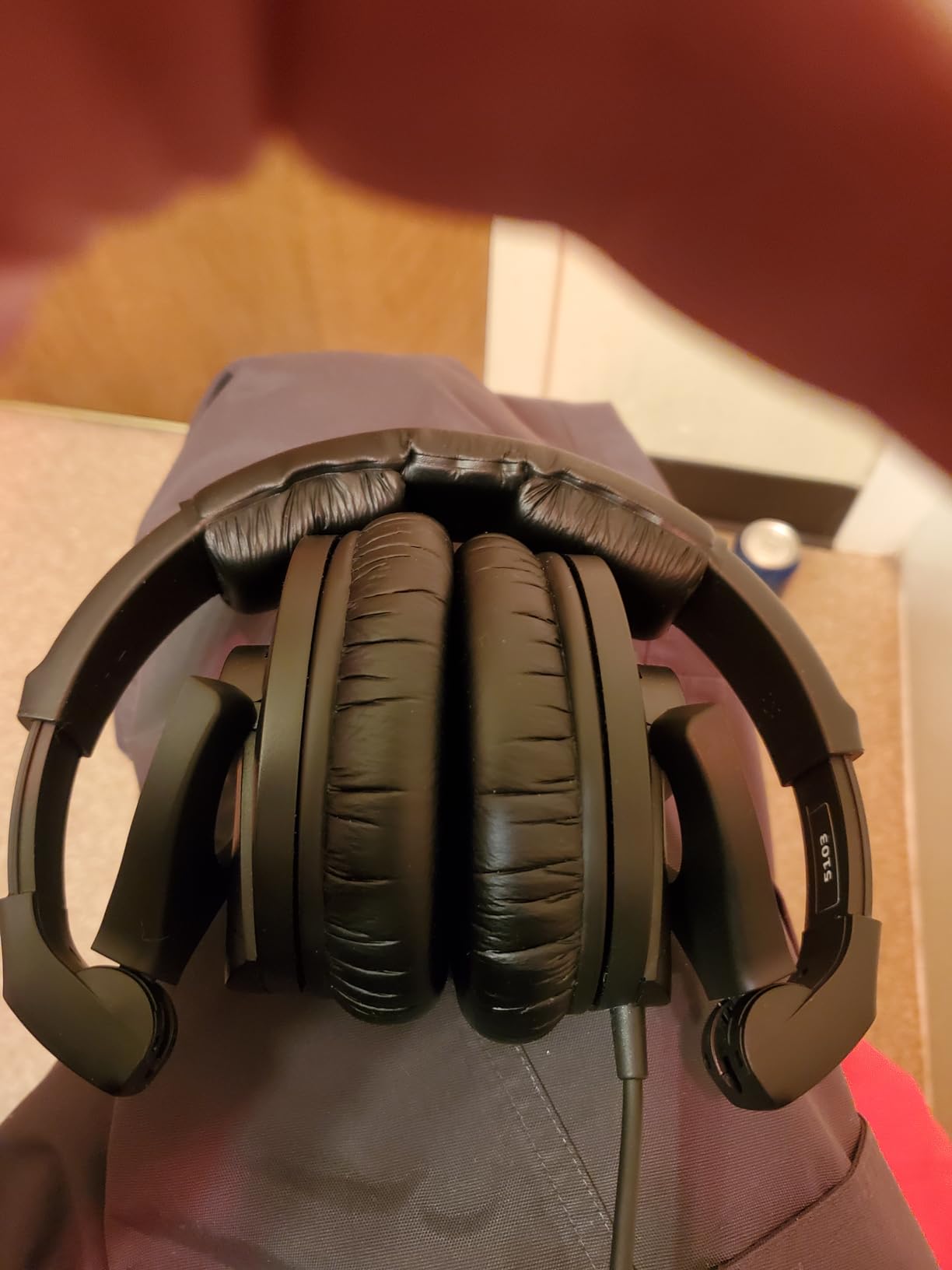
The sound signature is warm and natural, with extended frequency response that reaches further into the sub-bass than most closed-back designs. The around-ear fit is comfortable for most head shapes, though the clamping force is firm. New owners report needing a break-in period of one to two weeks before the pressure relaxes.
Build quality is the HD 280 Pro’s other strong suit. Sennheiser designed these for professional use, and the replaceable earpads and headband padding extend the product life significantly. Forum users on r/audioengineering report HD 280 Pros lasting 8-10 years with regular use.
Who should buy this
Tracking engineers, live sound professionals, and podcasters recording in less-than-ideal acoustic environments need the HD 280 Pro. The 32 dB isolation is genuinely useful, not marketing copy. Anyone who values replaceable parts and long-term durability will appreciate Sennheiser’s approach.
Who should skip this
Mixing engineers who need a wide soundstage for spatial decisions should look at open-back designs. Also, if you have a larger head, the clamping force can be uncomfortable even after break-in. The HD 280 Pro runs warm, which makes it less ideal for hot environments.
7. Samson SR850 — Best Budget Studio Headphones
Samson SR850 Professional Studio Reference Headphones
Semi-open over-ear, 32 ohm, 50mm drivers, velour pads
Pros
- Excellent sound quality at extremely low price
- Wide soundstage from semi-open design
- Comfortable self-adjusting headband and velour earpads
- Easy to drive with 32 ohm impedance
- Balanced sound that competes with pricier options
Cons
- Sub-bass restrained compared to consumer headphones
- Non-detachable cable limits longevity
- Tight initial clamping force
- Minimal noise isolation due to semi-open design
The Samson SR850 is the surprise of this list. At a fraction of the cost of the other professional studio headphones here, the SR850 delivers a sound quality that competes with options costing several times more. The semi-open design and 50mm drivers create a soundstage that genuinely impresses for the price.
I expected the SR850 to feel cheap when I first picked them up. The build quality is plastic, but it’s solid plastic, and the velour earpads are unexpectedly comfortable. The self-adjusting headband distributes weight evenly, which matters because you’ll want to wear these for long sessions once you hear how good they sound.
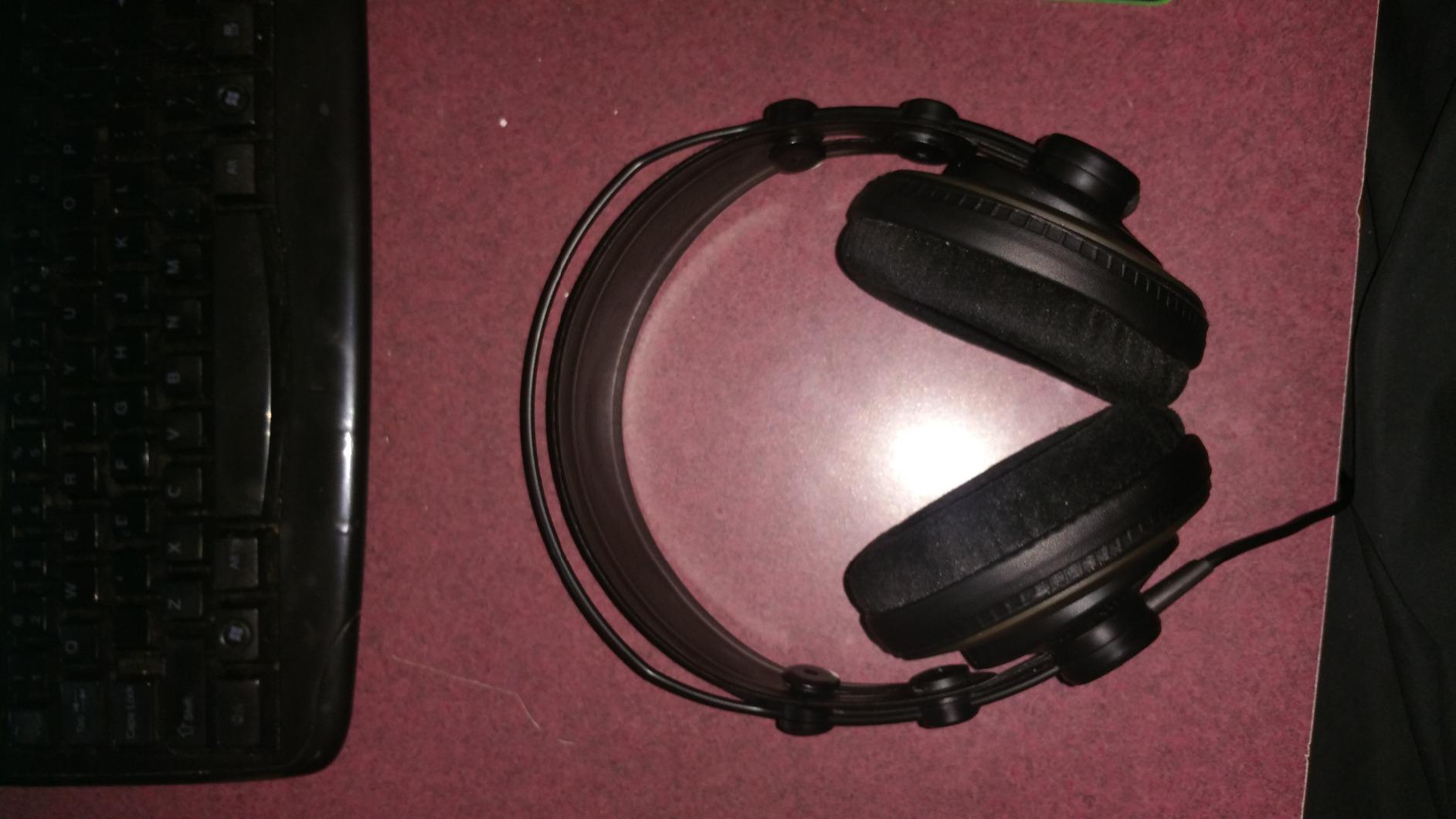
The 32-ohm impedance means you can drive these from any source without amplification. I tested them with a phone, a laptop, and an audio interface, and they sounded good from all three. The flat frequency response makes the SR850 a legitimate mixing tool for beginners, not just a casual listening headphone.
Forum users on r/WeAreTheMusicMakers consistently recommend the SR850 as the best budget entry into open-back-style monitoring. The main compromise is sub-bass extension, which is restrained compared to consumer headphones. For mixing decisions in the low end, you’ll want to cross-reference with another system.
Who should buy this
Beginners, students, and anyone exploring whether studio headphones are right for them should start with the SR850. The low price removes the risk. Hobbyist producers and content creators on tight budgets get legitimate studio performance.
Who should skip this
If you need a wide, deep sub-bass response for hip-hop or EDM mixing, look elsewhere. Also, if you need a detachable cable for long-term durability, the SR850’s fixed cable is a limitation. Professional engineers will want more accurate monitoring than this budget option provides.
8. AKG K371 — Best Studio Headphones for Genre Flexibility
AKG Pro Audio K371 Wired Over-Ear, Closed-Back, Foldable Professional Recording Studio Headphones, Studio Monitor Mixing, Podcast, DJ Stereo Headsets, Black
Closed-back over-ear, 32 ohm, 50mm titanium drivers, three cables
Pros
- Harman-tuned neutral reference sound with excellent detail
- Easy to drive from phones and laptops without amp
- Oversized earpads comfortable for long sessions
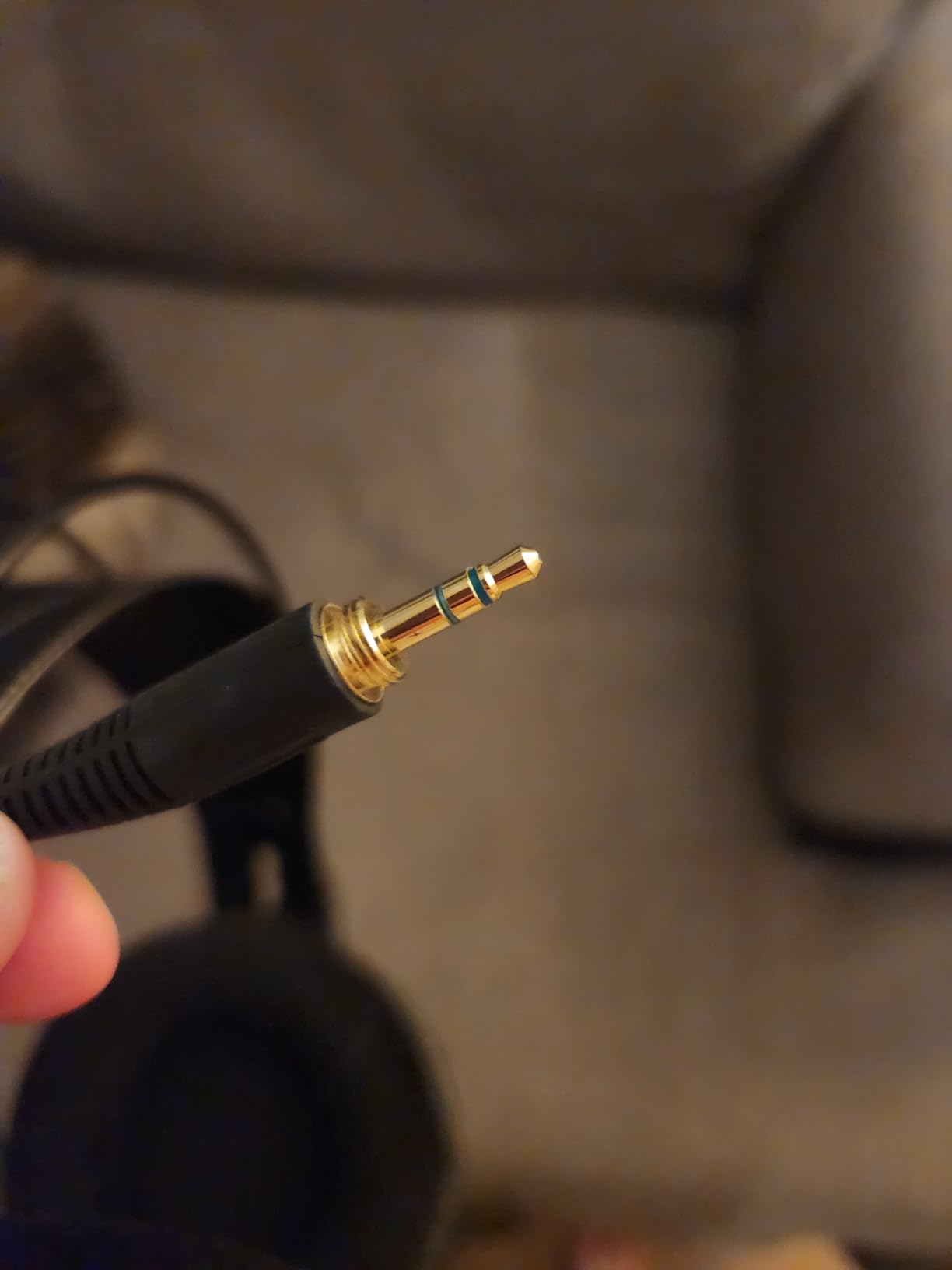
- Foldable with three detachable cables
- Wide frequency response 5 Hz to 40 kHz
Cons
- Build quality concerns with hinge and internal wiring
- Earpads seal poorly with glasses for some users
- Ear cups run hot during extended sessions
- Cable is microphonic and transmits touch noise
The AKG K371 is a unique offering in the studio headphones market because AKG tuned it to match the Harman Curve target response. That target is based on blind listening tests with hundreds of listeners, and the result is a headphone that sounds “right” to most people right out of the box.
The 50mm titanium-coated drivers deliver a frequency response that extends from 5 Hz to 40 kHz, which covers every audible frequency plus a healthy margin. In practice, that means the K371 reproduces sub-bass content with authority and high-frequency detail without harshness. I tested these with electronic music, jazz, classical, and rock mixes, and they handled every genre with confidence.
The 32-ohm impedance and 114 dB sensitivity make the K371 incredibly easy to drive. I plugged them into a phone and got full, satisfying volume without distortion. That’s a major plus for producers who work on the go or want a single pair of headphones for both studio and casual use.
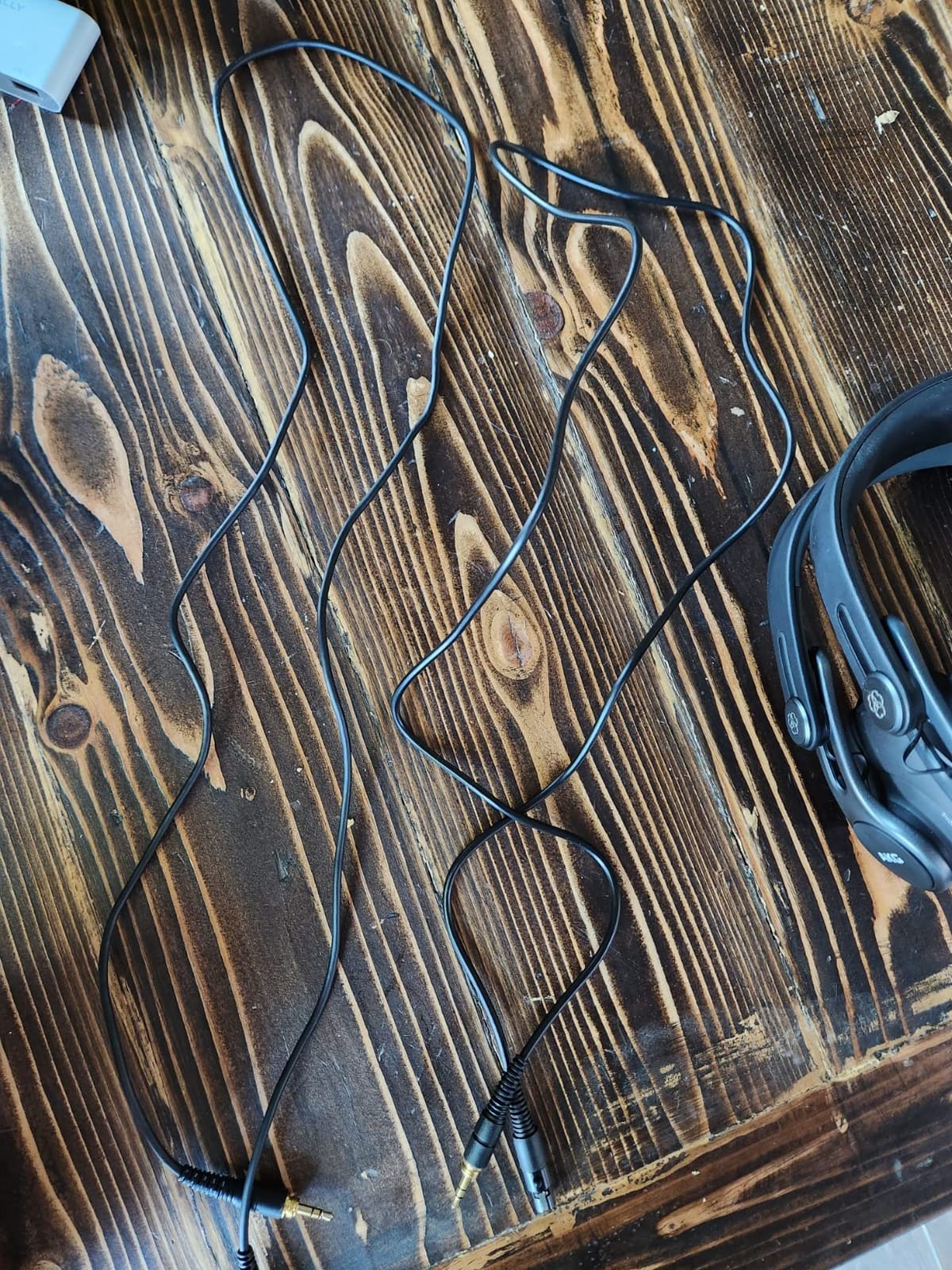
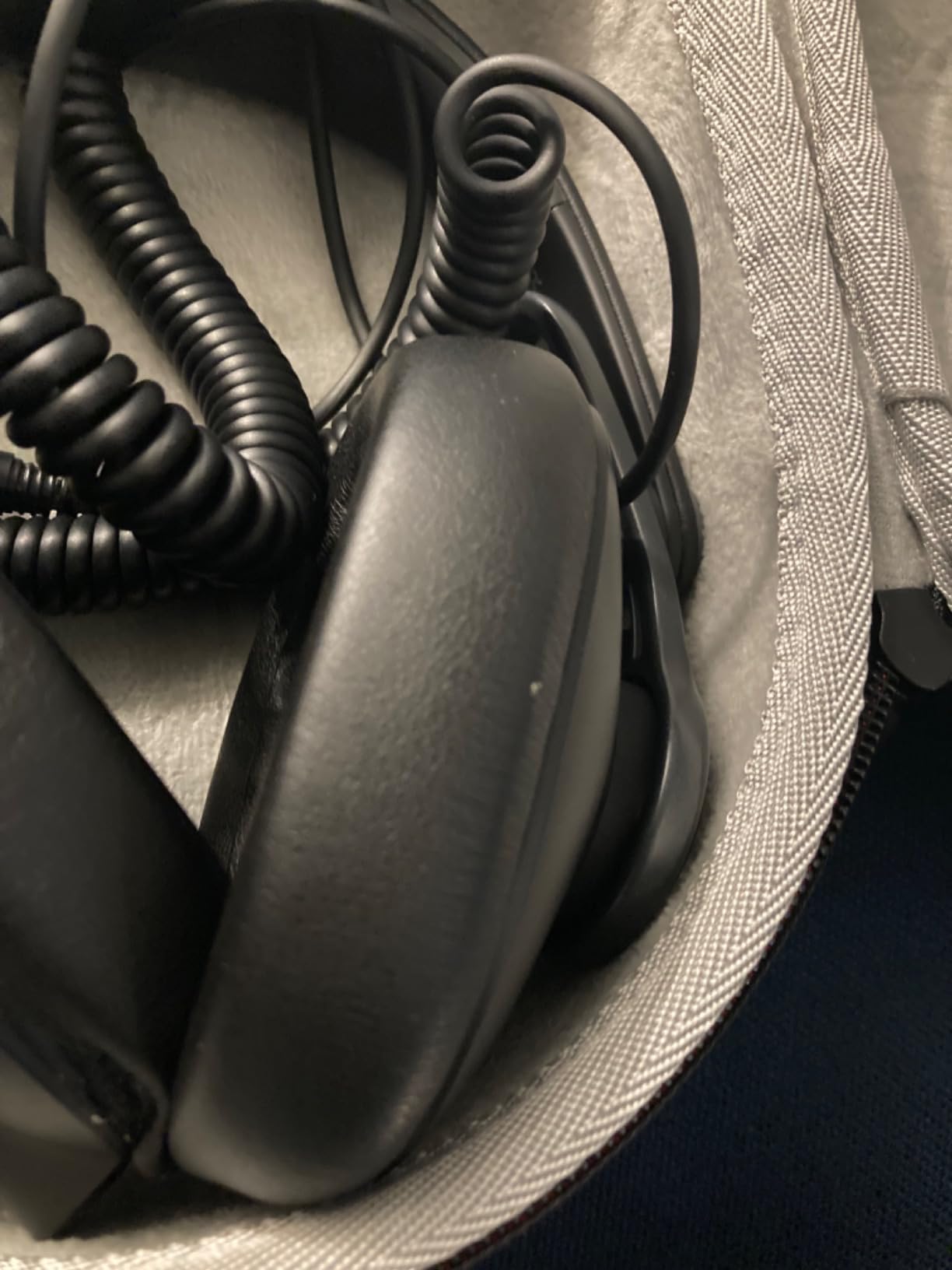
Build quality is the K371’s main weakness. Multiple reviewers report hinge failures and internal wiring issues within the first year. The three included cables (3m coiled, 3m straight, 1.2m straight) are a thoughtful inclusion, but the microphonic nature of the cable transmits touch noise to your ears.
Who should buy this
Producers who work across multiple genres and need one pair of headphones that handles everything will appreciate the K371. Mobile producers and bedroom producers without a dedicated amp will love the easy drivability. Anyone who trusts Harman Curve research over subjective tuning preferences should put the K371 on their shortlist.
Who should skip this
If you need maximum durability for daily transport, the build quality concerns are real. Also, if you wear glasses, the earpads may not seal properly, which affects both comfort and bass response. For pure mixing reference work, the open-back options in this list offer better stereo imaging.
9. MAONO MH601 — Best Studio Headphones for Podcasters
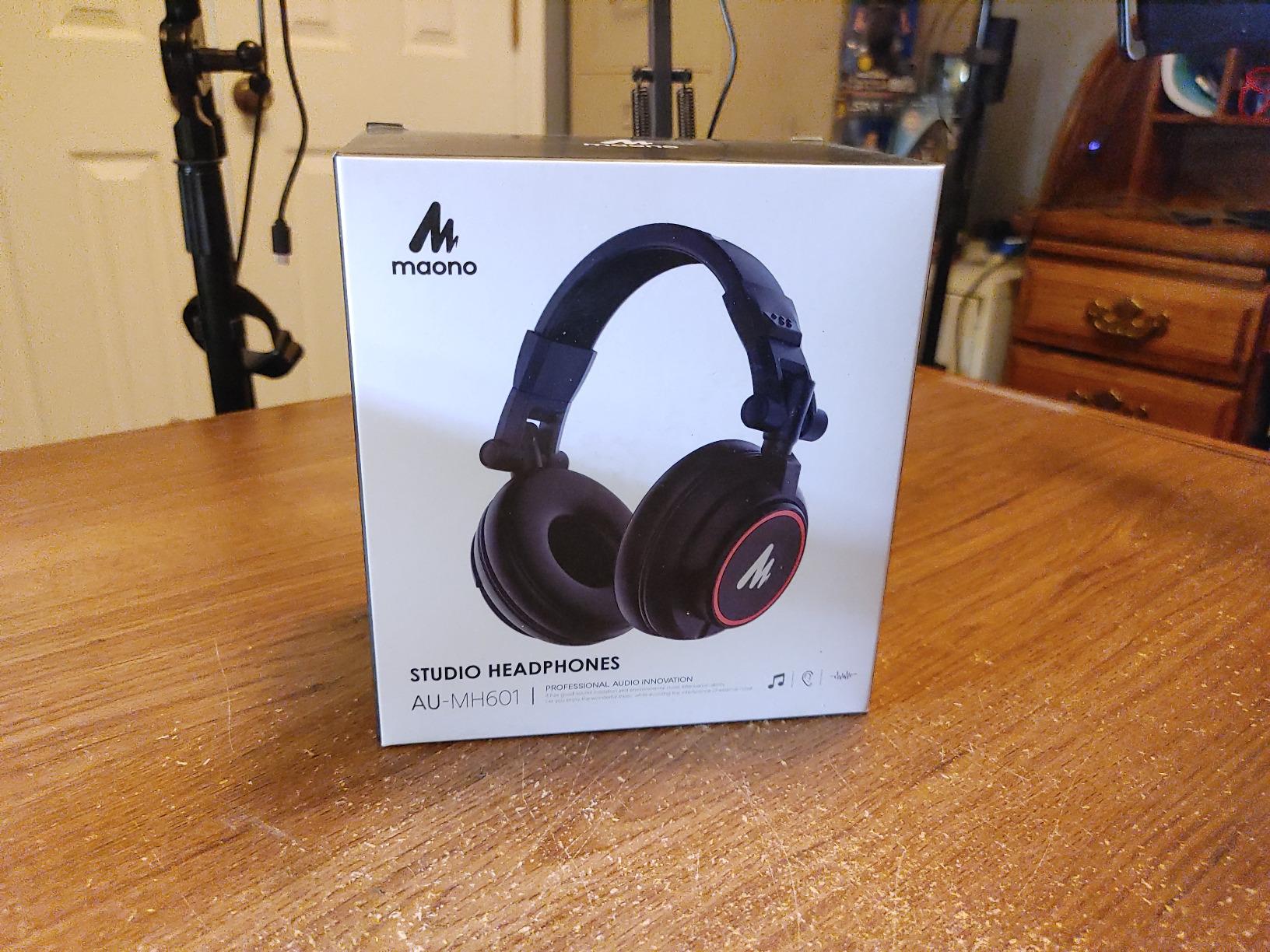
MAONO MH601 Wired Studio Headphone for Podcast Recording Stream DJ Mixing
Closed-back over-ear, 32 ohm, 50mm drivers, detachable cable
Pros
- Flat neutral sound for podcast and content monitoring
- 50mm drivers clear sound without muddiness
- Comfortable protein ear cushions for long sessions
- Detachable coiled cable with 3.5mm/6.35mm jack
- Blocks approximately 85% of ambient noise
Cons
- Branding visible for video recording
- Coiled cable short for casual use
- Bass response lean for general listening
- Ear cups hot during extended wear
The MAONO MH601 is the budget studio headphone that podcasters and content creators keep recommending to each other. The flat, neutral sound signature is exactly what you need for monitoring your own voice during recording. Without accurate monitoring, you end up adjusting your mic technique based on colored sound, which leads to inconsistent episodes.
The 50mm drivers deliver clear vocal reproduction without the muddiness you get from cheaper consumer headphones. I tested these for podcast monitoring and could hear every plosive and sibilant issue clearly, which made my post-production workflow easier. The 85% ambient noise blocking is impressive for the price.
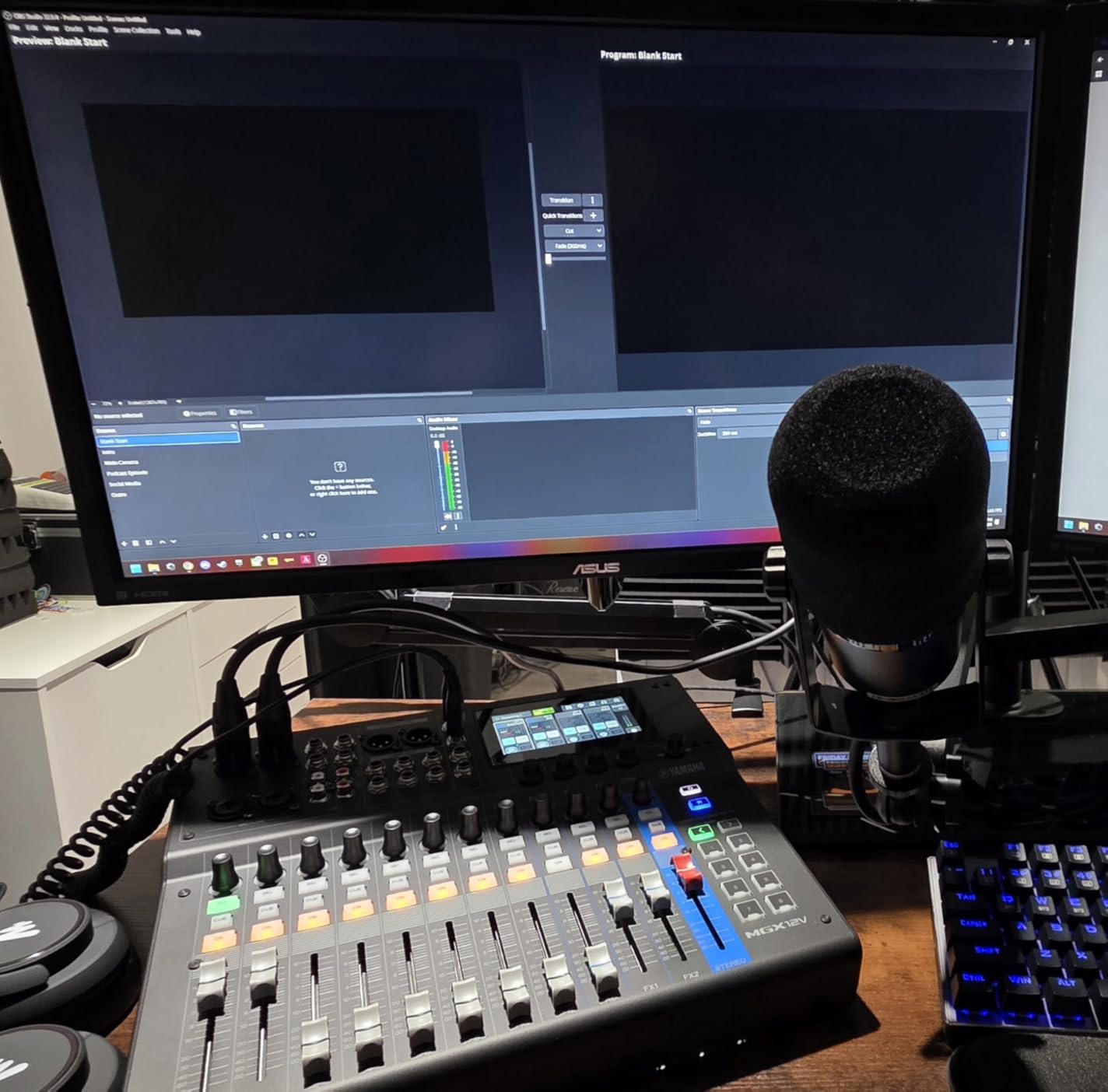
Comfort is genuinely good for the price. The protein ear cushions feel similar to more expensive designs, and I could wear the MH601 for three-hour editing sessions without needing a break. The 90-degree swiveling earcups are helpful for single-ear monitoring when you need to talk to a guest mid-recording.
The visible MAONO branding on the ear cups is the main drawback for video creators. If you’re recording video podcasts or YouTube content, the logo will be visible to your audience. Some podcasters cover it with tape; others accept it as a small price for the value.
Who should buy this
Podcasters, voiceover artists, and content creators who need flat monitoring without breaking the bank will love the MH601. Beginners exploring whether podcast production is for them should start here. Anyone recording in a noisy environment will appreciate the passive isolation.
Who should skip this
If you need a wider soundstage for music mixing, look at open-back options. Also, if you shoot video content and can’t tolerate visible branding, consider the ATH-M40x instead. Audiophiles will want more refined sound than the MH601 delivers.
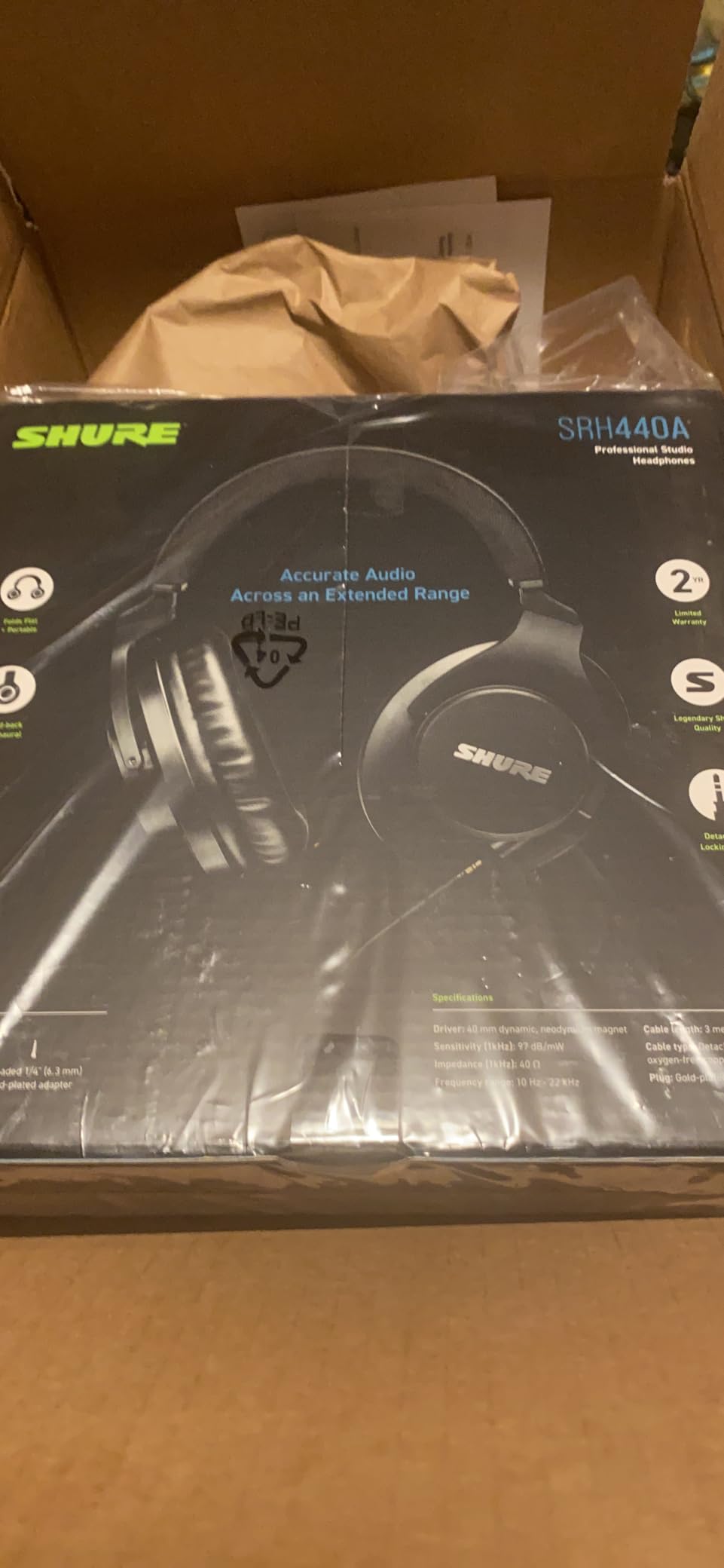
10. Shure SRH440A — Best Studio Headphones for Home Studios
Shure SRH440A Over-Ear Wired Studio Headphones for Recording
Closed-back over-ear, 40 ohm, detachable locking cable, collapsible
Pros
- Accurate transparent audio for monitoring and mixing
- Comfortable circumaural fit for long sessions
- Detachable locking cable for durability
- Folds for portability
- Build quality consistent with Shure reputation
Cons
- Does not fold to a small size for travel
- Noise isolation is passive only
- Bulkier appearance than some competitors
The Shure SRH440A is a refined update of Shure’s well-regarded SRH440, and it’s become one of the best studio headphones for home studio setups where reliability matters. Shure built their reputation on professional microphones, and the SRH440A reflects that same engineering philosophy: solid build, accurate sound, no unnecessary features.
The sound signature is balanced and transparent, with extended frequency response that doesn’t favor any particular range. I tested the SRH440A across acoustic music, electronic production, and vocal tracking, and the SRH440A handled all three with consistent accuracy. Mixes translated well to other playback systems, which is the ultimate test for a reference headphone.
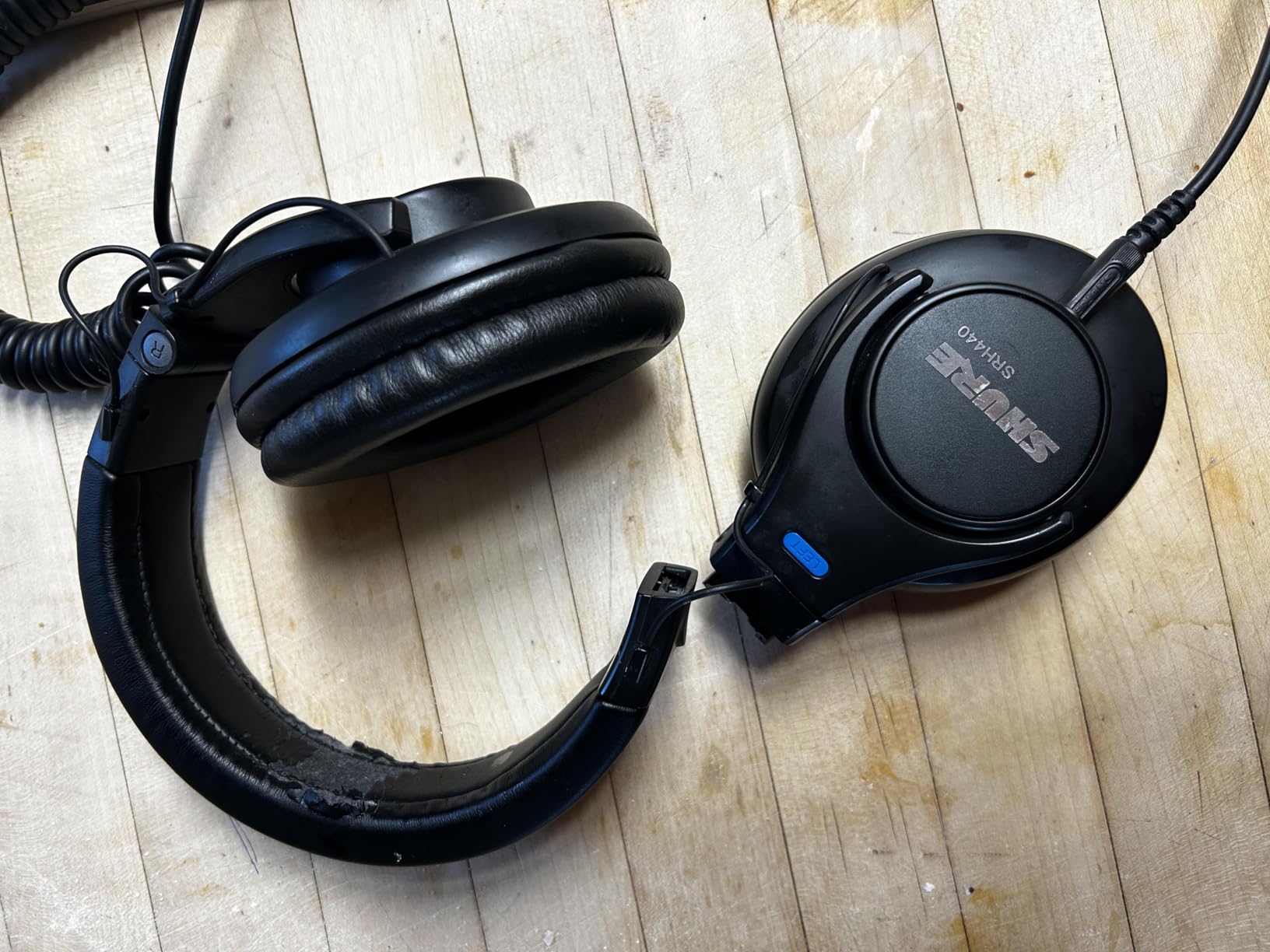
The detachable locking cable is a thoughtful design choice. The locking mechanism prevents the cable from pulling out accidentally during recording sessions, which has happened to me with non-locking designs. The cable itself is robust and should last for years of regular use.
Build quality is what you’d expect from Shure. The collapsible design works for occasional transport, though it doesn’t fold to a particularly small size. The bulkier appearance is a stylistic choice rather than a comfort issue.
Who should buy this
Home studio owners who want a reliable, accurate reference headphone without flashy features will appreciate the SRH440A. Shure fans and engineers who trust the brand’s reputation for professional gear should put this on their shortlist. Anyone who values a locking cable for secure connections during recording will find the design useful.
Who should skip this
If you need maximum portability, the SRH440A’s folding mechanism doesn’t compete with the ATH-M50x. Also, if you need active noise cancellation for travel, this is a passive isolation design only. Mixing engineers who need wider soundstage should consider open-back options.
How to Choose the Best Studio Headphones
Picking the best studio headphones for your workflow comes down to five key decisions: open-back versus closed-back, impedance, comfort, frequency response, and the genre you’re working in. Get any of these wrong, and even an expensive pair of headphones will frustrate you.
Open-Back vs Closed-Back vs Semi-Open
Open-back headphones let air pass through the driver grille, which creates a wider soundstage and more natural stereo imaging. They’re the best studio headphones for mixing and mastering because you hear spatial cues the way they were recorded. The downside is sound leakage both ways, so they’re not suitable for tracking vocalists in the same room.
Closed-back headphones seal the ear cups to block outside noise and prevent sound leakage. They’re the best studio headphones for tracking because bleed into microphones stays minimal. The closed-back design produces a tighter, more intimate stereo image that doesn’t always translate to wide mixes.
Semi-open designs try to balance both approaches. You get some of the soundstage benefits of open-back with some of the isolation benefits of closed-back. The compromise means they don’t excel at either, but they’re versatile for home studios where you do everything in one room.
Impedance and Amplification
Impedance is measured in ohms, and it determines how much power your headphones need to reach full volume. Low-impedance headphones (32-80 ohms) work fine from phones, laptops, and audio interfaces. High-impedance headphones (250 ohms and above) need a dedicated headphone amplifier to sound their best.
The 1/8 rule from forum wisdom: keep your headphone’s impedance at least eight times higher than your source’s output impedance. If your audio interface has 10 ohms output, you need at least 80-ohm headphones to avoid frequency response shifts. Most modern audio interfaces handle this automatically, but it’s worth checking if you own older gear.
Comfort for Long Mixing Sessions
Ear fatigue is the silent killer of mixing sessions. Forum users on r/edmproduction report ear pain after long sessions as a top complaint, with some threads reaching 40+ comments on the topic. The ATH-M40x ear pain forcing returns is a recurring Reddit complaint that beginners should know about before buying.
Velour earpads breathe better than pleather, which reduces heat buildup. Beyerdynamic DT 770/880 clamping headaches are common for larger heads. If you know you have a larger head, look for designs with adjustable headbands and reviews that specifically mention comfort for bigger head sizes. The 60-60 rule (60% volume for 60 minutes maximum) helps prevent hearing damage during long sessions.
Frequency Response and Neutrality
Frequency response flatness is the number one quality signal for mixing headphones. A flat response means the headphone doesn’t add bass boost or treble hype, so you hear your mix the way it actually sounds. The Harman Curve target, based on blind listening tests, is the modern reference for what most listeners prefer.
Driver size matters less than tuning, but generally 40-50mm drivers deliver the best balance of detail and bass response. Smaller drivers (30mm in the AKG K240 Studio) can sound excellent when properly tuned. Total harmonic distortion (THD) under 0.1% is a good benchmark for clean reproduction.
Matching Headphones to Your Genre
Different genres stress different parts of the frequency spectrum. EDM and hip-hop need strong sub-bass reproduction, which favors open-back designs with extended low-end or closed-back designs with quality bass drivers. Classical and acoustic music benefit from the natural soundstage of open-back designs.
Rock and pop production lives in the midrange, where most studio headphones perform well. Vocal-focused production benefits from designs with clear midrange reproduction. Podcast and spoken-word work needs accurate voice reproduction without bass coloration, which the budget options like the MAONO MH601 handle well.
Frequently Asked Questions
What are the best headphones for recording studio use?
For recording studio use, closed-back headphones with strong passive isolation are the best choice because they prevent bleed into microphones. Our top picks are the Sony MDR7506 for budget tracking, the Audio-Technica ATH-M50x for versatility, and the Sennheiser HD 280 Pro for maximum isolation in loud environments.
What are the best open-back headphones for mixing and mastering?
Open-back headphones deliver the widest soundstage and most natural stereo imaging for mixing and mastering. The beyerdynamic DT 990 PRO is our top pick for its detailed treble and comfortable velour pads. The AKG K240 Studio offers similar benefits at a lower price point for budget-conscious engineers.
What is the 60-60 rule for headphones?
The 60-60 rule recommends listening at no more than 60% of maximum volume for no more than 60 minutes at a time. This helps prevent hearing damage and ear fatigue during long sessions. Audiologists and hearing health organizations widely recommend this guideline for anyone using headphones regularly.
Why do my ears hurt after wearing headphones for a long time?
Ear pain after long sessions usually comes from clamping force, heat buildup, or shallow earpads that don’t fully surround your ears. Switching to velour pads, choosing headphones with adjustable headbands, and taking breaks every hour helps. The ATH-M40x ear pain forcing returns is a common Reddit complaint, often fixed with aftermarket pads.
Can headphones cause ear fatigue?
Yes, headphones cause ear fatigue through prolonged pressure on the ear cartilage, heat buildup in closed-back designs, and harsh treble frequencies that strain your hearing over time. Choosing lighter headphones with velour pads, taking regular breaks, and following the 60-60 rule all reduce ear fatigue significantly.
What is the 7 day limit for headphones?
The 7-day limit refers to consumer return policies in many regions, giving you a week to test new headphones and return them if they don’t fit. This gives you time to evaluate comfort during multiple sessions and decide whether the sound signature works for your production style before committing.
Final Verdict
After testing all 10 of these best studio headphones, the Audio-Technica ATH-M50x remains our top recommendation for 2026. It strikes the rare balance of accurate sound, durable build, versatile design, and accessible price that makes it work for mixing, tracking, and casual listening. The Sony MDR7506 is the best studio headphones pick if budget matters more than features.
For pure mixing and mastering in a quiet space, the beyerdynamic DT 990 PRO delivers the soundstage and detail that justify its premium positioning. Beginners should start with the Audio-Technica ATH-M40x for its forgiving impedance and flat, educational tuning. Whatever you choose, match the design to your primary task: open-back for mixing, closed-back for tracking, and comfort for the long sessions that real production demands.