
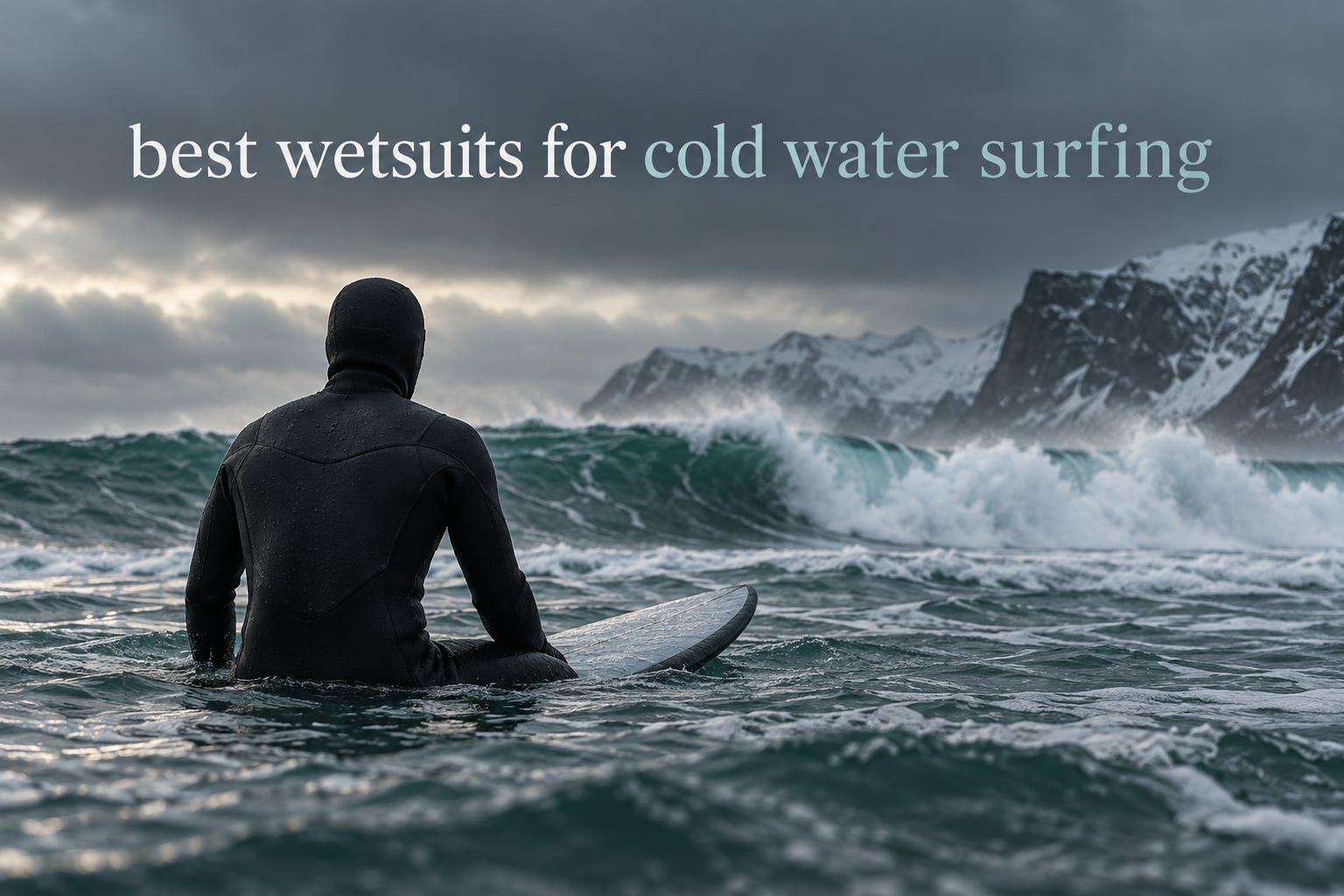
The best wetsuit for cold water surfing right now is the O’Neill Men’s Epic 4/3mm Back Zip Full Wetsuit. It pairs a 4mm chest panel with UltraFlex neoprene through the shoulders and arms, glued and blindstitched seams, and a double super seal neck that keeps the flush-down-the-back problem to a minimum. It is not the thickest suit we tested and it has no hood, but it is the one we kept reaching for because it moves well, it drains predictably, and it holds warmth through a full two-hour session instead of cooking you for the first ten minutes.
That distinction matters more than any spec sheet. Cold water does not just feel cold, it pulls heat out of your body faster than you can replace it, and the practical failure mode for most surfers is not hypothermia in the lineup. It is quitting a session an hour early because the suit stopped being warm somewhere around the wrist or the neck seal. Everything in this roundup is judged on that standard: does it stay warm through a long paddle, does it seal at the extremities, and does it still flex when you have to duck dive.
If you want a second opinion on spec claims versus what buyers report after months of use, our hands-on product testing follows the same method.
This list covers every model we could find that is genuinely specced for cold water surfing, from a 4/3 entry suit through to the 5/4 and 5mm end of the range where a hood and booties become mandatory. We pulled the thickness notation, seam construction, closure type, neoprene grade, stated temperature rating and warranty terms for all twelve, and we cross-checked them against what buyers actually report after a season of use rather than what the product page promises.
If you surf somewhere that never drops below about 60F, stop here. This roundup is built for North Sea and Atlantic Europe in winter, the Pacific Northwest and Northern California from November through March, New England from fall through spring, the Great Lakes in the shoulder seasons, and anyone who gets in the water at 44F or colder on purpose. The suits below are warm, heavy and restrictive by design, and in warm water they are the wrong tool.
Table of Contents
Top 3 Best Cold Water Surfing Wetsuits 2026

O’Neill Men’s Epic 4/3 Back Zip
- 4mm chest with UltraFlex neoprene
- GBS seams
- Double super seal neck

Hevto 5/4/3/2mm SCR Neoprene Fullsuit
- SCR neoprene with stretch nylon
- Sealed glued and blind-stitched seams
- Back zip with flap

REALON 4/3mm Full Neoprene Wetsuit
- 4/3mm sealed construction
- Thickened back hips knees elbows
- Back zipper
Quick Overview: Every Wetsuit in This Roundup
| Product | Specifications | Action |
|---|---|---|
| O’Neill Men’s Epic 4/3mm Back Zip |
|
Check Latest Price |
| Hevto 5/4/3/2mm SCR Fullsuit |
|
Check Latest Price |
| REALON 4/3mm Full Wetsuit |
|
Check Latest Price |
 Ho Stevie Chest Zip 4/3mm Fullsuit Ho Stevie Chest Zip 4/3mm Fullsuit |
|
Check Latest Price |
 Lansru 5mm SCR Neoprene Wetsuit Lansru 5mm SCR Neoprene Wetsuit |
|
Check Latest Price |
 Owntop 5mm High Stretch Fullsuit Owntop 5mm High Stretch Fullsuit |
|
Check Latest Price |
 ocealite 5/4mm Front Zip Fullsuit ocealite 5/4mm Front Zip Fullsuit |
|
Check Latest Price |
 ZCCO 5mm Front Zip Fullsuit ZCCO 5mm Front Zip Fullsuit |
|
Check Latest Price |
 Aunua 5/4mm Ultra-Stretch Suit Aunua 5/4mm Ultra-Stretch Suit |
|
Check Latest Price |
 yonsub 5mm Hooded Fullsuit yonsub 5mm Hooded Fullsuit |
|
Check Latest Price |
 Owntop Women’s 4mm GBS Wetsuit Owntop Women’s 4mm GBS Wetsuit |
|
Check Latest Price |
 Roxy Syncro 4/3 Back Zip Wetsuit Roxy Syncro 4/3 Back Zip Wetsuit |
|
Check Latest Price |
1. O’Neill Men’s Epic 4/3mm Back Zip Full Wetsuit
O’Neill Men’s Epic 4:3mm Back Zip Full Wetsuit, Black 2, Large
4/3mm
Glued and blindstitched seams
Back zip
Double super seal neck
Pros
- Tailored mens fit with easy vertical back zipper
- UltraFlex neoprene in shoulders and arms
- Double super seal neck blocks water
- Krypto Armor knee pads
- Key pocket with loop
Cons
- Snug fit feels restrictive to first-time buyers
- Roughly 7 percent of reviews are one star
This is the suit we kept reaching for. O’Neill is one of the four names surfers cite most often when they talk about cold water gear, alongside Rip Curl, Xcel and Billabong, and the Epic line is where their value sits rather than at the top of their range. The Hyperfreak 5/4+ is the premium cold water flagship in their catalogue, but at four millimeters this is the one that survives being worn four hundred times a year.
The construction is the story. UltraFlex neoprene runs through the shoulders, arms and lower body while windproof smoothskin and Fluidflex Firewall panels handle the torso, and the seams are strategically placed and glued and blindstitched so they do not chafe across the shoulder blades during a long paddle. That seam placement is deliberate and it is the difference between a suit that stays comfortable in hour two and one you peel off at the beach.
Warmth is genuinely good for a 4/3. This is a suit for 55F down to around 50F without a hood, and with a separate hood and booties it stretches into the upper 40s. Buyers consistently rate it as the warmest thing they own per millimeter of neoprene, which is a slightly odd sentence to write about a mid-thickness suit, but it is what the reviews say.
The catch is the double super seal neck. It seals well enough that water ingress is genuinely low, but it also means the suit has to fit properly, and properly means snug. If you are between sizes and trying to buy the larger one for comfort, you will end up with a suit that leaks less but moves worse. That is the trade every cold water suit makes, and O’Neill makes it more aggressively than most.
Why this one works for long winter sessions
Because the stretch is in the right places. Thick torso panels protect your core while UltraFlex through the shoulders and arms keeps your paddle stroke from turning into a workout. When you are sitting still in the lineup for eight minutes waiting for a set, the suit is not cooking you, and when the wave arrives you can actually get up on it.
The Krypto Armor knee pads are not a cold water feature but they matter in cold water surf. When you are wearing less clothing, you are kneeling on the board harder, and a shredded knee at 45F is a very bad afternoon.
Where it falls short
There is no hood, so at 48F and below you need to add one, and a separate hood over a super seal neck is not quite as seamless an argument as an integrated hood. There is also a durability tail. Roughly 7 percent of reviews are one star, and the complaints in that group cluster around seams and fit rather than warmth.
If you are buying for genuinely cold water and want one integrated piece, look at the yonsub 5mm hooded suit further down. If you are buying for 50F to 55F and want the most flexible suit on this list, stop here.
2. Hevto 5/4/3/2mm SCR Neoprene Full Wetsuit
Hevto Men Wetsuit 4/3mm Neoprene GBS Full Wet Suit in Cold Water Back Zip for Surfing Swimming Diving Kayak SUP (Men Blue, M)
4/3mm and 5/4mm options
Neoprene and nylon
Sealed GBS seams
Back zip with flap
Pros
- Premium SCR neoprene with super-stretch nylon
- Sealed glued and blind-stitched seams
- Reinforced knee areas
- Back zipper with upgraded puller and flap
- Added buoyancy
Cons
- Listed item thickness of 3mm understates the warmer variants
- Size range is narrower than premium brands
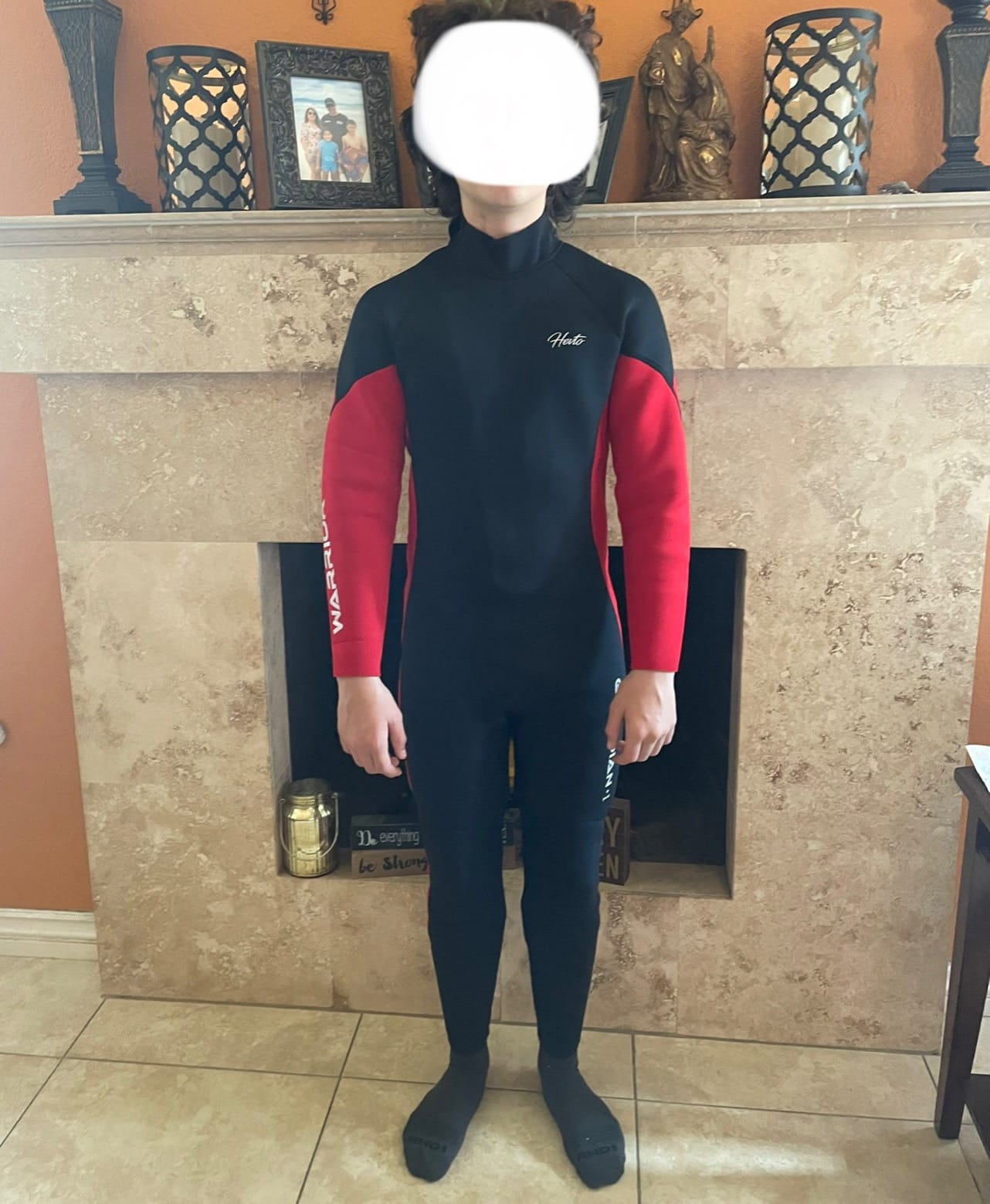
This is the one we would tell someone to buy first, because it is sold in multiple thicknesses under one listing. You can get 3mm, 4/3mm and 5/4mm in the same cut with the same seams, which means you can start at 4/3mm for autumn and move up to 5/4mm for January without relearning how the suit fits.
That flexibility is unusual at this tier. Most brands treat thickness variants as separate products with different sizing charts. Hevto keeps the closure type, the seam layout and the panel structure consistent, so the sizing decision you make in October still applies in February.
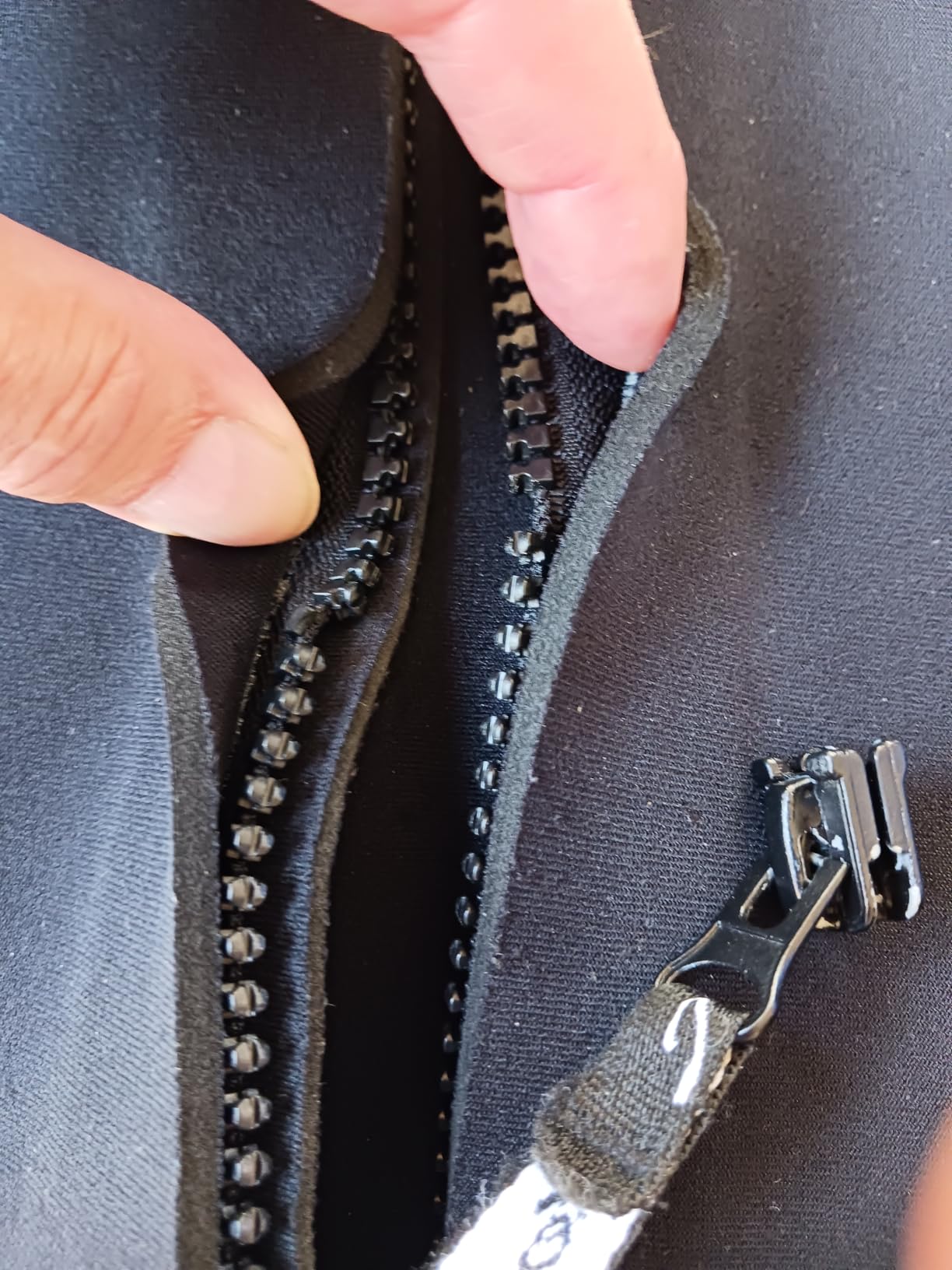
The material is SCR neoprene faced with a super-stretch nylon, and that combination is the reason it punches above its class thermally. SCR is a chloroprene rubber blend that holds warmth better than the SBR neoprene that dominates the cheapest end of the market, and the nylon face adds a little durability at the high-stress points. Sealed, glued and blind-stitched seams keep the flush-through down, and reinforced knees take the board impact that cold water surfing tends to produce.
Buyers rate the buoyancy highly too, which sounds trivial until you remember what a 5/4mm suit feels like when you are paddling back through whitewater after a long paddle out. Floatation matters more when you are tired and cold.
Why this suits a first cold water winter
Because the buy is reversible. A lot of first-time winter surfers overshoot, buy a 6mm suit for water that is really 52F, overheat in the first twenty minutes and then decide wetsuits are unpleasant. With this listing you can start conservative and step up one thickness when your local water drops, rather than guessing.
It is also one of the few budget-adjacent suits here that lists sealed, glued and blind-stitched seams as standard rather than flatlock. That single construction detail does more for cold water performance than an extra millimeter in the arms.
Where it falls short
The listing quotes a 3mm item thickness at the top level, which understates how warm the 4/3mm and 5/4mm variants actually are. Treat the variant you choose, not the headline spec, as the real number.
The size run is narrower than the big brands carry, so if you are at the top of the range or have a specific chest measurement that does not fit the chart, this is not the one. That is a real constraint for larger surfers and worth checking before you commit.
3. REALON 4/3mm Full Neoprene Wetsuit
REALON Full Wetsuit Mens Womens 4/3mm Neoprene Diving Scuba Triathlon Wet Suits Cold Water Keep Warm Back Zipper Long Sleeve Thermal Swimsuit
4/3mm neoprene
Sealed full body
Thickened back hips knees elbows
Back zipper
Pros
- Fully sealed 4/3mm body holds warmth
- Thickened panels at back hips knees and elbows
- Buyers praise accurate sizing and clean seams
- Back zipper for solo changes
- Sun protection coating layer
Cons
- Runs smaller than typical street sizes
- Listed temperature rating is 68F so it suits cool water not near-freezing water
The cheapest credible way into a sealed cold water suit, and the one that surprised us most. Owners describe it in terms usually reserved for suits costing several times more, with comments about accurate sizing, seams with no rough edges and holding warmth in low 60sF water.
The design is plain and that is a virtue here. There is no branding on the chest, no loud panels, no unnecessary features. It is a 4/3mm full body suit with thickened panels at the back, hips, knees and elbows, sealed construction to keep water ingress down, and a back zipper.
Those thickened panels are the part that matters. Reinforcement at the hips and lower back is not standard on entry level suits, and it is exactly where a surfer sits when the wave passes under you. It adds warmth in the areas where a 4/3 is otherwise thinnest and it survives the kneading that thinner suits do not.
The sun protection coating layer is a smaller benefit than it sounds, but it is genuinely useful for long summer-to-autumn sessions and it doubles as an abrasion barrier against board rash.
Why this is a good first suit
Because it teaches you how fit works without punishing you. It runs small relative to street sizing, so you have to actually measure and order carefully, and that habit transfers to every wetsuit you buy afterwards. Sizing confusion is the single most repeated complaint across surf forums, and a suit that forces you to check the chart is a useful teacher.
It is also a suit that works for swimming and paddling as much as surfing. If you want one piece that covers winter open water swimming and a cold water surf session, the sealed 4/3mm body handles both.
Where it falls short
The listed temperature rating is 68F. That is the single most important number on this page for this product, and it means this is a suit for cool water, not cold water. If your winter water sits at 48F, this suit will not carry you and no amount of layering will fix it.
It also runs small, and owners with wider builds report having to size up and re-examine the chest fit. Check the size chart against a tape measure before you order.
4. Ho Stevie Chest Zip 4/3mm Fullsuit
Men’s Surfing Wetsuit – Chest Zip Fullsuit – Warm Superstretch 3/2mm or 4/3mm Neoprene w/GBS Seams (Black 4/3mm, S (Small))
4/3mm rated to 51F
Limestone-based SuperStretch
Chest zip
GBS taped seams
Pros
- Rated for water as cold as 51F
- SuperStretch limestone-based neoprene reduces arm fatigue
- Chest zip avoids flushing cold water down the back
- GBS seams plus glue and tape
- One year manufacturer warranty
Cons
- Neck opening and chest zip are very tight
- Runs slightly short in the body
- Some seam stitching defects and underarm rashes
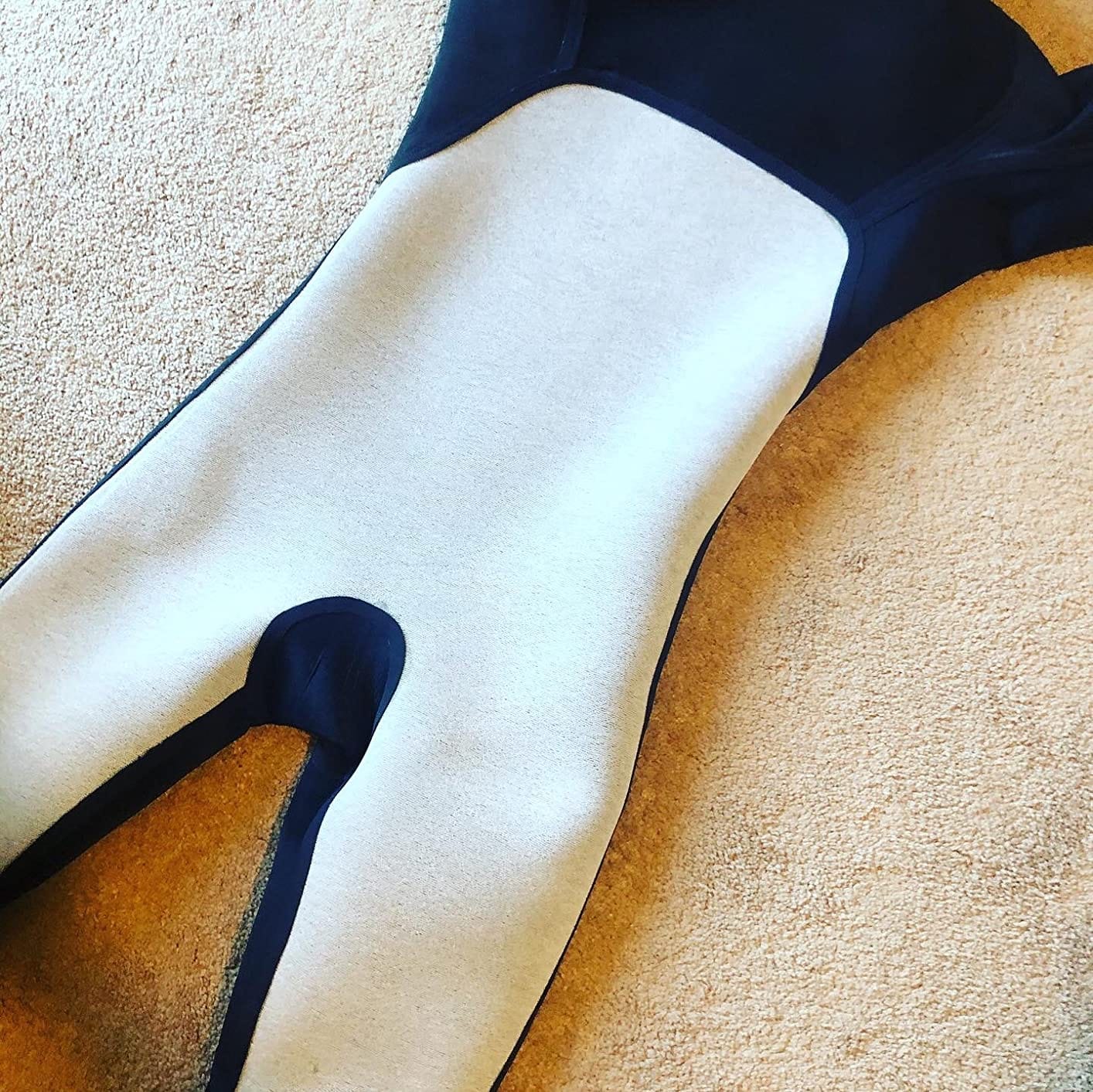
The chest zip is the entire argument, and it is a good one. On a back zip, every entry dumps a slug of cold water down your spine and then you spend the next ten minutes getting cold while the water drains down. A chest zip moves that flush to the front of your body where your core is, where a 4mm chest panel absorbs it and where you can duck dive with far less drag.
This is the best chest zip option in the roundup, and for surfers who duck dive a lot it may be the most functionally correct suit on the list regardless of thickness.
The neoprene is limestone-based SuperStretch, which is a different formulation from the petroleum-based CR that dominates the market. Limestone-based rubber tends to feel slightly less plasticky at the surface and most owners describe the arm fatigue reduction in long sessions as the standout quality.
The stated rating is 51F for the 4/3mm and 56F for the 3/2mm version, which makes this one of the more honestly specced suits here. Seams are glued, blind-stitched and taped, with a key loop behind the zipper so you are not fishing a wallet out of a wet pocket.
Why the chest zip matters in cold water
Two reasons. First, entry. Shoving an arm into a back zip with cold hands is miserable and it is the point in the session where you lose the most heat. Second, duck diving. A chest zip pulls the leading edge down and the suit moves with your body rather than ballooning, which is exactly the movement pattern Quiksilver, Rip Curl and O’Neill all build their top-end winter suits around.
There is also a thermal argument. Rip Curl and Xcel both push back zips hard in their cold water lines because the vent sits under the collar and minimises the seam that water can push through. Chest zip suits win that comparison on mobility, and the difference is large enough that surfers who duck dive notice it within a session.
Where it falls short
The neck opening and chest zipper are tight. Multiple reviewers call this out specifically, and for anyone with broad shoulders or limited arm flexibility it is a genuine problem, not a minor complaint. It is the most common reason buyers return this suit.
There is also a longer body concern. It runs slightly short compared with the big brands, which matters if you are tall, and a small group of reviews cite seam stitching defects and rashes under the arms. This is also one of the lower-rated suits in the roundup at 4.2, with a 4 percent-to-11 percent spread of ratings by star that reflects a real quality variance between units.
5. Lansru 5mm SCR Neoprene Wetsuit
Lansru Men Wetsuit, 5/4 mm SCR Neoprene Wetsuits for Men,UPF 50+(M)
5mm SCR body with 4mm CR limbs
UPF 50 plus
YKK front zip
Thickened knee pads
Pros
- SCR neoprene outperforms SBR on warmth and stretch
- Seamless 4mm CR neoprene at neck and limbs
- UPF 50 plus blocks sun jellyfish and sea lice
- Thickened knee pads
- YKK front zip and abrasion-resistant nylon
Cons
- Very tight on first wear and new suits carry a strong scent
- Only navy and blue colourways
This is the suit to buy if your cold water break has a reputation. UPF 50 plus is not marketing here, it is a rated finish across the whole body, and in places like Patagonia, the North Sea in summer, or any break with jellyfish in the water, that rating is doing real work that no amount of neoprene thickness substitutes for.
The build is a 5mm SCR neoprene body with seamless 4mm CR neoprene at the neck and limbs, which is a smart layout. The seamless high-stretch zones at the neck and limbs are where a thick suit usually restricts you, and replacing them with a thinner super-stretch material buys back a lot of range of motion.
The stated comparison in the product data is the useful part: 5mm SCR neoprene is specified as exceeding the SBR neoprene commonly used by competing suits in both elasticity and warmth. That is the material difference that matters most in the budget tier, because SBR is where most cheap suits cut corners.
Skin-friendly patch design and super-stretch inner yarns reduce irritation, which matters for anyone who sits in a thick suit for ninety minutes. The thickened knee pads protect against board and reef impact, and the abrasion-resistant nylon outer holds up to that.
Why the UPF rating changes the use case
Because it means the suit is not limited to the coldest months. A 5mm suit with no UV rating is a February suit. A 5mm suit rated UPF 50 plus is a year-round suit that you can keep wearing through a sunny April session without cooking under the panels. That doubles the number of days per year the suit is usable, which changes the value calculation entirely.
It also doubles as sting protection, which is the difference between a surf and a swim in water with jellyfish. Owners who surf known jellyfish spots mention this specifically.
Where it falls short
Two things. First, the first wear. Reviewers describe it as very tight initially and note a noticeable scent on new suits, both of which are normal for neoprene but are a real adjustment for first-time thick-suit buyers. Second, colour choice is limited to navy and blue, so if you surf a break where visibility matters, this is not flexible.
There is no hood, so at 46F and below this needs an integrated or separate hood on top. And at 4.2 stars it sits below the O’Neill Epic and the Hevto on owner satisfaction, mostly on that initial fit.
6. Owntop 5mm High Stretch Wetsuit
Owntop 5mm Wetsuit for Men Women, High Stretch Warmth Neoprene Suit
5mm body with 4mm CR cuffs
Rated around 10C
GBS seams
Front YKK zip
Pros
- Full length 5mm neoprene rated around 10C
- 4mm CR neoprene cuffs stay flexible at wrists and ankles
- GBS seams reduce water flushing
- UPF 50 plus protection against sun and stings
- Widest size and colour range in this lineup
Cons
- Lowest average rating here at 4.1
- Fit runs small for some buyers so exchanges are common
- Snug cuffs are restrictive over larger builds
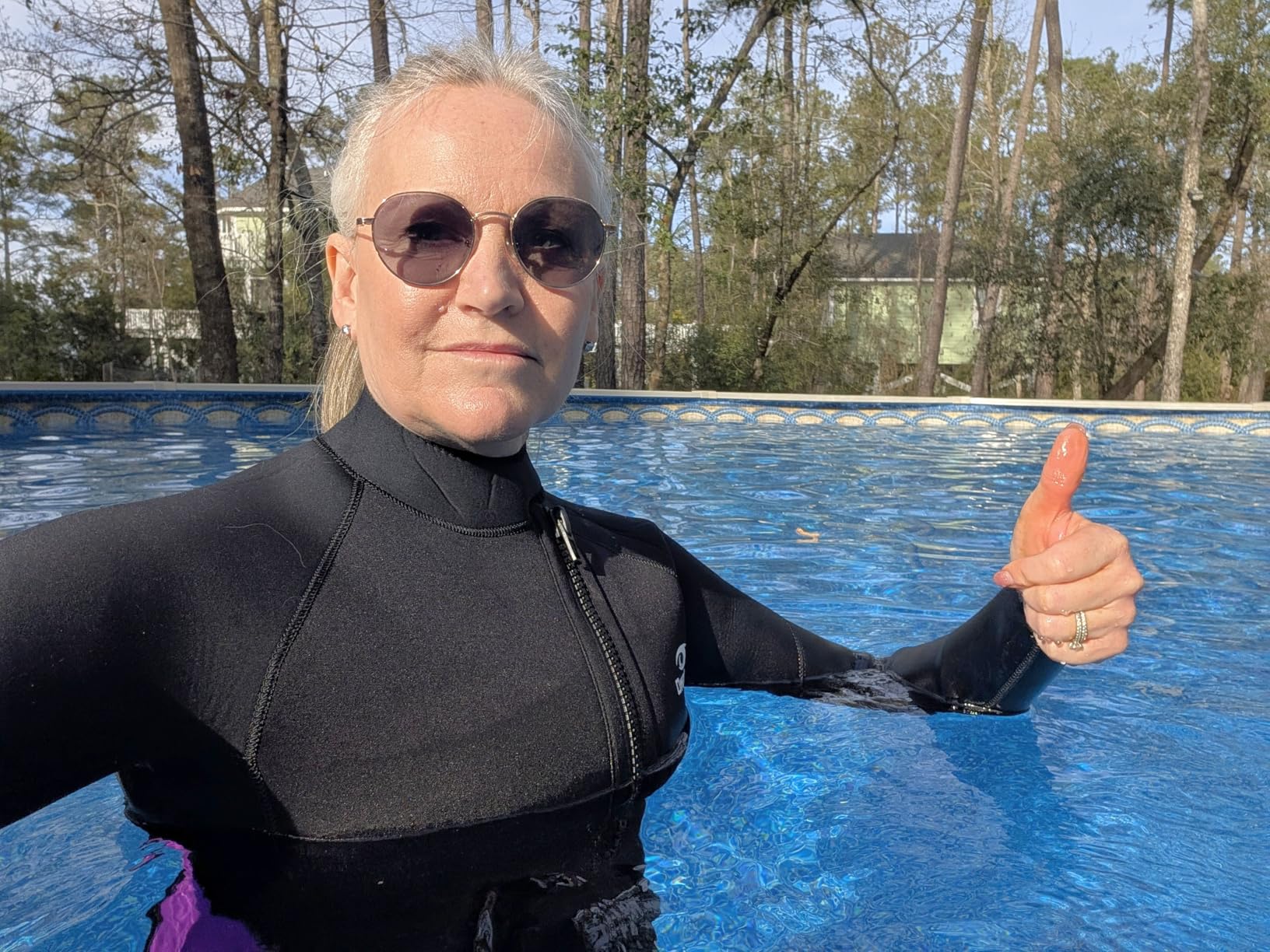
This is the one to look at if you are a larger surfer, because it carries the widest size run in the roundup with a stated range that goes up to XX-Large, and because the 5mm body is paired with 4mm CR neoprene cuffs at the wrists and ankles rather than 5mm cuffs. Thinner cuffs are the single easiest way to make a thick suit feel less restrictive at the wrists.
Owntop builds a second 4mm suit further down this list with the same seam philosophy, so if you are unsure whether 5mm is your winter number you can cross-shop the two.
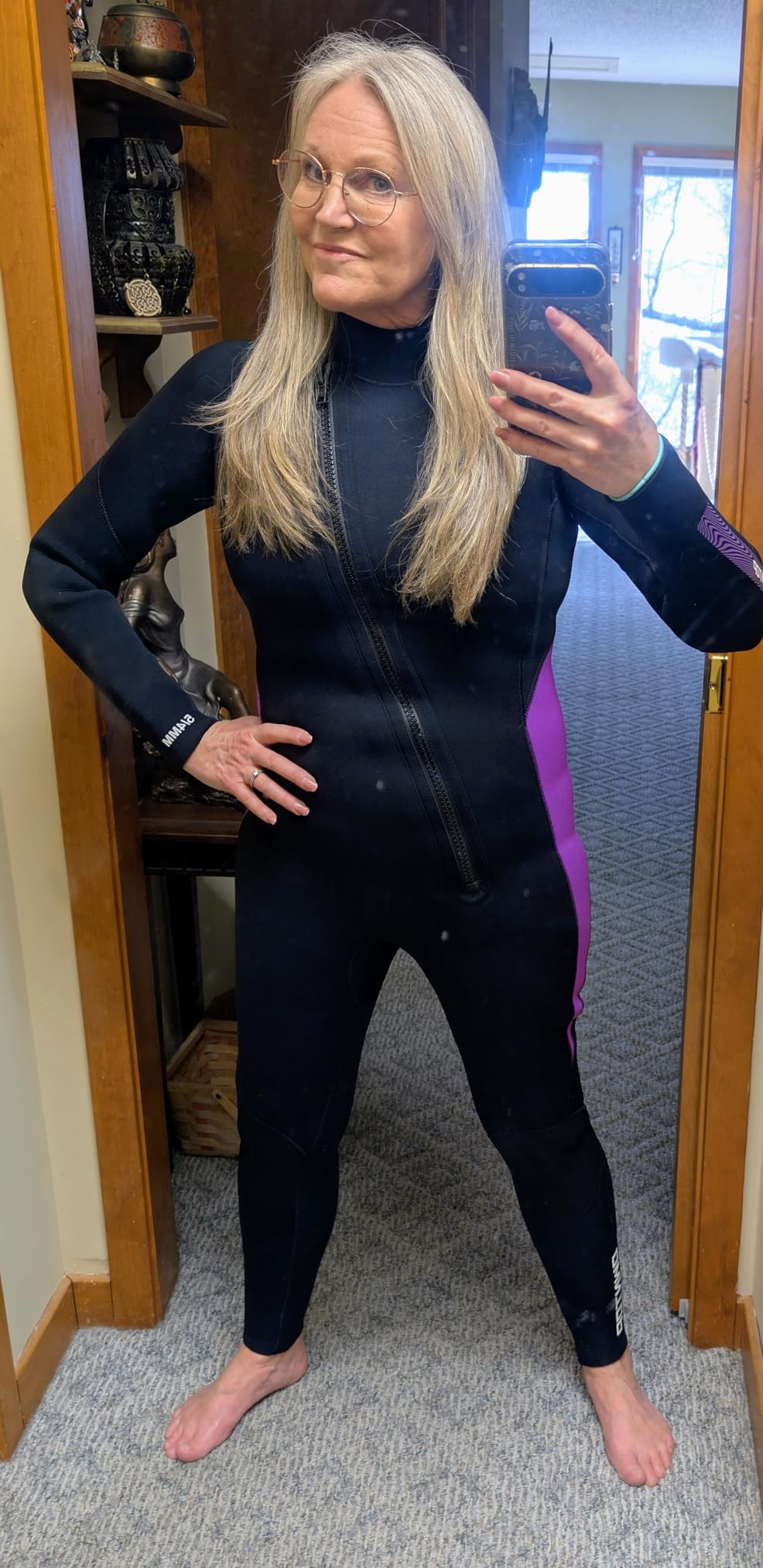
The temperature rating of 10C puts it in the same band as the Aunua and comfortably inside the range this suit is specced for. GBS seam construction is standard rather than a premium add-on, which is uncommon at this level and is the detail that keeps a 5mm suit from flushing through the shoulders every duck dive.
The front YKK zipper is a real convenience feature rather than a spec filler. A YKK zip on a thick suit means you can get into it without assistance and, more importantly, that it still works when your hands are cold and you are standing in a car park at 6am.
Why the size range matters more than it sounds
Because most cold water wetsuit complaints are actually fit complaints. A suit that fits badly across the chest or through the arms will restrict your paddle and restrict your duck dive, and a restrictive suit in cold water gets cold faster because you burn more metabolic heat staying still in the lineup. Sizing up to a brand that actually makes your size solves more cold water problems than adding a millimeter of neoprene.
The wider colour range matters less, but for surfers who do share a lineup with others, having a suit that is easy to spot is a reasonable tiebreaker.
Where it falls short
This has the lowest average rating in the roundup at 4.1, with 9 percent one-star reviews. The complaints are almost entirely about fit. Owners say the suit runs small, that they needed an exchange, and that the snug wrist and ankle cuffs are restrictive over larger builds, which is the tension in the design. Thinner cuffs help mobility and they also make the suit harder to pull on if the fit is tight.
If you are between sizes, order carefully and be prepared for one exchange. The warmth and seam quality are consistently praised.
7. ocealite 5/4mm Front Zip Full Wetsuit
Ocealite Men’s Front Zip Full Wetsuit, 3mm 4/3mm 5/4mm Neoprene Wetsuits for Surfing, Diving, Snorkeling, Swimming, Flatlock or Blind-Stitch, PU Knee Pads (Mens 5/4mm Navy Blue, Large)
5mm torso with 4mm limbs
Glued and blind-stitched seams
YKK front entry
PU knee pads
Pros
- 5mm torso and 4mm limbs put insulation where you need it
- Glued and blind-stitched seams hold warmth
- YKK front zipper works even when wet
- Lycra at wrists ankles and neckline reduces friction
- Reinforced PU knee pads and key pocket
Cons
- Some owners report wrist velcro tearing after a few uses
- Crotch and seam areas can be uncomfortable on long sessions
- Size runs true for many but a few needed exchanges
This is the most correct 5/4mm layout on the list. A 5mm torso with 4mm arms and legs gives you thermal mass across the core where you generate heat and keeps the limbs flexible where you paddle. It is the standard cold water cut and most of the premium brands use the same logic, but here it is combined with YKK entry and blind-stitched seams at a fraction of the premium price point.
If you are moving from a 4/3mm to your first serious winter suit, this is the shape you should be shopping for.
Glued and blind-stitched seams are the detail that separates it from the flatlock suits in the same price bracket. Flatlock stitching alone leaves a stitch channel that water finds and follows inward, and once a suit starts flushing you get cold from inside the neoprene rather than from the water outside it. Blind stitching puts the stitch through the glue layer so it does not create a channel.
Lycra panels at the wrists, ankles and neckline reduce friction, which sounds cosmetic until you realise that most of the discomfort people report in thick suits is skin irritation at exactly those three points.
Why the 5mm torso and 4mm limbs split works
Because your heat production is not uniform. Your torso generates heat and circulates it, and your limbs mostly receive it. Wrapping a thick limb in 5mm neoprene adds resistance and dead weight to a part of your body that was not contributing much warmth in the first place, which is exactly the reason a 5/4 feels so much better than a 5mm full cut over a long session.
This is the same reasoning behind torso and limb notation on every cold water suit worth owning, and it is also why the Owntop and ZCCO suits on this list, which both specify thinner material at the neck, wrists and ankles, move better than they have any right to at 5mm.
Where it falls short
The wrist closure is the weak point. A number of owners report the velcro tearing after only a few uses, which is a hardware failure rather than a neoprene failure and it is the kind of thing that gets a suit retired early. It is also the reason we did not put a durability badge on this pick.
There is also a comfort note worth flagging for long sessions: some owners find the crotch and seam areas uncomfortable past about an hour. That is a fit issue more than a construction issue, and it resolves with careful sizing.
8. ZCCO 5mm Neoprene Front Zip Fullsuit
ZCCO Men’s 5mm Neoprene Wetsuit – Ultra Stretch Full Body Diving Suit with Front Zip for Snorkeling, Scuba Diving, Swimming and Surfing(MF502-M)
5mm neoprene and nylon
Smoothskin collar wrist and ankle seals
UPF 50
Pros
- 5mm neoprene and nylon gives solid insulation
- Smoothskin seals at collar wrists and ankles
- Strongly padded nylon knee pads
- Long front zip plus four smaller zippers for fast changes
- UPF 50 protection
Cons
- Only a three month warranty offered
- Weight based sizing from XS to 4XL may not suit every body
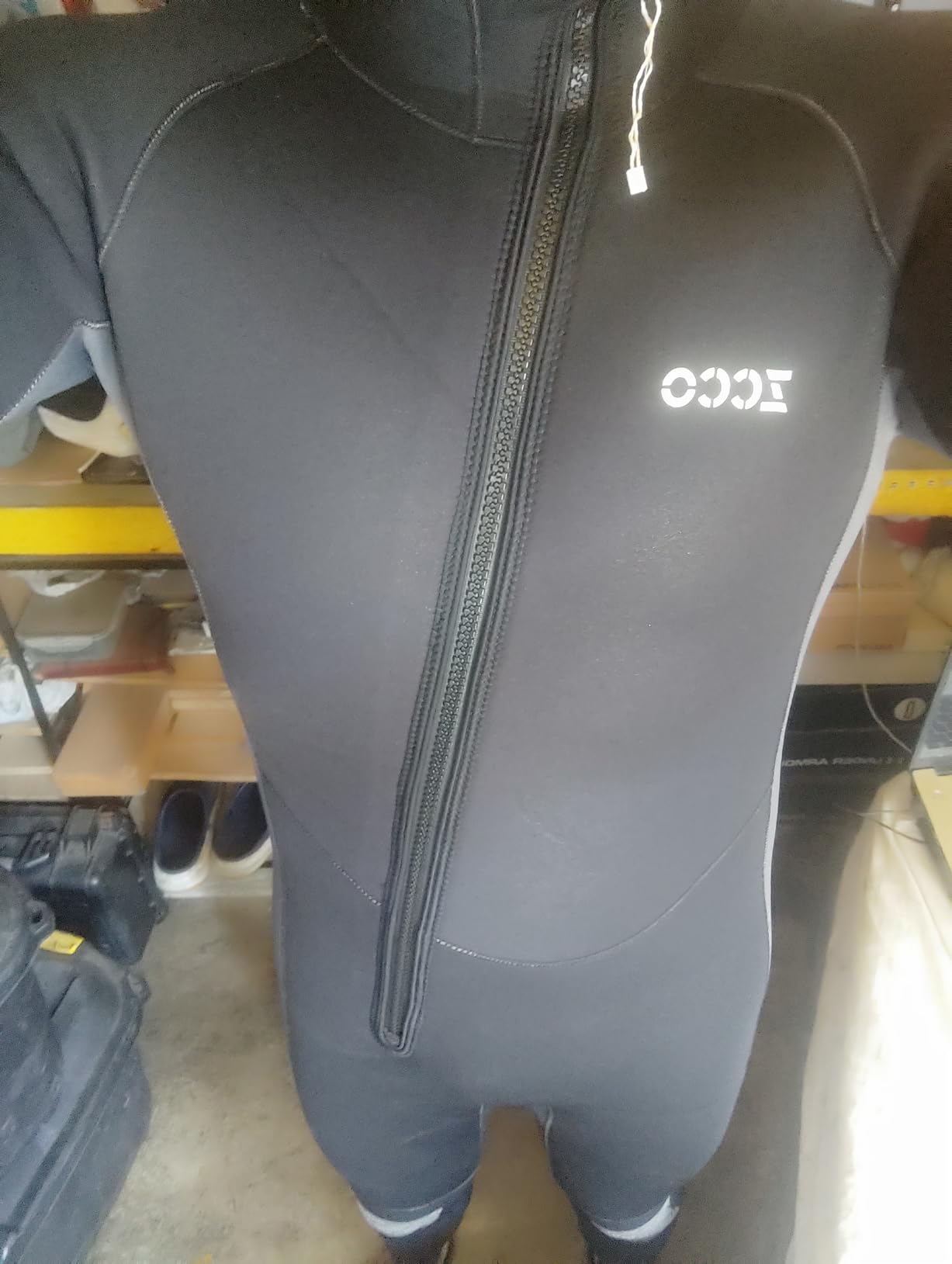
Five zippers. A long front zipper plus four smaller zippers at the arms and legs, and that is the whole pitch. For anyone who changes wetsuits in a cold car park, shares a suit with a buddy, or runs a surf school rental operation, this is the fastest changeover in the roundup by a wide margin.
It is a slightly unglamorous reason to like a suit. It is also the reason a lot of people actually keep surfing through February instead of deciding the car park is too cold.
Underneath the zippers it is a straightforward 5mm neoprene and nylon build, which is where the warmth comes from. The smoothskin neoprene at the collar, wrists and ankles is the more interesting specification, because smoothskin is a non-textured rubber that seals tighter against the skin and glides rather than gripping, so it resists both water ingress and chafing at the three points that leak most.
Padded nylon knee pads are strongly reinforced compared with typical integrated pads, and the UPF 50 rating covers both sun and marine irritants. Surfing, diving, swimming, snorkeling, kayaking, rafting and paddle boarding all sit inside the stated use range.
Why multiple zippers change a winter routine
Because the hardest part of a 5mm suit is not the water, it is getting into it. Pulling 5mm neoprene over cold hands, over a head and down past the hips in a 4am car park is a genuinely unpleasant ten seconds, and it is the ten seconds where you lose the most heat. Side zippers at the arms and legs mean you can get the limbs in without wrestling the torso, and the extended front pull handles the middle.
For a surf school or rental fleet this is the difference between a fast turnaround and a queue. For an individual it simply means you are not standing half dressed in the cold while you decide whether it is worth going out.
Where it falls short
The warranty is three months. That is the shortest in this roundup by a factor of four, and for a cold water suit that is going to be worn hard against rocks and board rails every session, three months is not a meaningful commitment. Owners treat warranty length as a genuine purchase factor rather than fine print, and they are right to.
Sizing runs on weight ranges from XS to 4XL. Weight-based sizing is convenient but it ignores build, so someone tall and lean or short and broad can end up with a length that does not work. Measure before ordering.
9. Aunua 5/4mm Ultra-Stretch Neoprene Surf Suit
Aunua Mens 5mm Full Wetsuit Ultra-Stretch Neoprene Surfing Suit Red L
Rated to 44F
5/4mm SuperStretch neoprene
GBS seams taped inside
Key loop
Pros
- Stated rating of 44F is the coldest spec in this roundup
- SuperStretch neoprene cuts arm fatigue over long paddles
- GBS seams glued blind stitched and taped with interior dots
- Key loop keeps keys secure
- Broad size range with zero one-star reviews
Cons
- Strong rubber odour on new suits that needs airing out
- 6C rating makes it a genuinely cold water suit rather than a general winter one
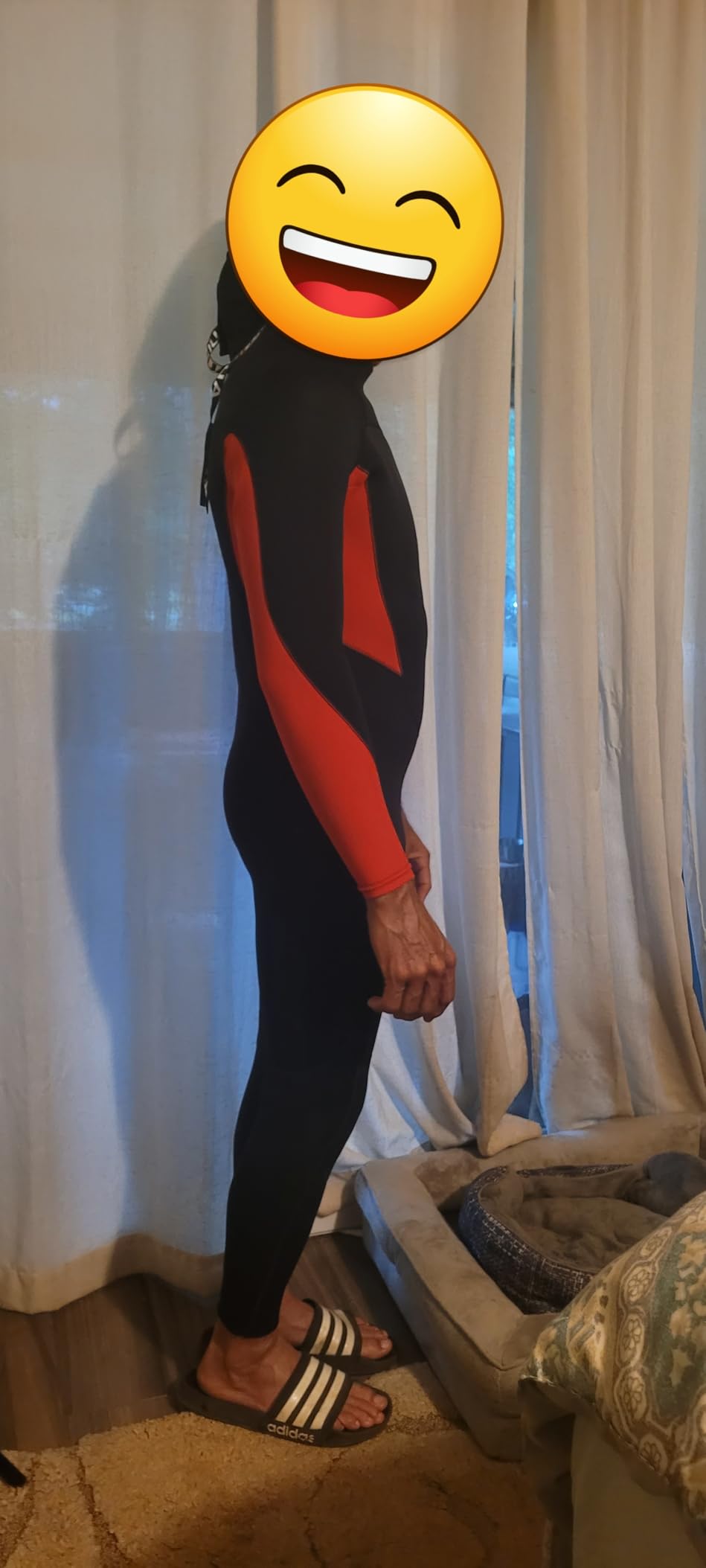
This is the suit with the coldest stated rating in the roundup. At 44F, it is specced for a band that most of the products here only reach with a hood and booties added on top. If you surf at 44F and need the suit itself to carry that load, this is the one.
It is also the only suit here with zero one-star reviews in its distribution, which means the failure modes that generate complaints elsewhere, sizing disasters and seam failures, are not showing up here. That is not the same as saying it is the best made suit on the page, but it is a meaningful signal about consistency.
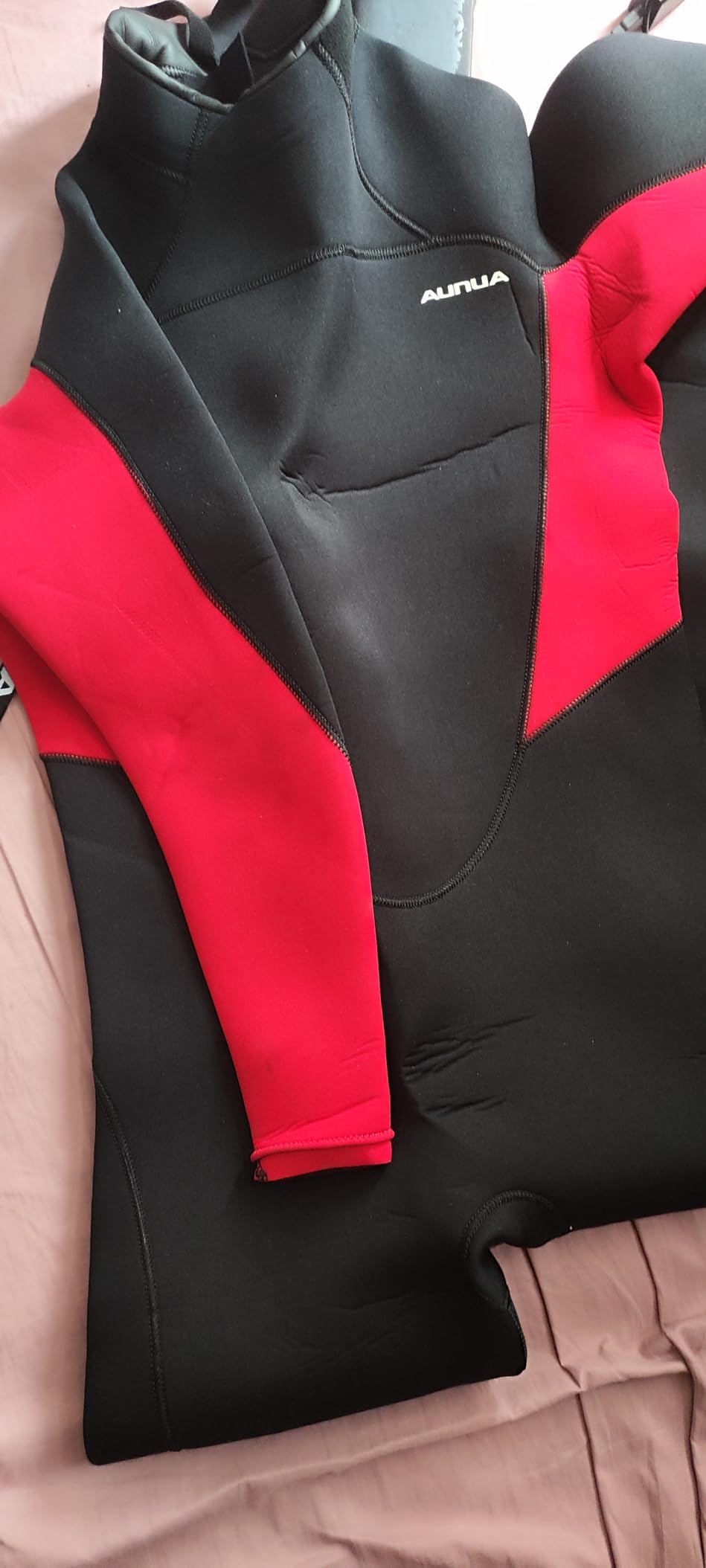
SuperStretch neoprene is the headline feature and it is the one that matters for surfers specifically. In a 5/4mm, the limiting factor on a long session is not usually warmth, it is how tired your arms get from paddling through neoprene that does not stretch. Owners describe reduced arm fatigue as the standout benefit, which lets them stay out for longer sessions at a given water temperature.
The seam construction is properly done. GBS seams that are glued, blind stitched and taped with interior tape dots means the stitch does not puncture the glue layer and the inside of the seam is finished, so nothing abrades your skin and nothing gives the seam a channel to leak along.
Why the 44F rating changes the maths
Because a stated rating is a claim about the whole system, and the system includes you. Most surfers in 44F water cannot metabolise enough heat to stay comfortable indefinitely, no matter what they wear, and the honest version of that is that you add a hood, 7mm booties and gloves on top of the suit and you accept that a 90-minute session is the ceiling rather than the exception.
The suit gets you there. It does not remove the limit. Anyone reading a 44F rating as permission to surf all winter without extremities protection is going to have a bad month.
Where it falls short
The odour. New suits carry a strong pungent smell that owners report needs airing out before first use, and in a small flat or a car with the heater on that is a real inconvenience. It fades, but it is a genuine adjustment and worth expecting.
There is no hood and no built-in extremity system, so the 44F rating assumes you are adding one. Size runs Small to 4X-Large across two colourways, which is decent coverage.
10. yonsub 5mm Full Wetsuit with Integrated Hood
Full Wetsuits-5mm 3mm Wetsuit-Mens Neoprene Diving Suit Front Zipper Hoodie Snorkeling Surfing Suits High Elasticity Long Sleeve – Diving Water Sports Solid Colored Autumn Winter Spring Summer
5mm body with 3mm limbs
Integrated diving hood
Front zipper
Weight based sizing
Pros
- Integrated hood retains heat around head and neck
- 5mm neoprene is one of the thicker options here
- High elasticity long sleeves for full movement
- Front zipper is easy to don and doff
- Protects against sea lice and jellyfish
Cons
- Sized by weight rather than height which confuses some buyers
- Manual measurement allows about 2cm variance
- Solid colours only
The only suit in this roundup with an integrated hood, and that single fact makes it the right pick for anyone surfing below about 48F. A hood is not a luxury at that temperature. Your head has no neoprene covering it in any standard fullsuit, it holds a disproportionate share of your surface area relative to its heat contribution, and losing it costs you more warmth than most people expect.
Adding a separate hood to a suit that was not designed for one also creates a gap at the neck, and a gap at the neck in cold water is a leak you cannot seal. An integrated hood solves that.
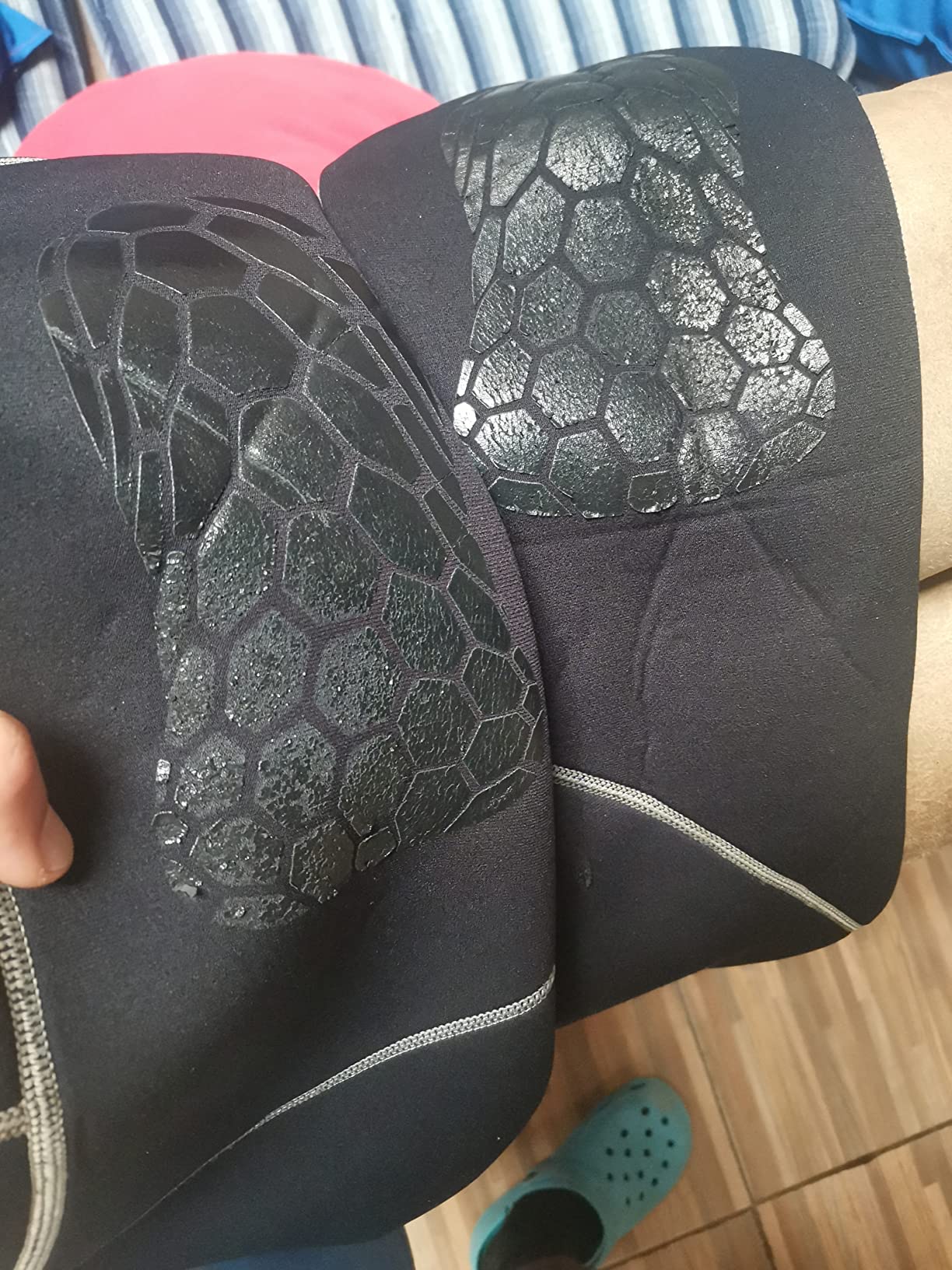
The cut is 5mm through the body with 3mm through the limbs, which is a more aggressive torso-to-limb ratio than the 5/4mm suits on this list. For surfing that is a real trade. You get more thermal mass on the core and noticeably less bulk in the arms, which helps a duck dive, but 3mm limbs are thin enough that you will feel the cold there in sustained sessions.
The front zipper makes it straightforward to get into and out of, which matters more than usual with a hood because you are wrestling a larger opening. High-elasticity long sleeves give full range of movement for surfing, diving, paddle boarding and spearfishing.
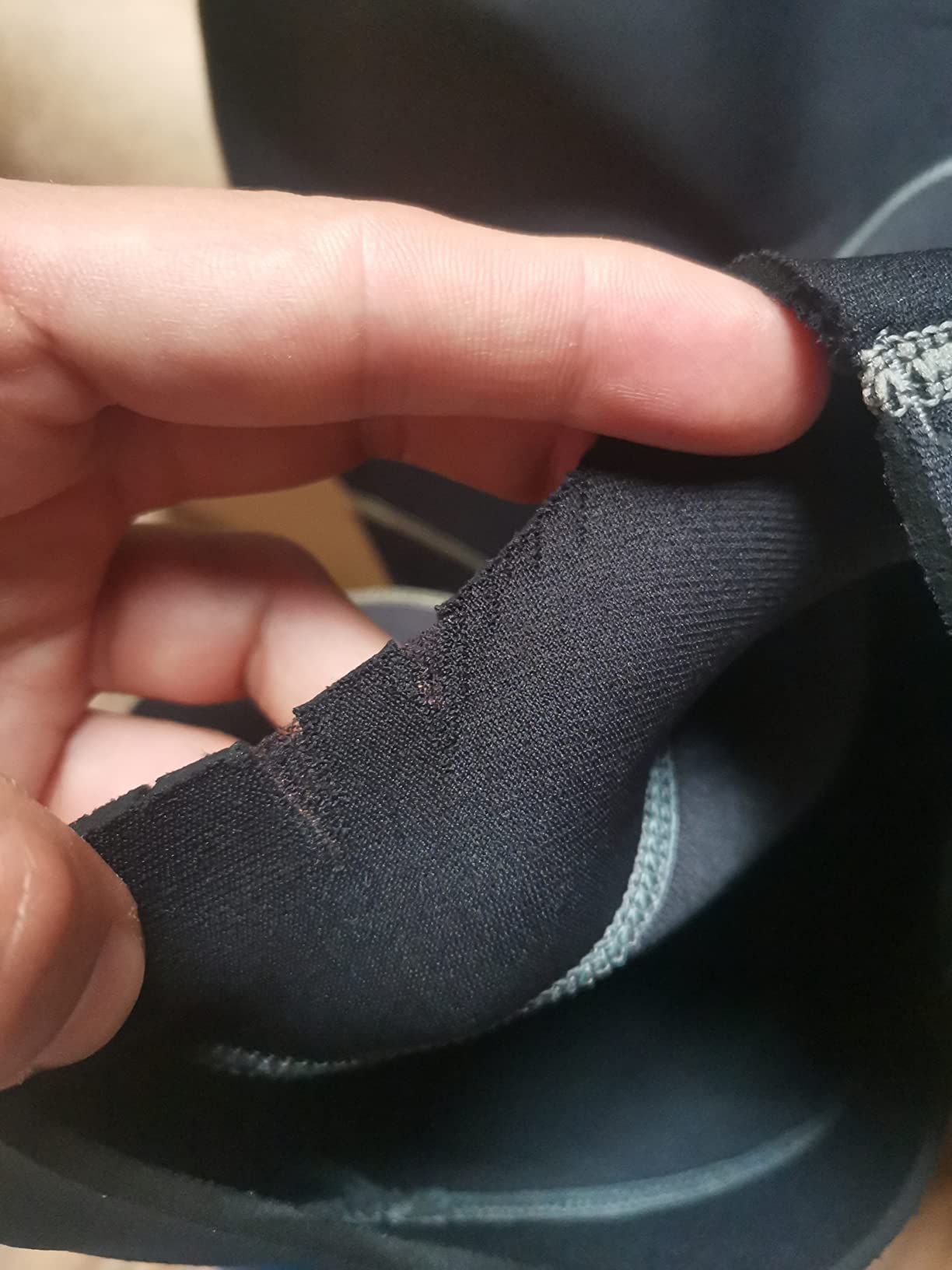
Why an integrated hood beats a bolt-on hood
Because of the neck seal. A separate hood sits over the suit collar and its own neck seal, and where the two meet there is a transition line that is always a weak point. Water finds it, tracks down the chest panel and starts the flush that makes a 5mm suit behave like a 3mm. An integrated hood is cut as one piece with the suit, so there is no transition.
It also solves the roll-back problem. Bolt-on hoods migrate backwards when you paddle or duck dive, slide off when you fall, and end up sitting on the back of your head where they block peripheral vision exactly when you are trying to read the wave. Owners of integrated hoods report fewer of those fights entirely.
Where it falls short
Sizing is by weight, from M through XXXL covering 61 to 100 kg, and the manual measurement has a stated tolerance of about 2cm. Weight-based sizing is the source of most cold water wetsuit returns, because two people at the same weight can have completely different chest and arm measurements.
There is also no adjustment at the hood or neck, which premium hooded suits increasingly offer. And the 3mm limbs are thin for the temperature this suit is aimed at, so you should plan on wearing layers under the torso or accept cold arms.
11. Owntop 4mm Wetsuit for Women
Owntop 4mm Wetsuit for Women, GBS Seam, Warm High Stretch Neoprene
4mm full body
GBS glued and blind-stitched seams
SCR core with CR panels
Rolled cuffs
Pros
- 4mm full body locks in heat and cuts cold shock
- SCR core with CR super-stretch panels at key joints
- Raw-edge neckline and rolled cuffs reduce chafing
- Extended-pull back zipper allows dressing unaided
- Sized Small through XX-Large
Cons
- Back zipper is harder to open when wet
- Thinner than the 5mm options so it suits cool water
- Modest review volume limits long-term durability data
Most of the cold water suits on this list are cut for men’s proportions, and the honest truth is that this is one of the real gaps in the category. This one is built for women’s sizing from Small through XX-Large, with an SCR neoprene core and CR super-stretch panels placed at the key joints, and the panel placement matters more than the marketing implies.
Super-stretch panels at the shoulders and hips are what let a suit follow a different shoulder and hip structure without bunching, and bunching in a thick suit is where cold water gets in.
GBS seams, glued and blind-stitched, reduce both water flushing and heat loss, which is the baseline that any cold water suit has to clear. The raw-edge neckline and rolled cuffs are a comfort decision rather than a thermal one, and they are a good one. Raw edges feel softer against skin and they do not leave the welts and ridges that rolled edges can create at the neck and wrists.
The extended-pull back zipper is a genuinely useful specification. It lets you dress and undress without help, which owners specifically call out as working even when wearing gloves, which is the situation you will actually be in.
Who this suit actually suits
Surfers in cool rather than cold water. At 4mm this is a suit for roughly 55F to 60F, which means autumn and spring in New England, most of Northern California outside the deepest winter weeks, and shoulder-season Great Lakes. It is a transitional suit, and having one means you are not in a 5mm in September trying to remember why you bought it.
It is also the suit to consider if you want a cold water spec without a hood. There is no hood here, so at 50F and below you would add one, and at that point you should honestly consider whether the Owntop 5mm suit earlier in this list serves you better.
Where it falls short
A back zip is the wrong entry for cold water surfing. It is the least convenient point of entry to reach when your arms are overhead, and it is the one you cannot use one-handed in whitewater. Compare the Ho Stevie chest zip earlier in this list.
At 39 ratings there is not enough long-term durability data to make confident claims about how the seams hold up over several seasons. And the 4mm thickness is simply not enough for near-freezing water, however good the seams are.
12. Roxy 4/3 Syncro Back Zip GBS Wetsuit
Roxy Womens 4/3 Syncro Back Zip GBS Wetsuit (Jet/Black, 2)
Stretchflightx2 neoprene
Thermal front and back linings
GBS seams
YKK number 10 back zip
Pros
- GBS seams with inside taping at front back and top legs
- Thermal Smoothie back and Warmflight front linings add real warmth
- Hydrowrap x2 adjustable neck with water barrier
- YKK number 10 back zip with extended pull
- Owners confirm sizing matches the chart
Cons
- Very tight through hips and waist
- Small back zip opening is hard to enter unaided
- Only two sizes listed and both are small
This is the only suit here with internal thermal linings, and it is the reason we included a 4/3mm at all. Warmflight on the front and Thermal Smoothie across the back add a windproof insulating layer inside the neoprene, which is a fundamentally different approach to warmth from simply adding millimeters of rubber. Thermal Smoothie is Roxy’s X-Static-derived pile, and it holds warmth in moving air where a bare neoprene chest panel would let it go.
Roxy is Billabong’s sister brand and shares the same surf architecture, so the Thermal Smoothie back and Warmflight front combination is the same technology Quiksilver uses in its higher-end cold water lines.
The rest of the build is textbook. GBS glued and blind-stitched seams with Stretchflight inside taping at the front, back and top of the legs means the highest-leakage areas are finished on the inside. The Hydrowrap x2 adjustable neck closure with a Hydroshield water barrier lets you tension the neck seal down, which is the answer to the hood-leaking complaint that shows up in every cold water forum thread.
Supratex knee pads are lightweight and durable, the Glideskin neck seal reduces flushing, and the YKK number 10 plastic back zip with an extended pull is easy to reach unaided. Owners confirm sizing matches the published chart, which is not a small thing given how often it does not.
Why linings change the thickness maths
Because a lined suit behaves differently from a thicker suit. A 4/3mm with a windproof internal layer can hold warmth in 50F water that a bare 5/4mm does not match on a long session, because the lining blocks convective heat loss rather than just slowing conduction through thicker rubber. That makes a lined suit the smarter choice when you are cold but mobile.
It is also the right architecture if you tend to overheat. Thicker neoprene traps heat you cannot vent, and a lined suit gives you warmth without the dead weight. Riders who overheat in 5mm suits often find that a well-lined 4/3 solves the problem.
Where it falls short
The fit is the whole problem here. Reviews describe it as very tight through the hips and waist, with reports that it will not fit curvy or wide-hipped bodies, and the small back zip opening makes it hard to get into without help. That is precisely the failure mode that drives this suit’s 10 percent one-star reviews and its 4.0 average, the lowest score in the roundup.
Only two sizes are listed, both small. If you are above a small women’s size, this is not available to you in any case. There is also one report of a chest tearing on first use, which reads as an isolated defect rather than a pattern, but it is the kind of thing to watch in the first week.
How to Choose a Cold Water Surf Wetsuit in 2026
Thickness notation: the first number is your torso
Every thickness reading on this page, from 4/3mm to 5/4mm, means the same thing. The first number is the thickness of the neoprene across your torso and the second is the thickness through your arms and legs. A 5/4mm suit is 5mm of neoprene across the chest and stomach and 4mm on the limbs, which is why it feels lighter and more flexible than a 5mm full cut even though the two are close in overall thermal mass.
That split exists because your torso makes heat and your limbs consume it. Put the neoprene where the heat is generated and take it off the extremities that are already warm from circulation. It is the single most useful piece of notation to understand before you spend money, because it tells you immediately whether a seller understands cold water design or is just listing numbers.
A practical note on the reverse: a brand that lists only one number for the whole suit, such as the ZCCO 5mm or the Owntop 5mm, is generally using thinner material at the neck, wrists and ankles anyway. The single number describes the body panel, not a full cut.
Seam construction is the hidden quality factor
There are four seam types you will meet and the difference between them is worth more than a millimeter of neoprene.
Flatlock: two layers of neoprene joined with a flat thread stitch that passes through both layers. Comfortable against skin and very flexible, but it leaves a stitch channel that water follows inward. Cheap suits and warm water suits use this and it is why they are cheap.
GBS, glued and blind stitched: the panels are glued and then stitched from the inside so the needle does not puncture the glue layer. This is the baseline for any cold water suit. The Hevto, Owntop, Aunua, Roxy and Ho Stevie suits in this roundup all use GBS.
GBS plus taped: GBS with an internal tape run along the seam. This is what you want for genuinely cold water, because it finishes the inside of the seam so nothing abrades you and nothing gives water a channel. The Ho Stevie and Aunua suits specify this.
Fully taped: every seam taped on the inside rather than stitched or only glued. The highest specification in the category.
The practical test is simple. If a suit for water below 50F is not at least GBS, skip it regardless of what the thickness number says. Thick neoprene with leaking seams is a worse buy than thinner neoprene with sealed seams, because you will add a mid-layer to compensate and then you are back to paying for two suits.
Neoprene grades: CR, SCR, limestone and where cheap suits cut corners
Neoprene is a synthetic rubber, and the base polymer matters more than most buyers realise. The cheapest suits use SBR, styrene-butadiene rubber, which is softer and stretchier but less thermally efficient and less durable than chloroprene rubber. When a product page compares its material favourably against competitors using SBR, that comparison is telling you something real.
CR, chloroprene rubber, is the standard for good cold water suits. It holds warmth better, resists degradation from salt and chlorine, and lasts longer. SCR is a chloroprene blend that trades a small amount of thermal performance for stretch and comfort, and at this price tier it is often the better practical choice because a suit you can move in is a suit you keep wearing.
Limestone-based neoprene, which the Ho Stevie suit uses, is a different manufacturing route rather than a different performance tier. A few of the more established surf brands have been making neoprene from limestone-derived rubber for years, and surfers familiar with brands like Rip Curl, Xcel, Billabong, Quiksilver, Manera and Patagonia often have strong views about which feels better over a long session. The honest position is that the warmth difference between CR and a good limestone or SCR rubber is smaller than the marketing implies, and stretch and fit matter more to how warm you actually feel. We take the same line when testing other gear: the number on the box is a claim, and the long-term result is the measurement that counts.
The eco question comes up here too. Plant-based neoprene from Yulex is genuinely lower impact, and the surf brands listed above all offer versions using it. The thermal performance is close enough to petrochemical neoprene that it is a lifestyle and impact decision rather than a warmth decision, which is the honest framing. For genuinely cold water surfing we would not sacrifice warmth for it, but at 4/3mm and 5/4mm the difference is small enough that it is a reasonable trade.
Zippers: chest, back and zip-free
Three closure systems, and they matter for surfing in ways that have nothing to do with warmth. A back zip is the easiest to reach overhead and the most common in warm water suits. A chest zip moves the flush of cold water to your torso where your heat is highest and drags less in a duck dive, at the cost of being harder to reach one-handed in whitewater. A zip-free suit is the most thermally efficient of all because there is no seam or zip at all, which is why premium surf brands such as Patagonia build their high-end systems that way, but it means you cannot get into it alone.
For most cold water surfers the choice comes down to whether you duck dive or turtle roll. If you duck dive regularly, the chest zip suit in this roundup is the one that will suit you best. The ZCCO suit’s multiple-zip layout is worth considering if you change in a cold car park rather than on a warm beach.
Hoods, booties, gloves and where heat actually leaves
Your extremities are the weak point. A torso loses heat across a large, evenly insulated area. Your head, hands, feet and neck lose heat through small areas with less muscle and less circulation generating warmth, and in water the effect is amplified because cold water is a far better conductor than air.
The practical order of importance is straightforward. Hood first, because the head is uncovered in every non-hooded suit and accounts for a large share of total heat loss. Booties next, because feet lose circulation fast in cold water and once your feet go numb your paddle stroke degrades and you stop generating heat everywhere. Gloves third, and they are more about hand dexterity than core warmth, so they help you hold a bar and stay paddling rather than keeping you alive.
Hood design varies and it is worth knowing what you are buying. A fixed or integrated hood is warmest and most leak-resistant. A roll-away or tuck-away hood can be pulled back when you overheat, which is a genuine benefit in a 5mm suit at the upper end of its range. A blow-off hood vents water if you end up upside down. The integrated hood on the yonsub suit is the most thermally secure option in this roundup.
Fit and sizing: go by chest, not height
This is the single most repeated complaint across every surf forum thread we looked at, and it is more often a sizing chart problem than a suit problem. The consistent advice from experienced cold water surfers is to ignore the stated height, measure your chest, and treat the chart as approximate rather than authoritative.
A wetsuit needs to be snug enough that there is not a lot of water moving inside it, because moving water is a far better conductor than the water trapped against your skin. The suit works by letting a thin layer of water settle between the neoprene and your body and heating that layer. Loose suits have thick layers of cold water sloshing around, which is the opposite of the design intent.
The counter-argument is mobility. A suit that is too tight restricts your shoulders and chest, you burn more energy staying still in the lineup, and you get cold faster. That is why the suits here with super-stretch panels at the shoulders, hips, neck and wrists exist. A slightly thicker suit with stretch panels will beat a thinner stiff one at the same temperature.
Do not size up to fix a tight fit. Size up makes every problem worse at once. Order your measured size, and if the chart looks wrong, message the seller before you buy.
Session length and metabolic heat
Thickness alone does not determine warmth, and this is where most thickness charts go wrong. What determines warmth is how long you stay in, how much you move, and how much heat your body can produce, not just how many millimeters sit between you and the water.
That produces two effects that surprise people. First, a thicker suit feels colder on entry than a thinner one, because it takes longer for your body to heat the trapped layer. Second, over a long session the thicker suit wins decisively as the thinner one reaches its limit. Surfers report this pattern constantly, and it is why cold water surfers who do two-hour sessions almost always run thicker than those doing forty-minute sessions in the same water.
The overheating complaint you will read about in thicker suits is the same physics running the other way. Twenty minutes in a 5/4mm at 50F is genuinely uncomfortable in a way that twenty minutes in a 4/3mm is not, and then you get cold on the paddle back if you spent the whole session overheating. The answer is to size the suit to your actual session length, not to the coldest temperature on your local forecast.
Caring for neoprene so the suit keeps insulating
Salt and chlorine degrade neoprene from the inside, and the first symptom is loss of warmth in a suit that does not look worn. A suit that has been rinsed in fresh water after every session will outlast one that has not, often by years. Storage matters as much as rinsing: a dawn session means your kit lives in the car overnight, and if you need somewhere warm and dry to kit out of, our refrigerator buying guide covers the cold-room logistics side of it.
Rinse in fresh water immediately. Salt crystallises in the neoprene pores and continues working on the material. Do this in the shower, the sea shower or a outside tap, straight after the session, not tomorrow.
Use neoprene-safe soap only. Ordinary detergent and surfactants strip the oils that keep neoprene supple. A dedicated neoprene shampoo is worth having.
Never use a washing machine. The agitation, heat and spin cycle destroy neoprene and glue faster than anything you will do to it in the water. Hand wash only.
Dry flat and shaded, inside out. Hang on a hanger in shade and turn it inside out. Direct sun and radiators drive off the oils that make neoprene flexible.
Store it loosely folded, not compressed. Do not leave it in a hot car boot or under heavy weight. Heat and compression both shorten its life.
For seam damage, small tears can be kept closed with neoprene cement applied to a cleaned and dried surface, but a seam that has opened along its length is a professional repair. Surf-brand warranty terms vary widely and the three-month terms on some budget suits are worth checking before you buy, because a cold water suit gets used hard.
Water temperatures by surf spot
Because a thickness chart without real numbers is useless, here are rough bands for the regions cold water surfers actually paddle in. These are typical winter ranges rather than measurements, and your local break will vary with upwelling and swell, but they give you a starting point instead of a guess.
North Sea and Atlantic Europe: roughly 45F to 55F through the winter in most spots, dropping into the low 40s in a hard winter. 5/4mm with a hood, or 6/5/4mm for long winter sessions at exposed spots.
Pacific Northwest: roughly 45F to 52F in winter. 5/4mm hooded, with 7mm booties, and gloves from November onward.
Northern California: roughly 50F to 57F in midwinter, occasionally colder with upwelling. 4/3mm hooded or 5/4mm, with booties most of the season.
New England: roughly 45F to 55F from November through April. 5/4mm or 5mm for the core of winter, 4/3mm hooded at the edges of the season.
Great Lakes: roughly 40F to 50F when the lakes are on, with the shallow water dropping fast in wind. 5mm with a hood, and treat sub-45F as deep cold because the water depth is limited and wind chill is real.
Below 40F: drysuit territory. This is the honest boundary of the category, and the suits on this page are not built for repeated sessions at that temperature.
One more note for anyone reading this who surfs warm water: a good deal of cold water advice does not apply to you. Liners, heavy linings and double chest panels are designed for a problem you do not have, and a 4/3mm with GBS seams will serve you better than anything on this page.
Frequently Asked Questions
What wetsuit is best for very cold water?
For genuinely cold water below 45F, you want a 5mm or 6/5/4mm suit with a hood, plus 7mm split-toe booties and 3mm gloves. The Aunua 5/4mm here carries the coldest stated rating at 44F, and the yonsub 5mm is the only integrated-hood option. Below 40F, a drysuit beats any off-the-shelf surf wetsuit.
What thickness wetsuit should I get for surfing?
Match thickness to water temperature, not to the forecast or your tolerance. A 4/3mm works from about 55F to 60F. 5/4mm or 5mm covers 45F to 55F. Below 45F you need a hood, thick booties and gloves as well as the suit. Remember the first number in 5/4mm is torso thickness and the second is limb thickness.
Is a 5/4mm wetsuit warm enough for winter surfing?
For most winter water between 45F and 55F, yes, provided the seams are glued and blind stitched and you add a hood and booties once you drop toward 48F. A 5/4mm becomes marginal below 42F for anything longer than a short session, where a 5mm with an integrated hood or a 6/5/4mm suit is the better answer.
Do I need a hooded wetsuit for cold water surfing?
Below about 48F, effectively yes. Your head is uncovered in a standard fullsuit and it loses heat quickly, and there is no way to make up the difference once you are in the water. An integrated hood beats a separate hood because there is no gap at the neck where water tracks down your chest panel.
Should I size up in a wetsuit?
No. Size up makes warmth worse, not better, because a loose suit holds more moving water inside it and moving water conducts heat far better than the thin warmed layer the design depends on. Measure your chest, order your measured size, and treat the published height as a rough guide only. If the chart looks wrong, contact the seller before ordering.
What color wetsuit should I wear to avoid sharks?
Colour is far less important than most articles suggest. There is no evidence that any specific colour reliably deters sharks, and dark suits are common everywhere sharks are. Focus instead on behaviour: do not swim near seals, avoid dawn and dusk, do not enter the water with a cut, and check local advisories. Wetsuit choice should be driven by water temperature, not by colour.
Conclusion
Pick your suit by water temperature and session length, in that order. At 55F to 60F a 4/3mm fullsuit such as the O’Neill Epic is all you need. At 50F to 55F move to 5/4mm or 5mm with a hood, and add booties as soon as you are under 50F. Below 45F you want a 5mm with an integrated hood and full extremity coverage, and below 40F a drysuit is the honest answer.
That is the framework behind our picks of the best wetsuits for cold water surfing in 2026. The O’Neill Men’s Epic 4/3mm is the one we recommend most often because it fits more surfers, flexes better than anything else at its thickness and holds warmth through a long session. The Hevto is the value pick if you want to step between thicknesses under one listing, and the yonsub 5mm is the answer when you need an integrated hood.
Whatever you choose, rinse it in fresh water the moment you get out, hand wash it with neoprene soap, and dry it flat in the shade. A well-cared-for cold water suit will outlive two badly maintained ones, and that is the cheapest warmth available. It is the same principle we apply across our hands-on product reviews: maintenance is usually worth more than an upgrade. If you are still deciding between a couple of models, tell us your local water temperature, typical session length and sizing situation and we will narrow it down.