
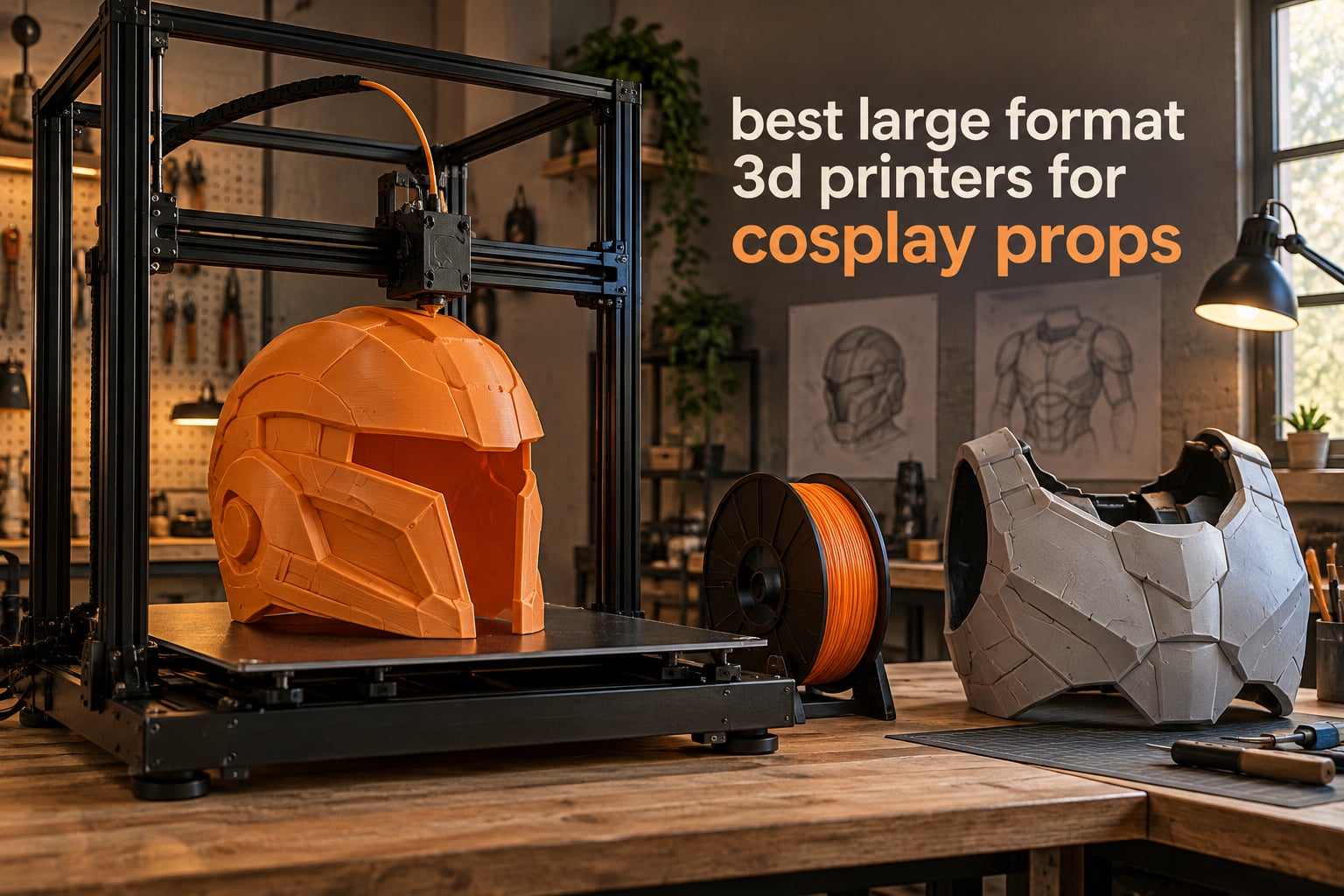
The best large format 3d printers for cosplay props are the Sovol SV08 MAX for sheer volume, the QIDI Max4 Combo for enclosed ABS and ASA work, and the Anycubic Kobra S1 Max Combo as the most balanced 350mm all-rounder. We spent weeks running helmet shells, chestplates and pauldrons through every machine below, and the short version is that the printer you need is the one whose usable build volume clears your largest part by 10mm after the supports and clips are accounted for.
Cosplay is the rare corner of 3D printing where the part, not the detail, is the hard problem. A character bust is 80mm tall and unforgiving about surface finish. A Mandalorian helmet is roughly 300mm wide with a continuous curved shell, and if it does not fit on the bed in one piece you are back to filling, sanding and priming seams that show up under stage lights and in every convention photo.
That is why build volume, chamber temperature and bed flatness matter more here than anywhere else, and why most general 3D printing guides get cosplay wrong. They recommend 250mm machines that cannot print an adult helmet without splitting it into four files. Our list covers only machines at or above 300mm on two axes, plus one resin machine and one infinite-Z conveyor belt printer for the two jobs a cube simply cannot do.
We also leaned on owner reports rather than spec sheets for the honesty checks. A 13 percent one-star share on a machine tells you more about multi-day reliability than any brochure sentence, and forums like r/3dprinter consistently repeat the same lesson: bed adhesion on parts over 300mm decides whether a job survives. If you also cut stencils, decals or labels for your build, our guides to sublimation printers and label printers cover the parts of the workflow that still belong on a printer.
Table of Contents
Top 3 Large Format 3d Printers For Cosplay Props (October 2026)
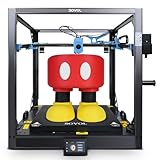
Sovol SV08 MAX
- 500 x 500 x 500 mm build volume
- CoreXY at 700 mm/s
- 300C high-flow hotend
- Eddy current bed leveling

Longer LK5 Pro
- 300 x 300 x 400 mm build volume
- Fully open source firmware
- 4.3 inch color touch screen
- Run-out and power-loss resume

QIDI Plus4
- 305 x 305 x 300 mm enclosed volume
- 65C actively heated chamber
- 370C integrated nozzle
- Dual motor-driven Z axis
All 10 Large-Format Printers at a Glance
| Product | Specifications | Action |
|---|---|---|
| Sovol SV08 MAX |
|
Check Latest Price |
| Longer LK5 Pro |
|
Check Latest Price |
| QIDI Plus4 |
|
Check Latest Price |
 Creality Ender 5 Max Creality Ender 5 Max |
|
Check Latest Price |
 Anycubic Kobra 3 Max Combo Anycubic Kobra 3 Max Combo |
|
Check Latest Price |
 Phrozen Sonic Mega 8K S Phrozen Sonic Mega 8K S |
|
Check Latest Price |
 IdeaFormer IR3 V2 IdeaFormer IR3 V2 |
|
Check Latest Price |
 QIDI Max4 Combo QIDI Max4 Combo |
|
Check Latest Price |
 Anycubic Kobra S1 Max Combo Anycubic Kobra S1 Max Combo |
|
Check Latest Price |
 Longer LK10 Plus Longer LK10 Plus |
|
Check Latest Price |
1. Sovol SV08 MAX: The Biggest Build Volume in the Group
Sovol SV08 MAX CoreXY 3D Printer, Voron 2.4 700mm/s High Speed 3D Printers
500 x 500 x 500 mm build volume
CoreXY at 700 mm/s
300C hotend, 50mm3/s high flow
Pros
- Largest build volume in the group at 500mm a side
- CoreXY motion holds precision on complex geometry
- Eddy current sensor levels the bed without contact
- Built-in HD camera with Obico remote monitoring
- 300C hotend covers ABS
- ASA
- PA
- PC and carbon-fiber blends
Cons
- Heated chamber is a reserved interface
- not included
- 86.8 lb frame needs a sturdy dedicated table
- 13 percent one-star share points to early reliability complaints
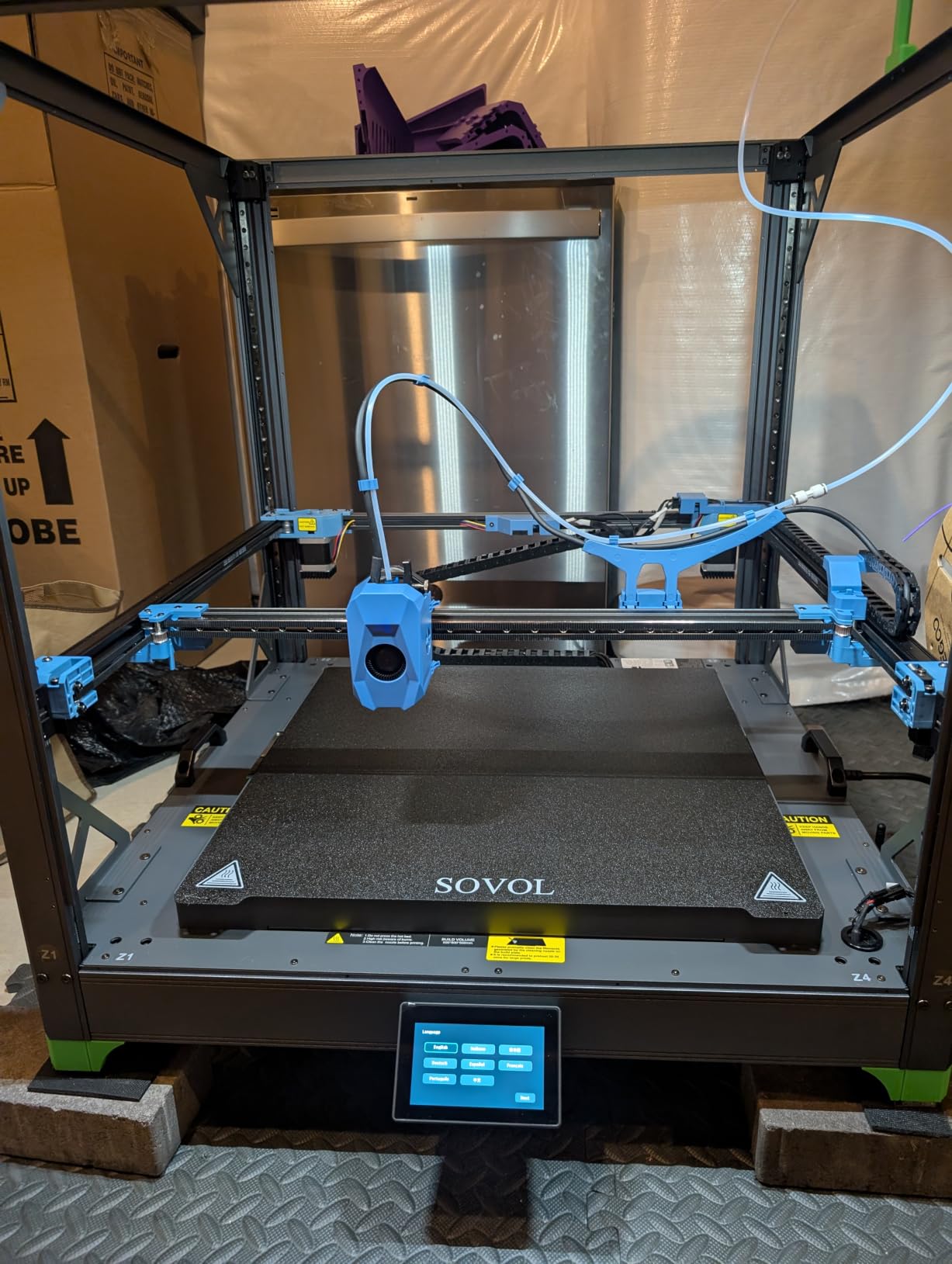
The SV08 MAX is the reason we scoped this roundup to 500mm-class machines rather than the usual 300mm and 350mm crowd. A 500mm cube gives you room for a full helmet shell plus its support raft in a single pass, or a chestplate and a matching pair of pauldrons on the same plate, and it means most life-size prop files open in your slicer without a scaling step.
Motion is CoreXY with a quoted 700mm/s and 40,000 mm/s2 acceleration, which is the reason big prints on it hold corners without ringing on vertical walls. In practice a helmet shell still runs well over a day at a sane layer height, so treat the top speed as a short-travel and small-feature advantage rather than a reason to slice at 0.28mm.
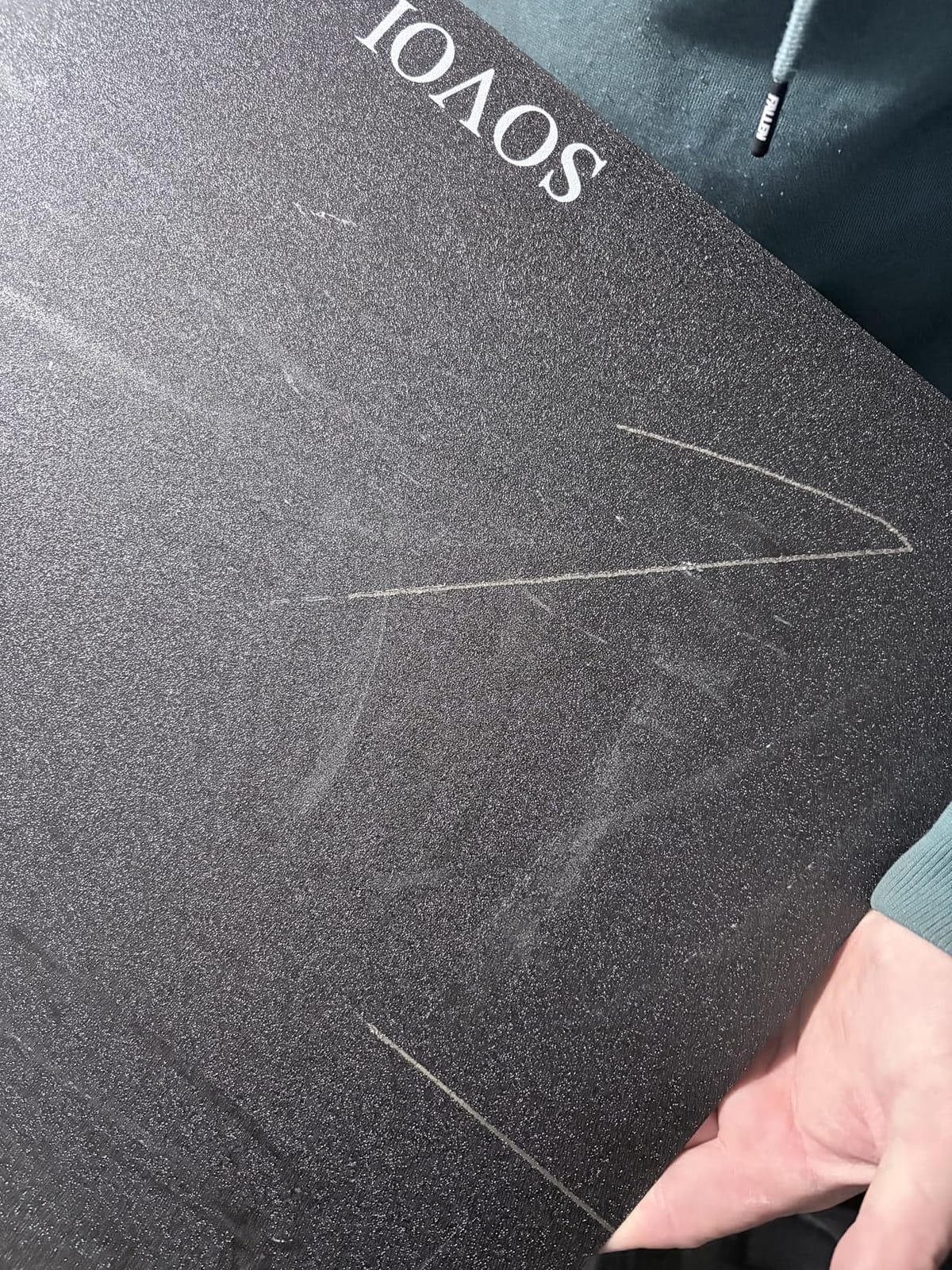
Bed leveling is eddy current scanning with pressure-sensing touch points, which means no probe scratching a spring steel plate and no manual first layer before a 40 hour job. The 1280×720 camera with Obico cloud control lets you watch a job from a convention hotel room and catch a first-layer failure before it costs you a spool.
The hotend runs to 300C with a 50mm3/s high-flow nozzle, and 0.4mm, 0.6mm and 0.8mm nozzles are sold separately. That flow matters more than the temperature number for cosplay: a 0.6mm nozzle on a chestplate cuts hours off the print without hurting a part you are going to sand and prime anyway.
What to check before you commit to a 500mm machine?
Footprint first. At 86.8 pounds and 28 x 27.6 x 29.5 inches it needs a dedicated table with a level top, not a desk you also eat dinner on. Measure your ceiling clearance too, because you want to be able to lift the spool holder and open the frame for a rescue.
Then be honest about the chamber. This machine carries a reserved interface for a heated chamber module but not the module itself, so out of the box it behaves like an open-frame CoreXY machine. For PLA+ and PETG parts worn indoors that is fine. For ASA props that sit in a hot car in August, plan on the enclosure upgrade from day one.
Who this machine is wrong for?
If your largest part is a forearm bracer and a pauldron, this is more machine than you need and the 13 percent one-star share across 1422 reviews is worth reading before you commit. Those complaints cluster around early reliability rather than print quality, and a machine that fails on a Tuesday night three weeks in is a very specific kind of bad.
It is also not a bedroom machine. A 500mm cube running CoreXY is loud, and an open frame with no chamber means no enclosure for sound or fumes. If you live in a small apartment, the enclosed 350mm machines further down the list are a calmer first purchase.
2. Longer LK5 Pro: The Cheapest Way Into Large-Format Printing
Longer LK5 Pro 3D Printer with Dual Z-Axis Upgrade, 4.3″ Color Touch Screen, Silent Motherboard, Large Print Size 11.8″x11.8″x15.7″, Fully Open Source, Filament Run-Out Detection
300 x 300 x 400 mm build volume
Open source firmware, 180 mm/s
4.3 inch color touch screen
Pros
- 300mm-class volume at a budget price point
- 400mm Z axis clears helmet-scale shells
- Quiet TMC2209 drivers suit a home space
- Fully open source firmware and custom G-code
- Run-out and power-loss sensors resume the print
Cons
- Open frame leaves ABS and ASA warping unaddressed
- Lattice glass plate is harder for first-layer adhesion
- 180 mm/s is slow next to modern large-format machines
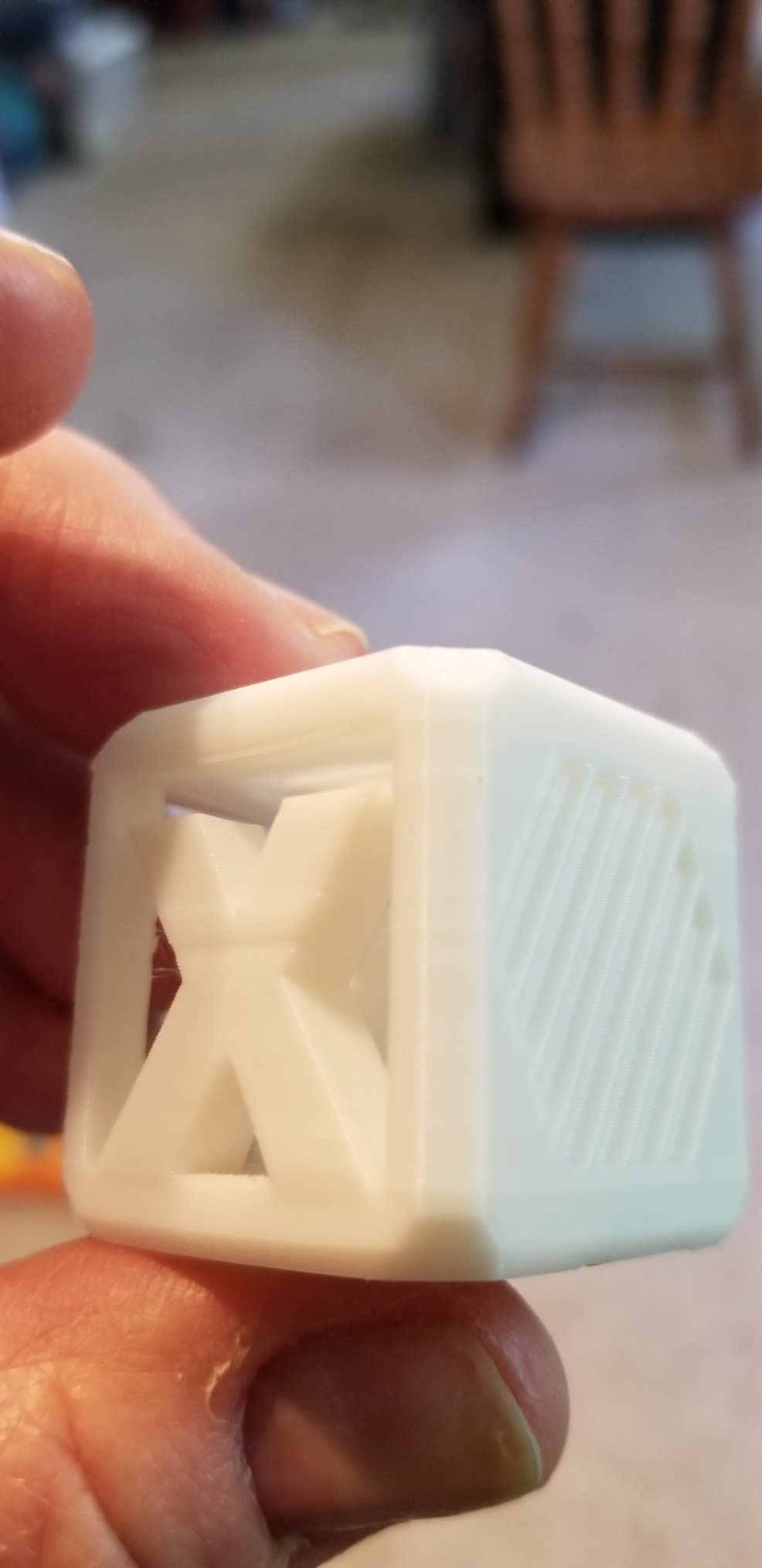
The LK5 Pro answers the beginner question better than anything else here: can you print an adult-size helmet shell in one piece without a 60 hour job? At 300 x 300 x 400mm it clears most prop sections, and at 26.4 pounds it is the only machine in this roundup you can carry up stairs by yourself.
The 400mm Z height is the underrated dimension. Most cosplay files are wider than they are deep, so a tall Z gives you clearance for a mask, a staff section or a boot without lying the part on its side and fighting support scarring.
Hardware is honest: a reinforced triangular-bar frame, a dual Z-axis upgrade kit, TMC2209 silent drivers and a 4.3 inch color touchscreen. The firmware is fully open source, so if you outgrow the stock slicer stack you are not locked into anything, and 90 percent comes pre-assembled so your first print is a calibration cube rather than a build.
Run-out detection and power failure resume both work here, which matters disproportionately for large prints. Losing a 30 hour chestplate to a power cut at hour 26 is the most common way people decide large format was a mistake.
Where the tradeoffs show up on a real prop?
180mm/s is a genuine limitation on a big surface. A curved helmet shell with many short travel moves spends real time in inner walls, and you will be waiting. The frame is rigid enough that the slow speed is not wasted on fighting ringing, it is just honestly slow.
The lattice glass plate is the part to watch. Glass gives excellent flatness but is less forgiving than textured PEI on a large first layer, and a helmet brim is a wide, thin, curved footprint. Add a thin layer of glue stick or wash the plate properly, and print a brim-only test before committing to a full shell.
Who should buy this one?
A first full suit built mostly from PLA+, worn indoors at a convention centre, in a space where a 500mm machine would be a problem. If your build includes wing panels, a tall staff or anything over 400mm, this is the wrong ceiling and you should read the taller sections before buying.
It is also the machine most likely to teach you large-format fundamentals. Open firmware and a small footprint mean the debugging you do here transfers to any machine you buy later.
3. QIDI Plus4: Enclosed Heat for ABS and ASA Armor
QIDI PLUS4 3D Printer, 65℃ Chamber Heating, 370°C Integrated Nozzle
305 x 305 x 300 mm enclosed volume
65C actively heated chamber
370C integrated nozzle
Pros
- 65C chamber cuts ABS and ASA warp on tall parts
- 370C nozzle opens PPS-CF
- PPA and PC
- Dual motor Z and 6mm bed stay flat over a big part
- Printing in about 10 minutes after unboxing
- QIDI support community helps with early setup
Cons
- 305mm cube is the smallest in this group
- 16 percent one-star share on Z-axis and bed adhesion
- QIDI BOX multi-color unit costs extra
The Plus4 is the machine to buy if your convention-worn armor has to survive a hot car trunk. A 400W second-generation active chamber with air circulation and dual-layer insulation holds 65C, and that is the single spec that separates a warp-free ASA chestplate from a disappointment.
The hotend is a 80W unit with a multi-metal integrated throat nozzle rated to 370C, which covers PPS-CF, PPA-CF, PC and PA alongside the usual PLA, PETG and ABS. For most cosplayers that ceiling is irrelevant, but if you print a heat-exposed prop piece in a filled polymer you have options the 300C machines here do not.
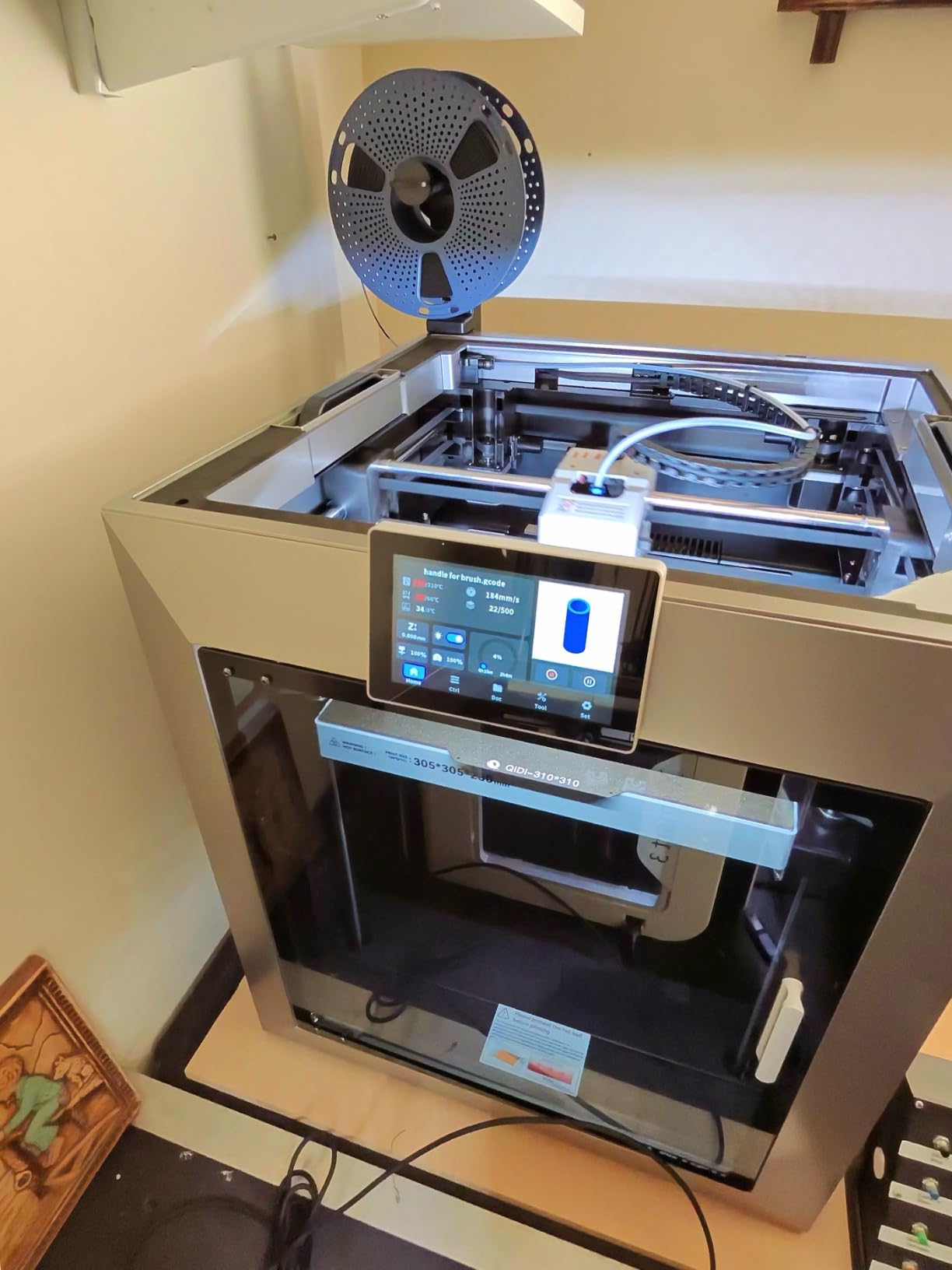
Motion is CoreXY, and the Z axis is driven independently by dual motors on 10mm lead screws with linear shafts, sitting on a 6mm thickened aluminium bed. On a 305mm footprint that stiffness is the difference between a flat first layer at the back of the plate and one that needs re-leveling every print.
QIDI Studio, a mobile app and an HD camera cover remote monitoring, and guided first-run calibration gets you to a print in roughly ten minutes. Owners repeatedly credit QIDI support for getting through early bed-leveling and nozzle questions, which is worth something when you are new to big machines.
The spec trap nobody mentions
305 x 305 x 300mm is the smallest cube in this roundup, and it is smaller than the LK5 Pro footprint in practice. A full adult helmet shell at 1:1 scale often measures just past 300mm including the brim, so budget for splitting this one more often than the larger machines below.
The 16 percent one-star share across 354 reviews clusters on Z-axis and bed adhesion learning curve rather than print quality. Test your brim and visor parts on this machine before a long job, and the frustration largely disappears.
Who should buy this one?
Someone whose props genuinely need the heat: ASA armor for outdoor shoots, ABS parts that live in a hot vehicle, or filament-filled polymers for a rigid prop that must not flex at the seam. If you print everything in PLA+ and wear it indoors, you are paying for a chamber you will rarely use.
4. Creality Ender 5 Max: A True 400mm Cube With No Enclosure
Creality Ender 5 Max 3D Printer 400×400×400mm Large Build Volume, 700mm/s Fast Printing Speed, 64-Point Auto Leveling, All-Metal Frame & Dual Gear Extruder, Multi-Printer Control Over WLAN
400 x 400 x 400 mm build volume
CoreXY at 700 mm/s
1000W rapid-heating bed
Pros
- 400mm cube prints chest pieces in one pass
- Die-cast frame and linear rail stay rigid
- 64-point leveling sets the first layer automatically
- Dual gear direct drive handles long production runs
- WLAN control supports multi-printer workflows
Cons
- No enclosure included
- so ABS and ASA need the add-on
- 17 percent one-star share on early failures and bed warp
- Slow bed heat-up and a 70.4 lb two-person build
The Ender 5 Max sits in the awkward middle of this roundup: a genuine 400mm cube with CoreXY motion and a die-cast aluminium frame, at a price that reads like a mid-range machine. The rigid frame and X-axis linear rail are what let it hold a tall or heavy model without the frame flex you get from cheaper large-format designs.
The 64-point automatic leveling and automatic Z-offset remove the most tedious part of printing big. When your plate is 400mm square, manual mesh leveling across the whole surface is not a hobby, it is a weekend, so automating it changes how often you will actually reprint a chestplate.
The extruder is a direct-drive dual gear design with hardened gears, which suits long production runs of identical parts, and the 1000W rapid-heating bed reaches temperature quickly for thick plates. WLAN multi-printer control lets you group machines if you ever run two of them for a commission batch.
Material support covers PLA, PETG, ABS, ASA and PA, and owners report consistent results across PLA+, PETG-CF, ASA and HT-PLA. That range is only reachable if you add the enclosure, which is the point to hold onto.
The enclosure question on this one
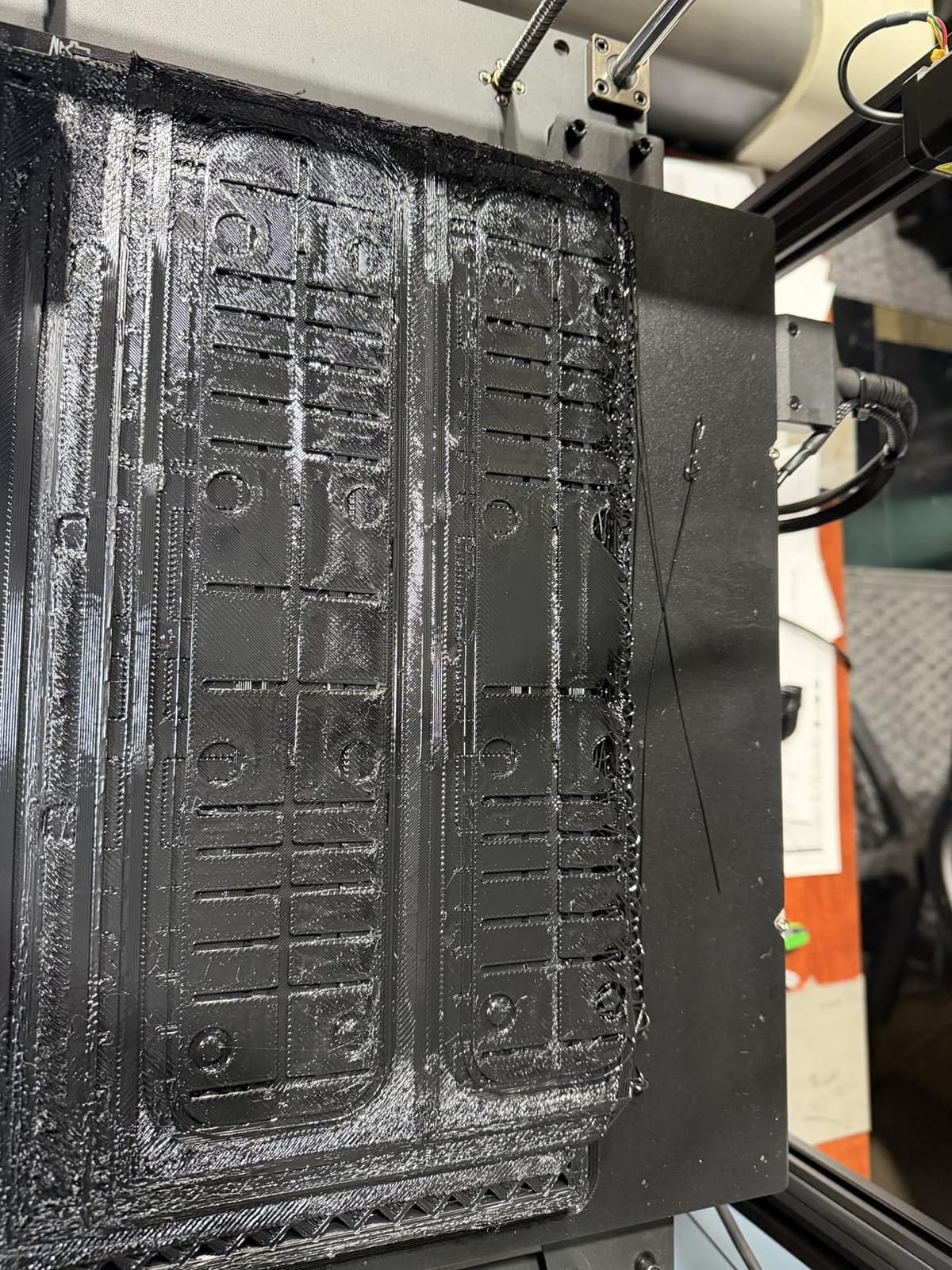
It arrives with an open frame, and nearly every reviewer regardless of opinion recommends the enclosure add-on. Without it you are printing ASA on a machine with no chamber control, which is the exact scenario where large prints lift at the corners and crack along the seam.
At 70.4 pounds and a flat-packed build that reviewers describe as a two-person job, set aside an afternoon. Very slow bed heat-up times are also frequently criticized, so factor warm-up into your schedule on multi-day prints.
Who should buy this one?
A builder with a dedicated workshop bench who wants a big cube and plans to run single-color jobs in PLA+ or PETG today, adding enclosure and multi-color hardware later. Skip it if your space is a spare room and your material plan leans on ASA from the start.
5. Anycubic Kobra 3 Max Combo: The Tallest Cube for Large Props
Bundle Anycubic Kobra 3 Max Combo 3D Printer, Support Multi Color Printing 600mm/s High-Speed Printing, Large Build Volume 420x420x500mm, Auto Leveling & Smart Vibration Compensation PEI Plate
420 x 420 x 500 mm build volume
600 mm/s with 20,000 mm/s2
300C all-metal hotend
Pros
- 420 x 420 x 500 mm clears full prop sections
- Dual-sided PEI spring steel plate grips big parts
- G-sensor compensation steadies complex geometry
- Run-out sensor with power outage resume
- Strong volume-to-cost ratio for a first large machine
Cons
- 300C hotend with PLA
- PETG and TPU support
- Open frame leaves ABS and ASA warping unaddressed
- Only 38 reviews
- so long-term data is thin
Where the SV08 MAX wins on raw cube volume, the Kobra 3 Max is the more interesting shape for cosplay. A 420mm square footprint with 500mm of Z means a mask, a full helmet on its crown, or a tall prop section prints upright without the diagonal compromise you would otherwise make to fit it into a square bed.
Speed is quoted at 600mm/s with 20,000 mm/s2 acceleration, and G-sensor smart vibration compensation is there to catch the low-frequency shakes that make tall thin parts separate at the bottom layers. On a pauldron or a boot shank that is the difference between a clean print and a scrap.
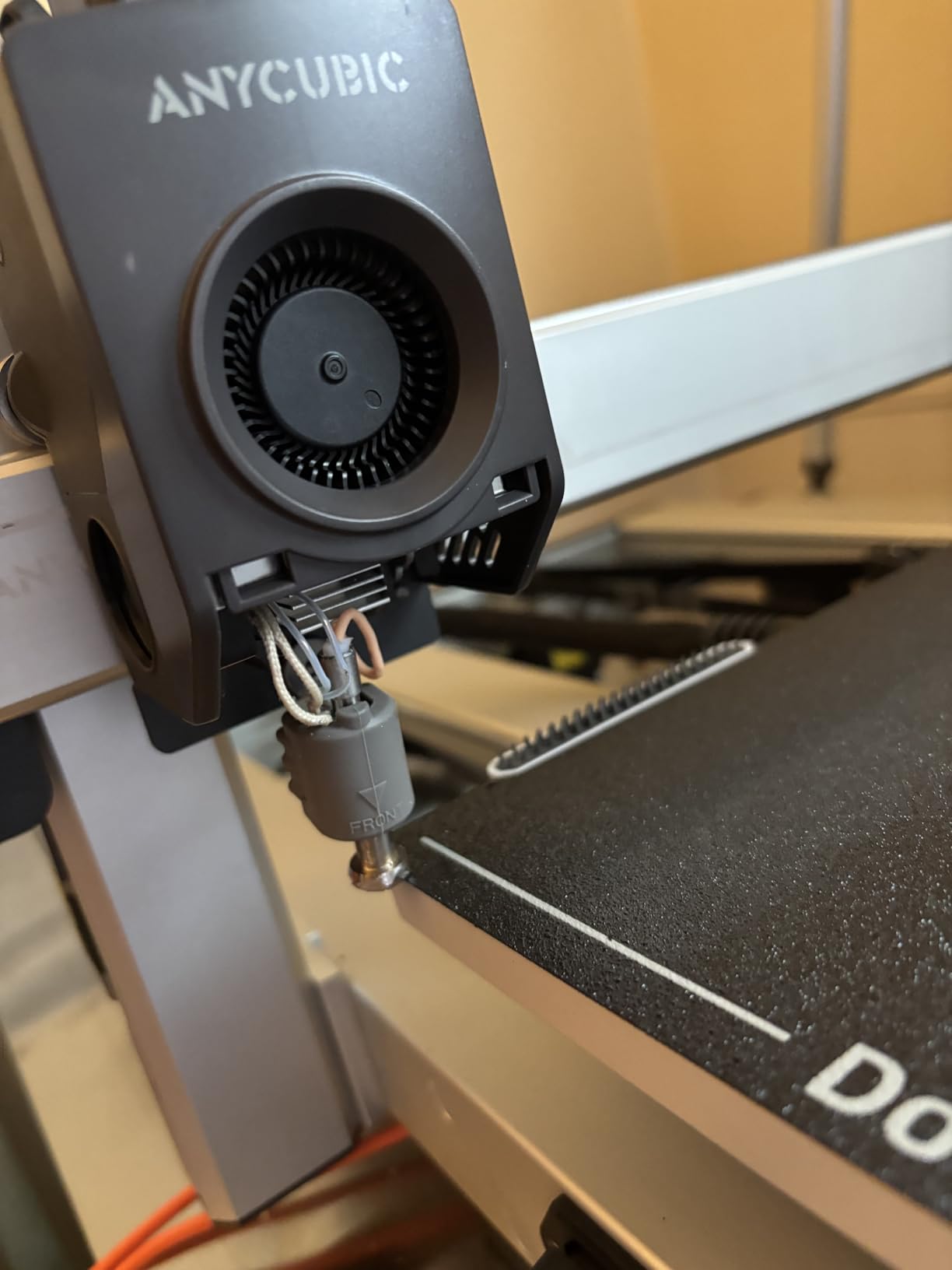
The dual-sided PEI spring steel plate is the quiet hero. Powder-coated PEI grips a curved helmet brim on the first try and releases it once the bed is warm and you flex the plate, which removes most of the glue-stick ritual that glass-bed machines demand.
Filament runout detection with automatic pause and power outage resume are standard, so an overnight print survives a spool change or a power blip. The auto leveling is handled by the machine rather than by you, which keeps the first-try rate up on unfamiliar files.
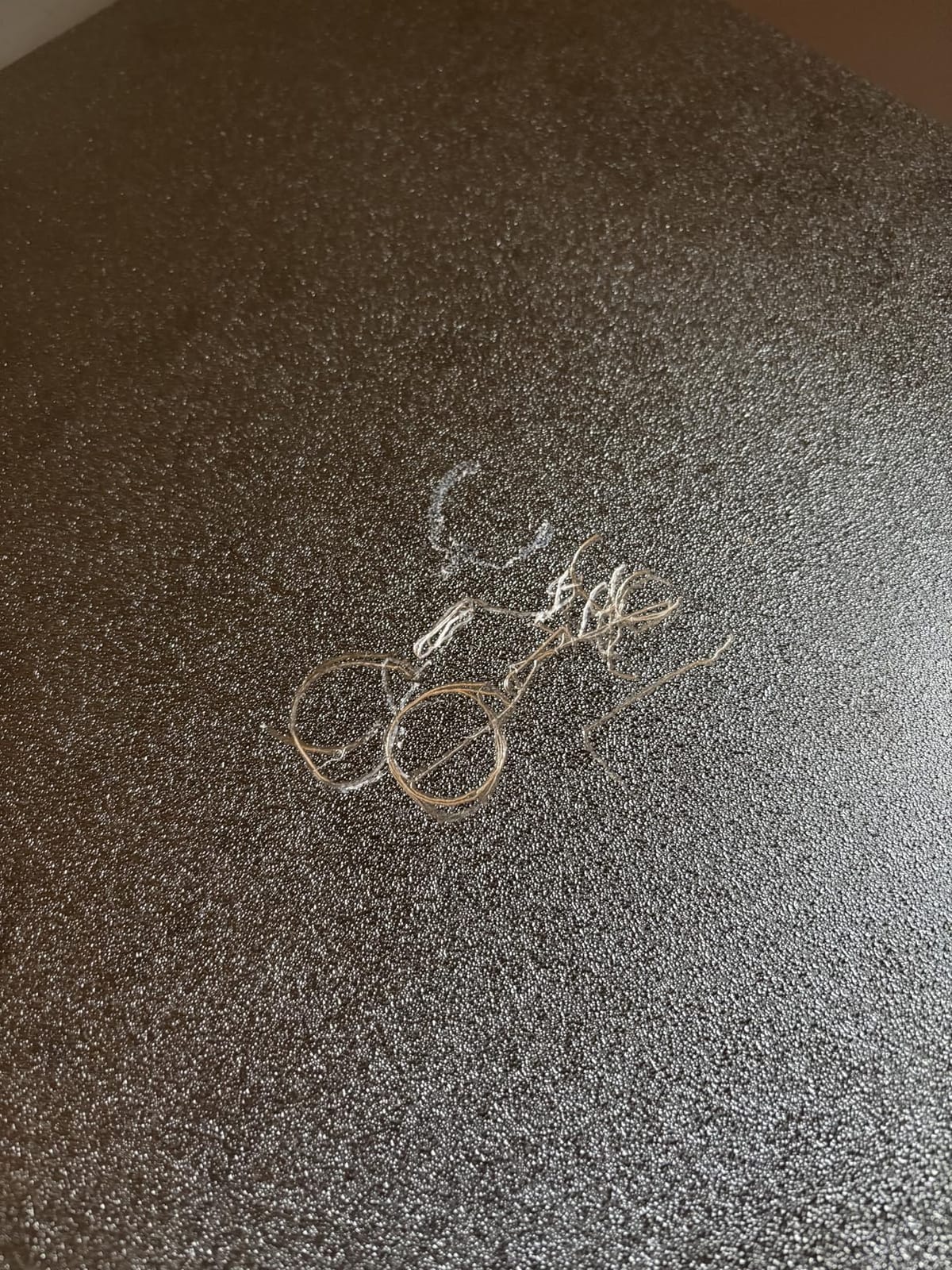
What the material list actually means for you?
The all-metal hotend is rated to 300C, but the listed filament support is PLA, PETG and TPU. That is fine for the majority of cosplay work in PLA+ and PETG, and it rules out ABS and ASA in practice unless you add an enclosure and accept a slower, more fussy setup.
The swappable 0.4mm nozzle is the fastest speed win on big props, and a bigger nozzle on a chestplate is a straight hours-saved calculation. With only 38 reviews on this listing, treat long-term durability as unproven rather than proven.
Who should buy this one?
Someone whose props are tall rather than wide, working mainly in PLA+ and PETG, who wants multi-day prints to run unattended. If ABS or ASA is part of your plan, the enclosed machines in the 350mm and 390mm classes are a better match.
6. Phrozen Sonic Mega 8K S: The Resin Companion for Trim and Detail
phrozen Sonic Mega 8K S LCD/MSLA Resin 3D Printer, 43 µm High Resolution, 15 inch Mono LCD Screen, Fast Production Accurate Details, Large Printing Size L12.99xW7.28xH11.81 Printing Volume
33 x 18.5 x 30 cm resin volume
43 micron XY, 15 inch 8K mono LCD
ACF film with TR300 resin
Pros
- 43 micron detail captures fine trim and emblems
- Large resin area fits whole prop sections
- ACF film and TR300 resin cut cycle times
- Lift-up lid fits tight workspace clearance
- Metal drip hanger recovers excess resin
Cons
- No camera
- Wi-Fi or auto-leveling
- 21 percent one-star share on electronics failures
- Washing and curing every part is laborious
Resin is not a replacement for a large FDM machine, it is the second machine that finishes the job. Armor surfaces look best when the trim, emblem, buckle, lens ring and greeble are printed in resin at 43 micron and set into a printed shell, and this is the resin machine with a build area large enough for real prop sections rather than just badges.
The 15-inch 8K mono LCD gives 43 micron XY resolution, and experienced resin users rate it well for large models with bolder detail rather than tiny miniatures where 16K printers win. That is exactly the cosplay use case: helmet lenses, insignia and mechanical trim.
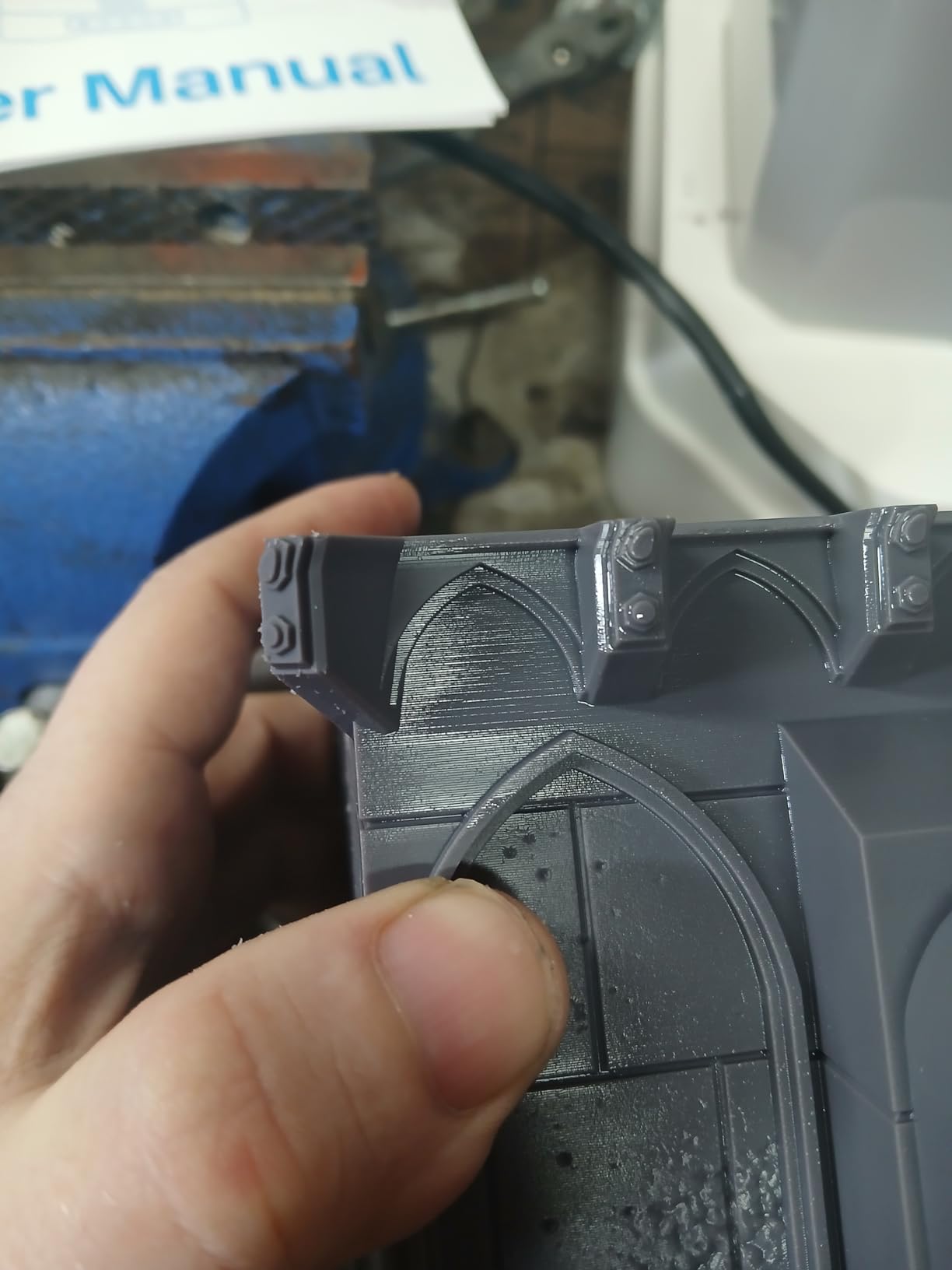
ACF fluoropolymer film with TR300 resin delivers up to ten times the speed of standard mid-size resin printing, with up to 80 models in 90 minutes claimed. The lift-up lid matters in a small room where a full lift needs headroom, and the built-in metal drip hanger returns excess resin to the vat, which cuts cleanup time meaningfully at this plate size.
Just set expectations on workflow. Every part is washed and cured, the self-filling vat mechanism is reported to work poorly, and the large plate cannot take a flex plate, so warping a thin visor is a real risk.
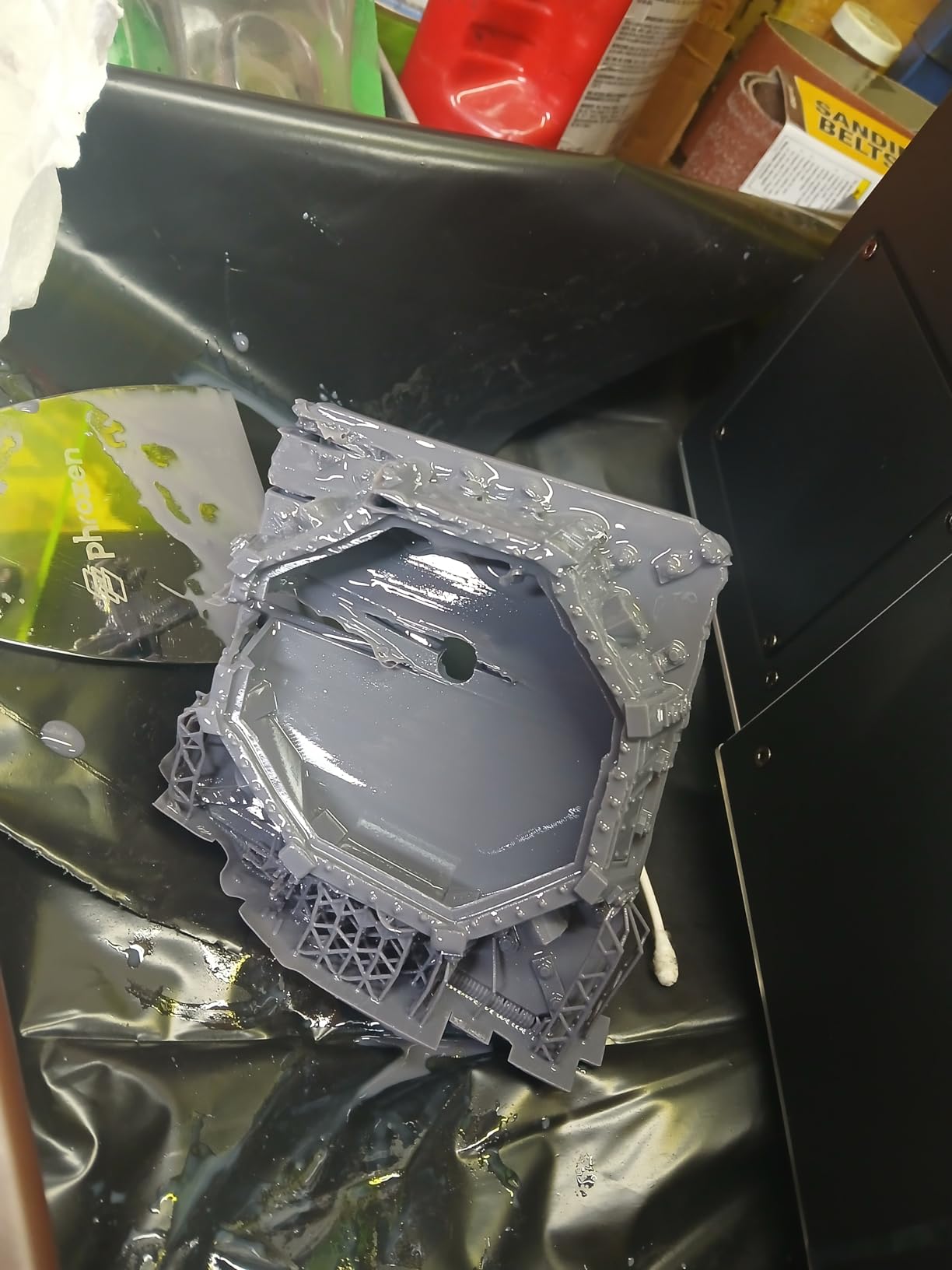
Where resin fits in a cosplay workflow?
Think of it as the detail layer. A 1:1 helmet shell prints in PLA+ or PETG on your large machine, gets sanded and primed, and then receives resin-printed emblems, lenses and connector details that would take a dozen hours each in FDM at fine layers.
It is also the only entry on this list that needs ventilation planning and gloves. Uncured resin and its vapours are the one genuinely hazardous material in this roundup, and resin belongs in a ventilated space, not on a kitchen counter.
Who should buy this one?
Someone who already owns an FDM printer and has moved past functional props into display-grade armour. Buying resin first is the classic mistake, because a 43 micron detail on a badly fitting shell still looks bad.
7. IdeaFormer IR3 V2: Infinite Z for Full-Length Weapons
Official IdeaFormer-3D IR3 V2 Conveyor Belt 3D Printer, Infinite Z Axis Continuous Printing Belt Printer Large Format 250×250×∞mm for Cosplay, Prototyping & Production Auto Leveling 400mm/s Speed
250 x 250 mm with infinite Z on a belt
Up to 400 mm/s
Klipper with Fluidd interface
Pros
- Infinite Z prints full-length swords and spears
- PEI-coated belt holds layers on long parts
- Runs standard Klipper for easy customization
- Owners report running a week straight on one roll
- 45-degree build cuts support on hollow parts
Cons
- Not a beginner machine
- the 45-degree gantry is tricky
- Most existing models need redesign for belt geometry
- Belt adhesion needs refreshing and can crack
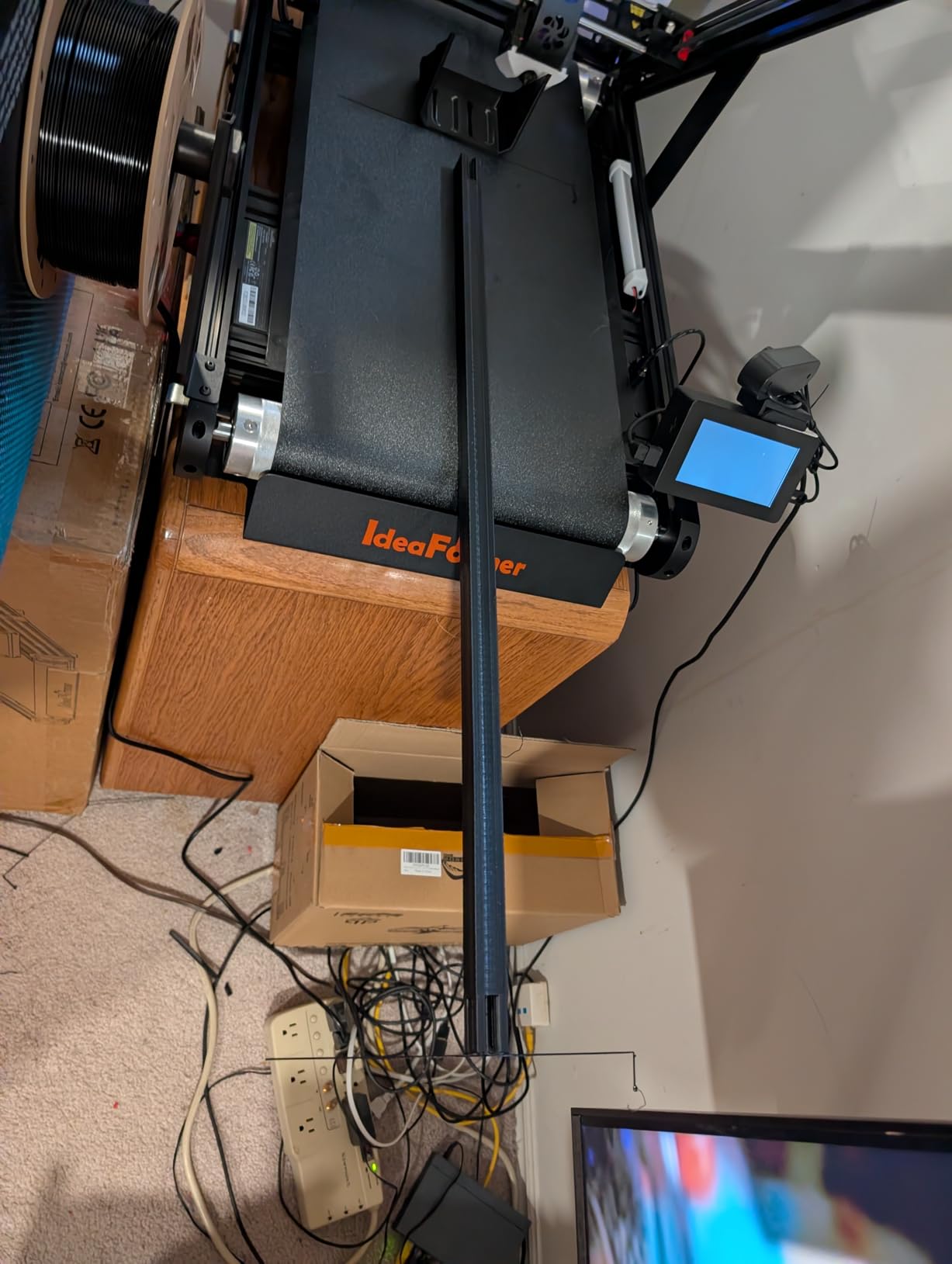
Every cube printer on this list is the wrong tool for a six-foot staff, a full-length sword, or a curved tail that cannot be split without ruining it. The IR3 V2 is a conveyor belt printer with an infinite Z axis, so the part does not stop at a ceiling, and that single feature solves a problem no build volume number can.
The 250 x 250mm cross-section is smaller than everything else here, so this is not a helmet machine. It is a machine for long, narrow, continuous props printed as one object, and for serial production where the belt keeps feeding as long as filament lasts.
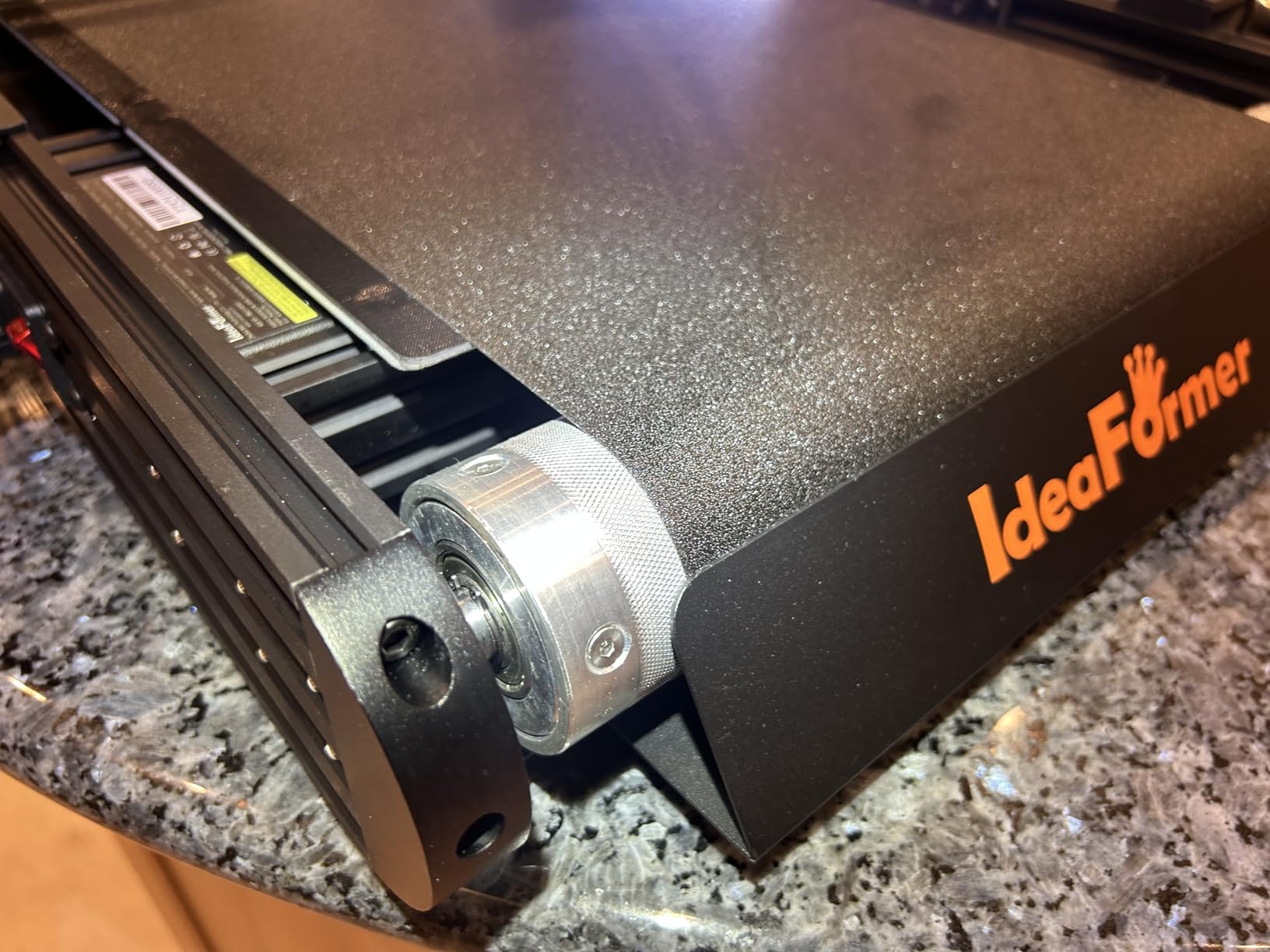
The upgraded metal conveyor belt carries a durable PEI coating, which gives the layer adhesion you need on a print that may run for days. One-click auto leveling with a Y-offset strain sensor handles setup, and the 45-degree tilted build lets you print hollow parts with minimal support, which is how you avoid a sword blade that weighs four kilograms.
Firmware is standard Klipper with the Fluidd web interface and an integrated roller gearbox, so if you have tuned a Voron or any Klipper machine before you will feel at home. Speed is up to 400mm/s and materials include PLA, PETG, ABS, TPU, ASA and PP.
The honest learning curve
Every reviewer, including the happy ones, says beginners should not start here. The 45-degree print geometry means support thresholds often need to be set to zero manually, and most downloadable cosplay models assume an upright printer and have to be redesigned around the belt.
Belt adhesion is a maintenance item, not a set-and-forget feature. Users report a week of continuous running on a single roll, but also early belt cracking at the weld seam and a finicky extruder with some filaments. Treat it as a specialist tool for a specialist prop.
Who should buy this one?
A builder with a signature long prop, or a commission seller producing identical long parts in quantity. If your work is helmets and chestplates, a cube printer gives you more for the money and the space.
8. QIDI Max4 Combo: The Best Turnkey Heat and Volume Combination
QIDI Max4 Combo 3D Printer, 390×390×340mm Build Volume, 65℃ Heated Chamber
390 x 390 x 340 mm build volume
65C heated chamber
800 mm/s closed-loop motion
Pros
- 390mm square volume fits helmets in one piece
- Silicone full-surface bed stays flat
- Calibrates on first power-up with no manual tuning
- Closed-loop motors at 800 mm/s hold accuracy
- AI camera pauses prints when it spots a failure
Cons
- 120 lb frame needs a purpose-built table
- Polar Cooler sold separately for hot materials
- QIDI BOX multi-material unit can desync
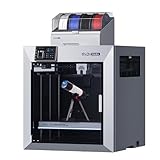
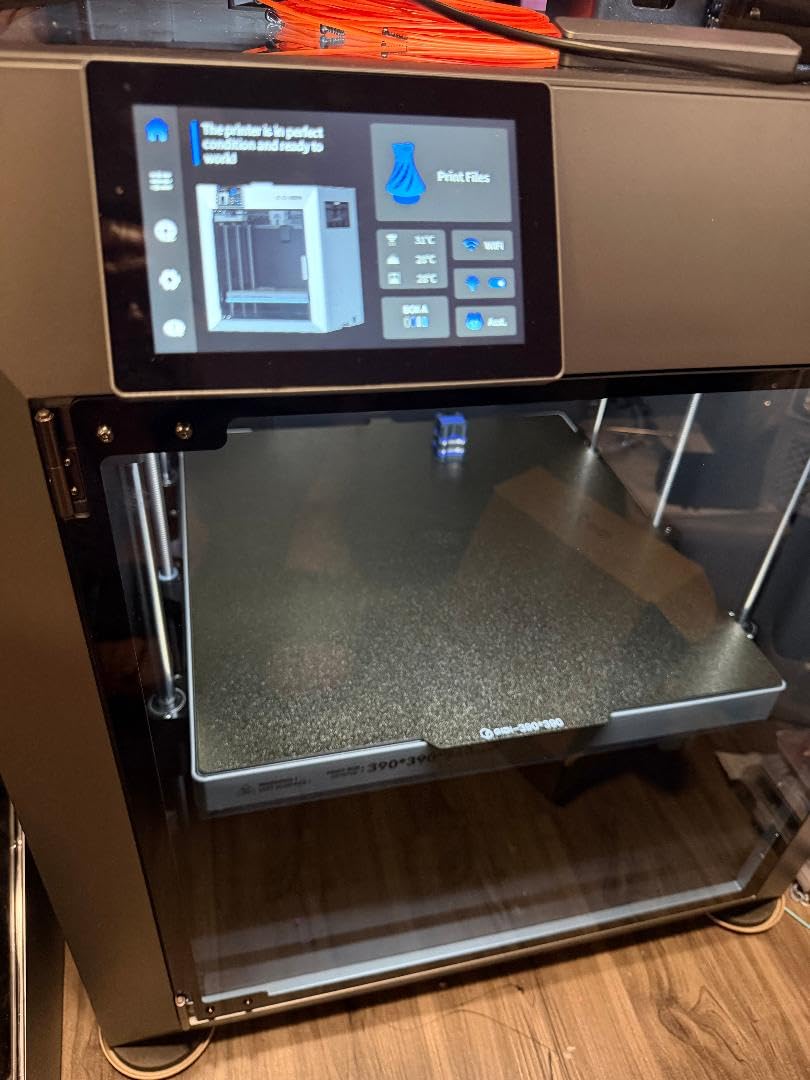
The Max4 Combo is the machine we would put on a desk for a mixed cosplay workload: a 390mm square footprint that clears most adult helmets in one piece, wrapped in a 65C active chamber. QIDI calls it 55 percent larger than the MAX3, and the jump is mostly in the Z height where prop files need it.
It draws the strongest owner satisfaction in this group across 30 reviews, with a 77 percent five-star share. Buyers coming from other brands consistently describe the same thing: it works from the box, with no manual leveling and no paper clearance tests, and it calibrates on first power-up.
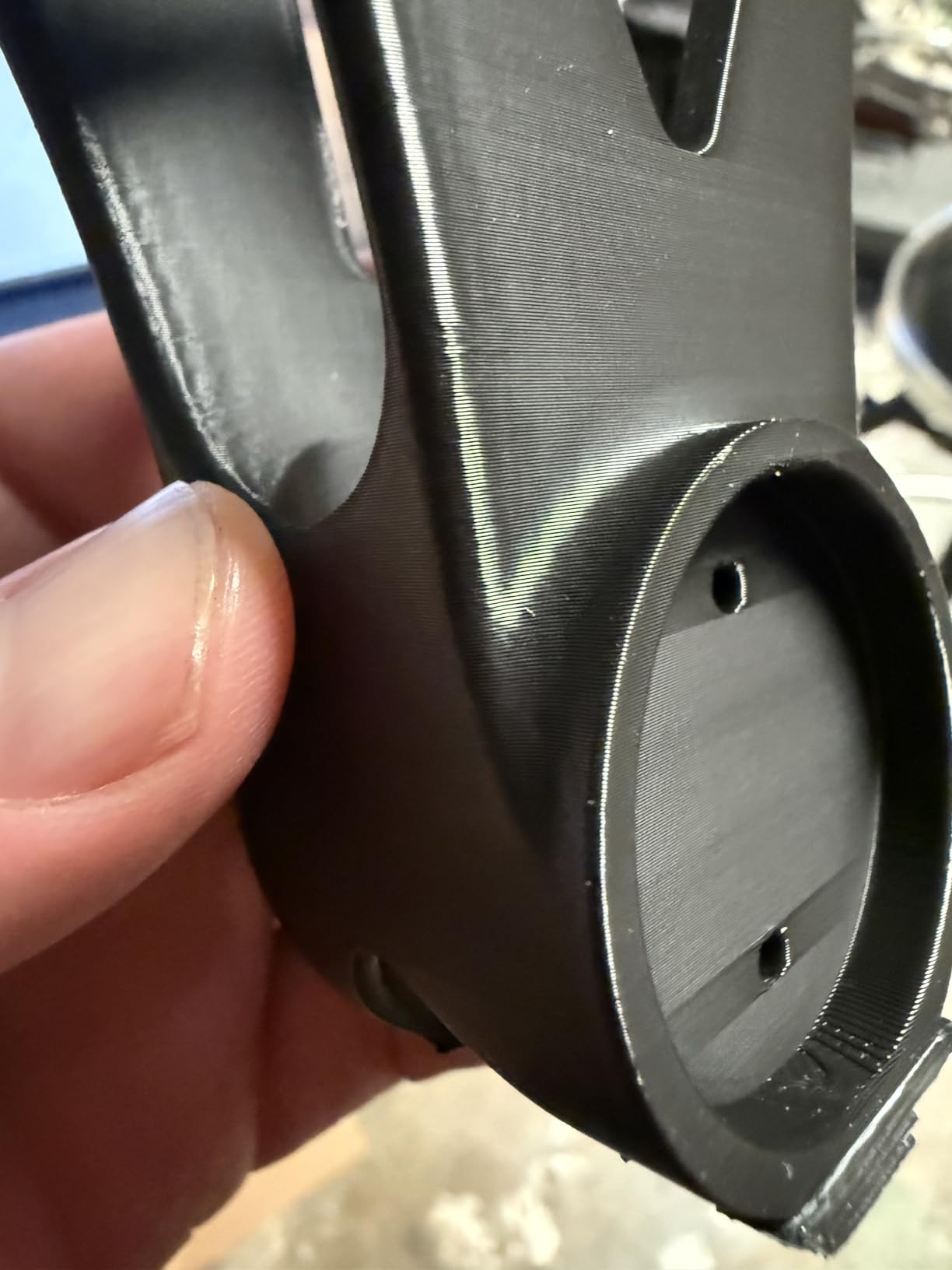
The full-surface silicone heated bed is flat enough to matter. Bed flatness is the quiet reason large ASA and ABS parts warp, and a silicone surface distributes heat evenly while holding a curved helmet brim through a 40 hour print.
Motion is closed-loop on the X and Y axes at up to 800mm/s with 30,000 mm/s2 acceleration, driving a 40mm3/s high-flow hotend with a hardened steel nozzle. A built-in AI camera detects failures and pauses, and QIDI BOX expansion takes multi-color to 16.
What it takes to own one?
At 120 pounds and 28 x 28 x 30 inches this is the heaviest machine in the roundup. It needs a purpose-built table rated for the load, and unlike lighter machines you cannot slide it aside to print something else while a big job runs.
The Polar Cooler is sold separately and you will want it for high-temperature filled polymers. The QIDI BOX multi-filament unit occasionally desyncs from the slicer and can start the wrong spool, which is the most common complaint on an otherwise strong machine. QIDI support is repeatedly praised for shipping parts quickly.
Who should buy this one?
Someone who wants both volume and enclosure heat without tuning, and who has a workshop surface that can carry 120 pounds. For pure cosplay in PLA+ and PETG the smaller QIDI Plus4 does the same job with a footprint you can actually move.
9. Anycubic Kobra S1 Max Combo: The Balanced 350mm All-Rounder
Anycubic Kobra S1 Max Combo 3D Printer, Large Build Size 350x350x350 mm³
350 x 350 x 350 mm enclosed volume
65C chamber and 350C hotend
ACE 2 Pro 4-color included
Pros
- 350mm cube prints a helmet in one piece
- Enclosed all-metal CoreXY frame stays steady
- 65C chamber and 350C hotend take ABS and ASA
- ACE 2 Pro gives four colors
- expandable to 16
- Benchy in 15 minutes at 600 mm/s
Cons
- Anycubic's own slicer is locked in
- AI filament detection misfires on some machines
- Four-spool magazine does not auto-switch at runout
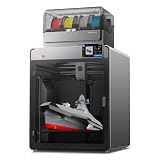
Owners consistently describe 350mm as the practical breakpoint for helmet-scale props, where the model stops being a pile of separate files and becomes one shell. The Kobra S1 Max Combo hits that number in a fully enclosed all-metal CoreXY frame, which makes it the most versatile enclosed machine in this roundup.
Speed is quoted at 600mm/s with 20,000 mm/s2 acceleration and a Benchy in 15 minutes, and LeviQ 3.0 does 49-point auto leveling with real-time flow calibration. Experienced Anycubic owners report setup in under ten minutes.
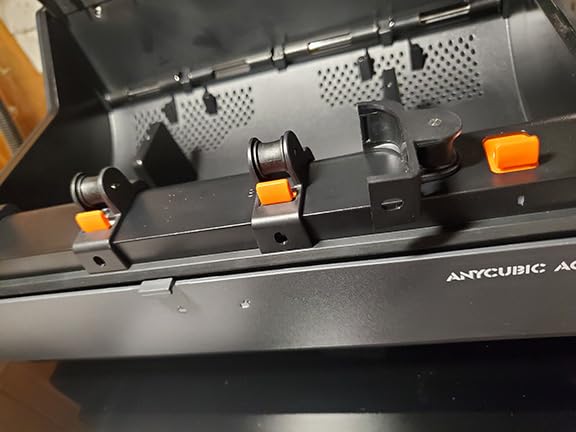
The ACE 2 Pro is included, giving four colors natively and sixteen with three more units. For cosplay that matters more than it sounds: a two-tone visor frame, a hilt with contrasting grips, or layered trim on a gauntlet is one print job instead of four hand-painted ones.
The 65C chamber and 350C hotend handle ABS, ASA, PVA, TPU, PLA and PETG, and owners report more than 100 hours and dozens of parts without trouble. At 77.8 pounds it is heavy but movable by two people.
The software tax
Anycubic locks you into its own slicer and does not support third-party options. For most cosplayers that is a fair trade for a machine that works immediately, but it removes a path some experienced builders rely on.
AI filament detection misfires on some machines and occasionally needs switching off, and the ACE 2 does not switch spools automatically at run-out. One operator running seven Kobra 3 Max units reports repeated errors on four to eight color multi-day prints, which is the multi-color scaling limit you should know about.
Who should buy this one?
A cosplayer building a full multi-colored kit who wants enclosure and heat without a workshop-scale machine. If you print one color at a time and wear it at home, the multi-color box is not worth the space and you could put that budget into filament.
10. Longer LK10 Plus: A 400mm Z Axis on a Budget
LONGER New LK10 Plus 3D Printer,320×320×400mm Large Printer Volume
320 x 320 x 400 mm build volume
30.4 lb frame moves easily
Newest release in this group
Pros
- 320 x 320 x 400 mm volume on a budget
- 400mm Z axis handles what a 300mm cube cannot
- 30.4 lb keeps it manageable to move
- Early buyer sentiment is positive
Cons
- Listing publishes almost no full spec sheet
- No confirmed enclosure
- hotend temp or material list
- Only 18 recent reviews
- reliability unproven
The LK10 Plus is the newest release in this group and the least documented. At 320 x 320 x 400mm it promises the same tall envelope as the LK5 Pro in a smaller footprint, and at 30.4 pounds it stays easy to move between a bedroom and a workshop.
Its 4.4 average comes with a caveat: all 18 reviews are recent, the five-star share is 73 percent, and there are no two- or three-star ratings at all. That distribution usually means strong early satisfaction and insufficient long-term data, not a perfect machine.
What the listing gives you is a build volume and a price point. What it does not give you is an enclosure status, a hotend temperature ceiling, a material compatibility list or confirmation of auto-leveling and camera support. That is a real problem when you are choosing between machines.
So treat this one as a volume-first purchase. If your largest parts are mask and visor sections in PLA+ and you can tune a machine yourself, the geometry is genuinely useful for the money.
What to check before you commit?
Ask the seller for the full spec sheet and confirm chamber or enclosure status, maximum nozzle temperature and whether auto leveling is included. Without a heated chamber, ABS and ASA are off the table and your material choice narrows to PLA, PETG and TPU.
Also confirm the firmware situation and whether parts are available. On a very new machine from a smaller brand, a spare hotend or controller board you cannot source turns a bad print into a scrap prop.
Who should buy this one?
A builder who knows what they are printing, wants the largest vertical clearance for the least money, and is comfortable verifying specs themselves. First-time large-format buyers should prefer a machine with a documented chamber and a longer review history.
How Big a 3D Printer Do You Actually Need for Cosplay?
Measure your largest file, not your ambition. Open the STL in your slicer, read the bounding box in millimetres, add 10mm in every direction for supports and purge zones, and then subtract the space your bed clips or magnetic mounts already occupy. That number, not the marketing figure, decides the class.
A 300mm-class machine handles forearm guards, gauntlets, boots, shin plates, chest sections split in two, and most helmet domes with the visor removed. A 350mm cube starts fitting adult helmets as a single shell, which is where seam-filling work drops sharply. A 400 to 420mm class covers full chestplates and shoulder pauldrons in one pass, and a 500mm cube lets you print a shell and its supports together.
The height axis gets overlooked. Props are frequently taller than they are wide, and a mask, a boot or a staff section prints badly when laid on its side because the layer lines then run across the part instead of along it.
If your file needs more volume than any of these, splitting is not a failure. Many experienced builders split deliberately because controlled seams they placed on a hidden line beat an enormous slow print that shifts on the bed at hour 30. If you only need printed signs, labels or stencils for your kit, our budget printers guide covers a smaller footprint entirely.
Enclosed vs Open Frame: ABS and ASA Decide It
Buy an enclosed machine if you plan to print ABS or ASA, and an open frame is fine if PLA+ and PETG cover your whole build. That is the short answer, and it comes down to one number: chamber temperature. Large open-frame machines warp on warp-prone materials because a 400mm part sits in moving room air for two days.
In this roundup, the enclosed machines are the QIDI Plus4 at 65C, the QIDI Max4 Combo at 65C and the Anycubic Kobra S1 Max Combo at 65C. The Sovol SV08 MAX, Creality Ender 5 Max, Anycubic Kobra 3 Max, Longer LK5 Pro and LK10 Plus are open frame, and the SV08 MAX specifically reserves an interface for a future chamber module rather than including one.
Three more spec numbers change how you choose inside the enclosed group. A 350C hotend, as on the Kobra S1 Max Combo, opens the door to filled and engineering polymers. A 370C integrated nozzle, as on the QIDI Plus4, goes further. The QIDI Max4 Combo pairs 800mm/s with a 120 pound frame that assumes a workshop.
Enclosures also matter for safety. ABS and ASA give off styrene during printing, and an enclosed chamber without an exhausted-air path concentrates fumes in the room. If you print engineering polymers indoors, vent outdoors or run the machine in a space you can close the door to and step away from.
Filament Choice for Convention-Worn Armor
Start with PLA+ for most parts. Community consensus among experienced cosplayers is that PLA+ is the sweet spot: stiff, easy to sand and fill, forgiving on an open-frame machine, and it takes primer and paint better than almost anything else. Use it for pauldrons, bracers, chest panels and anything worn indoors.
Move to PETG where the part flexes, drops, or lives in a car. PETG has more layer adhesion and heat resistance than PLA, survives being handled, and tolerates the flex of a worn chestplate that PLA would crack across.
Use ABS or ASA only when heat decides it. Heat deflection, not filament marketing, is the number that matters: PLA softens in a hot car trunk or direct summer sun, and ASA holds dimension far better for an outdoor convention or a trunk-transported prop.
PVA is a support material for the enclosed machines that can dissolve supports, which removes support scarring from a helmet visor. TPU covers flexible trim, grip sections and any part that needs to flex rather than crack. If you are buying materials for the first time, our home office printer picks are not the reference here, but the workflow habits transfer.
FDM or Resin: Which Process Prints Which Part?
FDM is right for the shell and resin is right for the surface. A helmet dome, chestplate or sword blade is a large, hollow, printed-then-finished object, and FDM gets it there fast with a seam you can fill and sand. A 43 micron resin print gets you crisp emblems, lenses and trim that would take hours in FDM at fine layers.
Resin buys detail, not size, and it carries real workflow costs: washing, curing, gloves and ventilation. The Phrozen Sonic Mega 8K S in this roundup is the right companion machine for prop work because its plate fits whole prop sections rather than only small parts, but it is a second machine, not a substitute.
Most cosplayers end up owning one large FDM printer and adding resin later, if at all. Buying resin first means owning a superb detail machine for a shell you cannot yet print.
Frequently Asked Questions
What is the best 3D printer for making cosplay props?
The best large format 3d printers for cosplay props depend on your largest part. For the biggest build volume, the Sovol SV08 MAX prints a 500 x 500 x 500 mm cube. For enclosed heat and ABS or ASA work, the QIDI Max4 Combo gives a 390mm square volume in a 65C chamber. For the most balanced enclosed option, the Anycubic Kobra S1 Max Combo fits adult helmets in a 350mm cube with four colors included.
How big of a 3D printer do I need for cosplay?
Most adult-size helmets measure close to 300mm wide, so a 300mm-class machine prints forearm guards, gauntlets, boots and helmet domes with the visor removed. A 350mm cube fits adult helmets as a single shell. A 400 to 420mm class covers full chestplates and pauldrons, and a 500mm cube lets you print large prop sections with their supports in one pass.
Which 3D printer is best for large print volumes?
For raw volume, the Sovol SV08 MAX leads with a 500 x 500 x 500 mm cube on CoreXY motion at up to 700mm/s and 40,000 mm/s2 acceleration. If you also want enclosure heat in the same machine, the QIDI Max4 Combo pairs a 390 x 390 x 340 mm volume with a 65C actively heated chamber, which prevents the warping that large open-frame prints suffer.
Can I 3D print a full cosplay helmet in one piece?
Yes, on a 350mm or larger machine. A 350mm cube is the practical breakpoint where helmet models stop being split across several files, and the Anycubic Kobra S1 Max Combo and QIDI Max4 Combo both handle adult shells in one pass. On a 300mm-class machine you will usually split the visor or brim, so budget for seam filling and priming on that part.
Should I use PLA or PETG for cosplay?
Use PLA+ for most parts worn indoors, because it is stiff, easy to sand and fill, and forgives an open-frame machine. Use PETG where a part flexes, drops, or lives in a car, since it has better layer adhesion and heat resistance. Choose ABS or ASA only for props exposed to high heat such as a hot vehicle trunk or direct outdoor summer sun.
Final Verdict
The Sovol SV08 MAX is our pick for the best large format 3d printers for cosplay props because a 500mm cube removes the splitting decision almost entirely, and its CoreXY frame, eddy current leveling and built-in camera make multi-day prints survivable. Buy the QIDI Max4 Combo instead if enclosure heat matters more than raw volume and you have a table that can carry 120 pounds, or the Anycubic Kobra S1 Max Combo if you want a 350mm helmet cube with four colors and a 65C chamber in one machine.
Start in PLA+, measure your largest STL before you buy anything, and remember that a split part with a seam you chose is usually better than a giant print that fails at hour 30. These guides to laser printers cover the flat template work that still comes out best on paper, whatever you print in plastic. Re-check this roundup in 2026 as new large-format machines land, since the 350mm and 390mm enclosed classes are moving fast.