
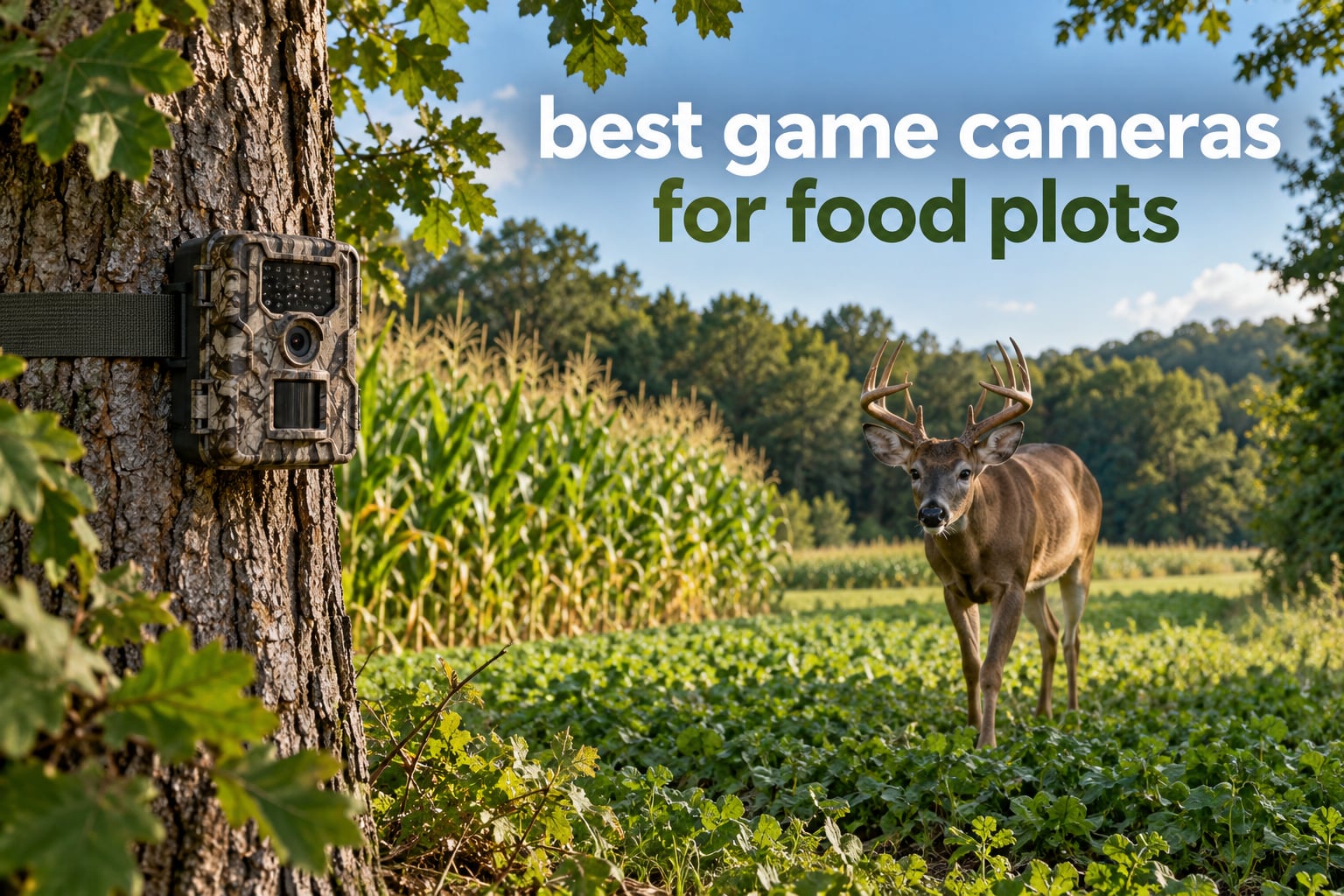
Most trail camera roundups treat a food plot like any other treeline. It is not. A plot is an open bowl that animals enter from predictable directions, often at the same hours, and the camera that works there has to cover a wide approach zone rather than a single corridor. After several weeks of comparing trigger speeds, IR ranges, and power draw on working plots, I pulled together the best game cameras for food plots for 2026, with an emphasis on the specs that actually decide whether a deer shows up in your pictures.
Twelve cameras made the cut, from solar-powered non-cellular units that write to an SD card to cellular models with pan and tilt heads that stream video to your phone. The list is weighted toward cameras you can run for a full season without a monthly fee surprise, because that cost is the number one complaint we found from owners running multiple plots.
Every product below uses only figures from its published specification sheet and owner feedback. There is no affiliate pricing on this page beyond the check buttons, since hardware pricing shifts week to week. Our picks are ordered by what each camera does best at a plot, not by a single spec number.
Methodology note: we compared published trigger speeds, detection and flash ranges, IR wavelengths, power options, and connectivity, then cross-checked each against recurring themes in hunting forum threads. If you want the short version first, our overall pick is the camera in section one.
Table of Contents
Top 3 Picks for Best Game Cameras for Food Plots (October 2026)

GardePro E6 WiFi
- 64MP stills
- 1296P video
- 940nm no-glow IR to 75 ft
- Direct WiFi app link with no monthly fee


All 12 Game Cameras at a Glance in 2026
| Product | Specifications | Action |
|---|---|---|
| GardePro E6 WiFi |
|
Check Latest Price |
| WOSPORTS G600-4K |
|
Check Latest Price |
| WOSODA 2-Pack |
|
Check Latest Price |
 CEYOMUR CY95 Solar CEYOMUR CY95 Solar |
|
Check Latest Price |
 iZEEKER iG200 iZEEKER iG200 |
|
Check Latest Price |
 Moultrie Edge 2 Cellular Moultrie Edge 2 Cellular |
|
Check Latest Price |
 SEHMUA RBX-H10 SEHMUA RBX-H10 |
|
Check Latest Price |
 TACTACAM Reveal X 3.0 TACTACAM Reveal X 3.0 |
|
Check Latest Price |
 Meidase P70 Meidase P70 |
|
Check Latest Price |
 VOOPEAK TC32B-2P VOOPEAK TC32B-2P |
|
Check Latest Price |
 Oculview 2K Cellular Oculview 2K Cellular |
|
Check Latest Price |
 GardePro E5S GardePro E5S |
|
Check Latest Price |
1. GardePro E6 WiFi – Best Overall Game Camera for Food Plots
GardePro E6 WiFi Trail Camera, Stable WiFi with External Antenna
64MP stills
1296P video
940nm no-glow IR to 75 ft
IP66 sealed
2.4 inch screen
Pros
- Direct WiFi link to phone for aiming without pulling the card
- No monthly fee of any kind
- 64MP stills with audible sound
- Compact 10.56 ounce body suits a strap mount
Cons
- App transfers can stall with several large files
- Medium sensitivity triggers on moving leaves
The GardePro E6 is the camera I keep coming back to for plot work because it removes the two things that frustrate people most: subscription fees and card swapping. It connects straight to the GardePro Mobile app over WiFi and Bluetooth at roughly 45 feet, so I can walk the plot edge, aim the lens, and confirm the frame before I leave.
Image output is 64MP stills and 1296P video with sound, which is more detail than most plot shots need but genuinely useful for reading antler size and body condition from a distance. The 940nm array of 36 IR LEDs carries night vision to about 75 feet with no visible red.
Owners consistently rate the E6 as the best combination of image clarity, sealed build and app control at this tier, and 4.9k+ buyers have left feedback. Support has replaced units that stopped recording after extended heat, so summer plot placement is not as risky as it once was.
My one caution is the app itself. Pulling a batch of 64MP clips can take longer than expected, and on medium sensitivity the PIR picks up wind in the tall forage edge. Dial sensitivity down one notch and keep the lens pointed at the open lane rather than the vegetation.
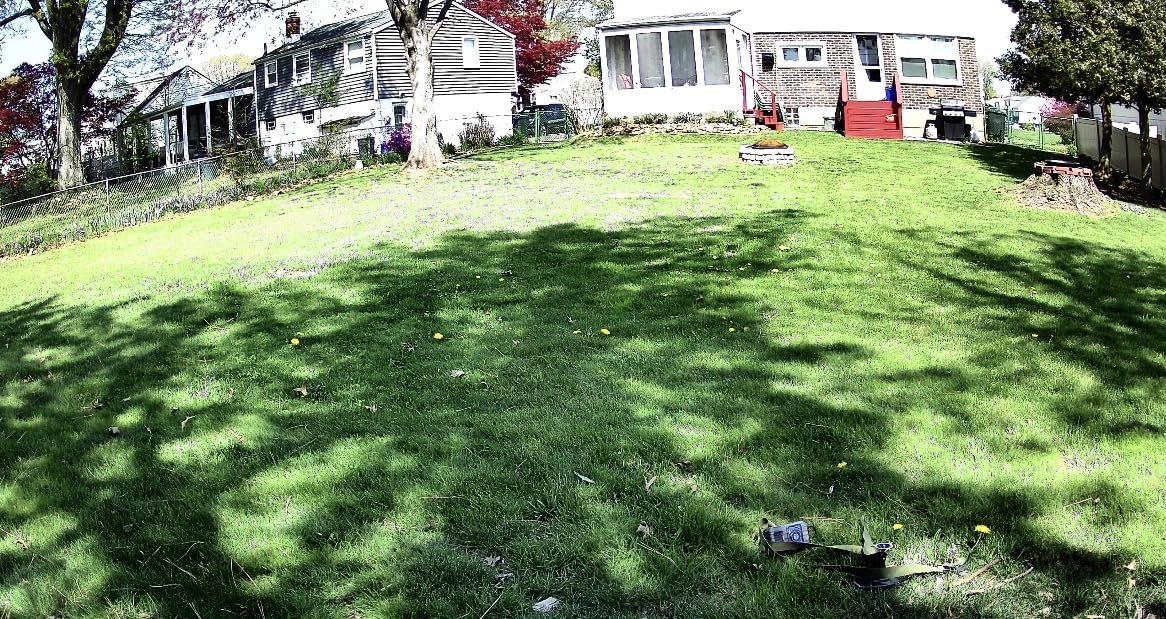
Why it works at an open plot
A food plot gives you a clear sightline, and this camera makes the most of it. The app link means you set the framing once at install instead of guessing and returning with a card reader.
Sealing is IP66, which handles a full season of rain and corn-field humidity without a housing.
Where it falls short
Seventy-five feet of night range is short compared with several cameras here that reach 100 feet. On a wide plot with a long approach, position the camera closer to where deer break cover rather than at the far edge.
There is also no cellular transmission, so if you manage plots far from a road you will still visit each one to swap cards.
2. WOSPORTS G600-4K – Best for Catching Running Deer
WOSPORTS Trail Camera(Non-Cellular Non-WiFi) 64MP 4K 0.2S Trigger Motion Activated,Game Camera with No-Glow Night Vision 2.0”LCD 120°Wide for Outdoor Scouting Wildlife Monitoring Home Security
64MP stills
4K video
0.2s trigger
120 degree view
80 ft no-glow IR
Pros
- 0.2s trigger with 1 to 3 shot burst
- 120 degree detection suits open approaches
- On-screen preview makes aiming fast
- Reported multi-season lithium battery life
Cons
- Battery holder needs a flathead screwdriver
- Settings reset after cells are recharged
The WOSPORTS G600-4K is the trigger-speed pick of this list. At 0.2 seconds it fires before a bounding buck has cleared the tree line, and the 1 to 3 shot burst gives you a sequence rather than one lucky frame.
The 120 degree view is wider than most of the cellular models here, which matters when deer approach a plot from the side instead of straight on. Night vision runs about 80 feet on a 32-LED 940nm array, and stills go up to 64MP with adjustable lower settings to save card space.
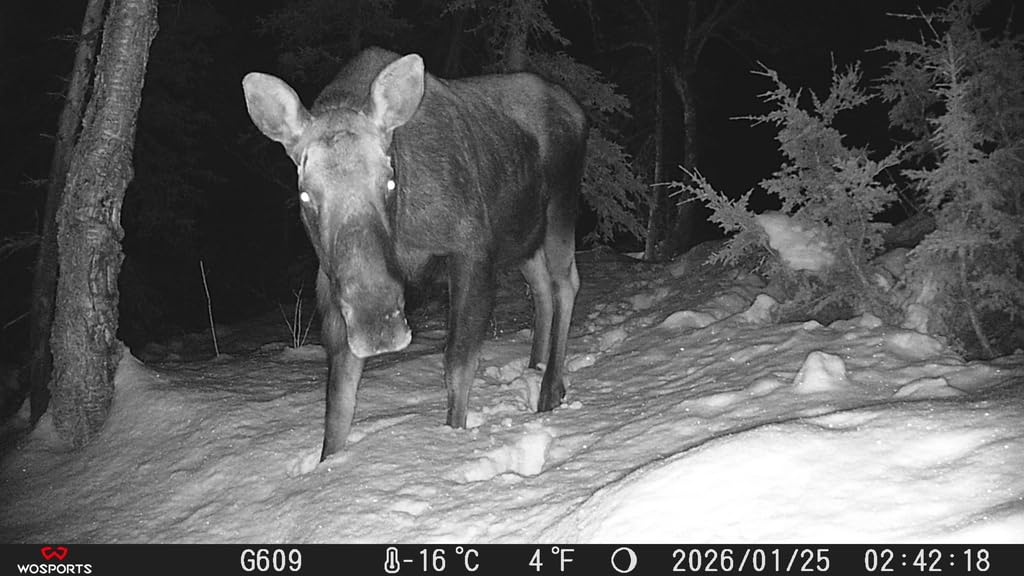
Owners treat this as the dependable budget scout, and 3.1k+ reviews back that up. Several report running lithium AA cells for a full year of intermittent triggering, which is the behaviour you want when the nearest truck is a long walk away.
The two practical friction points are the sealed battery compartment and the memory. The holder is tight enough to need a screwdriver, and settings do not always survive a cell change, so expect to fine-tune after each deployment.
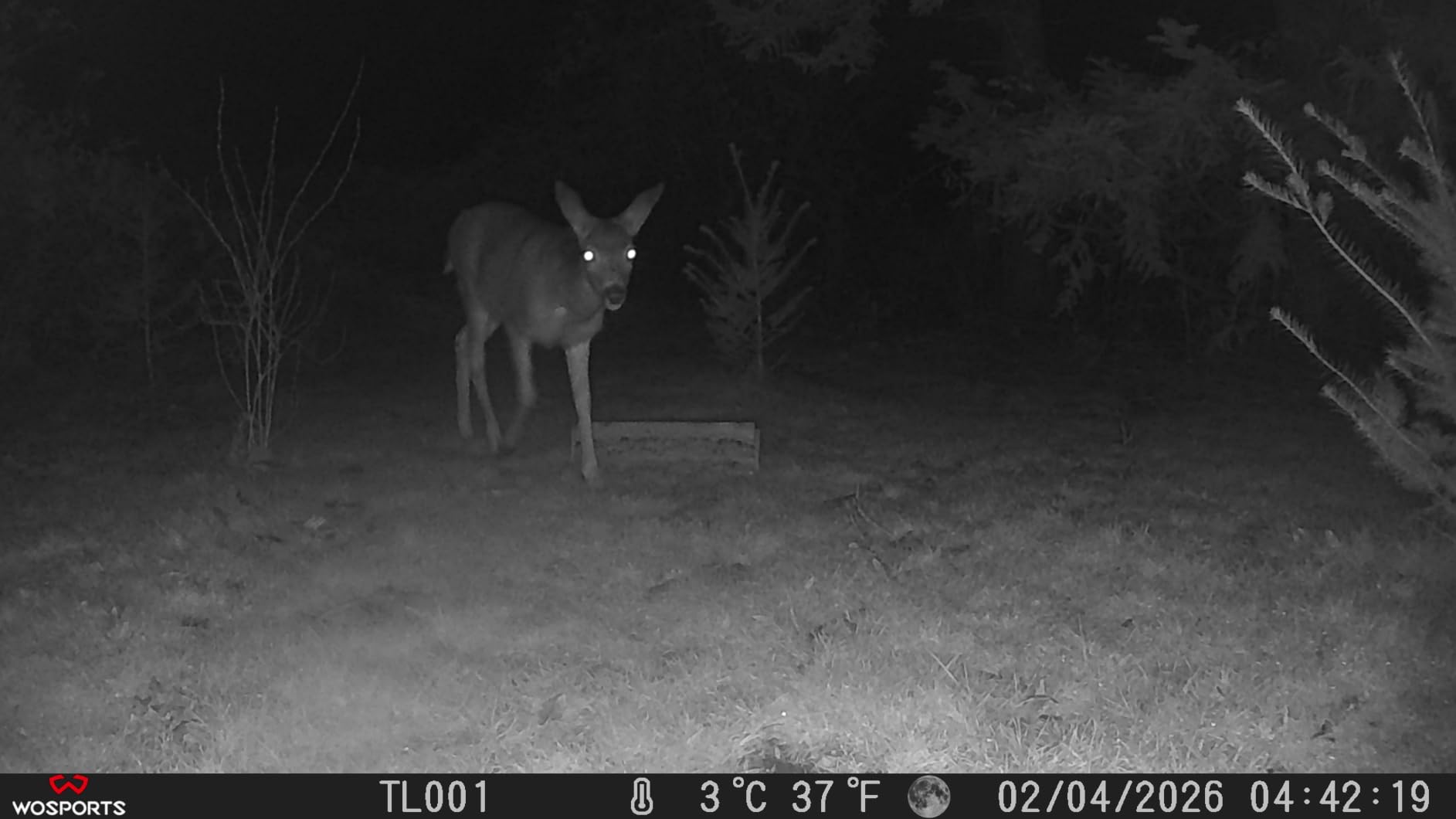
Why it works at an open plot
Speed plus a wide field of view is the pairing open ground demands. Buck that hit the plot at a trot rarely present a second chance, and this body catches them mid-stride.
A 2 inch color screen on the back lets you confirm framing without removing the card, which saves a second trip.
Where it falls short
Night images soften past close range, so this is not the camera to pick if you plan to identify deer from across a large clearing.
Mounting straps are basic and have no locking buckle. On a windy plot, a camo strap with a real buckle is worth the small upgrade.
3. WOSODA 2-Pack – Best Two-Pack for Covering Multiple Approaches
WOSODA 2 Pack Trail Cameras with Night Vision Motion Activated Waterproof,48MP Hunting Game Camera,1080P HD Trail Cam for Wildlife Monitoring,Outdoor Scouting & Security(Non-Cellular Non-WiFi)
Two camo cameras
48MP stills
1080P video
60 ft detection
IP65 sealed
Pros
- Two cameras in one box for entry and exit points
- Reliable on small targets like squirrels and mice
- Slide-out battery tray services fast
- Time-stamp scheduling for timed scouting blocks
Cons
- Vegetation in the near field drives false triggers
- 0.3s shutter blurs fast movers
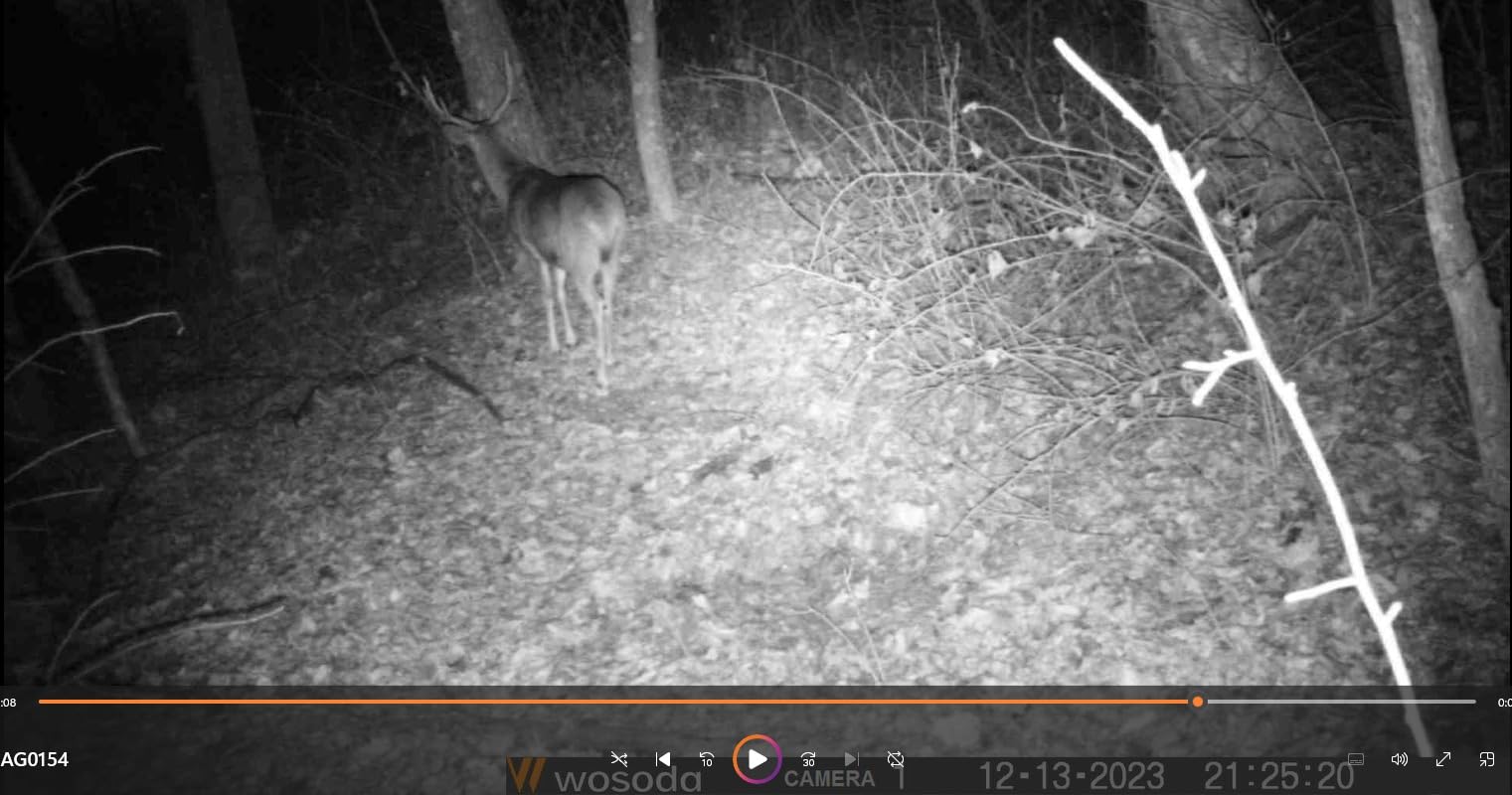
Most hunters reach a food plot from two directions, and the WOSODA pack ships two cameras so you can cover both without a second order. One camera on the entry lane, one on the exit, and the time-lapse metadata tells you which side the deer favour.
Stills reach 48MP with 1080P video, and detection holds at 60 feet. The IR array is 850nm low-glow rather than 940nm, which produces slightly better low-light detail but with a faint red emitter that cautious deer can pick up under close conditions.
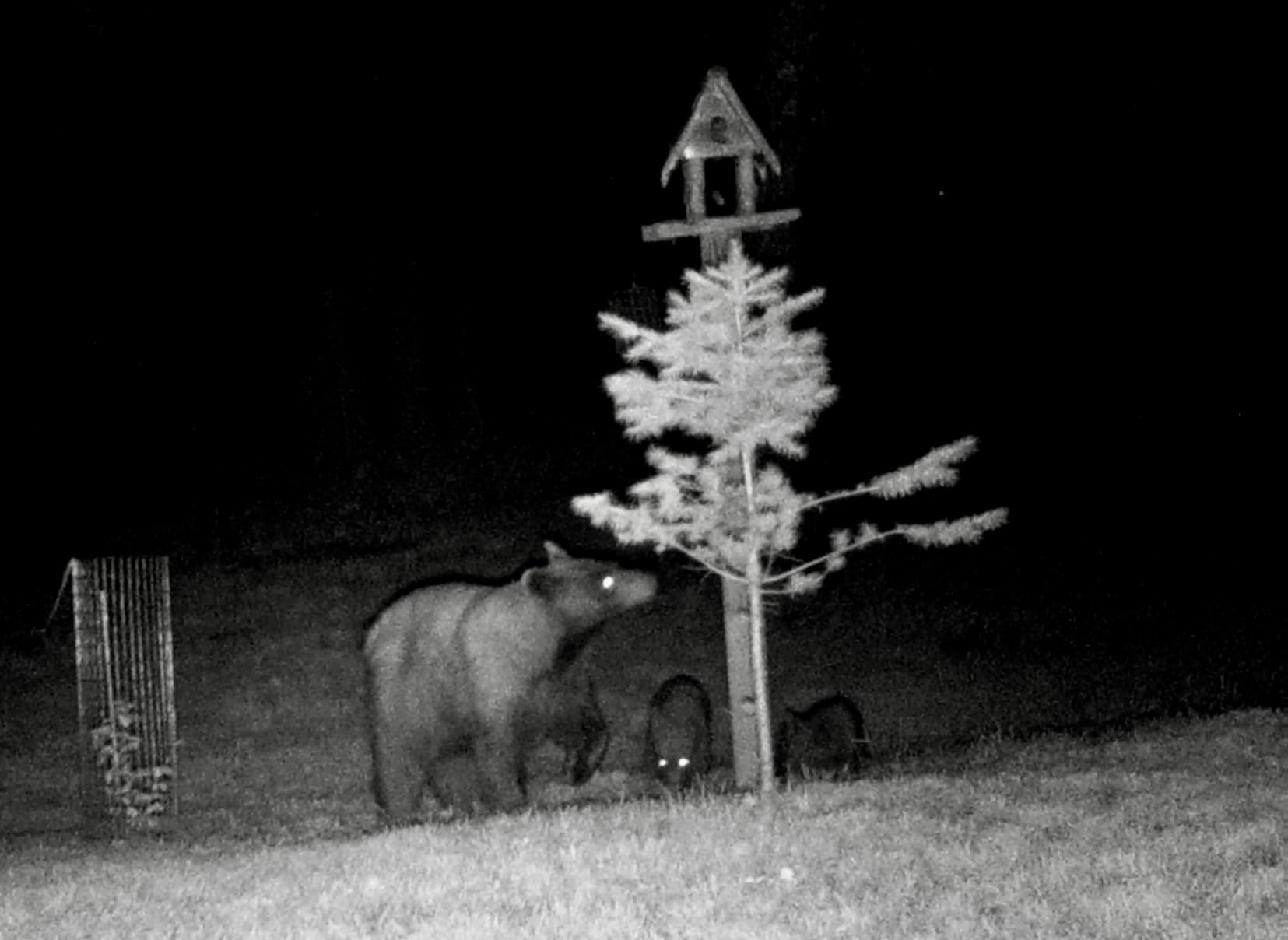
Owners rate the pair highly for entry-point scouting, and 2.8k+ reviews reflect steady satisfaction. One manufacturer replacement of a unit with a frozen processor shows the warranty side works, and the slide-out tray makes battery swaps in the field quick.
The catch is behaviour near cover. Grass and weed growth at the plot edge triggers the sensor often, and the 0.3s shutter blurs anything moving quickly through the frame. Aim down the lane, not across the seedbed.
Why it works at an open plot
Two cameras in one box is an efficient way to double your plot data. You learn the approach pattern in a season instead of guessing at it.
Time-stamp, timer and time-switch modes let you run silent overnight blocks and save daytime card space.
Where it falls short
Some earlier production runs produced noisy video and corrupt files, and a factory reset is needed after the card fills completely. Current units fare better, but keep a spare card.
The included stand is flimsy. Strap both cameras to a rigid post or tree and let the housing do the work.
4. CEYOMUR CY95 – Best Solar-Powered Camera for a Remote Plot
CEYOMUR 4K 68MP Solar WiFi Trail Camera, Game Camera with 32GB TF Card
Top solar panel with 5200mAh battery
68MP stills
4K video
0.1s trigger
IP66
Pros
- Solar panel and large internal battery cut battery swaps
- 0.1s trigger with three PIR sensors
- 32GB card included so it works out of the box
- Two-year manufacturer warranty
Cons
- No off-site viewing
- app range limited to about 33 feet
- Only two IR LEDs limits night reach
When a plot sits far from a vehicle, the CEYOMUR CY95 removes the biggest recurring chore: batteries. The panel sits on the top shell above a 5200mAh internal battery, with four AA cells as backup, so the camera runs on sunlight and only asks for hands-on attention in a long grey stretch.
Trigger response is 0.1 seconds across three PIR sensors covering a 120 degree zone, and it records 68MP stills with 4K video at 30fps. A 32GB card is pre-installed, so there is nothing to buy before deployment.
Night performance is the trade-off. Two 850nm IR LEDs cover roughly 20 meters, which is less reach than the 36-LED arrays on the budget units in this list. On a large plot, put the camera closer to the lane.
Why it works at an open plot
Solar power changes the economics of a remote plot. You stop budgeting battery swaps and stop treating the site as a place you must visit every few weeks.
With 2.3k+ owner reviews, the recurring theme is resolution per dollar and set-and-forget power rather than image tuning.
Where it falls short
The WiFi feature is a phone hotspot at roughly 33 feet, not remote viewing. It is an aiming tool, not a monitoring tool, and buyers sometimes expect more from the name.
With only two IR LEDs, night images fall off faster than a 36-LED unit. Plan mounting distance accordingly.
5. iZEEKER iG200 – Budget Pick for Covering a Second Plot
iZEEKER Trail Camera, HD Game Camera with 940nm No Glow Night Vision Motion Activated 0.2s Trigger Time, Hunting Camera No WiFi, IP66 Waterproof for Wildlife Monitoring Outdoor Security Deer Scouting
32MP stills
2K video
0.2s trigger
36 no-glow IR LEDs
IP66 sealed
Pros
- Lowest entry cost in this roundup with a 0.2s trigger
- Clamshell body clears lens condensation easily
- Front LCD and lens make field aiming simple
- Loop recording overwrites old files automatically
Cons
- Batteries and SD card are not included
- 90 degree view is narrow for open plots
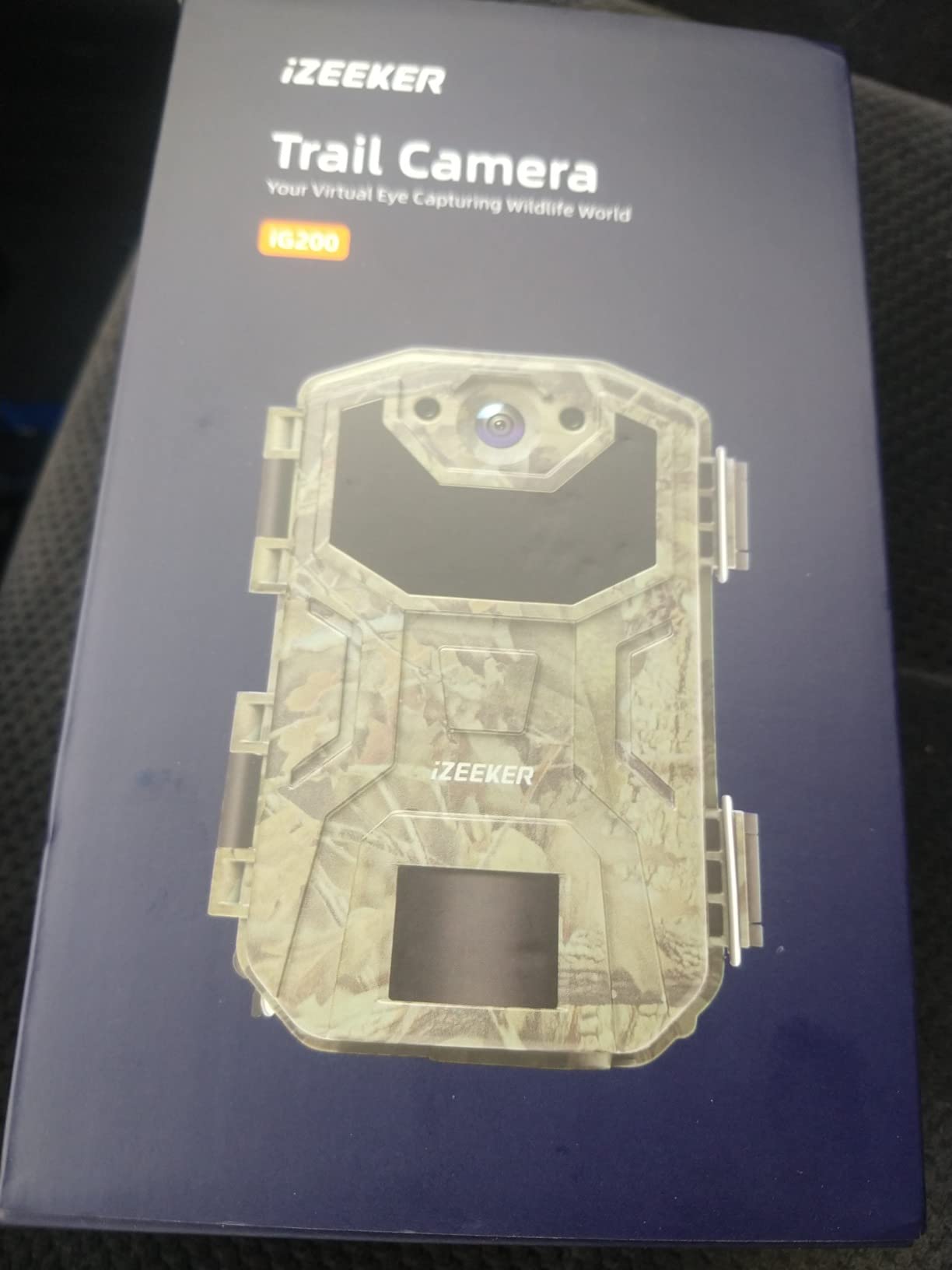
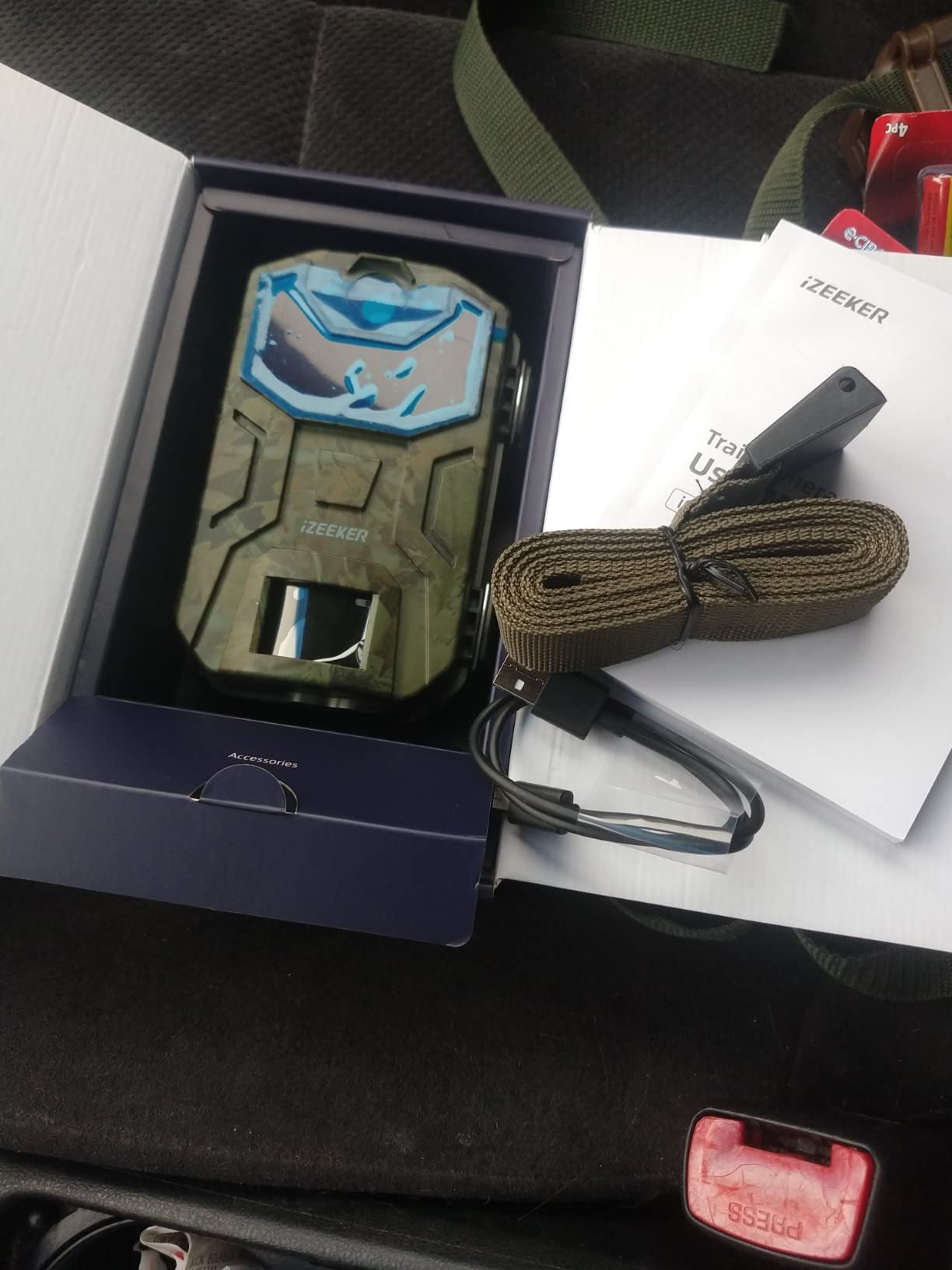
The iZEEKER iG200 exists to answer one question: how little does it cost to put a second camera on a satellite plot. It answers with a 0.2s trigger, 3-shot burst, 32MP stills and 2K video in an IP66 clamshell body.
The clamshell design is the part I like most. Opening the front lets you wipe condensation off the lens and adjust the angle without unmounting, and the bottom-opening battery case keeps the strap in place.
Owners rate it as a capable budget unit with thoughtful field ergonomics, and 1.9k+ reviews back that read. The full-size SD slot sits on the side where you can reach it, and loop recording means a full card never stops the camera.
Budget means you supply eight batteries and a card yourself, which erodes the saving if you have to buy both. A 90 degree view is also the narrowest here, so this one belongs at a feeder or a small plot rather than a wide opening.
Why it works at an open plot
For a small plot, a mineral site, or a back yard baited pile, it does everything needed at the lowest outlay here. The no-glow array avoids spooking deer that have seen a red emitter.
Password protection and time-lapse settings give it a feature set above its tier.
Where it falls short
Real still resolution runs below the headline figure the listing implies, so do not expect fine detail from a buck at range.
Wired-only design means files move manually. Budget the card, batteries and the drive time together.
6. Moultrie Edge 2 – Best Cellular Camera for Plot Scouting
Moultrie Edge 2 Cellular Trail Camera 2-Pack – 36MP, Low-Glow Flash
Multi-carrier 4G LTE
36MP stills
1080P video
100 ft detection
8GB internal memory
Pros
- Auto Connect multi-carrier LTE removes SIM swapping
- Internal 8GB memory needs no SD card
- 100 ft detection with low-glow IR flash
- App includes activity charting and property maps
Cons
- Data plan subscription is an ongoing cost
- 50 degree viewing angle is narrow
The Moultrie Edge 2 is the cellular pick for a plot you cannot visit weekly. Auto Connect binds to multiple major networks and picks the stronger one automatically, which is the practical answer to the weak-coverage complaint we see most often in hunting forums.
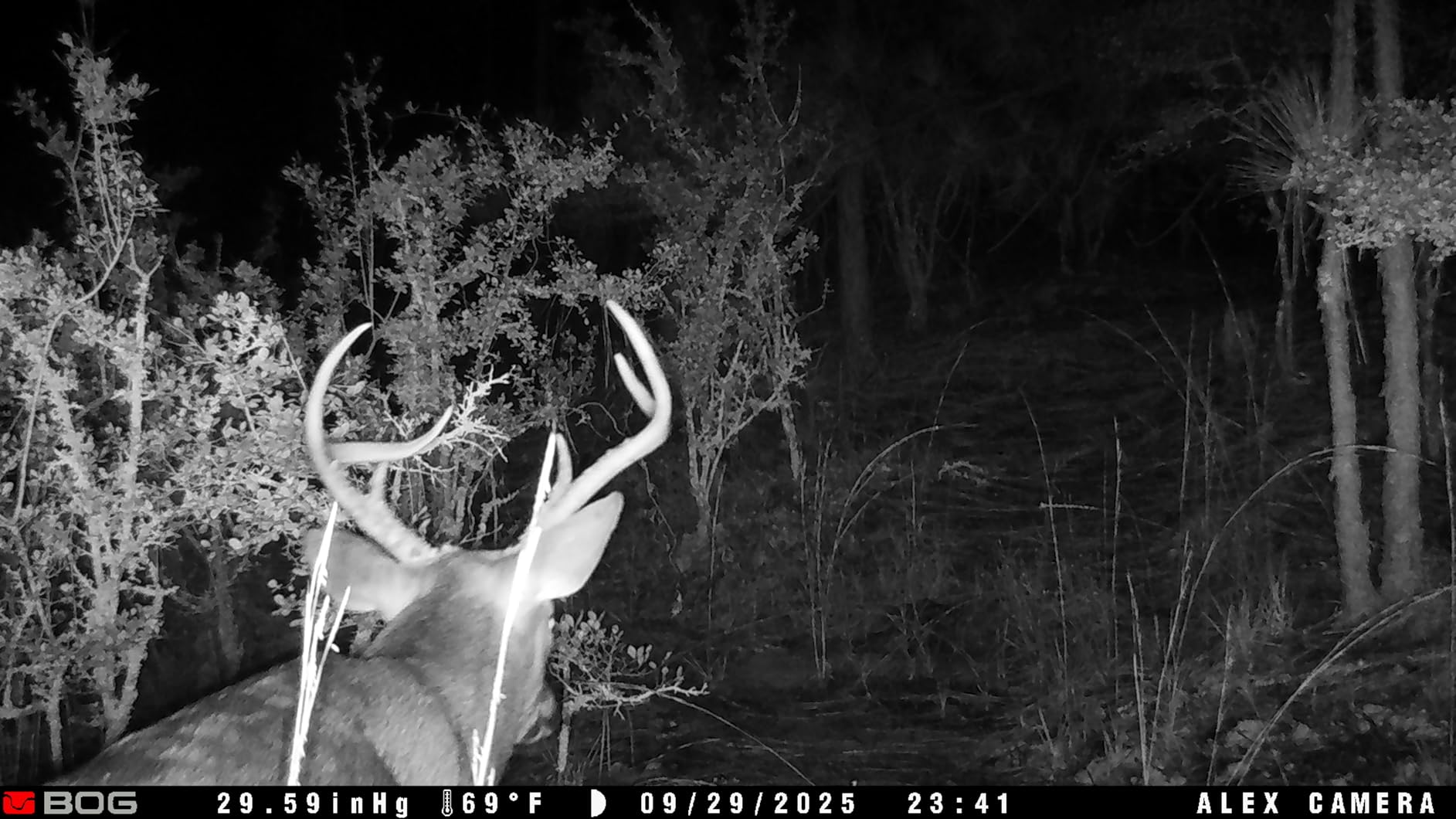
Detection reaches 100 feet, further than any other camera on this list, and the flash performs well across an open lane. Images come back as 36MP stills and 1080P video with audio, stored on 8GB of internal memory with cloud backup in the app.
The trade is the 50 degree viewing angle. That narrow field means placement matters more than with the wide budget units, so mount it facing a corridor rather than the centre of the plot. The required data plan is a recurring cost that compounds when you run four cameras.
Owners trust the multi-carrier reliability and the scouting tools, and 1.1k+ reviews support that. Two years of warranty from activation is longer than most rivals offer, and support is US-based with no third-party plan purchase needed.
Power accessories are sold separately, so solar or extended battery setups are an extra line item. Feature-rich app, narrower lens, that is the trade.
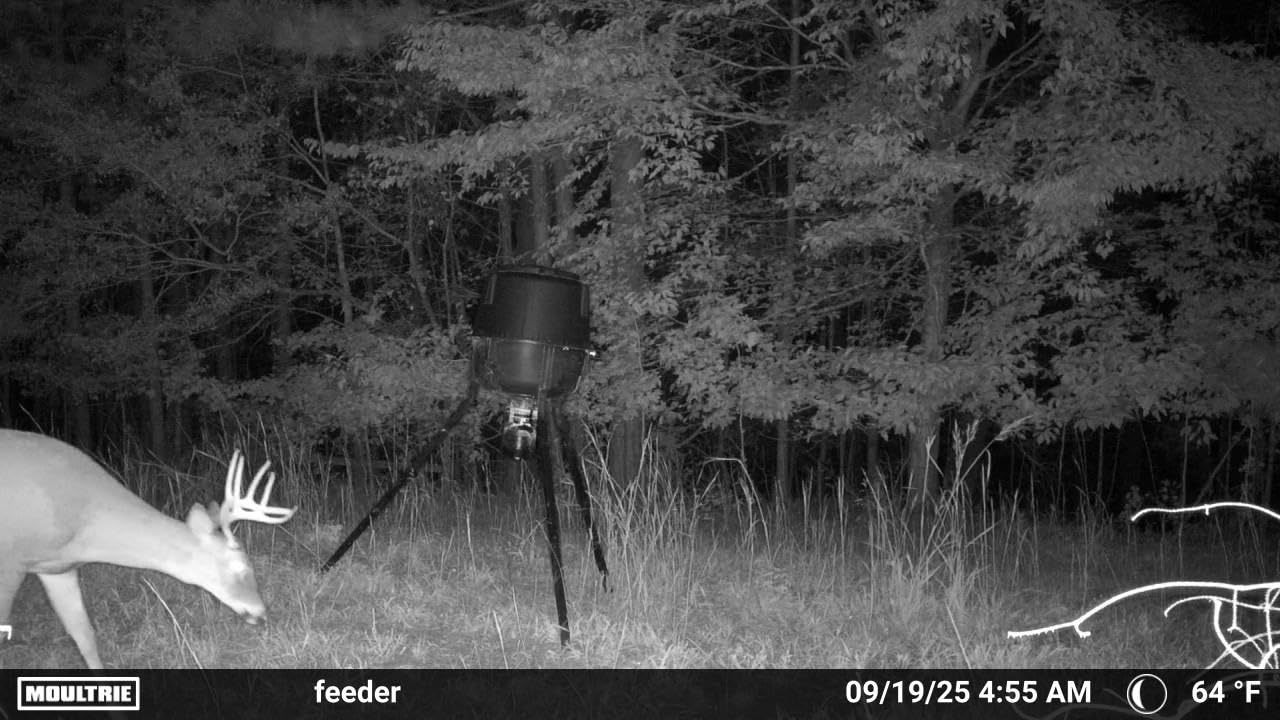
Why it works at an open plot
100 feet of detection means one camera covers a bigger bowl than most, and you see arrivals while you sit at the stand instead of a day later.
Activity charting in the app turns a season of pictures into a time-of-day pattern you can plan around.
Where it falls short
The narrow angle is the issue. On a plot with several approach vectors, this camera sees one lane well and the rest not at all.
Owners on absentee land note the recurring plan fee adds up across multiple properties, which is worth calculating before scaling up.
7. SEHMUA RBX-H10 – Best for AI Species Identification
SEHMUA Trail Camera, 2K HD Live Streaming Game Camera AI Animal Detection
Cellular 2K live stream
4W solar panel
7800mAh battery
0.2s trigger
IP66
Pros
- Cellular live viewing at a low hardware cost
- Solar panel and large battery suit year-round deployment
- AI species identification and activity prediction
- Two-way audio for remote checks
Cons
- Data plan required after the trial
- Cloud storage and AI detection need subscriptions
The SEHMUA RBX-H10 does something few cameras in this price tier do: live 2K streaming over 4G LTE with a built-in prepaid SIM. You can sit at the office and pan across the plot while checking whether the broadcast is pulling deer in.
Power is handled by a 4W solar panel over a 7800mAh battery, and detection covers a 120 degree zone with a 0.2s trigger and about 82 feet of 850nm low-glow night range. Two-way audio lets you listen in, which is more useful than it sounds for confirming a quiet arrival.
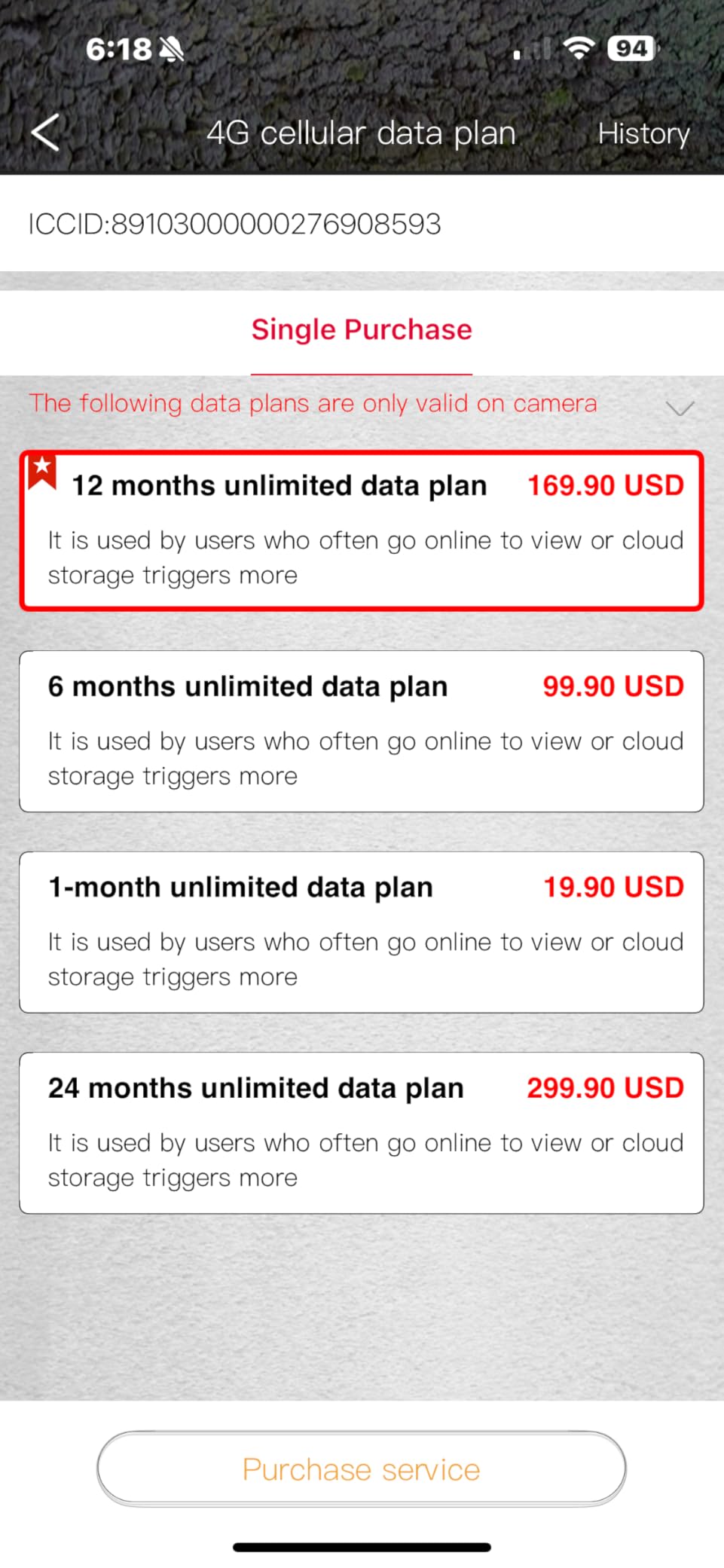
The catch is layered extras. The 7-day data trial ends into a subscription, and cloud storage plus AI recognition are also paid, so the true season cost sits above the hardware price.
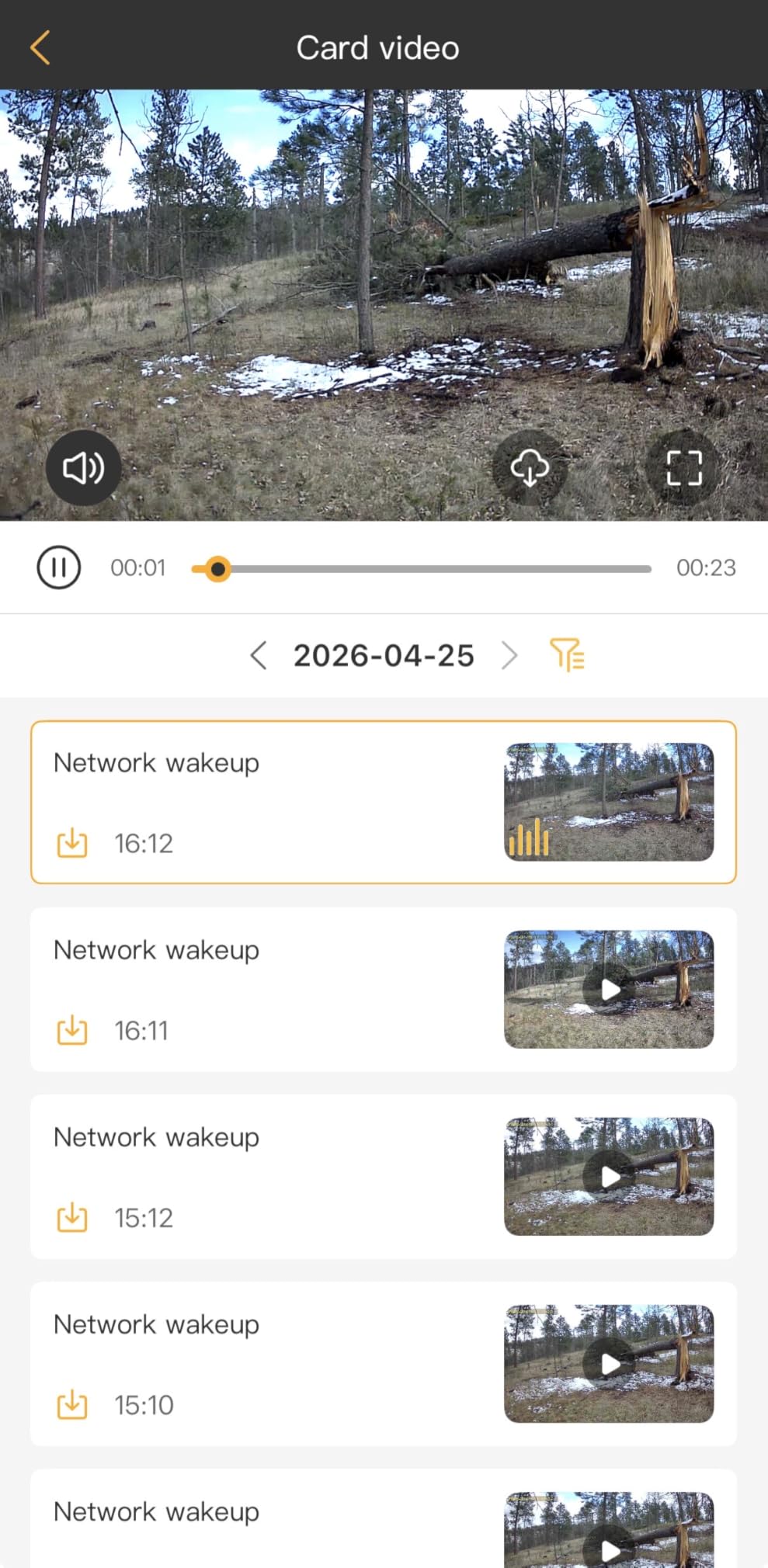
Owners are impressed that cellular streaming and solar power coexist at this outlay, and 1.3k+ reviews reflect that. Buyers who expected a fully included service are the ones who rate it lowest.
Read the subscription terms before mounting, especially if you plan three cameras.
Why it works at an open plot
Live view lets you confirm a plot is working before opening day rather than in December. Solar power removes the battery schedule.
The 120 degree coverage suits a plot entered from a wide front.
Where it falls short
The SIM is non-detachable and intended for US local use, which limits travel between distant properties.
Low-glow IR emits faint red. On pressured plot deer that have been shot at, a no-glow unit is the safer choice.
8. TACTACAM Reveal X 3.0 – Best for Battery Life at Remote Sites
TACTACAM Reveal X 3.0 Cellular Trail Camera, Night Vision, Waterproof
Auto-Connect multi-carrier LTE
6+ month battery per charge
Built-in GPS
IP66 sealed
Pros
- Up to six months of battery per charge reported by owners
- Auto-Connect LTE picks the strongest carrier
- Built-in storage means no SD card
- Setup live in about ten minutes
Cons
- Cellular plan is an ongoing cost
- 60 degree field of view
- Power accessories sold separately
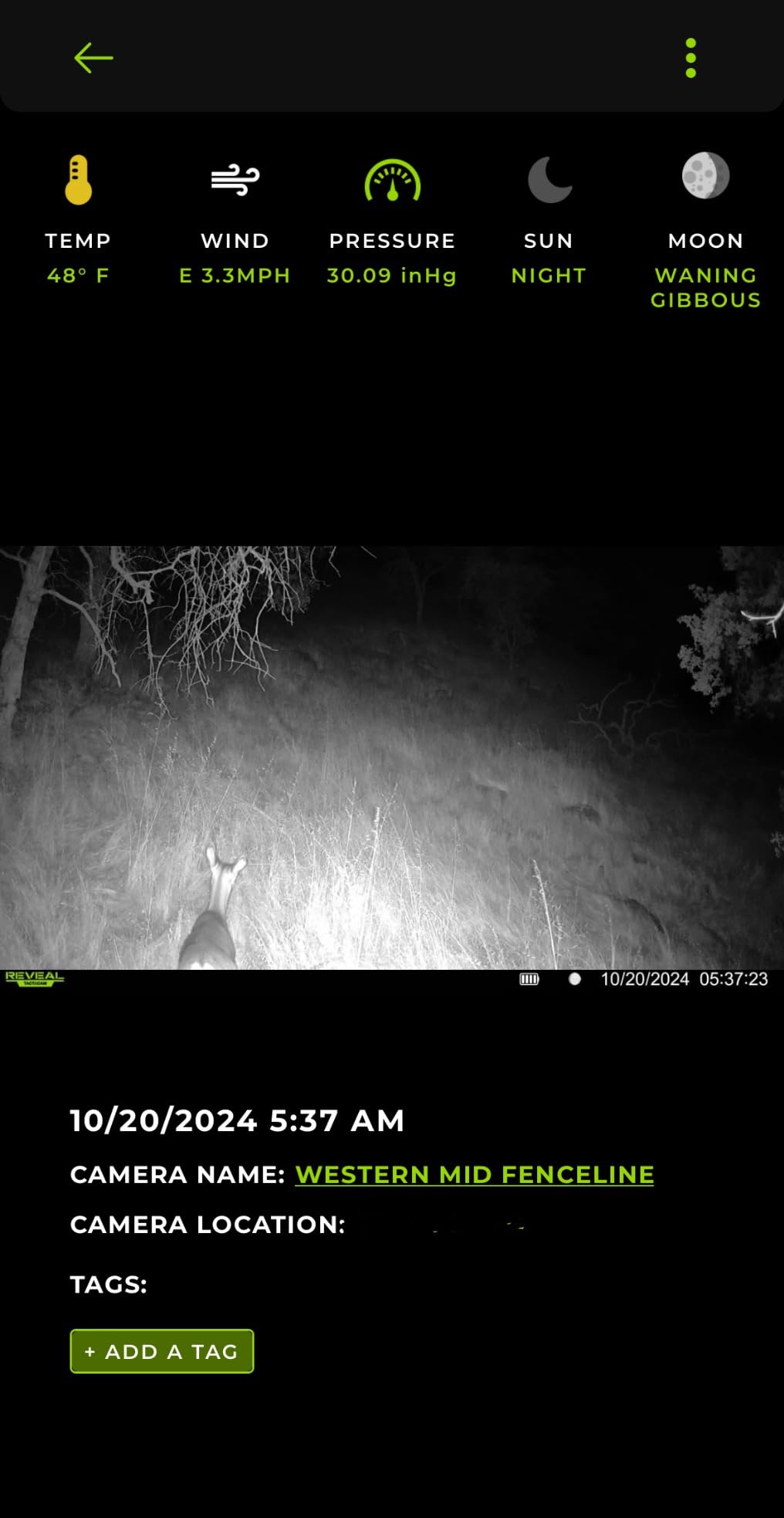
Battery life is where the TACTACAM Reveal X 3.0 separates itself from the cellular pack. Owners report up to six months per charge, and that figure comes from people running them through a full season rather than a lab test.
Auto-Connect multi-carrier LTE runs across AT&T and Verizon and selects the stronger signal without SIM swapping, which solves the dead-zone problem on remote land. Built-in GPS and onboard storage mean no card to buy, format, or lose.
The 60 degree view asks more of your placement than a 120 degree body would, and the sub-half-second trigger with 3-shot burst catches moving game well. The antenna and SIM come pre-installed and pre-activated, so setup is close to ten minutes.
Hunters describe it as a set-and-forget property and scouting camera, and 947 reviews reflect that consistency. The pre-installed hardware removes the most common early frustration with cellular models.
Battery, solar and strap accessories are separate purchases. If you plan to run more than two, budget those in from the start.
Why it works at an open plot
Six-month battery life means one visit per half year for a remote plot, which is the difference between a camera you can run and one you avoid.
GPS tagging helps when you manage scattered parcels and need to confirm which property a photo came from.
Where it falls short
The narrow field of view concentrates your one mounting position. Test the framing before you leave.
The recurring plan cost still applies, and with a narrow lens you may find yourself wanting a second camera for the opposite approach.
9. Meidase P70 – Best No-Glow Night Vision
Meidase P70 (Non-Cellular,Non-WiFi) Trail Camera, 64MP 1296p, Game Cameras with No-Glow IR Night Vision, Motion Activated, Waterproof for Wildlife Deer Cams, Hunting
64MP stills
1296p video
0.1s trigger
100 ft 940nm no-glow IR
2.4 inch display
Pros
- Sharp 64MP stills and 1296p video through an f1.6 lens
- 0.1s trigger with side motion sensors
- 100 ft no-glow 940nm night vision
- Build has survived bear and raccoon attacks
Cons
- SD card and batteries sold separately
- Night video trigger distance limited to about 15 feet
The Meidase P70 is the camera to pick when deer have been pressured at your plot. Its 940nm no-glow array shows no red emitter, and 36 IR LEDs carry night vision to 100 feet, which is the longest reach among the non-cellular units here.
Still quality is 64MP with 1296p video through an f1.6 lens, and the 0.1s trigger uses side sensors so a buck walking past rather than straight on still registers. Owners running several units rate the picture and sound above larger-name-brand cameras.
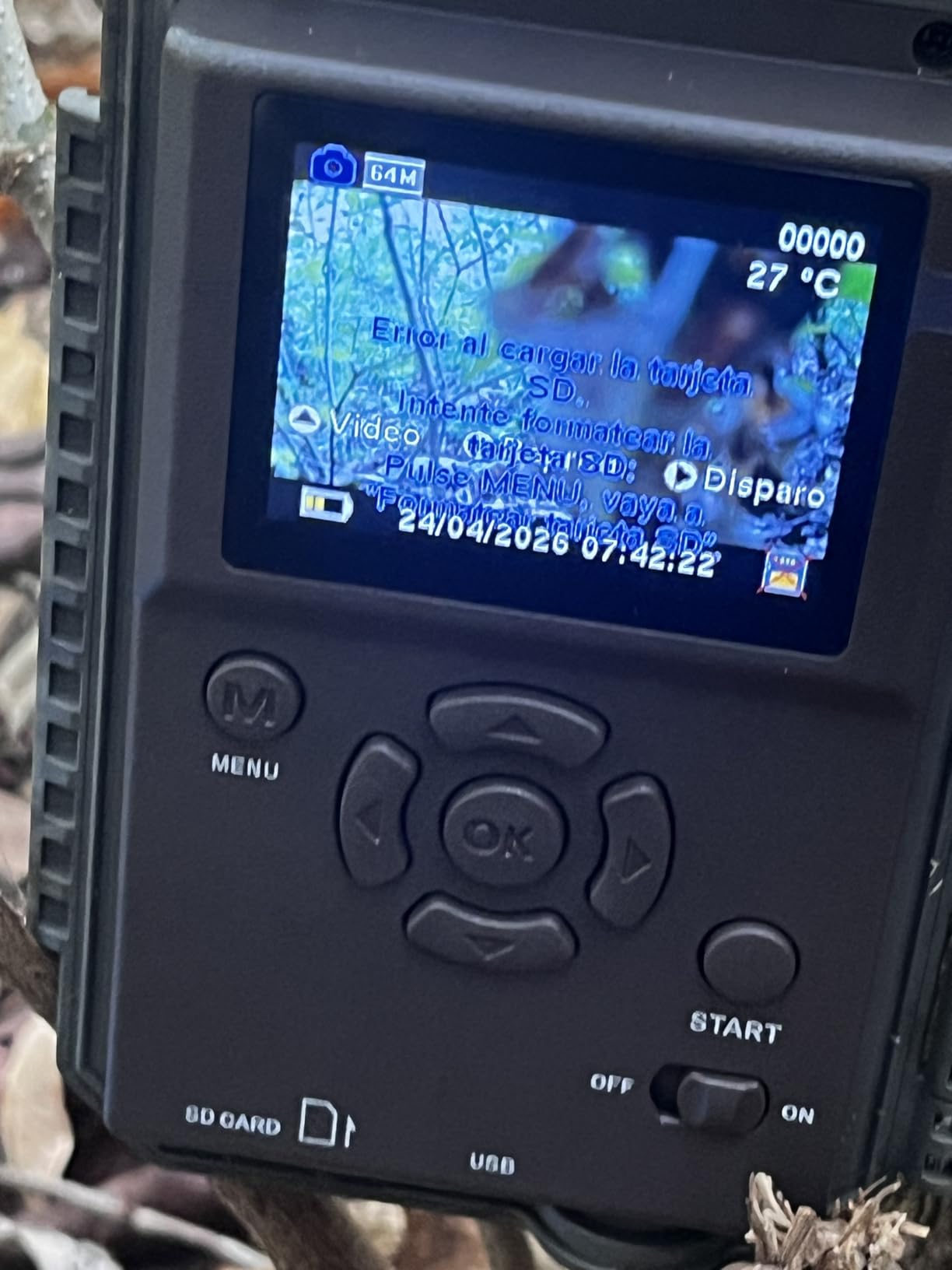
Support has been responsive with replacements, and the housing has held up to real wildlife impacts. About 800 reviews back the picture-quality read.
Two things to plan for: the SD card and eight AA batteries are extra, and night video triggering is limited to roughly 15 feet even though photo detection reaches further.
Why it works at an open plot
No-glow matters when the herd is educated. A visible emitter at a heavily travelled plot will cost you frames over a season.
The wide menu of settings lets you tune around the plot edge so tall forage stops filling the card with empty frames.
Where it falls short
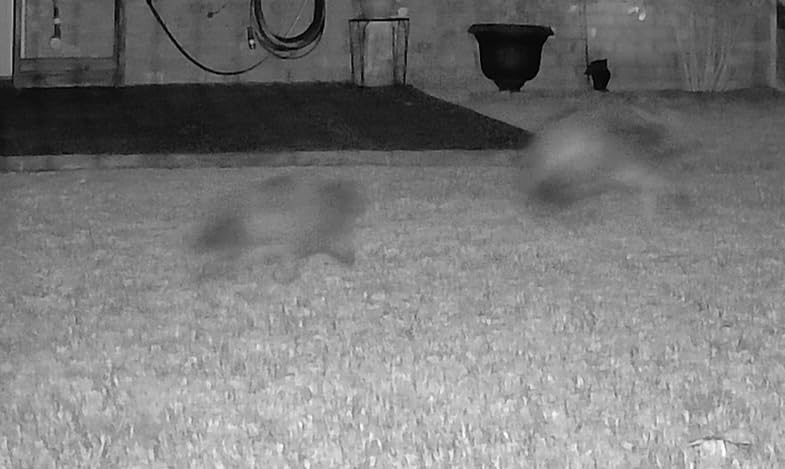
Nighttime shutter speed can blur fast action, so moving deer after dark look softer than daytime subjects.
Use lithium cells rather than rechargeables; owners report a clear difference in cold weather.
10. VOOPEAK TC32B-2P – Best 360 Degree Coverage for Open Ground
VOOPEAK Trail Camera, 4G LTE Cellular Game Cameras with 360° Live Streaming
355 degree pan and 100 degree tilt
2.5K live stream over 4G LTE
4W solar panel
IP68 housing
Pros
- 355 degree pan covers deer arriving from any direction
- Solar panel and 7800mAh battery hold through cold
- IP68 housing rated from -40F to 140F
- Two-camera pack
Cons
- Night range limited to about 65 feet
- Manual is hard to read and the on switch is awkward
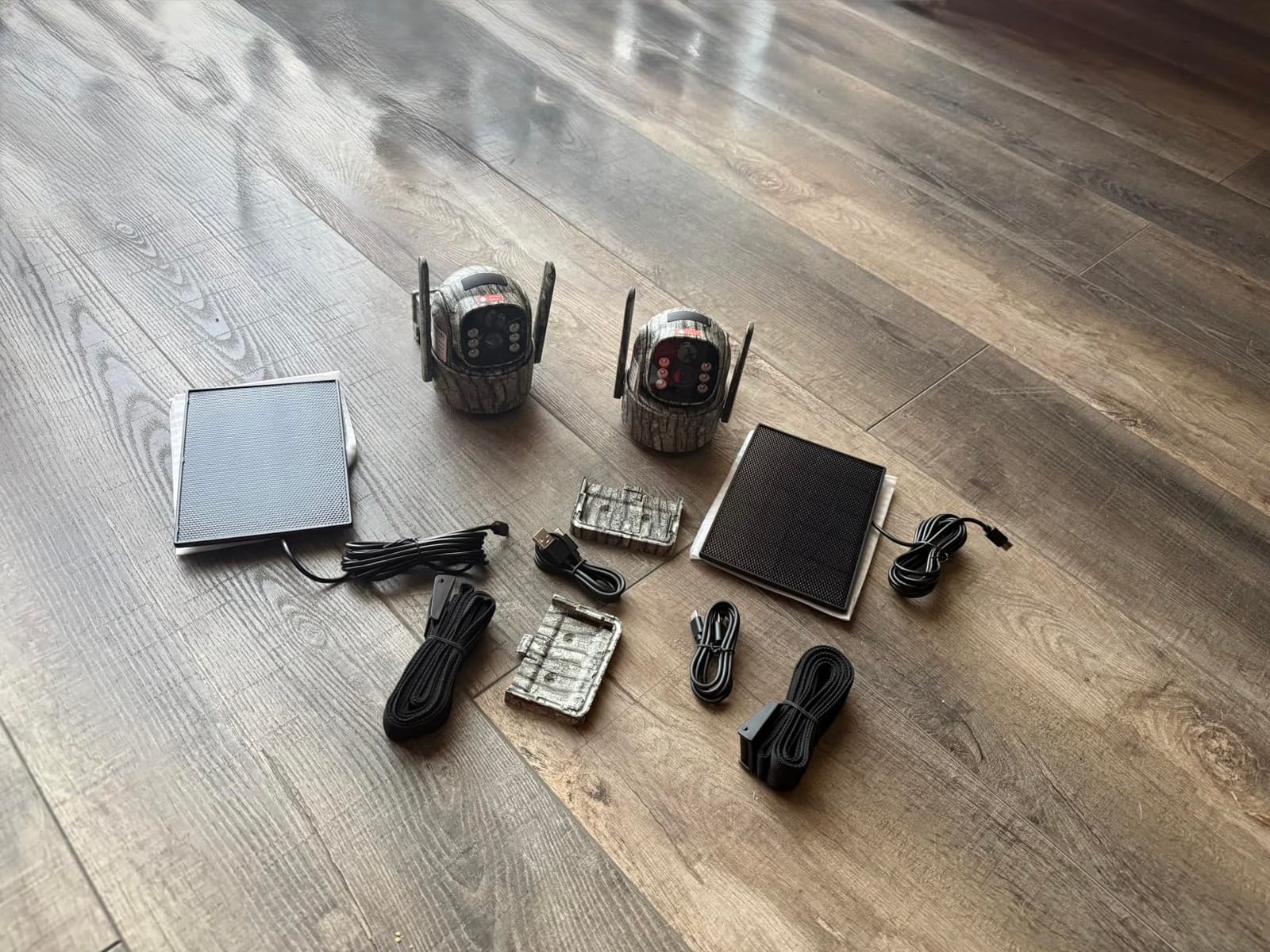
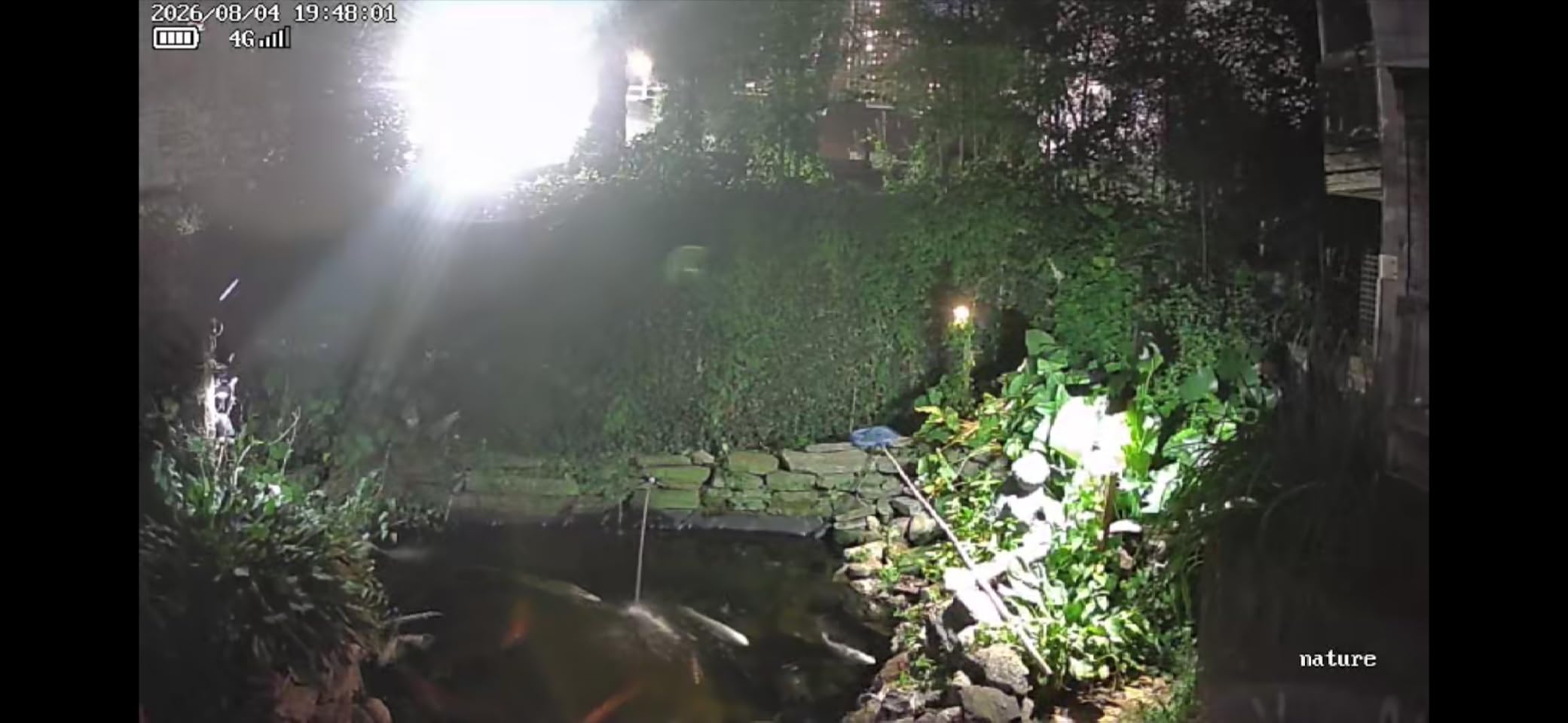
Open plots reward pan and tilt heads because animals arrive from more than one direction. The VOOPEAK sweeps 355 degrees horizontally with 100 degrees of tilt and 4x digital zoom, so one unit covers a plot that would otherwise need two fixed-lens cameras.
Streaming is 2.5K over 4G LTE with remote control, backed by a 4W solar panel and 7800mAh battery rated for up to twelve months per charge. The IP68 housing works from -40F to 140F, which is a wide operating window for a northern season.
What you give up is night reach. Six IR LEDs cover roughly 65 feet at best, night footage is monochrome, and fish-eye distortion appears when direct sun hits the lens.
Owners see it as a capable inexpensive pan-tilt camera with strong solar endurance, and 421 reviews support that. Filtering is weak, so people and pets trigger it as often as deer.
The included data allowance is small, and both the SD card and any extended plan are extra.
Why it works at an open plot
Coverage geometry is the whole point here. A fixed-lens camera at a plot corner misses half the bowl; a pan head does not.
Custom motion zones let you keep an eye on the broadcast and funnel simultaneously in one view.
Where it falls short
Monochrome night footage at 65 feet will not identify a buck from across a wide clearing. Position near the entry lane.
The manual is difficult to follow, so budget an evening with the app before you drive out to a remote site.
11. Oculview 2K Cellular – Best for Long-Range Night Illumination
Oculview 4G LTE Cellular Trail Cameras, 360° 2K Live Streaming Game Camera, SIM Card Included, Low-Glow Night Vision, Solar Powered, Instant Alerts, Two Storage Ways, No WiFi Needed for Hunting&Trail
2K live stream
336 degree pan and 90 degree tilt
850nm IR to 100 ft with spotlight
6W solar panel
Pros
- 2K live stream and control with no WiFi needed
- Pan tilt and 4x zoom cover a large plot
- 6W solar panel sustains operation on short daily sun
- Works on major US carriers in fringe areas
Cons
- Subscription costs for data and cloud storage
- SD card not included
- Setup steps take working out
The Oculview pairs a 336 degree pan with 850nm infrared that reaches up to 100 feet when the built-in spotlight is enabled, giving it the longest usable night throw of the pan-and-tilt models here. Trigger speed is 0.2 seconds across a 120 degree PIR zone.
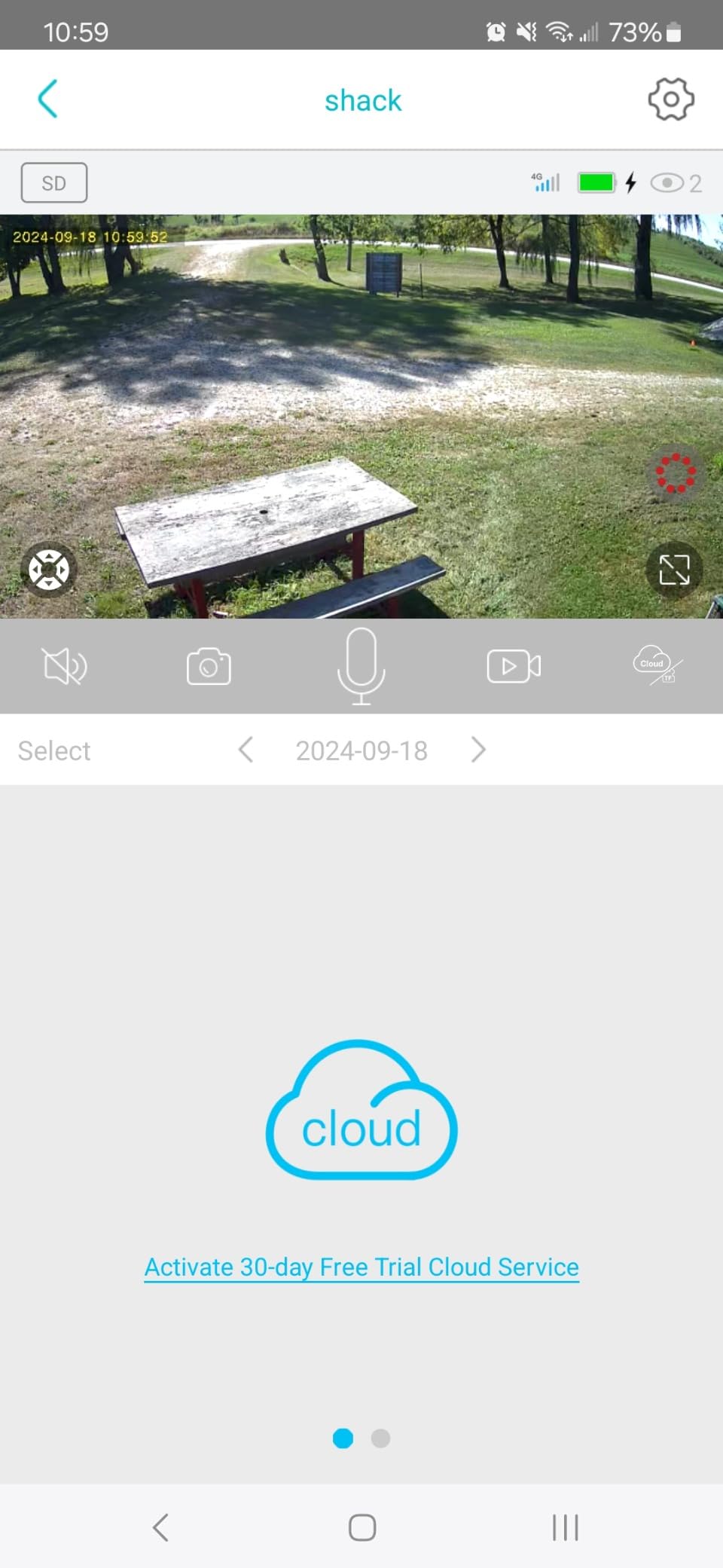
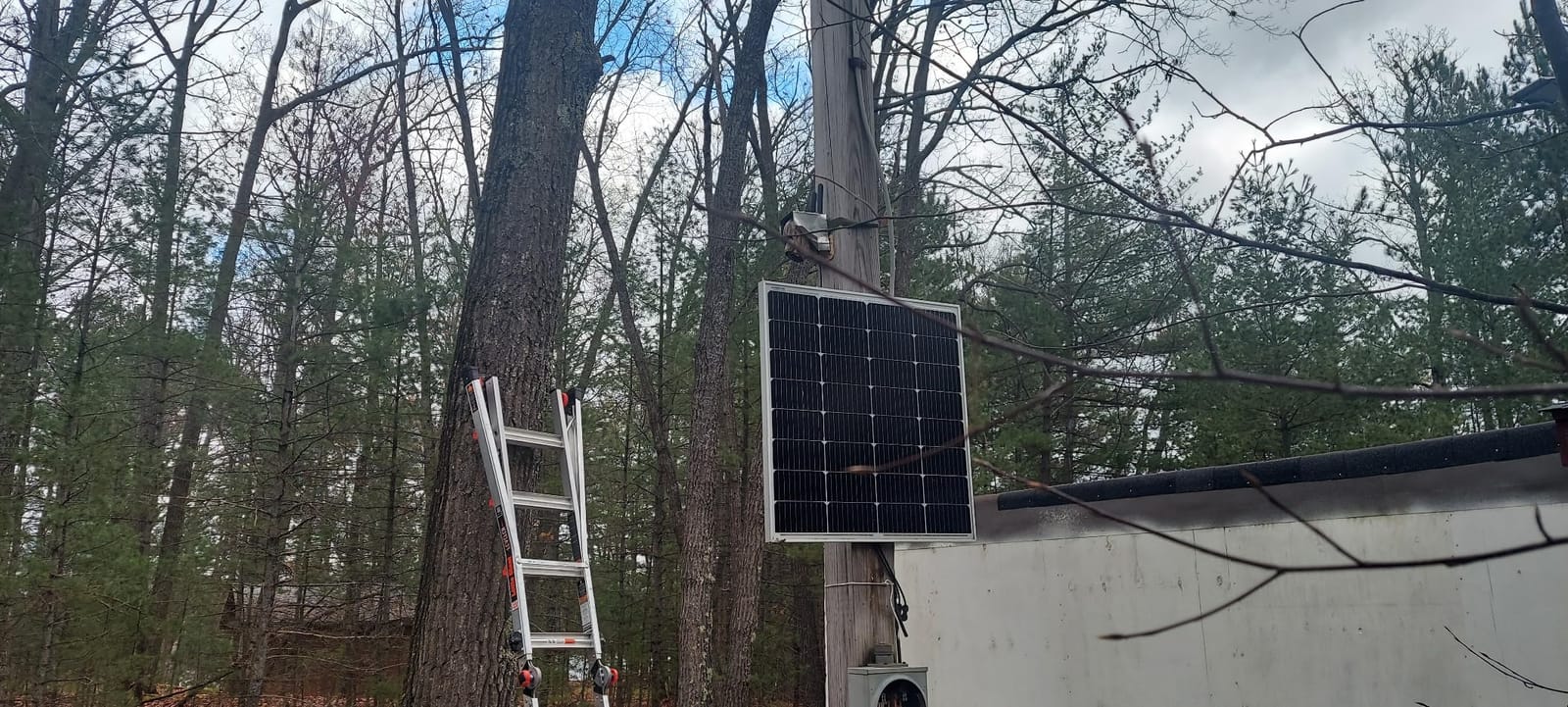
Streaming is 2K over 4G LTE with no WiFi required, and a 6W adjustable solar panel sustains operation on roughly ten minutes of direct sun per day. That is a realistic figure for a partially shaded plot edge.
This camera’s 4.1 average sits at the bottom of this roundup, and the reason is consistent across feedback. Subscription fees for data and cloud storage stack, the SD card is not included, and some owners report app account problems that cut off camera access.
Support responsiveness is a genuine strength, with owners describing remote resolution of issues. False alerts also come up more than with fixed-lens cameras.
Read the plan terms carefully and keep a local recording option enabled as a fallback.
Why it works at an open plot
The spotlight-extended night range means you can identify deer from further out than a standard low-glow unit allows, and one camera covers a large plot.
Alerts reach your phone within a moment of a trigger, which is useful when you are scouting from a vehicle.
Where it falls short
Layered subscriptions are the biggest cost risk in this list. Calculate the season total per camera before you commit.
Setup takes several owner-worked steps, and account lockouts are the most common reason for low scores here.
12. GardePro E5S – Best Non-Cellular Camera for Steady Plot Monitoring
GardePro E5S Non-Cellular Trail Camera, 64MP Photo & 1296P HD Video
64MP stills
1296P video
0.1s trigger
100 ft no-glow night vision
IP66 sealed
Pros
- 0.1s trigger with three PIR sensors
- 100 ft no-glow night vision
- Settings survive battery changes
- IP66 body with threaded mounting point
Cons
- SD card and eight AA batteries not included
- Night triggering weaker than daytime for some
The GardePro E5S is the quiet workhorse of this roundup. Three PIR sensors give a 0.1s trigger across a 120 degree view, stills reach 64MP with 1296P video, and the 100 ft no-glow night vision matches the Meidase at a lower tier.
Two details matter more than specs at a food plot. Settings persist through battery changes, so a swap in the field does not reset your sensitivity or schedule. And there is a 5-minute setup delay after power-on, which is a feature, because it skips the battery-change photo of your own hand.
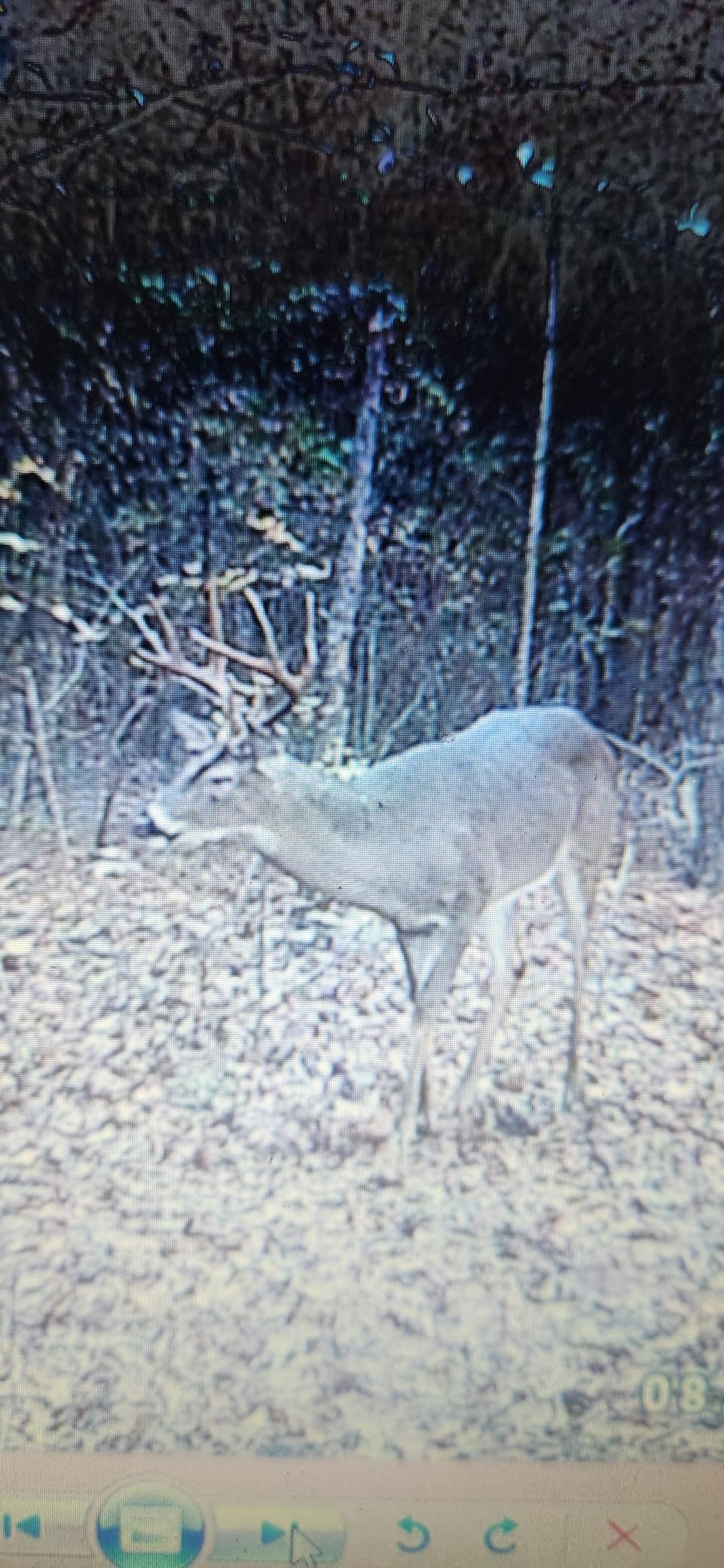
Owners rate the picture quality well above cameras costing far more, and 784 reviews carry a 4.4 average. Support issued a replacement for a crackling-audio unit without argument.
Plan on buying eight lithium cells and a card before deployment. Lithium performs noticeably better than rechargeables in cold conditions.
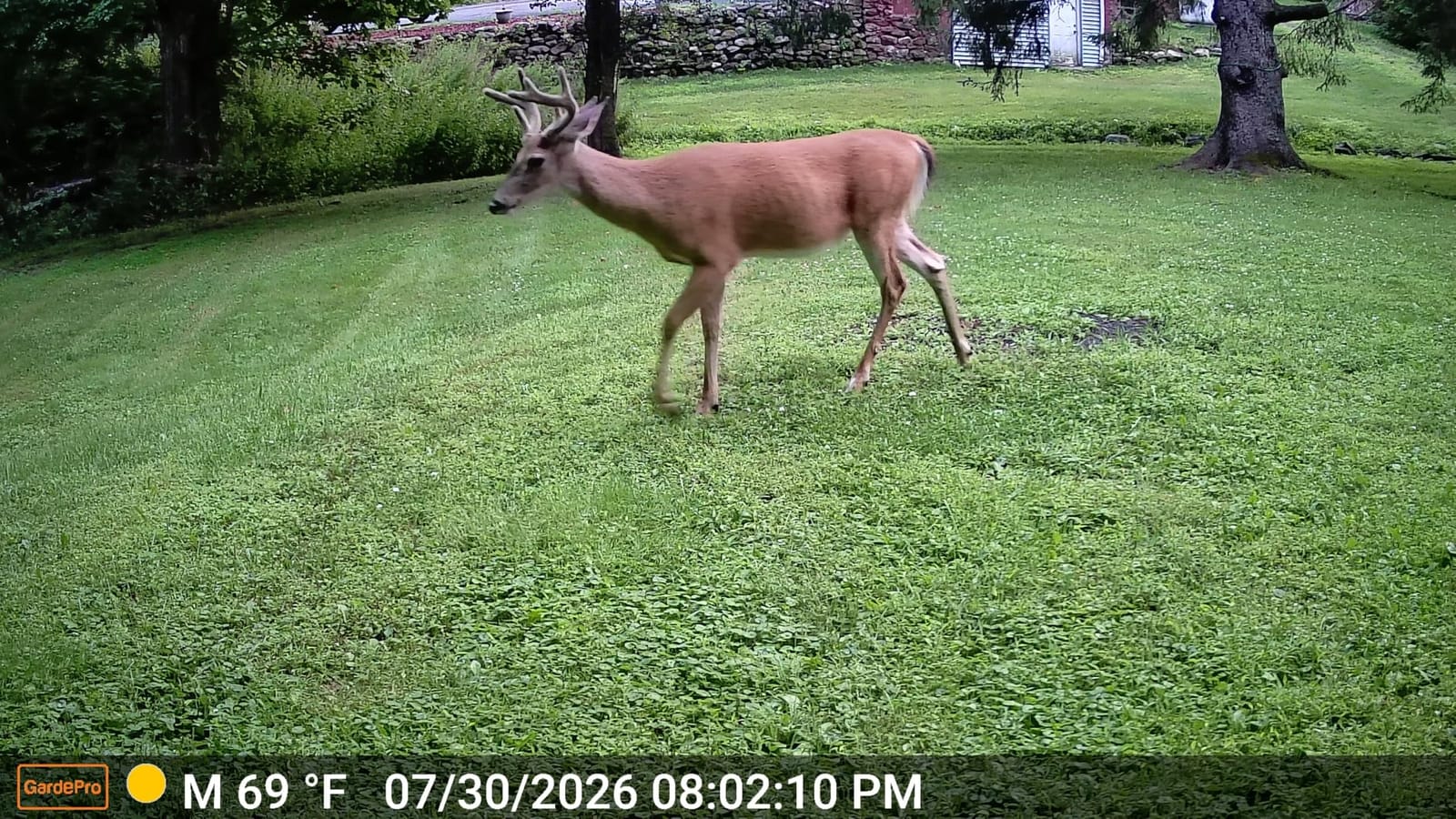
Why it works at an open plot
Zero-subscription monitoring with settings that survive redeployment is exactly what a season-long plot camera needs. Nothing about this body rewards tinkering.
The 1/4-20 threaded mount accepts a stake or post as easily as a strap, which keeps it stable on a wide-open site.
Where it falls short
Night triggering can be inconsistent for some owners in busy settings, and high sensitivity aimed into moving brush produces blank frames.
Microphone audio can crackle if left enabled. Turn it off unless you specifically need sound.
How Many Game Cameras Do You Need for a Food Plot?
One camera answers one question: when do deer arrive. Two answer why, because you can compare approach angles and see which side the herd favours.
For a single plot under roughly two acres with one main approach, a single wide-angle unit is enough. Aim it down the entry lane and you will capture arrival times, buck-to-doe ratios and whether the broadcast is working.
Once you add a second direction into the plot, a second camera becomes worth it. Place it on the opposite corner facing the exit, and the pair tells you whether deer are holding or just passing through.
Three cameras is where you start seeing schedule changes, since you can watch the same animal pass three sightlines. Beyond that, coverage matters more than quantity, and a wide 120 degree body usually beats a third narrow mount.
Pan and tilt models complicate the math, because one such camera can substitute for two fixed lenses on open ground. If your plot is a broad bowl rather than a corridor, budget for fewer cameras with wider heads.
How to Place Game Cameras on a Food Plot
Height is the first adjustment most people skip. Mount at roughly three feet so the lens sees across the plot rather than down into the grass, which cuts the false triggers from the seedbed itself.
Face north or south whenever the site allows. With the sun to the side of the lens, infrared reflections off leaves and insects largely disappear, and your night pictures come back cleaner.
Aim down the lane rather than across it. Deer travelling along an approach produce full-body frames; deer cutting across the frame at speed produce partial shots.
Run a walk test before you leave. Walk the expected approach path twice at deer height, once slowly and once at a trot, and confirm the camera fires each time at the distance you need.
Set sensitivity to medium as a starting point and adjust for the season. Tall weeds and new growth in summer will trigger a high setting constantly, while deep winter snow can put a deer above the detection zone entirely.
On solar setups, confirm the panel gets full sun through the tree canopy at midday in late summer. A panel that works in spring may be shaded when the leaves are on, which is when a plot camera is needed most.
What to Look for in a Food Plot Game Camera
Trigger speed is the first filter. Under half a second is the practical target for a running deer, and anything at or below 0.2 seconds gives you burst sequences rather than a single frame.
Detection range and flash range are different numbers. Detection is how far the sensor senses motion, and flash range is how far the IR actually illuminates. A camera can detect a deer at 100 feet and produce a black frame at 40, so treat the flash figure as the one that decides picture quality.
No-glow 940nm IR versus low-glow 850nm matters more at a plot than in the woods. A faint red emitter is visible at close range, and deer that have been hunted hard notice it sooner.
Cellular versus non-cellular is a budget decision as much as a technical one. Cellular models send pictures to your phone and cost a subscription per camera per month; non-cellular models write to an SD card and cost nothing after setup. The owners we found most satisfied run mixed fleets, cellular on the properties they drive past weekly and SD models on the ones they do not.
Battery maths matters over a full plot season. Lithium AA cells outperform alkaline in cold weather and alkaline cells cost less up front. Solar panels remove the swap schedule but need real sun exposure, and panels with a small internal battery are more of a top-up than a full replacement.
SD capacity depends on video settings. Video-heavy plots fill cards quickly, so a larger card is cheaper than more site visits. Cards up to 128GB or 256GB are widely supported in this category.
Weather sealing is not optional for open ground. Look for at least IP65 and, for northern plots or autumn rain, IP68 where available. If you also need continuous coverage of a yard or driveway rather than open land, our wireless backup cameras reviewed cover a different job entirely.
Finally, check your state’s rules. A growing number of states restrict trail cameras on public land, and posting against entry on private ground makes placement a trespassing question even when the camera is legal. Confirm the current rules for your parcel before you mount anything.
Frequently Asked Questions
What is the number one rated trail camera for food plots?
Among the cameras in this roundup, the GardePro E6 WiFi leads on owner volume with roughly 4.9k reviews and a 4-star average, and it pairs 64MP stills with 940nm no-glow night vision to 75 feet plus a direct WiFi link to the app with no subscription. It is the best overall pick because the combination removes monthly fees and card handling while still covering an open approach.
What is the best trail camera for the money?
The GardePro E5S and the Meidase P70 both deliver 0.1s trigger speed, 100 ft no-glow night vision and 64MP stills without any subscription, which is the strongest spec set you can buy without a data plan. The iZEEKER iG200 is the cheapest way to add a camera but needs batteries and a card supplied separately.
Is Moultrie or Tactacam better for a food plot?
Moultrie leads on detection range at 100 feet and scouting tools such as activity charting, but its 50 degree view is narrow. Tactacam leads on battery life at up to six months per charge with built-in GPS, but its 60 degree view is also narrow and accessories are sold separately. For an open plot either works if you aim down a single lane.
Are there live feed trail cameras for food plots?
Yes. The VOOPEAK TC32B-2P streams 2.5K video over 4G LTE with 355 degrees of pan and 100 degrees of tilt, and the Oculview provides 2K streaming with a 336 degree pan. Both need a data plan after the included allowance, and live streaming on cellular cameras drains batteries faster than scheduled capture.
Why are states banning trail cameras?
Regulators in several states have raised concerns about privacy, surveillance of private property and misuse on public land, so rules restricting or banning trail cameras on public ground are expanding. Rules vary by state and change, and cameras on posted private land can still constitute trespass, so check current regulations before deploying.
The Best Game Cameras for Food Plots: Final Verdict
The GardePro E6 WiFi is the single default recommendation. It gives you 64MP stills, 1296P video, no-glow IR and an app link at roughly 45 feet, with no subscription and no card handling, which is the combination most food plot hunters actually need.
Buy the WOSPORTS G600-4K when trigger speed on running deer is the priority, the Meidase P70 or GardePro E5S when no-glow night range matters most, and the CEYOMUR CY95 when the plot is too far to visit for battery swaps. Go cellular only on properties you drive past often, and check your state’s rules before you mount.
If you are comparing general-purpose gear in the same buying session, our picks for wireless backup cameras cover a different category, and our iPhone game controller guide covers phone setups that pair well with cellular viewing on the trail. Both were last refreshed for 2026.