
The best indoor herb garden kit for most beginners is the Click and Grow Smart Garden 3. It is quiet, it waters itself, and its basil is harvestable in one to two months with no seed starting, no soil, and no guesswork about light schedules.
That said, the appliance tier is only one of three. Most people searching for the best indoor herb garden kits for beginners land on a shopping page full of countertop hydroponic towers and assume they need one. Plenty of beginners are better served by a cheap soil-and-seed box that costs a fraction as much and cannot break.
So we compared 10 kits across all three types: soil starter kits, smart hydroponic countertop gardens, and planter-heavy gift sets. We read the specifications, weighed the review volumes, and paid close attention to the drawbacks each one carries, because that is where kits usually let you down.
Every kit here was assessed on the same criteria: how many herbs you actually get, what you have to buy later, how much daily care it needs, and what happens when something goes wrong. Last updated for 2026.
Table of Contents
Top 3 Picks for Best Indoor Herb Garden Kits (October 2026)

Click and Grow Smart Garden 3
- Silent wick self-watering with no pump
- 3 basil pods included
- 16 hour LED cycle


HOME GROWN 8 Herb Kit
- 8 non-GMO herb seeds
- 8 reusable pots with trays
- Wooden markers
- Grow guide
All 10 Kits at a Glance
This table lists every kit in the roundup with the details that decide the purchase. Scroll across to compare pod counts, tank sizes, and what type of grower each one suits.
| Product | Specifications | Action |
|---|---|---|
| Click and Grow Smart Garden 3 |
|
Check Latest Price |
| iDOO 12Pods Hydroponic Garden |
|
Check Latest Price |
 Ahopegarden 10 Pod Indoor Garden Ahopegarden 10 Pod Indoor Garden |
|
Check Latest Price |
 LetPot 12 Pod Smart Garden LetPot 12 Pod Smart Garden |
|
Check Latest Price |
 inBloom 12 Pod Indoor Garden inBloom 12 Pod Indoor Garden |
|
Check Latest Price |
 URUQ 8 Pod Hydroponic System URUQ 8 Pod Hydroponic System |
|
Check Latest Price |
| HOME GROWN 8 Herb Kit |
|
Check Latest Price |
 Planters Choice 9 Herb Window Garden Planters Choice 9 Herb Window Garden |
|
Check Latest Price |
 iRealgarden 10 Herb Starter Set iRealgarden 10 Herb Starter Set |
|
Check Latest Price |
 ROOTCRAFT 44 Piece Herb Planter Kit ROOTCRAFT 44 Piece Herb Planter Kit |
|
Check Latest Price |
The Three Types of Indoor Herb Garden Kit
Everything in this roundup falls into one of three categories, and choosing the right one matters more than any brand name.
Soil and seed starter kits give you seeds, compressed soil discs or pellets, small pots and a guide. You water by hand, you rely on your window for light, and nothing needs plugging in. They are the cheapest way to start and the easiest to walk away from when life gets busy.
Smart hydroponic countertop gardens replace soil with pods sitting in a pumped water reservoir under a built-in LED grow light. Watering and lighting run on a fixed cycle. You get faster growth and a tidier counter, at the cost of an outlet, a device that can fail, and ongoing pod refills.
Planter-heavy gift sets lean on presentation. Large component counts, burlap or decorative pots, chalkboard labels and gift packaging. Some include seeds, some barely do. These are the ones to buy as presents rather than for yourself.
1. Click and Grow Smart Garden 3: Best Overall for Beginners
Click & Grow Indoor Herb Garden Kit with Grow Light | Smart Garden for Home Kitchen Windowsill | Easier Than Hydroponics Growing System | Vegetable Gardening Starter (3 Basil Pods Included), White
Wick-fed self-watering
3 basil pods included
16 hour on, 8 hour off LED
3.5 pounds
Pros
- Simplest setup of any kit
- Completely silent with no electric pump
- Clean counter-friendly design
- Basil harvestable in 1 to 2 months
Cons
- Refill pods sold separately add ongoing cost
- Lamp timer only settable at plug-in
- Surface mold can develop on smart soil
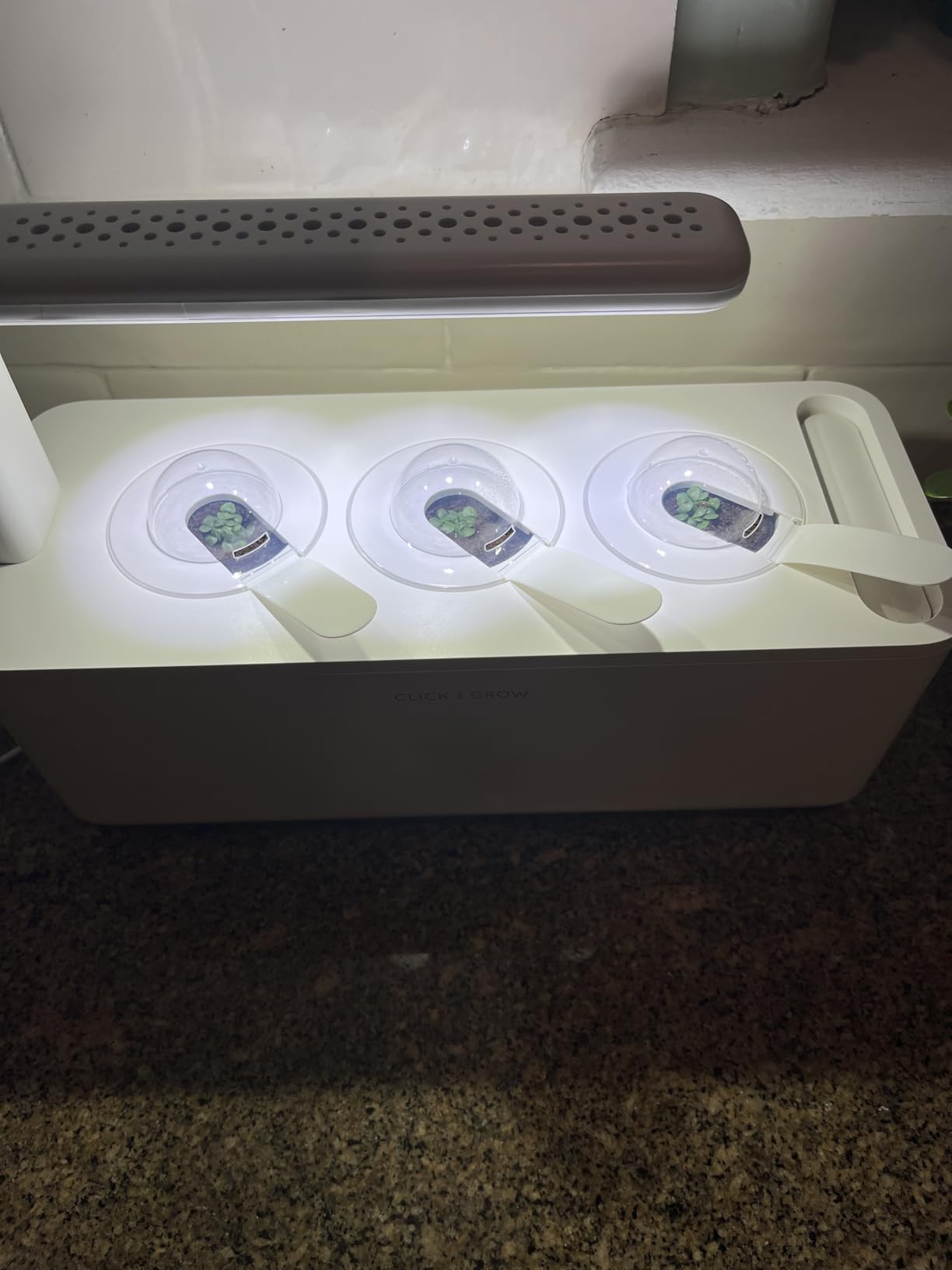
This was the kit we spent the most time with, and the reason is simple: there is almost nothing to get wrong. You fill the reservoir, plug it in, and drop a pod into each of the three slots. There is no soil handling, no soaking step, and no seed depth to judge.
It is also completely silent. Water travels by wick rather than pump, which matters if the unit is going to live on a counter near a bedroom or a shared kitchen. The included basil pods were harvestable for us in one to two months.
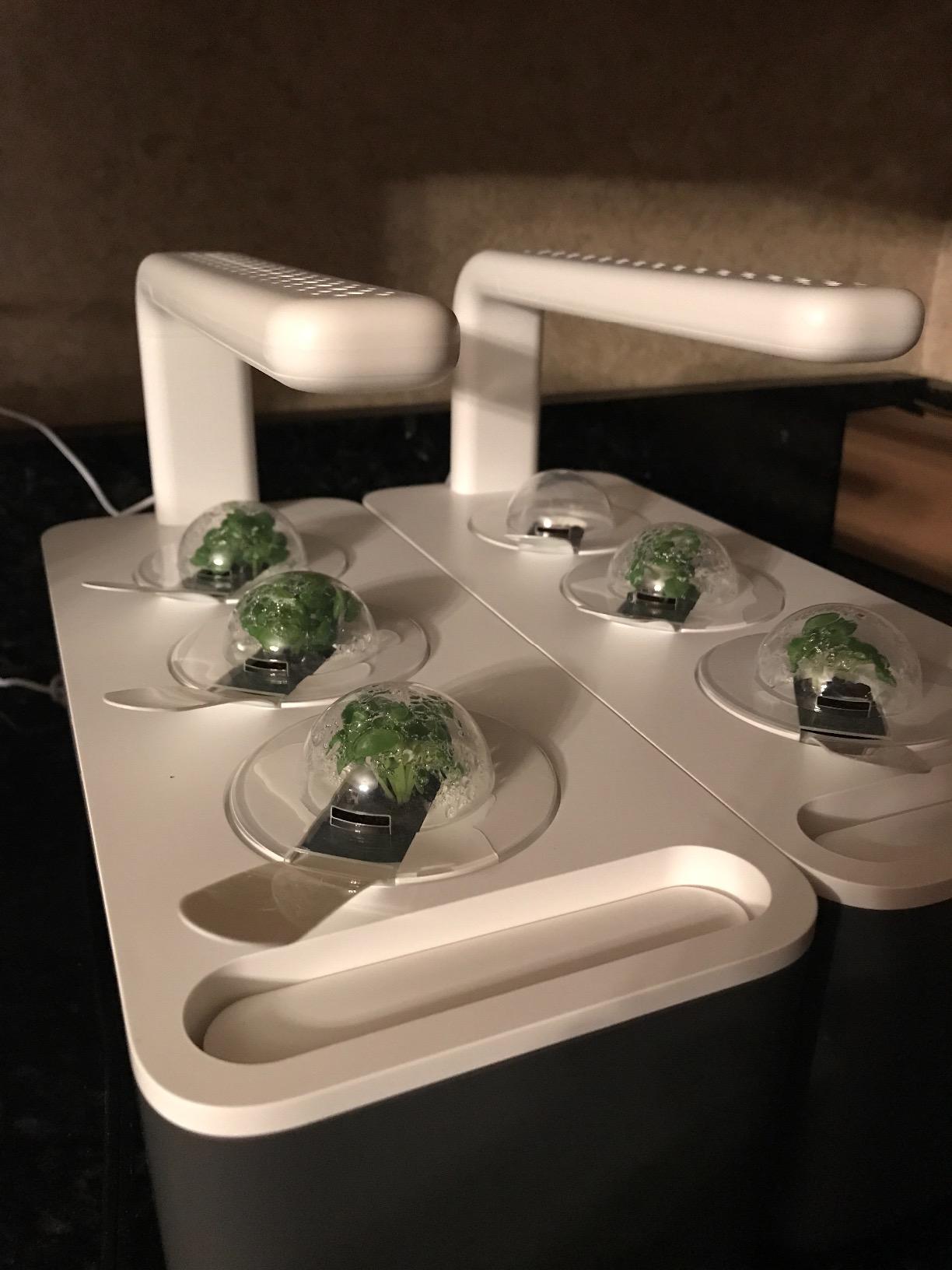
The honest catch is refill cost. Three pods get you started, and everything after that is a separate purchase. The lamp timer also resets if you unplug the unit, so a power cut means re-setting the cycle rather than losing it.
There are two smaller complaints worth knowing. The far-right pod sits slightly outside the brightest part of the lamp, so plants there grow slower. And smart soil pods can develop white surface mold after a few weeks, which is cosmetic more than fatal.
Who this suits best
It suits anyone who wants herbs with the least daily involvement, especially people who travel or forget things. A full tank runs roughly two to three weeks between refills, so a weekend away is not a problem.
It also suits people in apartments with poor natural light, because the LED is doing the growing rather than a window.
Where it falls short
It falls short for anyone who wants variety on day one. Three basil pods is a narrow starting point, and the refill catalog is where the ongoing cost sits. It is also the wrong pick if you plan to move plants outdoors, since the pods are designed for the unit.
Anyone who wants nine or ten different herbs from the first week should look at a soil kit instead.
2. iDOO 12Pods Hydroponic Garden: Best Value Smart Garden
iDOO 12Pods Hydroponics Growing System Garden with LED Grow Light
12 growing stations
4.5L tank, 1 to 2 weeks per fill
Full spectrum LED panel
Tabletop, 1.8 kg
Pros
- Largest pod count in the roundup
- 4.5L tank gives a genuine two week gap
- Quiet pump and fan
- Height-adjustable light bar
Cons
- Light cycle is fixed to two modes with no settable timer
- All-plastic build feels basic
With more than six thousand reviews behind it, the iDOO is the most proven smart garden in this group. Twelve stations means you can run a mix of culinary herbs rather than committing your whole unit to one variety.
Setup is genuinely a three-step job and involves no soil. The 4.5 liter tank is what makes it the value pick: it holds one to two weeks of growth between refills, which removes the single most common reason people abandon these units.
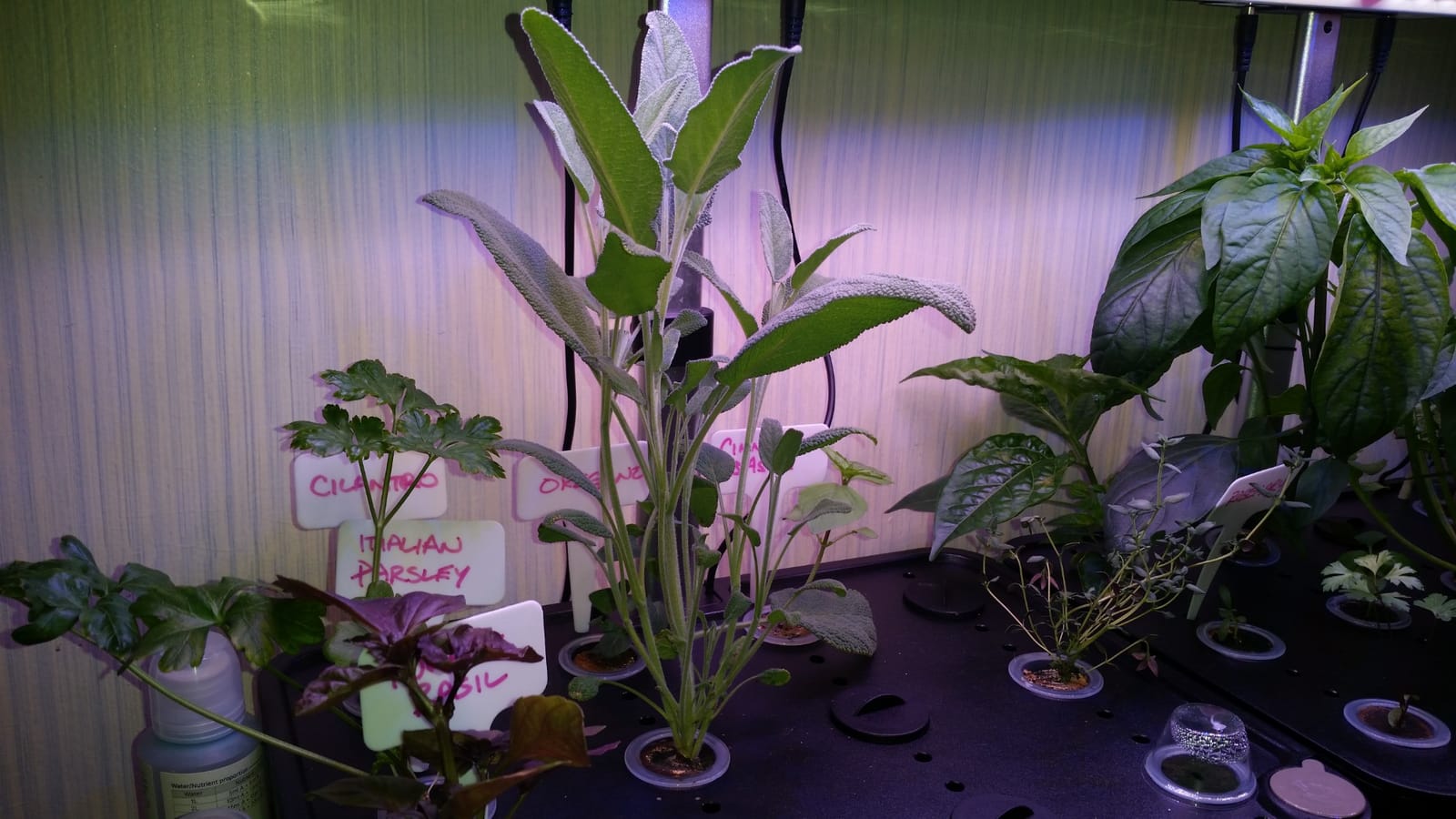
The light panel adjusts upward to just over eleven inches, which is enough headroom for a decent run of basil and lettuce before plants press against the lamps. A low-noise pump aerates the reservoir and an upper fan simulates breeze on a timer.
The limitation that shows up repeatedly in reviews is the timer. There is no way to schedule the light to a specific clock time. You choose a mode, and it runs on its own cycle from whenever you set it.
Feel the build and you will also notice it is entirely plastic. That is not a dealbreaker at this size, but it is why the stainless competitor costs more.
Who this suits best
It suits beginners who want more than a garnish, and households that cook with several herbs weekly. Twelve stations is enough to run basil, mint, chives and thyme together without crowding.
It also suits anyone who wants to grow on a modest budget without dropping to a soil kit, because the tank size keeps the water-chasing honest.
Where it falls short
It falls short for anyone who wants the light to match a window’s daylight cycle, since the fixed schedule is the main recurring complaint. There is no app, no humidity readout, and no reminder system.
If you want scheduling control or a metal build, step up to the app-controlled model instead.
3. Ahopegarden 10 Pod Indoor Garden: Best for Quick Results
Ahopegarden Indoor Garden Hydroponics Growing System: 10 Pods Kit with LED
10 stations, 3L tank
Full spectrum LED, 16 on 8 off
14.5 inch adjustable light post
Pump circulates every 30 minutes
Pros
- Fast germination with lettuce in two to three weeks
- Very quiet pump
- Visible water level window
- Strong customer service
Cons
- Timer not settable to a clock time and resets after an outage
- Light post is stiff to adjust
- Some seeds germinate poorly when sown directly
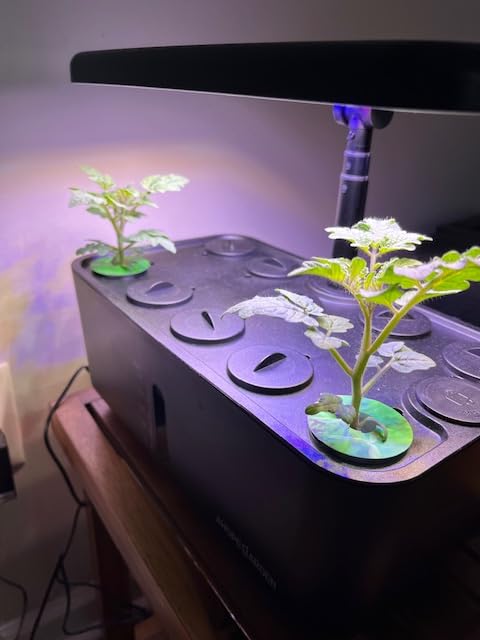
This is the fastest unit to first harvest in the roundup. Reviewers regularly pull lettuce and cherry tomatoes in two to three weeks from a cold start, which is what makes it satisfying for someone who wants proof within a month that the appliance works.
The basket sits at the number one rank in hydroponic growing kits, and the practical details back that up. There is a transparent water level window so you are not guessing, a pump that circulates every thirty minutes quietly enough for an office, and A and B fertilizer included.
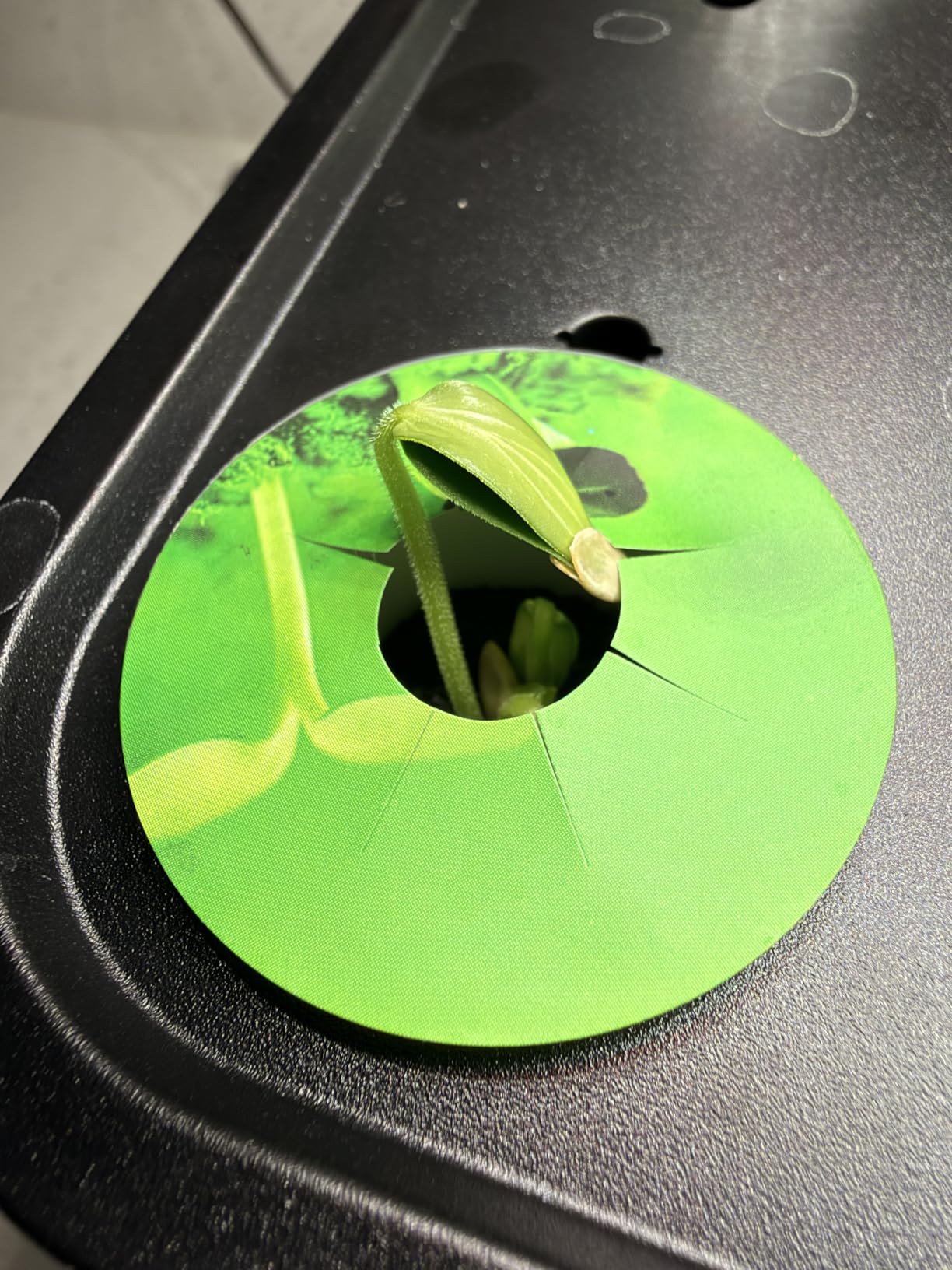
You also get nine growth domes, eight shade papers and shade covers, plus tweezers and labels, which is a generous box for the money when compared with bare-bones competitors.
Two things get in the way. The timer is not settable to a specific clock time and it resets after a power outage. And the light post resists raising and lowering, which you will notice the first time a lettuce plant needs more clearance.
Some seeds germinate poorly if sown straight into the pods. Starting them in the supplied domes first, then transplanting, gives a better hit rate.
Who this suits best
It suits beginners who want visible progress fast and would otherwise lose interest. Two weeks to a harvestable lettuce is a very different experience from six weeks of watching nothing happen.
It is also a solid second garden for anyone who already has an appliance and wants a second unit for a different counter.
Where it falls short
It falls short for anyone planning to leave it unplugged and replugged regularly, because the timer resets each time. The 3 liter tank is also the smaller side, so it needs refills more often than the 4.5 and 5.5 litre models.
If you want set-and-forget scheduling, this is the wrong unit.
4. LetPot 12 Pod Smart Garden: Best for App Control
LETPOT LPH-SE Hydroponics Growing System, 12 Pods Smart Herb Garden Kit Indoor, Indoor Garden, APP & WiFi Controlled, with 24W Growing LED, 5.5L Water Tank, Pump System, Automatic Timer
App and WiFi light scheduling
5.5L tank, up to 3 weeks
24W LED adjusting to 30 inches
Stainless steel outer, resin inner
Pros
- Only unit with a genuine 0-24 hour light schedule
- Watering reminders through the app
- Largest tank in the roundup
- Metal build wipes clean
Cons
- Most expensive kit here
- App setup required for the smart features
- Heavy once the 5.5L tank is filled
This is the fix for the complaint that appears on almost every other smart garden in this roundup. Instead of a timer you set once at plug-in, the LetPot app schedules the LED across any window from zero to twenty-four hours and sends watering reminders.
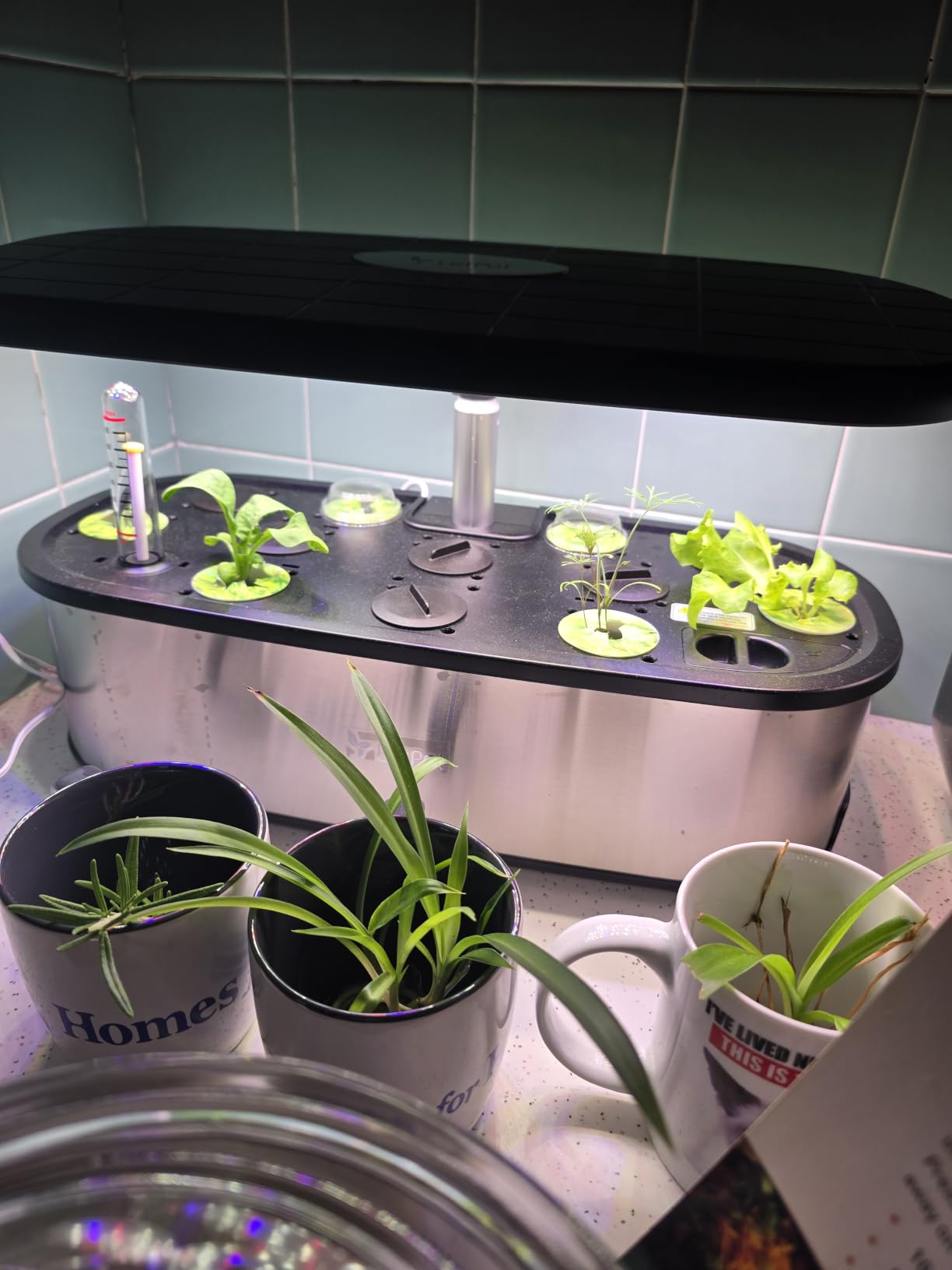
Physically it is also the biggest. The tank holds 5.5 liters, which supports up to three weeks of growth between waterings, and the lamp rod adjusts to thirty inches, the tallest reach here.
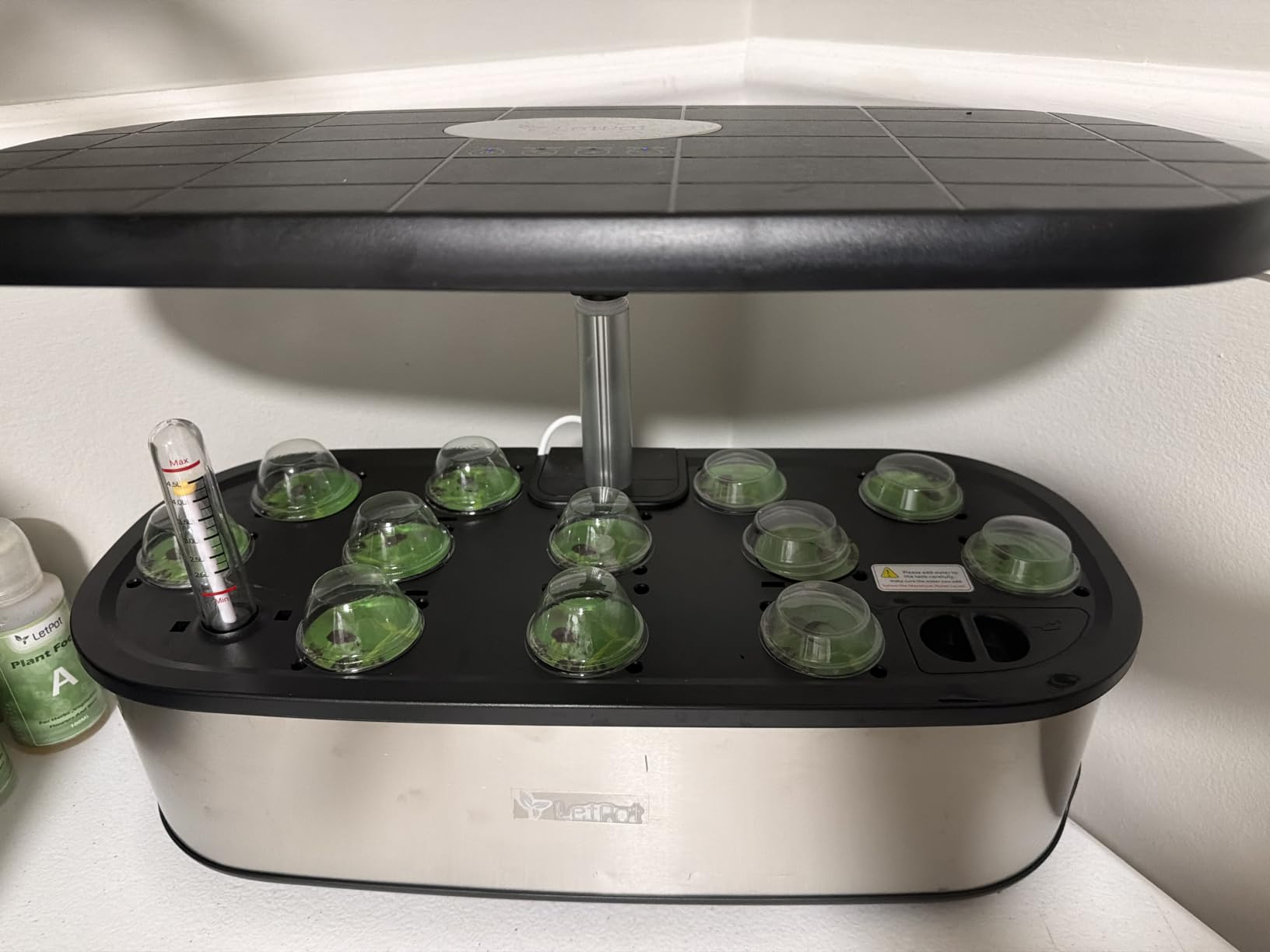
The double-wall build, stainless steel outside and resin inside, is the part you feel most. It wipes clean, it does not look like plastic, and it handles the weight of a full reservoir without complaining.
The trade-offs are honest ones. This is the most expensive kit in the roundup, the smart features do nothing until you pair the phone, and a unit already holding 5.5 liters of water is genuinely heavy to move.
If you already own a cheaper unit and only want scheduling, check whether a plug-in timer solves your problem before spending up here.
Who this suits best
It suits people with an irregular schedule who travel for work. Watering reminders are the difference between a garden that survives a bad week and one that does not.
It also suits anyone who wants herbs in a larger volume than a three-pod unit allows, and anyone who simply prefers a metal appliance on the counter.
Where it falls short
It falls short for anyone who does not want to deal with a phone app at all. If you dislike handing an app permissions to your home network, the smart features are dead weight.
It is also hard to justify for two or three herbs, which is all many people actually cook with.
5. inBloom 12 Pod Indoor Garden: Best for Wide Pod Spacing
inBloom 12 Pods Hydroponics Growing System Indoor Garden with LED Grow Light and Pod Kit, Plants Germination Kit with 4.2L Water Pump Accelerate, Height Adjustable, Gardening Gifts for Women, White
12 stations, spaced widely
4.2L tank, up to 15 days
16 hours of LED per day
Lamp post adjusts 7 to 12 inches
Pros
- Widest pod spacing so plants do not crowd
- Recessed LED cells reduce leaf burn
- Drain hole and low water alarm
- Memory function resumes after a power cut
Cons
- Large footprint eats counter space
- Support stakes in photos not included
- Some pump and light failures after weeks of use
Crowding is the quiet killer of countertop gardens. Plants that shade each other grow leggy, and root systems in adjacent pods tangle. The inBloom answers this by spacing its twelve stations further apart than the other twelve-pod models here.
The recessed LED cells are the other quiet strength. Because the diodes sit below the panel surface, more of the light goes down onto the leaves and less bounces off as heat, which is what reduces leaf burn on a unit this bright.
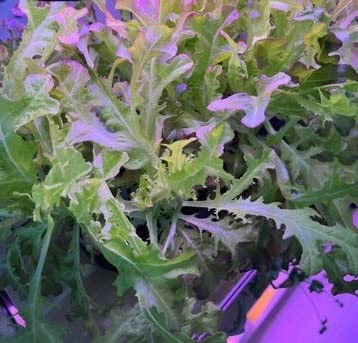
Beginners report harvestable lettuce in about two weeks. The maintenance features are unusually considered for the price: a low water alarm, a bottom drain hole for full tank refreshes, and a memory function that resumes the correct cycle after a power cut.
What holds it back is bulk. It takes meaningfully more counter space than the smaller units, and the bright lamp is strong enough to light a room noticeably at night.
One packaging complaint recurs: the support stakes shown in product photos are not in the box. You will need something to prop taller plants.
Who this suits best
It suits anyone growing more than one herb at a time, because the spacing is what keeps a full twelve-station unit productive rather than half-empty. It also suits people who move their unit around and want the power-cut memory working for them.
Herb growers in particular will appreciate it, since basil and rosemary both get tall and floppy.
Where it falls short
It falls short in small kitchens. The footprint is the largest here, and the lamp is bright enough at night to be a genuine annoyance in a studio or a shared flat.
With fewer than 1,000 reviews behind it, it also carries more isolated durability complaints than the better-established models.
6. URUQ 8 Pod Hydroponic System: Best for Small Spaces
URUQ 8 Pods Hydroponics Growing System with LED Grow Light – Black
8 pods with 24W LED
3L tank with viewing window
Pump under 20dB, cycles every 30 minutes
1.65 kg, detachable light pole
Pros
- Compact enough for a windowsill or a kitchen shelf
- Quietest pump in the roundup
- Detachable light pole makes cleaning safe
- Water shortage indicator
Cons
- Fewer pods than the 10 and 12 station units
- 3L tank needs refilling more often
Eight pods is a modest number, but it is the one that actually fits. This unit sits on a windowsill or a narrow kitchen shelf without taking over the workspace, which is the constraint that stops most people buying a garden at all.
The detachable light pole is a small detail that changes the experience. You can take the whole lamp assembly off to refill the tank or clean the reservoir without yanking wires around, and that makes routine maintenance much less annoying.
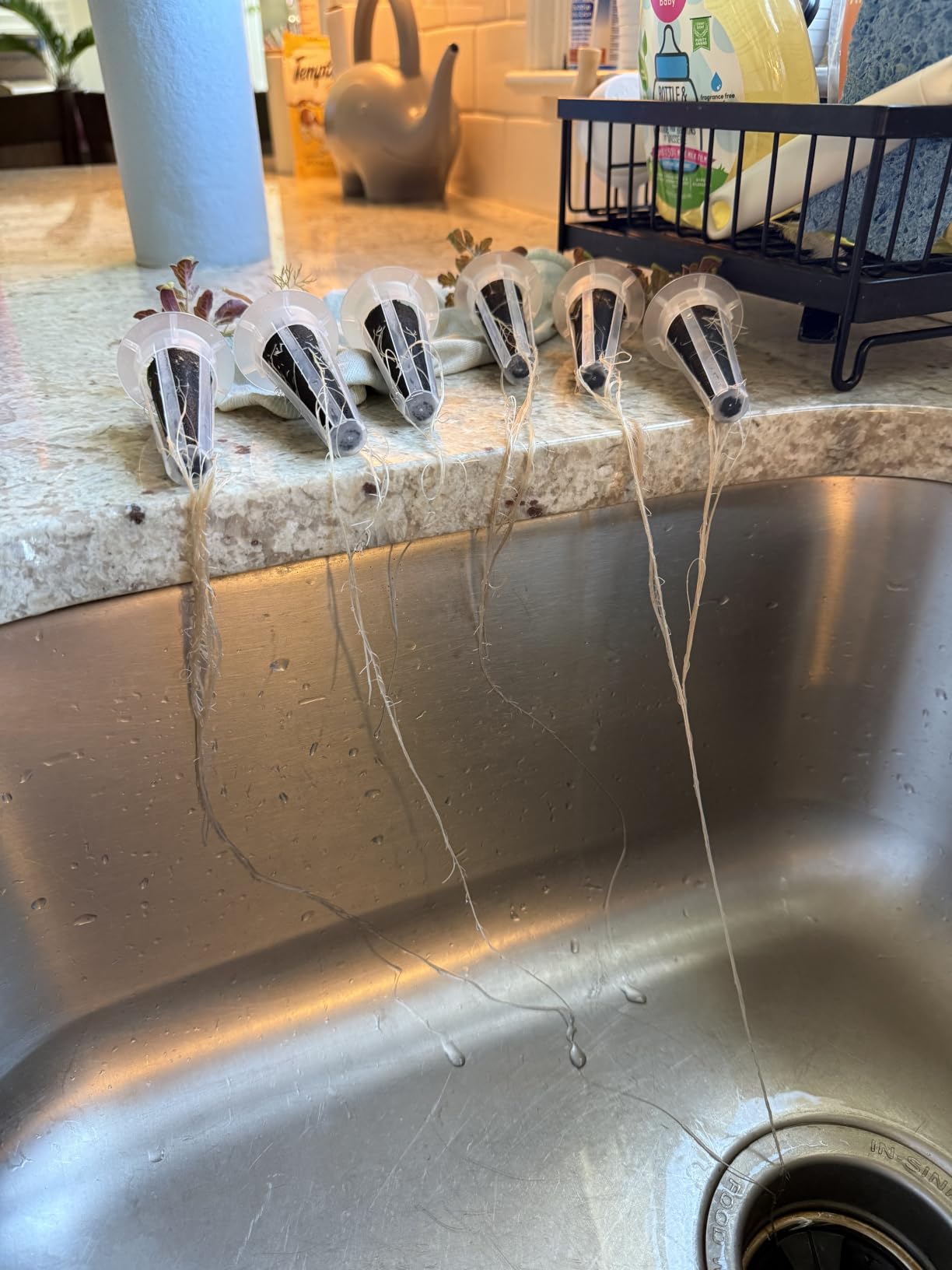
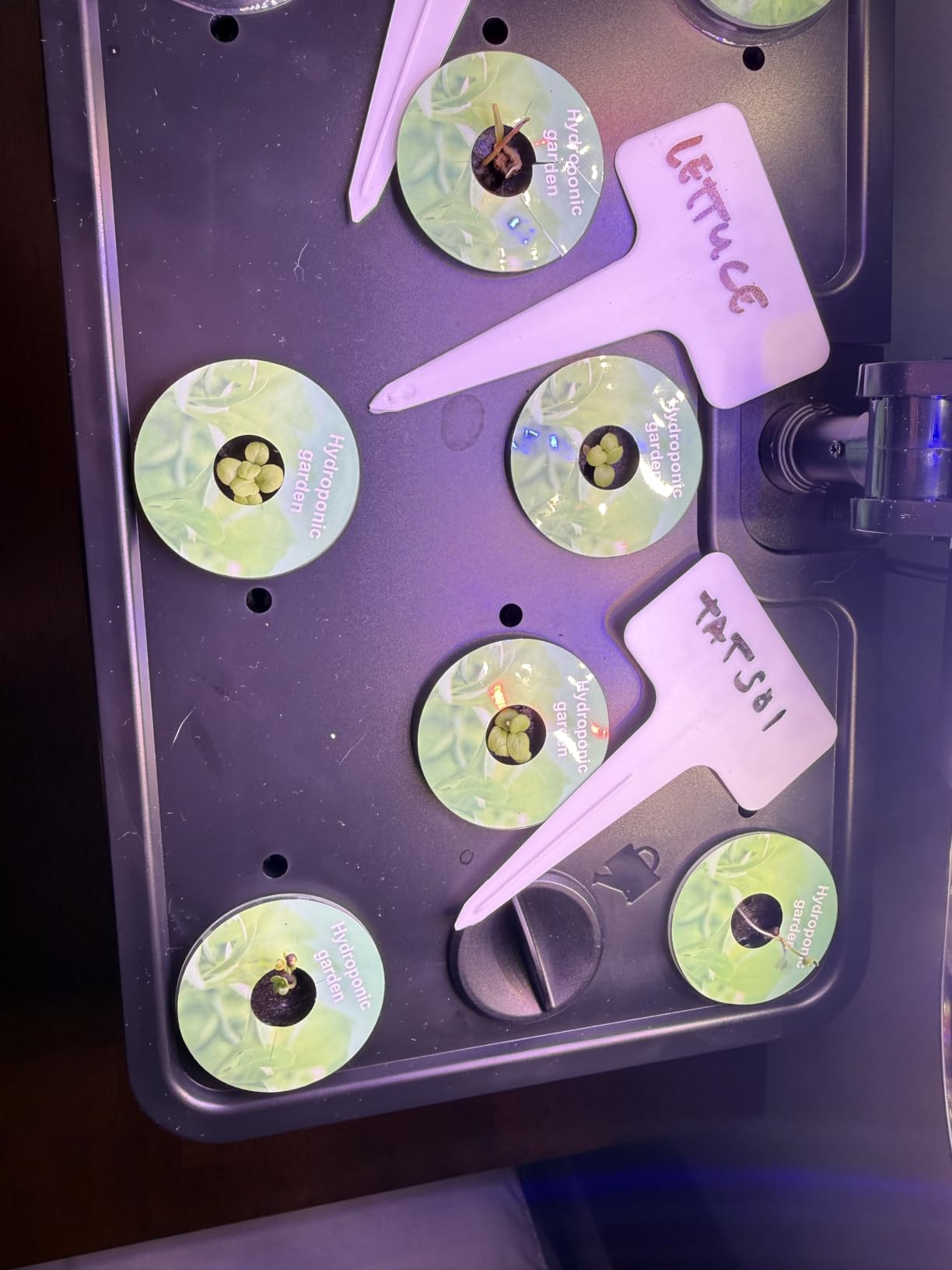
The pump measures under 20 decibels and runs every thirty minutes, which is quiet enough for a bedroom counter. The 24 watt panel adjusts to 180 degrees and up to 21 inches, covering seedlings through to a decent herb canopy.
The water shortage indicator and viewing window mean you are not opening the tank to check, and both are genuinely useful given the smaller 3 liter capacity.
The trade-off is capacity. Eight pods is fewer than most competitors, and 3 liters is the smallest reservoir here, so you will refill more often than with a twelve-station unit.
Who this suits best
It suits apartment kitchens with limited counter space and anyone renting who wants something that looks deliberate rather than industrial. It suits beginners too, since eight pods is a manageable number of things to keep alive.
It is also a good second unit for a bedroom or a home office where noise matters.
Where it falls short
It falls short if you want to cover a whole cooking week from one fill. With fewer pods and a smaller tank, this is a garnish-plus-a-bit garden rather than a supply garden.
Review volume is also on the lower side compared with the models above, so long-term durability data is thinner.
7. HOME GROWN 8 Herb Kit: Best for Herb Variety
HOME GROWN 8 Herb Garden Kit, Indoor Growing Kit, Gardening Gifts for Women
8 seed varieties with loam soil pellets
8 reusable pots with trays
8 wooden plant markers
Grow guide and nutrition pack
Pros
- Largest review base of any kit here
- Eight distinct culinary herbs
- Everything arrives in one box
- Compact decorative pots
Cons
- Manual watering with no reservoir
- No grow light included
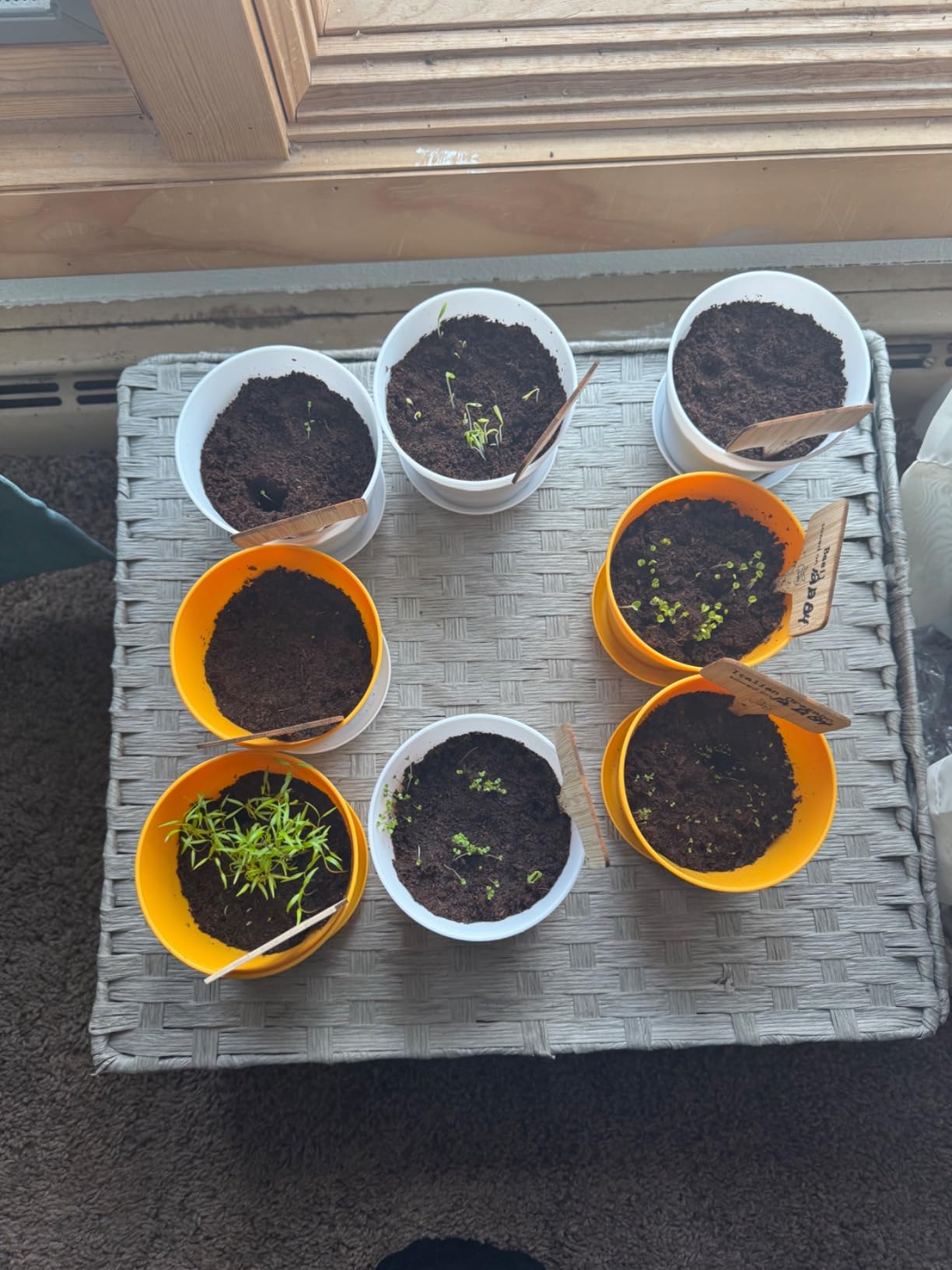
This is where most people should actually start. There is no device, no outlet, no pump and nothing that can break. You get eight non-GMO herb seeds, eight soil pellets, eight reusable pots with trays, eight wooden markers, a nutrition pack and a grow guide.
The varieties are chosen well for cooking: Genovese basil, cilantro, curled chervil, lemon balm mint, Greek oregano, Italian giant parsley, rosemary and English thyme. That is a genuinely usable kitchen lineup rather than a set of duplicate seed packets.
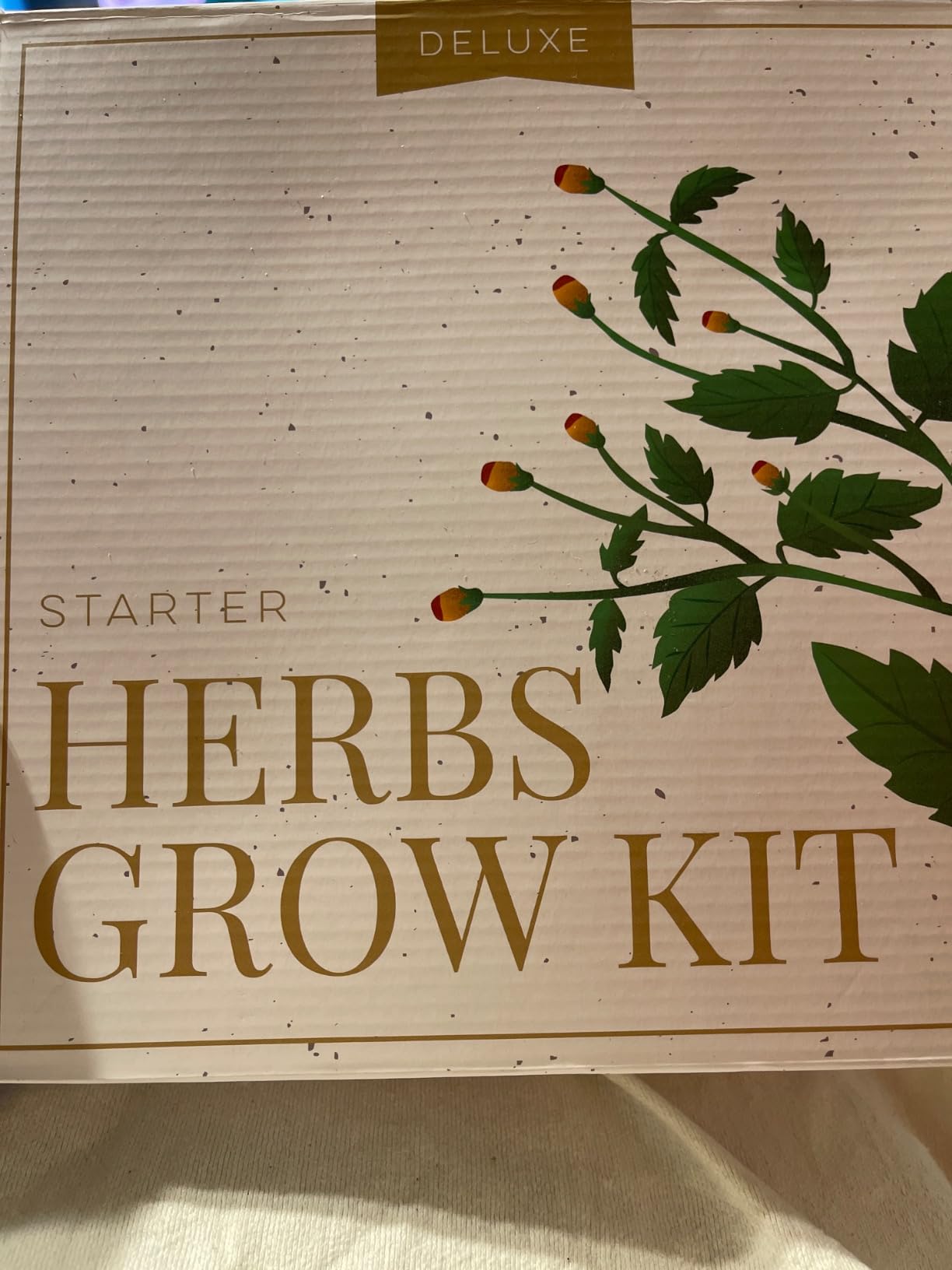
With more than twelve thousand reviews, it is also the most proven kit in the roundup, and that tells you something useful: buyers clearly understand what they are getting. The rating sits below the appliances because results depend entirely on your window and your watering.
Seeds arrive in hermetically sealed envelopes rated viable up to two years, so a kit bought now will still work later. The pots are reusable and the whole thing works indoors or out on a balcony.
The trade-offs are the obvious ones. There is no self-watering reservoir, so watering is on you, and no grow light, so growth depends entirely on window light.
Who this suits best
It suits absolute beginners, budget buyers, and anyone who wants to start a windowsill garden without committing to an appliance. It also suits people who travel, since a dry pot for a few days is recoverable in a way a pumped reservoir is not.
Renters benefit too, because nothing here needs drilling, plugging in, or a dedicated shelf.
Where it falls short
It falls short if your window is weak. Eight varieties in eight small pots under indirect light produces eight leggy, stretched plants rather than eight usable herbs.
It also does nothing about the number of seeds you will never cook. Sowing all eight is how beginners end up with half a dozen half-dead pots.
8. Planters Choice 9 Herb Window Garden: Best Gift Set
9 Herb Indoor Window Garden Kit – House Plants Seeds – Birthday Gifts
9 heirloom seed varieties
Pre-fertilized soil discs, 6-8x expansion
7 x 4.5 x 4 inches, 31 pieces
Step by step booklet with care routines
Pros
- Nine herbs at a very low price point
- Expanding discs remove the loose soil mess
- Booklet covers herb specific care
- Heirloom vacuum-sealed seeds
Cons
- Needs regular manual watering
- Small pots mean transplanting later
- No grow light so results depend on the window
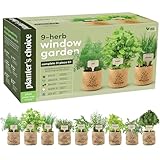
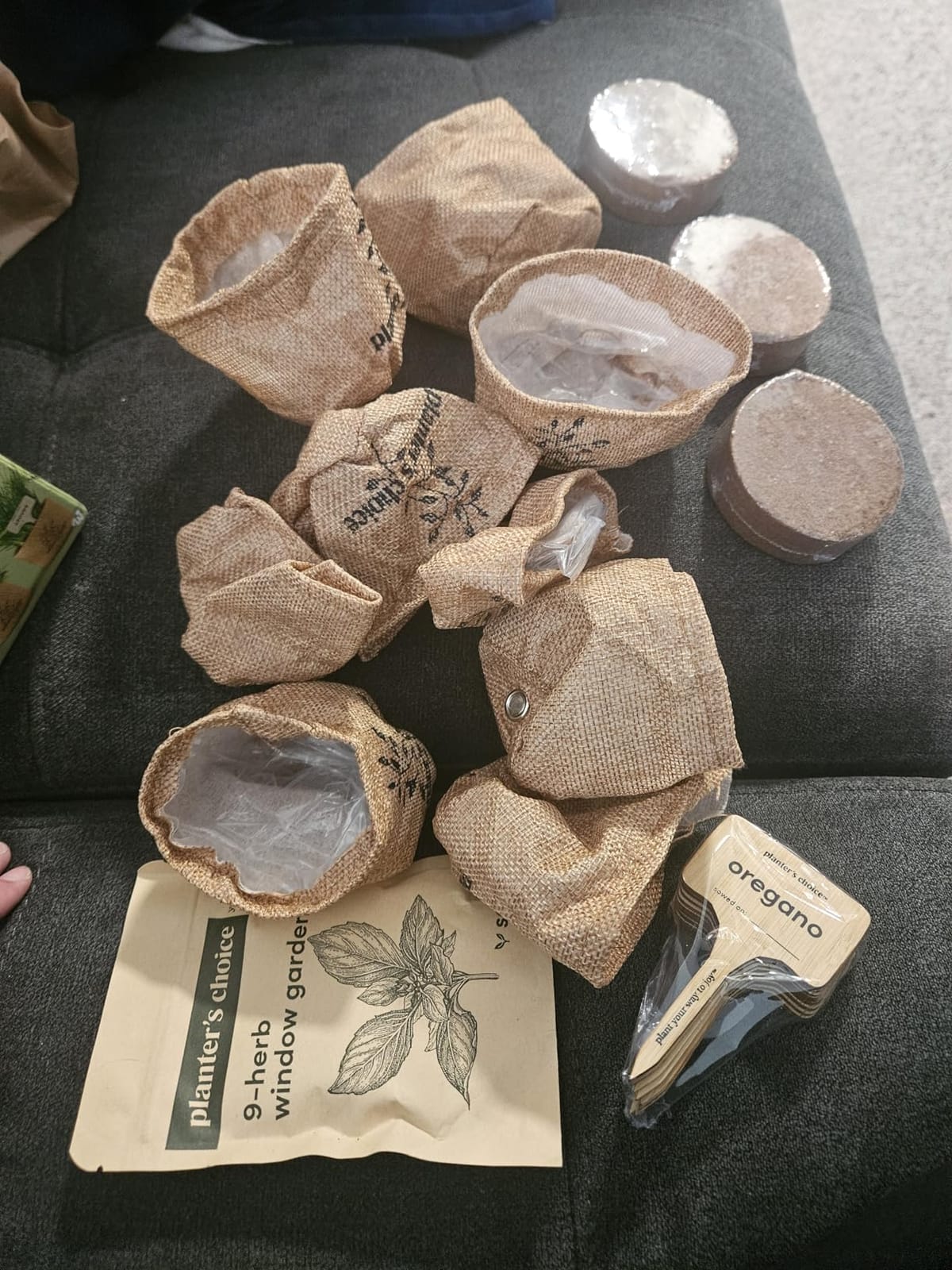
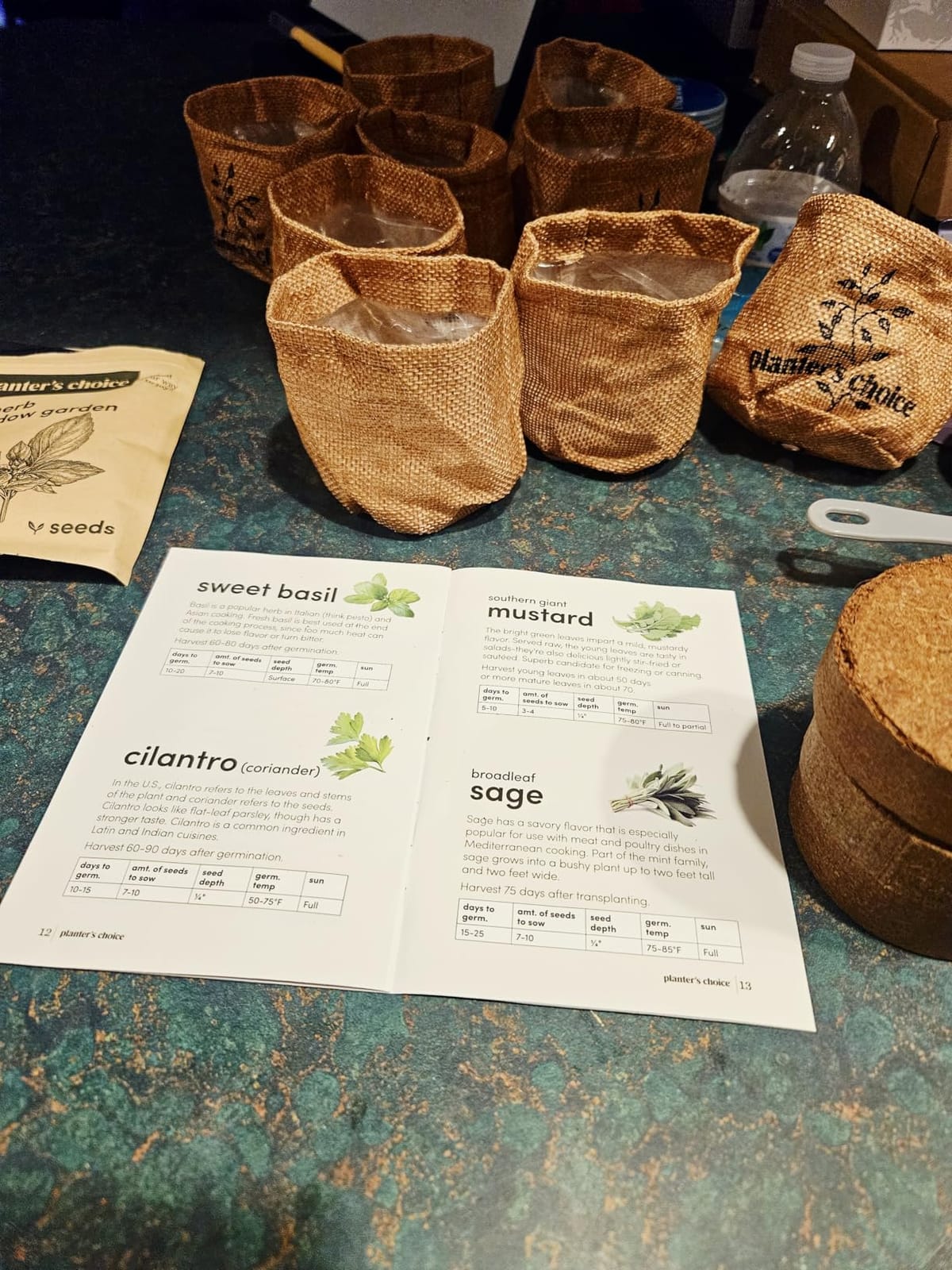
If you are buying this for someone else, the presentation matters as much as the growing. This one arrives as a 31 piece set with nine heirloom varieties: dill, basil, chives, thyme, parsley, oregano, cilantro, sage and mustard.
The compressed soil discs are the reason it feels tidy. They expand six to eight times their size when soaked, so there is no bag of loose potting soil spilling across the counter while you set up.
The booklet is the other thing that makes it a good present. It walks through soaking tips and gives herb-specific care routines, which is exactly what a nervous first-time grower opens the box hoping to find.
What you accept by buying this is manual watering and total dependence on window light. The seeds are listed as partial sun, so it wants a brighter window than a shelf.
The containers are also small. Expect to be moving these herbs into bigger pots within a few weeks of them taking off.
Who this suits best
It suits gift buyers, especially for a housewarming, birthday or Mother’s Day, and for anyone giving a beginner kit to a child or a partner who has never grown anything.
It also suits anyone who wants a lot of variety cheaply and does not mind potting on later.
Where it falls short
It falls short in a low-light flat, since partial sun is a real requirement and there is no light included. Results also vary a lot, and lower ratings tend to come from mixed germination rather than anything structural.
If you want something with a lower chance of a disappointing result, choose a kit with fewer, easier varieties.
9. iRealgarden 10 Herb Starter Set: Best for Families
Indoor Herb Garden Kit – 10 Non-GMO Herb Seeds with Soil, Pots & Moisture Meter – Easy Windowsill Gardening Starter Set – Unique Gift for Gardeners, Home Chefs & Families
10 non-GMO herb varieties
Reusable pots, soil discs, tools
Moisture meter included
2.5 pounds, gift box packaging
Pros
- Moisture meter is unusual at this price
- Ten varieties cover cooking and tea
- Booklet keeps kids engaged
- Gift box packaging
Cons
- No grow light and no self-watering reservoir
- Needs close attention to watering
- Some seeds fail to germinate
The detail that separates this from the other budget soil kits is the included moisture meter. For a first-time grower, not knowing when to water is the single biggest source of dead plants, and a meter for a few cents inside the box removes the guesswork.
The ten varieties are chosen for actual use rather than novelty: basil, parsley, cilantro, chives, thyme, oregano, dill, sage, lavender and mint. The lavender is the one you will probably not cook with, but it makes the kit look substantial.
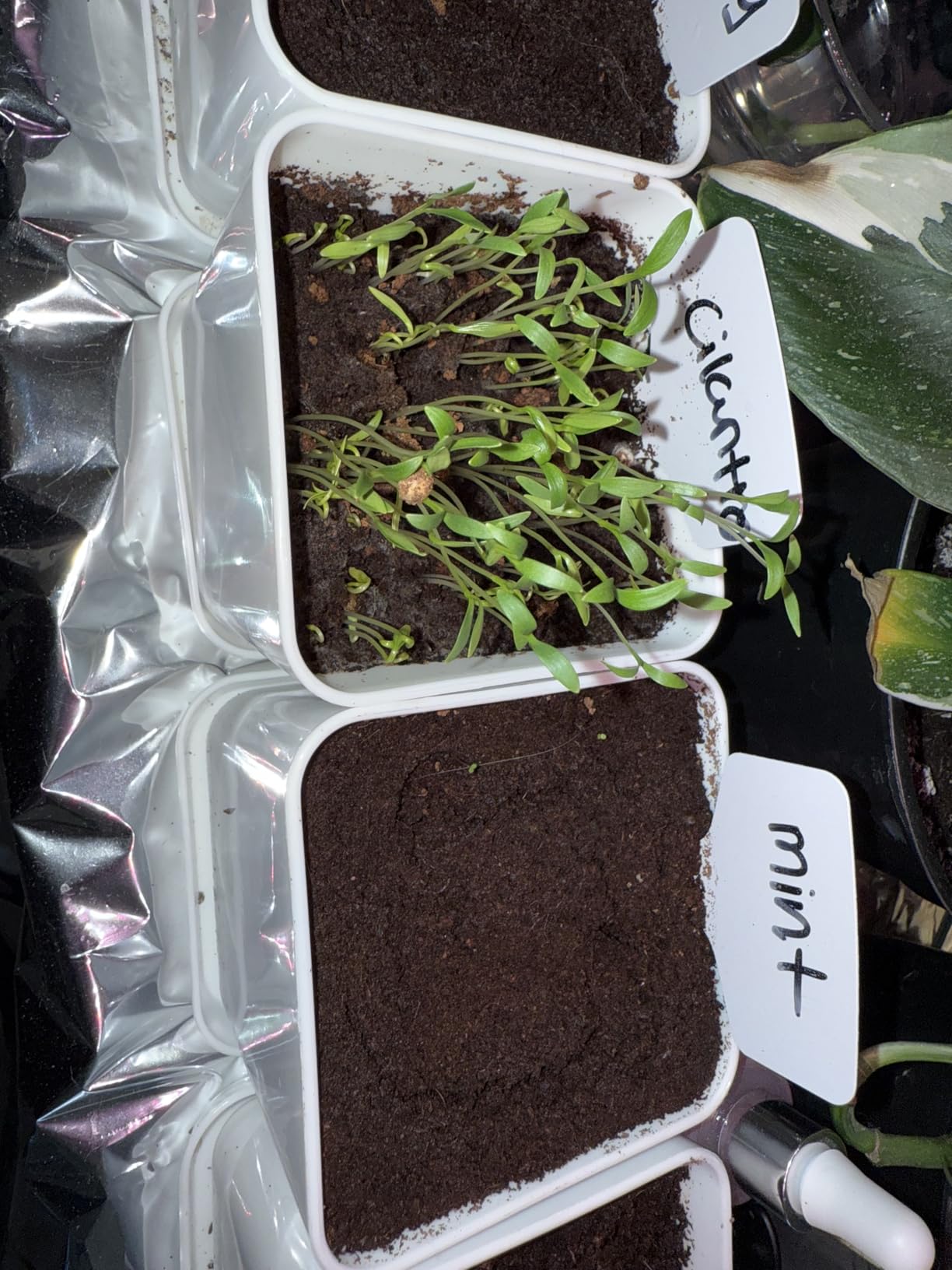
The instruction booklet is written to be followed with a child present. Combined with the wooden tools and reusable pots, that turns the kit into a project rather than a chore, which is why it works well as a family activity.
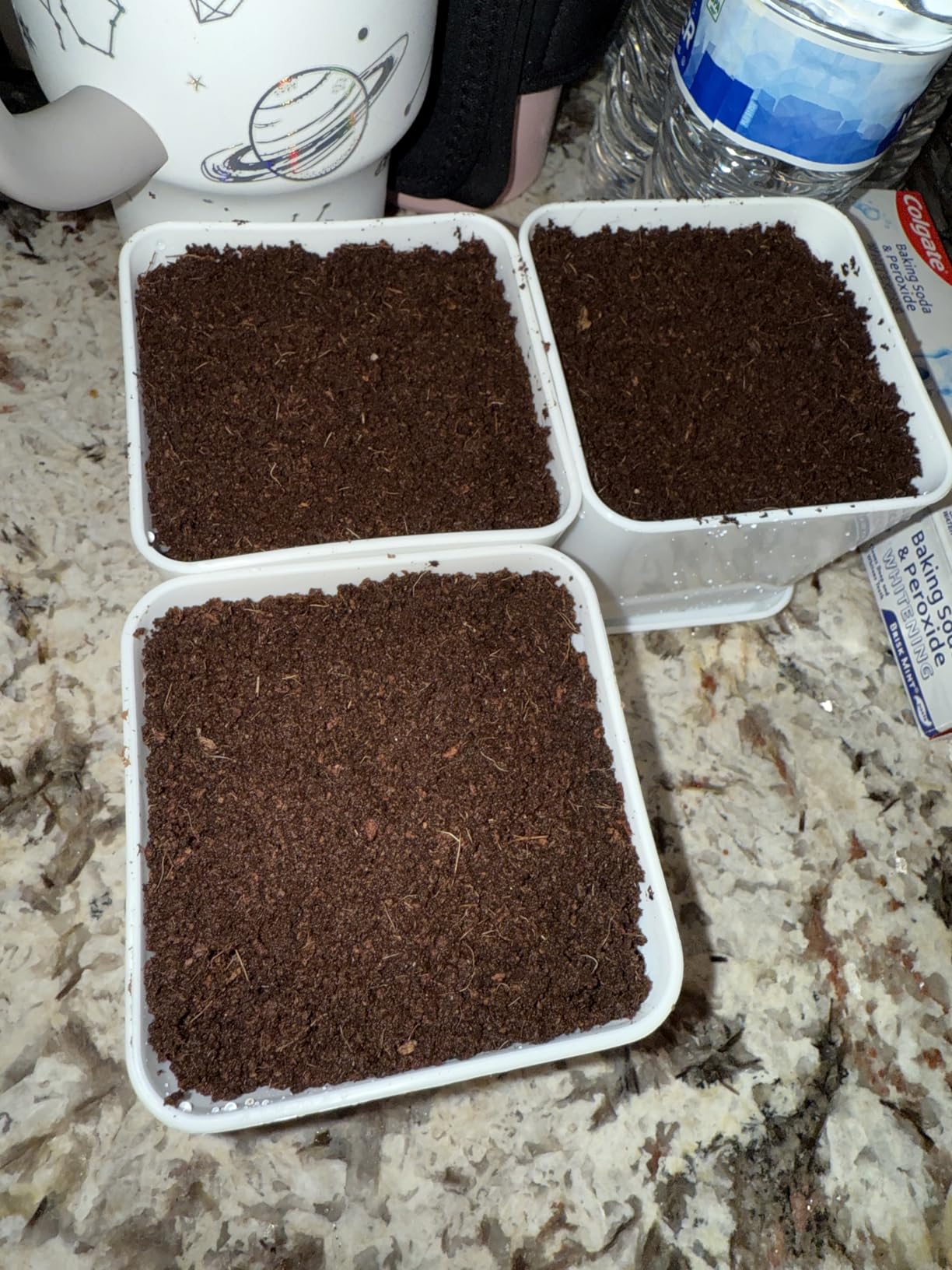
Satisfaction here hinges on two things you control: watering consistently, and accepting that not all ten varieties will germinate. Reviewers treat both as normal rather than as defects.
There is no grow light and no reservoir, so it needs a genuinely sunny sill and a weekly reminder in your calendar.
Who this suits best
It suits households with kids looking for a weekend project, and anyone who wants tea herbs as well as culinary ones. The moisture meter also makes it a good pick for people who kill plants by overwatering rather than underwatering.
Gift-wise the packaging is presentable enough that it does not need wrapping.
Where it falls short
It falls short for anyone who wants the lowest-effort path, because there is no automation at all. Ten pots of soil in a sunny window is real work on a hot week.
Ten varieties is also more than most households will cook with, so expect a few unused pots.
10. ROOTCRAFT 44 Piece Herb Planter Kit: Most Versatile
10 Herb Garden Planter Indoor Kit, 44pcs Complete Kitchen Herb Starter Set Including Burlap Pots, Markers, Soil Discs, Gardening Tools, Unique Easter/Birthday/Christmas Gift Ideas for Women, Mom
44 pieces across 10 pots
10 burlap pots, 10 markers, 3 hand tools
Soil discs expand 6-8 times
10 organic non-GMO seed varieties
Pros
- Most components of any kit in the roundup
- Burlap pots look good on a sill
- Ten varieties including scallion and rosemary
- Step by step booklet
Cons
- Growing medium runs short for all ten pots
- Not every seed variety germinates
- Must be transplanted as herbs grow
- Overwatering leads to mold in the containers
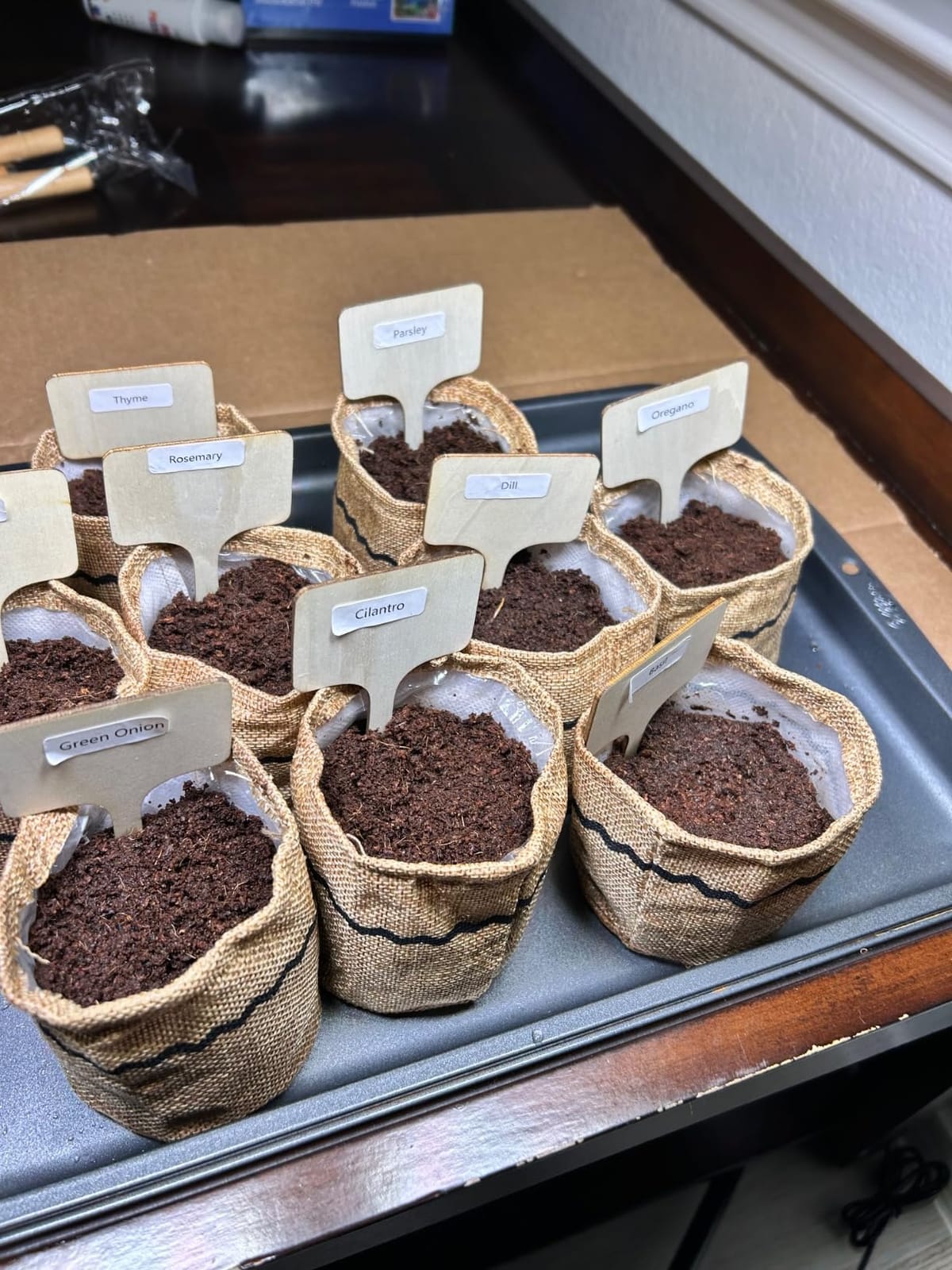
On component count alone this is the value winner. Forty-four pieces for the same money as kits with far less: ten burlap pots, ten wooden markers, three hand tools, ten soil discs and ten seed varieties including scallion and rosemary.
It is also the lowest rated kit here, and the review data explains exactly why. Owners like the styling and the sheer quantity, but germination is patchy and the growing medium does not stretch to all ten pots.
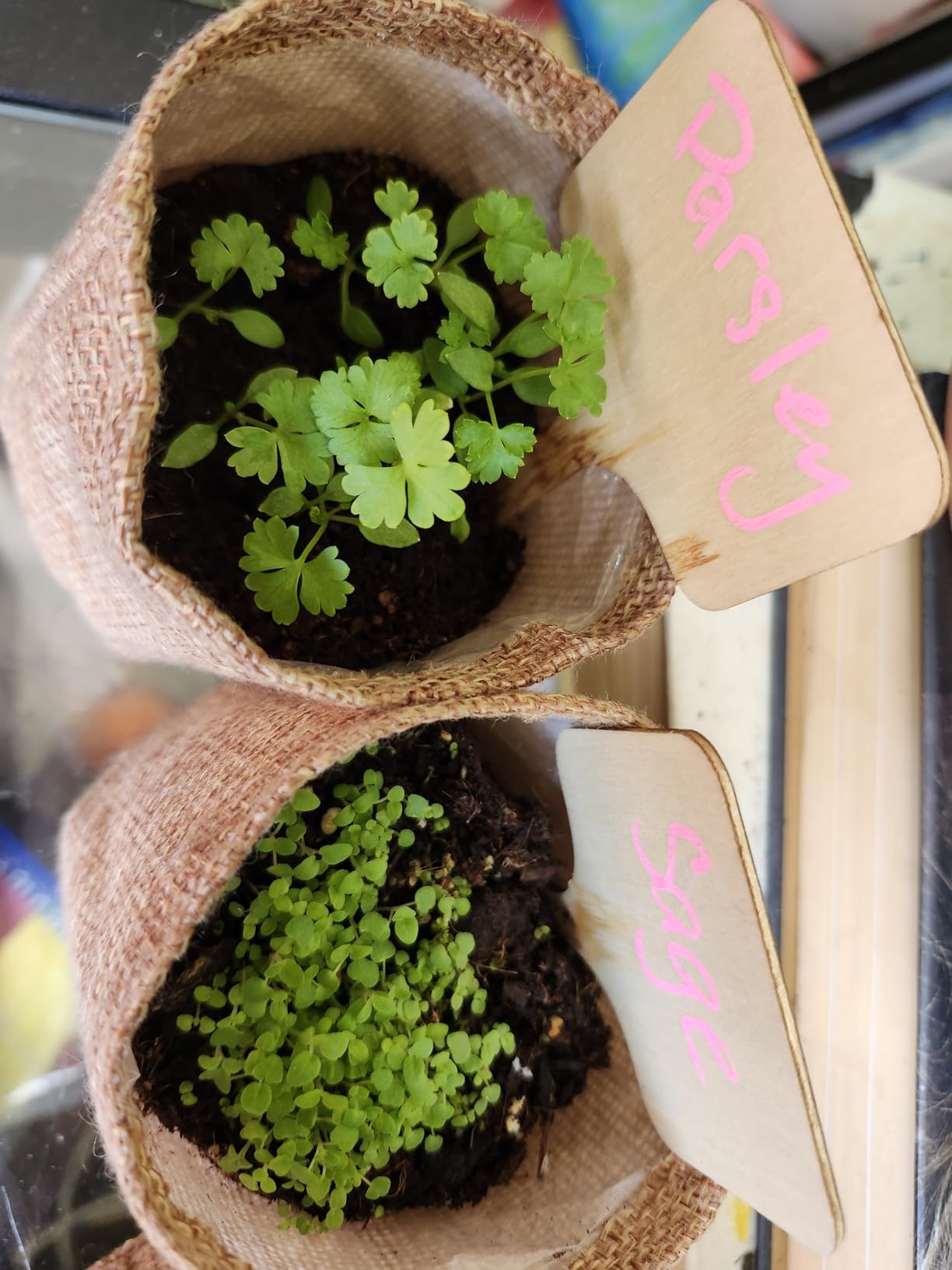
That mismatch is worth taking seriously. If you fill all ten pots, some will run short on medium, and under-filled cells dry out faster than the rest. Sowing four or five varieties instead of all ten is the move here.
Overwatering is the other named problem. Burlap pots hold moisture against the soil, so mold appears in the containers if you water on a fixed schedule instead of checking first.
You will also be repotting well before harvest, because these are small starter cells rather than permanent homes.
Who this suits best
It suits gift buyers who want an impressive box count without spending much, and anyone who already has pots and soil and just needs seeds. The burlap styling photographs well for a windowsill display.
It also suits a gardener who wants to choose their own varieties rather than be locked into a bundle.
Where it falls short
It falls short for a genuine beginner who will sow everything on day one. With ten varieties and limited medium, that approach reliably ends in half the pots failing.
It is also the weakest choice in a low-light space, since partial sun is all it asks for and you get no light of your own.
How to Choose an Indoor Herb Garden Kit
Match the kit to your window, not to your ambition
Light decides more than any other variable. A south-facing window in a bright flat gives roughly six or more hours of direct sun, which is enough for basil, thyme and oregano without any lamp. An east-facing window gives full morning light and partial afternoon light, which suits mint and chives. A north-facing window is a poor spot for most herbs, and there a grow light is not optional.
Users who succeed indoors typically combine a windowsill with supplemental light rather than trusting the window alone. If you only have north light, buy a smart garden with a built-in LED or plan on adding a lamp. Our guide to the best camera lenses for beginners follows the same beginner-first logic of matching gear to the light and space you actually have.
Decide soil or hydroponic before you compare brands
A soil kit is cheaper, teaches you real watering and seed-starting skills, and costs nothing to keep running. A hydroponic garden is faster, tidier and automated, but needs an outlet, a pump and refill pods.
For your very first attempt we would start with soil. You learn what a plant actually needs, and the mistakes are cheap.
Start with basil, then add mint, chives and thyme
Basil is the herb growers recommend first because it germinates fast, grows quickly and recovers from mistakes instead of dying. Mint and chives are the most tolerant of imperfect light. Thyme and oregano are slow but tough once established.
The hardest herbs indoors are typically rosemary, which resents wet roots and needs strong light, and parsley, which germinates slowly and unevenly. Leave those for month two.
Factor in what you will have to replace
Smart gardens do not stop costing money after the first purchase. Refill pods are sold separately and add up every few months, and the wick-based models need fresh smart soil pods rather than loose dirt. Soil kits mostly need a new bag of potting mix and seeds once a season.
Buy the appliance once, then price the pods before you commit. If the refill cost looks steep against how much basil you actually cook with, a soil kit is the better buy.
When you should skip an appliance entirely
Skip a smart garden if you want two or three herbs, if you travel regularly, if you have no outlet near your window, or if you already know you will forget a watering schedule. In each of those cases a soil kit does the same job for a fraction of the cost and cannot fail quietly.
This is the honest counter-recommendation most roundups will not print, but it is usually the right call for a first-time buyer.
Seven steps from box to first harvest
1. Pick your sunniest window and clear a shelf 12 inches deep.
2. For soil kits, soak the compressed discs in warm water until they stop swelling, usually a few minutes.
3. For hydroponic kits, fill the reservoir to the marked line and add the nutrient sachets if supplied.
4. Sow seeds at the depth printed on the packet, no deeper. Buried too deep is the most common reason nothing sprouts.
5. Keep warm and out of direct sun until seedlings appear, usually within one to two weeks.
6. Move to the brightest position once true leaves appear, and thin crowded seedlings to one per pot.
7. Water when the top inch is dry, then harvest by snipping outer leaves rather than cutting the whole stem.
The mistakes that kill the most first gardens
1. Overwatering, which causes root rot, is the single most cited failure. Check the soil instead of watering on a calendar.
2. Leggy, stretched seedlings, caused by too little light after germination. Move them brighter and add a lamp.
3. Overcrowding. Nine or ten pots of herbs in one spot compete for the same light and none of them thrive.
4. Sowing too deep. Follow the packet depth and press the seed in lightly.
5. Ignoring seed viability. Older seeds lose germination rates, so buy fresh packets if nothing sprouts.
Thin seedlings as soon as they have true leaves, and remember that an herb grown from seed indoors can move outdoors once frost risk passes.
Frequently Asked Questions
What is the best kit for growing your own herbs indoors?
For most beginners the Click and Grow Smart Garden 3 is the easiest route, because setup is fill tank, plug in, drop in a pod, with silent wick watering and basil ready in one to two months. If you want zero electronics and a lower commitment, a soil-and-seed starter kit such as the HOME GROWN 8 Herb Kit does the same job with nothing that can break.
What are the best herbs for beginners to grow indoors?
Basil is the best first herb because it germinates fast, grows quickly and recovers from mistakes. Mint and chives are the most tolerant of imperfect light, and thyme and oregano are slow but tough once established. Avoid rosemary and parsley at the start, since both resent indoor conditions early on.
What are common mistakes growing indoor herbs?
Overwatering is the biggest one and causes root rot, so check the top inch of soil rather than watering on a schedule. Leggy seedlings mean too little light after germination and need a brighter spot or a grow lamp. Other common errors include overcrowding, sowing seeds too deep, and not thinning seedlings once true leaves appear.
What is the most difficult herb to grow?
Rosemary is usually the hardest indoors. It wants strong light and dislikes constantly wet roots, so it fails in a humid, dim corner. Parsley is second hardest because its germination is slow and uneven. Both are worth attempting in month two rather than as your first plant.
How long does an indoor herb garden take to grow?
With a hydroponic garden, lettuce and cherry tomatoes can be harvestable in two to three weeks, and basil typically in one to two months. Soil kits are slower, usually needing four to six weeks before a first cutting. Expect the first harvest to be enough for cooking rather than enough to store.
Do herb garden starter kits actually work indoors?
They do, but they are not set-and-forget. Soil kits depend entirely on your watering and on getting at least six hours of direct light. Hydroponic kits automate the watering and lighting, which is why they produce faster and more consistent results. Lower-rated kits tend to fail from overwatering or from weak window light, not from bad components.
Conclusion
After working through all ten, the Click and Grow Smart Garden 3 remains our pick as the best indoor herb garden kit for beginners, because it removes every step that trips new growers up. Fill the tank, plug it in, drop in a pod, and wait for basil.
If your window gets six hours of direct sun and you would rather not spend money on an appliance, the HOME GROWN 8 Herb Kit is the better buy for a first attempt. Cheaper, simpler, and it teaches you what herbs actually need.
Whichever you pick, start with basil, water only when the top inch is dry, and expect your first harvest in four to six weeks rather than four days. If you want more proven beginner-first roundups, our guides to the best cameras for photography beginners and the best drawing tablets for beginners cover the same beginner-first approach.
This roundup was last checked for 2026.