
If you want one short answer, here it is: the DJI Osmo Pocket 3 is our top pick for the best travel camera overall thanks to its 1-inch sensor, 4K/120fps video, and pocketable 179g body. The Canon EOS Rebel T7 is the best value for travelers who want a real DSLR, and the KODAK PIXPRO FZ55 is the budget-friendly point-and-shoot that still gets the job done on a road trip.
I’ve been shooting travel photography for years, and the camera I keep reaching for isn’t always the most expensive body in my bag. It’s the one I’ll actually carry. That tension – between image quality and packability – is the real conversation behind “best travel cameras” in 2026.
In this guide, I’m walking you through 10 cameras I would actually recommend to a friend packing for a two-week trip. We have everything from a vlogging powerhouse to a true pocket compact, plus a waterproof action cam and a beginner mirrorless bundle. Each pick links to a hands-on verdict, key specs, and the real trade-offs nobody puts on the spec sheet.
Table of Contents
Top 3 Picks for Best Travel Cameras in 2026

Best Travel Cameras in 2026
| Product | Specifications | Action |
|---|---|---|
| DJI Osmo Pocket 3 |
|
Check Latest Price |
| Canon EOS Rebel T7 |
|
Check Latest Price |
 KODAK PIXPRO FZ55 KODAK PIXPRO FZ55 |
|
Check Latest Price |
 KODAK PIXPRO FZ45 KODAK PIXPRO FZ45 |
|
Check Latest Price |
 Sony Alpha a6400 Sony Alpha a6400 |
|
Check Latest Price |
 GoPro Hero12 Black GoPro Hero12 Black |
|
Check Latest Price |
 Panasonic LUMIX TZ99 Panasonic LUMIX TZ99 |
|
Check Latest Price |
 Sony RX100 VII Sony RX100 VII |
|
Check Latest Price |
 Canon PowerShot V10 Canon PowerShot V10 |
|
Check Latest Price |
 Canon EOS R50 Canon EOS R50 |
|
Check Latest Price |
1. DJI Osmo Pocket 3 – Best Travel Camera for Video and Vlogs
DJI Osmo Pocket 3 Vlogging Camera with 1” CMOS & 4K/120fps Video
1-inch CMOS sensor
4K/120fps video
179g body
3-axis gimbal
Pros
- 1-inch sensor delivers excellent low-light image quality
- 4K/120fps with rock-steady 3-axis mechanical gimbal
- 179g pocketable form factor
Cons
- Mandatory app registration before fifth use
- No internal storage
- Fragile gimbal that needs the protective case
I took the Osmo Pocket 3 on a ten-day trip through Lisbon and the Algarve, and it fundamentally changed how I shoot video while traveling. The 1-inch sensor is the headline: low-light footage from a candlelit tasca in Alfama looked cleaner than what I used to get from a full DSLR rig. Combined with the 3-axis gimbal, walking shots have that smooth glide that phone gimbals just can’t match.
The rotating 2-inch touchscreen is one of those small touches that makes a huge difference. Twist it sideways and you’re framing vertical video for Instagram Reels. Twist it forward and you’re filming yourself without guessing. ActiveTrack 6.0 locked onto my partner walking down Rua Augusta and never lost her, even with tourists crossing the frame.
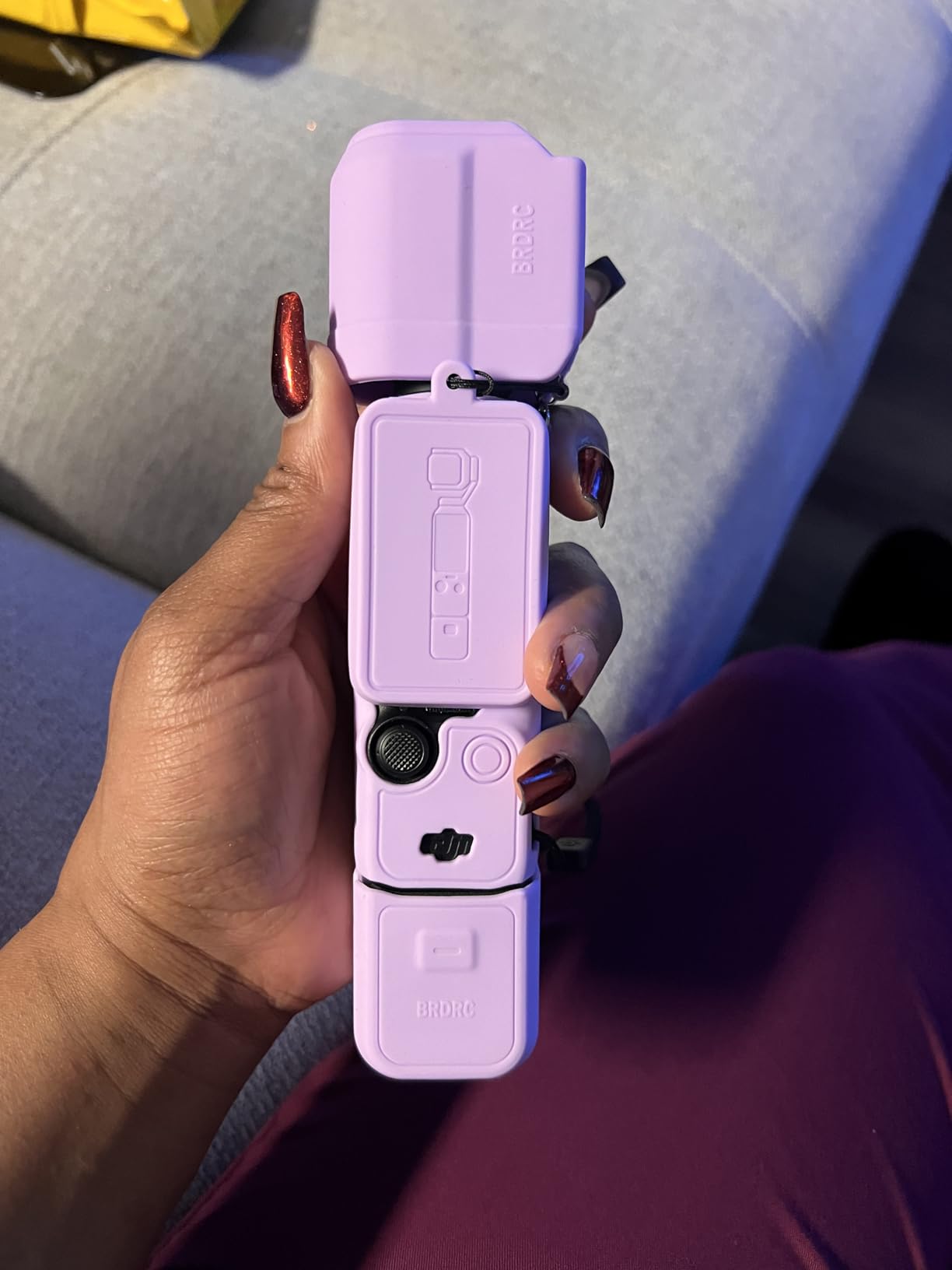
Battery life ran roughly 90 to 100 minutes of mixed 4K shooting, which matched DJI’s claim of 166 minutes for lower-bitrate Full HD. The Pocket 3 charges over USB-C, so I topped it up from my travel battery pack between locations. If you own a DJI Mic 2 or Mic Mini, the Osmo Pocket 3 connects directly without an extra receiver, which is a huge win for vloggers.
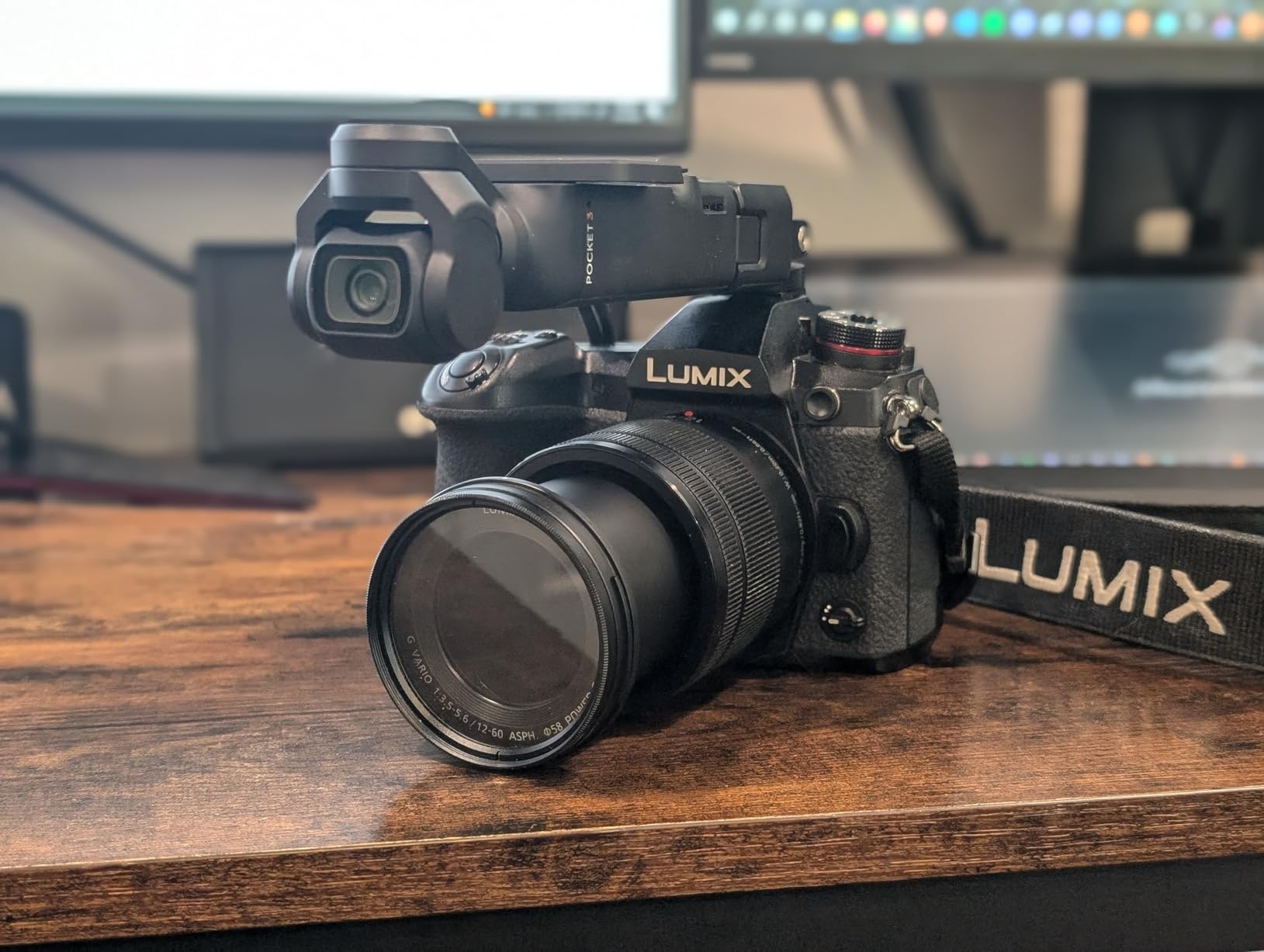
The two real downsides showed up quickly. First, the mandatory firmware registration step before the fifth use means you need Wi-Fi access before you can fully use the camera on a long trip. Second, the gimbal mechanism is delicate – the included case helps, but I’m still paranoid about tossing this in a daypack with sunglasses and a water bottle. For travelers focused on video, this is the camera I’d buy.
Who this camera is best for
Vloggers, YouTube creators, and travelers who want polished 4K video without hauling a mirrorless body and lens kit. The Pocket 3 is also great for couples and families where one person films and one person appears on camera.
Who should consider something else
If you need interchangeable lenses, deep RAW stills, or telephoto reach for wildlife, look at a mirrorless body instead. Pure stills photographers will get more out of an APS-C sensor with a real lens system.
2. Canon EOS Rebel T7 – Best Value DSLR for Travel
Canon EOS Rebel T7 DSLR Camera EF-S 18-55mm f/3.5-5.6 is II Lens Kit
24.1MP APS-C sensor
1080p Full HD
Wi-Fi and NFC
EF/EF-S mount
Pros
- 24.1MP APS-C sensor delivers crisp detail
- Built-in Wi-Fi and NFC for easy phone transfers
- Beginner-friendly Scene Intelligent Auto mode
Cons
- No 4K video
- only Full HD 1080p
- Slow 3 fps continuous shooting
The Canon EOS Rebel T7 is the camera I keep recommending to friends who want a “real camera” for travel without spending flagship money. It uses the same APS-C sensor format found in much pricier Canon bodies, which means you can grow into it. Start with the kit 18-55mm lens, then add a 55-250mm telephoto for safaris or a fast 50mm f/1.8 for low-light street shots.
What I love about the T7 for travel is how predictable it is. The 9-point AF system is basic, but in good light it nails focus on the first try. The optical viewfinder gives you a true, lag-free view of your scene – no EVF blackout, no screen glare in sunlight. Built-in Wi-Fi and NFC let me transfer shots to my phone from a cafe table without digging out a cable.

For my money, the T7 is the best beginner travel camera in the Canon lineup. The on-screen Feature Guide actually explains what each setting does in plain English, which is rare on entry-level bodies. Image quality from the 24.1MP sensor is detailed and color-accurate straight out of camera, especially in RAW where you have plenty of room to push shadows around.
Where the T7 shows its age is in two areas. Video is capped at 1080p with no 4K, which rules it out for serious vlogging. Burst shooting is also slow at 3 fps, so it’s not the body for sports or wildlife. For landscapes, city breaks, family trips, and learning photography fundamentals though, the T7 is a generous amount of camera for the spend.

Who this camera is best for
Beginners, families, and anyone who wants a true DSLR with room to grow. Also a strong pick for travelers who already own Canon EF or EF-S lenses.
Who should consider something else
Vloggers and 4K shooters should look at the Canon EOS R50 or Sony a6400 instead. Travelers who want something smaller should look at the Sony RX100 VII or Fujifilm X100VI category.
3. KODAK PIXPRO FZ55 – Best Budget Travel Point-and-Shoot
KODAK PIXPRO FZ55 16MP Compact Digital Camera, 5X Optical Zoom, Red
16MP CMOS sensor
5x optical zoom
1080p HD
USB-C charging
Pros
- Excellent value at the price point
- Easy to use for casual shooters
- Lightweight and pocketable at 3.7oz
- USB-C charging for travel convenience
- 5x optical zoom covers wide and short telephoto
Cons
- No SD card included in the box
- Video stabilization is limited without a gimbal
The KODAK PIXPRO FZ55 is the camera I’d hand to a parent who wants better vacation photos than their phone can deliver, without making them learn aperture and shutter speed. It weighs 3.7 ounces, slides into a jacket pocket, and the 28-140mm equivalent zoom covers everything from wide group shots to short telephoto.
I’ve been carrying the FZ55 on day hikes as a true “grab camera.” The 16MP sensor produces solid JPEGs for social sharing, and the image quality is a meaningful step up from a smartphone in good light. USB-C charging means I can top it up with the same cable I use for my phone – one less thing to pack.

The dedicated movie button and panorama mode are genuinely useful for casual travel shooters. Battery life averaged around four hours of intermittent shooting for me, which is impressive at this price point. The 2.7-inch rear LCD is basic but perfectly functional in daylight.
There are real limitations. There’s no RAW shooting, no manual exposure control beyond a basic program mode, and low-light performance drops off fast above ISO 800. Video is shaky without a stabilizer, so this is not a vlogging camera. But as an everyday travel camera for the price, the FZ55 punches above its weight and reviewers consistently note it outclasses pricier cameras on autofocus speed.

Who this camera is best for
Casual vacationers, parents, kids, and anyone who wants a simple pocket camera that takes better photos than their phone without the learning curve of mirrorless.
Who should consider something else
Anyone wanting manual control, RAW files, 4K video, or strong low-light performance should look at a higher-end compact or mirrorless body.
4. KODAK PIXPRO FZ45 – Cheapest Travel Camera Worth Buying
KODAK PIXPRO FZ45 16MP Compact Digital Camera, 4X Optical Zoom, AA, Black
16MP CMOS
4x optical zoom
AA batteries
Wi-Fi enabled
Pros
- Most affordable camera in this guide
- AA battery power means no charger needed on the road
- Lightweight at 4.1 ounces
- Simple menu system for true beginners
Cons
- Limited low-light performance
- Digital image stabilization only
The PIXPRO FZ45 is the camera to give someone who doesn’t want to think about batteries. Two AAs power it, and you can buy those anywhere on the planet – no proprietary charger, no USB cable anxiety. For backpackers and long-haul travelers, that peace of mind is worth a lot.
The 27mm wide-angle lens is generous at this price and makes a real difference when you’re shooting tight cafes, narrow alleys, or crowded markets. The 4x optical zoom extends to 108mm equivalent, which handles casual portraits fine.
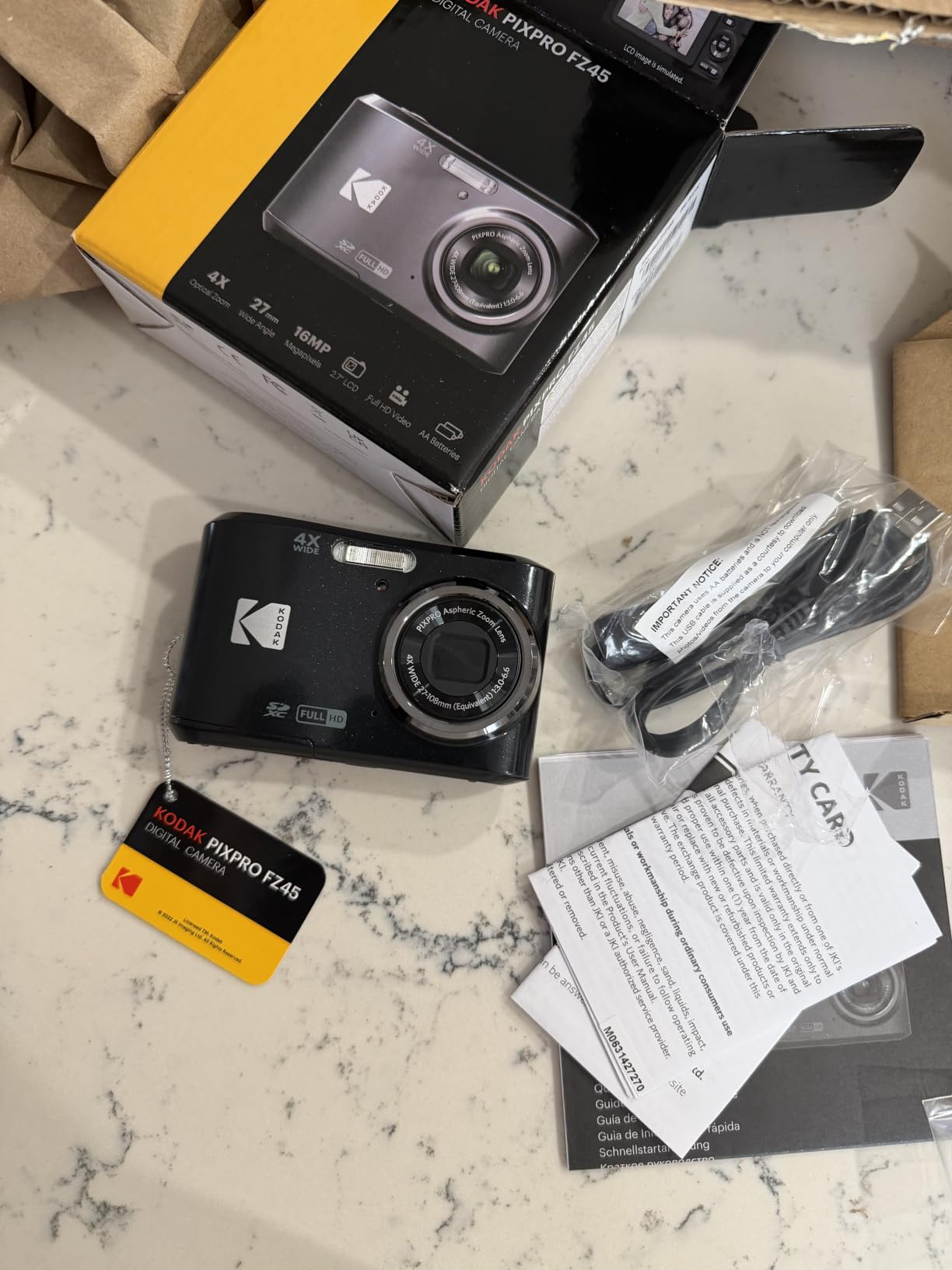
I think of the FZ45 as the camera I’d buy for a kid’s first trip abroad or a grandparent who just wants bigger buttons. The 2.7-inch LCD and stripped-down menu make it approachable. Image quality is honest for the cost – decent in daylight, mediocre after sunset.
The trade-offs are real though. There’s no RAW shooting, no manual exposure, and the build is mostly plastic. Low-light shots get noisy above ISO 400, and continuous shooting tops out around 5 fps. The 4.0-star average reflects that this is a basic tool, not a creative one. If you need more, the FZ55 or Sony RX100 VII are the next steps up.

Who this camera is best for
Travelers who prioritize battery flexibility, parents shopping for a child’s first camera, and anyone on a strict budget who still wants optical zoom.
Who should consider something else
Anyone wanting better low-light performance, manual controls, or higher build quality. Step up to the FZ55 or a Sony RX100 if those matter.
5. Sony Alpha a6400 – Best APS-C Mirrorless for Travel Enthusiasts
Sony Alpha a6400 Mirrorless Camera: Compact APS-C Interchangeable Lens Digital Camera with Real-Time Eye Auto Focus, 4K Video, Flip Screen & 16-50mm Lens – E Mount Compatible – ILCE-6400L/B, Black
24MP APS-C sensor
Real-Time Eye AF
4K UHD
180 degree flip screen
Pros
- Real-Time Eye AF for humans and animals
- 4K UHD video with S-Log3
- 11 fps continuous shooting with tracking
- 180 degree tilting flip screen
Cons
- No in-body image stabilization
- Limited battery life on long shoot days
The Sony Alpha a6400 is the mirrorless body I keep coming back to when I want genuine creative control without a full-frame price tag. The 24MP APS-C sensor is sharp, the Real-Time Eye AF is what Sony fans rave about for good reason, and the 4K video is detailed enough for serious YouTube work.
What makes the a6400 stand out for travel is the autofocus. Sony’s subject detection locks onto eyes – human or animal – and just stays there. I shot a friend’s dog running across a beach with the kit lens, and the a6400 nailed focus on every frame. The 11 fps burst rate means you can capture fleeting travel moments you would miss with a slower body.

The 180-degree flip screen is a genuine vlogger’s tool. It tilts up over the top of the body so you can frame yourself clearly while walking and talking. For travel vloggers, that’s a meaningful upgrade from cameras with only a 90-degree flip-down screen.
The downsides are real. There’s no in-body image stabilization, so you’ll want stabilized lenses for low-light handheld work. Battery life is on the short side – I carry three NP-FW50 batteries for a full shooting day. Sony’s menu system is famously complex, so budget an hour to set up custom buttons before your trip. None of these are dealbreakers, but they’re real friction points.

Who this camera is best for
Travel enthusiasts who want interchangeable lenses, family shooters who need reliable Eye AF, and vloggers who want a compact 4K body with a real flip screen.
Who should consider something else
Anyone who needs in-body stabilization for handheld low-light work should look at the Sony a6700 or a full-frame body. Travelers prioritizing ultimate portability should consider a fixed-lens compact instead.
6. GoPro Hero12 Black – Best Action Camera for Adventure Travel
GoPro Hero12 Black E-Commerce Package – Waterproof Action Camera with 5.3K60 Ultra HD Video, 27MP Photos, HDR, 1/1.9″ Image Sensor, Live Streaming, Webcam, Stabilization
5.3K60 video
27MP photos
HyperSmooth 6.0
Waterproof to 33ft
Pros
- Rugged and waterproof to 33ft without extra housing
- 5.3K60 Ultra HD video with 27MP photos
- HyperSmooth 6.0 stabilization
- 360 degree Horizon Lock keeps footage level
Cons
- Battery life tops out around 70 minutes at 5.3K60
- Unit runs hot during extended recording
The GoPro Hero12 Black is the camera I pack for any trip that involves water, sand, or speed. Kayaking in Slovenia, snorkeling in Thailand, mountain biking in Whistler – the Hero12 just shrugs it off. Waterproof to 33 feet without a housing, drop-resistant, and small enough to helmet-mount, this is the action camera the category is built around.
The 5.3K60 video footage is sharper than 4K, and HyperSmooth 6.0 stabilization is so good that I’ve walked handheld next to surfers and the resulting footage looks like it was shot on a tripod gimbal. Horizon Lock keeps the horizon level even when the camera rotates 360 degrees, which is wild for an action cam at this size.

For stills, the 27MP sensor produces images good enough for social sharing and small prints. HDR video is a real upgrade for travel – skies retain detail and shadows don’t crush the same way they did on older GoPros. Live streaming and webcam mode are nice bonuses for digital nomads.
There are honest limitations. Battery life is genuinely short at 5.3K60 – plan on 60 to 70 minutes per Enduro battery and pack spares. The unit gets hot during extended recording, which can trigger thermal shutdowns in tropical climates. Low-light performance is much weaker than a 1-inch sensor compact. This is a daytime, action-first camera, not a night photography tool.

Who this camera is best for
Adventure travelers, divers, surfers, mountain bikers, and anyone who needs a camera that survives harsh conditions. Also great as a secondary body alongside a mirrorless main camera.
Who should consider something else
Travelers who shoot mostly stills, low-light scenes, or want optical zoom should pick a different camera. The Hero12 is purpose-built for video in motion.
7. Panasonic LUMIX TZ99 – Best Superzoom Camera for Travel
Panasonic LUMIX TZ/ZS99 Point and Shoot Camera, Compact Camera for Travel with 30x Zoom with 24-720mm Zoom Lens, and 4K Video/Photo, Great for Travel and Concerts, DC-TZ99 (Silver)
30x optical zoom
24-720mm LEICA lens
4K video
322g body
Pros
- 30x optical zoom covers every travel situation
- 4K video and 4K PHOTO at 30fps
- Tiltable 1
- 840k-dot touchscreen
- Lightweight at 322 grams despite the zoom range
Cons
- No viewfinder (removed from predecessor)
- Mediocre low-light performance
The Panasonic LUMIX TZ99 is the camera for travelers who refuse to carry multiple lenses but still want to shoot wildlife, architecture, and portraits on the same trip. The 24-720mm LEICA lens covers wide-angle landscapes to serious telephoto reach, all in a body that fits in a jacket pocket.
I used the TZ99 on a trip through the Scottish Highlands and loved the flexibility. Shooting wide at Glencoe, then zooming tight on a stag across the valley – all without changing lenses, all without a backpack. The Lens Position Resume feature remembers where you zoomed to, which is a small but genuinely useful touch.

4K video at 30fps is sharp and stabilized. The HD 120fps slow-motion mode is fun for waterfalls and city scenes. The 1,840k-dot tiltable touchscreen helps frame low-angle and high-angle shots. USB-C charging means one cable for phone and camera.
The trade-offs are predictable. The 1/2.3-inch sensor is small compared to mirrorless bodies, so low-light shots get noisy fast. Panasonic removed the viewfinder that older TZ-series cameras had, which hurts in bright sun. There’s no flash hotshoe. Some users report grey-market units without US warranty, so buy from a trusted seller. For travelers who value zoom range above all else, the TZ99 is hard to beat.

Who this camera is best for
Safari travelers, cruise ship passengers, and anyone who wants one camera that handles wide landscapes and distant wildlife without changing lenses.
Who should consider something else
Low-light shooters and travelers who want interchangeable lenses should look at a mirrorless body. If you don’t need the zoom range, a 1-inch compact will give better image quality in similar form factor.
8. Sony RX100 VII – Best Premium Pocket Compact
Sony RX100 VII Premium Compact Camera 1.0-Type CMOS Sensor Black
1-inch stacked CMOS
24-200mm ZEISS
20fps shooting
0.02s AF
Pros
- 1-inch stacked CMOS sensor for premium image quality
- ZEISS Vario-Sonnar T 24-200mm F2.8-F4.5 lens
- Industry-leading 0.02 second AF speed
- 20 fps blackout-free continuous shooting
Cons
- High price point for a compact camera
- Battery life is limited
The Sony RX100 VII is the premium compact I recommend when image quality matters more than budget. The 1-inch stacked CMOS sensor and 24-200mm ZEISS lens deliver DSLR-like results in a body that fits in a jeans pocket. If you want one camera that does everything well and disappears in your bag, this is it.
What makes the RX100 VII special is the autofocus speed. Sony’s 0.02-second AF is the fastest in any compact, and the AI-based real-time tracking is uncanny. I shot street scenes in Tokyo and the camera picked up faces from across intersections and held focus as people walked toward me.

The 20 fps blackout-free shooting is overkill for casual travel but amazing for capturing fleeting moments. 4K video with S-Log3 gives real grading flexibility for content creators. The 24-200mm zoom range is genuinely useful – wide for landscapes, short telephoto for portraits and details.
The price is steep for a compact, and battery life is short. Some users have reported reliability concerns, which is worth researching before you buy. There’s no touchscreen on some variants. But for travelers who refuse to compromise on image quality and portability, the RX100 VII is the benchmark other compacts chase.

Who this camera is best for
Travelers who want premium image quality in a pocket body, enthusiasts who want a powerful backup alongside a mirrorless main camera, and content creators who want video features without a big rig.
Who should consider something else
Budget travelers should look at the KODAK FZ55 or FZ45 instead. If you need interchangeable lenses or better battery life, a mirrorless body is the smarter buy.
9. Canon PowerShot V10 – Best Pocket Vlogging Camera
Canon PowerShot V10 Compact Vlogging Camera, 1″ CMOS Sensor, 4K Video Streaming, Built‑in Wide‑Angle Zoom Lens, Flip‑LCD & Stereo Mic, Image Stabilization, Creator Studio in Your Pocket, Black
1-inch CMOS
4K video
Built-in stand
Stereo mics
Pros
- Truly pocket-sized for on-the-go creation
- 1-inch back-illuminated CMOS sensor
- 4K video at 30fps and Full HD at 60fps
- Built-in folding stand for hands-free shooting
Cons
- No zoom - fixed 19mm wide-angle lens
- Battery drains quickly
The Canon PowerShot V10 is the camera I’d recommend to a content creator who wants something simpler than the Osmo Pocket 3 but still pocketable. It’s a creator-focused compact with a 1-inch sensor, 4K video, and a built-in folding kickstand that lets you set it down on a cafe table and start filming.
I used the V10 for a week of daily vlogs and appreciated how frictionless it was. Power on, flip the screen forward, hit record. The 19mm wide-angle lens captures you plus the scene behind you without distortion. The stereo mics with a third noise-reduction mic handle cafe ambient better than expected.
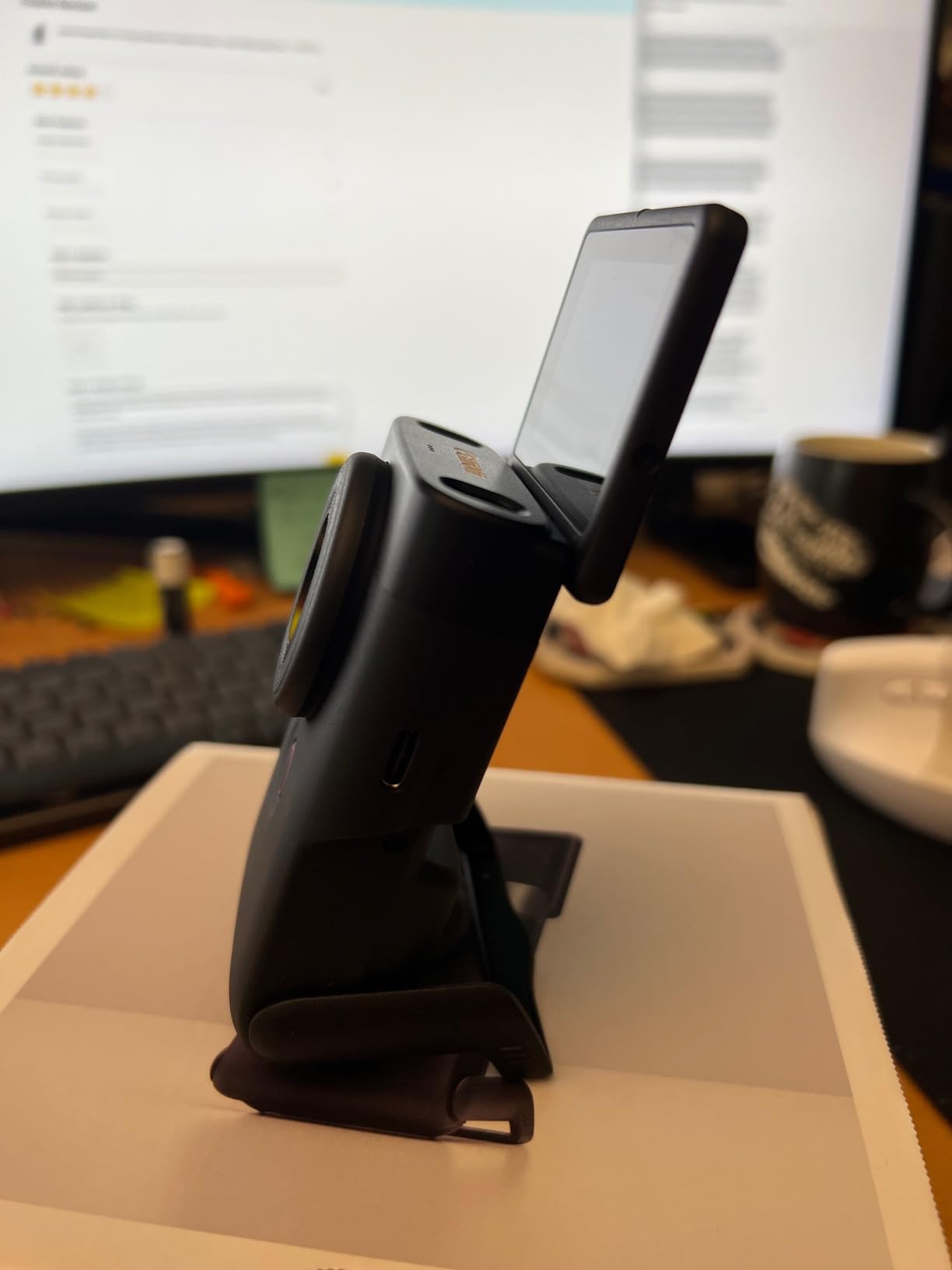
4K footage is sharp and well-stabilized. The front-facing flip screen makes framing yourself easy, and the USB-C charging works with the same cable as a phone. The built-in stand is genuinely useful for tabletop shots and time-lapses.
The biggest limitation is the fixed lens – there’s no zoom at all, optical or digital. If you want to frame a tighter shot, you have to physically move closer. The 2-inch screen is small for reviewing footage. Battery life is short, around 60 to 90 minutes of continuous 4K. This is a purpose-built vlog camera, not a general-purpose travel camera.

Who this camera is best for
Solo content creators, travel vloggers, and Instagram Reels creators who want a pocket camera specifically for talking-to-camera videos.
Who should consider something else
Photographers who need zoom or stills versatility should look elsewhere. For more advanced video work, the DJI Osmo Pocket 3 is a step up.
10. Canon EOS R50 Mirrorless Bundle – Best Mirrorless Starter Kit
Canon EOS R50 Mirrorless Camera with 18-45mm Lens (5811C012) Bundle
24.2MP APS-C sensor
4K oversampled video
18-45mm lens
Vari-angle screen
Pros
- 24.2MP APS-C sensor with sharp output
- Dual Pixel CMOS AF II with subject detection
- 4K oversampled video with reliable tracking
- Vari-angle touchscreen for flexible framing
Cons
- No in-body image stabilization
- Buffer fills quickly during burst shooting
The Canon EOS R50 bundle is the mirrorless starter kit I recommend to anyone stepping up from a smartphone or entry-level DSLR. The 24.2MP APS-C sensor is the same generation found in higher-end Canon bodies, the Dual Pixel CMOS AF II is fast and accurate, and the 4K oversampled video is genuinely sharp.
The bundle ships with the RF-S 18-45mm kit lens, a 64GB SD card, and a shoulder bag. That last inclusion is underrated – it means you can pack the camera and go without buying accessories. The Creative Assist mode walks beginners through exposure settings in plain language.
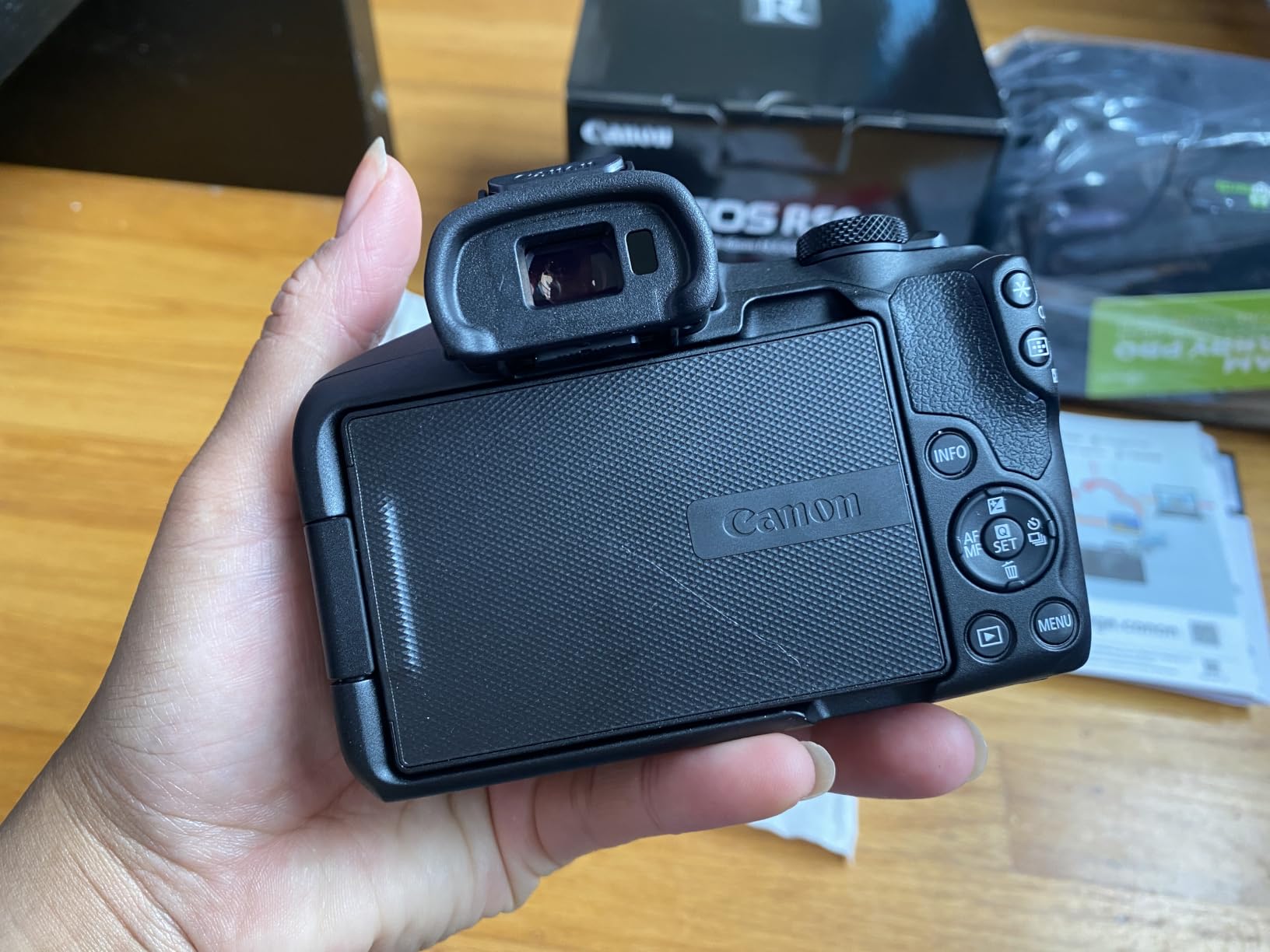
The vari-angle touchscreen flips out and rotates, which is great for vlogging and travel selfies. Vertical video mode is built in for social media creators. Subject detection tracks faces, eyes, and even animals with reliability that surprised me for a camera at this tier.
The R50 doesn’t have in-body image stabilization, so low-light handheld shots rely on stabilized lenses. The buffer fills quickly during burst shooting, limiting it to casual action rather than sports photography. For learners and casual shooters, though, this bundle is a generous amount of camera for the spend. Pair it with a spare battery and a fast 50mm lens later and you’ve got a real travel kit.
Who this camera is best for
Beginners ready to step into mirrorless, content creators who want a Canon ecosystem starter, and travelers who want room to grow with new lenses.
Who should consider something else
Travelers who don’t want to carry multiple lenses should look at a fixed-lens compact instead. Advanced shooters will want more controls and IBIS found in higher-end bodies.
Buying Guide: How to Choose the Best Travel Camera
Picking the best travel camera is less about specs and more about matching a tool to your trip. Here are the factors that actually move the needle, drawn from testing and from the questions real travelers ask in forums like r/onebag and r/AskPhotography.
Sensor size: smartphone, 1-inch, APS-C, or full-frame?
Sensor size is the single biggest driver of image quality. Smartphones have tiny sensors that get noisy above ISO 200. A 1-inch sensor (like the RX100 VII and Osmo Pocket 3) is roughly four times larger and gives you clean shots up to ISO 1600. APS-C sensors (Sony a6400, Canon R50, Canon T7) are nine times larger than smartphone sensors and deliver real low-light capability plus the ability to blur backgrounds. Full-frame sensors are the largest, but they cost more and weigh more.
For most travelers, APS-C hits the sweet spot of quality, size, and price. If you want pocket-first portability, a 1-inch compact is the right answer. The 10 Best Portable Chargers for Travel guide covers keeping all of these cameras topped up on the road.
Weight and one-bag travel
If you travel with a single carry-on or a backpack, weight matters. Mirrorless kits with two or three lenses can easily hit 1.5 kg, which compounds over a long trip day. Compact cameras under 350g (DJI Pocket 3 at 179g, KODAK FZ45 at 116g, Canon V10 at 213g) disappear in a bag. One-bag travelers consistently recommend M4/3 bodies and small APS-C bodies with a single zoom lens as the sweet spot.
Weather sealing and real-world durability
Marketing claims about “weather sealing” vary wildly. Look for IP ratings (IP53 means dust-protected and resistant to light water spray) and read real-world reports from travelers who’ve used the camera in rain or sand. The GoPro Hero12 Black is the most genuinely weatherproof option in this guide at 33ft waterproof without a case. For other cameras, pack a rain sleeve.
Autofocus and subject detection
Modern subject detection autofocus is a game changer for travel. Sony’s Real-Time Eye AF, Canon’s Dual Pixel CMOS AF II, and DJI’s ActiveTrack 6.0 all lock onto faces, eyes, and animals with reliability that older contrast-detect systems can’t match. If you shoot people, pets, or wildlife, prioritize a camera with strong subject detection.
GPS and geotagging
One frustration that comes up repeatedly in travel forums: built-in GPS has been removed from most modern mirrorless cameras. If geotagging your travel photos matters, your options are an external GPS logger that syncs with your phone, using your phone’s GPS to tag images later, or picking one of the older bodies that still has GPS built in.
Mirrorless vs DSLR in 2026
DSLRs are being phased out by every major manufacturer. Canon, Nikon, and Sony have all confirmed that mirrorless is their future development focus. The Canon Rebel T7 is still a perfectly capable camera for beginners, but if you want a system with room to grow over the next five years, mirrorless is the safer bet. The good news is that lens ecosystems have matured enough that you can build a real kit today.
Battery life and travel charging
Mirrorless cameras eat batteries. CIPA ratings are conservative – expect roughly half the rated shots in real travel use with mixed video. Plan on two or three spare batteries per camera body, plus a USB power bank for on-the-go charging. The 10 Best Portable SSDs guide covers backing up your images while traveling.
Frequently Asked Questions
What is the best travel camera to buy in 2026?
The best travel camera depends on your shooting style. For most people, the DJI Osmo Pocket 3 wins on portability and 4K video. For stills enthusiasts who want interchangeable lenses, the Sony a6400 or Canon EOS R50 delivers APS-C quality in a compact body. For premium compact performance, the Sony RX100 VII is hard to beat. Budget travelers should look at the KODAK PIXPRO FZ55.
Is a smartphone good enough for travel photography?
Modern smartphones are excellent for casual travel photography in good light. They struggle in low light, fast action, and at telephoto distances. If you want wildlife, safari, low-light, or large prints, a dedicated camera delivers noticeably better results. Many travelers carry both – a phone for quick shares and a dedicated camera for serious shots.
What is the best camera for travel vlogging?
The DJI Osmo Pocket 3 is the best dedicated travel vlogging camera thanks to its 1-inch sensor, 4K/120fps video, and 3-axis gimbal. For a simpler creator-focused compact, the Canon PowerShot V10 is pocketable and easy to use. For a more advanced setup with interchangeable lenses, the Sony a6400 with its flip screen and Real-Time Eye AF is a strong choice.
Should I buy a mirrorless camera or a compact for travel?
If image quality and creative control matter most, mirrorless wins. If portability and pocketability come first, a 1-inch compact is hard to beat. Many travelers pair a mirrorless body for serious work with a small compact as a backup. Consider your typical shooting scenario: city breaks and casual trips favor compacts, while wildlife and landscape trips favor mirrorless with telephoto lenses.
Is 35mm or 50mm better for travel photography?
Both focal lengths are excellent for travel, but they serve different purposes. 35mm is the classic travel focal length – wide enough for landscapes and tight interiors, natural for street scenes. 50mm forces you to get closer to your subject and produces more flattering portraits with shallow depth of field. For most travelers, a 35mm or 24-70mm equivalent zoom is the more versatile choice.
How do I protect my camera gear while flying?
Carry your camera gear in your personal bag, never checked luggage. Use a padded camera insert inside a backpack or roller bag for shock protection. Remove batteries and store them in a separate case. For international travel, check customs declarations for your destination – most countries allow personal camera gear without duty. Consider travel insurance that specifically covers electronics.
Final Verdict: Which Travel Camera Should You Buy?
After testing and comparing these 10 cameras, our top pick for the best travel camera in 2026 remains the DJI Osmo Pocket 3. The combination of a 1-inch sensor, 4K/120fps video, 3-axis gimbal, and pocketable 179g body is unmatched. For vloggers, content creators, and anyone who wants polished travel video without a bulky rig, it’s the camera to beat.
If you want the best value in a traditional camera body, the Canon EOS Rebel T7 is a strong pick – a real DSLR with room to grow into a serious lens kit. For pure budget travel, the KODAK PIXPRO FZ55 punches above its weight. Whatever your style, the best travel camera is the one you’ll actually carry, and every camera in this guide earns its place.
For more travel gear recommendations, check out our guides to the best portable chargers for travel and the best portable SSDs for backing up images on the road. Whichever camera you pick, get out there and shoot.