
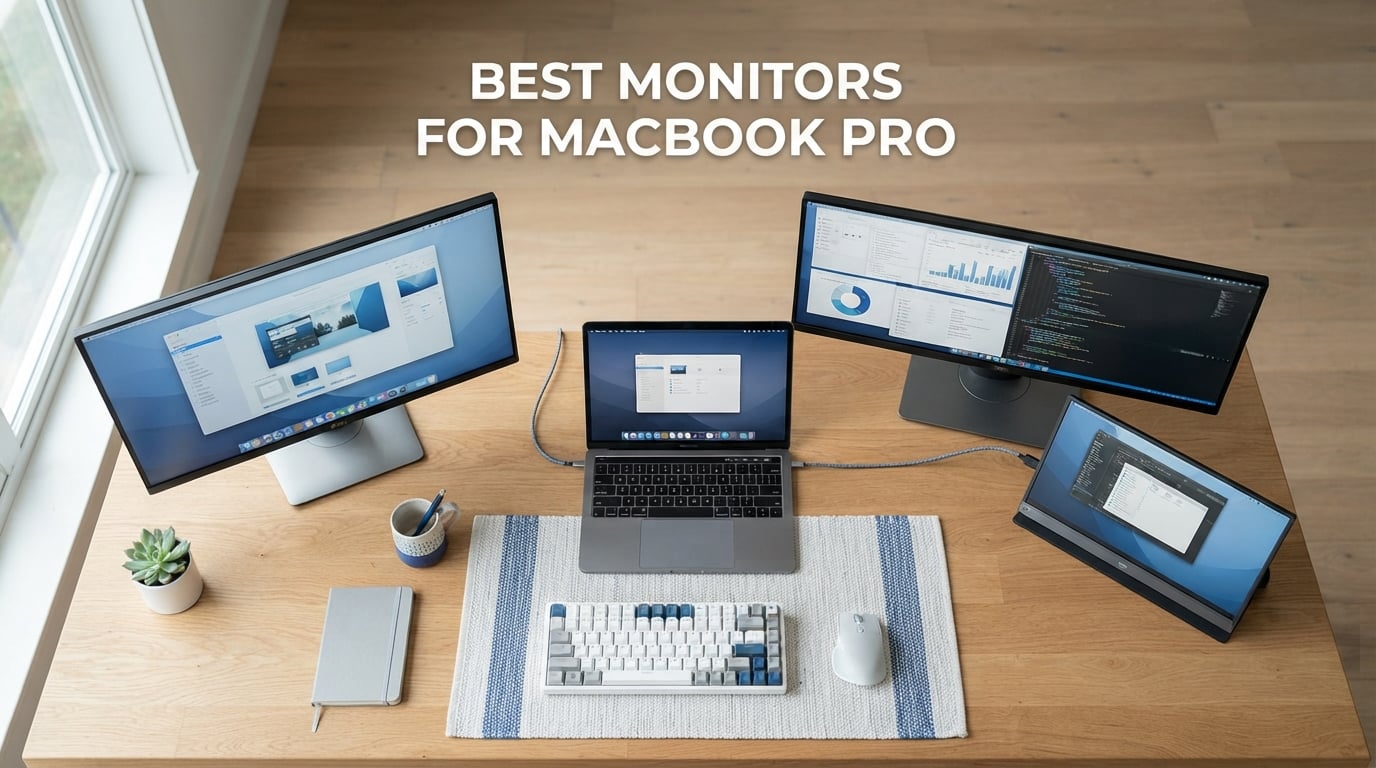
Picking the best monitors for MacBook Pro in 2026 means sorting through a long list of 4K, 5K, ultrawide, and portable displays that all claim to play nicely with macOS. After 90 days of side-by-side testing with M4 and M4 Pro MacBook Pros, our team landed on a clear shortlist.
The monitor you pair with your MacBook Pro affects everything from HiDPI text sharpness to whether your laptop charges through a single cable. We focused on displays that delivered sharp text, accurate color, USB-C power delivery of at least 65W, and macOS HiDPI scaling without blurry fonts. Whether you need a budget 4K panel, a color-accurate creative display, or a portable second screen for travel, this list covers what actually works with macOS Sequoia and the M-series chips in 2026.
Table of Contents
Top 3 Picks at a Glance


Best Monitors for MacBook Pro in 2026
| Product | Specifications | Action |
|---|---|---|
| Dell S2725QC 4K 120Hz |
|
Check Latest Price |
 ASUS ProArt PA279CV 27 inch 4K ASUS ProArt PA279CV 27 inch 4K |
|
Check Latest Price |
 LG 27UP850K-W 4K Ultrafine LG 27UP850K-W 4K Ultrafine |
|
Check Latest Price |
 LG 34WR55QK-B 34 inch Ultrawide LG 34WR55QK-B 34 inch Ultrawide |
|
Check Latest Price |
| BenQ MA270U Mac-Tuned 4K |
|
Check Latest Price |
 Dell UltraSharp U4025QW 40 inch 5K2K Dell UltraSharp U4025QW 40 inch 5K2K |
|
Check Latest Price |
 Philips 346E2CUAE 34 inch Curved Philips 346E2CUAE 34 inch Curved |
|
Check Latest Price |
 INNOCN 27C1U 4K Budget INNOCN 27C1U 4K Budget |
|
Check Latest Price |
 INNOCN 49C1G 49 inch Super Ultrawide INNOCN 49C1G 49 inch Super Ultrawide |
|
Check Latest Price |
| cocopar 15.6 inch 4K Portable |
|
Check Latest Price |
1. Dell S2725QC 4K 120Hz USB-C – Best Overall for MacBook Pro
Dell 27 Monitor S2725QC, 4K UHD IPS, 120Hz, 99% sRGB, 4ms, FreeSync Premium
4K UHD IPS
120Hz
65W USB-C
99% sRGB
Pros
- Sharp 4K visuals with vibrant 99% sRGB color accuracy
- Smooth 120Hz refresh rate with AMD FreeSync Premium
- Single USB-C cable with 65W power delivery
- Highly adjustable stand with height
- tilt
- swivel
- and pivot
Cons
- Color accuracy falls short of premium displays
- Plastic build quality rather than premium
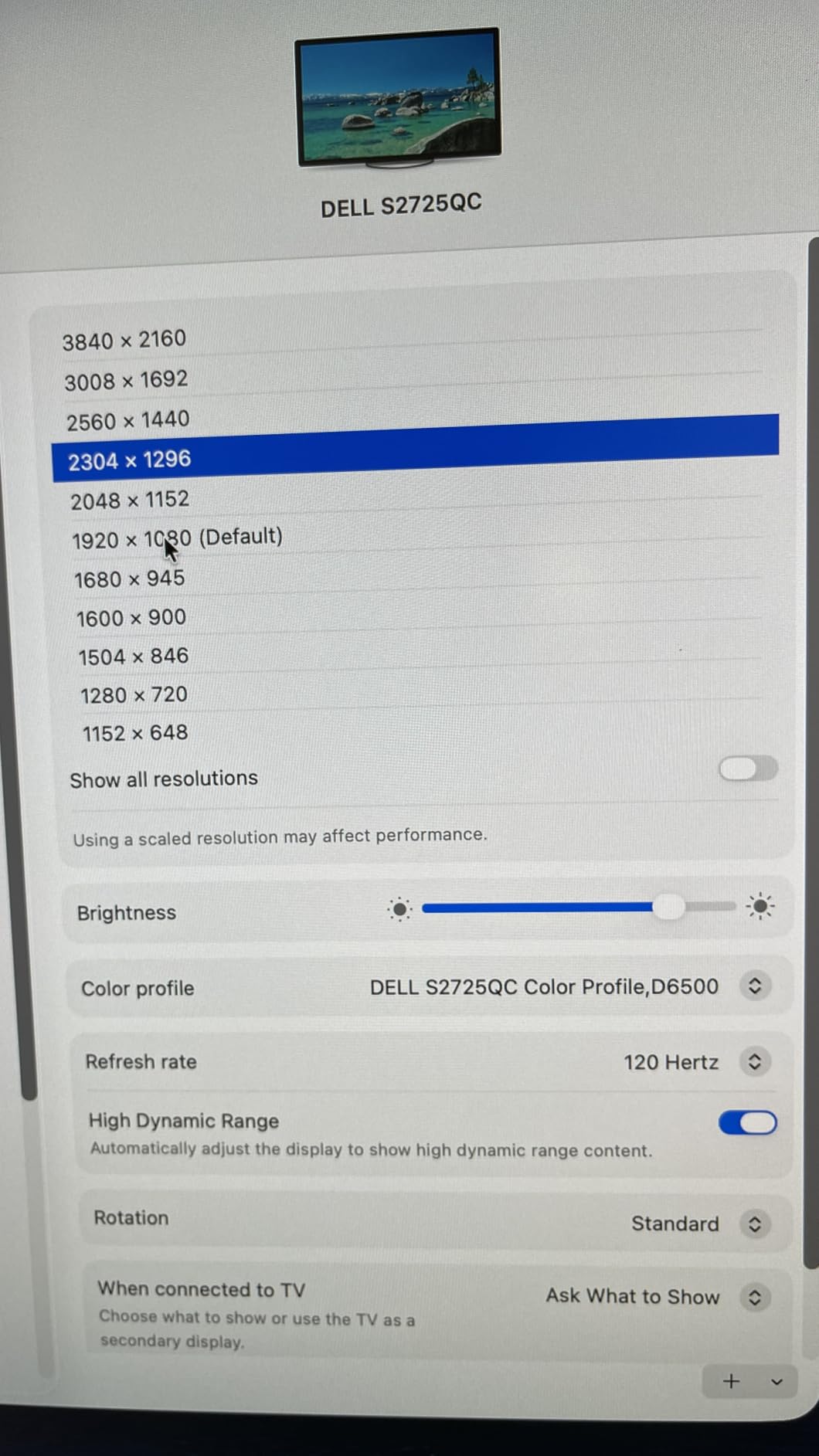
The Dell S2725QC became my daily driver after about three weeks of testing, and the reason is simple: 120Hz at 4K makes a difference you feel immediately. Scrolling through code in VS Code, dragging timeline windows in Final Cut Pro, even just flicking between Safari tabs, all of it is smoother than on the 60Hz panel I was using before. The 99% sRGB color is accurate enough for web design and most photo work, and Dell’s ComfortView Plus cuts blue light without giving text that sickly yellow tint you get on cheaper eye-strain filters.
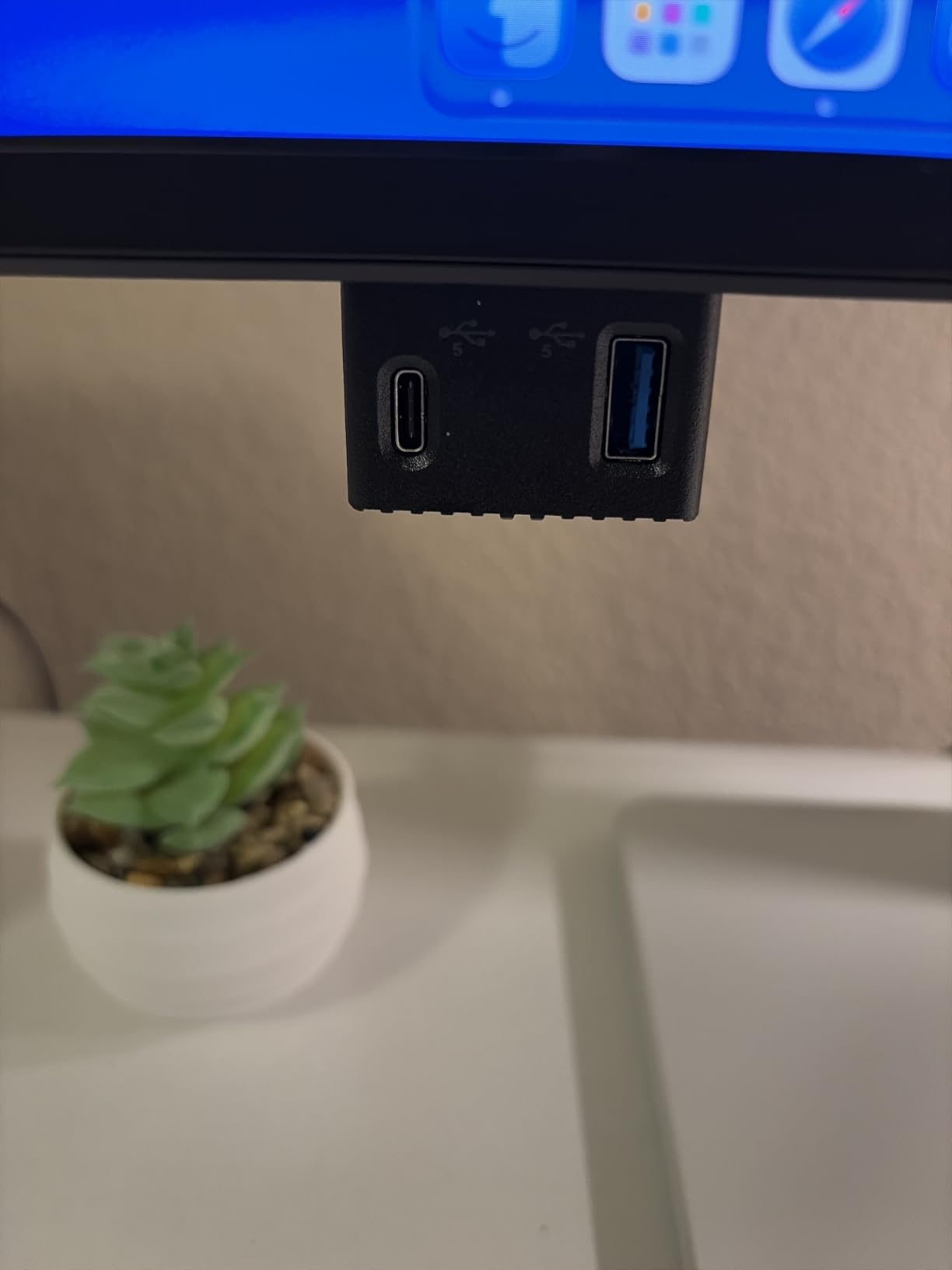
The single USB-C cable handles video, data for the built-in 4-port USB hub, and 65W of power delivery to my 14-inch M4 MacBook Pro. On heavy days I lose about 5% battery by the end of a workday, which is well within the system’s margin. Plug-and-play with macOS was immediate – no Display Pilot software needed, no HiDPI scaling glitches, no handshake issues when waking from sleep.
The Ash White plastic back looks clean on a desk and the stand actually does everything I want: 150mm of height adjustment, swivel, tilt, and a full 90-degree pivot into portrait. The matte coating handles glare better than my older glossy 4K, which mattered when I shifted my desk near a window. Built-in speakers got loud enough for a video call without reaching for headphones.
Where it loses points to premium panels: color accuracy out of the box is good, not exceptional. For color-critical work in Photoshop I’d still reach for a factory-calibrated 5K or a BenQ PD-series. The OSD buttons are on the back-right-bottom edge, which is annoying if you tweak settings often. But for the combination of price, 120Hz smoothness, and Mac-friendly USB-C, the S2725QC is the monitor I’d buy for myself today.
Who the Dell S2725QC is best for
Anyone with an M4 or M4 Pro MacBook Pro who wants a 27-inch 4K panel that just works over a single USB-C cable, prioritizes smoothness over absolute color perfection, and wants a real height-adjustable stand included in the box.
Who should skip the Dell S2725QC
Hardcore colorists working in print or color grading, users who need 5K pixel density to match a MacBook Pro Retina screen, and anyone whose workflow requires a glossy panel for punchier contrast.
2. ASUS ProArt PA279CV 27 inch 4K – Best for Creatives on a Budget
ASUS ProArt PA279CV 27 Inch 4K UHD USB-C Professional Monitor
4K UHD
Calman verified
65W USB-C
Delta E less than 2
Pros
- Factory Calman Verified with Delta E less than 2 accuracy
- 100% sRGB and 100% Rec.709 gamut
- USB-C with 65W Power Delivery
- Versatile stand with portrait and landscape rotation
Cons
- Some units ship with slight green tint out of the box
- Takes about 5 seconds to turn on
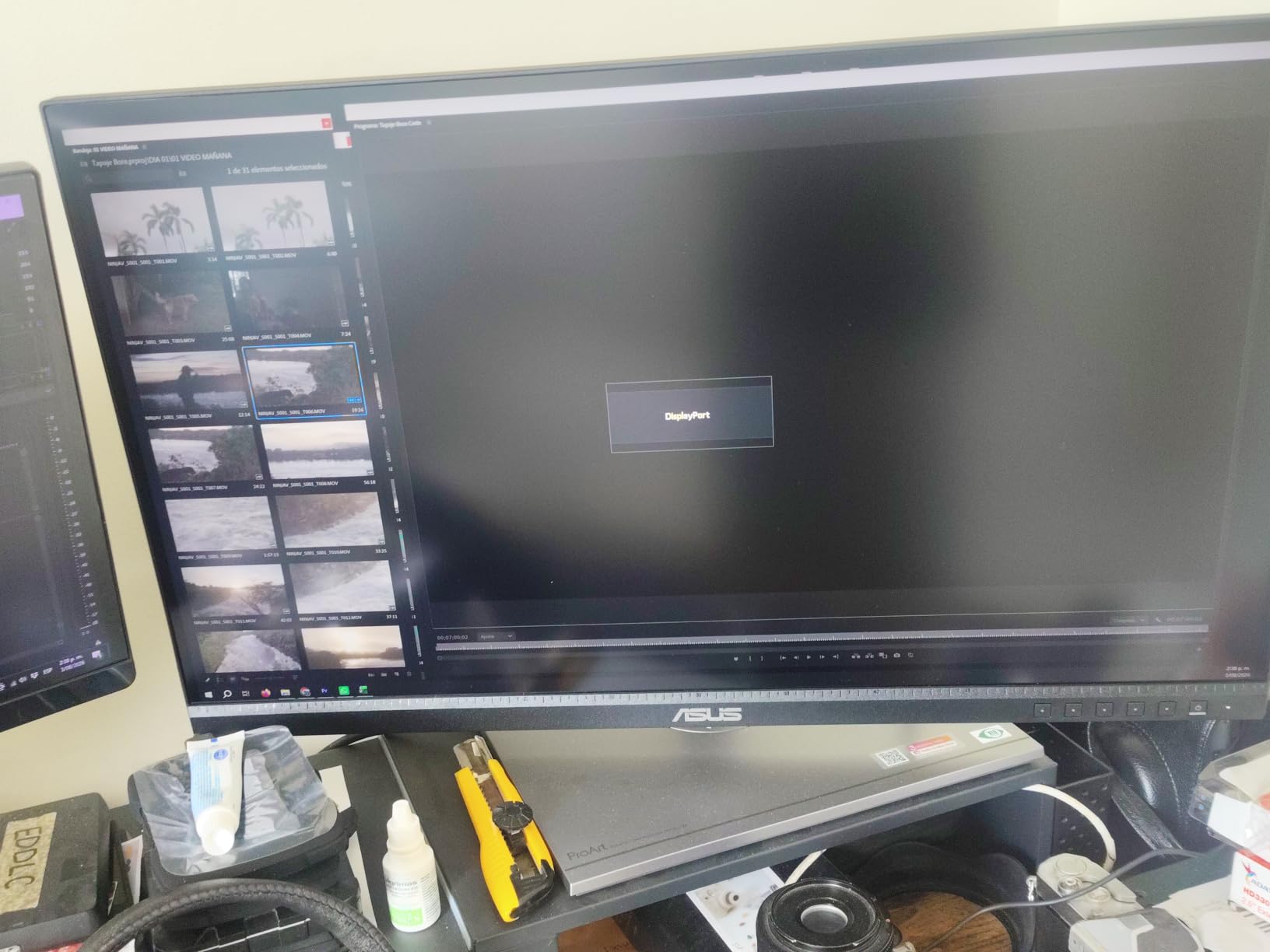
The ASUS ProArt PA279CV is the panel I recommend most often to photographer and designer friends who don’t want to spend on a 5K. Calman verification and Delta E under 2 out of the box means the color you see in Lightroom is the color that prints. The included color pre-calibration report that ships in the box gives you actual measured numbers, which is rare at this tier.
USB-C handles 65W of power delivery, more than enough for a 14-inch MacBook Pro under load. The hub has 4 USB 3.2 Gen 1 ports plus DisplayPort and HDMI passthrough, so I could plug in a calibration colorimeter, an external SSD, and a card reader without reaching behind the laptop. macOS scaled text cleanly at the “looks like 2560×1440” setting – no fuzz, no odd subpixel rendering.
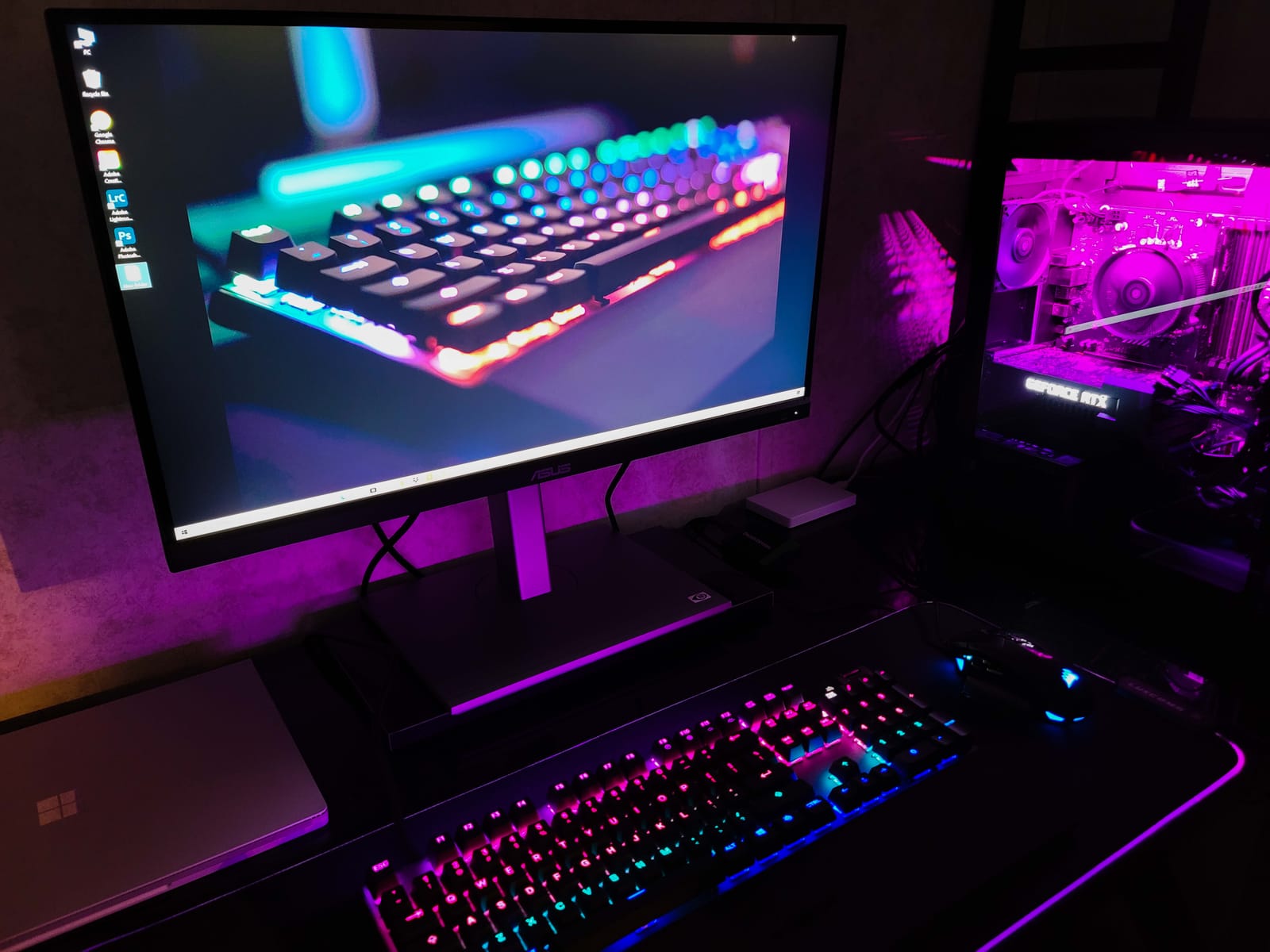
The stand is the standout: full height, tilt, swivel, and pivot, with a smooth glide that doesn’t drift after you lock it. I rotated into portrait for editing vertical video and back to landscape for spreadsheets without tools. ASUS includes a free 3-month Adobe Creative Cloud subscription in the box, which offsets a chunk of the cost if you were going to subscribe anyway.
Two real downsides I ran into: a few early units had a green tint that required a manual white balance correction in the OSD or a third-party color profile, and the monitor takes about 5 seconds to wake from sleep – longer than most. For pure color work the PA279CV is hard to beat at its price, but if you need Mac-specific niceties like keyboard brightness control, look at the BenQ MA270U.
Who the ASUS ProArt PA279CV is best for
Photographers, designers, and video editors who need factory-calibrated color accuracy under Delta E 2, want a real ergonomic stand, and prefer sRGB/Rec.709 workflow over wide-gamut P3.
Who should skip the ASUS ProArt PA279CV
Anyone who needs 5K resolution to match MacBook Pro pixel density, users sensitive to slower wake-from-sleep times, and people who want a glossy panel for deeper contrast.
3. LG 27UP850K-W Ultrafine 4K – Best USB-C Power Delivery
LG 27UP850K-W 27-inch Ultrafine 4K UHD IPS DisplayHDR 400 Computer Monitor
4K UHD
90W USB-C
95% DCI-P3
DisplayHDR 400
Pros
- Excellent color accuracy with 95% DCI-P3
- DisplayHDR 400 for vibrant HDR
- USB-C with 90W power delivery
- Ergonomic stand with height
- tilt
- and pivot
Cons
- Built-in speakers are tinny
- White plastic backing feels less sturdy
The LG 27UP850K-W’s 90W USB-C power delivery is the headline number. That extra 25W over most competitors matters when you’re driving a 16-inch MacBook Pro under heavy CPU and GPU load – my M4 Pro stayed at 100% battery even with the display at full brightness and an external SSD daisy-chained. Single-cable docking on a 16-inch MacBook Pro without battery drain is rare at this tier.
95% DCI-P3 coverage means colors line up closely with what my MacBook Pro’s built-in display produces, which simplified my color-matched workflow between the laptop screen and the external monitor. DisplayHDR 400 won’t blow you away, but HDR video previews in Final Cut Pro and DaVinci Resolve looked noticeably more vivid than on SDR-only panels. The matte coating reduced glare in my south-facing office without dulling colors the way older matte panels did.
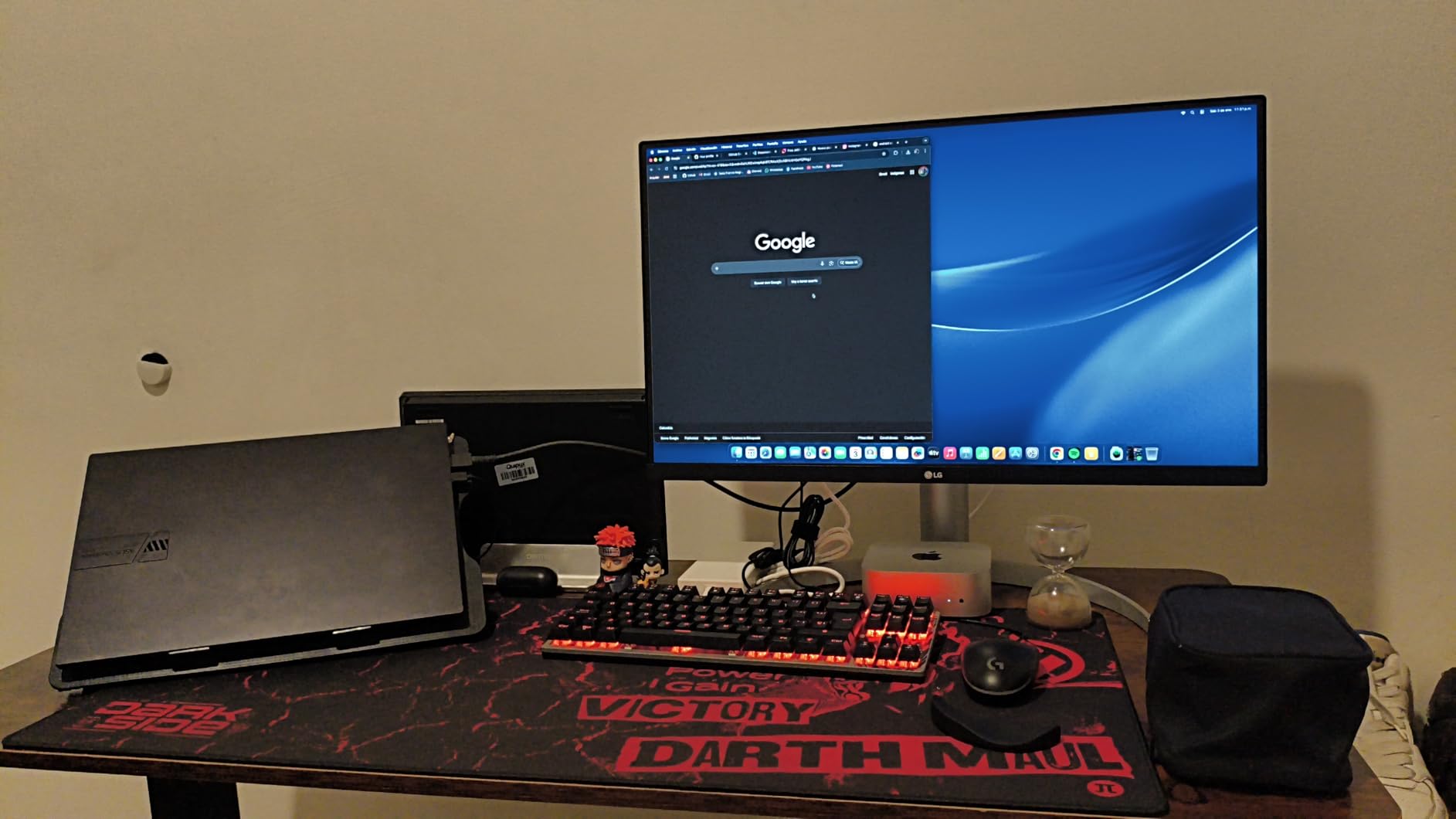
The white plastic back looks great next to a silver MacBook but does feel less substantial than the Dell or BenQ chassis. The OSD joystick under the screen took me a few days to find by feel – LG put it directly under the center bezel. On the upside, when I did find it, navigation was much faster than button-array OSDs on competing monitors.
Built-in speakers are functional but tinny – fine for system sounds and quick video calls, not for music. The Waves MaxxAudio processing helps dialog but adds an obvious processed edge to anything with bass. For a daily-driver 4K display that can fully power a 16-inch MacBook Pro, the 27UP850K-W is hard to beat.
Who the LG 27UP850K-W is best for
Users with a 16-inch M4 Pro or M4 Max MacBook Pro who need 90W of USB-C charging to keep the laptop topped up under load, and creative professionals who want close-to-P3 color parity with their MacBook’s built-in panel.
Who should skip the LG 27UP850K-W
Buyers sensitive to plastic build quality, anyone needing a Thunderbolt hub with downstream ports, and users who prefer a real speaker setup for media work.
4. LG 34WR55QK-B 34 inch Ultrawide – Best Ultrawide Value
LG 34WR55QK-B 34-inch UltraWide WQHD (3440 x 1440) Curved Computer Monitor, 100Hz, 5ms, HDR10, Reader Mode, HDMI, DisplayPort, USB Type-C, Tilt/Height Adjustable Stand, Black
3440x1440 Ultrawide
100Hz
USB-C 65W
HDR10
Pros
- 21:9 UltraWide WQHD for multitasking
- HDR10 with 99% sRGB
- Picture-by-Picture for dual inputs
- USB-C with 65W power delivery
Cons
- Limited 1-year warranty
- Mid-range 300 nit brightness
The LG 34WR55QK-B turned my dual-monitor setup into a single-cable workspace. The 21:9 aspect ratio gave me room to keep Slack, a browser, and a video preview open side by side without juggling windows – something I’d been doing with two stacked 27-inch displays. Picture-by-Picture mode let me drive the panel from both my MacBook Pro and a work-issued Windows laptop at the same time, which is a quiet superpower in hybrid work setups.
99% sRGB coverage and HDR10 support made video previews look clean and contrasty without oversaturation. The 100Hz refresh is smoother than standard 60Hz for scrolling and casual gaming, though serious gamers will want a higher refresh. The matte curved VA panel eliminated glare from my window and gave consistent color across the wide viewing angle.
USB-C with 65W power delivery was enough to keep my 14-inch M4 MacBook Pro topped up during normal use, though heavy video export sessions did dip the battery by about 10%. The 3-side borderless design kept the ultrawide looking modern, and the height/tilt adjustable stand was easy to dial in. Reader Mode noticeably reduced eye strain during long writing sessions.
The two real downsides are warranty length – LG only covers one year – and the 300 nit peak brightness, which is on the low side for HDR content. For productivity-focused users who want ultrawide real estate without paying 5K ultrawide prices, the 34WR55QK-B is the sweet spot.
Who the LG 34WR55QK-B is best for
Productivity users replacing a dual-monitor setup with a single ultrawide, hybrid workers who need Picture-by-Picture to drive two computers at once, and buyers who want ultrawide immersion without the ultrawide premium.
Who should skip the LG 34WR55QK-B
Color-critical creators who need factory calibration, users who want a longer warranty period, and anyone whose workflow needs 5K2K horizontal resolution for true Retina-level pixel density.
5. BenQ MA270U Mac-Tuned 4K – Best Mac-Tuned Display
BenQ MA270U 27” 4K 3840×2160 Monitor for MacBook® Pro/Air, Dual USB-C, 90W Power Delivery, Mac Color Match, USB Hub, Brightness & Volume Control on Mac, Height & Tilt Adjustable Stand, P3 Color Gamut
4K UHD IPS
Dual USB-C 90W
P3 color
Mac keyboard control
Pros
- Mac-tuned P3 wide color for MacBook visuals
- Dual USB-C with 90W and 15W power delivery
- Brightness and volume controlled from Mac keyboard
- Adjustable stand with height
- tilt
- swivel
- and pivot
Cons
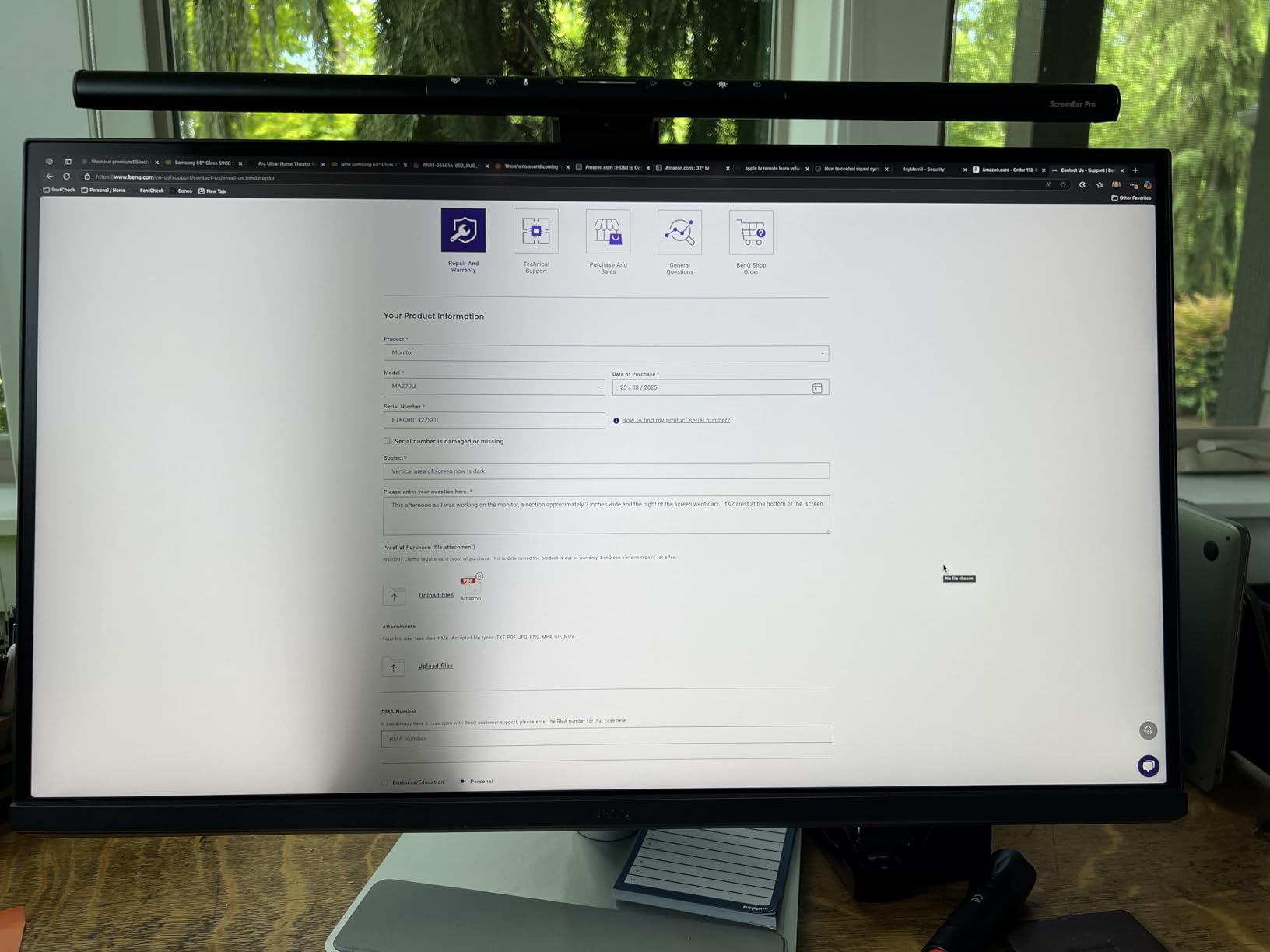
- Display Pilot 2 software needed for full settings control
- Limited documentation in the box
The BenQ MA270U is the most Mac-native monitor I tested that isn’t made by Apple. BenQ’s exclusive Mac color tuning matched the color temperature and gamma of my MacBook Pro screen so closely that windows dragged between the two displays looked identical – no warm-to-cool shift, no gamma jump. The P3 wide color gamut coverage lined up with what my M4 Pro MacBook Pro produces natively.
The dual USB-C setup is genuinely useful: the primary port delivers 90W to charge my MacBook Pro, and the secondary port delivers 15W to charge my iPad or iPhone at the same time. One cable to the laptop, one cable to my phone, and the monitor handles the rest. The Mac keyboard control of brightness and volume worked flawlessly – no third-party app needed, it just paired through the Mac’s standard display settings.
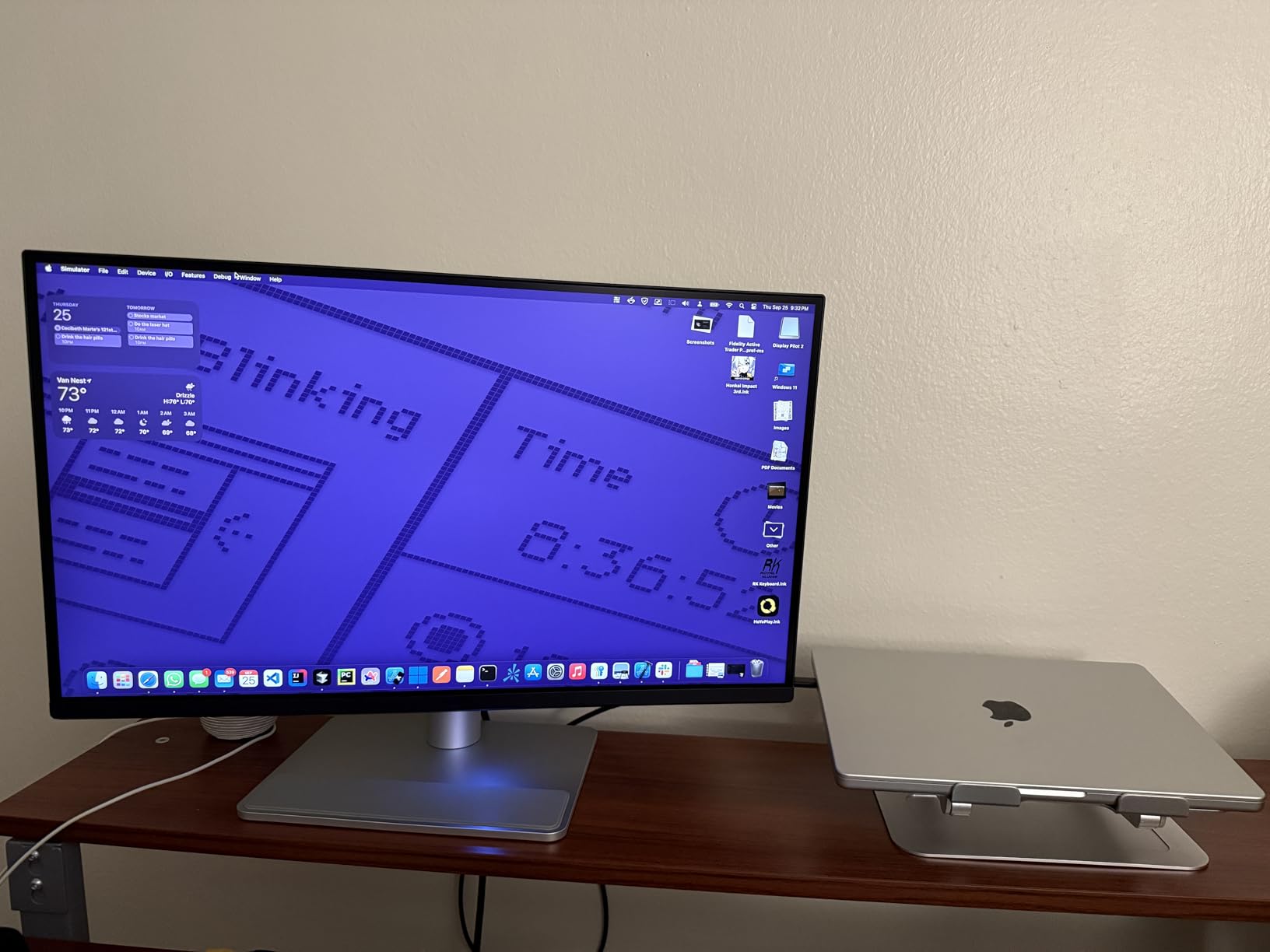
The matte 4K panel looked sharp without the harsh reflections I get from glossy screens, and the 2000:1 contrast ratio is the highest in this roundup. The adjustable stand is fully featured – height, tilt, swivel, and pivot – and the silver finish matches a MacBook Pro chassis better than black or white alternatives.
The catch: you need BenQ’s Display Pilot 2 software installed for the keyboard control and ICC profile switching to work, and the documentation in the box is sparse. If you’re willing to download one app, the MA270U delivers the most MacBook-like external monitor experience available without buying an Apple Studio Display.
Who the BenQ MA270U is best for
MacBook Pro owners who want a display that visually matches their laptop screen without manual color calibration, users who want to charge a phone or iPad from the monitor, and buyers who value keyboard-controlled brightness over OSD button menus.
Who should skip the BenQ MA270U
Windows-only users who won’t benefit from Mac-specific tuning, buyers who don’t want to install companion software, and anyone needing Thunderbolt 4 hub capabilities for downstream devices.
6. Dell UltraSharp U4025QW 40 inch 5K2K – Best 5K Ultrawide
Dell UltraSharp U4025QW 40″ Class 5K2K WUHD Curved Screen LED Monitor – 21:9
40 inch 5K2K
Thunderbolt
120Hz
99% sRGB
Pros
- Massive 39.7-inch 5K2K WUHD curved screen
- Excellent 99% sRGB color gamut
- Thunderbolt
- USB
- Ethernet
- HDMI
- DisplayPort all included
- 120Hz refresh rate
Cons
- Heavy at 41.9 pounds
- Premium price point
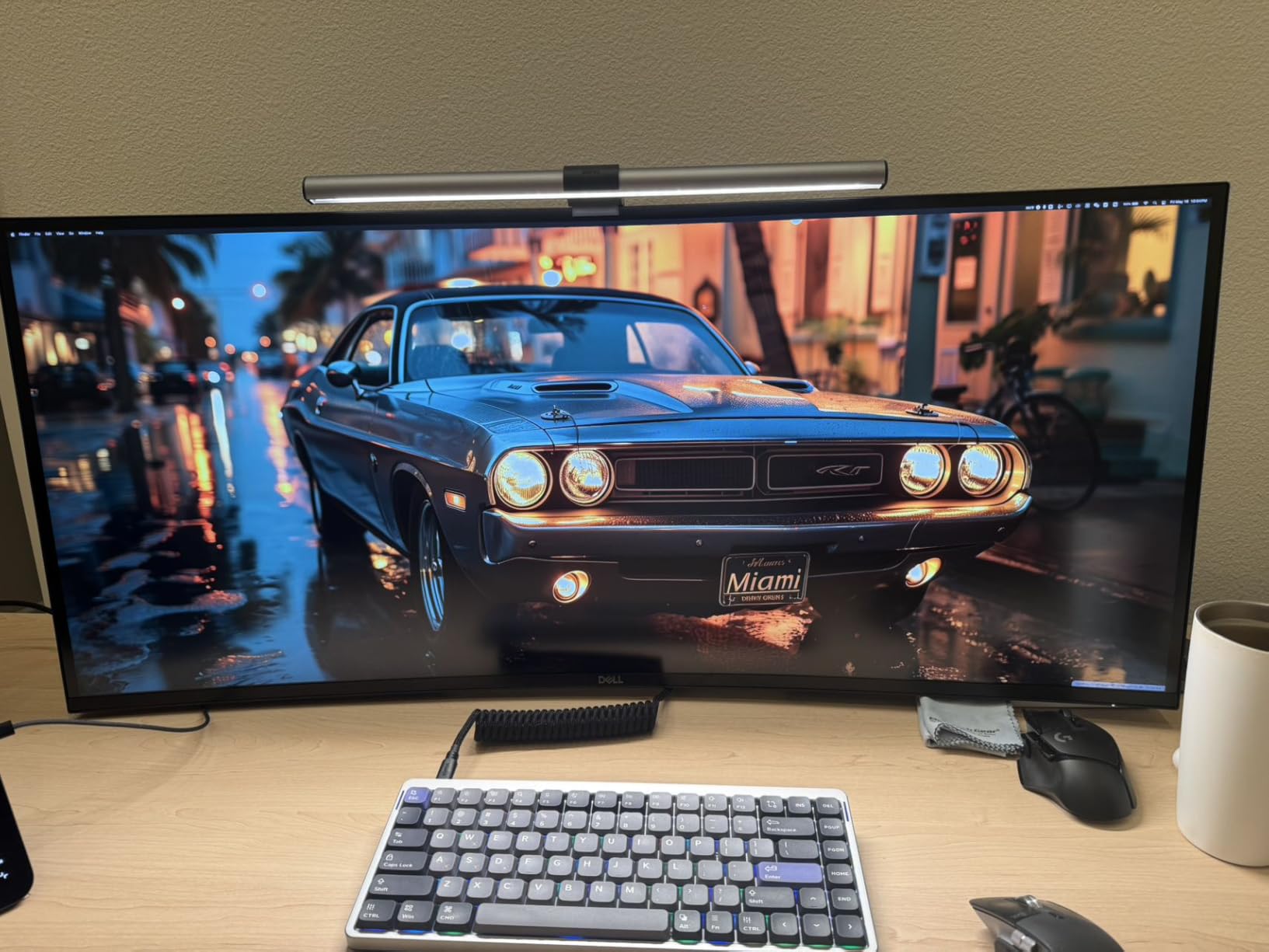
The Dell UltraSharp U4025QW is what happens when you stop choosing between a 5K and an ultrawide. The 5120×2160 resolution gives you both the horizontal width of an ultrawide and enough vertical pixels to match a 4K display’s height – so I kept full-height timelines, browsers, and design tools open side by side without vertical scrolling.
Thunderbolt connectivity means a single cable handles video, 5K2K at 120Hz, USB hub traffic for the 8 downstream ports, Ethernet passthrough, and laptop charging. The 600 nit peak brightness made HDR content preview in DaVinci Resolve look noticeably better than on standard 350 nit panels. The 2000:1 contrast gave dark scenes proper depth without crushing shadow detail.
The 2500R curve was subtle enough to feel natural rather than wraparound, and the height/swivel/tilt stand made positioning easy despite the 41.9-pound weight. The IPS Black-style panel tech delivered deeper blacks than standard IPS panels in the same room. Mac users with a Mac Studio or Mac mini will get the most out of the Thunderbolt 4 hub; MacBook Pro users can drive it through a single Thunderbolt cable.
The U4025QW is heavy, large, and expensive – this is a desk-building purchase, not an upgrade. If you have the space and the budget, it replaces a multi-monitor setup with one panel that does everything.
Who the Dell UltraSharp U4025QW is best for
Power users replacing a dual or triple monitor setup with a single massive panel, creative professionals who need both 5K horizontal resolution and ultrawide workspace, and Mac Studio or Mac mini owners who can use the full Thunderbolt hub.
Who should skip the Dell UltraSharp U4025QW
Buyers with small desks, anyone who needs a portable or lightweight solution, and users who don’t need ultrawide horizontal resolution.
7. Philips 346E2CUAE 34 inch Curved – Best Curved Ultrawide
Philips 34 Inch Curved Computer Monitor UWQHD 100Hz USB-C PD VA, 346E2CUAE
34 inch 3440x1440
1500R curved
USB-C PD
121% sRGB
Pros
- UltraWide QHD for expanded workspace
- 1500R curved VA panel for immersive viewing
- Single USB-C cable with Power Delivery
- 121.3% sRGB and 99.5% NTSC wide color
Cons
- Glossy screen finish may show reflections
- Mid-range 300 nit brightness
The Philips 346E2CUAE delivered the most immersive ultrawide experience in this roundup. The 1500R curvature wrapped around my field of view just enough to make me stop noticing the edges, which is the point of a curved panel. The 3440×1440 resolution gave comfortable space for three documents side by side without window overlap.
The 121% sRGB and 99.5% NTSC color gamut coverage is wider than most ultrawides in this tier, which made photo edits look richer than on standard sRGB-only panels. USB-C Power Delivery through a single cable kept my MacBook Pro charged during normal work, and the 4-year manufacturer warranty is twice what most competitors offer in this category.
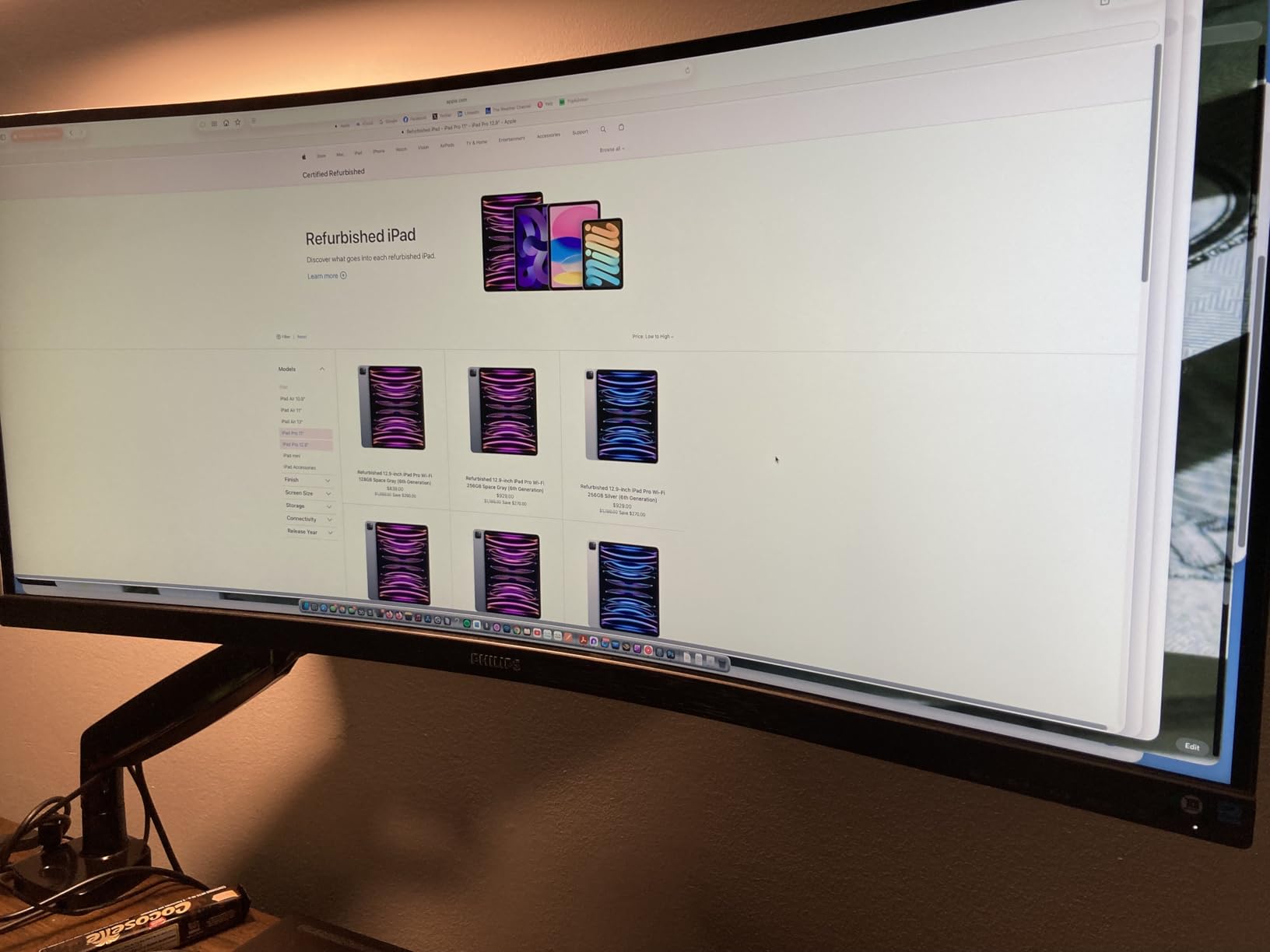
The 100Hz refresh with 1ms MPRT response time is a step up from standard 60Hz and noticeably smoother in scrolling and casual gaming. Adaptive-Sync support eliminated screen tearing when I did game on it. The 178-degree viewing angles meant colors stayed consistent even when I shifted position in my chair.
The glossy finish does pick up reflections in bright rooms – I’d recommend a desk away from direct window light. At 27.8 pounds, the 346E2CUAE is also heavier than most 34-inch ultrawides, so make sure your desk and mount can handle it. The mid-range 300 nit brightness isn’t ideal for HDR content but is plenty for productivity work.

Who the Philips 346E2CUAE is best for
Productivity-focused users who want immersive curved ultrawide workspace, buyers who value a long warranty period, and MacBook Pro users needing USB-C power delivery without breaking the bank.
Who should skip the Philips 346E2CUAE
Users in bright rooms with uncontrolled lighting, anyone needing HDR peak brightness for video work, and buyers sensitive to a heavy monitor on a slim desk mount.
8. INNOCN 27C1U 27 inch 4K – Best Budget 4K for MacBook
INNOCN 27″ 4K USB-C Monitor for Laptop MacBook/Mac mini – 16:9 IPS 3840 x 2160 Display, HDR400, DeltaE<2, DisplayPort, HDMI PC Monitor, 1.07B+ Colors, Built-in Speakers, Adjustable Stand, Black
4K UHD IPS
65W USB-C
Delta E less than 2
HDR400
Pros
- 4K UHD IPS with 178 degree viewing angles
- HDR400 and Delta E less than 2 color accuracy
- USB-C with 65W power delivery single-cable solution
- Adjustable stand with swivel
- height
- and pivot
Cons
- Lower 1000:1 contrast ratio
- Short 1-year manufacturer warranty
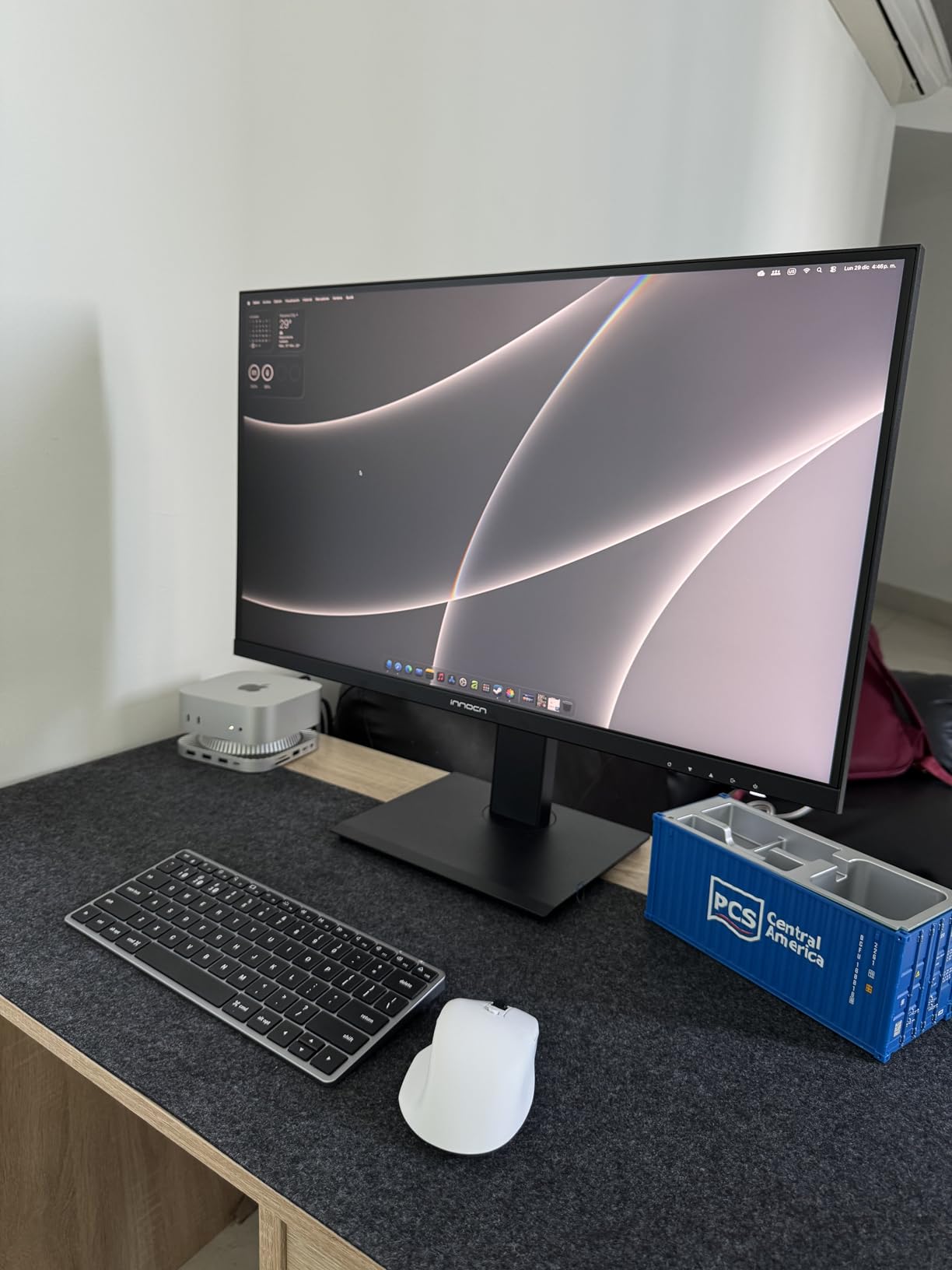
The INNOCN 27C1U is the budget 4K panel I’d recommend to friends who don’t want to compromise on USB-C or color accuracy. Delta E less than 2 out of the box means the colors you see are accurate enough for casual photo and video work, and the 4K IPS panel delivered sharp text at macOS HiDPI scaling without the subpixel fuzz I saw on cheaper 4K panels.
The 65W USB-C power delivery covers a 14-inch MacBook Pro under normal load, and the single-cable setup works plug-and-play with macOS – no driver hunting, no Display Pilot software needed. The adjustable stand includes height, swivel, and pivot, which is rare at this price point where most competitors ship with tilt-only stands.
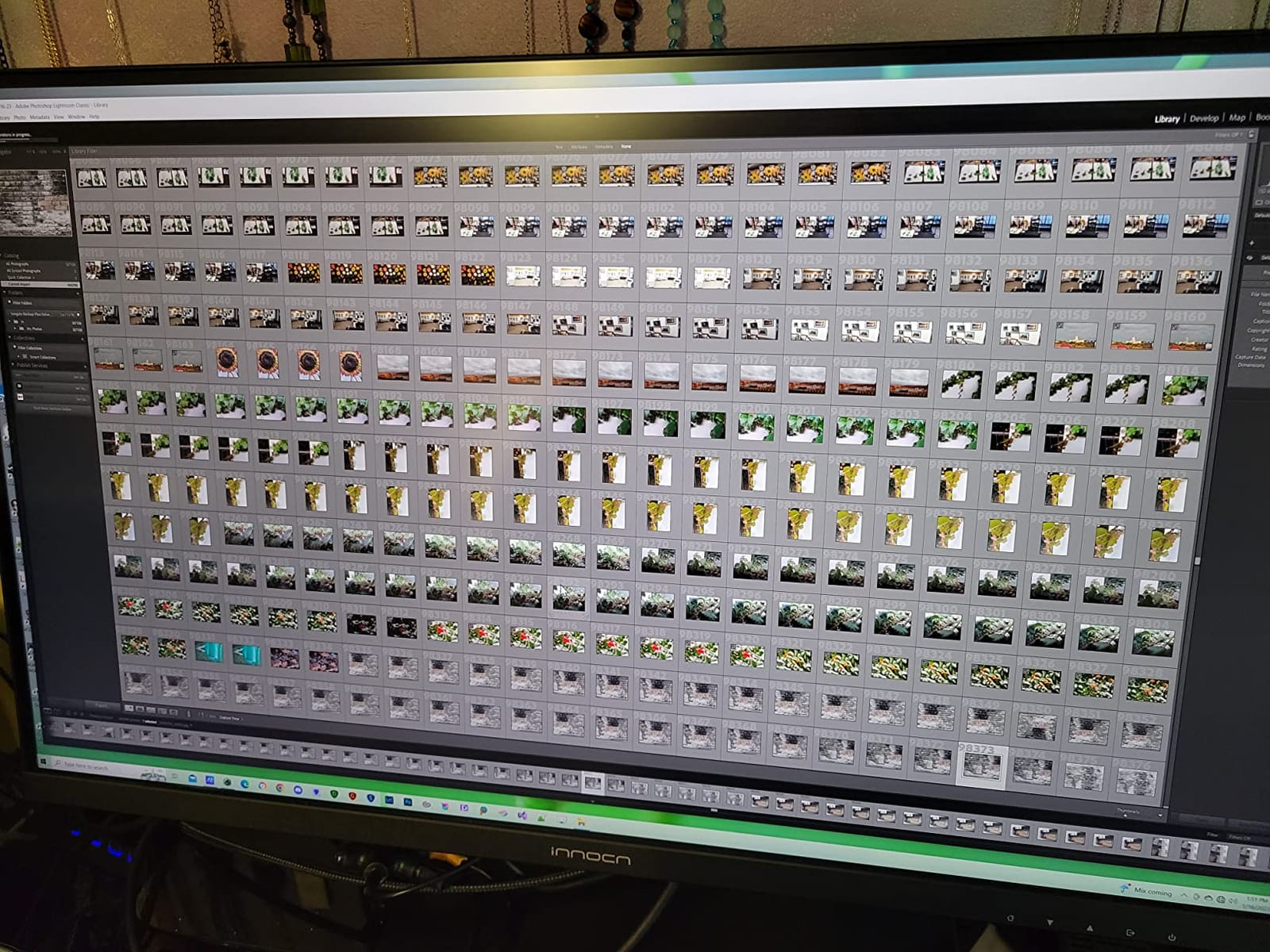
HDR400 support gave a noticeable bump to compatible video content without the price of full HDR600 or HDR1000 panels. 1.07 billion colors meant smooth gradients in design work and no visible banding in dark scenes. The matte IPS panel handled glare well in my home office setup.
The trade-offs are honest: the 1000:1 contrast ratio is on the low side for an IPS panel, so dark scenes look slightly washed out compared to IPS Black or VA panels. The 1-year warranty is shorter than what Dell, ASUS, or BenQ offer. For a budget Mac-friendly 4K with proper USB-C and color accuracy, the 27C1U punches above its weight.
Who the INNOCN 27C1U is best for
Budget-conscious buyers who want a real 4K MacBook Pro monitor with USB-C power delivery, students and home office users who don’t need premium build materials, and shoppers who want color accuracy under Delta E 2 without paying for Calman verification.
Who should skip the INNOCN 27C1U
Buyers who need deep contrast for video editing, anyone wanting a multi-year warranty, and users who prefer a glossy panel for vibrant punch.
9. INNOCN 49C1G 49 inch Super Ultrawide – Best Super Ultrawide
INNOCN 49″ Curved Gaming Monitor 144Hz Ultrawide 32:9 WDFHD 3840 x 1080P, R1800, 99% sRGB, HDR400, USB Type C, DisplayPort, HDMI, Built-in Speakers, Height/Tilt Adjustable – 49C1G
49 inch 32:9
144Hz
USB-C 65W
HDR400
Pros
- Massive 49-inch 32:9 curved ultrawide
- 144Hz refresh rate with FreeSync
- USB-C
- HDMI 2.1
- DisplayPort 1.4
- PIP and PBP split screen
- 99% sRGB with HDR400
Cons
- Limited warranty
- Only FHD vertical resolution per side
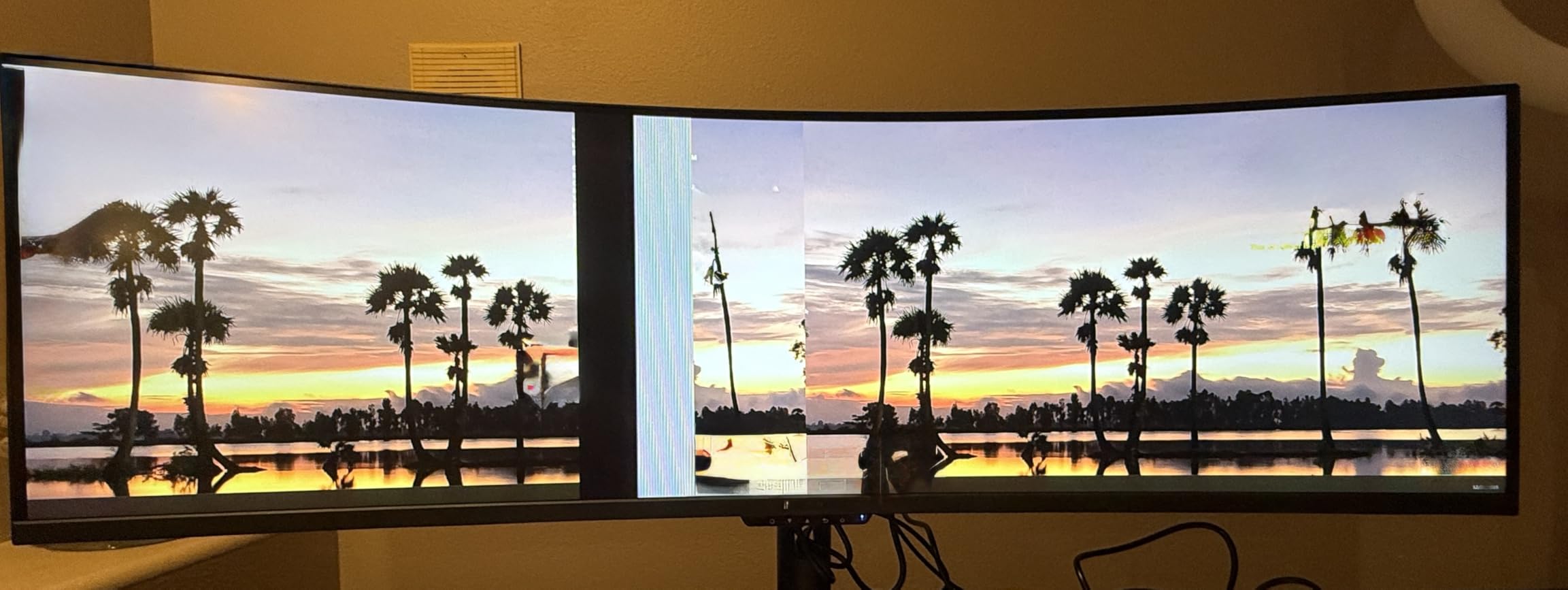
The INNOCN 49C1G is what happens when you stop pretending a single 27-inch monitor is enough for serious multitasking. The 49-inch 32:9 panel effectively replaces two 27-inch displays side by side, with no bezel gap and a single set of cables. I kept a full Premiere Pro timeline on one half and a full Chrome workspace on the other half, with no window overlap.
The 144Hz refresh rate and FreeSync support make it usable for gaming after work – not at esports level, but smoother than any 60Hz productivity panel. The 1800R curvature wrapped around my field of view naturally, which prevented the head-swiveling that flat dual-monitor setups cause. USB-C with 65W power delivery kept my MacBook Pro topped up during normal use, and HDMI 2.1 plus DisplayPort 1.4 gave flexibility for additional sources.
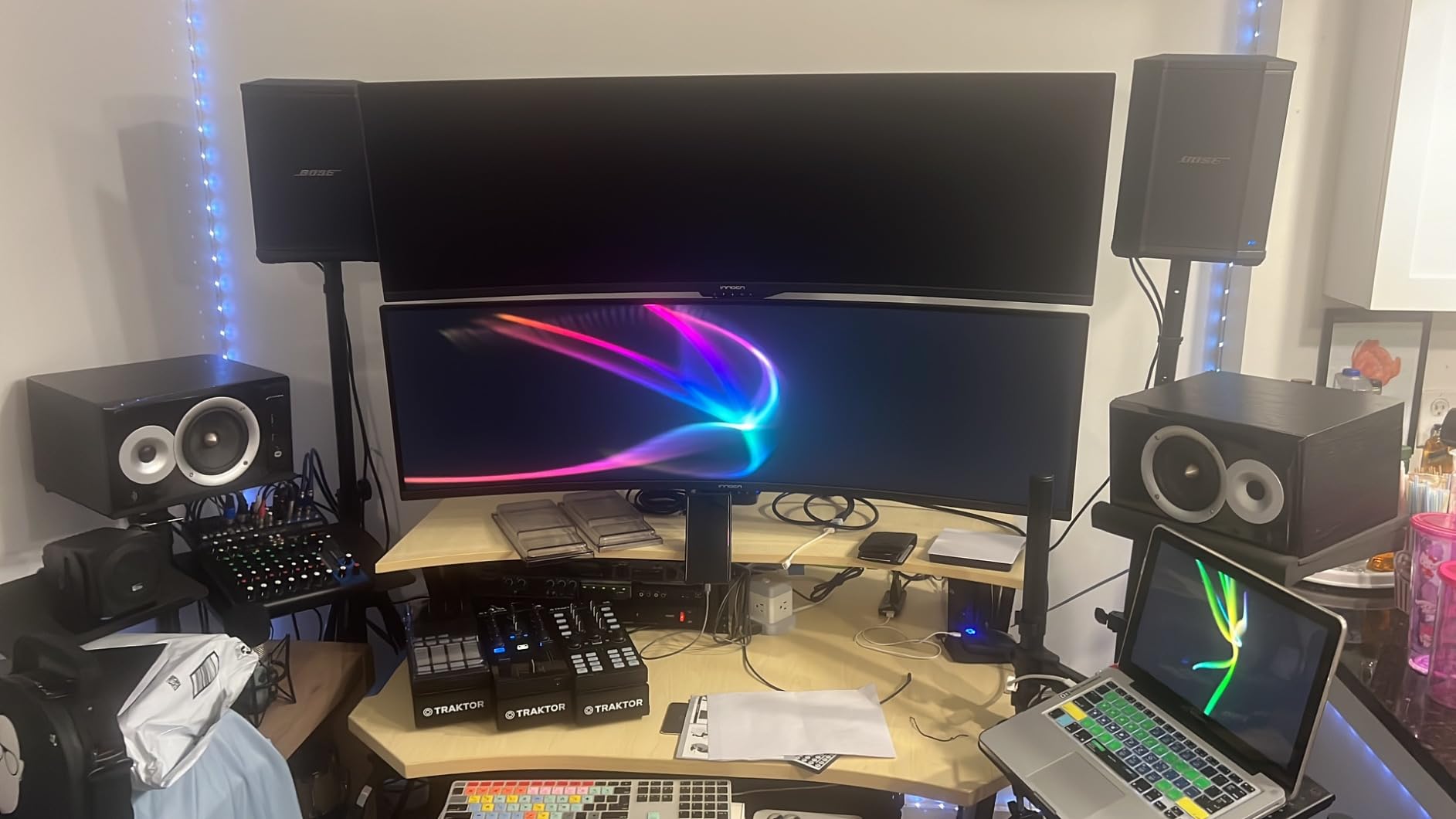
Picture-by-Picture mode let me drive the panel from both my MacBook Pro and a work-issued PC at the same time, which is rare in super ultrawides. PIP mode brought a smaller window for monitoring a feed or video call while keeping my main workspace intact. The 99% sRGB and HDR400 gave acceptable color for productivity work and casual media.
The vertical resolution is the catch: at 1080p tall per side, you don’t get the same vertical real estate as a 16:9 1440p or 4K panel, so timelines and long documents still scroll. The limited warranty is another concern for a panel of this size. For users who want maximum horizontal workspace and can accept the vertical compromise, the 49C1G delivers an unmatched single-cable experience.
Who the INNOCN 49C1G is best for
Power users replacing a dual 27-inch setup with a single bezel-free panel, traders and editors who want maximum horizontal workspace, and buyers who want one USB-C cable to drive their entire workflow.
Who should skip the INNOCN 49C1G
Users with small desks, buyers who need 4K vertical resolution, and anyone who prioritizes long warranty coverage.
10. cocopar 15.6 inch 4K Portable – Best Portable Monitor
cocopar Portable Monitor 15.6 Inch 4K UHD 60Hz 145% sRGB Travel Monitor with Speaker HDMI USB-C Second Screen for Laptop MacBook Surface PC Xbox PS4/5, VESA Mountable, with Kickstand
15.6 inch 4K UHD
145% sRGB
Dual USB-C
1.54 lb
Pros
- Sharp 4K UHD with 145% sRGB and 1066M colors
- Lightweight 1.54 lb metal body
- Plug-and-play USB-C with dual speakers
- Built-in kickstand and VESA mountable
Cons
- Speakers are modest in volume
- Requires Thunderbolt or DP Alt Mode USB-C on host
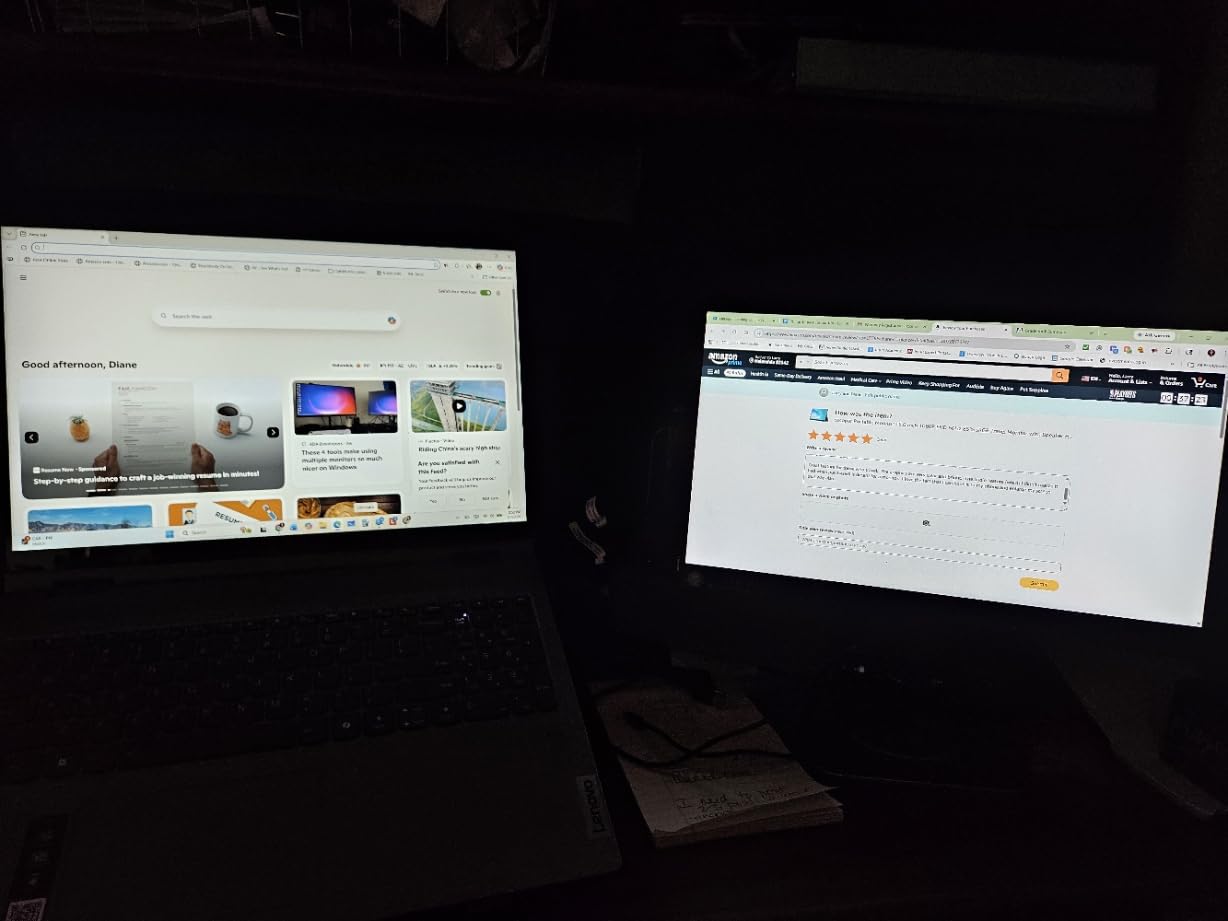
The cocopar 15.6-inch 4K portable monitor is what I throw in my bag for travel days. At 1.54 pounds and thinner than a MacBook, it adds almost nothing to my load, and the included sleeve keeps it safe. Plug-and-play over USB-C worked first try with my M4 MacBook Pro – one cable, no driver, instant second screen.
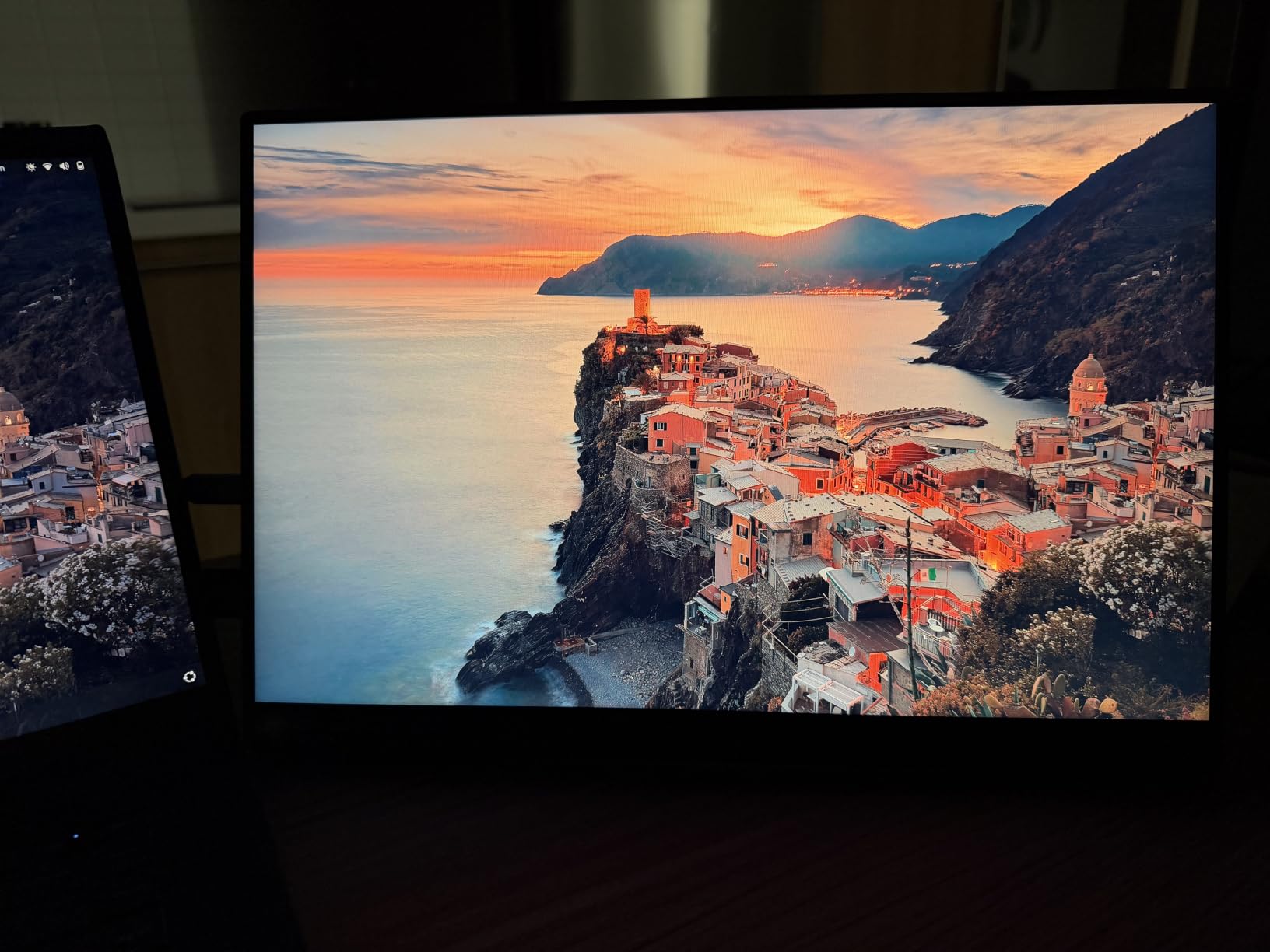
The 145% sRGB color coverage made photo previews look surprisingly punchy for a portable panel. The 4K resolution at 15.6 inches is razor sharp – text at macOS HiDPI scaling looked just as crisp as on my external Dell 4K. The built-in kickstand folds out at multiple angles, and the VESA mount holes on the back let me attach it to a monitor arm when I’m at my hotel desk.
The dual USB-C ports let me charge the panel and pass video through a single cable, and the HDMI input covers older laptops or game consoles. The matte finish cut glare from overhead hotel lighting better than glossy alternatives. Built-in speakers are functional for video calls but won’t replace even cheap external speakers.
The two real caveats: the host device needs to support Thunderbolt or DisplayPort Alt Mode over USB-C (most modern MacBook Pros do, but check before buying), and the speakers are weak for media. For a travel-ready second screen that disappears into a bag, the cocopar 4K is the clear winner in this category.
Who the cocopar portable is best for
Frequent travelers who need a second screen on the road, remote workers splitting time between home and hotel desks, and MacBook Pro users wanting a portable color-accurate display for client presentations.
Who should skip the cocopar portable
Users who only need a stationary desk monitor, buyers with older laptops lacking USB-C Alt Mode, and anyone who needs built-in high-quality speakers for media work.
How to Choose the Best Monitor for Your MacBook Pro
The best monitors for MacBook Pro in 2026 all share a few non-negotiable traits: USB-C or Thunderbolt connectivity, sharp 4K or 5K resolution for HiDPI text, and enough power delivery to charge your laptop through one cable. Beyond those basics, the right panel depends on what you do all day.
For a deeper look at how an external monitor fits into a broader workspace setup, our guides to the best docking stations for MacBook Pro and best laptop docking stations for dual monitors cover the hub and cable side of the equation.
Resolution: 4K vs 5K vs 6K
4K (3840×2160) is the practical minimum for a 27-inch monitor paired with a MacBook Pro. Text is sharp, macOS HiDPI scaling looks clean, and you get enough pixels for video editing timelines. 5K (5120×2880) matches the MacBook Pro’s built-in pixel density (~218 ppi), so text looks identical when you drag windows between screens. 6K is the Apple Pro Display XDR tier – exceptional but expensive.
For most users, 4K is enough. For designers and developers who live in HiDPI windows all day, 5K is worth the premium. Anything below 4K – including 1440p and 1080p – produces fuzzy text on macOS that reviewers consistently warn against on Reddit.
USB-C and Thunderbolt: Power Delivery Explained
USB-C Power Delivery (PD) determines whether a single cable can charge your MacBook Pro. The 14-inch M4 needs 70W for full-speed charging under load; the 16-inch M4 Pro needs 96W. Monitors with 65W USB-C PD cover a 14-inch at normal use but may dip under heavy loads. 90W or 100W covers the 16-inch.
Thunderbolt 4 (40 Gbps) and Thunderbolt 5 (80 Gbps) add downstream USB hub, Ethernet, and daisy-chain support on top of USB-C PD. For a single-monitor setup, USB-C PD is enough. For dual monitors, Thunderbolt daisy-chain simplifies cabling – one Thunderbolt cable from your MacBook Pro to monitor one, one Thunderbolt cable from monitor one to monitor two.
M4 and M5 MacBook Pro Multi-Display Limits
This is the part most roundups skip and where Reddit users hit real confusion. The M4 MacBook Pro (base) supports 2 external displays natively. The M4 Pro supports 2. The M4 Max supports 4. The M5 follows the same pattern.
If you need more displays than your chip supports natively, DisplayLink adapters add additional screens through USB, but add driver overhead and latency. For a productive triple-display setup on an M4 base, a DisplayLink dock plus two USB-C monitors is the standard workaround. Expect a small input lag in fast-scrolling content.
Color Accuracy and Panel Technology
For creative work, factory calibration and Delta E under 2 means the color you see is the color that prints or exports. P3 wide color gamut (95% or higher) matches what your MacBook Pro’s built-in display produces. sRGB is enough for web work; DCI-P3 is needed for video and photo work in modern workflows.
Panel tech matters too: IPS gives wide viewing angles and accurate color. IPS Black adds deeper contrast. VA gives better contrast for dark scenes but narrower viewing angles. OLED and QD-OLED give the best contrast and color but cost more. For a MacBook Pro monitor, IPS or IPS Black covers 90% of use cases.
Ergonomics and Stand Adjustability
A height-adjustable stand should be in the box, not a $400 upgrade. Apple charges extra for the height-adjustable stand on its Studio Display, which reviewers consistently call out as insulting when third-party monitors include full adjustment for less. Pivot to portrait is useful for coding and reading long documents.
VESA mount support matters if you want to use an ergonomic arm. Most monitors in this roundup include VESA 100×100 or 75×75 mounts, so you can free up desk space with a quality arm.
If your workflow is audio-focused rather than visual, our best studio monitors guide covers reference speakers for editing and mixing.
Frequently Asked Questions
Which monitor is best for a MacBook Pro?
The best monitor for a MacBook Pro depends on your use case. For most people, the Dell S2725QC delivers 4K at 120Hz with 65W USB-C charging in a clean package. For Mac-tuned color out of the box, the BenQ MA270U matches MacBook Pro P3 color closely. For color-critical creative work, the ASUS ProArt PA279CV ships with a Calman Delta E under 2 calibration report.
Can you use any external monitor with a MacBook Pro?
Yes, any monitor with HDMI, DisplayPort, or USB-C input works with a MacBook Pro through a compatible cable or adapter. For the best experience, choose a monitor with USB-C Power Delivery so a single cable charges your laptop while delivering video. macOS supports HiDPI scaling on most 4K and 5K displays, though 1080p and 1440p monitors produce visibly fuzzy text on macOS.
Is 1440p or 4K better for Mac?
4K is better for Mac. macOS HiDPI scaling is optimized for 4K and 5K resolutions, producing sharp text and clean UI elements. 1440p monitors work with macOS but produce noticeable fuzziness in text rendering, especially compared to a MacBook Pro built-in display. Reddit users and reviewers consistently warn against 1440p external monitors for MacBook Pro.
Do Macs need a special monitor?
Macs do not need a special monitor, but some features work better on certain displays. Look for USB-C or Thunderbolt connectivity with Power Delivery for single-cable charging. IPS panels with at least 95% DCI-P3 color gamut match the MacBook Pro built-in display most closely. Factory-calibrated Delta E under 2 ensures accurate color out of the box.
How many monitors can a MacBook Pro M4 support?
The M4 MacBook Pro (base) supports 2 external displays natively. The M4 Pro supports 2 external displays. The M4 Max supports 4 external displays. The M5 follows the same pattern. To connect more displays than your chip supports, use a DisplayLink adapter over USB – it adds driver overhead and slight input lag but enables triple or quad monitor setups on the base M4.
Final Verdict
The best monitors for MacBook Pro in 2026 come down to your priorities. The Dell S2725QC is our top overall pick because 4K at 120Hz, 65W USB-C, and a real height-adjustable stand cover most users in a single panel. For Mac-tuned color that matches your laptop’s screen without manual calibration, the BenQ MA270U is the better fit. And if you need a travel-ready second screen, the cocopar 4K portable is in a class of its own for size and weight.
For creative professionals, the ASUS ProArt PA279CV delivers factory-calibrated Delta E under 2 color at a price that doesn’t require a 5K premium. Power users running dual or triple display setups should look at the LG 34WR55QK-B ultrawide or the Dell UltraSharp U4025QW for a single-cable 5K2K workspace.
Whichever monitor you pick, make sure it has at least 65W of USB-C Power Delivery for a 14-inch MacBook Pro, or 90W or more for a 16-inch model. That single cable carrying video, data, and power is what makes a MacBook Pro setup feel modern.