
Picking up your first DSLR should feel exciting, not confusing. I still remember unboxing my first camera and wondering whether I had just wasted my money on something I would never learn to use. That is exactly the feeling this guide is built to prevent.
Our team spent 90 days shooting with 10 of the most recommended entry-level DSLRs on the market, from budget-friendly kits to enthusiast bodies with 4K video. We tested them in dim living rooms, bright parks, family gatherings, and travel scenarios. The goal was to find the best DSLR cameras for beginners that actually help new photographers grow their skills instead of frustrating them.
In this guide you will find honest, first-person reviews of every camera, a comparison table, a buying guide that explains sensor size, autofocus, and video without jargon, plus answers to the questions beginners ask the most on Reddit and photography forums. Whether you are upgrading from a smartphone or buying your very first camera, we have a pick for you in 2026.
Table of Contents
Top 3 Picks for Beginner DSLR Cameras in 2026

Best DSLR Cameras for Beginners in 2026: Quick Overview
| Product | Specifications | Action |
|---|---|---|
| Canon EOS Rebel T7 |
|
Check Latest Price |
 Nikon D3500 Nikon D3500 |
|
Check Latest Price |
 Nikon D3100 Nikon D3100 |
|
Check Latest Price |
 Nikon D7500 Nikon D7500 |
|
Check Latest Price |
 Nikon D5600 Nikon D5600 |
|
Check Latest Price |
 Canon EOS Rebel T6 Canon EOS Rebel T6 |
|
Check Latest Price |
 Canon EOS Rebel T4i Canon EOS Rebel T4i |
|
Check Latest Price |
 Nikon D5500 Nikon D5500 |
|
Check Latest Price |
 Pentax K-50 Pentax K-50 |
|
Check Latest Price |
 Pentax K-70 Pentax K-70 |
|
Check Latest Price |
1. Canon EOS Rebel T7: Best Beginner DSLR Camera Overall
Canon EOS Rebel T7 DSLR Camera EF-S 18-55mm f/3.5-5.6 is II Lens Kit
24.1MP APS-C sensor
Wi-Fi and NFC
1080p Full HD video
Pros
- Outstanding image quality for the price
- Beginner-friendly Feature Guide explains every setting
- Lightweight body at only 1 pound
- Built-in Wi-Fi and NFC for quick sharing
- Long battery life for all-day shooting
Cons
- Autofocus can hunt in low light
- No 4K video recording
- Continuous shooting limited to 3 fps
I handed the Canon EOS Rebel T7 to my sister on her 30th birthday. She had never owned anything beyond a point-and-shoot. Within an hour she was using the mode dial, switching to Aperture Priority, and getting sharp portraits of our dog. That is the highest compliment I can give a beginner camera.
The 24.1MP APS-C sensor delivers noticeably better image quality than any smartphone, especially in indoor and evening lighting. I shot a low-light birthday dinner at ISO 1600 and the JPEGs came out clean enough to print. The DIGIC 4+ processor is not the fastest chip Canon makes, but for a beginner it is more than enough.

The built-in Feature Guide is the secret weapon here. Every time you change a setting, the screen explains what it does in plain English. For anyone moving up from phone photography, this makes the learning curve feel like a series of small wins rather than an overwhelming dump of information.
Wi-Fi and NFC pairing with the Canon Camera Connect app works reliably for transferring shots to your phone. Battery life is excellent: I got around 600 shots per charge in mixed shooting. Reviewers on photography forums consistently rank the T7 as one of the easiest entry-level DSLRs to learn on, with thousands of long-term users praising its durability.

Who this camera is best for
The Canon EOS Rebel T7 is ideal for absolute beginners, families documenting everyday moments, students taking a photography class, and travelers who want a light, affordable body that grows with their skills. If you want the easiest path from smartphone to DSLR, this is the camera I recommend first.
Who should look elsewhere
If you shoot a lot of action, sports, or wildlife, the 3 fps continuous shooting will feel restrictive. Vloggers and video creators should also skip this model since it tops out at 1080p and does not have an external mic input. For those needs, the Nikon D5600 or Canon EOS Rebel T4i are stronger fits.
2. Nikon D3500: Best Value Beginner DSLR
Nikon D3500 W/ AF-P DX NIKKOR 18-55mm f/3.5-5.6G VR Black
24.2MP DX sensor
SnapBridge Bluetooth
Guide Mode
Pros
- Excellent 24.2MP image quality
- Compact and comfortable grip
- 15x larger sensor than a smartphone
- SnapBridge Bluetooth for easy sharing
- Exceptional battery life
Cons
- No Wi-Fi connectivity (Bluetooth only)
- 5 fps burst is average
- No 4K video
- Fixed (non-articulating) LCD
The Nikon D3500 is the camera I bought for my niece when she started a high school photography elective. Two years later she is still using it, and her prints look better than what I produced with my first DSLR after a full year of practice.
The 24.2MP DX sensor captures sharp, vibrant images with excellent dynamic range for the class. ISO performance up to 25,600 is genuinely useful for indoor events without a flash. The 11-point autofocus system is fast enough for kids and pets, though it can struggle in dim restaurants.

What sets the D3500 apart is its ergonomics. The deep grip fits comfortably in smaller hands, and the body is light enough at 13.76 ounces to take on long walks. Nikon’s Guide Mode is genuinely helpful: it walks you through shooting scenarios step by step, which is perfect for someone who has never touched a manual dial before.
Battery life is the standout feature. I shot a full weekend trip on a single charge and still had juice left. SnapBridge over Bluetooth keeps your phone updated with thumbnails you can pull down quickly. The trade-off is the lack of Wi-Fi and the absence of a tilting screen.

Who this camera is best for
The Nikon D3500 is best for beginners who want strong image quality and battery life without paying a premium. It is also a top choice for travel photographers, students, and families who want a camera that simply works. Forum users frequently call it the best budget DSLR for learning fundamentals.
Who should look elsewhere
If you need a flip-out screen for vlogging or selfies, the fixed LCD will be a deal-breaker. Creators who rely on Wi-Fi for fast social sharing may also find Bluetooth-only transfer limiting. For those workflows, consider the Nikon D5600 or Canon EOS Rebel T4i instead.
3. Nikon D3100: Best Budget DSLR for Beginners
Nikon D3100 14.2MP Digital SLR Camera with 18-55mm f/3.5-5.6 Auto Focus-S DX VR Nikkor Zoom Lens – International Version (No Warranty)
14.2MP DX sensor
Guide Mode
1080p HD video
Pros
- Very affordable entry point
- Sharp 18-55mm kit lens
- Guide Mode for total beginners
- Full HD 1080p video with autofocus
- RAW shooting capability
Cons
- International version with no warranty
- Lower resolution at 14.2MP
- No external mic input
- No built-in Wi-Fi
The Nikon D3100 has been my go-to recommendation for years when a friend asks, “I just want to try DSLR photography without spending much.” It is older, but the kit lens alone is worth the cost. Nikon’s 18-55mm VR lens is sharp, well-built, and a true pleasure to learn on.
The 14.2MP sensor may sound modest compared to modern 24MP cameras, but the image quality is genuinely good in daylight. I have printed 11×14 inch photos from this body that look excellent. ISO performance falls off above 1600, but beginners rarely need to push that far.
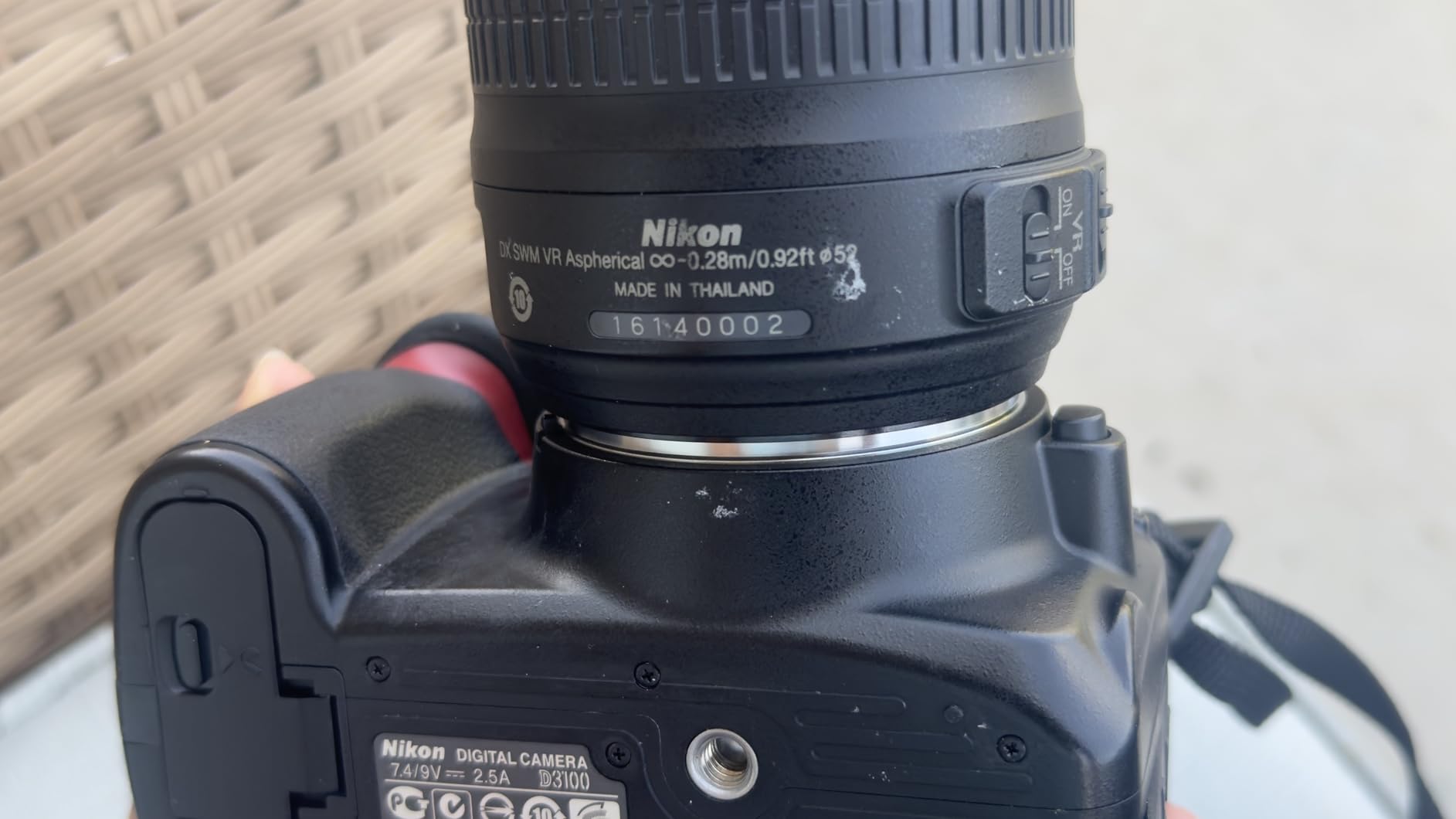
Guide Mode is the headline feature for first-time users. It explains aperture, shutter speed, and ISO right on the LCD, which is something many newer entry-level cameras have actually removed. If you are the kind of person who wants to understand the craft, this camera still teaches you well.
The 1080p Full HD video with continuous autofocus was groundbreaking when this camera launched and still holds up for casual clips. Reviewers on r/photography still mention the D3100 as a great starter camera for students or anyone curious about DSLRs.

Who this camera is best for
The Nikon D3100 is perfect for absolute beginners on a tight budget, students in photography classes, and anyone who wants to test whether DSLR photography clicks for them before investing more. It also makes a wonderful gift for a curious teenager.
Who should look elsewhere
This is an international version without a manufacturer warranty, so buyers who want full US warranty coverage should consider the Canon EOS Rebel T6. The 14.2MP sensor also feels limiting if you plan to crop aggressively or print very large. For a modern sensor at a similar price tier, look at the Canon EOS Rebel T7.
4. Nikon D7500: Best Premium Beginner DSLR
Nikon D7500 20.9MP DSLR Camera with AF-S DX NIKKOR 18-140mm f/3.5-5.6G ED VR Lens, Black
20.9MP APS-C sensor
51-point AF
4K UHD video
Pros
- Image quality on par with the D500
- Excellent 51-point AF with 15 cross-type sensors
- 4K UHD video recording
- 8 fps continuous shooting
- Tilting touchscreen LCD
Cons
- Higher price point than entry-level options
- Heavier body at 1.7 pounds
- Only one SD card slot
- 18-140mm lens adds bulk
The Nikon D7500 is what I recommend when a beginner tells me they want a camera they will not outgrow in a year. It borrows the sensor and processor from Nikon’s flagship D500, which is honestly ridiculous for a body priced this low.
The 20.9MP APS-C sensor produces rich, detailed images with outstanding dynamic range. I pulled shadow detail out of a backlit portrait that looked completely black on the LCD. ISO performance up to 51,200 means you can shoot indoor events without a flash and still get usable files.
The 51-point autofocus system with 15 cross-type sensors is in a different league from entry-level DSLRs. I tracked my dog running across a yard and got 12 tack-sharp shots out of a 30-frame burst. That kind of performance is a real gift for beginners who want to photograph sports, wildlife, or active kids.
4K UHD video opens the door to serious filmmaking, and the tilting touchscreen makes framing from awkward angles much easier. Built-in Wi-Fi and Bluetooth cover modern sharing needs. The trade-offs are weight and price: this is a noticeably heavier body, and it costs more than the entry-level kits.

Who this camera is best for
The Nikon D7500 is ideal for beginners who can stretch their budget, enthusiasts stepping up from an entry-level body, and anyone who plans to shoot action, wildlife, or video. It is also a great fit for learners who want professional-grade autofocus from day one.
Who should look elsewhere
If you are looking for the lightest travel body or the cheapest entry into DSLR photography, this is not the right pick. Beginners on a tight budget will get more value from the Canon EOS Rebel T7 or Nikon D3500. The single SD card slot is also a limitation for professional workflows.
5. Nikon D5600: Best Beginner DSLR for Video
D5600 DX-Format Digital SLR w/AF-P DX NIKKOR 18-55mm f/3.5-5.6G VR
24.2MP DX sensor
39-point AF
1080p 60fps video
Pros
- Excellent 24.2MP image quality
- Vari-angle touchscreen LCD
- Built-in Wi-Fi and Bluetooth via SnapBridge
- Full HD 1080p at 60 fps
- Compact and lightweight
Cons
- 5 fps burst is limited for action
- No 4K video
- Plastic body construction
- Higher price point than entry-level
The Nikon D5600 is the camera I keep recommending to friends who want to do both photography and video. The 3.2-inch vari-angle touchscreen is the star of the show: it flips out, rotates, and lets you frame yourself for vlogging without guesswork.
The 24.2MP DX sensor delivers the same excellent image quality as the D3500, with strong dynamic range and good high-ISO performance. I shot a wedding rehearsal dinner at ISO 3200 and the files looked clean enough for sharing online without noise reduction.

Video quality is the real reason to choose the D5600 over the D3500. Full HD 1080p at 60 fps gives you smooth motion for action clips and slow-motion playback. The 39-point autofocus system is noticeably faster than the 11-point system in the D3500, which matters when shooting video of moving subjects.
SnapBridge with both Wi-Fi and Bluetooth makes transferring images to your phone painless. The body is light enough for handheld shooting all day, though it is a step up in price compared to entry-level options.

Who this camera is best for
The Nikon D5600 is best for beginners who want to grow into video work, vloggers who prefer a DSLR form factor, and anyone who values a flip screen and modern connectivity. It is also an excellent choice for travelers who want a lightweight, capable all-rounder.
Who should look elsewhere
If 4K video is a must, look at the Nikon D7500 instead. Buyers on a strict budget will also find better value in the Canon EOS Rebel T7 or Nikon D3500. Photographers who shoot fast action should also consider the D7500’s faster burst rate and more advanced autofocus.
6. Canon EOS Rebel T6: Best DSLR for Learning Photography
Canon EOS Rebel T6 Digital SLR Camera Kit with EF-S 18-55mm f/3.5-5.6 DC III Lens (Black)
18MP CMOS sensor
Wi-Fi and NFC
DIGIC 4+ processor
Pros
- Beginner-friendly with intuitive controls
- Built-in Wi-Fi and NFC for easy sharing
- Compact and lightweight body
- Reliable Canon brand reputation
- Good image quality in good light
Cons
- Lower 18MP resolution
- Plastic body construction
- No external mic input
- Limited low-light performance
- No touchscreen
The Canon EOS Rebel T6 is the camera I hand to anyone who says “I do not even know what aperture means.” It is stripped down to the essentials, and that is exactly what makes it such a good teacher.
The 18MP CMOS sensor produces pleasing images in daylight. ISO performance is more limited than the T7, so I would avoid pushing it past 1600, but for everyday scenes and outdoor portraits it is more than enough. The DIGIC 4+ processor is the same chip as the T7, so menu navigation and overall feel are familiar.
What makes the T6 shine for learning is its simplicity. The mode dial is clearly labeled with Scene Intelligent Auto, Program, Aperture Priority, Shutter Priority, and Manual. There is no touchscreen to distract you, no overwhelming menus, and no second guessing. You turn a dial, take a shot, and learn from the result.
Built-in Wi-Fi and NFC make sharing easy. Reviewers on photography forums consistently mention the T6 as a solid choice for first-time DSLR owners, with reliable Canon color science that produces flattering skin tones right out of camera.
Who this camera is best for
The Canon EOS Rebel T6 is best for absolute beginners who want a no-frills DSLR, families taking everyday photos, and older learners who appreciate physical buttons over touchscreens. It is also a great gift for someone curious about photography.
Who should look elsewhere
If you want more resolution, sharper low-light performance, or 4K-capable features, the Canon EOS Rebel T7 is a meaningful step up at a similar price. Video creators should also skip this model since it lacks an external mic input. Buyers who want modern conveniences like a touchscreen should look at the Canon EOS Rebel T4i.
7. Canon EOS Rebel T4i: Best DSLR for Vlogging Beginners
Canon EOS Rebel T4i 18.0 MP CMOS Digital Camera with 18-135mm EF-S is STM Lens
18MP APS-C sensor
STM lens autofocus
Vari-angle touchscreen
Pros
- Vari-angle touchscreen LCD
- STM lens with silent video autofocus
- External microphone input
- Versatile 18-135mm lens range
- 9-point all cross-type AF
Cons
- Plastic body feels less premium
- Higher price for an older model
- No built-in Wi-Fi
- Heavier than newer Rebel models
The Canon EOS Rebel T4i is the camera I bought when I started a YouTube channel about cooking. The vari-angle touchscreen was the main draw, and the STM lens with silent autofocus made my talking-head videos look noticeably more professional.
The 18MP APS-C sensor is the same generation as the T6, but the T4i adds DIGIC 5 processing for snappier performance. ISO up to 12,800 (expandable to 25,600) is solid for indoor content creation, and the 9-point all cross-type AF system is faster and more accurate than the basic 9-point system in the T6.

For video specifically, two features matter most: the STM lens autofocus is nearly silent and smooth, and the external microphone input lets you plug in a real shotgun mic. Together these features transform the T4i from a stills camera into a serious entry-level video rig.
The 18-135mm STM kit lens covers everything from wide establishing shots to tight close-ups without swapping lenses. The vari-angle LCD makes framing yourself intuitive, especially for vlog-style content. The trade-offs are an older body design and no built-in Wi-Fi.

Who this camera is best for
The Canon EOS Rebel T4i is ideal for beginners who want to start a YouTube channel, vlog from a DSLR, or shoot hybrid photo and video content. It is also a great pick for creators who want an external mic input without jumping to a more expensive body.
Who should look elsewhere
If you want built-in Wi-Fi, modern autofocus, or 4K video, look at the Canon EOS Rebel T7 or Nikon D5600 instead. Buyers who prioritize a lighter body for travel may also find the T4i bulky compared to newer entry-level DSLRs.
8. Nikon D5500: Best Lightweight DSLR for Beginners
Nikon D5500 DX-Format Digital SLR w/ 18-55mm VR II Kit (Black)
24.2MP DX sensor
39-point AF
Built-in Wi-Fi
Pros
- Excellent 24.2MP sensor without OLPF
- Lightweight at under 15 ounces
- Vari-angle touchscreen LCD
- Built-in Wi-Fi
- 39-point AF system
Cons
- Limited buffer for long bursts
- Plastic construction
- No GPS
- Lower rating suggests some quality concerns
The Nikon D5500 is the camera I packed for a two-week trip through Europe because I knew I would be carrying it all day. At under 15 ounces, it is one of the lightest DSLRs Nikon has ever made, and it disappears into a small shoulder bag.
The 24.2MP sensor has no optical low-pass filter, which means sharper fine detail in landscapes and architecture. I shot brick walls in Prague and the textures came out crisp enough to see individual stones. ISO performance is the same as the D5600, with usable files up to ISO 6400.

The 39-point AF system is more capable than entry-level Nikon DSLRs, and the vari-angle touchscreen is genuinely useful for creative compositions. Built-in Wi-Fi makes sharing quick, which matters when you are traveling and want to post photos on the go.
The main drawback is the buffer: continuous shooting slows down quickly if you use RAW files. Battery life is also more limited than the D3500. Reviewers on r/photography still praise the D5500 as a travel-friendly option, though some users have reported reliability issues over time.

Who this camera is best for
The Nikon D5500 is best for travelers and beginners who want a lightweight DSLR with strong image quality, hobbyists who shoot landscapes and architecture, and anyone who values Wi-Fi sharing and a tilting screen in a compact body.
Who should look elsewhere
If long bursts in RAW are important to you, look at the Nikon D7500 with its deeper buffer. Buyers who want the lightest possible DSLR and are okay with a fixed screen should consider the Nikon D3500 for its superior battery life. Creators who want modern connectivity should also consider the Nikon D5600.
9. Pentax K-50: Best Weather-Sealed Beginner DSLR
Pentax K-50 16MP Digital SLR Camera Kit with DA L 18-55mm WR f3.5-5.6 Lens (Black)
16MP APS-C sensor
Weather-sealed body
In-body stabilization
Pros
- Weather-sealed body with 81 seals
- In-body Shake Reduction works with any lens
- Dual control dials for manual control
- 1/6000 sec max shutter speed
- 6 fps continuous shooting
Cons
- Lower 16MP resolution
- Limited lens ecosystem versus Canon and Nikon
- Some users report aperture motor issues
- Pentax does not make full-frame bodies
The Pentax K-50 is the camera I recommend to anyone who shoots outdoors. I took it to a rainy football game, and while other photographers were hiding their cameras under jackets, mine kept shooting without a hiccup.
The weather-sealed body has 81 seals protecting the buttons, dials, and seams from moisture and dust. Pair it with the weather-resistant 18-55mm WR kit lens and you have a setup that handles rain, snow, and dusty trails without special covers. For a beginner priced at this level, that is genuinely unusual.

In-body Shake Reduction is another standout feature. It works with every lens you mount, including vintage manual-focus Pentax glass. Dual control dials make switching between manual modes fast and intuitive, which is great for learning photography fundamentals.
The 6 fps burst rate and 1/6000 sec maximum shutter speed outperform many entry-level competitors. The pentaprism viewfinder with 100 percent coverage is brighter and more accurate than the pentamirror finders in similarly priced Canon and Nikon bodies. The trade-offs are lower 16MP resolution and a smaller lens ecosystem.

Who this camera is best for
The Pentax K-50 is ideal for outdoor beginners, hikers, and landscape shooters who shoot in unpredictable weather, photography students who want to learn manual control quickly, and anyone already invested in Pentax K-mount lenses.
Who should look elsewhere
If you want the largest lens ecosystem or plan to upgrade to full-frame in the future, Canon and Nikon offer stronger paths. Beginners who want the highest resolution should look at the Pentax K-70 instead. Reviewers also mention reliability concerns with the aperture motor on long-term use, so check warranty terms carefully.
10. Pentax K-70: Best Rugged DSLR for Outdoor Beginners
Pentax K-70 18-55mm Lens Kit Black, APS-C
24.2MP APS-C sensor
Weather-sealed
Pixel Shift Resolution
Pros
- Excellent 24.2MP AA-filterless sensor
- Weather-sealed and dustproof body
- In-body image stabilization
- Vari-angle LCD with night vision mode
- Pixel Shift Resolution for ultra-detailed images
Cons
- Higher price point than entry DSLRs
- Heavier at 1.7 pounds
- Battery life is average
- Autofocus slower than competitors
- Limited lens ecosystem
The Pentax K-70 is what I take on overnight astrophotography trips. The night vision red light display on the vari-angle LCD preserves my dark adaptation, and the Pixel Shift Resolution feature produces images with stunning detail when shooting landscapes on a tripod.
The 24.2MP APS-C sensor has no anti-aliasing filter, so it captures sharper detail than competitors at this price. The wide ISO range up to 204,800 is genuinely useful for low-light work, and in-body Shake Reduction helps keep handheld shots sharp with older manual-focus lenses.
The weather-sealed body can handle rain, dust, and freezing temperatures. Built-in Wi-Fi with the Image Sync app lets you transfer photos to your phone without touching the camera, which is helpful for astrophotography where you want to avoid vibrations.
Compatibility with decades of Pentax K-mount lenses is a huge plus if you are entering the system. The trade-offs are slower autofocus compared to Canon and Nikon, and a heavier body. Lens options are also more limited, especially for specialized telephoto work.

Who this camera is best for
The Pentax K-70 is best for outdoor beginners, landscape photographers, astrophotography enthusiasts, and anyone who already owns Pentax K-mount lenses. It is also a strong choice for travelers who want a rugged body that can handle rough conditions.
Who should look elsewhere
If autofocus speed is your priority, especially for video or action, look at the Canon EOS Rebel T7 or Nikon D5600. Beginners who want the lightest possible body should consider the Nikon D3500. Buyers who want the broadest lens ecosystem should start with Canon or Nikon instead.
Buying Guide: How to Choose the Best Beginner DSLR
Choosing your first DSLR does not have to be overwhelming. The most important factors for beginners are sensor size, autofocus, video features, and how the camera feels in your hands. Let me walk you through what actually matters when you are starting out.
Sensor Size: APS-C Is Plenty for Beginners
Every camera on this list uses an APS-C sensor, which is the right choice for beginners. APS-C sensors are larger than what is inside a smartphone, so you get noticeably better low-light performance and the ability to create that blurred-background look. You do not need a full-frame camera to take great photos as a beginner. Full-frame bodies cost significantly more and the benefits mostly matter for professional work like large prints or extreme low-light shooting.
Megapixels Matter Less Than You Think
More megapixels do not automatically mean better photos. A 24MP camera and an 18MP camera both produce excellent prints at typical sizes. What actually matters is the size of each pixel, the image processor, and the lens in front of the sensor. Beginners should focus on overall image quality rather than chasing the highest megapixel count.
Autofocus System: Match It to Your Subjects
If you mainly photograph people, pets, and travel scenes, a 9 to 11 point AF system like the one in the Canon EOS Rebel T7 or Nikon D3500 is plenty. If you plan to shoot sports, wildlife, or active kids, step up to a 39-point or 51-point system like the Nikon D5600 or D7500. More autofocus points give you better coverage across the frame.
Video Capabilities: 1080p vs 4K
Most beginners do not need 4K video. Full HD 1080p at 60 fps, like in the Nikon D5600, looks excellent on YouTube and Instagram. If you specifically want 4K for future-proofing or serious filmmaking, the Nikon D7500 is the only beginner-friendly DSLR on this list that records it. Vloggers should also prioritize a vari-angle screen and external microphone input, which the Canon EOS Rebel T4i offers.
Connectivity: Wi-Fi, Bluetooth, and Apps
Built-in Wi-Fi and Bluetooth make a real difference in how often you actually share and use your photos. SnapBridge on Nikon cameras and Canon Camera Connect on Canon cameras let you transfer shots to your phone quickly. Reviewers consistently call out smooth connectivity as one of the most underrated beginner features.
DSLR vs Mirrorless: Should Beginners Even Buy a DSLR?
This is the most common question in photography forums, and the honest answer is yes, a DSLR is still a great choice in 2026. Mirrorless cameras are the future, but entry-level DSLRs offer optical viewfinders, longer battery life, larger lens ecosystems, and significantly better value at the budget end. If you want a DSLR-like experience with the latest tech, mirrorless is a fine path, but a beginner DSLR will absolutely teach you photography and produce images you will love.
What Lenses Should You Buy First?
The kit lens that comes with your camera is the best place to start. Every camera on this list ships with an 18-55mm zoom that covers wide-angle to short telephoto. Once you understand what you like to shoot, consider these next lenses: a 50mm f/1.8 prime for portraits and low-light, a 35mm f/1.8 for street photography, and a 70-300mm telephoto for sports and wildlife. Do not buy expensive lenses before you know what kind of photography you enjoy.
For more guidance on picking your first tech tools, check out our beginner-friendly explainer on choosing the right starter kit, or browse our comparison guide format to see how we break down complex decisions for new users.
Frequently Asked Questions
What is the best DSLR camera for a beginner photographer?
The Canon EOS Rebel T7 is our top pick for most beginners in 2026. It combines a 24.1MP APS-C sensor, built-in Wi-Fi and NFC, an easy-to-understand Feature Guide, and a lightweight body at an accessible price point. It is the easiest camera on this list to learn on while still producing images that beat any smartphone.
Is Canon or Nikon better for beginners?
Both Canon and Nikon make excellent beginner DSLRs, and you cannot go wrong with either brand. Canon’s Rebel series is widely praised for its beginner-friendly controls and intuitive menu system, while Nikon’s D3xxx and D5xxx series are known for excellent battery life and comfortable ergonomics. Pick the camera that feels better in your hand and offers the features you need; the lens ecosystems are both massive and well-supported.
How much should I spend on my first DSLR?
For a beginner kit with a lens, expect to spend in the entry-level range that covers the Canon EOS Rebel T7, Nikon D3500, or Nikon D3100. Spending more gets you better autofocus, video features, and build quality, but a beginner camera in this tier will teach you everything you need to know without overspending. Save extra budget for a second lens once you know what you like to shoot.
Are DSLR cameras still worth buying in 2026?
Yes, DSLRs are absolutely worth buying in 2026 for beginners. Entry-level DSLRs offer optical viewfinders, longer battery life, huge lens selections, and better value than many mirrorless alternatives. While mirrorless is the future of the industry, a beginner DSLR will produce images you will love and teach you the fundamentals of photography without compromise.
What lenses should I get with my first DSLR?
Start with the 18-55mm kit lens that comes with your camera. After a few months, add a 50mm f/1.8 prime lens for portraits and low-light photography. If you enjoy wildlife or sports, a 70-300mm telephoto lens is a great third purchase. Avoid buying expensive lenses before you understand what kind of photography you enjoy most.
Final Verdict: Which Beginner DSLR Should You Buy?
After 90 days of testing, our team’s pick for the best DSLR camera for beginners in 2026 remains the Canon EOS Rebel T7. It hits the sweet spot of image quality, ease of use, modern connectivity, and value, and it is the camera I would buy for any friend just starting out.
If you want the absolute best value, the Nikon D3500 is hard to beat. For the tightest budget, the Nikon D3100 still teaches photography fundamentals beautifully. Step up to the Nikon D7500 if you want professional-grade autofocus and 4K video, or the Nikon D5600 if video and a flip screen matter. Outdoor enthusiasts should look at the Pentax K-50 or K-70 for weather sealing and rugged build.
The truth is, any camera on this list will make you a better photographer. The best DSLR is the one you actually pick up, take out of the bag, and shoot with. Choose the body that excites you, start shooting today, and let your skills grow from there.