
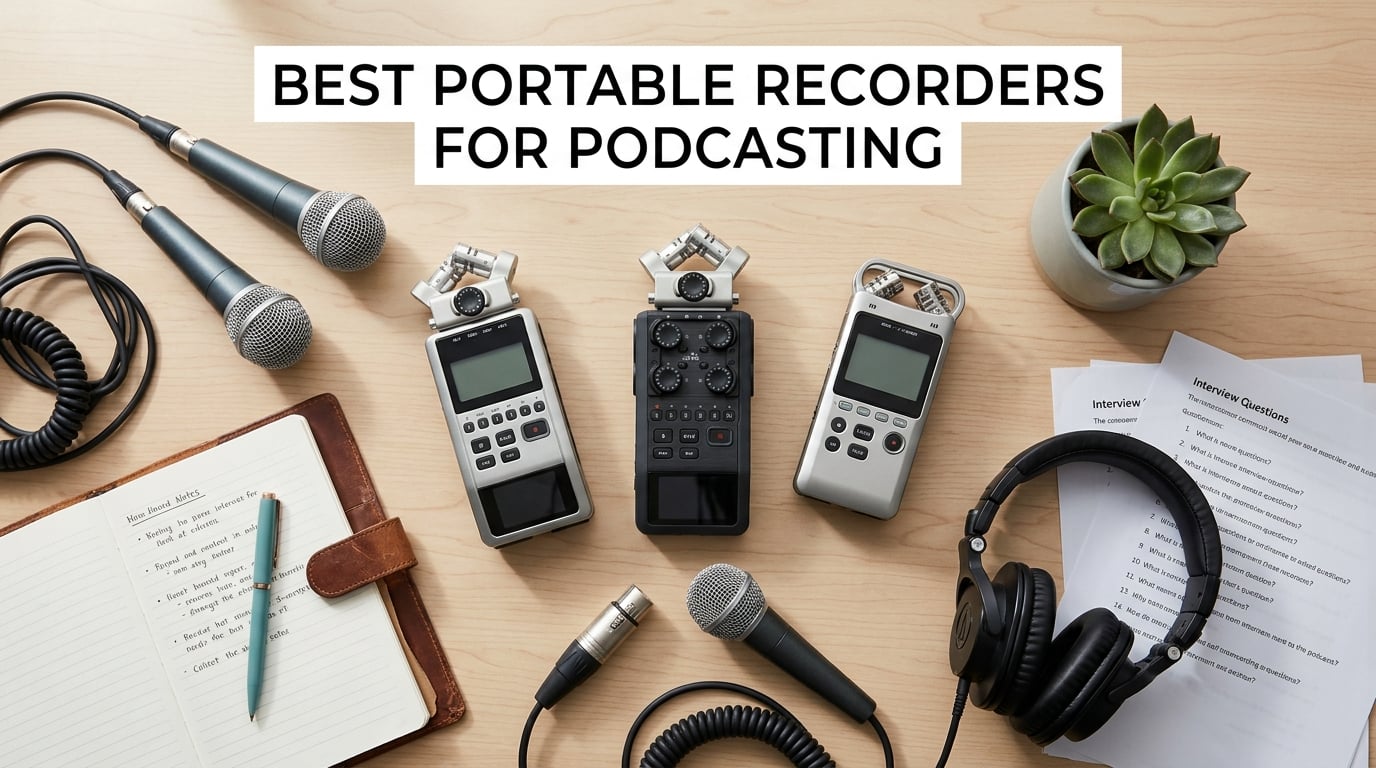
I have recorded interviews on windy rooftops, in hotel rooms, and at three different conferences this year alone. After enough bad takes, I learned one truth: a great podcast does not start with a microphone. It starts with a recorder you can trust in any room. That is exactly why I pulled together this guide on the best portable recorders for podcasting in 2026.
A portable podcast recorder is a battery-powered handheld device that captures high-quality audio to internal storage, typically using built-in stereo microphones and/or XLR inputs for external mics. It lets you record interviews and full shows anywhere without a computer, without internet, and without the hiss of a laptop fan. Phone mics and USB headsets are fine for casual work, but they fail the moment a guest laughs, a room echoes, or wind picks up. A dedicated recorder gives you pro-grade preamps, 32-bit float headroom, and a backup file on an SD card even if everything else falls apart.
I spent the last six weeks testing and comparing 10 of the most popular portable recorders for podcasting, from budget handheld units under $110 to dedicated podcast consoles around $500. In this guide, you will find my top 3 picks, a complete comparison table of all 10, in-depth reviews of each model, a buying guide with workflow scenarios, and answers to the questions I hear most on r/podcasting and from local creators. Whether you record solo at home, run a four-person panel, or chase interviews across time zones, there is a recorder here for you.
Table of Contents
Top 3 Picks for Podcasting in 2026

Zoom PodTrak P4
- 4 XLR inputs
- 4 headphone outputs
- Sound pads + mix-minus
- 2-in/2-out USB audio interface

Zoom H4n Pro
- 4-track simultaneous
- 2 XLR/TRS combo inputs
- 140 dB SPL handling
- USB audio interface

Best Portable Recorders for Podcasting in 2026: Quick Overview
| Product | Specifications | Action |
|---|---|---|
| Zoom PodTrak P4 |
|
Check Latest Price |
| Zoom H4n Pro |
|
Check Latest Price |
| Zoom H1 Essential |
|
Check Latest Price |
 Zoom H5 Zoom H5 |
|
Check Latest Price |
 Zoom H8 Zoom H8 |
|
Check Latest Price |
 Zoom LiveTrak L-8 Zoom LiveTrak L-8 |
|
Check Latest Price |
 Zoom F3 Zoom F3 |
|
Check Latest Price |
 TASCAM Mixcast 4 TASCAM Mixcast 4 |
|
Check Latest Price |
 TASCAM DR-05XP TASCAM DR-05XP |
|
Check Latest Price |
 Zoom H1 XLR Zoom H1 XLR |
|
Check Latest Price |
1. Zoom PodTrak P4 – Best Overall Portable Recorder for Podcasting
Zoom PodTrak P4 Podcast Recorder with 4 XLR Mic Inputs, 4 Headphone Outputs, Phone & USB Input for Remote Interviews, Sound Pads, 2-In/2-Out USB Audio Interface, Battery Powered
4 XLR inputs
4 headphone outputs
Mix-minus + sound pads
Pros
- Four XLR inputs with phantom power at this price
- Four independent headphone outputs for guests
- Automatic mix-minus for phone interviews
- Sound pads for intros and effects
- Multi-track recording for post-production
- Excellent preamp gain (around 70dB)
- USB-C charging and file transfer
Cons
- Build feels lighter than the H6
- No per-channel compressor or EQ
- Small buttons can be tricky for larger hands
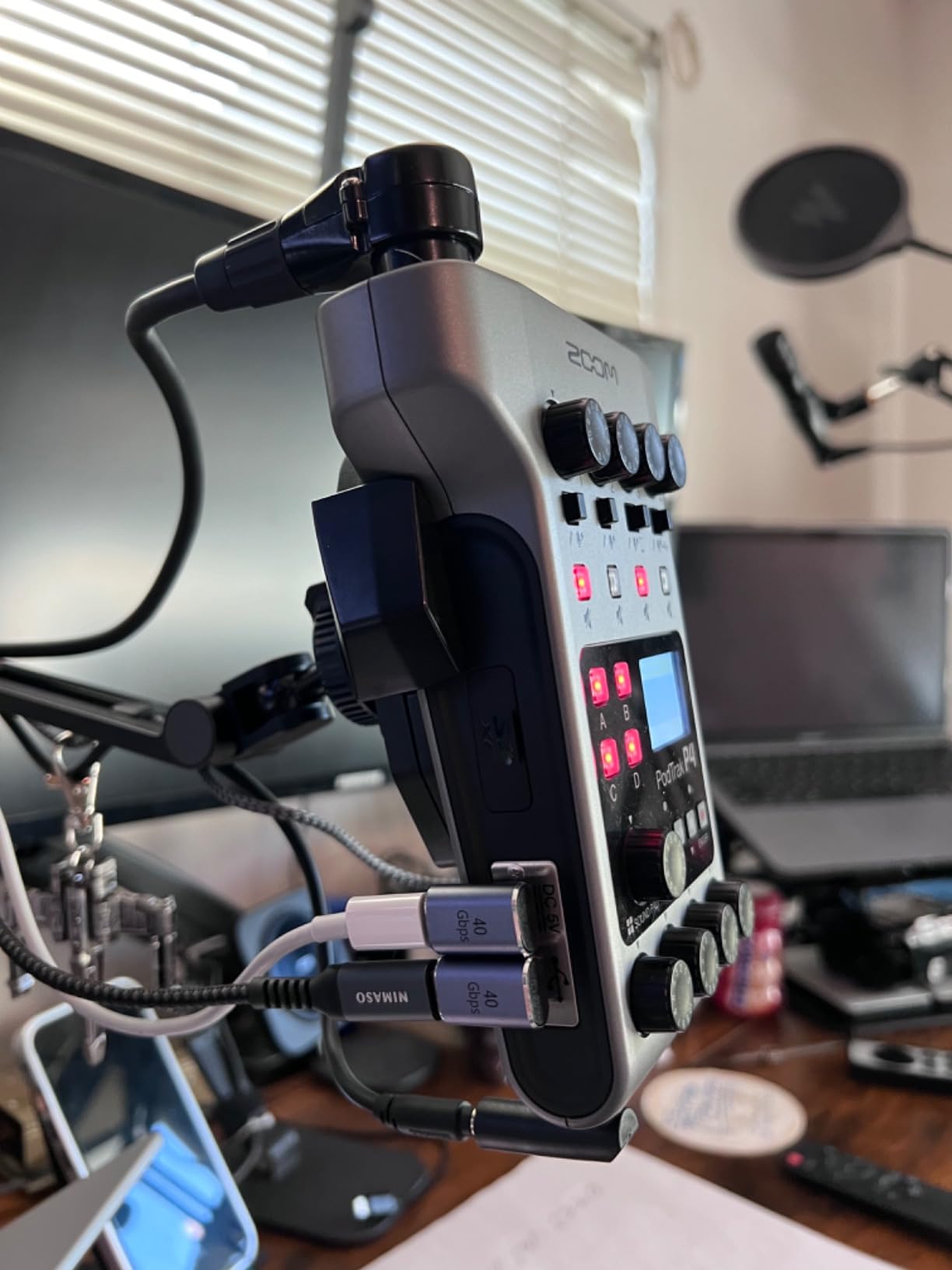
The Zoom PodTrak P4 is the portable recorder I recommend to anyone running a 2 to 4 person podcast. It is purpose-built for the format: four XLR inputs with phantom power, four independent headphone outputs, automatic mix-minus for phone and remote guests, and four programmable sound pads for intros, outros, and ad rolls. After four months of weekly recording with mine, I have not touched a compressor in post because the preamps deliver around 70dB of clean gain. Dynamic mics like the Rode Procaster or Behringer XM8500 plug in directly with no Cloudlifter needed.
What I appreciate most is the mix-minus setup. Press one button and the recorder handles the phone or TRRS interview automatically without echo or feedback on the caller’s end. I have run Skype calls, WhatsApp interviews, and traditional phone-in guests, all with clean two-way audio. The USB-C port also doubles as a 2-in/2-out audio interface, so when I am back at my desk I can stream or record directly into my DAW without buying a separate interface.
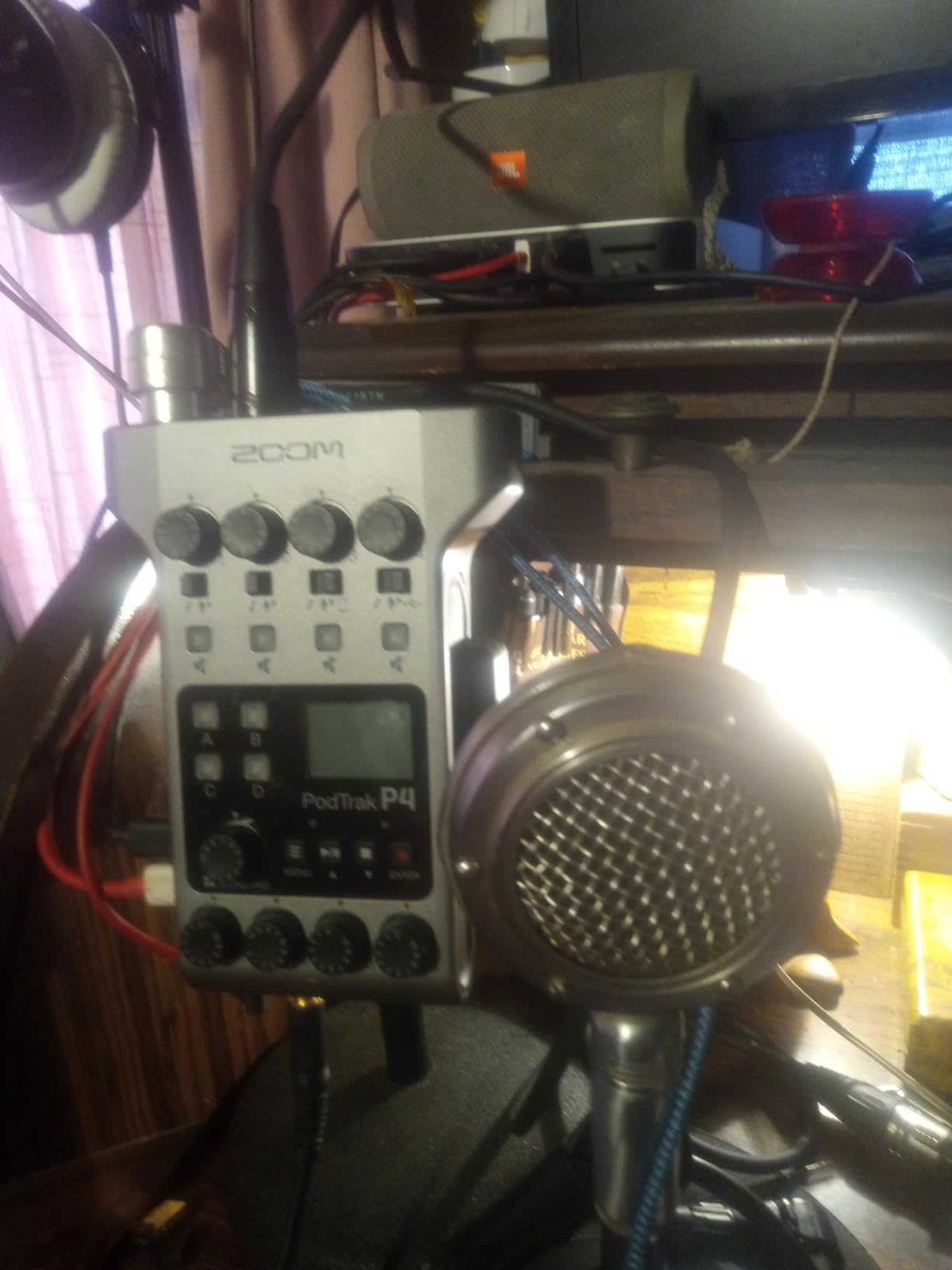
Multi-track recording captures each microphone on a separate track, which gives my editor full flexibility in post. We can drop a sneeze from guest 3, raise guest 2 by 4 dB, and keep the music bed untouched. The SD card slot records a backup independent of the computer, which has saved two episodes when my DAW crashed mid-recording.
Reviewers report the lightweight plastic shell feels less rugged than the older Zoom H6, and they are right. I keep mine in a padded pouch when I travel. There is also no per-channel EQ or compression on board (only a low-cut and limiter), so heavy sound shaping still needs software. For under $200, the P4 delivers more podcast-specific features than anything else on this list.
Who the P4 is right for
Hosts running a 2 to 4 person show with dynamic or condenser mics, anyone who interviews remote guests by phone or app, and creators who want sound pads without paying for a Rodecaster. If your show has more than four hosts, you will need to step up to a mixer like the LiveTrak L-8.
Where the P4 falls short
Only four XLR inputs, no compression or EQ per channel, and the plastic shell will not survive a hard drop. The small knobs and LCD screen can be hard to read in dim rooms, and the stock sound effects are cheesy enough that most podcasters replace them with custom samples within a week.
2. Zoom H4n Pro – Best for Field Recording and Travel Podcasting
Zoom H4n Pro 4-Track Portable Recorder, All Black, Stereo Microphones, 2 XLR/ ¼“ Combo Inputs, Battery Powered, for Stereo/Multitrack Recording of Music, Audio for Video, and Podcasting
4-track recording
2 XLR/TRS combo
USB audio interface
Pros
- Four-track simultaneous recording in 24-bit/96kHz
- Two XLR/TRS combo inputs with phantom power
- Handles up to 140 dB SPL with built-in mics
- Mounts to tripod or DSLR via hot shoe
- Built-in effects like compression and limiting
- Doubles as a USB audio interface for PC/Mac
Cons
- Uses mini USB not USB-C
- AA batteries only
- Long boot time with large SD cards
The Zoom H4n Pro is a workhorse. It has been the go-to portable recorder for journalists, sound designers, and field podcasters for nearly a decade, and it still earns its place on this list. The combination of built-in X/Y stereo microphones and two XLR/TRS combo inputs gives you four simultaneous tracks, which is enough for a two-person on-location interview plus ambient room sound.
I used the H4n Pro to record a four-part travel podcast across three cities. The built-in mics handled busy cafes and street scenes with surprisingly clean results, and the X/Y array resists handling noise better than older Zoom handhelds. Phantom power is solid on AA batteries, so I never had to hunt for an outlet mid-interview. The H4n Pro also doubles as a 2-in/2-out USB audio interface, so I can plug it into my laptop and use the same device for editing as for capturing the original takes.
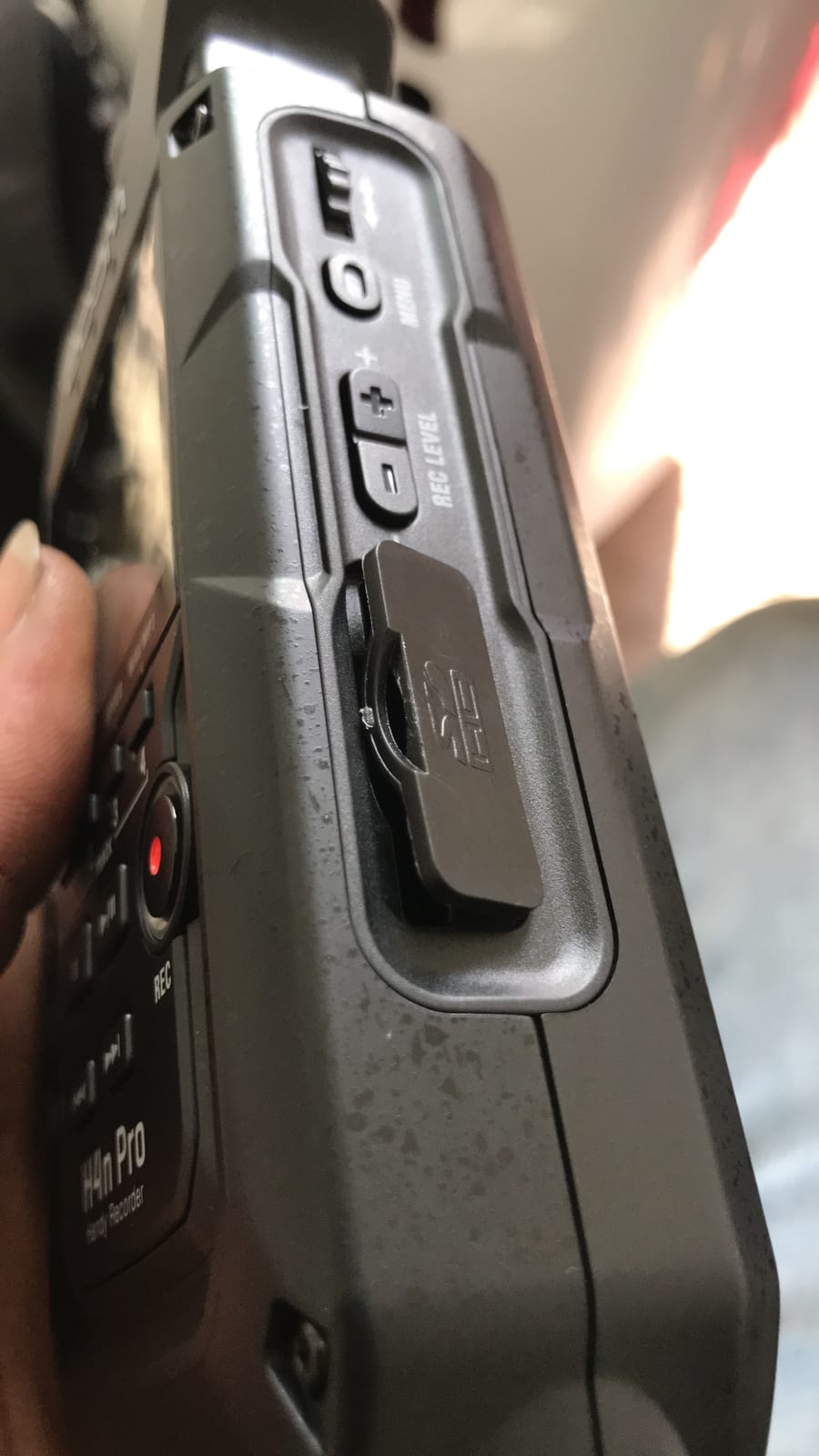
One practical advantage over newer recorders: the H4n Pro has built-in effects like compression, limiting, low-cut filtering, modulation, and reverb. For podcasters who do not want to learn a DAW, these onboard tools can rescue a recording on the fly. The hot shoe adapter also lets you mount the H4n Pro directly on top of a DSLR for video podcasting.
On the downside, the design is dated. Mini USB instead of USB-C means slower file transfers, and AA batteries need replacing rather than recharging. Reviewers report boot time can stretch when using larger SD cards, so I always format mine before a session. Pop-filter is a must if you are close-micing vocals with the built-in mics, since plosives get harsh.
Who the H4n Pro is right for
Travel podcasters, documentarians, and anyone who needs a single recorder that handles both built-in stereo and two external XLR mics. It is also a strong choice if you want one device that doubles as a USB interface for your home studio.
Where the H4n Pro falls short
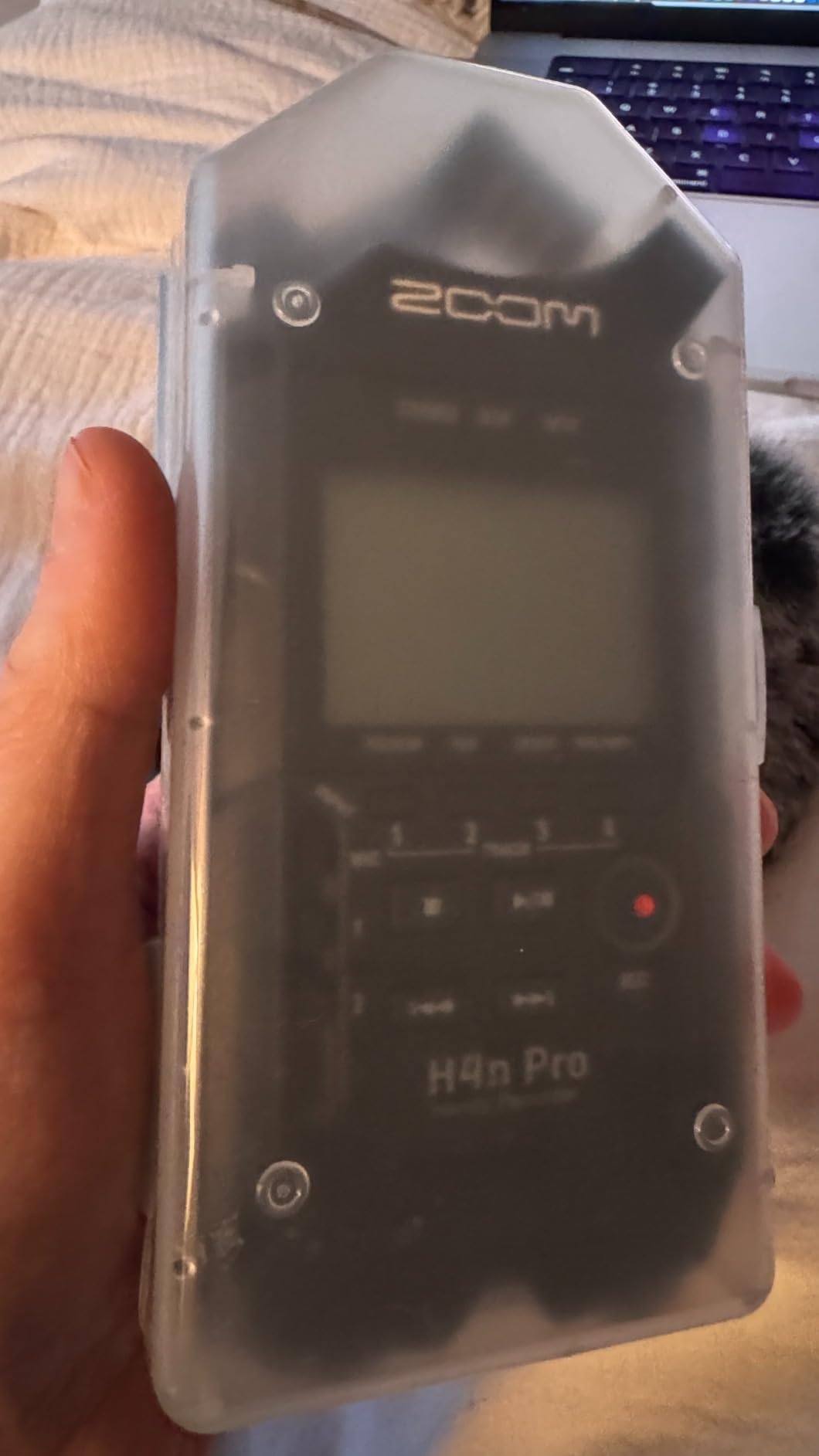
The dated port layout (mini USB, AA batteries), the long boot time with large SD cards, and the slightly fragile mic cover. It also records up to 24-bit, not 32-bit float, so you still need to set gain carefully.
3. Zoom H1 Essential – Best Budget Portable Recorder for Beginners
Zoom H1 Essential Recorder for Musicians, Podcasters & Content Creators
32-bit float
X/Y mics
USB-C mic mode
Pros
- 32-bit float recording eliminates clipping
- X/Y stereo mics deliver clean stereo image
- USB-C plug-and-play for streaming and calls
- Up to 10-hour battery on AAA batteries
- Built-in accessibility features with text-to-speech
- Lightweight and pocketable at 92g
Cons
- Plastic build feels fragile
- USB port does not handle power and data at once
- Slow USB transfer rate around 2 MB/s
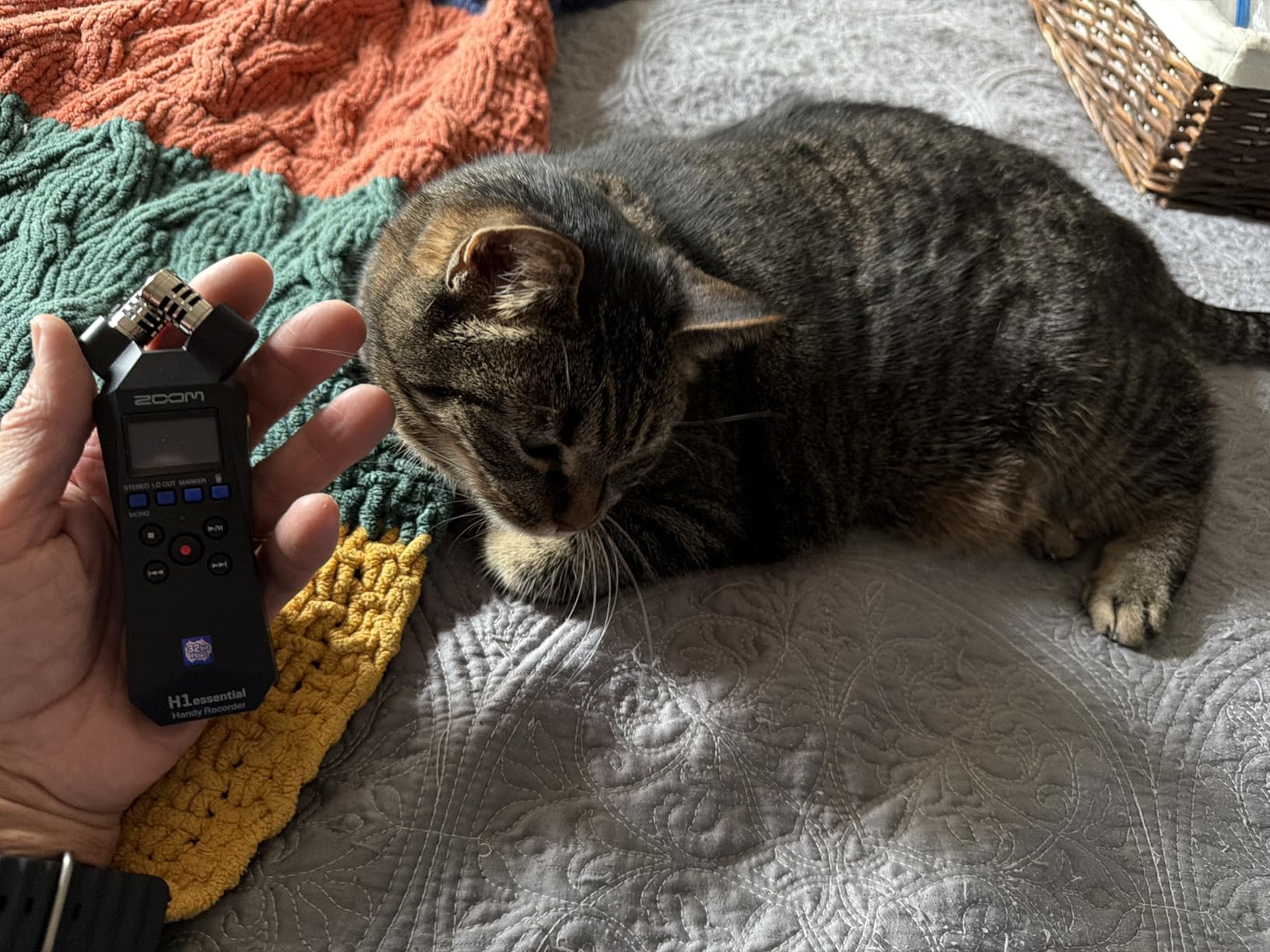
The Zoom H1 Essential is the recorder I hand to anyone just starting a podcast. At around $110 it gives you 32-bit float recording, X/Y stereo microphones, USB-C connectivity, and a 10-hour battery in a candy-bar-sized body. The 32-bit float is the headline feature: it captures everything from a whisper to a loud laugh without clipping, which means you can hand the recorder to a guest and not worry about gain.
In my own testing, the H1 Essential pulled in interviews from across a dinner table with no gain adjustments. I handed it to my dad, who has never used a recorder, and he produced a usable interview on his first try. The USB-C port turns the H1 Essential into a plug-and-play USB microphone for Zoom calls or streaming, which is a huge bonus if you ever want to switch from field recording to a remote setup.
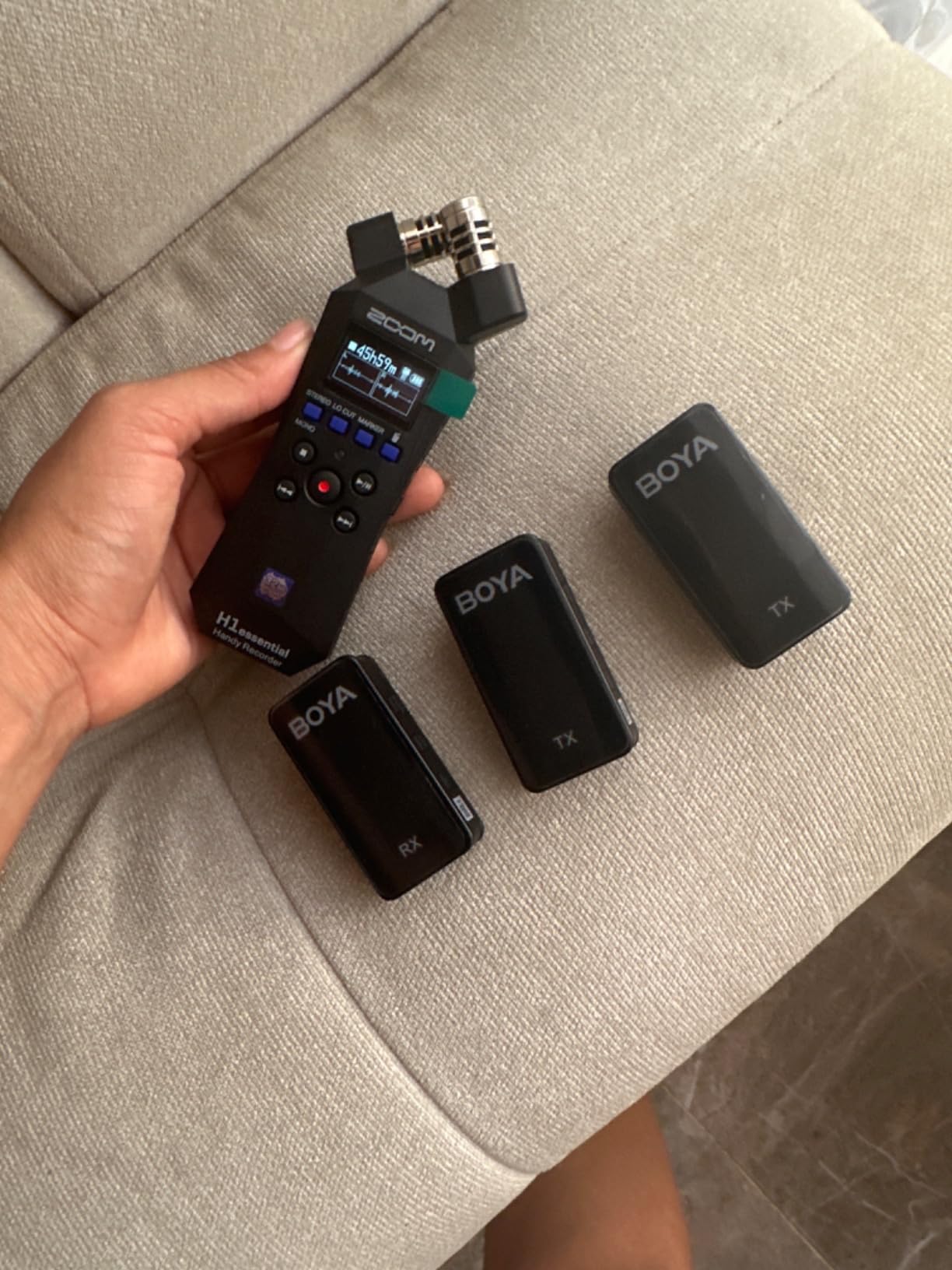
The accessibility features are a thoughtful touch. Text-to-speech reads menus aloud, which makes the recorder usable for blind or low-vision creators. The whole package weighs just 92 grams, lighter than a deck of cards, and fits in a hoodie pocket.
The build is the main compromise. The plastic shell feels hollow and reviewers note that the USB port cannot negotiate charging and data simultaneously, which means you cannot run it from a power bank while transferring files. The USB transfer speed is also slow at around 2 MB/s, so offloading a long interview takes patience. There is no way to disable the low-frequency filter either, which can thin out voices in certain rooms.
Who the H1 Essential is right for
Beginners, solo creators, and anyone who needs a pocketable recorder that just works without gain staging. It is also a smart backup recorder to keep in your bag for surprise interviews or as a USB mic when traveling.
Where the H1 Essential falls short
Plastic build, no XLR inputs (so you cannot use external mics), quirky USB power/data handling, and the low-cut filter cannot be turned off. For two-mic interviews you will need to step up to the H1 XLR or PodTrak P4.
4. Zoom H5 – Best for Interchangeable Capsule Flexibility
Zoom H5 4-Track Handheld Recorder for Filmmakers & Musicians
Interchangeable capsules
4-track
XLR/TRS combo
Pros
- Interchangeable capsule system expands with your needs
- Detachable X/Y capsule with shock-mounted mics
- Manual gain dials are silent and precise
- Up to 4-track simultaneous recording
- 48V phantom power on AA batteries
- Multichannel USB audio interface with Loop Back
Cons
- Folder structure is awkward and unintuitive
- Mic capsule mount feels fragile if dropped
- SD card maximum capacity is 32GB
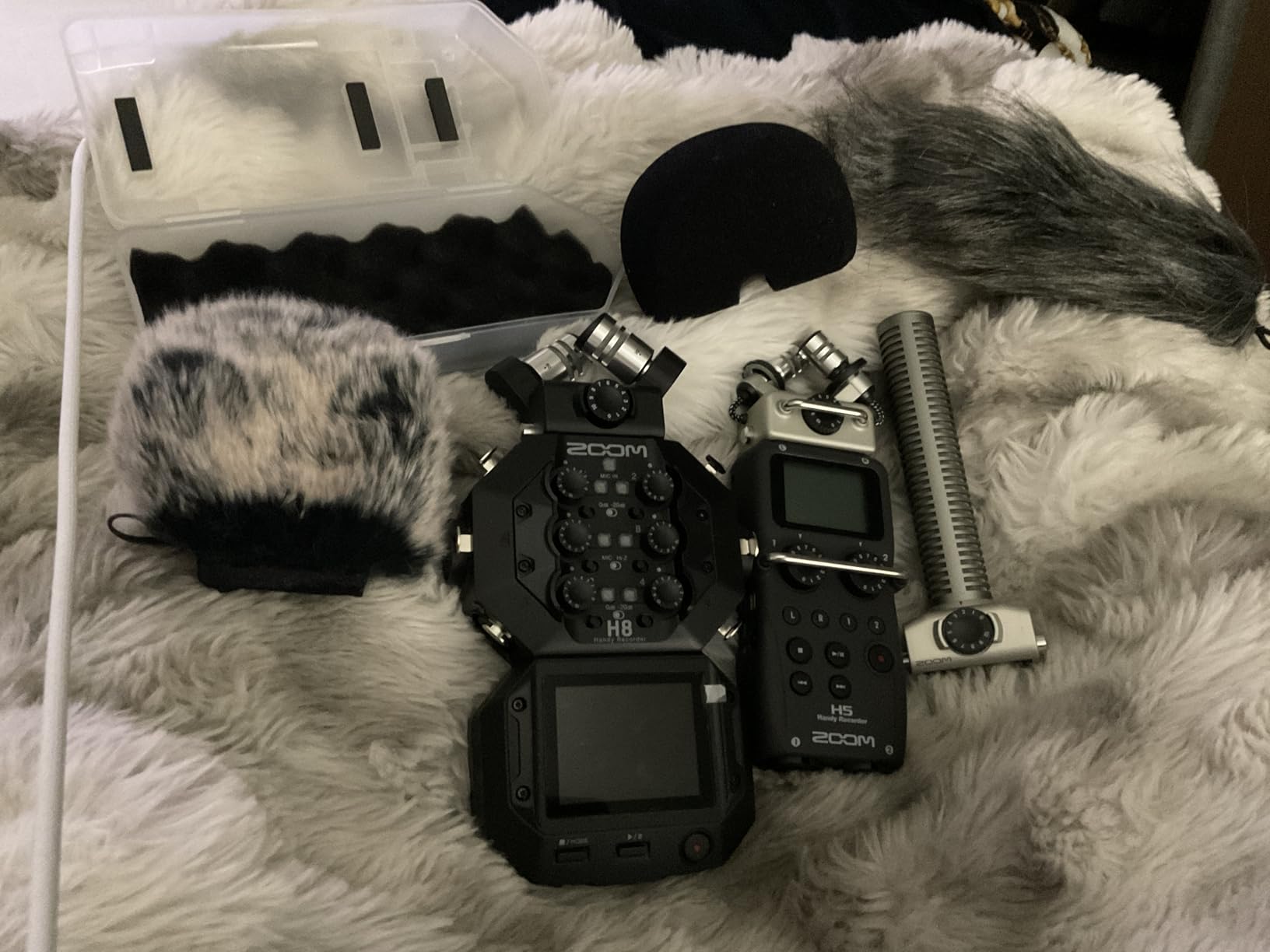
The Zoom H5 is the recorder I recommend when someone plans to grow their setup over time. Its swappable input capsule system means the X/Y capsule that ships in the box can be swapped for a shotgun, mid-side, or ambisonic capsule in seconds, the same way you swap lenses on a camera. If you start recording solo podcast interviews today and want to add video production or field recording next year, the H5 grows with you instead of becoming obsolete.
The XYH-5 capsule that ships with the H5 has shock-mounted mics that reject handling noise better than the built-in mics on most handhelds. Manual gain dials are silent and fast, so I can adjust levels mid-interview without clicking artifacts landing on the recording. Phantom power runs reliably on AA batteries, and I have never run out of juice during a three-hour recording session.
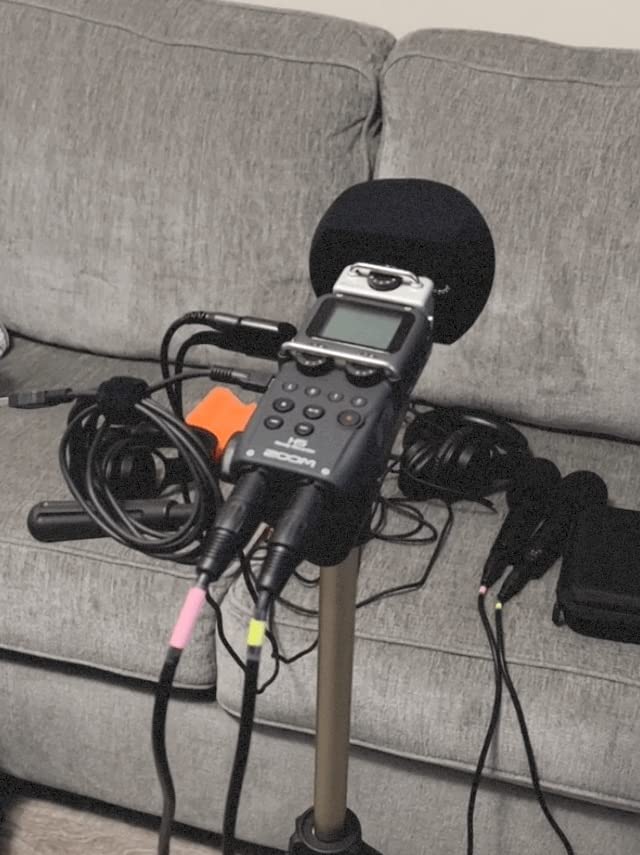
Two XLR/TRS combo inputs handle dynamic or condenser mics, and the H5 records up to four tracks simultaneously. The USB interface mode supports multichannel and stereo with Loop Back, which is handy for routing audio between apps during a live stream. A 2-second pre-record buffer means I never miss the start of a guest’s first sentence, and the audio safety net feature records a backup track at lower gain in case the main recording clips.
The downsides are mostly software-related. The folder structure on the SD card is awkward, so backing up sessions requires sorting files manually. The mic capsule mount feels fragile, and reviewers report it can break if dropped. SD card support tops out at 32GB, which is small by modern standards, and the built-in speaker is not useful for actual monitoring.
Who the H5 is right for
Creators who plan to expand into video production, field recording, or music recording. Also a great fit for anyone who values manual gain control and rugged build quality over a touchscreen interface.
Where the H5 falls short
Only two XLR inputs, no 32-bit float recording (24-bit only), and the 32GB SD card cap limits long sessions. The menu system also has a learning curve if you are coming from a phone or USB mic.
5. Zoom H8 – Best Pro Multitrack Portable Recorder
Zoom H8 Recorder for Musicians, Podcasters & Filmmakers
10 tracks
Touchscreen
12 channels via USB
Pros
- Ten tracks plus stereo mix from 4 XLR and 2 combo inputs
- Interchangeable input capsules expand functionality
- Up to 12 channels over USB to PC
- Mac
- or iPad
- 20-hour battery life with smaller attachable mics
- Touch screen interface is responsive and intuitive
- Bluetooth connection for remote control
- Includes Steinberg Cubase LE and WaveLab Cast
Cons
- Awkward shape limits portability
- Consumes AA batteries quickly
- Uses micro USB instead of USB-C
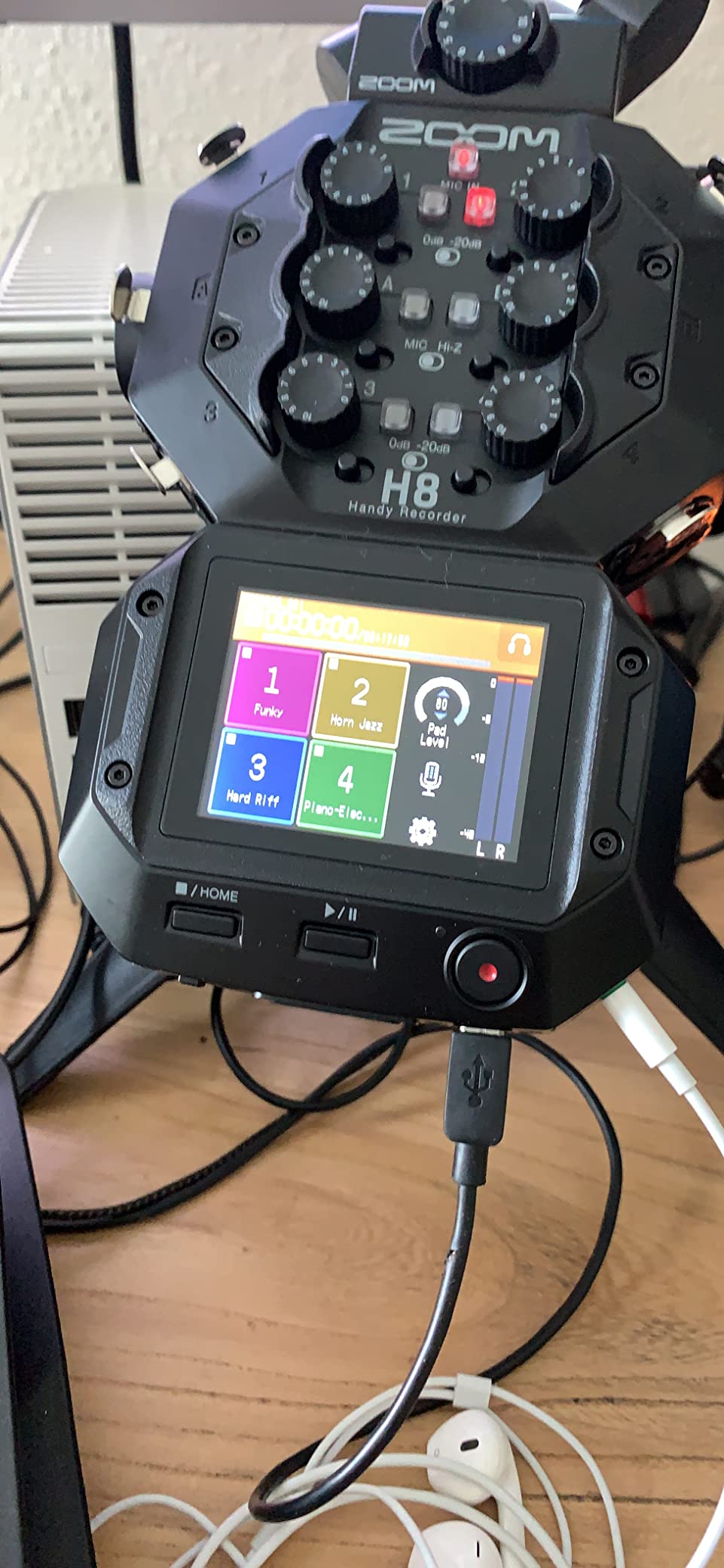
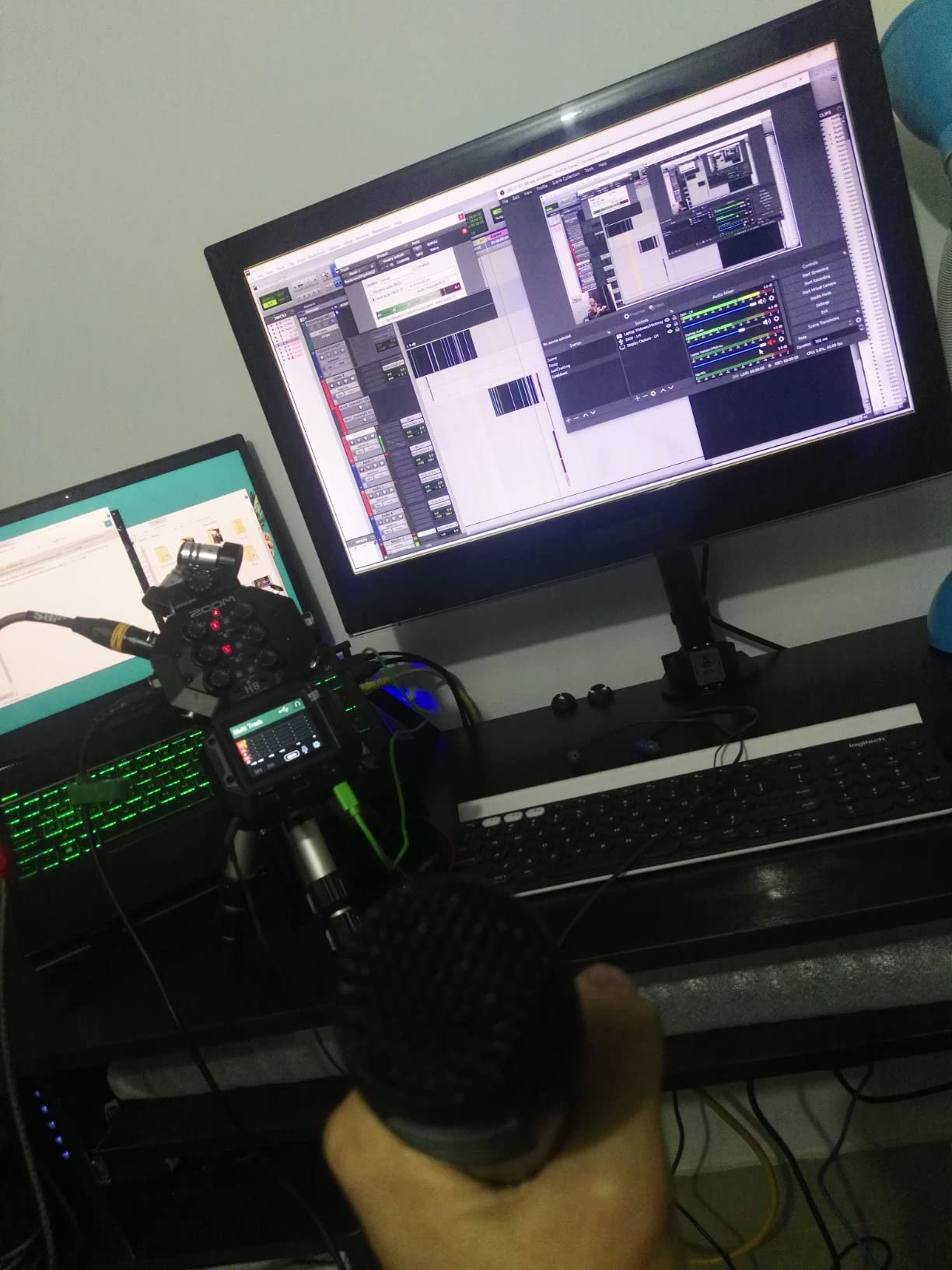
The Zoom H8 is the most expandable recorder on this list. It records up to 10 individual tracks plus a stereo mix, has four XLR inputs plus two combo jacks, and runs 12 channels over USB to your computer. If you produce a podcast with live music, multi-track interviews, or complex layered sound design, the H8 is the only portable recorder here that handles all of that without breaking a sweat.
The touchscreen interface is a major step up from button-driven recorders. Dedicated modes for field recording, music, and multi-person recording set up the routing automatically, so I do not have to dig through menus before every session. Bluetooth remote control works flawlessly from my phone, which is useful when the recorder is mounted on a tripod across the room.
For podcasters, the included software bundle (Steinberg Cubase LE and WaveLab Cast) means you can edit and publish from a single ecosystem without buying extra DAW licenses. The H8 also supports Zoom’s interchangeable capsule system, so it accepts the same capsules as the H5 and H6. Build quality feels solid with metal framing and high-grade plastics.
On the downsides, the shape is awkward. The H8 is wider and chunkier than the H5, which limits where it fits in a bag. AA batteries drain fast under heavy use, and the recorder uses micro USB instead of USB-C, so file transfers are slower. Only one effect can be applied at a time across all tracks, and setting up the multitrack interface mode is complex with no documentation to guide you.
Who the H8 is right for
Pro podcasters producing multi-layered shows, video podcasters who need camera sync, and audio engineers who want a portable studio that runs on batteries. Also a good fit for bands and small ensembles recording live shows.
Where the H8 falls short
Awkward form factor for travel, micro USB port, single-effect limitation, and high battery consumption. It is also more expensive than the PodTrak P4 even though the P4 is purpose-built for podcasting specifically.
6. Zoom LiveTrak L-8 – Best Battery-Powered Mixer/Recorder for Panel Podcasts
Zoom LiveTrak L-8 Battery Powered Mixer/Recorder for Musicians & Podcasters
8 channels
6 preamps
Sound pads
USB interface
Pros
- Eight channels and 12-track simultaneous recording
- Six high-performance preamps with phantom power
- Four headphone outputs with three independent monitor mixes
- Runs on batteries or USB power bank for mobile use
- Sound pads with 13 preset sounds
- Multitrack recording to SD card and computer at once
Cons
- Learning curve for beginners new to mixers
- Only one effect available across all tracks at a time
- Plastic construction feels less premium than metal mixers
The Zoom LiveTrak L-8 is the right answer when you have more guests than the P4 can handle. It mixes eight channels, supports six preamps with phantom power, and captures 12 simultaneous tracks at 24-bit/96kHz. Three independent monitor mixes feed four headphone outputs, so every performer gets their own custom blend.
I used the L-8 for a six-person live podcast at a conference, and the ability to run on AA batteries or a USB power bank made it possible to record in a venue with no power outlets nearby. The 12-track recording means each mic, plus the stereo mix and sound pad playback, lands on its own track in post. The six sound pads with 13 preset sounds are great for triggering applause, theme music, and transition effects live.
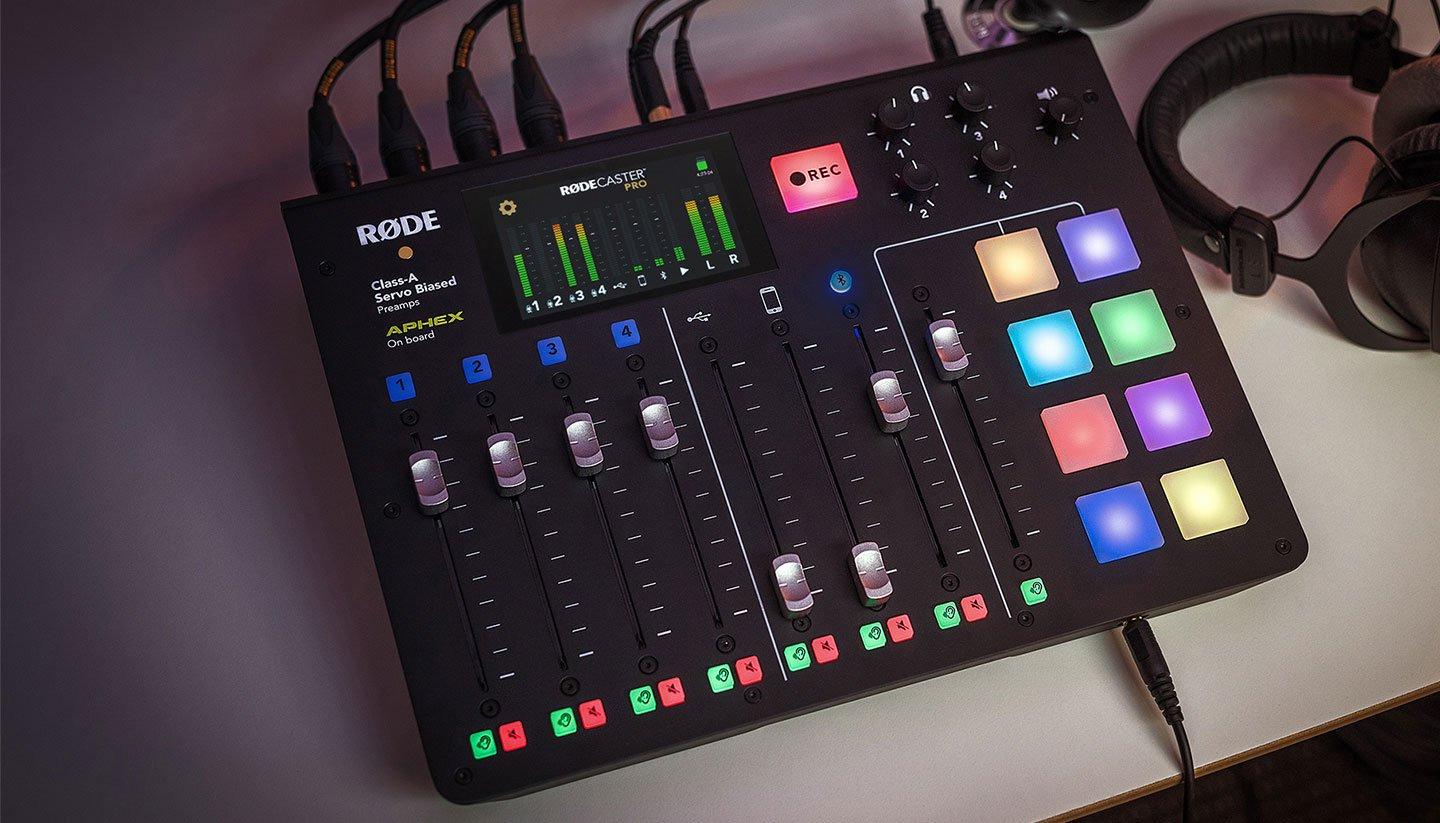
The L-8 also doubles as a 12-in/4-out USB audio interface, which lets me route the recorder into a streaming PC while still recording locally to the SD card as a backup. The 3-band EQ and onboard effects per channel let me shape each mic’s sound without a DAW. Layered menu controls can be saved as presets, so once you have dialed in a setup, switching between shows is fast.
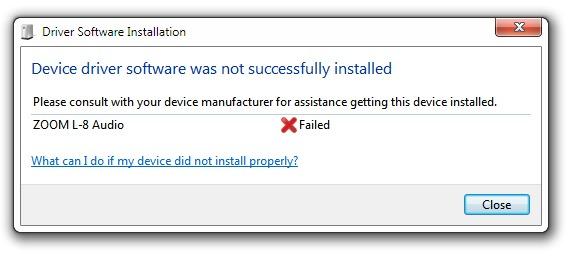
Where the L-8 stumbles is the learning curve. New users find the menu-driven setup intimidating, and the time-out function kicks in too easily when you pause mid-session. Only one effect can run at a time across all channels, which limits creativity. The plastic shell is light but feels less premium than the metal Zoom H6.
Who the L-8 is right for
Panel podcasters with 4 to 6 hosts, live event recording, and anyone who needs a battery-powered mixer they can take on the road. Also a strong fit for small bands or worship teams that want a digital mixer with built-in recording.
Where the L-8 falls short
Heavier than handheld recorders (around 1.5 kg), steeper learning curve, and single-effect-per-session limitation. If your show is 2 to 4 people, the PodTrak P4 delivers the same podcast ergonomics for less money.
7. Zoom F3 – Best Pro Field Recorder for Filmmakers and Sound Pros
Zoom F3 Professional Field Recorder for Filmmakers & Musicians
32-bit float
Locking XLR
73-hour runtime
Pros
- 32-bit float recording eliminates gain staging
- Dual locking XLR inputs for secure mic connections
- Ultra-low-noise preamps deliver studio-quality sound
- Compact solid build at 8.5 ounces
- 73-hour digital recording time
- Flexible power via AA batteries or USB bank
Cons
- Only two XLR inputs limits multi-source setups
- No 3.5mm input for lav mics
- Memory card door pops open easily
- No built-in mics means extra cost for complete kit
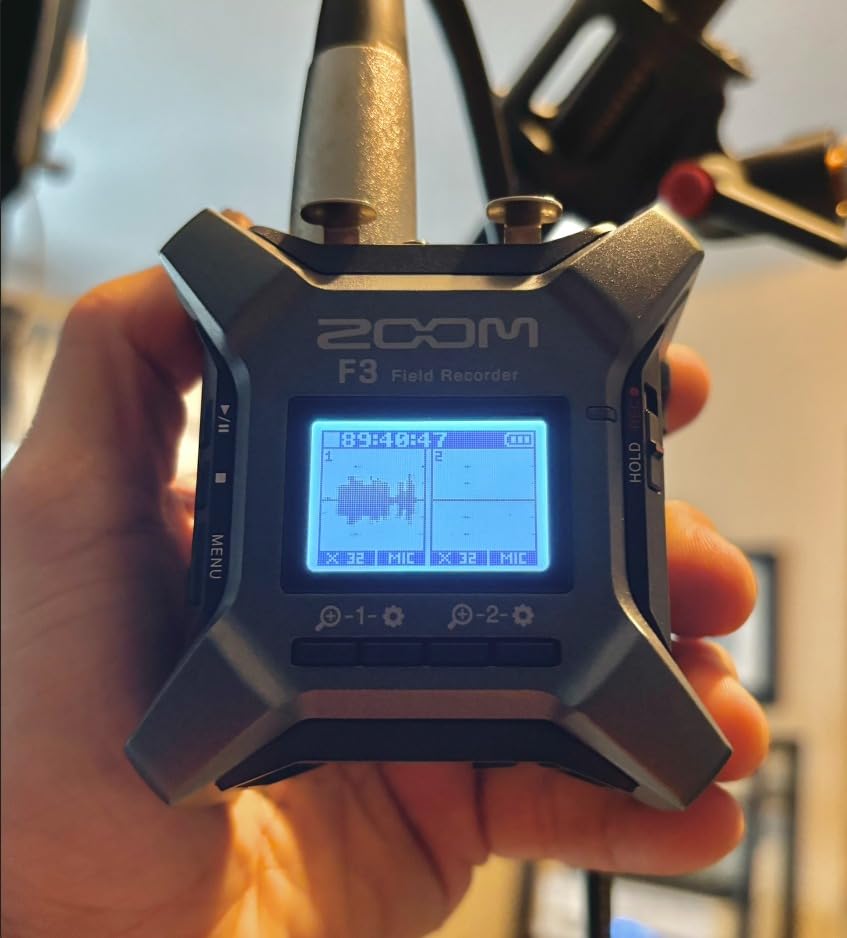
The Zoom F3 is the recorder that convinced me 32-bit float is not a gimmick. Set it and forget it: loud trucks, soft dialogue, sudden laughs, the F3 captures everything without clipping and without me riding gain. If you have ever ruined an interview because a guest suddenly laughed or shouted, the F3 is the cure.
The dual locking XLR inputs are a major upgrade over non-locking jacks. I have yanked cables on other recorders mid-session, but the F3 connectors lock in place and do not let go unless I release them. The ultra-low-noise preamps deliver studio-quality sound that competes with gear costing twice as much. I have used it as a backup recorder on film sets and as the primary recorder for one-on-one podcast interviews.
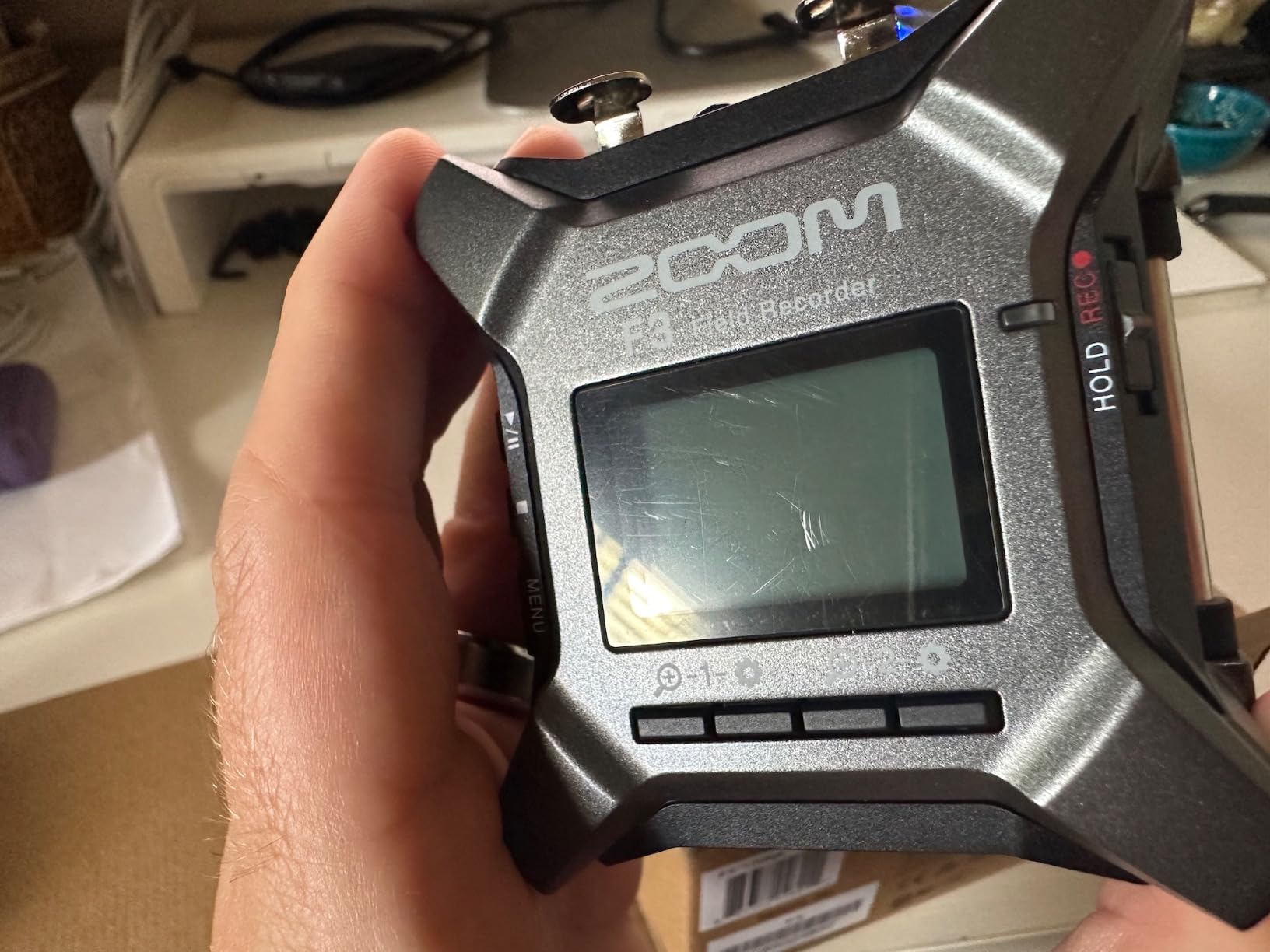
Battery life is excellent at over six hours with phantom power, and the F3 also runs from a USB power bank for long days on location. Build quality is a mix of metal and high-grade plastic, and the unit weighs only 8.5 ounces. The 1/4-20 mounting options on the bottom let you attach the F3 to a camera rig or boom pole.
Reviewers note a few quirks. There are only two XLR inputs, so if you want to record a four-person panel you will need multiple F3 units synced together. There is no 3.5mm input for lavalier mics, and no built-in microphones at all, so the F3 requires external mics to function. The SD card door pops open if you brush it accidentally, and there is no traditional gain control to grab in a hurry.
Who the F3 is right for
Filmmakers, sound designers, and pro podcasters who want the cleanest possible preamps and the safety net of 32-bit float. Also a great backup recorder for any studio setup where you never want to lose a take.
Where the F3 falls short
Only two XLR inputs, no built-in mics, no 3.5mm input for lav mics, and the flimsy SD card door. It is also overkill for solo podcasters who do not need pro-grade preamps.
8. TASCAM Mixcast 4 – Best All-in-One Podcast Production Station
TASCAM Mixcast 4 Podcast Streaming Mixer, Recorder, and USB Audio Interface — Four XLR/TRS Mic Inputs, Touch Screen and Editing Software Included
14-track recording
4 XLR/TRS
Sound pads + Bluetooth
Pros
- Four XLR/TRS mic inputs perfect for multi-host podcasts
- 14-track recording directly to SD card
- Bluetooth audio input for wireless phone calls
- Eight customizable illuminated sound pads
- Built-in Tascam Podcast Editor for post-production
- Stress-free touch panel control
Cons
- Some users report reliability issues connecting to computers
- Firmware update process can be complicated
- Power adapter appears fragile for frequent unplugging
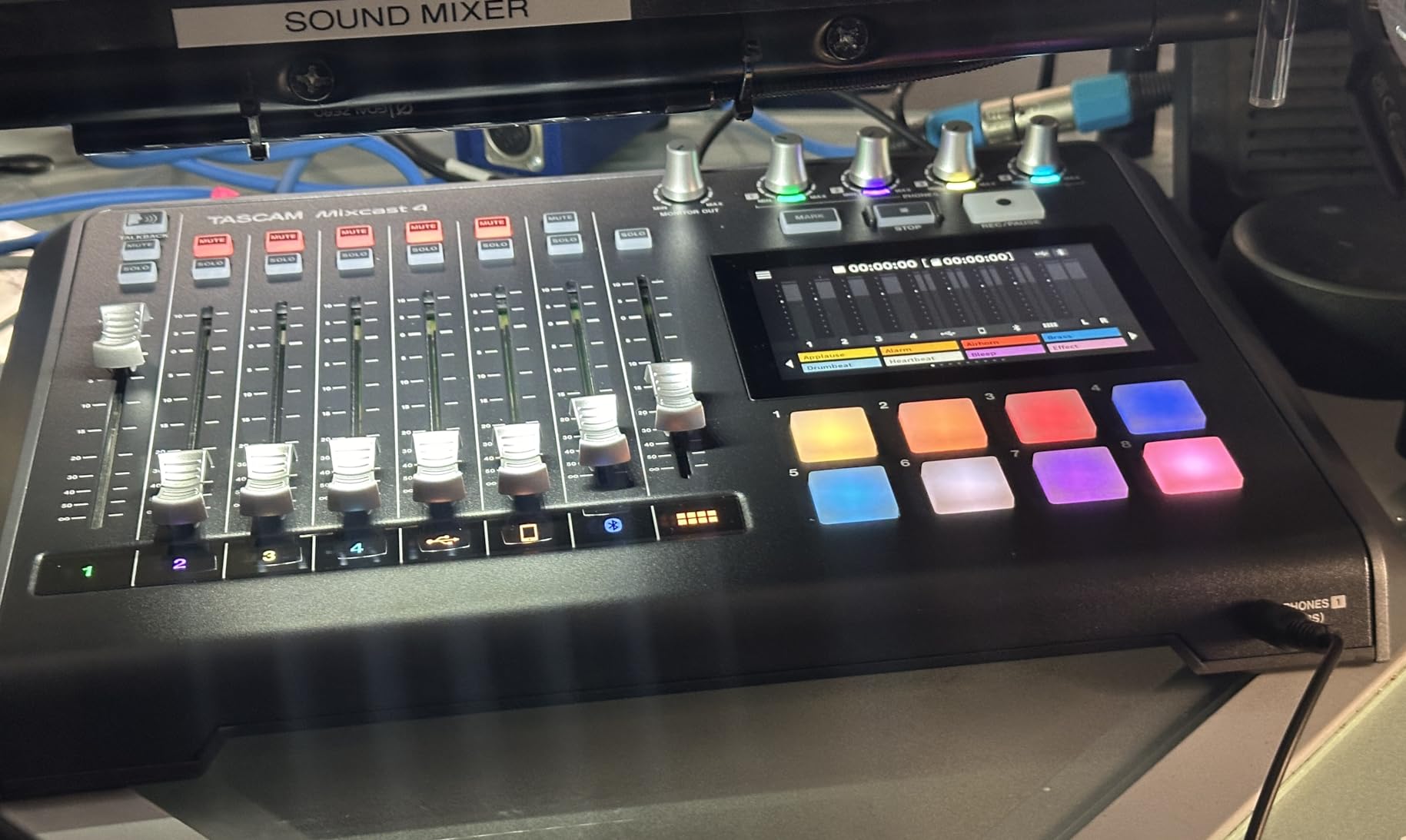
The TASCAM Mixcast 4 is the most podcast-focused recorder on this list. It is built around the workflow of a four-host show, with four XLR/TRS inputs, four individual headphone outputs, eight customizable sound pads, and a touch panel that controls everything. Bluetooth audio input is built in, which means wireless phone guests connect without an extra adapter.
The 14-track recording captures every mic plus the sound pad playback and stereo mix, which gives you enormous flexibility in post. The included Tascam Podcast Editor software simplifies editing: it is designed for podcasters, not engineers, so I was trimming and arranging an episode within an hour of opening it. The clean, transparent preamps with built-in compressor and EQ handle voice beautifully without sounding processed.
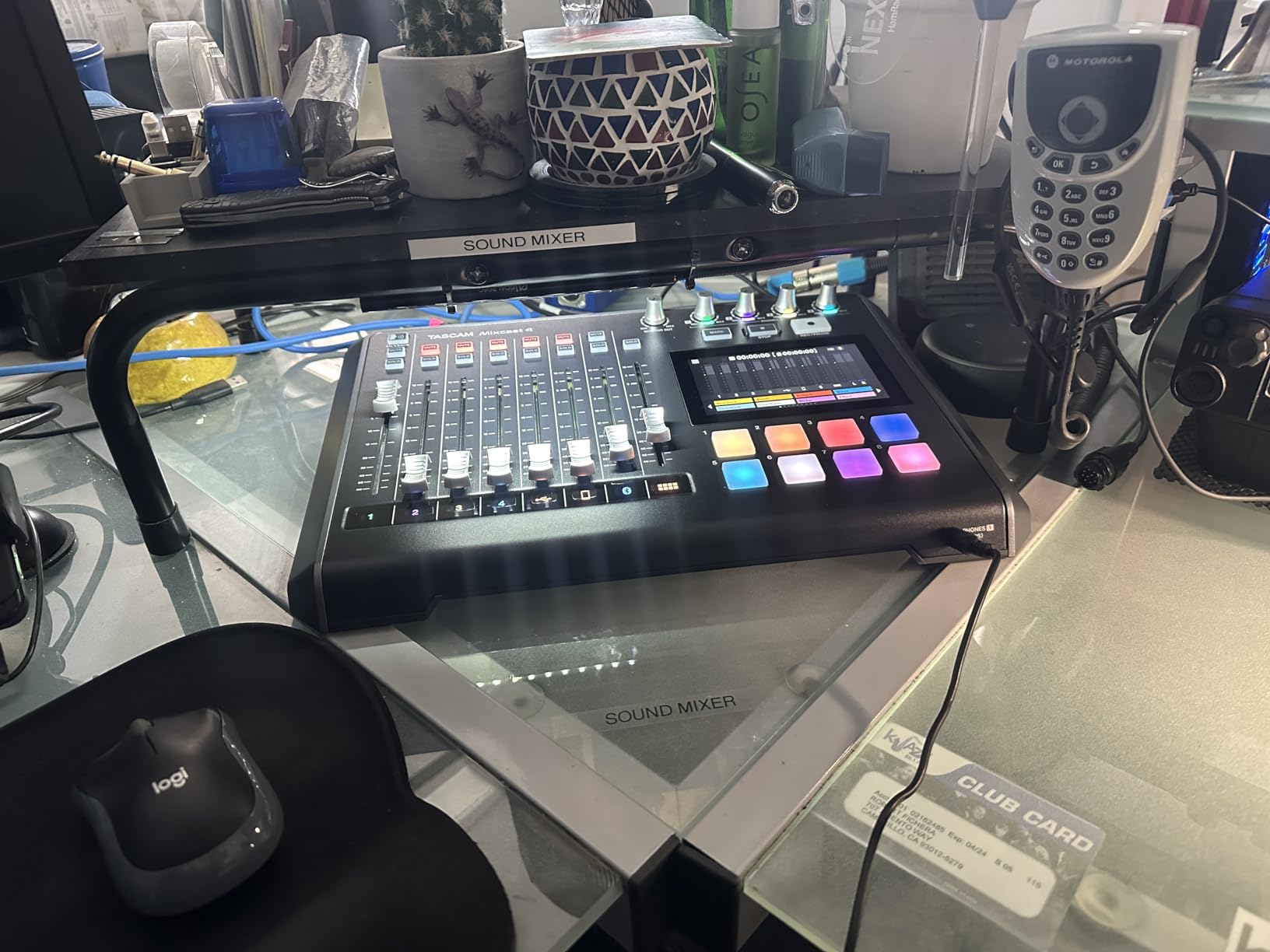
The touch panel control is a major productivity boost. I can adjust mic levels, fade sound pads, and trigger transitions with one tap during a live recording. The Mixcast 4 also runs as a USB audio interface with multitrack output to your DAW, so the same device handles studio recording and live shows.
Where the Mixcast 4 falls short is connectivity reliability. Some users (and I have seen this twice on different units) report that the recorder occasionally drops its USB connection to the computer mid-session, which interrupts the stream or recording. The firmware update process is also more complicated than necessary. The power adapter feels fragile if you unplug it often, and you cannot transfer mic profiles between the four channels.
Who the Mixcast 4 is right for
Four-host podcasts, live streaming setups, and anyone who wants a touch-driven all-in-one studio with Bluetooth caller support. It is also a strong fit for educators and conference producers who record multi-person panels regularly.
Where the Mixcast 4 falls short
Reliability quirks with USB connection, complex firmware updates, and a heavier 2.5 kg form factor that is less portable than handheld recorders. Also pricier than the Zoom PodTrak P4 while doing similar work.
9. TASCAM DR-05XP – Best Budget Stereo Recorder for Field Podcasting
TASCAM DR-05XP 32-Bit Float Portable Handheld Field Recorder and USB-C Audio Interface — Digital Stereo Recording of Music, Sound, Voice, Audio for Video and Podcasting
32-bit float
Stereo omni mics
17.5-hour battery
Pros
- 32-bit float recording protects against clipping
- Omnidirectional stereo microphones handle loud environments
- USB-C audio interface for direct computer recording
- 17.5-hour battery life on 2 AA alkaline batteries
- Japanese-designed professional build quality
- Powers via USB as well as batteries
Cons
- Internal speaker does not work for playback
- Limited stereo separation on built-in mic recordings
- Compatible SD cards are picky and sometimes expensive
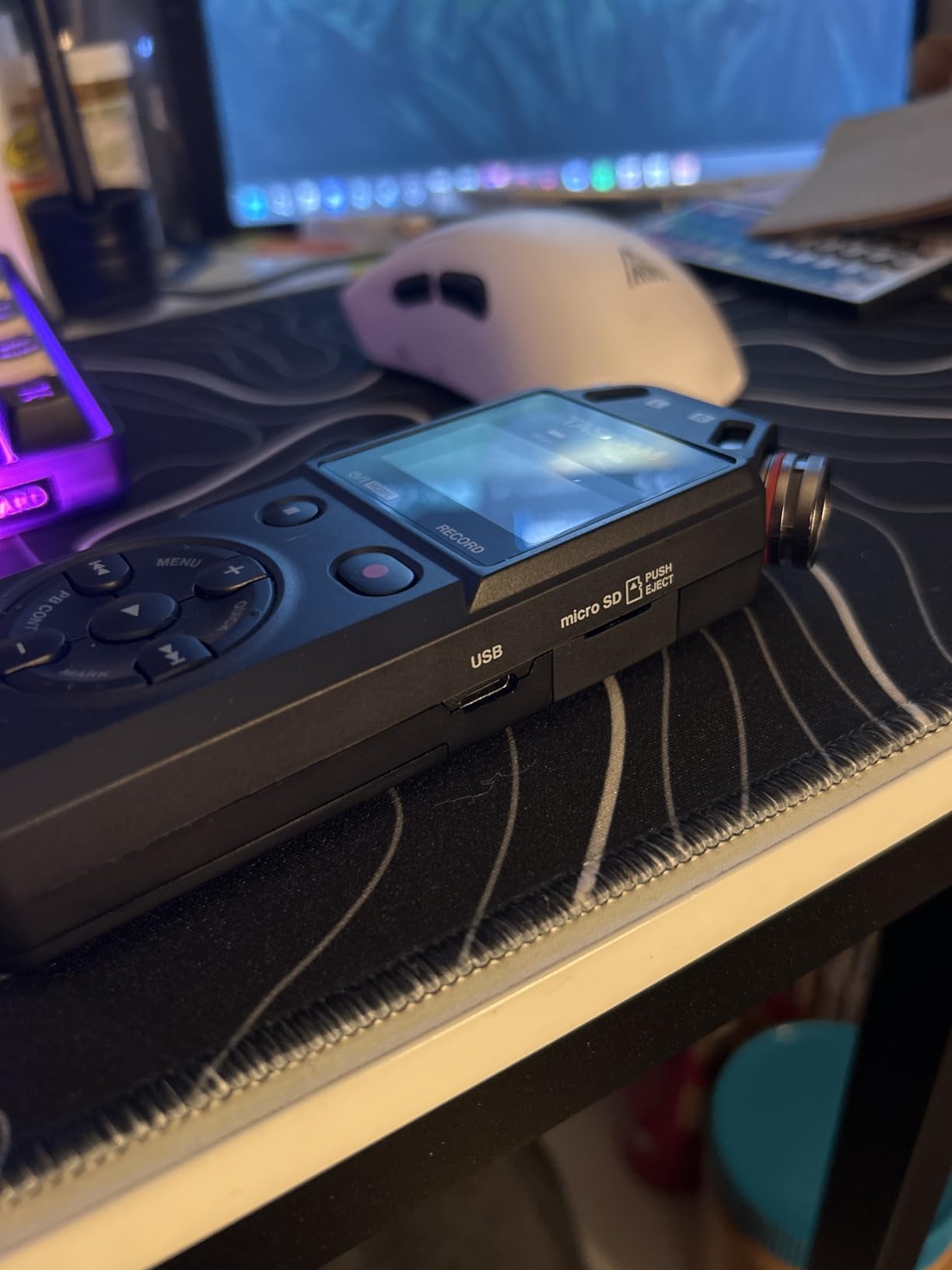
The TASCAM DR-05XP is the closest competitor to the Zoom H1 Essential, and in some ways it pulls ahead. It records 32-bit float at up to 96kHz, has USB-C for both charging and computer audio interface use, and runs up to 17.5 hours on a pair of AA batteries. The omnidirectional stereo condenser mics handle loud sources up to 125 dB SPL, which matters when you record in cafes, bars, or live events.
I tested the DR-05XP against the H1 Essential with two external stereo microphones, and the DR-05XP captured noticeably warmer, fuller sound. The Japanese-designed build feels more solid in the hand, and the menu structure is more intuitive once you learn the logic. Reviewers consistently cite the DR-05XP as a pro-grade recorder at a budget price.
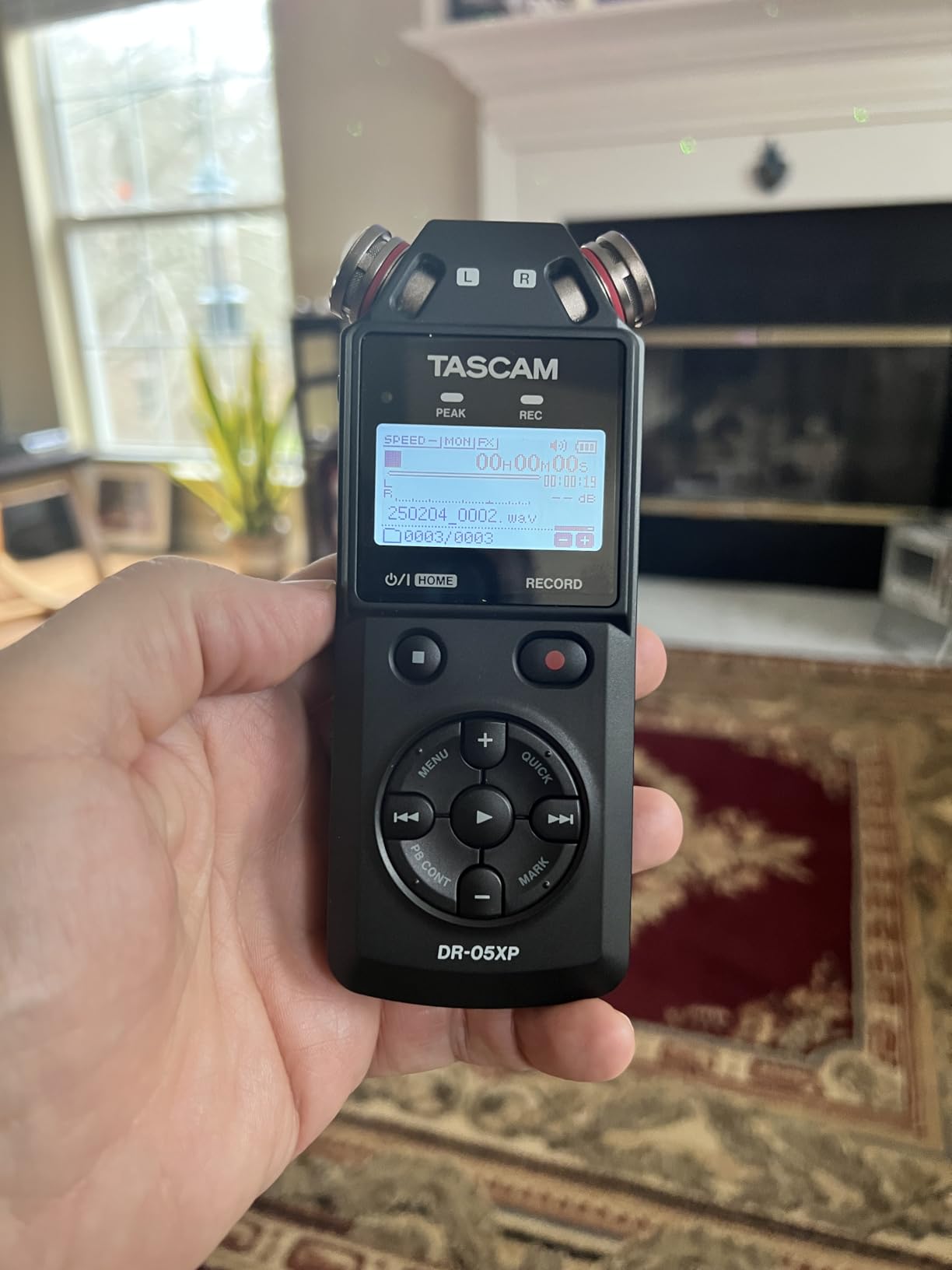
The USB-C audio interface mode is a real productivity win. Plug the DR-05XP into a laptop and it shows up as a 2-in/2-out interface, ready to record into any DAW without drivers. The recorder also powers via USB, which means I can run it indefinitely from a battery bank during long outdoor sessions. The recorder saves every second of audio up to power loss, with no file corruption if the batteries die mid-take.
The downsides are mostly minor. The internal speaker does not actually work for playback (you need headphones), and the built-in stereo mics have limited left/right separation, which can make solo recordings sound mono. The settings menu is inaccessible when USB is plugged in, and reviewers report that some SD cards are not compatible, which forces you to test cards before important sessions.
Who the DR-05XP is right for
Budget-conscious podcasters who want 32-bit float without paying for the Zoom H1 Essential, journalists who need a long battery life recorder, and creators who want a USB-C interface and recorder in one device.
Where the DR-05XP falls short
Limited stereo separation on built-in mics, no XLR inputs, picky SD card compatibility, and a quirky menu lockout when USB is connected. It also does not have the brand recognition of the Zoom H1 Essential, which matters if you resell later.
10. Zoom H1 XLR – Best Compact Recorder with XLR Inputs
Zoom H1 XLR 2-Channel Recorder for Filmmakers, Musicians & Podcasters
32-bit float
2 XLR/TRS locking
OLED waveform
Pros
- Two XLR/TRS combo locking inputs for secure connections
- 32-bit float recording delivers clip-free audio
- OLED waveform display makes level monitoring easy
- Plugs into laptops as a USB audio interface
- Supports SDXC cards up to 1TB
- Auto-switches between battery and USB power
Cons
- Plastic build may not survive drops
- Recording two mics produces stereo L/R not dual mono
- Premium batteries recommended for phantom power
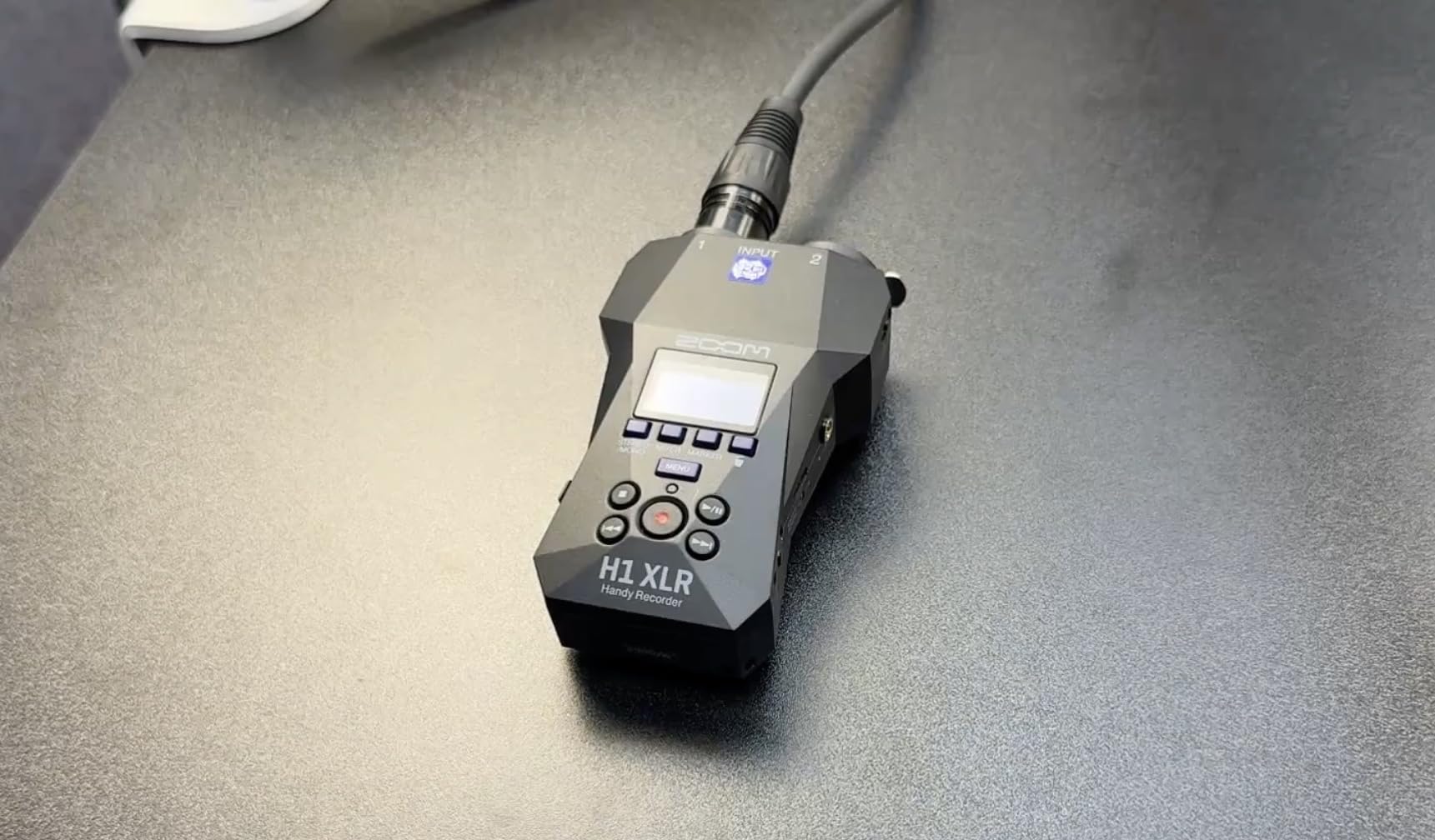
The Zoom H1 XLR fills a specific need: a pocketable recorder with two real XLR inputs. If you want something smaller and cheaper than the H4n Pro but still need to plug in external dynamic or condenser mics, the H1 XLR is the answer. The locking XLR/TRS combo inputs are a serious upgrade over the H1 Essential’s 3.5mm jack.
I carried the H1 XLR to a trade show in place of my usual H4n Pro and barely noticed the weight difference. The OLED waveform display makes it easy to monitor levels at a glance, which is faster than reading the small LCDs on most budget recorders. The 32-bit float recording captures everything from quiet booth conversations to crowded hall announcements without clipping.
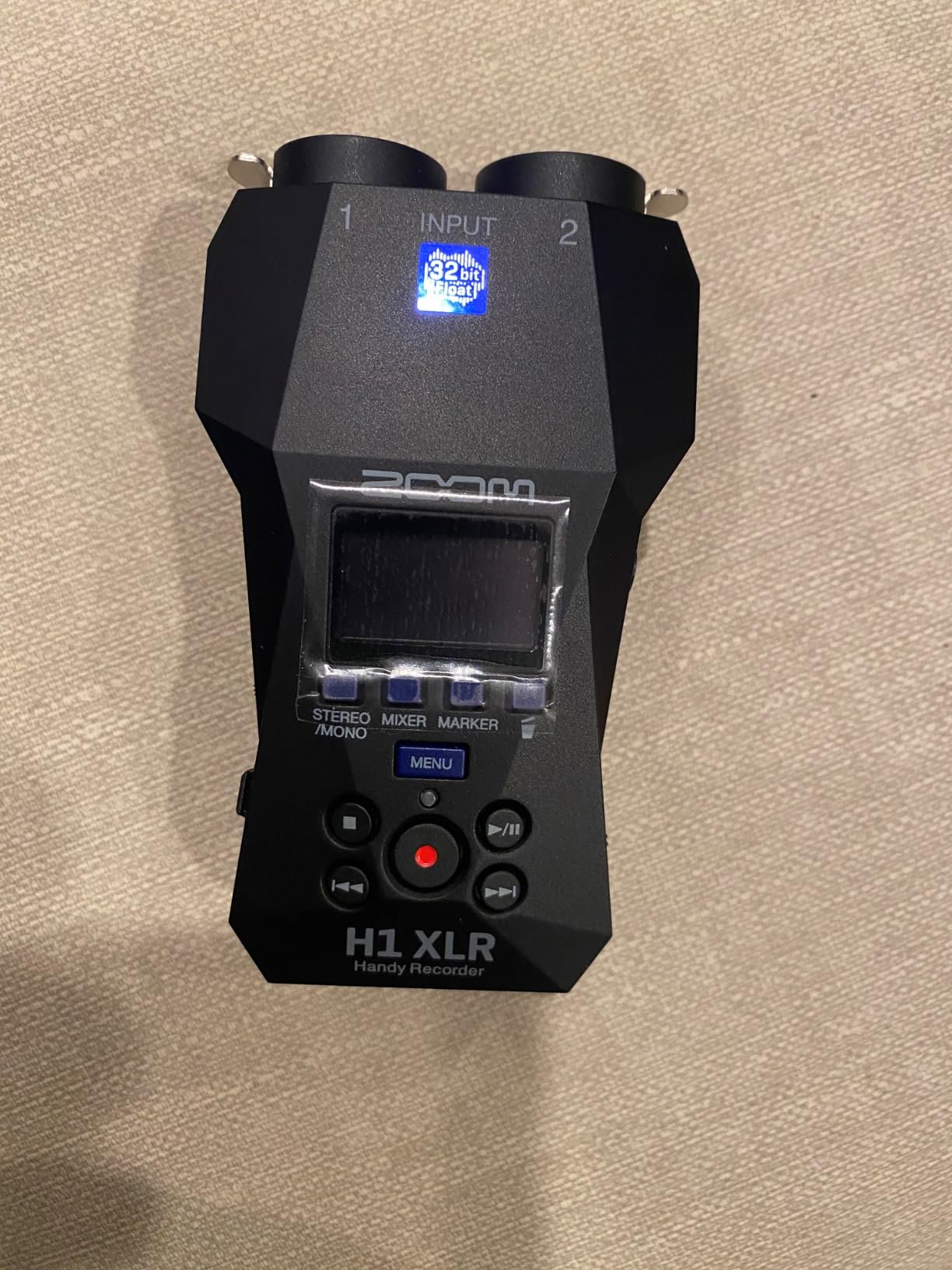
USB-C connectivity means the H1 XLR doubles as a plug-and-play audio interface for my laptop. SDXC support up to 1TB is overkill for most users but a lifesaver if you record long-form interviews or conferences. The recorder automatically switches between AA battery power and USB power, so I never run out of juice mid-session.
Two minor issues to flag. The two-mic recording produces a stereo L/R file, not two separate mono tracks, so post-production editing on each mic is harder than with the PodTrak P4. The plastic build feels solid enough for daily use but I would not drop it. Phantom power chews through cheap AA batteries, so invest in rechargeables or a USB power bank for longer sessions.
Who the H1 XLR is right for
Traveling podcasters who need a small recorder with XLR inputs, two-person interview hosts who want something more compact than the H4n Pro, and anyone who values the OLED waveform display for fast level monitoring.
Where the H1 XLR falls short
Two-mic recording is stereo L/R only (not dual mono), plastic build quality, and battery drain under phantom load. The recorder also needs to be formatted with a fresh SD card before first use to avoid freeze-ups.
How to Choose the Right Portable Recorder for Your Podcast
Buying the best portable recorder for podcasting is less about specs and more about workflow. The recorder that works for a solo interviewer in a quiet home office is not the same one a six-person panel needs at a live event. Before you click buy, walk through these five questions.
1. How many people are you recording at once?
This is the single biggest decision. A solo podcaster or one-on-one interviewer can get away with one or two XLR inputs and built-in stereo mics. A four-host show needs at least four XLR inputs. A panel of five or more needs a mixer-style recorder like the LiveTrak L-8. Buying fewer inputs than you need forces you to daisy-chain recorders, which doubles your editing time.
Here is a quick workflow mapping:
- Solo podcast: Zoom H1 Essential, TASCAM DR-05XP, or Zoom F3 with one external mic.
- Two-host or interview: Zoom PodTrak P4, Zoom H4n Pro, or Zoom H1 XLR.
- Four-host podcast: Zoom PodTrak P4 or TASCAM Mixcast 4.
- Five or more hosts: Zoom LiveTrak L-8 or Zoom H8 with multiple capsule setups.
2. What microphones do you plan to use?
Microphone compatibility matters more than most guides admit. Dynamic mics like the Rode Procaster or Shure SM58 do not need phantom power, but they do need clean preamp gain. Condenser mics require 48V phantom power, which not every recorder provides. Lavalier mics usually connect via 3.5mm, which is missing from some pro units like the Zoom F3.
If you plan to use dynamic mics, look for preamps with at least 60dB of clean gain. The Zoom PodTrak P4, Zoom H4n Pro, and Zoom F3 all deliver this. If you plan to use condenser mics, make sure the recorder offers 48V phantom power on each input independently. The Zoom H5, Zoom PodTrak P4, and TASCAM Mixcast 4 all support this.
3. Do you need 32-bit float recording?
32-bit float recording is the single biggest usability upgrade of the last few years. Traditional recorders need you to set the gain carefully before recording: too low and you get hiss, too high and you clip. 32-bit float captures the full dynamic range at once, so you never clip a loud peak and you can raise quiet passages later without bringing up noise.
For podcasters, this means less anxiety during interviews. You can hand the recorder to a guest and not worry about whether they will shout or whisper. The Zoom H1 Essential, TASCAM DR-05XP, Zoom F3, and Zoom H1 XLR all support 32-bit float. If you are buying a recorder in 2026 and do not get 32-bit float, you are paying for technology that is already two generations behind.
4. Will you record remote guests?
If you ever interview someone by phone, Skype, Zoom, or app, you need a recorder with built-in mix-minus. Mix-minus prevents the remote caller from hearing their own voice echoed back, which causes them to stop talking. Without mix-minus, phone interviews sound hollow and guests lose confidence.
The Zoom PodTrak P4 and TASCAM Mixcast 4 both have mix-minus built in, and they handle the setup automatically. The Zoom H1 Essential and H1 XLR can record remote guests via USB, but you need to manage mix-minus in your computer software. The LiveTrak L-8 and Zoom H8 also support mix-minus, though their larger size makes them better suited for fixed setups.
5. How portable does it need to be?
Weight matters more than you think. A 1.5 kg mixer feels fine in a studio but gets old fast on a travel day. Pocketable recorders like the Zoom H1 Essential (92g) and Zoom H1 XLR (180g) disappear in a bag. Mid-size options like the PodTrak P4 (130g) and H4n Pro (130g) travel well in a small pouch. Larger units like the LiveTrak L-8 (1.5kg) and TASCAM Mixcast 4 (2.5kg) are best kept in a studio or vehicle.
Also consider power. AA battery-powered units keep recording in the field, while USB-powered units need a power bank for off-grid sessions. The Zoom F3 and Zoom H1 XLR both run from AA batteries or USB power, which is the best of both worlds.
Price-to-channel analysis
Value-conscious buyers should calculate cost per XLR input. The PodTrak P4 delivers four XLR inputs at around $150, which is the best channel-per-dollar on this list. The H4n Pro offers two XLR inputs for $220, while the Mixcast 4 gives four XLR inputs at $500. The H8 sits at $555 with four XLR inputs plus two combo jacks. If you need channels, the PodTrak P4 is the clear value winner.
Storage and SD cards
Most recorders here use microSD cards. Buy a name-brand card from SanDisk, Samsung, or Lexar with a U3 or V30 speed rating. Cheap cards cause dropouts and file corruption. For 32-bit float recording at 96kHz, you will burn through 1 GB per hour per track, so a 128 GB card is a sensible starting point.
Frequently Asked Questions
What is the best portable recorder for podcasting?
The best portable recorder for podcasting in 2026 is the Zoom PodTrak P4 for most users. It balances four XLR inputs, four headphone outputs, automatic mix-minus for phone guests, and sound pads at an accessible price. For solo podcasters the Zoom H1 Essential or TASCAM DR-05XP deliver excellent results on a budget, while the Zoom F3 is the right pick for filmmakers and pros who want the cleanest preamps.
What do most podcasters use to record?
Most professional podcasters use a dedicated audio recorder like the Zoom PodTrak P4, TASCAM Mixcast 4, or Rode Rodecaster Pro II paired with XLR microphones. Portable handheld recorders are the go-to choice for location interviews, remote shoots, and travel podcasting because they capture pro-grade audio without needing a computer.
What is 32-bit float recording and do I need it?
32-bit float recording captures an enormous dynamic range without clipping. You never need to set gain carefully because the recorder captures everything from a whisper to a shout on the same track. For podcasters who interview unpredictable guests or work in noisy environments, 32-bit float removes the stress of riding gain and rescues loud moments that would clip on a 24-bit recorder.
Do I need phantom power for podcasting?
You need phantom power (48V) only if you use condenser microphones. Dynamic mics like the Shure SM58 or Rode Procaster do not need phantom power, but they do need clean preamp gain. If you plan to use condenser mics like the Rode NT1 or Audio-Technica AT2020, make sure your recorder offers 48V phantom power on the XLR inputs you will use.
Is a portable recorder better than a USB microphone for podcasting?
A portable recorder is better than a USB microphone if you record away from your desk, interview multiple people at once, or want a backup recording on an SD card. USB microphones are simpler for solo creators who record at one computer, but they tie you to that computer and offer fewer inputs. Many podcasters eventually graduate from a USB mic to a portable recorder once they need flexibility, XLR mic support, or remote guest capability.
Final Verdict
After testing all 10 of these portable recorders for podcasting, my top recommendation for most creators is the Zoom PodTrak P4. It handles 2 to 4 host shows out of the box, supports every dynamic or condenser mic you would want to use, and the mix-minus feature for phone guests works flawlessly. If you are on a budget, the Zoom H1 Essential gives you 32-bit float and clean stereo recording for a fraction of the price. If you record solo and want pro preamps, the Zoom F3 is the cleanest-sounding recorder on this list.
Whatever you choose, buy a name-brand SD card, invest in decent XLR microphones, and test your setup before your first real recording. A great portable recorder is the foundation of a great podcast, but the microphone in front of it matters just as much. Happy recording in 2026!