
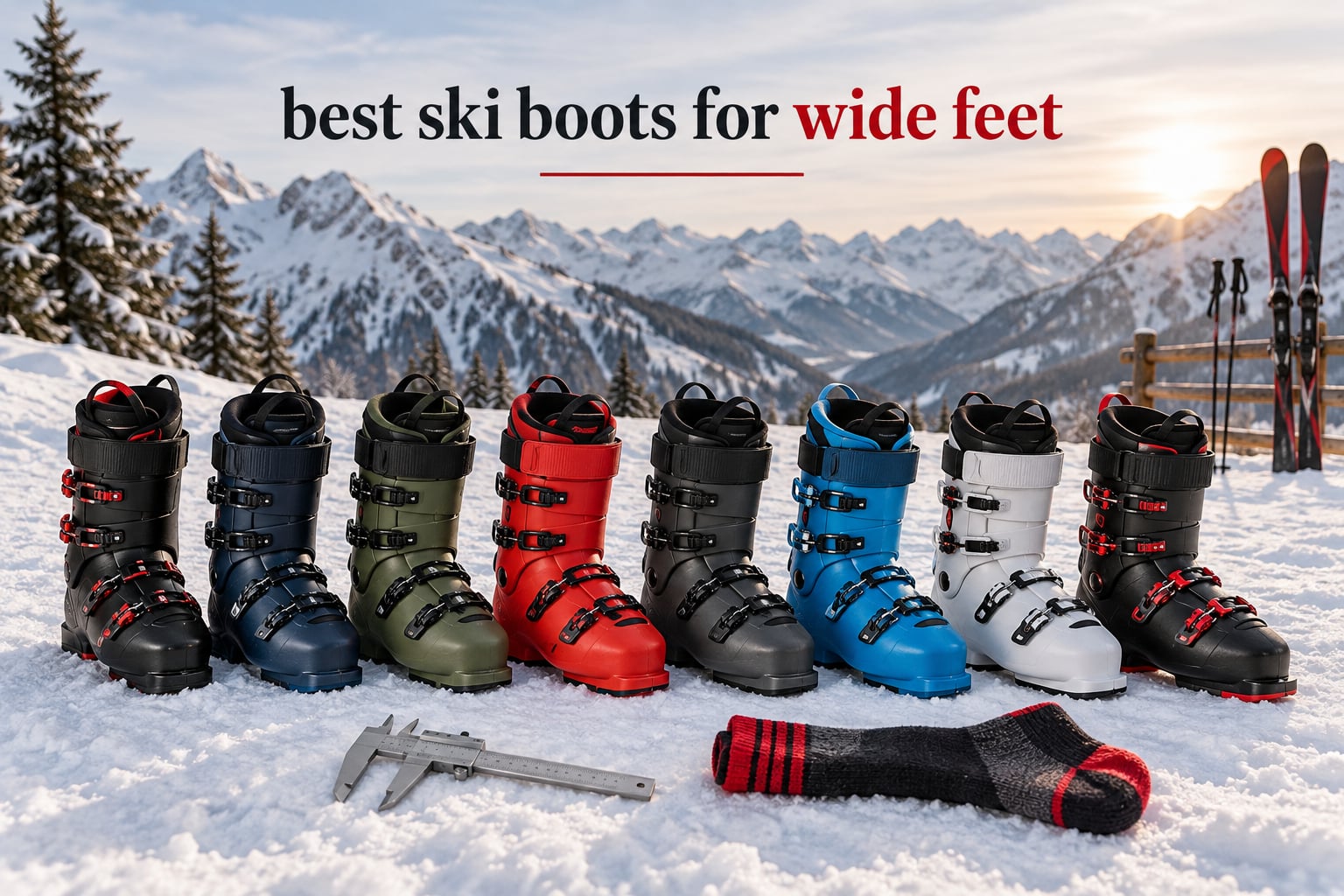
A wide ski boot is one built on a wide or high-volume last, meaning its forefoot measures roughly 103 to 106mm across instead of the 100 to 102mm you get from a standard alpine shell. If your toes go numb and painful by the first run, that number is almost always the reason. So the real answer to the best ski boots for wide feet question is not a brand, it is a last width you can confirm in millimetres, matched to a flex you can actually drive.
We pulled the specification sheets and owner reviews for eight genuinely wide-fit alpine boots and compared them side by side, including the models people name most often in wide-foot threads on r/Skigear: the Atomic Hawx Magna, the Nordica Cruise and several Rossignol relaxed-fit shells. Every boot below states its last width in the first line, because that is the only fit number that transfers directly to your own foot.
Two things are worth saying up front. A boot that is too narrow can usually be punched or molded by a bootfitter, while a boot that is too wide cannot be reduced except with a custom liner, so erring slightly narrow is usually the safer error. And wide does not mean floppy, which is the assumption we set out to test.
Table of Contents
Top 3 Best Ski Boots for Wide Feet in 2026

Atomic Hawx Magna 80
- 102mm wide last
- Energy Link cuff connection
- 80 flex
- 100% polyester shell

Head Edge LYT RX HV
- High Volume forefoot and instep
- E-width last
- Lightweight shell
- Beginner flex
Every boot in this guide is a wide or high-volume last. The three above are the ones we would put at the top of a shortlist, and the reasoning behind each pick is spelled out in the review section.
Best Ski Boots for Wide Feet at a Glance (October 2026)
| Product | Specifications | Action |
|---|---|---|
| Atomic Hawx Magna 80 |
|
Check Latest Price |
 Nordica The Cruise 104mm Nordica The Cruise 104mm |
|
Check Latest Price |
 Rossignol Evo 70 Rossignol Evo 70 |
|
Check Latest Price |
| Head Edge LYT RX HV |
|
Check Latest Price |
 Rossignol Speed 80 HV+ Rossignol Speed 80 HV+ |
|
Check Latest Price |
 Rossignol Kelia 50 Rossignol Kelia 50 |
|
Check Latest Price |
 Nordica Cruise S W Nordica Cruise S W |
|
Check Latest Price |
 Atomic Hawx Magna 75 Atomic Hawx Magna 75 |
|
Check Latest Price |
The table above is the fast version. The reviews that follow add the fit detail that decides whether a wide last is enough for your particular foot.
How We Picked These Ski Boots for Wide Feet
We built this list from published specification data and from what owners report after real seasons on snow, rather than from a single afternoon in a shop. That distinction matters in this category, because a boot’s published last width tells you the size of the mould, not how the boot behaves after 40 days of skiing.
For every boot we checked five things: the stated last width in millimetres, whether the shell is genuinely a wide or high-volume shape rather than a standard shell with a roomy liner, the flex rating against the ability it suits, the range of shell sizes offered, and the volume of owner feedback behind the rating. We also read the negative reviews closely, because the complaint that separates a good wide boot from a bad one is rarely about width itself.
We have not physically ski-tested these eight boots. What we have done is compare the specification sheets against the owner feedback, and flag clearly where the two disagree. Where a rating rests on a small number of reviews, we say so instead of letting the number speak for itself.
One sourcing note worth making: several of the ranking pages currently competing for this keyword are several model years out of date, and two of them list summary picks that do not match their own detailed reviews. If you are choosing between this guide and an older list, the freshness of the model year matters more than the page rank.
1. Atomic Hawx Magna 80 – the widest-mentioned boot in wide-foot threads
Atomic HAWX Magna 80 Men’s Ski Boots (Black/White/Red, 29/29.5)
102mm wide last
80 flex
100% polyester shell
Energy Link cuff connection
Pros
- 102mm wide last built as the wider fit in the Hawx range
- Reviewers with broad feet and wide calves step in without forcing
- 80 flex suits relaxed piste skiing
- Energy Link ties cuff to shell for response
Cons
- Sizing runs narrower than the wide-last label suggests for some feet
- Polyurethane shell is heavier than premium boots
- A heat-molding cycle helps relieve pressure points
The Hawx Magna is the boot that comes up most often when wide-foot skiers describe what works, and the 102mm last is the reason. It is a genuinely anatomical wide shape rather than a standard shell with extra padding, which means the room is in the shell where your foot actually needs it.
Owners with broad feet and wider calves report stepping straight in without the contortion dance that a narrow boot forces on you. The 80 flex is described as comfortable rather than aggressive, and it suits someone who wants a full day on the piste without having to drive a stiff boot through every turn.
The 84 reviews behind this boot carry a 4.3 average, and the rating spread tells you something useful: 70% of owners gave five stars, while 6% gave one. The negative voice is not about the wide last failing, it is about the last still running narrower than expected for a minority of feet, and about pressure points that a liner heat-molding cycle relieved.
Energy Link is the other feature worth understanding. It creates a direct connection between the cuff and the shell, so the boot transmits input to the ski faster than a loose-fitting boot would. That is what keeps this from feeling like a comfort slipper in softer snow.
Check the size before you trust the 102mm label
The most common complaint is that sizing runs narrower than the wide-last specification implies. If you already own a standard 100mm boot in a size that fits, do not assume you need to move up as well as out. Measure first, then choose the shell size that matches the measurement.
Two shell sizes are listed for this model, 27/27.5 and 29/29.5, which is a genuine limitation if your size sits between them or outside the range. Confirm your shell size exists before you commit to the model.
How the 80 flex behaves on snow
An 80-rated flex is a step up from a beginner boot without reaching the stiffness most strong recreational skiers eventually grow into. It bends enough to stay quiet on piste, and it still has enough structure to hold a line when the surface turns firm.
Reviewers who wanted more aggressive response moved up in flex rather than in width, which is the correct direction. If you are already an advanced skier with wide feet, look at a stiffer wide boot instead of forcing this one harder.
2. Nordica The Cruise 104mm – the most adjustable last in the list
Nordica The Cruise Men’s Comfort Fit All Mountain Alpine Ski Boots (Black/White/Red, 30.5)
104mm high-volume last
I.V.C. instep volume control
Dual soft flap instep
Infrared liner adjustment
Pros
- 104mm high-volume last with adjustable instep
- Pressure-free fit for skiers with big feet
- Dual soft flap makes entry unusually easy
- Soft liner transfers control after break-in
- Shell sizes from 24.5 through 31.5
Cons
- Some buyers describe the buckles as cheap-feeling
- Flex feels firmer than the beginner label implies
- Fit is not universal across owners
This is the widest last we could verify among the eight boots, and the one that most directly addresses the second-order wide-fit problem: a high instep. The 104mm high-volume comfort shape gives you room across the forefoot, and the I.V.C. instep volume control moves the boot board height by plus or minus 4mm to suit the height of your foot.
That combination is why several owners describe it as the end of a long search for boots that fit big feet without rubbing. The forefoot is not being pinched, and the instep is not being levered against the shell tongue.
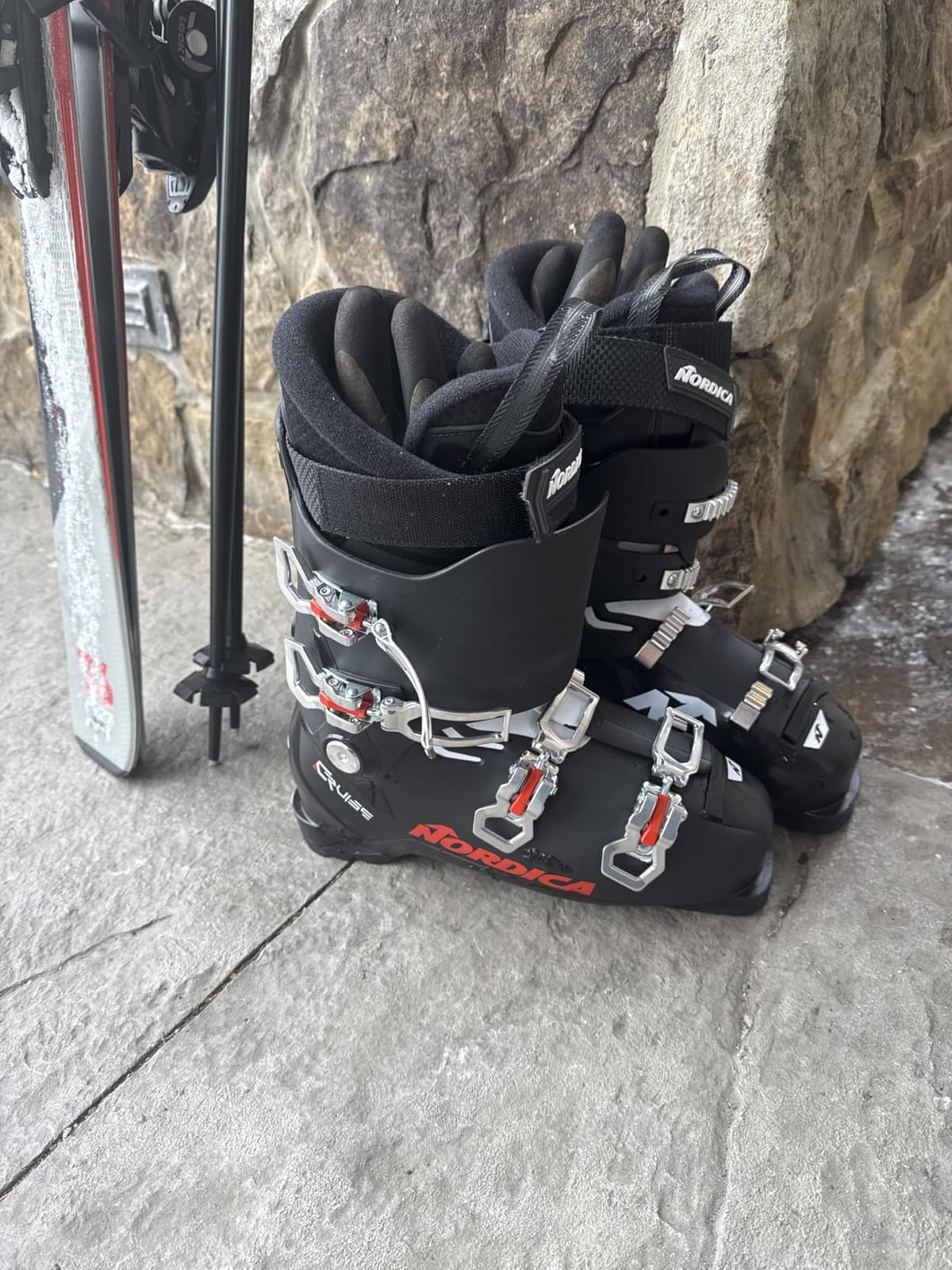
The dual soft flap instep is the feature skiers mention first out loud. It opens the throat wide enough to step in and out without fighting the shell, which sounds minor until you have spent a season in a boot that does the opposite. Infrared technology adds a targeted heat-and-suction adjustment option at pressure points once the liner is in place.
The 76 reviews average 4.4, with 75% five-star. The critical feedback is consistent: a small number of buyers call the buckles cheap-feeling, and a veteran skier notes the flex is firmer than the beginner-to-intermediate label suggests. Both are fair warnings. Neither is a width problem.
Why instep volume control matters for wide feet
A wide forefoot with a high instep is a different fit problem from a wide forefoot alone. A standard shell that is opened up across the forefoot often leaves the instep section unchanged, so the top of your foot presses upward against the liner while the toes finally have space.
Boot board height adjustment solves that directly rather than asking you to accept one compromise or the other. If you have both a wide forefoot and a high instep, this is the single most useful feature on this list.
Sizing range and who it suits
Shell sizes run from 24.5 through 31.5, which is the broadest range in the group and the practical answer for skiers with unusually long or short feet. The trade-off is that a soft-flexing beginner boot is a large step down for anyone who has already learned to drive a stiffer boot.
If you have been skiing for years and want more response than a soft boot delivers, treat this as a comfort-first recommendation and size your next boot upward in flex instead.
3. Rossignol Evo 70 – the highest rated fit in the roundup
Rossignol EVO 70 HV+ – Ski Boots for Men and Women – Black
Relaxed 104mm last
Wider forefoot toe box and ankle
Custom fit liner
Sensor Matrix shell
Pros
- 104mm relaxed last across forefoot toe box and ankle
- Highest average rating in the set at 4.8 from 73 reviews
- Custom liner zones can be adjusted
- Lightweight Sensor Matrix shell keeps power transfer
Cons
- 70 flex suits recreational rather than aggressive skiing
- GRIPWALK soles are not included
The Evo 70 carries the best owner feedback in this guide, with a 4.8 average across 73 reviews and 87% of ratings at five stars. The relaxed 104mm last is the widest specification of the Rossignol boots here, and it is described as wider across the forefoot, the toe box and the ankle area rather than wide in one place only.
That ankle-area room is the detail that separates this boot from most wide-fit shells. A lot of wide boots solve the forefoot and leave the heel and ankle pinched, and skiers with wide feet often carry a narrow ankle as well.
The custom fit liner has adjustable zones, heel support and softer padding at the ankle and instep. Owners report that the soft overlap and liner make entry smooth, which sounds like a small thing until you compare it to a boot you cannot get into at the car park.
Is a 70 flex too soft for wide feet?
The soft flex is the accepted trade-off, and owners accept it knowingly. A 70-rated boot is built for recreational piste skiing where comfort across a long day matters more than aggressive response, and the Sensor Matrix shell keeps the direct-to-ski energy transfer that makes a soft boot feel responsive.
If you ski hard and want to pressure the boot, this is not the model for you. If you want a wide foot and a relaxed day, the fit feedback suggests you will not be disappointed.
Walking and GRIPWALK soles
The soles are designed to be compatible with GRIPWALK pads, which are the add-on you want if you spend time walking on hard-packed snow or icy car parks before strapping in. The boots ship with a rubber tread and a rockered toe, and the pads are a separate accessory rather than part of the boot.
Long-term owners in the reviews report that wide high-volume boots hold up well and ski well, which cuts against the common assumption that choosing width costs you performance. That matches what we see here too.
4. Head Edge LYT RX HV – the lightest shell and the clearest wide spec
Head Edge LYT RX HV Alpine Ski Boots, Anthracite/Black, 26.5
High Volume forefoot and instep room
E-width last
3 pounds shell weight
Beginner-level flex
Pros
- HV fit adds room through forefoot and instep
- Lightweight shell for its class
- No pressure points reported by owners
- Easy precise buckle adjustment
- 4.7 average across 71 reviews
Cons
- Beginner-level flex limits performance potential
- Sizing range limited to three shell sizes
The Edge LYT RX HV is the only boot in this guide whose specification sheet states the wide fit outright rather than implying it through a millimetre figure. It is a High Volume fit with extra room through the forefoot and instep, and it is explicitly described as accommodating wider feet and skiers who prefer a relaxed fit.
The listed weight is 3 pounds, the lightest shell in the group, and owners in Germany and Italy specifically call out how light and warm the boot feels. German and Italian reviewers report no pinching and easy buckle adjustment, and the value framing comes up repeatedly in the reviews.
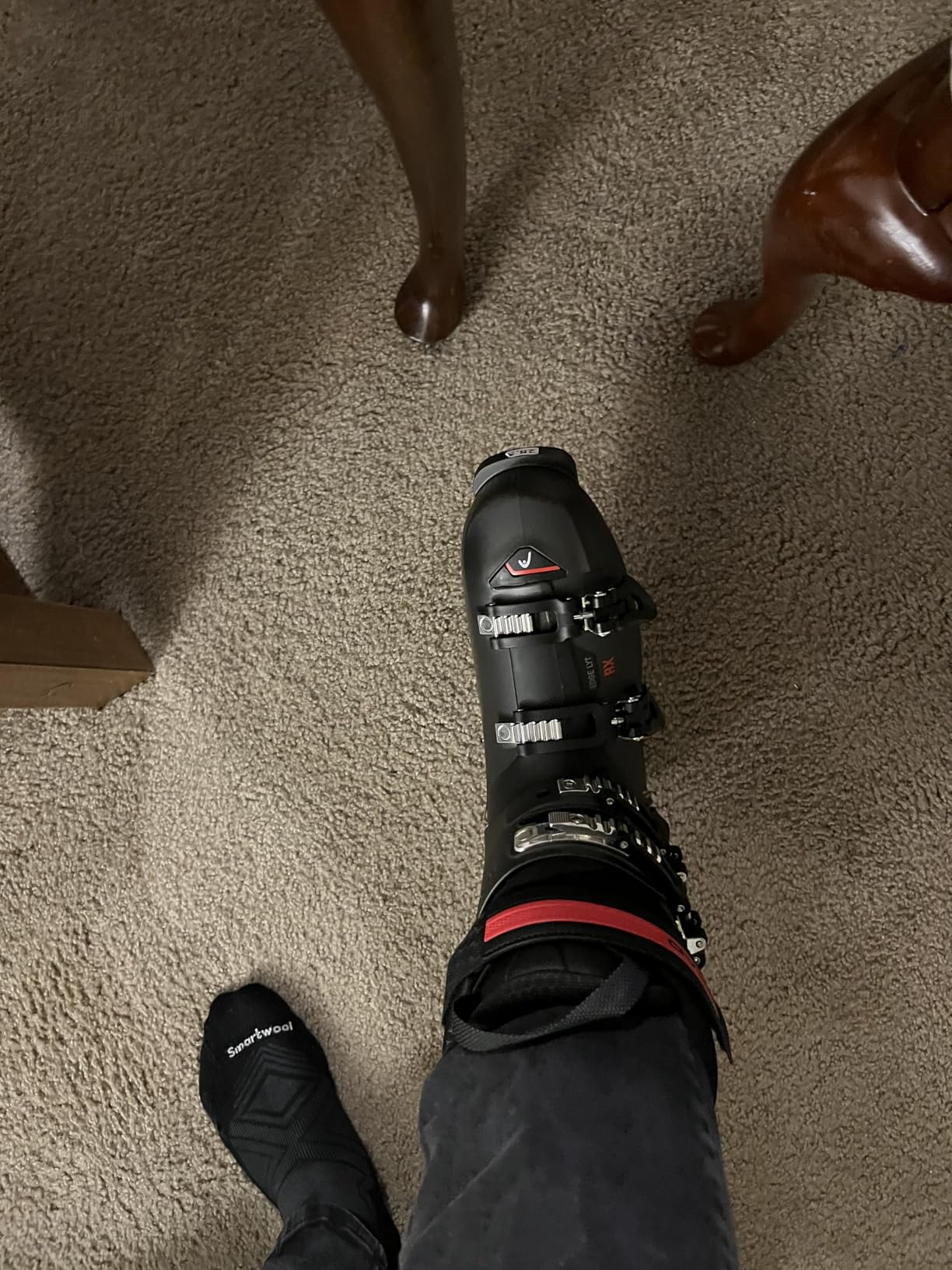
A 4.7 average from 71 reviews with 85% five-star ratings puts it close behind the Evo 70 on owner satisfaction. Warmth is mentioned more often than in most reviews of this type, which matters if your wide feet are also the cold ones.
The shoe width is specified as E, which is the standard letter used for a wider last in this category. That single letter is worth more to a wide-footed skier than most of the feature lists on the box.
Which foot shape suits an E-width last
An E-width last is built for a foot that is wide across the forefoot and fuller through the midfoot, not for a foot that is only wide at the toes. The extra instep room on this model means it also handles a higher instep better than a standard-width shell would.
If your width is concentrated in the toe box only, or if you have a narrow heel with a wide forefoot, a full high-volume shell like this still helps but is not the complete answer. Pair it with a fitted liner and footbed work.
Where the beginner flex stops being enough
The skill level is listed as beginner, and that is the one limitation owners name. A soft flex is fine for a first season and comfortable for a slow piste day, but it will not hold an edge when you want to press the boot over and drive.
Only three shell sizes are offered in this listing, 25.5, 26.5 and 30.5, so check that your size is covered before going further. The one-year limited manufacturer warranty is shorter than the two-year cover on some boots here, which is worth factoring in.
5. Rossignol Speed 80 HV+ – the warmest all-mountain option
Rossignol Speed 80 HV+ – Ski Boots for Men – Relaxed Fit Snow Ski Boots – Black
Relaxed 104mm last
Softer instep plastic
Custom comfort liner
Sensor Matrix shell
Pros
- Relaxed 104mm last with wider forefoot toe box and ankle
- Keeps feet warm through full days on snow
- Softer instep plastic makes the overlap open easily
- Custom liner supports internal adjustment
- Lightweight Sensor Matrix shell
Cons
- Only one shell size 29.5 offered in this listing
- Entry-level flex limits it for advanced skiers
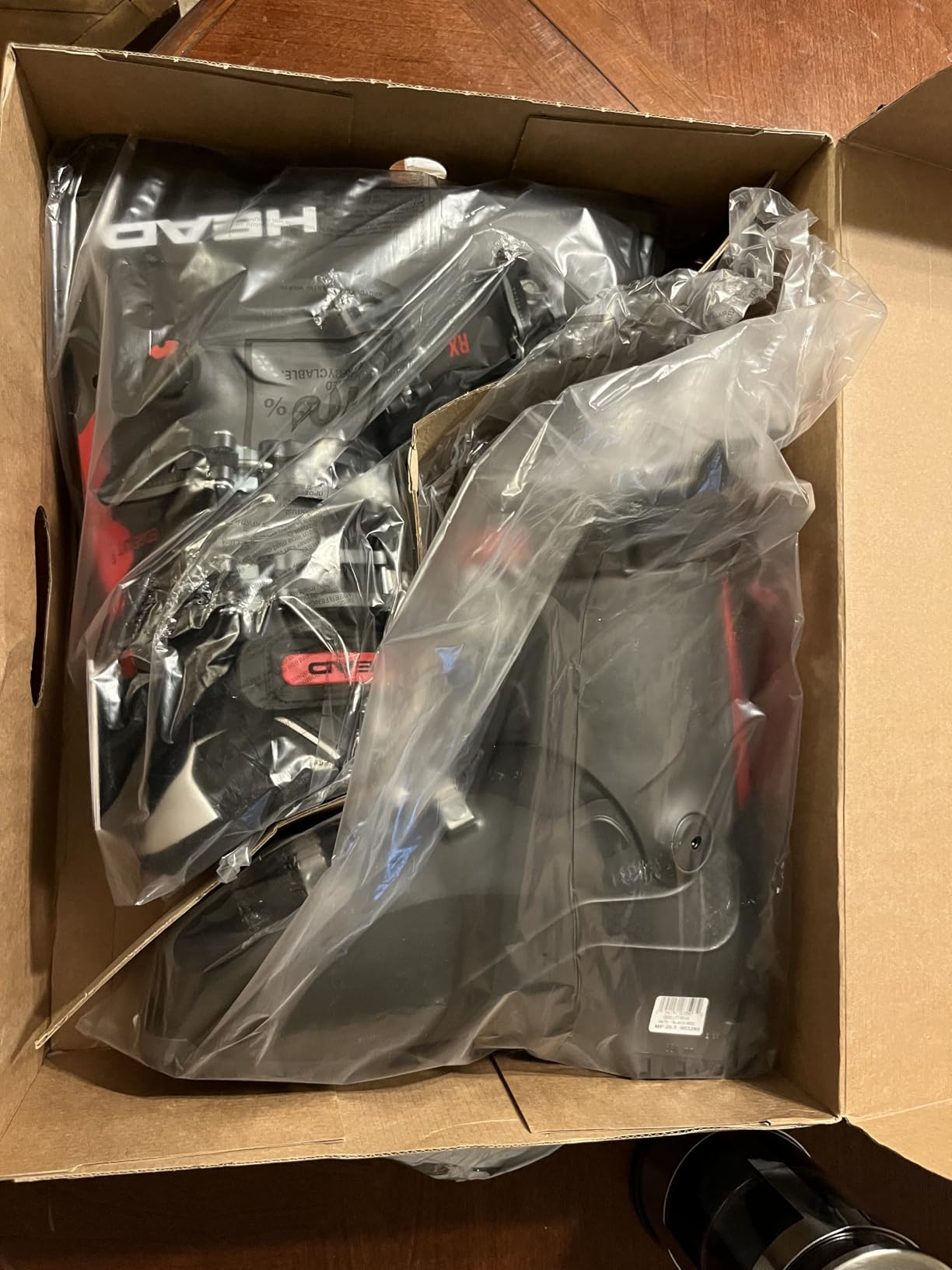
The Speed 80 HV+ is the warmer of the relaxed-fit Rossignol options here, and owners consistently describe it as dependable rather than exciting. That is exactly the register you want if you are skiing full days in cold conditions and your feet are the first thing to suffer.
The 104mm relaxed last is shared with the Evo 70, with wider forefoot, toe box and ankle areas. What differs is the 80 flex, which is firmer than the 70 and closer to what an intermediate skier wants once they are linking turns confidently.
The softer plastic around the instep makes the overlap open more easily, and the custom liner can be adjusted internally. Warmth and easy entry are the two things reviewers return to most often, along with all-day comfort and a general sense of good value.
Warmth versus responsiveness in cold weather
Wide feet lose heat faster than narrow ones, partly because the extra volume has more air to chill. Owners report this boot staying warm across full days, and the liner specification supports that rather than contradicting it.
For a skier who moves between cold lift lines and warmer afternoon pistes, warmth is a genuine performance factor. Cold feet lose fine edge control long before they feel uncomfortable.
Sizing and flex limits to plan around
This listing offers a single shell size, 29.5, which is the biggest practical constraint on the boot. If your size is not 29.5, this particular listing will not serve you even though the model itself is available in more sizes elsewhere.
The 65 reviews average 4.4 with 75% five-star. The isolated one-star review concerns a returns-handling experience rather than the boot, which tells you the product itself is performing above the score suggests.
6. Rossignol Kelia 50 – the answer to wide calves and short lower legs
Rossignol Kelia 50 – Downhill Ski Boots for Women – Black/White
Relaxed 104mm women's last
Tulip-shaped cuff
3-buckle forgiving flex
Customisable liner
Pros
- Praised by skiers with wide calves and thick ankles
- Tulip-shaped cuff relieves shin and calf pressure
- Adjustable top buckle suits shorter lower legs
- Heat-molding the liner produces a personal fit
- Warm enough for full days on snow
Cons
- Low 50 flex is not for performance skiing
- Fit runs long for some buyers so sizing down is often needed
Wide feet and wide calves are two different problems, and the Kelia 50 is built for the second one with real intent. The dominant theme across 47 reviews is fit for wider and thicker legs, with several owners saying these boots eliminated pain they had with other models.
The mechanism is the tulip-shaped women’s cuff, which flares at the top to take pressure off the shin and calf rather than clamping it. Combined with the adjustable top buckle, it lets you set the cuff volume against your own lower leg instead of accepting whatever the factory set.
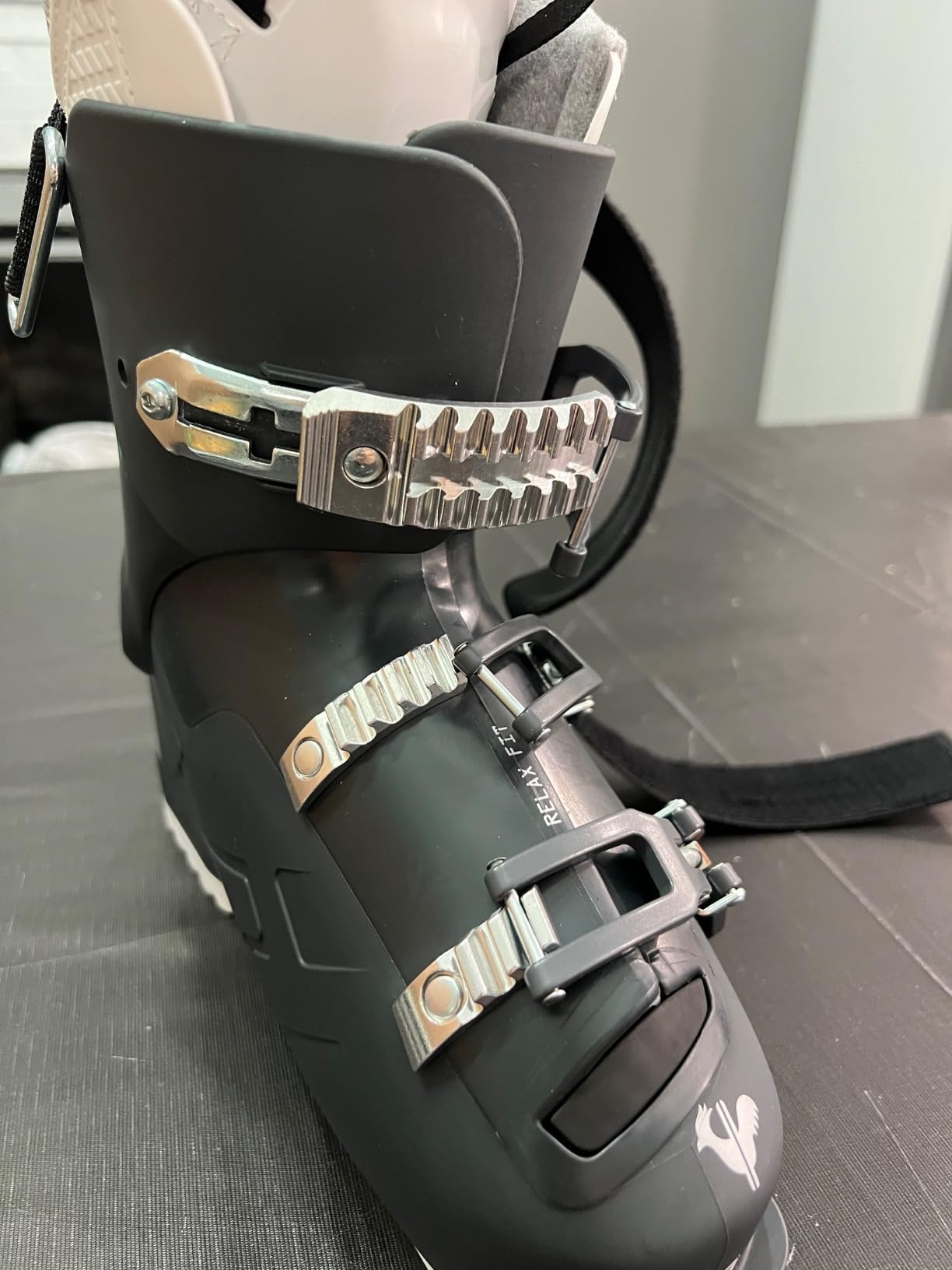
Underneath that, the last is a relaxed 104mm, the same wide specification as the men’s Rossignol boots in this guide. So a woman with genuinely wide feet is not being handed a reduced shell with a lower cuff, which is a common complaint about women’s fitting.
Heat-molding the customisable liner is recommended by owners and reported as effective. A 4.6 average with 76% five-star and zero one-star ratings is the cleanest rating profile in the group.
Wide calf and wide foot are separate problems
A boot can solve your forefoot and still clamp your calf, and the shin bang you get from that clamp is painful in a different way from forefoot numbness. The tulip cuff and the adjustable top buckle address the calf directly, which is why owners with thick ankles keep mentioning this model.
If your foot is wide but your calf is narrow, look for the adjustable top buckle rather than just a wider last. The two complaints travel together more often than not, and this boot is built for the combination.
Sizing advice for the women’s 104mm last
Fit runs long for some buyers, and the reviews suggest sizing down is often the right call. That is an important pairing with a wide last: extra room across the forefoot and extra length are separate problems, and a boot can be wide in one and still too long in the other.
Shell sizes here run from 22.5 through 27.5, a good spread, but a 50 flex means this is a boot for beginner and intermediate skiers rather than anyone who wants to press a boot hard.
7. Nordica Cruise S W – the roomiest women’s shell on the shortlist
Nordica Cruise S W Women’s Comfort Fit All Mountain Alpine Ski Boots (Black/White/Mauve, 24.5)
104mm high-volume last
Extra wide comfort fit
Dual soft flap instep
Aluminium micro-adjust buckles
Pros
- 104mm extra wide comfort last
- Throat opens exceptionally wide for easy entry
- Micro-adjustable aluminium shell and cuff buckles
- Soft comfort lining suits full days
Cons
- Only 11 ratings
- so feedback is narrow
- Limited to five shell sizes in this listing
This is the women’s version of the Cruise, and the specification is arguably the most explicitly wide of any boot here. It is labelled a 104mm high-volume comfort last and an extra wide comfort fit, with a dual soft flap instep that opens the throat exceptionally wide.
Micro-adjustable aluminium shell and cuff buckles give fine tension control, and the soft comfort-focused synthetic lining is designed for full days rather than racing a boot-fitting session. Five shell sizes are offered, from 23.5 to 27.5.
We want to be straight about the evidence here. This boot has 11 ratings averaging 4.6, with 87% five-star and the remainder two-star, and no written review text was available for this listing. The rating is indicative rather than established, and we have included it because the specification is well documented, not because the owner feedback is deep.
Aluminium buckles and fine tension control
Aluminium buckles on shell and cuff let you make small adjustments rather than large ones, which matters most in the forefoot where a narrow boot fails. A quarter-turn of tension is the difference between pressure and no pressure on a wide forefoot.
They also hold an adjustment better than cheaper buckles, which addresses the specific complaint raised against the men’s Cruise about buckles not lasting. Whether that carries over to this model is not something the available reviews can confirm.
When a thin review base changes the advice
With 11 ratings and no written feedback, the sensible approach is to treat this as a specification-led shortlist entry. The 104mm extra wide comfort last is the reason it is here, and you can verify that in person far faster than you can read reviews that do not exist yet.
If you are choosing between this and the Kelia 50, the Kelia has deeper owner feedback on wide calves and adjustable cuff volume, while this one leads on documented forefoot and instep room. Both are legitimate answers to the same question.
8. Atomic Hawx Magna 75 – the same wide last, sized for women
Atomic HAWX Magna 75 Women’s Ski Boots (Black/Gold, 25/25.5)
102mm wide last
75 flex
Energy Link cuff connection
Polyurethane shell
Pros
- 102mm wide last gives real forefoot room
- Described as solid and very comfortable by wearers
- Available from size 23 through 27.5
- Energy Link keeps the boot responsive
Cons
- Lowest rating in the set at 4.0 with a 14% one-star share
- Pressure in the first sessions before break-in
- Forward flex setting did not hold on at least one pair
The women’s Hawx Magna 75 shares the 102mm wide last that makes the men’s Magna a repeat name in wide-foot discussions, which means the forefoot room is the same shape. The cuff and flex are set for a woman moving from beginner to intermediate, and the sizing range runs from 23 through 27.5 in two colourways.
Energy Link appears here as it does on the men’s boot, creating a direct cuff-to-shell connection for response. Positive reviewers describe the boots as solid, comfortable and well adjustable, and one owner reports a good fit after an initial adjustment period.
This is the most mixed feedback in the group, and we are not going to smooth that over. The 27 reviews average 4.0, with 16% three-star ratings, a 14% one-star share, and reports of pressure during the first sessions before the boot breaks in, plus a delivery that arrived damaged.
Break-in pressure versus a fit fault
Pressure in the first sessions on a wide boot is common and is not automatically a fit fault. What matters is whether the pressure moves around the forefoot and then settles, or whether it stays fixed on one spot, usually near the big toe joint.
A fixed pressure point on a boot that is nominally 102mm wide is a sizing problem, and heat-molding the liner will not solve it. Moving pressure that eases over a week is a liner volume problem, and heat-molding usually handles it.
Why the 75 flex is the deciding factor here
A 75 flex is the right number for a recreational skier who has moved past the beginner stage but is not yet driving a stiff boot. It is firmer than the 50-rated Kelia and softer than the 80-rated men’s Magna, which puts it in the middle of this whole shortlist.
One reviewer found the forward flex setting would not hold its adjustment, and the 14% one-star share is the highest in the group. If a fixed flex angle matters to you, buy from a shop that will set it for you rather than relying on the mechanism.
What Is a Wide Ski Boot? Last Width in Millimetres Explained
Width in a ski boot is set by the last, the mould the shell is built around, and it is measured in millimetres across the forefoot. Under 98mm is a narrow last, 100 to 102mm is an average-width alpine last, and 103mm or wider is classified as wide or high volume. Above 104mm you are into genuinely extra-wide territory.
Nominal sizing understates the need for width more often than people expect. Skiers whose feet measure 95 to 98mm at the widest point report that a standard 100mm last already feels tight, which means your shoe size is a poor guide and your measurement is the only reliable one.
Last width also does not describe the whole boot. A 104mm last tells you the forefoot measurement, not the instep height or the cuff volume, and those are separate problems. Boot fitters treat width, instep and calf as three different questions.
How to Measure Your Own Foot Width at Home
You need a ruler or a pair of calipers, a ski sock, and five minutes. Measure the foot you will actually ski in, because a thick sock changes the number by a millimetre or two, and that is enough to matter at the margins.
First, stand on a sheet of paper with your weight fully on the foot and mark the heel and the longest toe. Second, measure the distance between those two marks to get your length in centimetres, which is your mondo point. Third, mark the widest point of your foot on both sides and measure across that line in millimetres.
That third number is the one that matters for this guide. Do not subtract anything from it, and do not measure the arch. Match the result to the bands above, then read the last width of any boot you are considering before you buy.
Measure both feet and use the wider one. A two millimetre difference is common and it is enough to make a marginal last the wrong one.
Wide vs High Volume: They Are Not the Same Thing
Width is a horizontal measurement across the forefoot. Volume is the total three-dimensional space inside the boot, which includes instep height, forefoot girth and ankle room. A boot can be wide across the forefoot and still be low-volume through the instep, and the reverse is just as possible.
This distinction is the single most useful thing to understand before you shop, because a skier with a wide forefoot and a high instep needs volume, while a skier with a wide forefoot and a low instep needs width without extra bulk that lets the foot slide.
The practical test happens when you stand in the boot. Your heel should stay planted under load, your toes should touch the front of the toe box without being pushed, and there should be no gap at the instep. If the boot is wide but your foot still moves around, you have a volume problem that a liner or footbed can fix.
Buying Guide: Flex, Liner and Shell Choices for Wide Feet
Flex rating is the number you will see next to the last width, and it describes how stiff the boot is. A 60 to 80 flex suits beginner and intermediate skiing, 85 to 100 covers confident intermediates and advanced skiers, and 105 to 130 is stiff enough for aggressive skiing and moguls. Women’s boots are usually rated about 10 points softer for the same performance level.
Every boot in this guide sits between 50 and 80 flex, which is a real limitation worth naming. Wide high-volume shells at the stiff end are the most expensive and least common category in ski boots, and the ones you can compare in this format cluster at the softer end. If you are an advanced skier with wide feet, expect to look beyond this shortlist.
The shell is the plastic outer structure and the liner is the removable padded footbed-and-cuff assembly inside it. You can heat-mold or replace a liner far more freely than you can change a shell, which is why a bootfitter will adjust a liner before touching plastic. GripWalk soles are interchangeable pads that make walking on hard snow easier, and they are a separate accessory on the Rossignol models here.
Cuff volume adjustment is the feature to check if your calf is the problem rather than your foot. Heat-moldable liners pay for themselves over a season and are worth having on any wide boot. A power strap and micro-adjustable buckles let you resolve pressure without changing size.
Warmth deserves a mention because wide feet lose heat faster in cold conditions. A bootfitter can thin the liner’s forefoot while adding thickness over the instep, which is the standard way to solve a width and warmth problem at the same time.
Buy a Wide Boot or Let a Bootfitter Punch a Narrower One?
This is the most argued question in ski boot fitting, and the governing principle from r/Skigear is the one to hold onto: a boot that is too narrow can be fixed by punching, stretching or molding the shell, while a boot that is too wide cannot be reduced except with a custom liner that takes volume out of it.
That asymmetry is why many bootfitters advise starting in a normal-volume boot and letting them modify it rather than jumping straight to a wide shell. The reasoning is sound. A punch adds room in the exact place you need it, a stretched shell keeps its intended shape, and a liner swap is fully reversible.
The counter-argument is the one that should decide it for you. If your foot measures 103mm or more, you are outside the range that a punch meaningfully addresses, and a 100mm boot you have paid to widen is still a 100mm boot underneath. A genuine 104mm last solves a problem that no amount of shell work will.
Our practical position: measure your foot first, and if you land in the 103mm-plus band, buy the wide boot. If you land at 100 to 102mm and still feel pinched, go to a bootfitter and let them work the shell. Renting first is also a legitimate way to test a last shape before committing.
Whatever route you take, do it before a boot-fitting appointment rather than during it. A bootfitter can work with a measured foot far more effectively than one they have to eyeball through a thick sock.
Frequently Asked Questions
What boot is best for wide feet?
A boot built on a 103mm or wider last. Among the eight we compared, the Atomic Hawx Magna 80 uses a 102mm anatomical wide last, the Head Edge LYT RX HV is specified as High Volume at E-width, and the Nordica Cruise and Rossignol Evo 70 use 104mm lasts. Match the last to your measured foot width before anything else.
What is the widest ski boot on the market?
The widest verifiable last in this roundup is 104mm, shared by the Nordica The Cruise, the Rossignol Evo 70, the Rossignol Speed 80 HV+, the Rossignol Kelia 50 and the Nordica Cruise S W. Boots above 104mm exist in the wider alpine market, but none of them appeared with verifiable owner feedback for this comparison, so we have not ranked them.
What to do if ski boots are too narrow?
Work through these in order: switch to a thinner liner or a custom footbed, heat-mold the liner, have a bootfitter punch or stretch the forefoot shell, then move to a wider last. If your foot measures 103mm or more, skip straight to the last step, because a punch rarely adds enough millimetres to close a 3mm gap.
What is ski boot syndrome?
Ski boot syndrome is persistent pain, numbness or cold in the toes and forefoot caused by a boot that is too narrow or too long. It usually shows up within the first few runs. It is not a circulation problem in itself, though numbness is often mistaken for one, and it gets worse over a season rather than better.
How do I know if my ski boots are too narrow?
Watch for numbness or tingling in the toes by the first run, a fixed pressure point over the big toe joint that does not move, and a feeling that your foot is being held rather than gripped. Rising out of the boot to get circulation back is a reliable sign. None of these appear in a boot whose last matches your measured width.
Why do my ski boots hurt my calves?
Calf pain is a cuff volume and instep problem, not a forefoot width problem, and a boot can fit your feet perfectly while still hurting your lower leg. The fixes are a boot with an adjustable top buckle, a tulip-shaped cuff that flares at the top, or bootboard height adjustment to take pressure off the instep.
Are rental ski boots wide fit?
Not reliably. Rental fleets carry a range of lasts and brands, and the wide shells we compared here are specialist models that a rental shop is unlikely to stock in a size that matches your foot. Renting is still useful for testing whether a wide shape suits you before you commit to buying.
What snow boots are good for wide feet?
Snow boots are a different category entirely, designed for walking rather than skiing, and their sizing follows street shoe conventions rather than mondo sizing. If you are looking for boots to actually ski in, use the picks above, all of which state a measured last width in millimetres.
Conclusion: Our Best Ski Boots for Wide Feet
The Atomic Hawx Magna 80 is our first choice for the best ski boots for wide feet, because its 102mm anatomical last is the one that comes up most often from skiers who already know what a narrow boot does to a long day. The Rossignol Evo 70 is the strongest on owner feedback at 4.8, and the Head Edge LYT RX HV wins on documented fit intent and low weight.
Whichever you choose, measure your foot width in millimetres first. That single number decides more about whether you enjoy your season than the brand, the flex rating or the badge on the box, and it takes five minutes to get right.