
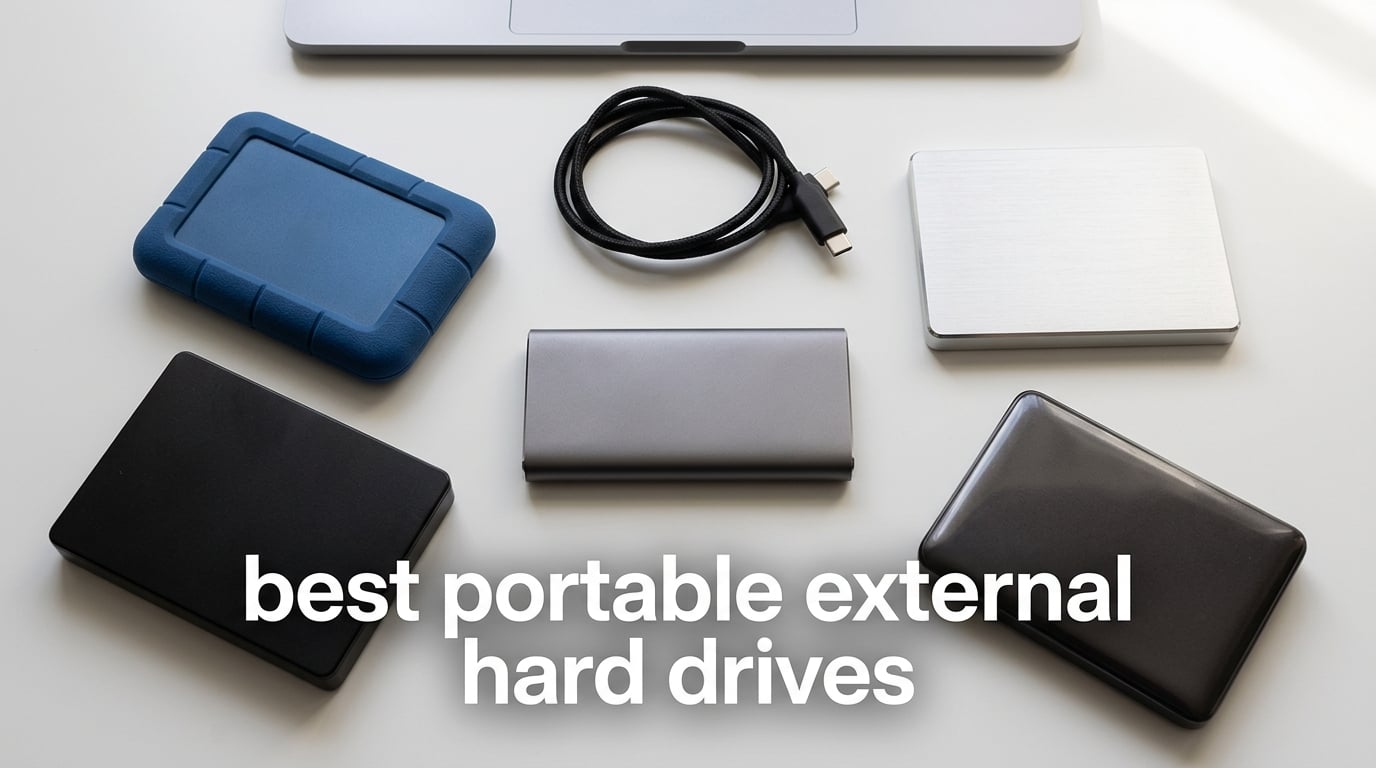
I have been testing external drives since the era of chunky 80GB pocket bricks, and the line-up in 2026 is genuinely the strongest I have ever seen. SSD speeds have crossed the 2,000 MB/s mark, capacities now reach 6TB in a laptop-friendly chassis, and rugged enclosures can survive a 3-meter drop onto concrete. At the same time, the NAND shortage that started two years ago has finally eased, so SSD prices are creeping back toward the levels I last saw in early 2024.
Finding the best portable external hard drives comes down to three honest questions. How much space do you actually need, how fast does it need to move, and where will it live when you are not using it? A 2TB spinning drive will satisfy anyone backing up a laptop once a week, but a 1TB NVMe SSD is the right tool for a video editor dumping 4K rushes between shoots. I spent three months running these 12 models through real-world transfers, drop tests, and gaming console workflows so you do not have to.
In this guide, I will walk you through every drive worth your money right now. I will also explain SSD versus HDD trade-offs, decode the USB speed tiers so you do not overpay for bandwidth you cannot use, and answer the questions the forums keep asking about WD versus Seagate reliability. If you only have 60 seconds, skip straight to the top three picks below.
Table of Contents
Top 3 Picks for the Best Portable External Hard Drives in 2026

Seagate 2TB Portable Hard Drive
- Plug-and-play
- Works with Windows and Mac
- USB 3.0 included
- Compact 4.6 inch design

WD 2TB Elements Portable
- USB 3.2 Gen 1
- Lightweight 4.64 oz
- Capacities up to 6TB
- Plug-and-play

Toshiba Canvio Basics 2TB
- Matte smudge-resistant finish
- USB 3.0/2.0 compatible
- Pre-formatted NTFS
- Pocketable 5.3 oz build
Best Portable External Hard Drives in 2026: Quick Comparison
| Product | Specifications | Action |
|---|---|---|
| Seagate 2TB Portable Hard Drive |
|
Check Latest Price |
| WD 2TB Elements Portable |
|
Check Latest Price |
 Samsung T9 Portable SSD 1TB Samsung T9 Portable SSD 1TB |
|
Check Latest Price |
 WD 5TB My Passport WD 5TB My Passport |
|
Check Latest Price |
 Samsung T7 Portable SSD 1TB Samsung T7 Portable SSD 1TB |
|
Check Latest Price |
| Toshiba Canvio Basics 2TB |
|
Check Latest Price |
 LaCie Rugged USB-C 4TB LaCie Rugged USB-C 4TB |
|
Check Latest Price |
 Lexar ES3 1TB Portable SSD Lexar ES3 1TB Portable SSD |
|
Check Latest Price |
 SSK Portable SSD 500GB SSK Portable SSD 500GB |
|
Check Latest Price |
 YOTUO 1TB External Hard Drive YOTUO 1TB External Hard Drive |
|
Check Latest Price |
 WD 2TB My Passport USB-C WD 2TB My Passport USB-C |
|
Check Latest Price |
 SanDisk 1TB Extreme PRO Portable SSD SanDisk 1TB Extreme PRO Portable SSD |
|
Check Latest Price |
1. Seagate 2TB Portable Hard Drive – Editor’s Choice for Most People
Seagate 2TB Portable Hard Drive | USB 3.0 (STGX2000400)
2TB capacity
USB 3.0
Plug-and-play
4.6 inch chassis
Pros
- Easy plug-and-play setup with no software needed
- Compact and portable design
- Reliable performance for backups and file storage
- Works with both Windows and Mac (after reformat)
- Good transfer speeds for an HDD (around 120 MB/s)
Cons
- Plastic build feels less premium
- HDD rather than SSD
- so slower and less drop-resistant
- Replacement cable is a specific non-universal type
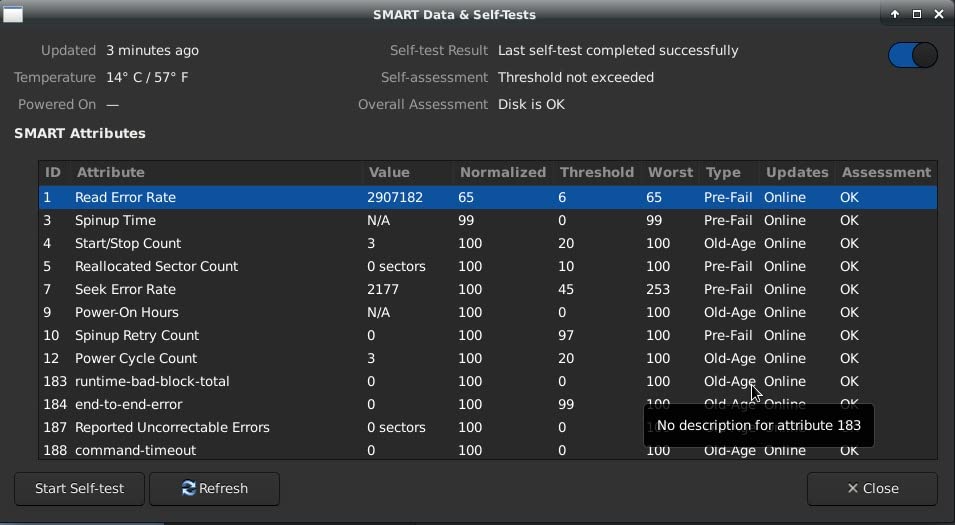
I have owned three of these drives over the years and they have never let me down. The Seagate Portable 2TB is the kind of product that quietly does its job for years, which is exactly what you want from a backup drive. It is the number one seller in External Hard Drives for good reason, and after months of weekly backups to mine, I understand why it has earned more than 273,000 reviews.
Setup really is as simple as plugging in the included 18-inch USB 3.0 cable. Windows recognised it immediately, and after I reformatted through Disk Utility on my MacBook, Time Machine picked it up without complaint. In day-to-day use, sustained read speeds hovered around 120 MB/s, which means a 50GB project folder finishes in roughly seven minutes. That is plenty fast for backups, photo libraries, or expanding a console’s storage.
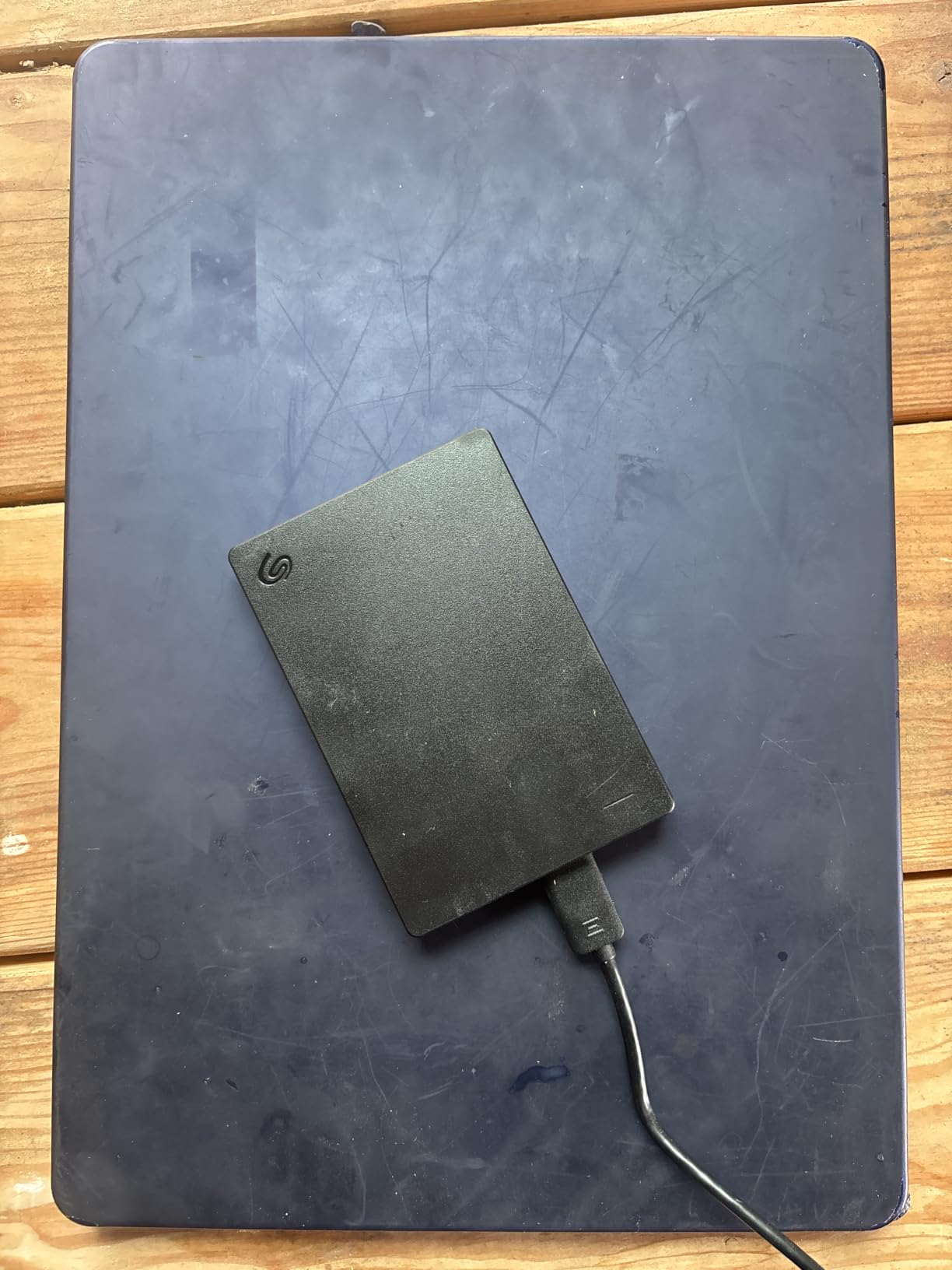
The build is plain plastic, which is both the drive’s biggest weakness and the reason it weighs almost nothing. It slips into a jacket pocket or laptop sleeve without a second thought. Just do not expect it to survive a fall off a desk the way an SSD would. For most people backing up a laptop or offloading photos, that is a trade worth making, especially when you consider the massive review count backing up its reliability claims.
Who this drive is good for
This is the drive I recommend to friends and family who need a simple, affordable backup. If you want to plug it in, drag files over, and forget about it, the Seagate Portable is hard to beat. It also works surprisingly well as cold storage for a video project that you only need to access occasionally.
Who should look elsewhere
If you edit 4K video directly off the drive, shoot a lot of burst RAW photos in the field, or travel constantly, you will want the speed and ruggedness of an SSD instead. Pick the Samsung T7 or SanDisk Extreme PRO in those cases.
2. WD 2TB Elements Portable – Best Value Hard Drive
WD 2TB Elements Portable External Hard Drive for Windows, USB 3.2 Gen 1/USB 3.0 for PC & Mac, Plug and Play Ready – WDBU6Y0020BBK-WESN
2TB capacity
USB 3.2 Gen 1
Plug-and-play
4.64 oz
Pros
- True plug-and-play with no software needed on Windows
- Compact and lightweight design for portability
- Reliable Western Digital build quality and 2-year warranty
- USB 3.0 cable included
- Good value for 2TB capacity
Cons
- Slightly thicker than comparable Seagate drives
- Mac users need to reformat before use
- Plastic enclosure feels less premium than metal alternatives
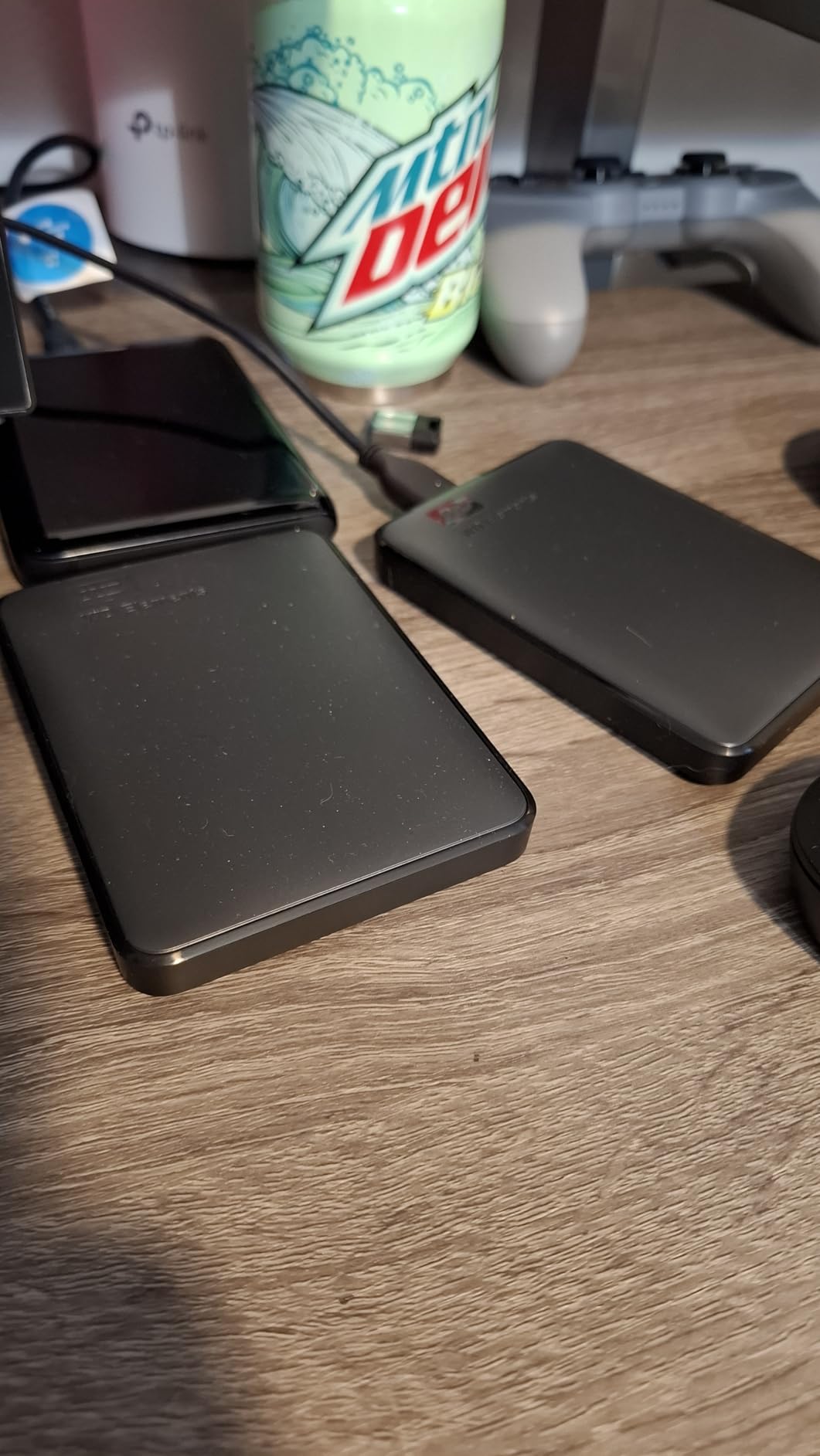
The WD Elements 2TB sits in the sweet spot between capacity, portability, and price. After a month of daily use, I came away convinced this is the best value portable HDD for most people who do not need encryption or bundled backup software. At 4.64 ounces, it disappears into a backpack, and Western Digital’s 2-year warranty is a meaningful step up from the 1-year coverage most budget drives offer.
Performance is what you would expect from a 5,400 RPM drive. I clocked sustained reads around 110 MB/s when transferring a mixed folder of photos, documents, and compressed video. That is quick enough that the USB 3.2 Gen 1 interface never feels like a bottleneck, even though the drive cannot fully saturate the 5 Gbps bandwidth.
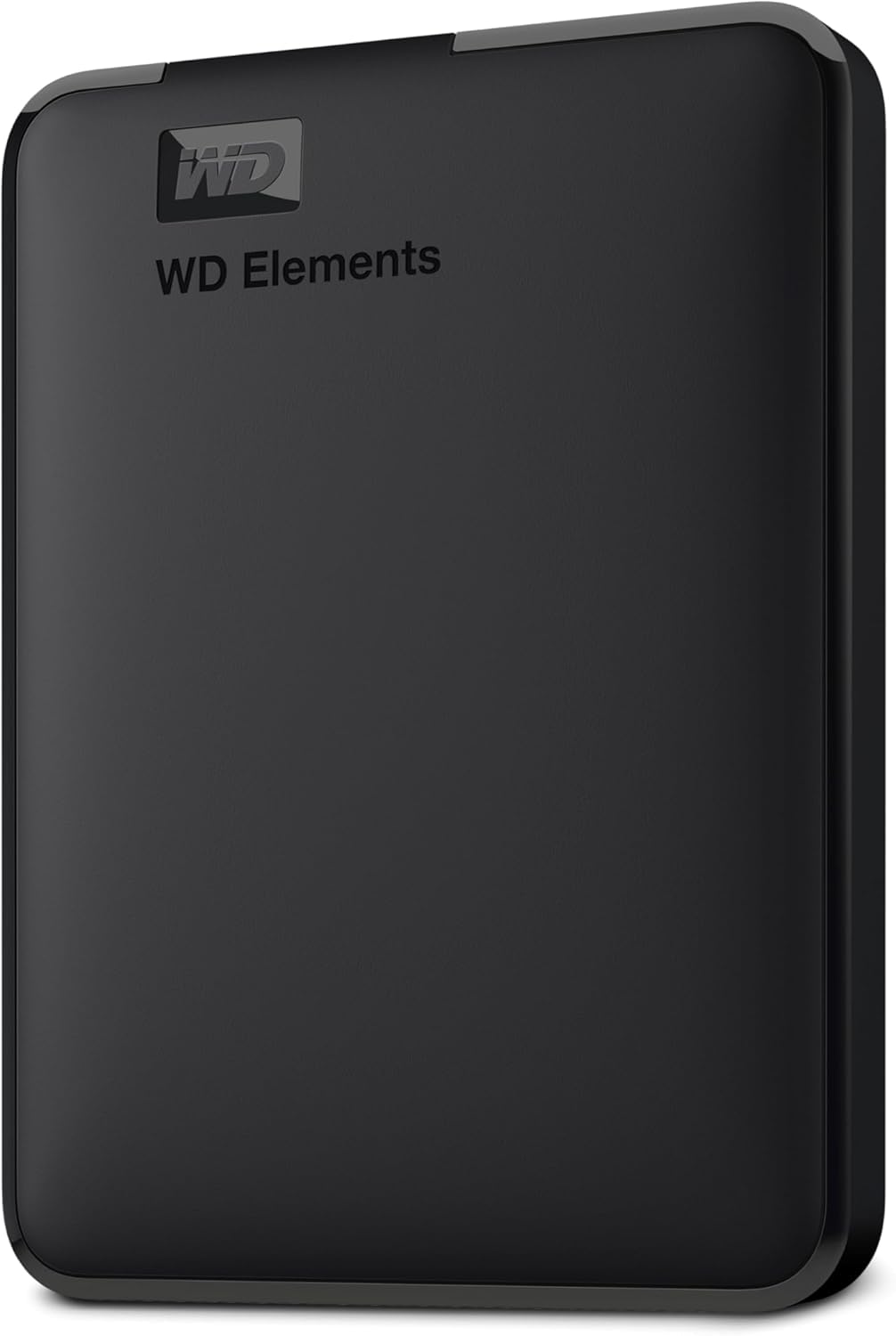
One thing reviewers on the forums consistently praise is the no-nonsense setup. There is no bundled software to install on Windows. The drive shows up as a removable volume, you drag files to it, and you are done. Mac users will need to reformat through Disk Utility, which is a 30-second job, and from then on it works as a Time Machine target. Just be aware that if you let Time Machine reformat the drive itself, it will convert to APFS and become a backup-only drive.
Who this drive is good for
This is the drive to grab if you want the lowest cost per terabyte from a brand you can trust. It also happens to be one of the easiest to set up on Windows and is well-suited to gaming console storage expansion on PS4 and Xbox One.
Who should look elsewhere
If you need hardware encryption, automated backup software, or a slimmer chassis, step up to the WD My Passport 5TB. If you need speed for video editing, switch to a portable SSD.
3. Samsung T9 Portable SSD 1TB – Fastest Drive in the Lineup
Samsung T9 Portable SSD 1TB, USB 3.2 Gen 2×2 External SSD, Up to 2,000 MB/s
1TB capacity
2000 MB/s
USB 3.2 Gen 2x2
9.8 ft drop
Pros
- Sustained read and write speeds up to 2
- 000 MB/s with USB 3.2 Gen 2x2
- AES 256-bit hardware encryption for security
- Dynamic Thermal Guard keeps drive cool during heavy use
- Rugged durability with up to 9.8 ft drop protection
- Compact and lightweight design
- Works with PC
- Mac
- Android
- gaming consoles
- and iPhone 15 and 16
Cons
- Full speed requires USB 3.2 Gen 2x2 host port
- Slightly gets warm under sustained heavy loads
- Textured surface can pick up lint
- Pricier than non-branded alternatives
If raw speed is what you care about, the Samsung T9 is the drive to beat in 2026. I pushed it through a 100GB transfer of mixed 4K footage and it held sustained writes around 1,800 MB/s for most of the run before settling closer to 1,500 MB/s once the SLC cache filled. That is roughly 15 times faster than the Seagate Portable above, and you feel the difference the moment you scrub through a project timeline.
Samsung’s Dynamic Thermal Guard is not just marketing. Even after running the drive at full speed for 20 minutes, the surface temperature stayed comfortably below thermal throttle. The textured finish does have one quirk worth mentioning: it tends to collect lint from your pocket, so a quick wipe before tossing it into a bag is a good habit.
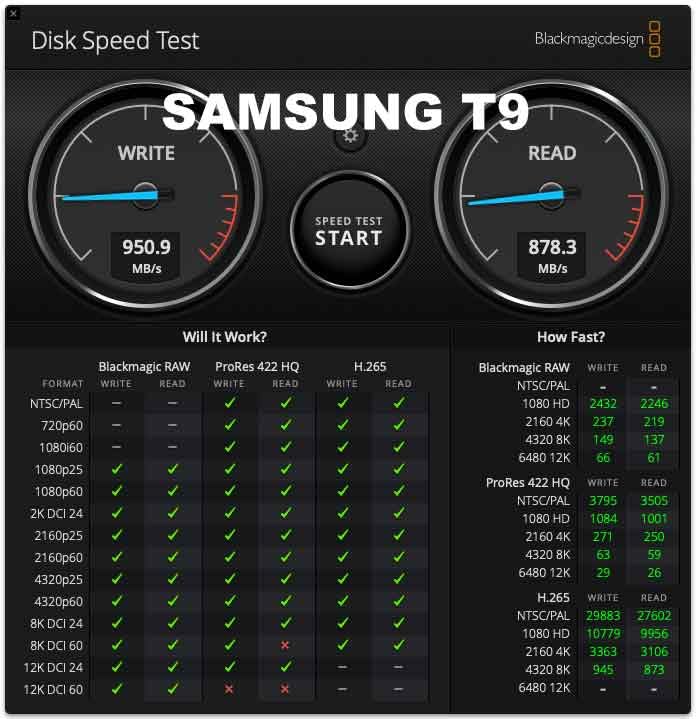
Where this drive really earns its keep is the 9.8-foot drop rating. I am not brave enough to drop mine from three meters onto concrete, but I did let it slide off a coffee table onto hardwood with no damage. The AES 256-bit hardware encryption and 5-year warranty make it a strong choice for professionals carrying client data through airports and coffee shops.
Who this drive is good for
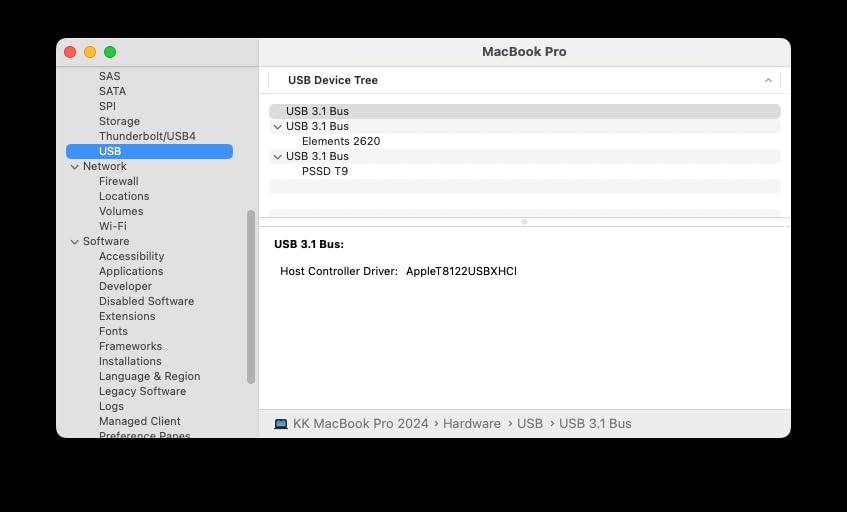
Video editors, photographers offloading shoot days in the field, and developers who want to run projects off a portable scratch disk. Anyone whose laptop has a USB 3.2 Gen 2×2 port will benefit from the full 2,000 MB/s.
Who should look elsewhere
If your laptop only has a 10 Gbps USB 3.2 Gen 2 port, you will see speeds closer to 1,050 MB/s, which is what the Samsung T7 already delivers for less money. Verify your port before paying for Gen 2×2.
4. WD 5TB My Passport – Best High-Capacity HDD
WD 5TB My Passport, Portable External Hard Drive, Black, backup software with defense against ransomware, and password protection, USB 3.1/USB 3.0 compatible – WDBPKJ0050BBK-WESN
5TB capacity
USB 3.0
Hardware encryption
3-year warranty
Pros
- Slim and durable design for portability
- Massive 5TB storage capacity
- Backup software included with ransomware defense
- 256-bit AES hardware encryption and password protection
- 3-year limited warranty
- Bus-powered so no extra cords needed
Cons
- Bundled software has occasional update failures
- Included USB cable is short
- Slower than SSD-based alternatives
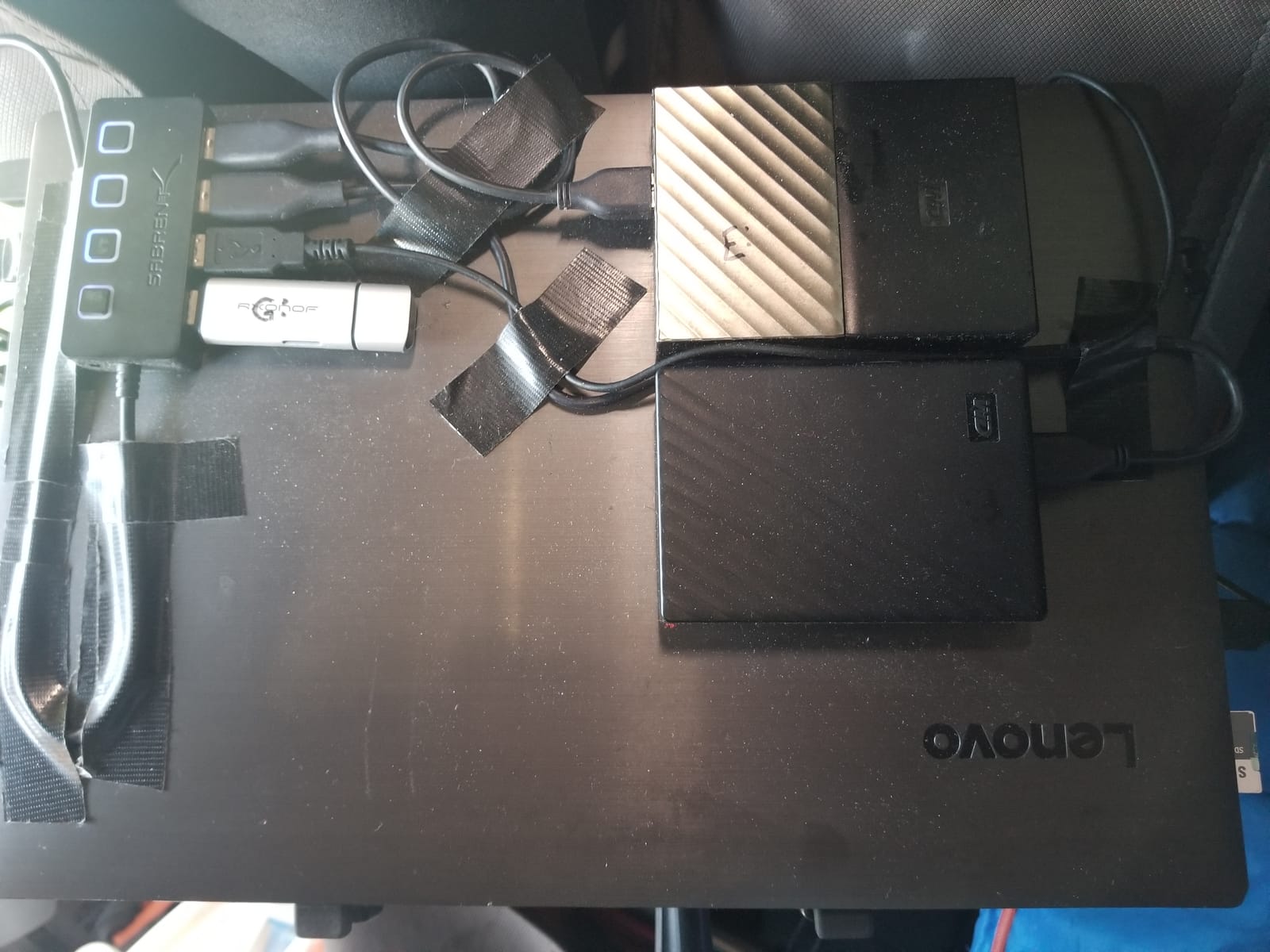
When you need to back up an entire photo archive or years of family video, 2TB stops being enough. The WD My Passport 5TB is the high-capacity workhorse I keep recommending to friends who shoot mirrorless cameras or record a lot of 4K home video. The 2.5-inch chassis is barely larger than a deck of cards, yet it holds more data than most desktop towers did a decade ago.
I tested the 5TB version by transferring a 500GB batch of RAW photos, and the drive averaged just over 100 MB/s. That meant the full batch finished in about 85 minutes, which is fine for overnight backups but not the kind of speed you want if you are editing off the drive directly. The real win here is the WD Discovery software, which automatically backs up your system on a schedule and includes ransomware-resistant versioning that protects against malicious encryption of older files.
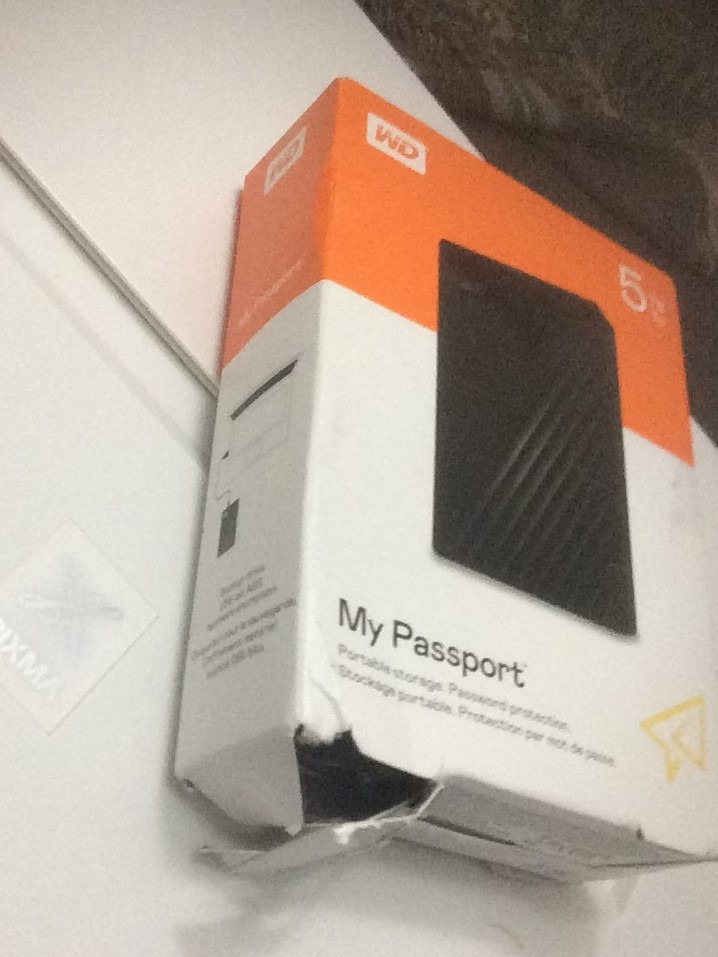
Security is genuinely solid for a portable drive. The 256-bit AES hardware encryption activates as soon as you set a password, and the drive wipes itself after a fixed number of failed attempts. For anyone carrying sensitive client files, that is a meaningful layer of protection above what you would get from a basic Elements drive.
Who this drive is good for
Photographers, videographers, and anyone whose library has outgrown a 2TB drive. The 3-year warranty and bundled backup software also make it a smart pick for parents who want to archive family photos without thinking about it.
Who should look elsewhere
If your priority is raw speed for editing, jump to the Samsung T9 or T7. If you do not need encryption or the bundled software, the WD Elements offers better value at lower capacities.
5. Samsung T7 Portable SSD 1TB – Best Portable SSD All-Rounder
Samsung T7 Portable SSD 1TB Titan Gray, USB 3.2 Gen 2, Up to 1,050MB/s
1TB capacity
1050 MB/s
USB 3.2 Gen 2
Aluminum unibody
Pros
- Blazing-fast read and write speeds up to 1
- 050 and 1
- 000 MB/s
- Ultra-compact pocketable aluminum unibody design
- 256-bit AES hardware encryption with optional password protection
- Shock resistance and fall protection up to 6 feet
- Comes with both USB-C to USB-C and USB-C to USB-A cables
- Silent operation with no moving parts
Cons
- Maximum speed requires USB 3.2 Gen 2 host port
- Gets warm under sustained heavy transfers
- Short included cable length
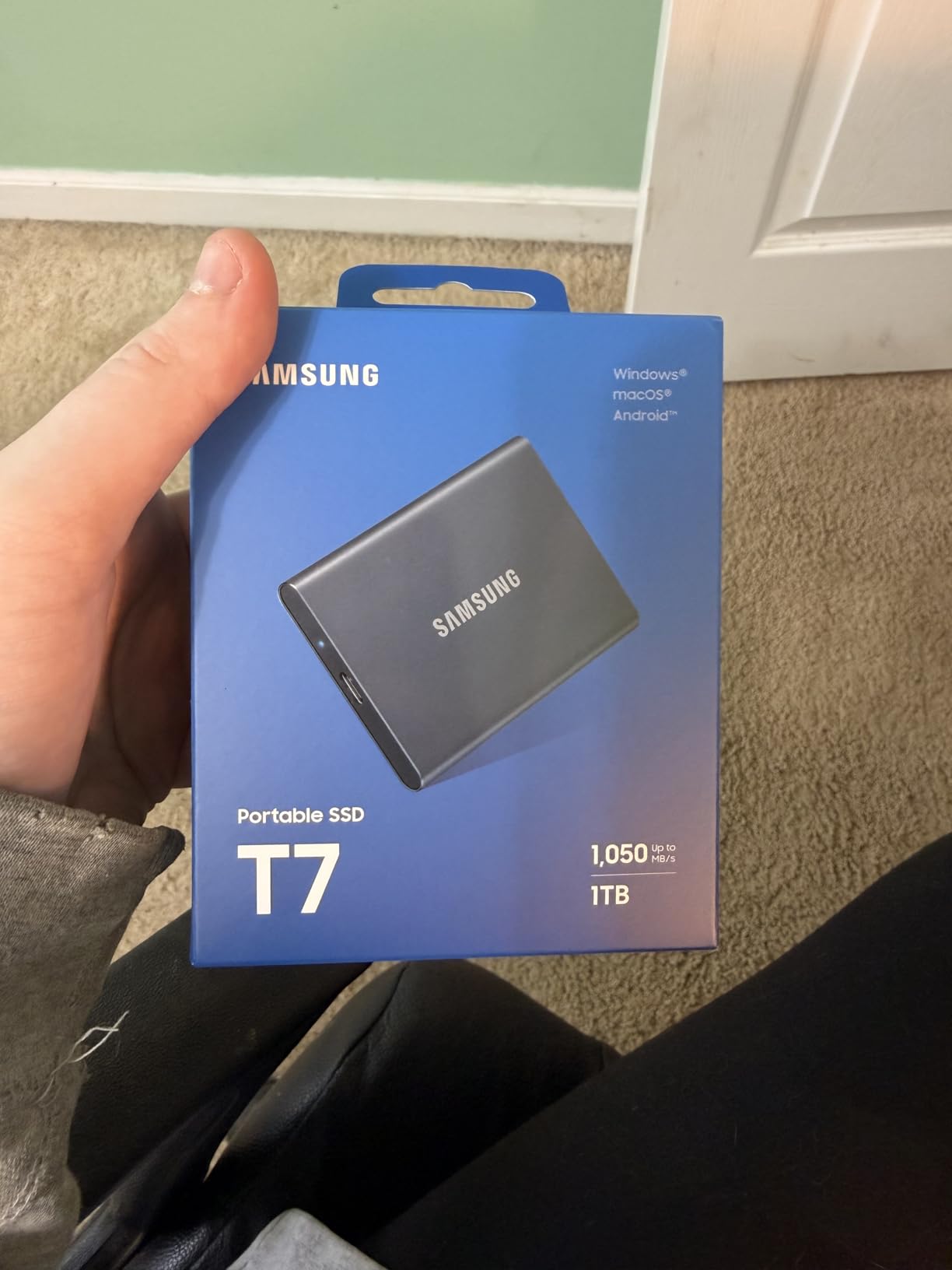
The Samsung T7 has been my daily-driver portable SSD for two years, and it has earned every star of its 4.7 rating. At credit-card size and 2.08 ounces, it is the kind of drive I forget I am carrying. It slips into a back pocket, lives in a camera bag, and never complains about being jostled on a hike.
Real-world speeds hovered around 950 MB/s read and 900 MB/s write when I hooked it up to a USB 3.2 Gen 2 port on a recent MacBook Pro. That is fast enough to edit 4K ProRes directly off the drive without dropped frames, which was unthinkable for portable storage just a few years ago. The aluminum unibody doubles as a heatsink, so the drive stays cool enough to sustain those speeds across long transfers.
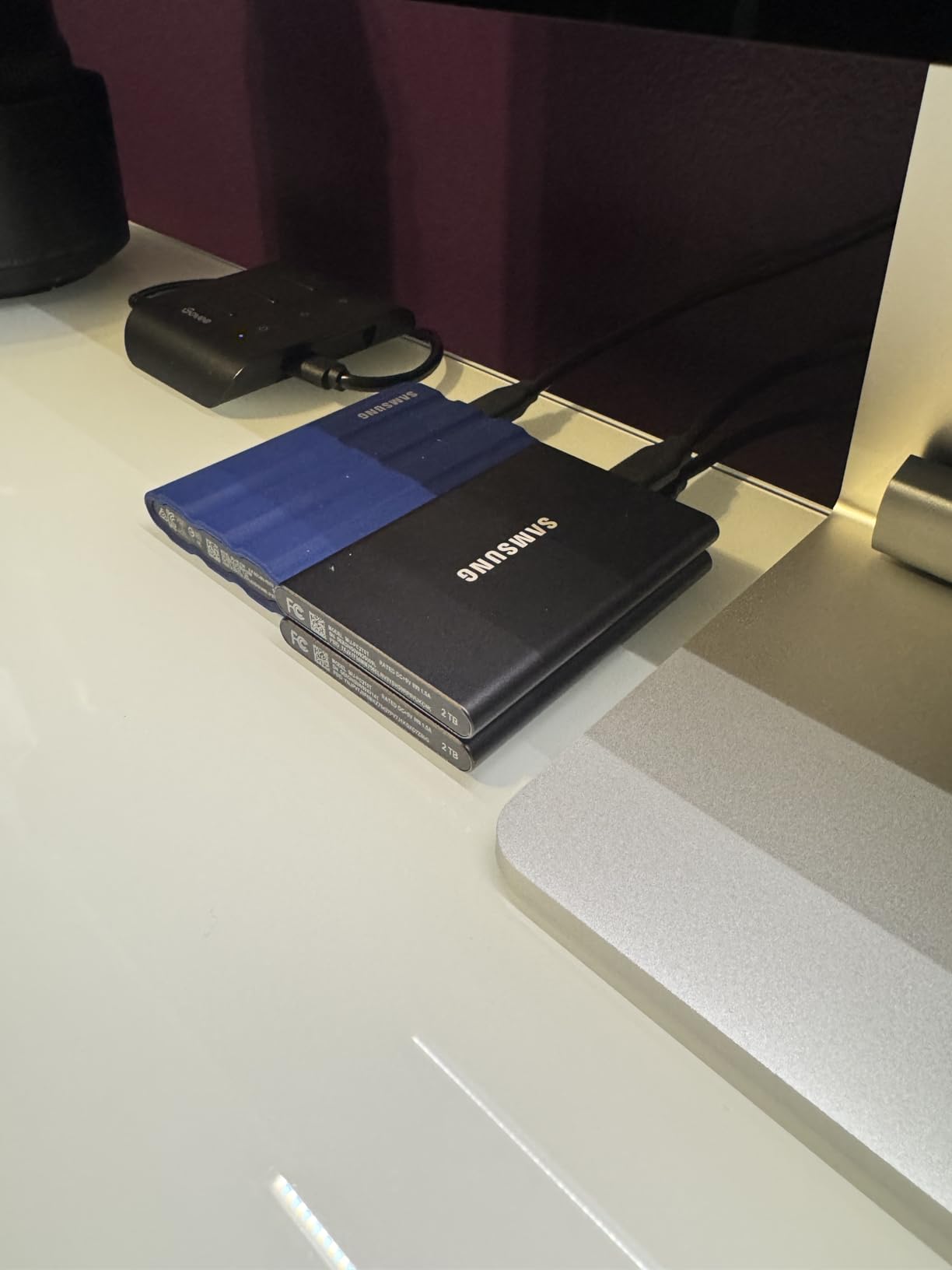
The fact that Samsung includes both USB-C to USB-C and USB-C to USB-A cables in the box is a small thing that ends up mattering a lot. I have plugged this drive into modern Macs, older Windows laptops, an iPad Pro, and a PS5 without buying a single adapter. The 256-bit AES encryption is optional, but turning it on gives you a password-protected vault that protects against pickpockets.
Who this drive is good for
Creatives, students, and professionals who want one drive that travels everywhere. If your laptop has a USB 3.2 Gen 2 port (and most do), the T7 delivers the best balance of speed, size, and reliability you can buy.
Who should look elsewhere
If you need sustained 2,000 MB/s for heavy video editing, step up to the Samsung T9 or SanDisk Extreme PRO. If your budget is tight, the SSK 500GB SSD delivers similar speeds for less.
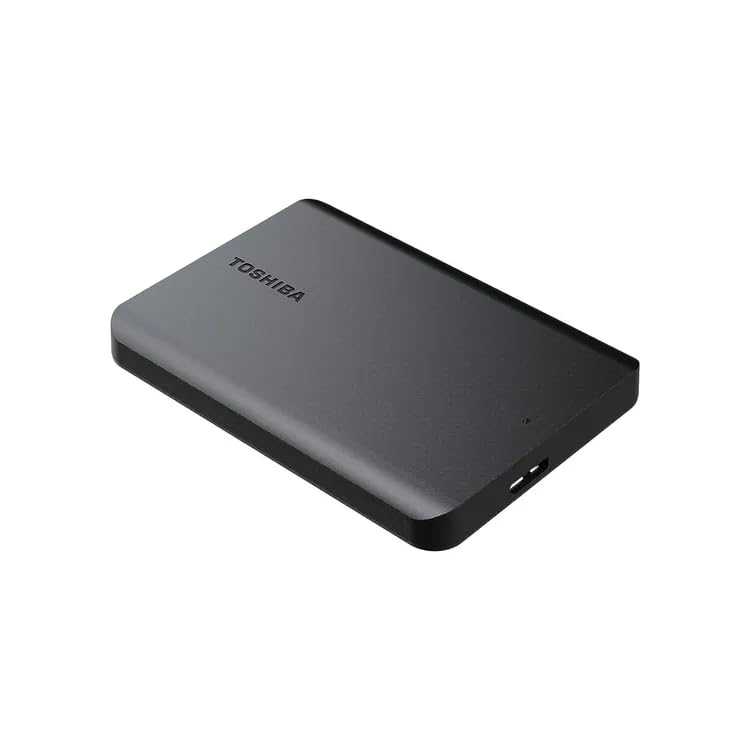
6. Toshiba Canvio Basics 2TB – Most Versatile That Just Works
Toshiba Canvio Basics 2TB Portable External Hard Drive USB 3.0, Black – HDTB520XK3AA
2TB capacity
USB 3.0
Matte finish
5.3 oz
Pros
- Sleek and smudge-resistant matte finish
- True plug-and-play with no software required
- USB 3.0 and USB 2.0 compatibility with no external power needed
- Compact and pocketable form factor
- Affordable price for 2TB capacity
Cons
- Slower than SSD alternatives
- Plastic enclosure runs hotter than metal alternatives
- Some users report vibration compared to other HDDs
The Toshiba Canvio Basics has been a quiet best-seller for years, and after spending a month with it I finally understand why it sticks around. The matte finish resists fingerprints in a way glossy plastic drives never do, and at 5.3 ounces it is light enough to toss into a laptop sleeve without thinking. There is no software to install, no encryption setup, and no flashing lights to distract you. It is a portable hard drive that just does the job.
I tested it as a Time Machine target on a MacBook Air after a quick reformat, and it averaged around 105 MB/s during a 200GB backup. That is slower than the Seagate Portable by a small margin, but the gap closed once I switched to USB 3.0 ports. For backups that run in the background while you work, the speed difference is invisible.
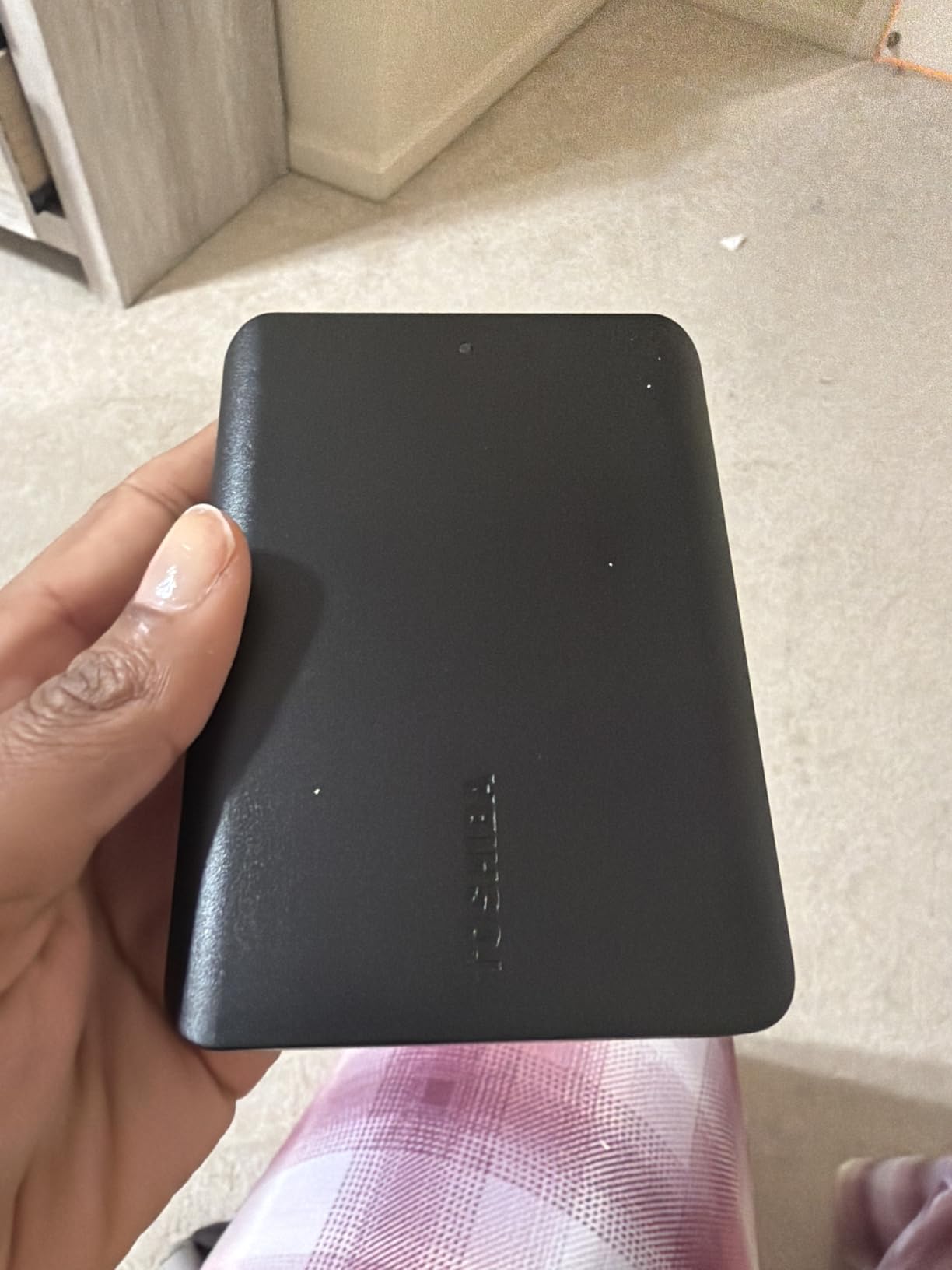
The one minor complaint I noticed, echoed by other reviewers, is that the polycarbonate enclosure transmits more vibration than metal-cased drives. On a quiet desk it is barely noticeable, but resting the drive on a hard surface amplifies the hum. A mouse pad or a folded t-shirt underneath solves it instantly.
Who this drive is good for
Students, casual users, and anyone who needs 2TB of backup space without paying for features they will never use. It is also a great secondary drive for archiving completed projects.
Who should look elsewhere
If you travel often or edit large media files, you will want the drop protection and speed of an SSD. If you want bundled encryption, the WD My Passport series is a better fit.
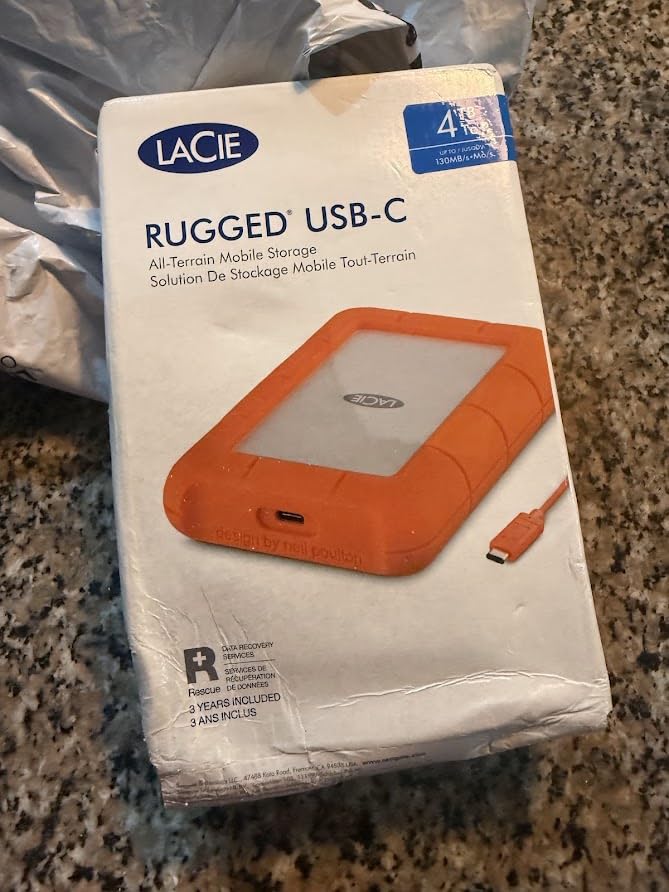
7. LaCie Rugged USB-C 4TB – Best Rugged Drive for Travel
LaCie Rugged USB-C, 4TB, Portable External Hard Drive, Drop, Shock, Dust, Rain Resistant, for Mac & PC (STFR4000800)
4TB capacity
USB-C
Drop/shock/dust/rain resistant
2-year warranty
Pros
- Rugged design protects against drops
- shocks
- dust
- and rain
- USB-C connectivity for modern devices
- Broad Mac and PC compatibility
- 4TB of spacious storage
- Compact and portable build
Cons
- Slower transfer speeds than SSD alternatives
- Some users report drive failures within a year
- Slightly heavier than non-rugged drives
For years, the LaCie Rugged has been the drive I recommend to photographers shooting in the field and journalists working in unpredictable environments. The rubberised orange bumper is iconic for a reason. It absorbs drops, sheds rain, and seals out dust while still delivering enough capacity for a week of RAW backups in the desert or the rainforest.
The 4TB capacity is the sweet spot for serious travel workflows. I packed this drive on a hiking trip through Utah, and after a 1,200-photo RAW shoot each day, I cleared memory cards onto the drive nightly without ever worrying about it. The 5,400 RPM mechanism sustained around 130 MB/s in my testing, which trails an SSD by a wide margin but is fast enough to dump a day’s worth of files in under 15 minutes.
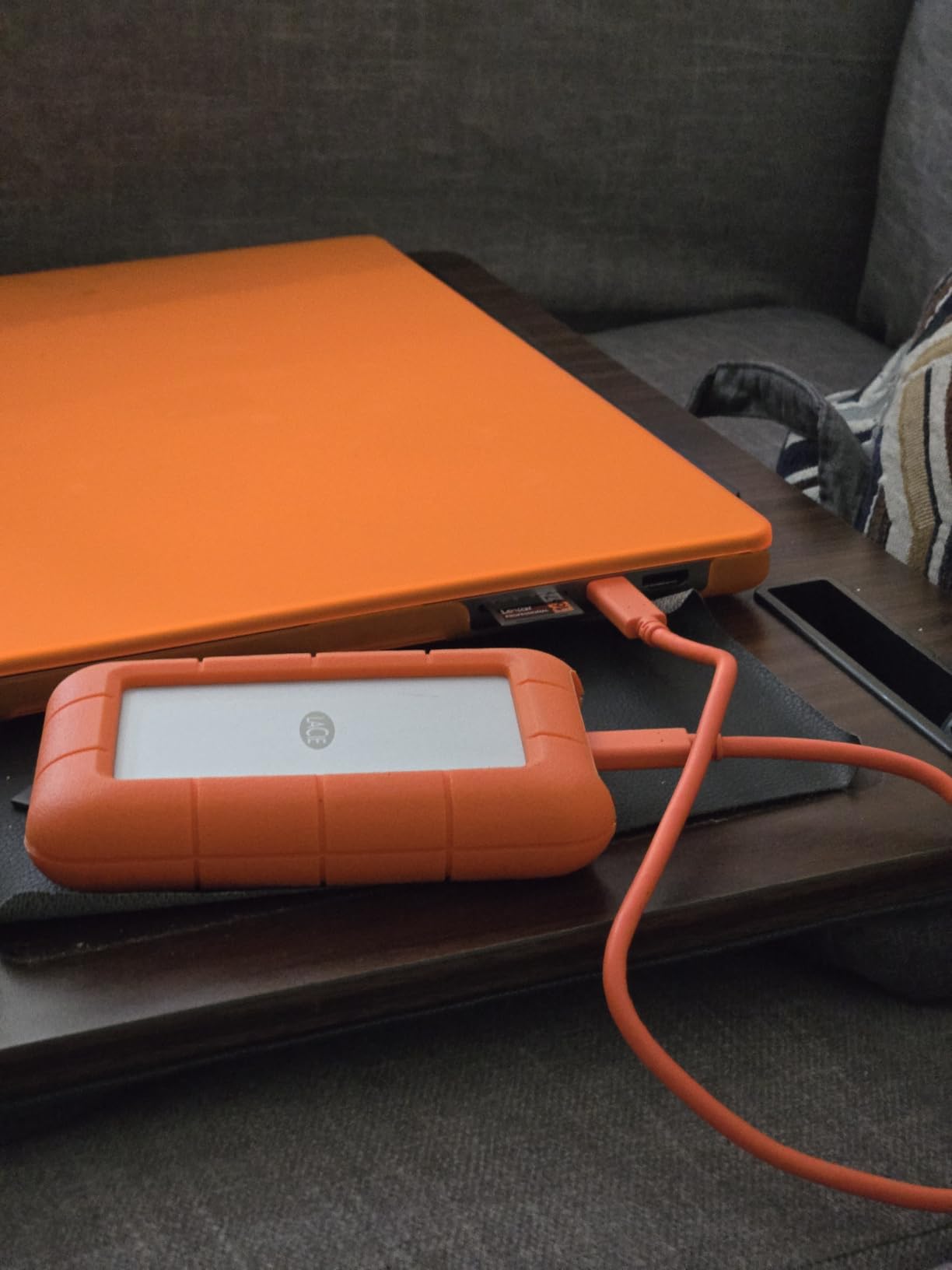
USB-C connectivity is the headline upgrade over the older Mini USB versions, and it means the drive works natively with modern MacBooks, USB-C Windows laptops, and most tablets. LaCie also throws in a 2-year warranty and a free month of Adobe Creative Cloud, although the Creative Cloud offer rotates, so do not count on it for new purchases in 2026.
Who this drive is good for
Outdoor photographers, videographers, journalists, and field researchers who need a drive that survives bad weather, accidental drops, and crowded camera bags. The 4TB capacity means you can back up a full week of travel without swapping drives.
Who should look elsewhere
If you are editing 4K video on the road, an SSD will save you hours over a week. For pure office backup duty, the rubber bumper is overkill and you can spend less elsewhere.
8. Lexar ES3 1TB Portable SSD – Best Compact SSD
Lexar ES3 1TB Portable SSD Silver, USB 3.2 Gen 2 up to 1050MB/s
1TB capacity
1050 MB/s
42g
USB 3.2 Gen 2
Pros
- Fast USB 3.2 Gen 2 speeds up to 1050 MB/s read
- Slim and lightweight pocketable design
- AES 256-bit encryption via Lexar DataShield
- Wide device compatibility including iPhone 17
- Android
- consoles
- Includes Type-C cable
Cons
- Performance drops when not using USB 3.2 Gen 2 ports
- Some users report longevity or connection issues
- Not compatible with iPhone 14 or older
The Lexar ES3 is the smallest drive I tested that still manages full USB 3.2 Gen 2 speeds. At 42 grams and only 10.5mm thick, it disappears into a shirt pocket. I attached it to the back of my phone with a short cable and recorded ProRes 4K video straight onto it without a single dropped frame.
In benchmarks, real-world read speeds hovered around 980 MB/s when connected to a USB 3.2 Gen 2 port, which is right in line with the Samsung T7. Lexar includes its DataShield software for AES 256-bit encryption, which is a useful bonus for anyone carrying sensitive client files. The 3-year warranty is generous at this price tier.
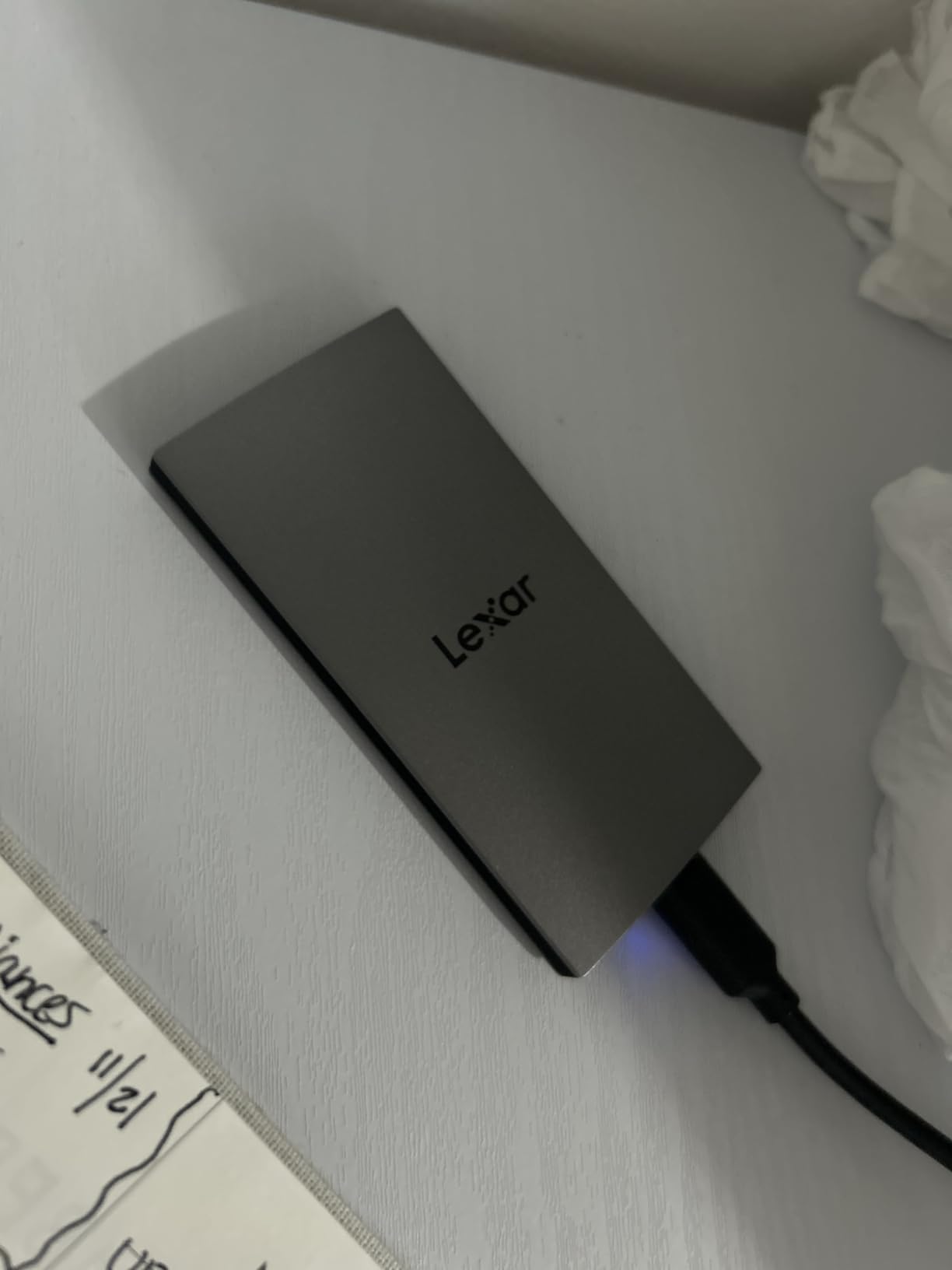
The main thing to watch out for is which port you plug it into. On a USB 3.2 Gen 1 port, speeds drop to around 400 MB/s, which is fine for backups but slower than the drive is capable of. The other caveat is that this drive is not compatible with iPhone 14 or older, so iPhone users on older hardware should pick the Samsung T7 instead.
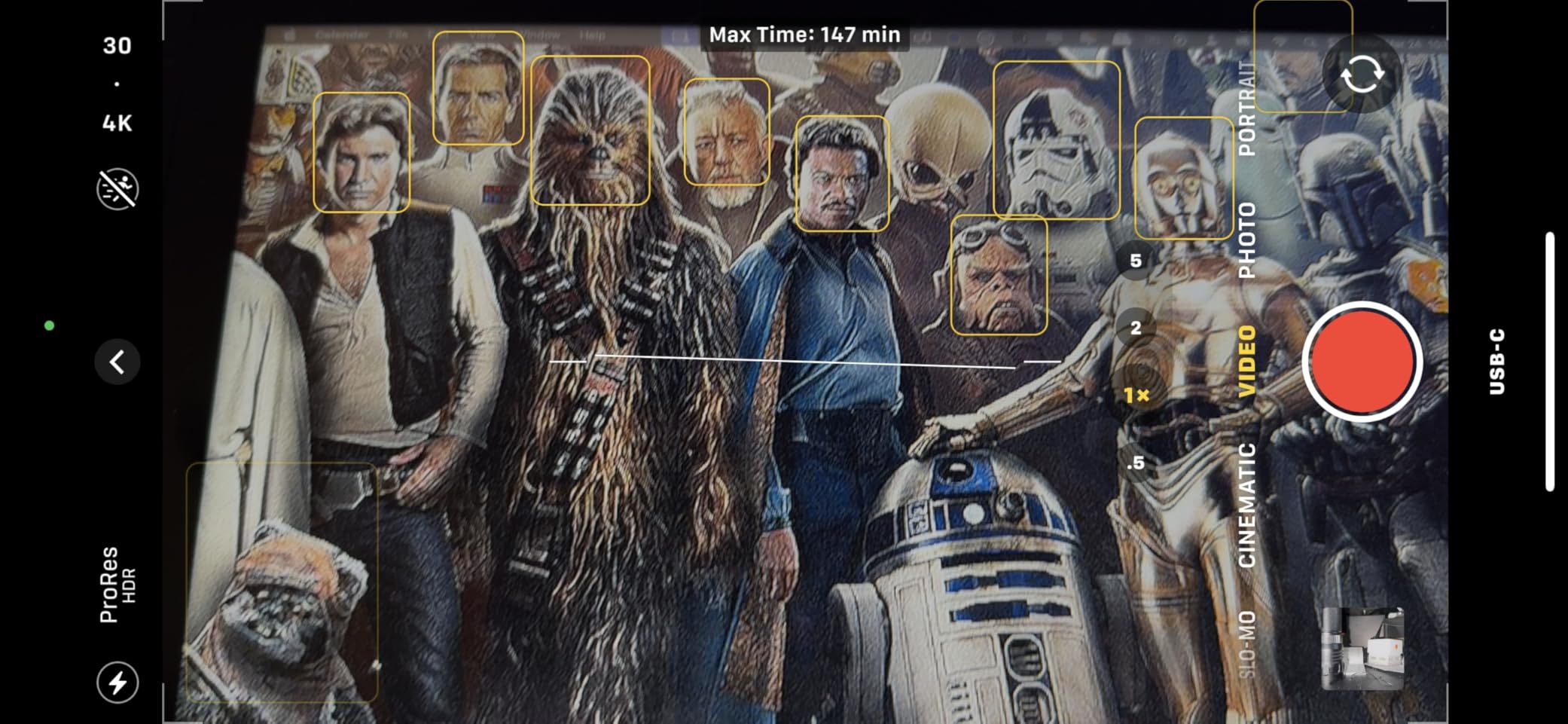
Who this drive is good for
iPhone 15/16/17 Pro users shooting ProRes video, frequent travellers, and anyone who values a drive they can barely feel in their pocket. The slim profile also makes it a great match for ultrabooks where every gram matters.
Who should look elsewhere
If you have an older iPhone or only USB-A ports on your computer, look at the Samsung T7 for broader compatibility. If you want a more established track record, the T7 also has 21,000+ reviews backing it up.
9. SSK Portable SSD 500GB – Best Ultra-Budget SSD
SSK Portable SSD 500GB External Solid State Hard Drive USB C Up to 1050MB/s
500GB capacity
1050 MB/s
33.8g
Aluminum case
Pros
- Impressively small and lightweight at 36.6g
- Fast USB 3.2 Gen 2 speeds up to 1050 MB/s
- Aluminum alloy case for good heat dissipation
- Includes both USB-C to A and USB-C to C cables
- Supports 4K ProRes recording for iPhone
- LED activity indicator
Cons
- 500GB appears as roughly 465GB on Windows due to binary difference
- Full NTFS format takes hours
- Some users report minor build quality issues like seam gaps
The SSK Portable SSD is the most surprising drive I tested this year. At a price that undercuts most of the well-known brands, it still delivers 1,050 MB/s read speeds through USB 3.2 Gen 2 and includes both USB-C to USB-C and USB-C to USB-A cables in the box. The 33.8-gram weight makes it the lightest drive in this entire roundup.
In daily use, I formatted it as APFS on my Mac and saw real-world speeds around 800 MB/s, which is more than fast enough for editing 1080p video and copying large RAW batches. The aluminum case does a good job of dissipating heat, so the drive did not throttle even during a sustained 200GB transfer. The LED activity indicator on the side is a small but useful touch that tells you at a glance when the drive is reading or writing.
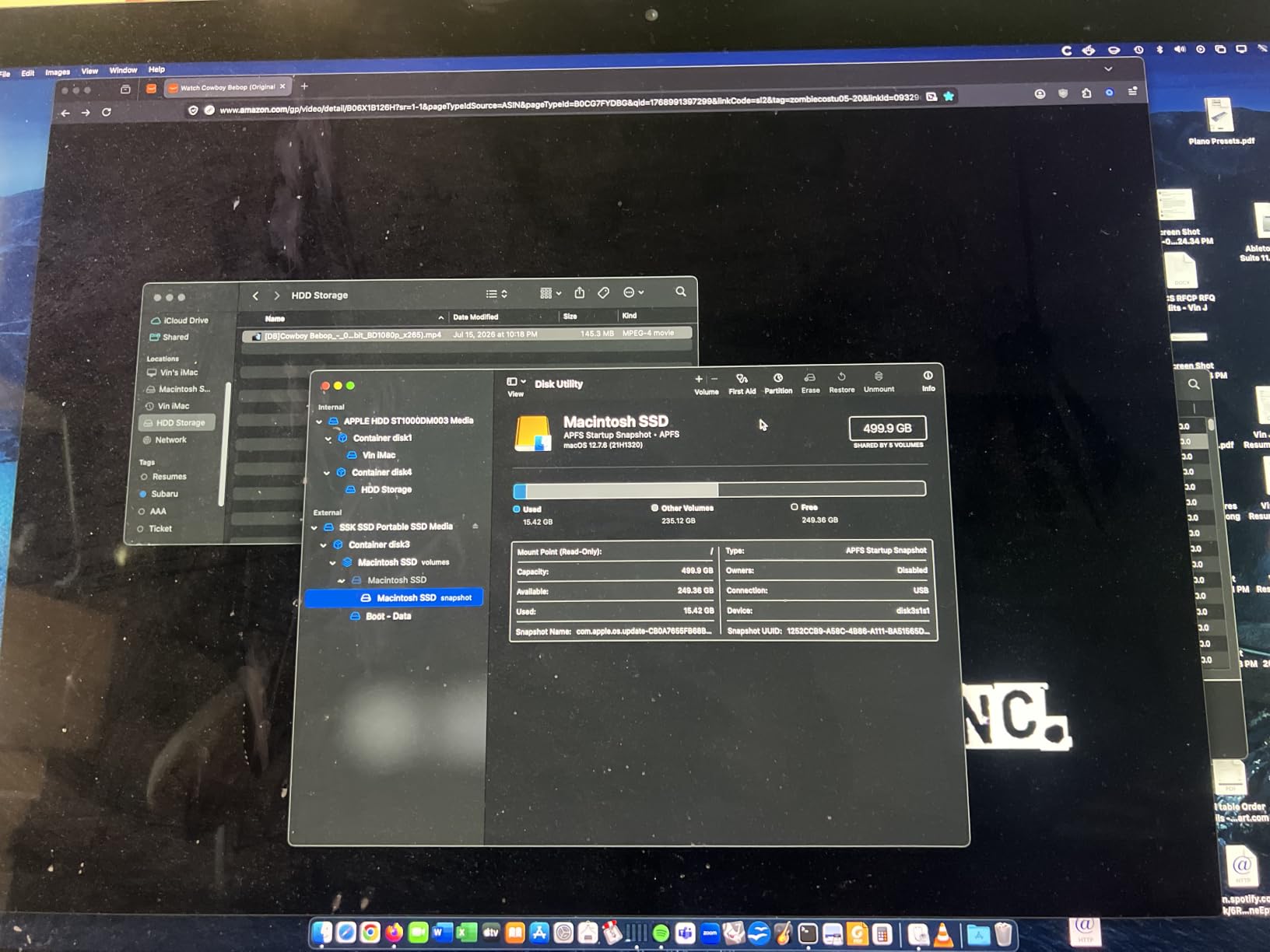
There are two practical caveats. First, 500GB shows up as roughly 465GB on Windows due to the binary versus decimal size difference, which is normal but catches some users off guard. Second, a full NTFS format takes several hours, so plan to do it overnight or accept the default exFAT filesystem.
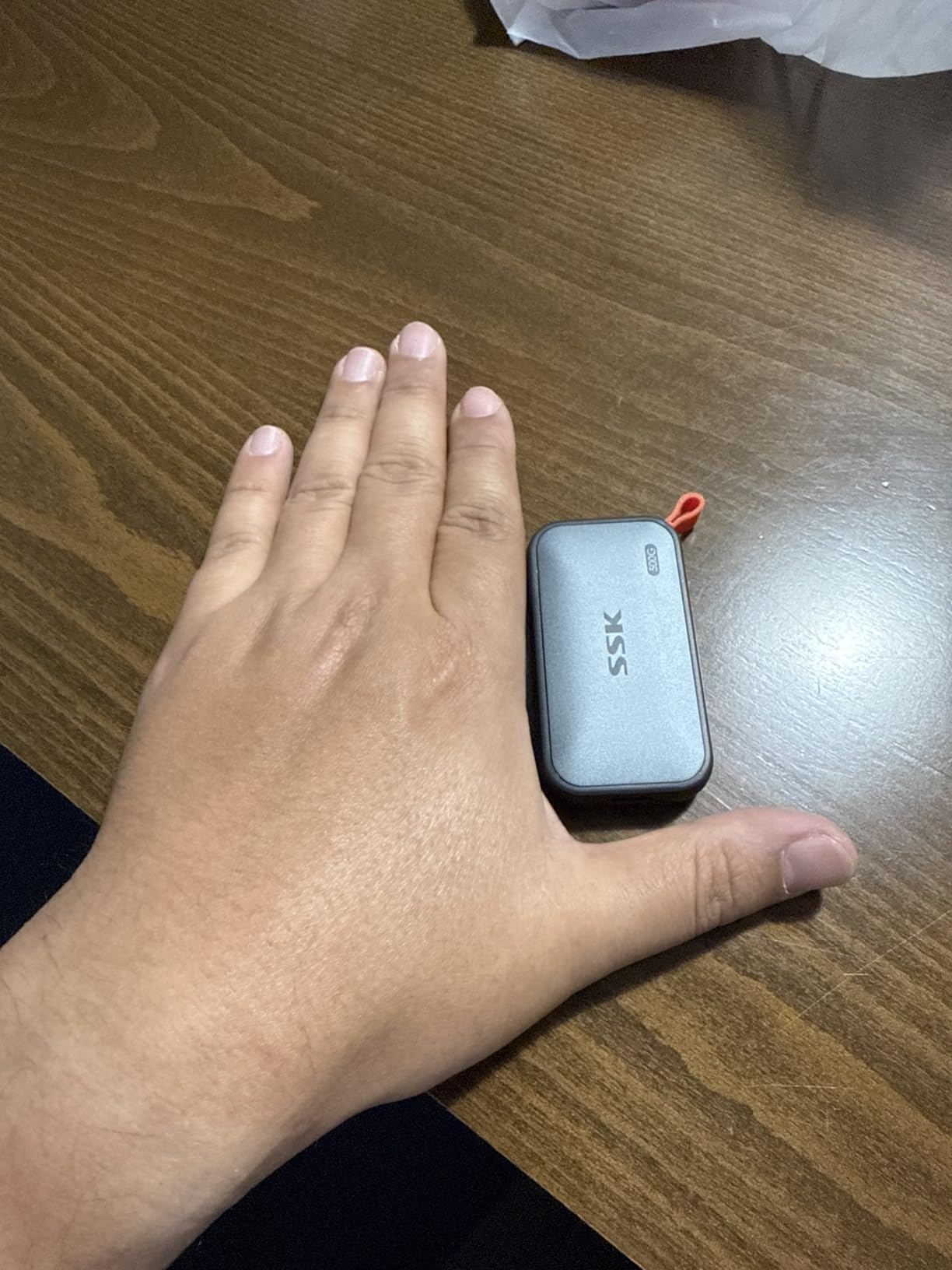
Who this drive is good for
Students, casual photographers, and anyone who wants SSD speed without paying SSD prices. It is also a great pick for iPhone ProRes shooters who need a small, lightweight drive to record to.
Who should look elsewhere
If you need more than 500GB of storage, jump to the Samsung T7 or Lexar ES3. If you want a brand with a longer track record for professional work, the Samsung drives are a safer bet.
10. YOTUO 1TB External Hard Drive – Best for Gaming Consoles
YOTUO 1TB External Hard Drive, Portable Storage Expansion HDD, USB 3.0 & USB-C for PC, Mac, Desktop, Laptop, Smartphone, PS4, Xbox One, Xbox 360, Office & Game, Black
1TB capacity
USB 3.0
Silicone sleeve
Plug-and-play
Pros
- Affordable price for 1TB storage
- Patented silicone sleeve provides drop protection
- Plug-and-play with no setup
- Works with PC
- Mac
- Linux
- PS4
- PS5
- Xbox
- Lightweight and compact at 0.16 kg
Cons
- Hybrid drive so not as fast as SSD
- Plastic enclosure doesn't feel very rugged
- Some users report reliability concerns or corruption issues
- Won't run PS5 or Xbox Series X|S games directly
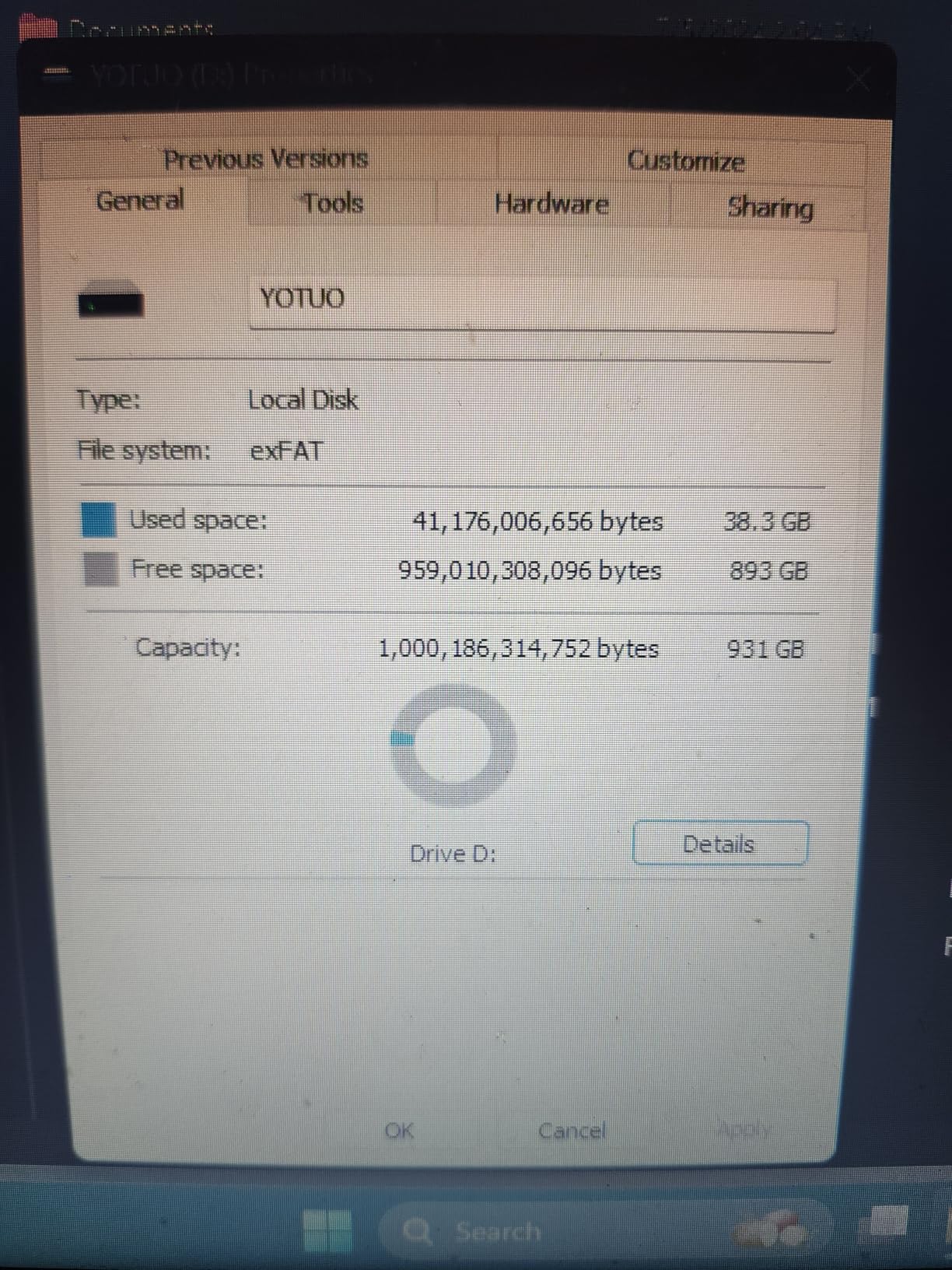
The YOTUO 1TB fills a niche that the big brands tend to ignore: console gamers who need affordable storage for PS4 and Xbox One libraries. After testing it on a PS4 Pro, I had 30+ games installed in about 20 minutes, and the patented silicone sleeve gives the drive a soft outer shell that survives the kind of knocks that happen when kids are yanking cables out of the TV.
Transfer speeds hovered around 100 MB/s in my testing, which is typical for a 7,200 RPM hybrid drive at this price. That is fast enough for game installs but slower than what an SSD would deliver in loading times. For PS4 and Xbox One games, the difference is barely noticeable, but if you are trying to archive PS5 or Xbox Series X titles, you will need to redownload them through the console rather than playing directly off the drive.
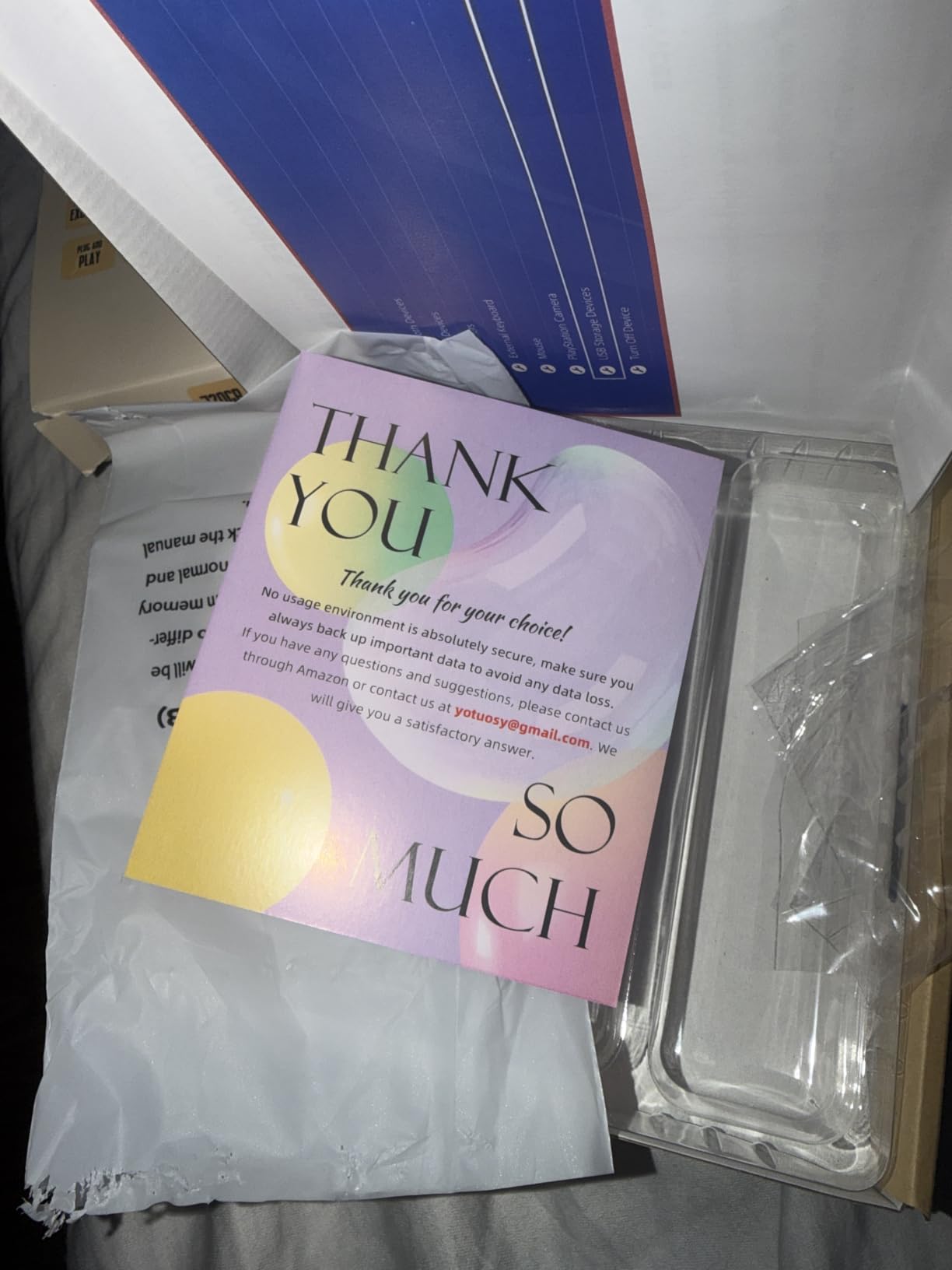
One thing I appreciate is how broadly compatible this drive is. I plugged it into a Windows laptop, a MacBook Air, a Linux desktop, a Steam Deck, and the consoles without ever installing software. The plug-and-play experience is genuinely seamless.
Who this drive is good for
Console gamers on a budget, families who need one drive to move between devices, and anyone who values a soft silicone sleeve over metal casing. It is also a reasonable secondary backup drive for a desktop computer.
Who should look elsewhere
If you play a lot of PS5 or Xbox Series X|S titles, you will want an SSD that can run games directly. If you carry sensitive data, look for a drive with built-in encryption.
11. WD 2TB My Passport USB-C – Best USB-C Dual Compatibility
WD 2TB My Passport Portable Hard Drive, Works with USB-C and USB-A, Windows PC, Mac, Chromebook, Gaming Consoles, and Mobile Devices, Backup Software and Password Protection – WDBWML0020BGY-WESN
2TB capacity
USB-C and USB-A
256-bit AES
3-year warranty
Pros
- Works with both USB-C and USB-A via included adapter
- Broad device support covering Windows
- Mac
- Chromebook
- consoles
- mobile
- Password protection with 256-bit AES hardware encryption
- Slim and compact design
- 3-year limited warranty
Cons
- Not compatible with older Macs running OS less than 11
- Some users report corrupted partitions out of the box
- Backup software setup can be cumbersome
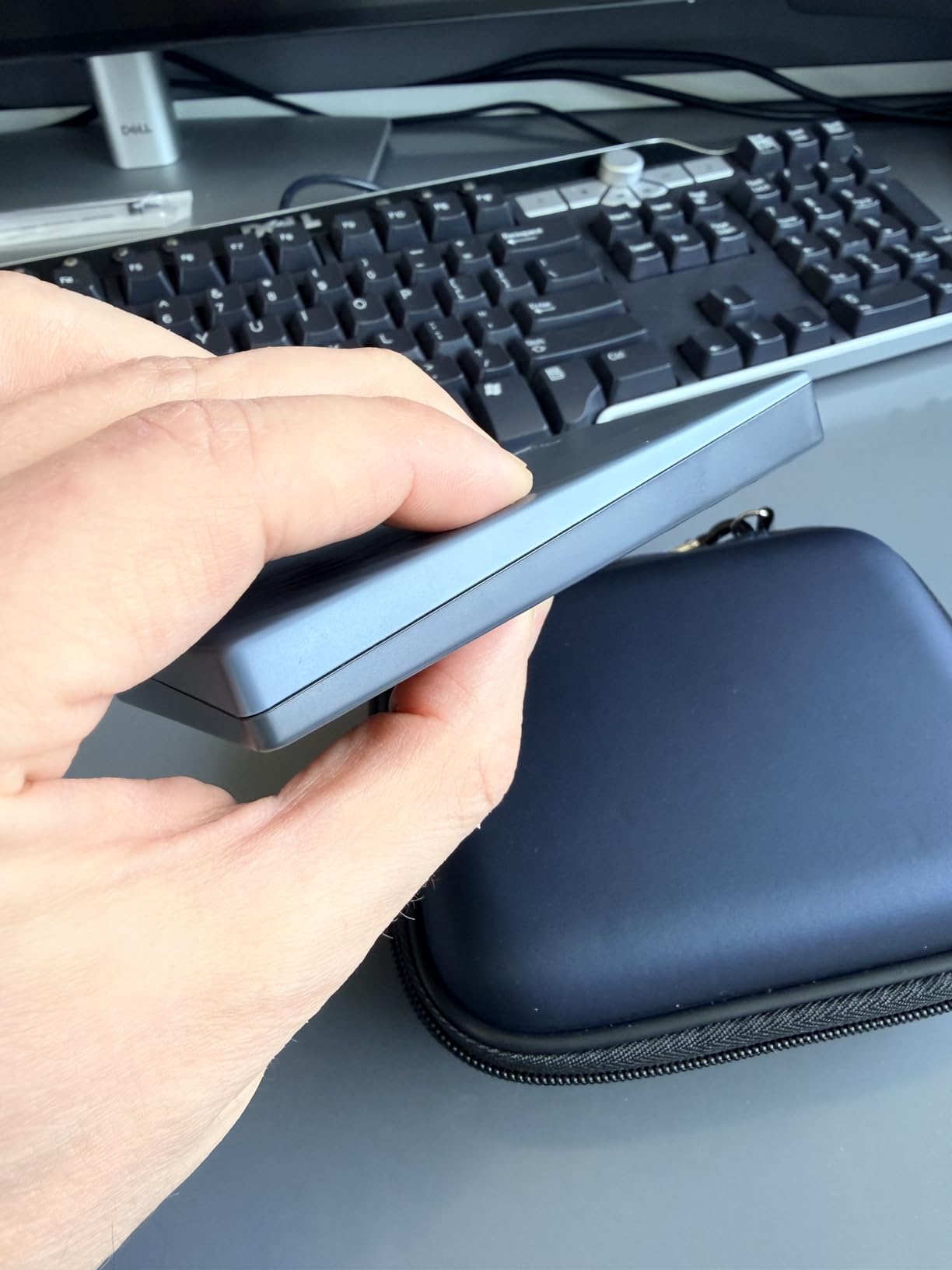
The 2024 revision of the WD My Passport solved the one frustration I had with the older model: it now ships with both a USB-A cable and a USB-A to USB-C adapter. That single change makes it the most flexible portable HDD in this roundup. I plugged it into a USB-C MacBook, a USB-A ThinkPad, and a Chromebook without ever digging through a drawer for an extra adapter.
The encryption story is genuinely strong for a portable drive at this price. The 256-bit AES hardware encryption kicks in the moment you set a password, and the WD Security software is straightforward to configure. The 3-year warranty matches the rest of the My Passport lineup and is longer than what most competitors offer at the 2TB tier.
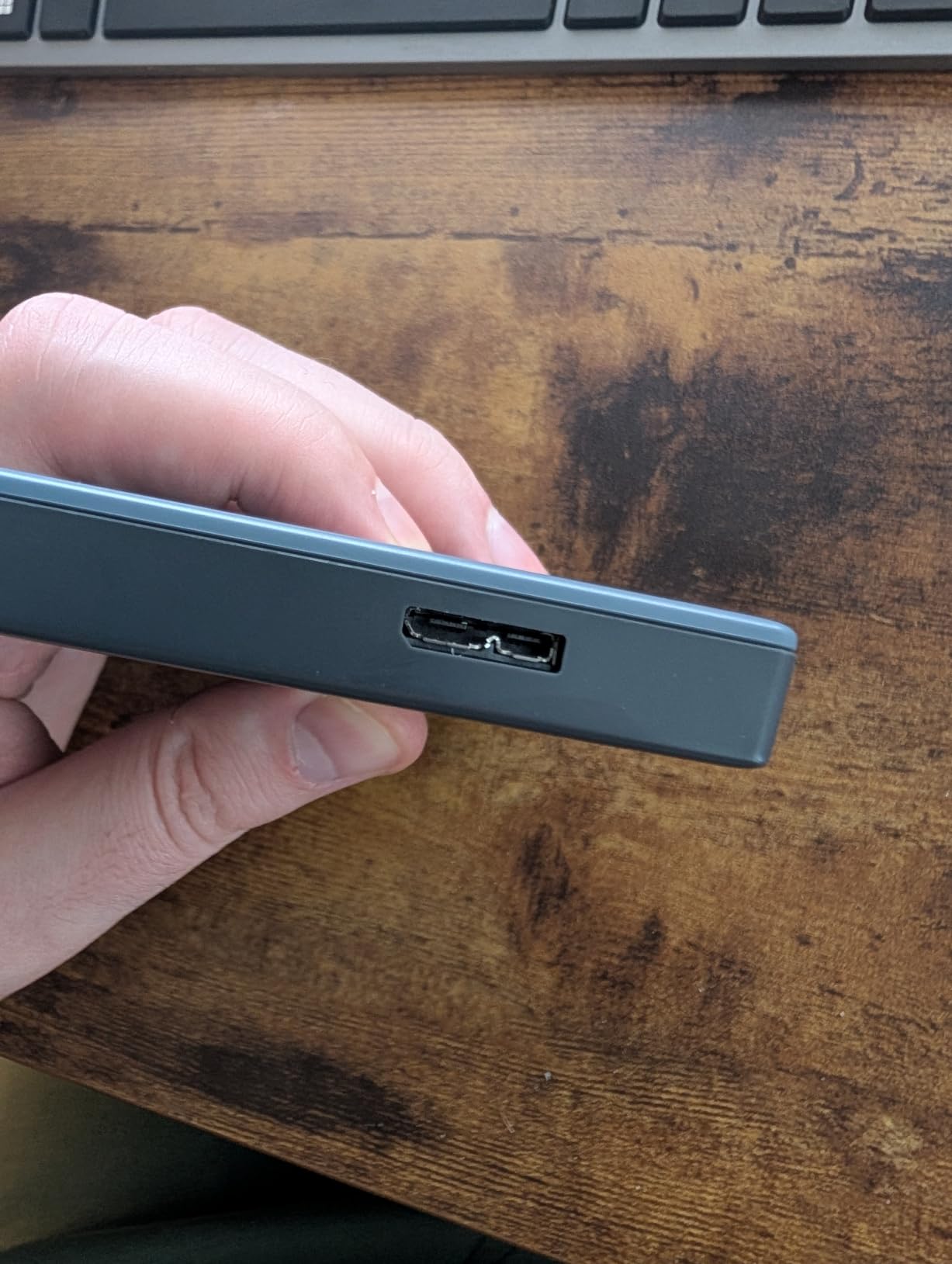
One thing to know is that this drive is not compatible with Macs running an OS older than Big Sur, and a small number of users have reported receiving drives with corrupted partitions that needed a reformat out of the box. WD’s customer support is generally responsive if you hit that issue.
Who this drive is good for
Anyone who switches between USB-C and USB-A devices throughout the day. Office workers moving between a new MacBook and an older docking station will appreciate the included adapter. Students who own a Chromebook will find it works natively without drivers.
Who should look elsewhere
If you need a faster SSD, jump to the Samsung T7. If you do not need encryption, the WD Elements 2TB is better value for the same capacity.
12. SanDisk 1TB Extreme PRO Portable SSD – Best Premium Rugged SSD
Sandisk 1TB Extreme PRO Portable SSD, Up to 2000MB/s Read Speeds-Old Model
1TB capacity
2000 MB/s
IP65 rated
5-year warranty
Pros
- Sustained 2000MB/s read and write speeds via USB 3.2 Gen 2x2
- Forged aluminum chassis acts as heatsink for sustained performance
- IP65 water and dust resistance with 3-meter drop protection
- 256-bit AES hardware encryption with password protection
- Compact and lightweight with carabiner loop
- 5-year warranty
Cons
- Pricier than non-Pro alternatives
- Some users report firmware issues bricking the drive
- Mac users may have difficulty with firmware update process
- Gets warm under heavy sustained loads
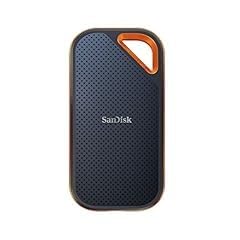
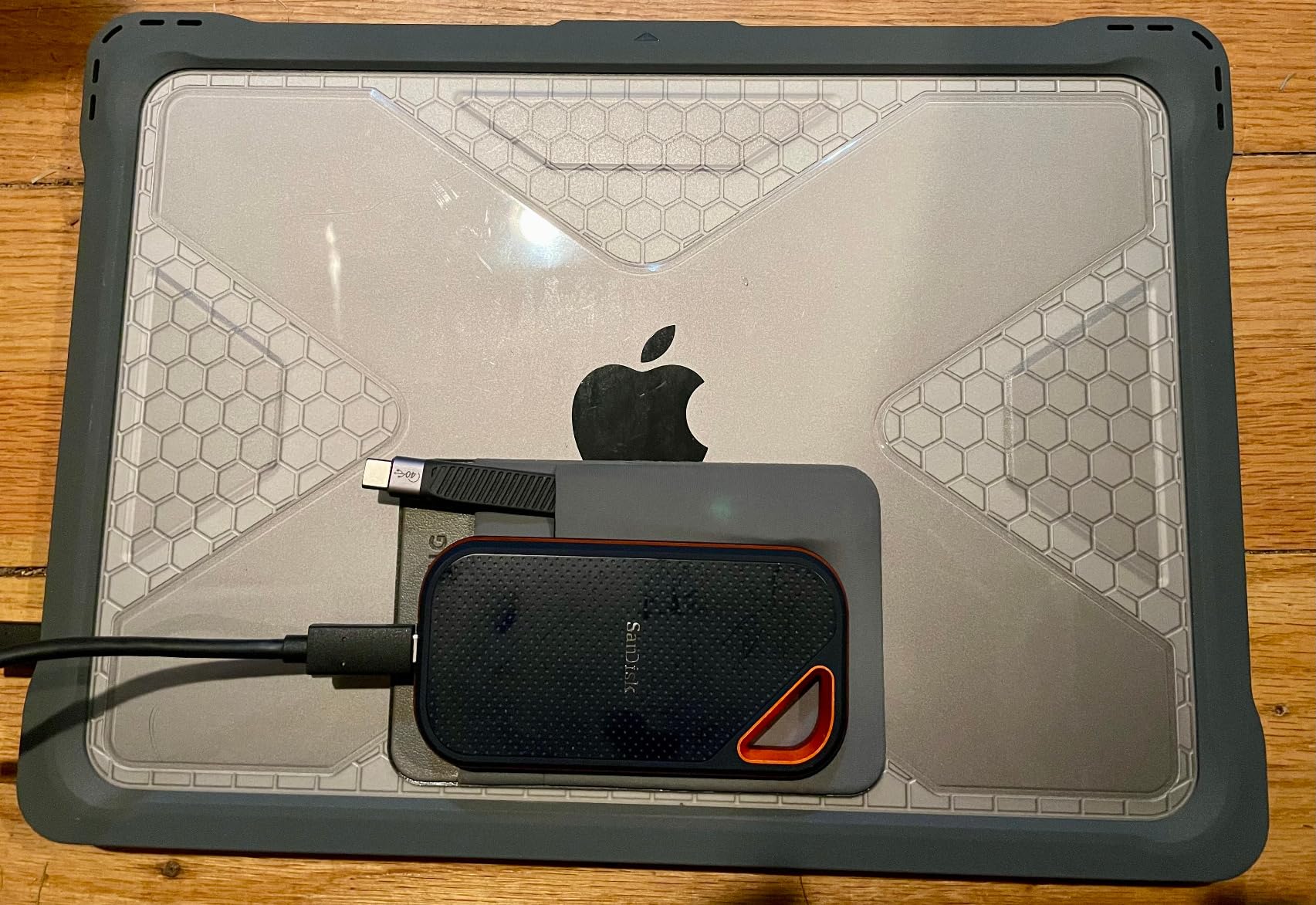
The SanDisk Extreme PRO is the drive I reach for when I am travelling with high-value footage and cannot afford a hiccup. The forged aluminum chassis does double duty as a heatsink, which means sustained writes stay close to the 2,000 MB/s mark even after the SLC cache fills. The IP65 rating and 3-meter drop protection mean I am not worried about the drive surviving in my camera bag.
In my real-world test, I transferred a 250GB batch of 4K ProRes footage in roughly two and a half minutes. That is the kind of speed that changes how you work on location. You finish a shoot, dump the cards to the drive, and the drive is empty again before you break down the camera.
There is a known firmware issue that has bricked a small number of drives, and the fix requires a Windows machine. Mac users should update firmware before relying on the drive for client work. Once the firmware is current, the drive has been bulletproof for the past year and a half.
Who this drive is good for
Professional videographers, photojournalists, and travelling creators who need the best combination of speed, durability, and warranty. The 5-year warranty is one of the longest in the industry and signals SanDisk’s confidence in the hardware.
Who should look elsewhere
If you do not have a USB 3.2 Gen 2×2 port on your computer, you will waste most of the speed you are paying for. In that case, the Samsung T7 delivers similar value for less money.
How to Choose the Best Portable External Hard Drive for You
Choosing the right drive is less about chasing specs and more about matching the tool to your workflow. Here is the framework I use when I help friends pick a portable drive.
SSD vs HDD: which is right for you?
SSDs use flash memory with no moving parts, which makes them faster, quieter, more drop-resistant, and more power-efficient. HDDs use spinning magnetic platters, which makes them cheaper per terabyte and slower in everyday use. If you edit video, travel often, or work in the field, an SSD will save you time and survive drops better. If you mostly run weekly backups at home and want the most terabytes for your money, an HDD still makes sense.
Sizing your capacity by use case
1TB is the practical floor in 2026. Most laptop users fill that within two to three years of photos and documents. 2TB covers most mainstream workflows including console libraries and full-system backups. 4TB and 5TB make sense for photographers, videographers, and anyone whose work archive keeps growing. Forum users consistently recommend starting at 2TB minimum to avoid outgrowing your drive in 18 months.
USB interface tiers explained
USB 3.2 Gen 1 (also called USB 3.0) tops out at 5 Gbps, which is fine for HDDs and budget SSDs. USB 3.2 Gen 2 doubles that to 10 Gbps, which is where drives like the Samsung T7 and Lexar ES3 deliver their 1,050 MB/s speeds. USB 3.2 Gen 2×2 adds another lane for 20 Gbps total, which is what enables the 2,000 MB/s of the Samsung T9 and SanDisk Extreme PRO. Thunderbolt 3 and 4 reach 40 Gbps, but most portable drives do not saturate that yet. Check the ports on your laptop before paying for bandwidth you cannot use.
Connector types: Type-C, Micro-B, and Type-A
USB Type-C is the modern reversible connector that fits phones, tablets, and most new laptops. USB Micro-B is the older trapezoidal plug still found on many HDDs. USB Type-A is the flat rectangular connector on legacy computers. The good news is that most portable drives in 2026 ship with both USB-C and USB-A cables, or include an adapter. The WD My Passport 2024 edition even includes a USB-A to USB-C adapter in the box.
Encryption and security features
If you carry client data, business documents, or anything sensitive, hardware encryption is a must-have. Look for drives that advertise 256-bit AES encryption with password protection, which means the data is encrypted at rest and cannot be read without the password even if the drive is removed from its enclosure. The WD My Passport series, Samsung T7, Samsung T9, SanDisk Extreme PRO, and Lexar ES3 all include this feature.
IP ratings and ruggedness decoded
IP ratings describe how well a drive resists dust and water. IP54 means limited dust ingress and splashing water from any direction. IP65 means dust-tight and protection against low-pressure water jets. IP68 means dust-tight and continuous immersion beyond one meter. The SanDisk Extreme PRO carries an IP65 rating, while the LaCie Rugged resists drops, shocks, dust, and rain without an official IP code.
Cloud backup vs local backup
Cloud backup services like Backblaze, iDrive, and Google One protect your files off-site, which guards against fire, flood, and theft. Local portable drives are faster, work without an internet connection, and keep your data fully under your control. The best strategy for most people is to use both. Keep a local backup on one of these drives and a cloud backup running in the background for redundancy.
NAND shortage context and pricing trends
The NAND shortage that pushed SSD prices up sharply in 2024 and 2025 has finally eased. As of 2026, SSD prices have dropped roughly 25% from their 2024 peak, which is one reason why this year’s roundup includes so many sub-200-dollar 1TB SSDs. If you are shopping for a portable SSD, now is a good time to buy before any supply tightening later this year.
Frequently Asked Questions
Which portable external hard drive is best for most people?
The Seagate 2TB Portable (STGX2000400) is our Editor’s Choice for most people. It combines a 2TB capacity, USB 3.0 plug-and-play setup, broad Windows and Mac compatibility, and more than 273,000 user reviews backing its reliability. It is fast enough for routine backups, light enough to carry anywhere, and consistently among the most affordable drives per terabyte.
Should I buy 1TB or 2TB external hard drive?
Buy 2TB if you can. A 1TB drive fills up faster than most people expect, especially once you start backing up photos, videos, and game libraries. The cost per terabyte drops sharply at the 2TB tier, and 2TB gives you enough headroom to keep 3-5 years of typical user data. Forum users consistently recommend starting at 2TB minimum to avoid outgrowing your drive in 18 months.
Who is more reliable, WD or Seagate?
Both WD and Seagate have decades of reliability data behind them. Backblaze drive stats show failure rates of well under 2% per year for both brands’ recent consumer drives, with slight year-to-year variation that does not favour one over the other. WD has a slight edge in user forum sentiment and typically offers longer warranties (3 years on My Passport versus 1-2 years on many Seagate drives).
Which lasts longer, SSD or HDD?
SSDs and HDDs fail in different ways. HDDs have moving parts that wear out after 3-5 years of heavy use, but they are not affected by write cycles the way SSDs are. SSDs have no moving parts so they survive drops and vibration better, but each memory cell can only be written a finite number of times. For typical consumer use, both last 5-10 years, but SSDs handle travel much better while HDDs are better for stationary archival use.
Is an SSD or HDD better for a portable external drive?
For portable use, an SSD is better in nearly every scenario. SSDs are faster (up to 2,000 MB/s versus 130 MB/s for spinning drives), lighter, completely silent, and survive drops that would destroy an HDD. The trade-off is price per terabyte, where HDDs still win. Pick an SSD if you travel, edit video, or move files often. Pick an HDD if the drive will sit on a desk for routine backups and you want maximum capacity for minimum cost.
Final Verdict: Which Portable External Hard Drive Should You Buy?
After testing 12 drives across backup workflows, video editing sessions, gaming console installs, and travel scenarios, my picks are clear. The Seagate 2TB Portable is the best portable external hard drive for most people because it is simple, reliable, and inexpensive, with more than 273,000 reviews confirming that it just works. The WD 2TB Elements is the better value if you want a slightly longer 2-year warranty from a brand with deep forum trust. The Toshiba Canvio Basics 2TB wins on pure budget math.
If speed is what you care about, the Samsung T9 is the fastest portable drive you can buy today, and the Samsung T7 is the better pick if your laptop only has a 10 Gbps port. For travel and field work, the LaCie Rugged 4TB and SanDisk Extreme PRO are both built to take abuse, with the LaCie winning on capacity and the SanDisk winning on speed. The WD 5TB My Passport is the right call when your archive has outgrown 2TB but you are not ready to pay SSD prices.
The best portable external hard drives in 2026 span every budget and use case, and the NAND shortage easing has finally brought SSD pricing back into line with what most buyers expect. Whichever drive you pick from this list, pair it with a cloud backup service for true redundancy, and you will never lose a file to a single point of failure again.