

The best STEM kits for 8 year olds are the ones that end in a working result, not a pile of parts. Our short answer: the Snap Circuits Jr. SC-100 is the strongest all-rounder because it produces a real circuit in minutes, the National Geographic Earth Science Kit covers earth science with 15-plus activities, the National Geographic Magic Chemistry Set is the gentlest on-ramp to chemistry, and the Makeblock mBot is the only kit here a child can genuinely program.
Eight is a good age for this. Attention span is long enough to finish a real build in one sitting, reading level is high enough to follow numbered instructions, and the abstract thinking kicks in right as a child starts asking why a thing works. The gap is not ability, it is kit selection. A box labelled ages 8 and up can mean anything from a forty-minute snap-together project to a two-hour hydraulic build with a reading load a second-grader cannot carry alone.
We looked at ten kits across electronics, earth science, chemistry, mechanical engineering and robotics, and judged them on the same four questions: does it build something that works, can an 8 year old get through it, is there replay value once the first build is finished, and does it need a screen. We also pulled in parent discussions from r/Parenting, r/Homeschooling and r/STEMEducation, where the same complaints surface repeatedly. We updated this list for 2026, and prices move, so every product below links to its current listing rather than quoting a number.
Table of Contents
Top 3 Best STEM Kits for 8 Year Olds (October 2026)

Snap Circuits Jr. SC-100
- 100+ projects
- No tools or soldering
- Color-coded snap modules
- Ages 8 and up

Makeblock mBot
- Builds in about 15 minutes
- Scratch and Arduino compatible
- Remote control and line follower

National Geographic Earth Science Kit
- 15+ activities
- Volcano and water tornadoes
- Two geologic dig kits
All 10 STEM Kits at a Glance in 2026
| Product | Specifications | Action |
|---|---|---|
| Snap Circuits Jr. SC-100 |
|
Check Latest Price |
| National Geographic Earth Science Kit |
|
Check Latest Price |
 National Geographic Magic Chemistry Set National Geographic Magic Chemistry Set |
|
Check Latest Price |
 Sillbird 12-in-1 Solar Robot Kit Sillbird 12-in-1 Solar Robot Kit |
|
Check Latest Price |
 National Geographic Science Magic Kit National Geographic Science Magic Kit |
|
Check Latest Price |
 Smartivity Robotic Mechanical Hand Smartivity Robotic Mechanical Hand |
|
Check Latest Price |
 Science4you Betabot Robotics Kit Science4you Betabot Robotics Kit |
|
Check Latest Price |
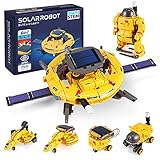 COBFDHA 6-in-1 Solar Robot Kit COBFDHA 6-in-1 Solar Robot Kit |
|
Check Latest Price |
| Makeblock mBot Coding Robot |
|
Check Latest Price |
 Bottleboom 13-in-1 Solar Robot Kit Bottleboom 13-in-1 Solar Robot Kit |
|
Check Latest Price |
1. Snap Circuits Jr. SC-100 – the best all-round STEM kit for 8 year olds
SNAP CIRCUITS Jr. SC-100 STEM Electronics Kit, 100+ Projects, Ages 8+
100+ projects from 29 snap modules
Ages 8 to 108
No tools or soldering needed
Snap Board included
Pros
- Tool-free snap-together design
- 100+ projects from one box
- Color-coded numbered parts
- Screen-free
- Very large verified review base
Cons
- Little replay value once the projects are exhausted
- Alkaline batteries required
- Some younger builders need adult help reading the manual
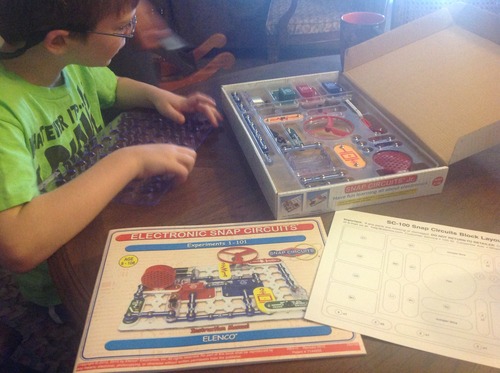
This was the kit my team kept coming back to. The Snap Circuits Jr. SC-100 gives a child 30-plus snap modules, a plastic Snap Board and a four-colour manual, and everything attaches by pressing down. No soldering iron, no wire strippers, no adult crouched over the table with a screwdriver, which is the single reason so many electronics kits get abandoned in month two.
It has a 4.8 rating across 29k+ reviews, and the reason is volume plus clarity. Colour coding does the real teaching work: a child matches the printed diagram to the physical part, which trains exactly the sequential planning an 8 year old needs. A finished project includes a working alarm, a fan and a light sensor circuit, and the child keeps every one of them on the board until the next day.
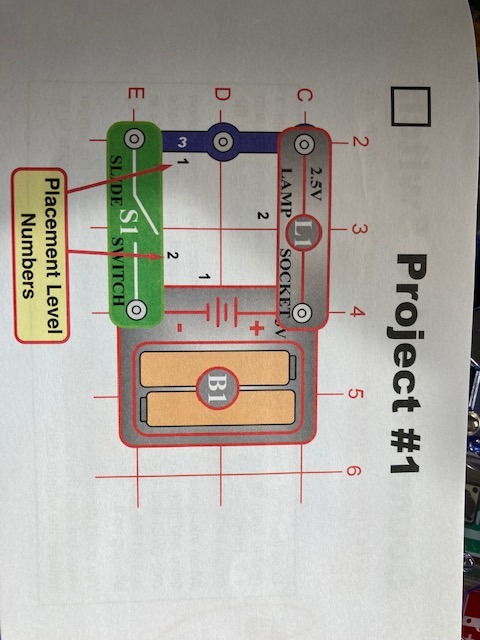
Electronics is the domain most kits skip, and it is the one that transfers best to everything else. Once a child understands that a closed loop needs a complete path, wiring concepts in other subjects stop being abstract. At 640 grams and 12 x 9.5 x 1.75 inches it also stores flat, which matters if your STEM corner lives in a closet.
The weakness is honest and worth naming. Reviewers report that the projects are largely single-use, so once the manual is worked through the box becomes storage rather than an activity. Alkaline batteries are also required, and not always included. Budget an afternoon per project rather than a weekend, because an 8 year old will get through two or three circuits and want to show someone.
Who this kit suits
It suits a child who has never done a kit before, and it suits a child who reads carefully. The visual diagrams do most of the work, so a reluctant reader can still succeed by following pictures. Parents on r/Parenting repeatedly ask for a first STEM kit that will not require them to sit and translate instructions, and this is the answer they land on.
Where it falls short
It is not a coding kit, and it produces no motion. A child whose interest is robots and programming will finish it and ask what comes next. Parents building a home STEM corner sometimes pair it with a desk setup like one of these cable management kits for desks so the wires and boards have a home instead of migrating across the work surface.
2. National Geographic Earth Science Kit – 15+ activities for the curious scientist
National Geographic Earth Science Kit with 100+ Activities for Kids 8-12
15+ activities and 2 geologic dig kits
Recommended for ages 8 and up
2.6 pounds
Learning Guide included
Pros
- Breadth of water
- volcano and crystal activities
- Full-color Learning Guide explains the science
- Clear step-by-step instructions
- Good for multiple repeat sessions
Cons
- Several activities need adult supervision
- Some experiments need household supplies not included
- Specimen quality varies between sets
This is the kit we recommend when a child asks where things come from rather than how machines work. The National Geographic Earth Science Kit covers more than 15 activities, including dueling water tornadoes, an erupting volcano, a crystal you grow over several days, and two geologic dig kits. That range is what separates it from a single-experiment science set.
Reviewers single out the full-colour Learning Guide, which explains the mechanism behind each activity instead of just listing steps. At 4.7 across 17k+ reviews it is one of the most thoroughly tested science kits available, and parents on r/Homeschooling mention it as a workable addition to an elementary science rotation. It weighs 2.6 pounds, so it is a proper sit-down project rather than a grab-and-go toy.
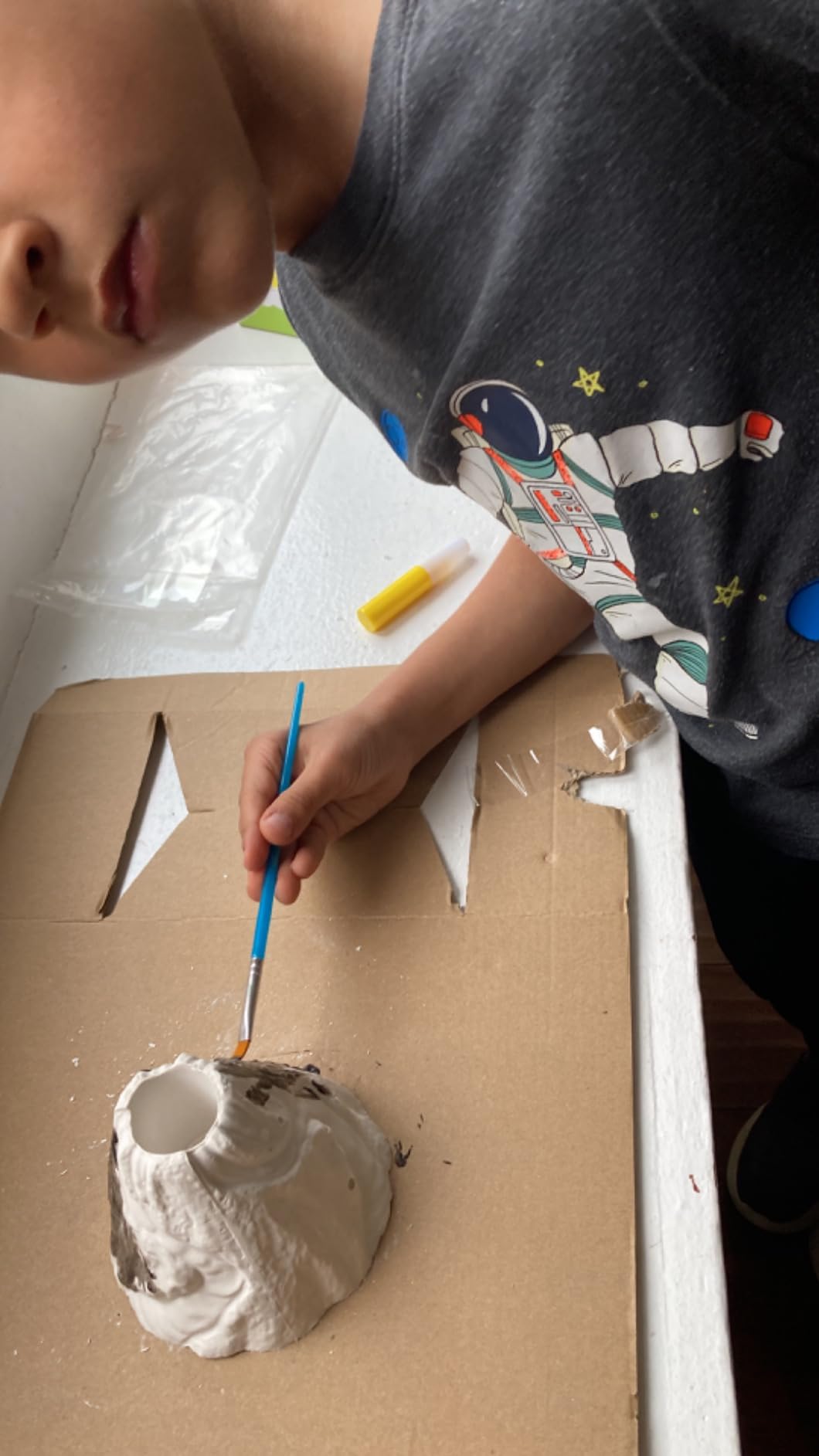
The long-build items are the reason this one works. A crystal that takes days to form teaches patience and observation in a way no finished toy can, and the child comes back to check on it without being asked. The dig kits give a clear before-and-after, which is an easy entry into geological thinking for a child who is not yet ready to read about plate tectonics.
The honest drawback is supervision load. Several activities need an adult to set up or pour, and a few want household supplies that are not in the box. Specimen quality also varies between sets, which is normal for dig kits and worth expecting.

Who this kit suits
It suits a child who is curious about the natural world, and it suits rainy afternoons when going outside is not an option. Because the activities are self-contained and repeatable, two siblings at different ages can work on different sections of it. The clear instructions also mean the child leads the activity and you supervise rather than instruct.
Where it falls short
It builds knowledge, not a keepsake. When the consumables run out, there is no finished model on the shelf, which for some children is the difference between a kit that gets revisited and one that does not. If your child needs a visible finished product, pair it with a mechanical kit rather than expecting this one to fill that role.
3. National Geographic Magic Chemistry Set – the gentlest first chemistry kit
National Geographic Magic Chemistry Set with 10 Tricks for Kids Ages 8-12
10 experiments with all materials included
Ages 8 and up
No batteries required
12.96 ounces
Pros
- Fully self-contained box
- Includes magic wand and gloves for a performance
- Illustrated guide explains the real chemistry
- Light enough for small hands
Cons
- Most experiments need adult supervision
- Only 10 distinct tricks
- Some younger children need help reading instructions
Chemistry sets have a reputation problem because most of them are toys with powder in them. This one is different in one specific way: a child floats a coin, changes the colour of water and makes snow appear, then reads an illustrated guide that names the reaction behind each trick. The magic is the hook, and the science is the payload.
Everything needed for 10 experiments is in the box, no batteries required, and at 12.96 ounces it is one of the lightest kits in this roundup and easy for small hands to manage. It holds a 4.7 rating from 13k+ reviews, with 79 percent five-star. Parents looking for a first chemistry experience that does not require a trip to buy extra materials will find that convenience is the deciding factor.
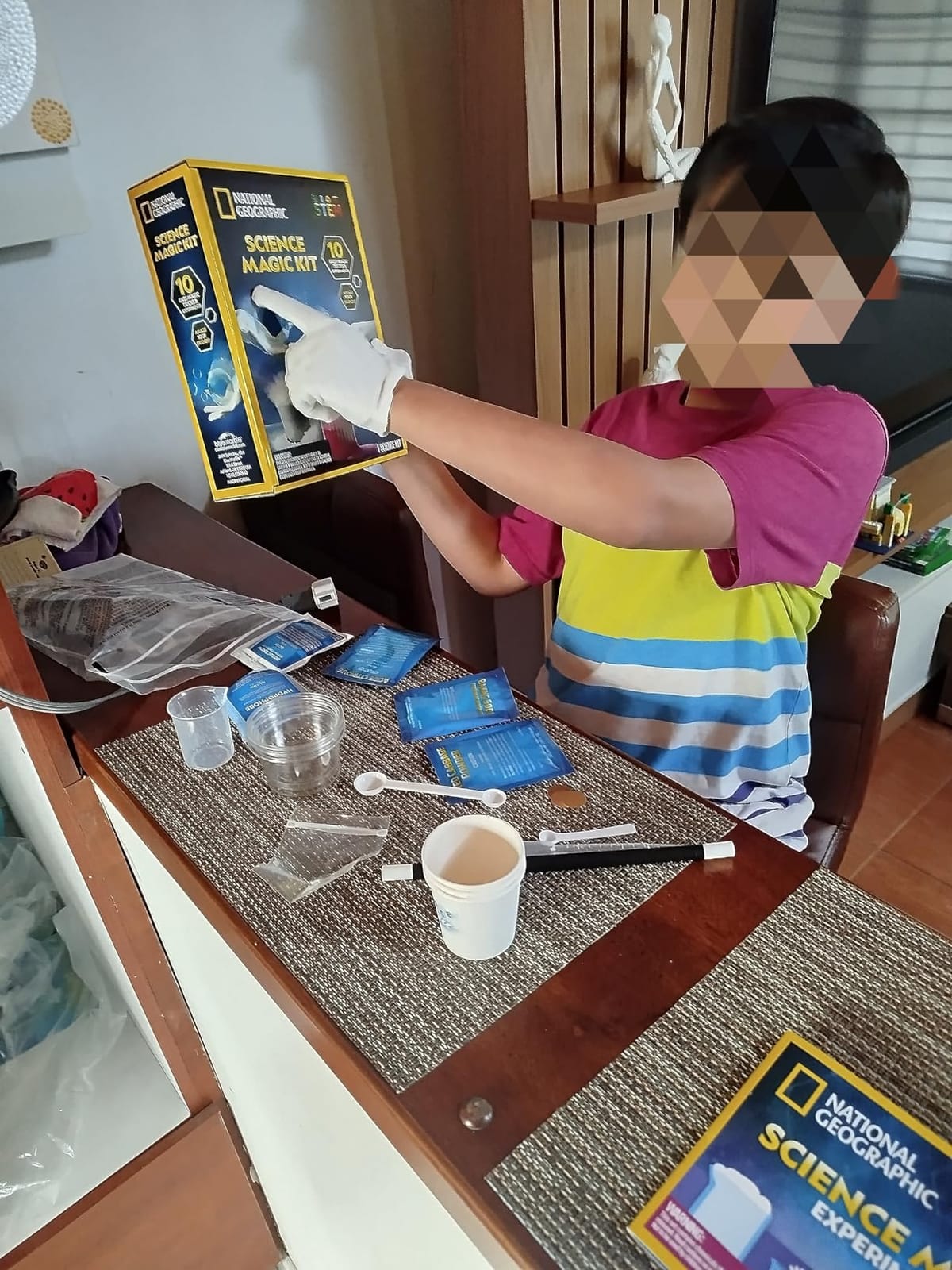
The magic show format matters more than it sounds. The wand and gloves included turn a science activity into a performance for an audience, and that audience is a sibling, a grandparent, or a class. Forum discussions about getting children interested in STEM keep landing on the same principle: a narrative or a show keeps attention longer than an open-ended bin of parts.
Ten tricks is not many, and buyers report the set being finished in a single afternoon by an enthusiastic child. That is fine for a birthday present. It is not fine as a term-long activity, which is the main reason I would choose the larger Science Magic Kit below if the child is a serial experimenter.

Who this kit suits
It suits a child turning 8 who is not yet ready for a lab-style project and who responds to performance and reveal. It also works well as a gift that gets used immediately, since nothing needs assembling. Siblings of different ages can each perform tricks for the other, which stretches the content without more supplies.
Where it falls short
Supervision is effectively required, and several reactions involve mixing that an adult should handle. The trick count is the real limit, and there is no mechanical outcome to keep afterwards. If your child already asks why mixing two clear liquids changes colour, look for the bigger science kit instead of this one.
4. Sillbird 12-in-1 Solar Robot Kit – the best outdoor STEM kit for 8 year olds
Sillbird 12-in-1 Solar Robot Building Kit STEM Gift for Boys Ages 8-13
12 models from 190 parts
Upgraded larger solar panel
No batteries needed
Screen-free play
Pros
- 12 builds with rising difficulty
- Works under a strong artificial light indoors
- Clear step-by-step instructions
- Screen-free outdoor play
- Durable part supply
Cons
- Models run slowly in weak indoor light
- Smaller parts are fiddly for younger builders
- Some builds do not perform consistently
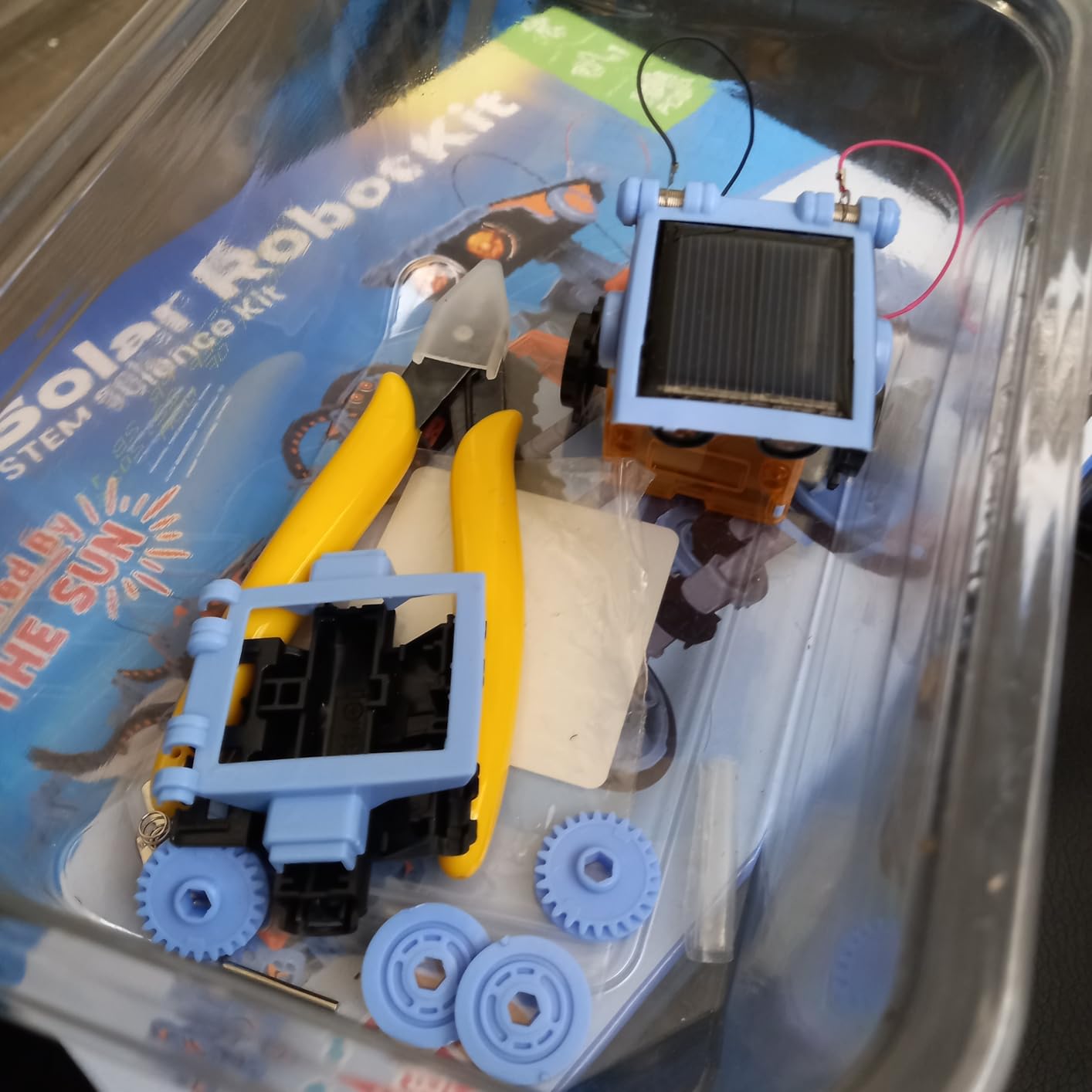
The Sillbird 12-in-1 gives an 8 year old 190 parts and 12 different robot models, from simple line-following shapes up to a walking robot that climbs. Because the same parts reconfigure, the difficulty curve is built in: a child who stalls on model seven can drop back to model two and still be building rather than quitting.
It is the pick we would start with for screen-free play, and the reason is the power source. The upgraded larger solar panel runs the models outdoors in real sunlight, and under a strong artificial light indoors, so weather and time of day stop being the deciding factor. It carries 4.3 across 15k+ reviews, which makes it one of the most heavily reviewed solar robot kits in the category.
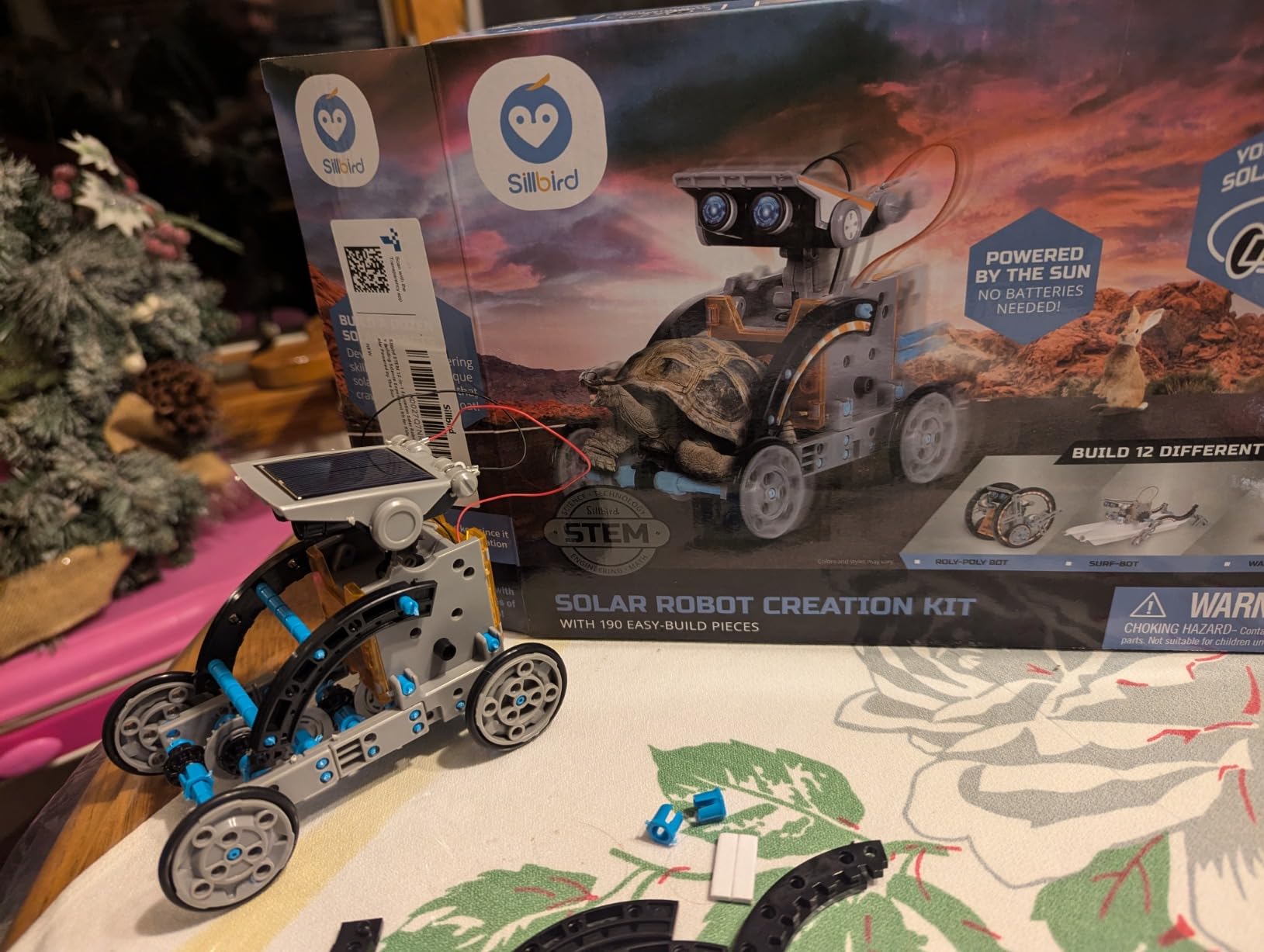
Solar power is a genuinely good teaching topic for this age. The child learns that energy has to be captured, that angle and light intensity change how fast a machine runs, and that a slow robot in a dim room is behaving correctly rather than being broken. The manufacturer lists a recommended age of 10 and up even though the box reads 8 and up, which is exactly the packaging inconsistency parents complain about on forums.
Keep the limitation in view: weak light means slow or non-running models, and that is the single most common complaint. A 6 percent one-star share suggests a portion of builds also underperform even in good conditions. Small parts are fiddly for hands that are still developing fine motor control.
Who this kit suits
It suits a child who needs to see motion to stay interested, and it suits a family with a yard, a balcony or a sunny windowsill. The step-by-step instructions are clear enough for independent assembly, which is the number one thing parents ask about. It is also a natural holiday and summer-break project that runs outdoors rather than on a screen.
Where it falls short
It is weather-dependent in a way the other kits are not, and performance varies with the light. A 4.3 average with 67 percent five-star tells you most families are happy and a meaningful group are not, and the unhappy group is mostly indoor households. Choose the dual-power kit further down if you plan to build inside.
5. National Geographic Science Magic Kit – 100+ experiments for wet weekends
National Geographic Science Magic Kit with 100+ Experiments for Kids 8-12
20 experiments plus 85 more in a booklet
Ages 8 and up
No batteries required
1.5 pounds
Pros
- Over 100 experiment ideas across box and booklet
- Clear colourful instructions
- Teaches real concepts rather than only tricks
- Works for younger siblings too
Cons
- Several powders are single-use and cannot be resealed
- Contains chemical packs to keep away from unsupervised children
- Supervision required throughout
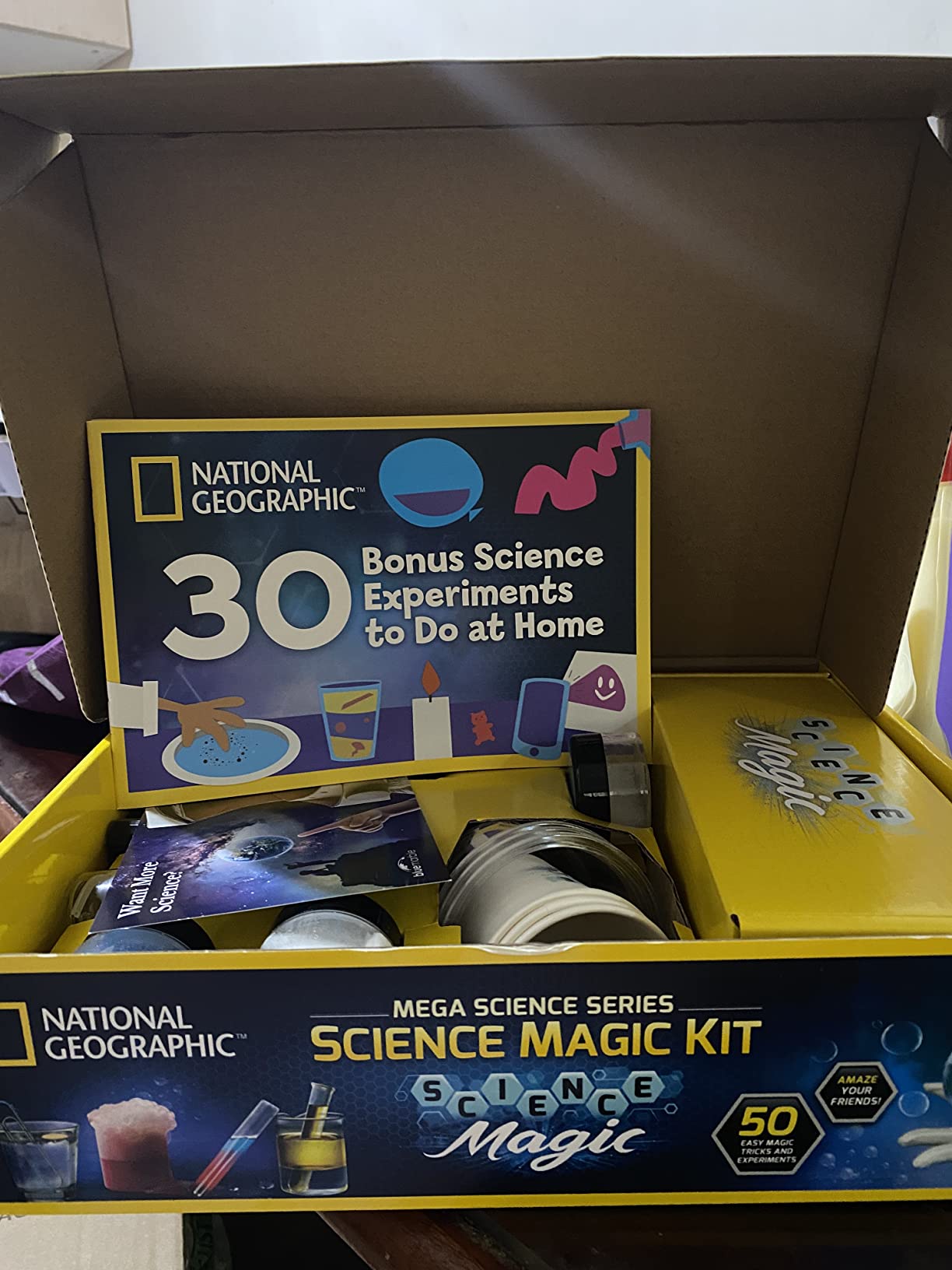
This is the volume pick. The main box carries materials for 20 magic-style experiments, and the bonus booklet adds 85 more ideas, which takes the running total past 100 activities. If your child prefers experimenting to building, this is the longest-running kit in the roundup and the one that survives a whole term.
At 4.7 from nearly 9k reviews with 80 percent five-star, reviewers consistently rate the instructions, the variety and the perceived value. Parents note that it works for younger siblings too, which makes it efficient when two children are close in age. No batteries are required, and the whole thing works from materials in the box.

One packaging detail decides whether you enjoy this kit. Several included powders must be used in a single sitting and cannot be resealed, so a child who wants to try one trick on Tuesday and another on Thursday will find half the box already committed. Reviewers who hit this solved it by transferring leftovers into resealable bags, and it is worth doing that on day one.
The chemistry is real enough to explain the effects, not just stage them, and the booklet is written for an 8 year old rather than an adult reading over their shoulder. That reading level is the quiet advantage here, and it is the complaint that kills most science kits earlier in this list.
Who this kit suits
It suits a child with a long attention span and a love of cause and effect, and it suits homes looking for a screen-free activity for a wet weekend. Because the experiments are short and independent, it works well alongside a bigger project like a robot or circuit build that is paused between sessions. It is also a strong pick for a child who enjoys performing for others.
Where it falls short
The single-use powders limit scheduling, and the chemical packs should be kept out of reach of younger siblings. Parents looking for a physical build with a finished model will not find one here. If replay value matters more than variety, choose a mechanical kit instead.
6. Smartivity Robotic Mechanical Hand – the best screen-free build gift
Smartivity Robotic Mechanical Hand STEM Toy for Kids 8-14
Engineered wood construction
Ages 8 to 14
Free lifetime spare parts
0.25 kg
Pros
- Engineered wood rather than flimsy plastic
- Free lifetime supply of replacement parts
- Screen-free engagement
- Step-by-step manual keeps the child focused
Cons
- Elastic bands loosen or snap over time
- Assembly is fiddly and slower than expected
- Only one completed model with little variation
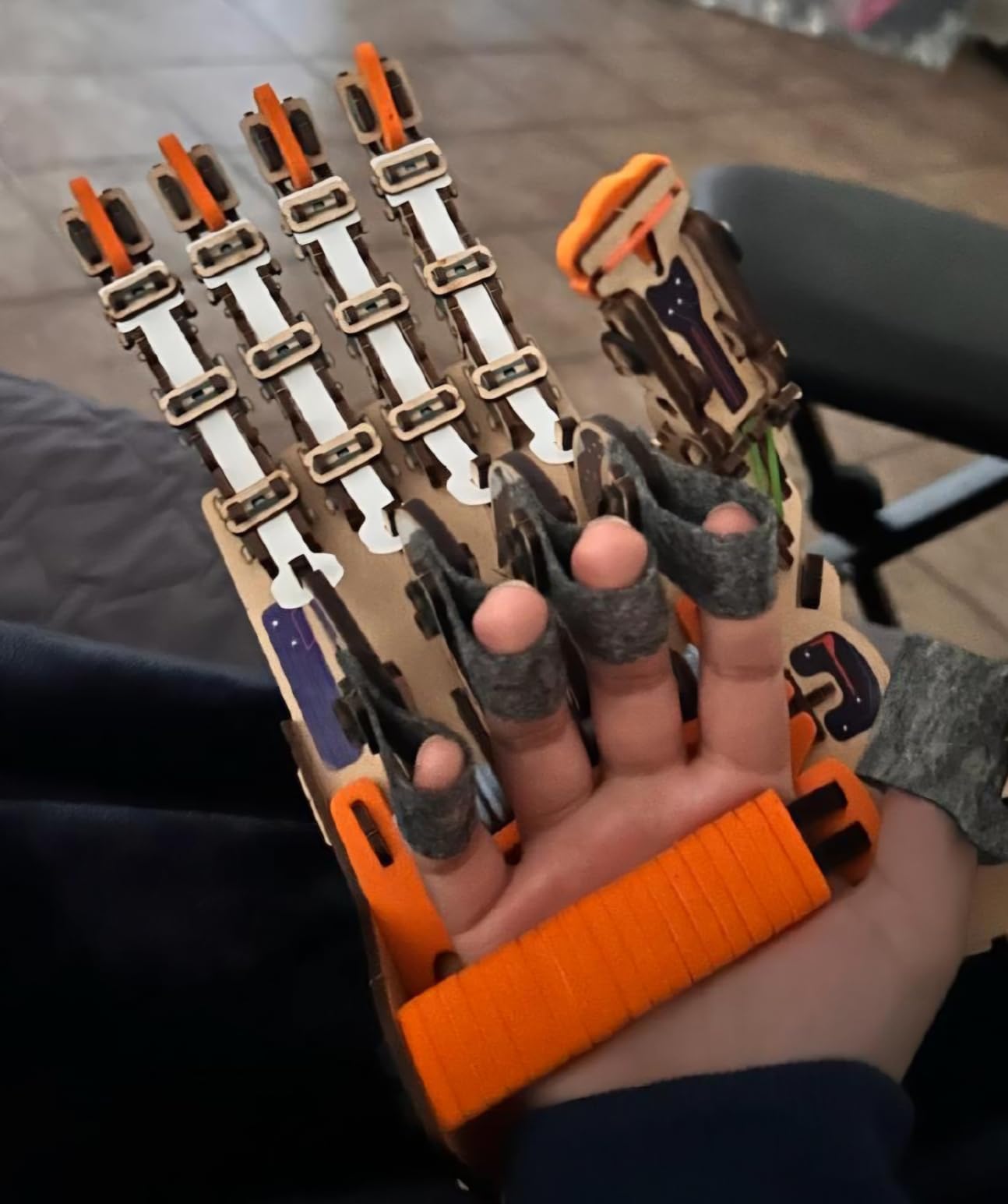
The Smartivity Robotic Mechanical Hand is the best-looking object on this list and the one most likely to sit on a desk afterwards. A child assembles an articulated hand from engineered wood, and it moves when you pull the strings. No screen, no batteries in the hand itself, and a finished model with real mechanical movement at the end.
It holds 4.6 across roughly 3.9k reviews, and the review consensus is unusually consistent: build quality and the parts policy are praised, assembly difficulty and the elastic power system are criticised. The free lifetime supply of replacement parts is unusual in this category, and it matters more than it sounds when a mechanism depends on rubber bands.
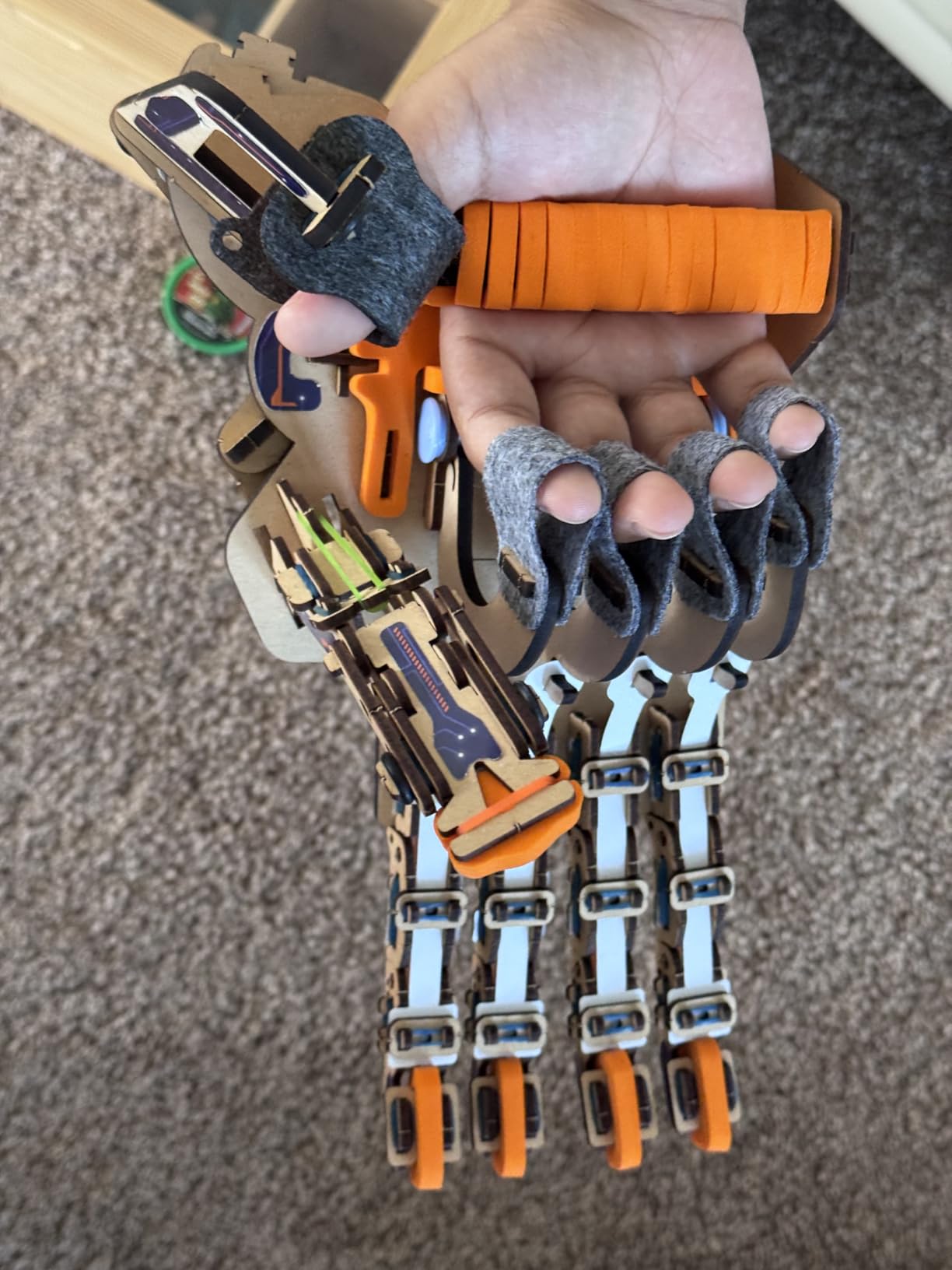
Engineering here is anatomical and mechanical rather than electronic, which makes it a good complement to the Snap Circuits set. A child who has just learned that a circuit needs a closed path can see a very different system, one driven by tension through joints, and compare the two. The wood also means it survives being dropped, which plastic kits at this price point often do not.
Plan for a longer build. At the younger end of the 8 to 14 range, reviewers report assembly taking well over an hour with an adult nearby, and the elastic bands that drive the fingers loosening or snapping with use. There is one completed model, so replay value is limited once the novelty fades.
Who this kit suits
It suits a child who wants something to show people, and it suits a gift-giver who cannot sit and build it with them. The step-by-step manual carries the project without adult narration, and the wooden finish suits a bedroom shelf rather than a toy bin. It is also a strong choice for a child who is not drawn to electronics but likes machines.
Where it falls short
It is one model with a wear-out point. Parents who bought it hoping for a long robotics programme will find a single afternoon of building and a desk ornament afterwards. The fiddliness is also real for hands that are still developing fine motor control, so budget time and patience rather than expecting a fast build.
7. Science4you Betabot – a first robot for 8 year olds
Science4you Robotics Betabot – Stem Robotics Kit for Kids 8-12+, 126 Pieces Included, Robot Building Kit for Kids, Robot Toys, Game, Gift for Boys and Girls Ages 8 9 10 11 12+
126 building bricks and a book
Recommended for ages 8 and up
Runs on AA batteries
0.24 kg
Pros
- 126 building bricks with an educational book
- Finished robot moves forward and backward
- STEAM-aligned design
- Low weight and simple footprint
Cons
- Single fixed model with no reconfiguration
- Some printed parts arrive misaligned or missing
- Errors reported in the educational book
- AA compartment is awkward
The Betabot is the simplest answer to a first robot. A child assembles 126 building bricks into a robot, plugs in two AA batteries, and the thing drives forward and backward across the floor. The sense of a machine doing what it was told is the entire point, and for an 8 year old that moment lands.
It is designed around the STEAM framework, covering science, technology, engineering, arts and mathematics, and the accompanying book uses the build to introduce those ideas rather than treating the robot as a reward. At 0.24 kg it is light, and it sits at 4.4 from 3.2k reviews with 68 percent five-star.
Manage expectations on the part quality. Reviewers report printed components arriving misaligned or occasionally missing, and errors in the educational book itself. Both are fixable, but a child at 8 hits a missing part as a failure, so check the bag against the manual before the first build starts.
Who this kit suits
It suits a child who wants a robot and has no interest in programming yet, which makes it a good stepping stone before a coding kit. It also suits younger siblings and grandparents handing over a present, because a moving robot needs no explanation. The included book gives you something to talk through afterwards.
Where it falls short
There is one model and no reconfiguration once it is built, so replay value is close to zero. The AA battery compartment is awkward to open, and the educational book needs checking for errors. If you want a robot that grows with the child, spend up and move to a coding platform instead.
8. COBFDHA 6-in-1 Solar Robot Kit – the best budget STEM kit for 8 year olds
COBFDHA STEM Projects for Kids Age 8-12, Science Kits Boys, Solar Robot Space Toys Gifts 8-14 Year Old Teen Boys Girls, 120Pcs Building Experiments Robots Teenage Ages 9 10 11 12 , Yellow
6 buildable robots from 120 parts
Solar panel or battery power
Ages 8 to 12
ABS plastic
Pros
- Six robots that move on land
- Dual power removes weather as a constraint
- Instruction manual supports independent assembly
- Sturdy ABS construction
Cons
- Solar output is weak in poor light
- Instructions unclear at some steps
- Plastic gears wear with heavy use
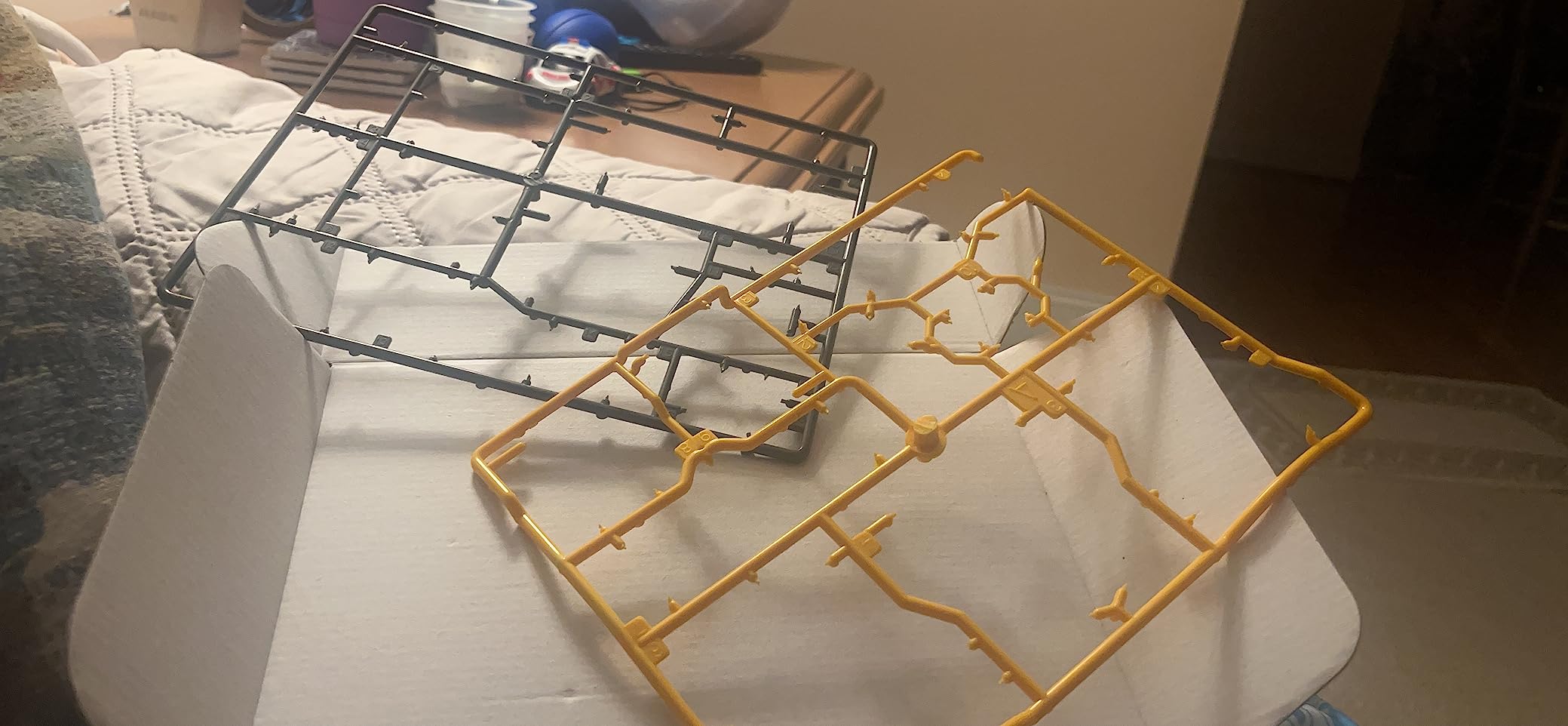
The COBFDHA kit solves the biggest problem with solar robots. It runs on a solar panel or on batteries, so a cloudy Tuesday afternoon does not end the project. Six buildable robots come out of 120 ABS pieces, and all of them move on land, which gives a child a proper sequence rather than a single finished model.
Reviewers name that dual power design as the standout feature, and it is the reason I rank this above some more expensive solar sets for indoor households. It sits at 4.4 from 3.5k reviews with 70 percent five-star, and the manual is clear enough for independent assembly at the lower difficulty levels.

Its declared range is 8 to 12, which fits an 8 year old well, and the six models escalate in difficulty so the same box covers a term of building. The stated educational aims are unusually broad for a kit at this level, naming manual dexterity, problem solving, logical thinking and self-confidence alongside the STEM label.
The honest weaknesses are the solar panel, which is weak enough that models perform poorly in dim light, and the instructions, which some readers find unclear at specific assembly steps. Plastic gears and joints wear with heavy use, so this is a kit to build through rather than keep in daily rotation for years.
Who this kit suits
It suits a family that wants robotics without a premium commitment, and it suits a child who wants to build mostly indoors. Six models means real replay value for the effort, and the parts are large enough for developing hands. It is a good pick for a first robot that the child keeps rebuilding.
Where it falls short
Weak solar performance and occasional assembly confusion are the recurring complaints. The plastic gears wear, so treat it as a year of building rather than a permanent robotics platform. Children who want to program rather than assemble will outgrow it quickly.
9. Makeblock mBot – the best coding STEM kit for 8 year olds
Makeblock mBot STEM Coding Toys Robotics for Kids Ages 8-12
Builds in about 15 minutes
Scratch and Arduino compatible
100+ add-on modules
0.93 kg
Pros
- Fast 15-minute build with clear illustrations
- Also works as a line follower and obstacle avoider
- Scratch and Arduino through mBlock
- Extensible with 100+ modules and 500+ parts
Cons
- Batteries required and not included
- Sensor cables are fragile for younger kids
- App interface feels dated
- Add-on packs add further cost
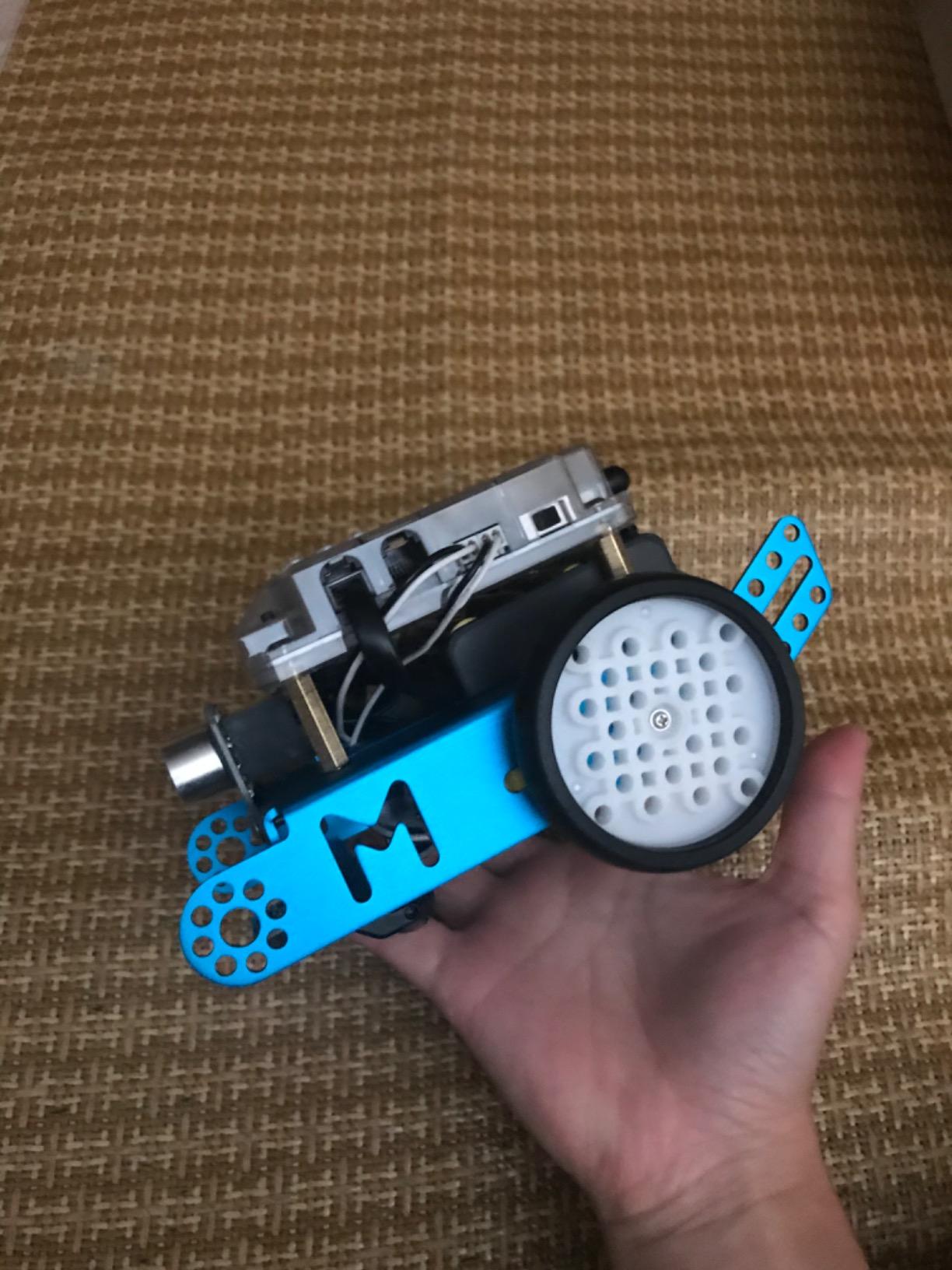
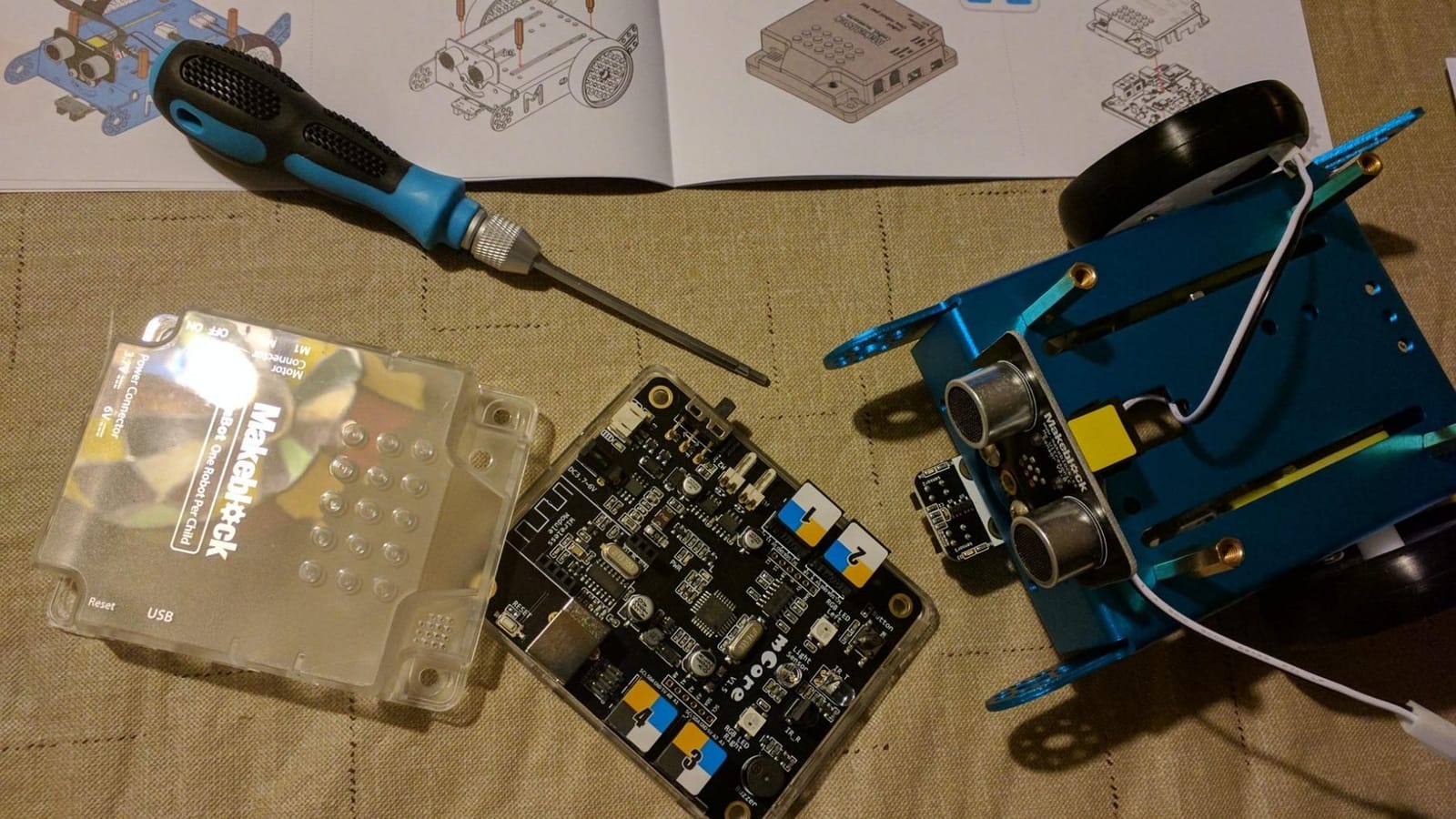
The mBot is the only genuine coding platform in this roundup, and that is why it is here. A child assembles it in roughly 15 minutes from clearly illustrated instructions, then drives it as a remote-control car, switches on the line follower, or programs the obstacle avoider using Scratch-based blocks through the mBlock software.
It holds 4.6 from 2.8k reviews with 77 percent five-star, and the metal construction feels noticeably more durable than plastic kits. Compatibility is the bigger story: 100-plus electronic modules and 500-plus parts, plus LEGO-compatible pieces, so this is a platform a child can still be extending at 11 rather than outgrowing at 9.
Programming is where the transferable skill lives. An 8 year old who makes a robot turn after an obstacle is running a sequence, testing it, finding where it failed and changing one variable. That loop is the same one behind debugging later in life, and it arrives here in a form that still looks like play. The coding cards and lesson material bundled with the kit mean a parent does not need to teach anything.
Be honest about the practicalities. Four AA batteries and a CR2025 for the remote are not included, which trips up a lot of first-time buyers. Sensor cables are fragile and awkward for small hands, and reviewers describe the software interface as showing its age compared with current platforms.
Who this kit suits
It suits a child who already follows instructions well and reads at a level where sequence diagrams make sense, which is the profile parents describe on r/robotics. It suits a homeschool setting that wants a coding curriculum spine, and it suits a child who wants to keep going after a first robot, because the add-on ecosystem is genuinely large.
Where it falls short
It is the top of the price range here, and add-on modules cost more on top. The wiring is the step most likely to frustrate a younger or less patient child, and the software is not the most polished experience available now. If the child is not ready for block-based coding, start with a build-and-play robot instead.
10. Bottleboom 13-in-1 Solar Robot Kit – the best kit for rebuilding again and again
STEM 13-in-1 Education Solar Power Robots Toys for Boys Age 8+ , Educational Toy DIY Science Kits for Kids, Building Experiment Robotics Set Birthday Gifts for 8+ years old boys and girls .
13 robot builds from shared parts
Land and water models
Ages 8 to 15
Non-toxic ABS
Pros
- 13 configurations from one set of parts
- Models run on land and water
- Parts disassemble cleanly for repeated rebuilds
- Non-toxic ABS with smooth edges
Cons
- Solar power is weak in low light
- Water models need calm flat water
- Published dimensions are inaccurate
- Instructions need adult help
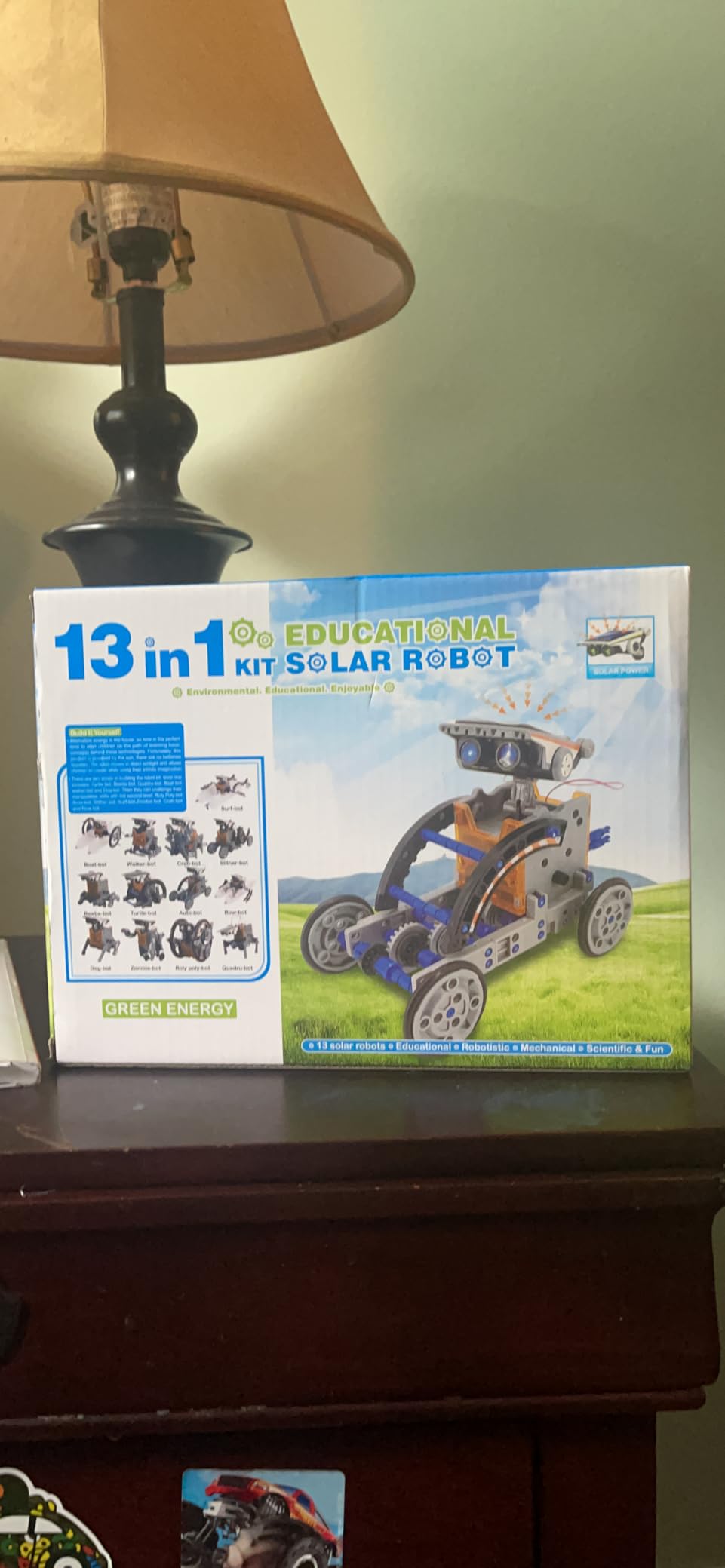
This is the replay-value pick. The Bottleboom 13-in-1 reconfigures 13 different robot designs from a shared pool of gears, plates, tires and shafts, and the parts disassemble cleanly so each model can be rebuilt as many times as the child wants. Thirteen configurations from one box is the largest number here, and for a child who takes things apart as soon as they are finished, that is the deciding factor.
It holds 4.3 from 6.7k reviews with 71 percent five-star, and the most-praised feature in the reviews is precisely that reusability. Children are not running out of projects, they are cycling through them. Models run on land and on water, which adds a genuinely different testing condition when a solar-powered boat behaves nothing like a solar-powered rover.
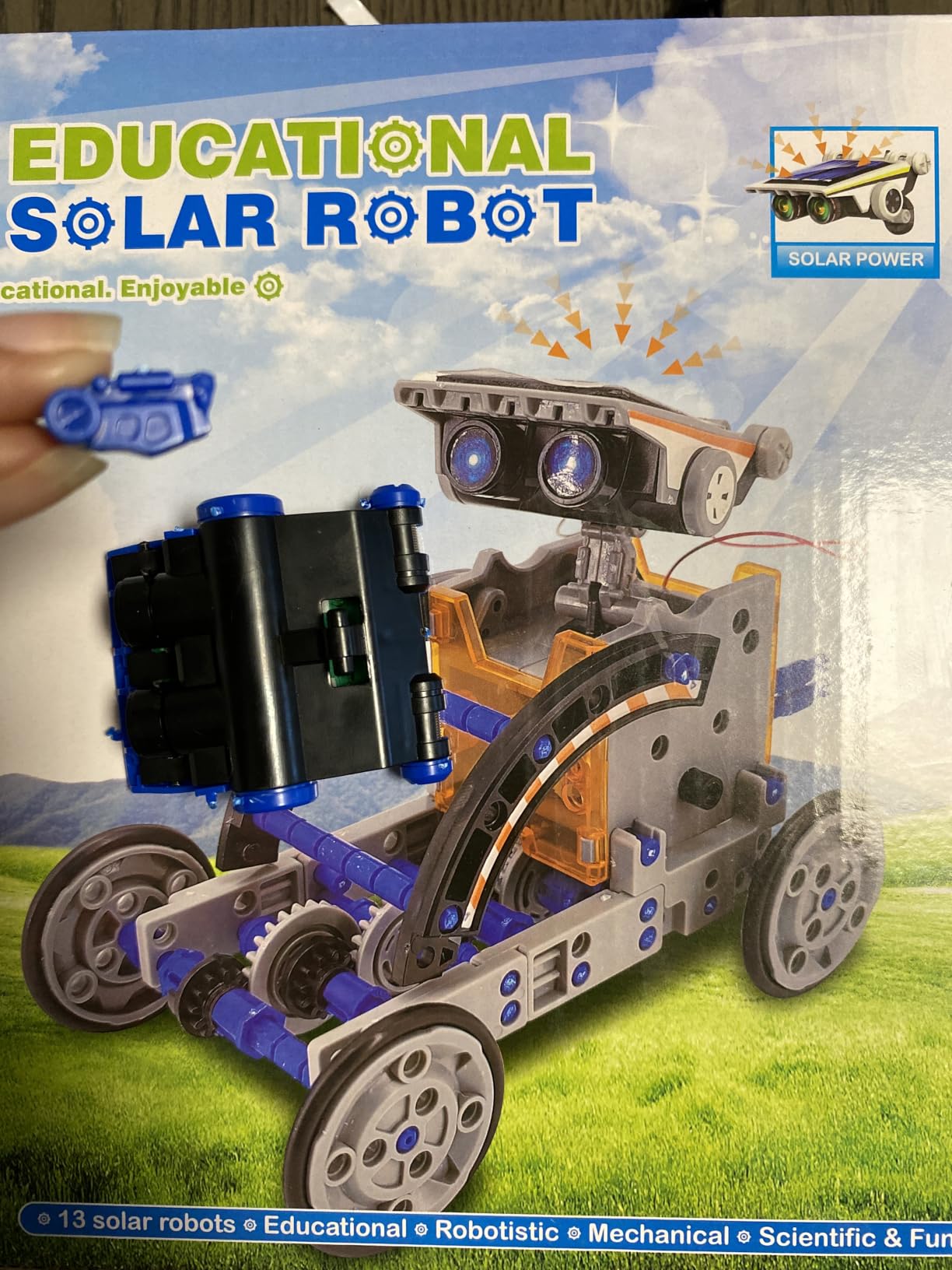
Material detail is worth noting for younger siblings. The plastic is non-toxic ABS with smooth, raw-edge-free parts, and the stated range is 8 to 15, so it has room to grow with a child rather than expiring at 8. Models range from simple to complex, which gives a natural difficulty ladder without buying a second kit.
The complaints are consistent and fixable. Solar power is weak under artificial light, so indoor builds are slow unless there is a strong lamp nearby. The water-moving models need flat, calm water to work at all. The published dimensions are also inaccurate, and the instructions are hard to follow without an adult nearby at some steps.
Who this kit suits
It suits a child who finishes things in a single sitting and then asks what else can be made from the same parts. It suits families near a pond or a bathtub, since the water models are the part children remember. At 13 configurations it also works as a term-long programme rather than a one-afternoon gift.
Where it falls short
Performance depends heavily on real sunlight, and indoor use under room lighting is the weak point reviewers name most. Water models need still, shallow water to move at all. If your child builds indoors most of the year, choose a dual-power kit instead and save this one for summer.
How to Choose a STEM Kit That Is Actually STEM
Age labels are the least reliable part of the box. Across these ten kits, the same product family is labelled 8 and up in one place and 10 and up in another, which is the single most repeated complaint in parent discussions about kits for this age. Judge the kit by its instructions and part size instead.
Start with these six checks.
1. It must produce something that works. A finished circuit, a moving robot, a grown crystal, a standing structure. Kits that end in a static display teach less, because there is no feedback loop between the child’s action and a result.
2. Read the instruction format, not the description. Illustrated, numbered, step-by-step diagrams are followable by an 8 year old alone. Dense paragraphs of adult-facing text are the most-cited reason children quit a kit, and no amount of enthusiasm in the marketing copy compensates for a manual that reads like a college assembly instruction.
3. Count the configurations, not the projects. Ten tricks played once is two hours. Thirteen robot models from shared parts is a term. Replay value comes from parts that reconfigure, not from a longer manual.
4. Ask what the power source does to your plans. Solar and battery kits are screen-free and weather-dependent. App-based and Scratch-based kits teach the most and need a tablet. Decide which trade-off your household can actually live with, because a solar kit used on a cloudy afternoon teaches almost nothing.
5. Check whether adult help is required, honestly. Chemistry sets, anything with a pour or a heat source, and most complex wooden mechanical builds need a second pair of hands. That is fine as a shared activity. It is a problem if the kit is meant to keep your child independently busy for an hour.
6. Look for independent validation and parts support. Award recognition from a toy industry body, and a manufacturer who supplies replacement parts, both reduce the risk of an abandoned build. The Smartivity hand stands out here with a free lifetime supply of replacements, which matters for a kit with elastic parts that stretch.
On subscription boxes, the honest summary is that they optimise for novelty rather than depth. A box a month gives twelve new experiences and rarely lets a child finish anything complicated, which is why parents on r/Homeschooling tend to buy two or three solid kits instead.
Where you store and build matters more than most parents expect. A desk with room for a board, loose parts and a notebook is what turns a kit into a habit, and setting that up properly takes less effort than most people assume. Our guides to cable management for desks and lighting setups for a work corner cover the parts of that problem, and if you want to film the builds, our picks for lighting kits for video handle the same space from the camera side. Sequencing matters more than volume: build a circuit kit, then a mechanical kit, then a coding platform, and the skills stack instead of repeating.
What to Avoid at Age 8
Five red flags came up again and again across parent discussions, and each one has cost someone a kit.
Robot-shaped toys with no learning outcome. If the robot cannot be programmed, cannot be rebuilt, and does not demonstrate a principle, it is a toy. A moving shell teaches motion and nothing else.
Manuals written for adults. A dense instruction booklet is the most reliable predictor of an abandoned build. Check the sample pages before buying.
Single-use consumables sold as a big feature. Count-based value such as 100 experiments looks impressive and often means powders that must be used in one sitting and cannot be resealed.
Weak solar panels marketed as screen-free. A model that crawls in direct sun and sits still under a desk lamp will be judged as broken by an 8 year old. Dual power removes the problem entirely.
One model with no replay path. After the single build is finished, the kit becomes storage. Look for shared parts, multiple configurations, or a platform with add-on modules.
Beyond the Kit: STEM Projects an 8 Year Old Can Do With Household Materials
Kits are not the only route, and a gap between boxes does not have to be empty time.
Paper bridge test. Fold one sheet into five different bridge shapes, then load each with coins until it fails. The child predicts which shape holds most, then checks. This is structural engineering, and it costs nothing.
Water flow maze. Tape drinking straws to a wall or a board, join them with bendy joints, and run water from a cup at the top. The child redesigns the blocked sections and reruns it.
Homemade voltaic pile. Stack coins and bits of damp cardboard to make a battery that reads on a simple meter, then change the number of cells and record what happens.
Shadow and sundial clock. Set a stick in clay outdoors, mark the shadow every hour, and work out the pattern. It is astronomy, geometry and timekeeping in one afternoon.
Sound vibration recorder. Stretch plastic wrap over a bowl, tap different lengths of ruler and spaghetti against it, and let the child rank the sounds by pitch. Simple, screen-free and surprisingly absorbing.
Frequently Asked Questions
What are some good STEM kits for 8-year-olds?
The strongest options for an 8 year old are the Snap Circuits Jr. SC-100 for electronics, the National Geographic Earth Science Kit for earth science, the National Geographic Magic Chemistry Set for a first taste of chemistry, and the Makeblock mBot for coding. Choose by the domain your child already gravitates toward, and check that the instructions are illustrated rather than text-heavy so the build can be done independently.
What is the best science kit for an 8-year-old?
For earth science, the National Geographic Earth Science Kit covers more than 15 activities including a growing crystal and two geologic dig kits. For chemistry on a smaller scale, the National Geographic Magic Chemistry Set ships with everything needed for 10 experiments and no batteries. For the longest-running option, the Science Magic Kit pairs 20 experiments in the box with a booklet of 85 more ideas.
Can an 8-year-old build a STEM kit without an adult helping?
Most can, provided the kit has illustrated step-by-step instructions. Snap Circuits, the COBFDHA solar kit and the Bottleboom 13-in-1 are routinely assembled independently at this age. Chemistry sets need an adult to supervise even when the child does the work, and the Smartivity mechanical hand and the Makeblock mBot both involve fiddly steps where a second pair of hands shortens the build considerably.
Are STEM kits worth it for 8 year olds?
Yes, when the kit ends in a working result. Ages 8 to 10 are a good window because attention span supports a real build in one session and spatial reasoning is still highly responsive to physical construction. The kits that disappoint are the ones that end in a static display or a single use, so judge a kit by its replay value and its finished outcome rather than by its project count.
What is the best robotics or coding STEM kit for an 8 year old?
For pure coding, the Makeblock mBot is the strongest choice, assembling in about 15 minutes and running Scratch-based programs as well as a remote control, line follower and obstacle avoider. For building without programming, the COBFDHA 6-in-1 or the Bottleboom 13-in-1 give a child multiple reconfigurable robot models. A simple non-programmable starter robot is the Science4you Betabot.
The Verdict for 2026
If you buy one kit from this roundup, buy the Snap Circuits Jr. SC-100. It has the highest rating and by far the largest review base, it needs no tools, no supervision and no screen, and it produces a working circuit in minutes, which is the habit that keeps a child coming back. For science rather than electronics, the National Geographic Earth Science Kit is the one I would pair with it.
Match the second and third kits to what your child actually does with their free time, not to what looks interesting in a photo, and check the instruction format before you buy. That single check prevents most of the disappointment parents describe in forums. Our best stem kits for 8 year olds ranking above will be updated through 2026 as new models land, and the comparison links below go to current listings.